



Thick hair can look expensive in a heartbeat, and it can look boxy just as fast.
That’s the part people forget when they talk about straight hairstyles for thick hair. The strand count is only half the story. Density, cut line, part placement, and where the weight lands at the ends matter just as much. Get those pieces lined up, and thick hair turns into a polished sheet with real presence. Miss them, and you get the triangle effect, the puff at the hem, the crown that keeps rising after you’ve already pressed it flat.
I’ve always thought thick straight hair does best when it’s given a clear plan. Not a fight. Not a punishment with a flat iron. A plan. One shape at the hairline, one shape through the mid-lengths, one finish at the ends. That’s how you get styles that look deliberate instead of overworked.
And yes, heat helps. But the real fix is usually the cut underneath the heat.
Why These Looks Earn a Place in the Thick-Hair Rotation
-
They respect weight instead of fighting it: Thick hair falls better when the cut lets gravity do some of the work, especially around the ends and nape.
-
They keep the silhouette clean: A blunt line, a tidy ponytail, or a tucked side part stops the bottom half from spreading outward by noon.
-
They work with second-day texture: Thick hair can hold a part, a clip, or a braid longer than finer hair, so these styles don’t fall apart the minute you leave the house.
-
They make heat styling count: When you section thick hair properly, one careful pass with a flat iron often does more than three rushed passes over a whole head.
-
They give you options at every length: Lob, shoulder length, waist length, and everything between can all look sleek if the shape is chosen well.
-
They pair well with accessories: Thick hair can actually anchor barrettes, scarves, and pins instead of letting them slide straight out.
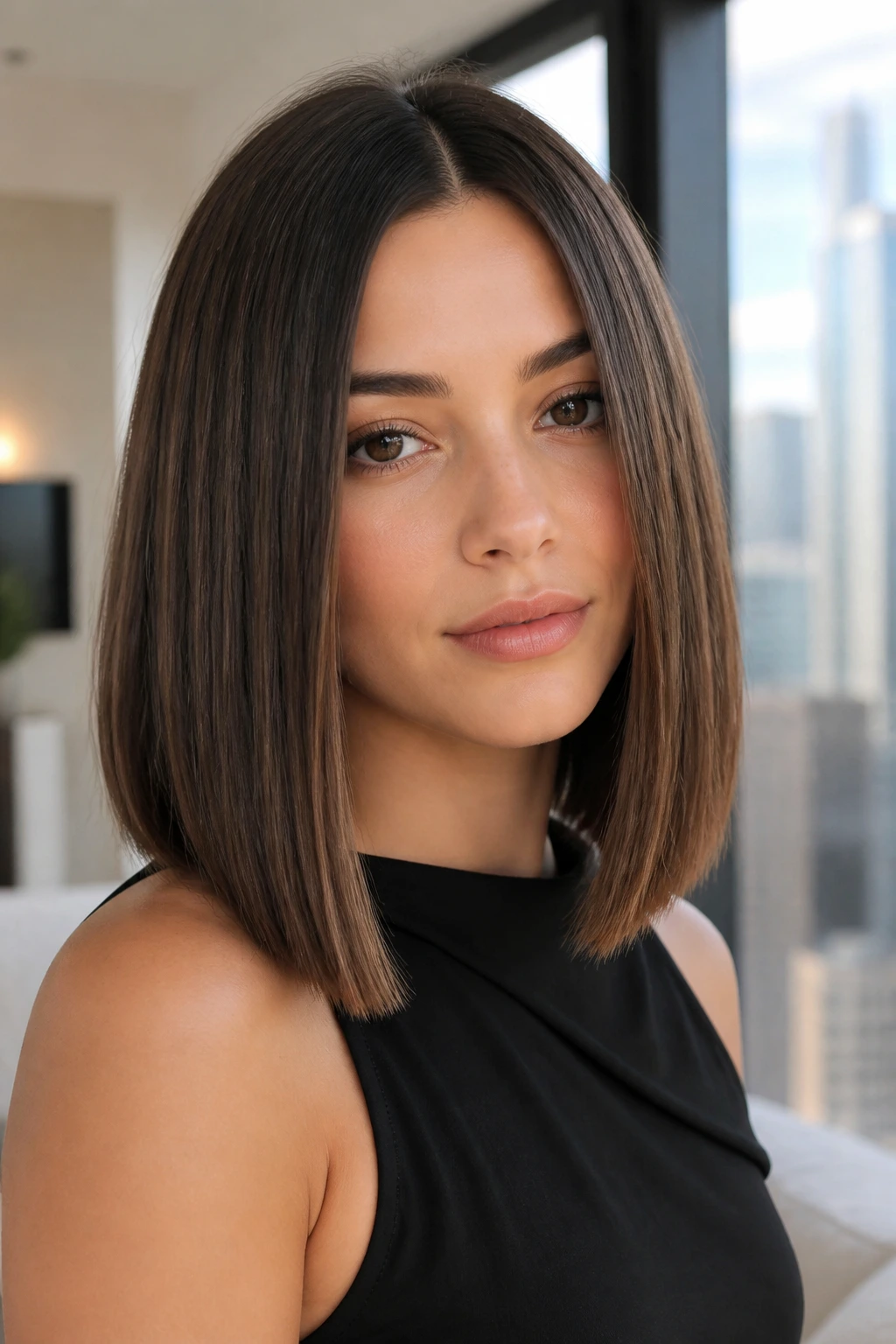
1. Blunt Center-Part Lob
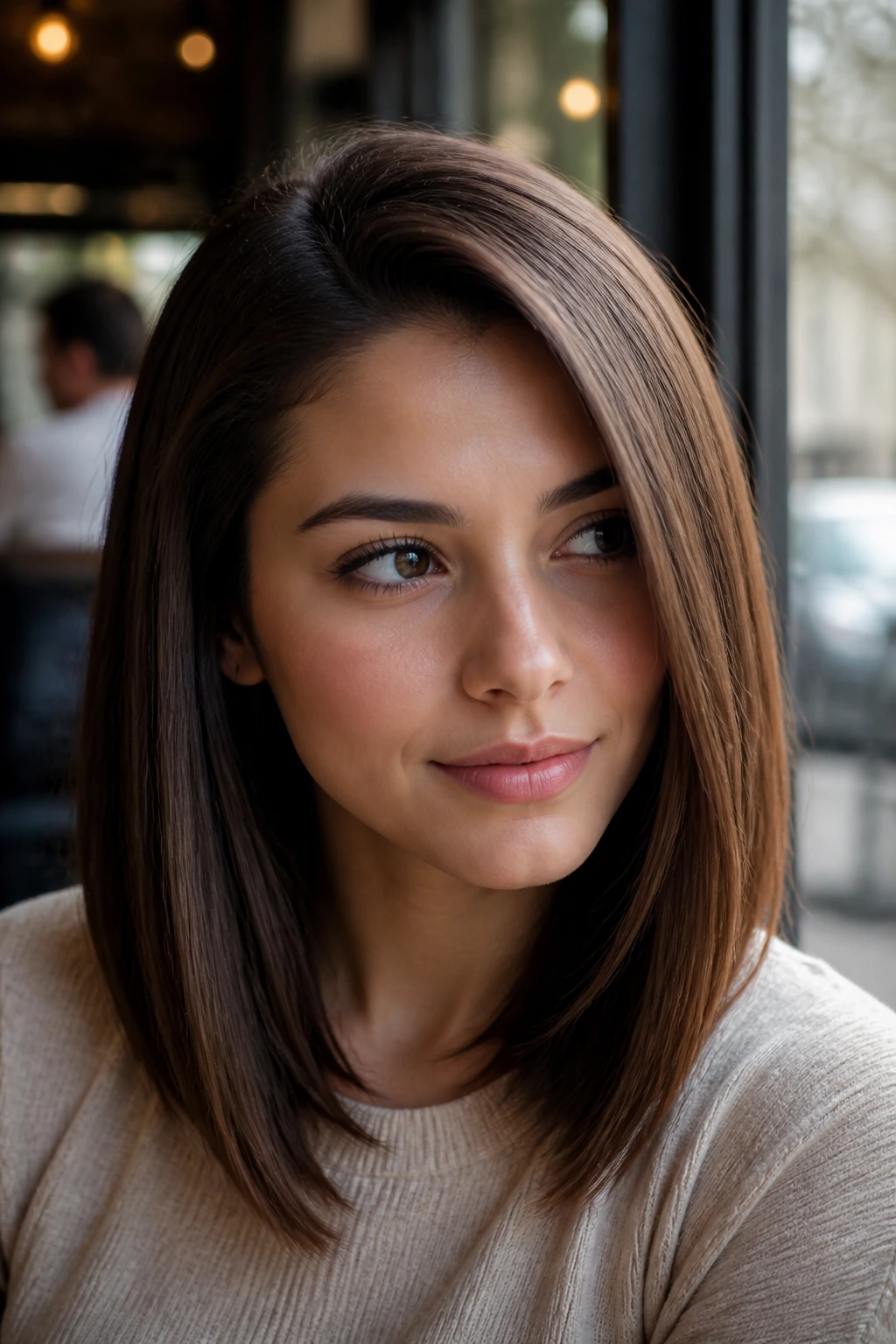
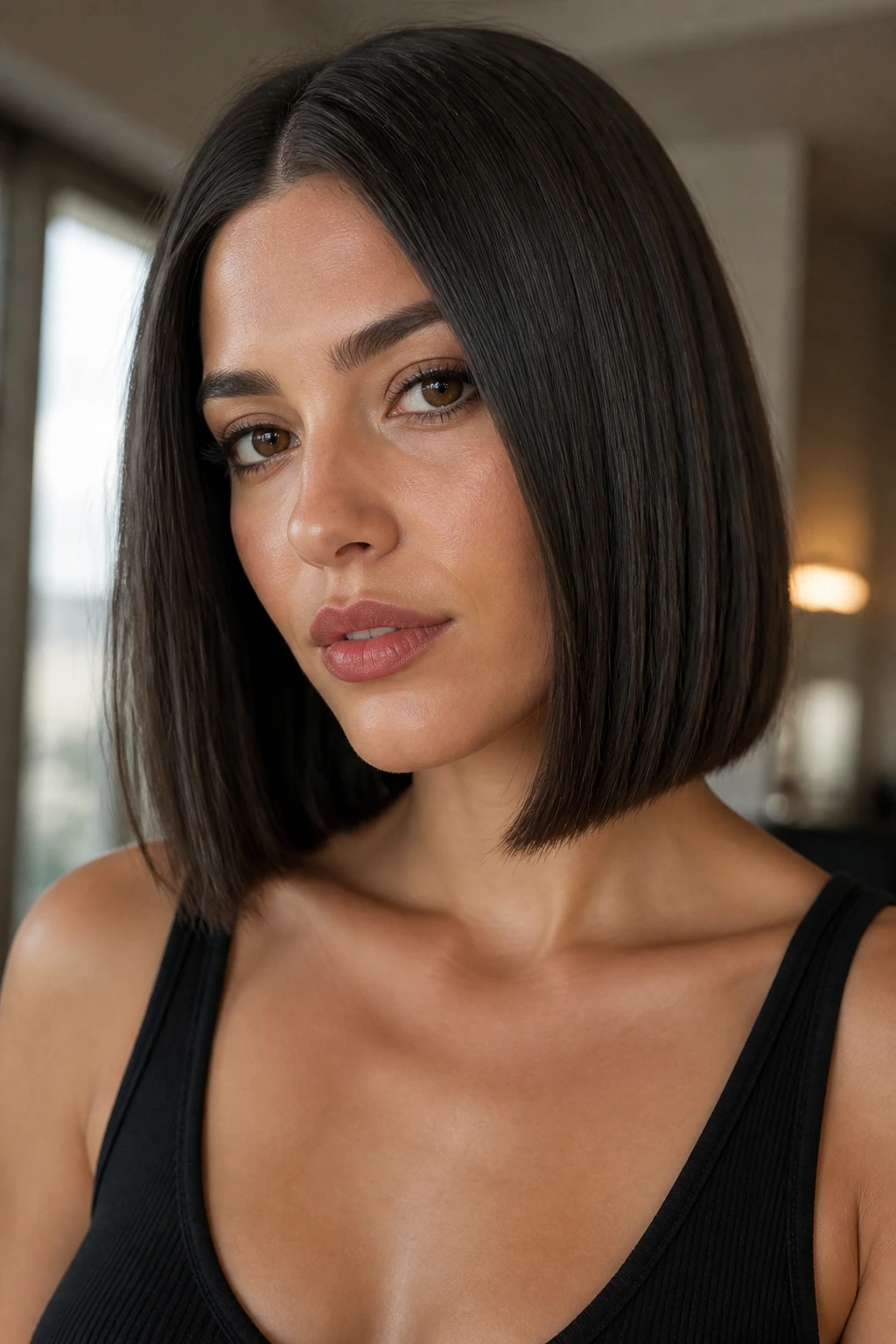
A blunt lob with a center part is the style I recommend most often when thick hair needs to look sharper without turning fussy. The edge sits around the collarbone, which keeps the weight from ballooning at the bottom, and the middle part splits the density evenly so the shape feels balanced.
Why It Works
A blunt perimeter gives thick hair a clear line to follow. That matters more than people think. If the cut is too layered or too wispy, the ends can kick out and look wider than the head.
Keep the line clean and the styling simple. Blow-dry with a nozzle pointed downward, then run a flat iron through 1-inch sections at about 365°F to 375°F. The result should feel crisp, not stiff.
2. Long One-Length Sheet Hair
This is the style for anyone who likes length and doesn’t want the hair chopped into pieces that bounce in different directions. One-length straight hair turns thick density into a single heavy curtain, which looks especially good when the ends are polished and the part is exact.
There’s a catch, though. If your hair is very coarse, one-length can read heavy in the wrong way unless the ends are trimmed often. I like it best when the line is tidy and the interior is kept full, not thinned out to the point of frizzing.
What Makes It Different
The drama comes from the weight itself. Thick hair lies flatter in a one-length shape than it does in a highly layered cut, so the finish looks intentional even on a regular day.
Use a pea-sized amount of serum only on the lower third. Too much product near the roots will collapse the shape and make the crown look greasy.
3. Sleek Side-Part Lengths
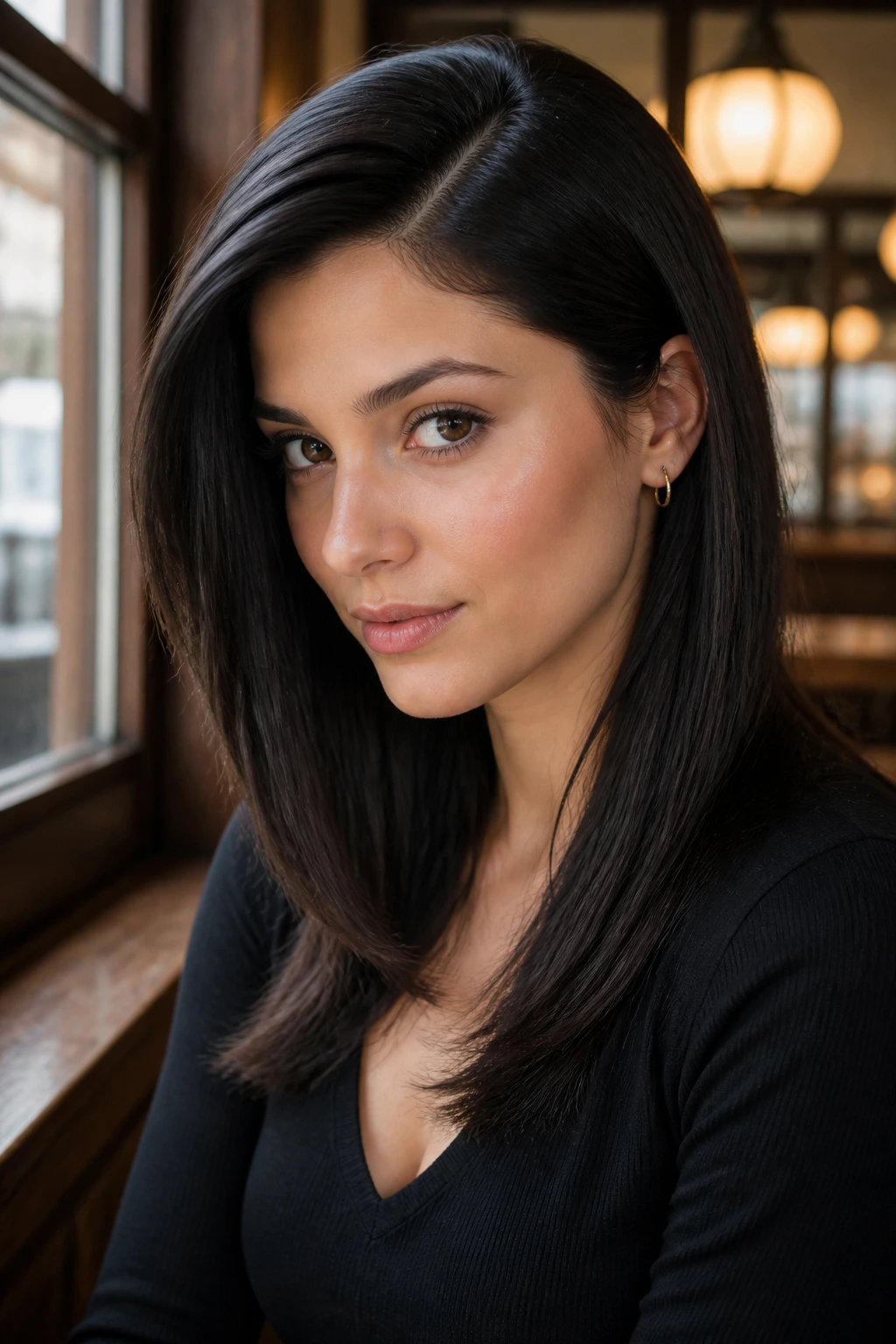
A deep side part shifts the bulk off the center of the head and gives thick straight hair a little contour around the face. That tiny move changes the mood of the whole style. Suddenly the hair has lift at the crown and a softer line near the cheekbone.
I like this better on hair that wants to sit flat on top. The part breaks the heaviness and keeps the style from reading helmet-like.
How to Style It
Start the part while the hair is still warm from the blow-dryer. Clip the heavier side back for five minutes while it cools; that helps the root remember the direction.
Finish with a light mist of flexible hold spray at the part line. Not a shell. Just enough to keep the scalp from peeking through as the style settles.
4. Tucked-Behind-the-Ears Straight Hair
This one is almost too simple, which is exactly why it works. Thick straight hair can look bulky around the face, and a tuck behind the ears opens the profile immediately. The trick is to keep the front pieces smooth enough that they stay tucked without constant readjusting.
A fine-tooth comb and a drop of styling cream at the temples help more than extra heat does. If the hair is freshly flat-ironed, tuck it while it’s still warm so it cools in place.
Small Details That Matter
Pick earrings on purpose here. Hoops, slim drops, or a flat gold stud look better than tiny pieces that disappear into the hair.
This style is at its best when the hairline looks neat and the ends stay straight. If the front keeps springing out, that’s usually a sign the section was too thick or the iron didn’t reach the root.
5. Curtain Bangs with Straight Lengths
Curtain bangs are a smart move for thick hair because they break up the front without taking too much density away. They sit open at the center, sweep at the cheekbone, and let the rest of the hair stay long and straight.
The danger is over-thinning them. Thick hair can handle a bit of internal shaping, but if the bangs are cut too wispy they can puff up and separate in weird pieces. I prefer them heavy enough to lie in place, then styled with a round brush or a small flat iron bend.
How to Wear It
Keep the bang section dry before smoothing. A damp fringe and a hot iron are a bad mix; the bangs bend too much and lose their clean fall.
The rest of the hair can stay sleek and low-key. That contrast is the point.
6. Bottleneck Bangs and a Clean Straight Finish
Bottleneck bangs have a narrower center and a slightly wider sweep at the sides, which makes them one of the easiest fringe shapes for thick straight hair to live with. They frame the face without turning into a heavy curtain.
The style looks best when the lengths are kept straight and the bangs are blown forward first, then brushed out to the sides. That order matters. If you dry them sideways too early, the shape gets floppy.
Why It Flatters Thick Hair
Thick hair holds a fringe better than fine hair does, which means you can get away with a more sculpted bang line. The rest of the lengths can stay simple and long.
A little root lift at the crown helps too. Just a little. You want shape, not height.
7. Face-Framing Layers with Straight Ends
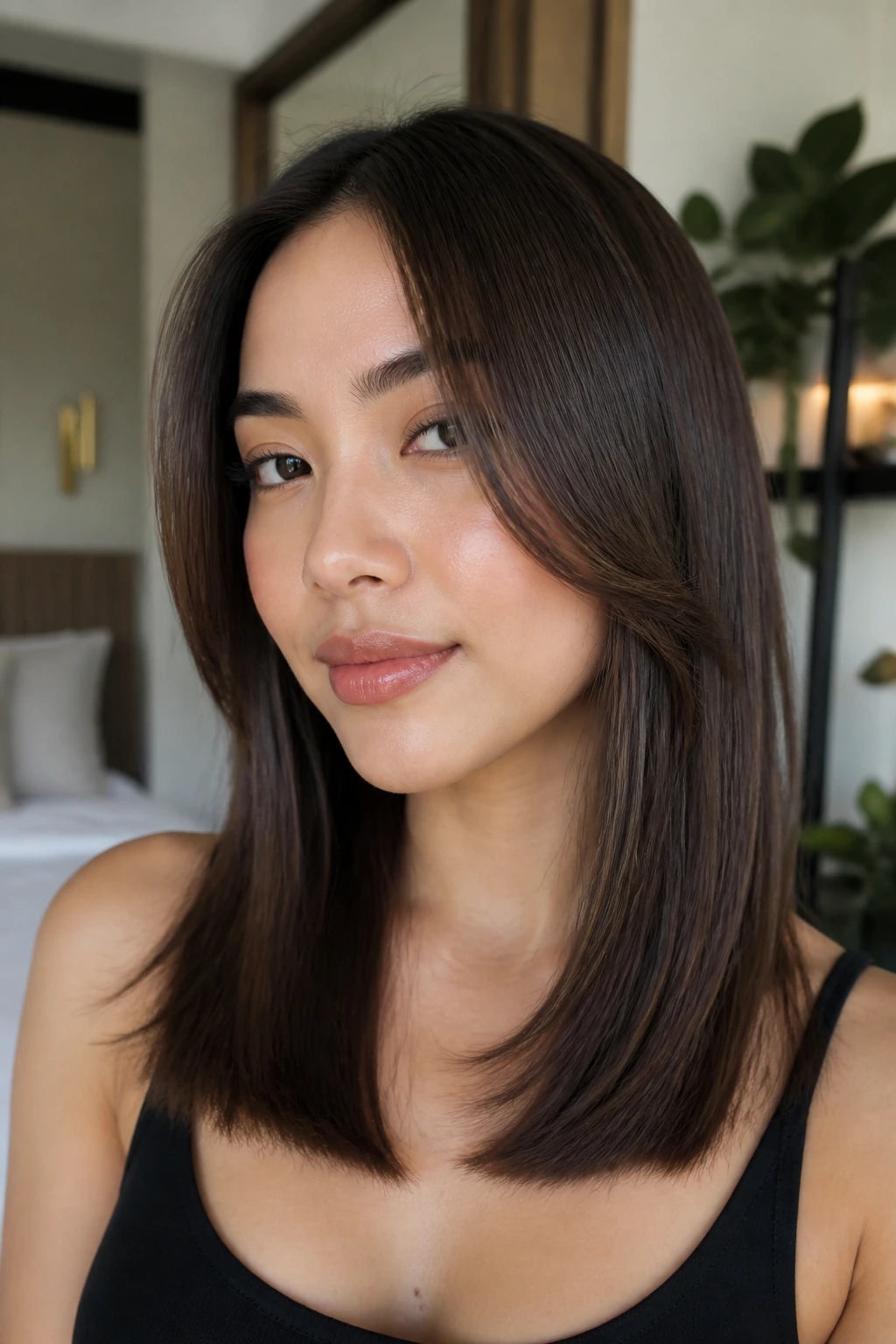
Face-framing layers are the cut people reach for when thick hair starts to feel like one big block. Done right, they remove weight where the face needs movement and leave the rest of the length strong.
I like these best when the first layer starts around the chin or cheekbone. Any shorter and thick straight hair can start to puff. The ends stay straight, but the front has enough bend to stop the whole head from looking square.
What to Ask For
Tell your stylist you want soft framing, not choppy layering. Those are not the same thing.
A flat iron bend at the ends can keep the layers from looking too blunt against the rest of the cut. That small curve makes the shape feel easier.
8. Feathered Straight Ends
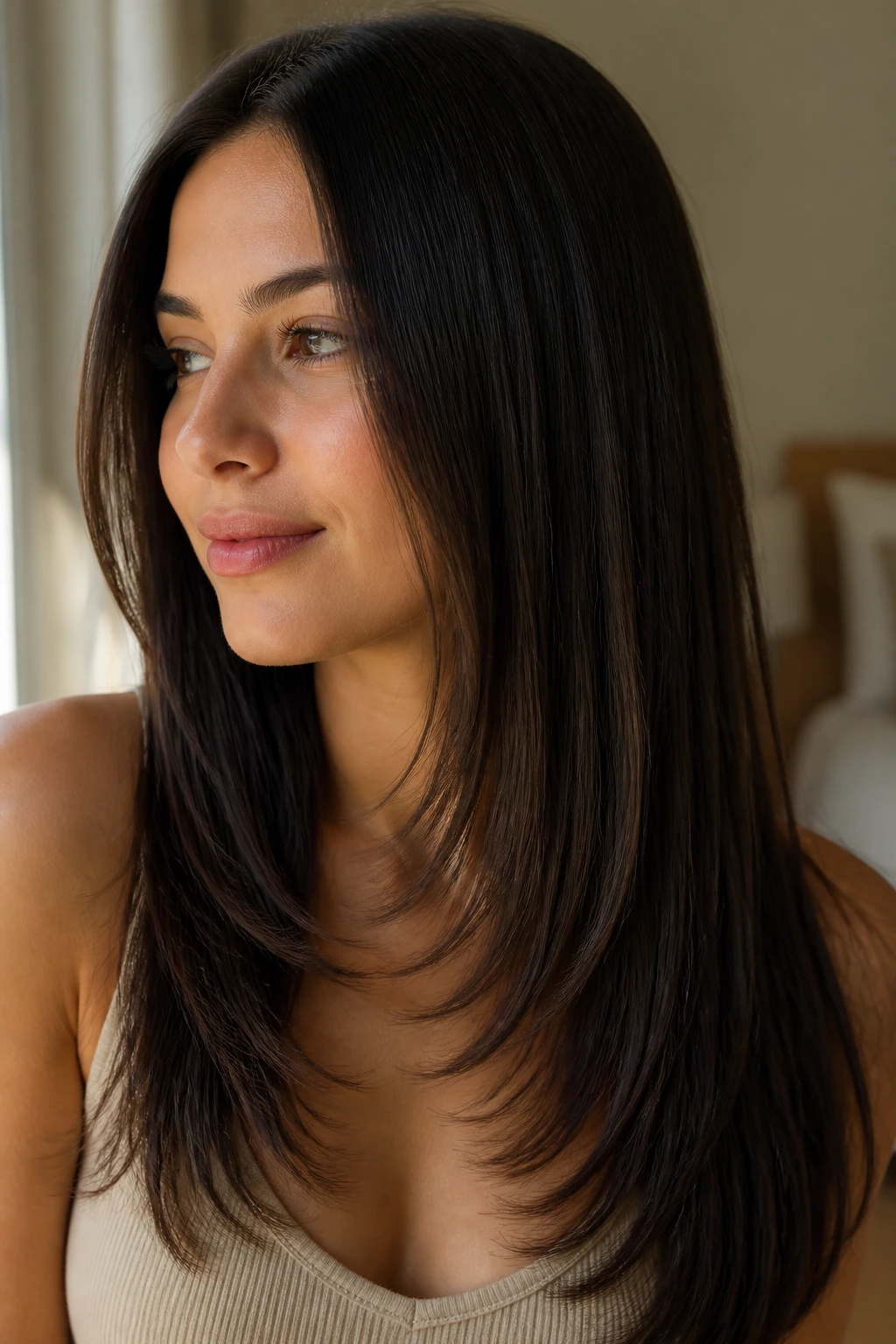
Feathered ends are one of those old-school ideas that still works when the hair is thick and straight. The feathering softens the edge just enough so the bottom doesn’t look like a carved shelf.
This is a good choice if your hair feels too heavy in a blunt cut but you don’t want a lot of layers. The key is restraint. A little texturing near the final inch or two is enough. Too much and the ends start to fray.
Best Use
Use this on medium to long hair that naturally holds a smooth finish.
If you blow the ends under with a round brush, the feathering reads polished instead of dated. Flat-ironing every strand pin-straight can make the cut look harsher than it needs to be.
9. Inward-Bent Ends
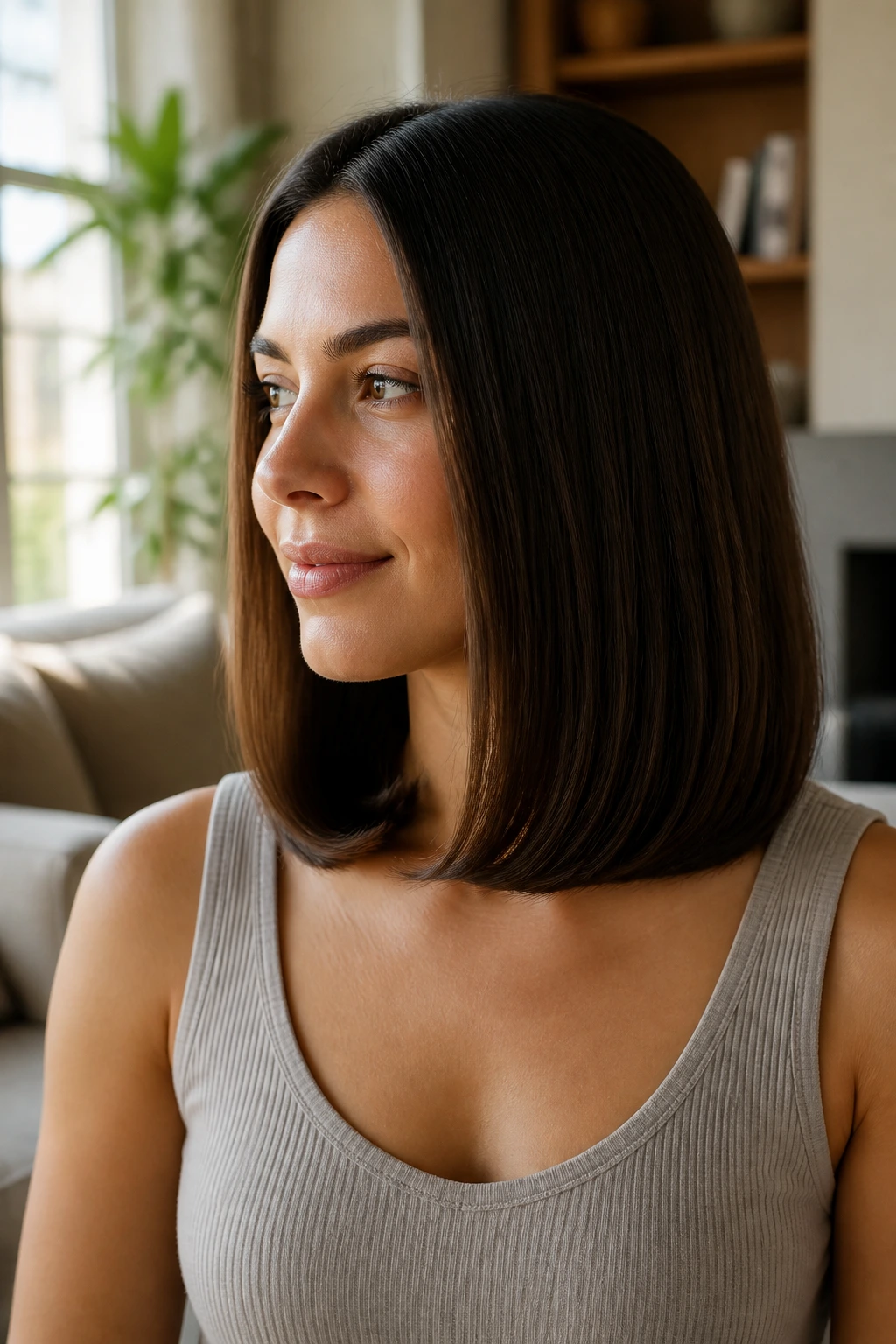
Inward-bent ends give thick straight hair a neat, finished edge without much fuss. The bend pulls the silhouette in toward the neck and stops the tips from flaring outward, which is a common problem on dense hair.
A round brush or a straightener with a slight wrist turn will do the trick. Keep the bend uniform from section to section. Random flips look accidental. Controlled bend looks styled.
Small Benefit, Big Payoff
This shape makes shoulder-length cuts behave. Straight thick hair that hits the shoulders often flips out in weird places, and an inward bend calms that down.
A tiny amount of shine spray on the ends helps the curve hold its shape and keeps the finish from looking dry.
10. Flipped-Out Ends
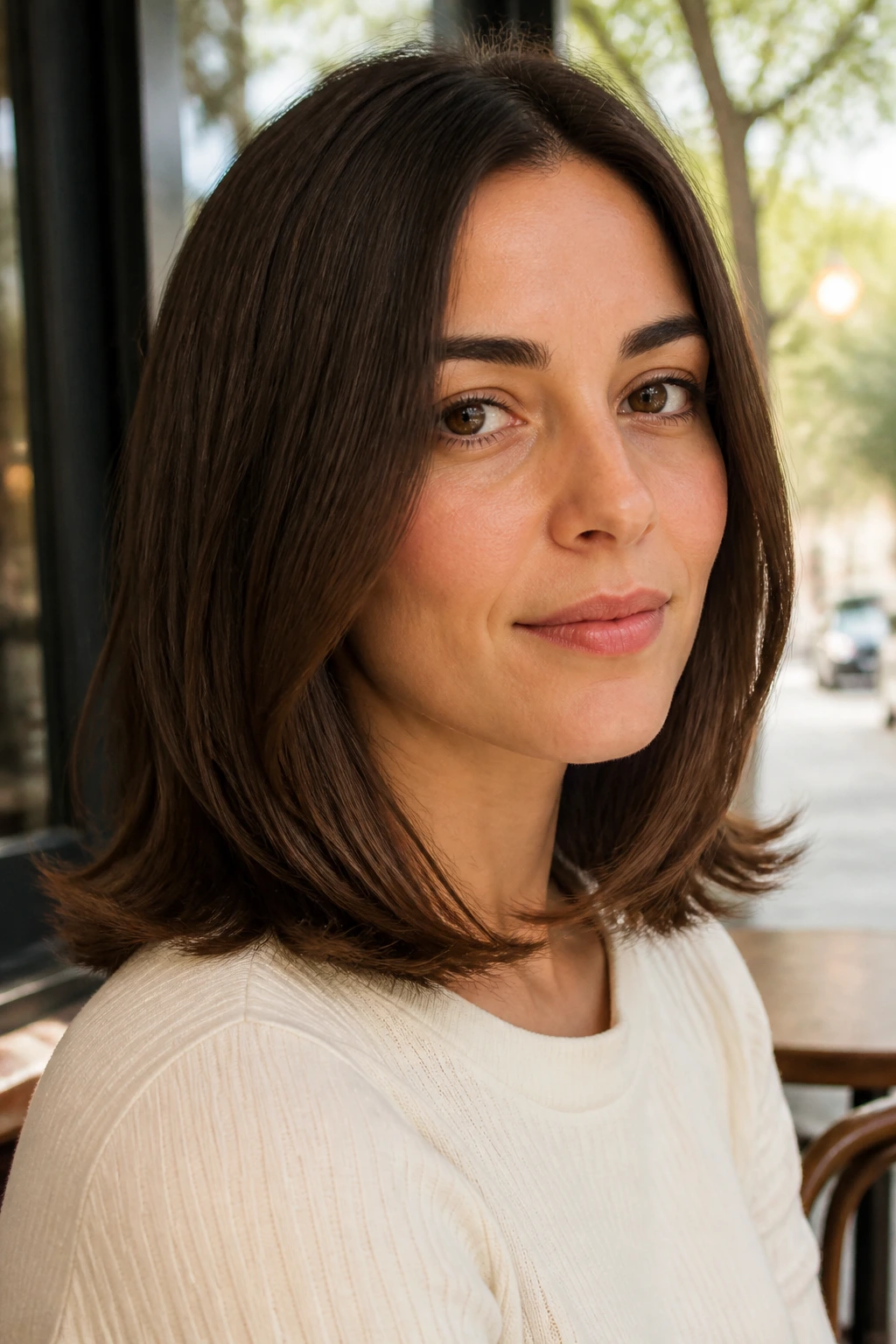
Not every straight style needs to behave like a corporate memo. Flipped-out ends bring some movement back to thick hair without making it messy. The style works especially well on lob length and collarbone cuts, where the flip gives the bottom edge a lighter feel.
I prefer a subtle flip, not the overdone 1960s curl unless that’s the whole point. Thick hair already has plenty of body; a small outward bend is enough to keep the look lively.
How to Get It
Turn the straightener away from the face at the last inch of each section. Or use a round brush and dry the ends outward on purpose.
The line around the jaw feels softer this way, which is useful if your hair is naturally square at the bottom.
11. Glass Hair Finish
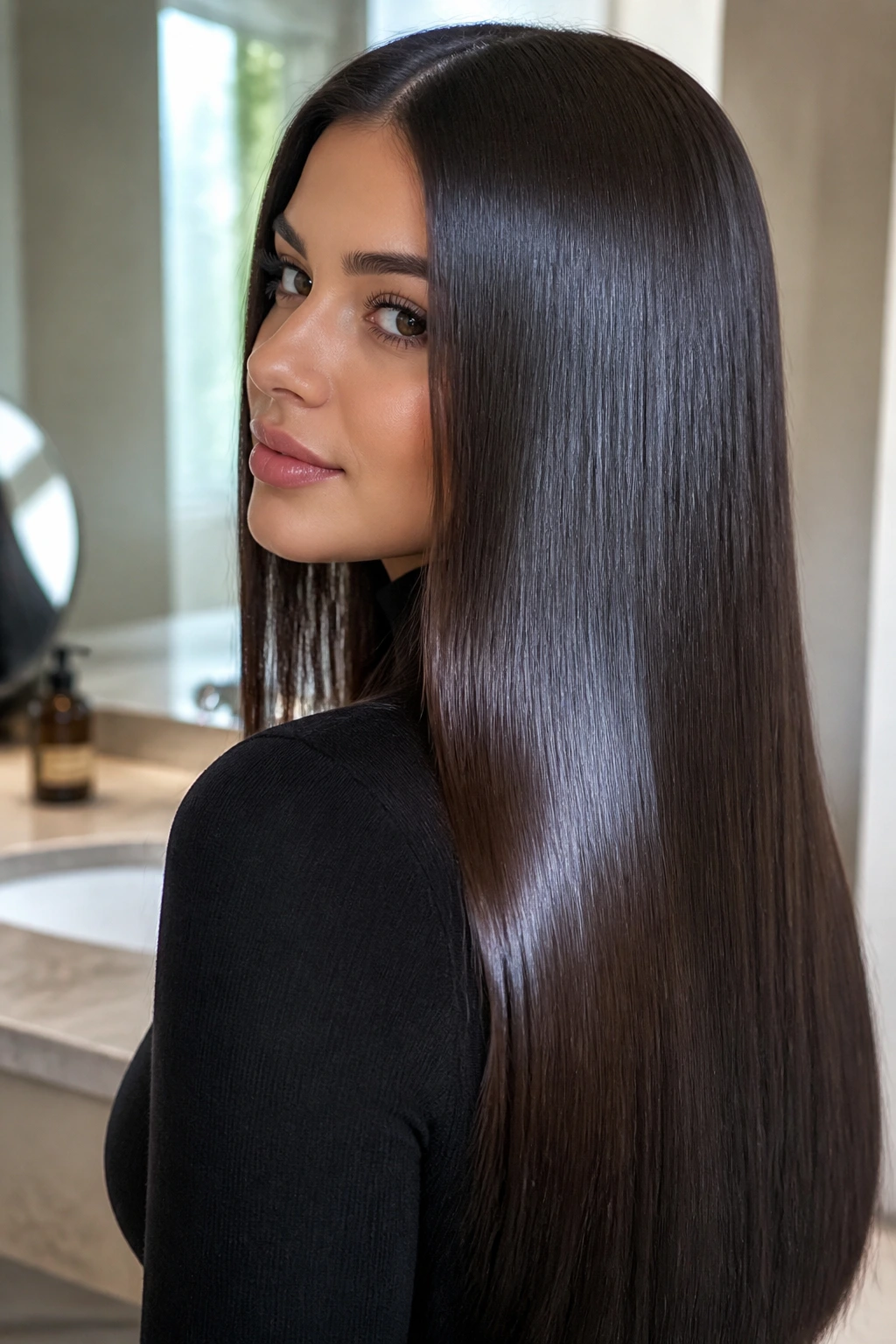
Glass hair is all about shine, precision, and zero fluff at the root. On thick straight hair, it looks best when the hair is clean, dry, and smoothed in small sections. The result should reflect light in a very even way, almost like a sheet of polished fabric.
This style punishes sloppy prep. If you skip the blow-dry or rush the flat iron, the surface won’t look smooth enough. I’d rather see this style done on 85 percent of the head with care than 100 percent of the head with heat damage.
The Cleanest Route
Use a heat protectant with slip, then finish with one drop of serum spread across the palms. Press, don’t rub.
The roots should stay soft and movable. If they look greasy, the style loses its whole point.
12. Deep Side Sweep
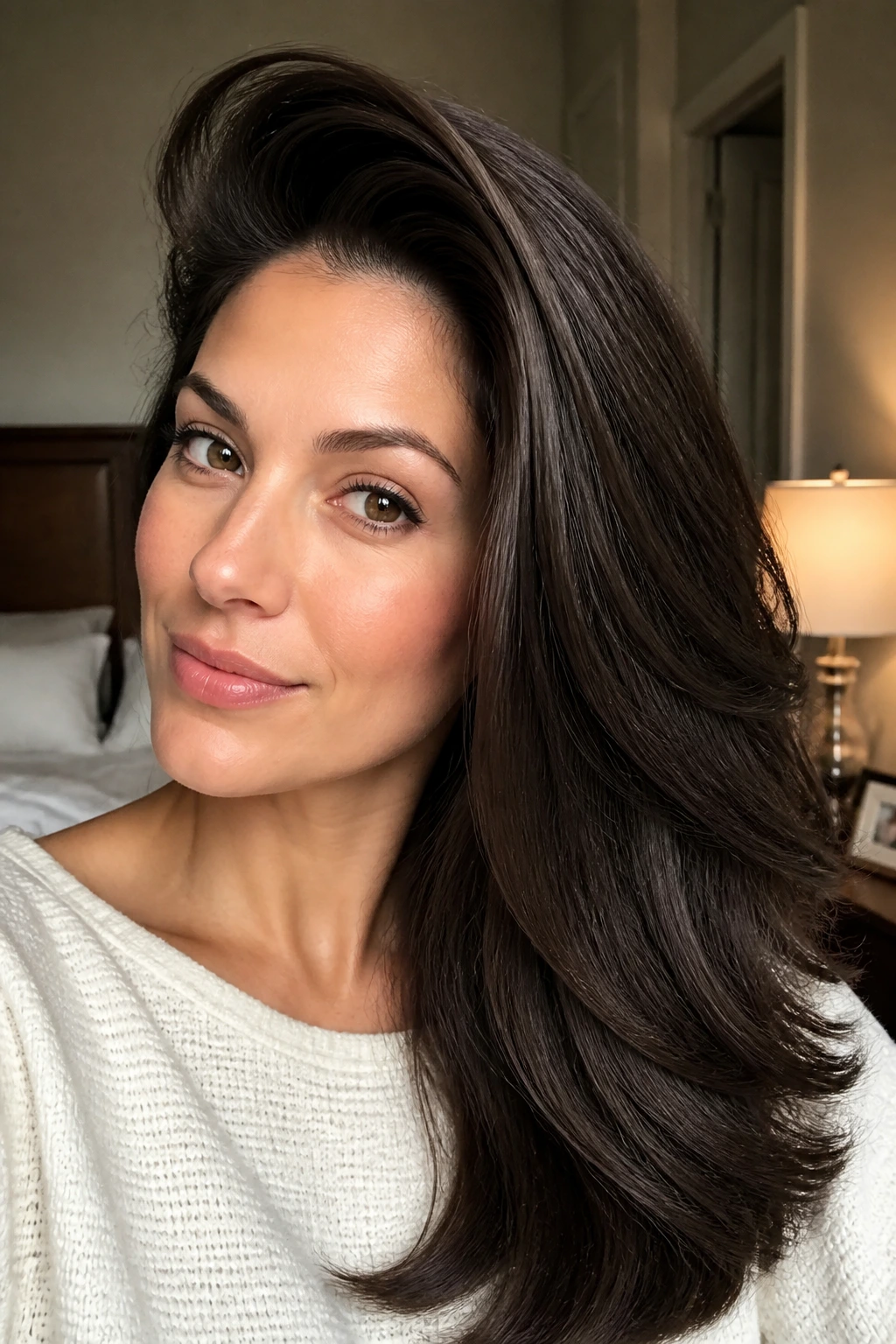
A deep side sweep gives thick hair lift where it needs it and length where it wants it. The style makes the face look a little leaner and gives the crown a stronger shape without asking the hair to do anything unnatural.
It’s also a useful fix for hair that keeps collapsing in the middle. By moving the heavy side over, you change how the weight hangs. That small change can save a style that would otherwise go flat in an hour.
Wear It When
You want straight hair to feel a little more dressed up than a center part allows.
A side sweep pairs especially well with tucked ends or a low ponytail. It gives the style a bit of motion before the rest of the hair even starts moving.
13. Low Sleek Ponytail
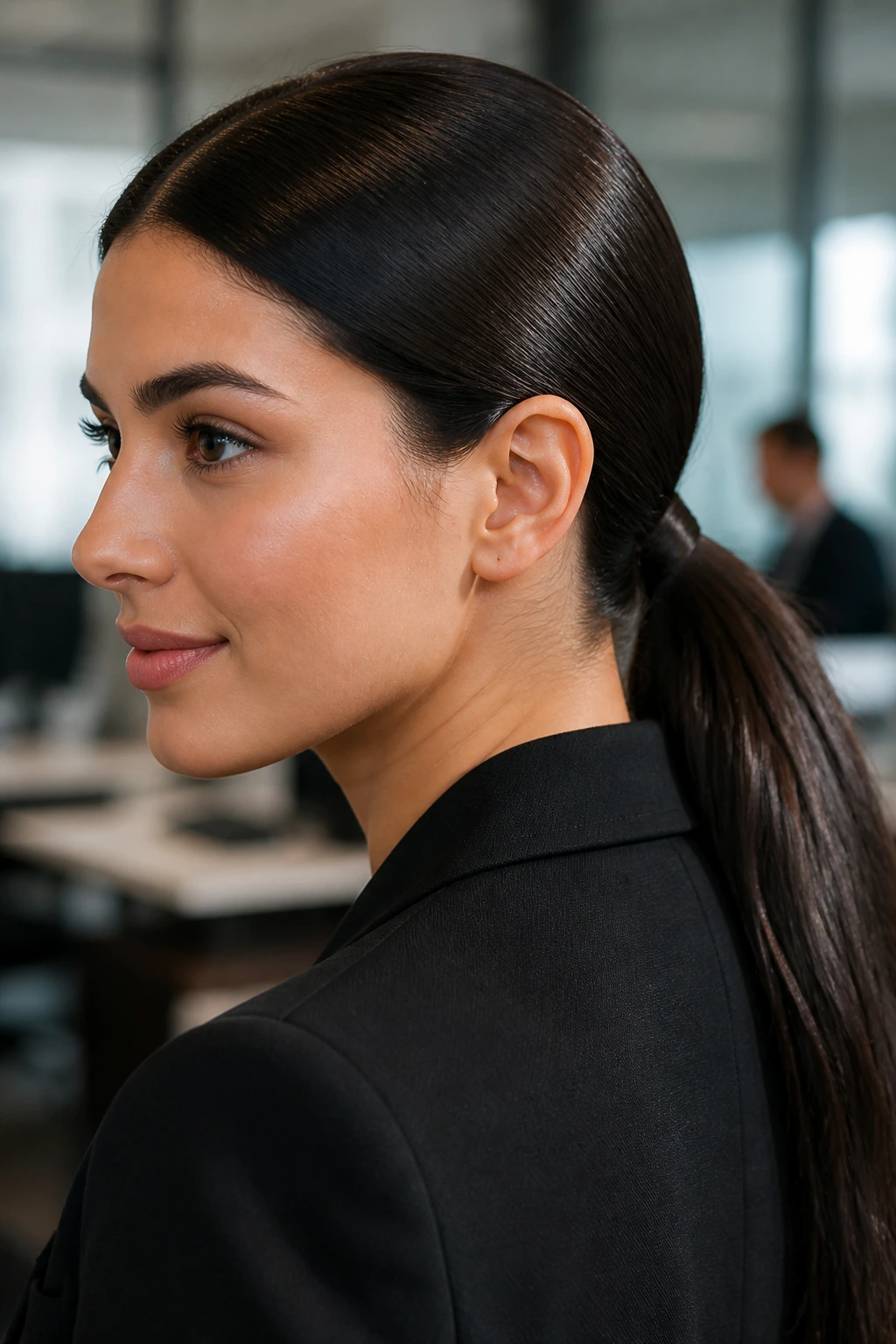
The low sleek ponytail is the workhorse here. Thick hair gives it weight, which keeps the pony from looking stringy or flimsy. The line at the nape stays tidy, and the tail itself hangs with enough substance to look finished.
The trick is smoothing the top before you tie it. Brush the hair back with a boar bristle brush, secure it with a coated elastic, then press any short pieces with a dab of styling cream. If the crown looks bumpy, the whole style suffers.
Best Use
Office days. Dinner. Airport days. Any day where you want your hair off your neck but still want it to look deliberate.
A flat iron pass on the ponytail itself helps the tail stay sharp. Don’t overdo it; one pass is usually enough.
14. Wrapped Low Ponytail
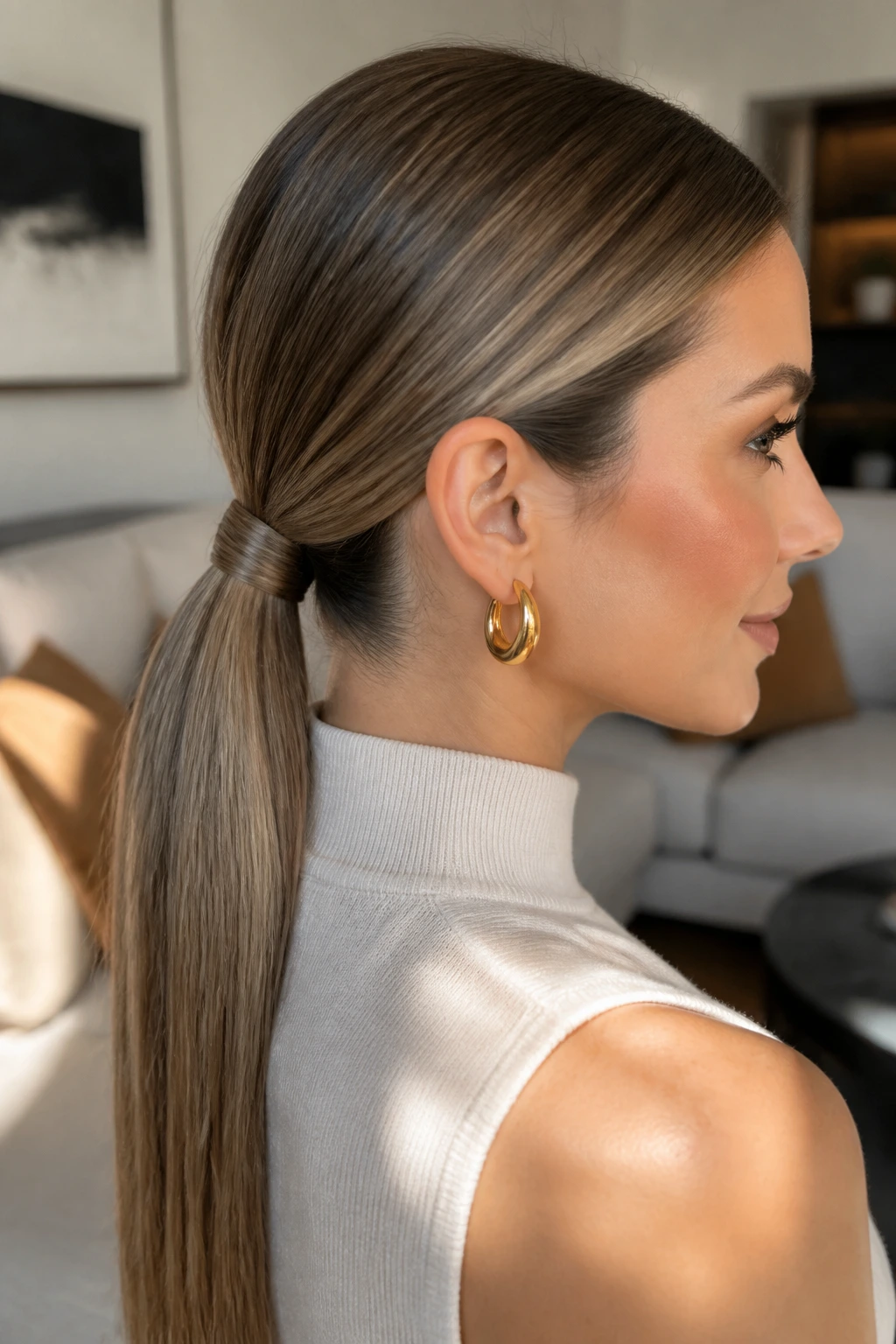
A wrapped ponytail is just the low ponytail with a cleaner finish, and on thick hair that small upgrade matters. The wrap hides the elastic and turns an everyday tieback into something that feels more composed.
Use a one-inch section from underneath the ponytail to wrap around the base, then pin it discreetly or tuck the end under the elastic. Thick hair hides the pin well, so you do not need much hardware.
Why It Works
The wrap adds polish without adding volume. That’s the whole appeal.
If the hair is extra dense, keep the wrap tight and narrow. A thick wrap can start looking bulky, especially if the rest of the pony is already full.
15. High Straight Ponytail
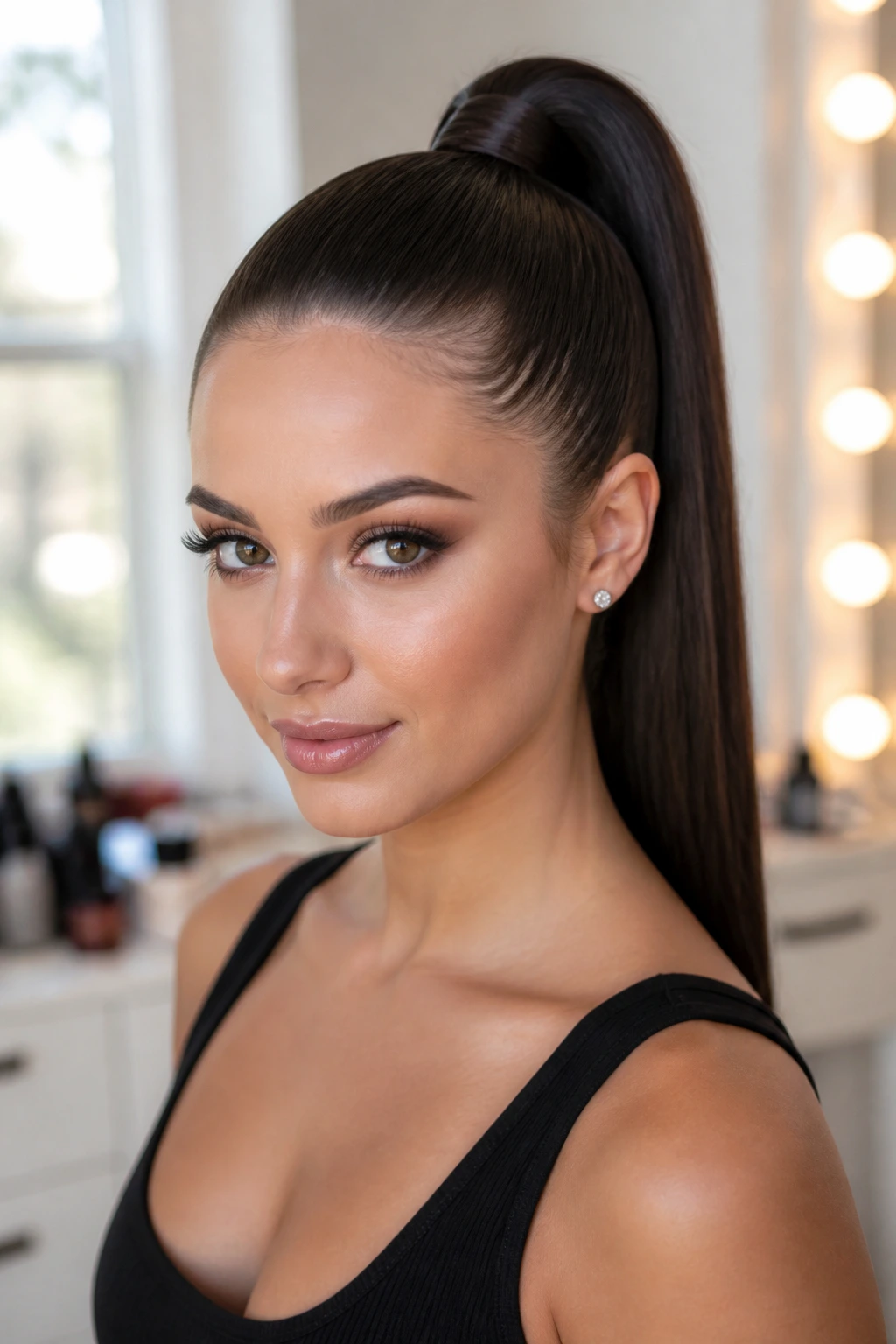
A high ponytail on thick straight hair has a lot of energy. The lift at the crown makes the face look more open, and the tail swings with enough weight to feel intentional instead of wispy.
Pull it tight enough to smooth the top, but not so tight that the hairline starts to buckle. A tiny bit of gel brushed along the edges can keep flyaways down. The tail should hang straight and glossy, not puffed into a cloud at the end.
Good Pairing
This works best with sharp makeup, hoop earrings, or a collar that frames the neck.
If your hair is very heavy, place the pony slightly above the crown rather than dead center. That gives the style more shape and less droop.
16. Bubble Ponytail
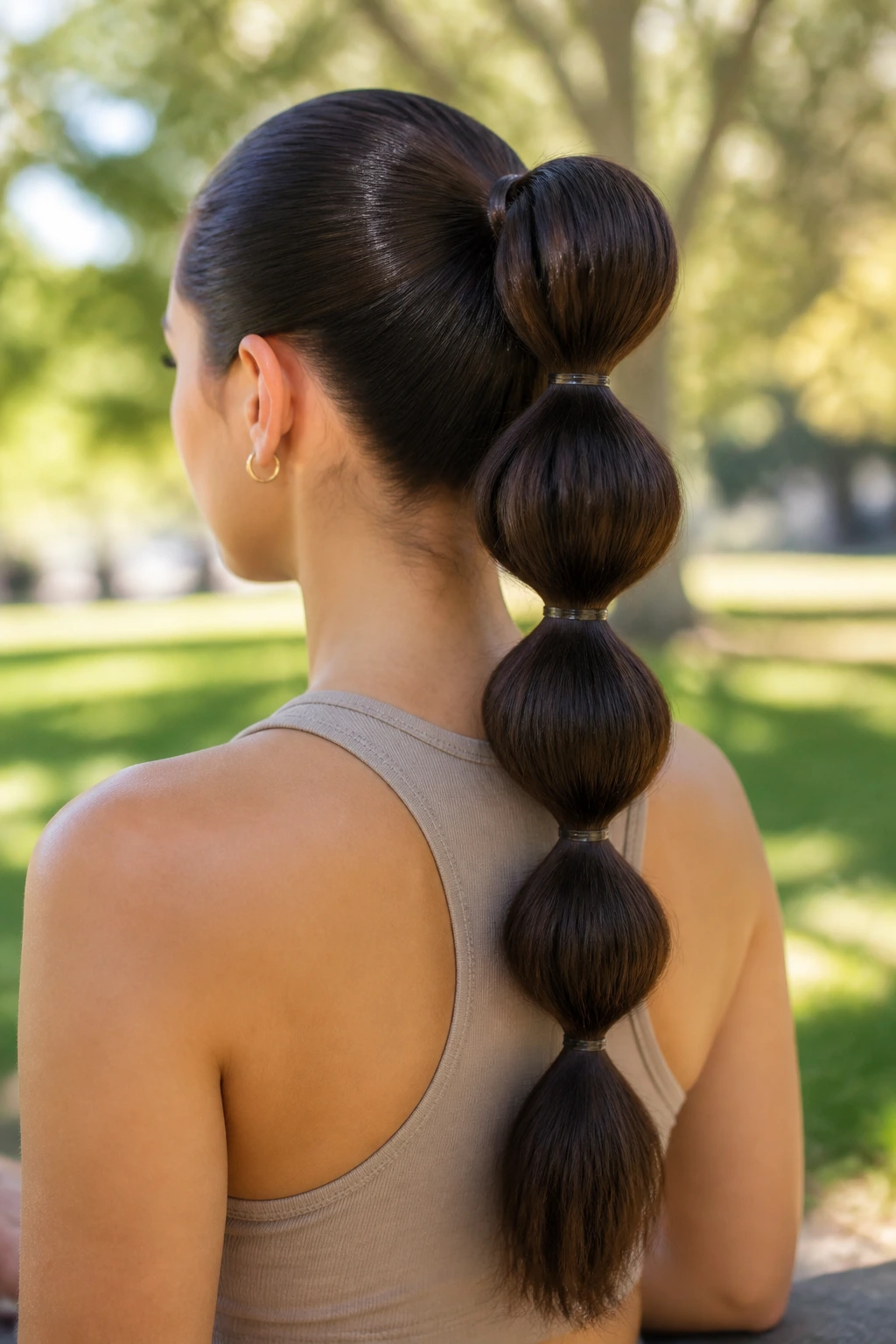
Bubble ponytails look surprisingly good on thick hair because density gives each section enough body to form a visible round shape. Fine hair can look sparse in this style. Thick hair fills it out.
Use clear elastics or slim black ties every 2 to 3 inches, then gently pull each section outward with your fingers until it puffs into a bubble. Keep the spacing even. Uneven bubbles make the whole thing look rushed.
A Practical Note
This style is one of the easier ways to make long straight hair look styled without curling it.
A little shine spray over the finished ponytail helps the bubbles separate visually. Too much product will weigh them down, so keep it light.
17. Half-Up Knotted Style
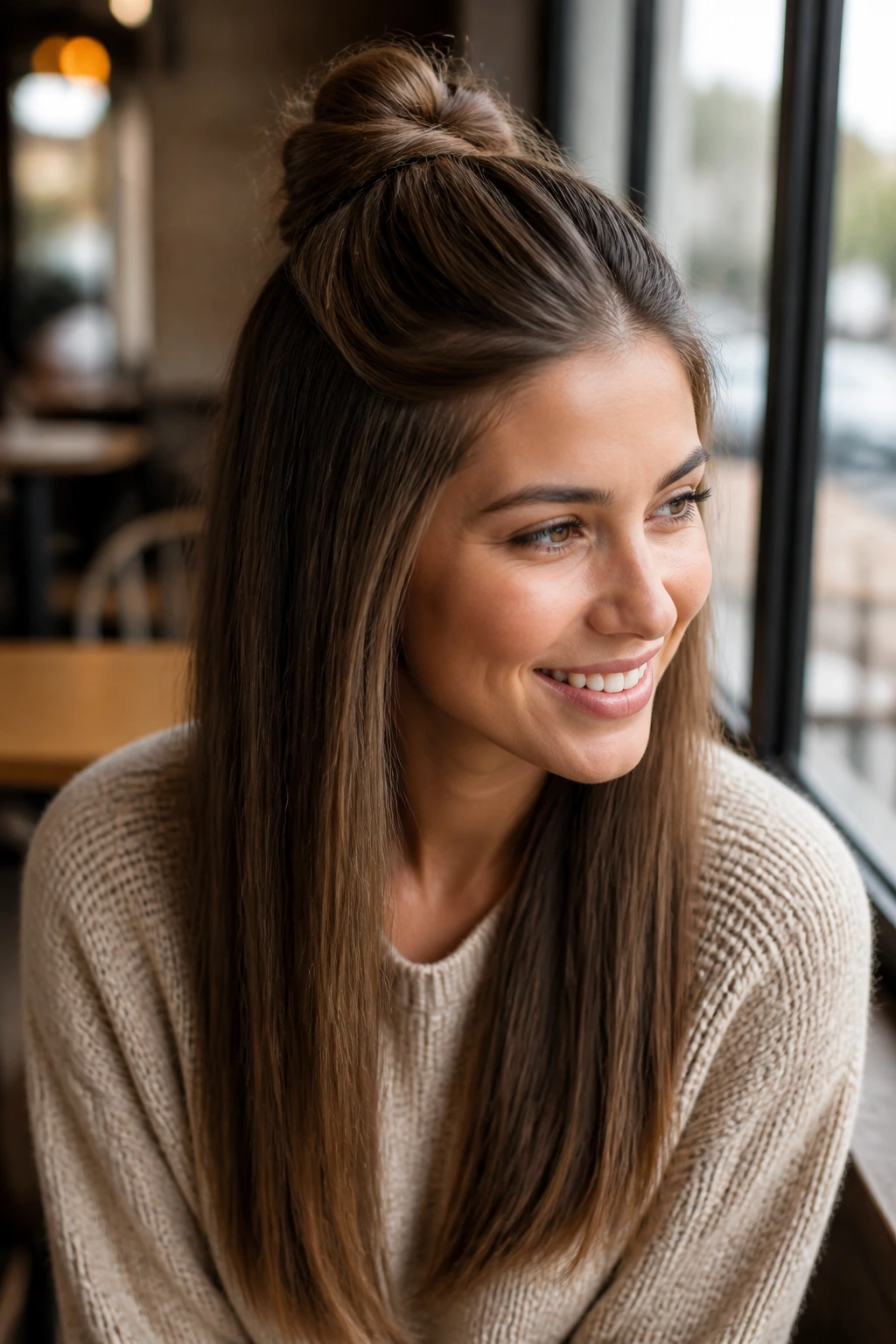
Half-up knots are a good answer when you want hair off your face but don’t want to lose the length. Thick straight hair gives the knot enough substance to stay visible instead of shrinking into itself.
Take the top half, twist it once or twice, then tie it into a small knot and pin underneath. The lower half stays straight and heavy, which keeps the style grounded.
Why It Works
The knot creates structure right at the crown, where thick hair can sometimes feel too flat or too puffy.
I like this style best on day-two hair. The slight texture helps the knot hold, and you don’t need the whole head to be freshly styled.
18. Half-Up Claw Clip Twist
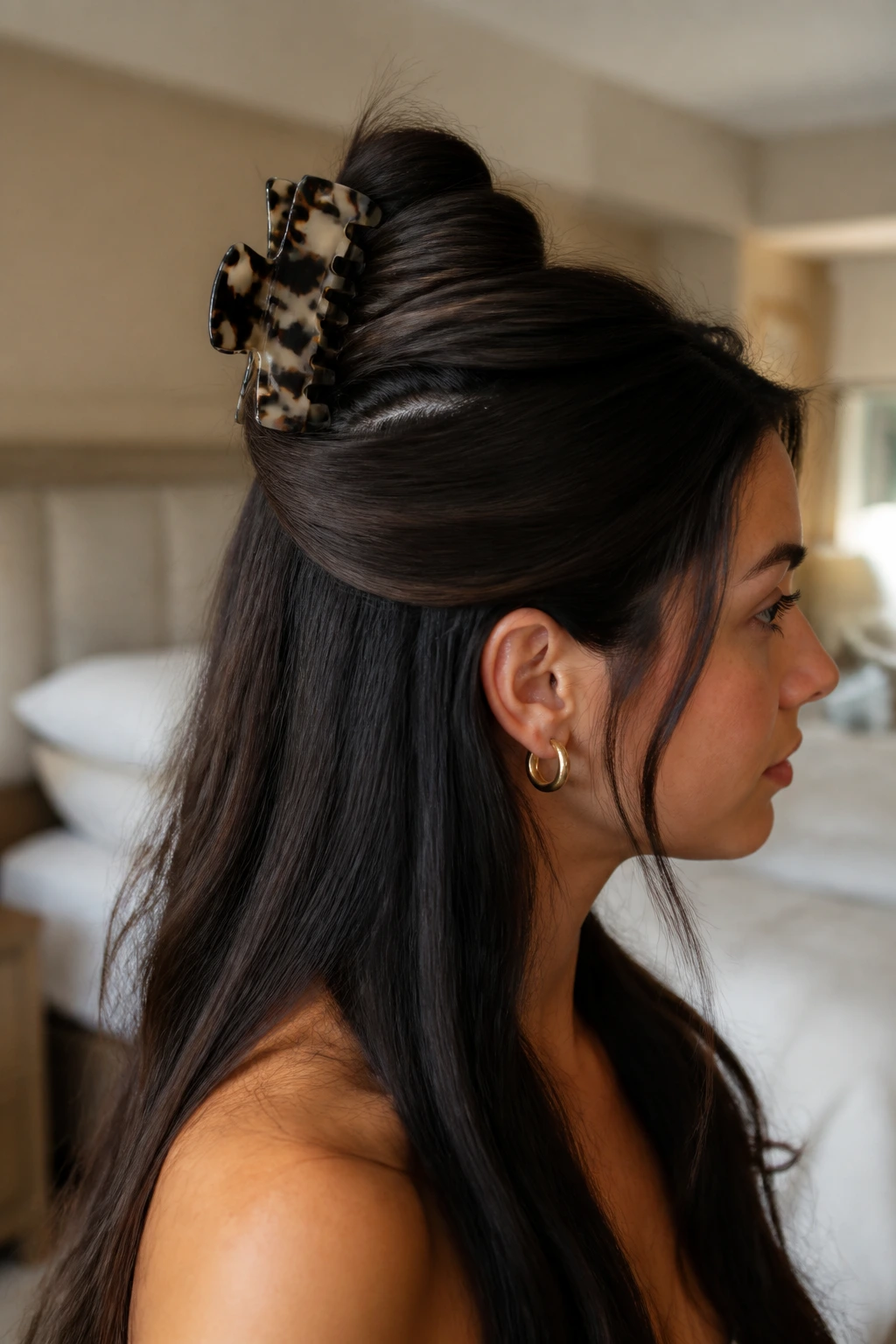
A claw clip can look lazy on the wrong hair. On thick straight hair, though, it can look clean and modern if you use enough tension and place it high enough to show the shape.
Twist the top half once, fold it upward, and secure with a strong clip that actually opens wide enough to grip dense hair. Small clips snap back or slide. Big, sturdy ones earn their keep.
Small Detail
Leave the ends straight and free. That contrast — clipped top, smooth bottom — is what makes the style feel finished.
If the clip keeps slipping, your section is too slippery or too large. Reduce the amount of hair, or add a tiny amount of texture spray before clipping.
19. Half-Up Barrette Sweep
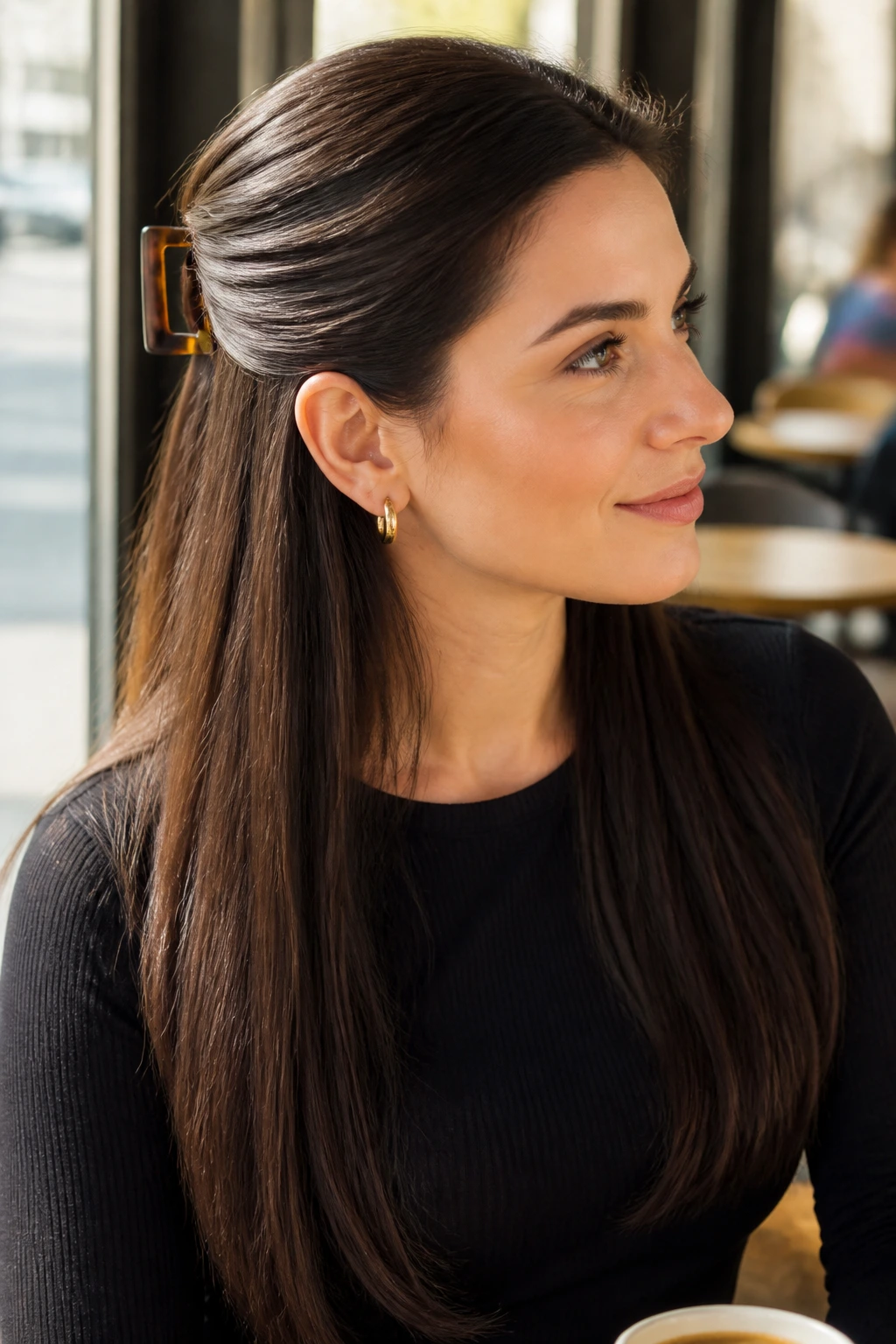
This is the polished cousin of the claw clip style. Pulling the top section back and holding it with a sturdy barrette gives thick hair a clean side-to-side sweep while keeping the length loose.
It works especially well when the hair has a sharp part or a tucked front. The barrette should sit just above the ears or slightly behind them, where the weight is easier to control.
Best For
Brunch, work, or anywhere you want straight hair to look neat without going full ponytail.
Choose a barrette with a strong clasp. Thick hair chews through weak hardware fast.
20. Low Sleek Bun
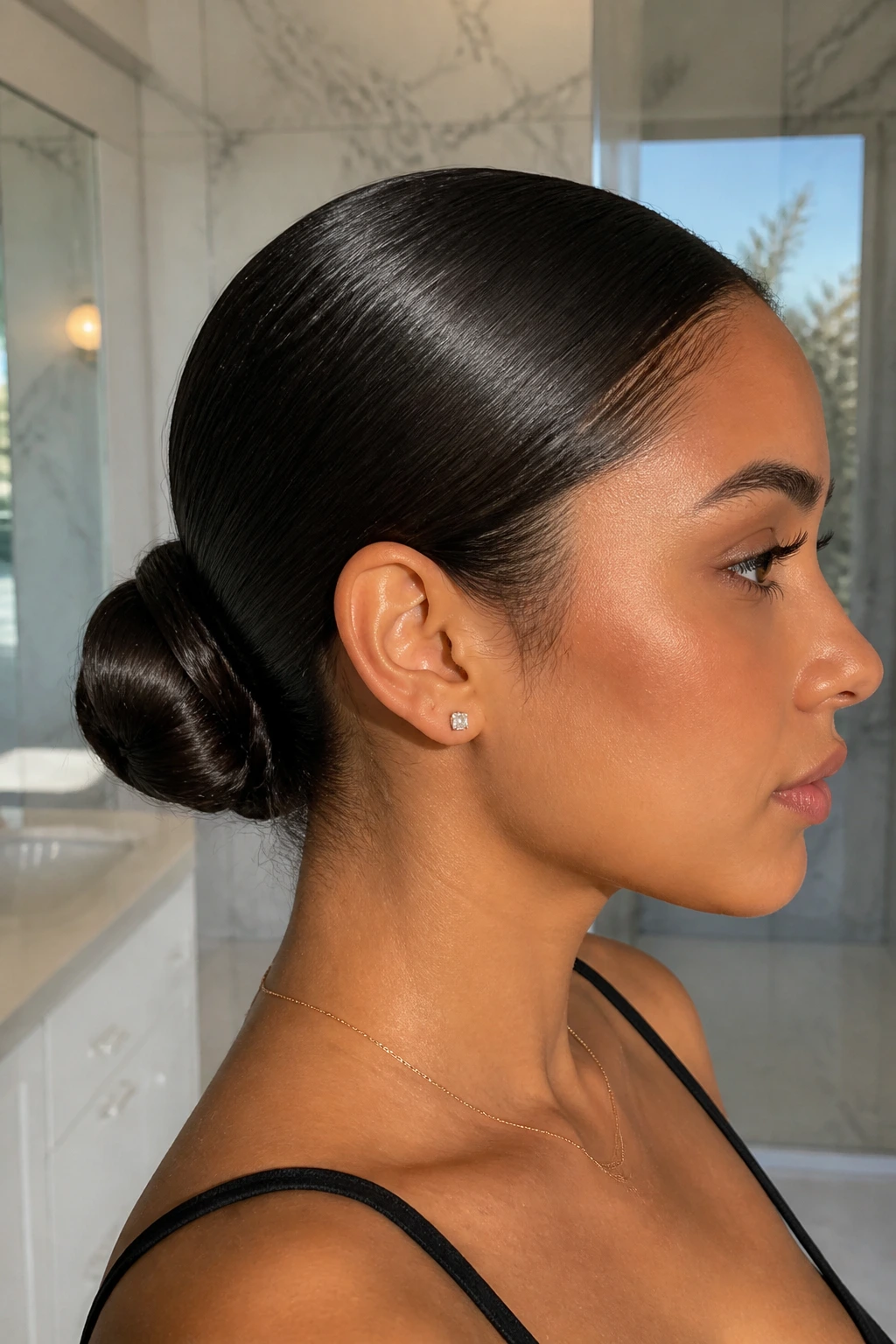
A low sleek bun turns thick hair into a tight knot at the nape, which sounds simple because it is. But simple is the point here. Dense hair makes the bun look substantial, not puny.
Gather the hair as if you’re making a low ponytail, twist it into a coil, and pin it firmly at the base. Smooth the top with a brush and a small amount of gel. The finish should look clean at the scalp and compact at the nape.
What to Watch
Don’t build the bun too high. Thick hair at the crown can make that shape look heavy and awkward.
If a few shorter layers pop out, leave them. Perfectly slick buns can feel severe on thick hair.
21. Low Chignon with Center Part
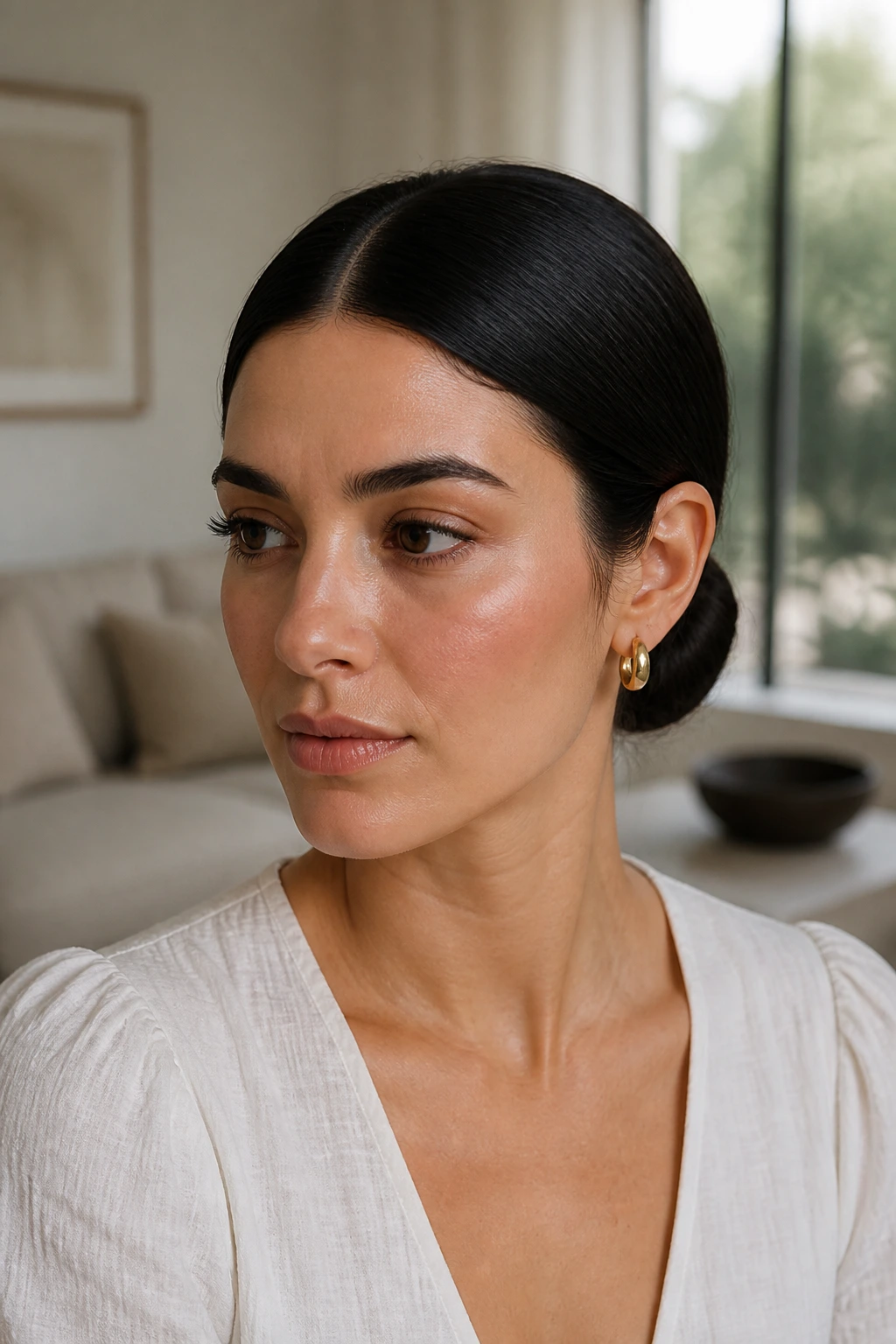
A center part leading into a low chignon is one of the more elegant options for thick straight hair, mostly because the part gives the style symmetry and the chignon keeps all that density contained.
The hair is pulled back low, twisted under, and pinned into a small, neat roll or knot. Thick hair helps the chignon hold its shape. Finer hair often needs padding or extra pieces; thick hair usually does not.
Why It Feels Different
The center part keeps the front calm and orderly. The chignon keeps the back from looking bulky.
A shine cream on the top section before pinning makes a huge difference. The scalp area should look smooth enough that the part stays crisp all night.
22. Braided Low Bun
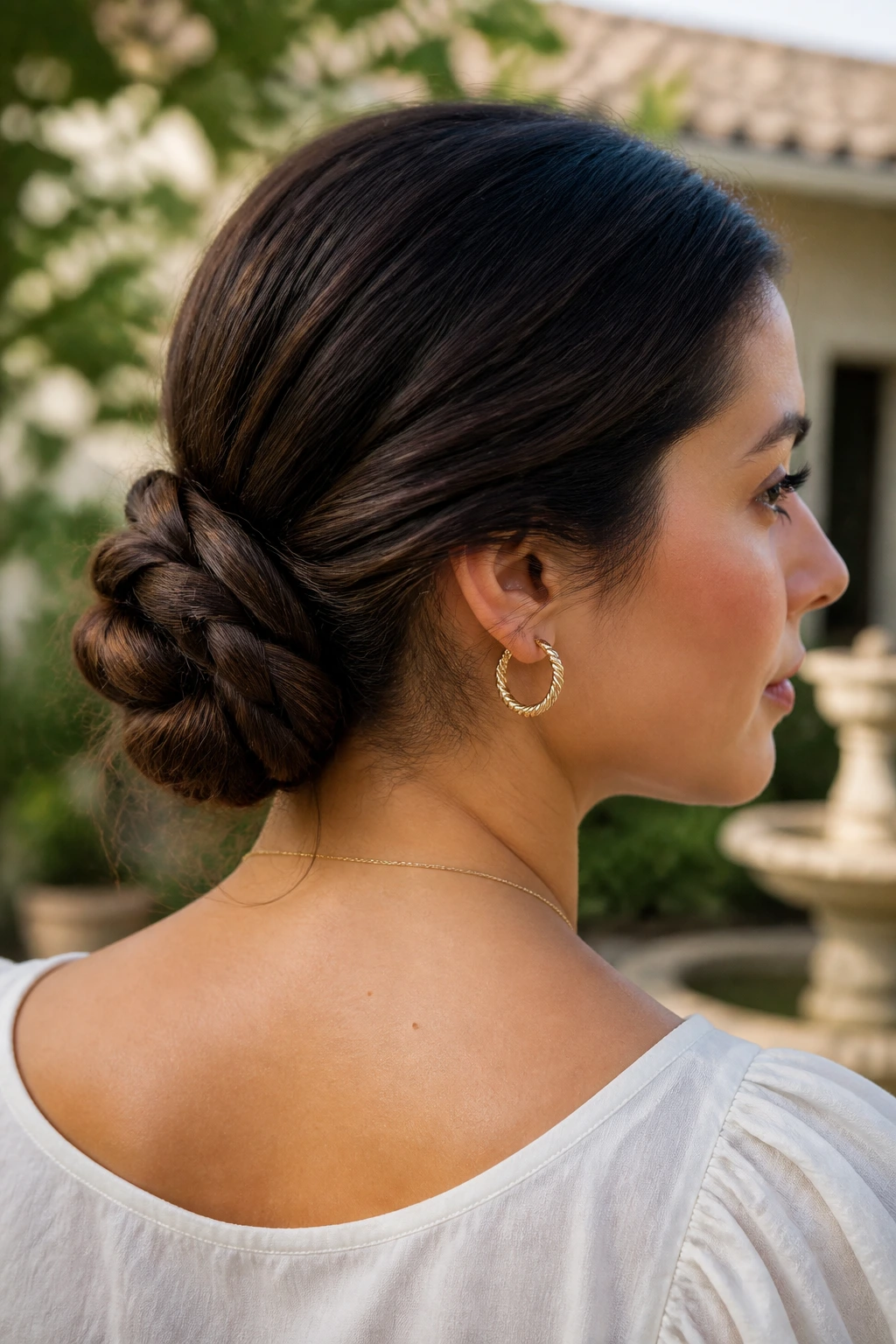
If a plain bun feels too plain, braid the ponytail first and then wrap it into a bun. Thick hair gives the braid texture, and the braid gives the bun grip. That’s a nice little two-step problem solved.
This style is good for hair that’s freshly washed and too slippery to stay in a clean twist. The braid gives the hair something to hold onto, which makes pins behave better.
How to Wear It
Keep the braid fairly tight. A loose braid can puff up and expand once it’s wrapped, especially on dense hair.
A few face-framing strands can soften the style if you want it less severe. Just keep them straight or lightly bent, not curled into a completely different texture.
23. French Twist
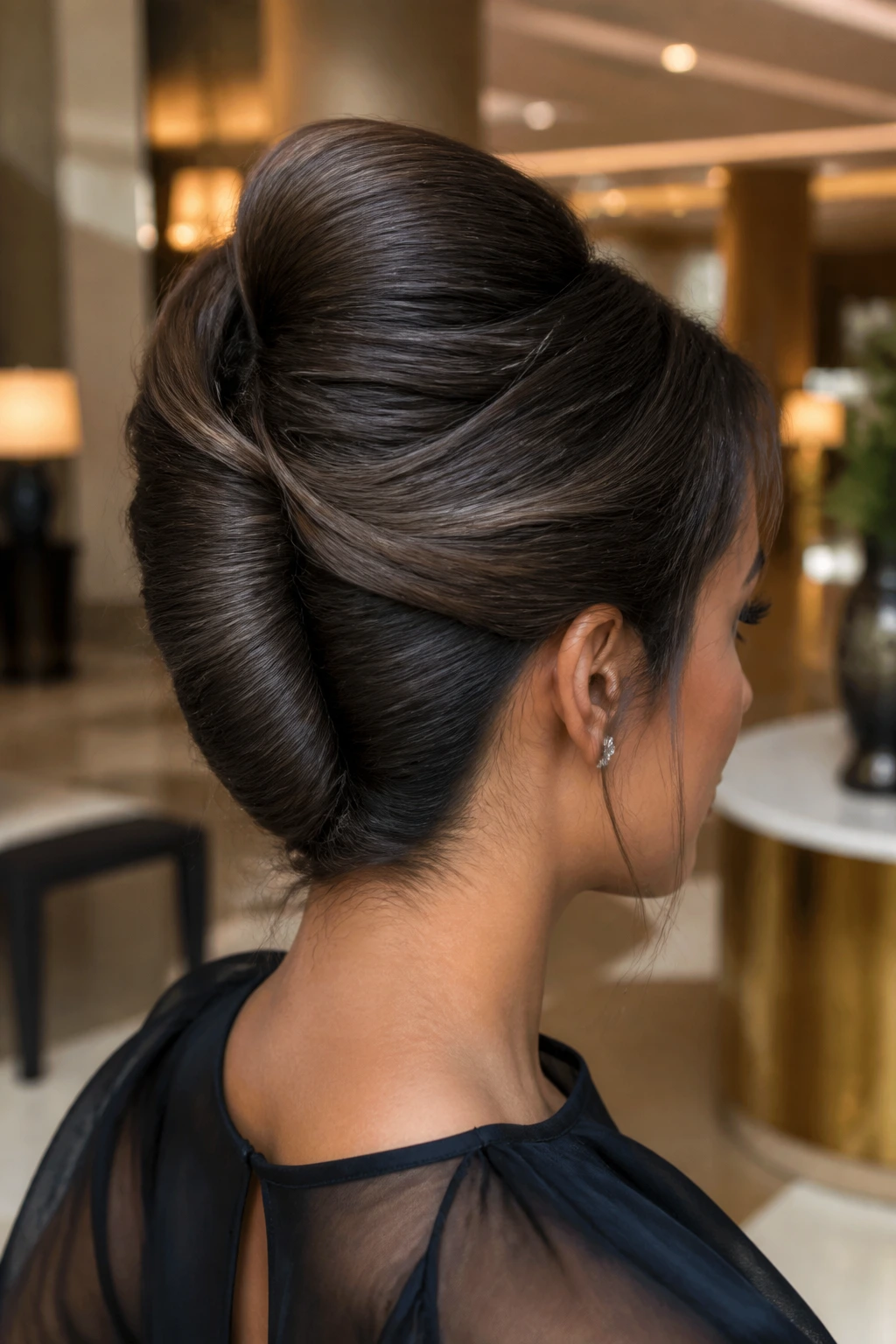
The French twist loves thick hair. Honestly, it does. The density gives the twist the bulk it needs to look intentional, and the length helps the roll hold its shape instead of collapsing into a sad little fold.
Work the hair upward, tuck the ends inside, and secure with pins from the inside out. If your hair is long and heavy, do not try to force the full amount into one twist on the first pass. Build the shape, then pin it down.
What Makes It Work
Thick hair fills the vertical line of the twist. That’s why this old shape still looks strong when thinner hair sometimes needs extra padding.
A comb with fine teeth is useful here, but a little patience matters more. Rush it and the twist turns lumpy.
24. Rope-Braid Half-Up
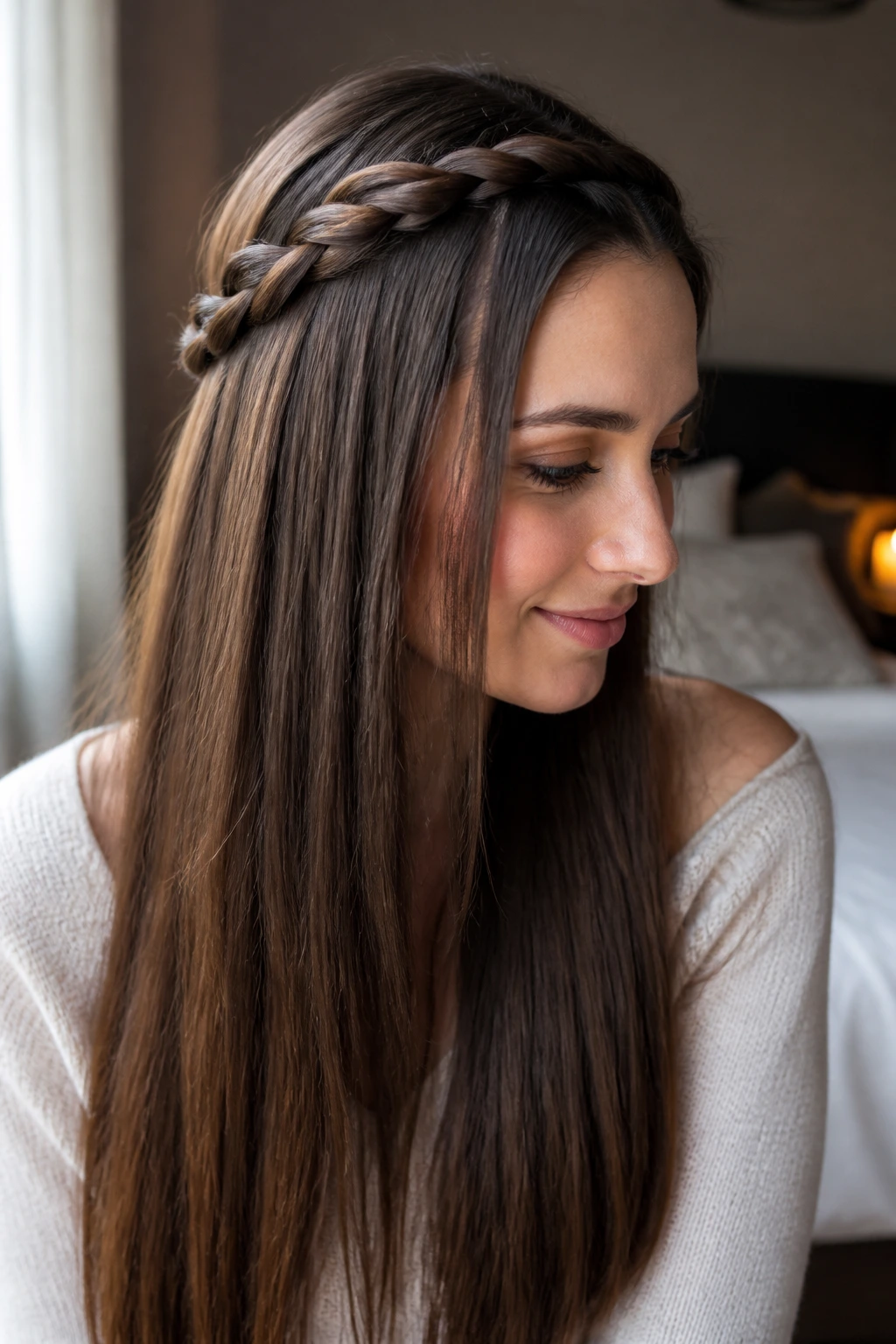
A rope braid is a neat trick when you want a half-up style that stays tidy and doesn’t require three hands. Twist two sections in the same direction, then wrap them around each other in the opposite direction. Thick hair makes the rope feel substantial.
Use this across the top half or on one side only. It keeps the front controlled and leaves the rest straight, which is a nice balance for dense hair that can get too full if everything is pulled back.
Good Pairing
This one plays well with soft makeup and plain tops, because the braid already brings enough detail.
A drop of smoothing cream before twisting keeps stray ends from frizzing out of the braid.
25. Crown Braid into Straight Lengths
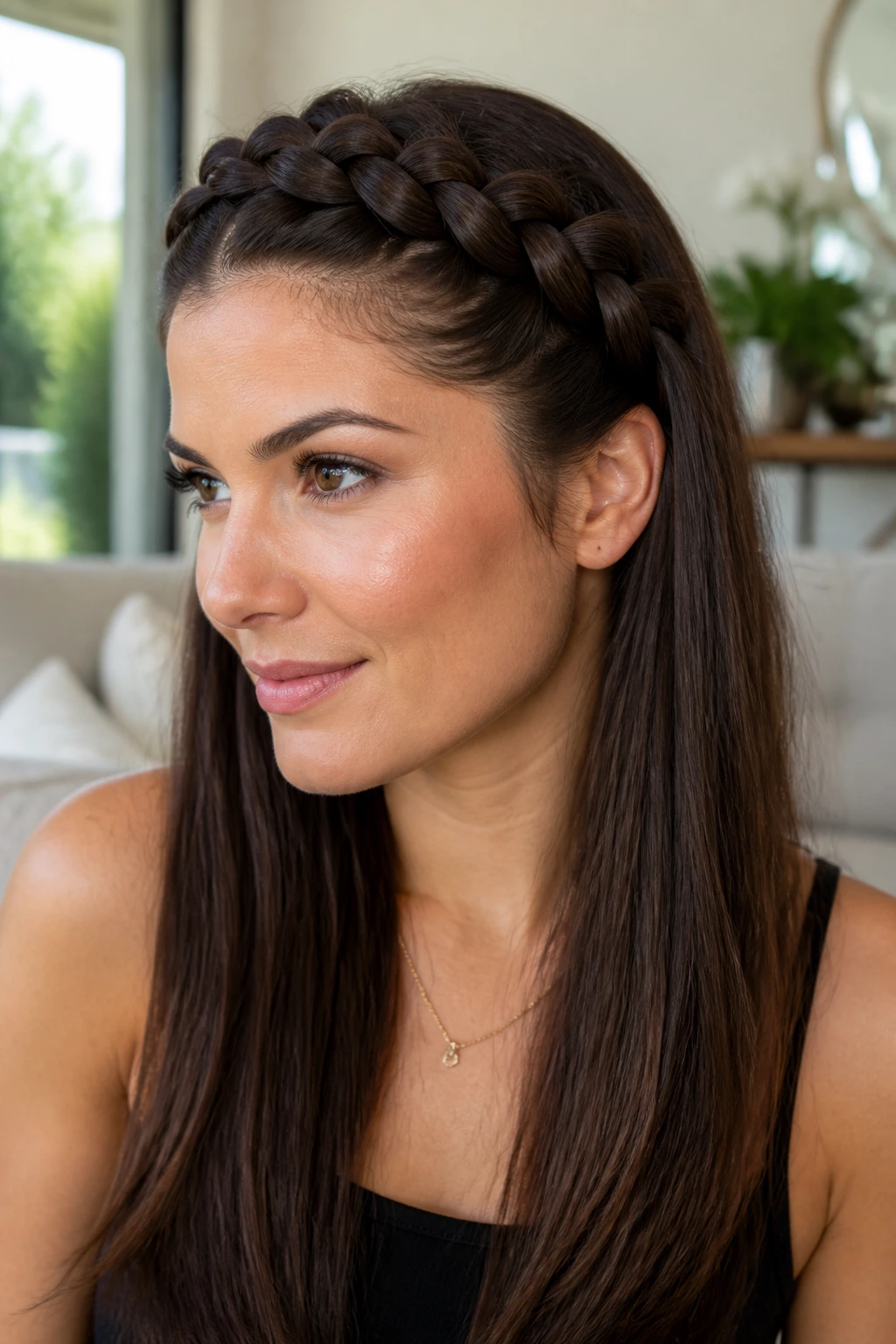
A crown braid is a smart way to get texture near the face without turning the whole head curly or puffy. On thick straight hair, it creates a frame across the top and leaves the lengths long and smooth underneath.
Braid along the hairline from one ear to the other, pin it down, and let the rest fall straight. The result has a little romance, but not the overdone kind. More grounded. Less costume.
Why It Sticks
Dense hair gives the braid enough thickness to show. Thin braids can disappear into the rest of the hair; thick ones read clearly from a distance.
Keep the braid snug and the rest of the hair polished. That contrast is what makes the style work.
26. Side Braid and Straight Tail
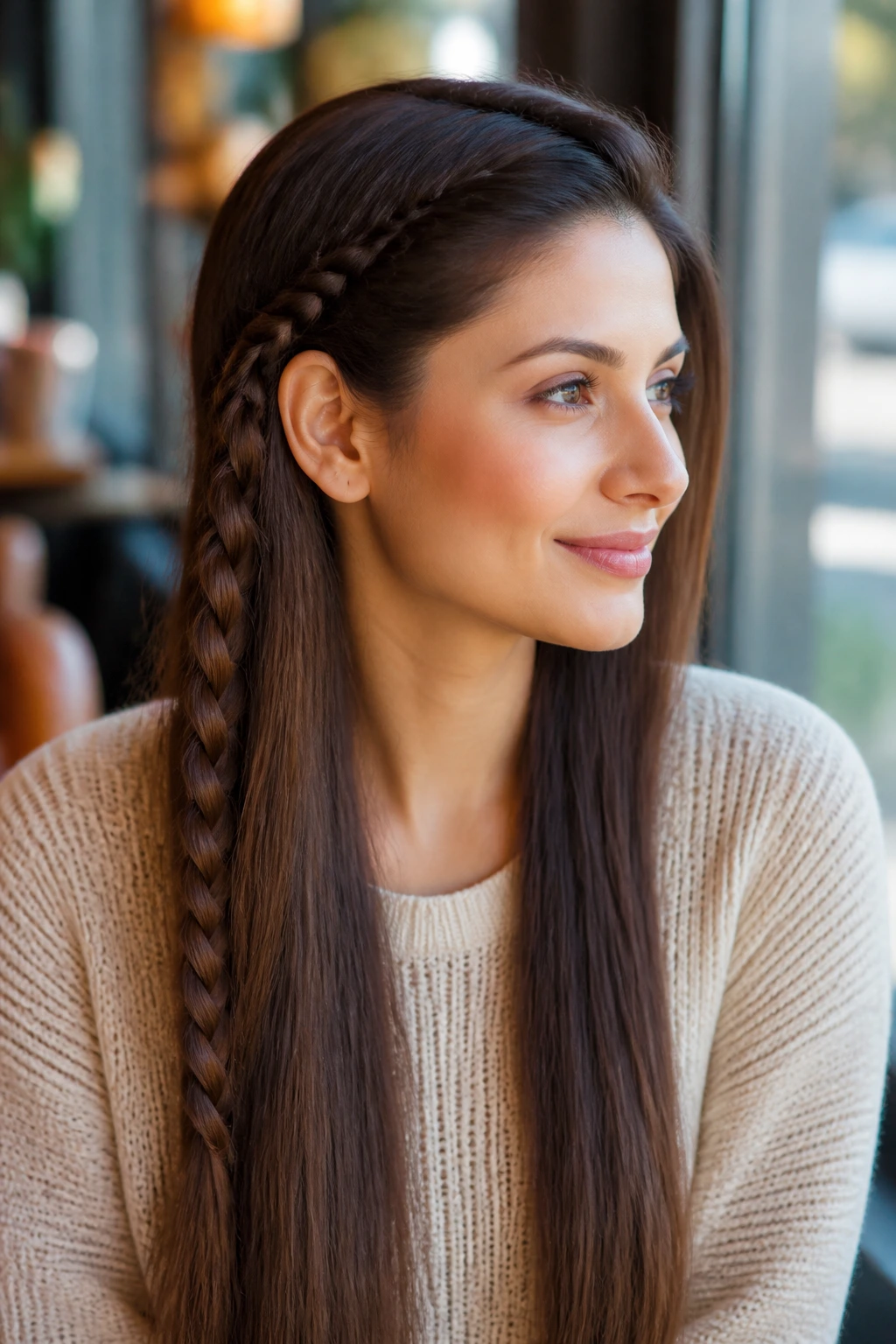
This style keeps the bulk of thick hair under control while still showing off length. Braid one side back from the temple or just behind the ear, then leave the rest straight and loose.
The braid acts like a visual anchor. It pulls the eye toward the face and away from any heaviness at the roots. If your hair is layered, this can also keep shorter pieces from flaring around the cheeks.
Try This When
You want a little texture but don’t want to commit to a full braid.
It works better if the braid is tight enough to stay slim. Thick side braids can get bulky fast, and that starts competing with the straight tail.
27. Scarf-Wrapped Straight Hair
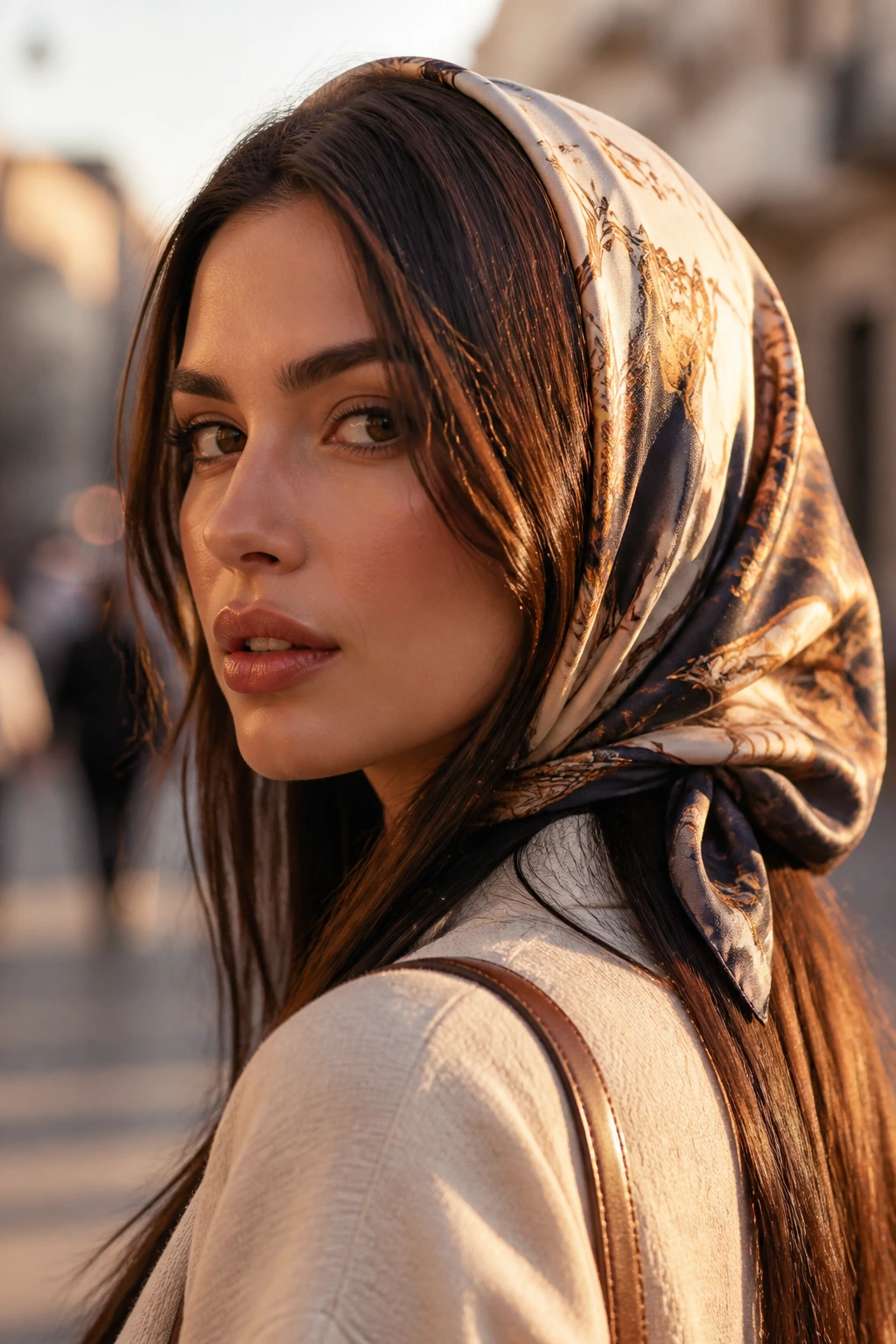
A scarf can save a plain straight style when the hair itself is cooperating but the outfit needs a little more thought. Thick hair holds a scarf in place better than fine hair, which means you can actually tie one without it slipping off every 20 minutes.
Wrap it around the head, tie it under the hair or at the nape, and let the straight lengths hang beneath. The scarf becomes the detail. The hair becomes the base.
Best Use
On days when the roots are fine but the mid-lengths need help.
Choose a scarf with enough width to stay visible. A tiny silk strip disappears into dense hair; a wider band has more presence.
28. Headband Tuck
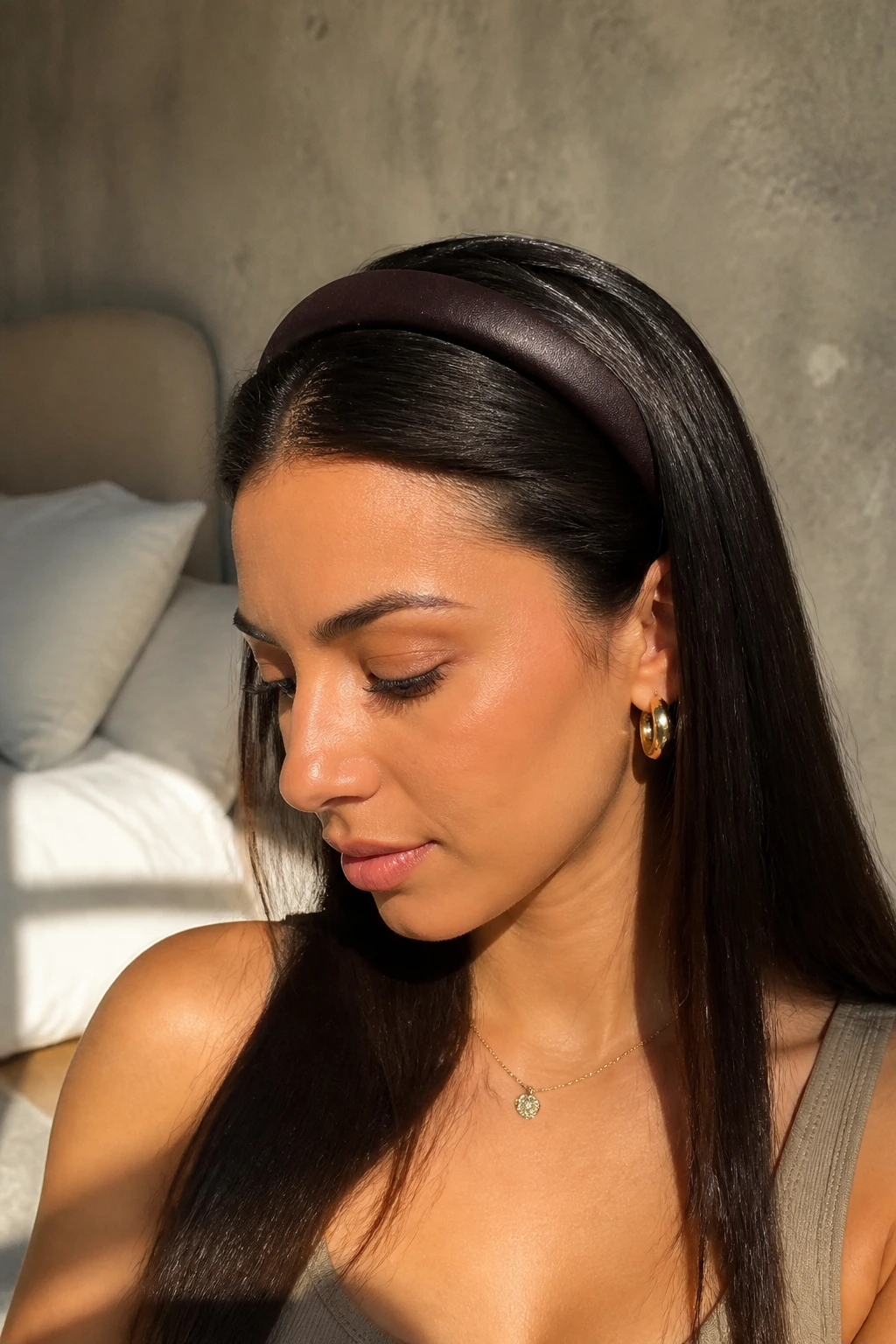
The headband tuck is one of the easiest ways to make straight thick hair look intentional with almost no heat at all. Slide on a structured headband, then tuck the front lengths behind it so the hair falls in a smooth line under the band.
It works best when the hair has a little bend from a previous blowout. Too much clean slip and the band slides. Too much texture and the tuck gets messy. Medium is the sweet spot.
Why It’s Useful
This is the style you reach for when the front is flat and the ends are still decent.
A padded or wrapped headband gives thick hair more hold than a narrow plastic one. The width matters.
29. Metal Barrette Sweep
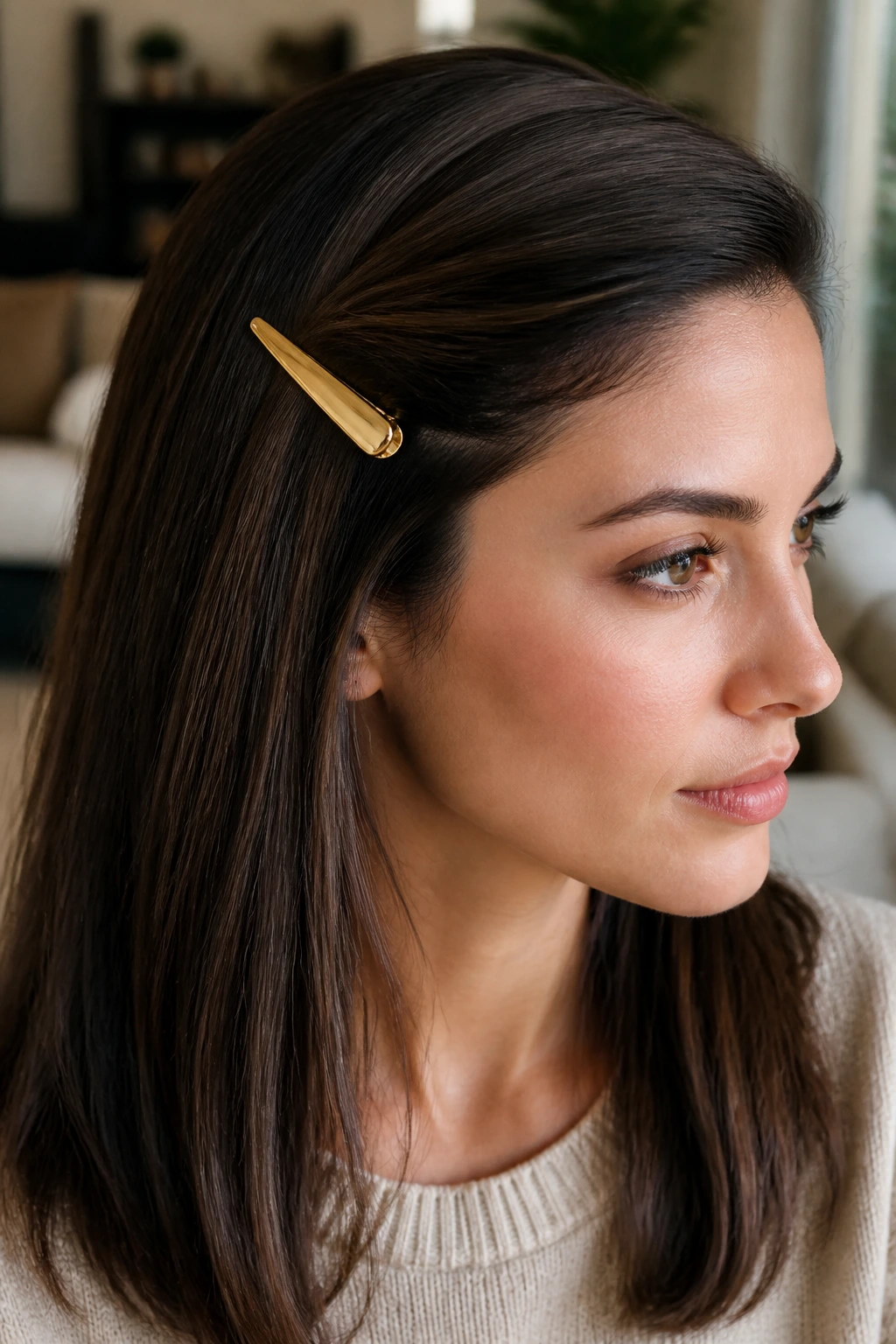
A single strong barrette can hold a shocking amount of thick hair if you place it where the tension is easiest, usually just above the ear or at the back of the head. The sweep creates a clean diagonal line that looks finished with almost no effort.
I like this for hair that has been straightened but not blasted into stiff perfection. A little movement keeps the style from feeling too formal.
Small Win
This is a low-time style with a high payoff.
If the barrette slides, the hair underneath is too smooth. Add a touch of texture spray or twist the section once before clipping it in.
30. Wet-Look Slick Back
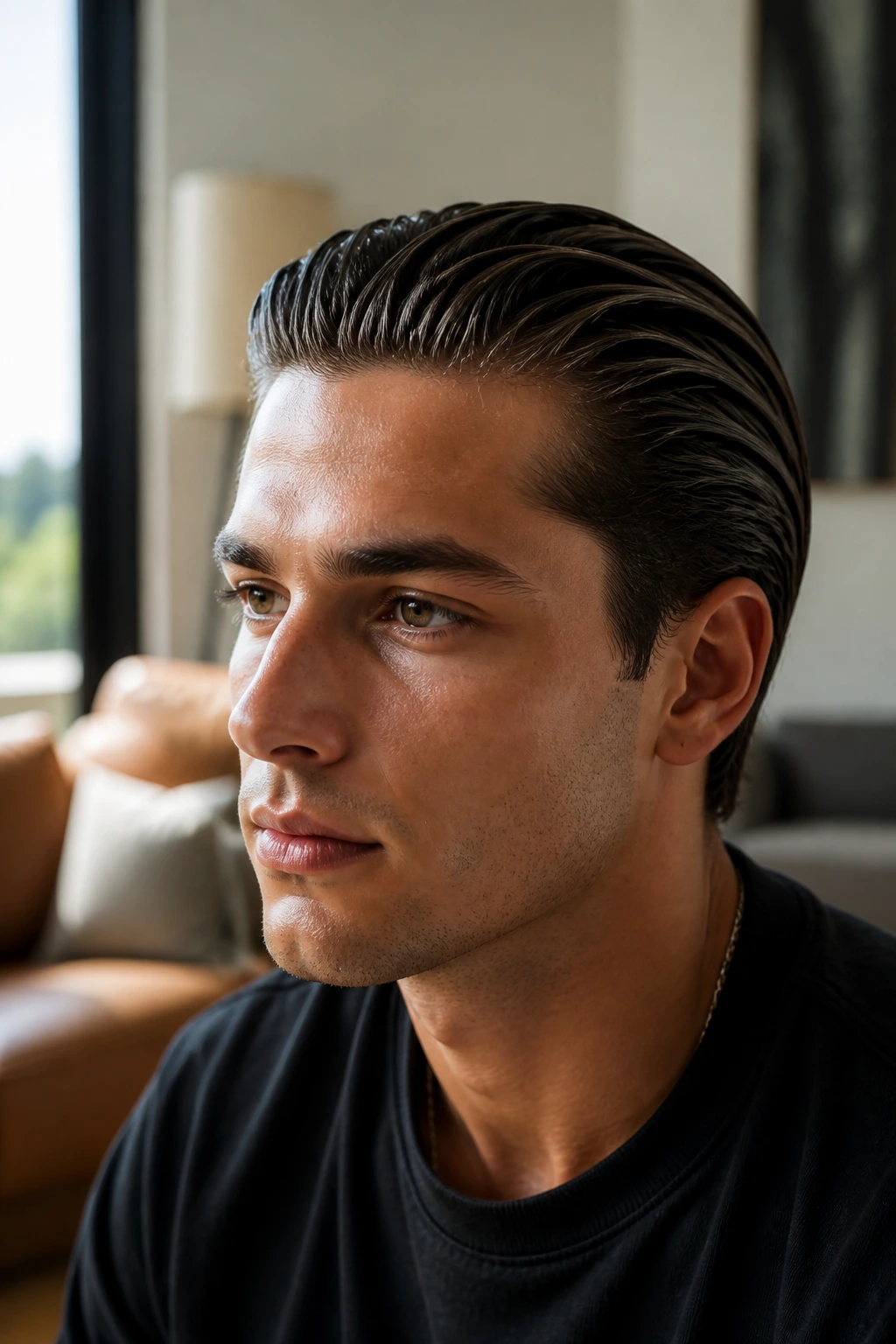
Wet-look hair on thick straight hair can be stunning if the product is controlled. The style depends on smooth roots, a glossy finish, and enough hold to keep everything pushed back without turning crunchy.
Use gel at the front and a light cream through the top, then comb the hair back in sections. Thick hair can hold the wet look longer than fine hair, which makes this one of the few styles where density is actually a gift. The finish should look sleek, not coated in glue.
A Warning
Too much product creates a helmet. That’s the opposite of the effect you want.
This is best for evenings or shorter outings, because the style looks best when it stays fresh and smooth.
31. Micro Braids at the Hairline
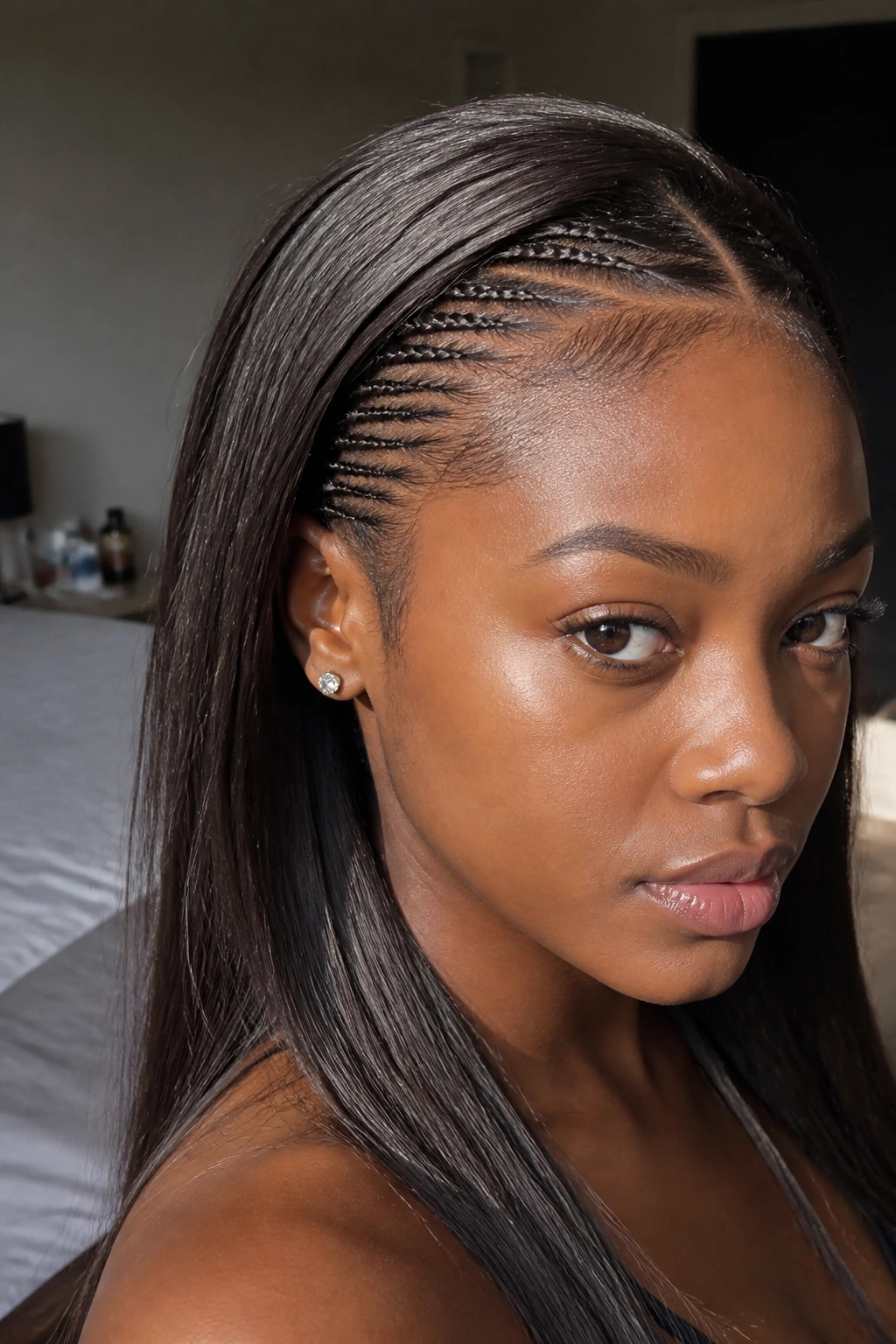
Tiny braids near the temples or along the part line add detail without changing the whole hairstyle. Thick hair gives the braids enough body to show up, and the rest of the hair can stay straight underneath.
I like a pair of micro braids pulled back into the hair or tucked behind the ear. They stop the front from feeling plain, which is useful when the length is straight and heavy.
Why It’s Smart
You get texture where you want it and smooth length where you don’t.
Keep the braids small and neat. If they get too wide, they start competing with the rest of the style and lose the subtle effect.
32. Hidden Braids Under Straight Lengths
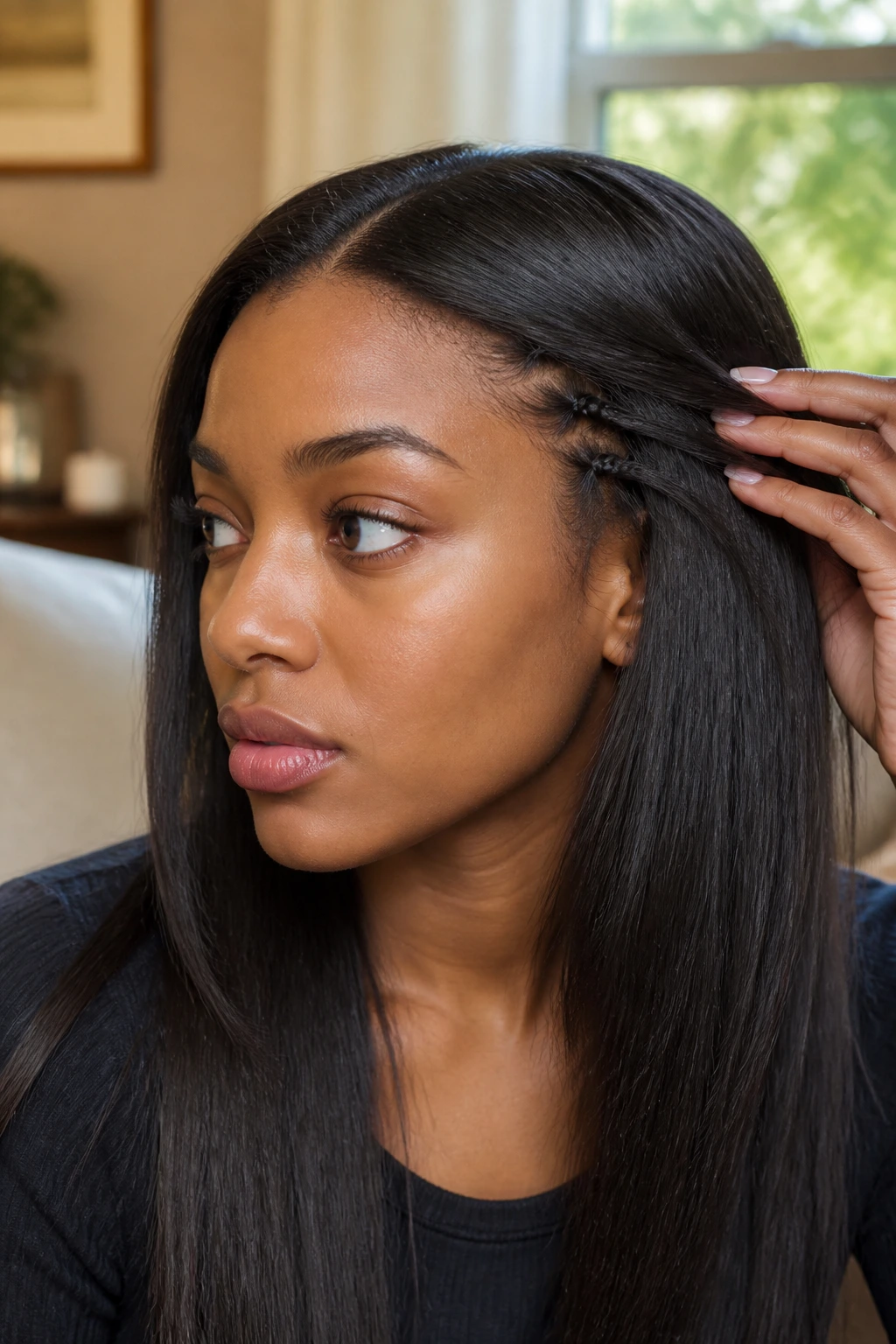
Hidden braids are the opposite of showy, and that’s exactly why they work. Braid a few sections underneath the top layer, then let the smooth hair on top fall over them. The movement shows only when the hair shifts.
This works well on very thick hair because there’s enough density to hide the braids cleanly. Fine hair often reveals too much of the braid pattern; thick hair can keep it tucked away.
Good Use
Use this when you want interest without changing the overall outline.
A little texturizing spray on the braid sections helps them stay compact under the surface layer.
33. Money Piece with Straight Hair
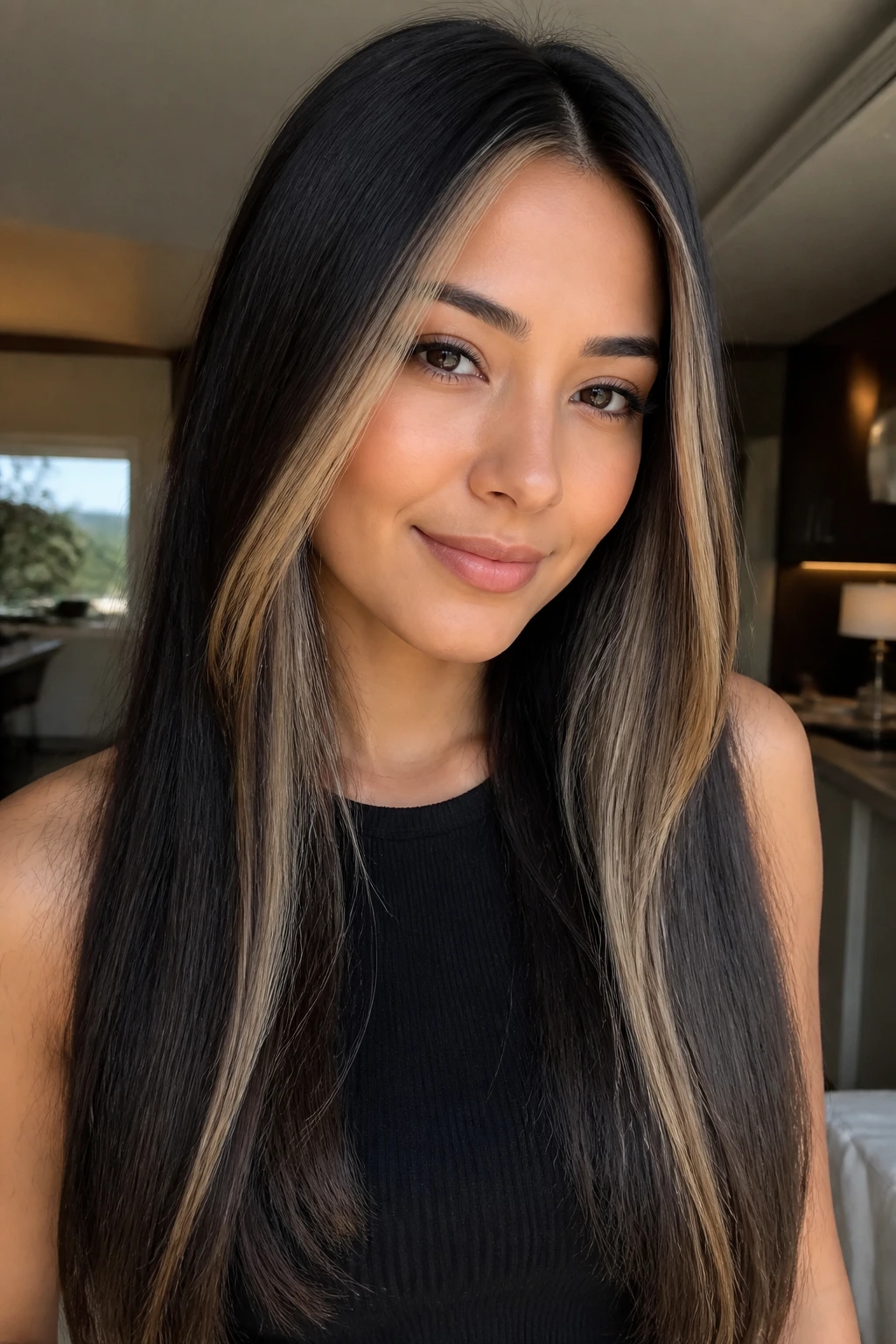
A bright money piece around the face can make thick straight hair look more open and less heavy, especially if the rest of the length is dark or one-tone. The contrast draws the eye to the front and gives the style a bit of lift without a new cut.
This is less about movement and more about shape. Even a subtle color frame can make the hairline look lighter and the part feel cleaner.
Why It Helps
Thick hair can swallow detail. A money piece gives the face a clear border.
The effect is strongest when the front pieces are styled straight and tucked slightly away from the cheeks. That keeps the color visible.
34. U-Shape Cut with Straight Finish
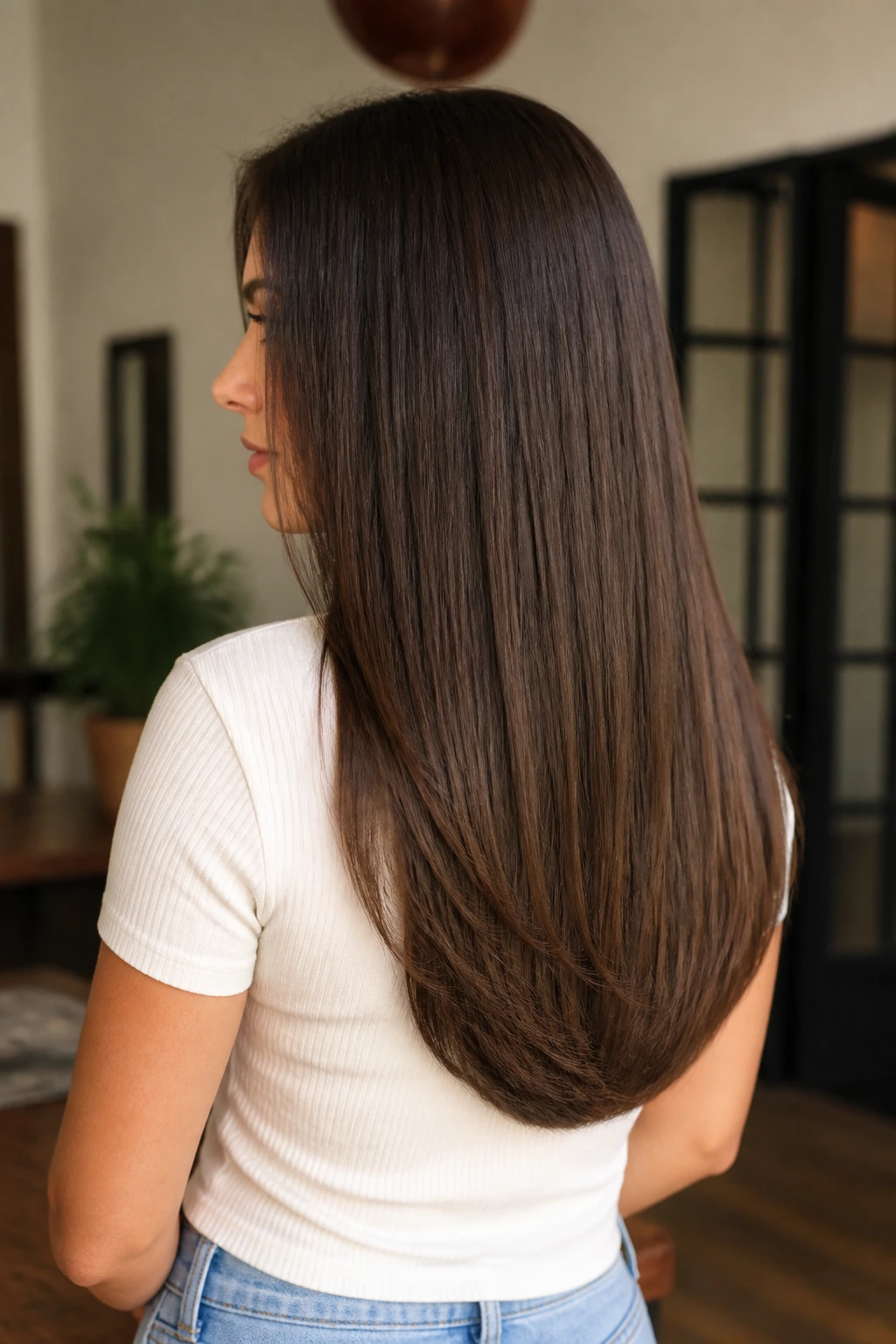
A U-shaped cut is one of the quieter fixes for thick hair that feels too wide at the bottom. The curve softens the back line while keeping the overall length intact, which is handy if you like straight hair but hate a boxy hem.
It looks especially good when blow-dried smooth and worn loose. The U line lets the sides frame the body a little, while the back keeps enough weight to lie flat.
What to Ask For
Ask for a soft U, not a dramatic scoop. Too much curve can look dated fast.
This shape is useful if the hair expands at the ends after a few hours. The curve keeps that expansion from reading as a shelf.
35. Soft Layers with Straight Blowout
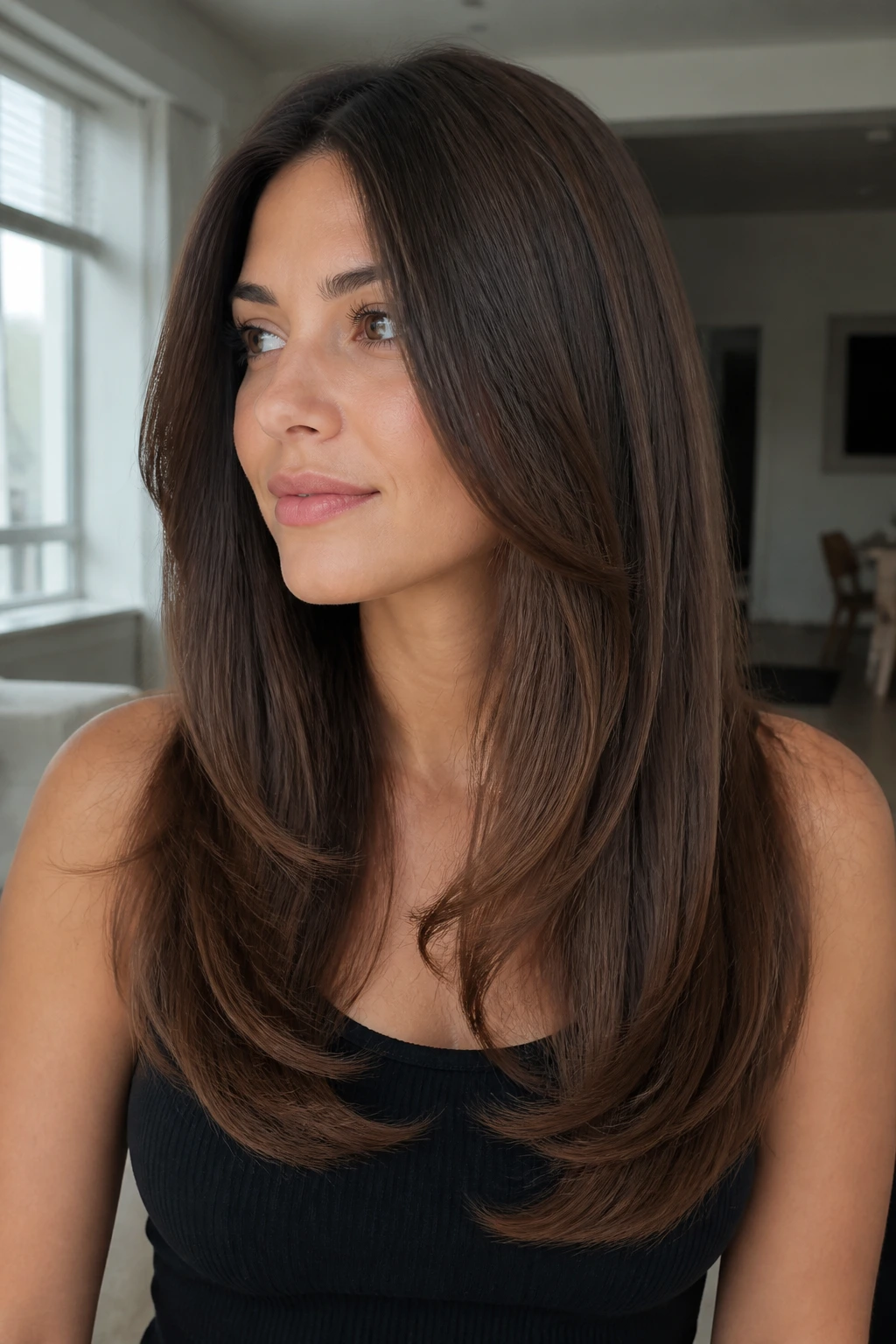
Soft layers are the last stop for thick straight hair that needs movement but not thinning. The layers should be long enough to keep the shape intact, and the blowout should leave them smooth rather than piecey.
This is the style I reach for when dense hair feels too heavy for one-length cuts but I still want the ends to look full. The layers remove just enough weight to let the hair fall, while the straight finish keeps the whole thing calm.
How to Wear It
Use a round brush or a large blow-dry brush to guide the ends inward or straight down. Keep the airflow moving from roots to tips so the cuticle lies flat.
A light mist of flexible spray near the crown gives the style a little lift without making the layers separate into little frizzy pieces.
What Makes Thick Hair and Straight Styles Work So Well Together
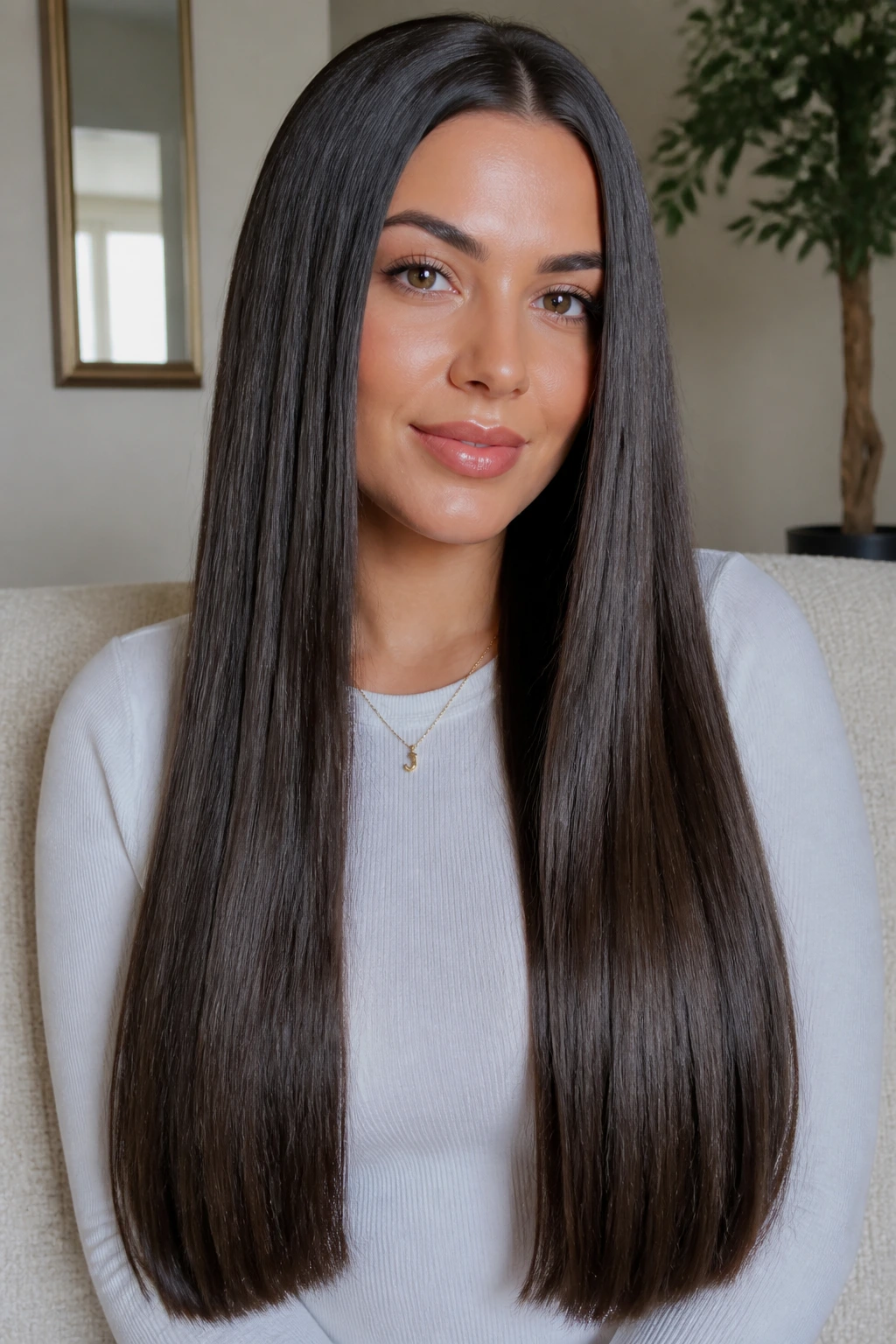
Thick hair has a built-in advantage that gets overlooked. It holds shape. A straight style on dense hair can look heavier, yes, but it can also look far more finished than the same style on finer hair because the line has substance.
That’s why blunt cuts, low ponytails, and clean parts do so well here. They use the density instead of trying to erase it. The weight helps the hair stay put, and the surface can look smoother once it’s been sectioned properly and dried in the right direction.
The mistake is treating thick hair like it should act light and airy all the time. It usually won’t. Better to choose a shape that accepts the weight and then sharpen the edges with heat, product, or a strategic tuck. The style reads cleaner when it isn’t trying so hard to be something else.
Tools That Make a Sleek Finish Easier
-
Flat iron with 1- to 1.5-inch plates: Wider plates help with thick sections, but anything too wide gets awkward near the face and hairline.
-
Blow dryer with a nozzle attachment: The nozzle matters. It directs airflow downward, which keeps the cuticle smoother and cuts down on frizz.
-
Heat protectant spray or cream: Use it on damp hair before drying and again lightly on dry sections if you’re using the flat iron in passes.
-
Boar bristle brush or smoothing brush: This helps pull thick hair into a tighter line without scratching up the surface.
-
Tail comb: Small sections are non-negotiable if you want thick hair to lie flat. A tail comb makes sectioning less annoying.
-
Strong clips: Thick hair takes up space. Weak clips slip, and weak clips waste time.
-
Coated elastics: Bare rubber bands can snag and snap strands during ponytails and buns.
-
Light serum or anti-frizz cream: Keep this to the mid-lengths and ends. The roots need lift, not shine soup.
Choosing the Right Cut, Part, and Product for Your Hair Density
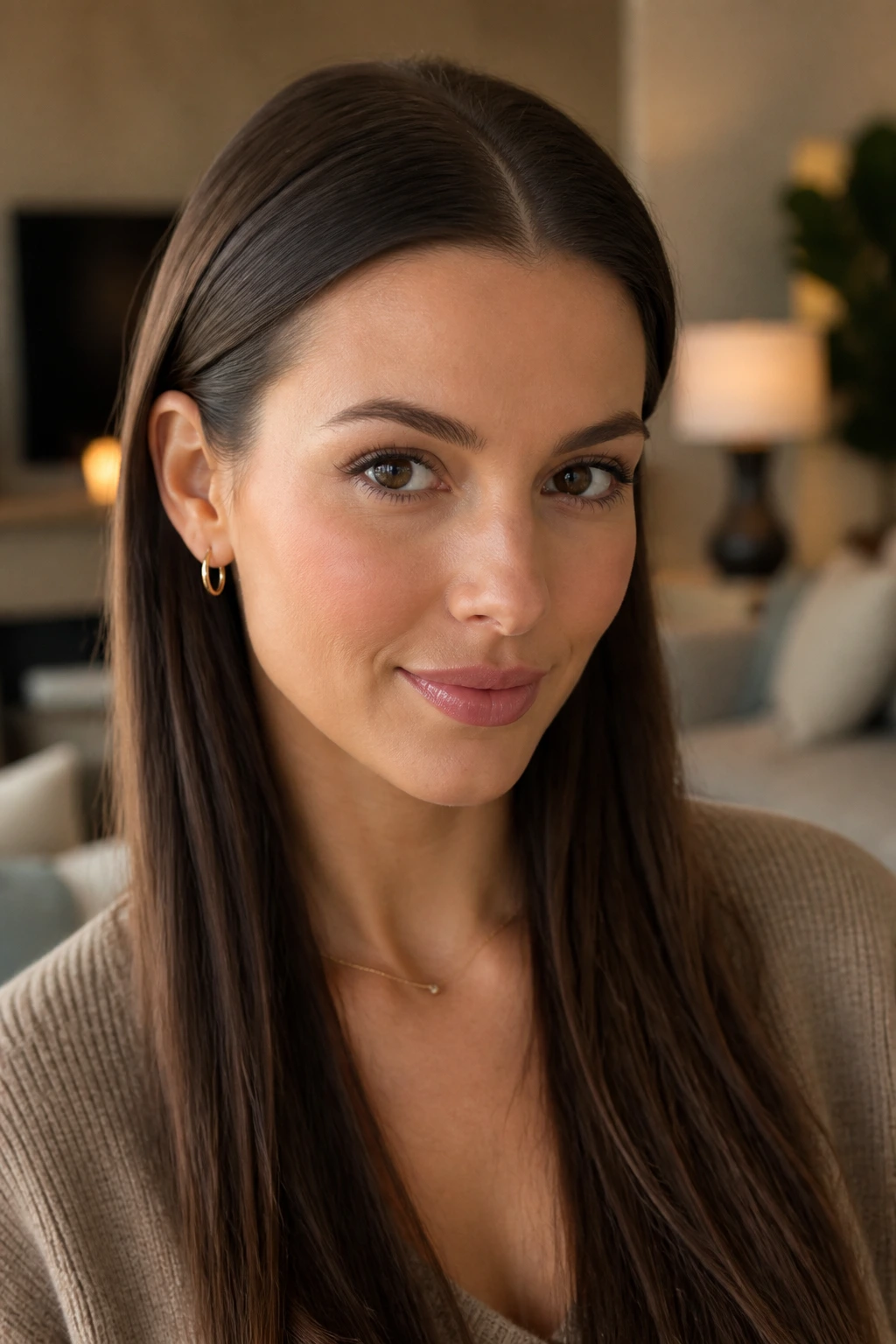
Thick hair isn’t one thing. Coarse strands behave differently from soft strands, and dense hair can still be fine in texture. That difference matters more than most salon conversations make room for. A hairdresser who understands that distinction will make better choices about layering, bluntness, and where to leave weight.
If your hair is dense and coarse, a slightly heavier cut line usually helps. If the strands are thick but smooth, you can get away with more shape and a cleaner bend at the ends. Dry cutting can also make a big difference, because thick hair often looks shorter and wider when wet than it does once it dries.
Product choice matters too. Heavy creams can sit on the hair and make the crown collapse, which is a common mistake. Look for formulas that smooth the cuticle without coating the whole head. If the hair is thirsty at the ends, use a serum just on the last 3 to 4 inches. That’s usually enough.
Part placement is the other lever. Center parts make thick hair look controlled. Side parts add lift and soften the face. A subtle off-center part is underrated; it can break up the bulk without turning the style dramatic.
How to Wear These Styles With Clothes and Accessories
Presentation: Straight thick hair looks best when the outline is deliberate. A sharp middle part, a tucked side, or a clean nape line gives the style a clear shape, which makes the hair look polished even before you add anything else.
Accompaniments: Thick straight hair loves structured pieces — hoop earrings, a crisp collar, a blazer, a scarf tied close to the neck, or a bold barrette. Loose, floppy accessories can get swallowed by the volume and disappear.
Portions: Shoulder-length thick hair usually needs tighter styling at the crown and softer movement at the ends. Longer hair can carry more weight in a braid, ponytail, or twist without looking overdone. Shorter cuts need cleaner lines because there’s less length to hide mistakes.
Occasion Pairing: The low bun and low ponytail work for long days. The glass-hair finish and slick back are sharper for nights out. The tuck-behind-the-ears look sits in the middle and works almost anywhere, which is probably why I keep coming back to it.
Additional Tips and Finish Boosters
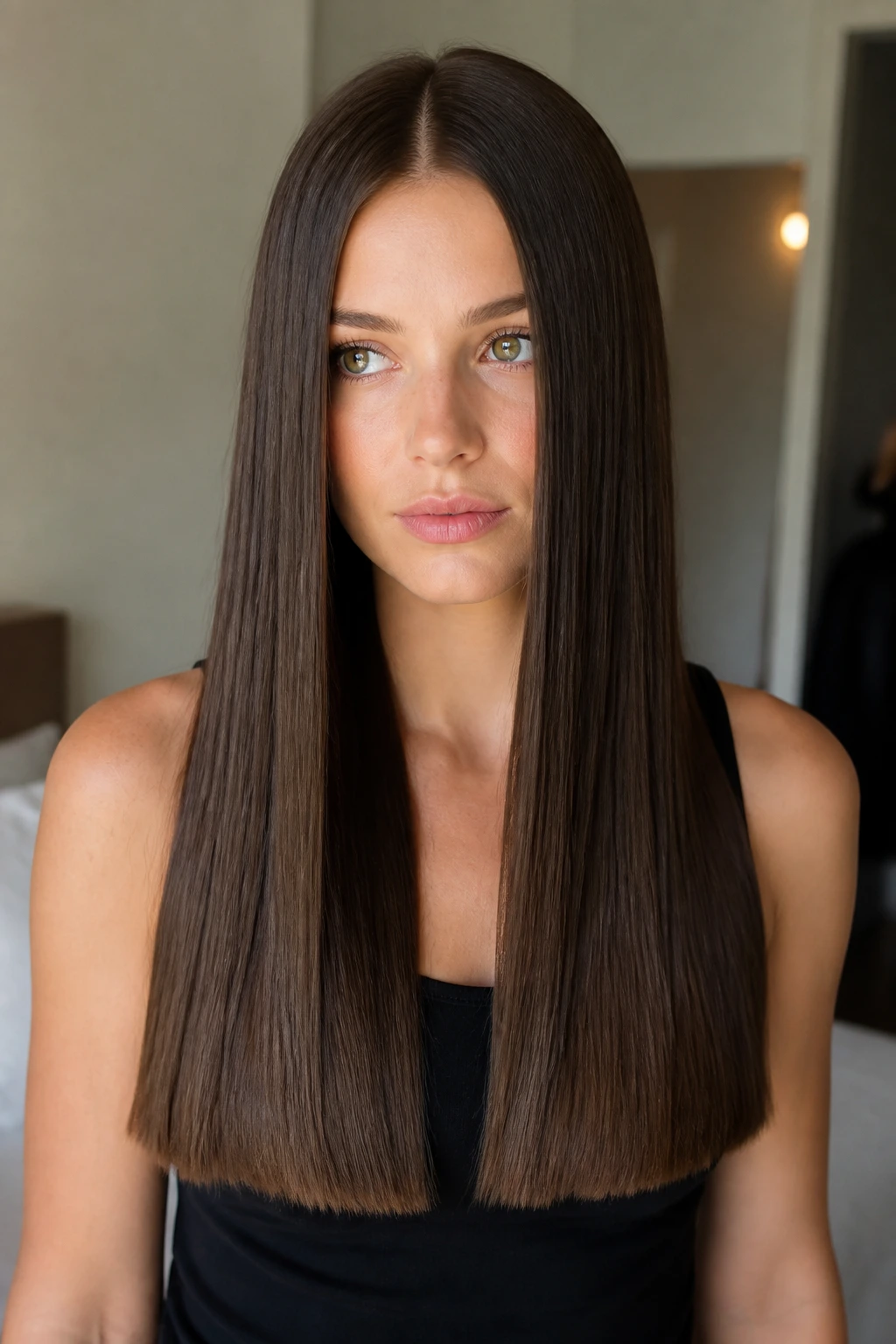
Smoothing Boost: Blow-dry the hair in the direction it will be worn, not just in random passes. That one habit cuts down on the fight at the flat iron stage and keeps the top layer flatter.
Time-Saver: If the mids and ends are already smooth, don’t re-style the whole head. Refresh the crown with a brush and a tiny mist of water or serum, then rework only the top sections.
Humidity Shield: Use a light anti-humidity spray on the outer layer only. Blanket sprays can make thick hair sticky, and sticky hair grabs moisture faster, not slower.
Hairline Fix: A clean edge around the temples and nape changes everything. A toothbrush-sized brush with a drop of gel is enough to tame the short pieces without making the whole style stiff.
Make-It-Yours: If your hair is extra heavy, leave a few more pieces around the face. If it’s coarse and bulky, choose a more compact shape. If it’s long and smooth, let the length do the work and keep the styling minimal.
Common Mistakes That Make Thick Hair Look Wider Than It Is
-
Using too much product at the roots: Thick hair can handle product, but the crown needs movement. Heavy cream or oil near the scalp makes the hair lie flat in the wrong way and can make the whole head look greasy by lunchtime.
-
Taking sections that are too large: One big pass with a flat iron often leaves the inside of the section untouched. The outside looks smooth for an hour, then the puff comes back. Thin sections are slower, but they hold.
-
Over-layering the cut: Too many short layers can turn thick straight hair into a triangle, especially if the ends are dry. If the hair already feels full, keep the layers long and controlled.
-
Ignoring the end shape: Thick hair usually shows its shape at the bottom first. If the ends flip out, fray, or widen, the whole style reads unfinished. Trim and refine the perimeter before chasing shine.
-
Cranking the heat too high: More heat is not the answer every time. If the iron is too hot, the hair can look smoother for ten minutes and then feel dry, rough, and resistant the next time you style it.
Variations and Adaptations to Try
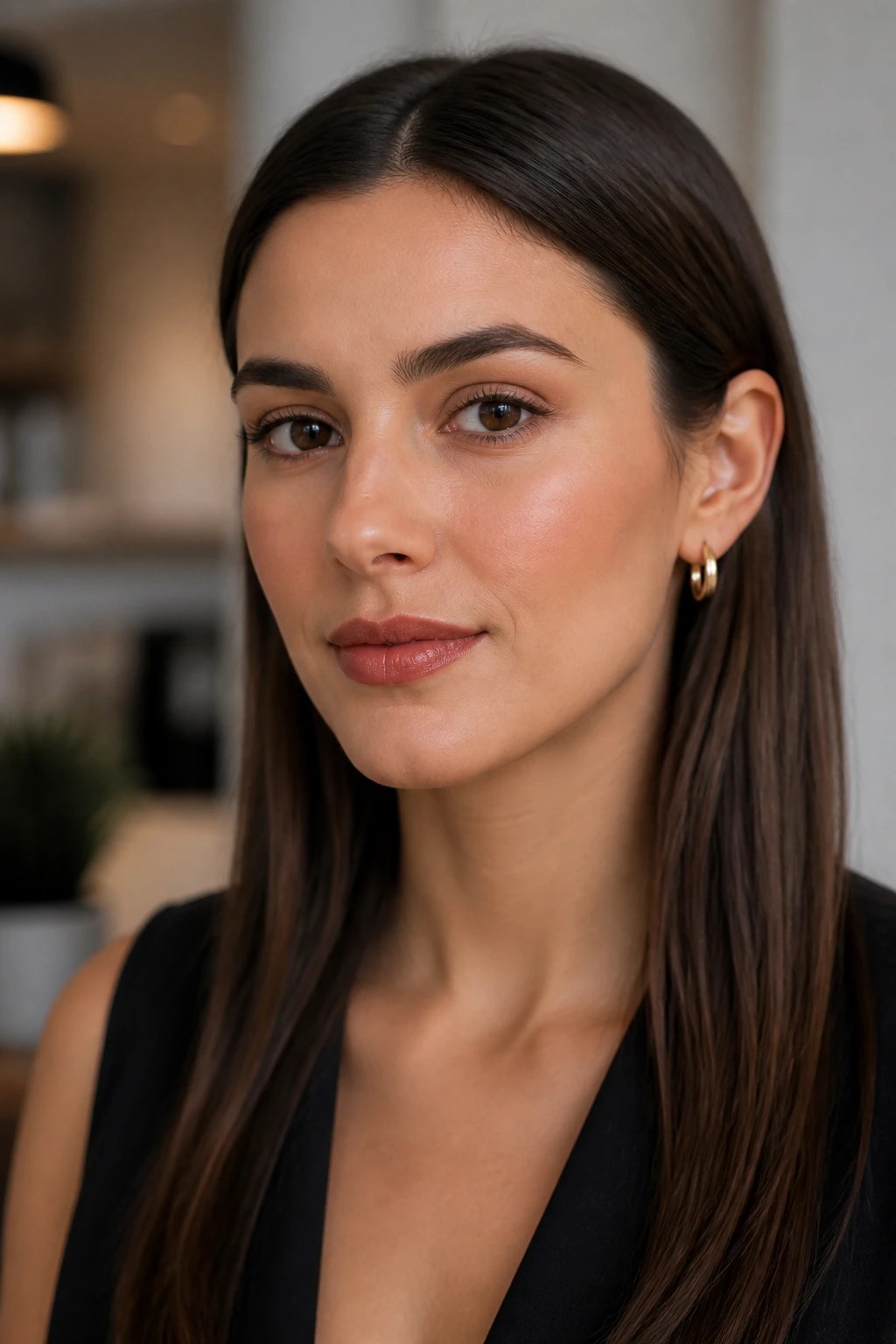
The Heatless Smooth Finish: Skip the flat iron and use a blow-dryer with a tension brush, then set the hair in low clips while it cools. This is a better fit if your hair gets dry fast or you’re trying to cut down on daily heat.
The Humidity-Proof Version: Choose a blunt style, keep the ends sealed with a small amount of serum, and use a strong-hold spray only on the outer layer. Thick hair can fight humidity better when the cut line is clean and the surface is sealed, not overloaded.
The Short-Length Adaptation: On bobs and lobs, keep the perimeter crisp and the styling simple. A tucked side, a side part, or inward-bent ends works better than trying to create a lot of movement where there isn’t much length to show it.
The Extra-Long Hair Version: Go for low ponytails, wrapped ties, braids, and half-up styles. Length gives you room to play, but it also gives thick hair more weight to drag the style down, so secure points matter more.
The Low-Tension Option: If your scalp gets sore from tight styles, use soft elastics, place the ponytail lower, and leave a little slack at the crown. Thick hair can still look sleek without being yanked hard against the head.
The Soft-Movement Twist: Add just enough bend at the ends to keep the style from feeling severe. A tiny inward curve or flipped edge often does more for thick hair than extra layers do.
Keeping Straight Thick Hair Fresh Between Washes
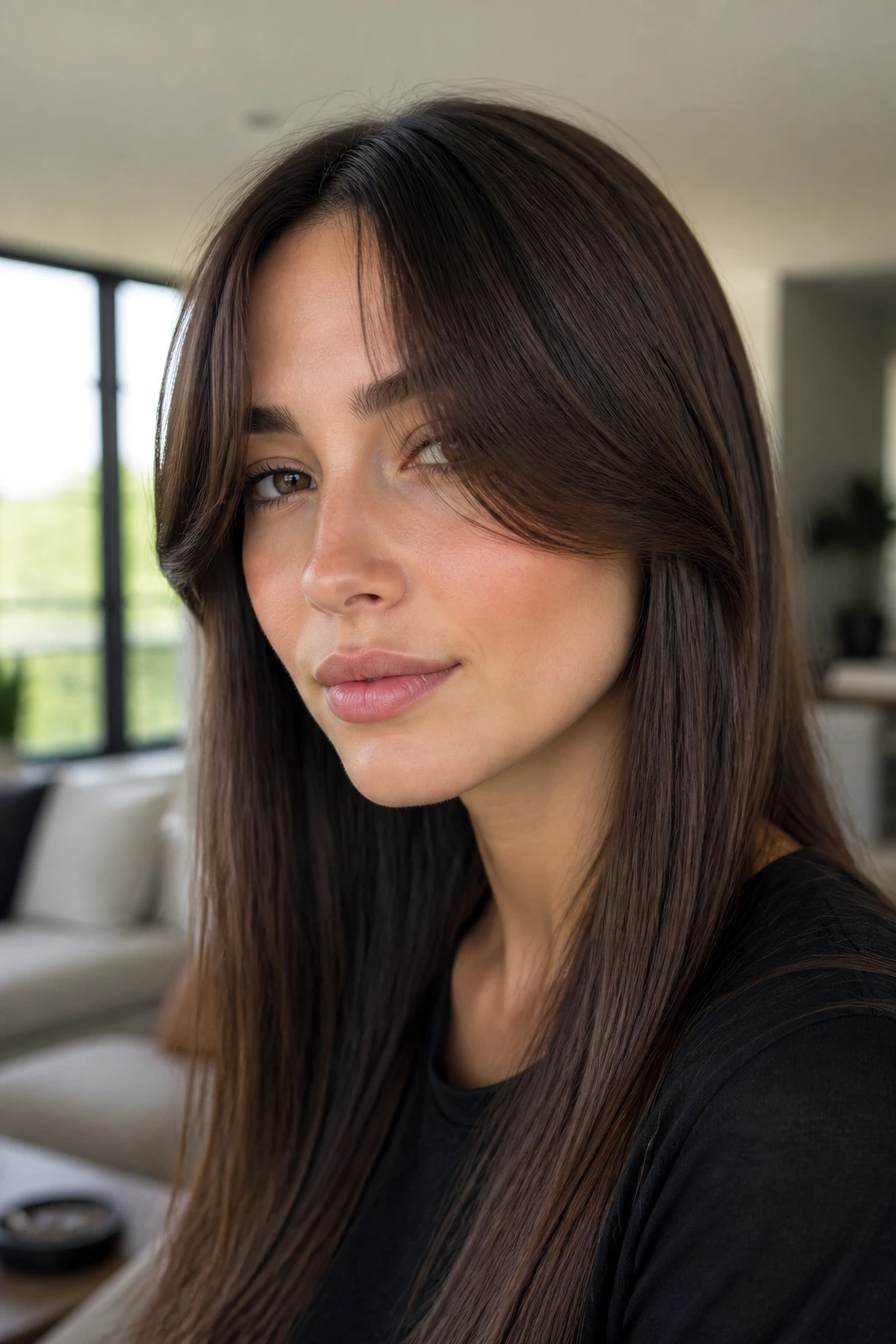
Straight thick hair usually lasts longer than fine hair, but the roots still need help after a day or two. At night, use a loose silk scrunchie or a low braid if the length is long enough. That prevents the ends from getting rough and keeps the crown from getting smashed into odd bends.
If the roots look flat but the mids still feel good, skip the full rewash. A quick blast of dry shampoo at the part line, followed by a five-minute cool blow-dry, can buy you another day. Thick hair can hold that refresh well because it has enough body to recover.
Ponytails and buns can usually be carried from day to day with a little adjustment. Take them down, brush the dents out with a little serum on the ends, and either re-flat-iron the outer layer or switch to a half-up style. That’s often enough.
If the style starts looking frizzy instead of sleek, the issue is usually not oil. It’s roughness at the surface. Use a bit of humidity spray or a drop of serum on the outer sections, then stop touching it. Thick hair gets bigger every time you keep running your fingers through it.
Straight Hairstyles for Thick Hair FAQ
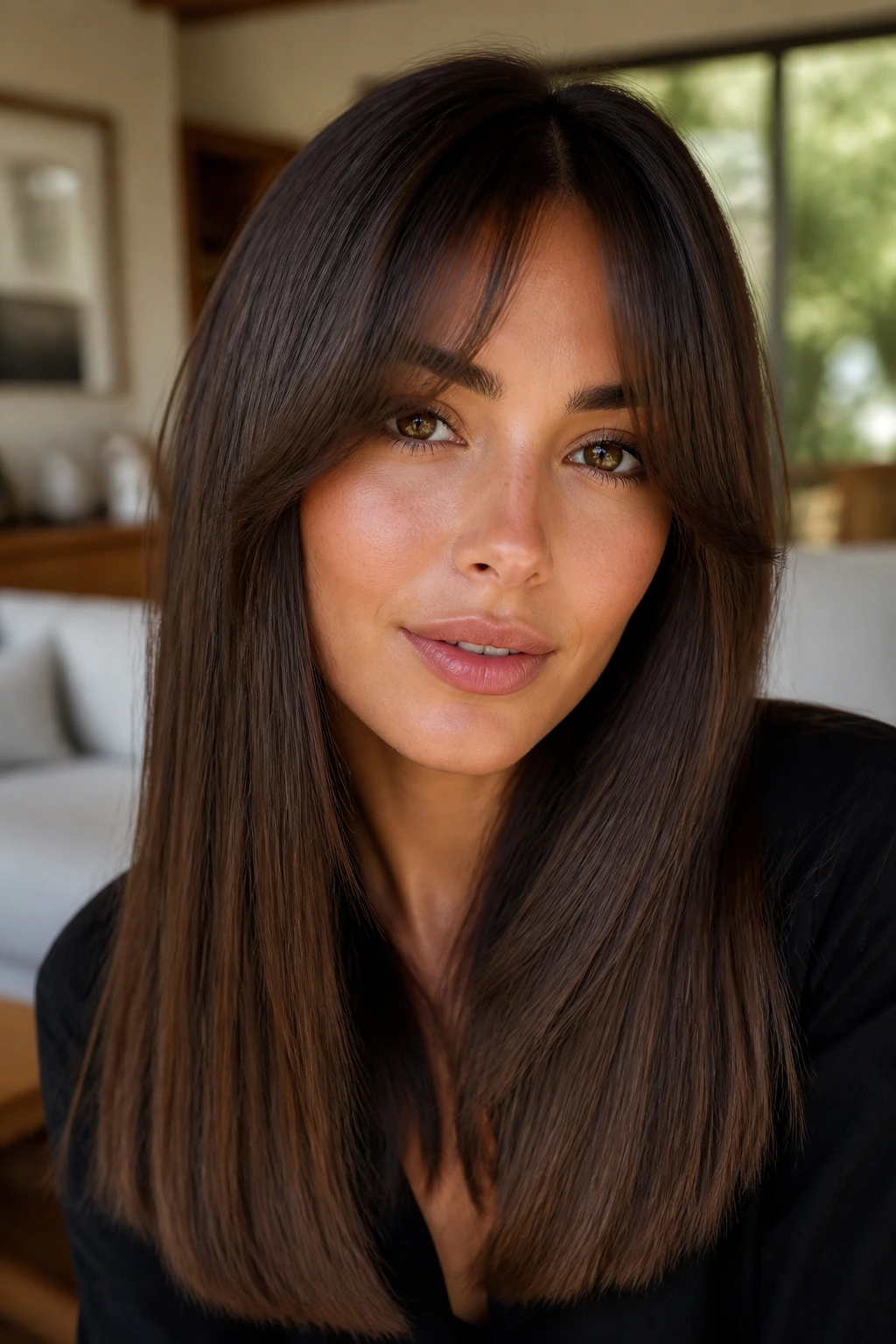
What straight hairstyle is easiest for thick hair to maintain?
A blunt lob, low ponytail, or tuck-behind-the-ears style usually asks for the least fuss. They use your hair’s weight instead of relying on constant touch-ups, and they still look intentional if a few strands move out of place.
Should thick hair be layered if I want it to look straight?
Sometimes, but keep the layers long and soft. Too many short layers can create the triangle shape that makes thick hair look wider at the ends. A face frame or a U-shaped cut often gives more control without removing too much bulk.
What flat iron temperature is safest for thick hair?
Most thick hair does well somewhere around 350°F to 375°F, with coarse strands sometimes needing a little more. Start lower if the hair is already smooth or color-treated. If you need several passes at a very high heat, the problem is probably the section size or the prep, not the temperature.
How do I keep thick straight hair from puffing up in humidity?
Start with a clean, smooth blow-dry, seal the mids and ends with a small amount of serum, and choose styles with a firm shape — blunt cuts, low buns, tucked sides, or tight ponytails. Humidity usually gets into the rough surface first, so smoothing the cuticle matters more than drowning the hair in product.
Can thick straight hair look good short?
Absolutely. Thick hair can look especially sharp in a bob or lob because the length keeps the bulk under control. The key is to keep the perimeter precise and avoid too much texturizing near the ends.
Why does my straight style flip out at the ends?
That usually means the ends were cut or dried in a way that encourages outward movement. Collarbone-length hair is famous for this. Try an inward bend with the flat iron or ask for a slightly different perimeter so the hem doesn’t kick out as much.
What if my hair never stays flat at the crown?
Use smaller sections, aim the dryer nozzle downward, and let each section cool in the direction you want it to sit. Thick hair often needs the crown smoothed first before the ends are touched. If you flatten the ends too soon, the top still has its own ideas.
Is a center part always the best choice for thick hair?
No. A center part is clean and balanced, but a deep side part can create lift and make the style feel lighter around the face. If the center part makes your hair look too heavy, shifting it a little off-center can change the whole read.
The Styles That Stick
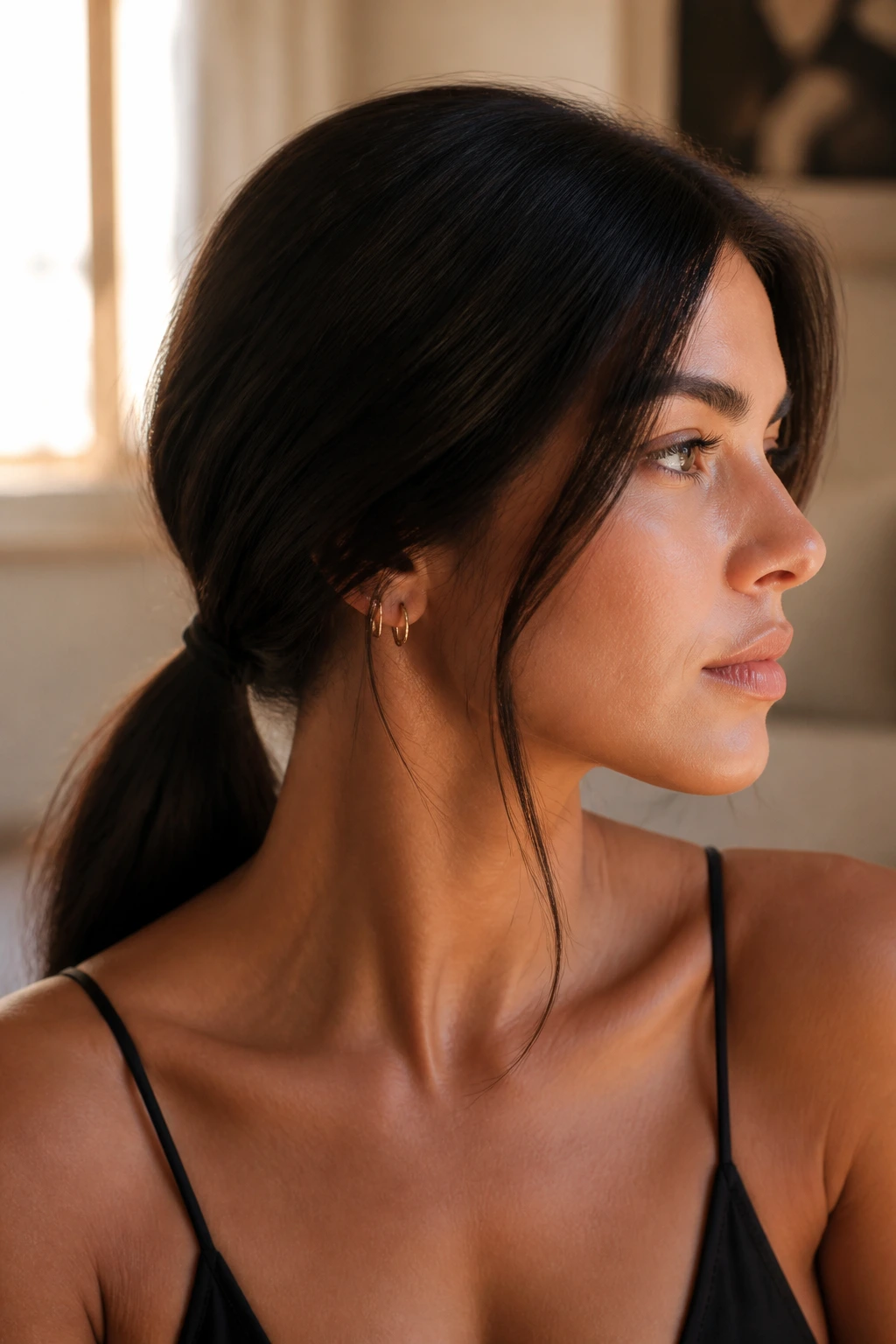
Thick hair does not need to be tamed into silence. It needs shape, order, and a finish that respects how much hair is actually there. Once you stop treating density like a problem to erase, the options open up fast. Blunt lines look sharper. Low ponytails look richer. Tucks, braids, and buns suddenly have enough substance to hold their own.
The best part is that you do not need to master all 35 at once. Pick one blunt cut, one low-maintenance tieback, and one polished updo that fits your real routine. The styles that last are the ones that let your hair do what it already wants to do, only cleaner.
