



Straight hair has a way of telling the truth. A blunt line looks crisp, a lazy trim looks crooked, and even a quarter-inch mistake can show up under bathroom light like a note scribbled in the margin. That is why haircut ideas for straight hair have to work harder than the usual “give it some layers” advice. With no wave pattern to soften the edges, the shape, the weight line, and the fringe have to do the talking.
That can be a good thing. Really good, if you like haircuts that look deliberate the second you tuck one side behind your ear. Straight hair is the best canvas for a clean bob, a sharp lob, a controlled shag, or long layers that fall exactly where they’re meant to. It also punishes vague cutting. Too much thinning, and the ends go stringy. Too many layers, and the whole shape can feel chewed up by the time you’ve blown it dry twice.
The cuts below are the ones I keep coming back to because they read clearly, grow out with less drama, and give straight hair something interesting to do without forcing it to pretend it’s wavy. Some are short and blunt. Some are long with a bit of bend at the edge. A few lean soft, a few lean graphic, and a few sit right in the middle, which is usually where the smartest haircut ideas live.
Why These Cuts Keep Working
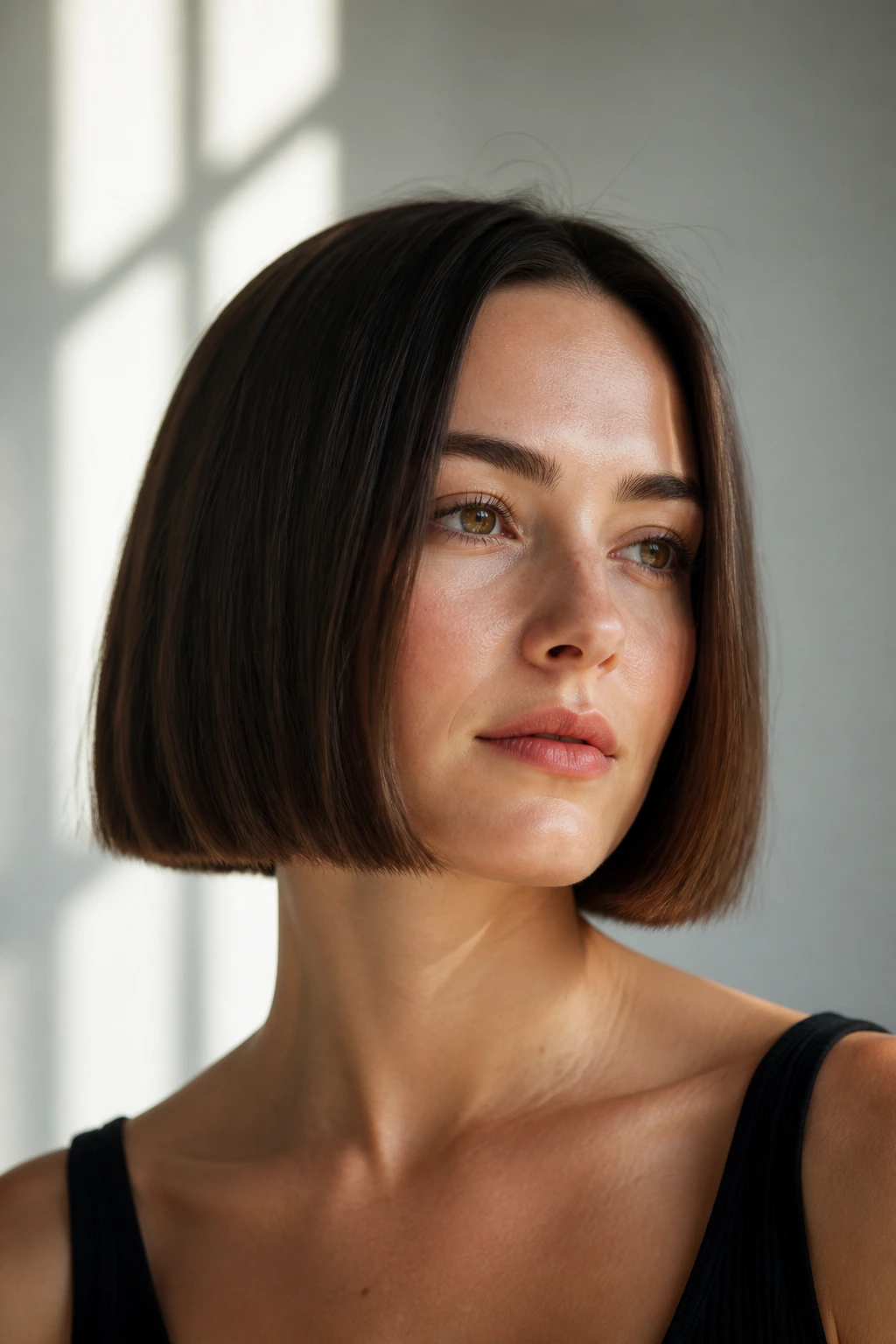
- Sharp lines actually show up: Straight strands let a bob, lob, or pixie keep its shape instead of disappearing into texture noise.
- Small changes make a real difference: Moving the part, shifting the length by an inch, or angling the front can change the whole mood of the cut.
- Grow-out matters more than hype: A good straight-hair haircut still looks like a haircut six weeks later, not a forgotten trim.
- Density can be controlled with shape: A blunt perimeter can make fine hair look fuller, while subtle internal layers can stop thick hair from turning into a sheet.
- Styling can stay light: A round brush, a flat iron, or a clean air-dry finish is often enough. You do not need a full glam routine to make these cuts work.
1. Blunt Chin-Length Bob
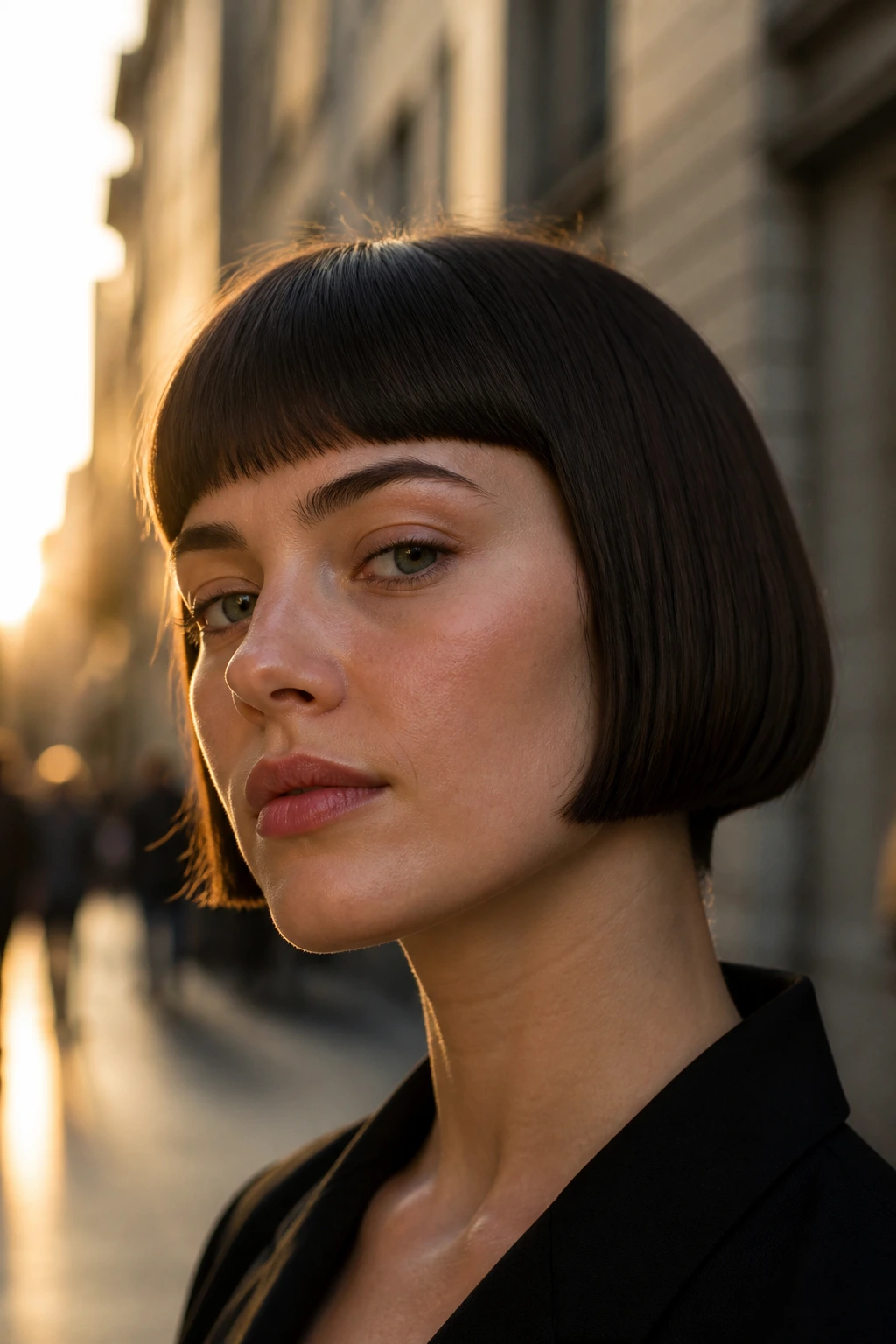
A chin-length blunt bob on straight hair is pure line. No fluff, no hidden corners, no gentle apology at the ends. The haircut lands right around the jaw, which makes the whole face look a little more defined, especially if your hair tends to lie flat and needs structure more than movement.
I like this cut because it gives straight hair a kind of authority. Fine hair looks denser when the perimeter is one clean edge, and medium-density hair gets a neat, compact shape that does not wander off into wisps. If your jawline is strong, this cut can emphasize it. If your jaw is softer, ask for the front to stay a touch longer so the line does not feel boxy.
The trick is precision. Ask for a clean one-length bob with minimal graduation in the back, then have the stylist check the line with your head held the way you actually wear it. Straight hair will reveal a crooked corner fast, so the final dusting matters more than people think.
2. Collarbone Lob With Invisible Layers
A collarbone lob is the haircut for someone who wants movement without giving up the feeling of length. On straight hair, the best version uses invisible layers—internal shaping that takes weight out from underneath without leaving obvious steps on the surface.
Why invisible layers matter
The surface still reads clean, which is the whole point. You get a little bend, a little swing near the ends, and a shape that sits more softly against the shoulders. That makes this cut useful if your straight hair tends to fall heavy and flat at the same time. It keeps the outline neat but stops the ends from looking like a ruler.
This is also one of the easiest straight-hair cuts to live with. You can blow it dry with a paddle brush and stop there, or add one loose pass with a flat iron if the front wants to flick away from the face. Ask your stylist to keep the shortest layers well below the top of the head; too much layering up high can make the cut lose its sleek line.
- Best for people who want a tidy shape with a little swing.
- Works well if your hair hits a weird length at the shoulders.
- Holds up nicely when you tuck one side behind the ear.
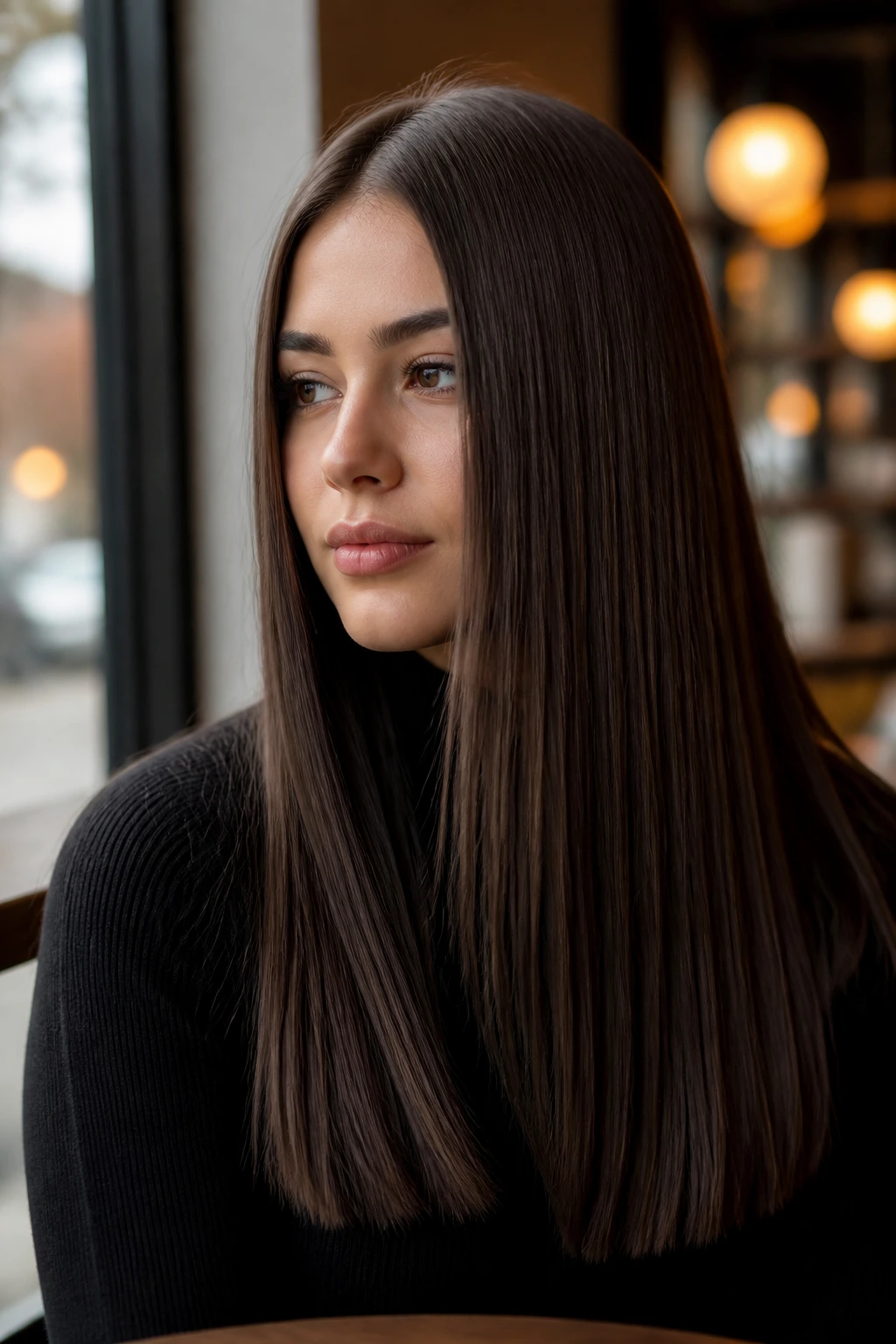
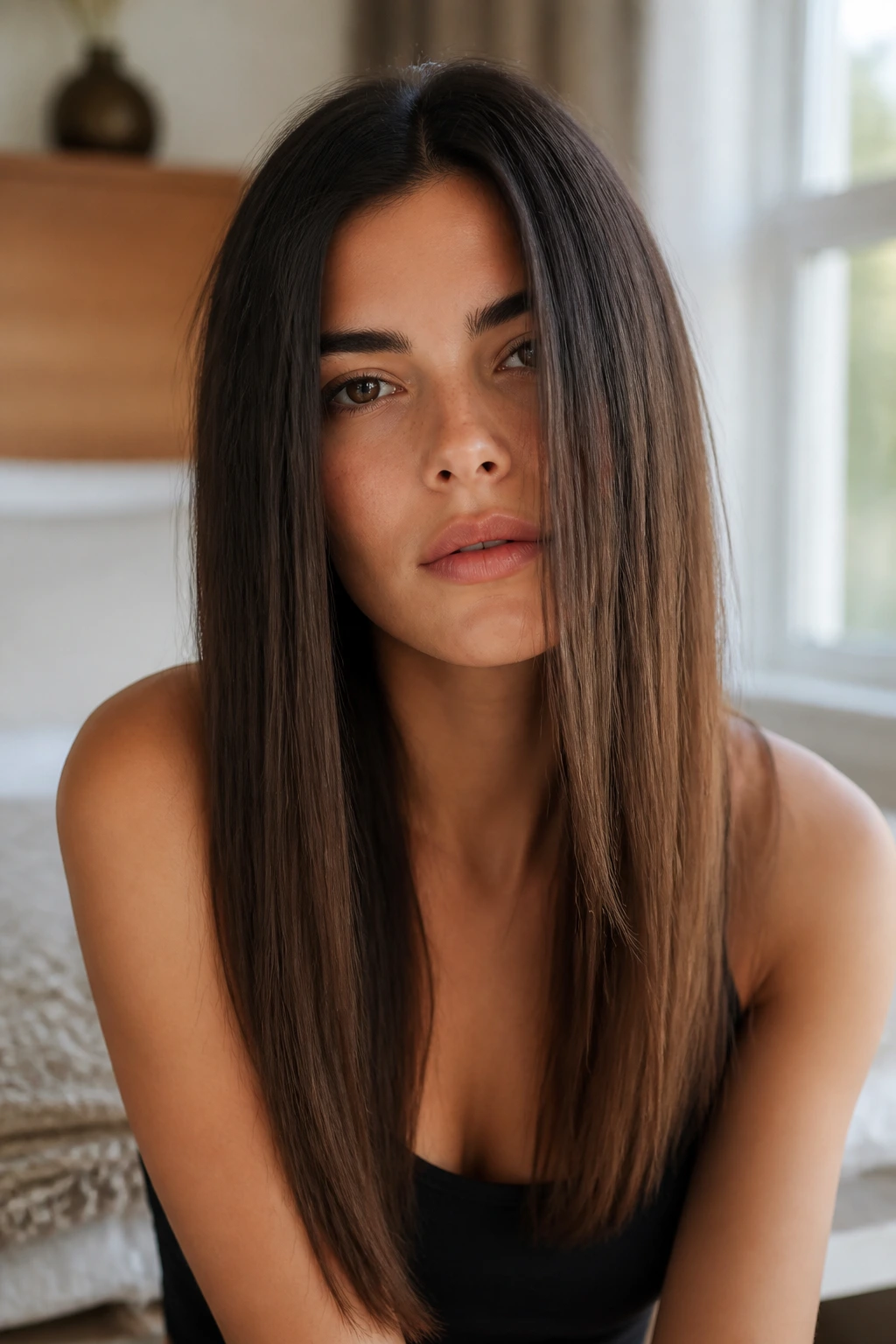
3. Glass-Hair Center-Part Long Cut
This is the haircut you choose when you want straight hair to look like it means business. A center part and a long, blunt or near-blunt perimeter create that glassy finish people are always chasing, but the real secret is how clean the ends are. If they are blunt enough, the whole cut looks more expensive than complicated.
The thing about this style is that it asks for honesty. If the ends are dry or see-through, you’ll notice. If the density is uneven, you’ll notice that too. That sounds harsh, but it also means the cut rewards good maintenance. A trim every couple of months keeps the line solid, and a tiny bit of smoothing cream through the mid-lengths keeps the top layer from puffing up.
I’d recommend this one for straight hair that is naturally shiny and not too fine. It loves a middle part, it likes symmetry, and it gives you a good reason to keep the hemline neat instead of letting it wander. A center part can be unforgiving, yes, but on the right face it looks calm and intentional in a way side parts sometimes don’t.
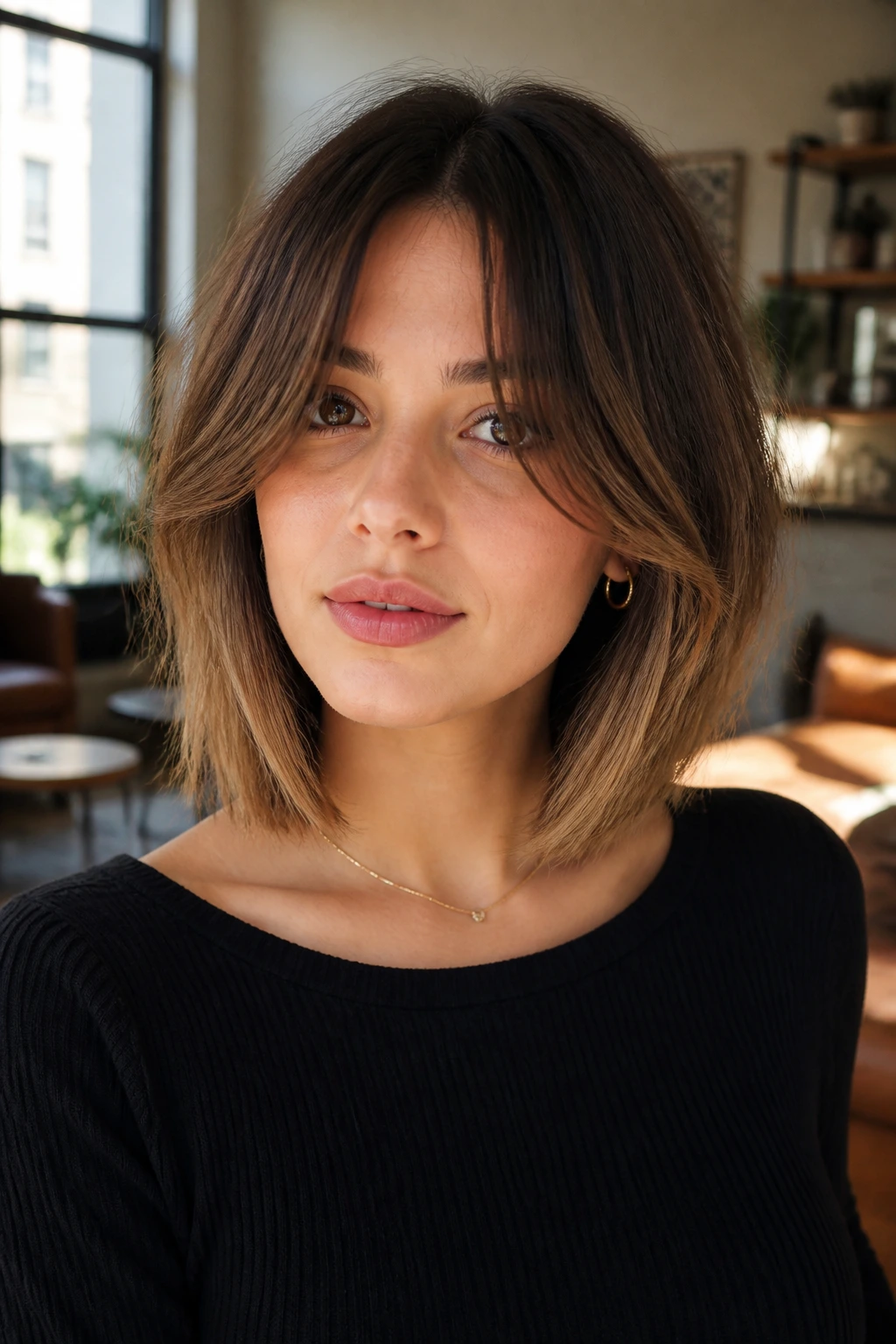
4. French Bob With a Soft Fringe
A French bob on straight hair is short enough to feel fresh, but not so short that it turns severe. The soft fringe is what keeps it from reading like a helmet. When the bangs are cut a little airy and the bob hits somewhere around the cheek or jaw, the whole cut feels relaxed instead of stiff.
I think this version works best when you want personality right at the front. Straight hair can make bangs sit flat in a way wavy hair can’t, which is useful here. You get a clean line across the forehead, a little face framing, and a shape that looks done even when the rest of the hair only gets a quick blow-dry.
Ask for the fringe to be light through the middle and a touch longer at the corners. If the bangs are cut too blunt and too short, straight hair can make them feel boxed in. Keep the bob itself slightly textured at the ends—not choppy, just softened enough that it moves when you turn your head.
5. Curtain-Bang Lob
If you like a longer shape but want the front to do more work, a curtain-bang lob is one of the smartest straight-hair options around. The lob gives you length; the bangs give you some movement right where the hair meets the face. Together, they keep straight hair from looking too uniform.
The key is where the curtain bangs begin. On straight hair, they look best when they start around the cheekbone or just above it, then taper down into the sides. Cut them too short and they can sit like a shelf. Cut them too long and they disappear into the rest of the hair. The sweet spot is a bang that can split cleanly in the middle and still curve a little toward the jaw.
This cut is especially good if you like wearing your hair half tucked, half loose, or if you want a haircut that changes shape depending on how you part it. It looks polished with a round brush, but it also works with a simple bend from a flat iron. That flexibility is the reason I keep recommending it.
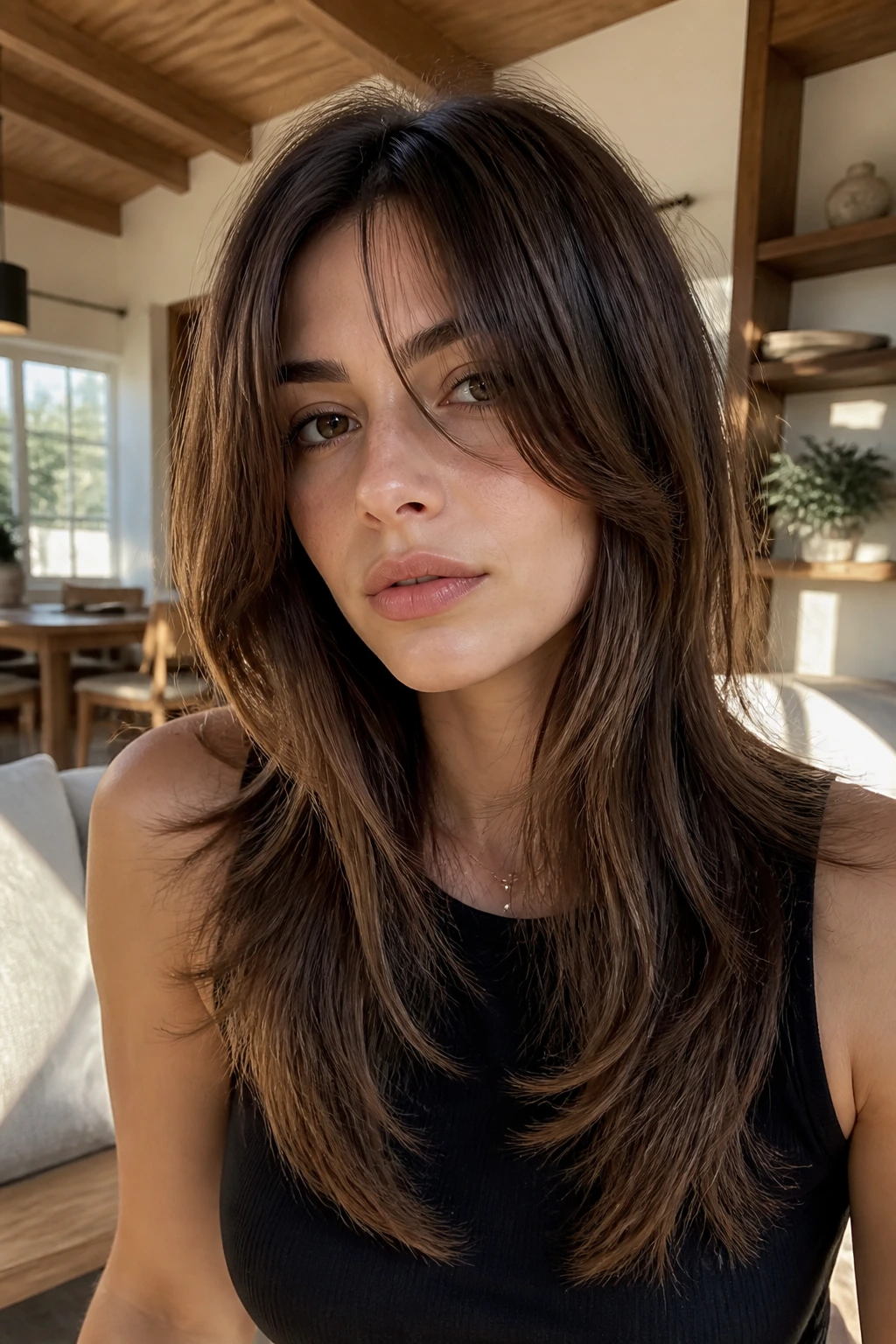
6. Straight Shag With Feathered Ends
A shag on straight hair has to be handled carefully. Too many disconnected layers and you end up with pieces that stick out like they’re trying to escape. The right version is softer, longer, and feathered at the ends, so the shape looks lived-in rather than sliced apart.
What to tell the stylist
Ask for long layers that keep the perimeter intact. The crown can have a little lift, but the bottom should still feel connected. That’s what separates a straight-hair shag from a haircut that just looks over-thinned. I would avoid a razor-heavy finish if your hair is fine; it can make the ends look airy in the wrong way, especially after a few weeks of wear.
This style is best if you want movement but don’t want to live in a perfectly sleek blowout. Straight hair gives the shag a cleaner outline than wavy hair does, which means it can look a little more tailored and a little less messy. That’s not a bad thing. In fact, I think it’s the reason many straight-haired people wear this cut better than the photos suggest.
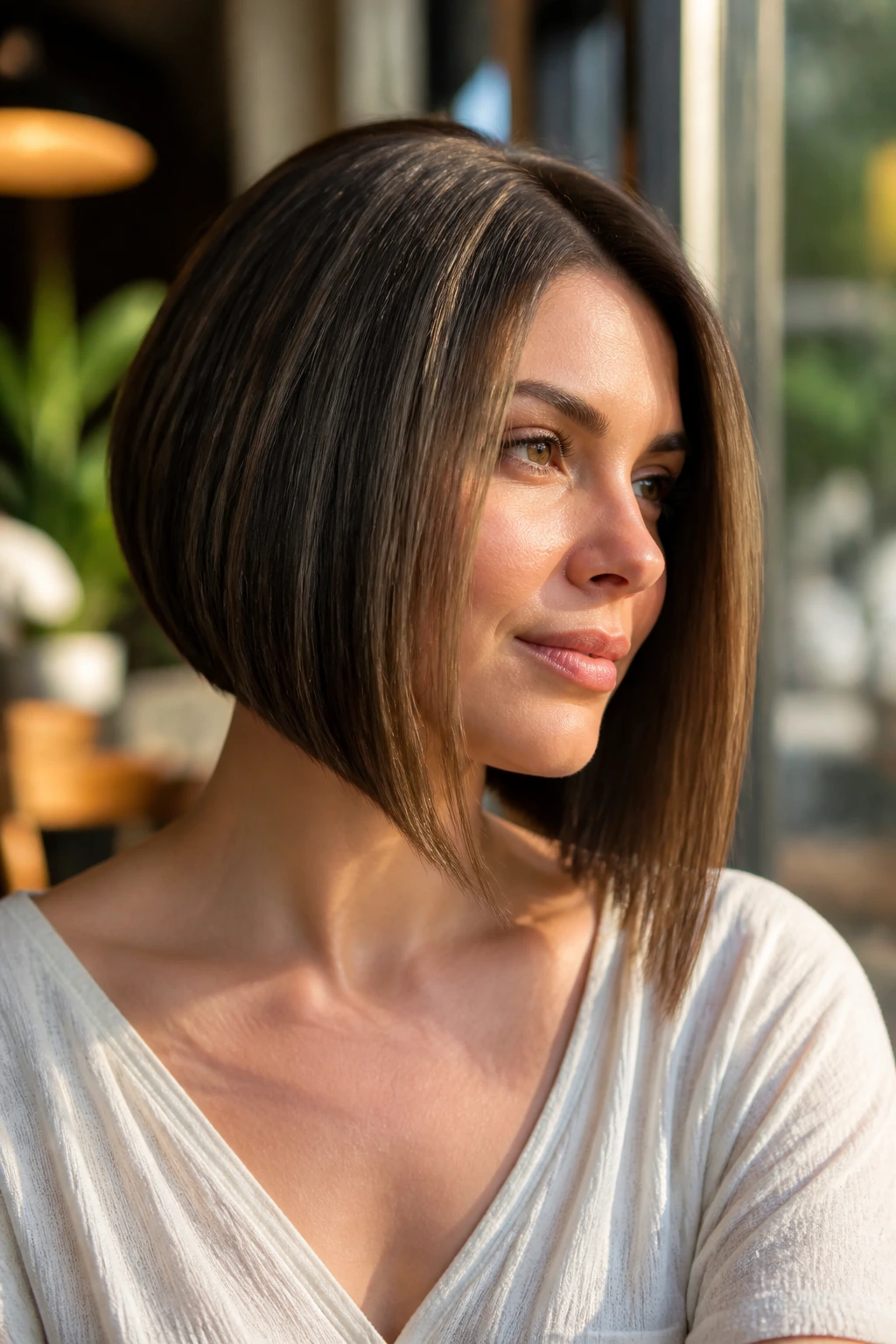
7. A-Line Bob
An A-line bob is one of those cuts that makes straight hair look architecturally neat. Shorter in the back and longer in the front, it creates a visible angle that your eye picks up immediately. On straight strands, that angle reads clearly instead of being hidden by texture.
It’s a smart choice if you want your hair to frame the face without being too short around the jaw. The longer front pieces can soften the cheek area, while the back keeps the neck feeling open and clean. If your hair tends to sit flat at the crown, this cut can also create the sense of lift without relying on heavy product.
The angle should be noticeable, not dramatic enough to feel costume-like. A steep A-line can age fast. A gentler slope usually lasts longer and is easier to style on a normal day. Ask the stylist to keep the front just long enough that it still brushes the collarbone or lands close to the jaw, depending on how bold you want the shape to feel.
8. Long U-Cut
If you love length and hate the idea of blunt heaviness, the U-cut deserves a spot near the top of your list. The perimeter curves gently instead of sitting as a flat line, which gives straight hair a softer outline and keeps the ends from looking like they were trimmed with a yardstick.
This cut is especially useful for thick straight hair. A one-length long cut can turn into a heavy curtain, and not in a flattering way. The U-shape keeps the length but creates a little movement around the sides and back, so the hair falls in a more natural arc. It also grows out gracefully, which is not something every long haircut can claim.
I’d keep the shortest pieces long enough to stay connected to the rest of the hair. If the U gets too deep, you start losing the clean look that makes straight hair shine in the first place. The best version feels subtle when you look at it head-on and more visible when the hair is swung over one shoulder.
9. Micro Bob
A micro bob is the cut for people who want short hair with edge. It usually sits above the jaw, sometimes skimming the ear, and on straight hair it looks sharp in a way that is almost stubborn. There is nowhere for the shape to hide, which is exactly why it works.
This cut thrives on precision. The nape should be neat, the sides should be balanced, and the line around the face needs to feel deliberate. If the hair is fine, a micro bob can actually make it look fuller because the length isn’t dragging the ends down. If the hair is thick, the stylist may need to remove a little weight underneath so the shape doesn’t mushroom.
It’s not the easiest haircut to ignore between trims. You’ll notice when it starts growing out. But that can be part of the appeal. A micro bob with straight hair looks clean, graphic, and a little bit clever, especially when paired with a plain tee or a strong pair of earrings.
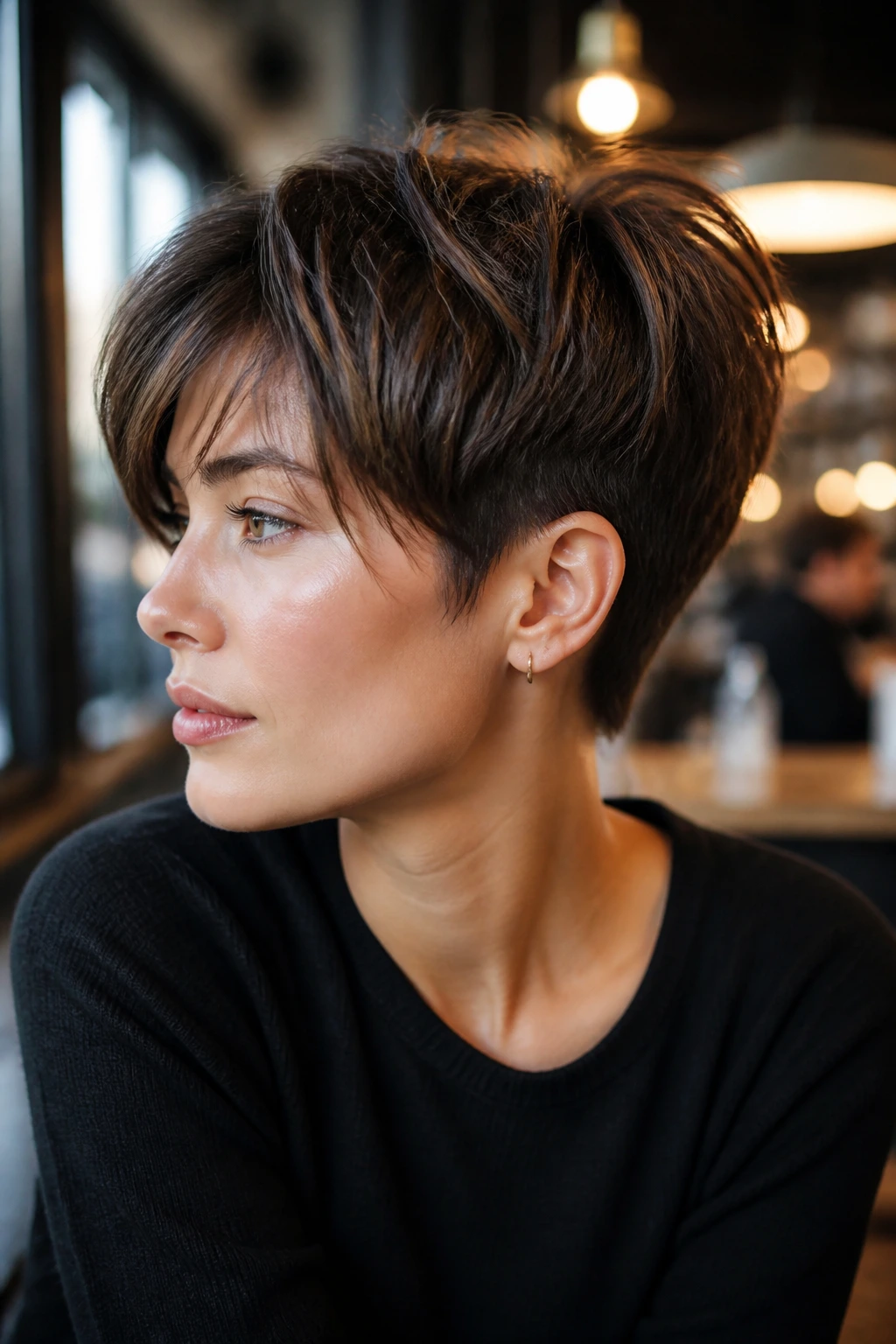
10. Bixie Cut
The bixie lives between a bob and a pixie, which is exactly why it can be such a good straight-hair cut. You get enough length on top to play with, enough shortness at the sides to feel fresh, and enough structure that the hair still looks shaped even on a low-effort day.
Straight hair helps the bixie hold its outline. The piecey top doesn’t need much coaxing, and the shorter sides stay neat instead of puffing out. That makes this a good option if you want short hair but don’t want to commit to a full pixie. It has a bit more softness around the face and a little more room to tuck behind the ears.
Ask for the top to stay longer than the sides, with the nape cleaned up but not shaved too aggressively unless you really like that look. The best bixies have movement, not randomness. You want the pieces to separate easily, but you still want to see a real shape when the styling cream wears off.
11. Italian Bob

The Italian bob is fuller, rounder, and a little more glamorous than a bare-bones blunt bob. On straight hair, it can look especially good because the ends stay clean while the body of the cut holds some weight. It has presence without looking stiff.
Why this shape keeps its fullness
A classic Italian bob usually sits around the jaw and gets a little soft bend at the ends, often with a slight inward curve. Straight hair makes that curve visible in a way that feels elegant rather than fussy. If your hair is fine, the density at the bottom matters. If your hair is thick, the stylist may need to lighten the interior a little so the shape doesn’t balloon.
This is a good cut for someone who wants a polished bob but doesn’t like the hard edges of a super-blunt line. It looks good with a side part or a center part, though I lean toward a slightly off-center part if you want it to feel less severe. The whole point is fullness with control. Not stiffness. Not fluff.
12. Face-Framing Layers at the Cheekbones
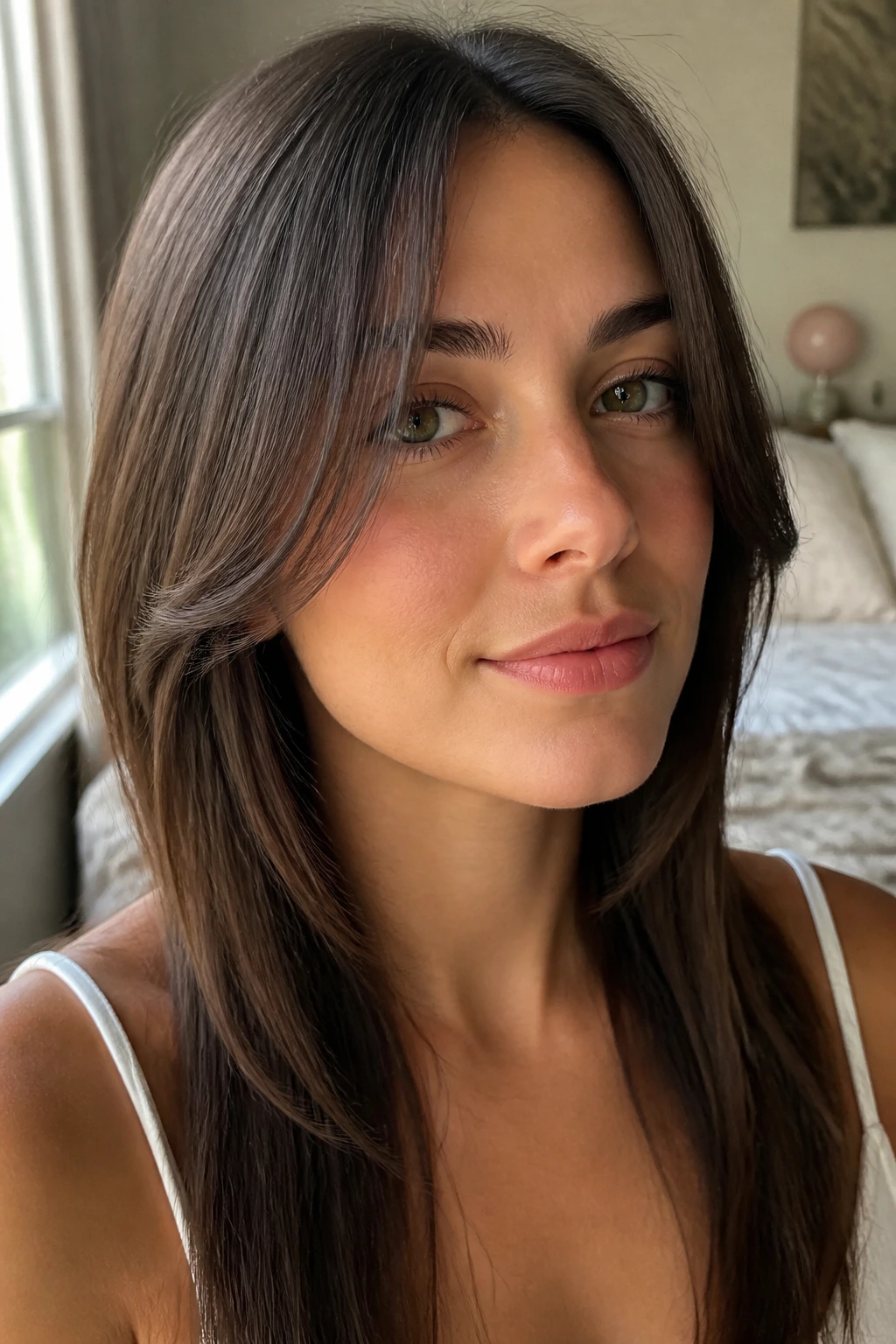
If you want change without surrendering your length, face-framing layers are the safest move on straight hair. Starting them around the cheekbones gives the front some motion and stops long hair from hanging like a single sheet. The back stays long and familiar, which matters more than people admit.
These layers are useful when the face needs a little opening up around the eyes or jaw. On straight hair, a layer that starts too high can leave you with thin pieces near the chin that don’t do much except annoy you. Cheekbone length is the sweet spot for a lot of people because it bends the eye back toward the face instead of sending the hair outward.
I like this cut for people who wear their hair up half the time and down the other half. The front pieces still have something to say when the hair is tied back. That’s a better use of layers than scattering them everywhere and hoping they’ll create movement on their own.
13. Asymmetrical Bob
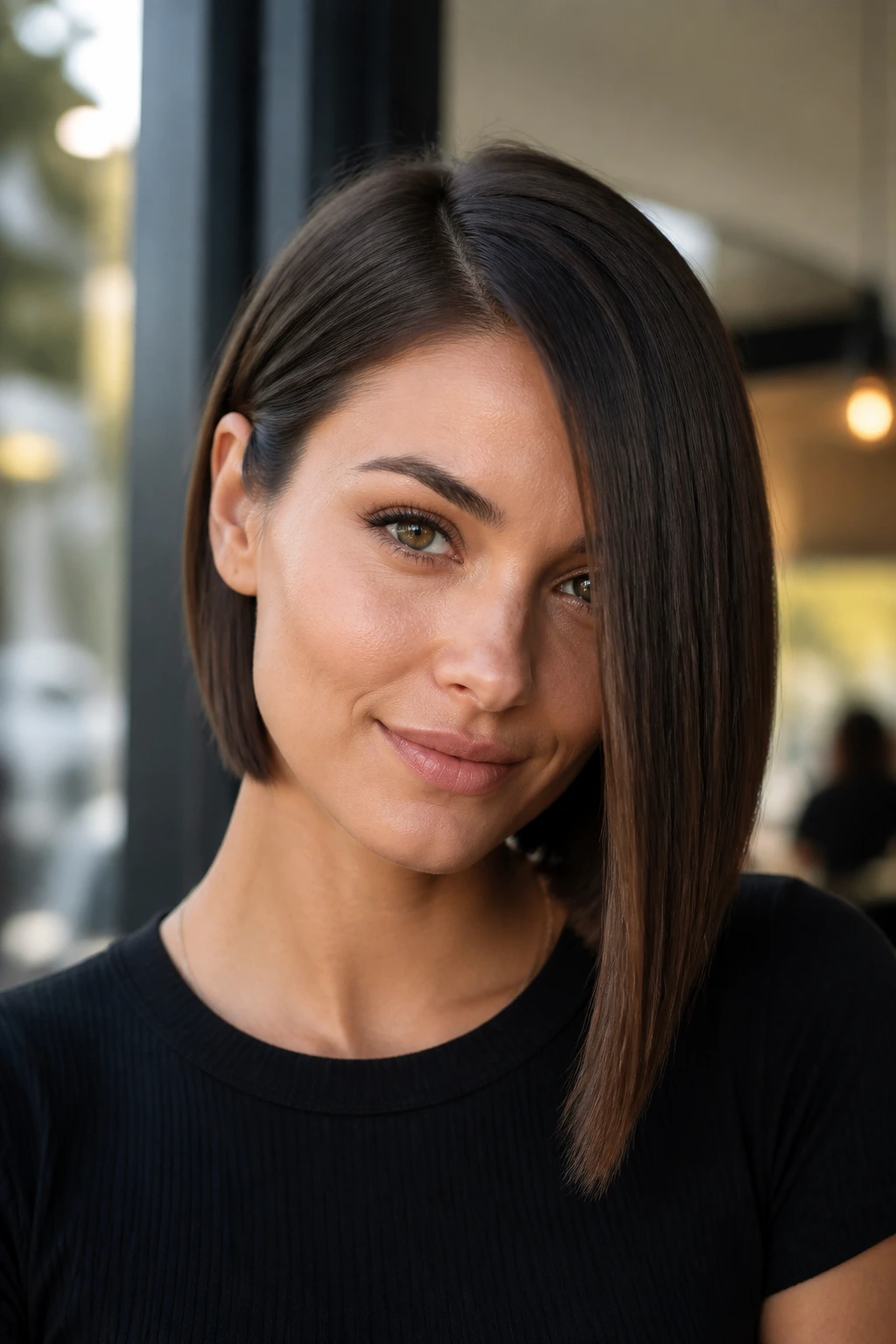
An asymmetrical bob is a small rebellion that straight hair wears well. One side is a little longer than the other—sometimes by an inch, sometimes by more—and that difference becomes the point. Because straight hair doesn’t blur the shape, the asymmetry reads cleanly.
This cut is good if you want the feel of a bob without the predictability of a perfectly even line. It can sharpen the face, draw attention to the jaw, and make a plain side part look more considered. The longer side should not be so long that the cut looks accidental. Subtle asymmetry usually lands better than a dramatic slash unless you’re going for a louder look.
The best part is how little styling it needs. Once the length balance is set, a quick blow-dry and a pass with a flat iron around the ends is often enough. It’s a haircut with personality built in, which means the hair does some of the talking before you even touch a brush.
14. C-Shaped Midi Cut
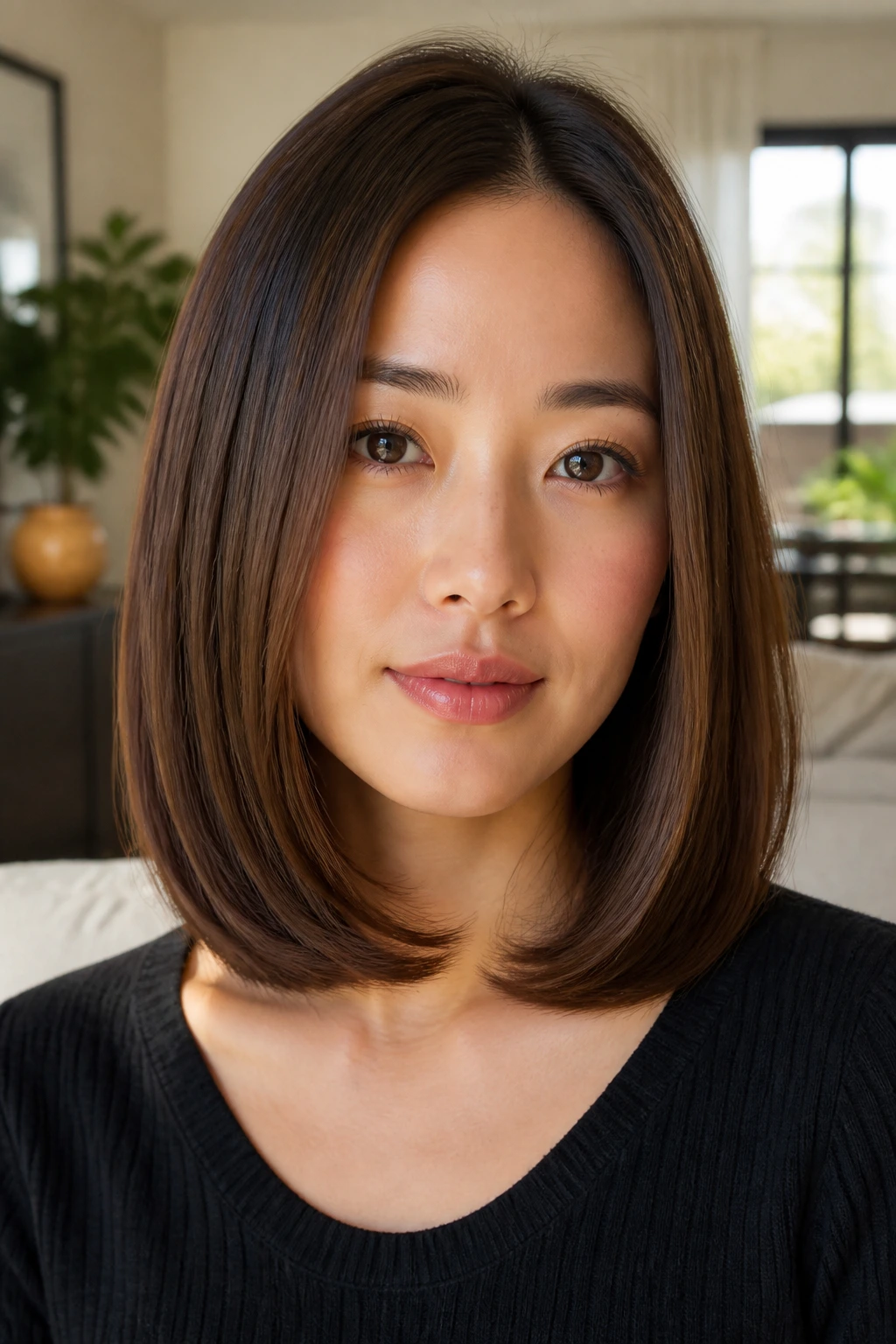
A C-shaped midi cut gives straight hair a curved outline without losing length. The ends bend inward a little, forming that soft C around the shoulders and collarbone, which keeps the whole shape from feeling too severe or too flat. It’s a gentle cut, but not a boring one.
This is the one I’d point to for someone who wants to soften strong features or reduce the rectangular feel straight hair can develop when it hangs long and unbroken. The curve at the bottom changes the silhouette in a way that looks cleaner than layers, especially if your ends are healthy and you like a polished finish. It also behaves better at the shoulder, where straight hair often flips out in a way nobody asked for.
Ask for the perimeter to be rounded, not thinned. There’s a big difference. Rounded keeps the weight; thinned ends often look wispy by week three. If your stylist dries hair straight before refining the shape, even better. That curve needs to be checked in motion, not just in theory.
15. Razor-Soft Lob
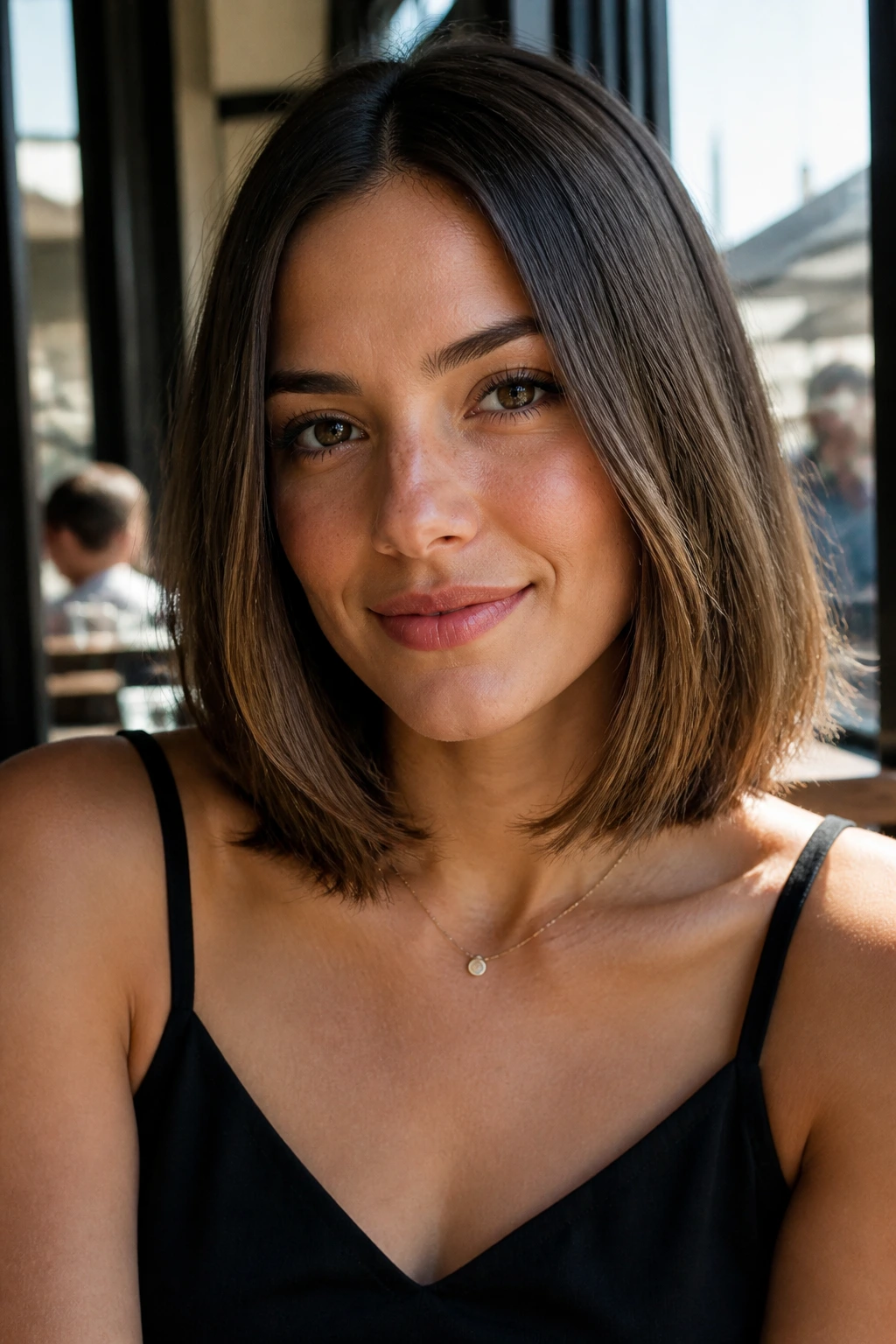
A razor-soft lob can be beautiful on straight hair when the density is right. The razor lightens the edge, giving the ends a little broken movement instead of a hard line. That can keep a lob from feeling heavy, especially if your hair grows thick through the middle.
Here’s the catch: razor work is not always kind to fine straight hair. If the ends are already fragile, too much slicing can make them look see-through. So this cut is best when the stylist uses the razor with restraint, mostly to soften the perimeter and maybe the front pieces, not to carve the whole head into threads.
I like this version for people who want a little lived-in texture without losing the shape of a real haircut. It sits nicely at the collarbone, moves well when tucked behind the ears, and looks less severe than a blunt lob. The finish should feel touched, not shredded.
16. Pixie With a Piecey Top
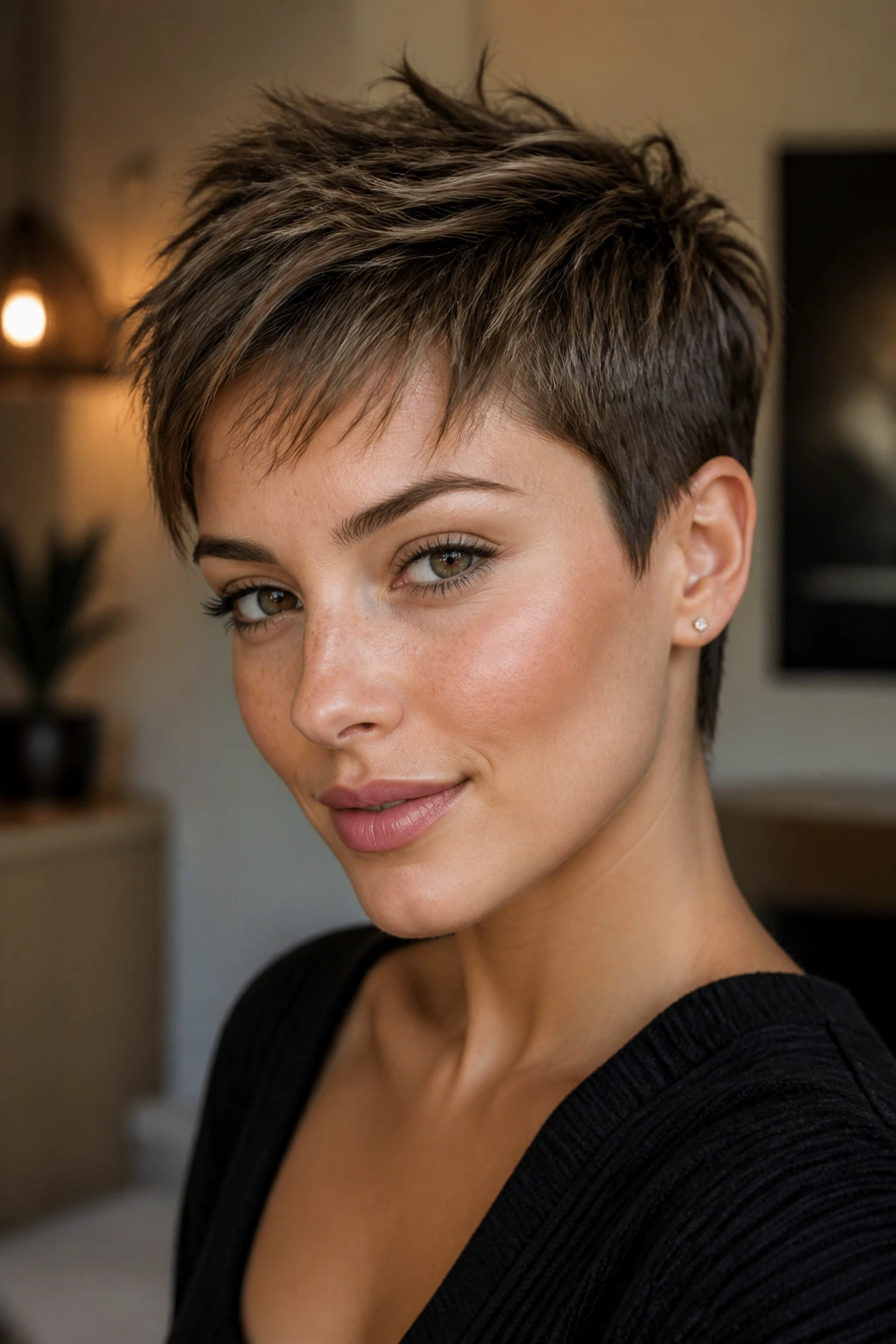
A pixie with a piecey top is one of the quickest ways to make straight hair look sharp. The shorter sides and nape keep the outline clean, while the top stays long enough to separate into small, intentional pieces. Straight hair is good at this. It doesn’t need much coaxing to show the shape.
The main decision is how much length you want on top. Too short and the cut can look flat. Too long and it starts behaving like a tiny bob with sideburns, which is a different haircut entirely. The sweet spot gives you enough room to create a bit of lift at the crown and a forward sweep over the forehead if you want it.
This cut asks for regular trims, but it repays you with almost no daily fuss. A little matte cream or light pomade on dry hair is usually enough. If you’re the kind of person who likes to style with your fingers instead of brushes, this is a strong candidate.
17. Blunt Cut With Brow-Skimming Bangs

A blunt cut paired with brow-skimming bangs is a clean, graphic move on straight hair. The length can be a bob, a lob, or something longer, but the fringe does the headline work. It sits right around the brows and gives the face a strong frame without needing layers everywhere else.
A fringe that lands cleanly
Straight hair makes this bangs shape behave. That’s the good news. The caution is that it also shows every small imbalance, so the bang line needs to be cut with care and trimmed often. If you have a cowlick at the front, tell the stylist before they cut. That piece can kick the fringe to one side if it’s ignored.
I like this cut for people with longer foreheads, strong brows, or glasses. It brings the eye upward and makes the haircut feel more deliberate. The rest of the hair should stay fairly simple; if the bangs are already doing a lot, the length does not need to fight them.
18. Wolf Cut Reworked for Straight Hair
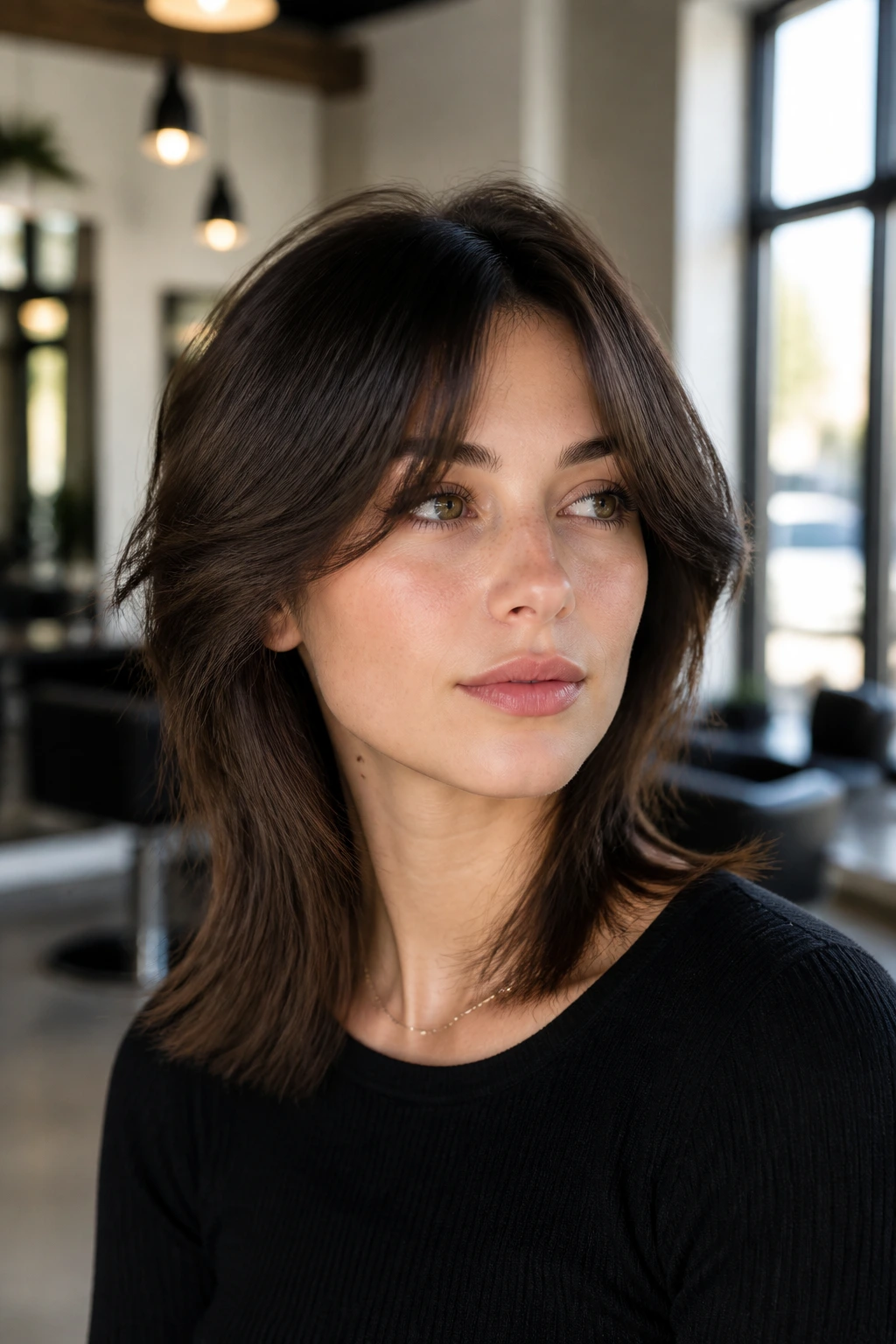
A wolf cut on straight hair cannot be the wild, shaggy version you see on curly or wavy heads. If you try to copy that shape exactly, you often end up with disconnected layers that sit there looking dry and unfinished. The straight-hair version has to be softer and more controlled.
The best approach keeps the crown shorter for lift, then leaves the perimeter long enough to hold the silhouette together. That way the haircut has the rough shape of a wolf cut without the ragged edges. Straight hair can actually make this cleaner version look more interesting because the contrast between the layers is easier to see.
This is one of those cuts that sounds risky and turns out practical if the layering is disciplined. It suits someone who likes a little edge but still wants the hair to fall in a recognizable shape by day two. Ask the stylist to keep the face-framing pieces long enough to blend, not chop them into separate little bits that never quite meet the rest of the cut.
19. Long Layers With a Slight Flip
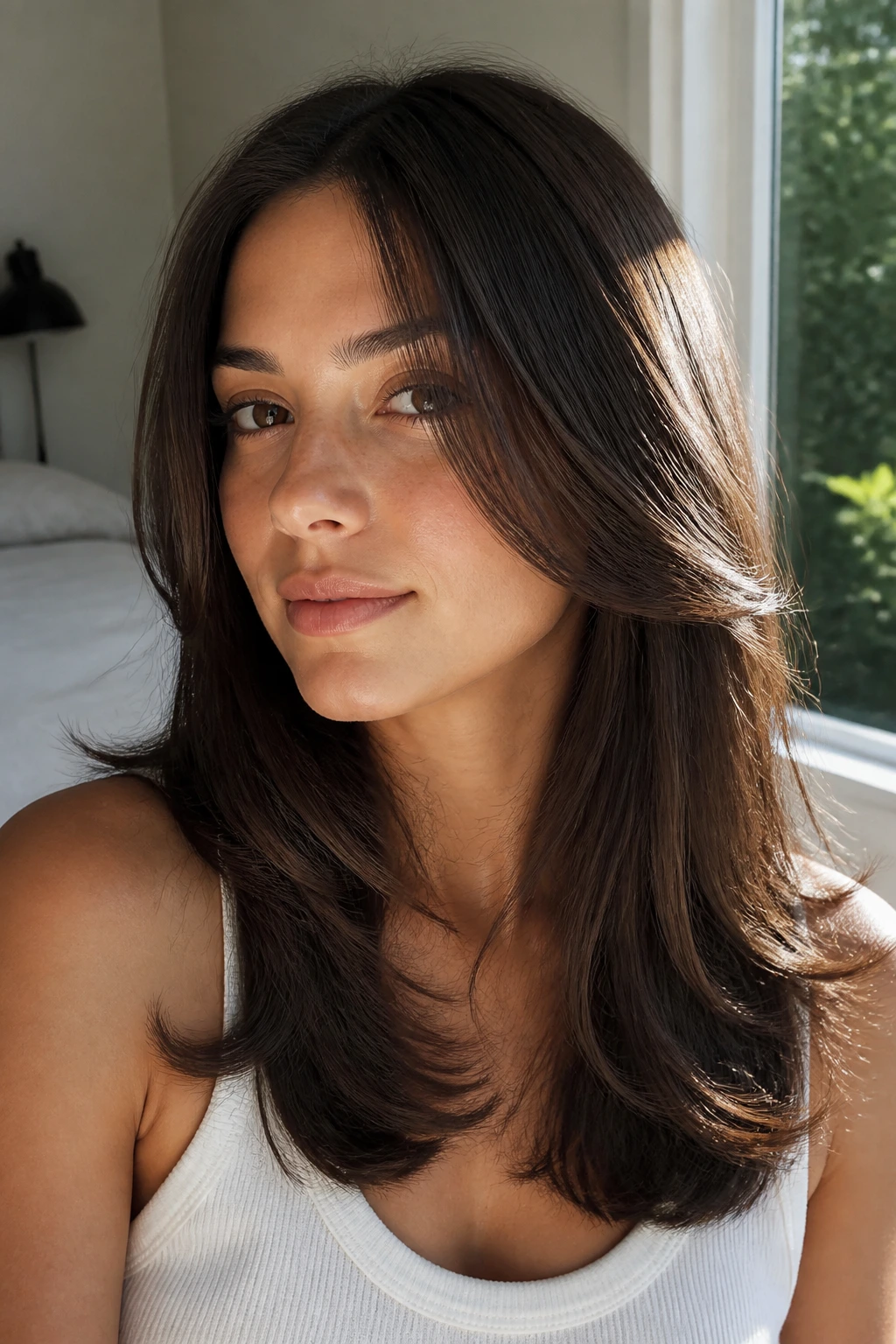
Long layers on straight hair do not have to be obvious to work. In fact, the quieter the layers, the better this usually looks. A slight flip at the ends—just enough to bend away from the face or inward toward the collarbone—gives the cut a little motion without turning it into a full blowout situation.
This is a good choice if you want your hair to keep its length but lose some of the blocky weight that long straight hair can develop. The trick is keeping the layers low and blended. You want them to show when the hair moves, not scream when it’s still. That’s why this cut often looks best with a round brush finish or a flat iron bend on the last inch only.
I’d recommend it for people who like an easy style that can be dressed up fast. The layers add enough shape to keep the ends from hanging dead straight, but not so much that you spend all morning wrestling with them. That balance matters more than a dramatic haircut does.
20. Shoulder-Grazing Razor Bob
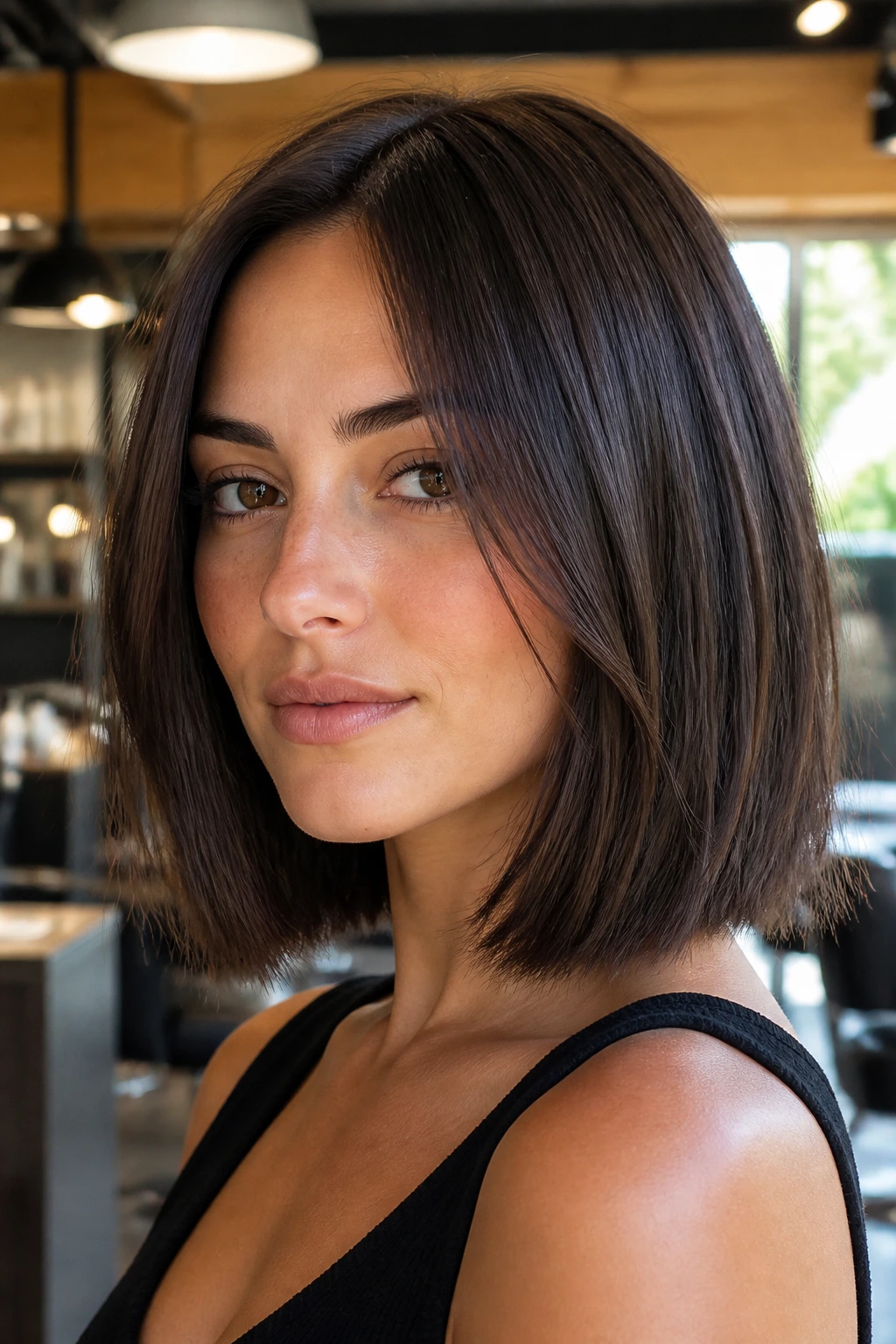
A shoulder-grazing razor bob is useful when you want something between a bob and a lob but don’t want the shape to feel heavy. The razor softens the ends, which can help straight hair sit closer to the neck instead of sticking out at the shoulders. That area is where a lot of cuts go sideways, so this one earns its keep.
The length is important. Too short, and it stops being a shoulder-grazing shape. Too long, and the weight can drag the line down. Ask for the edges to be softened just enough to remove bulk, but not so much that the perimeter gets fuzzy. Straight hair can look gorgeous with this cut, but it does not forgive over-thinning.
This is one of my favorite options for someone who wants a low-effort cut that still feels intentional. It grows out with a decent amount of grace, and it behaves well with either a slight inward bend or a straighter finish. Good haircuts should be flexible like that.
21. Tapered Crop With a Longer Fringe
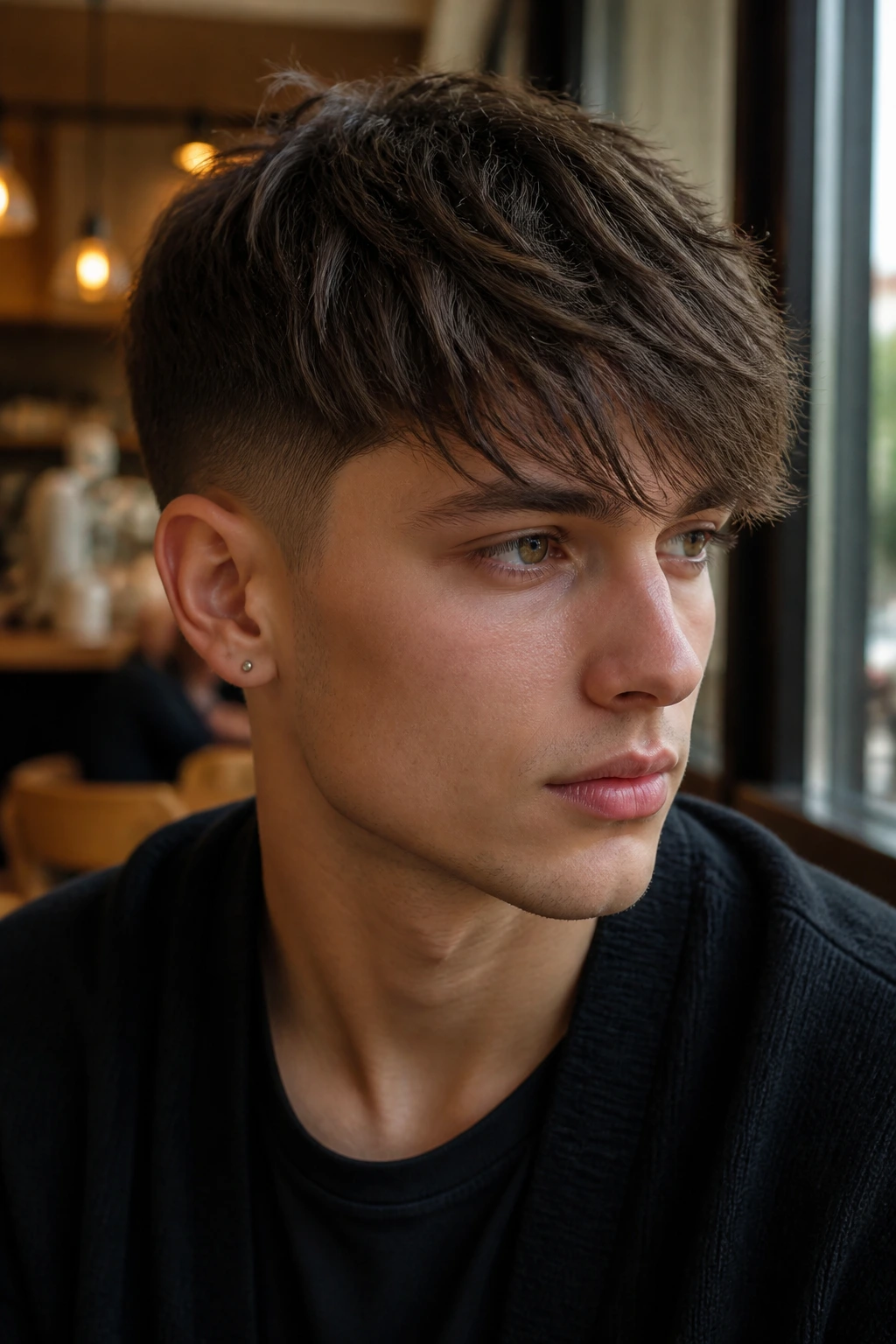
A tapered crop with a longer fringe has a nice tension to it: short and neat around the sides, longer and more expressive up front. Straight hair helps the fringe stay visible, so you do not lose the shape in waves or curl. The crop reads clean, the fringe reads intentional, and the whole thing feels a little sharper than a classic short cut.
The fringe is the point
This is the cut to pick if you like your forehead framed but you do not want a full bang. The front can sweep across, split a little off center, or drop forward in a soft curve. The sides and nape stay tidy, which keeps the cut from looking too bulky. I’d ask for the fringe to be long enough to tuck or twist, because that extra length gives you options on days you want a softer line.
It also plays well with glasses. The longer fringe can sit above the frame or sweep just beside it, which keeps the top half of the face balanced. Straight hair makes that shape easy to maintain, which is half the charm.
22. Tucked-Behind-the-Ear Bob
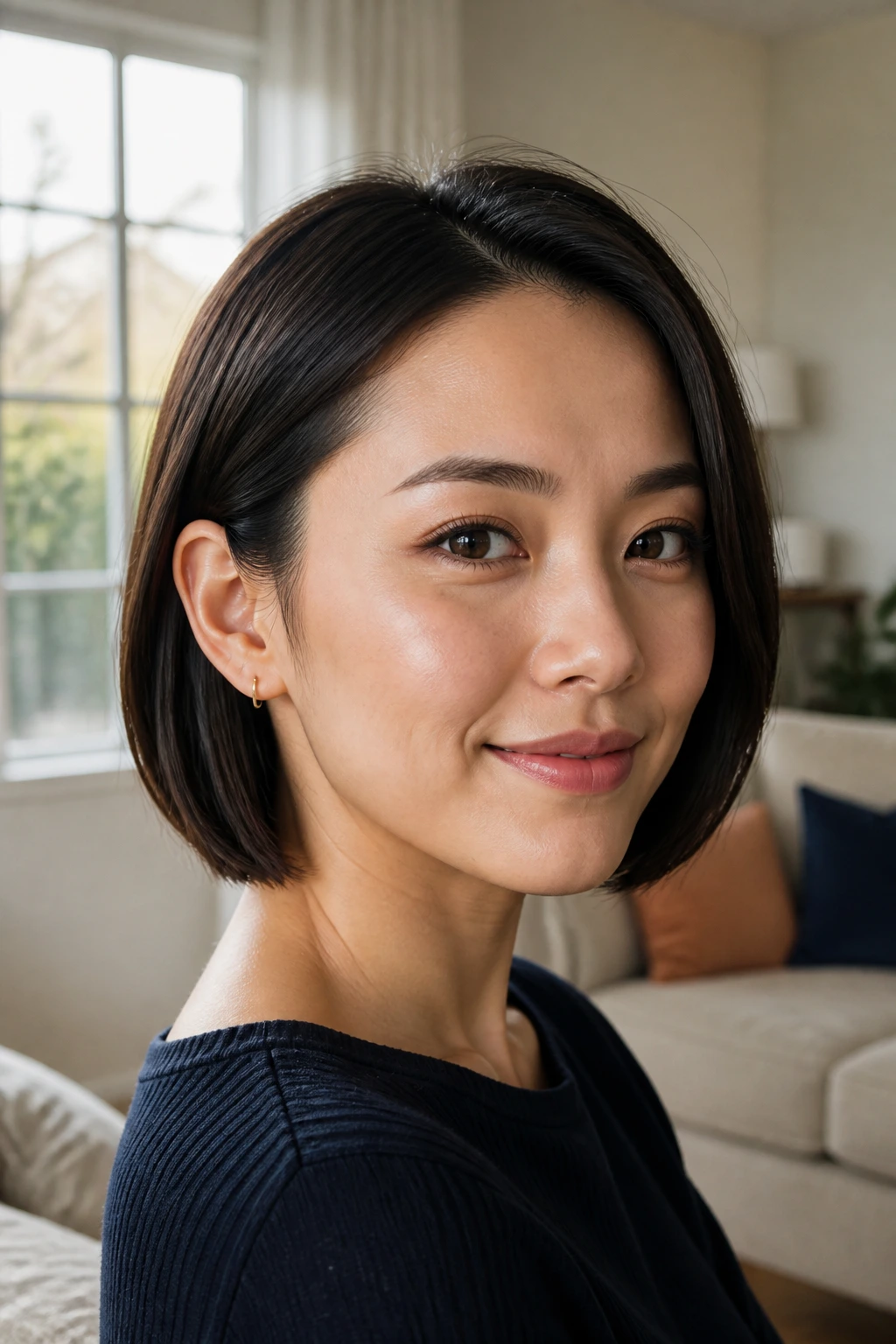
A tucked-behind-the-ear bob is a deceptively useful haircut for straight hair. The length usually sits between the jaw and the collarbone, which is enough room to tuck one or both sides back without the ends sticking out awkwardly. That tiny bit of tuck changes the whole mood.
I like this cut because it works with earrings, glasses, and a side part in a way that shorter bobs sometimes don’t. It also gives straight hair a neat line around the face while leaving just enough length to move. If the front pieces are cut a touch longer than the back, the tuck looks more natural and less like the hair is being forced into place.
This is a good everyday haircut if you want something that can go from open to tucked in two seconds. That matters on busy mornings. It also matters on days when your hair feels too flat and you need a shape that can be adjusted without heat.
23. Clean Hemline Long Cut
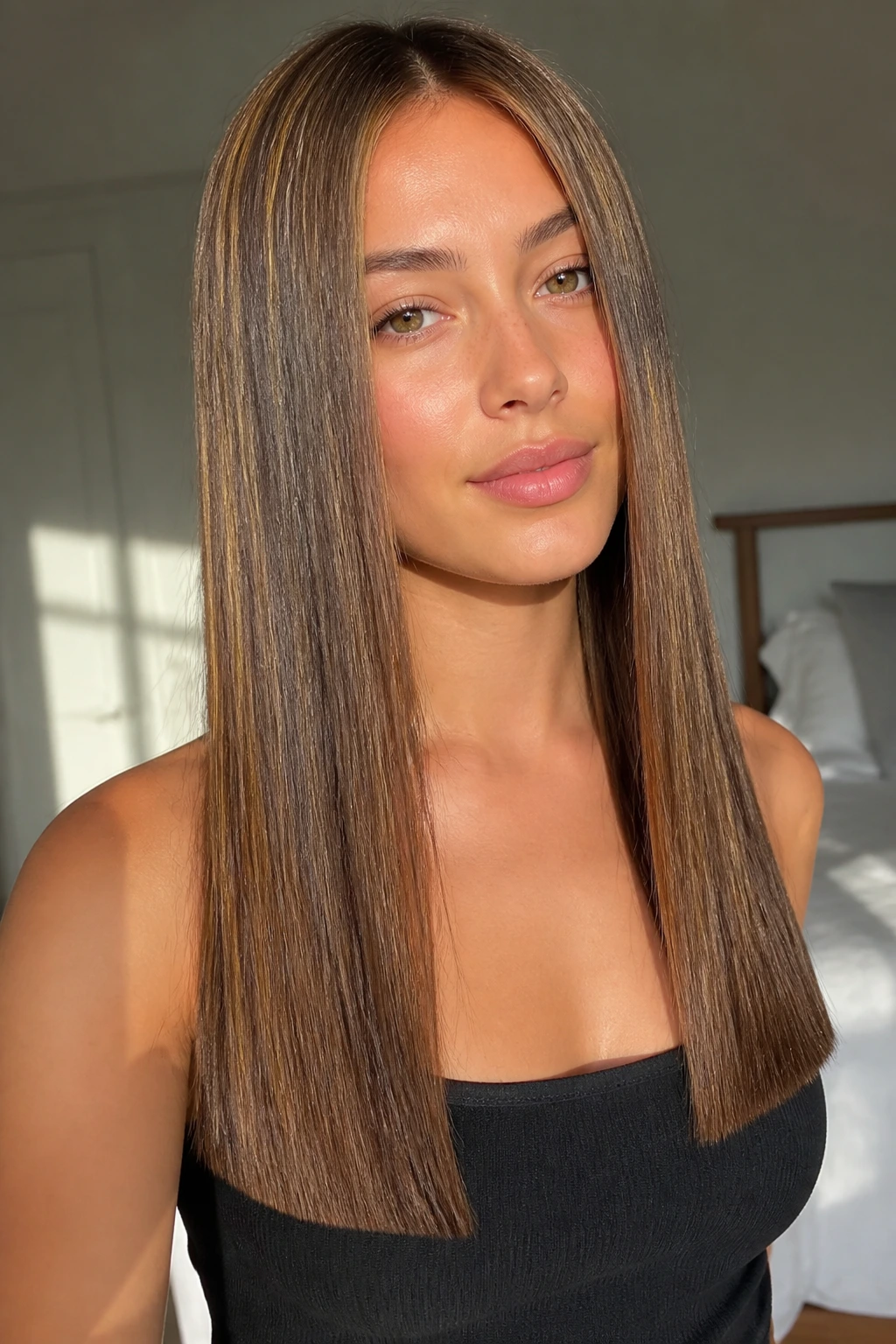
A clean hemline long cut is the quiet powerhouse of this whole list. No dramatic layers, no obvious tricks, just long straight hair with ends trimmed into a fresh, even line that looks cared for. If your hair is healthy and you like length, this cut can make the whole style feel more deliberate with almost no extra work.
The magic is in the finish. Straight hair shows a crisp hemline better than any other texture, and that means a good trim can make the hair look fuller all the way down. If the ends are too wispy, the whole shape loses strength. If they’re too blunt, the cut can feel heavy. The best version sits between those extremes and lets the length do what it does best.
I reach for this recommendation when someone says they love their long hair but want it to stop looking like “just hair.” That sounds blunt, but it’s honest. A clean hemline changes the way long straight hair reads from across the room, and not every cut can say that.
Why Straight Hair Changes the Cut You Ask For

Straight hair is not hard to cut, but it is hard to fake. That’s the difference. A wave can hide a slightly uneven line. A curl can make a blunt edge look softer. Straight strands sit where they land, which means the haircut itself has to carry the shape instead of borrowing help from texture.
That’s why small design choices matter so much here. A half-inch of graduation at the back can change the way a bob stacks. A low internal layer can remove bulk without making the ends look see-through. Even a part that moves an inch to the left can make the whole haircut feel more relaxed. On straight hair, the outline is the event.
There’s also a reason some stylists cut straight hair dry or finish it dry before the final trim. You can see the real fall of the hair. You can spot a heavy corner, a corner that kicks out, or a bang that wants to split in the wrong place. That extra check is not fussiness. It is how you avoid a cut that looks good in the chair and odd the moment you get home.
The best straight-hair haircut ideas respect the grain of the hair. They do not force movement where there isn’t any. They use line, weight, and balance instead, which is a much better trade.
What to Bring to the Salon So the Cut Lands Right
A good reference photo helps, but only if you know how to use it. One picture of a bob on a model with different hair density is not enough. Bring two or three photos, and make sure at least one of them shows the side view. Straight hair can look completely different from the front than it does from the profile.
Say what you like about each photo. Not “I want this.” Better to say, “I like the length here,” or “I like how the fringe opens at the cheekbone,” or “I do not want the back this short.” That gives the stylist a real map instead of a vague target.
Bring your honest routine too. If you air-dry most days, say it. If you own a flat iron but never use a round brush, say that. Straight hair cuts can be deceptively low-maintenance, but only if the shape matches what you actually do in the bathroom. A short bob that needs a 15-minute round-brush pass every morning is not low-maintenance just because it looks simple in a photo.
And mention the odd stuff. Cowlicks. A part that refuses to stay put. One side that flips at the collarbone. The ear you tuck hair behind more often. Those details matter more than salon jargon.
The Brushes, Clips, and Products That Keep These Cuts Clean

You do not need a crowded vanity to keep straight hair looking sharp. A few well-chosen tools do more than a drawer full of half-used bottles.
- Sectioning clips: These help when you’re blow-drying a bob or lobbing the fringe into place. They keep the top from collapsing while the bottom dries.
- Paddle brush: Best for smooth, straight finishes on lobs, long cuts, and blunt hems. It keeps the hair stretched without making it too puffy.
- Round brush: Useful for the Italian bob, curtain bangs, and any cut with a slight bend at the ends. Choose a medium barrel if your hair is shoulder length.
- Fine-tooth comb: Handy for defining a part and checking that the line is even before you leave the mirror.
- Blow-dryer with a nozzle: The nozzle matters. It directs airflow so the hair lies flatter and the cut shape stays clean.
- Heat protectant spray: Non-negotiable if you flat iron even once a week. Straight hair shows heat damage at the ends fast.
- Lightweight smoothing serum: A tiny amount on the mid-lengths can tame fuzz without making the hair greasy.
- Root-lifting spray: Optional, but useful for fine hair that needs a little lift at the crown without losing the straight finish.
- Microfiber towel: Good for getting water out without roughing up the cuticle and creating little frizzy edges.
If you only buy one thing, buy the nozzle attachment first. It does more than people think.
How to Pick the Right Cut for Your Face, Density, and Routine
If your hair is fine
Blunt cuts usually give the best return on fine straight hair because they make the ends look denser. That means the chin bob, the glass-hair long cut, the micro bob, and the clean hemline long cut all deserve a look. Too many short layers can drain the shape. Keep the weight where the eye can see it.
If your hair is thick
You need shape control, not just length reduction. The U-cut, C-shaped midi cut, shoulder-grazing razor bob, and collarbone lob with invisible layers can all help keep the bulk from taking over. I would avoid over-thinning the ends. Thick straight hair can look expensive when it’s shaped well and wildly uneven when it’s sliced too hard.
If you wear your hair up half the week
Face-framing layers, curtain bangs, and a tucked-behind-the-ear bob make more sense than a haircut that only looks good fully down. You want pieces that stay interesting when the rest is tied back. That’s where straight hair can actually be easier than textured hair, because the front line usually behaves.
If your hair flips at the shoulders
Try a cut that either stays well above the shoulder or clears it cleanly. The shoulder-grazing razor bob, the collarbone lob, and the long U-cut are often better than a mid-length cut that lands right on the flip zone. That one inch of difference can save you a lot of annoyance.
Styling Moves That Make Straight Hair Look Intentional
Root Lift: Start the blow-dry at the roots, not the ends. Point the nozzle up and away from the scalp, then direct the hair where you want it to fall. If the crown goes flat first, the whole cut loses shape faster than you’d expect.
Edge Finish: Decide whether the ends should sit straight, curve under, or flick out a little. Then do that on purpose. A blunt bob with perfectly flat ends feels different from the same bob with a tiny bevel, and that tiny detail can make the haircut feel finished.
Fringe Control: Dry bangs first if they’re part of the cut. Straight fringe has a habit of separating or sticking to the forehead when it’s left to air-dry by itself. A quick side-to-side sweep with the dryer usually solves the problem.
Day-Two Rescue: Use dry shampoo at the roots only if the hair has started to collapse there. Then smooth the front pieces with a brush and a little water or serum. Straight hair does not need a full reset every morning. Sometimes it only needs the top layer to wake up.
Common Mistakes That Flatten Straight Haircuts
Over-layering the top: Fine straight hair can go stringy fast if the stylist removes too much weight from the crown. The symptom is obvious: the ends look thin while the top looks puffed out. Ask for the layers to stay low and blended.
Cutting bangs too short: Straight fringe sits exactly where it lands, which is why a too-short bang can look severe by lunch. The fix is to leave a little extra length, then trim again after the hair is fully dry.
Ignoring growth patterns: A cowlick or a strong part can push a bob off to one side, especially near the forehead and crown. If the stylist doesn’t account for it, the haircut will always feel like it’s fighting you. Tell them where your hair wants to split before the scissors come out.
Razor-thinning fragile ends: A razor can soften a shape, but overdoing it makes the perimeter look ragged. Straight hair shows that damage clearly. If your hair is fine, ask for point cutting or slight texturizing instead of aggressive thinning.
Choosing a cut that needs a blowout you won’t actually do: A glossy layered bob can look gorgeous in photos and flat by day three if you never touch a brush. Pick the cut that matches your real routine, not the one that assumes a patient morning and perfect lighting.
Variations and Adaptations Worth Asking About

The Fine-Hair Version: Ask for a blunt perimeter with almost no interior layering. This keeps the ends looking thick and avoids the see-through effect that straight fine hair can pick up fast. A chin bob or collarbone lob usually works better than a heavily textured shape.
The Thick-Hair Version: Keep the line strong, but ask for internal weight removal in the lower half only. That gives the haircut room to move without collapsing into a triangle. The U-cut and C-shaped midi are especially helpful here.
The Low-Styling Version: Choose a collarbone lob, a clean hemline long cut, or a tucked-behind-the-ear bob. These shapes still look like haircuts when air-dried, which is half the battle. They also grow out with less obvious trouble.
The Fringe-First Version: If you want change without losing length, ask for curtain bangs or brow-skimming bangs before you touch the rest of the cut. Straight hair makes bangs read clearly, so even a small fringe can change the whole face shape. Good option when you want a shift, not a chop.
The High-Polish Version: Go for the glass-hair long cut, the Italian bob, or the blunt chin-length bob. These rely on a clean finish and a smooth surface. They’re the cuts that make a simple blow-dry look intentional.
The Grow-Out-Friendly Version: Pick a shape that keeps its perimeter even when it softens, like the collarbone lob or the long U-cut. These stay readable longer, which means fewer awkward weeks between trims.
Keeping the Shape Sharp Between Trims
How often you trim matters more with straight hair than a lot of people expect. Bobs and micro bobs usually need a refresh every 5 to 7 weeks if you want the line to stay crisp. Lobs can stretch to 7 or 8 weeks, sometimes a little more if the ends are healthy. Long cuts can go longer, but the hemline still benefits from a trim about every 8 to 12 weeks if you want the shape to stay clean.
Bang maintenance is its own thing. Brow-skimming bangs and curtain bangs usually need a light cleanup every 2 to 4 weeks, depending on how fast your hair grows and how precise you like the line. That is not a flaw. It is the cost of having fringe that actually sits where it should.
At home, a little care goes a long way. Use a heat protectant before flat ironing, keep the ends conditioned, and don’t overload the hair with heavy oils if you want the cut to keep its movement. Straight hair will show product buildup as quickly as damage, and that greasy mids-and-dry-ends look is not doing anybody favors.
If your ends start to kick out, wet just the last inch, blow-dry it straight, and set the shape again. You don’t always need a full wash. Sometimes the haircut just needs a reset.
Straight-Hair Questions People Ask at the Chair
What haircut makes straight hair look thicker?
A blunt bob, a clean hemline long cut, or a blunt lob usually gives the best illusion of thickness because the ends stack visually. Keeping the perimeter full matters more than adding lots of layers.
Are layers bad for straight hair?
No, but they need restraint. Long, low layers or invisible internal layers can add shape without making the ends thin. Choppy layers high up the head usually look harsher on straight hair than they do on waves.
What bangs work best with straight hair?
Curtain bangs, brow-skimming bangs, and soft fringe usually behave well because they can sit cleanly without looking stiff. The best choice depends on your forehead length, hairline, and how often you want to trim them.
Can straight hair pull off a shag or wolf cut?
Yes, if the version is softened for straight strands. Ask for longer layers, a controlled perimeter, and less aggressive texturizing. Straight hair does not need a shredded finish to look interesting.
How short can straight hair go before it starts looking severe?
Very short cuts like a micro bob or pixie can look fantastic on straight hair, but the shape has to suit your features and hairline. A little softness on top or around the fringe usually keeps the cut from feeling too hard.
Should straight hair be cut wet or dry?
Both have a place. Wet cutting helps build the basic shape, while dry finishing shows exactly how the hair falls. For straight hair, that dry check is often where the difference between good and odd gets decided.
Why does straight hair flip out at the ends?
Usually because the length sits right at the shoulder, where friction pushes it outward. A small adjustment in length, a more rounded perimeter, or a better blow-dry usually fixes it.
How do I ask for a low-maintenance straight-hair haircut?
Say how much time you actually spend styling, whether you air-dry, and how often you want to come back for trims. Then point to the parts you like in your reference photos, not just the overall shape. That gives the stylist something real to work with.
The Cut That Fits the Grain
Straight hair does not need more drama. It needs a line that knows where it’s going, a fringe that lands in the right spot, or a layer map that removes bulk without tearing the shape apart. That is the thread running through all 23 of these haircut ideas: they let straight hair look like itself, only cleaner and more deliberate.
The smartest choice is rarely the loudest one. Sometimes it’s the blunt bob. Sometimes it’s the lob with invisible layers. Sometimes it’s a long cut with nothing flashy at all, just a hemline so clean it changes the whole feel of the hair. Bring a photo, bring your real routine, and be honest about how much styling you’ll actually do. The right haircut gets easier to spot after that.
