



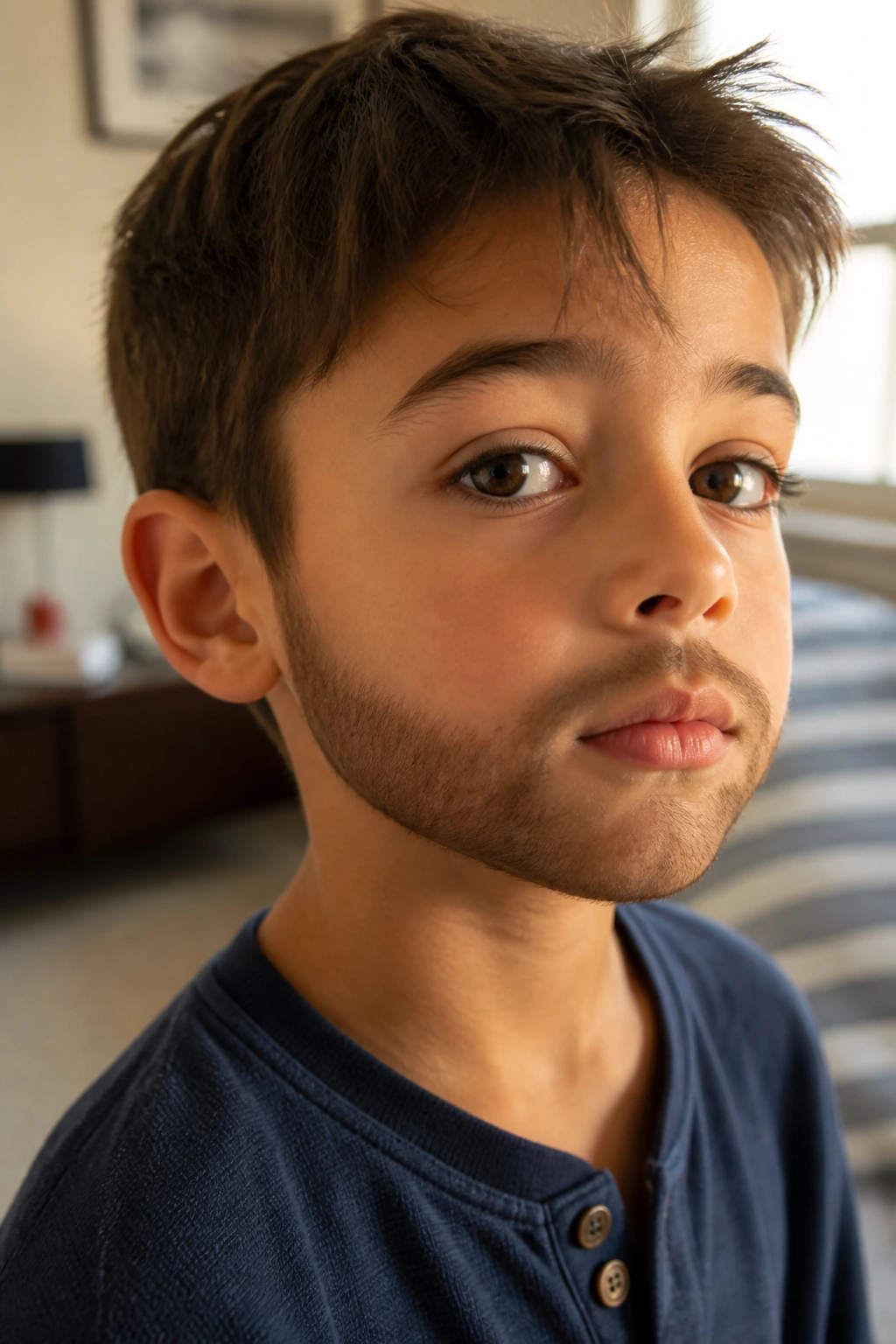
Little boys do not need real facial hair to pull off a beard look. The best beard styles for little boys are the ones that read clearly from across a room, feel soft on skin, and come off at the sink without a fight. So this is really a collection of costume beards, face-paint shadows, yarn trims, and clip-on shapes — the fun version, not the shaving version.
That distinction matters. A child’s face is smaller, rounder, and far more expressive than an adult’s, which means a beard that looks tidy on paper can look clumsy in a school play photo if it sits too low, crowds the mouth, or turns into a dark blob under the chin. The sweetest looks are the ones that respect the face shape: clean lines, soft edges, and enough contrast to show up without swallowing the smile.
I’ve always liked beard styling that stays playful instead of trying too hard. On kids, that usually means lighter materials, shorter wear time, and shapes that feel like a character, not a disguise. Think brown pencil shadow on a buzz cut, a rounded little goatee for a pirate costume, or a soft white felt beard for a holiday pageant. The useful part is not just the style itself — it’s knowing which one will survive snacks, warm lights, and a child rubbing his cheeks three minutes before showtime.
Why These Faux Beard Looks Work So Well on Little Boys
-
Washable by design: Water-based face paint, eyebrow pencils, and soft felt can be removed with warm water and mild soap, which is the whole game when you’re dealing with a child’s skin.
-
Shape beats thickness: A neat jawline, a small chin patch, or a clean mustache line reads faster than a heavy block of color that covers half the lower face.
-
They match short haircuts easily: Buzz cuts, fades, curly crops, and side parts all pair well with beard shapes that stay close to the cheeks and chin.
-
They hold up in photos: Clear outlines show up under indoor lighting and phone flashes better than a blurry, smeared beard shadow.
-
Comfort stays in the lead: The best looks avoid sticky glue on skin, thick wax near the mouth, and anything that makes a child want to scratch before the event even starts.
-
They can be as small or bold as you need: One kid wants a tiny chin patch. Another wants a full wizard beard. Same basic kit. Very different result.
1. Tiny Lumberjack Beard
A tiny lumberjack beard is one of the easiest places to start because it has a built-in shape. Soft brown shadow hugs the jaw, fills the chin, and stops before the mouth starts feeling crowded. On a little boy with a short crop or buzz cut, it gives that “mini woodsman” look without making the face look older than it is.
Why It Works
This style uses contrast more than detail, which is why it works so well on small faces. A medium-brown eyebrow pencil and a light sponge layer are enough; you do not need heavy paint. Keep the cheeks soft and the chin a touch darker, then stop. The beard should look like a shadow at the edge of a firelight photo, not a helmet.
Best Pairing
A flannel shirt, rolled sleeves, and a simple cap make the whole thing land in seconds. If the child has a fade or a tight crop, even better — the clean haircut keeps the beard from looking busy.
Quick build:
- Sketch the jaw with a brown pencil.
- Blend the line inward with a dry sponge.
- Darken the chin a little more than the cheeks.
Watch for: If the beard reaches too close to the lips, it starts to look muddy in photos.
2. Soft Pencil Shadow
This is the beard for a child who does not want to “wear makeup.” It is barely there, which is exactly why it works. A whisper of gray-brown shadow along the jawline gives the impression of stubble without any thick coloring.
The trick is to use the lightest pressure possible. Light taps. Light strokes. If you can see every pencil line, you went too far. Blend until the edges blur into skin, then stop before it turns into a smudge. On a side-part or soft curly top, the quiet beard line keeps the whole look calm and neat.
How to use it
Best for school shows, photo days, and kids who fidget a lot. A pencil shadow can be done in two minutes and cleaned off almost as fast. It also pairs well with a plain T-shirt and suspenders if you want a costume that feels low-effort but intentional.
3. Rounded Mini Goatee
The rounded mini goatee is a small beard with a clean center of gravity. It sits on the chin like a little circle or oval, leaving the cheeks open and the upper lip separate. That shape reads fast, even on a tiny face.
Why this one keeps showing up in kids’ costume looks: it’s tidy. A round chin patch looks deliberate, not random. Use a dark brown or charcoal pencil, then fill the shape with a short sponge tap so it has a soft edge. If the child has a heart-shaped face or a pointed chin, the roundness balances things out nicely.
Best for: pirate costumes, little magician outfits, or any character that needs a small, bold face detail.
4. Mini Chin Strap
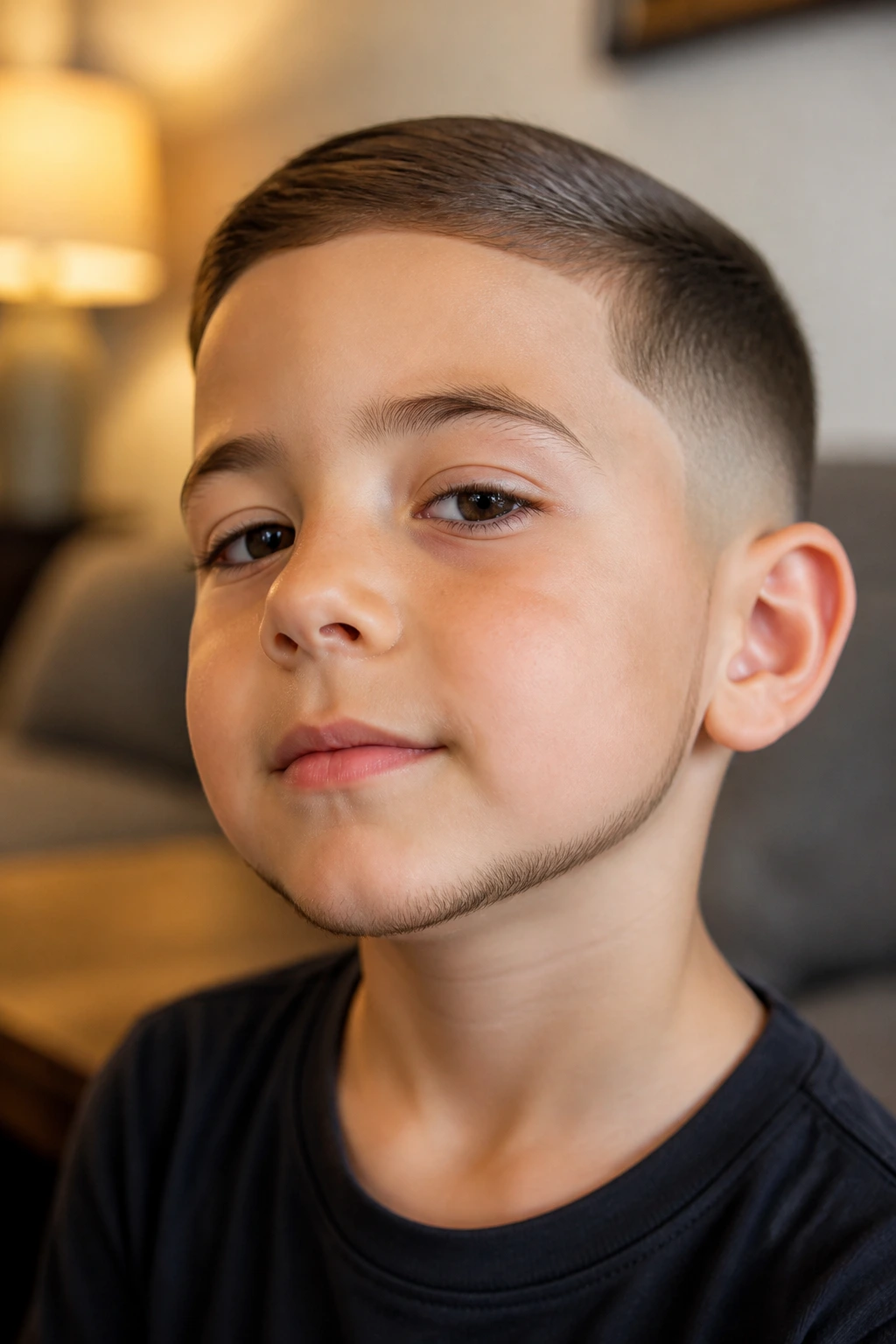
A mini chin strap is basically a thin line that runs along the jaw and connects near the chin. It sounds simple, and it is, but on the right haircut it looks sharp in the best way. Think short sides, clean edges, and a beard line that mirrors the haircut rather than fighting it.
Use this shape when you want order. It gives the face a frame without crowding the cheeks. A fine brown pencil works better than thick paint here, because the whole point is crispness. Keep the line narrow — about the width of a fingertip, not a thumb — and soften the corners so it does not look drawn with a ruler.
Best pairing
A fade, a tight side part, or a smooth brushed-up top makes the chin strap feel intentional. If the hair is fluffy or messy, the beard line can disappear.
5. Gentle Full Beard
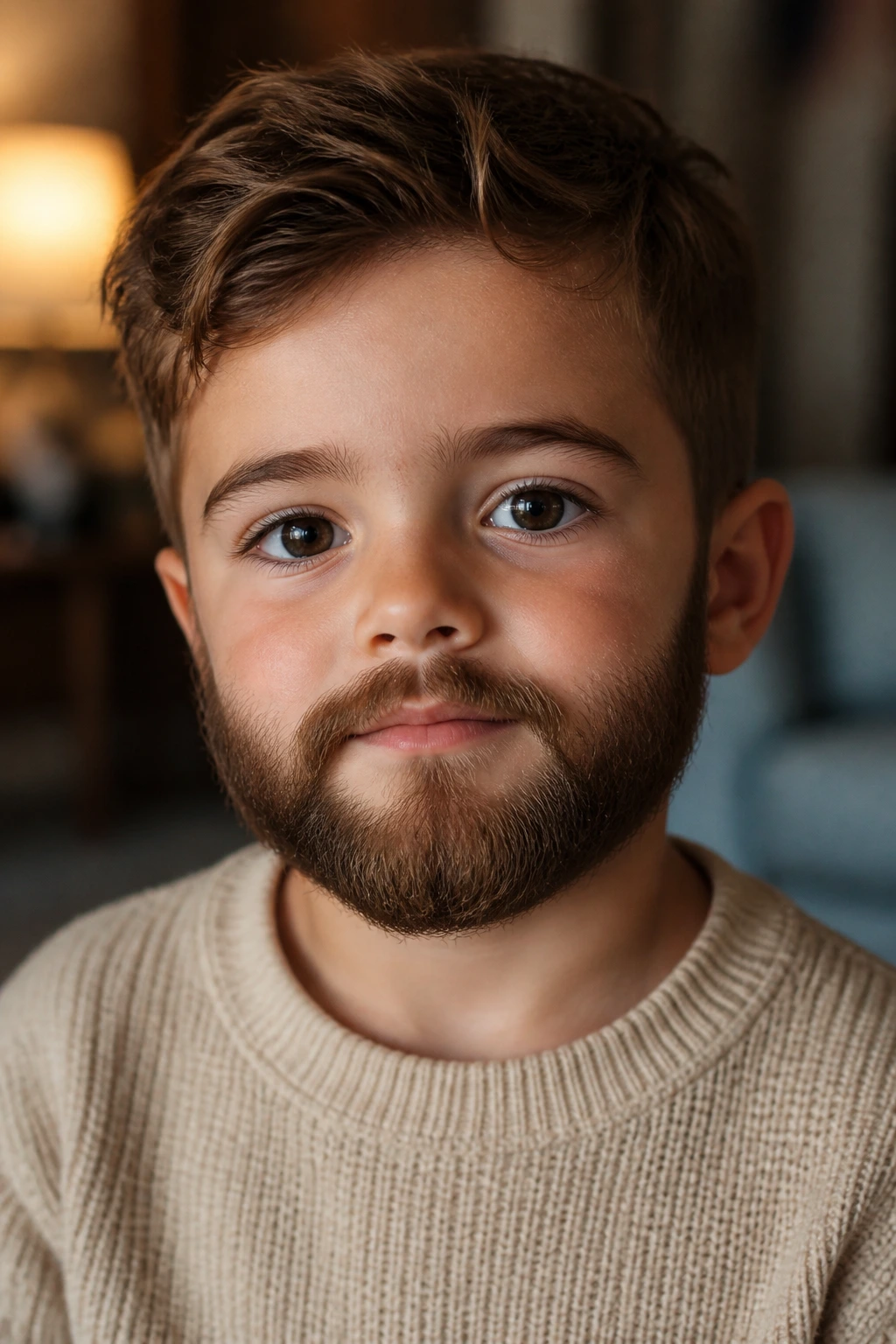
A gentle full beard is the kid-friendly version of a complete beard shape. It covers the cheeks, jaw, and chin, but the finish stays soft. No hard edges. No aggressive outline. Just a rounded, storybook beard that makes a child look like a small king, old sailor, or wise forest character.
This one works best with a light hand and a matte finish. A makeup sponge is your friend here. Tap the color on in layers instead of trying to fill the whole thing at once. The first layer should look faint. The second should add depth. That approach keeps the beard from turning into a flat brown patch under bright indoor lights.
Pro tip: Keep the area around the mouth cleaner than the rest of the beard. Kids talk, laugh, and snack. A little breathing room around the lips saves a lot of smearing.
6. Clean Van Dyke
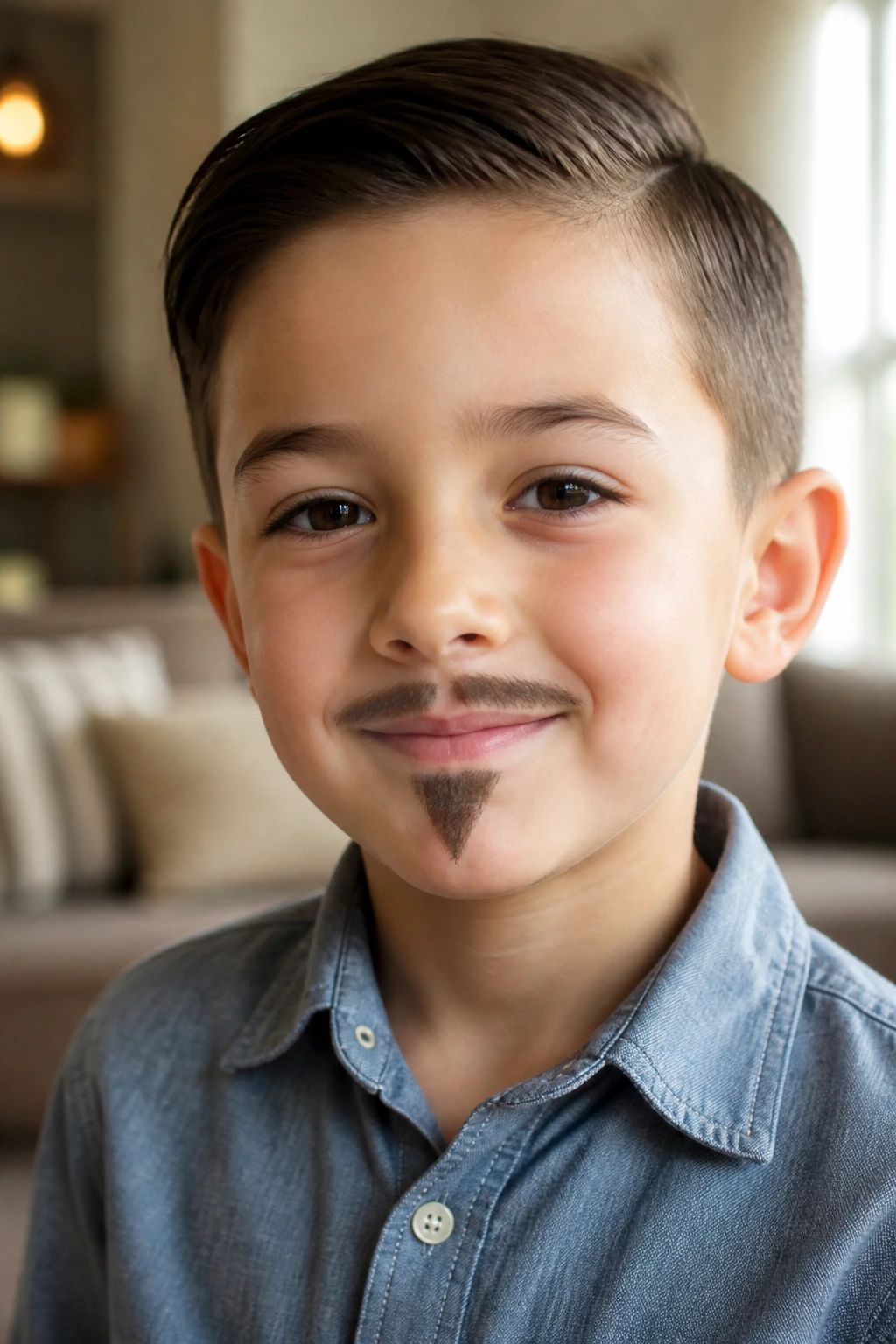
The Van Dyke is the one I reach for when the costume needs a little personality. Separate the mustache from the chin point, keep the cheeks bare, and suddenly the face has a sharper, more dramatic look. On a little boy, that means costume character without the heaviness of a full beard.
Use a pencil for the mustache and a slightly darker pencil or paint for the chin point. The shapes should look connected by attitude, not by a dark bridge of paint. If the haircut is neat — a side part or tidy crop — the whole thing feels polished.
How it reads
It works for little gentleman costumes, old-time stage roles, and playful “tiny villain” setups. The face stays open, which matters if the child is going to be smiling through most of the event.
7. Pirate Scruff
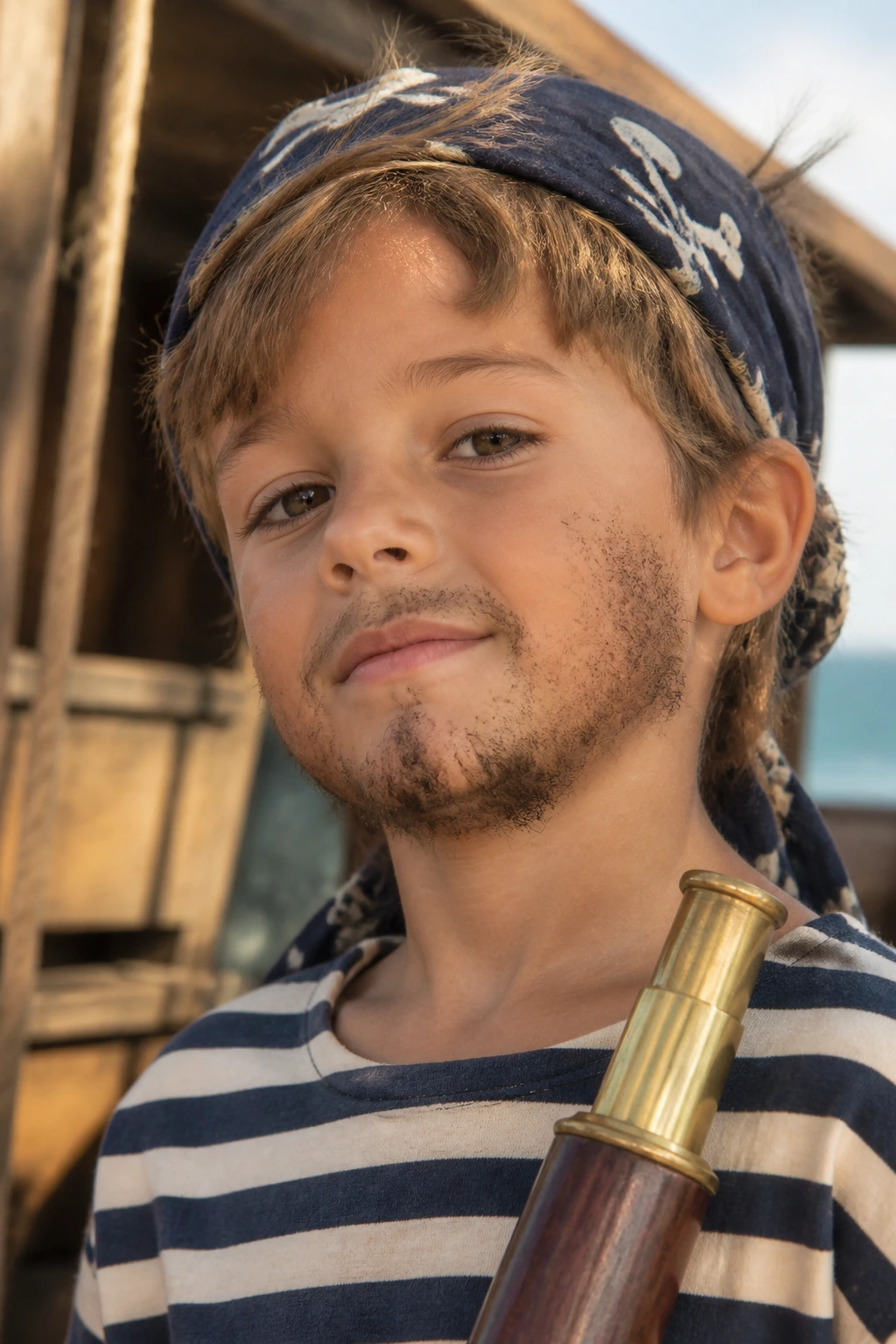
Pirate scruff is gloriously imperfect. The beard line doesn’t need to be even, and frankly, if it looks too neat, it loses the pirate feel. A little patchiness across the jaw and a rougher chin area make it look like the character has been at sea for days.
Start with a soft brown base, then tap a darker shade in unevenly. Leave small gaps near the cheekbones so the beard feels worn, not painted. Pair it with a bandana, a striped shirt, or a toy telescope. The haircut can be messy here — in fact, a slightly tousled top helps.
Best trick: Smudge the edges with a dry sponge instead of tracing them. Pirates should look like they stepped off a ship, not a barber chair.
8. Wizard Cloud Beard
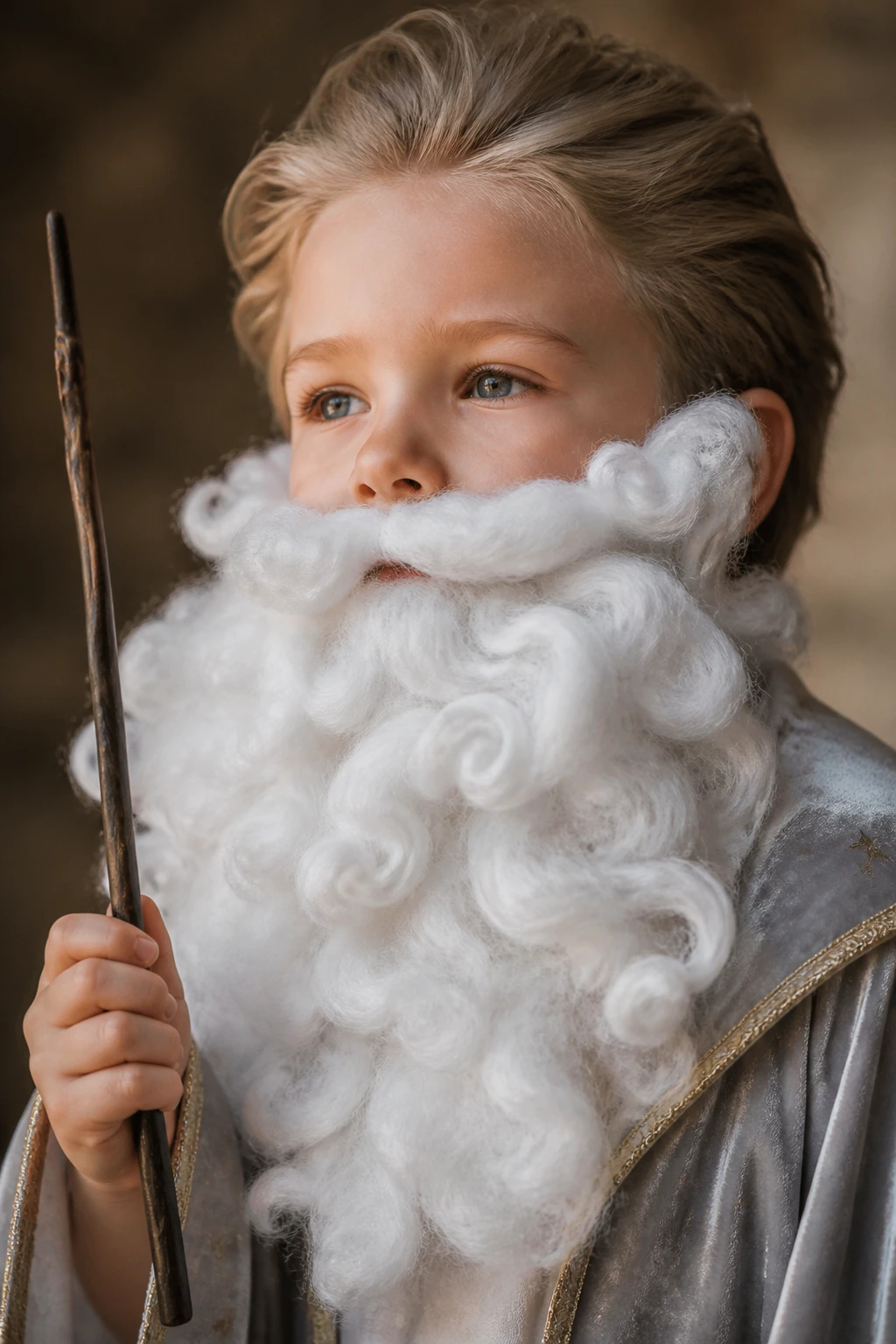
A wizard beard wants volume, but on a child that volume should feel soft and cloudlike. White or cream felt, yarn, or fluffy face paint can give you that long, wise look without making the beard heavy. The key is texture. The beard should look airy, not glued-down.
If you use yarn, cut the strands unevenly so the bottom edge doesn’t form a straight curtain. If you’re painting it, tap in tiny strokes so it catches light in a broken, feathery way. A robe, a paper star wand, and a simple swept-back haircut are enough to sell the whole thing.
How to use it
This is one of the best beard styles for little boys in school plays because it reads instantly from a distance. A white beard on a child face always gets attention. Keep the eyebrows soft and the cheeks pale if you want the beard to carry the look.
9. Story Grandpa Beard
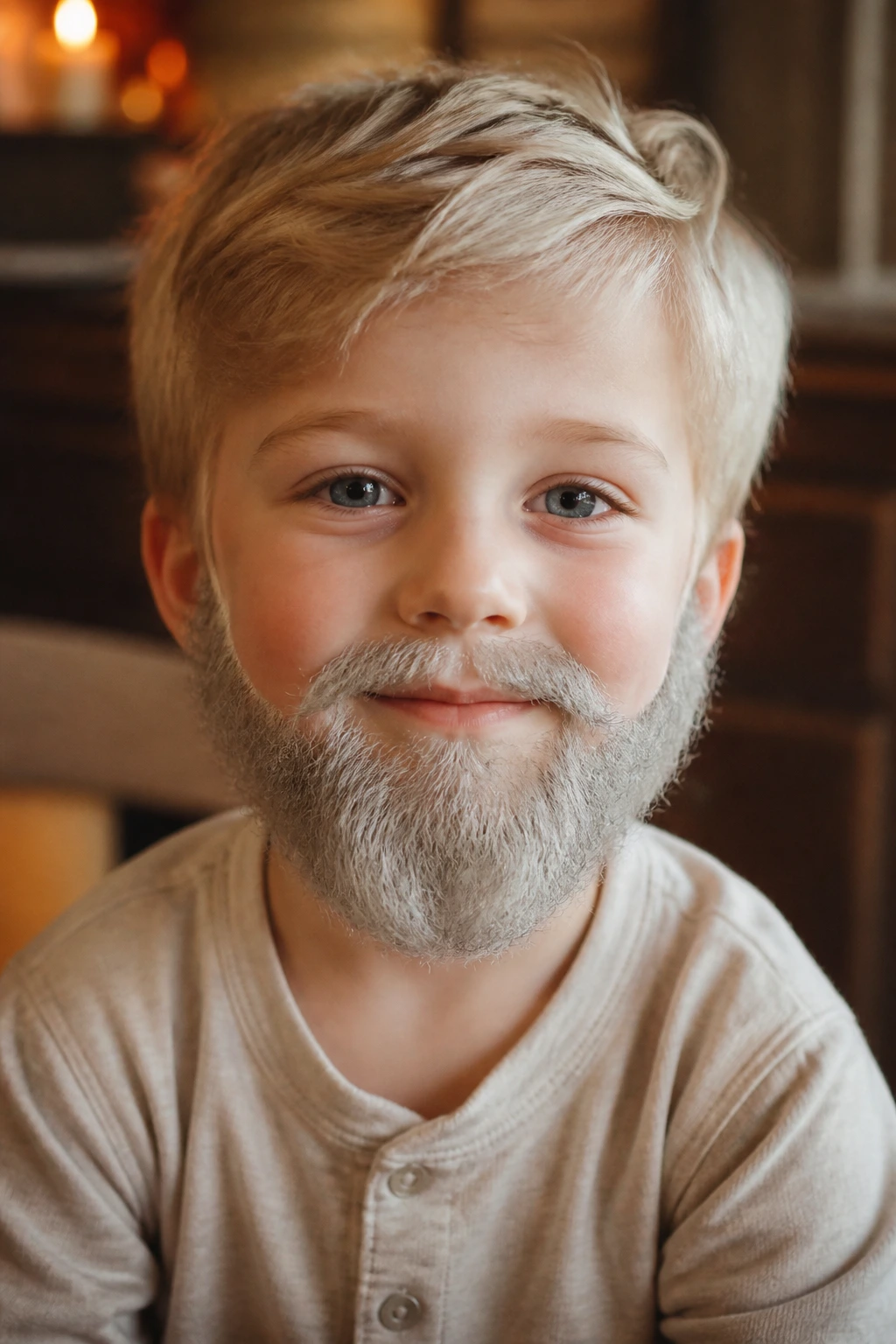
The story grandpa beard is all about warmth. Think rounded cheeks, a fuller chin, and a little softness around the mouth that makes the face look kind and animated. It’s less about strict realism and more about that “story time” feeling you get from old picture books.
A pale gray or silver pencil can work beautifully here, especially if the hair on top is white-blond, light brown, or even tucked under a cap. The face should still be visible; you want the beard to frame the smile, not hide it. I like this style best for holiday performances and family portraits because it looks sweet rather than stiff.
Small detail that matters: Add a tiny bit more depth under the lower lip than on the cheeks. That gives the beard shape without making it bulky.
10. Anchor Beard
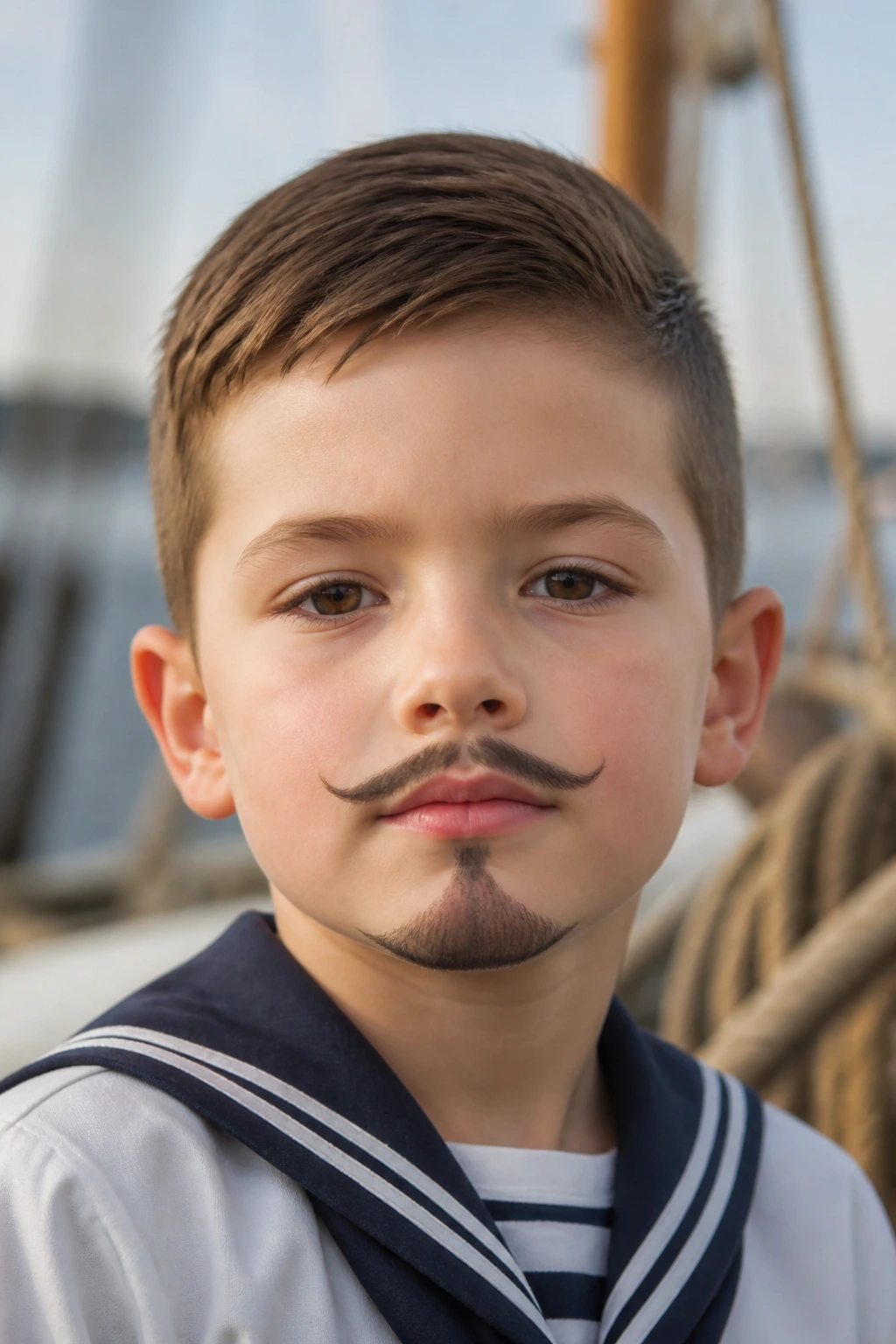
An anchor beard is a good choice when you want something sharp but not complicated. The chin point and mustache work together to make that classic anchor shape, and on a child it brings enough character without swallowing the lower face.
The mustache should stay thin and curved, not big and bushy. The chin point can be a little darker and more defined. If you’re using face paint, sketch the anchor first with a fine pencil so the proportions stay balanced. On a short haircut, especially one with clean sides, the shape looks crisp and clear.
Best pairing
Great with sailor costumes, little captain outfits, or anything that needs a neat, old-fashioned feel. Keep the cheeks bare so the anchor shape can do its job.
11. Boxed Beard Outline
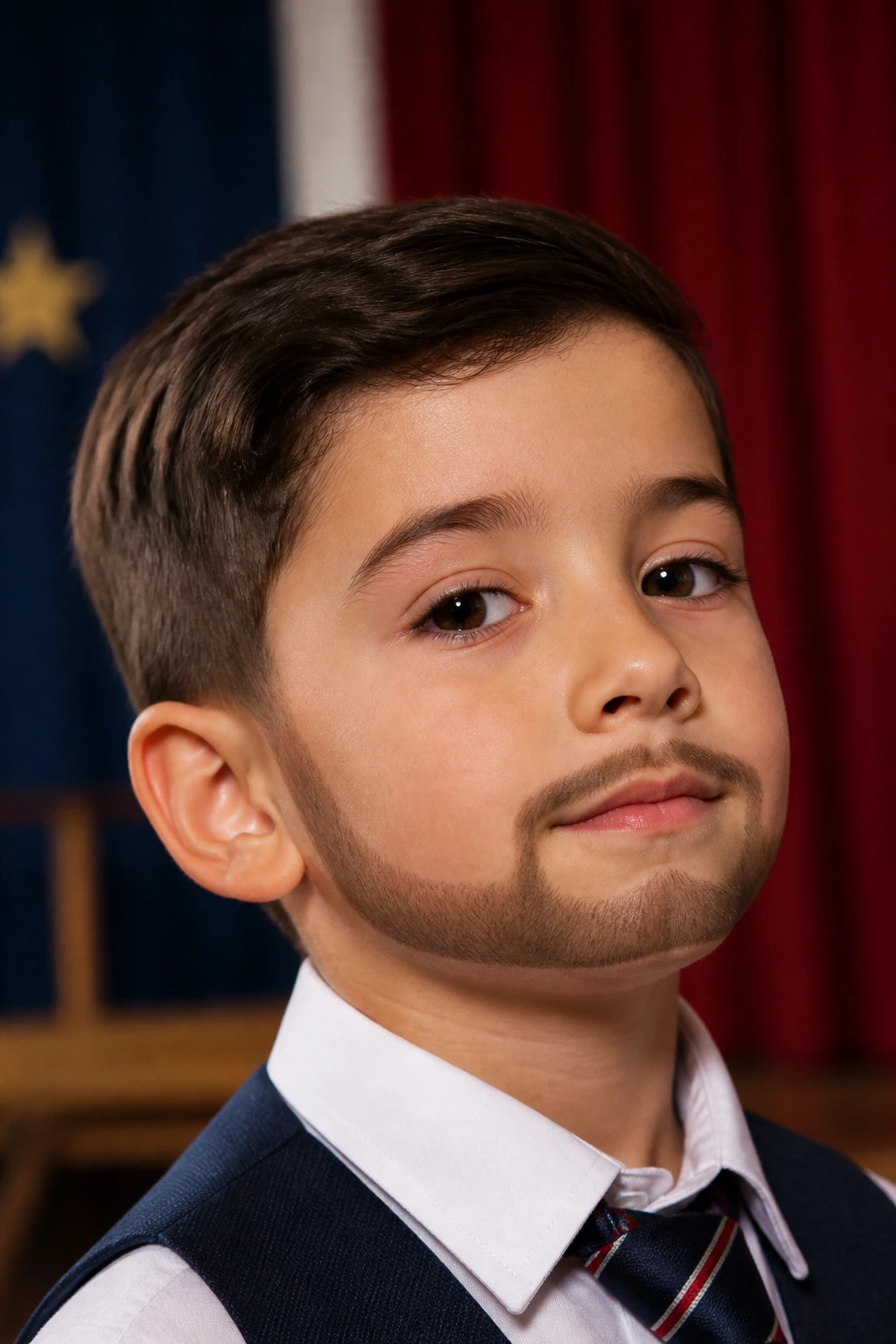
This is the beard for the kid who likes things tidy. A boxed beard outline follows the jaw in a clean rectangle with rounded corners, and it gives the face a strong frame. It’s a good option when the costume needs structure more than fluff.
The box shape works best when the lines are even but not harsh. Use a pencil first, then fill lightly with matte face paint. If the edges are too sharp, the beard can look drawn on with a marker. A little blending fixes that. Pair it with a neat haircut — short sides, brushed top, or a controlled curly style that stays off the cheeks.
Where it shines: stage photos, costume parades, and any look where the beard needs to hold its shape from a distance.
12. Mutton-Chop Minis
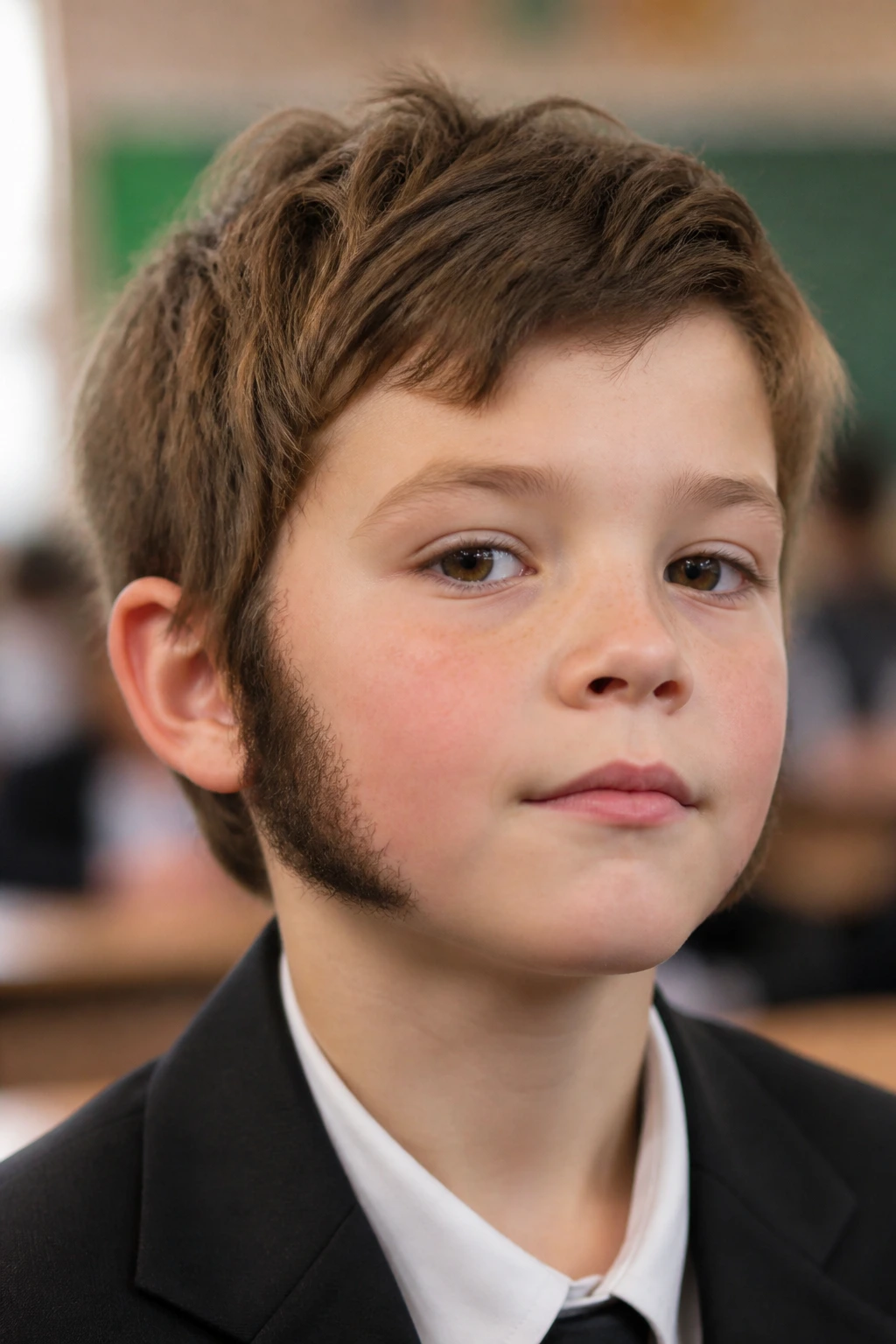
Mutton-chop minis are pure fun. Thick sideburns that travel down the cheeks, with the chin left open, create a playful old-time look that kids can wear without feeling buried under face paint. It’s a bold shape, which means the rest of the face stays simple.
You can draw the sideburns with a brown pencil and a sponge, or cut them from felt and pin them into a costume collar if the event allows accessories. The chin being bare keeps the mouth area clean, which is a blessing on snack-heavy days. A slick side part or tucked-behind-the-ears hair makes the sideburns stand out.
How to use it
This one works especially well for school characters, old-timey parade outfits, and costume days where you want something recognizable fast.
13. Sideburn Sweep
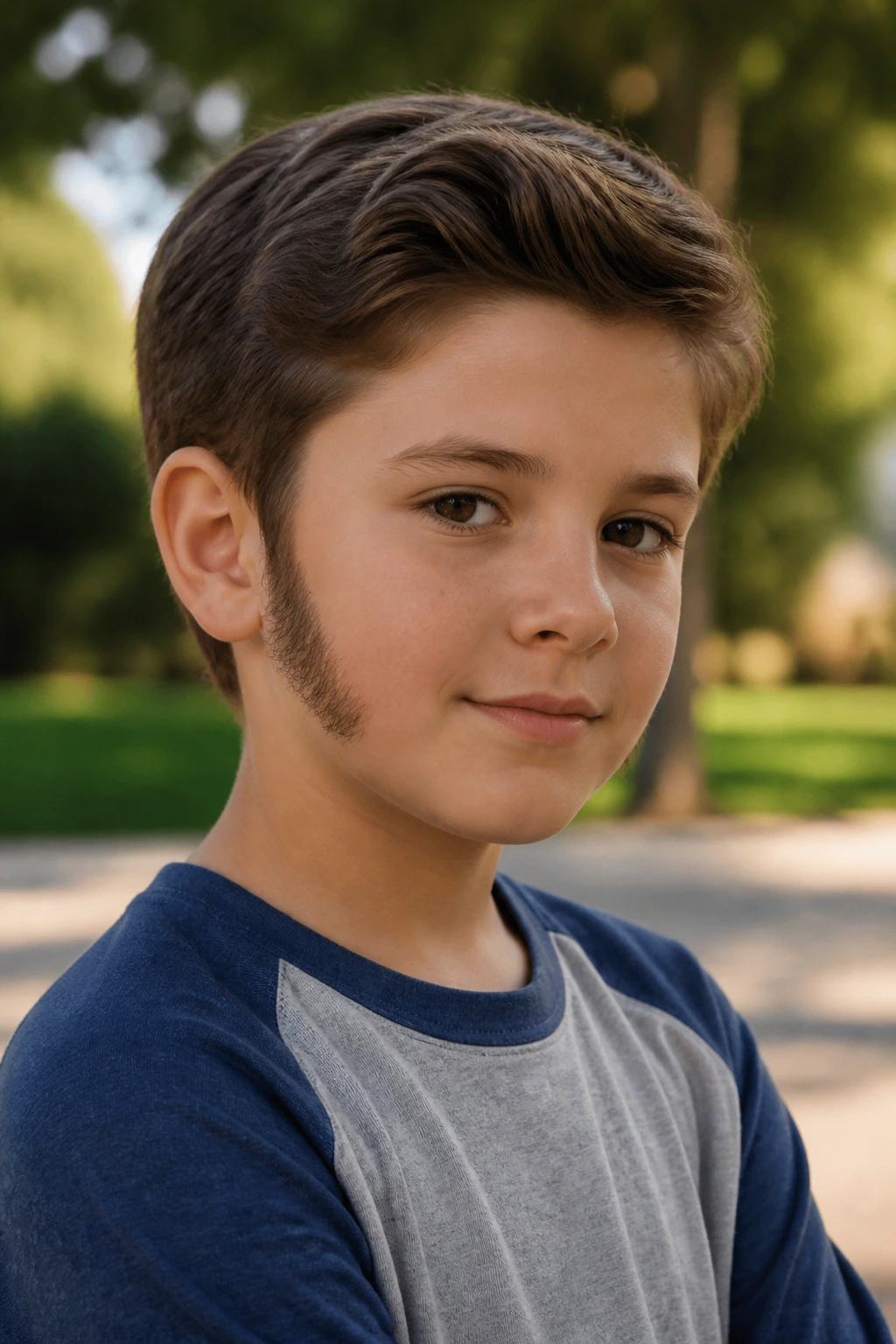
Sideburn sweep is a gentler cousin of the mutton-chop look. The sideburns start near the temples, widen slightly as they travel down the cheeks, and then taper out before reaching the chin. It’s a clean, flattering shape on a child face because it adds width without closing in the lower half.
I like this style on boys with curls or a bit of volume on top. The beard and hair can echo each other instead of competing. Keep the pigment soft and the taper gradual. If the sideburns stop too abruptly, the look feels chopped off.
Tiny rule that helps: The beard should end where the jaw begins to turn inward. That keeps the cheeks open and avoids a heavy, draggy line.
14. Half-Moon Beard
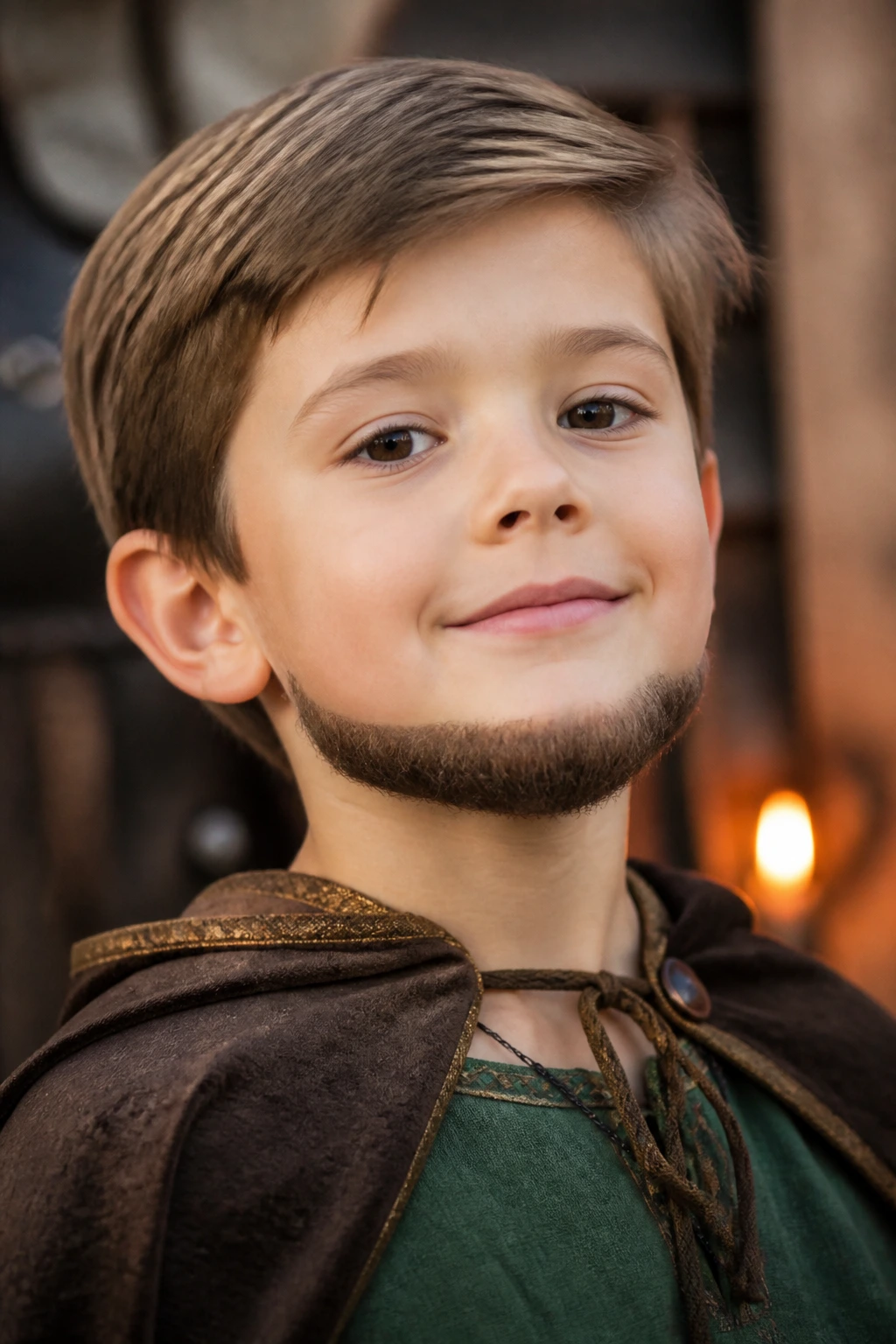
A half-moon beard curves around the chin in a smooth arc, almost like a soft smile under the mouth. It’s a lovely shape for kids because it follows the face instead of boxing it in.
Use a curved pencil line first, then fill the center of the curve with short taps of paint or shadow. The line should feel rounded and friendly. On a small face, that matters. Sharp corners make the beard look severe; smooth curves make it look storybook. This shape works well with a crew cut, a curly fringe, or a hairline that already has a soft outline.
Best for
Fantasy costumes, old-time characters, and any dress-up day where the beard needs to feel gentle rather than rugged.
15. Stubble Dust
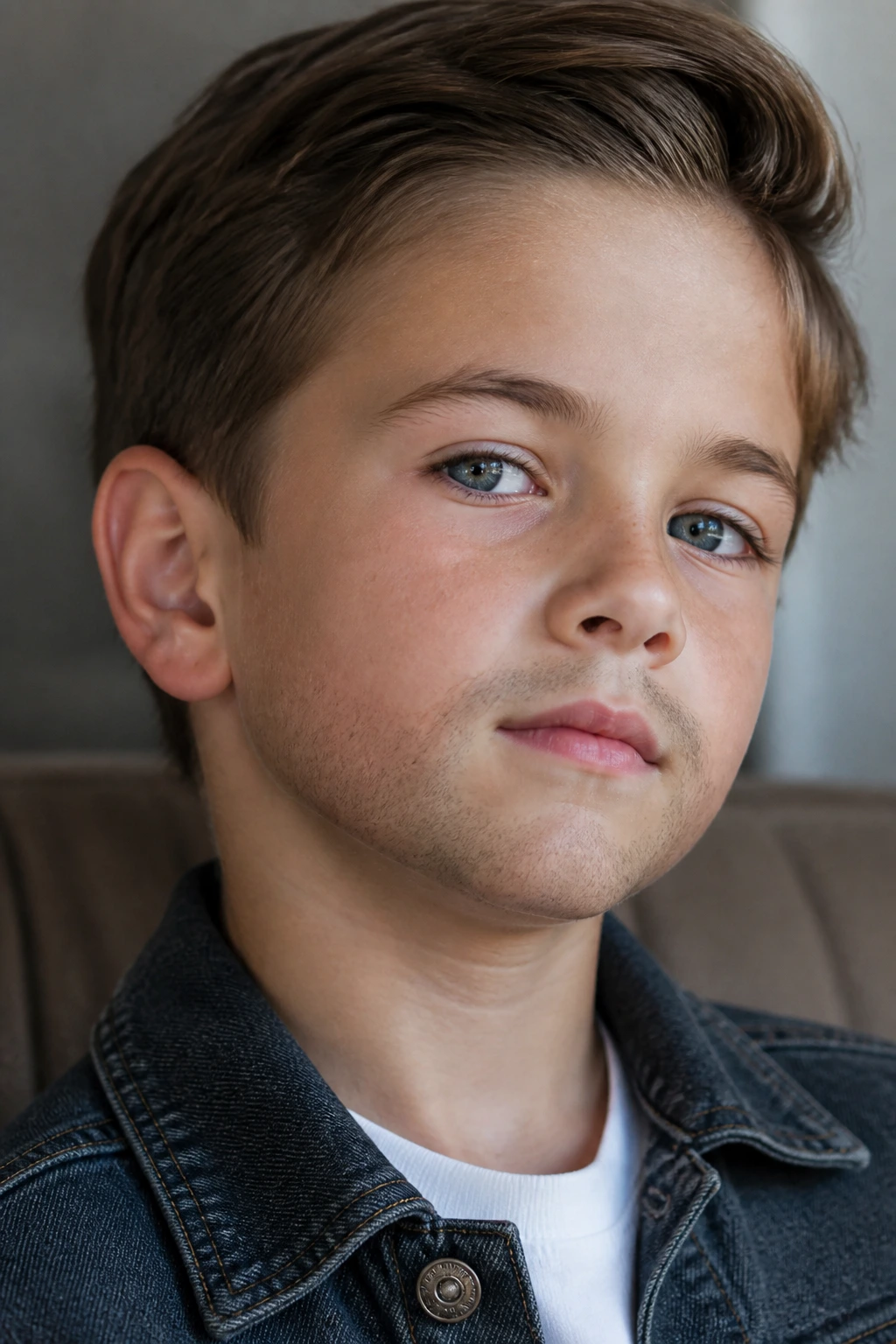
Stubble dust is one of my favorites because it is so low-stress. Instead of drawing a full beard, you create a tiny dusting of beard shadow across the jaw and chin. Done well, it looks like a tiny bit of character detail. Done badly, it just looks dirty, so the blending matters.
Use a gray-brown pencil or matte powder and keep the dots close together near the jawline. The cheeks should fade out almost immediately. This style is great for children who want the look but not the sensation of “wearing” a beard. It disappears into a costume instead of taking over the whole face.
Best pairing: denim, flannel, overalls, or a simple jacket. It’s a good casual option when the rest of the outfit is doing most of the work.
16. Santa Beard

A Santa beard for a little boy needs one thing above all else: softness. If it looks stiff, it loses the warmth that makes the costume fun. White felt, cottony face paint, or a fluffy yarn build can all work, as long as the finish stays light and movable.
The beard should sit low on the chin and spread evenly across the cheeks. A little fullness is good. Too much fullness turns into a mask. Keep the mustache soft so the mouth is easy to see. A red hat, a big belt, and a round sweater complete the look without effort.
How to make it feel right
Use a pure white or cream base, not a gray one, unless you want a weathered look. Santa needs brightness. That’s the whole visual cue.
17. Knight Beard
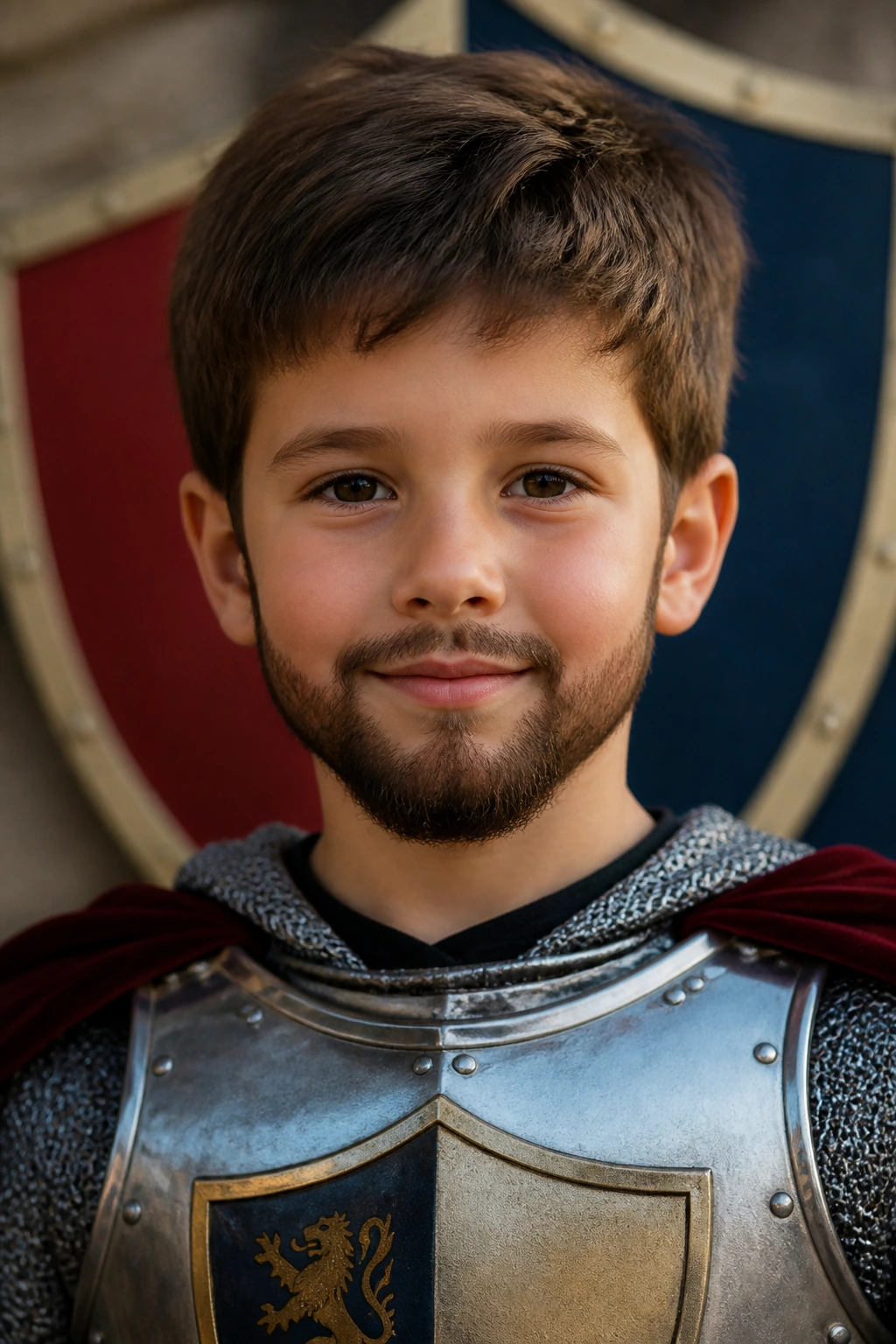
A knight beard has a little edge to it — not rough, just firm. The shape is usually narrow at the cheeks and fuller at the chin, which gives the face a brave, structured look. On a little boy, that reads as “heroic” without looking too grown up.
Draw the lines with a brown or dark blond pencil depending on the child’s hair color. The neckline should stay high and neat. A knight costume, a paper shield, and a haircut that stays off the forehead make the beard feel like part of the outfit instead of an add-on.
Best trick: Keep the beard symmetrical, because the shape relies on balance. If one side dips too low, the whole thing starts to look lopsided in photos.
18. Desert Nomad Beard
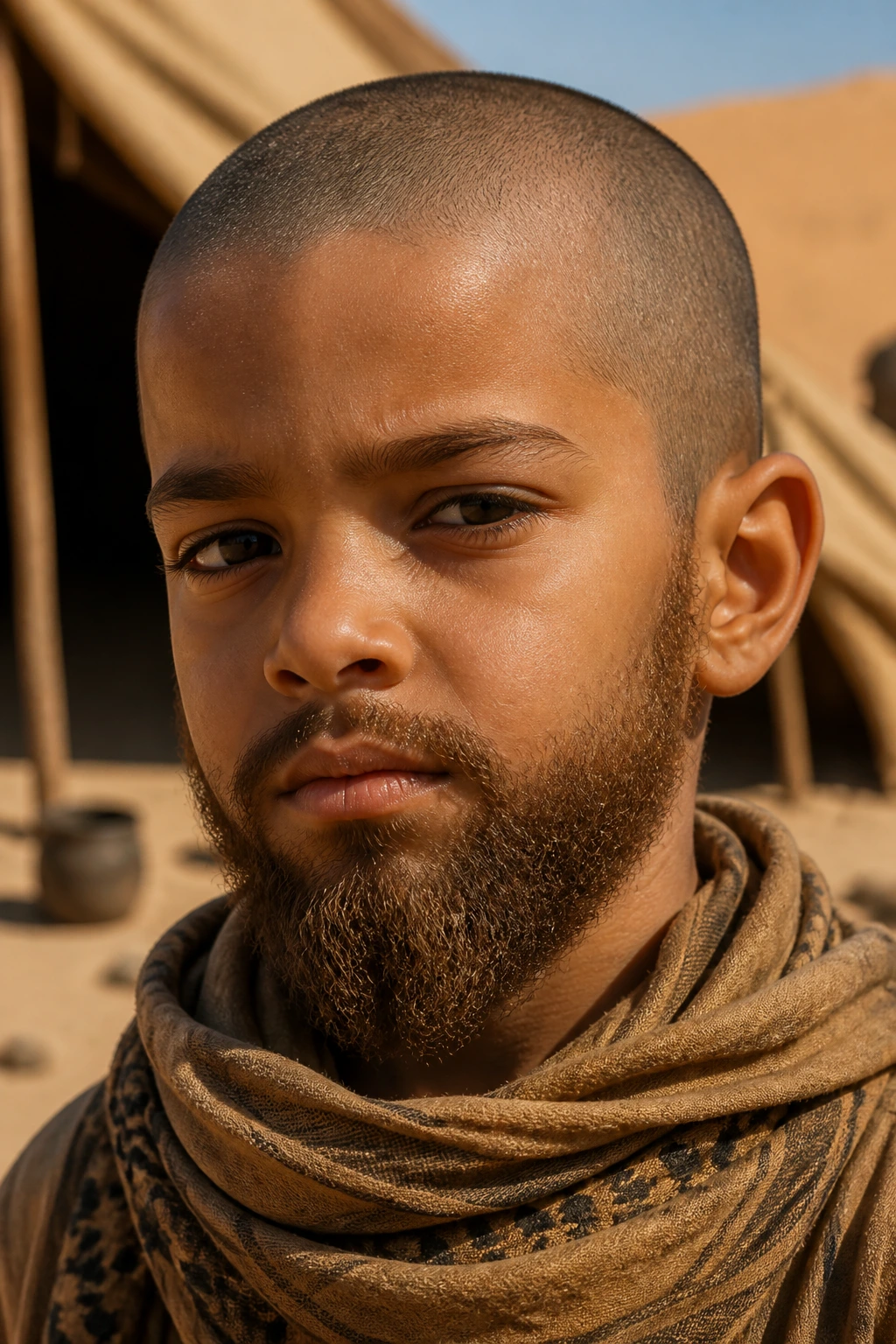
This style is more about texture than strict shape. A desert nomad beard looks lightly windblown, sun-warmed, and a little uneven in the best possible way. It works when you want a costume that feels lived-in but still controlled.
Use warm brown tones and avoid hard outlines. The beard should fade at the cheeks and look fuller under the chin. If you add a scarf, hood, or layered tunic, the face doesn’t need much else. On a child with a close crop or a shaved head, the texture becomes the main event.
How to use it
This is a strong choice for storybook characters, stage shows, and dress-up sets where the costume needs a little grit without going full mountain-man.
19. Comic-Book Beard
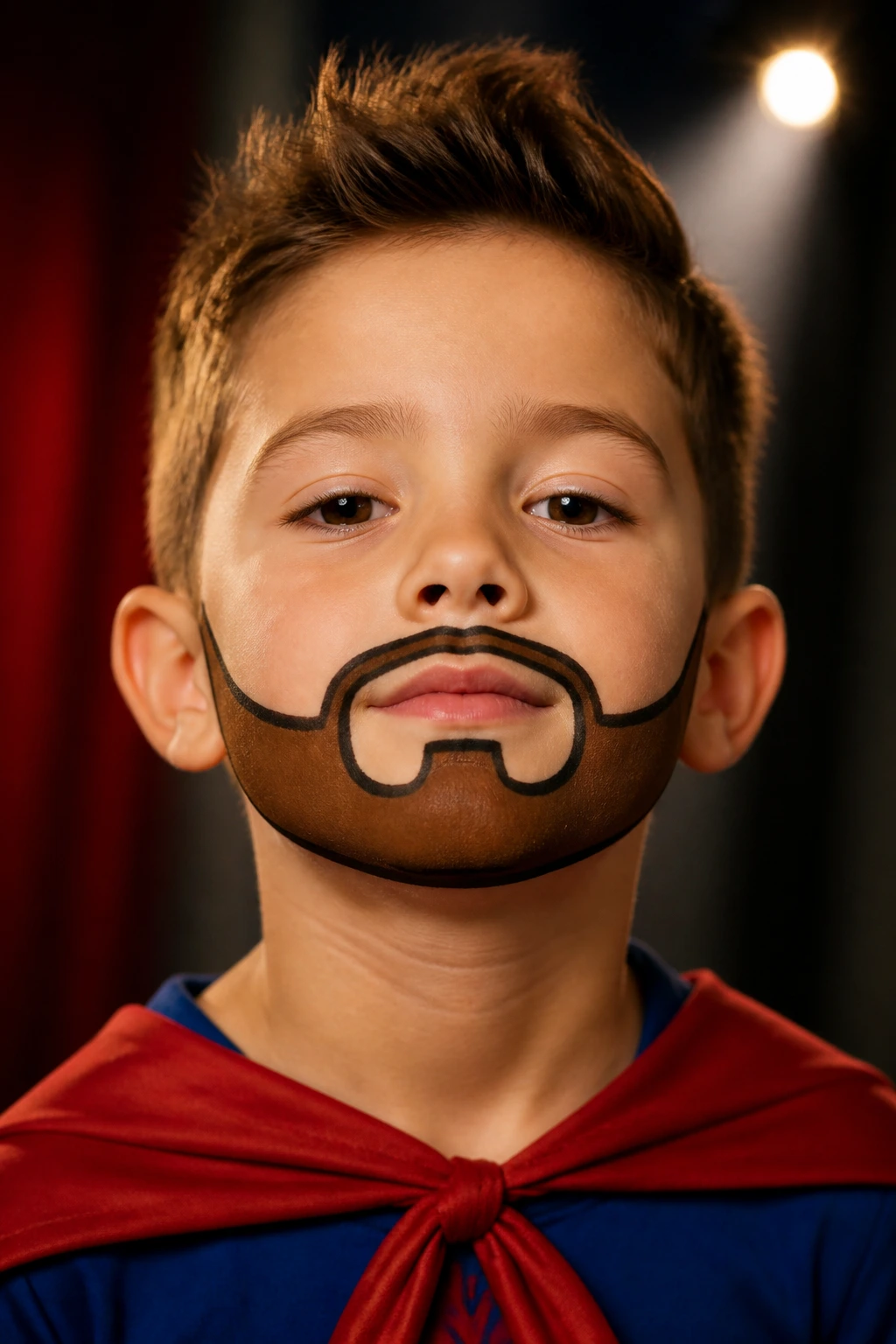
A comic-book beard is bold, outlined, and a little exaggerated — and that is the point. Thin black or dark-brown lines define the shape, while the fill stays flat and solid. It looks like it stepped out of an illustrated panel.
This style is perfect when you want the beard to be read from far away. Use a face-safe black pencil for the outline and a medium brown or even a gray fill inside. The shape can be square, rounded, or anchor-like, as long as the outline is visible. A superhero shirt or costume cape makes the whole thing feel intentional.
Quick note: Keep the beard away from the corners of the mouth. Comic shapes can go from fun to clownish fast if they crowd the lips.
20. Fancy Gala Beard
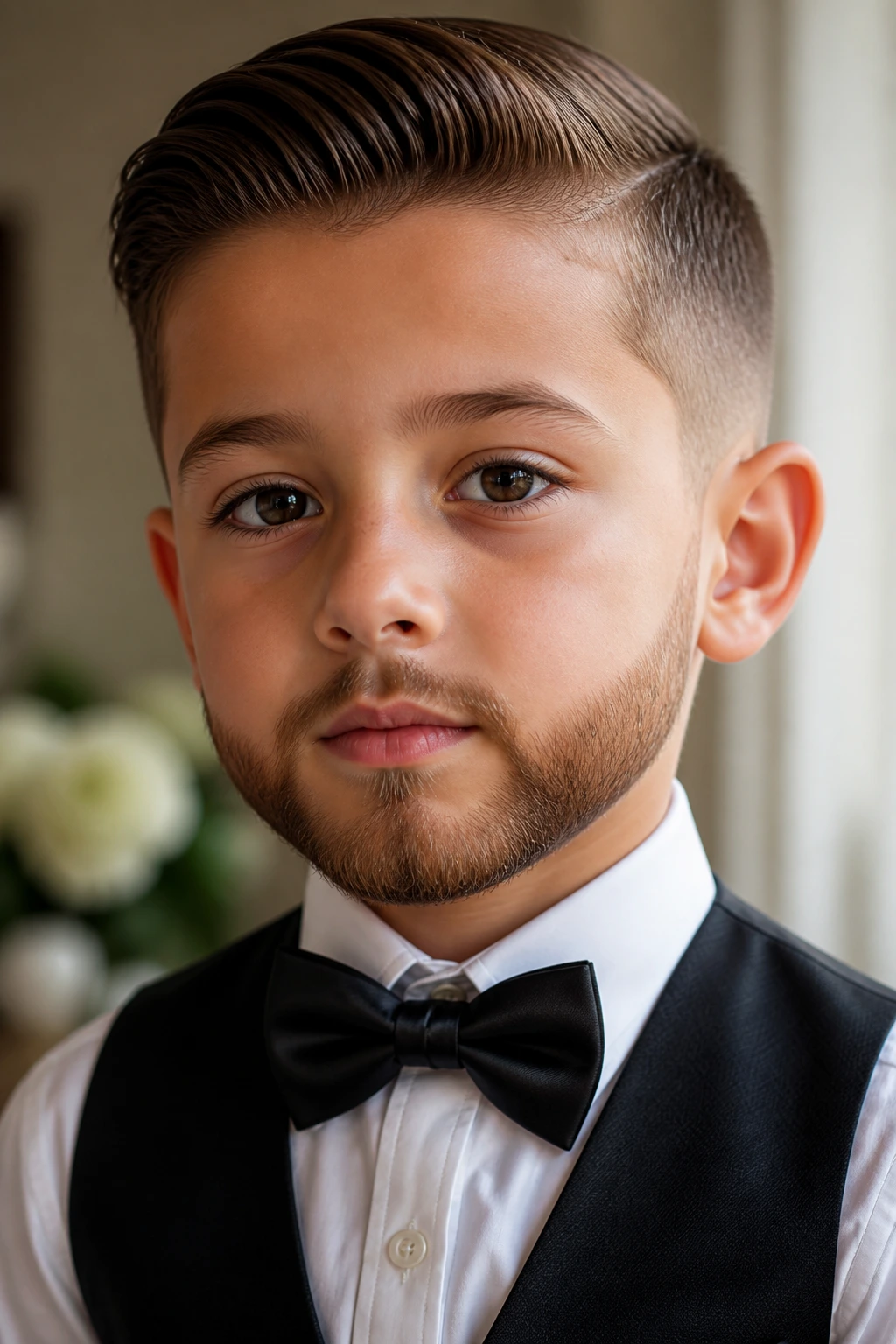
The fancy gala beard is smooth, narrow, and polished. It’s the beard version of a little suit jacket. No fuzz. No rough edges. Just a neat, controlled shape that looks like it belongs under a bow tie.
This style works best with a subtle fade or a combed side part. The beard should mirror that neatness. Fill the shape lightly, then sharpen only the outer edge so the inside stays soft. If you’re doing a school event or family portrait, this is the sort of beard that looks deliberate without stealing attention from the child’s face.
Best pairing
A vest, suspenders, or a tiny suit jacket. The beard acts like a frame, not a prop.
21. Wild Mountain Beard
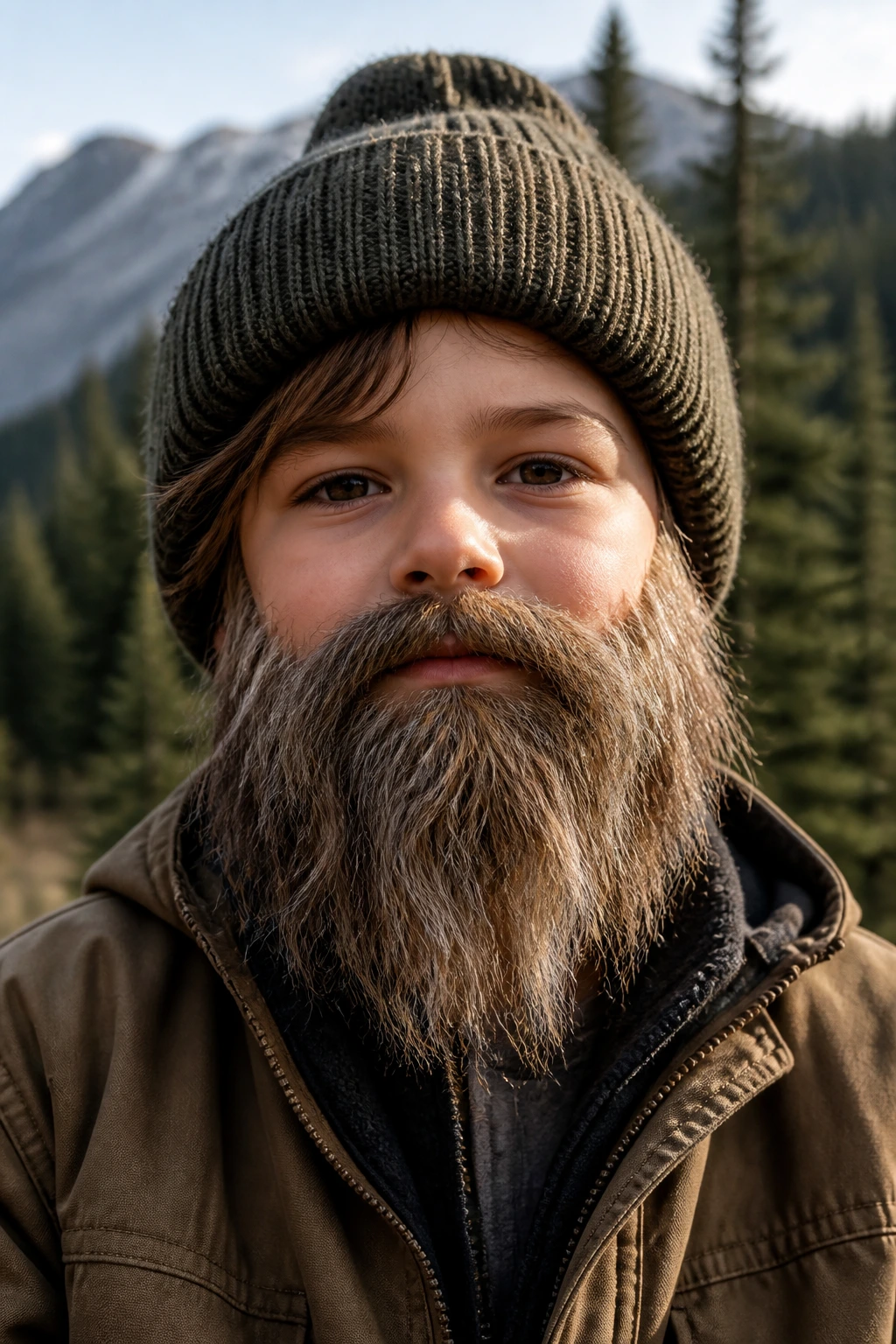
A wild mountain beard is the opposite of polished, but it still needs structure. Think broader cheeks, a fuller chin, and a rough edge that looks a bit wind-tossed. On kids, it’s all about playful ruggedness.
The easiest way to build it is with layered brown and gray tones. Start light, then add darker patches under the chin and near the jaw corners. Keep the beard inside the natural face shape, though. Wild should not mean messy beyond recognition. A knit cap, boots, and a simple jacket finish the look.
Best for: outdoor-themed dress-up, camping events, or any costume that needs a little forest energy.
22. Festival Neon Beard
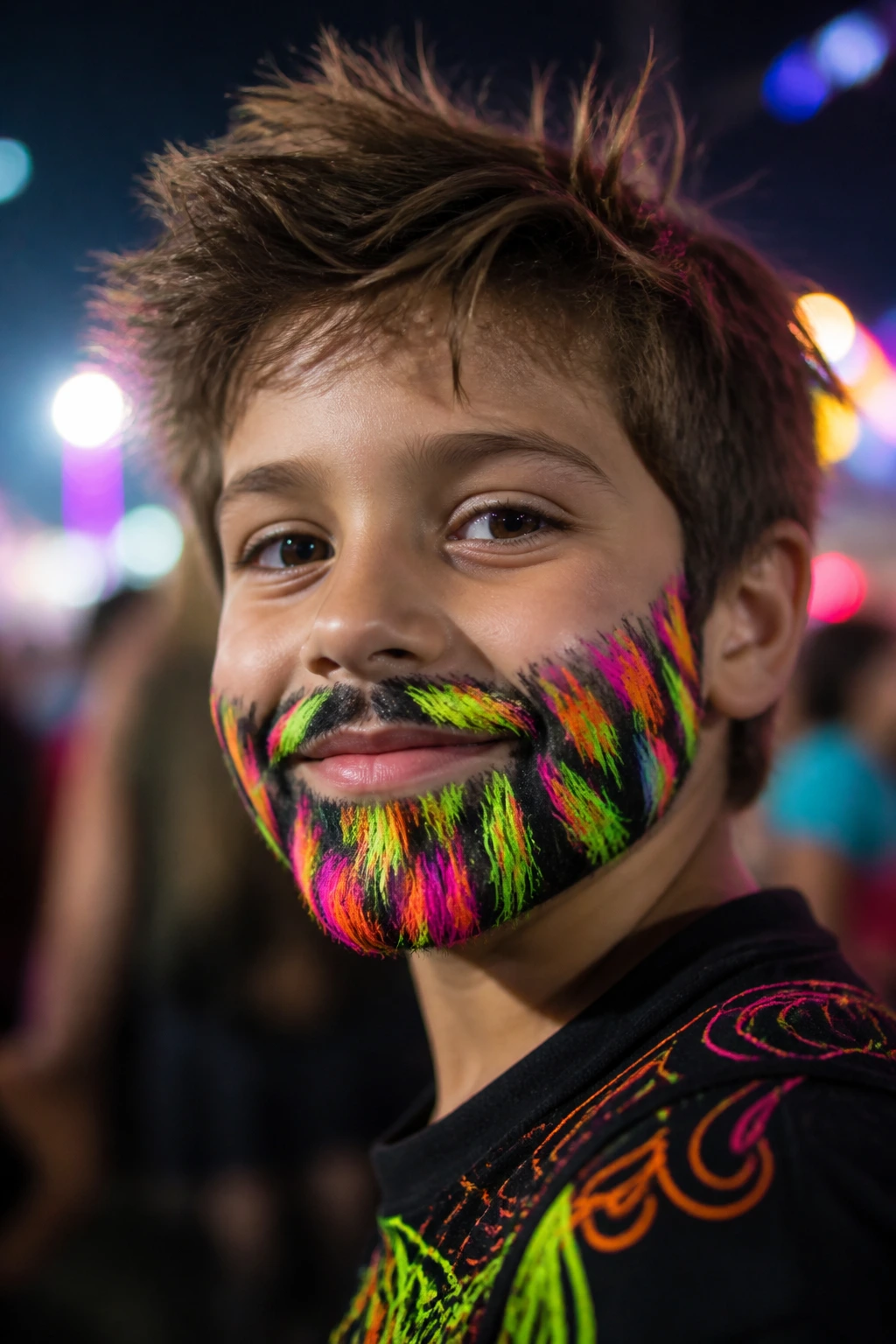
Yes, little boys can wear color in a beard look, and it can be a lot of fun when it stays controlled. A festival neon beard uses safe, washable face paint in a bright accent color — blue, green, red, or gold — mixed with a darker base so the shape still reads as a beard.
Use color in stripes, tips, or patches rather than smearing it everywhere. That keeps the effect playful instead of chaotic. It’s a good choice for parties, parade days, and creative costume events where a child wants something unusual. Pair it with simple clothes so the beard gets the spotlight.
How to use it
If the outfit is already loud, keep the beard simple. One vivid accent color is usually enough.
23. Storybook King Beard
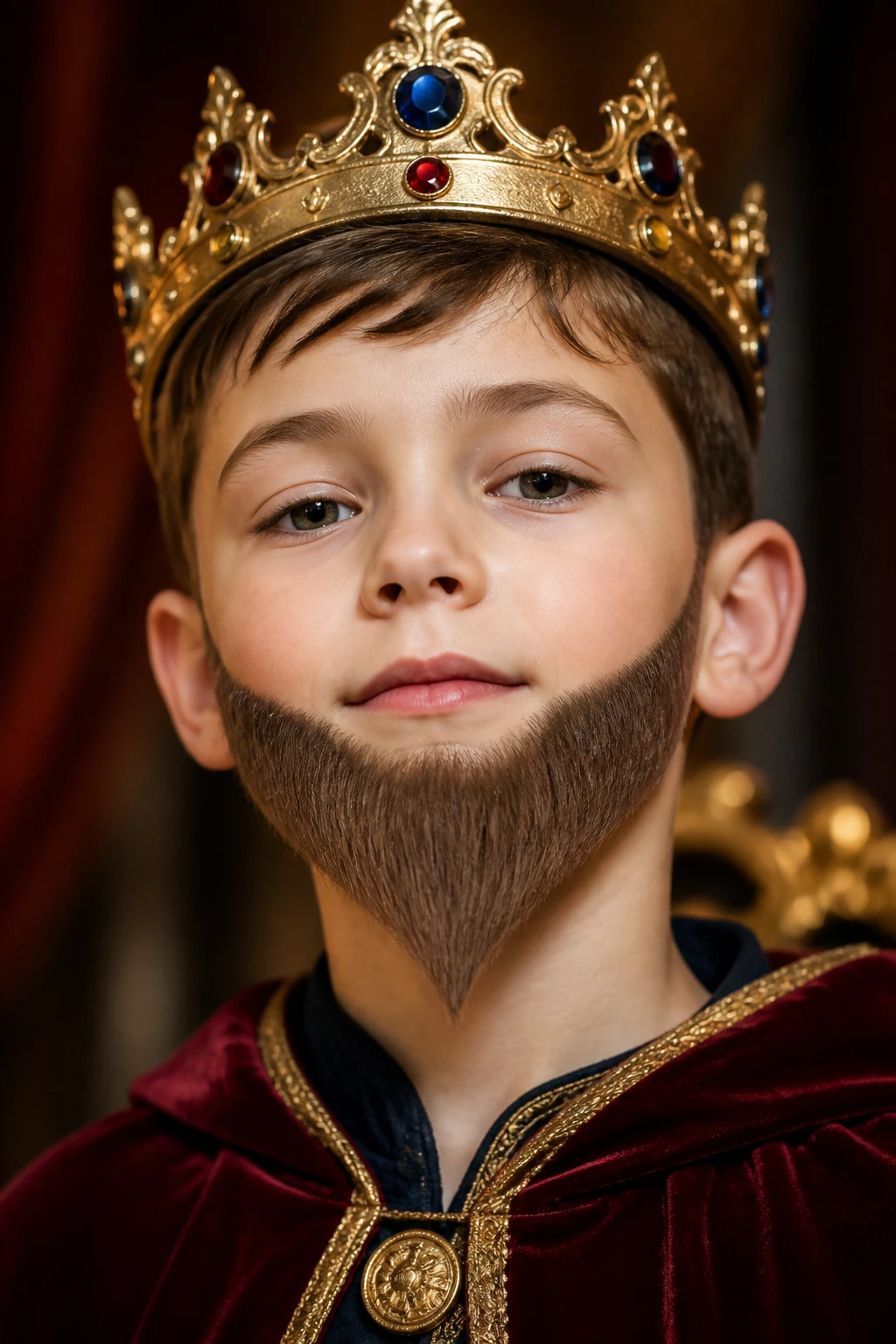
A storybook king beard wants height, shape, and a little drama. The chin point can be longer than the cheeks, and the side edges should curve inward so the face still feels open. It’s the sort of beard that looks good with a crown, a velvet cape, or a paper sword.
The line should be smooth and intentional. No jagged edges. Use a soft brown or dark gold tone depending on the outfit. If the child’s hair is brushed back, the whole look gains a nice old-world feel. It’s a strong choice for pageants and plays because the beard reads as royal rather than rough.
Small detail: A tiny highlight on the chin point can make the shape pop under stage lights.
24. Superhero Mask Beard
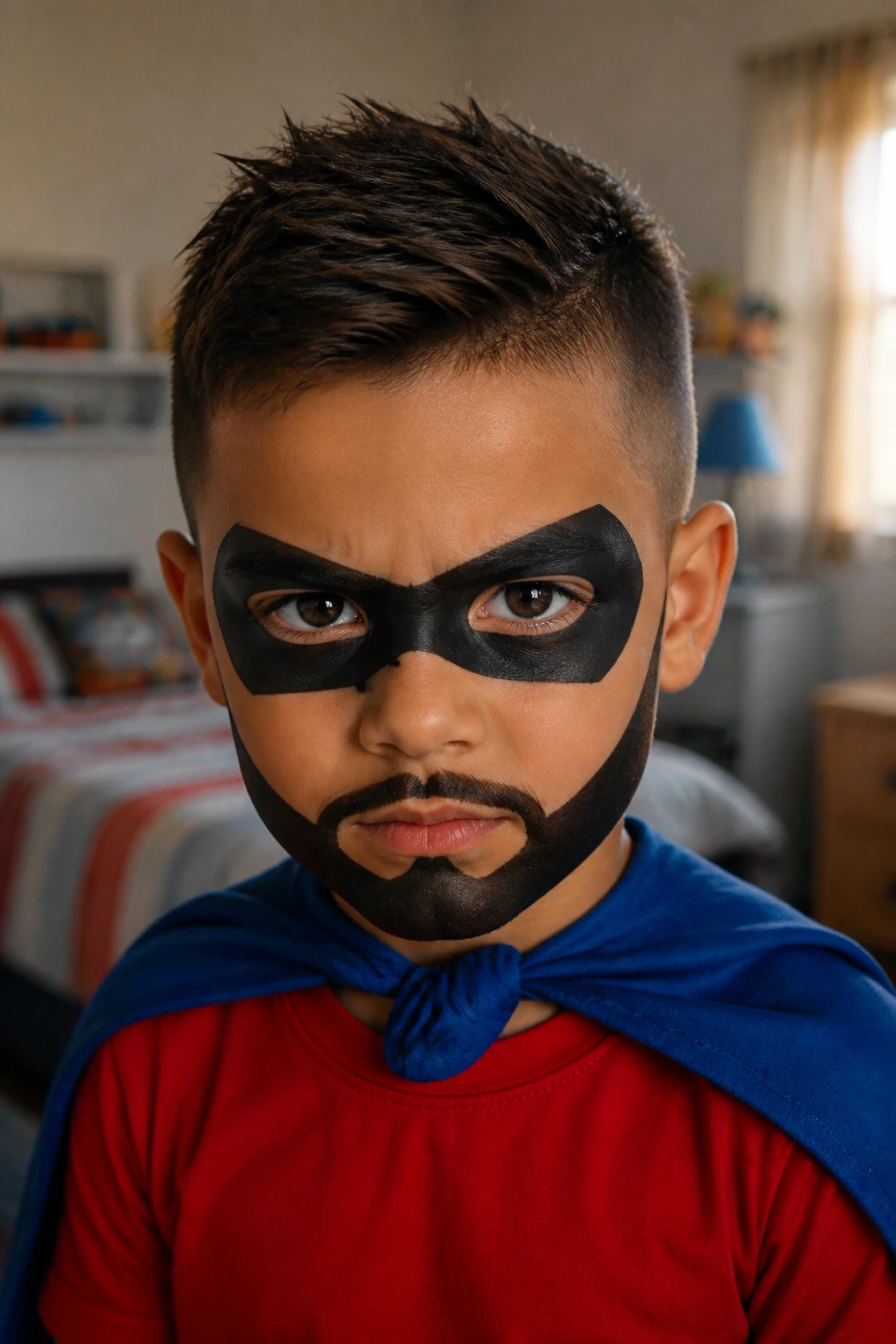
This is the beard for kids who want a costume with movement and fun. The beard connects visually to a face-paint mask, so the whole lower face feels like one design. You can build the beard as a dark base and then add a mask line around the eyes, or keep the beard separate and let the mask frame it.
What makes it work is contrast. The beard shape should be clean enough that the eyes still do the heavy lifting. A short haircut, a cape, and a bright shirt help a lot. If the child likes bold colors, this style gives you room to play without turning the face into clutter.
How to use it
Keep the nose bridge open and the beard line high. That gives the face air and avoids a heavy costume feel.
25. Lazy Sunday Scruff
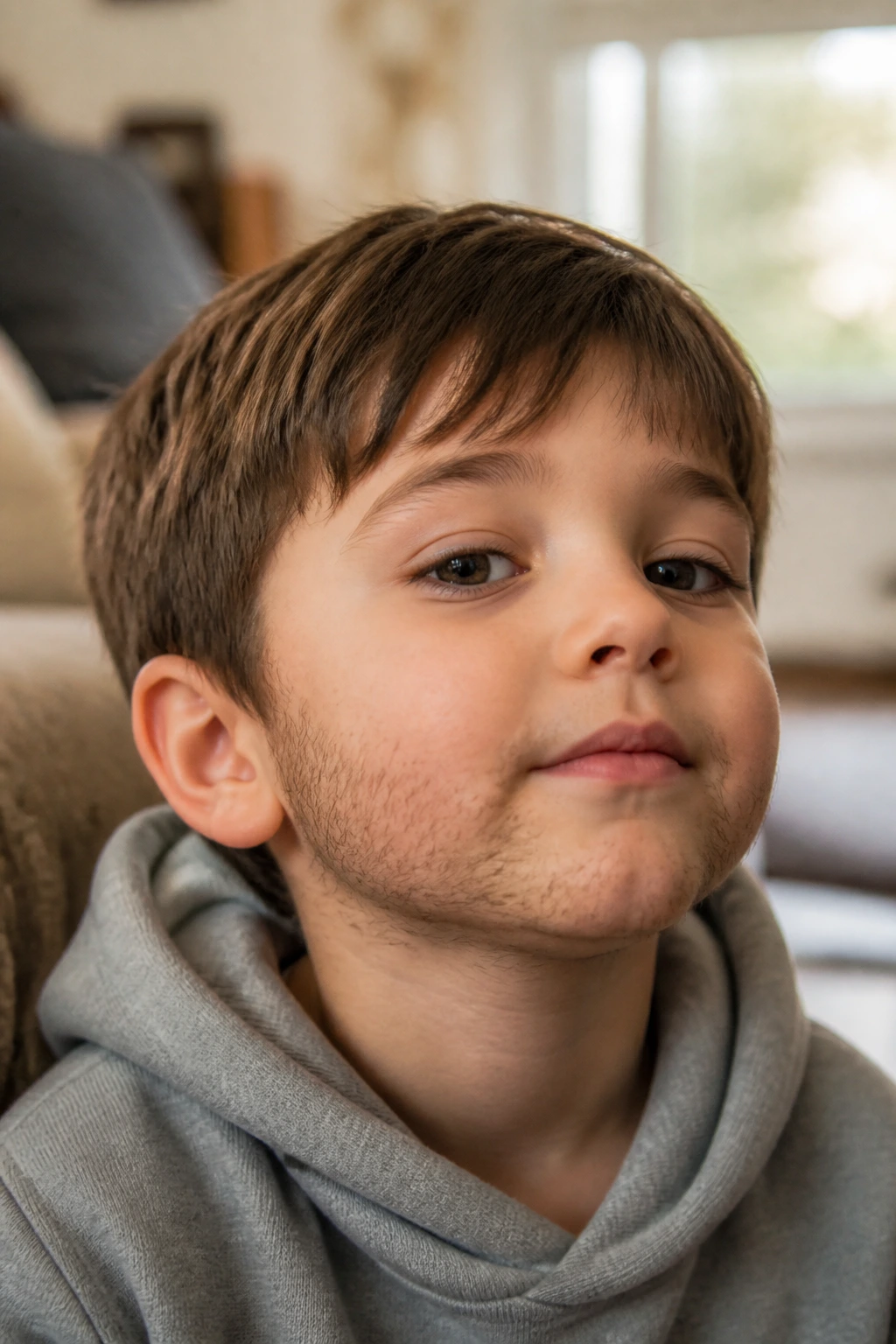
Lazy Sunday scruff is the opposite of a sculpted beard. It’s soft, patchy, and relaxed, which is perfect for kids who don’t want a “made-up” look. A few uneven dots and shadows along the jaw do most of the work.
Use a light brown pencil or powder and let the skin show through. That’s the charm. A little patchiness feels natural on a child face and doesn’t compete with the rest of the outfit. This is the style I’d choose for casual dress-up, low-key family photos, or a child who keeps touching his face.
Best pairing: a hoodie, a cap, or an everyday shirt. It’s a costume whisper, not a costume shout.
26. Photo-Day Sharp Outline
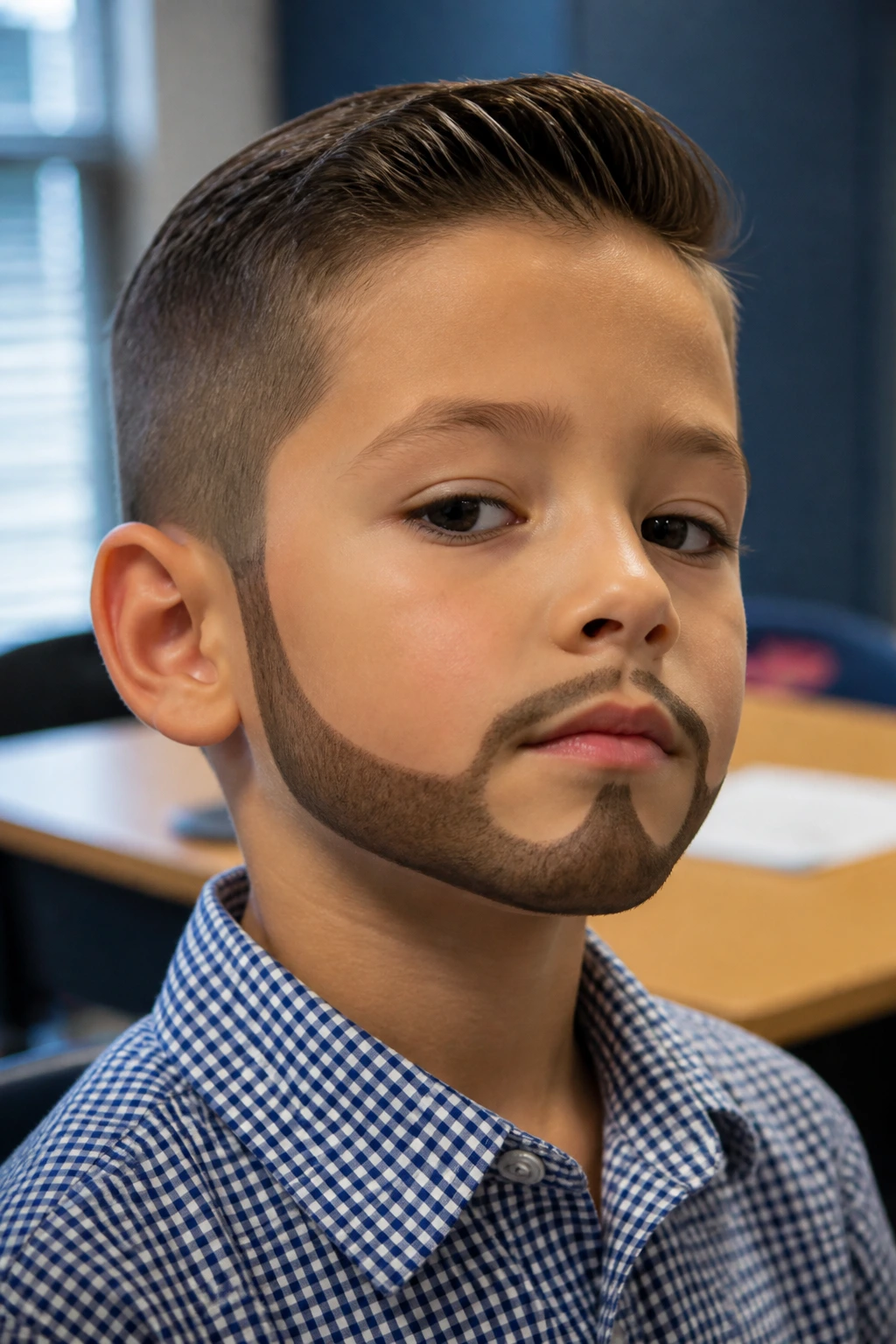
A sharp outline beard is all about clean edges. It photographs well because the shape stays visible even when the child turns his head. The beard usually follows the jaw with a crisp curve and keeps the fill smooth.
Use a thin brush or pencil to mark the outer line first. Then fill inward with short, even strokes. The cleaner the edge, the better this one looks. It works especially well on boys with tidy cuts, because the beard and haircut both read as ordered and polished. For school portraits or formal family photos, this is one of the safest choices.
Quick reminder
Sharp does not mean severe. Round the corners near the chin so the face still feels soft and childlike.
27. Curly Swirl Beard
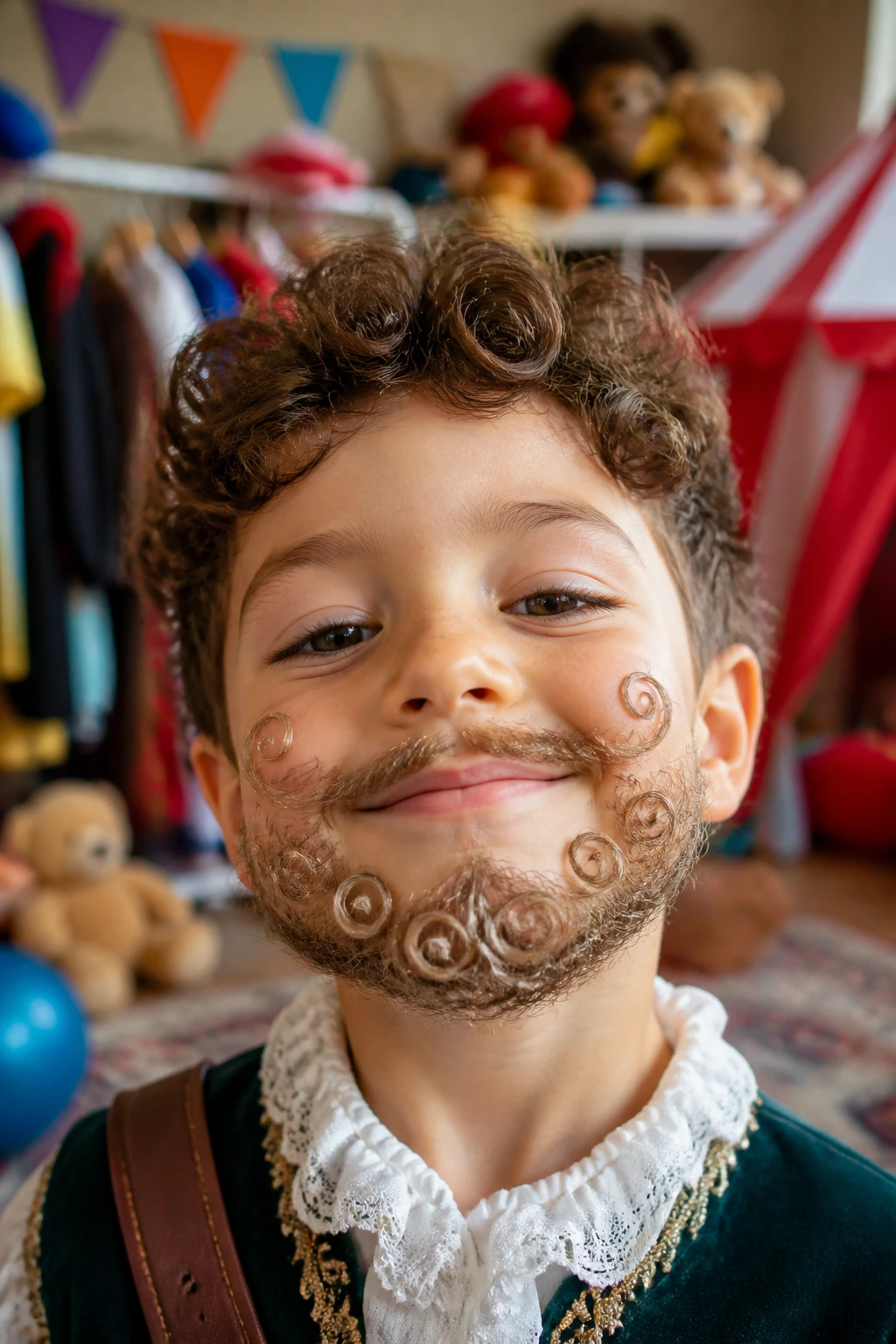
Curly swirl beards are playful and slightly theatrical. Instead of one flat fill, the beard gets tiny curled lines, loops, or ringlet-like accents. It’s a smart way to make a beard shape feel alive, especially if the child has curly hair already.
You can draw the curls with a fine face paint brush or create them with tiny yarn loops if the costume allows props. Keep the base color light so the curls show up. A curly-haired boy can pull this off beautifully because the beard echoes the texture on top. A plain shirt and simple outfit keep the effect from getting too busy.
Best for: fantasy characters, festive dress-up, and any look that could use a little whimsy.
28. Felt-Panel Beard
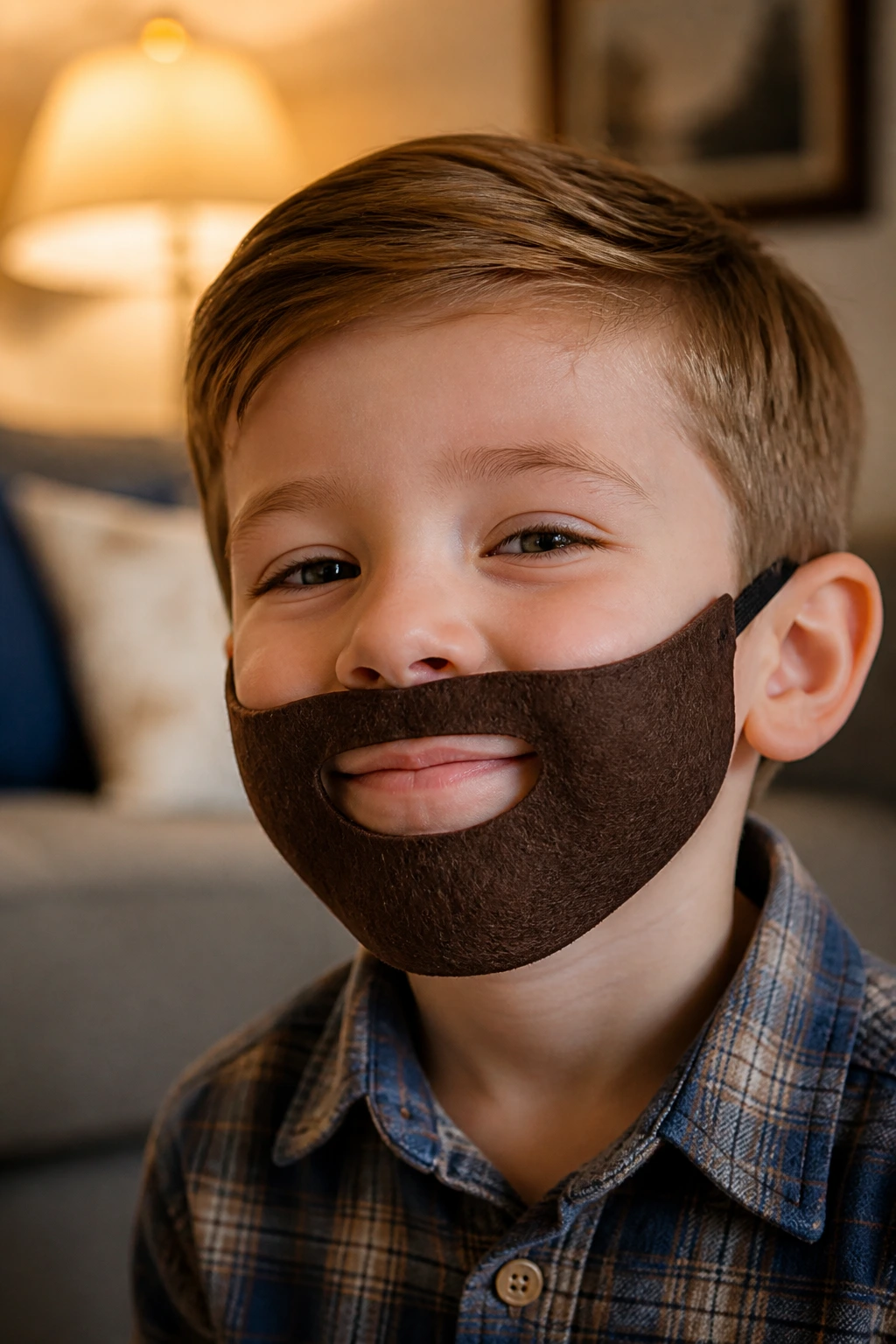
A felt-panel beard is practical, fast, and very parent-friendly. Cut the beard shape from soft felt, attach it with a comfortable strap or costume-safe fastener, and you’ve got a reusable piece that doesn’t require a lot of painting. For some kids, that’s the best answer.
The shape should be light and rounded, not stiff or oversized. Black, brown, gray, and white all work depending on the character. Felt is nice because it keeps its outline and doesn’t melt under warm room lights the way some makeup can. If the child hates face paint, this is the cleanest path.
How to use it
Test the fit while the child is talking and smiling. If it shifts when the mouth moves, adjust the strap before the event starts.
29. Twisted Mustache-Beard Combo
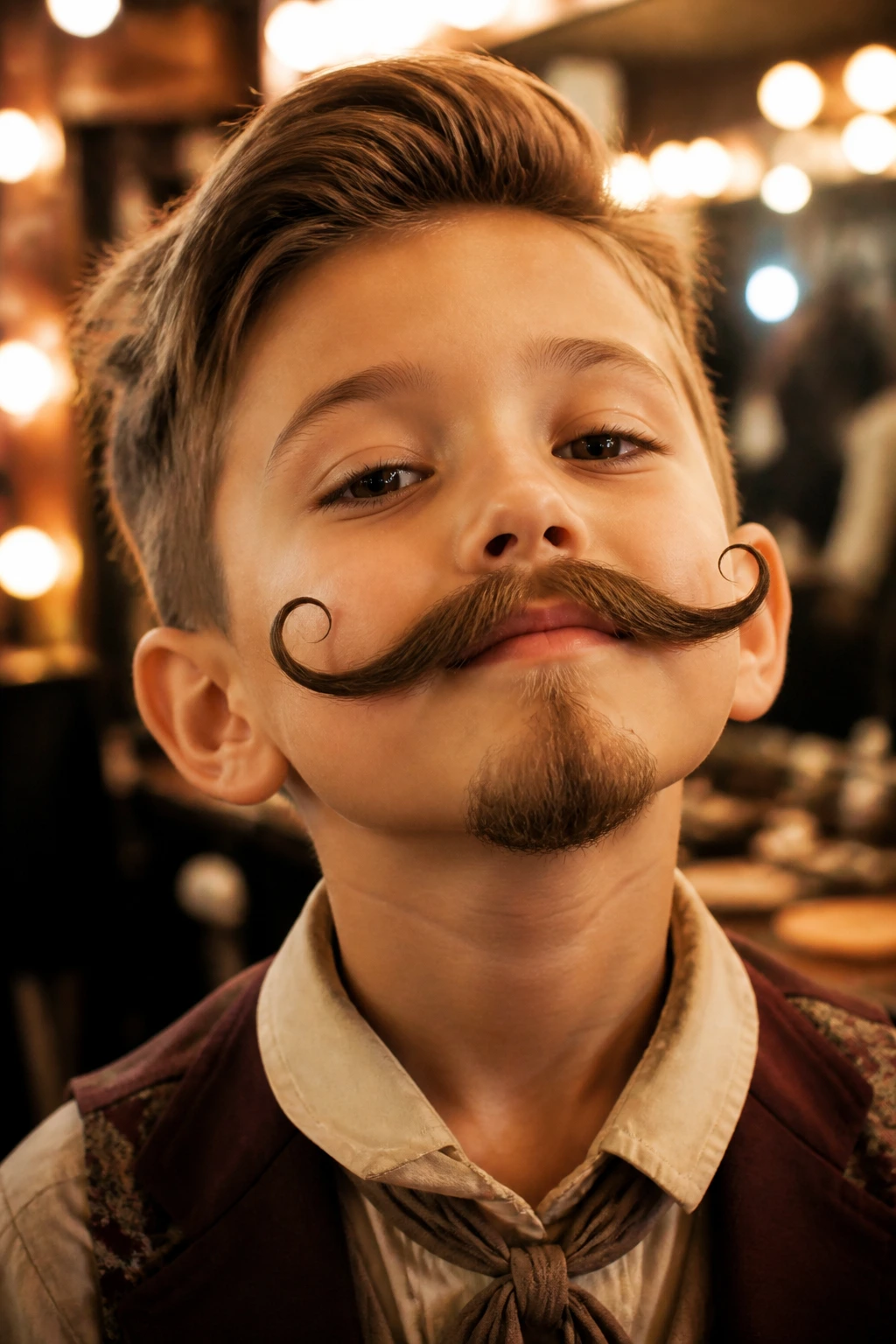
This style leans theatrical. The mustache gets a little twist or curl, and the beard stays smaller beneath it. It’s a playful shape that works well for story characters, stage roles, or costume days where the child wants something with personality.
The mustache should be the star. Keep the beard modest, maybe a small chin patch or a narrow lower jaw fill. That balance is what makes the shape readable. A combed side part or slicked-back top can give the style a nice old-time feel, though a curly haircut works too if you want a more whimsical look.
Tiny detail that helps: Curl the mustache ends upward just enough to be noticeable, not enough to poke the child’s cheeks.
30. Big Brother Beard
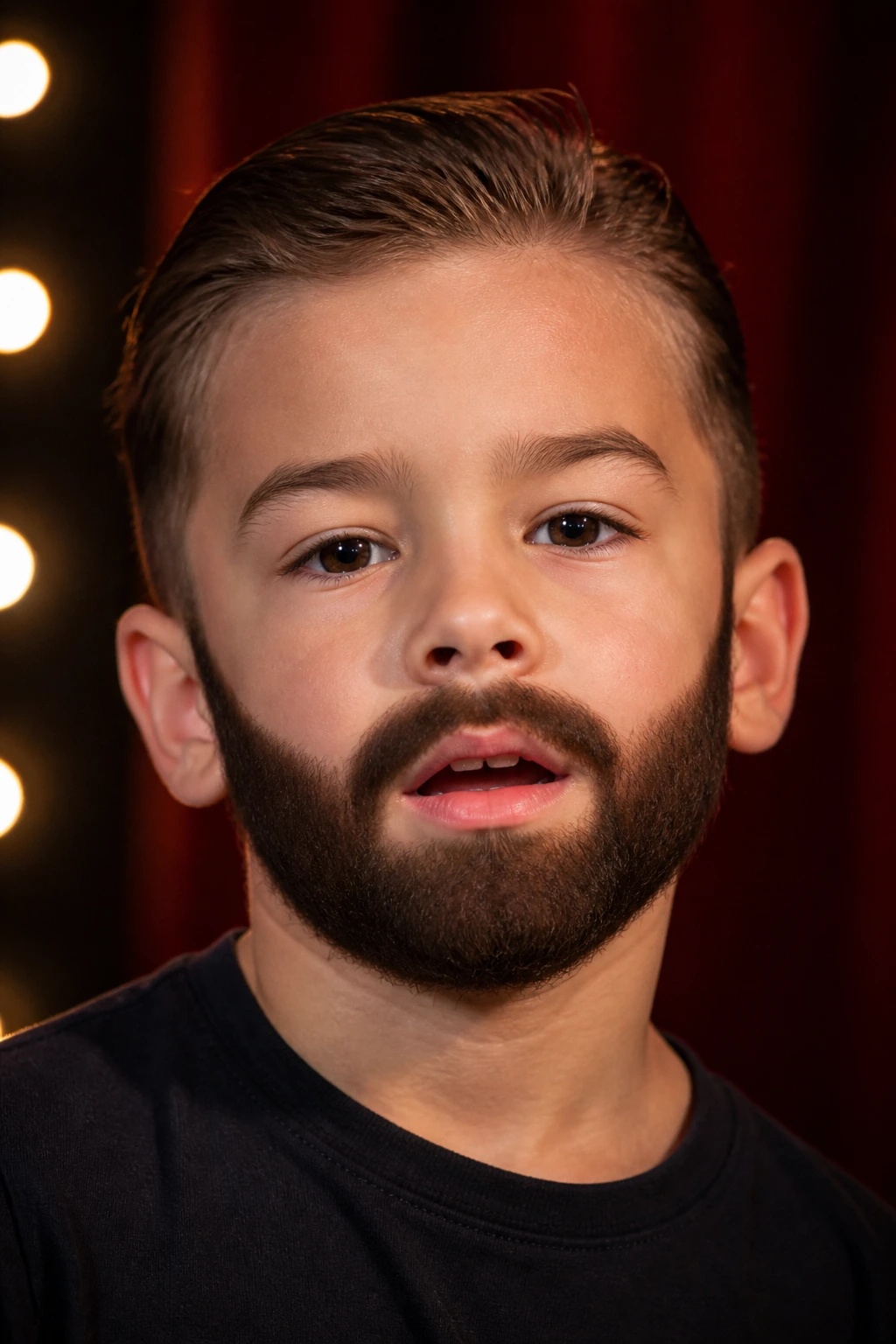
A big brother beard is still a costume beard, but it aims for the feeling of “I’m trying to look grown up.” The beard shape is fuller, the jawline is more defined, and the cheeks get more coverage than in the tiny shadow styles.
This one works best when you keep the pigment matte and the lines even. A child face can handle more shape than many people expect, as long as you preserve the smile and leave the mouth area open. Pair it with a simple shirt or a sweater, and the beard becomes the main detail. It’s a good look for stage roles where the character needs more presence.
Best pairing
A neat haircut and plain outfit. The beard already does enough talking.
31. Little Woodsman Beard
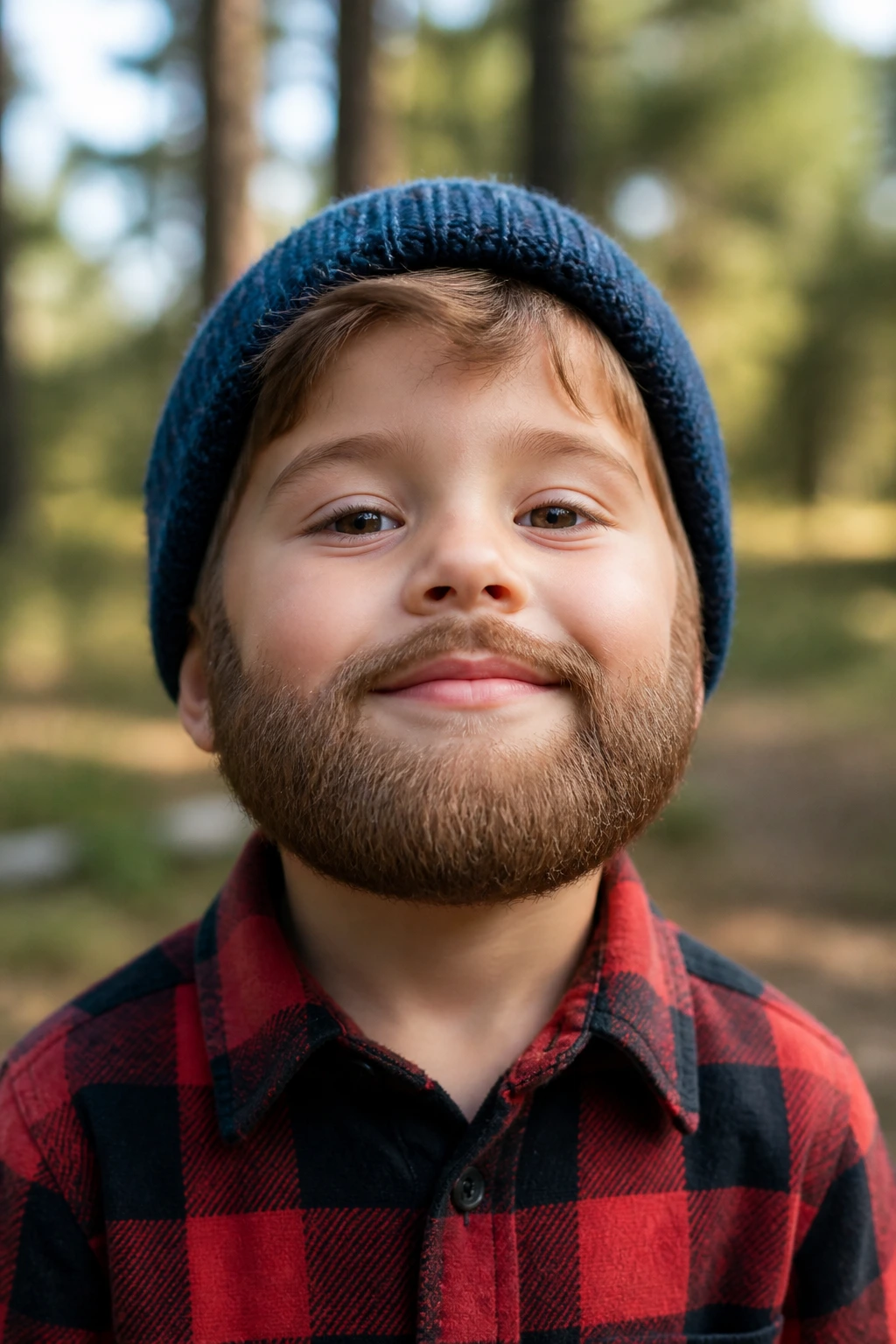
The little woodsman beard is a close cousin to the lumberjack look, but it’s broader and softer around the chin. Instead of a hard square, you get a rounded lower edge and a slightly deeper fill under the jaw. It feels warmer, less structured, and a little more storybook.
This shape works well with knitted hats, flannel, and boots. If the child has a longer fringe or curly top, keep the cheeks lighter so the face doesn’t disappear. A medium-brown base with a darker chin center usually looks best. It’s a nice option when you want rugged but not harsh.
Practical tip: Blend upward into the cheeks. A beard that stops too abruptly can look pasted on.
32. Half-Beard Fade
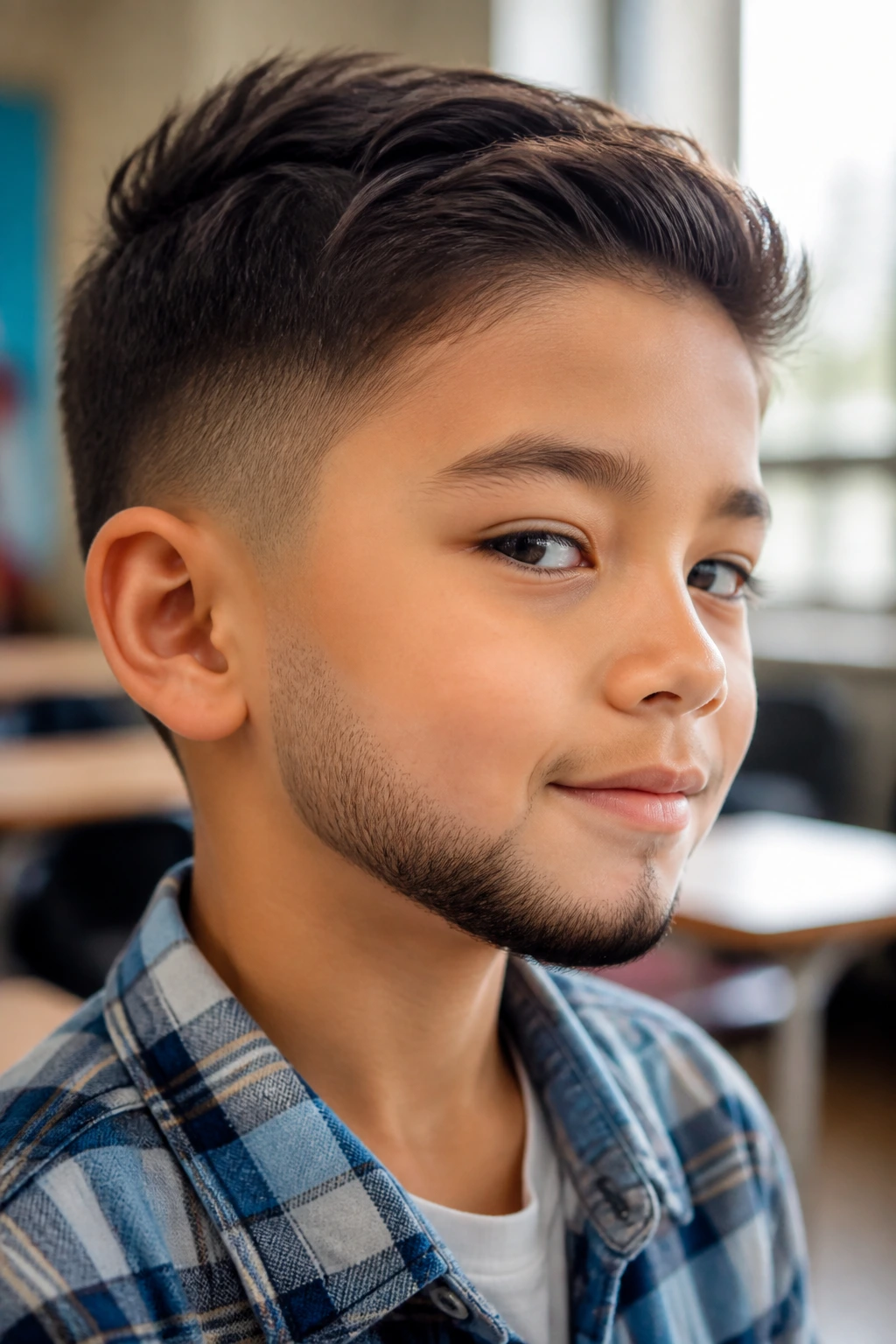
The half-beard fade is one of the more modern looks in the group. It starts stronger near the chin or jaw and fades out gradually toward the cheeks or sideburns. On a child, that gradient looks neat and stylish without feeling overdrawn.
Use a light sponge and work from dark to light. The densest color should stay near the chin, then soften as you move outward. This style pairs naturally with a fade haircut, because the beard and hair echo the same idea: cleaner at the edges, fuller in the middle. It’s a smart choice for photo days when you want something current-looking but still playful.
How to use it
If the hair is already sharply faded, keep the beard fade soft. Too many hard lines can make the face feel boxed in.
33. Chalk-Drawn Beard
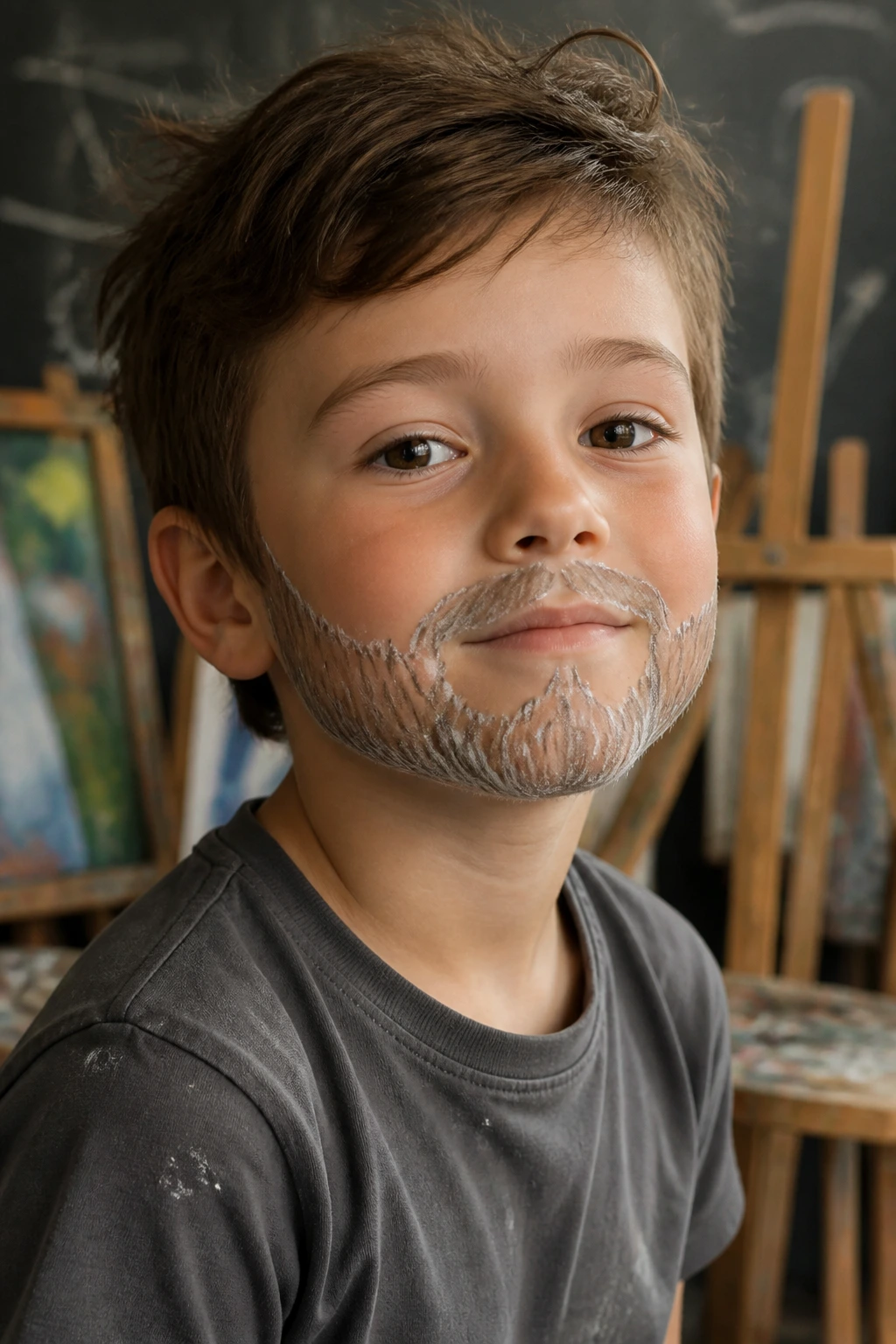
A chalk-drawn beard has that slightly matte, hand-drawn feel that works beautifully in costume settings. I don’t mean real chalk on skin — use face-safe matte paint or eyebrow powder that gives you the same soft, dusty finish. The effect is gentle and artistic.
This style is handy when you want the beard to look sketched instead of filled. Thin lines, light shading, and broken edges are the goal. It’s a nice option for kids who like art supplies or theatrical looks. Pair it with a simple costume and a brushed haircut so the beard stays the main visual texture.
Best for: stage shows, creative school events, and any child who would rather look like a drawing than a pirate.
34. Holiday Caroler Beard
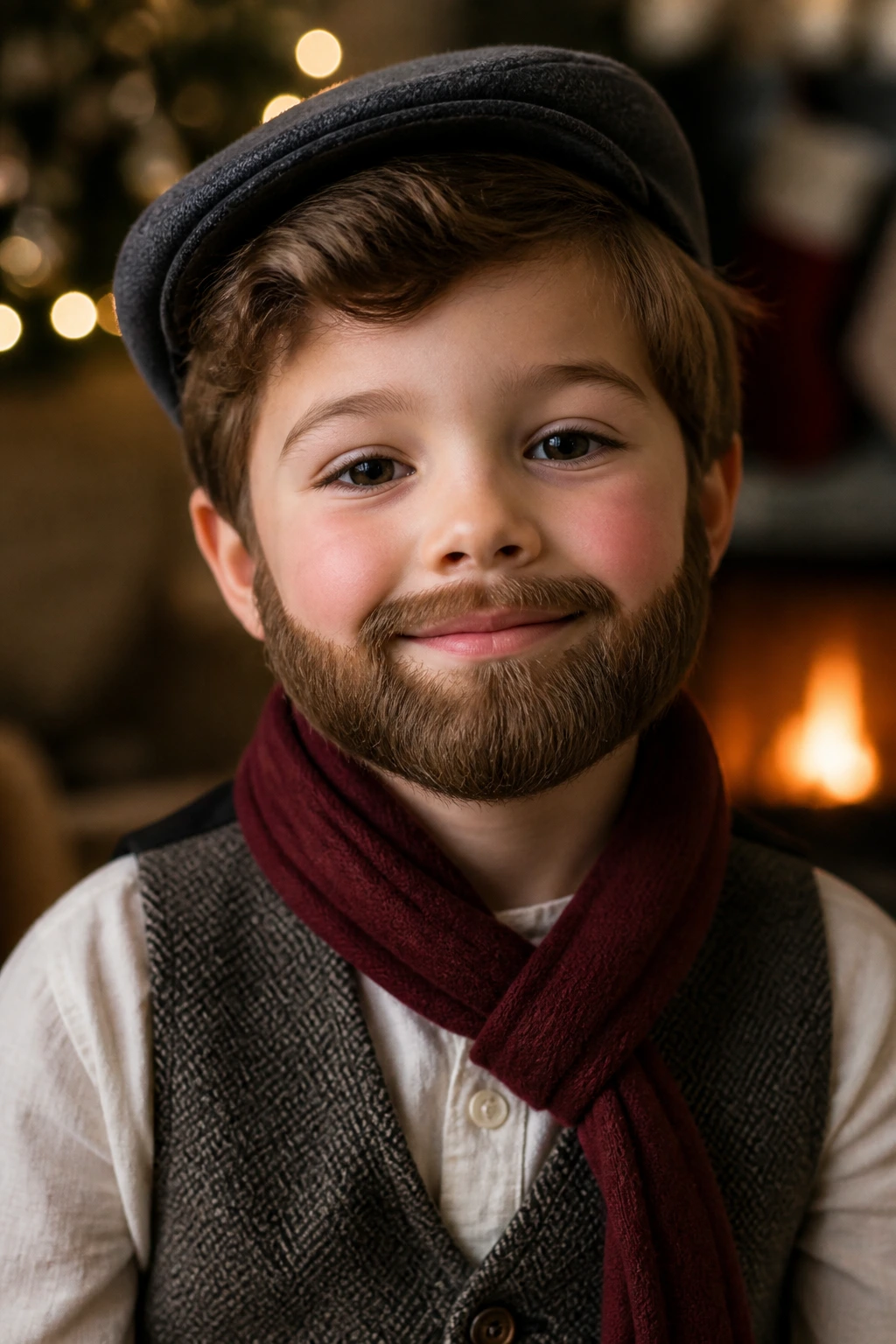
The holiday caroler beard sits somewhere between a gentleman’s beard and an old-time stage beard. It’s neat, rounded, and a little festive. You can use white, gray, or soft brown depending on the outfit and the child’s hair color.
The shape should be full enough to feel warm, but not so full that it hides the chin. A rounded lower edge and tidy cheeks make it feel classic. This one works especially well with vests, scarves, and button-up shirts. It also photographs nicely under warm indoor lights, which is probably why it keeps showing up in family holiday pictures.
Small note
If the outfit has a lot of pattern, keep the beard plain. The face needs one calm element.
35. Outdoorsy Camper Beard
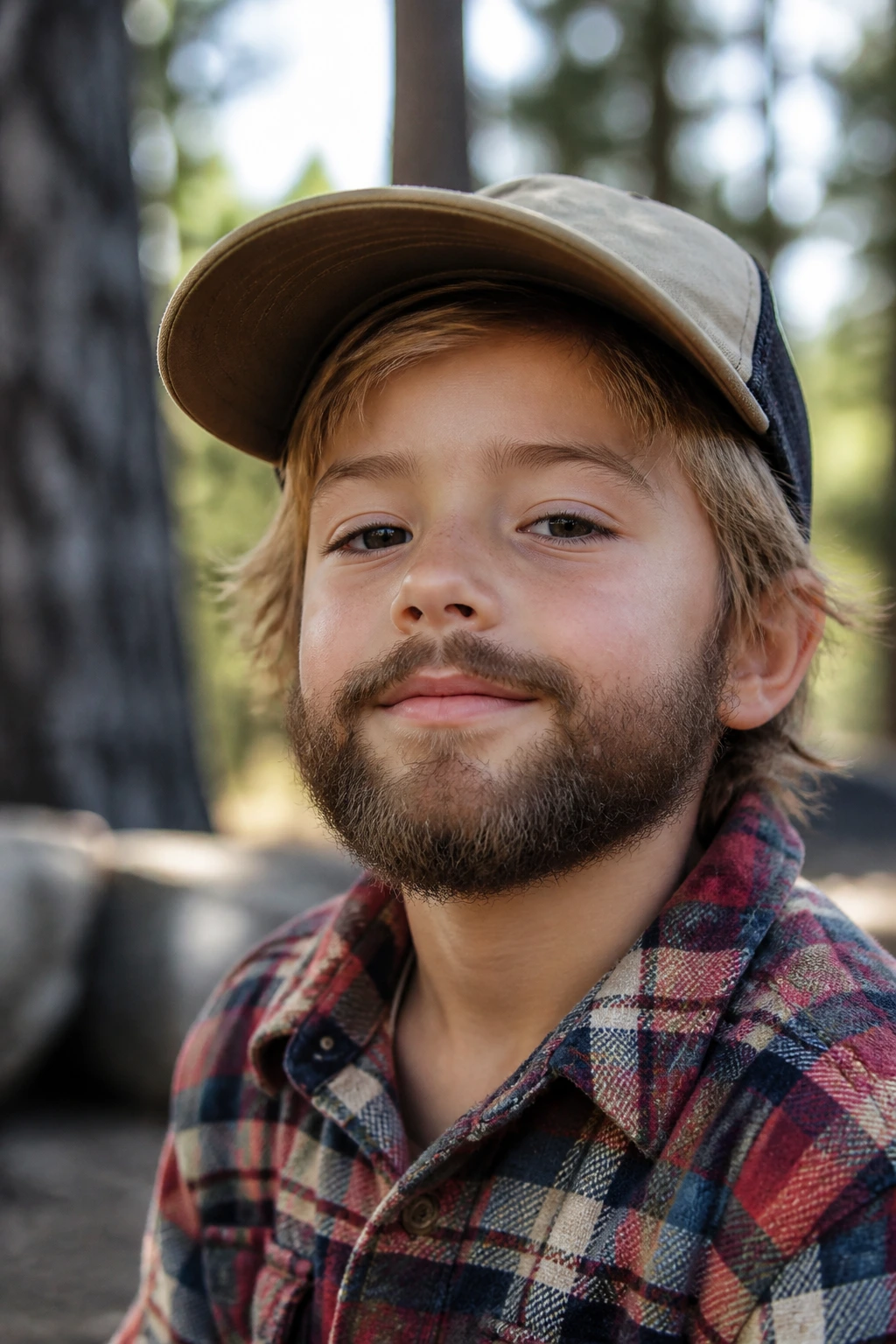
The outdoorsy camper beard is a looser, friendlier version of the rugged styles. Think soft jaw coverage, a little chin fullness, and a bit of uneven texture that suggests a day outside rather than a week in the mountains.
This works beautifully with baseball caps, puffer vests, plaid shirts, and simple sneakers. Use two brown tones if you have them; that tiny bit of color variation keeps the beard from going flat. The shape should stay open around the mouth and eyes so the child still looks like a child, not a tiny reenactor.
Best pairing: a slightly messy haircut. A clean part can make the beard feel too formal for this style.
36. Stage Light Beard
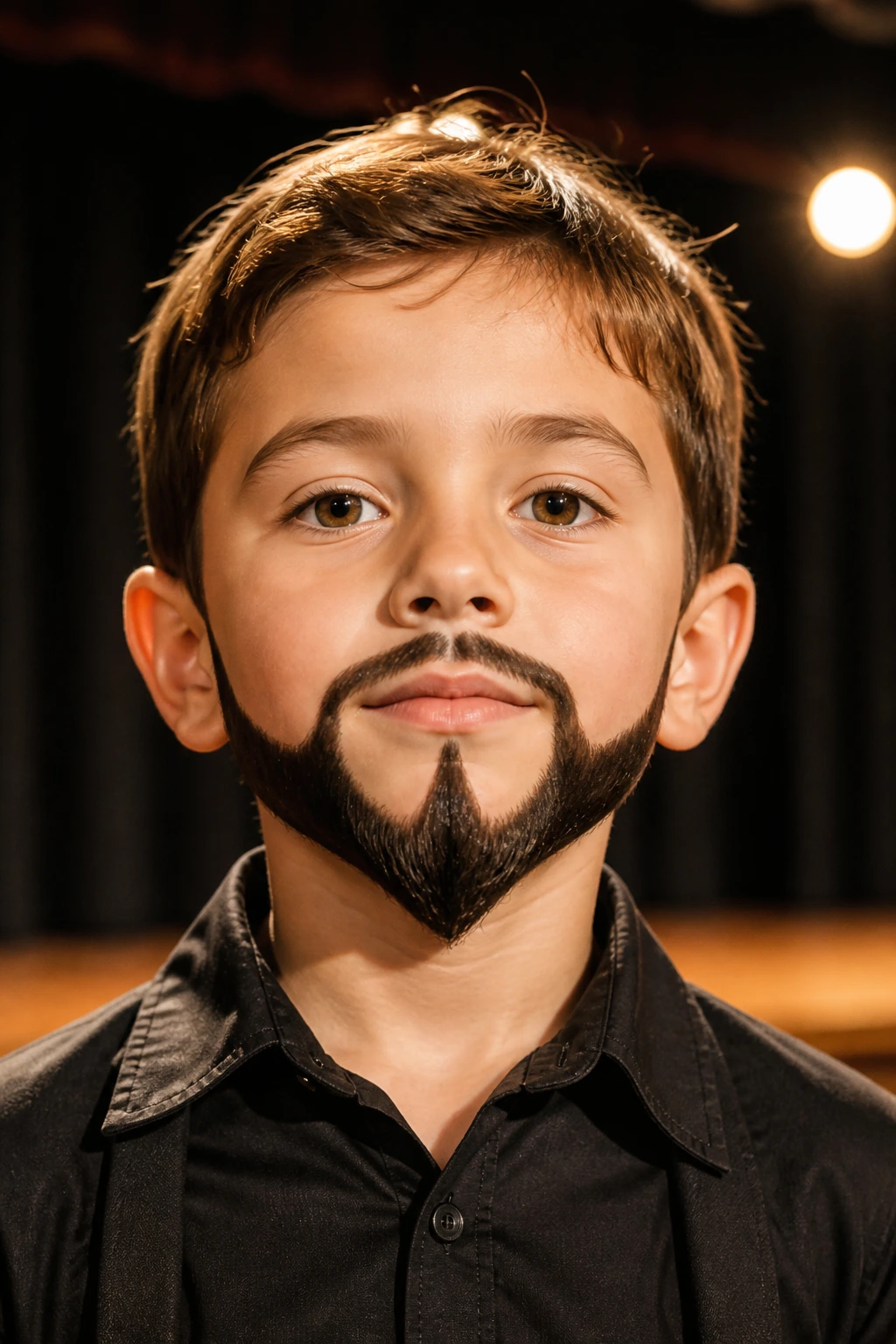
Stage light beard is built to survive distance. It uses stronger color contrast, firmer outlines, and a shape that can be understood from the back of a room. If a school play or recital is the goal, this is the practical choice.
Use a medium-dark base and a darker outline. The beard should not be tiny. Small details disappear under stage lights, so widen the cheeks a little and give the chin a clear point or curve. The face needs enough open skin around the nose and mouth to read expressions from a seat row away. That’s the real trick.
How to use it
Pair it with a costume that has simple colors. A busy shirt plus a dark beard can look muddy under bright lighting.
37. Parade Float Beard
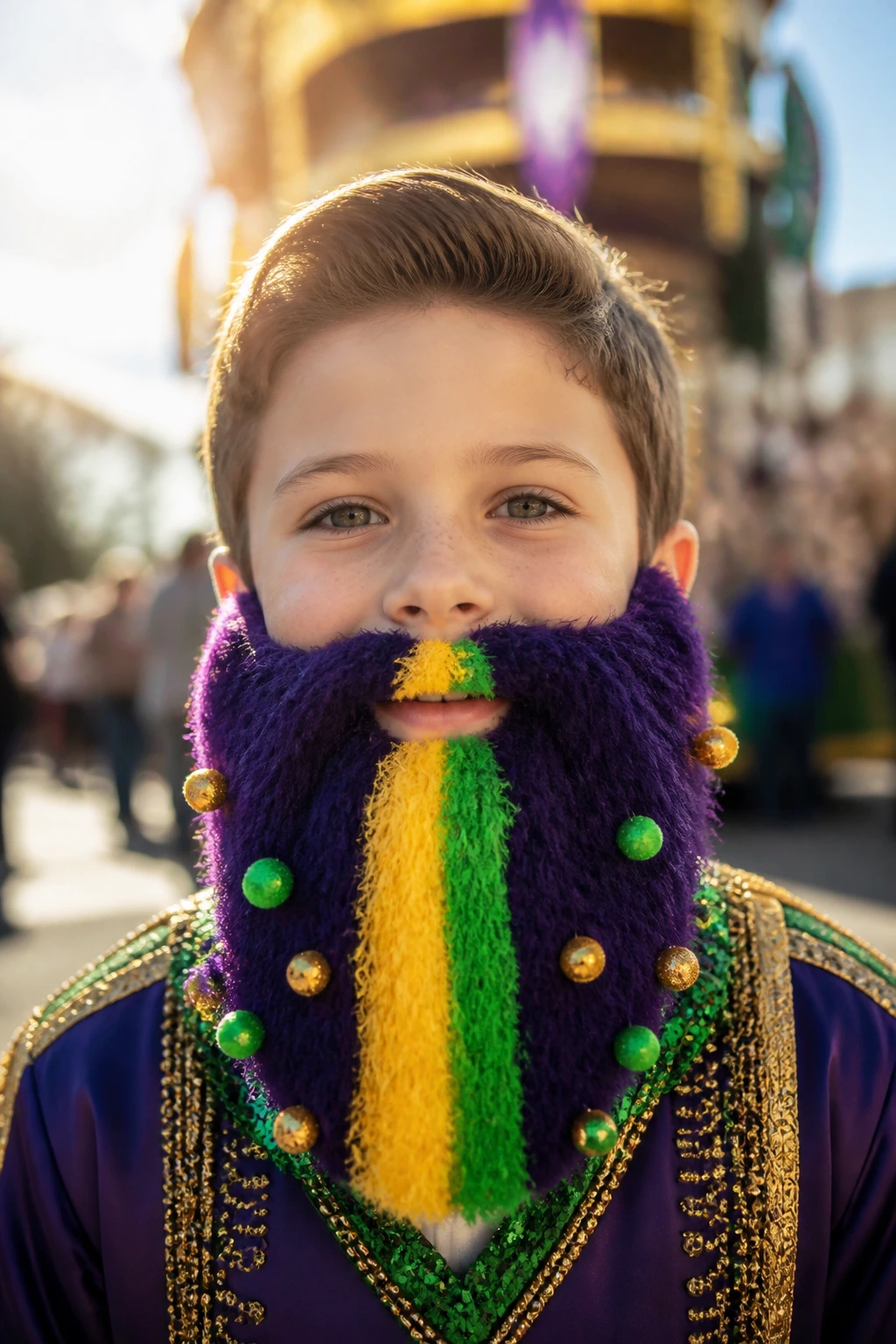
A parade float beard is not subtle, and that’s the fun. It uses bright accents, oversized shapes, or extra texture so the look stays visible from far away. On a little boy, that can mean a chunky fake beard, a bold color stripe, or a thick white shape with a playful twist.
If you make it at home, build the outline first and then add the fun part. A felt base can hold pom-poms, yarn curls, or painted accents. Keep it secure and light enough to wear without fuss. This is the style for costumes where bigger really is better.
Best for: parades, themed parties, and event photos where subtlety would be wasted.
38. DIY Color-Blocked Beard
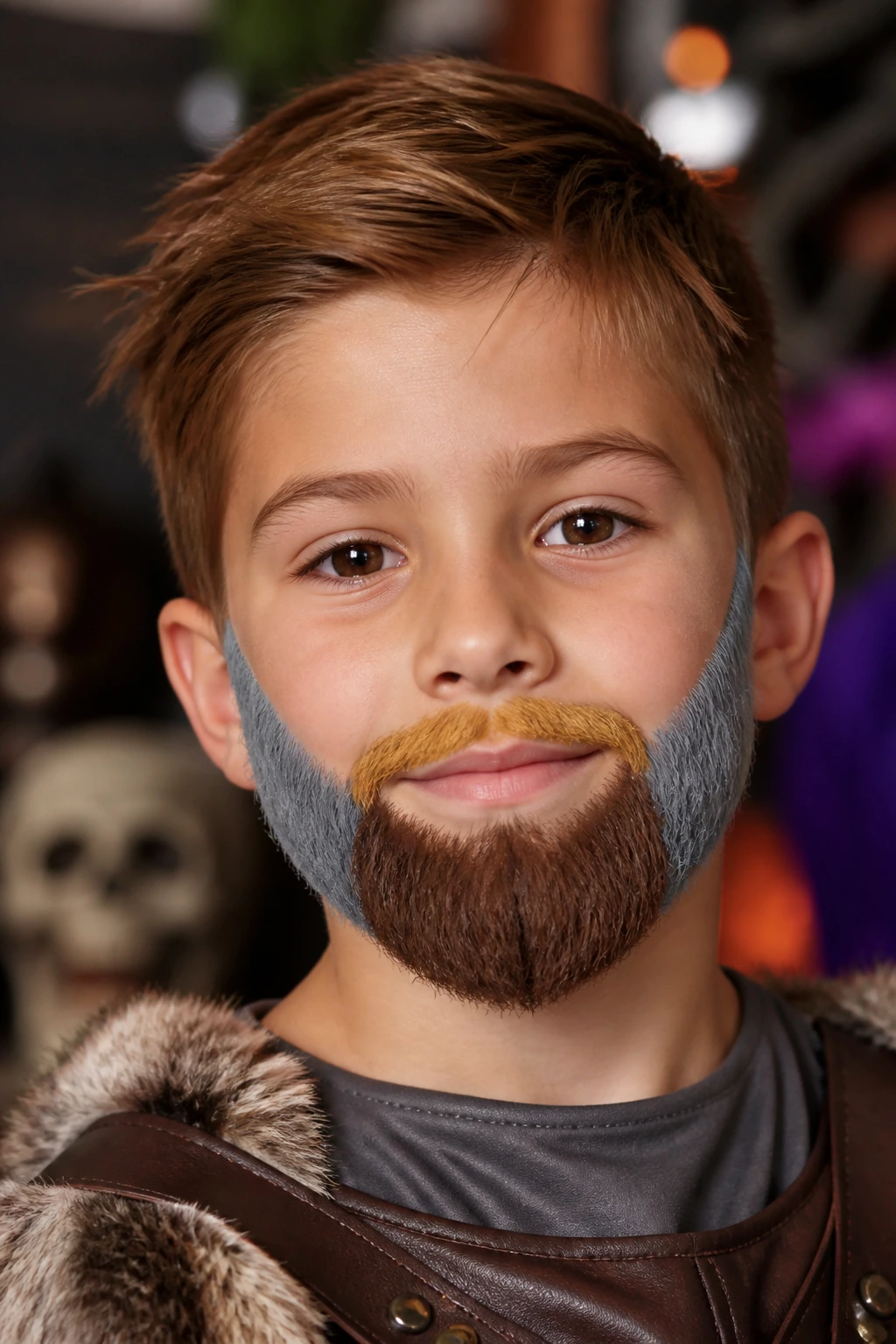
A color-blocked beard uses two or three colors in clearly separated sections. Brown at the chin, gray at the cheeks, maybe a thin gold accent near the mustache. It sounds bold because it is, but in the right costume it looks smart and controlled.
The block effect works best when the edges between colors stay clean. You can use paint, felt pieces, or even layered yarn if you want texture. This is one of the most flexible beard styles for little boys because it can lean funny, regal, magical, or sporty depending on the colors you choose. A plain haircut keeps the beard from fighting itself.
Best pairing
Use one neutral outfit and let the beard carry the color story. If the clothes are already loud, the beard should be quieter.
How to Pick the Right Beard Shape for the Hair on Top
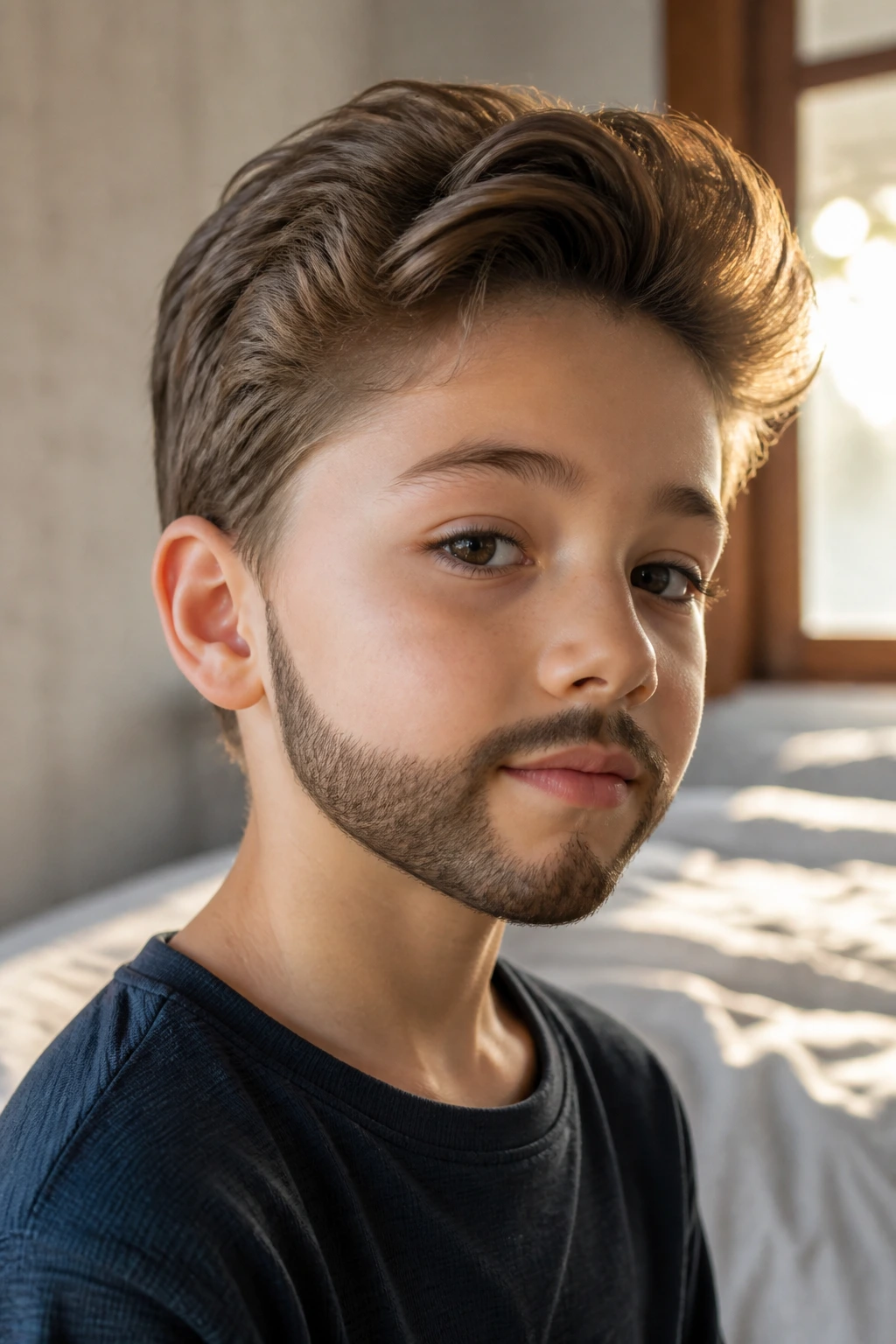
The haircut matters more than people think. A beard on a little boy does not sit in isolation; it has to work with the hair that’s already there, whether that’s a tight buzz, a soft curly top, or a side part that keeps falling over one eyebrow. If the hair is busy, the beard should be simple. If the hair is clean, the beard can carry more texture.
A round face usually likes taller shapes — chin points, anchors, or narrow goatees — because they add a little length. A long face often looks better with broader cheek coverage, like a gentle full beard or a rounded boxed shape. And if the child has a strong cowlick or thick curls near the temples, keep the beard line a touch higher so the whole face doesn’t look crowded.
Essential Supplies for Skin-Safe Beard Looks
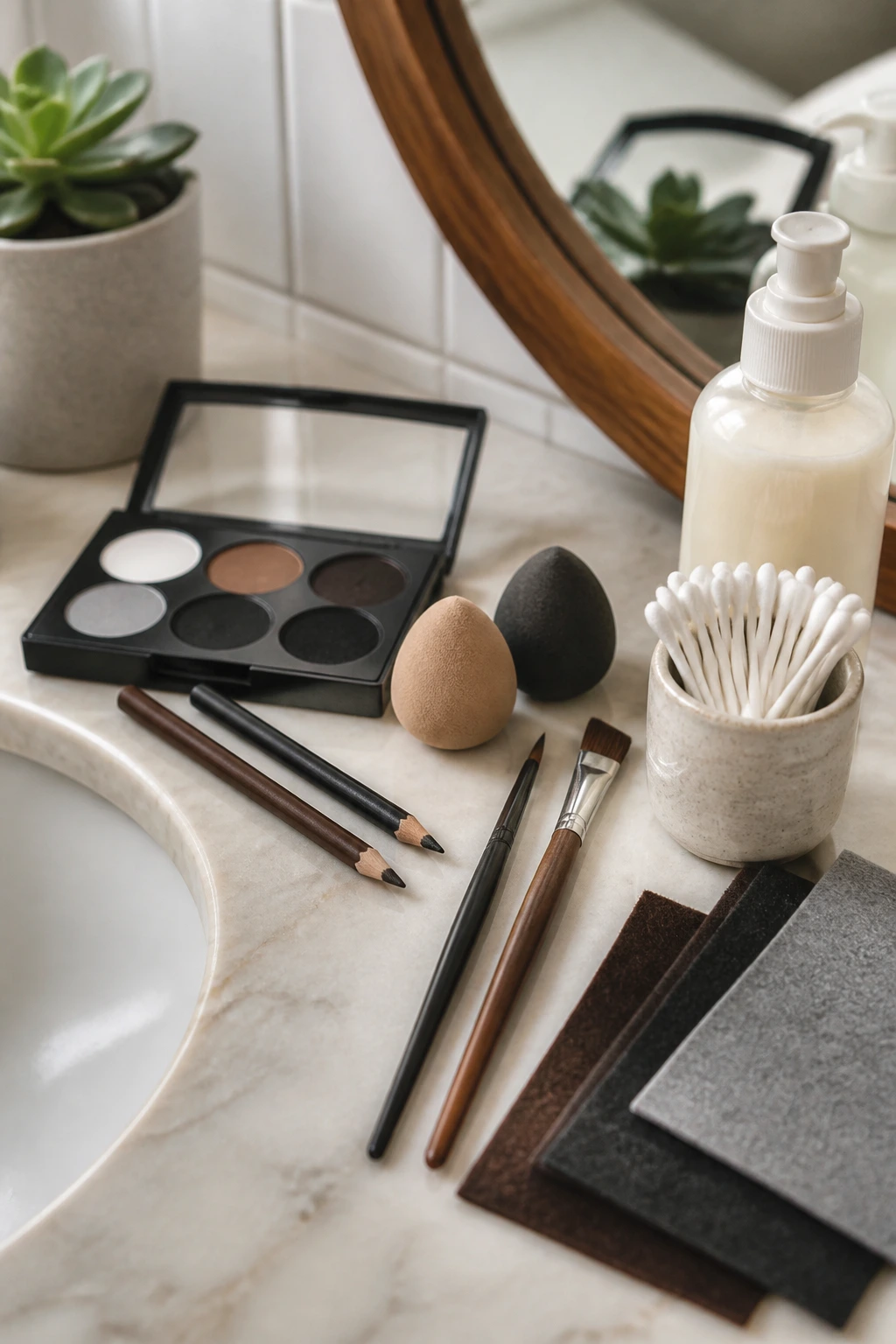
-
Water-based face paint: Soft, washable color that blends easily and comes off with warm water.
-
Brown and black eyebrow pencils: Best for tiny outlines, stubble, and sharp beard edges.
-
Makeup sponges: Useful for tapping in shadow so the beard looks soft instead of drawn.
-
Fine and angled brushes: Good for mustache curls, chin points, and crisp outlines.
-
Cotton swabs: Perfect for fixing a crooked edge or cleaning up the lip line.
-
Soft felt or yarn: Handy for costume beards that need texture and a little volume.
-
Gentle cleanser: Choose a mild, fragrance-free soap or makeup remover for easy cleanup.
-
Small mirror: Helps you check symmetry before the child runs off to the event.
Smart Shopping and Face-Safe Material Tips
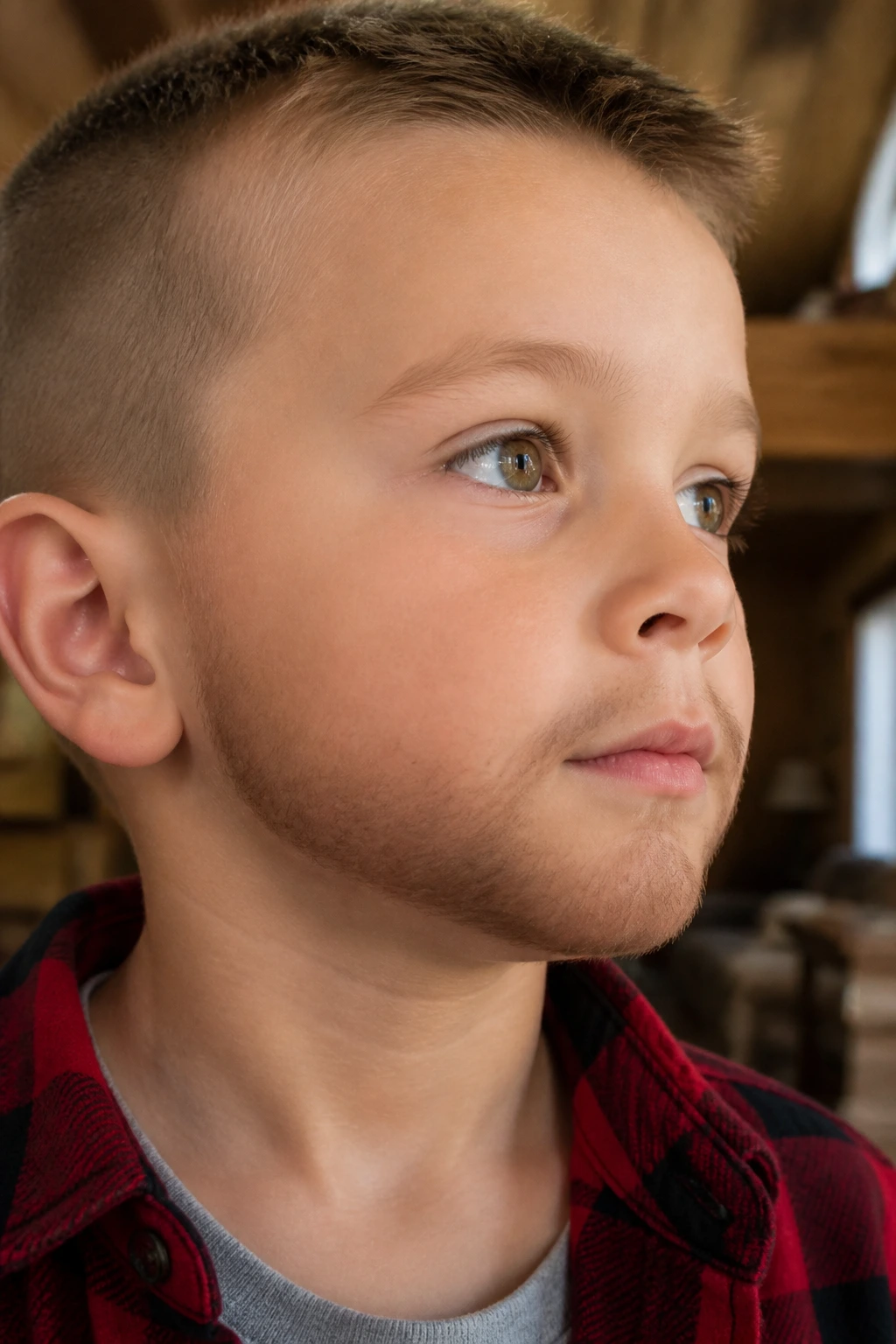
The first rule is simple: buy for skin, not for novelty. If a product is marked washable, water-based, fragrance-free, or skin-safe, that is a much better sign than glitter-heavy packaging that looks exciting on the shelf. For kids, the finish matters almost as much as the color. Matte face paint usually reads better than shiny paint because it looks more like hair and less like costume grease.
Patch-test anything new on the inside of the arm the day before. That tiny step saves a lot of drama. If the child has sensitive skin, keep the beard away from the upper lip, nostrils, and any area that already gets dry or red in cold weather. Eyebrow pencil is often the safest starting point because it gives control without a heavy layer.
If you’re buying felt, choose a soft craft felt rather than the scratchier stiff kind. For yarn, use something lightweight that won’t shed into the mouth. And if you want a reusable beard prop, look for soft closures or straps instead of sticky adhesives. Skin does not need to be punished for a costume.
How to Match the Beard With the Rest of the Look
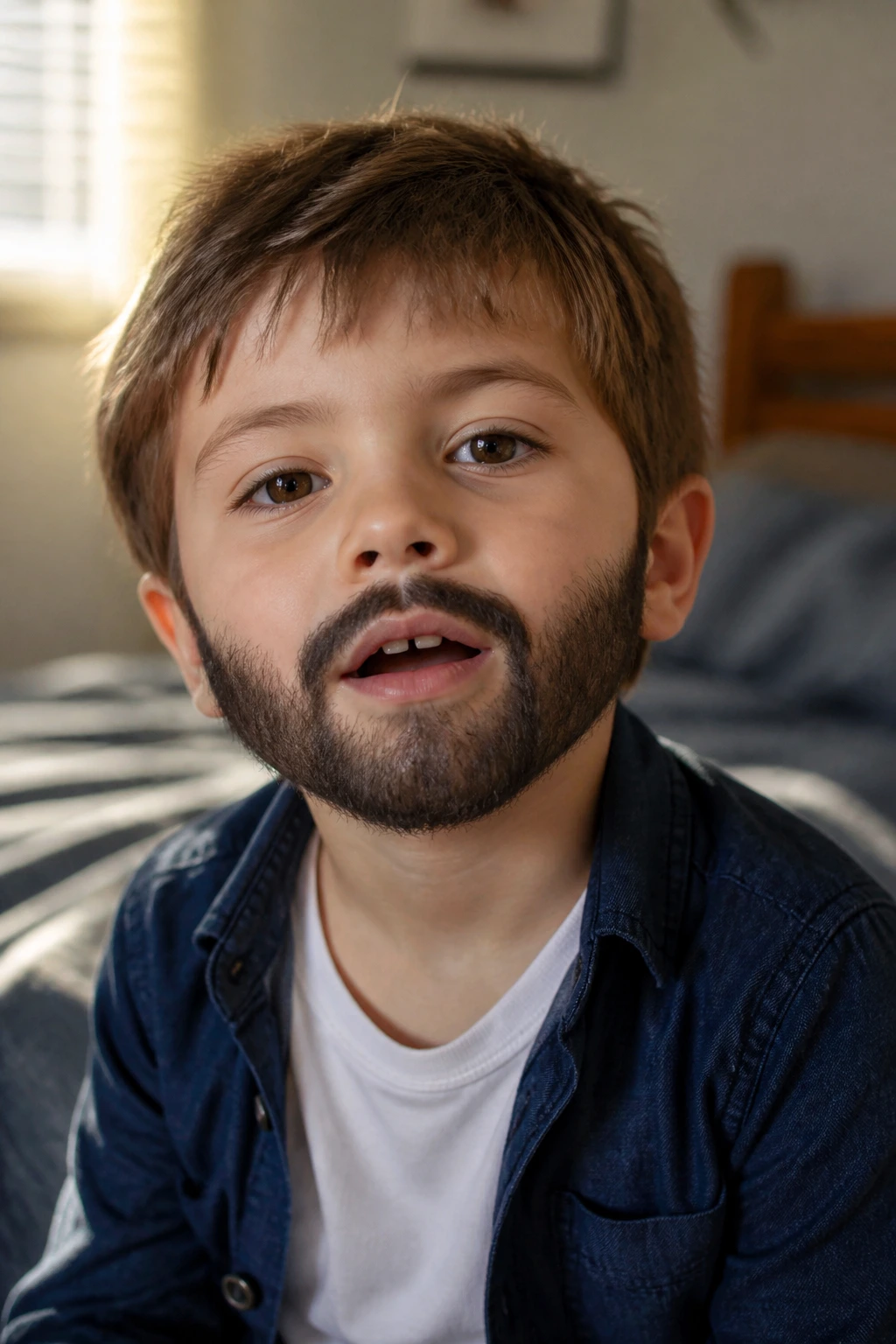
Presentation: Keep the beard line visible, but not low. On a child, the mouth should still feel open and easy to see. The prettiest results happen when the beard frames the face instead of covering it.
Accompaniments: Think in pairs. Flannel with lumberjack beards. Capes with wizard beards. Suspenders with old-time looks. A simple outfit often does more for the beard than extra accessories ever could.
Portions: One focal point is usually enough. For younger boys, pick either the chin, the jaw, or the mustache line. For older kids or stage roles, two areas can work, but keep the face readable.
Beverage Pairing: A spill-proof cup of water or a lidded juice cup helps during get-ready time and keeps the beard from getting damp right before the photos.
Extra Tricks for Cleaner Edges and Better Photos
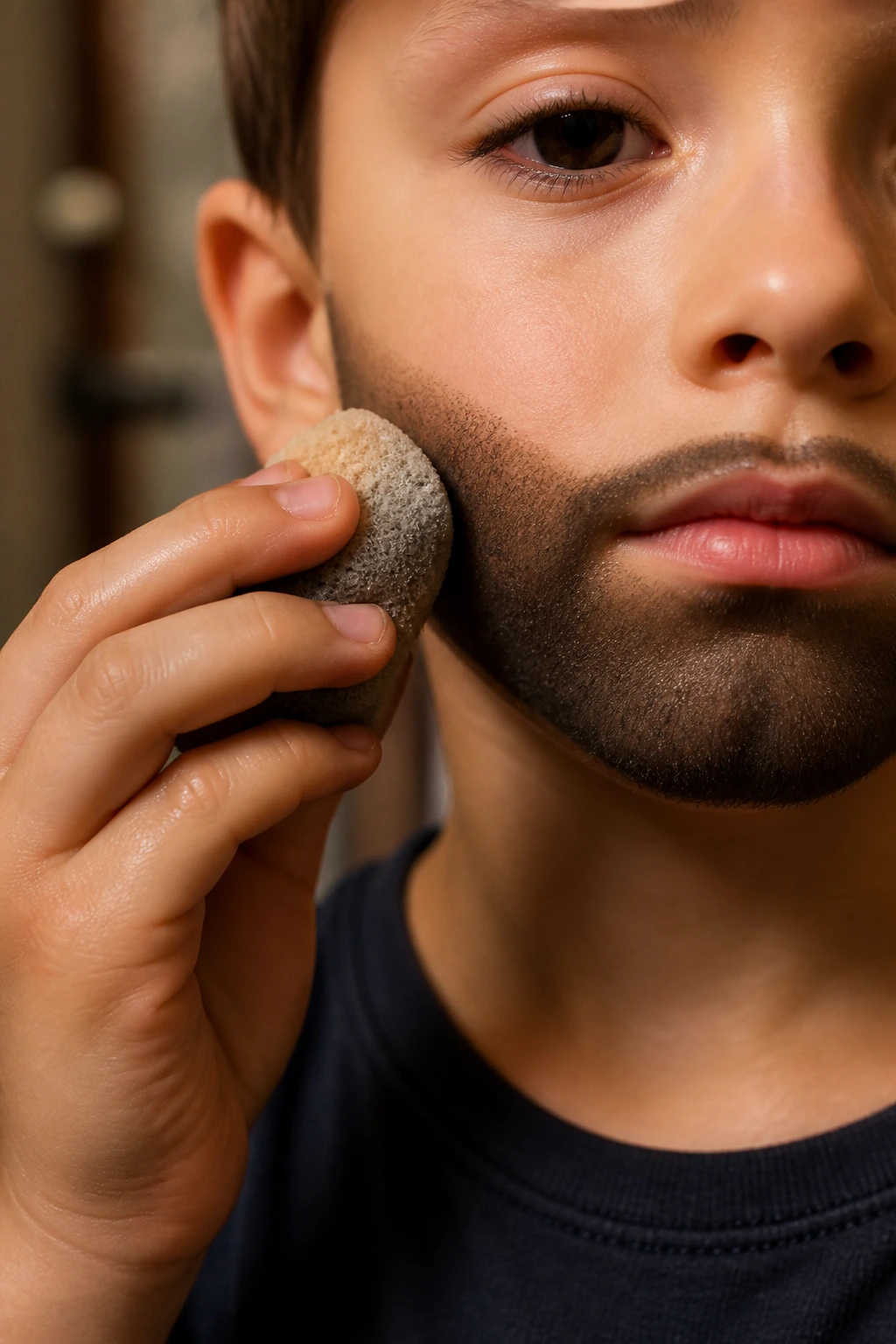
Edge Softening: If the beard line looks too hard, tap the edge with a clean sponge while it is still slightly damp. That one move can save a beard from looking pasted on.
Color Layering: Start with a lighter brown base, then add darker tones only in the center of the chin or under the jaw. The depth shows better than one flat color.
Comfort: Leave a small gap around the lips and the fold beside the nose. That keeps the child from rubbing the beard every few minutes.
Photo Finish: Matte products beat shiny ones under indoor light. Shine makes the beard look wet, and wet is rarely the goal.
Keeping the Look Fresh and Cleaning It Off
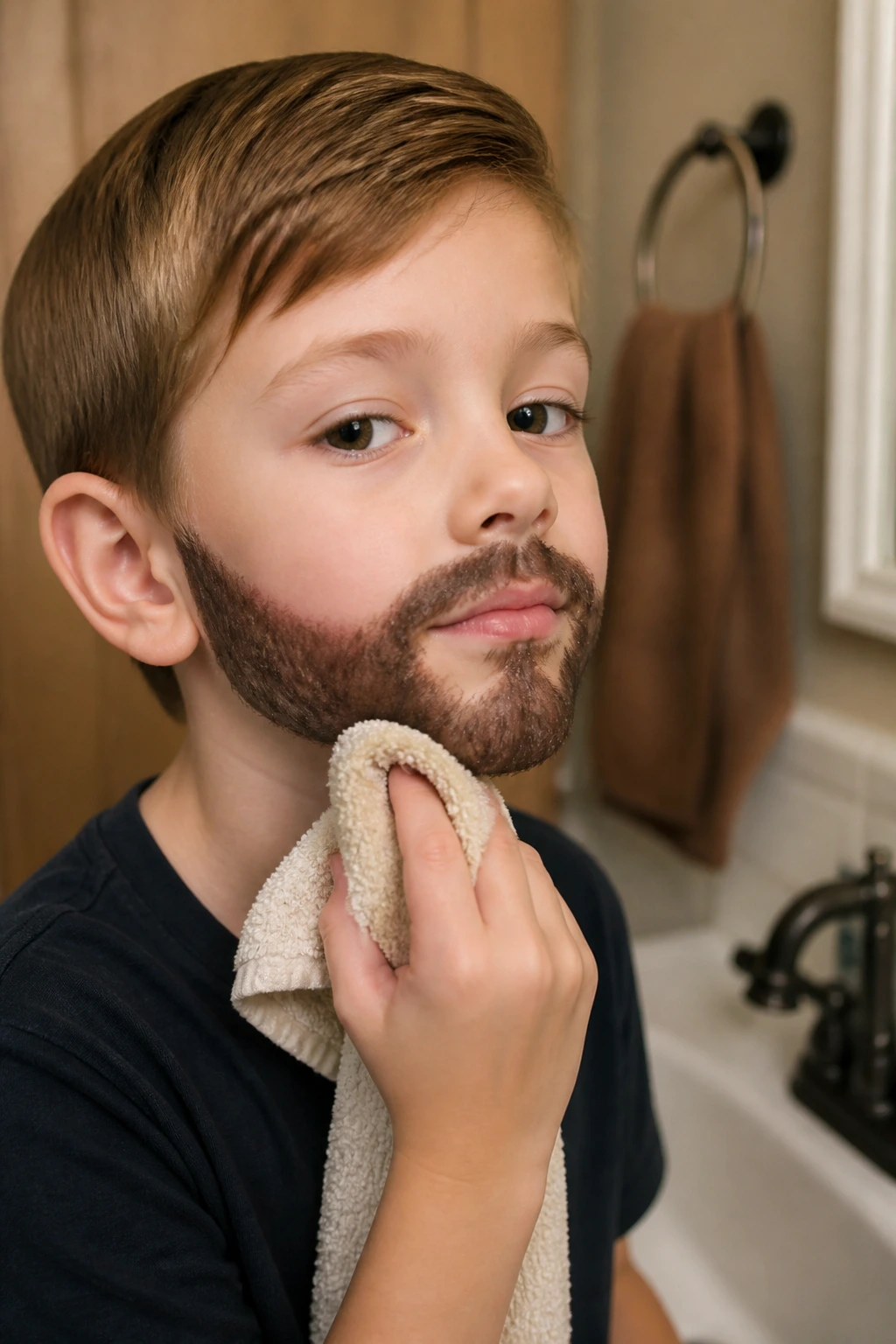
A fake beard look is best prepared close to the event, especially if it uses face paint. If you’re working with pencil and powder, you can sketch the shape a little earlier and then deepen the color right before the child leaves the house. Felt and yarn pieces can be assembled the day before and stored flat in a clean envelope or shallow box.
After the event, remove paint with lukewarm water and a mild cleanser. Do not scrub hard. A soft cloth or cotton pad is enough for most of these looks. If a little color hangs on in the beard line, a second gentle wash usually clears it. Felt props should be kept dry and flat, and brushes need a quick rinse so they don’t stiffen overnight.
For reusable pieces, keep them away from heat and direct sun. A drawer is better than a bathroom shelf. Bathrooms get damp, and damp storage shortens the life of paint, felt, and glue-backed pieces faster than people expect.
Variations and Adaptations to Try
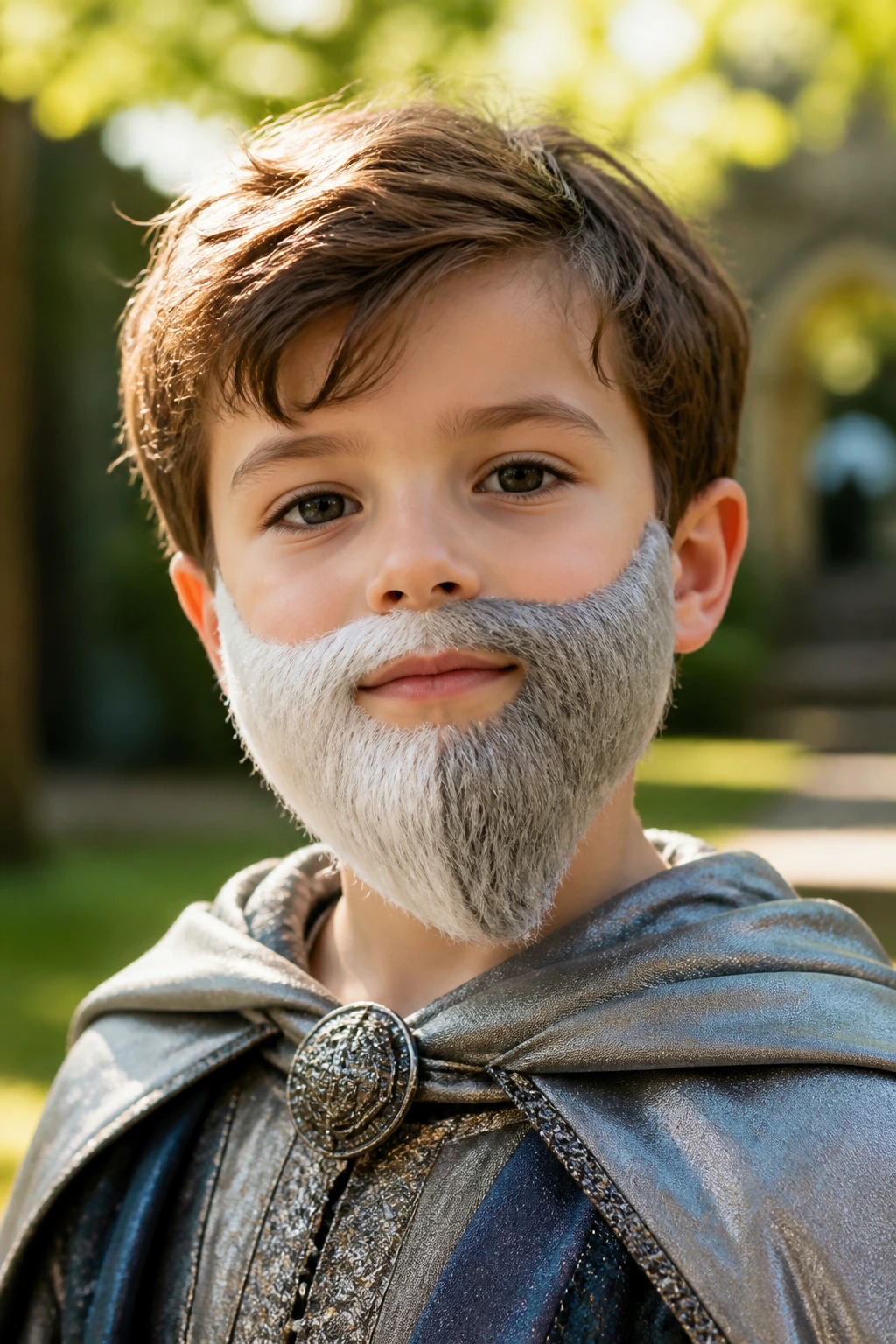
No-Makeup Version: If the child does not want face paint, use felt, yarn, or a detachable costume beard instead. This works especially well for young kids who hate anything on their cheeks.
Sensitive-Skin Version: Stick to a tiny pencil outline and keep the beard off the upper lip and nose folds. Fragrance-free cleanser is worth the extra minute at cleanup.
School-Play Version: Go stronger on outline and contrast so the beard reads from the back row. Stage lighting eats detail for breakfast.
Fantasy Version: White, silver, or color-blocked beards can turn a plain costume into a character in seconds. Use soft curves and airy texture.
Casual Photo Version: Choose a stubble shadow or a small chin patch. That keeps the picture playful without making the look feel too dressed up.
Curly-Hair Version: Let the beard echo the hair texture. Swirls, broken edges, and softer lines usually look better than hard geometric shapes.
Common Mistakes That Make the Beard Look Off
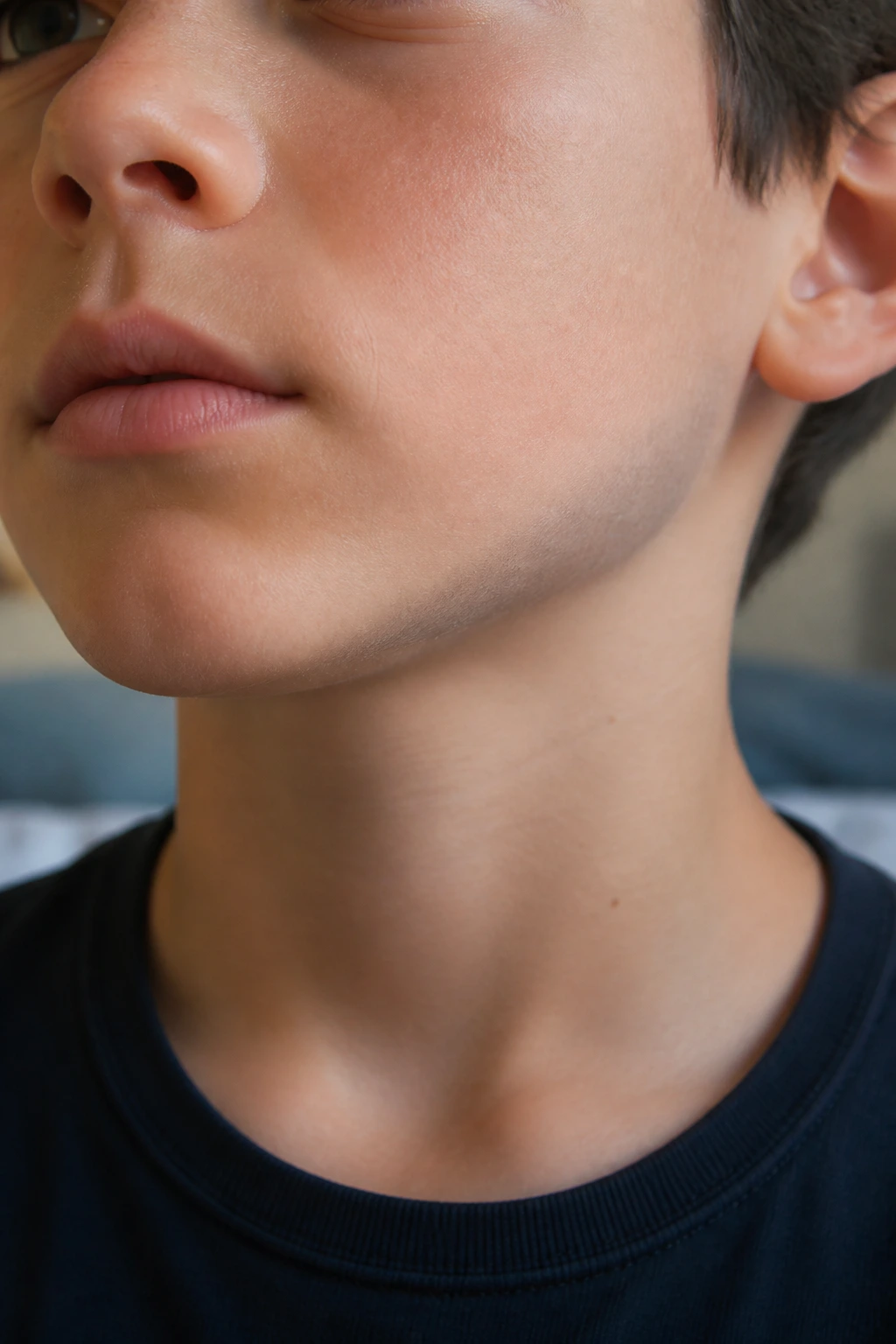
The most common mistake is putting the beard too low on the face. When the shape drops below the natural jawline, the smile gets buried and the whole look starts to sag. Keep the beard high enough that the mouth still feels like the center of the face.
Another problem is using a single heavy color with no blending. That creates a dark patch instead of hair. Tap in layers. Leave a little skin peeking through the edges. It reads more naturally and looks better in pictures.
People also overdo the mustache. A thick mustache on a small face can swallow the upper lip and make the child look older than intended. Keep it thin, light, and above the lip line. Last, do not skip the skin test. Even “safe” products can irritate sensitive skin, and a red cheek line is a miserable surprise five minutes before a party.
Frequently Asked Questions
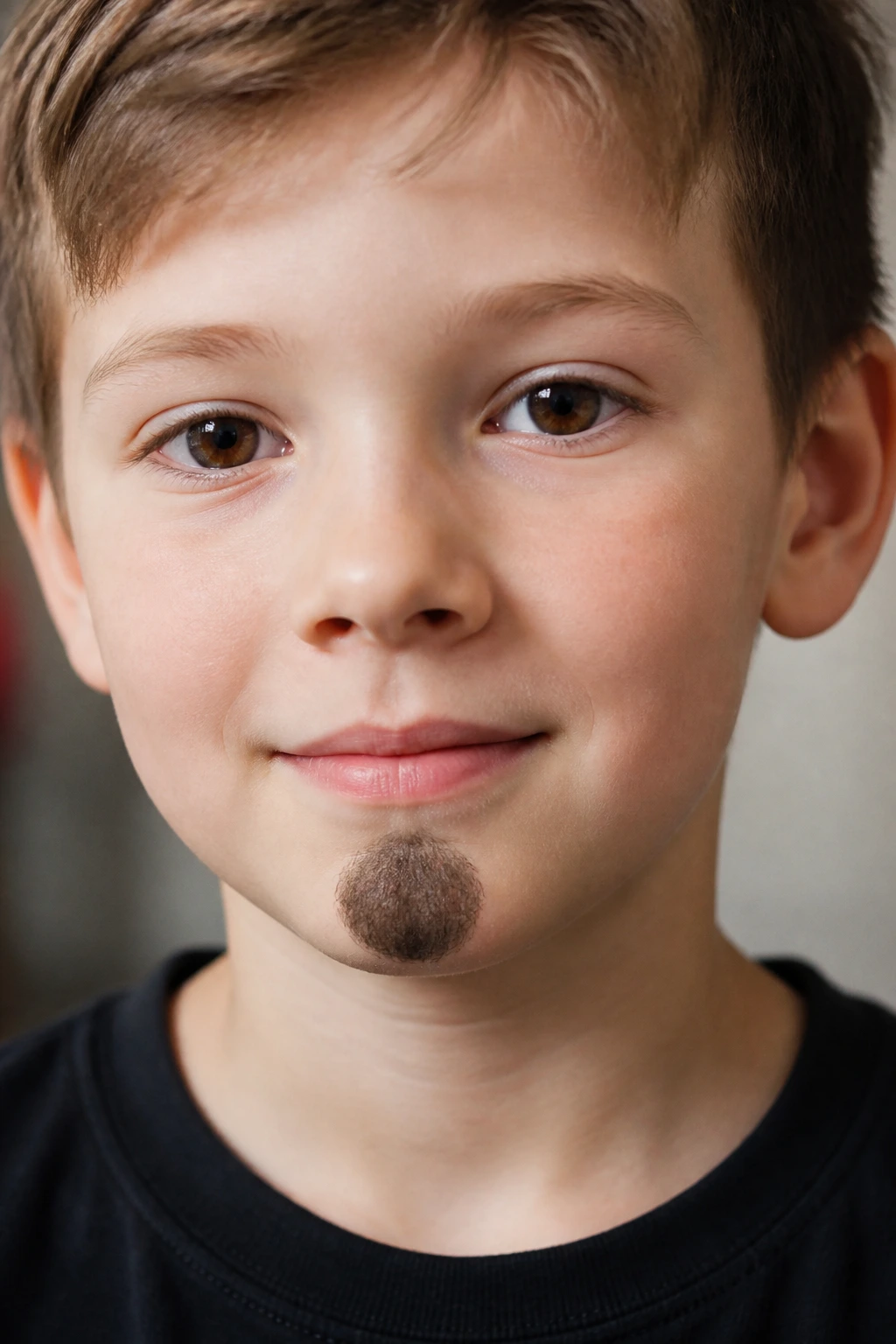
Can little boys wear a beard look without face paint?
Absolutely. Felt, yarn, and clip-on costume pieces work well, especially for kids who do not like makeup. Just make sure the attachment is soft and doesn’t rub near the mouth or nose.
What is the safest product for sensitive skin?
A fragrance-free, water-based face paint or a plain eyebrow pencil is usually the easiest place to start. Patch-test first, and keep the design away from any area that already gets dry or irritated.
How do I stop the beard from smudging?
Use matte products, apply in thin layers, and avoid oily creams underneath. If the child tends to touch his face, set the beard just before leaving instead of doing it too early.
Can I mix a beard with a mustache?
Yes, but keep one element dominant. A small chin patch with a light mustache often looks better than trying to make both parts equally bold on a small face.
Which beard shapes work best with short haircuts?
Tiny lumberjack styles, anchors, chin straps, and stubble shadows tend to pair well with fades, buzz cuts, and cropped hair. The clean haircut gives the beard a frame.
How do I remove the beard fast after the event?
Use lukewarm water and a mild cleanser, then wipe gently with a soft cloth. If a little pigment remains, repeat once rather than scrubbing harder.
Can I prepare a costume beard ahead of time?
Yes. Felt and yarn pieces can be made days ahead and stored flat. Painted looks are best created close to wear time, but you can sketch the outline earlier and fill it in later.
What if the child keeps rubbing his face?
Choose a lighter look. Stubble shadows and small chin shapes tend to survive fidgeting better than full-face beards. A busy or itchy beard is not worth the trouble.
Do beard styles have to match the haircut exactly?
No, but they should not fight it. A fluffy haircut usually pairs best with softer beard edges, while a crisp fade can handle sharper lines.
Tiny Faces, Big Character

The best beard styles for little boys are the ones that respect the face underneath them. Keep the shape clear, the materials soft, and the cleanup easy, and the look does its job without turning the day into a production. That balance is what makes these styles worth keeping around: they work for dress-up, they work for photos, and they work for children who want the fun without the fuss.
If you’re choosing one for a first try, start small. A pencil shadow, a little goatee, or a rounded chin patch will teach you more than an overbuilt costume beard ever will. Once you’ve seen what the child likes — and what actually stays put — the bolder looks become much easier to handle.
