



Thick, curly, frizzy hair has a habit of telling on a bad haircut within 24 hours. The same head of hair can look lush, springy, and sculpted in the chair, then turn into a puffed-out triangle, a shelf of ends, or a heavy curtain by the time you’re in the car. That’s not a texture flaw. It’s a shape problem.
The right cut does not try to flatten curls into obedience. It gives them structure, room, and a perimeter that makes sense once the hair dries and shrinks. A strong curl cut respects density, keeps the bulk where it belongs, and leaves the frizz looking intentional instead of accidental. That means dry cutting in many cases, careful layering, and a little honesty about how much maintenance you’re willing to do.
And yes, some of these cuts are bold. Some are quietly practical. A few are the kind of shapes that make thick curls sit closer to the head without losing movement, which is honestly the sweet spot most people are chasing. The trick is matching the cut to the curl pattern, the amount of hair on your head, and how much you want to style on a Tuesday morning.
- Shape beats length: A shoulder-length cut can look wider than a longer one if the weight is removed in the wrong place.
- Shrinkage matters: Curls that spring up 20% to 50% need a cut that looks good both wet and dry.
- Bulk needs direction: Thick hair can swallow layers if the stylist is too heavy-handed with thinning shears.
- Frizz can work with you: The right outline makes frizz read as texture, not damage.
- Maintenance is part of the deal: Some of these cuts need trims every 8 to 10 weeks, while others can stretch farther if the line stays strong.
1. Rounded Long Layers
Rounded long layers are the safest bet when you want movement without turning the ends into a ragged cloud. The shape keeps length, but the layers follow the curve of the head so the hair falls in a softer oval instead of a box. On thick curls, that rounded outline matters more than people think.
Ask for the layers to be cut with the dry curl pattern in mind, not hacked straight across when everything is wet and stretched. That single choice can decide whether your curls stack neatly or puff out at the sides. If your hair is coarse or frizzy, this cut keeps the bulk controlled while still letting the curls live.
Best for
- Shoulder-length to long curls
- Dense hair that feels heavy at the bottom
- People who want shape without losing much length
One blunt note: if your curls are very loose and your density is low, too many rounded layers can make the ends look a little wispy. In that case, ask for fewer layers and a fuller perimeter.
2. Curly Shag
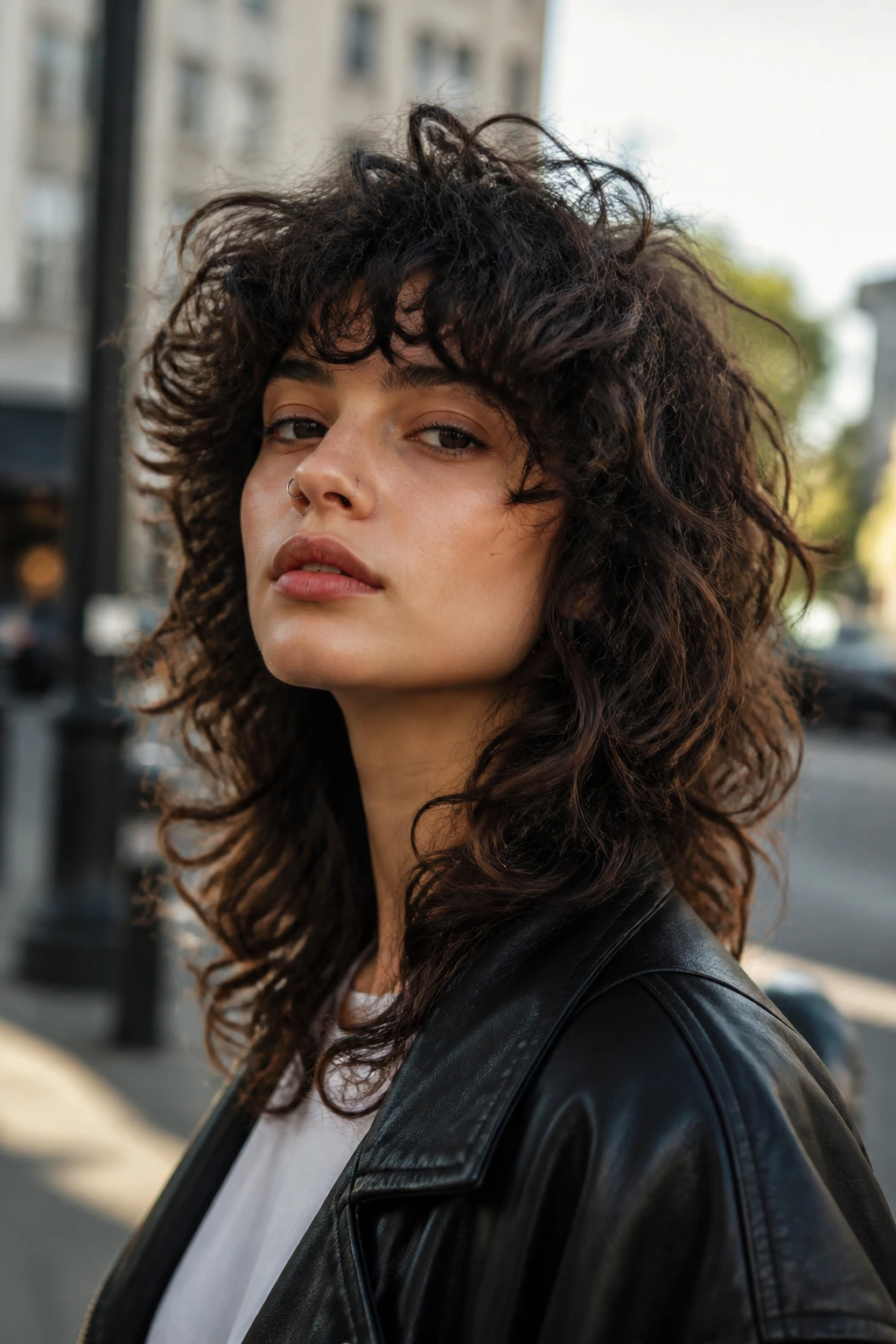
The curly shag is messy in the best way. It puts volume at the crown, loosens the outline, and leaves enough irregularity that frizz reads as part of the style instead of a problem to hide. It’s one of the few cuts that can make thick curly hair feel lighter without making it look thin.
The reason it works is simple: the layers are distributed high enough to release bulk, but not so high that the whole shape collapses. Add a fringe or a soft bang and the cut suddenly has attitude. Not stiff. Not fussy. Just alive.
What to ask for
- Soft, blended layers through the crown
- A face frame that starts around the cheekbone or lip
- A fringe that can be worn parted or brushed aside
If you hate the feeling of hair sitting flat on top, this cut is a gift. If you hate styling more than once every few days, it may ask too much of you.
3. Wolf Cut
The wolf cut is the curly cousin of “I want volume, but I also want edge.” It’s a heavily layered cut with a shorter crown and longer, shaggy ends, which makes thick curls lift instead of droop. On frizzy texture, the choppiness can look intentionally rough rather than fluffy.
I like this cut most on people whose curls naturally want to spring up and spread out. The disconnected layers give that movement somewhere to go. Without them, thick curly hair often makes its own geometry whether you asked for it or not.
Who it suits
- Dense curls that get bulky at the sides
- People who like a little drama in the silhouette
- Hair that can tolerate some regular styling with cream or gel
A wolf cut can look fantastic air-dried, but the crown needs some help. Scrunching with a diffuser for even 5 to 8 minutes can make the difference between “shaggy on purpose” and “I slept on it wrong.”
4. Deva Cut
A Deva cut is built around the curl itself. The stylist works curl by curl, usually on dry hair, so each spiral is cut where it actually lives, not where it was when stretched out under a comb. That matters for thick, frizzy hair because one curl often behaves differently from the one beside it.
The result is less about symmetry and more about individual curl placement. You get a shape that follows your actual pattern, which means the front can sit softly while the back keeps its length and balance. It’s a smart choice if your curls have different textures in different areas.
Best when
- Your curl pattern changes from section to section
- You want less pyramid shape
- You’re willing to go to a stylist who knows curl cutting
This cut is not the place for someone who wants a dead-straight outline. It’s for people who want the haircut to disappear into the curl pattern, which is a much better deal for frizz-prone hair anyway.
5. Rezo Cut
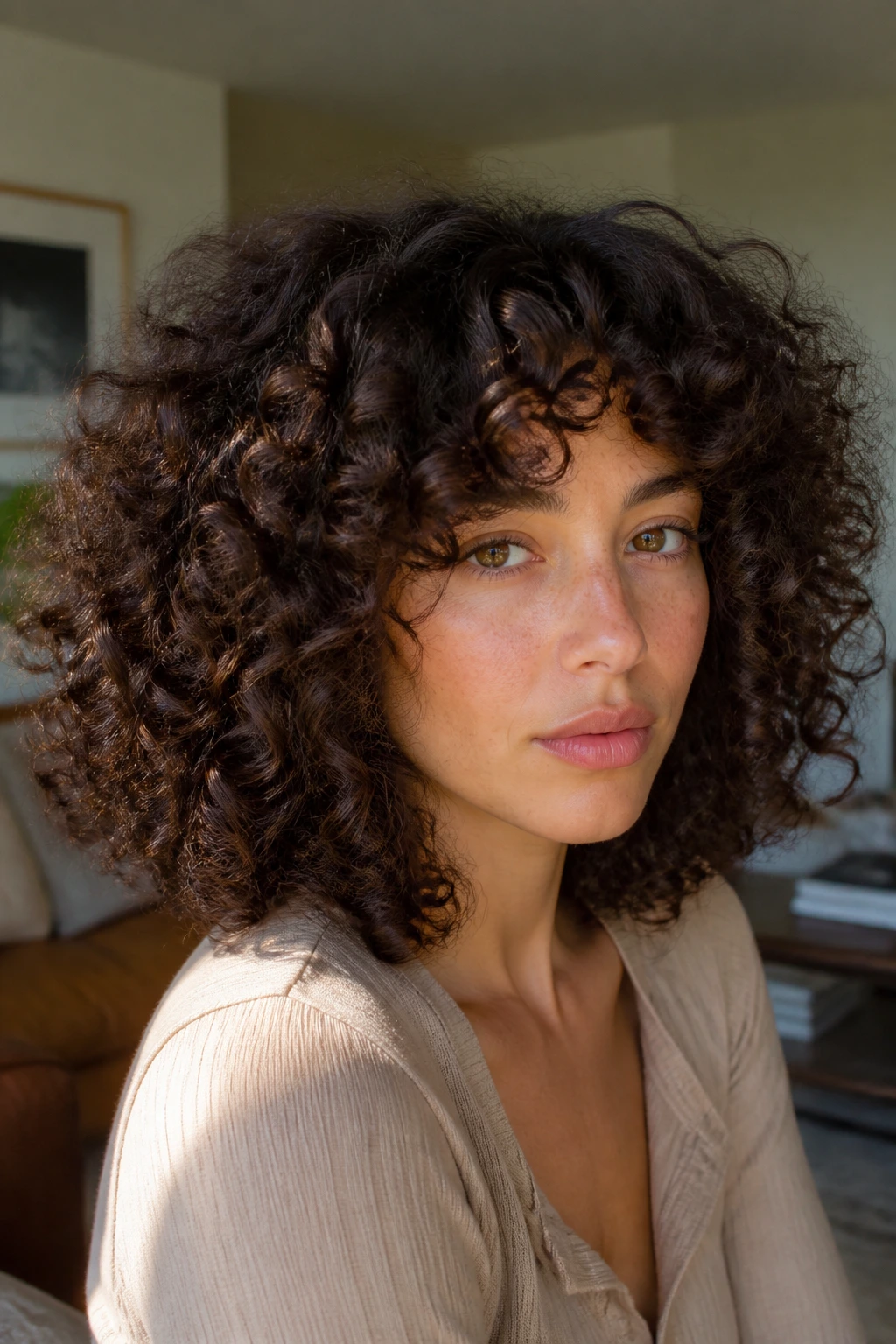
The Rezo cut is for the person who likes volume all around, not just at the top or around the face. It’s designed to keep length and distribute weight more evenly, so the curls sit in a more balanced cloud instead of collapsing into one side. On thick hair, that balance makes a real difference.
Compared with a choppier shag, the Rezo shape often looks smoother at the perimeter. You still get bounce, but the ends don’t feel shredded. If your thick curls tend to widen at the sides, this cut can pull the shape inward without making it small.
What makes it different
- Length is preserved more than with a shag
- The silhouette stays round and even
- It works well if you want fullness without a heavy bottom line
If you’ve ever left a salon with layers that looked cute for two days and then turned into a frizzy shelf, this cut may be the cleaner answer.
6. Butterfly Cut
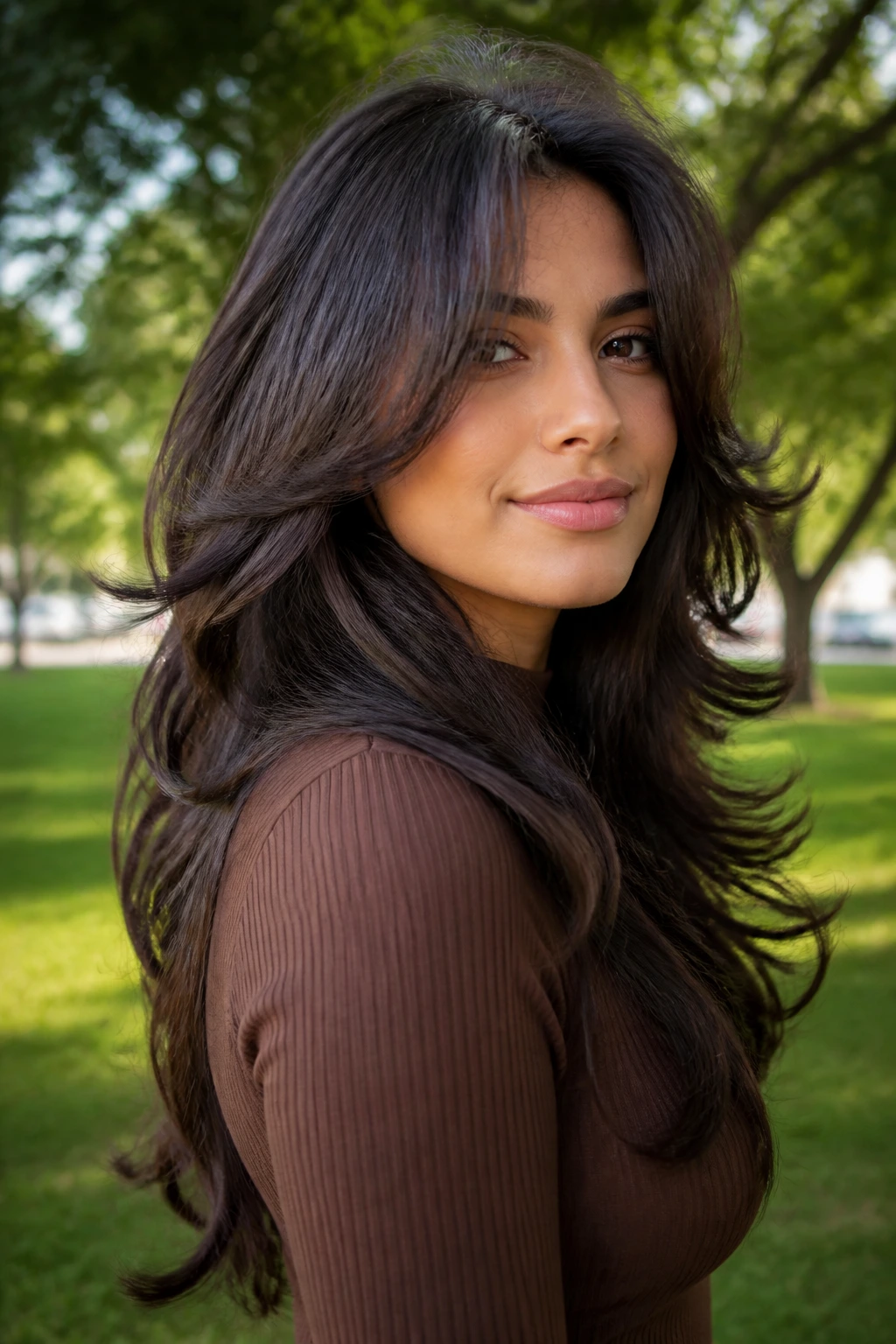
The butterfly cut is all about long layers that open up around the face and crown while keeping the back long. On thick curls, that means you get movement up top without sacrificing the weight that keeps the ends from puffing out. It’s especially useful if your hair feels too heavy but you’re not ready to go short.
The front pieces usually drop in soft, wing-like layers. On curly hair, that gives a nice frame without forcing the whole head into short layers that spring up too high. It’s a clever cut if you like your hair big but not bulky.
Best for
- Long curls that need lift around the face
- Thick hair that hangs heavy at the crown
- People who like to wear hair half-up sometimes
The catch is styling. You do need to encourage those face-framing layers a little, especially if they want to split in odd directions on wash day.
7. Collarbone Lob
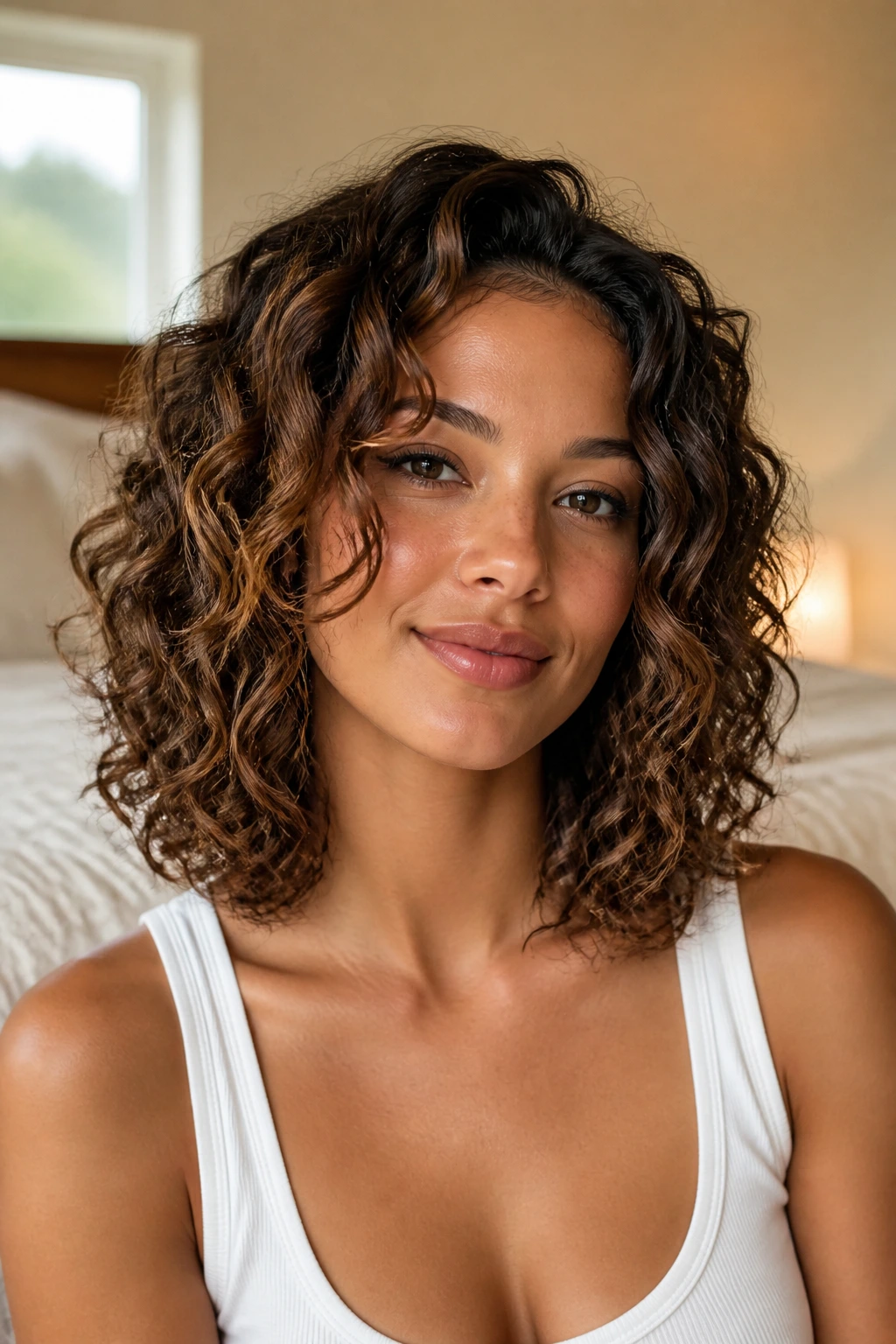
A collarbone lob is a smart middle ground. It’s long enough to keep some weight, short enough to avoid dragging the curl pattern down, and it lands in that useful zone where hair still feels substantial but not endless. For thick curly hair, that length helps frizz read as texture instead of puff.
I like this cut for people who want something that can be worn loose, clipped back, or tucked behind the ears without looking awkward. It also handles shrinkage well, which matters more than people admit. If your curls bounce up three inches after drying, collarbone length often lands exactly where you wanted it.
Why it works
- Keeps enough weight to calm the sides
- Avoids the heavy triangle that can happen with longer one-length hair
- Easy to dress up or leave alone
A lob can look very polished on curls, but only if the ends aren’t over-thinned. Keep the perimeter solid.
8. Blunt Bob
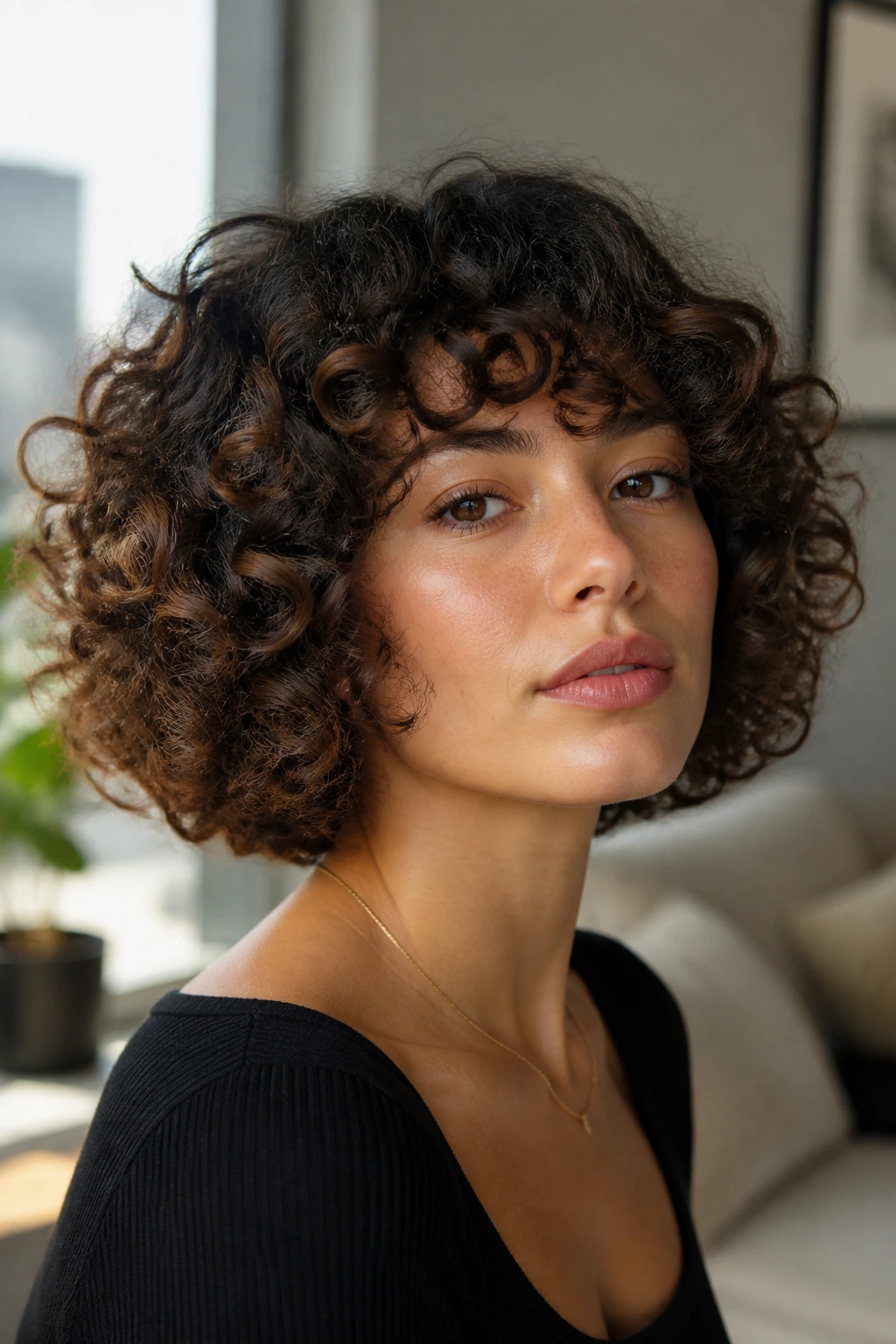
A blunt bob on thick curly hair sounds risky until you see it on the right head. The line gives the curls something to gather around, which can make the whole shape feel denser and more deliberate. It’s especially good when the curls are tight enough to stack rather than balloon.
The blunt edge stops the cut from fraying out at the bottom. That’s useful for frizz-prone hair, because loose ends can make the whole style look fuzzy. A clean bob line, even if it isn’t perfectly straight in the mirror, gives the curl pattern a strong base.
Watch for this
- Very loose curls can flip the bob outward too much
- Too much layering will break the clean line
- Wet cutting without checking dry length can leave it shorter than planned
This is one of those cuts that looks simple and actually isn’t. It needs a stylist who understands how curl shrinkage changes the final shape.
9. French Bob

The French bob is short, cheeky, and a little bit smug in the best way. It sits around the jaw or just below it, often with a fringe, and it looks especially good when the curls have enough spring to hold that compact shape. Thick frizzy hair can wear this cut beautifully because the fullness becomes part of the silhouette.
It’s a strong choice if you want the face opened up and the length removed from the neck. The shorter line can make thick curls look airy rather than heavy, which is not easy to achieve. A little frizz around the fringe here is normal. In fact, it’s part of the charm.
Best for
- Loose curls to medium coils
- People who like a short, defined outline
- Hair that can be refreshed with a mist bottle and cream
The French bob is not low-maintenance in the lazy sense. It’s low-maintenance in the “looks good with a few good choices” sense. There’s a difference.
10. Tapered Afro Cut
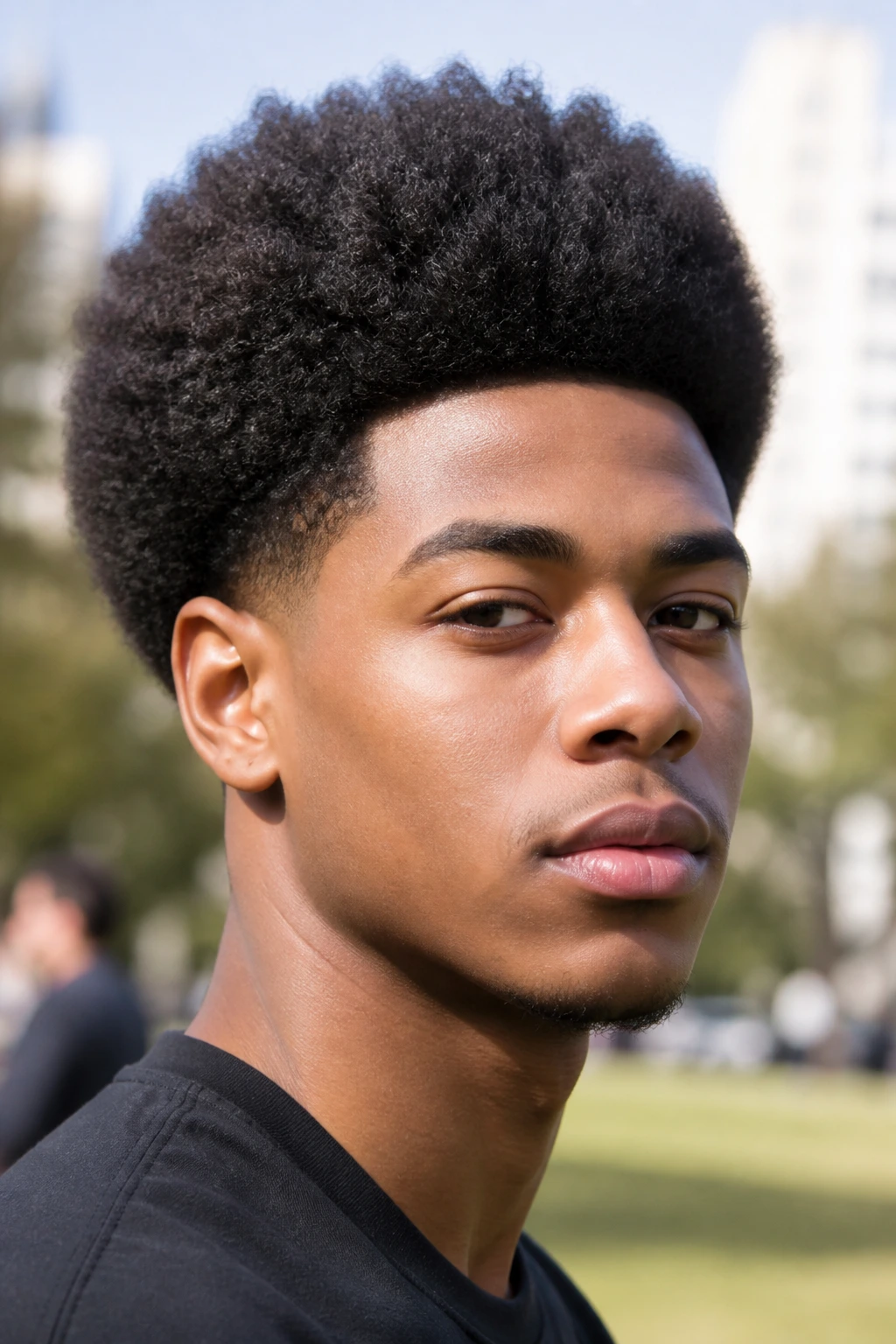
A tapered afro cut is a shape cut, not just a haircut. The sides and nape are kept tighter while the top rounds up and out, which gives coily and very dense hair a clean outline. For thick, frizzy texture, the taper stops the shape from spreading where you don’t want it.
This cut is honest. It shows off density instead of trying to hide it. When the taper is done well, the overall look feels sculpted and soft at the same time, which is harder to pull off than it sounds.
Ask for
- A fuller top and crown
- Tapered sides and neckline
- A rounded silhouette that follows your head shape
This cut does need upkeep. The neckline and sides lose their crispness faster than people expect, so shape-ups every 3 to 5 weeks keep it looking intentional.
11. Curly Pixie
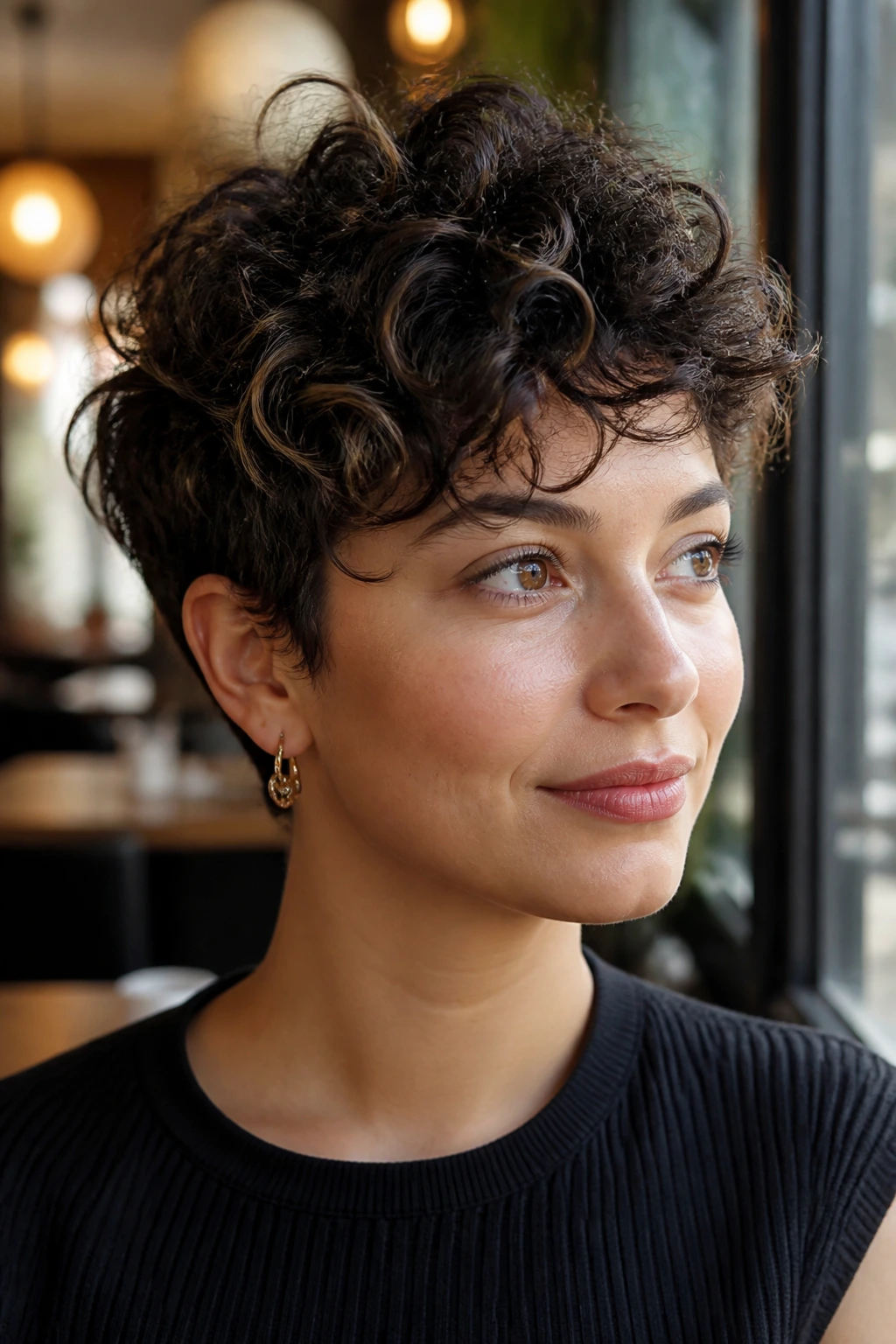
A curly pixie can be excellent on thick hair if you want your face, ears, and neck to come back into the picture. The short length removes a lot of weight, which means the curls spring upward and the frizz gets a cleaner frame. It’s lively. It also has no patience for bad cutting.
The best curly pixies leave enough length on top to show the pattern, then taper around the edges so the shape feels neat rather than fuzzy. If your hair is dense, this is one of the fastest ways to make daily styling simpler. Less hair. Less drying time. Less battle.
Best for
- Strong curl patterns
- People who want short hair with texture
- Thick hair that gets hot and bulky quickly
A pixie is not a “set it and forget it” cut. You’ll be trimming often, and the styling product matters more because there’s less length to hide behind.
12. Bixie Cut
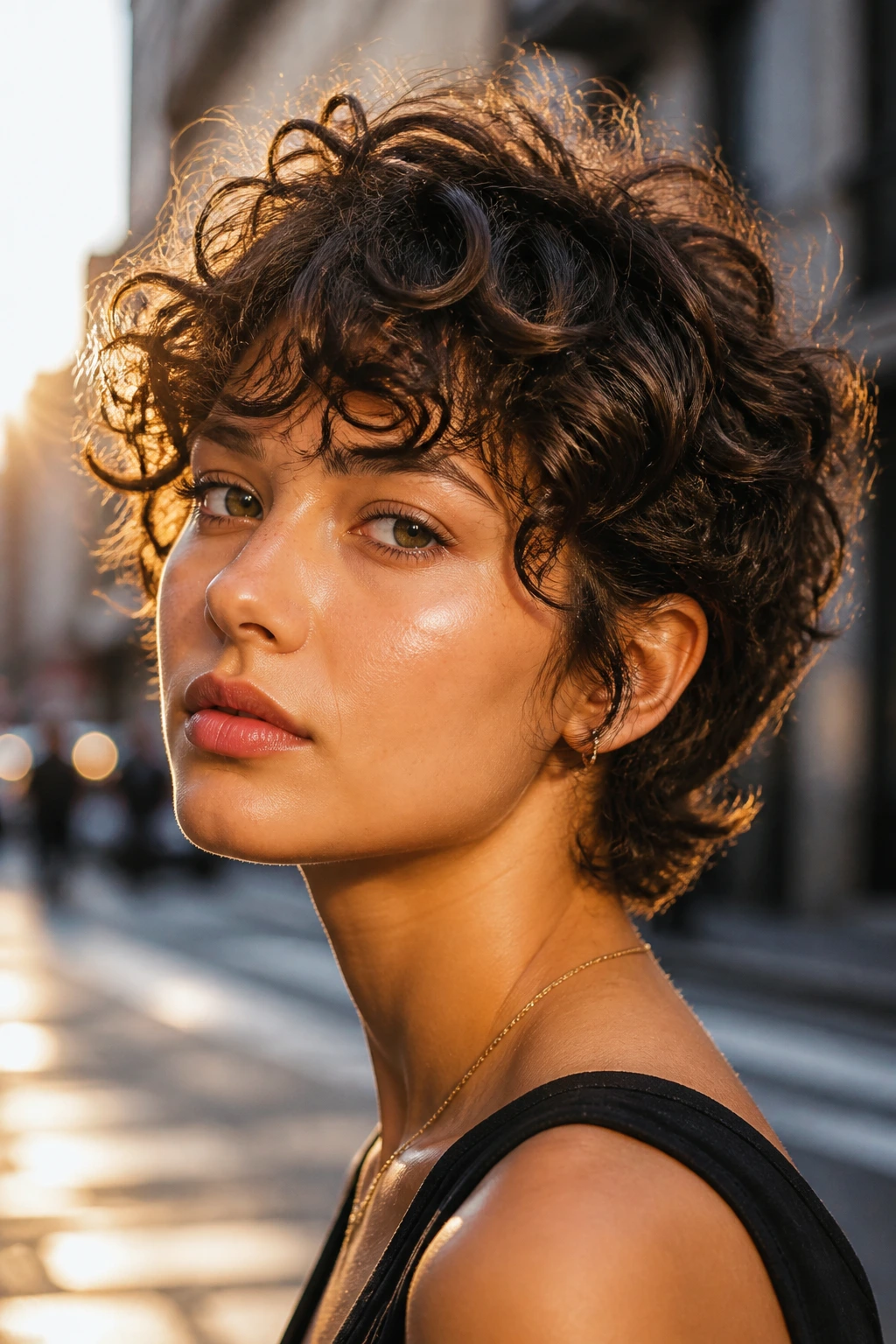
The bixie sits between a bob and a pixie, which is why it works so well for thick curly hair. You get shortness around the back and sides, but not so much that the cut feels severe. There’s still enough length to gather the curls and keep a bit of softness around the face.
If a pixie feels too short and a bob feels too heavy, this is the middle lane. The bixie is especially nice for people whose hair density creates bulk at the temples or nape. It removes weight without making the whole head disappear.
What to ask for
- Shorter sides with a bit more length on top
- A soft edge around the ears
- Pieces in front that can tuck or fall forward
It grows out better than a true pixie, which is one reason people return to it. The in-between stage is more forgiving, and that matters.
13. Curly Mullet
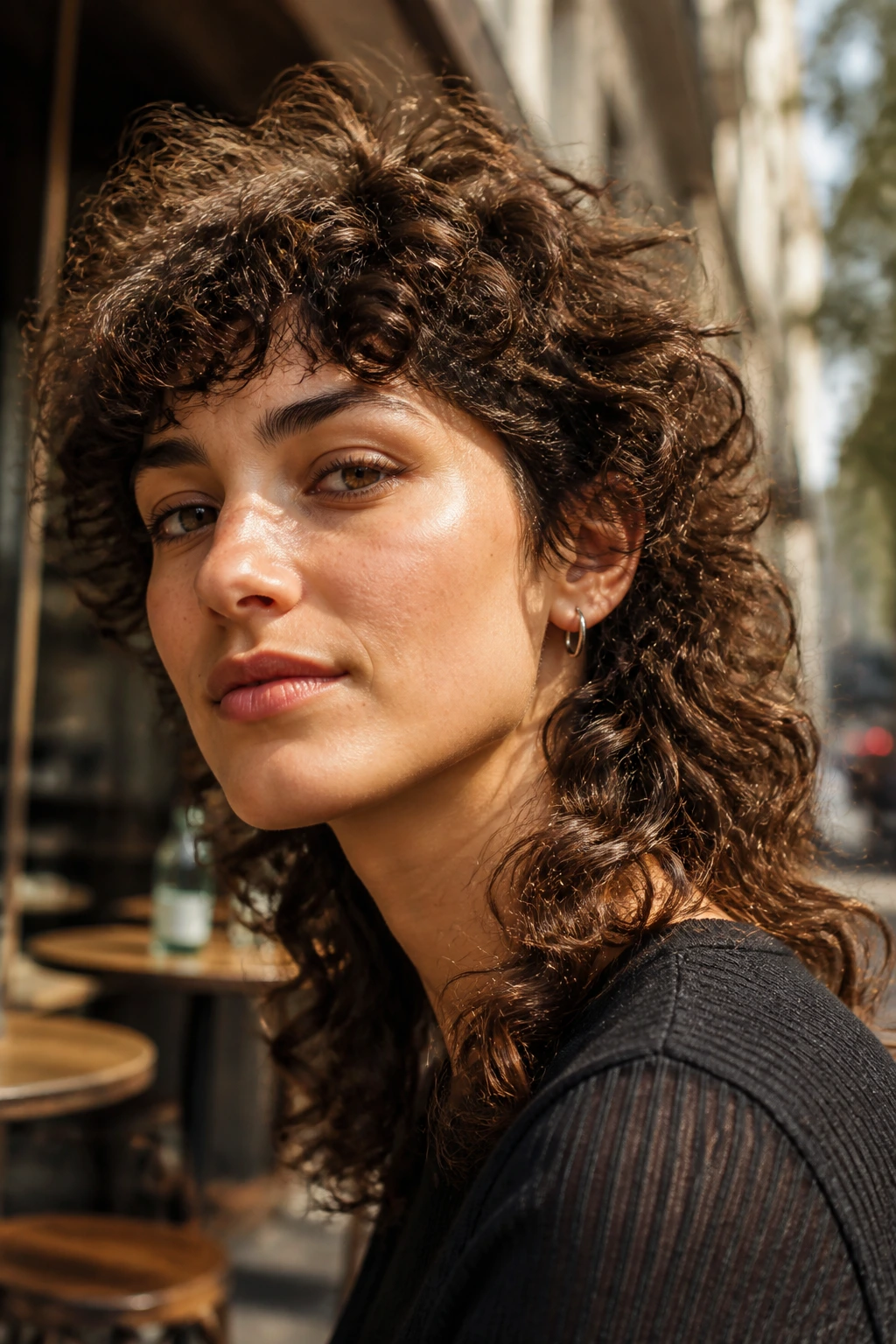
The curly mullet is for someone who does not want their hair to look polite. Shorter layers up front and on top, length left in the back, and enough shag to keep the whole thing from feeling costume-like. On thick curls, the shape can be striking because the texture softens the hard lines.
What makes this cut work is balance. If the front is too short or the back too long, it tips into novelty. When it’s cut with enough judgment, it gives the curls a wild, flattering silhouette that still frames the face.
Who loves it
- People who like edge without losing all length
- Dense curls that need a lot of weight removed
- Anyone who wears texture as part of their style
This cut is not subtle. That’s the point. If you want something quiet, move on. If you want movement and attitude, keep reading the rest of the list.
14. U-Shape Cut
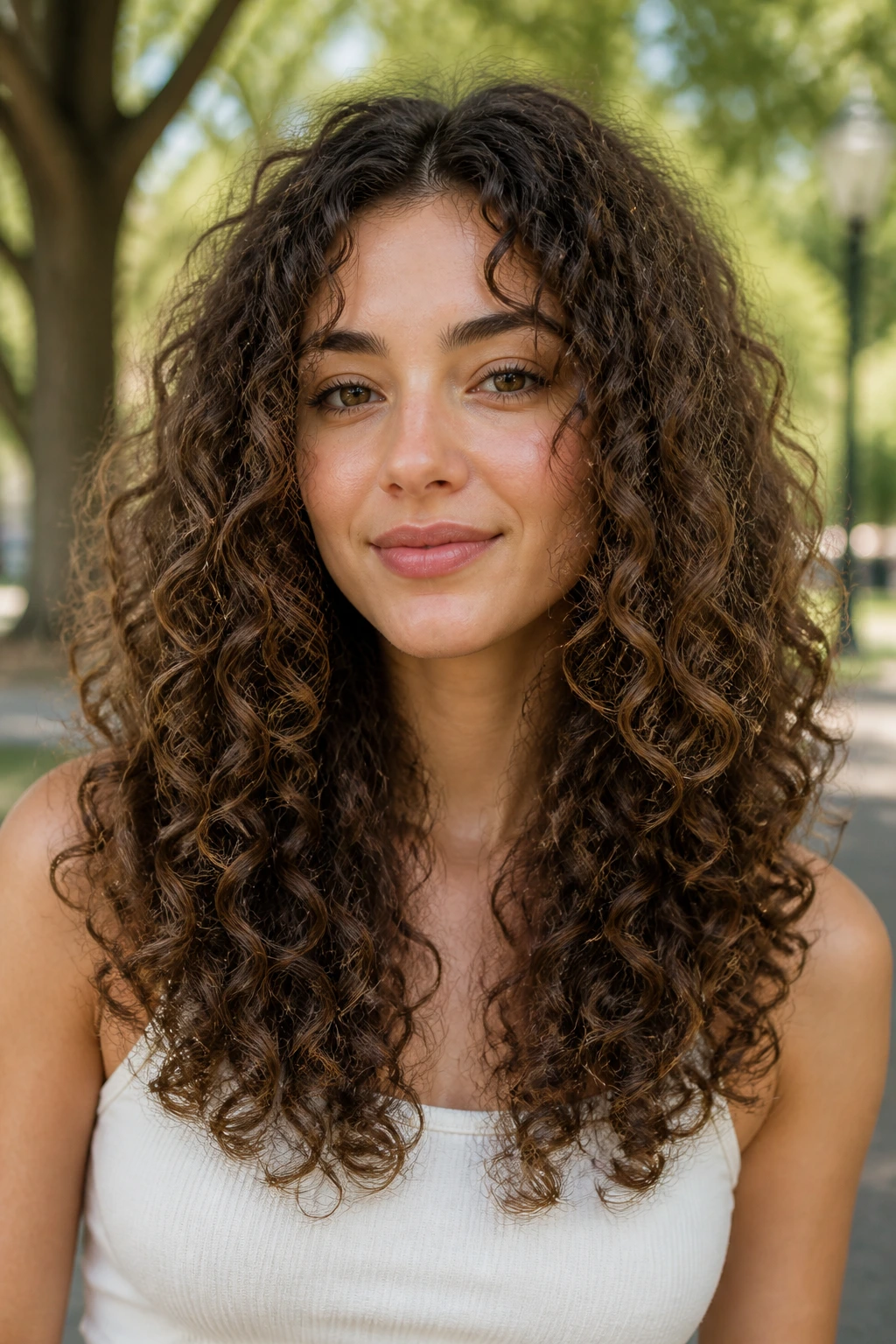
A U-shape cut keeps the perimeter rounded and slightly lower in the center back, which helps long curly hair fall in a softer line. It’s less dramatic than a V-cut, and that makes it a smart choice when you want your ends to stay full. Thick hair often needs that weight.
The U-shape also plays nicely with shrinkage. When the hair dries and curls up, the shape still reads as intentional because the center doesn’t jut into a sharp point. It feels calmer. Less fussy. More wearable.
Best for
- Long curls that need to keep length
- Hair that spreads out when layered too heavily
- People who want a tidy silhouette without losing fullness
If you wear your hair down more than up, this cut is easy to live with. It keeps the back from looking heavy without scattering the ends.
15. V-Shape Cut
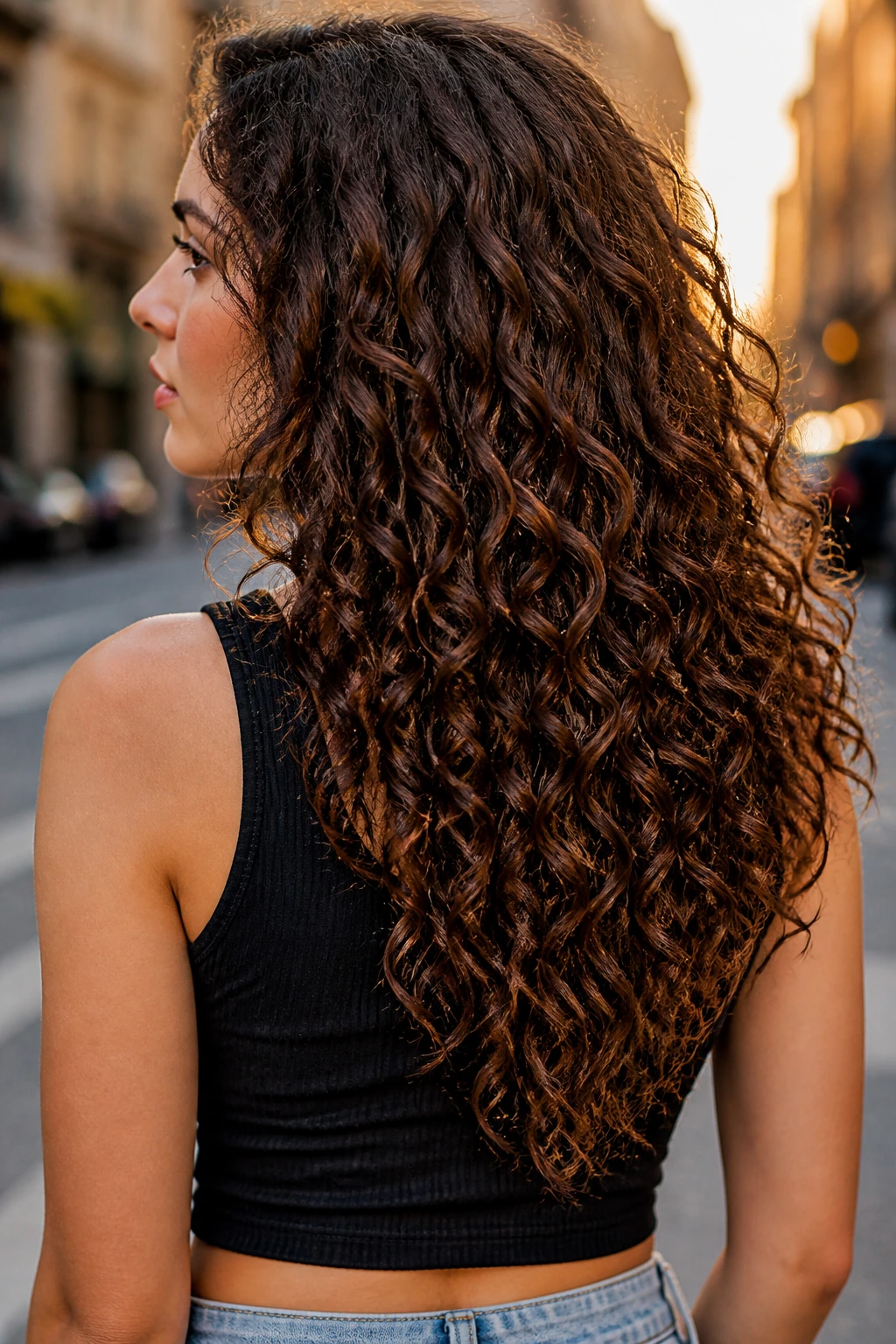
A V-shape cut is the more dramatic cousin of the U-cut. It narrows toward the center back and gives long curls a strong trailing point, which can be very flattering if the hair is dense enough to support it. The shape removes weight and adds a sense of direction.
On frizz-prone hair, the V can help the outline look less boxy. The trick is not over-layering the sides, or you’ll lose the fullness that makes the V line visible. Keep the ends substantial. That’s what keeps the shape from turning stringy.
Best for
- Long, thick curls with a lot of body
- People who like movement in the back
- Hair that can hold a pointed silhouette without puffing out
A V-cut is not for everyone, but it is good at making long hair feel less like a blanket. That alone earns it a spot here.
16. Face-Framing Layers

Face-framing layers are the easiest way to change the feel of thick curly hair without touching the whole head. They open the front, lighten the sides, and draw attention to cheekbones, jawlines, and eyes. On frizzy texture, they can make the style look more deliberate with very little drama.
The best version of this cut starts the shortest pieces where your curl pattern will still settle, not where they will spring into your forehead and rebel. That usually means careful placement around the cheekbone or lip, depending on curl tightness. Shorter than that, and you may get a halo you didn’t ask for.
What to ask for
- Soft layers just around the face
- Longer blending into the rest of the cut
- A plan for how the front will dry when it’s left alone
This is a good choice if you’re nervous about layers. It gives you a taste of shape without committing the whole head to a more complex cut.
17. Internal Layers
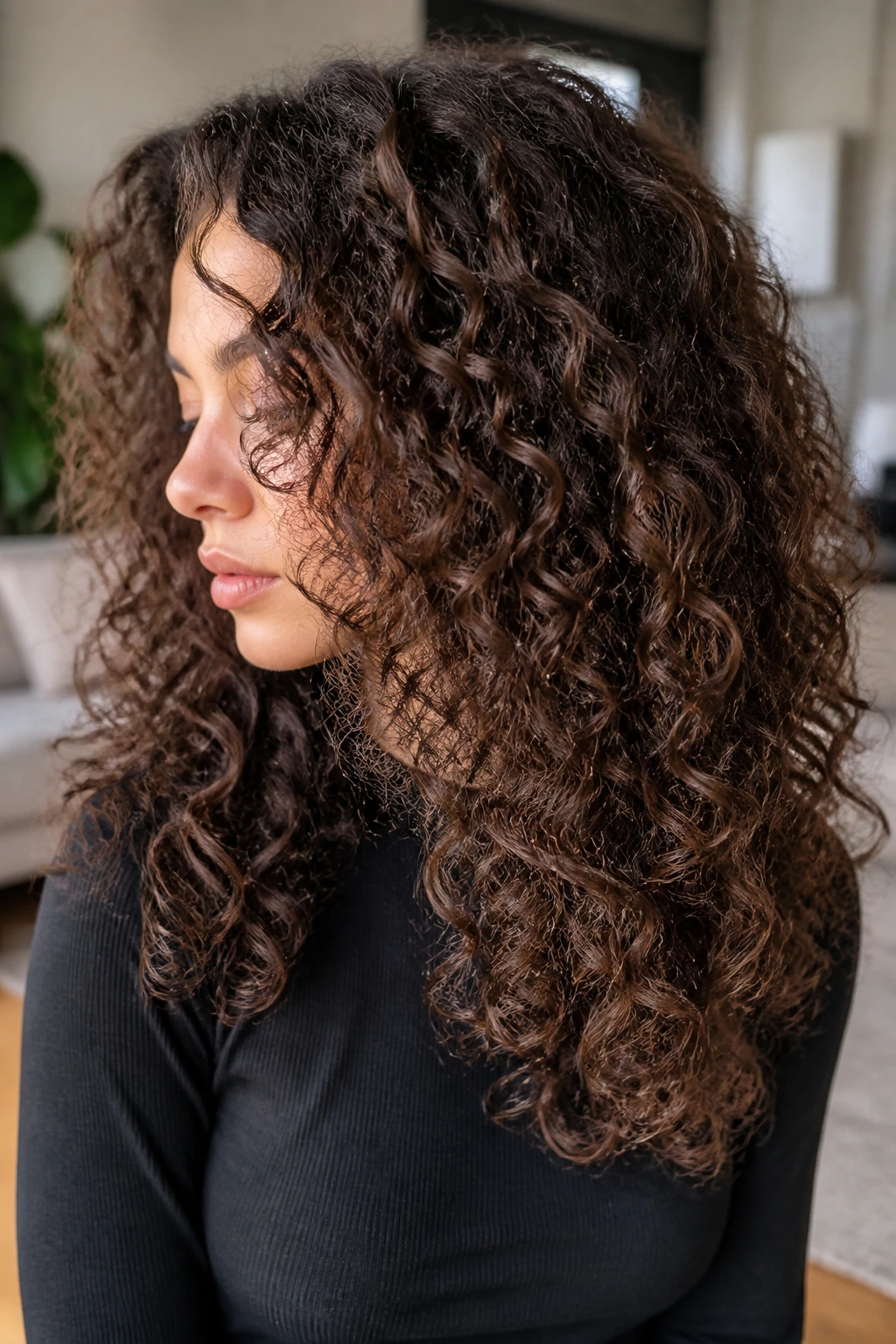
Internal layers are the quiet workhorse of thick curly haircuts. The outer line stays relatively full, while the weight is removed from the inside so the hair stops ballooning out in odd places. That means you can keep the outside looking rich without carrying a brick on your head.
This cut is especially useful when the hair is frizzy and coarse, because the surface line stays cleaner. Too many visible layers can make thick curls look scattered. Internal layering solves that by hiding the shaping where it belongs.
Why it helps
- Reduces bulk without making the ends look thin
- Keeps the perimeter stronger
- Makes drying faster because the mass is lighter
If your hair tends to expand sideways, this is one of the smartest cuts on the list. It’s not flashy, but it works hard.
18. Halo Layers
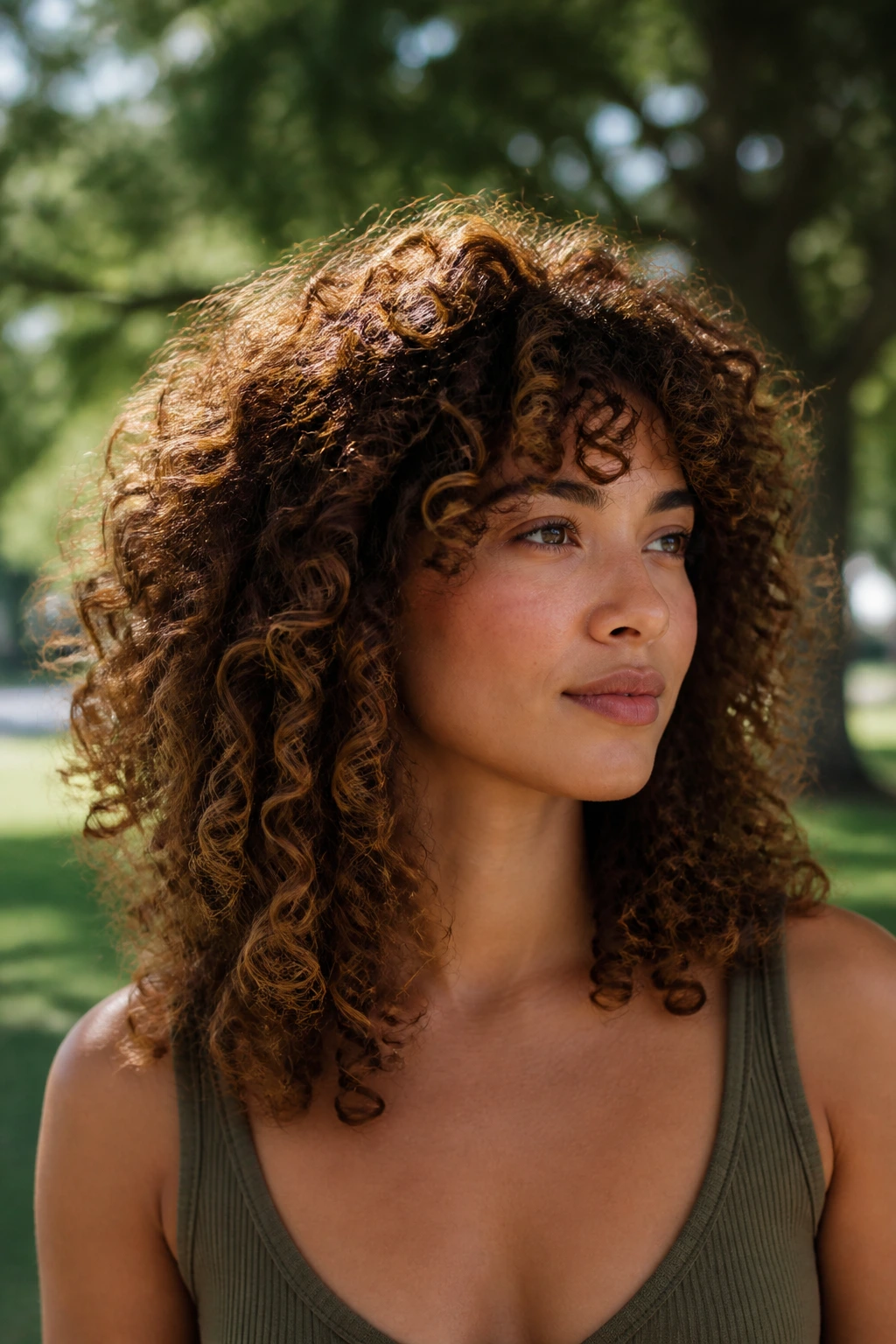
Halo layers sit around the upper part of the head, like a loose ring of shaping near the crown and temples. The goal is to release weight where curls tend to puff first, while keeping the bottom fuller. On thick hair, that can stop the dreaded mushroom effect.
The best halo layers are subtle. Too much height at the top and the cut gets lopsided; too little and nothing changes. Done right, though, the shape feels lifted and rounded rather than heavy and square.
Best when
- Your crown gets flat but the sides expand
- You want a softer top without exposing the scalp
- You like a rounded silhouette
This cut is useful for people who don’t want obvious layers but still want better balance. It’s one of those shapes you notice more in the mirror than in the salon chair, which is usually a good sign.
19. Graduated Bob
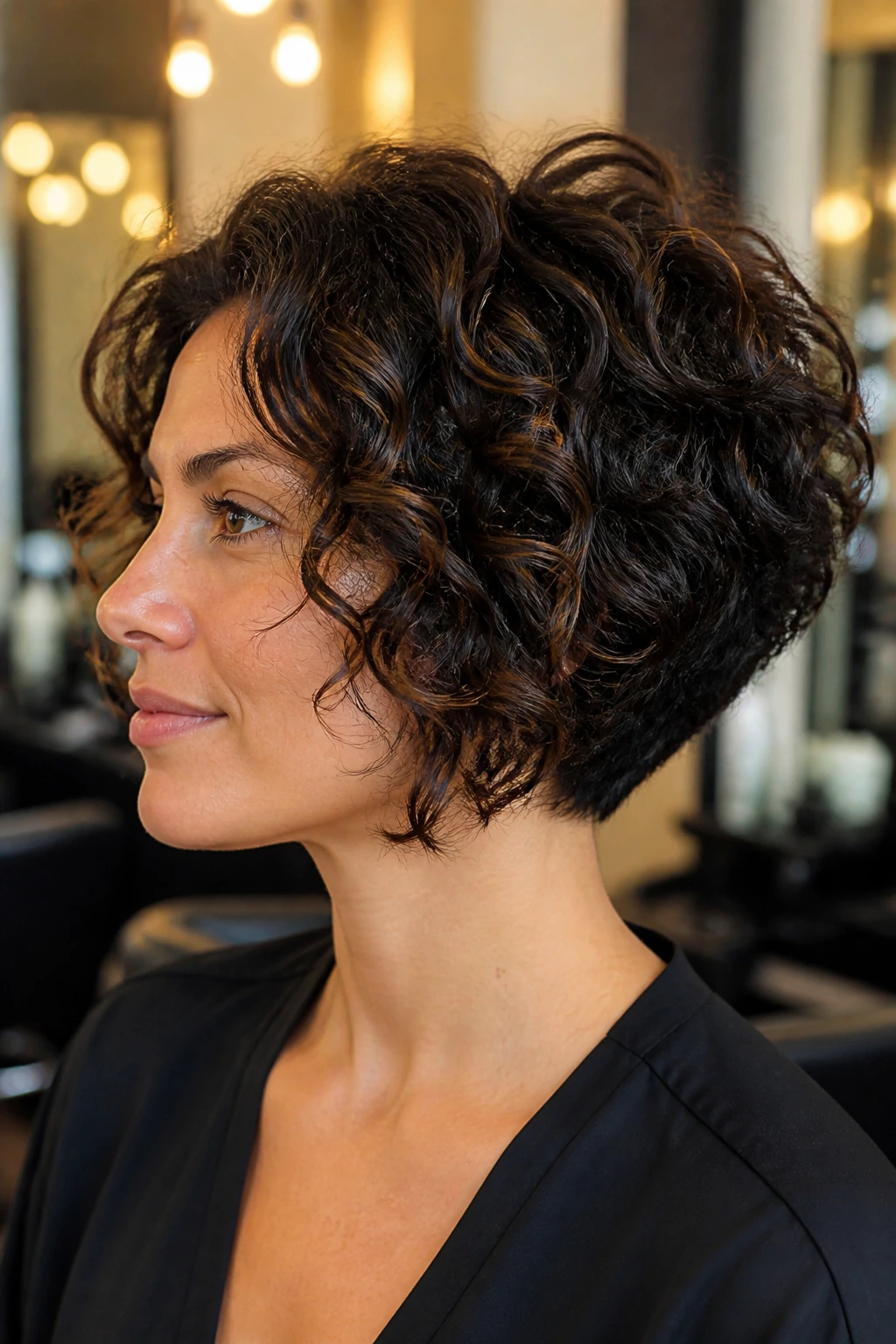
A graduated bob builds length in the front and stacks shorter layers in the back, creating lift where thick curly hair often goes flat or bulky. The back gets a clean, compact shape while the front stays a little longer and softer. It’s sharp without being harsh.
On curls, graduation can be tricky. Too much stacking makes the back puff. Too little and the bob loses its shape. That’s why this cut needs a stylist who understands density and dry shrinkage instead of just copying a straight-hair diagram.
Why it works
- Adds lift at the nape
- Keeps the front flattering and slightly longer
- Controls bulk without removing all the weight
If you like a bob that has structure and a bit of polish, this is a strong choice. It can look refined or edgy depending on how much texture you wear with it.
20. Asymmetrical Bob
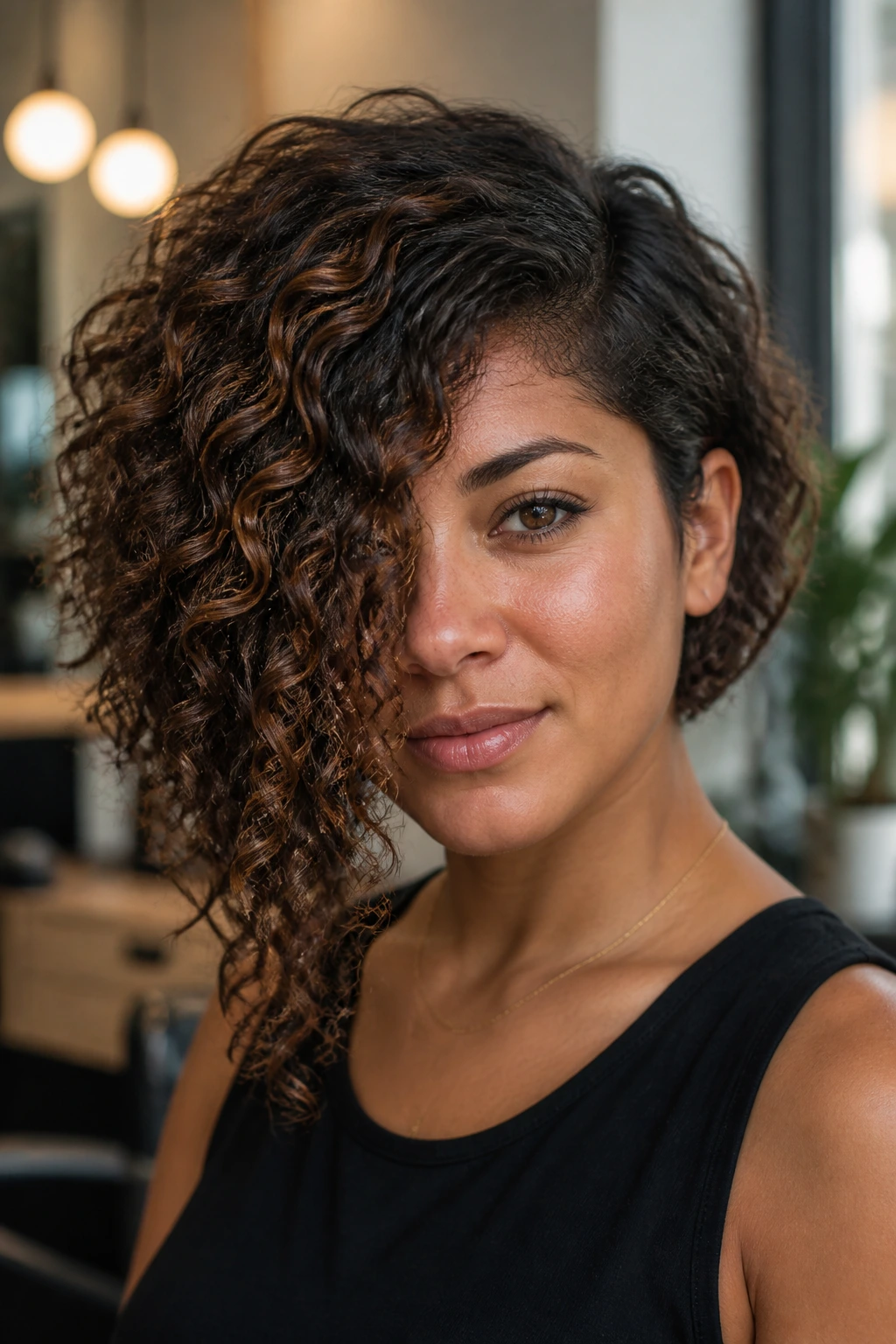
An asymmetrical bob gives one side a little more length than the other, and that small difference changes the whole feel of the cut. On thick curly hair, it breaks up the blocky effect that can happen with a standard bob and gives the curls a more modern outline.
I like it most when the curl pattern is slightly uneven from side to side. Instead of fighting that difference, the cut uses it. The longer side softens the face, while the shorter side keeps the neck open.
Best for
- People who want a bob with personality
- Hair that gains width too quickly
- Faces that look good with diagonal lines
This cut does not need much decoration. The shape itself does the talking. Keep the styling clean, though, or the asymmetry can get lost in the volume.
21. Chin-Length Crop

A chin-length crop is short enough to feel fresh and long enough to keep some curl movement around the face. On thick, frizzy hair, the shorter length can reduce the weight that drags curls down and stretches the outline into a blob. The result is compact and expressive.
The chin is a risky place for curls because shrinkage can move the line up fast. But when the cut is planned with that in mind, the shape can be excellent. It puts the curl pattern front and center and keeps the neck clear.
What to watch
- Don’t cut it too blunt if your curls spring hard
- Check the length dry, not only wet
- Keep the sides balanced so one cheek isn’t swallowed by volume
This is a cut that tends to look better with confidence. If you keep tugging at it, it will show.
22. Shoulder-Grazing One-Length Cut
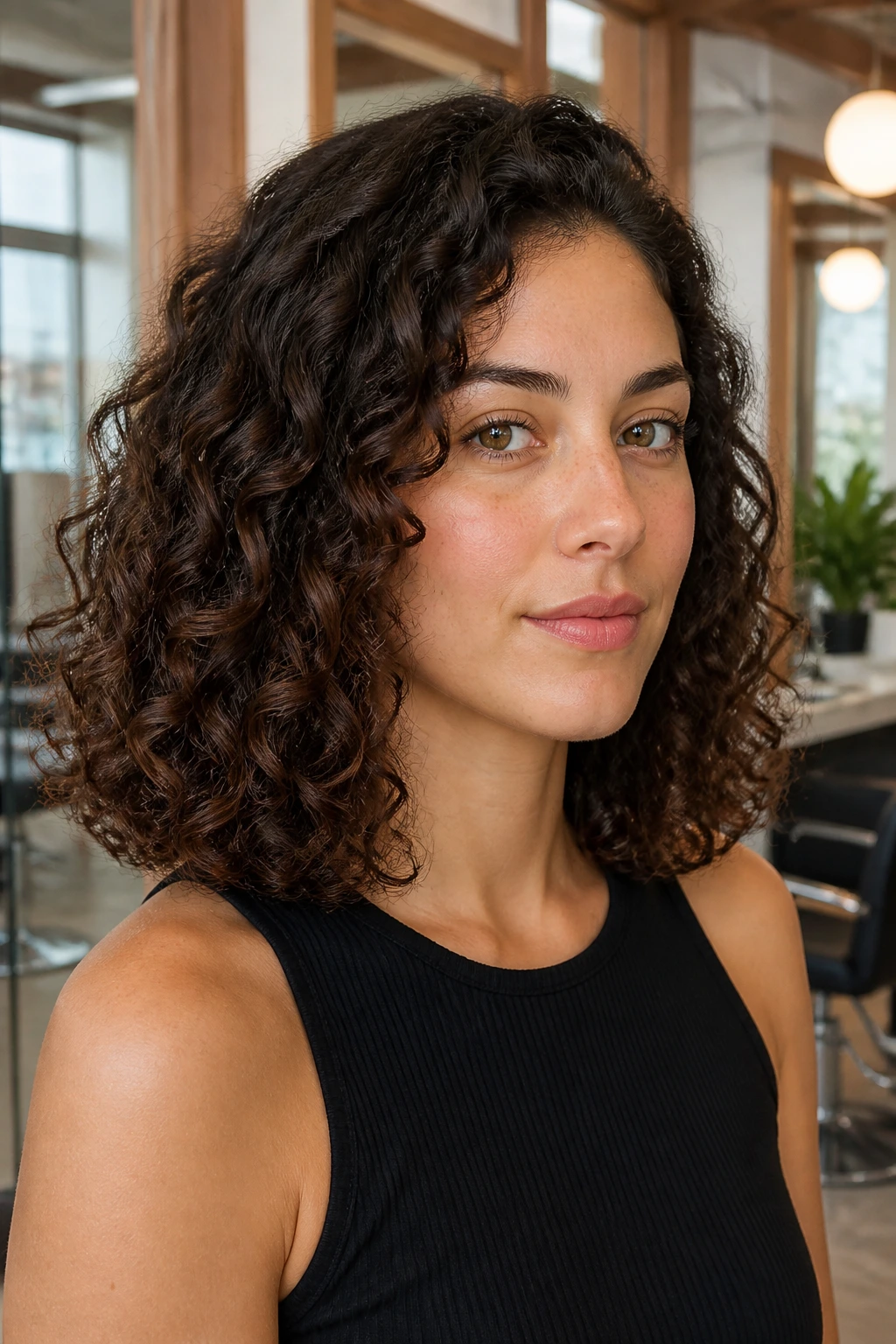
A shoulder-grazing one-length cut sounds simple because it is. And that’s the appeal. On thick curly hair, leaving the perimeter strong can keep the cut from puffing into pieces, while the shoulder length gives enough weight to hold the shape down.
This style is especially good if your hair is coarse and frizzy and you’re tired of layers multiplying the volume. One long line can look cleaner than a dozen short ones. It also grows out gracefully, which makes salon visits less frantic.
Why people like it
- Keeps the outline full and tidy
- Reduces the chance of a mushroom shape
- Easy to pull into clips, pins, or a low puff
The tradeoff is movement. You get less of it than with layered cuts. If you want airy and piecey, pick something else.
23. Shaggy Lob
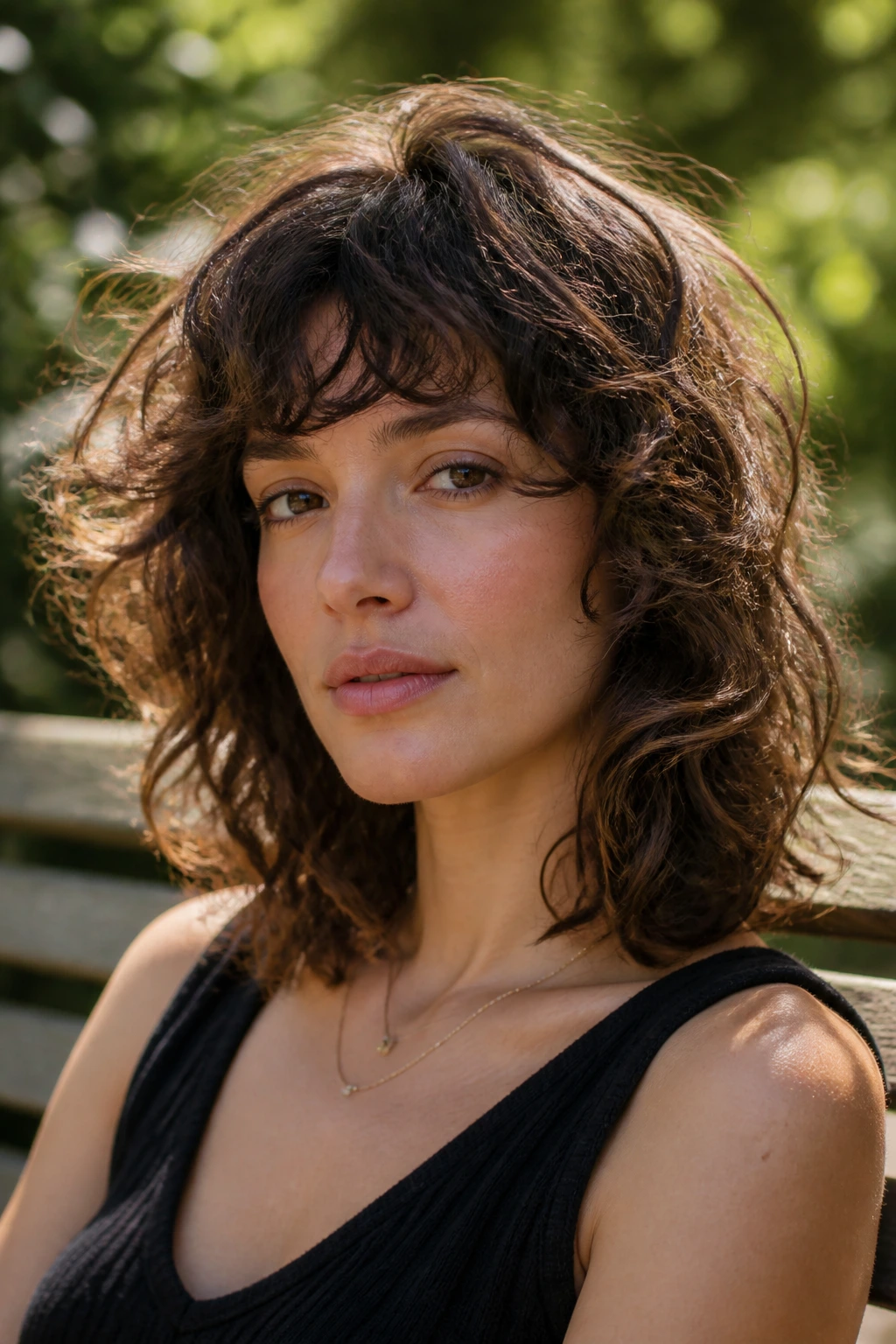
A shaggy lob is the friendlier version of a shag. It sits around the shoulders or just above, with enough layers to keep the curls from building too much bulk and enough length to avoid a dramatic chop. It’s a nice middle ground for thick frizzy hair that needs shape but not a complete overhaul.
The cut works because the layers fall through the mid-lengths, where thick curls often swell the most. That keeps the silhouette from ballooning at the sides. It also gives you a cut that looks good with a little leave-in cream and not much else.
Best for
- Medium-density to very dense curls
- People who want movement without short bangs
- Hair that needs to feel lighter around the face and shoulders
A shaggy lob can look scruffy if the layers are too uneven. Keep the transitions soft, not choppy for the sake of it.
24. Soft Wedge Cut
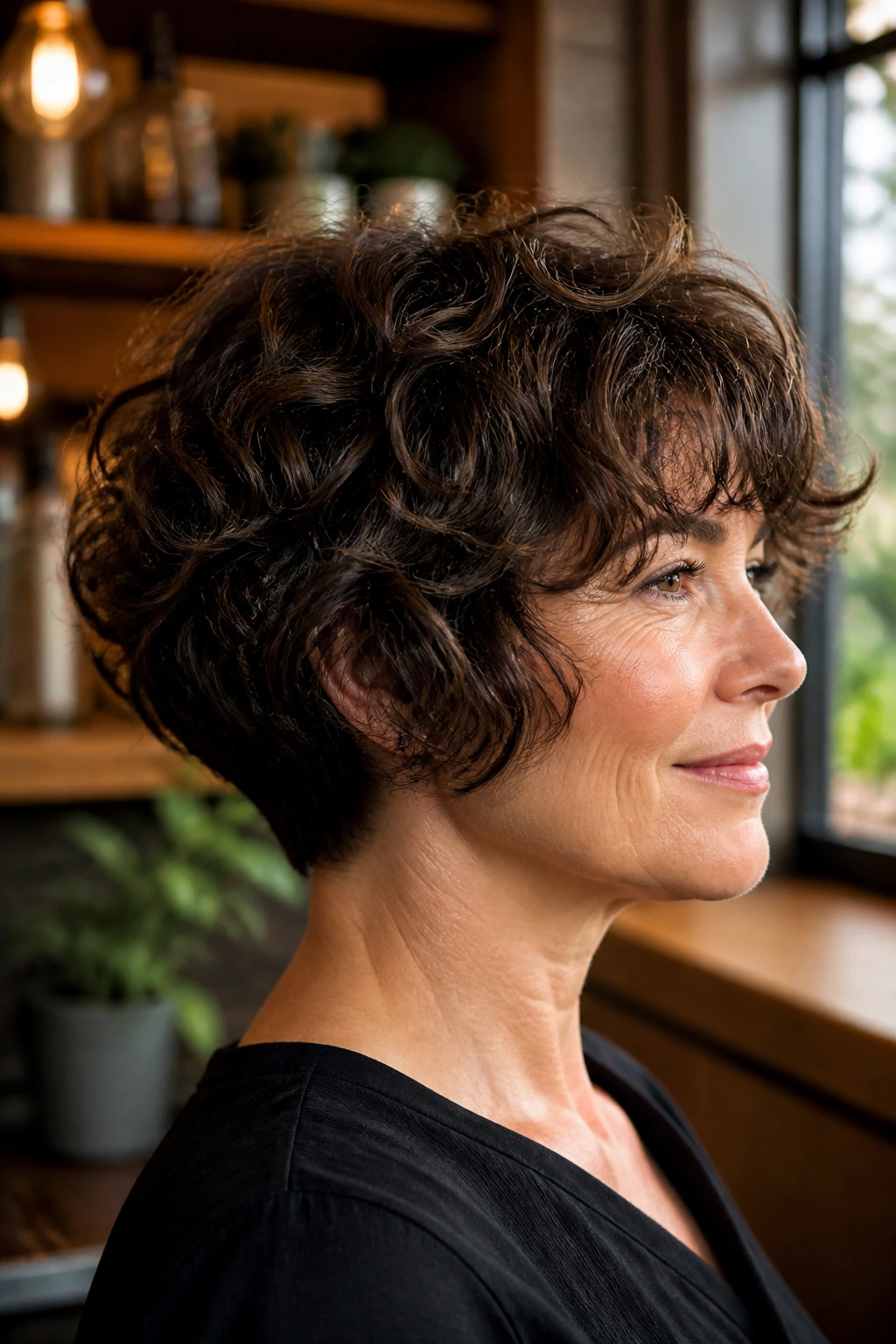
The soft wedge cut borrows from the old-school wedge shape but dials down the severity. It’s shorter in the back, gently fuller through the crown, and curved enough to suit thick curls without looking helmet-like. The shape helps remove bulk while keeping the head outline neat.
This is one of those cuts that makes sense if your hair collects weight at the nape. Instead of letting everything hang in one dense sheet, the wedge shape gives the curls a better angle to sit on. It can feel tidy without feeling tight.
Best when
- You want lift at the back of the head
- Your curls need shape more than length
- You prefer a clean neckline
It does need a hand that understands curved geometry. A bad wedge looks dated fast. A good one looks almost tailored.
25. Undercut with Length on Top
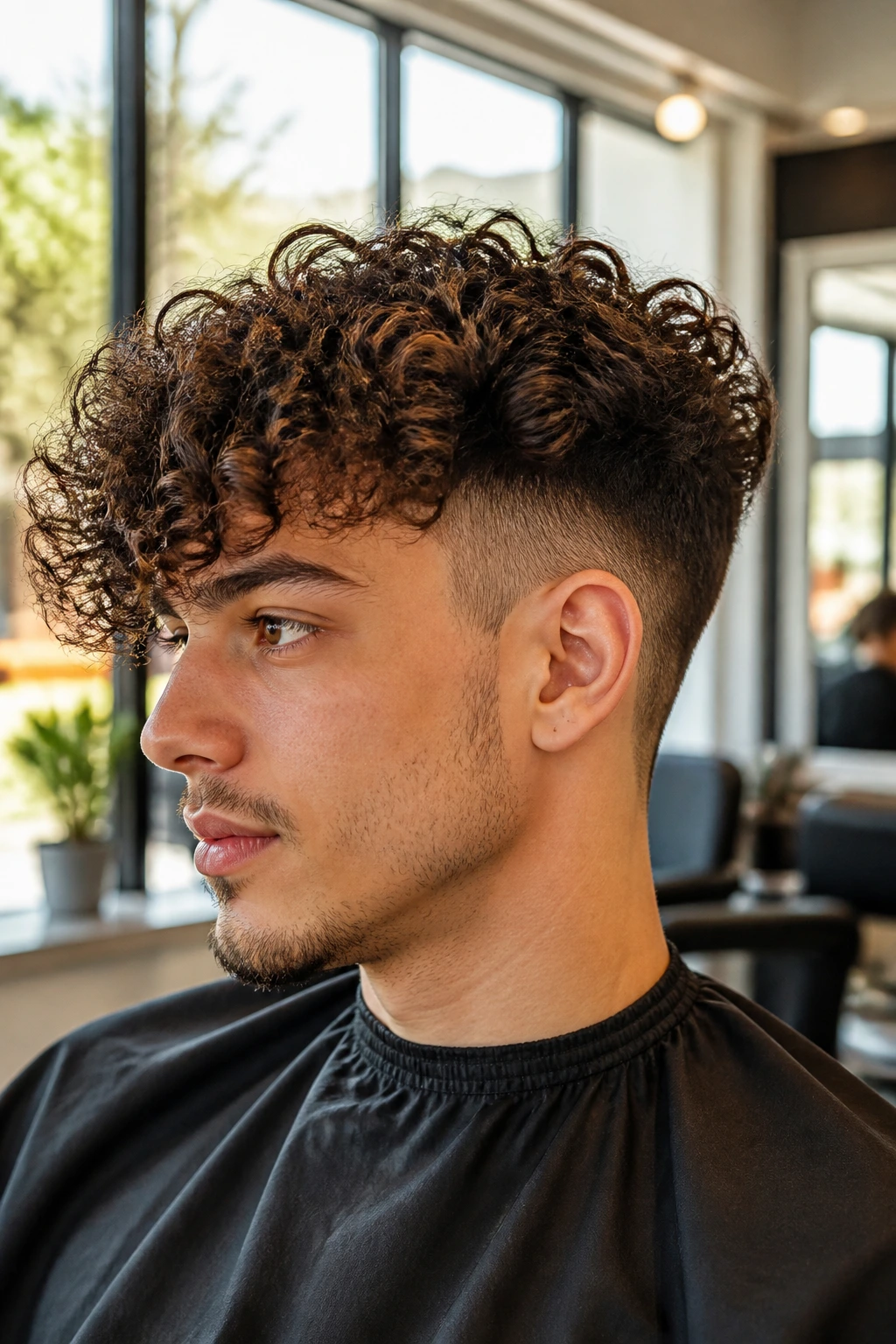
An undercut with length on top is one of the smartest ways to deal with thick, curly, frizzy hair that feels heavy no matter what you do. Removing bulk underneath takes pressure off the top layers, so the hair dries faster and sits closer to the head. You keep the look of fullness without carrying all the weight.
This cut is especially good if the nape gets hot, sweaty, or too bulky under scarves and collars. It also makes wash days faster, which is a small kindness that adds up. Hidden undercuts aren’t for everyone, but on dense curls, they can be a quiet relief.
Who should consider it
- Very dense hair
- People who want volume on top but less bulk underneath
- Anyone tired of a thick “cap” of hair around the neck
The tradeoff is grow-out. Under the top layer, the shorter section needs maintenance or it starts to press against the longer curls in odd ways.
26. Curly Fringe with Layers
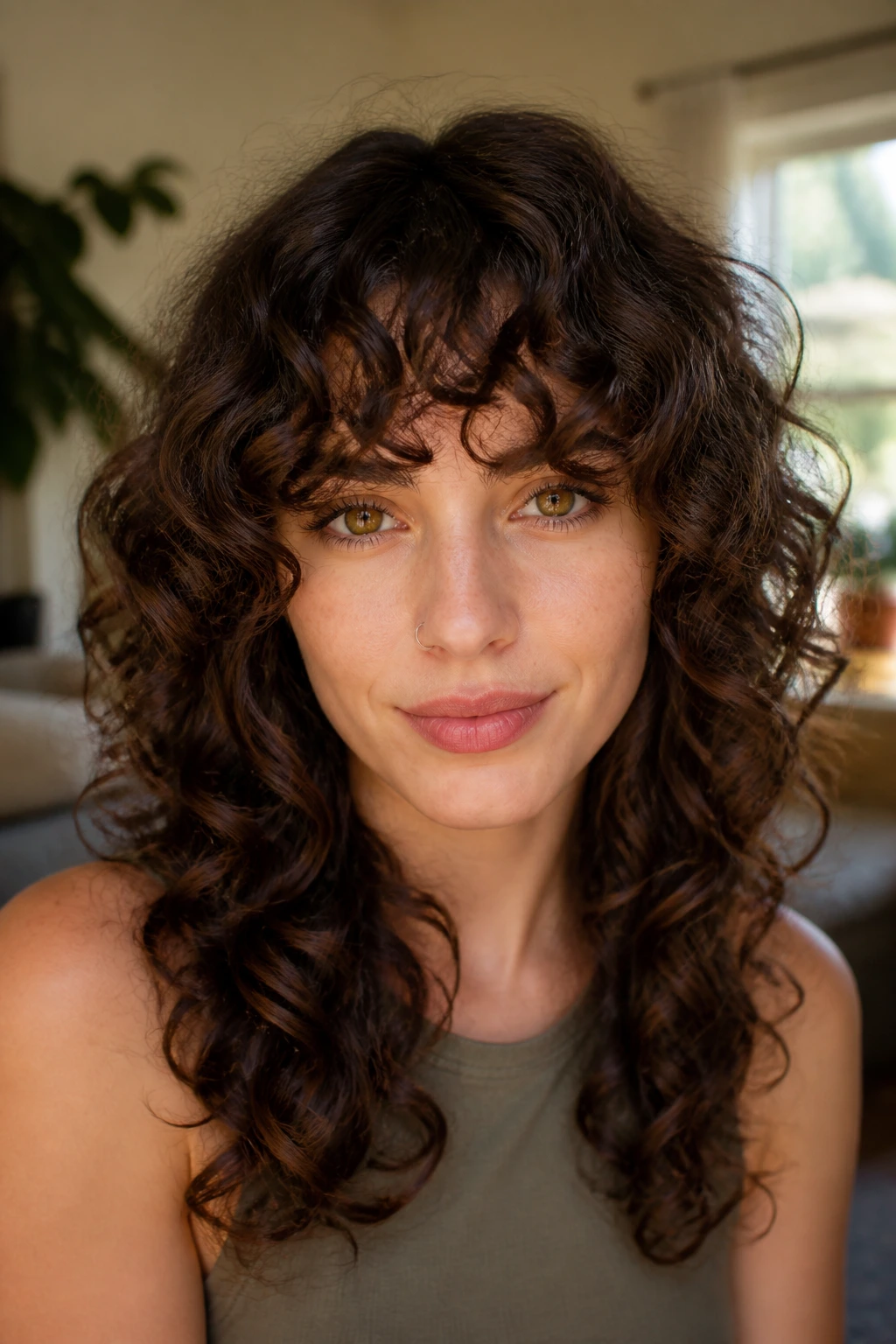
A curly fringe changes the whole mood of a haircut. It draws attention to the eyes, breaks up a heavy forehead line, and makes thick curls feel softer around the face. The rest of the cut can stay fairly simple as long as the fringe is placed with shrinkage in mind.
This is where a lot of people get burned. Curly bangs almost always dry shorter than they first appear. If you want them to skim the brow or sit just below it, they need to be cut with that bounce in mind, not against it.
Best for
- People who like face framing and don’t mind styling the front
- Loose curls through tight coils
- Cuts that need more personality up front
A fringe can look beautiful on frizzy hair because it turns texture into a feature. Still, you need to commit to trims. Bangs don’t politely grow out on their own.
27. Curl-by-Curl Precision Cut
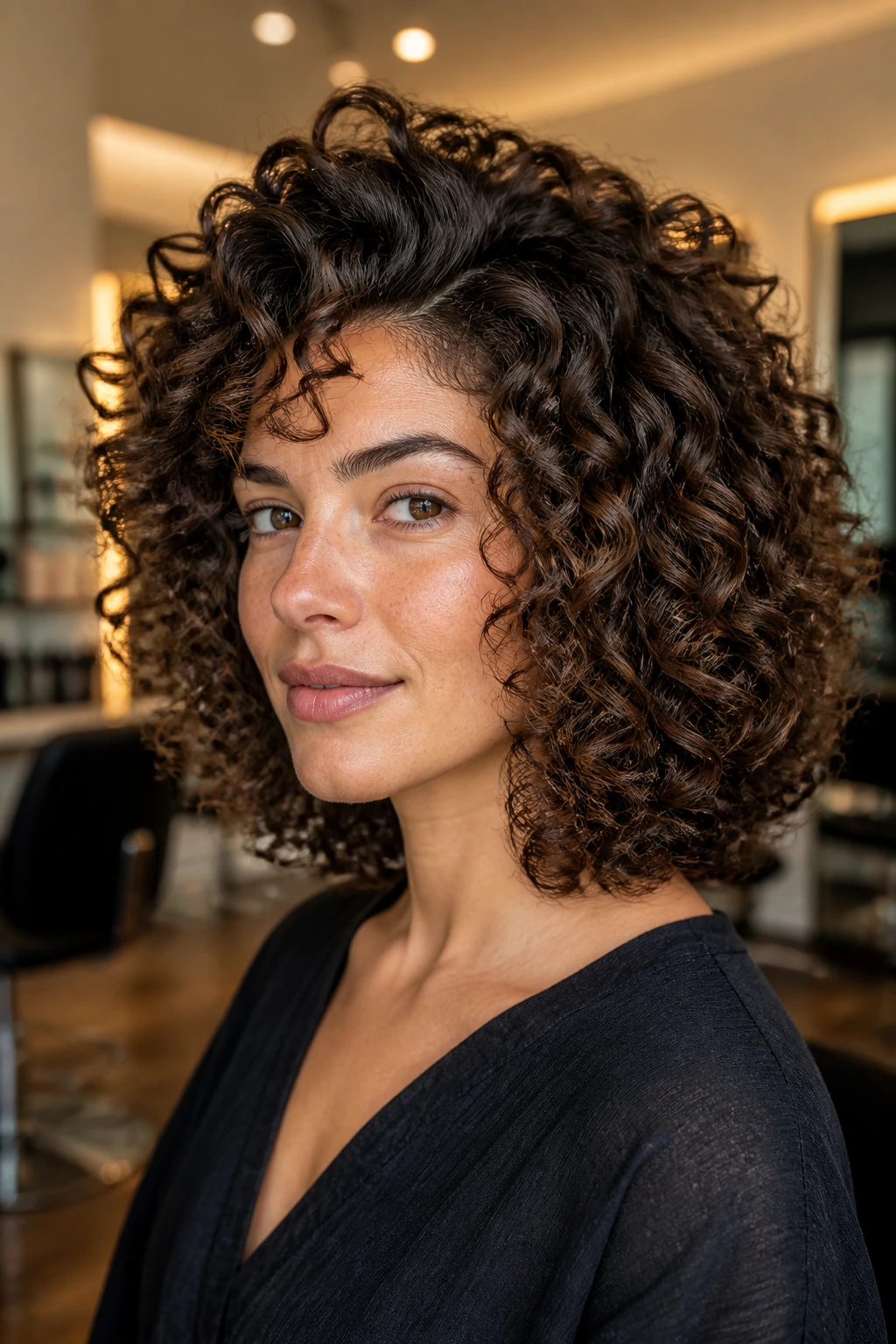
A curl-by-curl precision cut is exactly what it sounds like: each curl or small group of curls is shaped on its own terms. That makes it a strong choice for thick hair with mixed curl patterns, awkward weight at the crown, or sections that want to do their own thing. It’s painstaking, but so is fighting a bad shape every morning.
What you get is balance without forcing the curls into a cookie-cutter outline. The final look is often softer and more natural than a blunt salon cut done on stretched hair. If your frizz is partly caused by uneven cutting, this approach can clean up a lot.
Why it matters
- Helps mixed curl patterns sit together better
- Gives more control over problem zones
- Reduces the “one side bigger than the other” issue
Not every stylist does this well. If you’re asking for it, bring photos and ask how they handle dry cutting. The answer should not be vague.
28. Volume-at-the-Crown Cut

Some thick curly hair needs lift more than length. A volume-at-the-crown cut shortens and layers the upper sections to encourage the hair to rise instead of hanging flat, while the lower lengths keep enough weight to anchor the shape. It’s a strong fix for hair that collapses at the top and balloons at the bottom.
This cut is useful if your curls are dense but the roots go limp. The crown gets the attention it needs, and the rest of the hair stops acting like a heavy curtain. It can make the head look more balanced from the side, which is often the real problem area.
Best for
- Flat crowns with heavy lengths
- Thick curls that need vertical lift
- People who don’t want to go short
The key is restraint. Too much crown layering and you end up with a fuzzy top and no control. Keep the lift purposeful.
29. Rounded Afro Shape
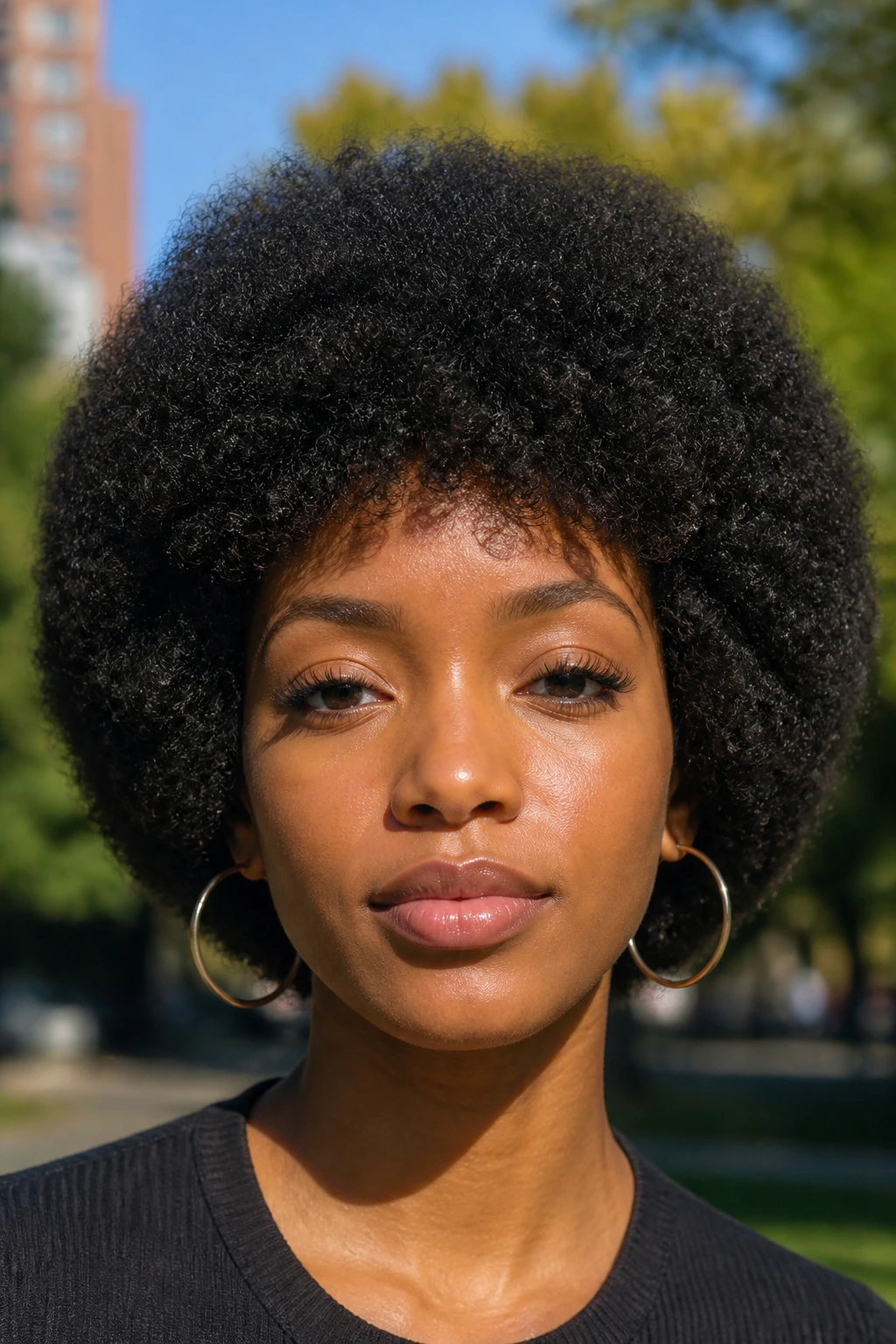
A rounded afro shape is about sculpting the silhouette, not “taming” anything. It gives coily, thick hair a clean oval outline that follows the natural spring of the texture. Frizz works well here because it contributes to the fullness of the shape instead of making it look unfinished.
The beauty of this cut is that it can look strong from every angle. It doesn’t flatten the sides or force the hair into a narrow profile. It just gives the curls a boundary that feels deliberate.
What to ask for
- A rounded outline, not a box
- Shape that respects shrinkage
- Regular trims to keep the curve even
This is one of the best choices for people who want density to stay visible. The hair gets to be big. That’s not a flaw.
30. Compact Coil Cut
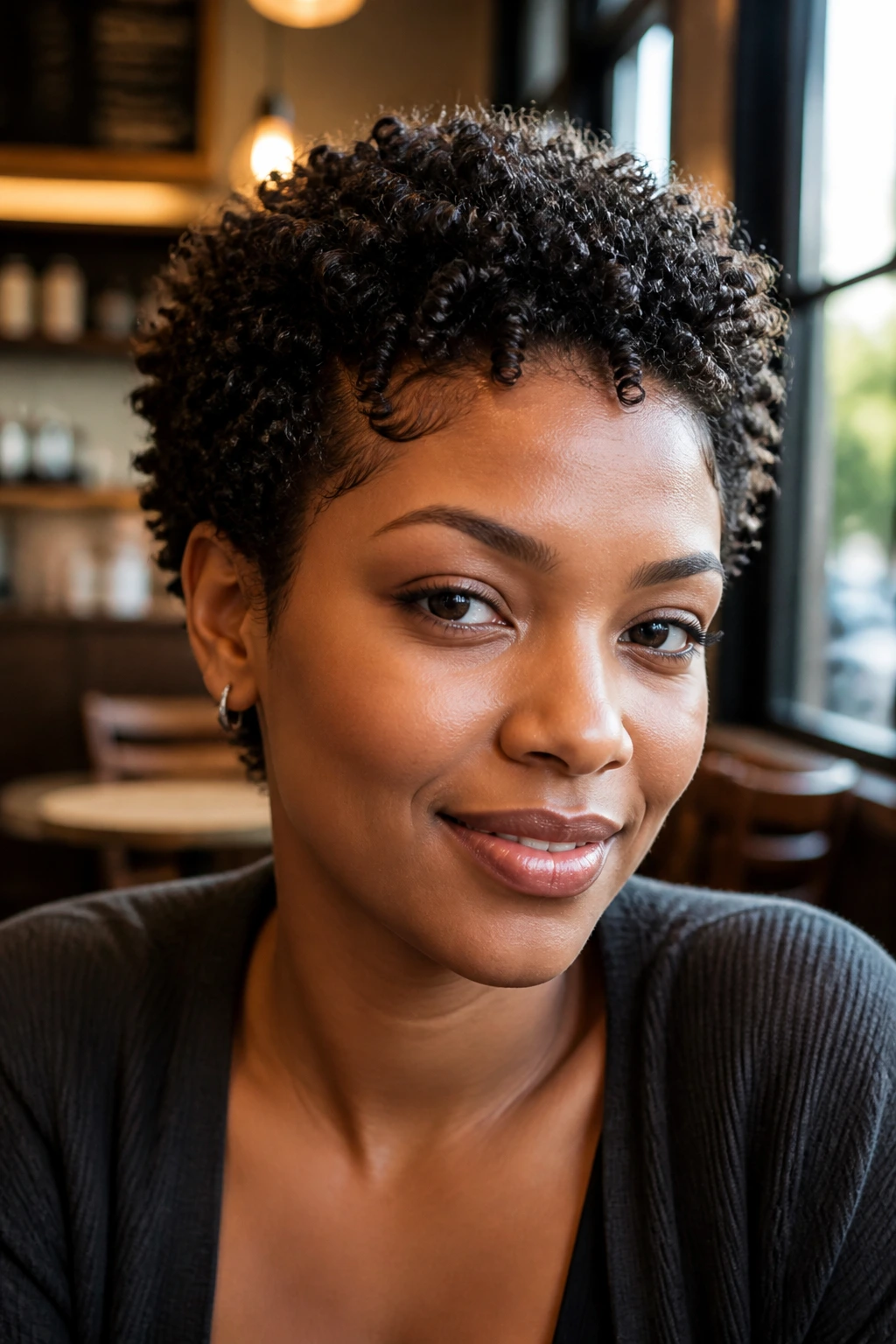
A compact coil cut keeps tight curls and coils close to the head in a tidy, rounded shape. It removes enough bulk to make the style easy to maintain, but not so much that the coils lose their definition. On thick, frizzy textures, that compactness can be a relief.
This is a good option when you want the hair to feel lighter, especially around the neck and sides. The shape usually needs less daily fuss than longer cuts because there’s less length to twist itself into knots. It can also make accessories, scarves, and collars sit better.
Best for
- Tight coils and dense texture
- People who want a shorter, controlled shape
- Hair that needs quicker drying
A compact cut looks best when the outline is kept soft, not boxy. Even short coils need a little curve.
31. Triangle-Balance Cut
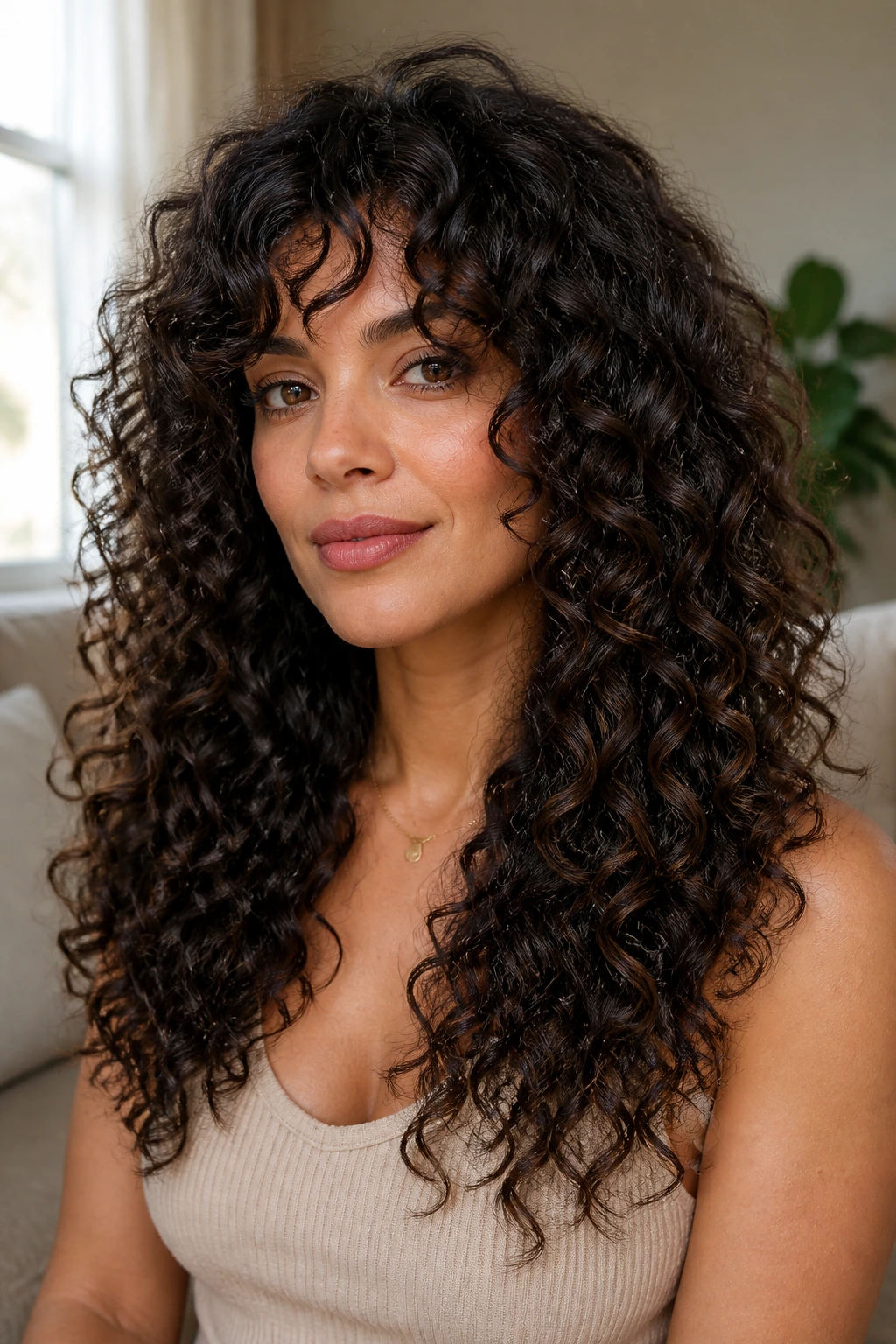
The triangle shape is the thing people complain about when thick curly hair gets too wide at the bottom. A triangle-balance cut is designed to stop that. It removes bulk in the mid-lengths and upper sides so the shape doesn’t explode outward while the ends still keep enough weight to look full.
This cut is practical, almost surgical in its intent. It’s not about making the hair smaller. It’s about making the outline smarter. On frizzy hair, that can be the difference between “big curls” and “why does my head look like a pyramid?”
Why it works
- Releases bulk where width builds first
- Leaves the ends strong enough to hold shape
- Helps the head look more balanced from front and side
If your curls are thick enough to cast a shadow, so to speak, this is one of the most useful cuts on the list. It solves a real visual problem.
32. Long Layers with Weight Removal
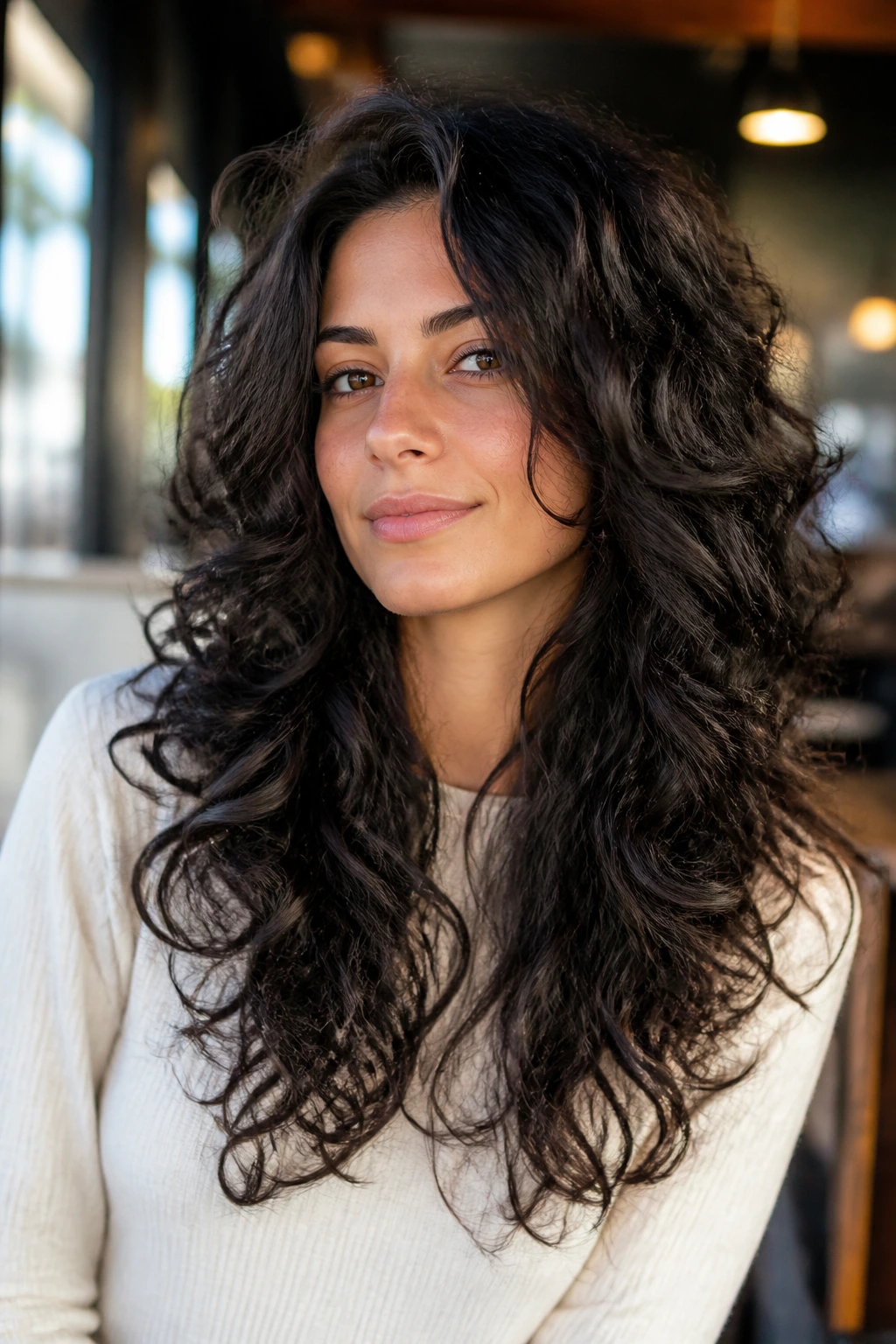
Long layers with weight removal are a classic answer for thick curly hair that needs movement but not a dramatic change in length. The layers take out enough heaviness to let the curls bounce, while the length stays around to keep the line from frizzing out. It’s a fine line, and a useful one.
What matters here is how the weight is removed. A stylist who goes too hard with thinning shears can leave ends that look frayed. Better to remove bulk with shape and spacing, not by carving holes into the hair.
Good for
- People attached to longer hair
- Dense curls that need more swing
- Hair that gets too puffy in one solid block
If your goal is “same length, better behavior,” this is one of the first cuts to ask about. Boring on paper. Reliable in real life.
33. Curtain Bang Lob
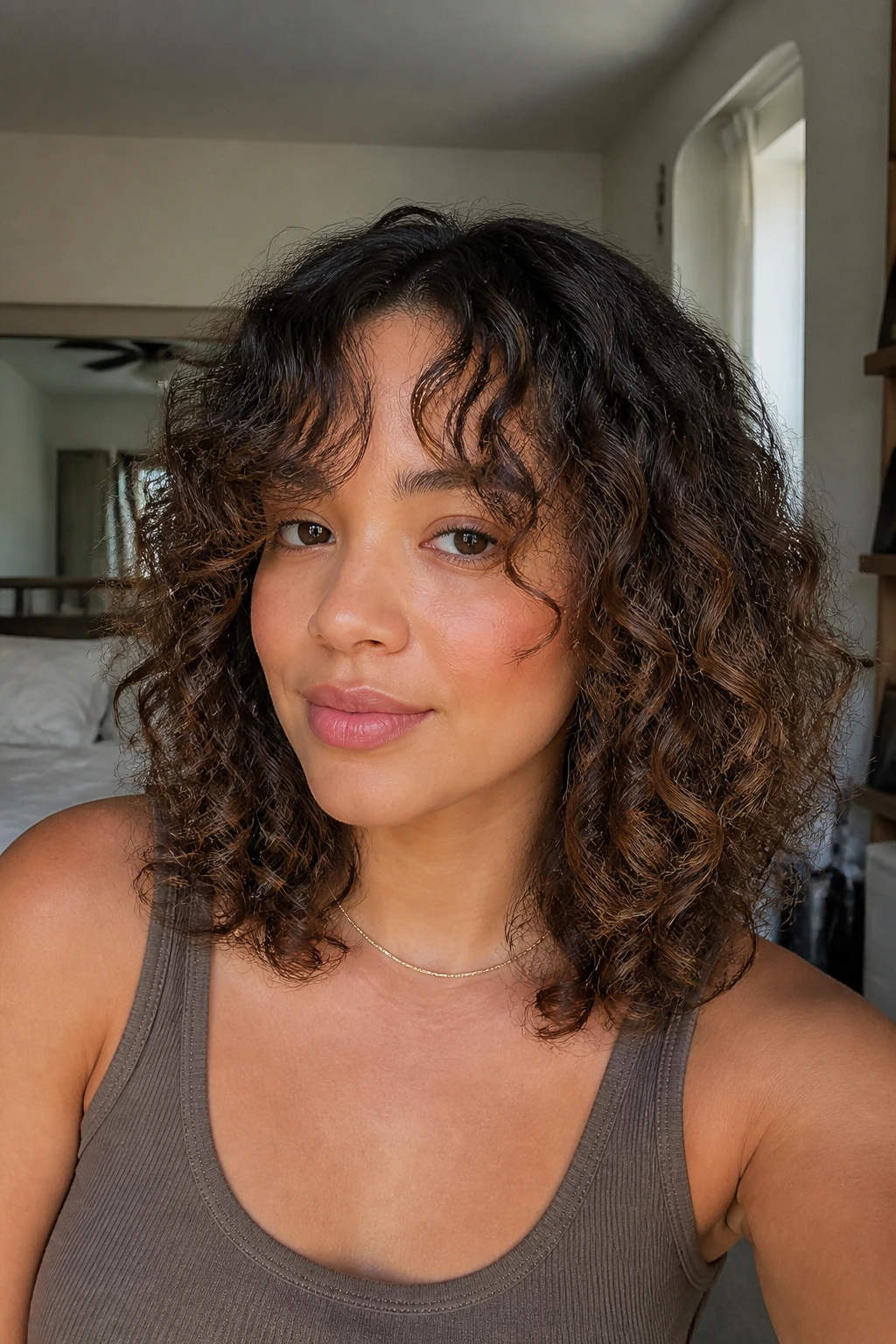
A curtain bang lob gives you face framing without the commitment of a heavy fringe. The bangs part in the middle or near the middle, which lets thick curly hair open up around the forehead instead of sitting as one solid wall. The lob underneath keeps the rest of the style calm and manageable.
This cut is useful if you want softness near the eyes and cheekbones but do not want the constant trim schedule of blunt bangs. The curtain shape can also blend nicely into thick frizz, especially when the layers are guided downward instead of chopped straight across.
Best when
- You want movement around the face
- Your curls cooperate better with a center part
- You like wearing hair half up or tucked behind the ears
The bangs need a little attention on wash day, but less than most fringe styles. That’s the tradeoff, and it’s a fair one.
34. Stepped Layers
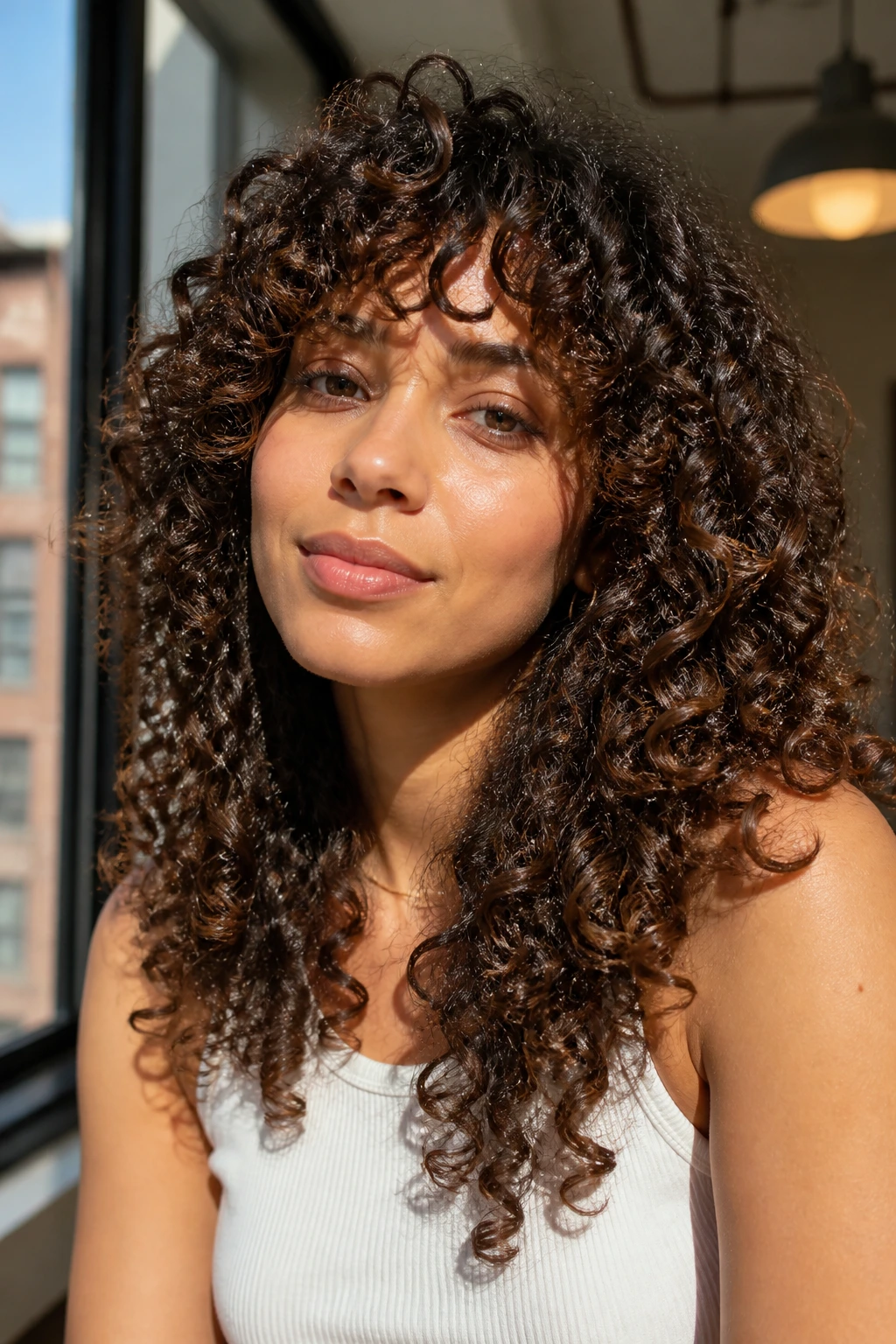
Stepped layers are more visible than blended ones, and sometimes that’s exactly what thick curly hair needs. The layers create clear levels of movement, which can make dense curls feel lighter and more playful. On frizzy hair, the steps break up the mass so it doesn’t all read as one shape.
The downside is obvious: if the steps are too sharp, the cut can feel dated or choppy. But with a skilled hand, the result is sculptural and lively. You see the layers, and that’s the point.
Best for
- People who like a little structure in the silhouette
- Hair with lots of density through the mid-lengths
- Curls that need visible separation
This is not the quietest haircut on the list. It’s for when you want the layers to show themselves.
35. Stacked Curly Bob
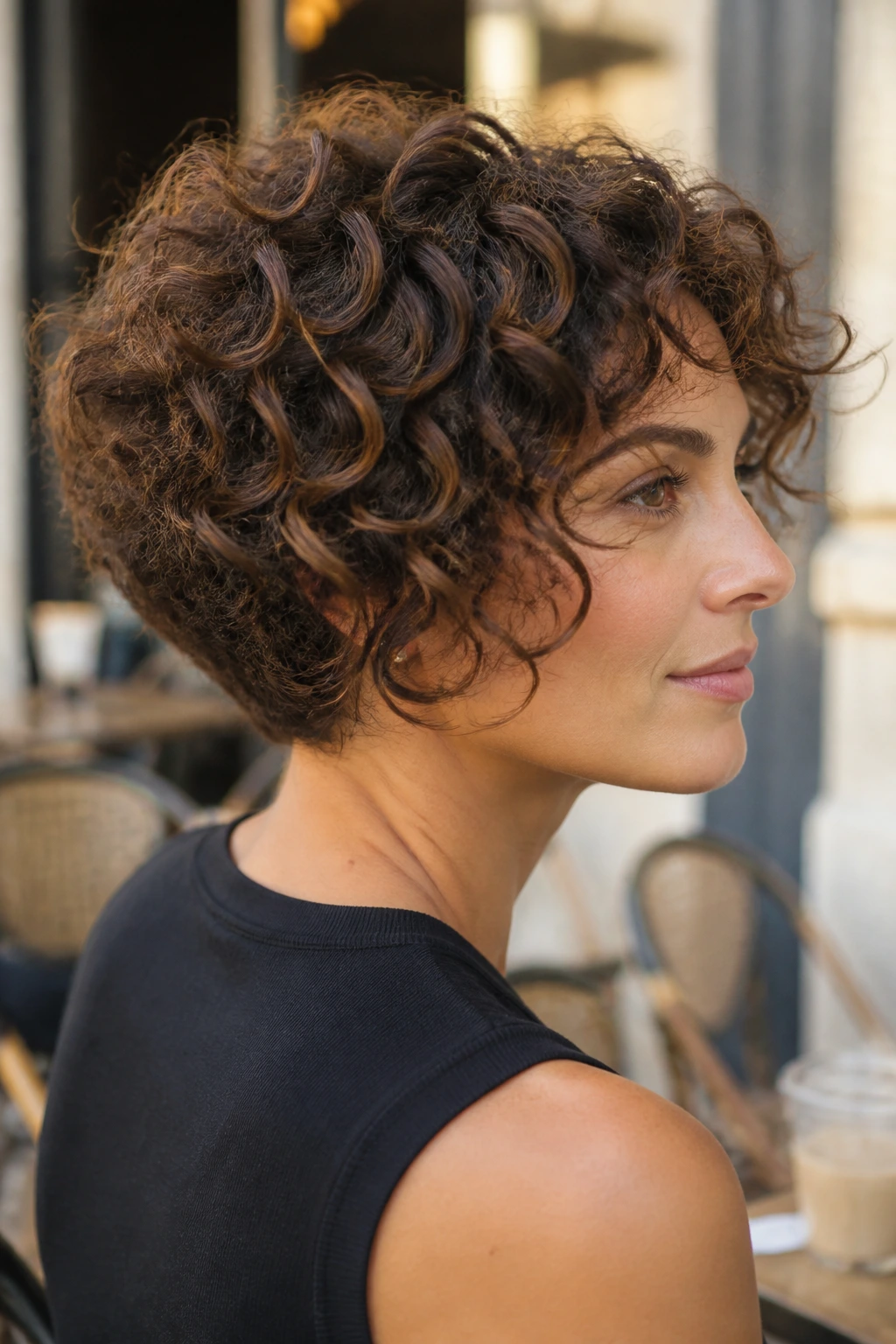
A stacked curly bob takes the classic bob and adds more lift in the back. The stacked layers create shape at the nape, which helps thick curls avoid that heavy, square finish. It can look polished or playful depending on how soft the edges are.
I like this cut on hair that has lots of body but loses shape after a day or two. The stack gives the style a built-in architecture, so it doesn’t just fall flat and widen. It’s especially useful if your curls need a little help turning inward at the bottom.
Watch for
- Too much stacking can make the back puff
- The front should still have softness
- The neckline needs regular cleanup
If you want a bob with a little more lift than a blunt line, this is a clean option.
36. Tapered Neckline Lob
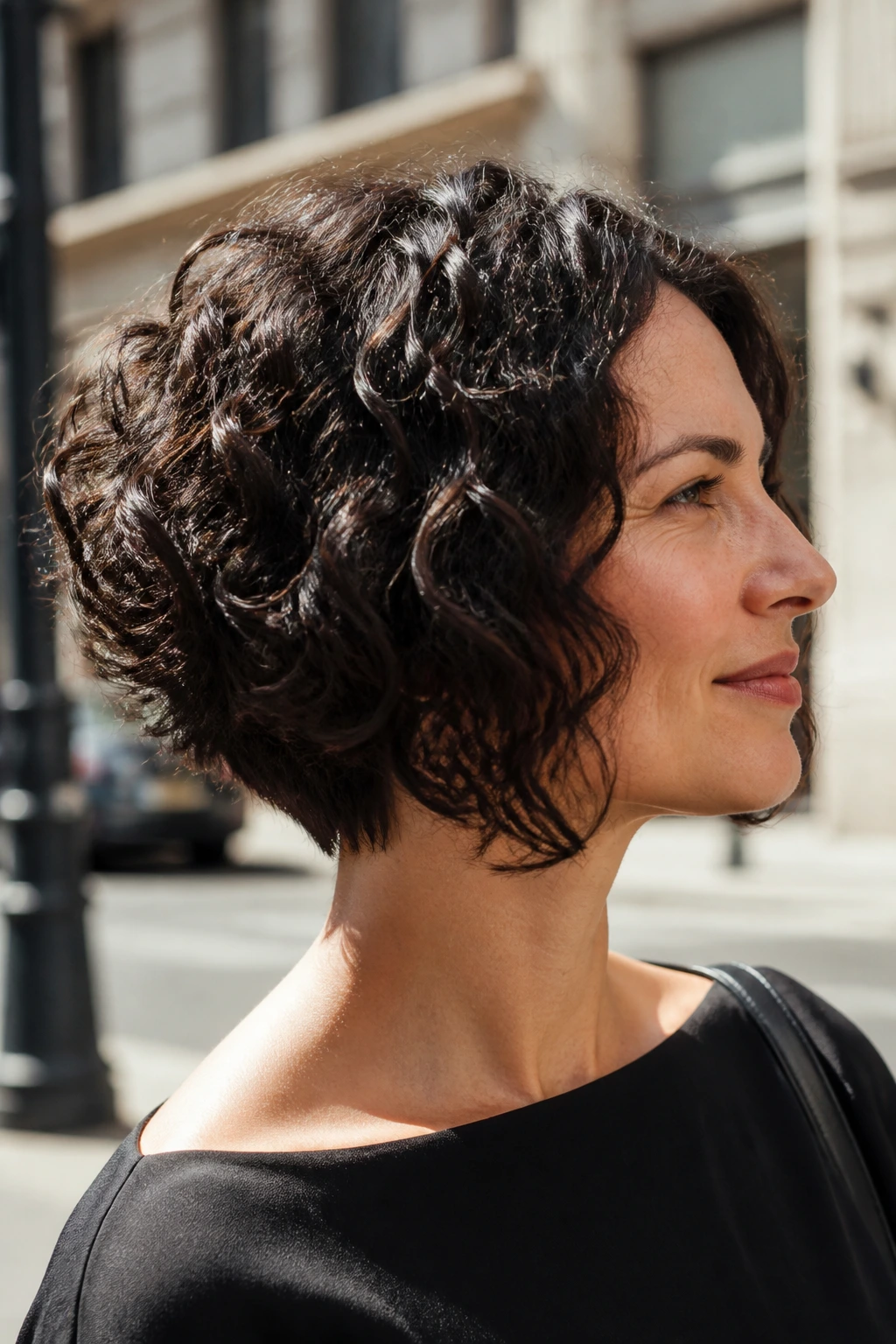
A tapered neckline lob keeps the front and sides longer while quietly narrowing the back at the nape. That makes it especially good for thick curly hair that bunches up under collars or gets too warm at the neck. The line stays modern, but not loud.
The taper also helps the hair lie better when you pin it up or tuck it back. That sounds minor until you live with dense curls every day. Then it becomes the whole story.
Best for
- People who dislike bulk at the neck
- Lob lovers who want a neater finish
- Hair that grows wide at the base
This cut is a nice compromise between a full lob and a cropped shape. It gives you movement without leaving the neckline heavy.
37. Cropped Coil Bob
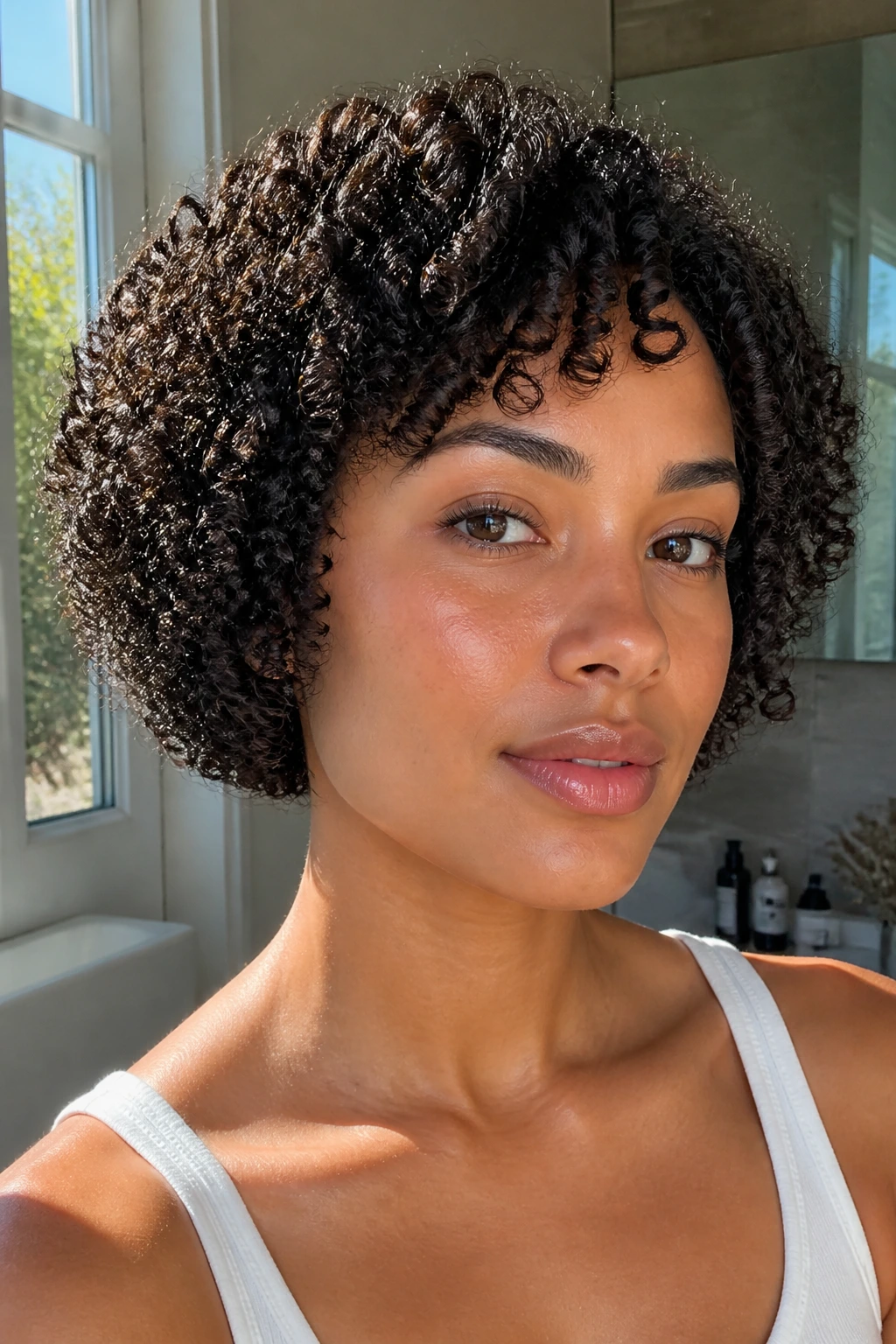
A cropped coil bob is short, tidy, and strong-looking. It keeps coils close to the head in a rounded bob shape, which lets the texture stay visible without turning into a cloud. On thick, frizzy coils, the shorter length can be easier to shape and refresh each day.
The cut works best when the bob line is kept curved rather than boxy. You want the coils to fall together in a soft shell, not stand out in rigid corners. That’s a subtle difference, but it changes the whole feel of the style.
Why it stands out
- Keeps the hair compact
- Shows off coil definition
- Reduces heavy side bulk
If you’ve been living under a lot of length and want a cleaner outline, this is a strong reset without going full pixie.
38. Softly Angled Lob

A softly angled lob is one of the easiest cuts to wear if you want shape without obvious drama. It’s a little longer in front, a little shorter in back, and the angle is subtle enough that thick curly hair still looks soft rather than carved. The cut gives frizz a clear direction.
This is a good closing choice because it fits a lot of curl types. It can calm dense hair, flatter round faces, and grow out gracefully. If you’re unsure where to land, this is the shape that usually causes the fewest regrets.
Best for
- Medium to long curls
- People who want movement without a sharp outline
- Hair that does better with a gentle angle than a hard bob line
It’s not flashy. It’s useful. There’s a reason stylists come back to it.
Why Shape Matters More Than Length for Thick Curly Hair
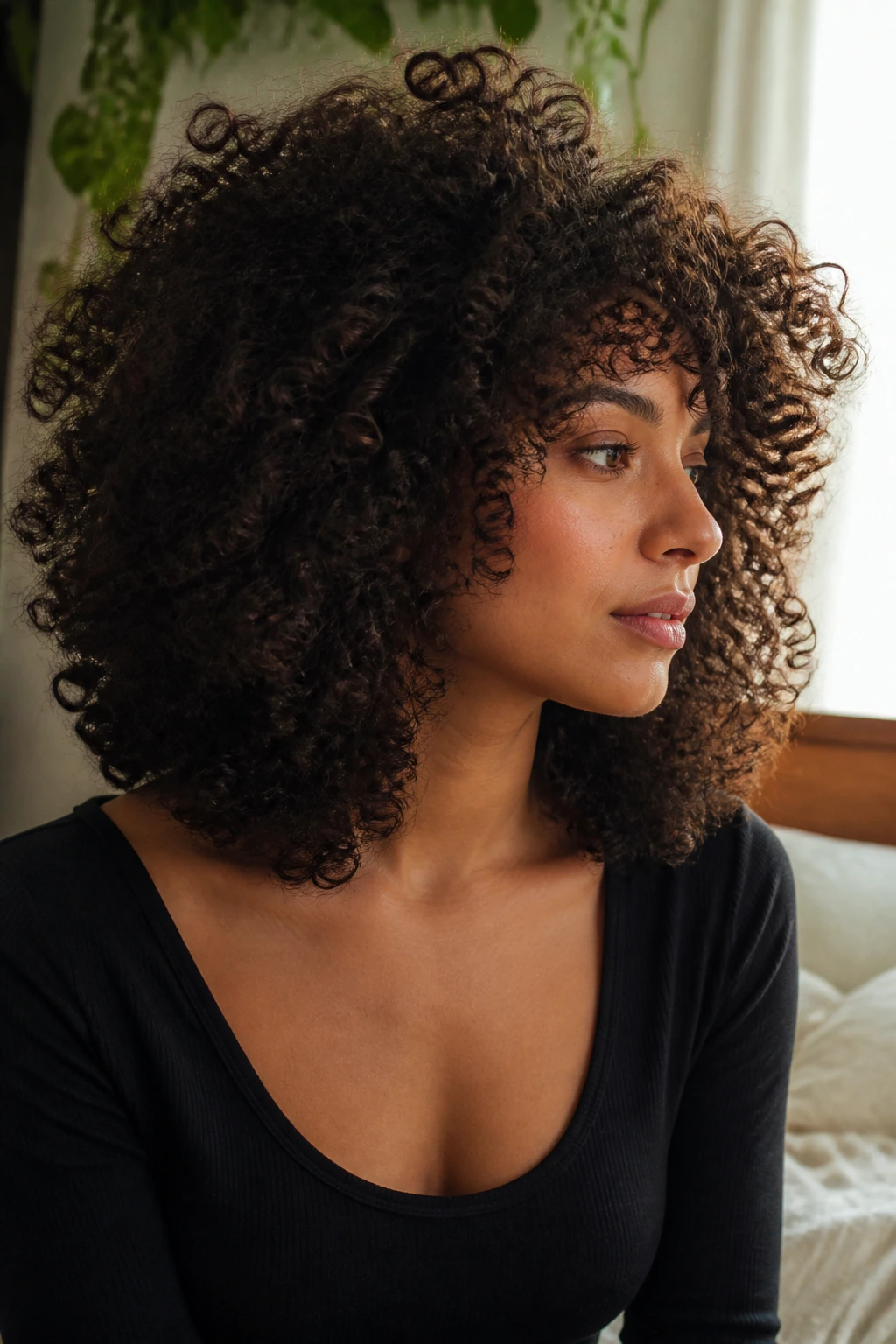
Length gets the attention because it’s easy to talk about. Shape does the real work.
Thick, curly, frizzy hair can sit beautifully at three very different lengths if the outline is right, and it can look awkward at almost any length if the bulk lands in the wrong place. The crown, sides, and perimeter each behave differently once the hair dries. One heavy section can drag the whole cut down, while one over-thinned section can puff like a dandelion.
That’s why dry cutting, curl-by-curl shaping, and honest conversations about shrinkage matter so much. A cut has to work when the hair is wet, halfway dry, and fully set into its natural pattern. If it only looks good in the salon chair, it isn’t finished. It’s a sketch.
What thick curls need from a cut
- Room at the crown: so the top does not flatten while the sides explode.
- Weight at the perimeter: so ends do not turn feathery and frizzy.
- Smart layering: so bulk is removed where it actually piles up.
- A shrinkage plan: so the finished cut does not end up three inches shorter than expected.
A lot of bad curly haircuts come from straight-hair logic. Straight hair can be measured in neat lines. Curly hair needs boundaries, and those boundaries should be drawn with the hair’s own movement in mind.
Essential Tools and Styling Aids
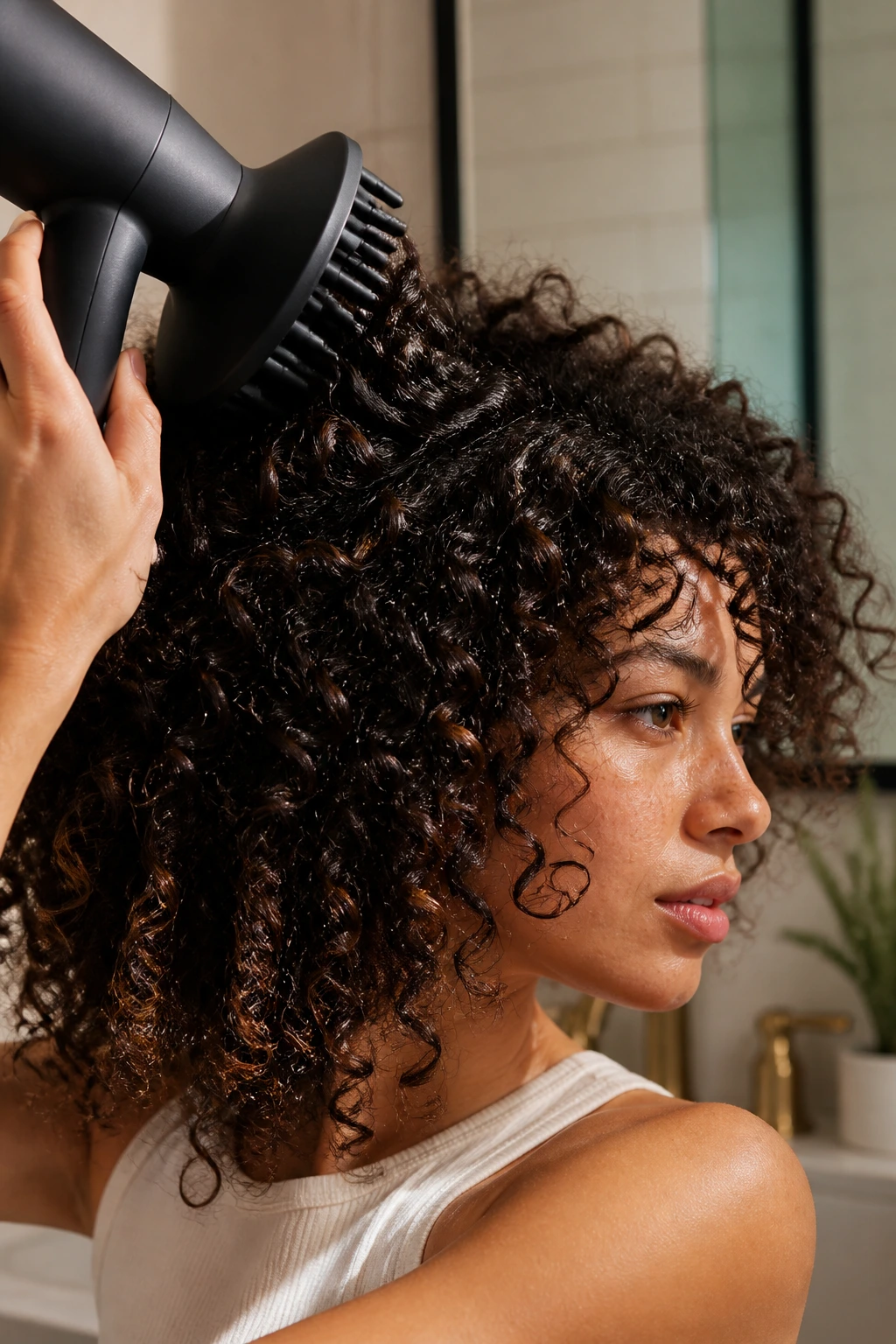
A good cut helps, but the daily tools matter too. Thick curly hair usually needs less brute force and more control.
- Wide-tooth comb: Use it in the shower with conditioner to detangle without tearing curl clumps apart.
- Microfiber towel or cotton T-shirt: This cuts down on roughing up the cuticle when the hair is wet.
- Diffuser attachment: A diffuser keeps curls from blasting apart under hot air and helps shape the style at the root.
- Sectioning clips: These are useful for drying, styling, and pinning curls while they set.
- Curl cream or leave-in conditioner: Pick one with enough slip to reduce puffing, but not so much that it collapses the shape.
- Gel or mousse: Stronger hold keeps frizz from taking over, especially around the crown and fringe.
- Hair pick: Best for lifting roots after the hair is dry, not for shredding through wet curls.
- Reference photos of your own hair goals: Sounds obvious. Still the most useful tool in the room when you’re talking to a stylist.
A small tip from the real world: bring pictures of cuts on hair with a similar density and curl pattern, not just a pretty face. The outline matters more than the model.
Practical Styling Moves That Keep the Cut Working

The haircut does half the job. The rest is how you treat it after wash day.
Start with water, then product. Thick curly hair usually responds better to layering products onto soaking-wet hair than trying to fix frizz after things have already dried wrong. Scrunch the product upward from the ends, then stop fussing. That part matters more than people want to hear.
A diffuser can help, but it should not be used like a leaf blower. Hover at the roots first, then cup the curls in sections and dry in short bursts. If you flip your head over for every minute of drying, the root volume may get wild faster than the shape can hold it. Sometimes a shallow side tilt works better.
My blunt opinion: over-touching is the fastest way to make thick curls frizzier. Hands on. Hands off. Then hands on again only when the hair is fully dry and you need to separate clumps.
A few practical moves that make a big difference:
- Use enough hold product to form a cast on the curls before scrunching out the crunch.
- Dry the fringe or face-framing pieces first if they collapse easily.
- Clip the crown lightly while drying if it wants to flatten.
- Refresh day-two curls with water in a spray bottle, not another heavy layer of cream.
Common Mistakes That Make Thick Curls Puff Out
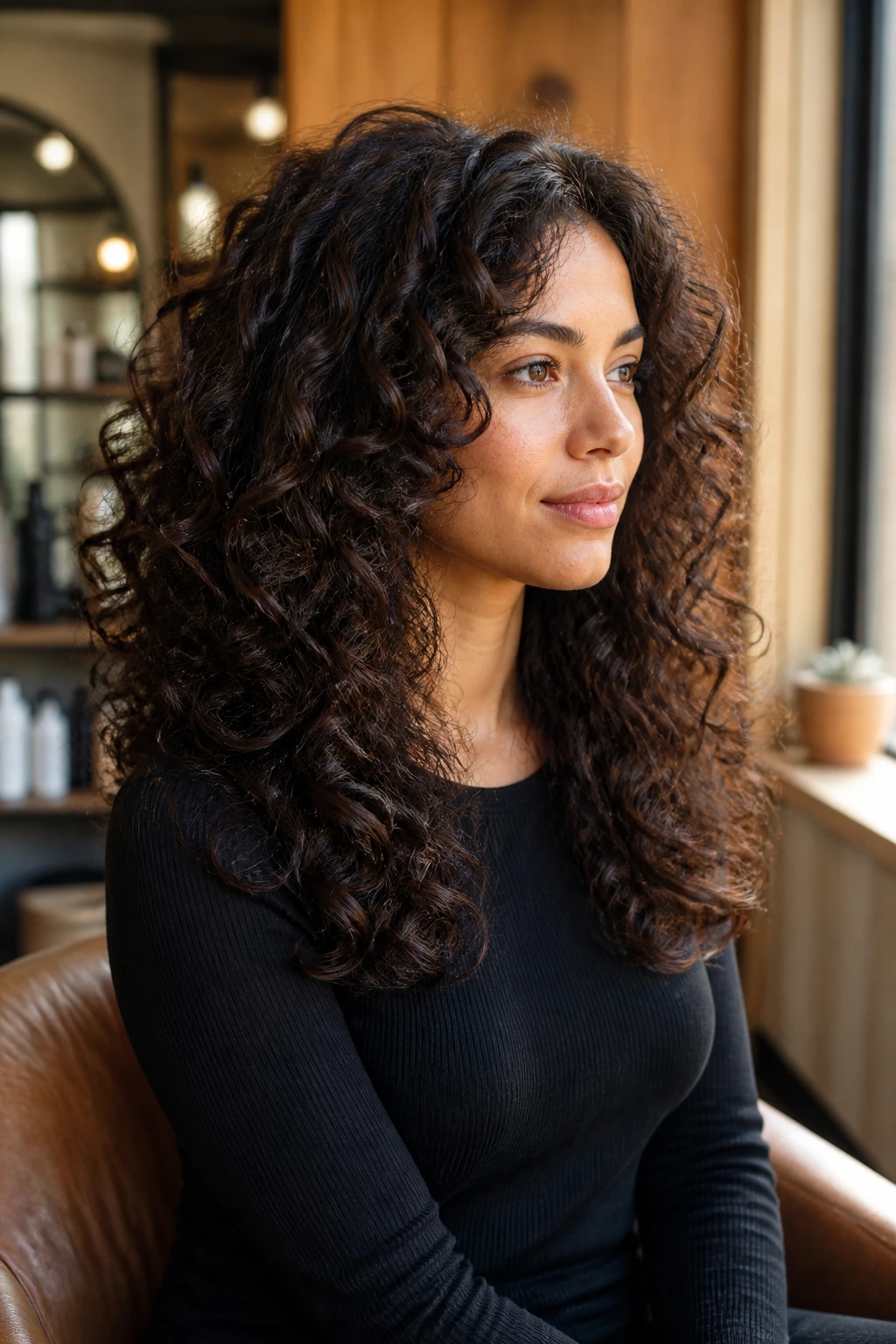
The biggest mistake is letting a stylist cut thick curly hair as if it were straight. Wet curls stretch out, and when they dry, the whole shape jumps upward. If the cut was planned at full stretch, the result can land way shorter and wider than expected. Ask for curl-aware cutting, or at least a dry check before anything major comes off.
Another common problem is over-thinning. Thinning shears can make the surface look fine for a minute, then leave frayed ends and halo frizz. On coarse or frizzy curls, that damage shows fast. Bulk removal should come from shaping, not from carving the hair apart like someone is trying to make sawdust.
Other errors to avoid
- Cutting bangs too short: Curly fringe shrinks hard. Leave more length than you think you need.
- Ignoring the nape: Thick curls can build a heavy shelf at the neck if the back is never shaped.
- Skipping maintenance: A cute bob or pixie grows awkwardly fast when the outline is this textured.
- Styling against the cut: If the shape is rounded, don’t stretch it flat every day and then wonder why it looks wrong.
The fix is not complicated. Bring photos, talk about shrinkage in inches, and ask how the cut will look on day one versus day seven. That conversation saves heartbreak.
Variations and Alternatives to Try
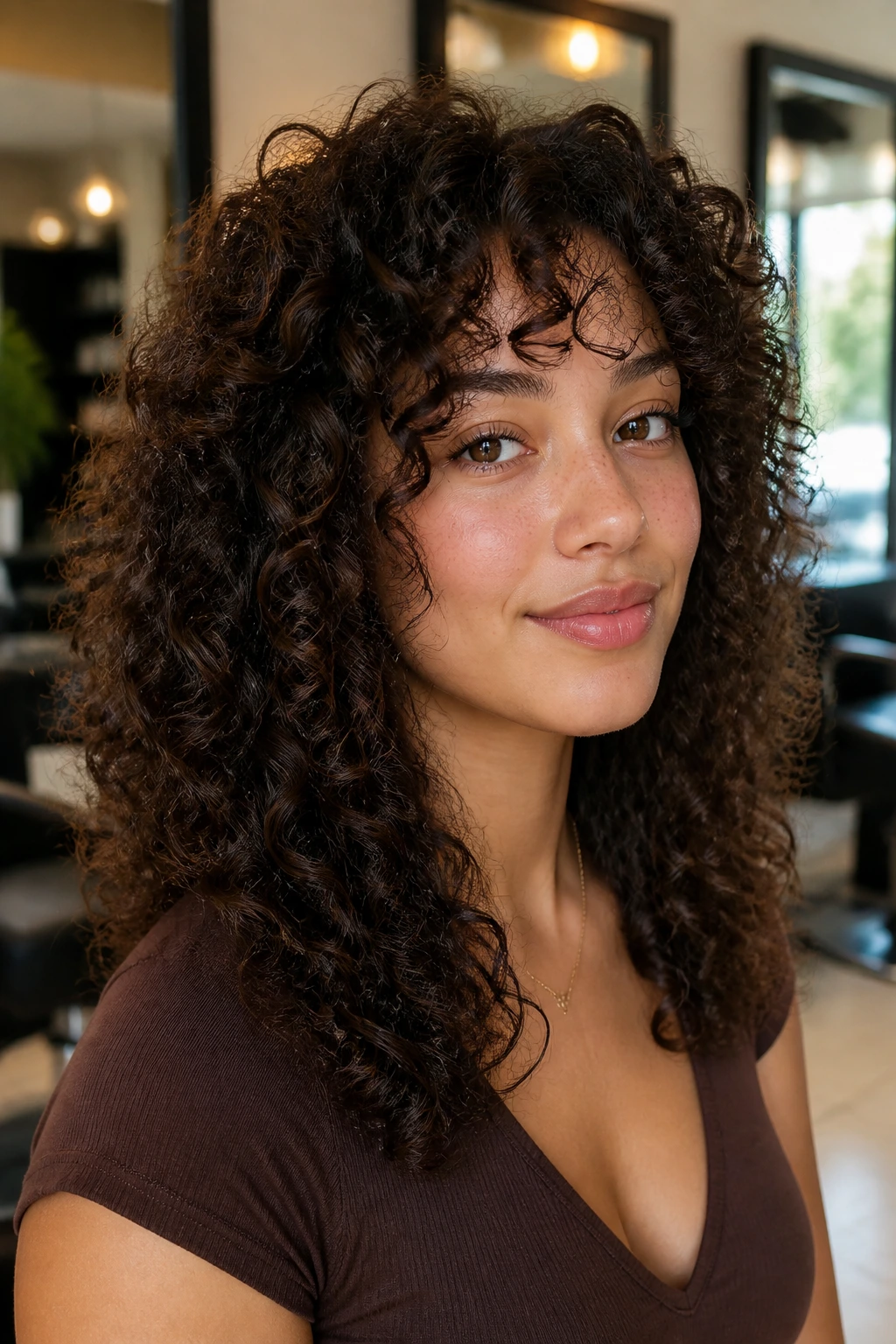
The Low-Bulk Shape
If your main complaint is heaviness, keep the outline longer and let the stylist remove weight from the inside only. This works well for people who like their hair big but don’t want it swallowing their shoulders.
The Big-Shape Shape
If volume is the whole point, go with a rounded afro, curly shag, or wolf cut. These cuts let the hair spread with intention, which suits people who would rather have presence than polish.
The Face-First Version
If you want the haircut to change your look without a major chop, ask for curtain bangs, face-framing layers, or a collarbone lob. These options shift attention upward and leave the length more or less intact.
The Short-and-Orderly Route
If thick curls are taking too much time, a tapered pixie, bixie, or cropped coil bob can cut drying and detangling time down fast. Short hair is not automatically easy, but it is often simpler than long heavy curls.
The Grow-Out-Friendly Route
If you hate awkward stages, choose a shoulder-grazing one-length cut, a softly angled lob, or a U-shape. These grow out without the obvious hard line that makes people book emergency trims.
How to Keep the Shape Between Salon Visits

Thick curly hair usually needs shape maintenance more often than people expect, but not every cut needs the same schedule. Short styles like pixies, bobs, and tapered cuts usually want a trim every 6 to 8 weeks. Longer layers and lobs can stretch to 10 to 14 weeks if the outline still looks clean.
The best between-visit habit is simple: protect the curl pattern at night. A loose pineapple, satin bonnet, or satin pillowcase keeps the cut from getting flattened and frizzy by morning. That doesn’t stop all mess, but it lowers the daily repair job.
On wash days, reset the shape rather than fighting it.
- Mist the hair lightly with water to reactivate product.
- Reapply a small amount of curl cream or gel to the pieces that have lost definition.
- Diffuse only the sections that need help; don’t start from scratch every time.
- Trim split ends before they unravel into extra frizz.
If your cut starts to lose its shape in the same place every time, that’s data. It usually means the layers there were too short, too long, or placed in the wrong direction for your curl pattern.
Frequently Asked Questions About Cuts for Thick, Curly, Frizzy Hair
Should thick curly hair be cut wet or dry?
Dry cutting usually gives a better read on curl pattern and shrinkage, especially for layered or shape-driven cuts. Wet cutting can still work for blunt bobs or perimeter trims, but it’s risky if the stylist doesn’t factor in how much your curls bounce.
Do layers always help frizzy curly hair?
No. Too many layers can make the hair puff out and look scattered. The better question is where the weight should come out, because some curls need internal shaping rather than visible layers.
Can thick curly hair wear bangs?
Yes, but the fringe needs extra length at the start because curls shrink fast. Soft curtain bangs or a longer curly fringe usually work better than short blunt bangs for frizz-prone texture.
What cut is best if I want less bulk?
Ask about internal layers, a tapered cut, or a shoulder-length one-length shape with careful weight removal. Those options reduce bulk without turning the ends into thin wisps.
What if my curls are different on each side?
That’s normal, and it’s one reason curl-by-curl or precision dry cutting helps. A good stylist will shape the stronger side differently so the overall silhouette feels balanced.
Does thinning hair help thick curls?
Sometimes, but not with thinning shears all over the place. Strategic weight removal can help; over-thinning usually creates frizz and fuzzy ends.
How do I know if a bob will work on my curls?
Check how much your hair shrinks and whether it stacks outward at the sides. If it expands a lot, a bob needs a strong shape, not just a straight cut across the bottom.
What should I bring to the salon?
Bring photos of people with similar curl pattern, density, and face shape, plus one or two notes about what you hate: width, bulk, flat roots, or too much neck length. That beats saying “I want it shorter” and hoping for the best.
The Shape That Holds Its Own
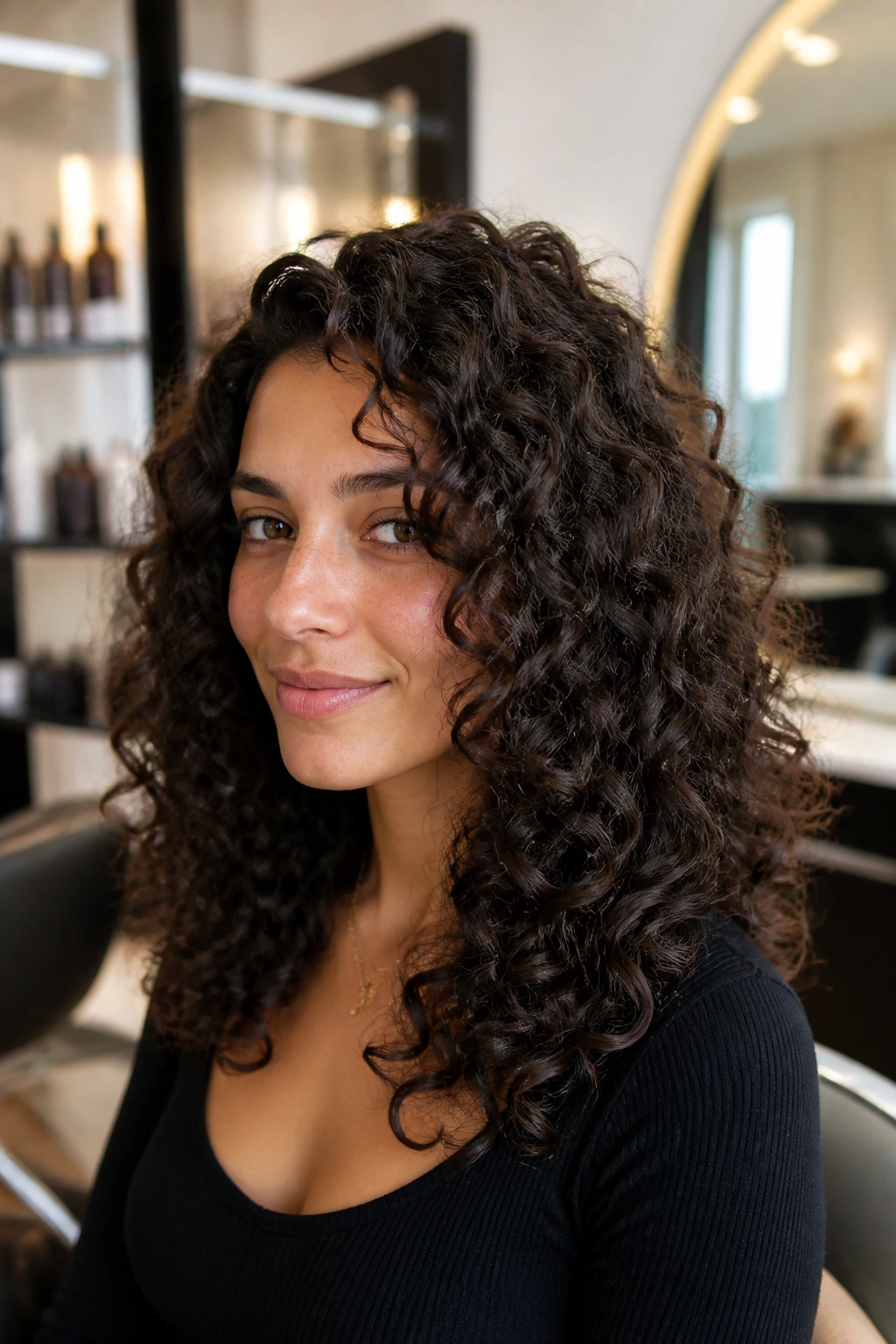
Thick, curly, frizzy hair doesn’t need to be tamed. It needs a cut that understands what it is doing. When the shape matches the density, shrinkage, and curl pattern, the hair stops fighting you every morning and starts falling into place with a little less drama.
The best cut is the one that still makes sense three days after wash day, in bad bathroom lighting, with your hands full and no patience left. That’s the real test. Pick the shape that solves the problem you actually have, not the one that only looks good for the photo in the salon mirror.
