



Thick curls don’t need to be tamed; they need a haircut that knows where to stop. Short curly cuts for thick, frizzy hair work best when they take weight off the right places and leave enough length for the curl pattern to do its own thing. Once that texture dries, it will claim a shape whether the cut agrees or not.
That is the whole trap with dense curls. A bob that looks neat when it’s wet can turn into a triangle by lunch. A pixie can read sleek in the chair and then spring up around the temples like it has its own weather system. The fix is not “more control.” The fix is smarter control: softer edges, cleaner weight lines, and a cut that respects shrinkage instead of pretending it doesn’t exist.
The best versions here don’t fight frizz head-on. They place it. They make it sit where it looks deliberate, not accidental. Start with shape, not length, and the rest gets easier fast.
Why These Cuts Work on Dense, Frizz-Prone Curls
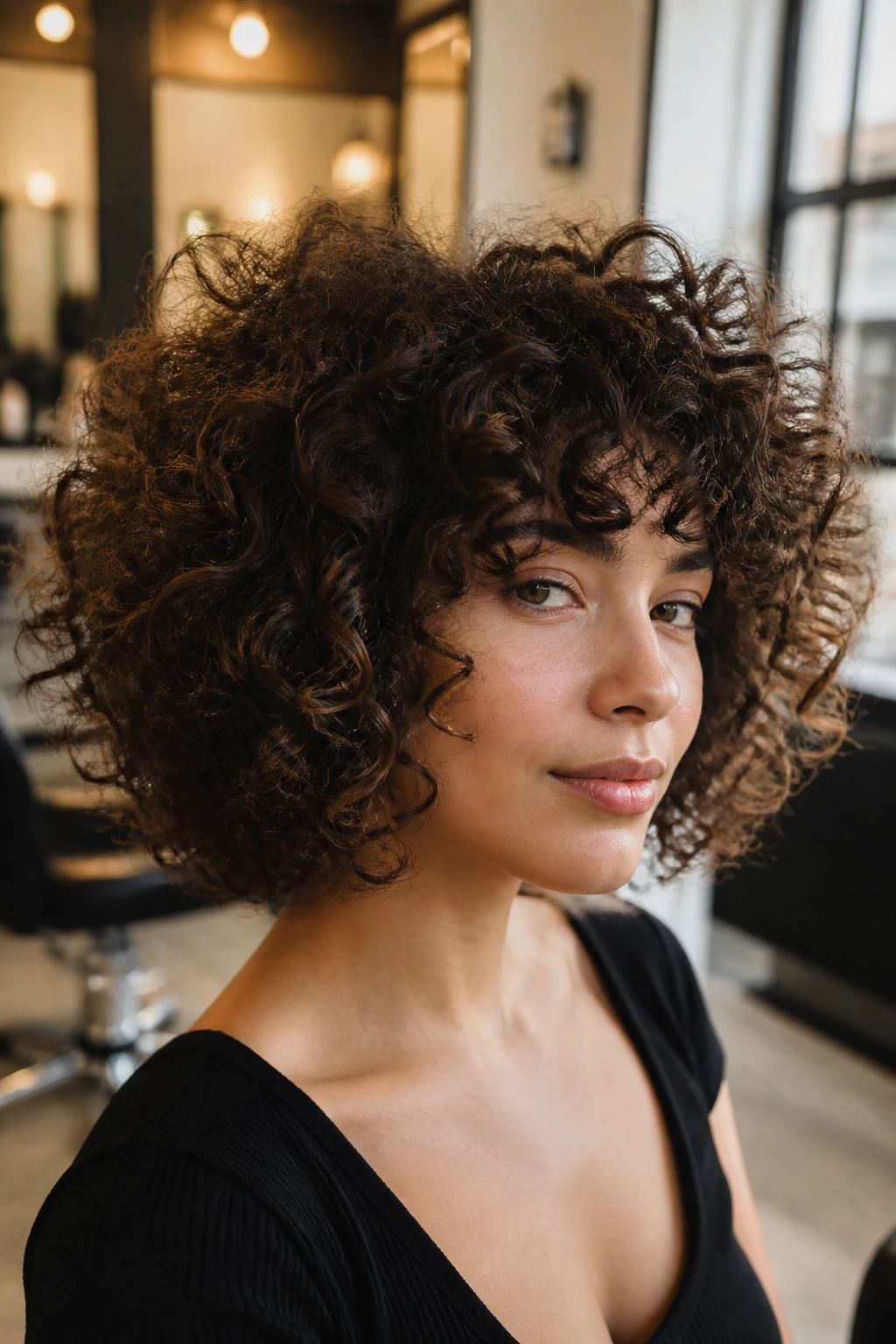
- Bulk moves before length does: On thick curly hair, removing an inch at the nape can change the whole outline more than removing three inches at the bottom.
- Frizz stops reading as “messy” when the silhouette is clear: A halo of texture around a rounded bob looks soft; the same halo around a blunt box can look puffy.
- Dry cutting saves a lot of regret: Curls shrink as they dry, and a dry shape shows where the chin, jaw, and cheekbone lines will actually land.
- Shorter cuts dry faster: That matters if your hair takes an hour to air-dry and you’re tired of leaving the house with damp roots.
- The right fringe changes everything: Side-swept bangs, curly curtain bangs, and long bangs break up thickness better than a straight wall across the forehead.
1. Soft Tapered Pixie
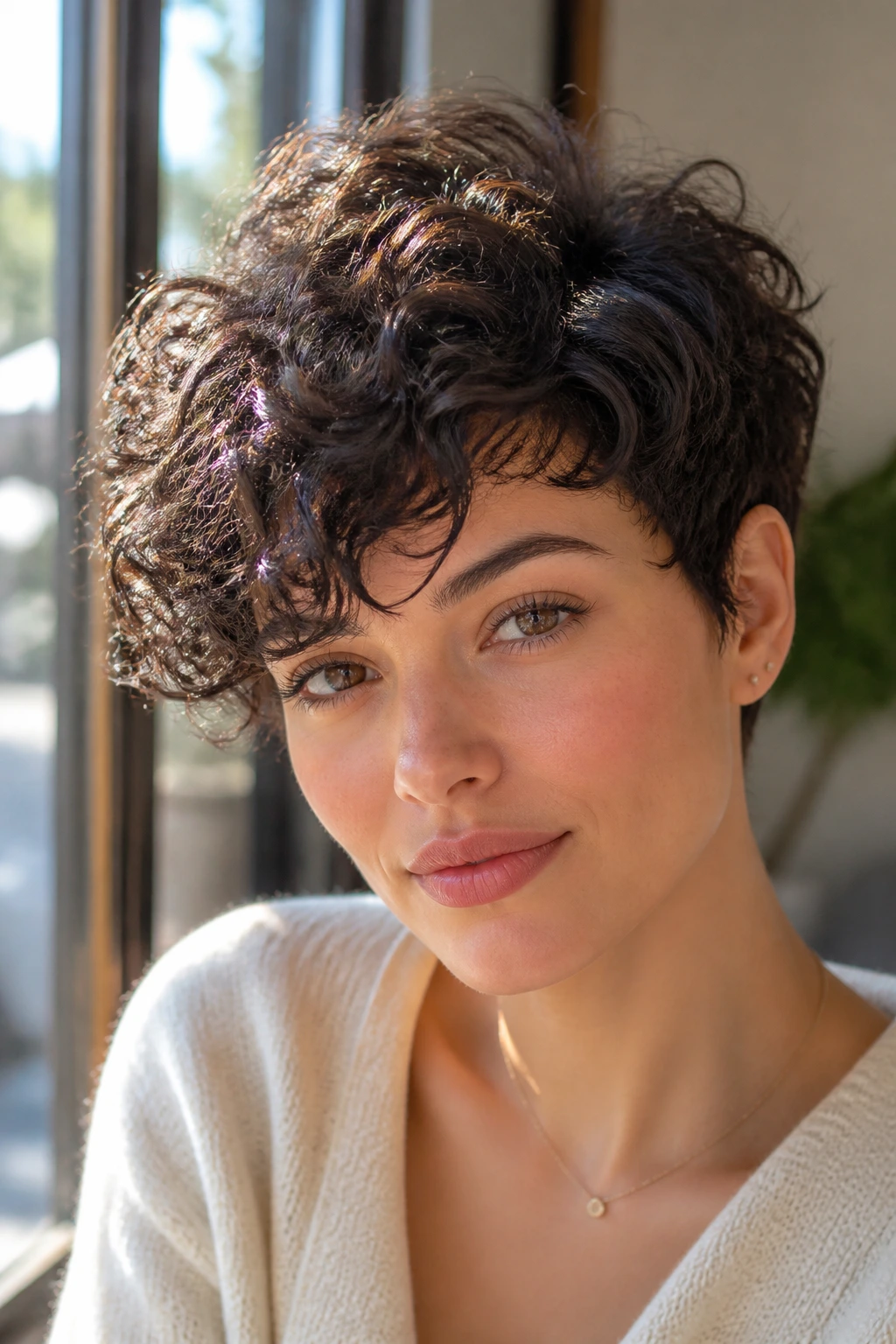
A soft tapered pixie is the shortest cut in the group that still respects curl pattern. The sides and nape are taken down close enough to stop bulk from spreading outward, while the crown stays a little longer so the curls can spring up instead of lying flat against the head.
What makes this one work is restraint. If the taper is too sharp, it starts looking clipped and fussy. Keep the top loose, let the curl move, and ask for point cutting around the hairline so the ends don’t poke out like little wires. On thick hair, the difference between “fresh” and “puffed” can be a quarter inch.
Best for: Dense curls that build weight at the temples and back of the neck.
Stylist note: Ask for the crown to stay visibly longer than the sides, and avoid aggressive thinning shears near the ends.
2. Bixie With Curly Crown
The bixie sits somewhere between a bob and a pixie, which is exactly why it behaves so well on thick, frizzy hair. You get enough length around the top and front to keep the curl pattern interesting, but the lower half is short enough to stop the shape from dragging downward.
It’s a smart move if you want neck freedom without going all the way into pixie territory. The crown should stay plush, not fluffy. That sounds like a small distinction, but it isn’t. Plush means the curls are stacked with intention. Fluffy means the shape ran out of weight.
A bixie also handles glasses well. The hair sits up and back instead of smacking into the frames all day, which sounds trivial until you’ve spent one humid afternoon pushing curls off your lenses.
3. Curly Crop With Side-Swept Fringe
Why does a side-swept fringe change a short curly cut so much? Because it breaks the forehead line and pulls the eye diagonally instead of straight across. That diagonal line is a gift when hair is thick and wants to widen everything.
Ask for the fringe to be cut longer than you think you need. Longer. Seriously. Curly bangs spring up in a way straight bangs never do, and a fringe that looks “just right” when wet can float halfway up the forehead once it dries. The sweet spot is usually cheekbone to brow level in its natural dry state.
What to ask your stylist for
- A fringe that falls to the eyebrow or slightly below when dry.
- Light shaping around the temples so the bangs blend instead of sitting like a separate hat.
- Enough side length to tuck behind the ear on one side when you want a cleaner look.
This cut is one of the easiest ways to make dense curls look intentional without losing softness.
4. Chin-Length French Bob
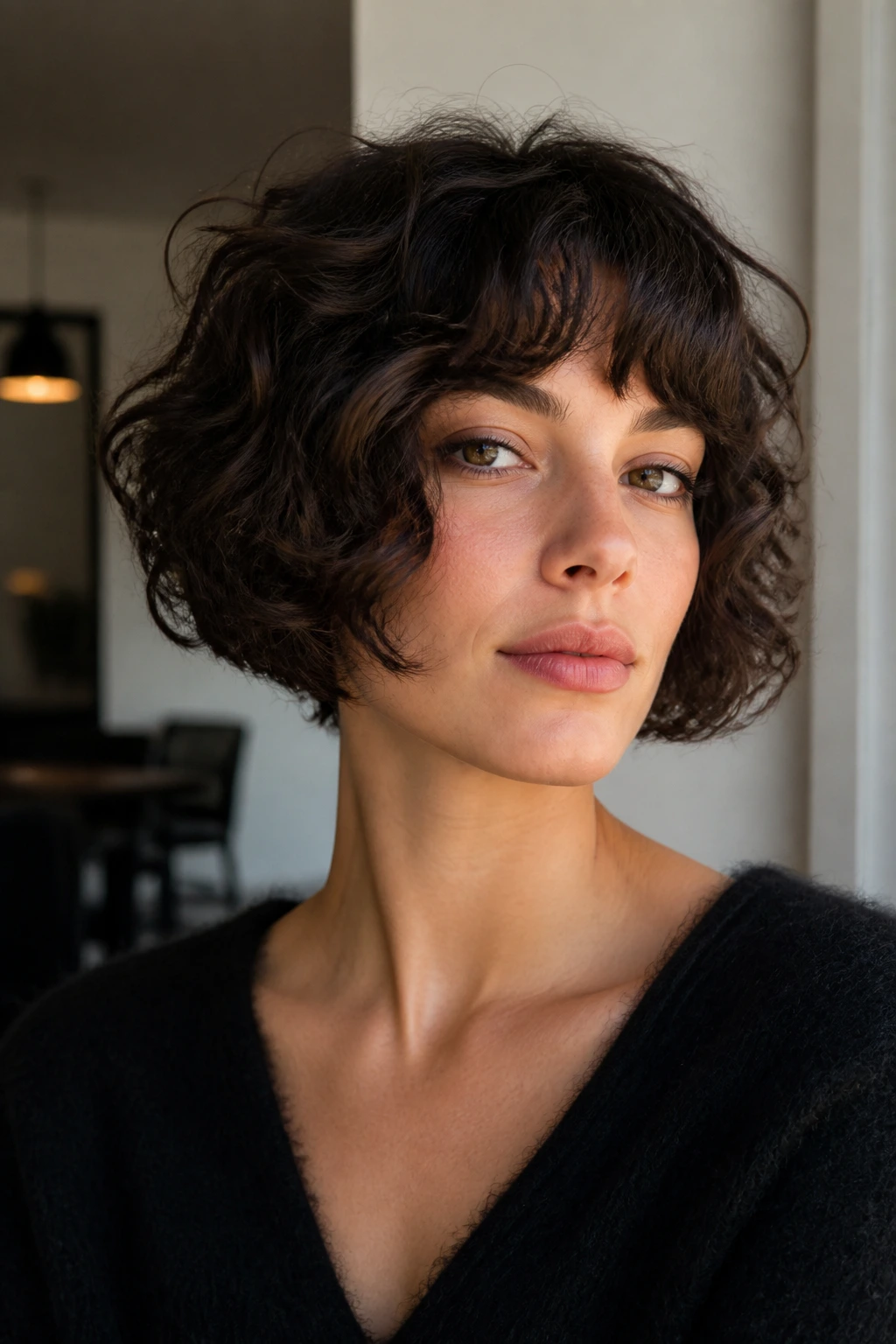
A chin-length French bob on curly hair lives and dies by its weight line. Keep it too blunt and it becomes boxy. Keep it too layered and it loses the clean edge that makes the shape feel sharp. The right version sits close to the chin, not under it, with just enough internal movement to keep the bottom from ballooning.
Compared with a standard bob, this one has a little more attitude. It likes a center part or a low side part, and it looks especially good when the curls have a defined S-shape rather than a loose wave. The front should graze the jaw, not crash into it.
If your hair gets wide around the cheeks, this cut can be a lifesaver. It gives the face a frame without adding extra bulk where you already have plenty.
5. Rounded Bob With Internal Layers
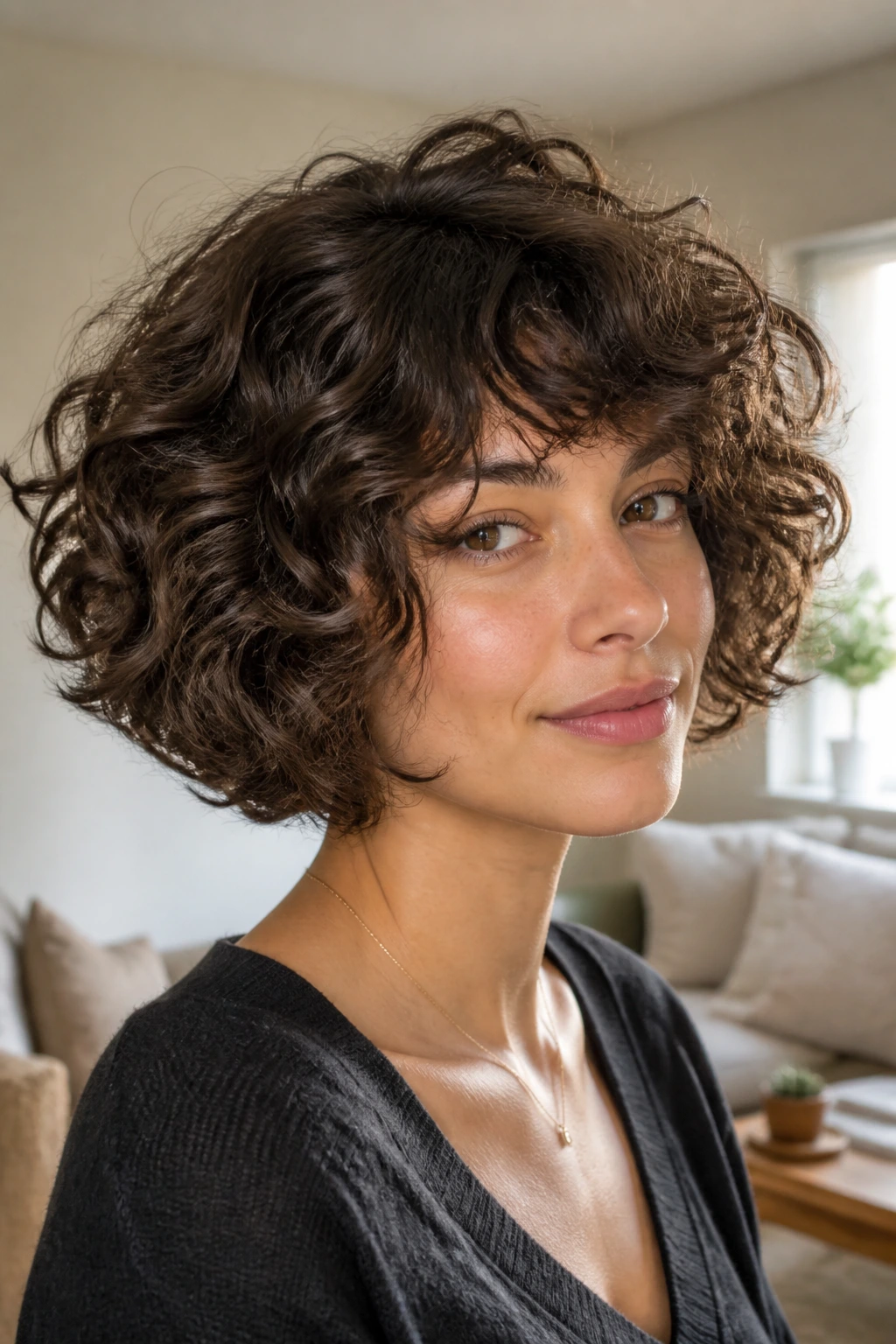
The rounded bob is the cut I reach for when I want the hair to look like it has been shaped, not chopped. The outline curves gently around the head, and the internal layers remove weight from inside the mass instead of leaving short ends all over the surface.
That matters on thick, frizz-prone curls because every exposed short end has a tendency to bloom in humidity. Internal layers keep the cut clean from the outside while still letting the underside breathe. The result is less shelf, less triangle, more curve.
This is a good one if you like softness around the jaw and don’t want the haircut to shout for attention. It reads polished without trying too hard. The curls do the interesting part on their own.
6. Jaw-Length Box Bob
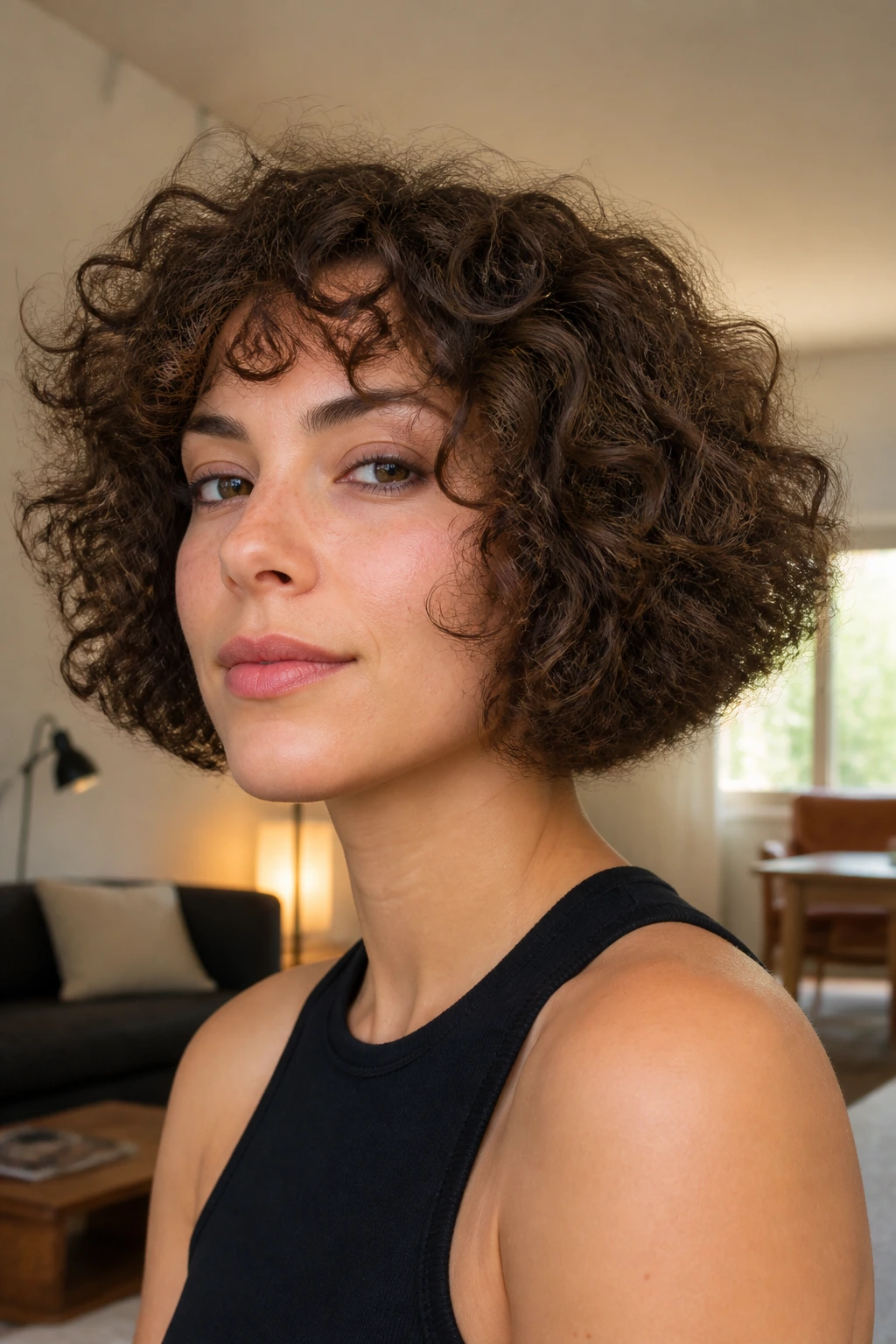
A jaw-length box bob is sharp, a little graphic, and surprisingly useful when thick curls need boundaries. The square shape gives the hair a clear stopping point, which can look very chic if the perimeter is handled carefully and the interior isn’t left bulky.
What makes it stay clean
- The line should land right at the jaw, not below it.
- The ends need a soft point cut so they don’t feel like a helmet edge.
- The underneath should be debulked enough that the sides don’t kick out.
This is not the cut for someone who wants the hair to disappear into the background. It has presence. It also grows out well if the shape is kept tidy, because thick curls tend to keep a box bob looking full for longer than straighter textures do.
My blunt advice: don’t let anyone cut this too short in the nape area. That’s how you get a weird shelf that keeps flipping outward.
7. Stacked Curly Bob
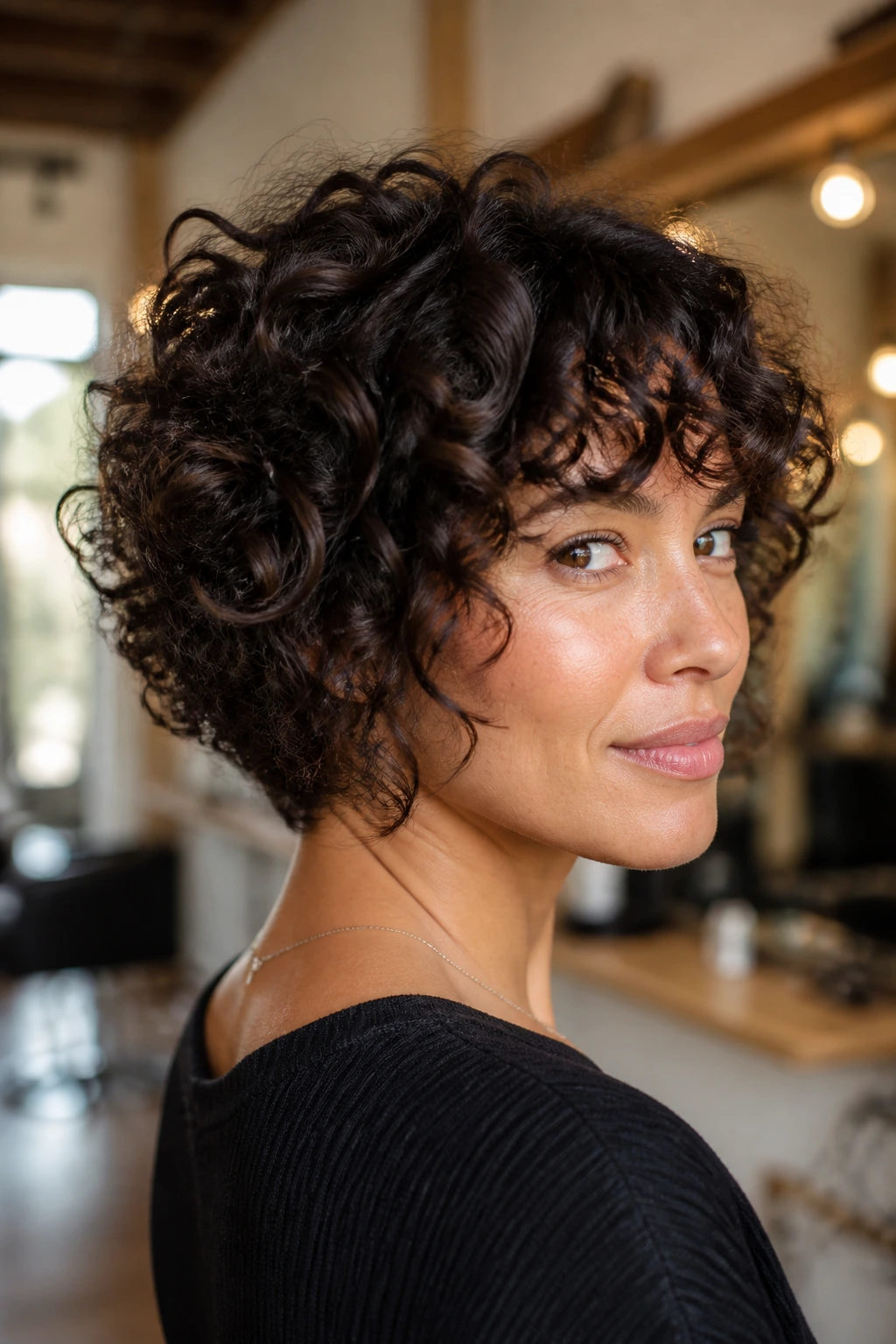
A stacked curly bob is about lift, not drama. The back is cut shorter and built up through the occipital area so the shape rises instead of hanging heavy. On thick curls, that little bit of stacking keeps the back from sinking into the collar.
The trick is to keep the stack invisible from the outside. If it’s obvious, the cut can tip into old-school helmet territory. You want the illusion of lift, not a staircase. The curls should fall over each other and create a soft bend, not a visible shelf line.
This one is especially useful if your hair gets flat at the crown but heavy at the nape. It solves two problems at once. The head looks lighter, and the cut moves better when you turn sideways.
8. Asymmetrical Curly Bob
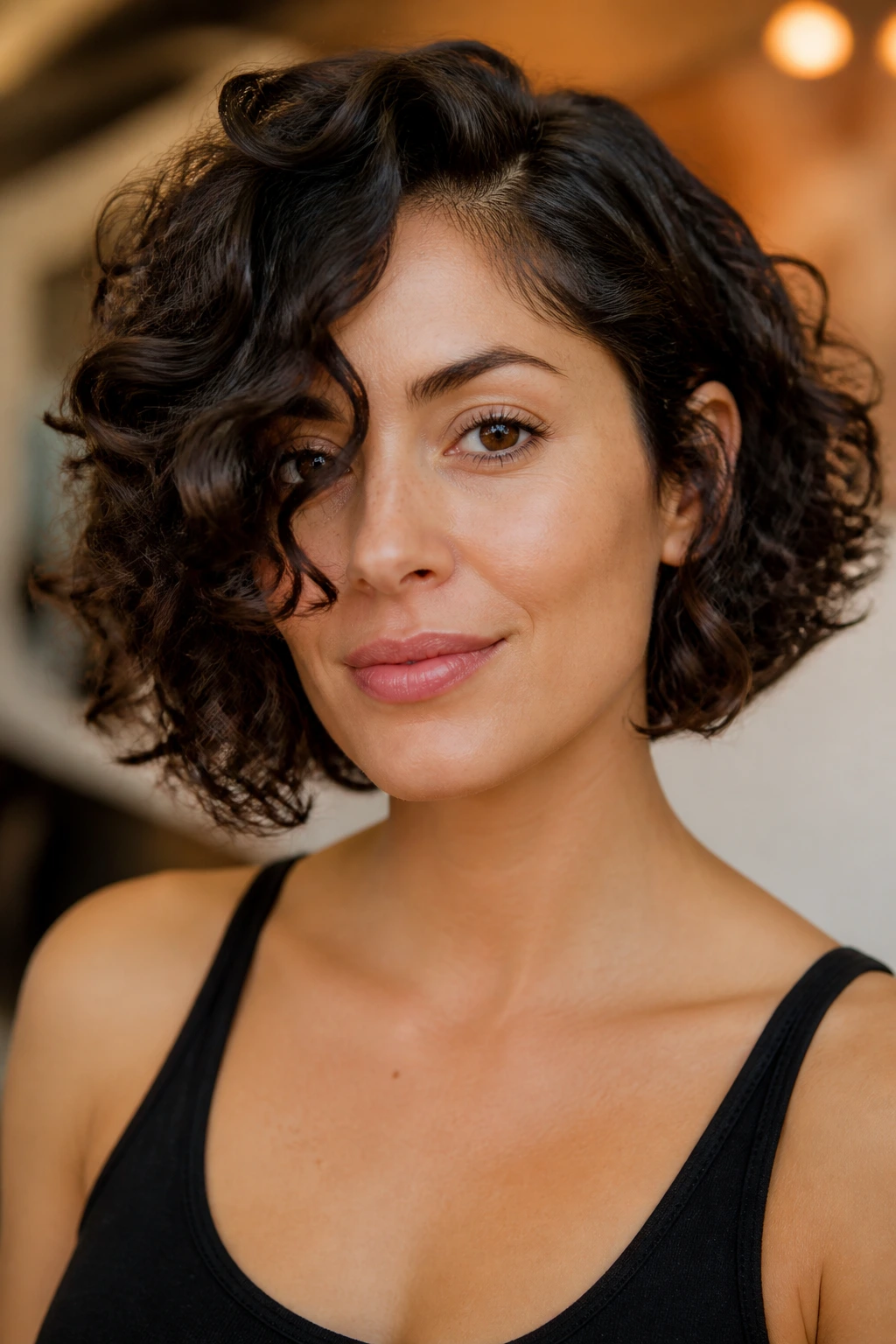
Symmetry can make thick curls look even thicker. A modest asymmetrical bob breaks that effect fast. One side stays a little longer — half an inch to two inches, depending on how bold you want it — and the eye stops reading the hair as one giant block.
The key word is modest. Curly hair hides a lot of detail when it shrinks, so a dramatic difference often disappears once the shape dries. Keep the asymmetry real enough to survive spring and humidity, but not so extreme that the cut becomes a stunt.
It works especially well if you wear a side part or tuck one side behind the ear. That little imbalance makes the curls look deliberate, not crowded. It also gives your profile a bit of movement, which thick hair sometimes needs desperately.
9. Curly Shag With Micro-Layers
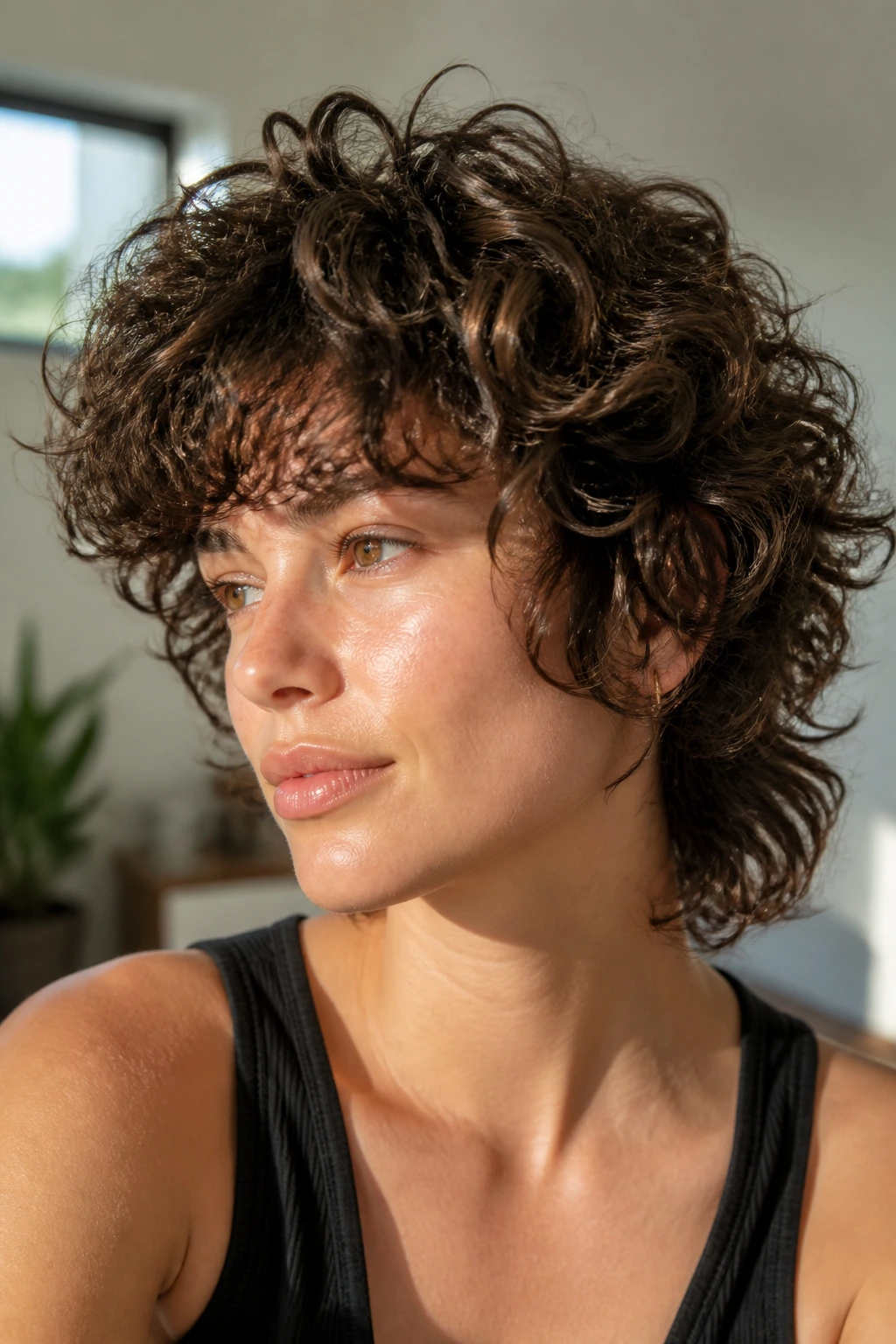
Why does the shag keep working on frizz-prone curls? Because it gives the curl groups room to separate without making the bottom feel heavy. Micro-layers around the crown and face stop the hair from piling up in one big shape, and the result is movement instead of bulk.
The word “micro” matters. You do not want a shag full of short, choppy layers that turn into fuzz. You want carefully placed layers that let the curls spring, then settle. The best shag on thick hair looks airy, but not thin. There’s a difference.
If your hair grows outward before it grows downward, this cut can be a relief. It takes the pressure off the sides and lets the top sit with a little lift.
Stylist note
Ask for the shortest layers to land long enough to curl, not short enough to fray. That one detail saves the whole cut.
10. Dry-Cut Round Shape
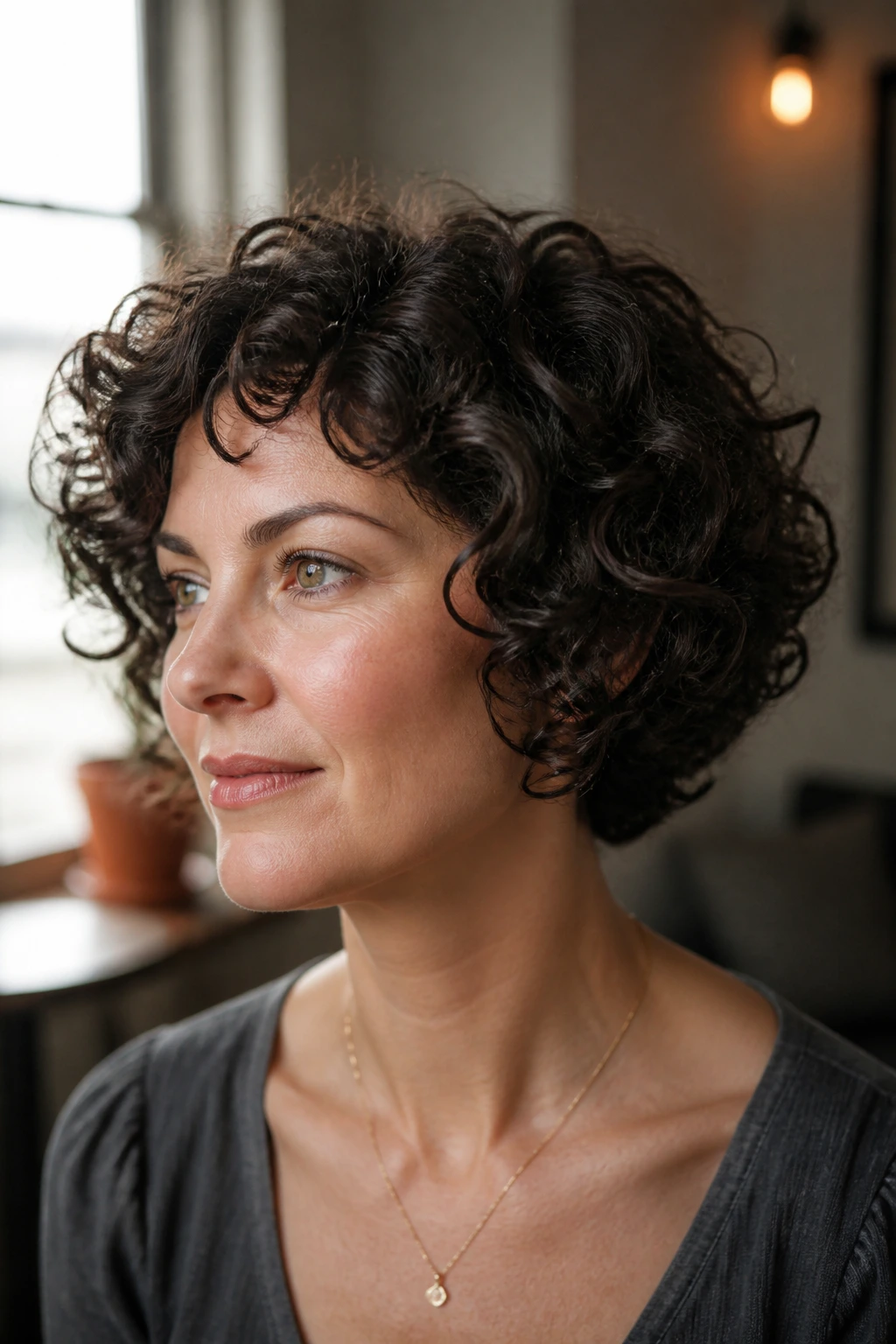
A dry-cut round shape is less about fashion names and more about technique. The stylist shapes the curls in their natural state, which matters because wet hair lies. It lies beautifully, annoyingly, and with total confidence.
That is why this cut is so useful for mixed curl patterns. If the front is looser than the back, or the crown shrinks harder than the sides, a dry round shape lets the stylist see the real outline and balance it curl by curl. The goal is a round silhouette that follows the head instead of fighting it.
I like this method when the hair has too many personalities for a blunt plan. It’s honest. No guessing. No wishful thinking.
11. Curly Wolf Cut Lite
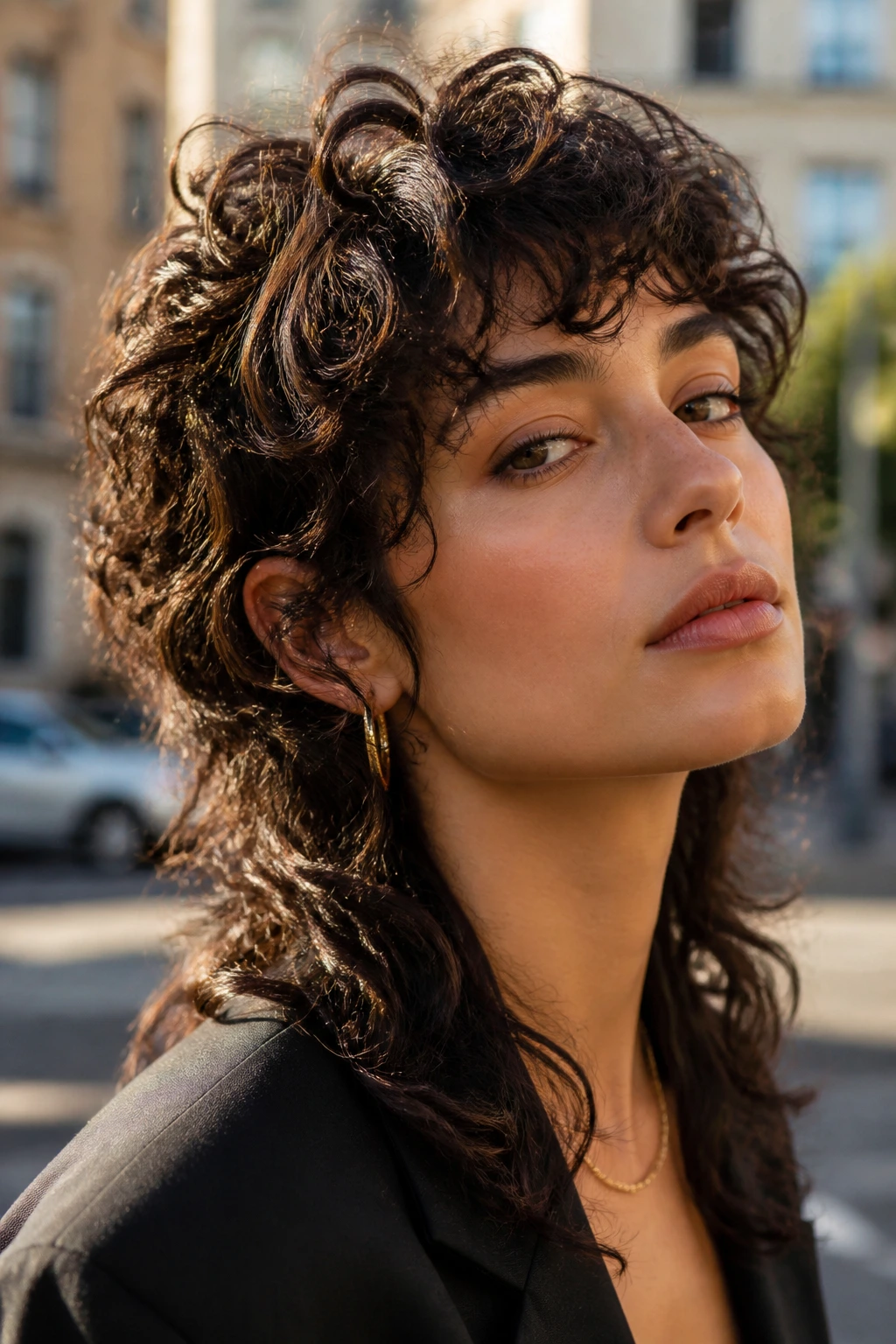
If a shag feels too tidy and a mullet feels too loud, the wolf-cut lite sits in the middle. The top stays shorter and layered, the back keeps a bit more length, and the whole thing hangs with movement instead of bulk.
Dense curls love this shape because it keeps the crown from looking like one heavy dome. The shorter top lifts the silhouette, while the longer back keeps the neckline from feeling stripped bare. It is a good compromise for someone who wants edge without turning the haircut into a statement costume.
The “lite” part matters. Go too extreme and thick curls can start looking overworked, especially at the face frame. Keep the transitions soft, and let the layers blend into the curl pattern instead of announcing themselves.
12. Tapered Nape Bob
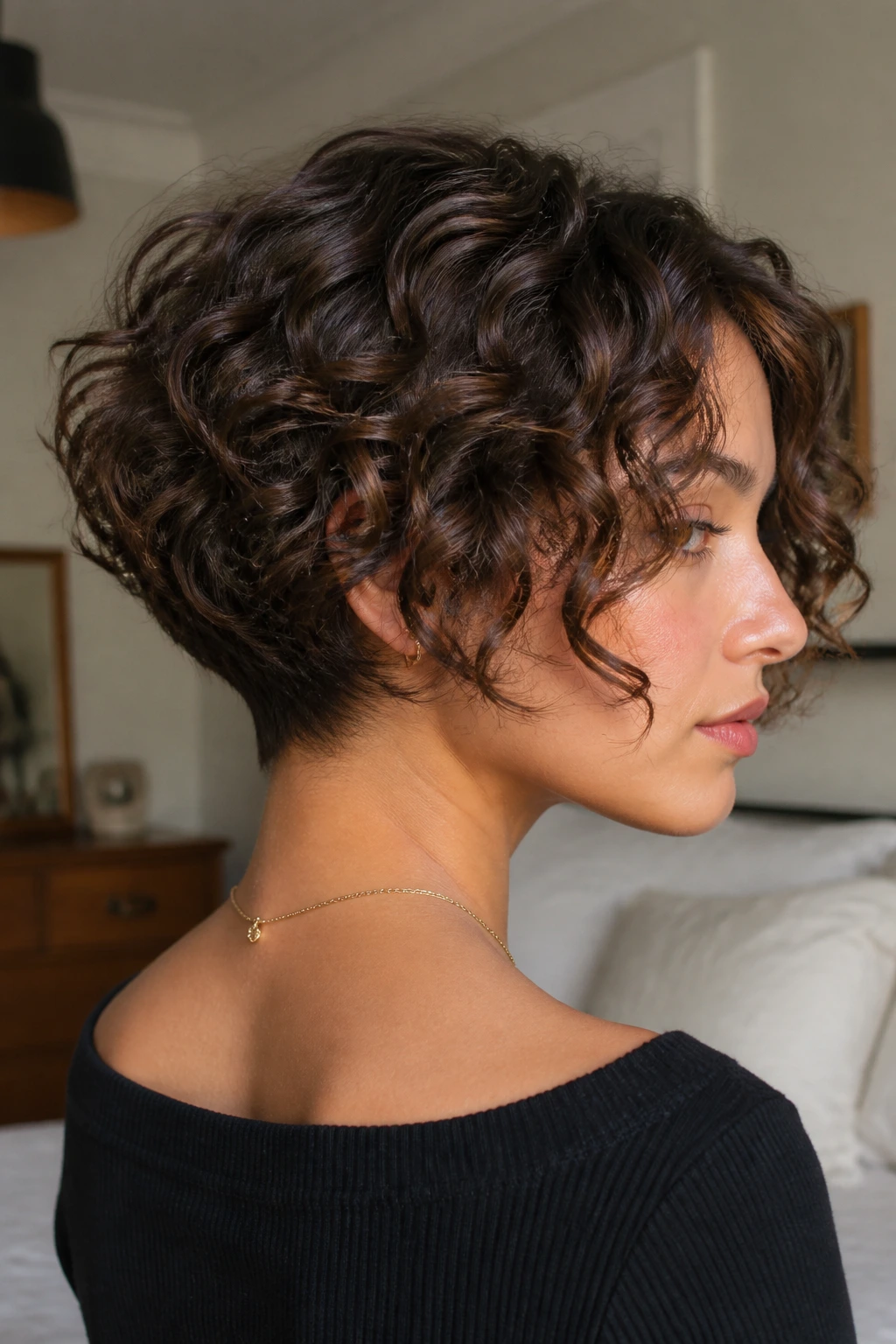
Compared with a blunt bob, the tapered nape bob feels cooler, lighter, and easier to live with when your hair gets bulky at the neck. The back is trimmed close at the nape, then gradually opened up toward the sides so the underside doesn’t push the whole shape outward.
That small taper changes the way the haircut sits on collars, jackets, and scarves. The neck stays visible. The shape doesn’t catch every time you turn your head. And the hair dries a little faster at the back, which anybody with dense curls will appreciate.
What to ask for
- A soft taper at the nape, not a shaved fade unless you want that look.
- Enough length around the face to keep the bob from feeling too severe.
- Internal weight removal rather than heavy thinning on the ends.
This is one of the quietest cuts in the list, and I mean that as a compliment.
13. Undercut Curly Crop
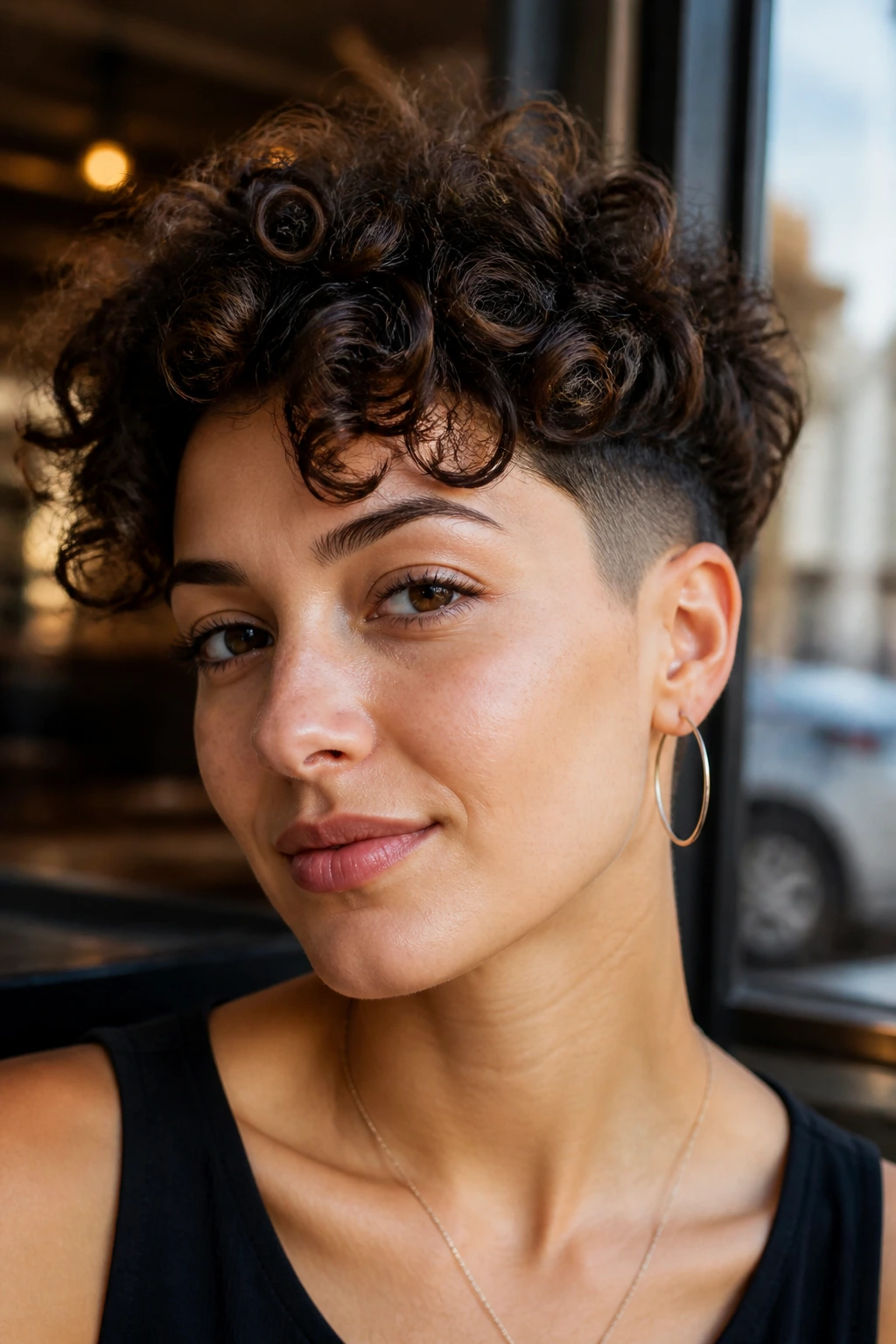
Sometimes the cleanest answer is hiding the bulk instead of trying to sand it down with layers. An undercut curly crop removes density underneath the top section, so the visible curls sit lighter and move more freely.
That makes this cut a smart choice for very thick hair that takes forever to dry. It also helps if the back of your head gets hot, heavy, or wide by midday. With an undercut, the top can keep its shape while the hidden underneath stops stealing all the attention.
This one does ask for maintenance. You need clean-up appointments every few weeks if you want the undercut to stay neat. If you don’t mind that, the payoff is huge. The cut feels cleaner immediately.
14. Side-Parted Sculpted Bob
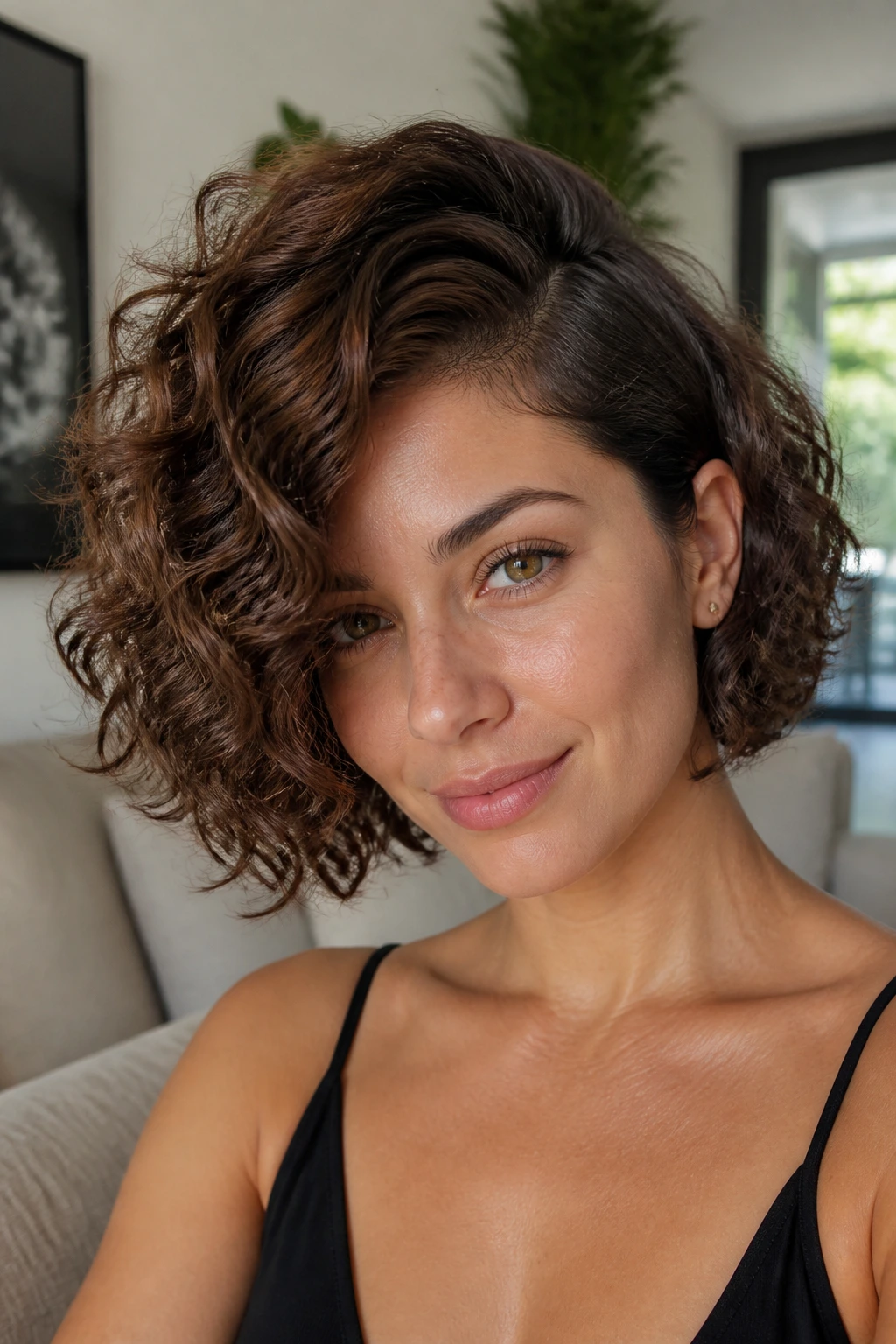
A deep side part changes the whole story of a curly bob. It shifts the bulk away from the center, opens one side of the face, and gives the shape a direction. Thick hair behaves better when it has somewhere to go.
The cut itself should be sculpted, not carved. Frizz shows every blunt interruption, so the goal is soft lines that flow into each other. One side can sit just a touch longer, which gives the bob a quieter asymmetry without making it obvious.
If you wear your hair behind one ear a lot, this cut makes sense. It lets the curls fall in a way that looks finished even when the styling is minimal.
15. Curly Mullet Lite
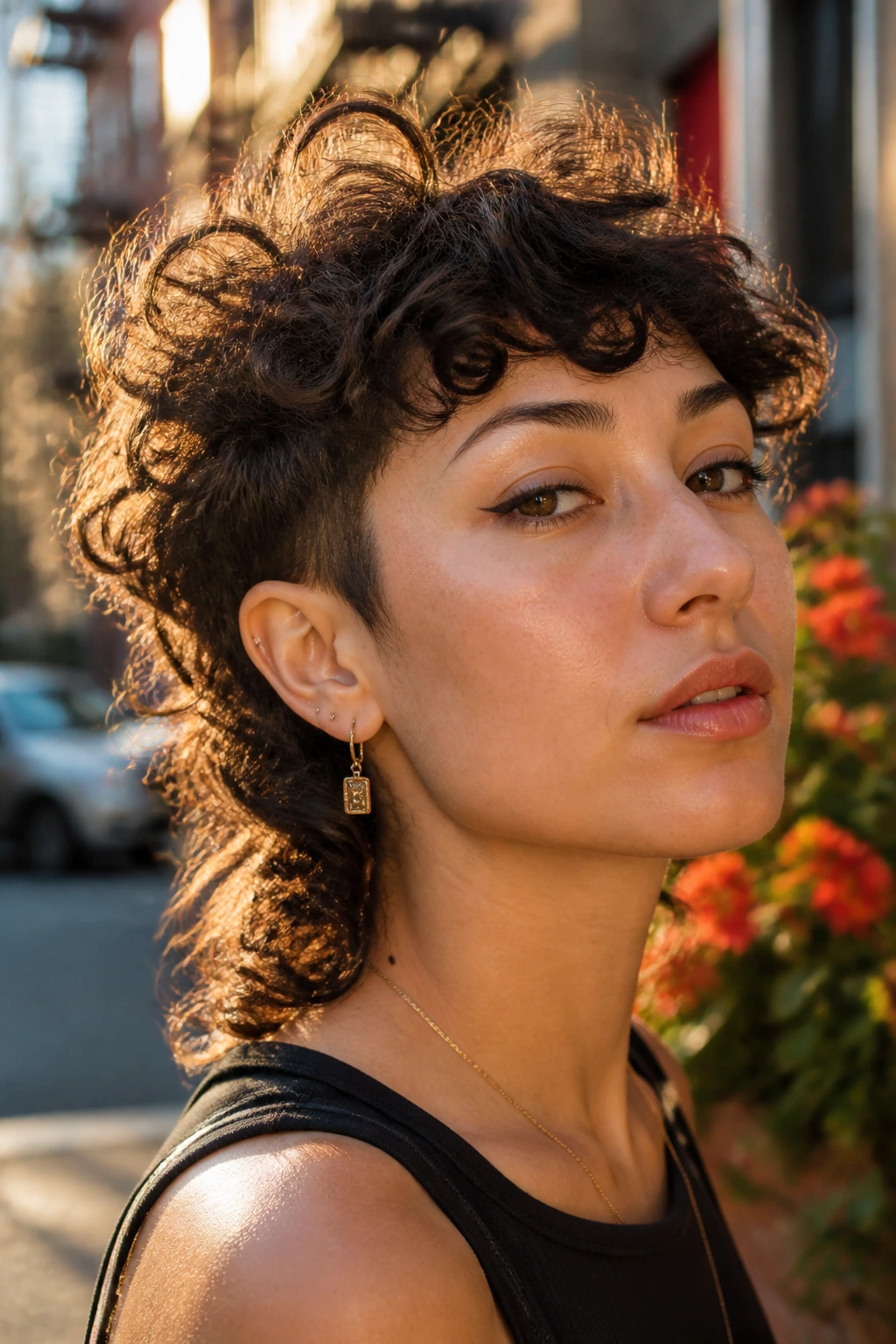
The curly mullet lite works because it keeps length where curls like to hang and pulls the crown up where dense hair often traps heat. The front and sides stay short enough to keep the face open, while the back keeps a little softness at the neckline.
It has more personality than most cuts in this list. Not wildly more. Just enough to feel deliberate. That makes it a good fit if you like texture with a bit of edge and you are not hoping for a haircut that disappears into the background.
The best version is soft enough to blur at the seams. If the top is chopped too aggressively, the cut stops looking cool and starts looking accidental. Keep the transitions gentle and the shape will hold.
16. Ear-Length Tousled Bob

An ear-length bob can be a little addictive if you like volume and don’t mind a head of hair that announces itself. On thick curls, this length creates a buoyant shape that sits close to the ears, opens the neck, and keeps the whole cut playful.
It also asks for regular trims. At this length, a half-inch can change the balance fast. If the ends get blunt, the outline starts to fight the curl. If the ends are soft, the cut looks like it was made for the texture instead of trapped by it.
This is a good choice if you like earrings, cropped jackets, and a routine that doesn’t involve much fuss. But it is not a set-it-and-forget-it haircut. The shape needs attention.
17. Flat-Back Crop With Full Top
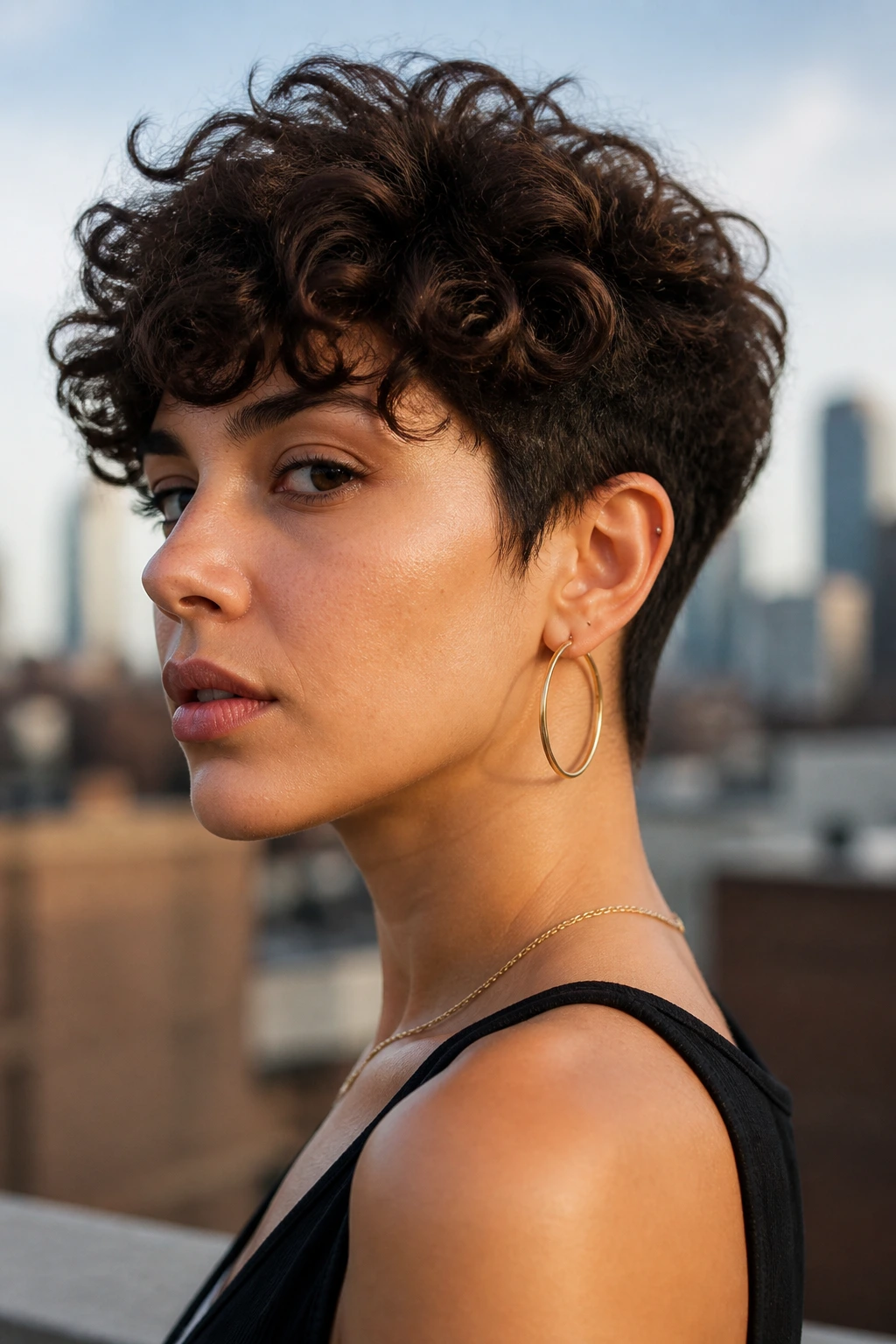
Unlike a round bob, the flat-back crop leaves the top generous while keeping the back more compact. That contrast can be a gift when thick curls puff out at the nape or sit awkwardly under the collar.
The top needs enough length to collapse forward a little, not just stand up like a brush. The back should feel controlled, not clipped bare. When those two parts work together, the cut looks modern and easy to wear, with enough softness to keep the texture visible.
Best for
- Hair that grows heavy at the back of the head.
- Loose curls that want lift on top.
- Anyone who wants short hair without a lot of side width.
This one looks best when the silhouette is balanced from the side, so don’t let the crown get too short.
18. Halo Cut for Coils
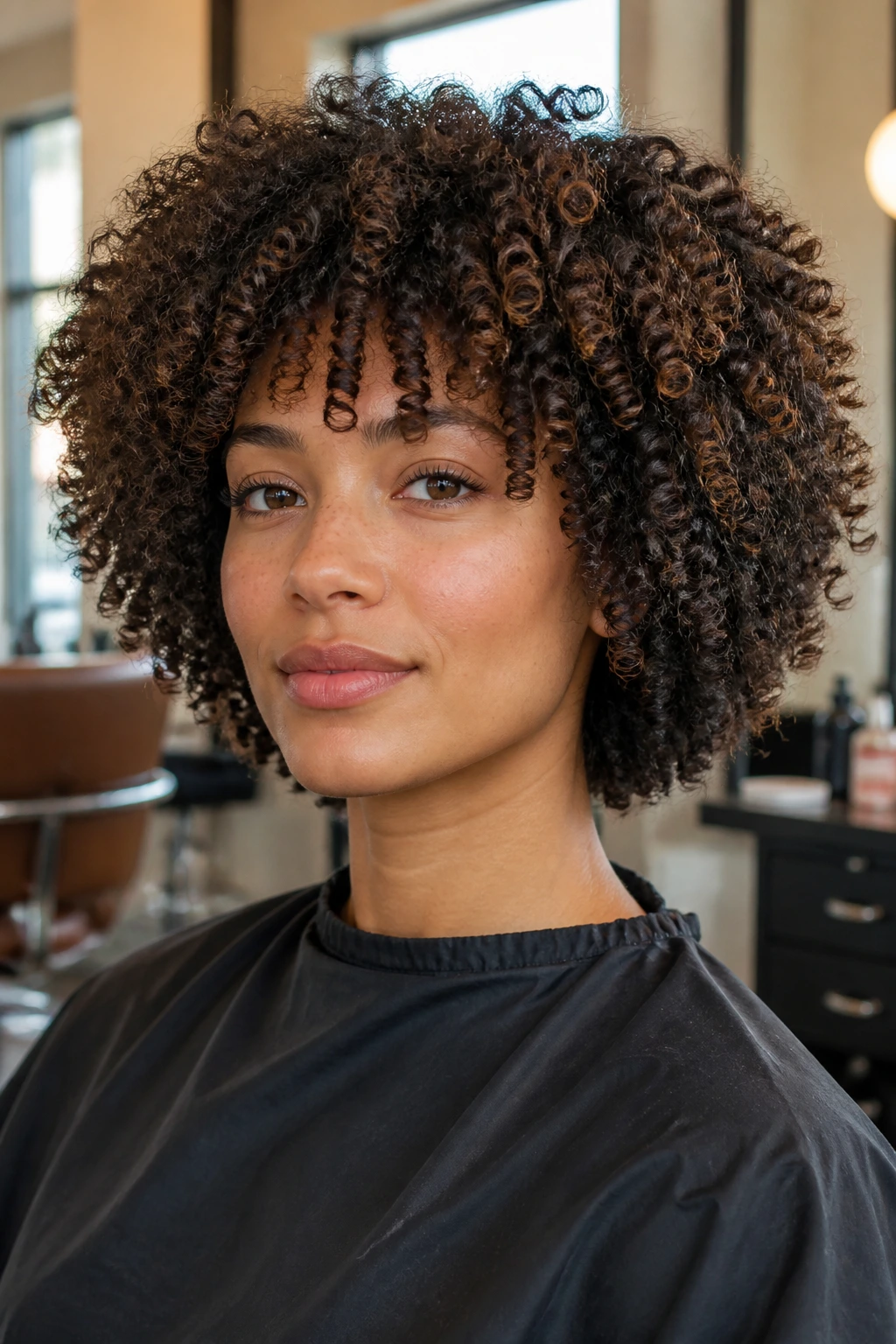
What if the goal is not to flatten the head, but to follow it? The halo cut does exactly that. It traces the natural curve of tighter curls and coils so the silhouette stays rounded and even from every angle.
This is a strong shape for dense texture because it respects shrinkage instead of negotiating with it. The perimeter sits where the curls want to sit, which keeps the cut from turning into a triangle. It can look sculpted or soft depending on how much face framing you keep, but the core idea stays the same: roundness with control.
It suits tighter curl patterns especially well, though some 3C textures can wear it too. The real key is balance around the crown and sides. If one side is heavier, the whole halo feels lopsided fast.
19. Long-Bang Pixie Bob
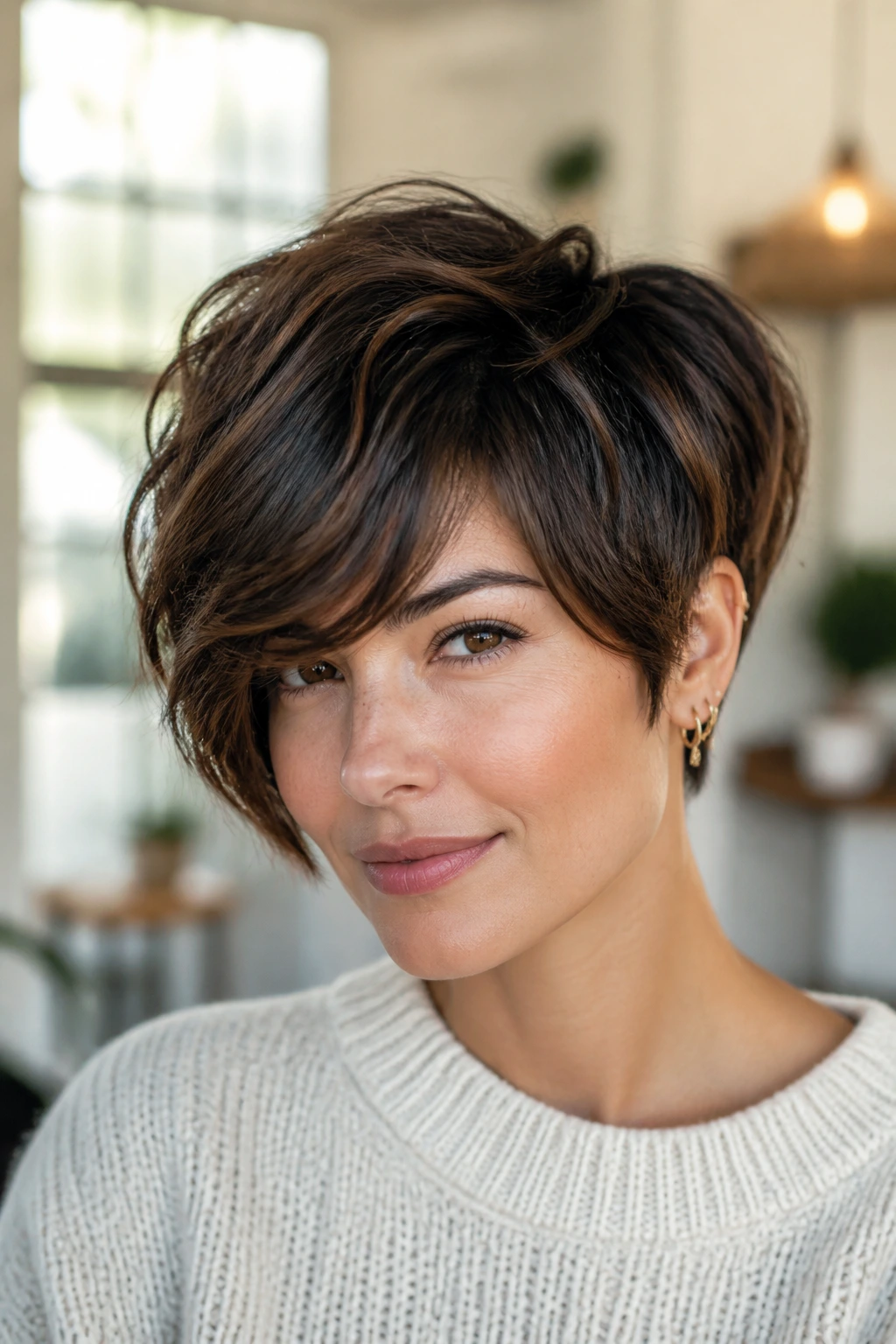
A long-bang pixie bob gives you short hair without giving up the drama of a fringe. The back and sides stay cropped, while the front keeps enough length to sweep sideways, tuck behind the ear, or fall into the cheekbone area.
On thick curls, the long bang becomes a useful anchor. It gives the eye something to follow, which keeps the cut from feeling too abrupt. It also buys you flexibility on days when you don’t want your forehead fully exposed.
This is one of the easiest cuts to style in a hurry. You can wear it with a side part, push it forward for softness, or pin back one side if the curls are misbehaving. That kind of range matters more than people admit.
20. Layered Coil Crop
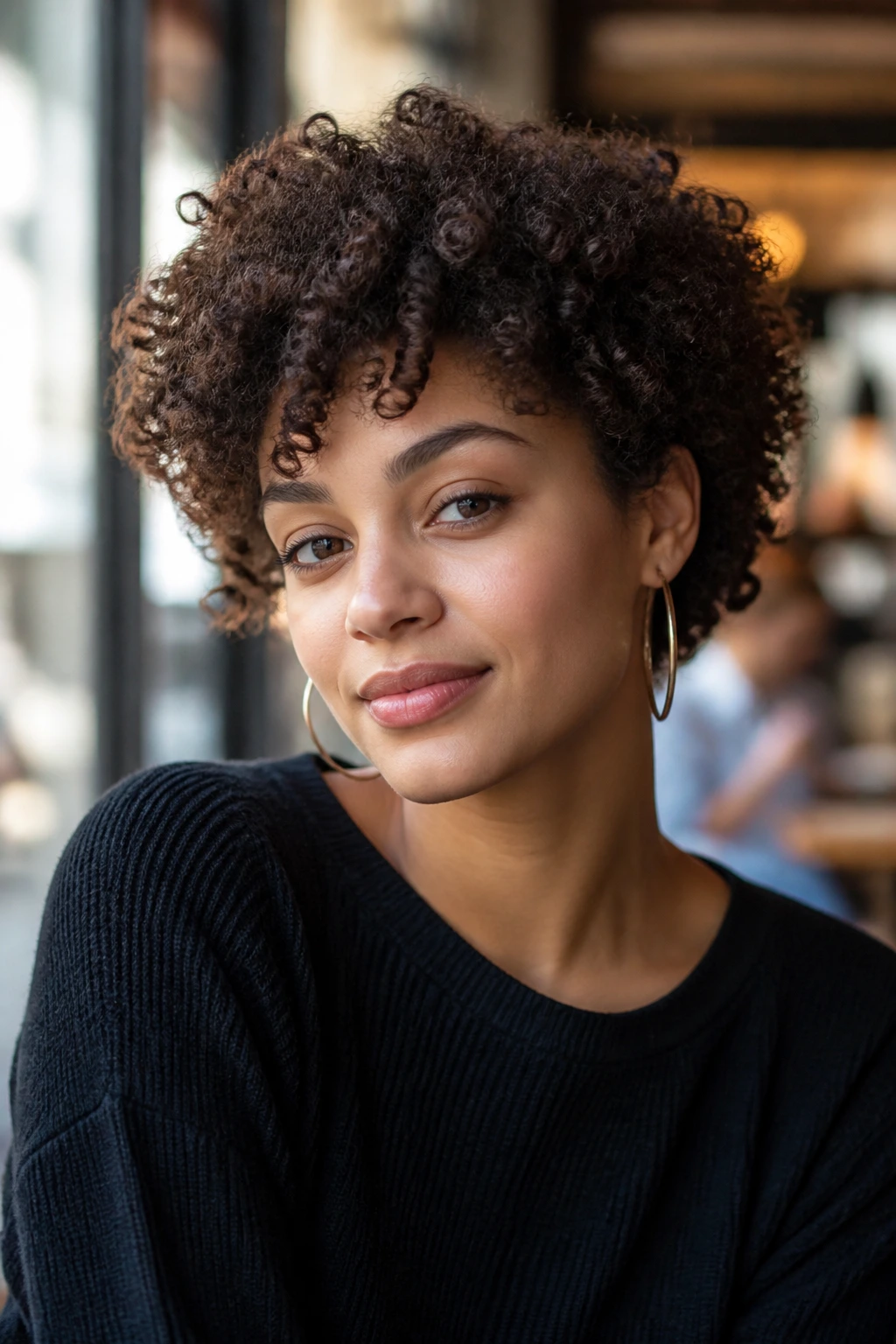
For dense coils, the answer is often not less hair, but smarter weight placement. A layered coil crop uses layers that follow the coil pattern instead of cutting across it, so the shape stays compact while the curls still have room to move.
This cut works especially well when one part of the head grows heavier than the rest. The layers can rebalance the crown, open the sides, and keep the shape from collapsing into one big mass. That said, the layers need discipline. Too many short pieces and the whole thing starts fuzzing out.
A good layered coil crop looks intentional from every angle. It should feel lighter, not thinner. There’s a real difference.
21. Rounded Afro Crop
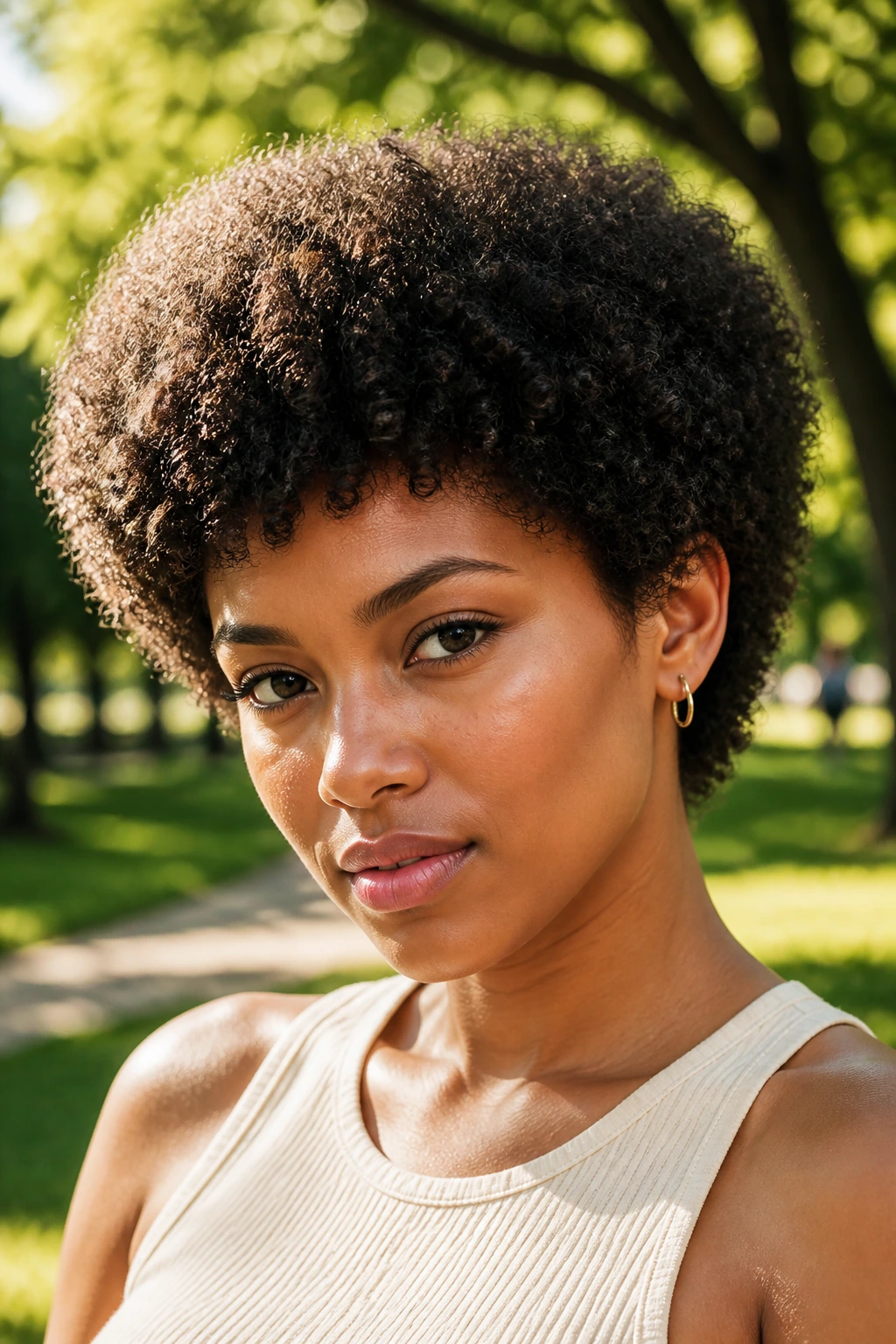
The rounded afro crop is the most shape-conscious cut in the group. The silhouette stays soft and balanced, with the widest point controlled on purpose instead of by accident. That matters when thick, frizzy hair wants to expand in every direction at once.
This cut depends on regular shaping around the edges and a stylist who is willing to read your density instead of fighting it. The outline should feel rounded, not squared off, and the curls should have enough room to form a cloud with boundaries. That is the sweet spot.
If you want presence without a hard line, this is a strong option. It keeps the texture front and center while still giving the haircut a clear design.
22. Soft Pageboy Curl Crop

A soft pageboy curl crop gives you a curved-under perimeter with enough interior space for the curls to spring. That combination keeps the shape neat without flattening the texture into a helmet, which is the risk with pageboy-inspired cuts if they’re handled too rigidly.
It is a quietly useful shape for dense hair. The front can stay a little longer, the sides can curve gently inward, and the ends can be point-cut so they don’t stick out. The result grows out better than people expect, especially if your curls shrink up higher than your stylist guessed.
This is the cut for someone who wants a little polish but refuses a rigid line. It’s short. It has shape. And it doesn’t need much pretending.
Why Short Curly Cuts Need a Different Cutting Logic
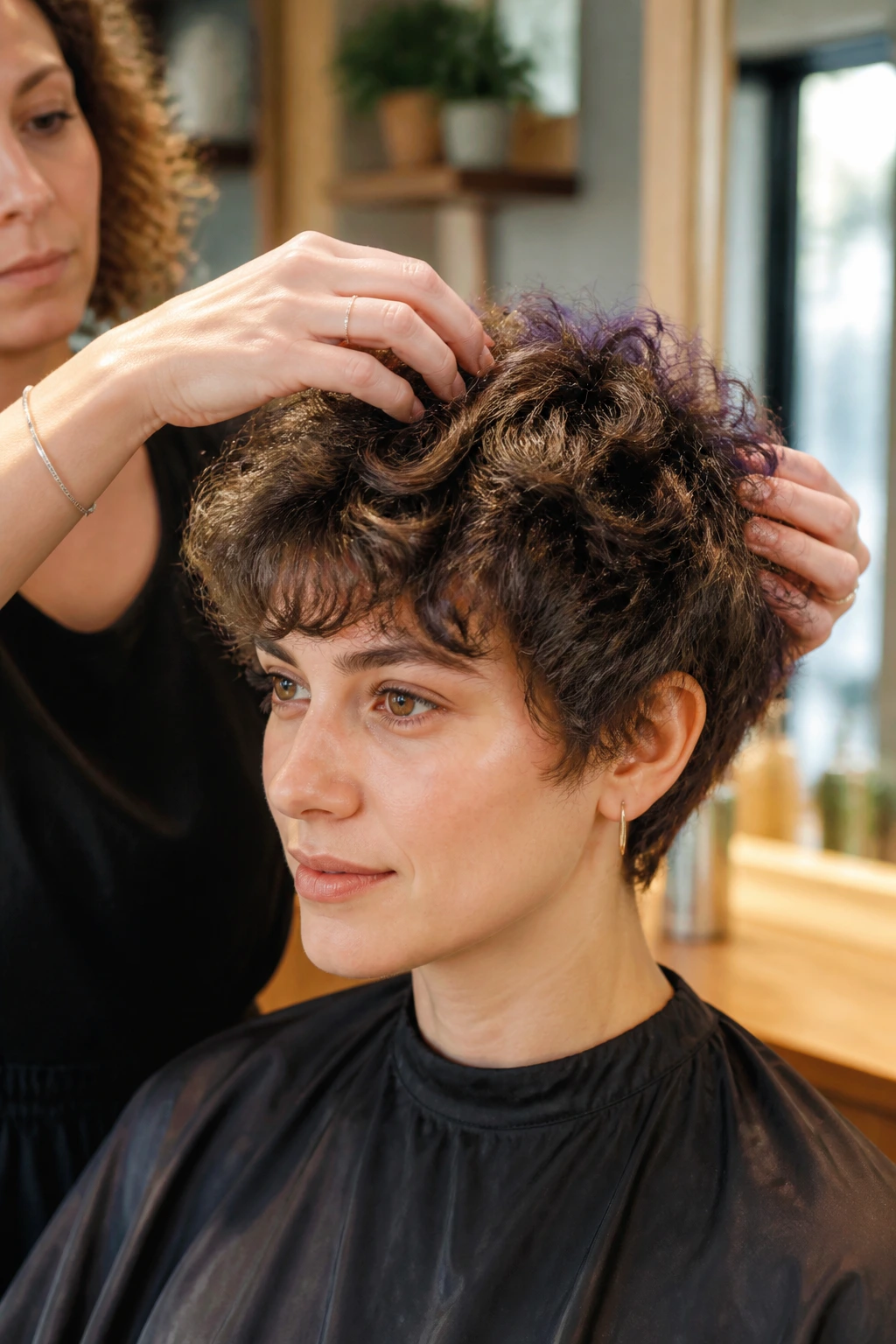
Short curly cuts for thick, frizzy hair only work when the cut respects how much the hair changes after it leaves the chair. Wet curls lie. Dry curls spring, bend, and spread, and dense hair does all of that with extra force because there is simply more of it.
That’s why bluntness can be a trap. A clean line on paper can turn into a shelf on the head. A layer that looked harmless when the hair was wet can show up as a fuzzy little ridge once the moisture disappears. A stylist who understands curls is not just cutting length; they are placing weight.
Dry cutting, or at least a mostly dry curl-by-curl approach, helps because it shows where the shape actually lands. I trust that more than a quick wet snip on thick curls. The hair is telling the truth when it’s dry.
Frizz also needs a different reading. In straight hair, frizz often means something went wrong. In thick curly hair, a little frizz is often just texture lifting at the edges. The trick is to give it a home. Rounded bobs, tapered napes, side-swept fringes, and soft layers do exactly that. They turn the halo into part of the design.
Essential Tools for These Cuts
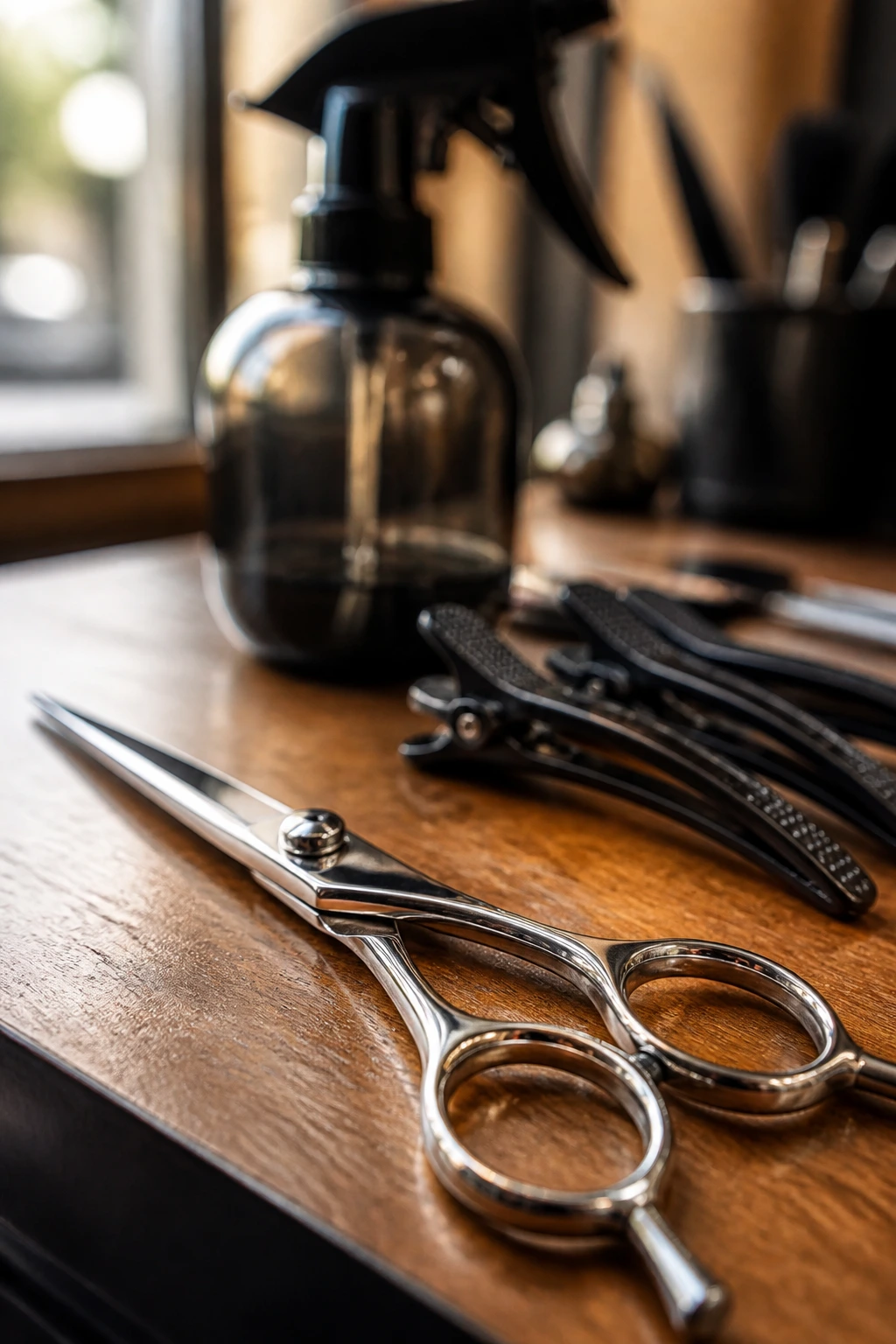
- Sharp haircutting shears: Dull scissors chew the ends and make curly hair look frayed instead of shaped.
- Sectioning clips: Thick hair needs clean sections, or the top layer hides the bulk underneath.
- Spray bottle with water: Useful for rewetting stubborn areas during styling, not for soaking the whole head.
- Diffuser attachment: The fastest way to dry curls without blasting the cuticle apart.
- Microfiber towel or cotton T-shirt: Better than rough terry cloth for reducing friction on the ends.
- Wide-tooth comb: Good for detangling in the shower when hair is coated with conditioner.
- Hand mirror: Helpful for checking the back of a tapered nape, undercut, or stacked bob.
- Satin bonnet or pillowcase: Keeps the shape from getting crushed overnight.
- Root clips: Optional, but useful if your crown collapses while drying.
Smart Product and Ingredient Tips
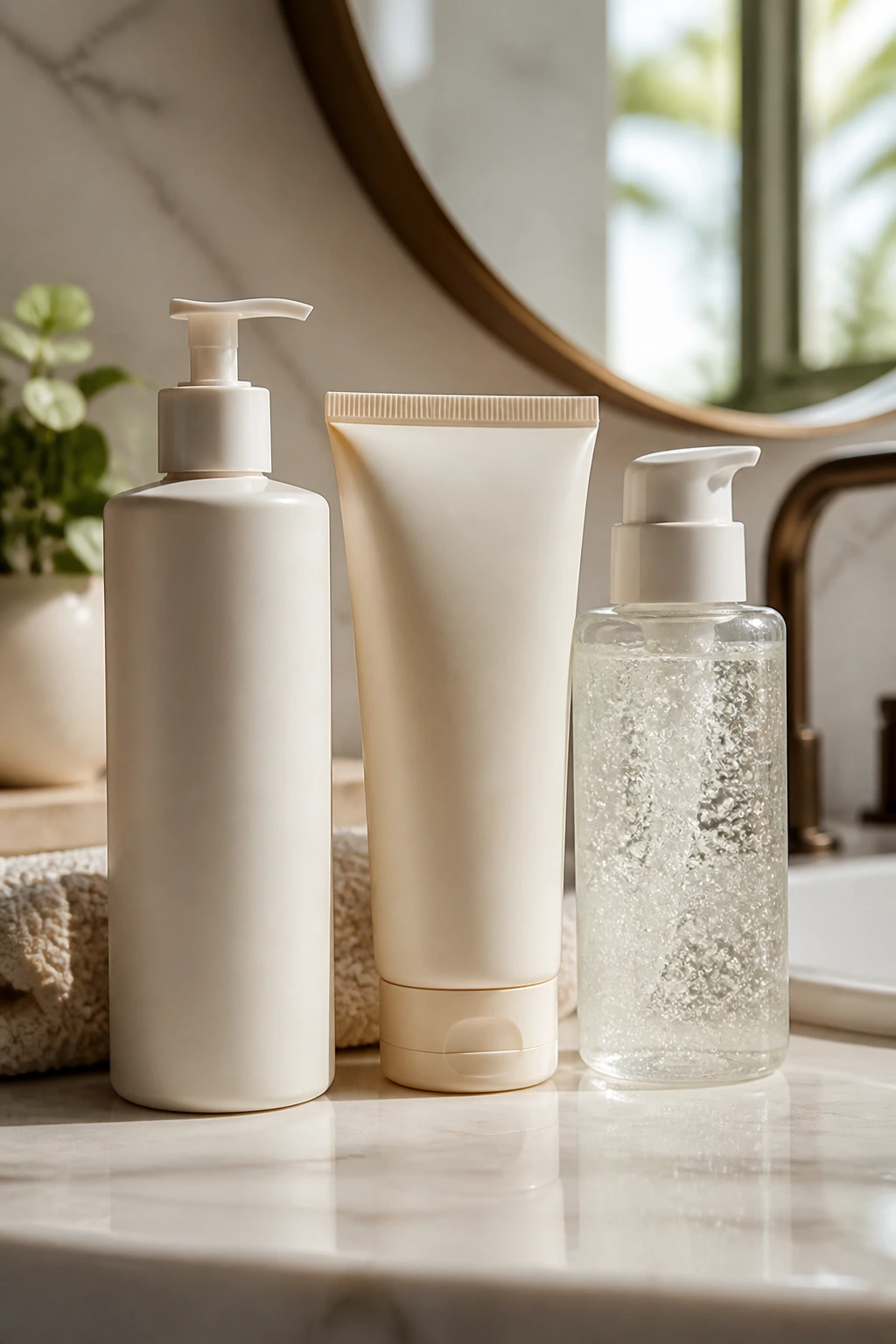
Thick, frizz-prone curls usually need a product stack that does two jobs at once: adds moisture and holds shape. If you only feed the hair with cream, it can swell and blur by noon. If you only use hard hold, it can look dry and crunchy. The middle path is usually best.
Start with a leave-in that disappears into the hair instead of sitting on top of it. If your curls feel coated by day two, the leave-in is too heavy. Follow with a curl cream only if the hair actually needs softness; coarse hair often does, fine dense hair often does not. Then finish with gel or mousse so the cut dries into the shape you paid for.
Humidity changes the rules. Hair that puffs in warm air usually does better with stronger hold and fewer oils. Hair that feels rough or brittle may need a richer cream, but even then, I’d keep it off the root area so the style doesn’t collapse. A little gloss on the ends is enough.
Clarifying shampoo matters too. Product buildup can make thick curls sit in a greasy halo that hides the haircut. Every couple of weeks, or whenever the roots start feeling coated, wash with a clarifying formula and reset the whole shape.
How to Wear These Cuts Day to Day

Shape: Short curls look best when the silhouette is chosen on purpose. A rounded bob keeps the width soft, a tapered crop keeps the neck open, and a shag gives the crown some lift.
Styling: Most of these cuts do better on soaking-wet hair than damp hair. Work product through with your fingers, scrunch or rake depending on the cut, then diffuse on low heat until the roots feel set and the curl cast starts to form.
Refresh: The next morning, mist the top layer lightly, smooth a pea-sized amount of leave-in over the frizziest pieces, and wake the curls back up with your hands. Don’t drench the whole head unless you want to rebuild the style from scratch.
Trim Schedule: Pixies and crops need shape-ups every 4 to 6 weeks. Bobs can usually wait 6 to 8 weeks. Undercuts need the shortest interval of all if you want the outline to stay clean.
Additional Tips and Texture Boosters
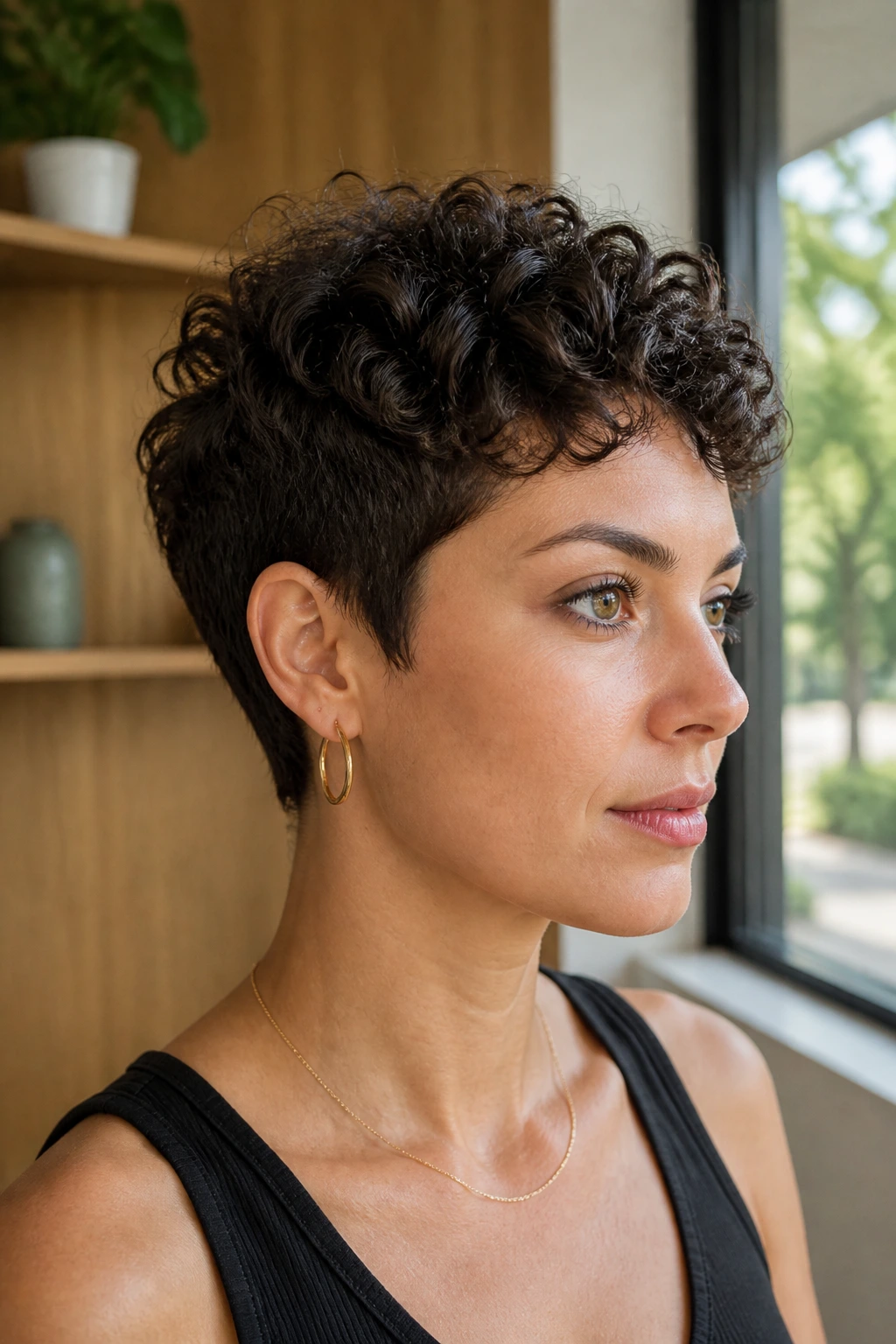
Frizz Control: Put product on soaking-wet hair and stop touching it once the cast starts to form. Finger-fussing after that point is how you get fuzz at the surface.
Volume Control: If the crown falls flat, clip the roots at the top for 10 to 15 minutes while the hair dries, then remove the clips before the hair finishes setting. That gives lift without leaving dents.
Definition: Use finger-coiling only on the pieces that need help — the fringe, the front corners, or the section that always splits weirdly. Coiling every curl on the head can make the style look too neat and can be a headache to maintain.
Make-It-Yours: A center part makes a rounded bob feel cleaner. A deep side part shifts weight and softens wider faces. Longer fringe helps if your forehead feels exposed; shorter side pieces help if you want the eyes to stay open.
One thing I’d avoid is over-thinning. Thick curls can take a little internal debulking, sure. They usually do not need to be shredded. The more you slice the ends apart, the more each strand has a chance to bloom into frizz.
Common Mistakes to Avoid
-
Cutting too much while the hair is wet: Curly hair shrinks in a way that can fool even experienced hands. If the haircut looks perfect when wet but is suddenly two inches shorter and wider once dry, the shape was judged too early. Dry cutting or dry refining fixes that.
-
Using thinning shears everywhere: Thinning can help remove bulk in small spots, but heavy use leaves frayed ends and a halo of little flyaway pieces. The fix is interior weight removal or careful point cutting, not wholesale thinning.
-
Putting bangs too short: Short curly bangs bounce higher than most people expect. If you cut them to the middle of the forehead wet, they may rise to the hairline dry. Keep them longer and trim again after they settle.
-
Ignoring the nape: Thick hair can build a shelf at the back of the neck faster than you think. If the nape stays too full, the whole cut looks wider and older. A soft taper or careful undercut keeps the back from taking over.
-
Loading on heavy cream with no hold: Softness without hold usually turns into a puffy outline by afternoon. The better fix is a lighter leave-in with a gel or mousse that locks the curl group in place.
-
Letting one curl pattern dictate the whole shape: Mixed-pattern heads are common. A tighter crown and looser front need different handling, or the haircut ends up balanced for only half the head. A curl-aware stylist reads each zone separately.
Variations and Adaptations to Try
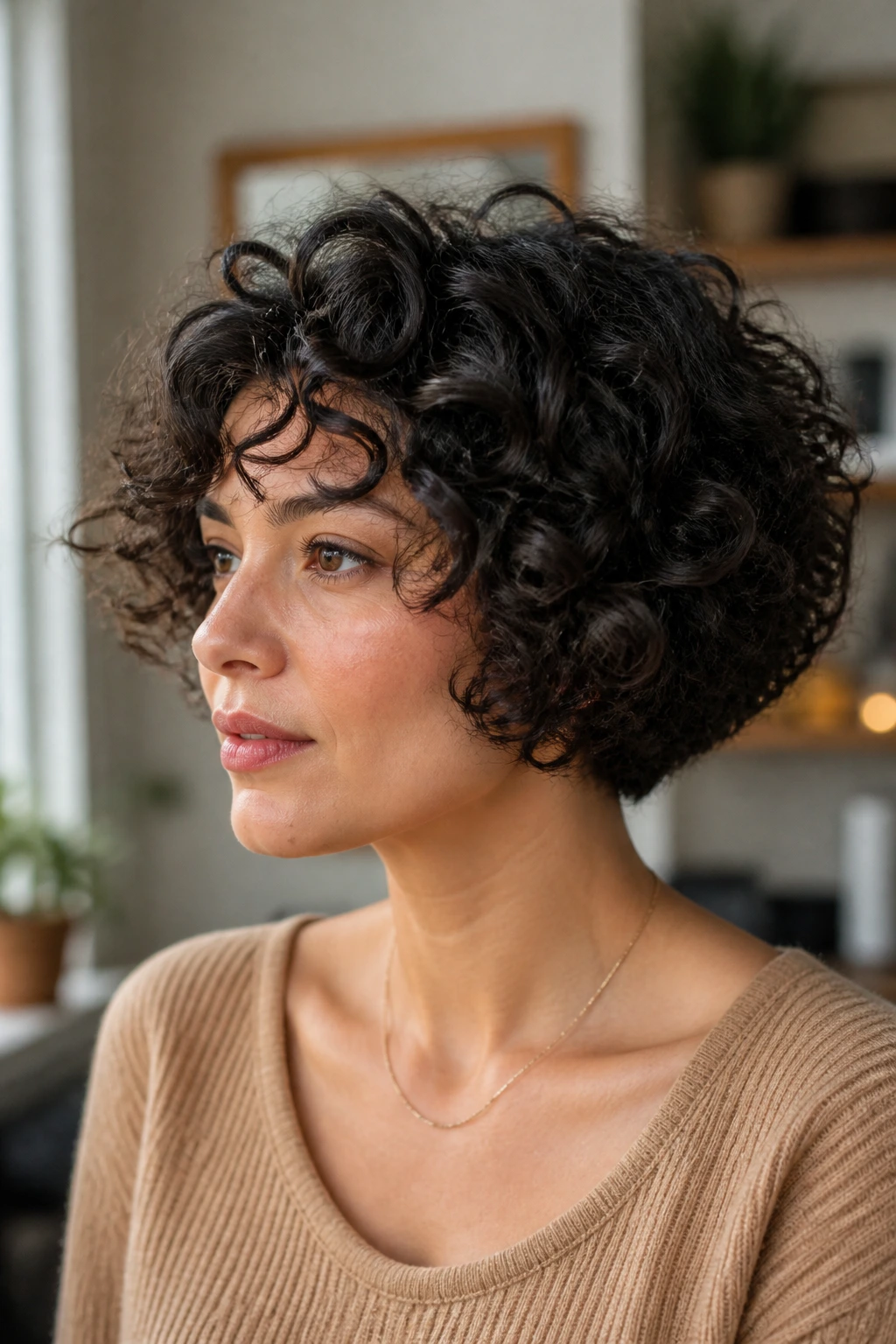
Humidity-First Version: Keep the perimeter a little longer and use stronger-hold gel from root to tip. This works when the air expands your curls before you even finish coffee. It also helps if your hair frizzes most around the temples and crown.
Low-Routine Version: Choose a rounded bob or long-bang pixie bob with minimal face framing. Fewer short layers mean less daily reshaping, which is a relief if you want to wash, scrunch, and leave. The cut should still have enough internal movement to avoid a boxy outline.
Coily-Crown Version: Ask for extra shape control at the crown and a soft taper at the nape. This keeps tighter textures from building a heavy dome while preserving the rounded silhouette. It works best when the perimeter follows the natural shrinkage pattern.
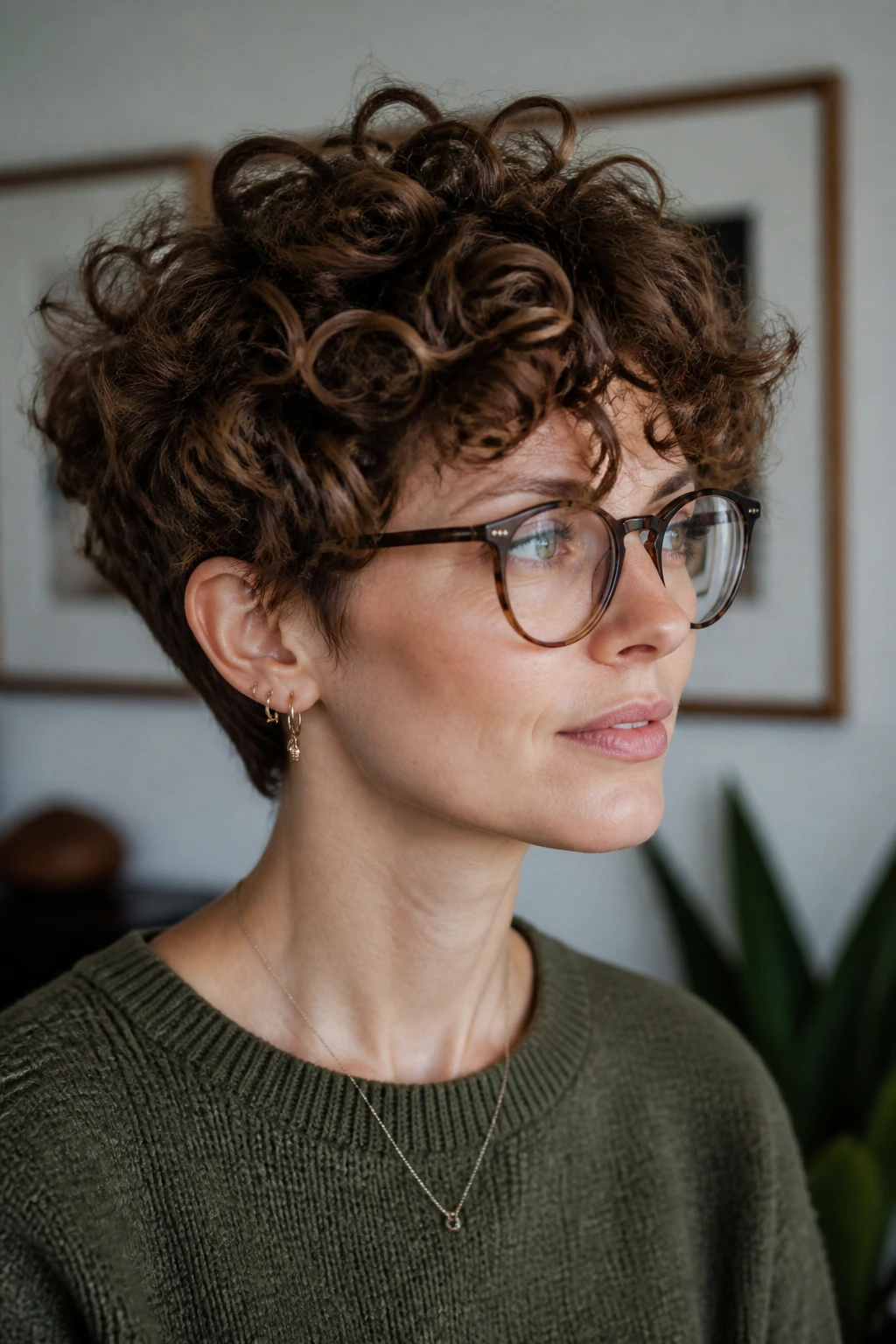
Glasses-Friendly Version: Keep the sides slightly shorter and the fringe long enough to tuck. That stops curls from crowding the frames and keeps the shape open around the temples. A side part usually helps here too.
Grow-Out Friendly Version: A soft pageboy or stacked bob gives you structure without a harsh line. As the hair grows, the shape blurs in a way that still looks intentional, which buys you time between trims. That matters if you hate the awkward middle phase.
Keeping the Shape Between Wash Days
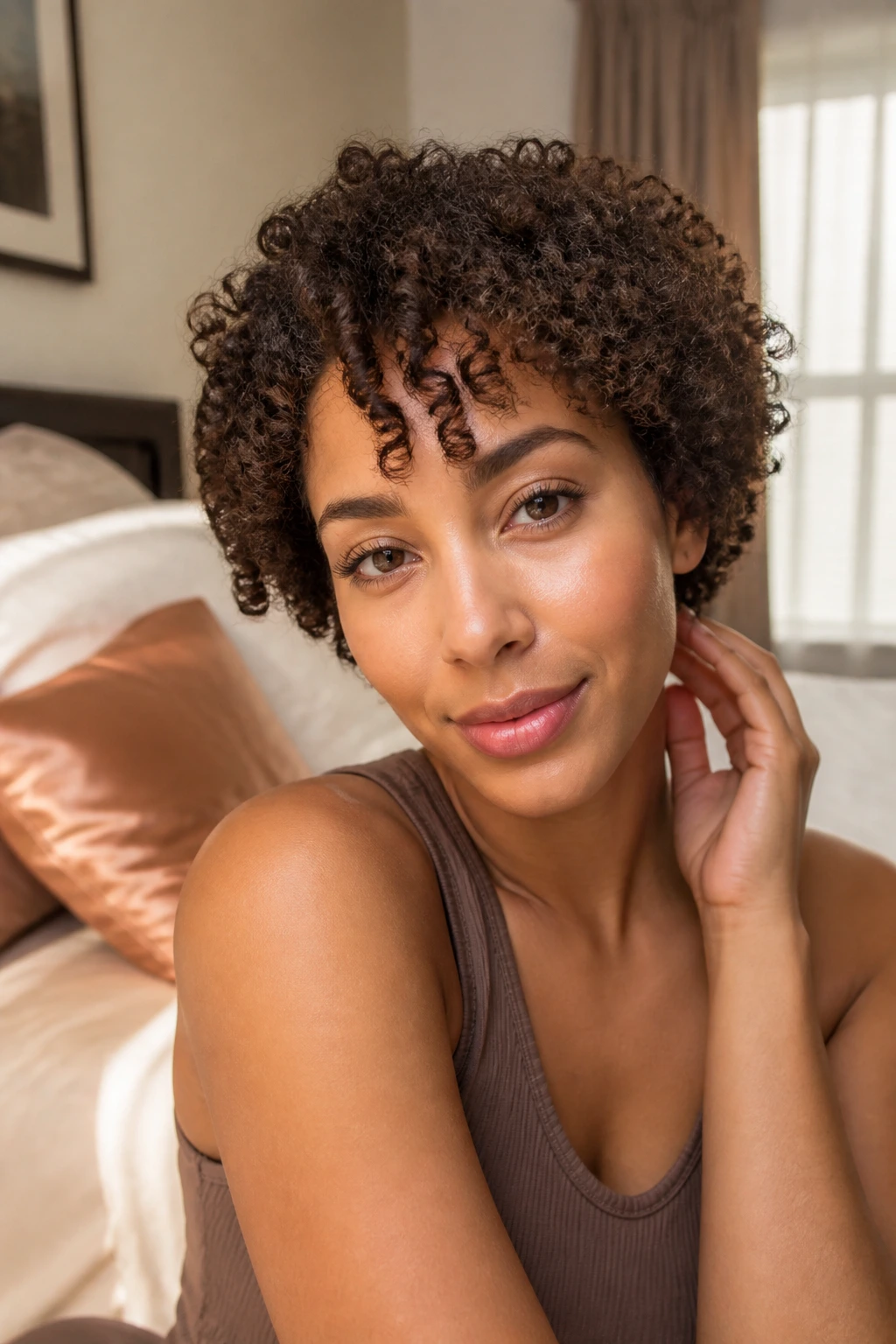
Short curly cuts survive on routine more than luck. If the hair is fully dry before bed, a satin bonnet or pillowcase will keep the curls from flattening and the frizz from turning into a halo. A loose pineapple works on longer bobs and shaggy shapes, but pixies and crops usually do better with a bonnet or simply sleeping on satin.
The next day, revive the top first. A light mist of water, a touch of leave-in, and a quick scrunch can bring the curl clumps back without redoing the whole head. If a few pieces on the fringe misbehave, wet just those sections and reshape them with your fingers. You do not need to soak the whole cut to get it back.
Trim timing matters more on short curly cuts than on long ones. Pixies and crops can lose their shape in a month or two if you ignore them. Bobs and shags are a little more forgiving, but once the nape starts puffing out or the fringe falls in your eyes, the outline is already drifting. Book the trim before you get annoyed enough to reach for a flat iron.
Questions People Ask Before Going Short
Will short curly hair make my head look wider?
It can, if the cut is blunt at the widest point or overloaded with side bulk. A good shape solves that by tapering the nape, softening the perimeter, and keeping the widest part of the silhouette where your head actually needs it.
Is a dry cut better than a wet cut for frizzy curls?
For most dense curls, yes. Dry cutting shows the real spring and shrinkage, which matters a lot when you’re deciding where the chin line, fringe, or nape should sit. A wet cut can still work, but it needs a stylist who already knows how your texture behaves.
Do bangs work on thick curly hair?
They do, but they need breathing room. Curly bangs usually look better long, side-swept, or soft and piecey. Short blunt bangs are a gamble unless your curl pattern is very predictable.
How often should I trim a short curly cut?
Crops and pixies usually need a shape-up every 4 to 6 weeks. Bobs and shags can stretch to 6 to 8 weeks, depending on how fast your curls expand and how picky you are about the outline.
What if my curls are different all over my head?
That’s normal. Crowns are often tighter, sides looser, and the nape has its own little agenda. The cut should balance those zones separately instead of forcing them into one pattern.
Can I still wear it smooth sometimes?
Yes, but short curly cuts are usually designed to look best in their natural state. If you straighten occasionally, keep heat low, use a protectant, and accept that the silhouette may not land exactly like it does when curly.
Which short cut is easiest if I air-dry and leave?
A rounded bob, French bob, or long-bang pixie bob tends to cooperate well. They have enough shape to look deliberate without needing a long styling session.
What if the cut turns into a triangle?
That usually means the weight sits too low or the top is too flat. A stylist can fix it by removing bulk from the right zone, softening the perimeter, or rebalancing the crown. The shape problem is usually not the curl itself.
The Shape That Lets Texture Breathe
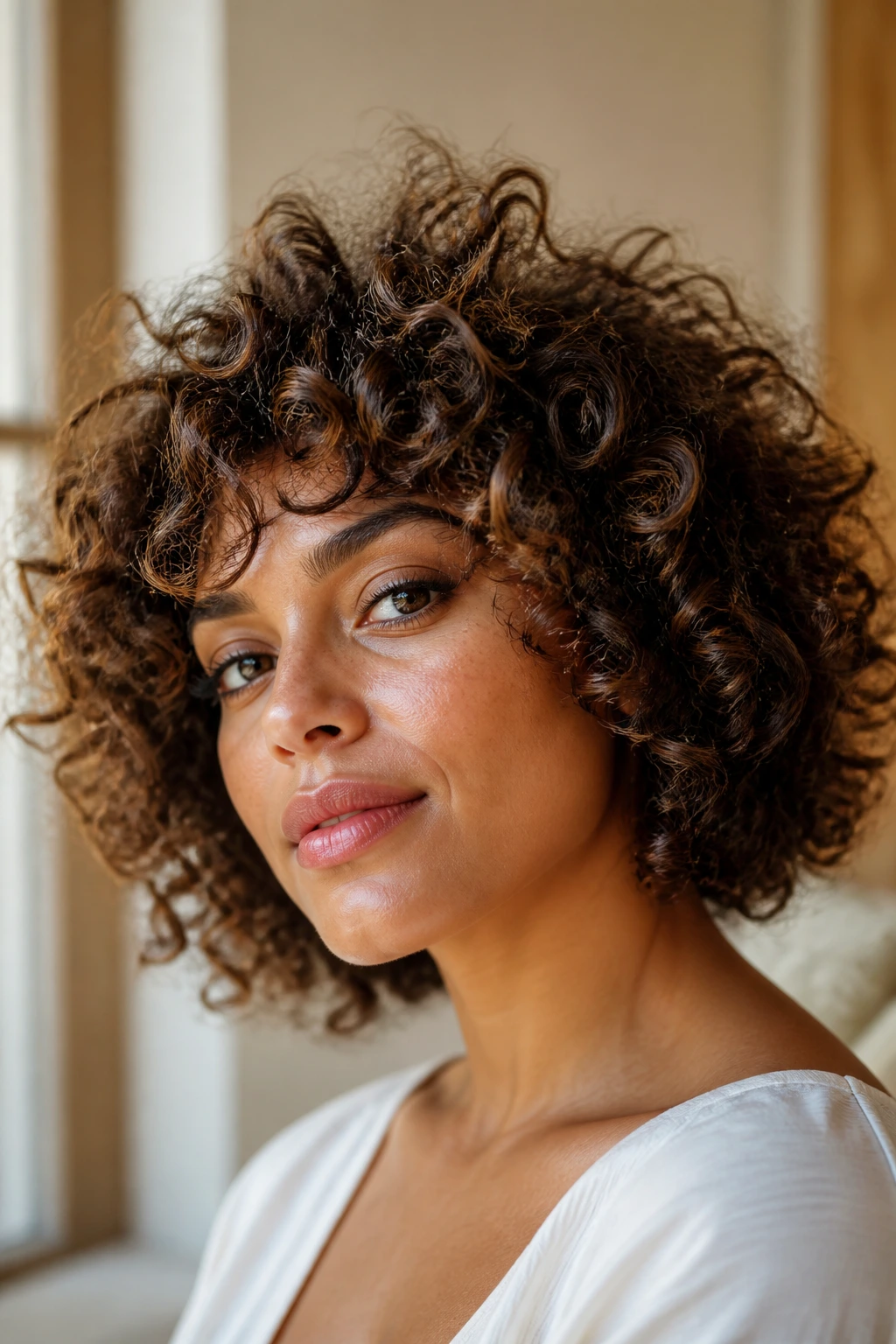
The best short curly cuts for thick, frizzy hair don’t flatten the texture. They arrange it. They put the bulk where it helps, trim the places where it fights the silhouette, and leave enough curl length for the hair to spring without turning chaotic.
That’s why the strongest cuts here feel so different from a straight-hair bob or pixie. They’re built around movement, shrinkage, and the little surprises that dense curls bring to every haircut. When the shape is right, the hair stops arguing with itself.
Pick the outline that matches your density, not the one that looks neat only when wet. That one detail changes everything the first time you walk outside.
