



Short hair looks especially sharp when the front is brushed back and the outline stays clean. That’s the entire magic behind slicked back looks for women with short hair: you get face, bone structure, earrings, and neckline all at once, with none of the fuss that longer hair can bring into the room. When the shape is right, the style looks deliberate. When it’s wrong, it looks like you ran late and reached for the nearest bottle of gel.
The trick is not “more product.” It’s smarter product. A pixie needs different handling than a chin-length bob, and curly short hair needs a different finish than a blunt straight crop. If you’ve ever overdone the gel and ended up with crunchy edges, white flakes, or a crown that looks helmet-flat, you already know the line is thin. A good slick back is clean, controlled, and still alive enough to move when you turn your head.
These 22 looks move through that range on purpose. Some are glossy and dramatic. Some are softer, with a brushed-back front and a little texture left in the ends. A few lean vintage. A few are built for curls, coils, or fine hair that needs help staying put. Start with the shape that matches your cut, then borrow the details that make it feel more like you.
Why These Slicked-Back Looks Work So Well on Short Hair
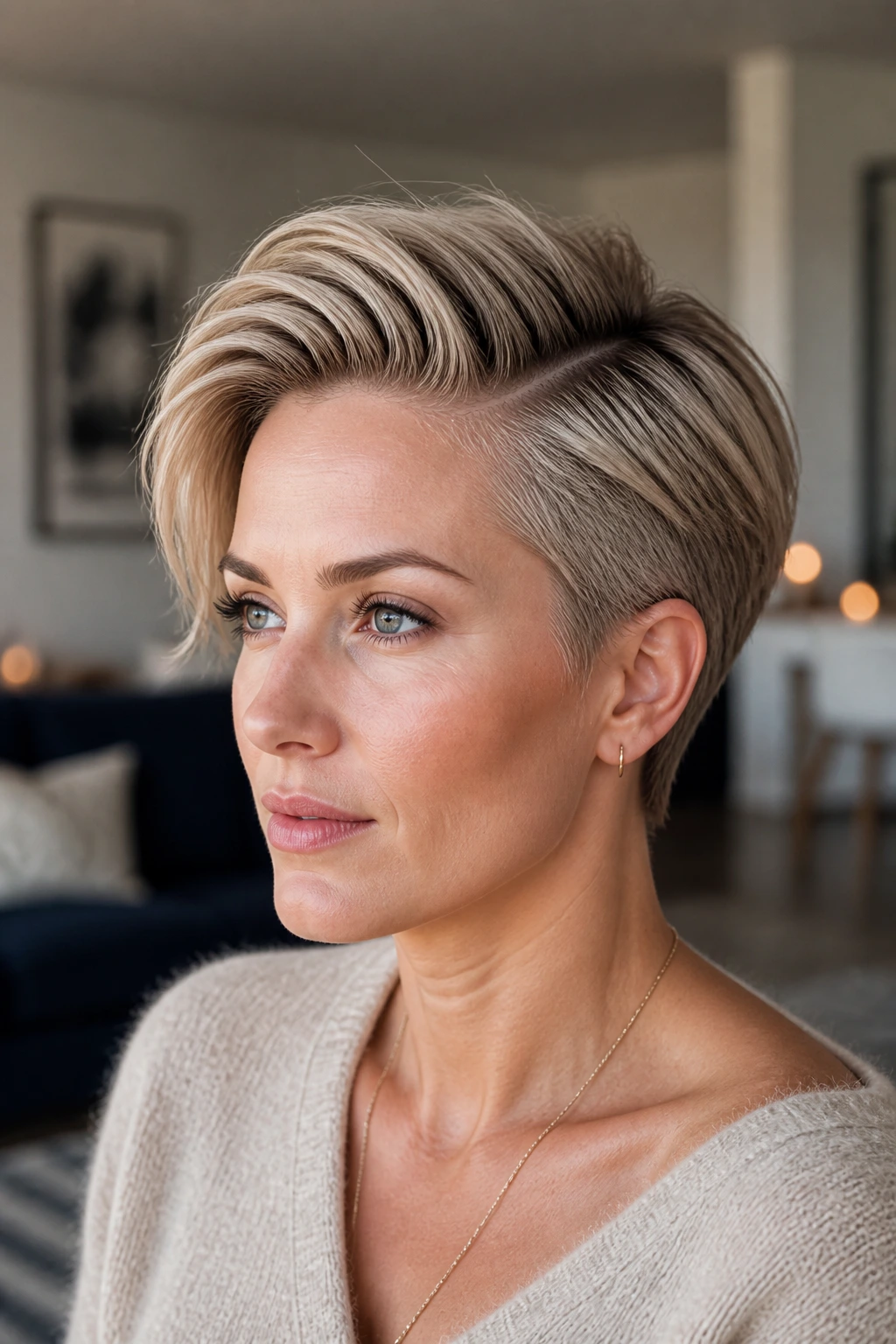
- Less length means less drama: Short hair takes a fraction of the product that longer hair needs, so you can get control without drowning the cut in gel.
- The outline does the heavy lifting: On a pixie or bob, the hairline, temples, and nape stay visible, which makes the shape read clearly even from across a room.
- Second-day hair becomes a feature: That piecey, slightly separated texture that can look messy on longer cuts often works in your favor once it’s brushed back.
- The mood changes fast: A center part, deep side part, tucked ear line, or lifted crown can turn the same cut from tidy to evening-ready in minutes.
- Texture still matters: Straight hair gets a glassy finish, waves get a brushed-back bend, and curls can stay defined while the roots sit close to the head.
- Accessories land better here: Short hair gives earrings, barrettes, and headbands room to breathe. Nothing gets swallowed up.
1. Deep Side-Part Pixie Sweep
A deep side part gives a short pixie shape and direction in one move. Brush the heavier side back toward the crown, keep the opposite side flatter at the temple, and the whole cut suddenly looks more expensive than the sum of its parts. The best version has a little lift at the roots and a smooth line at the front, not a wet slab glued to the scalp.
How to Style It
Use a pea-sized dab of strong-hold gel or cream on damp hair, then comb in a side part while the hair is still cooperative. Push the top section diagonally back with a fine-tooth comb and tap the temples down with your fingertips. If the roots are stubborn, hit them with a blow dryer and a concentrator nozzle for 20 to 30 seconds before the product sets. That tiny bit of heat makes the part stay put.
This look is excellent when you want the face to look a little longer and the brow line to feel clean. It also saves you when a pixie has grown out slightly and the front wants to flip in odd directions.
What to Watch For
- Too much product turns the front into one hard sheet.
- A shallow side part loses the whole effect.
- If the crown lies too flat, the style can look severe rather than polished.
2. Wet-Look Micro Bob
A micro bob brushed straight back has a nice blunt confidence to it. The ends usually sit around the jawline or just above it, which means the finish needs to be clean all the way through. The wet look suits this cut because it lets the shape stay the hero instead of fighting with a bunch of volume at the root.
This one works best when the hair is freshly washed or lightly misted and then coated with a gel that dries with shine rather than stiffness. Comb everything back, tuck the front behind the ears if you want a slightly softer line, and leave the ends smooth. If the bob has a natural bend, you can keep the bend in the lower inch while the roots stay flat. That contrast keeps the style from looking too stiff.
I like this look for evenings, warm weather, or any day when a sharp bob needs almost no extra decoration. A small hoop earring and a clean neckline are enough.
3. Center-Part Glass Crop
Can a center part on short hair look soft? Absolutely, if the finish is controlled and the crown stays close to the head. A glass crop works because the part creates symmetry while the shine makes the cut feel sleek rather than severe. On a crop that sits around the ears or just at the nape, the result is neat without looking fussy.
The Best Way to Set It
Start with damp hair and smooth in a lightweight styling cream first. Then layer a small amount of gel through the top and comb the part razor-straight with the tail of a rat-tail comb. Let the sides lie flat and keep the ends slightly sealed, not sticky. If your hair is fine, skip heavy oils at the root; they can collapse the shape before it even dries.
This style flatters strong brows, clean cheekbones, and straight or slightly wavy hair that can take a sleek finish without puffing back up. It also behaves well under hats and hoods, which sounds boring until you need it.
Quick Product Pairing
- Light cream for slip
- Medium or strong gel for the top
- A shine spray on the ends, not the scalp
4. Ear-Tucked Blunt Bob
An ear-tucked blunt bob is the quiet overachiever of short sleek hair. The cut itself does the talking: straight edges, smooth sides, and that neat tuck behind the ears that exposes earrings and jawline. It looks especially good when the hair ends are blunt enough to feel intentional rather than wispy.
The best version leaves the front just slightly lifted at the roots so the tuck doesn’t pinch the face. Use a soft brush to guide the sides back, then slide the hair behind the ears and mist the surface with flexible hairspray. If your ears tend to pop the strands forward, cross two tiny bobby pins under the back section and anchor them under the top layer. No one sees them.
This is the look I reach for when the outfit is structured: blazer, square neckline, crisp shirt collar. It likes clean lines.
5. Curved Pompadour Pixie
A curved pompadour gives a pixie a little height without making it look theatrical. The front is lifted and brushed back in a soft arc, then the sides are kept low and tidy so the shape lands in the center of the head. That curve matters. A straight-up quiff can feel sharp; this one feels smoother and a touch more wearable.
Why It Works
Short hair with fine or medium density often benefits from root direction more than extra volume. Blow-dry the front section upward with a round brush, then bend it back while the heat is still warm. A small amount of mousse at the roots gives the lift some memory. Finish with a flexible spray so the front can move a little instead of freezing in place.
If you have a narrow forehead or want more height for a special event, this is a very good shape. It also makes short hair look longer from the front, which is a useful little visual trick.
Keep It From Going Too Far
- Use a small brush. Big brushes create too much puff.
- Aim the dryer at the roots, not the ends.
- Stop before the front becomes a hard ridge.
6. Short Faux Hawk with Slicked Sides
A faux hawk on short hair is the rowdy cousin in this group, but it can still look clean. The sides get brushed back close to the scalp, while the center strip keeps more texture and lift. It’s a neat way to keep short hair from disappearing in a crowd.
The center can be shaped with fingers instead of a comb if you want movement. A matte paste gives grip, while gel on the sides makes the contrast stronger. That contrast is the whole point. Without it, the style just turns into flat short hair with no plan. If your cut has layered texture on top, let a few pieces stand up a little. Perfect symmetry would actually make it less interesting.
This one works well with sharp makeup, leather jackets, or anything that can handle a little edge. It is not the style for someone who wants invisible hair.
7. Slicked-Back Waves with Defined Ends
What if your short hair bends instead of lying flat? Keep the bend. That’s the answer. A slicked-back wave style lets the roots sit close while the ends keep a soft curve, which stops the finish from looking overworked. It’s one of the few sleek styles that still feels relaxed.
How to Get the Shape
Apply a light mousse or cream to damp hair, then brush the front and crown straight back. Do not press the wave pattern out of the lower half of the hair. If the ends flip under naturally, leave them alone. If they flip in odd directions, wrap the front sections around a 1-inch curling iron for just 5 to 8 seconds to guide them into a smoother bend.
This is a good choice for someone whose hair gets frizzy when combed too tightly. You get polish at the roots and personality at the ends. That balance is the whole charm.
Best Product Pairing
- Moisture cream for the lengths
- Medium-hold gel at the roots
- A tiny drop of serum on the ends
8. Nape-Hugging Tuck
A nape-hugging tuck is one of those styles that looks far harder than it is. The short layers are brushed flat and pinned low at the back so the silhouette hugs the neck. If your bob or grown-out pixie has pieces that barely reach the nape, this trick gives you a faux updo feeling without needing much length.
Use crossed bobby pins under the back section and aim them upward so they disappear into the hair. A few misted sections around the temples help keep the front smooth. If you want it to last through a long event, prep the hair with a light mousse first, then use a strong-hold spray after the tuck is set. The nape is where this style lives or dies, so make that area neat.
It’s especially good with high necklines. The whole shape feels clean around the ears and collar.
9. Mirror-Shine Blunt Bob
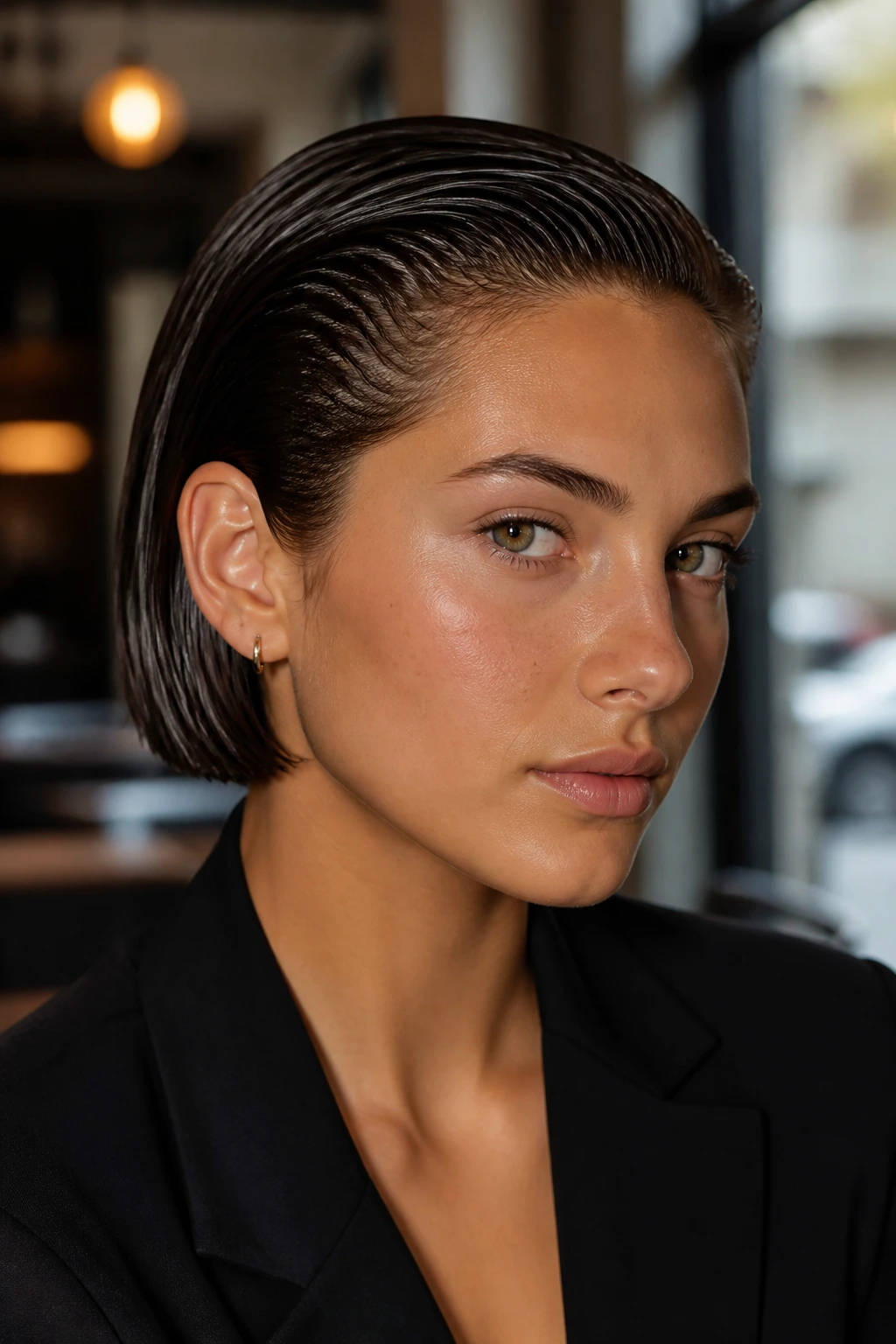
A mirror-shine blunt bob is the bluntest expression of sleek short hair. Straight lines, glossy surface, no stray fluff. It works because the bob’s edge gets framed instead of hidden, and the shine turns every angle into part of the design.
The Finish Matters More Than the Cut
Start with heat protection, then flat-iron in small 1-inch sections so the ends stay crisp. Use a touch of shine cream before the iron, not after; too much after-product can break the finish into greasy patches. If the bob is naturally thick, take a second pass only through the ends. The roots usually need less work than people think.
This style looks best on hair that is already close to straight or can be smoothed without too much effort. It also makes short hair look expensive in photos because the line is so clear. If the cut is blunt enough, you barely need anything else.
10. Soft Slicked-Back Shag
A shag can absolutely be slicked back, but only if you stop fighting the layers. The point is to keep the front and crown smooth while the broken-up ends keep a bit of lift and movement. If you flatten every layer, the shag loses the reason it exists.
Use a light cream or styling milk, not a heavy gel. Brush the top back from the face, then pinch a few layers at the crown with your fingers so they don’t all cling together. The ends should still look airy. That air is what keeps the style from reading as wet or stiff. It’s a little messy, but in a controlled way.
This works well for shoulder-grazing short cuts, layered bobs, and anyone whose hair gets better texture on day two. A silky blouse and a loose blazer suit it better than a super-structured outfit.
11. Barrette-Back Side Sweep
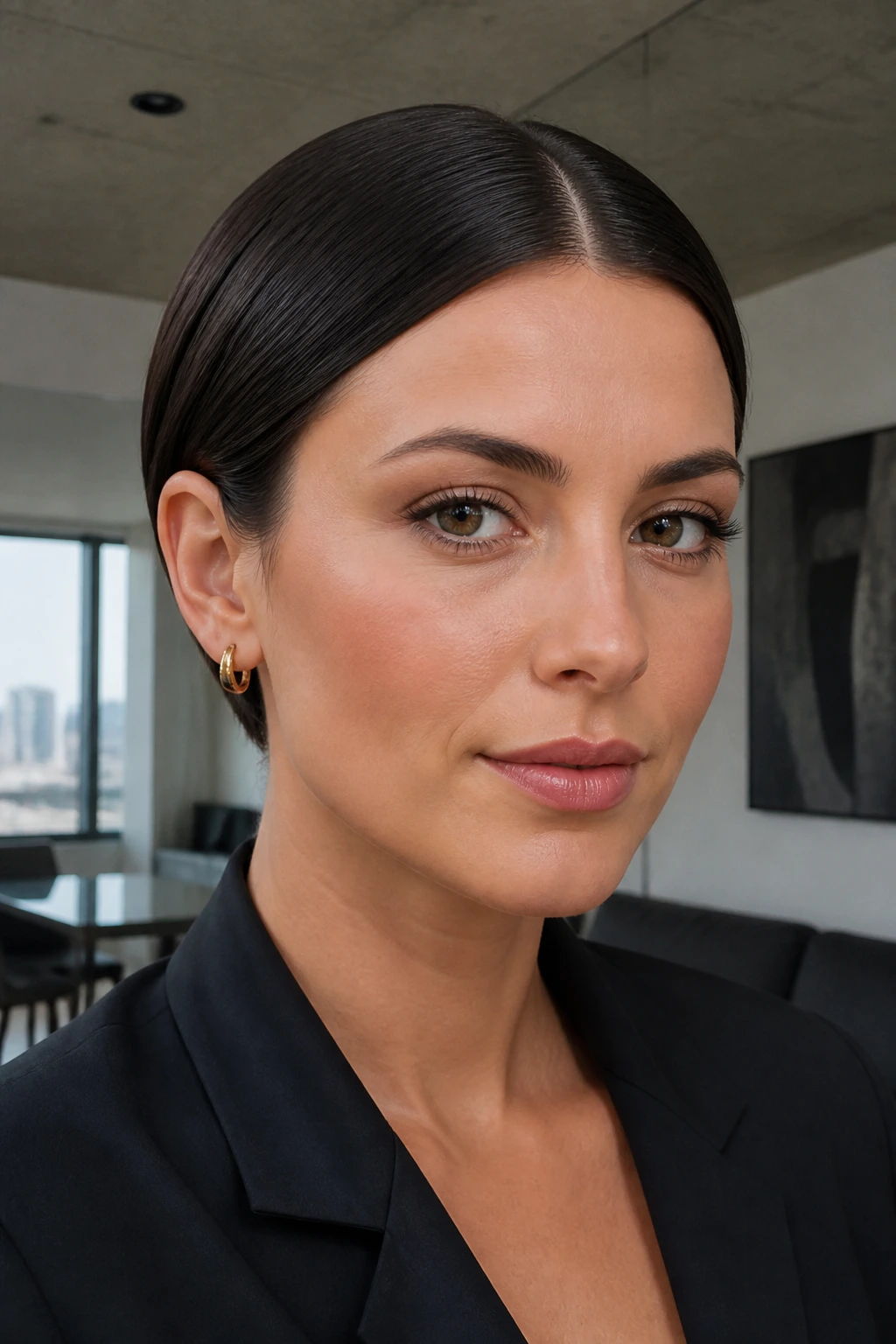
A barrette-back side sweep is the easiest way to make short hair look styled without piling on product. Sweep one side back from the part, clip it with a polished barrette, and keep the rest smooth. The clip becomes part of the look instead of feeling like a fix.
Small Detail, Big Difference
If you use two slim clips instead of one, place them in a slight diagonal. That tiny angle keeps the style from looking school-uniform plain. Keep the base sleek with a dab of pomade at the roots, then add the clip after the hair is brushed into place. Too much product under the accessory makes the hair slip.
This style is a nice answer for a bob that needs a fast refresh. It also gives you room to show off earrings on the unclipped side. I prefer it when the outfit has one strong detail and the hair should stay in the background.
Clip Choices That Work
- Pearl barrettes for softer looks
- Metal clips for a sharper finish
- Tortoiseshell if you want warmth around the face
12. Lifted Crown Pixie
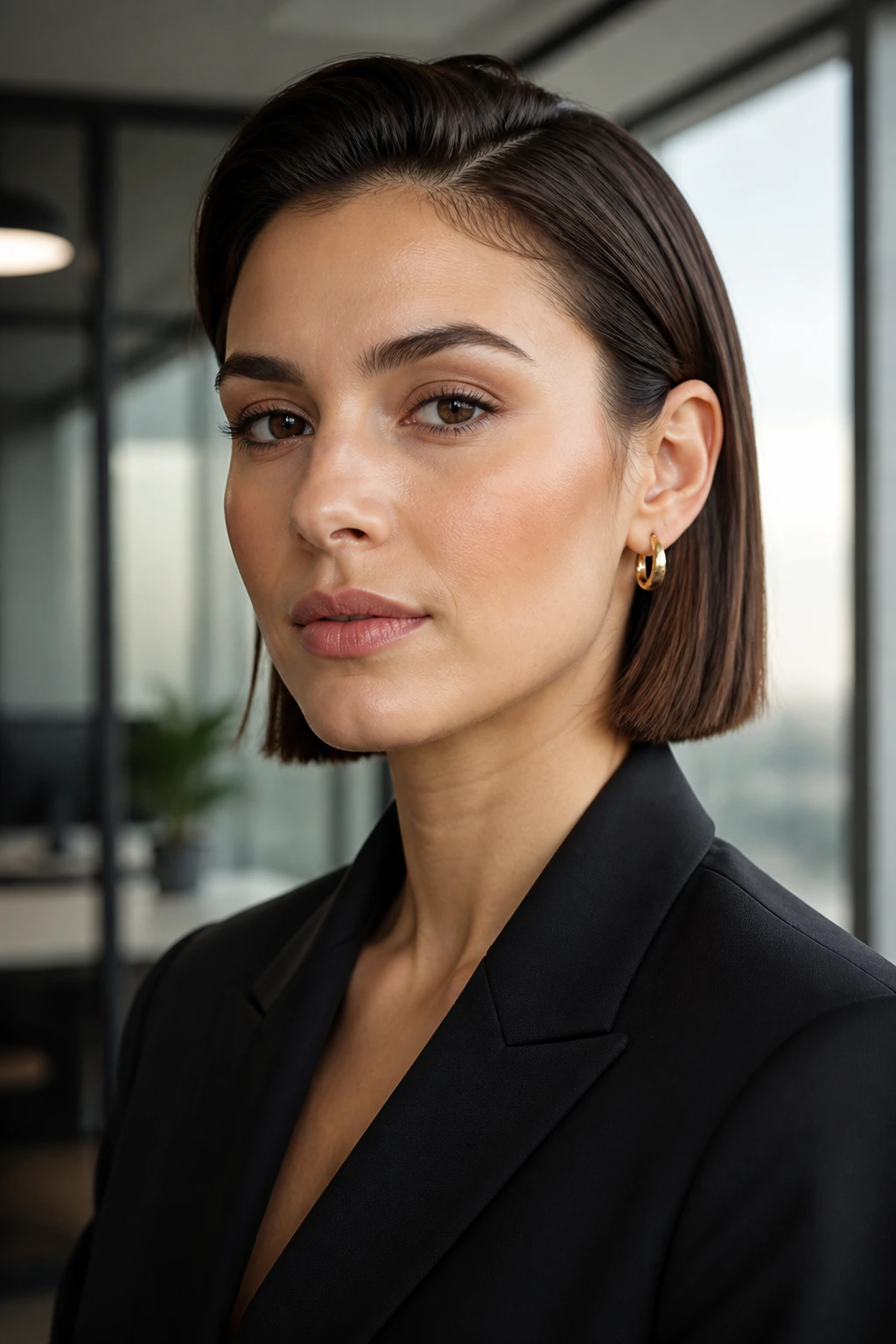
A lifted-crown pixie keeps the back and sides close while pushing a little height at the top. It’s the opposite of the flat, tight slick back some people imagine. Here, the crown gets body, and that body keeps the cut from looking too compressed.
Blow-dry the roots upward with a little mousse or root spray, then smooth the front back once the hair is dry enough to hold shape. Use your fingers instead of a dense comb if you want the crown to stay a little airy. The result should look sculpted, not puffy. If the hair starts to separate into little spikes, you’ve gone too far with the product.
This one is a good match for fine hair, because a tiny amount of lift changes the whole outline. It gives you height without turning the style into a full blowout.
13. Buzz-Cut Shine Finish
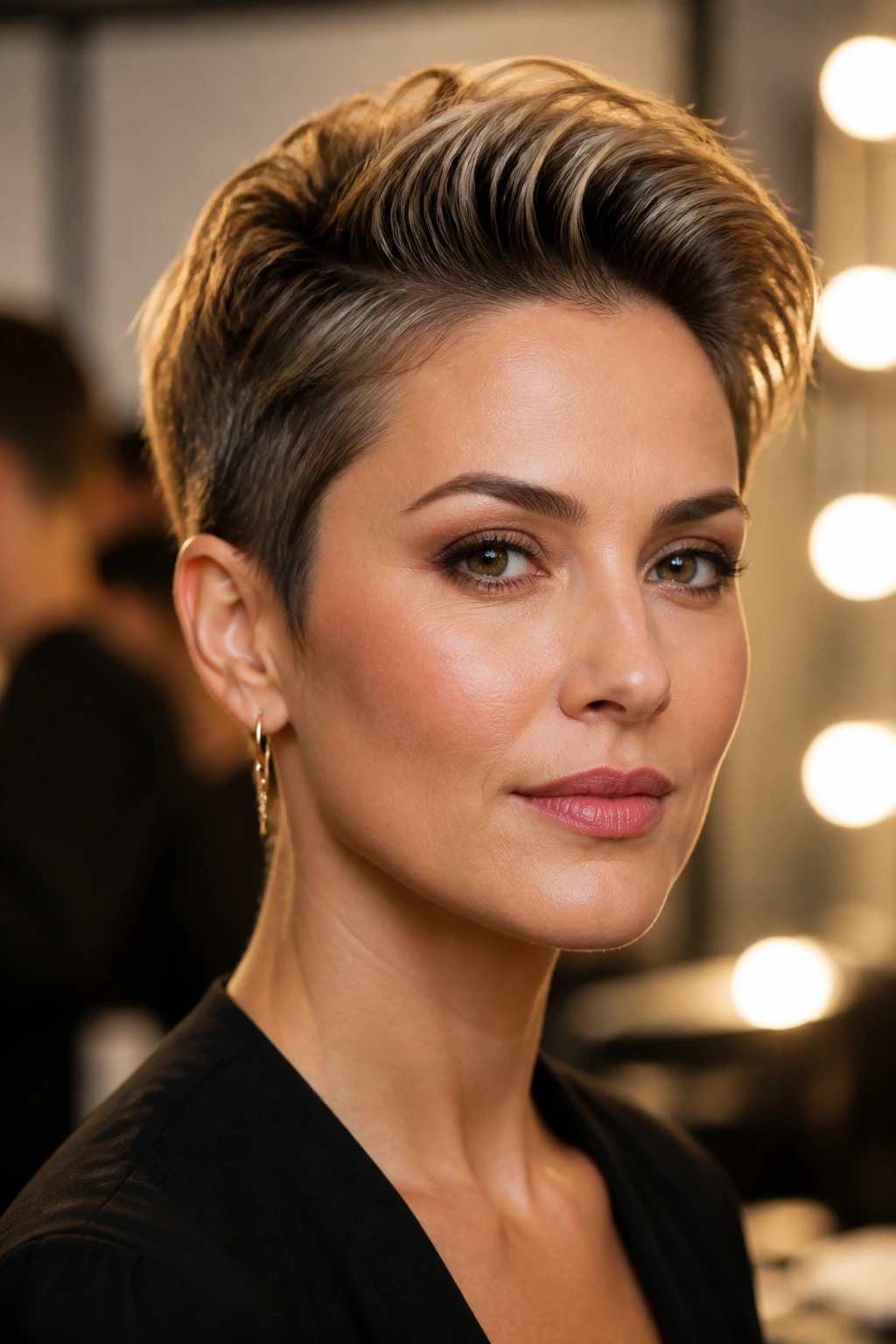
A buzz cut can look incredibly sleek with almost no visible effort, but only if the shine is even and the scalp is cared for. The finish is the look. Not the length. That’s what makes this style so striking on short hair that is close-cropped all over.
What to Use
A few drops of lightweight oil or a fine mist of shine spray are enough. More than that can leave the scalp looking greasy rather than polished. Work the product in with your palms so the sheen lands evenly, then brush the hairline with a soft toothbrush or edge brush if you want the perimeter cleaner. If the scalp is dry, prep it with a simple moisturizer first; flaky skin shows more on a buzz cut than people expect.
This style carries the most attitude when the skin, brows, and clothes are working together. The hair stays minimal, which means every other detail reads louder.
14. Wet Side Sweep
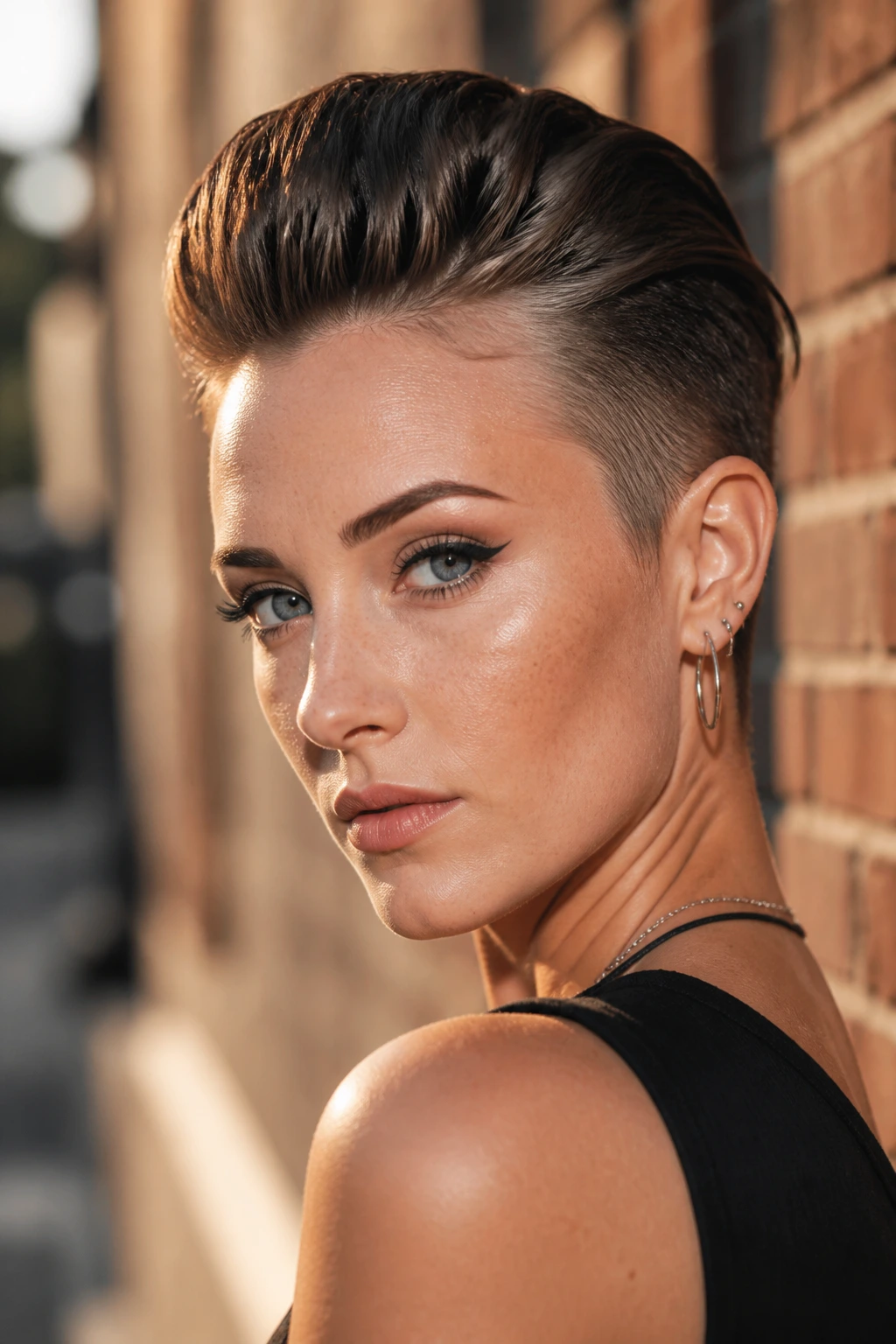
A wet side sweep is dramatic in a very controlled way. One side gets pushed across the forehead and brushed sleekly toward the opposite temple, while the rest stays close and smooth. On short hair, the diagonal line does a lot of visual work.
You need a strong gel and a comb with fine teeth. Create the part first, then press the front section over in one direction without combing it a dozen times. That usually frizzes the hair and breaks the surface. If the cut has one side slightly shorter, even better. The asymmetry helps the style feel intentional.
This look works when you want a little edge without turning the whole head into a faux hawk. It’s sharp, but not loud. And the forehead line it creates can be very flattering on short cuts with strong brows.
15. Finger-Wave Front Slick Back
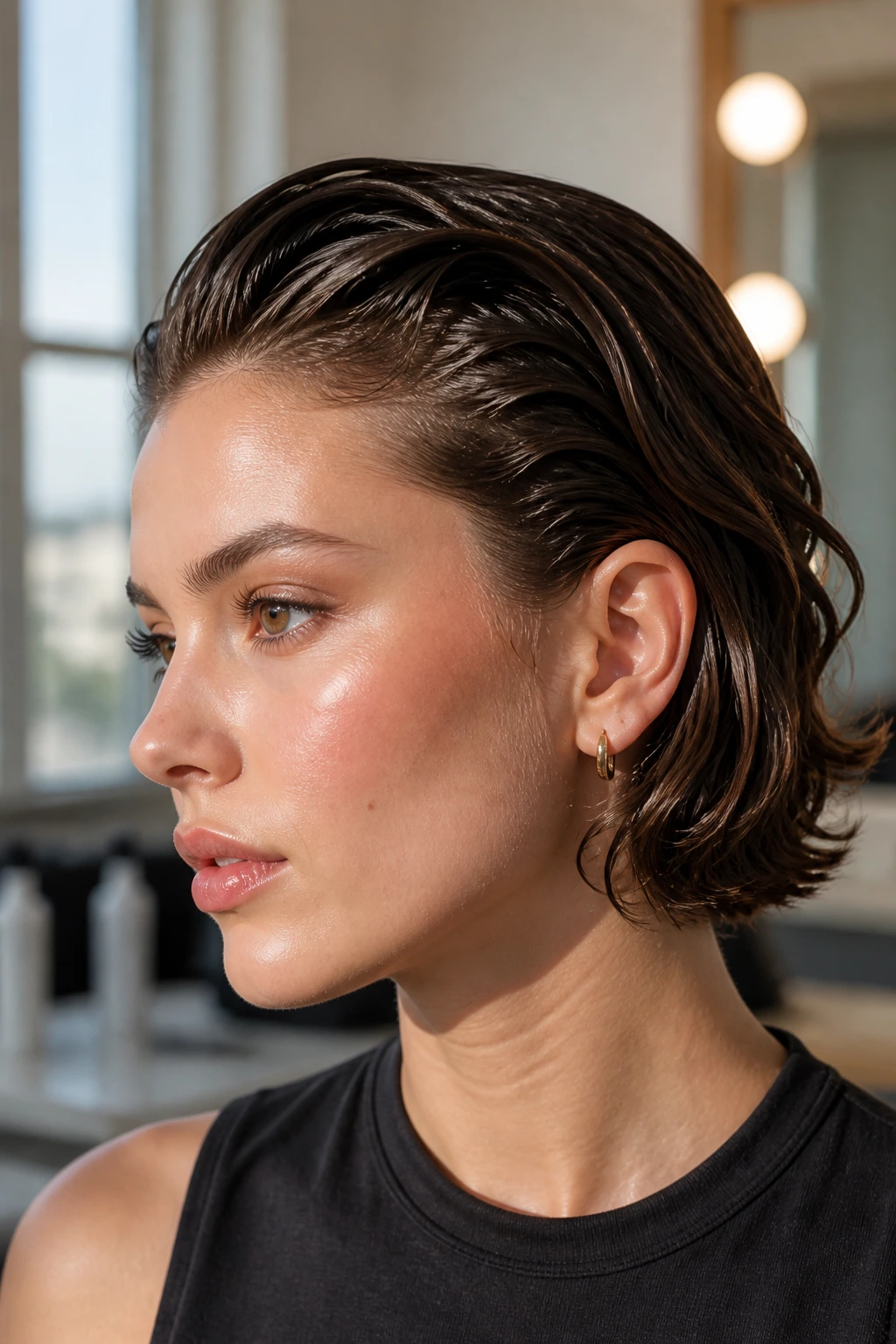
A finger-wave front gives short hair a vintage curve before the rest of the hair gets slicked back. The effect is softer than a straight comb-back, and it has a little old-Hollywood polish without needing long length. On a bob or pixie, the wave becomes the focal point.
How to Shape the Wave
Mold the front while the hair is damp using a setting lotion or gel, then press the curve into place with your fingers and a fine comb. Clip the wave while it dries if you need the bend to hold. The key is not to rush it. If the front dries before the shape sets, the wave will collapse and look lumpy instead of smooth.
This is one of those styles that rewards patience. Not a lot of patience. Just enough to let the front obey. The rest of the hair can stay brushed back and close, which keeps the finish modern rather than costume-like.
Good For
- Special events
- Short bobs with a strong side part
- Hair that holds a wave once it cools
16. Mini Twist-Back for Natural Hair
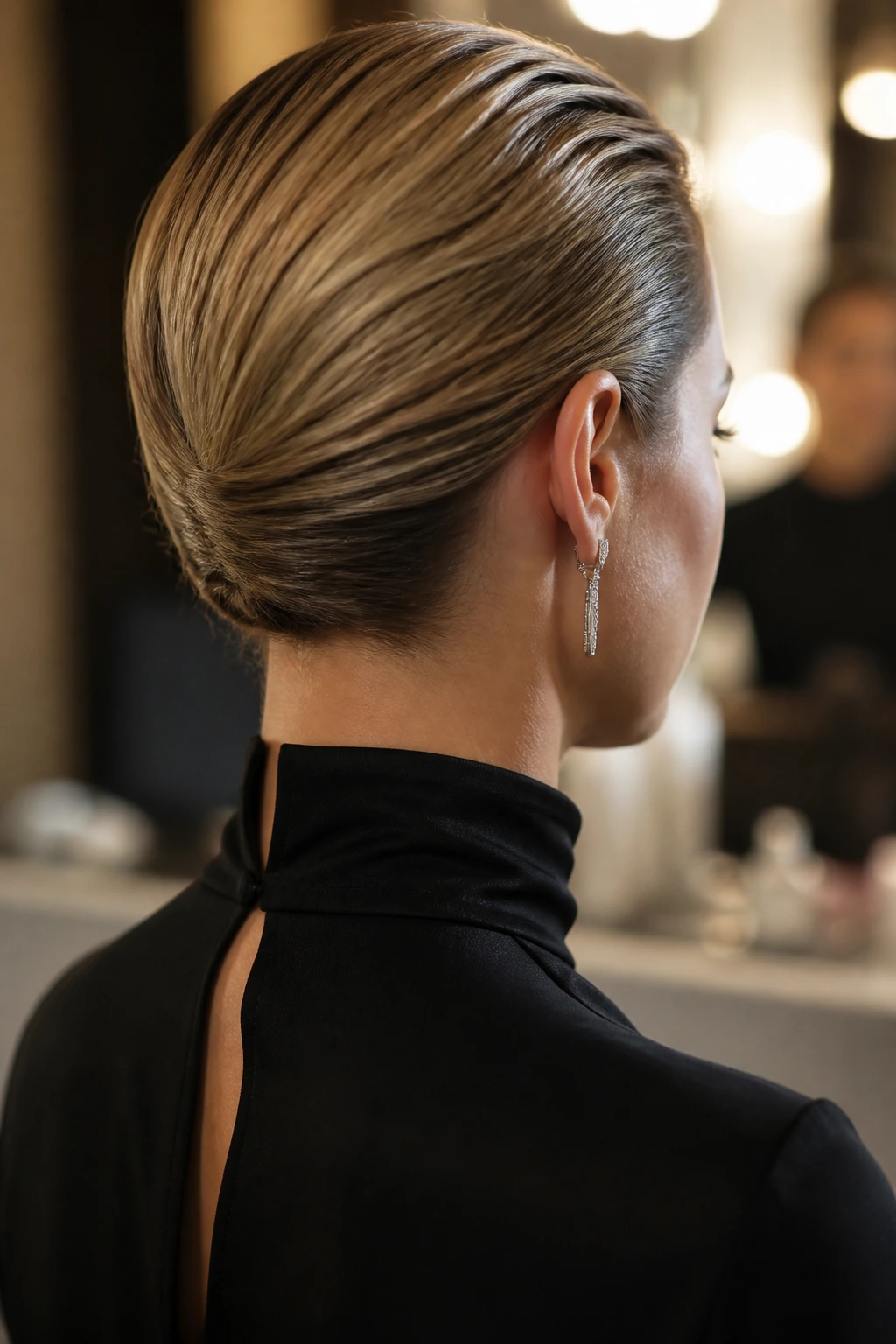
Short natural hair can be slicked back without losing its texture, and twists are the easiest way to do it. Take small front sections, smooth them with gel or edge control, twist them back toward the crown, and pin them low. The hairline stays neat while the texture remains visible.
The best part is the control around the temples and edges. Use a soft brush and a little water before the gel so the product spreads evenly. Too much product on dry coils can leave little white patches once it dries. Keep the twists small and snug, but not tight enough to pull the scalp. Comfort matters here more than people admit.
This look is good for work, church, dinners, or any place where you want the front to stay tidy and the rest of the hair to stay like itself.
17. Defined Coil Push-Back
A coil push-back keeps curls or coils up top while smoothing the roots back from the face. It’s not about erasing texture. It’s about controlling the first inch or two at the hairline so the shape feels clean and open. On short coily hair, that small change has a big effect.
Why It Looks So Good
Defined coils catch light in a way that flat slick hair can’t. When the roots are brushed back but the texture stays on the crown, you get both polish and movement. Use a cream-gel blend so the coils stay separated instead of turning into a crust. If you want more shine, finish with a drop of oil on the tips only.
This style is excellent when the goal is to show the face and keep the cut soft. It also handles humidity better than a super-flat look, since the natural pattern is still part of the design.
18. Matte Slick Back for Fine Hair
Not every sleek style needs a glossy finish. Fine hair often looks better with a matte slick back because too much shine can make the scalp look sparse. A soft cream and a little texture spray can give the hair direction without turning it limp.
Keep the crown close to the head, then rough up the ends just a touch with your fingers. The style should read smooth from the front and slightly airy at the tips. If you go full wet-look on fine hair, the strands separate too much and the cut can look thinner than it really is. Matte finishes avoid that problem.
This one is especially useful for office days, daytime events, and anyone who wants a slicked-back shape without the high-gloss effect.
19. Diamond-Clip Party Pixie
A party pixie needs one strong detail, not five. Slick the front back, keep the sides neat, and place a row of crystal or pearl clips on one side near the temple or along the part. The accessory becomes the sparkle, which means the hair itself can stay simple.
Placement Makes the Look
Put the clips where the head naturally curves, not too low on the ear and not too far back on the crown. A small cluster of two or three usually looks better than a long chain of them. Keep the base smooth with a light gel so the clips don’t slide, and finish with a soft spray to hold the shape without freezing it. If the clips are heavy, anchor them through a tiny hidden braid or a crossed pin.
This is a smart style for short hair because it gives party energy without asking for a full updo. The cut stays visible. The clip does the dressing up.
20. Tendril-Frame Chin-Length Bob
A chin-length bob can still be slicked back and soft at the same time. Leave two slim tendrils out at the front, slick the crown and sides back, and let the face-framing pieces fall where they want. That balance keeps the style from looking too severe, especially on square or round face shapes.
The tendrils should be intentional, not accidental. Curl them lightly or smooth them with a flat iron so they sit in a clean curve. The rest of the hair can be glossy and controlled. This contrast is what makes the style work. One side clean, one side a little softer. Very little effort. Very good payoff.
It also gives you flexibility. If the tendrils stop feeling right, tuck them behind the ears later and the whole look changes without a full reset.
21. Thick-Hair Deep Tuck and Swoop
Thick short hair can turn slicked-back styles into a battle if you try to flatten everything at once. A deep tuck and swoop handles that better. Push the heavier side across the top, tuck the bulk low near the ear or nape, and let the shape follow the hair’s natural weight instead of fighting it.
The Secret Is Sectioning
Work in two or three sections rather than trying to smooth the whole head in one pass. Use a dense brush for the first sweep and a comb for detail work near the hairline. A strong gel at the roots plus a small amount of cream through the lengths usually gives thick hair enough slip without making it puffy. If you skip sectioning, the top may look smooth for five minutes and then spring back out.
This style is the practical one in the group. It respects thickness instead of punishing it.
22. Satin-Smooth Night-Out Sleek Back
A satin finish sits between matte and full wet look, and that middle ground is useful. Hair is brushed back cleanly, the surface has a soft glow, and the style still moves when you turn your head. On short hair, that middle finish often looks richer than a high-gloss shell.
Use a light serum or smoothing cream before blow-drying, then add a thin layer of flexible gel only where the front needs to stay down. The surface should look smooth, not sticky. If the roots are already smooth, leave them alone and focus on the flyaways at the temples and crown. That restraint is what keeps the style elegant instead of greasy.
It works especially well for dinners, parties, or any outfit with clean lines. Not flashy. Just sharp enough to look planned.
Why the Sleek Finish Feels So Good on Short Cuts
Short hair rewards control. Long hair can hide a bad part, a rough crown, or a few frizzy pieces. Short hair can’t. That sounds unforgiving, but it’s also the reason a slicked-back finish feels so satisfying when it lands. You see the shape immediately. The part. The nape. The line of the hairline. Nothing gets lost in the length.
A good slicked-back style also changes the way clothing reads. A sharp bob next to a crisp collar looks more tailored. A pixie with brushed-back sides gives earrings room to matter. Even a tiny bit of height at the crown can change how the face sits in the frame. That’s why these styles work for so many different cuts: the styling is doing design work, not just cleanup.
The catch is product control. Short hair needs less than most people think, and the wrong amount can make the whole thing collapse or flake. A little gel at the roots, a little cream through the ends, and a comb that can draw a clean line usually does more than a heavy-handed pass with whatever bottle is closest to the sink.
Tools That Make the Finish Easier
- Fine-tooth comb: Draws clean parts and smooths the top without leaving stray gaps.
- Rat-tail comb: Helpful for deep side parts and precise sectioning near the crown.
- Soft boar-bristle brush: Lays short hair flat without scratching the scalp too much.
- Edge brush or clean spoolie: Good for temples, baby hairs, and the hairline.
- Strong-hold gel: Gives the roots shape and keeps short layers from popping loose.
- Light styling cream: Adds slip for bob lengths, shags, and finer hair.
- Pomade: Useful when you want more shine and a slightly heavier hold.
- Flexible-hold hairspray: Locks the style without making it feel crusty.
- Blow dryer with concentrator nozzle: Helps set the part and smooth the crown fast.
- Duckbill clips: Hold sections in place while they dry.
- Bobby pins in a close match to your hair color: Best for tucks and hidden anchors.
- Satin scarf or bonnet: Keeps the shape from puffing up overnight.
How to Choose the Right Product for Your Short Hair
Short hair is unforgiving in a good way. The right product shows immediately, and so does the wrong one. That’s useful. It means you can stop guessing once you know what your hair actually needs. Fine hair usually does better with a light gel or mousse at the root and only a touch of shine at the ends. Thick hair often needs a stronger gel or a cream-gel mix so the front stays controlled once it dries.
Water-based gels are a safe place to start because they usually rinse out cleanly and don’t leave the scalp feeling coated for days. Pomades bring more slip and shine, but they can weigh down fine hair if you use more than a small pea-sized amount. If your hair has curls or coils, look for products that keep definition while softening the surface—think cream gel rather than a dry wax. And if humidity is your enemy, choose a formula that dries with hold instead of one that stays tacky forever.
The other thing people miss is finish. High shine reads bold and formal. Satin reads polished and a little softer. Matte reads modern and quiet. None of those is “better.” They just send different signals.
How to Wear These Looks Without Fighting the Rest of Your Outfit
Presentation: Keep the hairline clean and decide where the eye should land first. A deep side part pulls attention to one eyebrow and one cheekbone. A center part makes the face feel more symmetrical. A nape tuck shows the neck. That choice matters more than whatever brand of gel is in the bathroom cabinet.
Outfit Pairings: Sleek short hair likes collars, bare shoulders, statement earrings, and jackets with shape. A blunt bob works with crisp shirting. A pixie sweep looks sharp with a square neckline or a blazer. Soft shags and wave-backed styles can take looser knits or drapier fabrics without looking too severe.
Accessories: Hoop earrings, crystal clips, small barrettes, and satin headbands all behave differently on short hair. Bigger earrings usually work better than dainty ones because the hair doesn’t compete with them. If you wear a clip, place it where the cut naturally curves so it doesn’t fight the shape.
Best Moments: Work events, evenings out, weddings, and humid days all make sense here. The style stays out of the face, shows off jewelry, and holds up better than loose short hair when the weather gets unruly.
Small Upgrades That Change the Whole Look
Gloss Boost: A rice-grain amount of serum pressed only into the ends gives a clean sheen without turning the scalp slick. If the hair is fine, keep it away from the roots. That’s where styles collapse fastest.
Customization: Swap a center part for a deep side part, tuck one ear and leave the other exposed, or slip in a single barrette at the temple. Small changes make short hair look styled rather than copied.
Serving Suggestions: If the outfit is simple, let the hairline be the detail. If the dress or blouse already has a lot going on, keep the finish smoother and the accessories smaller. Short hair gives you a lot of room to edit down, which is one reason I prefer it with clean necklines and good earrings.
Make-It-Yours: Fine hair can use mousse before gel. Coarse hair can use cream before pomade. Curly hair can keep a little texture on the ends. Straight hair can go sharper and glossier. The style does not need to look the same on every head.
How to Keep the Sleek Shape Overnight
A slicked-back style on short hair usually survives one night well, sometimes two if the weather is kind. The trick is not pretending it will stay perfect forever. Protect the shape, then refresh only what needs it. A satin pillowcase helps cut down on friction, but a silk scarf or bonnet gives even better protection around the hairline and crown. If the style includes a deep part or clipped tuck, set those spots before bed so they do not shift against the pillow.
In the morning, don’t soak the whole head. That usually destroys the shape and forces you to start over. Mist your hands or a fine spray bottle with water, smooth down the fringe or crown, then add a tiny touch of gel where the part has lifted. If there are flakes, brush them out before adding more product. Old gel plus new gel tends to look dusty fast.
A few styles improve overnight. A blunt bob often wakes up with a nicer edge after a bit of compression. A soft shag can get even better. The ones that suffer most are very wet, high-shine looks, because they dry out and separate if you sleep on them too hard. If you know you need the style to last, start with slightly less product than you think and let the hold do the work.
Variations and Adaptations to Try
Soft Office Sleek: Keep the part shallow, use a satin finish, and skip the strong wet look. This version is calmer and easier to wear for long stretches, especially if you spend the day indoors and don’t want your hairline to feel hard.
Humidity-Ready Control: Choose a strong gel at the roots and a light anti-frizz cream through the ends. The goal is not maximum shine. It’s staying close to the head when the air gets sticky and the sides want to puff.
Curly Crown Version: Smooth only the front and temples, then let the top curls keep their shape. This keeps the face open without flattening the whole texture pattern. It’s a much better move than trying to erase curls completely.
Accessory-First Finish: Build the style around one clip, pin, or headband and keep the rest of the hair plain. That gives the look a focal point and makes short hair feel deliberate even on a day when you barely have time to breathe.
Low-Tension Scalp-Friendly Set: Use less edge control, softer brushing, and more cream than gel. If your scalp gets sore from tight styling, this version still reads clean without the pull.
Common Mistakes to Avoid
The most common mistake is using too much product too early. Short hair needs less than longer hair, and heavy gel can leave the crown stiff, flaky, or oily before the style has even set. Start with a small amount, add more only where the hair actually lifts, and keep the ends lighter than the roots.
Another problem is brushing everything straight back without thinking about the cut. A side-part pixie, a blunt bob, and a layered shag all need different direction. If the style looks flat in the wrong place, the whole head loses shape. Work with the cut line instead of trying to force a single template onto every haircut.
People also forget the hairline. Temples, sideburns, and the edge around the ears show more on short hair than they do on long hair, so a tidy crown with fuzzy edges still reads messy. A small brush or even a clean toothbrush can fix that in seconds.
The last mistake is over-smoothing curls, waves, or texture that should have stayed visible. If your hair naturally bends, a slick back does not need to erase that. Keep some texture in the ends or the crown so the look still feels like your hair, not a wigged-over version of it.
Questions People Ask About Slicked-Back Short Hair
Will a slicked-back style work on a pixie cut?
Yes, and pixies often look sharper than longer cuts in this finish. The trick is to direct the top, not drown it in product. A small amount of gel or cream at the roots and a fine-tooth comb are usually enough.
What product gives the cleanest hold without flakes?
A water-based gel is usually the safest starting point. It gives short hair grip and rinses out more cleanly than heavier waxes or old-school pomades. If flakes still show up, you may be layering too much product or touching the hair before it has dried.
How do I keep a slicked-back look in a cowlick?
Set the cowlick while the hair is damp and use a blow dryer with a nozzle to direct the root in the opposite direction for 20 to 30 seconds. A clip can help train it while the hair cools. If you skip that part, the cowlick usually wins by noon.
Can curly or coily short hair be slicked back without losing texture?
Yes. Smooth the hairline and roots, then leave the crown or ends with their natural shape. A cream-gel mix helps keep definition while lowering puffiness.
Why does my hair look greasy instead of sleek?
Usually the product is too heavy, or it’s sitting too close to the roots in too large a dose. Try a smaller amount at the scalp and leave the shine for the mid-lengths and ends. Fine hair is especially prone to this.
How long does a slicked-back short style last?
Most versions hold through a full day, and many will last into the next morning with a scarf or satin pillowcase. Very glossy styles break down faster than softer matte ones, especially if you sweat or sleep on them hard.
Can I do this without heat tools?
Absolutely. Some of the cleanest looks come from damp styling, a good comb, and a clip or scarf while the hair dries. Heat helps when you need extra polish, but it is not mandatory.
What if my bob keeps springing out at the ends?
Pin the ends under or guide them with a flat iron for a few seconds before adding the final spray. If the bob is layered, a little cream in the ends helps them sit together instead of flipping in different directions.
A Cleaner Line, A Sharper Cut
Short hair does not need to be big to feel finished. Sometimes the strongest move is the simplest one: brush it back, set the part, and let the cut show itself. That’s why these slicked-back looks keep working. They put the outline first and let the texture, shine, and accessories do the talking around it.
The styles that last are the ones that respect the haircut you already have. A pixie wants direction. A bob wants a clean edge. Curls want control at the root and room everywhere else. Get that balance right and the whole thing stops feeling like a workaround. It just looks like a good haircut wearing a sharper mood.
