



Short hair ombre is one of those color moves that looks simple from a distance and reveals all its difficulty up close. On a bob, lob, shag, or pixie, there isn’t much length to hide a clumsy transition, so the fade has to do real work in a very small space. Get it right, and the color looks soft, expensive, and intentionally blurred. Get it wrong, and the whole thing turns into a harsh band halfway down the head.
That’s why the short-hair version is more exacting than the long-hair version. A soft color fade on a chin-length cut lives or dies by placement: where the depth stays near the root, where the lighter tone begins, and how much warmth or ash you let through the mid-lengths. One inch can change the whole read of the haircut. Half an inch can save you from that chunky, stripey look nobody asked for.
The good news is that short hair gives you room to be bold without going loud. You can play with caramel, champagne, mushroom brown, silver taupe, rose gold, copper, or smoky beige and keep the result wearable if the fade is stretched properly. The styles below lean into that sweet spot: enough contrast to show movement, enough softness to avoid hard lines, and enough realism to work on actual heads instead of filtered mood boards.
Why These Short Hair Ombre Ideas Stand Out
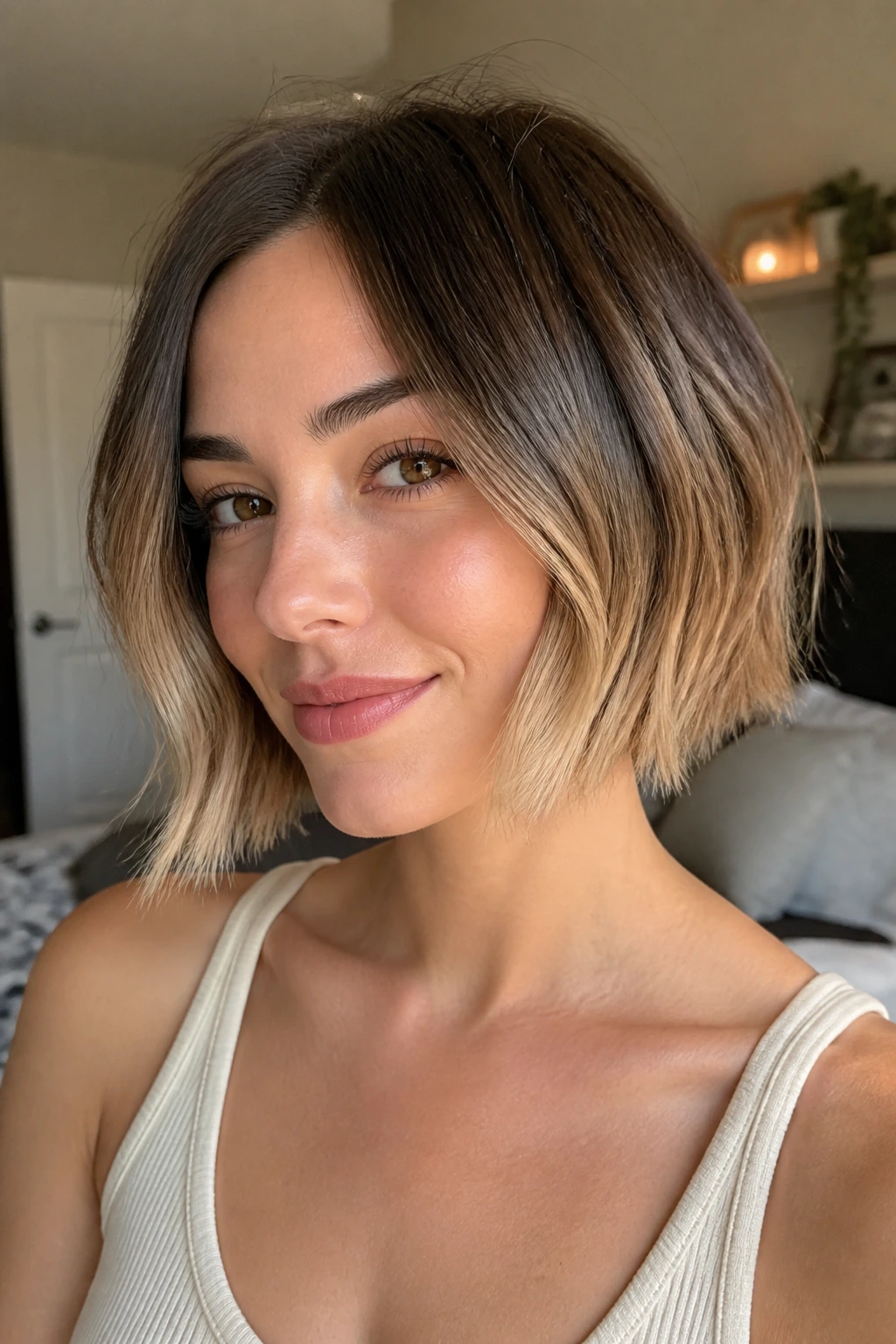
- Soft Contrast: Each look keeps the root deeper and the ends lighter, so the fade reads as a melt instead of a stripe.
- Short-Length Friendly: The color placement is built for bobs, lobs, pixies, shags, and crops, where there may be only 1 to 4 inches of transition room.
- Wearable Shades: You’ll see warm brunettes, cool ash tones, muted blondes, coppery fades, and a few fashion colors that stay in the soft lane.
- Maintenance Range: Some ideas are low-fuss and grow out neatly; others need toner or gloss refreshes, and I’ll say that plainly where it matters.
- Styling Flexibility: Straight, wavy, curly, and piecey textures all change how ombre reads on short hair, so these ideas are chosen with texture in mind.
- Salon and DIY Friendly: A few can be requested as a gloss or root melt in the chair, while others make more sense as inspiration for a stylized color service.
1. Espresso Root Melt Bob
A deep espresso root fading into warm caramel ends is one of the safest short hair ombre ideas if you want softness without losing depth. On a chin-length bob, the darker root keeps the haircut grounded, while the caramel only takes over the bottom inch or two. That tiny shift is enough to make the cut look fuller, not thinner.
What I like about this one is that it doesn’t need a lot of lightness to work. The color contrast is there, but it stays in the brown family, so the grow-out looks clean and the mid-lengths don’t read as chopped off. If your hair sits around level 4 or 5 naturally, this fade feels believable instead of trying too hard.
Why It Feels Right on Short Hair
The trick is keeping the transition low and soft. On a bob that brushes the jawline, a fade that starts too high makes the whole style look patchy. Keep the caramel mostly in the last 1 to 1½ inches, and the result stays plush and glossy.
This also works well with a center part or a slightly off-center part. The movement at the ends catches the eye, which is exactly what short hair color needs when there isn’t much length to show off.
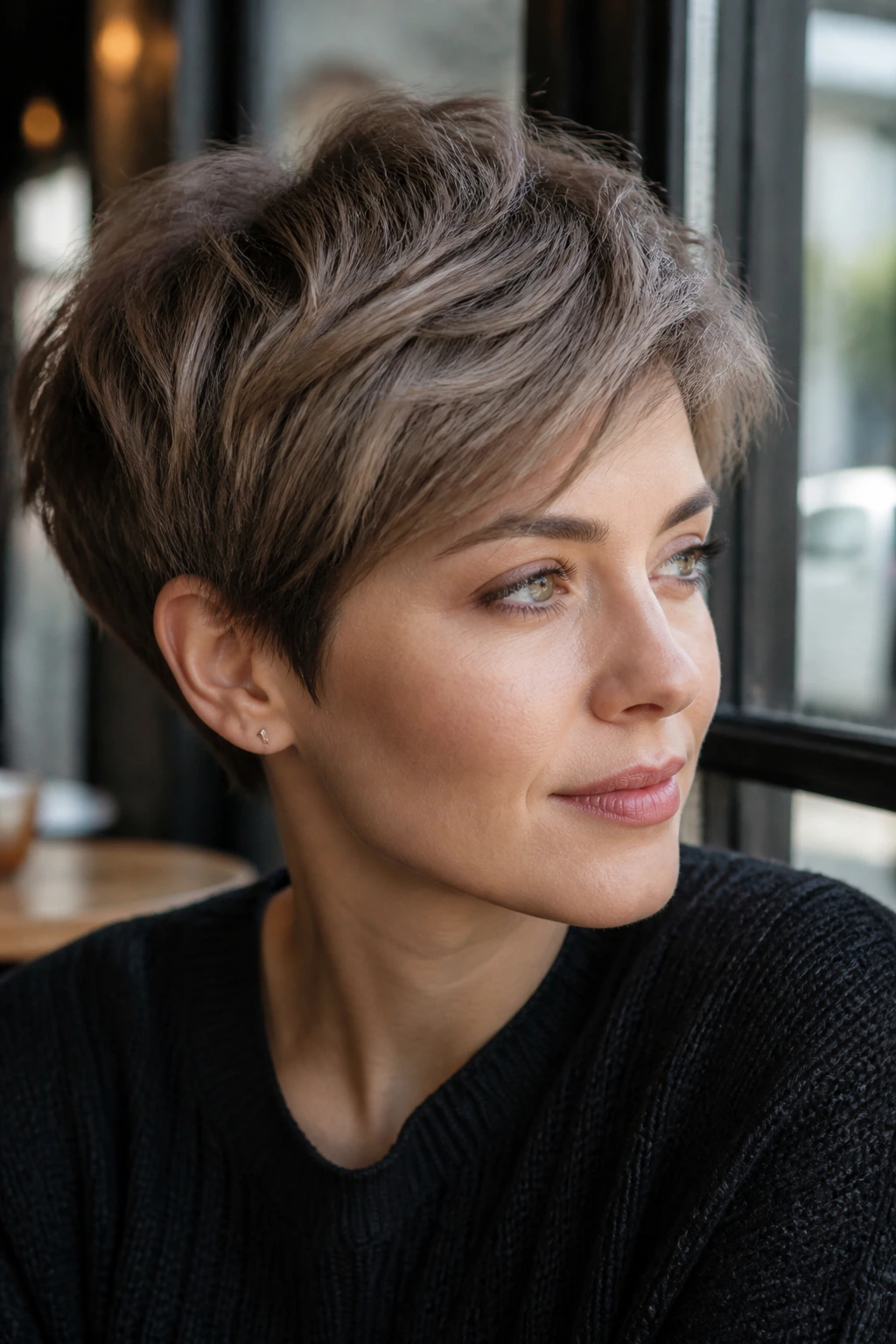
2. Mushroom Brown Pixie
Mushroom brown on a pixie is subtle in the best way. You get that cool, earthy blend of taupe, ash, and soft beige without the hair ever looking flat. On short layers, the lighter pieces sit on the top and crown, while the perimeter stays a little deeper, which gives the cut shape.
A lot of people go too warm on short pixies and end up fighting brassiness every week. Mushroom brown avoids that trap. It gives the hair a muted finish that works especially well if your skin has cool or neutral undertones, or if you just like a cleaner, smokeier look.
What Makes It Soft Instead of Stark
The fade should look misted on, not painted in blocks. Ask for the brighter pieces to be feathered through the crown and front fringe, then softened with a beige or ash gloss at the ends. On a pixie, that little bit of diffusion matters more than people think.
Keep styling matte or softly satin. Heavy shine products can make the contrast feel harder than it really is. A pea-sized amount of lightweight paste is usually enough.
3. Chestnut to Honey Beige Lob
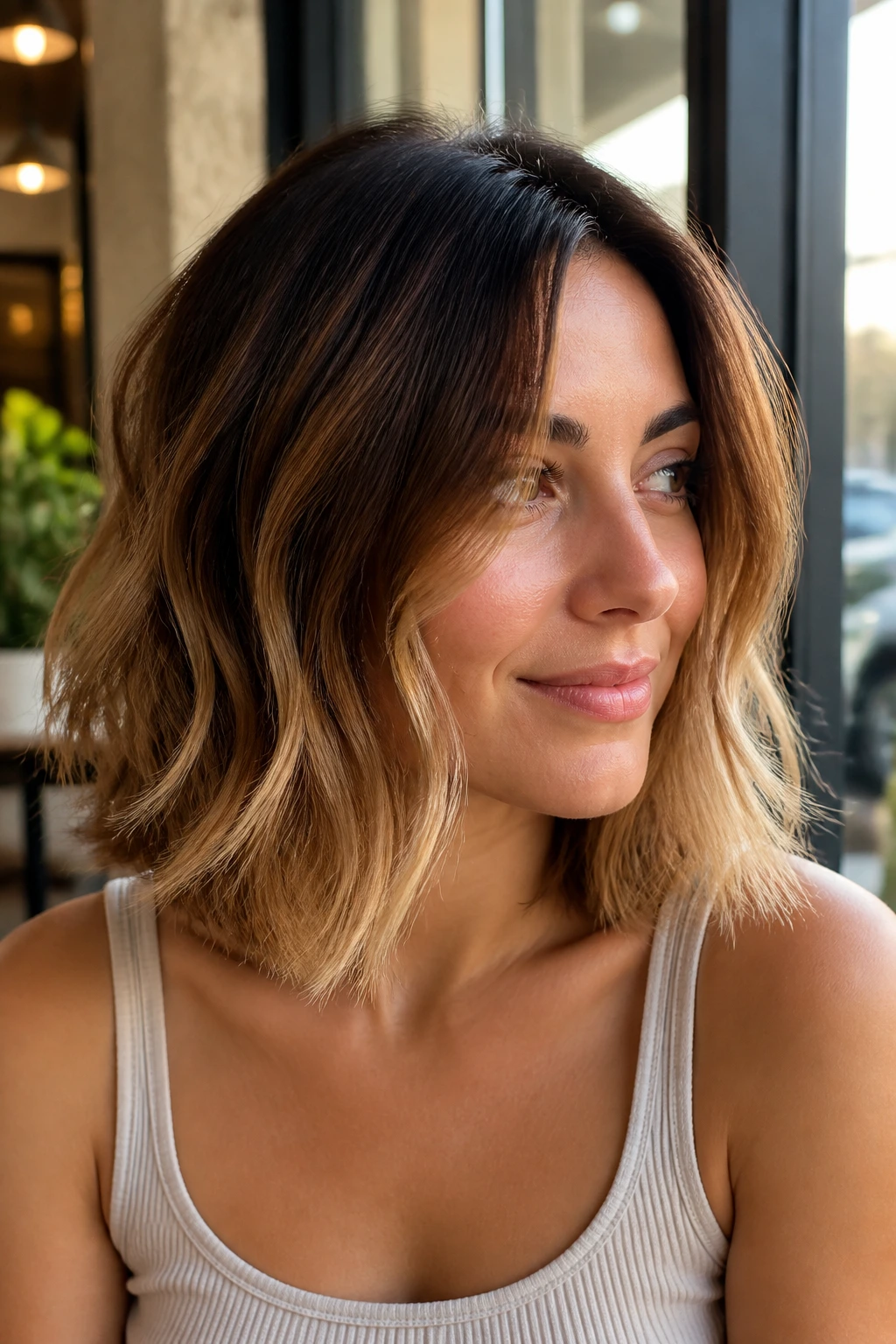
A collarbone lob gives you room to breathe, and chestnut fading into honey beige uses that extra length well. The base stays warm and grounded, then the lighter tone appears through the lower third of the hair where waves or bends can catch it. It’s one of the prettiest ways to do short hair ombre if you want something bright but not icy.
Honey beige is a smart middle ground. It doesn’t yell blonde, and it doesn’t pull orange the way some caramel tones do on porous hair. On medium brown hair, this fade feels sun-touched without looking beach cliché.
If your cut has a few soft layers, even better. The layers break up the fade so the ends don’t look like one solid color block. I’d pair this with loose, unfinished waves rather than tight curls; too much curl pattern can compress the color and make it look shorter than it is.
4. Soft Black to Blue-Black Fade
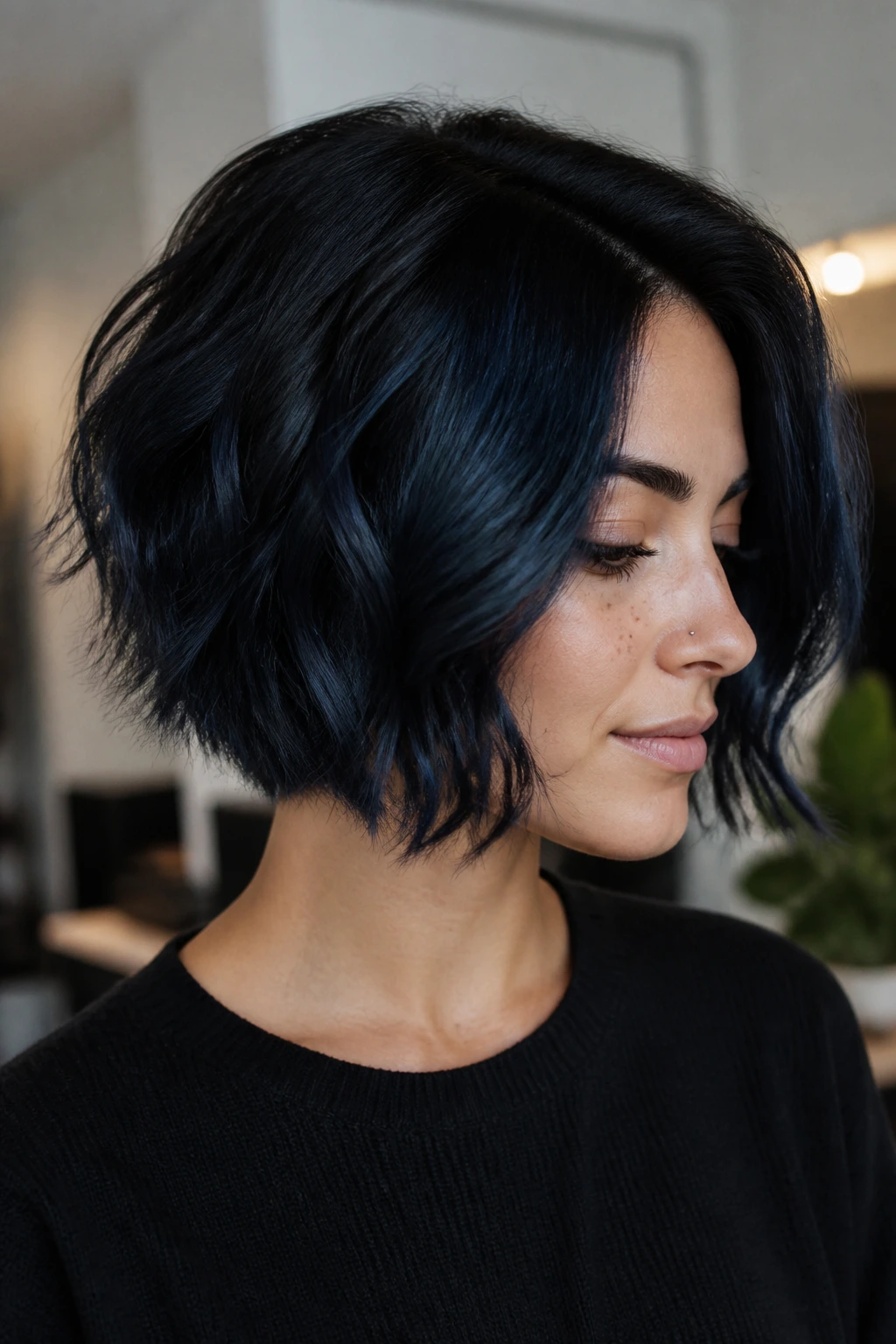
This one is for the person who likes depth more than brightness. A soft black root melting into blue-black lengths creates a shiny, inky finish that changes with the light instead of screaming for attention. Indoors it reads almost monochrome. In daylight, the blue tone sneaks out.
On short hair, blue-black can be much more wearable than people expect. Because the fade is subtle, you don’t need a huge color shift to create interest. The effect comes from sheen, not obvious contrast. That makes it a nice pick for straight bobs or neat pixies where you want polish.
The main caveat is upkeep. Blue-black can fade toward dull brown if you wash too often with strong shampoo. Color-safe cleanser, cooler water, and a gloss every few weeks keep it looking intentional. Without that, the whole thing loses its edge fast.
5. Brunette to Bronze Copper Crop
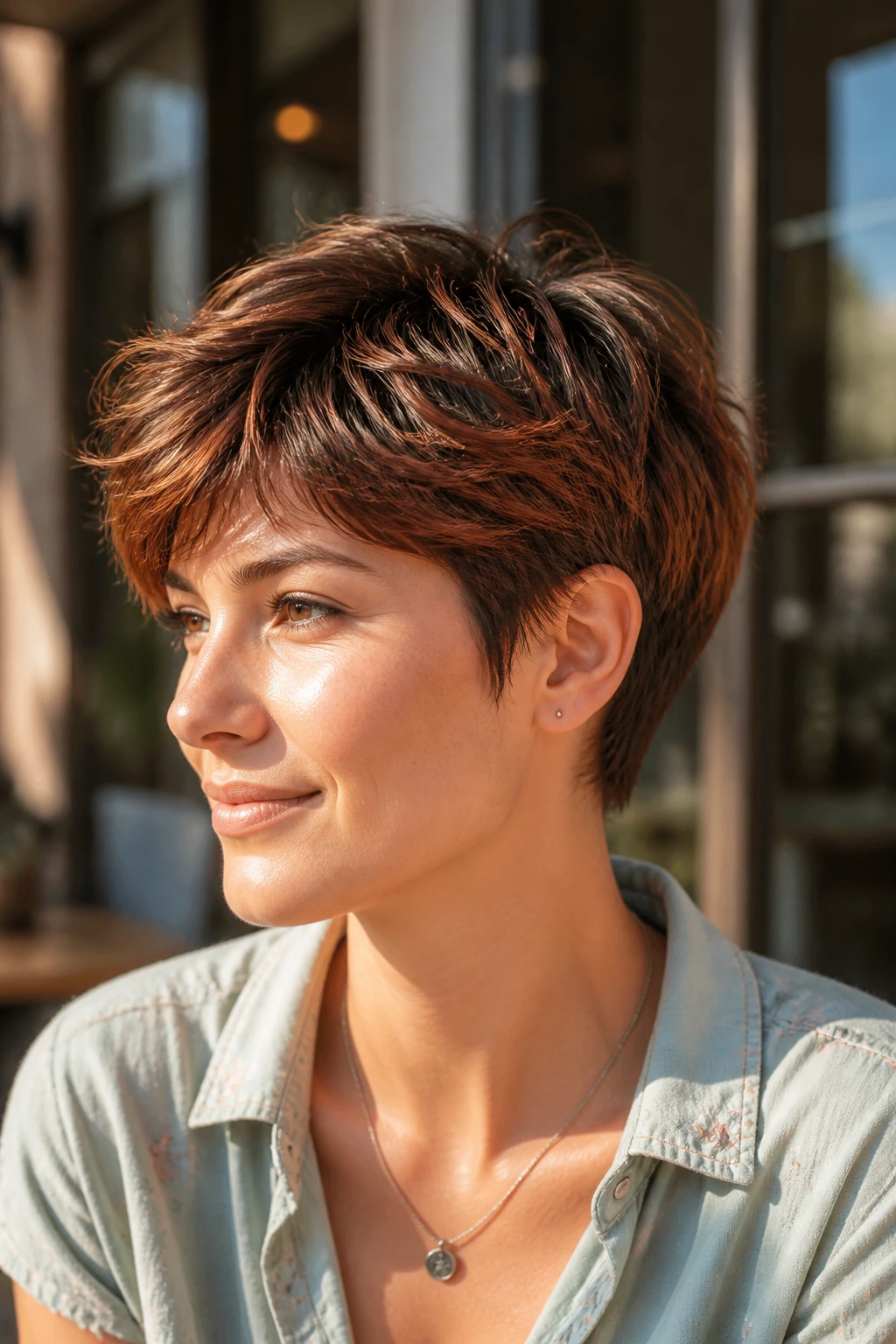
Bronze copper on a short crop has energy, but it still stays grounded if the root remains brunette. That dark base keeps the color from looking like a bright orange dye job, and the bronze ends bring in enough warmth to wake up the cut. It’s especially strong on textured crops with a little bend through the top.
This is one of the better short hair ombre ideas for warmer skin tones, freckles, or anyone who already wears gold jewelry more naturally than silver. The copper glow near the ends gives the haircut motion. The crown stays deeper, which helps the shape hold.
If you like some grit in your finish, this one is especially good with a tiny bit of wave spray and a rough blow-dry. The uneven surface lets the bronze catch light in small flashes. Straightened too flat, it can look more plain than it needs to.
6. Ash Brown to Silver Taupe Bob
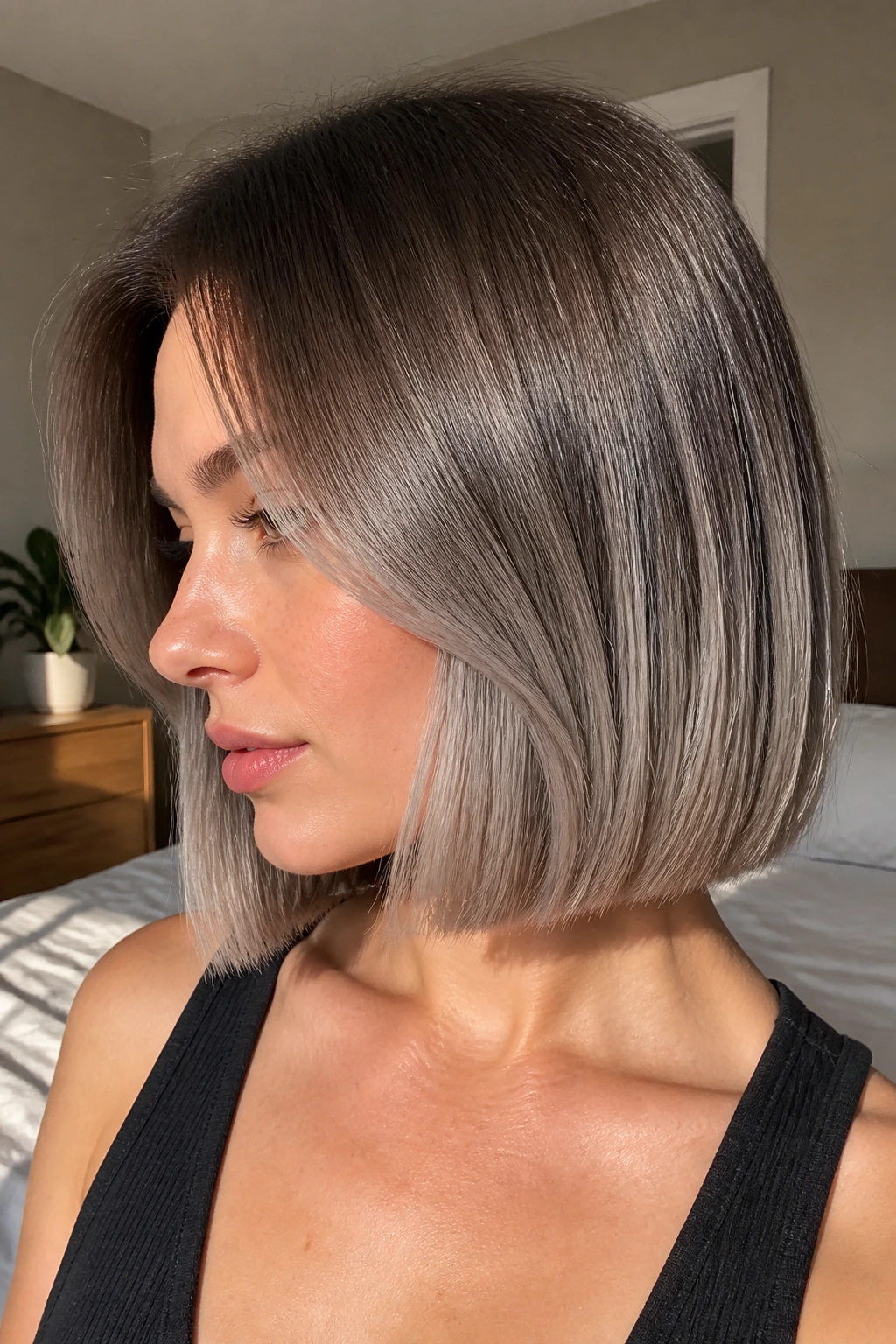
Ash brown fading into silver taupe is cool, crisp, and a little more modern than the standard blonde bob. The color story stays soft because the silver is not pure gray; it has enough brown-beige in it to keep the fade from feeling harsh. On a blunt bob, that muted shift looks expensive without being flashy.
The interesting part here is texture. On smoother hair, the fade reads clean and reflective. On slightly wavy hair, the silver taupe gets broken up and looks almost smoky. Either way, the low-contrast transition keeps the cut from feeling heavy.
Quick Notes
- Best on level 5 to 6 brunettes who can lift cleanly.
- Toner matters more than lightener here.
- Purple shampoo should be used sparingly, not every wash.
- A glossy finish helps the silver taupe stay soft instead of dull.
7. Mocha Root Melt to Champagne Ends
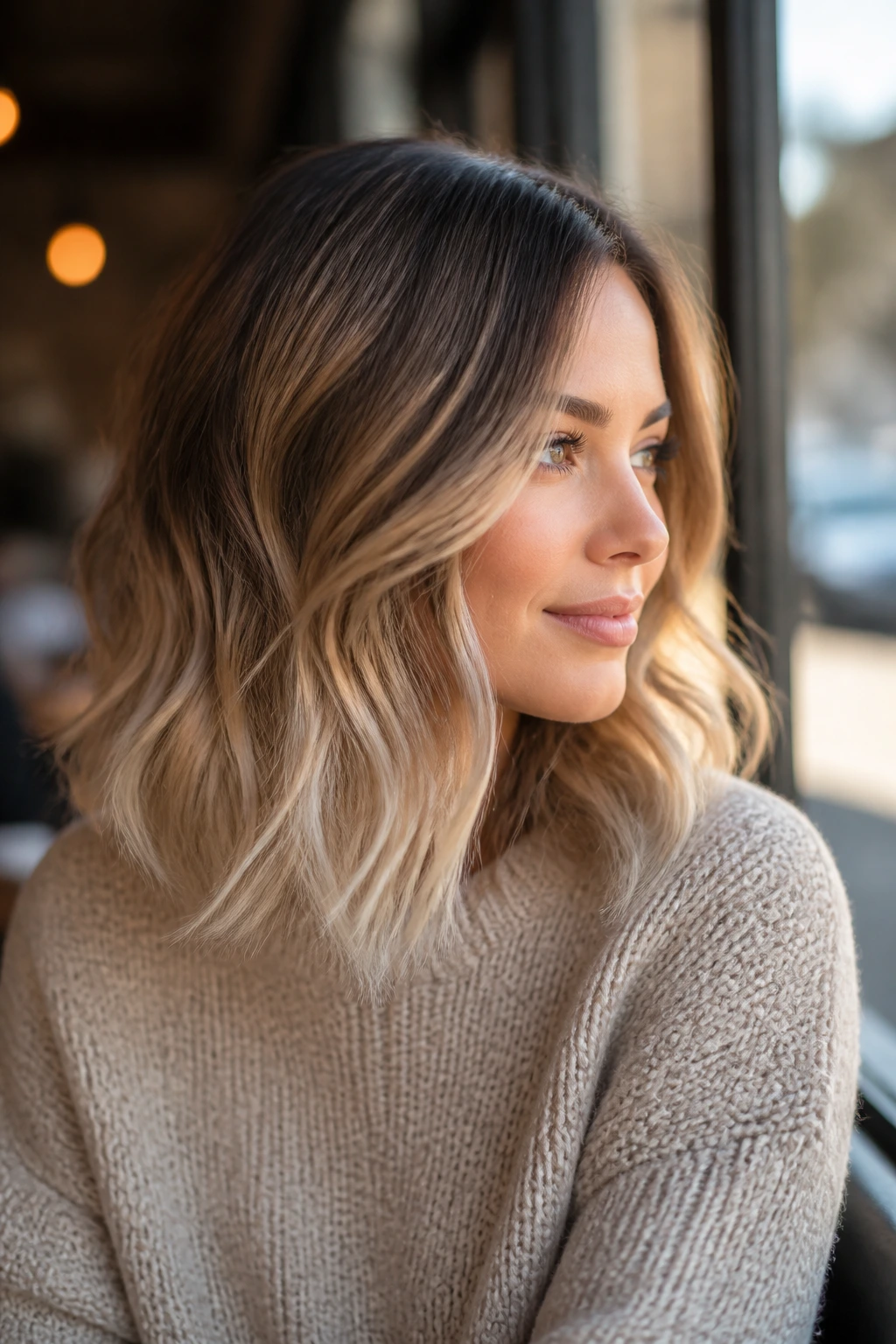
Mocha into champagne is one of my favorite short hair ombre pairings because it gives you blonde energy without the aggressive grow-out line. The mocha root keeps things rich and grounded, while the champagne ends stay pale, beige, and slightly creamy. That beige cast is the whole point. It softens the transition and keeps the blonde from looking chalky on short hair.
On a bob or lob, the lightest pieces should live mostly on the lowest layers and the very ends. If the lift creeps too high, the fade loses its calm and starts reading stripey. Champagne works because it is warm enough to blend with brunette, but light enough to register as a color change.
This is a good fit if you like curling the ends under or away from the face. The shimmer at the tips picks up nicely around the curve of the hair. Flat-ironed pin-straight, it can still work, but the wave gives the fade more softness.
8. Auburn to Cinnamon French Bob
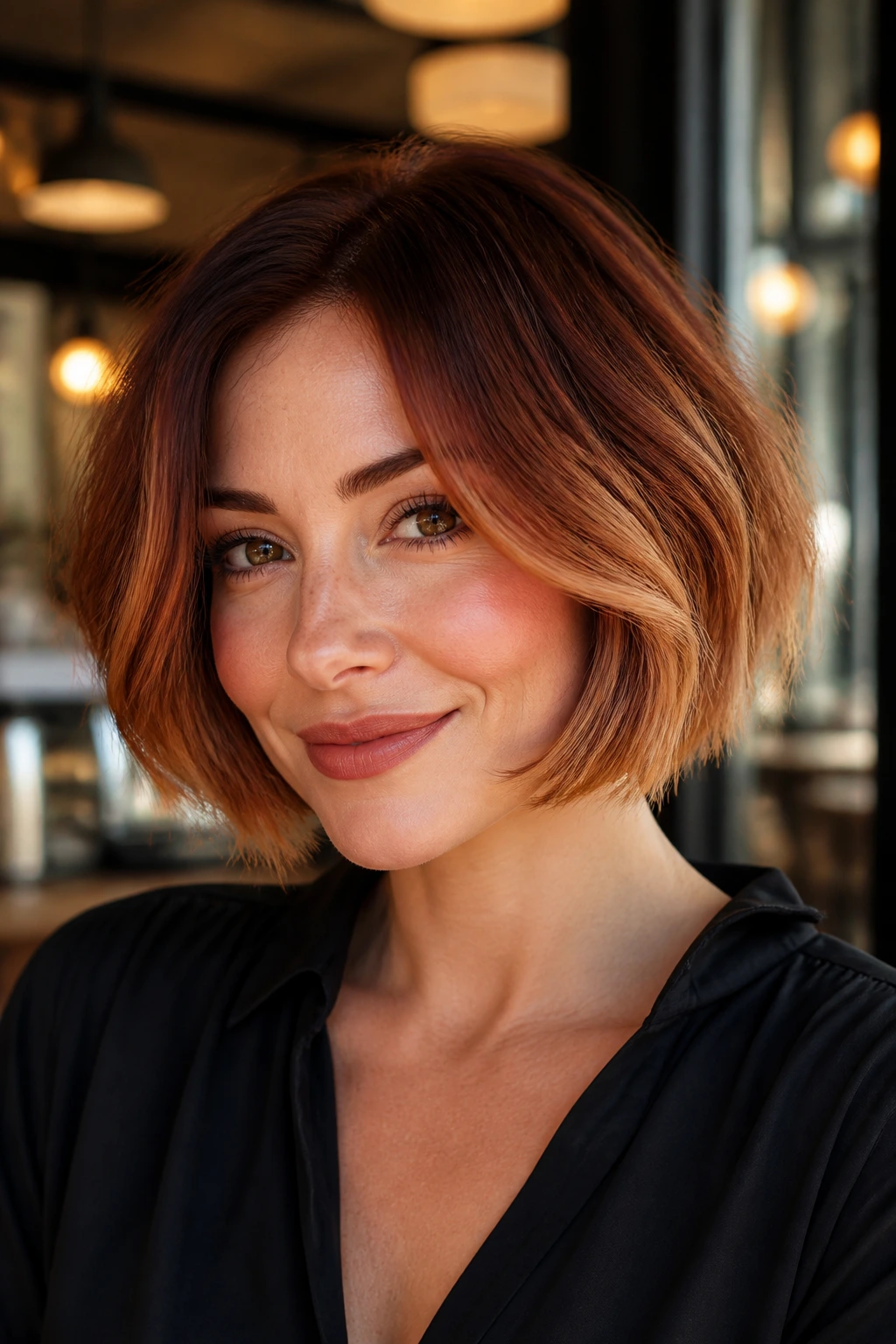
A French bob already has attitude, so auburn into cinnamon feels right at home there. The auburn root gives the cut depth and a little wine-like richness, while the cinnamon ends add warmth without going neon copper. It’s a short-hair ombre idea that feels polished and slightly old-world, which I mean as a compliment.
The fade looks best when the bob hits just below the cheekbone or skims the jaw. Too short, and you lose the color story. Too long, and it starts to behave more like a standard lob. The sweet spot lets the fade sit in the visible middle of the cut where the eye naturally lands.
If your skin runs warm or neutral, this color can be very forgiving. It also hides regrowth better than a pale blonde fade, which is why I’d choose it over something icy if you don’t want salon visits every few weeks.
9. Dark Root to Rose Gold Short Lob
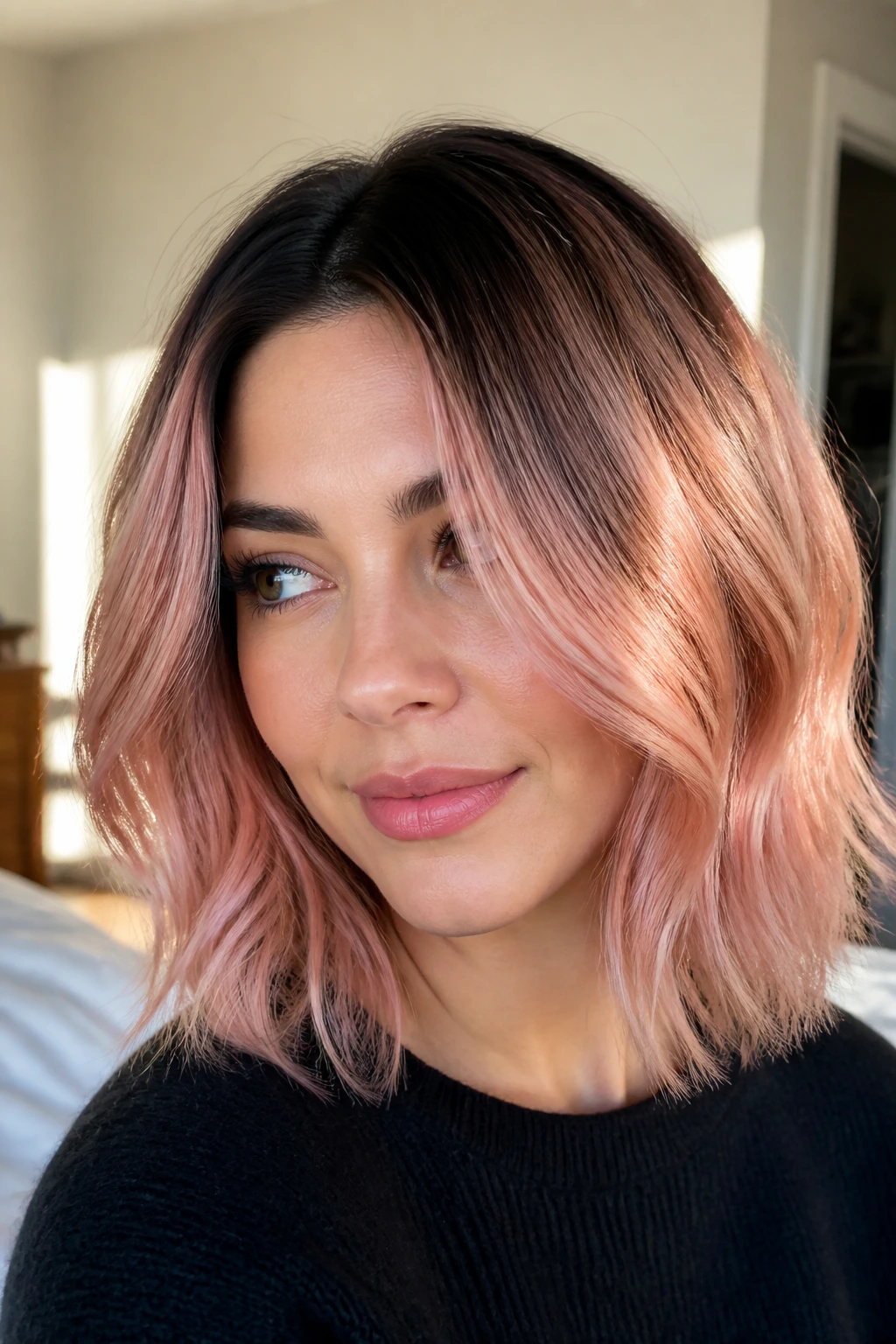
Rose gold on a short lob is one of those shades that looks delicate in photos and still holds up in real life if the fade is rooted properly. The dark root anchors the look, and the rose gold appears on the lower half as a warm pink-beige shimmer rather than a bubblegum color. That distinction matters.
This color needs a cleaner pre-lightening step than the brunetter shades above. Rose gold usually wants the ends lifted to a pale blonde base before the tone is deposited. On short hair, that can be done selectively, which keeps the damage lower than if you were lifting a whole head to the same level.
I’d wear this one with soft bends rather than tight curls. The warm pink reflectivity shows better when the light can hit uneven surfaces. And if you’re nervous about committing to pink, this is the safest doorway in: it fades toward peach-beige instead of turning garish.
10. Cool Brunette to Beige Blonde Layered Bob
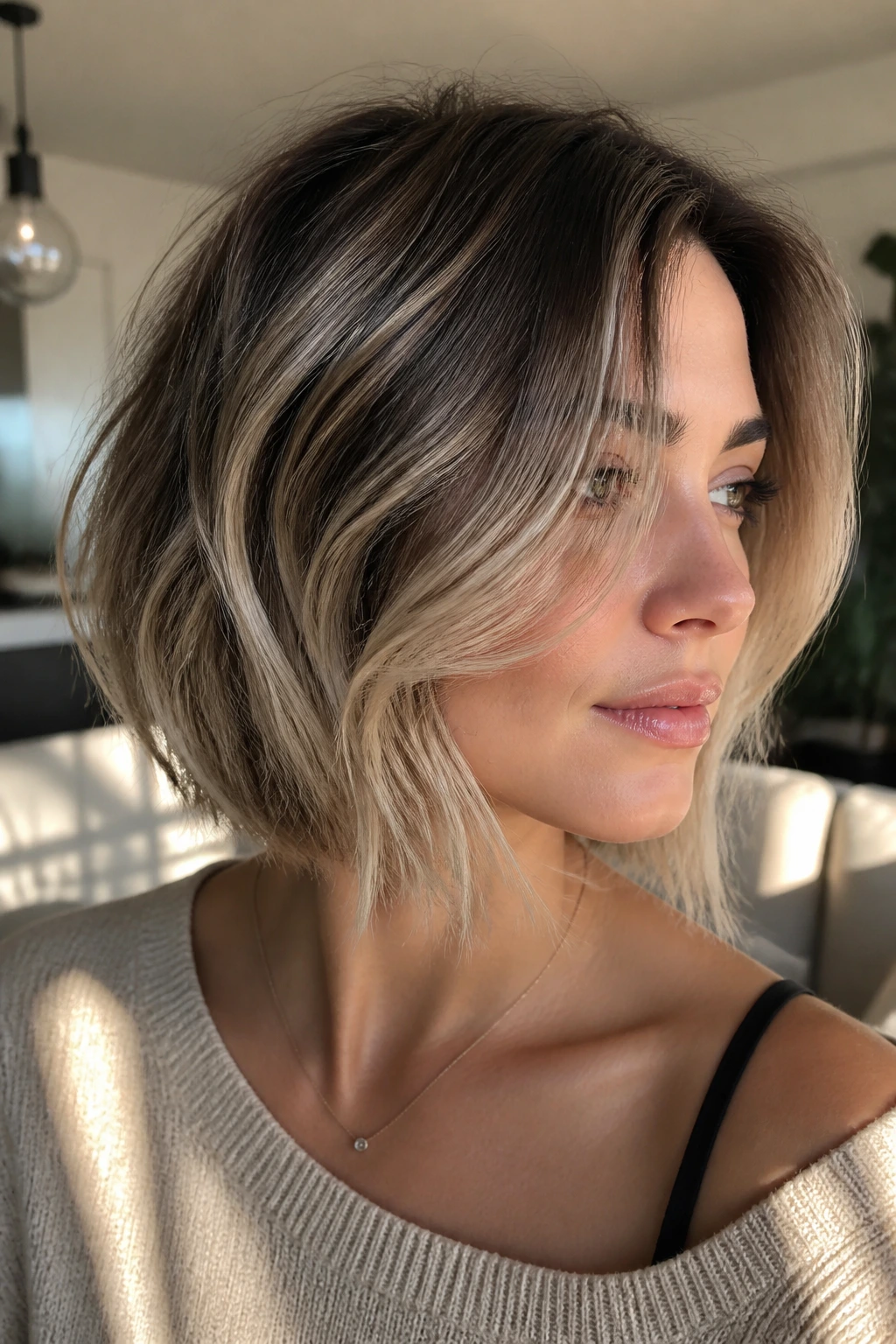
A layered bob gives beige blonde plenty of room to move, and that’s why this combo works. The cooler brunette base keeps the haircut looking dense at the top, then the beige blonde appears in the ends and scattered lower pieces. Because the layers remove weight, the fade doesn’t sit as a hard line.
This is one of the most practical short hair ombre ideas if you want lightness but don’t want a lot of warmth. Beige blonde sits in the middle lane. It’s softer than icy blonde and less golden than honey, which means the fade can blend into a range of base shades without shouting about itself.
If your hair is thick, the layers help the color spread out. If it’s finer, keep the lift more concentrated on the tips and a few face-framing pieces. That keeps the bob from looking wispy or overlightened near the ends.
11. Smoked Plum to Mauve Short Shag
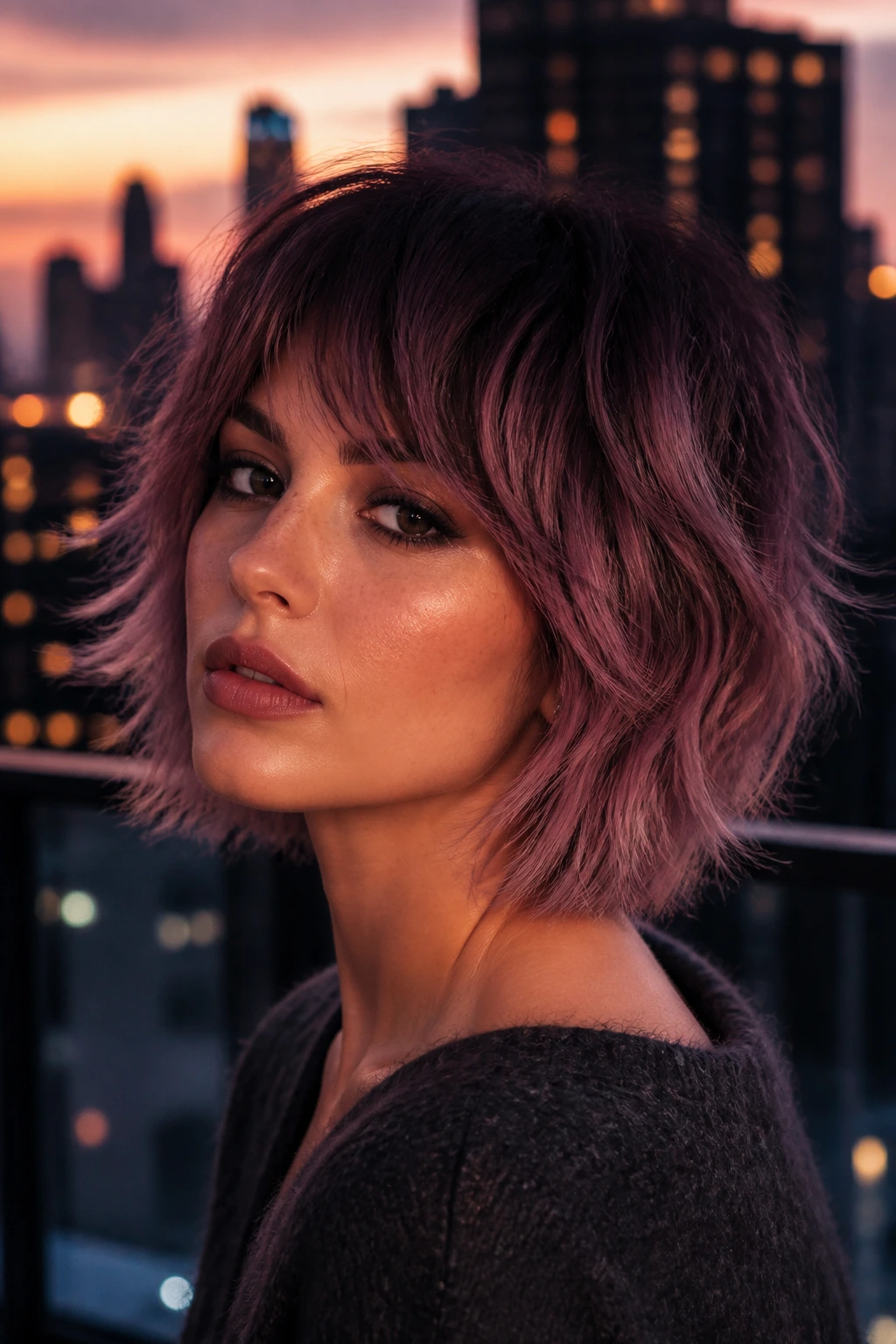
A short shag gives smoky color room to look lived-in instead of precious. Smoked plum at the roots fading to mauve through the ends is moody, soft, and a little unexpected. The shag’s broken texture keeps the color from reading like one flat purple block, which is where fashion shades on short hair often go wrong.
I like this one because it doesn’t need perfect symmetry. The choppy layers, piecey fringe, and flipped-out ends make the color look intentional even when it softens unevenly over time. Mauve fades beautifully into a pastel dusting if you use a color-depositing mask between salon visits.
If you wear your hair air-dried or scrunched with a diffuser, this is a strong choice. The texture does half the styling work. And if you prefer polished blowouts, the plum-to-mauve transition still looks good, but it becomes a little more romantic and less grungy.
12. Ink Black to Smoky Gray Pixie
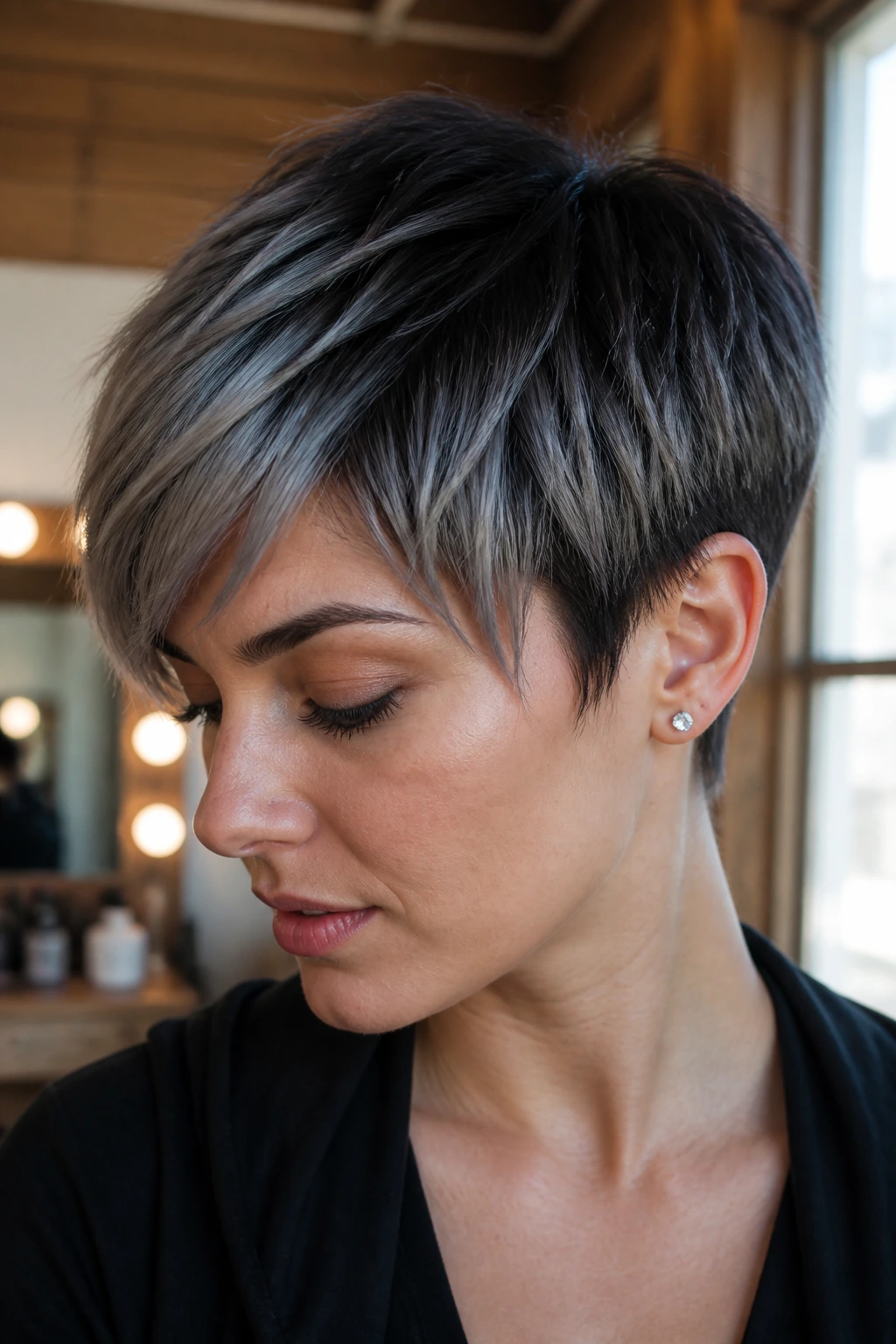
Ink black into smoky gray is not a shy look, but the fade can still be soft if the gray stays muted. On a pixie, the contrast lands in tiny shifts of light rather than long color panels, so the whole style stays compact and sharp. It reads like a whisper of smoke on the ends instead of a full silver transformation.
This works best when the gray is not a bright metallic silver. Smoky gray has a duller, almost graphite feel that pairs better with black roots. The blend feels expensive when it stays low-contrast. Too much brightness here and the pixie loses its edge.
You will need toner upkeep. Gray tones drift warm fast, especially on short hair that gets hit with heat styling and frequent washing. A blue or violet product used carefully can help, but I would not overdo it. Once a week is enough for most people.
13. Chestnut to Toffee Ribbon Bob
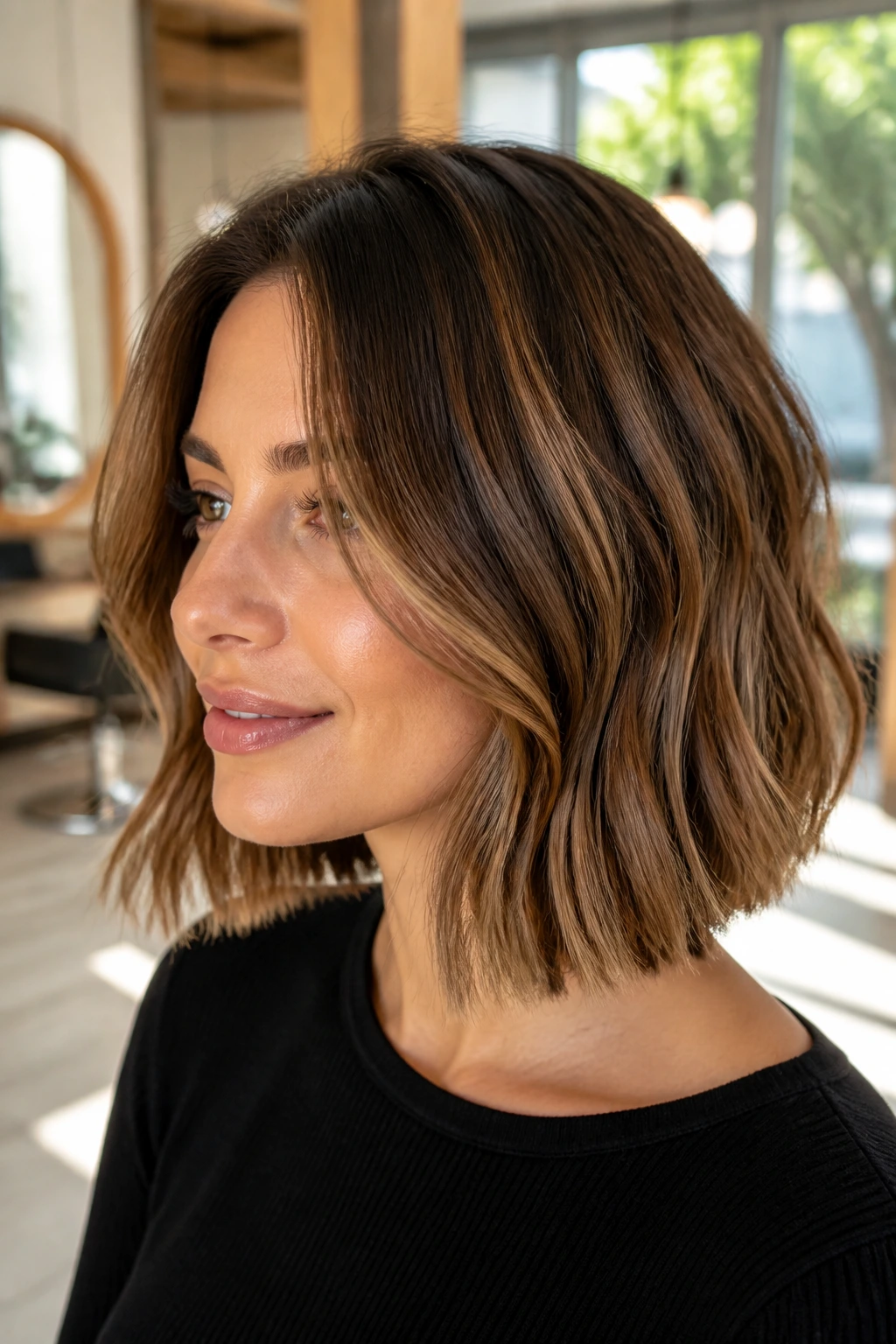
This is the kind of soft ombre that looks almost effortless until you study the placement. Chestnut stays through the root and crown, then thin toffee ribbons and a softened lighter end zone keep the bob from feeling heavy. The result is dimensional, but the light pieces never dominate.
A ribboned bob is useful if you don’t want the ends to feel like a separate color block. The toffee can show through the mid-lengths in thin threads, then gather more strongly at the tips. That creates a fade without a blunt color line. Short hair likes that trick because it gives the eye something to follow.
I especially like this on side-parted bobs or cuts with a slight undercurve. The shape nudges the color forward around the face. If you want the most flattering version, keep the lighter pieces a touch warmer near the front and a hair deeper in the back.
14. Sandy Brown to Peach Blonde Crop
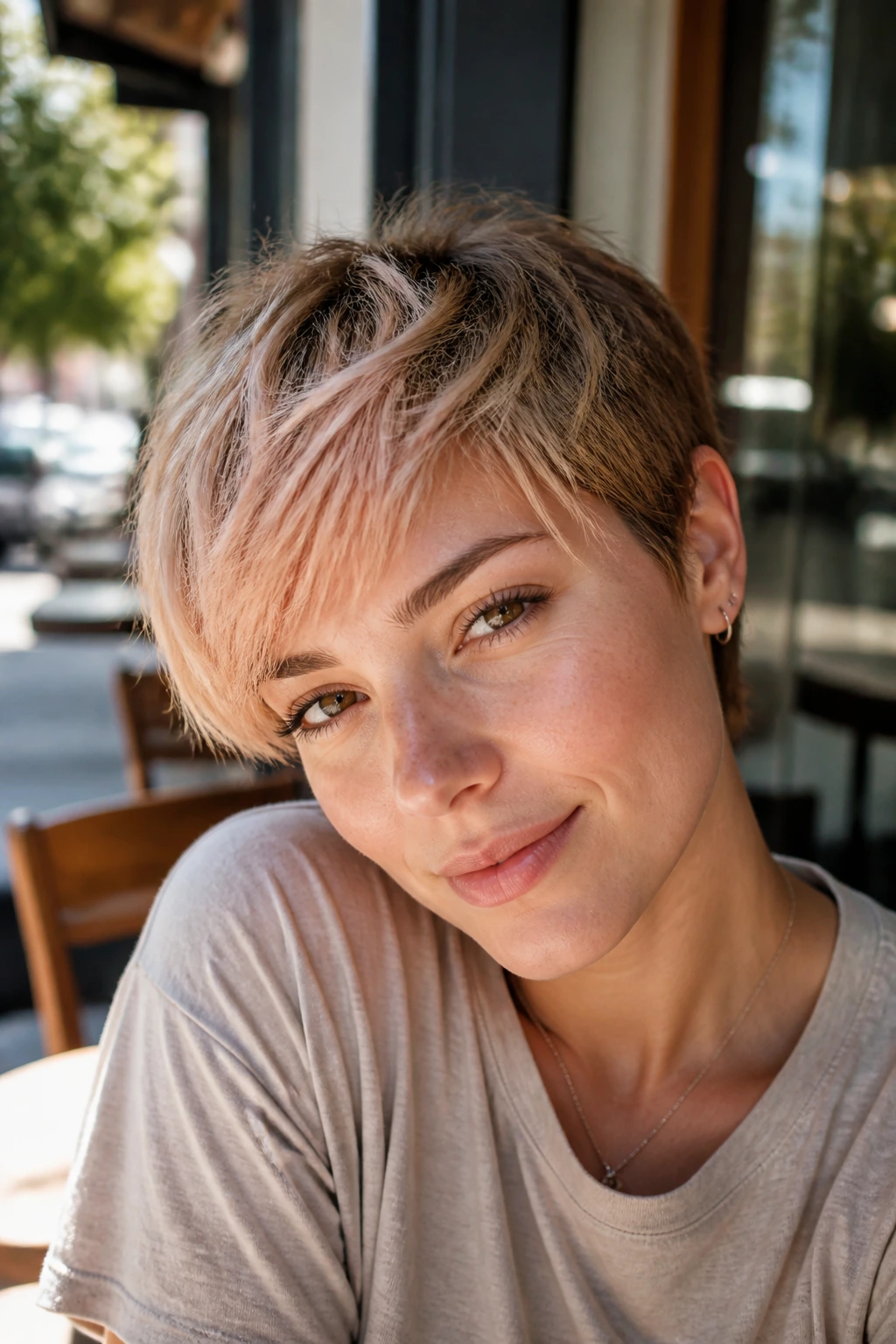
Peach blonde on a crop sounds louder than it is. Keep the base sandy brown and the peach muted, and it becomes more of a warm blush than a candy color. On short hair, that soft pastel warmth feels fresh because there isn’t enough length for the color to go overly sweet.
This is a nice choice if you want something playful but still grounded by brown. The sandy root keeps the style wearable, and the peach at the ends gives the crop a softer edge than gold or copper would. On textured hair, the shade looks especially good because the uneven surface lets the peach appear and disappear as the hair moves.
The only thing to watch is over-lightening. Peach needs a pale base, but it doesn’t need the hair lifted to the absolute lightest blonde. If you stop one shade shy of platinum and deposit a peach-beige glaze, the finish stays richer and less fragile.
15. Chocolate to Vanilla Cream Micro Bob
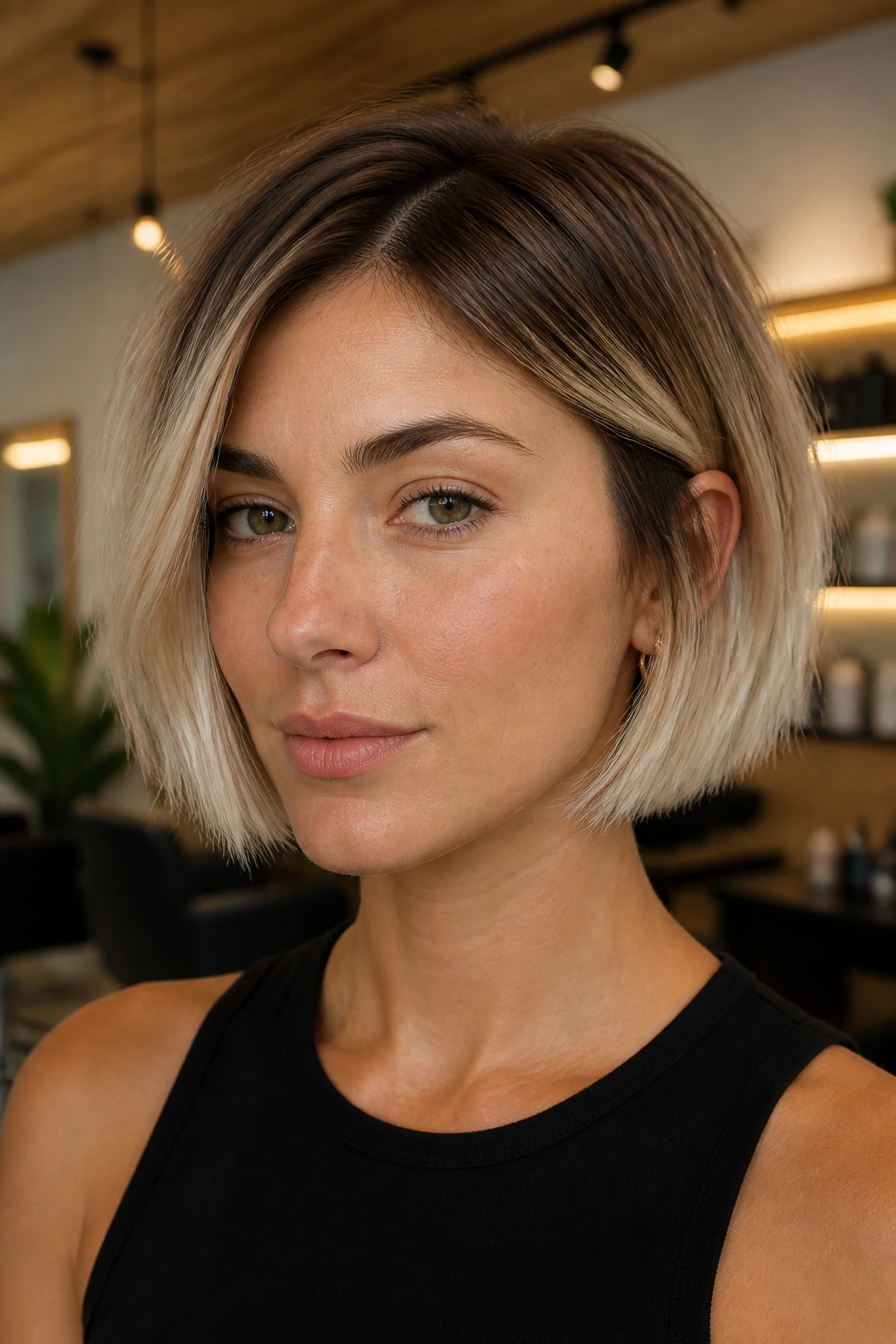
A micro bob with chocolate roots and vanilla cream ends is sharp, clean, and more dramatic than people expect on short hair. Because the length is so compact, the blonde portion doesn’t need to cover much ground to make a statement. That’s the beauty of ombre on a cut this short: small changes read fast.
Vanilla cream is a better choice than bright white blonde here. It keeps the light ends soft and wearable, and it stops the bob from looking harsh against the face. The contrast is still there, but the tones live in the same smooth family.
This style asks for careful toning and healthy ends. A micro bob shows damage quickly, especially if the lower edge is too dry or fuzzy. I’d keep heat low, use a mask after every second shampoo, and trim the perimeter regularly so the shape stays clean.
16. Rooted Caramel Balayage Pixie
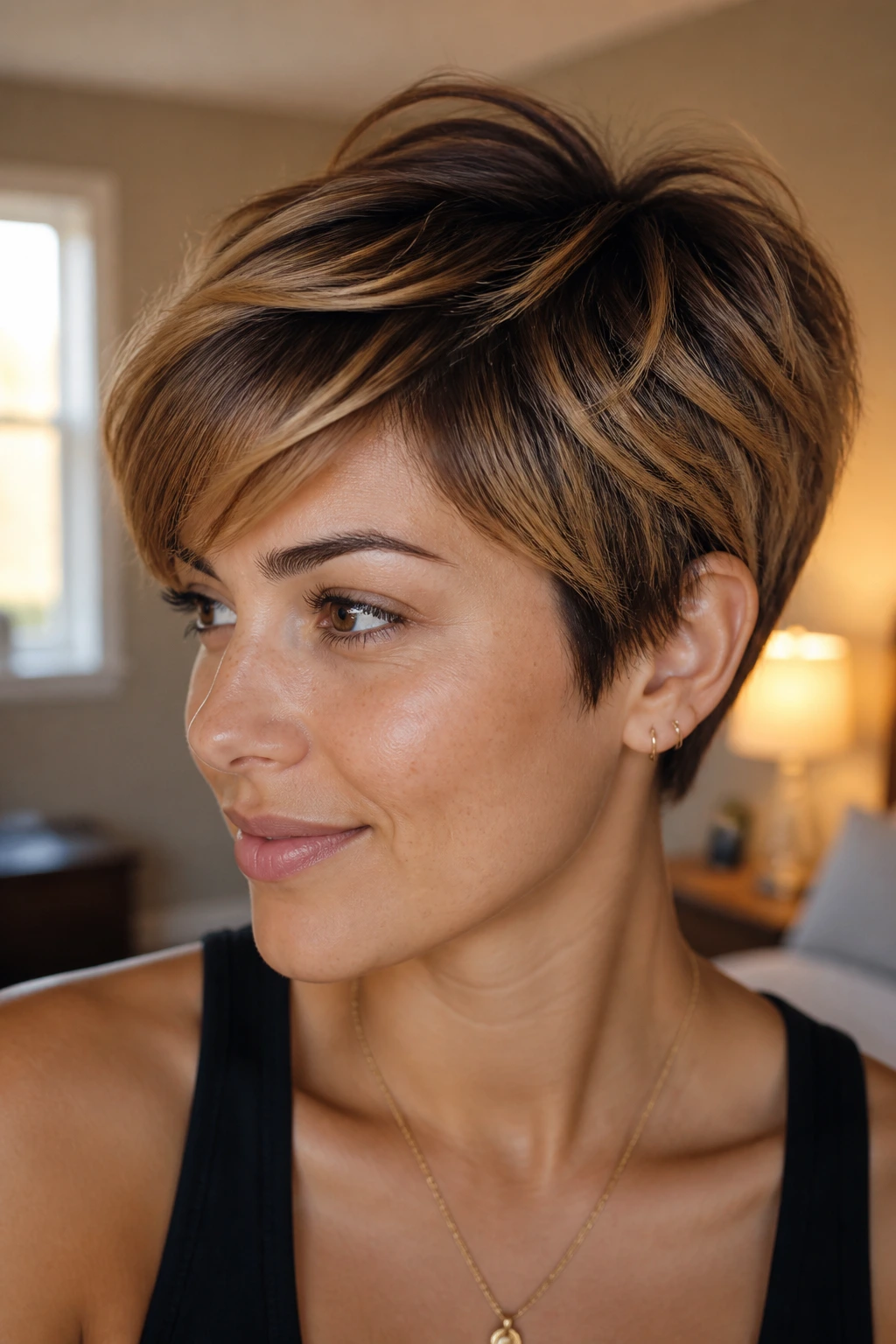
A rooted caramel balayage pixie is not the classic dip-dye ombre, and that’s the point. The fade is hand-painted in fine pieces, so the lighter caramel lives around the top, fringe, and outer edges while the roots stay deeper. On a pixie, that creates movement without taking away the cut’s structure.
This is the version I’d recommend to someone who wants color but hates the idea of obvious regrowth. Because the caramel is scattered, it grows out better than a solid blonde finish. It also flatters hair that needs a little softness around the face, since the lighter bits sit where the eye naturally lands.
The key is restraint. Too many thick ribbons on a short pixie can make the color look streaky. Keep the pieces thin, place them with purpose, and let the darker root do the heavy lifting.
17. Brunette to Coral Gloss Bob
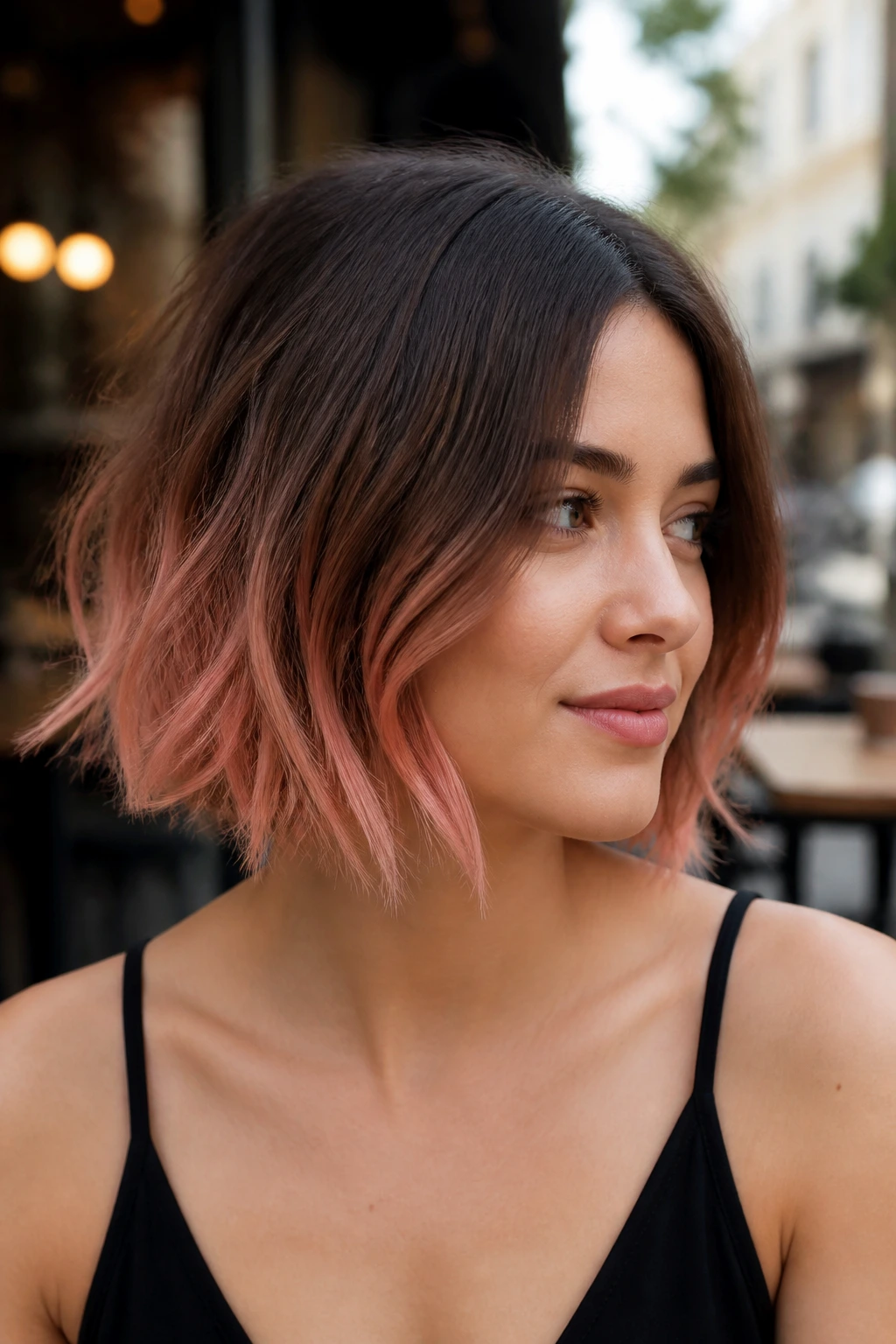
Coral gloss on a bob has a cheerful, coral-skin tone warmth that stays surprisingly soft if you keep the brunette base intact. The move here is not a full-on bright orange or pink. It’s a coral veil over the ends, enough to change the mood of the cut without overpowering it.
This works especially well on blunt bobs with a little bevel at the bottom. The shape gives the coral edge something to catch on. If the hair is too layered, the color can scatter a little too much and lose its clean finish.
A semi-permanent or glossing formula is the smarter path here. Coral shades tend to fade quickly, and short hair doesn’t give them much room to hide as they soften. If you like the look of a warm sunset tint on the ends, this is a good short-term color story rather than a low-maintenance one.
18. Deep Mahogany to Pecan Curly Crop
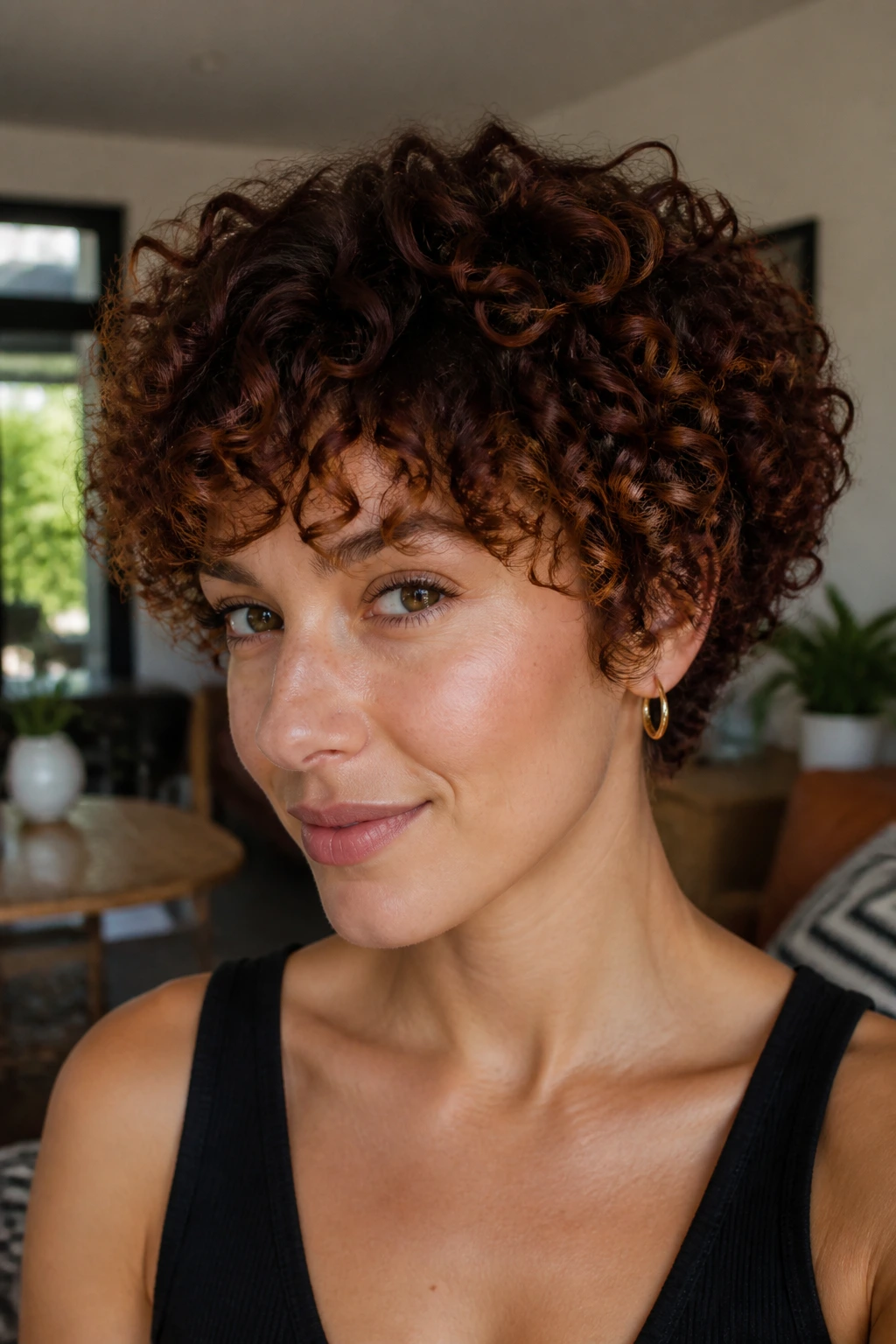
Curls change everything. On a curly crop, deep mahogany into pecan works because the texture breaks the fade into little pockets of color, so the transition looks softer by default. The mahogany keeps the base rich, while the pecan ends add enough lift to show movement when the curls separate.
This is one of the better short hair ombre ideas for natural texture because you do not need a dramatic lightening gap for the color to show. In fact, too much contrast can fight the curl pattern. Keeping the pecan within a few levels of the base lets the shape stay full and the color stay believable.
A diffuser is your friend here. Scrunching the hair while it dries encourages the pecan tones to sit on the outer curl shell, which is where they look best. Heavy oils can make the color read darker than it is, so use them sparingly.
19. Dark Blonde to Mushroom Blonde Wavy Bob
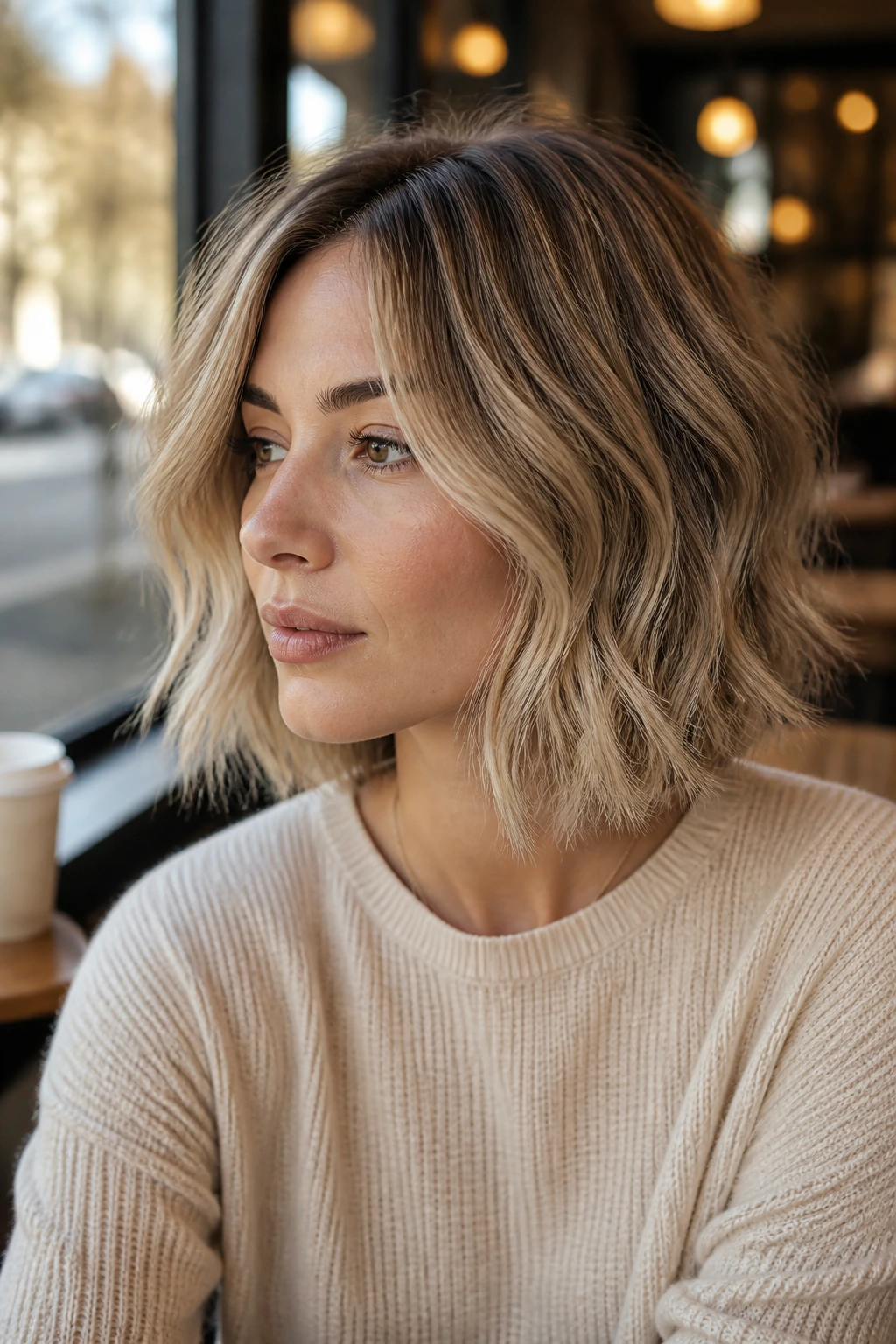
Dark blonde fading into mushroom blonde is one of the most natural-looking soft fades you can put on a short wavy bob. The root is already light enough to avoid a stark line, and the mushroom blonde adds a muted beige-gray finish that feels cool without going silver. On waves, that muted shift looks expensive and a little soft-focus.
The reason this works so well is that the wavy texture does the blending for you. Every bend catches the light slightly differently, so the fade never sits still. That means the color can be subtle on paper and still read clearly in motion.
If you want low maintenance, this is one of the easier picks in the whole group. The grow-out is gentle, the contrast is moderate, and the tone can be refreshed with a beige gloss rather than a full color correction.
20. Rich Brown to Buttery Beige Tapered Bob
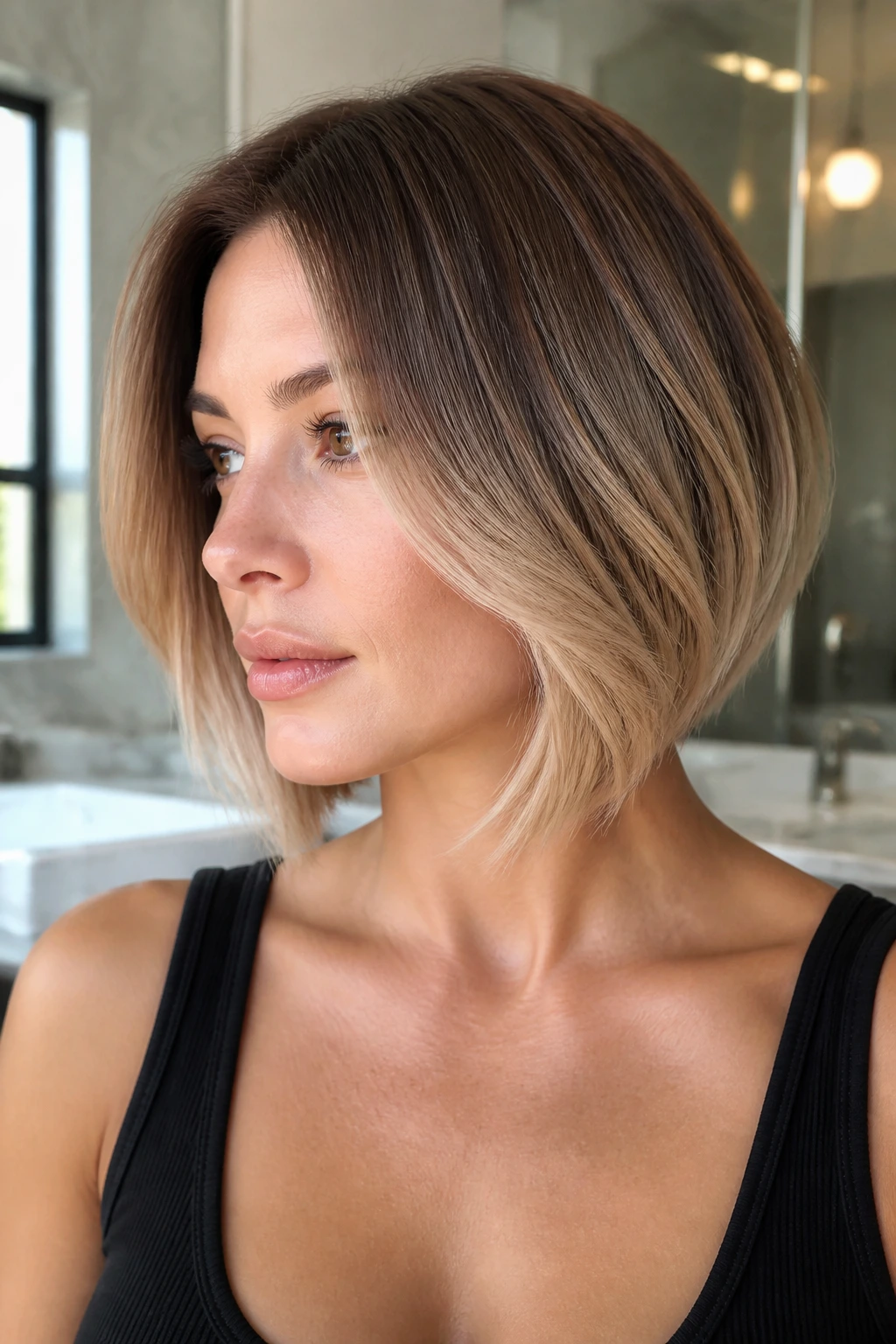
A tapered bob gives the ends a natural place to lighten, which is why rich brown into buttery beige feels balanced rather than dramatic. The shape is shorter at the back and longer toward the front, so the fade has a clear direction. The buttery beige lands where the eye follows the line of the cut.
I like this look for thicker hair because the taper removes weight while the lighter ends keep the cut from feeling heavy. Buttery beige is warmer than ash blonde, which helps it melt into brown hair with less effort. It’s also forgiving if your hair has a little underlying gold in it.
Styling-wise, a round brush blowout or a soft bend with a large iron works well. You want the shape to show. If the ends are curled too tight, the taper gets lost and the color starts to feel busy instead of smooth.
21. Soft Black to Chocolate Cherry Bob
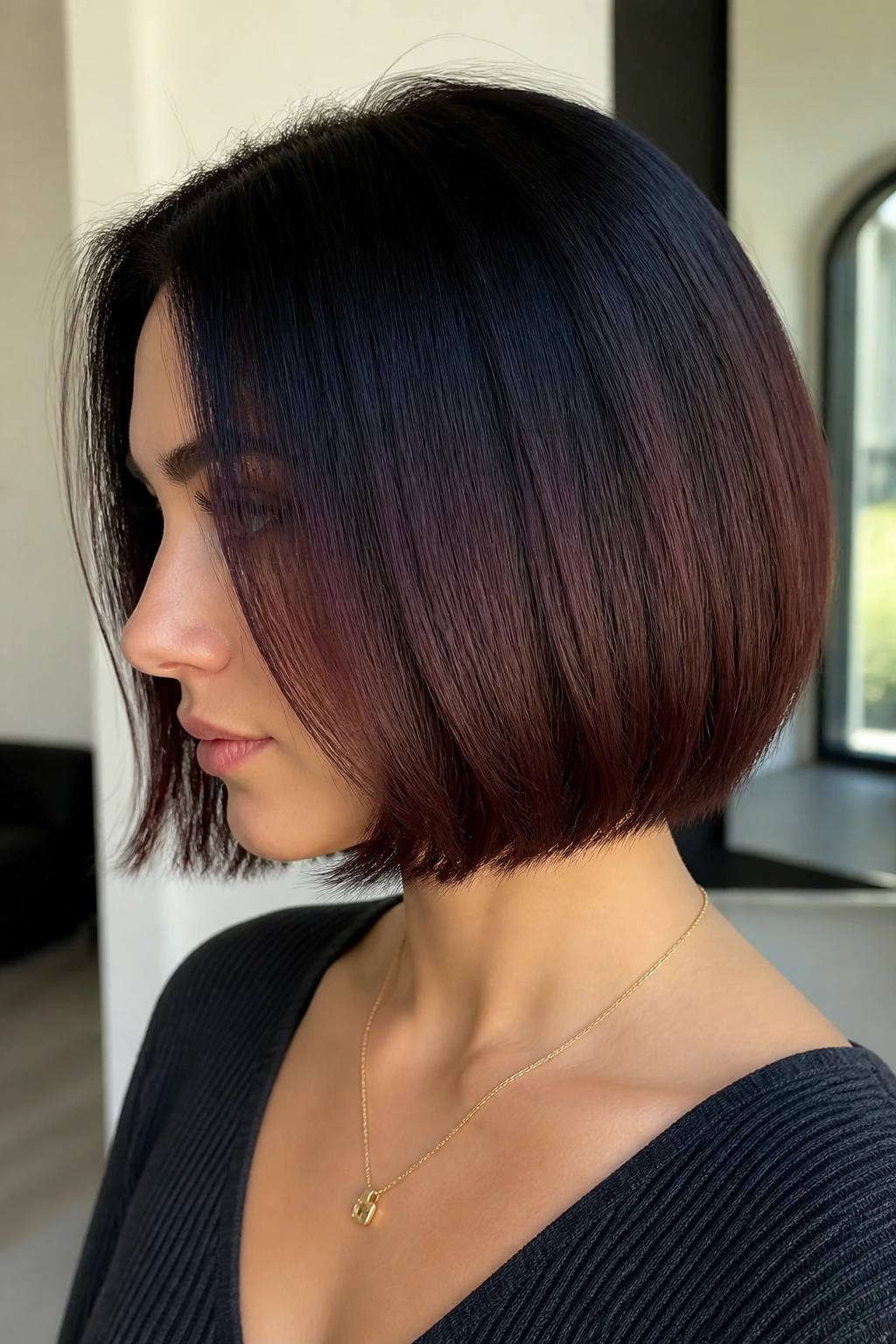
Chocolate cherry gives short hair a deep, glossy twist without tipping into loud red. On a black or near-black base, the cherry note appears mostly in the lower half and around the light, so the fade feels rich rather than bright. It’s a good choice if you want color that changes with lighting.
This style looks best when the finish is smooth. The cherry undertone shows up in reflective hair, especially under daylight or warm indoor light. A blunt bob with a slight inward curve makes the color feel polished, while a very choppy cut can make it read more punk than soft.
The maintenance is easier than a bright fantasy color, but the red family still fades faster than brown. If you want the cherry to stay visible, a color-depositing conditioner in a red-brown shade helps stretch the life of the tone between salon visits.
22. Walnut Root to Apricot Ends Short Shag
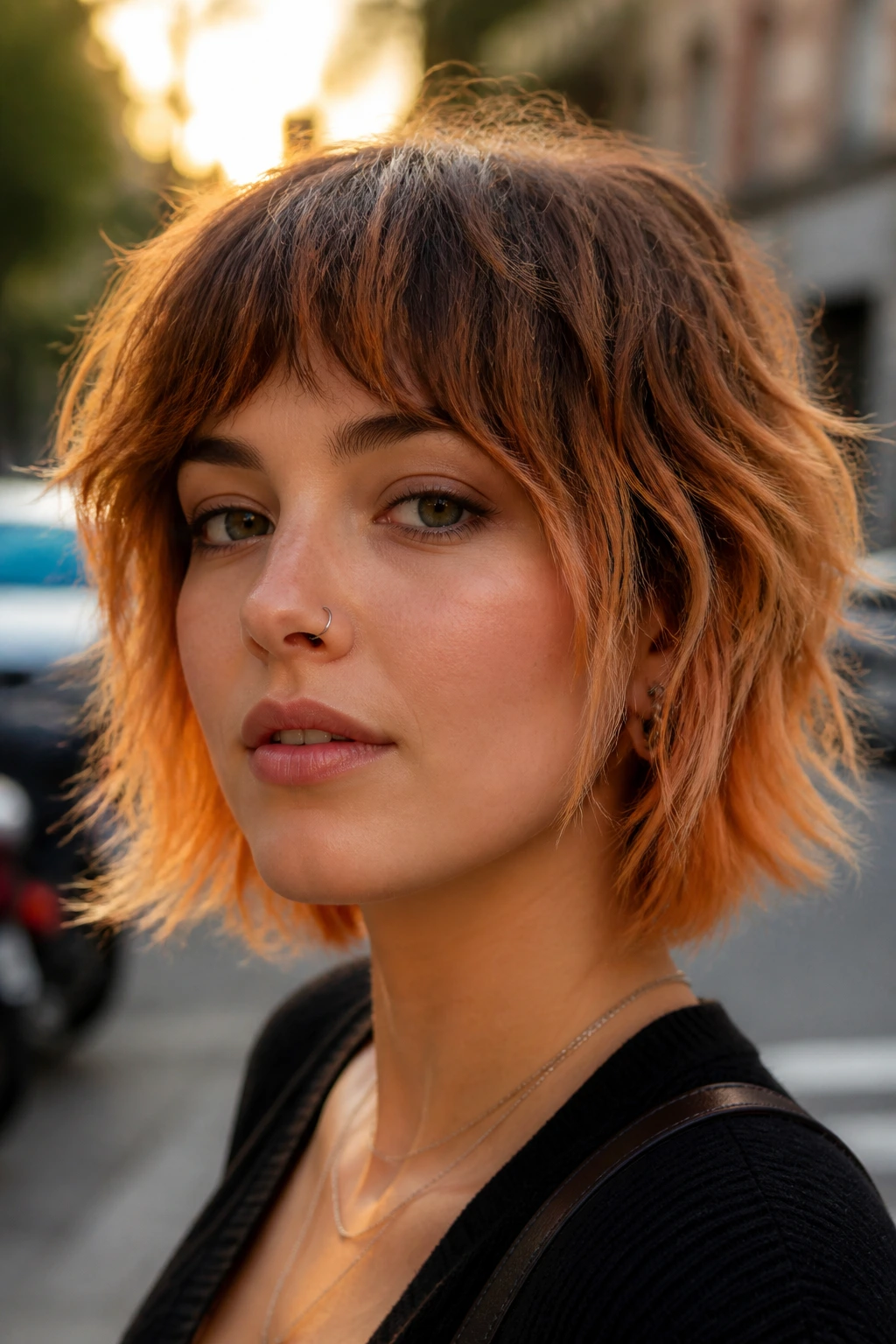
A short shag can take apricot better than a neat bob because the texture keeps the color from looking overly neat. Walnut brown roots create that deeper base, then apricot ends bring in a soft peach-orange glow that feels playful but not sugary. The layer breaks and fringe help the color flicker instead of sitting flat.
The biggest reason this works is contrast control. Apricot is bright enough to feel intentional, but not so bright that it blows out the softness of the fade. On a shag, a few face-framing lighter pieces are usually enough to make the whole thing read.
I’d style this with a diffuser or rough dry it with a bit of wave spray. The color looks better when it has some movement and irregularity. Too sleek, and the apricot can feel more like a block of tone than a melt.
23. Ash Brunette to Pearl Blonde Sleek Bob
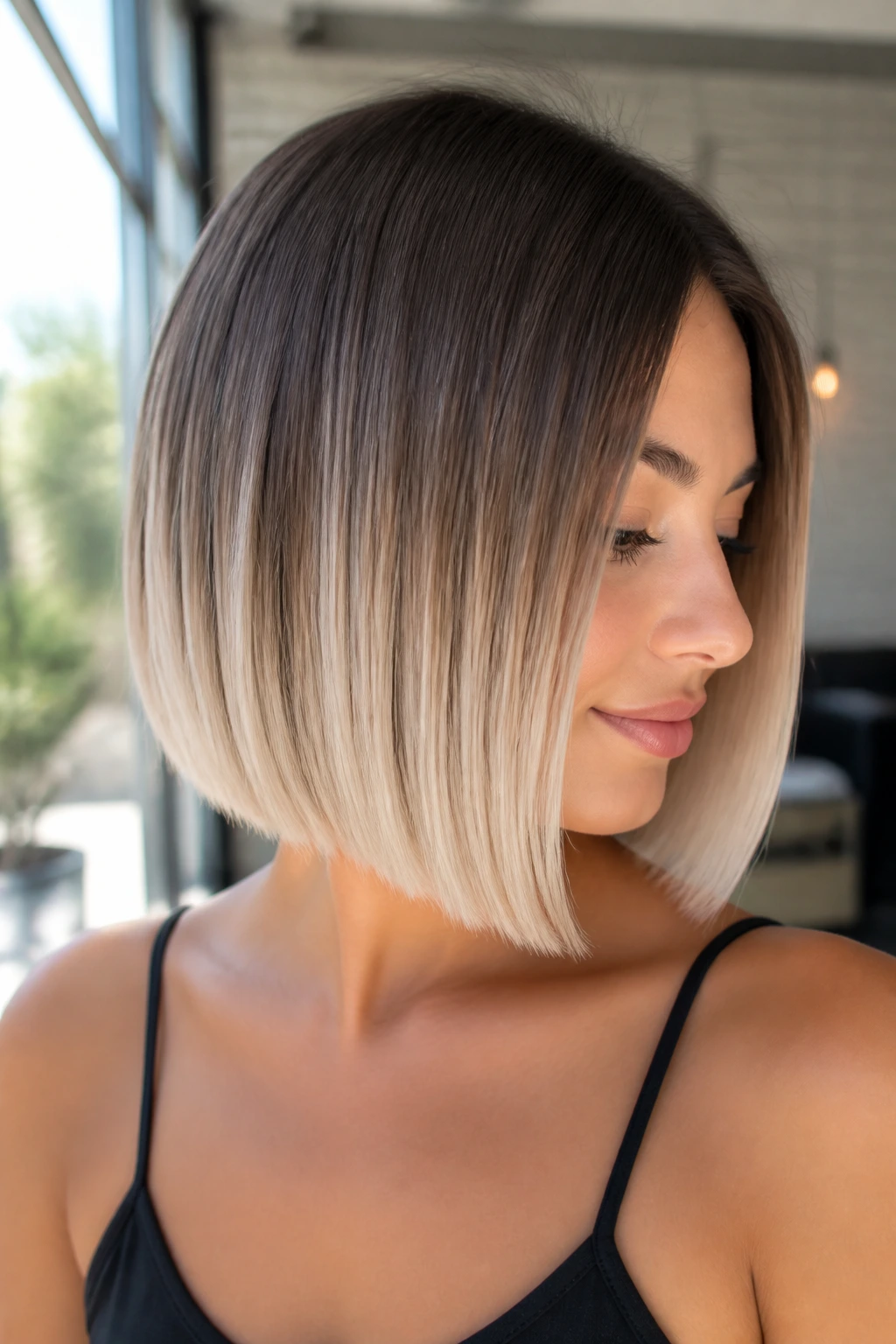
Pearl blonde on a sleek bob is clean, reflective, and a little more polished than a beachy ombre. The ash brunette base keeps the top grounded, while pearl blonde at the ends adds a pale, luminous finish that avoids yellow. This is one of the best short hair ombre ideas if you like a crisp line of shape with soft color inside it.
The key is toning. Pearl blonde needs a pale enough base to take the cool tone without turning muddy. On short hair, that usually means concentrating lift on the bottom sections and feathering the transition through the mid-lengths. You do not want the blonde marching up the head like a stripe.
A straight finish shows the contrast best, but a tucked-behind-the-ear bob also works nicely. The pearly ends pick up the light around the jaw and collarbone, which is exactly where short hair needs interest.
24. Dark Auburn to Terracotta Ombre Crop
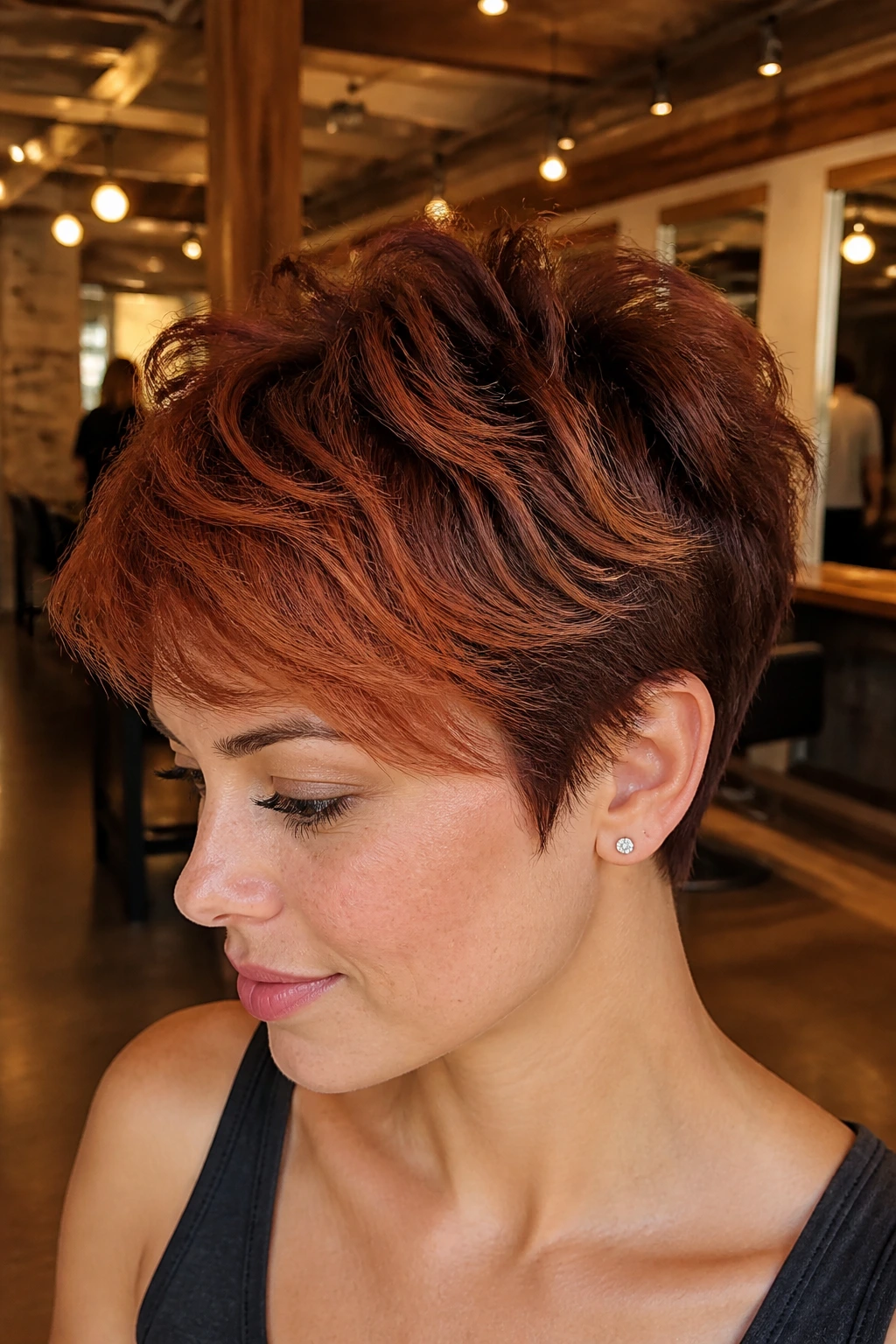
Terracotta is one of those shades that makes short hair look purposeful. Dark auburn at the root shifting into terracotta at the ends gives the crop a warm earth-toned fade that feels grounded and lively at the same time. It’s softer than copper, dustier than orange, and easier to wear than many fashion shades.
This look shines on cropped cuts with a little texture at the top. The terracotta can live mostly on the tips and a few side pieces, which keeps the color from taking over the whole head. Since the shade has brown in it, it melts into auburn with less drama than a brighter orange would.
If you like warm reds but not the maintenance that comes with vivid color, this is a smart middle path. A gloss in a terracotta-brown family can refresh the ends without needing a full color overhaul every time.
25. Neutral Brown to Smoky Beige Soft Fade Lob
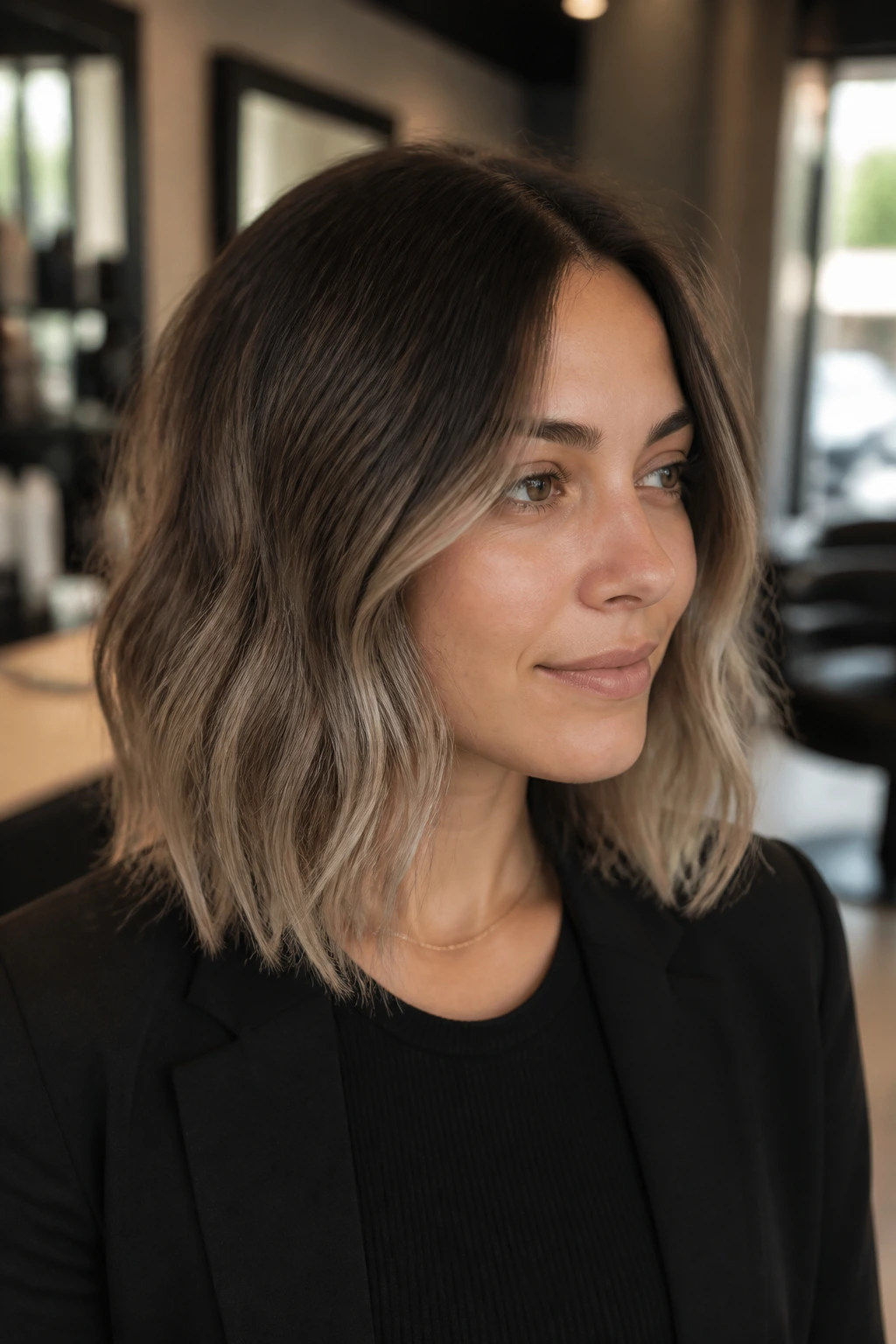
If someone asked me to name the most wearable short hair ombre idea in the bunch, this would be near the top. Neutral brown into smoky beige is soft, modern, and easy to style in almost any direction. The base stays close to natural brown, while the ends drift into a muted beige that has enough coolness to feel fresh and enough warmth to stay blended.
This is the look I’d hand to someone who wants a fade but hates obvious maintenance. The contrast is low enough that regrowth doesn’t scream for attention. On a lob, the color shift appears mostly in the outer third of the hair, which keeps the shape airy.
Loose bends, a center part, and a bit of tucked volume at the ends all suit this style. It’s quiet in the way good hair color often is. Nothing shouts, and that’s the charm.
Why Soft Ombre Works So Well on Short Hair
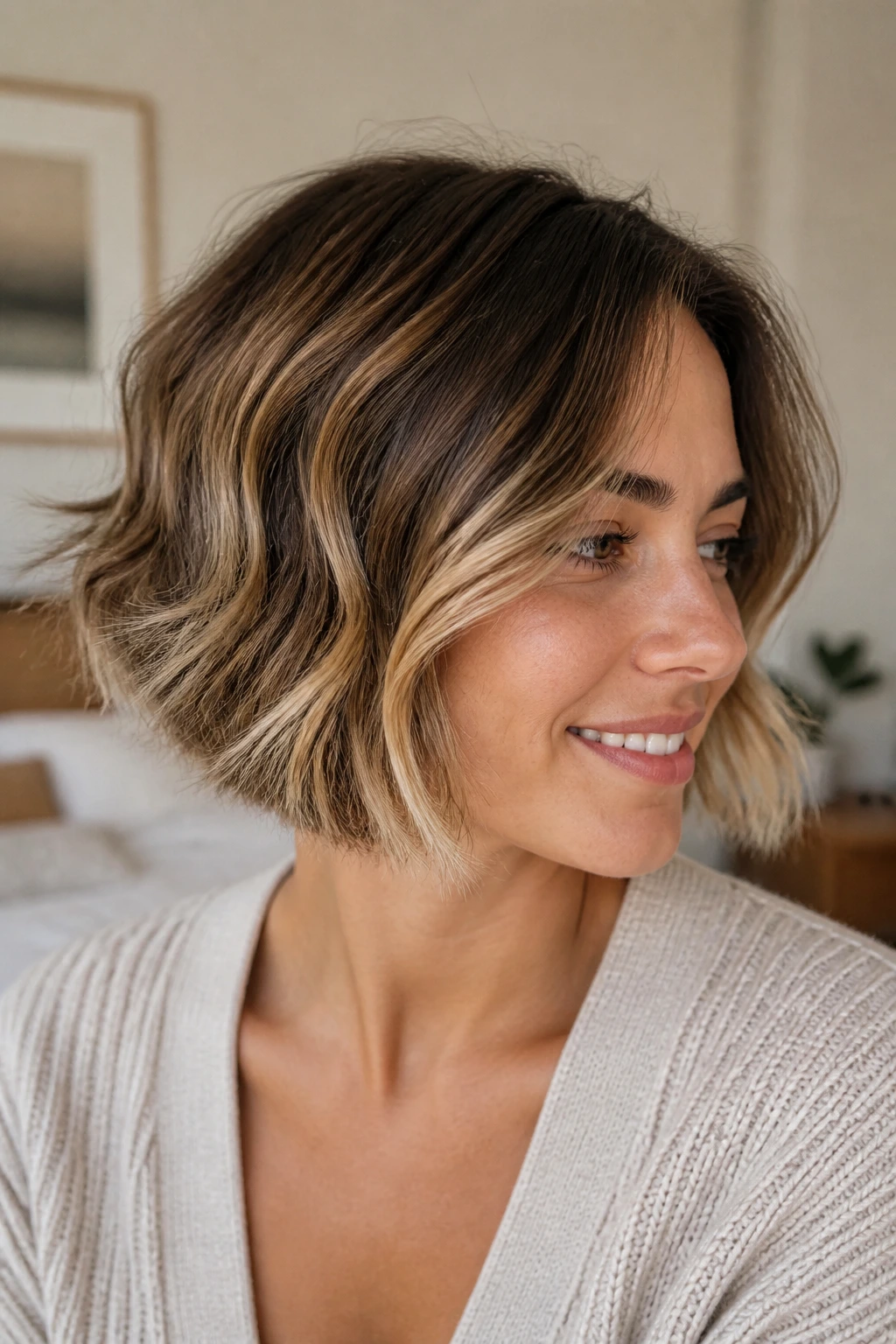
Short hair ombre has one big advantage over longer fades: the eye gets the full color story fast. You’re not waiting six inches for the transition to show up. On a bob or pixie, the blend has to happen in a tight space, which is why softer tones often look better than stark ones. The shorter the cut, the more important the root shadow becomes.
A soft fade also protects the haircut itself. If the lightest color is pushed too high on short layers, the shape can lose its weight and start looking frayed. Keep depth at the root and softness through the mid-lengths, and the cut still reads as a cut. That’s the trick. Color should support the line, not fight it.
There’s another reason this works: grow-out is easier to live with. Hard highlight lines show fast on shorter styles because the distance between scalp and light ends is smaller. A melt, root smudge, or balayage-style fade gives you a gentler exit route between salon visits.
Essential Tools for These Looks
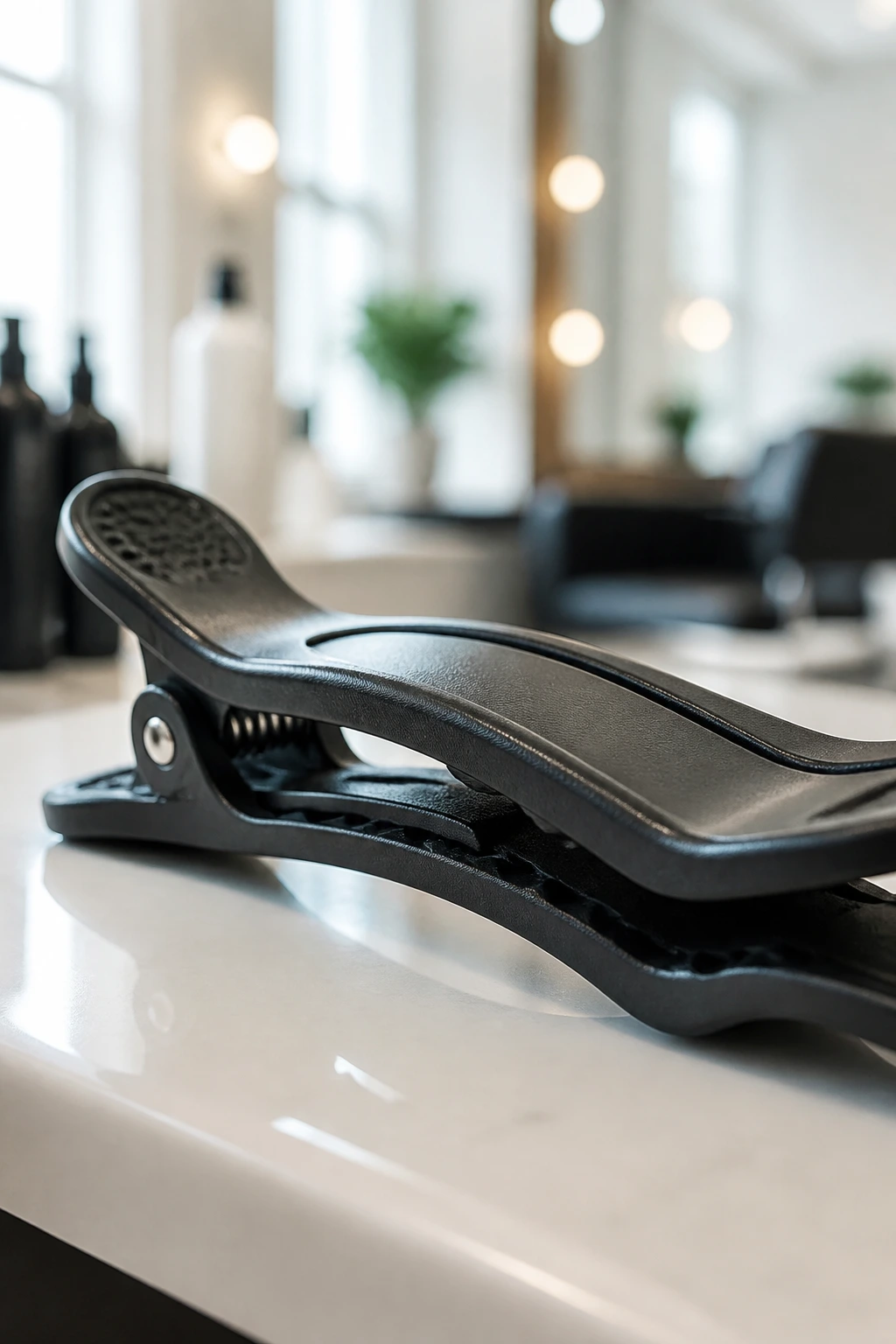
- Sectioning clips: Useful for keeping short layers apart, especially at the crown and around the ears.
- Tail comb: Helps place clean partings and paint or tone with better control.
- Balayage board or foil: Optional, but handy if you want a cleaner lift on the ends.
- Color-safe shampoo: Keeps tone from slipping too fast, especially with blonde, copper, gray, or red fades.
- Deep conditioner or mask: Helps ends stay smooth after lightening, which matters a lot on short hair.
- Heat protectant spray: Non-negotiable if you blow-dry, flat-iron, or curl the fade often.
- Round brush or vent brush: Useful for shaping bobs and lobs so the color placement shows.
- 1-inch curling iron or wand: Good for adding bend without turning the style into ringlets.
- Gloves and barrier cream: Smart if you’re handling toner or semi-permanent color at home.
Choosing Shades That Blend Instead of Stripe
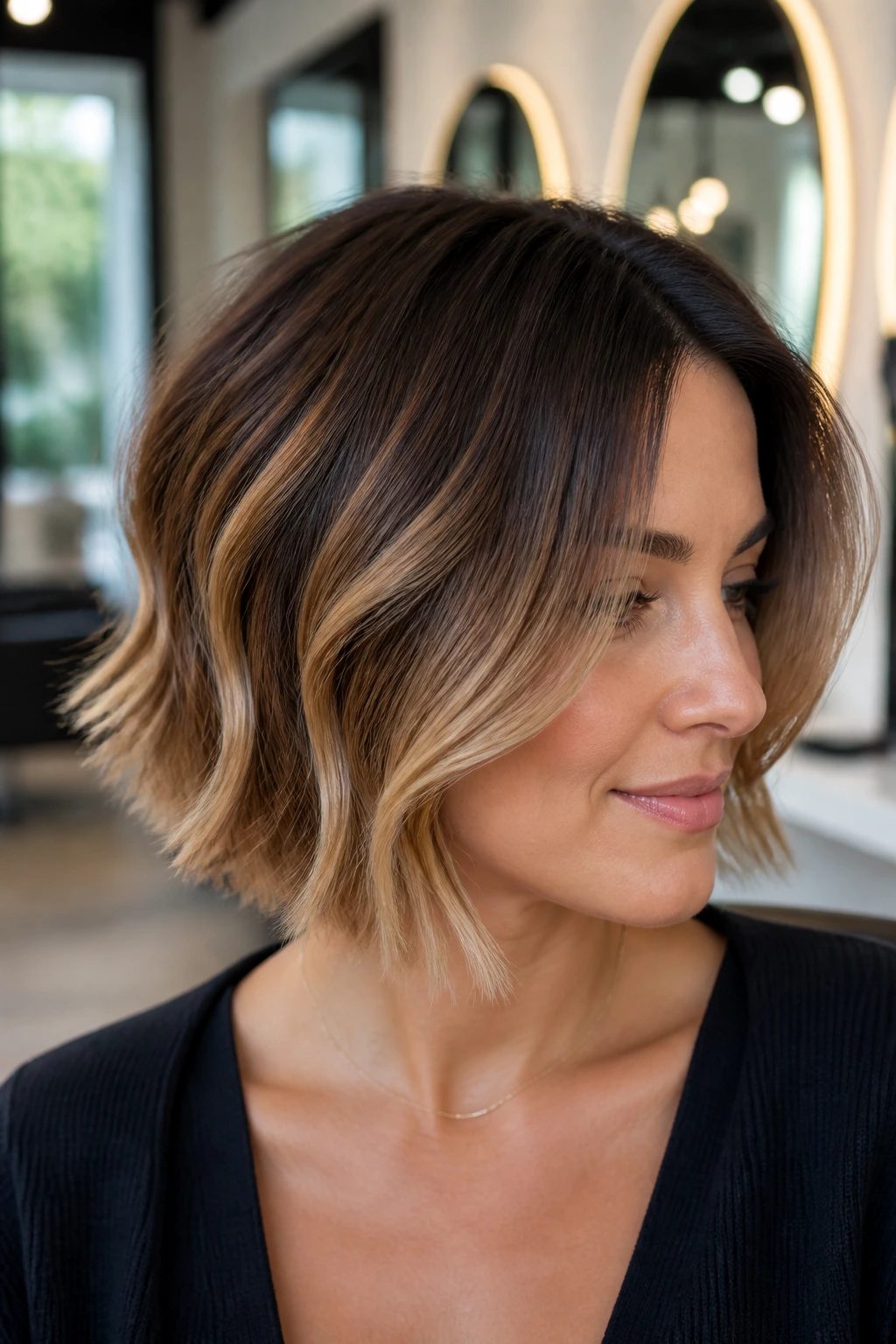
The biggest mistake people make with short hair ombre is choosing the shade first and the placement second. Reverse that. Start with the haircut, then decide how much room the fade actually has. A pixie may only give you one or two inches of transition, while a lob can handle more stretch and a bob falls in the middle.
Color level matters too. In salon language, a level 4 brunette and a level 6 brunette are not close enough to ignore. If your natural base is deep brown, going all the way to pale blonde at the ends is a bigger job than it sounds, and on short hair that jump can look harsh unless it’s carefully toned back. Warm brunette roots usually melt more easily into caramel, honey, bronze, or champagne than into icy blonde.
Bring photos of hair that’s the same length and texture as yours. A long-wave ombre and a short blunt bob are different animals. Different light, different movement, different rules. I’d also ask for gloss options during the consultation, because on short hair the finish can matter as much as the lift.
How to Wear Short Ombre So the Fade Reads Soft
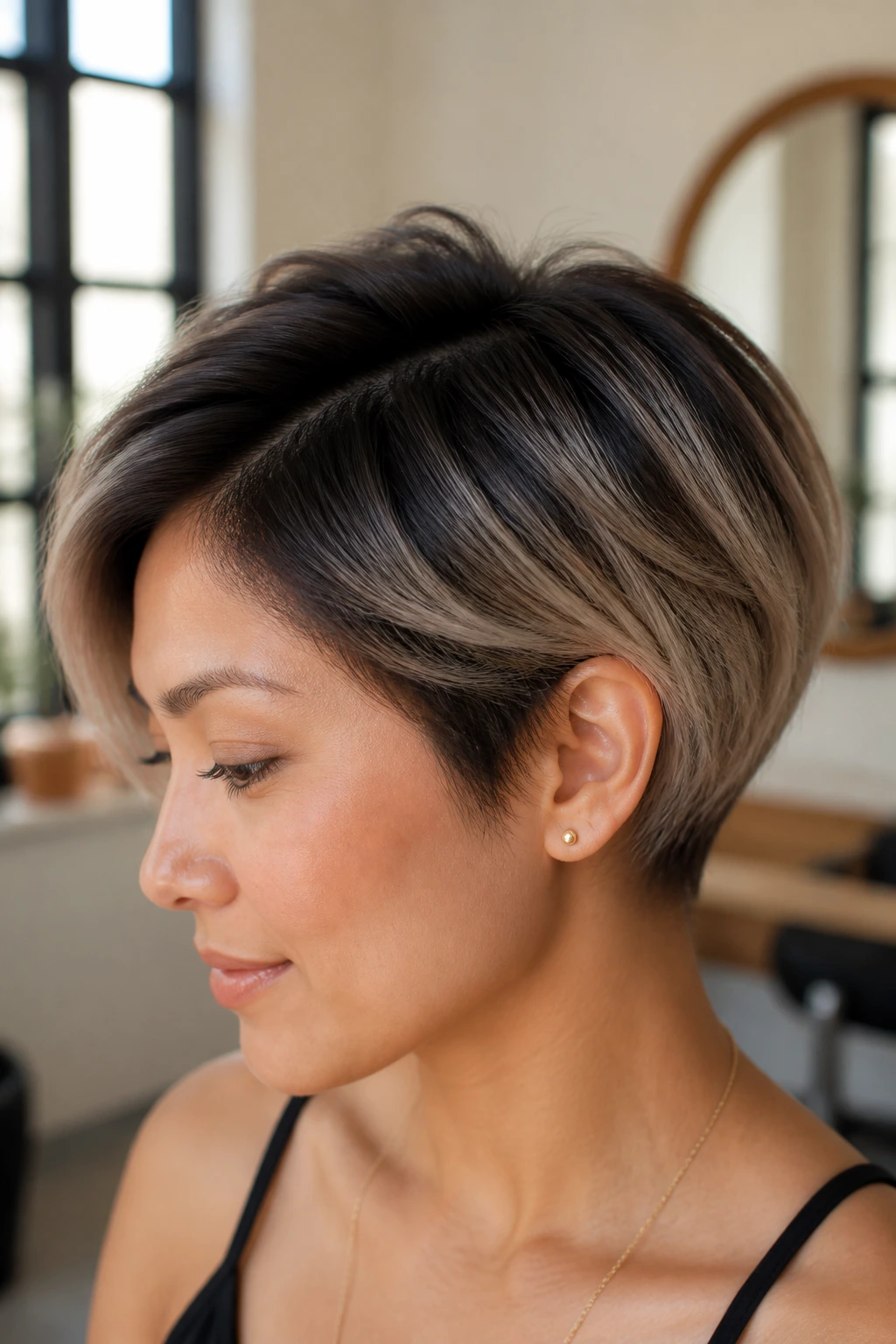
Placement: Keep the lightest color near the lower third of the cut on bobs and lobs, and closer to the crown only when the cut is very layered or very short. The fade should follow the shape of the haircut, not fight it.
Texture: Loose bends, soft waves, and slightly piecey finishes usually show the melt better than poker-straight styling. On pixies, a bit of separation on top keeps the color from looking like one flat block.
Pairing: Short ombre looks clean with curtain bangs, side-swept fringe, blunt edges, and slightly undercurved ends. If you already have a strong geometric cut, keep the color softer. If the cut is shaggy, the color can be a little more playful.
Maintenance: Blondier and cooler fades need more toner care. Brunette, copper, and smoky-brown versions are more forgiving. Pick the version you can actually live with, not the one that looks good in one salon-chair photo.
Color Boosters That Make the Fade Feel Expensive
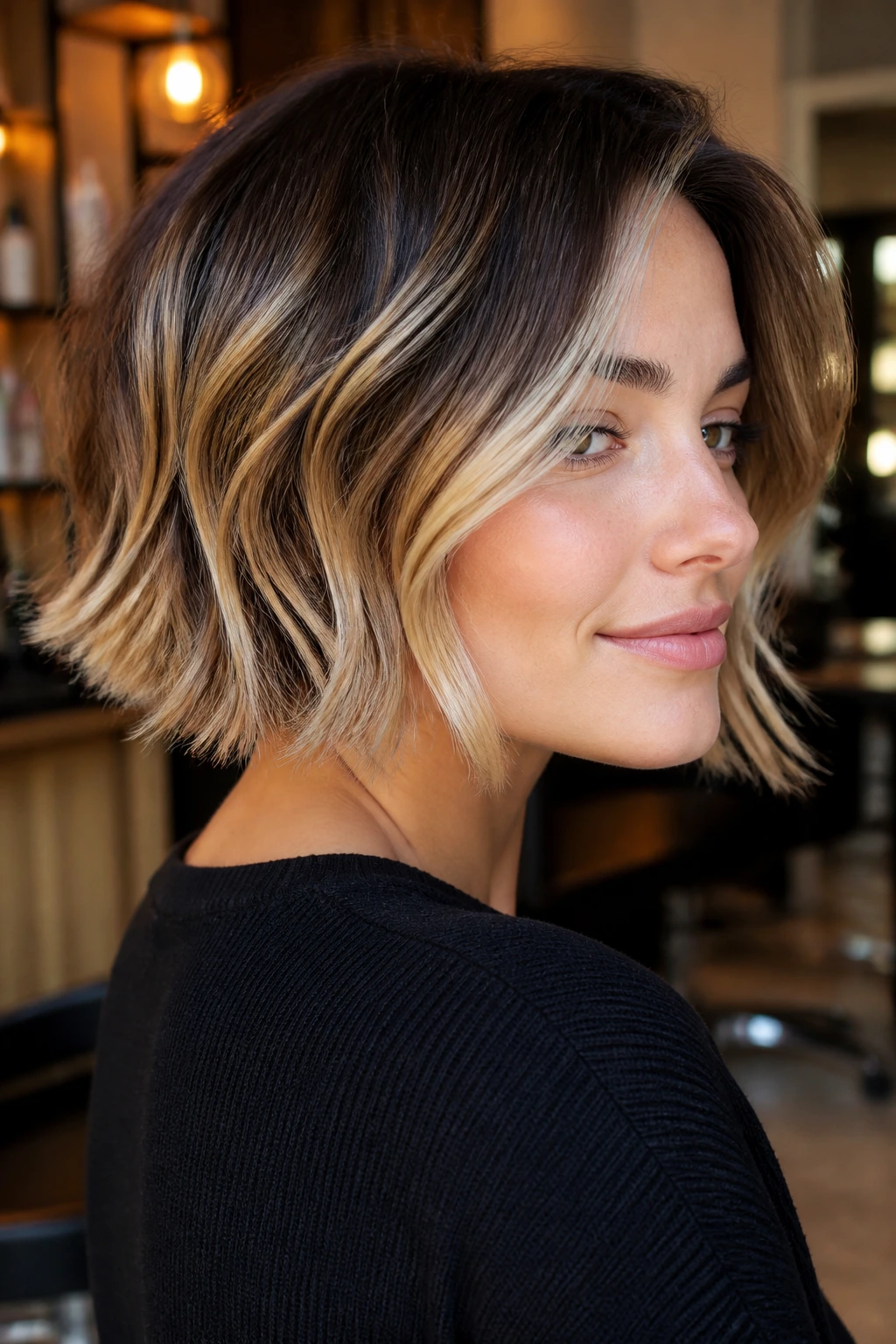
Tone Enhancement: A clear or tinted gloss every 4 to 6 weeks keeps the transition from looking dry. On blonde fades, a beige or pearl gloss softens brass. On copper and red fades, a warm color gloss keeps the ends from turning flat.
Customization: Add a few face-framing pieces if the cut feels too solid, or keep the sides deeper if you want more density around the cheekbones. On short hair, tiny placement changes matter more than extra color does.
Serving Suggestions: Hair oil on the last half-inch of the ends can make the fade look smoother, but keep it light. A heavy oil right at the roots flattens the whole style. A side part or a tucked-behind-the-ear finish also changes how the fade reads, and that little shift is worth using.
Make-It-Yours: If you want warmer, ask for caramel, honey, bronze, or terracotta. If you want cooler, lean into mushroom brown, ash beige, silver taupe, or smoky gray. The same haircut can go a dozen directions without changing the shape.
Common Mistakes That Make Short Ombre Look Harsh
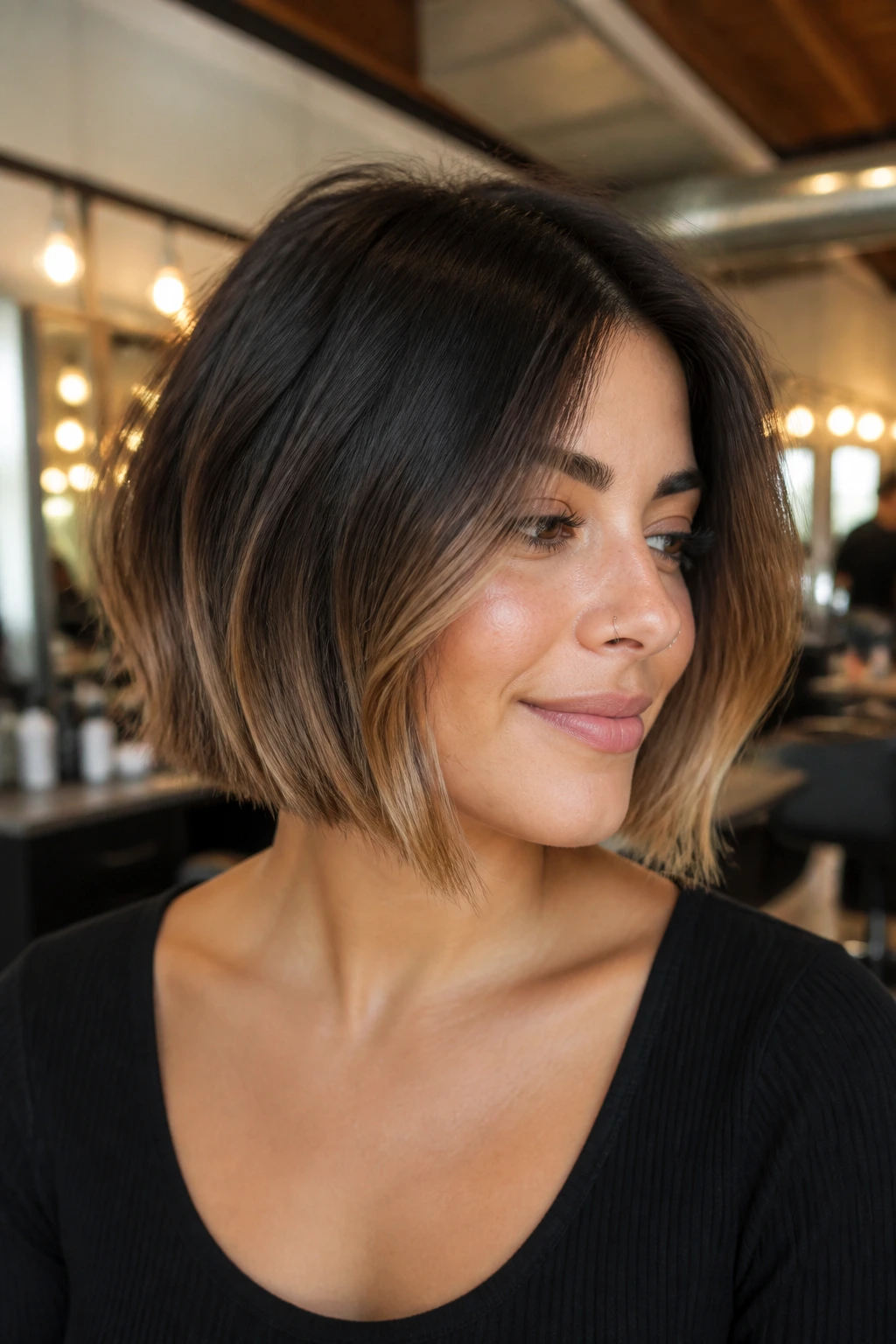
The first mistake is starting the fade too high. On a short bob or pixie, that turns the color into a band instead of a melt. You’ll see a lighter patch that seems to sit on top of the cut instead of flowing through it. The fix is simple: keep the light zone lower and soften the transition with a gloss.
Another problem is over-lightening already fragile ends. Short hair shows damage fast, especially when the perimeter is exposed and the cut is blunt. If the ends are porous, they can go pale too quickly and lose softness. Better to lift less and tone more than chase a platinum finish that will fray in two washes.
Tone mismatch causes plenty of trouble too. A warm base with a cool, icy end can look dirty if the blend is not managed well. The same goes for brassy lift under a cool toner. The answer is to respect undertone, not fight it.
Keeping the Fade Soft Between Salon Visits
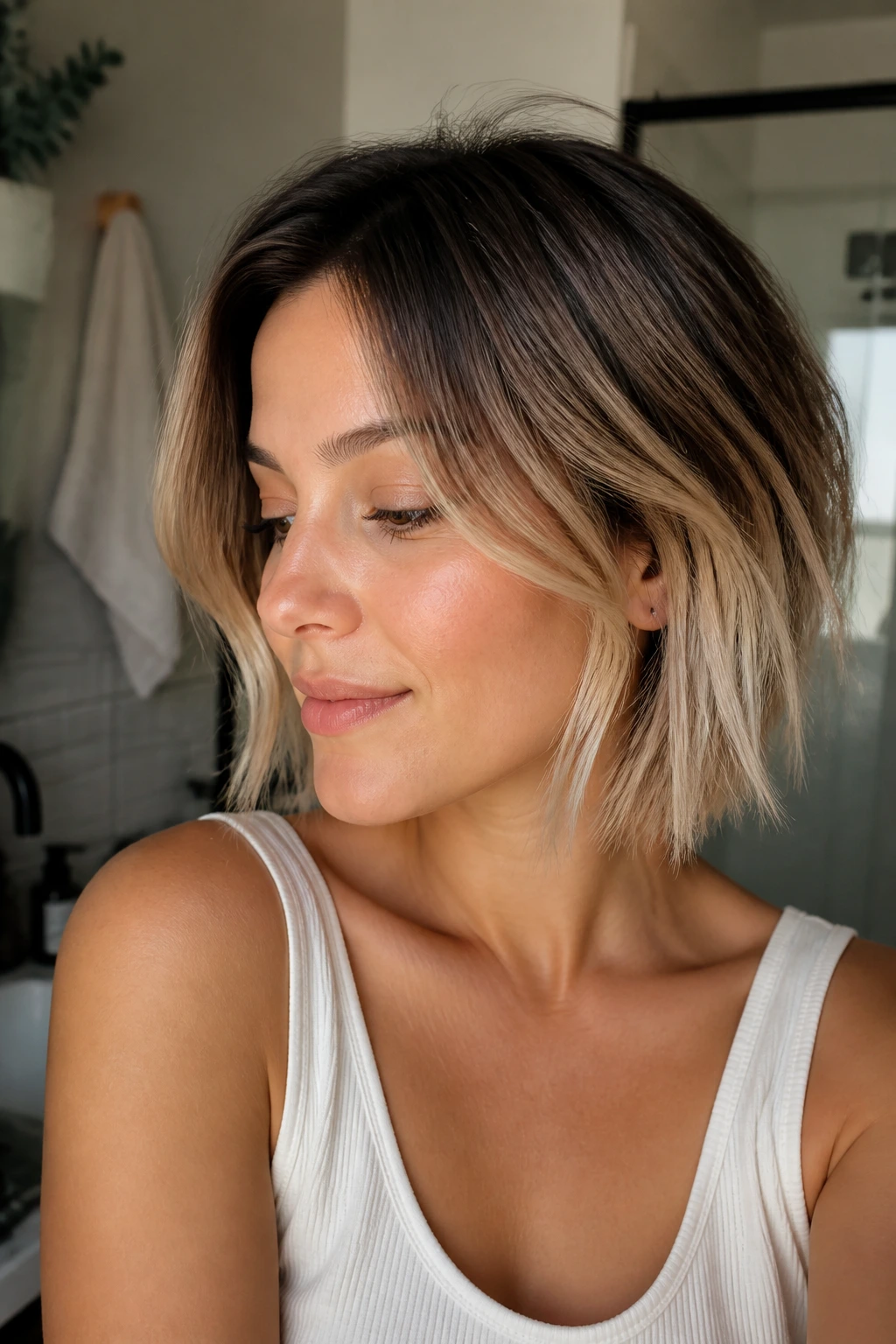
Short ombre tends to look best when the tone is fresh but not overworked. For most color services, waiting 48 to 72 hours before the first wash helps the cuticle settle a bit. After that, use a sulfate-free shampoo 2 or 3 times a week if your hair tolerates it, and skip the scalding water. Warm water is enough.
Blonde, silver, and beige fades usually need toning every 3 to 5 weeks. Brunette-to-caramel or chocolate fades can often go 6 to 8 weeks before they need a gloss. If your hair is heat styled often, the ends will dull faster, so use a protectant every time before blow-drying or ironing.
At night, a loose clip or silk pillowcase helps keep the color looking smoother because the ends rub less. It sounds small. It isn’t. Friction roughens the light pieces first.
Frequently Asked Questions
Can short hair ombre work on very dark hair?
Yes, but the lighter ends may need more than one session if you want a soft, non-brassy finish. On very dark hair, caramel, bronze, chocolate cherry, and smoky brown fades are usually easier to maintain than pale blonde or silver ends.
How short is too short for ombre?
If the hair is cropped so close that there’s barely an inch and a half of length on top, the effect starts to behave more like subtle highlight placement than true ombre. A pixie can still wear it, but the fade needs to be tiny and deliberate.
Does ombre or balayage look better on short hair?
Balayage often wins on short hair because it lets the color placement follow the haircut’s shape. Ombre gives more of a directional fade from dark to light, while balayage can soften that transition with scattered hand-painted pieces. Many of the best short looks mix both.
What shades make short hair look thicker?
Deeper roots with warmer mids and ends usually create the illusion of fullness because they preserve shadow near the scalp. Caramel, chestnut, mocha, bronze, and toffee tend to make short cuts feel denser than high-contrast platinum ends.
How often do short hair ombre colors need toning?
Blonde, silver, gray, and rose tones usually need refreshing every 3 to 5 weeks. Warm brunettes and reds can stretch longer, often 6 to 8 weeks, depending on wash frequency and heat styling.
Can curly short hair wear ombre without looking patchy?
Absolutely, and curls often make the fade look softer than straight hair does. The key is to keep the lift controlled and avoid placing all the lightness in one band, because curls expand and expose every color line.
What if the ends turn brassy?
That usually means the toner has faded or the hair was lifted into a warm zone underneath. A beige or violet-based gloss can cool it back down, but if the brass is strong, the safest fix is usually a salon toner rather than piling on purple shampoo at home.
Do I need to trim more often with short ombre?
Yes, especially if the color is light at the ends. A 6- to 8-week trim schedule keeps the perimeter from fraying and helps the fade keep its shape. On short cuts, the shape is half the look.
Soft Fade, Sharp Shape
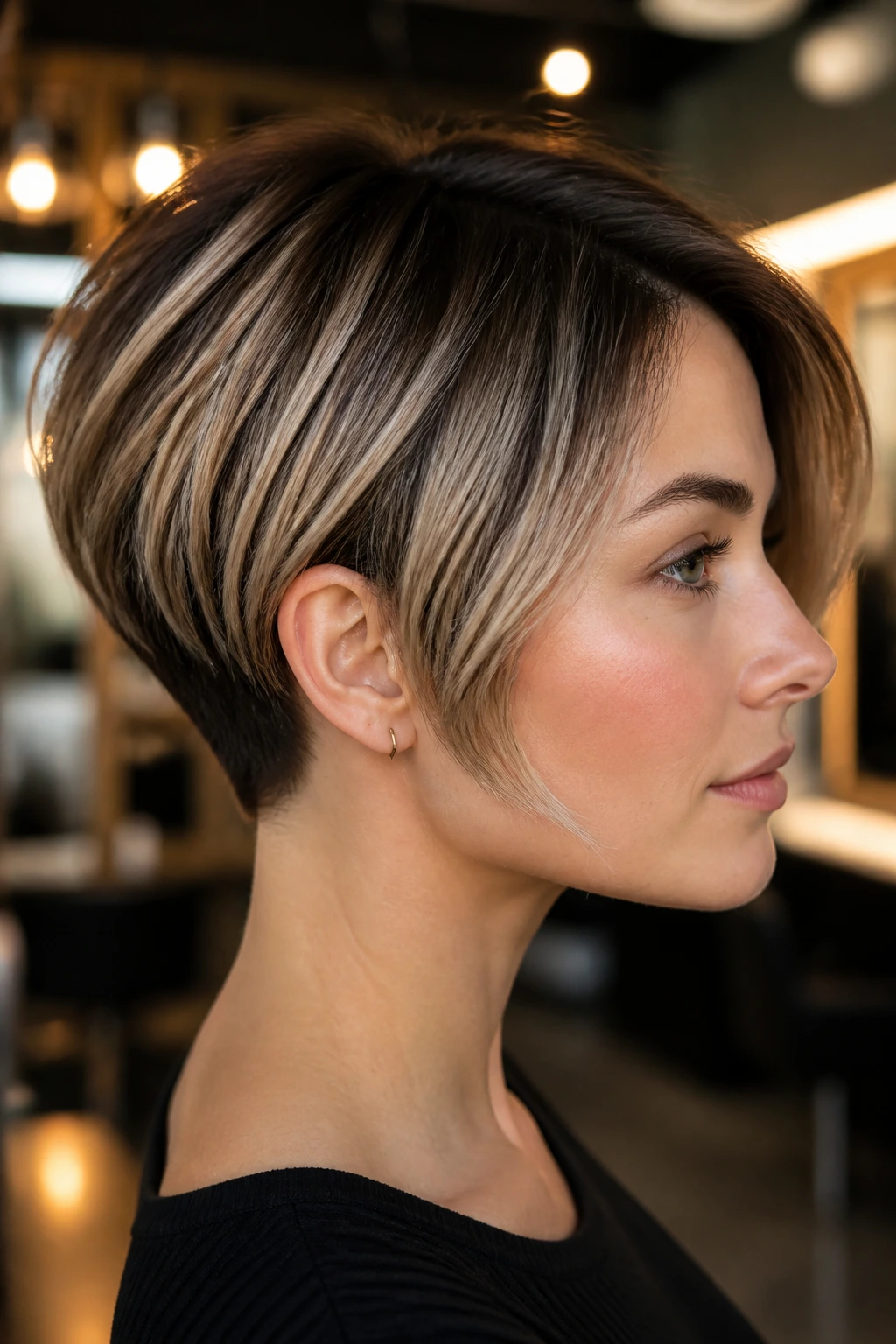
The best short hair ombre ideas don’t shout. They slide. They let the cut stay the star while the color quietly changes the way the edges move and the light lands. That’s why the good ones feel soft even when the contrast is high: the transition is doing the job, not the brightness.
Pick the version that fits your haircut, your upkeep tolerance, and your natural base. A caramel bob and a smoky gray pixie are both valid answers. So is a beige blonde lob or a chocolate cherry crop. The right fade is the one that makes the haircut look more like itself, not less.
