



Brunette hair looks for fall have a particular kind of swagger. Brown shades can go deeper, shinier, and more dimensional when the light softens, and they still look put-together under a scarf, a collar, or a day that never seems to get bright enough. The best brunette hair looks for fall don’t depend on brightness alone. They depend on tone, placement, and a little restraint.
A flat brown can disappear in gray light. A good one doesn’t. It keeps movement at the ends, a clean line at the part, and a little glow around the face—often from a gloss, a root shadow, or ribbons no wider than a pinky finger. That’s the difference between “nice brown hair” and hair that makes people look twice.
I like brunette shades that still look strong after three days, one dry shampoo rescue, and a bad sleep. That usually means level 4 to 6 bases, carefully placed caramel or copper, and a cut that gives the color something to sit on. A blunt bob, a shag, or long layers can change the same brown from simple to memorable.
The 33 looks below cover the range from espresso-dark and smoky cocoa to chestnut, cherry cola, bronde, and soft mocha, so you can find the version that fits your texture, your upkeep, and the way you actually wear your hair.
Why Brunette Hair Looks Work So Well in Fall Light
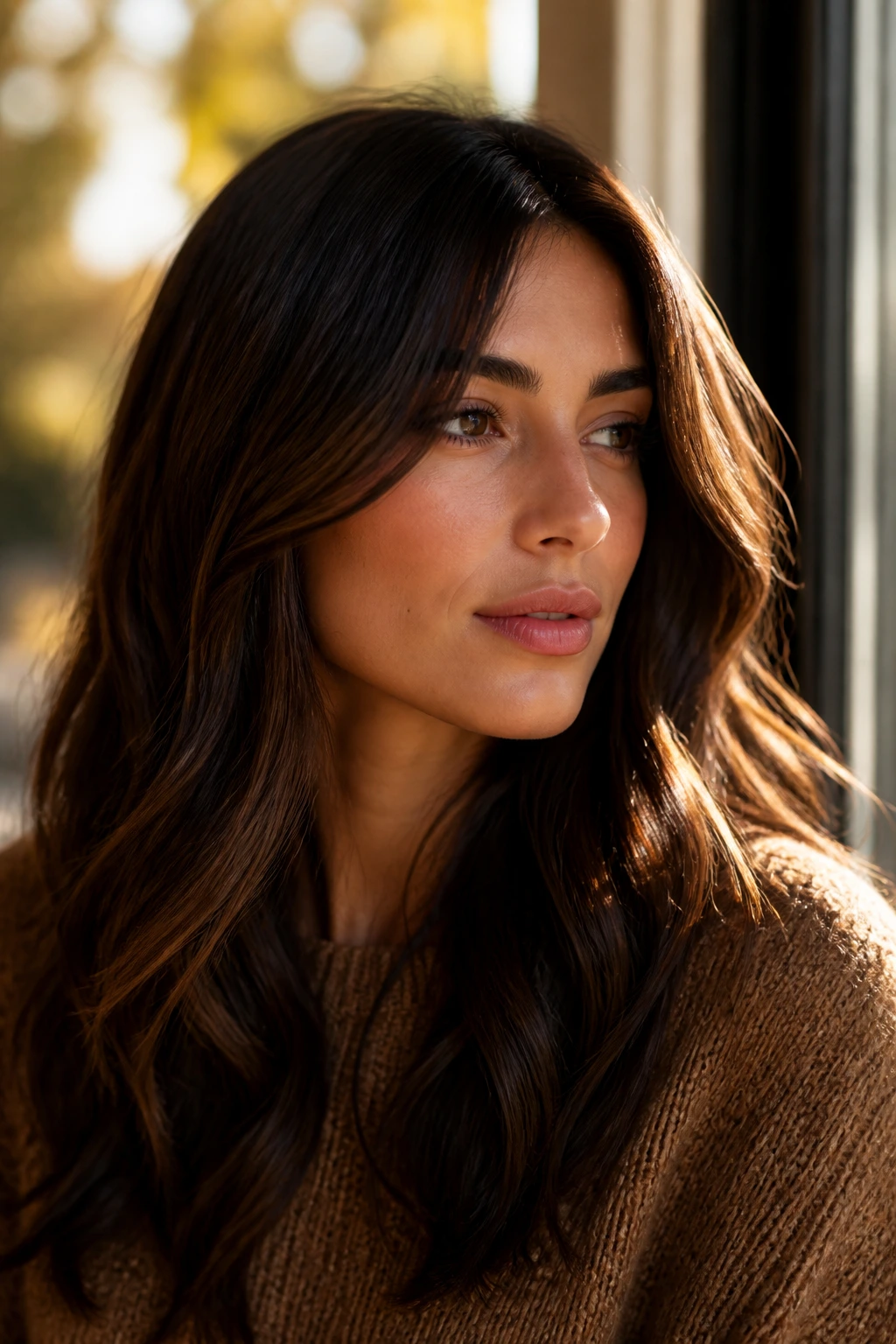
- Low-Light Friendly: Brown shades hold their shape when daylight gets softer, so a glossy chestnut or espresso base still reads rich instead of dull.
- Grow-Out Grace: Root shadows and balayage melt together better on brunettes, which means the line between new growth and old color stays softer.
- Texture Pays Off: Waves, bends, shags, and curls show the color shift better than stick-straight hair, especially when you add ribbons or lowlights.
- Face Brightening: Caramel, copper, and mocha pieces around the face do the job of brightness without forcing the whole head to go lighter.
- Easy to Adjust: The same brunette can lean warm, cool, smoky, or red-brown just by changing the toner and where the lighter pieces sit.
1. Espresso Gloss Bob
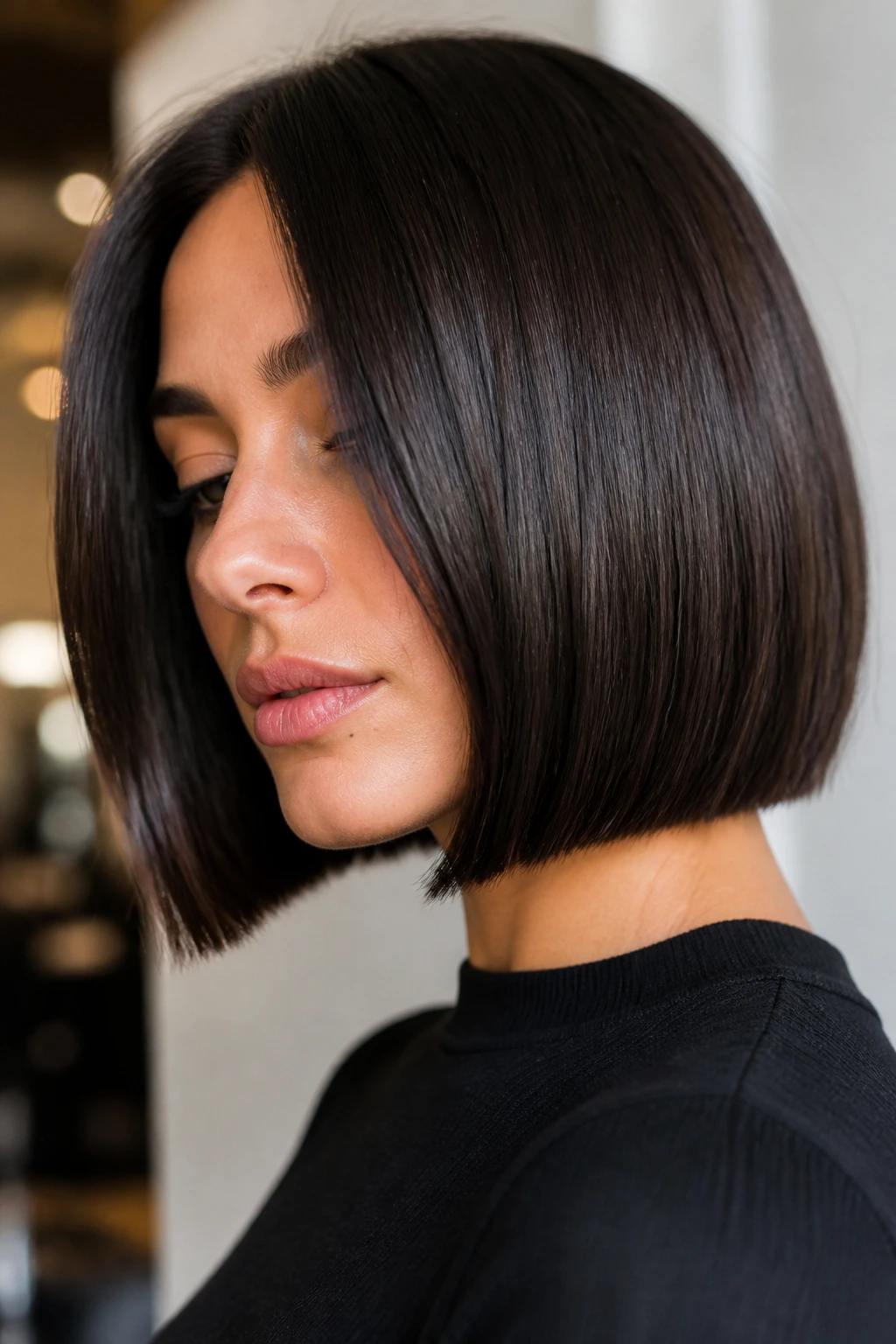
A blunt espresso bob is the simplest thing in this list, and maybe the most satisfying. The color sits in that near-black brown range that makes hair look denser, while the clean perimeter at the jaw or collarbone does half the styling for you.
Ask for a level 3 or 4 brown glaze with minimal layering through the ends, then smooth it with a round brush or flat iron so the surface stays reflective. Best for: straight or slightly wavy hair that needs shape more than decoration. A tiny bit of shine serum on the last inch is enough; too much and the whole cut starts looking greasy.
2. Chestnut Layers with a Soft Bend
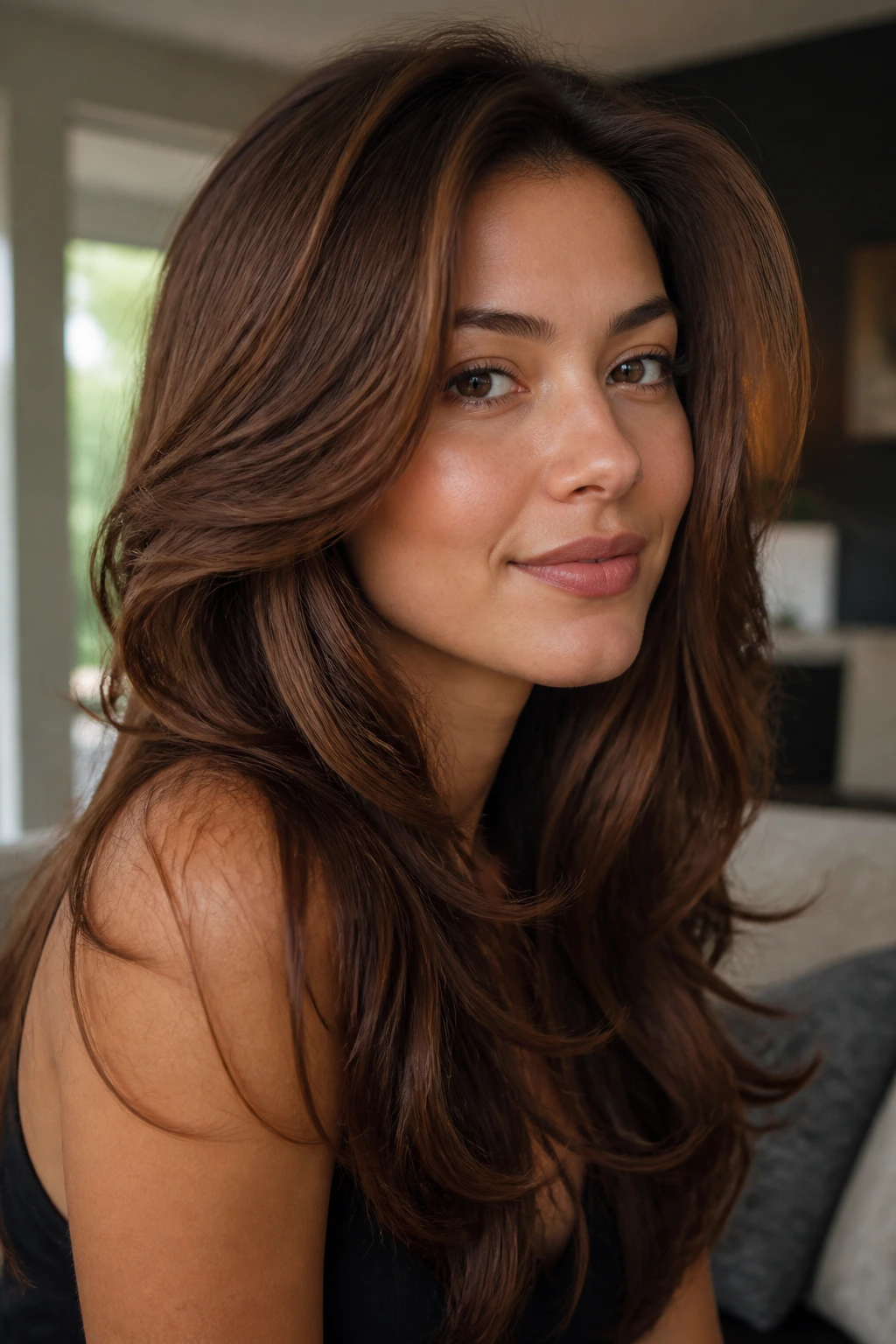
Chestnut layers are the brown equivalent of a well-cut sweater. The tone has enough warmth to keep skin from looking washed out, but the bend through the midlengths stops it from feeling heavy.
Why It Works
Chestnut lives in that sweet spot between red and brown, so it warms the face without tipping into copper. A 1.25-inch iron, used only from the cheekbone down, gives the layers movement and keeps the color visible in soft folds instead of hiding it in one flat sheet.
If you want this look to hold, ask for long layers that remove weight but don’t thin the ends into wisps. That’s the mistake that kills it.
3. Caramel Ribbon Balayage
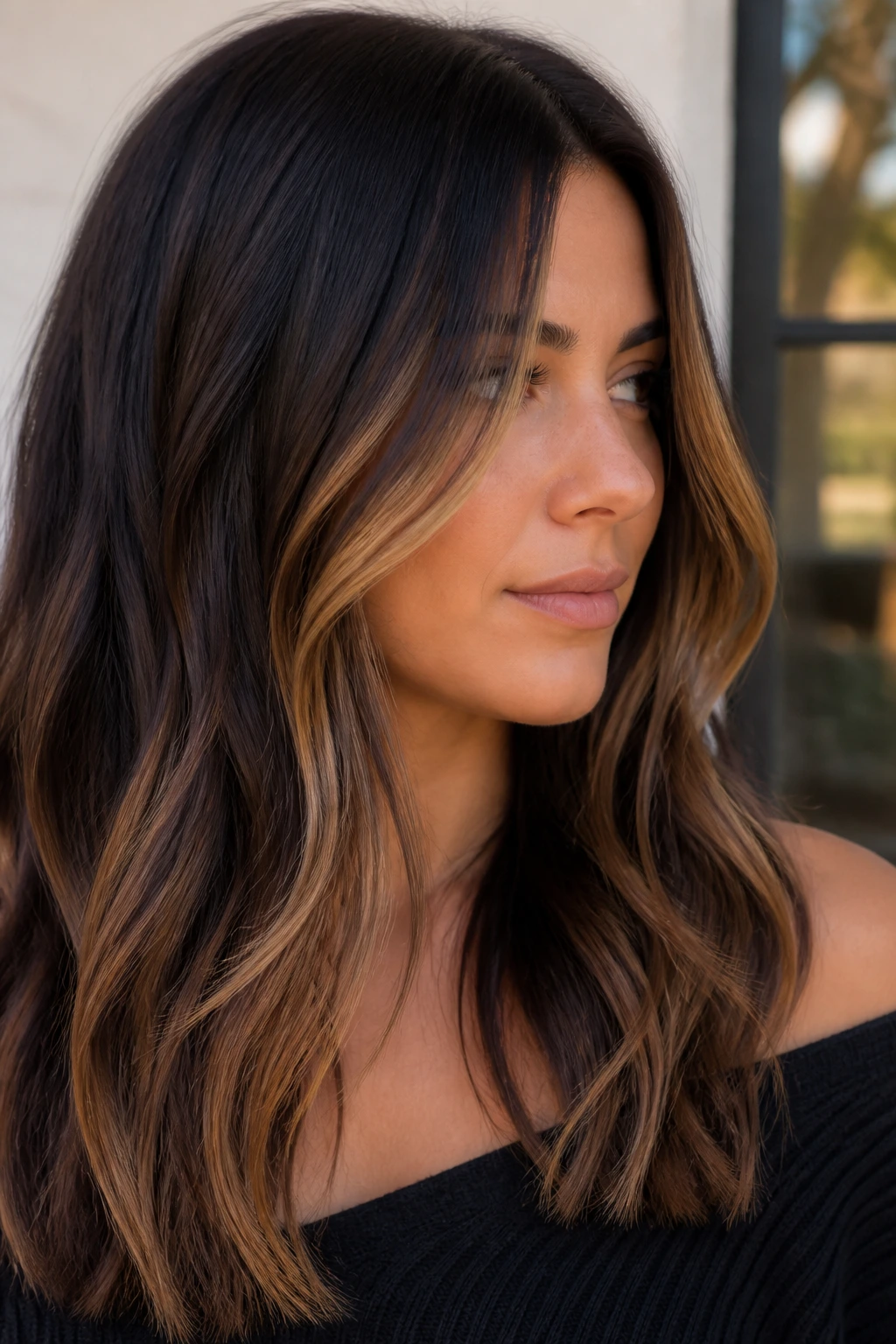
Why does this one keep showing up? Because the ribbons are small enough to look expensive and big enough to read from across the room. Caramel balayage on a brunette base gives you movement without that harsh stripe effect chunky highlights can leave behind.
The placement matters more than the shade. Keep the caramel through the midlengths and ends, then let the root stay deep so the whole thing grows out softly. Ask for: narrow, hand-painted ribbons around the face and on the top layer only if you want the lightest pieces to show when you part your hair.
4. Mushroom Brown Lob
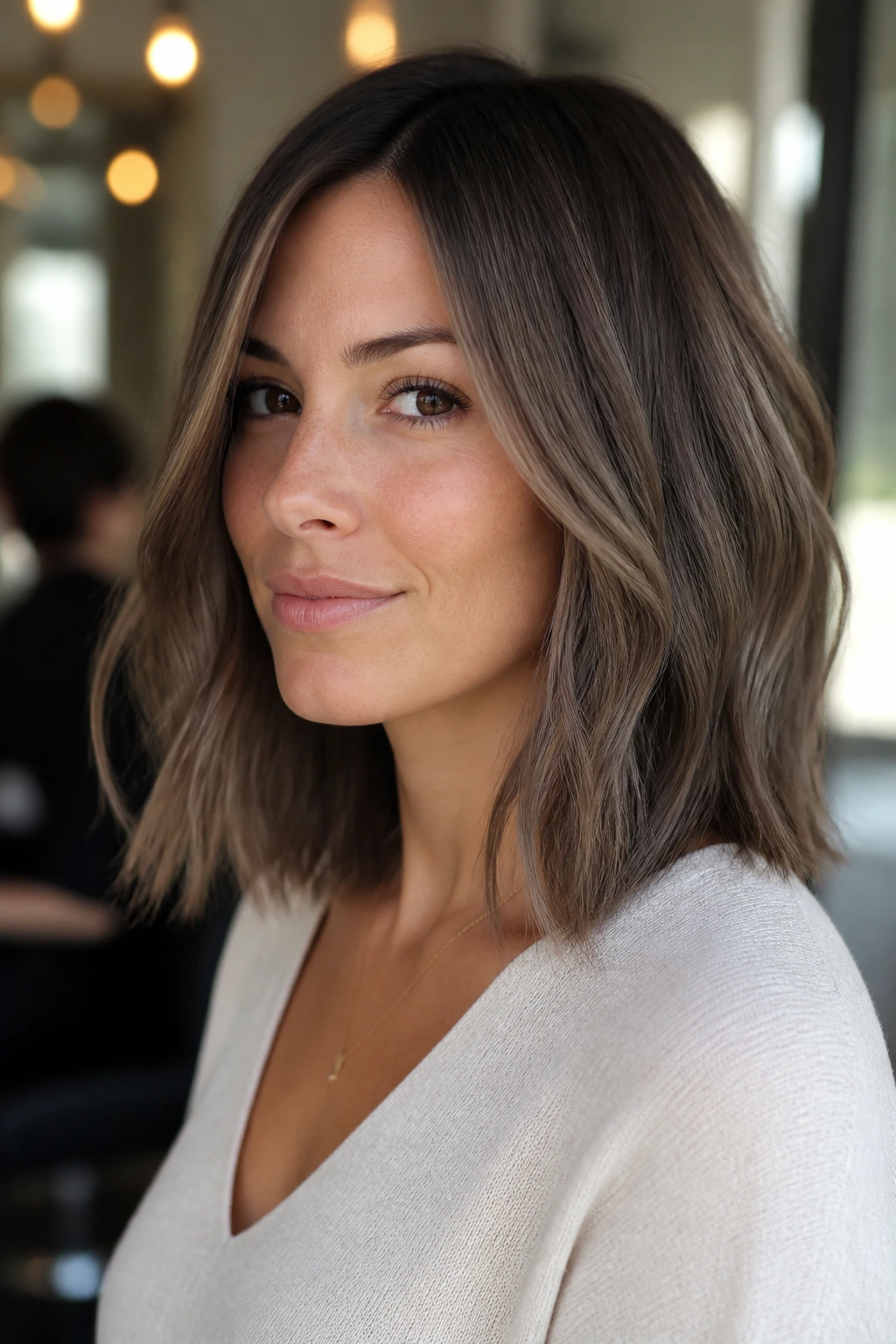
A mushroom brown lob is for anyone who likes a cooler, muted finish. Think taupe-brown with a smoky edge, not ash that looks dusty or greenish under indoor light.
The lob length keeps the shade from feeling heavy, and a slight bend at the ends keeps the muted tone from going flat. This one is quietly good on fine hair, because the cool brown reads fuller than a see-through darker color. If your skin leans neutral or cool, this may be the brown that makes everything else on your face look calmer.
5. Milk Chocolate Curls
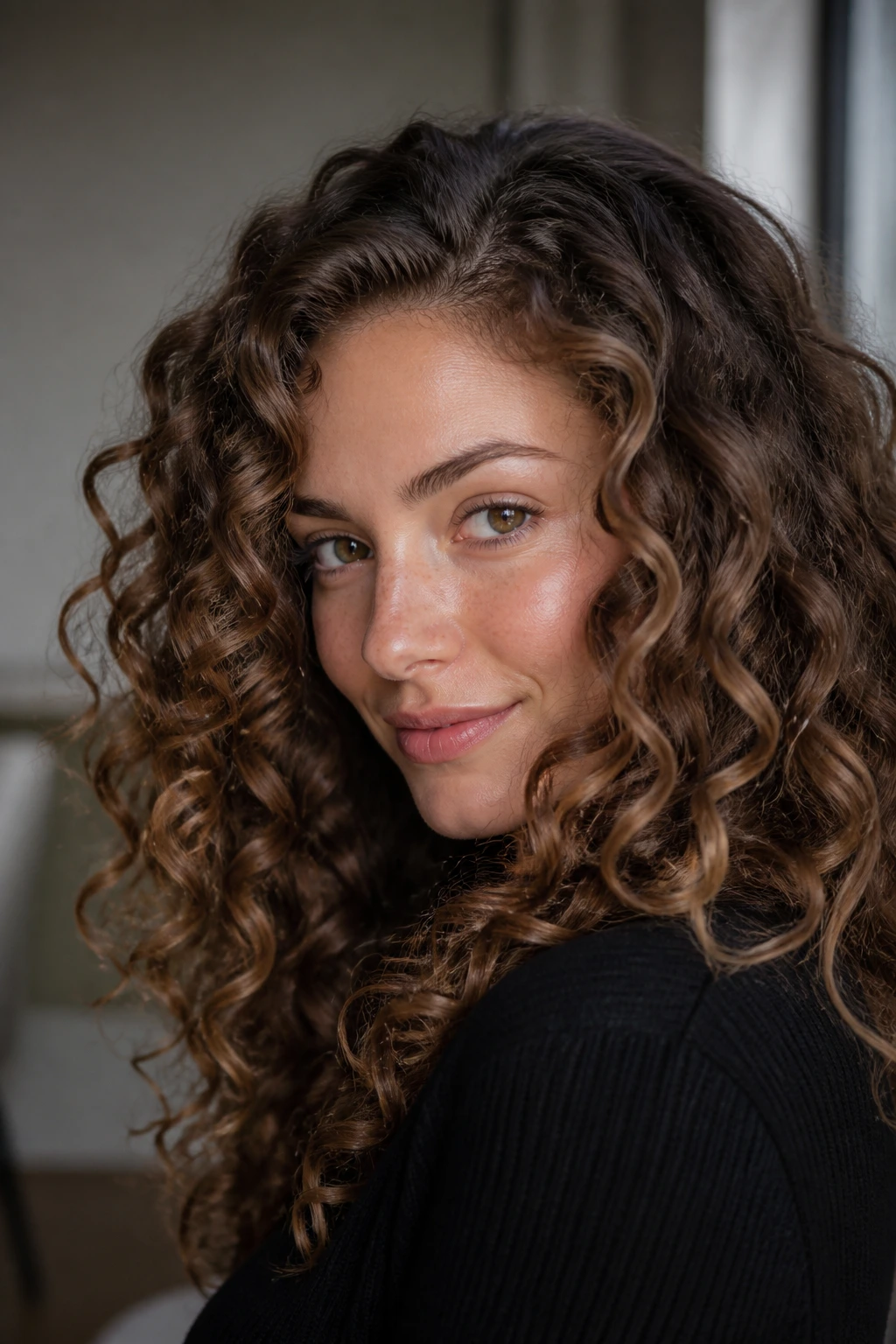
Milk chocolate curls are soft, warm, and much better than over-highlighting a curl pattern to death. The color adds depth inside the curl clumps, which helps the shape show up even when the hair is dry or brushed out.
A gloss in a milk-chocolate or mocha tone can make curls look plush without changing the base too much. Keep the highlights minimal and place any lighter pieces where the curls naturally separate. Pro tip: if your curls frizz fast, skip heavy oils near the crown and use a light cream on the ends only.
6. Cinnamon Brunette Waves
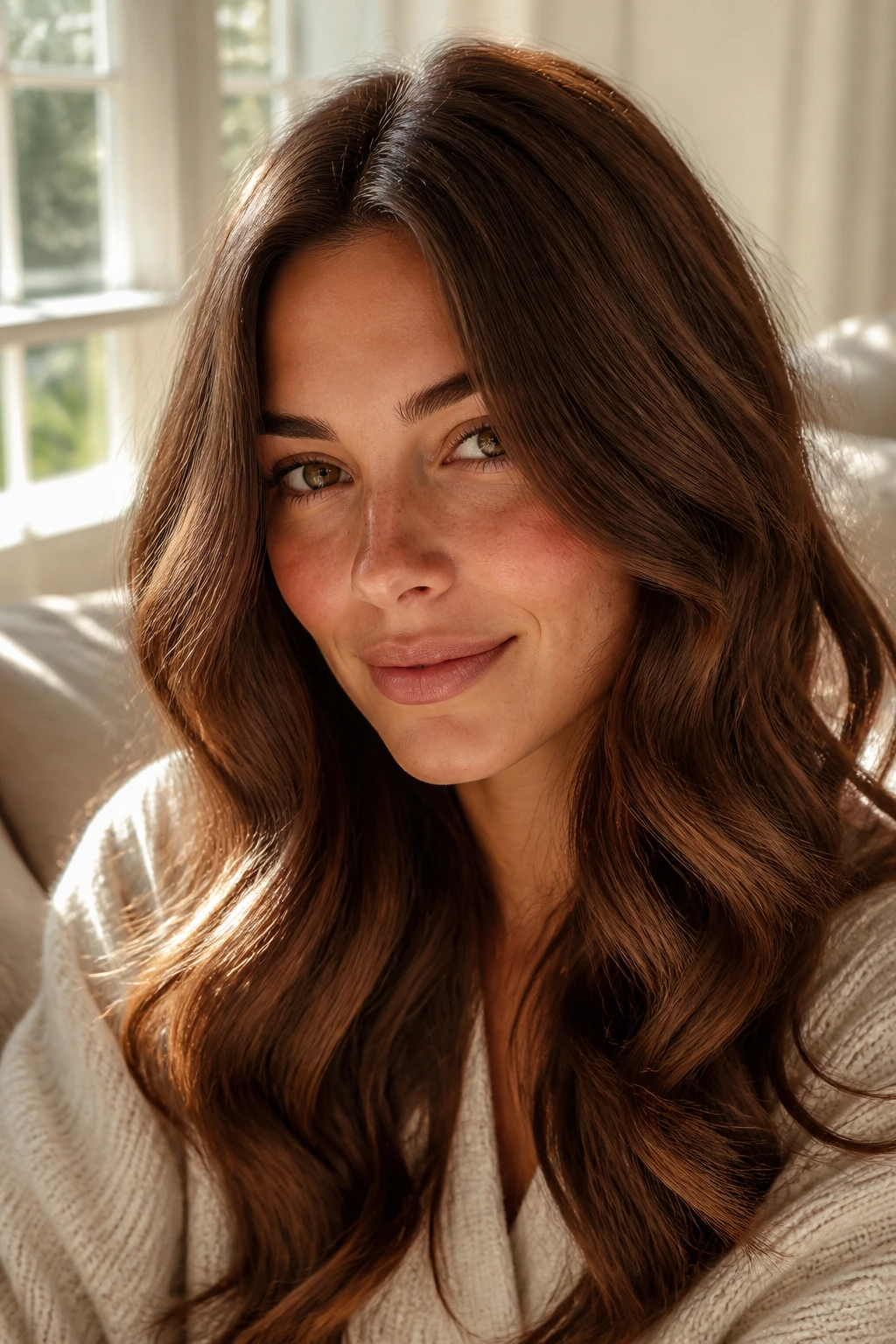
Cinnamon brunette waves feel like brown hair with a little fire in it. Not red. Not copper. Just enough warmth to catch light when the hair bends.
This shade is especially nice on layered cuts, because the cinnamon tone shows up in the curves of the wave instead of sitting there like a single color block. I’d choose this if you want brown that looks alive in indoor lighting and still soft outside. It works best when the waves are loose, not tight, because the warmth reads more clearly on broad bends.
7. Mocha Money Piece
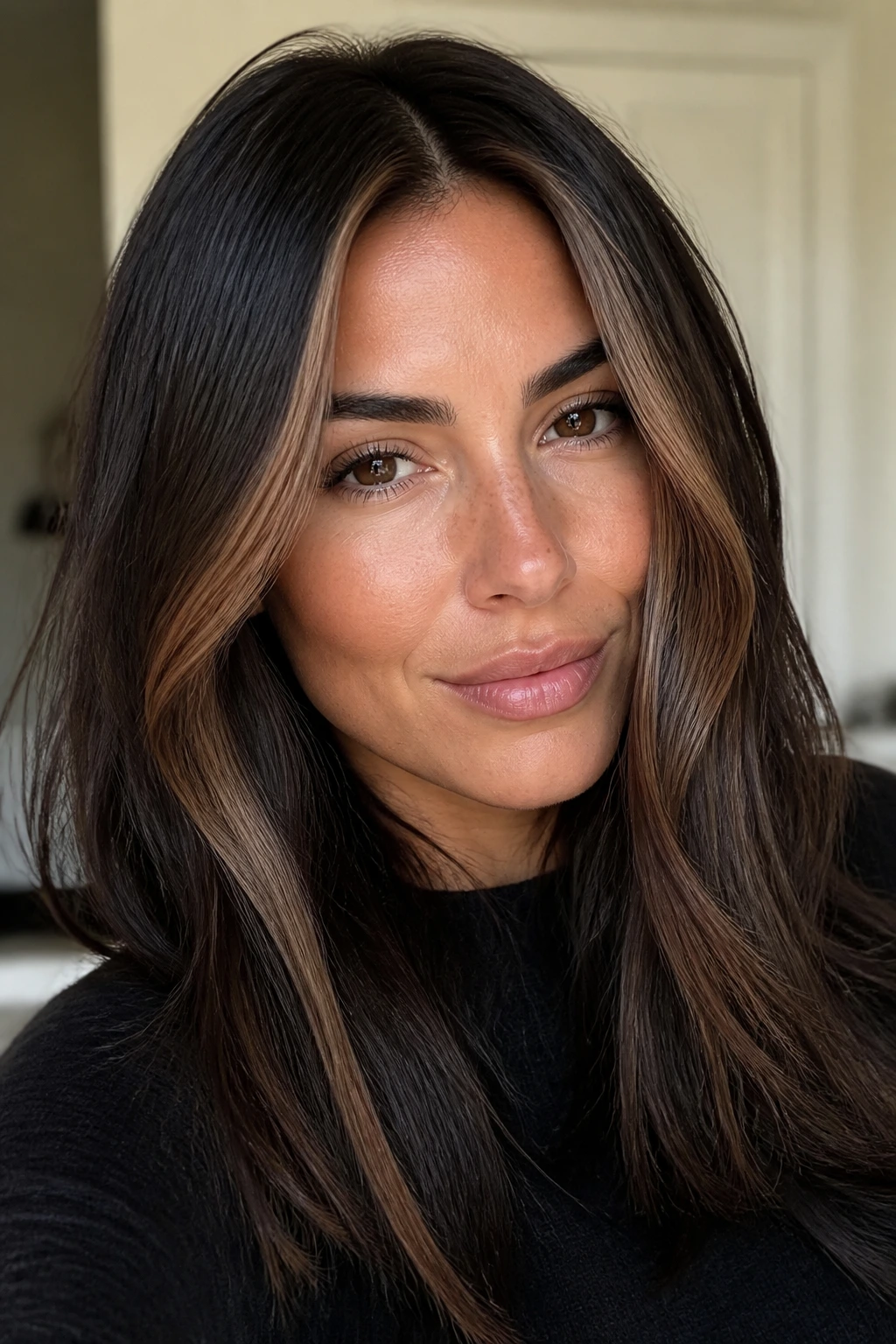
A mocha money piece is the answer for people who want brightness without committing to a lighter head of hair. Keep the base rich and cool-neutral, then lift just the front sections a couple of levels so they frame the face.
The trick is keeping the money piece narrow enough that it blends, not screams. Too wide and it starts looking dated fast. Too light and the contrast gets harsh. Ask your colorist for a soft mocha base with two front panels that start around the eyebrow or cheekbone, depending on where you want the brightness to land.
8. Toffee Ends on Long Layers
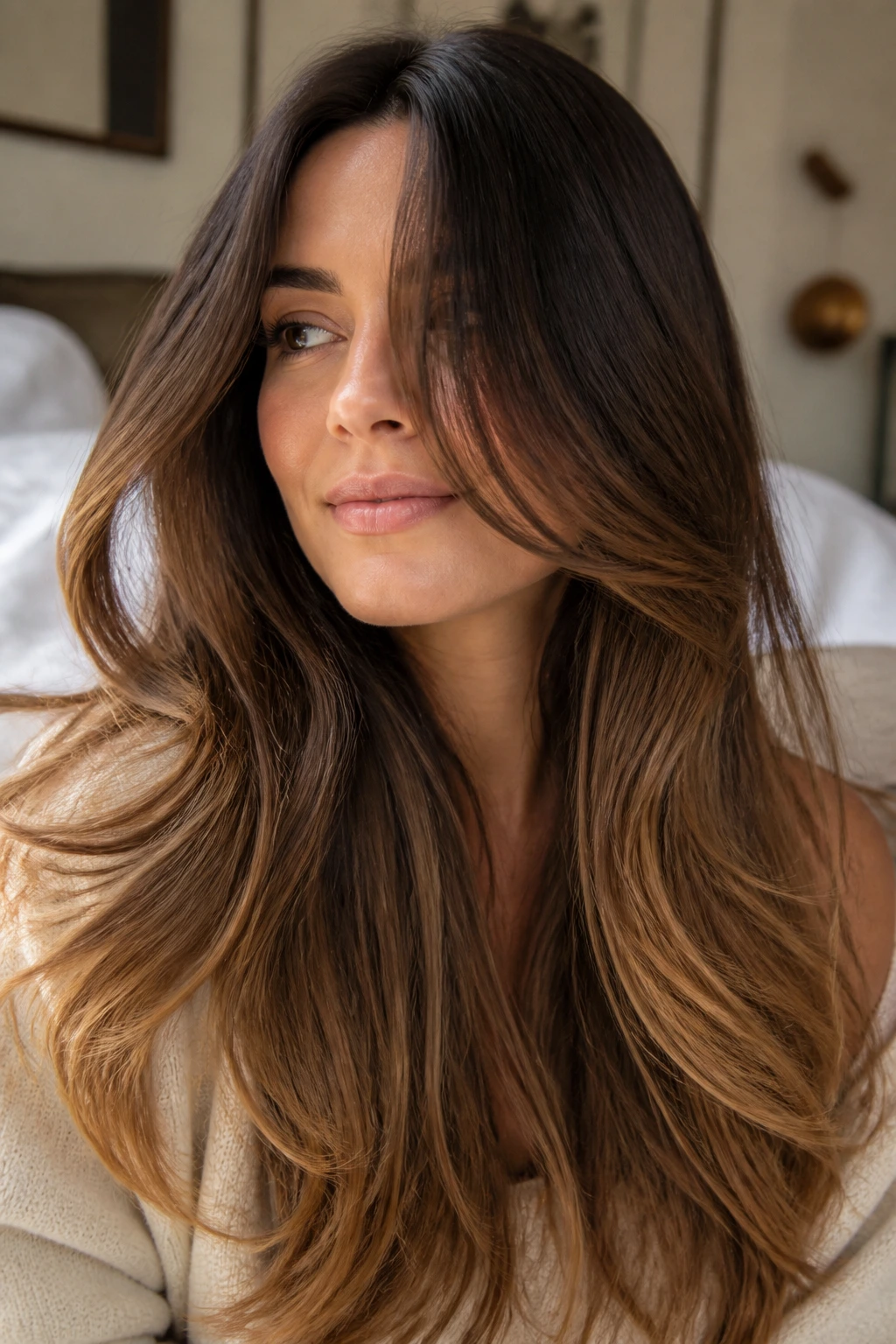
Long layers with toffee ends give brunette hair a little motion at the bottom, which is where a lot of long color work gets lazy. The roots stay deep, the mids stay brown, and the last few inches soften into a warm toffee finish.
It’s a smart move if you like to curl your hair because the lighter ends catch the movement every time the hair flips. Keep the toffee restrained; you want the ends to feel kissed, not dipped. Best on: hair that reaches past the shoulders and has enough weight to show a gentle color gradient.
9. Ash Brunette with Face-Framing Highlights
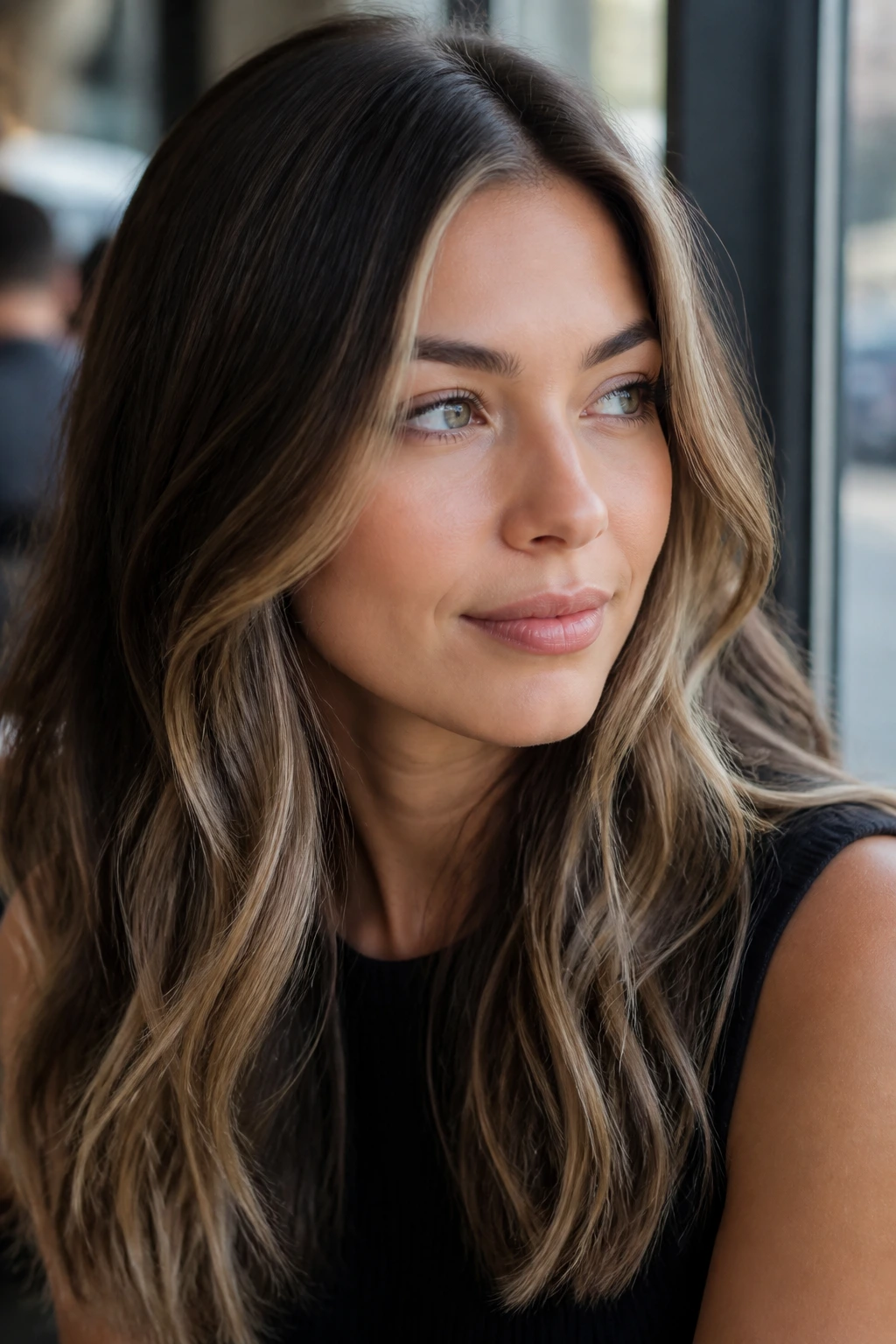
Cool brunettes can look expensive when the tone is clean, and face-framing highlights are the fastest way to keep them from feeling one-note. The base stays ash-brown, while the pieces at the hairline get just enough lift to brighten the eyes and cheekbones.
What to Ask For
Ask for a cool level 5 or 6 brunette with slim highlights around the front only. Keep the width skinny. Thick face-framing chunks usually look blunt on brown hair, especially if the rest of the head is dark.
This is a strong choice if your hair gets orange fast, because the ash base and cool toner help keep that brass under control.
10. Deep Brunette Blowout
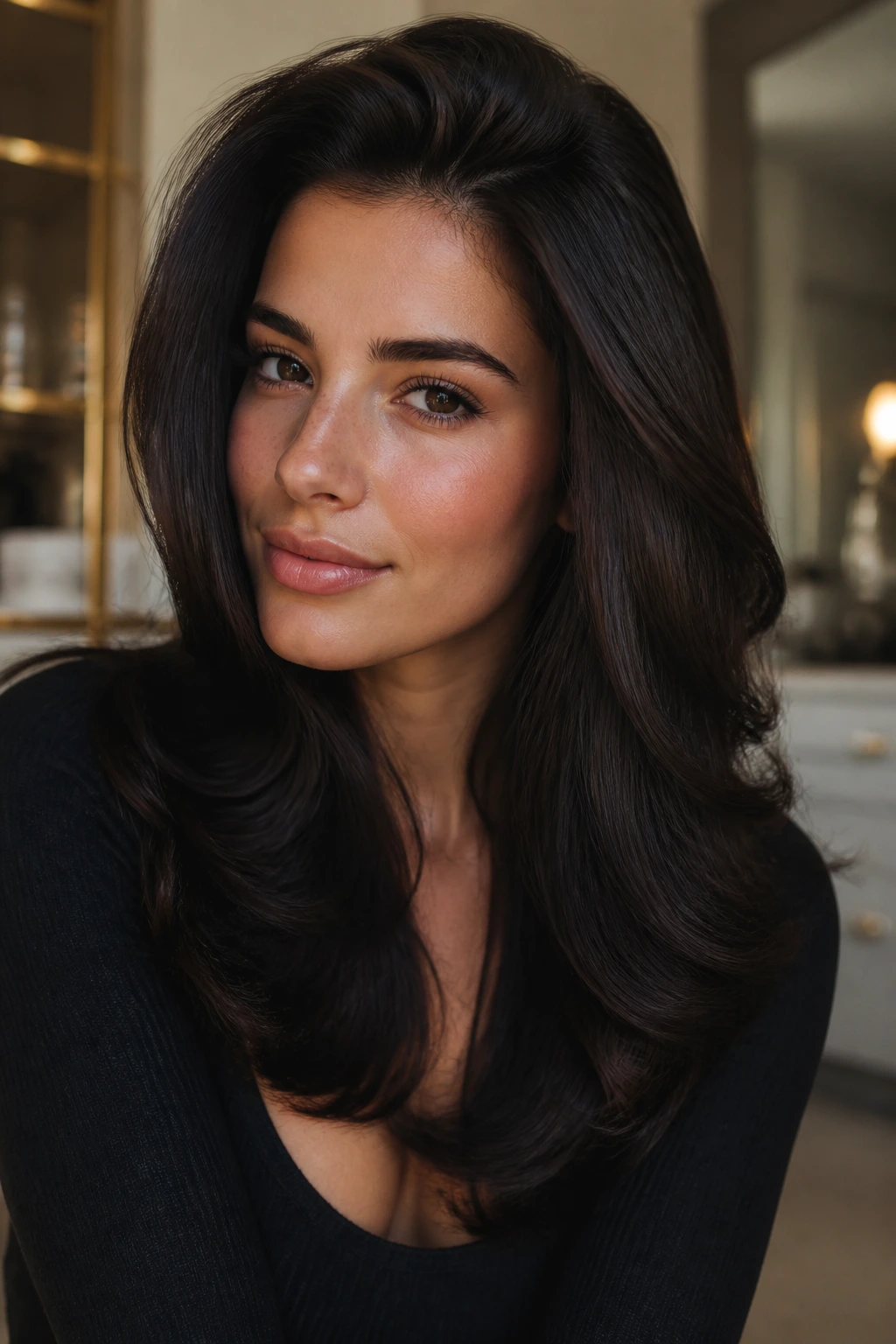
A deep brunette blowout is all about shine and volume, not lightness. The color is nearly black-brown, but the blowout gives it lift at the root and movement through the ends so it doesn’t look heavy.
This look works especially well on thick hair, because the smooth surface and rounded shape make the depth feel polished instead of bulky. If you want the hair to read dramatic, keep the ends soft and feathered, not chopped into a blunt wall. A boar-bristle brush and a medium round brush are doing most of the heavy lifting here.
11. Hazelnut Shag
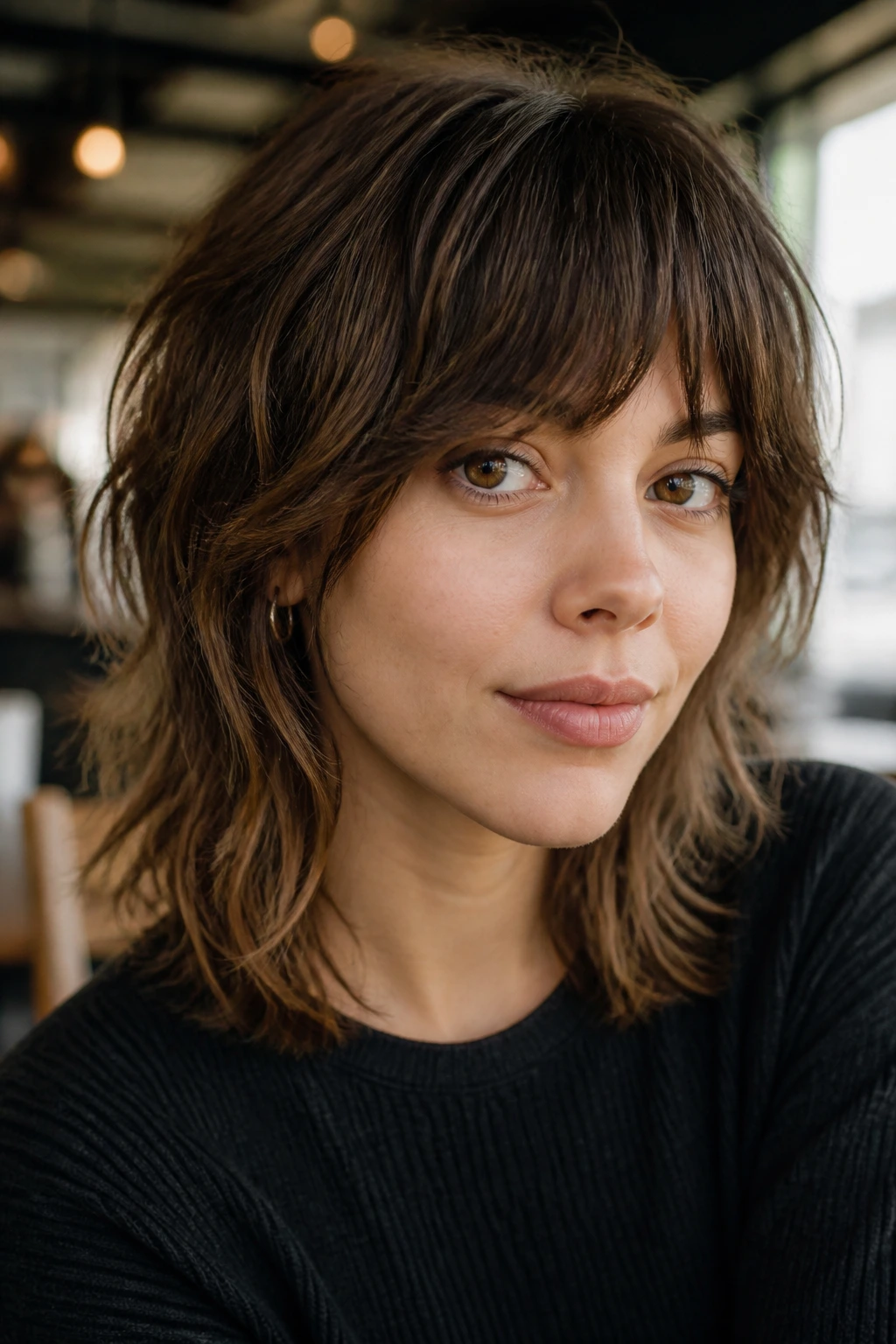
Hazelnut brown and a shag cut get along because both like movement. The layers break up the color, and the warm hazelnut tone shows up in the feathered ends and around the face.
A shag is not the place for heavy, chunky highlights. It needs thin ribbons and a lived-in finish so the texture looks intentional, not messy. If your hair is naturally wavy, this is one of the easiest brunette looks to wear because you can air-dry it with a little cream and let the cut do the rest.
12. Walnut Brown Pixie
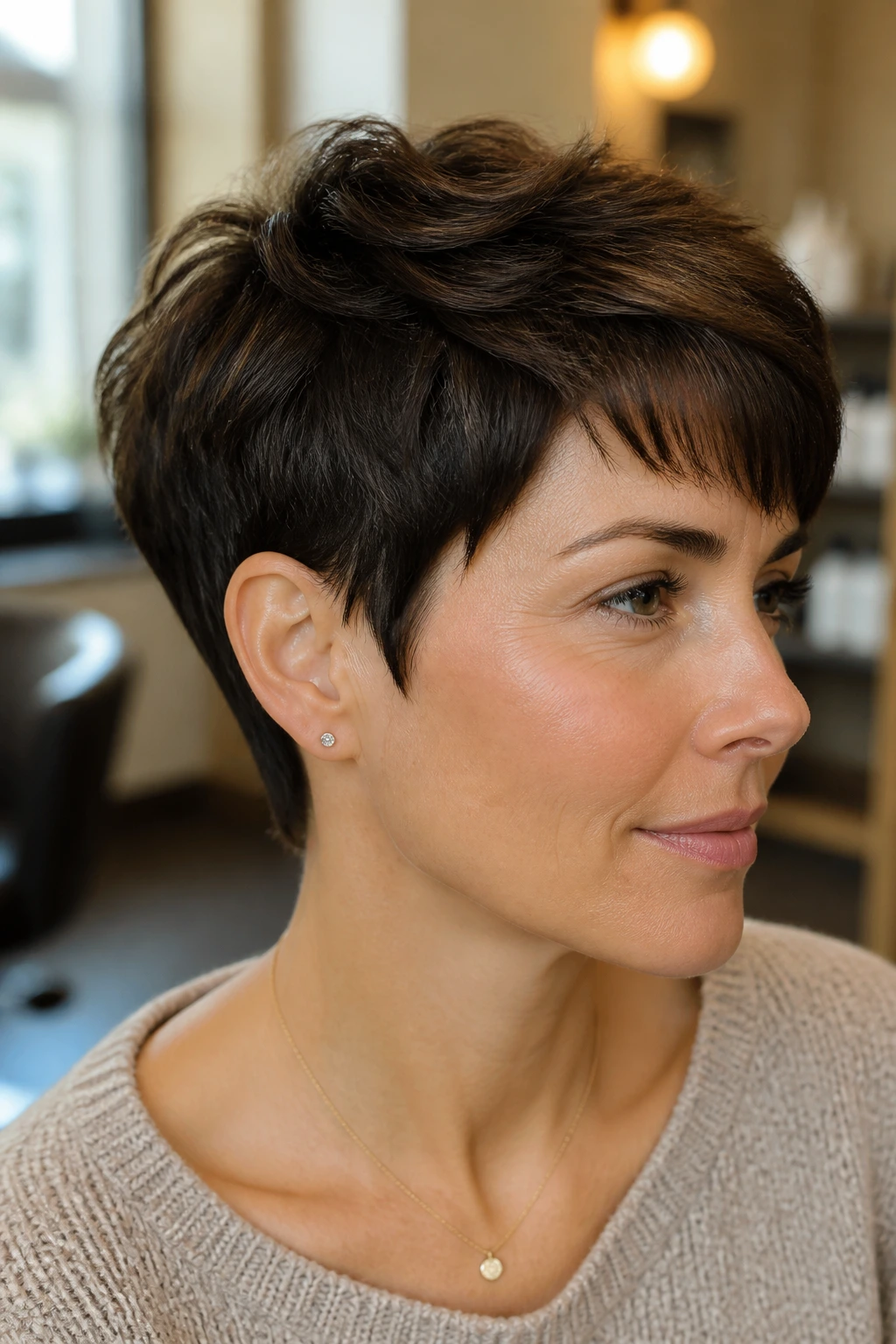
A walnut brown pixie proves short hair still has room for color. The tone is rich, slightly earthy, and deeper than chestnut, which keeps the crop from looking flat under short daylight.
The best part is how little styling it needs. A soft paste or cream, worked through the top with your fingers, is enough to separate the texture and show the tone. This is a good pick if you like darker hair but don’t want to fuss with long appointments or big styling sessions.
13. Bronze Brunette Balayage
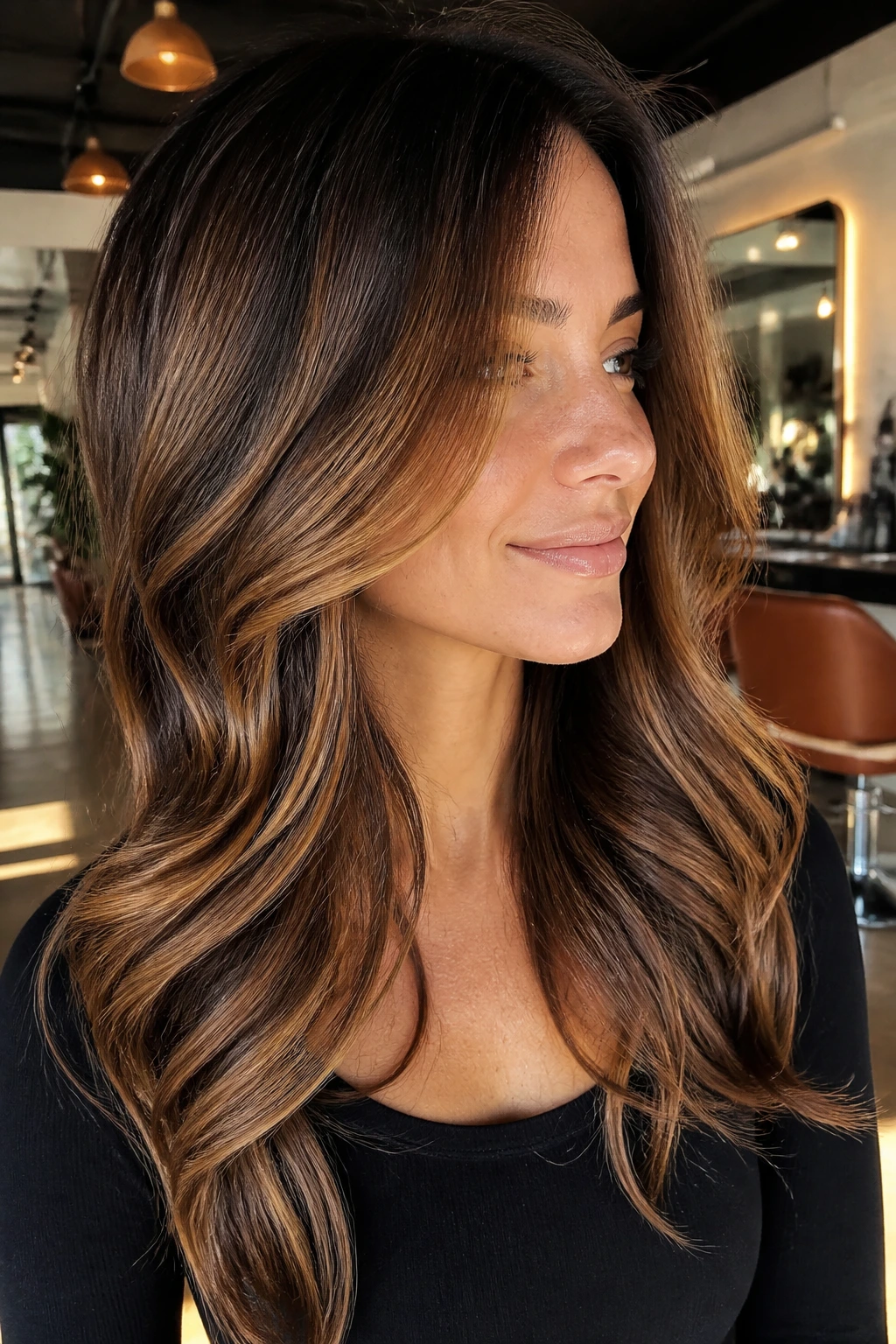
Bronze balayage gives brunette hair a warm metallic shimmer that looks especially good when the light hits from the side. It’s warmer than ash, richer than blonde, and more dimensional than a plain brown gloss.
I like this best on layered cuts because the bronze pieces need movement to show. The color should live mostly on the surface layer and through the mids and ends. If the bronzy pieces are too dense at the top, they can take over the whole look. Keep the root dark and let the warmth show in motion.
14. Cherry Cola Brown
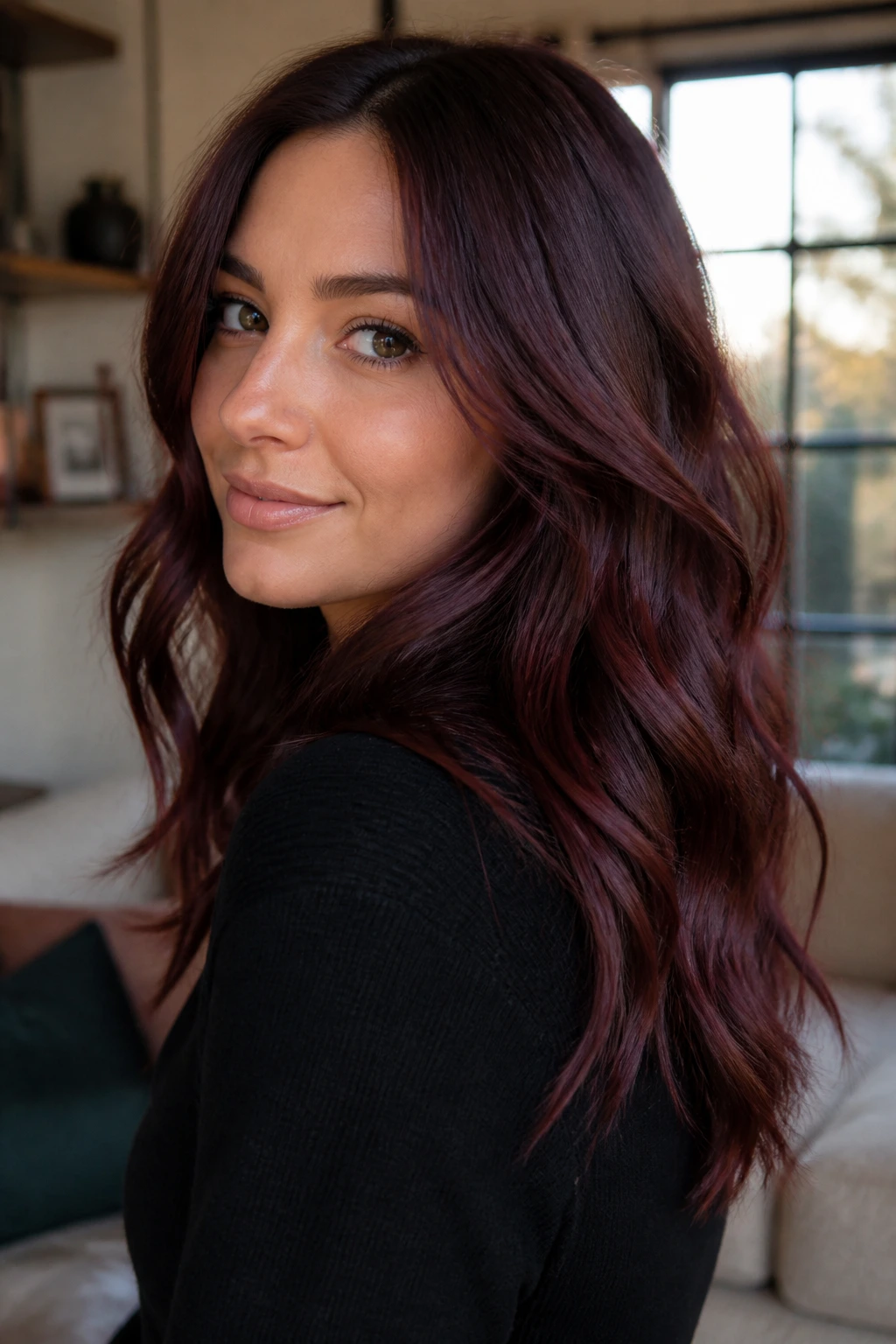
Cherry cola brown is one of those shades that looks subtle until it doesn’t. The base is brunette, but the red-violet reflection gives it a dark, juicy depth that shows up when the hair swings or catches indoor light.
It’s a great match for glossy blowouts and soft bends because shine makes the color shift more visible. This is not a loud red, and that’s the point. If you want warmth without going full auburn, cherry cola gives you richness with a little edge.
15. Teddy Bear Brunette
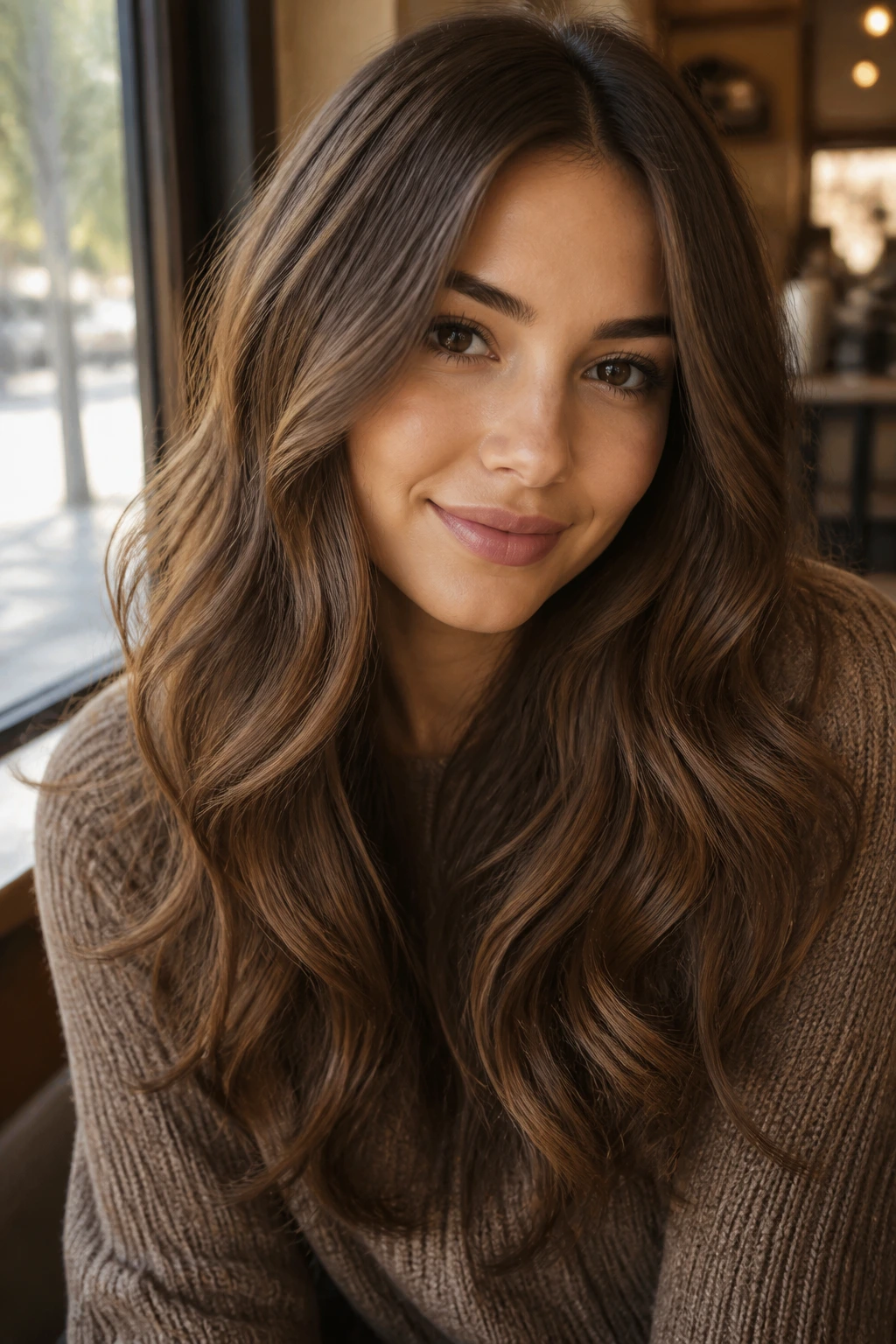
Teddy bear brunette sits in the soft, neutral-to-warm range that makes brown hair look plush instead of heavy. It’s the kind of brunette that feels approachable, with beige and caramel notes doing just enough to keep the color from sinking.
Why It Works
The shade reflects light gently, so it looks nice on straight styles and soft waves alike. Ask for a neutral brown with fine dimension, not a flat single process. That tiny bit of contrast is what keeps it from reading muddy.
If you want a color that looks good on busy weeks and doesn’t demand a complicated grow-out plan, this is a strong place to start.
16. Dark Root Melt
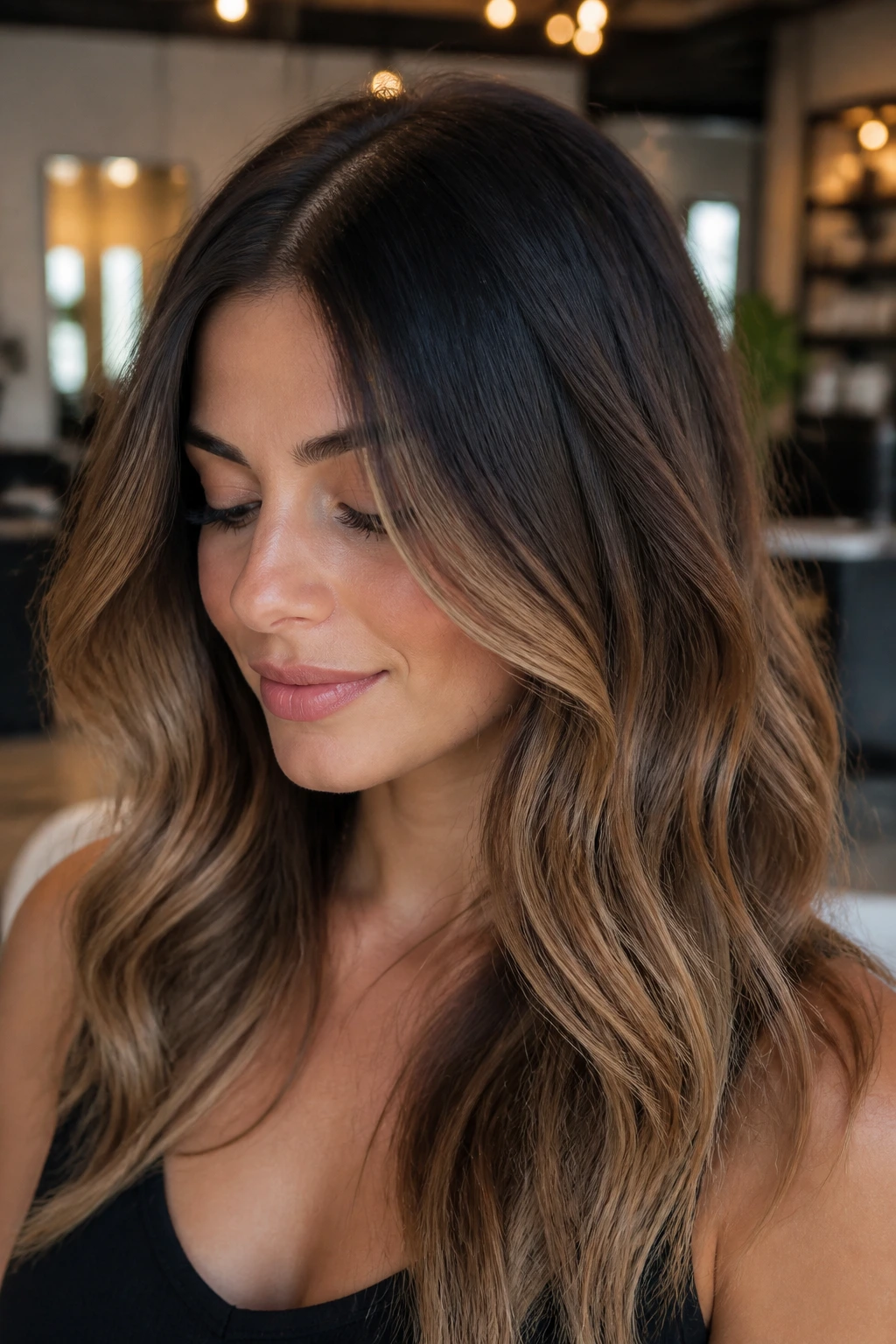
A dark root melt is the low-maintenance brunette move I recommend to people who hate obvious grow-out. The root stays deeper, then the color softens through the mids and ends so the whole thing looks blended from day one.
The key is making the transition gradual. A harsh line between root and length ruins the effect fast. Ask for a soft shadow root and a gloss on the ends, then keep the lighter pieces narrow. It’s one of those looks that gets better when it’s been lived in for a few weeks.
17. Bronde Brunette
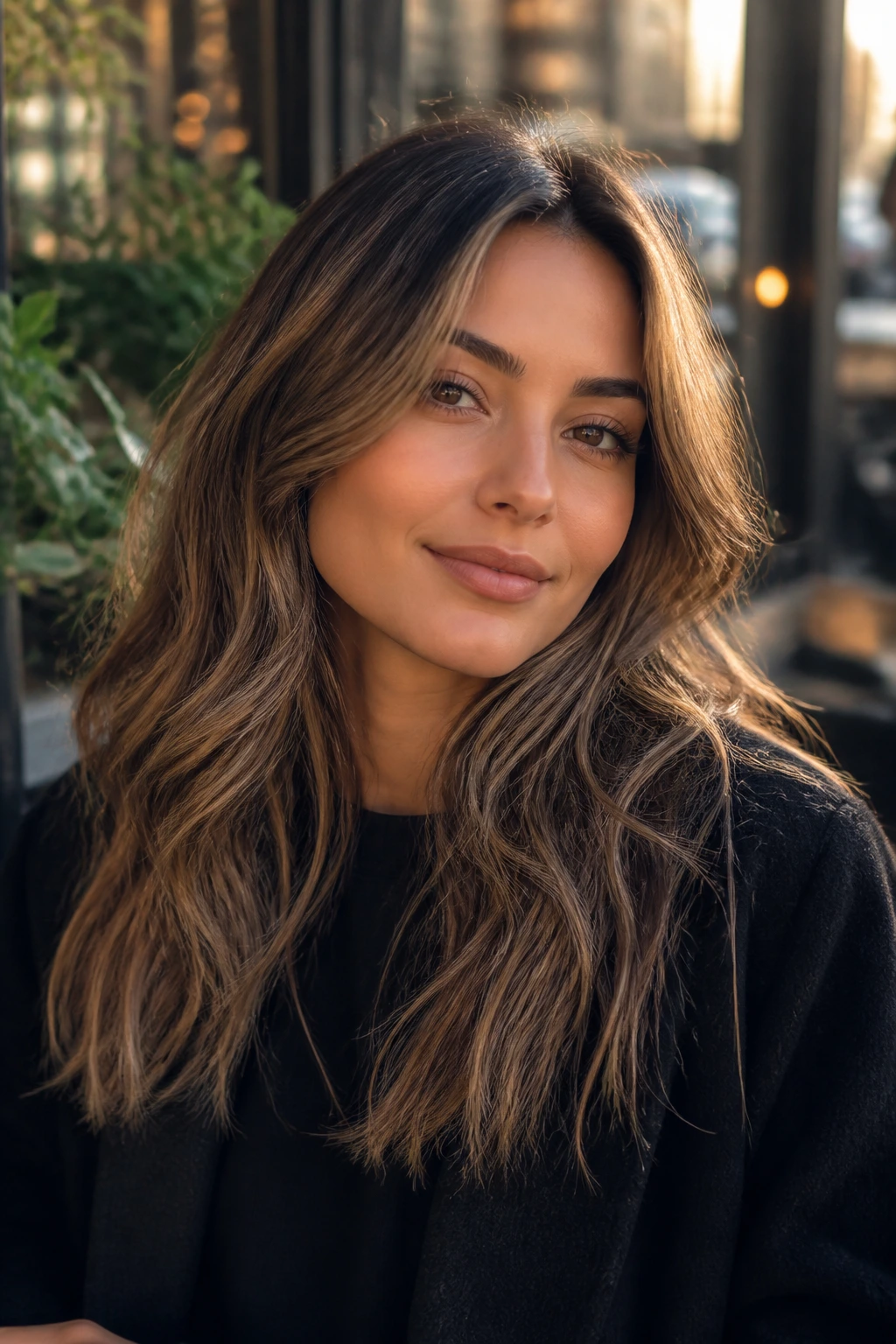
Bronde is the compromise that actually works when brown feels too dark and blonde feels like too much. You keep the brunette base, then weave in light pieces that still read brown at the root and brighter through the ends.
The thing people miss is that bronde needs restraint. If the light pieces are too pale, you lose the brunette identity. If they’re too sparse, the whole head just looks underdone. The sweet spot is soft contrast, especially around the cheekbone and collarbone.
18. Smoky Cocoa Lob
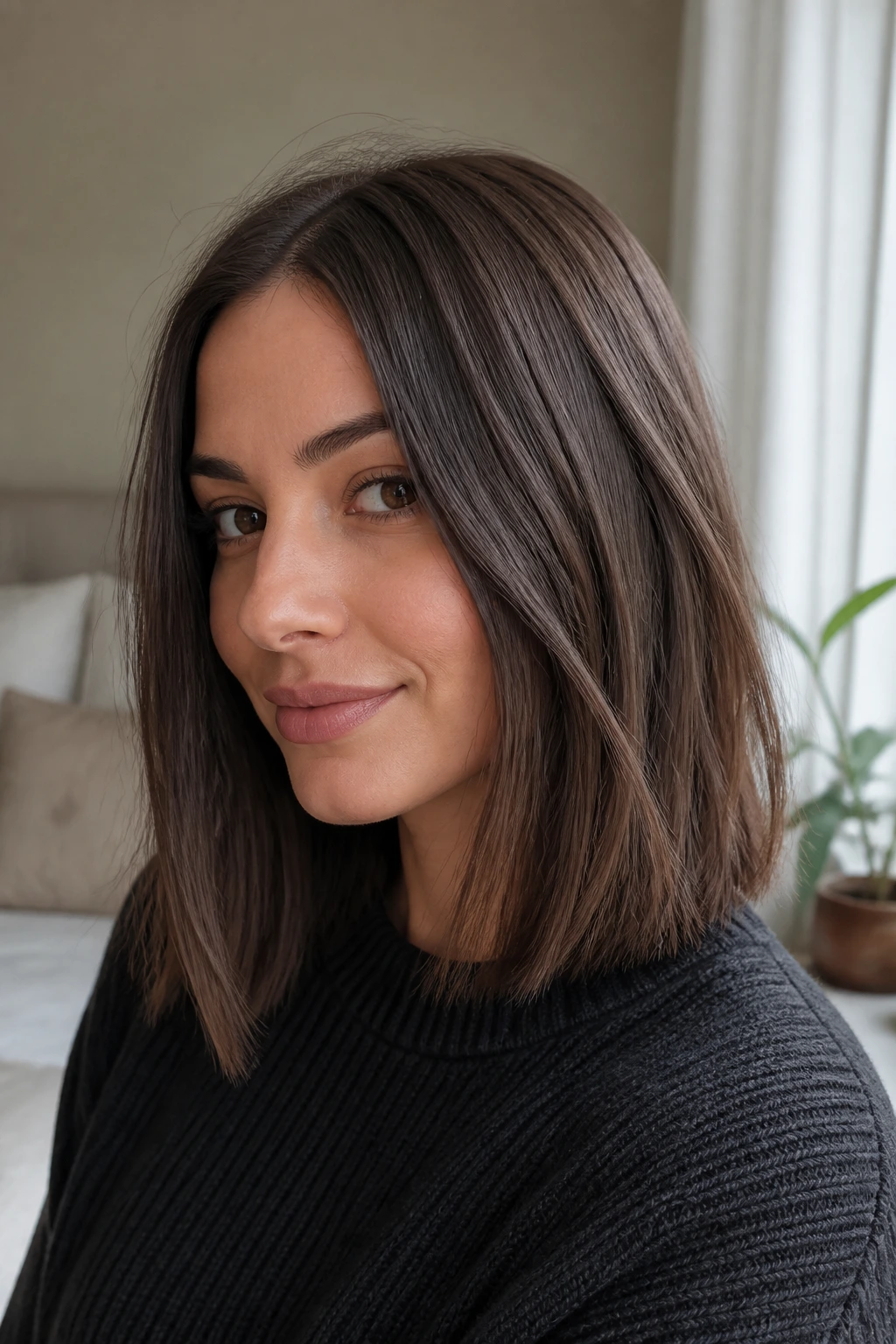
Smoky cocoa is cooler than milk chocolate and deeper than taupe, which makes it a nice choice if you want brown hair with a muted finish. The lob length keeps the color fresh and crisp.
This shade works well when the cut is blunt or lightly textured, because the smooth outline makes the smoky tone feel deliberate. I’d avoid over-layering it. Too many short pieces can make the ash elements look patchy instead of smooth.
19. Copper-Kissed Brunette
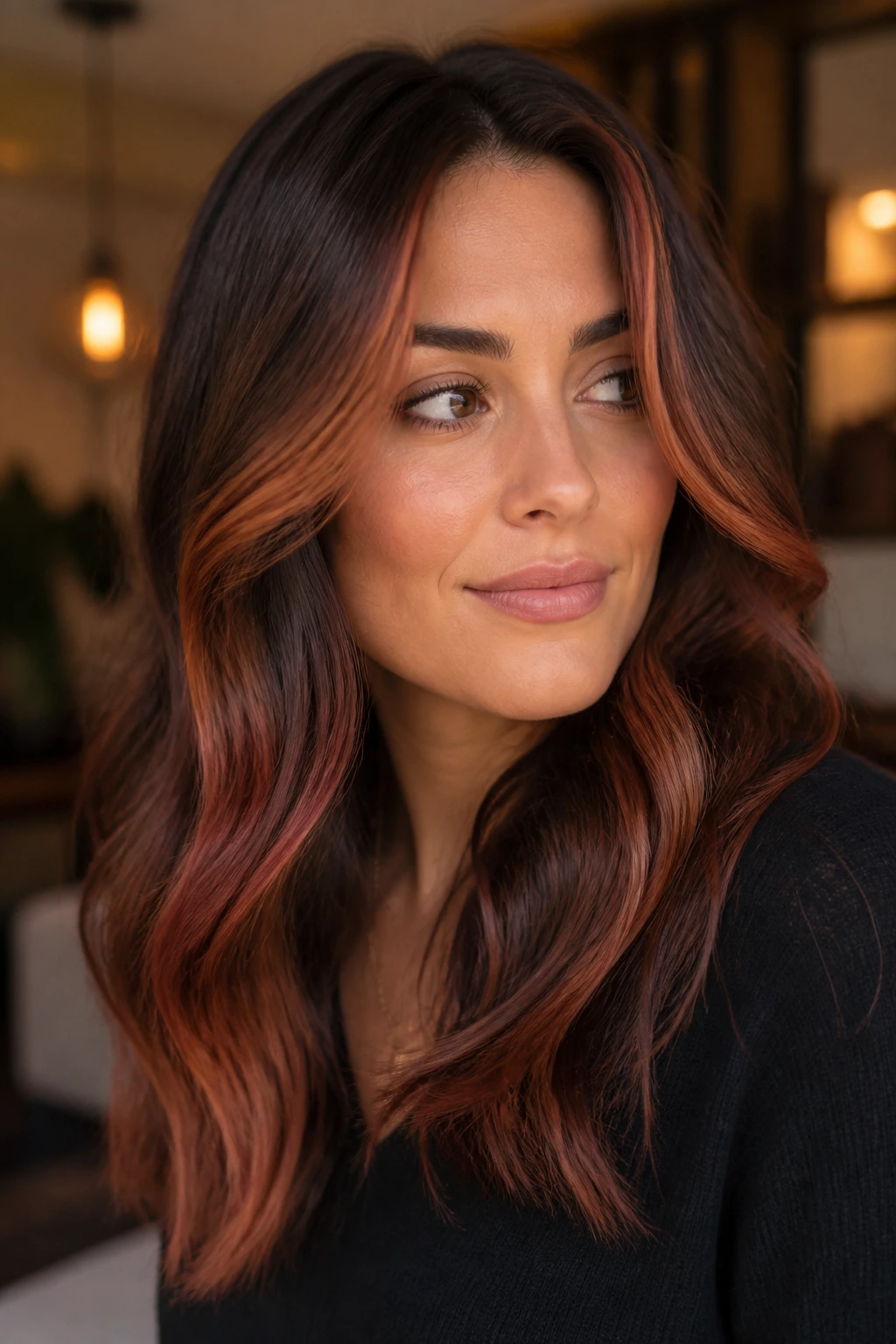
Copper-kissed brunette gives you warmth without turning the whole head orange. The copper is placed lightly—usually on the surface, around the face, or in the last few inches—so the brown still reads as brown.
That small shift makes a big difference under indoor lighting, where copper catches the eye faster than neutral brunette. If your skin likes warm tones, this one can wake up the face in a way a standard chestnut doesn’t always do. Keep the copper thin. Thick copper panels are a different mood entirely.
20. Jet Brunette with Curtain Bangs
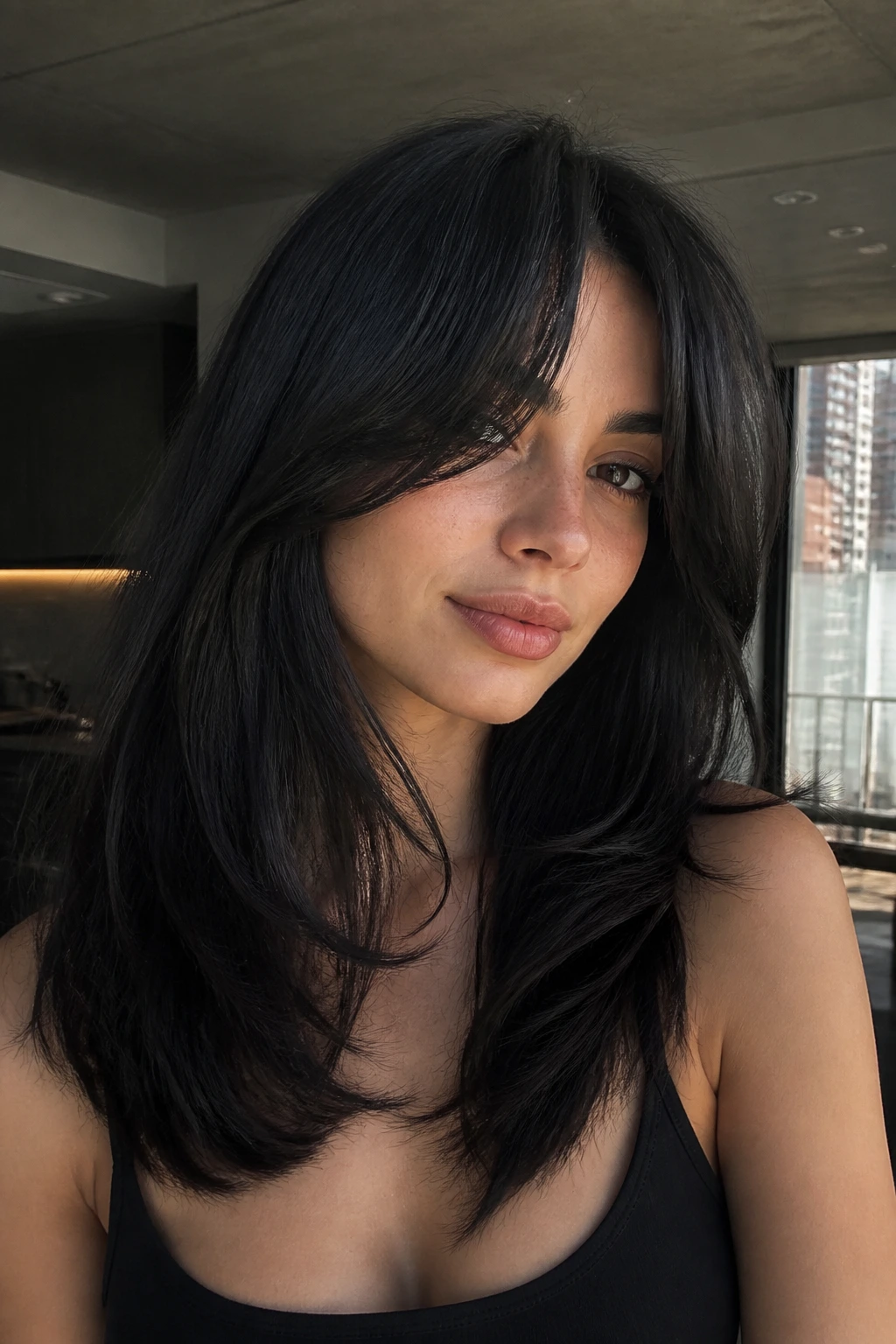
Jet brunette with curtain bangs is a sharp look with a soft front edge. The dark brown almost reads black, which makes the bangs and face framing feel even lighter by contrast.
The cut matters here. Curtain bangs should open away from the face and blend into long layers or a lob, not sit like a blunt shelf. With this color, shine is the whole game, so a smoothing cream and a round brush beat matte texture every time. The result feels polished without trying too hard.
21. Soft Auburn Brunette
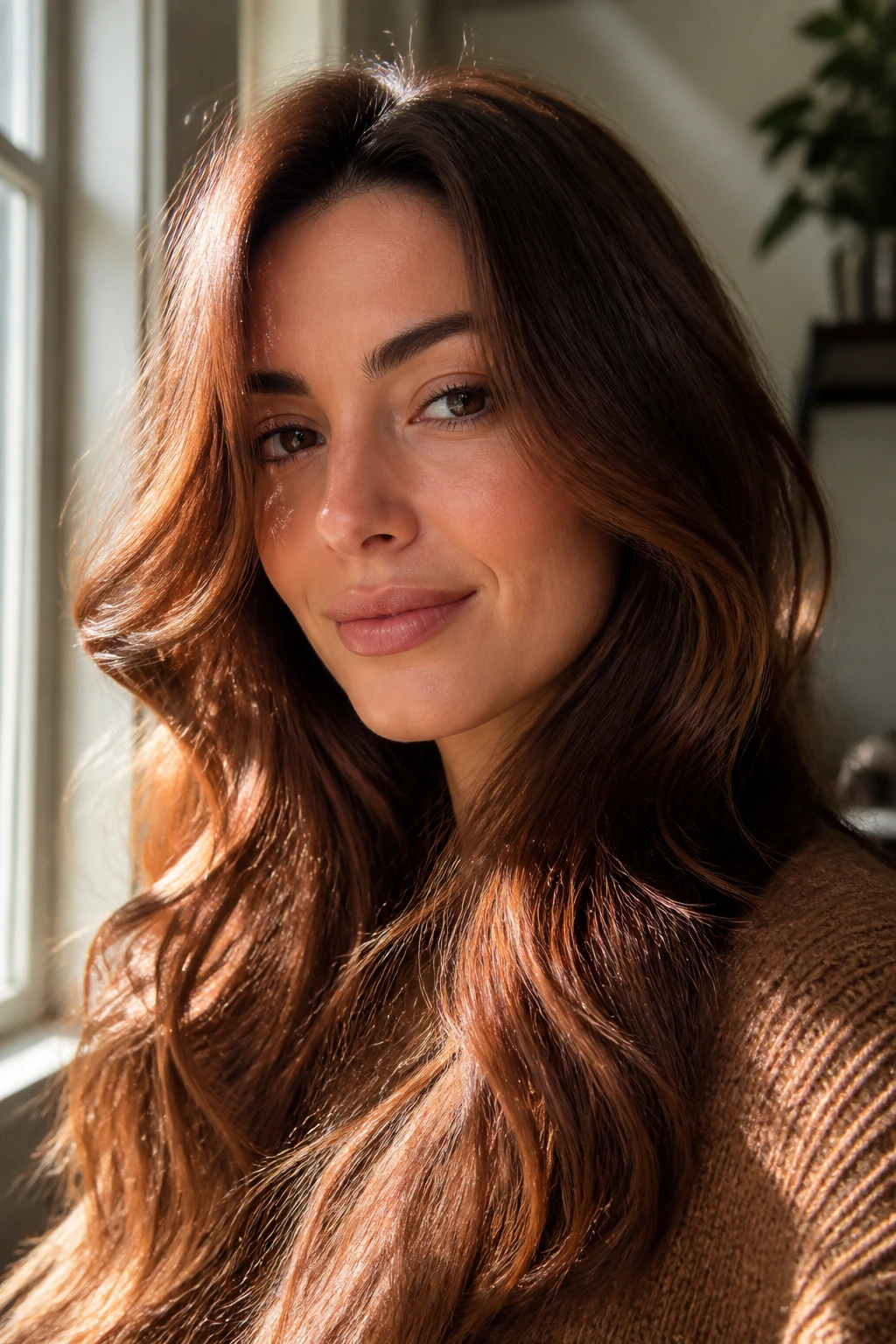
Soft auburn brunette is for someone who wants warmth but doesn’t want to go full redhead. The color leans brown first, then auburn comes through in sunlight, near a window, or after a fresh gloss.
This shade is flattering when the skin needs a little color near the face. It pairs nicely with layered cuts, because the auburn undertone catches on the edges and gives movement to the whole head. If your natural base is medium brown, this can be a very easy shift.
22. Brushed-Out Polished Brunette
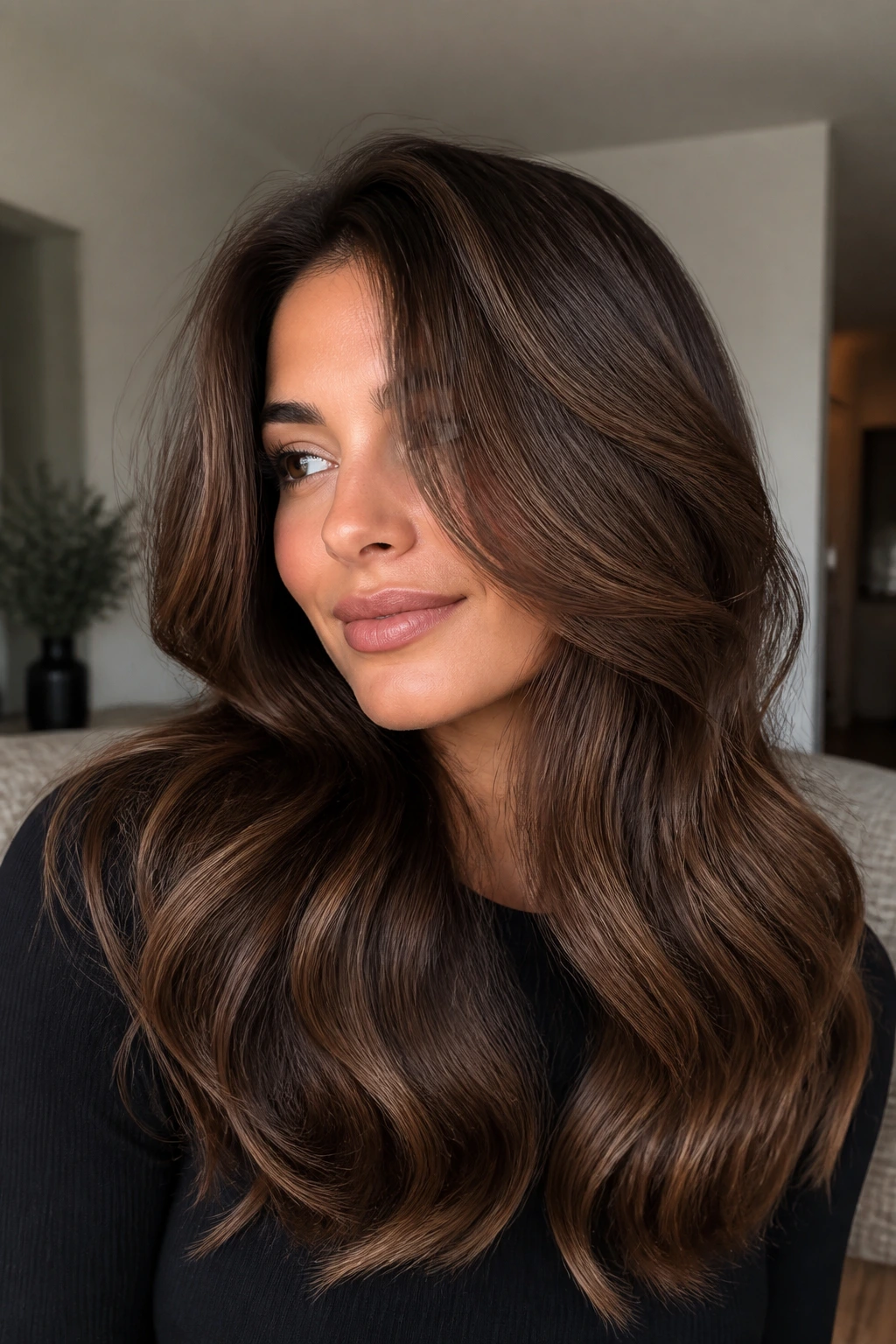
A brushed-out polished brunette is less about the color formula and more about the finish. Think glossy brown waves that were curled, cooled, then brushed into soft movement so the hair looks smooth and intentional.
This style loves a neutral brunette base with subtle highlights or lowlights, because the waves expose the dimension as they move. Don’t over-curl it. Big, clean sections around a 1.5-inch iron work better than tight spirals. The result is calm, not fussy, and that’s why it keeps showing up on brown hair that wants to look expensive without screaming for attention.
23. Dimensional Ringlet Brunette
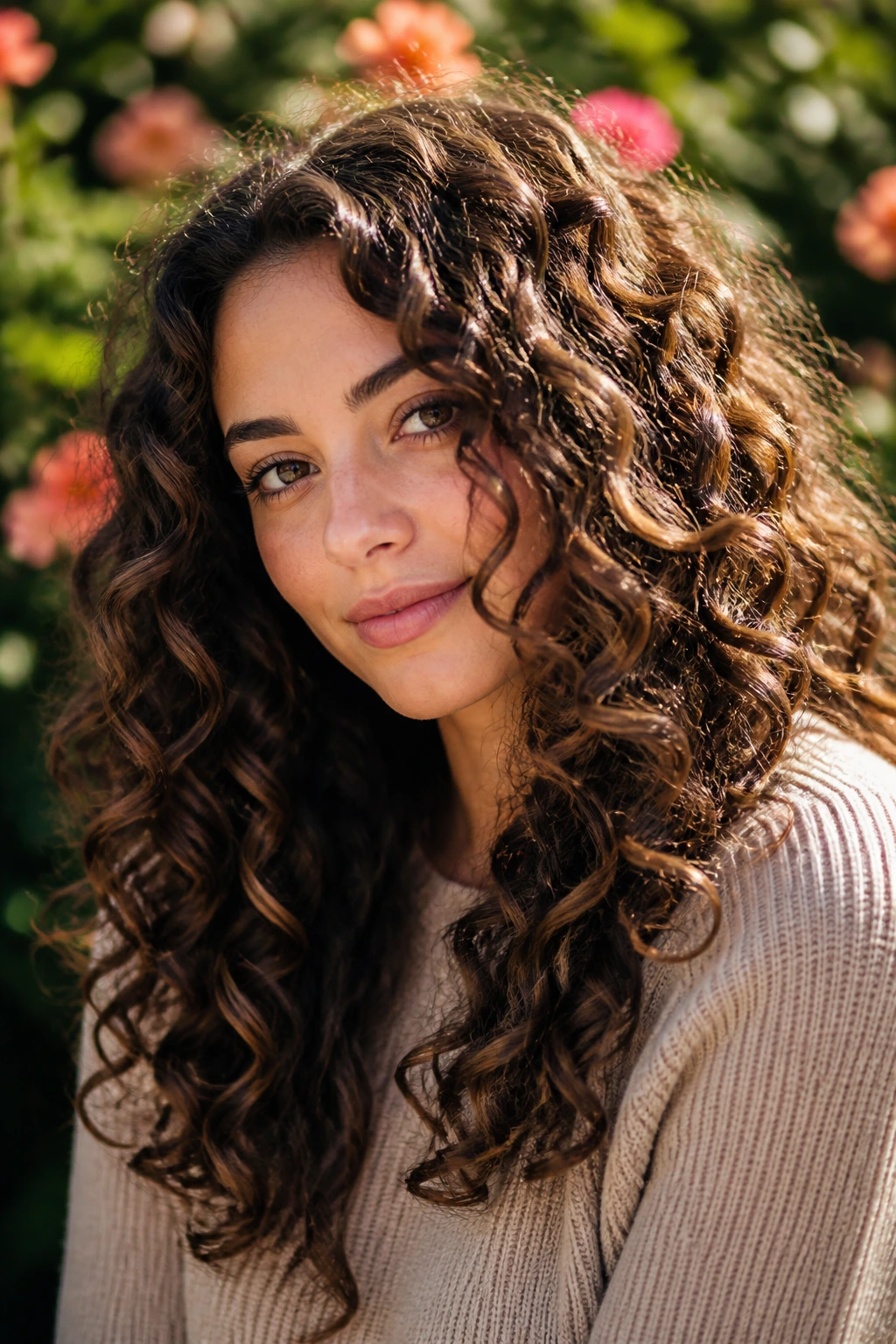
Ringlets need more than one brown tone or they start looking like a single dark mass. A dimensional brunette with curls uses a base color, a few lighter ribbons, and sometimes a lowlight or two to break up the shape.
What Makes It Different
The placement follows the curl pattern instead of fighting it. Highlights should sit where the curls naturally separate, not cut across the whole pattern. That keeps the shape readable and avoids the stripe effect that can happen on curly hair.
If your curls are tighter, keep the light pieces narrower. Wide highlights on coily or springy curls can disappear into the pattern or look too loud.
24. Autumn Maple Brunette
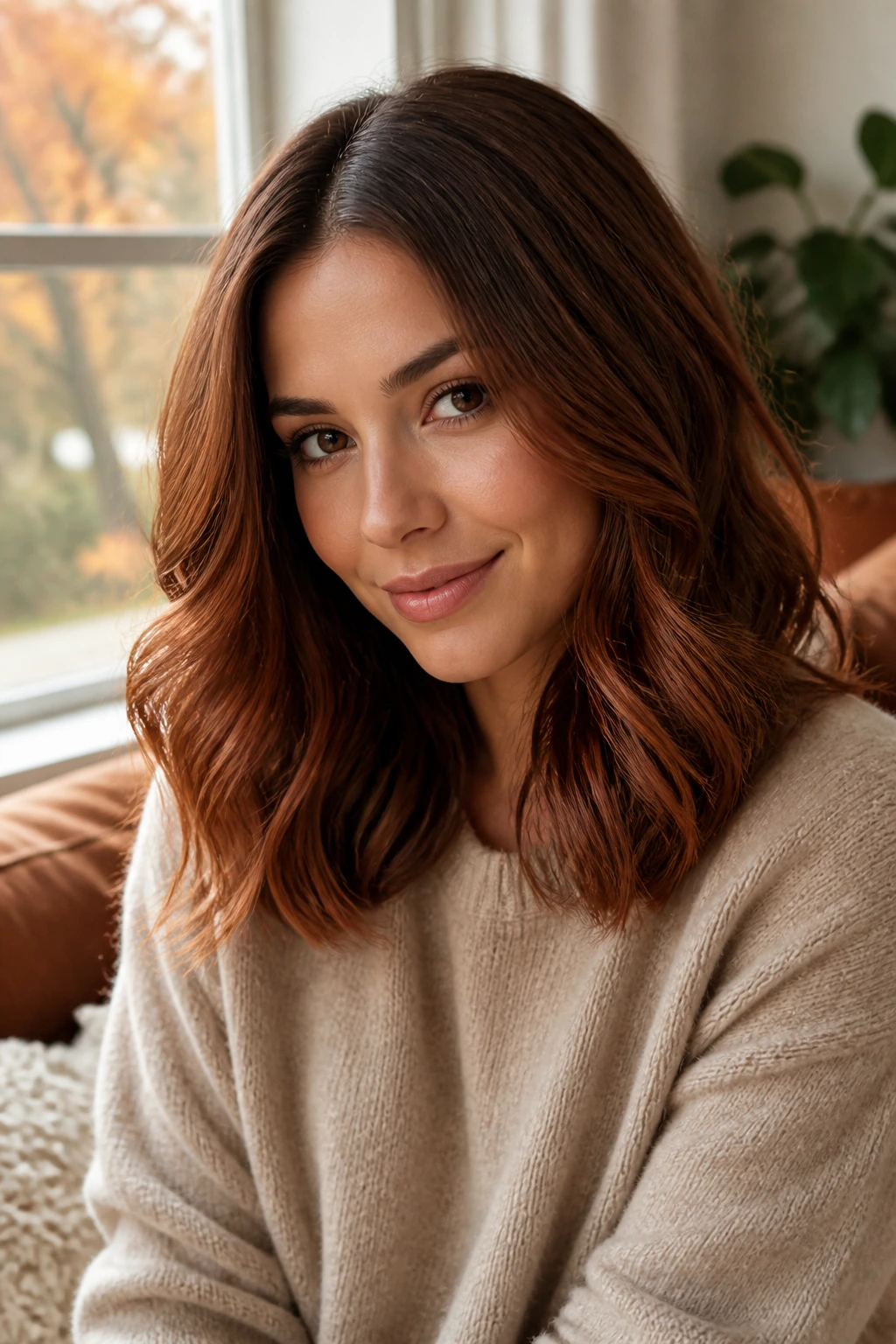
Autumn maple brunette sits between chestnut and mahogany, with a warmer brown-red note that feels rich instead of fiery. It’s a good choice if you want warmth that still looks grounded.
The best version keeps the roots a bit deeper and lets the maple tone come through in the mids and ends. That stops the shade from looking one-dimensional. If you wear a lot of cream, camel, olive, or black, this tone plays nicely with all of them. It also looks especially good in loose waves because the color shift shows on the bends.
25. Cool Taupe Brunette
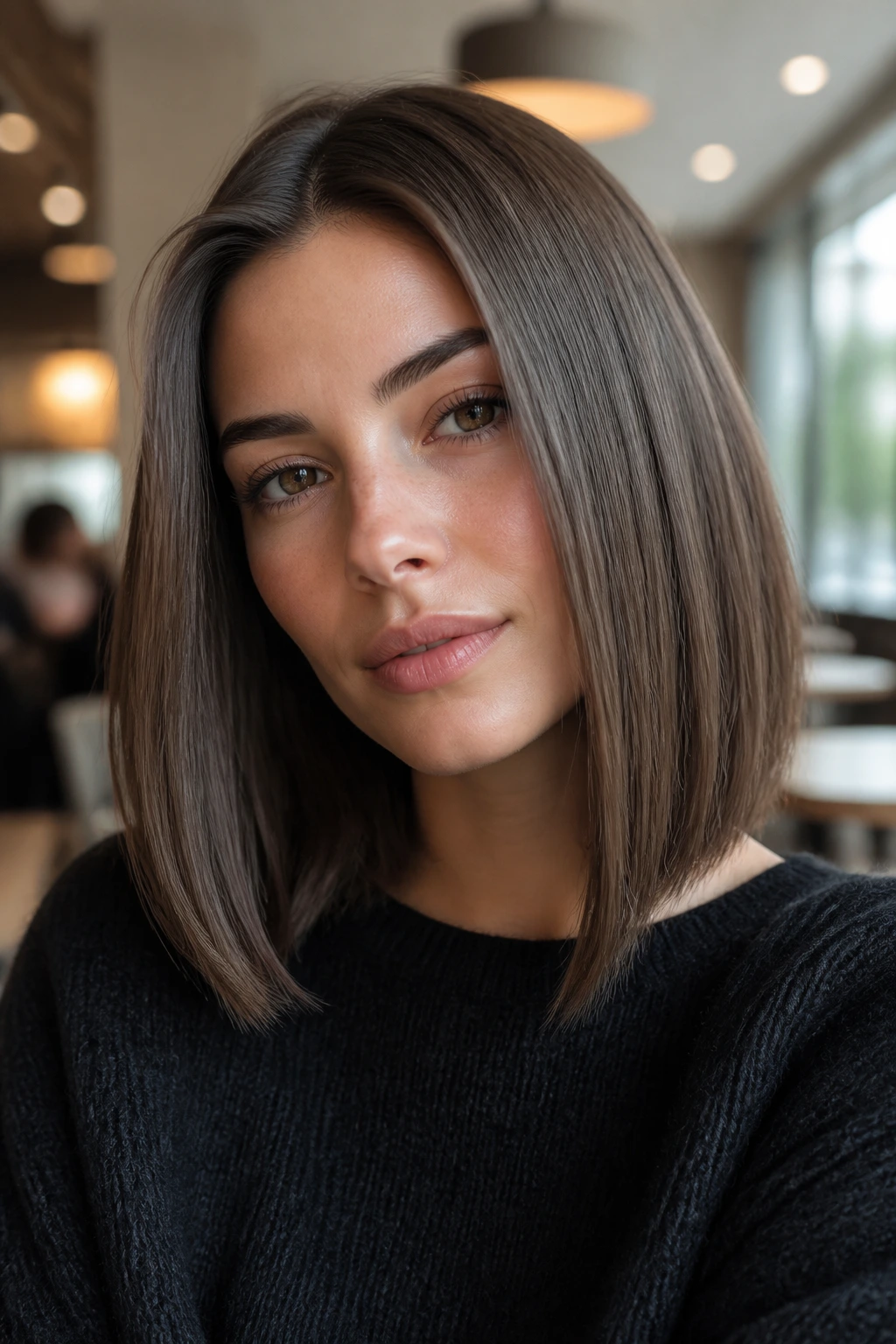
Cool taupe brunette is the answer for people who want a brown that feels modern and restrained. The tone is soft, muted, and slightly smoky, which makes it work beautifully with minimalist cuts and clean styling.
Why It Works
The taupe base cuts brass and keeps the color from turning too warm too fast. That’s useful if your natural hair tends to pull orange. Keep the finish sleek or softly bent; too much volume can make the muted tone look heavier than it is.
This is one of the easiest brunettes to pair with a crisp part, a blazer, or a blunt bob.
26. Mulled Wine Brunette
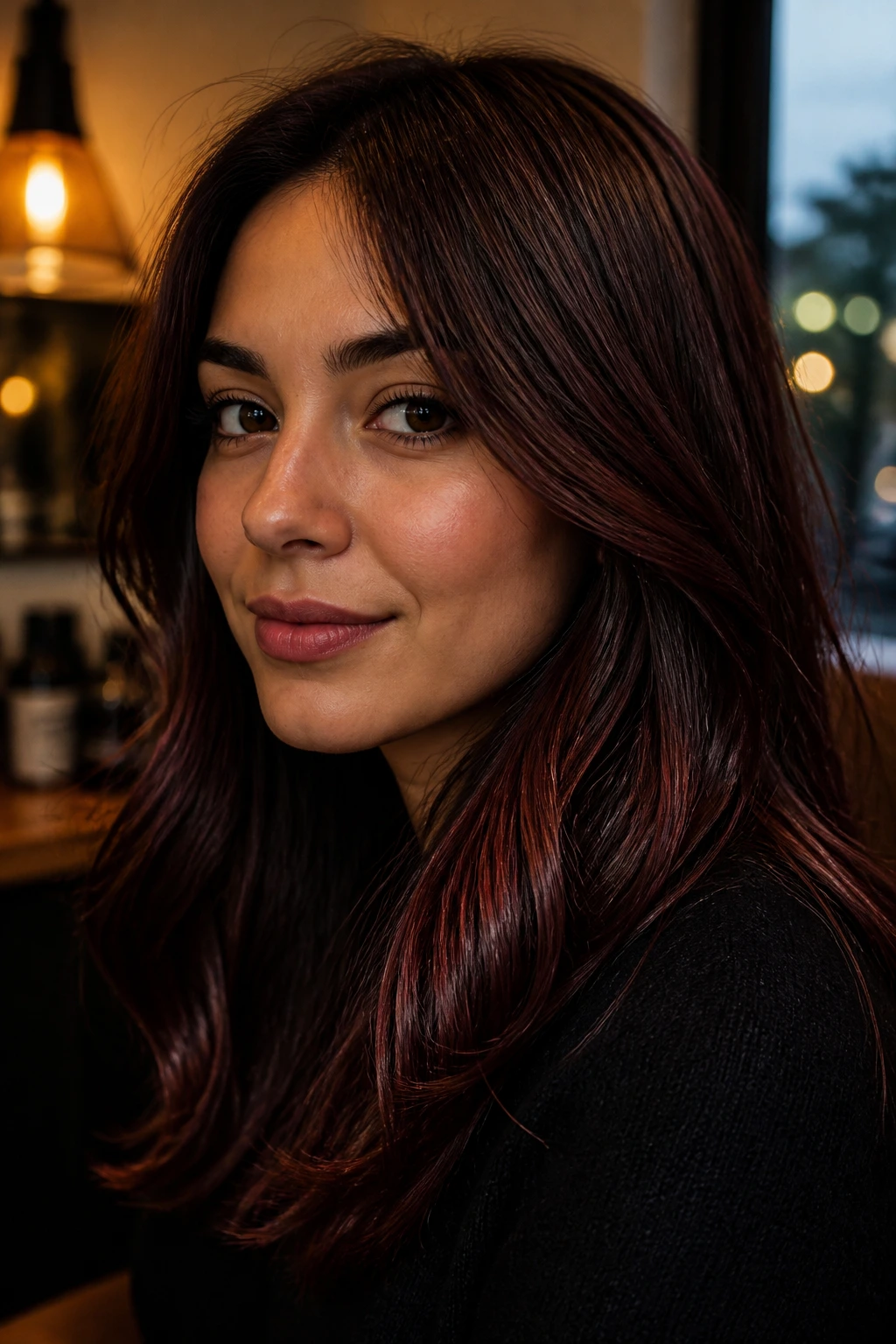
Mulled wine brunette has a burgundy undertone that shows up in the right light and disappears when you want it to. It’s richer than cherry cola and deeper than auburn, which gives it a moody, dark-red-brown feel.
A gloss or demi-permanent glaze is usually enough to get the effect without permanently pushing the whole head into red. I like it on medium-length hair because the motion gives the color a chance to shift. If you’re nervous about red, this is the brown-red family member that still behaves.
27. Honey-Dipped Midlength
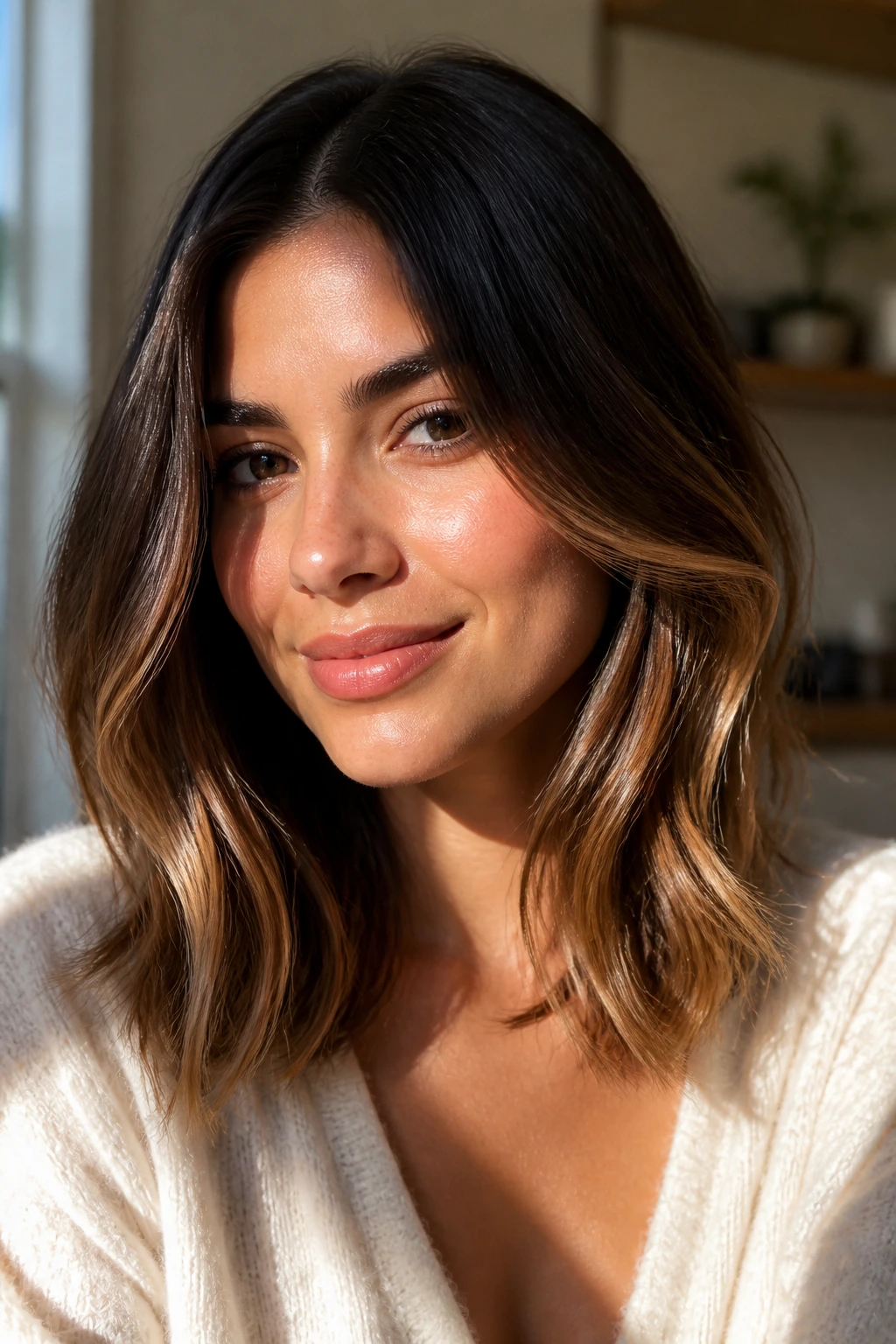
Honey-dipped brunette is softer than a full caramel balayage. The honey pieces usually sit on the lower half of the hair, so the top stays deep and the ends carry the brightness.
This works especially well at shoulder length because the cut is long enough to show the gradient but short enough to keep the color from looking stretched. Add loose waves or a blunt bend at the ends and the honey pieces catch just enough light. Tip: keep the honey closer to beige-gold than yellow-gold or it can read brassy fast.
28. Deep Mahogany Lob
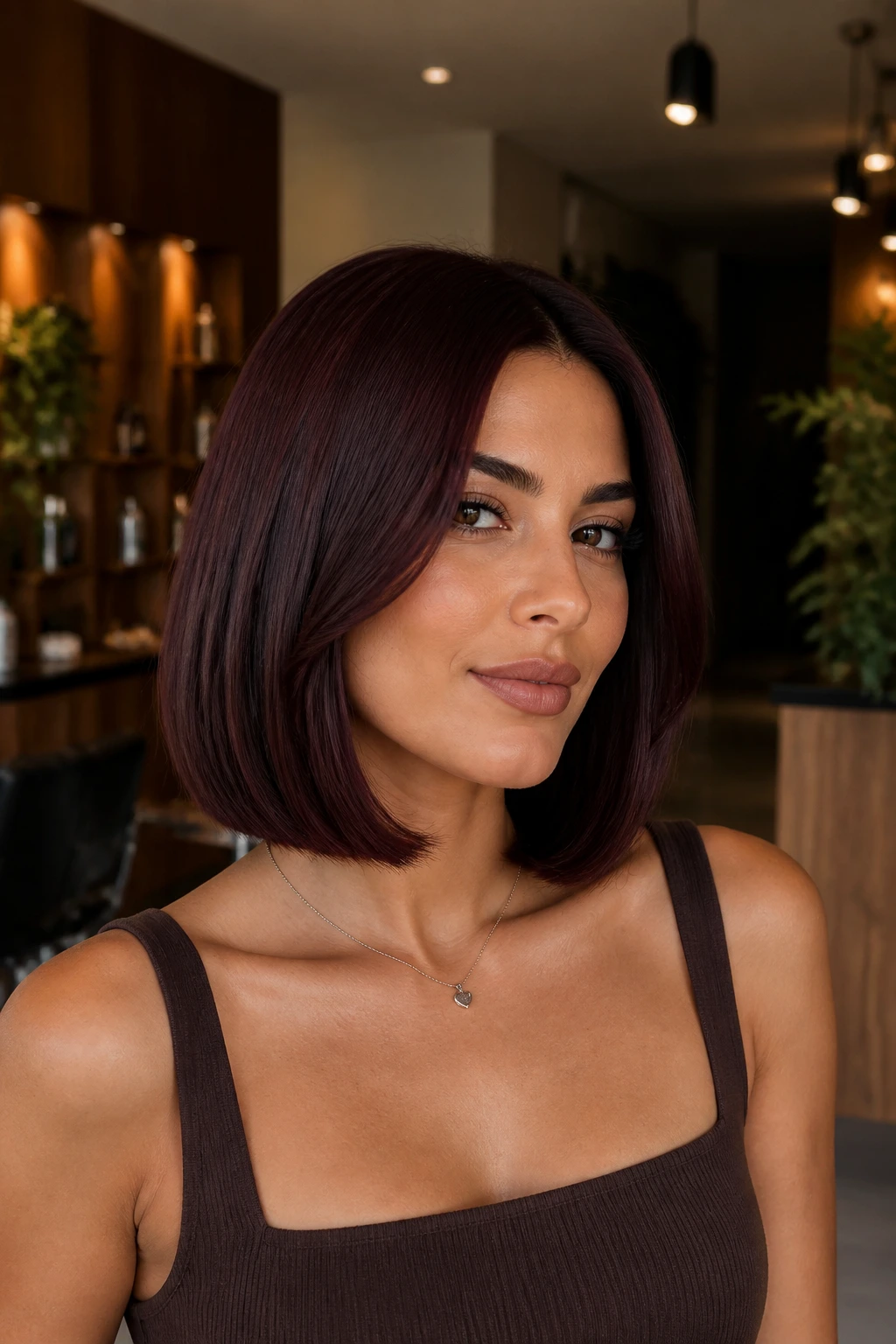
Deep mahogany gives brunette hair a dark red-brown richness that looks expensive in a blunt lob. The cut frames the color instead of letting it sprawl, which is exactly why this shade reads so clean.
Mahogany is a smart move if you want depth with a little warmth. It’s not flashy, but it changes the whole mood of the hair. Ask for a gloss that keeps the red-brown tone visible, then style it smooth or in a soft bend. That darker, wine-tinted brown looks especially good when the ends are tidy.
29. Face-Framing Caramel Curls
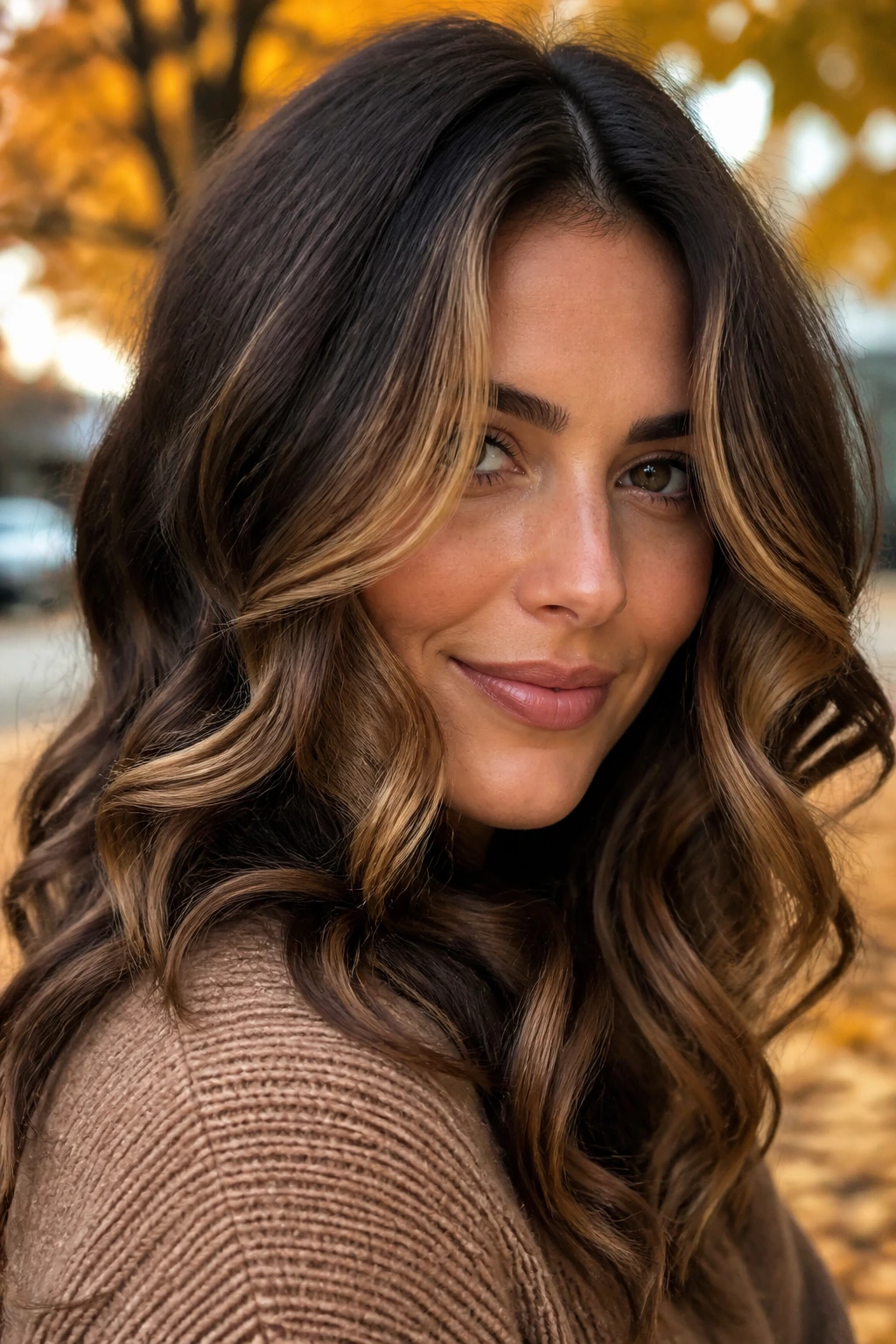
Face-framing caramel curls are what happens when you brighten only the pieces that matter most. The caramel lives around the front and sometimes through the top layer, while the rest of the curls stay darker and richer.
That contrast makes the curl pattern easier to see and puts the light exactly where you want it—around the eyes and cheekbones. Keep the front pieces narrow. A wide front highlight can flatten curl definition fast. If your curls are dense, this kind of placement can change the whole shape without forcing the whole head lighter.
30. Chestnut Butterfly Cut
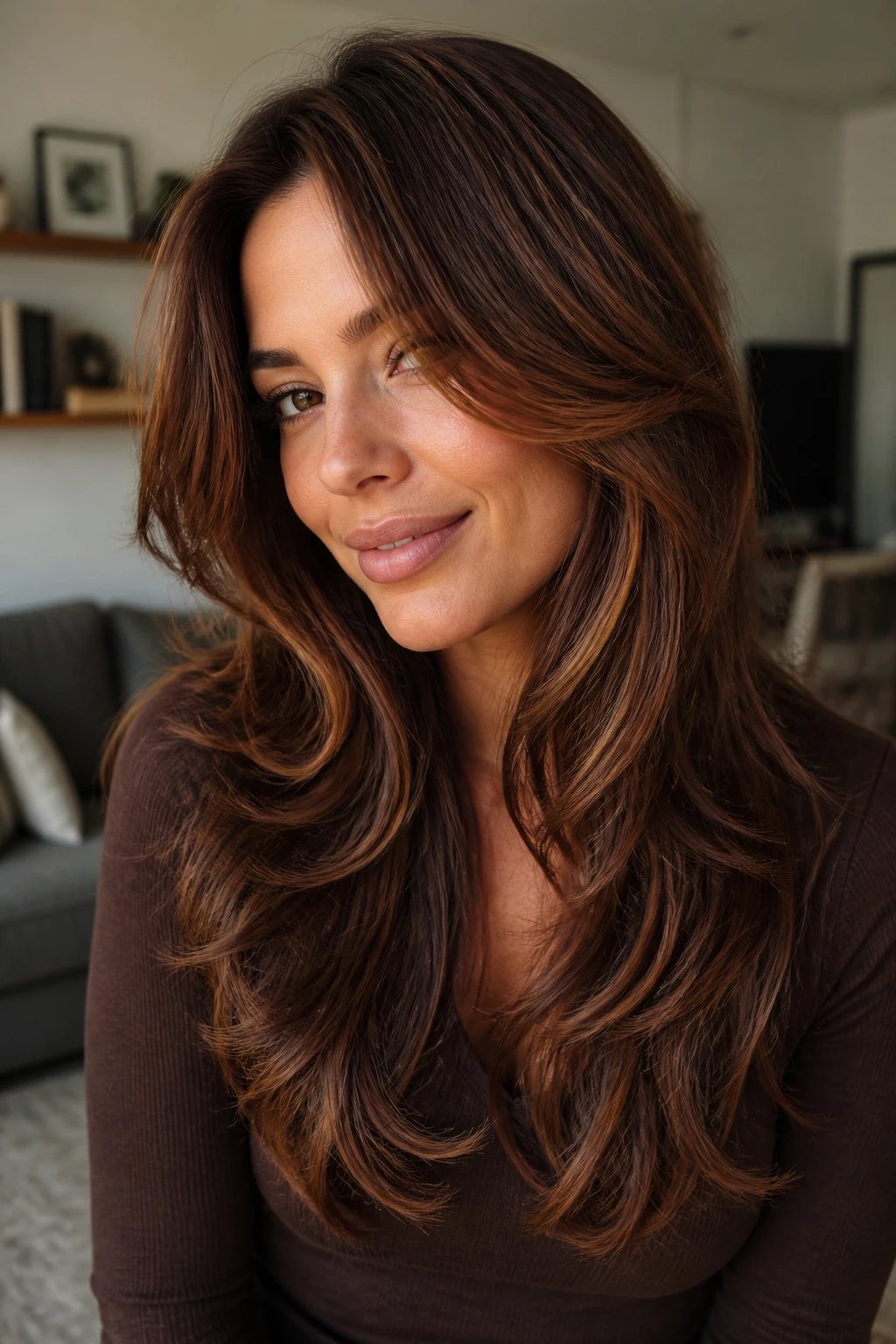
A butterfly cut gives long brunette hair a lot of movement without sacrificing length. Pair it with chestnut tone and the layers suddenly start doing visual work that a plain one-length brown never could.
The shorter face-framing pieces open the color near the front, while the longer lengths keep the overall look soft and wearable. This one is great if you like to wear your hair in waves but still want enough length for a ponytail or a clip-up. The chestnut shade keeps the layers from disappearing into the background.
31. Plum-Shadow Brunette
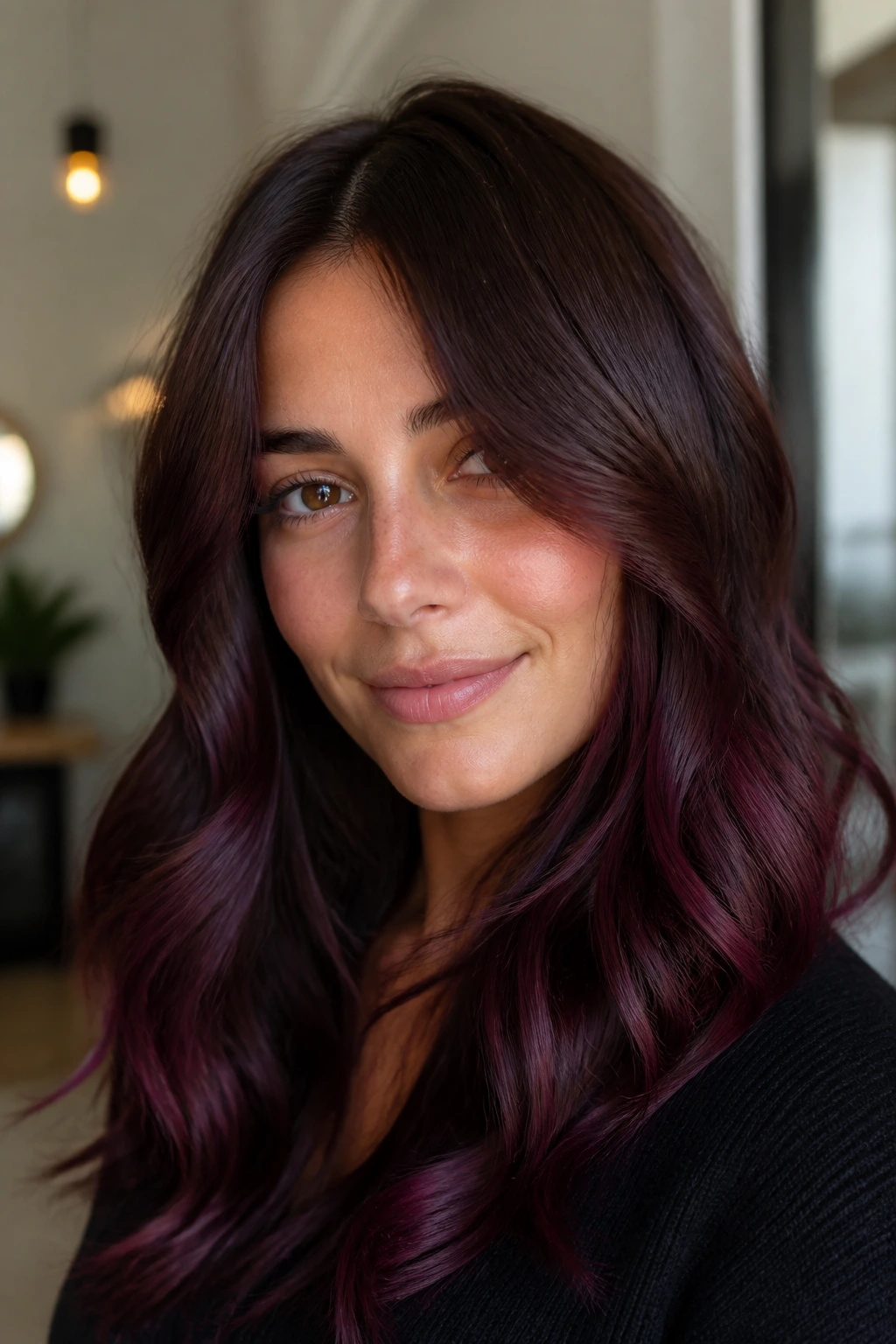
Plum-shadow brunette is one of the more subtle ideas here, and that’s why it works. The plum note hides in the brown until the hair moves, then it flashes just enough violet to catch the eye.
If you want something a little unexpected without crossing into obvious fashion color, this is the lane. A glossy finish helps the plum reflection show up; dry, porous hair can swallow it fast and make the color look dull. Keep the base dark and let the shadow tone show in the mids and ends for the most natural effect.
32. Vanilla-Toned Brunette Balayage
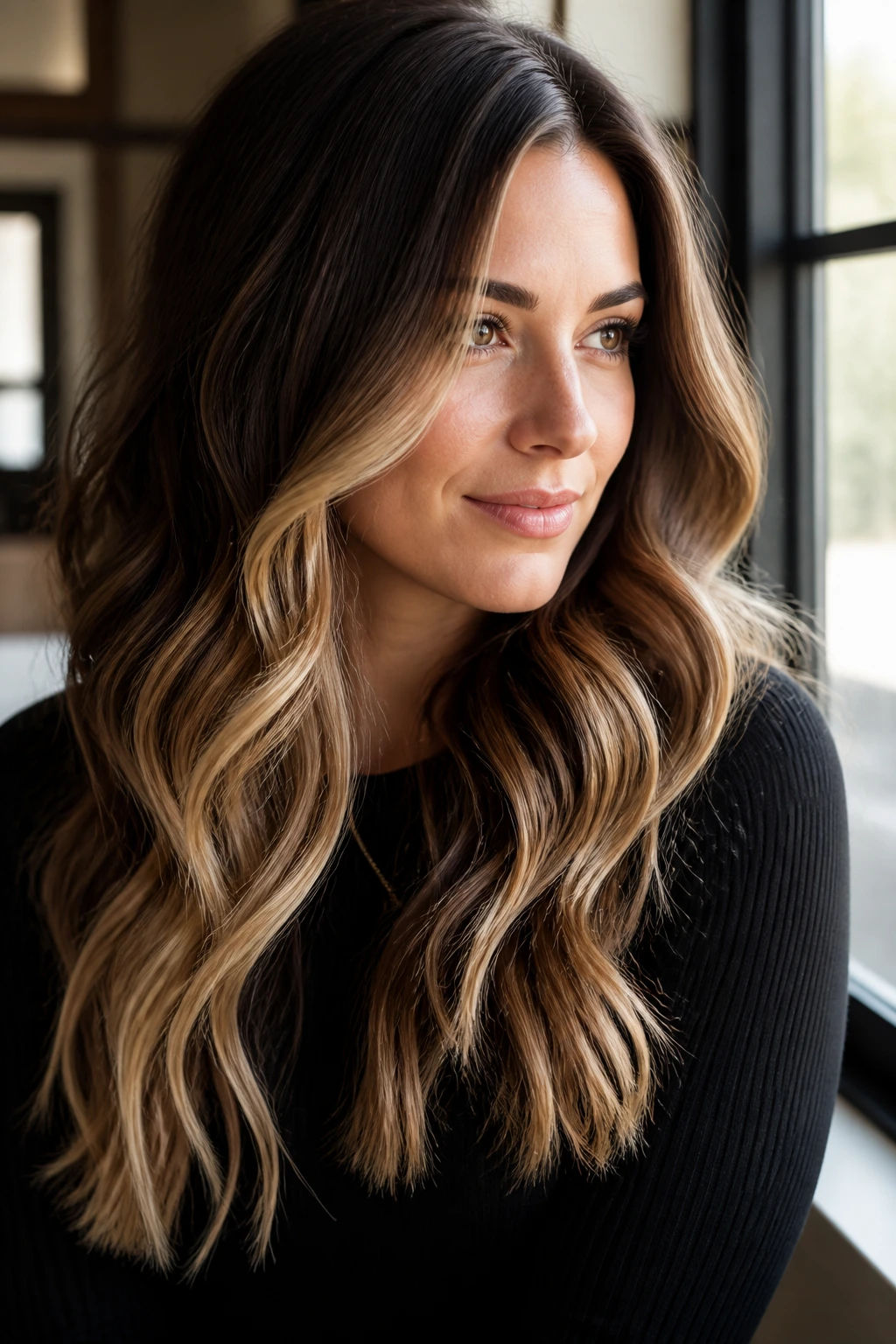
Vanilla-toned balayage is the lightest brunette look in this group, but it still keeps the brown identity intact. The vanilla pieces should feel creamy and beige, not pale yellow, and they work best when they’re painted over a brunette base instead of replacing it.
This is the look for someone who wants brightness around the face and along the surface without going full blonde. It pairs well with loose waves, because the lighter ribbons break up the brown in motion. If your ends are fine or fragile, keep the lightest pieces away from the very bottom so they don’t look see-through.
33. Glossy Mocha Waves
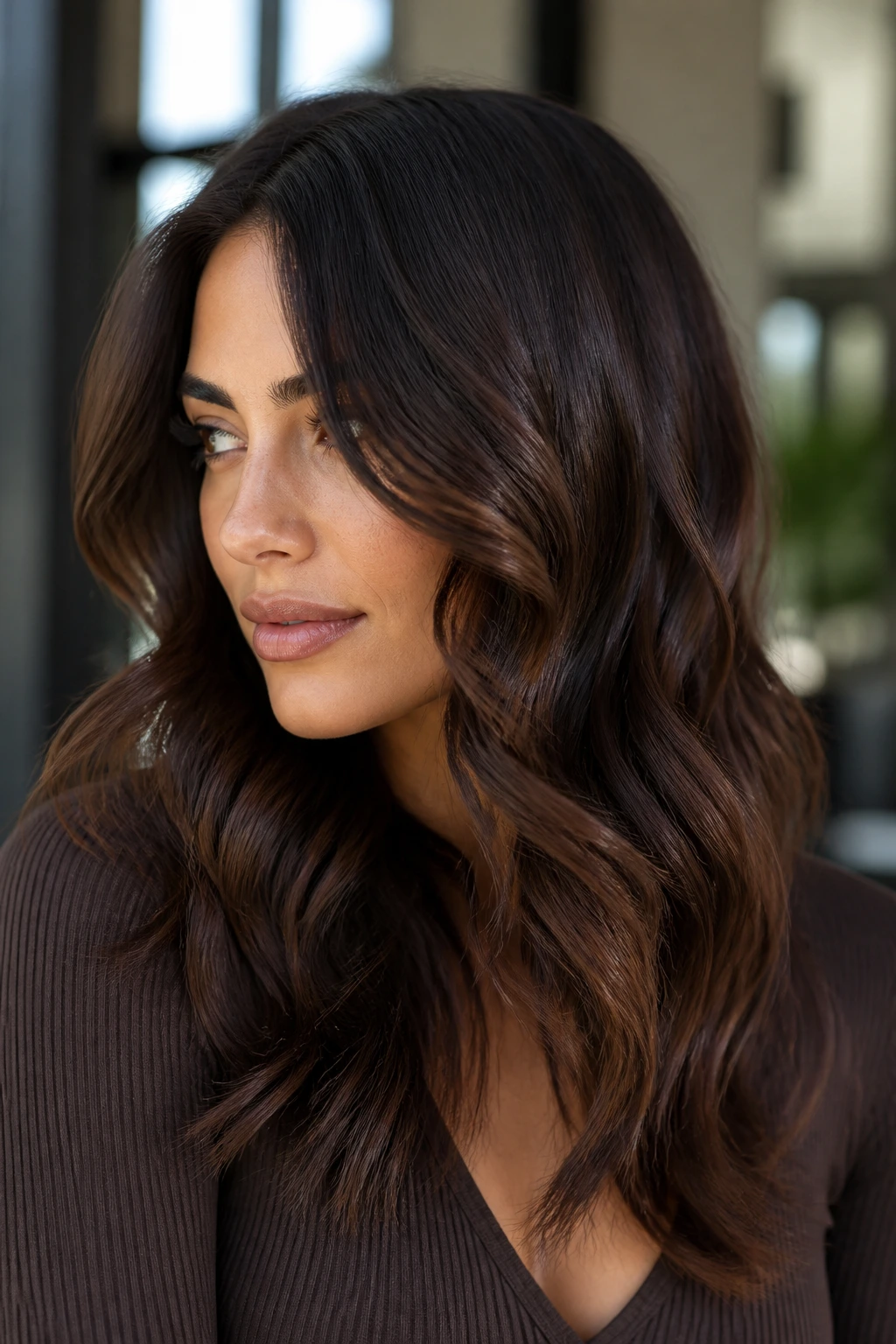
Glossy mocha waves are the dependable answer when you want brown hair that looks rich from every angle. The mocha base sits in that neutral-warm middle ground, and the waves make the color move instead of sitting there like one single shade.
I like this look because it doesn’t need drama to work. A clean gloss, a soft bend from midlength to ends, and a deep part are enough. It’s the sort of brunette that reads polished at noon and still looks good by dinner, which is more useful than any color that only wins in a photo.
Why Brunette Hair Looks Work So Well in Fall Light
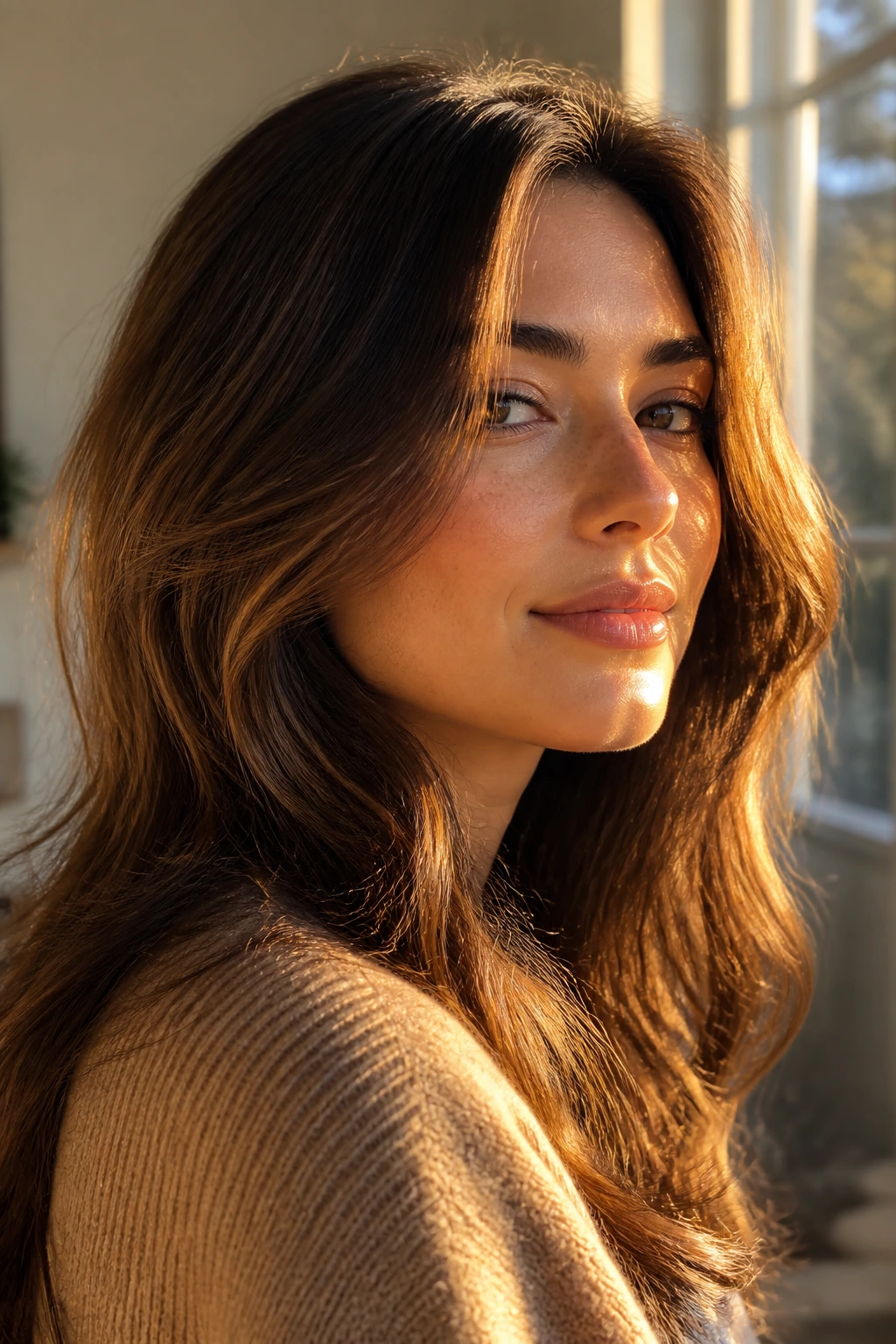
Brown hair gets more interesting when the light softens because it stops relying on brightness and starts relying on shape. A brunette with a shadow root, a few fine highlights, or a clean glossy finish can look fuller and shinier when the sun isn’t blasting it from above.
The nicest fall brunettes often have three things working together: depth at the root, movement through the mids, and a little reflection near the face. That could be a caramel ribbon, a copper glaze, or just a really well-done blowout. The point is contrast, but not the loud kind. You want the color to move when the hair moves.
A full-head lightening job on brown hair can get noisy fast. A better approach is usually narrower: root melt, babylights, lowlights, or a gloss that tweaks the tone instead of changing the whole head. That’s why brunettes can wear more looks than people give them credit for. One base color can swing warm, cool, smoky, red-brown, or soft beige with very small changes.
Essential Tools for Glossy Brunette Hair
- Color-safe shampoo: A low-sulfate formula helps keep brunette glosses and toners from fading too fast.
- Deep-conditioning mask: Use it once a week on porous ends, especially if you bleach highlights or heat-style often.
- Heat protectant spray: Mist it from midlengths to ends before blow-drying, curling, or flat-ironing.
- 1.25-inch curling iron or wand: This size makes loose bends that show off dimension without turning the hair into tight ringlets.
- Boar-bristle or smoothing brush: Good for polished bobs, blowouts, and brushed-out waves.
- Sectioning clips: They keep balayage placement neat and make at-home styling easier.
- Tint brush and bowl: Useful for root smudges, glosses, and small color refreshes.
- Microfiber towel or soft T-shirt: Helps cut frizz and keeps the cuticle from roughing up after washing.
- Wide-tooth comb: The safest way to detangle curls or waves without pulling out shape.
- Dry shampoo: Handy on roots the second day so the style stays lifted and the color doesn’t sit flat against the scalp.
How to Choose the Right Brown Shade at the Salon
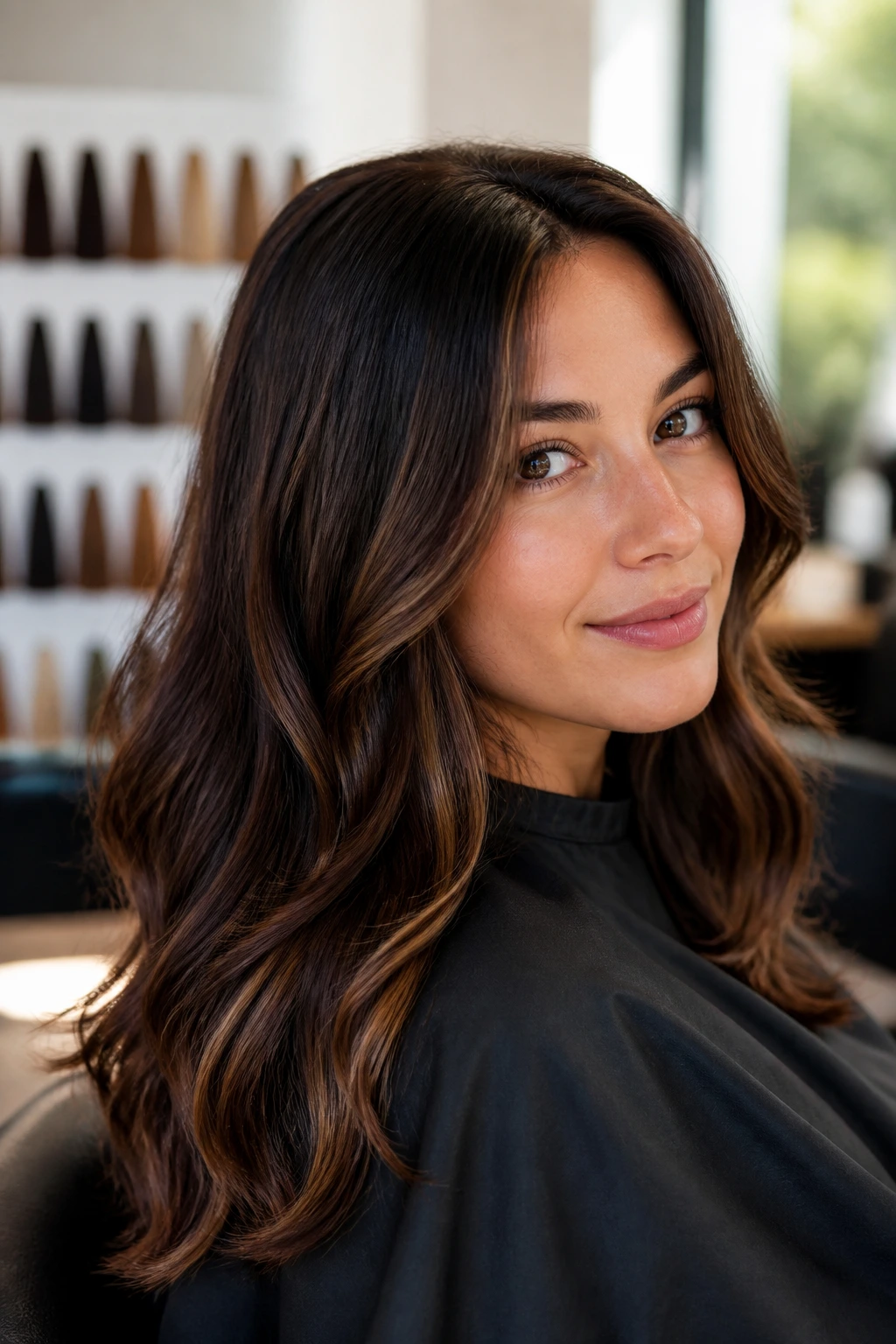
Start with the level, not the dream photo. A level 4 chestnut, a level 5 mocha, and a level 6 bronde all read like brunette, but they behave very differently once the toner fades and the grow-out starts. If your natural hair is already dark, a small change in tone can be enough; you do not always need a huge lift.
Bring two photos if you can. One should show the tone you want, and the other should show the placement. That keeps you from accidentally asking for a warm caramel shade with a cool smoky placement, which can happen when every photo is doing a different job. If you want a low-maintenance result, say that plainly and ask for a root shadow or a soft melt through the mids.
Skin tone matters, but undertone matters more. Warm skin often likes chestnut, bronze, caramel, copper, or mahogany. Cooler skin usually handles mushroom, taupe, smoky cocoa, and ash better. If your hair tends to pull orange, stay cautious with lightening and ask how your toner will hold between appointments.
The last thing I’d ask about is porosity. Ends that are porous grab toner fast and fade fast, which means they can go muddy or too dark if you keep piling color on them. A good colorist will usually adjust placement and strength for that. That’s the sort of detail that makes brunette hair look rich instead of tired.
How to Wear These Brunette Looks Day to Night
Finish: A glossy blowout, brushed-out wave, or soft bend usually shows brunette dimension better than a stiff curl set. Brown hair needs surface shine to read clean.
Clothes: Camel, olive, charcoal, cream, burgundy, and denim all let brunette tones breathe without fighting them. A black turtleneck is still hard to beat with espresso or jet brunette.
Makeup: Bronze lids, taupe shadow, soft berry lips, and warm blush can echo the hair without turning the whole face into one color family. If the hair leans cool, keep the makeup a touch muted.
Updos: Low buns, claw-clip twists, and half-up styles work best when a few face-framing pieces stay loose. That keeps the color visible and stops the look from becoming too severe.
Extra Shine, Better Dimension, and Less Flatness
Gloss Boost: A clear or tinted gloss every 4 to 6 weeks keeps brunette hair reflective, especially if you wear a deep mocha, chestnut, or cherry cola shade.
Texture Boost: Bend the hair from the midlengths down and leave the crown smoother. That little contrast makes highlights and lowlights show up better.
Color Boost: Use a color-depositing conditioner that matches the tone family—caramel for warm brunettes, mocha for neutral brunettes, smoky brown for cool brunettes. Don’t switch tones randomly or the color can start looking muddy.
Shortcut: Move your part an inch off center, tuck one side behind the ear, or add a clip at the temple. Small shifts reveal shadow and highlight placement without changing the whole style.
Wash Days, Touch-Ups, and Grow-Out
Brunette color usually holds up better than lighter shades, but it still needs a plan. If you shampoo every day, the surface can lose shine fast and your toner will fade faster than you want. Most brunettes do best with 2 to 3 wash days a week, lukewarm water, and a color-safe shampoo that doesn’t strip the ends.
Glosses and toners usually need refreshing every 4 to 6 weeks if you want them to stay crisp. Balayage can stretch longer, often 8 to 12 weeks, because the root area is left deeper. Root melts are the easiest to live with; they can often go 10 to 14 weeks before they start looking obvious, especially if the grow-out is blended instead of blocked.
Heat styling changes the maintenance math. If you curl or blow-dry often, use a heat protectant every time and add a mask once a week. If your water is hard or you swim, a clarifying wash every 2 to 4 weeks can help remove dull buildup, but don’t overdo it. Too much clarifying can make brown hair look dull and rough.
If your brunette is cool-toned, be careful with purple shampoo. It can make ash browns look muddy if you use it too often. Warm brunettes usually do better with a gloss that leans chestnut or caramel instead of a silver-toned toner. Small choices, big difference.
Variations and Adaptations to Try
Curly Coil Brunette: Keep the base rich and use fine painted pieces that follow the curl pattern instead of cutting across it. This keeps definition strong and avoids the stripe effect that can happen on tight curls.
Fine-Hair Fuller Brunette: Choose a single-process mocha, espresso, or teddy bear brunette with a blunt cut. Fine hair often looks denser when the color is one clean shade with only a little sheen.
Gray-Blending Cocoa: Ask for a neutral brown base with soft babylights and a root shadow that hides regrowth. This is especially useful if you want a softer grow-out without going blonde.
Warm Chestnut Switch: If ash tones make your hair look flat, swap them for chestnut, bronze, or cinnamon. The color will feel warmer and usually looks better under indoor lighting.
Low-Maintenance Melt: Keep the roots deep and the lightest pieces around the face and ends only. This is the most forgiving version of balayage if you don’t want frequent touch-ups.
High-Contrast Drama: Pair an espresso base with caramel or vanilla front pieces for a bolder frame. The look is sharper and more editorial, but it also needs a cleaner gloss to stay polished.
Common Mistakes That Make Brunette Hair Fall Flat
The first mistake is going too one-note. A solid brown with no gloss, no lowlights, and no movement can look like one flat helmet under indoor light. The fix is easy: add a gloss, place a few fine ribbons, or choose a cut that creates motion.
The second mistake is making highlights too wide. Thick blonde stripes on brown hair usually read harsh, not expensive. Skinny ribbons and soft placement around the face work much better, especially on shags, curls, and layered cuts.
The third mistake is choosing the wrong tone for your undertone. A cool brunette on warm skin can look muddy. A too-warm chestnut on cooler skin can pull orange fast. If the first swatch looks off, trust that reaction and adjust the toner before booking.
Another common problem is forgetting the haircut. Great brunette color on a shapeless cut still looks unfinished. Blunt ends, curtain bangs, long layers, or a proper lob can change how the shade lands more than a whole extra level of lightness.
Frequently Asked Questions About Brunette Hair Looks for Fall
Which brunette shade is easiest to maintain?
A dark root melt, espresso gloss, or teddy bear brunette usually gives the easiest grow-out. These shades keep the root deep, so regrowth blends in instead of forming a line.
Can brunette hair look bright without going blonde?
Yes, and that’s usually the smarter move. Caramel ribbons, face-framing highlights, copper-kissed ends, and a good gloss can make brown hair read bright without pushing it into blonde territory.
How do I keep brunette hair from turning orange?
Ask for a cooler toner, use color-safe shampoo, and avoid over-washing. If your hair pulls warm fast, choose mushroom, smoky cocoa, or taupe-based brunettes instead of heavily golden ones.
Do balayage and highlights work on very dark brown hair?
They do, but the lift has to be planned carefully. Dark hair often looks best with subtle caramel or mocha ribbons rather than huge jumps in lightness, because the contrast stays softer and grows out better.
What should I ask my colorist for if I want low upkeep?
Ask for a root shadow, fine face-framing pieces, and balayage that stays lighter through the mids and ends only. That combo usually stretches appointments farther than full-root highlights.
Will these looks work on fine hair?
Absolutely, but fine hair usually benefits from cleaner lines and narrower ribbons. Espresso bobs, mocha lobs, and soft glosses tend to make fine hair look denser than chunky, highly layered color work.
How often should brunette highlights be refreshed?
Most brunette highlights look best when they’re refreshed every 8 to 12 weeks, depending on how light they are and how fast your hair grows. If the pieces are very subtle, you can stretch them longer.
Can I do a brunette gloss at home?
You can, but keep the formula close to your existing tone. A clear gloss or a color-depositing conditioner in the same family is safer than trying to correct brass or add major warmth on your own.
The Brown Shade You’ll Keep Coming Back To
The strongest brunette looks are the ones that still make sense when the light changes. That’s what gives brown hair its advantage: it can be soft, sharp, smoky, warm, glossy, or red-brown without turning into a totally different category. The right version just needs depth, good placement, and a finish that doesn’t fight the cut.
If you’re deciding between two shades, pick the one that will still look clean six weeks later. That usually means finer highlights, a smarter root shadow, or a gloss that supports your natural base instead of replacing it. The most useful brunette is rarely the loudest one.
