



Long hair changes the whole shape of a face. Once it reaches the shoulders or drops past them, Viking hairstyles for long hair stop being just “something to do with all that hair” and start becoming a question of silhouette, tension, and texture. Pull it too tight and it looks sleek in the wrong way. Leave it too loose and it can turn into a windblown mess by lunch. The sweet spot sits somewhere between those two, and that’s where the good looks live.
What makes this style family interesting is that it works with weight instead of fighting it. Long hair has drag. It has movement. It also has a way of hiding details you thought were obvious, which is why a braid that looks tame in the mirror can suddenly read bold once it’s moving over a dark shirt or under a coat collar. Add a beard, a leather tie, a few broken strands at the temples, and the whole thing changes. Fast.
And no, there isn’t one single “correct” Viking look. There are practical, rough, tied-back versions. There are braids. There are knots. There are modern versions that borrow the mood without pretending to be a museum piece. That flexibility is the reason long hair is such a good base for this aesthetic — it lets you push the look toward clean, wild, rugged, or polished depending on how much time you have and how patient your hairline feels that day.
Why This Collection Works on Long Hair
-
The weight becomes part of the style: Long hair can hang flat or puff out in awkward places, but a braid, knot, or tie gives it shape and keeps the ends from taking over your shoulders.
-
Texture matters more than shine: A matte finish, a little grit, and a few loose pieces around the hairline usually look better here than glossy gel that makes everything look plastic.
-
It works with different beard lengths: A short beard, full beard, or clean jaw can all fit the silhouette; the trick is keeping the hair and face in the same visual “family.”
-
You can wear most of these styles all day: Once you learn the tension and anchor points, many of these looks hold through work, wind, and a hat better than people expect.
-
The styles scale up or down easily: Shoulder-length hair can handle half-up knots and temple braids, while waist-length hair can take heavier braids, wraps, and more dramatic tie-backs.
-
Day-two hair is often your friend: Slightly dirty hair grips better, braids slip less, and the whole thing usually looks more convincing than freshly washed strands.
1. The Single Center Braid
A single braid down the middle has a blunt, almost stubborn feel to it. That’s a good thing. It keeps the line clean, lets the length speak for itself, and gives you one of the easiest Viking-inspired shapes to wear without turning the whole look into costume territory.
Why it works
One braid controls the bulk without hiding the length. The hair still moves, but it moves as one piece instead of breaking into a halo of frizz the second the air gets dry. If your hair is thick, this is also one of the best ways to stop it from swallowing your neck.
How to wear it
Start with dry hair that has a little grit in it. A pea-sized amount of matte cream through the mids and ends helps the braid stay put. Keep the top section centered, then braid from the crown to the nape and tie the end with a small elastic that matches your hair color.
If you want the look to feel rougher, pinch the braid gently once it’s finished. Not too much. Just enough to widen the weave and make it sit a little less rigidly.
2. Twin Temple Braids
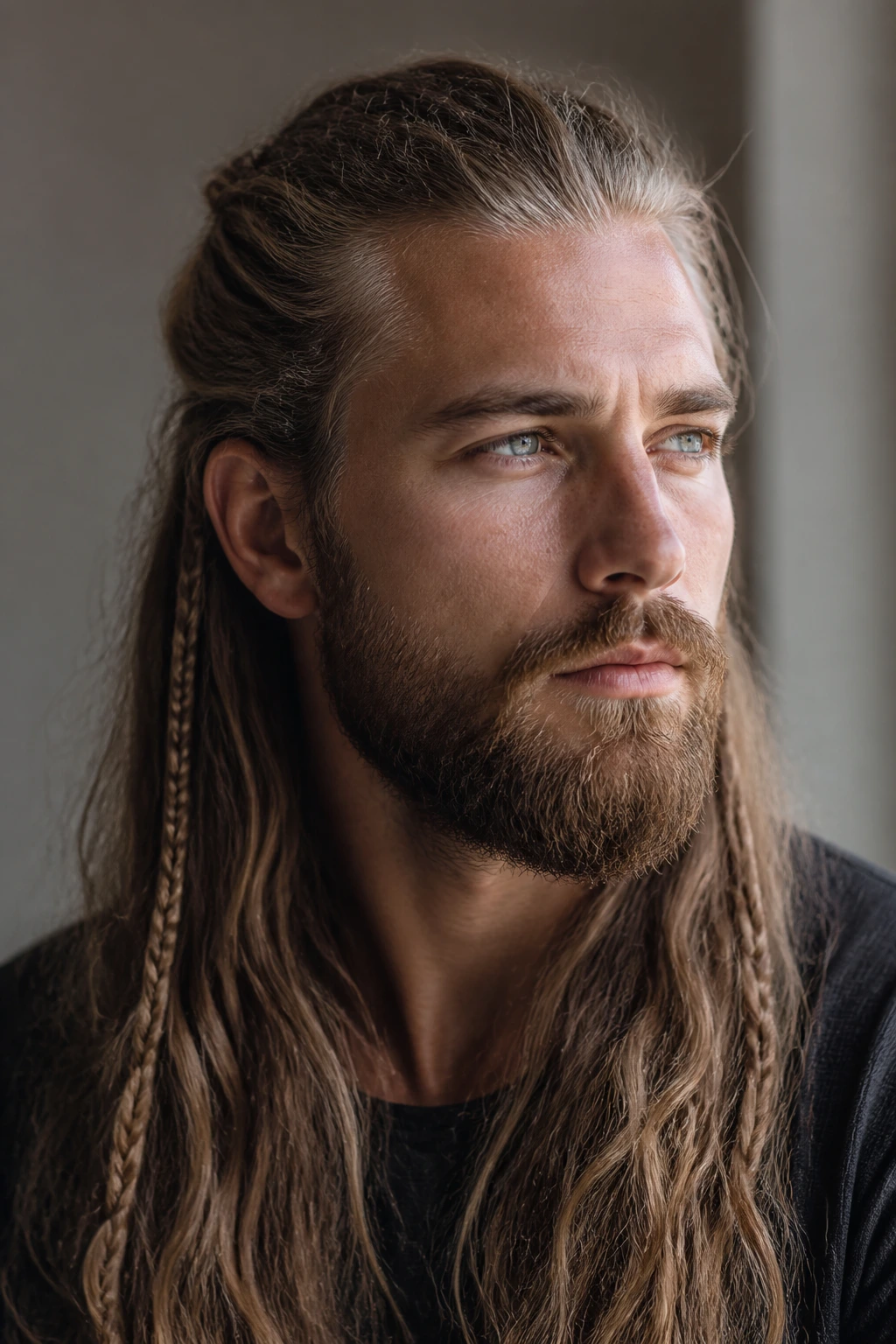
Two narrow braids pulled back from the temples hit a sweet spot that a lot of long-haired guys miss. They keep hair out of the face, show off the forehead, and still leave the back length loose enough to feel dramatic.
What makes it different
This style gives you shape at the front and freedom at the back. That contrast matters. It makes the face look more open, which is useful if your hair tends to hang forward or if you want a look that reads strong without looking heavy.
How to get it right
Take two slim sections from just above each temple, braid them back along the scalp, and tie them together at the back or let them trail into the rest of the hair. Keep the sections even. If one side is much thicker, the whole style starts to look accidental.
A tiny bit of styling paste on the temple sections helps. Too much, and the braids lose grip. Too little, and they loosen faster than you want.
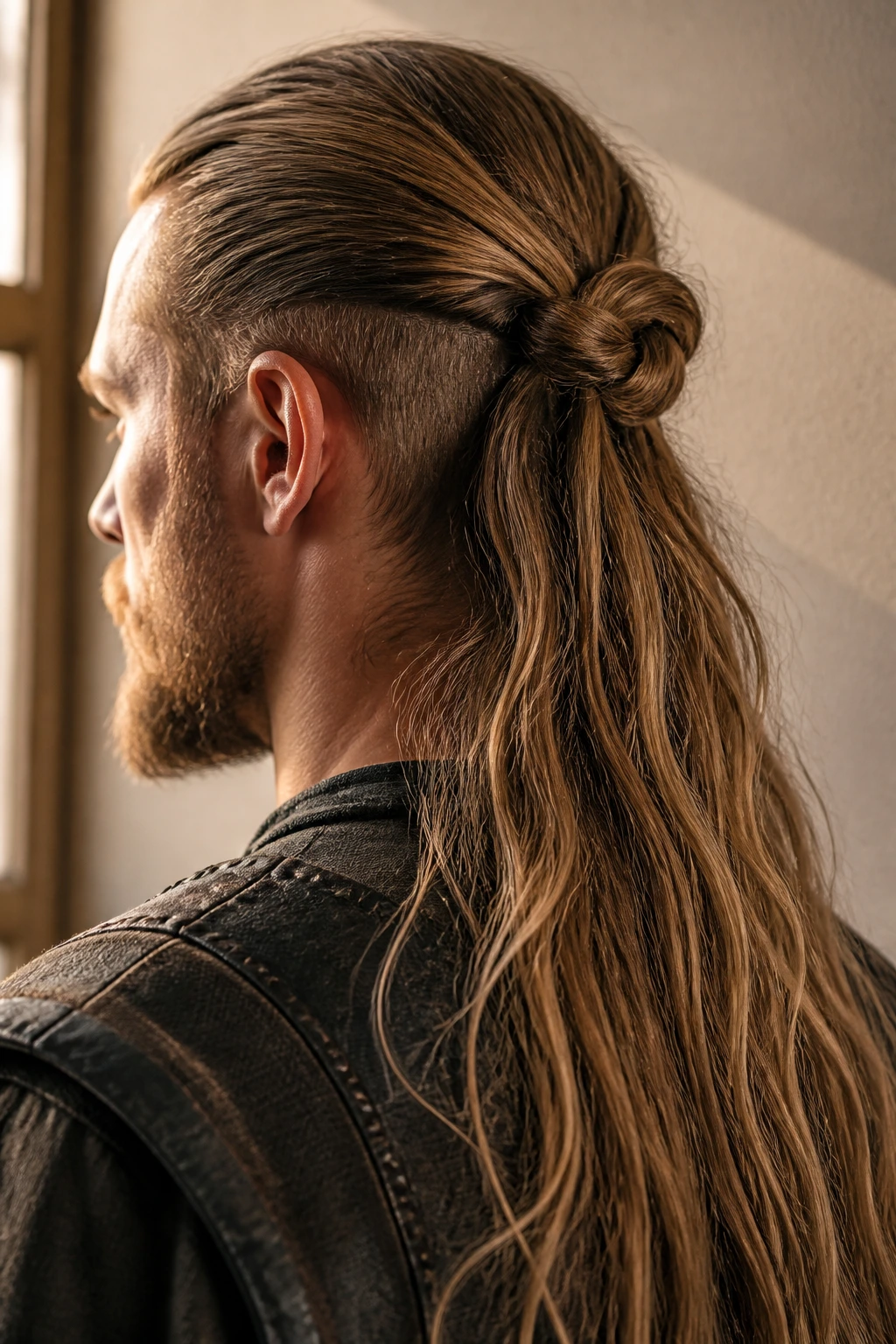
3. Half-Up Knot with Loose Length
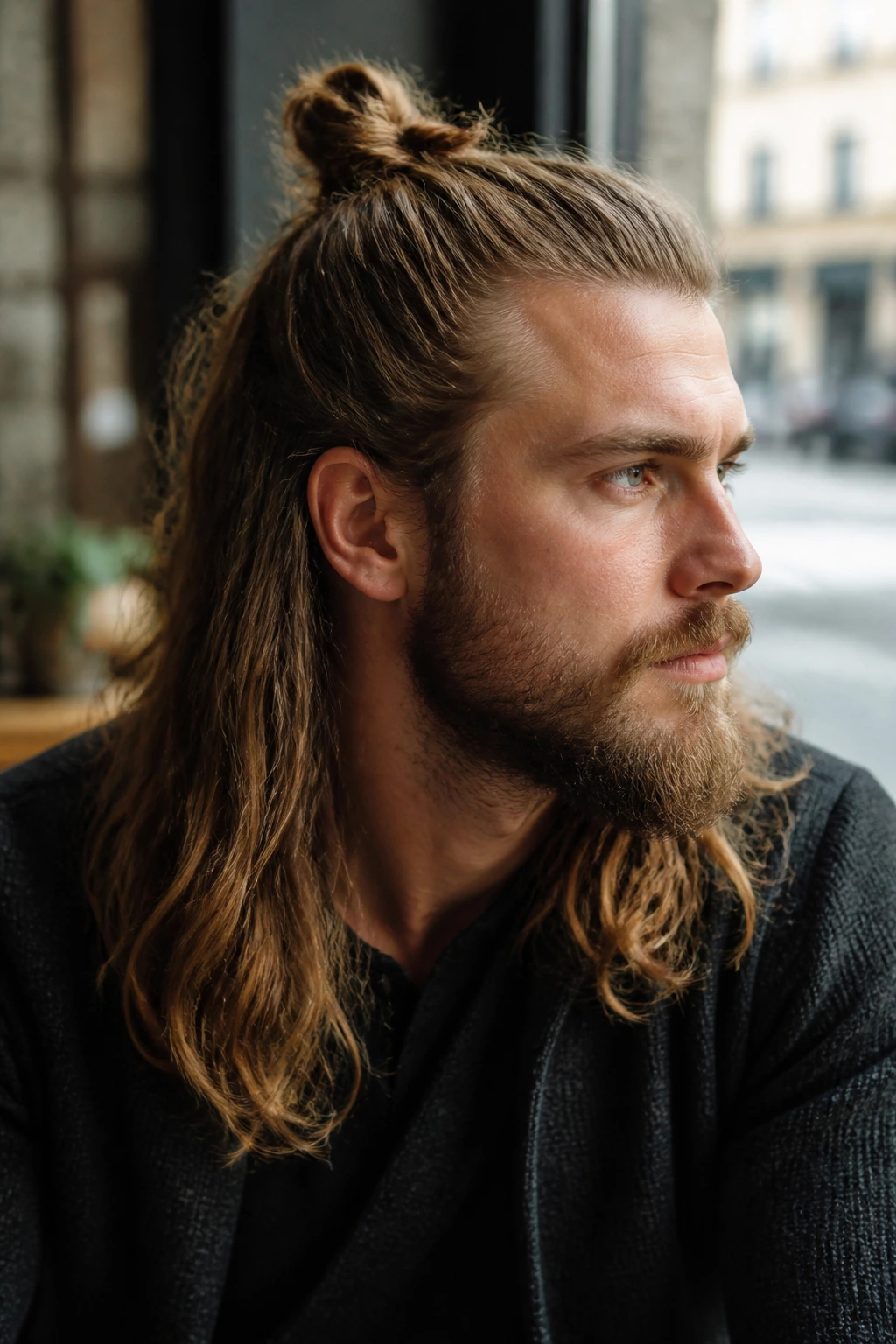
This one is all about contrast. The crown gets pulled into a knot, while the rest of the hair stays down and loose. It’s a practical shape, but it also has that slightly fierce, half-controlled look that works so well with long hair.
Why it reads well
The knot clears the face and shows off the jaw, while the loose length keeps the style from feeling too severe. That balance is the point. If you’ve got a strong beard or a heavy neckline, this style lets those features breathe instead of fighting them.
A small top knot works best when the hair underneath has some texture. Freshly washed hair can slide apart. Day-old hair usually gives the knot better grip and a fuller shape.
4. Side Braid Over One Shoulder
Pulling a braid over one shoulder changes the whole mood. It feels less formal than a center-back braid and a little more lived-in, which is often what people are actually after when they say they want a Viking look.
The best version starts with a loose side part. Braid the hair low and behind the ear, then bring the finished braid across the chest instead of letting it disappear down the back. That front placement is useful if you want the braid to show from the front, not just from behind. It also pairs well with a cloak, heavy jacket, or open collar, because the braid sits where people can see it.
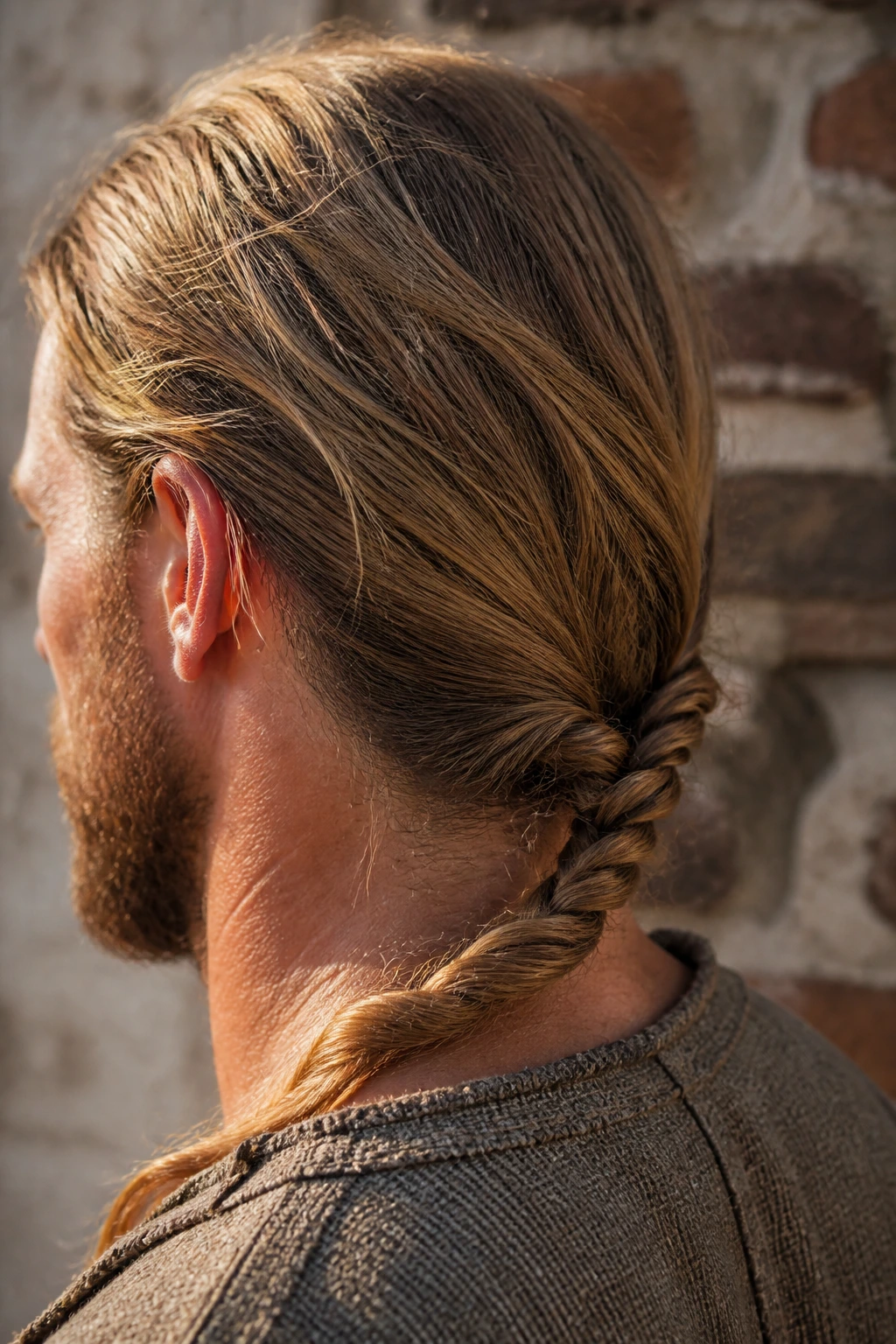
5. Braided Low Ponytail
A low ponytail with a braided tail is one of those styles that looks simple until you notice how much cleaner it holds than a bare tie-back. The braid keeps the end compact, which means less tangling and less puffing out when the wind hits.
A practical choice
If your hair is long enough to brush your shoulder blades, this is a workhorse style. It stays neat under collars and doesn’t require a lot of product. Tie the base low at the nape, braid the tail to the end, and finish with a dark elastic.
I like this on thick hair more than fine hair. Thick hair gets a strong, rope-like finish. Fine hair can still do it, but you may want a texturizing spray first so the braid doesn’t collapse into a skinny strand.
6. Rope-Twist Back Tie
Rope twists are underrated. They’re faster than a full braid, they hold a little differently, and they give the hair a slightly rougher, more organic look. If you want something that feels hand-tied rather than salon-polished, this is a good place to start.
The shape matters
Split the hair into two sections, twist each one in the same direction, then wrap them around each other in the opposite direction. That counter-twist is what keeps the rope shape from unraveling. If the hair is very smooth, add a tiny bit of dry texture spray first.
This style is especially nice for men who don’t want their hair to look “done.” It feels rough in a good way. Not messy, just less formal than a standard braid.
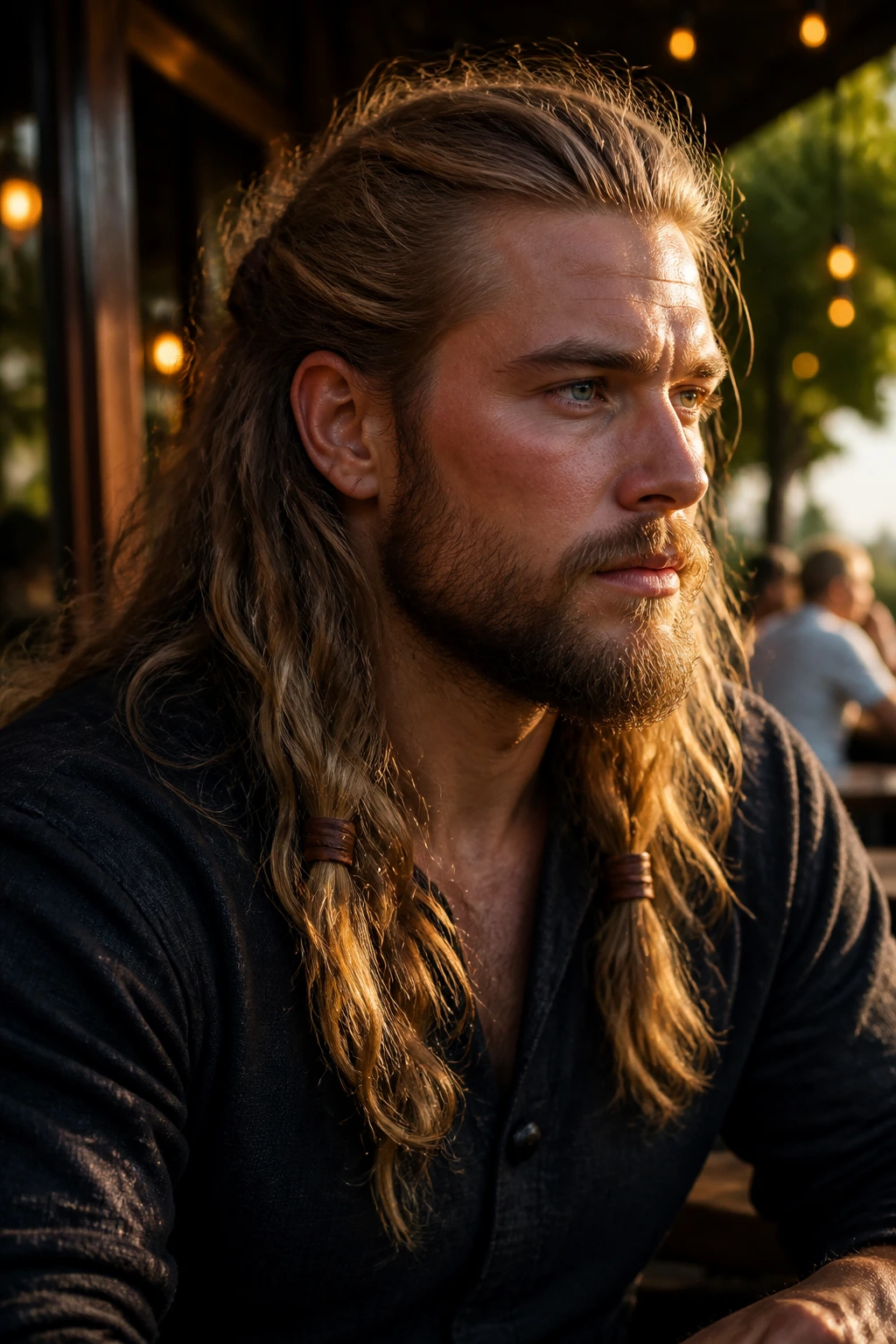
7. Loose Waves with Leather Ties
Not every Viking-inspired look needs a braid. Sometimes the better move is to let the hair stay loose and add leather ties at one or two points to break up the length. That’s enough to give the style some direction without boxing it in.
The trick is texture. You want the waves to look natural, not curled into ringlets. Air-dried hair with a salt spray finish works well. If your hair is straight, rough-drying with your fingers and a little matte paste gives it more bend. The leather ties should feel like accents, not decorations. Two is usually enough.
8. Crown Braid with Free Ends
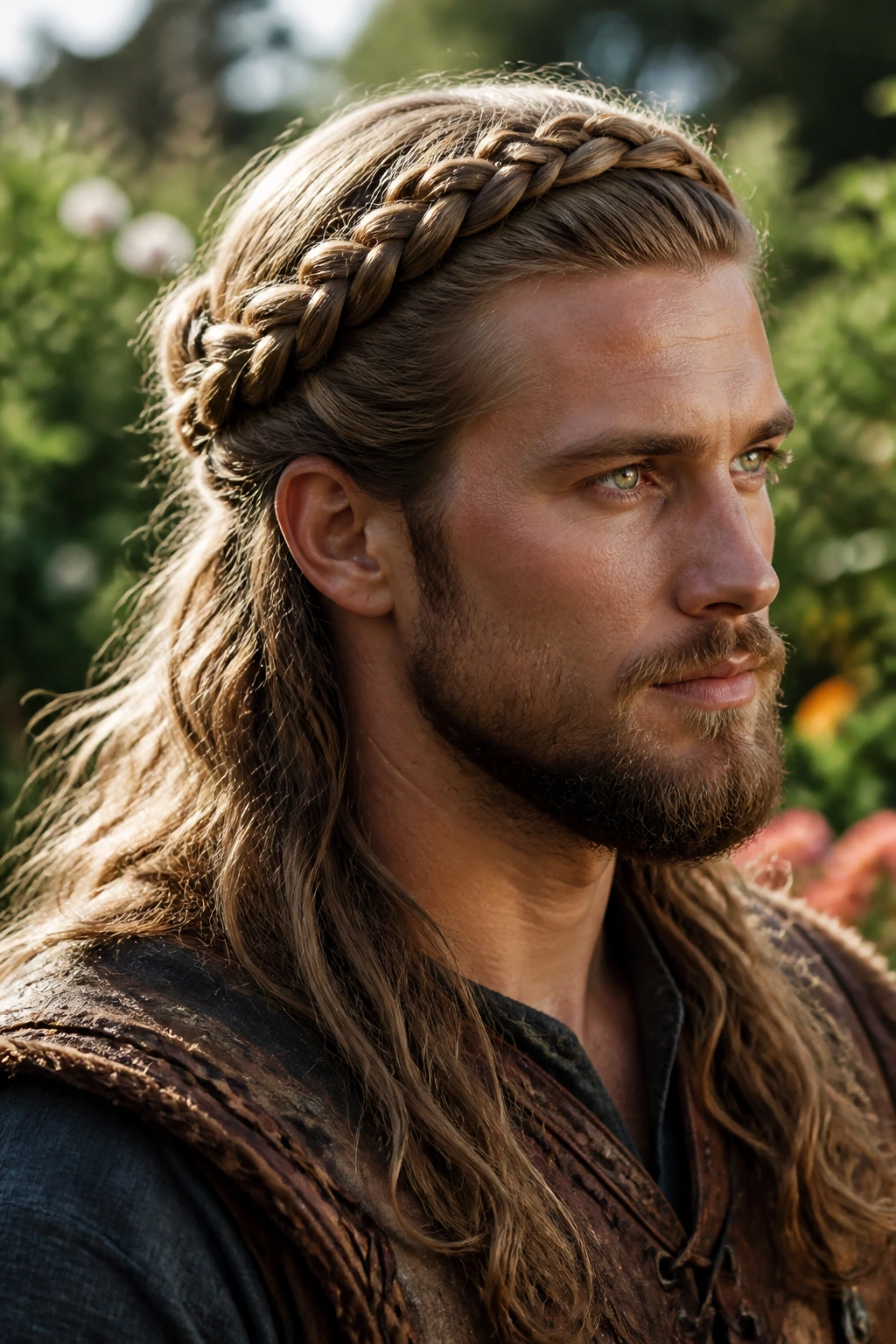
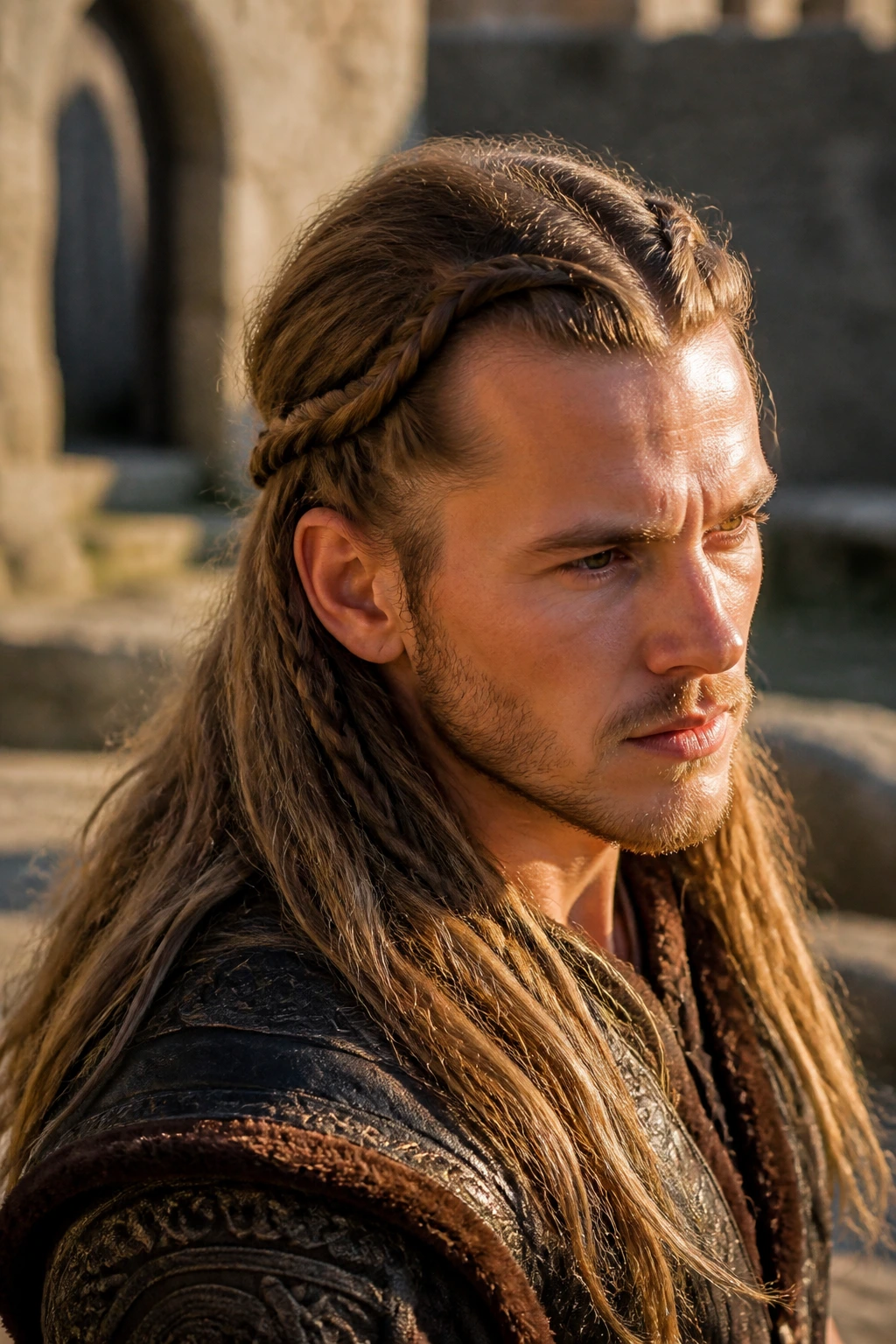
A crown braid sits around the head like a narrow band and leaves the rest of the length free. It’s one of the more dramatic shapes on this list, and it works because it frames the face without locking the whole head into a tight pattern.
Where it shines
This style looks strong on thick, layered hair. The braid acts like a frame, while the loose back length keeps the look from feeling rigid. If you have face-framing layers, leave them alone. They soften the edges and stop the braid from sitting too high on the forehead.
It’s not the quickest style to learn. Once you know the hand placement, though, it becomes much easier than it looks. The key is keeping the braid snug enough that it stays in place, but not so tight that it pulls the scalp.
9. Braided Mohawk Pullback
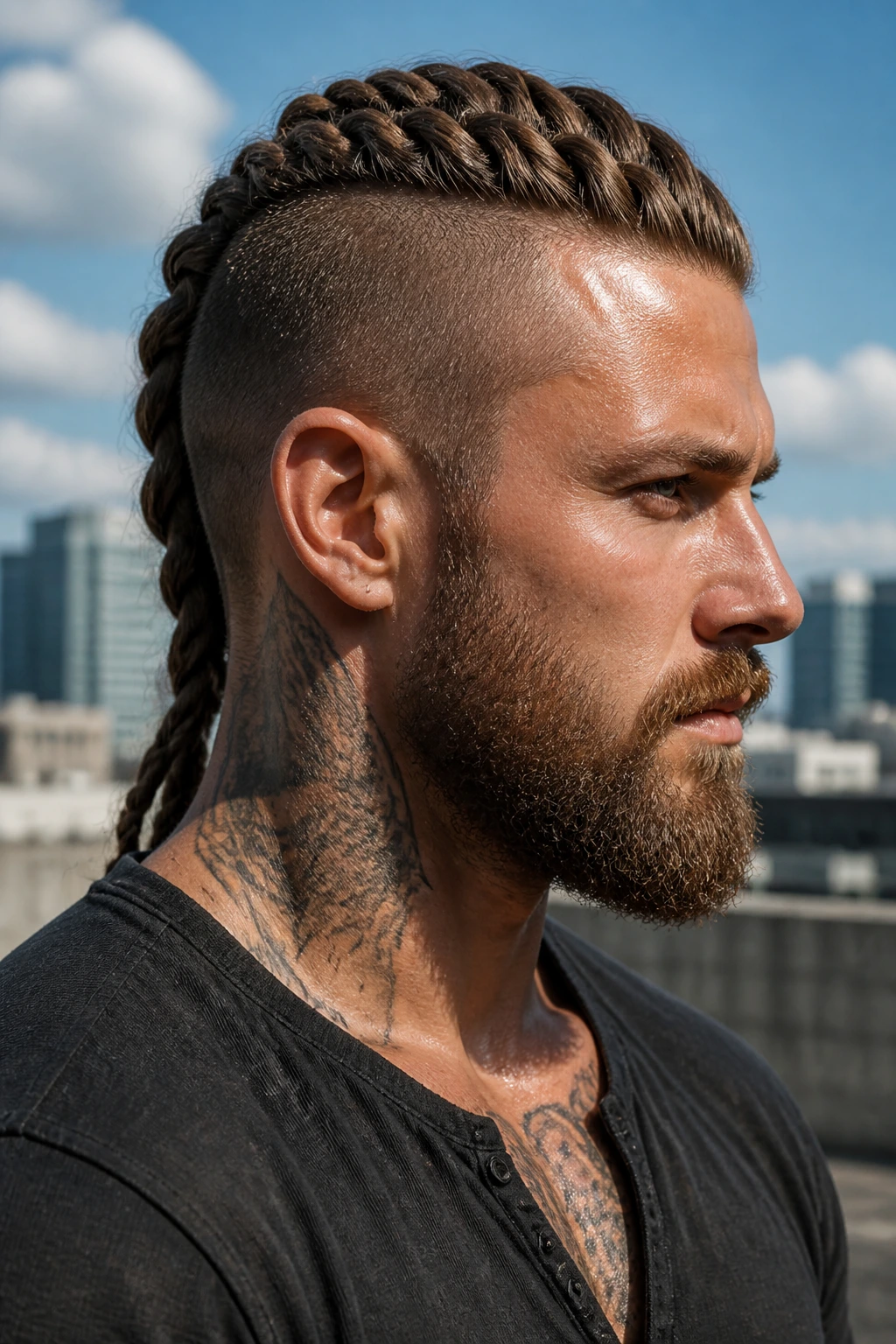
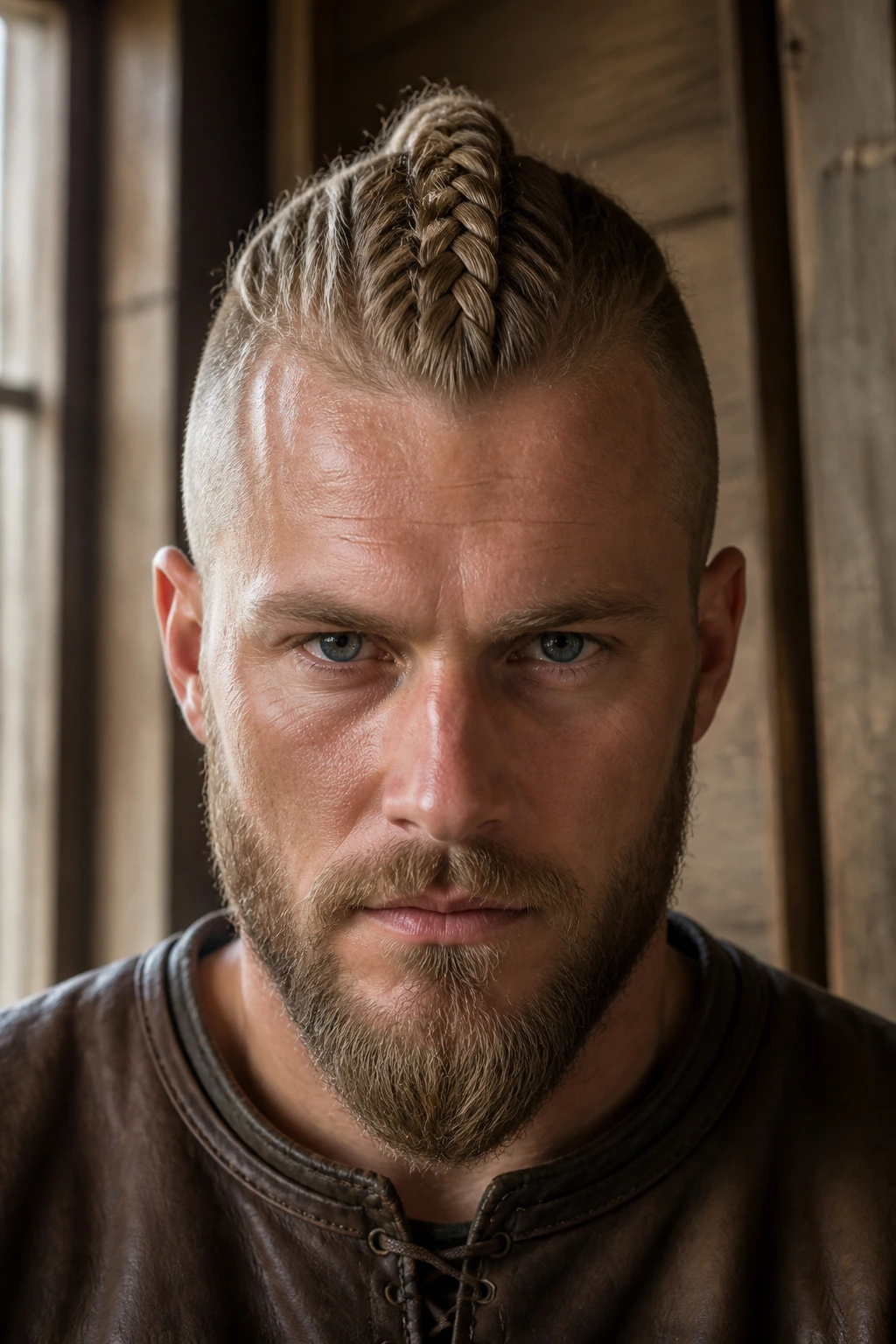
This one has attitude. The hair at the sides gets pulled back or tucked, while the center strip stays braided from front to back. The result is a narrow, strong line that gives off a warrior feel without needing a full shaved undercut.
It’s a good choice if your hair is dense and you want to tame the sides. The braid along the center ridge keeps the top visible and the sides out of the way. If you have a beard, this shape pairs nicely with it because the head and face both keep a strong vertical line. Clean, but not soft. That’s the appeal.
10. Fishtail Braid Down the Back
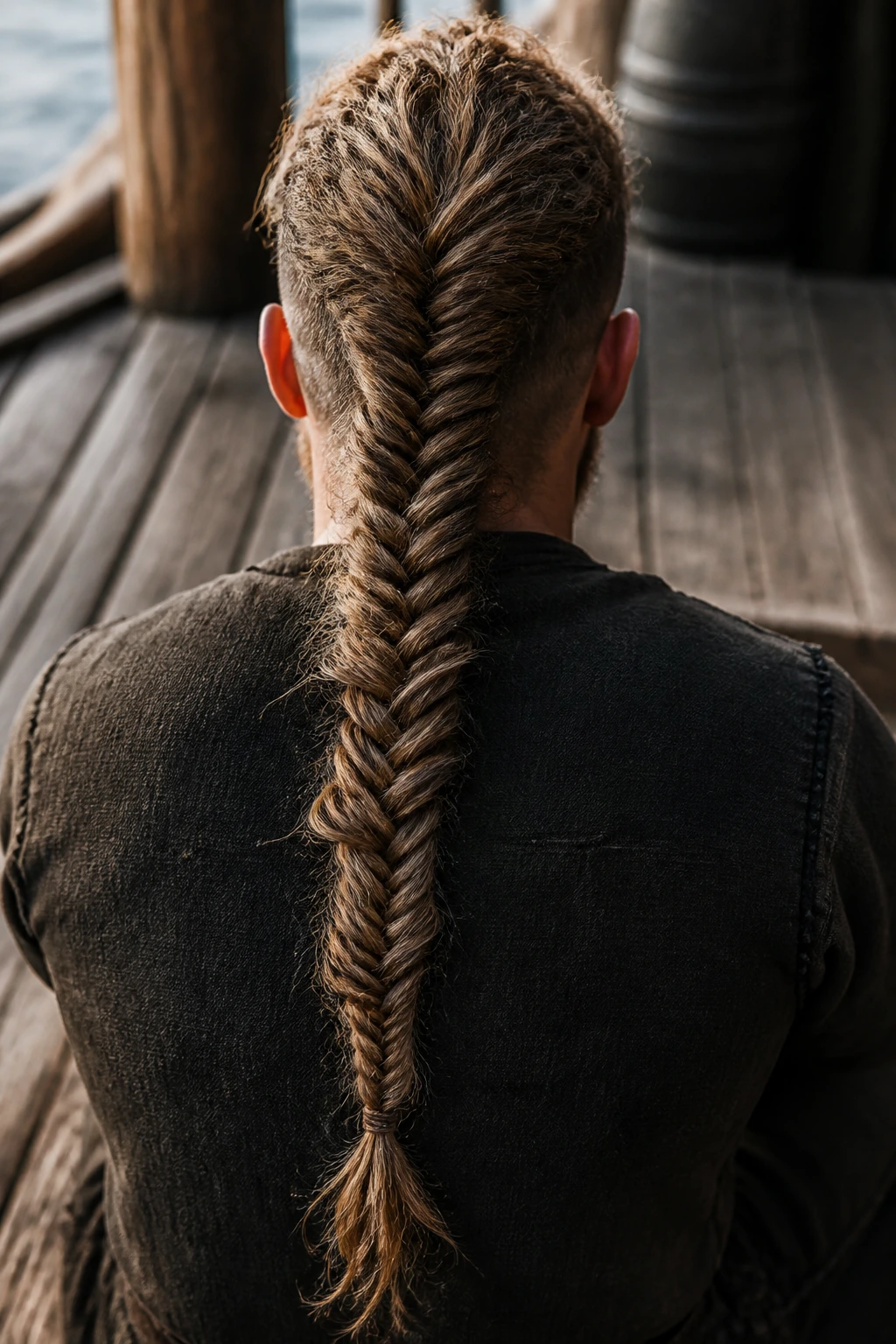
A fishtail braid looks more intricate than a standard three-strand braid, even though the technique is mostly patience and small sections. The weave is tighter and more detailed, which gives the whole style a bit more texture and a slightly more ornate feel.
Why it stands out
If you want something that reads as deliberate but not flashy, this is it. A fishtail braid works beautifully on hair that has layers or a little natural wave. Straight hair can do it too, though it tends to look cleaner and less rugged unless you rough it up first.
Pull the braid apart slightly at the end so it looks fuller. A rigid fishtail can feel too neat for this theme. A softened one has more character.
11. Double Dutch Braids
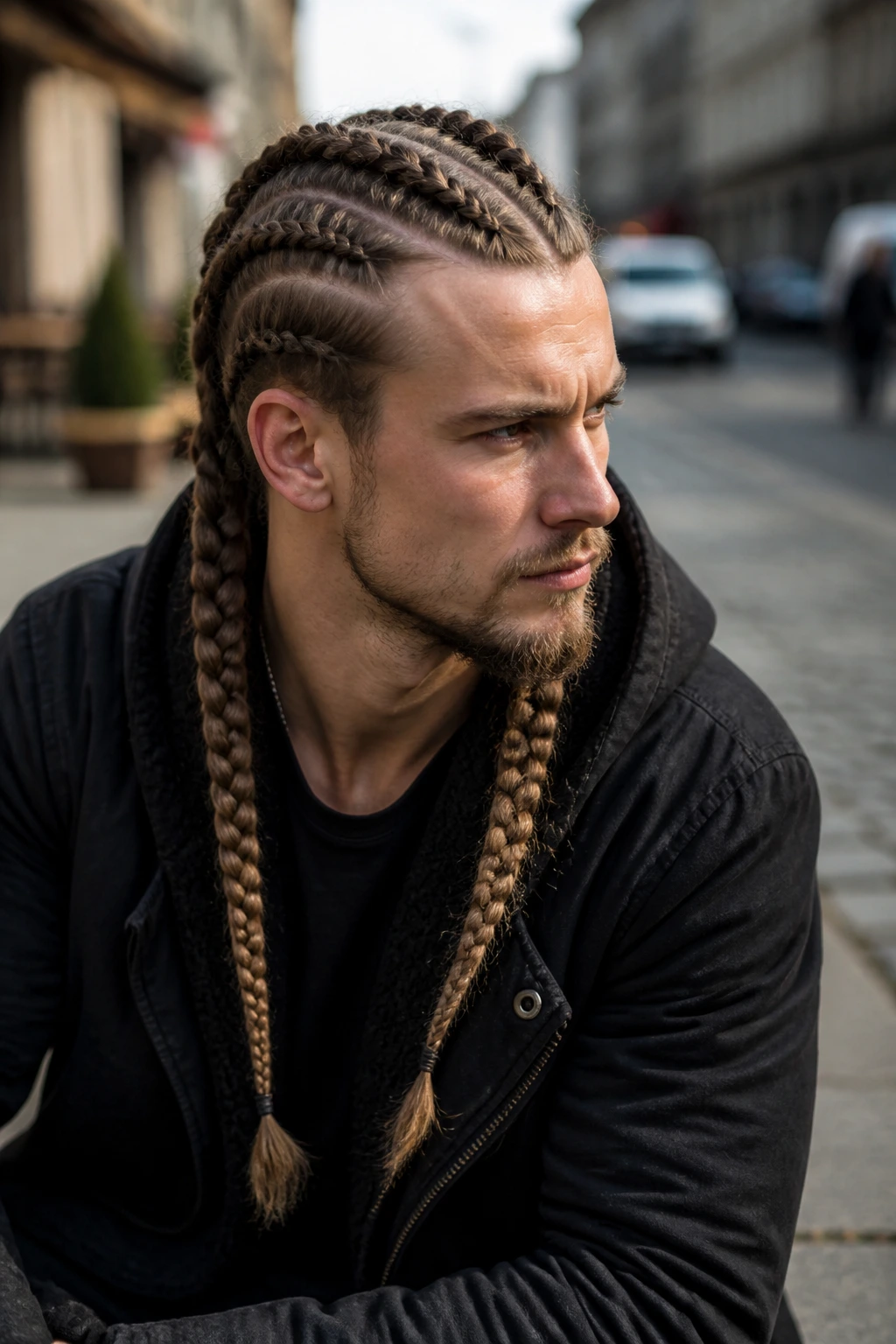
Two Dutch braids running straight back are a stronger, more structured version of the twin-temple idea. They sit proud of the scalp, which gives them a raised profile and a lot of visual texture.
This look is especially good if you need control. It keeps long hair pinned down from the front and sides, and it holds well under helmets, hoods, or wind. The downside is that it takes a little practice to keep both braids even. Once you get the tension right, though, it’s one of the most practical styles on the list.
12. Braids with Beads and Rings
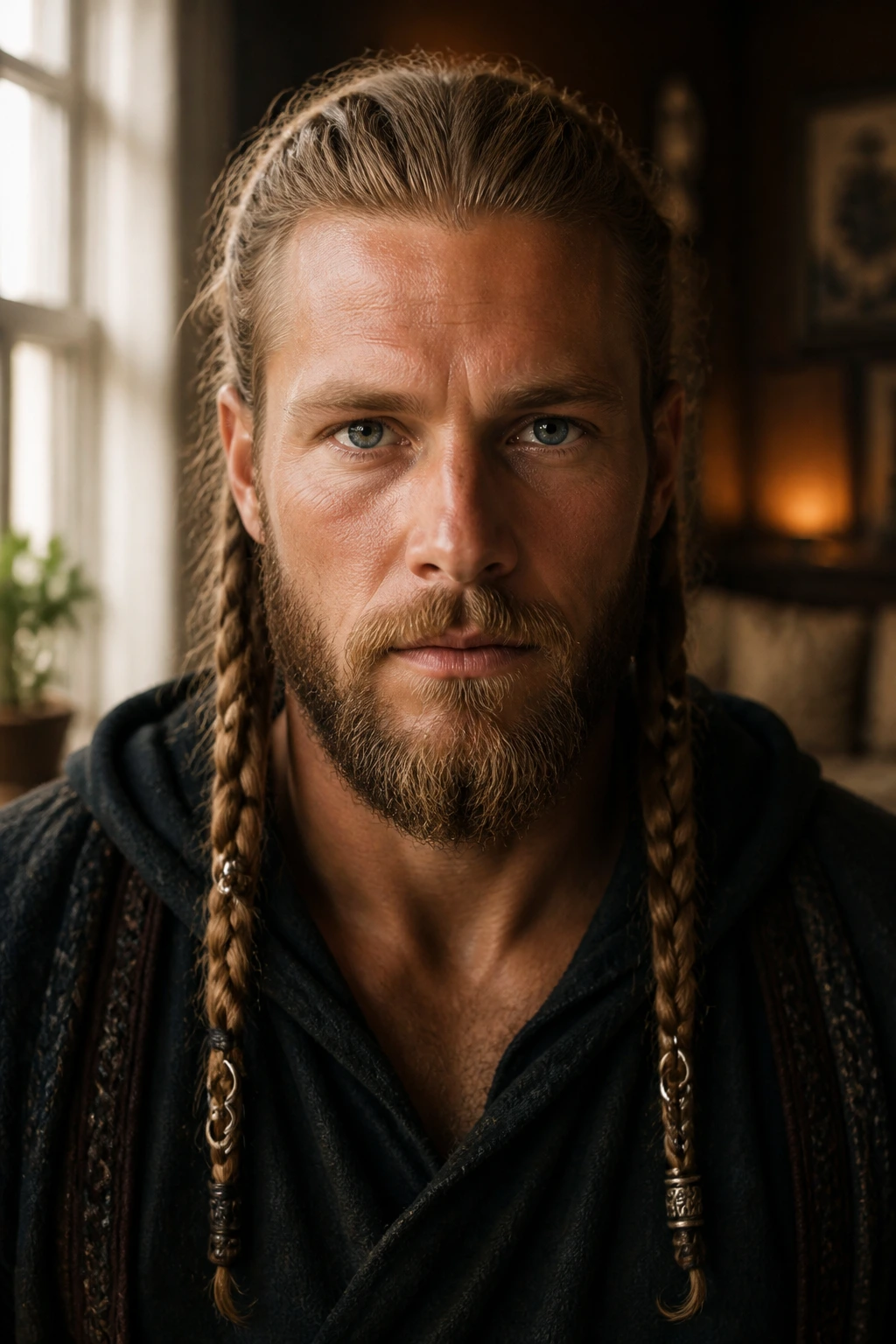
Accessories can push a hairstyle into Viking territory fast, but restraint matters. A few beads or metal rings scattered through one or two braids is enough. You do not need to turn the whole head into a hardware store.
The right way to do it
Place the beads near the ends or at the braid’s lower third, where they’ll move a little but won’t weigh the braid down at the scalp. If you use rings, keep them spaced out. Too many pieces clanking together makes the style look theatrical instead of grounded.
This works best on longer braids with some thickness. Thin braids can’t carry much metal before they start to sag. One or two accents usually beats a dozen.
13. Low Viking Bun
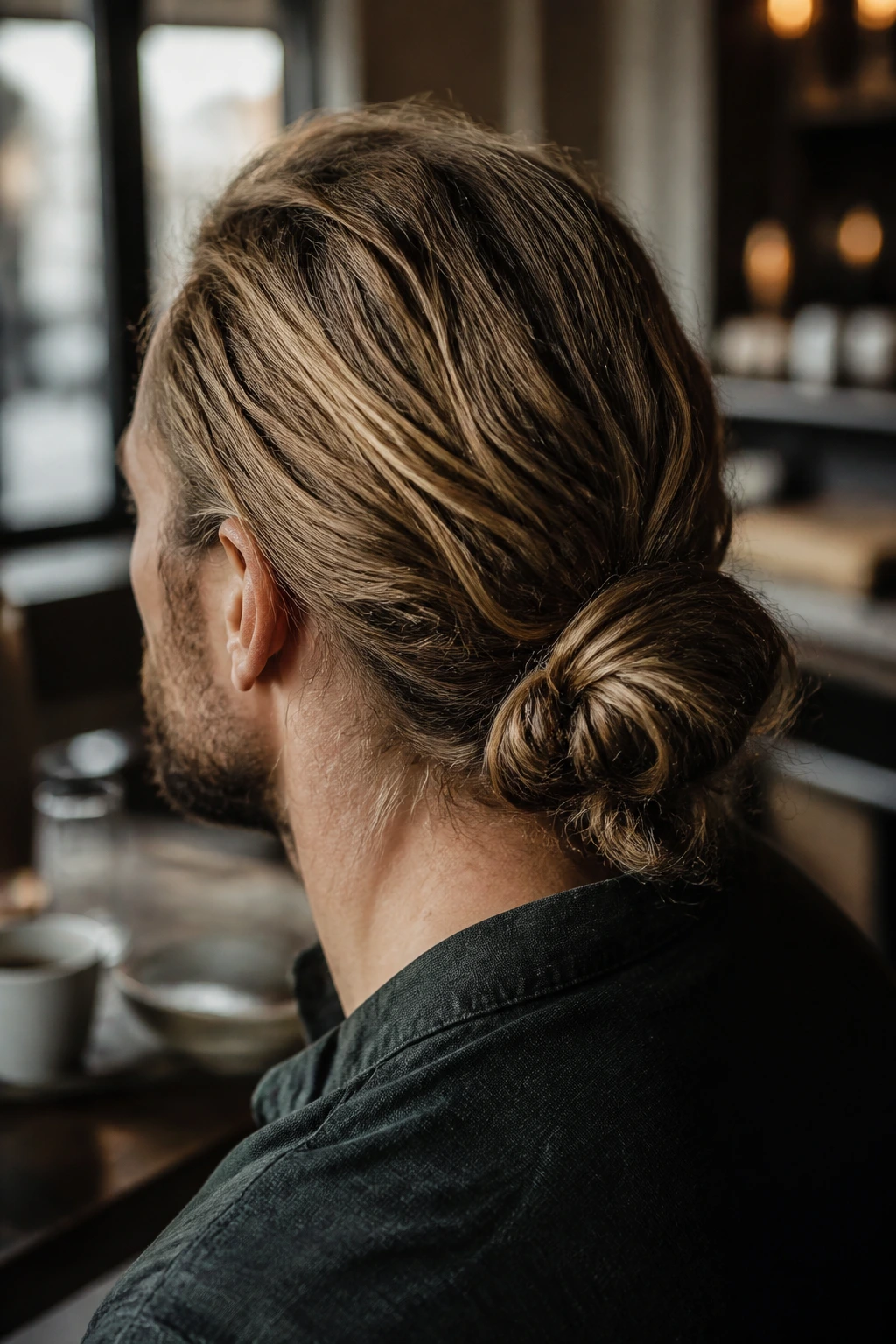
A low bun at the nape has a hard-edged simplicity that fits the theme well. It keeps the hair tight, shows the neck, and leaves the rest of the outfit to do some of the talking.
The version I prefer isn’t slicked back to death. Leave a little texture at the crown. Twist the length into a bun low on the head, then pin or tie it so it sits close to the scalp. If a few ends escape, that’s fine. A perfectly sealed bun often looks too modern for this style family. This one wants a little roughness.
14. Cross-Back Braids
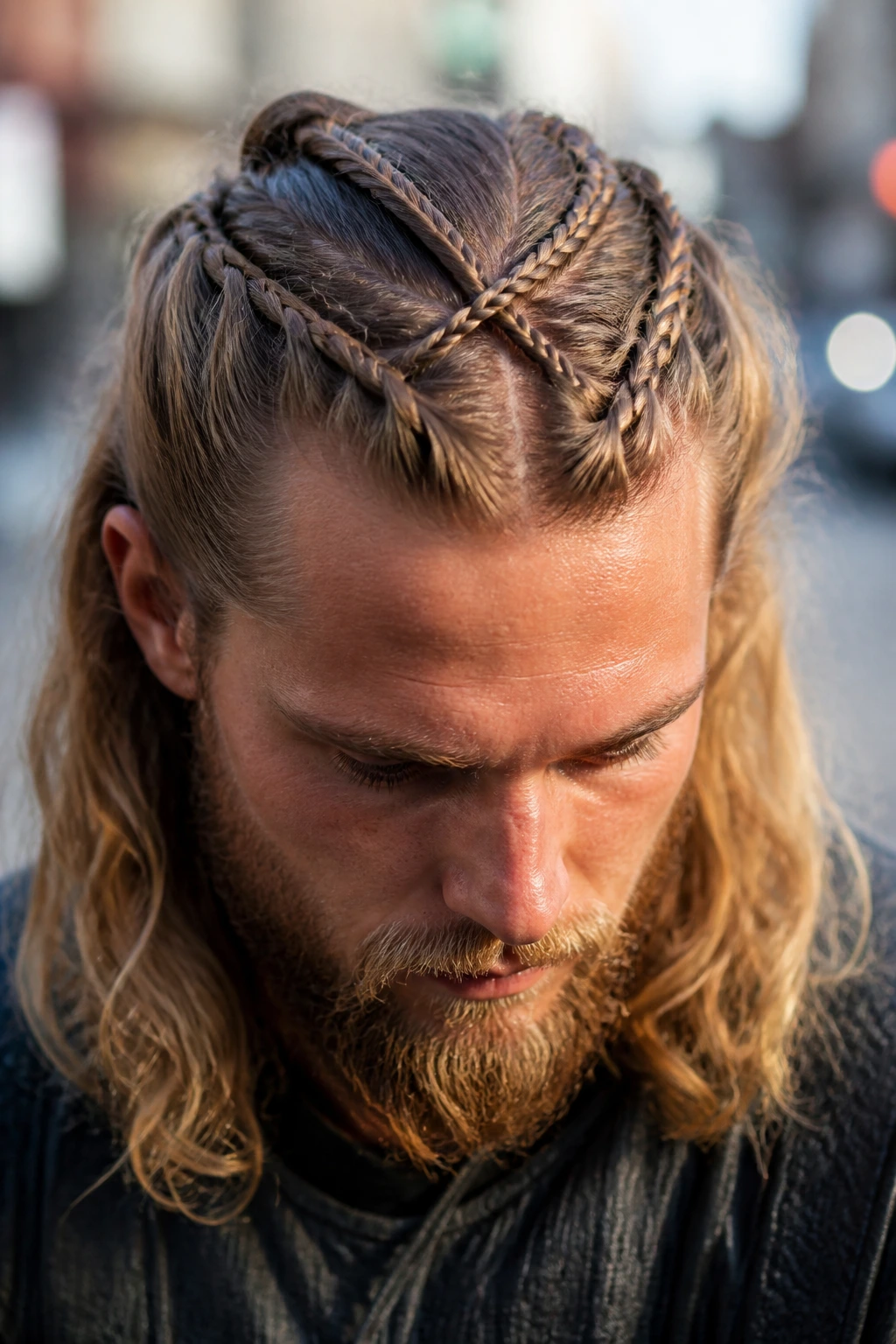
Cross-back braids feel a little like woven straps. Two braids start near the temples or sides, then cross over and anchor into the back hair. The movement of the lines gives the style a strong, geometric look.
That geometry matters. A lot of Viking-inspired hair is about shape as much as texture. Cross-back braids create a visible path across the head, which makes the whole style look planned without becoming stiff. If your hair is very thick, keep the braids slim enough that the crossing point doesn’t turn into a bulky knot.
15. Top Knot over Braided Base
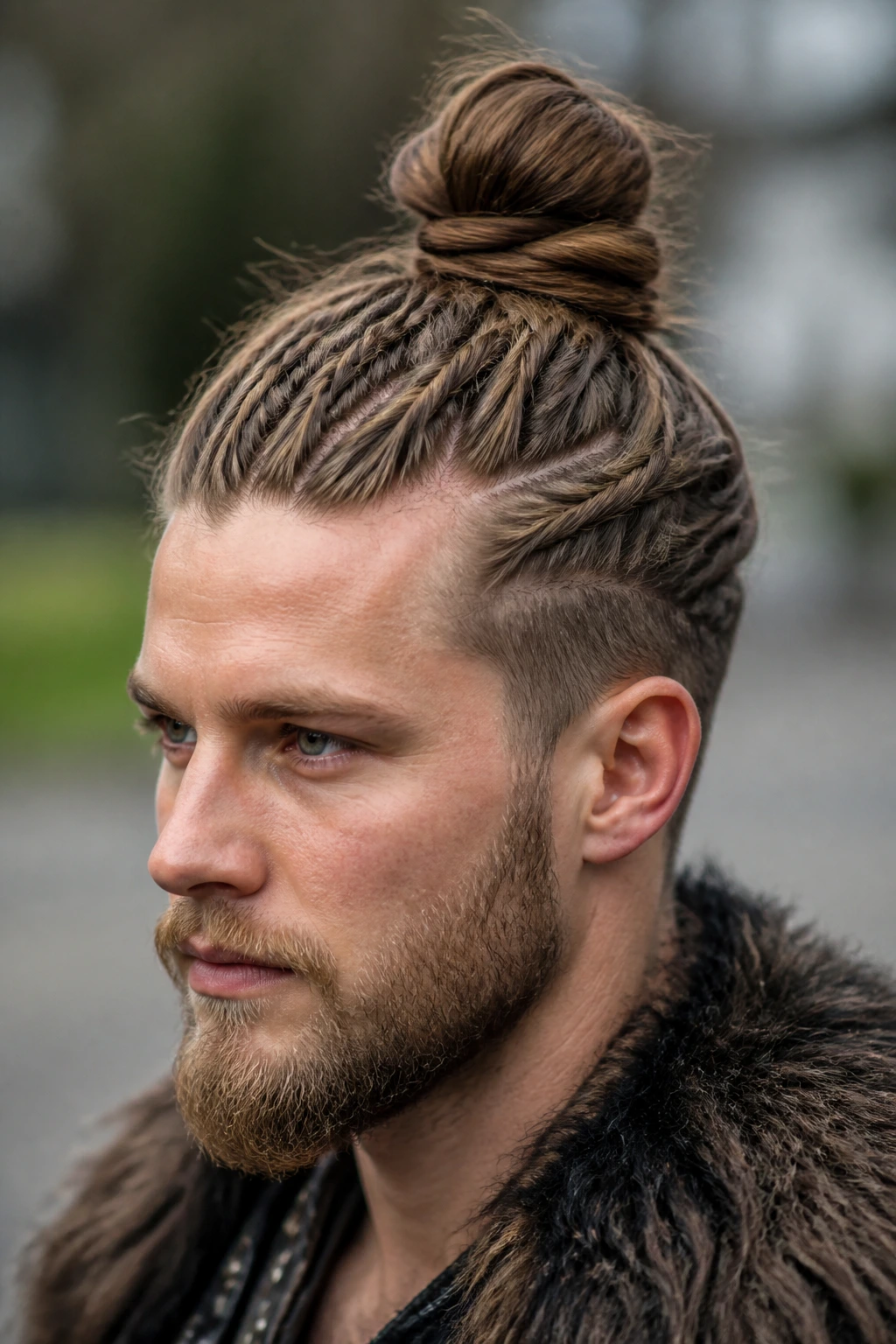
This is the style for people who want the height of a knot and the grip of a braid underneath it. The hair is braided first, then gathered and twisted into a knot at the crown or just behind it.
The braid acts like reinforcement. That means the knot holds better and the base doesn’t loosen as quickly. It’s useful for long, heavy hair that tends to slide out of plain buns. If you’re wearing this to an event or a long day outside, that extra anchor helps more than most people expect.
16. Four-Strand Statement Braid
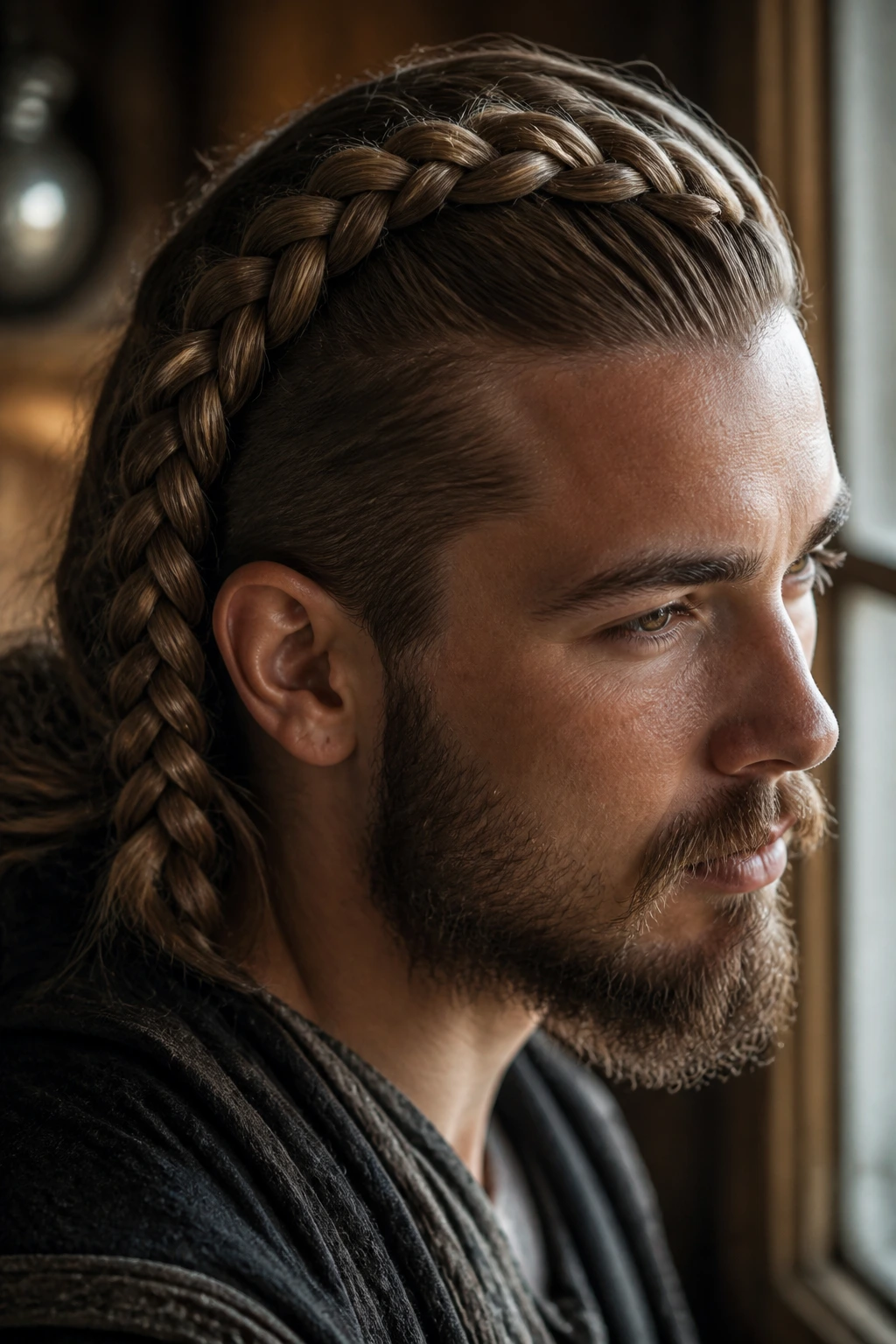
A four-strand braid looks denser and more complex than the basic version, and that extra detail gives long hair a real sense of weight. It’s one of the best picks when you want the braid itself to be the feature, not just a way to tie the hair back.
What makes it different
The weave has a flatter, ribbed look that catches light in a more broken way than a three-strand braid. That’s useful if your hair is dark or very straight, because the braid needs some visual texture to keep from disappearing against your shirt.
It takes a little more concentration than the standard braid. Once the hand pattern sticks, though, it becomes oddly satisfying. A small mirror helps the first few times.
17. Messy Half-Bun and Waves
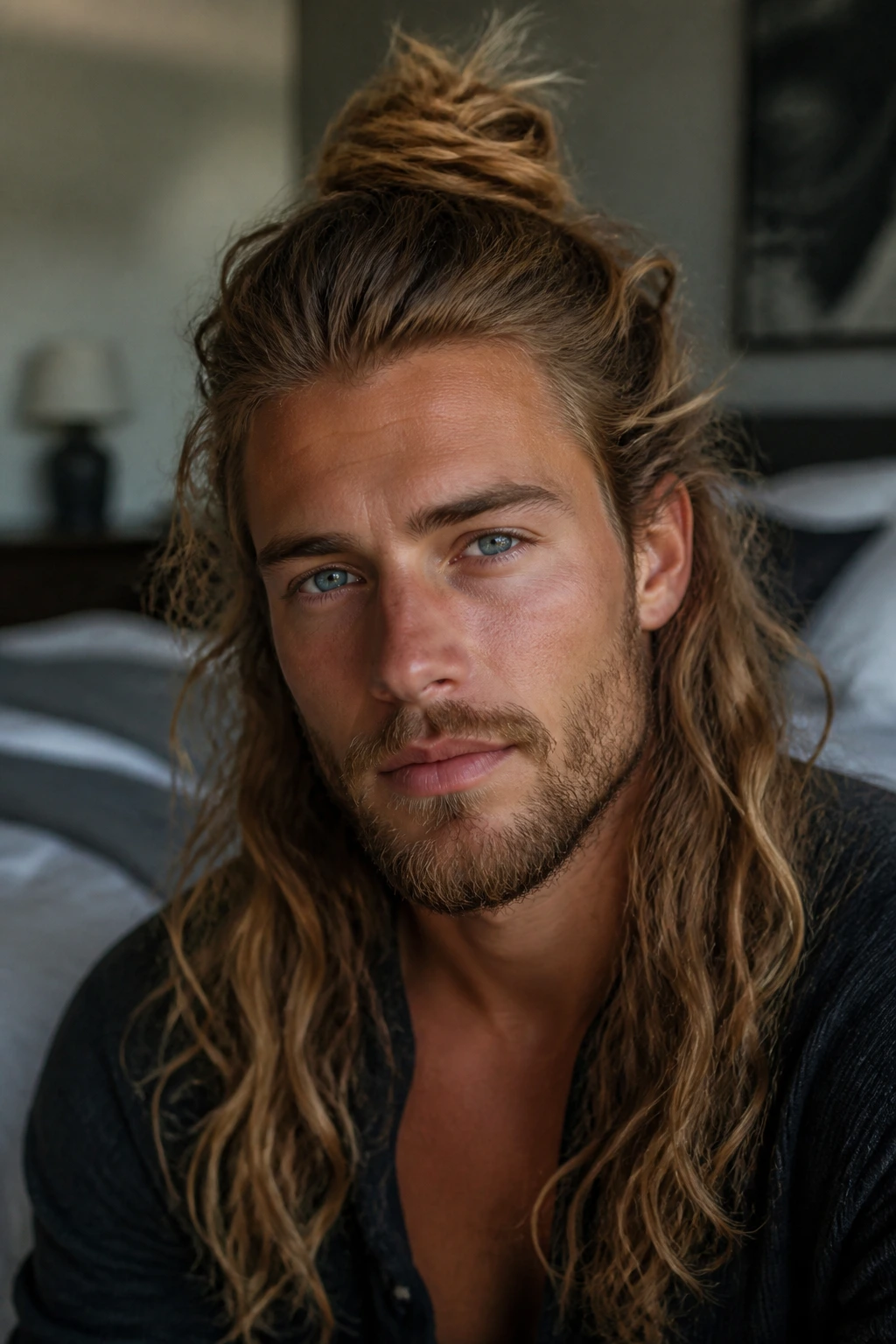
A half-bun with loose waves is the style that says you care enough to control the top, but not enough to sand off every edge. That sounds rude. It isn’t. The roughness is the point.
Pull the crown into a relaxed knot and leave the rest down with a loose wave pattern. If the ends are a little uneven, the style gets better, not worse. This is one of the easier looks for guys who are growing out layers or who want something that feels less severe than a full braid. It also works nicely with stubble or a short beard because the face and hair both keep a softer outline.
18. Temple Plaits into Ponytail
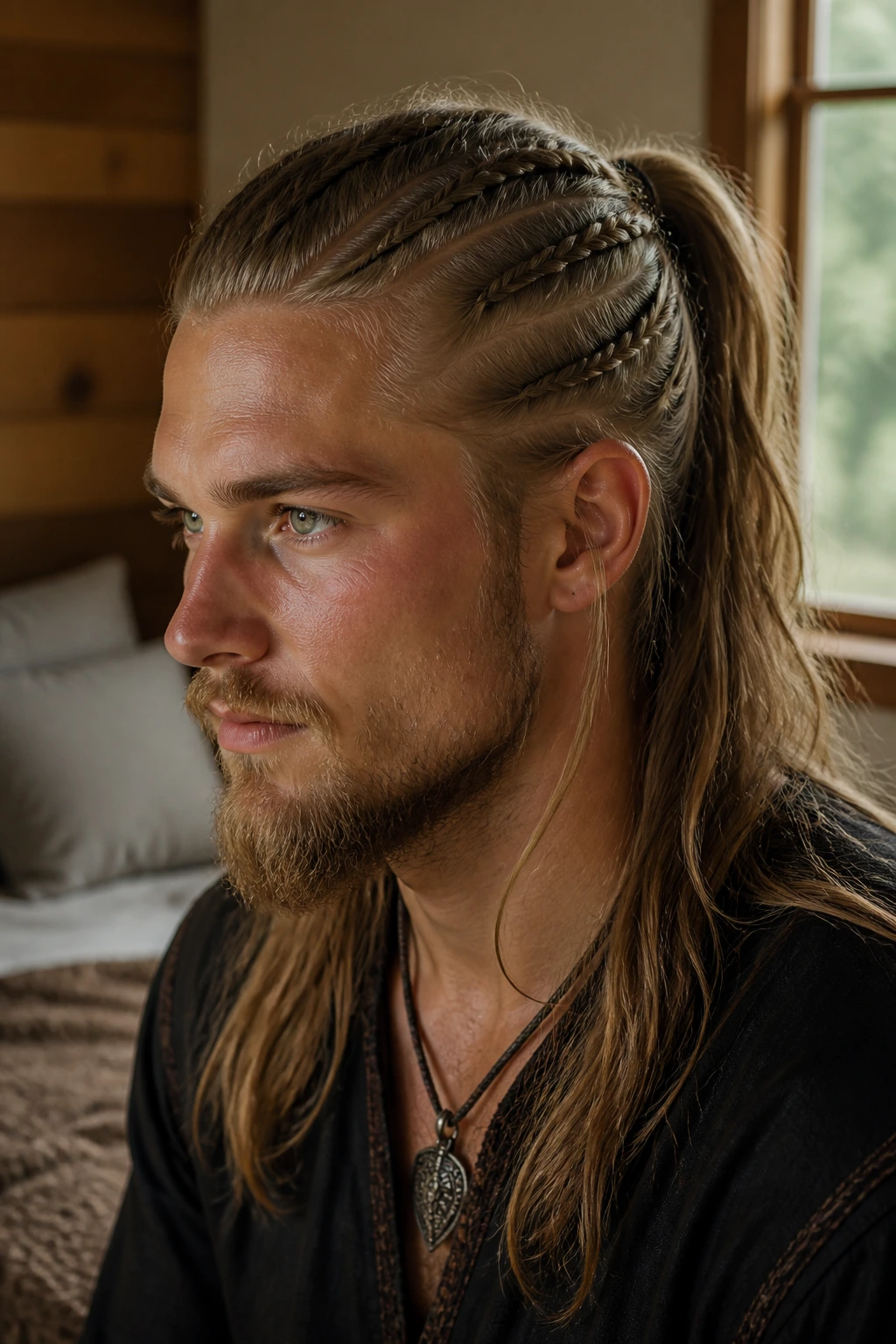
Two small temple plaits pulled into a ponytail create a tidy front and a loose back. That combo is useful if you want a Viking-inspired look without committing to a heavy braid down the entire length.
The plaits do the framing. The ponytail does the rest. Tie them together low or mid-height depending on how much you want the length to swing. If your hair is fine, this style needs texture first. If it’s thick, the plaits alone may be enough to keep the front under control.
19. Undercut with Long Top Sweep
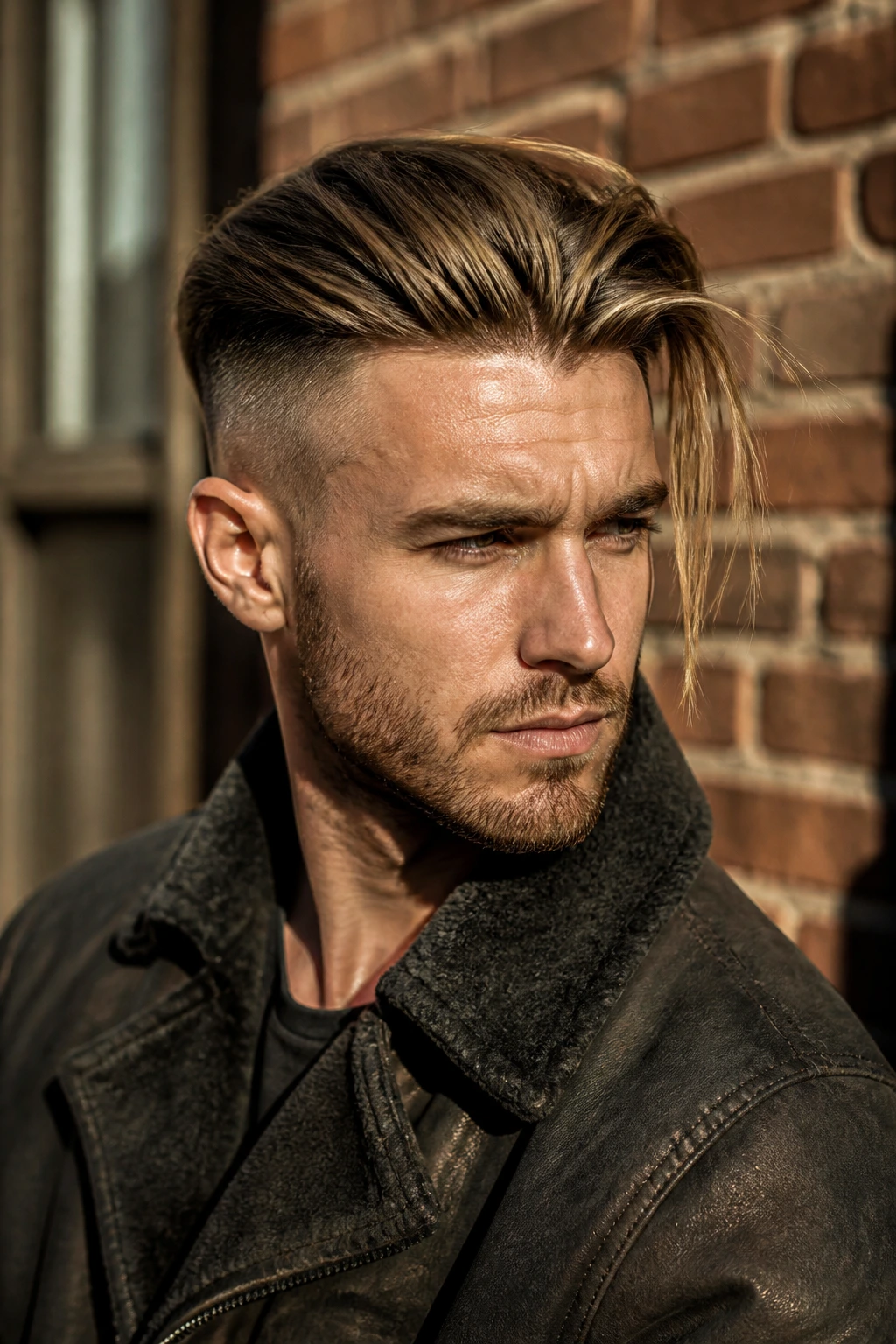
An undercut shifts the visual weight hard. The sides stay short, the top stays long, and that long top can be braided, swept, or tied back depending on your mood. It’s not a historical replica, but it fits the overall mood well.
This version works best when the top has enough length to move. A long sweep across the crown gives you a strong line, and if you braid just part of it, the contrast between short sides and long top becomes the main event. It’s sharp. It’s modern. And it still carries the right energy.
20. Braided Beard-and-Hair Combo
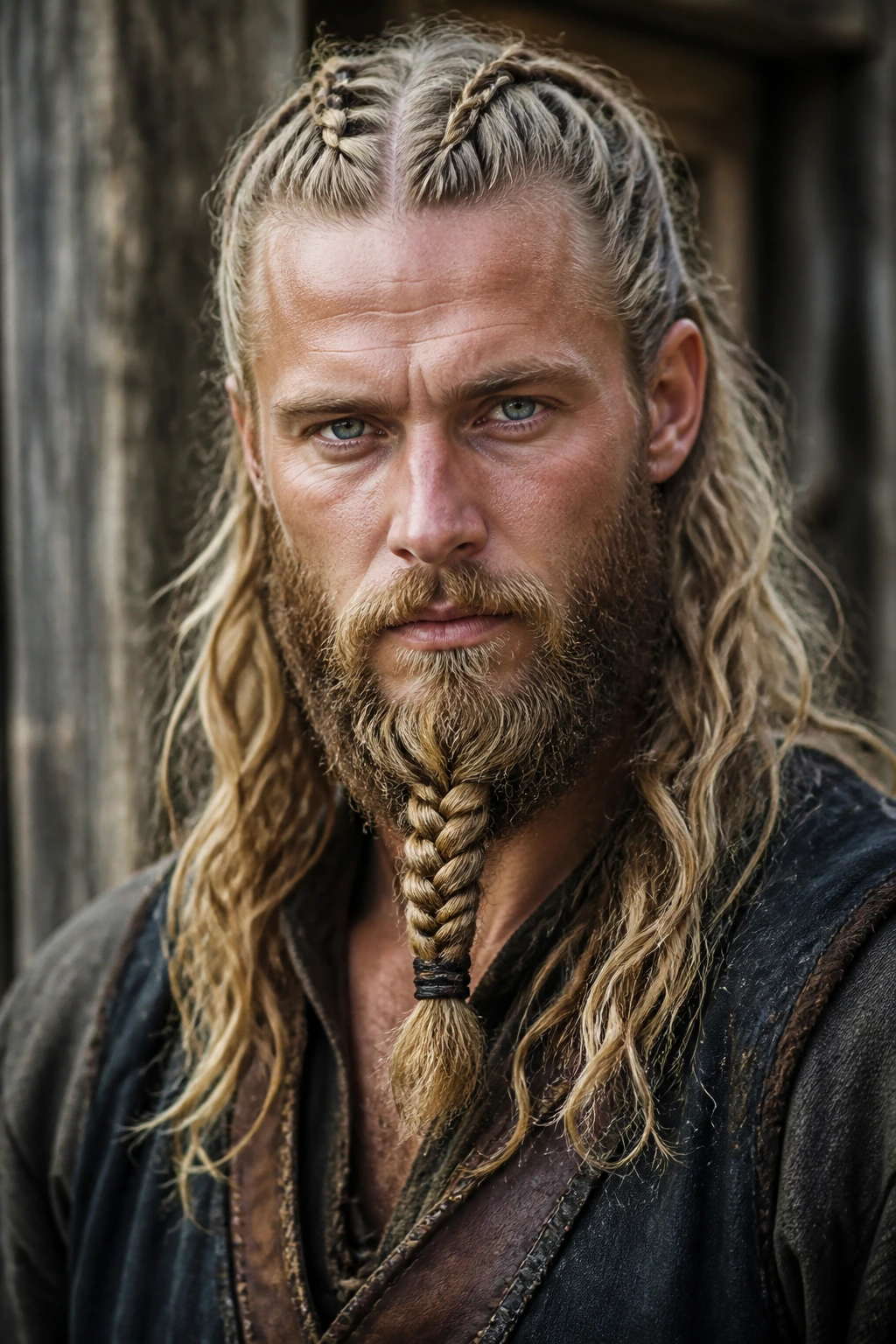
If you wear a beard, tying the beard and hair into the same visual idea can make the whole look feel more complete. That doesn’t mean matching everything exactly. It means letting the beard braid, bead, or tie echo the hair braid in a small way.
This is a style for people who want a bolder silhouette. A braid in the hair, a braid in the beard, or just a shared leather wrap can make the face and head read as one piece. Keep the beard braid short if the beard is fine. Long beard braids get heavy fast and can tug if they’re tied too tight.
21. Ladder Braid Down the Back
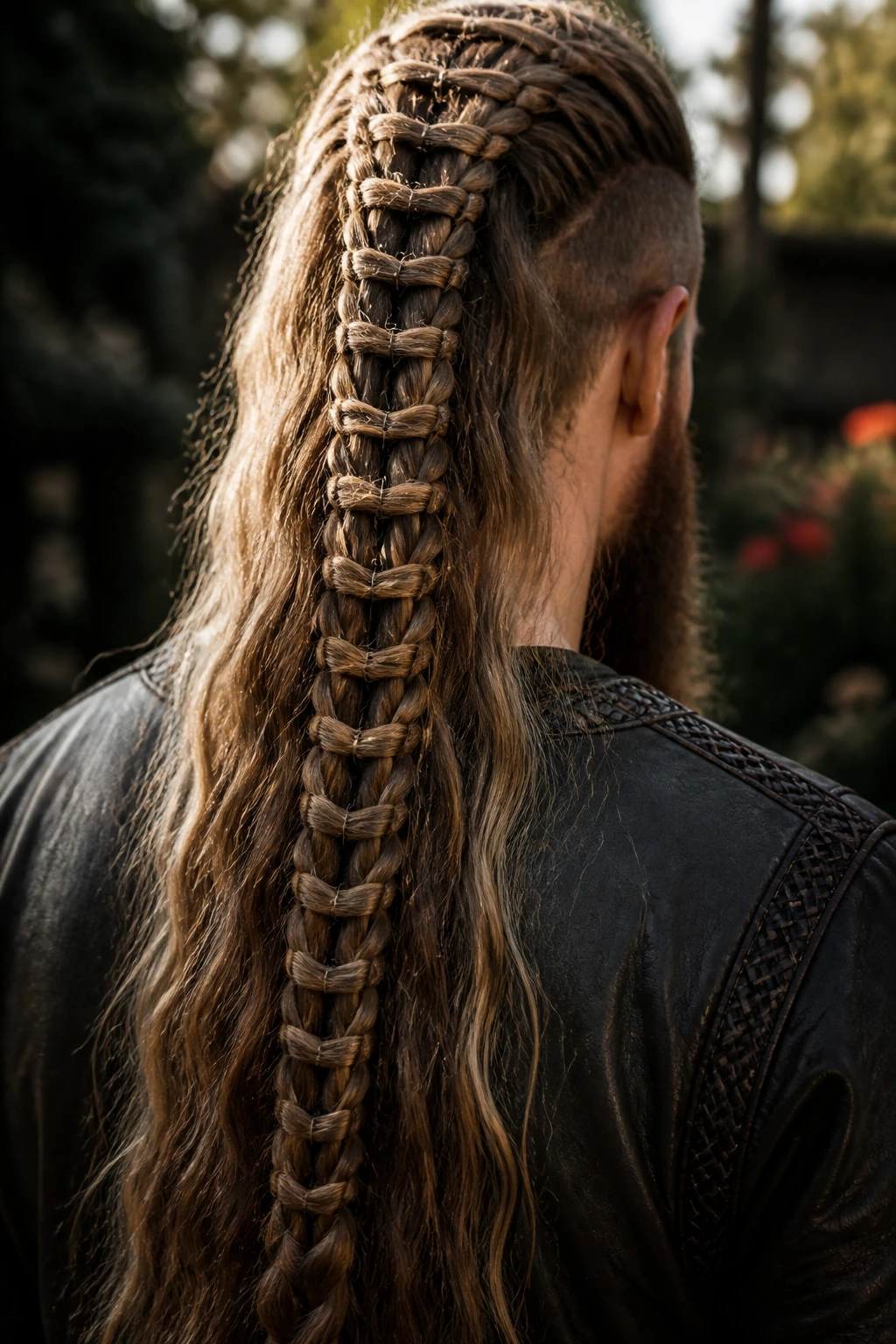
A ladder braid looks like stacked rungs crossing through a central line. It’s detailed, a little unusual, and much more eye-catching than people expect from a style that still stays anchored straight down the back.
The reason it works here is simple: long hair gives the braid enough length to show off the pattern. On shorter hair, the design gets lost. On long hair, it becomes a real feature. If you’ve got strong layers, though, this one can be fussy. The smoother the surface of the hair, the cleaner the ladder pattern will sit.
22. Scalp-Hugging Braid Rows
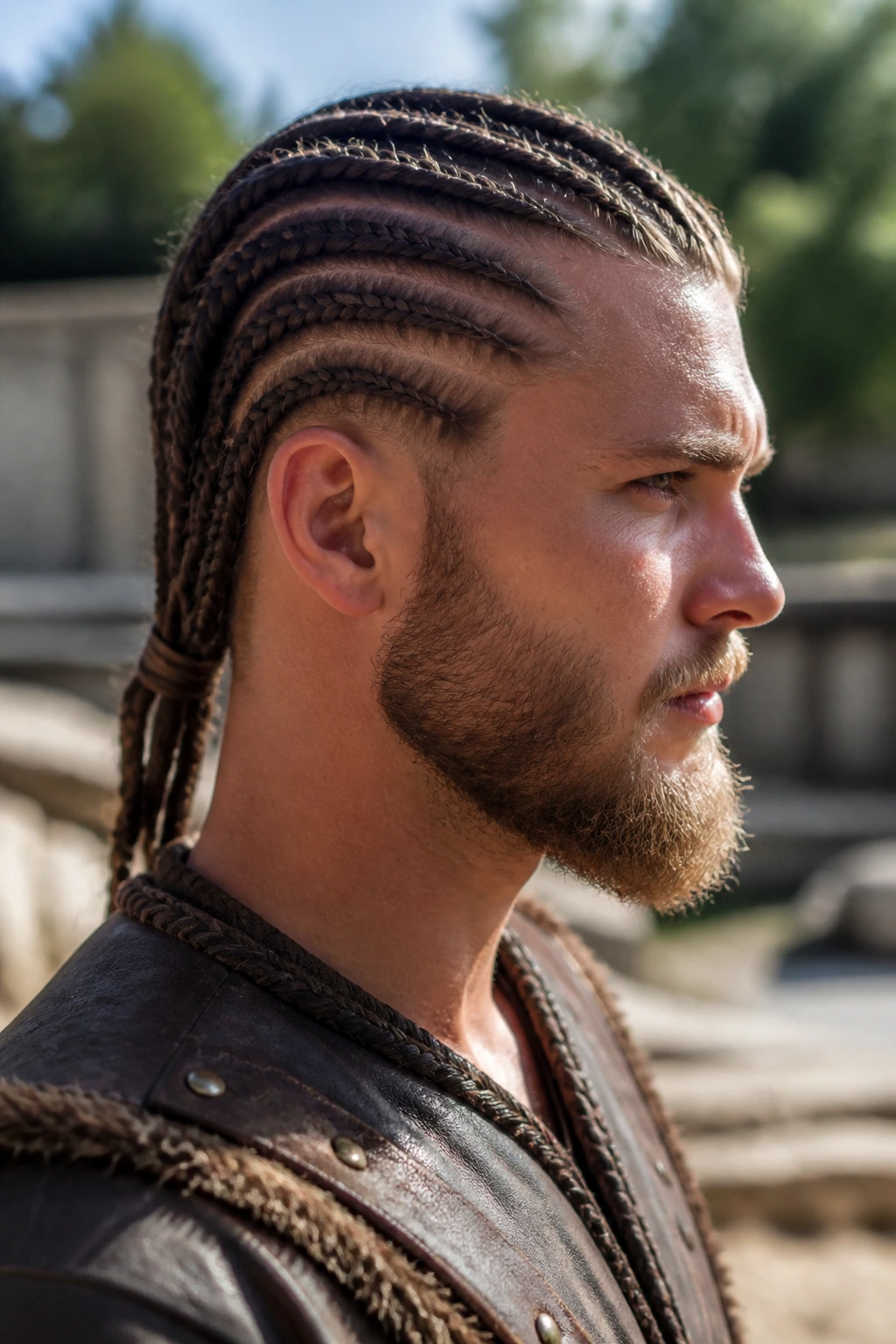
Close-to-scalp braid rows have a firmer, more contained feel than loose braids. They keep the head tidy and make the line work of the style the focus. Used sparingly, they can give a Viking-inspired look a tougher edge.
What matters most is clean parting. If the sections wander, the rows lose their crisp shape fast. This style tends to look best on hair with decent density, because the rows need enough bulk to stay visible. It’s also one of the better choices for hot weather or active days, since the hair stays anchored close to the head.
23. Wrapped Ponytail with Hair Cuff
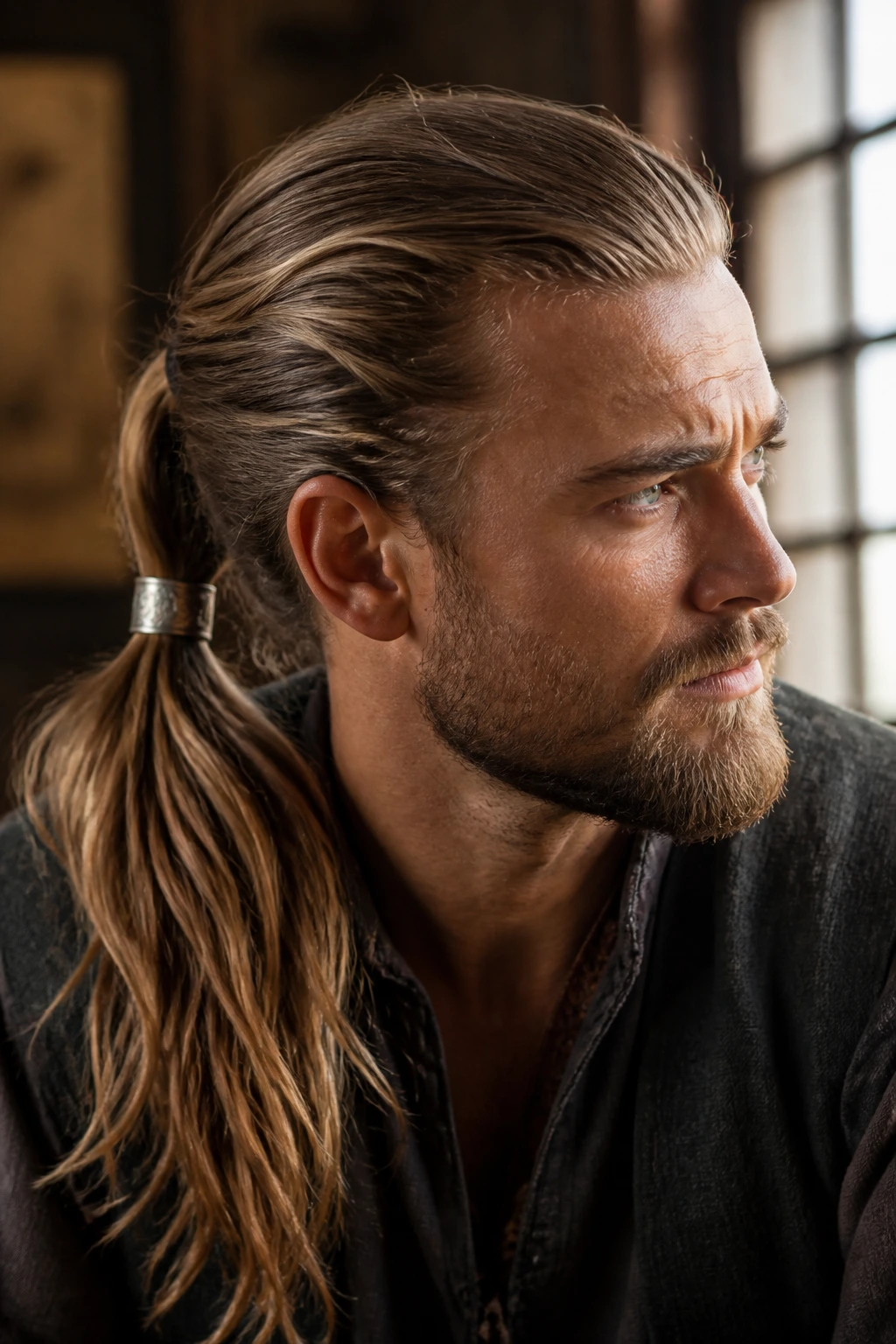
A simple ponytail becomes much more interesting when you wrap a section of hair around the elastic and finish with a cuff or band at the base. That tiny bit of structure changes the whole read of the style.
The braid? Optional. The wrap? Not really. It hides the elastic, gives the ponytail a finished edge, and lets the length hang with purpose. A metal cuff looks stronger than a plastic tie, but keep the hardware light enough that it doesn’t drag the ponytail downward. Heavy cuffs can pull the line off balance.
24. Knotted Half-Up Sections
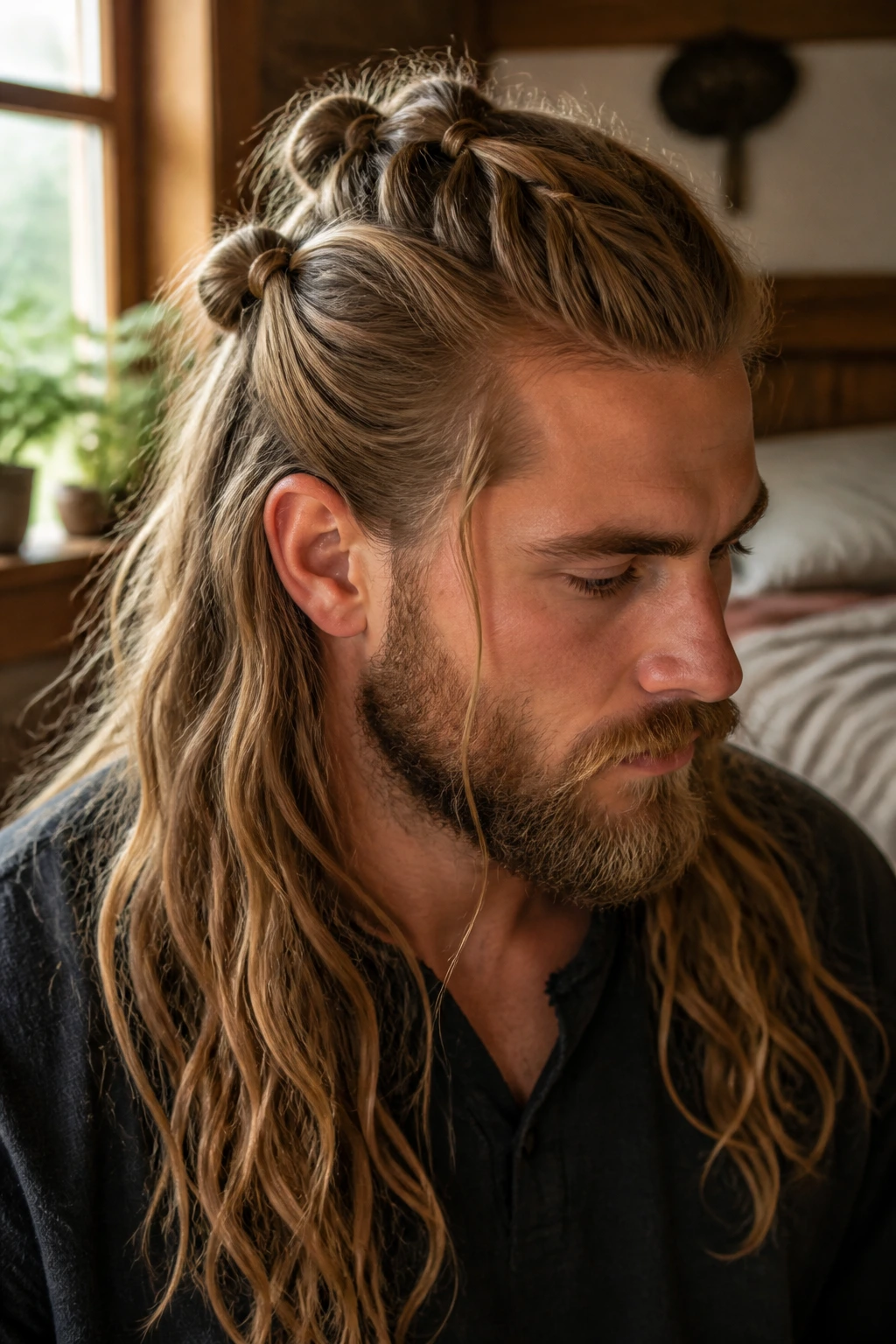
Instead of one knot, this style uses two or three small knots tied back through the crown or upper length. The effect is rougher and a little more handcrafted. It looks less polished than a standard half-up bun, and that’s exactly why people like it.
This is a good one for layered hair, because the knots can catch shorter pieces and hold them in place. Use small elastics if the knots don’t stay by themselves. The result should feel organic, not decorative. If each knot is too perfect, the style loses the roughness that makes it work.
25. Side-Swept Warrior Tail
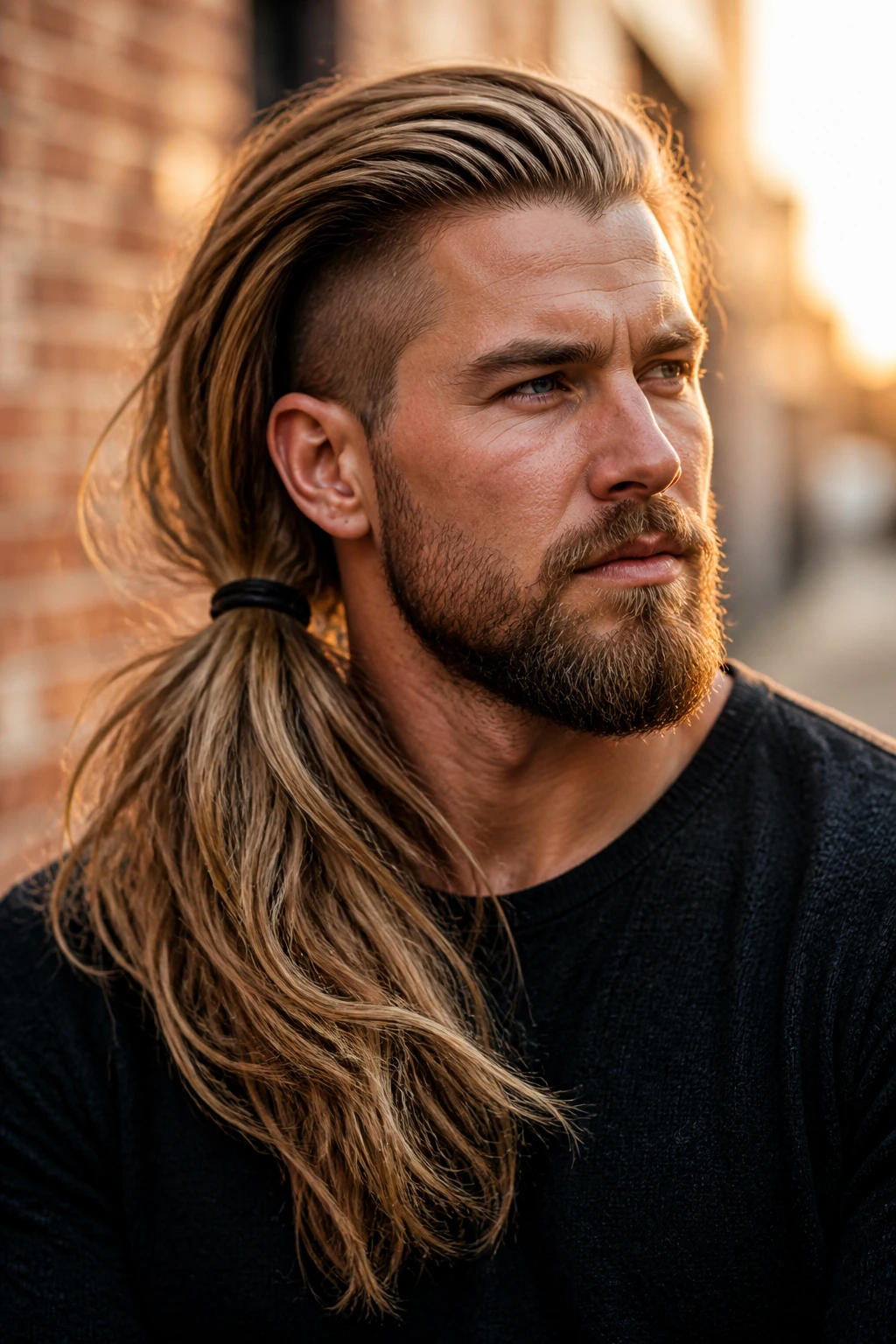
A side-swept tail is basically a ponytail with a stronger direction. Instead of sitting dead center, the hair is pulled low and slightly off to one side. That small shift gives the style more movement and a less formal attitude.
It’s a smart pick for men who want their hair off the neck but don’t want a straight down-the-back shape every day. The angle can help flatter a strong jawline too, especially if the beard is fuller on one side or the face has sharper lines. A little asymmetry goes a long way here.
26. Twin Rope Braids
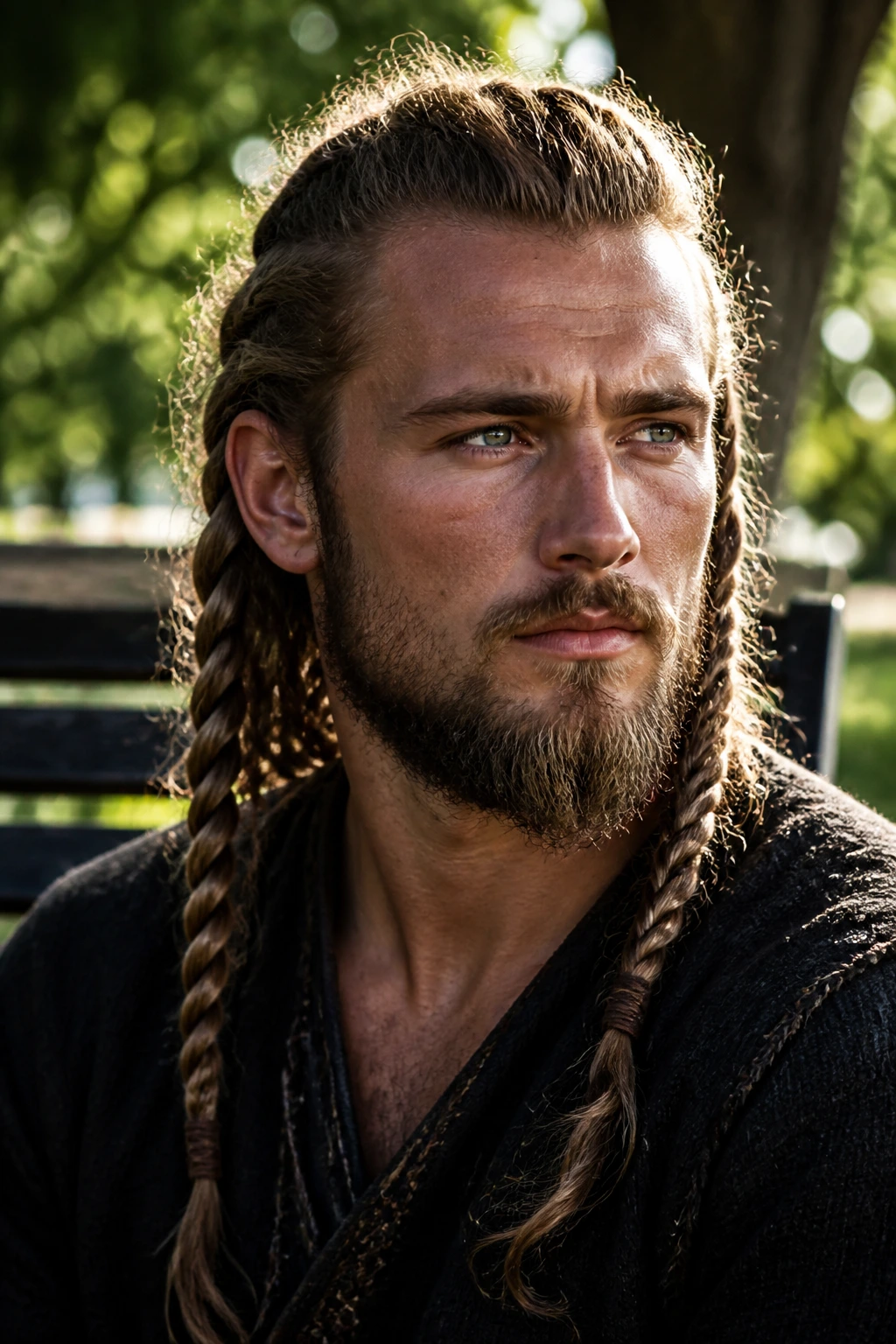
Two rope braids are faster to build than two full braids and often feel a little rougher around the edges. That roughness can be a good thing. The style gets a hand-twisted quality that fits the theme better than something overly neat.
Keep the sections even and twist them firmly before wrapping. If the hair is slippery, a dry texture spray helps the strands hold together. This is a strong option when you want two visible lines framing the head without spending forever in the mirror.
27. Braided Crown with Open Back
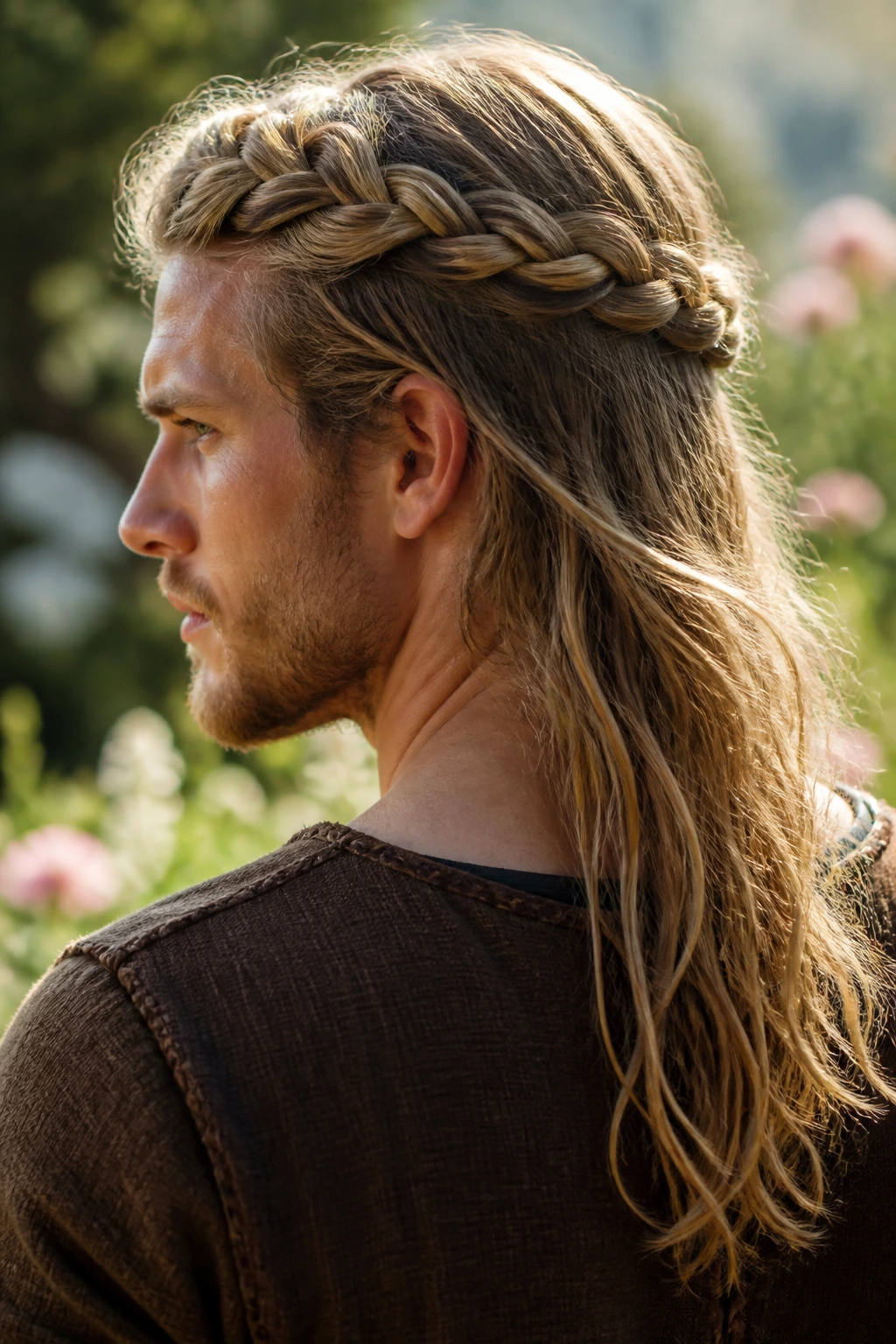
A crown braid that sits higher around the head and leaves the back open gives you a strong front frame and a lot of movement behind it. It feels balanced in a way that’s hard to fake.
The top line matters here. If the braid is too thin, the crown loses presence. If it’s too thick, it starts to swallow the head. Aim for a braid that sits like a band, not like a helmet. The loose back length can stay straight, waved, or lightly tied, depending on how much motion you want.
28. Layered Mane with Front Braids
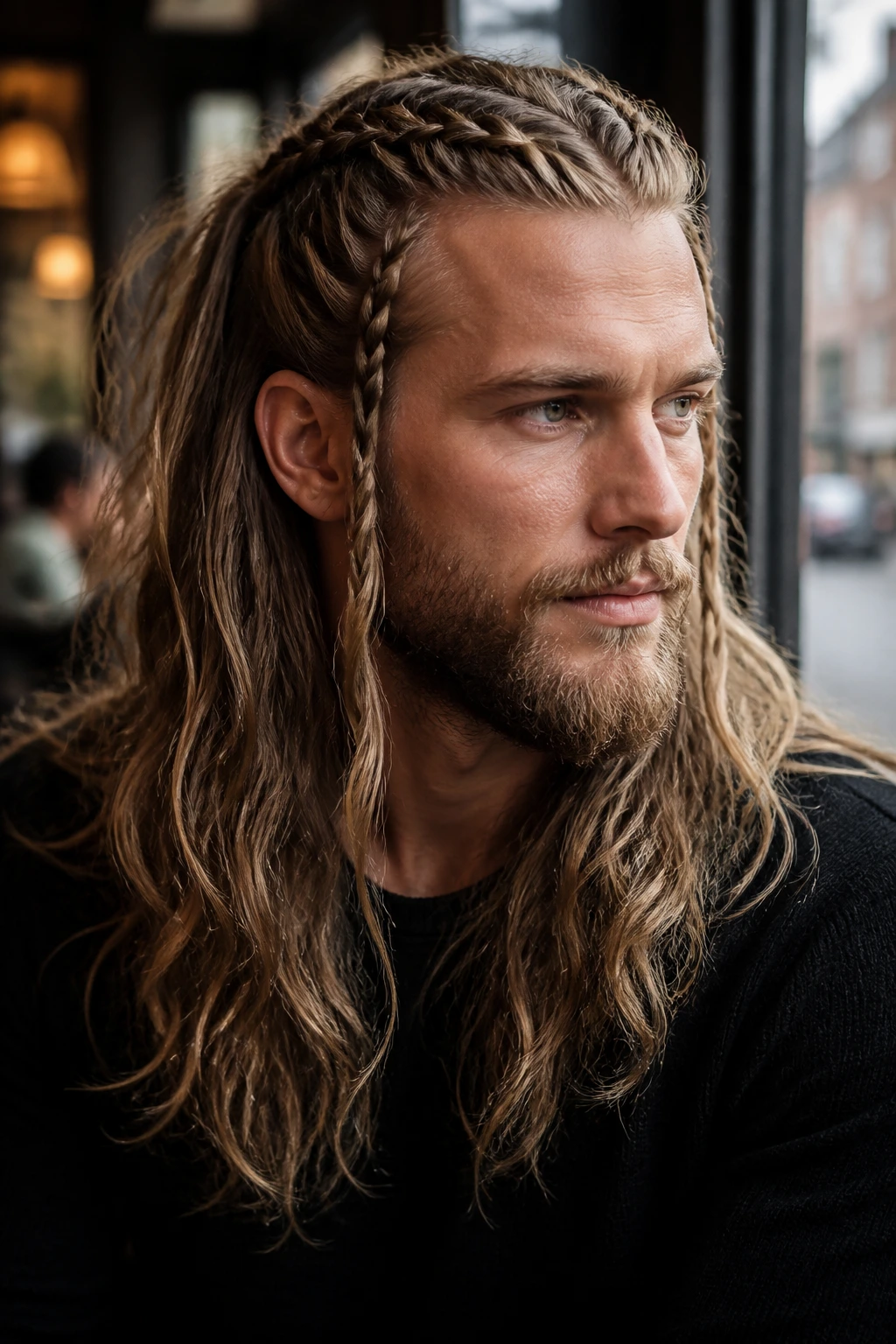
Front braids are a nice answer when the rest of the hair is layered and loose. You braid just the front sections back, leave the rest flowing, and let the layers do the softening work.
This is one of the best styles for long hair that still wants to move. The braids keep the face clear, while the remaining hair keeps the style from becoming too structured. It works especially well with natural waves, since the loose lengths will break up the lines of the braids in a good way.
29. Windblown Center-Part Flow
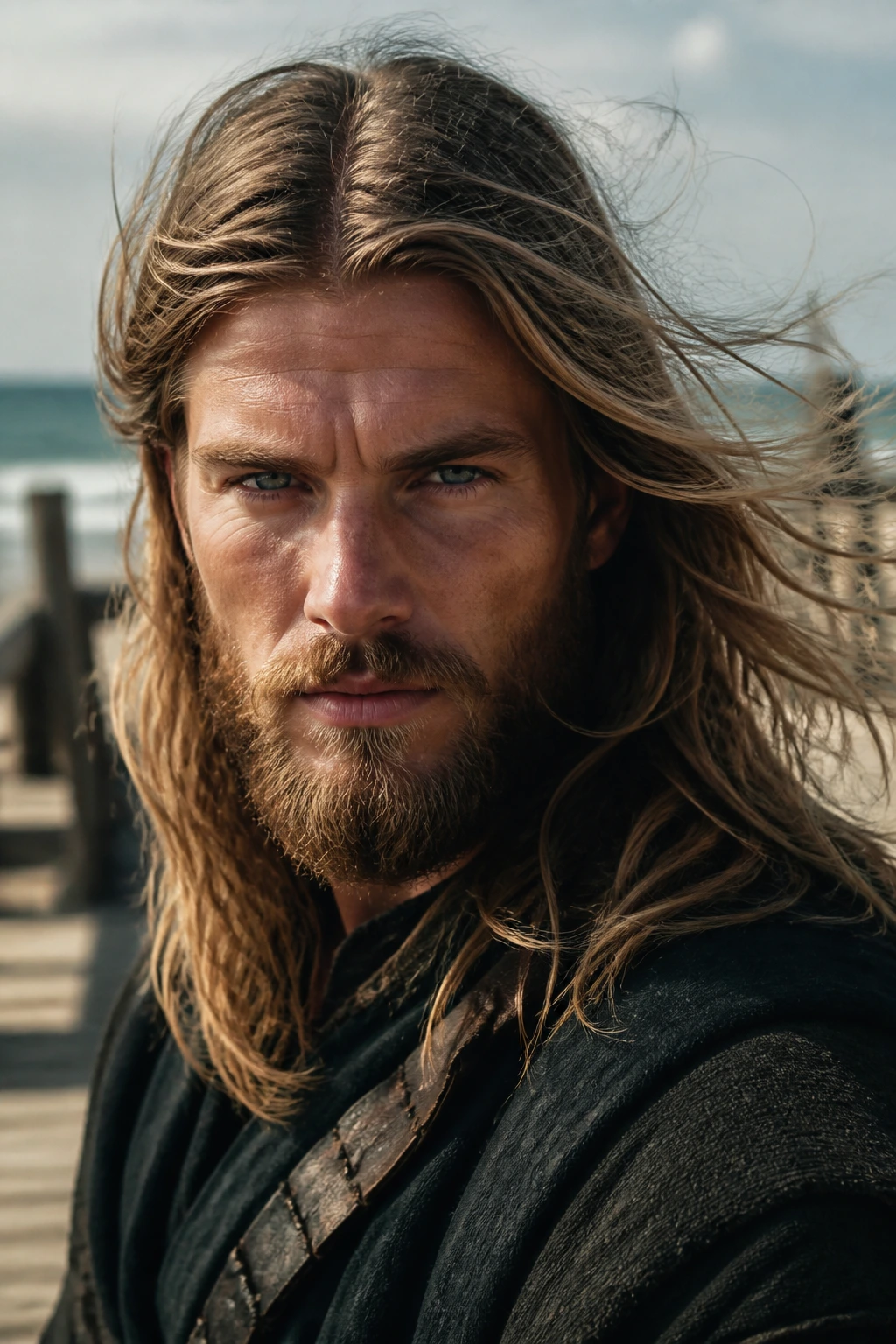
Sometimes the strongest Viking-inspired move is to do less. A centered part, some texture, and a loose, windblown finish can carry the mood better than a complicated braid if the hair itself has enough character.
The key is shape control, not restraint for its own sake. Use a bit of salt spray or matte cream to keep the ends from separating into frizz. Push the sides back with your hands, then let them fall where they want. This is a style that depends on confidence and healthy length. If the hair is dry and flat, it loses the effect fast.
30. Low Bun with Face-Framing Strands
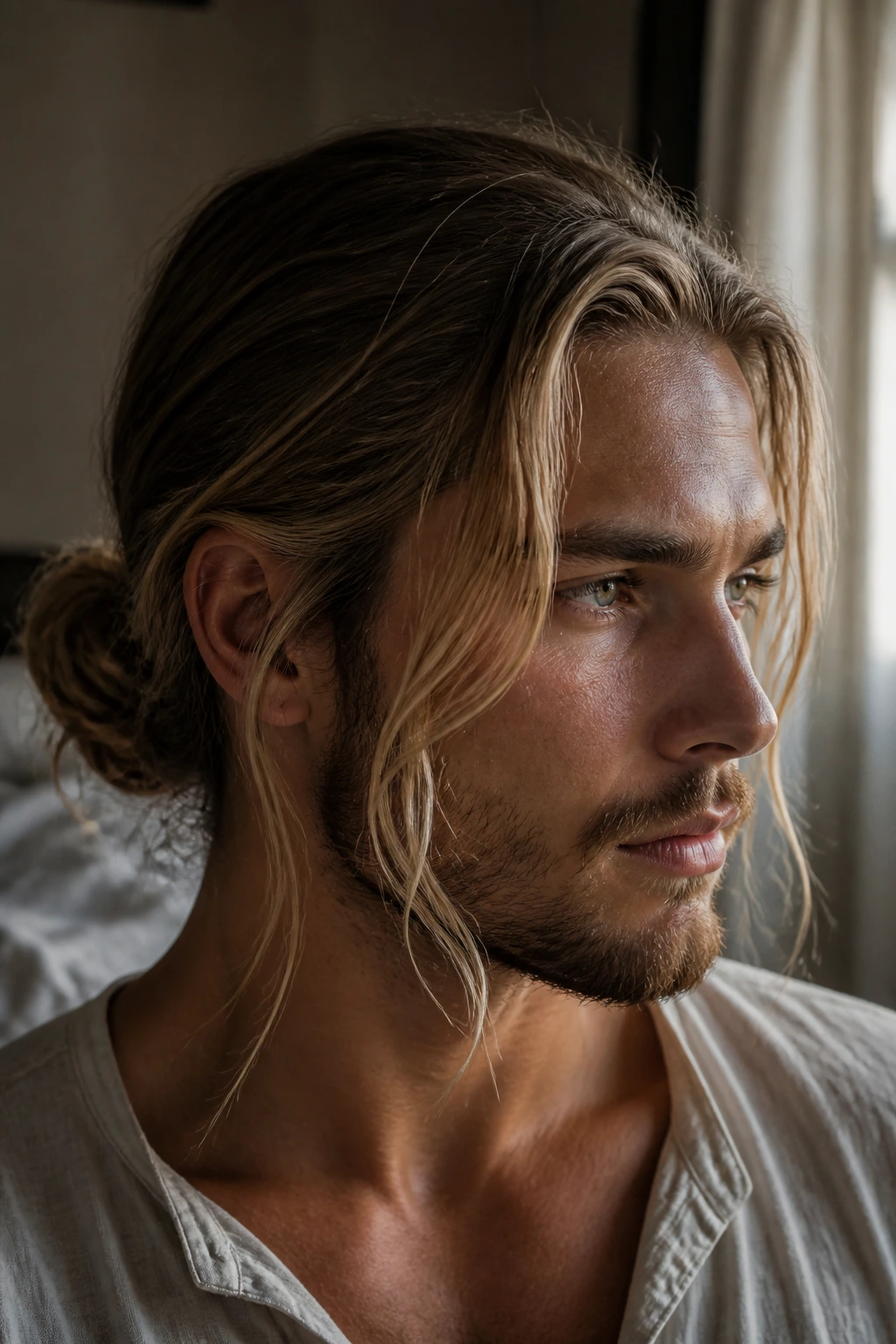
A low bun gets softer when you leave a couple of face-framing pieces out. That tiny bit of release keeps the style from looking severe, which is useful if your face is narrow or your hairline is sharp.
The bun itself should sit close to the nape. Not high. High buns pull the look into a different category. The loose front pieces can be straight or slightly waved, but keep them deliberate. Random flyaways are one thing. Thoughtful face framing is another.
31. Thick Dutch Braid and Fade
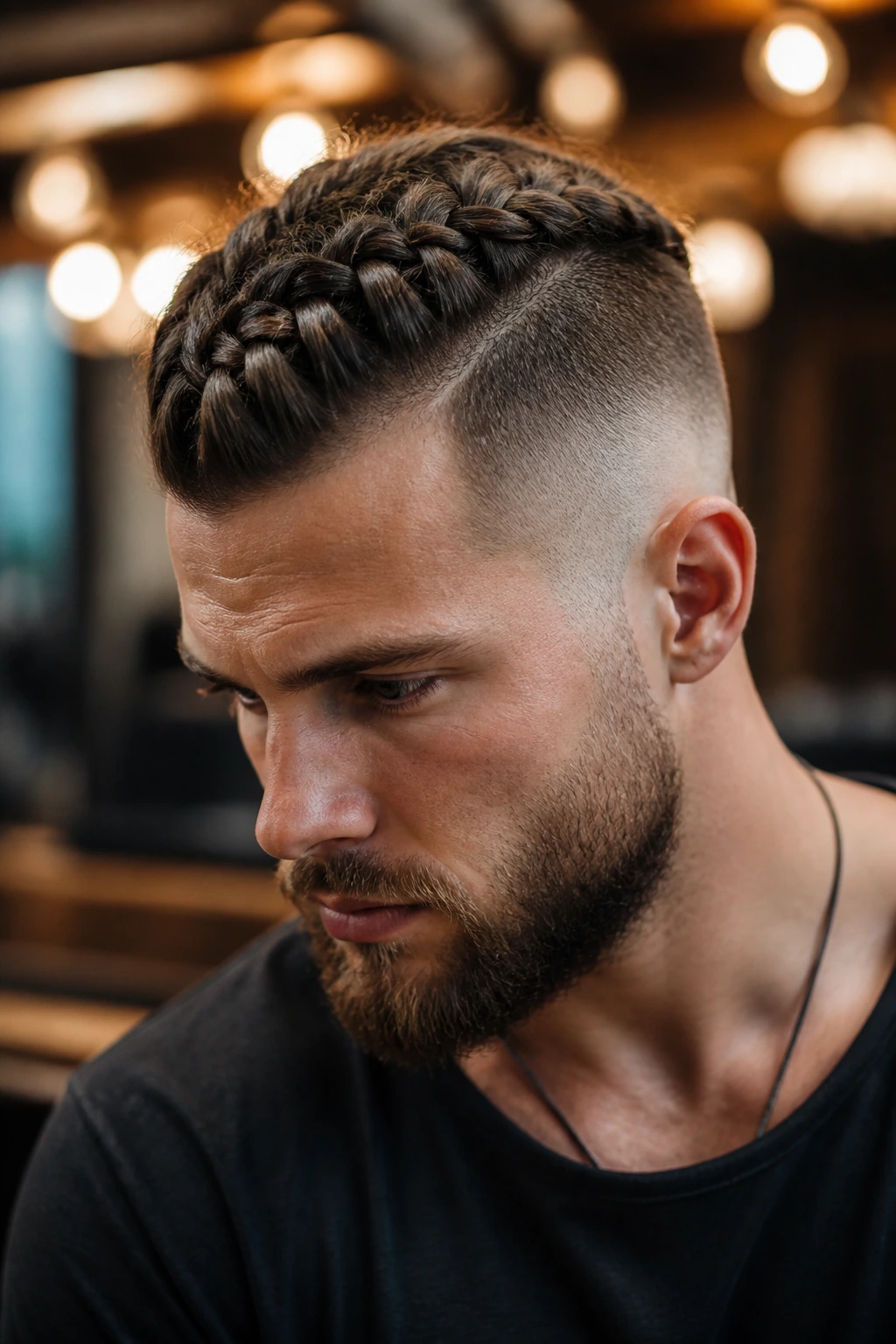
This version combines a strong braid on top with shorter sides, usually a fade or a tight taper. The contrast is the point. The braid gets more visual weight because the sides step back.
If your hair is thick, this style is one of the easiest ways to keep the top controlled without making it feel heavy. A Dutch braid sits raised off the scalp and gives the top some height, which helps balance the shorter sides. It’s clean, but not soft. That’s why it works.
32. Shoulder-Length Flow with Micro Braids
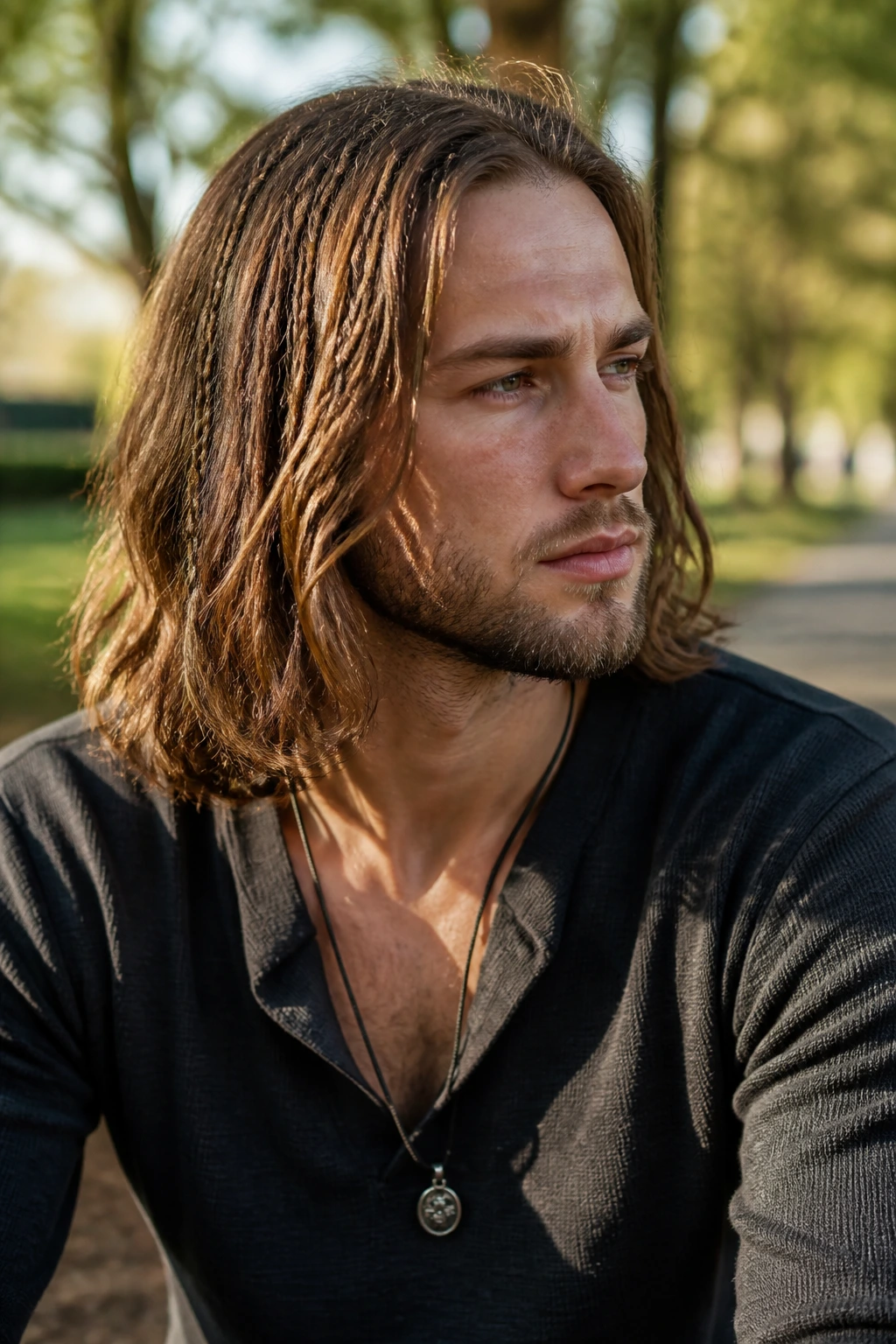
Micro braids sprinkled through loose shoulder-length hair give you the Viking mood without locking the whole head down. It’s a quieter style, but it has range. The little braids add texture and keep the length from reading as plain.
This works well for people growing hair out and not ready for big braids yet. A few thin braids near the temples or through the top layer are enough. Keep them small enough that they disappear into the rest of the hair. Too many and the style gets busy fast.
33. Ponytail with Tapered Temple Braids
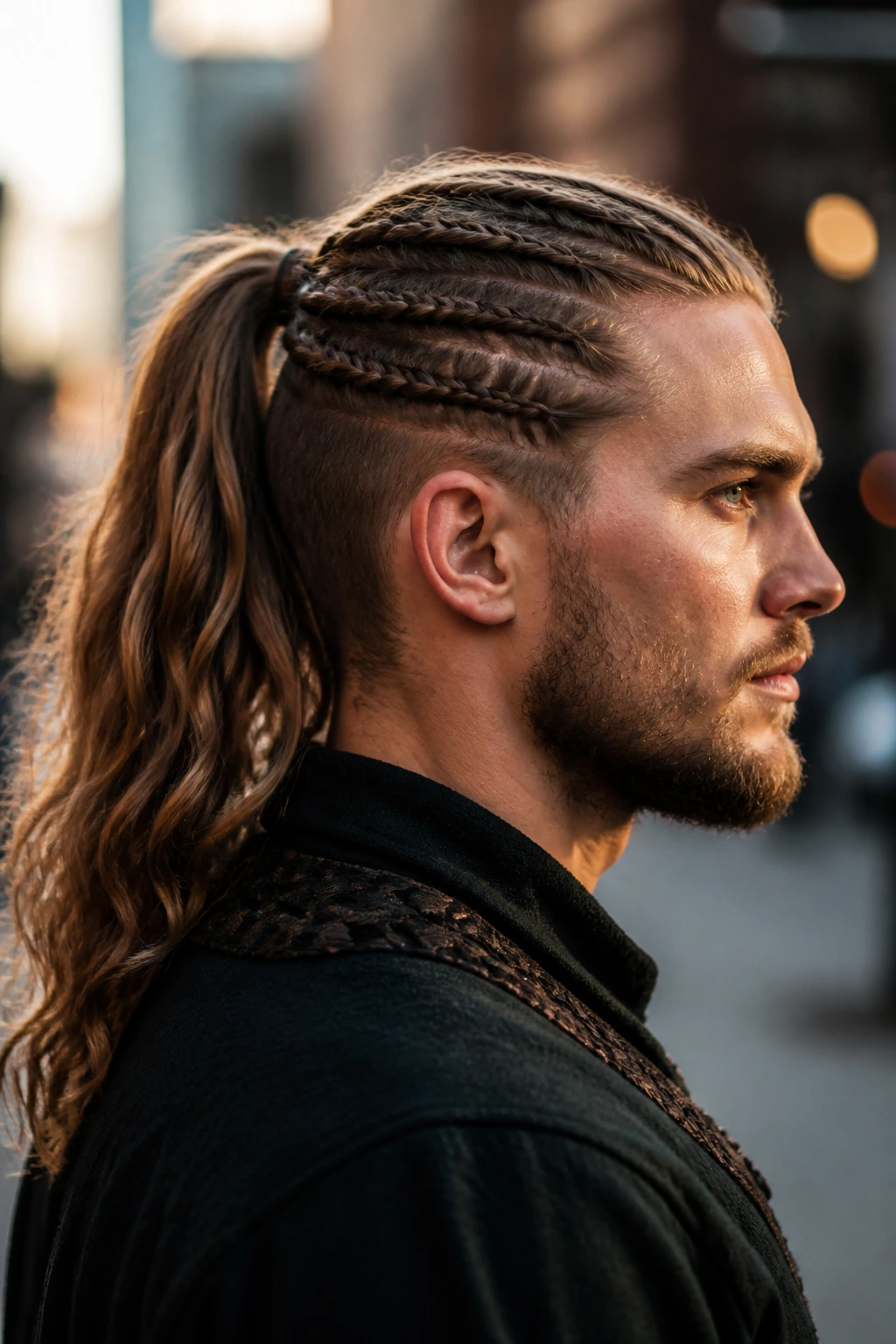
A ponytail paired with narrow temple braids gives you a neat front and a cleaner line through the sides. It’s practical, quick, and easy to adjust if you need to go from casual to more dressed-up without changing the whole style.
The temple braids should be tapered, not chunky. That keeps them from fighting the ponytail for attention. If your hair is long and dense, this is a good everyday option because it controls the front without taking away the length’s movement in the back.
34. Full Hair, Beard, and Bead Set
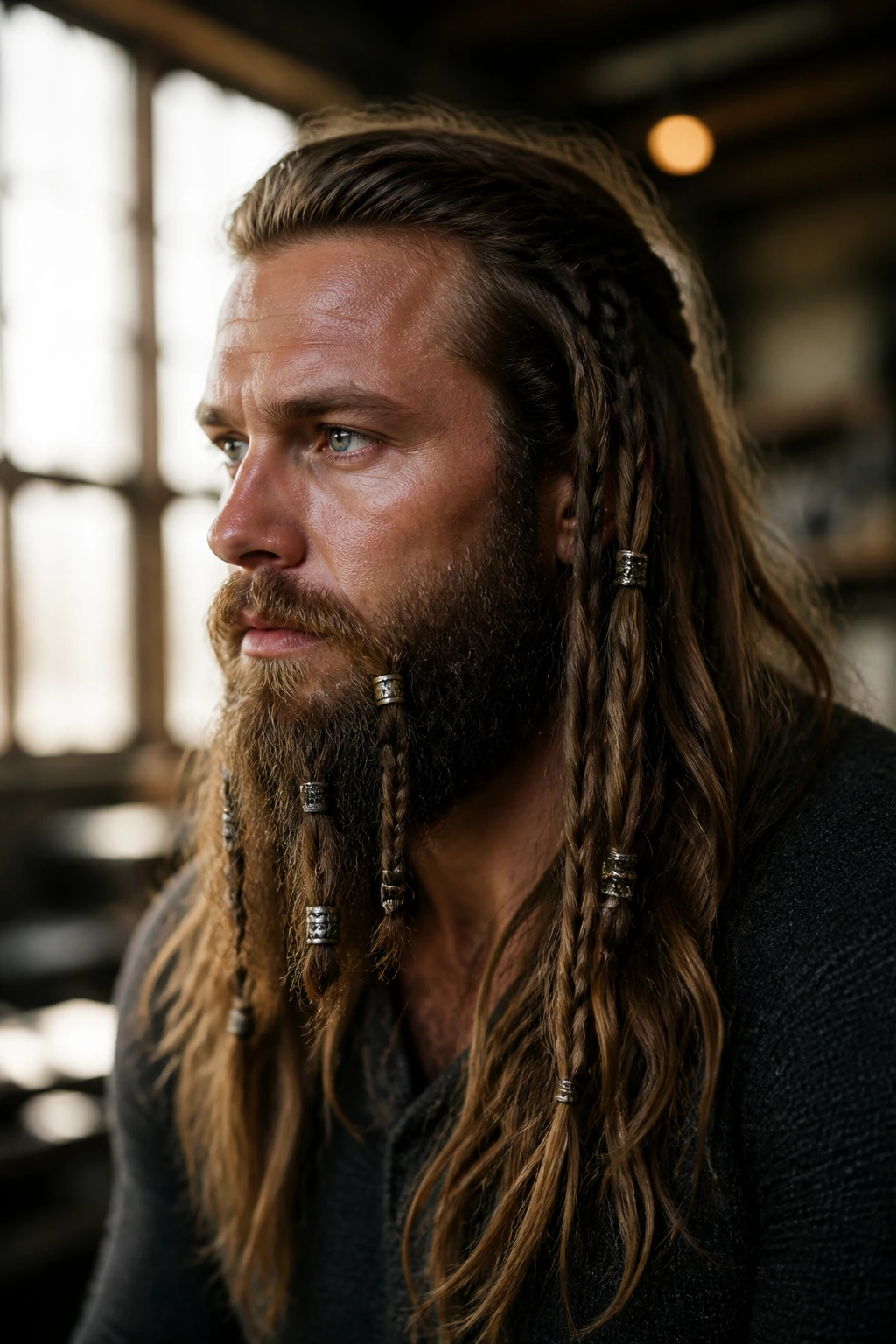
This is the maximalist version. Long hair, visible beard, and a few beads or wraps used together so the whole face and head feel linked. It has presence. A lot of presence.
The mistake here is doing too much on every surface. Pick one main feature and let the others support it. If the hair has beads, keep the beard simpler. If the beard carries the adornment, let the hair stay rough and long. The point is coordination, not clutter.
35. Free Fall with Braided Ends
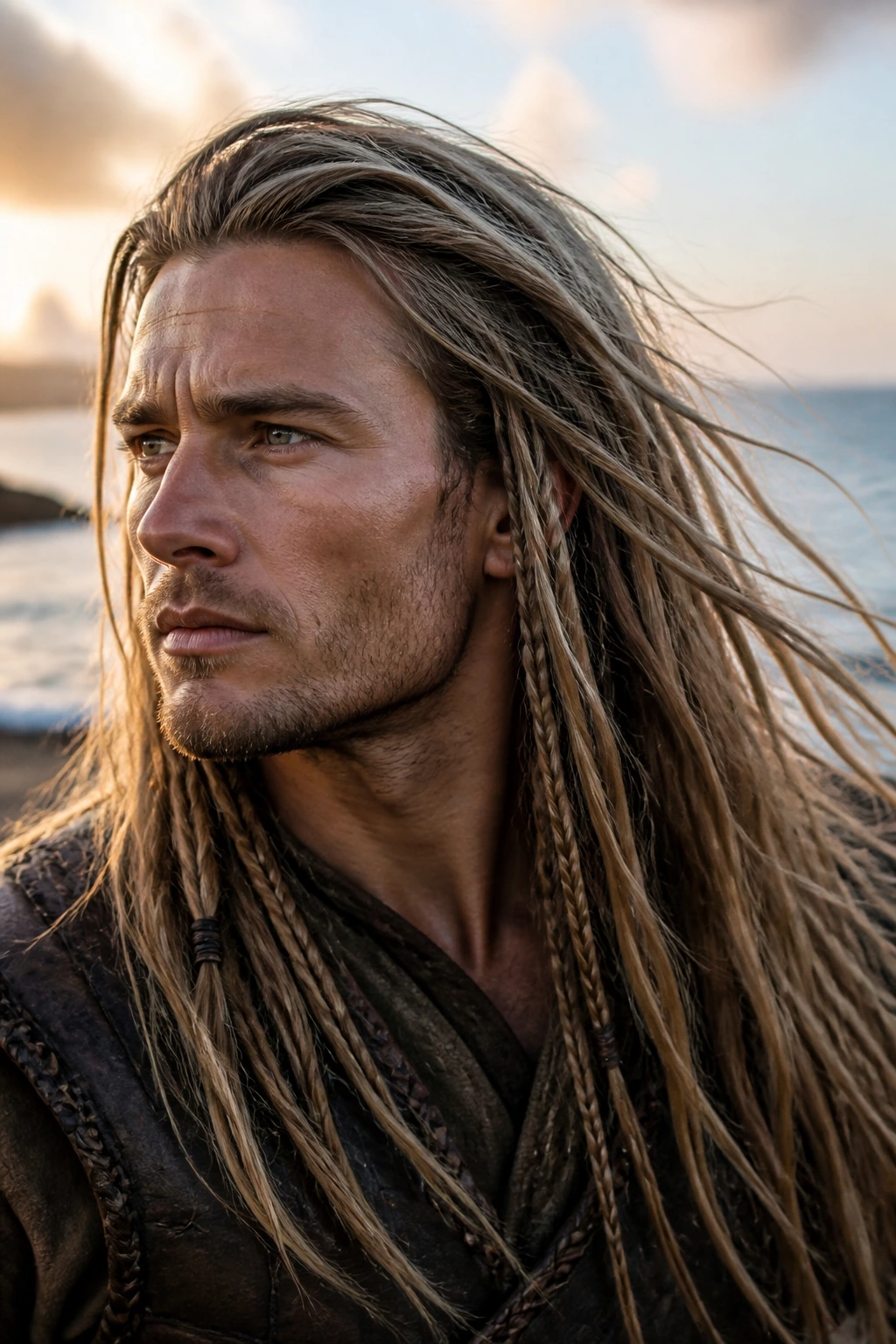
The last look on the list is the most relaxed one: hair left mostly loose, with just the ends or a few outer sections braided. It keeps the rough energy of long hair while still adding a little structure where it matters most.
That braided-end detail is useful because it prevents the whole look from going limp. It also lets you keep the top natural, which is a nice move if you want a style that feels less dressed up. A few thin braids at the ends are enough. If the hair is very layered, braid the longest pieces only so the shorter layers can keep moving.
What Makes a Viking Look Read as Viking
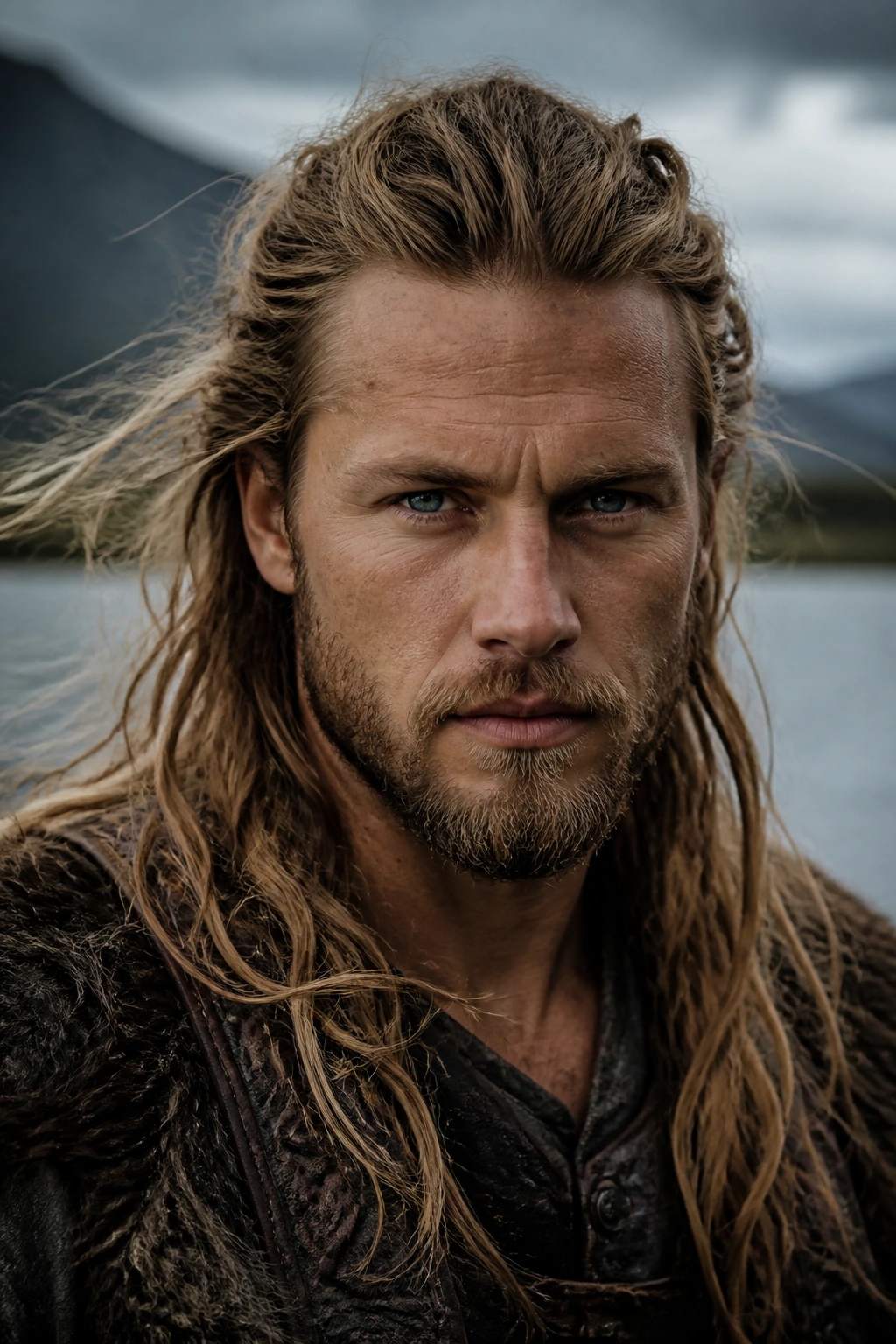
A lot of people think the secret is braids. Braids help, but they’re not the whole story. The shape usually matters more than the pattern. Long hair that’s controlled at the sides, left fuller through the length, and broken up with texture will read in the right direction even if the actual braid work is very simple.
The best Viking-inspired styles usually keep the hairline visible. That’s the part people miss when they go too hard on product. If every strand is pasted straight back, the style starts looking like a formal slick-back with a costume accessory. Leave a little roughness at the temples. Keep some movement around the crown. Use matte, not shiny, unless you’re deliberately going for a dressed-up version.
Beard shape matters too. A long braid on top with a flat, untended beard can look mismatched. A heavy beard with a completely loose crown can feel too top-heavy. Even a short beard helps if the hair has enough structure. The goal is balance. Rough, not random.
Essential Equipment for These Looks
-
Fine-tooth comb: Best for clean parts and scalp-hugging braids; a tail comb is even better for sectioning.
-
Wide-tooth comb: Easier on long hair after washing and better for detangling before you start.
-
Small clear elastics: Keep a few in a pocket or bag; they disappear better than thick black ties.
-
Matte clay or cream: Adds grip and keeps braids from sliding apart without the wet shine of gel.
-
Sea salt spray or texturizing spray: Gives straight or soft hair some roughness so the style holds.
-
Sectioning clips: Handy when you’re working with temple braids, crown braids, or multiple sections.
-
Hair cuffs, beads, or rings: Optional, but a little hardware goes a long way if you don’t overdo it.
-
Hand mirror or wall mirror setup: Makes it easier to check the back line and keep the braid centered.
-
Hair oil or leave-in conditioner: Useful for the ends if your hair tangles easily or feels dry after braiding.
Choosing the Right Products and Accessories
A lot of bad long-hair styling comes from using the wrong product texture. Shiny gel makes sense on short cuts with hard lines. On long Viking-inspired hair, it often looks too slick and can make the braid slip. Matte clay, lightweight cream, or a sea salt spray usually gives you better control with less glare.
If your hair is fine, reach for grip first. Dry shampoo at the roots, a texture spray through the mids, and small elastics that actually hold can make a bigger difference than piling on heavy wax. Thick hair is the opposite problem. There, the goal is reducing bulk without flattening the whole head. A smoother cream and a stronger comb help.
Accessories should look like they belong to the braid, not pasted on top of it. Leather ties work well because they don’t shout. Metal rings and cuffs can look sharp, but one or two is enough. If the hardware starts clinking when you turn your head, you’ve gone too far.
How to Wear These Styles Without Looking Overworked
Presentation: Keep the shape intentional and the texture slightly rough. A Viking-inspired style looks better when it seems touched by weather, movement, or a long day, not when every strand is pinned into place. Loose temple pieces and a visible braid line do more work than extra shine ever will.
Pairings: Leather jackets, heavy knits, open collars, boots, and a beard that matches the hair’s roughness all help the look feel grounded. A clean white shirt can work too, but then the hair has to carry more of the mood. That’s fine if the braid is strong and the finish is matte.
Wear Time: Simple braids and low ponytails usually last all day. Crown braids, rope twists, and half-up knots may need one small reset if you’re active or outside in the wind. If you’re planning a long day, secure the ends with tight elastics and keep one spare in your pocket.
Best Settings: These styles shine anywhere the hair can move a little — concerts, outdoor events, everyday wear, photo days, even the office if you keep the accessories restrained. The more formal the setting, the cleaner the part and tie should be.
Styling Boosters and Personal Tweaks
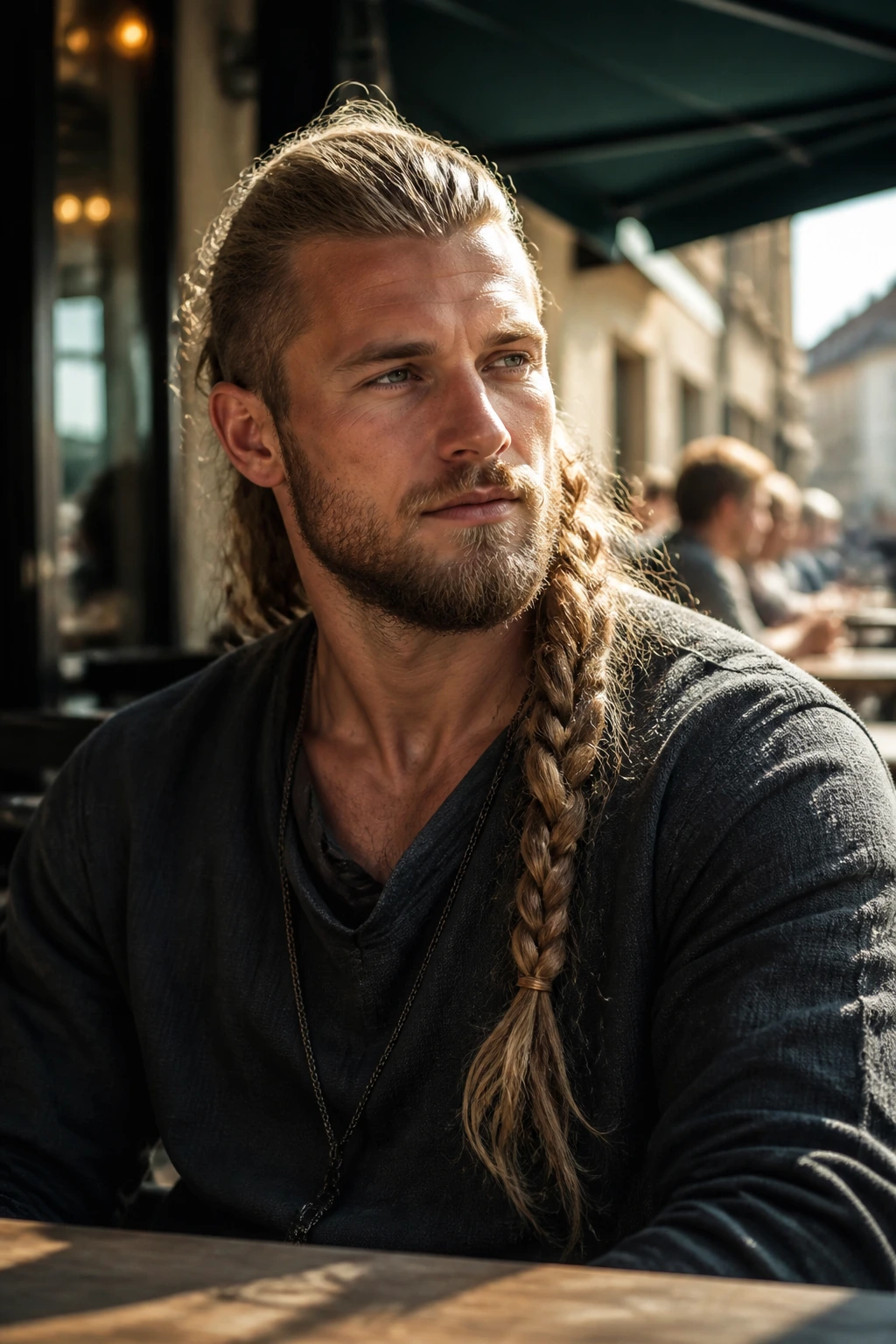
Texture Boost: A quick mist of sea salt spray on damp hair, followed by rough-drying with your fingers, gives braids better hold than starting with freshly washed, slippery hair. If the hair is already dry, dry shampoo at the roots works in a pinch.
Customization: Swap a center braid for a side braid, or turn a half-up knot into a half-up braid if you want a stronger line. Small changes like braid width, knot height, and where you leave loose pieces can change the whole feel without changing the basic shape.
Accessory Move: Use one metal cuff, a couple of leather wraps, or a few small beads — not all three in heavy doses. The safest rule is one accent per braid or one accent per section. More than that starts to drift away from grounded and into themed costume territory.
Make-It-Yours: Fine hair benefits from smaller sections and texture powder. Thick hair often looks better with bigger, looser braids. Curly hair can keep more of its own texture at the ends, which gives the style movement that straight hair has to fake with product.
Common Mistakes to Avoid
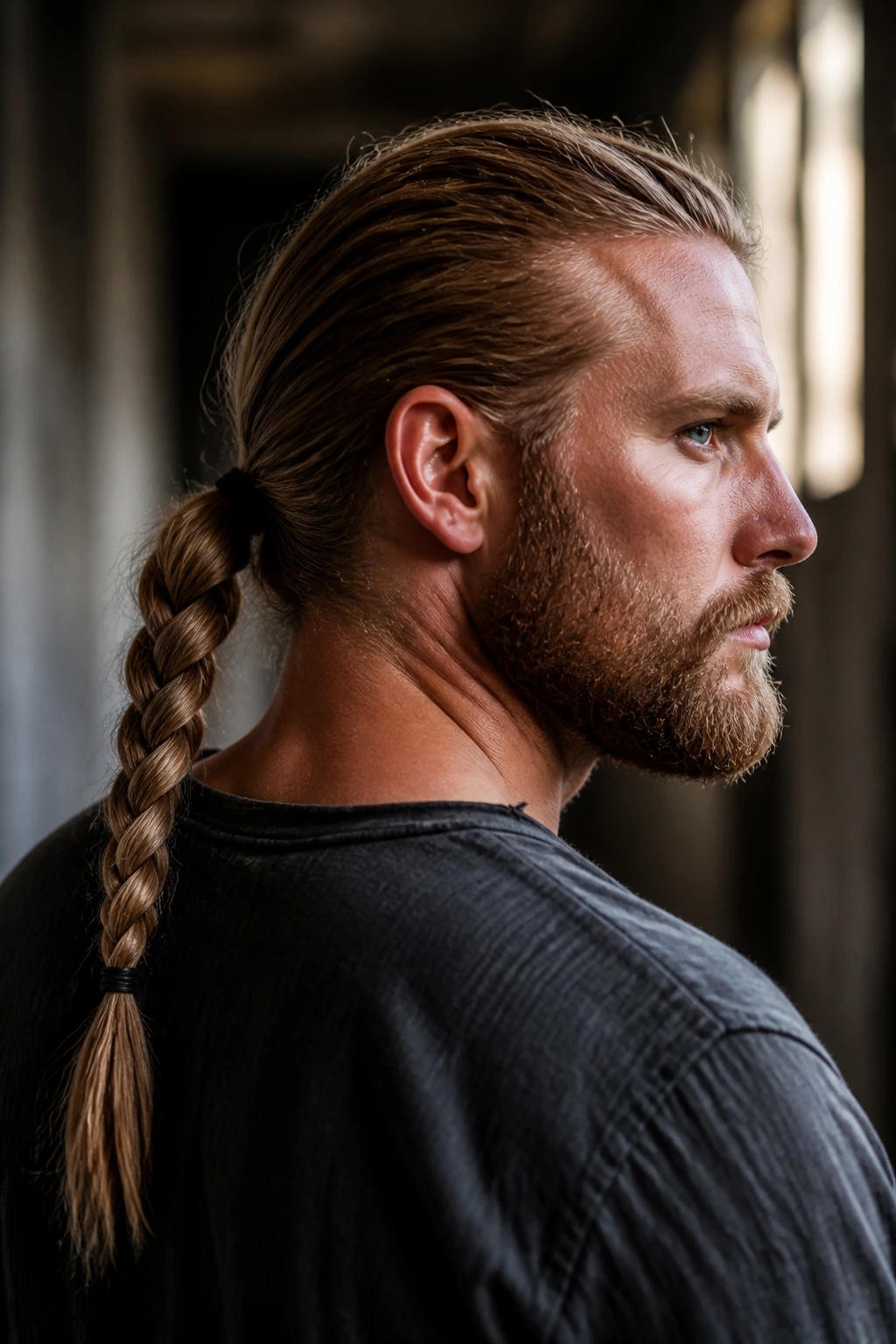
Braiding soaking-wet hair: It feels easier in the moment, but wet hair stretches and then shrinks as it dries. That can leave braids tight at first and loose later, or worse, frizzy around the edges. Let the hair dry until it’s just slightly damp or fully dry before you start.
Using too much shine product: Glossy gel can flatten the whole style and make long hair look stringy. If you want control, go with matte cream, paste, or texture spray instead. The look should hold shape, not reflect the ceiling lights.
Pulling temple braids too tight: A tight front braid can give you a headache by midafternoon and can also make the style look harsh. Keep the tension firm, not yanked. If your scalp starts feeling sore, loosen it and start again.
Ignoring the ends: Long hair often fails at the ends first. Dry, rough tips fray, tangle, and make the whole braid look tired. A little leave-in conditioner or hair oil on the last few inches helps the braid finish cleanly.
Overloading with beads and cuffs: One strong accent looks intentional. Five accents can look noisy. Choose one focal point and let the braid do the work.
35 Ways to Change the Same Look
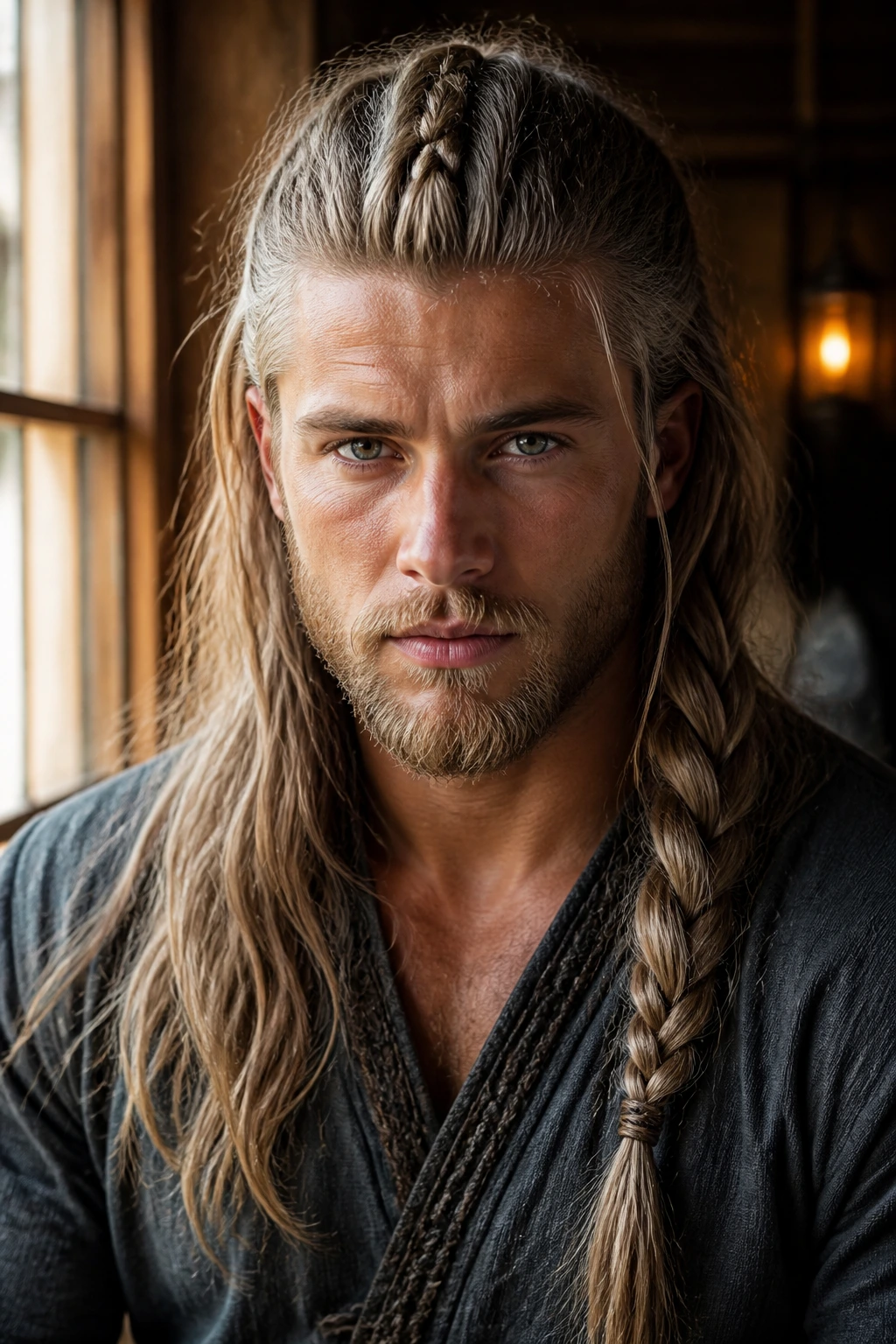
The Minimalist Warrior: Stick to one braid, one tie, and little else. This version works when you want the shape without extra hardware or obvious styling effort.
The Thick-Hair Fix: Split dense hair into two braids or a braid plus a bun. That keeps the bulk from ballooning at the nape and makes the style lighter on the neck.
The Fine-Hair Lift: Use texturizing spray, smaller braid sections, and a little teasing at the crown. Fine hair needs body before it needs decoration.
The Beard-Forward Version: Keep the hair a little looser and let the beard stay full, then use one leather wrap or cuff to connect the two visually. That balance stops the top from looking overstyled.
The Office-Safe Version: Go for a low ponytail, clean side braid, or half-up knot with minimal accessories. The shape stays clear, but the look doesn’t shout across a meeting room.
The Weatherproof Version: Use a tighter braid base and keep the ends secured with two elastics if the day is windy. A braid that starts neat and ends loose can turn into a bird’s nest fast if the forecast is ugly.
What to Keep on Hand for Rebraiding and Maintenance
-
Two to four spare elastics: Hair always seems to need one more tie than you packed.
-
Travel-size texture spray: Useful for mid-day refreshes when the braid starts slipping.
-
Small comb or tail comb: Helps re-center parts and smooth temple sections without starting from scratch.
-
Hair oil in a tiny bottle: One drop on dry ends keeps braids from feeling rough after a full day.
-
Pocket mirror or phone camera: Handy for checking the back of a bun or braid before you leave.
How Often to Wash and Reset the Style
Long hair and braided styles usually do better with a little spacing between washes. Day-one clean hair can be too slippery for braids, while day-two hair often grips better and stays put longer. If you’ve used heavy product or worn tight styles for a few days, wash sooner. If the hair still feels light and clean at the roots, a dry shampoo refresh may be enough.
Sleep matters too. A loose braid or low tie will reduce tangling overnight. If you toss around a lot, a satin pillowcase can help keep the cuticle smoother and save you time in the morning. That’s not glamorous advice. It does work.
Frequently Asked Questions
How long does hair need to be for Viking hairstyles?
Shoulder-length hair can handle half-up knots, temple braids, and low ponytails. Once the hair reaches the upper back, more dramatic braids, buns, and wrapped styles become much easier to control.
Do these styles damage long hair?
They can if you pull them too tight or keep the same high-tension style every day. Rotate where the braid or tie sits, use soft elastics, and avoid yanking the hairline. The style should hold, not hurt.
Can straight hair pull off Viking hairstyles for long hair?
Yes, but straight hair usually needs more texture before braiding. A little sea salt spray, dry shampoo, or matte cream gives the strands something to grip so the braid does not slide apart.
What’s the best style if my hair is very thick?
Double braids, low buns, and braid-into-bun styles usually work best because they spread the volume out. Thick hair looks good with bigger shapes, not tiny fussy details that disappear into the bulk.
What if my hair is fine and slips out of braids?
Use smaller sections, a bit of texture spray, and tighter elastics. Fine hair often needs grip more than structure, so prep matters more than technique.
Can I wear these styles with a beard?
Absolutely. In fact, the hair-and-beard combination is one reason these looks read so strongly. Just keep one side of the face from becoming too heavy while the other stays flat.
How do I keep braids from looking too neat?
Gently loosen them after tying, leave a few face-framing pieces out, and use matte product rather than shine-heavy gel. A slightly broken line makes the style feel lived-in instead of stiff.
Which style is best for all-day wear?
Low braids, wrapped ponytails, and tight half-up knots usually hold the longest. The more movement you leave in the hair, the more likely it needs a quick reset later in the day.
The Shape of the Knot
The best Viking-inspired long hairstyles are rarely the most complicated ones. A clean braid, a rough knot, or a pair of temple plaits can do more for the look than layers of metal and product ever will. Long hair already brings drama. The job is to shape it, not bury it.
Once you get comfortable with texture and tension, the rest becomes personal. Some days the braid should sit tight and practical. Other days it should hang loose with a few stray pieces and a leather tie at the end. Both are valid. Both can look right if the shape is honest, the hair has enough grip, and you stop before it turns theatrical.
