



A good haircut does two jobs at once: it makes your face look sharper, and it saves you from negotiating with your hair every morning. The best men’s hairstyles are not the loudest ones in the room. They’re the cuts that still look intentional when you wake up late, when the humidity gets stupid, or when your crown grows in a different direction than the rest of your head.
That’s why trendy men’s hairstyles are worth talking about with a little more honesty than the usual photo-board fluff. A style that looks great on one guy can sit dead flat on another, or turn into a triangle, or expose a hairline you’d rather keep quiet about. The shape matters. So does density. So does the amount of time you’re willing to spend in front of the mirror with a blow dryer and a bit of product on your hands.
The trick is to choose a cut that works with your texture, your face, and your routine. Short, long, curly, straight, thick, fine, coily — there’s a version that behaves. And the difference between a decent cut and one you keep coming back to usually comes down to the small stuff: a half-inch left on top, a softer taper at the nape, a fringe that breaks up a forehead, a fade that doesn’t climb too high. That’s where the good haircuts live.
Why These Styles Hold Up Outside the Barber Chair
-
Built for real mornings: These cuts don’t depend on a perfect blowout; they still look clean after a quick finger-comb and a dab of product.
-
Texture-first, not photo-first: The better styles here work with straight, wavy, curly, and coily hair instead of fighting the way it grows.
-
Easy to explain at the shop: Most of these can be asked for with length, fade height, and fringe direction, which is much easier than waving your phone around and hoping for the best.
-
Good range of upkeep: Some are almost zero-maintenance, while others need a trim every two to three weeks, so you can pick your level of effort.
-
Face-shape friendly: You’ll see cuts that add height, soften angles, or tame a strong hairline without making the whole thing look forced.
-
Not just one vibe: Clean, rugged, polished, laid-back, edgy — the list gives you room to choose a haircut that matches your life, not someone else’s mirror selfie.
1. Textured Crop Fade
A textured crop fade is the haircut I recommend when a guy wants structure without looking like he spent 40 minutes on it. The top sits around 2 to 3 inches, chopped into uneven pieces so the fringe falls forward with a bit of grit. The fade on the sides keeps the whole thing tight, which means the cut still looks sharp when the top gets a little messy.
Why It Works on Thick or Straight Hair
The crop is forgiving. If your hair stands up on its own, this cut turns that into shape instead of a fight. A matte clay or paste is enough; you don’t need shine, and you don’t need much height. Ask for a low or mid fade if you want it wearable for work, or a skin fade if you want more contrast.
- Best for: thick straight hair, dense wavy hair, guys who want a short top without a buzz-cut feel.
- Barber note: keep the fringe choppy, not blunt.
- Styling note: work product in dry hair, then push the front slightly forward.
Pro tip: if your crown swirls hard, this cut hides it better than most short styles.
2. Classic Crew Cut
The crew cut is still undefeated when you want clean lines and zero drama. Keep the top a touch longer than the sides — usually 1 to 2 inches on top with a tight taper around the ears and neckline — and the whole head looks lighter without going severe. It’s one of those cuts that makes a jawline look firmer simply because the hair isn’t competing with your face.
This is a smart pick for fine hair, thinning hair, and guys who hate product. A pea-sized amount of light cream is plenty, or nothing at all if your hair lies well. The best version isn’t military-short everywhere; it leaves just enough length up top to avoid the helmet effect. If you wear glasses, this cut sits especially well because the frame and the haircut don’t fight for attention.
The only trap is asking for “short all over” and ending up with a buzz that feels harsher than you wanted. Keep the top a little longer. That half-inch matters.
3. Low Taper Side Part
What makes a side part look modern instead of stiff is the taper. A low taper side part keeps the edges neat while leaving the top long enough to move — usually around 2.5 to 4 inches. The part doesn’t have to be razor-sharp, either. A softer division often looks better in real life because it bends with your hair instead of carving a line into it.
How to Wear It Without Looking Old-Fashioned
Use a light pomade, cream, or even a grooming lotion if your hair is fine. Comb the part once, then break it up with your fingers so it doesn’t look painted on. This cut is especially good if you need something that can pass as polished in the morning and relax a little by lunch.
- Best for: straight or slightly wavy hair.
- Face shape note: works well on round faces because the side part adds a little length.
- Barber note: ask for a low taper, not a high fade.
The clean edge around the ears is the detail that keeps it from drifting into school-photo territory.
4. French Crop
A French crop lives on the front edge of the face. Short sides, textured top, and a blunt or softly piecey fringe that sits forward in a way that can cover a receding hairline or break up a high forehead. It has a useful honesty to it. Nothing about it pretends the hair is more than it is.
What Makes It Different
Keep the top around 1.5 to 2.5 inches and ask the barber to leave enough weight in the fringe so it falls rather than spikes. A matte paste gives it that dry, slightly rough finish that suits the cut. If you’ve got a cowlick in the front, this is one of the few short styles that can work with it instead of starting a daily argument.
The French crop looks best when the fade stays low or mid and the top keeps texture. Make it too blunt, and it starts to look like a bowl cut’s more disciplined cousin. Keep it choppy. Keep it loose.
5. Mid Fade Quiff
A quiff is all about height, and a mid fade gives it room to breathe. The top usually wants 3 to 5 inches so you can blow it up and back without turning the front into a stiff shell. It’s a bit more work than a crop or crew, but the payoff is a haircut that changes posture. You stand differently when the front has lift.
Use a blow dryer first, not product first. Push the front up with a brush or your fingers, then lock it in with a medium-hold clay or pomade. The mid fade keeps the sides clean so the volume on top doesn’t swallow your head shape.
This cut loves thick straight hair and dense waves. If your hair is very fine, it can still work, but you’ll need more heat control and a lighter product. And no, you do not need a brick of gel. That’s how quiffs become crunchy little monuments.
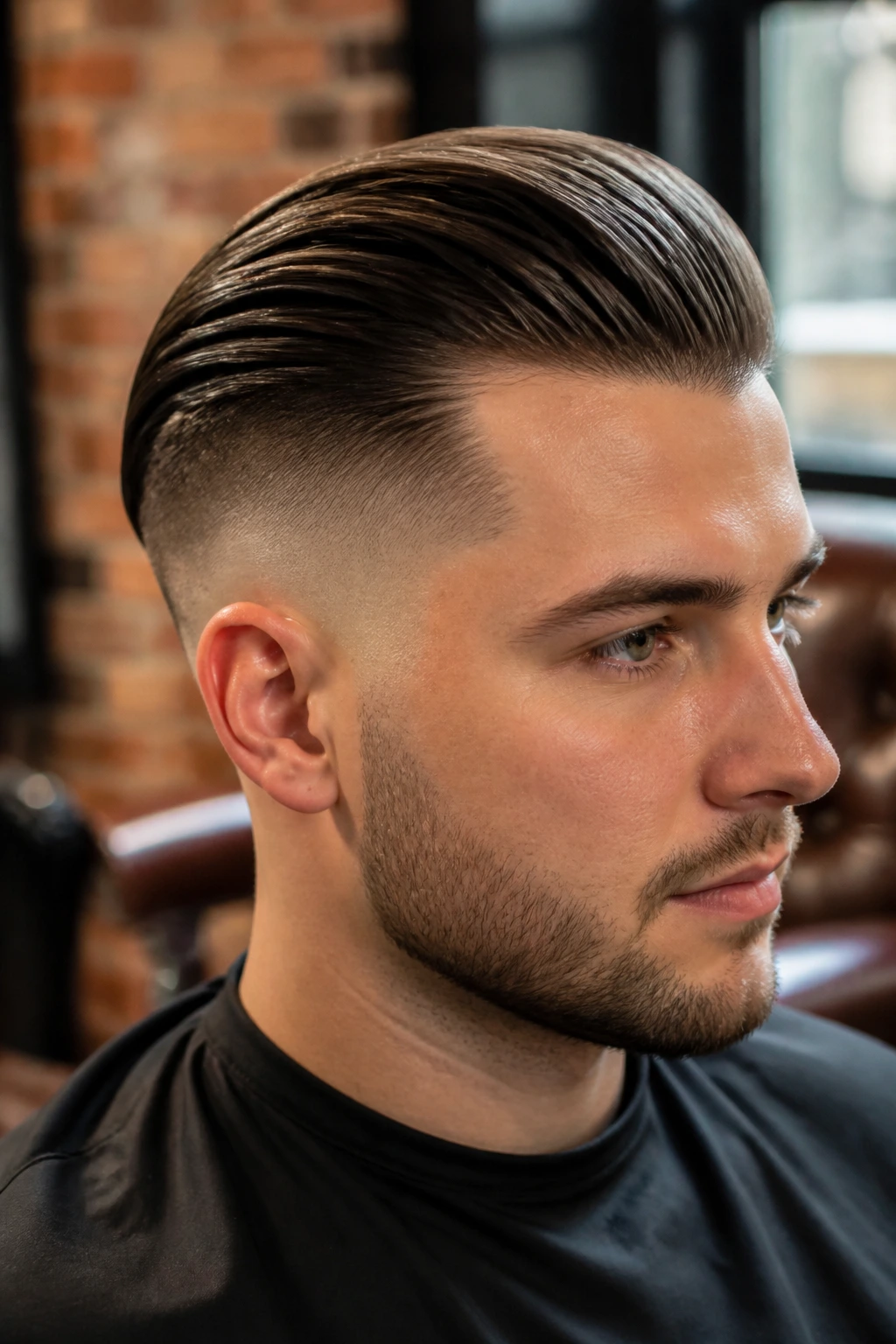
6. Slick Back Undercut
A slick back undercut is one of those haircuts that looks deliberate the second you comb it into place. The sides stay short and disconnected, while the top gets enough length — usually 4 inches or more — to sweep straight back. It’s sharp, clean, and a little dramatic in a good way.
Best for Straight or Wavy Hair
This cut has a polished edge, but it only works if the top has enough density to lie back without splitting. A medium-shine pomade gives you control; a matte product makes it feel more relaxed. If your crown is thin, keep the back softer so the scalp doesn’t show through when the hair lifts.
How to ask for it: keep the undercut disconnected, not blended, and leave enough weight on top for backward movement.
Styling note: comb it back while the hair is damp, then finish with a quick blow-dry for shape.
It is not the easiest cut to grow out, but while it’s fresh, it has a clean, almost tailored look that works in dress shirts and leather jackets alike.
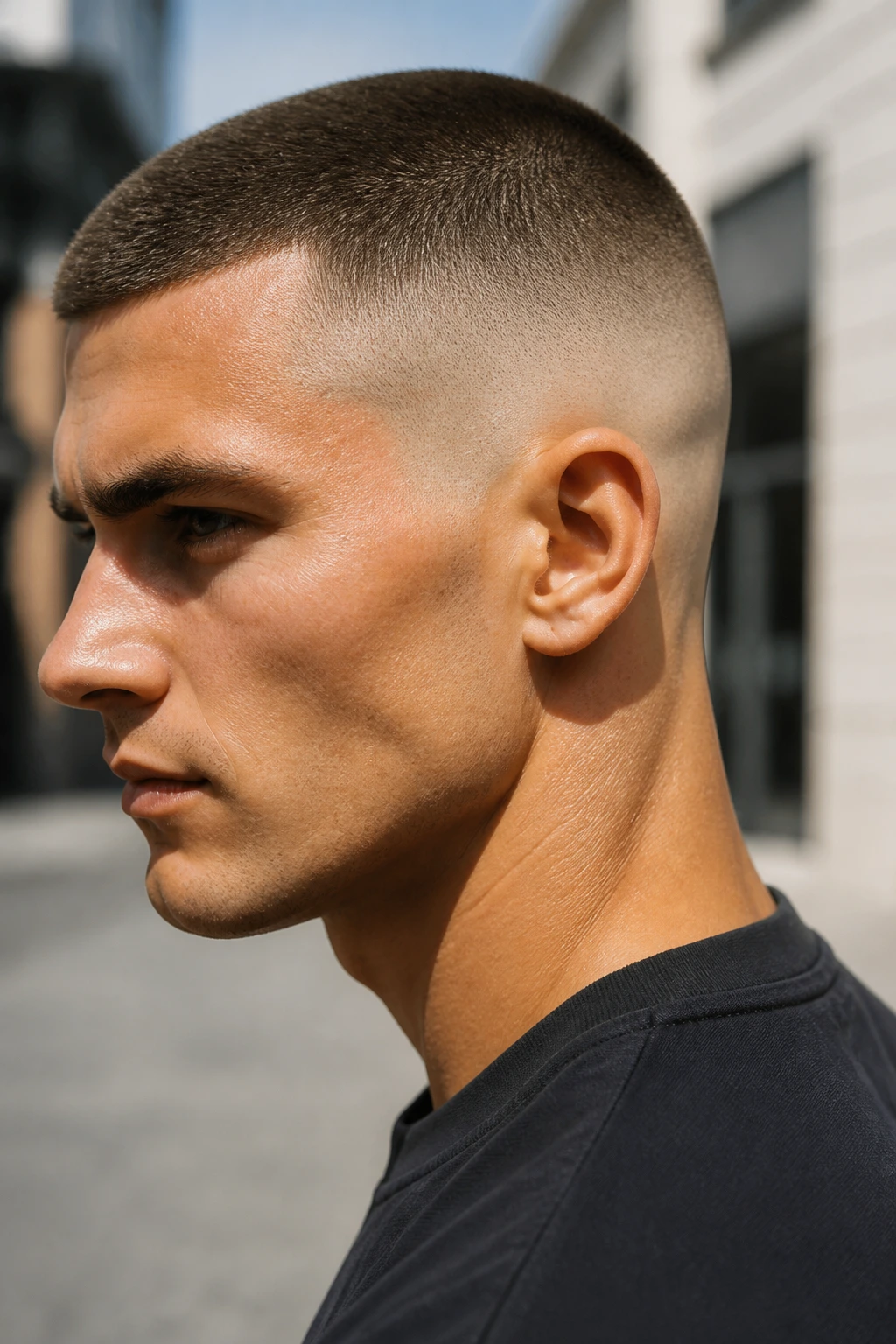
7. Buzz Cut with Skin Fade
A buzz cut with a skin fade looks simple because it is simple. That’s the point. When the top is clipped close — often with a #1 to #3 guard depending on how much scalp you want to show — the fade becomes the whole story. The shape of your head matters here. So does the hairline.
Why It Works When You Want No Fuss
This is the haircut for hot days, gym-heavy schedules, and men who know they will not be spending time with a comb. It can look surprisingly strong on guys with a good jawline or a balanced head shape, and it takes the guesswork out of thinning areas. If your scalp gets dry, use a light moisturizer or matte scalp balm. That tiny step helps more than people think.
- Best for: coarse hair, active routines, low maintenance.
- Barber note: keep the fade clean around the temple and behind the ear.
- Watch-out: if your head shape has a flatter back or strong bumps, leave a little more length on top.
Simple. Brutal. Useful.
8. Ivy League
The Ivy League is what happens when a crew cut decides to dress better. The top stays longer — around 2 to 3 inches — so it can side part or brush slightly up, while the sides taper down neatly. It’s clean without feeling severe, which is why it keeps showing up in offices, weddings, and anywhere else a man wants to look neat without looking stiff.
The beauty of this cut is that it works with a little movement. You can part it, you can finger-comb it, you can let it lean to one side when the wind gets involved. A light cream or low-shine pomade is enough. If your hair is fine, don’t drown it in product. A small amount keeps the top from collapsing.
It’s also a good bridge haircut. If you’re growing out a shorter style, the Ivy League buys you time without looking unruly.
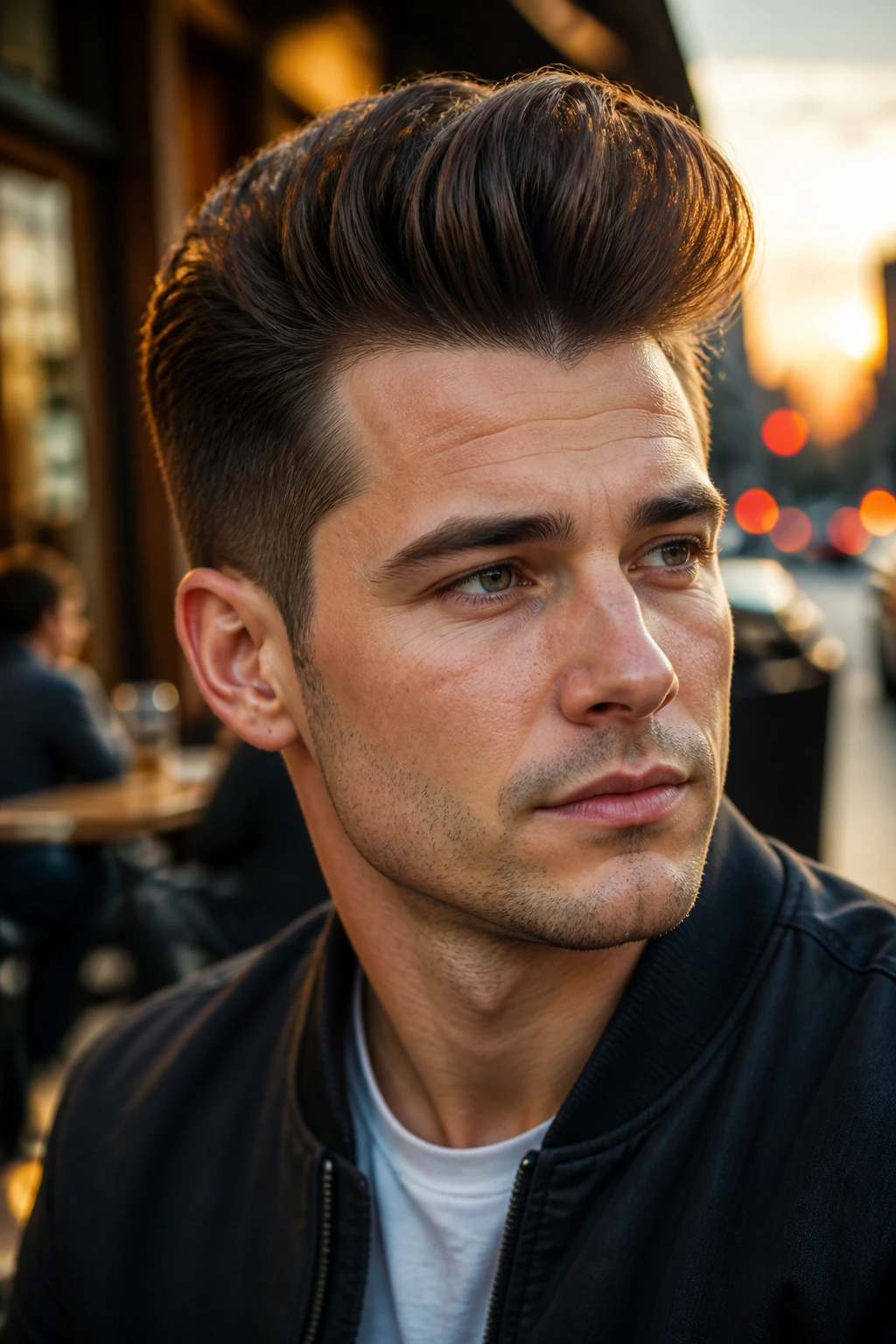
9. Modern Pompadour
A modern pompadour is height with some air in it. The front gets lifted and rolled back, but the shape should feel soft, not lacquered. Think volume at the hairline, not a shell. It usually needs 4 to 5 inches on top, especially in the front, with shorter sides that keep the profile tight.
The Science Behind the Shape
The blow dryer matters here. Pull the front up and back while drying, then let it cool in place before you touch it with product. That’s the part most people skip, and it’s why their pompadour falls flat by noon. Use a medium-hold matte paste if you want texture, or a satin pomade if you want shine.
This cut suits thick hair better than fine hair, and it loves a square or oval face because the height balances the jaw. If your hairline is already high, keep the front a touch looser instead of towering it straight up. A pompadour should look intentional, not like you’re hiding something.
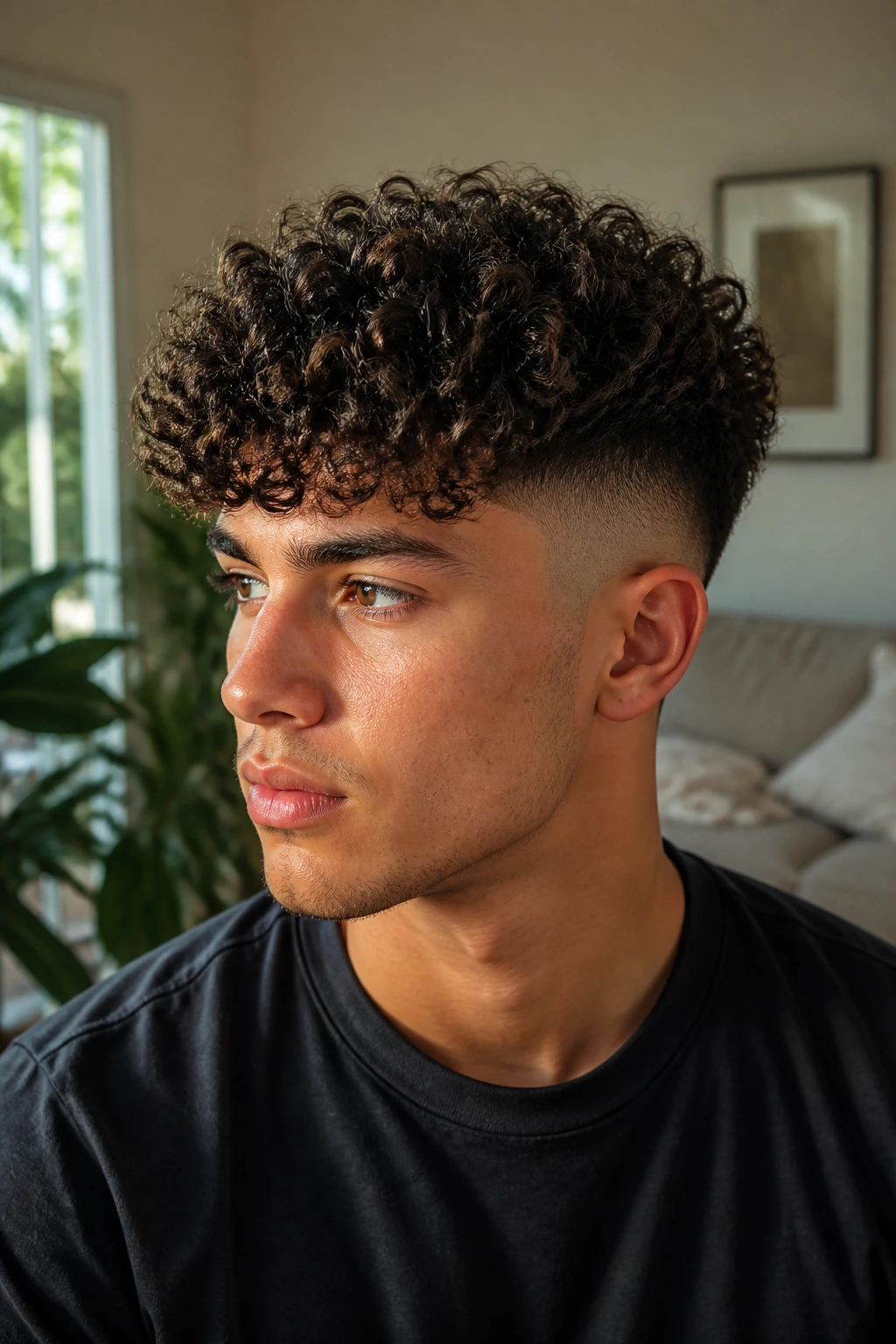
10. Curly Top Fade
If you’ve got curls, don’t flatten them just because a fade looks neat in photos. A curly top fade keeps the sides tight and lets the curls live on top, where they can actually do something interesting. Usually that means 3 to 5 inches on top, depending on curl tightness, with a fade that starts low or mid around the sides.
What to Watch For
Curls shrink. A lot. So the barber has to cut for shape, not just for wet length. Ask for the top to stay rounded, not thinned out too aggressively, because over-thinning can leave the curls frizzy and patchy once they dry. A curl cream or leave-in plus a diffuser is usually enough.
- Best for: natural curls, dense texture, guys who want shape without losing movement.
- Barber note: do not carve too much weight out of the sides if your curls are already loose.
- Maintenance note: keep the fade clean every two to three weeks if you want the contrast to stay sharp.
This cut looks especially good when the top has a little bounce. Flat curls are the enemy.
11. Curly Fringe
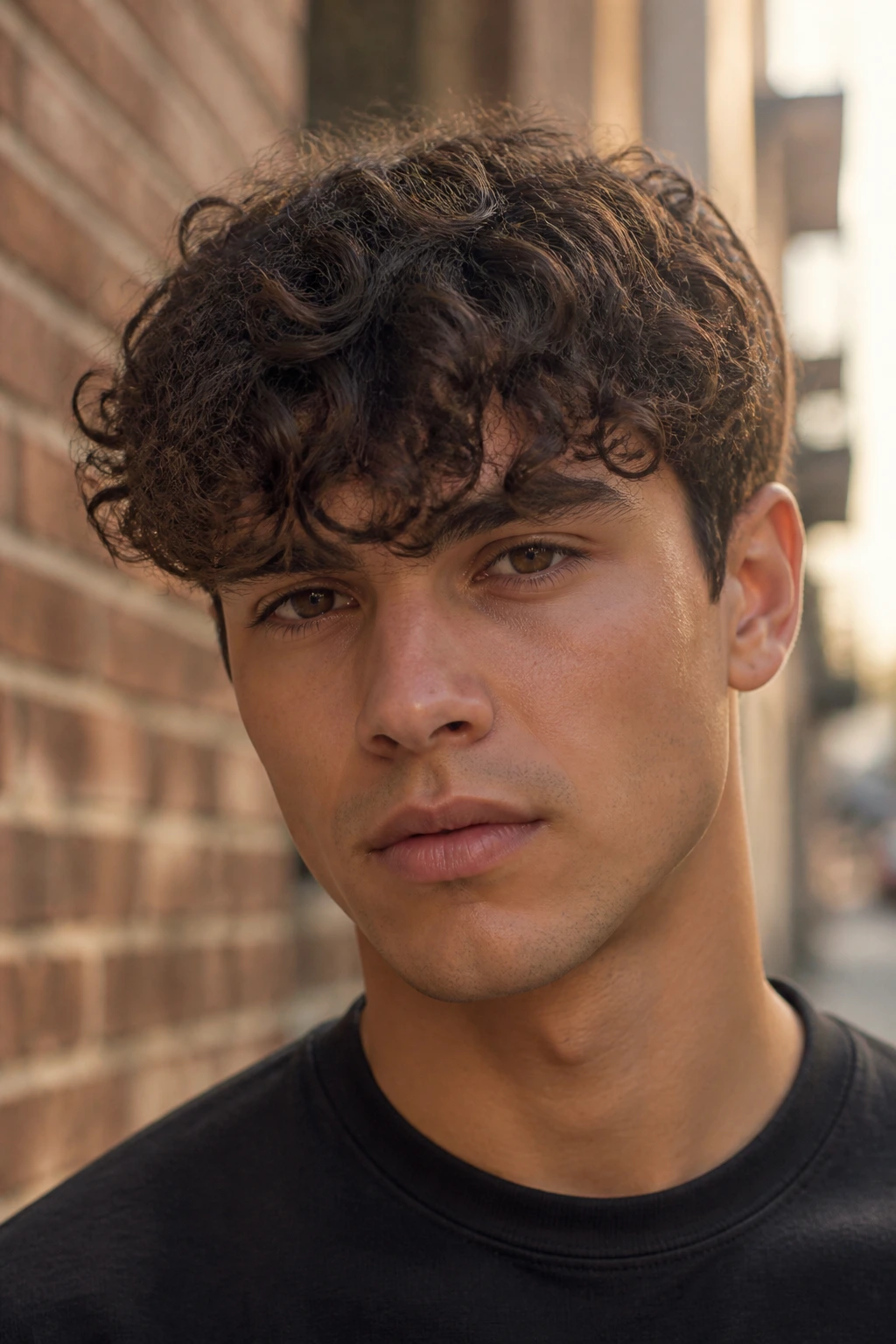
A curly fringe pushes the curls forward instead of fighting them backward. The result is softer around the face and a little more casual than a curly top fade. The fringe usually sits at eyebrow level or just above it when dry, which means the haircut needs to account for shrinkage from the start.
You want moisture here. A leave-in conditioner, curl cream, and a light gel or custard can keep the front from frizzing out by midday. The sides can stay tapered or faded, but the forehead line should feel relaxed rather than boxed in.
This cut works well if you have a longer face or want to break up a high forehead without going all the way to a blunt crop. It also looks good when it grows out, which is rare and worth saying out loud.
12. Burst Fade Mohawk
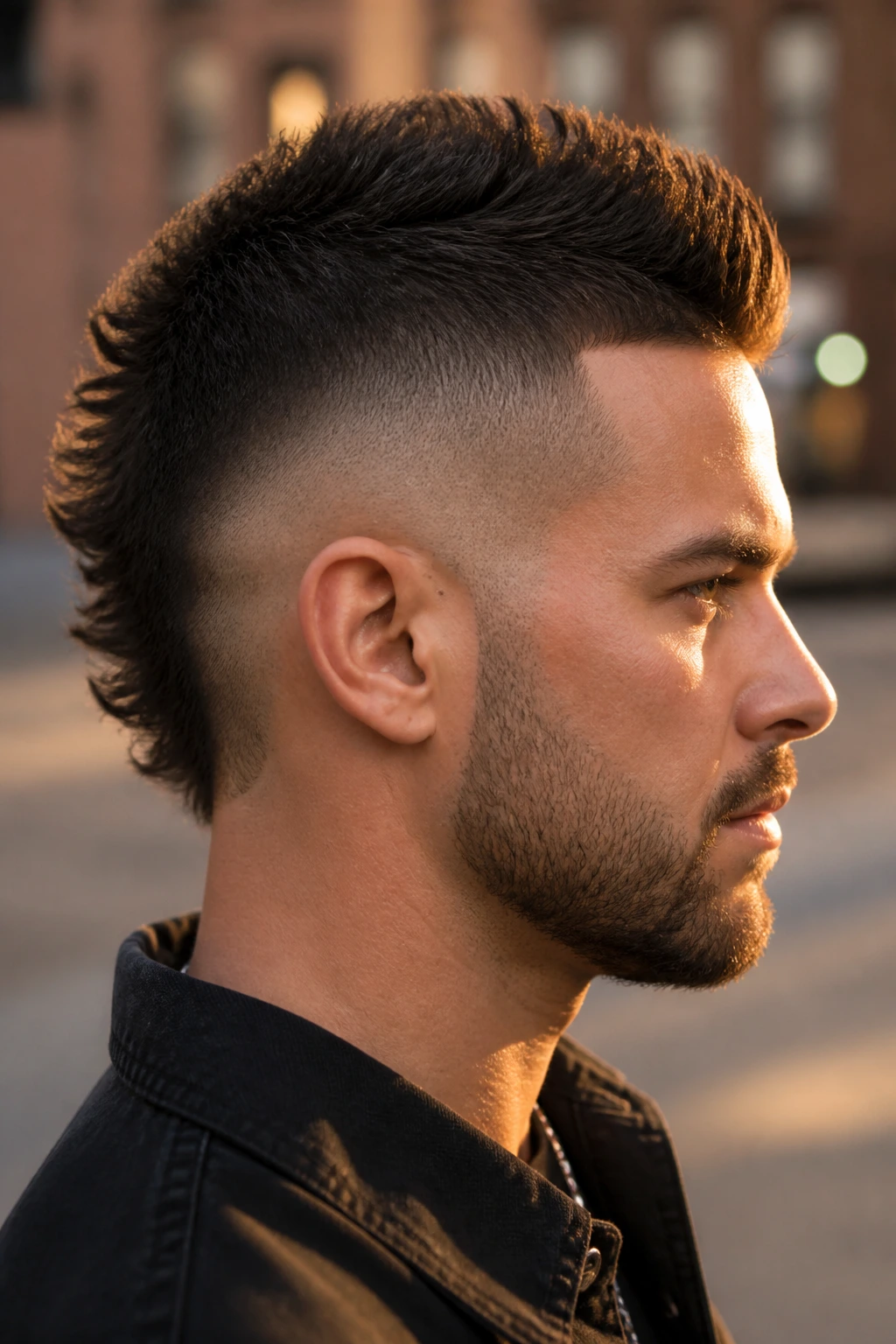
A burst fade mohawk has just enough edge to make people look twice, but it doesn’t have to feel theatrical. The fade curves around the ear in a burst shape while the strip of hair on top and through the center stays longer — often 2 to 4 inches. If the top has texture, the whole cut feels modern instead of costume-like.
How to Keep It Wearable
The key is restraint. Don’t let the strip get too wide, and don’t let the fade climb so high that it eats the shape. A matte paste or curl sponge can give the center enough definition without making it stiff. On coarser or curly hair, this cut can be excellent because the shape has somewhere to go.
It’s a strong choice if you want personality and still need the haircut to work in everyday life. Keep the edges clean, or the mohawk starts drifting into “grew out by accident” territory.
13. Short Spiky Hair
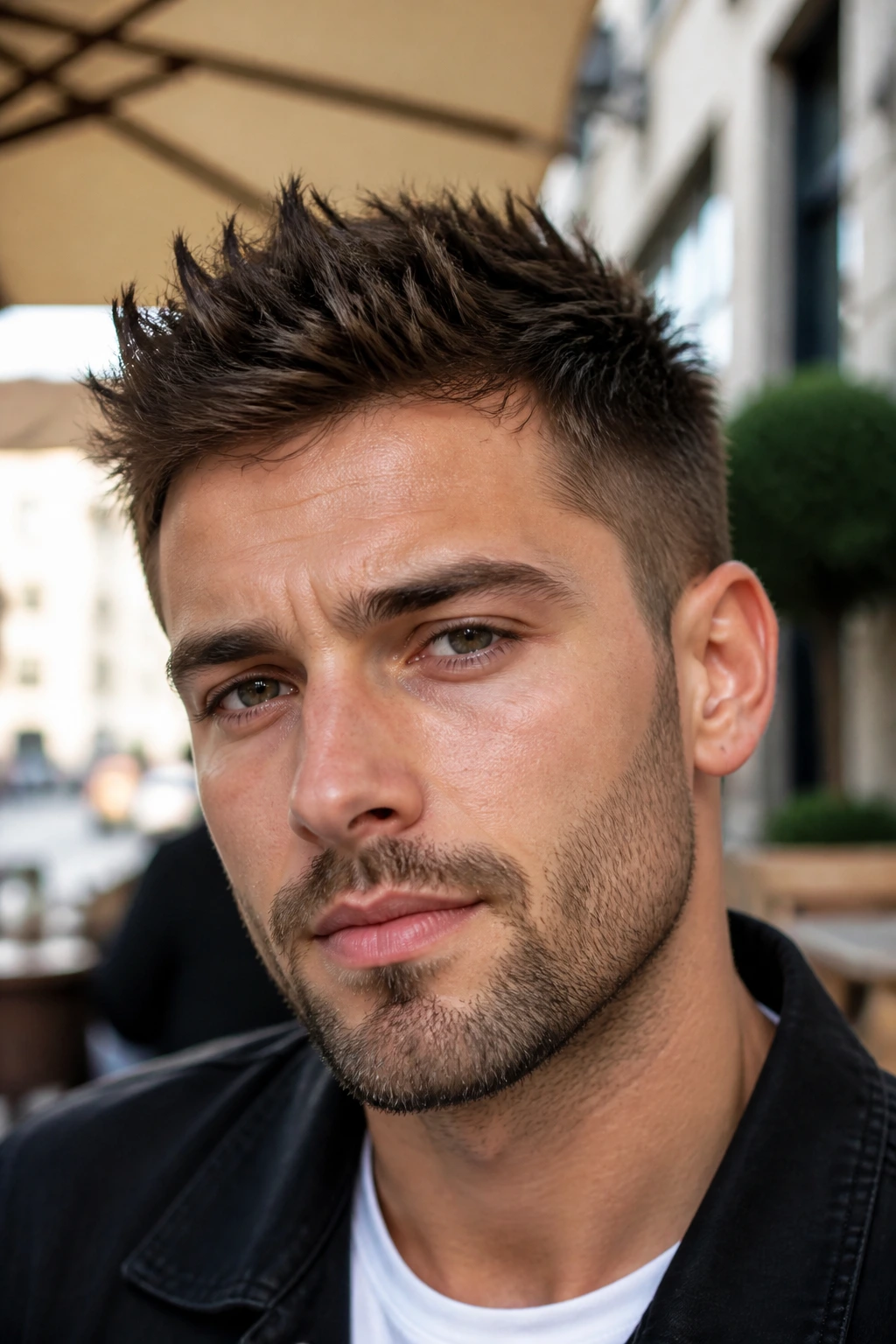
Short spiky hair works because it doesn’t try too hard. The top is usually kept around 1.5 to 2 inches, then pushed up and slightly forward with a matte product that gives separation. The spikes should look broken and uneven, not like little plastic teeth.
This is a good cut for thick hair with a bit of natural grip. Fine hair can do it too, but it needs a lighter hand or the spikes collapse. A blow dryer helps if your hair lays too flat. Hit the roots, lift the front, then finish with a paste rubbed between your palms before you touch the hair.
The sides can taper cleanly or fade down to the skin. Either way, the silhouette stays compact. That’s what keeps the style from looking like it got stuck in a sports photo from years ago.
14. Bro Flow
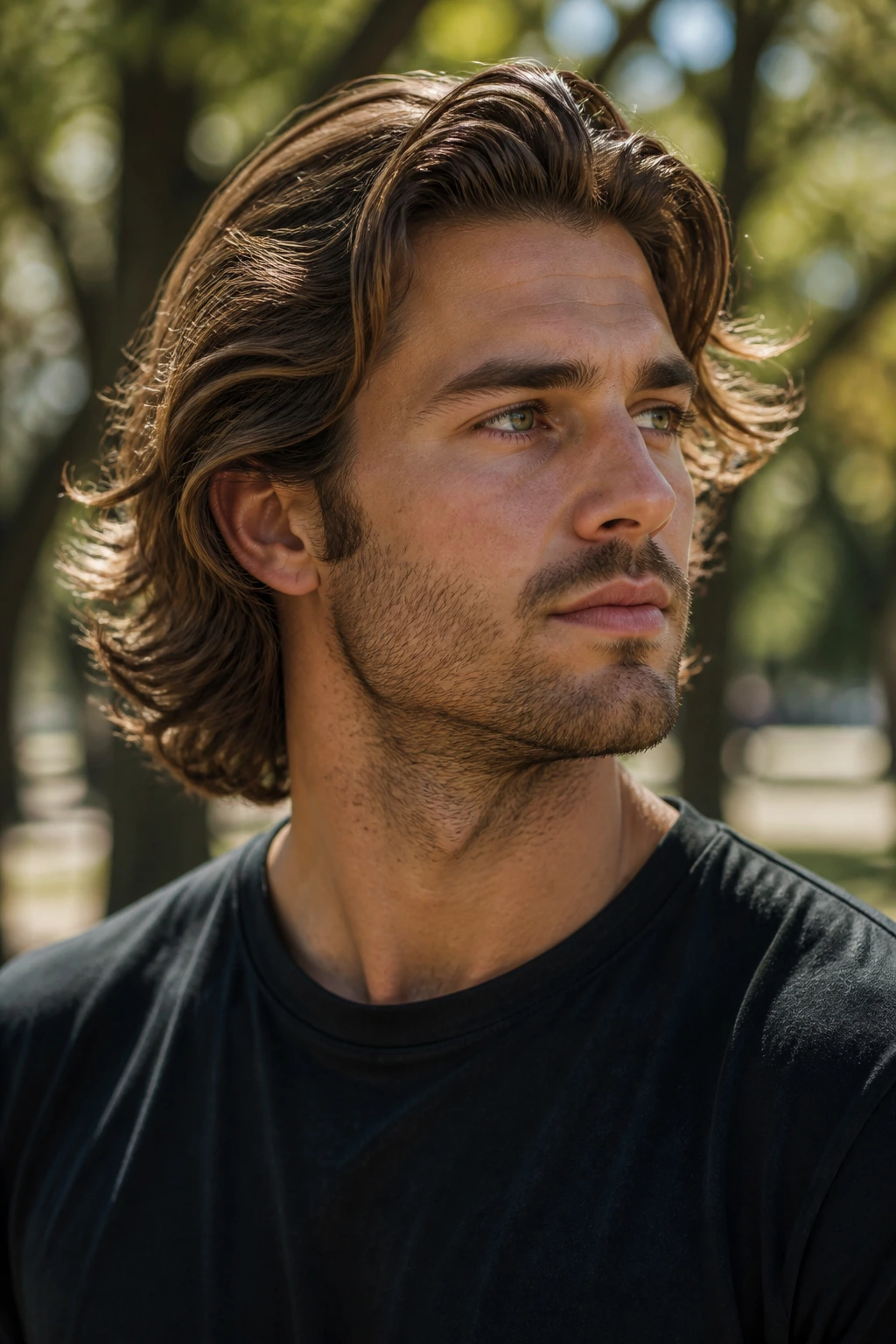
The bro flow is what you wear when you want length but not a lot of ceremony. Hair falls back and around the ears, usually somewhere in the medium-length to shoulder-grazing range, with the ends kept light enough to move. Wavy hair loves this cut. Straight hair can wear it too, but the shape usually needs a bit more layering.
A good bro flow does not look like a mop. That’s the trap. The barber should remove bulk near the ends and around the sides so the hair bends, not fluffs. A leave-in conditioner or light cream is usually enough to keep it calm. If you run into wind a lot, tuck one side behind the ear and let the rest fall naturally.
It’s laid-back, yes. But it still needs trimming every couple of months or it turns into heavy, shapeless length.
15. Middle Part Curtains
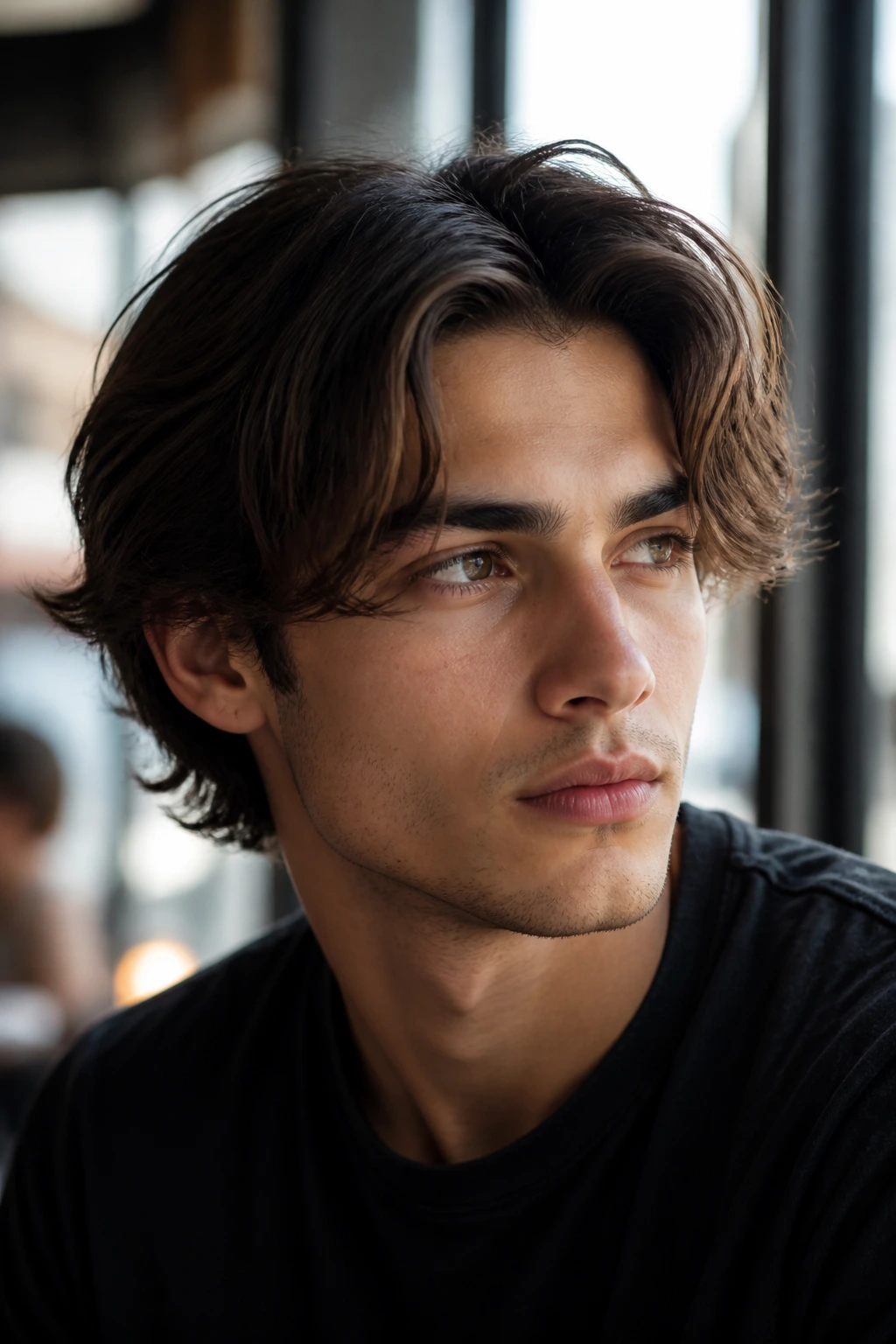
Curtains are back because they solve a real problem: how to wear medium hair without making it look too polished or too random. The middle part leaves room for the hair to drape around the face, while the layers keep the whole thing from sitting like a flat curtain rod. On straight hair, the middle part reads clean. On wavy hair, it reads softer and fuller.
How to Make It Look Intentional
Ask for length that reaches the eyebrows when damp, because it will lift and shorten once dry. Keep the sides blended enough that they don’t stick out. A sea salt spray or light cream gives the part some separation, and a quick center blow-dry helps the fringe fall where you want it.
- Best for: straight, wavy, or lightly textured hair.
- Face shape note: especially good if you want to soften a long face.
- Barber note: ask for layers that move, not blunt blocks.
If the middle part feels too floppy, tighten it with a small amount of matte product and push the front away from the eyes.
16. Comb Over Fade
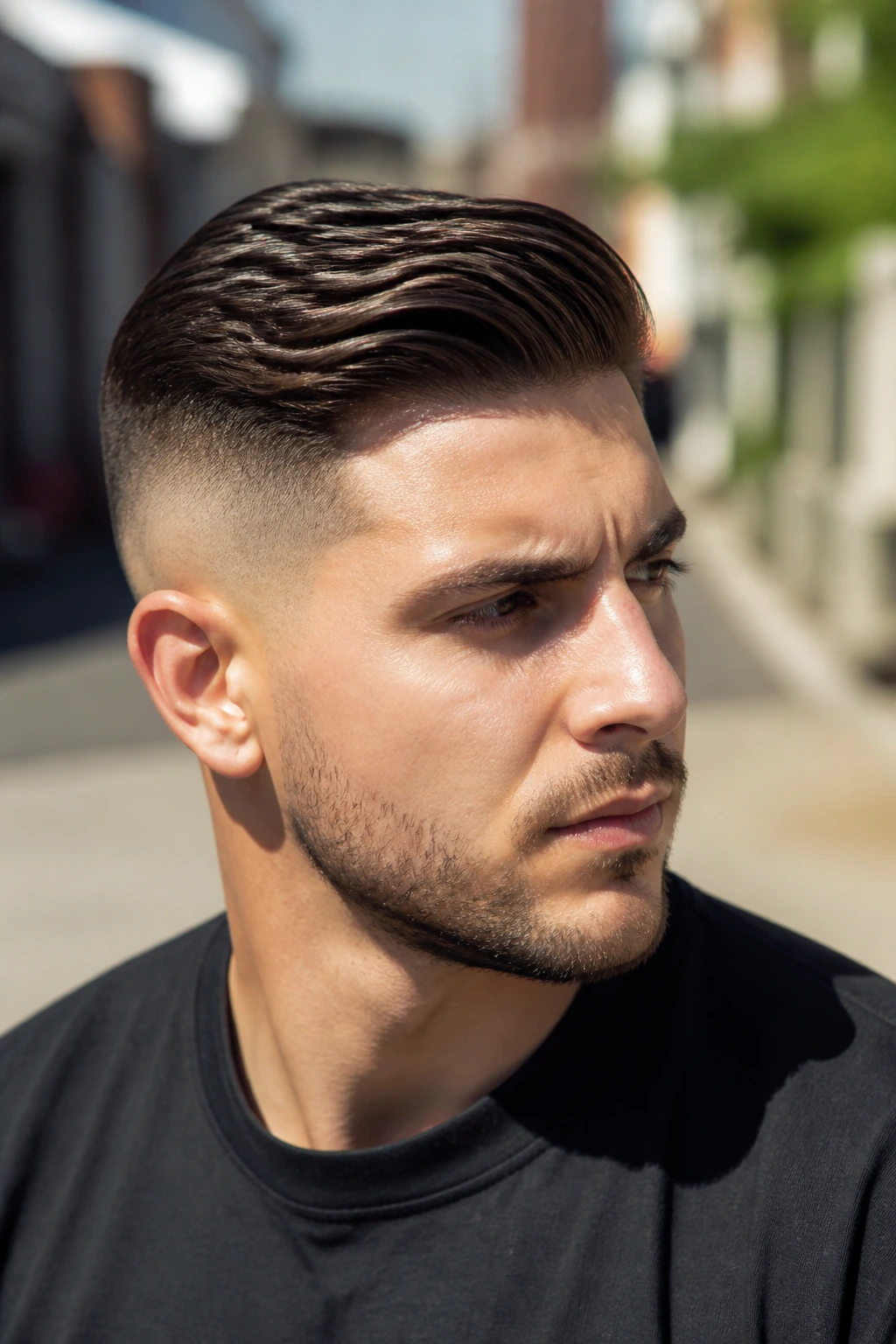
A comb over fade can be sharp, but only if you keep it honest. The hair on top is longer and swept over one side, while the fade tightens the sides so the shape looks deliberate. It’s a cousin of the side part, only with a little more volume and sweep. That makes it useful for men who want coverage without trying to hide the fact that they have hair.
You can wear it soft with cream, or cleaner with a low-shine pomade. If you’re dealing with thinning up top, the comb-over should be subtle — not a dramatic sweep that exposes the scalp when the wind hits. The barber should leave enough density at the front for the hair to cross naturally.
A hard comb-over looks fake fast. A softer one, with a fade that isn’t too high, looks modern and controlled.
17. High and Tight
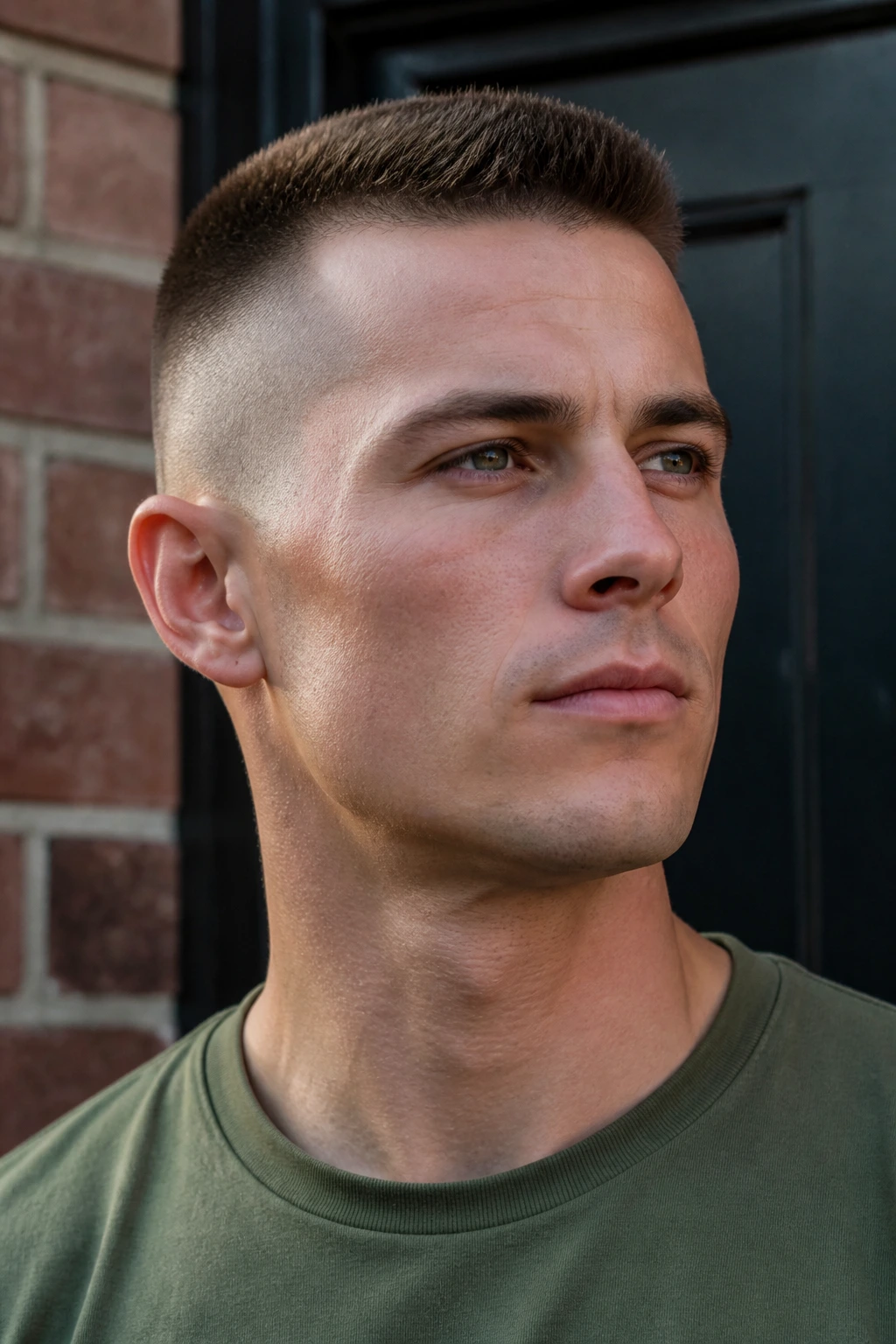
The high and tight gets right to the point. The sides are clipped very short, sometimes almost skin level, while the top stays compact and slightly longer so there’s still a shape sitting on the crown. It’s one of the cleanest haircuts on the list, and also one of the least fussy.
This is the cut for guys who want their hair out of the way and their morning routine cut down to seconds. It’s useful for thick hair that grows out fast and for anyone who likes a sharp outline without a lot of product. If you keep facial hair, the high and tight pairs well with a crisp beard line because both edges feel intentional.
It can feel severe if your head shape is very round or very flat, so don’t take the top too short. A little extra length makes the whole thing feel human.
18. Caesar Cut
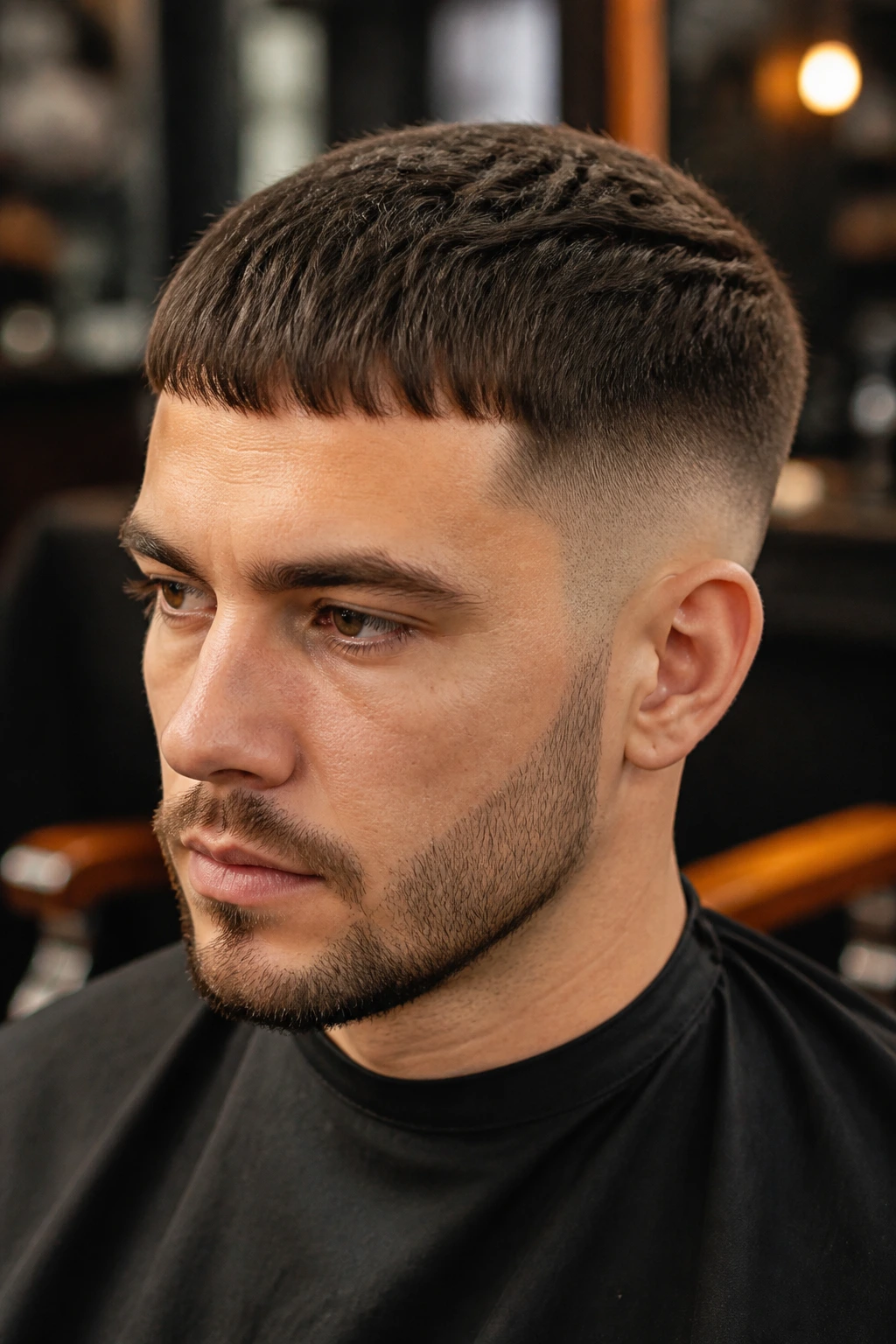
The Caesar cut puts the fringe front and center. Short, even length on top — often around 1 to 1.5 inches — with a straight, forward-facing line at the front. It’s an old shape that still works because it solves two problems well: it hides a high hairline and it behaves on coarse hair.
The finish should feel textured, not helmet-like. A small amount of matte paste is enough to separate the top slightly, while the fringe stays low across the forehead. If your hairline is uneven, this cut smooths that out visually without screaming about it.
It looks clean with a taper and can be especially good if your hair lays forward on its own. The barber needs to be careful not to cut the fringe too bluntly unless that’s the look you want. A tiny bit of texture keeps it from looking dated.
19. Temple Fade Afro
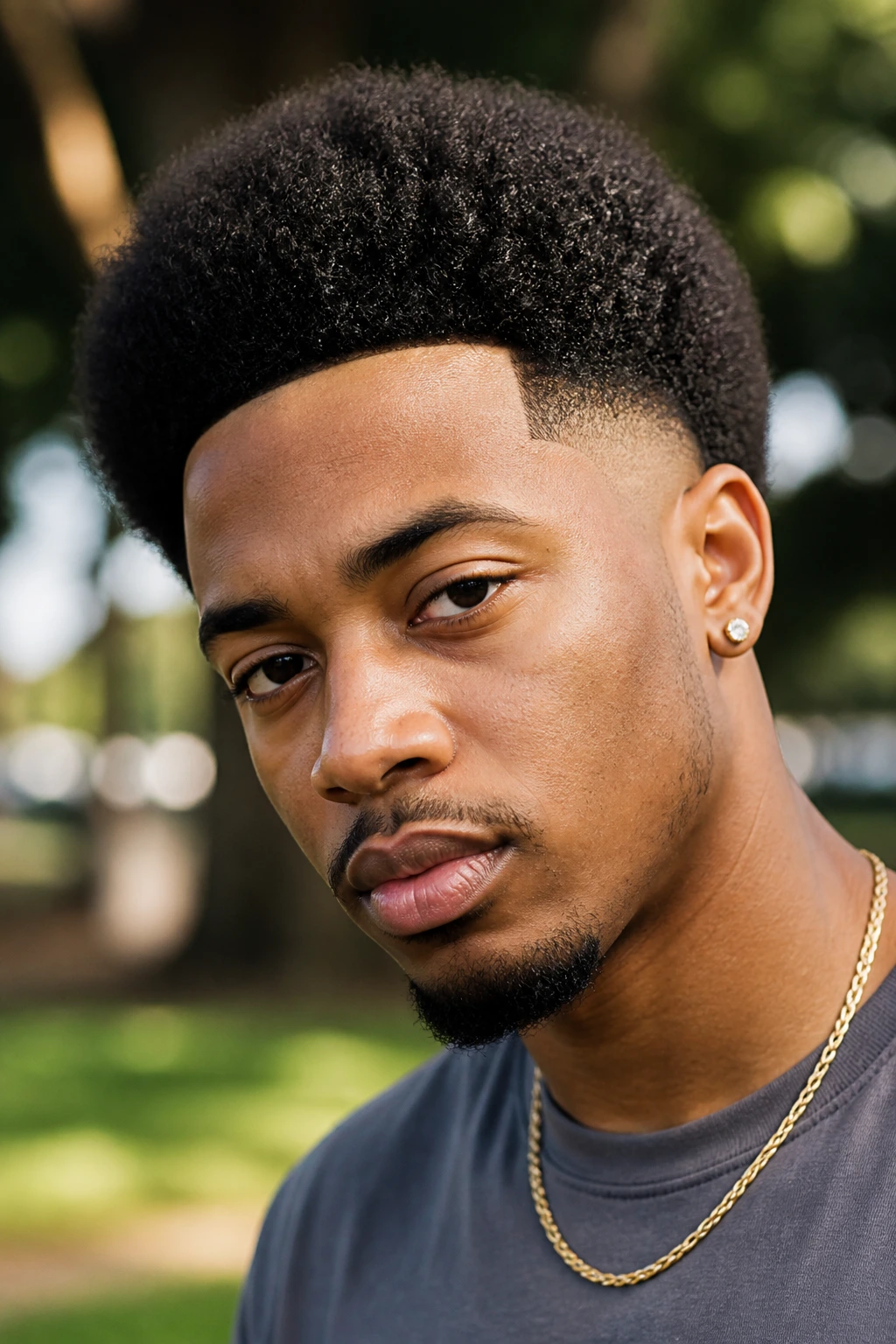
A temple fade afro keeps the silhouette rounded while cleaning up the edges where the hair meets the face. The afro itself can be compact or larger, but the temple fade and neckline are what make the whole style look crisp. This is shape work, not just length work.
Moisture matters here. A leave-in conditioner, a light oil on the ends, and a pick or hands to lift the shape help the afro keep its body. The barber should be careful with the outline so the top stays full and the sides don’t get chopped into a square. If the shape is right, the cut looks balanced from every angle.
It’s one of the smartest styles for coily hair because it respects the texture instead of fighting it. And yes, the edge-up matters. A lot.
20. Twist Out Fade
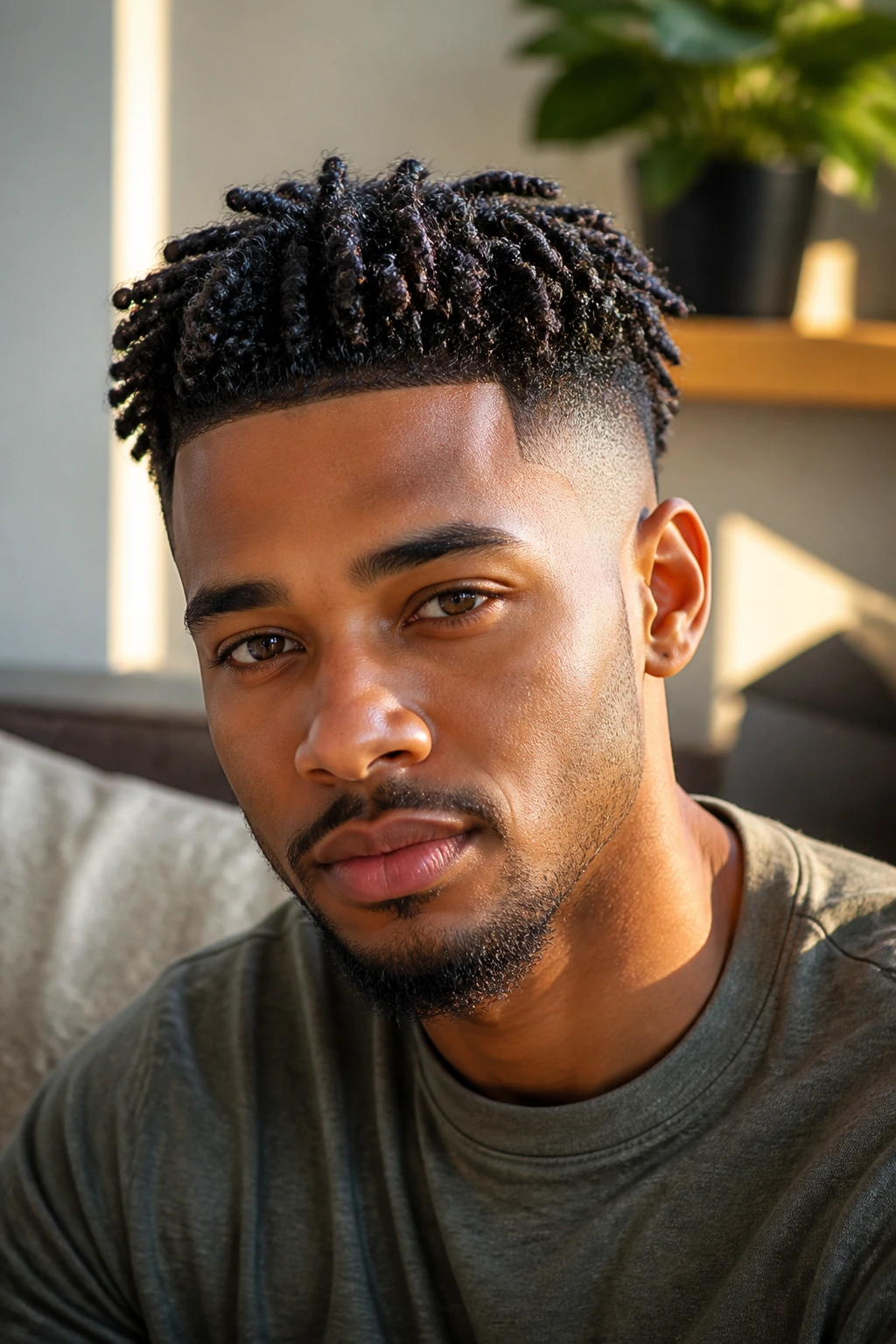
A twist out fade lets the texture do the talking. The top keeps enough length for twists, sponge definition, or a defined natural coil pattern, while the sides fade down cleanly so the shape doesn’t spread outward. It’s a good choice when you want movement on top and a crisp frame around it.
The Part People Miss
The top has to be cared for before the fade even matters. Moisture, consistent twisting, and a little patience are what make the style work. If you rush the top and only focus on the fade, the haircut loses its shape fast. A curl cream or twisting butter can help the pattern hold, and a clean lineup makes the whole thing feel finished.
This is one of those styles that looks best when it’s slightly imperfect. Too much manipulation makes the top frizz. Too little and it falls flat. The sweet spot is in the middle, and it’s not hard to find once you stop treating the curls like they need to behave like straight hair.
21. Wolf Cut
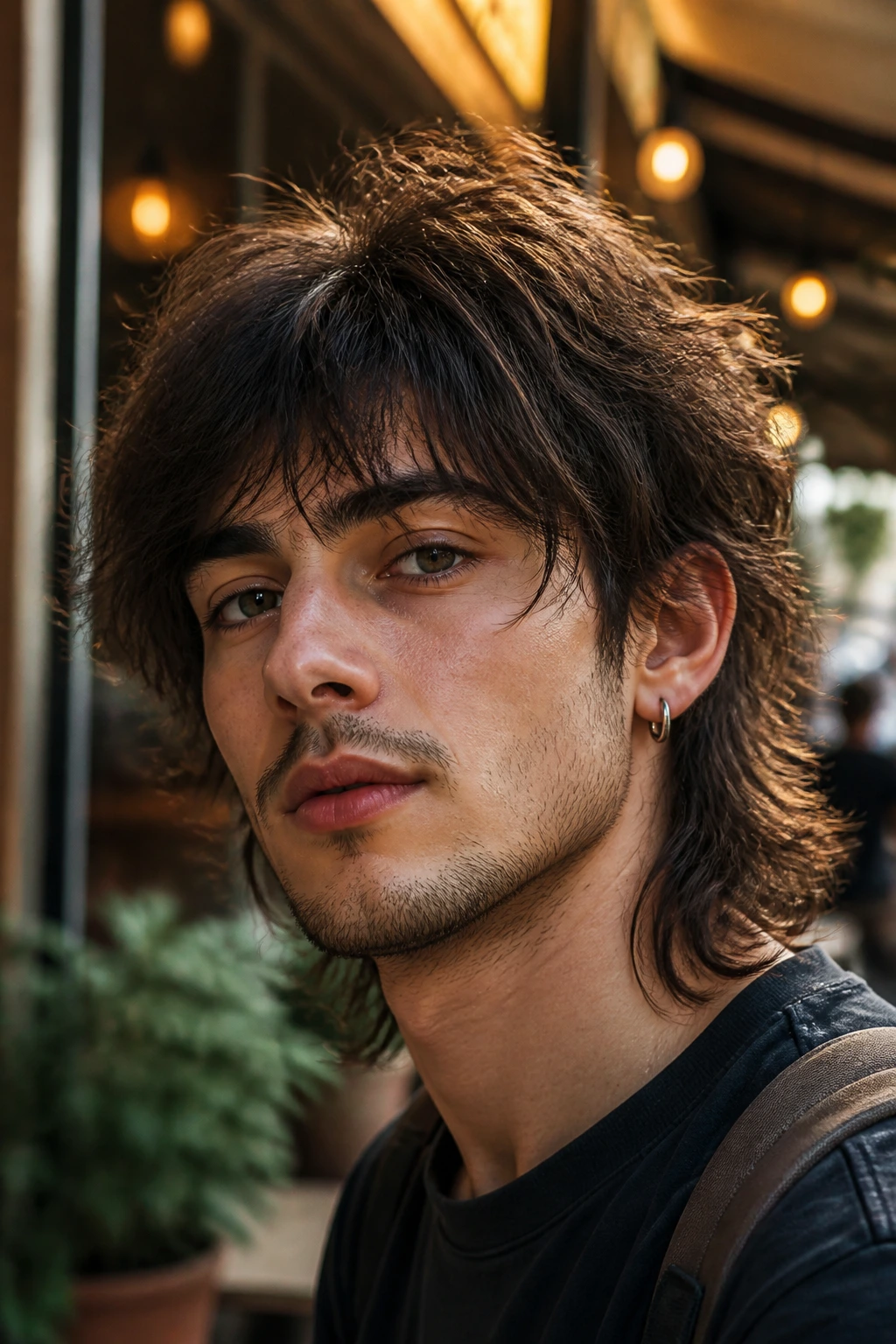
The men’s wolf cut is a shag with opinions. Layers are cut through the top and sides so the hair looks lived-in, uneven, and full of movement. It works best on thick or wavy hair because the texture naturally supports the shape. Fine hair can wear it, but the cut has to be lighter or it goes limp fast.
What keeps the wolf cut from looking sloppy is the layering around the crown and temples. The hair should sit a little wild, yes, but still have a shape that you can recognize in the mirror. Sea salt spray, a bit of cream, and finger-styling do more than a heavy paste ever will.
If you like neatness, skip it. If you like your hair to look a bit wind-tousled even on a still day, this cut has that useful, slightly rebellious feel.
22. Broccoli Cut
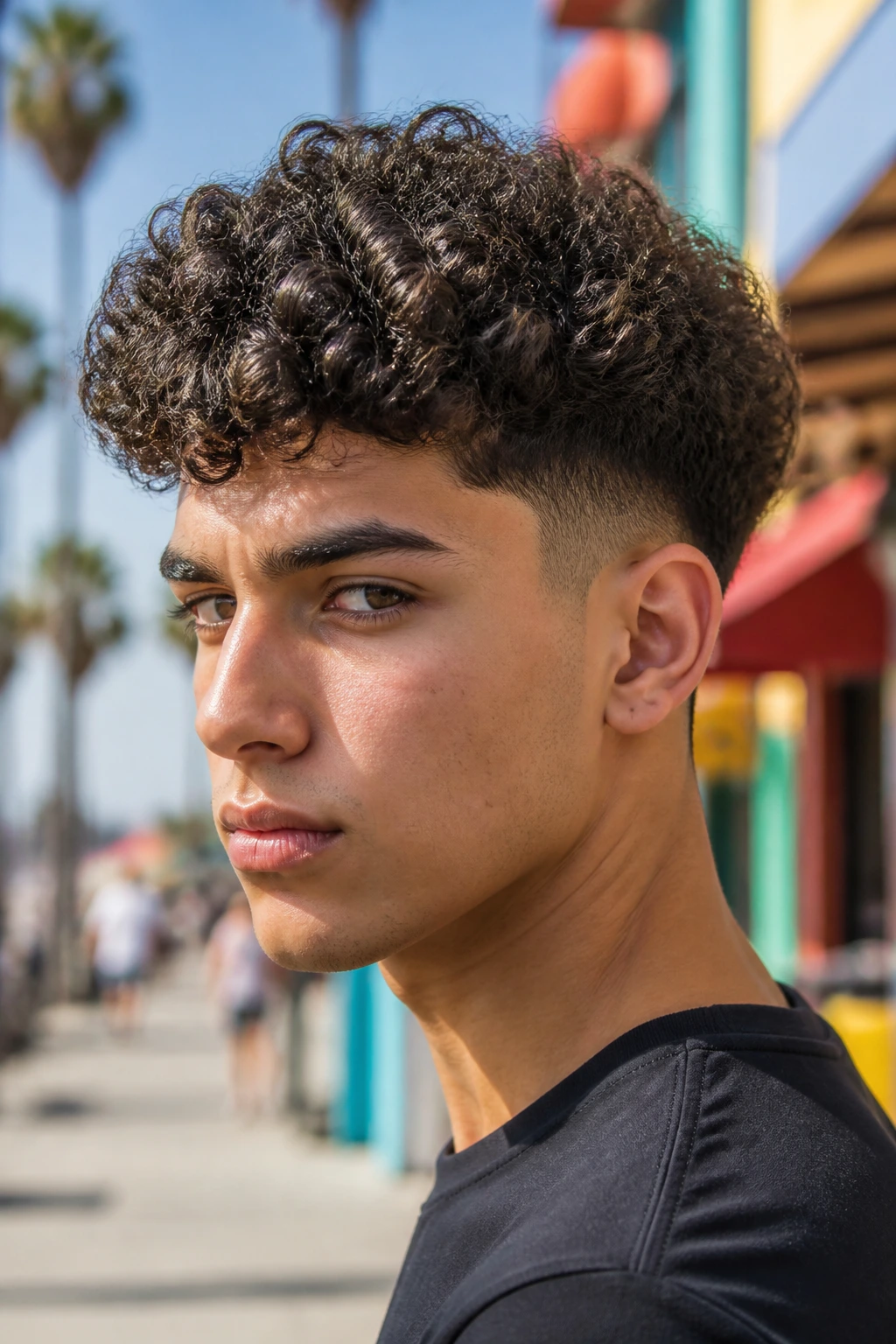
The broccoli cut gets attention because it’s unapologetically curly on top with tighter sides, and the silhouette is hard to miss. The top tends to be rounded and dense, sometimes helped by natural curls or a perm, while the sides stay short so the shape rises upward. It’s not subtle. That’s part of the appeal.
What makes it work is the contrast. If the curls are too loose or the sides too wide, the shape starts to wobble. Ask for a clean taper or fade around the ears and a rounded top that keeps its volume. Moisture and curl definition matter more here than shine. A diffuser, curl cream, and a little patience will do more than any heroic styling move.
It suits guys who want a modern, textured look and don’t mind a haircut with personality. If you want quiet, this is not your haircut.
23. Mullet Fade
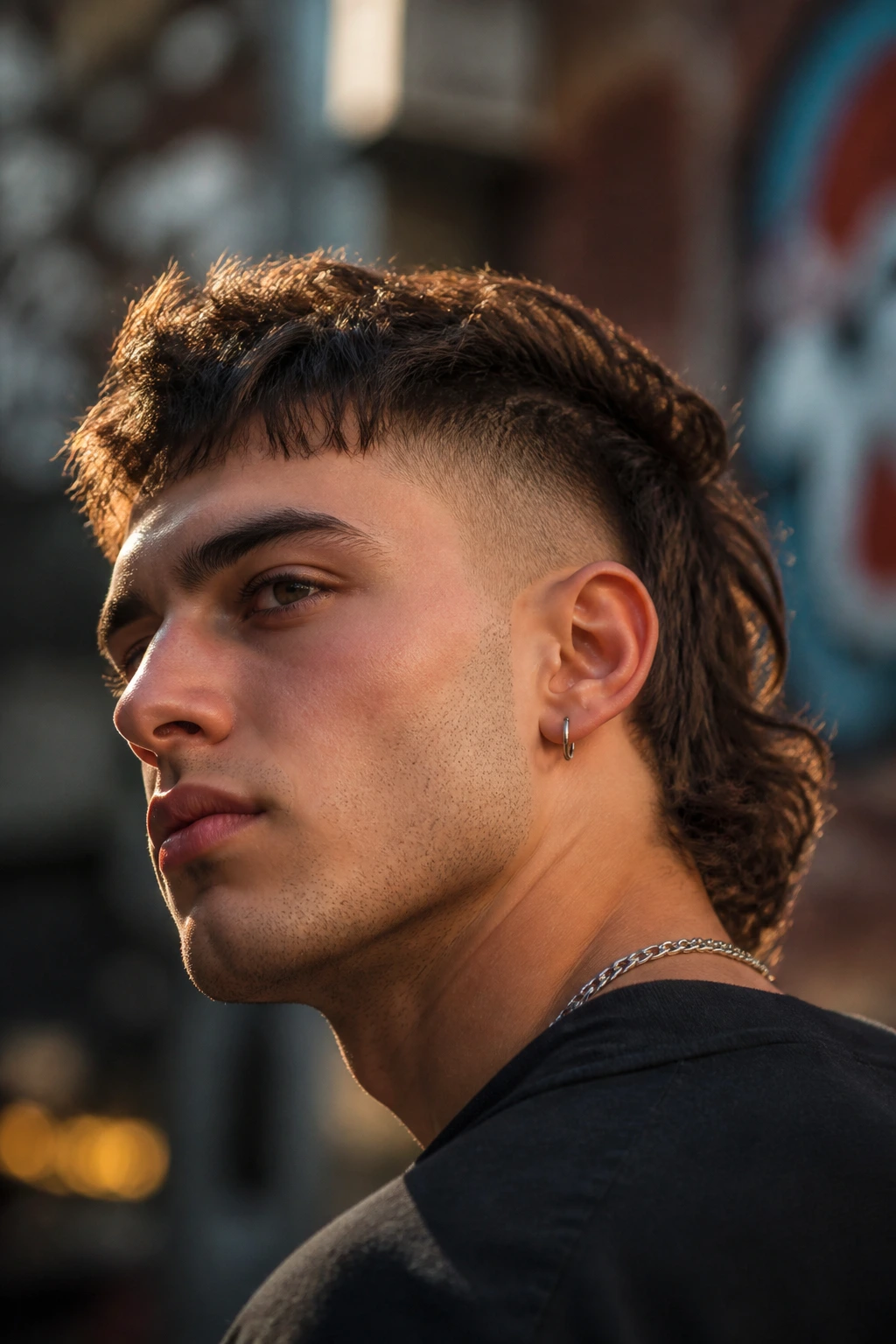
The mullet fade only works if you commit to the shape. Shorter at the front and sides, longer in the back, with a fade that keeps the sides from getting shaggy, it has enough edge to feel current without turning into a costume. The best versions are textured and a little rough around the edges, but still controlled.
How to Keep It Intentional
Ask for the back to be long enough to read, not so long that it drags the whole style down. Usually that means keeping the back several inches longer than the top. Texture spray or a matte cream keeps the front from lying too flat. If your hair is straight, a bit of movement helps. If it’s curly, the shape gets even better.
This cut is not for everyone, and that is fine. The guys who wear it well usually know exactly what they’re doing, or at least they’re willing to lean into it.
24. Long Layers
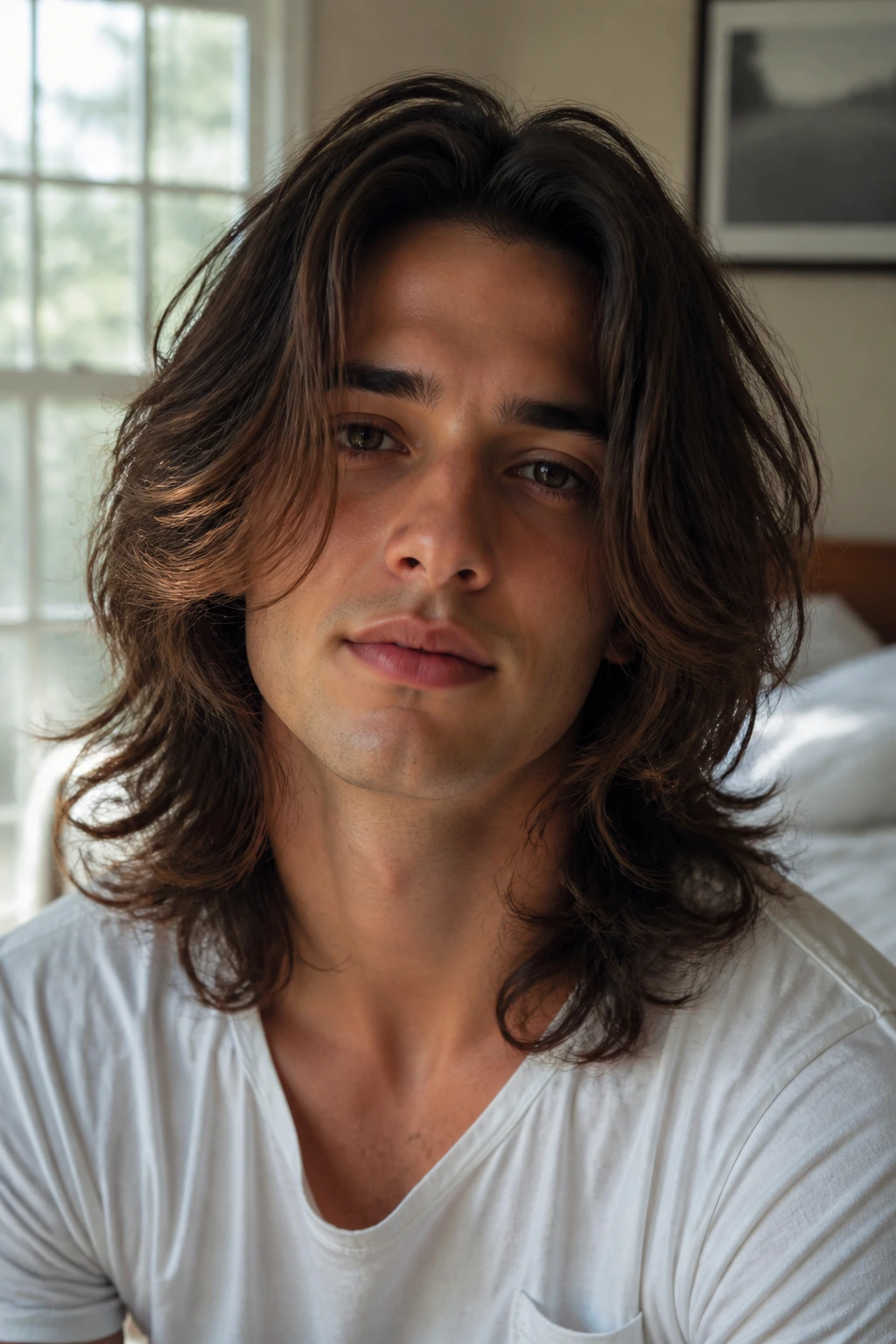
Long layers are the difference between “I’m growing it out” and “I meant to have this.” The layers remove bulk so the hair can move, whether it falls past the ears, the neck, or onto the shoulders. Wavy and thick hair especially benefits from this, because a single-length cut can look heavy and triangular fast.
A good layered cut keeps the ends light and the top from collapsing. It can be worn loose, tucked, tied, or pushed back with a bit of cream. If you wash long hair, conditioner matters more than ever; dry ends make the whole style look tired. Trim the ends before they split, not after.
This is one of the most forgiving long styles, but only if the layers are placed with some thought. A blunt grow-out and long layers are not the same thing.
25. Man Bun
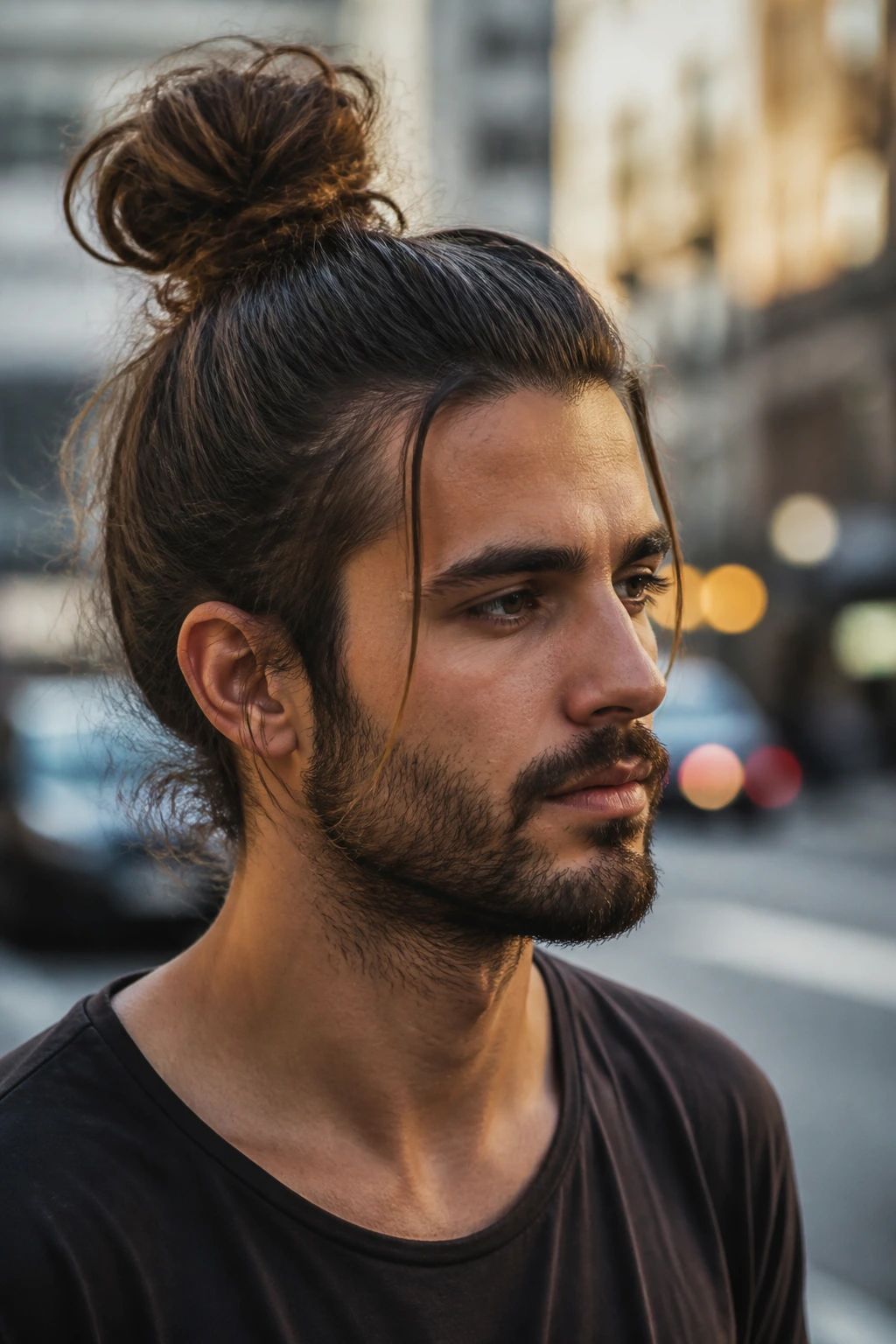
The man bun is less about a single shape and more about control. Hair that’s long enough to gather back can be tied high, low, or somewhere in the middle, depending on how much of the face you want open. The best version leaves a little slack so the bun looks relaxed instead of stretched tight against the scalp.
If your hairline is receding a little, don’t yank the front backward hard. Keep the tie looser and let some hair fall around the face. A bit of cream or oil on the ends helps keep flyaways from breaking the line. For thick hair, a strong hair tie is non-negotiable.
It works well when you need length out of the way, but the bun itself should not be the whole haircut story. The sides, neckline, and overall health of the hair matter too.
26. Hard Part Sweep
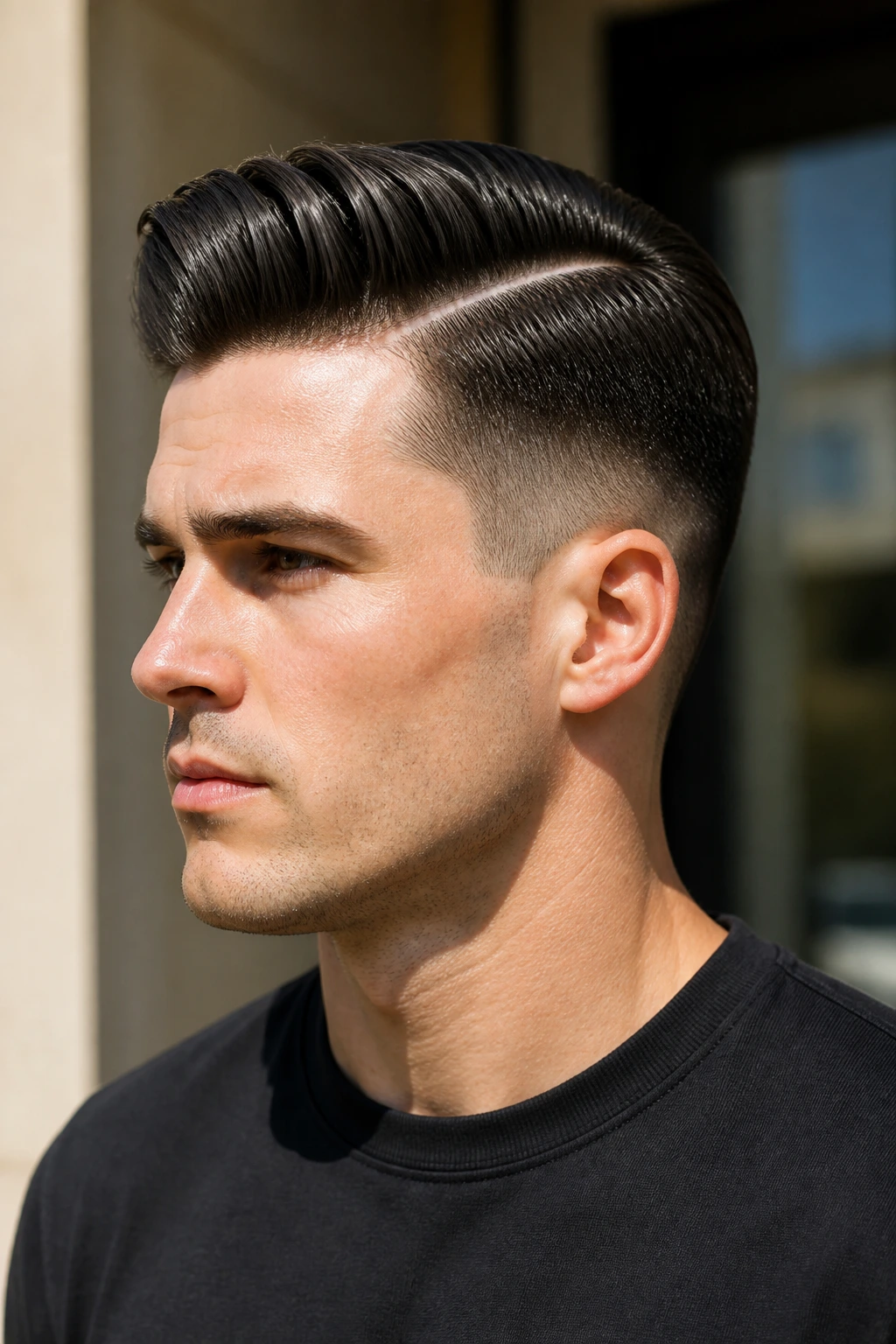
A hard part sweep gives the haircut a crisp line without needing a full slick-back shine. The part is shaved or etched in, then the hair is combed over with enough volume to show off the separation. It’s neat, a little formal, and very dependent on a clean barber hand.
The hard part grows out fast. That’s the tradeoff. If you want it looking sharp, plan on regular touch-ups. Use a light pomade or cream to keep the sweep in place without making the top glossy and heavy. This cut works best when the sides are tapered close and the top has enough density to move.
If you like precision, you’ll probably love this. If you hate visible maintenance, skip it and keep the part soft instead.
27. Flat Top
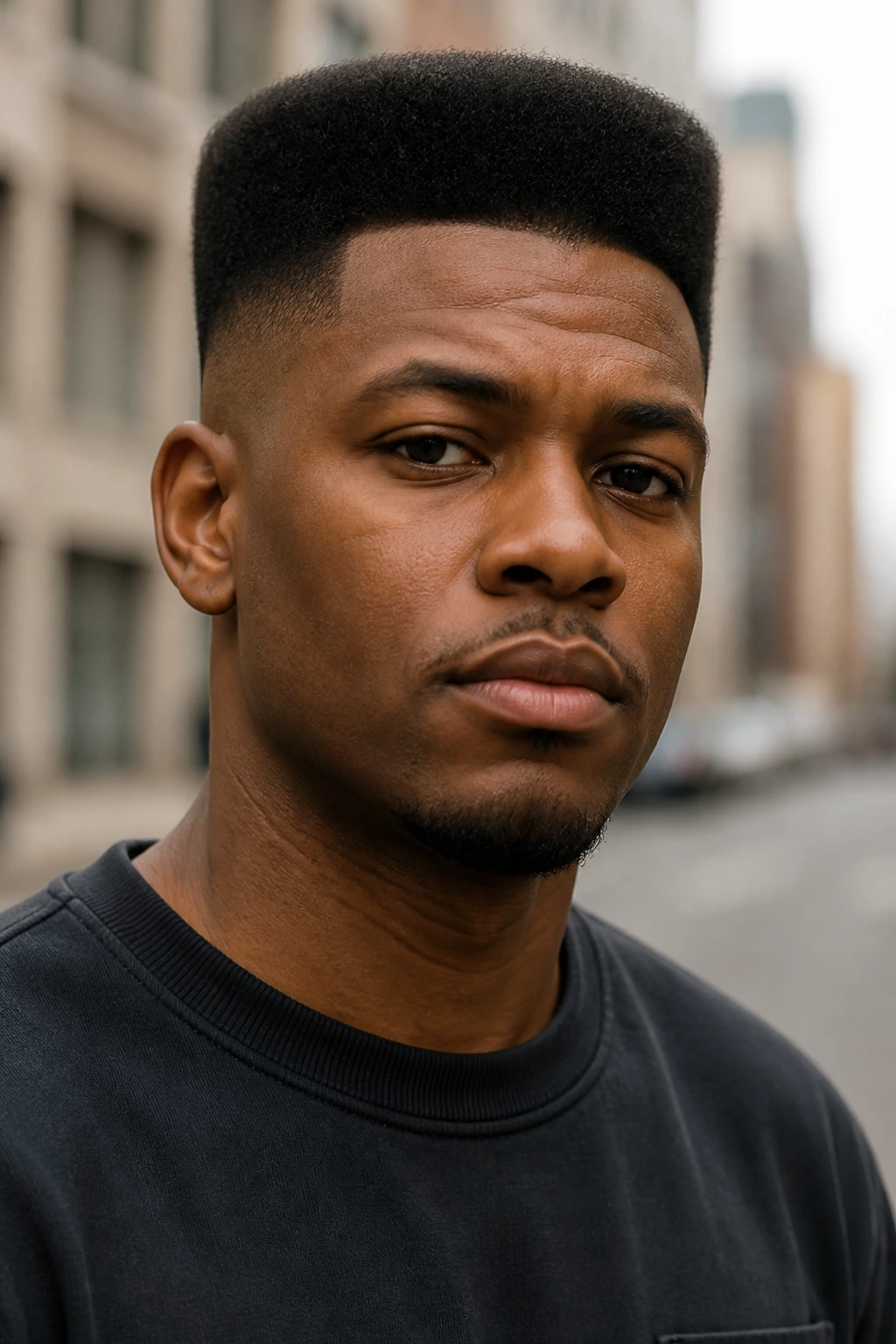
A flat top is the haircut that refuses to be shy. The top is shaped into a clean, level surface, often with sharp corners and shorter sides, and the silhouette is the entire point. It can look especially strong on coily or very dense hair because the texture supports the height and the edges.
What Makes It Hard to Fake
A flat top needs a skilled barber. The shape is all about balance — the top has to read flat from the front and side without looking boxy in a bad way. It needs regular upkeep too, because the edges blur fast. If the outline gets fuzzy, the whole style loses its punch.
This is not the haircut you choose if you want to disappear into the crowd. It’s for guys who enjoy shape, precision, and a little visual authority on top of the head.
28. Brush Up
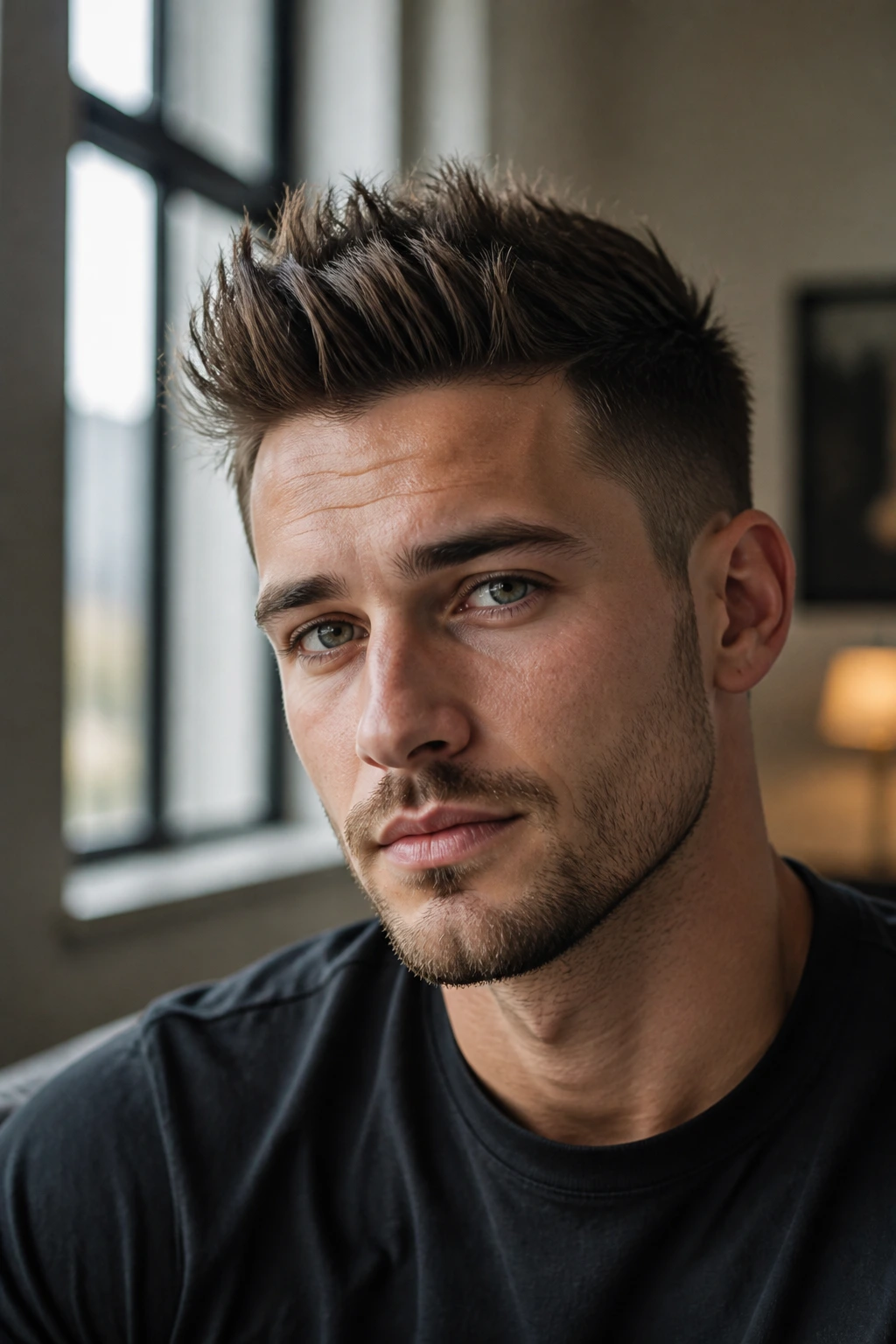
Brush up hair is like a quiff’s easier cousin. Instead of rolling the front back, you push the hair upward with a brush or fingers so it stands with texture and lift. The sides usually stay tight, often with a fade or taper, and the top sits around 2.5 to 4 inches depending on how much height you want.
Use a blow dryer at the roots first. That step creates the lift; the product only locks it in. A matte clay or paste gives separation, which is what keeps the top from turning into a solid block. This style works especially well on thick hair because there’s enough body to hold the shape.
The brush up looks casual enough for daily wear but sharp enough to pass in a cleaner setting. It’s one of the better choices if you want height without fussing with a polished finish.
29. Drop Fade Textured Top
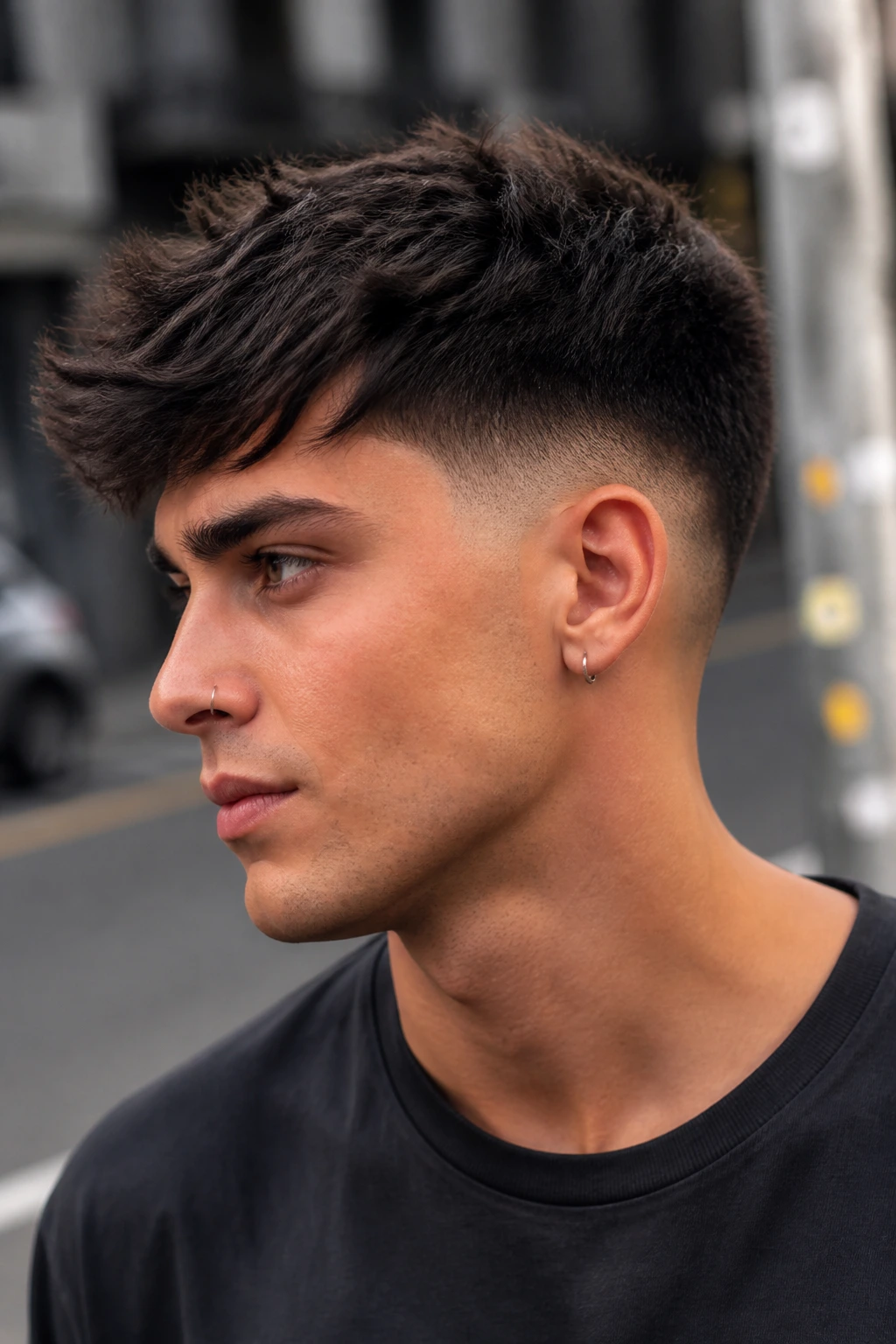
A drop fade follows the curve behind the ear and dips lower at the back, which gives the haircut a cleaner shape than a straight fade line. With a textured top, the result feels modern and well balanced. The fade contours the head; the top adds the movement.
That curve is the detail that makes it work. On some faces, a drop fade softens the profile better than a high or flat fade because it respects the shape of the skull. Keep the top chopped and piecey, then use a matte product to keep it from lying too neatly. This cut is especially good if you want the sides to feel tight but not severe.
If the fade goes too high, you lose the rounded effect. So keep an eye on that. The whole point is the shape.
30. Shadow Taper
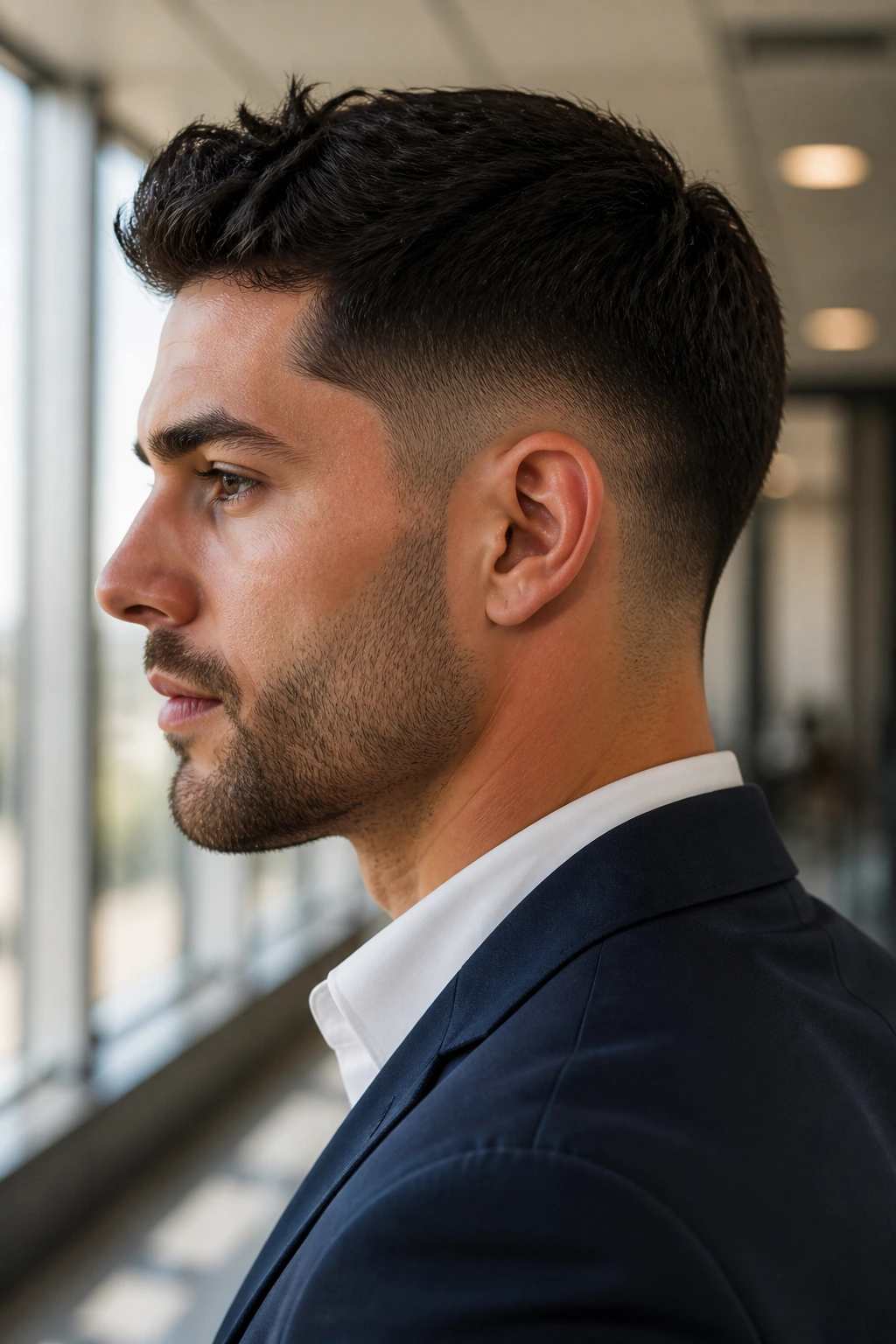
A shadow taper is for men who want neat edges without the obvious punch of a skin fade. The taper is soft, gradual, and dark at the base, which means the haircut keeps a natural look around the ears and neckline. The top can be short, medium, or even curly, and the whole cut still reads clean.
This is one of the most underrated options on the list. It works in offices, on weekends, and while growing out other styles. Fine hair likes it because the taper doesn’t overwhelm the top. Curly hair likes it because it keeps the outline tidy without removing all the shape.
You won’t get the same dramatic contrast as a fade, but you also won’t be trapped into a sharp maintenance schedule. That’s a fair trade.
31. Disconnected Fringe
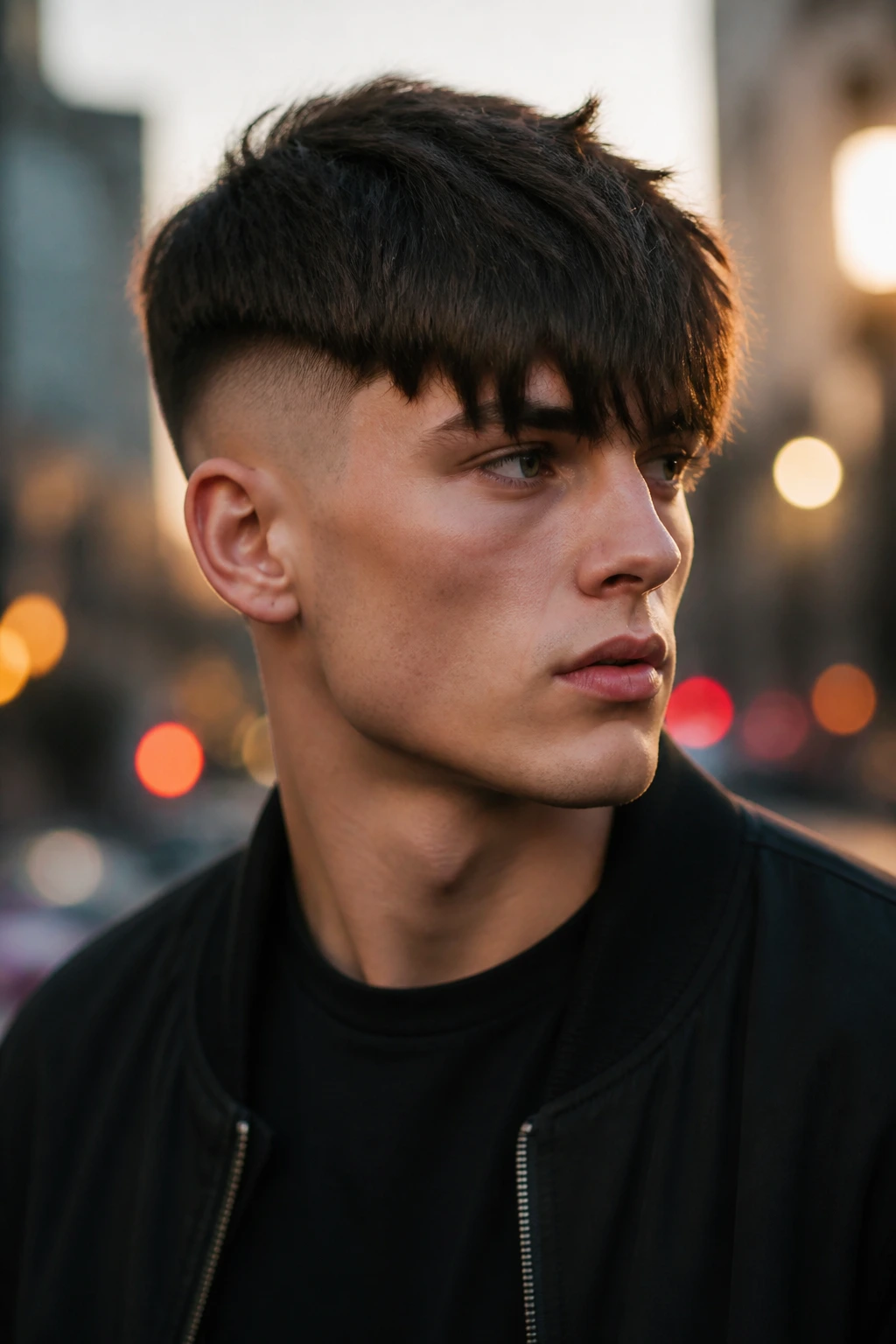
A disconnected fringe is the haircut version of saying, “No, I want the contrast on purpose.” The fringe stays long and heavy in front, while the sides are cut very short or faded down with a clear break between the two. It’s edgy, modern, and best on straight, dense hair that can hold the front without splitting apart.
How to Wear It Without Looking Like a Costume
The key is control. Keep the fringe textured so it doesn’t sit like a sheet, and make sure the disconnect is clean rather than accidental. A dry paste works better than shiny product here. If the front grows too long, the style starts hiding your eyes. That may sound romantic. It usually isn’t.
This cut suits guys who like an angular shape and are happy to maintain it. If you want soft and classic, pick something else. If you want a look that has a little attitude, this one brings it.
32. Wavy Mop Top
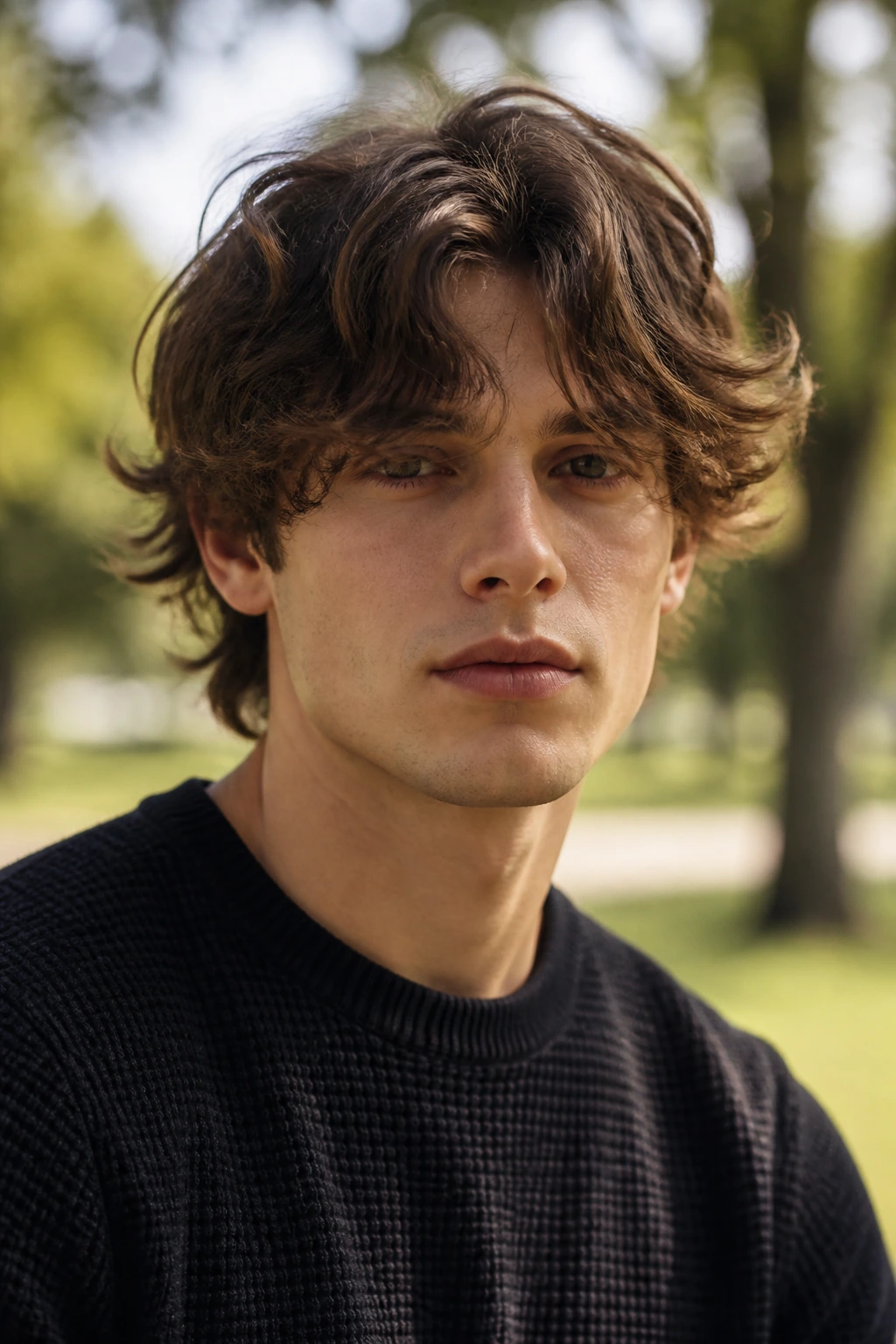
The wavy mop top is relaxed, slightly undone, and better than it sounds. It works when the waves are allowed to fall forward and around the face instead of being forced into a hard shape. Medium length on top and around the sides keeps the movement visible without making the haircut look unfinished.
A light sea salt spray or cream can encourage the wave pattern without weighing it down. The best version has enough layering to let the hair bend naturally. If you have hair that gets fluffy when it dries, ask the barber to remove bulk rather than just shorten it.
This cut is good for guys who like softness around the face and don’t mind a little edge. It looks especially strong when the hair is a bit imperfect.
33. Permed Top Fade
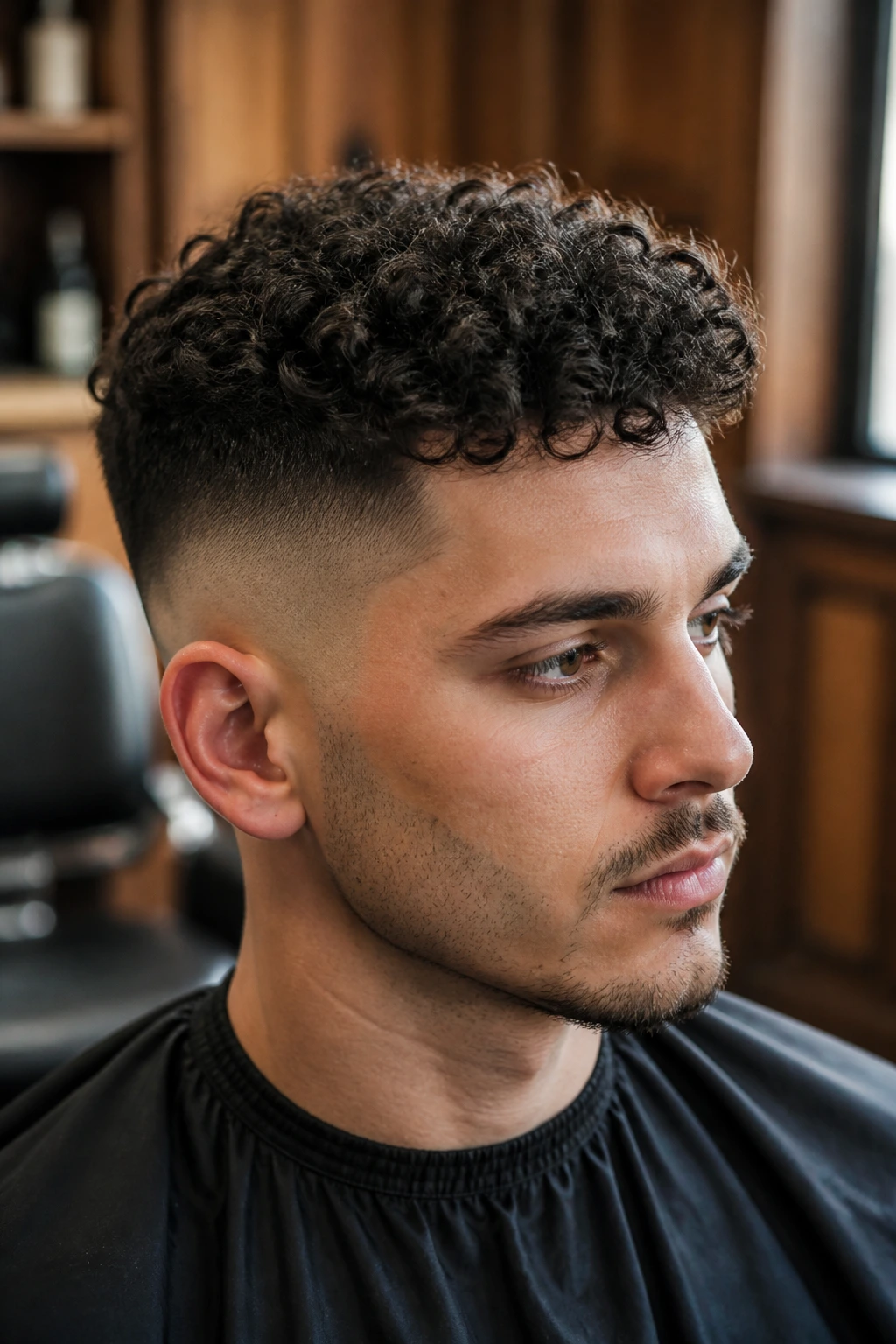
A permed top fade gives straight hair the body people spend years trying to fake with product. The sides stay tight, while the top gets a controlled wave or curl pattern from the perm. It can look bold, playful, or surprisingly polished, depending on how the curls are cut and maintained.
Perms need care. Moisture, gentle washing, and the right cut length matter more than usual because damaged curls lose shape fast. A fade helps keep the style neat, but the top still needs a barber who understands how the curls will settle once they dry. If the top is cut too short, you lose the texture. Too long, and it can balloon.
This is a strong option for guys who want lasting lift without fighting flat hair every morning. The commitment is real, though.
34. Scissor Crop
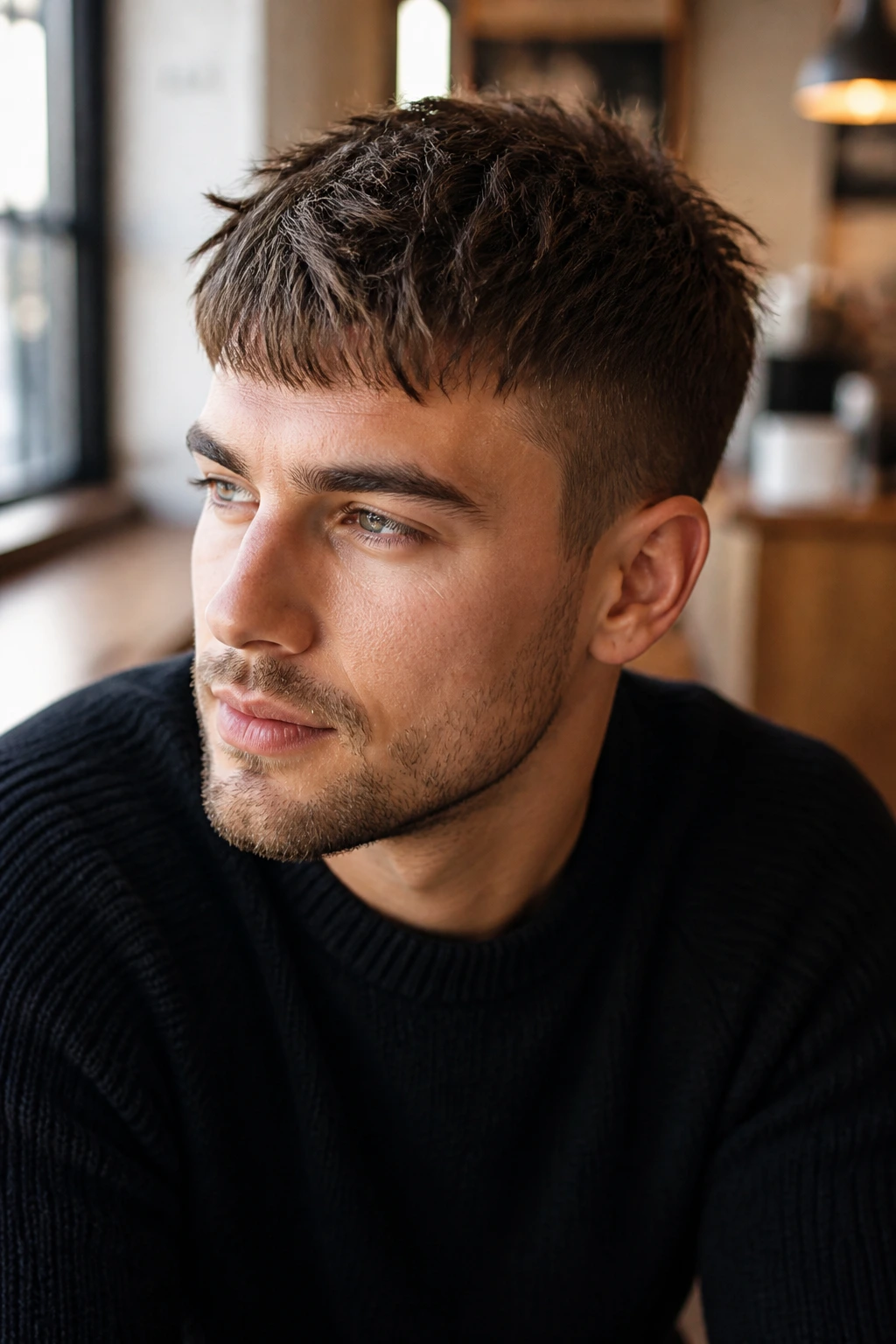
A scissor crop is a softer, more natural cousin of the clipper-heavy crop fade. The barber shapes most of it with scissors, which leaves a less aggressive outline and a more lived-in finish. The top usually stays textured and short to medium short, with a fringe that can sit forward or slightly broken.
What Makes It Feel Better in Real Life
The absence of a hard clipper line is what many men like here. It grows out more gracefully, and it suits hair that already has movement. Matte cream or light styling lotion is enough to give it separation. If your hair is coarse, the scissor crop can reduce that blunt, boxy look a lot of short cuts fall into.
It’s a smart middle ground: neat enough to look planned, soft enough not to feel overworked.
35. Slick Side Sweep
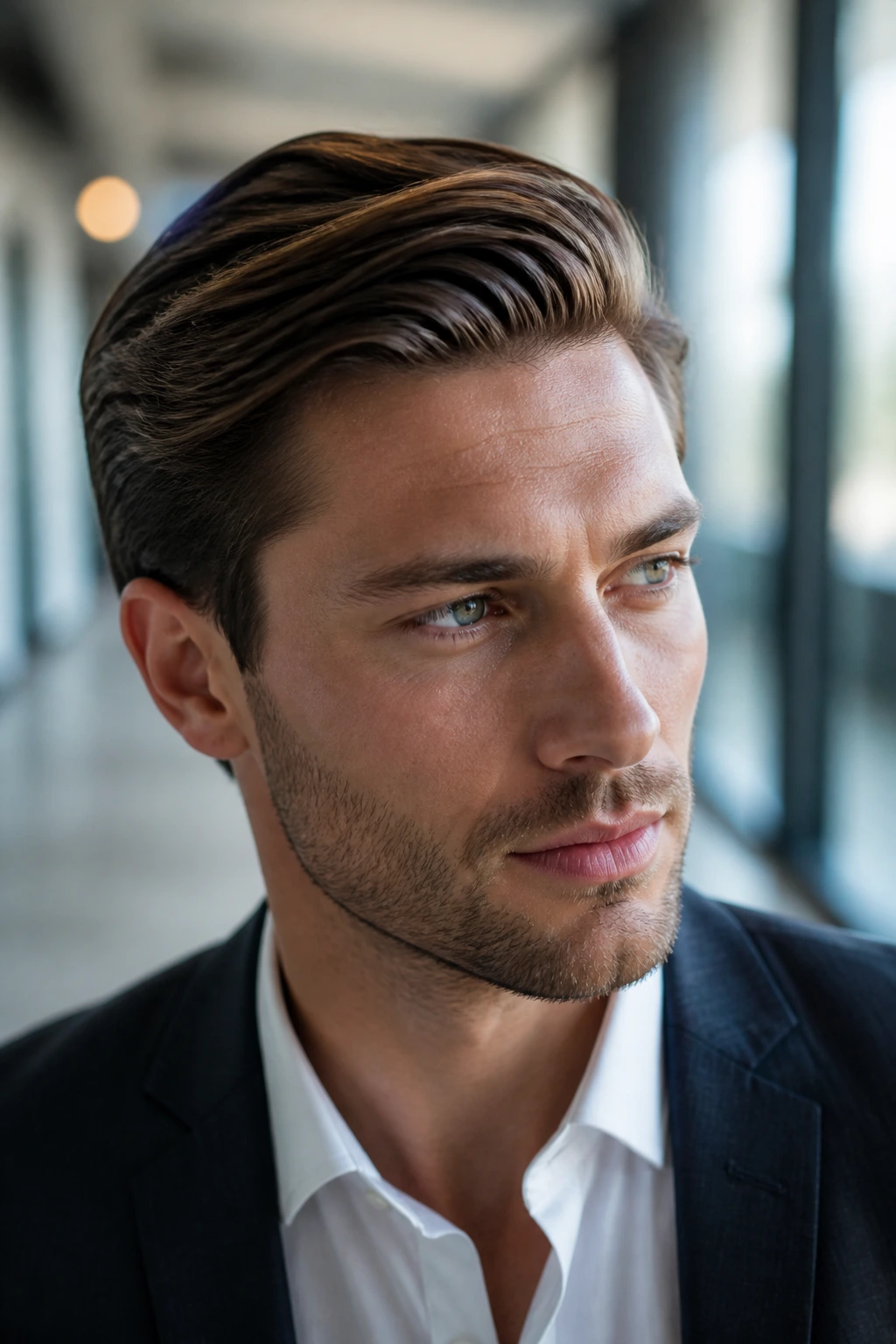
A slick side sweep is more polished than a casual side part, but not as severe as a full slick back. The top is longer and brushed to one side with a little shine, creating a diagonal line that looks tidy and grown-up without feeling stiff. It’s one of those styles that does well with a jacket and even better when the rest of your outfit is simple.
The trick is not to overload it with product. A light to medium pomade gives hold without turning the hair into a helmet. If your hair is fine, keep the sweep softer so it doesn’t separate into thin strands. If it’s thick, you can push the shape a little harder.
This haircut reads clean from across the room. Up close, the best versions still have some movement.
36. Tapered Afro
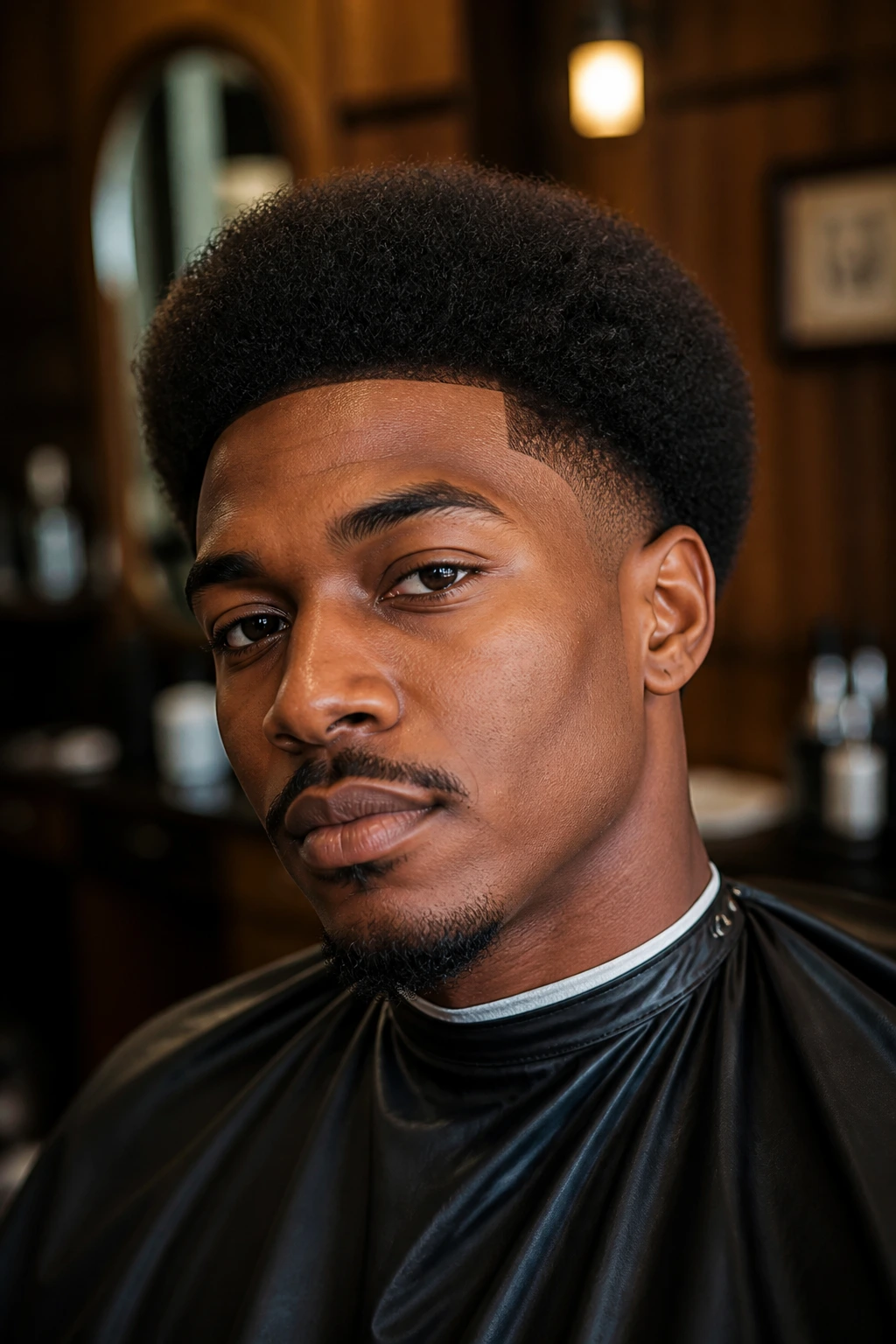
A tapered afro keeps the volume where you want it and trims the shape where you don’t. The taper at the temples and nape makes the silhouette look intentional, while the top stays rounded and full. It’s one of the most balanced styles for coily hair because it respects texture and shape at the same time.
Moisture and shape maintenance are the whole game. Keep the ends hydrated, shape it with a pick or fingers, and have the outline cleaned up before it grows too wide. A good taper makes the afro look neat without flattening the texture. That’s the line to hold.
If you like fullness and clean edges, this is a strong one. It wears well in almost any setting when the shape stays true.
37. Long Undercut
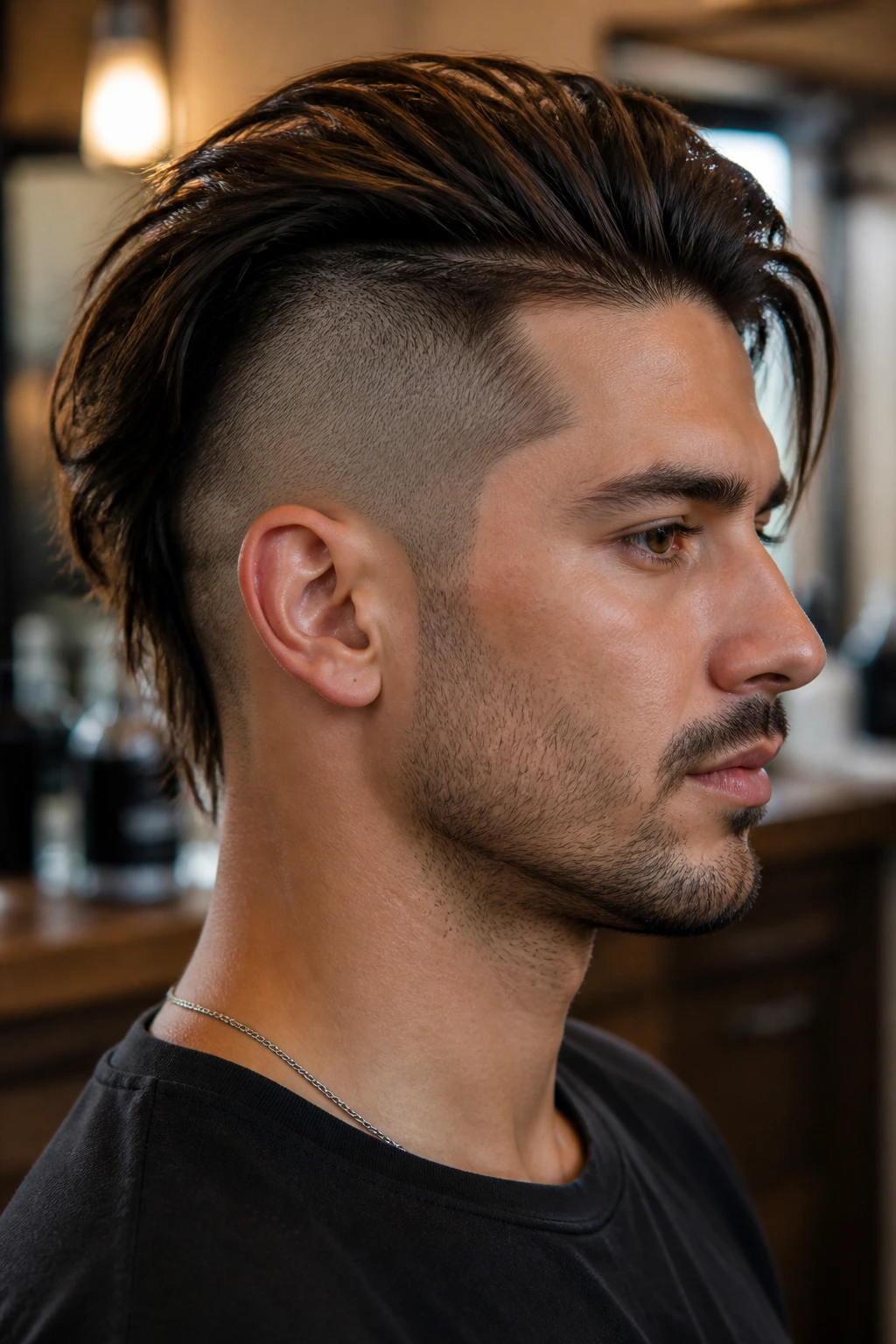
A long undercut gives you freedom on top and order on the sides. The contrast is obvious: long hair on top, short sides, and usually a clean nape. You can wear the top loose, tied back, swept sideways, or pushed behind the ears. That flexibility is the whole reason people keep choosing it.
Why It’s Useful
It handles thick hair well because the short sides remove bulk. It also gives wavy hair a clean frame so the length doesn’t swallow your face. The catch is the grow-out. When the undercut gets too soft, the contrast disappears and the haircut can look half-finished. Keep the neckline and sides trimmed, and the style stays sharp.
If you like long hair but want a more controlled outline, this is one of the better answers.
38. Braided Cornrows
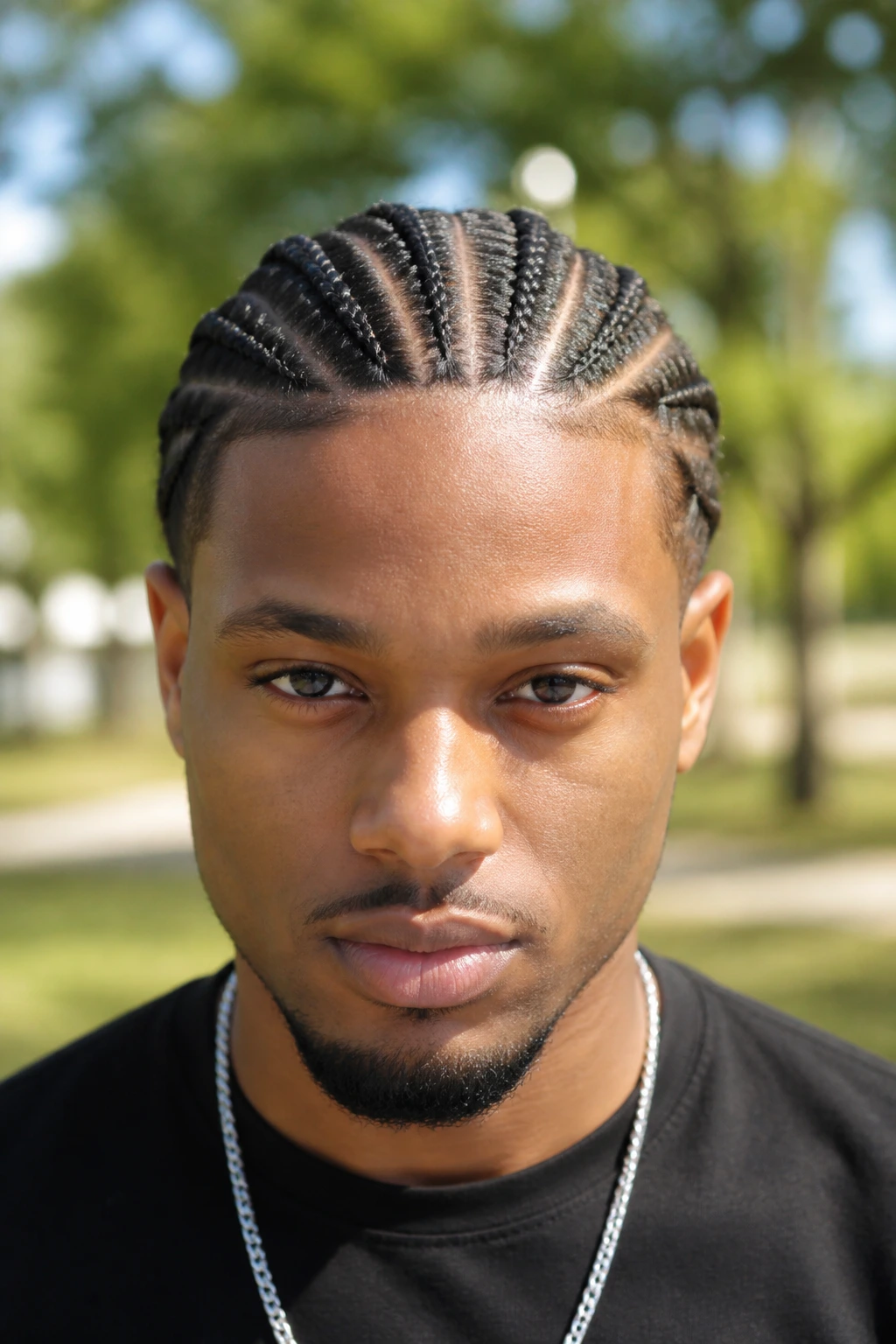
Braided cornrows are a style and a protective strategy at the same time. The rows keep textured hair secure and neat, and the pattern itself can be simple or intricate depending on how much visual detail you want. Clean parts matter more here than almost anywhere else on the list.
This style needs scalp care. Keep the scalp clean, lightly moisturized, and not pulled too tightly at the hairline. If the braids feel painful on day one, they were done too tight. That’s not a sign of quality. It’s a sign to speak up next time.
Braids work best when the pattern suits the head shape and the hair density. A good braid style can carry a whole look. A bad one just feels tense.
39. Coiled High Top
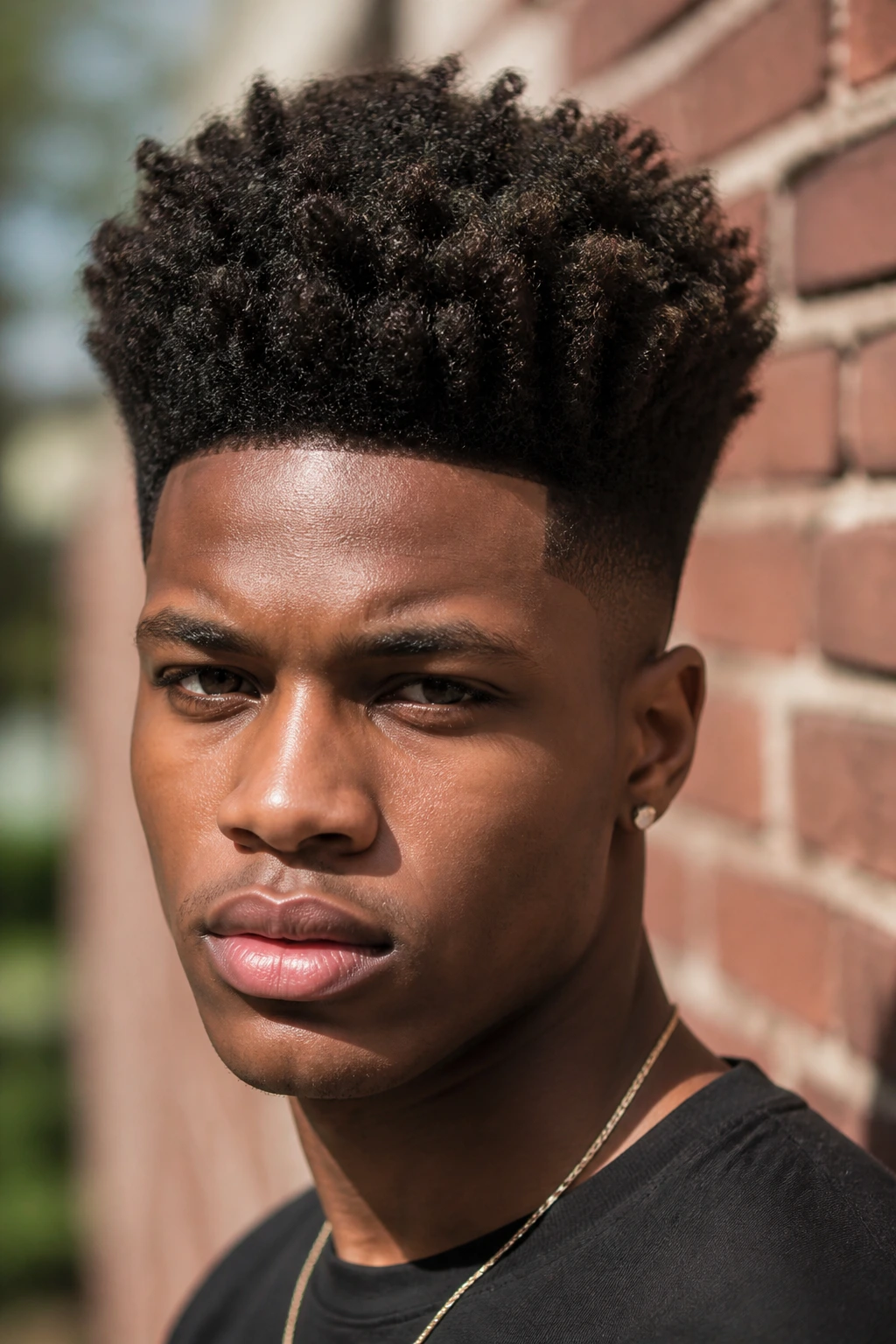
A coiled high top takes height seriously. The coils are shaped upward and rounded at the top, while the sides and back stay tighter so the vertical silhouette reads clean. It has structure, but the texture keeps it from feeling rigid.
This is the haircut that rewards a precise edge-up and regular shape maintenance. Moisture matters, of course, but so does restraint. Don’t overpick the top until it turns into a cloud. Keep the coils defined and let the silhouette do the work. A high top can look incredible when it’s shaped with some care around the temples and neckline.
If you want a cut with presence, this one has it. It doesn’t whisper.
40. Side Part with Volume

A side part with volume is the easier, softer cousin of the hard part sweep. The line is there, but it doesn’t need to be razor-sharp, and the top gets brushed up just enough to create lift. That makes the cut more forgiving and more wearable across different settings.
How to Keep It from Looking Flat
A blow dryer at the roots helps, especially if your hair likes to lie down after a few hours. Use a light cream or low-shine product and keep the part loose enough to shift if needed. This style works for guys who want a classic outline without that very polished, old-school shine.
It’s one of the better every-day haircuts on the whole list. Not the flashiest. Not the least interesting. Just solid, with a little lift.
41. Messy Fringe
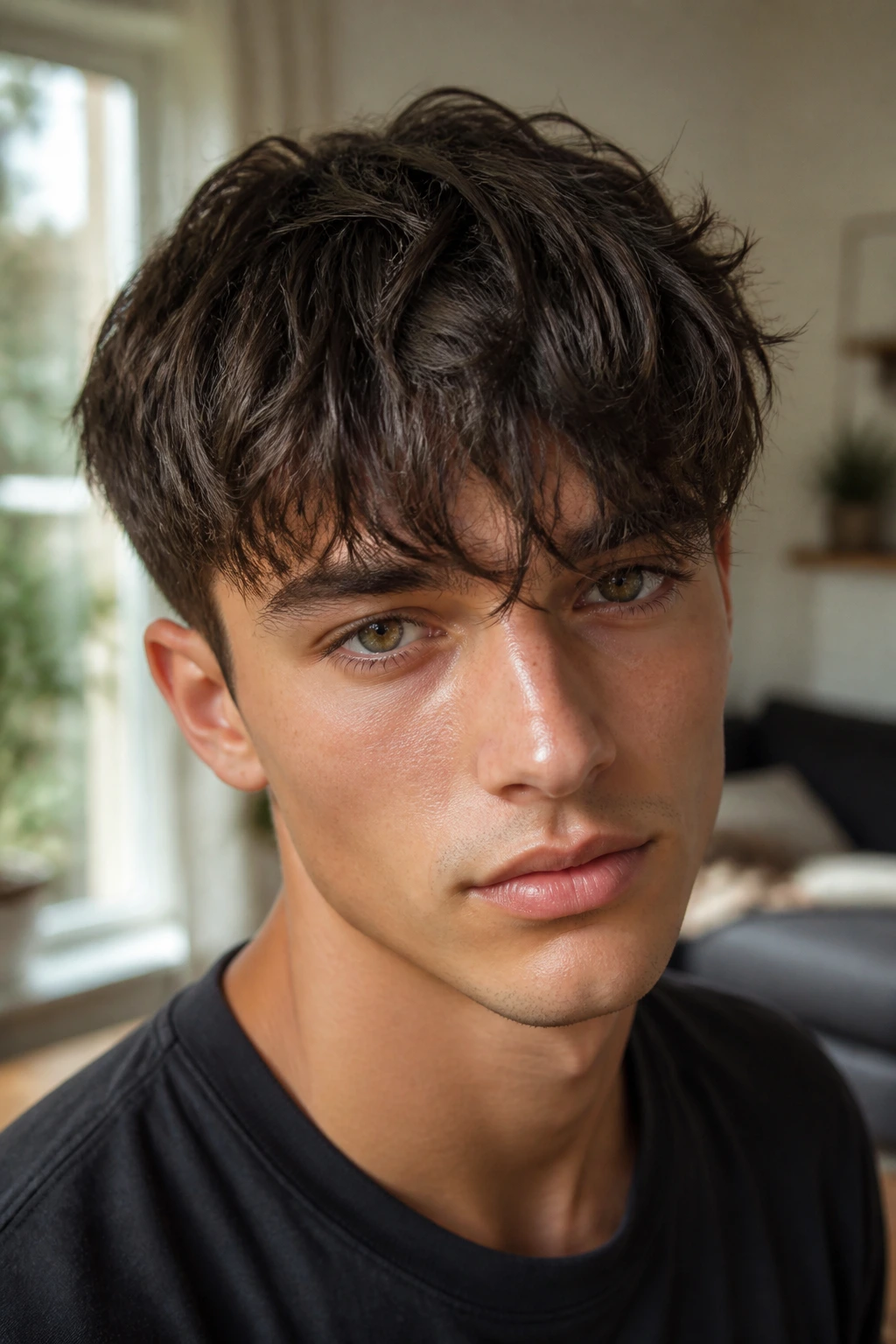
A messy fringe is one of the best answers for hair that never wants to sit exactly where you tell it. The front falls forward, the pieces are broken up, and the shape feels casual on purpose. It’s especially useful for men with cowlicks, uneven growth, or hair that gets bigger the more you comb it.
The key is controlled mess, not neglect. Use a dry paste or texture powder, then push the fringe forward with your fingers and stop before it looks overworked. The sides can be tapered or faded, but the front should keep enough length to move. This style is a quiet problem-solver. It hides what needs hiding and keeps the rest easy.
If your hair has a mind of its own, this cut may finally stop the argument.
42. Clean Center Part with Taper
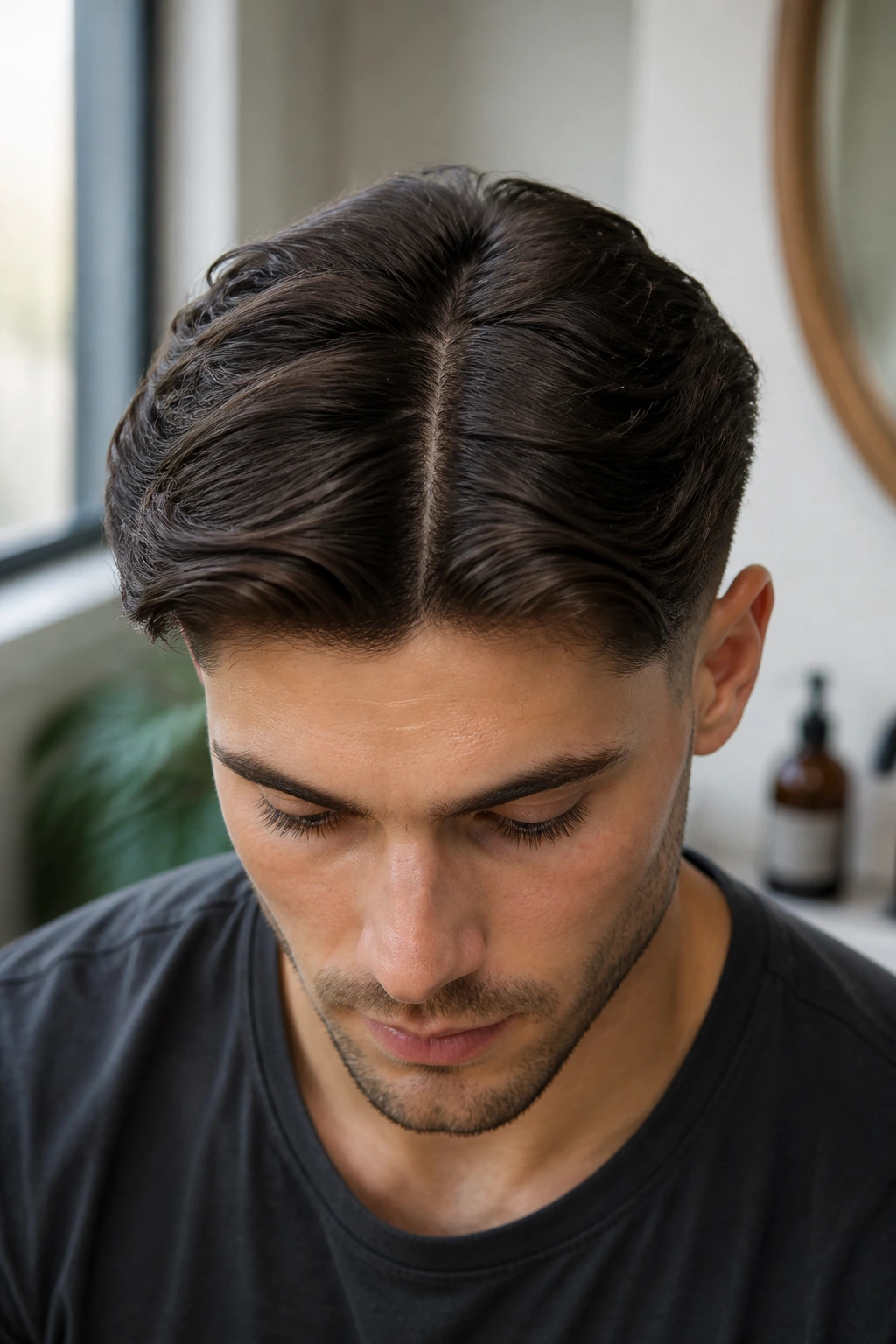
A clean center part with a taper is a calmer, more deliberate version of the curtain look. The middle split stays open, the sides taper in gently, and the top keeps enough length to fall with shape instead of flop across the forehead. It’s neat, but not rigid. Soft, but not lazy.
The Best Way to Wear It
The middle part needs a little training at first. Blow-dry each side away from the part line, then let the hair settle naturally. A light cream or leave-in keeps the shape smooth without turning it shiny. If your hair is straight or lightly wavy, this style sits especially well because it keeps balance through the center of the face.
It’s a smart option when the curtain cut feels too loose and the side part feels too stiff. This is the middle ground, and it’s a good one.
Why the Right Cut Starts With Texture, Not a Screenshot
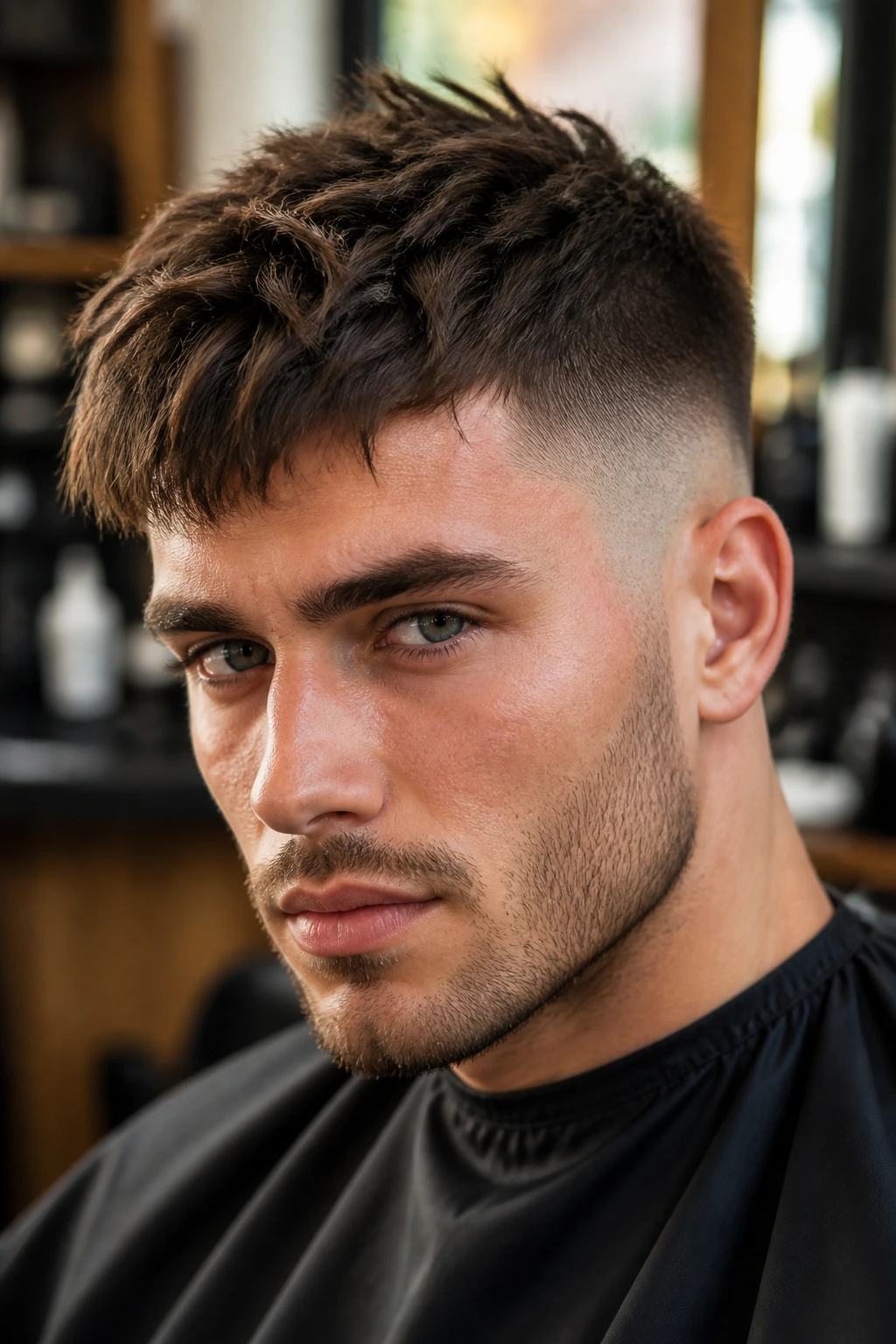
A haircut photo can tell you the outline. It cannot tell you the hair type. That’s the part most guys skip, and it’s why the result often lands wrong. A crop on dense straight hair behaves one way; the same crop on wavy, fine hair behaves another. A fade that looks crisp on a darker, thicker head of hair can look harsher on fine blond hair because the scalp shows through faster.
The smarter question is not “What cut is trending?” It’s “What shape will sit well on my head when I leave the barber chair?” That answer depends on your crown, your density, your hairline, and how much time you actually want to spend styling. A low taper may look boring on paper, then end up being the haircut you wear for a year because it simply works. A dramatic fringe may look incredible for two days, then drive you nuts every morning. Both outcomes matter.
If you keep one rule in mind, make it this: pick the shape that matches your texture first, then adjust the style for personality. That order saves a lot of bad haircuts.
Tools That Make Styling Easier
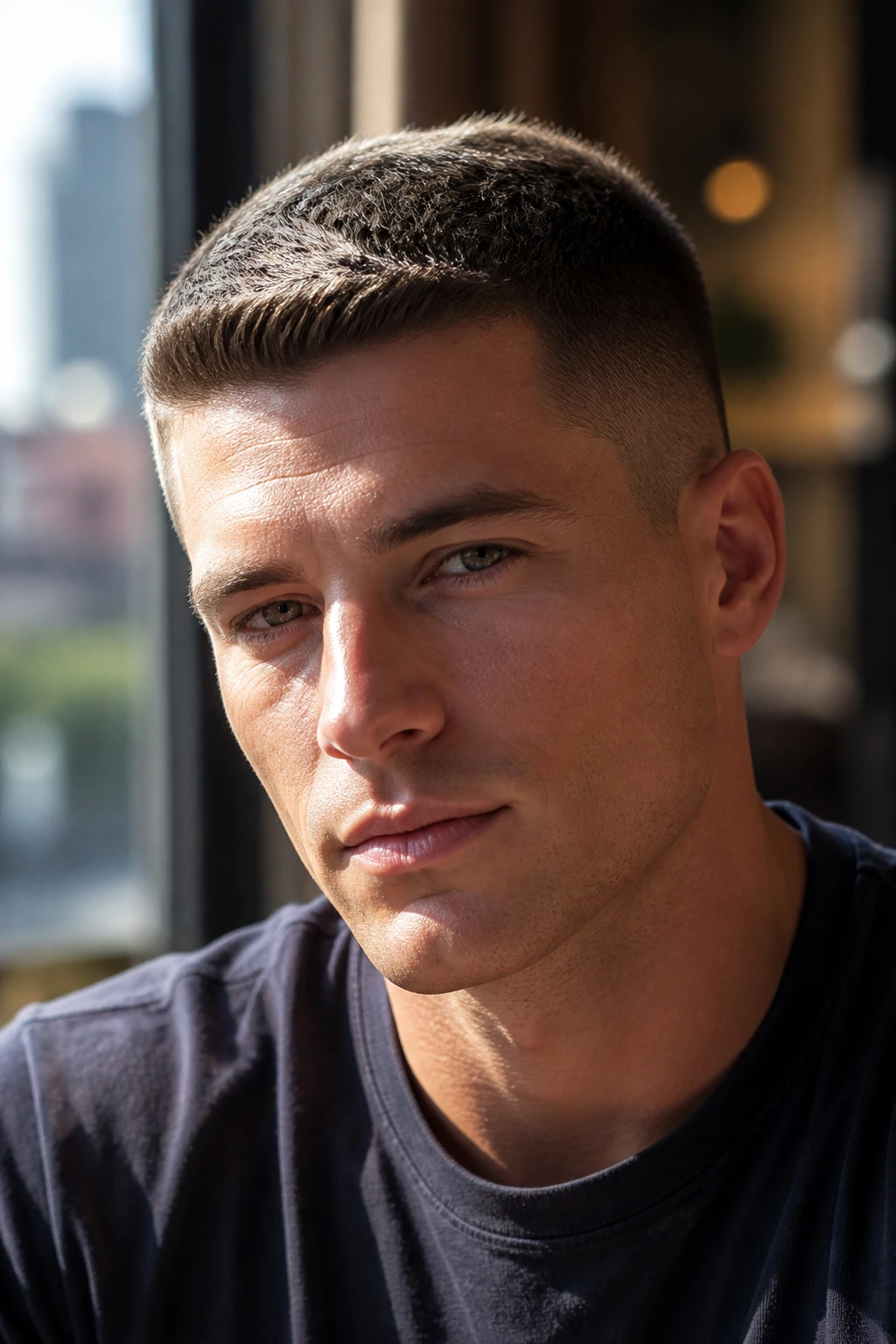
- Quality scissors: Useful for trimming stray fringe or cleaning a grown-out part between barber visits.
- Fine-tooth comb: Best for side parts, slick styles, and any cut that needs a clean line.
- Wide-tooth comb or pick: Better for curls, coils, and long hair that needs lift without frizz.
- Blow dryer with a nozzle: The nozzle helps direct airflow so you can lift roots, set a quiff, or smooth a side sweep.
- Matte clay or paste: Ideal for crops, brush-ups, and messy styles where you want separation, not shine.
- Pomade: Good for slick backs, side parts, and polished sweeps; choose hold and shine based on how formal you want the result.
- Curl cream or leave-in conditioner: Essential for curly and coily styles that need moisture more than grip.
- Sea salt spray: Handy for wavy cuts and longer textured styles that need a little grit without heaviness.
- Beard trimmer: Helps connect the haircut to the beard line so the whole face reads as one shape.
- Hand mirror: Worth keeping around for checking the back of the neck and the line behind the ears.
How to Ask for the Cut You Actually Want
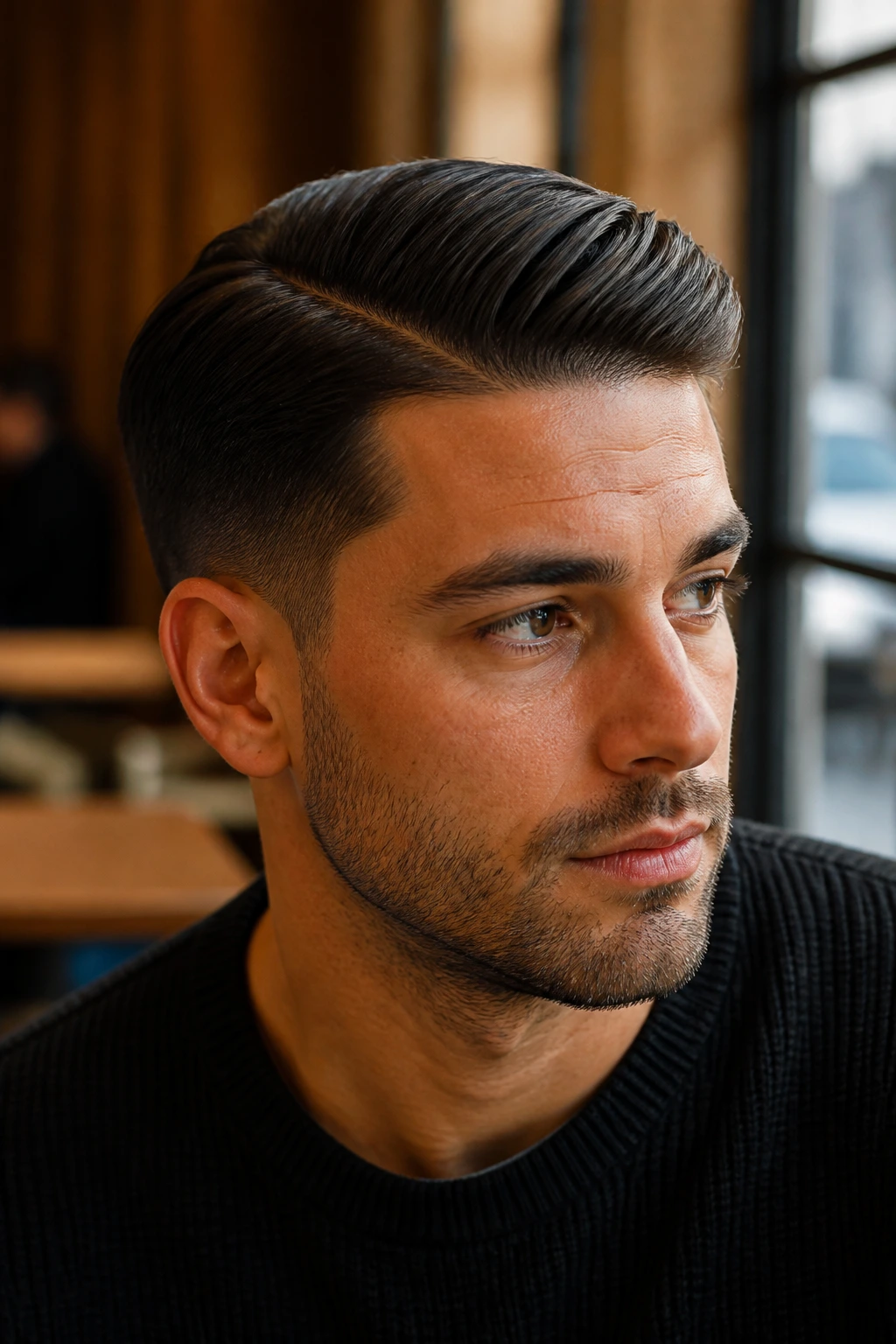
The easiest way to get a good haircut is to stop asking for a vibe and start giving numbers. Tell the barber how long you want the top, how short the sides should be, and where you want the fade or taper to start. If you say “low taper, keep two inches on top, leave the fringe textured,” you’ve given them something workable. If you say “make it trendy,” you’ve given them a guess.
Bring a photo if you want, but use it as a shape reference, not a promise. Point out what you like in the image — the fade height, the fringe, the length over the ears — because the person cutting your hair needs the parts, not the mood. If your hair is curly, say that out loud. If your crown sticks up. If your hairline is a little thin. If your hair grows sideways at the front. That’s not awkward; it’s useful.
And if you’re trying a cut with height, say whether you want to style it daily. Some styles are built for fingers and a blow dryer. Some are meant to be worn almost bare. The difference is the whole point.
How to Wear These Cuts With a Beard, Glasses, and Outfit
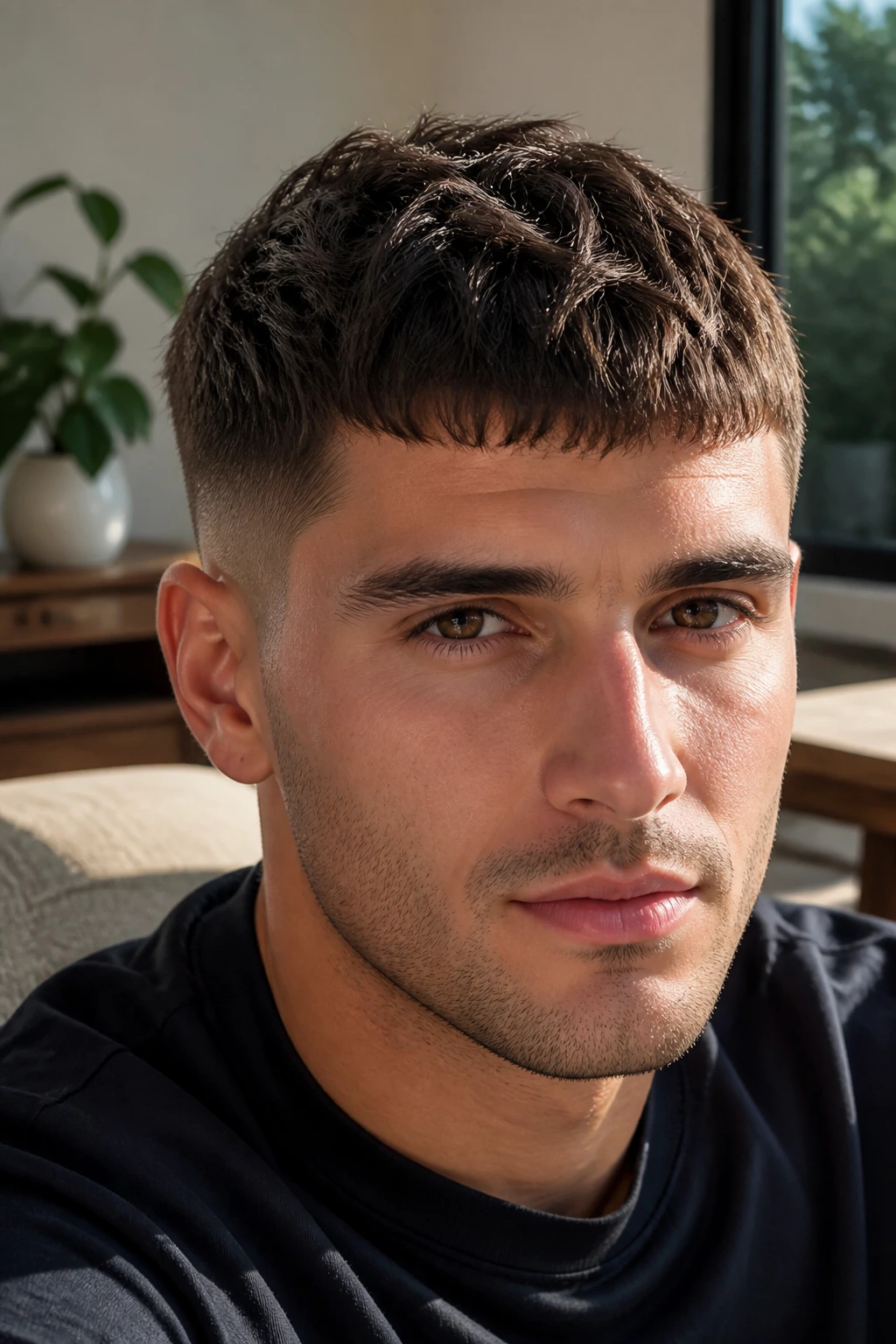
Presentation: The haircut should end where your grooming begins. A clean taper at the sideburns, a neat neckline, and an edge-up that matches the beard line make even a simple crew cut look finished. If the hair is textured or messy on top, keep the beard shape clean so the whole face doesn’t drift into chaos.
Pair It With: Stronger cuts like the burst fade mohawk, pompadour, or mullet fade usually look best with plain clothes and a beard that’s trimmed with the same level of intent. Softer cuts like the Ivy League, curtain part, or side part with volume pair well with glasses and sharper collars because they don’t compete for attention. The goal is balance, not matching everything too neatly.
Maintenance: Short fades and hard parts need more frequent cleanups. Longer styles need conditioning and the occasional trim at the ends. If you’re wearing a beard, shape the cheek line and neckline so it doesn’t blur into the haircut. That one detail does more for the finished look than most styling products ever will.
Best Settings: Crew cuts, buzzes, and shadow tapers handle gym days and hot weather. Side parts, Ivy Leagues, and slick sweeps fit dressier settings. Curls, fringes, and longer layers work almost anywhere if the edges are kept tidy.
Little Tweaks That Change the Whole Look
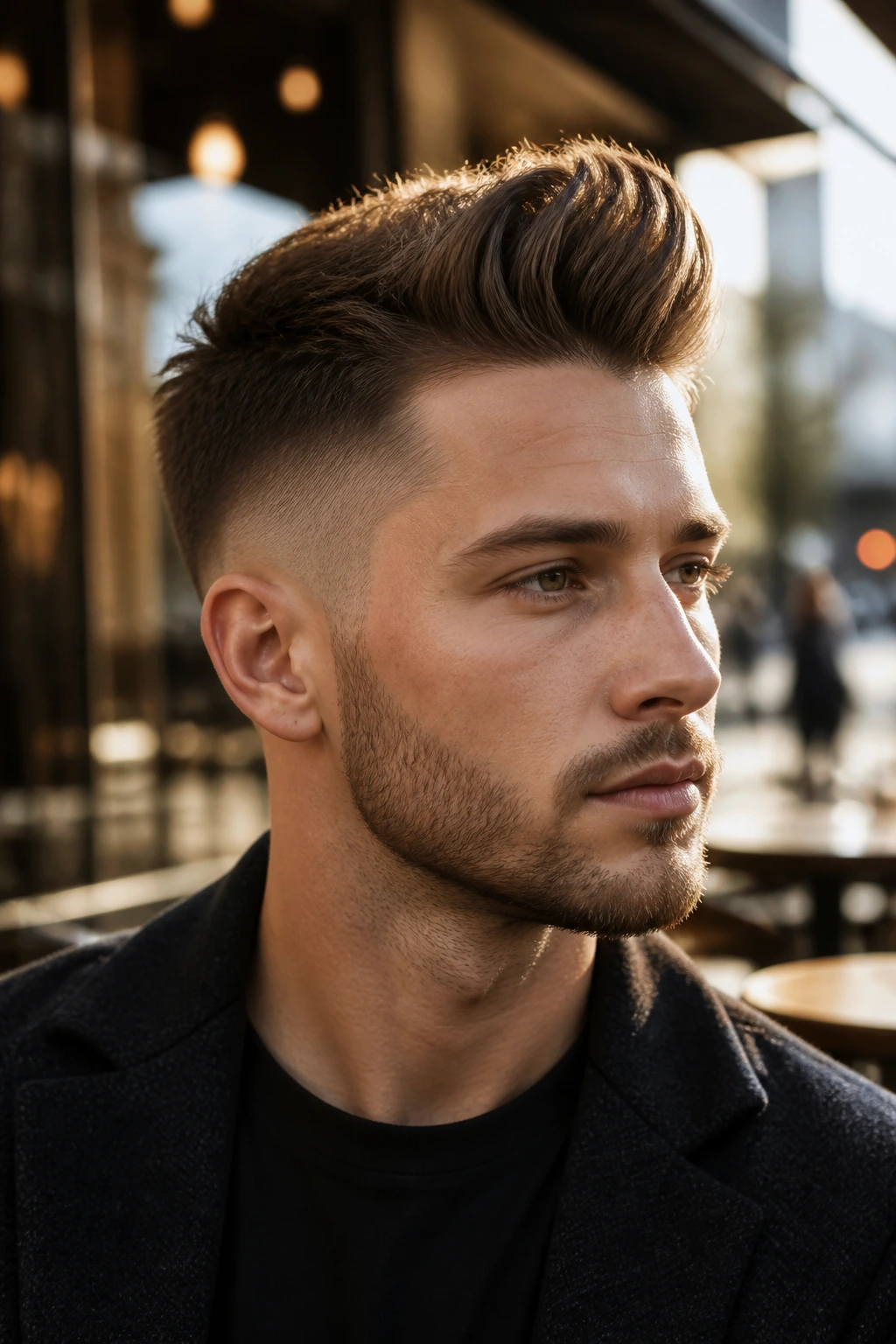
Texture Boost: A dime-sized amount of matte clay, rubbed into the palms until it almost disappears, can turn a flat crop into a piecey one. For curls, a leave-in or curl cream does the same job without stealing bounce. Don’t drown the hair; the point is separation.
Customization: Want a cut to feel sharper? Tighten the fade and clean the neckline. Want it softer? Keep more weight around the temples and avoid a hard part. A lot of “different” hairstyles are really the same cut with one small adjustment.
Grooming Pairing: The sideburns matter. So does the beard neckline. If the haircut is clean and the beard is fuzzy, the contrast looks accidental. If both are shaped with the same level of care, the face reads cleaner immediately.
Finish: A cool blast from the blow dryer sets the shape better than people expect. Even with short styles, a final shot of cool air helps the hair hold its direction. If the style needs shine, add it lightly at the end, not at the start. Nobody wants greasy roots.
Keeping the Shape Between Haircuts
The life of a men’s haircut is not just the day you leave the barber chair. It’s the three weeks after that, when the edges soften, the neckline blurs, and the fringe starts doing its own thing. Most styles in this list need a trim every 2 to 4 weeks if you want them to stay crisp. Longer cuts can go 6 to 10 weeks, but the ends still need attention before they split and fray.
Wash frequency depends on texture. Fine hair gets greasy faster and usually likes more frequent washing. Curly and coily hair often does better with fewer washes and more conditioner or leave-in moisture. The worst move is stripping the hair until it feels squeaky and then wondering why it puffs up. Clean is good. Desert-dry is not.
At night, especially for longer styles, use a satin pillowcase or a loose tie-back to keep the shape from crushing. Short styles need less babying, but even a crew cut benefits from a quick finger-reset in the morning. A small trim around the ears or neckline between appointments can buy you time, but don’t get heroic with clippers unless you’re prepared to own the result.
Ways to Adapt the Same Cut to Different Hair Types
Fine-Hair Fix: If your hair is thin or soft, lean toward crew cuts, Ivy Leagues, side parts with volume, and shadow tapers. These styles keep the shape close to the head so the hair doesn’t have to pretend it’s denser than it is. Avoid overloading the top with heavy product.
Thick-Hair Control: Dense hair does well with textured crops, scissor crops, quiffs, and layered longer cuts. The trick is removing bulk in the right places so the style doesn’t puff out at the sides. Thick hair can carry stronger shapes; it just needs a barber who knows when to thin and when to leave weight alone.
Curly and Coily Version: Curly top fades, temple fades, twist outs, tapered afros, and coiled high tops all work when the cut respects shrinkage and shape. Moisture matters more than shine. Keep the outline neat and the texture alive.
Receding Hairline Version: French crops, Caesar cuts, buzz cuts with softer fades, and controlled side parts are the safest bets. They don’t force attention onto the hairline, which is half the battle. Keep the front shorter and textured instead of trying to build a dramatic wall where there isn’t one.
Long-Growout Version: Bro flow, long layers, man buns, and long undercuts let you keep length without looking like you gave up. They need conditioning and regular cleanup on the ends. If the growout feels awkward, a scissor trim around the sides can save the whole thing.
Common Mistakes That Make a Good Cut Look Off

The biggest mistake is asking for a style without giving the barber enough detail. “Like this” is not a haircut plan. Neither is “make it modern.” Give length, fade height, fringe direction, and how much effort you want to spend styling it. The barber can work with that.
Another common miss is using the wrong product load. Fine hair buried under heavy pomade turns limp. Curly hair flattened with dry clay turns frizzy. Thick hair without enough product can look wide and unstructured. Start small, then add a little more if needed. You can always put in more. Taking it out is harder.
People also cut too much off the top when they panic about the sides. That creates a narrow little shape that can look smaller than intended. Short sides need enough top to balance them. If you love a fade, do not let it eat the haircut alive.
Then there’s the crown problem. A lot of men ignore it until the cut starts sticking up in the back. The crown should be shaped on purpose, not left to negotiate with gravity. If your hair whirls there, say so.
Finally, plenty of guys pick a hairstyle that needs more maintenance than their life allows. That’s fine if you enjoy the ritual. If not, pick the cut that forgives a missed morning.
Frequently Asked Questions
Which hairstyle is easiest to maintain every day?
Crew cuts, buzz cuts, and shadow tapers are the easiest because they need little more than a quick rinse and maybe a tiny amount of product. If you want the smallest daily routine, keep the top short and the outline clean.
What cut works best for a receding hairline?
French crops, Caesar cuts, shorter side parts, and buzz cuts usually handle a receding front well because they don’t force attention to the temples. Keeping the fringe textured and slightly forward often looks better than trying to push everything back.
Can curly hair pull off short trendy styles?
Absolutely. Curly top fades, curly fringes, twist outs, and tapered afros are some of the strongest styles on the whole list because they work with texture instead of against it. The barber just has to account for shrinkage and shape.
How often should I get a fade cleaned up?
Most fades start losing their edge after 2 to 3 weeks, especially if the line sits high. Lower tapers and shadow tapers can stretch longer, but the neckline and temple area usually need attention before the rest of the cut does.
What should I bring to the barber besides a photo?
Bring a sense of your routine. Say how often you style your hair, whether you use a blow dryer, and whether your hair is thick, thin, straight, curly, or coily. Those details matter more than the pose in the picture.
Is there a good style for thick hair that gets bulky fast?
Textured crops, scissor crops, quiffs, and layered long cuts all help because they remove weight in targeted spots. The main job is controlling the sides and crown so the hair doesn’t puff out like a triangle.
What if my haircut looks too short when I leave the shop?
Wait until it’s fully dry and settled before you panic. Hair often looks shorter right after the cut because it’s damp and freshly shaped. If it still feels too short the next day, that tells you something useful for the next appointment: leave more length on top or lower the fade.
What styling product should I start with if I’m not sure?
A medium-hold matte clay is the safest first buy for crops, quiffs, brush-ups, and messy styles. If your hair is curly, start with a leave-in or curl cream instead. Shine-heavy pomades are useful, but they’re more specific and easier to overdo.
Keeping It Fresh
A good haircut does not need to be complicated to look sharp. It needs to fit the hair, sit well on the head, and survive the real world — bad light, fast mornings, a windy sidewalk, a humid train platform. That’s why the strongest styles on this list keep coming back in new forms. They have shape first, trend second.
The best move is to pick one cut that suits your hair as it grows, then learn how to maintain it instead of chasing a different photo every month. That one habit saves money, trims the guesswork, and keeps your haircut from becoming a guessing game. Start with the shape that works on your head, and the rest gets much easier.
