



Short hair leaves nowhere to hide. If the fade is sloppy, you see it immediately at the temple, the sideburn, the neckline, and the little shelf where the clipper steps from one guard to the next. Get it right, though, and the whole cut looks sharper, cleaner, and far more intentional than the same length left to grow out on its own.
That’s the appeal of fade haircuts for men with short hair: they give shape to hair that might otherwise sit flat, puff up at the sides, or disappear into a blur of growth after a week and a half. A good fade does a quiet job. It tightens the edges, keeps the top looking fuller than it is, and makes the barber’s handiwork visible from across the room.
I’ve always liked short fades because they don’t rely on drama. No huge pompadour. No long fringe falling in the eyes. Just a crisp transition, a clean neckline, and a top that can be as neat or as rough as you want. The trick is choosing the right fade for your head shape, hair texture, and how often you’re willing to sit back in the chair. Some cuts buy you time. Others demand maintenance. All of them can look excellent if the blend matches the haircut above it.
Why Fade Haircuts for Men With Short Hair Work So Well
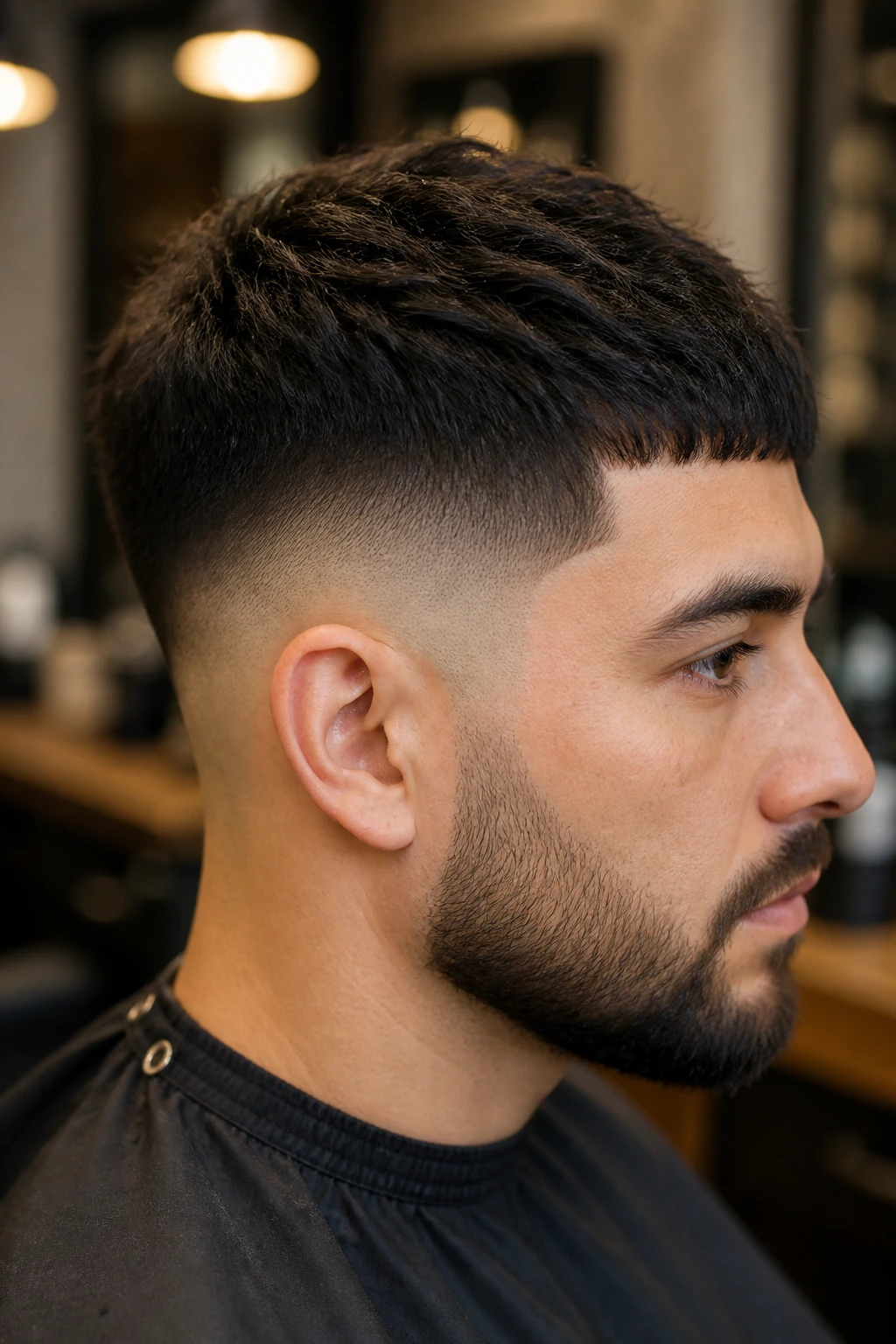
- They sharpen the outline: A fade cleans up the edges where short hair usually looks fuzzy first, especially around the ears and nape.
- They make thin tops look fuller: Keeping the sides tight draws the eye upward, which gives the top more presence even at 1 to 2 inches.
- They work with almost any texture: Straight, wavy, curly, and coily hair all change character once the sides are reduced in length.
- They grow out better than blunt cuts: A short fade can look presentable for longer because the transition softens the look of regrowth.
- They let the barber control the shape: Low, mid, high, skin, and taper fades all shift the balance of the haircut in different ways.
- They do not need much product: On many short styles, a pea-sized dab of matte clay or paste is enough. More than that and the hair starts to look greasy.
1. Low Skin Fade with a Textured Crop
A low skin fade with a textured crop is one of those cuts that looks deliberate even when the top is only an inch or so long. The fade starts low around the sideburn and drops to bare skin near the ear, while the top stays choppy and matte. The result is neat without feeling formal, which is why this one works so well if you want short hair that still has personality.
Why It Works
The low placement keeps the haircut grounded. You get clean edges without exposing too much scalp, and the crop on top gives the illusion of density because the hair is cut into short, uneven pieces instead of one flat line. Ask for about 1 to 1.5 inches on top if you want enough length for separation, not fluff.
What to Tell Your Barber
Bring a photo, then say you want a low skin fade, a short, textured top, and no hard disconnect between the sides and crown. If your hair grows forward, ask the barber to leave a little more length at the fringe so it can sit messy rather than stand up awkwardly.
Styling Note
Work a small amount of matte clay through dry hair and push the front in different directions with your fingertips. You’re not trying to make it perfect. You’re trying to make it look like it fell that way on purpose.
2. Mid Fade Crew Cut
A mid fade crew cut is the haircut equivalent of a clean white T-shirt. Straightforward. Hard to mess up. But the reason it keeps showing up in barber chairs is simple: it makes short hair look tidy without shaving the sides down so far that the head starts to feel bare.
The mid fade sits between low and high, which gives it a bit more edge than the safe version and a bit more softness than a skin fade. On top, the crew cut stays short enough to dry fast and long enough to show a little movement at the front. If your hair grows in different directions, this cut handles that better than a longer, flatter style.
It’s especially useful if you want a haircut that behaves after a workout, after sleep, and after a hat. The shape snaps back with a quick mist of water and a brush through the front. No drama. No extra choreography.
3. High Fade Buzz Cut with a Crisp Line-Up
Why does a buzz cut suddenly look more expensive when a high fade and line-up are involved? Because the haircut stops looking accidental. The high fade removes bulk above the temples, the buzzed top keeps everything uniform, and the line-up around the forehead and sideburns gives the whole thing a hard edge that reads clean from a distance.
This is the short-hair fade for men who want almost no morning routine. Ask for a #1 or #2 on top if you want a tiny bit of texture, or go shorter if you like a near-scalp feel. The high fade creates the most contrast of any basic fade, so it suits guys who like sharp definition and don’t mind getting it refreshed often.
Best For
- Round faces that need a little vertical lift
- Coarse hair that stands up well when cut short
- Men who want a low-maintenance cut with crisp edges
Watch For
If the fade climbs too high, the head can look narrow on top. Keep the blend smooth, not abrupt, unless you specifically want that stark, almost military finish.
4. Drop Fade with a Short Quiff
Picture a short quiff that starts neat at the front, then lifts just enough to catch the eye, while the fade curves lower behind the ear and follows the shape of the head. That’s the drop fade version, and it’s much prettier in motion than a straight fade line. The curve gives the haircut a tailored look, almost like the barber traced the skull instead of forcing a straight belt line around it.
The quiff on top should stay short—about 1.5 to 2 inches—so it rises without flopping. A blow dryer matters here. A quick blast forward and then back gives the front some memory, especially if your hair naturally falls flat. Use a medium-hold matte product, not a shiny pomade that makes the hair look wet and heavy.
This cut does best on men who want a little height but don’t want their hair to feel styled to death. It’s polished, but not precious.
5. Burst Fade with Short Curls
A burst fade with short curls has a shape that barbers either nail or miss by half an inch. When it’s right, the fade wraps around the ear like a sunburst, leaving the curly top to sit compact and full without puffing out at the sides. On short curls, that difference matters a lot. You’re not fighting the curl pattern. You’re framing it.
Why It Works
The burst fade takes weight out of the side panel where curls usually balloon. That keeps the haircut from turning into a round halo. Leave the top around 1 to 2 inches so the curls can still coil and show texture. Too short, and the style loses its shape.
How to Wear It
A curl cream or light leave-in is enough. Scrunch it in, then let the hair dry with a little separation. If the curls are dense, a diffuser on low heat keeps the top from frizzing out.
The burst fade is one of my favorite choices for short curls because it doesn’t try to flatten them into obedience. It just gives the curls a clean stage.
6. Temple Fade with a Caesar Fringe
The temple fade is a quiet cut, and that’s part of the charm. It cleans up the corners around the temples and sideburns while leaving the rest of the short haircut fairly natural. Pair it with a Caesar fringe—short, straight, and pushed slightly forward—and you get a style that feels compact, sharp, and very low-fuss.
What Makes It Different
Unlike a full fade that drops low around the whole side of the head, the temple fade only chisels the front edge. That makes it a smart choice if you want some softness near the back or if your hairline already does enough work on its own. The Caesar fringe keeps the top neat and hides uneven growth in the front.
Good For
Men with straight or slightly wavy hair, especially if the front grows in a bit unevenly. The short fringe lies easier than a longer crop and doesn’t need much product—just enough to keep it from splitting apart.
If you want a haircut that looks tidy without screaming for attention, this one is a solid bet.
7. Shadow Fade with an Ivy League Top
A shadow fade is the gentlest fade in this whole list, and that softness is the point. Instead of dropping straight to skin, it fades gradually until it almost disappears. Put an Ivy League top on it—short on the sides, a little more length on top, brushed to the side—and you get a haircut that looks polished without feeling severe.
This is a good bridge cut if you work in a setting where a skin fade feels too sharp but a uniform short haircut feels plain. The shadow fade gives the sides some depth, which makes the overall style read expensive in the quietest possible way. Ask for a side length that still leaves a visible blend, usually with a #1 or #2 guard as the shortest point.
The top only needs a subtle side sweep. No need for a dramatic part line unless you want one. A dab of light cream or paste keeps the Ivy League shape in place without making it stiff.
8. Taper Fade with a Side Part
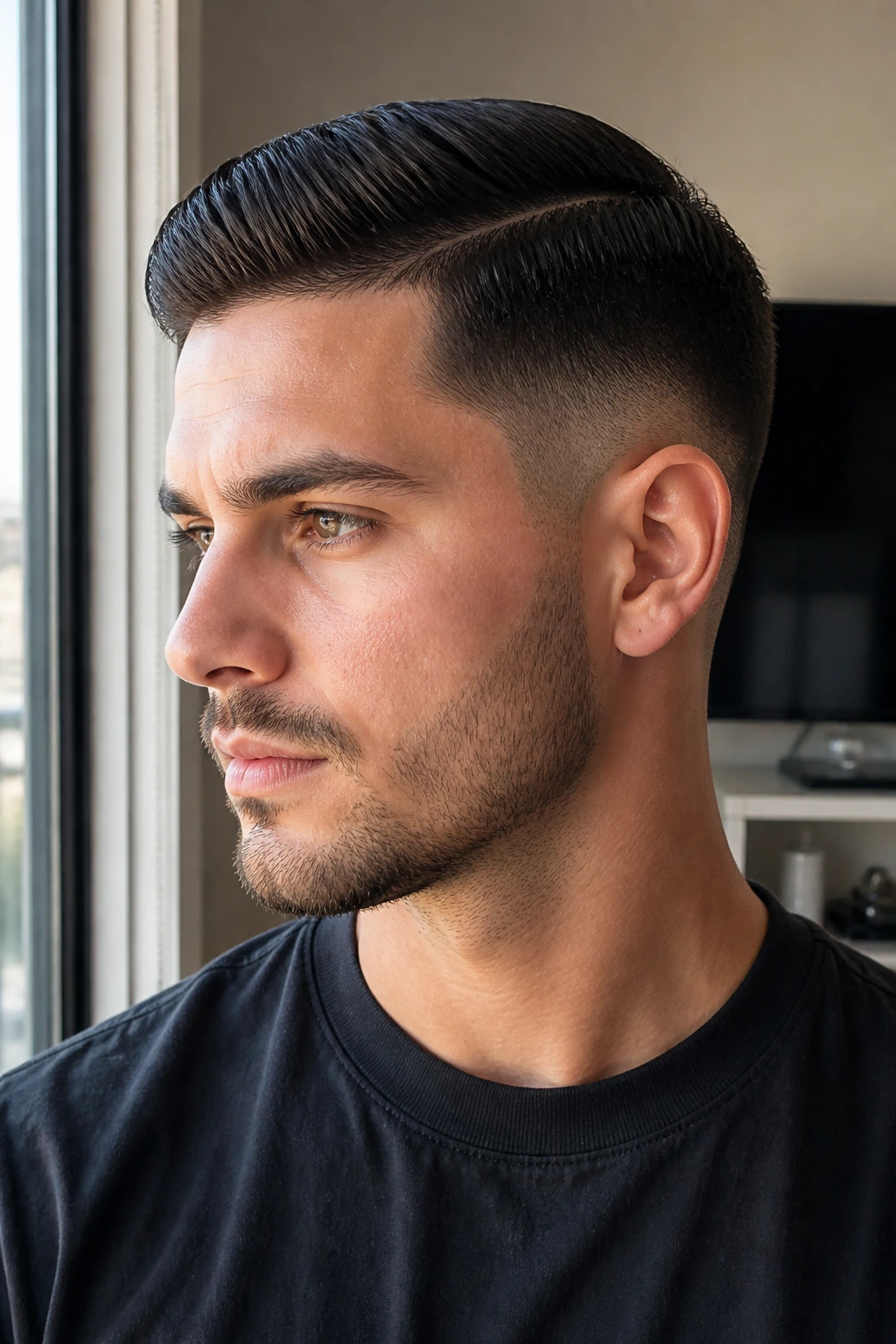
A taper fade with a side part is one of those haircuts that works because it respects the shape of the head. The taper keeps the fade controlled near the temples and neckline instead of blasting the sides down to nothing, and the side part gives the top a natural direction. It’s short, tidy, and easy to live with.
The side part should not look carved in with a ruler. The better version uses the way your hair already falls, then tightens it with a comb and a little product. If your hair is straight, this cut looks especially sharp. If it’s wavy, the taper helps calm the sides so the wave reads as texture rather than mess.
This is a strong choice for men who want a clean haircut that still has some breathing room. It grows out well too, which matters if you don’t want to book a chair every other week.
9. Bald Fade with a French Crop
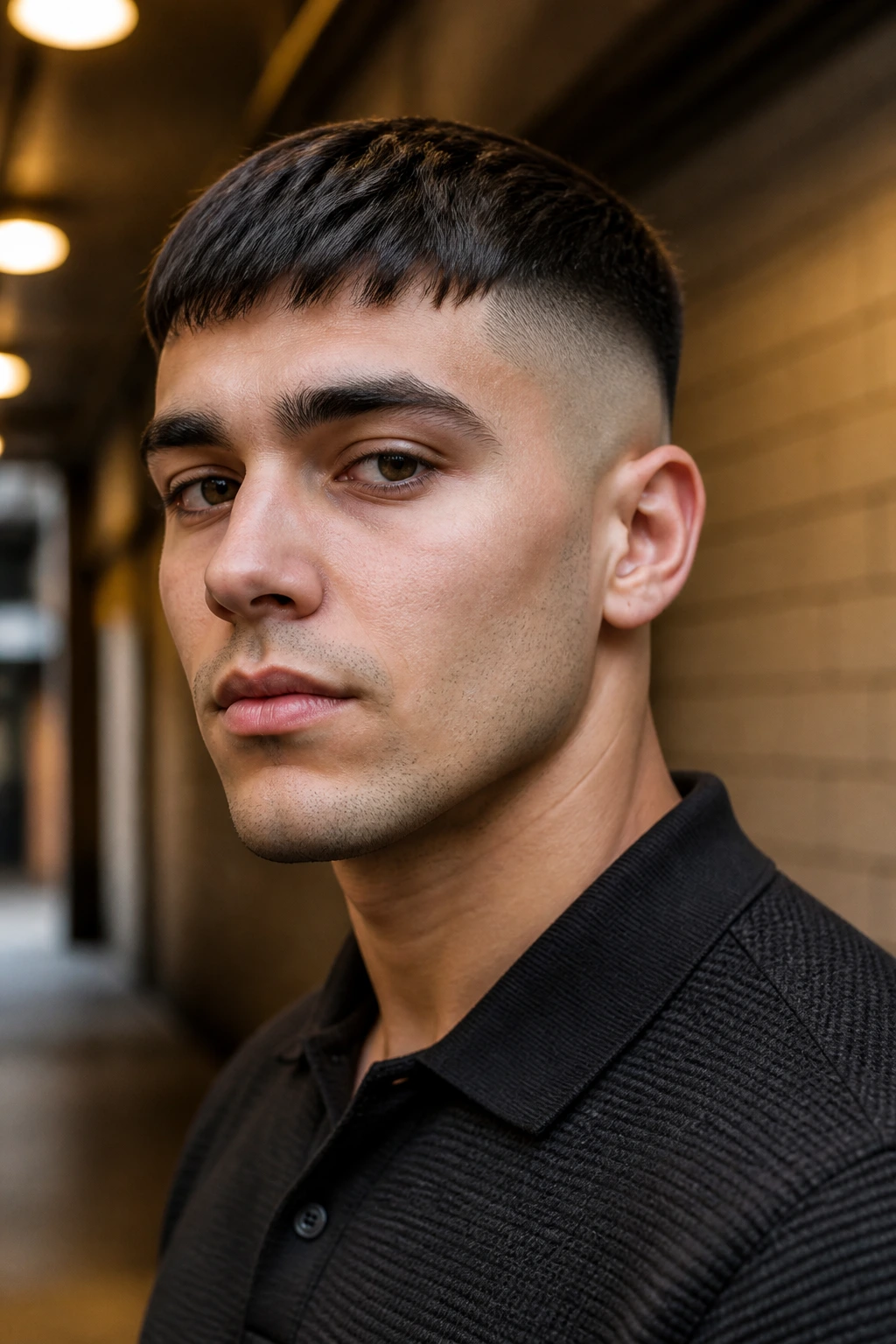
A French crop is already a blunt, useful haircut. Add a bald fade and it becomes harder around the edges, softer in the middle, and much more deliberate in profile. The fringe stays short and forward, usually cut straight across or just slightly broken up, while the bald fade strips the sides down until the contrast is impossible to miss.
The combination is especially good if your hairline has started to do weird things. A short crop can make the front look more intentional, and the fade distracts from any patchiness at the sides. Keep the top textured, not helmet-flat. That little bit of roughness is what keeps the style from looking too polished.
Ask the barber to avoid taking the fringe too short at the first pass. It’s easier to trim a French crop a little shorter than to wait for it to grow back in and stop sticking straight up.
10. Skin Fade with Short Spikes
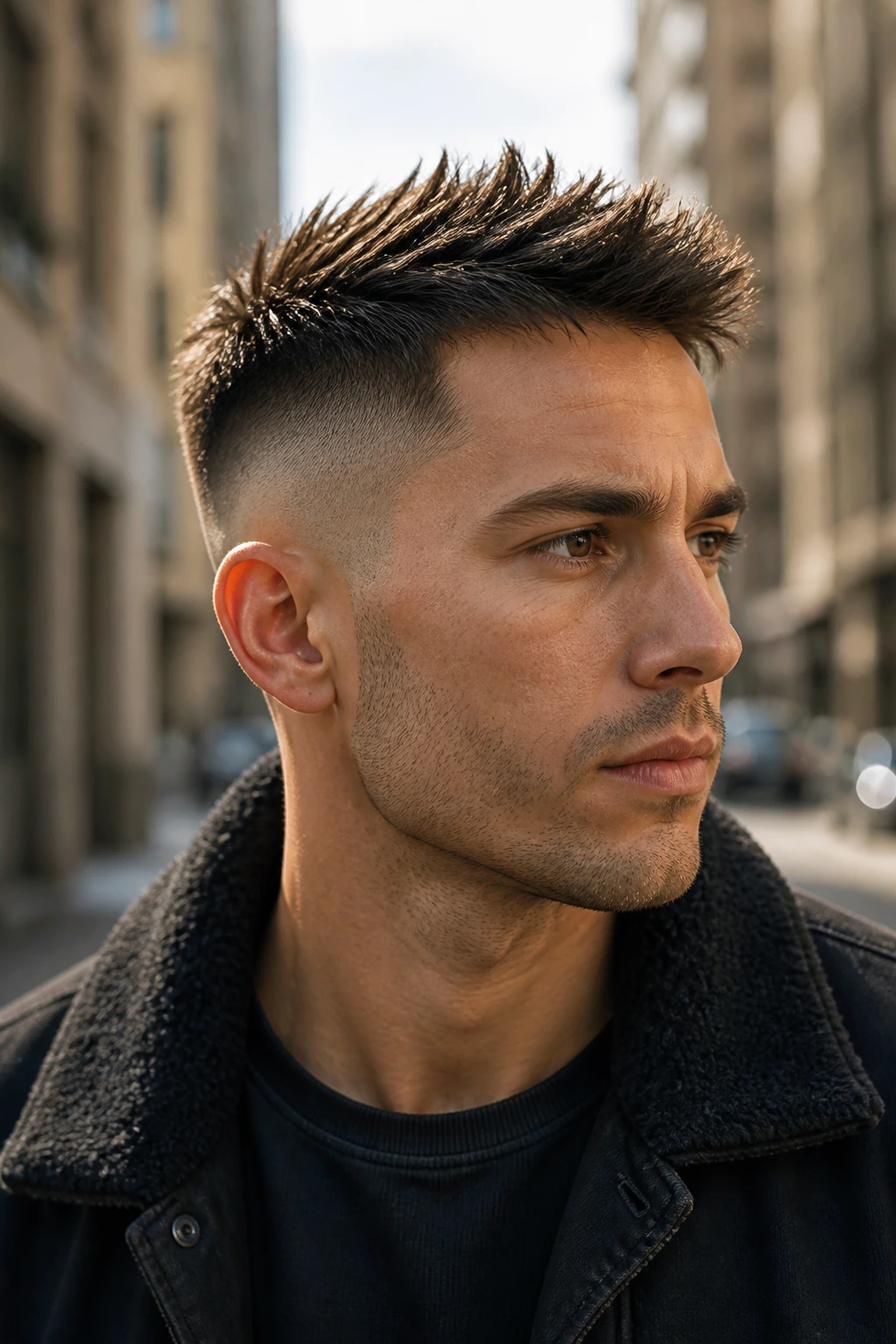
Short spikes can go wrong fast. Too much gel, and the hair looks crunchy. Too much length, and the spikes collapse into little leaning towers. A skin fade solves half of that problem by tightening the sides and keeping the focus on the top where the texture belongs.
The trick is restraint. Leave enough length on top to pinch the hair into little points—usually around 1 to 1.5 inches—and use a light matte product that gives separation, not shine. The skin fade makes the spikes look sharper because there’s no visual clutter on the sides competing for attention.
This style suits men who like a little attitude in the haircut without going full retro. It works best on straight or slightly coarse hair, since those textures hold shape better. On fine hair, keep the spikes shorter and messier so they don’t fall over by noon.
11. Flat Top Fade
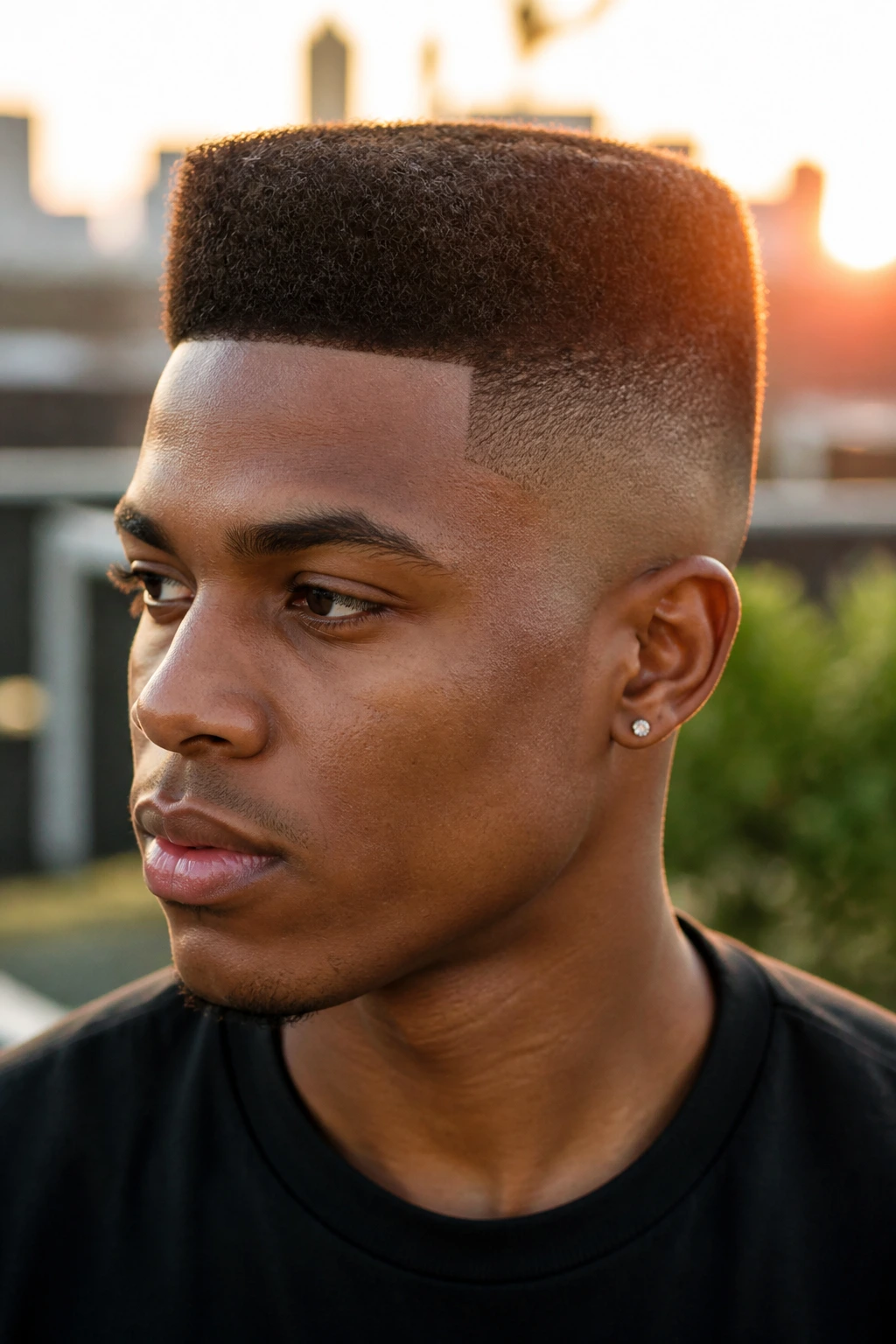
A flat top fade is not subtle. That’s the point. The top sits level, the sides drop tight, and the whole cut creates a blocky silhouette that looks clean when the shape is precise. On short hair, it reads especially crisp because there’s no excess length to blur the outline.
What to Ask For
Tell your barber you want a flat top with a fade that stays tight around the sides and back. If your hair grows upward naturally, you may only need a modest amount of height on top. If it lies down, the barber will have to build the shape a little more carefully.
What Makes It Work
The flat top is all about geometry. The top must stay even, and the fade must be smooth enough that the blunt shape doesn’t look disconnected. If the blend is off by even a little, the haircut looks lopsided. There’s no hiding in this one.
It’s a strong match for men who like bold, structured haircuts and don’t mind regular upkeep.
12. Short Burst Fade Mohawk
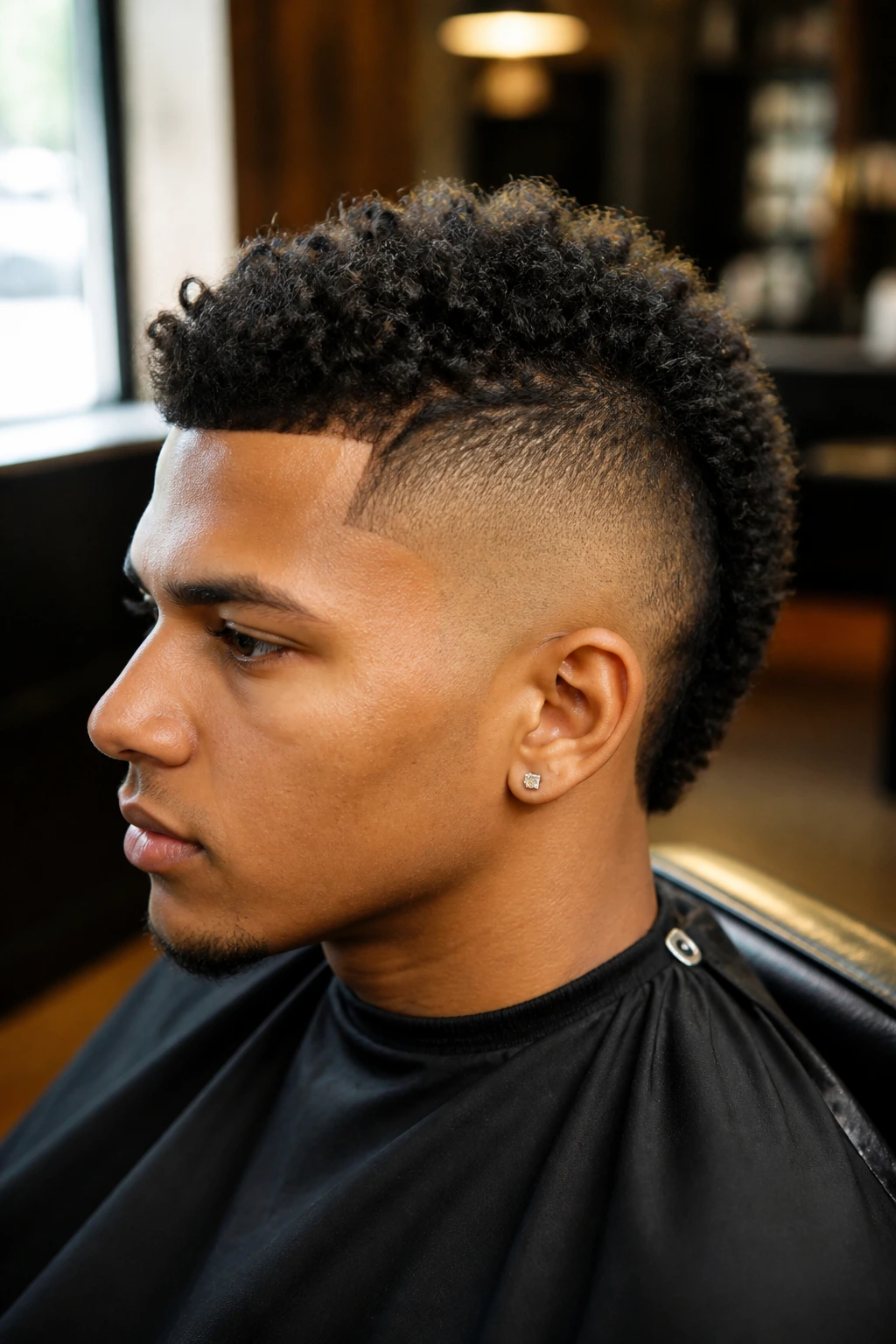
A short burst fade mohawk keeps the energy of a mohawk but pares it down enough to fit everyday life. The fade wraps around the ear in a burst shape, while the center strip stays short and compact instead of tall and dramatic. That gives you movement and edge without the full punk silhouette.
The key is width. Too narrow, and the mohawk looks pinched. Too wide, and it becomes just another short top with a fade. Ask for enough length on the ridge to show separation—often around 1.5 to 2 inches—so the center can be styled upward with a little product.
This cut looks especially good on men with dense or curly hair, because the natural texture helps the ridge stand up. A touch of matte paste or curl cream, depending on hair type, keeps the shape visible without making it stiff.
13. Low Fade with a Hard Part
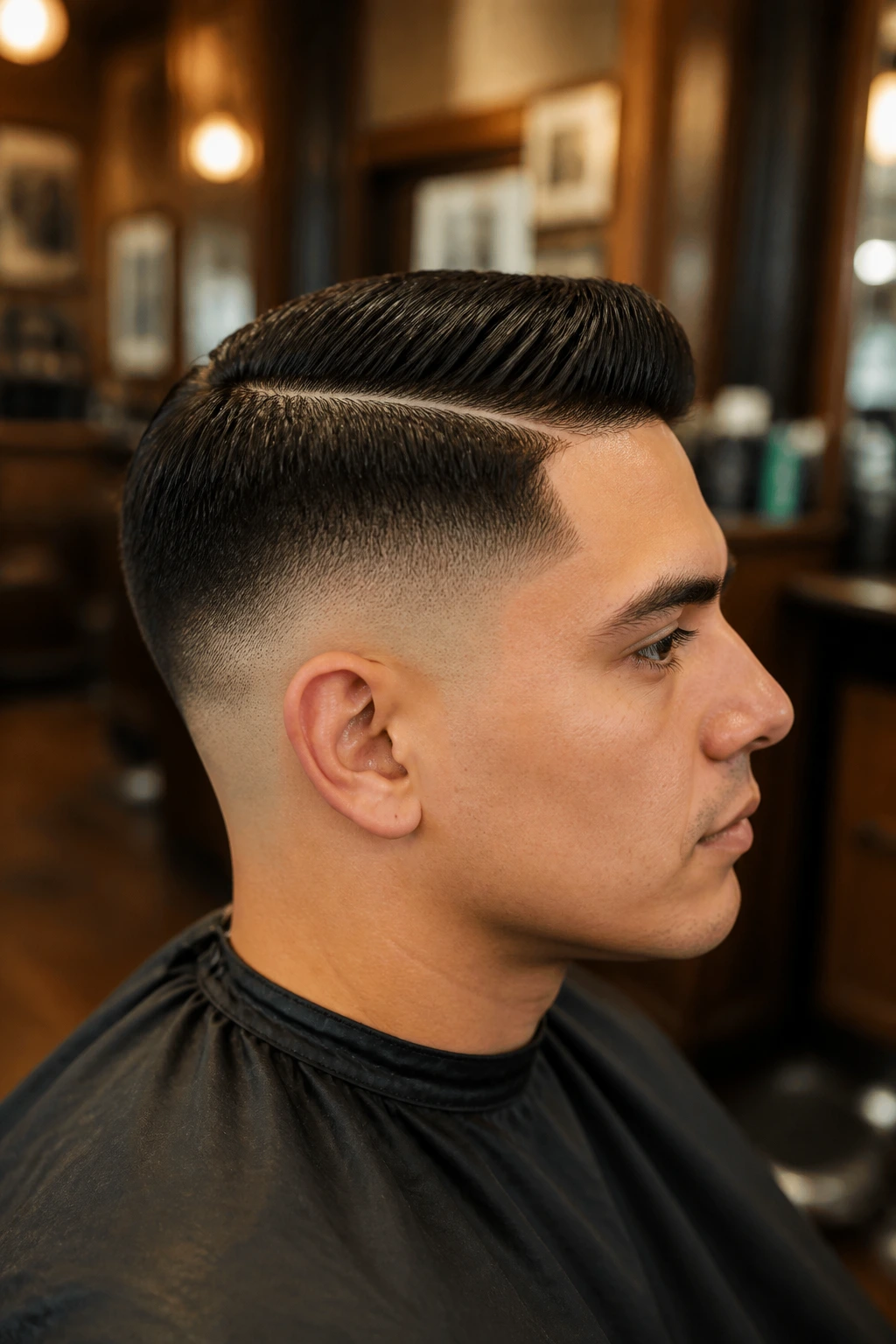
The hard part is not for everyone, and that’s what makes it useful. It gives the haircut a visible line, which means the style carries itself even when the hair is short and simple. Pair that with a low fade and you get a cut that looks deliberate from the moment you step out of the chair.
The low fade keeps the transition calm near the ears, while the hard part divides the top cleanly enough to guide a side sweep or comb-over. This works especially well if your hair naturally wants to fall in one direction anyway. The part line just makes the choice obvious.
I like this cut on men who want their short hair to read polished without getting fussy. It does ask for a barber who can place the part in a flattering spot, though. A bad hard part looks theatrical. A good one looks precise.
14. Mid Fade Brush Up
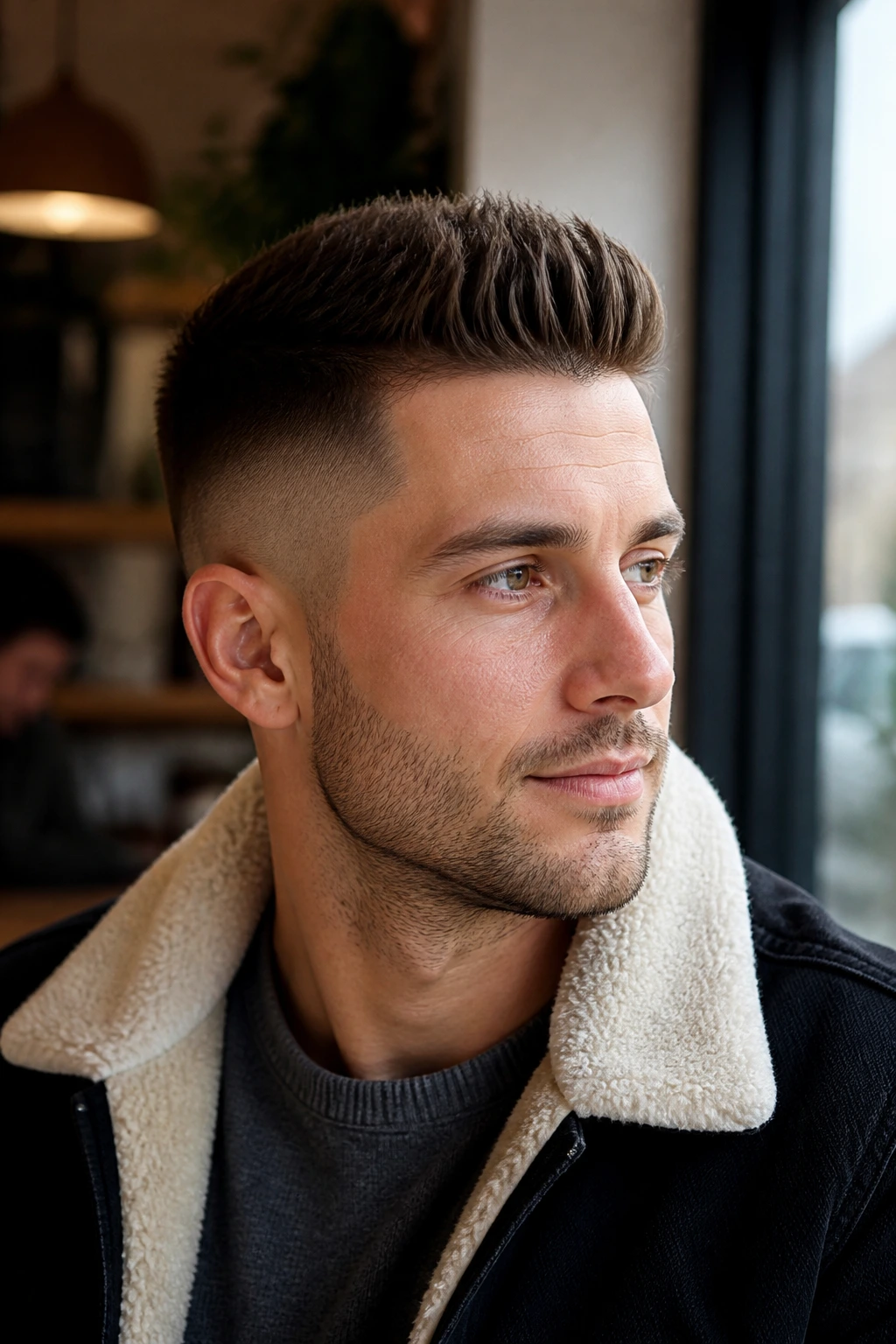
A brush-up is the haircut version of standing a little straighter. The mid fade gives the sides enough contrast to make the top matter, and the brushed-up front adds lift without making the style feel like a full quiff. On short hair, that balance is useful because it keeps the head from looking flat.
Why It Works
Short hair often loses height the second it dries. A brush-up fights that by directing the front upward with a blow dryer and a light product. The mid fade keeps the cut from looking too heavy at the temples, so the volume on top feels intentional rather than accidental.
How to Style It
Towel-dry first, then blow dry the front upward while using your fingers or a vent brush to lift the roots. Finish with a small amount of clay or paste. The shape should feel touchable, not lacquered.
This is one of the better choices for men with straight hair that falls flat by lunch. It gives the top some life.
15. High Fade with a Textured Fringe
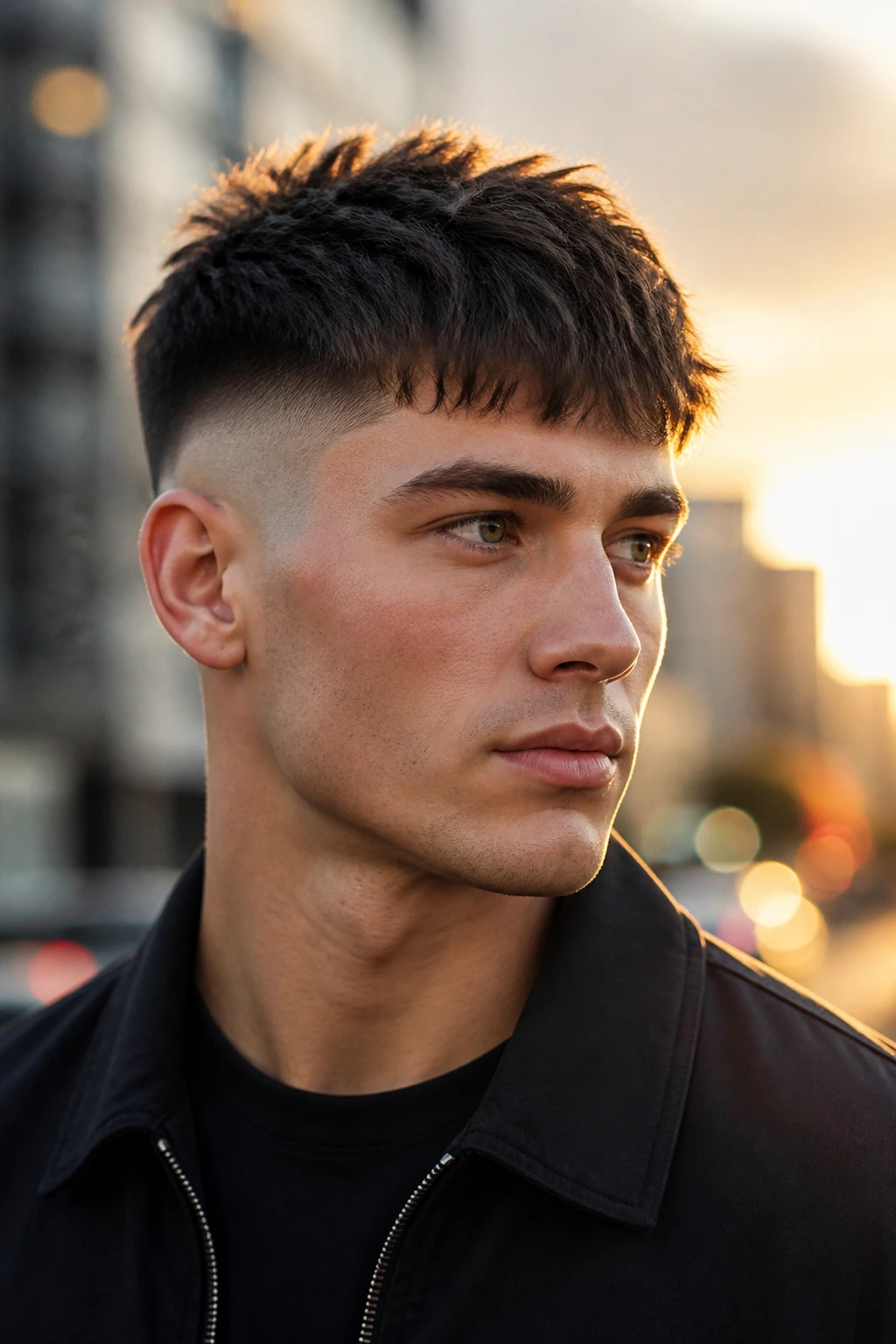
A textured fringe on short hair can save a haircut that would otherwise look too plain. The fringe gives the front some weight, and the high fade pushes the eye upward, which makes the top appear fuller. It’s a clean, modern shape, but not a sterile one.
The fringe should be broken up rather than cut into one smooth slab. That means point-cutting or slicing into the ends so the hair doesn’t sit like a wall across the forehead. If your forehead is on the larger side, this cut can soften it. If your hairline is uneven, it can hide that too.
The high fade makes the whole thing a little bolder, so it suits men who like visible contrast. Keep the fringe short enough that it doesn’t fall into the eyes unless that’s the point.
16. Drop Fade with Waves
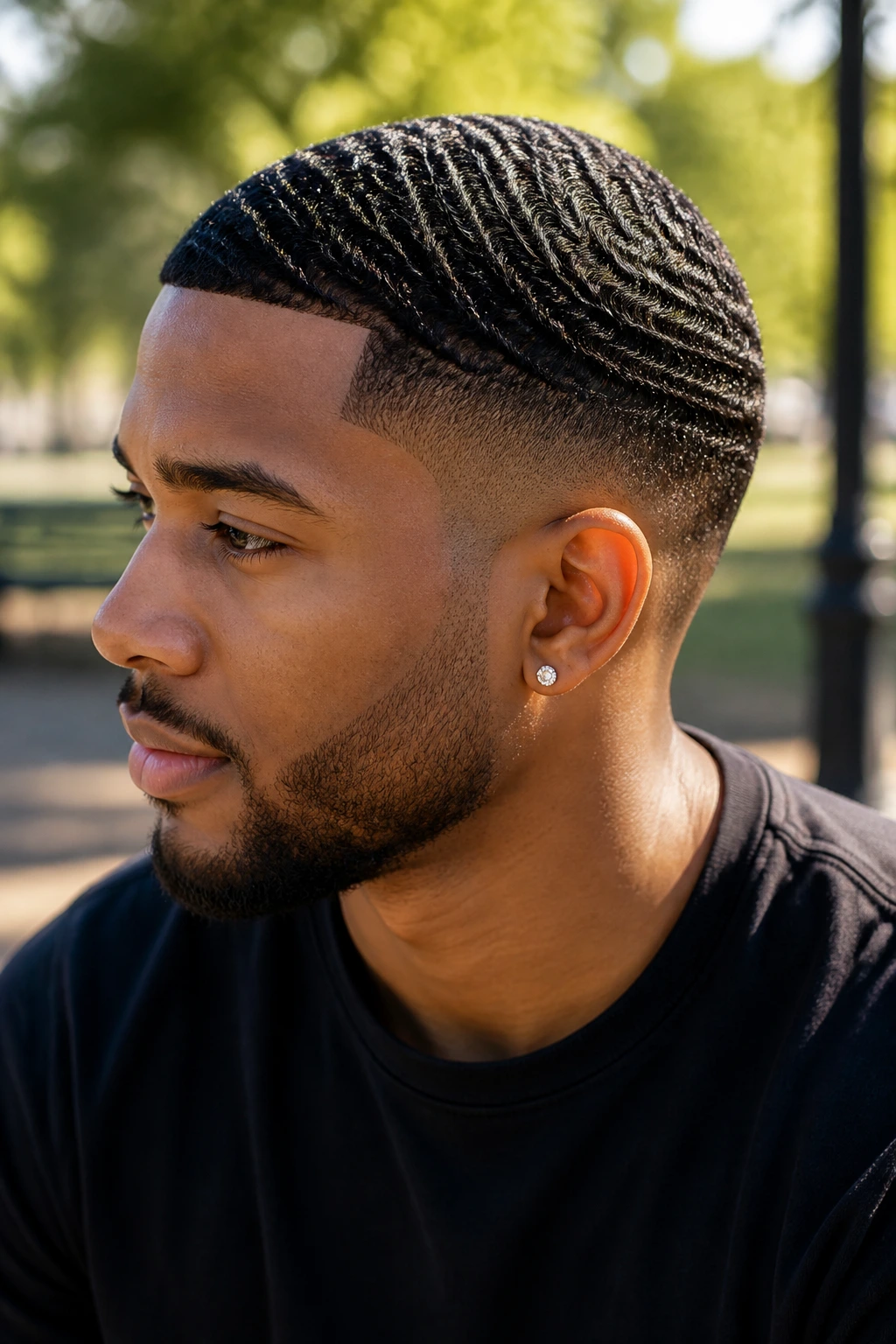
Waves need room to move, and a drop fade gives them that room by lowering the fade line around the back of the head. The result is smoother than a straight fade, especially when the top is kept short enough to show the wave pattern without puffing out.
This cut works beautifully on hair that has a natural bend or a soft wave pattern. Ask the barber to keep the top around 1 to 2 inches and preserve the grain of the hair instead of forcing it in the wrong direction. Overcutting the top will flatten the wave and make the style look dull.
A light wave pomade or cream can help define the pattern, but too much product turns the surface greasy. The better move is a small amount worked through damp hair, then brushed or finger-combed into place.
17. Afro Fade with Short Coils
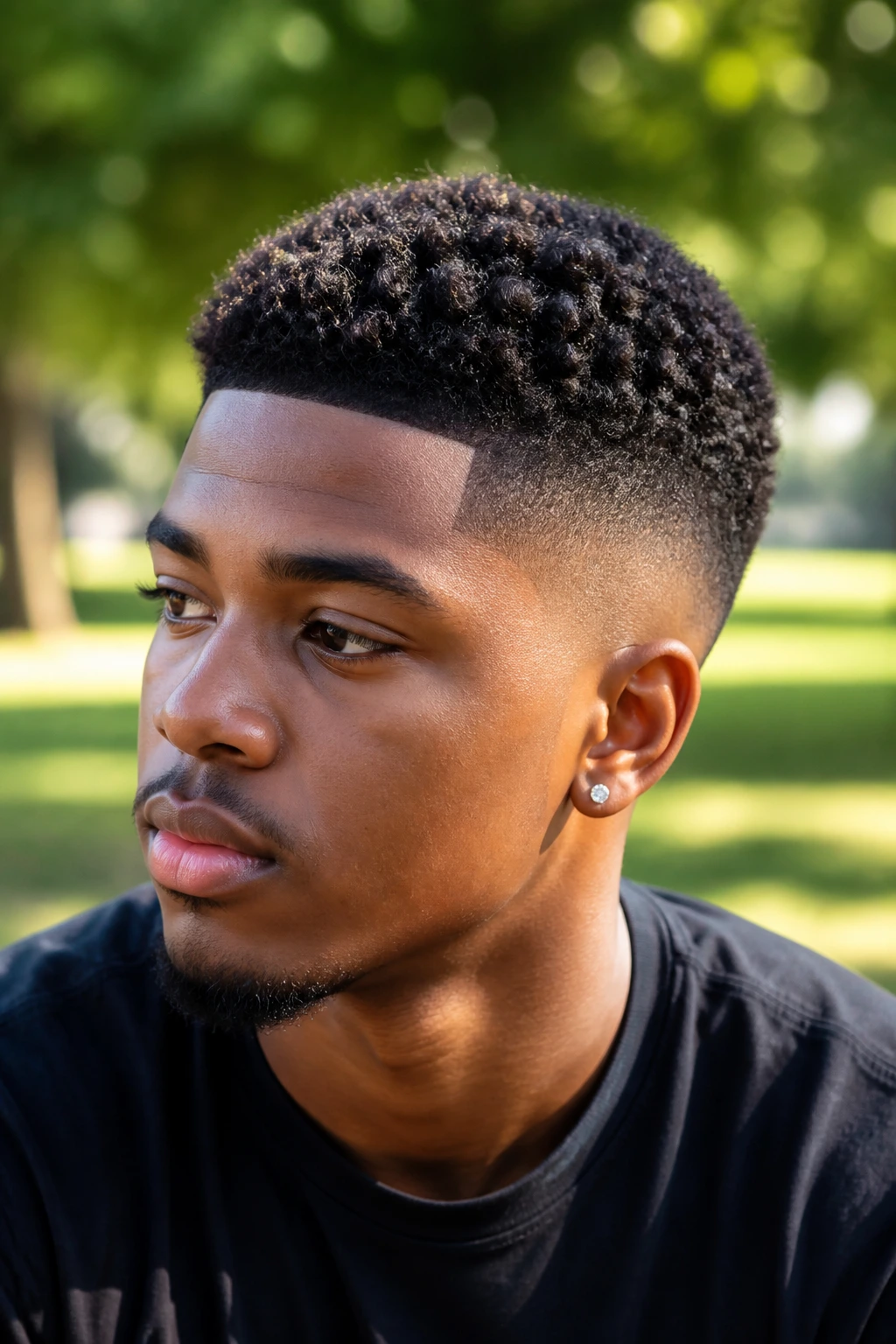
A short coil afro with a fade is all about shape. The fade clears the edges and lifts the visual weight off the sides, while the coils on top keep their tight, springy texture. Shorter lengths work well here because they show the pattern without letting it expand into a wider silhouette.
What matters most is the outline. If the fade is too low, the haircut can look boxy. If it’s too high, the top can seem disconnected from the rest of the head. A balanced mid or low fade usually gives the best result, especially when the top is rounded rather than squared off.
Moisture matters, too. A leave-in conditioner or light curl cream keeps the coils from looking dry and frayed. This cut should look soft at the top and crisp around the edges, not the other way around.
18. Curly Top Fade
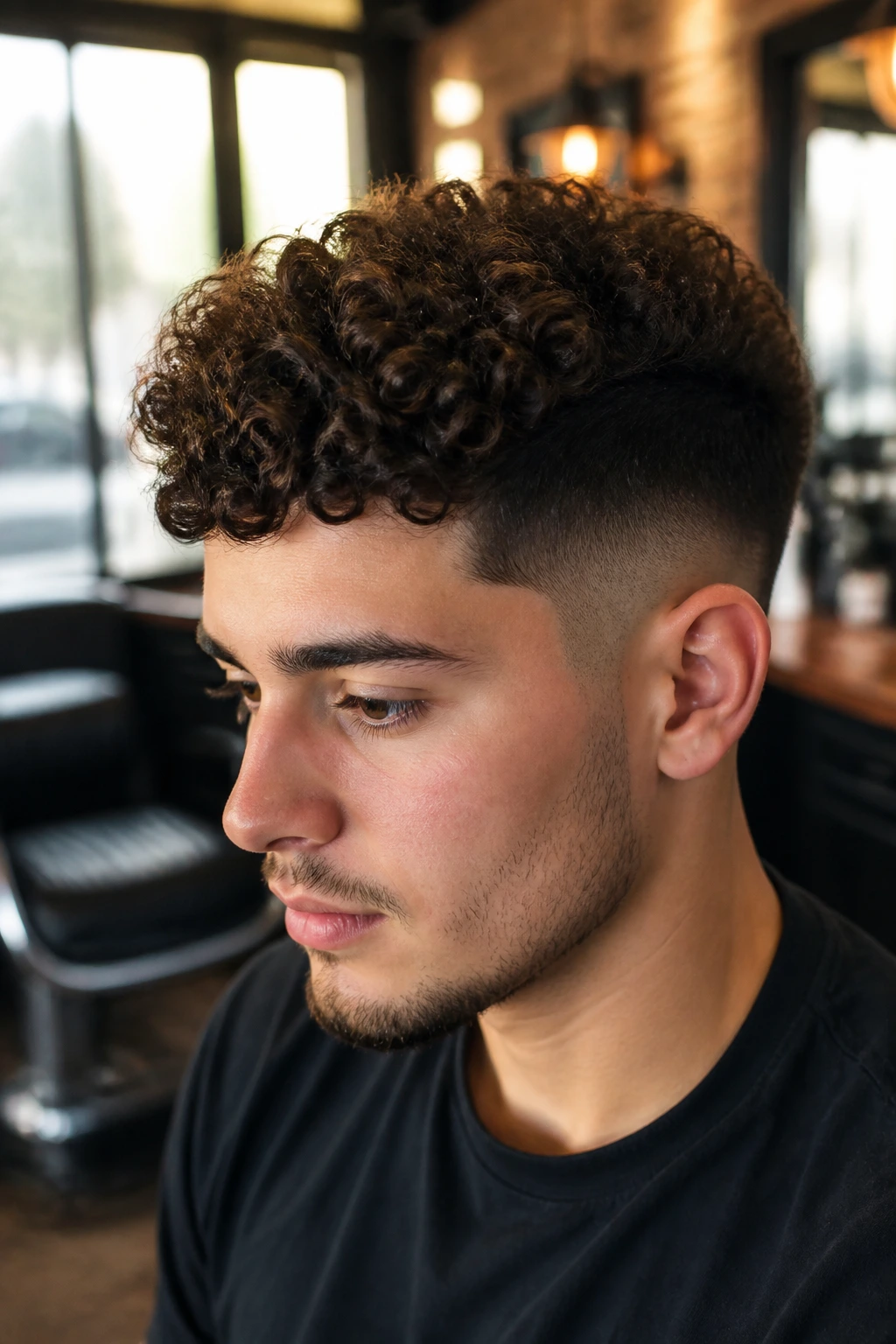
Curly hair and fades have a natural argument going on. The curls want width; the fade removes it. That tension is exactly why the cut works. On short curls, a fade clears the sides and lets the top keep enough bulk to show the curl pattern without turning into a puffball.
Ask for the top to stay short but not clipped too close—usually around 1.5 inches if your curls shrink a lot. The barber should shape the top with the curl pattern in mind. Cutting curls the same way you cut straight hair is how people end up with odd, uneven crowns.
A curl cream or leave-in helps, but the real trick is not overhandling the hair once it dries. Let the curls sit where they want, then nudge them into shape with your fingers. Fussy styling kills this cut fast.
19. Shadow Fade with a Short Pompadour
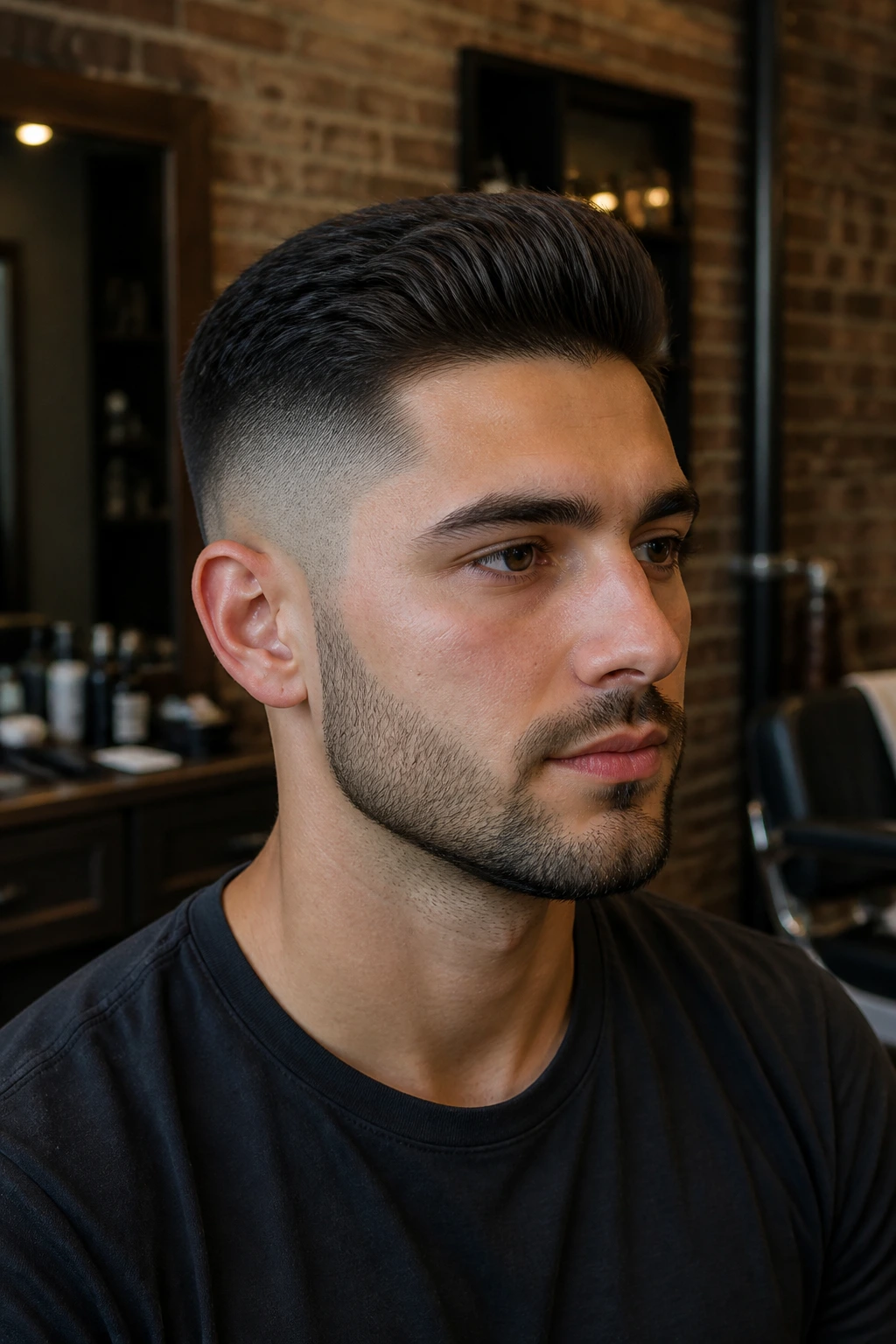
A short pompadour sounds like a lot, but it doesn’t have to be. Keep the top compact, push the front upward and back, and use a shadow fade to soften the transition down the sides. That gives you a haircut with shape and lift, yet none of the stiffness people usually associate with pomps.
The shadow fade is useful here because the pompadour already creates a strong silhouette. You do not need a severe skin fade fighting for attention. A gradual taper keeps the cut wearable and makes the top look fuller. It also grows out in a gentler way, which is helpful if you don’t want to babysit it every week.
Use a blow dryer and a round brush if you like more lift. Or just finger-style it for a looser version. The shorter the top, the less likely it is to collapse under its own weight.
20. Taper Fade with a Comb Over
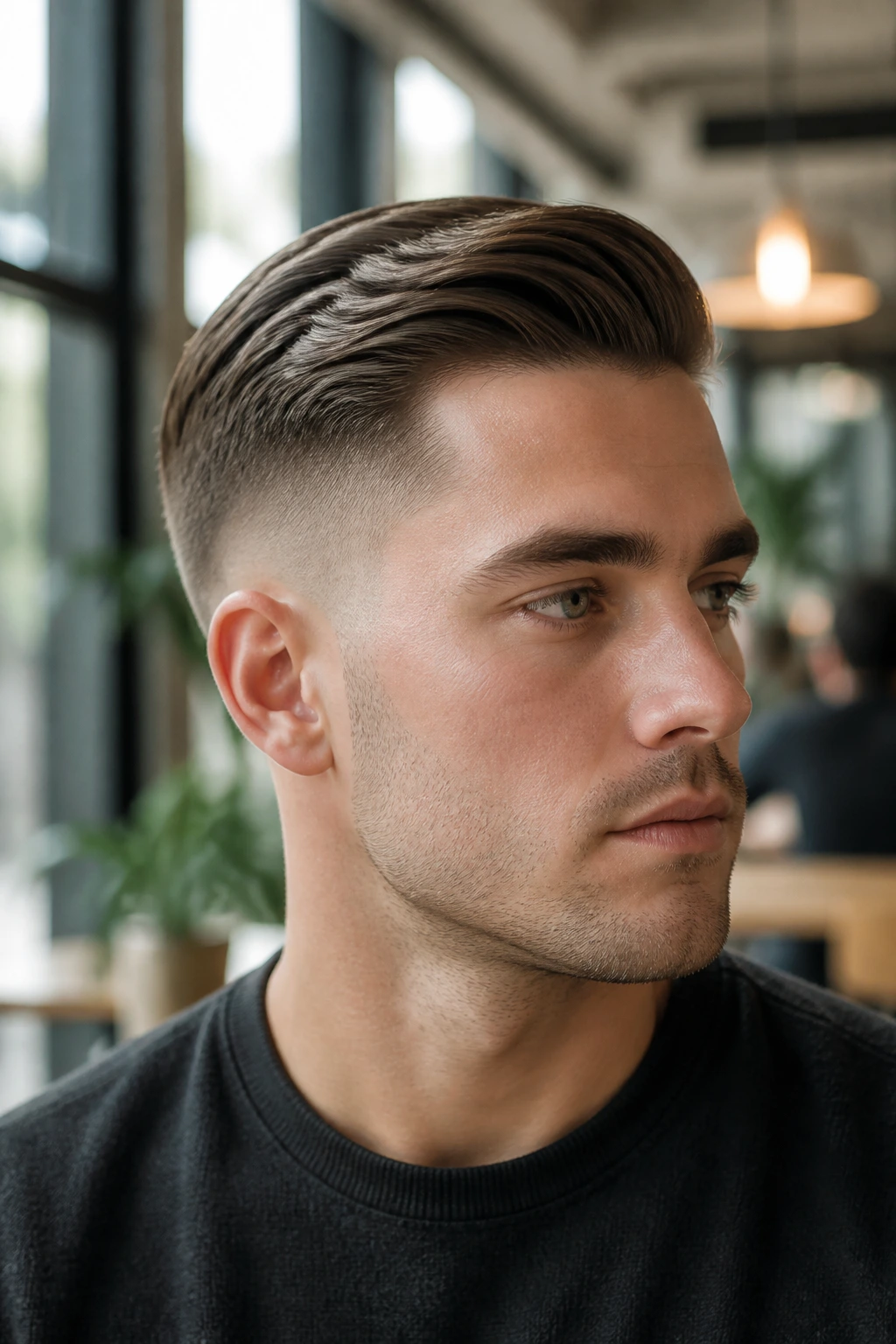
This is the comb-over for people who hate the stiff, helmeted version of a comb-over. The taper fade keeps the sides clean without erasing them completely, and the short top can be directed across the head with a natural side sweep. It’s neat, office-friendly, and not the least bit fussy when cut well.
What I like here is the control. The taper gives enough detail around the ears and neckline, but it doesn’t force a hard contrast. That makes the comb over feel softer and more modern. Leave enough length on top to separate the hair with a comb, then settle it with a small amount of cream or low-shine paste.
If your hair is fine, keep the part soft. If it’s thick, the taper helps prevent the sides from looking bulky.
21. Skin Fade Crew Cut with a Line-Up
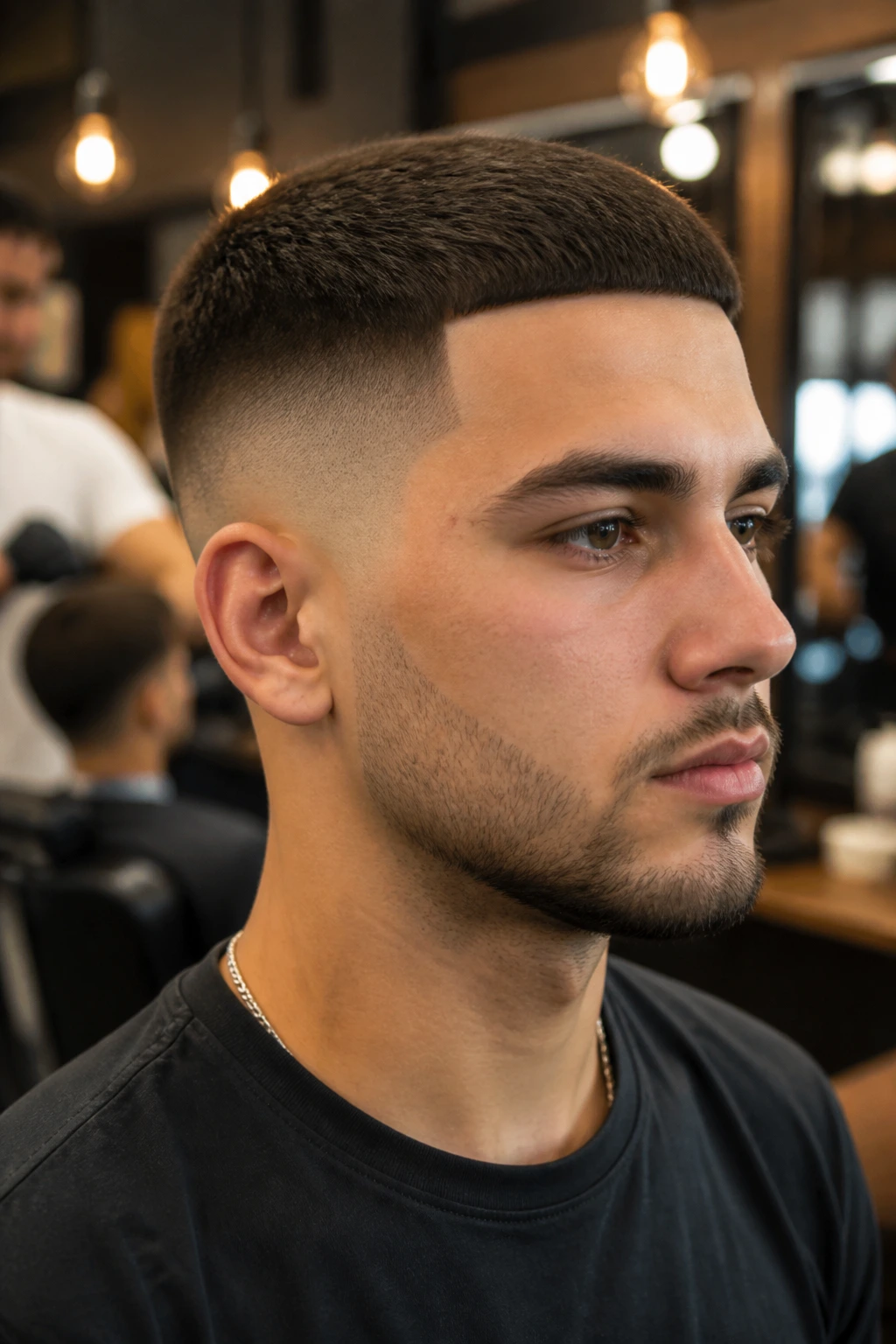
Take the classic crew cut, tighten the sides to skin, and draw a clean line across the front. That’s the whole idea, and it works because the cut has a shape people recognize immediately. The skin fade removes the weight, the crew cut keeps the top short and practical, and the line-up adds a tidy border around the forehead.
Quick Facts
- Top length: Usually about 1 to 1.5 inches
- Fade style: Skin fade, tight around the ears and neckline
- Best for: Men who want a no-nonsense cut with visible structure
- Styling: A fingertip-sized amount of matte paste is enough
This one grows out well for a short while, but the line-up will lose crispness first. If you like that sharp edge, expect a touch-up before the rest of the cut looks messy.
22. High Fade with a Short Caesar
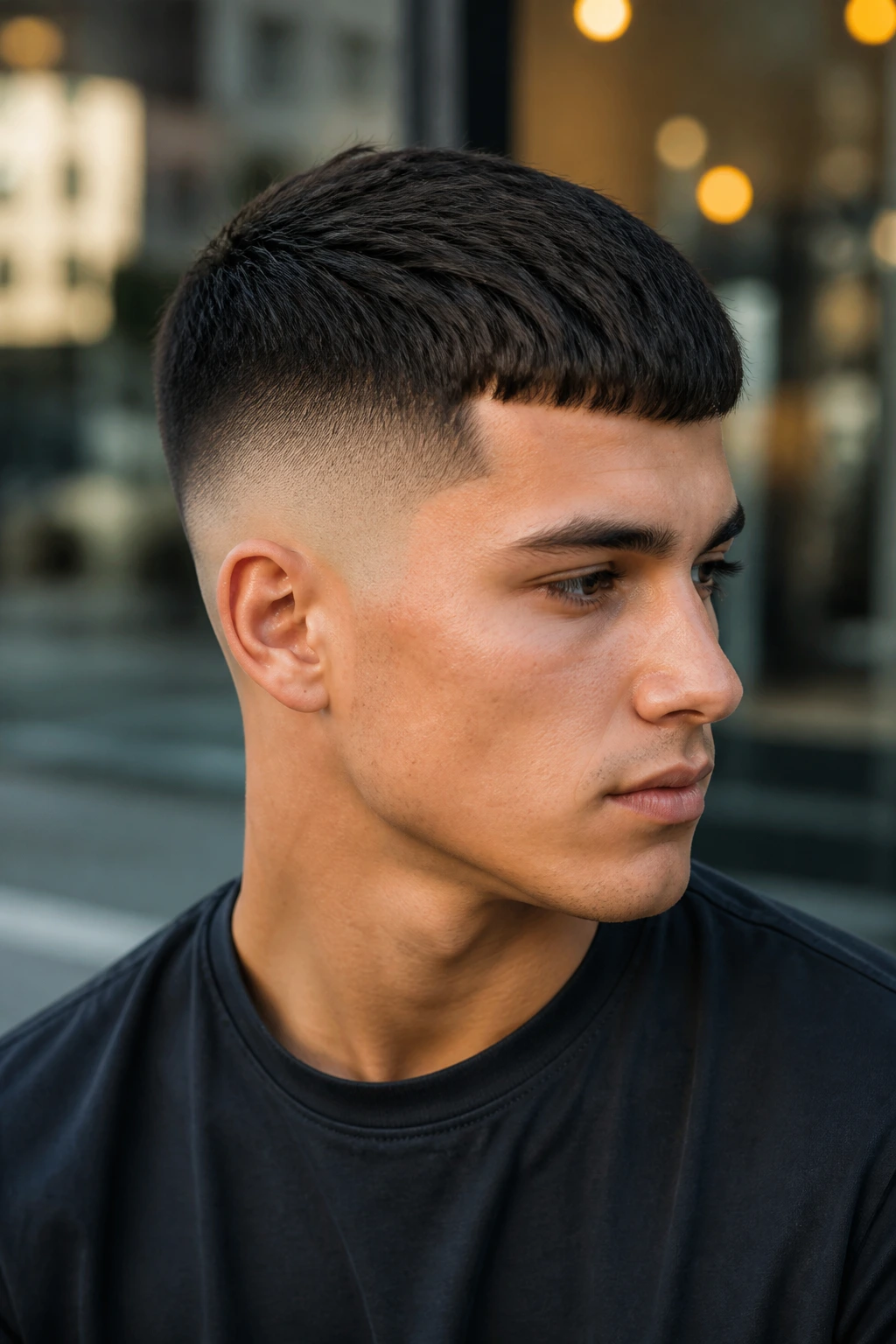
A short Caesar with a high fade is blunt in the best way. The fringe is short and forward, the top stays even, and the high fade strips away the sides so the haircut reads bold rather than heavy. If your hairline is uneven, the Caesar fringe can soften it without hiding the fact that you still have a haircut with shape.
The high fade also stops the short top from looking like a cap sitting on the head. That matters more than people think. Without that contrast, a Caesar can flatten out and lose its edge. With it, the haircut feels trimmed, tidy, and slightly severe.
Ask the barber to keep the fringe textured rather than perfectly straight. A little roughness keeps it from looking like a bowl cut with ambition.
23. Low Fade Buzz Cut with a Beard Blend
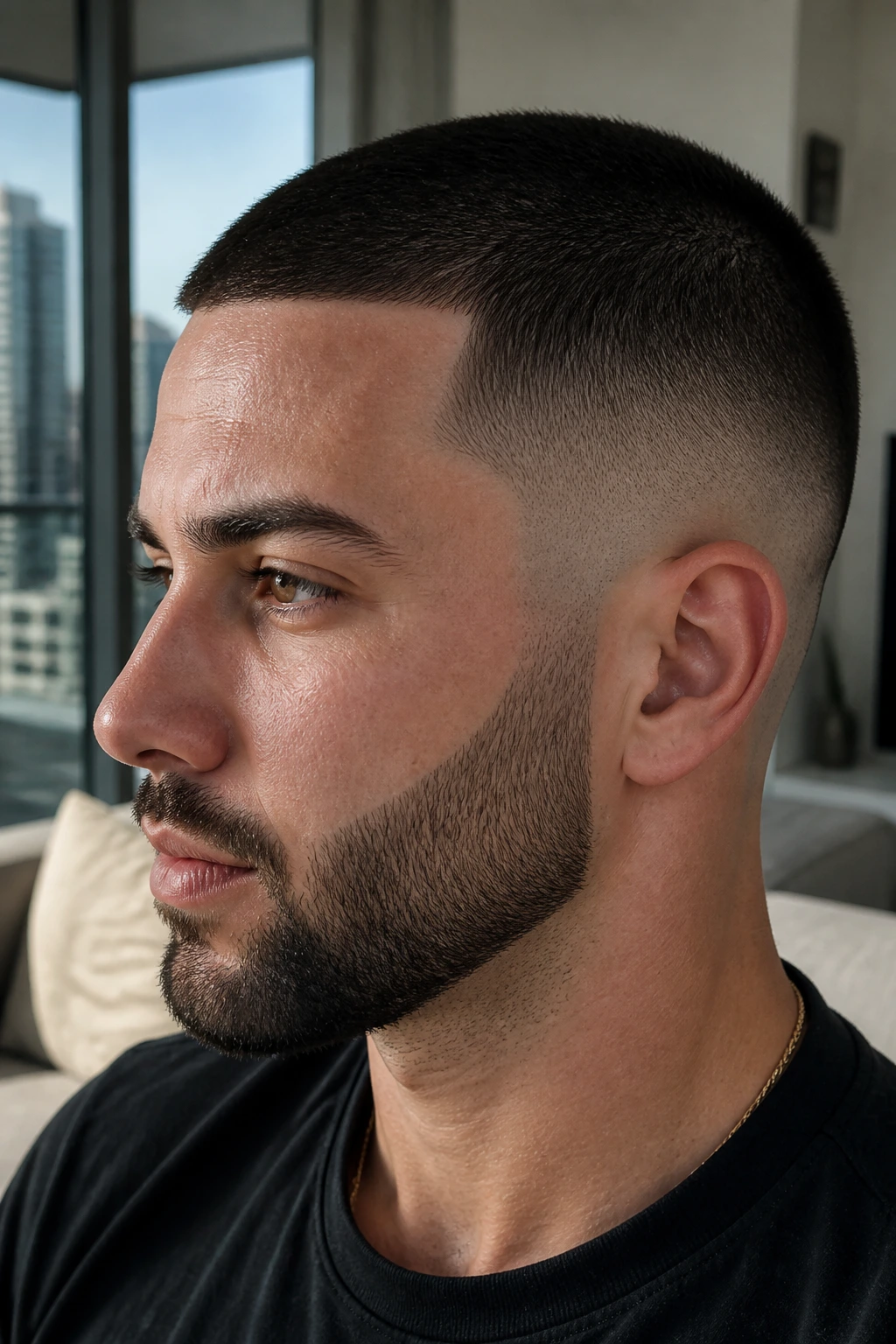
A low fade buzz cut works best when the beard is part of the plan, not an afterthought. The fade should taper into the beard cleanly at the sideburn, which keeps the haircut from looking like two separate pieces. That blend is what turns a basic buzz into a proper style.
If your beard is full, keep the fade a little lower so the transition feels natural. If the beard is light or patchy, the haircut can still work, but the blend needs to be sharper and more controlled. The buzz itself can sit at a #1, #1.5, or #2 depending on how much scalp you want showing.
This is one of the easiest short cuts to maintain, but it’s also one of the easiest to ruin with a bad neckline. Clean that up often. A fuzzy beard-to-fade connection makes the whole thing look late.
24. Mid Fade Messy Crop
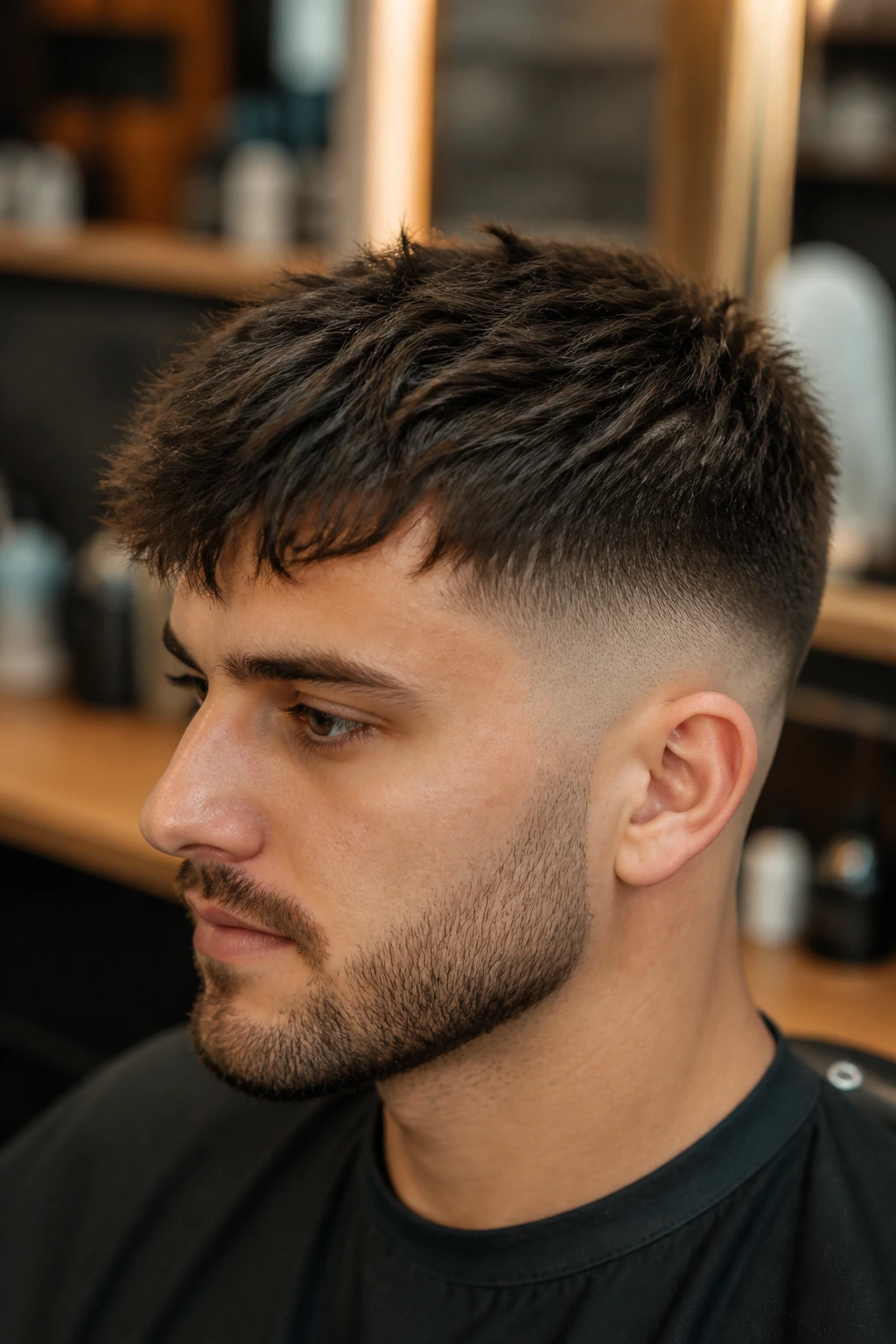
A messy crop sounds casual, and it is, but the fade underneath does most of the hard work. The mid fade gives the haircut structure, while the top is cut short and uneven enough to move a little instead of lying flat. That balance makes this one useful for men who want texture without spending time styling it.
Do not overthink the front. A messy crop gets its appeal from looking slightly broken up, with pieces falling at different angles. If the hair is too neatly arranged, the whole point disappears. A tiny bit of matte clay is enough to rough up the ends and keep the crop from sitting like a helmet.
This cut is a lifesaver for thick hair that wants to stick out on the sides. The fade brings the bulk down before it gets bossy.
25. Temple Fade with Sponge Curls
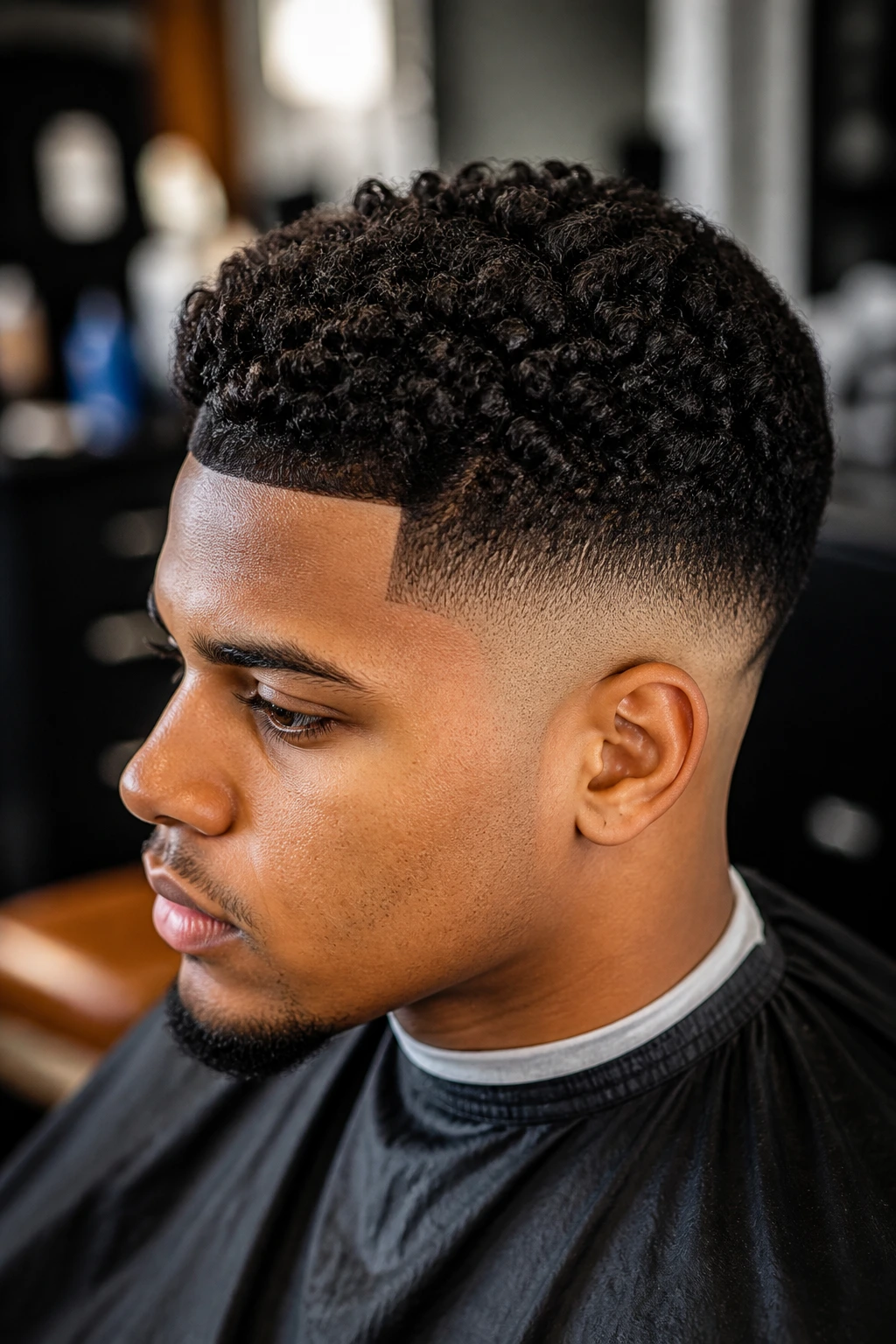
A temple fade paired with sponge curls is sharp around the edges and textured on top, which is exactly why it works on short natural hair. The fade cleans the front corners and sideburns, while the sponge curls create a dense, controlled top with a clear pattern.
How to Get the Most From It
Start with hair that’s damp, not dripping, then use a curl sponge in small circles for a few minutes. Don’t press too hard. The goal is to encourage the coils, not flatten them. A temple fade keeps the lines around the face neat, so the texture on top can do the talking.
What to Watch For
If the top is cut too low, the sponge curls lose their shape fast. If it’s too long, they can puff out and steal the clean look from the fade. Short and balanced usually wins here.
This cut has a lot of personality without needing a big top length. That’s a nice thing.
26. Disconnected Fade with a Short Top
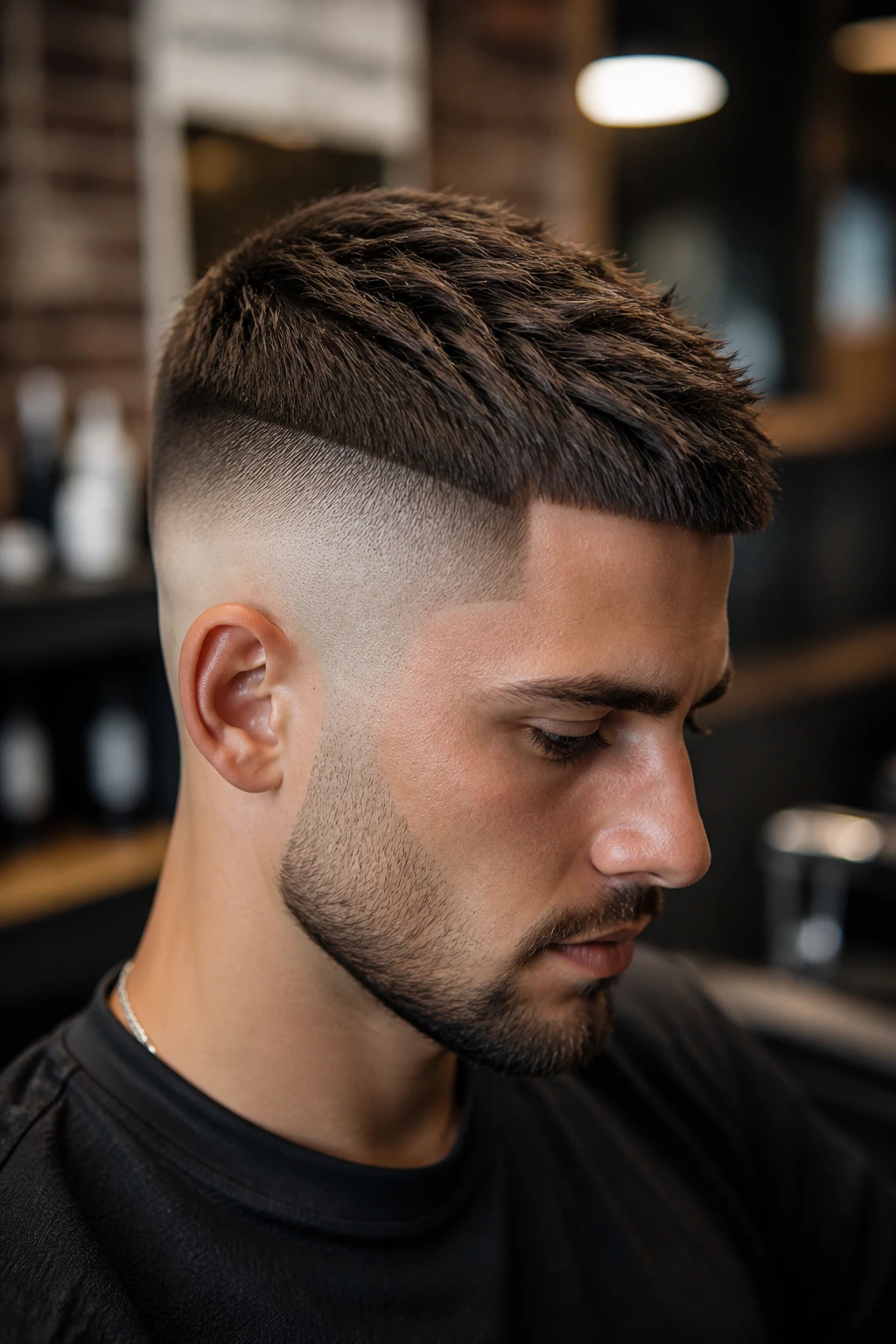
A disconnected fade is not a blend; it’s a statement. The sides are cut down tight, and the top is left short but clearly separate, with no soft transition trying to smooth the gap. On short hair, that disconnect can look incredibly clean if the proportions are right.
This haircut works best when the top has enough texture to stand on its own. A short, choppy top paired with a hard fade line gives the style a little architectural bite. It’s especially good if your hair is thick and tends to puff out when blended too gently. Sometimes the cleanest move is to stop pretending the layers should disappear.
You need confidence from the barber here. A timid disconnect looks like a mistake. A deliberate one looks sharp.
27. Low Drop Fade with a Side-Swept Top
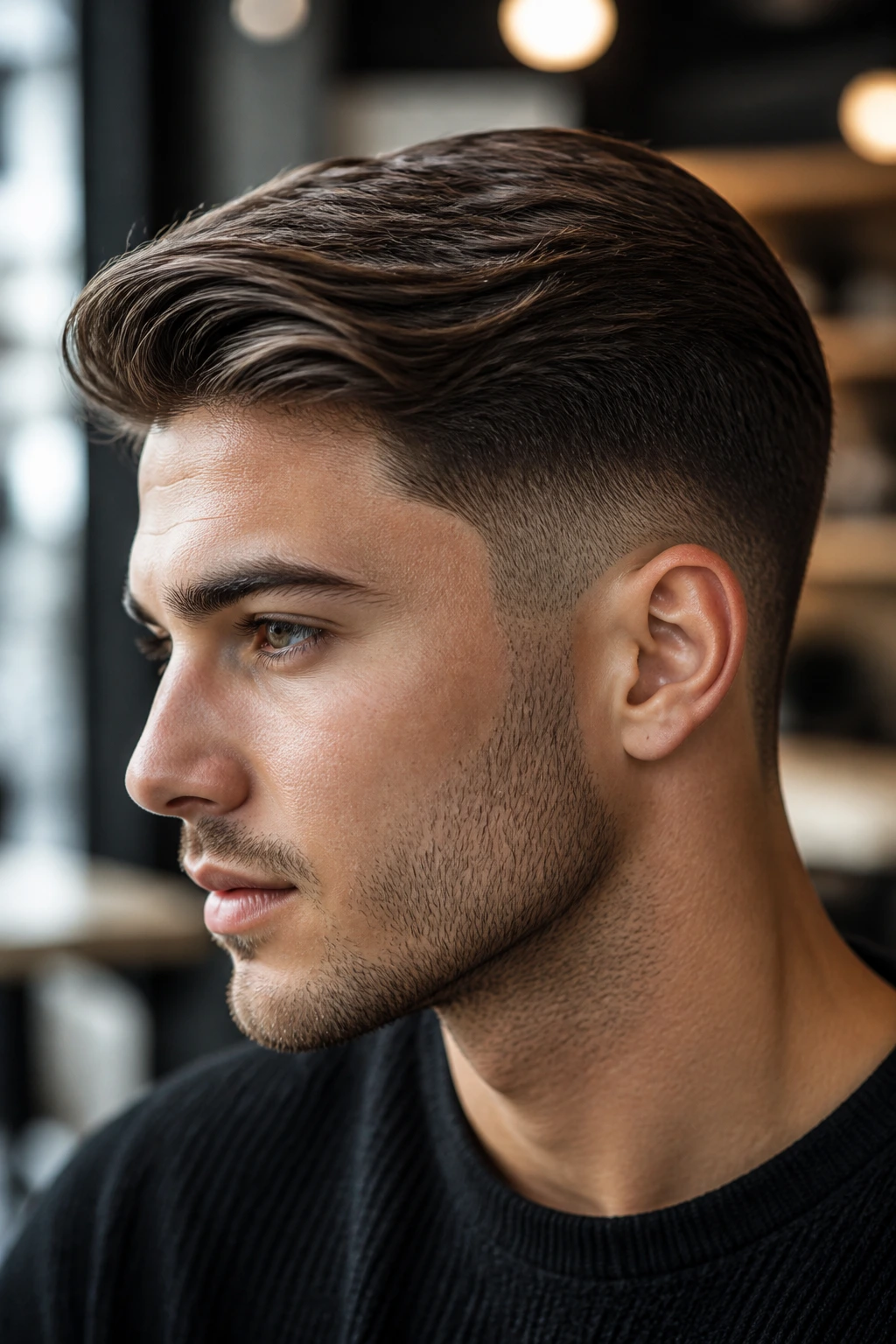
A low drop fade with a side-swept top is the softest, most wearable close to this list. The fade drops just enough behind the ear to follow the head shape, while the top stays short and brushed off to one side. It has movement, but not much effort, which is exactly why men keep coming back to this shape.
The side-swept top should stay light and directional. No heavy part line. No overbuilt volume. If your hair is straight, a little paste keeps it in place. If it’s wavy, the wave can do half the styling on its own. I like this cut for guys who want a fade that feels modern without looking like they’re trying to prove something.
It’s calm. That’s the appeal.
Why the Fade Belongs on Short Hair
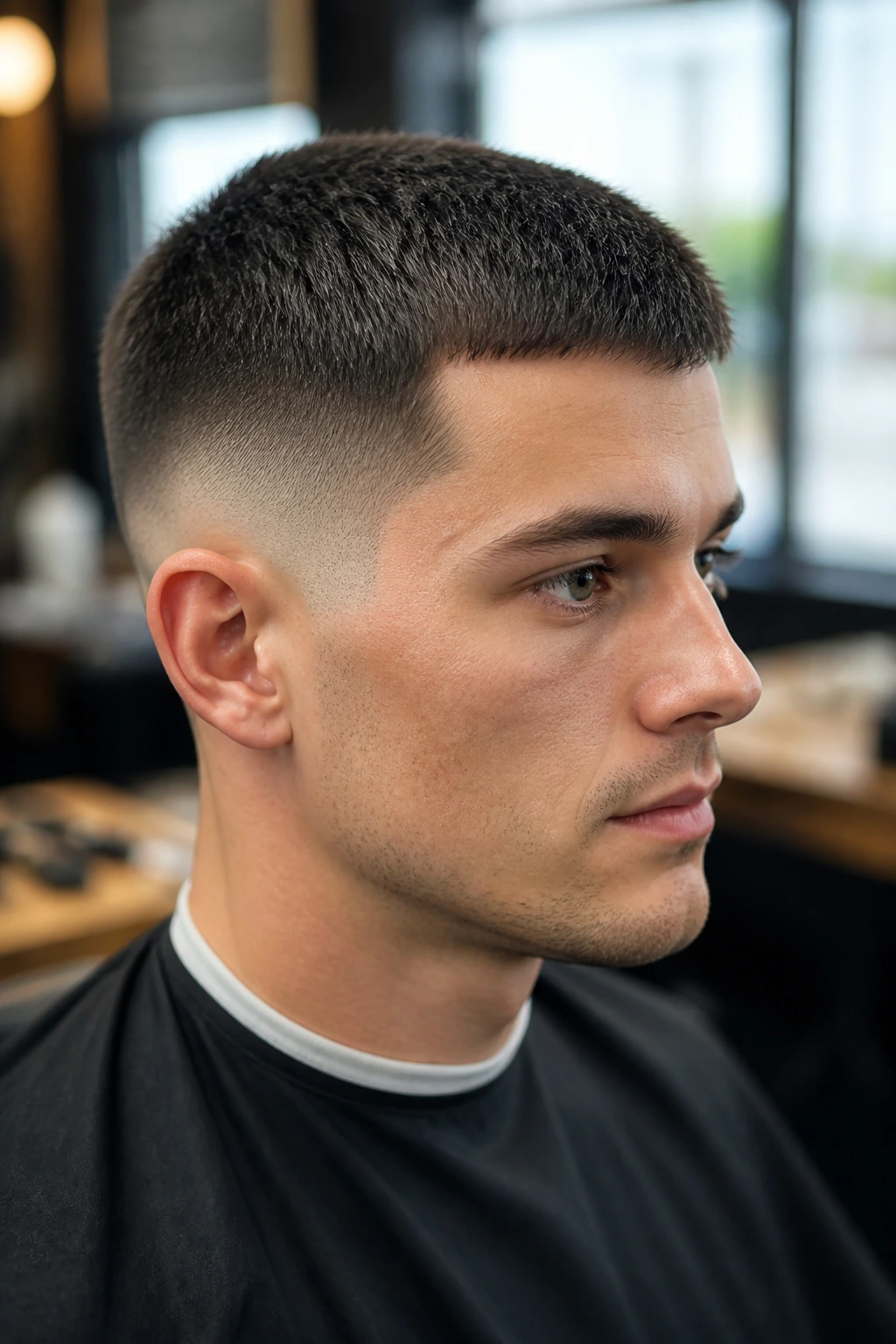
Short hair can feel unfinished when the sides and back are left too blunt. The fade fixes that by controlling the outline, and the outline is what people notice first. Even if the top is barely long enough to comb, the haircut still reads intentional because the edges do the talking.
There’s also a practical reason the fade keeps winning. Short hair grows out fast, and the fade gives the regrowth a softer landing. Instead of a hard line showing up all at once, the cut changes shape gradually. That buys you a little extra time between barber visits, which is never a bad thing.
The best fades for short hair usually do one of two things: either they create contrast, or they create balance. Skin fades and high fades lean into contrast. Tapers and shadows lean into balance. Pick the one that fits how much you want the haircut to speak.
Essential Tools for These Cuts
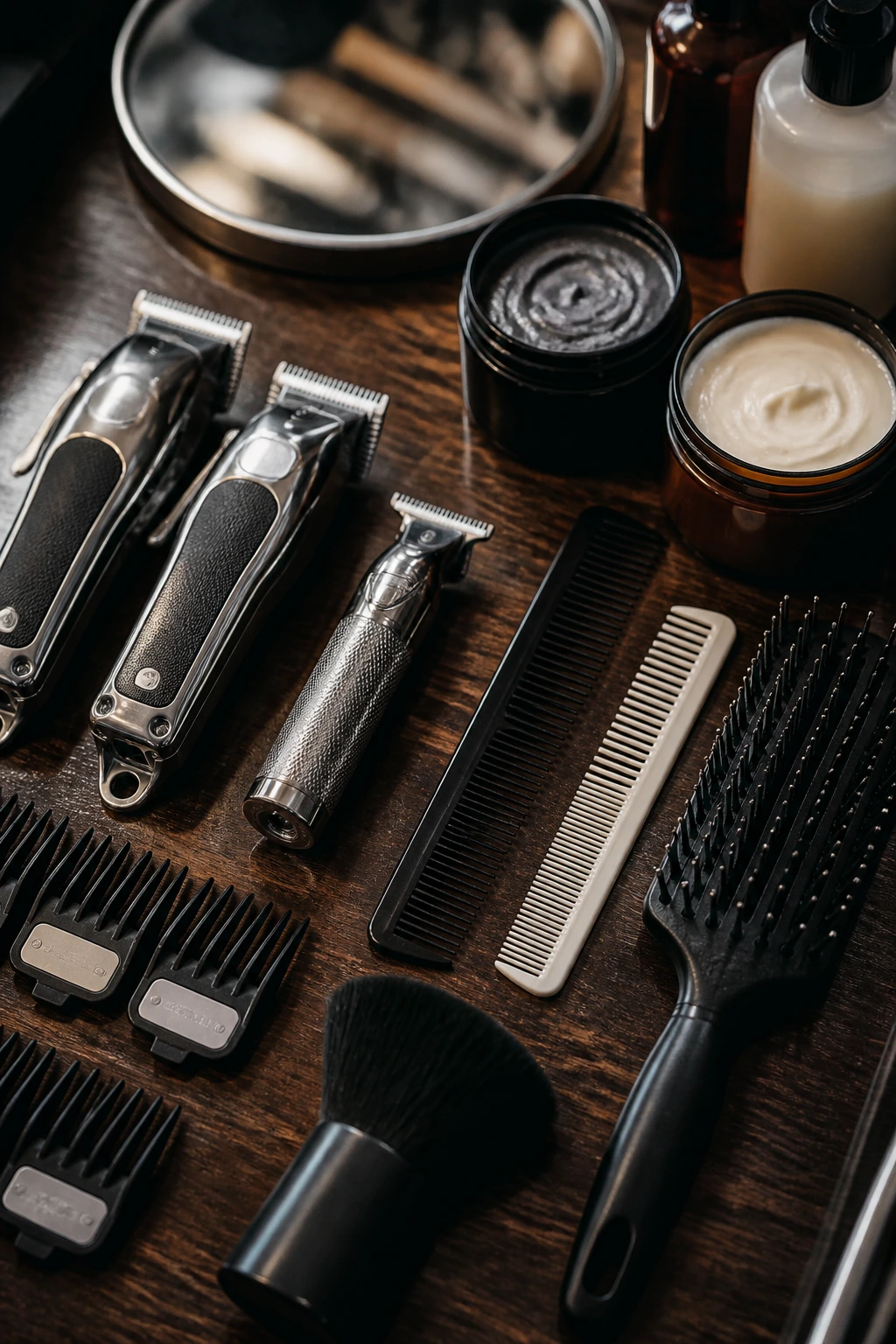
- Quality clippers with guard sizes: A clipper set with guards from #0.5 to #4 covers most short fades and helps you understand what your barber is doing.
- Detail trimmer: Useful for line-ups, sideburn clean-up, and keeping the neckline sharp between cuts.
- Hand mirror: Lets you check the back of the fade instead of guessing.
- Matte clay or paste: Best for crops, quiffs, brush-ups, and messy short styles that need texture without shine.
- Light curl cream or leave-in: Good for curly, coily, or wavy tops that need control without crunch.
- Blow dryer: Not mandatory for every cut, but it helps short hair hold direction, especially on brush-ups, quiffs, and fringe styles.
- Comb and vent brush: A comb for side parts and comb-overs; a vent brush for lifting short hair during blow-drying.
- Neck duster or soft brush: Handy for removing loose hairs after a cut and keeping the neckline comfortable.
How to Ask for the Right Fade Without Guesswork
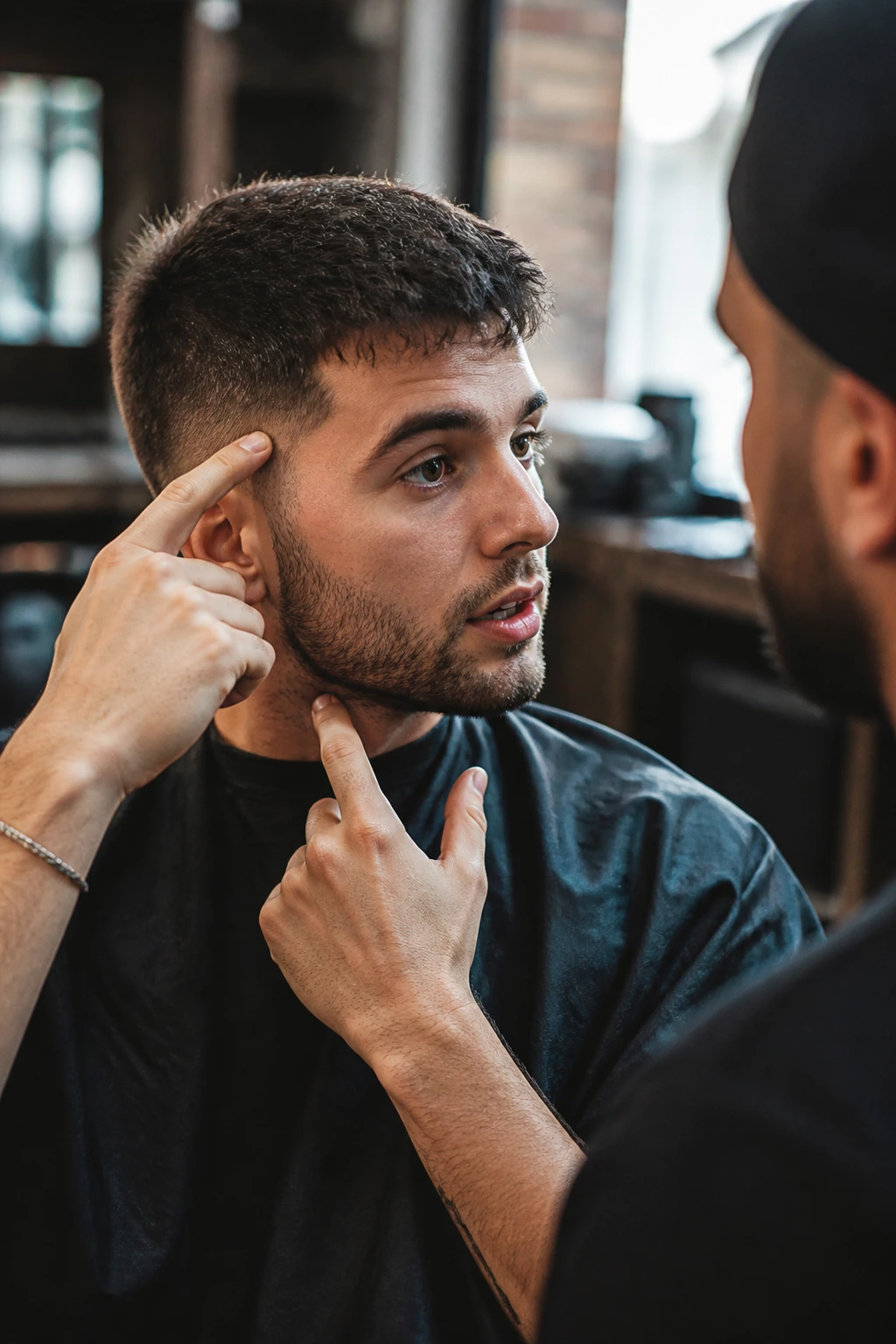
The easiest way to get a good fade is to stop asking for a “fade” and start describing the shape. Say where you want the fade to begin—low, mid, or high—and how short you want it at the bottom. That can mean skin, a #0.5, a #1, or a taper that leaves some length near the base. Those details matter more than the name alone.
Bring a photo, then talk like a person who understands the moving parts. If you want texture on top, say so. If you want the fringe to sit forward, say so. If your hairline recedes at the temples, a barber can usually work with that, but only if you mention it before the clippers come out.
One useful trick: point to the part of the head that worries you most. The temple? The crown? The neckline? Barbers can adjust the fade pattern around that. Vague requests get vague results. Specific requests get a better haircut.
How to Wear and Style These Cuts
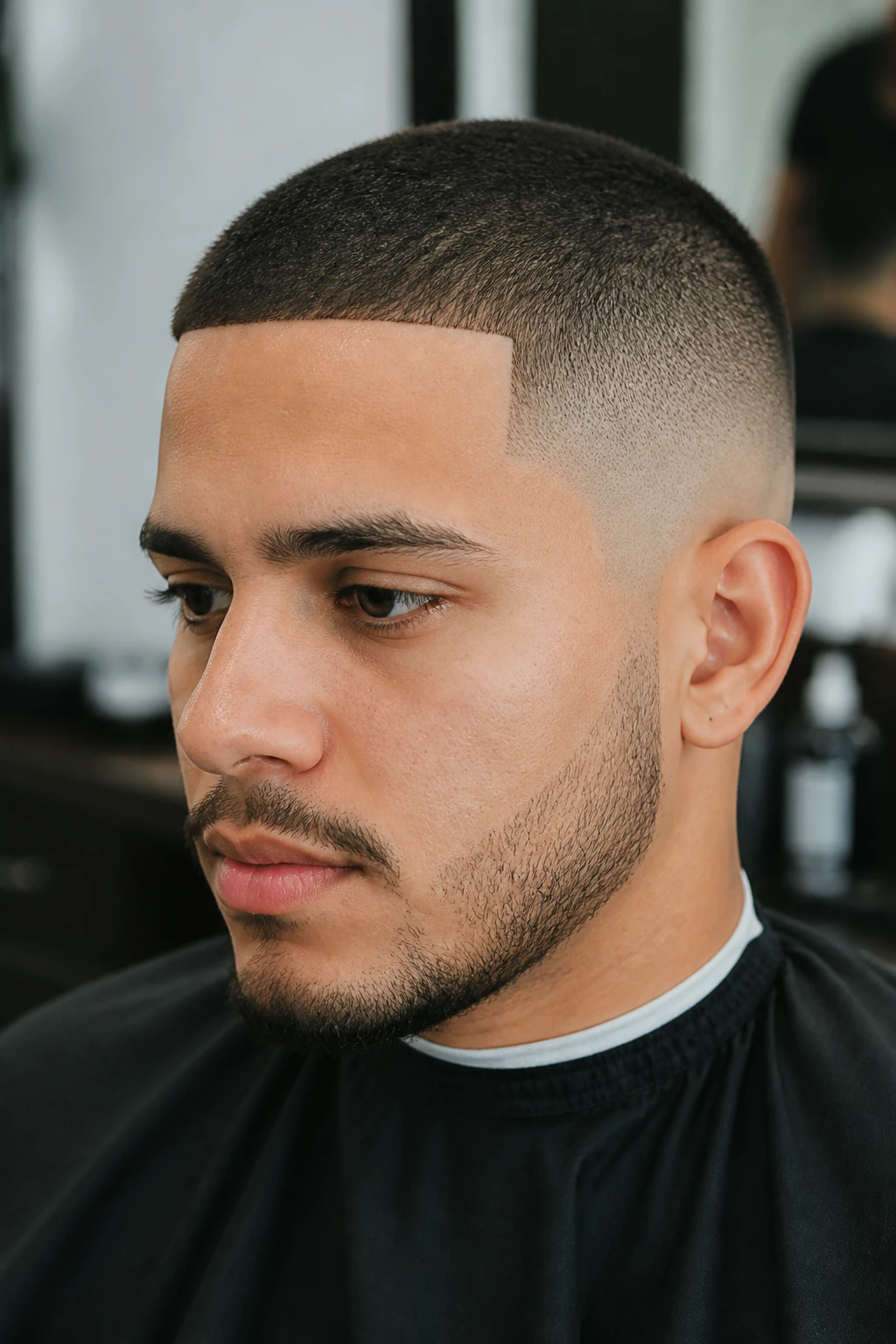
Presentation: Short fades look best when the edges are clean and the top matches the vibe of the cut. A textured crop should look dry and separated. A crew cut should look neat. A curly fade should keep its curl pattern visible instead of over-brushed into a blur.
Best Pairings: Match the haircut to your hair texture and face shape. Round faces usually benefit from height or tighter sides. Long faces often look better with a lower fade and a top that doesn’t add too much vertical lift. Beards can help balance sharper fades, but they need a clean transition at the sideburn.
Maintenance: Skin fades and high fades usually need a cleanup sooner than shadow or taper fades. If you hate appointments, lean toward low and shadow fades. If you like a sharp edge all the time, a skin fade is worth the upkeep.
Product Pairing: Use matte clay for crops and spikes, light cream for curls, and a small amount of pomade only when the style actually needs shine. A short cut can drown in product faster than people expect.
Extra Styling Tips That Make Short Hair Look Sharper
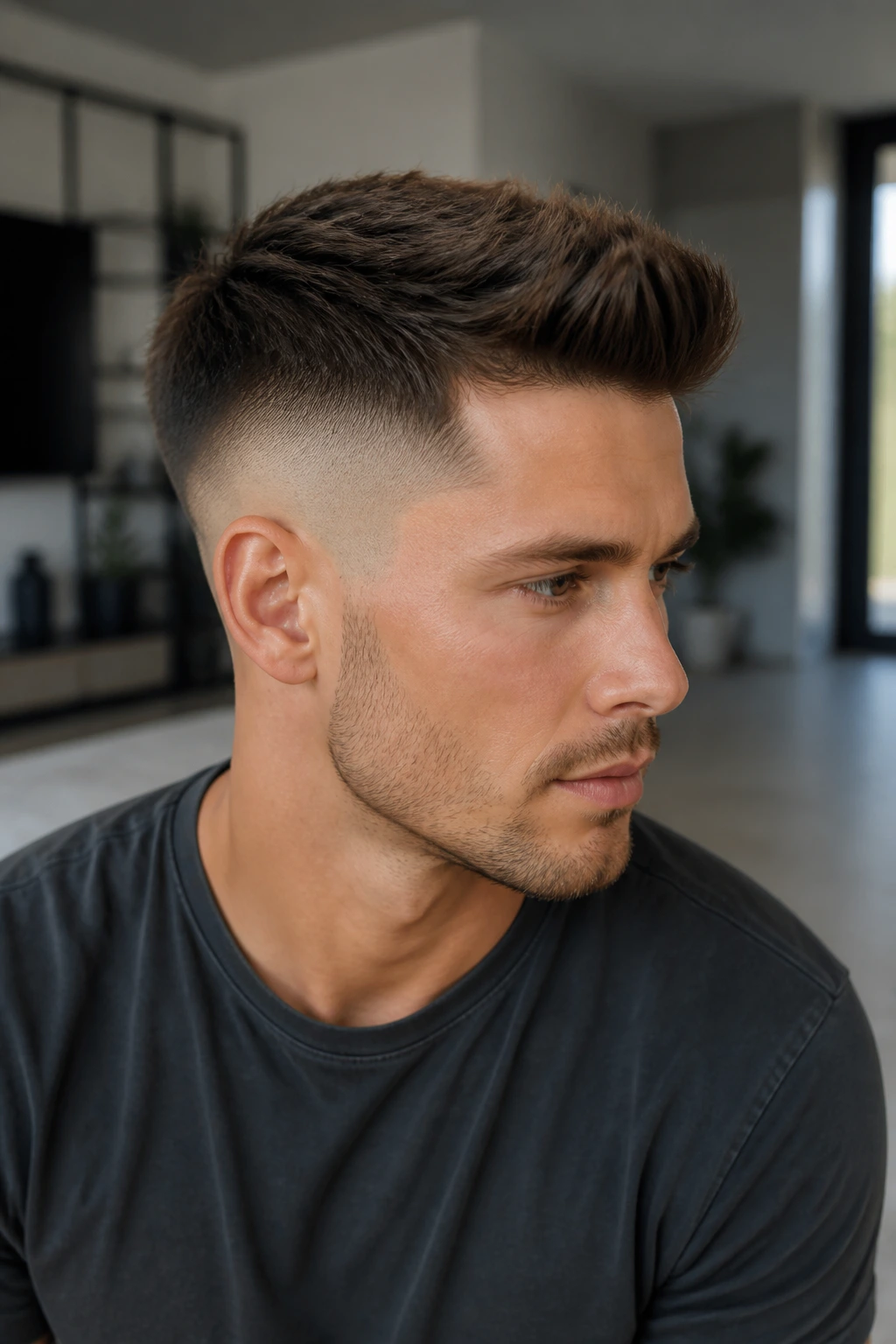
Texture Boost: On short straight hair, rub the product between your palms until it almost disappears before touching the top. That keeps the finish from turning pasty and heavy.
Shape Control: If the fade is tight but the top puffs up, use a blow dryer for 30 to 60 seconds in the direction you want the hair to sit. Hair remembers heat better than product alone.
Scalp Care: Skin fades expose more scalp, so a light wash and a non-greasy moisturizer on the exposed skin can keep the cut looking fresh instead of flaky.
Fast Morning Fix: Dampen your hands, run them through the top, then add a pea-sized amount of product. Five seconds of direction is usually enough on short hair. More than that can make it look overworked.
Common Mistakes to Avoid
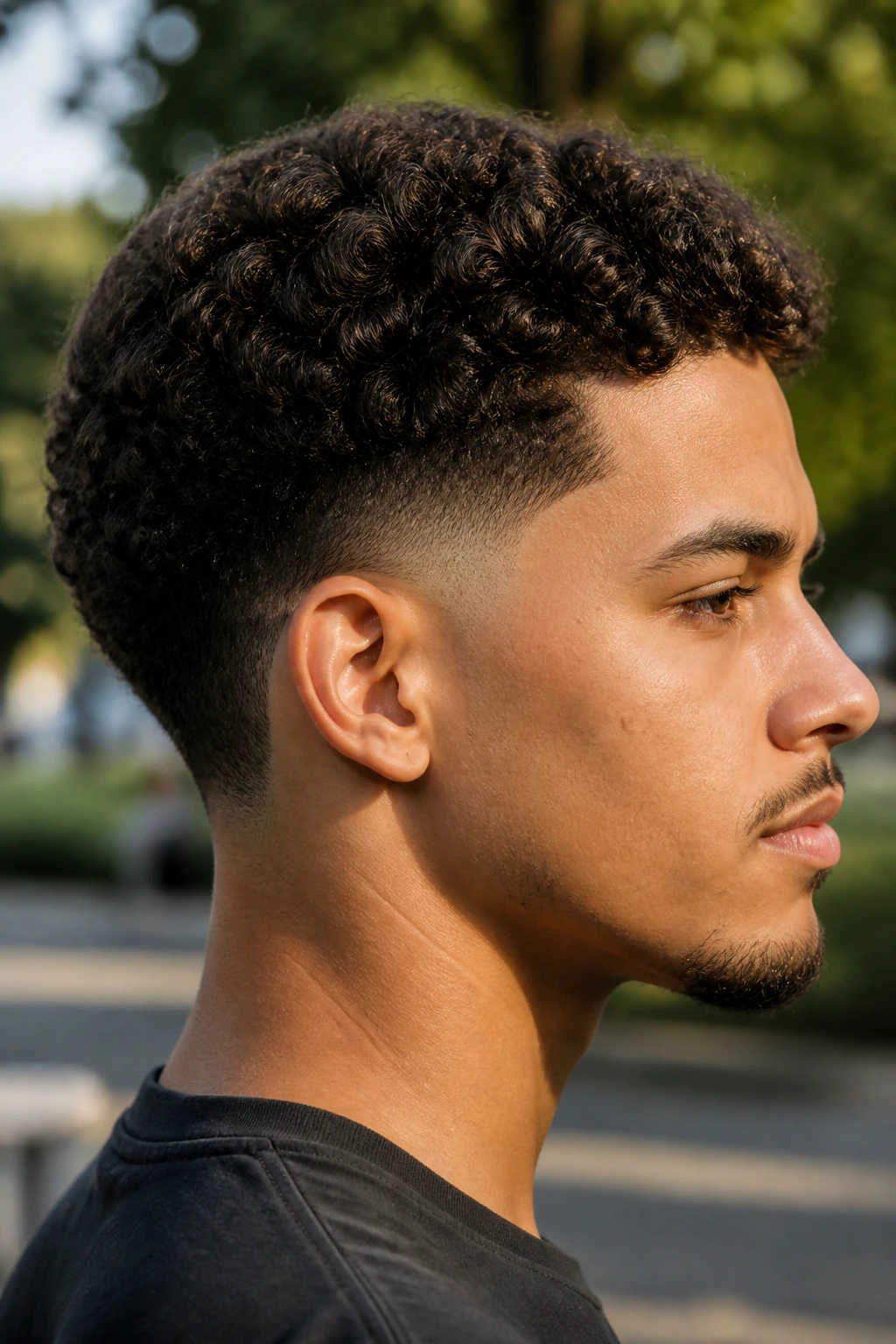
A lot of bad fades start with a bad request. If you say “low fade” and leave it there, the barber has to guess how short you want the sides, how high the blend should rise, and whether you want a skin finish or a taper. The haircut may still be fine, but it may not be your version of fine.
Another common problem is chasing contrast without checking the top length. A high fade with too little hair left on top can make the cut look pinched. A crop that’s too short loses texture. A quiff that’s too short loses lift. The fix is simple: match the fade strength to the top length, not just to a picture you liked on someone else.
Product can also ruin a good short cut fast. Thick pomade on a textured crop turns the hair into a flat, shiny patch. Too much clay makes short hair look dusty. Keep the amount small and add only if the hair still needs help.
And don’t ignore the grow-out stage. A fade that looks perfect on day one can look fuzzy by day ten if the neckline and temples are not touched up. That’s not failure. It’s maintenance.
Variations and Adaptations to Try
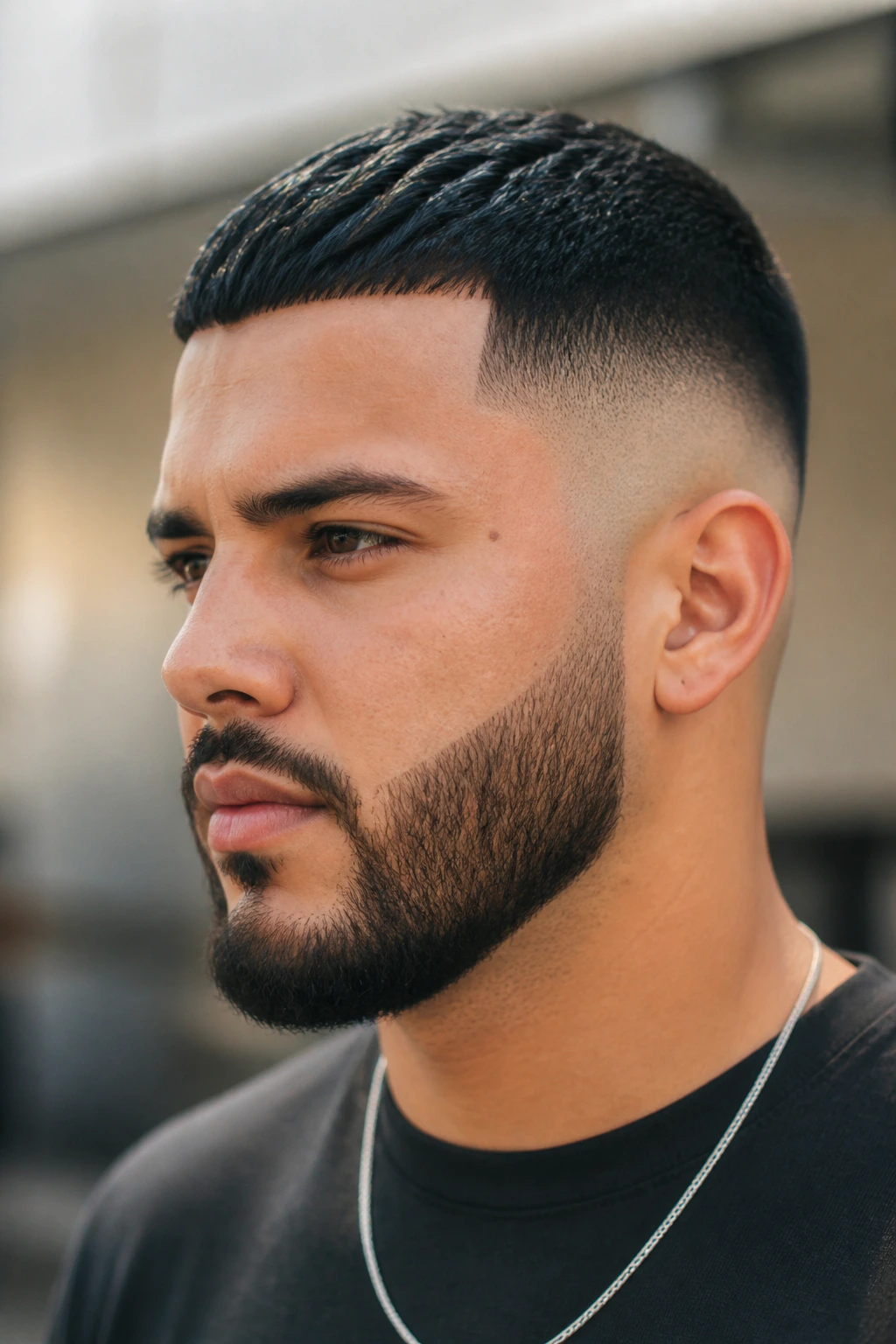
Office-Safe Taper Fade: Keep the fade low and soft, then pair it with a side part or crew cut. It reads cleaner in conservative settings and grows out more gently than a skin fade.
High-Contrast Skin Fade: If you like sharp edges and a barbershop-fresh look, go tighter at the temples and neckline. This version works best when you’re willing to come back for regular cleanups.
Curly-Control Version: On curly or coily hair, leave more texture on top and avoid flattening the pattern with heavy product. A curl cream and a diffused dry-down keep it controlled without killing movement.
Low-Maintenance Shadow Fade: Choose this if you want the fade to blur instead of shout. It’s the easiest version to live with when you don’t want the cut to look rough halfway through its grow-out.
Line-Up Emphasis: Add a crisp front edge to a buzz, Caesar, or crew cut. This gives a short haircut a more finished look, especially if your hairline is naturally uneven.
Beard-Connected Fade: Blend the sideburn into the beard instead of stopping the fade abruptly at the ear. The transition feels smoother and makes the whole face look more balanced.
Keeping Fade Haircuts for Men With Short Hair Sharp Between Cuts
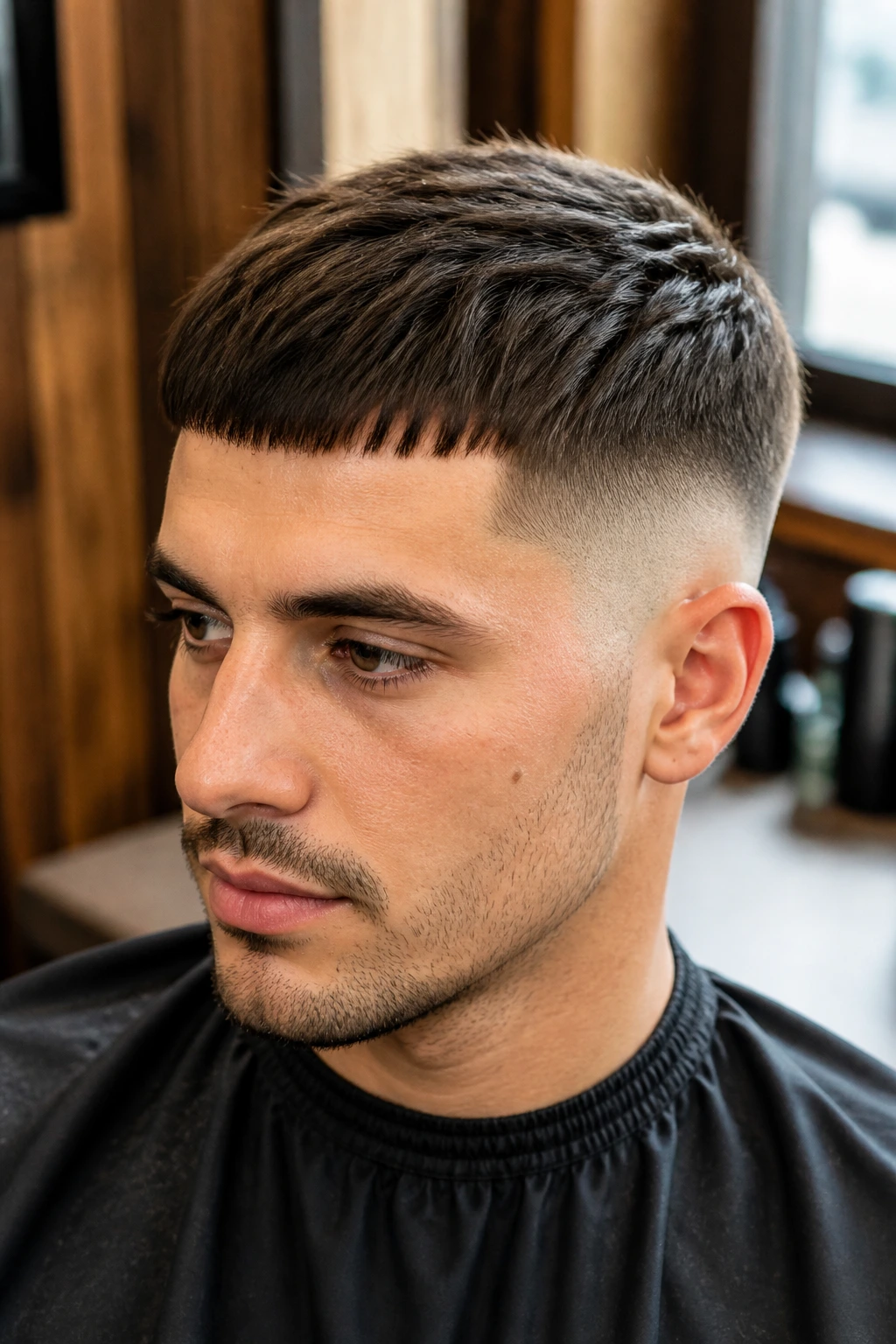
A fade on short hair lives or dies by the grow-out. The first thing to lose its crispness is usually the neckline, followed by the temples and the edge around the ears. If you want the haircut to keep its shape, clean those zones up every 7 to 10 days with a trimmer or book a quick edge refresh.
Wash the scalp regularly, especially if you’re using matte products. Short hair does not need much grease to start looking dirty. A light shampoo routine keeps the fade visible instead of buried under buildup, and it helps the skin at the temples and nape stay calm.
If the haircut includes a line-up, hard part, or very tight skin fade, expect it to look best for a shorter window than a taper or shadow fade. That is the tradeoff. Tightness buys sharpness, but it asks for more upkeep. If you know that going in, you won’t be annoyed when the edges soften.
Frequently Asked Questions
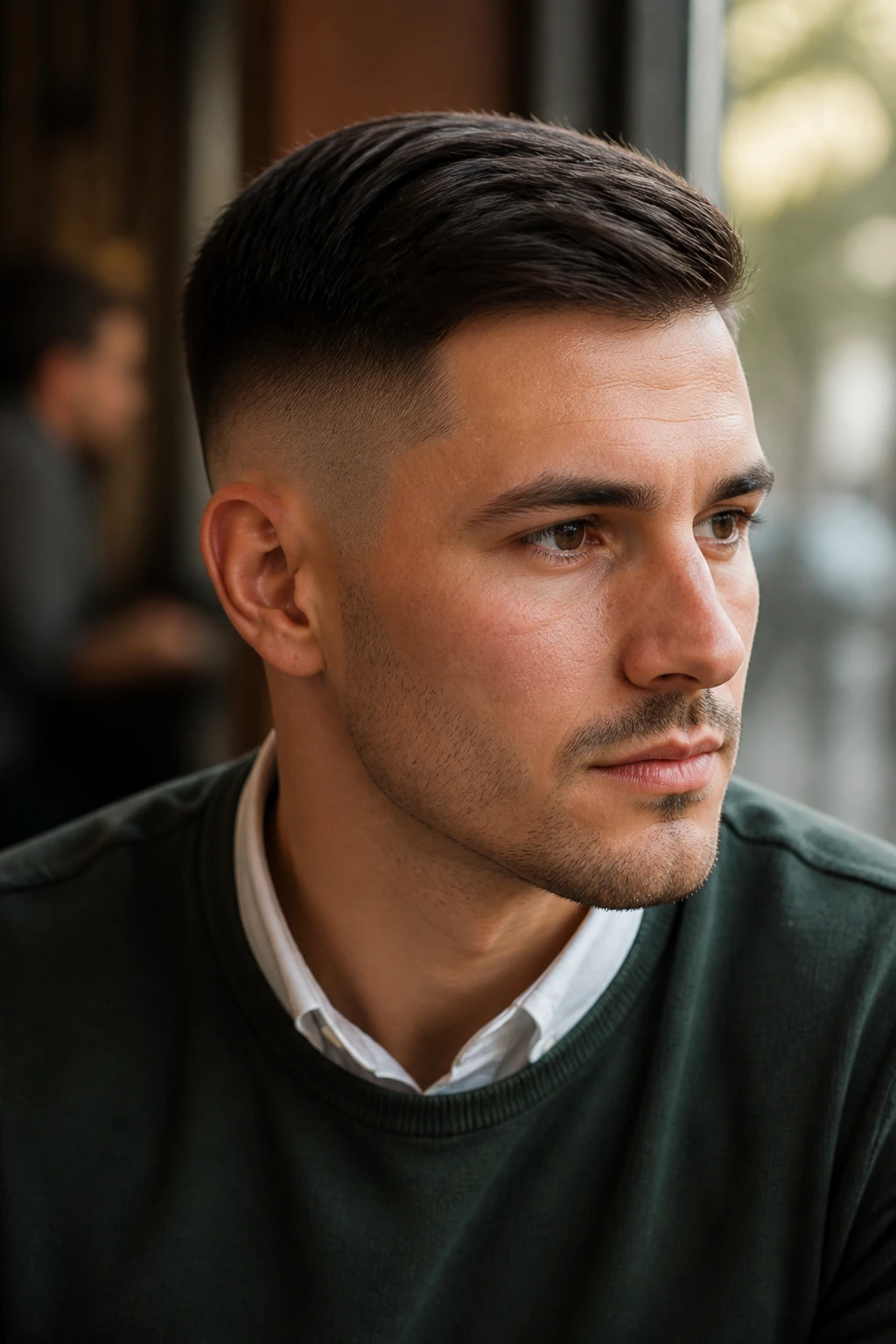
What fade is best for very short hair?
A skin fade or high fade usually works best if the top is only a little longer than a buzz cut, because the strong contrast keeps the haircut from looking flat. If you want something softer, a low taper or shadow fade is easier to wear.
Can a fade work with thinning hair?
Yes, and often better than a blunt short cut. A fade can reduce the visual weight on the sides so the top looks denser by comparison. Keep the top textured rather than slicked back, because flat styling makes thin spots more obvious.
How do I ask for a fade without sounding unsure?
Tell the barber the fade height, the shortest point you want on the sides, and how long you want the top. If you have a photo, show it and point out the parts you like: the temple area, the neckline, the fringe, or the blend.
How often should I get a short fade touched up?
Skin fades and high fades often need attention every 1 to 2 weeks if you want them crisp. Taper and shadow fades can usually stretch a little longer. The shorter and tighter the fade, the faster it loses its edge.
Do I need product for short hair?
Not always. Buzz cuts, crew cuts, and very short crops can look fine with nothing more than clean, dry hair. If the top has texture, a small amount of matte clay, paste, or curl cream can help keep the shape from collapsing.
Will a fade work with curly hair?
Absolutely. Curly and coily hair often benefits from a fade because it removes bulk from the sides and keeps the top from spreading out too far. The main thing is to leave enough length on top for the curl pattern to show.
What if the fade feels too high after the cut?
Ask the barber to soften the blend next time and keep more weight lower on the sides. In the meantime, the top may need a little styling forward or upward to balance the cut until it grows in.
Can I combine a fade with a beard?
Yes, and it usually looks better when the sideburn is blended into the beard rather than cut off sharply. That connection helps short hair and facial hair read as one shape instead of two separate pieces.
The Clean Finish
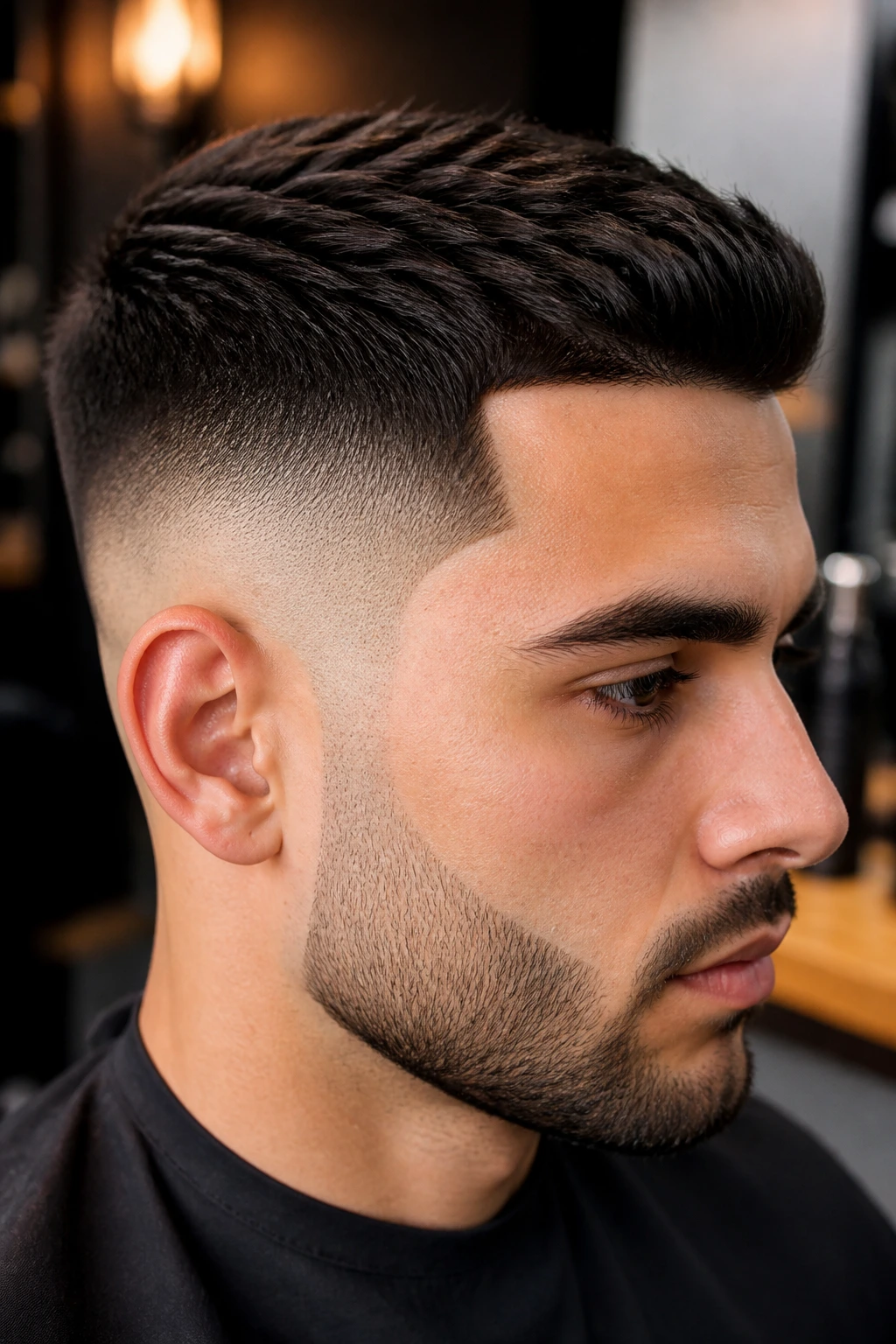
Short fades work because they respect the simplest part of a haircut: the outline. You can get away with a lot on top if the sides and back are handled cleanly. That’s why a low taper feels calm, a skin fade feels sharp, and a burst fade changes the whole mood of short curls without adding length.
The best choice is the one that fits your hair’s habits, not just the photo you liked. A good barber can make almost any of these shapes work, but the cut gets better when you know whether you want contrast, softness, or something that grows out politely. That’s the real value of a fade on short hair. It gives structure where short hair usually needs it most.
