



Long hair on men has a way of exposing bad habits fast. If the cut is lopsided, the ends fray, or the tie sits too high, you can spot it from across a room. The upside is just as obvious: when the shape is right, long hair carries movement, edge, and a kind of ease that short cuts spend a lot of time trying to fake.
Long hairstyles for men work best when they look chosen, not merely grown. That means paying attention to weight at the ends, where the part sits, how much the crown lifts, and whether the style fits the way your hair actually falls when you stop touching it. Straight hair behaves one way. Wavy hair does another. Curly and coily hair have their own rules, and ignoring those rules is how people end up with a halo of fuzz, a flat top, or a bun that feels like it’s fighting the head it lives on.
I’m picky about long hair. A grown-out mop is not a style. A good long cut has shape, and you can see the shape even on day three, after a hat, after a workout, after a slightly lazy brush-through in the hallway mirror. That’s the standard here.
Why This Collection Is Different
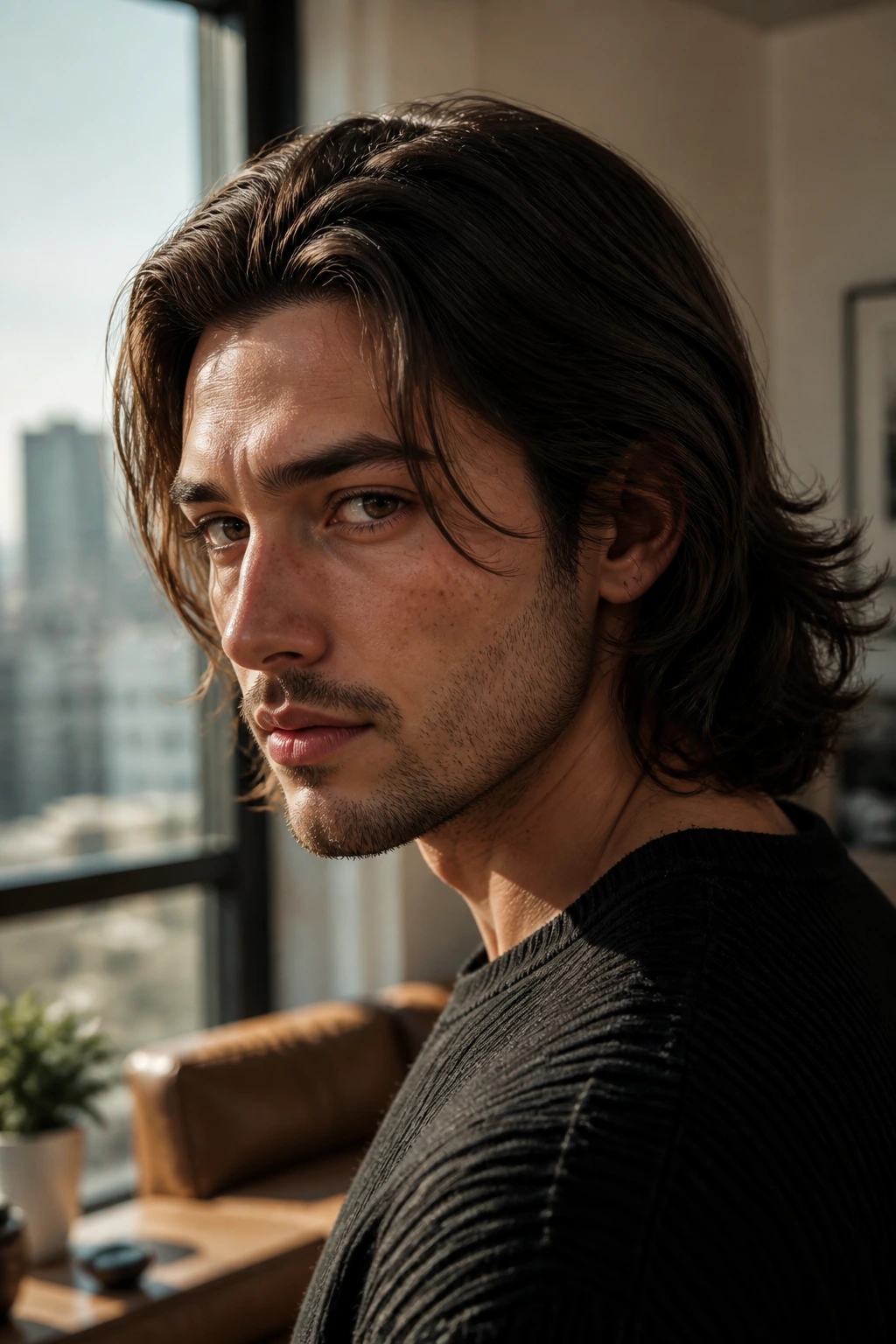
- Texture-first choices: Each style below works with a specific hair behavior — straight, wavy, curly, coily, thick, or fine — instead of pretending one cut fits every head.
- Real-world wearability: Some looks are meant for the office, some for the gym, and some for people who want length without spending 20 minutes negotiating with a mirror.
- Shape matters more than drama: A sharp undercut can look clean, but a soft curtain fringe or layered bro flow may solve your actual problem better: too much bulk, too much forehead, or too little movement.
- Tied-up styles get equal respect: A low bun, ponytail, or knot is not a cop-out when the proportions are right and the tie placement is thoughtful.
- Protective options are included: Braids, twists, and loc styles deserve a place here because they solve a different problem — keeping hair healthy while you wear it long.
1. Loose Shoulder-Length Layers
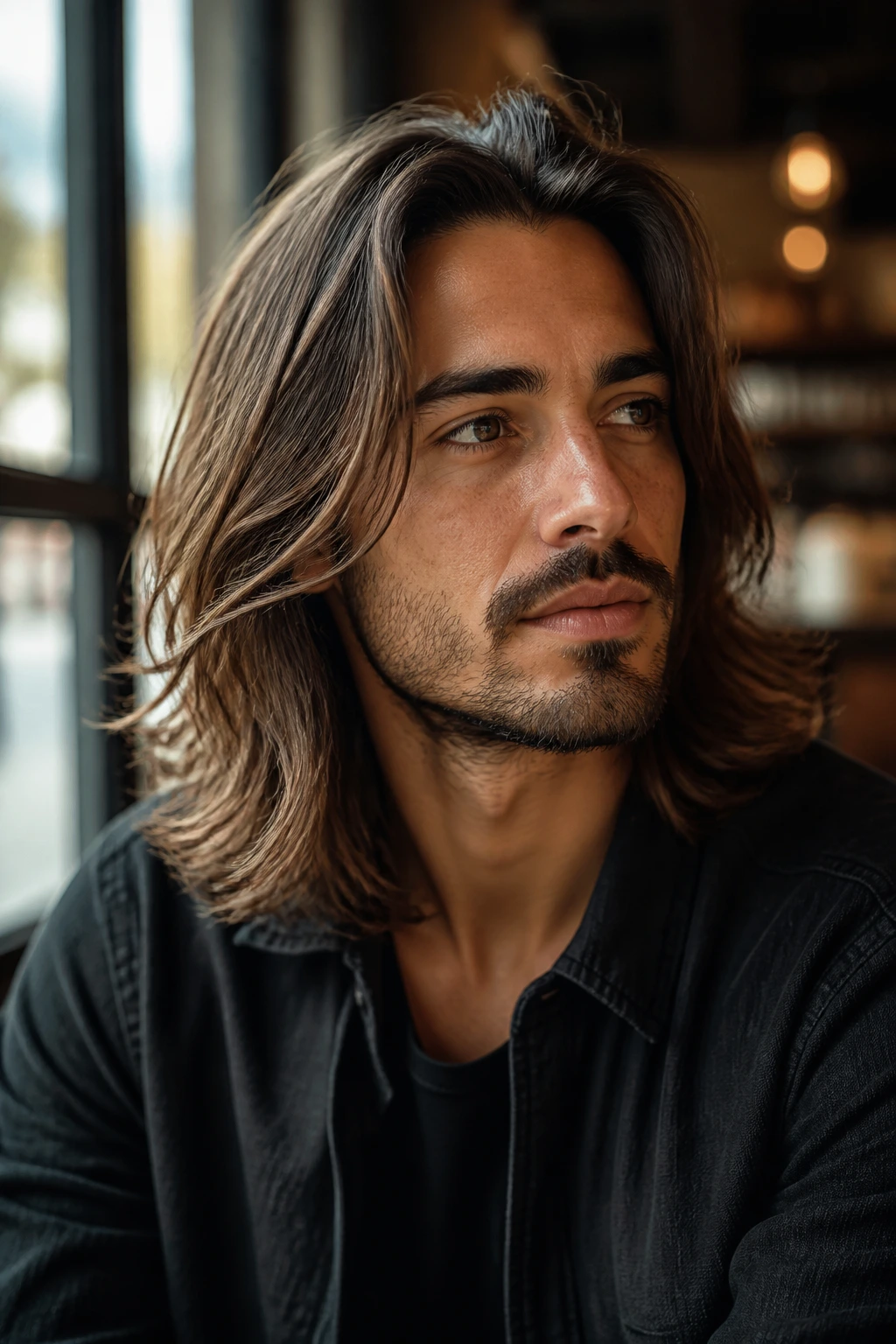
This is the long cut that makes the most sense for a lot of men, which is also why people overlook it. It sits around the collarbone, moves when you walk, and keeps the ends from hanging in one dead curtain. On straight or wavy hair, a few internal layers stop the whole thing from looking like a sheet.
Why It Works
The trick is weight removal, not endless chopping. Ask for soft layers that start around the cheekbone or jaw, then keep the perimeter long so the hair still reads as length. If you go too aggressive with the layering, fine hair starts to look thin at the tips. Too blunt, and thick hair puffs out like it’s trying to leave the room.
A pea-sized leave-in cream on damp hair is usually enough. Scrunch it in with your hands, then let the front fall where it wants. If you blow-dry, use a nozzle and aim the air downward; that keeps the cuticle flatter and the surface less fuzzy.
Best for: Wavy hair, dense straight hair, and anyone who wants a style that can be tied back without looking like it’s waiting for a tie.
2. Bro Flow
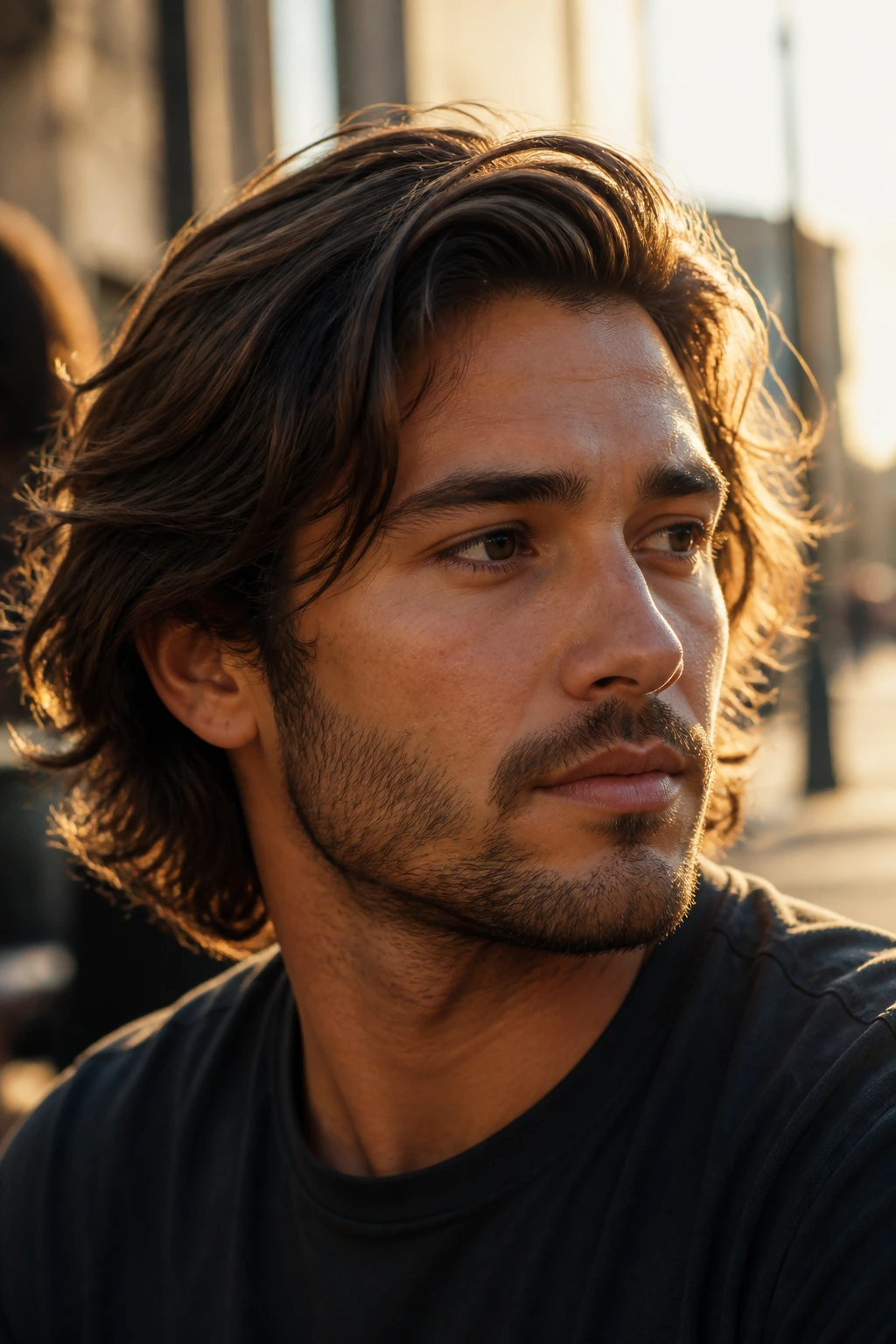
Bro flow is what happens when hair gets longer and starts pushing back from the face in a natural sweep. Done right, it looks like you barely touched it. Done badly, it looks like you gave up in a very expensive way.
The shape is all about momentum. Hair should fall back from the forehead, skim the ears, and move toward the collar without clinging to the scalp. I like it most on medium-thick hair with some wave, because that wave keeps the front from collapsing flat after an hour.
What Makes It Different
A light sea-salt spray on damp hair gives the ends a little grip. Then rough-dry with your fingers or blast it with low heat while pushing the front back and slightly to one side. No hard comb lines. No helmet shine. If your hair is fine, use less product than you think you need. The style dies fast when it gets heavy.
Bro flow is one of those cuts that improves as it gets a bit imperfect. Day-one can be polite. Day-two usually has the right kind of mess.
3. Center-Part Curtains
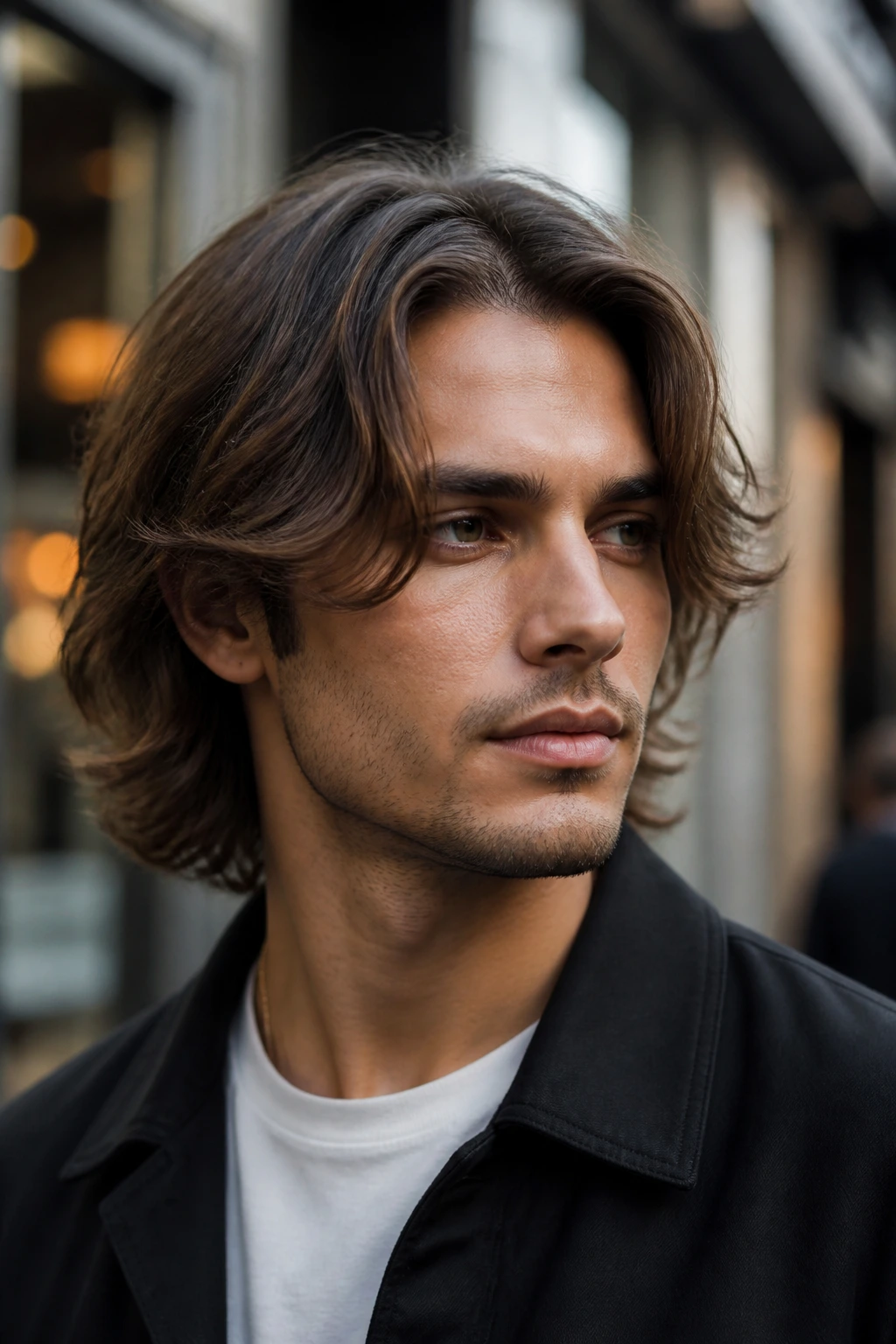
Curtains are not the same as a middle part on every head. A good curtain style splits the hair softly and lets the front pieces frame the face instead of falling straight down like drapes in a hotel room that hasn’t been updated since the eighties.
This works especially well if your hair has some bend. The part should sit near the true center, but not obsessively so. Hair that falls slightly off-center often looks more human, less staged. Keep the front a little shorter than the back if you want the part to show without swallowing your eyes.
How to Get the Shape
Use a wide-tooth comb on damp hair, then set the part and let the lengths fall forward and outward. A small amount of lightweight cream or mousse is enough. If the ends kick out too hard, wrap them loosely around your fingers while drying. That soft bend is the whole point.
Curtains are good when you want length without a lot of bulk around the neck. They also do a nice job on a long face because the width at the sides changes the proportions.
4. Side-Part Sweep
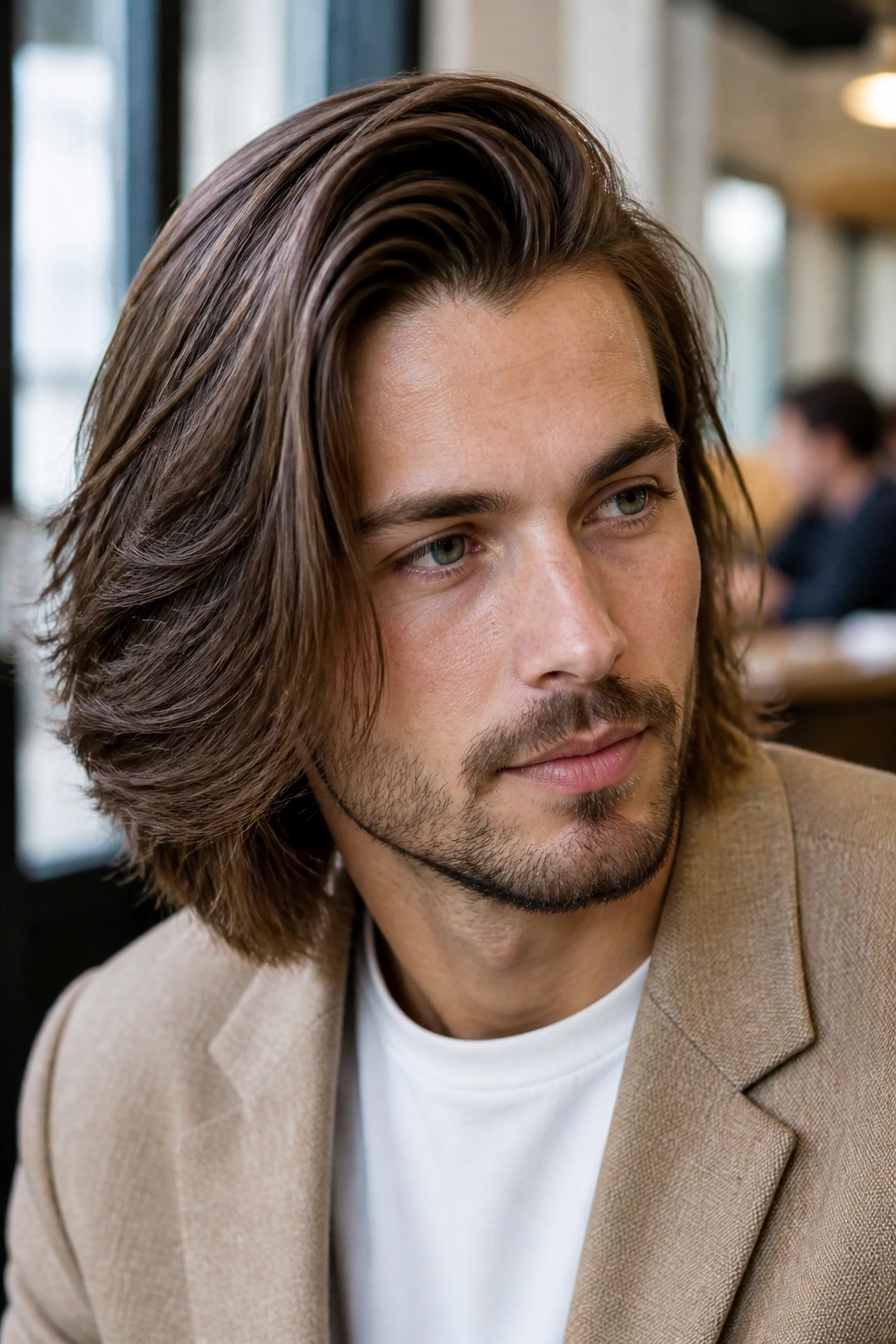
A side-part sweep gives long hair some backbone. Instead of hanging in the center, the hair is directed across the head and away from the face, which can make the whole cut look sharper without turning it stiff.
This is the one I reach for when someone wants length but still needs to look clean in daylight. It works on straight hair especially well, but wavy hair can pull it off if the top is kept a touch longer and the sides are not carved too tight.
The part should land where the hair naturally wants to break. Fight that too hard and the whole style keeps falling back into place like it’s correcting you. Blow-dry with a brush or even your palm, then finish with a matte cream rather than a shiny pomade. You want direction, not glass.
5. Slicked-Back Length
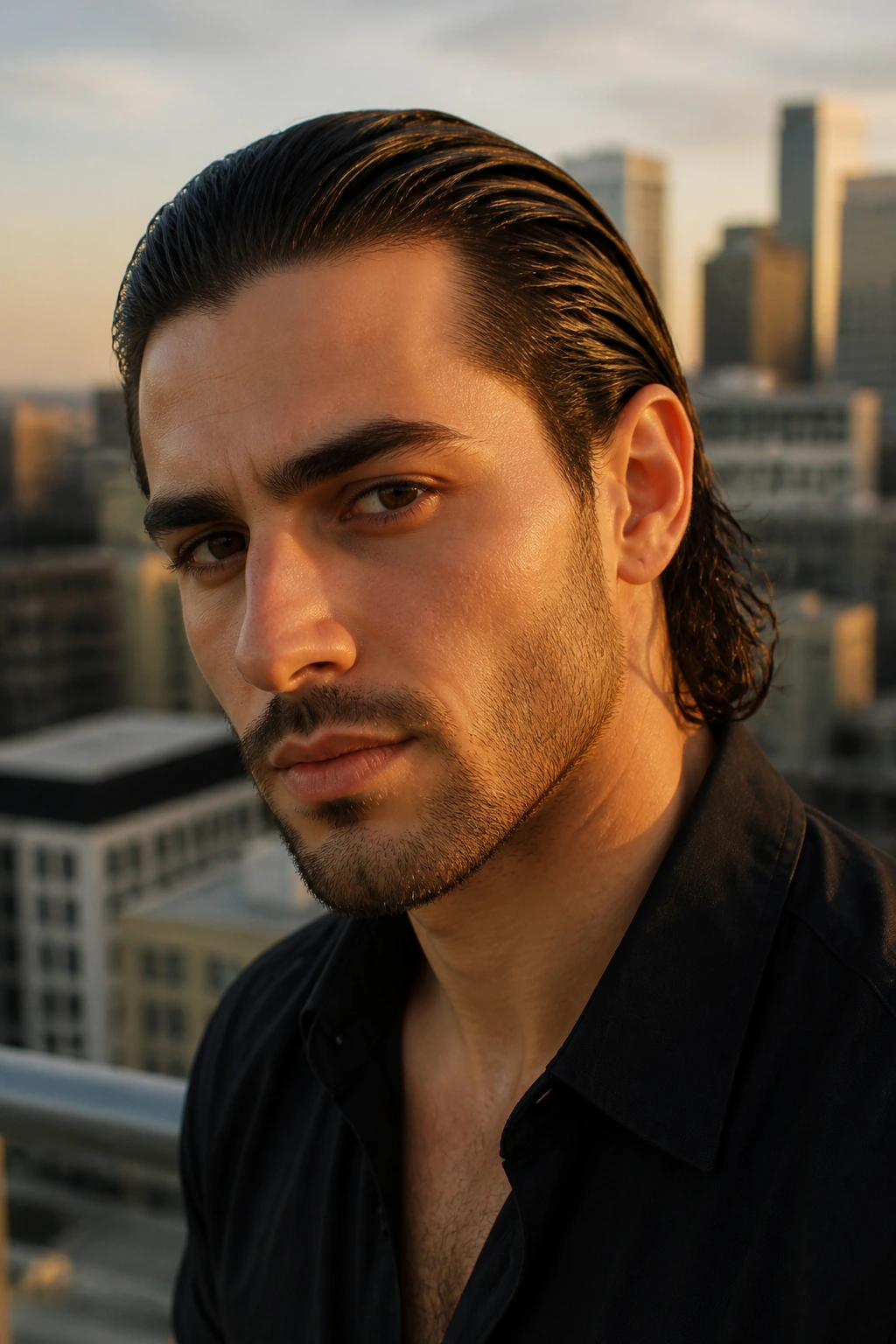
Slicked-back hair has a big personality. It can look expensive and precise, or it can look greasy and overdone in a way that feels like a costume. The difference is tension, product load, and whether the hair was actually cut to sit back.
This style likes dense straight or slightly wavy hair because there’s enough weight to stay put. Put product on damp hair, not soaking wet hair. A small amount of gel or firm pomade, then a fine comb from front to back, gives you a clean line without turning the top into a wet shell.
The catch is simple. If your hairline is uneven or your crown whorls in a stubborn direction, slicking everything straight back can exaggerate the flaw. In that case, leave a softer front and only smooth the sides. It’s more forgiving, and it still reads as deliberate.
6. Low Man Bun
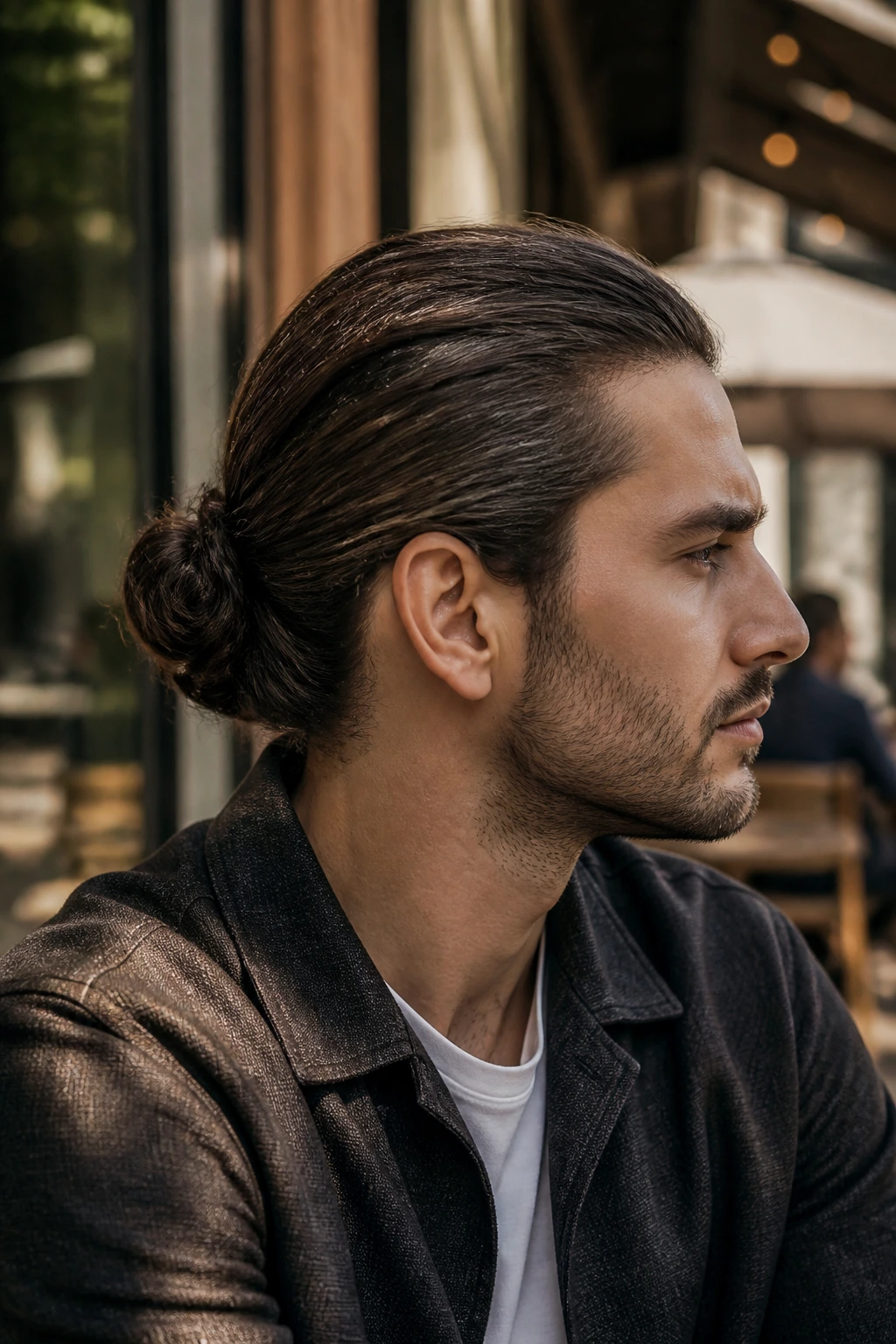
The low man bun is the most practical long style on the list, which may be why some people dismiss it too quickly. They shouldn’t. At the nape, the bun feels grounded, keeps the neck clear, and works with jackets, collars, and scarves better than a knot sitting halfway up the back of the head.
It suits thick hair especially well because there’s enough mass to make the bun look full instead of tiny and pinched. Keep the tie snug but not strangling. A bun that drags at the scalp all day is a headache waiting to happen.
A Few Rules That Matter
- Tie it at the nape, not the crown, if you want a calmer profile.
- Leave the front slightly loose if your hairline is high; it softens the look.
- Use a snag-free elastic. Cheap metal ties rip ends faster than people expect.
- Don’t twist the hair until it feels like rope. A softer roll keeps breakage down.
A low bun is also the easiest style to move between settings. Morning commute, desk, dinner, gym bag. Same knot, different mood.
7. Top Knot
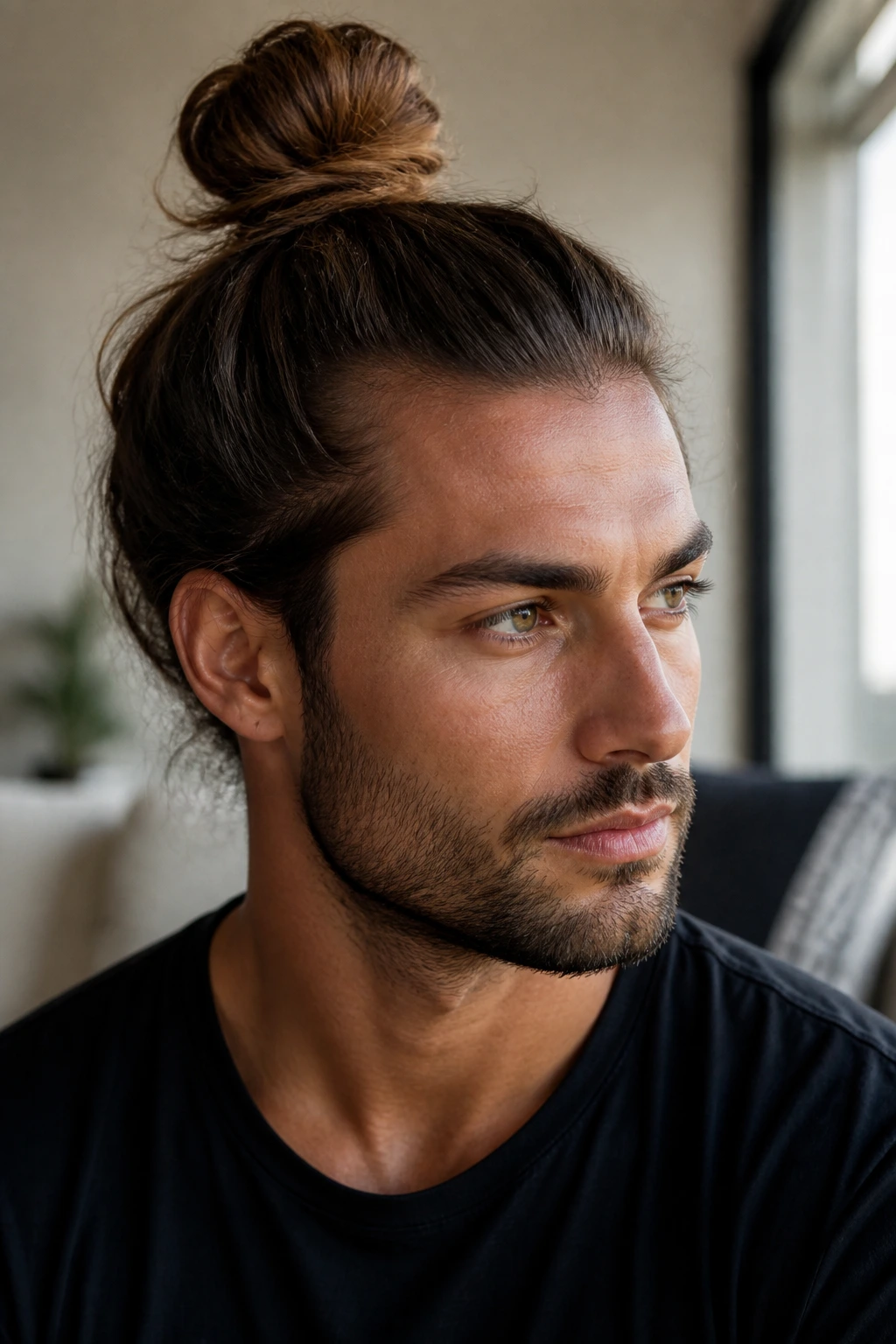
A top knot sits higher and reads sharper than a low bun. It pulls the eye upward, which can help if you want a more structured silhouette or if your beard already adds width at the jaw.
This one likes hair with enough length to wrap around itself cleanly. If the hair is too short, the knot sticks out like a half-built idea. If it’s long enough, the knot sits close to the scalp and looks neat rather than floppy.
Use a brush to gather the hair, but don’t yank every strand tight. A bit of looseness near the hairline keeps the front from looking severe. I prefer this style when the back and sides are clean enough to contrast with the length on top. Without that contrast, the knot can look like it was assembled in a hurry.
8. Half-Up Knot
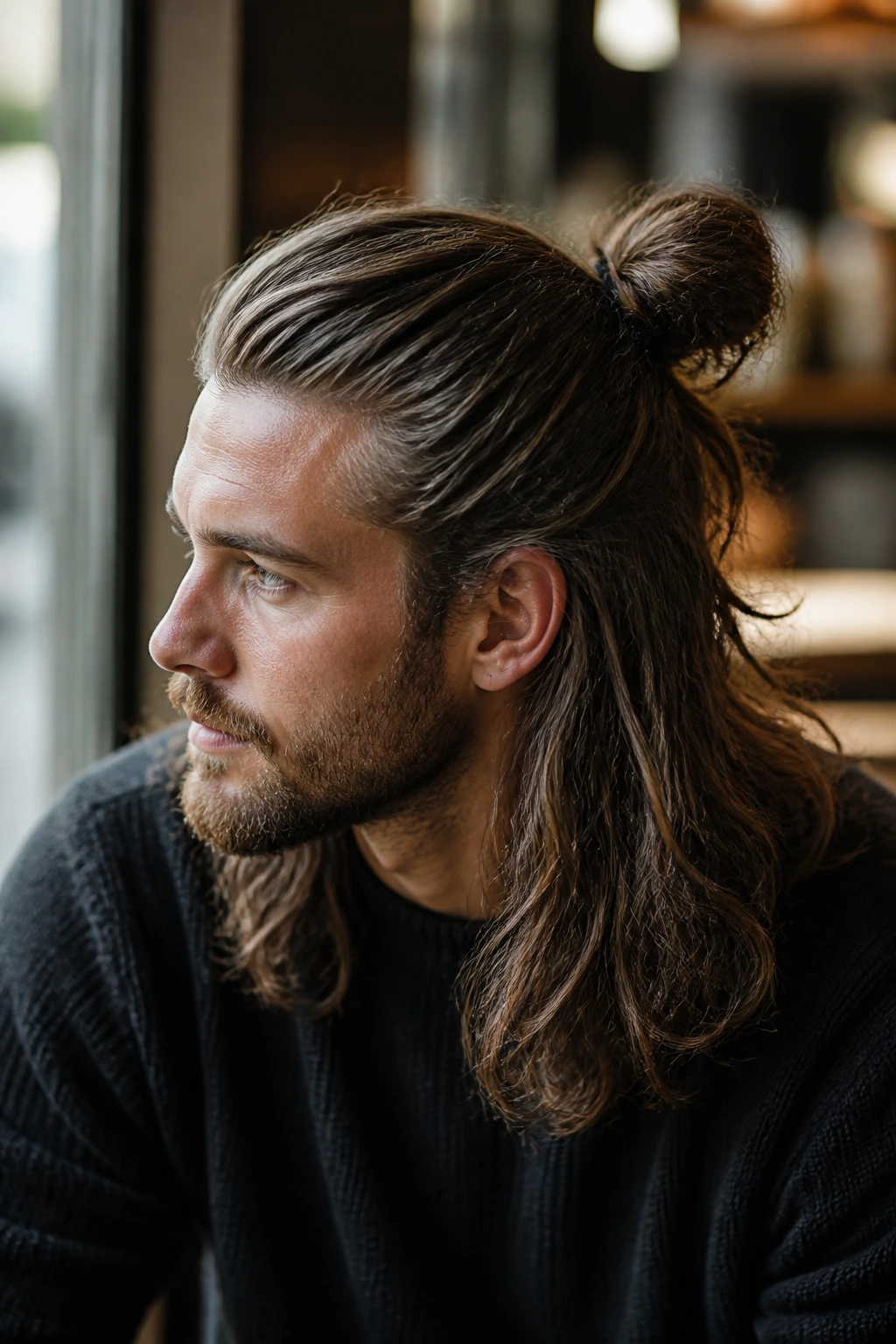
Half-up styles are underrated because they solve the most annoying part of long hair: the part that insists on falling into your eyes right when you do not want it there. The rest of the length stays loose, which means you still get movement and texture.
It works especially well on layered cuts and wavy hair. Pull the top section back from temple to temple, secure it with a small band, and leave the bottom section alone. If the hair is curly, this is even better, because the lower curls keep their shape while the top stays out of the way.
A half-up knot also buys you time during the grow-out phase. When your hair is long enough to feel styled but not long enough to tie cleanly all the way back, this is the move.
9. Low Ponytail
The low ponytail is cleaner than the bun and less fussy than a full slick-back. Hair gathers at the nape, then hangs as one tail, which makes the length visible instead of hidden in a coil.
I like it for men whose hair has some uniformity at the ends. If one side is much shorter than the other, the tail can feel lopsided. The fix is usually a trim, not more product. A little leave-in on the tail itself keeps it from looking dry and frayed, especially if the hair lives outside a lot.
A low ponytail also sits well under collars and coats. It’s one of the few long styles that can look purposeful in profile without demanding much attention once it’s tied.
10. High Ponytail
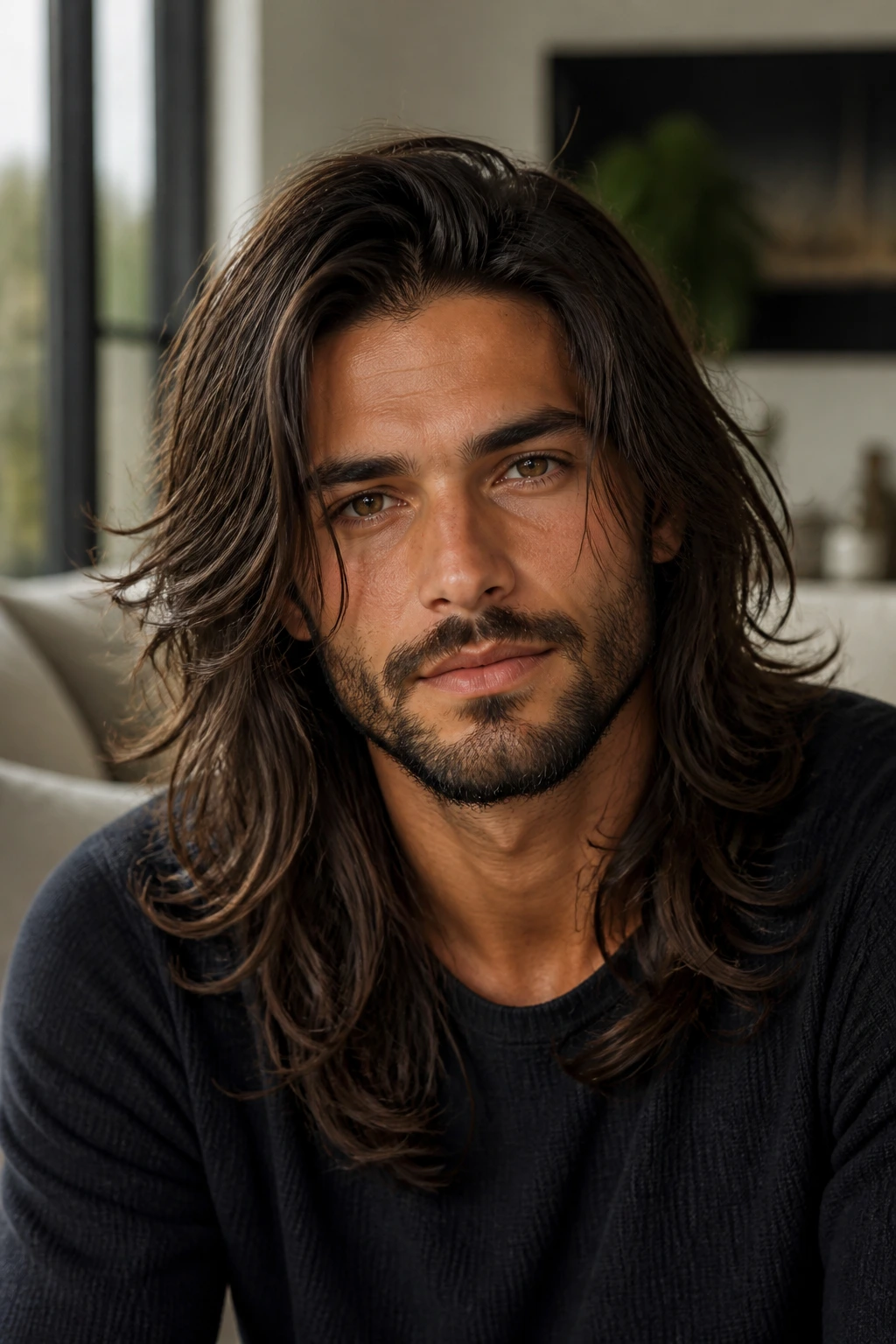
A high ponytail has more lift and more attitude. It pulls the face open, shows the jawline, and gives long hair a kind of athletic tension that a low tie does not have.
This style works best when the hair is long enough to fall from the crown without sticking out sideways. If the tail looks like a broom handle instead of a hanging line, you’re not there yet. Wait until the length can drop naturally.
Brush the hair upward with firm but not brutal pressure, then tie it at the crown. If your hair is fine, keep the tie closer to the back of the head; too much lift can make the tail thin. If your hair is thick, this style has presence. A lot of it.
11. Messy Bun
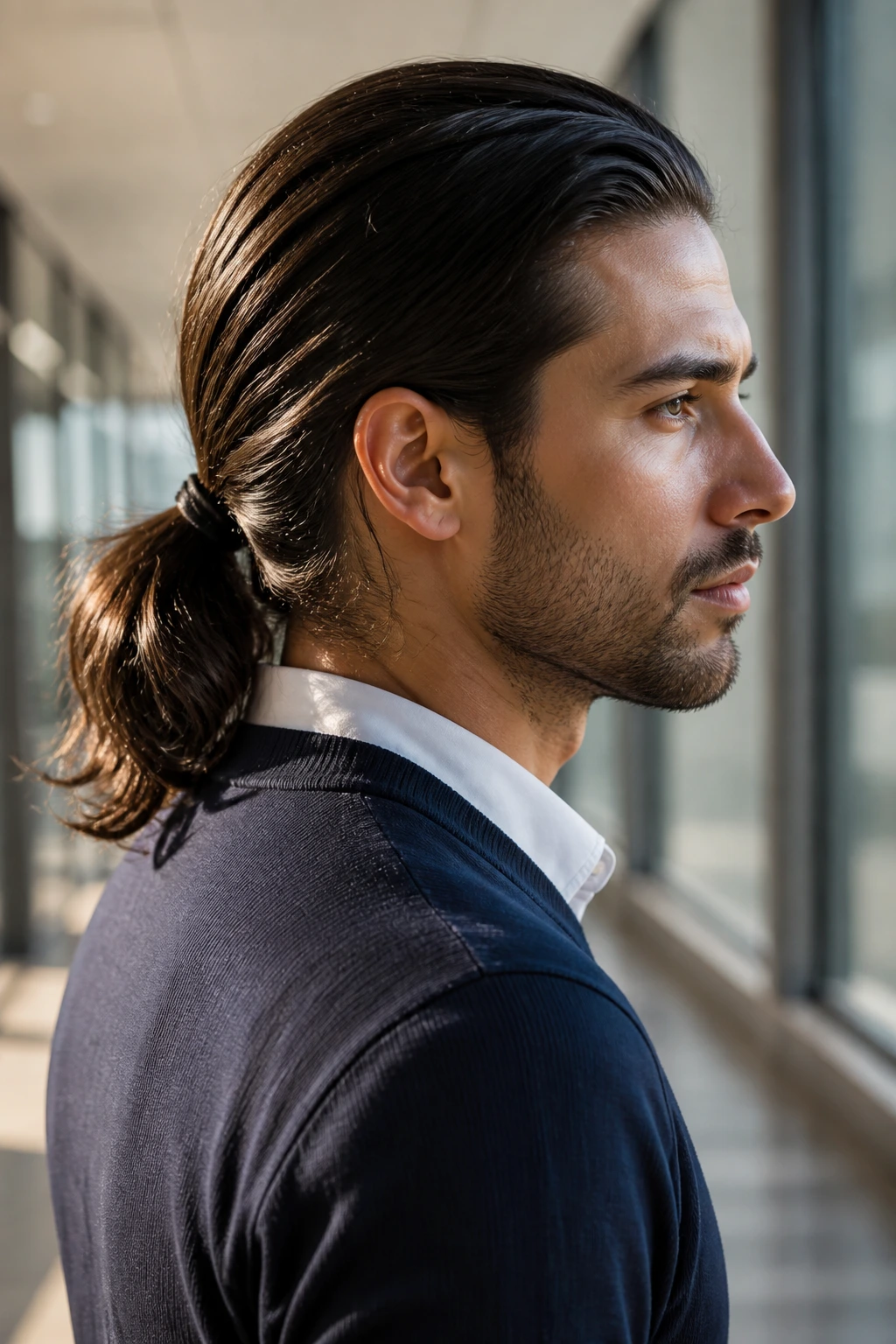
A messy bun is not an excuse to skip grooming. It just uses looseness as part of the shape. The best version has a few escaped pieces near the temples, a knot that isn’t over-tight, and enough texture that it looks lived-in rather than forgotten.
This is the style I’d pick for second-day hair that’s starting to bend in odd places. A small amount of dry shampoo at the roots can give the hair some grip before you gather it. That matters. Slippery hair falls apart halfway through the day, and then the bun looks like a tired grapefruit.
Let a few ends stick out. That’s the point. If everything is tucked in perfectly, the style loses its edge and starts looking like a neat bun with regrets.
12. Textured Shag
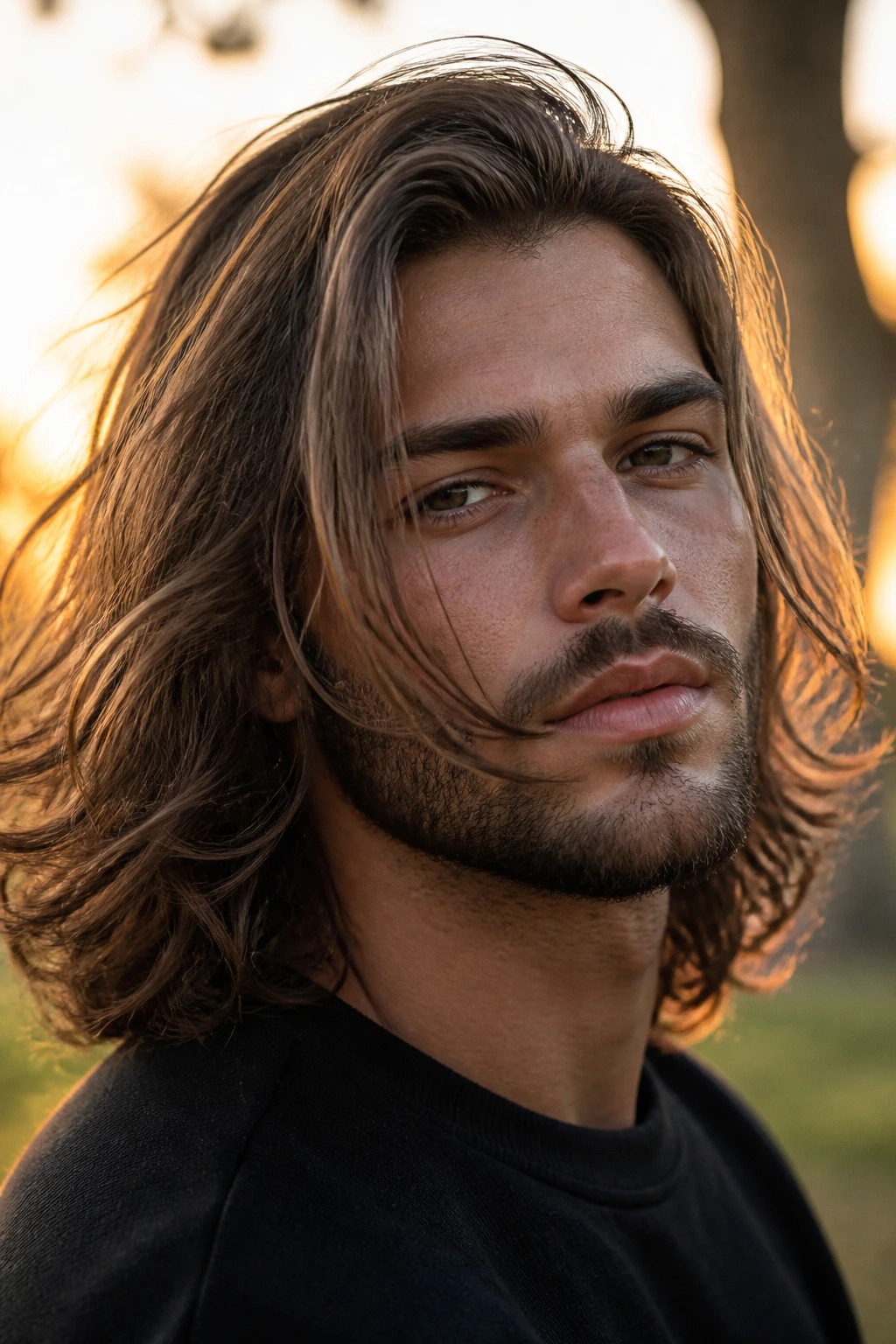
The shag is where long hair starts getting personality. Layers are cut through the interior so the ends kick around and the whole shape feels lighter, rougher, and more animated.
It’s a smart cut for fine to medium hair because it builds the illusion of volume without relying on a ton of product. It also works well on wavy hair that needs direction but not control. Ask for a dry cut or point cutting if the barber knows how to read your natural fall. Wet hair hides too much.
Why It Matters
The shag keeps length, but it stops the profile from becoming boxy. That makes it a useful choice for people who want the hair to move around the face instead of hanging like a curtain. A touch of matte cream through the mid-lengths is enough. Too much product kills the whole effect.
13. Wolf Cut
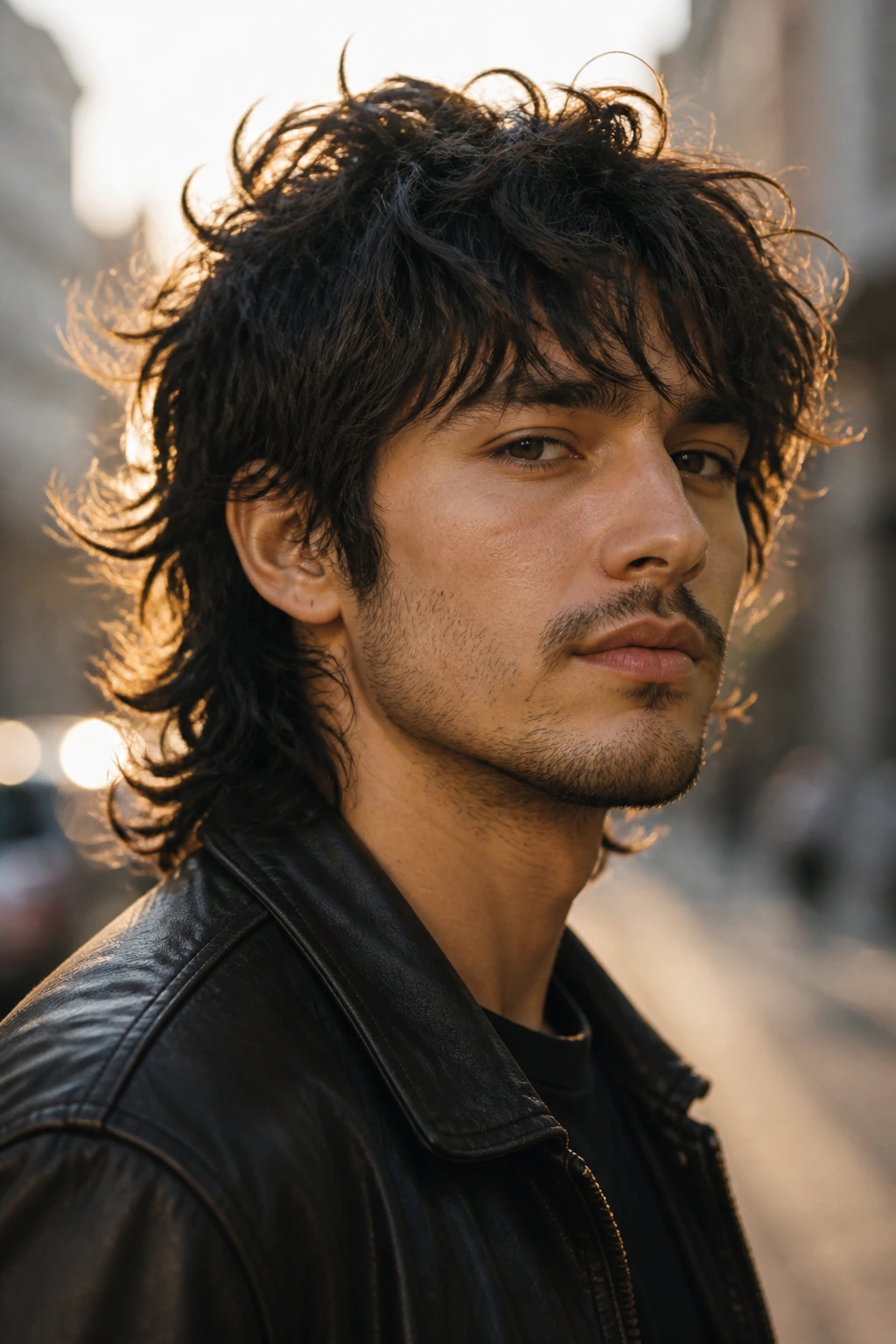
The wolf cut is the shag’s louder cousin. More layers, more separation, more contrast between the top and the bottom. On men with wavy or curly hair, it can look striking without feeling forced.
What makes it work is the uneven weight distribution. The crown stays a bit fuller, the sides get some reduction, and the back keeps enough length to create that forward-and-back shape. It looks strongest when the hair has natural texture; pin-straight hair can make the cut feel less alive unless you add bend with a blow-dryer or a little styling cream.
I wouldn’t choose this if the hair is very thin, because the gaps between layers become visible fast. On dense hair, though, it has movement that plain length never gets on its own.
14. Surfer Waves
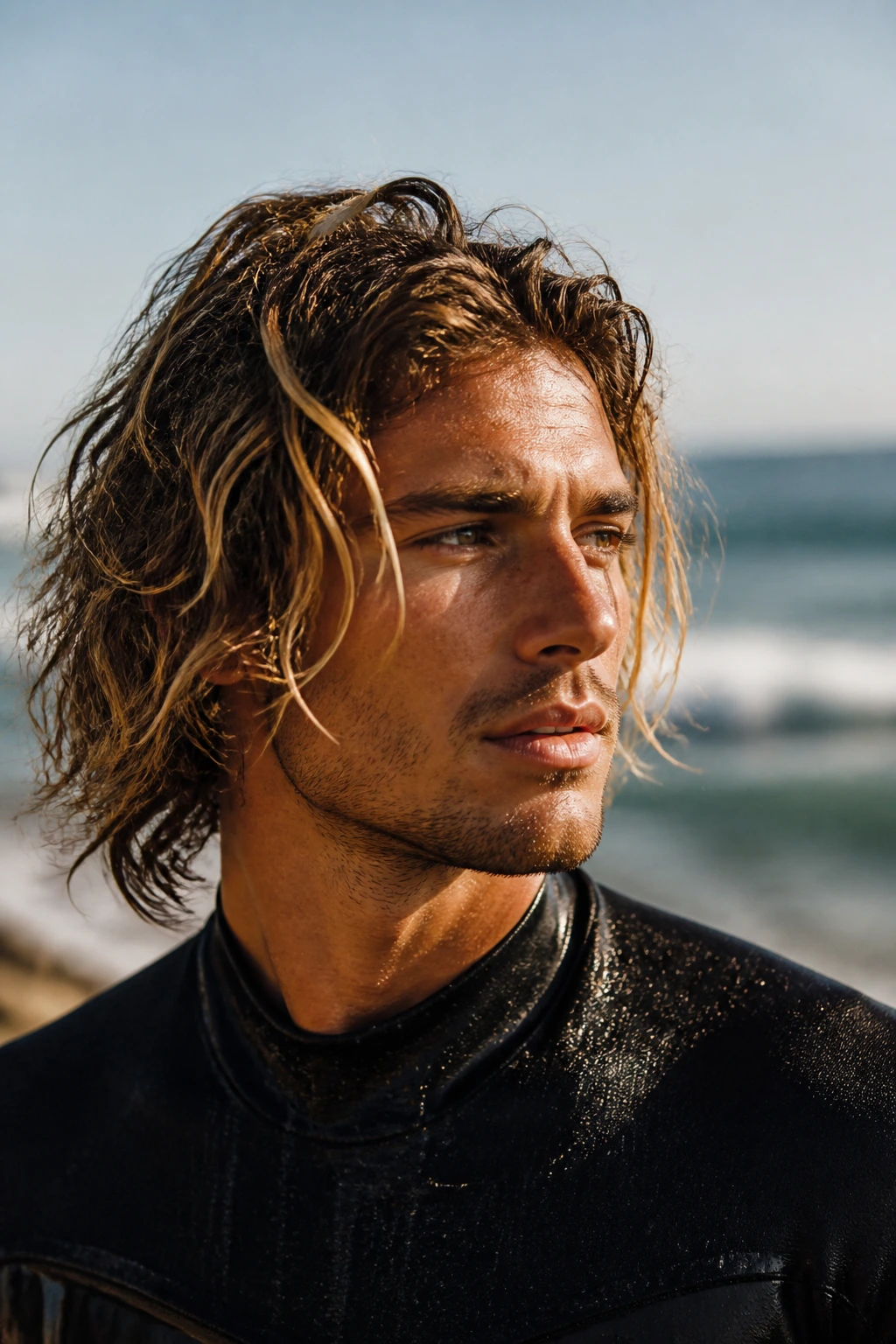
Surfer waves are supposed to look wind-tossed, not engineered. The style is soft, slightly separated, and a little sun-broken around the ends. If your hair already waves on its own, you’re halfway there.
A salt spray misted onto damp hair gives the surface some grit. Then let it air-dry or rough-dry with your hands. Brushing too much makes the waves collapse into a smoother, flatter line. That’s the wrong finish for this one.
The best surfer hair usually has a few uneven pieces. Weirdly, that’s what makes it convincing. If every wave is perfect, it stops looking like hair that’s lived in and starts looking like someone asked a machine to make “beach” happen.
15. Long Fringe
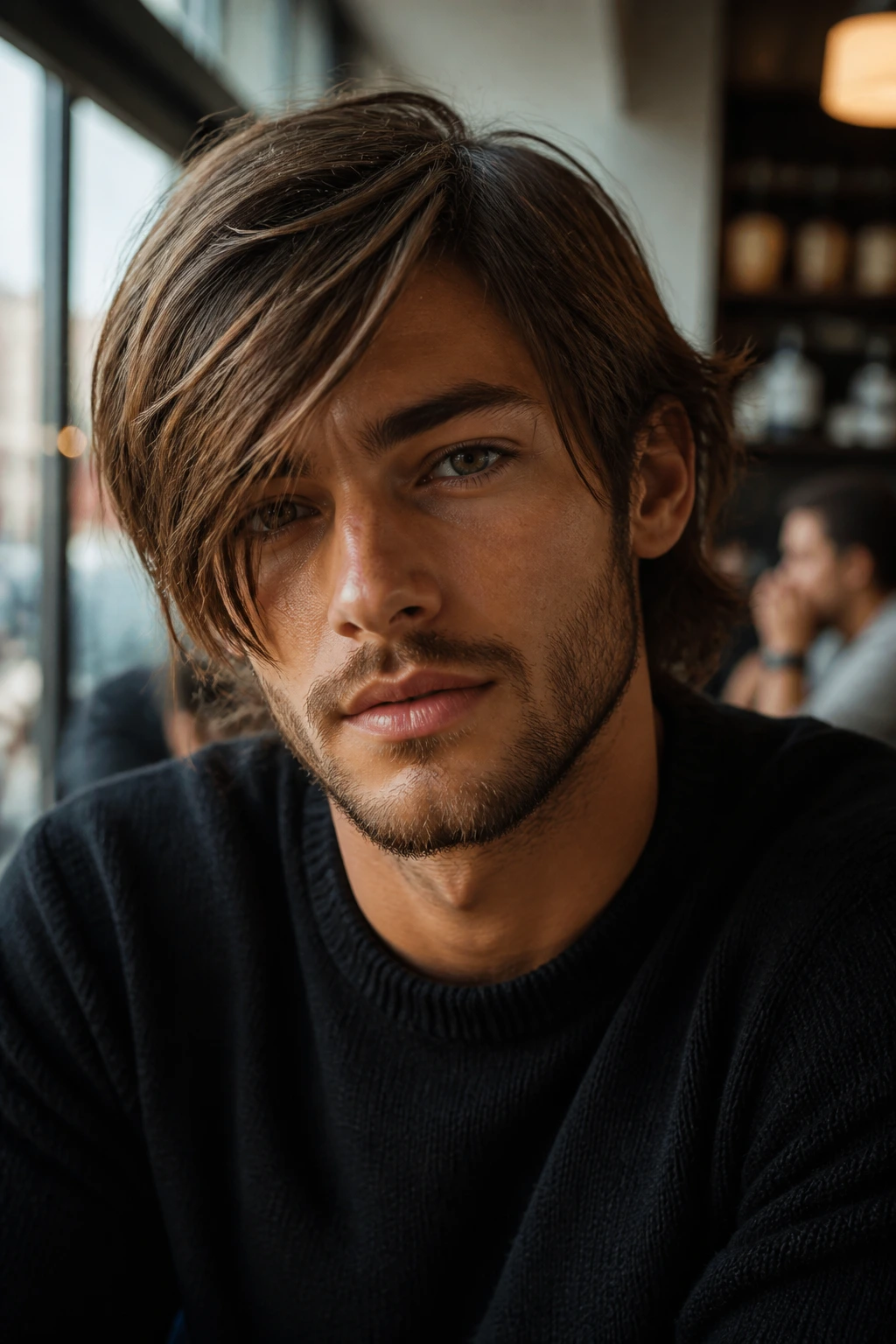
A long fringe puts the attention forward. Hair falls toward the forehead, sometimes brushing the brows, sometimes sitting just above them. It’s useful when you want to soften a strong forehead or make the face feel less open at the top.
The fringe has to be cut with enough weight to stay present, but not so much that it turns into a dense block. Too heavy and it hangs like a curtain. Too light and it separates into random strings that don’t help the shape at all.
A small round brush or a quick finger-dry can give the fringe a bend without making it stiff. I like this style on straight and wavy hair, especially when the rest of the length has layers that keep the sides from getting wide.
16. Long Undercut
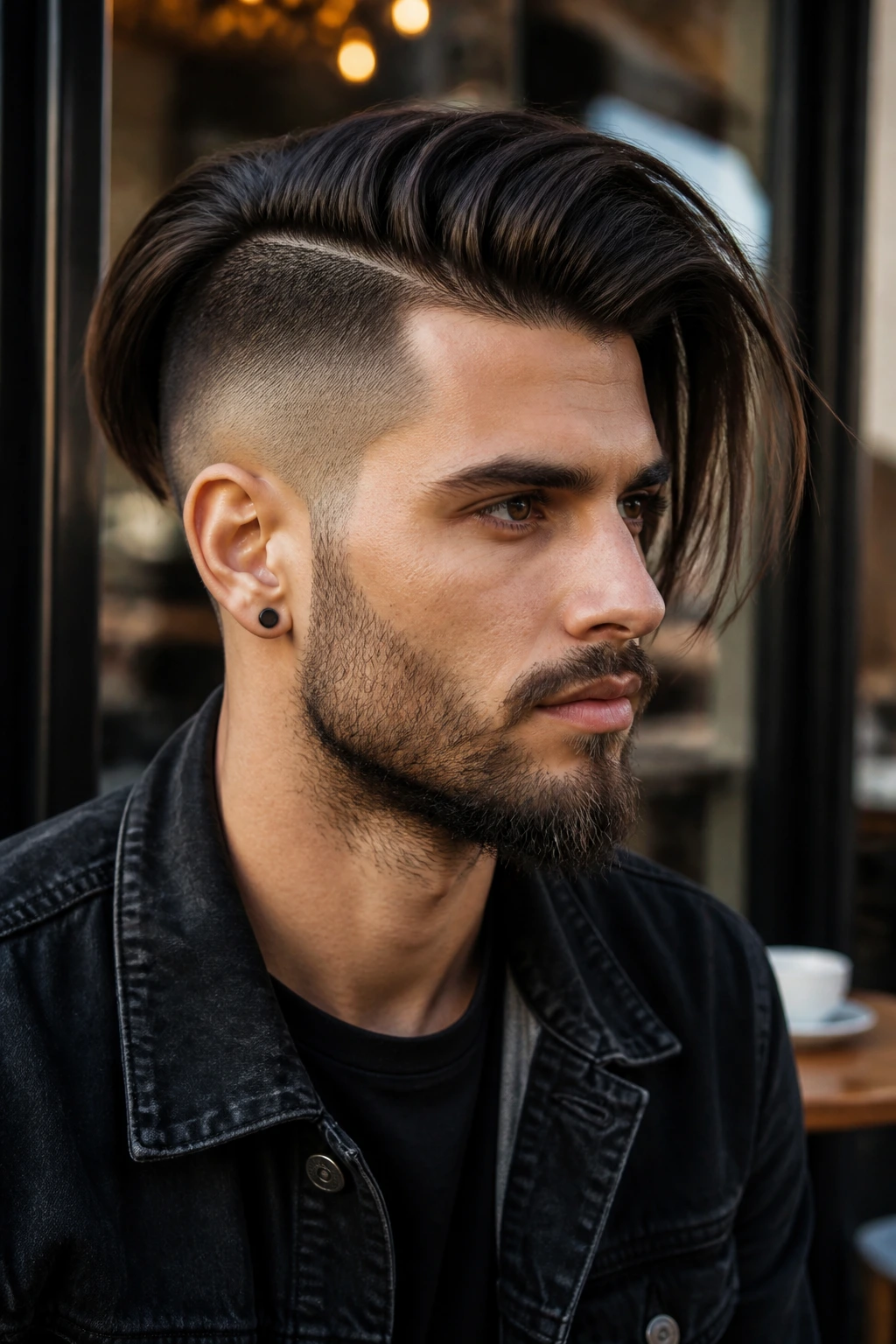
A long undercut is a statement cut with a practical edge. The sides and back are clipped short, while the top and upper lengths stay long enough to wear down, tie back, or sweep over.
The contrast is what gives it punch. If the sides grow out too far, the whole thing loses shape and starts looking split between two ideas. That’s why this cut needs regular side cleanups, usually every 3 to 4 weeks if you want the line to stay crisp.
It’s a strong choice for dense straight or wavy hair because the short sides take weight off where it tends to balloon. If your hair is fine, the contrast can get too stark; a softer taper may suit you better.
17. Long Mullet
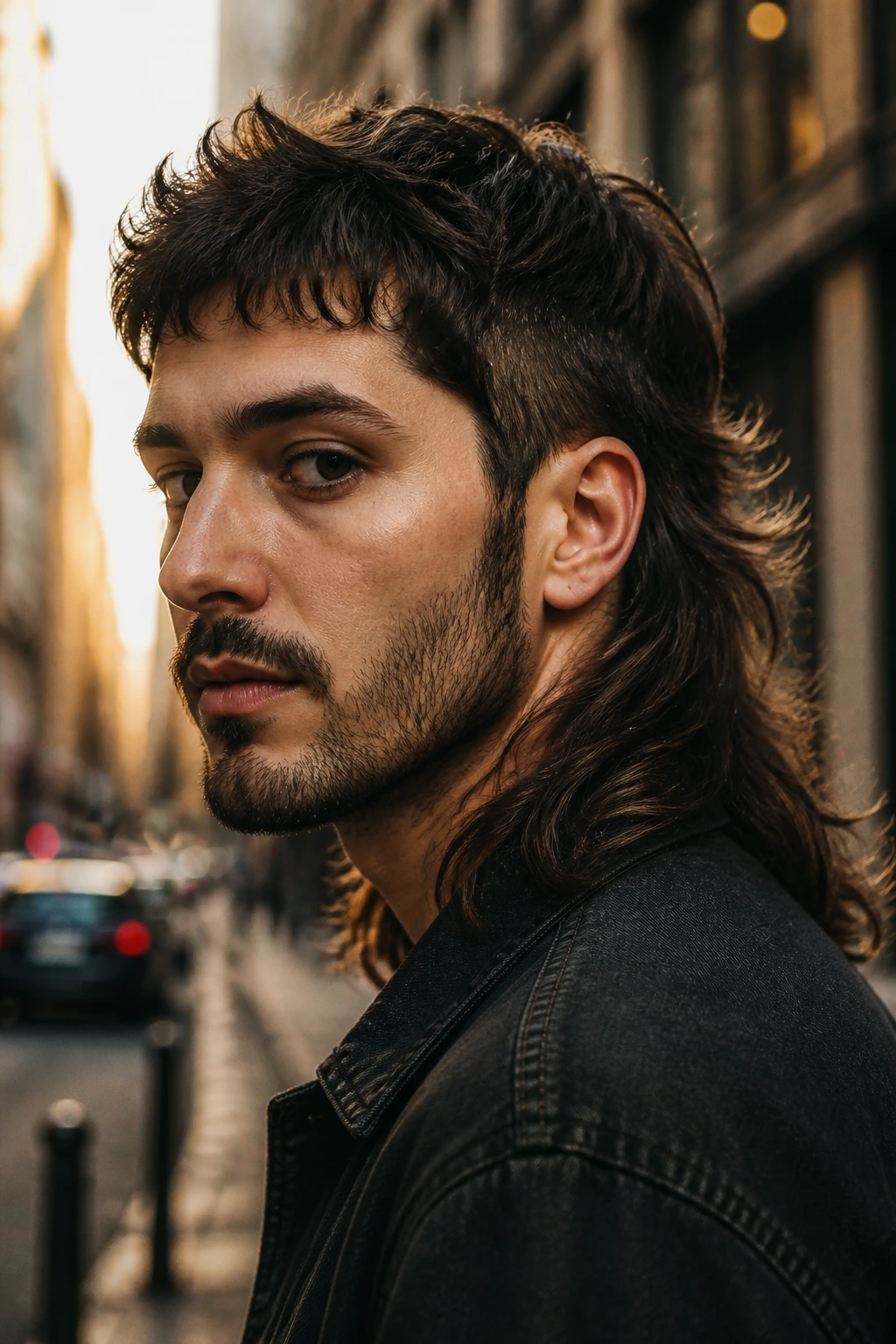
The modern mullet is not the old caricature people joke about. It has shorter hair around the face and sides, then keeps length in the back with a softer transition. The right version looks edgy. The wrong version looks accidental.
Texture helps a lot here. Wavy and curly hair give the cut some movement, which keeps the back from reading as a tail attached to a haircut. Ask for the sides to be reduced without shaving them down to nothing. The transition should feel deliberate, not chopped off.
I like this cut on people who want length but don’t want all of it hanging around the face. It has a little attitude, and it knows it.
18. Curly Mop
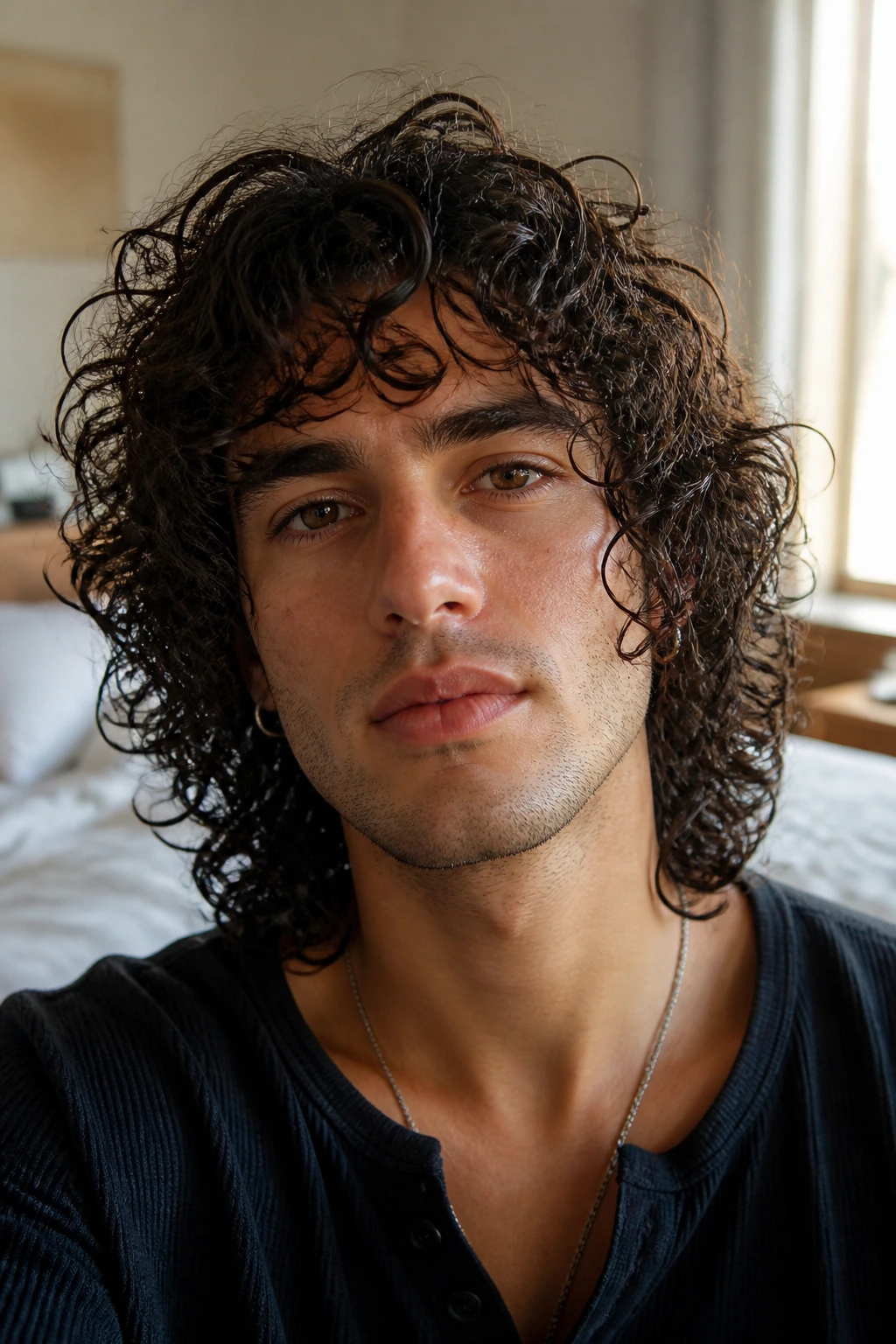
Curly hair has different needs, and the curly mop is one of the most honest long styles for it. The curls fall around the face and neck with enough length to show pattern, but not so much layering that the shape collapses into puff.
Moisture matters here. Leave-in conditioner on damp curls, then a curl cream or light gel through the mid-lengths, usually does the job. Dry hair gets frizzy fast, so rough handling is the enemy. Use a diffuser on low heat if you want the curls to sit with definition instead of stretching out into fuzz.
What to Watch For
If the curls are weighed down at the roots, the style loses lift. If they’re cut too short in the layers, the shape can balloon around the sides. The sweet spot is length that lets the curl pattern show without turning the head into a triangle.
19. Curly Shag
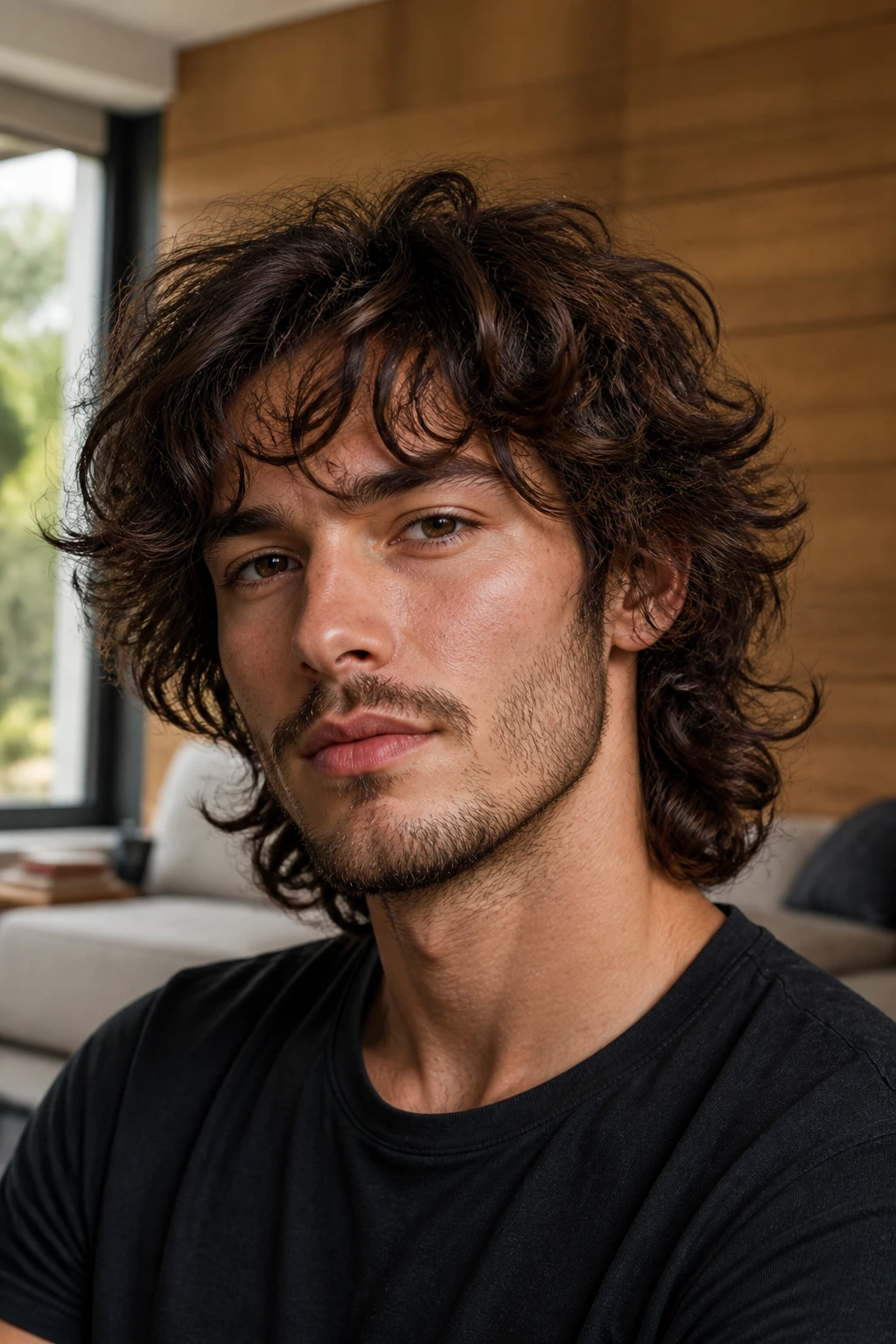
A curly shag is one of those cuts that makes people with curls look like they finally got the haircut their hair wanted all along. Layers remove bulk from the places that swell, and the curls stack instead of spreading out like a dome.
A dry cut is useful here because curly hair changes a lot as it dries. A barber who cuts curls wet and assumes they’ll spring up the same way every time is guessing. That’s how people end up with a top that’s too short and a bottom that still has too much weight.
A curl cream and a tiny bit of gel can be enough. Scrunch, diffuse, stop touching it. That last part matters more than people like to admit.
20. Curly Top with Tapered Sides
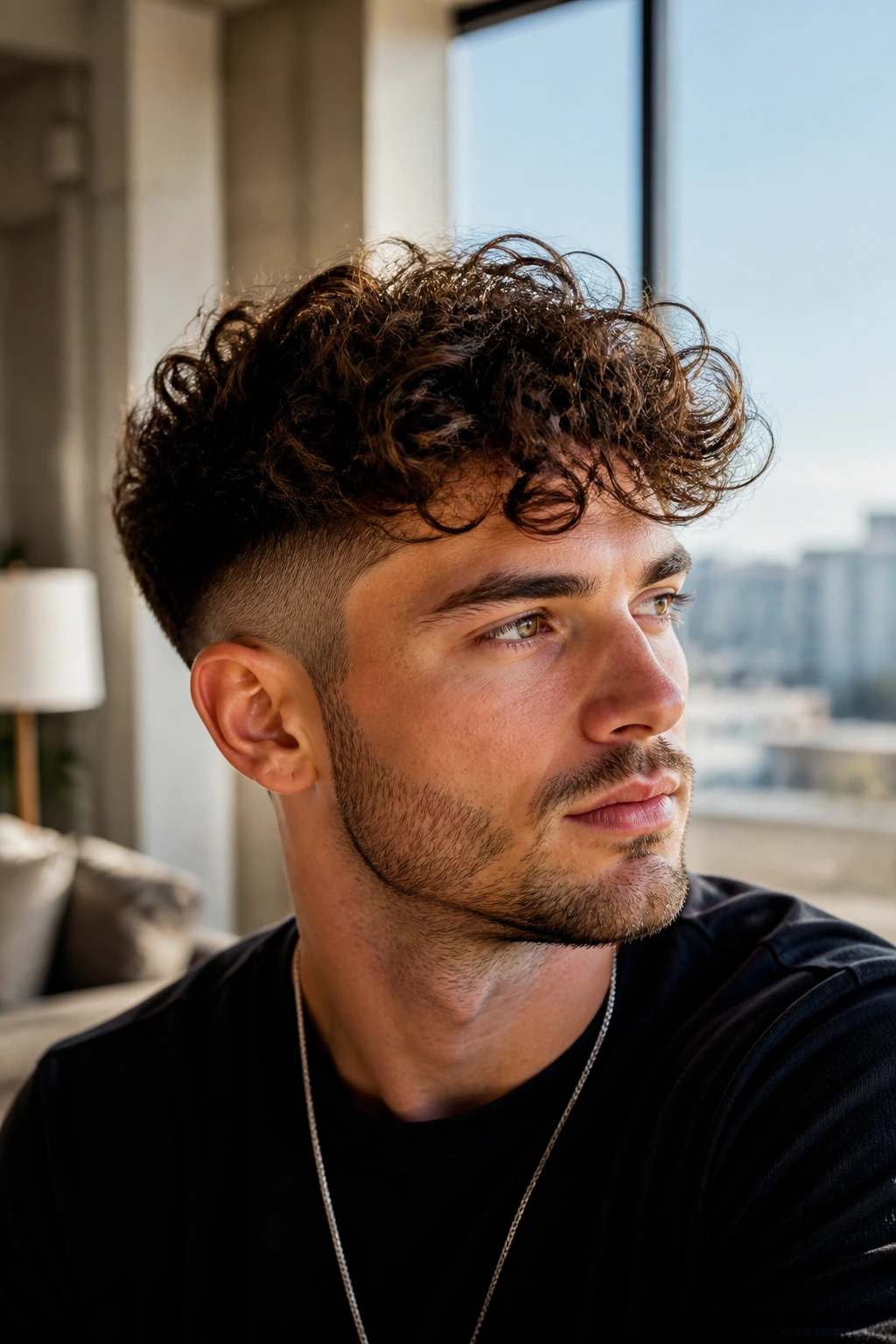
This is the cleaner cousin of the full curly shag. The top stays long and expressive, while the sides and neckline taper down so the whole cut feels neater around the ears and jaw.
It works well if you want the curls to stay visible without spreading into every part of the head. The tapered sides create structure, and the top keeps all the interest. On humid days, that shape is easier to manage than a full halo of curls.
I’d call this one practical, not boring. There’s enough shape to feel styled, and enough freedom on top that it still looks like your hair, not a helmet version of it.
21. Box Braids
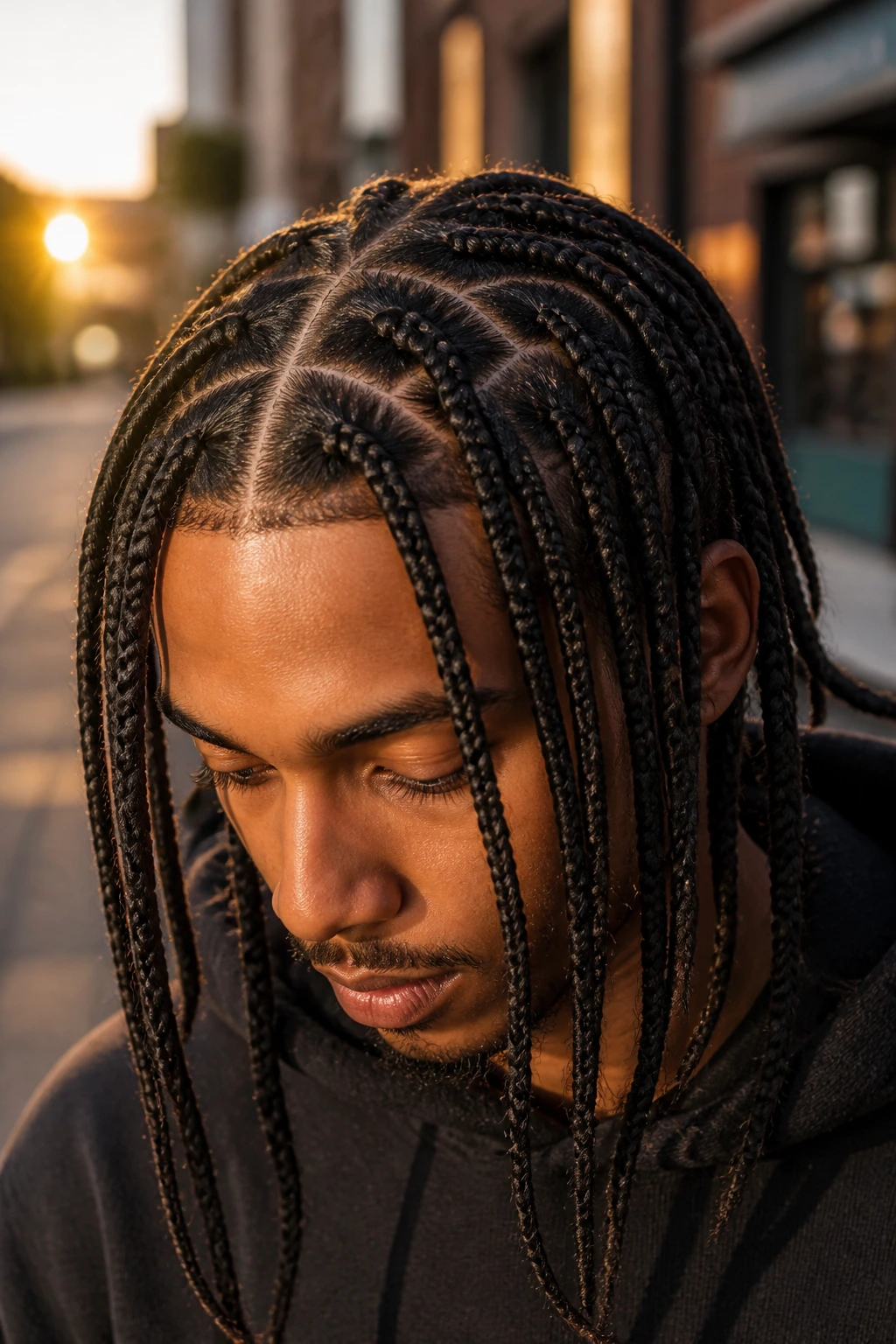
Box braids are one of the strongest protective styles for coily hair because they keep the hair sectioned, controlled, and out of daily trouble. The braid pattern itself becomes the style, which means clean parting matters more than a lot of product.
The size of the braids changes the whole mood. Smaller braids take longer and give a tighter, more detailed look. Larger braids are faster and heavier, which some people like because they have more swing. Either way, the tension at the scalp should be firm, not painful. Pain is not a styling feature.
Scalp oil at the roots and a gentle sleep routine keep this style from drying out too fast. If the braids are tugging at the edges, they’re too tight. Full stop.
22. Cornrows
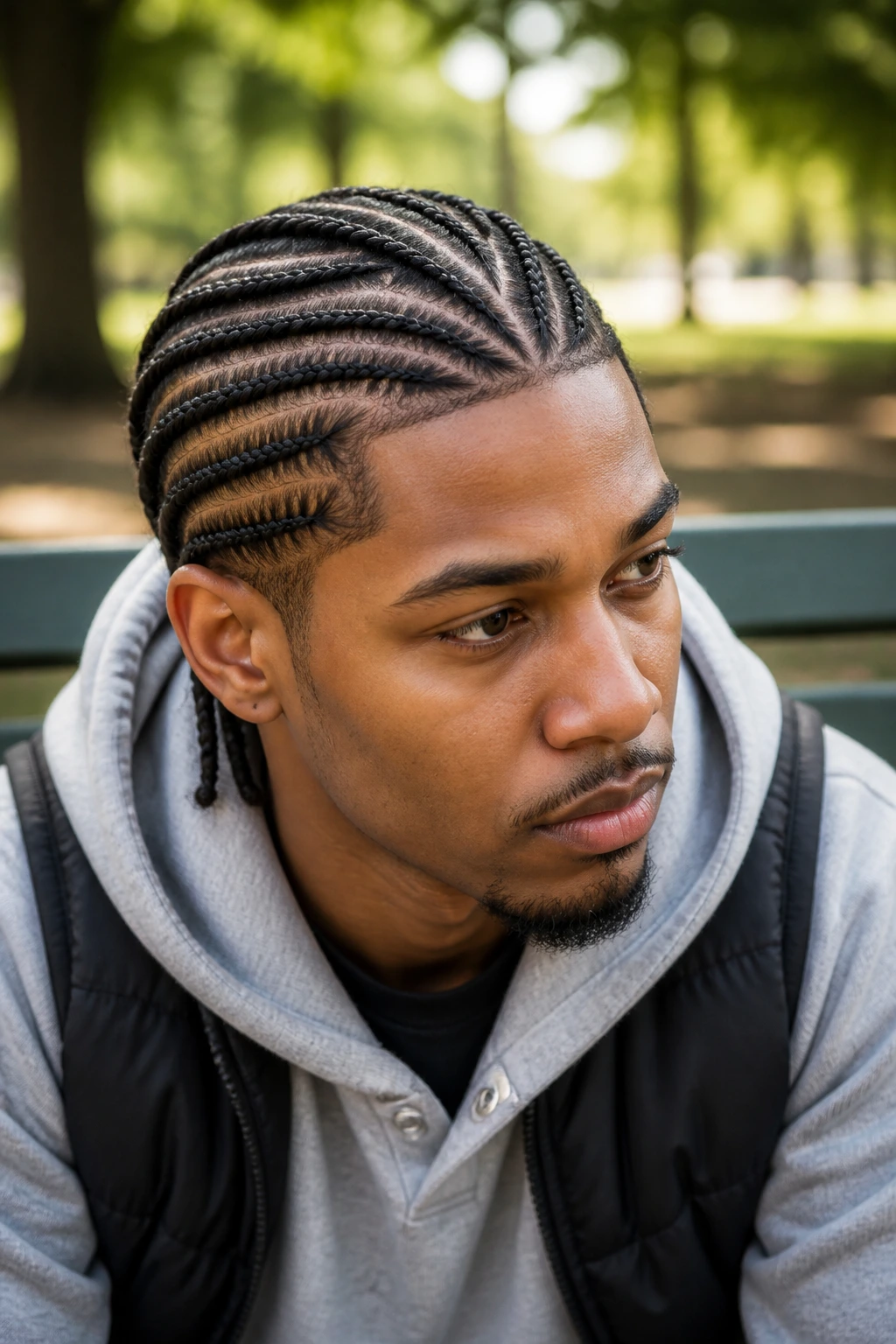
Cornrows sit flat against the scalp and can be shaped in straight lines, curves, or more complex patterns. They’re practical, tidy, and good under hats or helmets because there’s less loose hair to fight with.
This style asks for precision. Clean sections and even tension are the whole game. If the parts are crooked or the braids are pulled too hard at the front, the style starts looking tired before it has a chance to settle.
Cornrows are also a good setup for people who need low maintenance during the week. Once they’re in, the daily work drops way down. You still need scalp care, but you’re not dealing with every strand every morning.
23. Dreadlocks
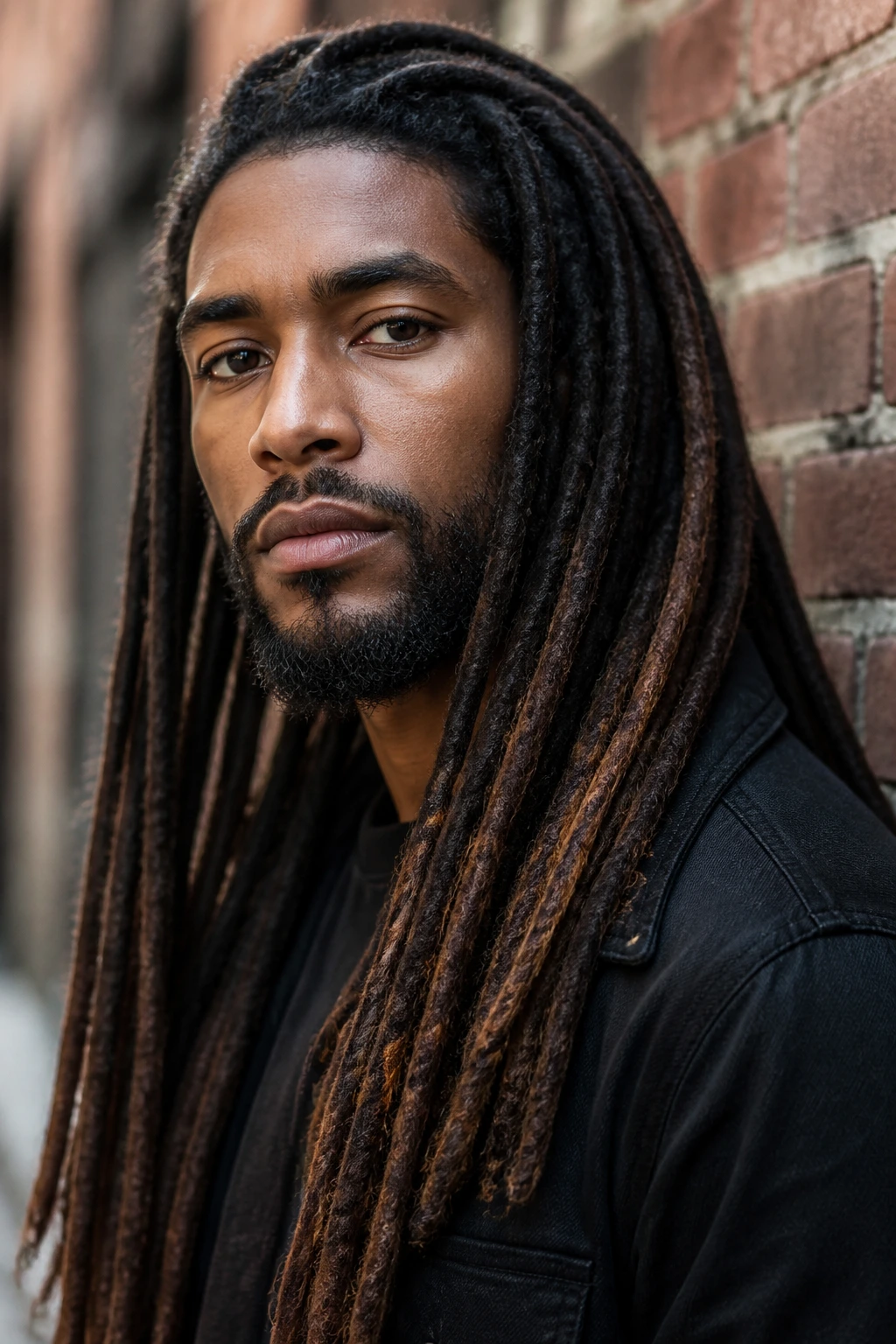
Well-kept locs carry length in a way no loose style can. They have presence, texture, and a shape that changes depending on how mature they are and how they’re maintained. Once established, they can be worn loose, tied back, or pulled into a bun without much fuss.
The maintenance approach matters. Some people retwist regularly, some interlock, and some keep a softer root. The more precise the maintenance, the sharper the overall look tends to be. The more relaxed the maintenance, the more organic the silhouette becomes.
Locs also ask for patience at the beginning. Early stages can look messy and uneven, which is part of the process, not a failure. If you want them, you have to let the hair become them.
24. Freeform Locs
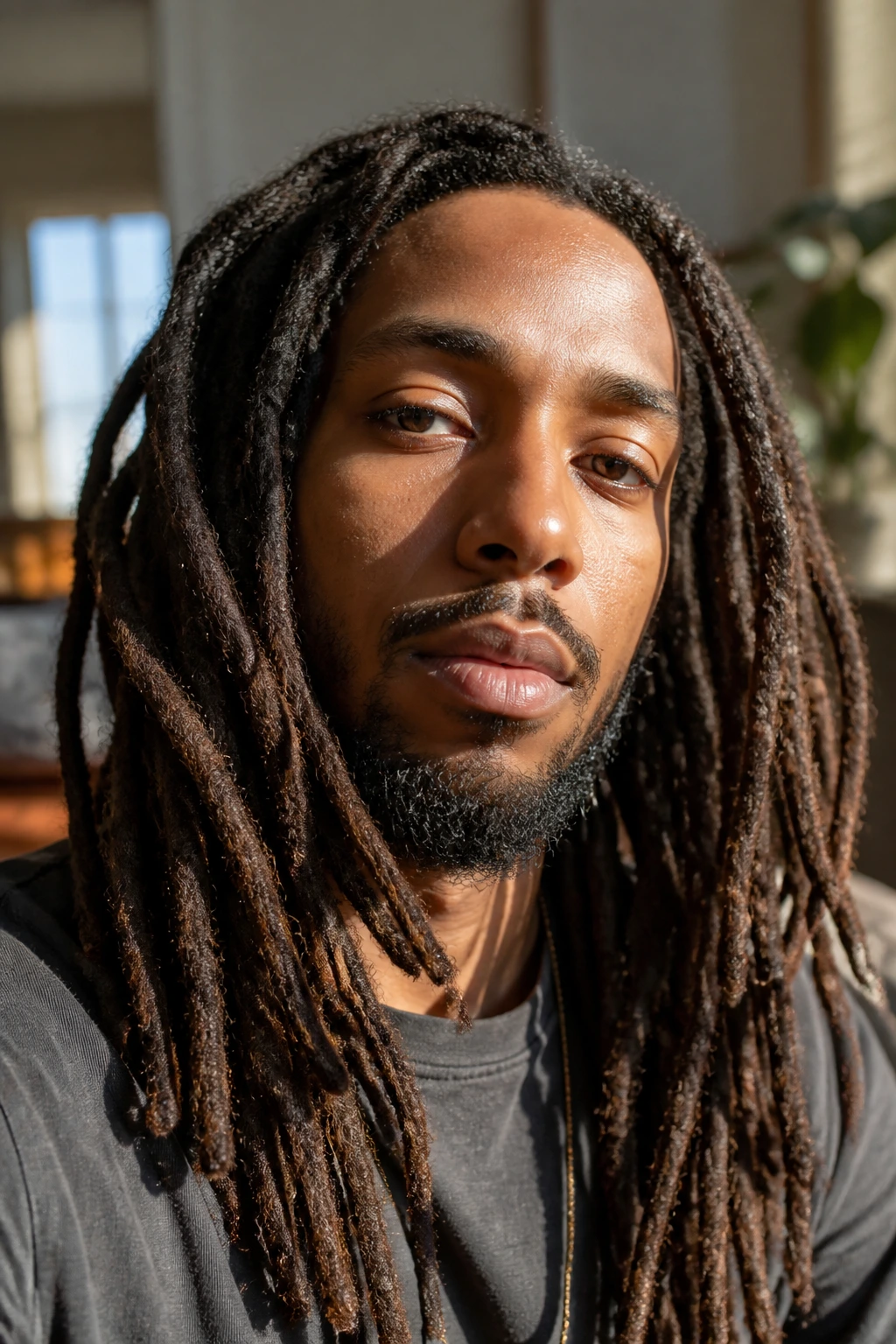
Freeform locs are the looser, more organic side of the loc family. Instead of frequent shaping, the hair is allowed to lock in its own way, which gives a less uniform, more natural-looking result.
I like freeform locs for people who don’t want a polished finish every week. The style has character because it refuses to look identical from strand to strand. That unevenness is the point. It also means you have to be comfortable with a longer transition phase and less visual symmetry.
The danger here is confusing “freeform” with “ignored.” You still need a clean scalp, separated roots when needed, and enough moisture that the hair doesn’t dry out around the locks. Low maintenance is not the same as no maintenance.
25. Two-Strand Twists
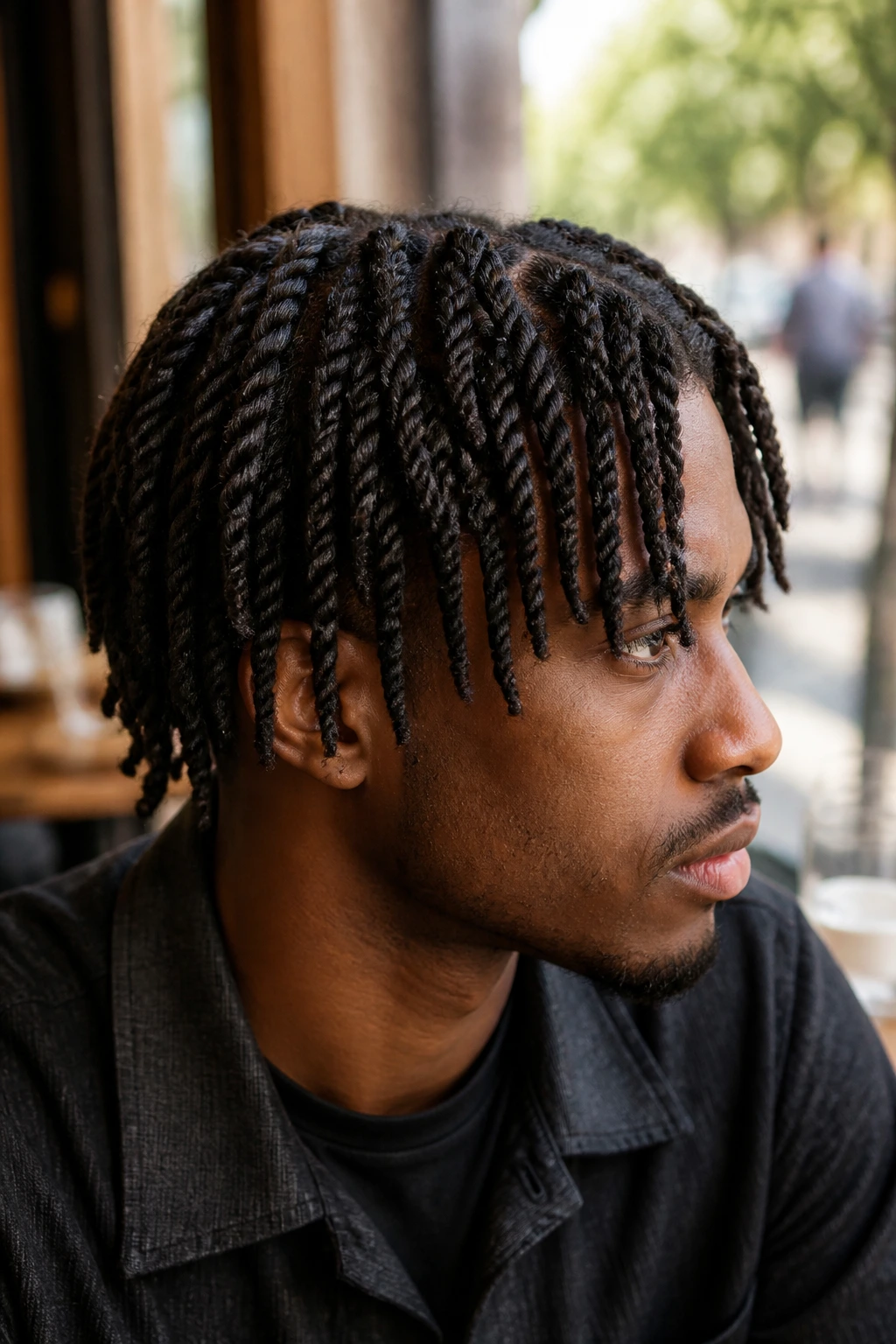
Two-strand twists sit in a sweet spot between styling and protection. They can be worn as the style itself or unraveled later for a twist-out with more volume and definition.
They work especially well on coily and tightly curled hair that needs a break from daily combing. Twist size changes the look a lot. Smaller twists last longer and give a neater finish. Larger twists feel softer and can look fuller, but they tend to frizz sooner.
Use a leave-in, then a cream or twisting butter if the hair is dry. Don’t load the product on so heavily that the twists stay wet for hours. That just invites buildup.
26. Tapered Afro
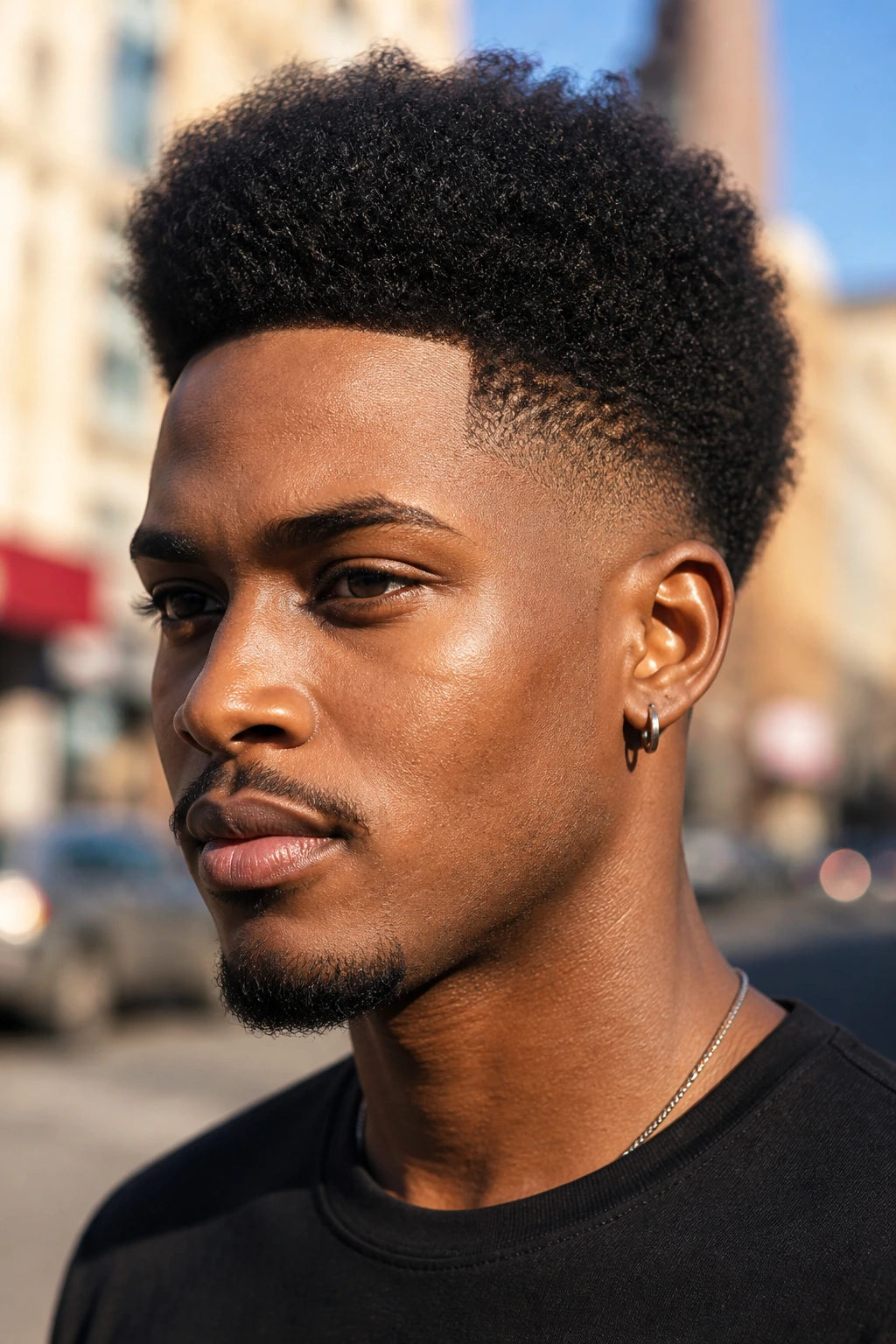
A tapered afro gives shape to coily hair without flattening the natural volume. The sides and neckline are tapered, while the top keeps its height and roundness. That balance is what makes it clean.
This style is one of the easiest ways to wear long hair that still looks sharp. A pick at the roots can lift the top, and a light leave-in keeps the curls from drying into a brittle cloud. The taper around the ears and neck keeps the outline crisp, which matters more than people think.
If you want long hair but don’t want it hanging everywhere, this is a smart middle ground. The silhouette says you made a choice.
27. Viking Braids with Loose Ends
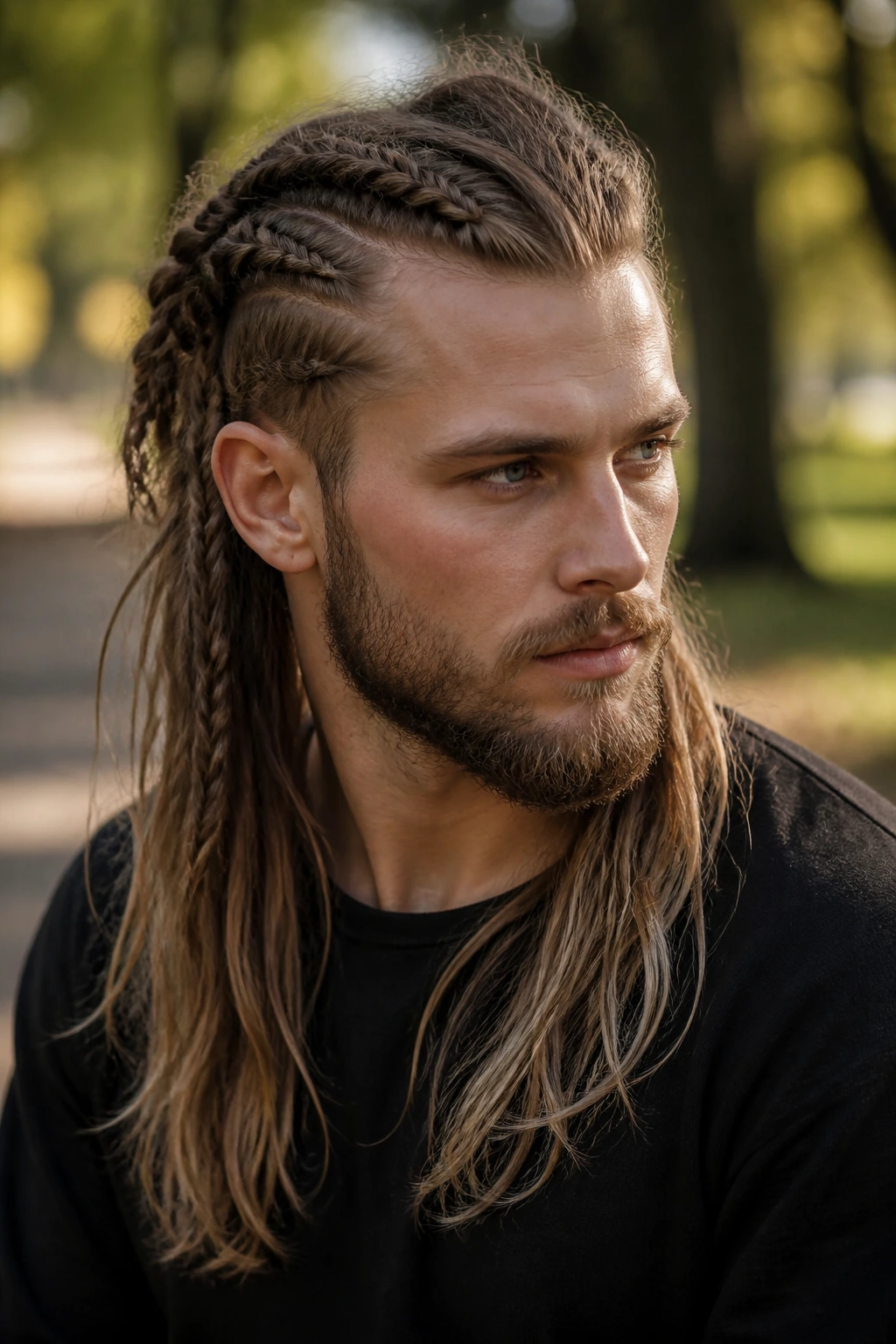
Viking braids are about direction and drama, but the best versions don’t look costume-y. Braids along the temples or crown pull the hair back, while the loose ends keep length visible and prevent the whole style from feeling too strict.
This works well on thick hair because the braids need enough grip to stay in place. A beard can balance the look nicely, but it isn’t required. What matters more is the contrast between the braided sections and the loose lengths. Too many tiny braids can make the style feel busy. Fewer, stronger lines usually look better.
If you want a long style with a little armor in it, this is the one. It has edge without asking you to shave the sides and start over.
How to Choose Long Hairstyles for Men by Hair Type and Face Shape
Straight hair usually needs the most help from the cut itself. If the hair hangs flat, ask for internal layers, curtain framing, or a side sweep that creates movement without making the ends thin. Long straight hair can look severe fast, so a little bend at the front or a softer perimeter goes a long way.
Wavy hair has the easiest time in this category because the pattern already gives the hair some shape. Bro flow, surfer waves, shags, and the wolf cut all work because they use that movement instead of fighting it. The mistake is over-styling it into a smooth sheet. Once the wave disappears, the haircut loses half its character.
Curly hair likes room. Long curly styles need enough length to show the curl pattern and enough layering to keep the bulk from ballooning around the sides. If your curls are dense, a curly shag or tapered top can help. If they’re looser, a curly mop or half-up knot may feel easier to live with.
Coily hair often does best with protective styles or a shaped silhouette. Box braids, cornrows, locs, twists, and a tapered afro keep the hair healthy while giving it a clean outline. If the hair is being pulled into tight ties every day with no recovery time, the edges will complain sooner or later.
Face shape matters more than people expect. Round faces usually benefit from vertical lines — buns, ponytails, tapered sides, and length that hangs below the jaw. Square faces soften nicely with curtain bangs, waves, and shags that break up the hard line of the jaw. Long faces tend to need width at the sides, not more height on top. Heart-shaped faces usually look balanced when the length sits near the jaw and the forehead is not left too exposed.
The Tools and Products That Actually Help
- Wide-tooth comb: Best for detangling damp hair without ripping through curls or stretching waves flat.
- Paddle brush: Useful for smoothing long straight or wavy hair before a ponytail or bun.
- Blow dryer with a nozzle attachment: Directs air downward and helps set shape instead of blasting frizz into the cuticle.
- Diffuser: Worth owning if your hair is curly or wavy and you want definition without a blown-out halo.
- Snag-free elastics: These reduce breakage compared with cheap ties that catch and snap ends.
- Leave-in conditioner: Keeps mid-lengths and ends from looking dry, especially on hair that lives in wind or sun.
- Light curl cream or wave cream: Gives texture without making hair stiff or greasy.
- Matte paste or clay: Helpful for shorter long styles, side parts, and shaggy cuts that need separation.
- Sea-salt spray: Good for bro flow or surfer styles when used lightly on damp hair.
- Microfiber towel or old cotton T-shirt: Cuts down on friction while drying, which matters more than most people think.
- Satin pillowcase or bonnet: Reduces overnight friction, tangles, and that dull, puffy look in the morning.
- Scalp oil or light serum: Useful for braids, locs, and dry ends, but keep it away from the roots if your scalp gets oily fast.
Practical Ways to Make Long Hair Look Intentional Every Morning
Product order matters. Start with the lightest thing that solves the problem: leave-in for dryness, spray for texture, cream for shape, paste only when you need hold. If you pile on everything at once, the hair goes limp by lunch.
Dry the roots, not just the ends. Long hair that stays damp at the scalp tends to flatten and smell a little off by midday. Aim the dryer at the base first, then let the lengths finish air-drying if they want to.
Change the tie point once in a while. A bun or ponytail worn in the exact same place every day creates a bend in the same spot and can stress the hairline. Slide it a little higher or lower from time to time. Your scalp will thank you.
Ask for shape, not length. At the barber, phrases like “remove bulk at the ends,” “add internal layers,” or “keep the perimeter long but soften the sides” get better results than vague requests. The cut is what makes the style easier. Product can only do so much.
Keep one tool in the bathroom. A wide-tooth comb or small brush is enough for most long styles. If you have to hunt through drawers for a tool every morning, you’ll stop using it, and the hair will show that absence quickly.
Common Mistakes That Make Long Hair Look Unfinished
The first mistake is growing it out with no shape plan. Hair can get long without getting better. If the ends are heavy, the crown is flat, and the sides are wild, it just looks like you haven’t visited a barber in a while. Ask for shaping trims while you grow.
Another common problem is using too much product. Fine hair gets greasy fast, and curly hair gets coated in a way that kills bounce. Start small. You can always add more, but you can’t un-add a greasy root.
Tying long hair too tight is another one. It pulls at the temples, leaves dents, and can make the hairline look stressed. If your scalp feels sore after an hour, the tie is too aggressive or the position is wrong.
People also forget the neckline and the area around the ears. Those spots grow faster than you think, and they make a long cut look sloppy when they’re left alone. A cleanup every few weeks keeps the style from drifting into “accidental.”
And then there’s the wet-hair bun. It’s tempting, especially when you’re in a hurry, but tying hair while it’s damp can flatten the roots and rough up the ends. If you have time to wait, let it dry a little first. That one habit saves a surprising amount of frizz.
Variations and Alternatives for Work, Gym, and Weekends
Boardroom Clean-Up: Start with a side part, low ponytail, or slicked-back length, then keep the sides tidy with regular trims. This works when you need the hair to disappear politely under a collar without losing length.
Sweaty-Day Reset: A half-up knot or high ponytail keeps the face clear during training, but a low bun is gentler if you’re wearing helmets or headphones. If you do this often, rotate the tie placement so the same spot isn’t stressed every day.
Texture-First Weekend: Bro flow, surfer waves, shag cuts, and wolf cuts all lean into movement instead of control. A salt spray or light cream is usually enough. The hair should still look like hair, not product.
Protective Mode: Box braids, cornrows, twists, and loc styles are the answer when you want length, but not daily combing. They ask for scalp care and periodic maintenance, yet they save time in the morning and reduce daily friction.
Low-Fuss Grow-Out: If you’re between cuts and nothing sits right, a low bun, low ponytail, or half-up knot can carry you through the awkward stage without making the whole thing look temporary. That middle phase is where a lot of people quit. They don’t need to.
Washing, Conditioning, and Trim Rhythm
Long hair is easier to live with when you stop treating wash day like a mystery. Most men with straight or wavy hair can wash two to three times a week without the scalp getting angry, while curlier or coily hair often does better with fewer washes and more targeted conditioning. Scalp oil is one thing. Dry ends are another. Keep them on separate schedules in your head.
Condition the mid-lengths and ends every wash. Put less, not more, near the roots unless your hair is extremely dry. If product builds up or the hair starts feeling coated, a clarifying wash every 2 to 4 weeks can reset things. After that, the hair usually feels lighter and takes style again instead of sliding around.
Trim timing depends on the cut. Layers, shags, and undercuts need maintenance every 6 to 10 weeks if you want the shape to stay visible. Low buns, ponytails, and looser flow styles can go longer, but the ends still benefit from a dusting trim every 8 to 12 weeks. Braids, twists, and locs need their own upkeep rhythm based on tension and scalp health.
Sleep matters more than people think. A satin pillowcase or bonnet keeps the ends from snagging and keeps curls from waking up as a puffed-out triangle. If your hair is long enough to knot overnight, a loose braid before bed can save you five minutes in the morning.
Frequently Asked Questions
Which long hairstyle is easiest to maintain?
A low ponytail, low bun, or bro flow usually asks for the least daily effort. They rely on the natural fall of the hair and don’t need perfect sectioning, which means you can wear them slightly messy without wrecking the look.
Can long hair work if my hair is fine and flat?
Yes, but the cut matters more than the length. Fine hair usually needs layers that remove weight without making the ends see-through, plus lighter products like mousse or a small amount of cream. Heavy pomade is the fast track to limp hair.
How do I ask for long layers at the barber?
Tell the barber where you want the length to sit, then ask for internal layers and soft point cutting to remove bulk. If you can, mention whether you want the ends to stay blunt or feathered. Those two choices change the whole shape.
Does long hair suit a receding hairline?
It can, but the style should avoid pulling everything straight back tightly. Curtain shapes, side parts, and softer flow styles tend to be kinder because they don’t spotlight the hairline. A good barber can also keep the sides balanced so the front doesn’t feel overexposed.
How often should I trim long hair?
Most men do well with a trim every 8 to 12 weeks, but layered cuts and sharper undercuts may need cleanup sooner. If the ends start fraying or the shape loses its outline, that’s the sign, even if the calendar says otherwise.
What product should I avoid on long hair?
Anything too heavy for your texture. Thick pomades, greasy oils at the roots, and layers of product stacked on top of one another can flatten the hair fast. Start with the lightest product that fixes the issue, then stop there.
Can I tie long hair up every day?
You can, but the tie point should move around a bit and the tension should stay modest. Wearing the same tight bun or ponytail in the same spot every day can stress the hairline and leave dents in the hair shaft.
What if my hair frizzes as soon as it dries?
That usually means the hair needs more moisture or less friction. Try a leave-in on damp hair, dry with a microfiber towel or cotton T-shirt, and avoid rough brushing once the hair is half-dry. For curls, a diffuser on low heat helps more than blasting the hair hot and fast.
The Shape of the Length
Long hair on men looks best when the shape is doing some work. A good cut knows whether it should fall, frame, tie back, or loosen into texture. A bad one just hangs there and asks you to keep fixing it.
Pick the style that matches your hair’s habits, not the one that looks sharp on a photo with different texture, different density, and different bone structure. That’s the whole game. Get the cut to do its job, and long hair stops feeling like maintenance and starts feeling like part of your face.
