



Copper hair color ideas for wavy hair work because the wave pattern does half the styling for you. A bend in the hair catches warmth, throws a little shadow, then catches it again a half-inch later. That’s why copper can look soft and expensive on one head of waves and loud in the worst way on another — placement matters more than people think.
Wavy texture has a sneaky advantage here. Copper doesn’t sit on it like a single flat shade; it moves through the S-bends, the frizz halo, the loose ends, and the darker pieces underneath. My favorite versions are the ones that keep a little depth at the root and let the brighter copper live where the waves break. That keeps the color readable instead of turning it into a solid orange sheet.
There’s also a practical side to this. Copper fades faster than brown, and wavy hair tends to show that fade in the driest spots first — usually the mid-lengths and the hair around the face. So the smartest copper shades for waves are the ones that can soften as they grow out and still look intentional. Some are glossy and bright. Some lean cinnamon, terracotta, or strawberry. A few are just enough copper to make the texture look richer without shouting about it.
Why These Copper Shades Work So Well on Waves
- Movement matters: Wavy hair breaks color into ribbons, so a copper balayage reads richer and less blocky than the same shade on pin-straight hair.
- Depth keeps it wearable: Leaving a deeper root or lowlight keeps bright copper from looking inflated the minute humidity hits.
- Grow-out is part of the look: Copper shades with shadow roots, ribbons, or face-framing pieces age more gracefully than a solid all-over dye job.
- Warmth can be tuned: You can push copper toward strawberry, penny, cinnamon, rust, or bronze depending on how orange, red, or brown you want the result to feel.
- Styling changes the finish: Air-dried waves, diffuser waves, and iron-made bends each show copper differently, which is half the fun here.
- Maintenance is manageable when the tone is chosen well: The right copper shade can fade into a softer peachy or auburn range instead of a flat, tired orange.
1. Cinnamon Copper Balayage
Cinnamon copper balayage is the shade I’d hand to someone who wants warmth without looking like they picked the brightest copper in the room. The base stays a soft brown-red, while hand-painted cinnamon ribbons slide through the mid-lengths and ends. On waves, it looks especially good because every bend gives the color a little extra movement.
Why It Reads So Soft on Waves
This shade works because the copper pieces are scattered, not stacked. You get warmth where the waves bend most, but the darker base still shows through, which keeps the hair from looking fuzzy or over-lightened. It’s also forgiving if your waves dry a little differently from day to day.
A good cinnamon copper balayage usually sits around level 6 to 7 with warm auburn and copper ribbons. That range gives you glow without the loud, candy-orange finish that can make texture look frayed.
2. Bright Penny Copper
Bright penny copper is the one for someone who wants the color to announce itself before they even get close. It has that shiny coin-like warmth, the kind that looks almost molten on loose waves. If your haircut has face-framing layers, this shade can make them pop fast.
The catch is maintenance. Bright penny copper shows fade quicker than the softer shades in this list, especially on porous ends. I like it best on wavy hair that’s already healthy enough to hold shine, because the whole point is that smooth reflective finish. If the ends are dry and thirsty, the color can look uneven in a week or two.
3. Burnished Auburn Melt
Burnished auburn is copper’s quieter, moodier cousin. It leans red-brown first, copper second, and that is exactly why it looks good on waves that need depth. The melt effect — darker at the roots, warmer through the mids, richer again at the ends — gives the texture a carved, dimensional look.
What Makes It Different
Unlike a solid copper dye, a burnished auburn melt doesn’t rely on brightness to make itself known. It uses shadow and warmth together. On thick wavy hair, that means the color doesn’t disappear when the hair expands in humidity. It just looks more expensive.
If your natural base is a medium brown, this is one of the easiest copper family shades to wear because regrowth blends into the root shadow instead of fighting it.
4. Dark Copper Brunette
Dark copper brunette is for the person who wants copper but still wants the hair to read brown from a distance. The best version keeps the base a deep chocolate or chestnut and threads in copper glaze through the outer wave pattern. You notice it when the light hits. You notice it again when the waves move.
This is one of my favorite choices for people who wear their hair loose most of the time. The color doesn’t need a curling iron to make sense. It has enough depth to survive a messy bun, enough warmth to show in loose bends, and enough restraint to grow out without drama. If you work with minimal styling, this is the safe pick that still looks deliberate.
5. Strawberry Copper Waves
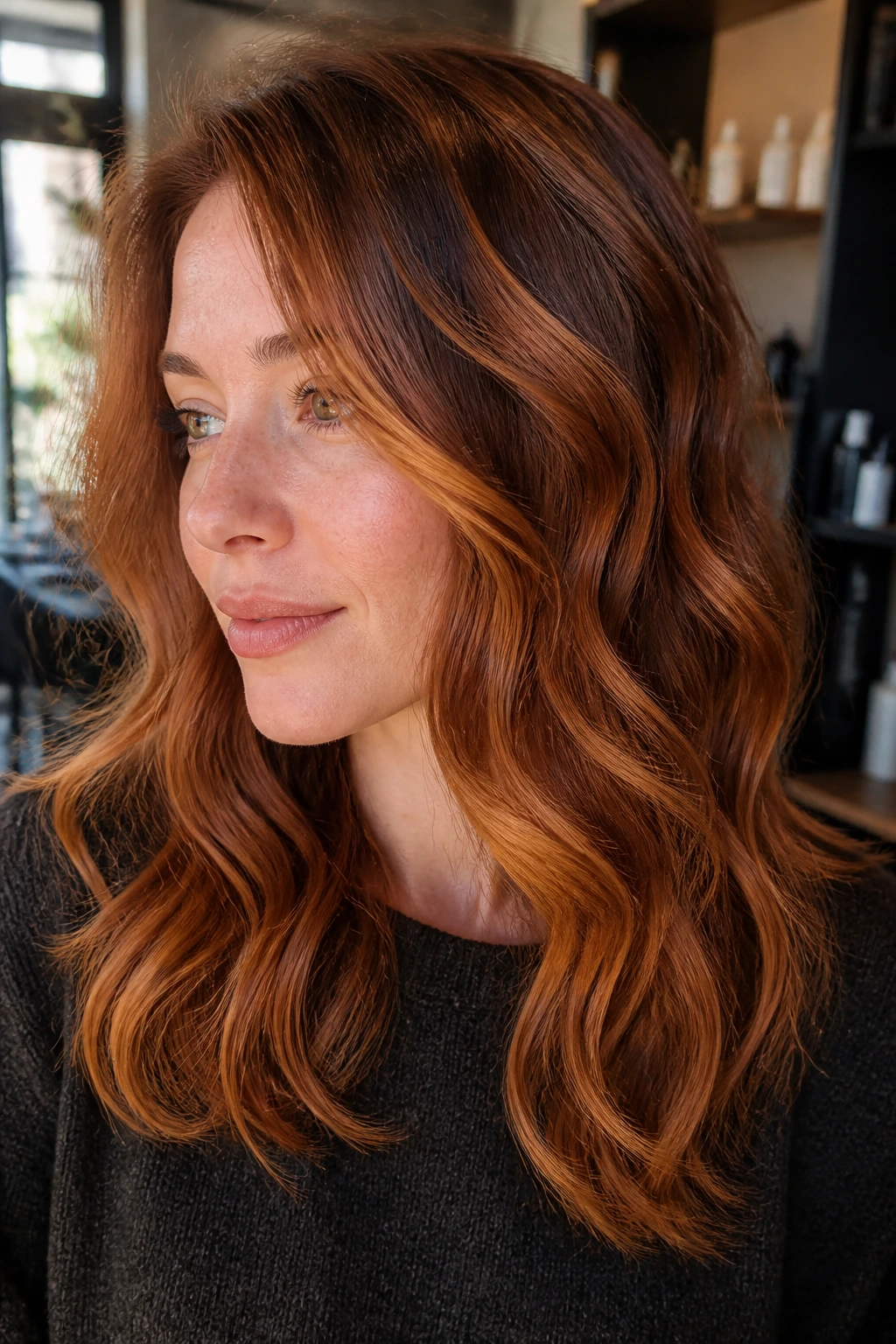
Strawberry copper sits in that pale, juicy zone between soft red and peachy gold. On wavy hair, it looks airy and delicate rather than flat, because the lighter pieces lift around the curve of each wave. If you like a lighter result that still feels warm, this is the sweet spot.
How to Wear It
Best on levels 7 to 9.
Best with loose, polished waves rather than rough texture.
Best if you’re willing to use a gloss every few weeks.
It can drift pinkish if the formula is too strong, so I prefer strawberry copper that keeps a little gold in the mix. That keeps it readable as copper, not pastel red.
6. Golden Apricot Copper
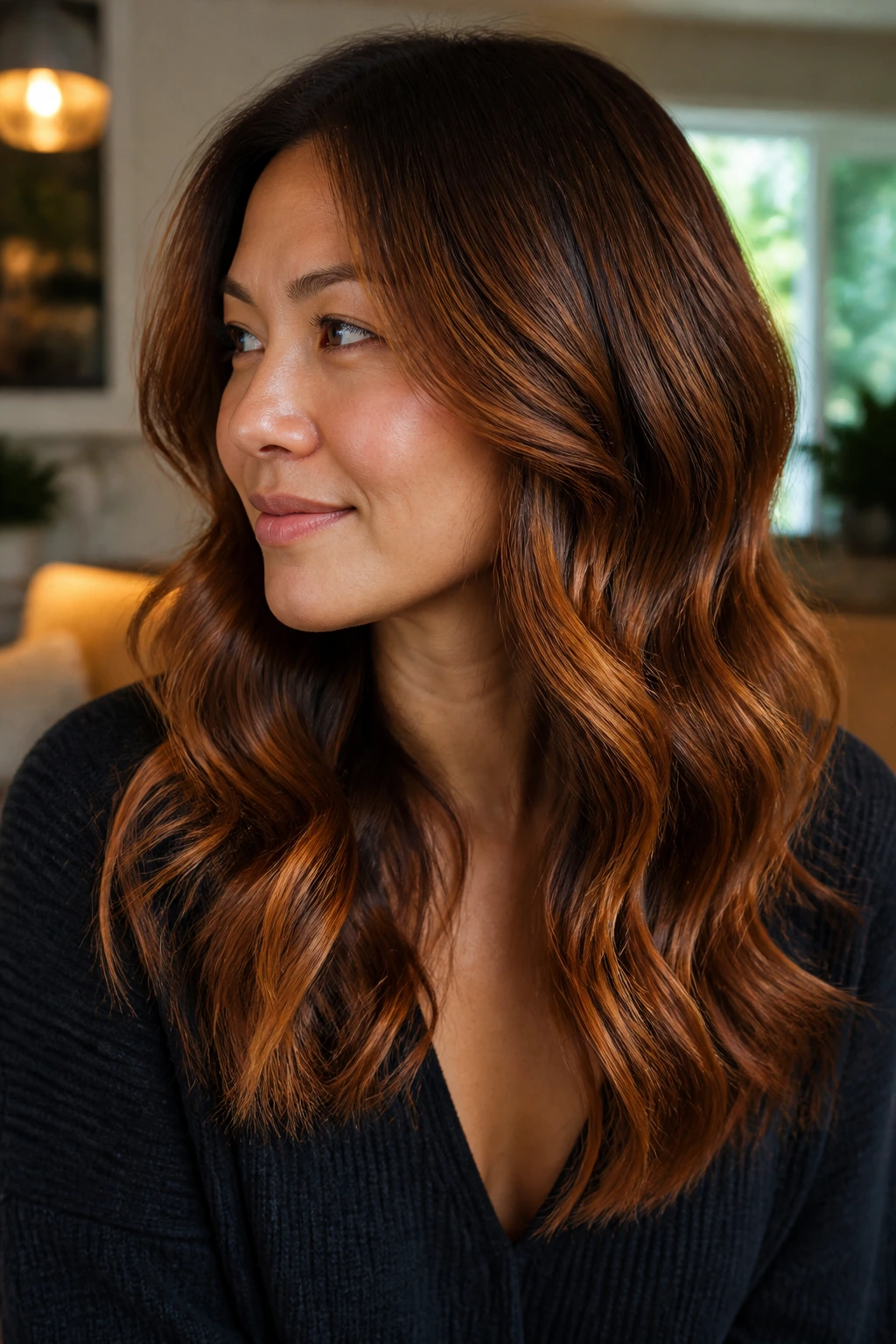
Golden apricot copper is softer and sunnier than the usual red-copper crowd. It has a peach-gold glow that looks especially good on fine to medium wavy hair because it doesn’t depend on heavy pigment to stand out. The shade feels lighter around the face and warmer at the ends.
This one is underrated for shorter wavy cuts. A textured bob with apricot copper can look surprisingly full because the lighter tone creates the illusion of movement even when the hair isn’t freshly styled. It’s also a smart choice if you want copper but know you’ll get bored of intense red fast.
7. Rose Gold Copper
Rose gold copper is not the same thing as pink hair, and that distinction matters. The rose note is soft and metallic, tucked into a warm copper base, which keeps the shade wearable on waves. It looks especially good when the hair is styled into loose bends with a soft center part.
The best rose gold copper isn’t overloaded with pink. Too much pink can make waves look dusty instead of luminous. Keep the copper underneath, let the rose live in the highlights, and the whole thing stays believable. A gloss every four to six weeks helps preserve that smooth metallic look.
8. Copper Bronde Ribbons

If you’re trying to ease into copper without giving up your brunette identity, copper bronde ribbons are the move. Think brunette base, caramel warmth, and a copper edge that shows up in streaks rather than as a blanket. On waves, the mix of tones gives the hair that layered, expensive-looking depth people always try to fake with one flat color.
Why It Works
The darker brunette pieces hold the overall shape, while the copper ribbons brighten the bends and the outer surface of the wave. That means the color keeps changing as you move. It also makes the grow-out easier, because you’re not fighting a single hard line at the root.
9. Terracotta Copper
Terracotta copper brings clay, brick, and warm earth into the same shade family. It’s richer and dustier than bright copper, which makes it a strong pick for thicker wavy hair that can handle deeper pigment. This tone doesn’t scream. It settles in and gets better as the waves loosen.
I like terracotta copper on medium to deep complexions because the color has enough red-brown weight to hold its own. On lighter skin, it can read very autumnal and dramatic. On olive skin, it often looks balanced right away. If your waves are dense, this shade keeps them from looking puffy because the deeper tone visually compresses the bulk.
10. Face-Framing Copper Money Pieces
Money pieces in copper are one of the easiest ways to test warmth without committing to an all-over change. The bright panels around the face catch every bend in the hair, especially if your waves start near the cheekbones or jaw. It gives you the copper hit up front and leaves the rest of the hair calmer.
If you wear your hair half up a lot, this placement really pays off. You still see the warm streaks when the hair is tied back, and the overall upkeep stays lower than a full copper service. Ask for the money pieces to be slightly softer at the root, not striped from scalp to ends. That softer blend matters on waves.
11. Peach Copper
Peach copper leans soft, airy, and a little playful. It has more orange-gold than red, which makes it feel lighter than classic copper and less saturated than strawberry blonde. On wavy hair, that softness works because the texture already adds movement; the color doesn’t need to do all the work.
The best peach copper is usually paired with pale ends or a gloss finish. It’s a shade that can look flat if the surface is dull, so shine matters. If you’re someone who likes cream sweaters, gold jewelry, and easy makeup, this color sits right in that same warm lane.
12. Mahogany Copper
Mahogany copper is deep, wine-dark, and serious in the best way. It gives waves a heavier, silkier look, especially when the light is low and the color shows those red-brown undertones instead of pure orange. This is the shade for people who want copper but don’t want anything that feels sunny or sweet.
Because the base is dark, it grows out gracefully. The color can live through a few washes before it starts to look faded, which is more than I can say for brighter coppers. If your natural hair is medium brown or darker, mahogany copper is one of the cleanest transitions into the copper family.
13. Pumpkin Spice Copper
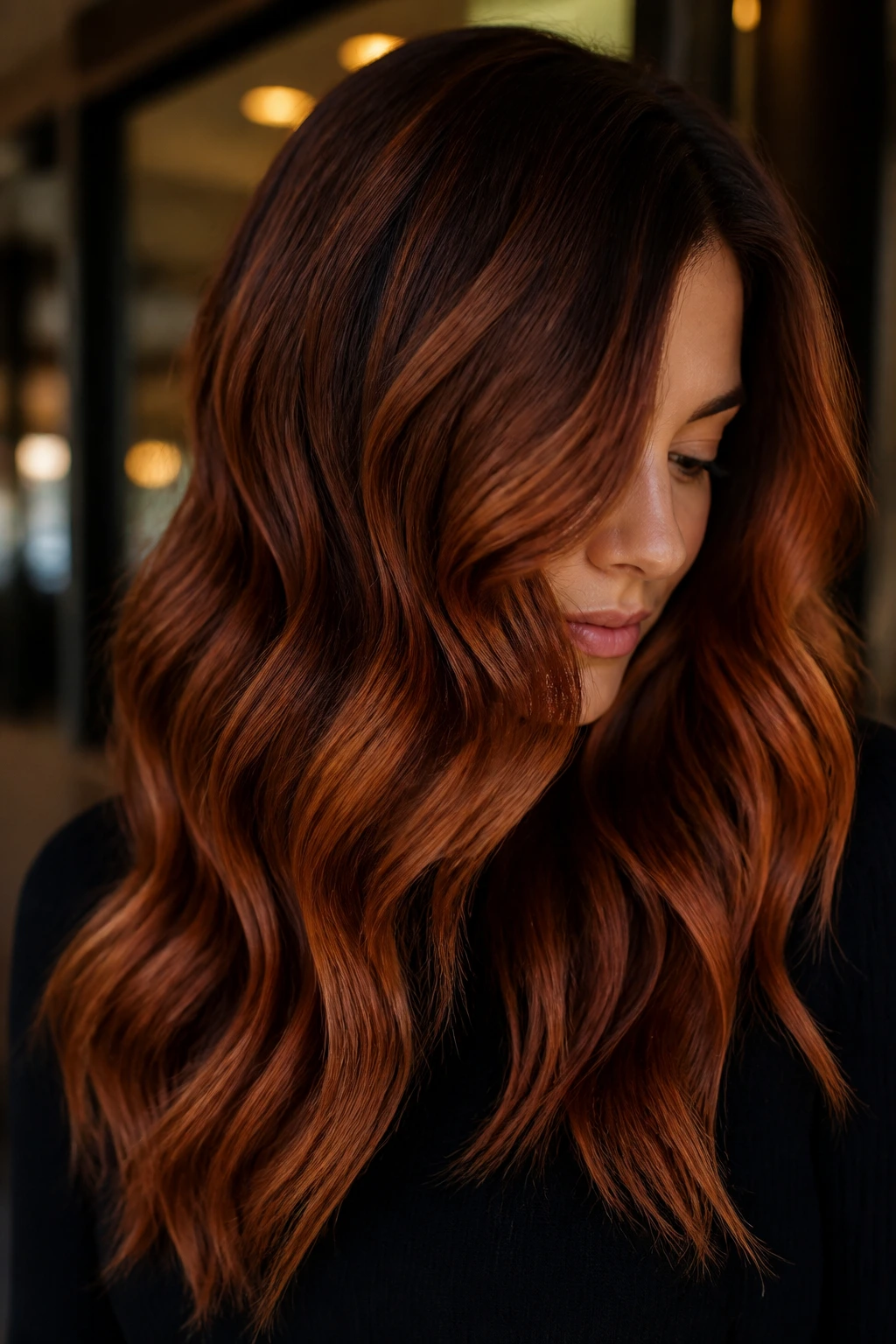
Yes, the name gets used too often. Still, when the color is done well, it earns the label. Pumpkin spice copper is a warm, spiced shade with orange, cinnamon, and a little brown baked in. It looks especially good on wavy hair with a soft, casual finish — the kind of texture that looks like it air-dried with just enough product.
Best Placement for This Tone
A full-head pumpkin copper can feel heavy if the hair is fine. Better to keep the root a shade deeper and let the warmth build through the mids.
On medium-density waves, this shade gives the whole head a richer, fuller look without needing extra volume products.
On thick hair, a few lighter copper pieces around the face stop it from reading too dark.
14. Shadow-Root Copper Melt
Shadow-root copper melt is the most practical version of the color family if you don’t want obvious regrowth every few weeks. The root stays deeper — often brown or soft auburn — while the copper gradually brightens through the lengths. Waves make that melt look natural because the bends help blur the transition.
This is the shade I’d pick for someone who uses heat less often and lets the hair air-dry most days. The darker root gives the style structure even when the finish is a little loose. It’s also a very good option for brunettes who want copper but don’t want to bleach the life out of their ends.
15. Smoked Copper Brunette
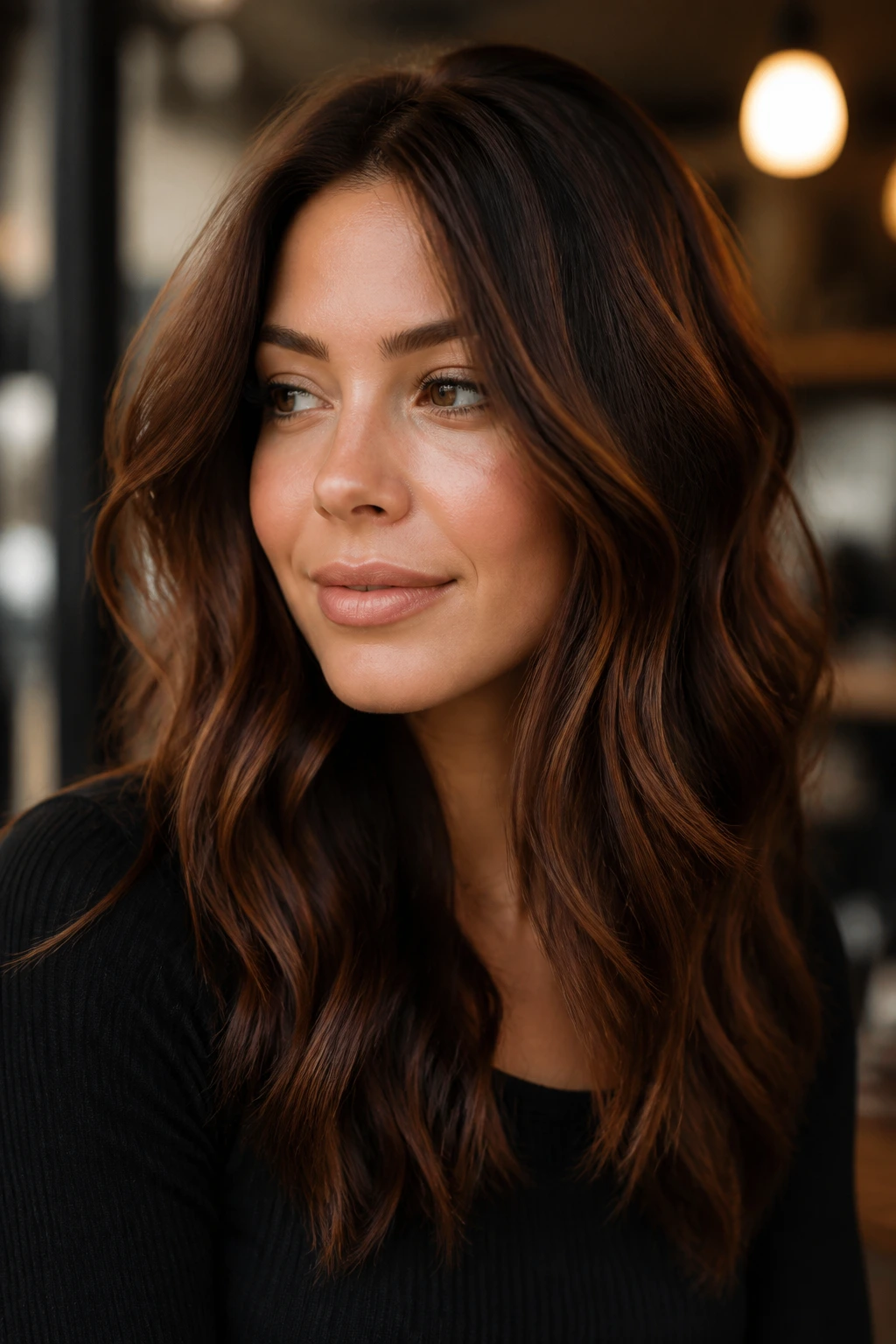
Smoked copper brunette is earthy and a little smoky, with the warmth tucked under a darker veil. It has more restraint than bright copper, but it doesn’t fade into plain brown either. On waves, the shade looks especially nice when the outer layer is a touch brighter than the underlayer.
The thing I like most here is the range. In a shadowy room, it looks like chestnut. In sunlight, it shifts toward rust and copper. That shifting quality is exactly what wavy hair does best, which is why this color reads so well on texture.
16. Cherry Cola Copper
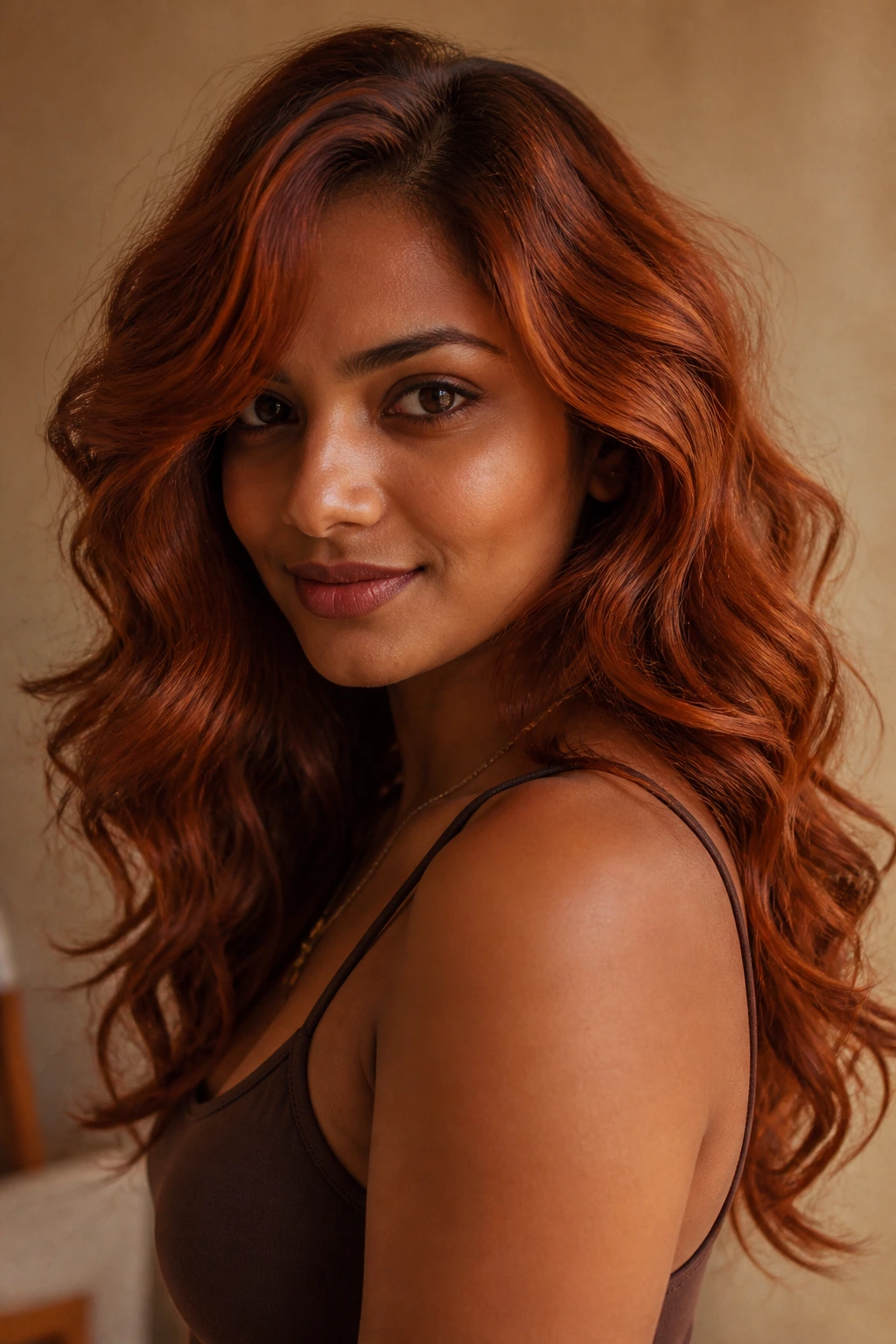
Cherry cola copper is darker, sweeter, and more saturated than a lot of copper shades. It combines cola-brown depth with a cherry-red copper edge, which gives wavy hair a glossy, almost lacquered finish. If your waves are thick or coarse, this can be a very flattering direction because the depth reduces the bulk visually.
This shade does best when the cut has movement in the ends. Long, one-length hair can swallow it. Layered waves, on the other hand, let the red and brown tones separate a little as the hair moves, and that’s where the color starts to look alive.
17. Vanilla Copper Blonde
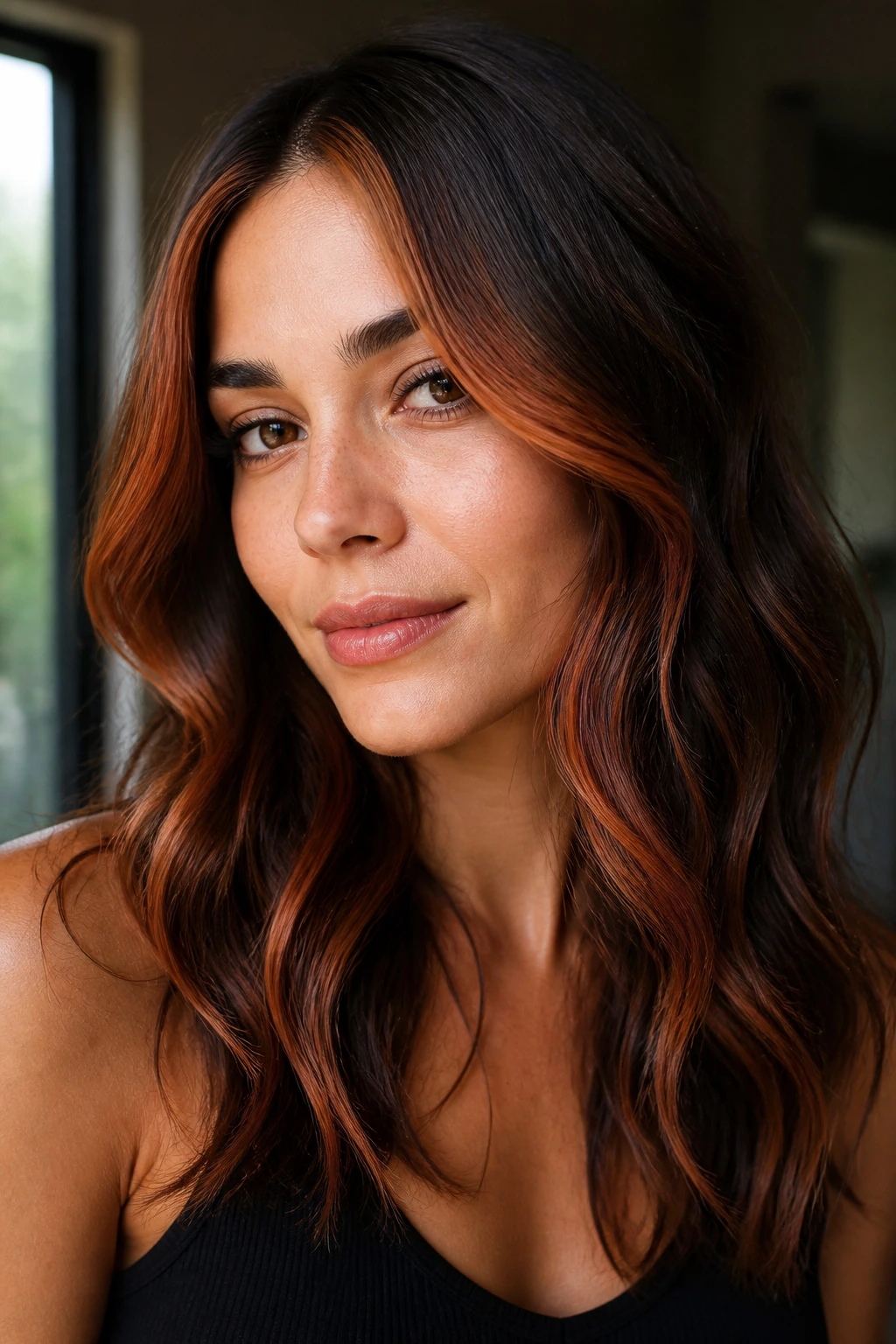
Vanilla copper blonde sits at the pale end of the spectrum. It has a light blonde base with a gentle copper wash, so the warmth shows up like a tint rather than a full color change. On wavy hair, it can look delicate and airy, almost like sunlit metal.
The trick is keeping the blonde from going too icy. A tiny bit of warmth keeps the whole thing from turning beige. If your hair is naturally light and your waves are soft, this shade is a clean way to add copper without giving up brightness.
18. Rusted Copper Lowlights

Rust lowlights are the answer when your hair needs dimension more than it needs brightness. Instead of lifting the whole head, you add coppery rust pieces under the top layer, where the waves fold over them. It’s subtle until the hair moves, and then it has this lovely, lived-in depth.
I reach for this idea when someone already has lighter copper or strawberry hair that feels a little too uniform. The lowlights put the shadows back in. They also help curly and wavy hair look less puffy, because deeper pieces break up the silhouette.
19. Soft Ginger Copper
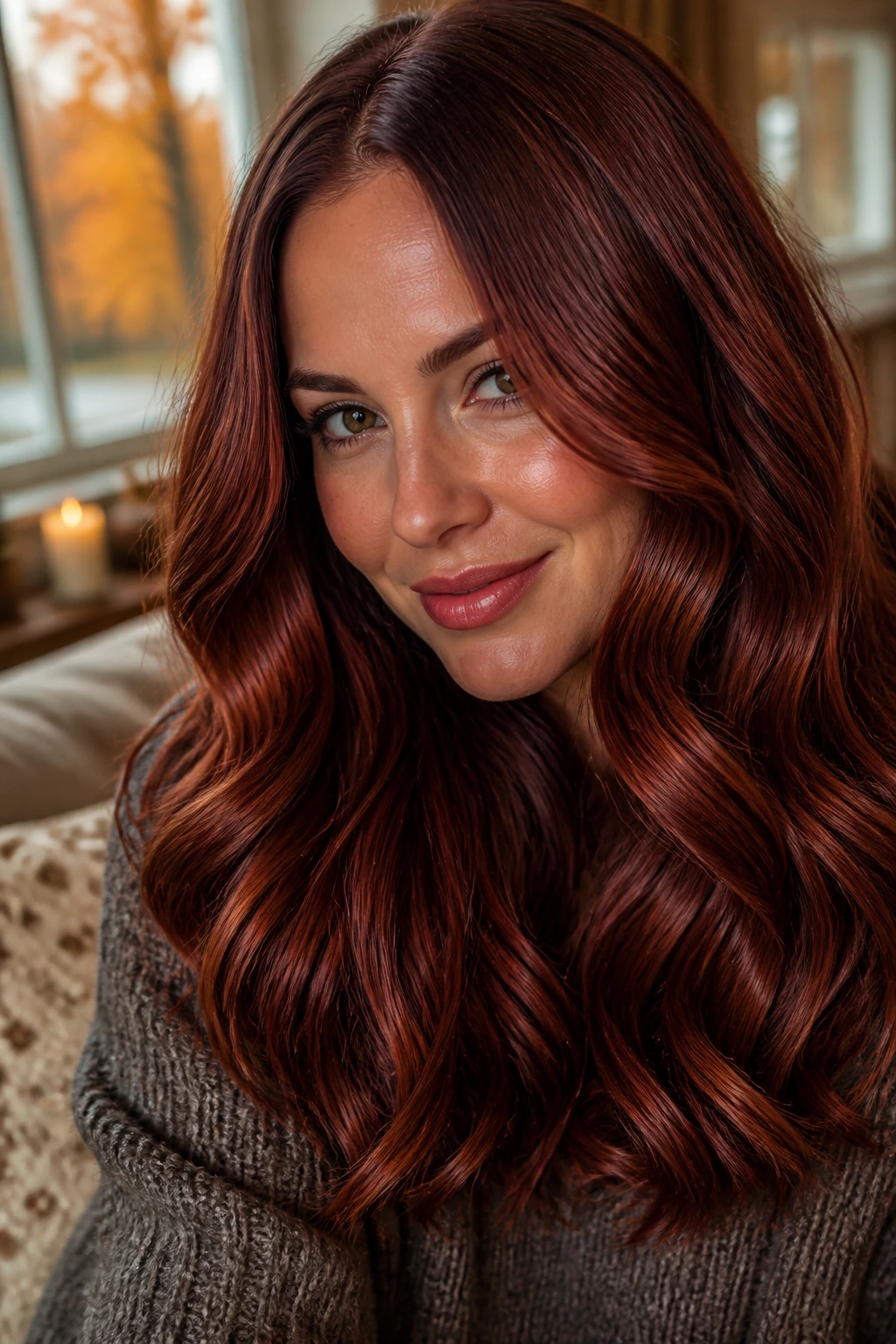
Soft ginger copper is friendly, warm, and easy to wear. It has that classic ginger look, but softened enough that it doesn’t feel costume-like. On wavy hair, the color reads especially well on shorter layers and face-framing waves because the shape keeps it from feeling too broad or solid.
This is a solid first-copper choice if you’re nervous. It has enough color to make a difference, but not so much saturation that every root grow-out feels alarming. If you want a copper shade that can survive a messy air-dry and still look intentional, ginger is a good place to land.
20. Copper Ombré Ends
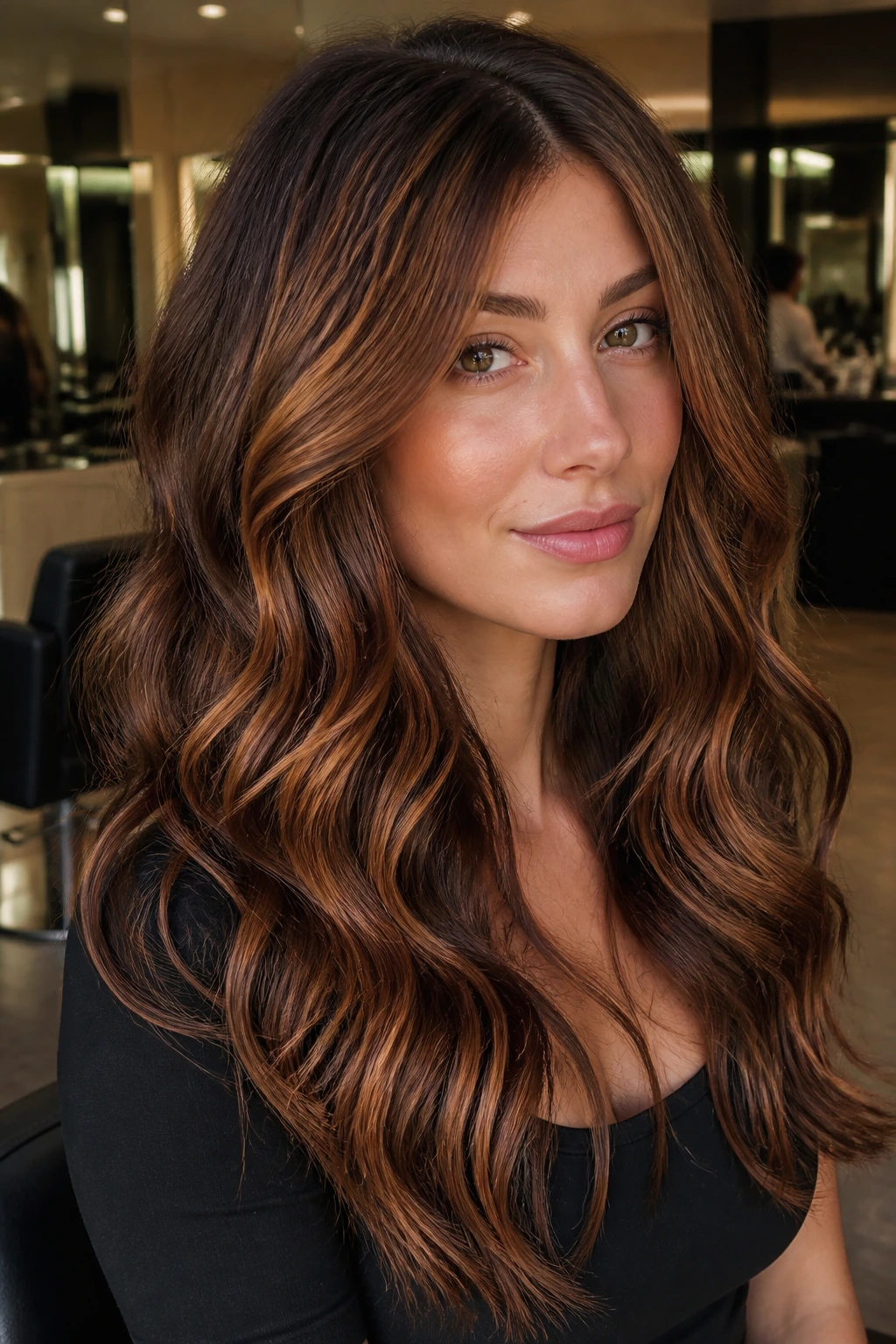
Copper ombré ends are for people who want to keep their roots natural and have the copper live at the bottom half of the hair. That means the warmth shows up where the waves are often driest and most visible, which can be a smart use of placement. It also creates an easy entry point if you’re testing copper for the first time.
The ombré effect looks best when the transition is gradual, not abrupt. A harsh line halfway down the hair can make waves look chopped up in the wrong way. Keep the blend soft and the ends glossy, and the whole style feels deliberate rather than grown-out.
21. Bronze Copper Micro-Highlights
Micro-highlights are tiny, fine ribbons that spread warmth without screaming for attention. Bronze copper micro-highlights are especially good on dense wavy hair because they thread through the texture without making the style bulky. You get warmth, shine, and a little shimmer every time the waves bend.
What to Ask For
Ask for very fine placement, almost baby-light level, around the outer layer and through the crown.
Ask for a bronze-copper tone instead of a bright orange copper if you want something that blends into brunette or dark blonde hair.
Ask for a gloss after the highlights if your ends are porous. That keeps the little ribbons from looking dry.
22. Burnt Sienna Copper
Burnt sienna copper has a painterly feel to it. The shade leans earthy, reddish-brown, and slightly muted, which gives it a lot of range on wavy hair. It doesn’t need high shine to work, but it absolutely loves it when the hair is healthy enough to reflect some gloss.
This one is especially good for medium to thick textures that expand a bit when dry. The deeper earthy tone holds shape better than a pale copper. If your wardrobe leans neutral, olive, tan, black, or denim, burnt sienna slips in naturally.
23. Champagne Copper Beige
Champagne copper beige takes the warmth down several notches and adds a soft beige base. It’s the least fiery copper shade in this list, but that’s the point. Waves make it feel dimensional instead of washed out, and the beige keeps it from drifting too orange.
This is a smart choice if you want something refined rather than flashy. It works well on cooler skin tones that still want a touch of warmth, and it can be a nice compromise for anyone moving away from ash blonde but not ready for full copper. I’d call it the quietest shade here.
24. Desert Sunset Copper
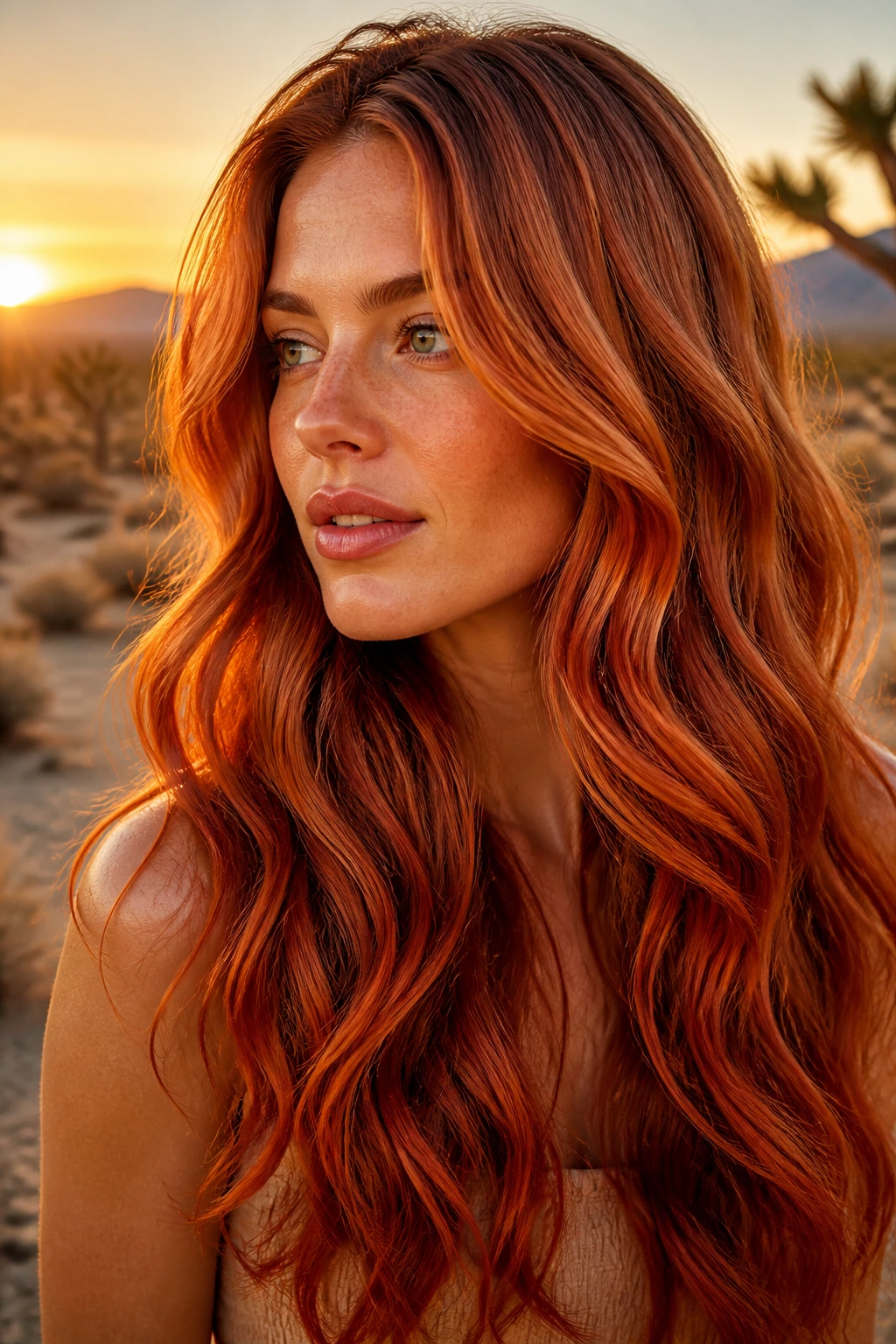
Desert sunset copper mixes gold, coral, and soft red into one warm color story. It’s brighter at the top and slightly deeper near the ends, which gives waves a sunset-like spread of color. That variation is the whole reason it works. Flat versions of this shade can look childish. Dimensional versions look rich.
If you have long hair and loose bends, this shade gives you a lot of visual motion with very little effort. It’s one of the best choices for people who wear their hair down most days and want the color to do some of the styling work.
25. Antique Copper Gloss
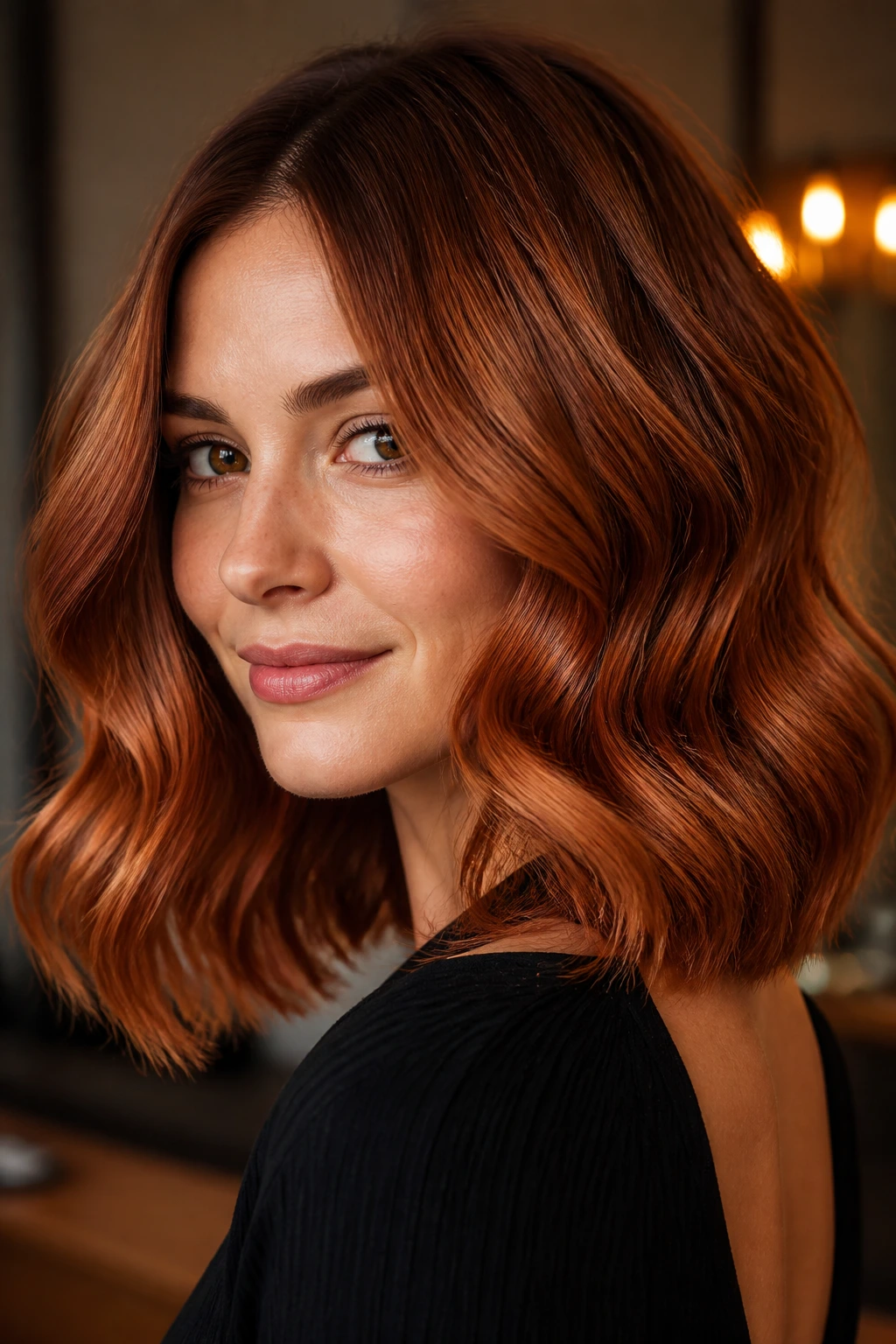
Antique copper gloss is my favorite low-commitment finish in the whole bunch. It doesn’t demand a big color correction or a hard lift. Instead, it lays a warm copper veil over the existing base, like a patina over metal. On waves, the gloss sits on the outer curves and makes the whole head look polished.
The beauty of this shade is that it can be adjusted up or down. Add more red for warmth. Add more brown for depth. Keep it sheer if you want the hair to stay mostly brunette. That flexibility is why it’s such a useful final option.
Why Copper and Waves Keep Each Other Honest
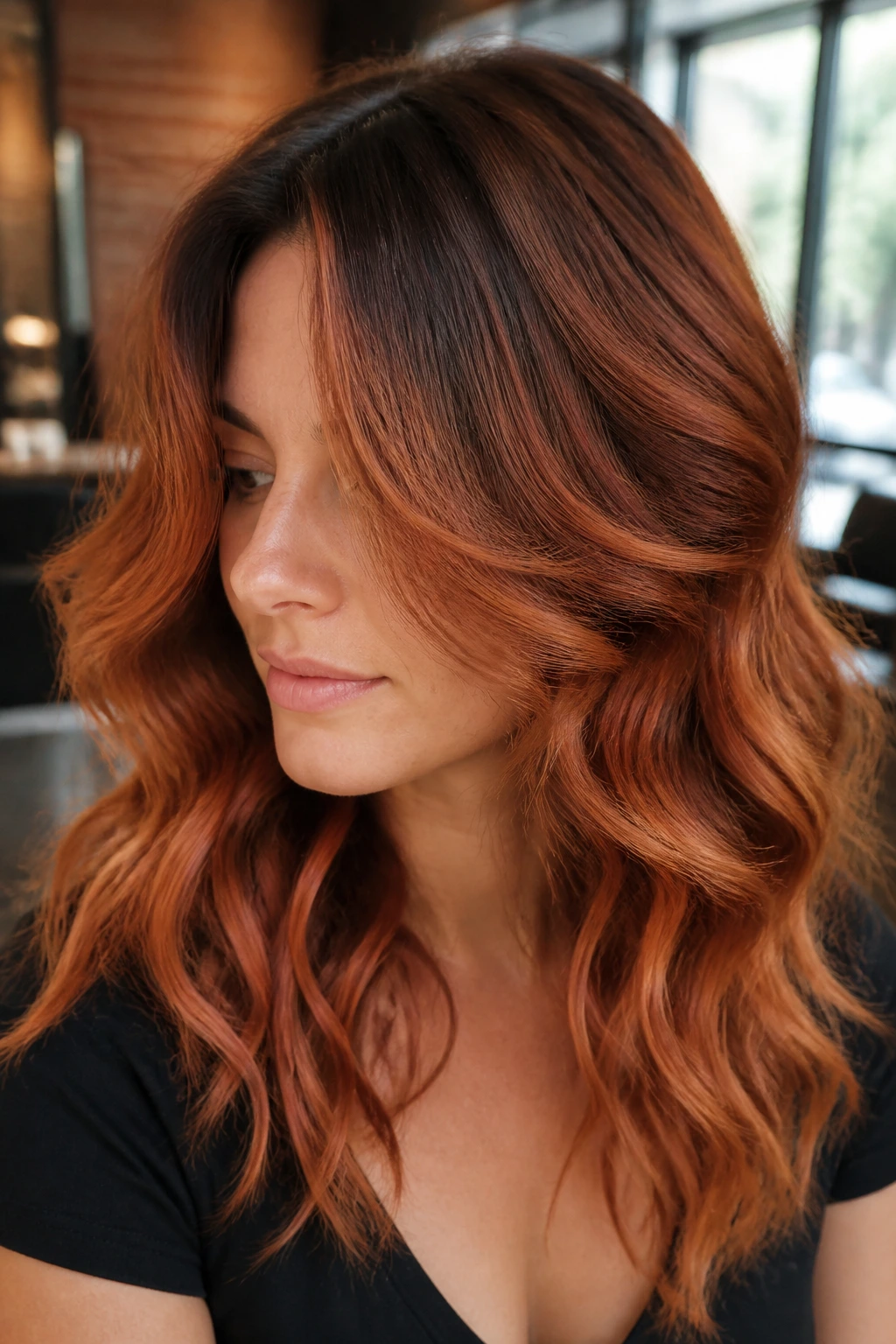
Copper is a shade that tells on bad placement. Waves make that obvious. If the color is slapped on in one block, the texture can look puffed and messy. If the color is placed with some thought — roots a little deeper, mids a little richer, ends a little lighter or glossed — the same waves suddenly look shaped instead of merely styled.
That’s why copper balayage, copper ribbons, and shadow-root copper all show up so often in good salon work. They let the hair breathe. They also let the wave pattern act like a built-in filter, softening the brightness in some spots and brightening it in others. Straight hair can show every line. Wavy hair edits them a little.
There’s also a maintenance truth that doesn’t get said enough: copper shades that are too even tend to fade the fastest. A color melt or a rooted copper has somewhere to go when the pigment starts to soften. A solid, bright copper has nowhere to hide.
Essential Tools for Copper Waves That Stay Sharp
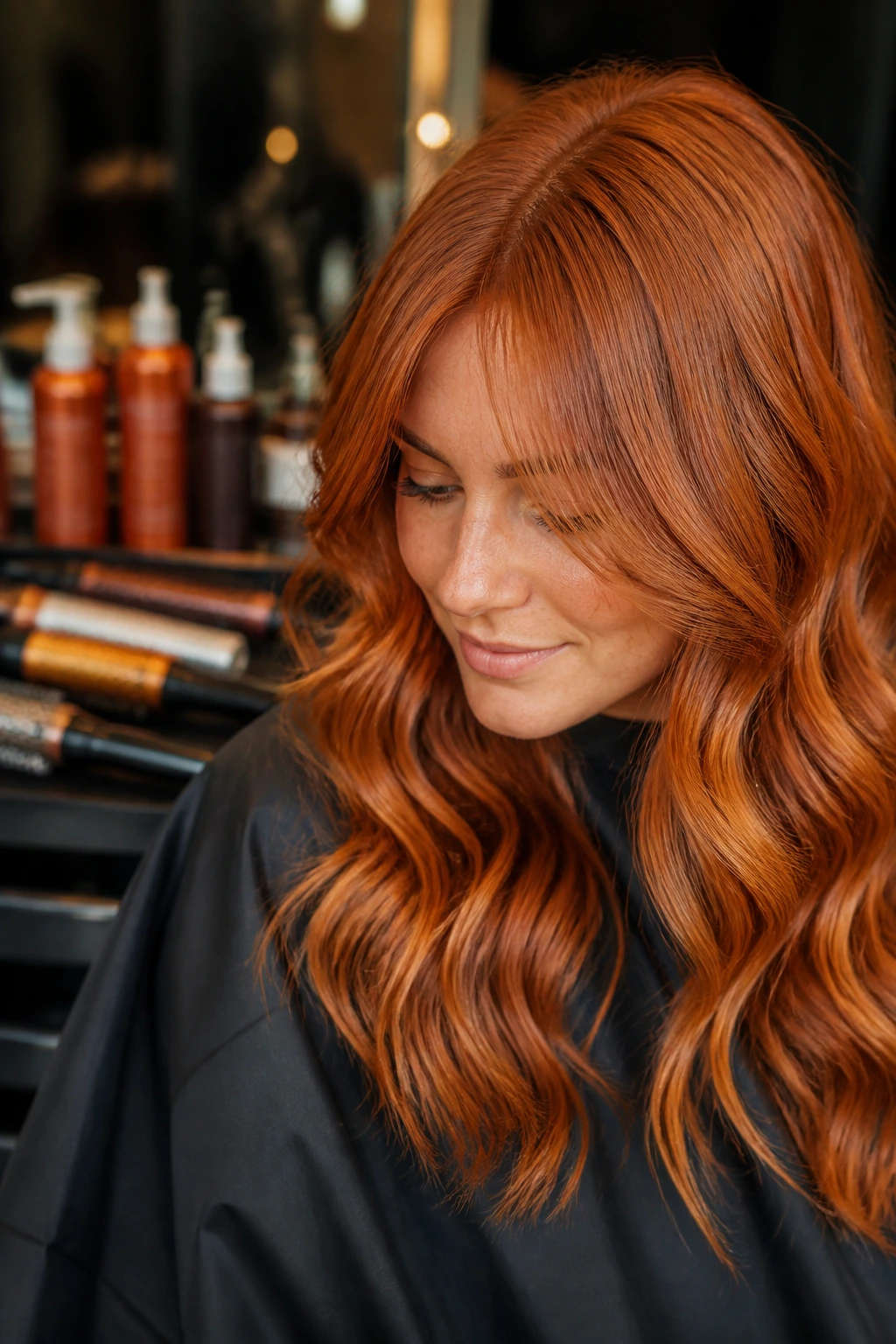
- Color-safe shampoo: Choose a sulfate-free formula that won’t strip warm pigment on the first wash.
- Copper-depositing mask or conditioner: Handy for refreshing faded mid-lengths between salon visits.
- Heat protectant spray: Wavy hair often gets a little iron work, and copper fades faster under heat without protection.
- Wide-tooth comb: Better than a brush for detangling damp waves without pulling them into frizz.
- Microfiber towel or T-shirt: Cuts down roughing-up at the cuticle, which matters when you want shine.
- Diffuser attachment: Useful if you want to keep the wave pattern defined while preserving the color’s reflective finish.
- Gloss brush or tint bowl: More useful for home refreshes than people admit.
- Silk or satin pillowcase: Cuts down friction at night and helps the color look smoother in the morning.
Smart Shade Selection and What to Ask For at the Salon
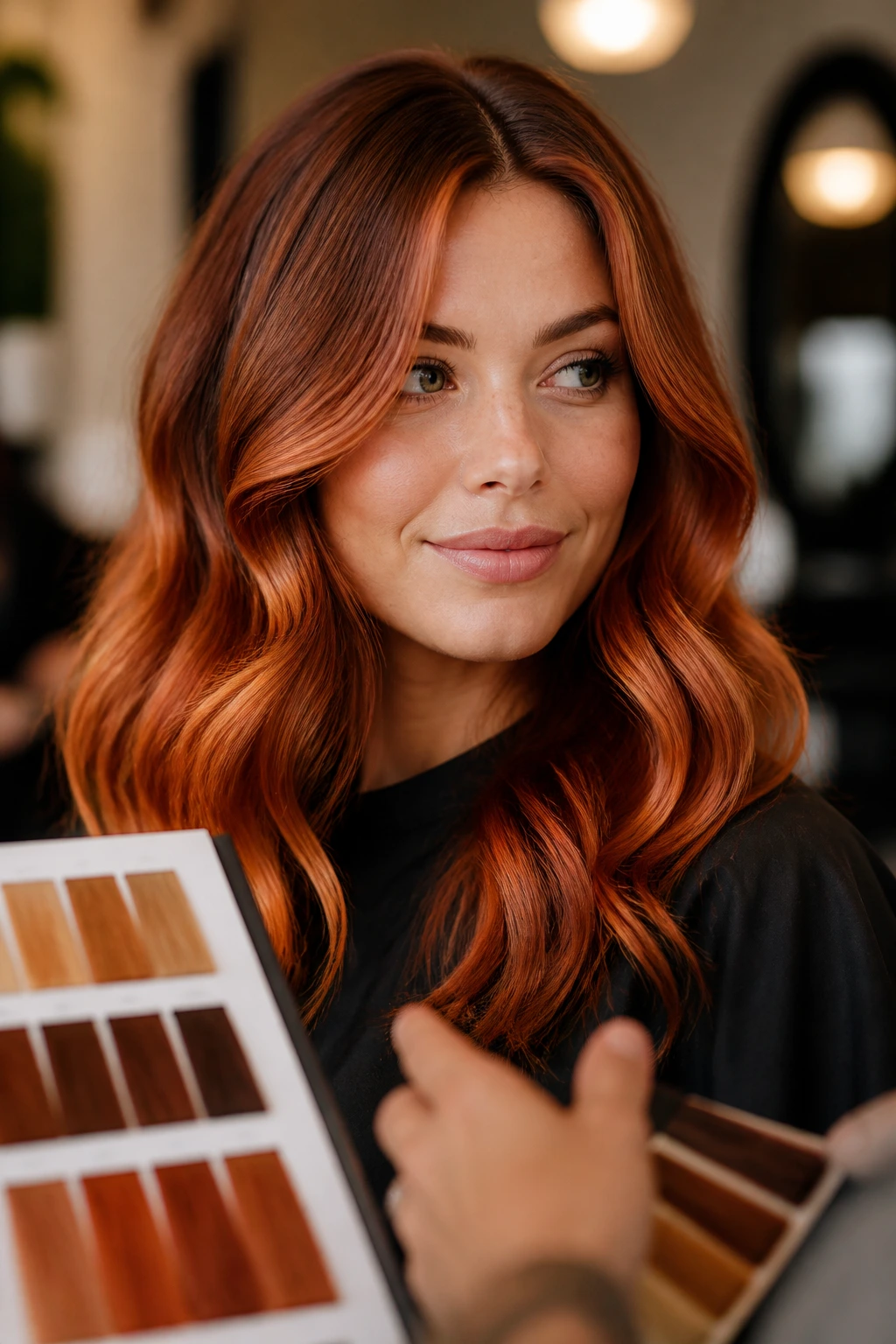
The easiest way to avoid regret is to talk in levels, not just in color words. A level 6 copper brunette will look much darker and moodier than a level 8 strawberry copper. If your base is already dark, you can still wear copper, but the result will usually be richer and browner unless lightening is part of the service.
Demi-permanent color is often the sweet spot for wavy hair when you want copper without a hard commitment. It deposits tone, fades more softly, and usually leaves the hair feeling less stressed than a full permanent change. Permanent copper has its place, especially on gray coverage or darker bases that need stronger lift, but it’s less forgiving if you change your mind.
Ask your colorist for placement language that matches your hair. Words like balayage, shadow root, face-framing pieces, micro-highlights, and color melt are not decoration. They tell the stylist how much contrast you want and where the brightness should live. If your waves are big and loose, bigger ribbons make sense. If your waves are fine and crowded together, finer placement usually looks better.
How to Wear Copper So the Waves Do the Talking
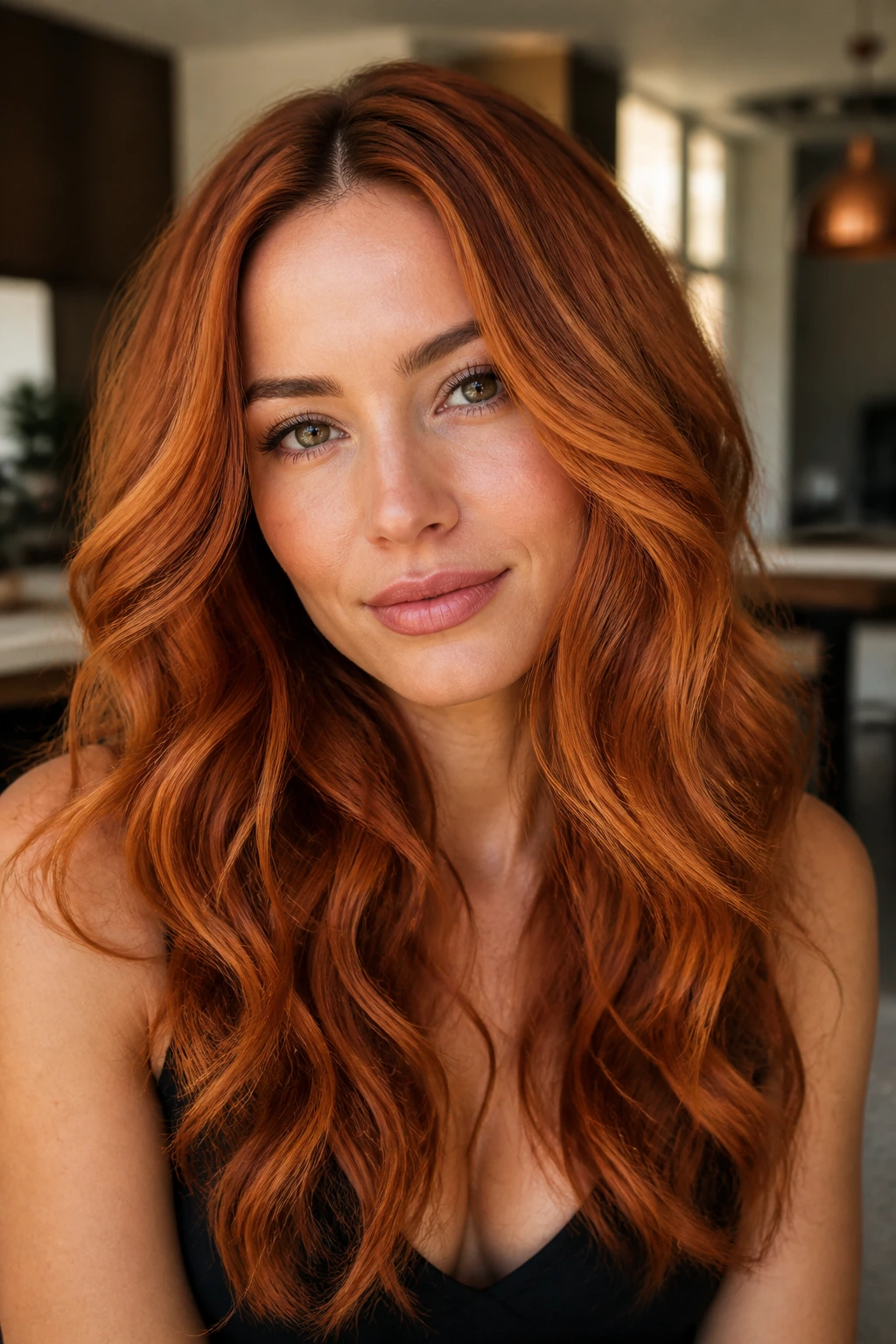
Presentation: Loose, defined waves show copper better than stiff, over-sprayed curls. A center part reads modern and clean, while a soft off-center part can make the copper around the face look warmer and a touch softer.
Pairing: Cream, black, olive, camel, chocolate, and muted teal all sit well beside copper hair. Makeup with peach blush, bronzed skin tones, and a warm nude lip keeps the face from fighting the hair.
Coverage: If you want lower maintenance, keep the copper to face-framing pieces, ends, or a color melt through the mids. If you want drama, go for a brighter all-over copper with deeper roots so the regrowth doesn’t look harsh on wavy texture.
Maintenance: The more vivid the shade, the more often you’ll need a gloss or color mask. A soft cinnamon or auburn copper can stretch longer between refreshes than a bright penny shade, and that matters if you don’t want to live in the salon chair.
Extra Tone, Shine, and Styling Boosts
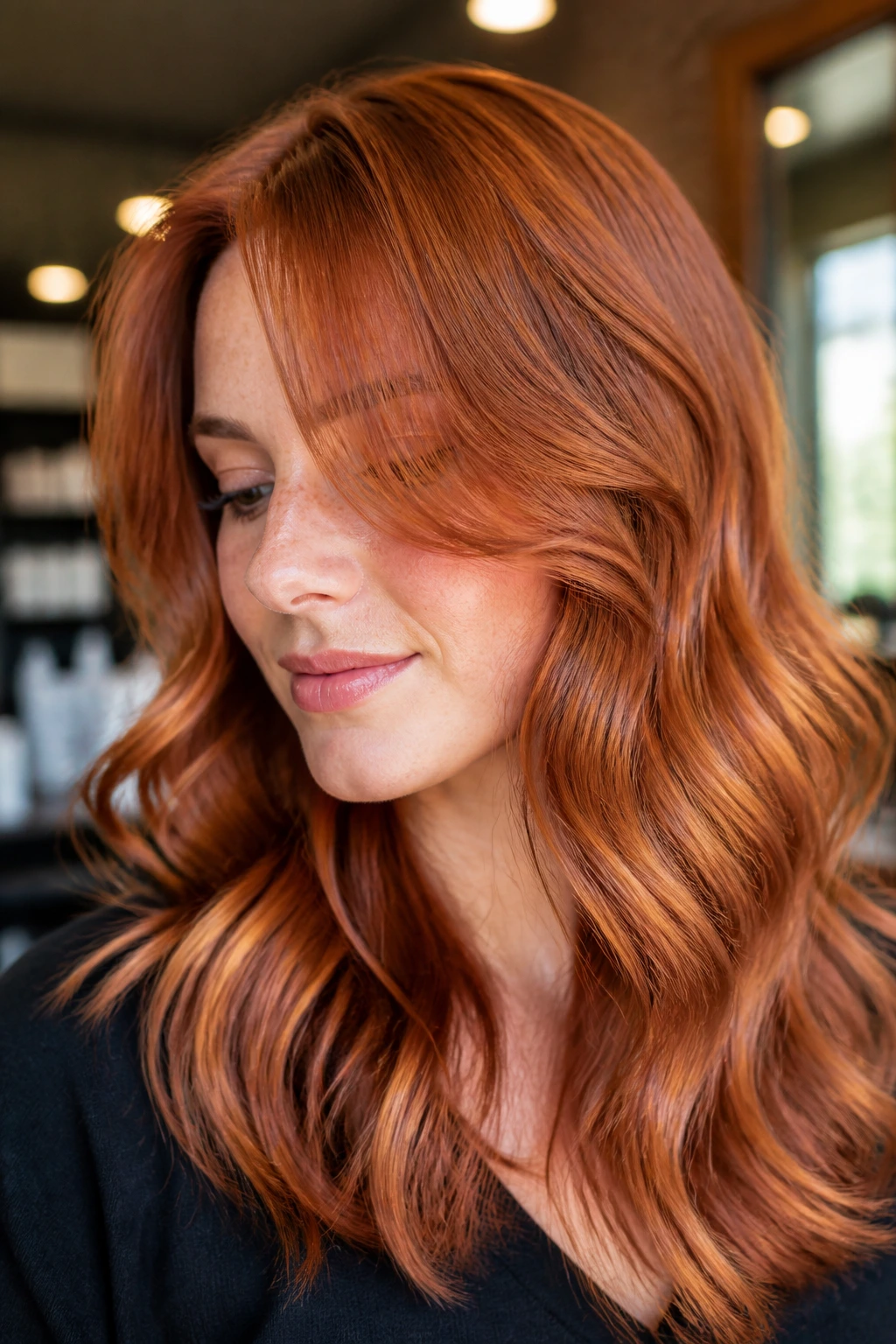
Tone Boost: A copper gloss every 4 to 8 weeks keeps the warm notes alive, especially around the face and the ends where fade shows first.
Customization: Add caramel ribbons to soften a bright copper, or tuck in mahogany lowlights if the result feels too orange.
Serving Suggestions: A lightweight shine serum on the ends, a mist of flexible hold spray, and a quick finger-comb through the wave pattern are enough.
Make-It-Yours: If you’re low-maintenance, choose a rooted copper melt. If you want a bolder finish, keep the brightness at the front and crown while letting the underlayer stay deeper.
A small note from experience: copper does not like clutter. Too many styling products make it look muddy. Use less than you think you need, then add a touch more only where the waves need separation.
Common Mistakes That Flatten Copper Waves
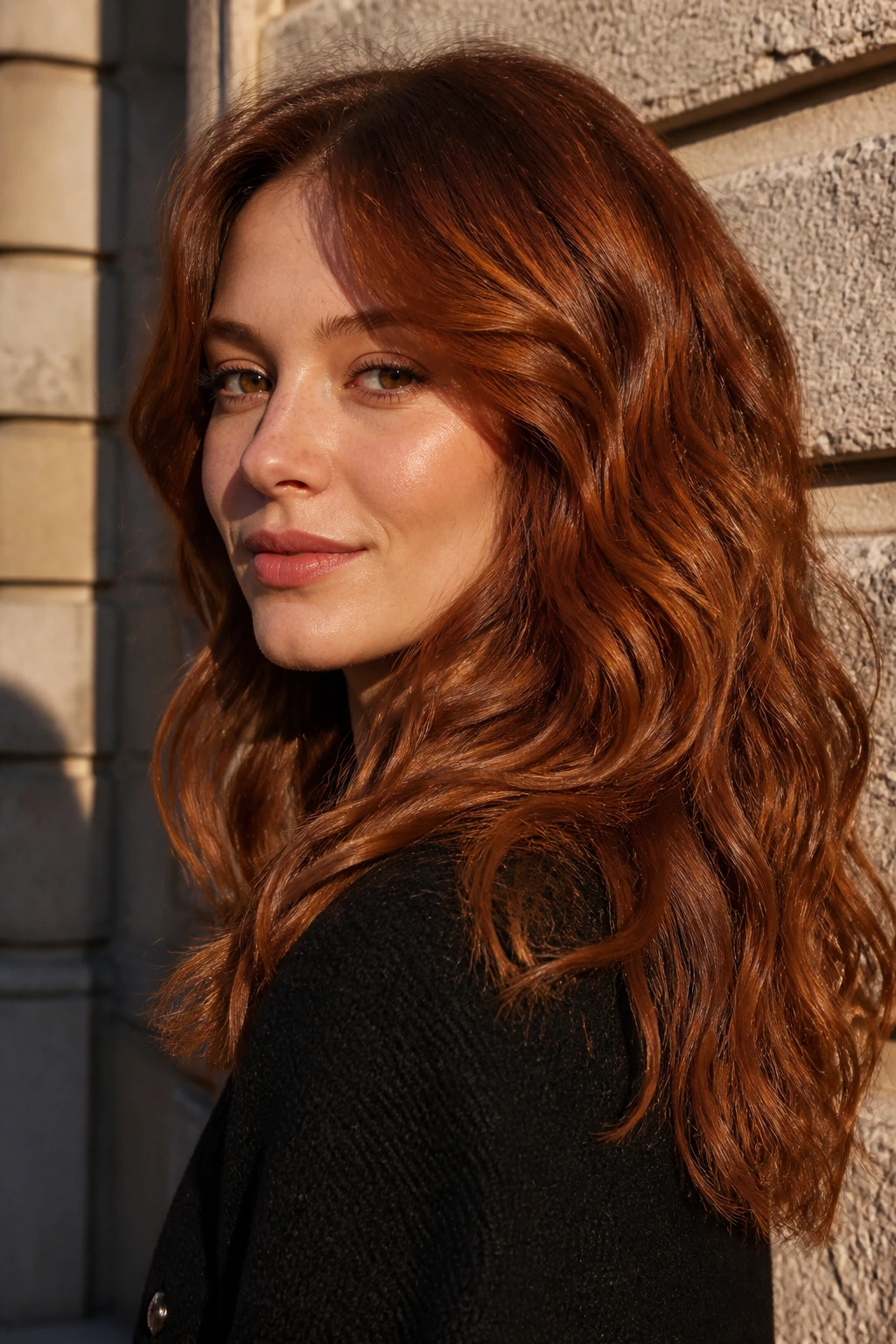
- Choosing one solid copper block: The hair can look puffy and one-note instead of dimensional. Ask for ribbons, a melt, or a shadow root so the wave pattern still shows.
- Going too orange too fast: Bright orange can be fun, but on wavy hair it often reads louder than intended. A touch of red or brown in the formula usually makes the shade richer and easier to wear.
- Overusing purple shampoo: Purple shampoo can mute copper into a dull, murky tone. Use color-safe washes and reserve any toning shampoo for the rare wash that truly needs correction.
- Ignoring porosity at the ends: Porous waves grab pigment fast and then dump it just as fast. A gloss or conditioning treatment before color helps the ends hold their tone more evenly.
- Skipping heat protection: Flat irons and curling wands can burn copper out quicker than people expect. One low-heat pass with protectant is kinder than three hot passes without it.
- Forgetting the haircut: Copper looks far better on layers, long bobs, or pieces that let the color move. A blunt shape can hide the dimension you paid for.
Variations and Adaptations to Try
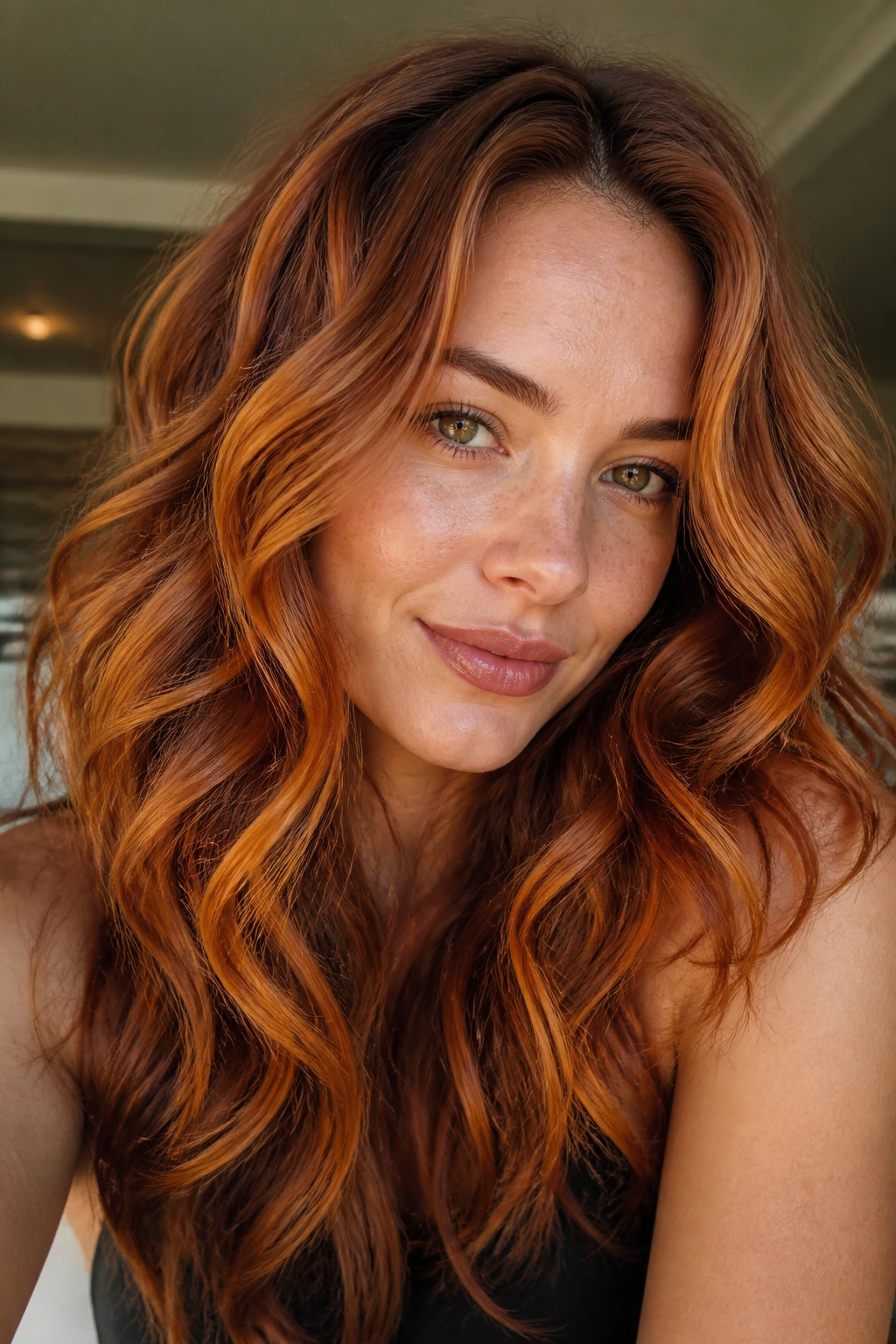
Low-Lift Copper Gloss: If you want a softer first step, ask for a copper gloss over your existing base. It adds warmth and shine without forcing a dramatic color shift, and it fades in a gentler way.
Brunette Copper Veil: Keep the base deep and add a translucent copper overlay through the mids and ends. This works well if you want the color to show in sunlight but stay understated indoors.
Bright Front, Soft Back: Put the most saturated copper around the face and crown, then keep the underlayer darker. Waves make this contrast look intentional instead of striped.
Cooler Cinnamon Copper: Add more brown and less orange to get a muted cinnamon note. This is a good fix if standard copper usually pulls too loud on your hair.
Gray-Blending Copper: Copper can be excellent for blending gray if the formula is soft enough to mix rather than cover. A warm auburn-copper mix often makes gray strands look like part of the design instead of a problem to hide.
Make the Shade Last on Wavy Hair
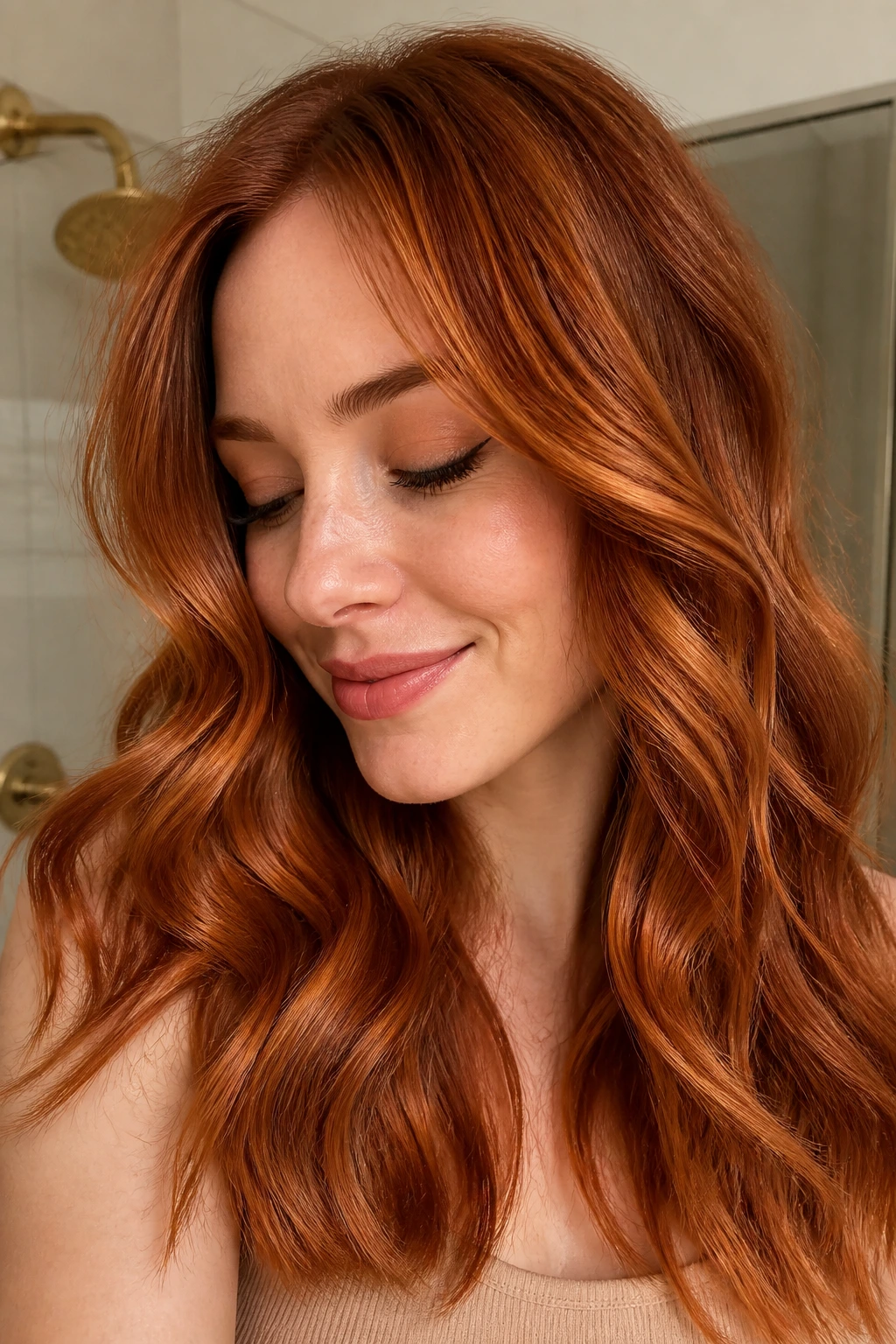
Copper fades. That’s not a scare tactic; it’s just the nature of warm pigment. The good news is that wavy hair can keep copper looking interesting even as it softens, because the movement hides a little loss of saturation better than a glass-straight finish does.
Wash with lukewarm water, not hot. Hot water opens the cuticle faster and lets the warm tone rinse out sooner. If you heat-style, keep the iron around the minimum temperature that shapes your wave pattern, then stop. No heroics needed. Copper likes restraint.
A weekly color-depositing mask or gloss helps between salon visits, especially on the face-framing pieces and the ends. If your hair is coarse or porous, those areas will need the extra help first. If your hair is fine, use a lighter hand so you do not overload the strands and make the color feel heavy.
Frequently Asked Questions
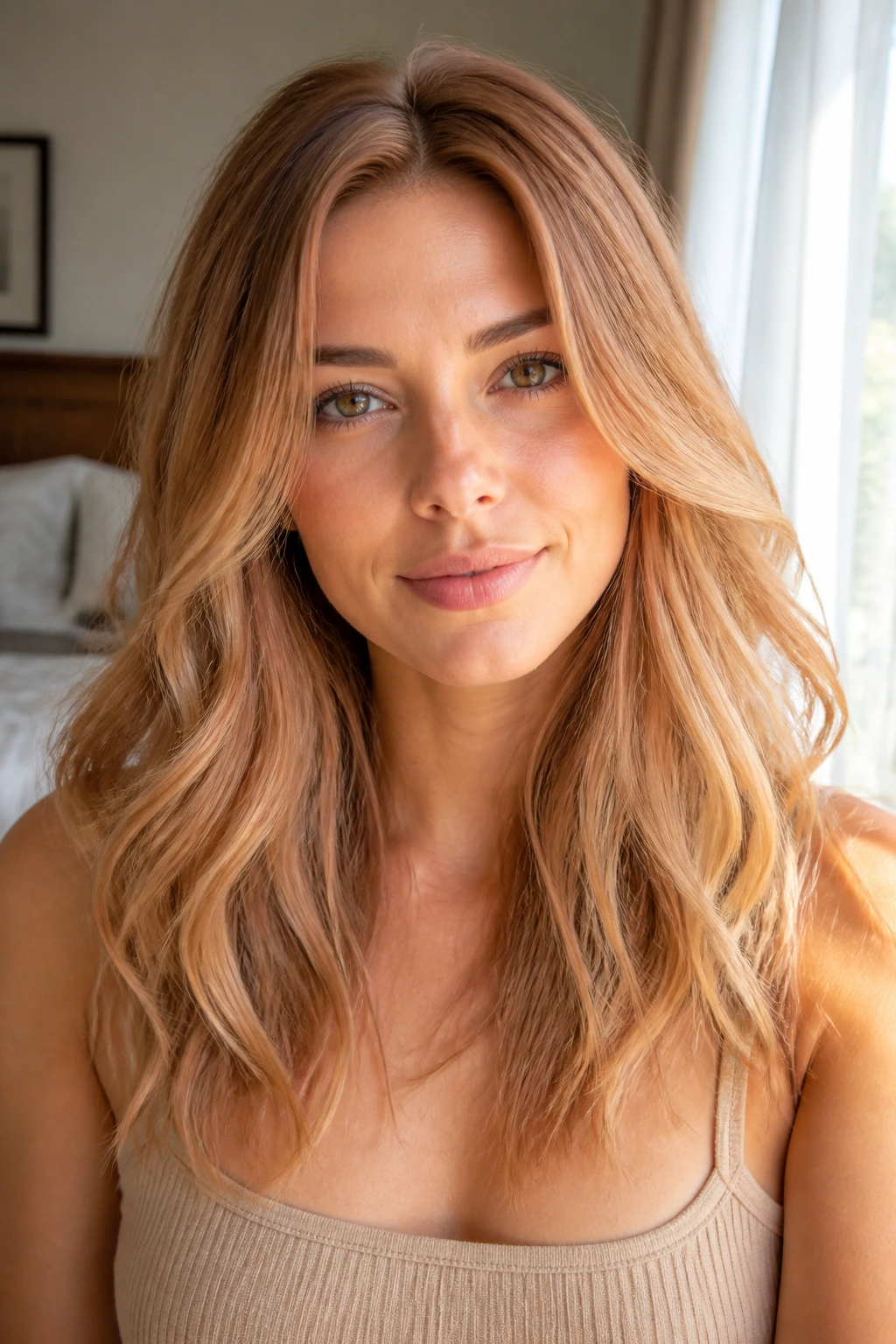
Which copper hair shade is easiest to maintain on wavy hair?
Shadow-root copper, cinnamon copper balayage, and copper brunette melts tend to grow out the best. They keep some depth at the root, so fading looks softer and less obvious between appointments.
Will copper hair work on dark brown waves?
Yes, but the result is usually richer and deeper unless the hair is lightened first. On darker bases, ask for copper ribbons, a gloss, or a brunetter-leaning melt rather than a bright all-over orange.
Does copper make wavy hair look frizzy?
It can if the hair is dry or the color is too light for the texture. Copper itself doesn’t cause frizz, but porous waves show roughness more clearly, so shine treatments and gentle styling matter a lot.
What skin tones suit copper hair best?
Warm and olive undertones usually handle copper easily, but that does not mean cooler skin tones are out. Strawberry copper, beige copper, and rose-gold copper can work beautifully when the orange is softened and the roots are kept deeper.
How often should I refresh copper color?
A gloss or toner every 4 to 8 weeks is common, depending on how vivid the shade is and how often you wash. Bright penny copper needs more frequent upkeep than terracotta or auburn-leaning tones.
Can I get copper without bleaching my hair?
Sometimes, yes. If your base is already light enough, a demi-permanent copper gloss or deposit-only color can add warmth without bleach. Darker bases usually need some lift if you want a brighter copper to show.
What’s the safest way to try copper for the first time?
Start with face-framing pieces, a gloss, or a rooted balayage. Those options show you how the tone works with your skin, wardrobe, and wave pattern before you commit to a full-head change.
The Shade That Moves With You

Copper works on wavy hair because the texture gives the color somewhere to go. It can be bright, earthy, muted, or glowing, but the best versions all share one thing: they keep depth in the right places. That depth is what stops the waves from looking puffy and lets the copper read as shape, not noise.
If you’re choosing between a few shades, I’d lean toward the one that still looks good when the waves fall apart a little. Hair has a way of becoming more honest by the second day, and copper is no exception. Pick the version that still feels rich when the shine drops half a notch, and you’ll have a color that keeps working long after the salon visit is over.
