



Pastel hair looks best when the color is soft enough to whisper and the placement is sharp enough to read from across the room. That balance is the whole trick. Too pale, and the shade can look washed out on a bad day. Too saturated, and you lose the milky, airy quality that makes pastel hair so different from neon fashion color.
Women who wear pastel color well usually share one thing: the shade isn’t doing all the work. A blunt bob, loose waves, a heavy fringe, a soft root shadow, or a clean money piece changes how pink, lilac, mint, or peach lands on the eye. That’s why some pastel hair reads chic and expensive while the same color on another head can look flat and unfinished.
The other piece people skip is the base. Pastels are fussy about lightness. On hair that lifts to a clean level 9 or 10, they look like spun sugar, tinted cream, or cool sorbet. On hair that’s still yellow-orange or unevenly porous, they can turn dull fast. The good news: you do not need every pastel to be high-drama. Some of the prettiest versions are barely-there, rooted, or tucked into the underlayers where they move when the hair swings.
Why These Pastel Hair Looks Feel Fresh Instead of Fussy
- The placement does half the styling: A pastel money piece, underlayer, or dip-dyed end can look intentional with almost no extra effort on wash day.
- There’s a shade for every comfort level: Some looks are full-head and soft, while others keep the pastel near the face or through the ends so the regrowth line stays easy to live with.
- Texture makes the color richer: Waves, curls, and braids stop pastel shades from looking flat, which matters a lot when the pigment itself is delicate.
- Most of these work with a root shadow: A deeper root keeps the finish from looking chalky and buys you a little more time between salon visits.
- The tone can shift the whole mood: Pink reads sweet, mauve reads smoky, mint feels cool and crisp, and peach sits somewhere between warm blonde and soft coral.
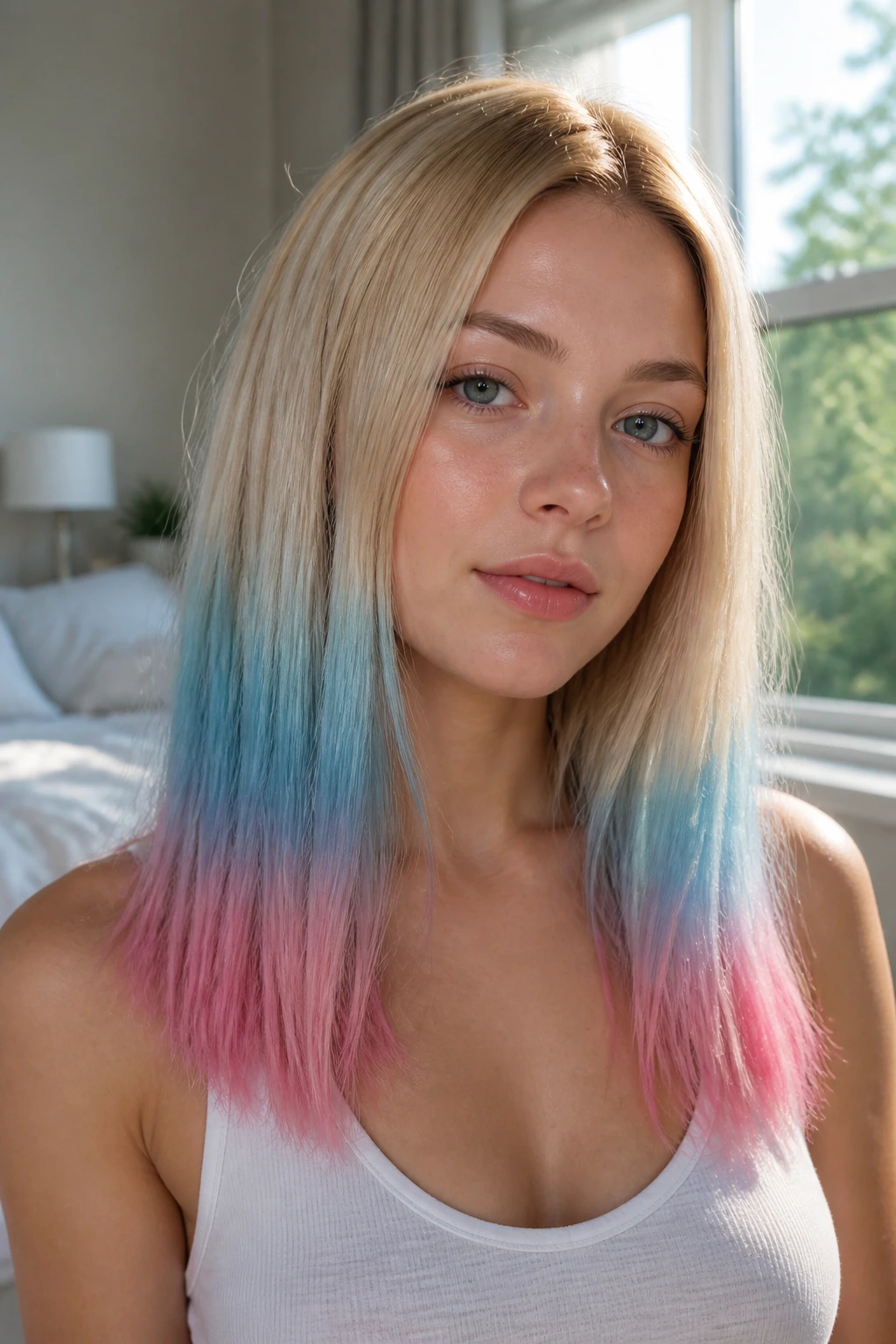
1. Cotton Candy Pink Melt
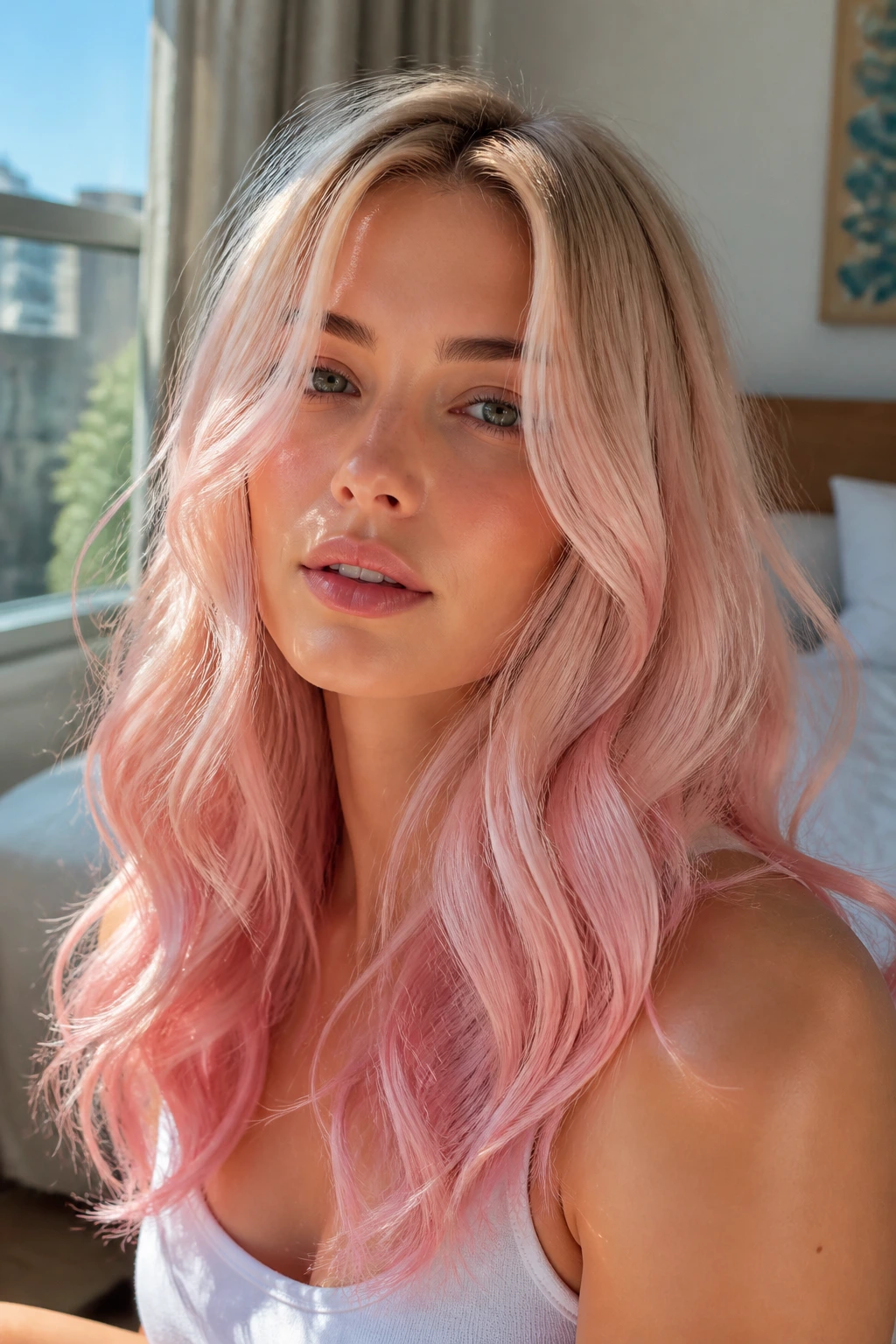
Cotton candy pink works best when it’s not shouted. The prettiest version starts at a pale blonde root and drifts into a blushy mid-length, then a whisper-soft pink at the ends. It looks airy, not sticky. On long waves, the color catches in folds and curves instead of sitting there like a single block.
Why it flatters: This is one of the easiest pastel pink looks to wear because the root stays softer and the ends do the bright work. If your hair lifts evenly, the melt can look seamless; if the base is a touch warm, that warmth actually helps the pink feel less icy.
Ask for a pastel pink gloss over a clean blonde canvas, with a gentle root shadow if you want the grow-out to blur. I’d avoid a heavy, bubblegum formula here. The sweeter version wins.
2. Lavender Cream Lob
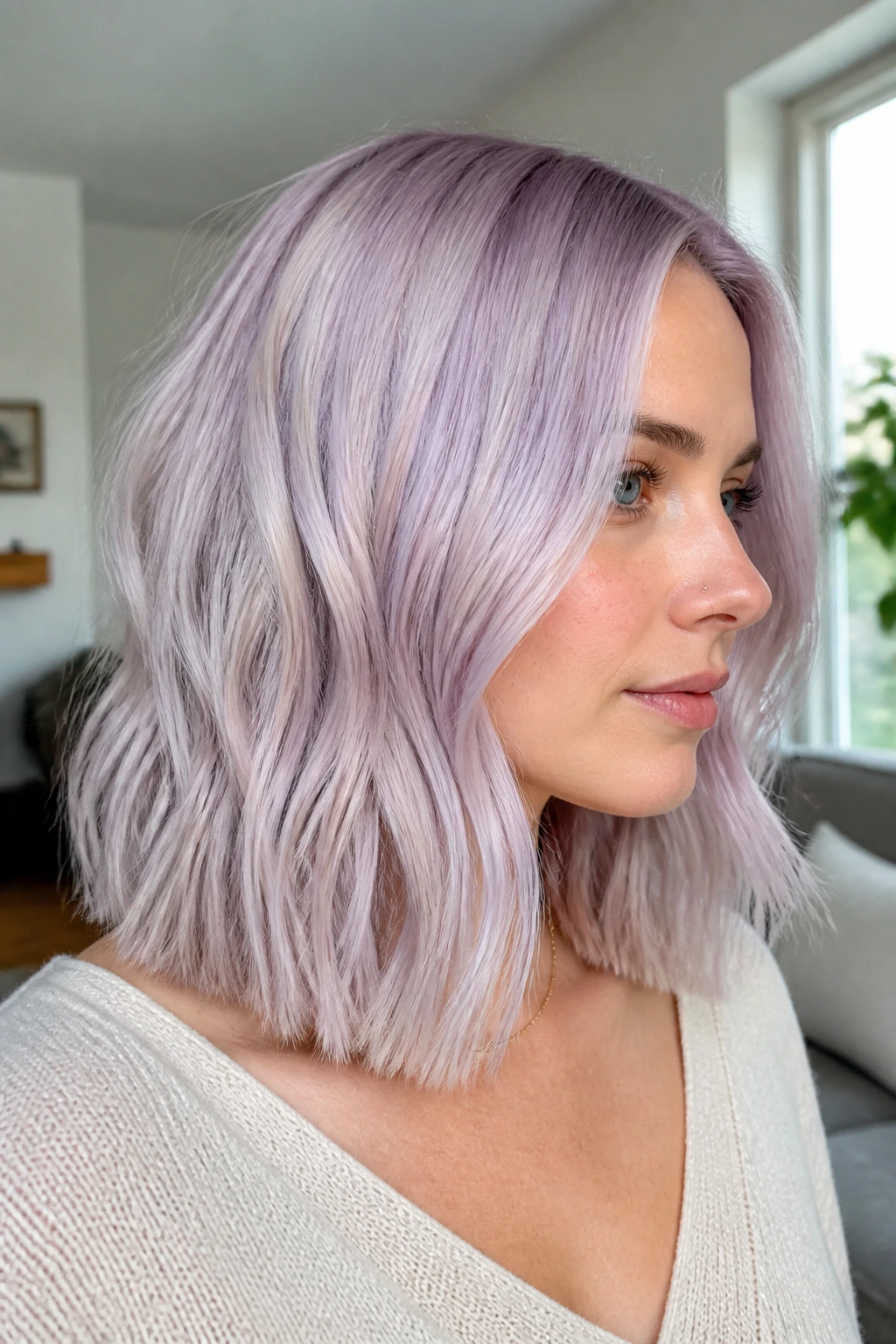
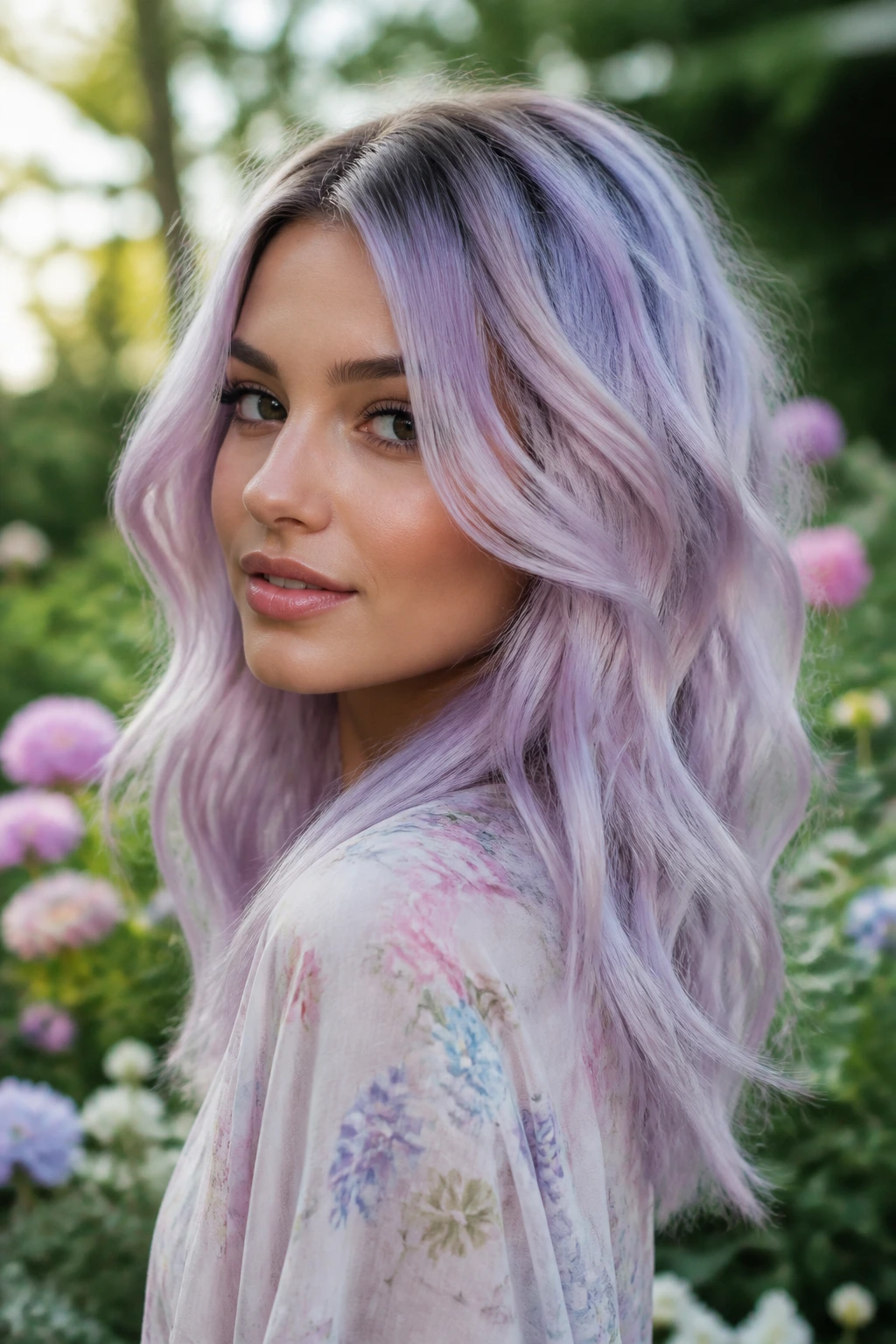
A lavender cream lob has a quieter kind of polish. The shoulder-grazing length keeps the color from feeling juvenile, and the creamy lilac tone sits between silver and pink, which makes it easier on cooler skin tones and muted wardrobes.
This look is strongest on a blunt cut or a slightly beveled lob. The clean edges give the color structure, and that matters when the tone is as soft as lavender. Loose bends are enough; you do not need tight curls fighting the finish.
If your natural hair is dark blonde or light brown, expect to lighten first and tone carefully. Lavender goes muddy fast on a yellow base, so the blonde underneath needs to be clean before the pastel goes on.
3. Mint Face-Frame Highlights
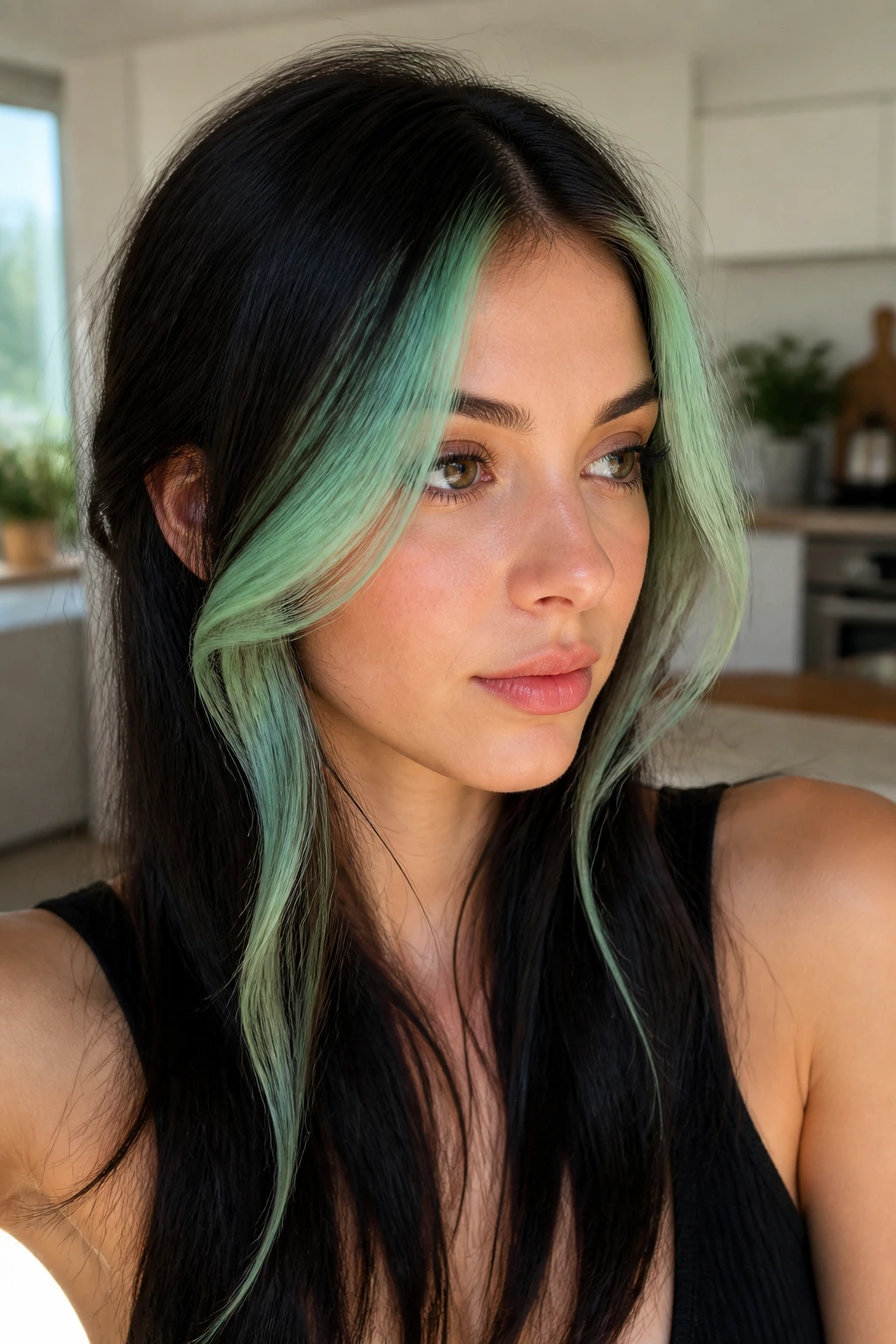
Mint around the face is a clever move. It gives you that pastel hit without committing the whole head to cool green, which can be a hard sell if you wear warmer makeup or gold jewelry most days.
The best version keeps the mint in money-piece ribbons and a few hidden pieces near the temples. That placement brightens the face and still leaves most of the hair neutral. It also grows out gracefully, which is handy because green-based pastels are not the easiest shades to refresh.
What makes it work
- Lower commitment: Only a small section needs to be light enough for the mint to show cleanly.
- High contrast: The color pops hard against deeper roots or a brunette base.
- Easy to hide: Pull the front sections back if you need a plain look for work or a formal setting.
Use mint if you want a cool-toned pastel without turning your whole head into a maintenance project.
4. Peach Balayage with Soft Ends
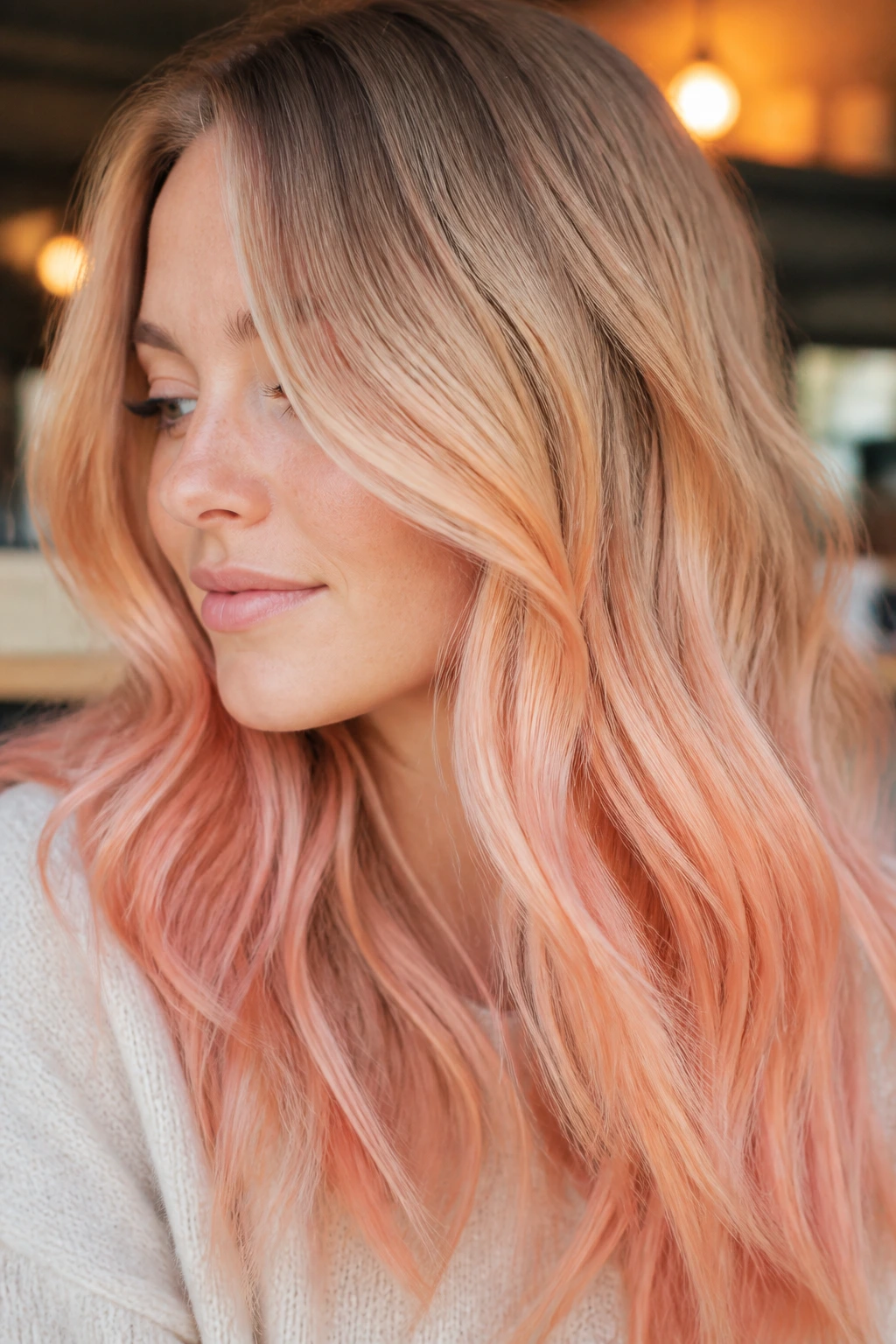
Peach is one of the friendliest pastel shades because it likes warmth. On a light blonde base, it reads like apricot cream. On a strawberry blonde canvas, it can look sunlit and soft instead of frosted.
Balayage keeps the peach from forming a hard line. The color starts mid-shaft and gets richer toward the ends, which is the part that moves the most anyway. On layered hair, that movement gives the shade a little depth that solid color often misses.
This is a smart pick if your hair still carries a bit of gold after lightening. Peach tolerates warmth better than lavender or mint, and that makes it less stressful to maintain.
5. Lilac Silver Waves
Lilac silver is the cooler, sharper cousin of soft lavender. The silver keeps the shade from leaning too candy-like, while the lilac stops it from turning into plain gray. On loose waves, the two tones flicker in and out of view.
I like this look on medium-length hair with a clean side part. It gives the color a little drama without adding extra layers of effort. The finish feels deliberate, not costume-y.
If you’re starting from pale blonde, ask for a cool toner first, then a lilac veil on top. The order matters. Put lilac over a yellow base and you’ll get a murky shade that loses the whole point.
6. Rose Quartz Bob
Rose quartz works on a bob because the cut already has a shape. The color adds softness, not chaos. It lands between dusty pink and beige, which is why it reads more like jewelry than cotton candy.
This one is especially good if you want pink hair but don’t want the blush tone to shout every time you pass a mirror. The beige undertone quiets it down. On straight or lightly waved bobs, the color looks glassy; on textured bobs, it looks more cloudlike.
I’d ask for a soft root fade here, not a hard block of pink at the scalp. That tiny shift keeps the look grown-up and makes regrowth less annoying.
7. Pastel Blue Underlights
Underlights are the hidden-color sweet spot. A pastel blue panel beneath the top layer gives you movement and surprise without forcing the shade to live in full view all day.
The top layer can stay blonde, beige, or even a cool brown bob if the underlights are placed well. Blue shows through when the hair moves, when it’s pinned up, or when you wear it in a half-up twist. That little reveal is half the appeal.
Blue needs a clean pale base or it turns greenish. If your hair still leans yellow, you’re better off choosing aqua or periwinkle instead of a flat baby blue.
8. Strawberry Milk Blonde
Strawberry milk blonde is what happens when blonde gets a pink wash and then someone adds a spoonful of cream. It’s soft, warm, and a little glossy, which makes it one of the most wearable pastel-adjacent looks on the list.
This color is ideal if you want a tint rather than a full pastel statement. The base stays blonde enough to read as blonde, but the rose note warms the whole face. It looks especially good on curtain bangs, because the color moves as the fringe opens.
Nope, it isn’t as low-maintenance as natural blonde. But compared with a vivid pastel, it’s much easier to live with because the fade is part of the charm.
9. Aqua Dip-Dyed Ends
Aqua dip-dye has a little edge. The top stays clean and light, and the color hits late, right where the ends move and separate. That makes the aqua feel graphic instead of muddy.
On long hair, dip-dyed ends can read playful. On a lob, they look sharper and more editorial. Either way, the line between blonde and aqua should feel soft, almost brushed on, not like a hard stripe.
This is one of the easier pastel styles to trim out later if you change your mind. That matters. Not every color decision needs to be forever.
10. Coral Sorbet Pixie
A pixie cut can carry more color than people expect. Coral sorbet gives a short cut a bright, juicy edge without pushing it into full neon territory. The short length keeps the shade concentrated, so even a soft coral feels visible.
The best coral pixie has texture on top and a slightly lighter front. That way the color catches the ends of the layers instead of flattening the whole shape. A matte finish usually works better than glossy gel here; too much shine can make the coral look heavy.
If your skin leans warm, this may be one of the easiest shades on the list. Coral doesn’t fight gold tones the way icy lavender sometimes does.
11. Butter Yellow Fringe
Yellow pastel hair sounds tricky until you see it with the right cut. A pale butter fringe can look dreamy when it sits against a blonde base or frames a darker root shadow. The trick is keeping the yellow milky, not egg-yolk bright.
I like this as a money piece or bang-only color. It’s enough of a statement to feel intentional, but it won’t swallow the whole head. On short bangs, the yellow reflects a lot of light and can make the face look brighter in a very specific way.
If your blonde is too warm already, skip this. Yellow on yellow can flatten out fast. A cooler base or a neutral beige blonde is safer.
12. Orchid Dipped Curls
Orchid is richer than lilac and less obvious than purple. On curls, that matters. The bend of the hair breaks up the color, so the shade reads softer and more layered than it would on pin-straight lengths.
The dipped-end version is the one I’d choose first. Keep the roots and mid-lengths pale, then let the orchid gather at the bottom third of the curl pattern. The color sits in the spiral and looks deeper where the hair stacks on itself.
This is a good example of how texture changes everything. The same orchid formula on straight hair looks bolder. On curls, it turns plush.
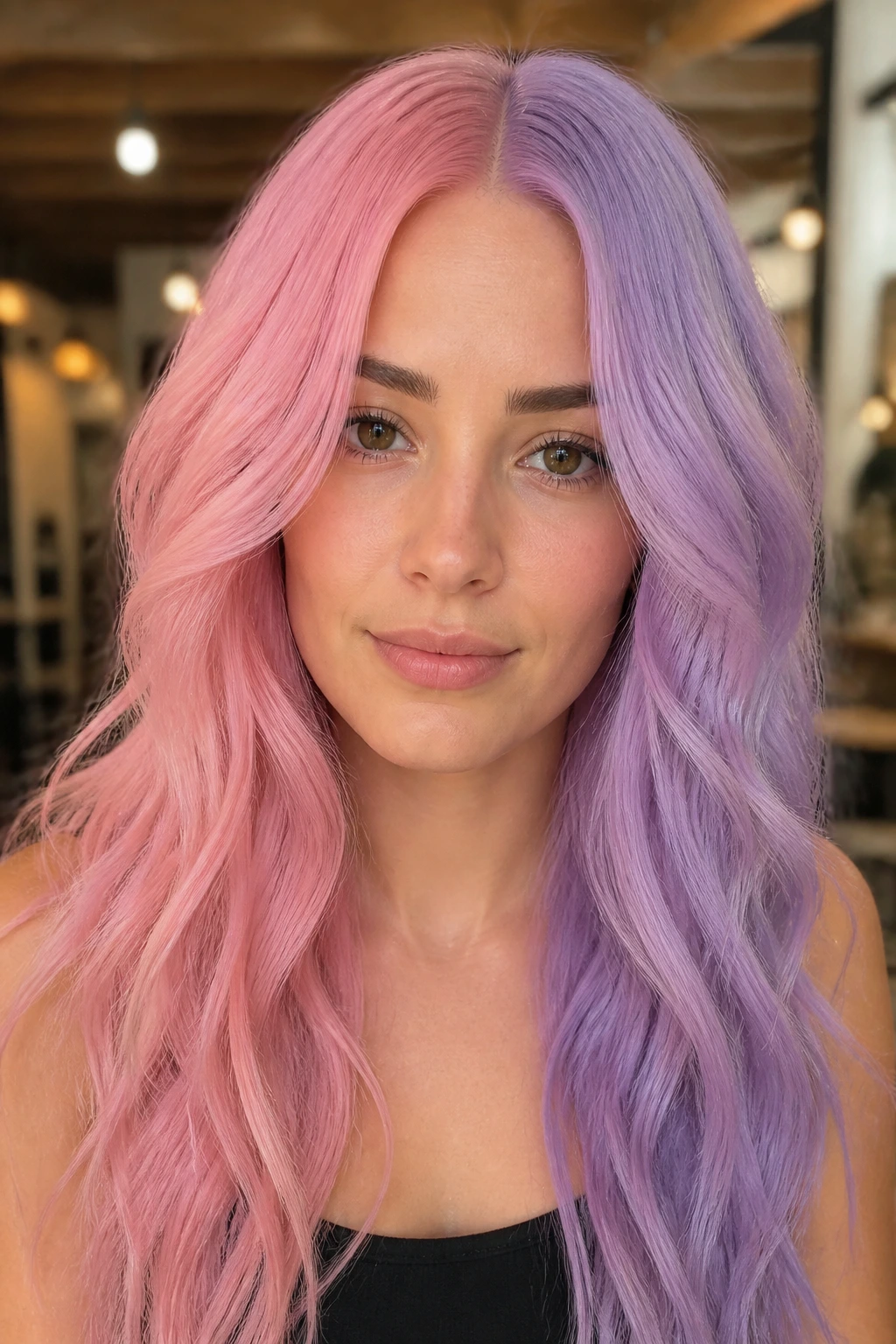
13. Cotton Candy Split Dye
Split dye is for women who want the color to make a statement before the haircut even gets a chance. One side pink, one side lilac, or pink and aqua, creates a hard visual break that looks best when the cut itself is clean.
A center part makes the split obvious. A deep side part softens it a bit. Either way, the parting line should be precise, because fuzzy roots can ruin the whole effect.
This one is high commitment. I’d only choose it if you already know you like pastel maintenance and you don’t mind people asking about it. That’s the trade-off.
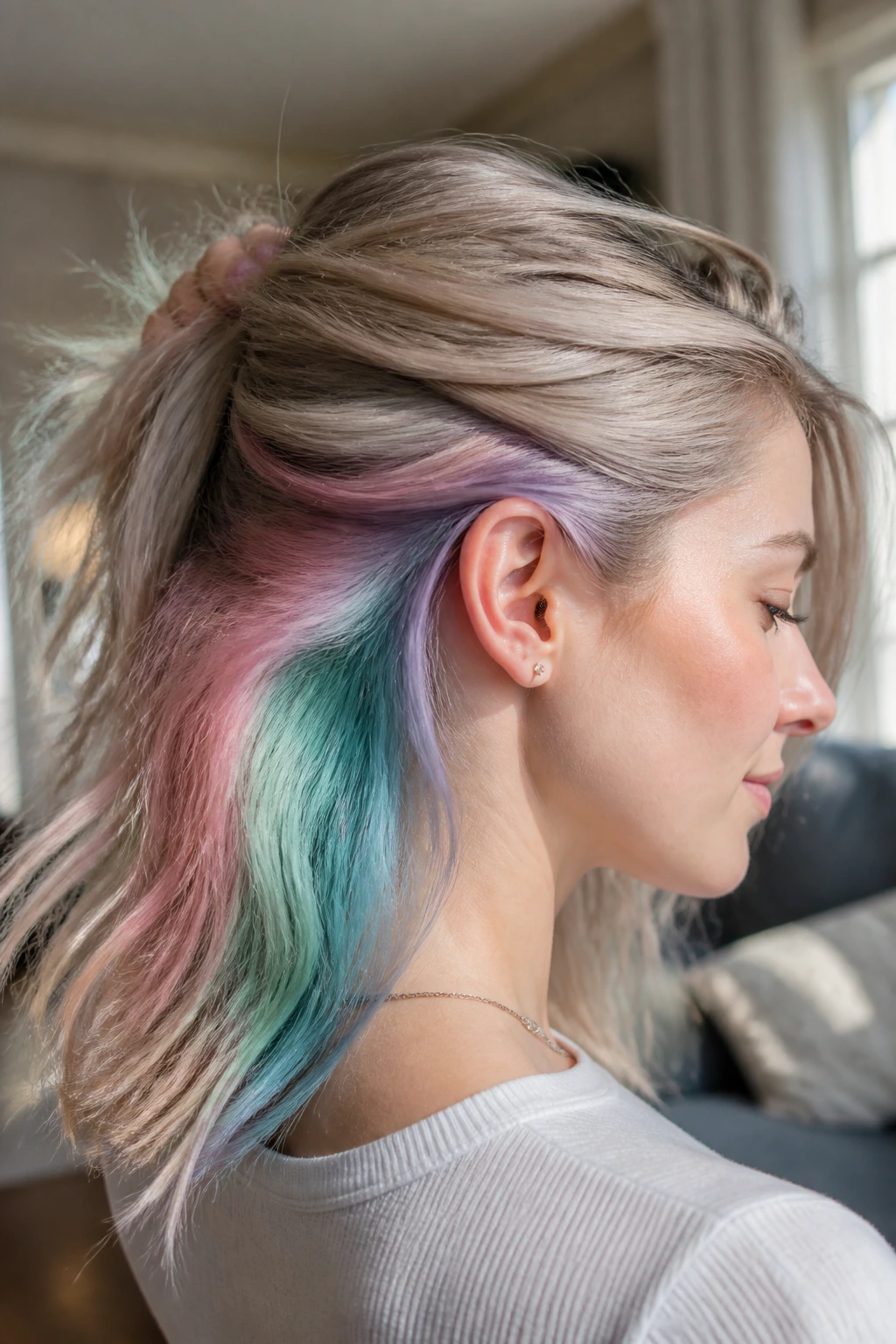
14. Pastel Rainbow Peekaboo
Peekaboo rainbow color is the easiest way to wear several pastels without turning the top layer into a color carnival. Hidden panels under the crown or around the nape can carry lilac, mint, pink, and blue in thin slices.
The best version keeps the top layer neutral enough that the color flashes only when the hair moves. Braids and half-up styles show it off beautifully. Down and loose, it looks subtle; pinned up, it gets louder.
This is the look I’d recommend for someone who likes surprise more than constant visibility. It’s playful without taking over every outfit.
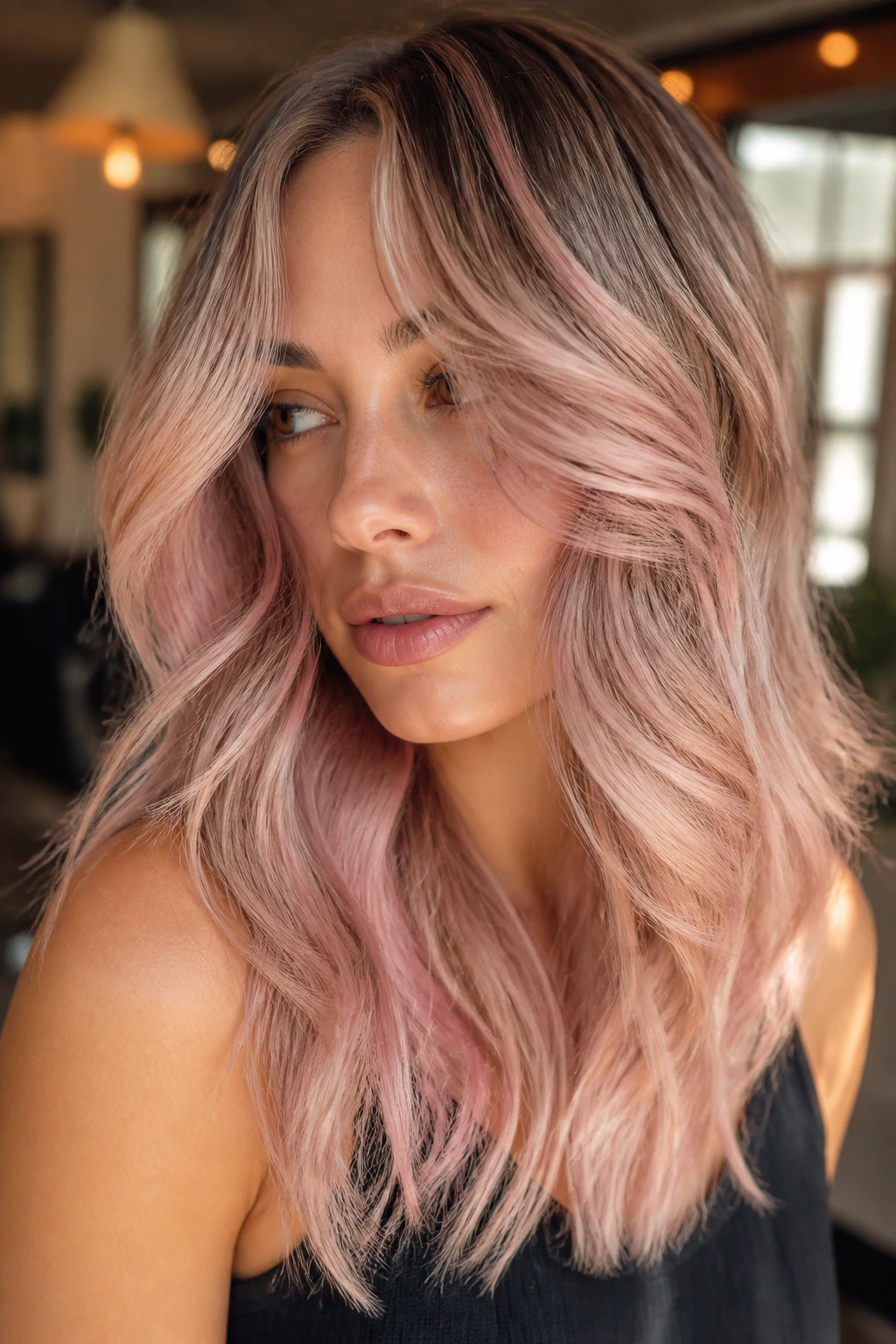
15. Blush Beige Balayage
Blush beige is one of the most grown-up ways to wear pastel hair. The pink is there, but it sits inside a beige blonde rather than on top of it. The result feels soft, warm, and expensive in a low-key way.
Balayage keeps the color diffused. That’s the whole point. You want the eye to catch the blush note in movement, not from across the street. On layered cuts, the beige and pink flicker together and never feel blocky.
If you wear a lot of neutral clothes, this is a smart choice. It blends instead of fighting.
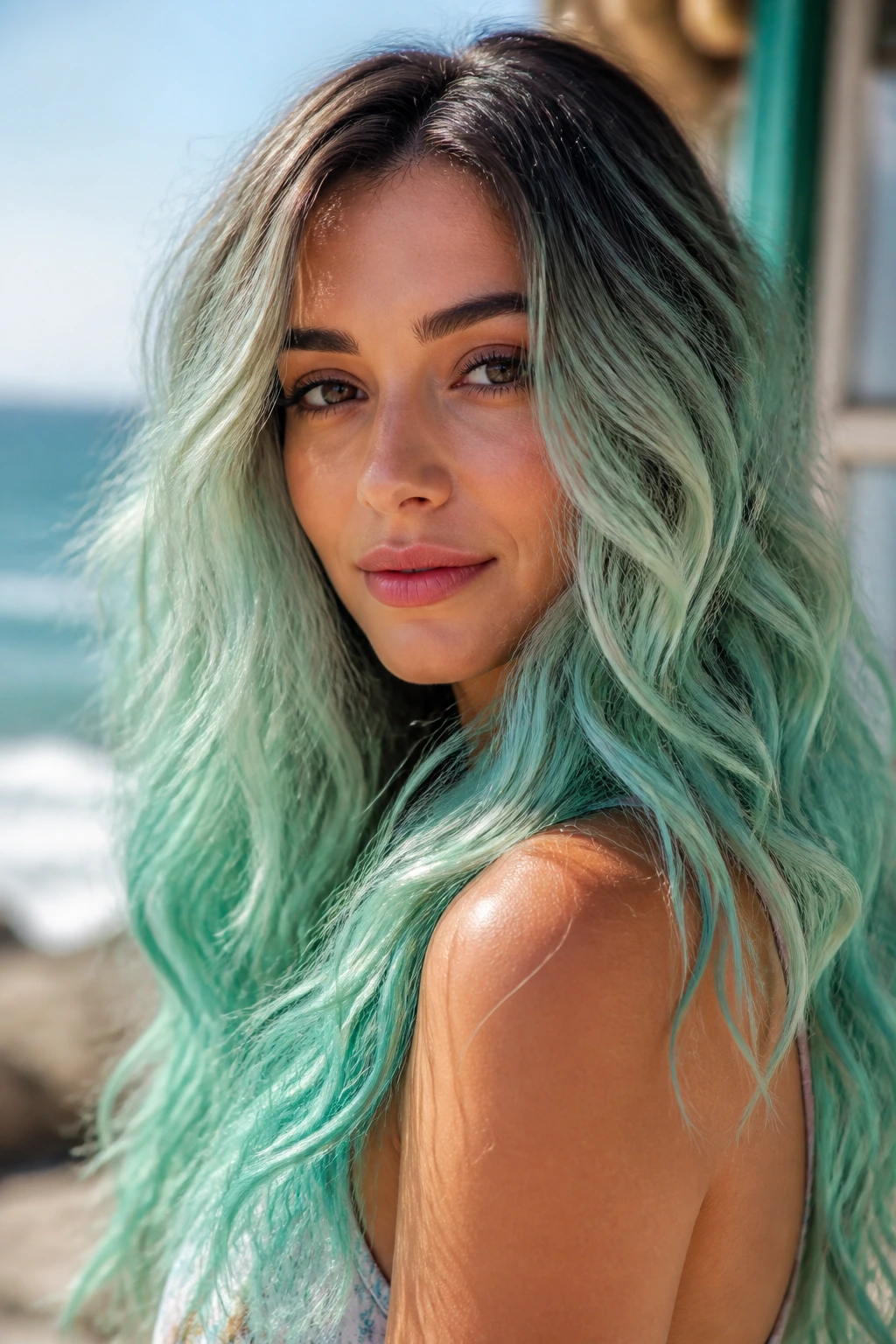
16. Seafoam Siren Waves
Seafoam sits between mint and aqua, which makes it calmer than true turquoise and less icy than pastel blue. On loose, beachy waves, the color feels fluid and a little surreal.
This one loves dimension. Ask for a slightly darker root, a pale mid-length, and the seafoam strongest through the ends. That gradient keeps the shade from looking like flat mint frosting. A dull finish would be a mistake here; seafoam needs a bit of shine to look fresh.
If your hair is cut in long layers, even better. The color will pool in the bends and move like water.
17. Mauve Smoke Layers
Mauve smoke is the answer when you want pastel hair but hate anything that reads too sweet. The smoke note cools the pink, and the mauve keeps the gray from taking over. It’s moody, not muddy.
Layered cuts make this color better because the tone changes from one section to the next. The ends can be a little brighter, while the top remains muted. That contrast gives the hair shape even on days when you don’t style it much.
This is one of my favorites for women who live in black, denim, or charcoal. It sits well with darker wardrobes and doesn’t demand a soft, feminine outfit to make sense.
18. Ice Pop Dip Dye
Ice pop dip dye feels crisp. The shade can be blue, lilac, or pink, but the real point is the contrast between the natural base and the cool pastel end. It looks best when the line is soft enough to feel intentional and sharp enough to show where the color begins.
On straight hair, the dip is graphic. On curls, the dye breaks up more, so the color looks less severe. If you have long hair, ask your colorist to keep the transition on the lower quarter rather than halfway up the shaft. That keeps the look light on the eye.
One clean blunt trim after the color goes on can make the whole thing look more finished. Funny how that works.
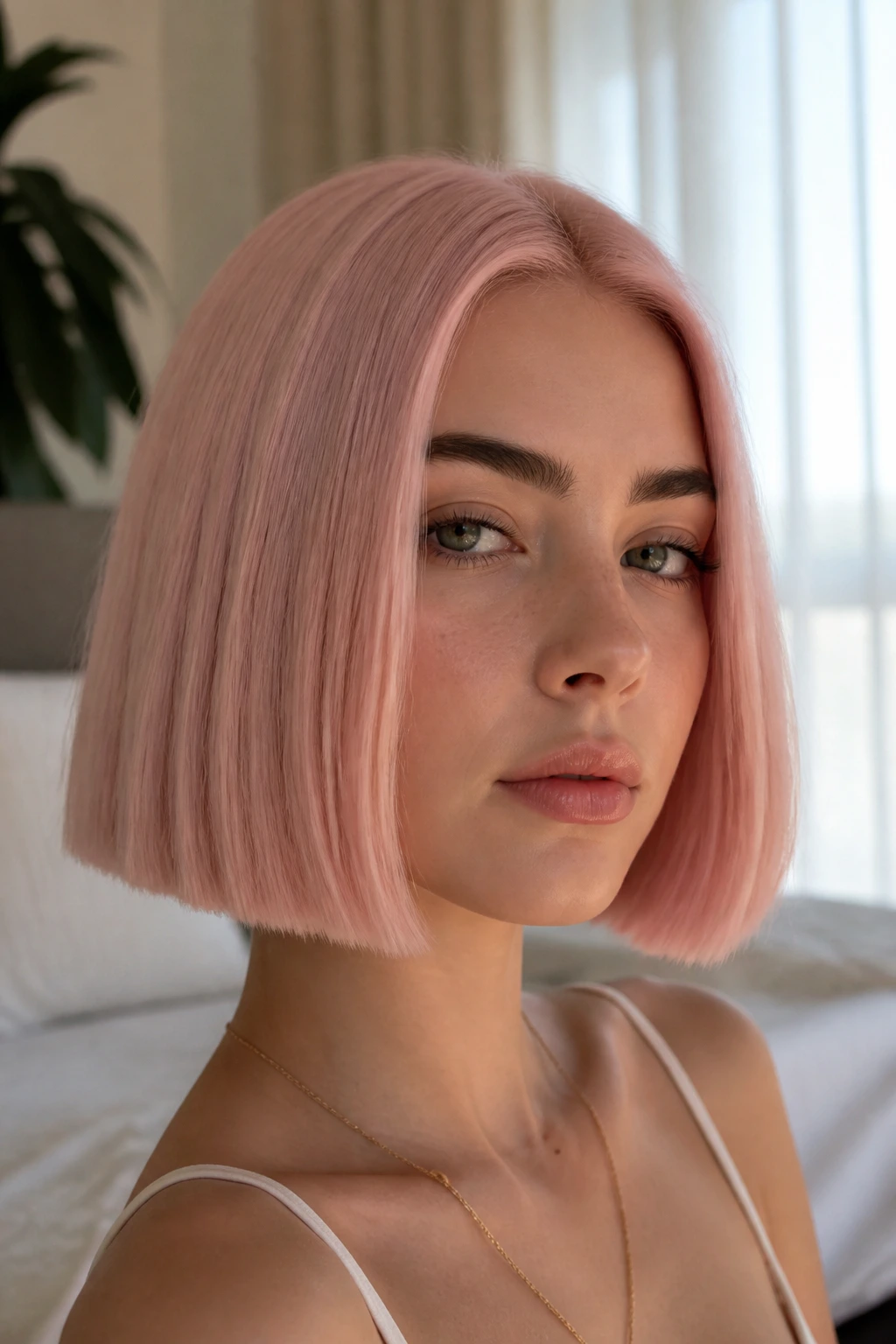
19. Sakura Pink Blunt Cut
A blunt cut gives sakura pink a stage. The clean edge makes the color read smooth and polished instead of fluffy, and the soft cherry-blossom tone keeps it from getting too bright.
This is the pastel pink I’d pick for a woman who likes structure. The cut does the heavy lifting, so the color can stay gentle. On a jaw-length bob or collarbone cut, sakura pink has enough shape to feel intentional but not severe.
If you wear a center part, the whole thing gets even cleaner. A side part makes it feel a little softer and more casual.
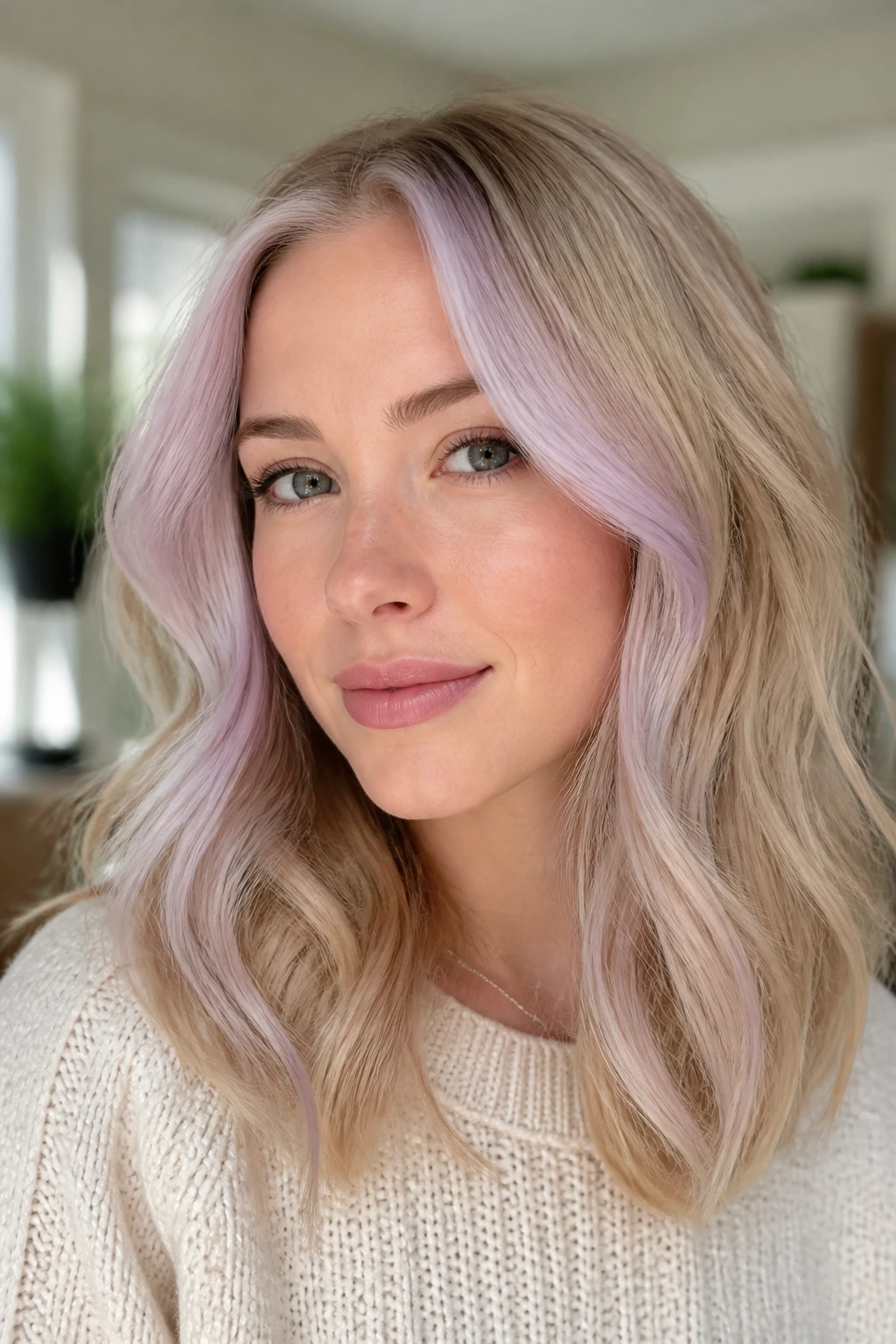
20. Cloud Lilac Money Pieces
Cloud lilac around the face is one of the easiest ways to wear pastel hair without committing to a full head. The color sits in a front ribbon, sometimes with a few matching streaks through the crown, and that’s enough to change the whole mood.
The best version is pale enough to look misty, not violet. That pale quality keeps the money piece from taking over the face. If your hair is long, the lilac can trail into a few front layers. If it’s shorter, the color should stop neatly at the cheekbone or jaw.
I like this look because it survives grow-out better than a full pastel service. The blonde around it stays usable longer.
21. Peach Champagne Curls
Peach champagne sits in that lovely middle zone between warm blonde and soft coral. On curls, it glows a little because the bend catches both the pink and the gold in the formula.
This look is friendlier than many pastel shades because the warmth does some of the work. You do not need a blue-white base. A pale blonde with a soft gold tone can still support peach champagne and look intentional. That makes it a safer choice for people who hate fighting brass every wash.
If you want the finish to stay elegant, keep the curls loose. Tight ringlets can make the shade look busier than it needs to be.
22. Soft Denim Blue Bob
Denim blue is one of the few blue pastels that can feel tailored. The color is muted, slightly smoky, and cool without looking icy. On a bob, it reads sleek and deliberate.
This is a strong pick for straight styling, tucked-behind-the-ear hair, or a sharp side part. The cut gives the color its discipline. Too much texture can soften the edges in a way that makes the denim shade lose its crispness.
If you’re tired of pink and lilac, denim blue is the clean reset. It has personality, but it doesn’t beg for attention the way brighter blue can.
23. Mint Milk Tea Layers
Mint milk tea is a softer, dustier version of green pastel. The milk-tea note takes the edge off the mint, which makes the color easier to wear with beige, camel, and warm brown clothes.
Layered cuts keep it interesting. The color changes as the light hits each section, and the milk-tea tone stops the green from going chalky. This is a very good option if you want an unusual shade but not a loud one.
Ask for the mint to sit lightly through the ends and around the front. Too much all-over saturation can make the color look flat. A little air helps it.
24. Periwinkle Toned Waves
Periwinkle is part blue, part lavender, and that mix makes it one of the most flattering cool pastels for people who can’t choose between the two. Waves let the two tones show in different places, which is exactly why the shade looks richer in motion.
The key is balance. Too much blue and it turns icy. Too much lilac and it starts to look dusty. The best periwinkle reads like a watercolor wash on pale hair.
If you like jewel-tone makeup, this shade fits right in. If you live in soft neutrals, it gives you just enough contrast to keep things interesting.
25. Strawberry Lavender Melt
Strawberry lavender sounds odd until you see it. Pink and lilac melt together into a cool-sweet blend that feels more refined than candy pink and more approachable than a full purple service.
This is a nice choice for layered mid-length hair. The layers give each tone a place to land, so the color can shift between warmer and cooler notes as the hair moves. The result is one of those shades that looks different in every room, which I happen to love.
It’s also a smart bridge color if you’re moving from pink to purple or back again. The fade is part of the design.
26. Pastel Teal Braids
Braids make pastel teal look richer because the color gets tucked and revealed in alternating strips. The braid pattern gives teal a lot of movement, even when the hair itself is straight and fine.
This is one of the most photogenic pastel looks without needing much heat styling. A few loose pieces around the face keep it from feeling too strict. If you wear box braids, Dutch braids, or a long fishtail, teal can look playful, artistic, or sharp depending on how tight the plait is.
Teal does need a pale base. On a yellow blonde, it can pick up green. On a clean cool blonde, it stays crisp.
27. Rose Gold Bubble Bob
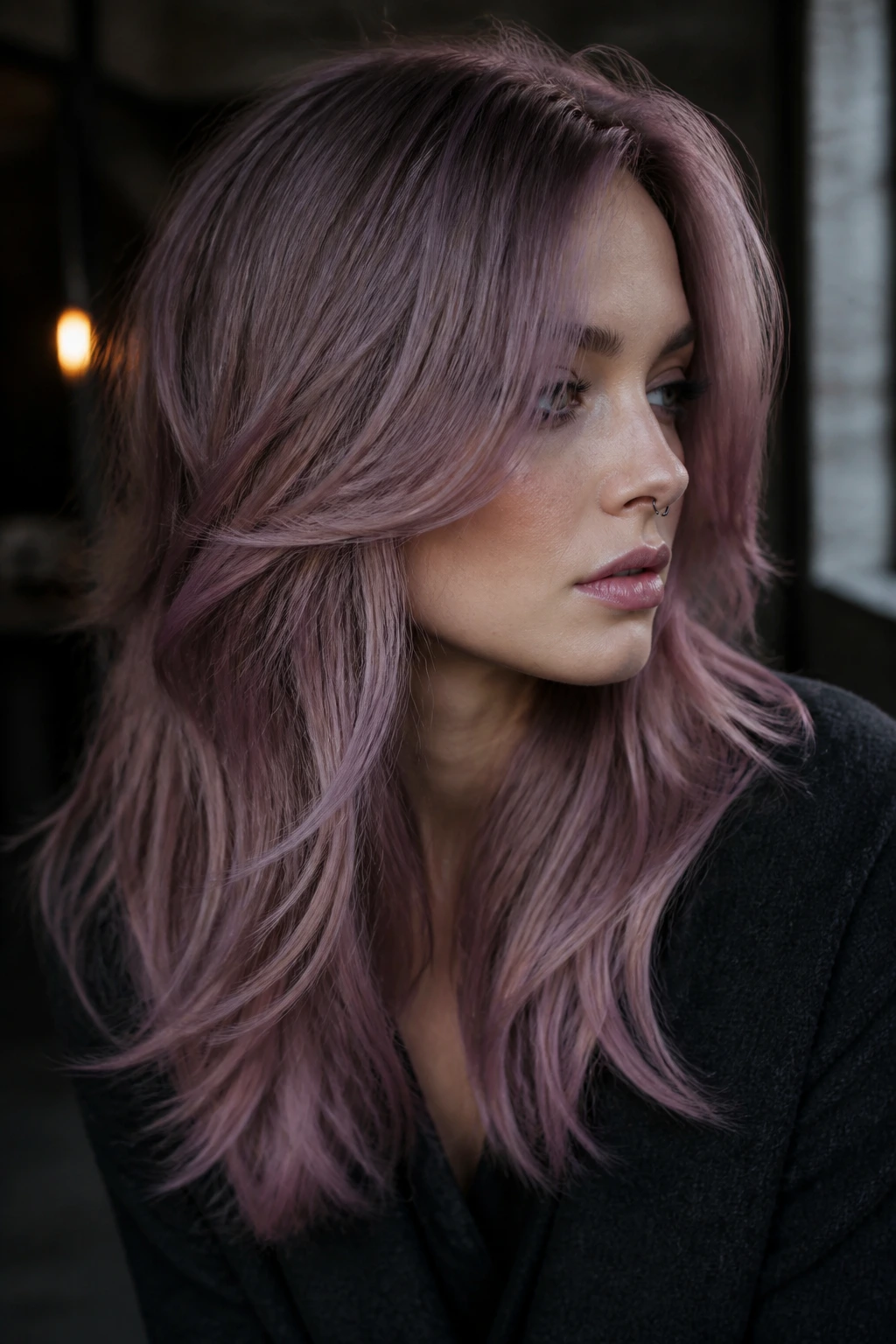
Rose gold on a bubble bob is clean, glossy, and a little fancy without trying too hard. The bob shape gives the color a clear boundary, while the rose-gold tone adds warmth and shine.
This is a nice compromise for anyone who wants pastel but also wants to keep some natural-looking warmth. It flatters skin with peach, olive, or beige undertones especially well. The color is not as delicate as lavender, which means it tends to look less washed out under indoor light.
A round-brush finish or soft bend at the ends works best. The whole point is polish.
28. Opal Sheen Color Melt
Opal hair is what happens when pink, lilac, pearl, and a trace of mint all sit in the same light-colored canvas. The effect isn’t loud. It shifts. That shifting is exactly why it feels expensive.
The best opal melt starts with a pale, even blonde and then layers sheer tones in overlapping ribbons. You want reflection, not stripes. On long hair, the color moves like fabric. On shorter cuts, it looks more like a pearly veil.
This is the most delicate look in the group, and maybe the most rewarding. It needs a clean base, a careful toner, and a patient stylist. Cheap shortcuts show up fast here.
Why Placement Matters More Than the Exact Shade
A pastel formula can be lovely on paper and mediocre on the head if the placement is lazy. That’s the part most people miss. Color isn’t only about choosing pink versus lilac. It’s about where the hair is lightest, where the roots stay darker, and how the cut moves when you turn your head.
A rooted melt, a money piece, and a full-head pastel all tell a different story even if the pigment family is the same. The rooted version gives you softness and easier grow-out. The money piece gives you brightness near the face. Full-head pastel gives the cleanest, most immersive look, but it also asks for more upkeep and a better starting blonde.
Level 9 vs. level 10
Pastels land best on a pale blonde base, but not every pastel needs the same lift. Lavender, mint, and aqua tend to look cleaner on level 10 hair because they show every bit of yellow underneath. Peach, rose gold, and blush beige tolerate a touch more warmth. That’s why a smart colorist won’t talk about a shade in isolation — they’ll look at the starting level first.
Porosity changes the finish
Hair that’s porous grabs pastel fast, then lets go fast. It can also grab unevenly, which is how you get patchy ends or one section that looks louder than the rest. A bond-building treatment before and after lightening helps, but the bigger fix is even lifting. Pastel is unforgiving about damage lines.
Essential Tools for Pastel Color Planning
- Lightening powder and developer: Needed if your hair is not already pale enough for pastel dye; most pastel shades need a clean blonde base to stay clear.
- Tint brush and non-metal bowl: Helps you place color in thin, even sections instead of mashing it on like conditioner.
- Foils or balayage board: Useful for face-frame pieces, underlights, and soft painted ends where you want control.
- Sectioning clips: These keep underlayers and crown sections separated so the pastel doesn’t bleed where it doesn’t belong.
- Color-safe shampoo and mask: Sulfate-free cleansing and a nourishing mask help the shade stay on the hair, not down the drain.
- Heat protectant: A pastel bob or wave can’t handle repeated hot tools without extra dryness showing up fast.
- Wide-tooth comb: Better than a brush for detangling color-treated hair, especially when it’s damp and fragile.
- Gloves and old towel: Direct dye stains sinks, skin, and towels faster than people expect. Fast.
How to Choose the Right Pastel for Your Base Color
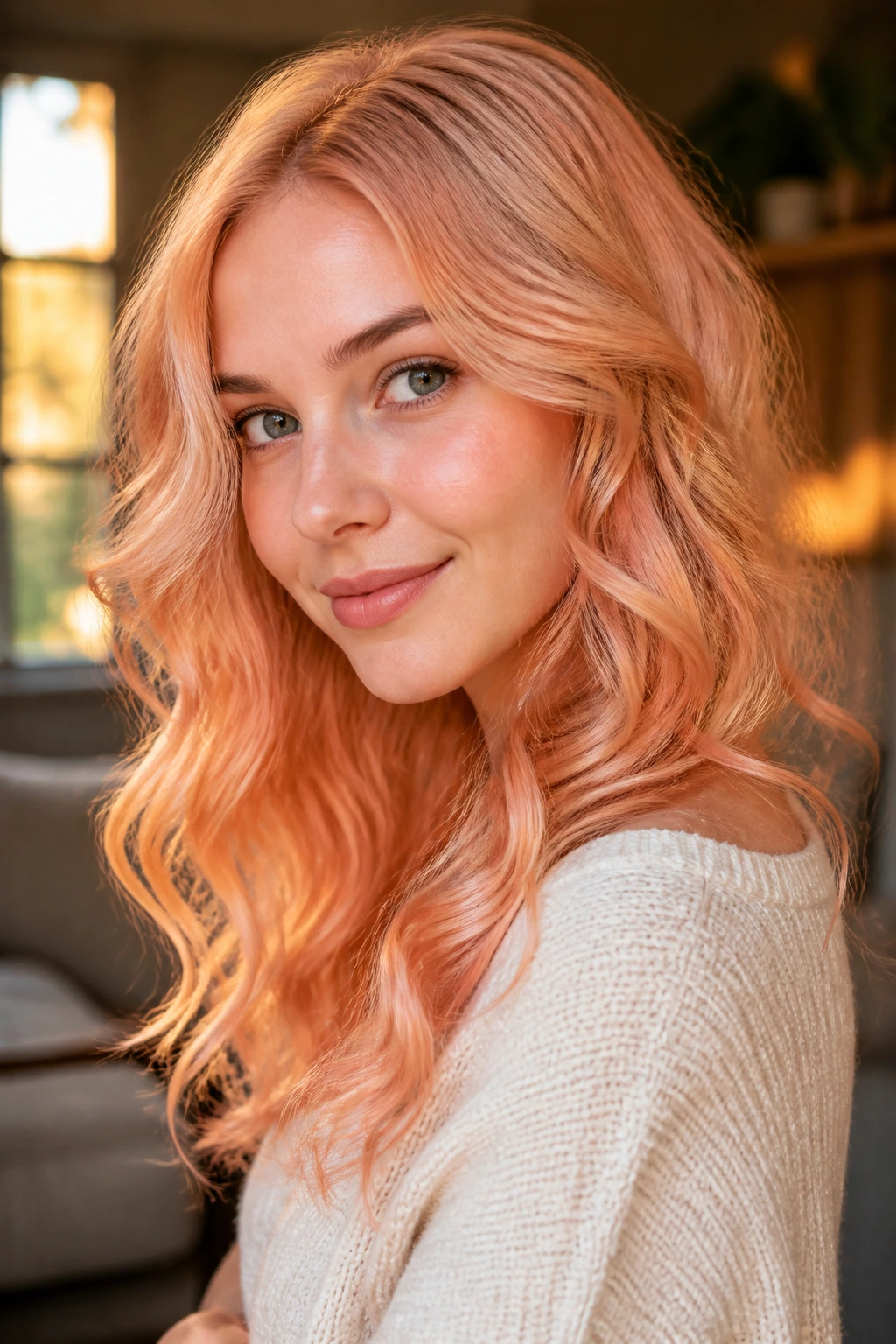
The smartest pastel choice starts with the color already in your hair. If your blonde lifts icy and clean, you can wear almost anything on this list. Lavender silver, periwinkle, and mint all sit nicely on a cool base. If your blonde is warm or slightly golden, peach, rose gold, blush beige, and strawberry milk are easier choices because they work with the warmth instead of fighting it.
Brunettes have a different calculation. A dark base usually needs selective lightening, not a full-head bleach job, unless you want a heavy commitment. Face-frame pieces, underlights, peekaboo panels, and dipped ends make more sense than an all-over pastel in that case. You get the color, but you keep some sanity.
Skin tone matters less than people think once the placement is right, but undertone still helps. Cool skins often like lilac, blue, and mauve. Warm skins can look gorgeous in peach, coral, rose gold, and butter yellow. Neutral skin can wear almost all of it, which is mildly unfair and deeply useful.
How to Wear These Pastel Looks in Real Life
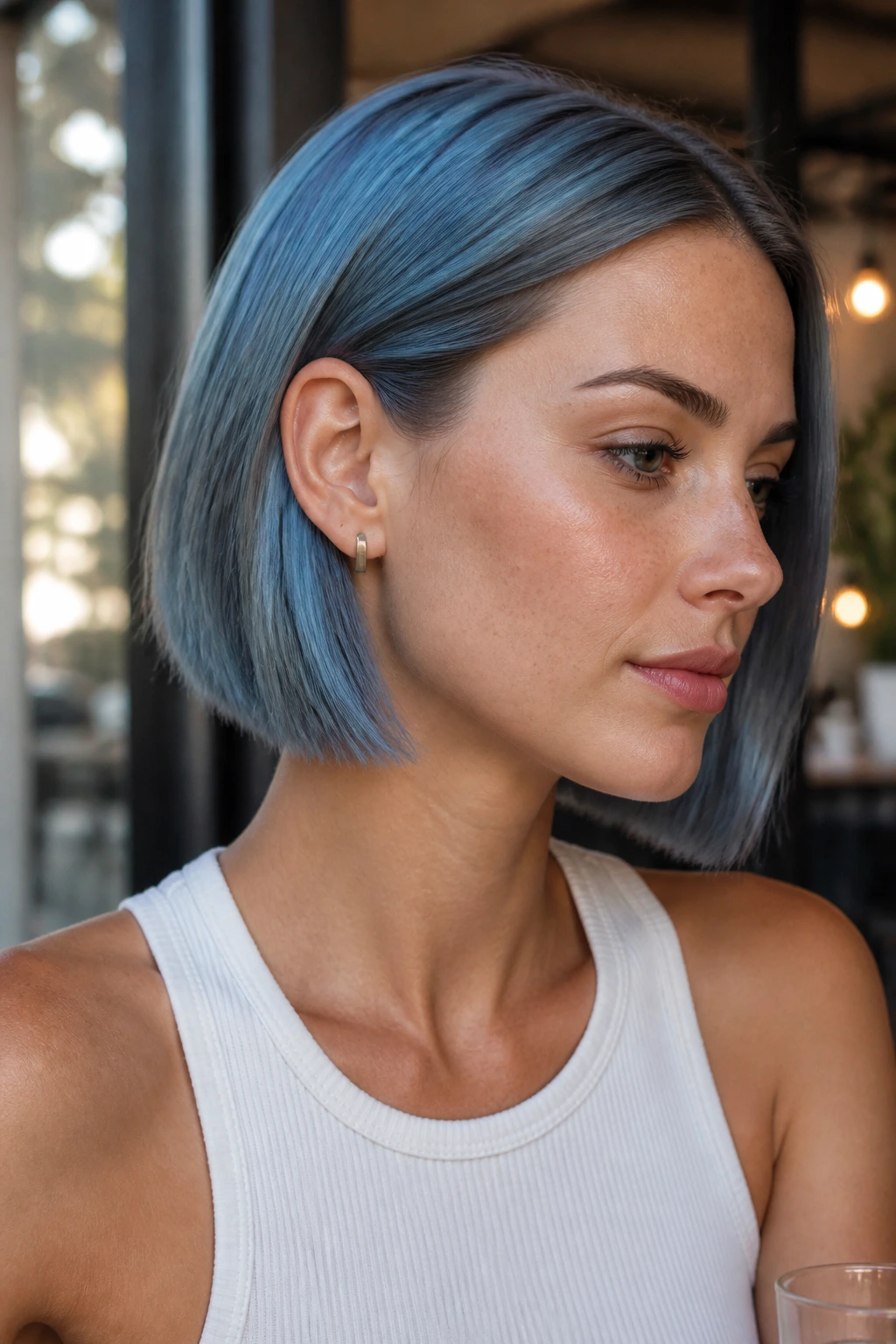
Presentation: Loose waves show off dimension best, especially on balayage, melts, and dip-dyed ends. Sleek bobs and blunt cuts make pastel color look sharper and more polished, while braids bring hidden panels and underlights to the front.
Accessories: Keep earrings, clips, and makeup simple when the hair is doing the talking. Silver jewelry reads cleaner with cool tones like mint, lilac, and blue. Gold jewelry warms up peach, rose gold, and coral without stealing attention.
Commitment Level: Full-head pastel is the boldest choice. Face-frame pieces, underlights, and peekaboo color are easier if you want to test the mood first. If you hate root upkeep, keep the lighter shades away from the scalp.
Best Setting: Soft pinks and rose shades lean romantic. Blue, mint, and mauve feel cooler and more modern. Peach and coral are the easiest to wear in daylight because they look friendly instead of stark.
Additional Tips and Color Boosters
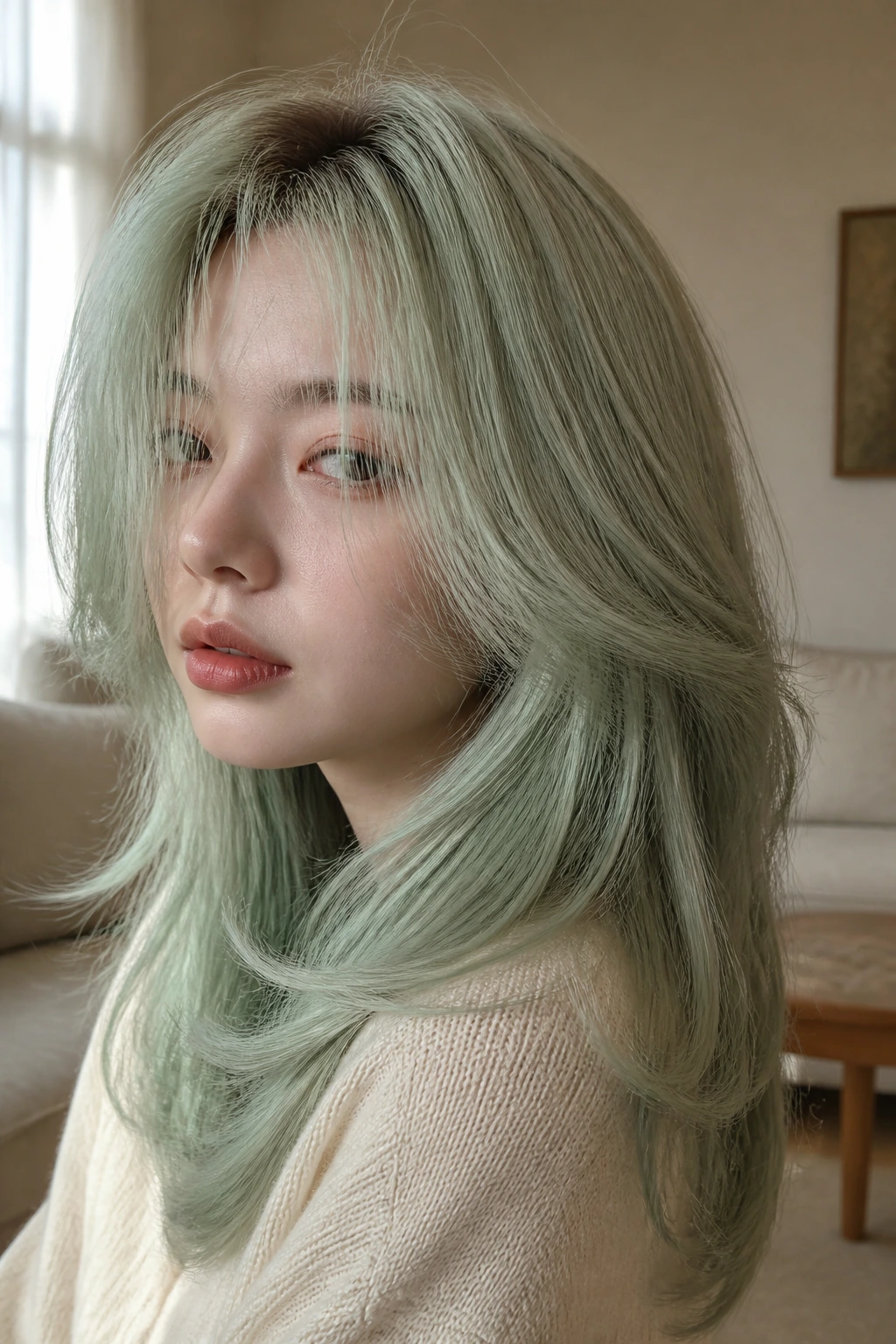
Gloss Trick: A clear or tinted gloss every few weeks can bring back slip and keep the pastel from looking dry. On blondes, an acidic gloss often helps the cuticle lay flatter, which makes the color look smoother.
Color Boost: Mix a tiny amount of direct dye into conditioner if the ends fade first. Do not overdo it. A little pigment goes a long way on porous hair, and a heavy mix can turn into a stain.
Style Switch: Change the part line once in a while. Pastel money pieces and underlights can look almost new when they’re framed from a different angle.
Make-It-Yours: If you want lower commitment, ask for a pastel root fade or keep the color below the ears. If you want a fuller effect, stack two related tones — like lilac and silver, or peach and rose — instead of one flat color.
Keeping Pastel Hair Fresh Between Appointments
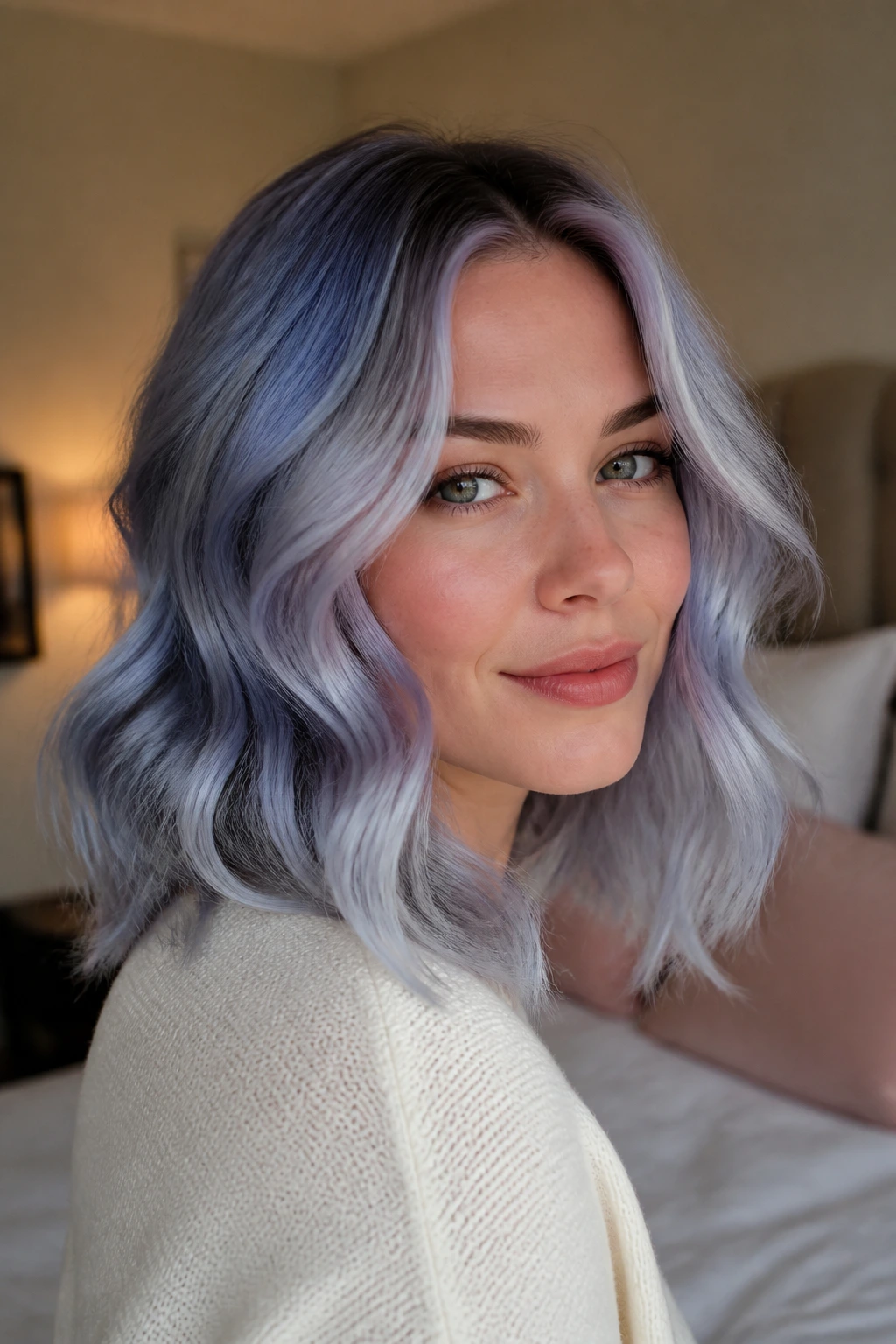
Pastel hair fades because the pigment is delicate and the base is usually porous. That’s not a failure. It’s the nature of the beast. The easiest way to slow the fade is to wash less often, use cooler water, and keep shampoo focused on the scalp instead of dragging it through the ends.
A good maintenance rhythm looks like this: tone or gloss every 4 to 6 weeks if the blonde underneath starts to yellow, refresh direct pastel color every 2 to 4 weeks depending on how quickly your hair releases pigment, and deep-condition once a week. If your hair feels gummy, stringy, or too stretchy when wet, add a protein treatment every 3 to 4 weeks and cut back on moisture-heavy masks for a bit.
Heat is another fade accelerator. A blowout here and there is fine, but a hot flat iron every day will make the color dull and dry faster than you want. If you swim, wet the hair with clean water first and add leave-in conditioner before the pool. That small step keeps the hair from soaking up as much chlorine.
Variations and Adaptations to Try
Soft Root Shadow: Keep the roots one to two levels deeper than the pastel lengths. It gives the color dimension, softens regrowth, and makes face-framing pieces look more natural.
Low-Maintenance Peekaboo: Hide the pastel under the top layer or through the nape. It’s the easiest way to test a bold shade without living in full pastel all week.
Cool-Tone Swap: If pink feels too sweet, shift to mauve, lilac, or periwinkle. The overall softness stays, but the color reads calmer and a little more tailored.
Warm Glow Version: If your skin and wardrobe lean warm, choose peach, coral, rose gold, or blush beige. These shades stay clearer on a slightly warm blonde and fade more gracefully.
Curly-Hair Adaptation: Let the pastel land on the outer curve of the curl pattern, not just the surface. That gives more dimension and prevents the color from disappearing in the fold of the curl.
Common Mistakes to Avoid With Pastel Hair
- Starting too dark: Pastel pigment won’t save a yellow-orange base. The result turns muddy, not soft. Fix it by lifting cleanly first or choosing a warmer pastel that can handle residual gold.
- Skipping strand tests: Some hair grabs pastel like a sponge and some barely takes it. Test a hidden section before you commit to a full head, especially if your hair is porous or previously colored.
- Using the wrong shampoo: Clarifying too often strips pastel fast. Use color-safe shampoo, and keep deep-cleansing products for the occasional reset, not every wash.
- Trying to force one shade onto every base: Mint on warm yellow hair, or peach on a flat icy blonde, can look off. Match the shade family to the canvas you actually have.
- Ignoring the cut: Flat, shapeless hair makes pastel color look thinner than it is. Even a tiny trim, a bend, or a root shadow can change the whole finish.
Frequently Asked Questions About Pastel Hair Looks
Can I get pastel hair without bleaching it first?
Sometimes, but the result is limited. Pastels need a pale base to stay soft and readable, so darker hair usually needs lightening in selected areas at minimum. On very dark hair, the safest option is often a pastel peekaboo, money piece, or ends-only placement.
Which pastel shades last the longest?
Rose gold, blush beige, mauve, and peach usually hold on better than mint or pale blue. That’s because warmer pastels can sit on a slightly warmer base without turning muddy, while cooler shades need a cleaner lift and tend to fade faster.
Do pastel colors work on curly hair?
They do, and often better than people expect. Curls break up the color and create dimension, which helps soft shades like lilac, peach, and rose look richer. The key is even lightening, because patchy lift shows up fast in curl patterns.
How do I keep my pastel blonde from turning yellow?
Use a purple or blue-toned toner when your blonde starts to warm up, but only as often as needed. Too much toning can make the hair flat or smoky. Cool water, color-safe shampoo, and less heat styling do a lot of the heavy lifting.
Is pastel hair high maintenance?
Yes, but not all versions are equally demanding. A full-head pastel needs more refreshes than a face-frame, underlight, or rooted melt. If you want less upkeep, choose placement first and shade second.
What if my pastel turns patchy?
Patchiness usually means the base wasn’t lifted evenly or one section was more porous than the rest. A gloss or refresh can help, but if the underlying lift is uneven, the fix usually starts with correcting the blonde before adding color again.
Can I mix two pastel shades together?
Absolutely, and that’s often how the prettiest results happen. Pink and lavender make a strawberry-lilac blend, while blue and mint create a seafoam effect. Keep the family close, though; mixing shades that fight each other can turn the color dull fast.
How often should I refresh the color?
Most direct pastel colors need attention every 2 to 4 weeks, depending on washing frequency and porosity. Toner on the blonde base may last a bit longer, around 4 to 6 weeks. If the color looks washed out but the hair still feels healthy, a tinted conditioner can stretch the life a little.
Soft Color, Strong Style
Pastel hair looks best when the color and the cut are working together instead of competing for attention. That’s why a blunt bob, a soft wave, a rooted melt, or a face-frame panel can change the whole story of the shade. The same pink can look sugary, polished, edgy, or barely-there depending on where it sits and how it moves.
Pick the version that fits your real life, not the one that photographs loudest in a salon mirror. A pastel that suits your wardrobe, your maintenance tolerance, and your base color will stay prettier longer than a more dramatic choice you have to wrestle with every wash. And honestly, that’s the better win.
