



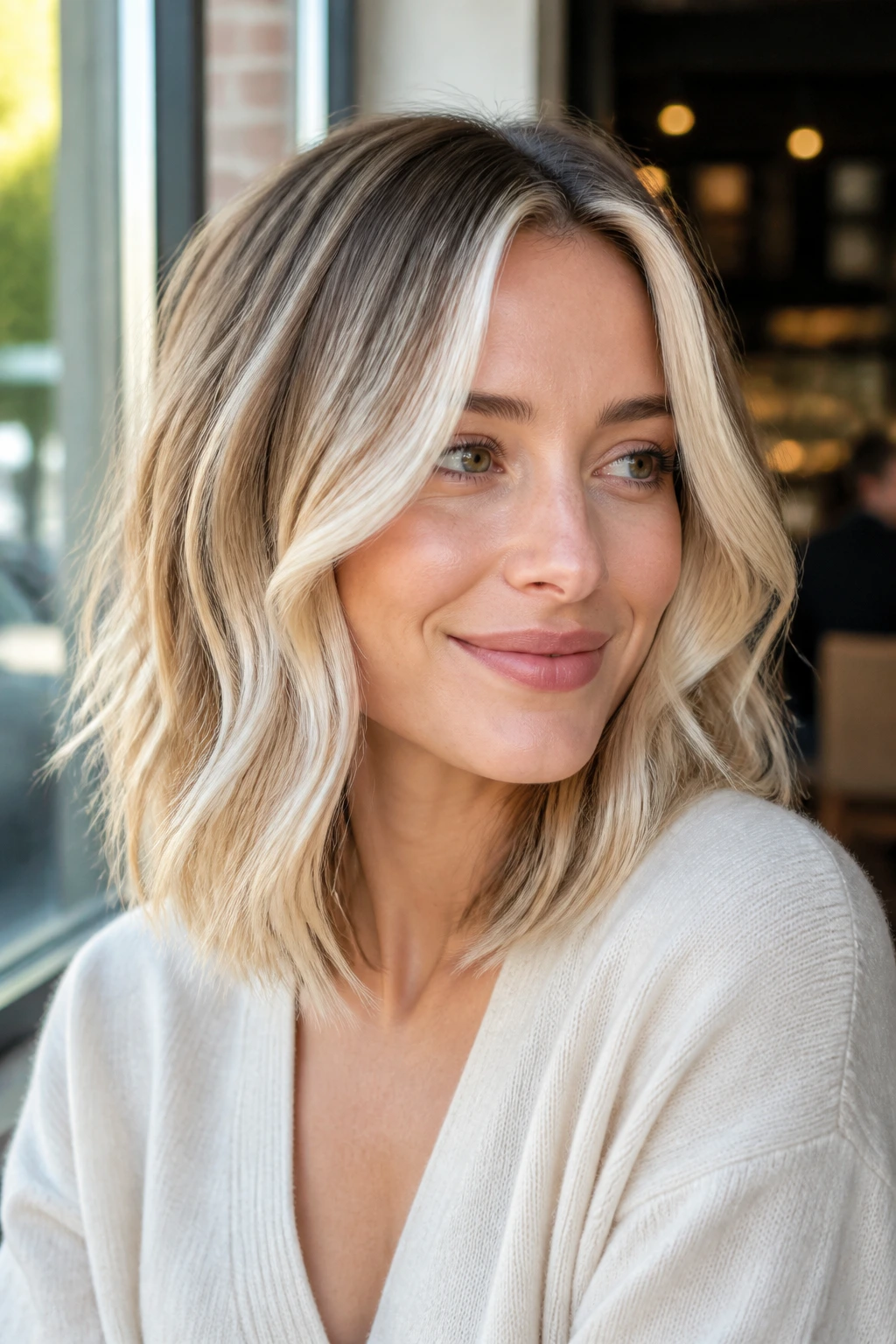
Blonde hair looks for medium length hair have a sweet spot that longer lengths often miss: enough surface area for ribbons of color, not so much length that the brightest pieces disappear into the ends. A collarbone cut or a shoulder-grazing lob can hold beige, honey, pearl, and icy blonde in a way that reads clean from across the room and still has movement when you turn your head.
The difference is in the shape, not just the shade. Medium length hair lets a colorist place brightness around the face, through the top layer, and just enough through the ends to keep the cut from feeling heavy. You can go bright without turning the whole head into a maintenance project, and that trade is part of why this length is such a good canvas.
And that’s where the fun starts. Some of these looks lean soft and creamy, some are cool and glossy, and a few bring enough contrast to make a plain white T-shirt look deliberate. A good blonde on this length should do a little work when the hair is down and still hold together when you clip it back.
Why This Collection Feels Different on Medium Length Hair
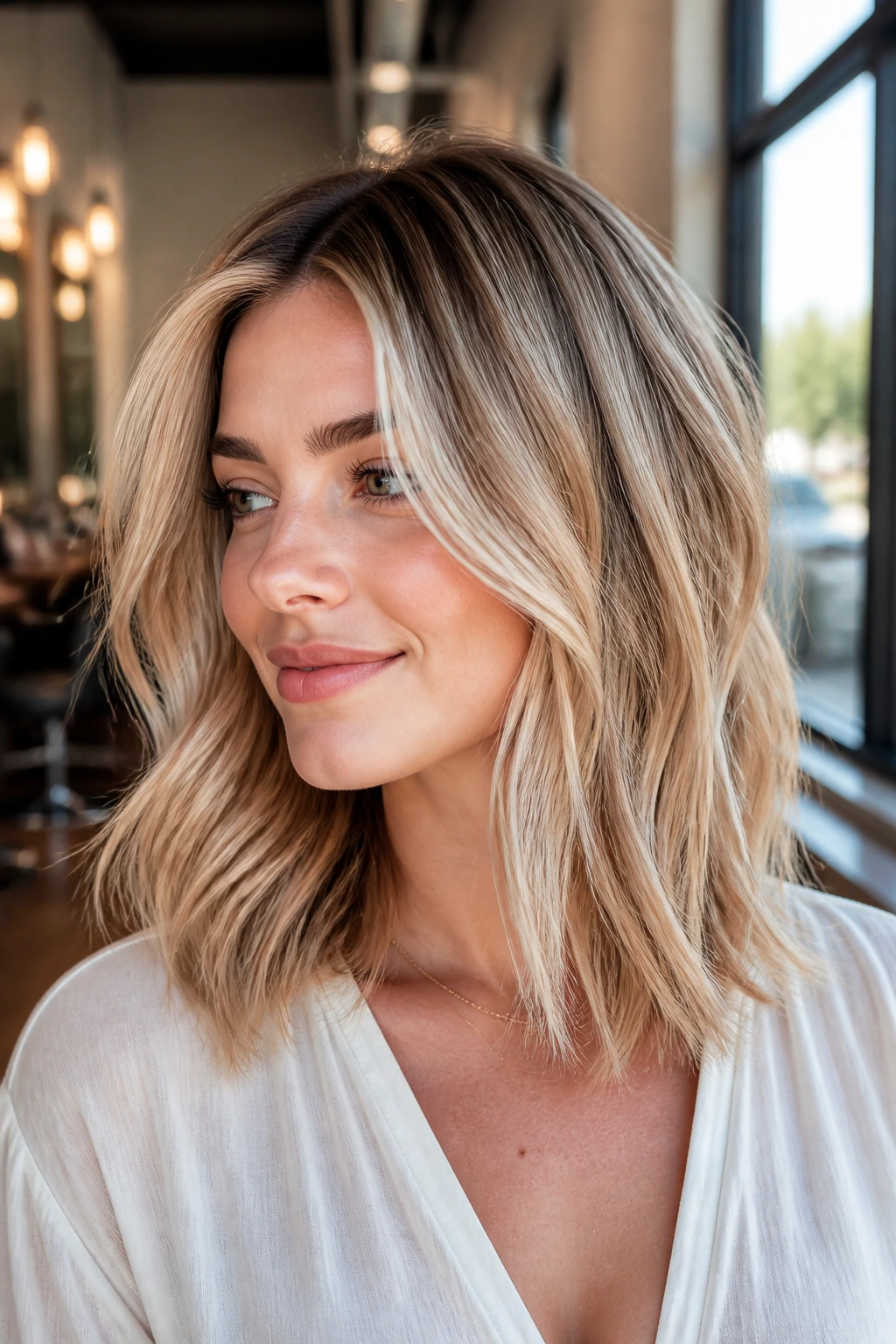
Dimension shows faster: On medium length hair, a few well-placed blonde pieces change the whole shape, because the eye sees root, midlength, and end in one glance.
Grow-out looks cleaner: A rooted blonde, shadow melt, or balayage has room to soften on a lob or shoulder cut, so it doesn’t hit you with a hard line every time the hair moves.
Tone reads more clearly: Beige, ash, pearl, honey, and champagne each look distinct at this length; on very long hair, those shades can blur together by the time they reach the ends.
Styling changes the mood quickly: A loose bend makes the blonde feel softer, while a straight blowout sharpens the contrast and shows off brighter face-framing pieces.
Maintenance can stay sane: Medium length hair gives you room to keep some depth at the root and brightness where it matters most, which is the only reason a lot of these shades feel wearable for more than one salon visit.
1. Creamy Beige Lob with Soft Waves
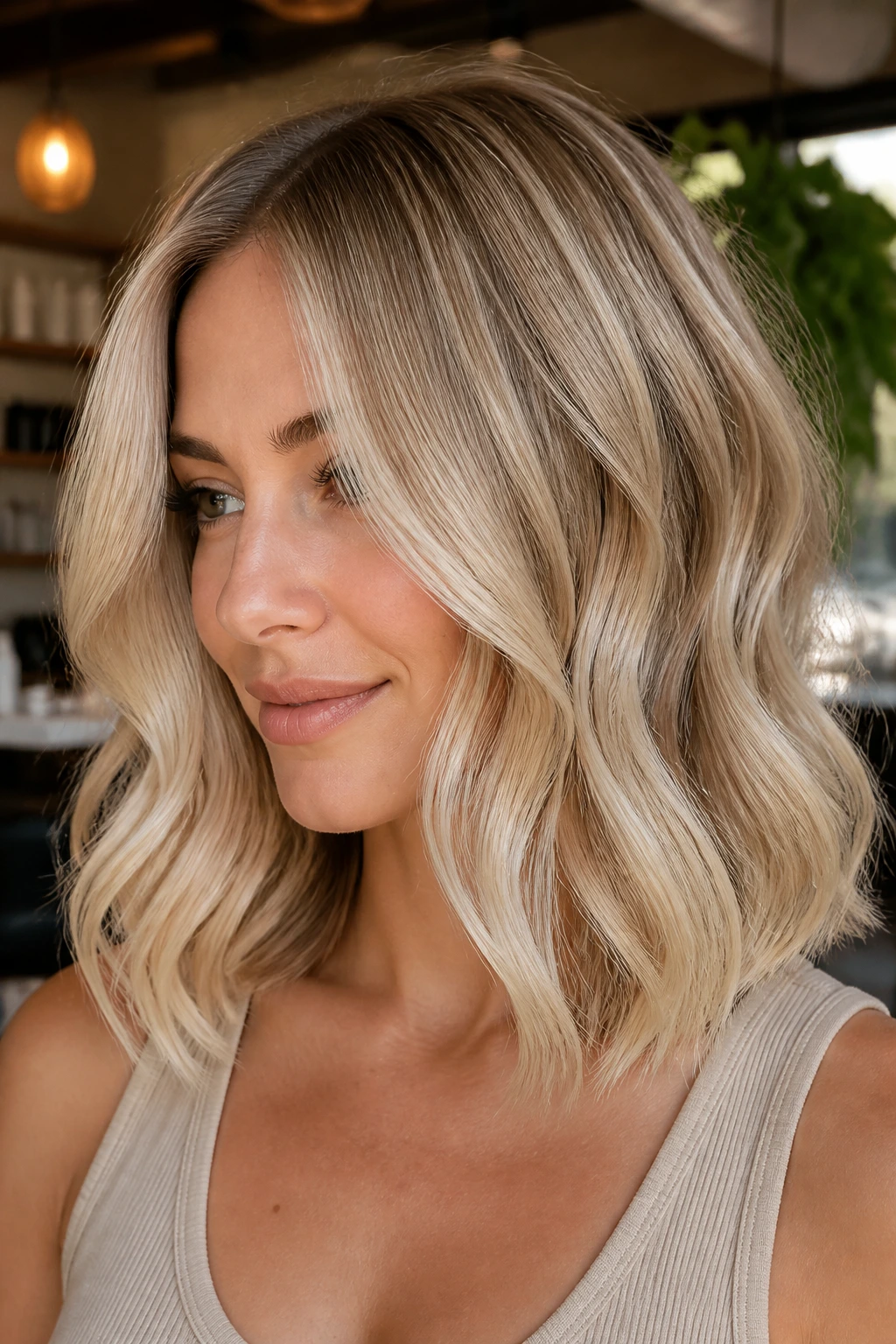
Creamy beige on a collarbone lob is one of those shades that looks calm from every angle and quietly expensive up close. The color sits between warm and cool, which keeps it from swinging orange or gray when the light shifts.
The soft wave matters here. It breaks up the ends just enough that the blonde reads as ribbons instead of one flat block, and that’s the whole point on medium length hair. If your natural base is around level 6 or 7, ask for a beige gloss over fine highlights rather than a heavy all-over lift.
2. Honey Balayage on a Feathered Shag
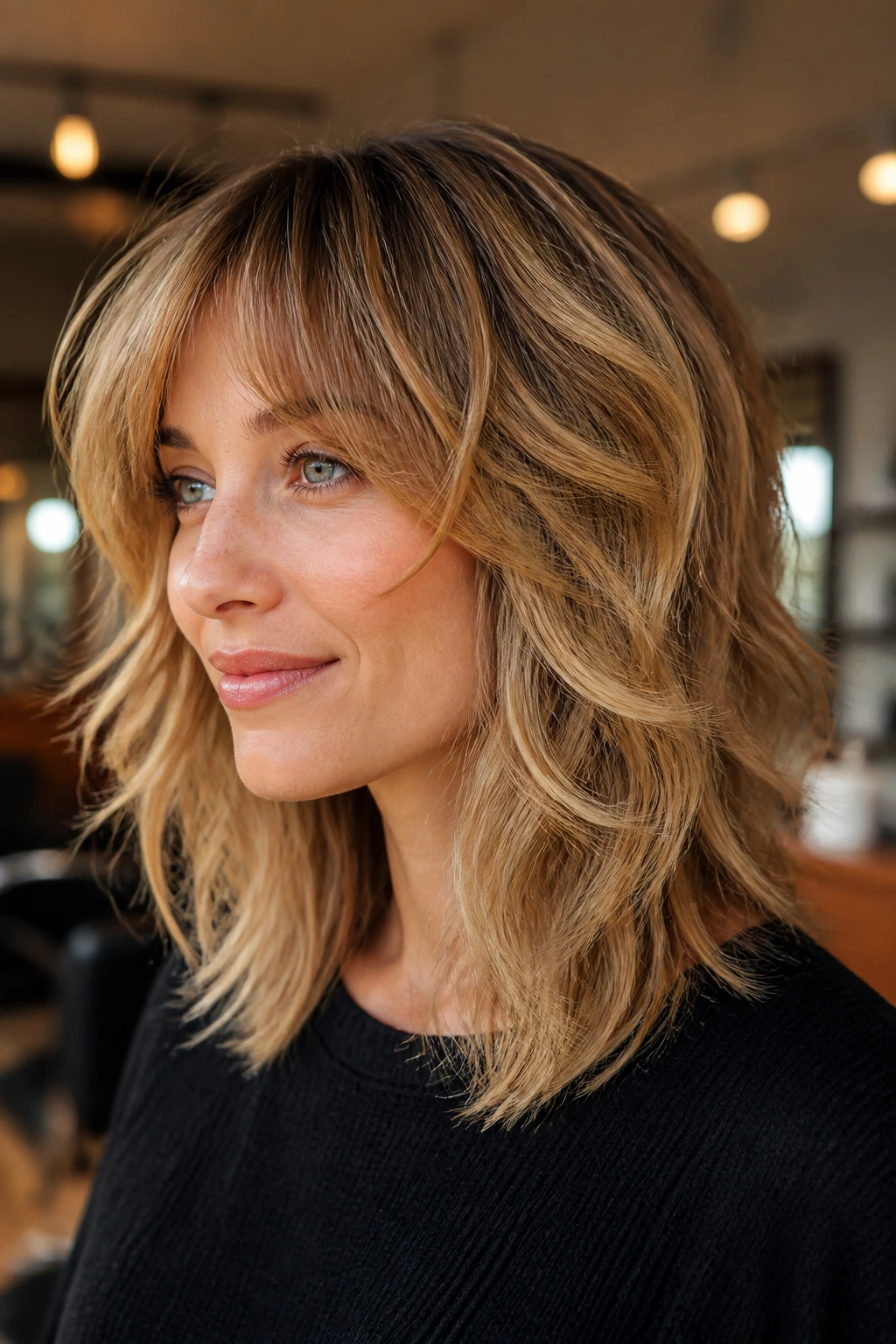
Honey balayage looks especially good when the cut already has movement, and a feathered shag gives it that in spades. The lighter pieces sit in the midlengths and ends, so the layers show their shape instead of collapsing into one blunt line.
This is a good choice if you want warmth without the hard yellow of a one-note blonde. The trick is keeping the root a shade or two deeper than the brightest pieces; that contrast makes the feathering visible. A quick bend with a 1.25-inch iron is enough. Don’t flatten it out.
3. Icy Platinum Blunt Collarbone Cut
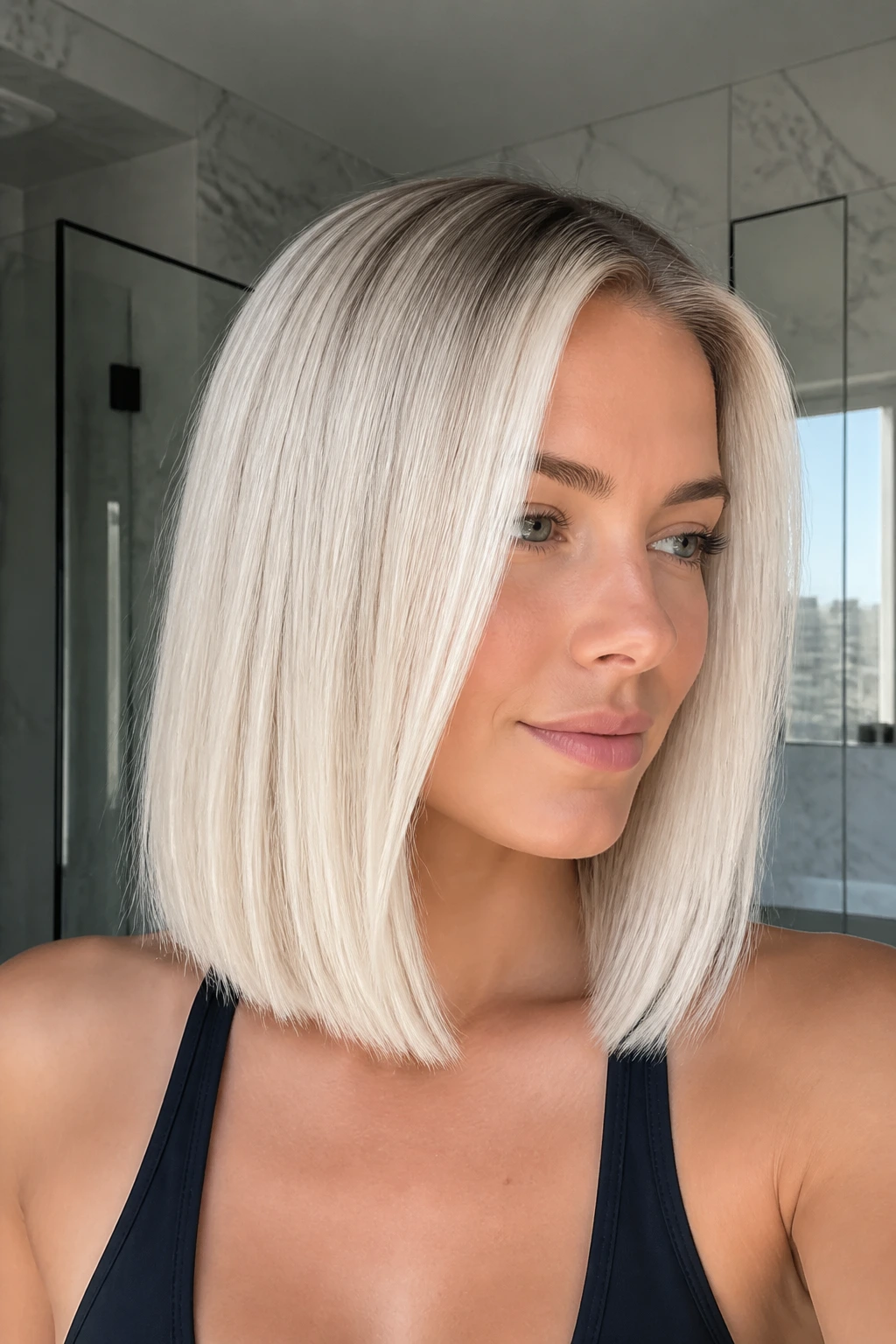
Icy platinum on a blunt collarbone cut is sharp, clean, and a little unforgiving in the best possible way. The bright ends make the line of the cut look crisp, and the pale tone throws every bit of texture into view.
Best for: hair that can handle regular toning and a little more salon upkeep.
Tell your colorist: keep a soft shadow at the root so the platinum doesn’t start looking chalky against the scalp. A violet shampoo once a week helps, but don’t lean on it too hard or the tone can go dull and flat.
4. Vanilla Money Piece on a Dimensional Lob
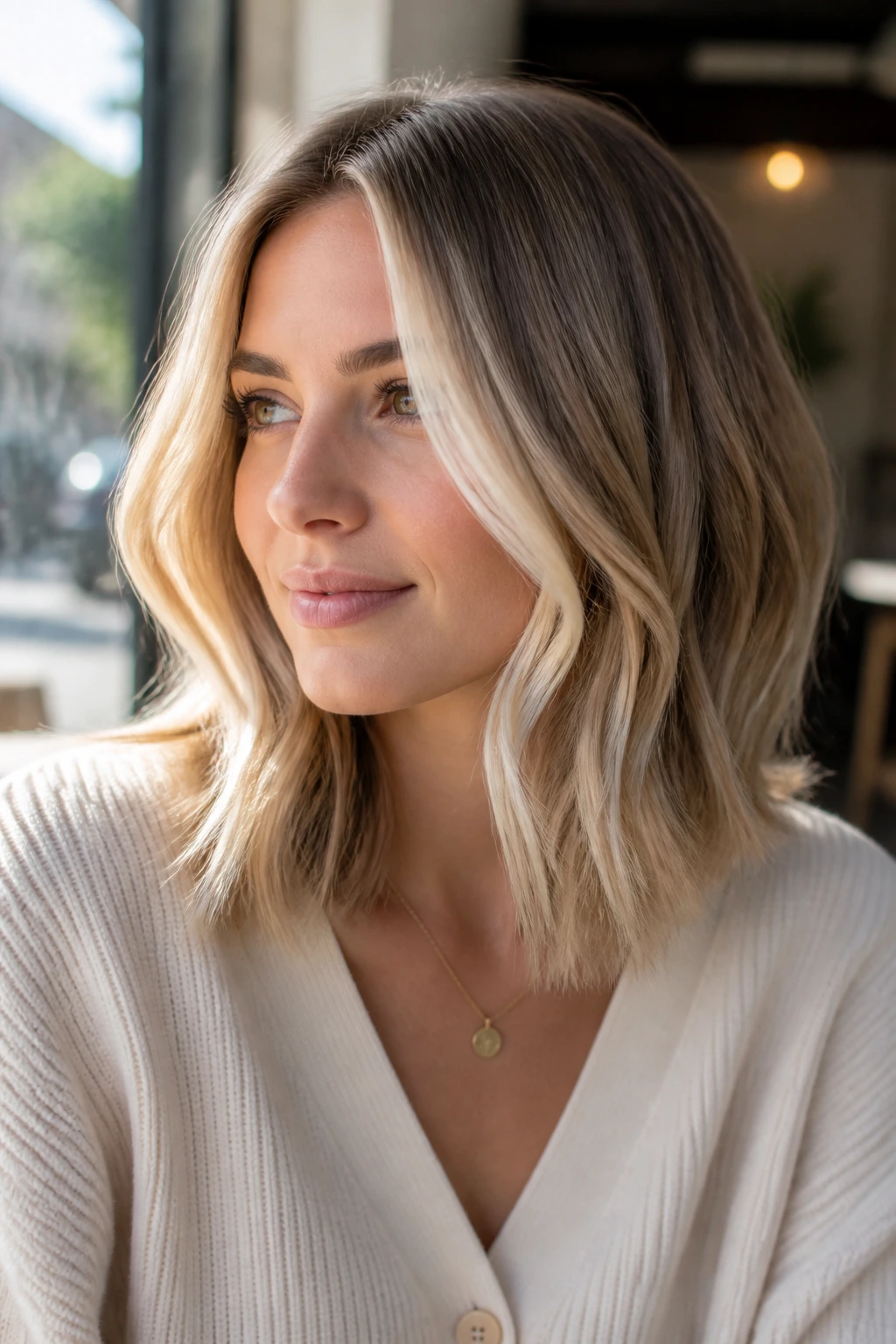
A vanilla money piece can wake up a medium lob faster than a full head of bright blonde. The front pieces frame the face, then the rest of the color stays softer and deeper, which makes the cut feel modern instead of loud.
That front brightness is doing real work. It pulls the eye upward and makes the layers around the cheekbones show up, even if the rest of the hair is mostly a soft beige or brown-blonde blend. If your hair is thick, ask for just two or three face-framing foils on each side. Too many and the effect gets noisy.
5. Rooted Champagne Blonde with Loose Curls
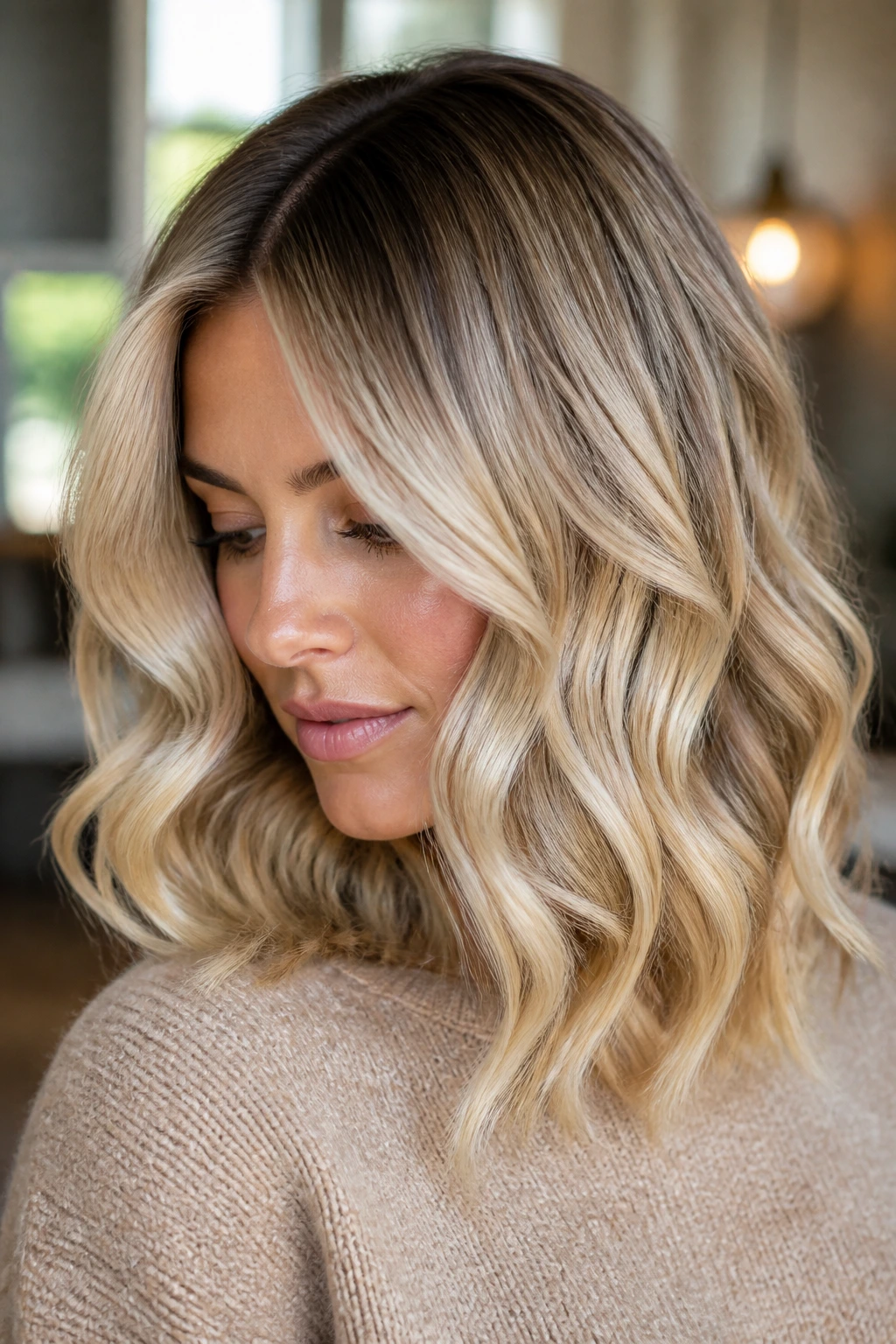
Champagne blonde looks best when it has a little depth at the root. A rooted version gives the shade a soft start, then the lighter midlengths and ends catch the light without looking stripped.
Loose curls keep the tone from feeling too polished. There’s a reason this one shows up so often on shoulder-length hair: the shape lets the champagne reflect in a gentle way, not as one big shiny sheet. If you wear your hair curled more often than straight, ask for a root melt that stays one to two levels deeper than the lightest pieces.
6. Buttercream Blended Highlights on Layered Hair
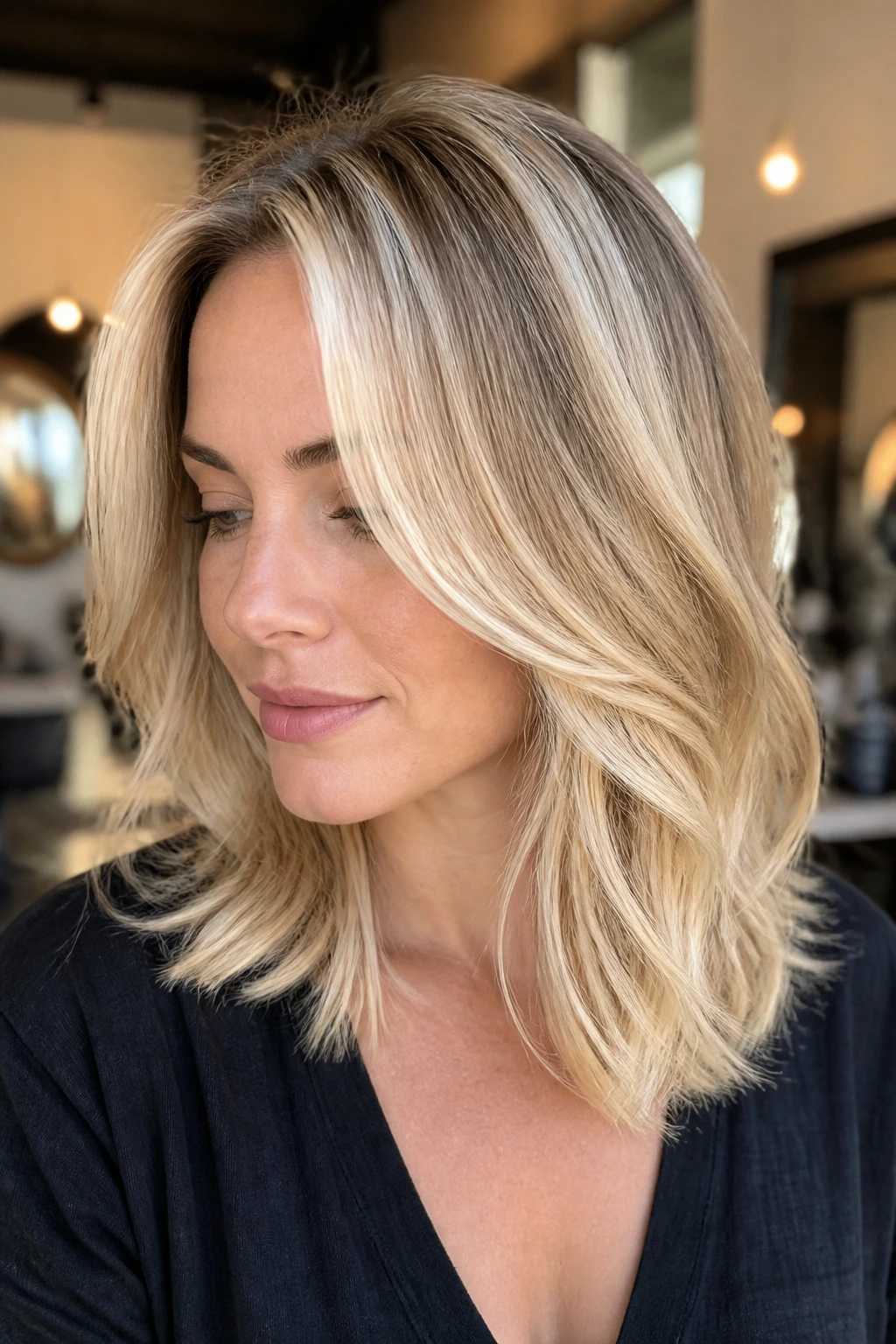
Buttercream blonde is what happens when the highlights are bright enough to notice but soft enough that you don’t see a hard edge between shades. On layered medium-length hair, that softness helps every section move on its own.
The best part is the blend. A few fine foils near the crown, then hand-painted ends, give you that whipped, almost creamy finish that sits nicely on medium density hair. This look tends to age well between salon visits because the layers keep the grow-out from bunching up at one level.
7. Beige Blonde with Curtain Bangs
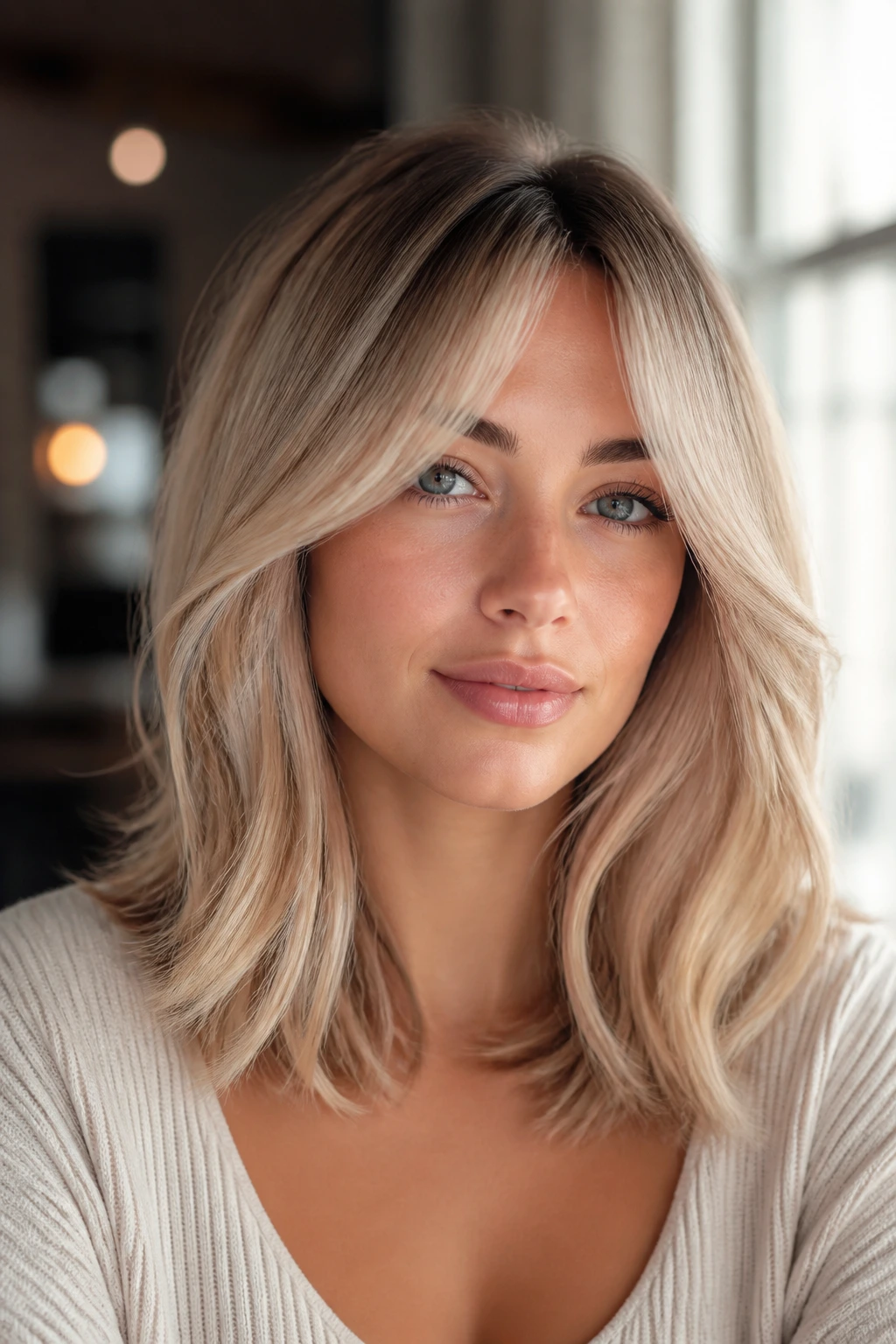
Curtain bangs and beige blonde are a good match because both work through the face instead of fighting it. The fringe softens the forehead, and the beige tone keeps the whole look grounded, not over-bright.
You do want some lighter pieces right where the bangs open. That little flash helps the shape read from the front, especially if your hair is just grazing the shoulders. If your hair tends to separate in the front, ask for a soft money piece that melts into the bangs rather than sitting as a stark stripe.
8. Pearl Blonde Sleek Lob
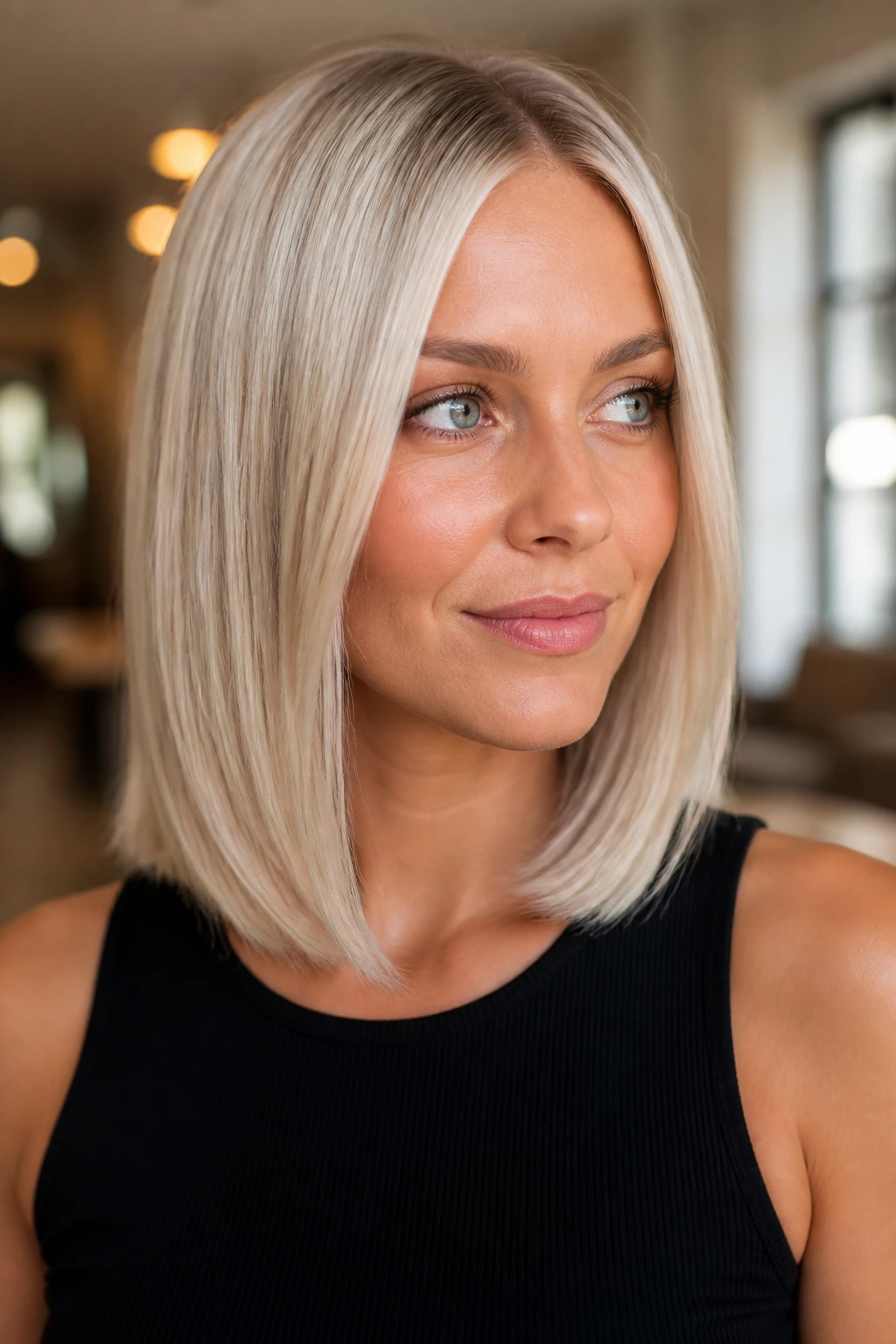
Pearl blonde on a sleek lob has a cool sheen that looks best when the hair is smooth and the ends are tidy. The tone is pale, but it isn’t flat; it has that soft, milky reflect that sits between silver and beige.
A straight finish brings out the color shift from root to midlength to end. If you like a middle part and clean lines, this one makes sense. If your hair is porous, use a bond-building mask before toning, because pearl shades can look dull fast on thirsty ends.
9. Golden Wheat Balayage on Mid-Length Layers
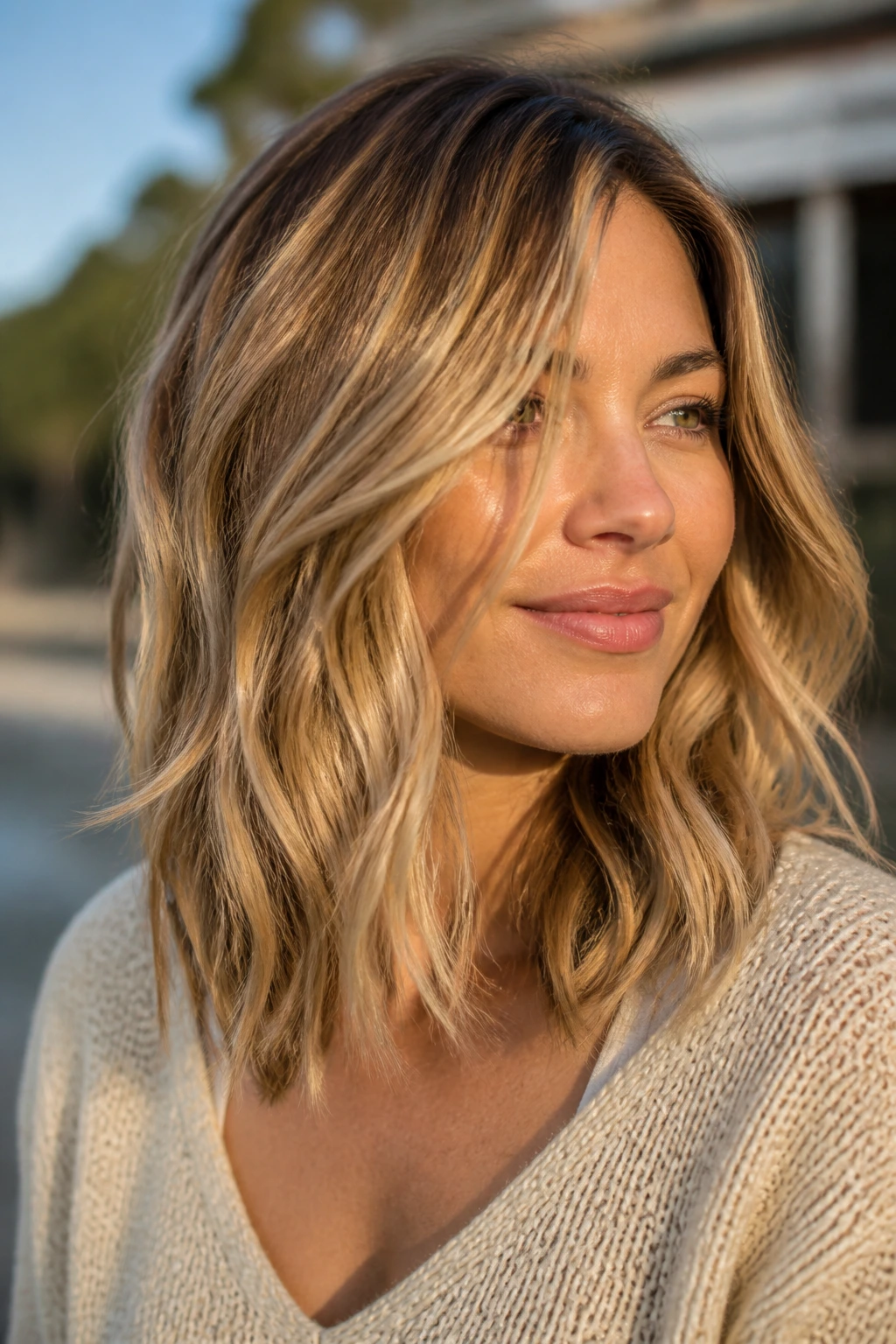
Golden wheat blonde is warmer and softer than honey, with a little more straw-gold texture in the tone. On mid-length layers, it gives you that sunlit look without turning brassy.
This is one of my favorites for hair that has a bit of natural wave. The lighter ribbons sit through the top layers, then the ends keep some depth so the cut doesn’t go floppy. A glossy blow-dry with a round brush is enough to make the color move; you don’t need beach-wave stiffness here.
10. Sand Blonde with Airy Ends
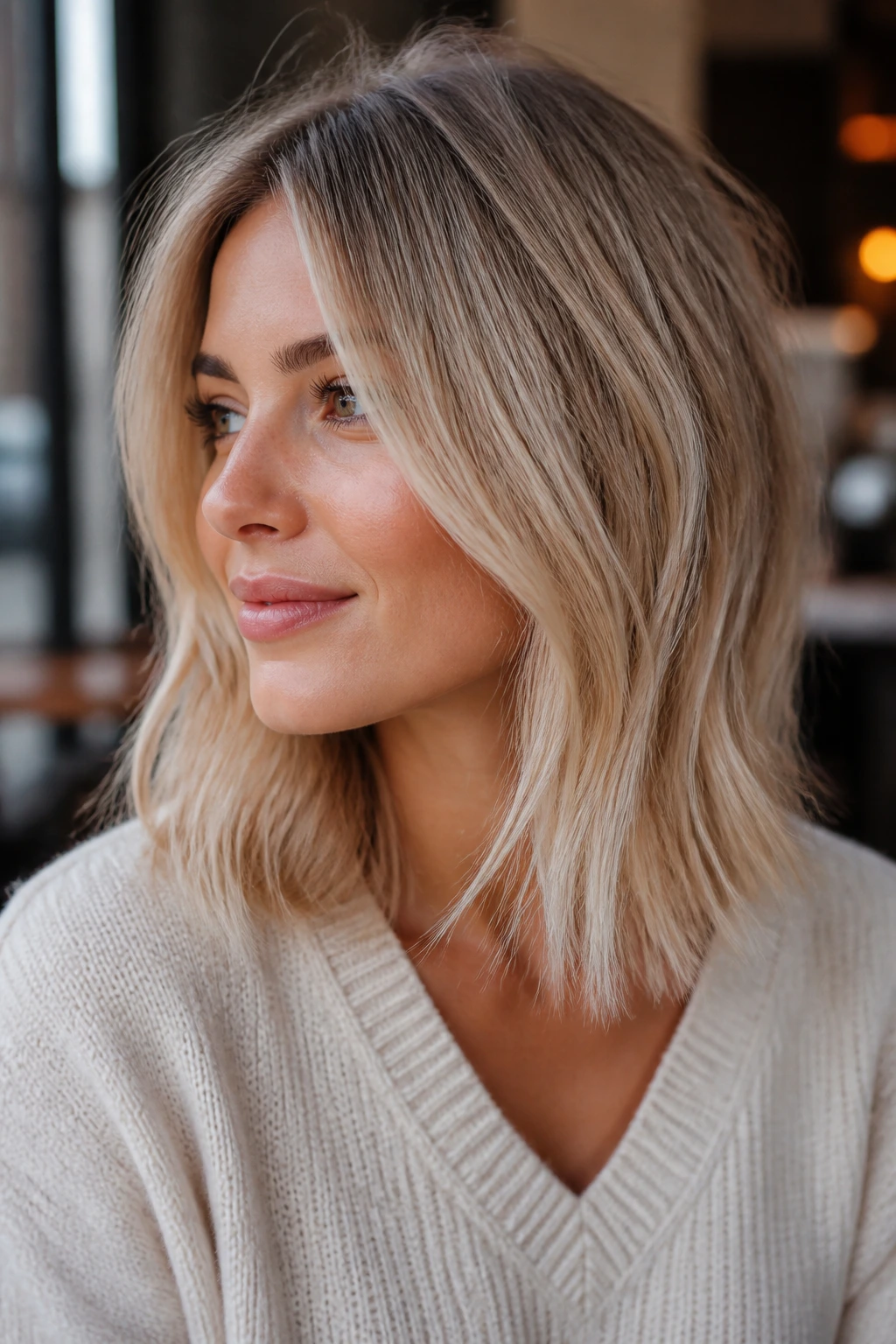
Sand blonde lives in the softer beige family, which makes it useful if you want a blonde that doesn’t shout across the room. The ends stay airy and light, but the overall tone keeps some quiet depth.
What to ask for: a soft lift, not a dramatic blonding session, and a neutral gloss that doesn’t push yellow.
Why it works: medium length hair carries sand blonde well because the ends don’t have to do all the visual work. The shape can stay loose, and the shade still reads as blonde instead of brown with highlights.
11. Face-Framing Platinum Pop on Darker Base
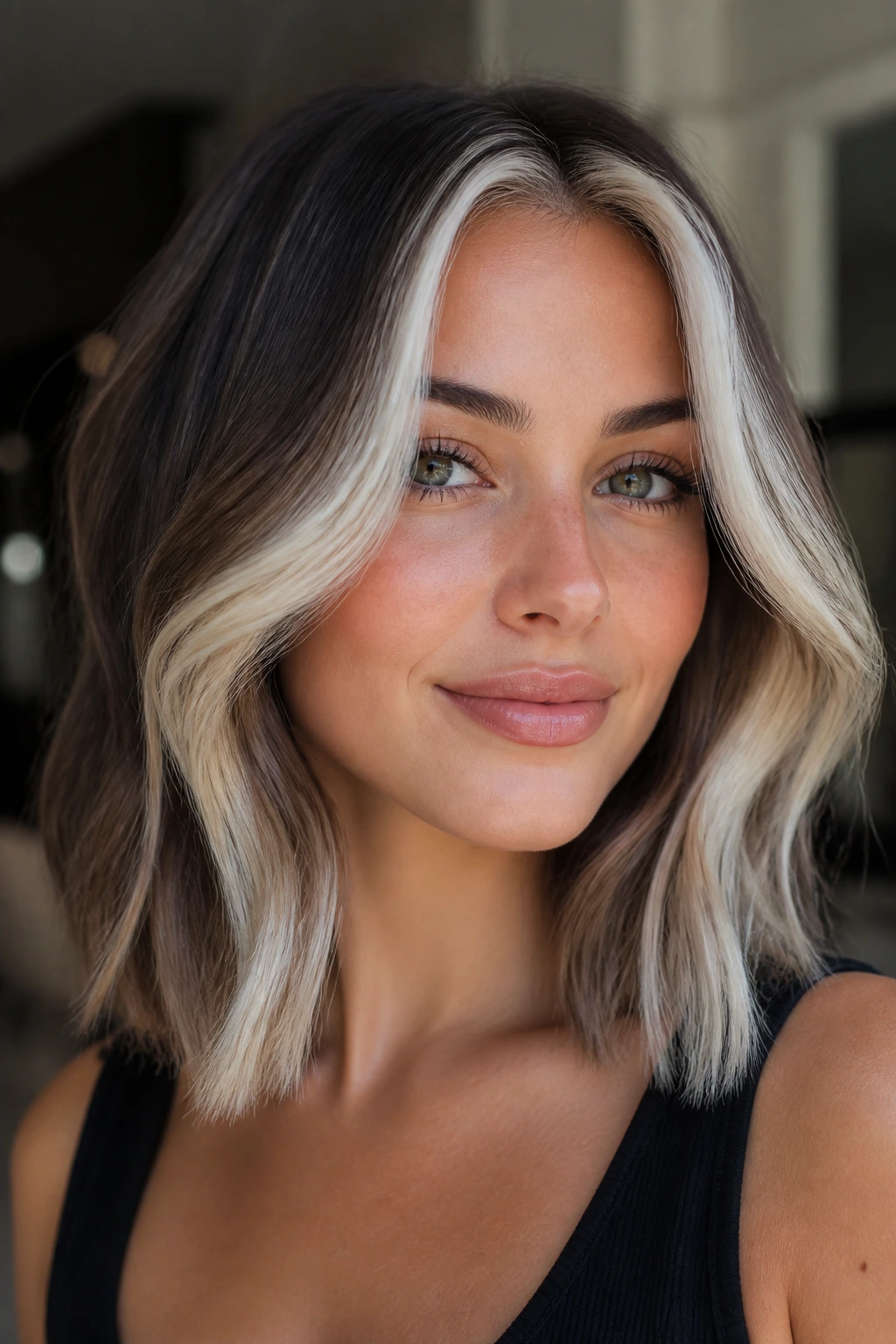
A darker base with a bright platinum pop at the front is a straight-up contrast move. The rest of the hair can stay dimensional and low-key, while the front pieces grab the eye the second the hair moves.
This is the kind of look that loves a collarbone cut. The length gives the platinum pieces room to hang cleanly beside the face instead of vanishing into long layers. Just be honest with yourself about upkeep. Platinum at the front means toning, heat protection, and a little patience when the roots come in.
12. Strawberry Blonde with Blonde-Lifted Ends
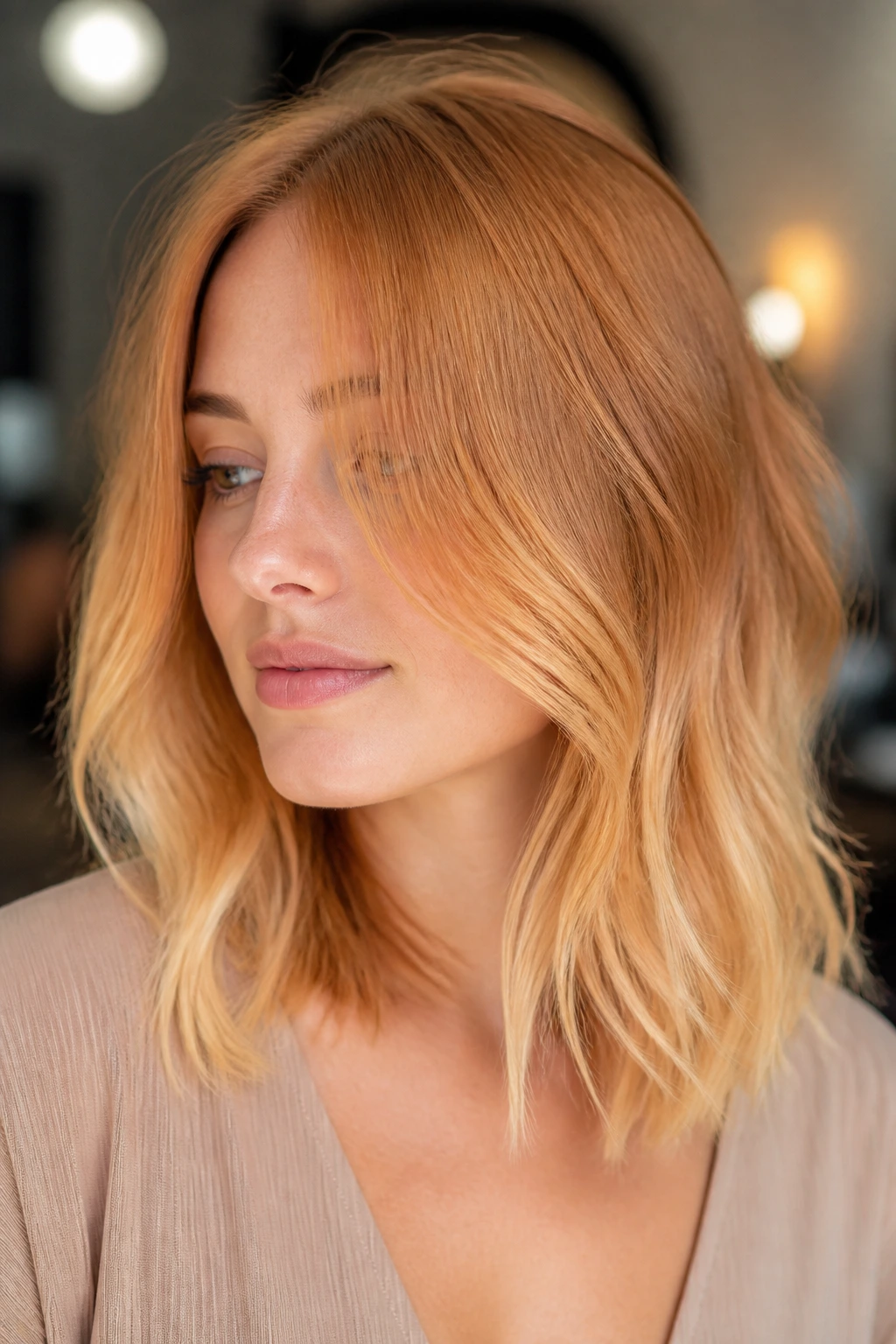
Strawberry blonde on medium length hair has a softness that can get lost on very long lengths, but here it stays visible. The lifted ends keep the red-gold tone from turning muddy, and the whole style feels warmer than a standard blonde.
This works especially well if your natural hair already carries some copper. Ask for a gentle lift through the ends and a gloss that leans peach-gold rather than orange. The trick is subtlety. Too much red, and the blonde pieces stop reading as light.
13. Mushroom Blonde for Cool-Toned Depth
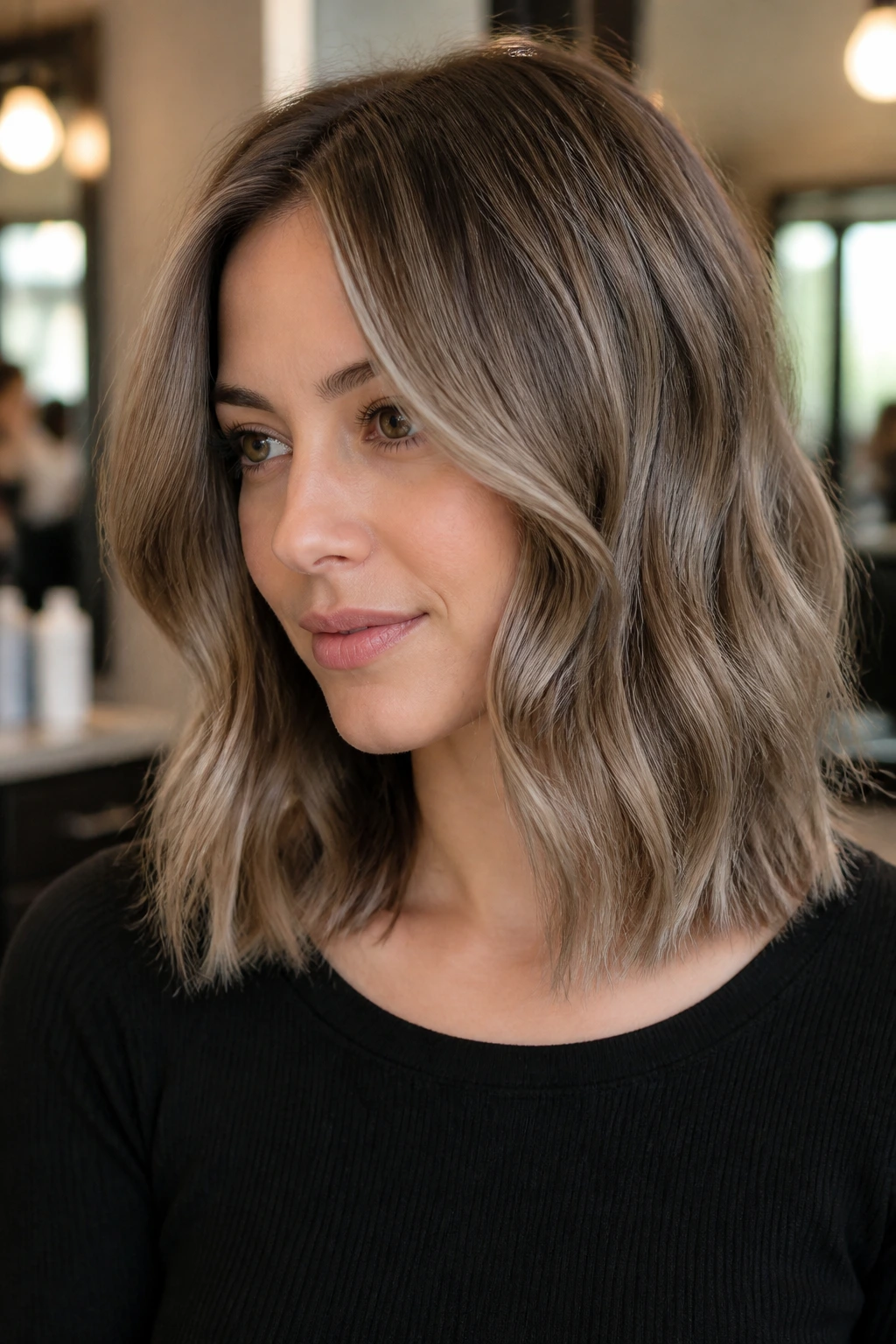
Mushroom blonde sits in that smoky beige zone that people often overlook because it is not bright in the usual sense. On medium length hair, though, it’s elegant in a low-key way, with enough variation to keep the cut from feeling heavy.
The cooler root and beige midlengths give the hair a soft shadow that works well with blunt edges and loose movement. If you wear silver jewelry, this shade tends to sit nicely beside it. Just keep the toner fresh; once mushroom blonde loses its cool edge, it can look dusty instead of deliberate.
14. Mushroom-Bronde Melt
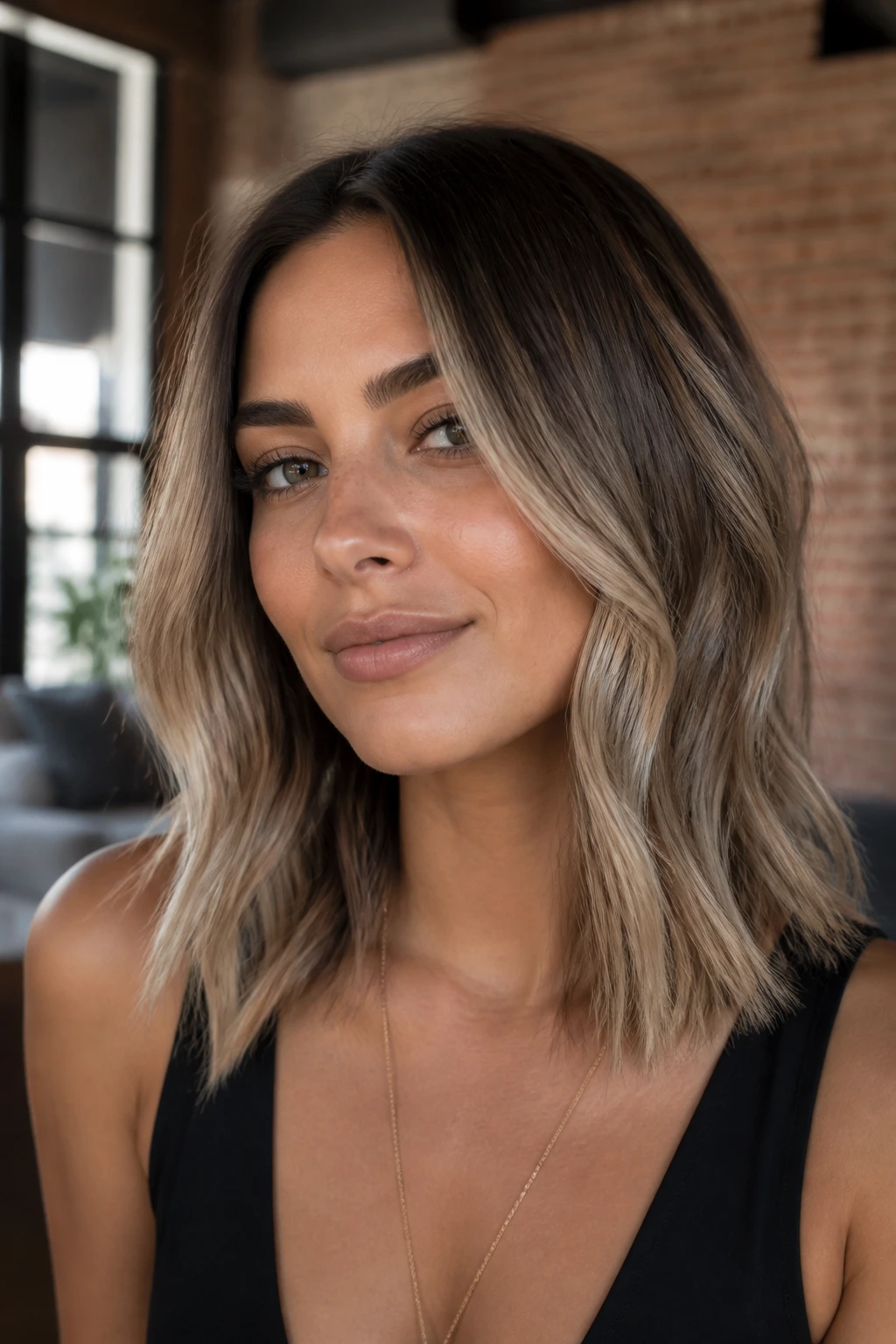
This is the version for anyone who wants the blonde idea without going all the way to light. The melt starts in brunette territory and fades into a cooler bronde, so the whole thing feels expensive without looking overdone.
The medium length is doing the heavy lifting here. A collarbone cut shows the gradient clearly, and the color shift gives the ends enough interest that you don’t need constant styling. If your hair is dark and you want a safer first step into blonde, this is the one I’d point to first.
15. Caramel Blonde Ribbon Highlights
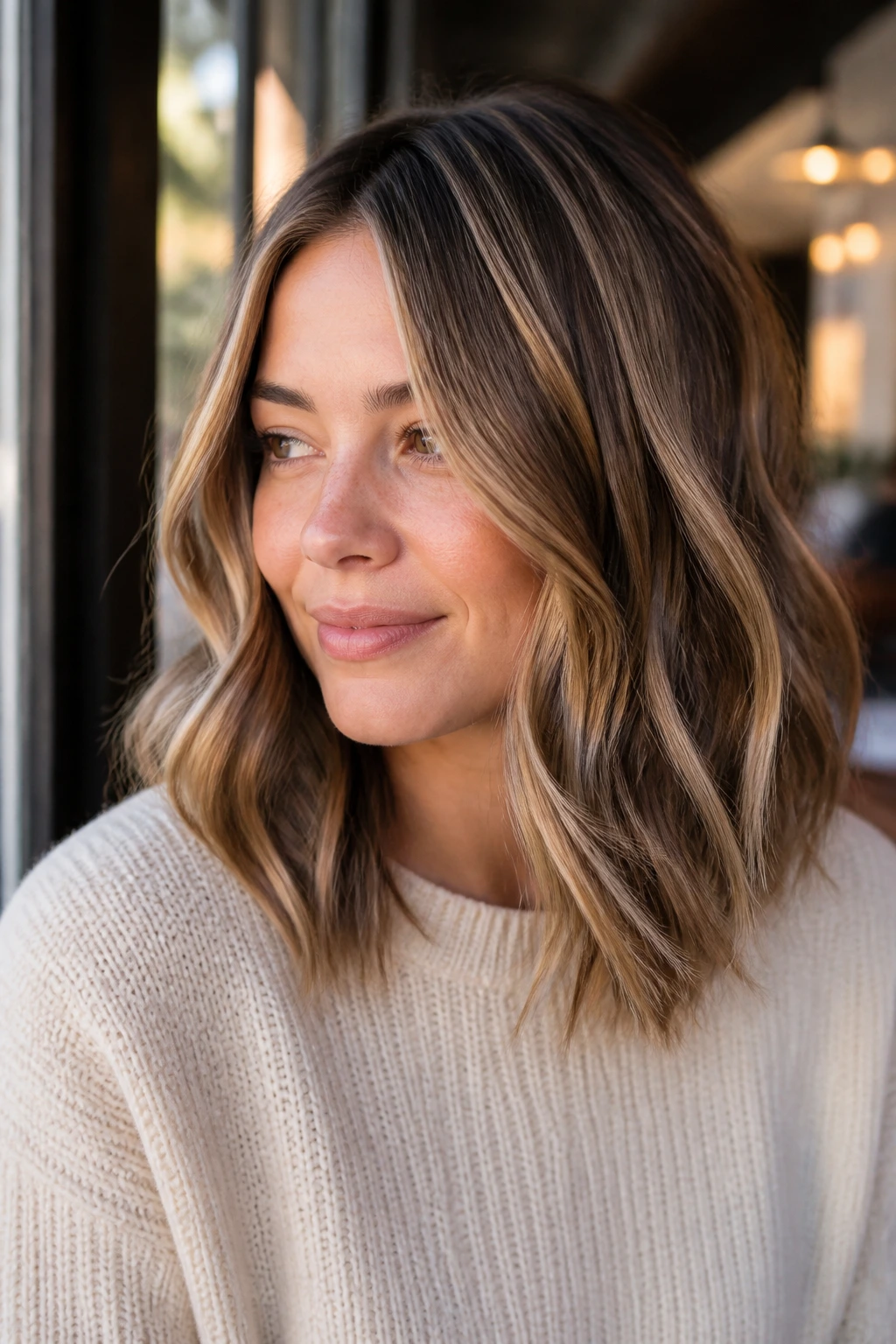
Ribbon highlights are exactly what they sound like: visible, sweeping strands that move through the hair like thin bands of color. In caramel blonde, they bring warmth and depth at the same time.
This look shines on medium waves because the bends make the ribbons separate. Straight hair can wear it too, but the effect is softer. Ask for highlights that are not packed too closely together; the open spaces are what let the ribbons show. Too many foils, and the whole thing turns into a blur.
16. Scandinavian Blonde Bob-Lob Hybrid
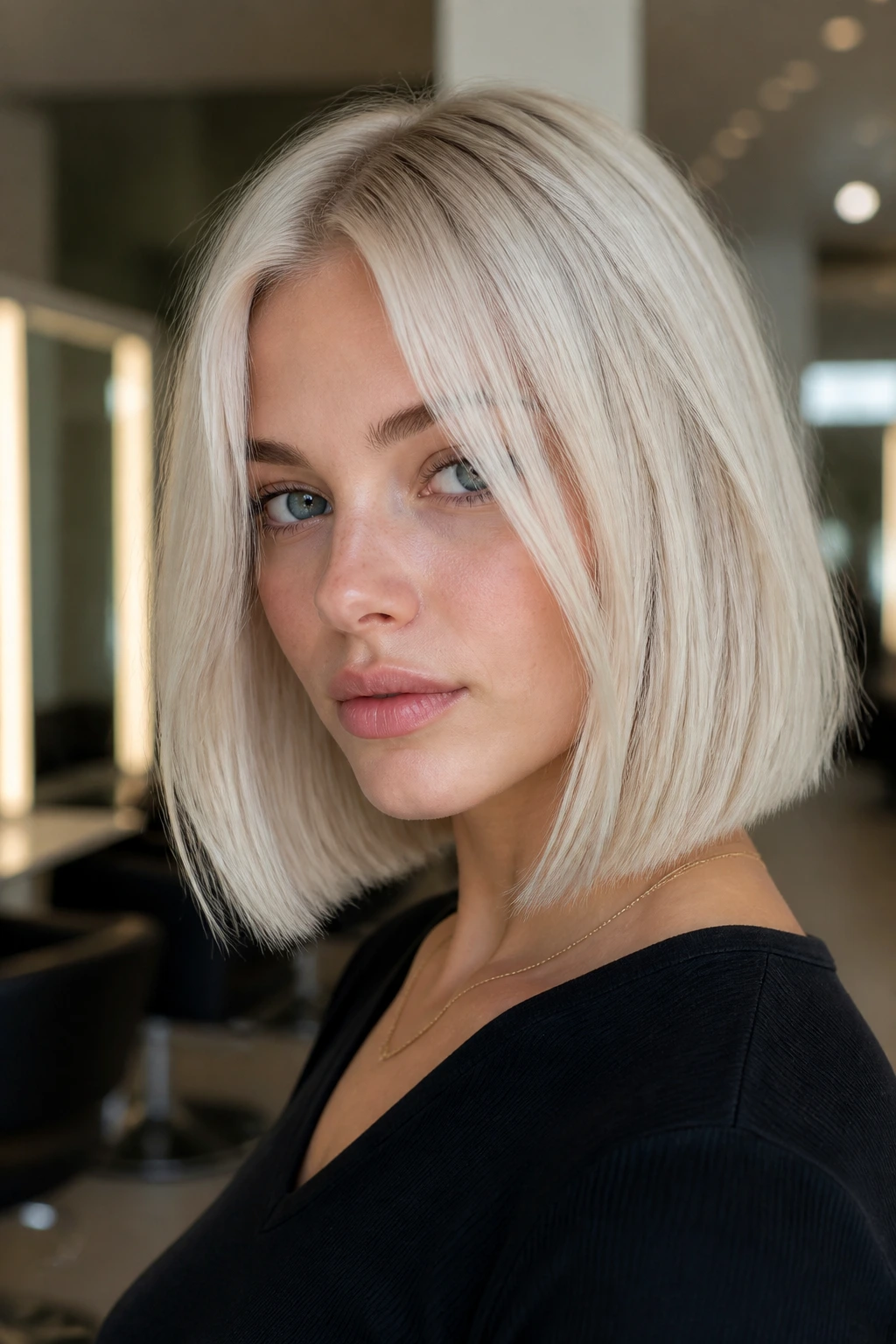
If you like very pale blonde and clean lines, this hybrid between a bob and lob gives you a crisp shape without losing too much swing. The blonde stays bright, almost icy, but the medium length keeps it from feeling severe.
The cut matters as much as the color. A blunt-ish perimeter with a tiny bit of movement at the ends keeps the pale tone from looking helmet-like. This is not a lazy shade. You’ll want regular gloss appointments and a heat protectant that can stand up to blow-drying without leaving the hair greasy.
17. Sun-Kissed Babylights on Straight Hair
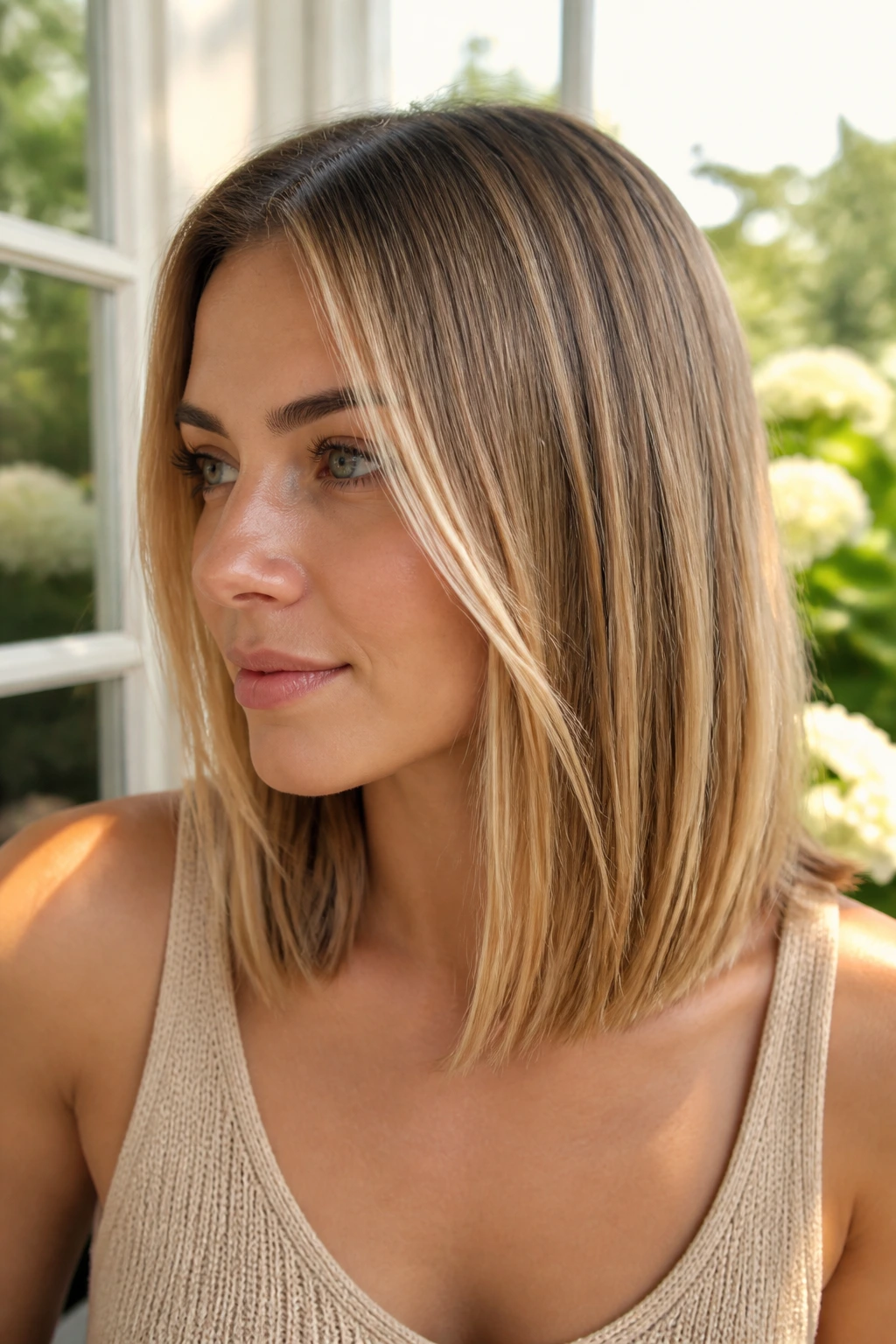
Babylights are the tiny, fine highlights that mimic the way hair lightens when you spend enough time in the sun. On straight, medium-length hair, they create a soft shimmer instead of big contrast blocks.
That softness is the appeal. The color shows when you move, then settles back into the base tone when the hair is still. If you dislike streaky highlights, this is the direction to take. Bring a photo of hair that looks like it has depth, not chunks, because the placement matters more than the exact blonde tone.
18. Frosted Ash Blonde Shag
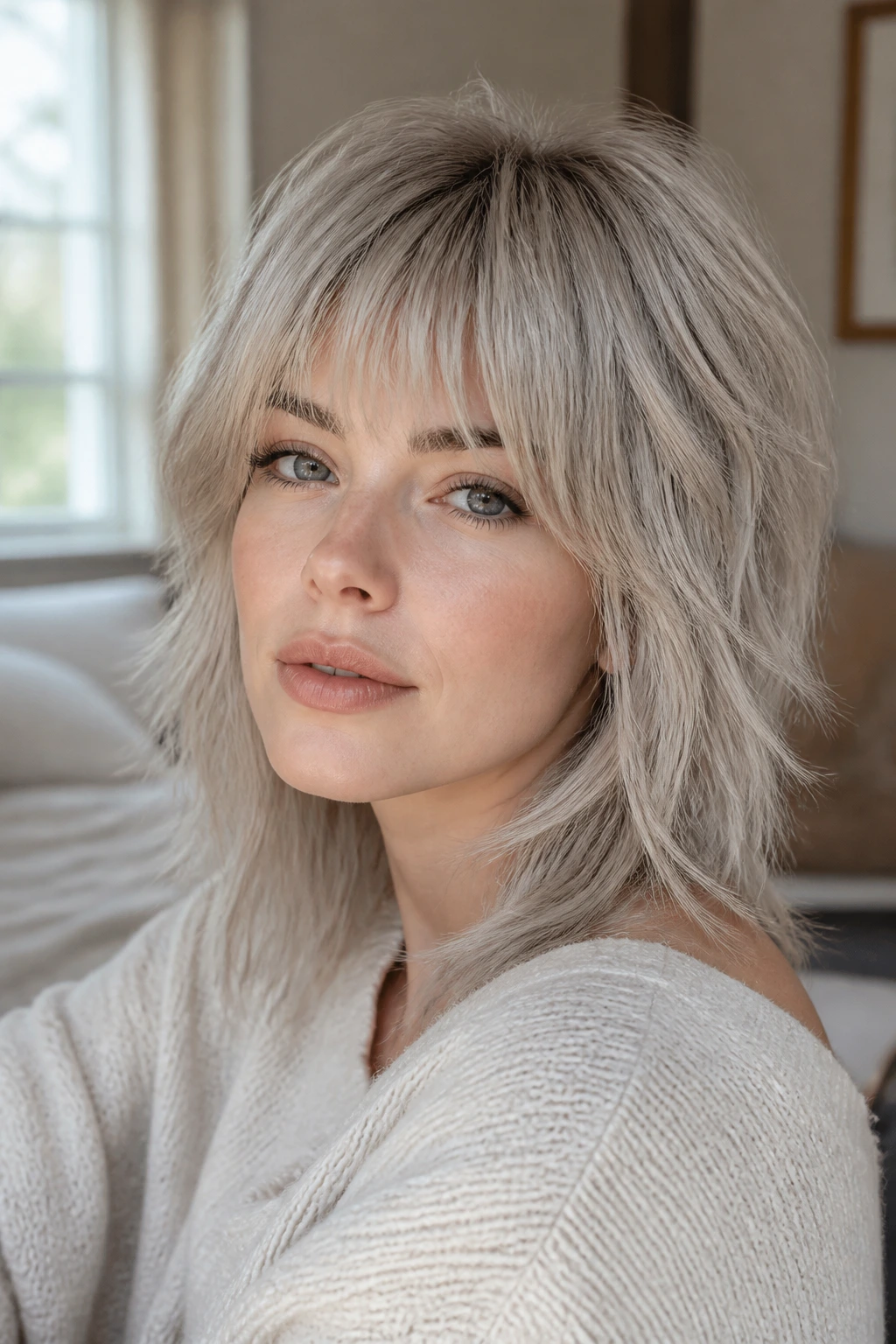
An ash blonde shag has edge, but it doesn’t need to be punk to work. The frosted tone cools everything down, and the shaggy layers keep the cut from reading too serious.
This one is strongest when the hair has some texture. The layers catch the cool light differently, which keeps the ash tone from going flat. If your skin tends to go red easily, make sure the ash doesn’t go too gray. You want frosted, not drab.
19. Cream Soda Blonde with Shadow Root
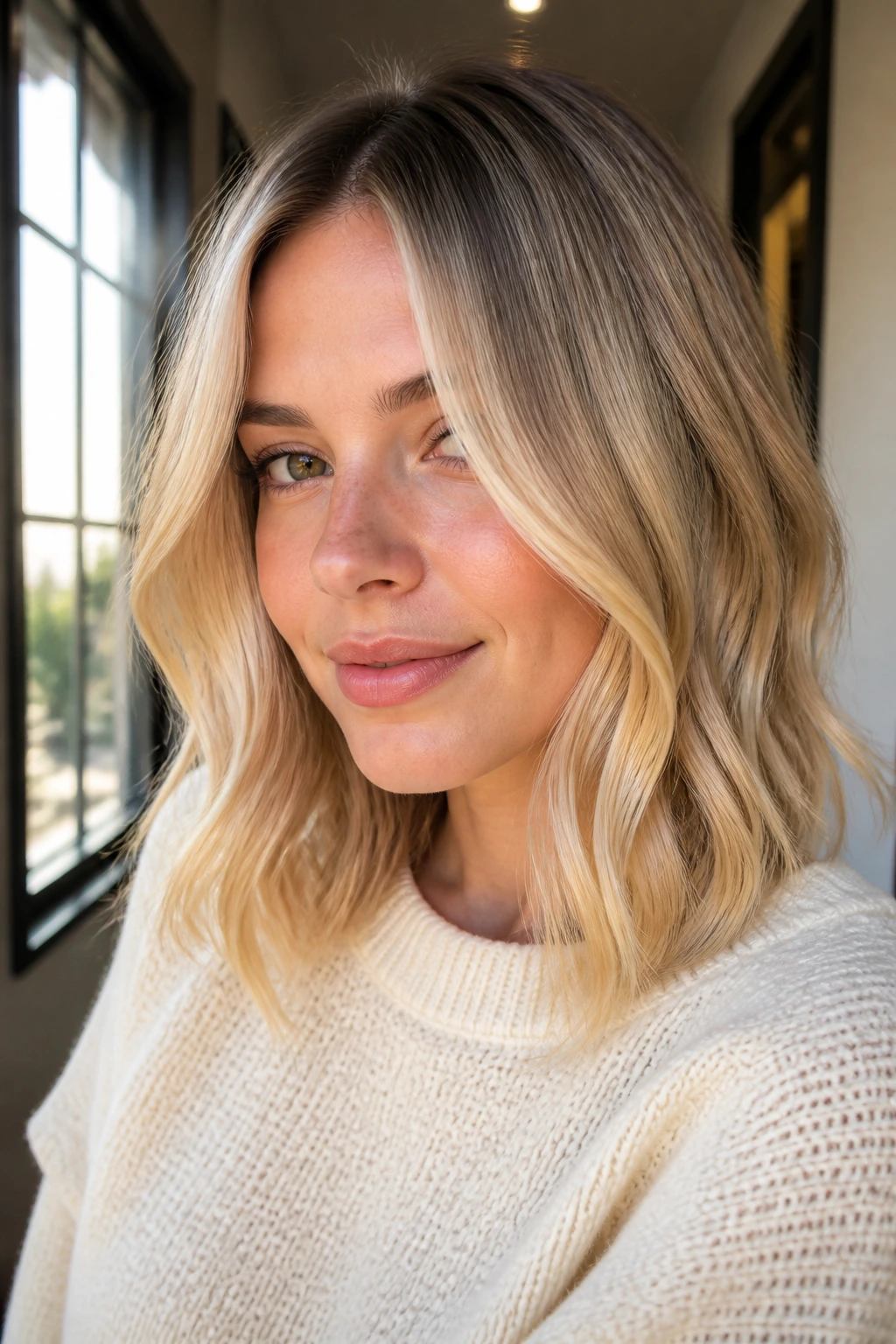
Cream soda blonde sits in a sweet spot between vanilla and beige, which makes it a useful choice if you want warmth without the orange cast. The shadow root gives the shade a clean start and keeps the lighter pieces from looking disconnected.
Medium length hair helps here because the transition is easy to see. A collarbone cut shows the root, the creamy midlengths, and the brighter ends in one frame, which is exactly what makes this color feel finished. If you like soft curls, this tone picks up movement well.
20. Toasted Almond Blonde Waves
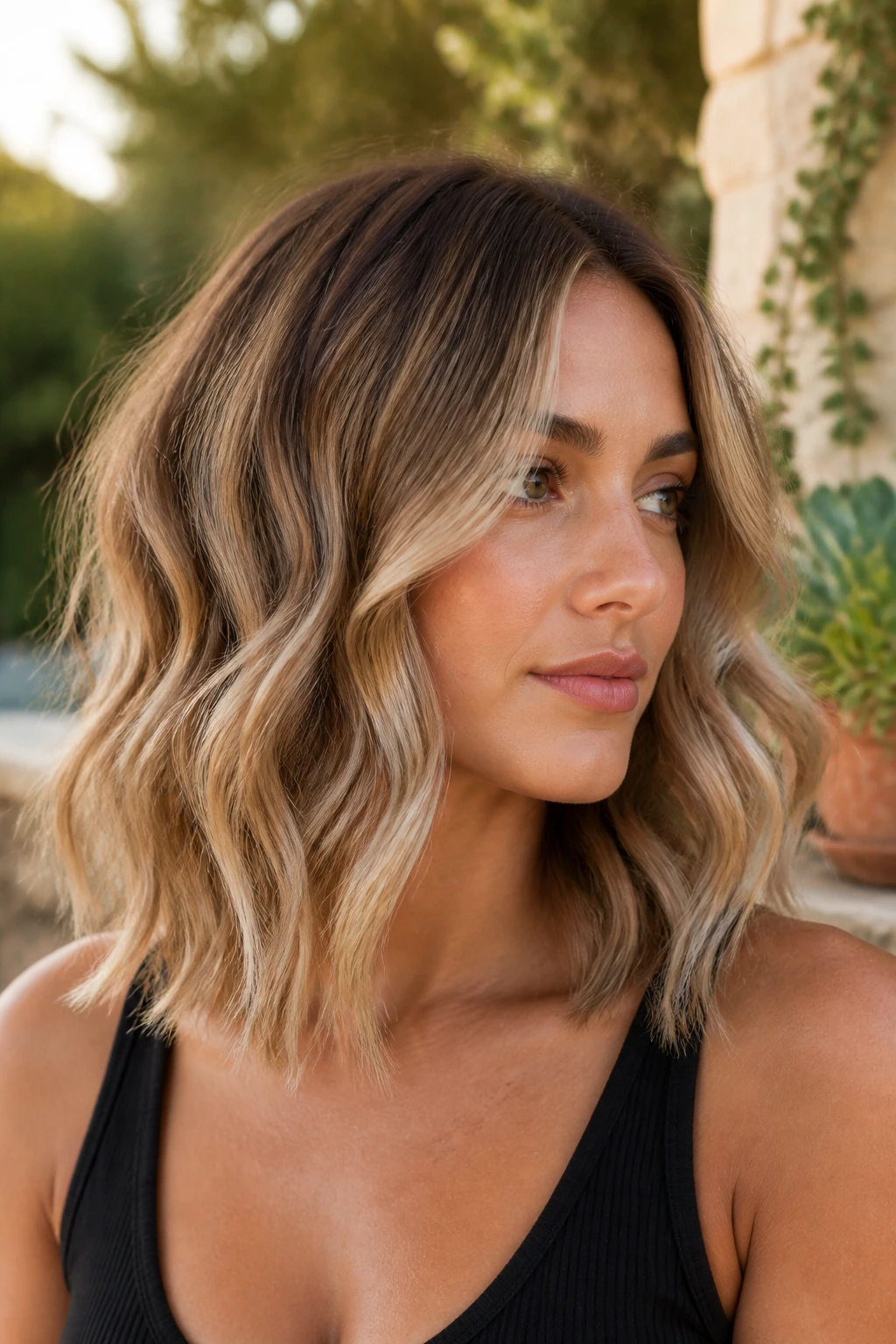
Toasted almond blonde has a nuttier base than champagne or pearl, and that makes it one of the easier warm blondes to wear. The tone feels deeper and more grounded, which suits medium length hair with loose waves.
The waves pull out the dimensional pieces without making the hair look busy. That’s the useful part. If you’re growing out old highlights, this shade can help bridge the gap between your natural base and the lighter ends. It’s a good “I want blonde, but not a loud blonde” option.
21. Bright Vanilla Blonde with Tucked Ends
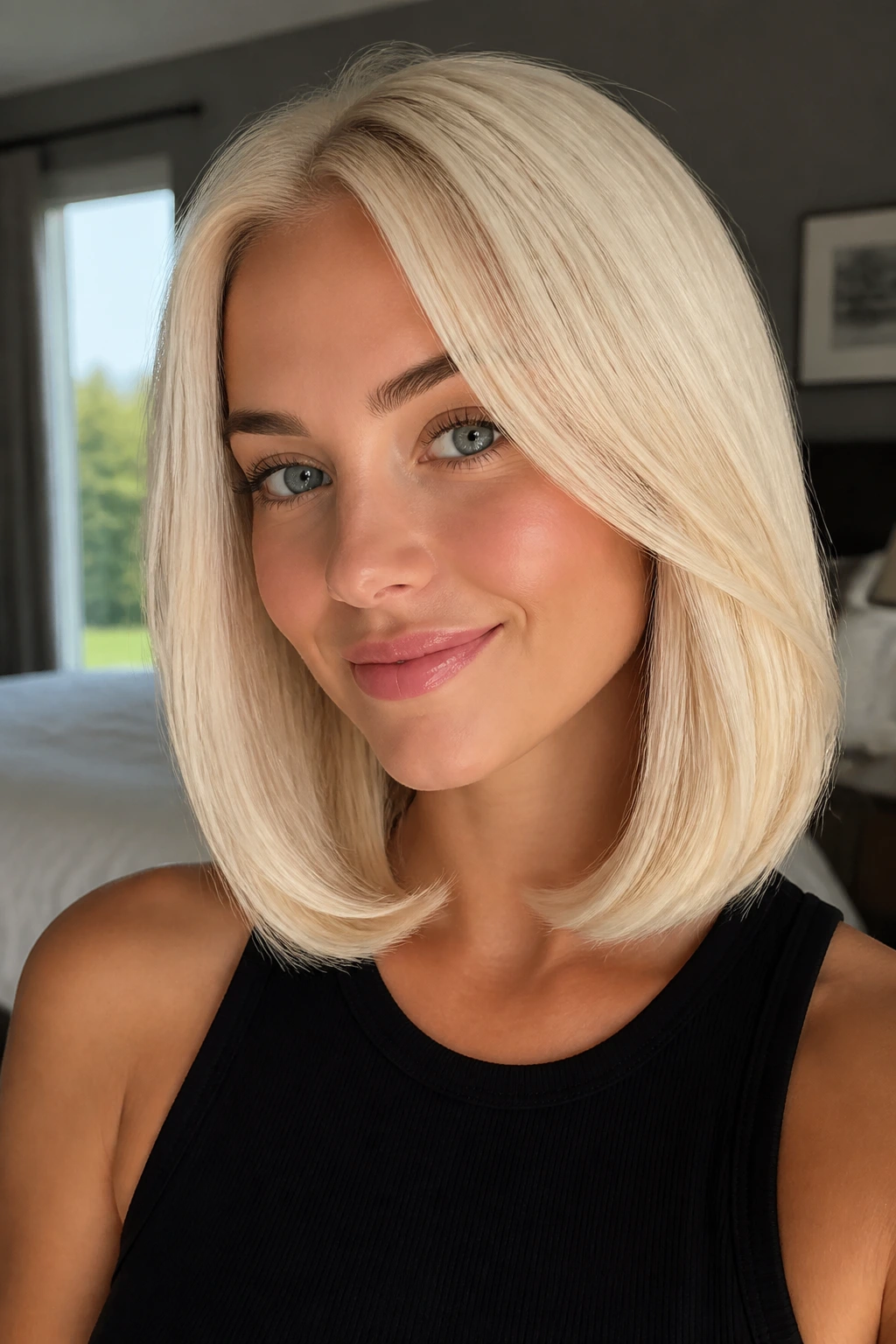
Bright vanilla blonde is clean, pale, and a little glossy in a way that looks strongest on a shape with tidy ends. Tucked ends or a smooth under-bend keep the finish polished rather than fluffy.
This shade is one of the more demanding looks on the list, because every uneven patch shows. If your hair is damaged, the blonde will expose it fast. But on healthy medium-length hair, it’s sharp. Ask for a soft root so the bright ends don’t make the regrowth look harsh after a few weeks.
22. Smoke and Pearl Blonde Blend
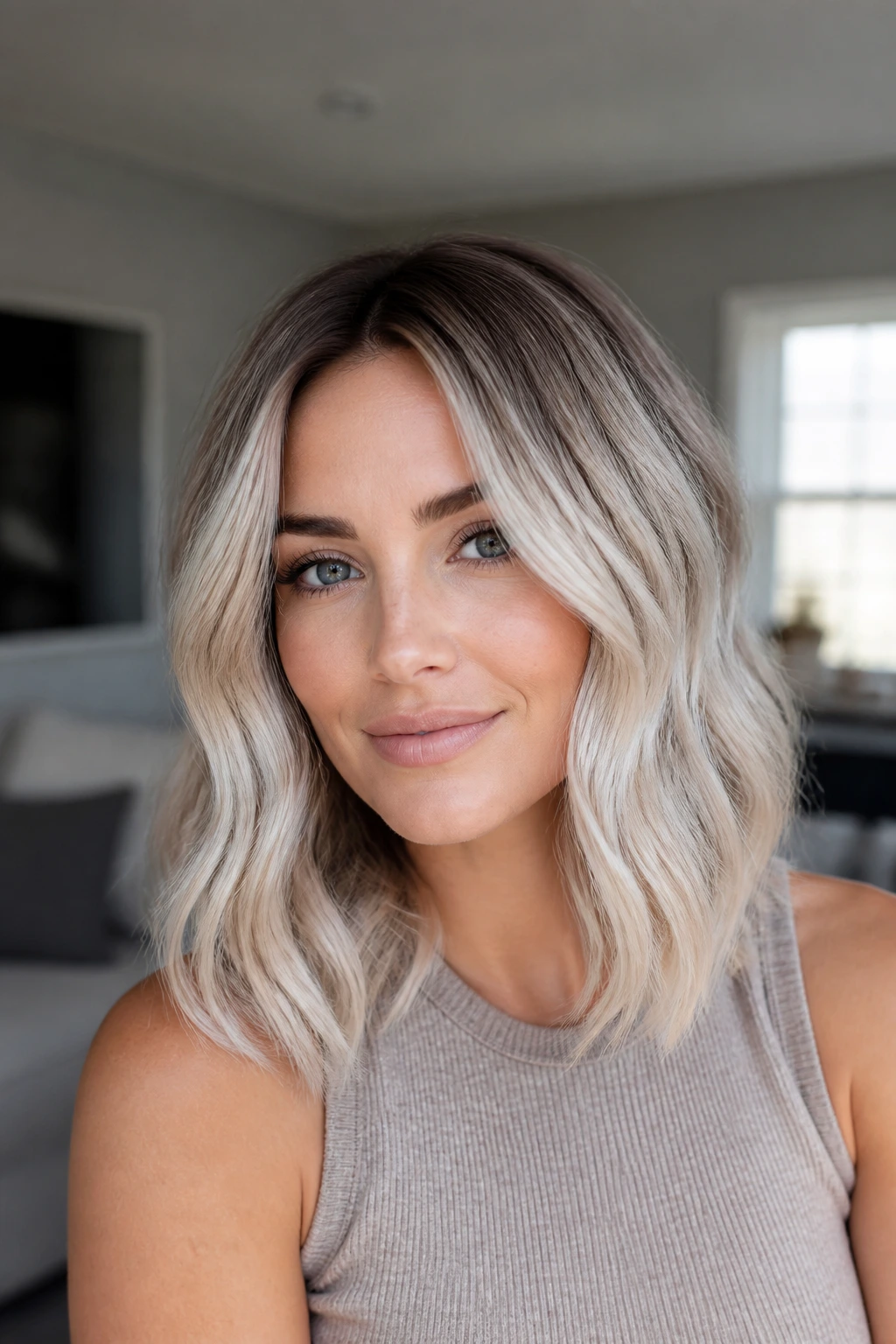
Smoke and pearl is the cooler cousin of creamy beige. It has that smoky wash at the root, then a pearly shift through the lengths, which gives the hair a polished, almost liquid look.
Best fit: medium-length hair with some natural density, because the blend needs enough body to show up.
Salon note: this is not a one-and-done color. You’ll want a toner refresh before the pearl turns dull and the smoke starts looking muddy.
23. Beige Brunette-to-Blonde Balayage
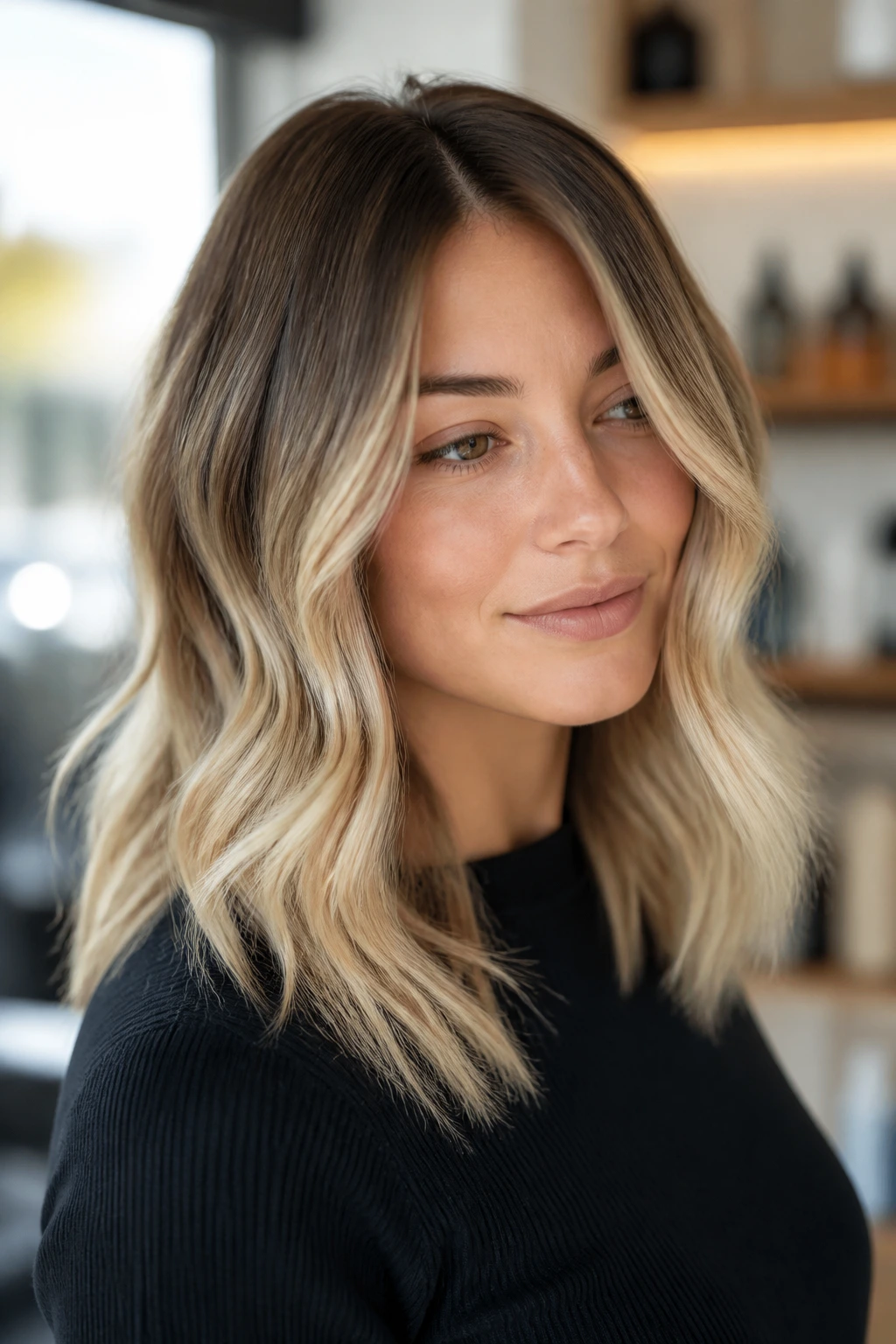
This is the blonde look for people who do not want to pretend they’re starting from zero. The darker base stays present, then the balayage opens up into beige blonde through the midlengths and ends.
The gradual shift is the point. On medium length hair, balayage has enough room to stretch out, so you can see where the brunette ends and the blonde starts without a hard line. If your hair is thick, this is especially flattering because it removes some visual weight without chopping the length short.
24. Buttered Corn Blonde with Soft Fringe
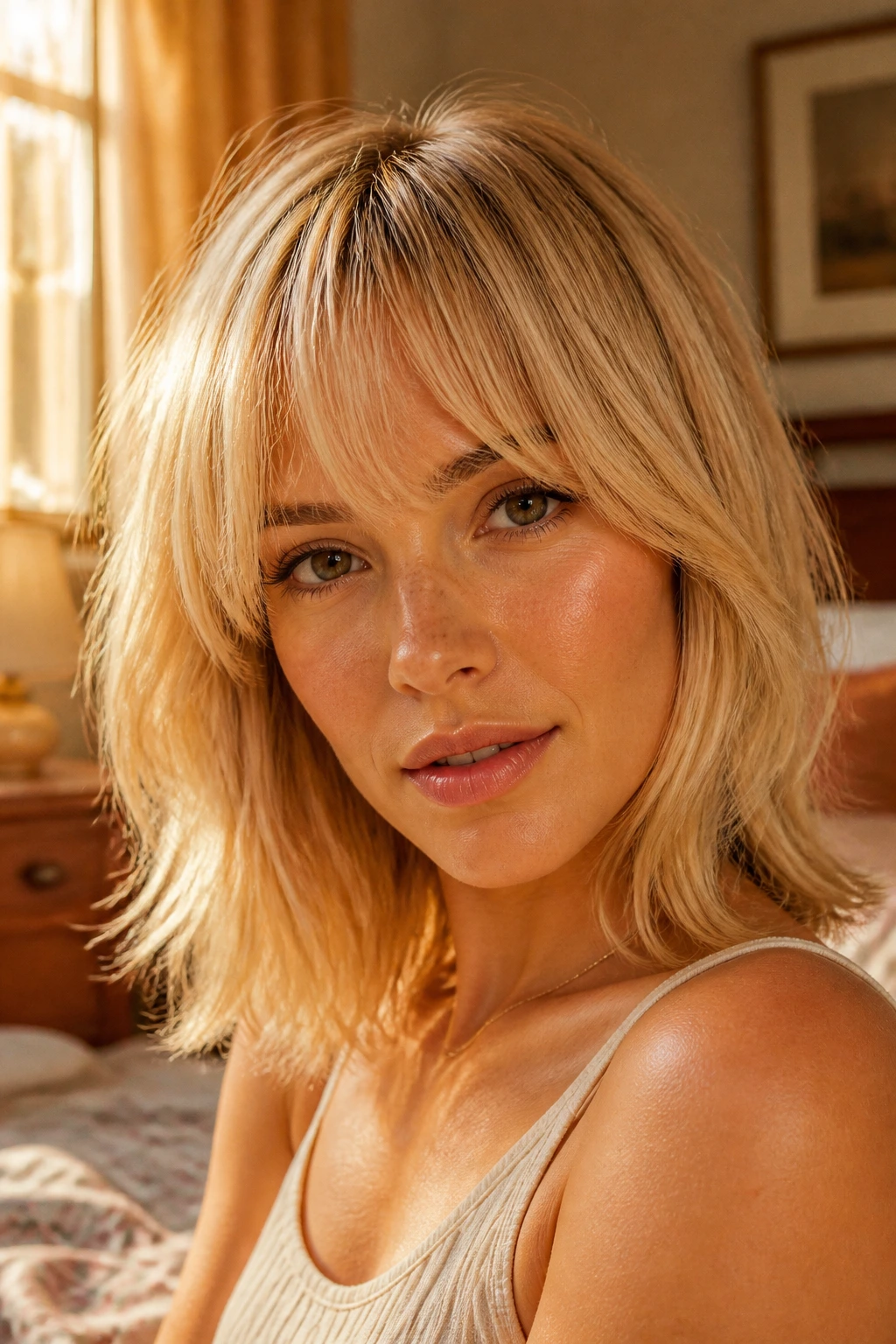
Buttered corn blonde sounds playful, and it is a little warmer and brighter than the rest of the beige family. On medium length hair with a soft fringe, the shade has a retro tilt that can look very fresh when the cut is kept modern.
The fringe matters because it stops the brightness from concentrating only in the ends. If you want the color to feel lively, keep the front pieces a touch lighter than the back. This is one of the few shades where a slight golden cast helps more than a cool gloss.
25. Honeyed Copper-Blonde Glow
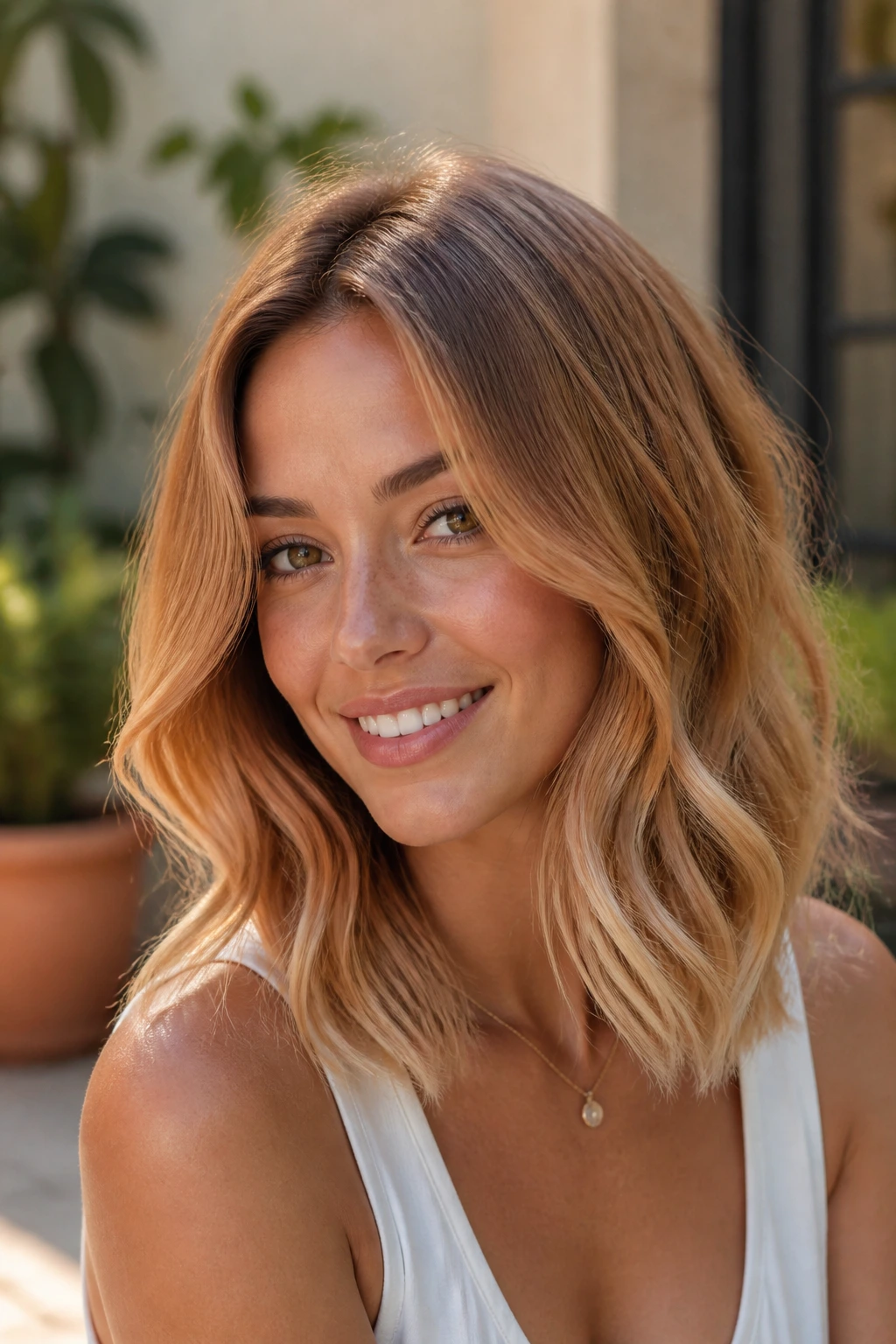
Honeyed copper-blonde is for people who want warmth with a little bite. It sits somewhere between golden blonde and soft copper, which makes it more vivid than beige but not as red as a full strawberry tone.
On medium length hair, the color has enough room to show both the warm base and the brighter ends. That’s what keeps it from looking like one flat color block. If your skin likes peach and gold tones, this one can be very flattering around the face. It also looks good with a loose wave that lets the warm pieces catch light separately.
26. Champagne-to-Ivory Gradient Lob
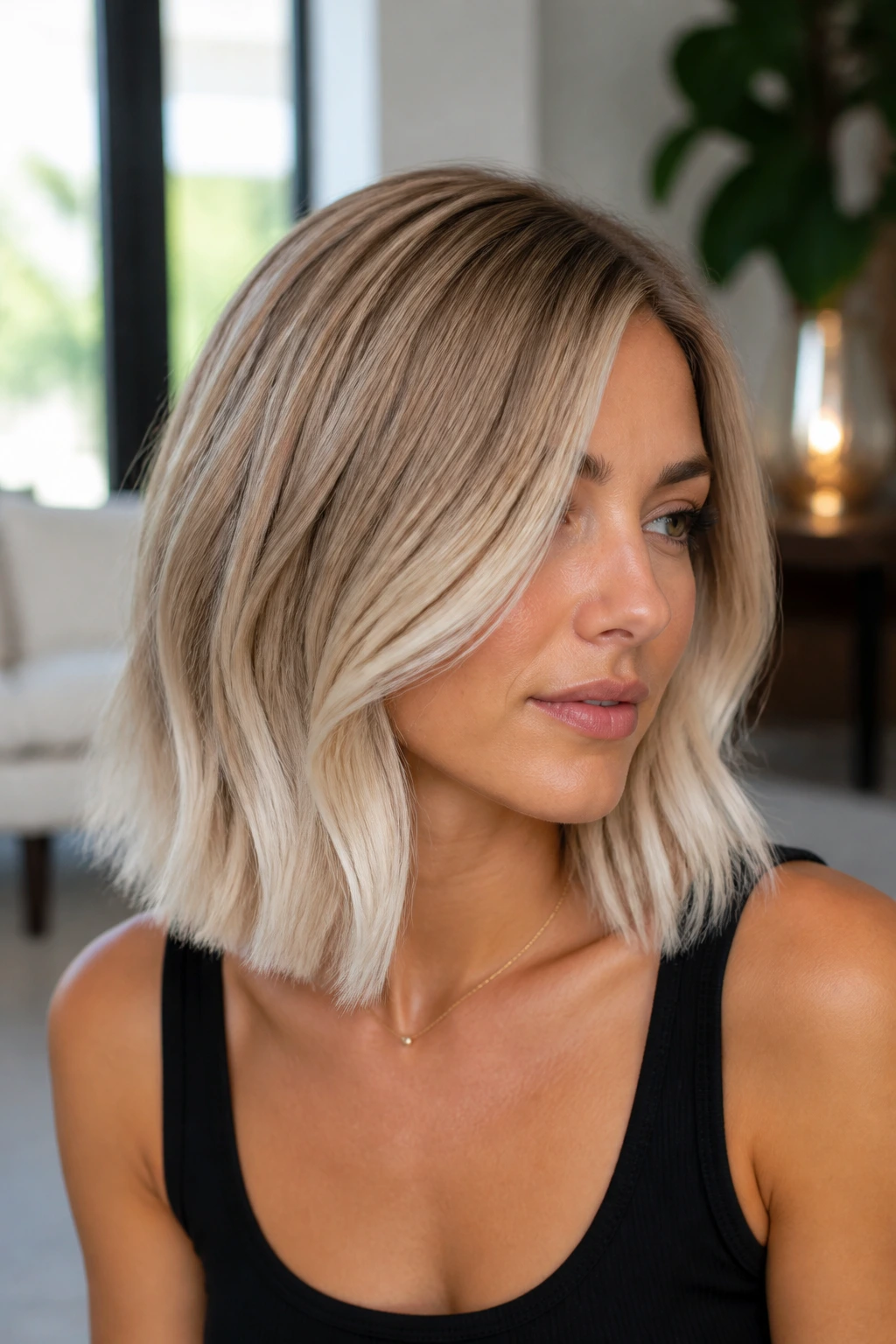
A champagne-to-ivory gradient is a neat trick on a lob because the cut gives the color room to move from soft warmth near the root into a paler end. The shift looks deliberate, not accidental.
This works best when the transition is gentle. Think root melt, not stripe. If you like a center part, the gradient feels modern and clean. If you wear it side-parted, the ivory ends pop more dramatically on the heavier side.
27. Ash Beige Blonde with Airbrushed Layers
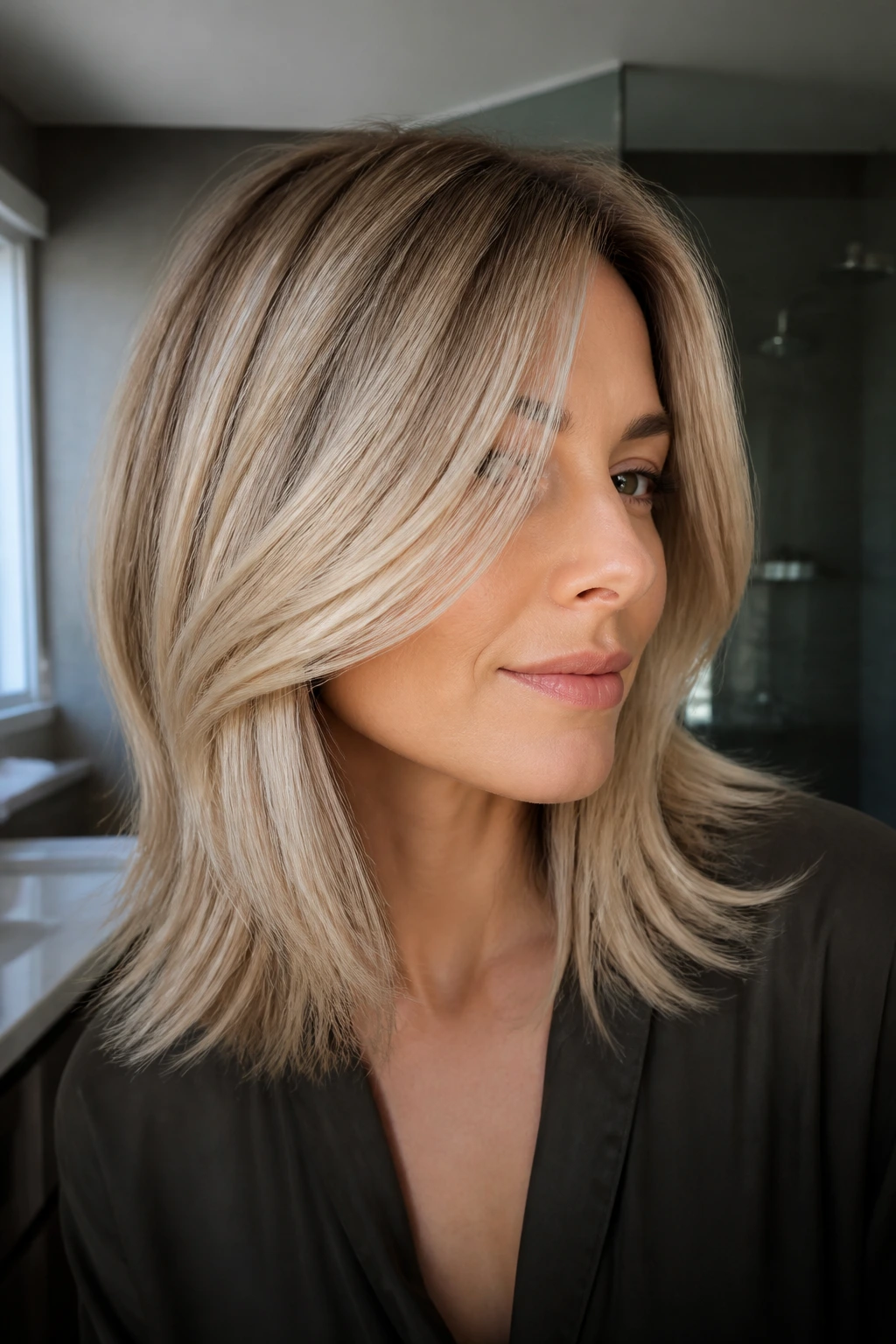
Ash beige is what you get when you want coolness without the flat gray that bad toner can leave behind. The layers feel airbrushed because the color isn’t all one level; it fades through the cut in a soft, even way.
This is a quiet look, but not a boring one. On medium length hair, the ash beige pieces have enough space to separate as you move, so the layers still show. It’s a good choice if you want your hair to look expensive in a plain blow-dry rather than only when it’s curled to the moon.
28. Maple Blonde with Money Piece
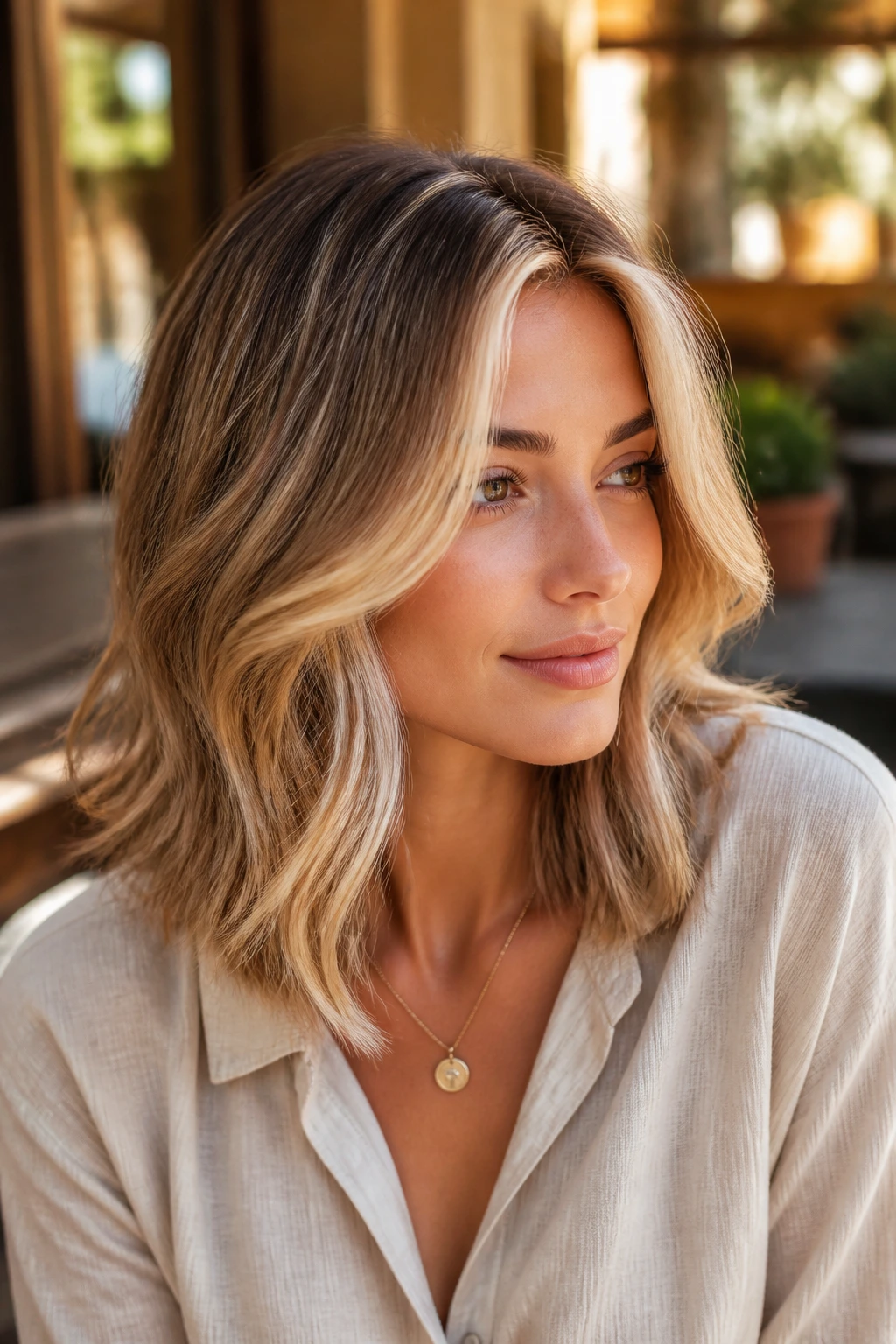
Maple blonde brings a warm amber note to the hair, then the money piece gives you the brightness right where people look first. The result is lively without going full gold.
I like this on shoulder-length cuts with a bit of internal layering. The shape prevents the front brightness from looking too harsh, and the maple tone in the rest of the hair keeps it grounded. If you wear a lot of earthy colors, this blonde tends to sit well next to them.
29. Champagne Rose Blonde
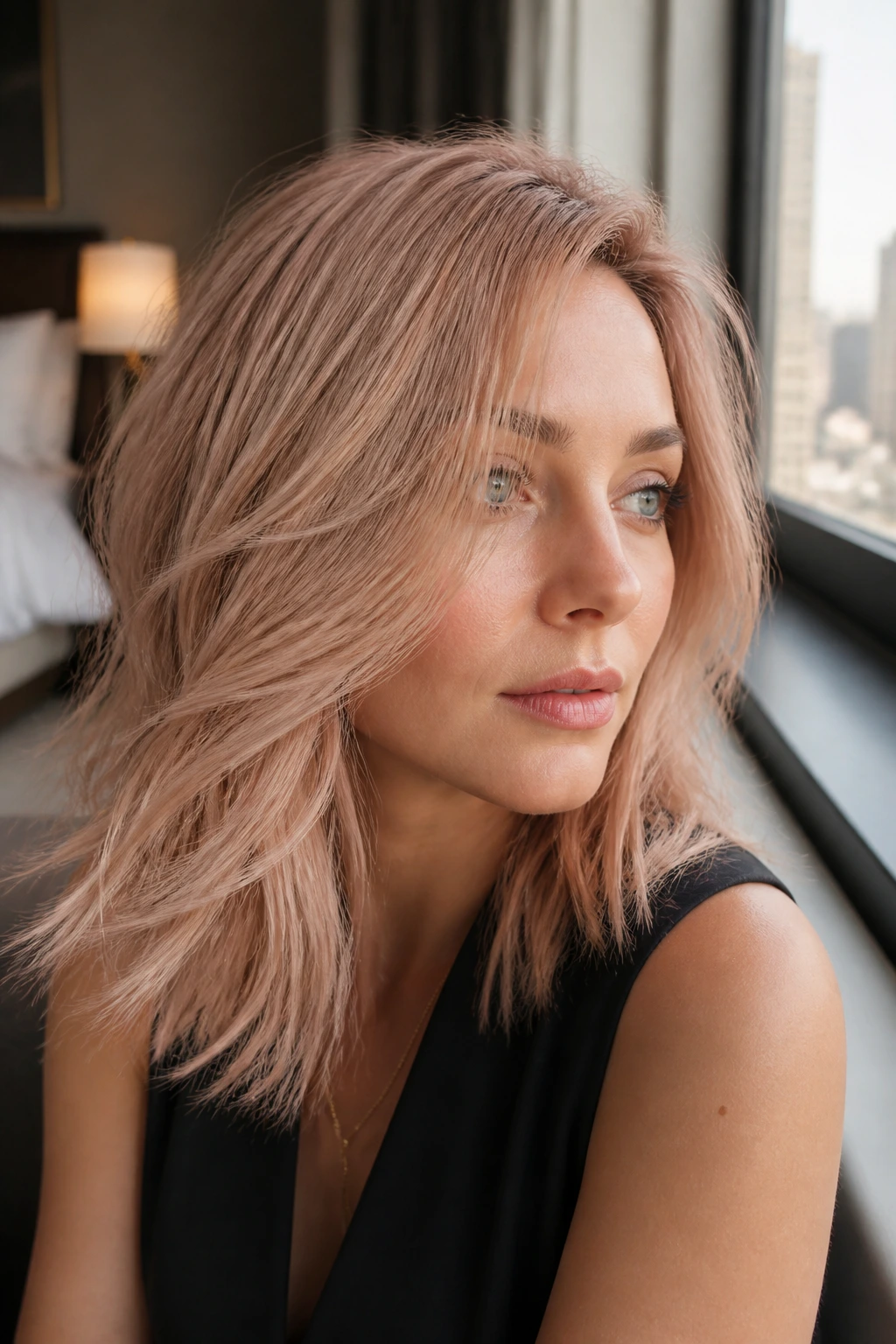
Champagne rose blonde is softer than pink hair and more playful than standard beige. The rose note is subtle, almost like a blush over a pale blonde base, which keeps it wearable on medium length hair.
The shade works because the cut gives it room to show movement. On a bob that’s too short, the rose can feel novelty-ish; on longer hair, it can disappear. On a lob, it feels deliberate. Ask for a gloss with a pink-beige tint rather than a bright pastel dip.
30. Pale Sand Blonde with Undone Texture
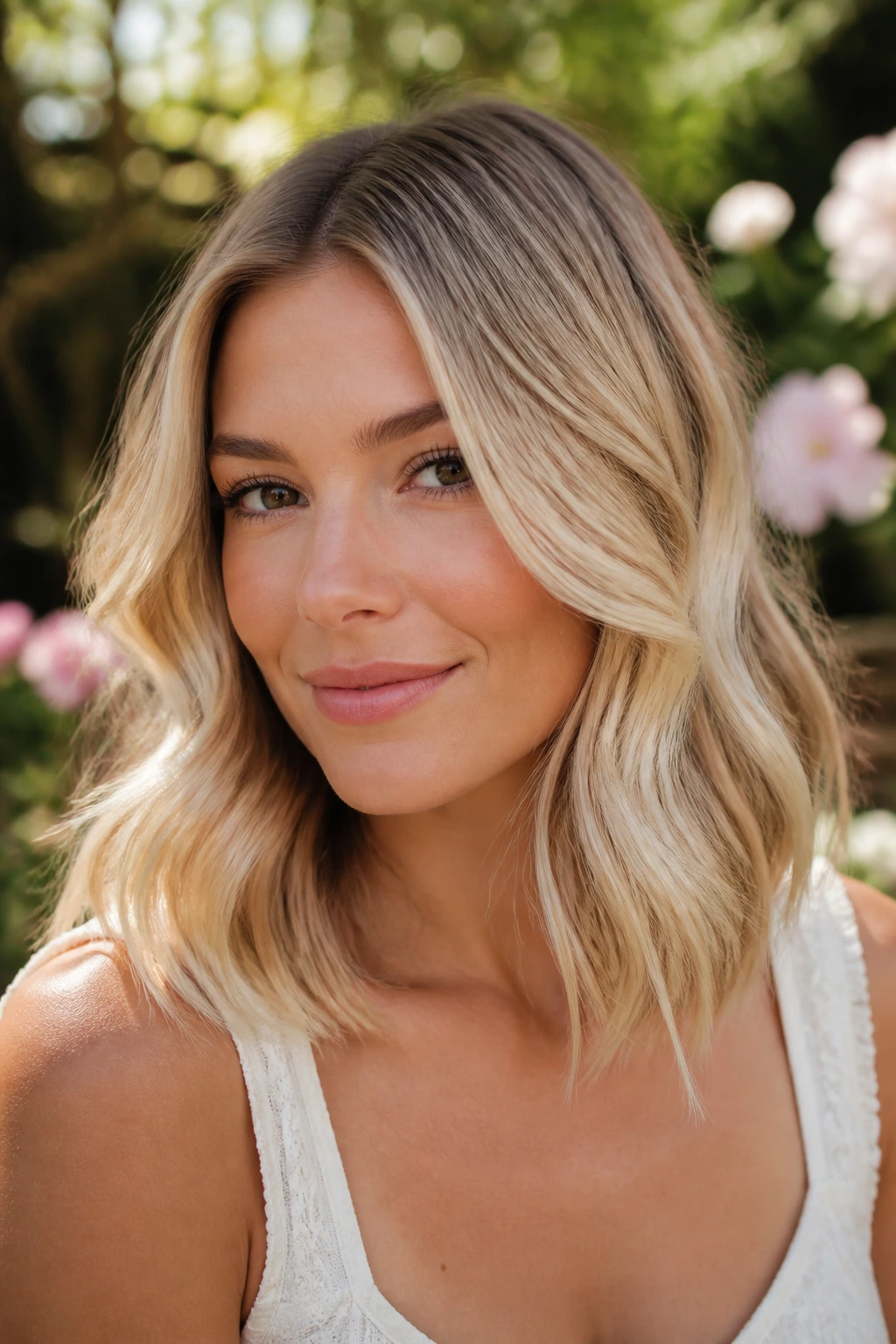
Pale sand blonde is for anyone who wants lightness without the icy sharpness that can make features look severe. The tone is soft and matte in the best way, and the undone texture keeps it from reading too precious.
This is a useful shade if your hair naturally sits somewhere between blonde and light brown. It doesn’t fight the base; it works with it. A quick scrunch with a light mousse is enough. If you over-style it, the point gets lost.
31. Soft Caramel Face Frame and Blonde Ends
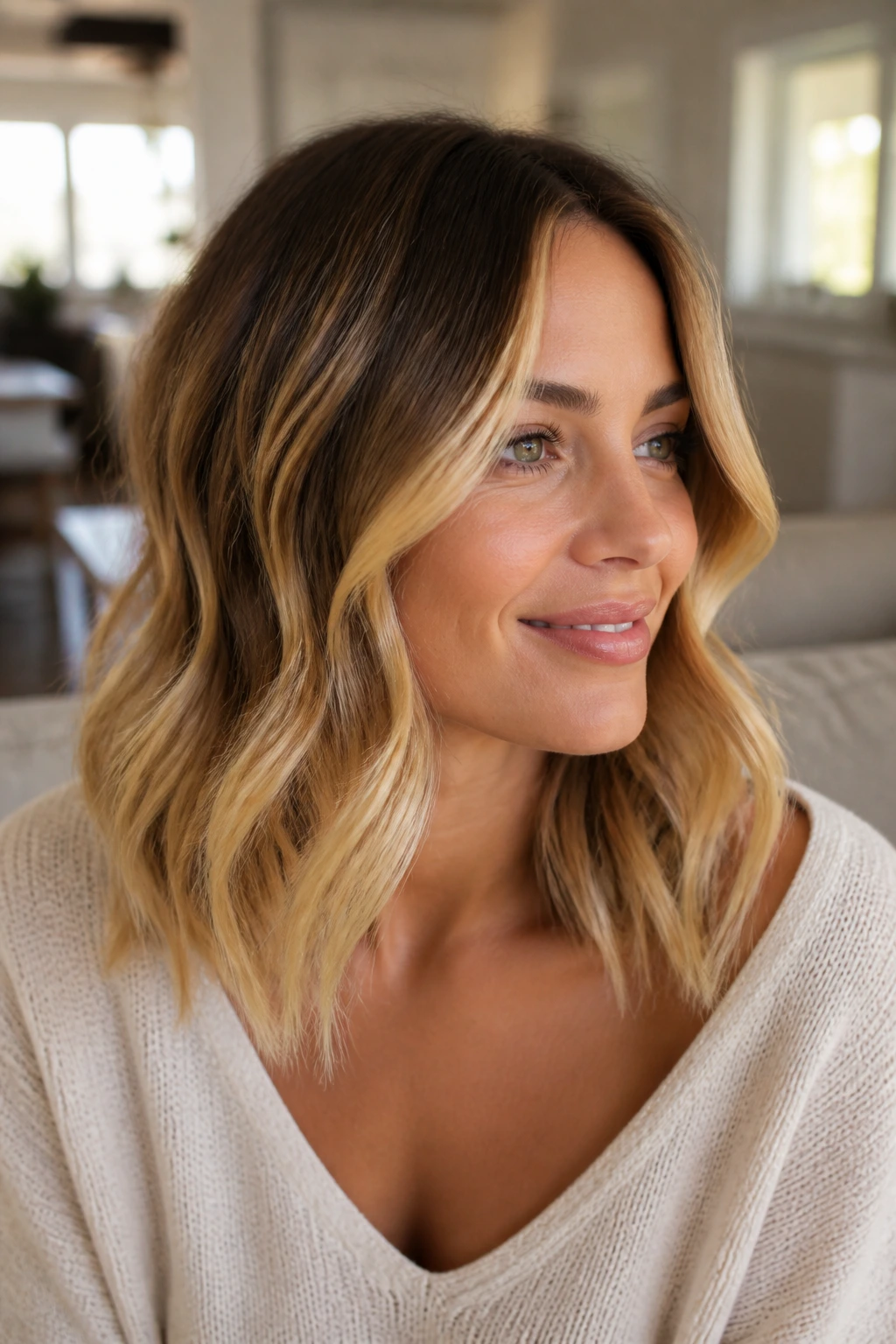
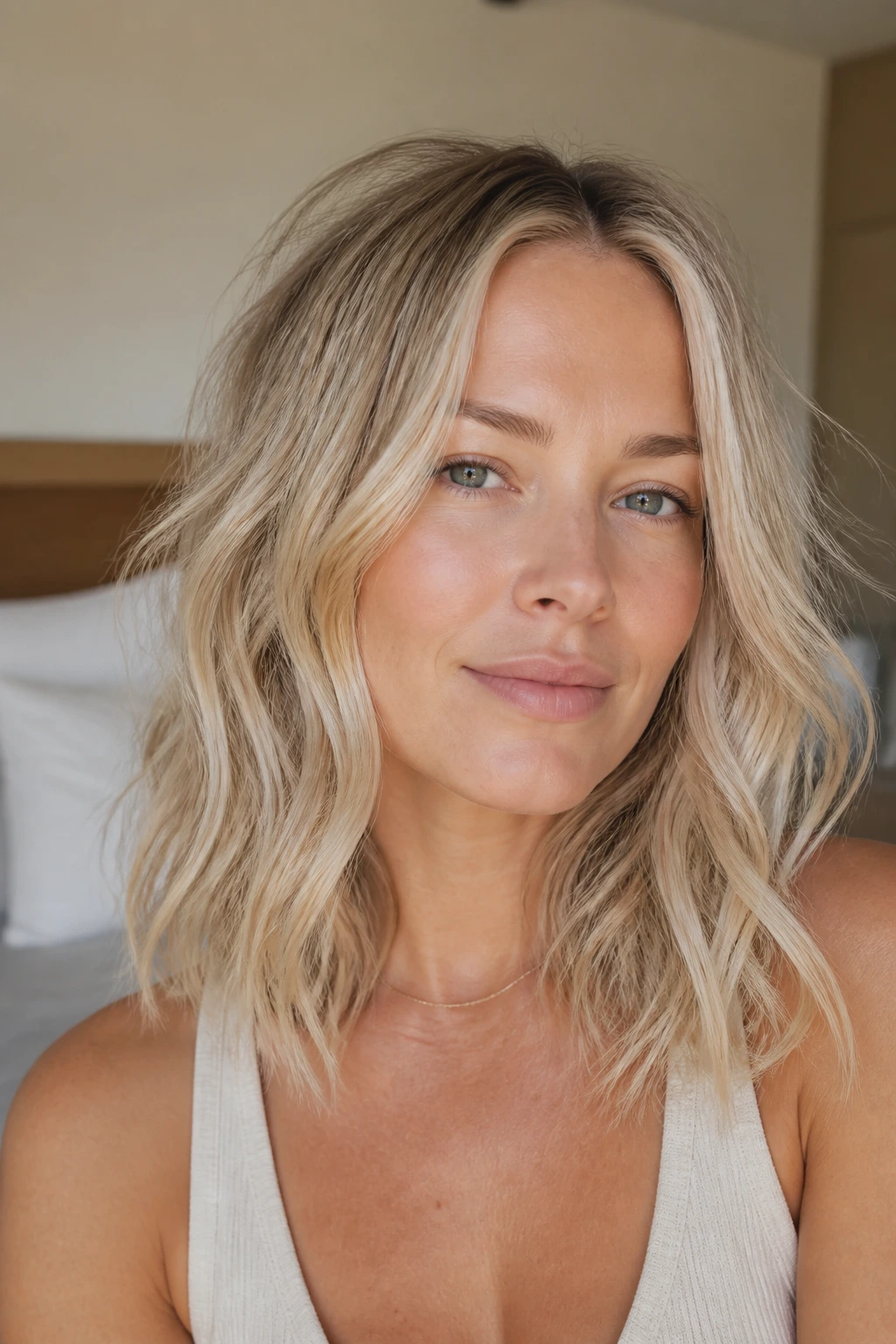
A caramel face frame gives medium-length hair a warm opening, then the blonde ends carry the brightness through the rest of the shape. That contrast can make a simple cut look much more intentional.
The color placement is doing more than the shade itself. By keeping warmth near the face and brightness lower down, you get softness at the top and movement through the ends. If your hair tends to hide highlights when it’s tucked behind the ears, this placement fixes that problem fast.
32. Vanilla Cream Blunt Lob
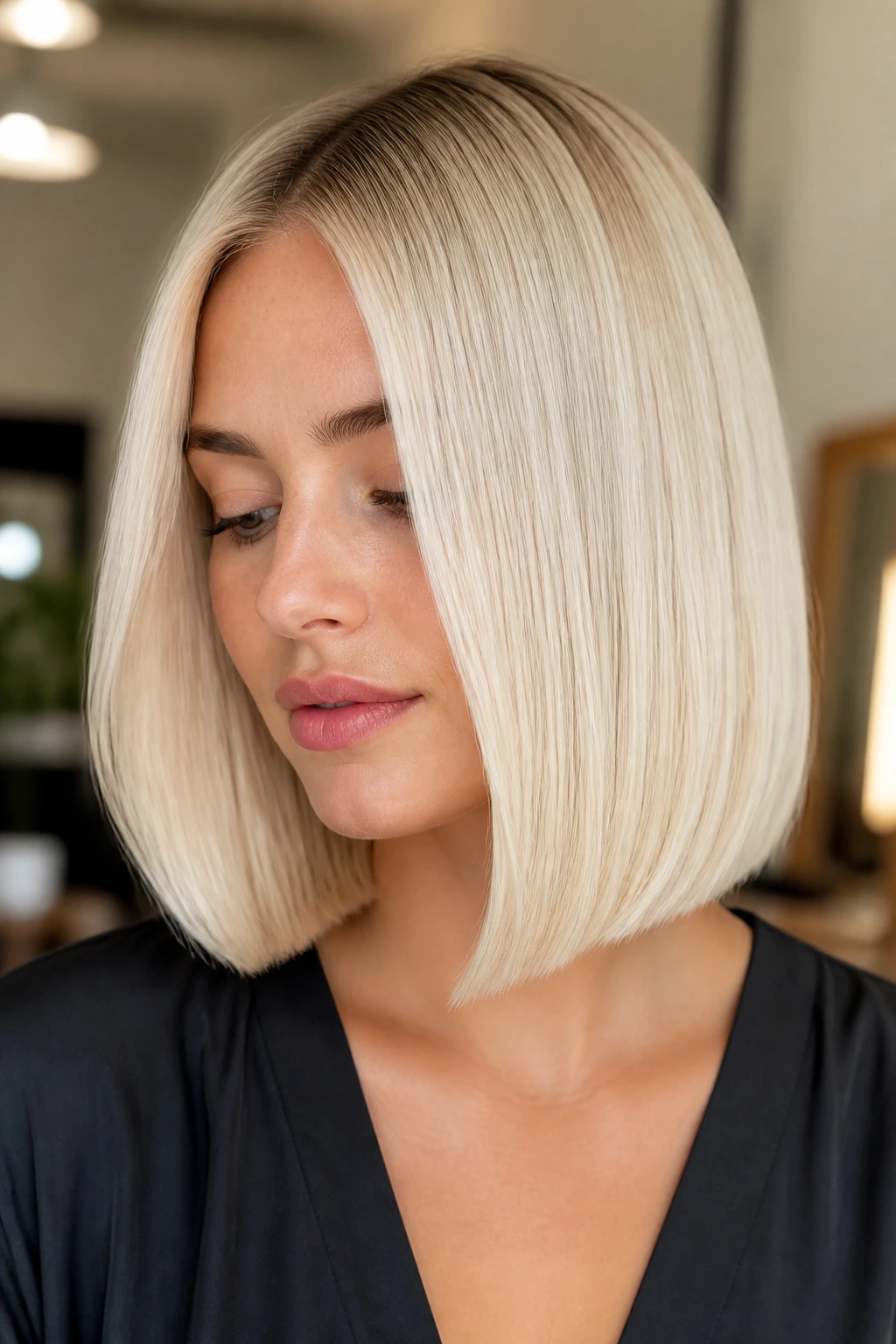
Vanilla cream on a blunt lob is clean and bright without leaning harsh. The blunt perimeter keeps the color from wandering, so the whole look feels tidy even when the tone is pale.
This one depends on a smooth finish. Blow-dry it with the nozzle pointed downward and bend the very ends under just a little. That tiny curve keeps the cut from feeling boxy. If your hair is thick, ask for internal debulking rather than heavy layers, or the blunt line gets lost.
33. Sunlit Wheat Blonde with Wavy Ends
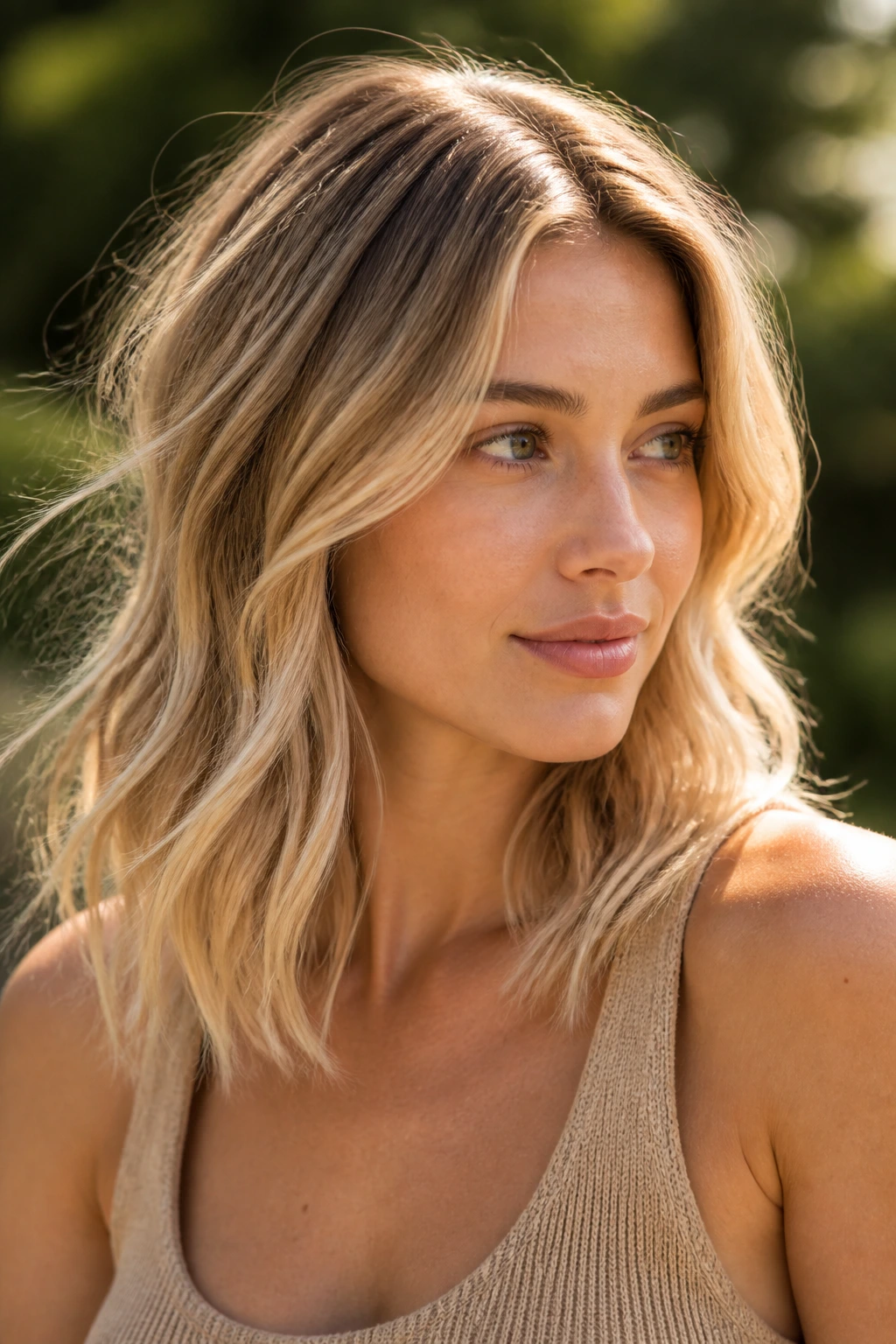
Sunlit wheat blonde has a dry-gold softness that looks especially nice on medium waves. The ends bend and separate, so the lighter pieces don’t sit all in one place.
This is the sort of blonde that looks best when you do less to it. A rough blow-dry, a wave, and a little texture spray are enough. If you overcurl it, the wheat tone can turn too uniform. Leave some irregularity in the wave pattern. That keeps the color alive.
34. Cool Pearl Balayage with Long Layers
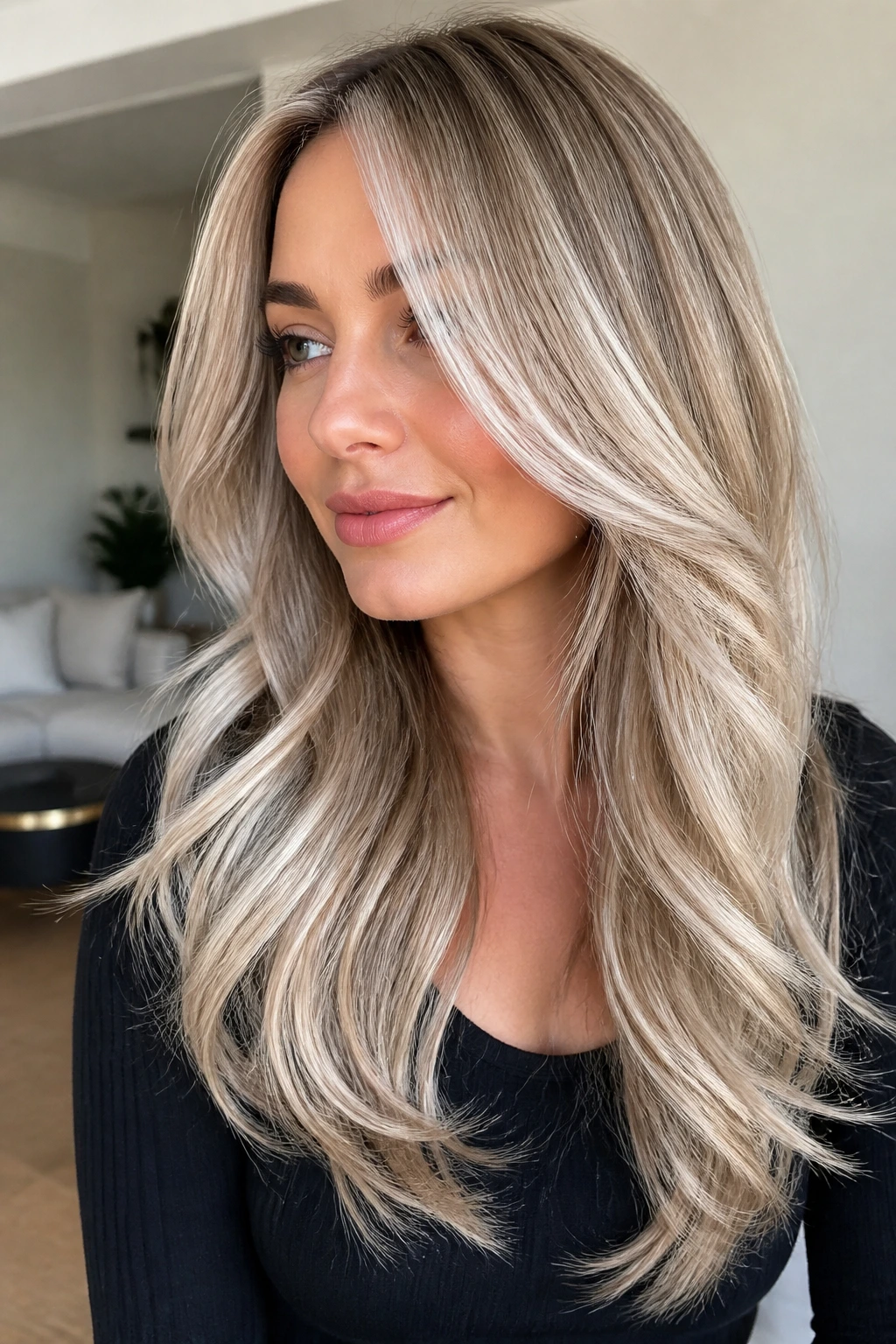
Cool pearl balayage on long layers gives you a pale finish without the rigidity of a one-shade blonde. The cool ribbons sit through the lengths, while the darker root keeps the shape from looking washed out.
This is a good pick if you like movement but do not want a shag. The layers give the pearl tone room to fall in sections, and the balayage means the grow-out is softer than full highlights. If your ends are porous, condition them hard before toning. Pearl can go flat on damaged hair fast.
35. Bright Cream Blonde with a Deep Side Part
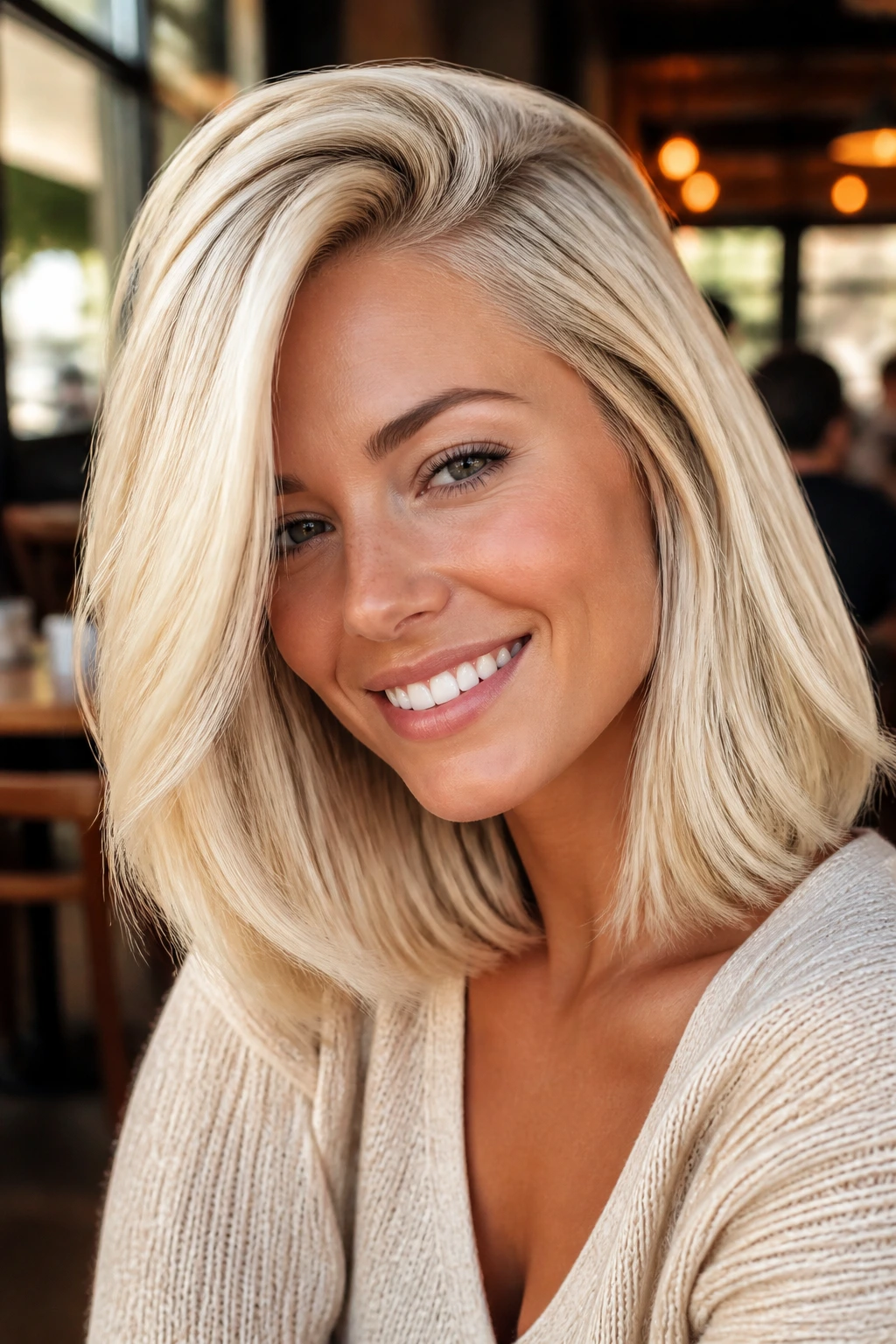
A deep side part gives bright cream blonde some drama without needing a big color change. The part shifts the weight, and the lightest pieces fall across the forehead and cheek, which makes the whole cut feel more deliberate.
This shade works because medium length hair can hold brightness and still keep a shape. The cream tone is lighter than beige but softer than icy white, so it has enough warmth to stay wearable. If you want the color to feel fuller, tuck one side behind the ear and let the other side fall forward. The asymmetry does a lot of the work.
Why Medium Length Hair Gives Blonde Room to Move
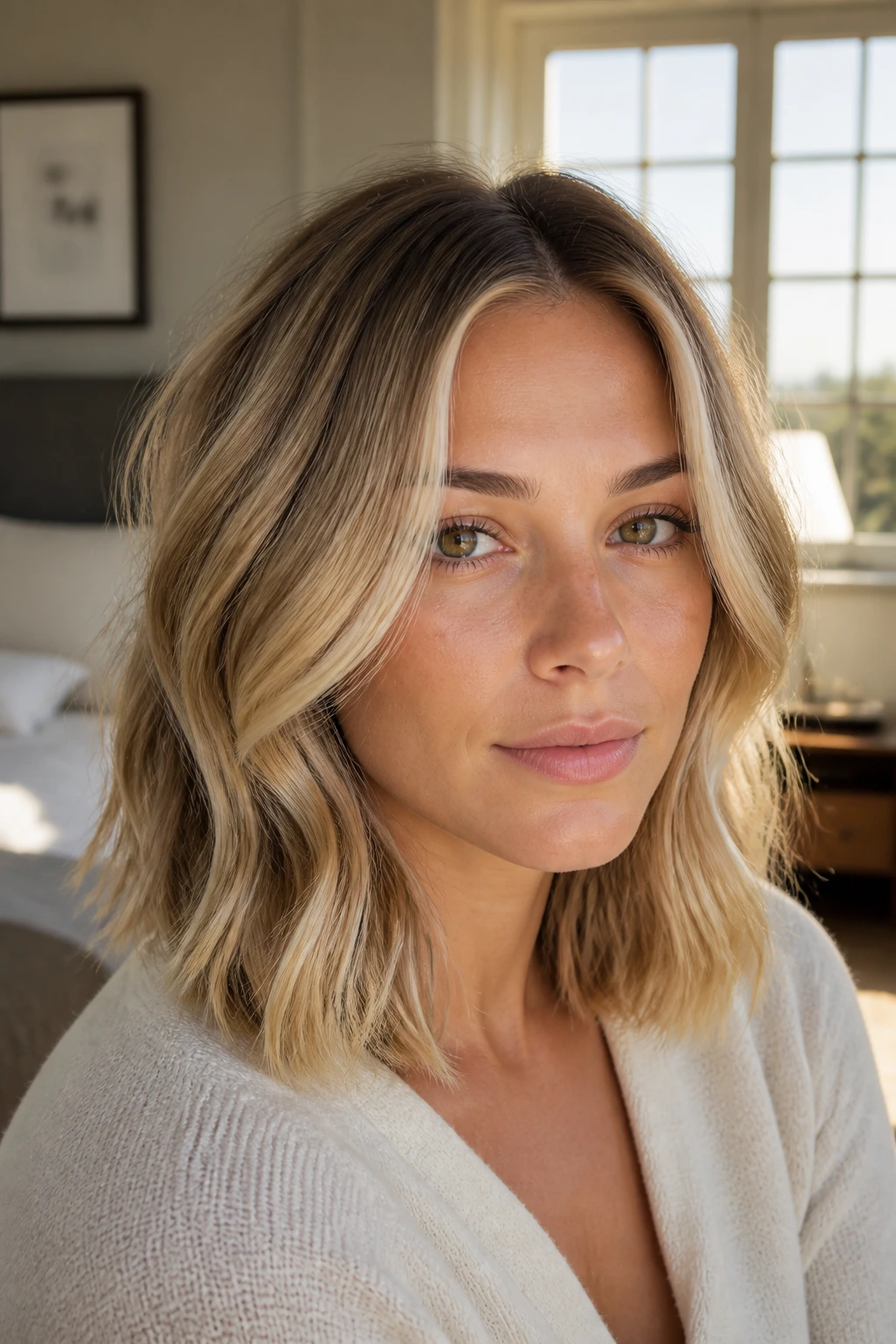
Medium length hair is where blonde starts to make sense in a practical way. Long hair can swallow a color story; every highlight has more distance to travel, and the eye has to work harder to see the shape. A lob, shoulder cut, or collarbone length keeps the lighter pieces in view from root to tip.
That matters more than people think. Blonde is not one thing. It’s a whole set of reflections — beige, ash, gold, pearl, ivory, champagne — and medium length hair gives those tones a place to separate. The lighter ends, the shadow at the root, and the brighter face frame can all show up without needing a ton of styling.
There’s also a blunt truth about grow-out: medium length blondes behave better. A partial highlight, root melt, or balayage tends to look intentional longer because the hair simply has less runway. You are not asking one tone to stretch over your whole head. That’s why this length works so well for people who want blonde without living in the chair.
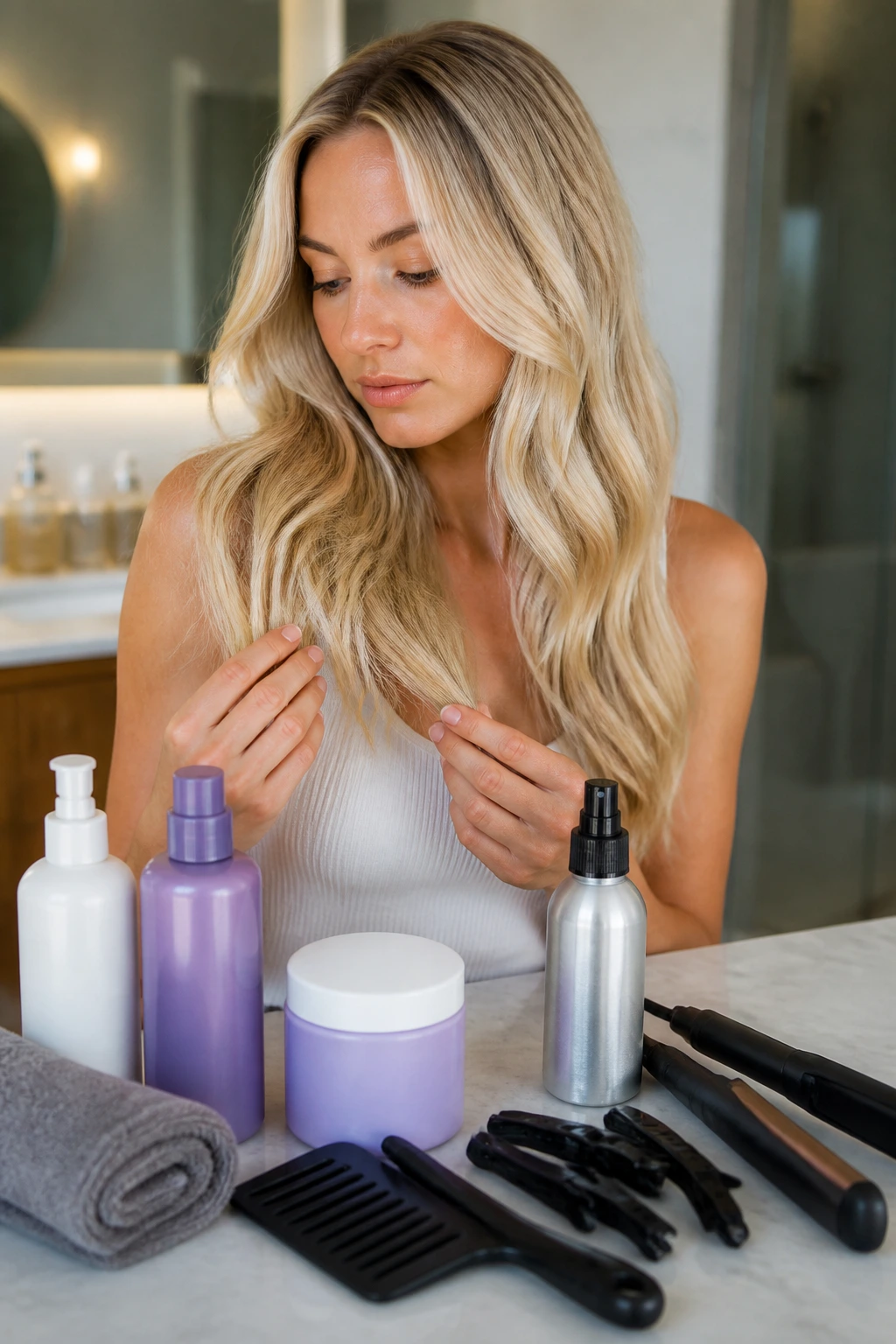
Essential Tools for Blonde Maintenance
-
Color-safe shampoo: A gentle shampoo keeps the cuticle from roughing up too fast, which helps blonde stay shiny instead of chalky.
-
Purple shampoo: Use it once a week, sometimes less. It helps quiet yellow tones, but too much can leave beige blondes looking gray.
-
Color-depositing mask or gloss: This is useful if your blonde leans warm or fades fast. A beige or pearl mask can buy you extra time between toner visits.
-
Heat protectant: Blonde hair shows heat damage fast, especially on medium lengths where the ends sit right at shoulder friction.
-
Microfiber towel or soft T-shirt: Rough towel drying can puff up porous blonde ends and make the color look frizzy.
-
Wide-tooth comb: Better than a brush on wet, lightened hair. It keeps breakage down and helps curls or waves hold their shape.
-
Sectioning clips: You’ll want these for blow-drying, toning, and clipping up the top layers when you only need to refresh the face frame.
-
1.25-inch curling iron or wand: This size gives loose movement without turning medium-length hair into tight ringlets that hide the color.
-
Flat iron with rounded edges: Handy for a sleek finish on pearl, vanilla, or platinum looks. Sharp plates can leave ugly creases.
-
Shower filter, if your water is hard: Not glamorous, but it helps a lot. Hard water can push blonde toward dull yellow or muddy beige.
Choosing the Right Blonde Tone for Medium Length Hair
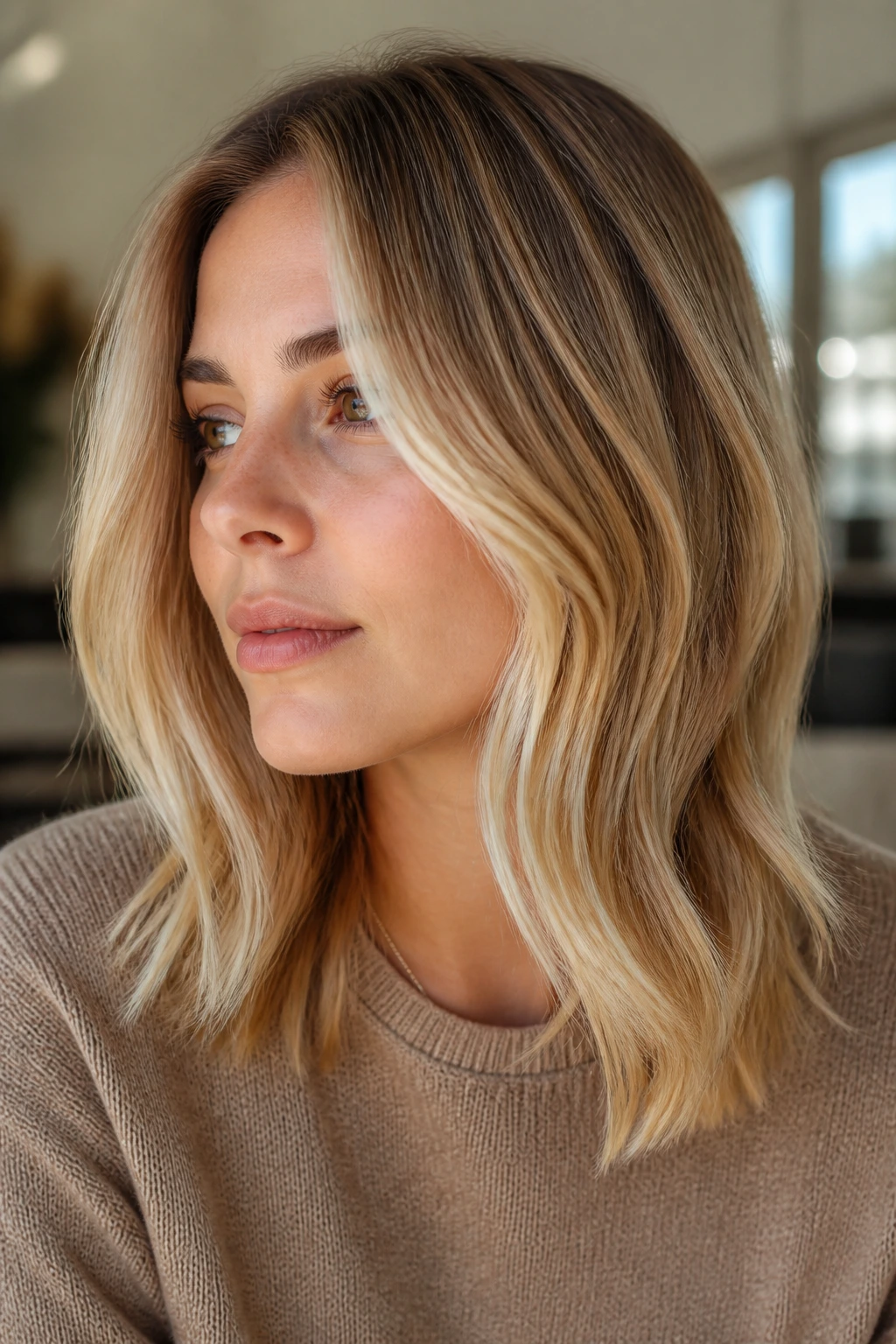
The easiest way to choose a blonde is to start with your natural base, not the photo you saved on your phone. If your hair sits around level 6 or 7, beige, honey, champagne, and caramel blondes usually feel smoother because they don’t need a massive lift to look believable. If you start darker, rooted looks and balayage tend to hold up better than an all-over pale blonde.
Undertone matters too. Warm skin often likes honey, wheat, maple, or cream soda shades because the warmth in the hair echoes what’s already in the face. Cooler skin can hold ash beige, pearl, mushroom, and smoke blondes without the color feeling harsh. But the real test is how the tone behaves at the jawline and cheekbones, not just in a foil swatch.
There’s one mistake I see all the time: people ask for “blonde” without naming how bright they actually want to live. On medium length hair, that number matters. Level 8 reads soft and wearable. Level 9 is brighter, cleaner, and starts asking for more toner care. Level 10 is the pale end of the pool, and if your hair history is rough, it can look fragile fast.
If your hair has box dye, uneven old highlights, or breakage at the ends, don’t rush to platinum. A rooted beige, caramel blonde, or bronde melt will usually look better and last longer. The prettiest blonde is the one that still makes sense six weeks later.
How to Style Blonde Hair Looks for Medium Length Hair at Home
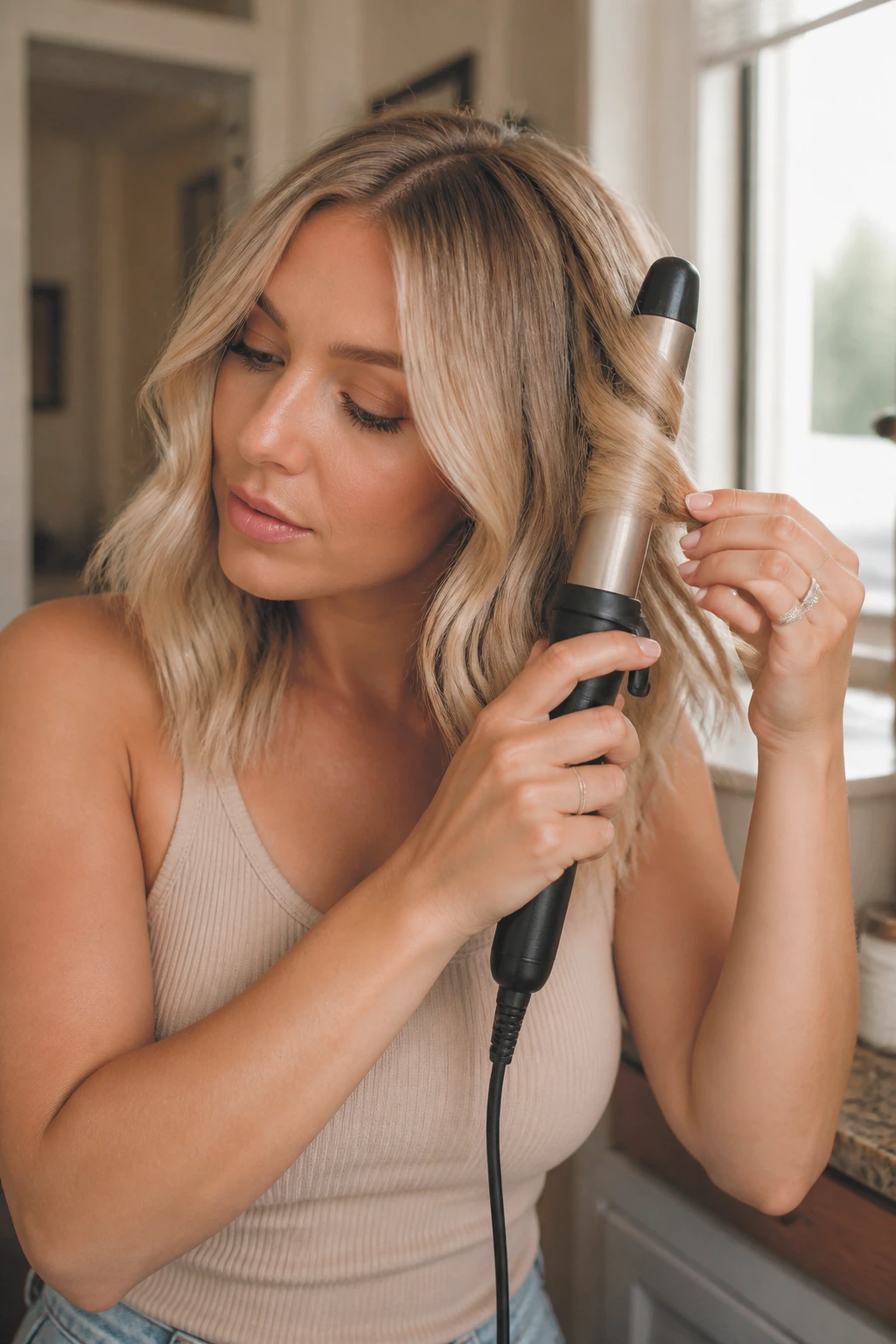
Loose Waves: A 1.25-inch iron or wand gives that easy bend that makes ribbons of blonde separate. Leave the last inch and a half out if you want the ends to stay soft instead of curled tight.
Straight and Sleek: Blow-dry with the nozzle pointed down, then chase the sections with a flat iron once. This finish is especially good for pearl, vanilla, and icy blondes because it shows the tone shift cleanly.
Air-Dried Texture: Use a light mousse or curl cream, not a heavy butter. Medium length blonde can get stringy if you overload it, and stringy ends make the color look tired.
Updos and Clips: Half-up styles, claw clips, and low twists are useful when you want the face-framing pieces to do the work. That front brightness matters a lot on medium cuts; don’t hide it every day.
Parting Tricks: A center part sharpens cool blondes, while a deep side part softens brighter cream and honey tones. The part changes the color more than people expect, so it’s worth testing both before you decide a shade isn’t working.
Small Tweaks That Make Blonde Look More Expensive
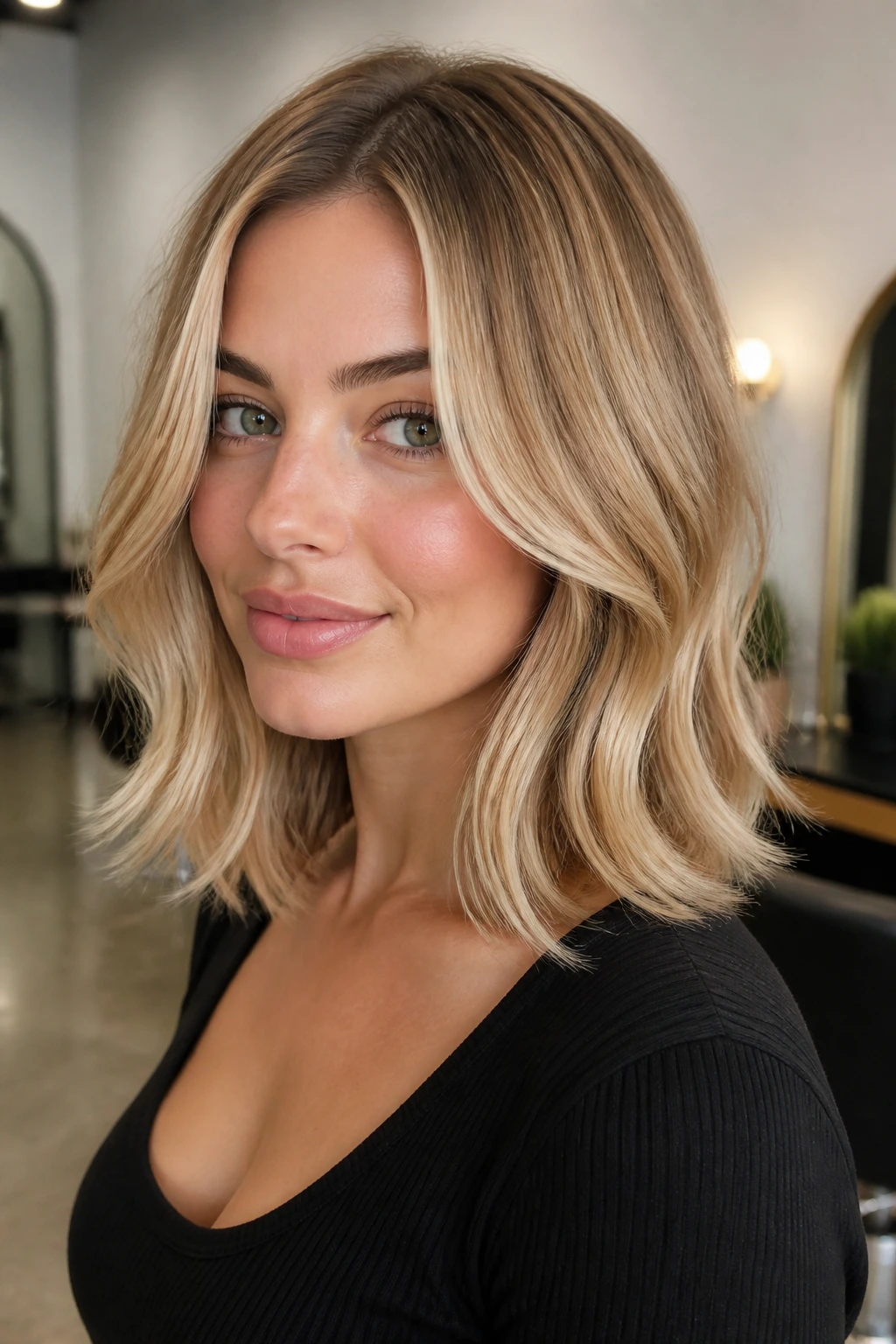
Gloss Boost: A clear or beige gloss every few weeks can make the blonde look smoother than another round of highlights. It closes down rough cuticles and brings back that reflective finish people call “fresh from the salon.”
Contrast Control: If the blonde feels too bright, add a lowlight or a shadow root rather than chasing more lightness. A little depth near the scalp often makes the whole cut look richer.
Texture Shift: A soft bend in the hair shows off dimension better than tight curls or poker-straight ends. The medium length matters here because the color pieces have room to move.
Make-It-Yours: Warm blondes can lean honey, caramel, or maple. Cooler blondes can lean pearl, ash, or mushroom. If you like a little edge, ask for one brighter money piece and keep the rest softer.
Keeping the Blonde Bright Between Appointments
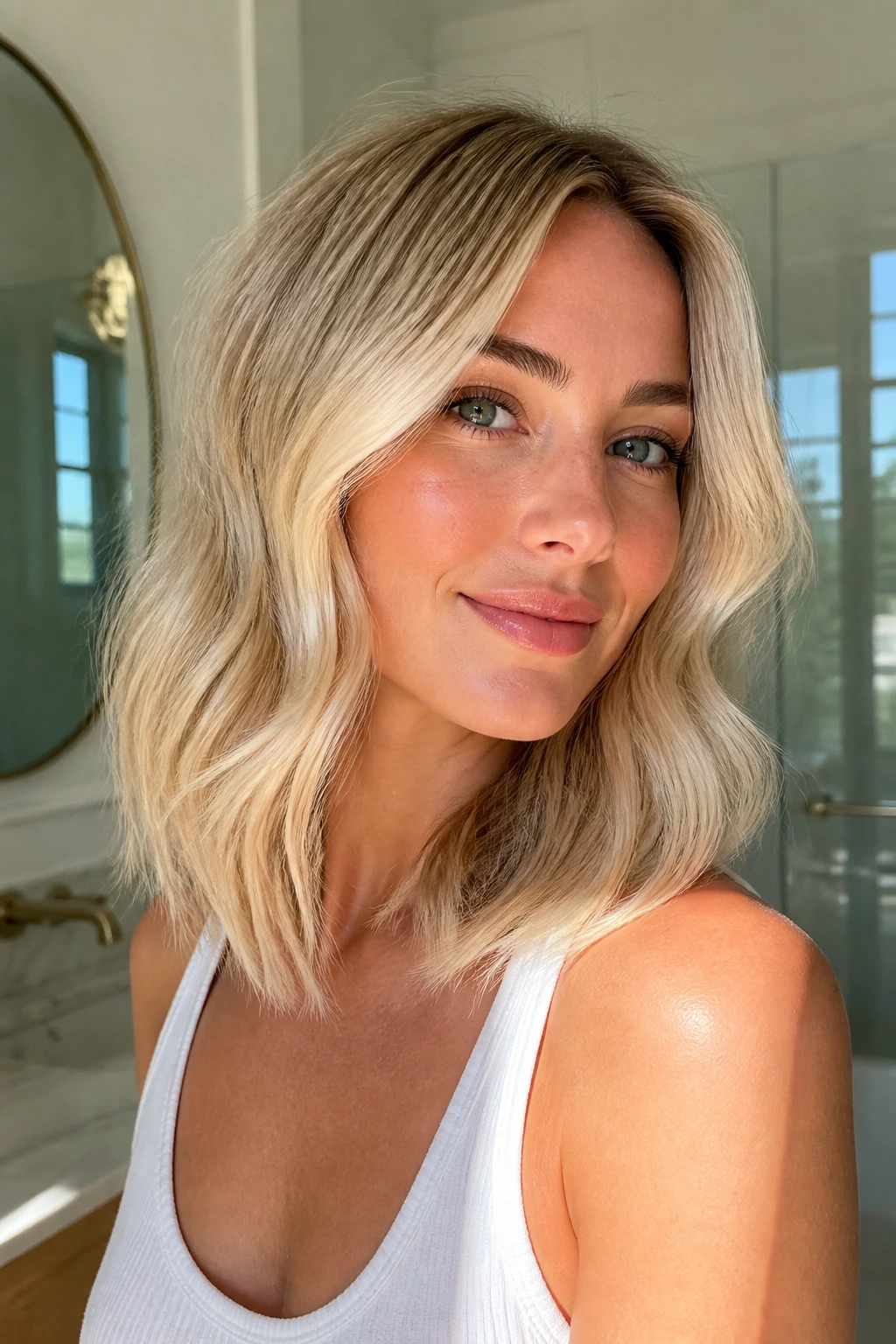
Blonde hair on medium length cuts usually looks best with a rhythm, not random rescue attempts. Purple shampoo once a week is enough for many cool blondes; more than that can dull beige or pearl tones. Warm blondes often do better with a gold or beige glossing mask instead of purple.
Root touch-ups depend on the technique. A solid platinum look may need attention every 4 to 6 weeks, while balayage or a rooted blonde can stretch to 8 to 12 weeks without looking abandoned. That is one of the main reasons medium length hair is so forgiving: the grow-out has room to breathe.
Heat is the other big one. Keep your styling tools under 350°F if you can, and use a protectant every single time. Blonde ends sitting at shoulder length take more friction from coats, seat belts, and scarves than people expect, so a trim every 8 to 10 weeks helps a lot.
If your water is hard or you swim often, the color can shift fast. A shower filter and a clarifying wash once every couple of weeks keep the tone from getting cloudy. And if a blonde starts looking flat, don’t panic and reach for more purple shampoo. First look at the ends. They may just need moisture and a gloss.
Common Mistakes That Make Blonde Fall Flat
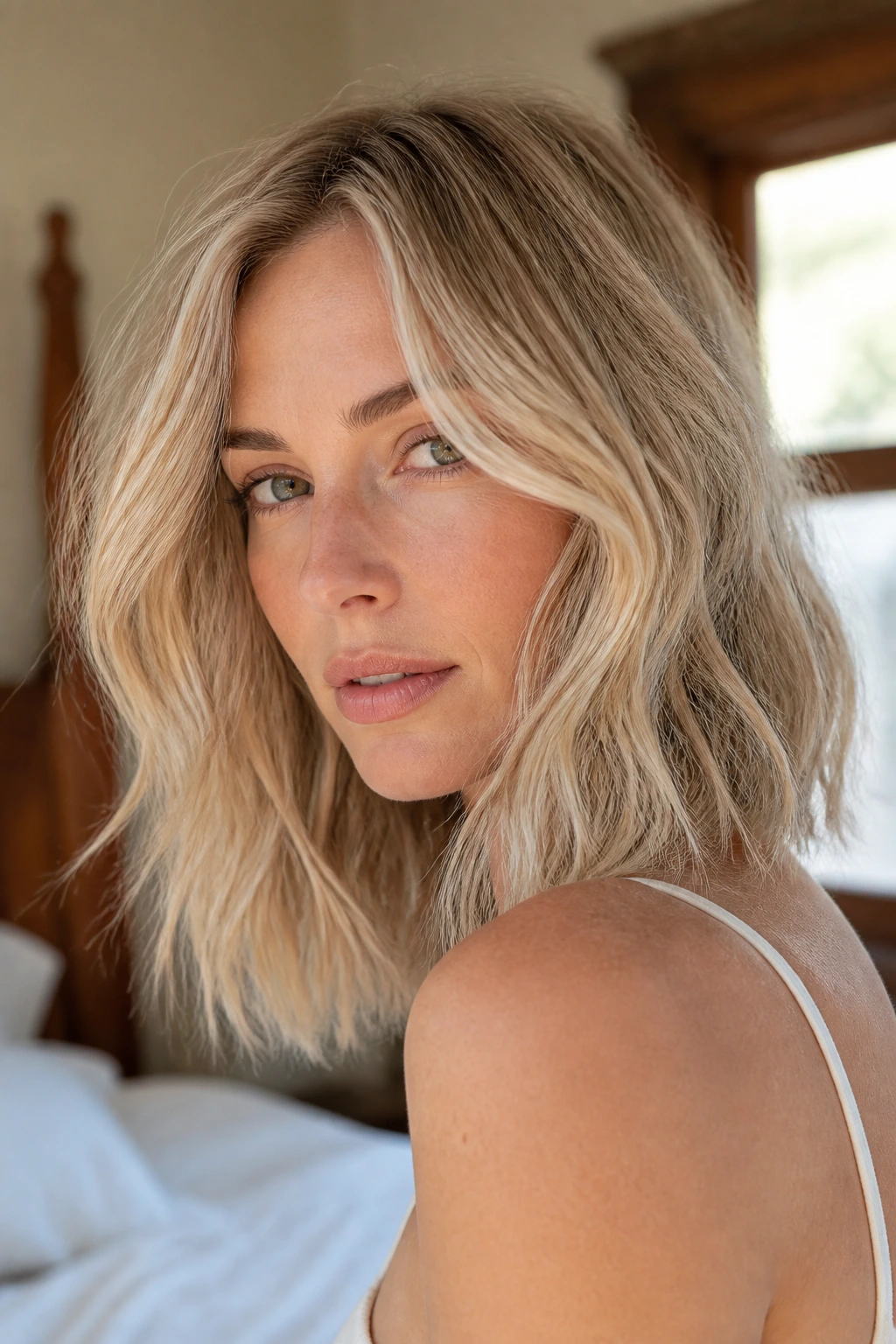
Going too light too fast: Medium length hair does not need every strand pushed to level 10 to look blonde. If the ends get too thin and pale, the cut can start to look see-through. A rooted beige or dimensional highlight usually looks fuller.
Skipping the root shadow: When the root is the same brightness as the mids, the hair loses shape. A soft root gives the blonde somewhere to start, and that makes the cut look more expensive.
Using purple shampoo like a daily cleanser: Overuse can turn beige into gray and pearl into something dusty. One wash a week is enough for most people, followed by a good conditioner.
Choosing the wrong tone for the base: Cool ash on a naturally golden base can go muddy, and warm honey on a cool skin tone can look yellow instead of rich. Tone choice matters more than people want to hear.
Flattening the style: Blonde shows better when the hair has bend, lift, or a little movement at the ends. If you blow it flat against the head every day, the color can look dull even when it is freshly done.
Ignoring porosity: Lightened ends grab toner fast, then release it just as fast. If the ends are porous, use a mask before toning and ask for a softer formula on the last few inches.
Variations and Adaptations to Try
Low-Maintenance Rooted Blonde: Keep a deeper root and brighten only the face frame and ends. This is the move for people who want to extend time between appointments without giving up the blonde look.
Cool Glass Blonde: Push the tone toward pearl, smoke, or ash and style it sleek. It suits medium cuts with sharp lines and works best when you like polished hair more than beachy texture.
Warm Honey Lift: Go for honey, wheat, or maple tones with soft waves. This version is friendlier on darker bases and usually looks less harsh as it grows out.
Money-Piece Blonde: Leave the majority of the hair dimensional and put the brightest pieces right around the face. If you want a visible change without a full blonding session, this is one of the smartest options.
Bronde Melt: Blend brunette roots into beige or caramel ends so the shift feels gradual. It’s a nice compromise for anyone who wants blonde but does not want constant toner appointments.
Bright Cream Refresh: If your blonde already has good lift, add a creamy gloss and a blunt finish. That version reads clean and fresh, especially on collarbone-length hair with tidy ends.
FAQ: Blonde Hair Looks for Medium Length Hair
Which blonde is easiest to maintain on medium length hair?
A rooted beige, caramel balayage, or bronde melt usually gives the easiest grow-out. The deeper root softens regrowth, and the medium length keeps the lighter pieces from spreading too far down the hair.
Can medium length hair really pull off platinum?
Yes, but only if the hair can handle the lift and the upkeep. Platinum looks best when the cut is clean and the ends are healthy, because medium length hair shows damage at the shoulders fast.
Is balayage better than highlights for this length?
Balayage tends to look softer and grow out more gently, while foil highlights give more lift and contrast. On medium length hair, either one can work; the choice depends on whether you want a softer blend or a brighter finish.
How often should toner be refreshed?
Most blondes need a toner every 4 to 8 weeks, depending on porosity, water quality, and how often you heat-style. If the hair starts looking yellow, flat, or muddy, that is usually your cue.
What if my hair is dark brown and I still want one of these looks?
Start with a rooted or dimensional version rather than aiming for pale cream right away. Darker hair usually needs more than one session to reach a clean blonde without damage, especially around the ends.
Do curtain bangs work with blonde on medium length hair?
They do, and they can make the face frame look much more intentional. The lighter pieces around the fringe help the whole style read as finished, not just highlighted.
How do I stop blonde from turning brassy?
Use a color-safe shampoo, cut back on hot tools, and ask for the right toner tone from the start. Brass often shows up when the blonde is too warm for the base or when porous ends are holding onto leftover pigment.
What if the blonde looks flat after styling?
Add a soft bend, a bit of root lift, or a gloss with more shine. Flat styling hides dimension, which is a shame on medium-length hair because this length is made to show color movement.
Blonde That Grows Out Gracefully
Medium length hair gives blonde a practical kind of beauty. It shows the shape, shows the tone, and still lets you live with the color after the first salon day has passed.
The best looks in this lineup all do the same thing in different ways: they keep some depth, place brightness where the eye lands first, and let the hair move enough to show its own structure. That is the whole trick. If you want blonde that still makes sense when you throw it into a clip, this length is hard to beat.
