



A medium bob with long bangs has a funny habit of making hair look like it has its life together, even when the rest of the morning is pure chaos. The length lands in that sweet spot between chin and collarbone, which means it moves, it sways, it tucks behind an ear, and it doesn’t drag the whole face downward the way longer hair sometimes does when the ends get tired. Add a fringe that’s long enough to bend, part, or sweep away, and you get shape without the hard edge.
After 40, that matters more than people say out loud. Hair can get finer at the temples, drier at the ends, coarser in the crown, or grayer in patches that catch light differently than the rest. A good bob doesn’t fight any of that. It gives the hair a frame, then lets the texture do some work instead of demanding a perfect blowout every single day.
The styles below all live in that useful middle zone: polished but not stiff, flattering but not fussy, and long enough that a bad hair day doesn’t turn into a haircut crisis. Some are blunt and crisp. Some are feathered, wavy, and a little loose around the edges. All of them rely on the same basic idea: the right medium bob with long bangs can make the face look more awake, the neck look longer, and the whole cut feel intentional without asking for too much from your mirror or your morning.
Why These 28 Bob Ideas Hold Up So Well
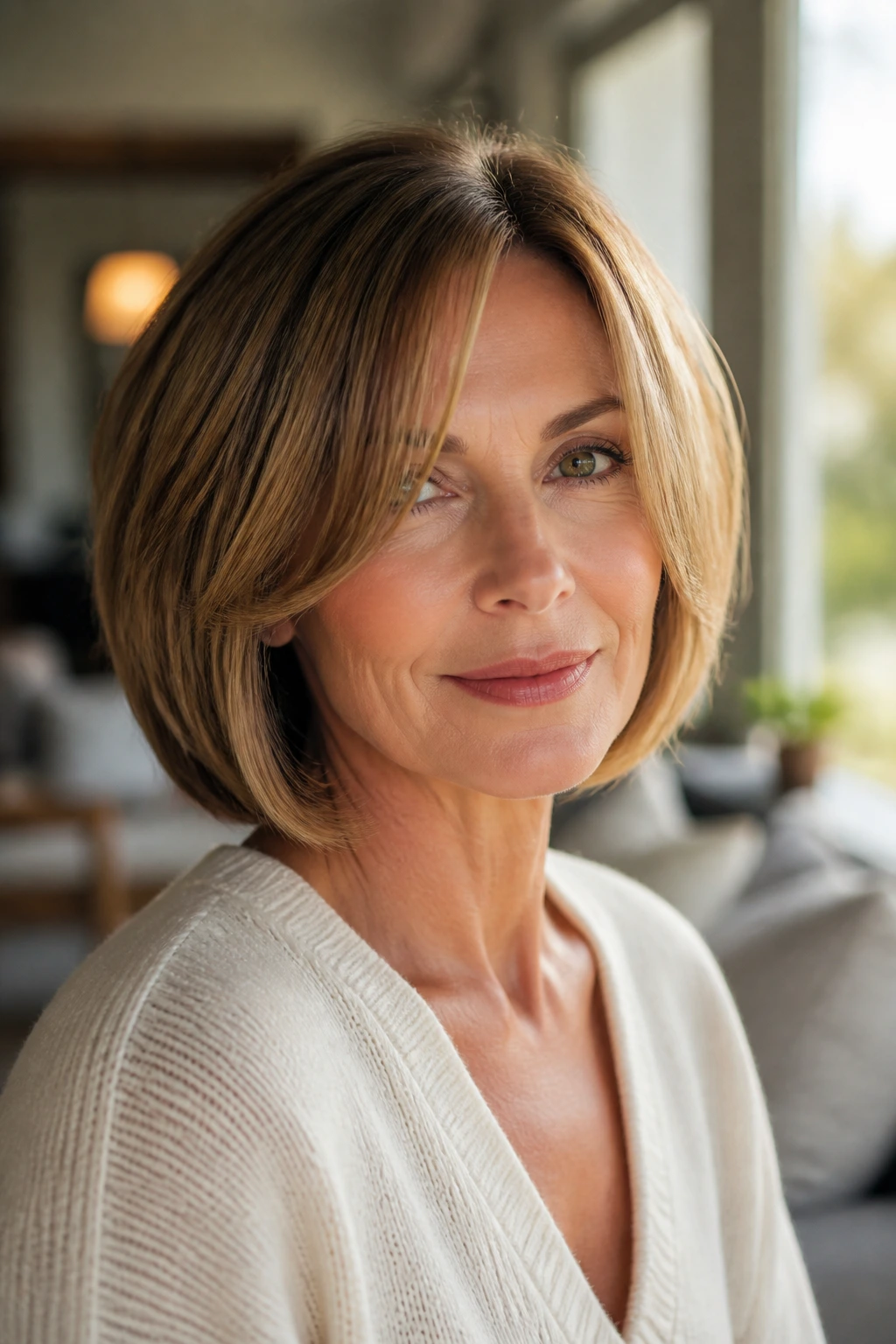
-
They keep shape around the face: Long bangs soften the forehead and draw attention to the eyes and cheekbones instead of making the cut sit like one solid block.
-
They work with changing texture: If your hair has gotten a little finer, a little coarser, or a little wavier over time, these shapes can be adjusted with layers, weight lines, and parting tricks.
-
They give you styling range: The same bob can be sleek on Monday, bent on Wednesday, and air-dried on Saturday without looking like three different haircuts.
-
They grow out cleanly: A medium length gives you more room between trims, and long bangs are much easier to live with than short fringe that needs a monthly rescue mission.
-
They flatter silver and highlights: A bob with movement shows dimension in gray, white, brunette, blonde, or mixed tones instead of flattening color into one tone.
-
They don’t trap you in one mood: This length can look sharp, soft, modern, or relaxed depending on how you style the ends and where the fringe falls.
1. Soft Collarbone Bob With Curtain Bangs
This is the cut I reach for when someone wants movement without giving up the feeling of length. The bob lands right at the collarbone, where it still sways when you turn your head, and the curtain bangs open from the center before blending into the cheekbones. The whole thing has an easy, face-brightening effect that looks especially good when the rest of the hair is kept smooth rather than overworked.
Why It Works
The collarbone length gives the hair enough weight to lie neatly, while the curtain fringe breaks up a wide forehead and keeps the front from feeling heavy. If your hair has a natural bend, this shape makes use of it instead of flattening it into obedience. Ask for soft internal layering through the mid-lengths; you want swing, not choppy ends.
- Best for medium-density hair
- Nice on oval and heart-shaped faces
- Easy to wear with a middle part or a slight off-center part
Stylist note: Keep the shortest face-framing piece at cheekbone level. If it sits too high, the fringe starts shouting instead of whispering.
2. Blunt Lob With Cheekbone-Skimming Fringe
A blunt lob has a very clear personality. It looks crisp, tidy, and a little expensive in that old-fashioned sense where the hair line does the talking. The long fringe should touch the top of the cheekbone when dry, not hang in your eyes like a mistake. That clean edge makes this cut especially good for hair that has lost some density at the ends.
Straight or slightly wavy hair takes to this shape beautifully because the line stays visible. Gray strands also look sharp here; the contrast between blunt ends and mixed color can read intentional instead of accidental. Keep the finish smooth, though. A blunt lob with fuzzy ends loses its whole point fast.
How to wear it
A flat brush or large round brush is enough. Bend the ends inward just a little, then let the fringe sweep away from the face. That tiny curve makes the cut look finished.
3. Wavy French Bob With Airy Fringe
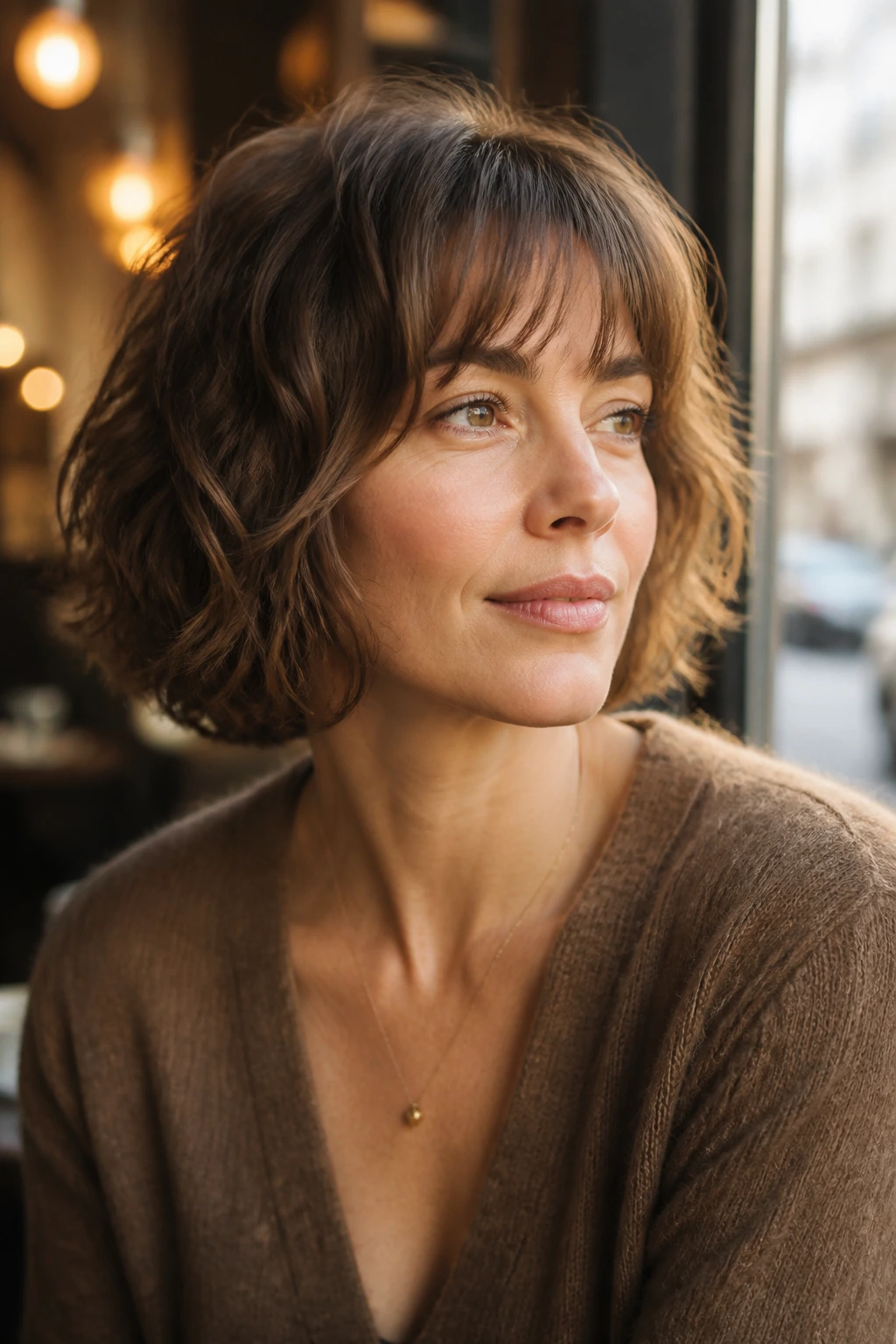
Want something lighter through the front, with a little Parisian looseness? This is the version that behaves best when you do not want a precision blowout every morning. The bob sits around the jaw to just below it, and the fringe is cut wispy enough to break apart into soft pieces rather than one heavy shelf.
What Makes It Different
The magic is in the space around the face. Instead of sealing the forehead with a solid curtain, the bangs split and fall in small sections, which keeps the cut from feeling dense. That works especially well if your hair gets fluffy in humidity or if you prefer an air-dry routine with a little scrunch cream.
- Best with natural wave or bend
- Good choice for shorter faces
- Looks best when the texture is a little imperfect
One clean center part and a dab of lightweight cream at the ends are usually enough. Too much product ruins the airy part. Too much brushing does, too.
4. A-Line Bob With Side-Swept Bangs
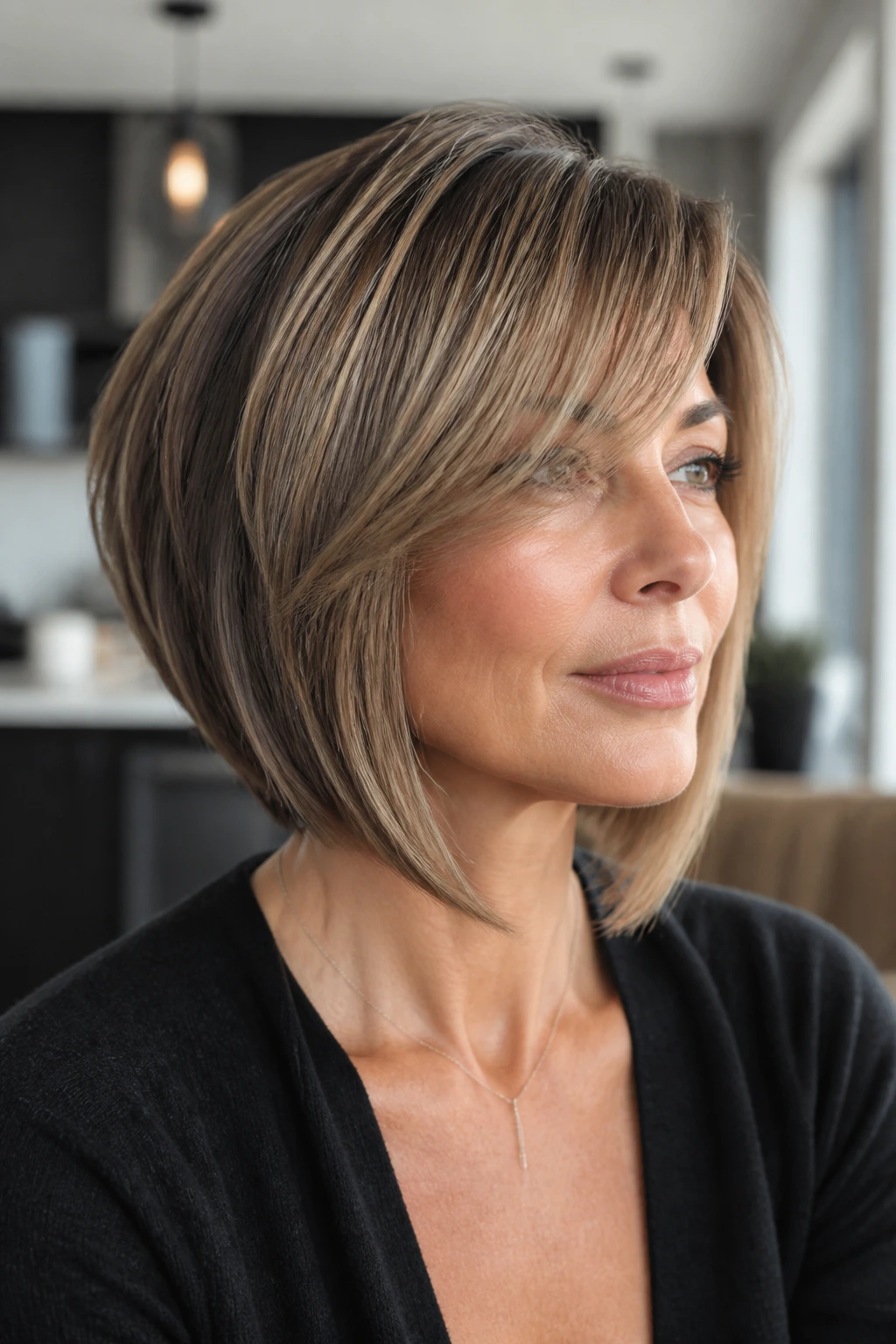
A-line shapes make the face feel longer because the front stays slightly longer than the back. The side-swept bang adds a diagonal line across the forehead, which is one of the easiest ways to soften stronger jawlines or a broad cheek area. The haircut looks deliberate even when it’s styled in a plain, no-fuss way.
The back should stay tidy and slightly shorter so the front can lean forward without collapsing into your shoulders. This is a good choice if you like structure and want the cut to keep its outline after a long day. A side part gives it a touch more lift, and that lift matters. Flat roots kill the shape quickly.
Best for
- Thick hair that needs direction
- Square or round face shapes
- Anyone who likes a neater profile from the side
Pro tip: Blow-dry the fringe away from the part first, then let it fall back. That keeps the root from sticking flat.
5. Layered Bob With Lived-In Waves

If your hair tends to go limp by noon, this is the answer that doesn’t ask for perfection. The layers should be soft and internal, not visibly chopped all over the outside line. The long bangs connect to those layers, so the front melts into the wave pattern instead of sitting on top of it like a separate piece.
This cut is especially useful for hair that has changed texture over time. A little bend through the mid-lengths can make the whole head look fuller, and the long fringe keeps the face open. Use a 1-inch curling iron or a flat iron twist if you want the waves to look loose, not ringleted. The goal is movement, not curl for the sake of curl.
How to ask for it
Say you want soft layers that support the wave pattern and a fringe that can be tucked, parted, or swept. That wording matters more than saying “I want texture,” which can mean almost anything.
6. Chin-Skimming Bob With Bottleneck Bangs
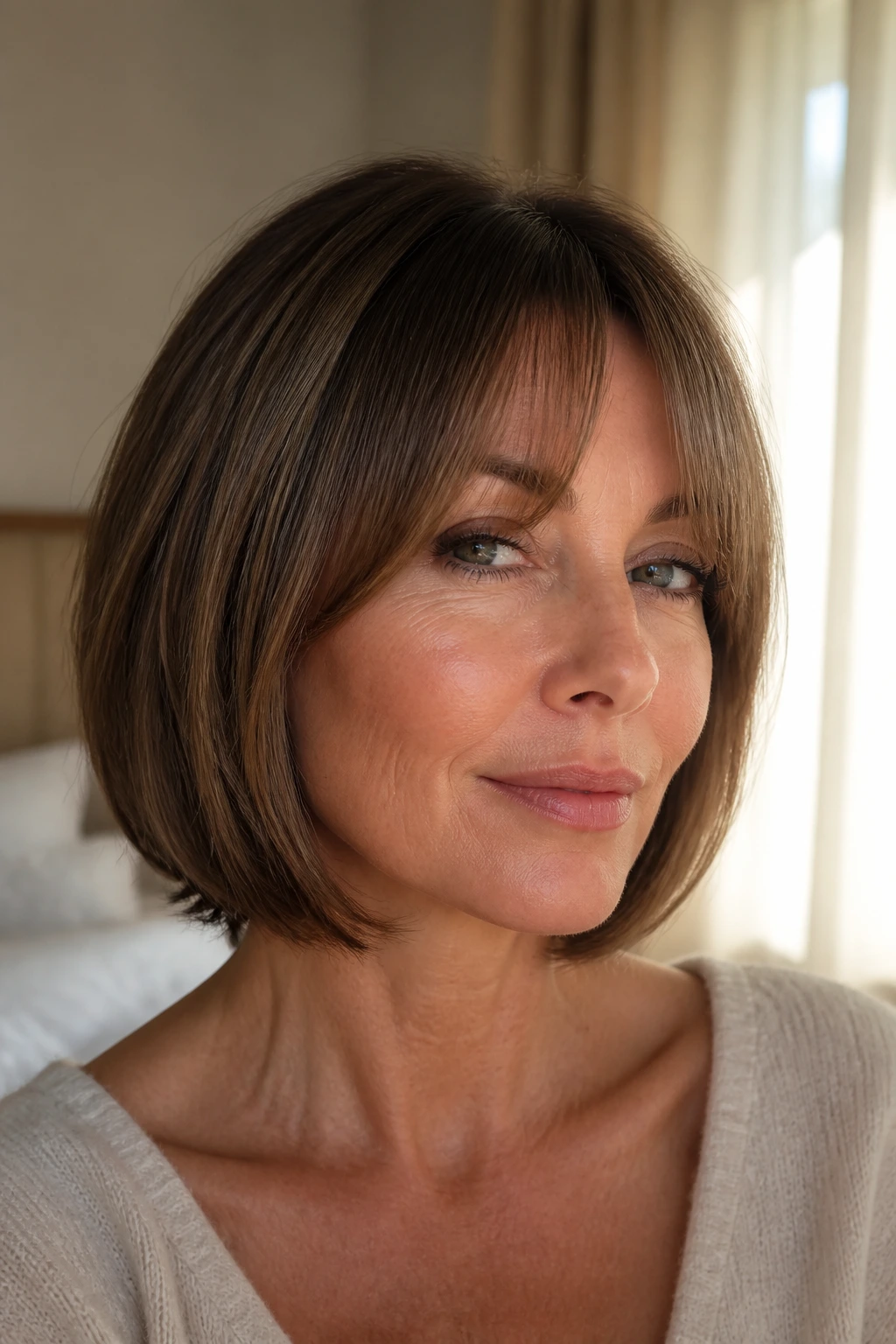
Bottleneck bangs are the clever middle ground between curtain bangs and a full fringe. They’re narrow near the forehead, then open near the eyes and cheekbones, which makes them flattering when you want softness without a lot of volume right at the brow. Paired with a chin-skimming bob, the cut feels fresh and a little sculpted.
This shape works well if you like your hair to frame the face instead of swallowing it. The chin line keeps the bob compact, while the bangs guide the eye outward. If your neck is one of your favorite features, this cut gives it a clean outline. If you want to soften a stronger jaw, it does that too.
H3: What to watch for
Keep the bob slightly longer in front so the chin area doesn’t look boxy. And don’t over-dry the bangs straight down; a soft bend at the ends is what gives bottleneck fringe its shape.
7. Sleek Straight Bob With Invisible Layers
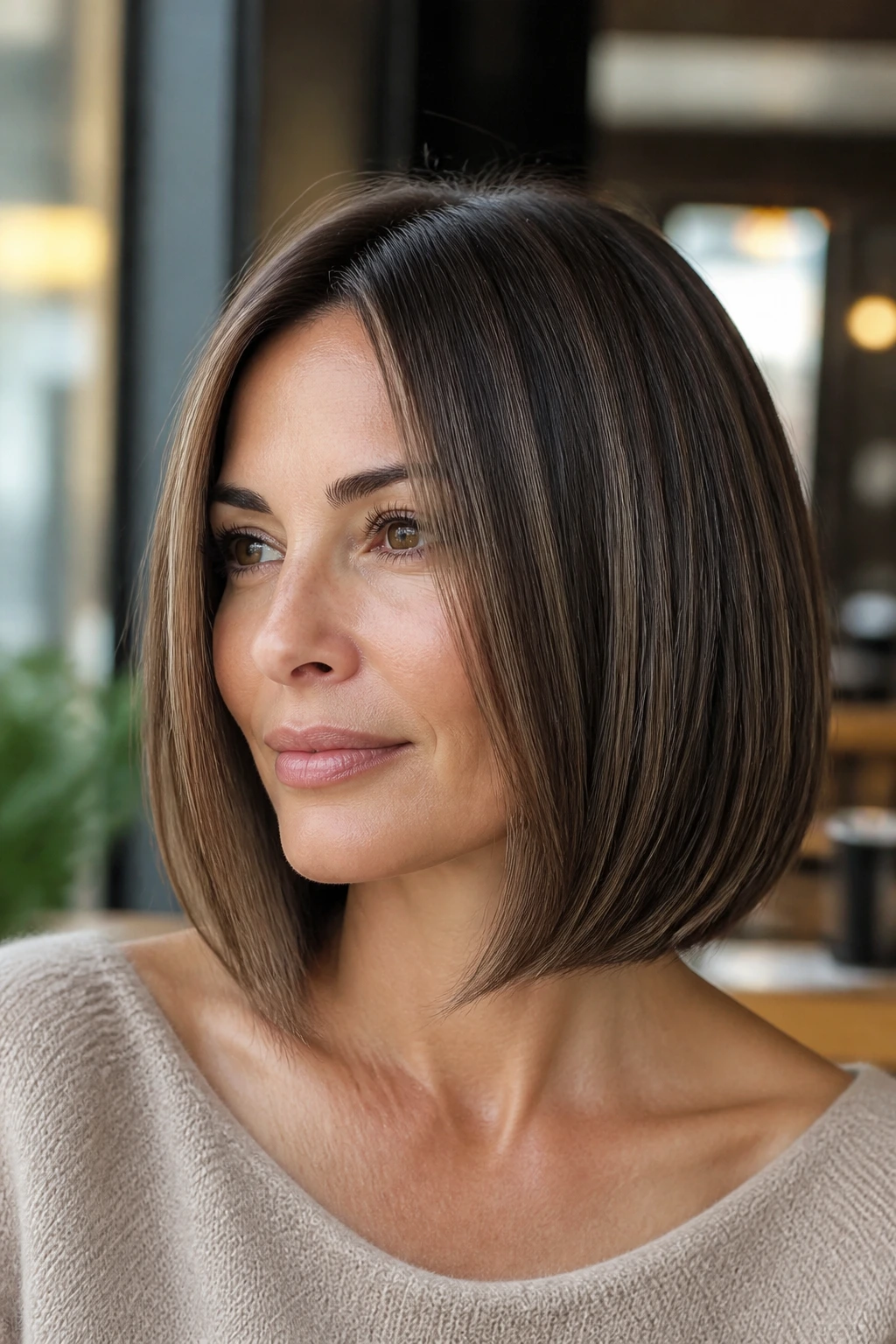
This one is for the person who likes hair that looks precise without shouting about it. The outer line stays smooth and straight, but the inside carries just enough layering to keep the cut from behaving like a helmet. The long bangs slide into one side or part softly down the middle, depending on how you wear the front.
Invisible layers matter here because they remove bulk without breaking the clean edge. If your hair is fine, they stop the shape from collapsing. If your hair is thick, they keep the ends from puffing outward. This is a smart cut for anyone who wants a polished look that still moves a little when the wind hits it.
Best mood: clean, sharp, quietly modern.
8. Feathered Bob With Face-Framing Bangs
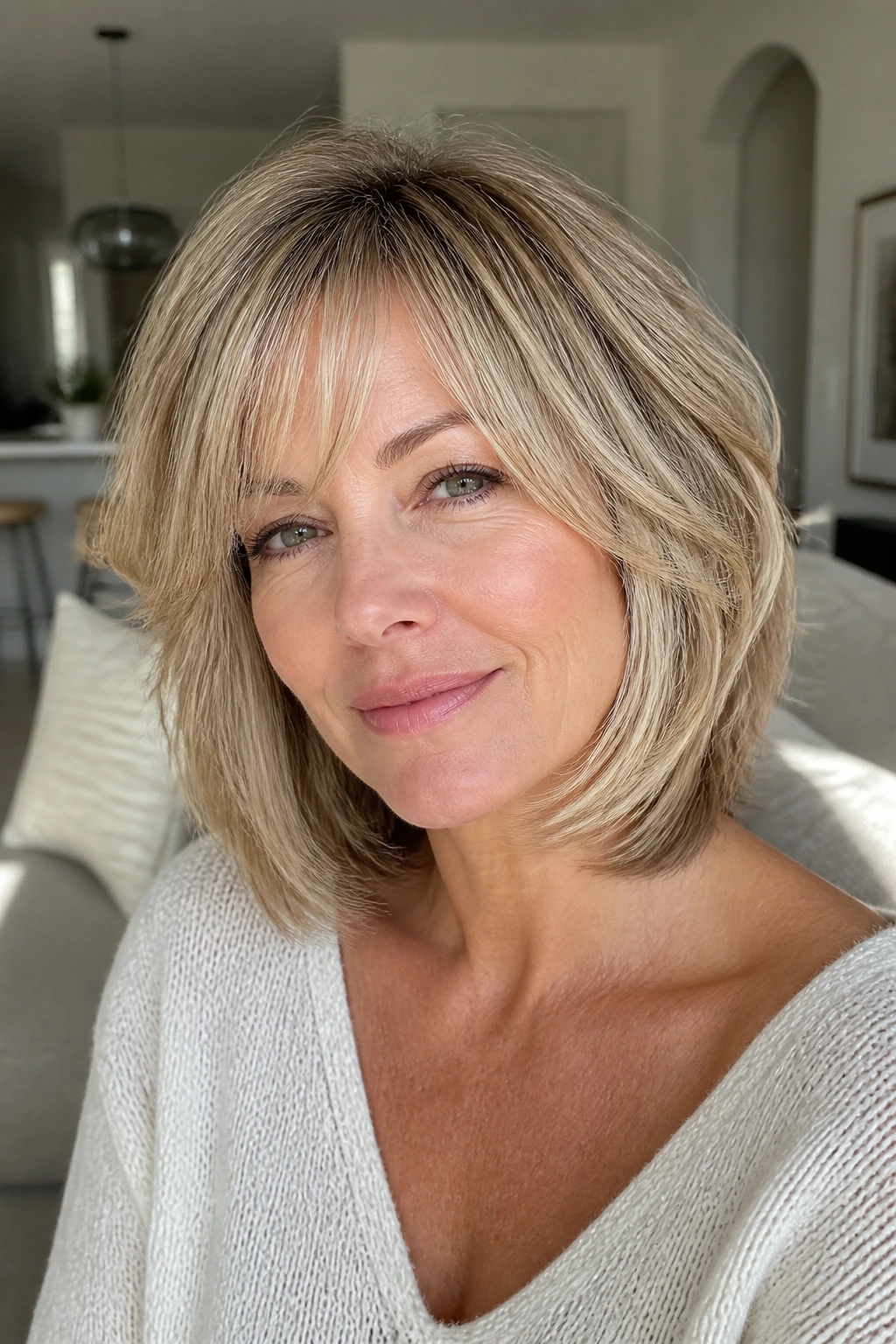
Feathered hair can go wrong fast if it’s overdone, but when it’s cut carefully, it gives the face a softer edge and a lot of lift. The bob should sit between the jaw and shoulder, with feathered pieces around the cheeks and a fringe that blends rather than interrupts. The whole cut feels lighter than a blunt bob, which helps when hair has started to feel denser in some places and thinner in others.
This is one of the easiest cuts to style with a round brush. Lift the roots, bend the ends under, and direct the bangs away from the face just enough that they settle into a soft frame. It looks especially nice on women who want movement around the cheek area without giving up length.
Quick read
- Good for medium to thick hair
- Nice on narrow or long faces
- Easy to refresh with a dry texturizing spray
9. Choppy Textured Bob With Piecey Bangs
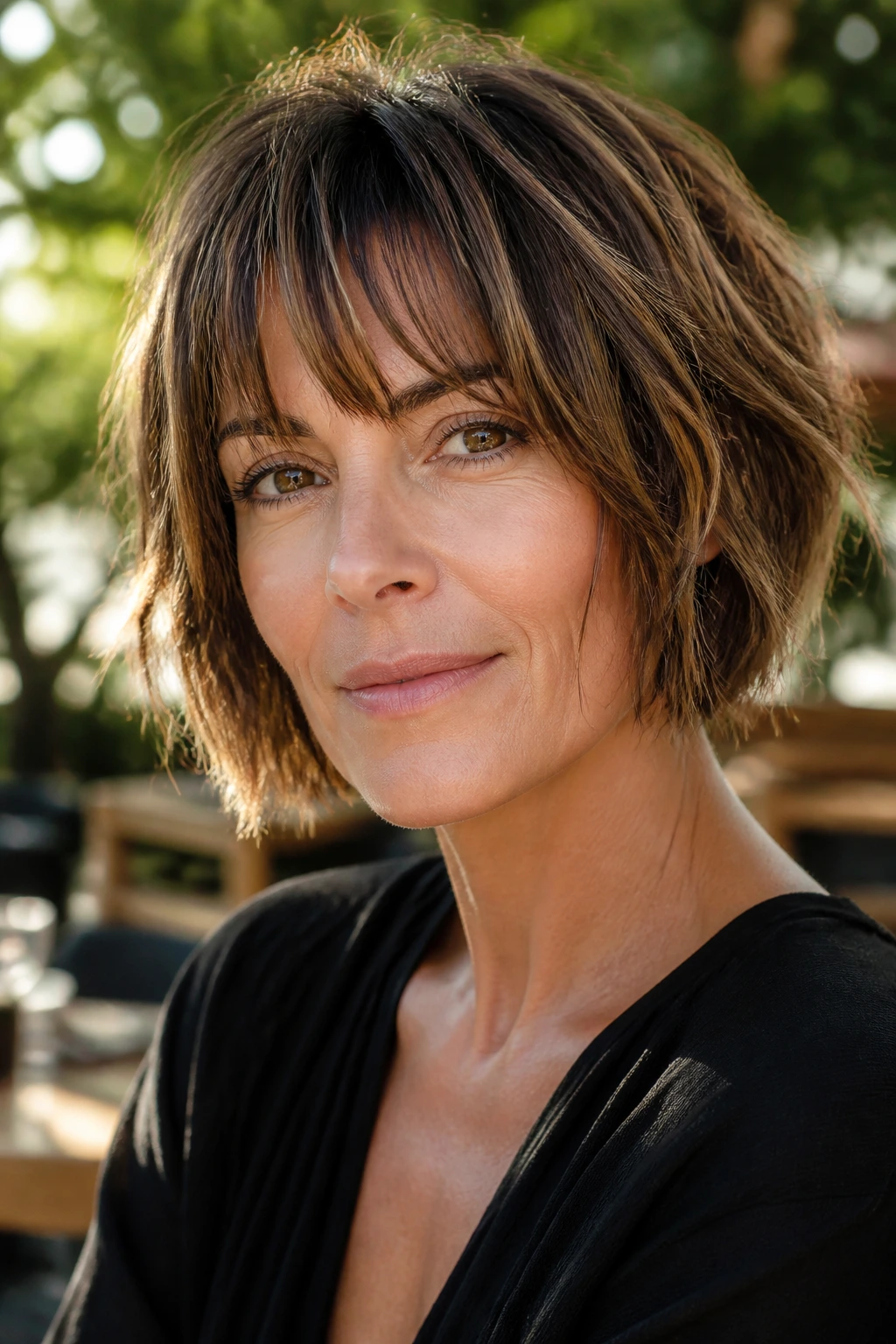
A choppy bob is not messy when it’s cut well. It has visible separation at the ends, which gives the hair a bit of grit and stops the style from looking too sweet. Pair that with piecey bangs and you get a shape that feels lived-in, not precious.
This cut shines when the hair already has some texture. You can scrunch it, twist it, or rough-dry it and still keep the outline. The bangs should fall in small sections, not one blunt sheet. That makes the front less heavy and gives the eyes room to show.
If your hair is thick, ask for internal removal of weight rather than aggressive thinning at the ends. If your hair is fine, keep the choppiness modest. Too much of it and the cut starts looking ragged instead of cool.
10. Angled Bob With Deep Side Part
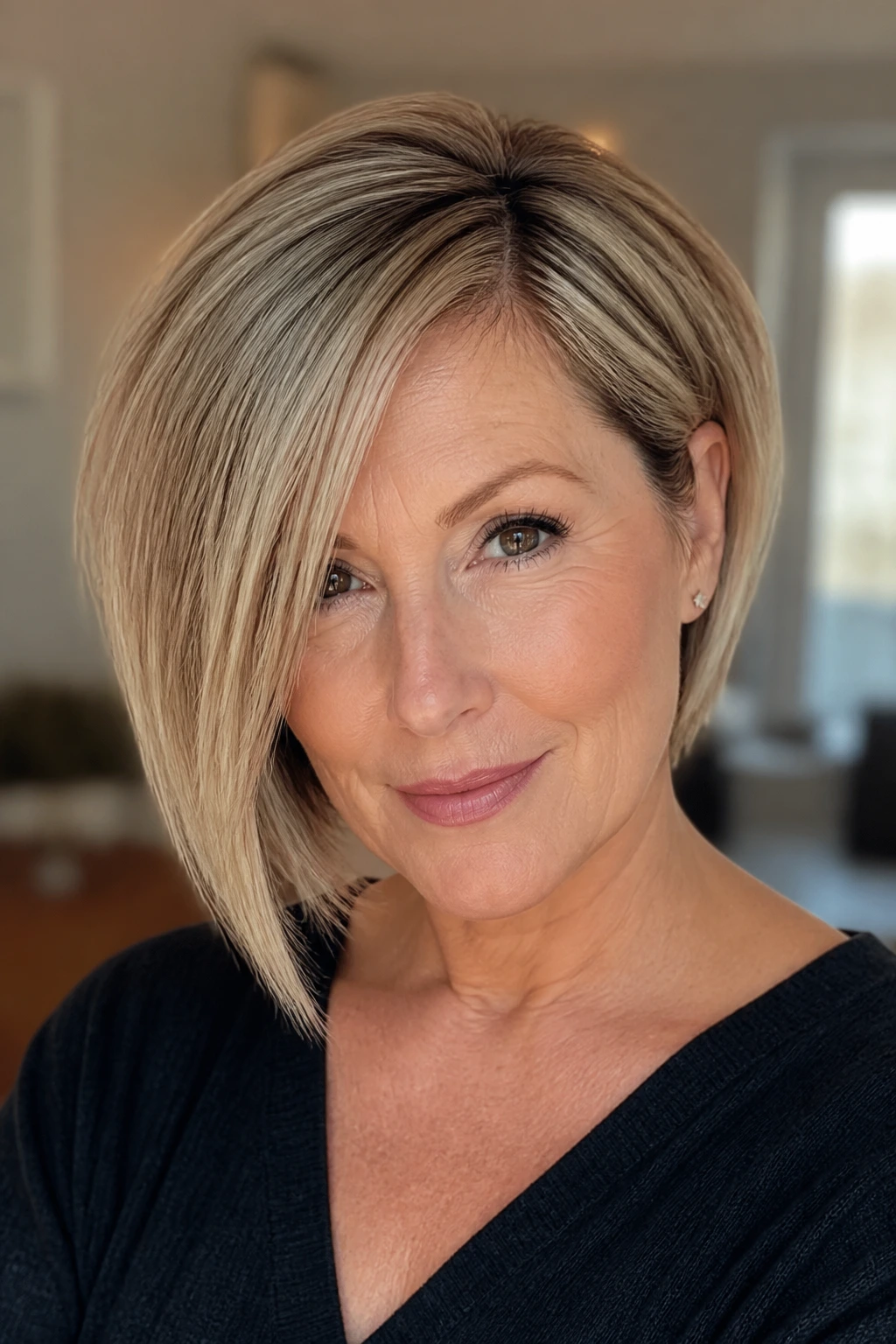
A deep side part changes everything here. Suddenly the bob gets lift at the crown, one side falls longer across the cheek, and the face looks less symmetrical in a very flattering way. The angle should be visible, but not so steep that the haircut becomes dramatic for its own sake.
The long bangs follow the part and sweep across the forehead in one clean arc. That shape is helpful if your face is round, because the diagonal line draws the eye upward and down, not straight across. It’s also a good option when you want a bob that can look polished in under ten minutes.
Pro move
Dry the roots on the heavier side first. If the side part collapses, the whole cut loses its lift.
11. Rounded Bob With a Polished Bend
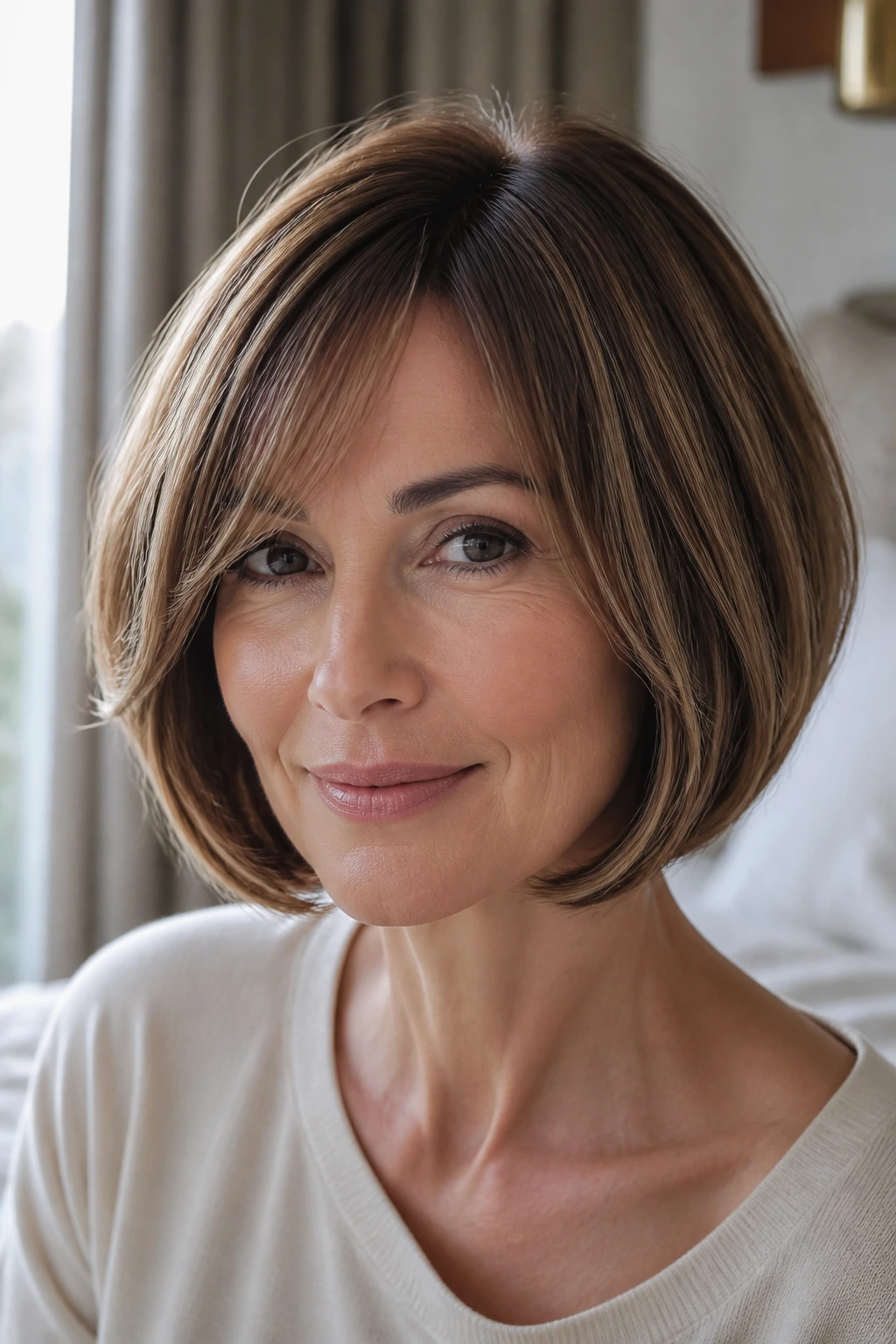
Rounded bobs have a soft architecture that works well when you want the hair to feel controlled but not stiff. The ends curve inward slightly, which keeps the silhouette neat around the jaw and neck. Long bangs drape into that curve, so the front and sides feel connected instead of separate.
This is one of those cuts that looks particularly good on straight to slightly wavy hair, because the bend holds without a fight. It also pairs well with medium-density hair that needs direction. If your ends tend to kick out at odd angles, a rounded shape gives them somewhere to go.
A quick blow-dry with a round brush is enough. You don’t need a giant styling routine. You need the bend, the part, and a little patience around the fringe.
12. Shaggy Bob With Wispy Bangs
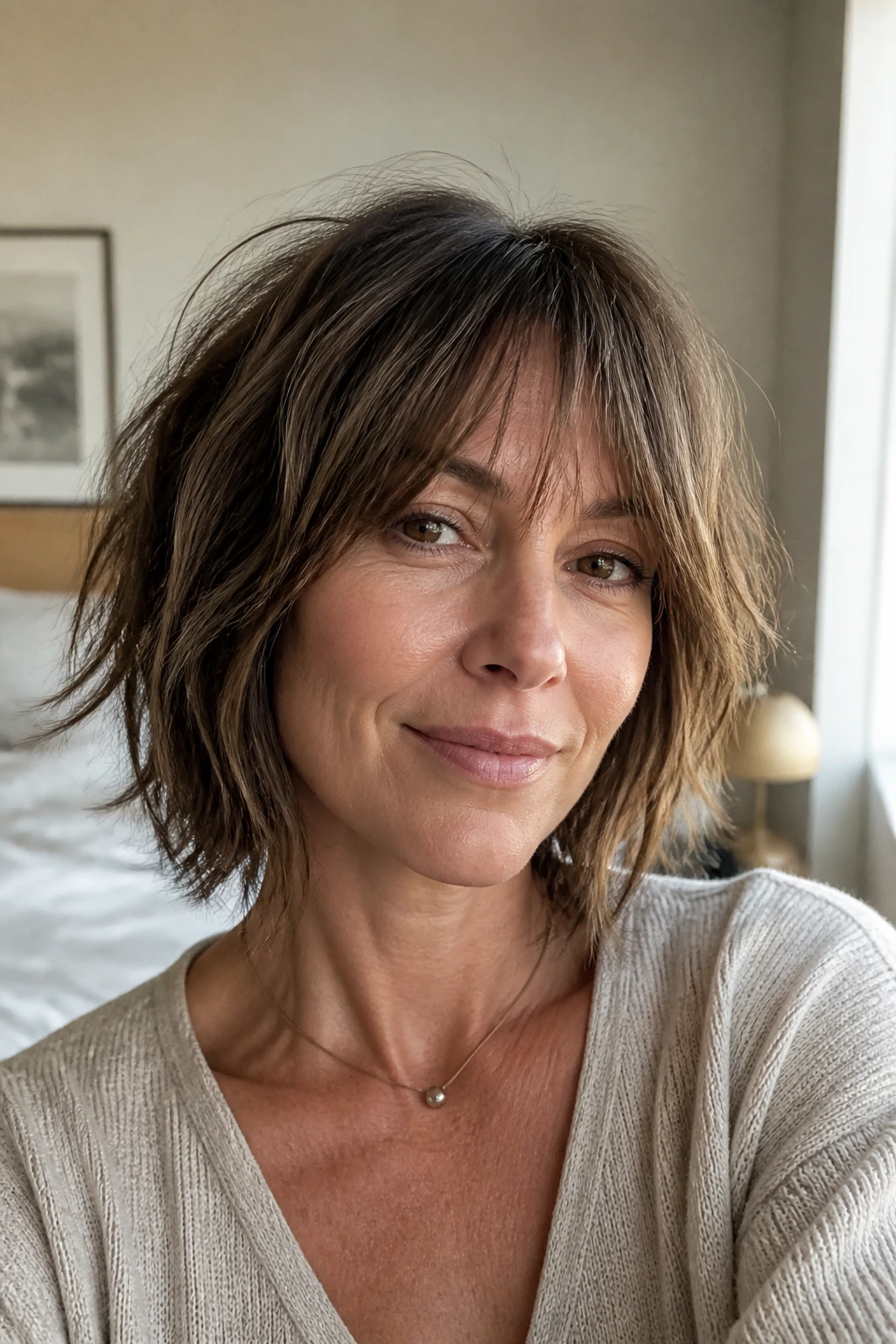
The shaggy bob brings a looser attitude to medium length. Layers sit in different places, the ends are softened, and the bangs are cut wispy enough to mix into the rest of the texture. It reads as relaxed, but not lazy. There’s a difference.
This cut is a strong choice if your hair has wave, or if you want it to have more of it. The shag shape makes the crown feel lighter and the ends feel less solid, which helps if your hair gets bulky near the bottom. Long, wispy bangs also make this cut easier to grow out. They can shift from fringe to face frame without making you start over.
Best when: you want movement first and polish second.
13. Tousled Bob With Beachy Texture
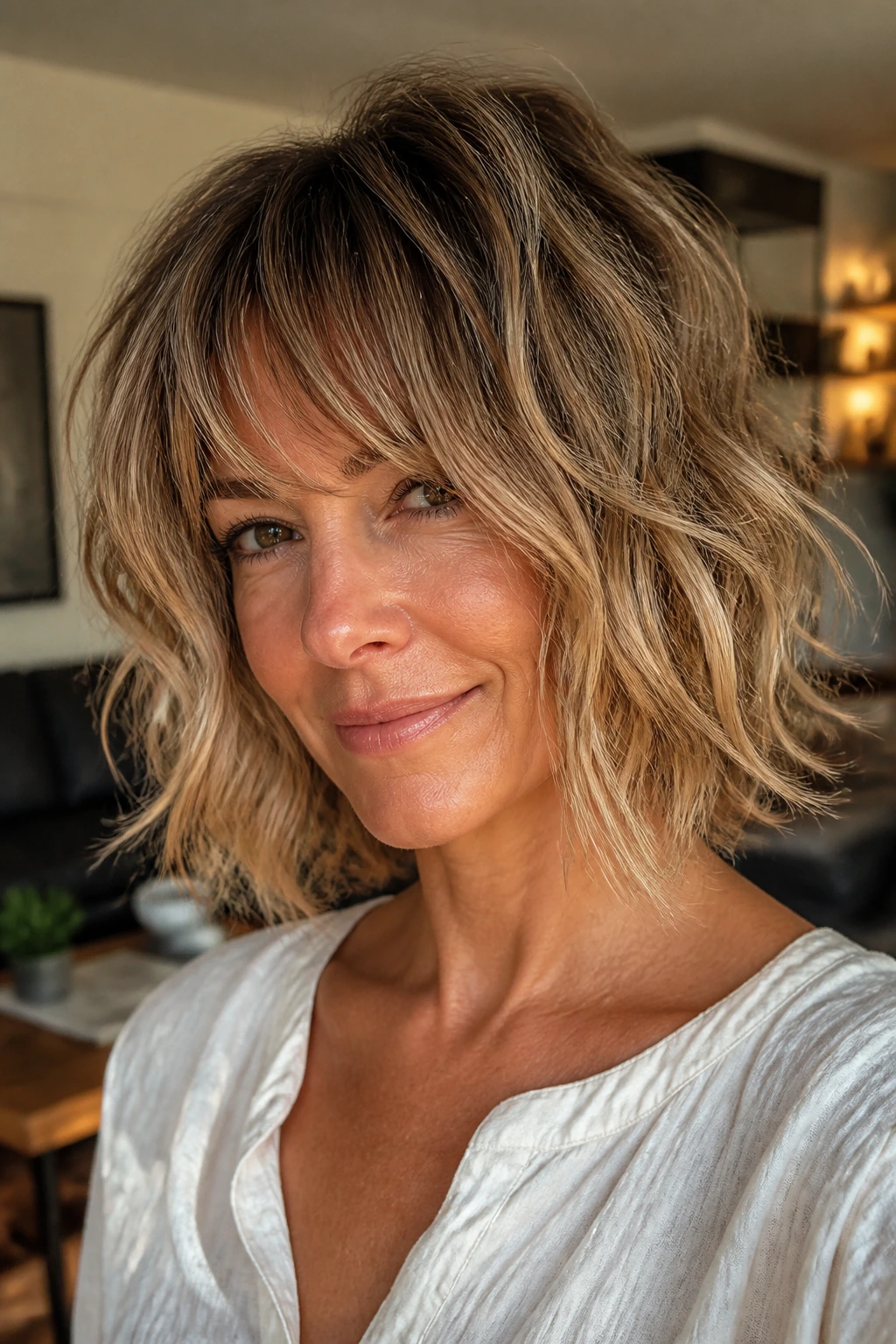
Beachy texture works best when the wave pattern is broken up instead of curled into neat rows. The medium bob gives you enough length for those loose bends to show, and the bangs should be long enough to slip into the texture rather than fight it. This is the sort of cut that looks better after a little roughness.
Use a salt spray or a light mousse, then bend random sections with a curling wand. Leave the ends out on some pieces so they don’t all curl the same way. The result should feel soft and a little undone, with the fringe sitting somewhere between the eyebrows and cheeks depending on how it dries.
If your hair is naturally straight, this cut still works. It just needs a little more help from heat tools. If your hair already leans wavy, congratulations — you’ll spend less time fighting it.
14. Inverted Bob With Side Fringe
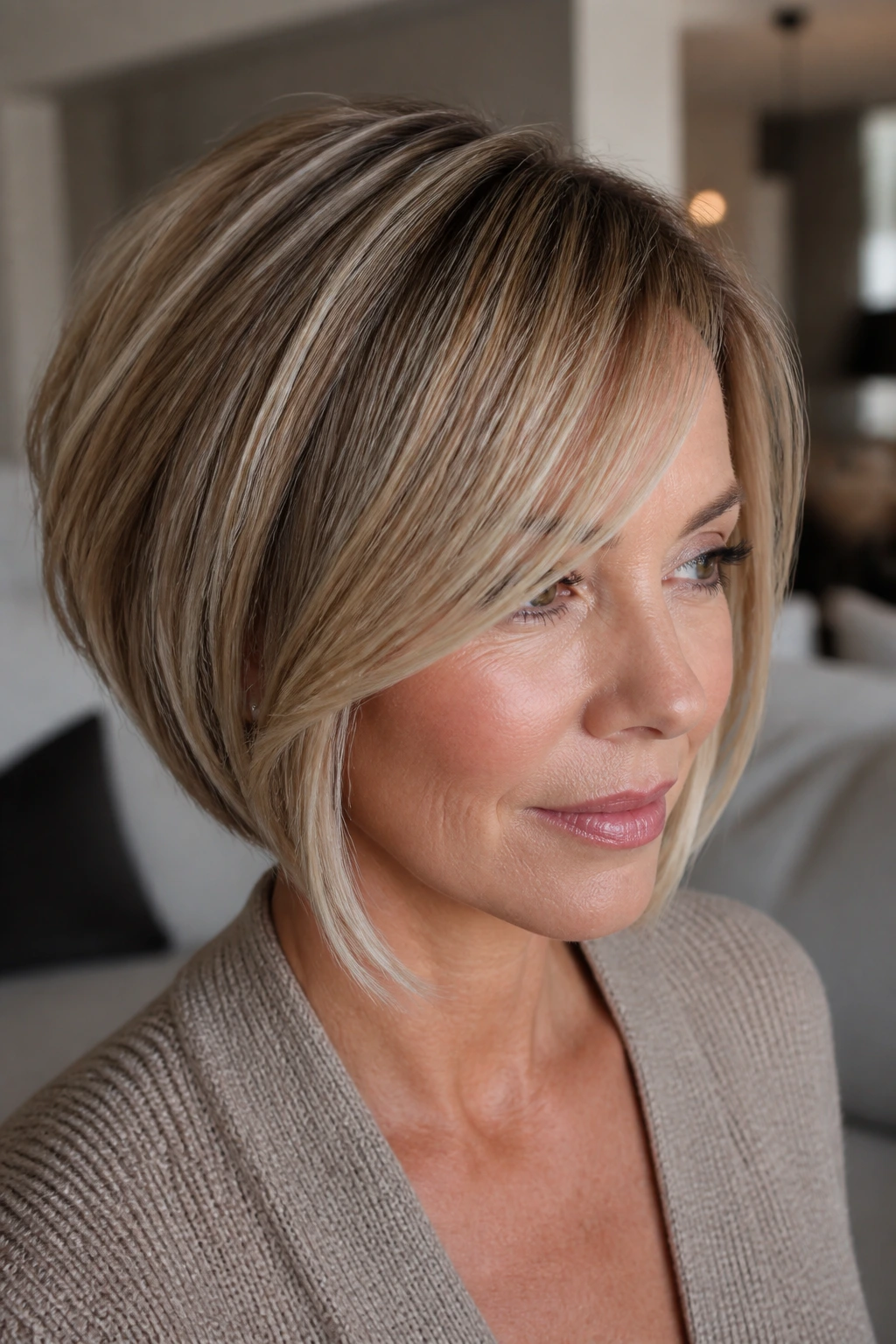
An inverted bob brings the back up a touch and lets the front hang longer, which creates a shape that feels lifted without looking severe. Side fringe softens the angle and keeps the front from turning sharp. The result is one of the easiest “I want structure, but not a helmet” haircuts you can wear.
This version is especially useful if your hair has a thicker back section or if the crown tends to puff up. The stacked back removes some weight, while the longer front pieces keep the face open. It’s a smart choice for anyone who wants a bob that looks designed from the side view.
A side fringe also makes the cut easier to grow out. It can shift into layers faster than blunt fringe, which saves you from that awkward in-between stage.
15. Curved-Under Bob With a Glossy Finish
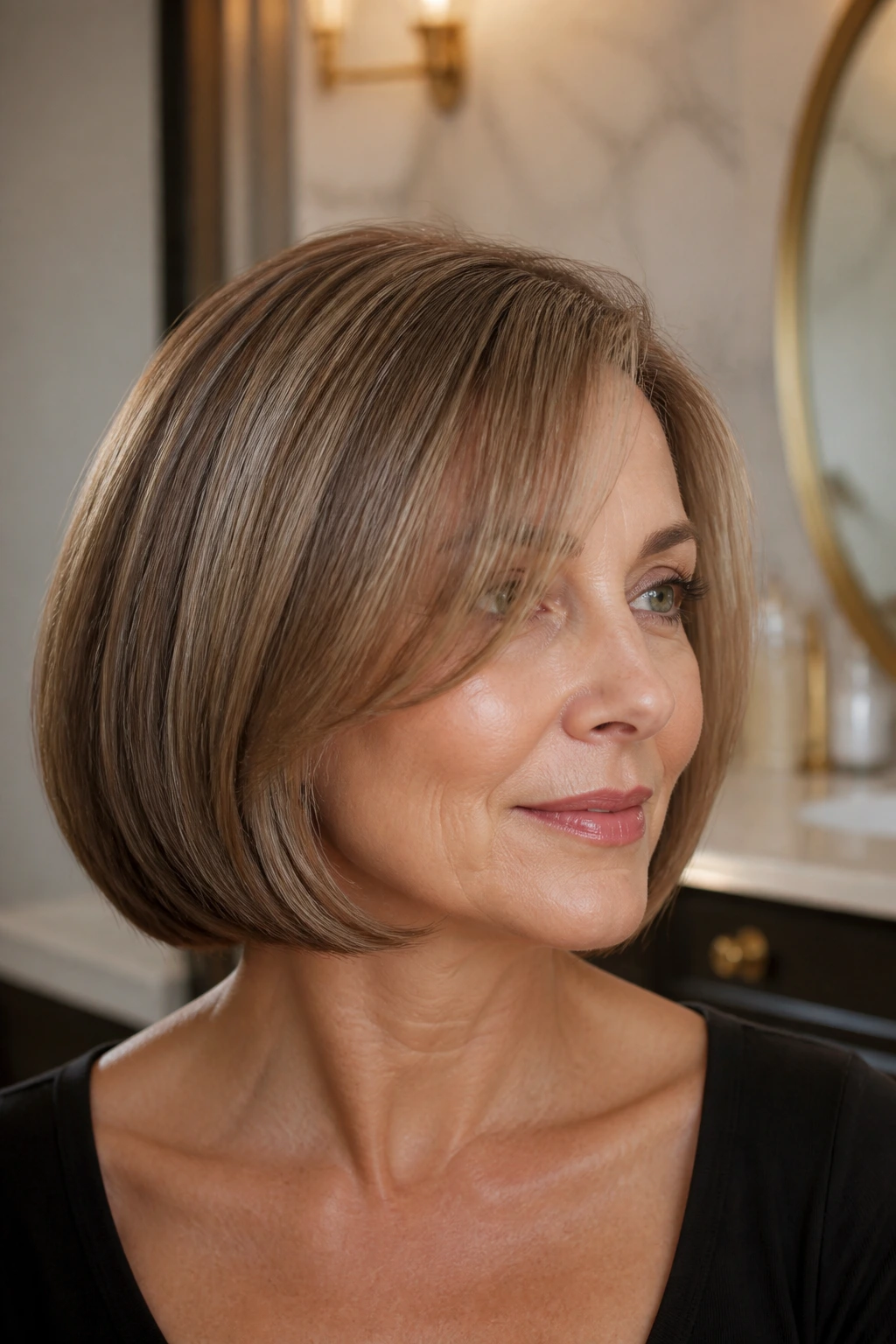
There’s a reason glossy, curved bobs never disappear. They make the hair look deliberate, and the line near the ends creates a neat border around the face. The long bangs should be smooth enough to blend into that curve, then tucked slightly under so the whole cut has one continuous line.
This is a flattering option when hair feels a little frayed at the ends. The curved-under shape hides less-than-perfect texture better than a flat blunt line. It also works nicely for anyone who likes a more refined finish, especially with one rich color or a clean gray blend.
Styling note
Use a blow dryer with a nozzle and a round brush. The bend at the ends is what gives this cut its polish. Skip that, and it loses half its personality.
16. Air-Dry Bob With Natural Texture
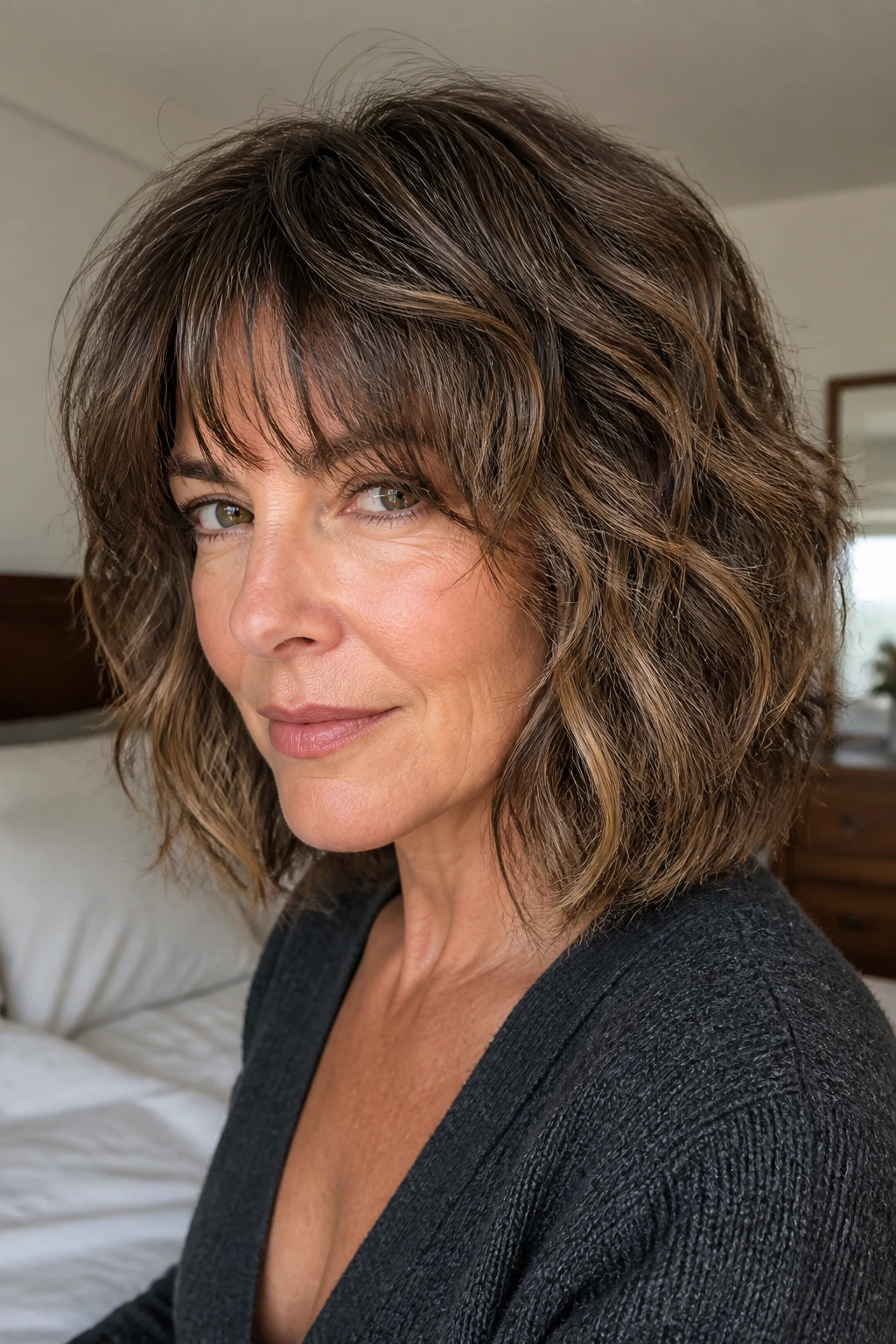
Some hair behaves better when you stop trying to iron it into obedience. This cut is made for that reality. The bob sits at a medium length, the bangs are long enough to curl or wave into place, and the overall shape is built to look good with minimal heat.
The trick is leaving enough softness around the face so the fringe follows your natural pattern. If you have wave, scrunch it. If you have curl, finger-style it while damp. If your hair is mostly straight but bends at the ends, let it dry that way instead of forcing symmetry that won’t last anyway.
Best for: busy mornings, humid weather, and people who have finally given up on pretending every head of hair should blow-dry the same way.
17. Razored Bob With Brow-Skimming Bangs
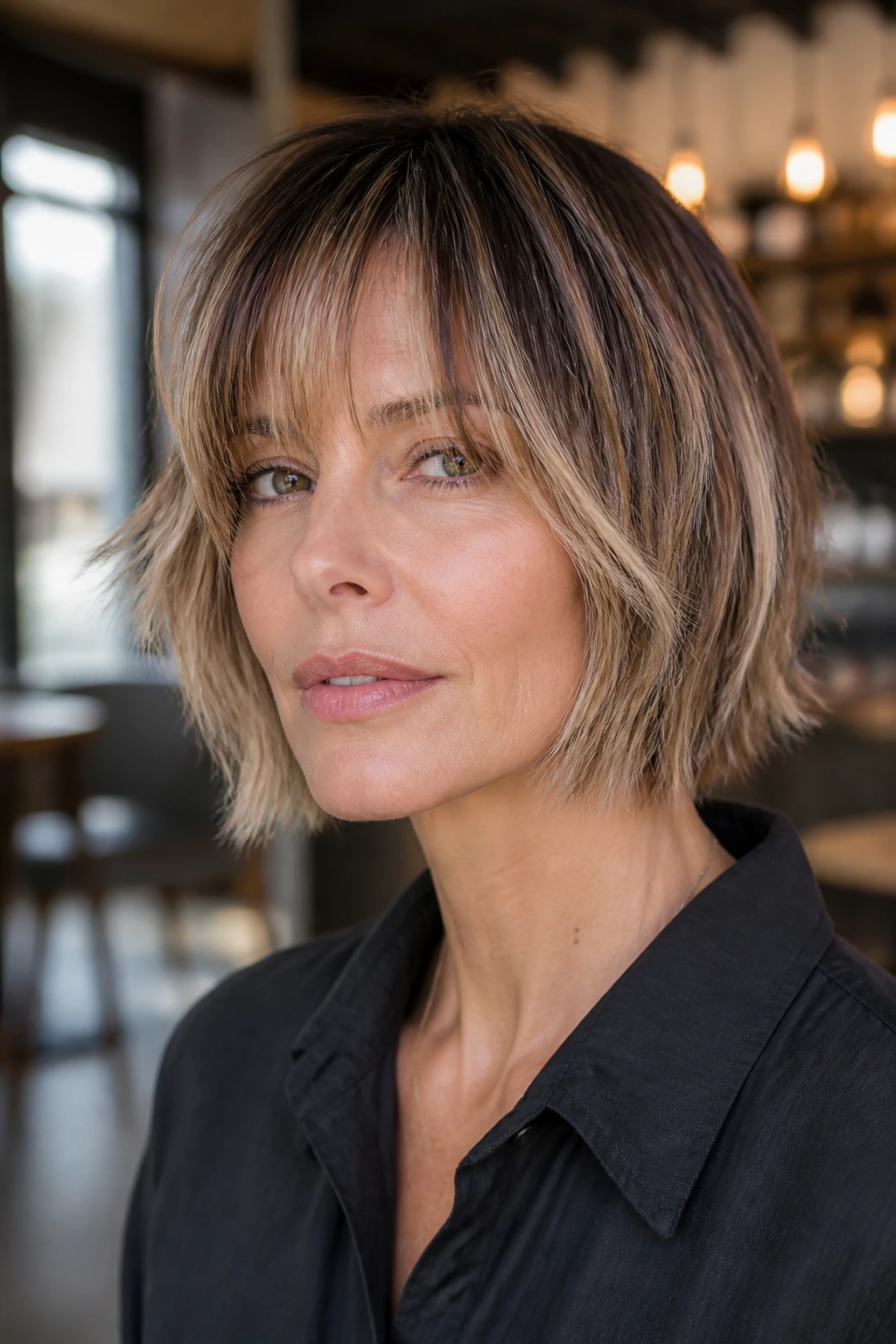
Razored ends can be gorgeous on thick hair because they soften the line and remove some of the blunt weight. The key is using the razor in the right places — not shredding the hair into wisps, but easing the perimeter enough that it moves. Brow-skimming bangs add a soft front line that still feels substantial.
This is a smart choice if your hair is dense, coarse, or prone to looking triangular when it grows out. The razor takes the edge off the bulk, and the longer fringe keeps the cut from feeling too severe. It also works well when you want a little edge without going full shag.
Ask for soft razoring only at the ends and through the face frame. Too much razor work in the wrong hands turns a sharp shape into a frayed one. That’s a different haircut, and not a flattering one.
18. Side-Part Bob With Crown Volume
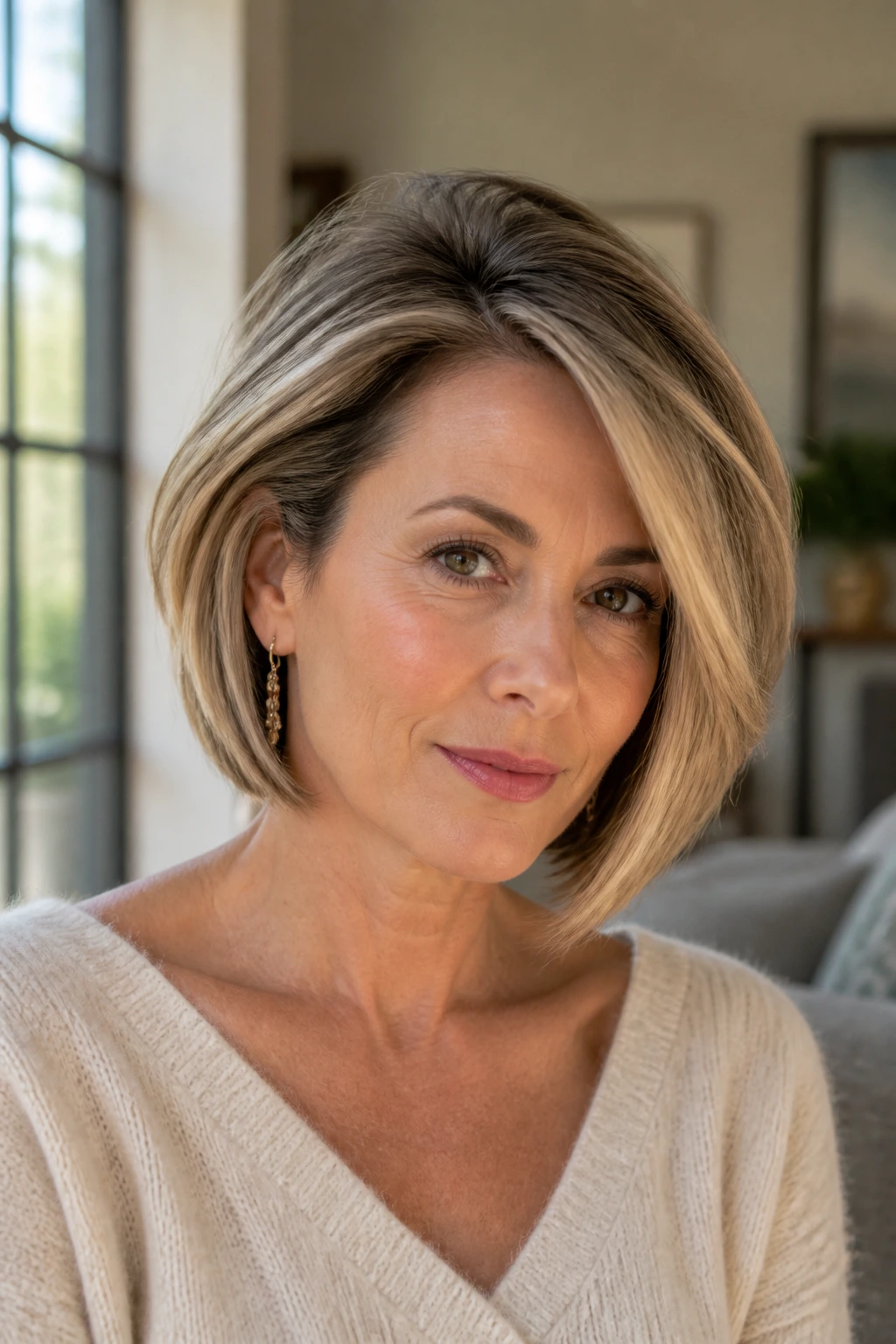
Volume at the crown changes the whole face. A side part lifts the roots where the hair wants to lie flat, then the long bangs sweep across to soften the forehead and guide the eye diagonally. This is one of the best bob shapes for anyone who wants the top of the head to look a little fuller without teasing it into a puff.
The medium length keeps the ends grounded, so the volume only lives where you want it. That balance matters. Too much lift with no shape at the bottom looks dated. Too little lift and the whole cut goes limp by lunchtime.
This is also a friendly cut for fine hair. Root spray, a clip at the crown while the hair cools, and a side part can make a bigger difference than another inch of length ever will.
19. Softly Stacked Bob With Layered Bangs
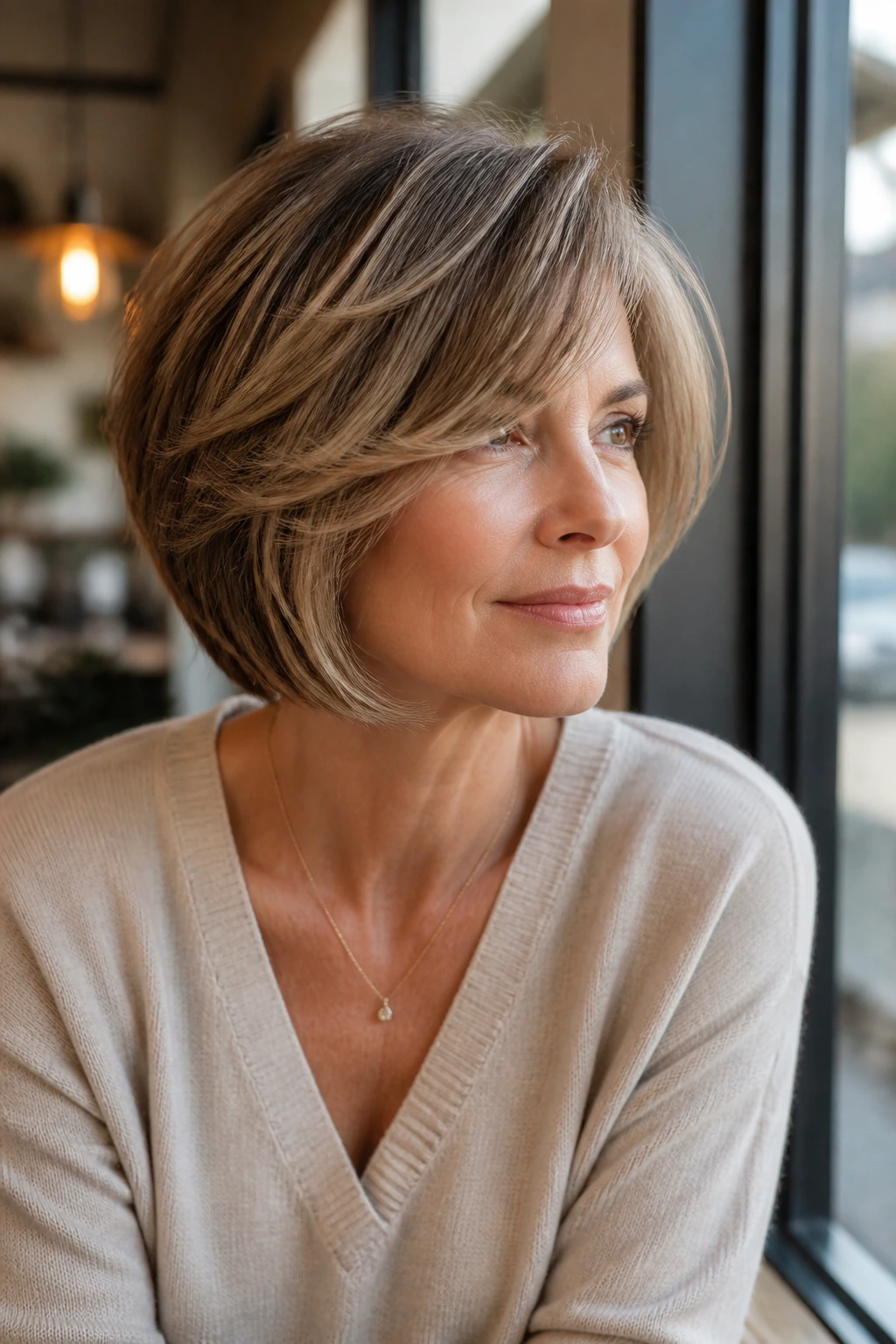
A softly stacked bob gives the back some quiet lift without screaming “stacked bob” from across the room. The layers build gently, which keeps the back neat and the front long enough to sweep into layered bangs. The shape is tidy, but not boxy.
This style is useful if you want definition through the nape and jaw without a hard angle. The stacked back keeps the hair from collapsing under scarves, collars, or damp weather, which is a small thing until it isn’t. Layered bangs help the front echo that lift instead of hanging as one flat curtain.
How it feels
Light at the crown. Full through the sides. Very manageable when the cut is maintained on schedule.
20. Low-Maintenance Bob With Blunt Ends and a Grown-Out Fringe
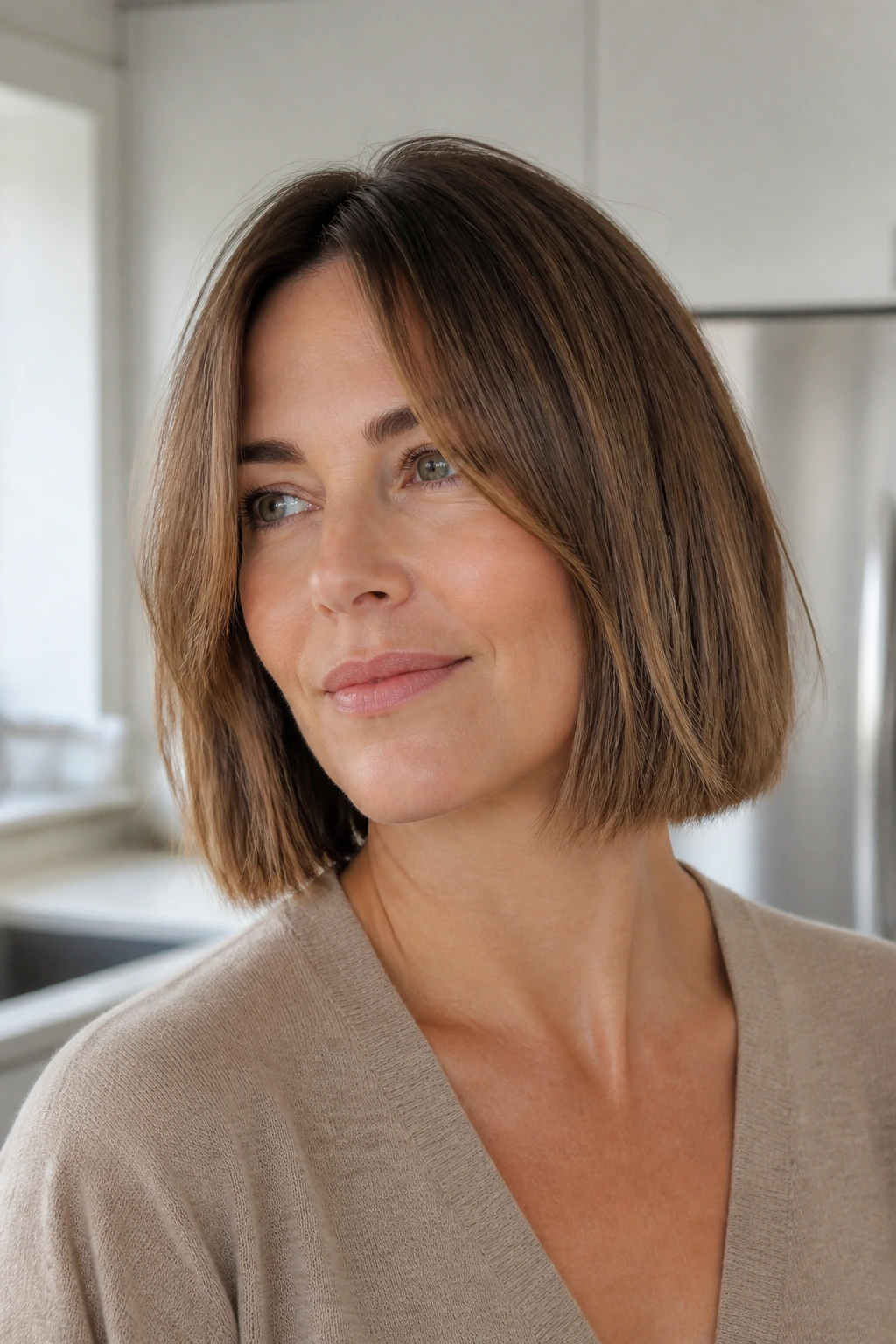
If you want the least fussy version of the whole bunch, this is it. The ends stay blunt so the haircut keeps its outline, and the fringe is left long enough that it can part naturally without needing constant trimming. It’s the sort of style that still looks purposeful when you don’t do much to it.
That grown-out fringe is the key. It can sit in the center, sweep to the side, or break into two pieces on its own. It’s forgiving, which matters if you’re trying to stretch salon visits or if you know you won’t be standing in front of a mirror with a round brush every morning.
This is not a lazy cut. It’s a smart one. The difference is in the shape.
21. Silver-Forward Bob With Soft Bangs
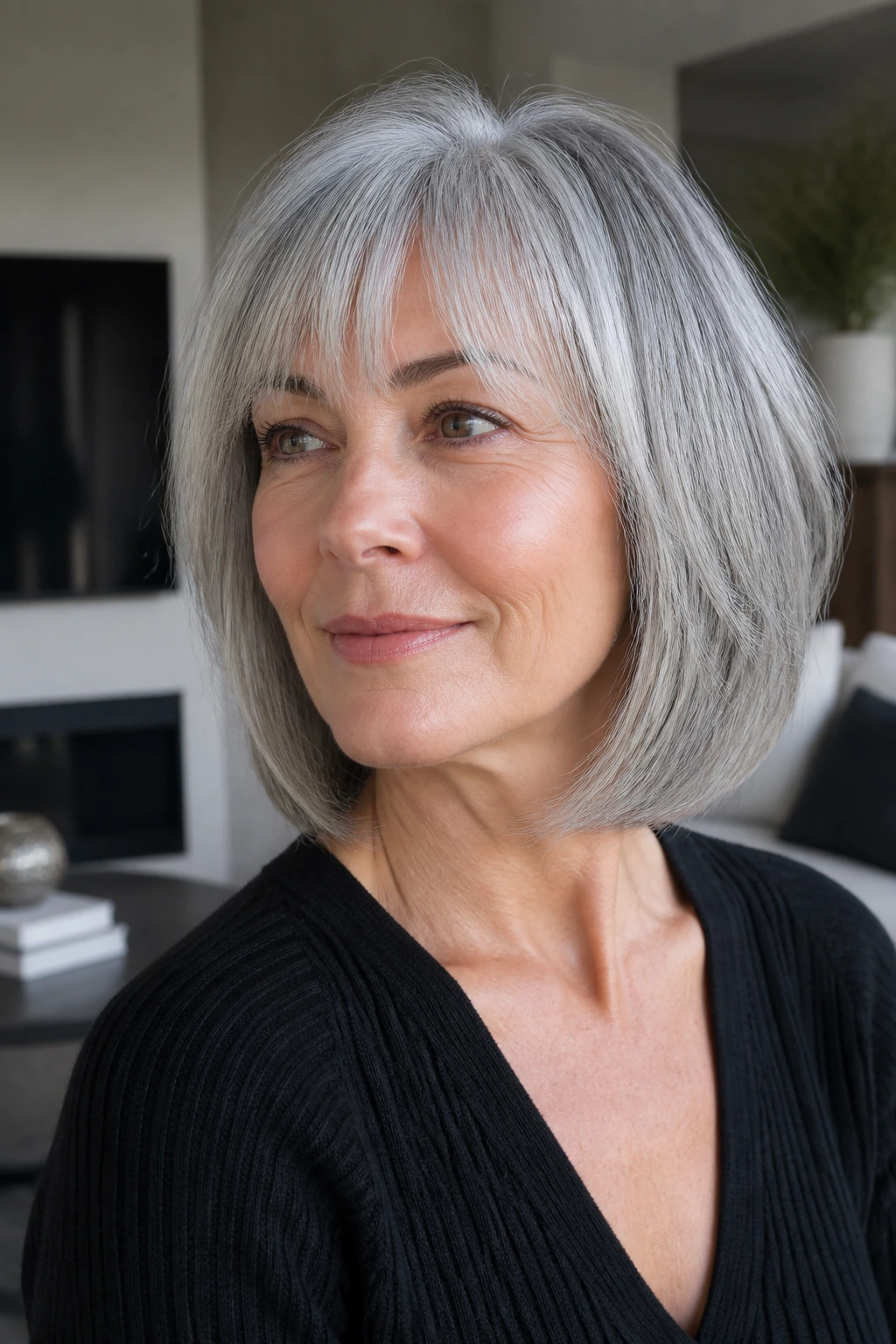
Silver hair shines differently when the cut leaves room for movement. A medium bob with soft bangs frames the face and lets the gray read as texture, not as a flat sheet of color. If your hair has a mix of white, silver, and darker strands, this shape shows all of it in a cleaner way.
Soft bangs matter here because hard fringe can make silver hair feel heavy. The long fringe keeps the front open and lets light hit around the eyes and temples. That does a lot of work. More than most people expect, honestly.
This cut pairs especially well with a deep side part or a center part, depending on whether you want calm or lift. Either way, the outline should stay simple. The color carries enough interest on its own.
22. Curly Bob With Elongated Bangs
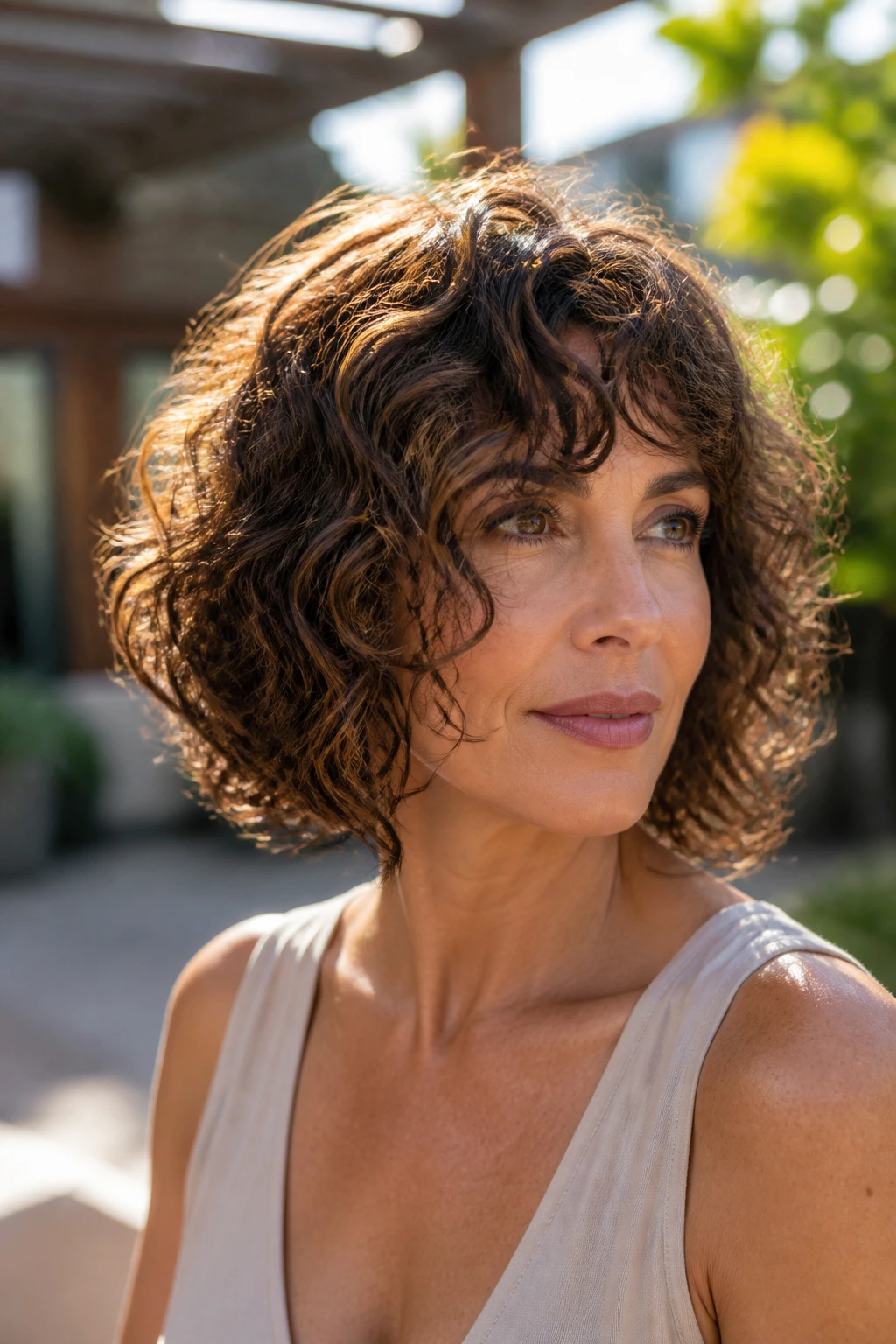
Curls need length planning, and this bob respects that. The cut should sit a little longer than you think at first, because curl shrinkage can steal inches before the hair even dries. Elongated bangs are cut to follow the curl pattern, not fight it into a straight fringe that bounces up in the wrong place.
This shape gives curls room to spring while still keeping the haircut contained. The long bangs can be worn forward, parted, or allowed to arc toward the face. If you have a tighter curl, ask for the fringe to be cut dry or at least in its natural state. Wet curl lies. Dry curl tells the truth.
Tip
Use a diffuser on low heat and stop touching the hair once it starts setting. Curly bobs punish fidgeting.
23. Thick-Hair Bob With Internal Layers and Side Fringe
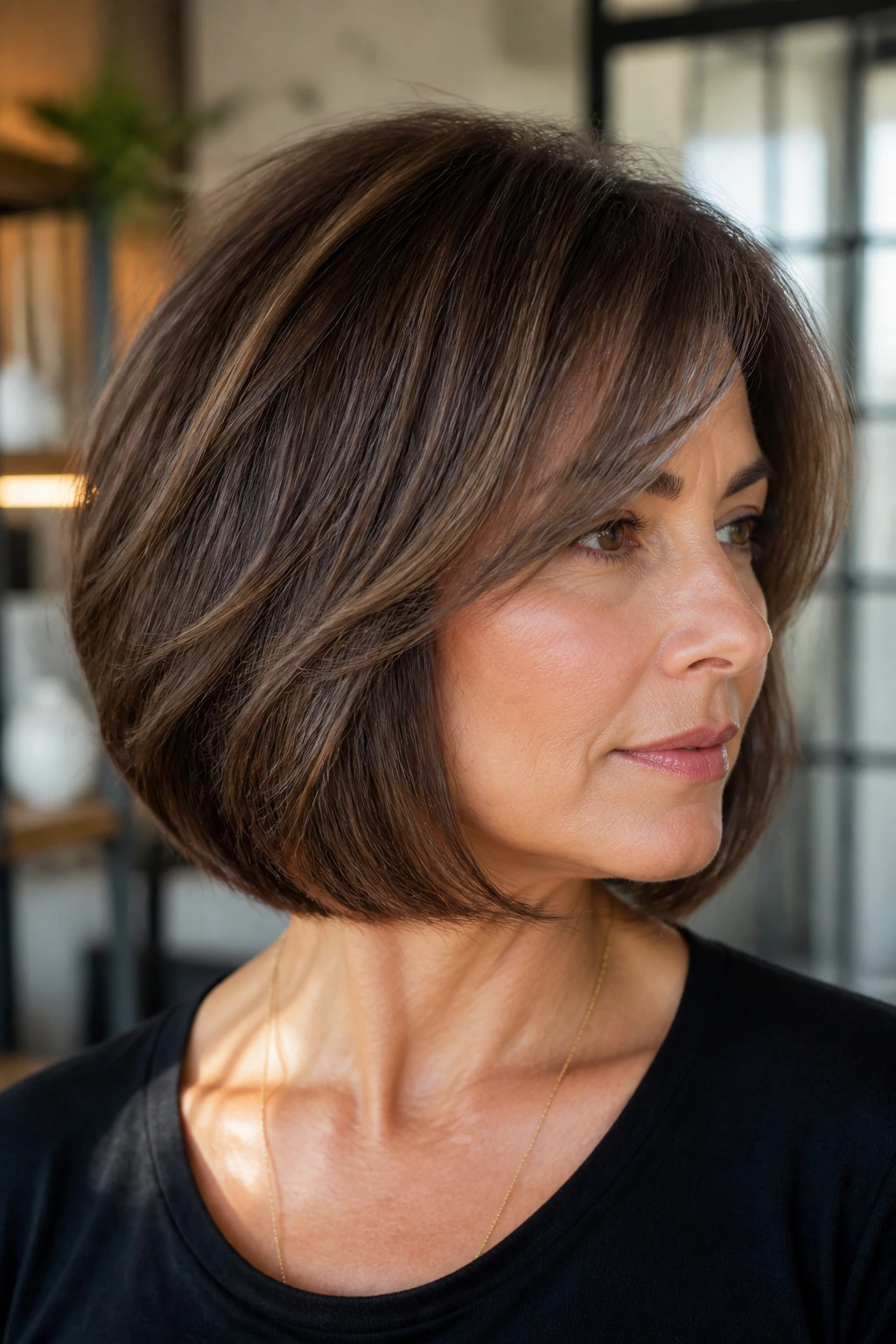
Thick hair needs subtraction in the right places. Internal layers remove weight from inside the cut, which lets the bob sit closer to the head without puffy ends or a triangle shape. The side fringe keeps the face soft and gives the front a little drift.
This is one of the most practical medium bob hairstyles with long bangs over 40 if your hair has a lot of body and not much patience. The shape stays manageable, the fringe can be tucked or swept, and the overall line still reads clean. You do not need to thin the ends into nothing. That mistake is common, and it turns a rich bob into a frayed one.
Ask for the inside to be relieved, not the perimeter. That’s the difference between shape and damage.
24. Fine-Hair Bob With Airy Bangs
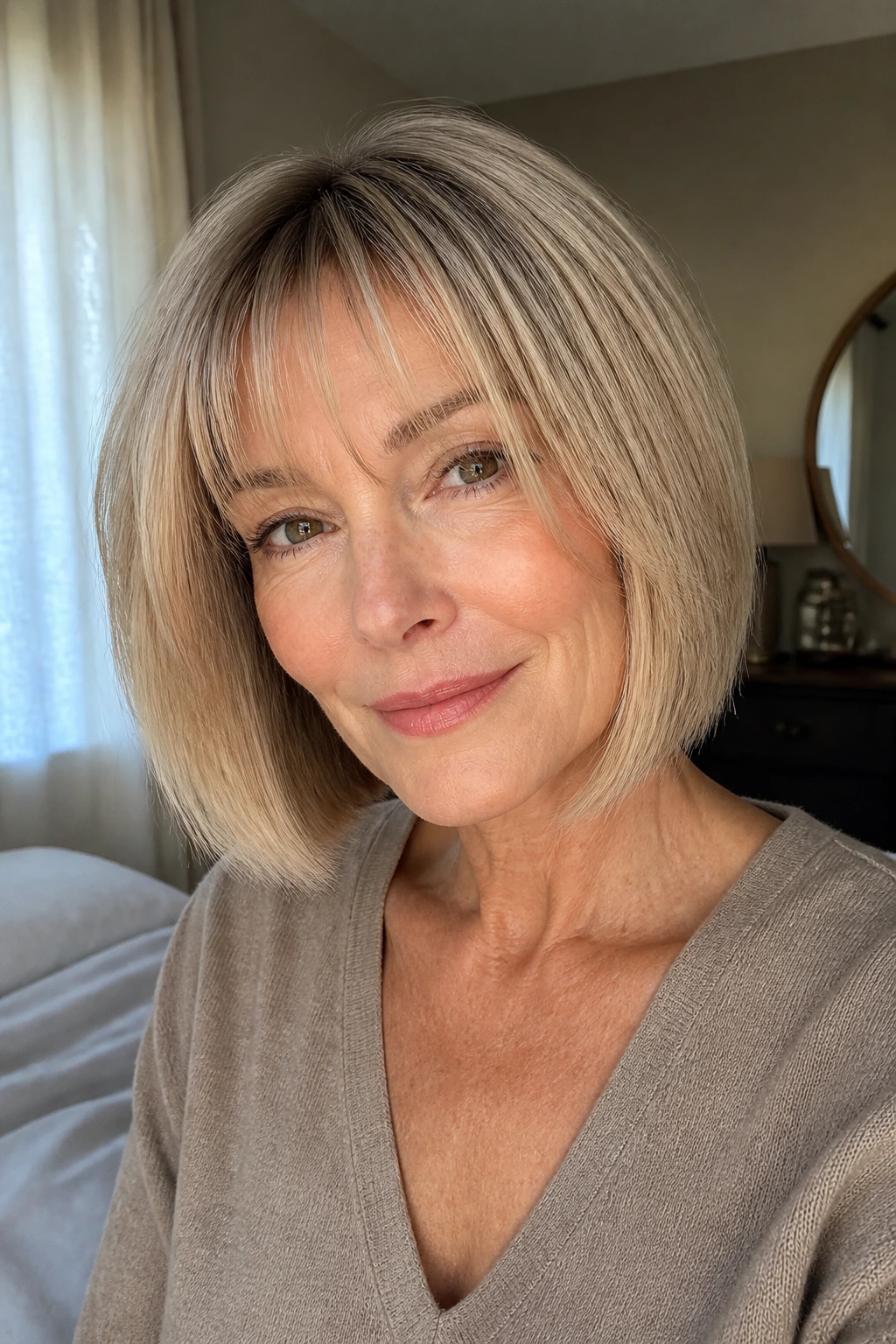
Fine hair looks best when the cut respects what it can do, not what Pinterest claims it should do. A blunt-ish perimeter gives it the illusion of thickness, while airy bangs keep the front from looking heavy or see-through. Too many layers can make this type of hair look sparse, so restraint matters.
The medium length helps because it gives the hair some swing without stretching the ends too far. Airy bangs also keep the face light. You can tuck a little volume into the crown with mousse, a round brush, or even a clip while the hair cools.
Best approach
Skip aggressive texturizing. A neat outline and a soft fringe will do more for fine hair than a dozen razor slices ever will.
25. Gray-Blending Bob With Dimensional Highlights
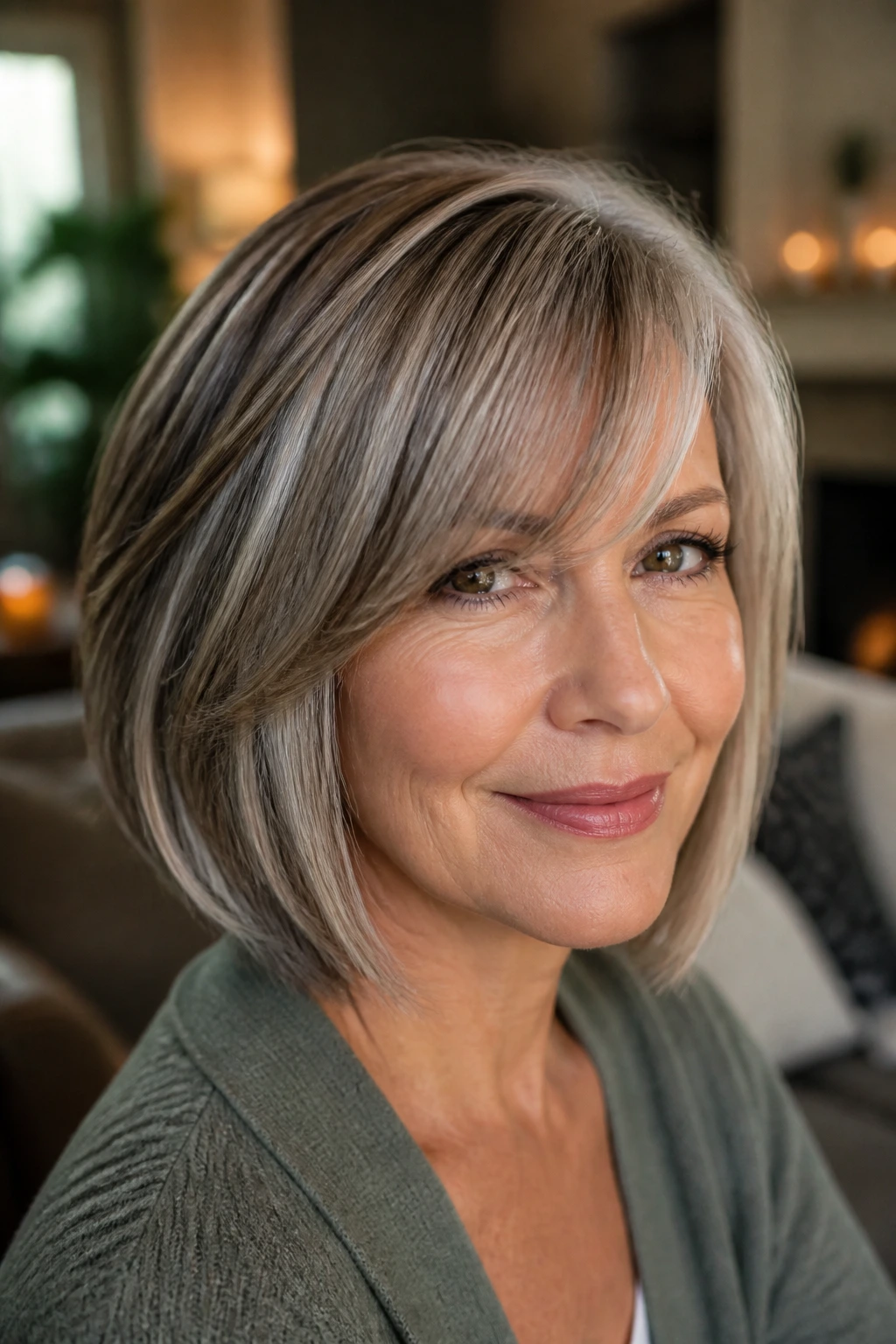
This version is as much about color as shape. Dimensional highlights and lowlights keep gray from sitting in one flat patch, and the bob’s length gives those tones room to move around the face. Long bangs help blend the transition between darker roots and lighter silver pieces, which makes grow-out look softer.
The cut itself should stay balanced and slightly layered, nothing too chopped. Let the color do the visual heavy lifting. A bob like this is particularly flattering when the hair has a mix of warm and cool tones, because the light catches each section differently as you move.
If you color your hair, talk to your stylist about placement around the bangs and temples. That’s where the eye lands first. Put the dimension there, and the rest follows.
26. Oval-Face Bob With Balanced Length and Long Parted Bangs
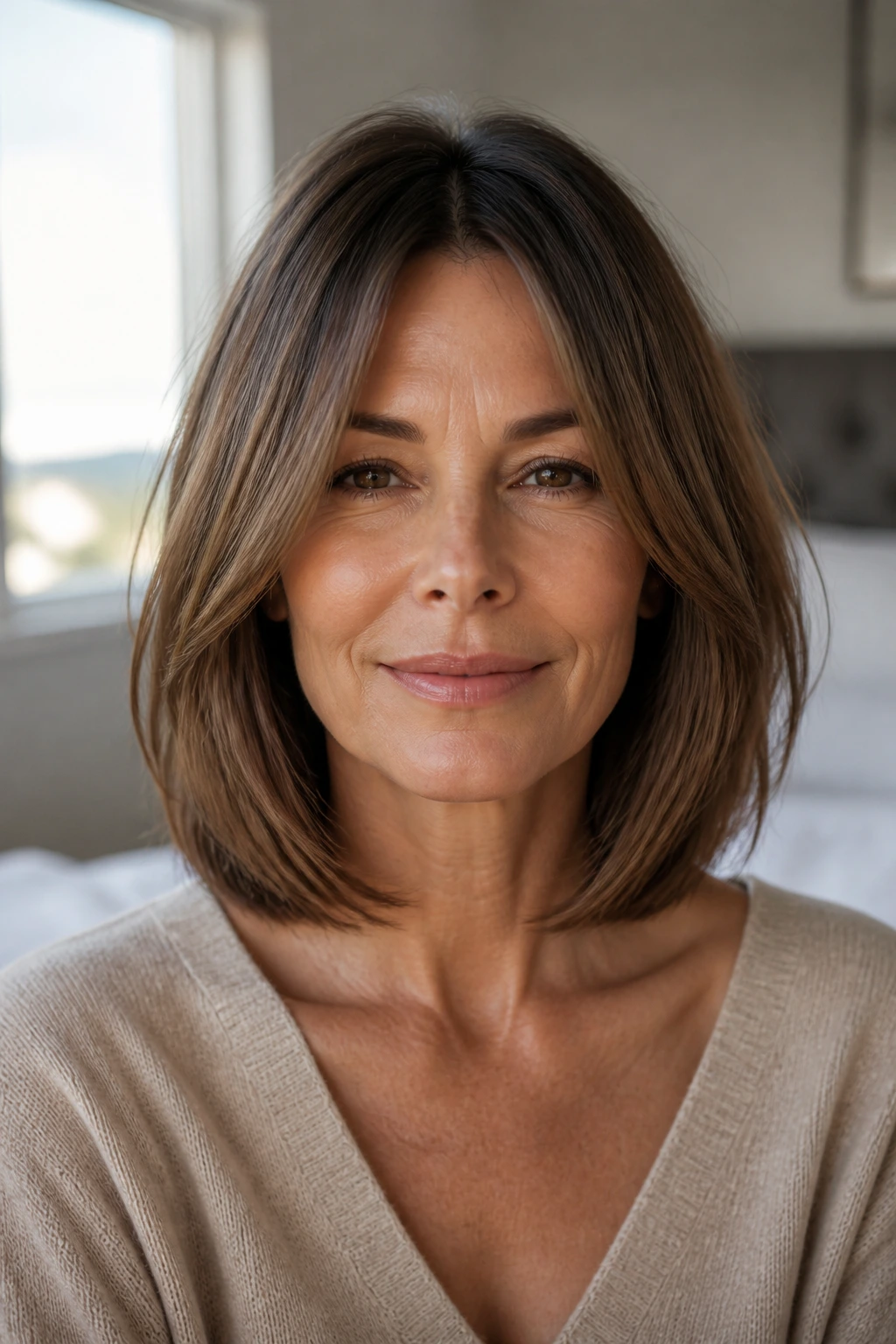
Oval faces can wear nearly anything, which is a blessing and a curse because it makes the decision harder. A balanced medium bob with long parted bangs keeps the face open without stretching it out or crowding it. The length should sit between the chin and collarbone so the proportions stay calm.
This cut works because nothing fights the natural balance of the face. The bangs can part in the middle or slightly off center, and the edges can stay clean or softly beveled. The haircut doesn’t need gimmicks. It just needs accurate proportions and enough movement to avoid looking stiff.
Small note
If your hair is straight, a tiny bend at the ends keeps the shape from reading flat. That single bend matters more than a lot of people realize.
27. Round-Face Bob With Cheek-Length Bangs and Angle
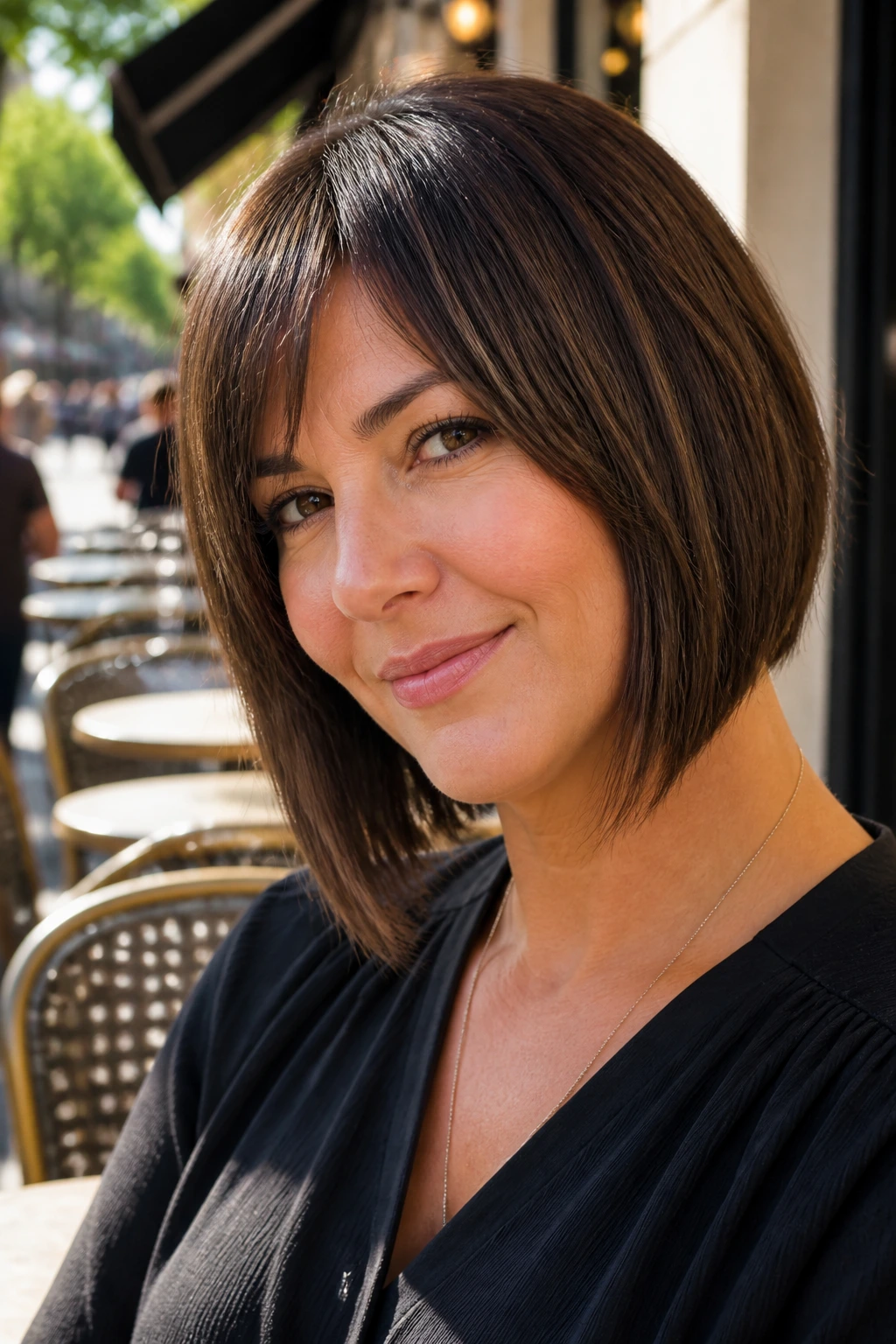
Round faces usually benefit from diagonal movement, and this bob gives it. The angle in the cut lengthens the appearance of the face, while cheek-length bangs create a frame that lands higher than the jaw. That keeps the softest part of the face from being boxed in.
The front pieces should be longer than the sides, and the bangs need enough length to sweep rather than sit straight across. That sweep helps create vertical lines. The haircut doesn’t make the face smaller; it gives it shape. There’s a difference, and it’s a good one.
This is also a useful style if you like wearing your hair tucked behind one ear. The longer front piece looks intentional that way, not accidental.
28. Square-Jaw Bob With Softened Corners and Swoopy Bangs
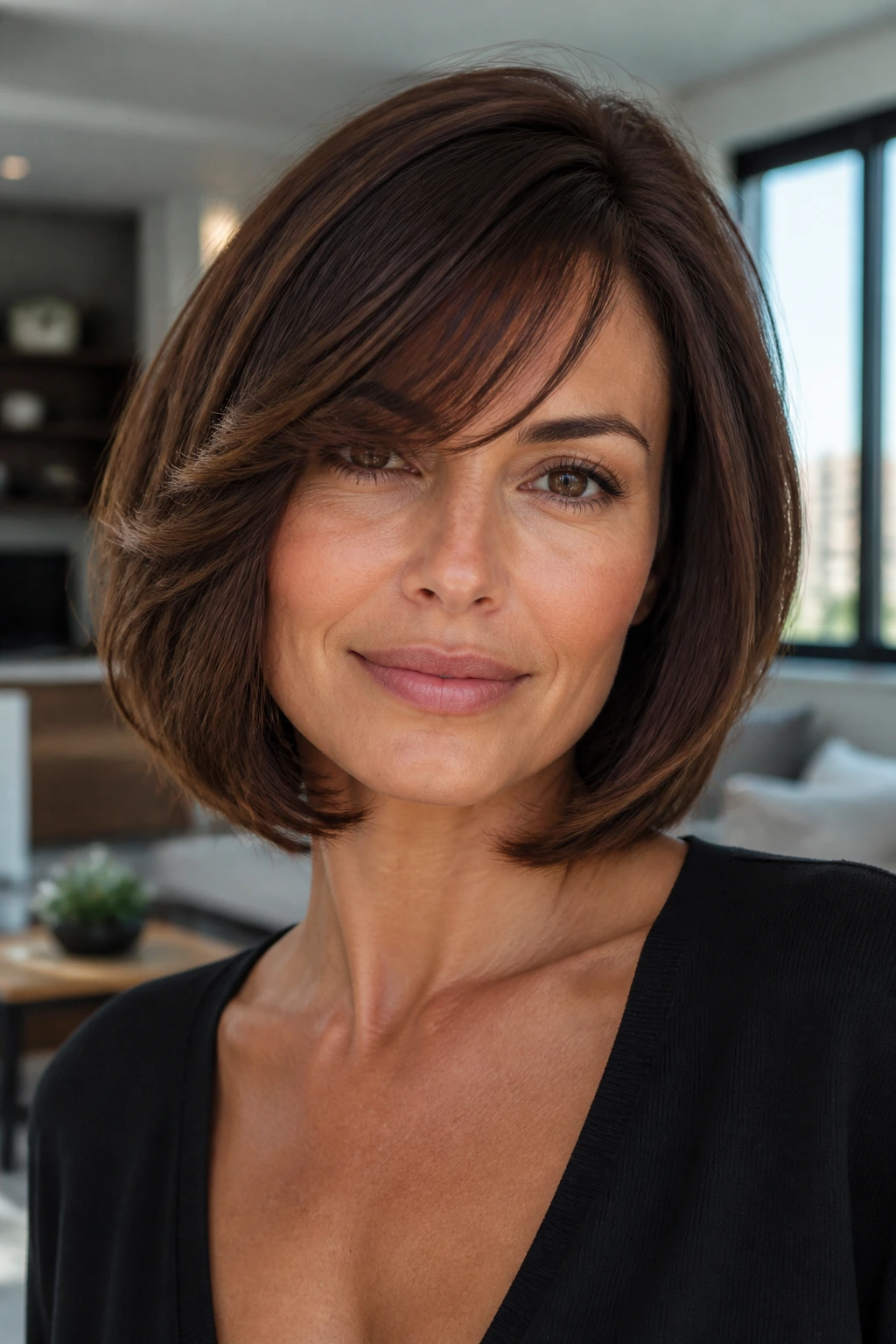
Square jaws look strong in the best possible way, so the goal here is not to hide them. It’s to soften the corners just enough that the bob feels flattering rather than boxy. The ends should bend under lightly, and the long bangs should swoop instead of landing in a straight line.
That swoop breaks up the horizontal emphasis of a strong jaw. It also gives the face a little lift around the eyes, which keeps the whole look from becoming too severe. Medium length helps because it leaves enough hair to shape without piling too much volume right at the jawline.
This is a cut with a nice balance of structure and softness. It looks polished without becoming rigid, and it stays in that sweet spot where you can wear it sleek, bent, or a little tousled and still recognize the haircut.
Why the Medium Bob and Long Bangs Work So Well Together
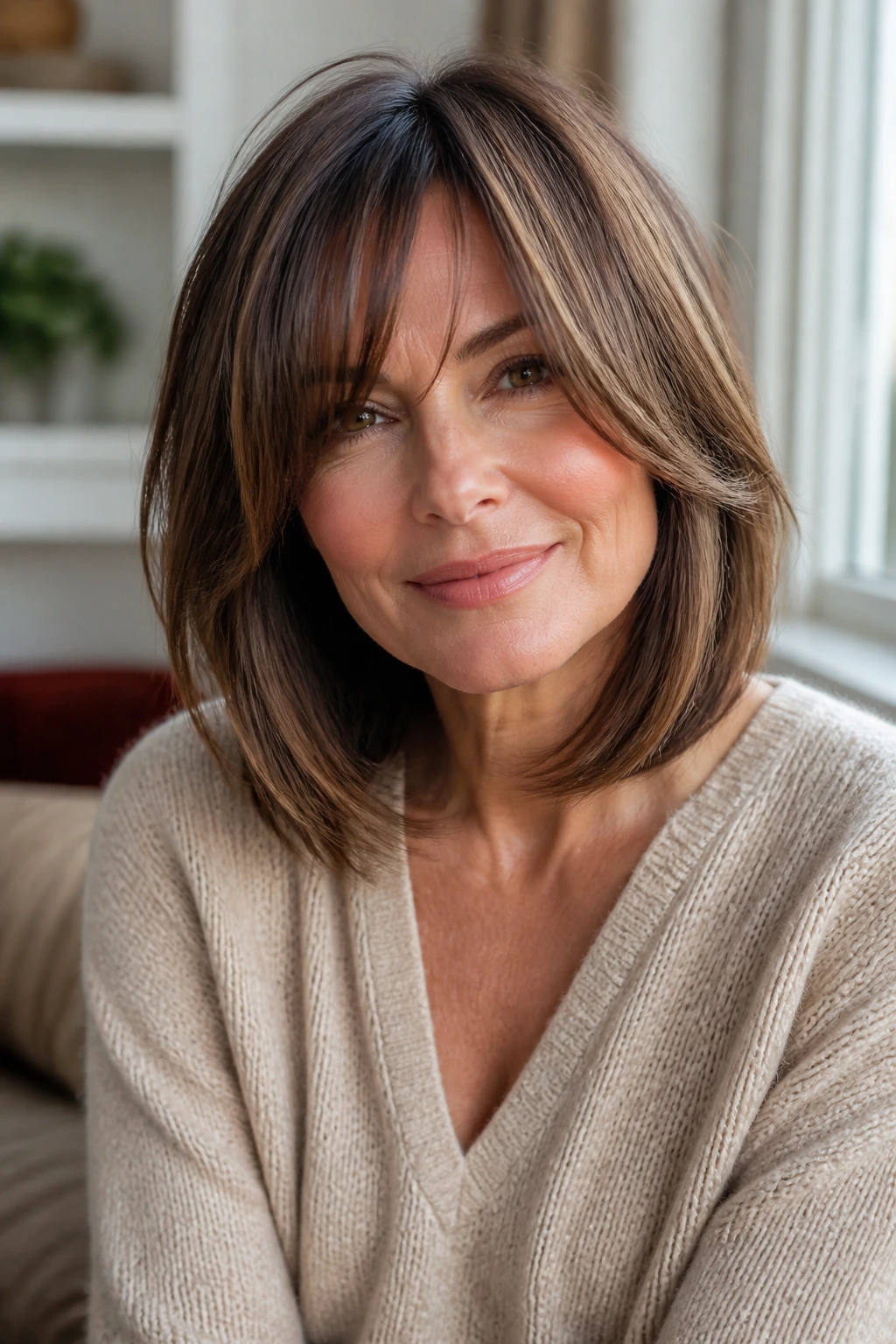
The medium bob is one of those lengths that gives back what it takes. It removes the drag of long hair, but it does not cut so short that the style becomes a daily negotiation with cowlicks, humidity, or a stubborn neckline. Long bangs are the same kind of compromise, only smarter. They give you face framing without that tiny strip of fringe that needs attention every time the weather shifts.
A bob at this length also handles change well. If your hair is a little finer than it used to be, the cut can be sharpened with a blunt line. If it’s thicker, the weight can be controlled with internal layers. If it’s gray, highlighted, or a mix of both, the movement in the shape lets the color show up instead of sitting there in one flat mass.
And there’s the practical part, which deserves more respect than it gets. A medium bob usually sits long enough to tuck behind the ears, pin back, twist into a low clip, or flatten into a soft ponytail on days you are done dealing with it. That flexibility is a quiet luxury. Not glamorous. Useful.
Salon Tools and Products That Make the Cut Behave
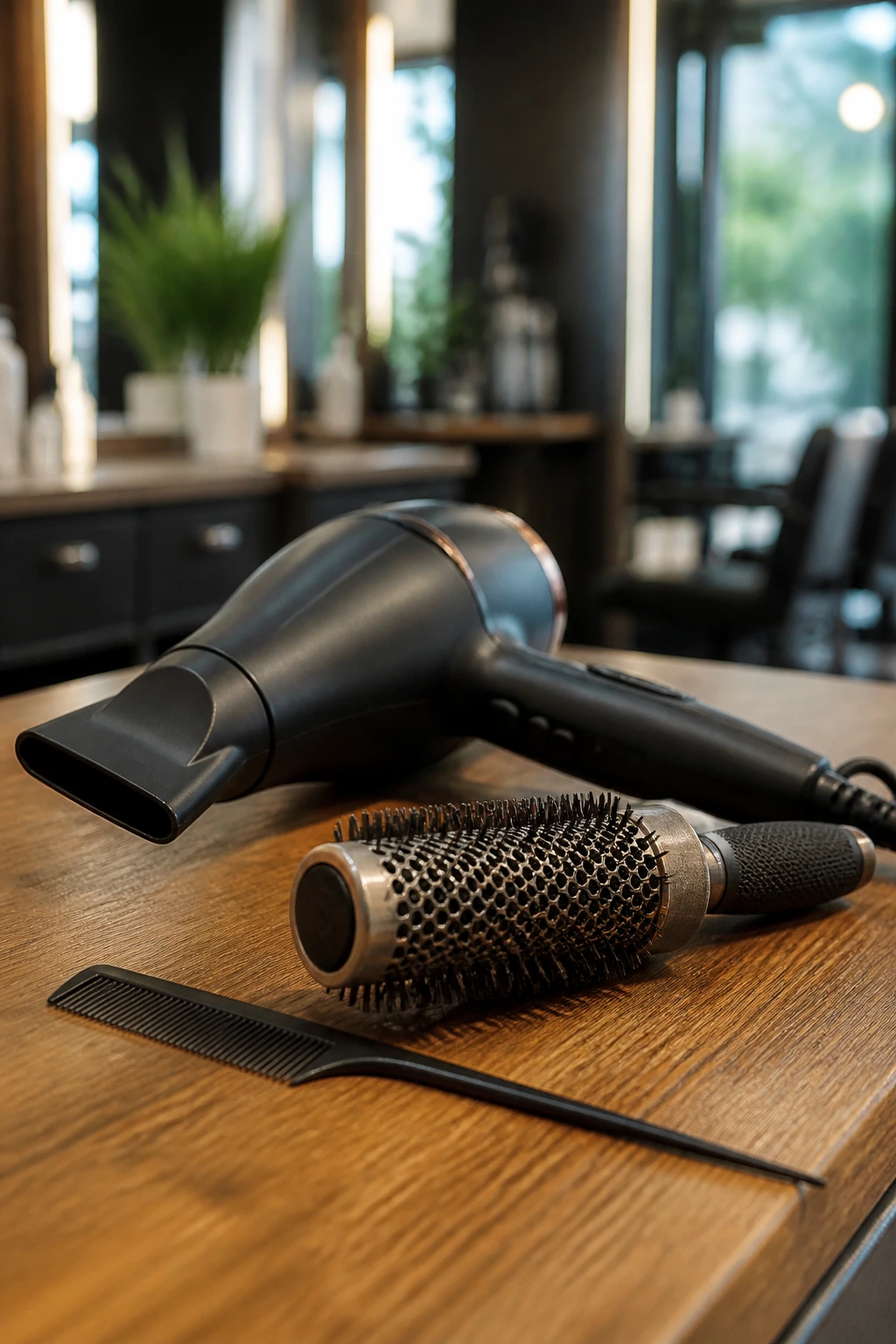
A good cut helps, but the right tools keep it from going sideways by noon. You do not need a drawer full of gadgets. You need a few things that do their jobs cleanly.
- Blow dryer with a narrow nozzle: This gives you control at the bangs and keeps the ends from frizzing while you smooth the shape.
- 1 to 1¼-inch round brush: Best for bending the ends under and giving the fringe a soft curve without making it curl too hard.
- Tail comb: Useful for clean parts, sectioning the bangs, and lifting the crown before drying.
- Lightweight mousse or root-lift spray: Helps fine or flat hair keep a little body at the roots.
- Heat protectant: A must if you use a flat iron, curling iron, or hot round brush.
- Smoothing cream or serum: A pea-sized amount tames the ends without making a bob look greasy.
- Texturizing spray: Handy for choppy, shaggy, or wavy styles that need separation.
- Dry shampoo: Not a substitute for washing, but very useful at the roots on day two or three.
- Sectioning clips: Keep bangs and crown layers out of the way while you dry the back.
- Flat iron or small curling iron: Helpful for sleek bobs and for adding a bend to long bangs when they fall too straight.
Use tools that match the finish you want. A glossy bob needs a brush and dryer more than a curling wand. A soft shag needs fingers and texture spray more than a straightener. Simple. That’s the point.
How to Choose the Right Shape for Your Hair Texture and Face
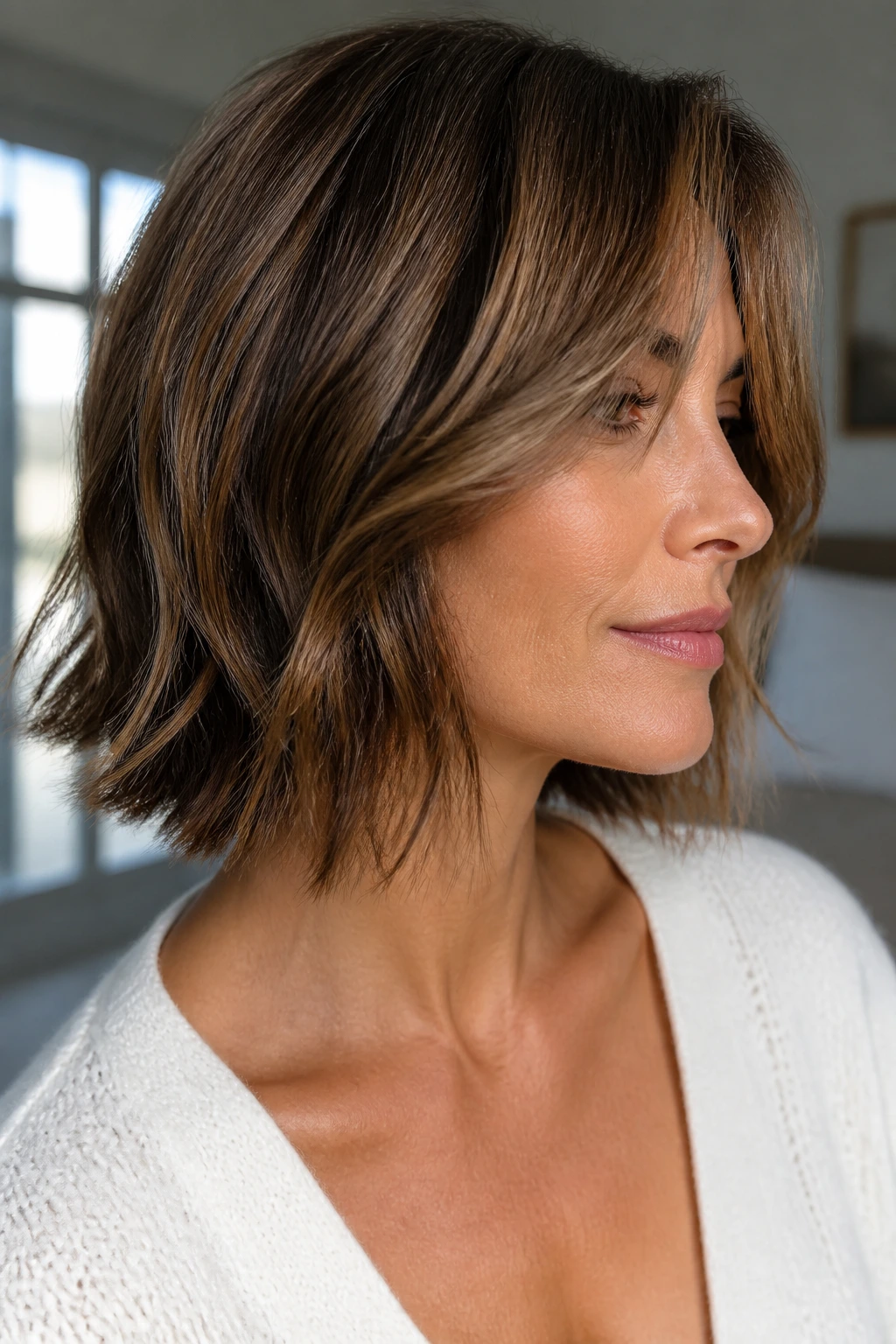
The best bob is the one that works with the hair you have on a boring Tuesday morning, not the one that looks good for twelve minutes after the salon blowout. Texture matters first. If your hair is fine, blunt ends and a little root lift usually do more than heavy layering. If your hair is thick, you’ll want internal shaping so the bob doesn’t swell outward like a triangle. If it’s curly or wavy, long bangs must be cut with shrinkage in mind, or they’ll sit too short once they dry.
Face shape matters too, but not in a rigid, box-checking way. Round faces usually benefit from side parts and angled lines. Square jaws soften well under swoopy fringe and curved ends. Heart shapes often like curtain bangs because they balance the forehead. Oval faces can wear nearly everything, so the decision usually comes down to texture and lifestyle rather than strict symmetry.
What to tell your stylist
Say how much time you want to spend styling. Say whether you air-dry, blow-dry, or switch between the two. Say if your bangs need to be pinned back for work, or if you want them to fall all day without fuss. That information matters more than the word “bob,” which can mean fifty different things.
A small but useful test
Pull your hair back loosely and look at the line around your face. Where does it feel strongest? Where does it feel heavy? That gives you a clue about whether you need a softer fringe, more angle, or a blunt edge.
How to Style These Bobs Without Wrestling Them
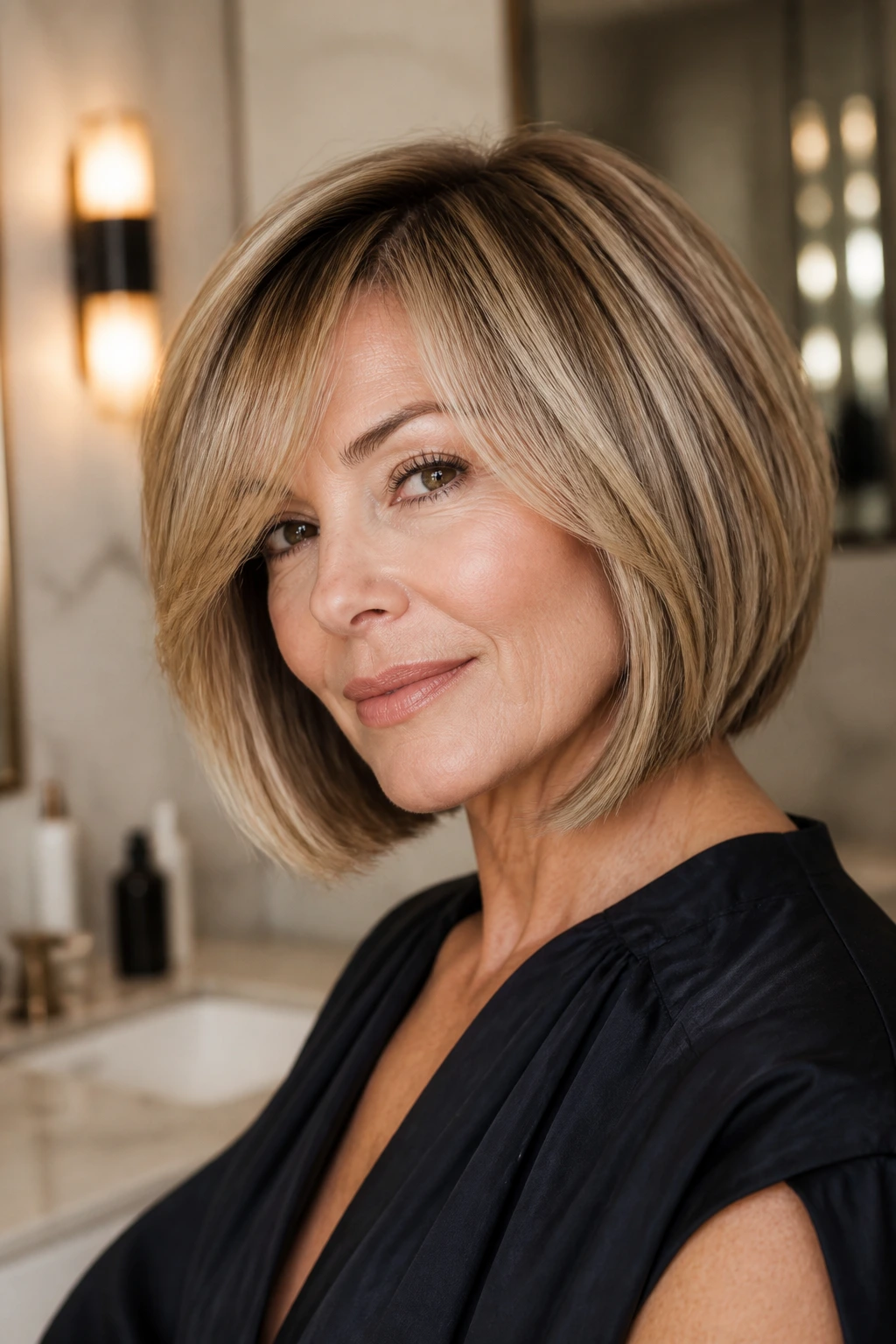
The quickest way to ruin a bob is to overhandle it. Hair at this length likes direction, not panic. If you blow-dry every strand into submission, the result can look stiff. If you leave it untouched, it can puff out in places you do not want. The middle ground is where these cuts look best.
For a sleek finish, dry the roots first, then smooth the mid-lengths with a round brush or paddle brush and finish the ends with a tiny inward bend. For a soft wave, dry the crown, bend 2-inch sections with a flat iron or curling iron, and leave the last half-inch out on random pieces so it doesn’t look too uniform. For an air-dried shape, scrunch in mousse or cream while damp, then stop touching it once the texture starts to set.
Bangs deserve their own attention. Dry them first, especially if you use heat. Long bangs can split and dry in strange directions if they’re left to do whatever they want. Pinning them back while the rest of the hair dries can help if you want a smoother result.
Three styling moods that work
- Polished: round brush, smoothing cream, ends curved under
- Relaxed: mousse, finger-drying, a few bent pieces for movement
- Textured: salt spray or texturizer, rough-dried roots, piecey bangs
If you only do one thing, do the front. Long bangs frame the whole haircut. When they sit right, the bob looks finished even if the rest is imperfect.
Common Mistakes That Flatten a Good Bob
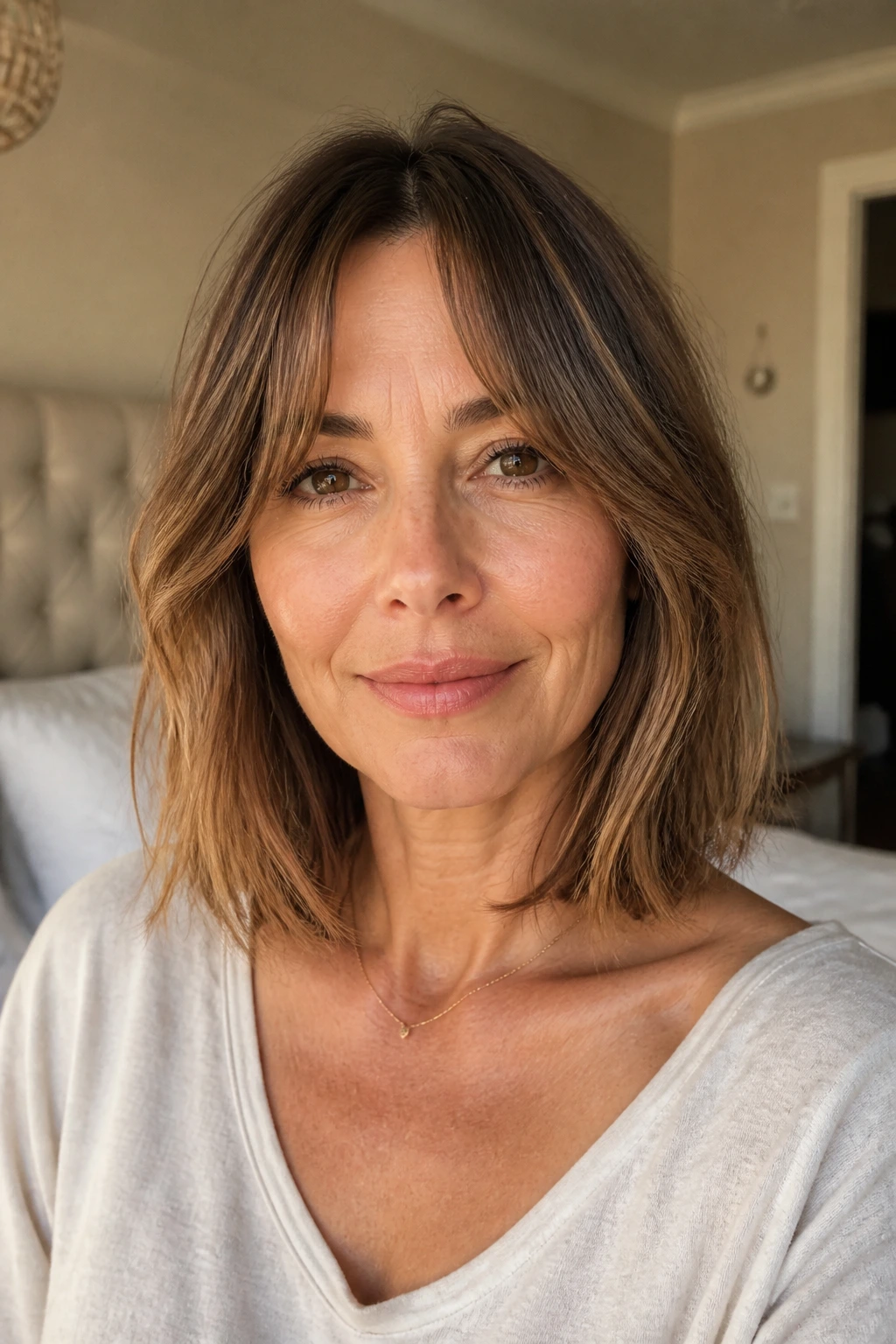
The first mistake is cutting the bangs too short. That turns a long, flexible fringe into a maintenance problem. You lose the ability to part it, sweep it, or tuck it away. The fix is simple: keep the shortest face-framing point near the cheekbone or brow, then work longer from there.
Another common one is over-thinning the ends. People think thick hair needs to be “taken out,” and sometimes it does, but not with a heavy hand at the perimeter. The symptom is frayed, see-through ends that stick out instead of settling. Internal layering is usually the better answer.
A third mistake is ignoring crown shape. If the top lies flat, the whole bob can feel heavy and older than it is. A little root lift, a side part, or soft layering near the crown can fix that in minutes.
Then there’s the mismatch between cut and styling habits. A sleek blunt bob styled with beach spray every day can lose its point. A shaggy bob ironed flat every morning can look sleepy. The cut should fit the way you actually move through the week, not the style you wish you had time for.
Variations and Alternatives to Try
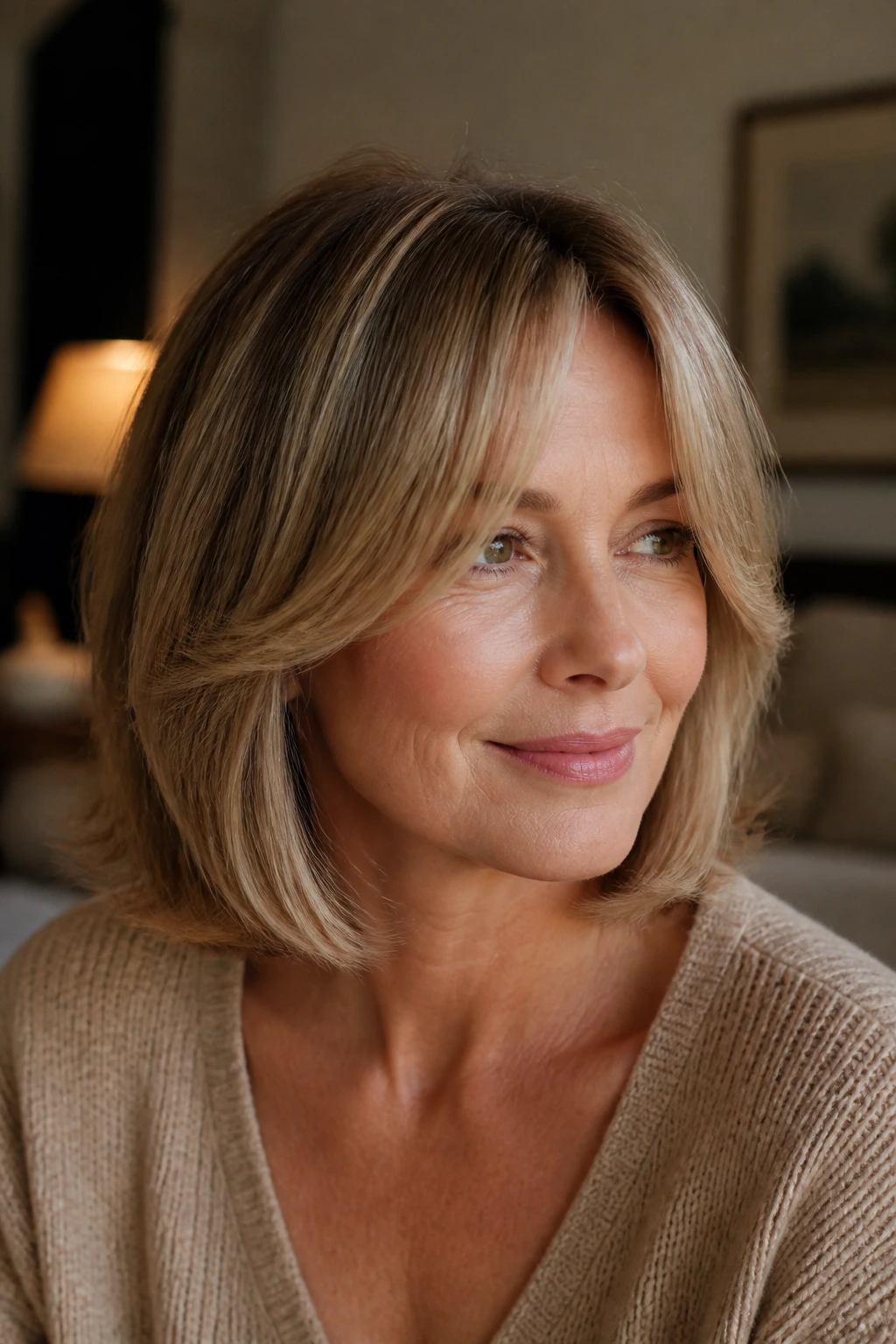
Soft Curtain Reset
Keep the same medium bob, but let the fringe open a little wider and the front pieces graze the cheekbones. This version is a good move if you want the cut to feel a touch softer around the eyes. It suits almost every face shape because it doesn’t lock the hair into one fixed part.
Sleek Office Bob
Choose a blunt or slightly beveled line, then smooth the finish with a brush and a light serum. The result is cleaner and sharper, which works well if you like your hair to look controlled. This version needs more styling, but it pays you back with a very polished outline.
Airy Weekend Bob
Keep the length medium, add movement through the ends, and let the long bangs stay piecey. A little texture spray and a rough dry are enough. This is the version for anyone who wants hair that looks better after being touched a little, not less.
Curl-Friendly Shape
Ask for a longer bob with the fringe cut in the curl pattern. The shape should leave room for shrinkage and keep the front pieces long enough to frame the face after drying. If your curls are springy, this version saves you from a fringe that suddenly lands above the brows.
Silver-First Edit
Build the cut around the gray you already have instead of coloring over it. A soft bob with long bangs lets silver and white catch light around the face, which can make the whole style look richer. If your hair is transitioning, this version is often easier to live with than trying to keep every strand the same shade.
Trim Cycles, Grow-Out, and What to Do Between Salon Visits
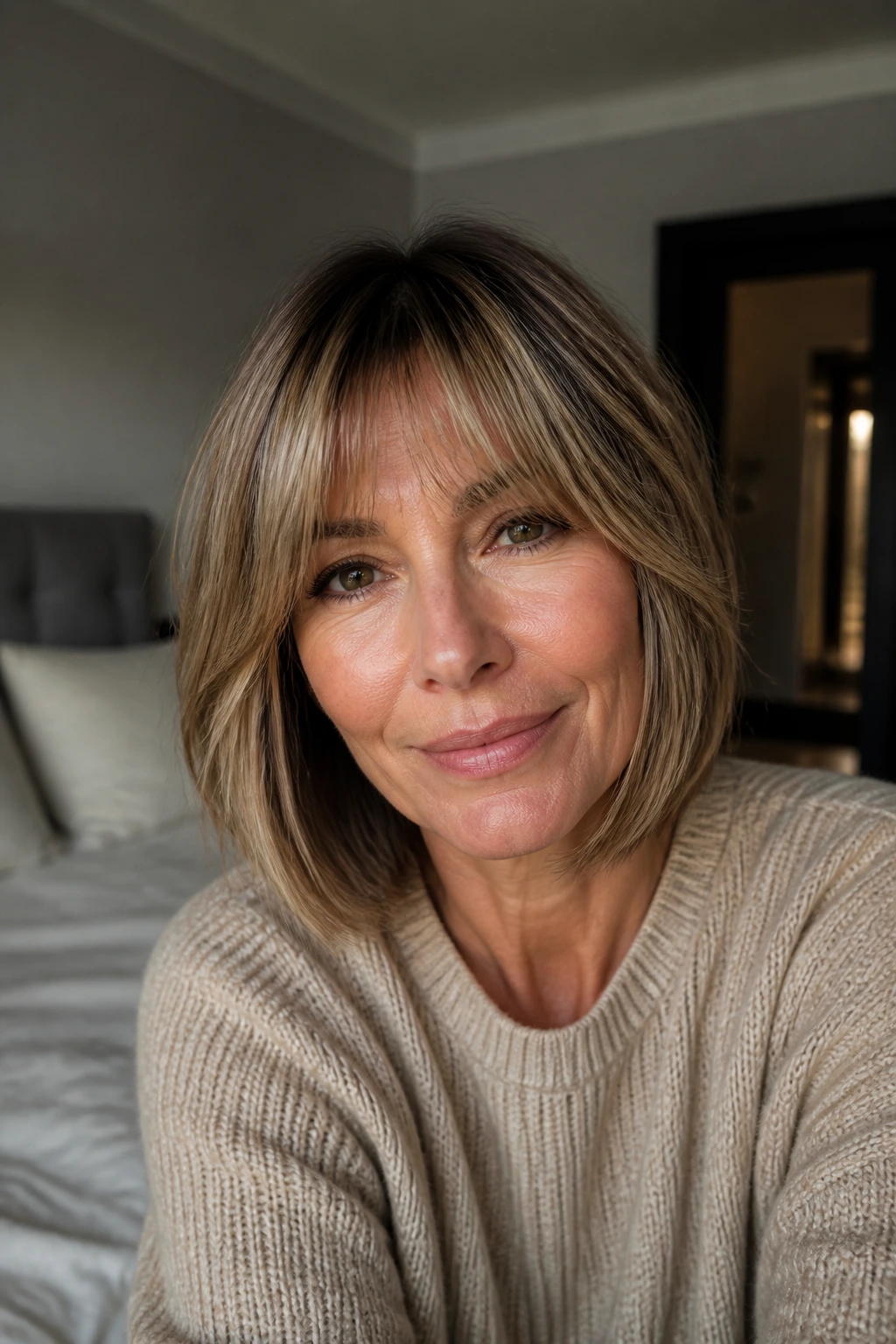
A medium bob looks best when it keeps its outline. That means trims every 6 to 8 weeks if you want a clean edge, or a little longer if you’re comfortable with a softer grow-out. Bangs usually need attention sooner than the rest of the cut. If they’re part of the style rather than a loose face frame, they may want a light trim every 3 to 4 weeks.
Between appointments, dry shampoo at the roots can rescue the crown, but it should not become the whole plan. Use it on clean hair if you know the ends will last better that way, then brush it through so you don’t get a dusty patch at the roots. If the ends start flipping out, a quick bend with a flat iron or round brush usually fixes it faster than washing and starting over.
Color maintenance matters too if you highlight, gloss, or blend gray. A bob with bangs shows regrowth around the temples and fringe faster than long hair does. That’s not a flaw. It just means the face-framing pieces deserve a little more attention when you book color.
Good habits between trims
- Clip or pin the fringe on off days
- Refresh the roots before the ends
- Sleep on a smooth pillowcase if your hair frizzes easily
- Keep one heat tool that you actually know how to use well
Frequently Asked Questions
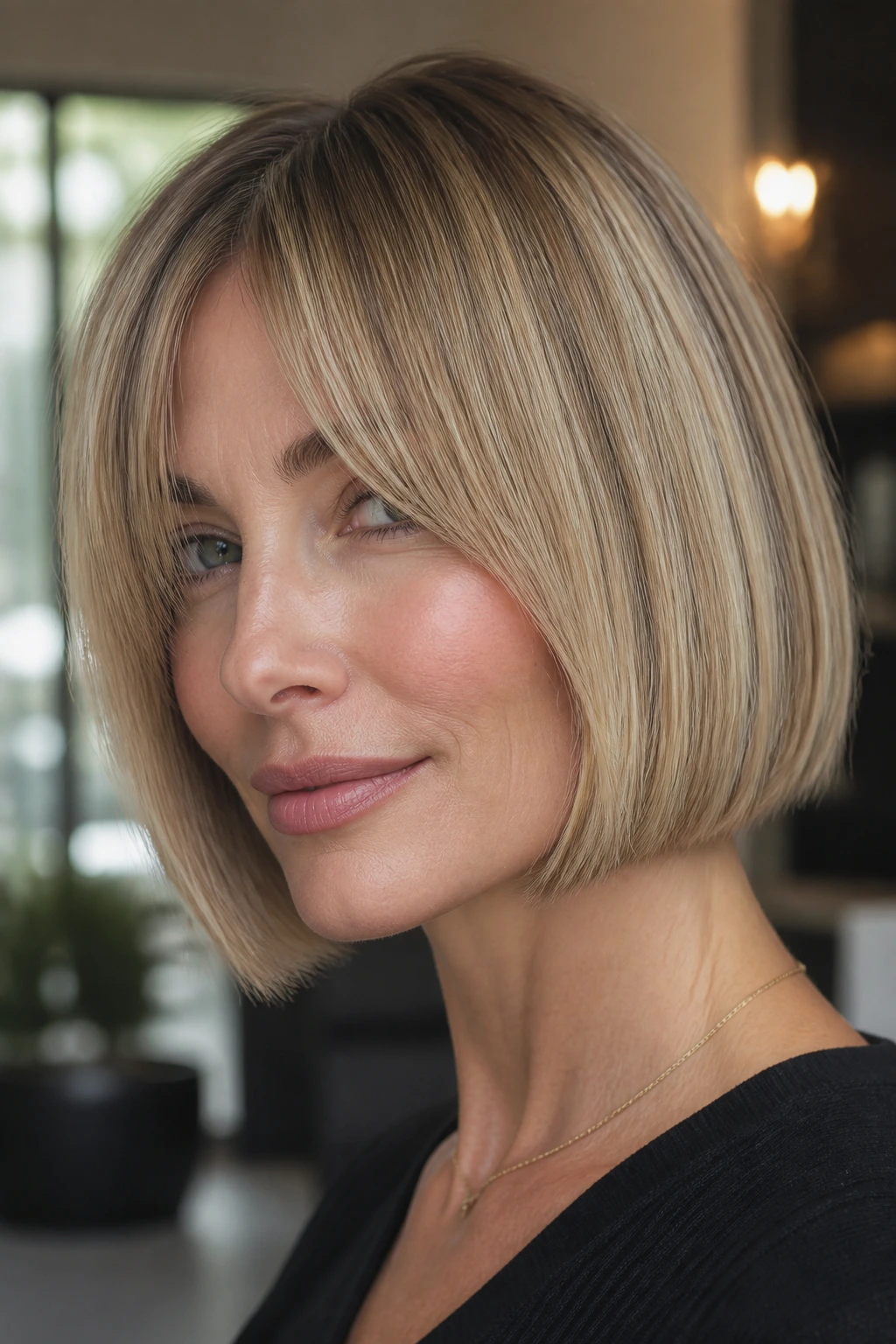
Will a medium bob with long bangs make my face look shorter?
Not if the shape is chosen well. Side-swept or curtain bangs usually add softness without cutting the face in half, and a little length in the front can actually make the face look longer. The problem usually comes from bangs that are too blunt or too short.
Can fine hair wear these styles without looking thin at the ends?
Yes, but the cut has to stay controlled. A blunt or slightly beveled line gives fine hair more visual density than a heavily layered shape, and long bangs should stay airy rather than wispy enough to disappear. Too much texturizing is the enemy here.
Are curtain bangs better than side bangs after 40?
They solve different problems. Curtain bangs soften the center of the face and are easy to grow out, while side bangs create diagonal movement and can be better if you want a little lift at the crown. The better choice depends on where your hair naturally parts and how much styling you want to do.
How do I keep long bangs from splitting all day?
Dry them first, direct the airflow from side to side, and let them cool in the direction you want. A tiny bit of styling cream or mousse near the root helps. Heavy serum at the fringe usually makes the split worse, not better.
Will this work if my hair is curly?
Absolutely, but the bob should be cut with curl shrinkage in mind. The bangs need to be longer than they look in the chair, and the shape should leave room for the curl to spring without bunching at the jaw. A dry cut can help here, or at least a final check once the hair has moved a bit.
How awkward is the grow-out stage?
Less awkward than short fringe, more awkward than no bangs at all. Long bangs are forgiving because they can turn into face-framing pieces while the rest of the bob softens. If you think you may want to grow it out later, choose a fringe that already has some length.
What if my bob flips out at the ends?
That usually means the line is sitting at a point where your hair naturally wants to bend outward. A small inward bend with a round brush or flat iron usually fixes it. If it keeps happening, the cut may need a tiny adjustment in length or weight.
Do these cuts work with glasses?
Yes, and some of them are especially good with glasses because the long bangs can sit above or around the frames without crowding them. Curtain bangs and side-swept fringe are the easiest to live with. Just avoid fringe that ends exactly where the top of the frame hits, because that creates visual clutter.
A Bob That Keeps Its Shape
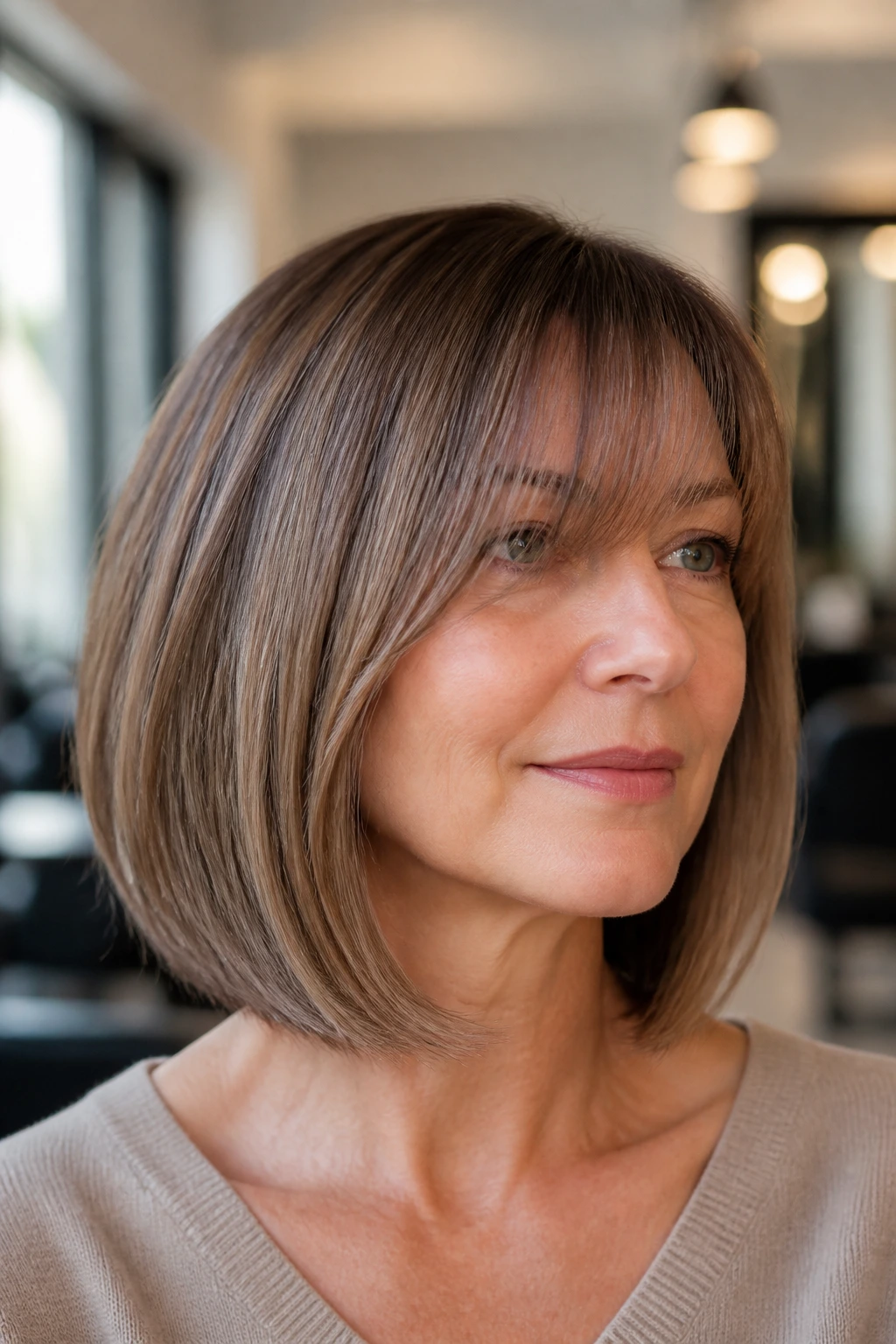
The nicest thing about a medium bob with long bangs is that it can feel edited without feeling strict. It gives the face shape, keeps the neck visible, and leaves enough length to behave in real life, which is usually the part that matters most. Hair over 40 does not need to be hidden or over-managed. It needs a cut that understands texture, movement, and the fact that nobody wants to spend forty minutes every morning making bangs obey.
If you’re choosing between several versions, start with the one that matches your habits, not the one that looks the most dramatic in a photo. The right bob is the one that still looks like you when the round brush is back in the drawer and the day has already started moving.
