



Thick wavy hair has opinions. Cut it too long, and it can drag the whole head down into a heavy curtain. Cut it too short in the wrong way, and it springs outward at the cheeks like it’s trying to make a point.
That’s why bob haircuts for thick wavy hair over 50 can be such a smart move when the shape is done well. The right bob doesn’t fight the wave pattern. It gives it boundaries, trims down the bulk where it matters, and keeps the face from disappearing behind all that density.
There’s also a practical upside that gets underrated. A good bob dries faster, needs less coaxing with a brush, and usually looks cleaner on day two than a long layered cut that has started to lose its shape. If your hair has gotten a little coarser, a little drier, or a little more stubborn over the years, the right bob can make the texture look intentional instead of unruly.
Why These 28 Bobs Earn Their Keep

- Bulk control: The best versions remove enough weight that thick waves sit closer to the head instead of ballooning at the jaw.
- Face opening: Jaw, cheekbone, and collarbone lengths clear space around the face, which matters when the hair has real density.
- Lower-stress styling: Most of these cuts air-dry with mousse or need only a quick bend at the ends.
- Graceful grow-out: A clean bob still looks deliberate at week six; a bad layer job starts looking tired much sooner.
- Works with coarse and silver texture: Compact shapes show off shine and stop coarse ends from hanging in separate ropes.
Why Bob Haircuts for Thick Wavy Hair Over 50 Work So Well

The weight is the whole story
Thick wavy hair is strong, but strength comes with a cost. The underside can swell, the crown can go flat, and the ends can spread out like a shelf if the cut is too blunt in the wrong place. A bob works because it gives the hair a shorter distance to travel before it finds its shape.
The magic is not just length. It’s where the weight sits. If the perimeter is too heavy, the bob can feel boxy. If the ends are thinned too much, the wave frizzes out and the outline disappears. The sweet spot lives in the middle: enough structure to hold the line, enough lightness inside the cut to let the wave move.
Dry cutting often tells the truth
Wet hair is polite. Wavy hair is not. Once it dries, it reveals where it wants to kick out, where it falls flat, and where the bulk starts to build. That is why many stylists who know thick waves will check the shape dry before the client leaves the chair.
For hair after 50, this matters even more. Density can shift, the hairline can change a bit, and the texture may feel coarser than it did before. A bob that respects those changes looks cleaner around the jaw and neck, and it doesn’t need a lot of drama to do its job.
1. The Chin-Grazing French Bob
This is the one I reach for when the goal is shape without fuss. A chin-grazing French bob lands right at the jawline, so the waves still have room to bend, but they don’t keep spreading downward into the neck and shoulders. It looks sharp with a side part, and it looks even better when the ends are only lightly point-cut instead of shredded thin.
Ask for a blunt outer line with just enough internal softening to stop the sides from puffing. That little detail matters. Too much thinning and the bob loses its crisp edge by lunch.
It works especially well if your hair gets bigger as it dries. The line keeps the style honest. The rest is just the wave doing what it already wants to do.
2. The Collarbone Lob with Hidden Layers
If you’re nervous about going short, start here. A collarbone lob gives thick wavy hair some breathing room while keeping enough length to tuck behind an ear or pull into a low clip on a bad hair day. The hidden layers are the real trick: they take weight out from inside the cut, not from the outside outline.
That means the visible line stays smooth, but the interior doesn’t feel like a rug. Good. That’s exactly what you want.
Best for a cautious first bob
- Hair that feels heavy at the shoulders.
- Waves that bend better once they’re past the cheek.
- Anyone who still wants a little ponytail length on the table.
I like this cut for people who want movement without looking “layered” in the old salon sense. It’s calmer than a shag, less severe than a blunt bob, and easier to live with if you wear glasses or high collars.
3. The Blunt Bob with Beveled Ends
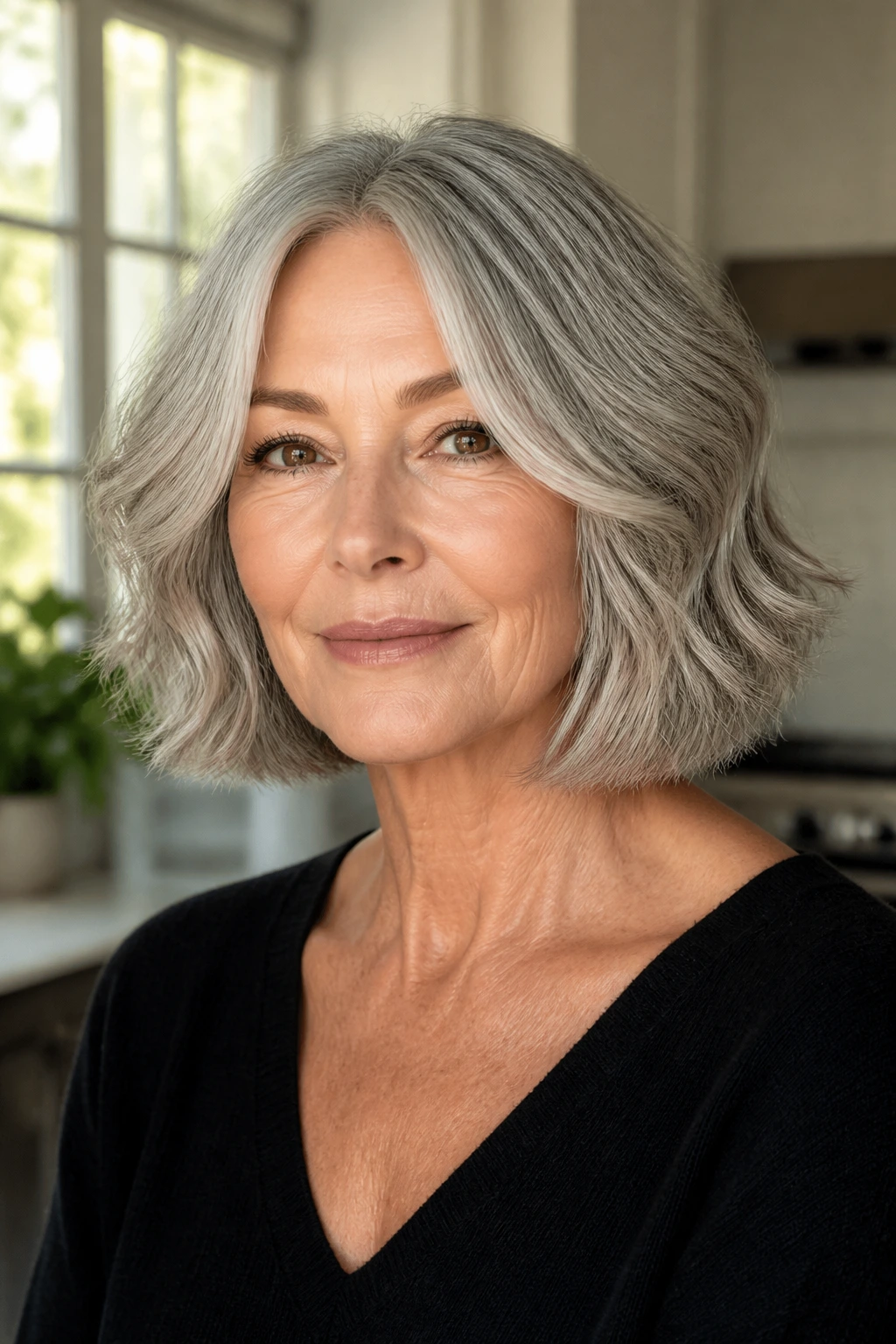
A blunt bob sounds strict, but on thick wavy hair it can look rich and clean rather than heavy. The density gives the line substance. The beveled ends keep the edge from turning into a blunt shelf that sticks out.
The key is restraint. Tell the stylist you want the perimeter to stay one length, then soften only the tips. That tiny bevel keeps the cut from feeling boxy, especially if your waves swell at the sides.
Silver hair and salt-and-pepper hair often look excellent in this shape because the line is so clear. It catches the eye without needing extra layering or a lot of product.
4. The Angled Bob with Long Front Pieces
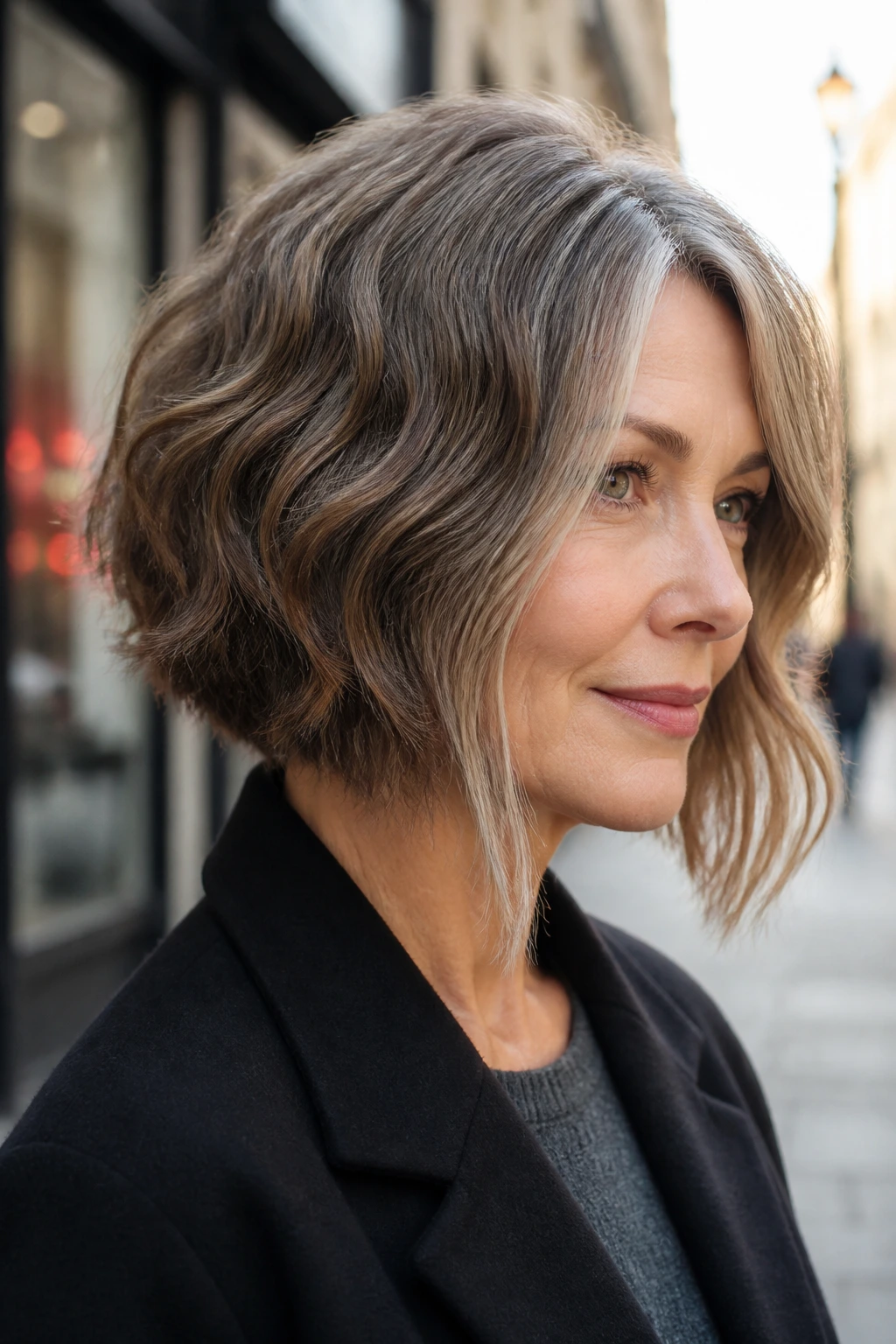
Why does this one work so well? Because the eye follows the diagonal. The back sits shorter and cleaner at the nape, while the front pieces drop a bit longer toward the chin or collarbone. That line pulls the face forward and keeps thick waves from expanding sideways.
It’s a good choice if your hair flips out at the ends and you want that bend to look deliberate. The angle gives the wave a direction instead of a fight.
A gentle angle usually looks better than a dramatic one. A sharp wedge can feel dated fast. A softer slope keeps the cut modern and gives you more room to wear it brushed out or air-dried.
5. The Stacked Bob with Lift at the Nape
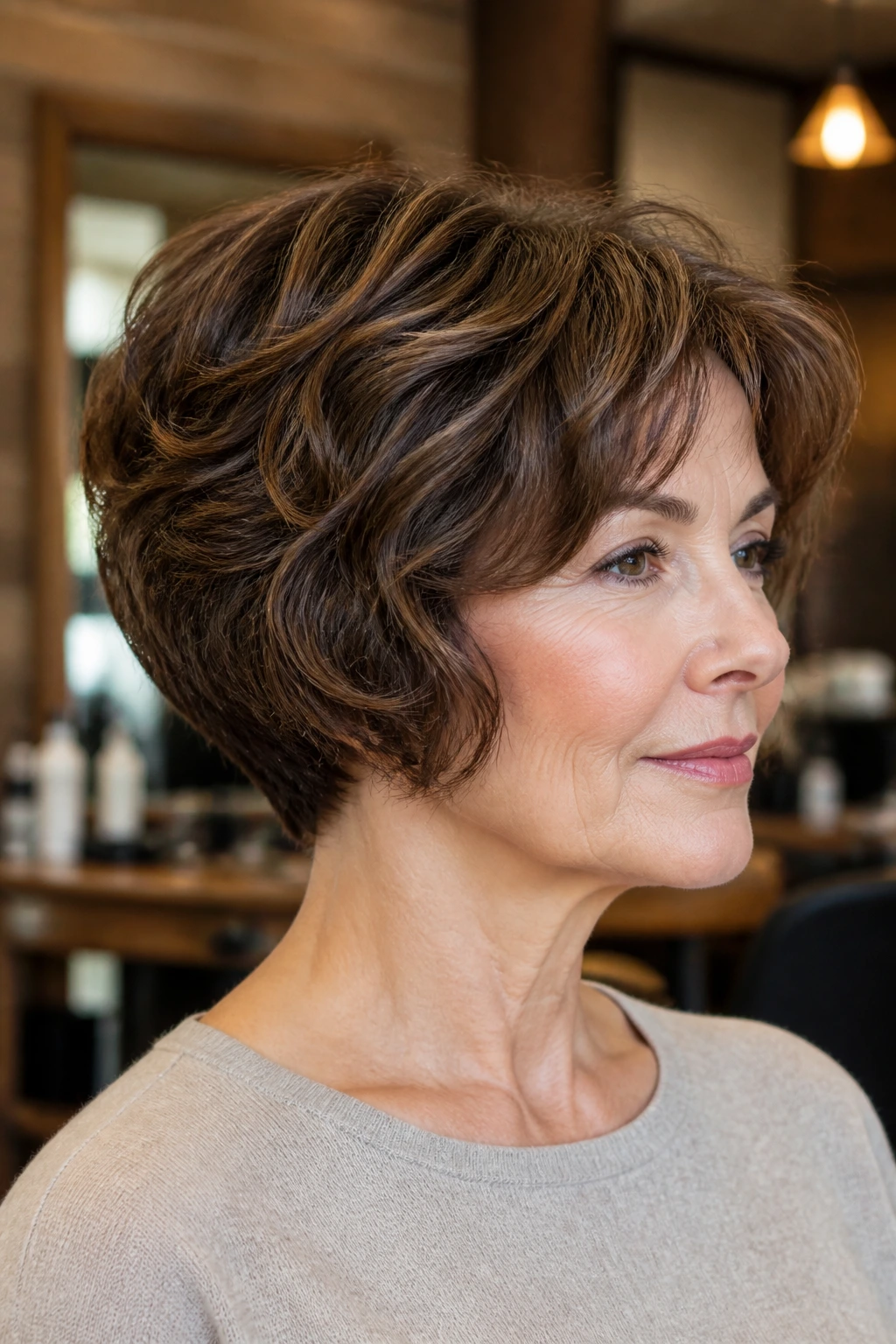
This is the neat-freak bob. It’s built for lift at the back, where thick hair often gets stubborn and bulky. The stacked graduation at the nape removes weight and gives the crown a little push, which can be a gift if your hair tends to lie flat on top.
The shape does ask for regular trims. If you let the nape grow too long, the clean line disappears and the whole point of the cut starts slipping away.
- Works best when the back goes flat by noon.
- Needs soft stacking, not a harsh wedge.
- Looks strongest with a side or off-center part.
I’d choose this if you like a tidy neckline and don’t mind seeing your stylist every six weeks or so. It’s less forgiving than a lob, but it pays you back in lift.
6. The Curtain-Fringe Shag Bob

This is the looser, more relaxed cousin in the group. Curtain bangs split around the forehead and let thick waves flow into the rest of the cut instead of stopping at a hard line. The shag layers add movement, but they need to be handled with care. Too many short layers and the bob turns fuzzy.
The good version keeps the ends full and the layers soft. The fringe opens the face, and the wave pattern does the rest. If you want a cut that looks good with a little scruff in it, this is one of the easiest bets.
What to tell your stylist
Ask for longer curtain bangs that hit around the cheekbone, not a short fringe that sticks up. That one detail changes the whole mood of the cut. It keeps the front from getting too busy.
7. The Deep Side-Part Sweep Bob
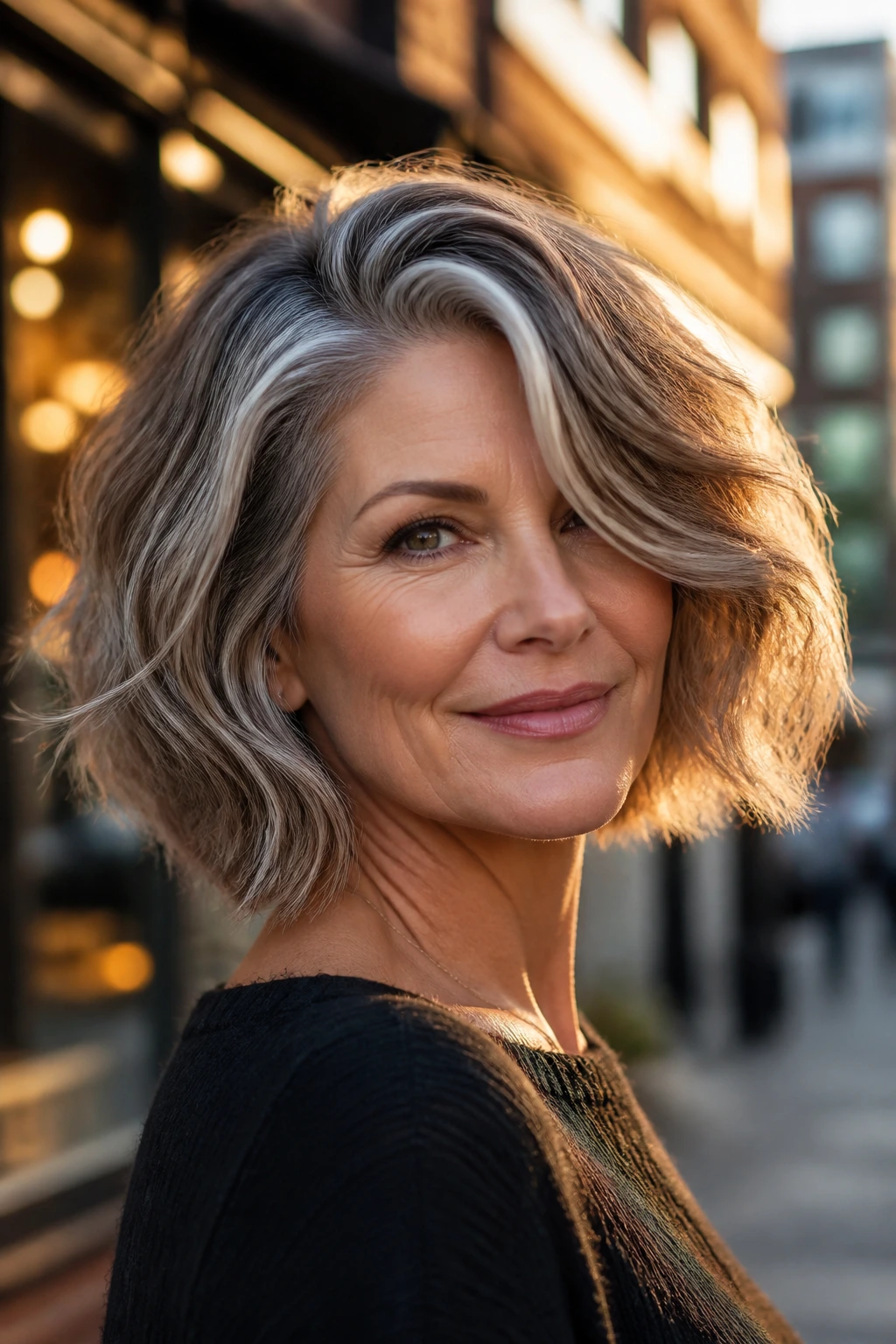
A deep side part can do more for thick wavy hair than a whole rack of styling products. It gives the crown a little lift on one side and lets the front pieces sweep across the face instead of sitting straight down over it. The result feels lighter, even when the hair itself is still very full.
This shape is especially nice if one side of your hair is flatter than the other or if you deal with a cowlick near the front. It turns those quirks into part of the style.
A side-part bob also plays nicely with earrings. Sounds small. It isn’t. A little ear exposure breaks up dense hair and keeps the look from feeling too closed in.
8. The A-Line Bob with a Soft Taper
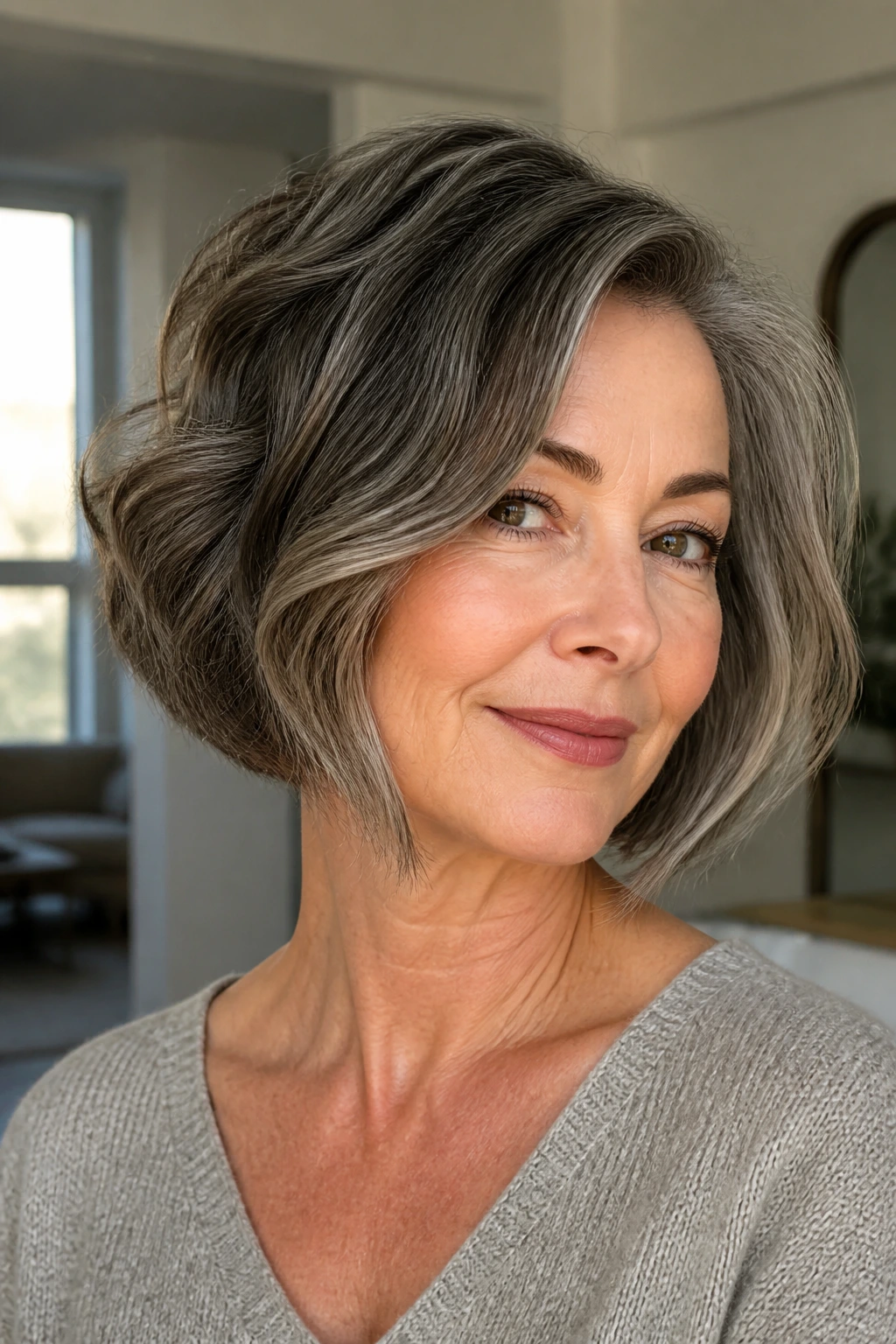
The A-line bob gives you length in the front and a cleaner cut in the back, but the best versions do not shout about it. The taper should feel smooth, not dramatic. Thick waves sit well in this shape because the front pieces frame the face while the back stays close to the neck.
It’s a nice option if you want the visual lift of a shorter bob without giving up all the length around the jaw. The cut can make the neck look longer and the profile cleaner, which is one of those little changes people notice even if they can’t name it.
If your hair tends to puff at the sides, keep the taper subtle. Too steep and the line gets fussy.
9. The Razor-Soft Bob
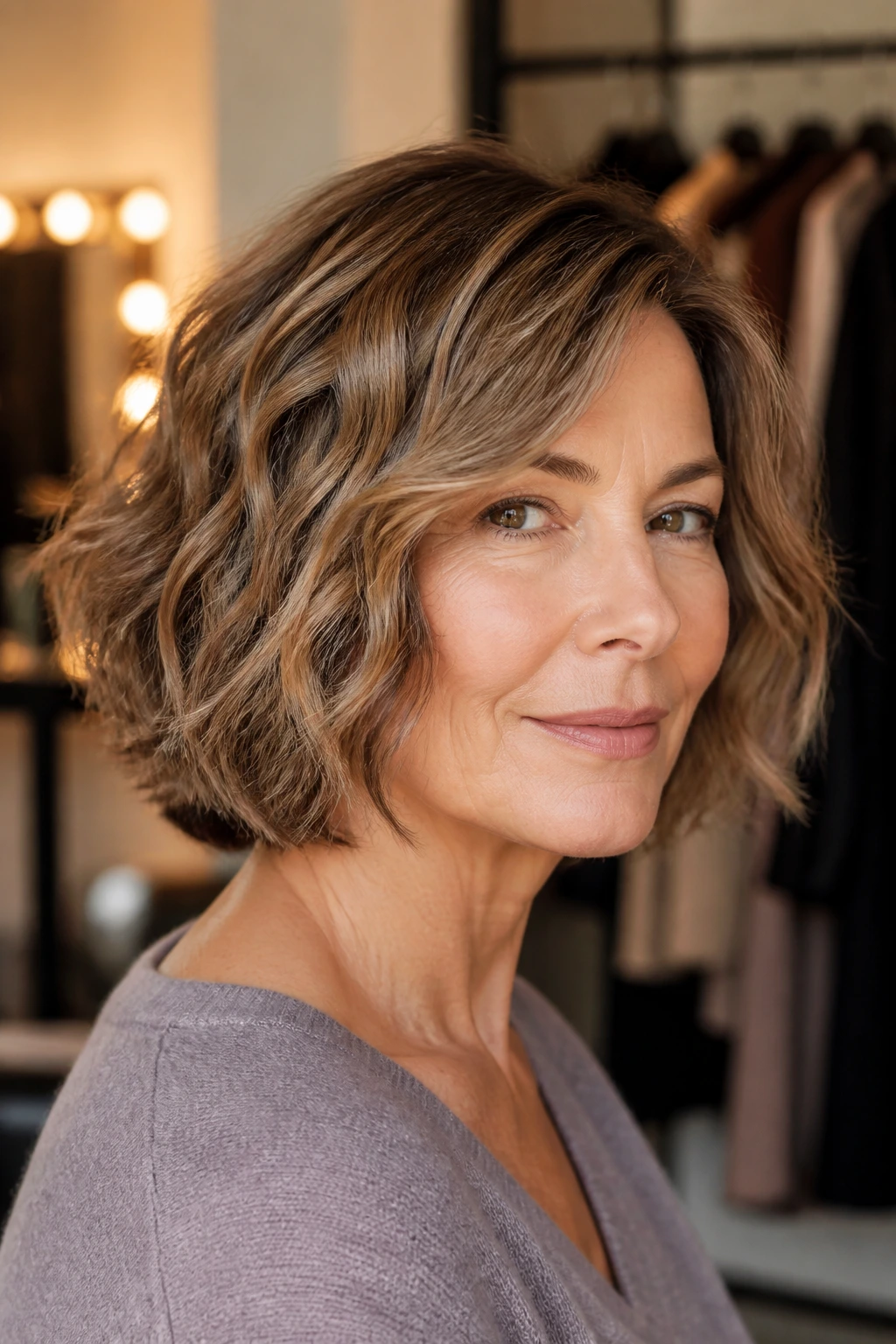
I’m cautious with razor cutting on thick wave patterns, but in the right hands it can be excellent. A razor-soft bob uses that tool to take the edge off coarse ends and stop the cut from feeling like a block. The mistake is going too far and leaving the perimeter frayed.
If your hair feels wiry, not just thick, this shape can help it move. The trick is to keep the shape controlled and let the razor touch only what needs softening.
A good razor bob should still have a line. If it looks airy and stringy all the way around, the cut has lost the plot.
10. The Rounded Bob with Interior Debulking

Rounded does not mean helmet. Done well, a rounded bob follows the shape of the head with a soft curve while the inside loses enough weight to stop the sides from bulging. That matters a lot for thick wavy hair, because waves often widen exactly where you don’t want width.
This shape is kind to strong cheeks and fuller necklines. It keeps the outline close, but it doesn’t flatten the crown into the skull. That balance is the whole point.
A rounded bob also gives you a more polished look on days when you want something neater than a shag but softer than a blunt line.
11. The Jaw-Length Bob with a Clean Side Part

This one is direct and a little sharp in a good way. A jaw-length bob sits right where the face narrows, so thick waves can’t sprawl past the widest part of the cheek. The side part keeps the top from feeling too symmetrical or stiff.
If you like a haircut that looks intentional with almost no effort, this is a strong pick. A little blow-dry at the ends, a clean part, and you’re done.
The only warning: if your waves are very springy, don’t let the cut creep too short. Jaw-length on wet hair can become cheek-length once it dries.
12. The Shoulder-Skimming Lob with Face-Framing Pieces
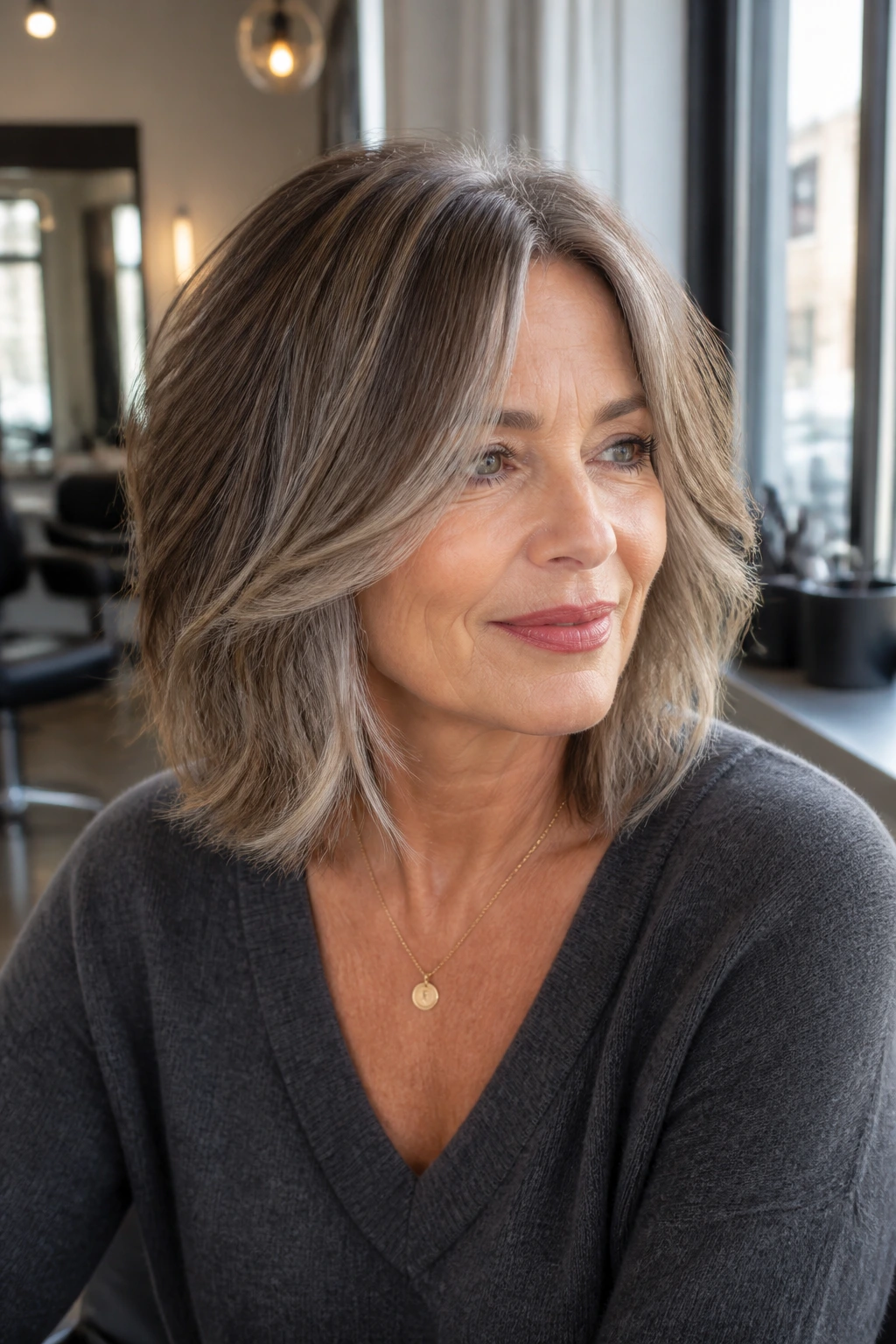
This is the version for people who want the safety net of extra length. It skims the shoulders, which means you can still clip it back, but the face-framing pieces give it enough shape to look like a cut rather than “hair that got trimmed.” I like this one when the hairline has softened a bit and you want softness around the temples.
The face-frame should start around the cheekbone or just below it. Any shorter and thick waves can puff around the face. Any longer and the pieces disappear into the rest of the cut.
It’s also one of the easiest styles to grow out. That matters more than people admit.
13. The Piecey Bob with Separated Ends

This cut is all about visible movement. The ends are cut and styled to separate into small sections, so the bob does not read as one big mass. Thick waves give you a head start here. You’re not creating texture from nothing; you’re organizing what’s already there.
Use this shape when you want a more casual feel without sliding into a shag. It looks especially good with a little texture spray on the mid-lengths and a finger-combed finish.
A one-sentence truth: piecey does not mean thin. It means the cut has room to breathe.
14. The Micro-Layered Bob for Dense Waves

Dense wave patterns need a different kind of layer work. Micro-layers are small, controlled bits of removal inside the shape, not big choppy steps. That keeps the perimeter solid while stopping the underneath from stacking up like insulation.
This is one of the best options if your hair feels heavy no matter what you do. It gives the cut flexibility without making it fluffy.
Good signs this cut will suit you
- Your hair takes forever to dry.
- The lower half swells wider than the crown.
- Your ends feel heavy, but you do not want obvious layers.
Micro-layers need a stylist who knows where to stop. Too many and the bob loses its backbone.
15. The Inverted Bob with Crown Lift

This cut is built for people who want the top to stand up a little higher. The back is shorter, the crown gets more lift, and the front drops down with a clean curve. On thick wavy hair, that can look crisp and lively instead of overworked.
It’s especially useful if the crown has started to flatten. That happens. The cut gives it shape without needing a lot of teasing or product.
The risk is overdoing the graduation. If the back is too short and the front too long, the cut starts to feel like a throwback in the wrong way. Keep the transition smooth.
16. The Hidden-Undercut Bob
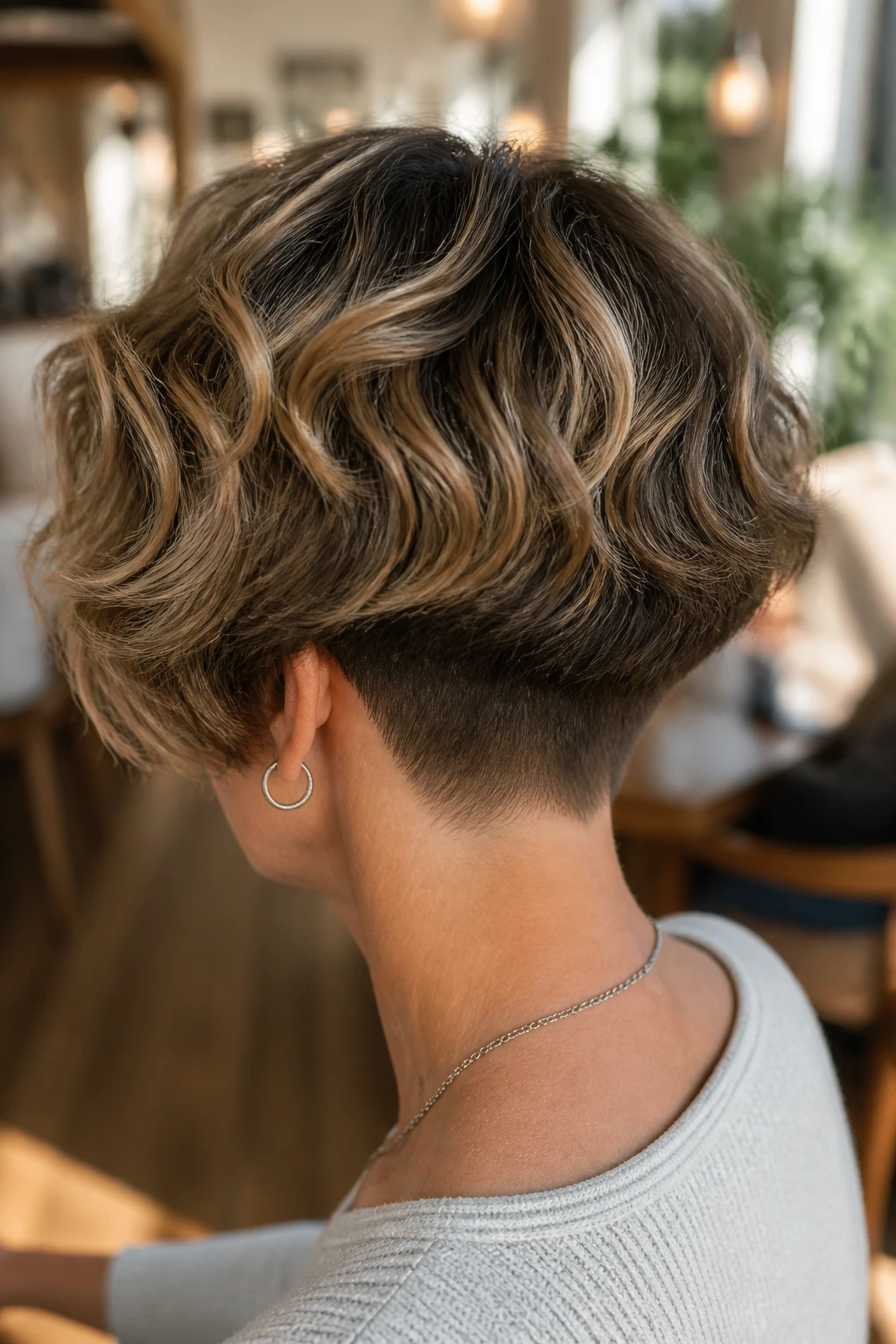
This is the no-nonsense fix for hair that feels like too much. A hidden undercut removes bulk from underneath the surface, usually at the nape or lower back of the head, so the visible shape stays cleaner. The outer bob still looks full, but it stops acting like a blanket.
I like this option for very dense hair that always seems to swell at the base of the neck. The cut looks sharper, and the styling time drops because you’re not forcing a heavy underlayer to behave.
It’s subtle when done well. Nobody needs to know why the hair suddenly lies better.
17. The Bottleneck Fringe Bob

Bottleneck bangs are soft in the center and longer at the sides, which makes them a friendlier choice than a blunt fringe on thick waves. They blend into the rest of the bob instead of sitting as a hard bar across the forehead. That matters if your hair wants to split or puff at the front.
The shape is forgiving around fine lines at the forehead and still leaves room for the wave to move. Good fringe, in other words. Not needy fringe.
If you don’t want full bangs but want something more than face-framing layers, this is a nice middle ground.
18. The Choppy Air-Dry Bob

This one is for people who do not want to wrestle with a brush every morning. The cut leans into air-dried texture and uses uneven-but-controlled ends to keep the wave pattern from reading too neat. It’s casual, but not sloppy.
The shape works because thick hair gives it enough body. A little mousse, a scrunch, and a touch of separation at the bottom are usually enough.
Skip this if you hate texture that looks lived-in. If you prefer clean lines and polished edges, another bob on this list will make you happier.
19. The Retro Flip Bob

Flipped ends can look charming or dated depending on the cut. On thick wavy hair, they usually look deliberate when the bob keeps its structure and the ends have enough length to bend away from the neck. A round brush or a small flat iron can push the tips out without flattening the whole head.
The reason this works after 50 is simple: it brings motion to the jawline without demanding a lot of fringe or layers. It also pairs nicely with bold glasses and earrings.
I’d keep the flip soft, not stiff. Think bend. Not shell.
20. The Tuck-Behind-the-Ears Bob

This is one of my favorite practical cuts because it respects real life. A tuck-friendly bob keeps enough length at the sides so you can slide pieces behind your ears without the whole shape falling apart. That’s handy for reading glasses, earrings, or those days when you need the hair off your face in a hurry.
The front corners should not be too short. If they stop above the jaw, the tuck starts looking awkward. Keep a little room there and the style gets much easier.
A tucked bob also breaks up density around the face, which is useful when thick waves start to crowd the cheekbones.
21. The Asymmetrical Bob

One side slightly longer than the other sounds bold, but it can be surprisingly wearable on thick wavy hair. The uneven line keeps the eye moving and helps soften a face that feels very symmetrical or very square. It also gives the wave pattern a bit of asymmetry to play off, which keeps the shape from looking stiff.
This is the bob for someone who wants a little edge without going short-short. The difference between sides does the visual work.
A small note: keep the asymmetry subtle if you wear your hair parting in the same place every day. Too much difference can look like a mistake when the waves settle.
22. The Bixie-Bob Hybrid

This is the shortest look on the list, and it is not shy. A bixie-bob sits between a bob and a pixie, with enough length on top to move and enough taper at the nape to keep the neck clear. Thick wavy hair can carry this shape well because the texture adds body without needing to be built from scratch.
It works best if you want volume on top and less weight around the sides. The styling is fast, but the maintenance is more regular than people expect.
What makes it behave
- Shorter nape.
- Longer top layer.
- Soft sides that do not balloon out.
If you want a cut that feels lighter on the head and cooler around the neck, this is a good one.
23. The Long Side-Swept Fringe Bob
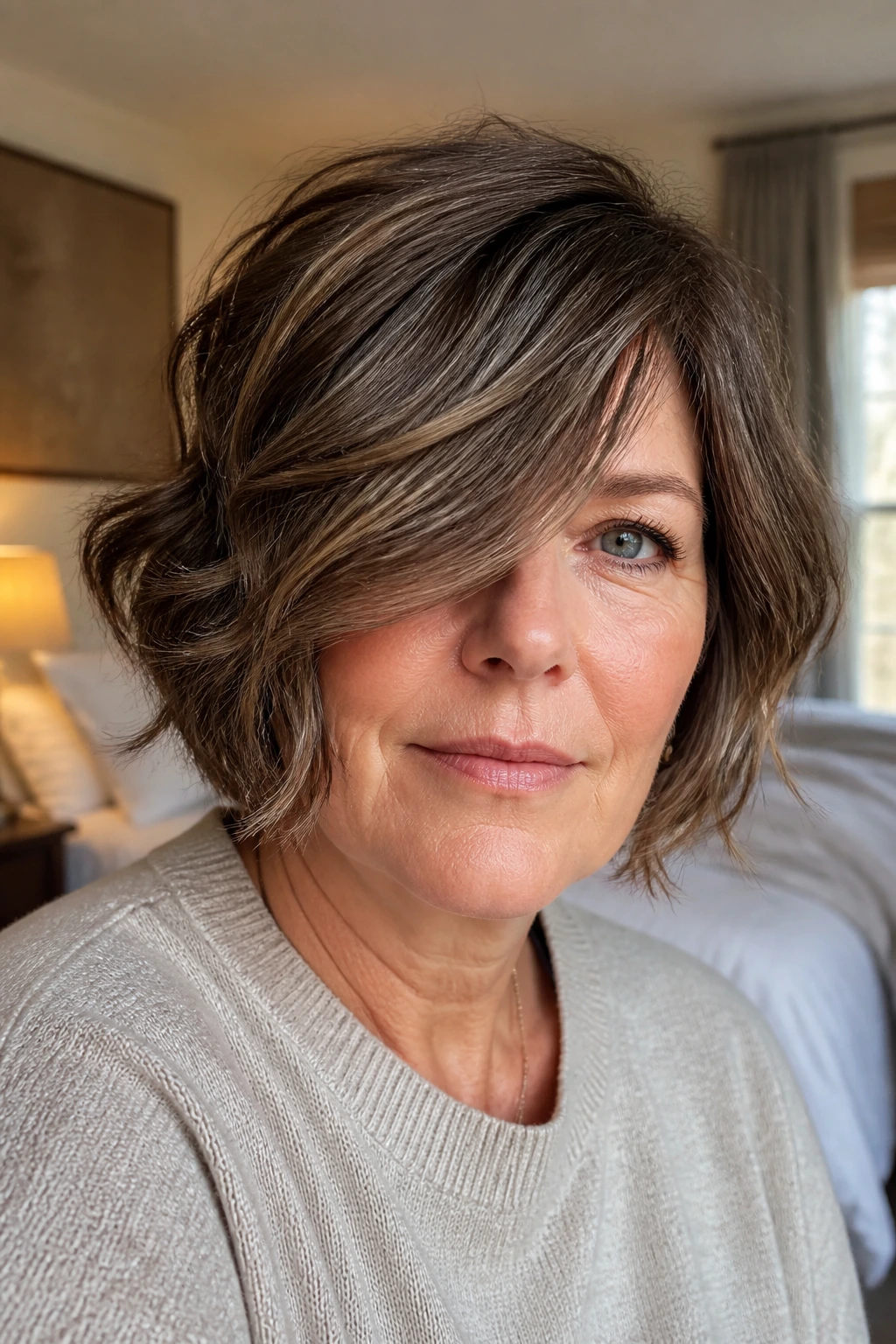
Long side-swept fringe is one of the safest fringe choices for thick wave patterns. It gives you movement around the forehead without the density of a full bang. The fringe can blend into the rest of the bob or sweep across one eye line, depending on how much softness you want.
This cut works well if your forehead feels a little exposed in a one-length bob, but you do not want the commitment of curtain bangs. The side sweep can also disguise a cowlick near the front.
It’s simple, but not boring. That’s the point.
24. The Beach-Wave Bob

A beachy bob should look relaxed, not puffy. The shape usually sits between chin and collarbone with enough interior shape for the wave to break apart naturally. You want movement, not chaos.
This is one of the easiest looks to air-dry if your waves are already loose. A light foam, a little scrunching, and a soft towel are usually enough. The cut is doing most of the work.
I’d choose this if you like your hair to feel undone in a good way. If you like sharp edges, skip it.
25. The One-Length Side-Part Bob

A one-length bob with a side part gives thick hair a clean container. The length stays even, which makes the ends look full, and the side part keeps it from feeling too static. On thicker waves, that combination can look polished fast.
The catch is the ends need to be cut carefully. If the line is too blunt and too heavy, the bob can sit like a shelf. A tiny bevel at the very bottom usually solves that.
This is a strong choice if you want the simplest possible shape with the least visual noise.
26. The U-Shaped Lob

A U-shaped lob keeps a little more length in the center back and softens the sides around it, which makes the cut feel curved instead of square. That curve is useful for thick wavy hair because it lets the density sit in a more flattering place. The shape also grows out well, which matters if you don’t love constant trims.
Why the curve helps
The U-line keeps the weight from stacking hard at the corners. Those corners are where thick hair tends to misbehave. Smooth them out and the whole cut looks calmer.
This is a nice middle-ground style for someone who wants the security of longer hair but needs the outline to feel less heavy.
27. The Feathered Bob

Feathering can go wrong fast, but when it’s restrained, it softens thick waves without erasing the shape. The feathered pieces around the face lighten the look, while the ends keep enough fullness to avoid that wispy, over-layered feeling.
It’s a good bob if your hair feels a little rigid or heavy through the sides. The feathering gives it motion. Not fluff. Motion.
This cut often looks best with a soft blow-dry and a brush that bends the front away from the face. If you air-dry it, keep the product light or the feathering disappears.
28. The Curved Neckline Bob

This is the cleanest finish of the group. The cut follows the neckline with a soft inward curve, so the back looks neat even when the hair is full. Thick wavy hair benefits from that clean neckline because it keeps the bulk from blooming into the collar area.
It’s especially nice if you wear scarves, high collars, or jackets that sit close to the neck. The bob stays visible instead of getting swallowed by clothes.
A curved neckline bob can look quietly sharp. No fuss, no extra drama. Just a shape that knows where to stop.
Essential Tools for Styling These Bobs
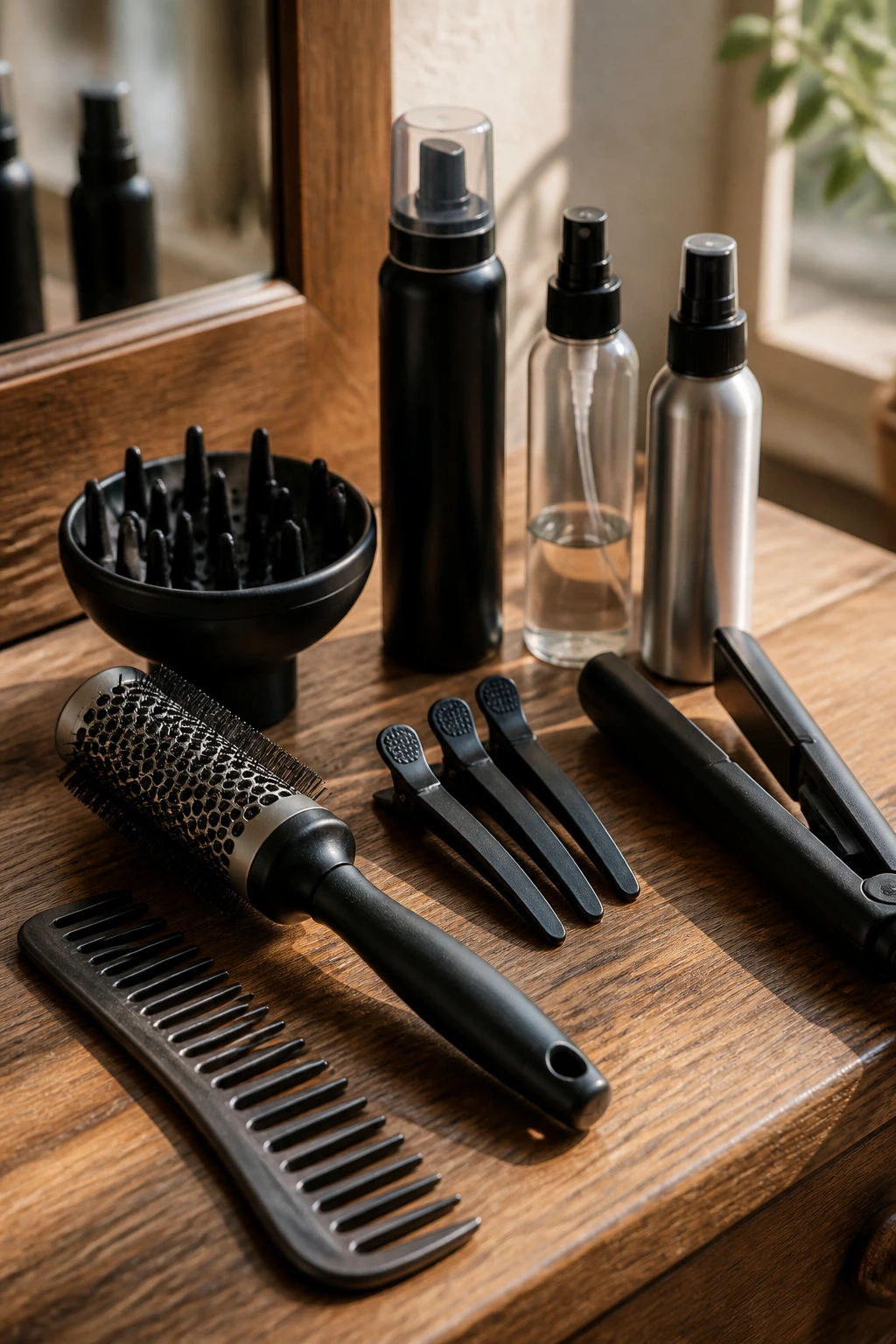
- Wide-tooth comb: Detangles wet waves without stretching them flat or ripping through the pattern.
- 1½-inch round brush: Useful for beveling the ends; smaller brushes can overcurl thick hair.
- Diffuser attachment: Keeps airflow gentle and helps the crown hold lift instead of collapsing.
- Duckbill clips: Great for setting the top while the lower layers dry.
- Light mousse or foam: Gives wave memory without turning the bob stiff or crunchy.
- Heat protectant spray: Use it before any blow-dry or flat-iron touch-up.
- Texturizing spray: Best for second-day separation, not as a fix for a bad cut.
- Small flat iron with rounded plates: Handy for smoothing the front pieces or nudging the ends under.
How to Ask for the Cut at the Salon
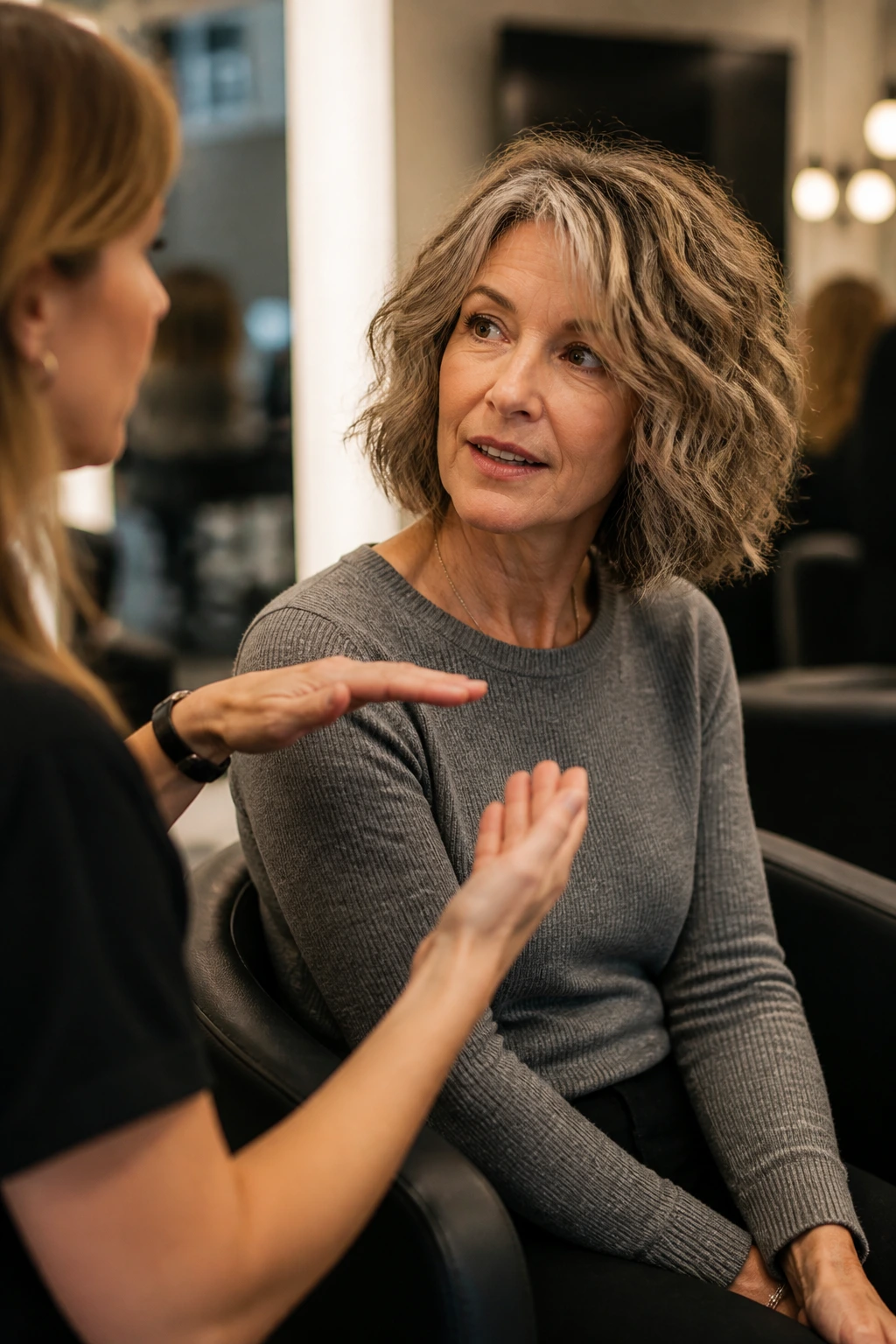
Bring more than one photo. One image from the front is useful, but a side view and a back view tell the stylist what length you actually want. Thick wavy hair can look dramatically different from one angle to the next, and that’s where confusion starts.
Say where the bulk lives. If your hair swells at the nape, say it. If the sides get wide at the cheek, say that too. A good stylist can place weight removal where it matters, but only if you name the problem instead of asking for a “flattering bob” and hoping for the best.
Be clear about how much effort you’ll put in at home. If you air-dry most days, do not ask for a shape that depends on a perfect round-brush finish. If you like a quick blow-dry, say so. The right bob should match your routine, not the other way around.
I also like asking for a dry check before leaving the chair. Wavy hair tells the truth when it dries. That final look can save you from a cut that’s too short at the jaw or too bulky at the back.
Keeping Bob Haircuts for Thick Wavy Hair Over 50 in Shape
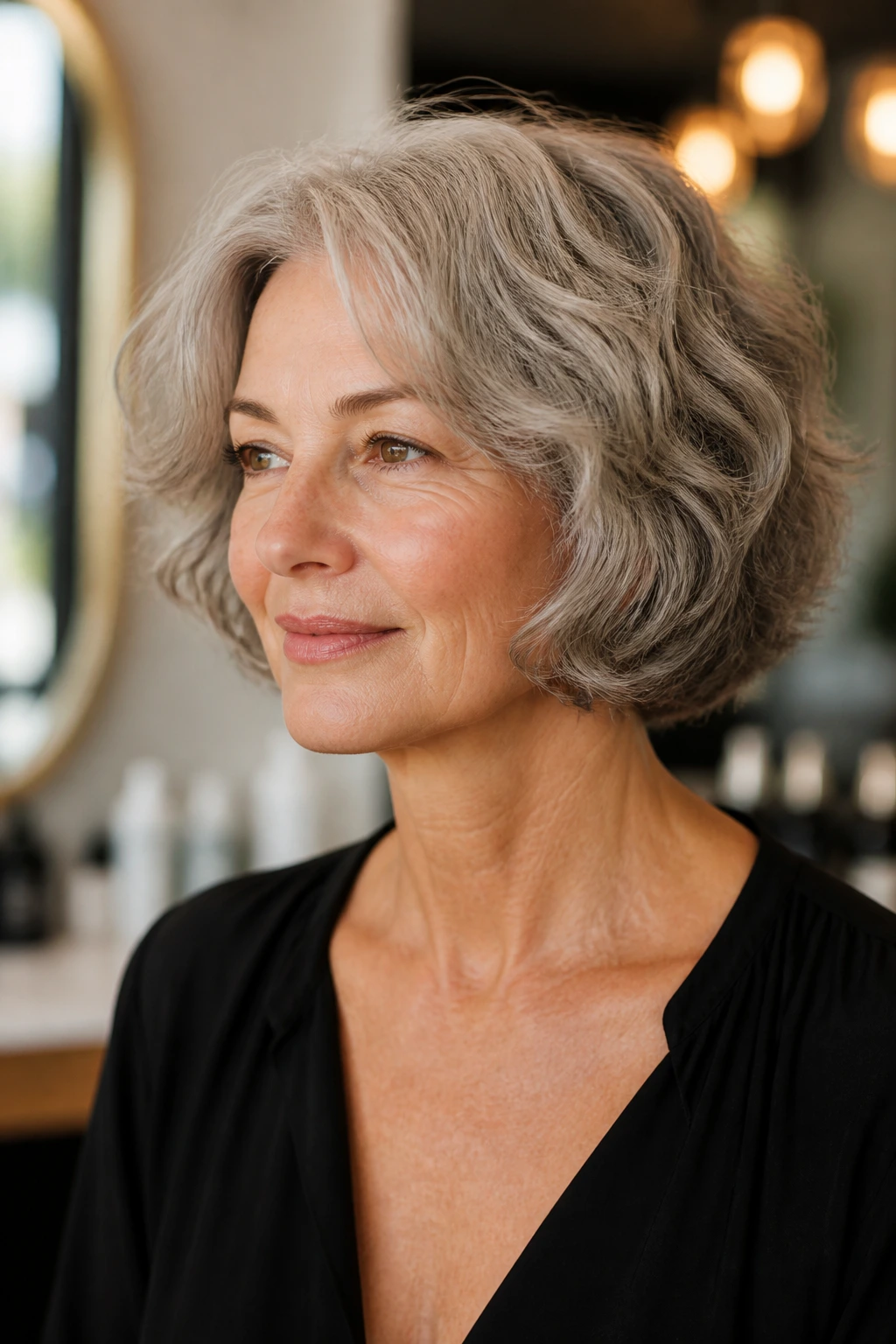
The trim schedule matters more than people think. A blunt bob or a stacked bob usually needs a cleanup every 6 to 8 weeks if you want the line to stay crisp. Fringe often needs a touch-up sooner, around 3 to 4 weeks, because bangs show growth fast.
Wash schedule matters too. Thick wavy hair usually does better when it isn’t scrubbed daily unless the scalp truly needs it. Two to four washes a week is a common sweet spot, and a light conditioner on the mid-lengths keeps the ends from turning rough.
Sleep habits help. A satin pillowcase or a loose clip at the crown can keep the top from flattening overnight. If the nape gets bent the wrong way, a quick mist of water and a 30-second blow-dry usually fixes it faster than starting from scratch.
If you have a hidden undercut or a sharper nape line, book maintenance before the shape turns fuzzy. Letting it go too long is how a neat bob turns into a heavy triangle.
How to Style a Thick Wavy Bob Without Fighting It

Air-Dry route: Work a light mousse or foam through soaking-wet hair, scrunch from the ends upward, and clip the crown for 10 minutes so the top does not dry flat. Then leave it alone. Touching it over and over is how frizz walks in.
Blow-dry route: Rough-dry the hair until it is about 70 percent dry, then use a nozzle and a round brush only on the top and the ends. Keep the wave in the middle of the cut. The goal is a bend, not a shell.
Second-day reset: Mist the hair with water, add a pea-sized amount of cream to the mid-lengths, and pinch the ends back into shape. Dry shampoo at the roots can help if the crown is tired. Don’t flood the head with product. Thick hair can take more than fine hair, but it still has limits.
When heat is worth it: Use a small flat iron or wand on the front pieces only if they kick out in a way that bothers you. Smoothing the whole head usually makes the bob look overworked. The cleanest bobs still let some wave show.
Small Styling Moves That Change the Whole Cut
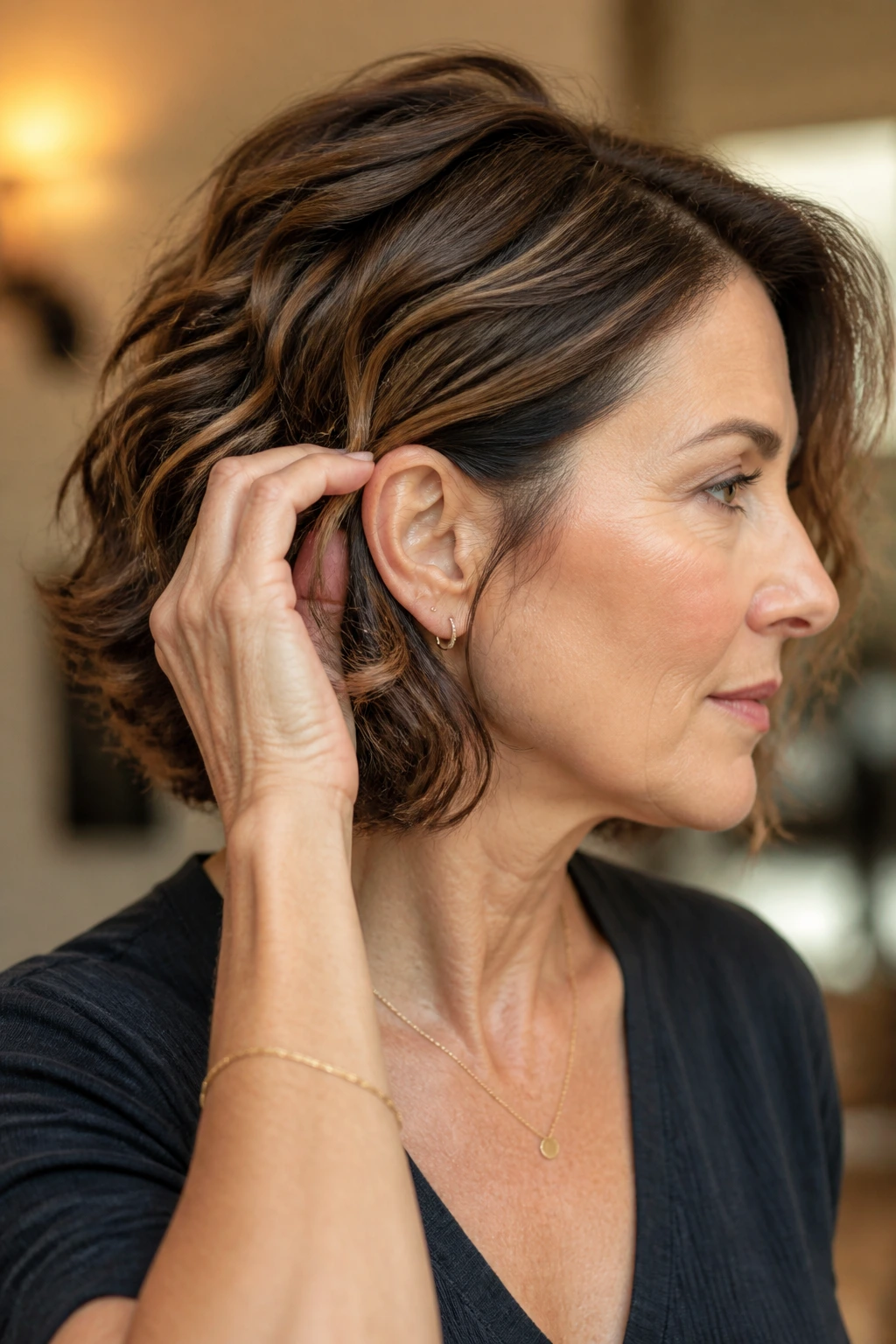
Change the part: A side part can lift a flat crown in seconds, and it also breaks up width at the cheek. If your hair feels too wide, this is the first thing I’d try.
Tuck one side: Sliding a side behind the ear opens the face and lets the bob breathe. It also shows the neckline, which keeps thick hair from looking closed in.
Use less product at the roots: Heavy cream near the scalp is the fastest way to flatten a bob by noon. Keep the richer product at the ends, where coarse texture usually needs it most.
Clip the crown while it cools: After blow-drying, pin the top for a few minutes. That little reset gives the root more lift than most people expect.
Aim for sheen, not oil: A drop of serum on the palms and then only on the ends is enough. If the hair looks wet, you went too far.
Common Mistakes That Make Bob Haircuts for Thick Wavy Hair Over 50 Puff Out

- Over-thinning the perimeter: The outer edge starts to look frayed and the bob loses its shape. Fix: remove bulk inside the cut, not all along the outline.
- Cutting too high at the widest cheek point: The face can look broader because the hair stops exactly where the face is widest. Fix: let the bob land at the jaw or just below it if your cheeks need space.
- Letting the nape grow too long: The back turns into a shelf and the style loses its clean line. Fix: book trims before the neckline disappears.
- Using too much cream or oil: The roots flatten and the bob feels greasy by midday. Fix: start with a pea-sized amount and keep it away from the scalp.
- Blowing the hair straight down the wave pattern: The cut turns triangular because the hair expands outward instead of settling. Fix: dry the roots first, then smooth only the top layer and ends.
Variations and Adaptations for Different Wave Patterns
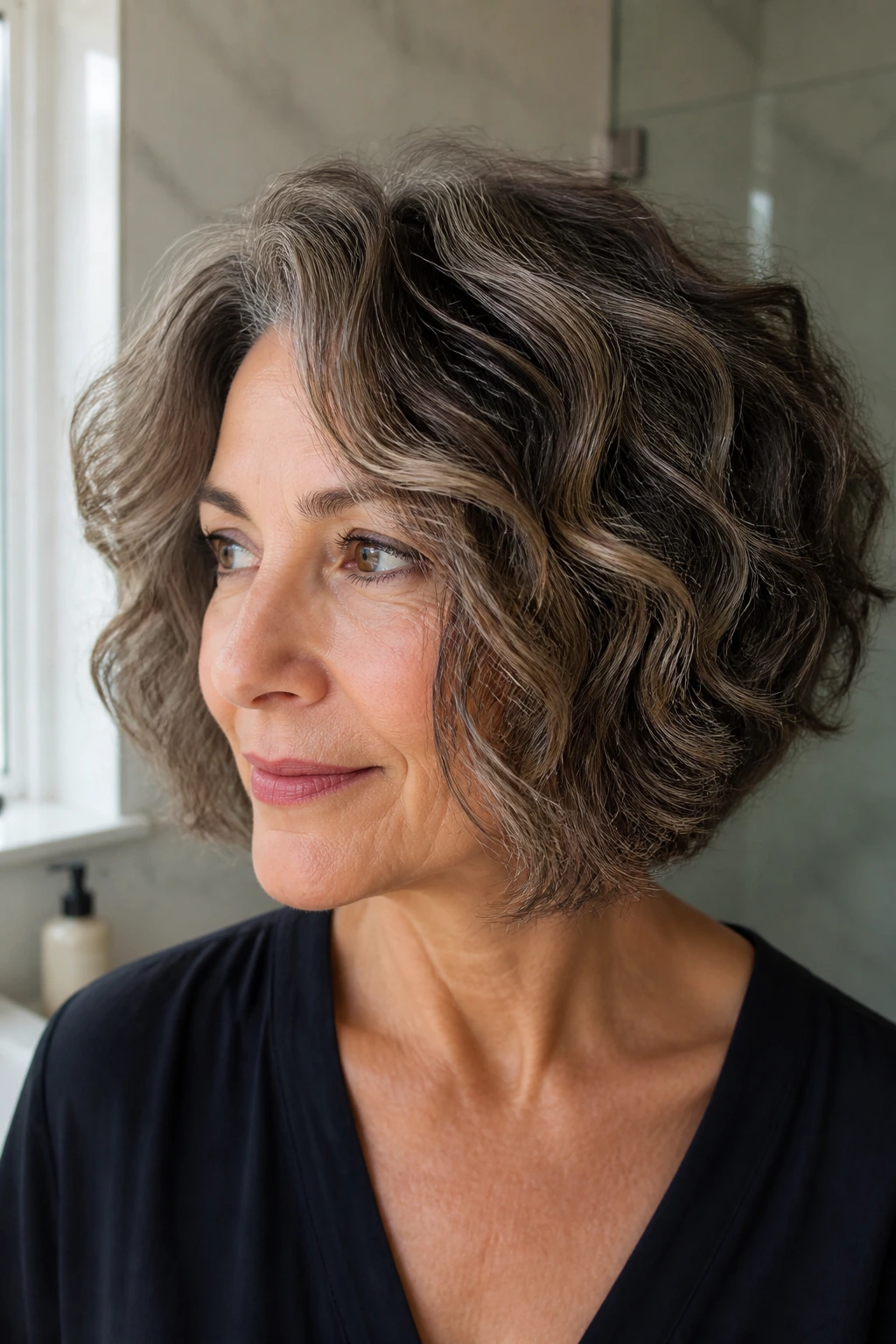
For very dense hair: Try a hidden-undercut bob or a micro-layered lob. Both remove bulk without making the outer line too thin, which is the mistake that usually leads to frizz.
For finer ends with a strong root: Choose a blunt bob or one-length lob with only a tiny bevel. Heavy layers can make the ends look sparse even when the crown still feels full.
For glasses wearers: A side-part bob, tuck-friendly bob, or long side-swept fringe works especially well. You want room around the temples so the frames and the hair do not fight each other.
For silver or white hair: A rounded bob, blunt bob, or curved neckline bob shows off the sheen. Too much texture can make gray hair look rough instead of polished.
For no-heat routines: A beach-wave bob or collarbone lob is the easiest place to start. Use mousse, scrunch, and let the wave do the talking.
Frequently Asked Questions
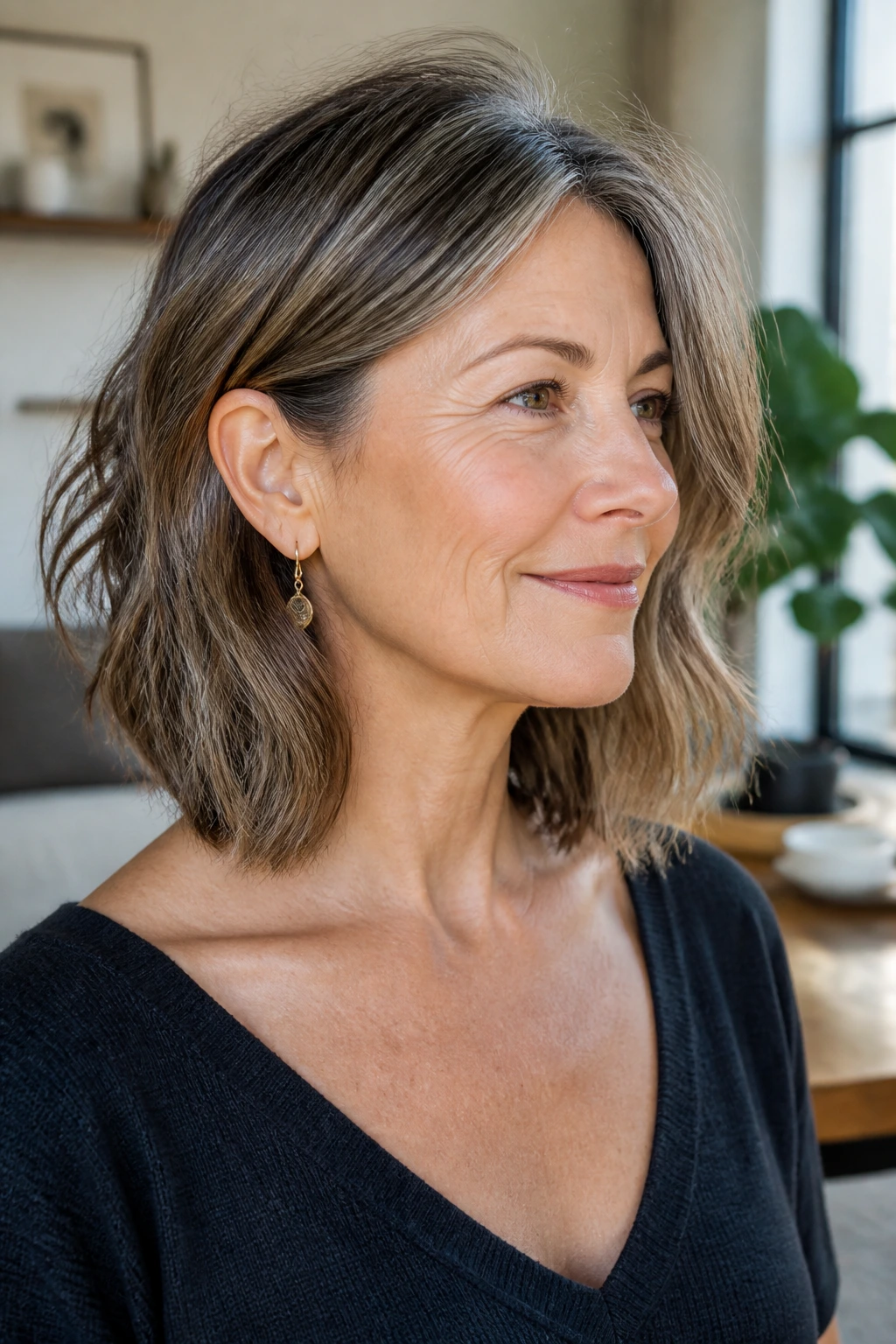
Will a bob make thick wavy hair look puffy?
Only if the shape is wrong. A bob with the wrong weight line can swell at the cheeks and sides, but a cut with internal debulking and a clean perimeter usually sits much closer to the head.
Is a blunt bob or layered bob better for thick waves?
A blunt-looking perimeter with hidden internal layers is often the best compromise. Too many visible layers can make thick wave patterns fray, while a completely one-length cut can feel heavy at the bottom.
Should thick wavy hair be cut dry?
A dry check is a big help, and some stylists prefer to cut the whole shape dry. Wet hair hides where the wave bends and where it swells, so the dry finish is where the truth shows up.
Do bangs work with thick wavy hair over 50?
Yes, but the fringe needs the right shape. Curtain bangs, bottleneck bangs, or a long side-swept fringe usually behave better than a blunt straight-across bang, which can split or puff.
How often should I trim my bob?
Most bob shapes need a trim every 6 to 8 weeks to stay clean. If you have a stacked nape or a fringe, you may want a quicker cleanup so the outline does not blur.
What if my ends flip out all the time?
That often means the bottom line has too much bulk or not enough length to settle. Ask your stylist to soften the edge and use a round brush or flat iron just on the ends at home.
Can I still tuck the bob behind my ears?
Yes, if the front corners are long enough. Tell your stylist you want ear-tuck room, because that small detail changes how wearable the cut feels on busy days.
What is the easiest bob to live with if I do not style much?
The collarbone lob with hidden layers or the one-length side-part bob is usually the least needy. Both can air-dry well and still look like a real haircut, not an afterthought.
The Cut That Carries the Weight
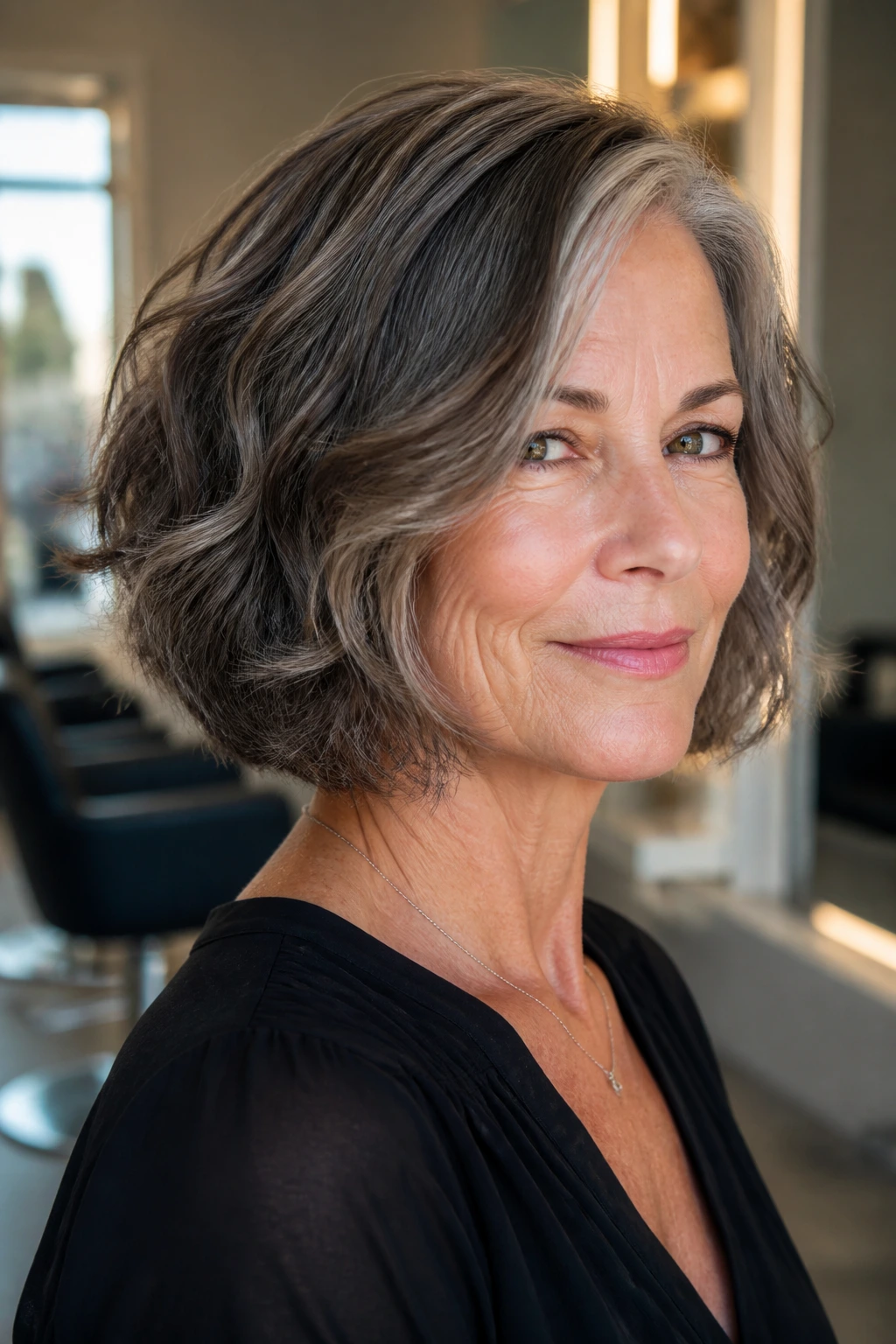
A good bob does not argue with thick wavy hair. It gives it a shape that can hold up through real life — humidity, collars, glasses, second-day texture, all of it. That is the difference between a haircut that looks nice in the salon mirror and one that keeps making sense when you wash it, sleep on it, and leave the house anyway.
If you remember one thing, make it this: choose the bob by where your hair needs help, not by how short you think you “should” go. The right line can make thick waves look cleaner, lighter, and more deliberate without sanding off the personality that made you want the texture in the first place.
