



Goth short hair with bangs has a very specific kind of power. It can make a plain black tee look deliberate, make a silver hoop earring matter, and turn a tired haircut into something with posture. The fringe does the heavy lifting. The crop keeps the shape honest.
What makes these cuts work is contrast. A blunt line against bare skin. A dark color against a bright eye. A short nape against a fringe that lands right at the lashes or just above them. Some versions are severe, some are soft enough to wear with a knit sweater and no makeup at all, and some look a little dangerous in the best possible way. The difference is usually one inch here, half an inch there, and whether the ends are cut blunt or broken up with a razor.
A lot of people think “goth” means one thing: jet-black, dead-straight, and very sharp. Not really. The best gothic cuts have shape, movement, and a reason for every line. If the bangs are wrong, the whole thing can drift into costume territory fast. If the proportions are right, though, the cut does the work before you even think about accessories, eyeliner, or an outfit.
Why These 15 Cuts Hit the Gothic Sweet Spot
-
Fringe-first drama: The bangs are the loudest part of the haircut, which means the face reads edgy even when the rest stays short and tidy.
-
Shape over length: These cuts rely on weight placement, neckline clean-up, and where the fringe lands, not on long hair to carry the look.
-
Dark color makes the lines sharper: Jet black, blue-black, and soft black all make blunt edges and strong silhouettes show up faster.
-
Texture changes the mood: A razor-cut bob feels raw; a glossy pageboy feels colder; a shag with piecey bangs feels more lived-in and punky.
-
They grow out with some dignity: The better versions keep their shape for weeks instead of turning into a fuzzy helmet by the second trim.
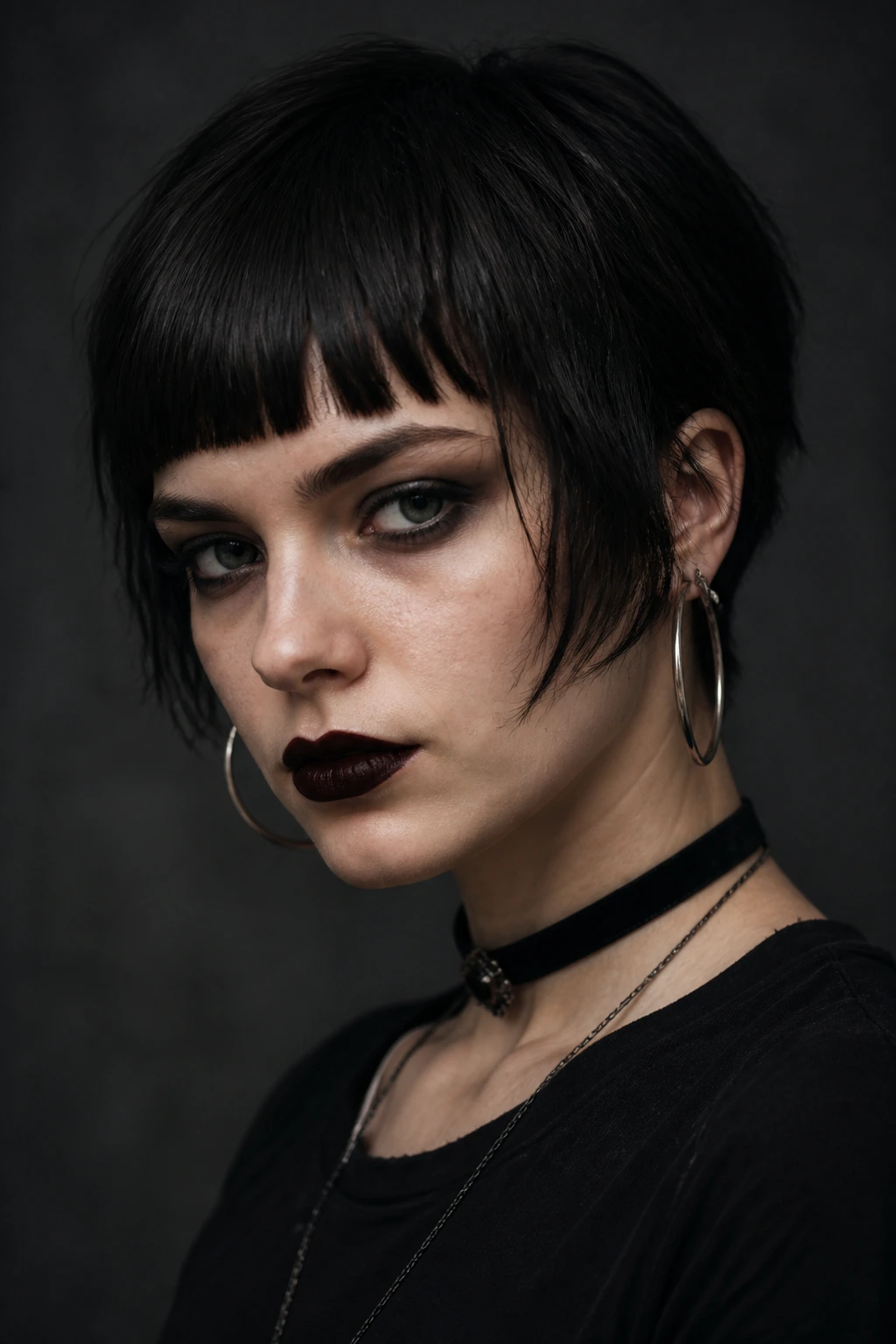
1. Jet-Black Micro-Bang Pixie
A micro-bang pixie is the haircut equivalent of a hard stare. The sides sit close, the crown stays short, and the fringe lands high enough to show the brow line instead of hiding it. On straight hair, it can look almost carved; on fine hair, it reads crisp rather than bulky.
The goth part comes from restraint. You do not need a lot of length when the line is this clean. In fact, too much softness works against it. Ask for the fringe to sit about half an inch above the brows if you want that tiny, sharp gap of skin that makes the cut feel severe rather than sweet.
This cut is strongest when the color is deep and even. A blue-black gloss gives it more depth under indoor light than a flat true black, and a tiny bit of matte paste at the crown keeps the shape from collapsing. If your hair grows fast at the temples, plan on a fringe tidy-up every 2 to 3 weeks.
One sentence matters here: this cut lives or dies on precision.
2. Choppy Bob with Eyebrow-Grazing Bangs
What happens when you want the goth feel without committing to a full blunt fringe? You get this. The bob hits somewhere between the jaw and the chin, and the bangs brush the brows instead of swallowing them. It gives you edge without forcing the whole face into one hard line.
Why It Works
The broken ends are what keep it from looking too neat. A straight, one-length bob can read polished, even elegant, but a choppy finish makes the cut feel darker and more modern. That little bit of irregularity around the perimeter also helps if your hair is dense, because it stops the shape from turning into a box.
This version flatters a lot of face shapes, especially if the bangs are cut slightly longer in the center and softened at the temples. On wavy hair, it has a nice swing. On straight hair, it can look almost glassy if you finish it with a flat iron and a touch of serum on the mid-lengths only.
For styling, I like a round brush just under the fringe and a bend through the ends rather than a dead-straight finish. Too perfect and it can drift into office-bob territory. A little roughness keeps it in the gothic lane.
3. Razored Wolf Cut with Short Fringe
Picture a cut that looks like it grew out of a rehearsal room, not a salon chair. That is the razored wolf cut with a short fringe. It’s messy in a controlled way: short on top, fuller through the crown, with lighter layers moving toward the ends.
The fringe matters because it keeps the whole cut from reading as just another shag. Short bangs bring the eye to the face and give the longer layers a sharper frame. If your hair is thick or has a natural wave, this shape can be a gift. The razor work removes bulk, and the top layers get enough lift to avoid that heavy triangle silhouette nobody wants.
What to ask for
- Short, textured fringe that sits above or right at the brows
- Tapered layers through the crown
- A softer, broken perimeter through the sides
- Enough length at the back to show movement when you turn your head
A wolf cut needs a bit of product, but not much. A pea-sized amount of styling cream through damp hair, then a blast-dry with your fingers, is usually enough. If you over-style it, the cut loses its bite. Leave a few pieces uneven. That’s part of the charm.
4. Asymmetrical Bob with a Heavy Sweep
Not every goth cut needs a blunt front and center fringe. Sometimes the drama lives off to one side. This asymmetrical bob keeps one side shorter and angles the other longer, while the bangs sweep across the forehead in a deep, dark arc.
It’s a good choice when you want something that looks intentional from every angle. Straight-on, the sweep frames the eyes. From the side, the longer panel of hair creates that old-school alt silhouette that always looks a little sharper in motion than in photos. The line is the whole point.
This cut also works if your hair has a stubborn cowlick at the front. A heavy side sweep can cooperate with the natural growth pattern instead of fighting it. You’ll still need a blow-dryer and a flat brush, though. The root direction matters here. If the base dries the wrong way, the fringe will puff up and lose the shape.
The best version keeps the ends blunt enough to feel graphic, not wispy. Too much layering and the cut turns soft fast. Too little and it can feel stiff. There’s a narrow middle ground, and that’s where the good version lives.
5. Undercut Crop with Baby Bangs
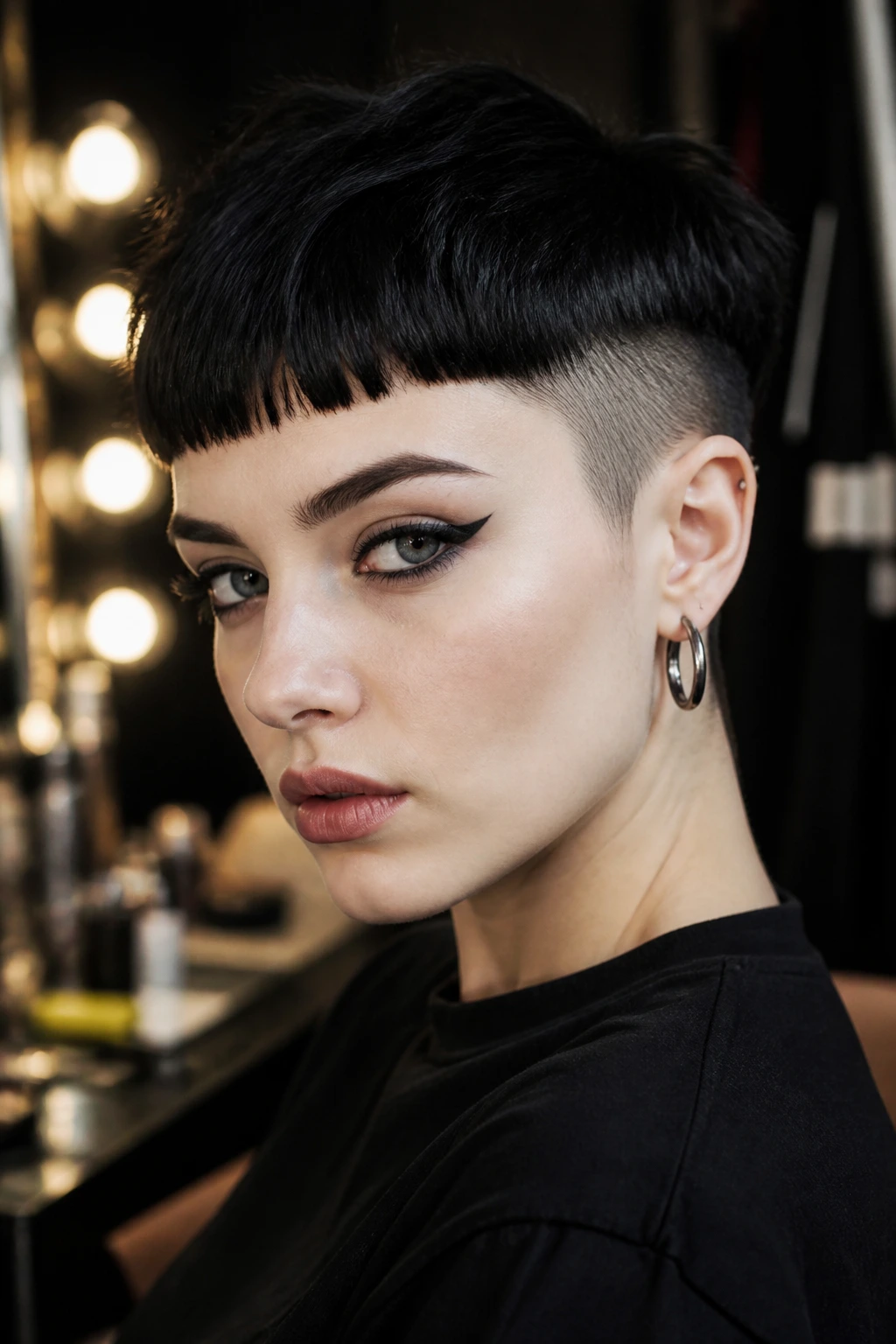
If you want a haircut that says you have no patience for fluff, this is the one. The undercut crop keeps the nape and sides tight, while the top stays short enough to expose the shape of the head. Baby bangs sit high across the forehead and make the eyes look almost exaggerated.
It’s a strong look. No sugar-coating that. The undercut changes how the cut feels from behind, especially when the hair is tucked behind the ears or clipped up. You get this neat, almost severe outline, and then the tiny fringe lands like a period at the end of a sentence.
This cut is especially good for thick hair because the undercut removes the weight that usually makes short styles mushroom out. It also works if you like to wear dark lipstick, sharp brows, or silver jewelry. Those details show up more because the haircut gives them room.
Best move: keep the top long enough to pinch between your fingers when styling. If it’s too short, the baby bangs can look like an afterthought instead of a choice.
6. Curly Goth Shag with Curved Fringe
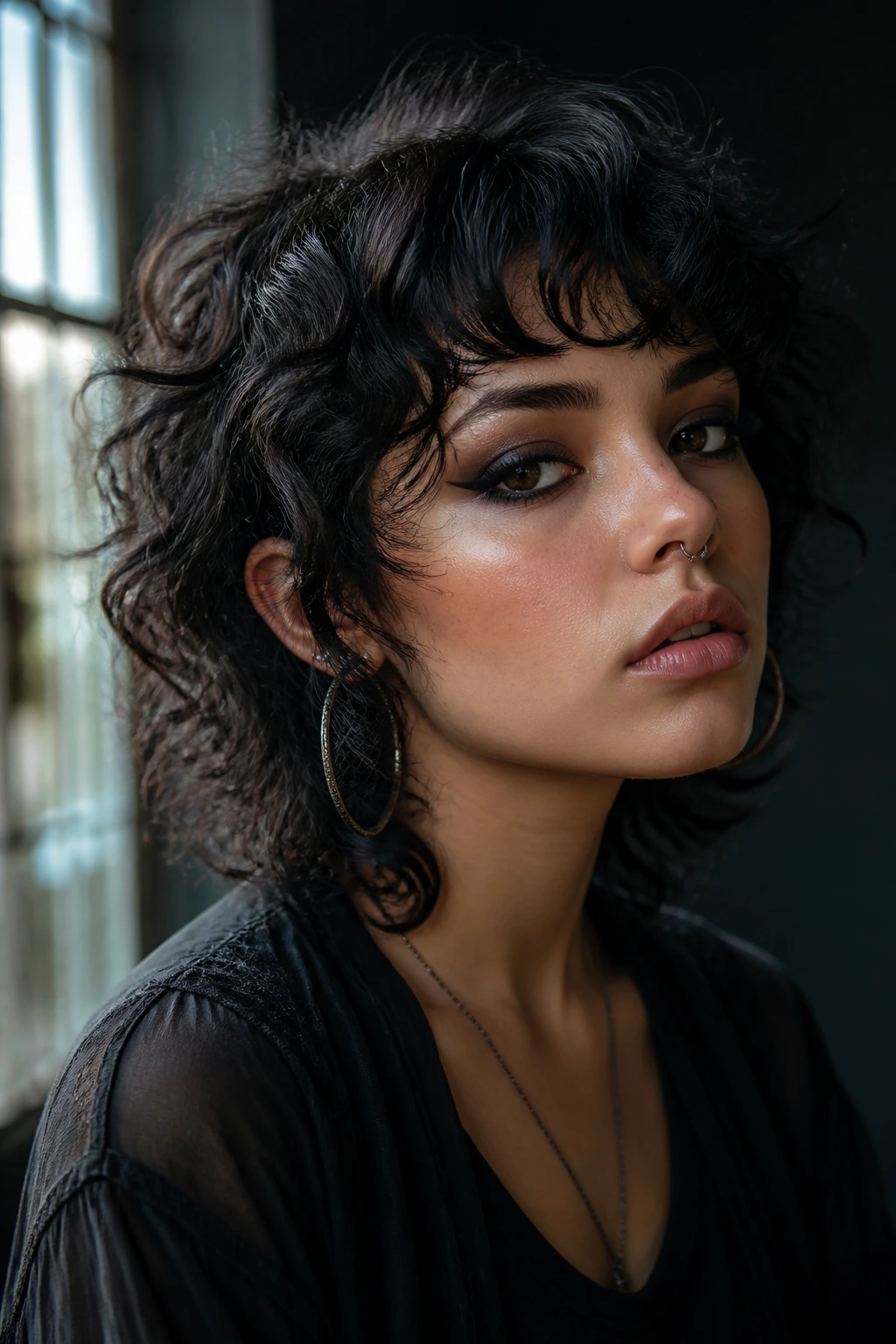
Curly hair and goth hair get along better than people think. The mistake is assuming everything has to be straightened into submission. A curly goth shag keeps the natural texture, but shapes it with layers that remove bulk and a fringe that curves around the forehead instead of fighting the curl pattern.
The Shape Makes the Difference
The fringe should be cut longer than a straight fringe, because curls spring up. If you cut it too short, you end up with tiny springs sitting above the brows in a way that can feel accidental. A good stylist will cut it dry or nearly dry, watching how the curl lands when it settles.
The rest of the shag should move. Not frizz. Move. There’s a difference. You want softened layers around the crown and a little weight left at the ends so the shape doesn’t explode outward on humid days. A curl cream plus a light gel cast can keep the outline darker and cleaner.
This is one of the easiest ways to get a goth look without daily heat styling. The fringe still frames the face, the layers still give attitude, and the texture does half the visual work on its own. That’s a nice trade.
7. Sleek Pageboy with Straight-Across Bangs
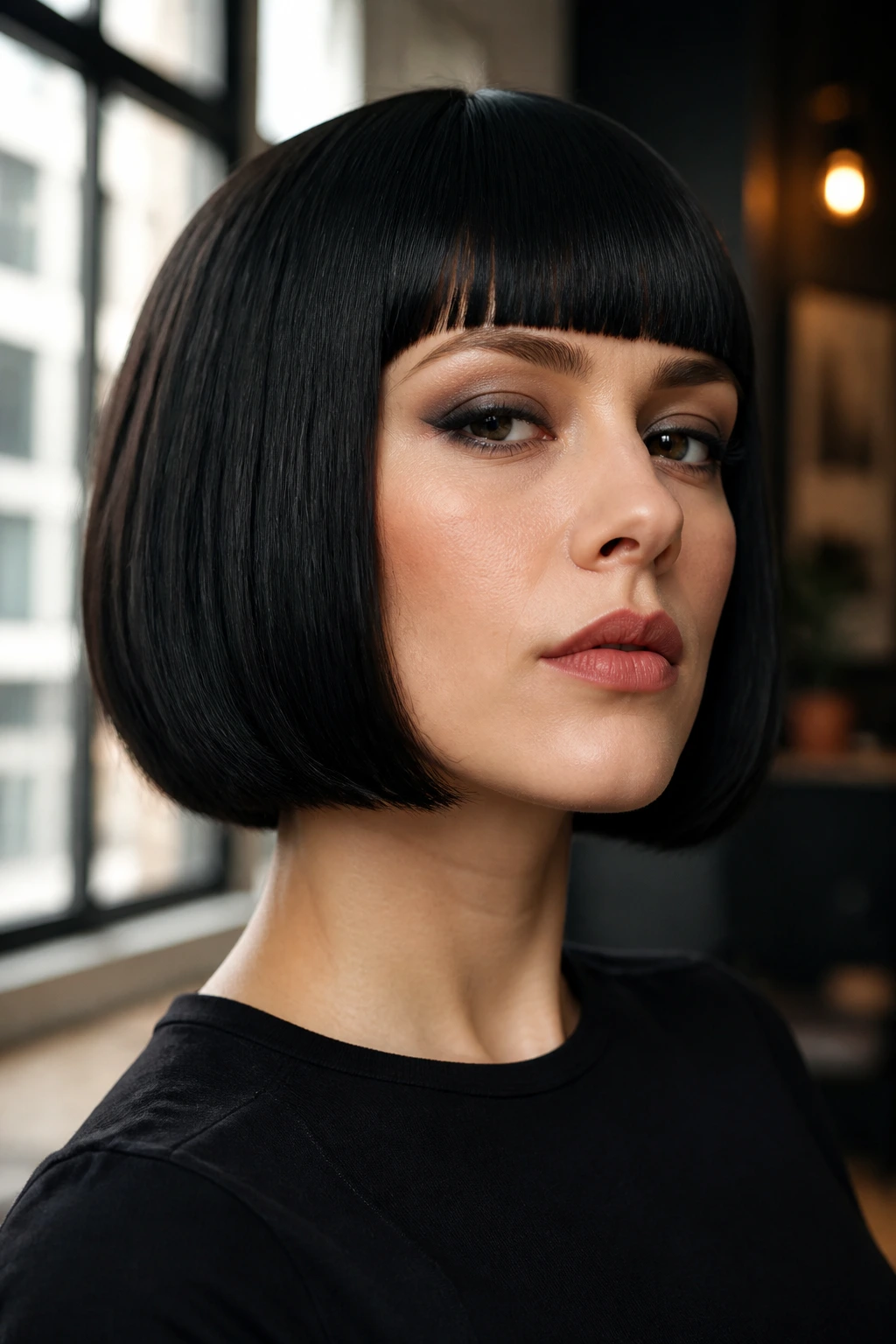
The pageboy is a very specific kind of sharp. The ends curve inward just enough to hug the jaw, and the bangs cut straight across with almost no softness. With black hair, it can look like a piece of graphic design came to life.
This style works because it is disciplined. That sounds dull, but it isn’t. A good pageboy has a clean nape, smooth sides, and a fringe that lands in one line across the forehead. The curve at the ends keeps it from looking boxy. The blunt bang keeps it from looking sweet.
If you like a polished goth look rather than a messy one, this is a strong pick. It pairs well with a center part only if the bangs are long enough to split slightly; otherwise, leave the fringe full and forward. Flat ironing the ends under by a quarter turn gives the cut that classic tucked shape without making it helmet-like.
A pageboy is not forgiving about neglect. It shows dry ends fast. A lightweight shine cream on the bottom inch of hair makes a bigger difference here than on most short cuts.
8. Messy Mullet Bob with Piecey Bangs

This one has a little trouble in its bones, and that is exactly why it works. The messy mullet bob sits between a bob and a shag, with shorter pieces around the crown and nape, more length at the back, and bangs broken into thin, piecey strands.
It looks good when it is not trying too hard. That’s the trick. Too much smoothing ruins it. Too much product ruins it too. You want texture you can see, not crunchy texture you can hear. A salt spray at the roots, then a dab of matte paste through the bangs, usually gets you there.
Best for people who want movement
- Wavy hair that hates bluntness
- Thick hair that needs bulk removed
- Faces that look better with broken lines than with strict symmetry
- Anyone who wants a cut that still looks intentional after a windy day
The fringe should not form one solid curtain. Keep it fragmented. That separation gives the eyes more room and makes the whole style feel more punk than precious. There’s a reason this shape keeps showing up in alternative scenes. It grows out into something even better.
9. Tapered Pixie Mullet with Wispy Fringe
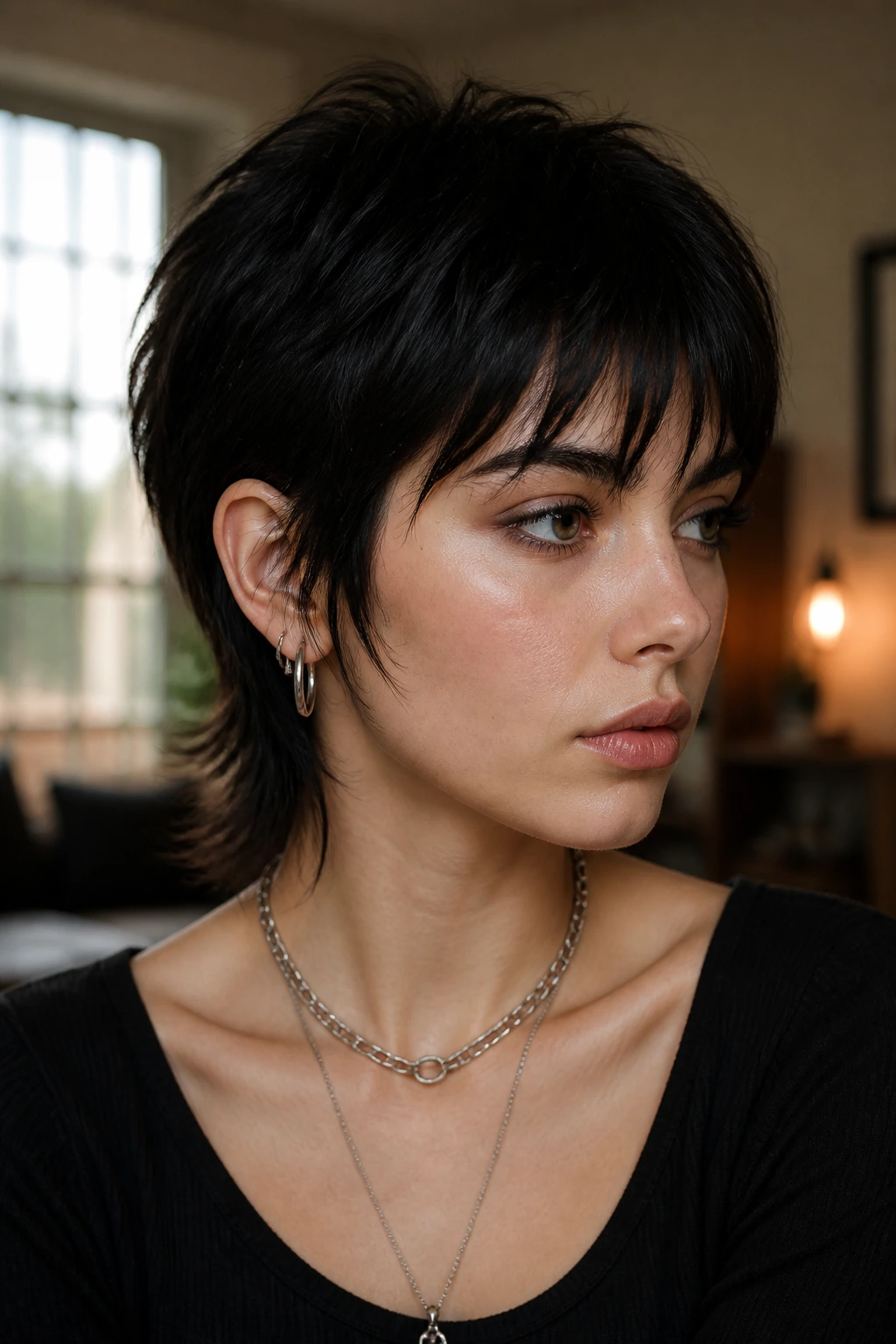
A tapered pixie mullet is for the person who wants short hair but doesn’t want it behaving. The front stays light, the sides taper closer to the head, and the back lengthens just enough to create a little tail of movement at the nape. A wispy fringe keeps the face open.
This cut has a strange advantage: it can look both soft and aggressive at the same time. That contrast is why it lands so well in goth styling. The bangs should stay airy, not heavy. If they get too dense, the whole thing shifts from edgy to overbuilt.
You’ll want texturizing paste or a light wax, applied in tiny amounts. The wrong amount is obvious here. A little separation in the fringe and at the crown is enough. Once the shape is dry, pinching out a few pieces with your fingers gives it a lived-in look that a brush would ruin.
It’s also one of the better grow-out options on this list. The back can lengthen into a mullet shape while the front keeps its lift, so the cut changes without dying on the vine. That matters more than people admit.
10. Chin-Length Blunt Bob with Curtain Bangs

Can a curtain bang be goth? Absolutely, if the rest of the cut is strict enough. The chin-length blunt bob keeps the perimeter heavy and clean, while the bangs split in the center and fall toward the cheekbones instead of falling straight down.
This is a good bridge cut for someone who wants a darker look but does not want their forehead fully covered. The curtain shape gives you movement around the eyes, and the blunt bob keeps the silhouette from getting too soft. With black dye or even a deep espresso shade, it can look moody without shouting about it.
The key is balance. Too much layering around the face and you lose the bob’s structure. Too little and the curtain fringe can feel disconnected, like it belongs to another haircut. Ask for the front pieces to land somewhere between the nose and the jaw so they can bend naturally when you blow-dry them away from the face.
A middle part helps this cut breathe. So does a little root lift at the crown. If it lies too flat, the style loses shape fast.
11. Soft Black French Bob with Arched Micro Fringe
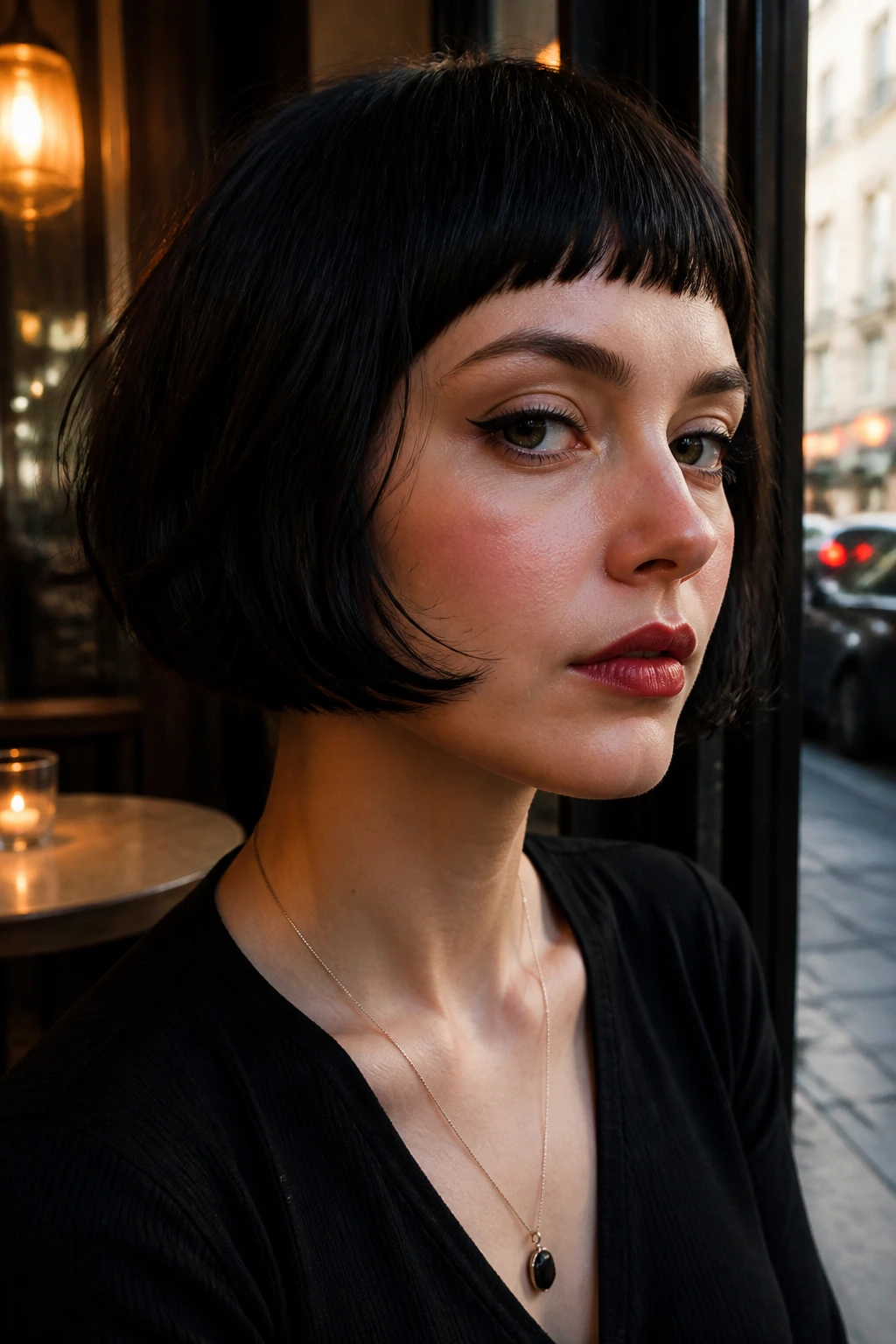
The French bob gets meaner when you shorten the fringe and darken the color. That is the whole trick here. The cut usually lands around the jawline or just above it, with a slight inward bend at the ends and a tiny arched fringe that opens up the eyebrows.
It’s one of those styles that looks almost casual until you notice how exact it is. The fringe isn’t blunt in a heavy way; it curves just enough to follow the natural line of the forehead. The shorter length around the jaw also draws attention to the neck, which gives the cut a cleaner, more composed feel than a shaggy bob.
This is a strong option if you want goth energy without looking punk or messy. It feels older, a little Parisian, a little art-school. The finish matters more than the cut here. A quick blow-dry with a round brush and a drop of gloss serum can make the shape look intentional rather than haphazard.
If your hair is naturally straight, this cut is easy to wear. If it is wavy, the bend adds charm. Either way, the micro fringe is the detail that changes the whole mood.
12. Shaggy Lob with Eye-Skimming Fringe

Not every short goth cut has to be chin-length or tighter. A shaggy lob earns its place because it gives you a little more room to play with layers while still reading short enough to feel lean and edgy. The fringe lands at the eyes or just below them, which gives the face that shadowed frame goth styles love.
Unlike a blunt bob, this cut moves. A lot. That’s what makes it useful if you want something less severe. The layers around the cheekbone keep it from feeling bottom-heavy, and the fringe can be worn straight down, split, or swept aside when you need a break from it.
The best versions avoid too much roundness. You want a little bite at the ends. A razor or point-cut finish helps. So does a dry texture spray at the mid-lengths, especially if the cut falls limp by midday. Keep the bangs longer if your forehead is shorter. Keep them more opaque if your face is long and you want more coverage.
A shaggy lob can look dressed up with almost no effort. One black turtleneck, one clean liner flick, done.
13. Graphic Bowl Cut with Heavy Fringe
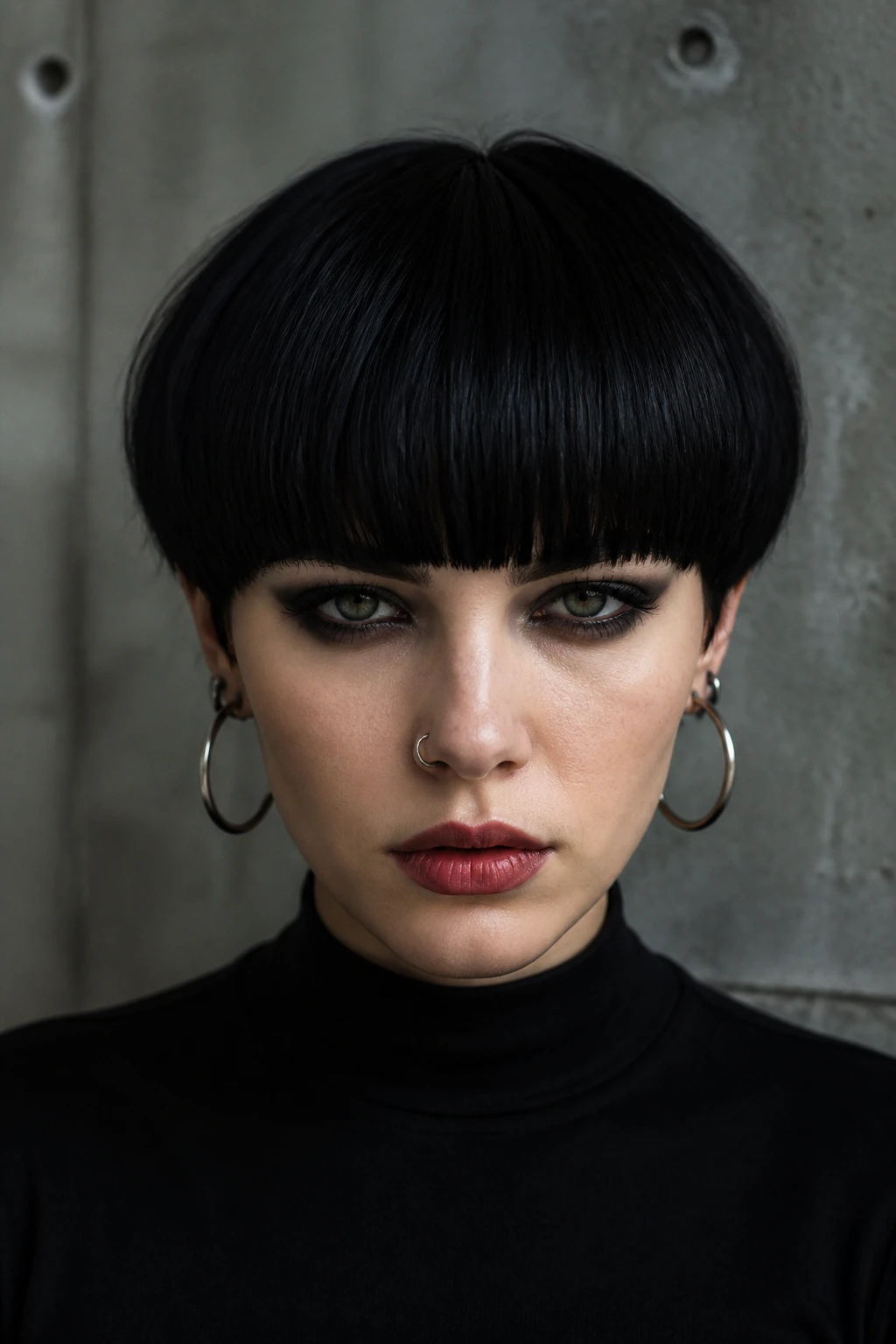
A bowl cut is not trying to be everyone’s friend, and that’s exactly why it works here. The outline is graphic and rounded, the fringe is heavy, and the edges sit close enough to the head to make the shape feel deliberate rather than accidental.
This is the most polarizing cut on the list. Also one of the best. If you like harsh silhouettes, a bowl cut gives you them in one clean shape. There’s nowhere for the eye to wander, which makes the fringe and the line around the head the whole event.
Keep the perimeter blunt. Keep the interior controlled. A little texture at the ends can help, but too much layering destroys the point of the cut. The fringe should be dense enough to read as a block, not a few loose strands pretending to be a fringe. That density is what makes the style feel so stark.
It helps to wear this with confidence and with clothes that match the attitude. A soft floral dress can make it feel playful; a sharp coat or chunky boots pushes it back into goth territory fast.
14. Hime-Inspired Short Cut with Split Bangs
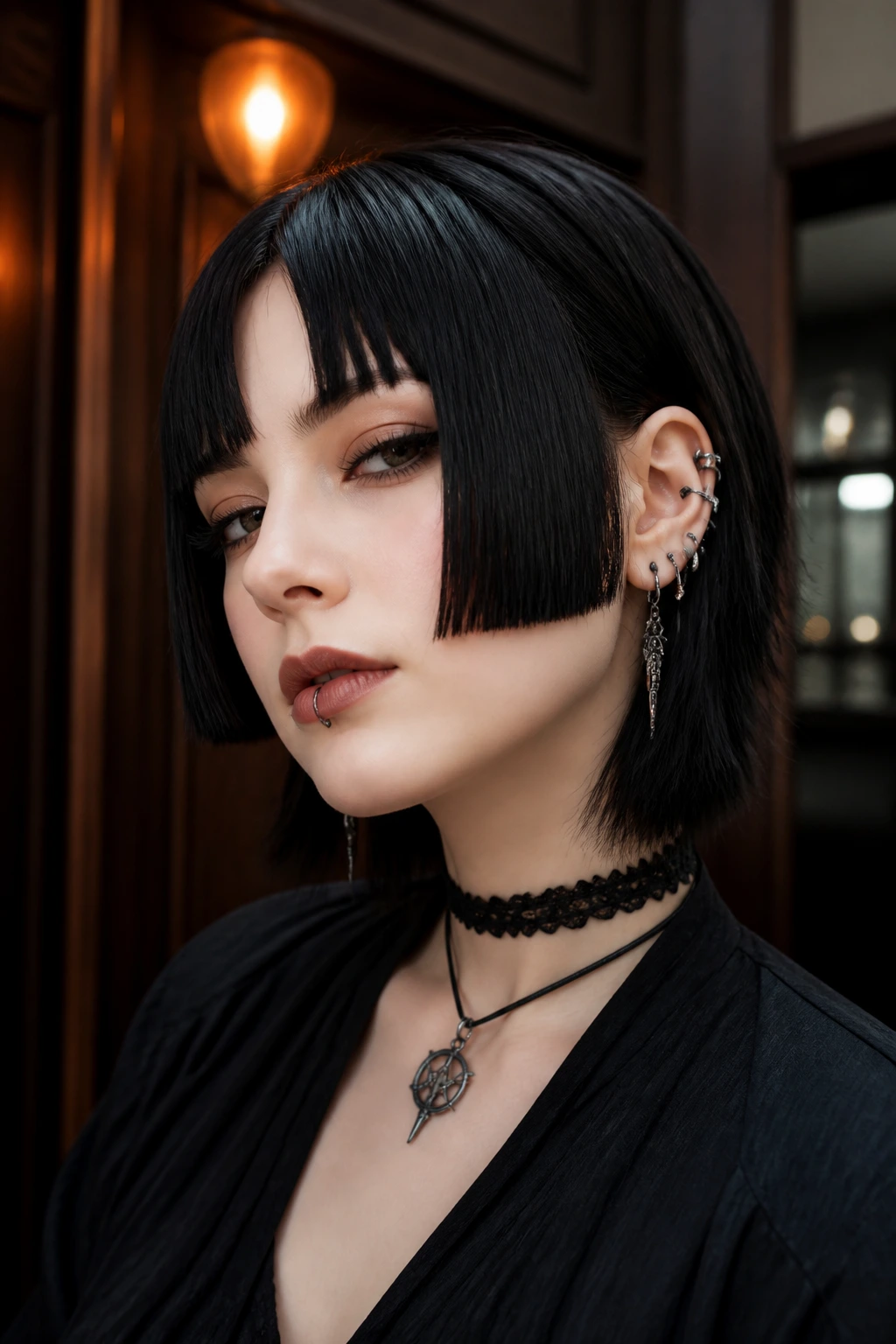
A hime-inspired cut brings a little ritual to the whole look. You get shorter face-framing pieces around the cheekbones, a stronger perimeter through the back, and bangs that split or part around the center rather than falling as one heavy sheet.
Why It Feels So Distinct
The side pieces are the signature. They create a framed window around the face, especially when the front layers are cut to hit around the jaw or upper cheek. The split fringe softens the forehead while keeping the silhouette sharp, which is a nice contradiction if you like dark looks that are not purely severe.
This cut works especially well on straight hair, because the clean geometry shows up best when the strands lie smoothly. That said, a slight bend in the side pieces can make the whole thing feel less rigid and more wearable. A flat iron pass on the face-framing panels is usually enough.
If you want the look to read more goth than cosplay, keep the rest of the hair short and dark, and avoid over-styling the side panels into polished curls. Crisp lines, clean ends, dark color. That’s the recipe. Everything else is decoration.
15. Textured Mushroom Cut with Heavy Fringe

The textured mushroom cut has an old-school shape, but the modern version leans into roughness instead of pretending it came from a tidy geometry lesson. It sits rounded around the head, with a heavy fringe and enough internal texture to keep the outline from becoming stiff.
This cut is a smart choice if you like symmetry but do not want perfection. The rounded shape creates a strong silhouette from the front and side, and the heavy fringe anchors the face. If the length at the nape is clean, the whole thing can look surprisingly chic in a dark color.
What makes it work now
- A blunt fringe that sits low and full
- Texture inside the shape so the crown doesn’t puff up
- A tight neckline so the back stays neat
- Dark dye or a shadow root to keep the roundness from looking playful
It’s a cut that looks best when the texture is slightly broken. A little matte paste, a little finger-combing, and a refusal to over-brush are enough. Leave some edge on purpose. If every strand is obedient, the mushroom loses its attitude.
What Goth Short Hair Needs to Stay Sharp
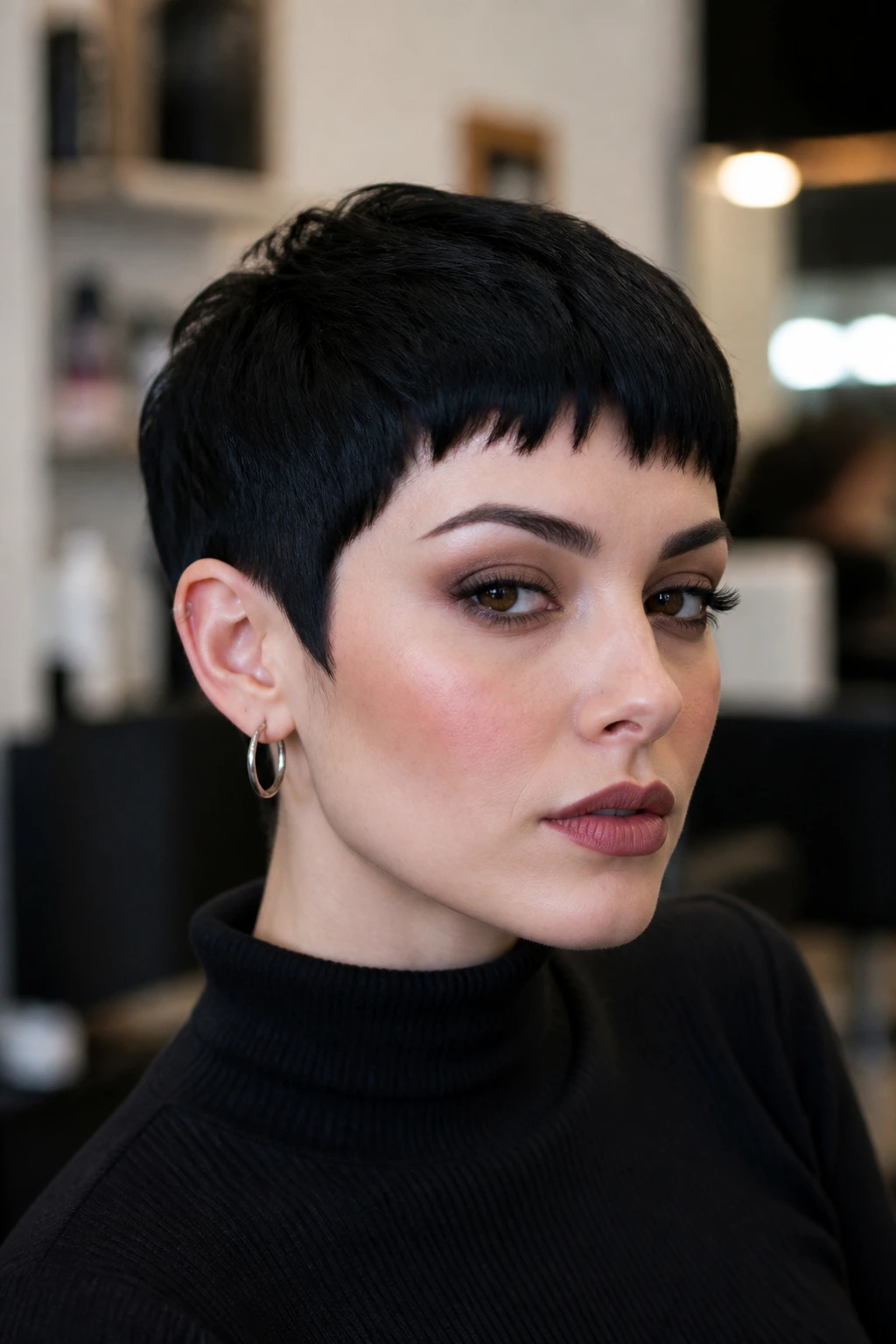
Short gothic cuts look easy until they grow for three weeks and start blurring at the edges. That blur is the whole battle. The line at the hairline, the weight at the fringe, and the amount of texture through the crown decide whether the cut reads as intentional or just overdue for a trim.
The best versions are built with maintenance in mind. A blunt bob survives on clean edges. A pixie relies on the temples staying tight. A shag can hold on a little longer because texture is part of the design, but even that one needs the fringe refreshed before it gets into your eyes and starts splitting apart in the wrong places.
Color matters more than people think. Dark shades make the shape look denser, which helps short cuts read stronger. A faded brown-black can still work if the cut is sharp, but once the outline softens, the whole style loses voltage. That’s why so many good goth cuts look best with a gloss refresh or a root touch-up before the roots grow out too far.
If you care about the silhouette, treat the neckline like it matters. Because it does.
The Tools That Keep Bangs and Napes Clean
-
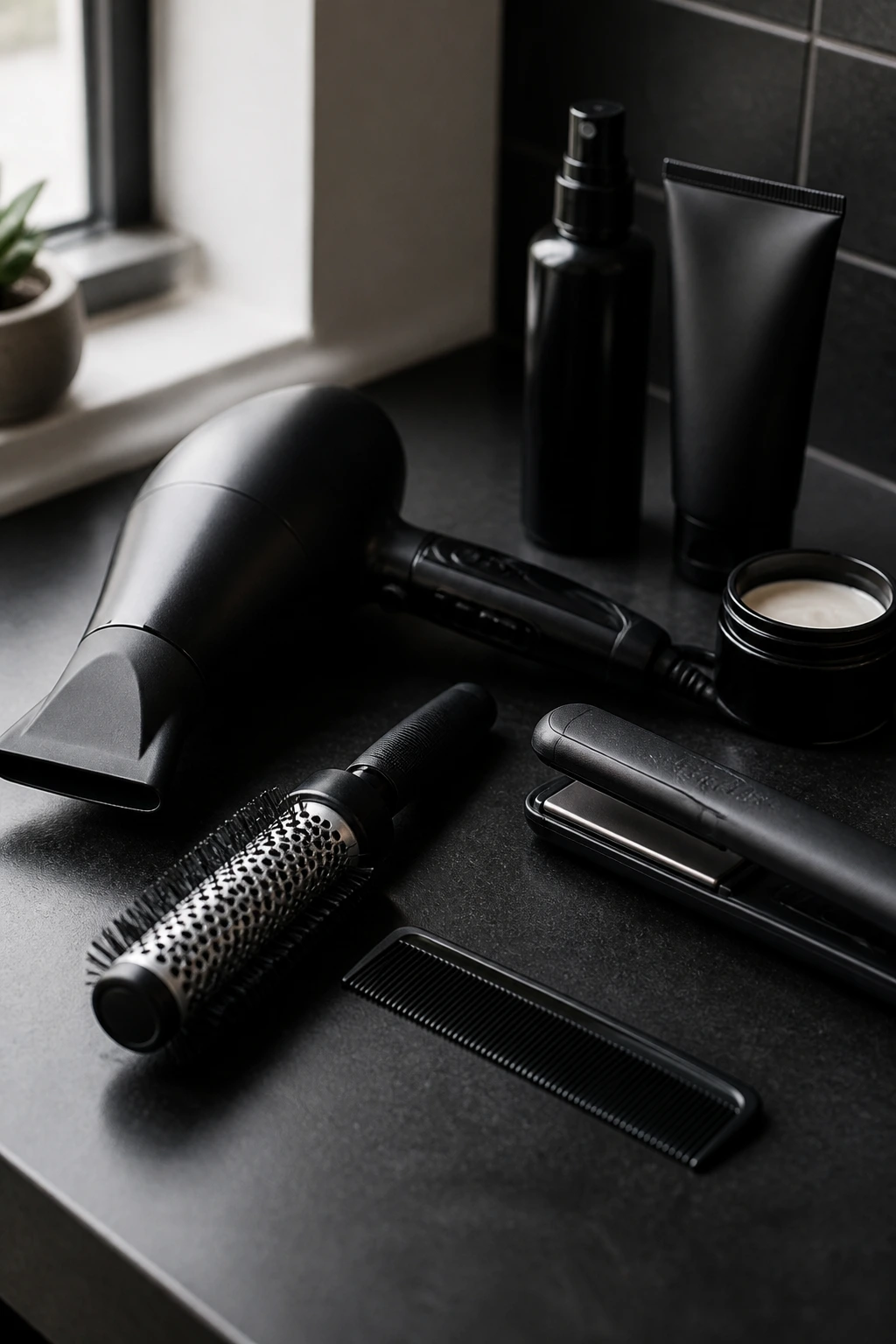
A blow-dryer with a nozzle attachment: Directs air at the fringe and root, which keeps bangs from drying in a wonky curve.
-
A small round brush or flat brush: Small enough to control short pieces without snagging the ends.
-
A fine-tooth comb: Useful for laying down baby bangs, cleaning up a center part, or checking symmetry before you walk out the door.
-
A flat iron with thin plates: Best for pageboy lines, blunt bobs, and fringe that needs a quick reset.
-
Texture spray or dry shampoo: Helps shaggy cuts keep separation without turning greasy by lunchtime.
-
Matte pomade or styling wax: A tiny amount goes a long way on pixies, mullets, and piecey fringe.
-
Heat protectant: Non-negotiable if you touch the fringe with heat more than twice a week.
-
Hand mirror: Sounds old-fashioned, but the back of a short cut tells the truth. A side and rear check saves you from bad surprises.
What to Tell Your Stylist Before the First Snip
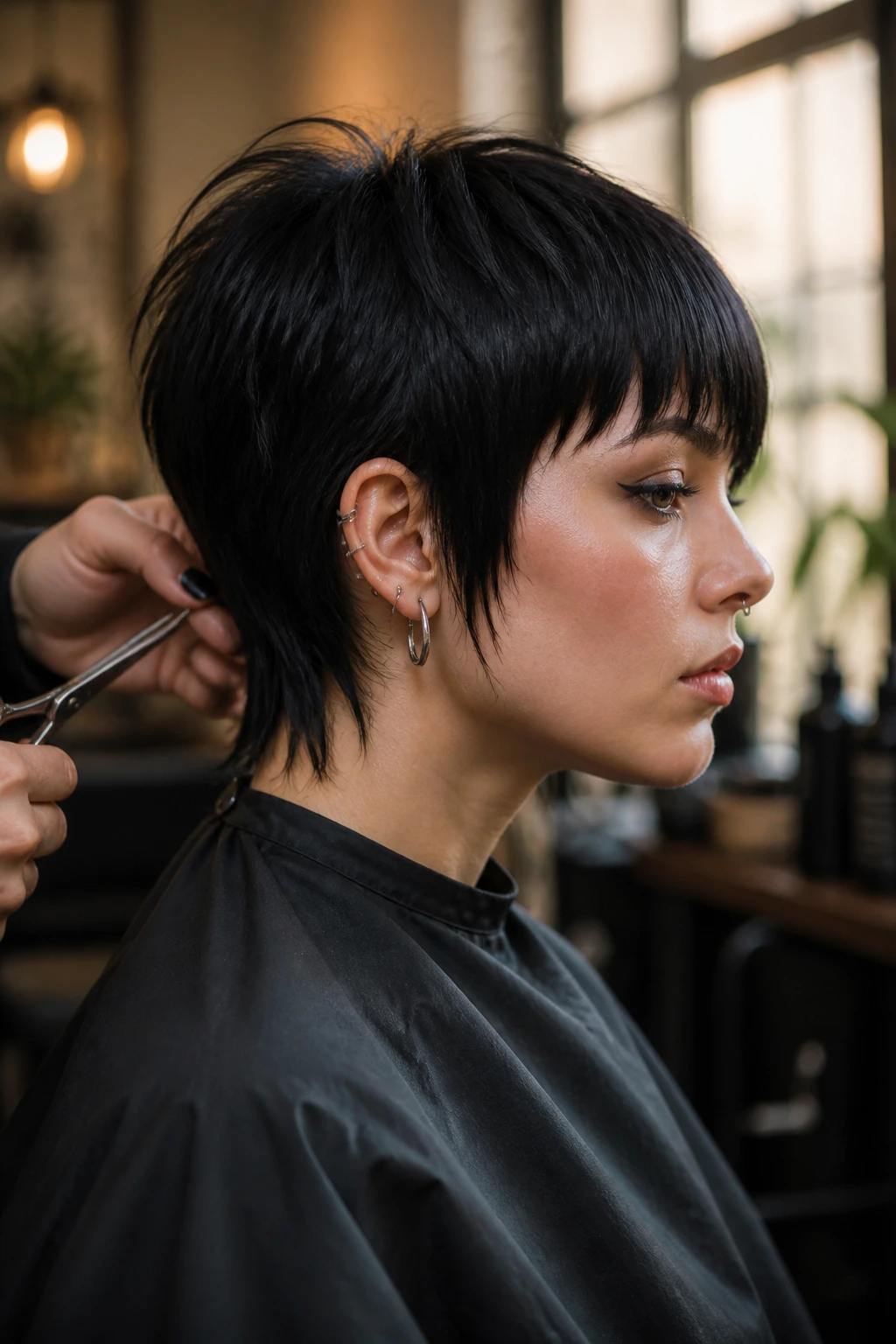
Bring photos, yes, but bring the right kind of photos. Three images of the same silhouette from different angles are more useful than ten haircut screenshots that all mean different things. Say what you like about each one: the fringe length, the nape, the volume at the crown, the texture, the part.
Tell your stylist how much daily styling you will actually do. That sentence changes everything. A pixie with a razor-sharp fringe is not the same as a shaggy crop that can air-dry into shape. If you do not want to flat iron bangs every morning, say so before the scissors come out.
Mention your hairline, especially if you have a cowlick at the front, a strong widow’s peak, or a dense growth pattern at the temples. Those details affect fringe placement more than face shape charts ever do. A good stylist will adjust the bangs for the way your hair grows instead of fighting it with wishful thinking.
Ask about maintenance too. A lot of people skip this part and then get mad when a crisp bob needs a tidy-up every few weeks. Short goth hair is not a once-and-done cut. It is a shape.
How to Style It Without Flattening the Attitude
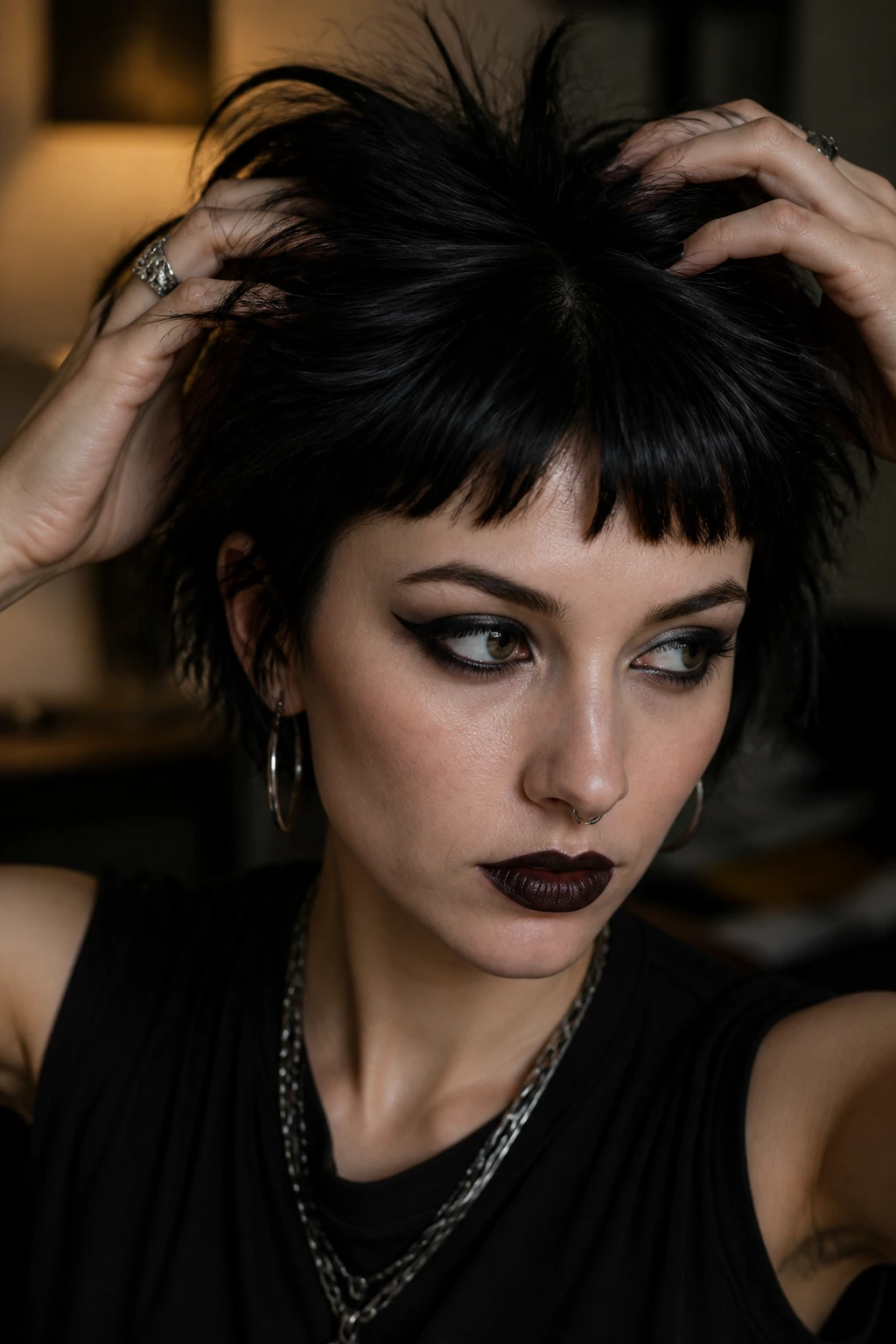
The fastest way to ruin short goth hair is to make it too polite. Too much round-brushing, too much smoothing serum, too much “finish” and not enough edge. The cut starts looking like it wants to be safe, and that is usually where the mood dies.
Start with the fringe. Always. If the bangs are wrong, the rest of the head is already compromised. Blow-dry them first in the direction you want them to sit, then set the crown so it does not puff up while the front cools. A cool shot matters more than people think. It locks the shape before gravity has time to get bossy.
For sleek styles, use a flat iron in small sections and stop once the hair is straight, not glassy-flat. For textured cuts, use your fingers instead of a brush and pinch a few ends apart. You want separation, not frizz. On a goth bob or pixie, the difference between those two is about two products and ten seconds.
And yes, you can tuck one side behind the ear or pin it back with a black clip. That single move can make a short cut look sharper, especially when the fringe is long enough to skim the brow but not so long that it hides the whole face.
Small Tweaks That Make the Look Feel Yours

Shine control: If you want the haircut to look colder and harder, keep the ends smooth but not oily. A pea-sized amount of serum on the mid-lengths is enough. Let the fringe stay a little matte so the eyes stay the focus.
Color depth: Blue-black, blue-brown, and black with cool undertones all make the silhouette look denser in low light. Flat black can work too, but a slight cool cast tends to show off texture better.
Brow shape: A blunt fringe changes the whole eyebrow story. If the bangs sit high, groom the brows so they look intentional. If the bangs are heavy, softer brows keep the face from feeling boxed in.
Accessories: One silver barrette, one black ribbon, or one tiny chain clip can sharpen a short cut fast. Do not pile on four things. One is enough.
Wardrobe pairing: High necks, leather jackets, sheer black layers, and structured collars all make these cuts land harder. A soft knit can work too, but the silhouette needs something with contrast.
Common Mistakes That Blur the Whole Cut

The first mistake is cutting bangs too thick. Heavy fringe can look dramatic for about five minutes, then it starts swallowing the face and making the whole haircut feel tired. The fix is simple: keep the density where you need it, but break up the ends just enough to let light through.
The second mistake is ignoring the growth pattern at the front. Cowlicks are rude. They will split a fringe in half if you let them. If your hair pushes to one side, ask for a fringe that works with that bend instead of against it. A soft side sweep is often smarter than a forced straight line.
The third mistake is over-texturizing. This shows up as fuzzy ends, see-through bangs, and a shape that looks thinner every time you touch it. The fix is restraint. Use texture spray only where the cut needs movement, not all over the head like you’re seasoning soup.
The fourth mistake is waiting too long between trims. Short hair exposes sloppiness fast. A bob that grows out can become a bob with opinions. A pixie can turn into a neck-hugging mullet in a blink. Book the trim before the silhouette starts arguing with you.
Variations and Alternatives That Still Feel Goth
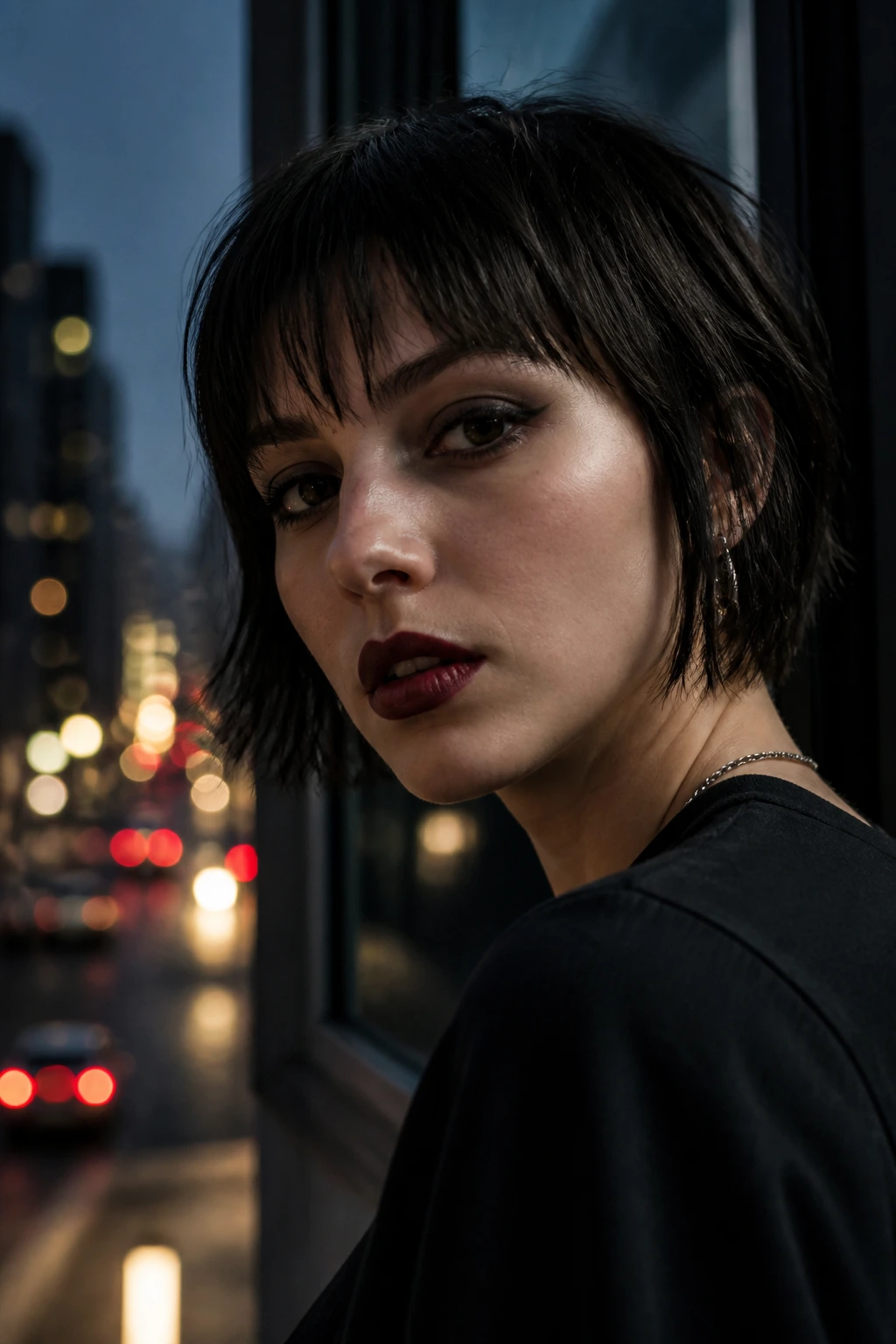
Soft Gothic: Keep the fringe a little longer, soften the texture, and let the ends curve instead of staying blunt. This works if you want a darker look that still plays nicely with work clothes or softer makeup.
Punk-Razor Version: Ask for more razor-cut layers, broken bangs, and a slightly messier finish. This one suits thick hair and people who like a cut that looks better the less you fuss with it.
Victorian Edge: Choose a clean bob or pageboy, then pair it with a deep side part, polished ends, and a cool dark color. It feels more composed and a little haunted, which is honestly a nice lane.
Curly Shadow Cut: Keep your natural texture, but shape the fringe longer and let the layers remove bulk from the sides. The goal is a dark outline, not a straightened costume.
High-Contrast Undercut: If you want more drama, shave the nape or one side under a crop or bob. That hidden detail creates a jolt of edge when the hair moves or gets tucked behind the ear.
Keeping the Fringe and Nape in Shape
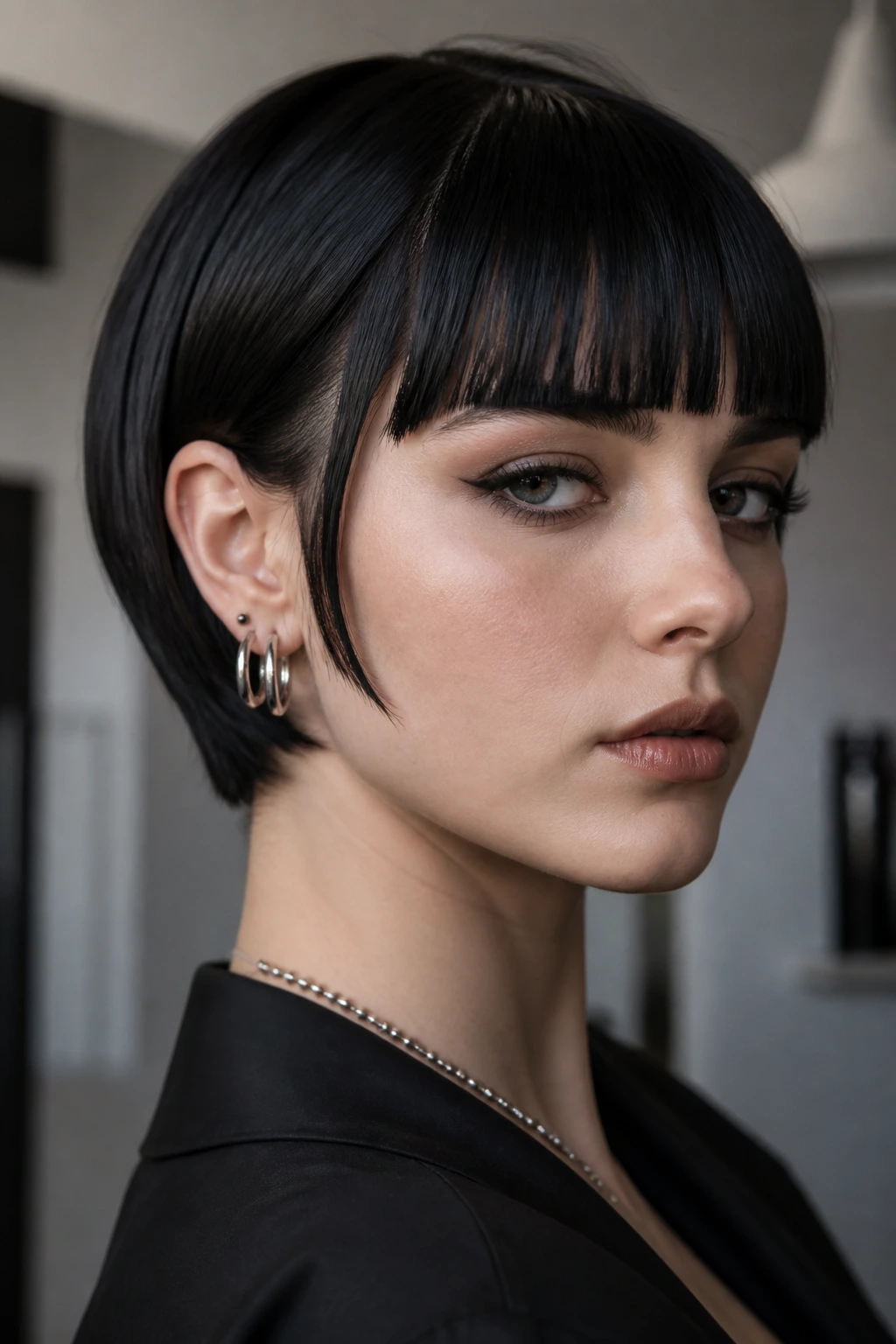
Short goth cuts ask for maintenance in small, regular doses. Bangs usually need attention every 2 to 4 weeks if you want them to keep landing in the same place. The nape and sideburn area can stretch a little longer, but once the neckline fuzz creeps down, the whole silhouette starts to sag.
If your color is dark and you want it to stay rich, use a color-safe shampoo and a conditioner that does not leave a thick coating behind. A heavy conditioner can flatten a short cut in two days. A light gloss or color-depositing mask every few weeks helps keep the black from looking brownish and tired.
Sleeping on a silk or satin pillowcase helps more than people admit. So does clipping the fringe off your face at night if it gets bent easily. If you wear a blunt bob or pageboy, a quick blow-dry after washing keeps the ends from drying into a weird flip. If you wear a shag or mullet, a little water mist and a dab of styling cream can revive the shape without another full wash.
Short hair is not hard. It is just honest.
Questions People Ask Before They Commit
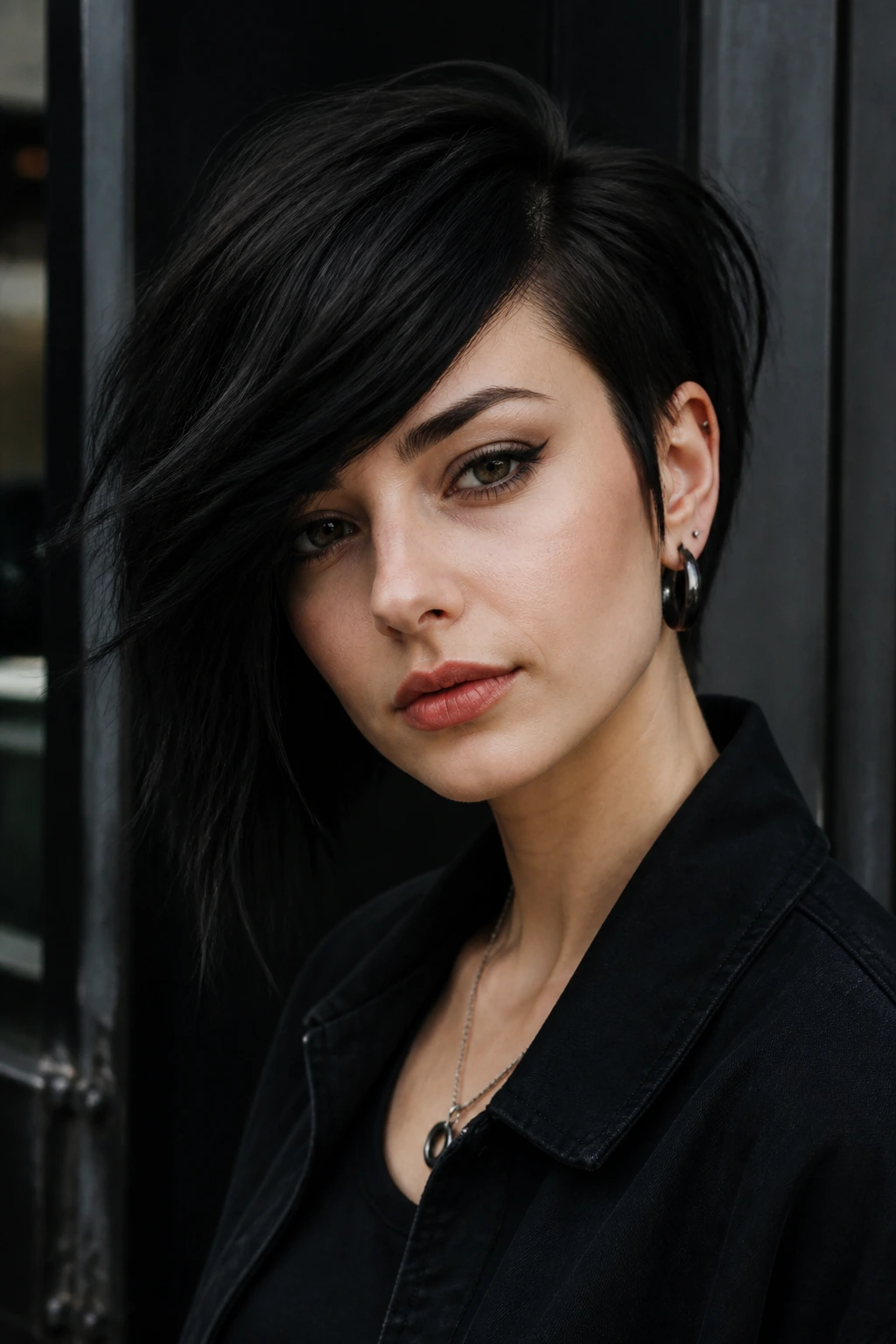
Will goth short hair with bangs work on fine hair?
Yes, if the shape is built with a blunt perimeter or a tight crop. Fine hair usually looks better in a bob, French bob, or pixie with clean edges than in a heavily layered style that makes the ends disappear.
Can I keep the look goth without dyeing my hair black?
Definitely. A sharp fringe, a graphic silhouette, and dark-root styling can carry the mood on their own. Deep brown, blue-brown, plum-black, and even natural salt-and-pepper hair can read goth when the cut is disciplined.
How often do bangs need trimming?
Usually every 2 to 4 weeks, depending on how fast your hair grows and how short the fringe sits. Baby bangs need the most attention. Curtain or eyebrow-grazing bangs can go a little longer if you like them softer.
What if my cowlick splits the fringe apart?
Do not fight it with blind optimism. Ask for a fringe length and direction that works with the growth pattern, then style the roots with a blow-dryer and a comb while the hair is still damp. Sometimes a side-swept fringe is the smarter choice.
Can curly hair pull off a short goth cut with bangs?
Yes, and it can look excellent. The key is leaving the fringe longer than you think and cutting the shape while the hair is dry or nearly dry so the curl lands where it actually lives.
Which cut grows out the cleanest?
The shaggy lob and the pixie mullet tend to age the best because the layers are part of the design. A blunt bob stays sharp longer in a maintenance sense, but when it grows out, the line shifts fast.
Is an undercut worth it if I hate constant upkeep?
Only if you like the way it feels and looks enough to justify touch-ups. An undercut cuts down bulk and adds edge, but it does need regular clean-up if you want it to stay crisp.
What should I bring to the salon?
Bring photos of the exact fringe length, side view, and back view you want. Then bring one sentence about your daily routine. That second part matters more than people think.
The Last Layer
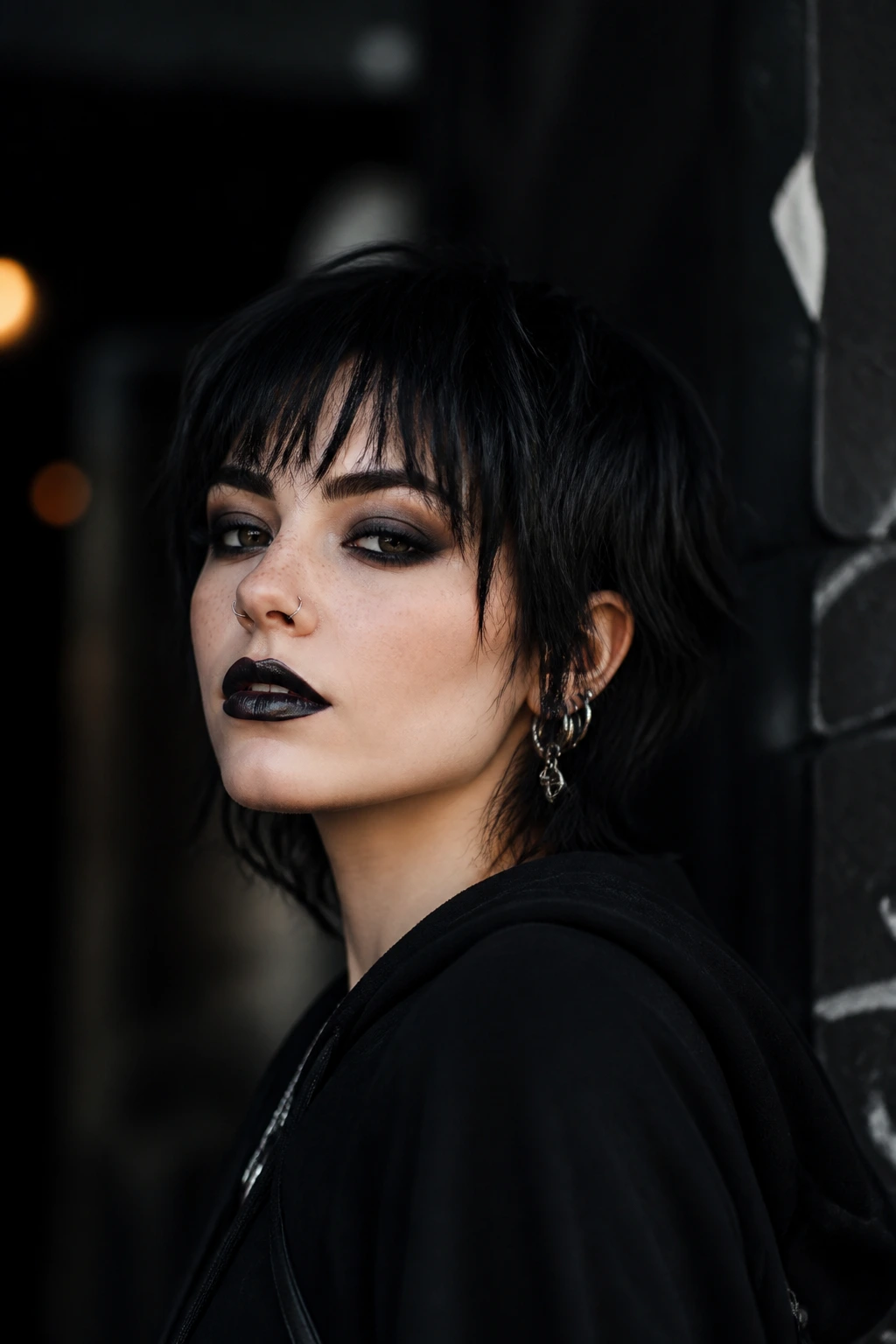
The nicest thing about goth short hair with bangs is that it does not need to look precious to look good. A strong fringe, a clean neckline, and a little darkness around the eyes can do more than layers of styling ever will. That is why these cuts hold up: they have structure before they have attitude.
Pick the version that matches your real life, not your fantasy mirror version. If you blow-dry every morning, go blunt and sharp. If you’d rather scrunch and go, choose something shaggy enough to forgive a lazy day. Either way, the cut should feel like it has a backbone the second you step out of the chair.
