



Square faces can wear straight across bangs better than most people think. The trick is that the fringe has to do a job: it needs to soften the jaw, pull attention upward, and keep the face from reading too boxy. When the cut is right, the effect is crisp in a good way. Clean. Intentional.
The mistake people make is assuming every blunt fringe works the same way. It doesn’t. A heavy line that lands in the wrong spot can make the forehead feel wider and the jaw look even more decisive. But a bang that sits at the brow, skims the lashes, or softens just enough at the corners can make a square face look sharper, not harsher. That difference is a couple of millimeters, maybe half an inch. Tiny on paper. Huge in the mirror.
What matters most is the relationship between the fringe and the rest of the haircut. Dense hair behaves differently from fine hair. A high forehead wants a different length than a short one. A jaw that’s the strongest feature needs a different edge than a face where the temples already carry most of the width. The styles below cover all of that, one by one, without pretending one blunt bang solves everything.
Why These Straight-Across Bangs Work on Square Faces

-
They move attention upward: A clean fringe line pulls the eye to the brows and eyes first, which keeps a strong jaw from dominating the whole face.
-
They can soften width fast: Even a blunt edge changes the way the forehead and temple area read, especially when the outer corners are trimmed a touch softer.
-
They work with different hair densities: Thick hair can carry a heavy, graphic fringe; finer hair can wear a lighter version that still reads straight across.
-
They give you room to choose your mood: You can go polished, soft, airy, or sharp without leaving the straight-bang family.
-
They grow out with options: A good square-face fringe can turn into side pieces, a parted bang, or a longer face-framing layer instead of collapsing into a bad in-between stage.
What a Square Face Needs From a Fringe

Square faces usually have a strong jaw, a broad forehead, or both. That’s not a problem. It just means the bang has to be placed with more care than a one-size-fits-all fringe.
The forehead line matters more than people think
If the fringe lands too high, it can make the face feel shorter and wider at the same time. If it lands too low and too heavy, the whole top half can look boxed in. I like bangs that either kiss the brow line or hover just below it, because that keeps the face open without letting the jaw take over.
Corners do a lot of quiet work
A perfectly straight fringe does not have to be blunt at the edges. In fact, a tiny bit of softness at the corners often makes the biggest difference on square faces. Those softened outer pieces guide the eye downward instead of stopping it dead at the temple.
Density should match your hair and your forehead
A thick fringe on fine hair can look stringy if there isn’t enough hair in the section. A whisper-light bang on coarse hair can puff apart and expose the forehead in odd little gaps. The best version is the one that feels deliberate when you shake your head and the fringe falls back into place.
1. Brow-Skimming Blunt Bangs
This is the cleanest place to start. The line sits right at the brows, sometimes a hair above them, and that placement gives a square face a tidy upper frame without crowding the forehead. I like this version when the rest of the haircut has a little movement below the chin, because the fringe gets to stay crisp while the lengths below it keep the look from feeling severe.
Ask for a solid perimeter with the outer corners softened just a touch. That tiny detail matters. If the ends stop at the exact same point across the face, the look can feel too rigid; if they taper too much, you lose the blunt effect that makes this style work.
2. Lash-Grazing Heavy Fringe
Why does this one work so well? Because it drops the visual line low enough to interrupt a strong jaw without shrinking the face into a tiny little box. The lashes become part of the whole effect, which sounds minor until you see it in the mirror.
This is the style I’d point to if your forehead is on the longer side or if your face reads very angular through the cheeks. The bangs should feel dense in the middle and soft only at the very outer corners. Keep them slightly longer than you think you need. Short bangs on a square face can get a little bossy.
3. Soft-Rim Blunt Bangs
The shape is straight. The edges are not aggressively straight. That’s the difference, and it’s enough to change the whole feel.
Soft-rim bangs are good for thick hair that naturally wants to sit like a shelf. A stylist can point-cut the very bottom edge so the fringe still lands in a clean line but doesn’t look cut with a ruler. On square faces, that little bit of softness helps the style read polished instead of hard. It’s one of those cuts that looks simple from a distance and much smarter up close.
4. Baby-Short Micro Fringe

This one is a mood. Not a timid mood. A very specific, graphic mood.
Micro bangs can absolutely work on square faces, but they work best when the rest of the haircut has softness or length to counterbalance them. The short length opens the forehead and puts the emphasis squarely on the eyes, which keeps the jaw from feeling too heavy. If you like sharp contrast and don’t mind a fringe that announces itself the second you walk into a room, this is the one.
5. Dense Full Fringe on a Lob
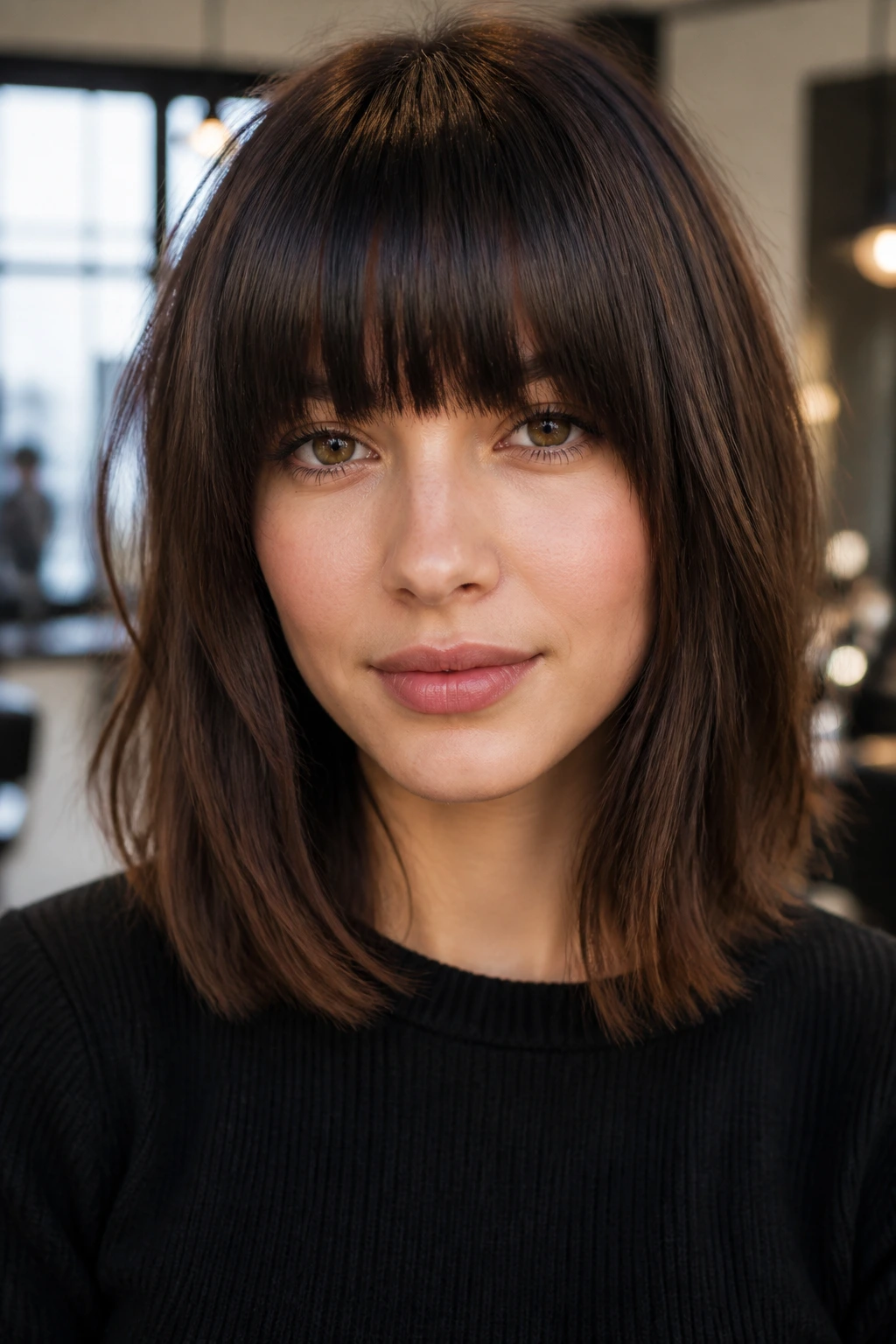
A lob plus a full fringe is such a strong pairing because it splits the face in two useful ways. The bangs create a clear horizontal line up top, and the shoulder-grazing length gives the lower half of the face something to lean against.
I especially like this on square faces with wider cheekbones or a very defined jaw. The fringe should be thick enough to read as one clean section, not a see-through strip. If the ends of the lob are kept blunt or only slightly textured, the whole haircut feels expensive without trying too hard.
6. Air-Lighter Bangs for Fine Hair
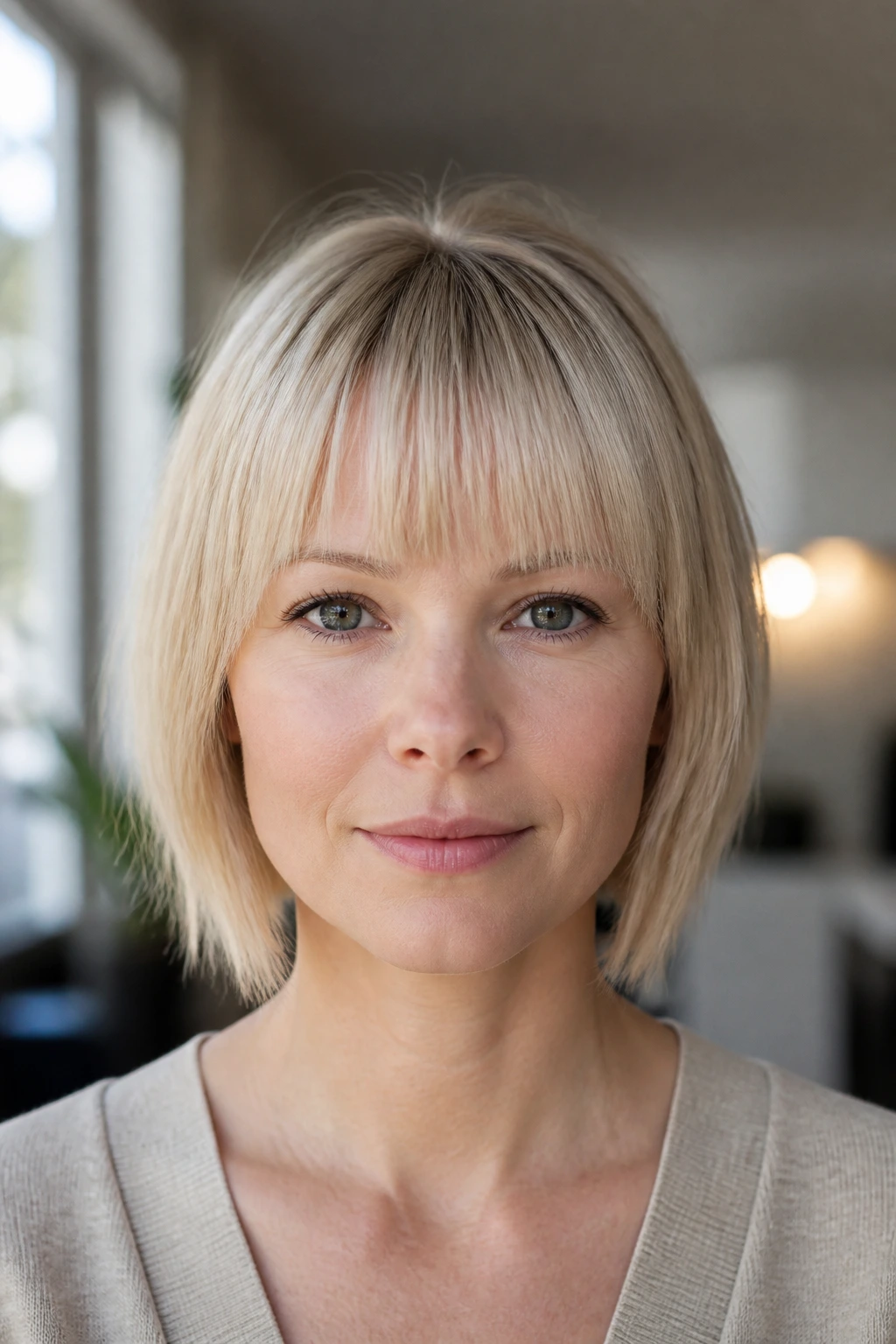
Fine hair needs a different kind of straight bang. Too much density and the fringe can sit flat to the scalp like a helmet. Too little and it breaks apart into wisps that don’t frame the face at all.
The sweet spot is a lighter section that still lands in a straight line but doesn’t weigh down the forehead. A square face usually benefits from that because the fringe softens the top line without making the jaw look wider. Blow-drying with a small round brush helps here, and so does a little root lift at the center. Not much. Just enough to keep the bang from clinging.
7. Corner-Softened Straight Bangs

Can a blunt fringe still look gentle? Yes, if the corners are handled with care.
This version keeps the middle dense and straight, then eases the outer edges down with a very subtle bevel. That keeps the style from stopping exactly at the widest part of the face, which is the part I never love on square shapes. If your temples are already broad, this cut is far kinder than a hard, temple-to-temple block. It is still straight across. It just knows where to soften.
Best for square faces with strong temple width
If you look in the mirror and notice the upper sides of your face before the forehead or chin, this is a smart starting point. It won’t fight your bone structure; it works with it.
8. Cheekbone-Linking Bangs

This is the fringe for someone who wants the bangs to connect, visually, with the rest of the face instead of sitting like a separate slab of hair. The center remains straight, but the outer pieces are cut so they skim toward the cheekbone line.
That detail helps square faces because it gives the eye a downward path. The face feels longer and less boxy without losing the blunt-bang shape. I like this with medium-length hair, especially if the layers start below the chin. Keep the ends neat, though. Cheekbone-linking bangs lose their effect if they get over-thinned.
9. Mirror-Smooth Glass Bangs
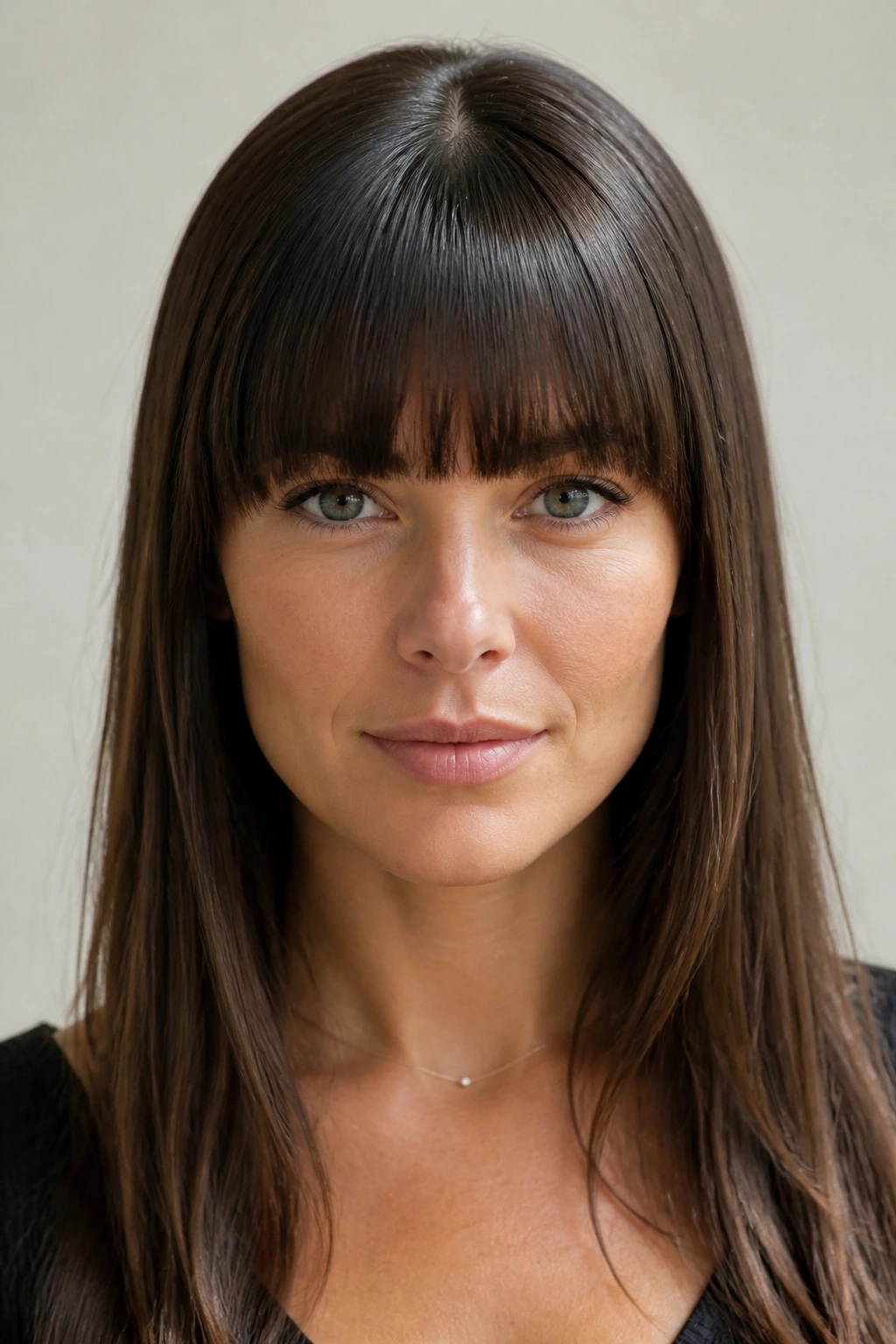
Some bangs should look slightly imperfect. These do not.
Glass bangs are for people who like a polished, sharp finish and don’t mind spending a few extra minutes with a dryer or flat iron. On square faces, the sleek surface keeps the fringe clean and deliberate, which can be a nice counter to a strong jaw. The line itself does the talking. That is the whole point.
Use a light heat protectant, dry the bangs side to side first, then finish them flat and smooth. If your hair frizzes near the hairline, a tiny dab of serum on the fingertips is enough. More than that and the fringe turns greasy fast.
10. Torn-Edge Straight Fringe

A torn edge does not mean a messy fringe. It means the blunt line has been broken just enough to stop it from feeling heavy.
I like this on square faces with thicker hair because it removes some of the shelf-like weight that can make a blunt bang feel too severe. You still get the straight-across effect, but the finish is softer, a little more lived-in. If you wear a lot of structured clothing or sharp makeup, this style keeps the overall look from becoming too hard-edged.
11. French Bob Fringe
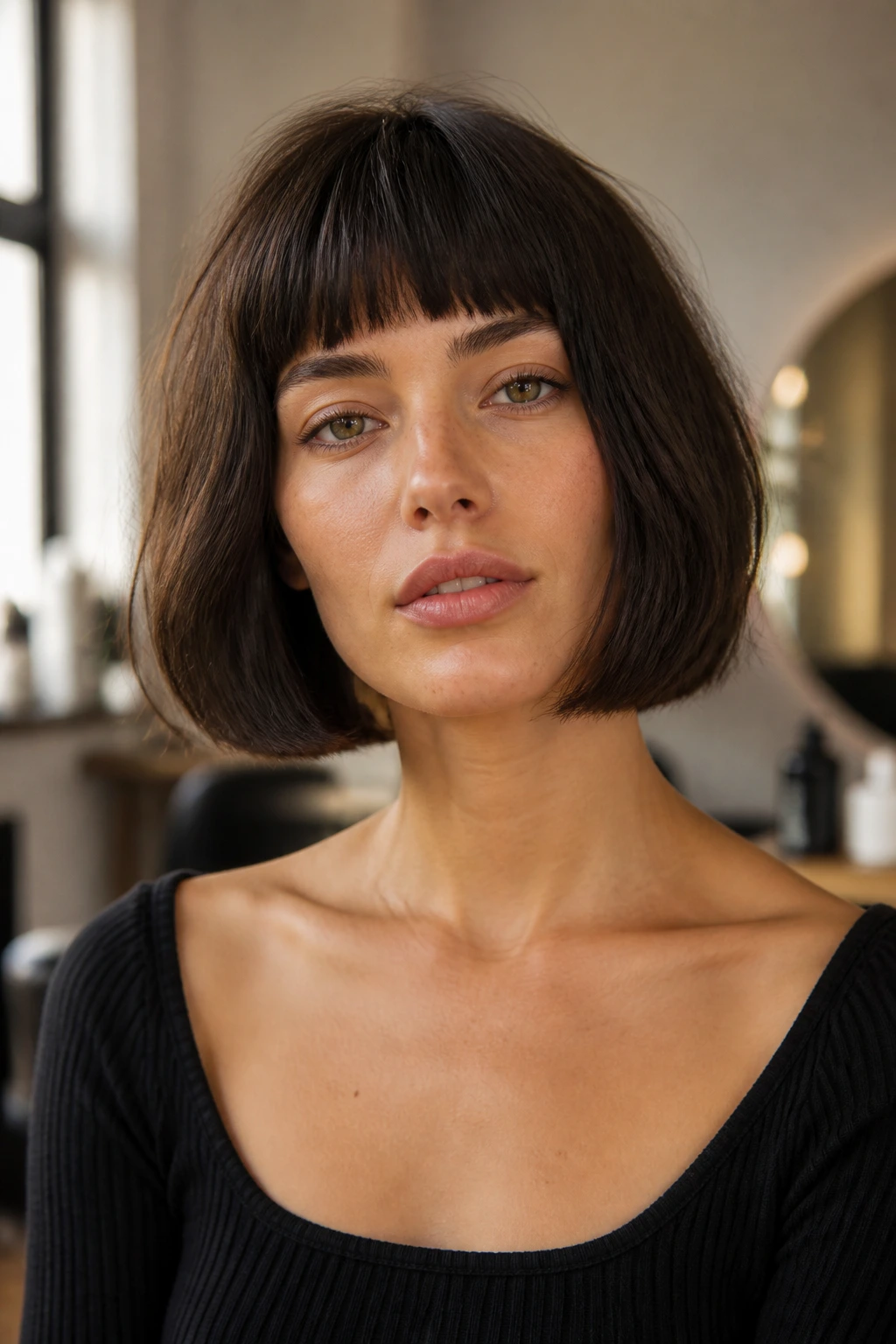
The French bob changes the whole conversation. Instead of the bangs doing all the balancing, the bob itself adds a second shape right around the jaw.
That matters on a square face because a chin-length or jaw-skimming bob can either echo the angle or soften it, depending on the texture. A straight-across fringe here works best when the bob ends slightly below the jawline or just kisses it with movement. If the bob ends right at the widest part of your jaw, the effect can feel squared off. A little length below that point gives you breathing room.
12. Collarbone-Length Fringe
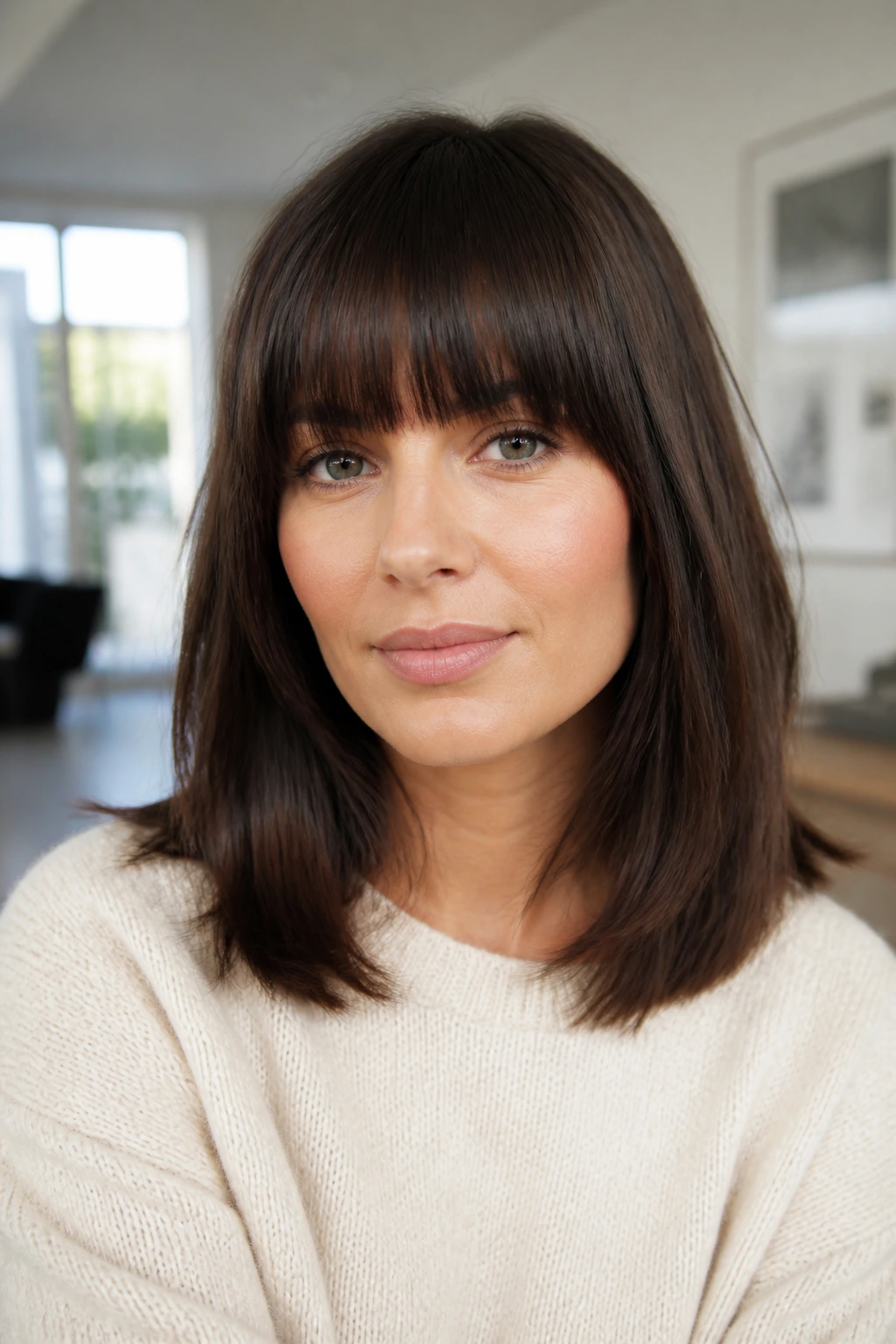
Longer hair can handle a straighter, denser fringe than people expect. The collarbone length below it keeps the whole haircut from reading too blocky.
This version is nice if you like the idea of bangs but don’t want them to dominate your face. The fringe creates the frame; the length below the shoulders keeps the visual weight moving downward. On a square face, that downward pull is useful. It softens the edges without hiding the bone structure you probably like anyway.
13. Blown-Straight Curly Fringe
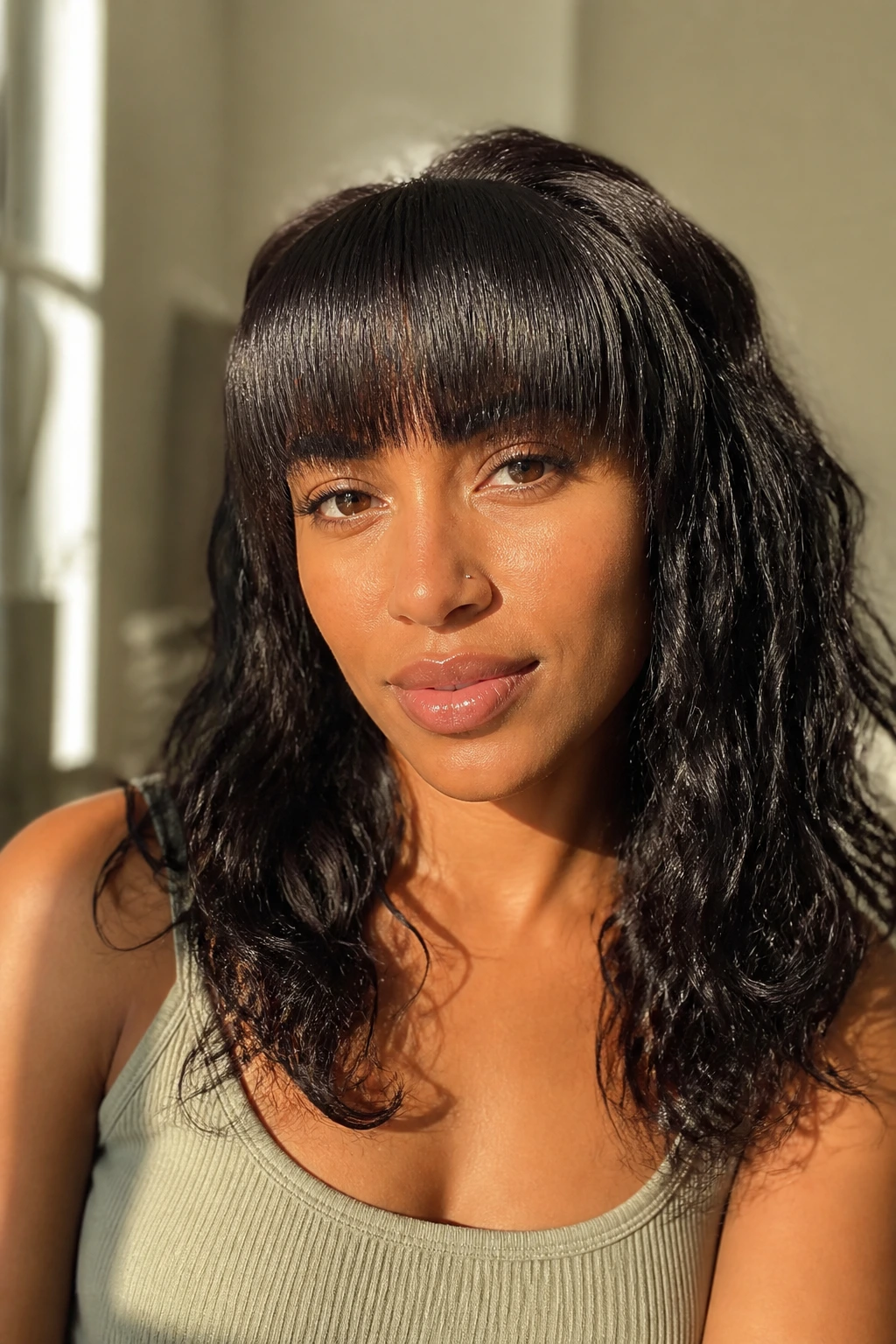
Curly and wavy hair can wear straight-across bangs if you respect the shrinkage. That means cutting the fringe with the curl pattern in mind, not fighting it with wishful thinking.
The bangs should be long enough to survive the spring in your hair when you blow them smooth. On a square face, this style is lovely because the soft texture below the fringe keeps the look from turning stiff. If you want the clean line but still love your natural pattern, this is the version to ask about. Bring the bangs down gradually. Do not cut them short just because they look long when wet.
14. Center-Heavier Straight Bangs

This one is smarter than it sounds. The center section is denser, and the outer edges are a touch lighter, so the bang line still looks straight but the temples aren’t swallowed up.
That density pattern is useful on square faces with a broad upper third. It gives the forehead a neat frame without making the face look wider through the sides. I also like it on people who wear glasses, because the center can sit a little higher while the outer bits clear the frames. Clean. Practical. Not boring.
How to wear it
Let the middle fall where it wants, then use a round brush only at the temples so the corners don’t kick out. That small move keeps the line flat without turning it rigid.
15. Under-Bevel Bangs

A bevel is one of those quiet haircut details that most people notice without knowing why. The bang still reads straight, but the underside is cut so the line rests just a touch inward instead of flaring out.
That inward shape helps square faces because it narrows the visual edge at the temples. It’s especially good if your hair naturally fans wide when it dries. Ask the stylist not to overdo the bevel; too much and the fringe stops looking straight. Too little and the whole benefit disappears. There is a tiny middle ground here, and it’s worth finding.
16. Thick-Hair Seam Fringe

Thick hair can carry a serious fringe, but it needs internal control. Otherwise the bangs puff out and sit like a hard shelf over the eyes.
A seam fringe is cut with enough weight to stay blunt, but the inside is thinned or broken up so the line lies flatter. On a square face, that matters because a heavy, swollen fringe can add width exactly where you do not want it. I like this with bobs, shoulder-length cuts, and anything with a clean neckline. The bangs get to stay bold. The shape stays wearable.
17. Fine-Hair Float Fringe

Fine hair needs lift, not bulk. A float fringe lands in a straight line but has enough air in it to move when you blink, and that movement keeps the face from looking stamped flat.
This is one of my favorites for square faces with a narrower forehead. The fringe frames the eyes without crowding the top half of the face, and the softness makes the jaw look less boxy. A little dry shampoo at the roots helps the section separate just enough to keep its shape. If it slips too easily, the answer is usually less product, not more.
18. Temple-Length Bangs

Temple-length bangs sit in a tricky but useful zone. They are short enough to feel like real bangs, long enough at the sides to blur the width at the upper face.
For a square face, that means you get a clean frame without a hard stop at the outer edge of the brows. The corners should land near the temples but not end there like a little fence. This is a good choice if you want the blunt-bang feeling but need a softer transition into the sides. It works especially well with hair that has a little bend or body.
19. Shag Contrast Fringe

A shag and a straight fringe is a nice contradiction. The top line is neat; everything underneath can be rougher, looser, and more broken up.
That contrast is useful on square faces because the fringe keeps the eyes centered while the rest of the cut removes the feeling of heaviness around the jaw. If the shag is too aggressive, though, the bangs can look disconnected. The balance comes from keeping the fringe dense enough to read as a full shape. The rest can be wild. The bangs should not be.
Best when you want texture below the brow line
If you live in layers and movement, this version is the one that won’t fight you every morning.
20. Low Pony Bangs
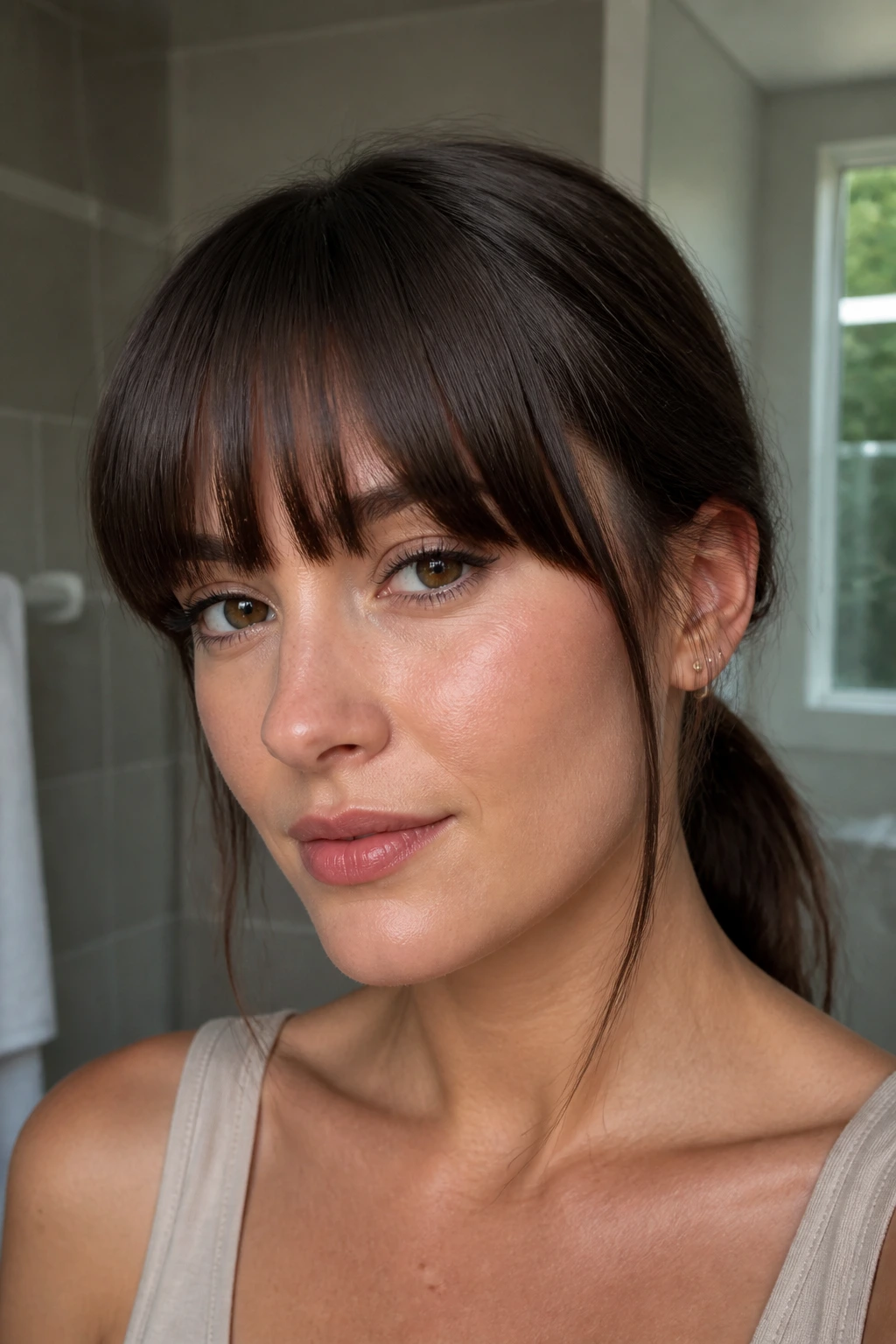
Straight-across bangs are not only for loose hair. Pulled back with a low pony, they change the face shape in a nice, tidy way.
The pony removes bulk from the sides of the jaw, while the fringe keeps the focus at the eyes and forehead. On square faces, that can be a relief because the lower face stays visible without becoming the loudest thing in the room. Keep a few soft pieces around the ears if you want the look to feel less severe. Too slick and it turns strict fast.
21. Glasses-Friendly Fringe

Glasses change everything. The frame creates its own horizontal line, so the bangs need to sit in conversation with it instead of colliding with it.
A glasses-friendly fringe usually lands just above the top of the frames or grazes them lightly in the center while staying cleaner at the sides. That keeps a square face from looking crowded around the eyes. If the bangs hit directly in the middle of the lenses, you can get a busy, boxed-in effect. Small shift. Big payoff.
22. Long-Forehead Bangs
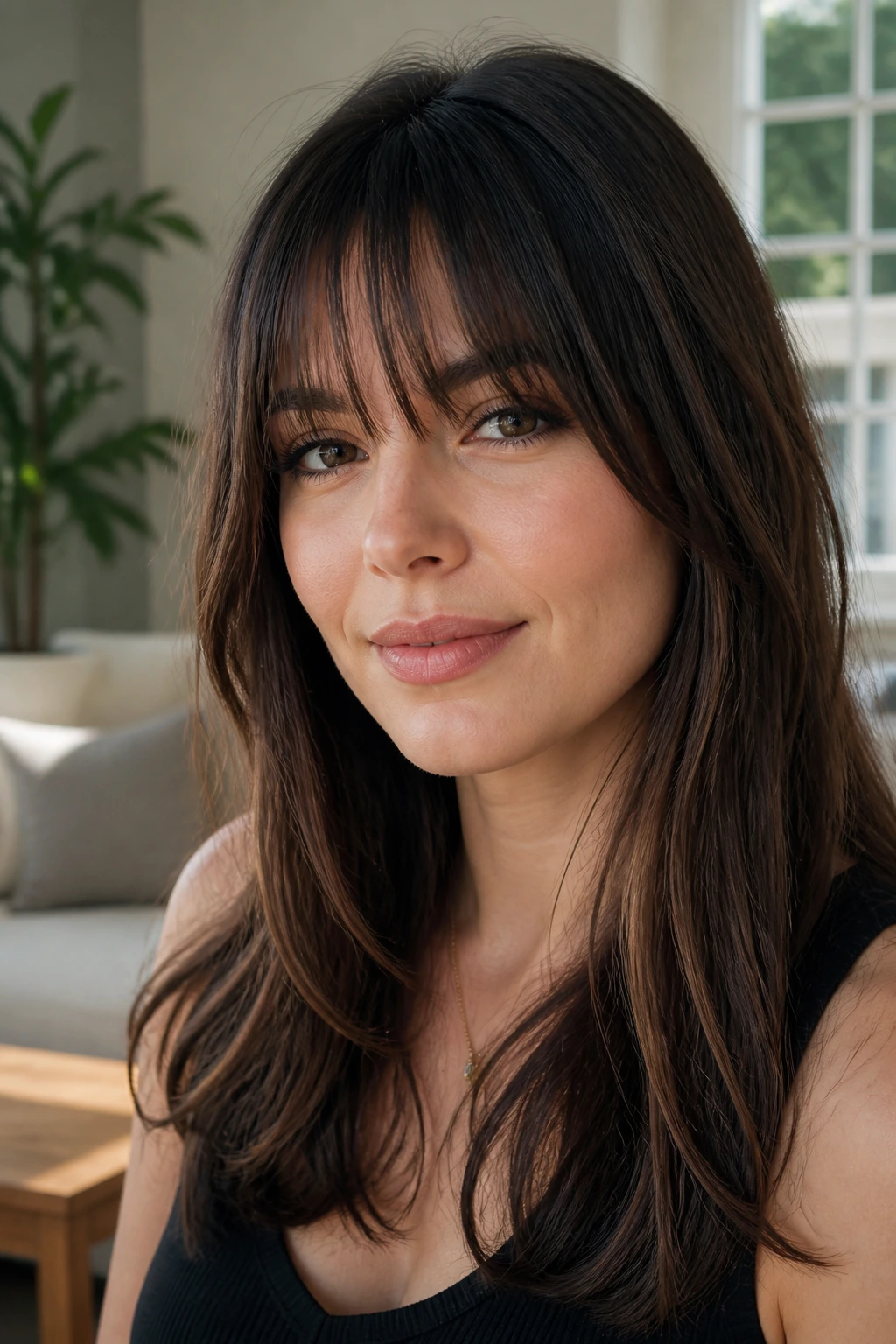
If you have a longer forehead, use it. Don’t hide it under a bang that is too short or too airy.
Long-forehead bangs usually sit lower, sometimes near the lashes, and that extra length brings the whole face into balance. On square faces, the result is calmer because the fringe trims down the vertical space without making the top of the face feel chopped off. This is the style I’d recommend if you want fullness without sharpness. It’s one of the most forgiving lengths on the list.
23. Short-Forehead Bangs

Short foreheads need a lighter hand. A heavy fringe can close the face in and make the jaw feel even stronger, which is rarely the goal.
A short-forehead version should still be straight across, but it can sit a touch higher and have more air at the root. That opens the face enough to keep everything from feeling compressed. The edges matter here too. Softer corners and a little lift at the center stop the style from crowding the brows. If you’ve got a square face and a shorter forehead, restraint wins.
24. Invisible-Layer Lob Fringe

This is for people who want the fringe to lead and the rest of the haircut to stay calm. The lob has minimal layers, so the bang becomes the focal point without a lot of competition from the lengths.
Square faces often look best with that kind of simplicity when the jaw is already strong. A straight bang gives the face an upper frame, and the invisible layers keep the rest of the cut from kicking out at odd angles. The whole thing feels neat, which is a nice word for a haircut that actually does its job.
25. Edge-Softened Straight Bangs

This version starts blunt and ends quiet. The center is clean, but the edges are softened just enough to keep the fringe from landing like a hard line across the whole face.
I like it for square faces that already have a lot of architectural lines in the bone structure. The softened edges take the pressure off the temples and keep the jaw from reading even wider. If your hair has a strong natural bend, edge-softening also helps the bangs lie flatter instead of kicking outward at the corners. That little fix saves a lot of styling frustration.
26. Bouncy Blowout Fringe
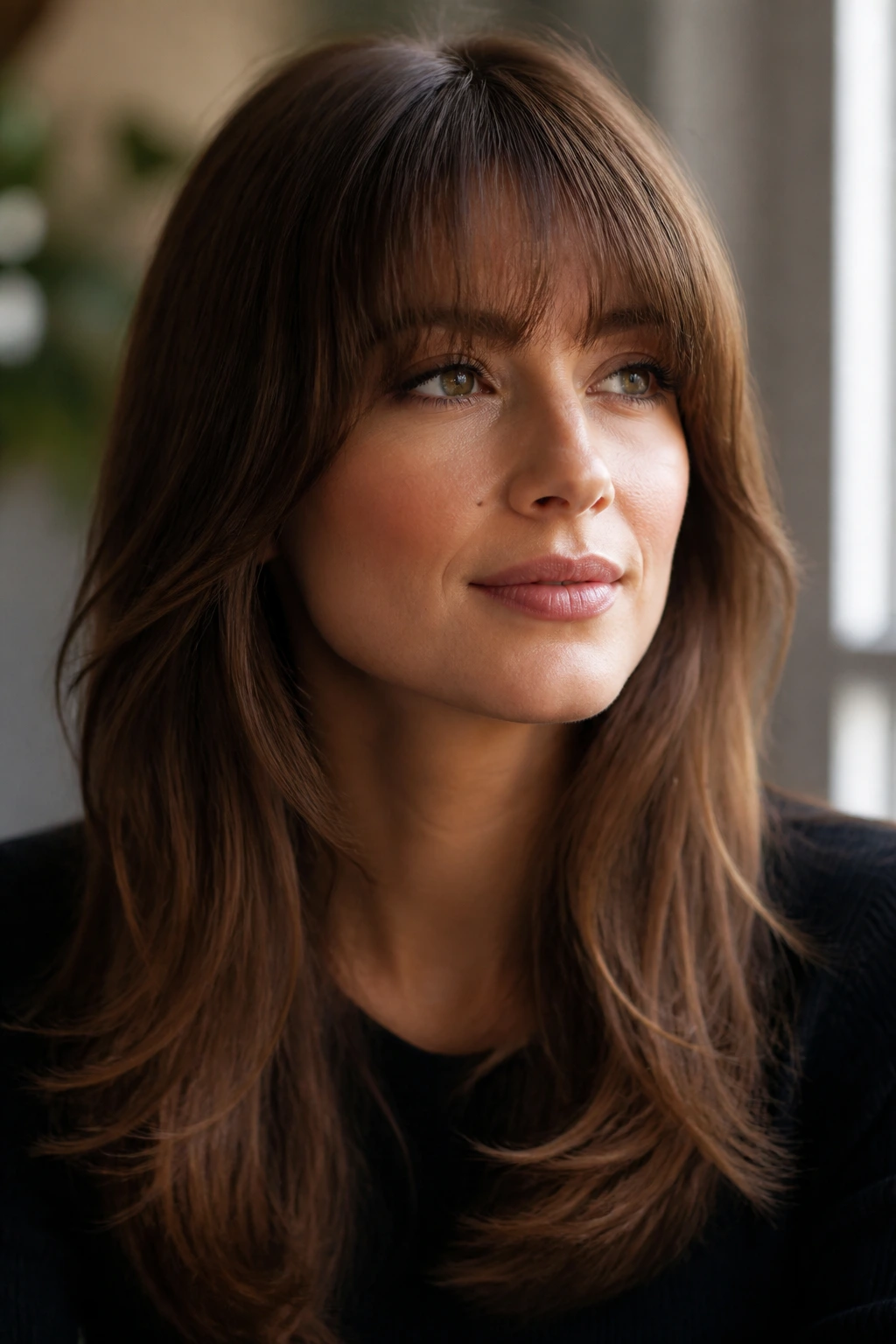
A blowout fringe is one of the prettiest ways to wear straight-across bangs, and yes, I mean pretty in the plain, useful sense. It has shape, movement, and a little air at the ends.
On a square face, that bounce keeps the bangs from turning into a block. The curve at the ends is subtle, but it matters because it keeps the line from looking too severe. A round brush, a dryer with a nozzle, and a few passes from side to side are usually enough. You want softness, not a curl. There’s a difference, and your face will know it.
27. Razor-Soft Fringe
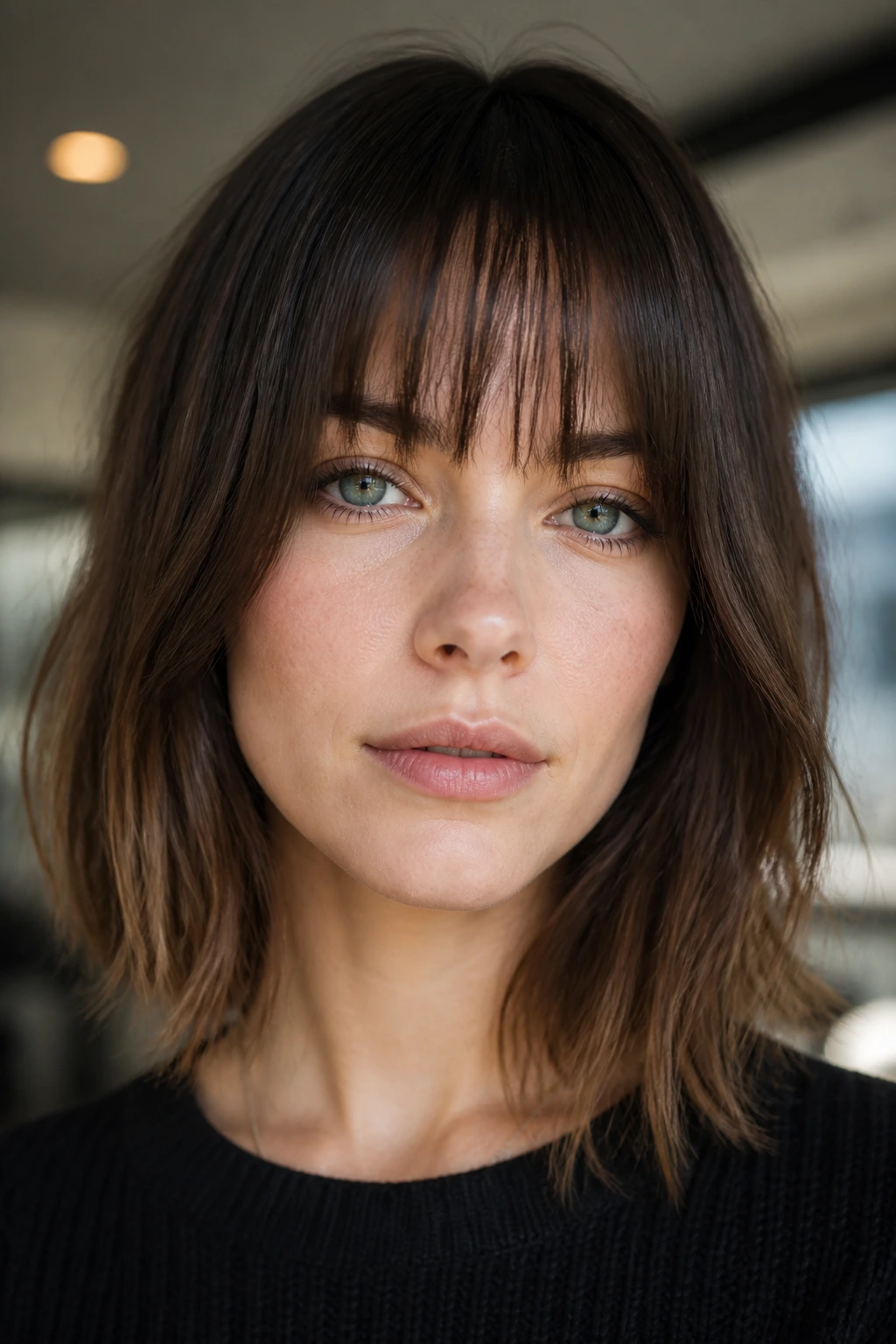
A razor-soft fringe sounds dramatic, but the goal is actually control. The razor takes weight out of the ends so the bangs sit with a light, slightly broken finish instead of a dense slab.
For square faces, that can be useful if your hair is thick but you don’t want the fringe to take over. The ends stay straight across, but they move better and don’t create such a hard visual stop. If your hair is naturally coarse or puffy, though, this version needs care. Too much razor work can make the edge look frayed instead of soft. You want cleaner than that.
28. Crown-Lift Bangs
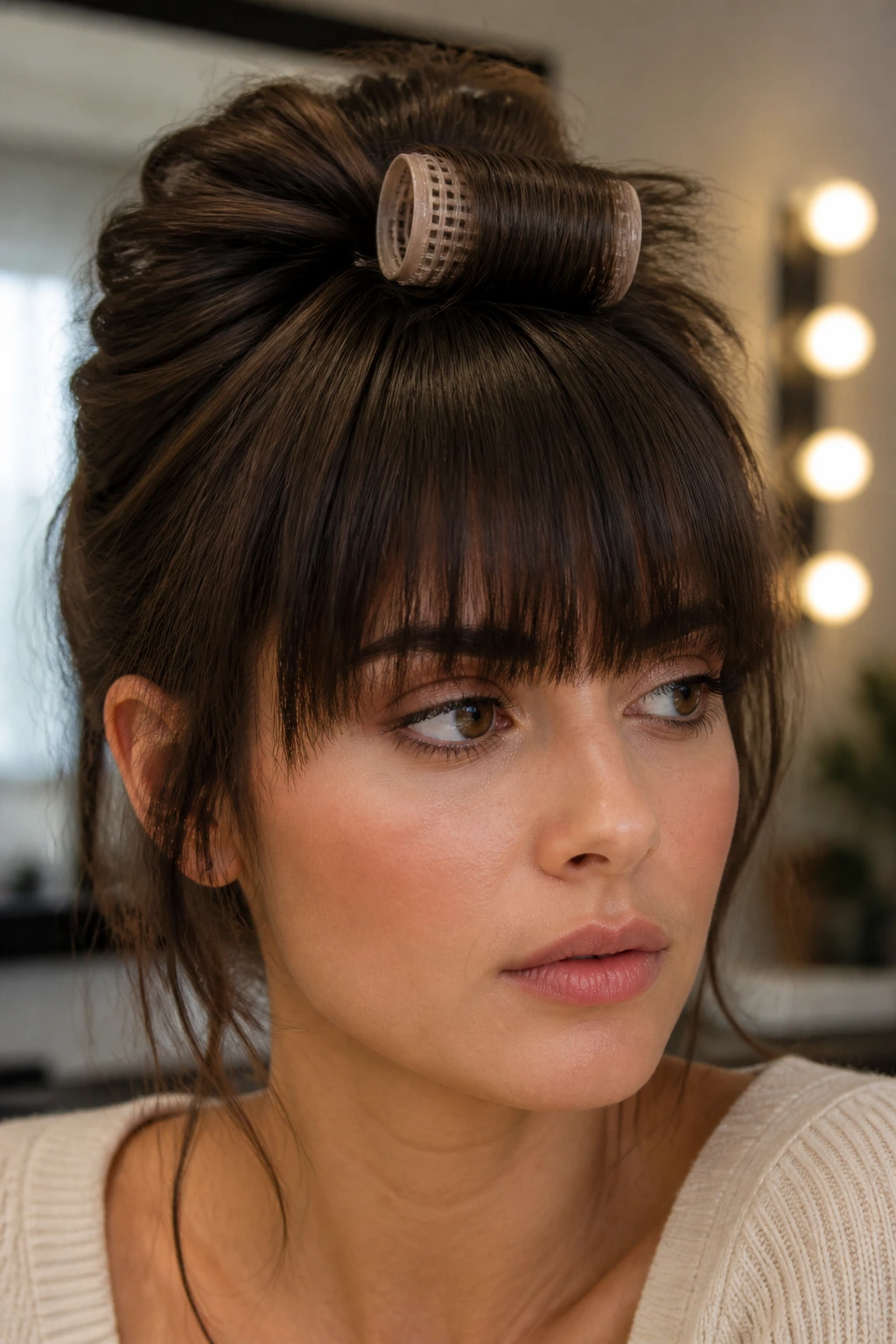
A fringe alone can’t do all the work. Sometimes the real secret is what happens above it.
Crown-lift bangs are cut to look best when the roots at the top of the head have a little volume. That extra height subtly lengthens a square face and gives the blunt line below it a nicer place to live. This style is especially good if your jaw is strong and your forehead is medium to short, because the lift keeps everything from feeling compressed. It’s not fussy. It just needs a quick blast of heat at the roots and maybe a small roller while you finish the rest of your makeup.
How Straight-Across Bangs Change a Square Face

A square face already has structure. The right fringe does not fight that structure; it edits it.
They shift the eye line upward
The first thing a good bang does is give the eyes a frame. That matters because the eye line becomes the place people notice first, instead of the jaw. A blunt or straight fringe creates a hard horizontal line up top, and that line can calm all the other angles below it.
They soften the jaw by contrast, not by hiding it
People sometimes think bangs have to cover the face to help it. Not true. On a square face, a straight fringe works because it gives the lower half something to play against. The jaw still exists. It just stops being the loudest feature.
They can make the haircut feel finished faster
A square face with a center part and no fringe can look very clean, but sometimes it also looks a little too open. Straight-across bangs fix that. They create a clear top edge, which gives bobs, lobs, long layers, and shags a finished look without making the rest of the haircut heavy.
How to Ask for the Cut Without Getting the Wrong Bang
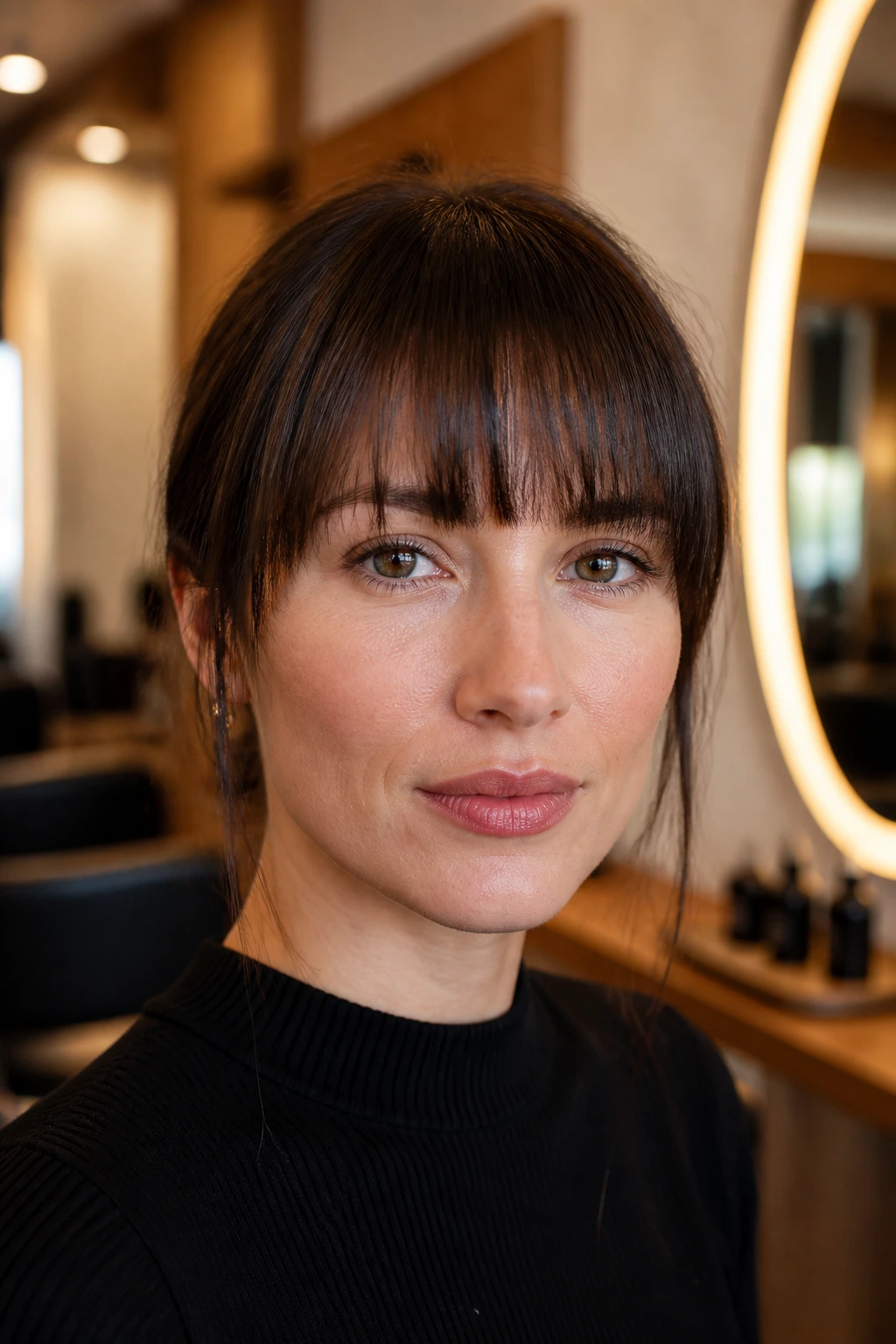
Bring reference photos, yes, but bring context too. A photo of the fringe alone is not enough. Your stylist needs to see where your brow line sits, how much forehead you show, and whether your hair fights at the hairline.
Say things like “I want a straight line, but I need the corners softened” or “keep it dense enough that it won’t split open when I move.” Those are better than saying you want blunt bangs and hoping everyone means the same thing. If you have a cowlick, say so early. If your hair dries puffy at the sides, say that too. Those details change the cut.
Come with dry hair if your salon works that way, or ask whether they prefer to cut bangs damp. Some stylists like the control of dry cutting for fringes because it shows the real fall of the hair. Either way, don’t let the bang be cut in a hurry. Five rushed minutes at the end of a haircut is how people end up with a fringe they spend six weeks hiding under a clip.
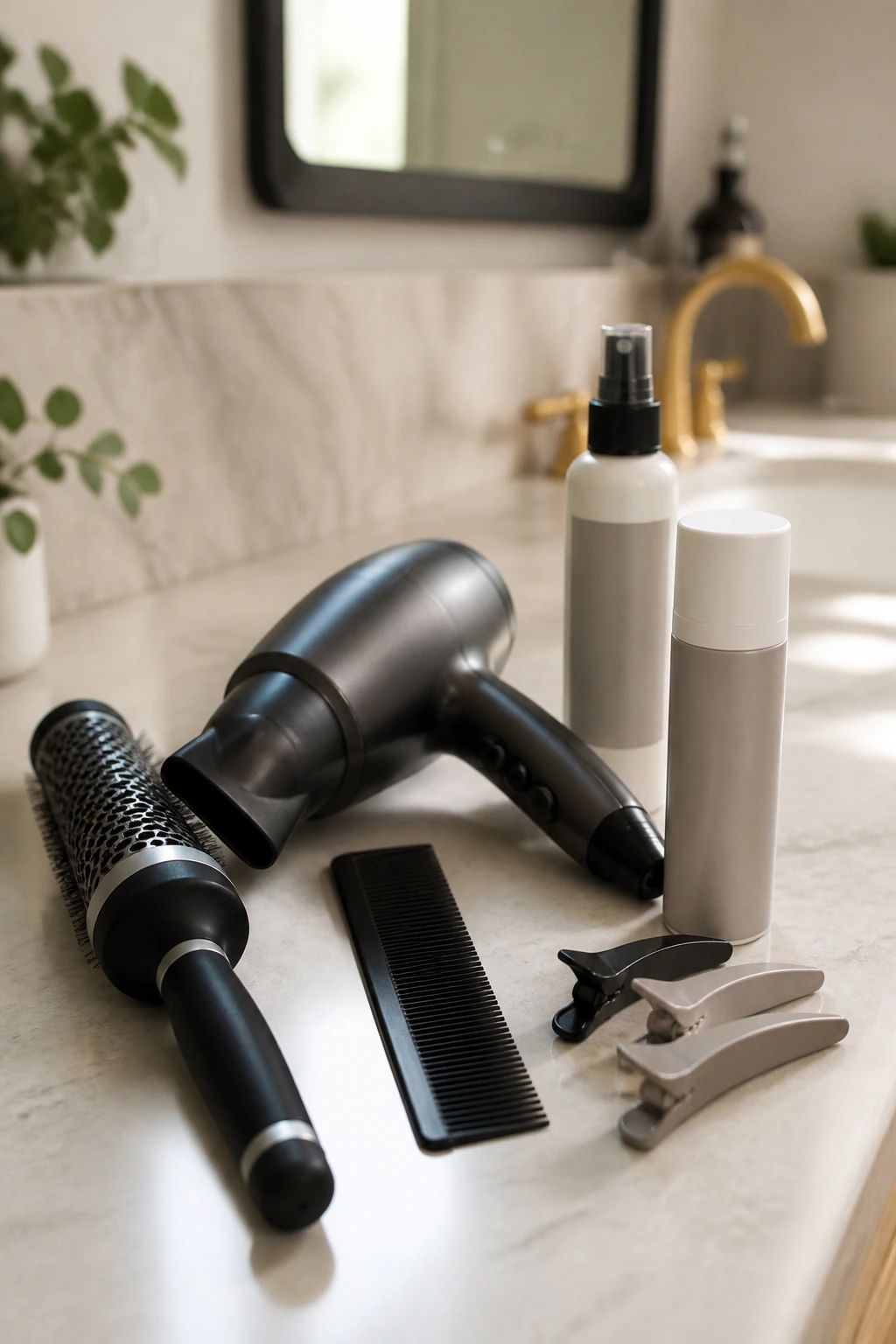
Essential Tools for Styling Straight Bangs
-
Small round brush: A 1-inch or 1.25-inch brush helps shape the fringe without flipping it too far under.
-
Blow dryer with a nozzle: The nozzle keeps the airflow focused so the bangs dry flat instead of puffing around the forehead.
-
Fine-tooth comb: Useful for parting, cleaning up the section, and resetting the line after sweating or sleeping.
-
Heat protectant spray: Bangs sit close to the face and get heat-styled often, so this is not optional if you use a flat iron or round brush.
-
Light dry shampoo: Great for day-two fringe oil, which shows up faster than people expect.
-
Small clips: Handy for training the fringe while it cools after drying or for pinning side pieces away during makeup.
Smart Styling and Product Tips

Heat control: Dry the bang first, before the rest of your hair. If the fringe dries crooked, you’ll spend the next ten minutes trying to bully it into place. Use medium heat and aim the nozzle downward so the cuticle lies flatter.
Root lift: A tiny lift at the roots can keep straight-across bangs from sticking to the forehead. You do not need volume everywhere. You need the first quarter inch at the scalp to be just loose enough that the line falls cleanly.
Humidity backup: Keep a mini flat iron or a travel-size anti-frizz cream around if your hair swells in damp weather. A square face with frizzy bangs can look wider through the brow line, and that’s easy to prevent with a quick pass of heat.
Overnight rescue: If your fringe bends while you sleep, clip it loosely to the side or wrap the bang section in a soft Velcro roller for a few minutes in the morning. Ten seconds with a comb is usually not enough. Give it heat or structure.
Finish with restraint: Bangs get greasy fast. Use less product than you think. A pea-sized amount is often plenty for the whole fringe. More than that and the front of your hair looks dirty before lunch.
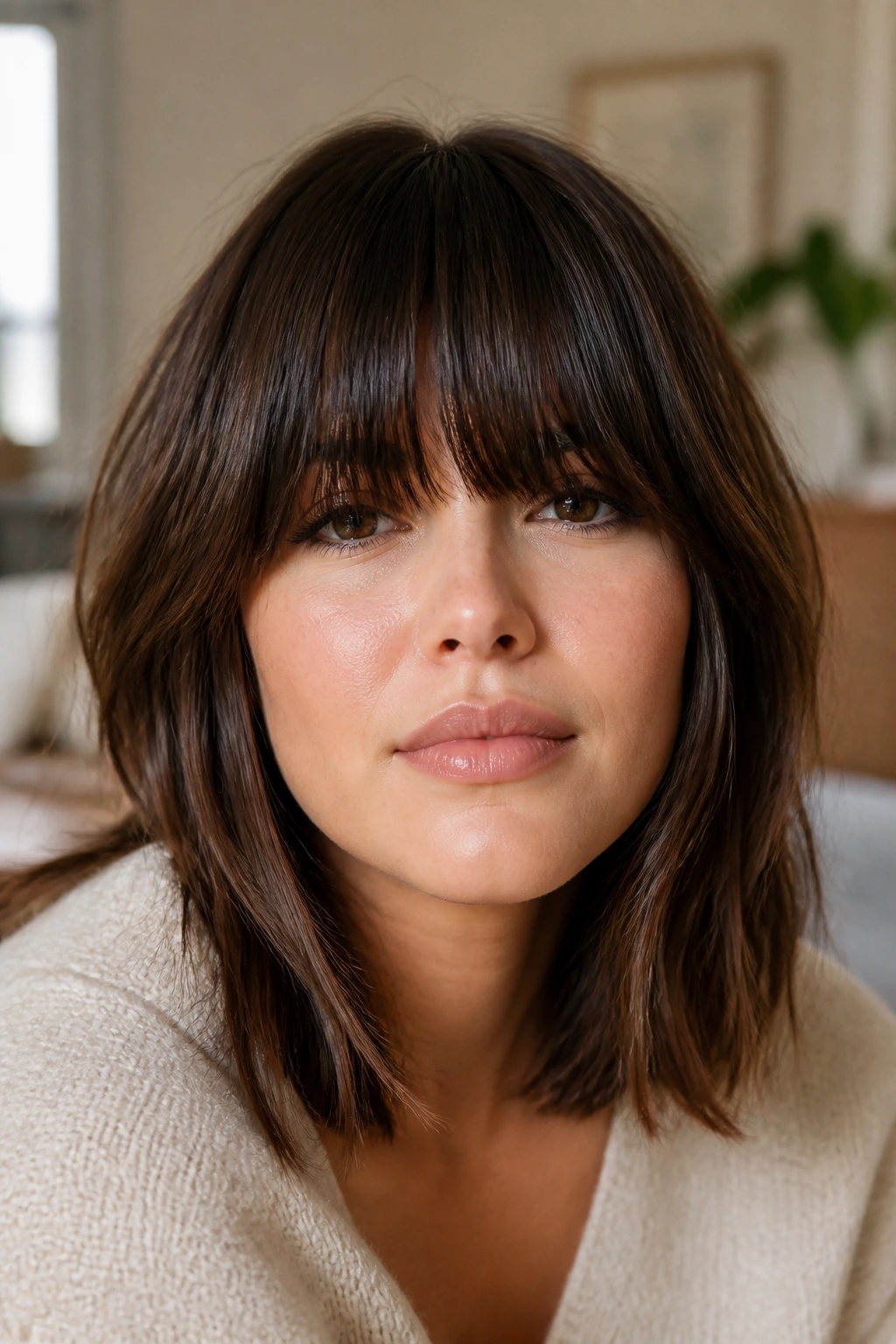
Common Mistakes That Make Square Faces Look Boxier
-
Cutting the fringe too wide: When the bang stretches all the way across the temples, it can echo the width of a square jaw and make the face feel broader. The fix is a slightly narrower section with softened outer corners.
-
Going too short too fast: Micro length can be chic, but on the wrong square face it can expose too much forehead and make the jaw feel louder. If you’re unsure, start longer. You can shorten later.
-
Over-thinning thick hair: A fringe that has been thinned to death separates into see-through bits. On a square face, that often leaves the temple area looking bare and awkward. Ask for weight removal only where the hair truly needs it.
-
Letting the corners kick out: Bangs that flare away from the face at the sides create a shelf shape. That shelf is the thing that can make square faces look harder. Round-brush the corners inward or ask your stylist to bevel them.
-
Ignoring the rest of the haircut: A straight fringe with a blunt jaw-length cut can be too much geometry in one place. If the bangs are heavy, give the length below some movement or softness.
Variations and Alternatives to Try

The Soft Bottleneck Swap: If full straight-across bangs feel too strict, try a bottleneck shape that still lands blunt in the center but opens a little at the temples. It keeps the square-face balancing trick without committing to a hard line from side to side.
The Clip-In Test Drive: Clip-in fringes are a smart way to check where a bang should hit before you cut your own hair. Wear them for a few days, note where they bunch up, and see whether you need more density or more length.
The Grown-Out Center Part: If you already have straight bangs that are getting long, train them into a center part for a few days at a time. This gives a square face a softer frame and tells you whether you want to keep the fringe or move on.
The Side-Temple Blend: This is for people who like the blunt middle but need the outer edges to disappear into the haircut. It’s a gentler version of straight-across bangs and one I’d recommend if your jaw is very strong and you want less width at the sides.
Maintenance, Trims, and Grow-Out
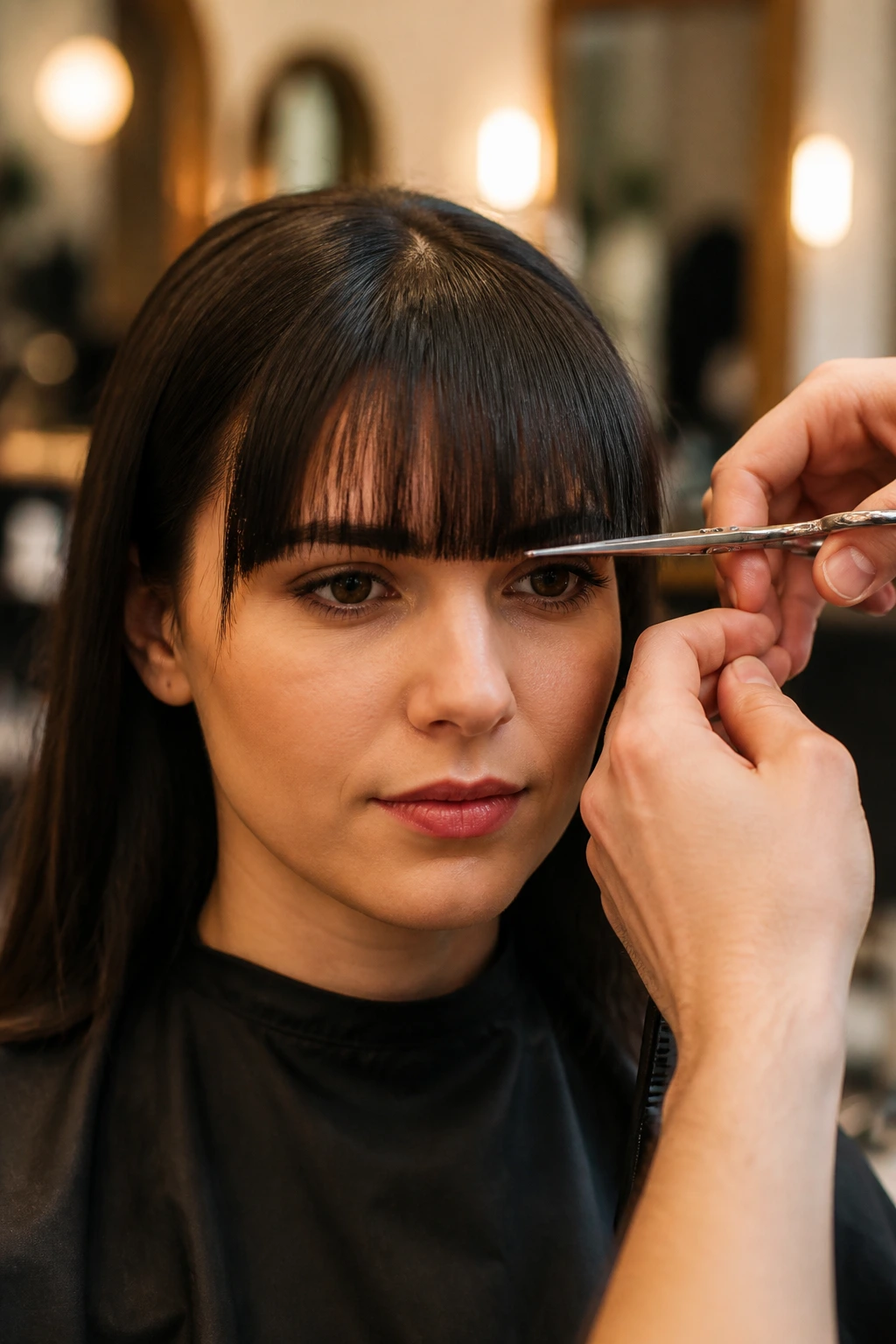
Straight-across bangs ask for more upkeep than people admit in salon chairs. That’s not a flaw. It’s just the tradeoff for having a clear line right in the middle of your face.
Trim the fringe every 3 to 5 weeks if you want it to keep the original shape. If you prefer a slightly longer, easier version, you can stretch that a little. Most bangs look best washed or refreshed every 1 to 2 days, because oil at the forehead shows up fast and makes the line separate. If you sweat a lot, keep a small comb and a touch of dry shampoo in your bag.
Grow-out is smoother when you plan it. Ask for the corners to be cut soft from the start, and you’ll have an easier path into face-framing pieces later. If the bang starts getting in your eyes, don’t just shove it under a barrette every morning. That’s how the root pattern gets weird. Blow it forward, let it cool, then decide whether it needs a trim.
Frequently Asked Questions About Straight Across Bangs for Square Faces
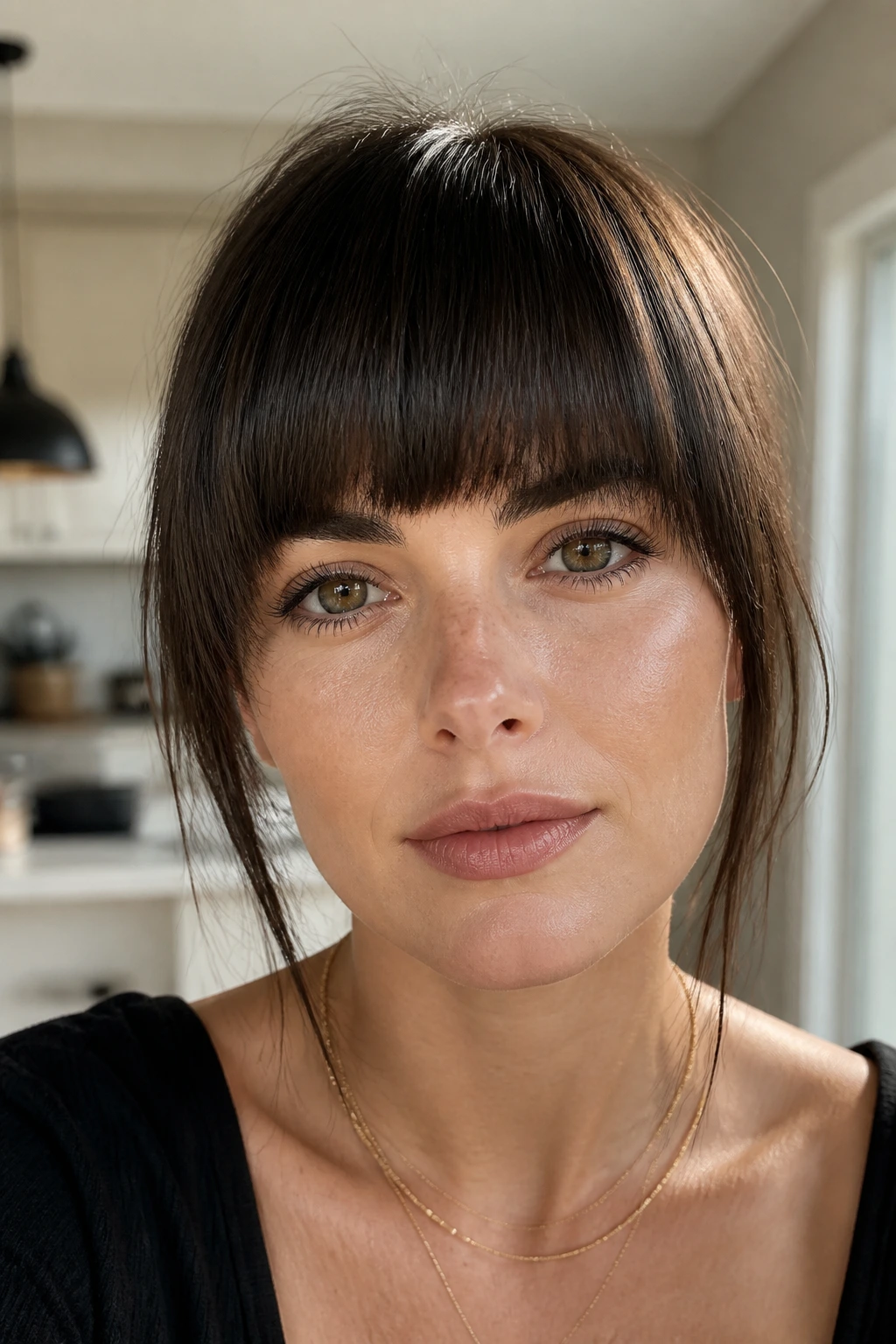
Will straight-across bangs make a square face look wider?
They can, if they’re cut too wide or too blunt at the outer edges. The fix is a fringe that stays dense in the center but softens slightly at the corners, so the line frames the face instead of matching its width.
What bang length is most flattering on a square face?
The safest starting points are brow-skimming or lash-grazing lengths. Those lengths keep the forehead framed without cutting the face in half at a point that makes the jaw feel heavier.
Can I wear micro bangs with a square face?
Yes, but the haircut around them matters more. Micro bangs look best when the rest of the style has softness, movement, or length, so the face does not end up feeling too severe.
Do straight bangs work on thick hair?
They do, but the density has to be controlled. Thick hair can create a heavy shelf if the fringe is left too bulky, so the stylist should remove weight carefully while keeping the line solid.
What if my hair has a cowlick at the front?
Tell your stylist before the cut. A strong cowlick may need a slightly longer bang, a deeper section, or a blow-dry routine that trains the hair down while it cools.
Can I wear straight bangs with glasses?
Yes, and the key is placement. The fringe should either clear the frames or sit just above them so the bangs and glasses don’t compete for the same visual space.
Do these bangs need a blowout every day?
Not always, but they do need some kind of reset. Even a quick round-brush dry or a few seconds with a flat iron can keep the line from turning bent and uneven.
What should I do if the bangs separate in the middle?
Use dry shampoo at the roots, then dry the fringe side to side with a nozzle. If the split keeps coming back, the bang may need more density or a slightly different sectioning pattern.
A Fringe That Fits the Jawline
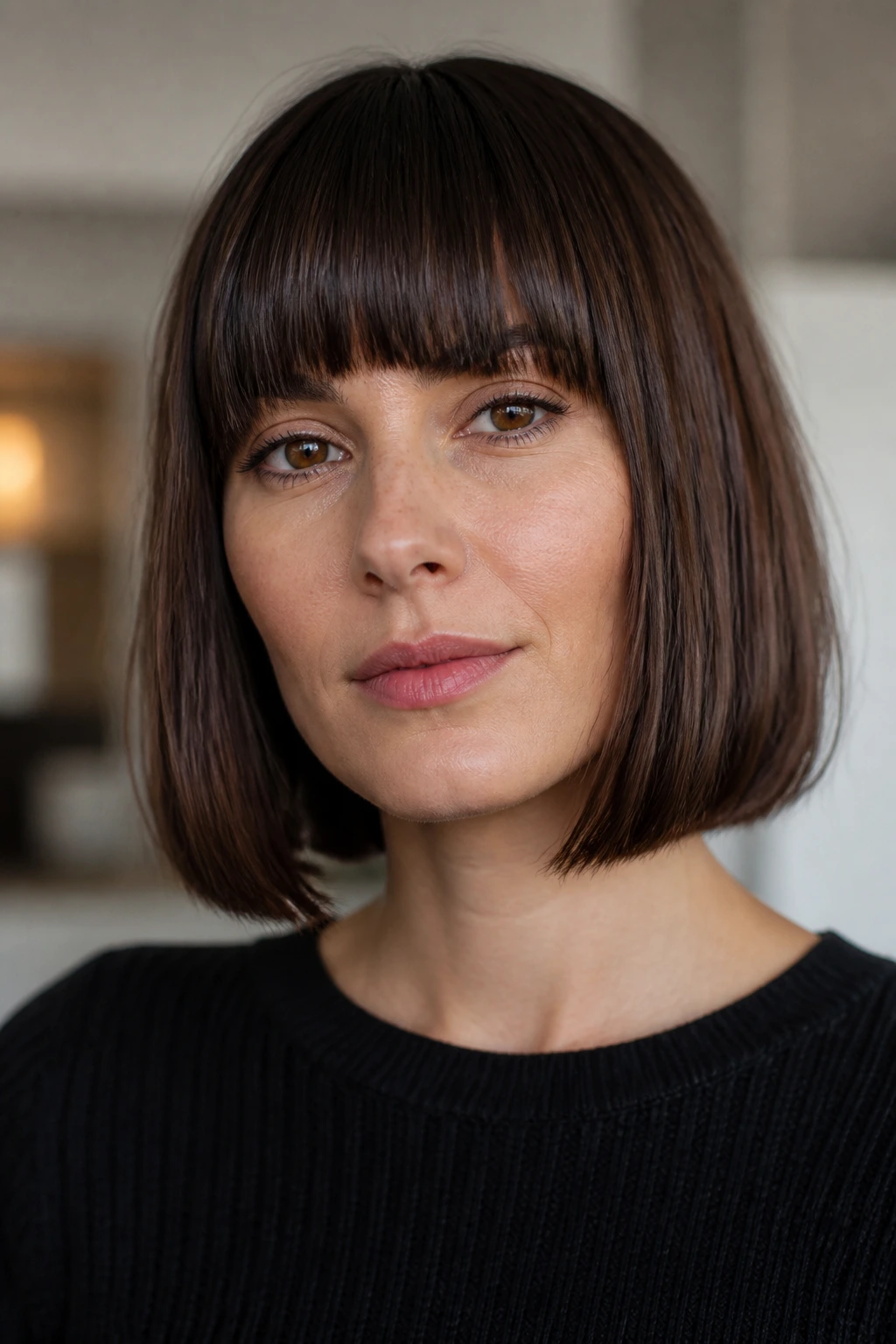
Square faces do not need to be hidden behind hair. They need a fringe with a point of view. Straight-across bangs can do that job better than a lot of softer, safer options because they give the face a clear frame without pretending the jaw isn’t there.
The sweet spot is almost always in the details: a softer corner, a better length, a little more density, a little less width. Get those right, and the fringe stops being a haircut afterthought. It becomes the part that makes the whole shape feel intentional.
Start a touch longer than you think you need, and let the shape settle before you decide whether to go shorter. That’s the move that saves the most regret.
