



A short cut gets the credit, but the fringe does the talking.
That’s why short alternative haircuts with bangs hit so hard when they’re done well. The length sits close to the face, the neckline gets cleaned up, and the bangs decide whether the whole thing feels soft, sharp, messy, moody, or a little feral in the best way. If the front falls flat, the cut loses its point. If the fringe lands in the right place — at the brows, the lashes, the cheekbones, or just above — the whole shape comes alive.
The nice thing about this family of cuts is that it doesn’t rely on one mood. A shaggy bixie with micro fringe can look art-school and restless. A razor French bob with baby bangs feels cleaner, almost severe. A curly pixie with halo bangs leans playful and round. Same basic idea, wildly different effect. That range is why these cuts keep showing up in real salons: they work on straight hair, wavy hair, curly hair, thick hair, fine hair, and everything that sits awkwardly between tidy and unruly.
Some fringe styles ask for maintenance. Some buy you a little breathing room. Some only look effortless because somebody put a razor to the ends and took out weight in the right places. All of that matters. And once you start looking closely, you see just how much personality a short cut can carry when the bangs are doing the heavy lifting.
Why These Cuts Keep Working
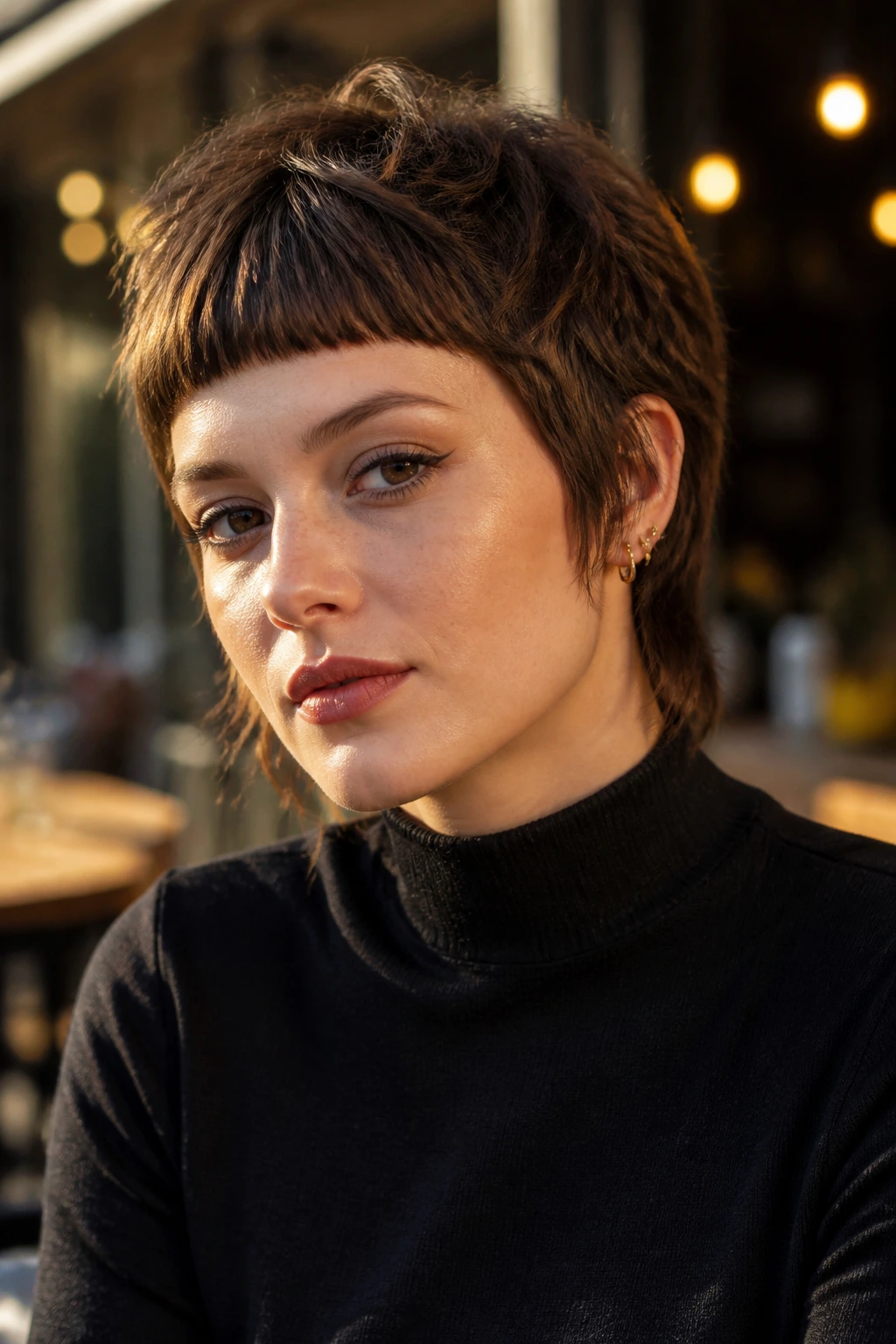
Texture changes everything.
A short haircut without texture can slide straight into mushroom territory. Add choppy ends, internal layers, or a feathered fringe, and the same length suddenly has movement and edge.
The fringe controls the mood.
Micro bangs, curtain bangs, side-swept bangs, and blunt brow-skimmers all tell a different story before the rest of the cut even registers. That front line is the first thing people see.
Short length shows the shape.
You can see the jaw, the neck, the ears, and the side profile all at once, which means the haircut has to be deliberate. There’s nowhere to hide a sloppy outline.
They adapt to hair type better than people expect.
Fine hair likes the lift of a pixie bob or a piecey fringe. Thick hair usually needs weight removal and sharper internal layering so the cut doesn’t puff out like a triangle.
They grow out in useful stages.
A lot of these styles can shift from bold to softer without a full reset. A micro fringe turns into a shorter blunt fringe, then into a choppy brow-skimmer, then into a curtain bang if you let it.
They make styling feel intentional, not fussy.
The cut itself does some of the work. A little paste, a round brush, or a diffuse-and-scrunch routine is often enough if the shape underneath is right.
1. Shaggy Bixie With Micro Fringe
A bixie sits in that pleasing middle ground between bob and pixie, and the shag treatment gives it some grit. The micro fringe keeps the front tight and graphic, which means the cut reads a little rebellious even when the rest of the shape stays soft and airy.
What Makes It Click
The layered crown stops the style from collapsing, while the tiny fringe keeps the eyes framed instead of hidden. It works especially well on straight to wavy hair, where the texture can break up the edges without stealing the shape. If your hair tends to swell at the sides, ask for the bulk to come out under the top layer rather than just hacking at the surface.
- Best for: fine to medium hair that needs lift.
- Styling move: rough-dry with your fingers, then pinch the fringe with a dab of matte paste.
- Maintenance: fringe trims every 3 to 4 weeks.
One-line tip: Keep the nape tighter than you think, or the whole thing starts looking like an unfinished bob.
2. Choppy Pixie With Side-Swept Bangs
This is the cut for someone who wants edge without the mini-fringe commitment. The side-swept bangs soften the forehead, drift across the cheekbone, and make a pixie feel a little less severe.
The choppy layers matter here. They stop the top from lying flat, which is the quickest way a pixie can turn lifeless. If you have a strong cowlick at the front, side-swept bangs usually behave better than a straight-across fringe because they can be trained into the grain instead of fighting it.
A mousse at the roots and a quick blast with a dryer is enough for most hair types. Not glamorous. Effective.
3. Wolf Cut Bob With Curtain Bangs
The wolf cut bob has that slightly untamed shape people keep chasing: fuller at the crown, lighter at the ends, and a little shaggy around the face. Curtain bangs suit it because they echo the rest of the cut instead of fighting the texture.
The trick is in the cheekbones. Let the fringe open at the center and feather back toward the temples so the front doesn’t feel heavy. On thicker hair, ask for internal thinning, not just length removal. Otherwise the bob section balloons while the bangs lie flat, and that’s a strange mismatch nobody needs.
How to wear it
Best air-dried with a touch of curl cream if your hair bends naturally. If it’s straighter, use a round brush only on the bang area and let the rest stay a little undone.
4. Razored French Bob With Baby Bangs
Sharp. Clean. A little theatrical. A French bob sits near the jaw, and the baby bangs push it into artier territory fast. This is one of those cuts that looks expensive because the line is so clear.
The razor finish helps the ends move instead of sitting in a block. Baby bangs, though, are unforgiving. They sit high on the forehead and show every cowlick, so this cut works best when the hairline is cooperative and the stylist knows exactly where the fringe should stop. If the bangs land too short, they can pull the face upward in a weird way. Just above the brows is often the sweet spot.
Pair it with a center part or tucked-behind-ear styling if you want to keep the look crisp.
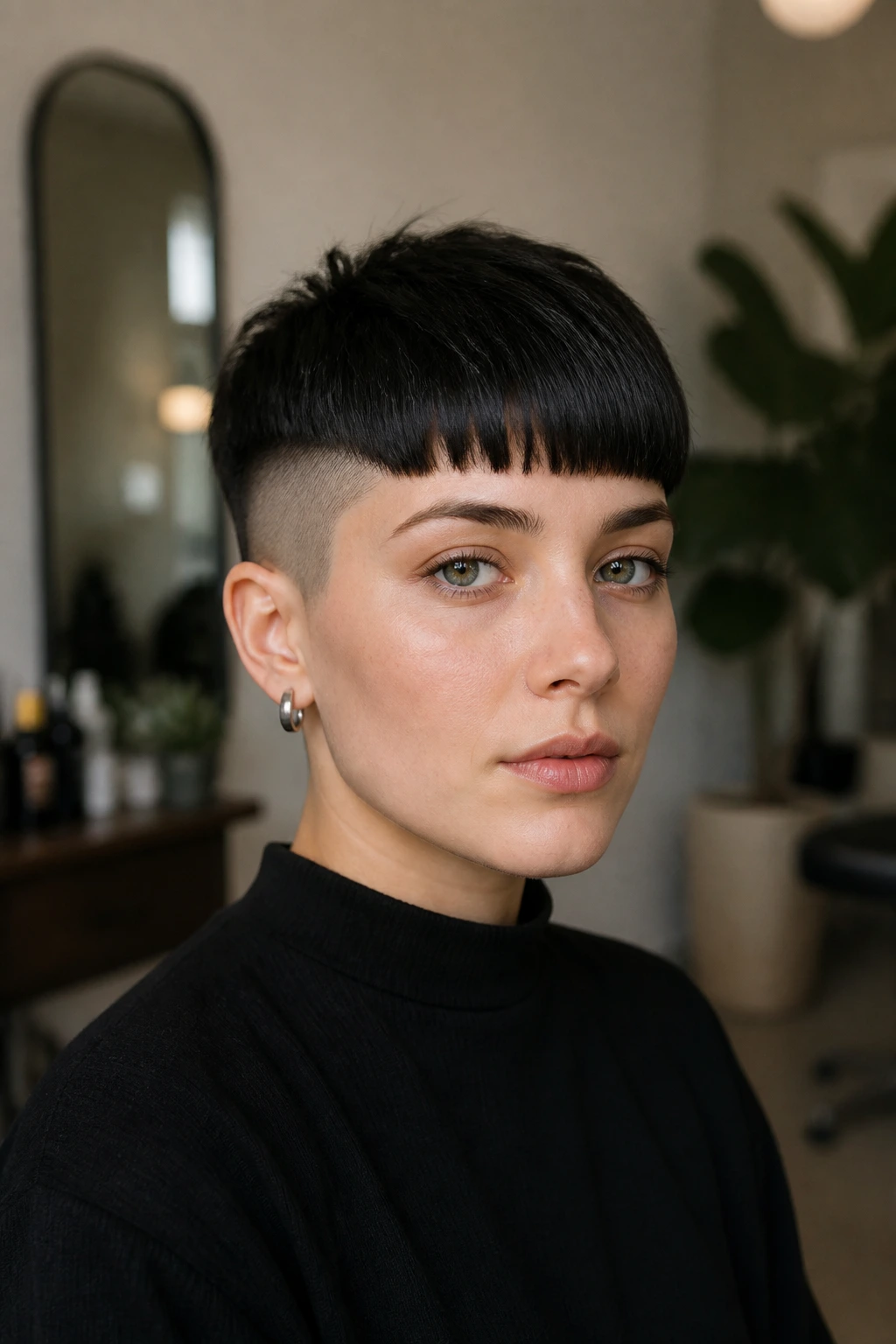
5. Undercut Crop With Blunt Fringe
This one has attitude baked in. The undercut removes bulk at the sides or nape, while the blunt fringe sits heavy and straight across the forehead. The contrast is the point.
It’s especially useful for dense hair that refuses to lie down. Without the undercut, the top can mushroom. With it, the shape stays compact and the fringe remains the visual anchor. Straight hair makes the line look very clear, but wavy hair can still pull it off if the fringe is cut long enough to sit properly after drying.
A flat iron passes over the bangs only — not the whole head — usually keeps the front sharp without stripping the rest of the texture.
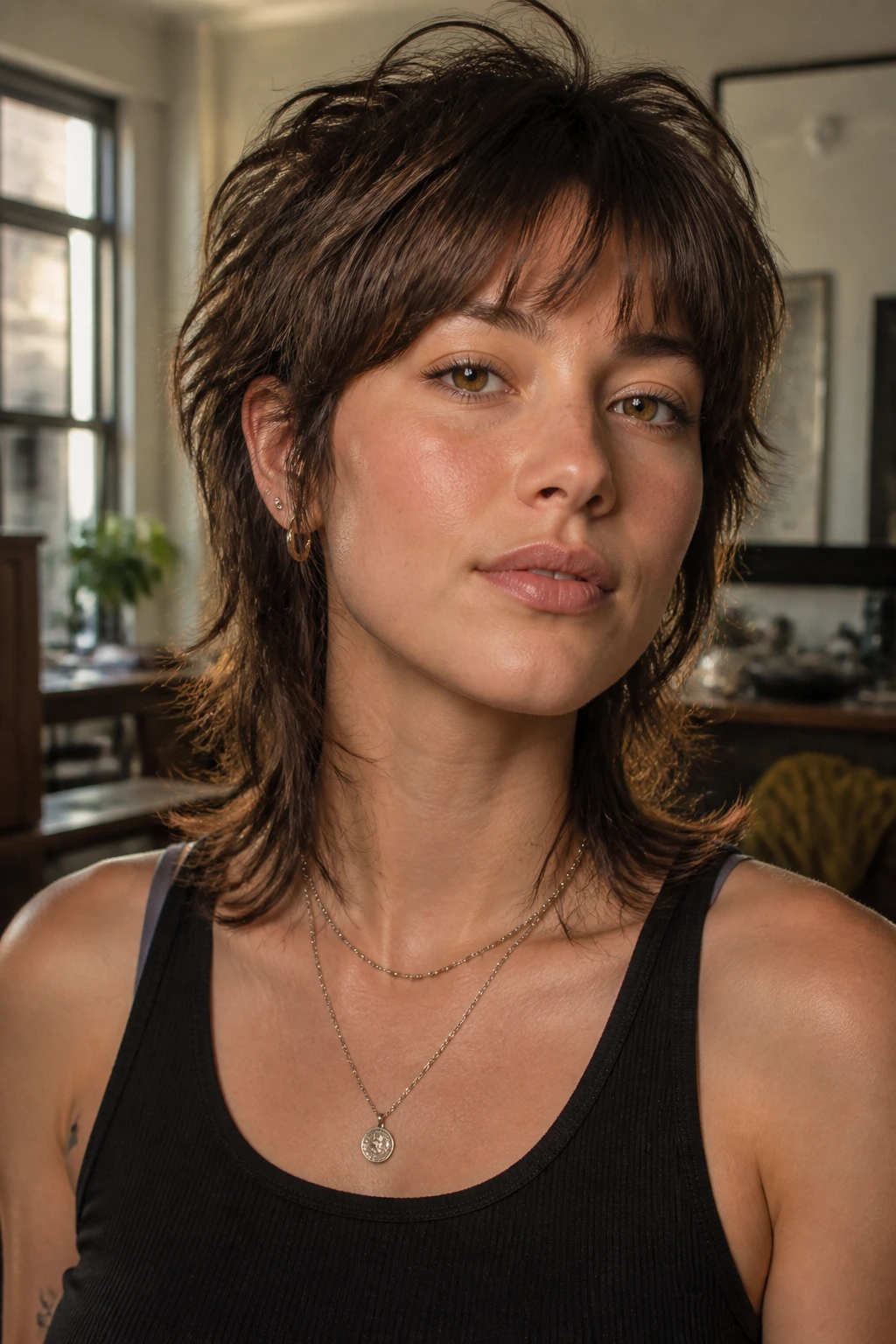
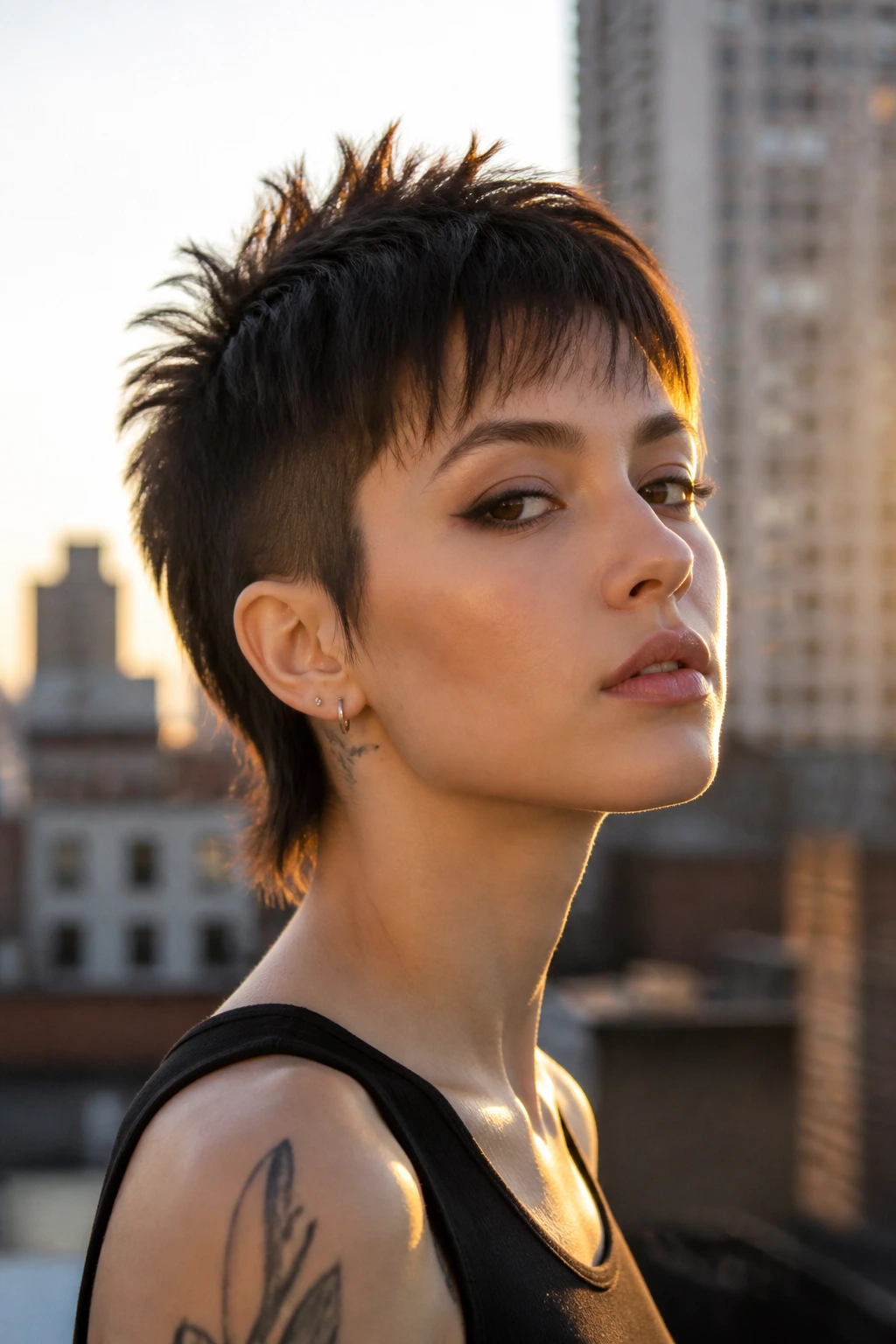
6. Textured Mullet With Feathered Bangs
The modern mullet lives or dies by softness at the front. Feathered bangs keep this cut from feeling heavy or costume-like, and the longer nape gives the silhouette its obvious alternative streak.
The crown should be lifted, not puffy. That’s a big difference. The best versions have a controlled top, airy layers through the sides, and a tail that tapers at the neck instead of hanging in a blunt line. Wavy and curly hair both work well here because the shape likes a bit of natural chaos.
Best for: people who don’t want a neat outline.
Styling note: diffuser first, fingers second, comb last — if at all.
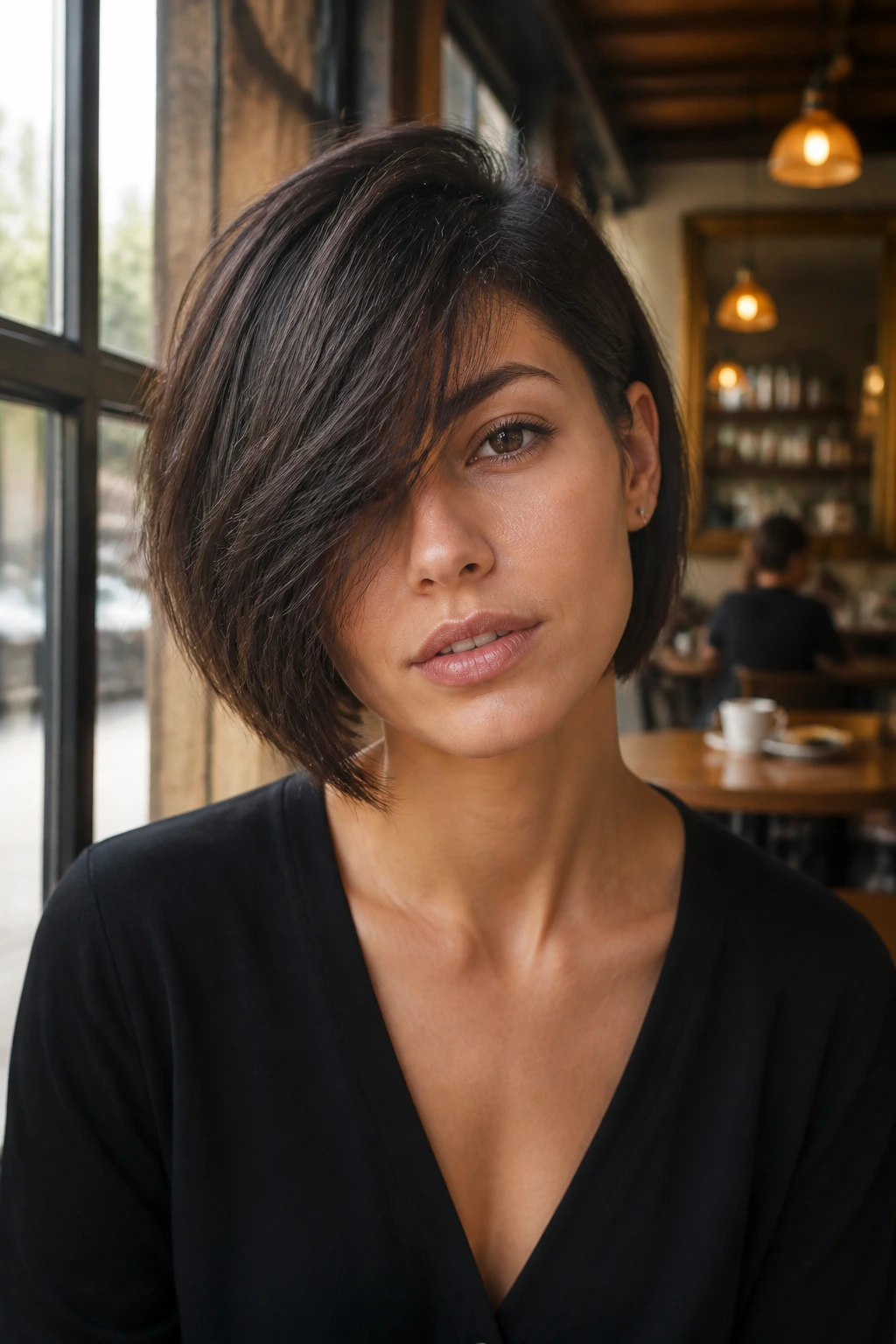
7. Asymmetrical Bob With Long Fringe
A clean asymmetrical bob becomes much more interesting when the fringe follows the imbalance. One side sits longer, the front drapes across one eye or cheek, and the whole shape feels deliberate without trying too hard.
This is a strong choice for fine hair because the asymmetry creates movement without needing heavy layers everywhere. It also flatters people who like to tuck one side behind the ear. The key is not to let the longer fringe get stringy. It should still have body, even when it sweeps.
If your hair is stick-straight, a bevel at the ends helps the front curve instead of hanging like a ruler.
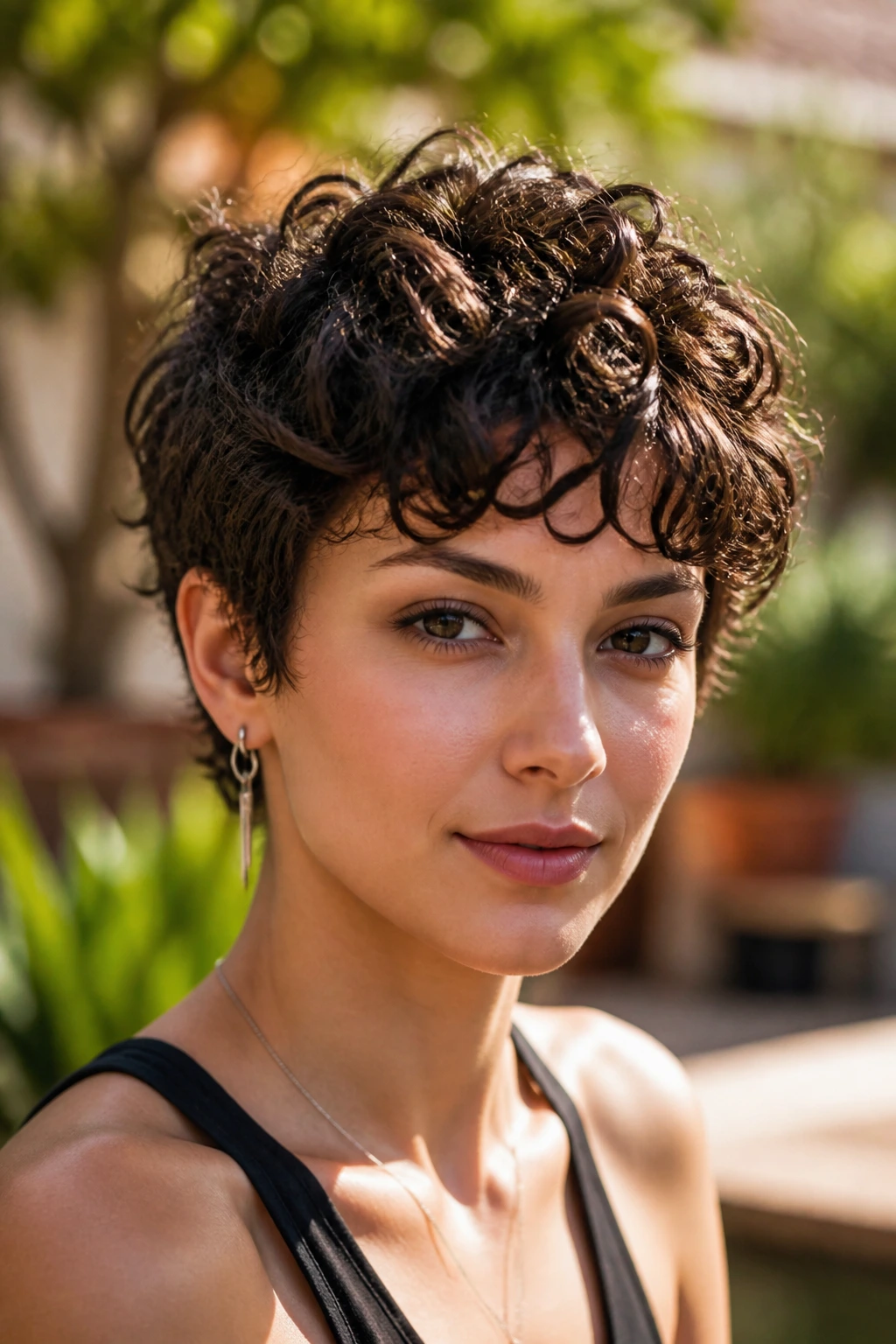
8. Curly Pixie With Curly Bangs
Curly bangs only work when they’re cut with the curl pattern in mind. Otherwise they bounce up too far or collapse into random little spirals around the forehead. A curly pixie accepts that texture and builds the shape around it.
The fringe usually sits a little longer than people expect so it can shrink into place. Dry cutting is often the smarter move here, because curls lie to you when they’re wet. A good stylist will cut the bangs to match the curl’s spring, not a straight-line idea of where they should land.
A little leave-in and a diffuse-and-go routine is enough. Keep the product light. Heavy creams make the front look greasy before the rest of the cut has even settled.
9. Soft Mohawk With Wispy Bangs
A soft mohawk sounds dramatic, but the wispy bangs take the edge off fast. The sides stay shorter, the center stays longer, and the fringe lands lightly instead of making a wall across the forehead.
This cut depends on height through the middle. If the top lies flat, you lose the point of the shape. If it lifts too much, it starts looking costume-y. The sweet spot is a narrow ridge with texture that bends, not spikes. Think movement rather than armor.
It suits people who want a bit of punk energy without shaving the sides clean. A bit of root spray and finger-drying usually gets you there.
10. Edgy Bowl Cut With Arched Bangs
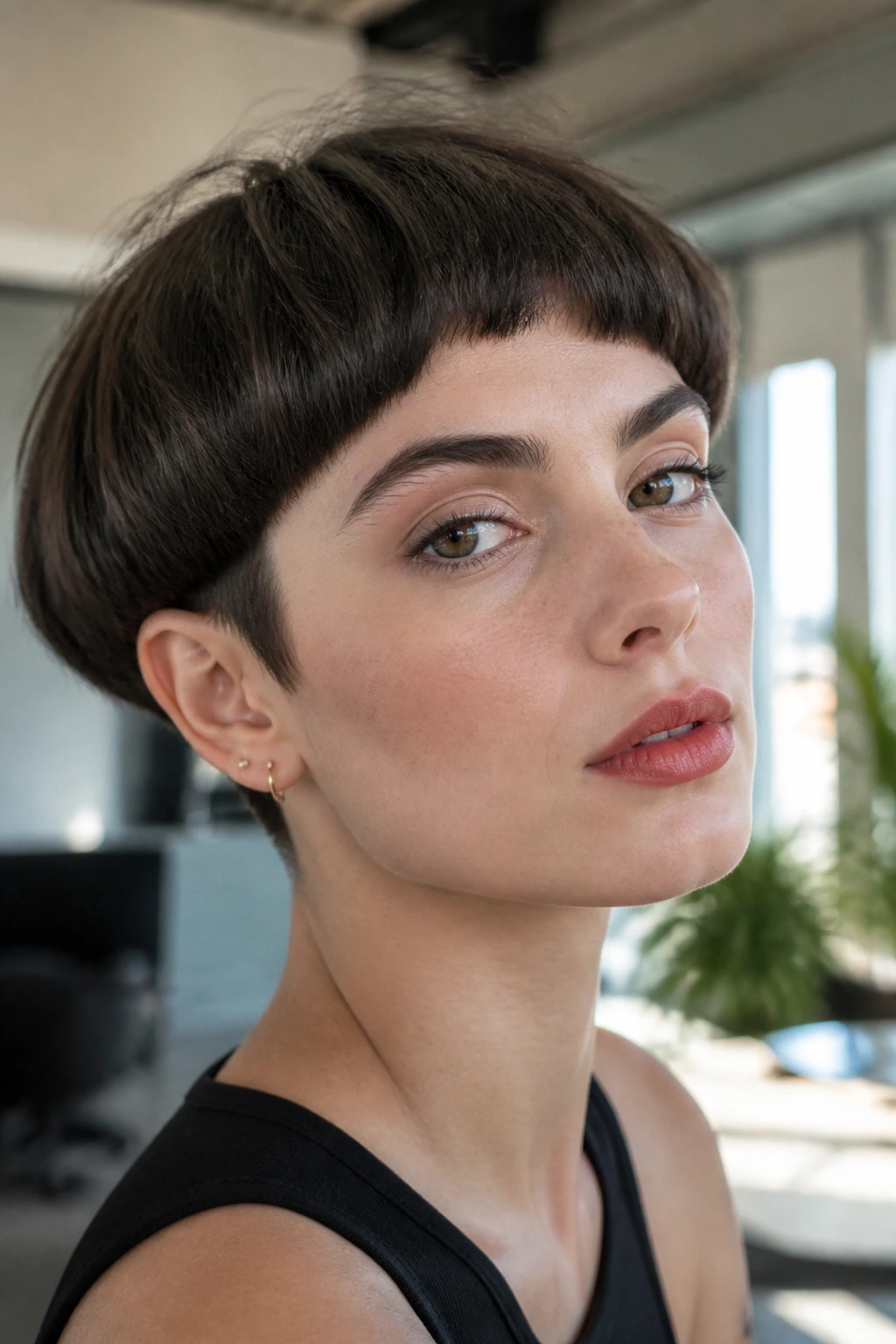
A bowl cut can be brutal or brilliant. The arched fringe is what saves it from looking too flat. It breaks the line just enough to soften the face while keeping that very clear outline around the head.
This cut works best when the shape is precise. The curve around the sides should follow the head, not sit off it. Straight hair makes the geometry obvious, but thick hair can carry the shape if the bulk is controlled underneath. The bang line should rise slightly toward the temples, which stops the front from feeling like a shelf.
It’s a bold choice. No pretending otherwise.
11. Layered Crop With Bottleneck Bangs
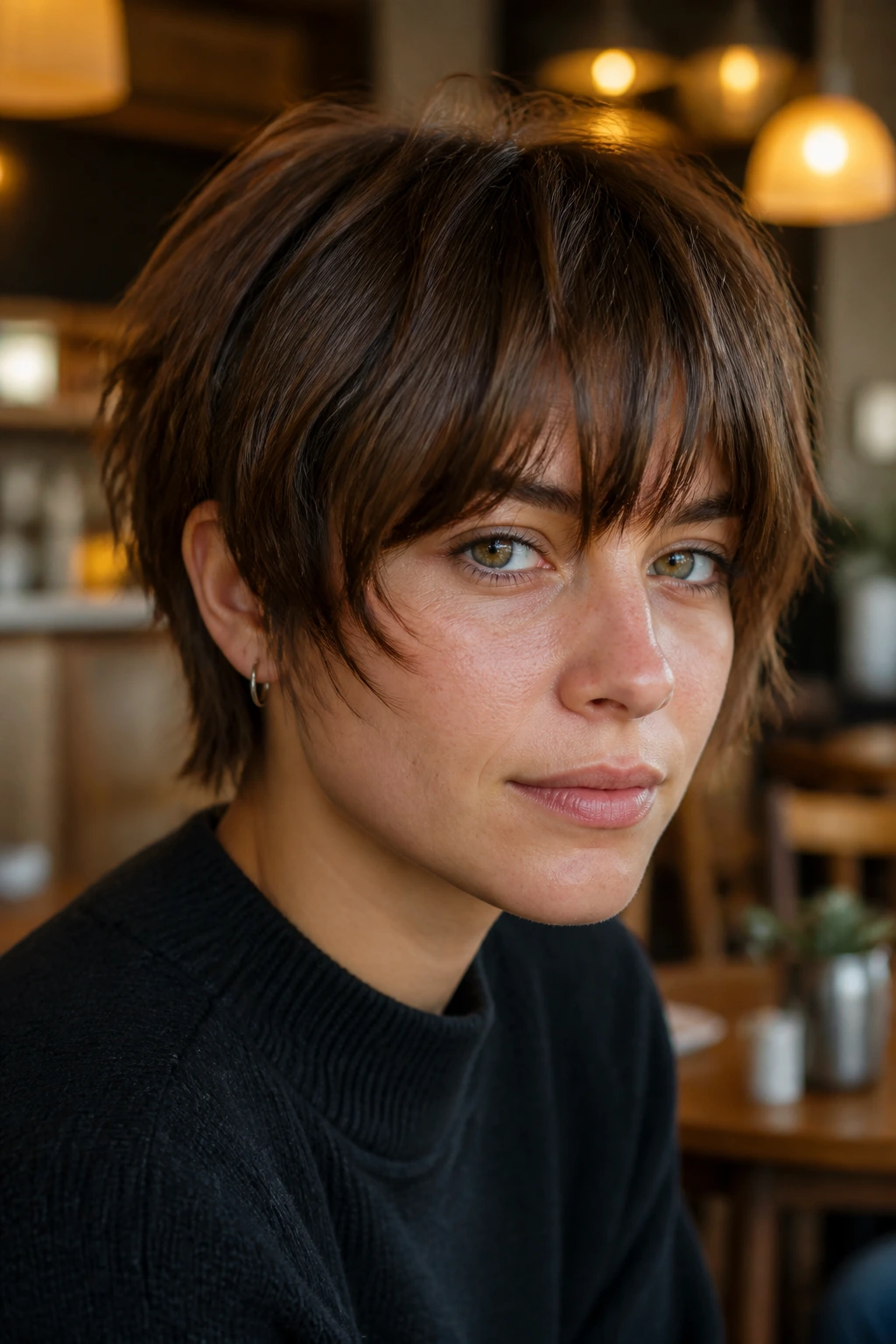
Bottleneck bangs narrow at the top and open at the sides, which gives them a useful trick: they can frame the eyes without swallowing the forehead. On a layered crop, that shape adds softness to a short cut that might otherwise read as too choppy.
The layered crop gives you movement at the crown and around the ears, which is handy if your hair likes to sit in a helmet. Bottleneck bangs also play nicely with glasses because they don’t crash directly into the frames. They part around the bridge, then drift outward.
This is a smart middle path if you want bangs but not a heavy wall of hair on your face.
12. Tapered Pixie With Piecey Fringe
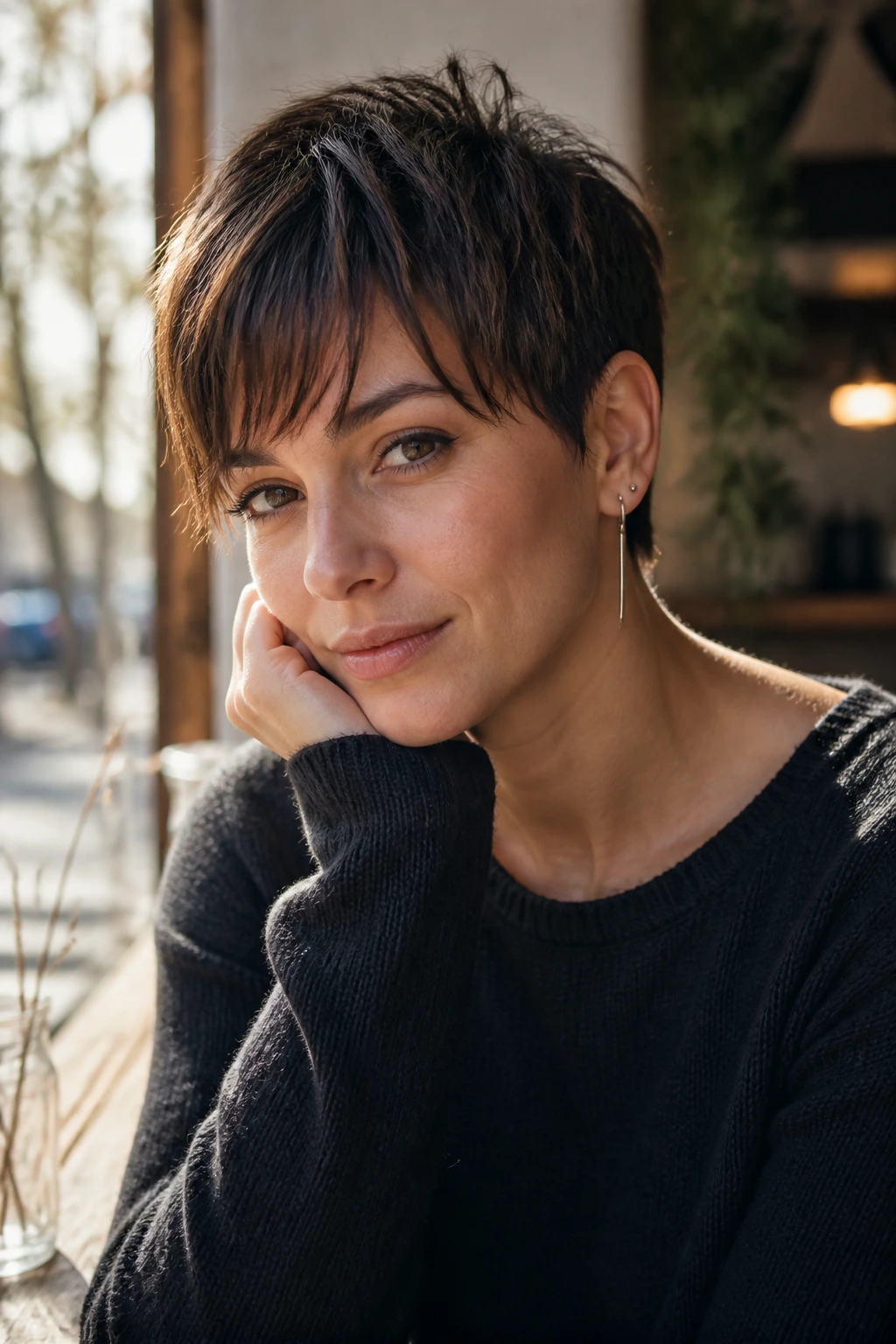
A tapered pixie gets narrower at the nape and sides, so the top becomes the fun part. Piecey fringe gives the cut some looseness and keeps it from looking over-ordered.
What I like about this one is the balance. It feels neat from the back and more playful from the front. That makes it easy to dress up or down. A small amount of paste or cream on the fingertips is enough to separate the fringe into soft sections. Too much product, and the whole thing turns oily in an instant.
If your hair is fine, this is one of the better short options because the taper makes the head shape look cleaner.
13. Hush Cut Bob With See-Through Bangs
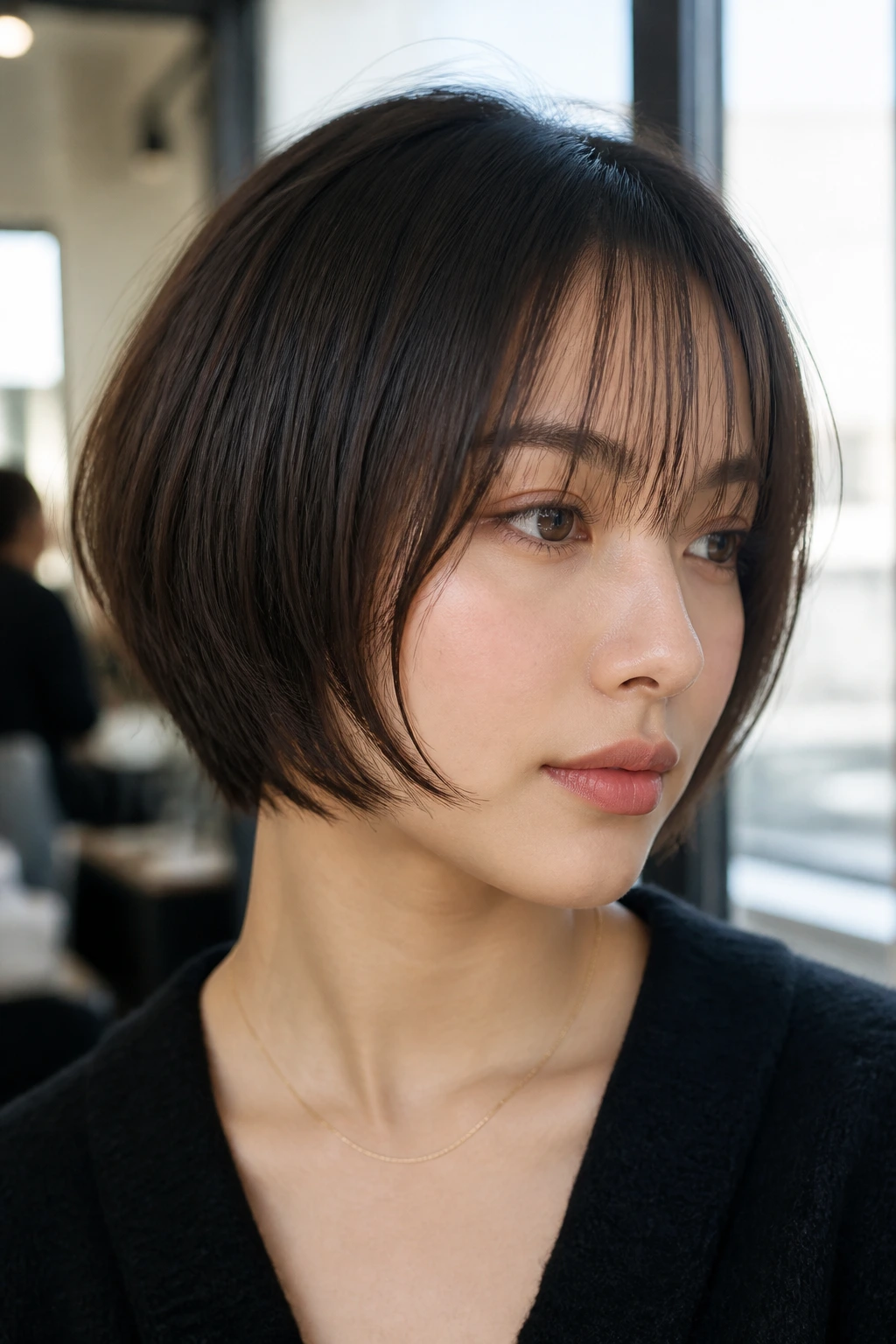
The hush cut is all about soft layers that barely announce themselves. Put that over a bob, add see-through bangs, and the result is airy without being flimsy. There’s enough texture to keep it moving, but not so much that it looks broken.
See-through bangs are thinner across the forehead, which means you can test the waters without committing to a full dense fringe. They’re especially handy if you have a narrow forehead or just don’t want to lose all that much face. The cut shines on straight to slightly wavy hair where the fringe can hang with some transparency.
A tiny amount of smoothing cream and a quick brush-through usually does the job.
14. Punk Shag With Chopped Micro Bangs
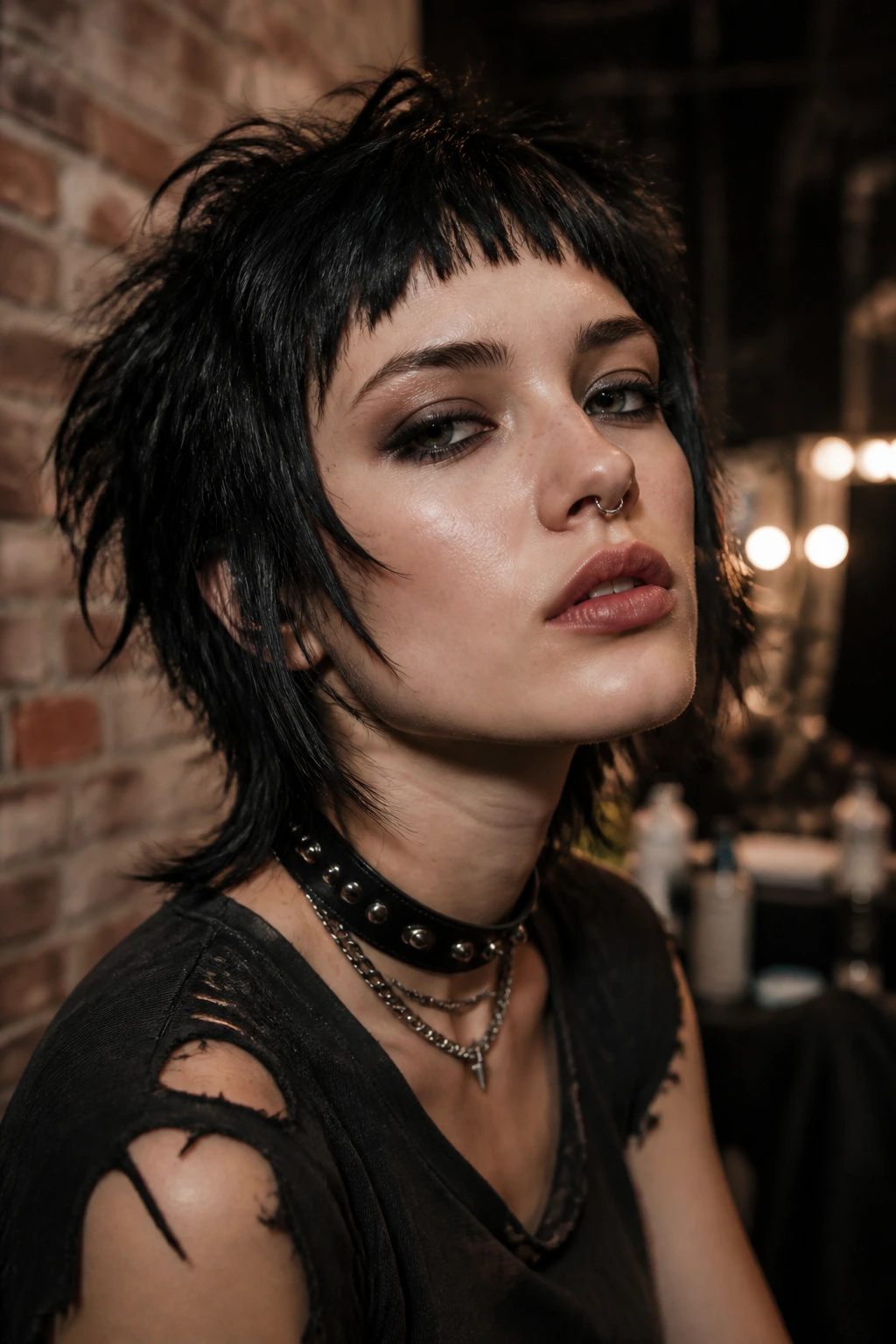
This is a cut with teeth. The shag layers are rougher, the ends are chopped, and the micro bangs land short enough to make the whole thing feel blunt and a little wild.
It’s a great answer for hair that has natural bend or texture, because the shape thrives on irregularity. If you try to force it smooth, you lose half the charm. Dry texture spray, matte paste, and a quick scrunch at the crown usually keep it looking lived-in rather than messy for the wrong reasons.
One-line tip: If the fringe is too perfect, the cut loses its bite.
15. Short Goth Mullet With Curtain Bangs
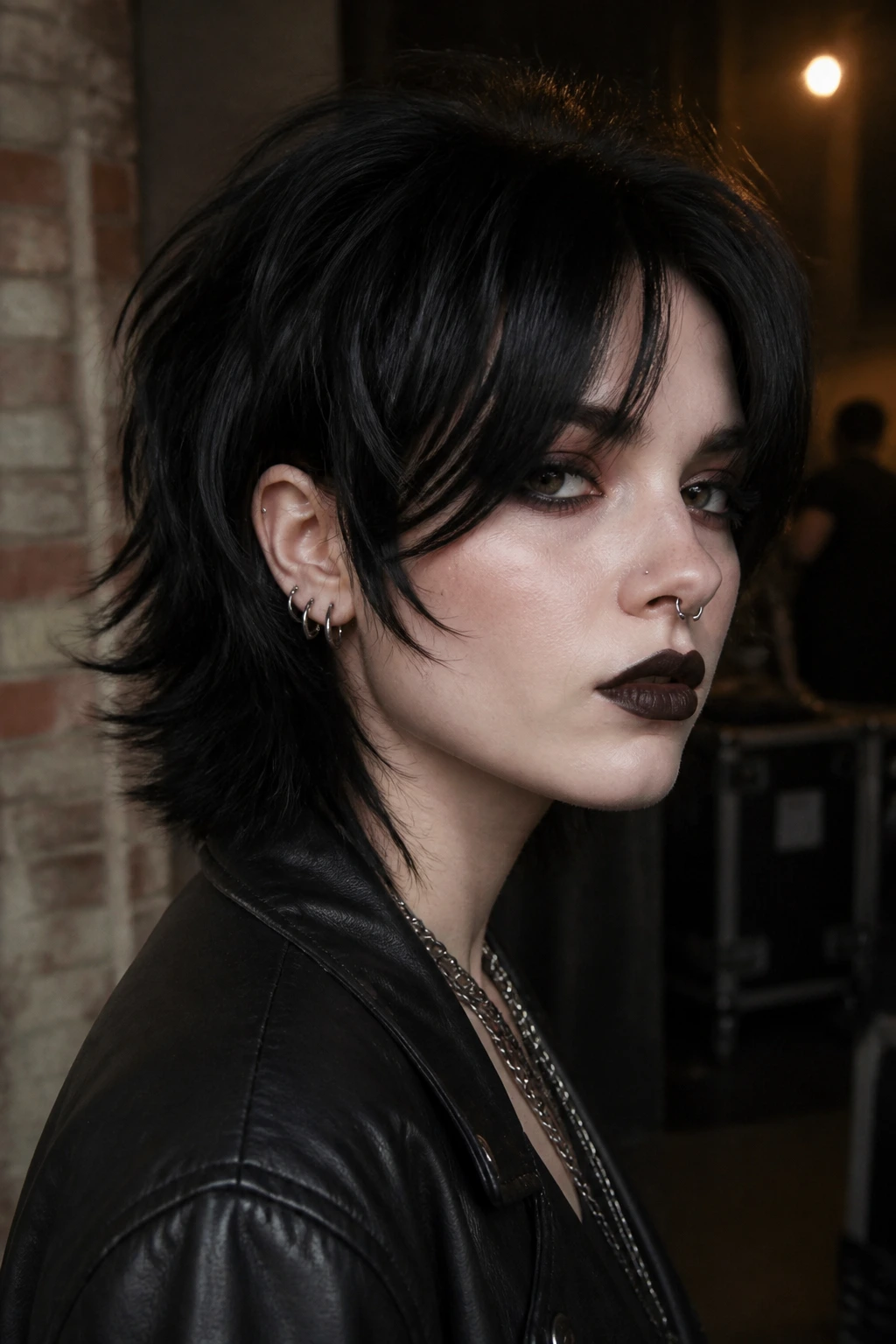
Moody doesn’t have to mean heavy. A short goth mullet keeps the nape longer and the crown stacked, while curtain bangs soften the front enough that the cut doesn’t feel boxed in.
The contrast matters. The fringe opens the face; the back keeps the attitude. Dark hair makes the silhouette more obvious, but lighter shades can still carry the shape if the layers are sharp. This cut can go soft or sharp depending on how much you flatten the fringe. Blow it outward for a more romantic shape, or keep it close for something moodier.
If you like eyeliner, black clothes, and a haircut with a little drama, this one has a strong case.
16. Ear-Length Bob With Blunt Brow-Skimming Bangs
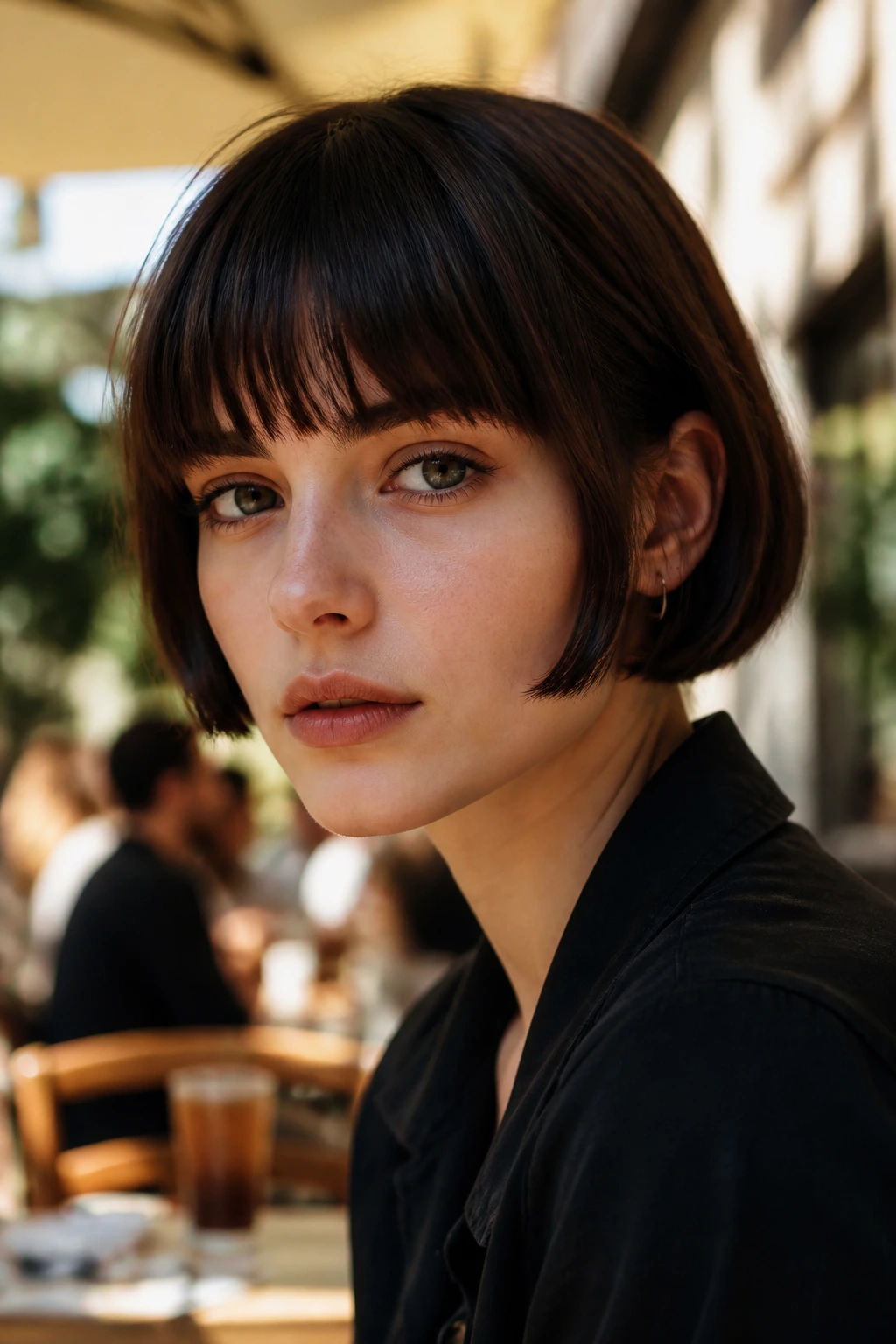
There’s something almost strict about an ear-length bob with blunt bangs, and that’s exactly why it works. The line is short, tidy, and unmistakable.
The bangs should sit just at or a hair below the brows so they frame the eyes instead of crowding them. This cut is one of the better choices for straight hair because the shape stays visible without a long styling session. It also works well if you want something alternative that still reads polished from a distance.
A round brush at the front and a quick bend at the ends is enough. Don’t overdo the curve. The clean line is the whole point.
17. Spiky Pixie With Textured Fringe
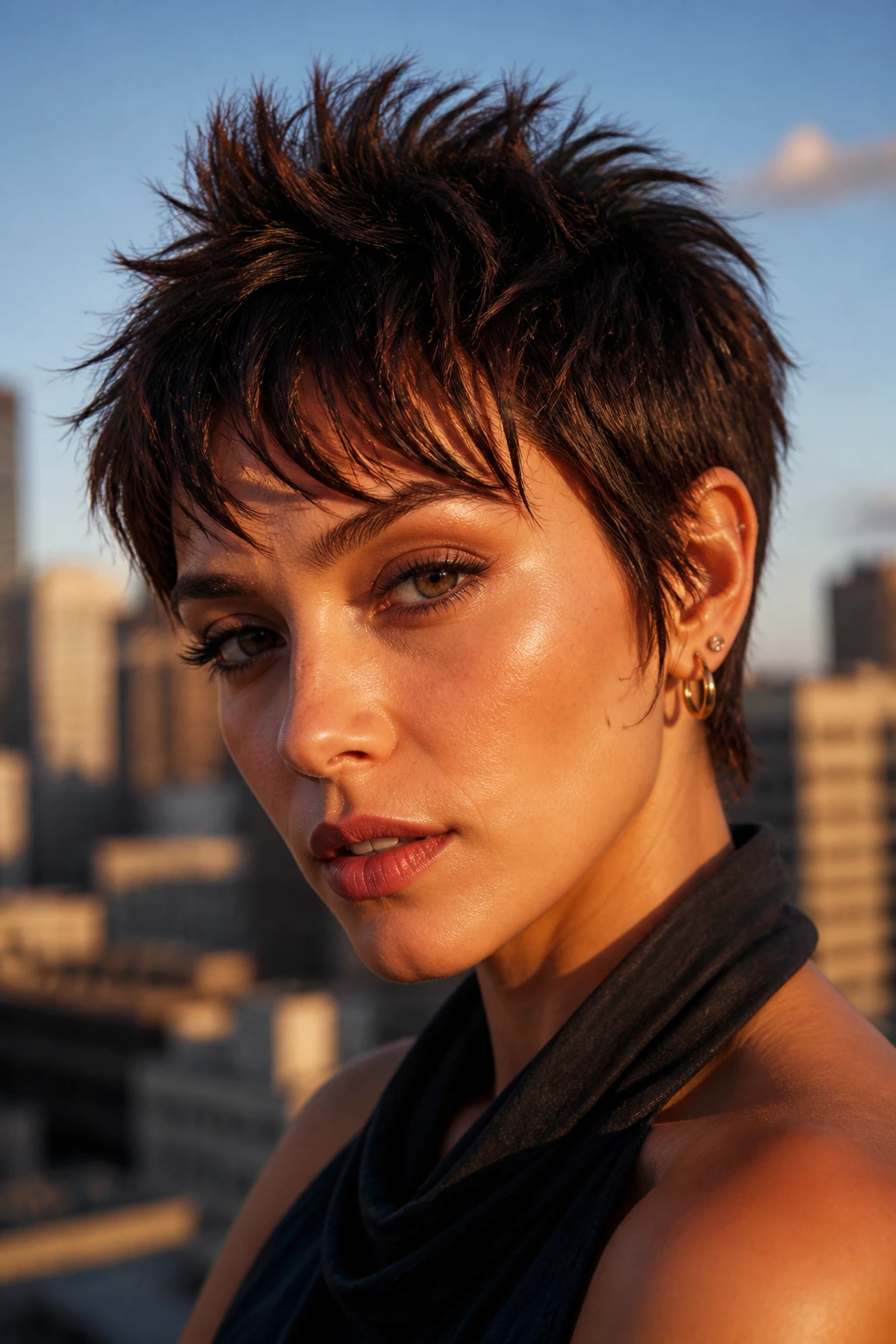
If you want your hair to look touched by your hands in the best way, this is the cut. The top gets piecey and lifted, the fringe breaks into texture, and the silhouette stays compact.
Spiky doesn’t have to mean stiff. The best versions have direction, not crunch. A little wax or pomade on dry hair gives the fringe separation, and a fingertip twist at the crown keeps the style from collapsing by lunch. Coarser hair usually holds this shape more easily than silky hair, but both can do it with the right product.
It’s a good cut for mornings when you want to look intentionally undone in under five minutes.
18. Wedge Cut With Side Fringe
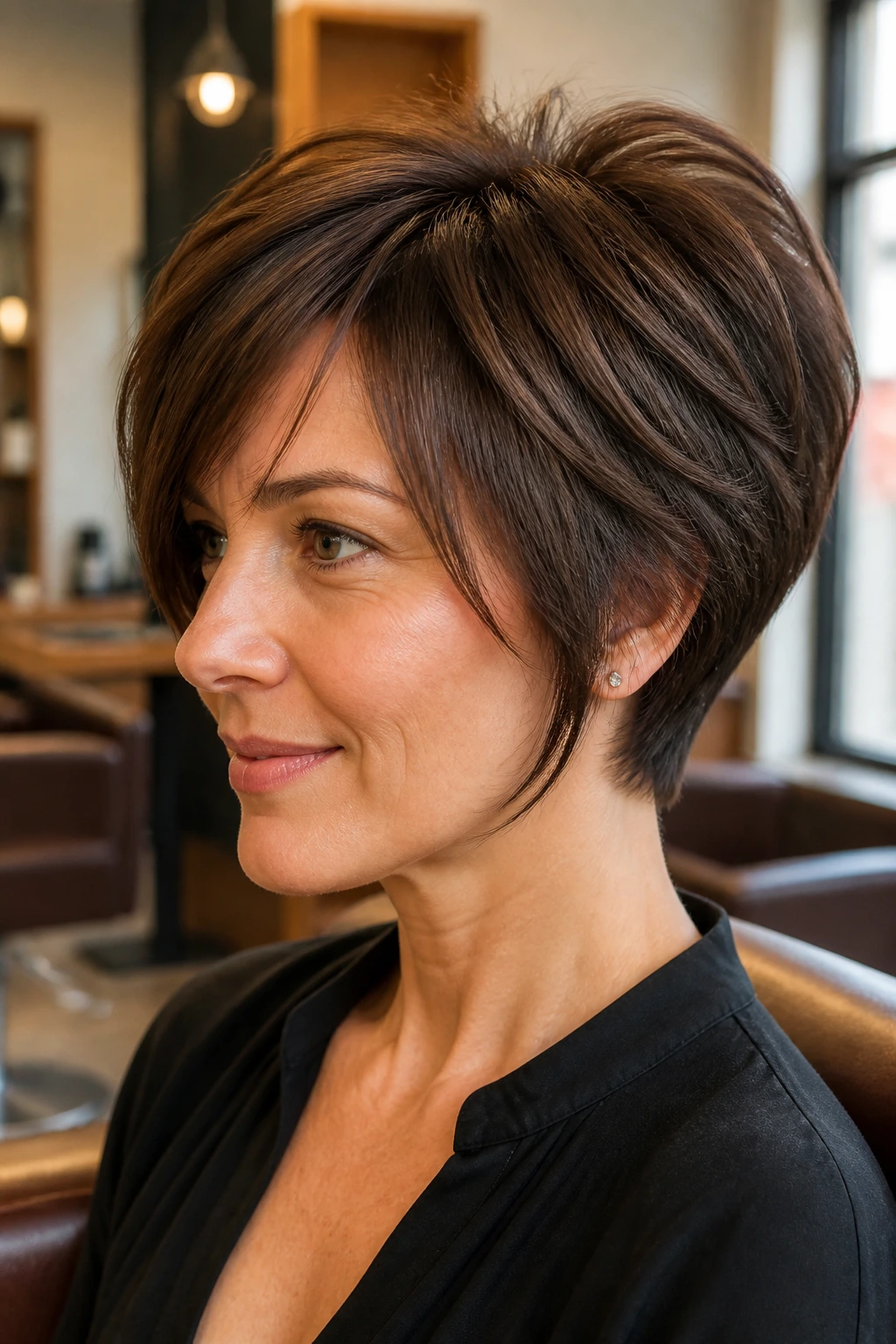
The wedge cut gets overlooked because people picture a stiff retro helmet. The better versions are more playful than that. Stacked in the back, shorter underneath, longer on top, and softened by a side fringe, it can read modern instead of dated.
Fine hair often benefits from this shape because the graduated back creates lift without needing tons of length. The side fringe keeps the front from feeling too severe. If your hair grows flat at the crown, this cut gives you some built-in structure.
A smooth blow-dry with a round brush makes the silhouette make sense. Air-drying it can work too, but it usually loses the shape that makes the cut worthwhile.
19. Mini Shag With Curved Bangs

A mini shag is basically the shag’s smaller, neater cousin. It keeps the layers around the crown and face, but the overall length stays compact. Curved bangs soften the front and give the cut a more rounded feel.
This is one of those styles that looks best when the ends aren’t too polished. Slight bend, a bit of frizz, and movement through the layers all help. On wavy hair, it can almost style itself. On straighter hair, a little texturizing spray gives the ends enough grit to hold the shape.
It’s a nice choice if you want the shag energy without the full messy silhouette.
20. Soft Bixie With Curved Fringe
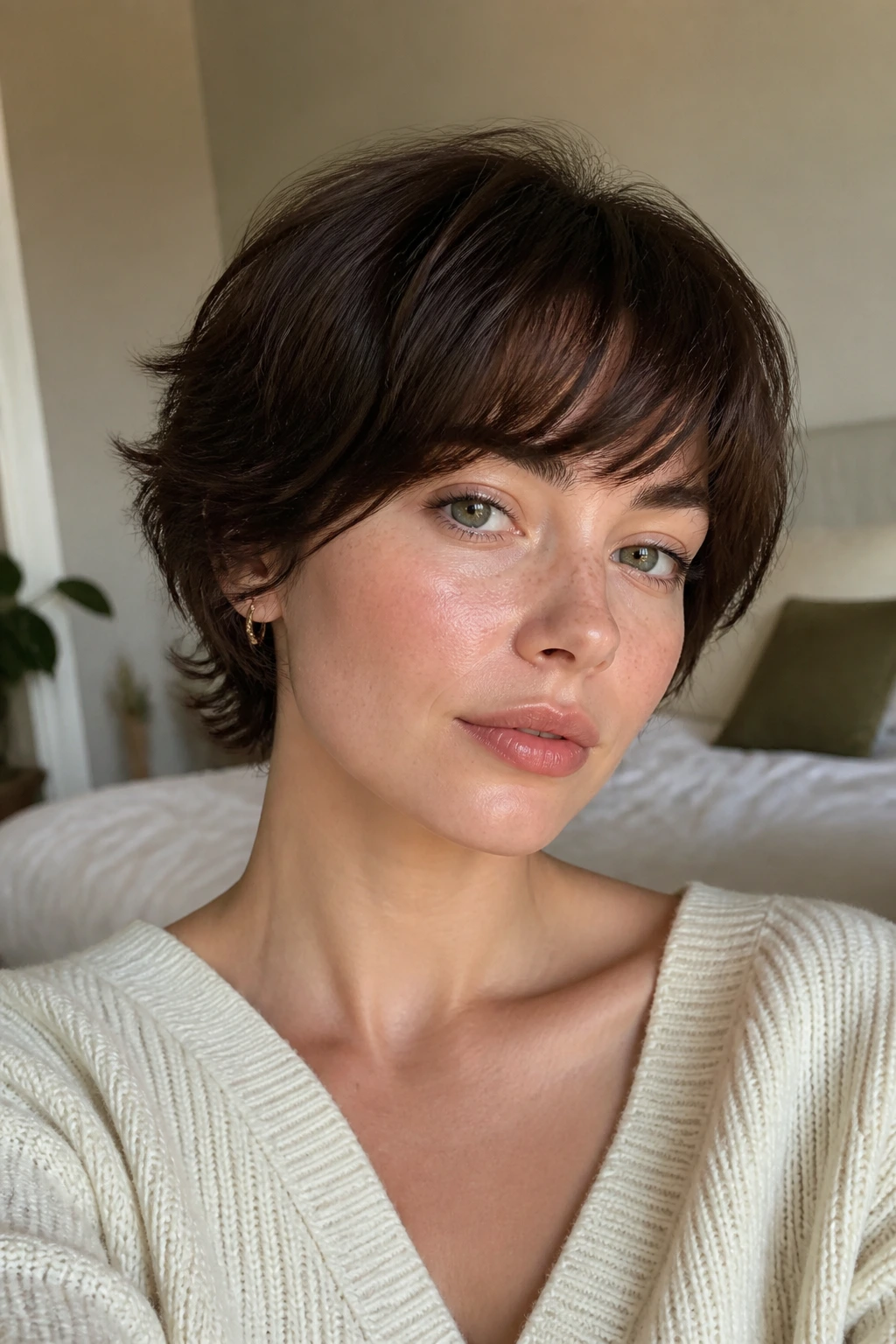
A soft bixie is less severe than a pixie and less committed than a bob. Add a curved fringe, and the whole thing gets an easy, face-brushing shape that doesn’t feel harsh.
This version is especially useful if you’re nervous about short hair but still want something different. The curved fringe gives you a bit of movement across the forehead, while the sides stay light and close. It works on fine hair because the shape can be built with clean lines rather than bulk, and it works on thicker hair when the internal layers are removed carefully.
If the goal is to look short, textured, and not too precious, this one earns its keep.
21. Tucked-Under Bob With Long Swoopy Bangs
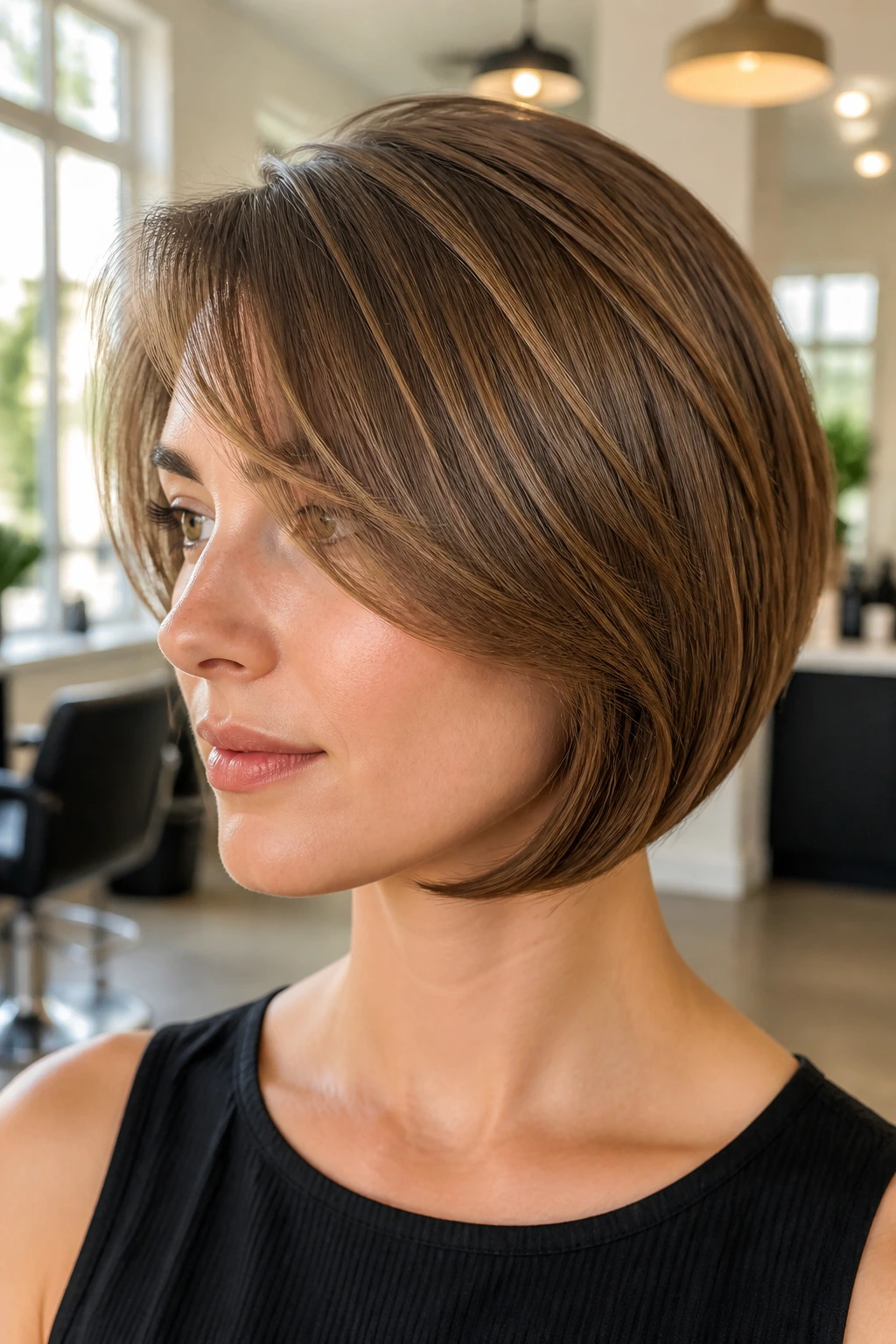
The tucked-under bob has a little retro polish, but the long swoopy bangs loosen it up. Instead of sitting flat, the fringe curves across the forehead and melts into the front sections.
This is a useful cut if you want your short hair to feel feminine without turning soft or sweet. The tucked-under shape gives body around the jaw, which makes the fringe look intentional rather than like an afterthought. On straight hair, it’s especially clean. On slightly wavy hair, it can look breezier, which is a nice bonus.
A large round brush at the ends and a smaller one at the bang area usually keeps the front moving in the right direction.
22. Razor-Cut Crop With Split Bangs
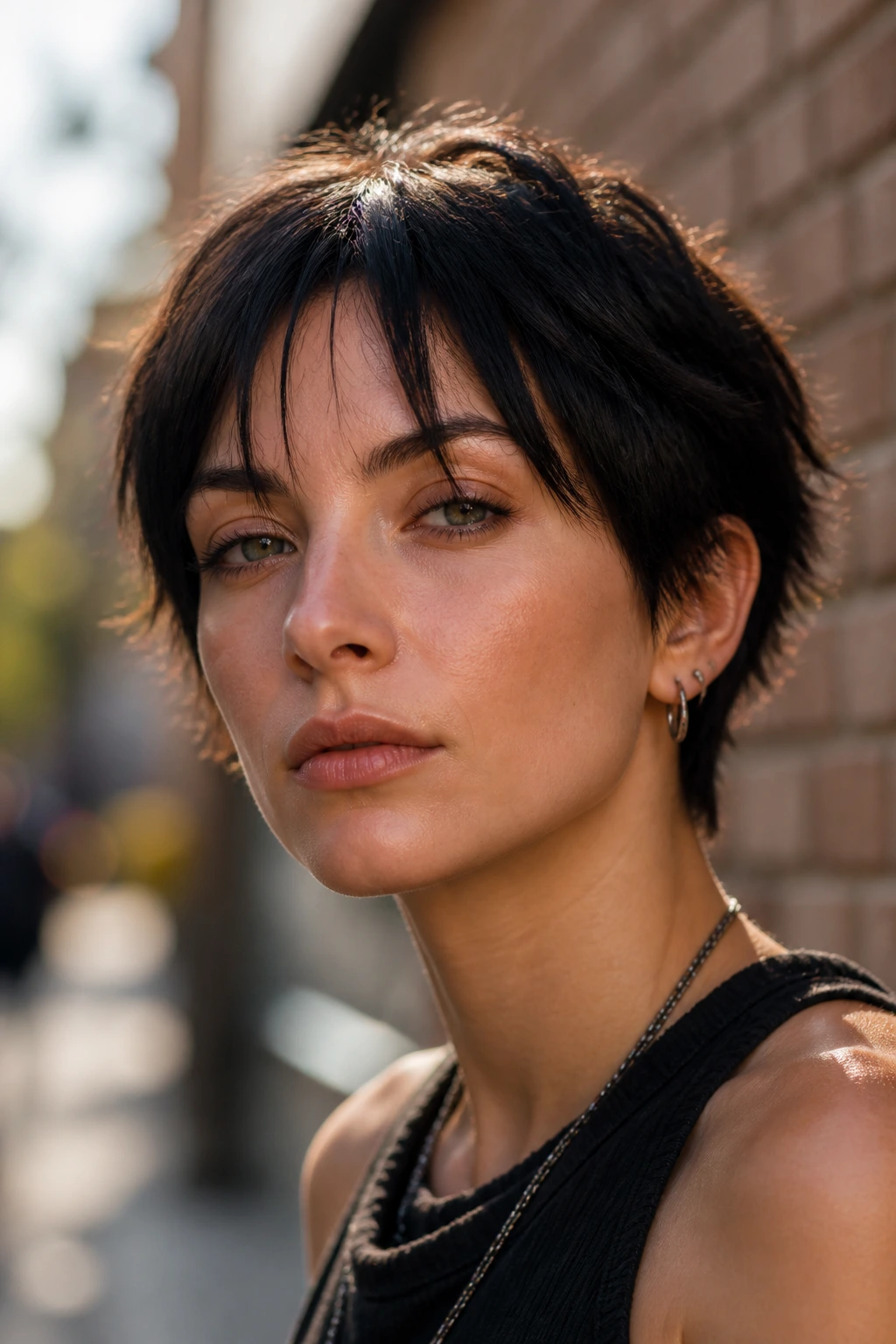
Razor cutting strips away some weight and leaves the ends with a lighter, softer edge. Split bangs fit that mood well because they separate at the center or slightly off-center and fall away from the face.
This cut is a good answer for thick hair that needs release without losing its shape. The razor takes the bulk out of the crown and sides, while the split fringe keeps the front from feeling heavy. It also suits people who don’t want to commit to a straight line of bangs across the forehead.
If your face gets overwhelmed by too much hair at the center, this is a safer, more breathable way to keep fringe in the mix.
23. Curly Wolf Bob With Curly Curtain Bangs
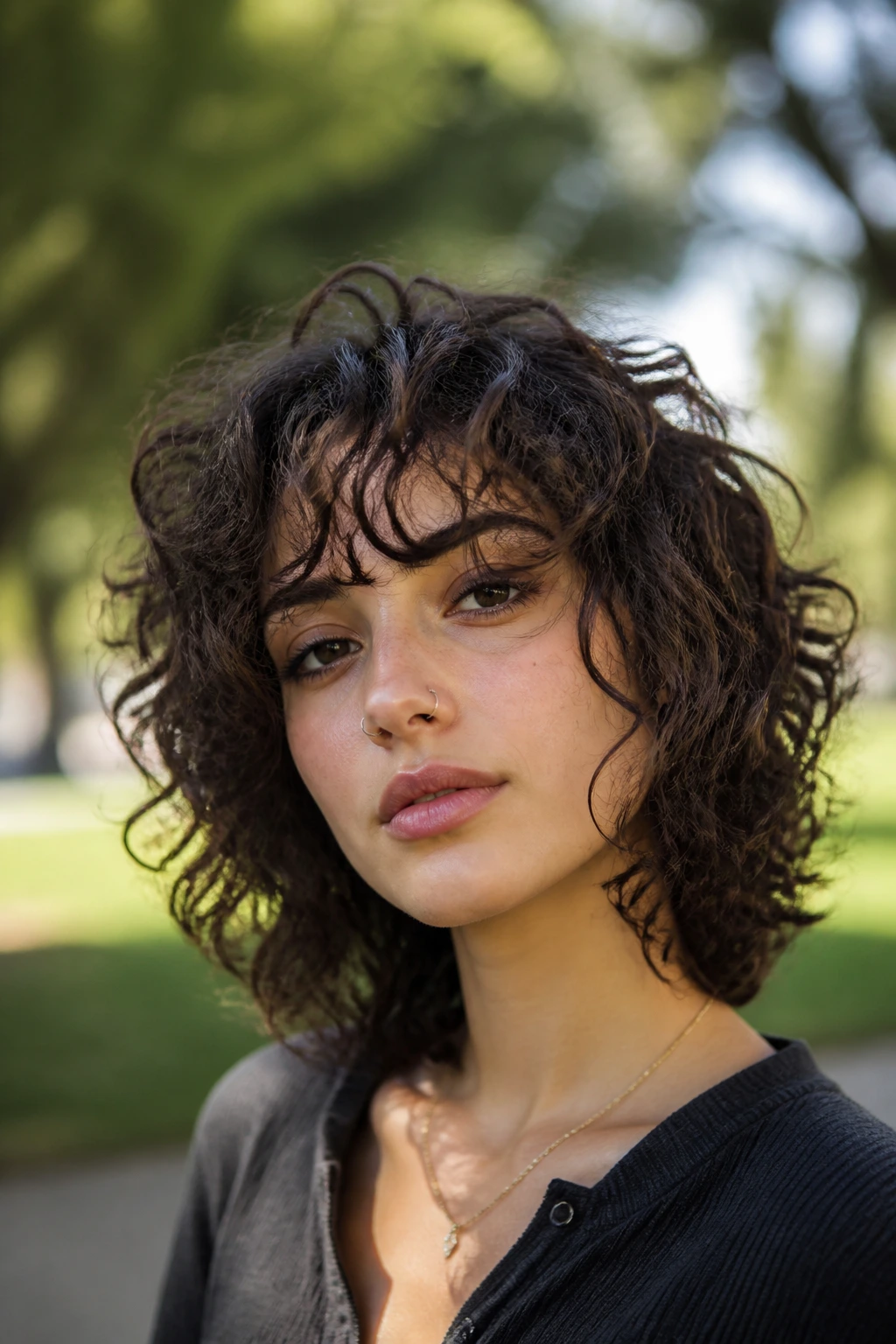
Curly hair and curtain bangs can be a dream together if the cut respects shrinkage. A wolf bob gives you the stacked texture, and the curly curtain fringe opens the face without sitting like a shelf.
The bangs need to be left long enough to bounce upward once dry. That’s the part people get wrong. Curly fringe cut too short can spring right into the middle of the forehead, and then you’re stuck waiting for it to grow out. Dry cutting or curl-by-curl shaping is usually the better approach here.
This cut looks best when the curls are allowed to do their own thing, not brushed into submission.
24. Choppy Jaw-Length Bob With Choppy Bangs
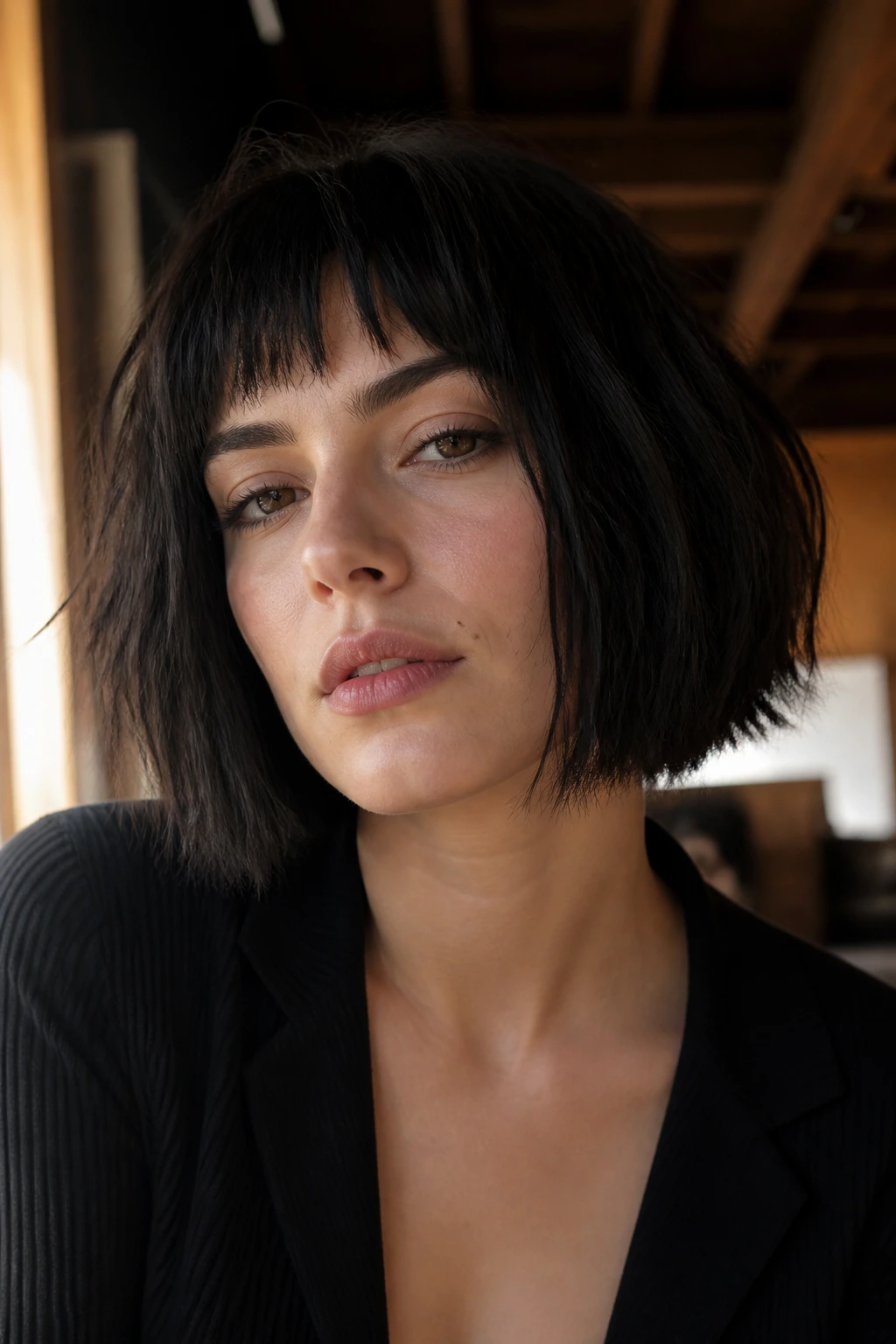
Sometimes the direct route is the best one. A jaw-length bob with choppy bangs doesn’t try to be precious. It’s blunt enough to read as a bob, rough enough to feel alternative, and simple enough to style fast.
The choppy bangs stop the cut from feeling blocky. They add just enough irregularity that the style moves when you turn your head. This is a strong cut for people who want a shorter length but don’t want to babysit it every morning. A bit of dry texture and a quick finger shake are often enough.
It’s not subtle. That’s part of the appeal.
25. Punk Pageboy With Micro Fringe
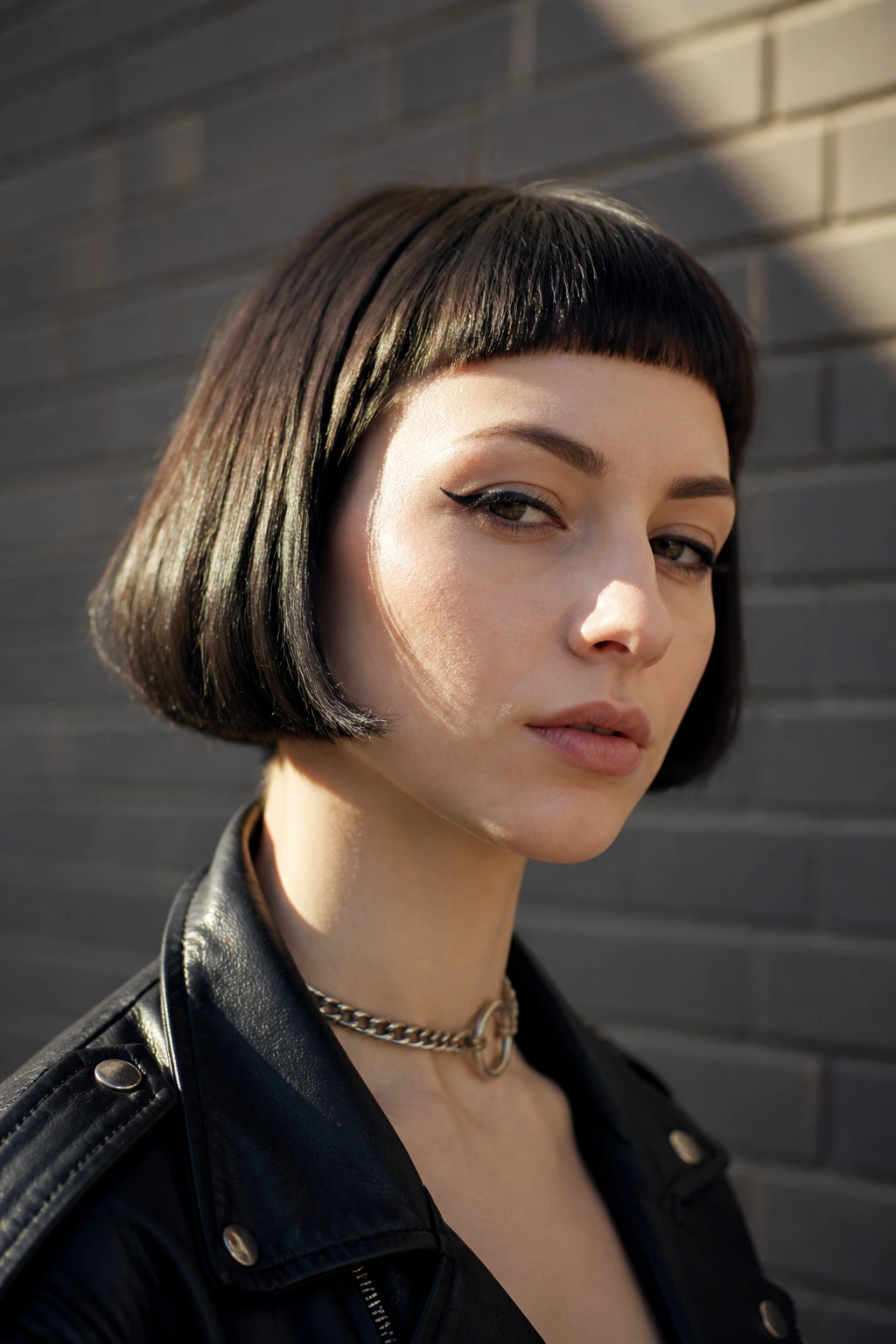
A pageboy cut already has that rounded, tucked-under outline. Add a micro fringe and it picks up a punk edge that makes the whole thing much less sweet.
This cut works best when the line is deliberate and the ends are smooth. The fringe gives the face a hard stop, while the rounded body keeps the style from feeling too severe. Straight hair handles it easily, but thicker hair may need some internal removal so the curve doesn’t balloon.
If you like mod shapes with a sharper front, this one has a nice tension to it.
26. Tapered Afro With Shaped Bangs
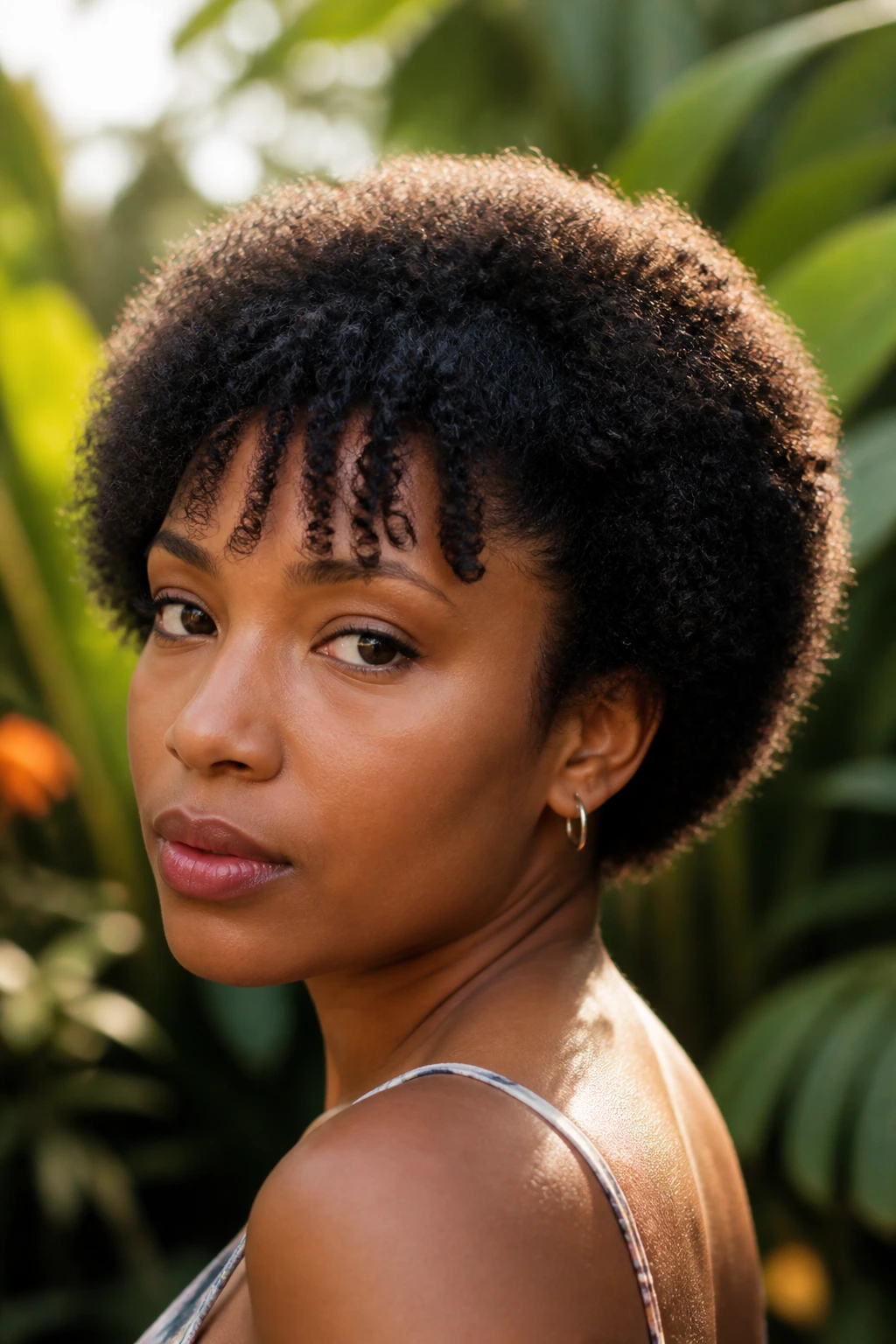
Natural texture deserves a fringe that respects the curl pattern, not one that flattens it. A tapered afro with shaped bangs keeps the silhouette neat on the sides and back while letting the front curve in a way that follows the coils.
The bangs should be cut dry or nearly dry so the shrinkage is honest. That part matters. If the fringe is cut while stretched, it can bounce up too short and lose its shape. A good taper gives the cut structure; the shaped bangs give it expression.
This is one of the most graceful short alternative looks on textured hair because it lets the hair do the work without looking unfinished.
27. Flippy Retro Crop With Full Fringe
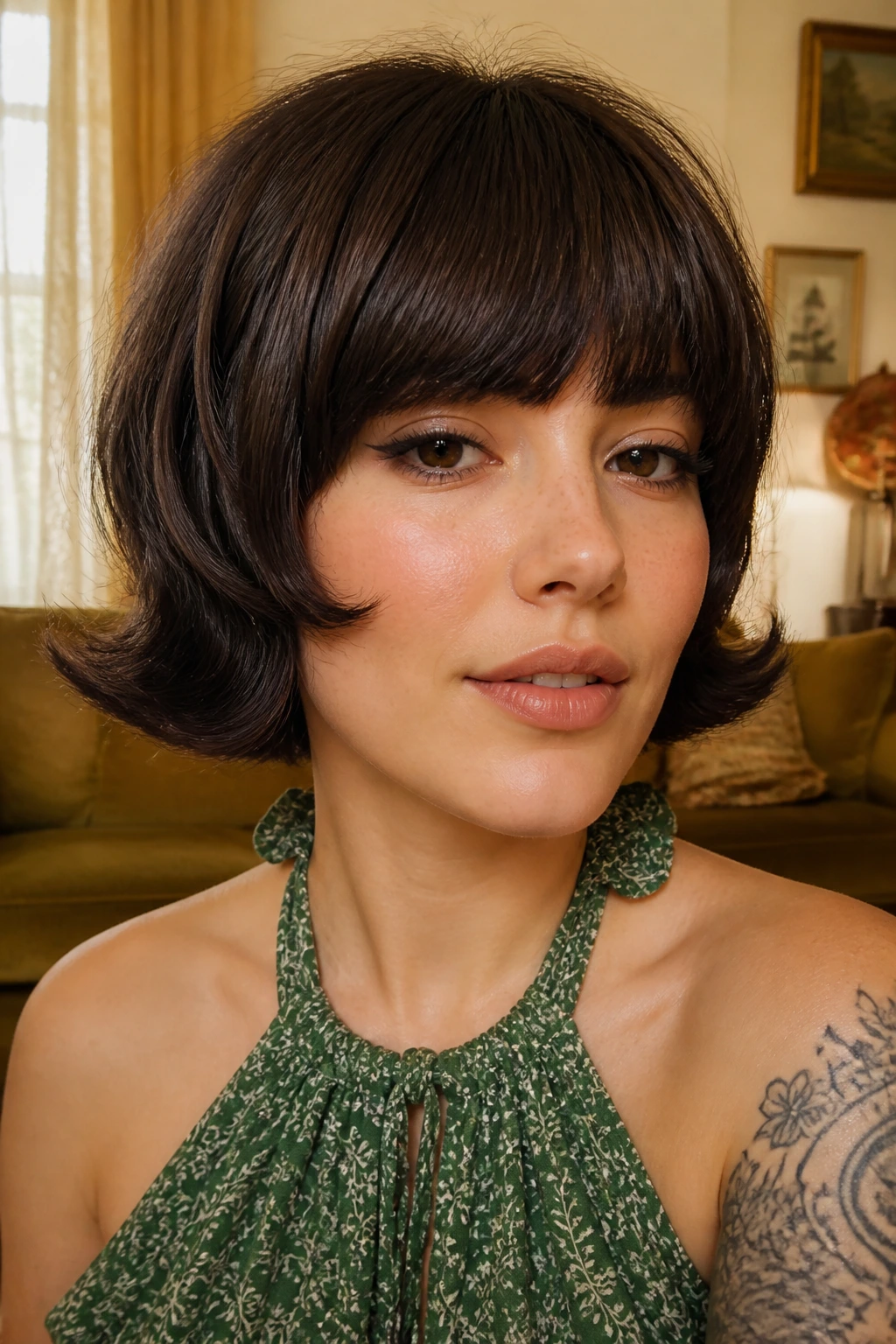
The flippy ends make this cut feel a little playful, while the full fringe keeps it grounded. It nods to retro styles without turning into costume.
A full fringe works best here when it lands at the brows or slightly below. Too short and the front becomes severe; too long and the flip at the ends loses some of its cheerfulness. This style likes a round brush and a bit of bend at the ends, especially if your hair naturally wants to sit flat.
It’s a good choice if you want something short, polished, and a little cheeky.
28. Deconstructed Mullet Pixie With Feathered Bangs
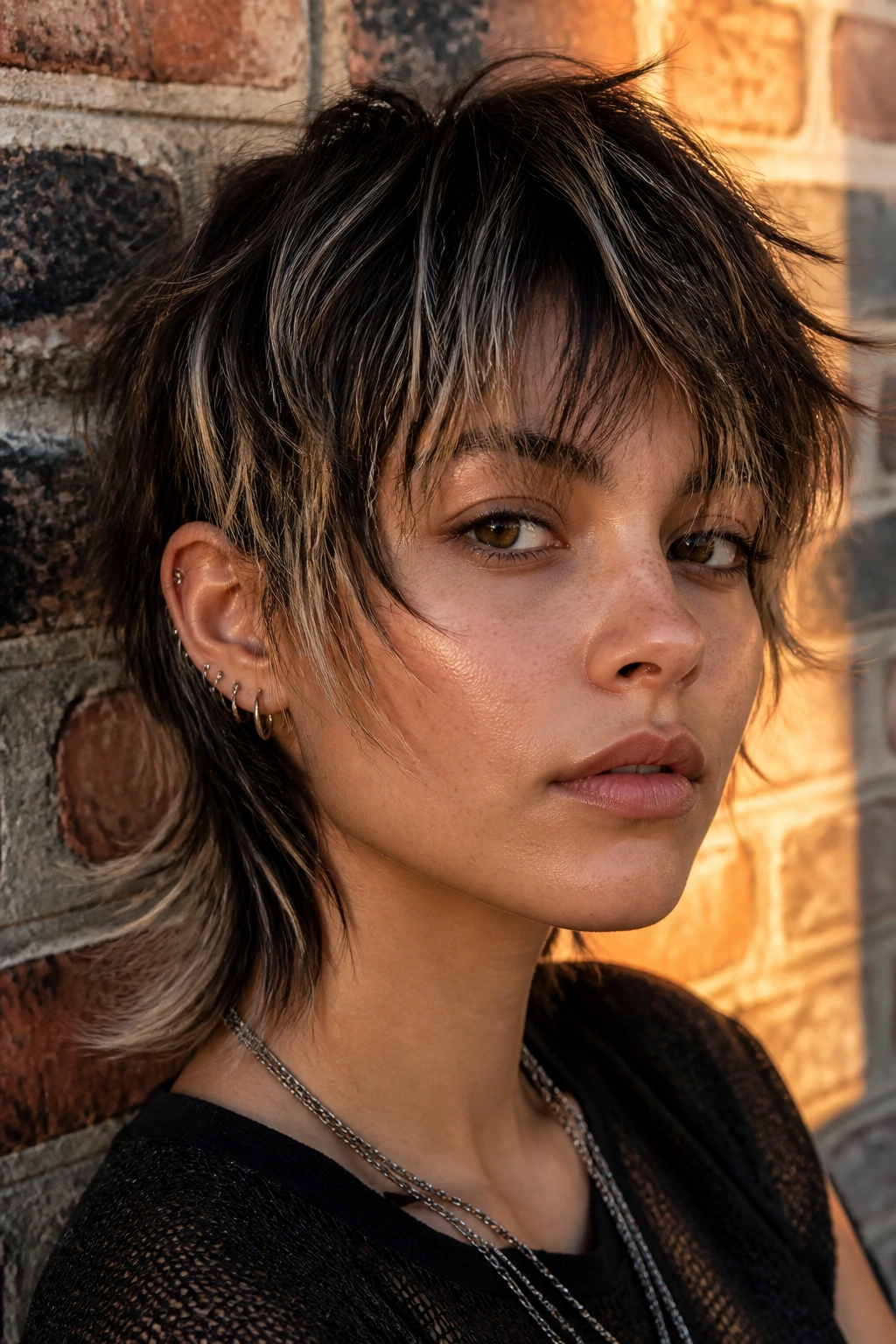
This is the one for people who want the cut to look a little imperfect on purpose. The lengths are broken up, the nape sits longer, the top is roughened, and the feathered bangs keep the front light.
There’s a strong editorial feel here. It works because nothing is too symmetrical. If every section gets cut into the same neat shape, the whole thing loses its tension. Wavy hair usually loves this cut, but straight hair can get there with texture paste and a rough-dry.
The result is not tidy. Good.
29. Jaw-Grazing Lob With Broken Fringe
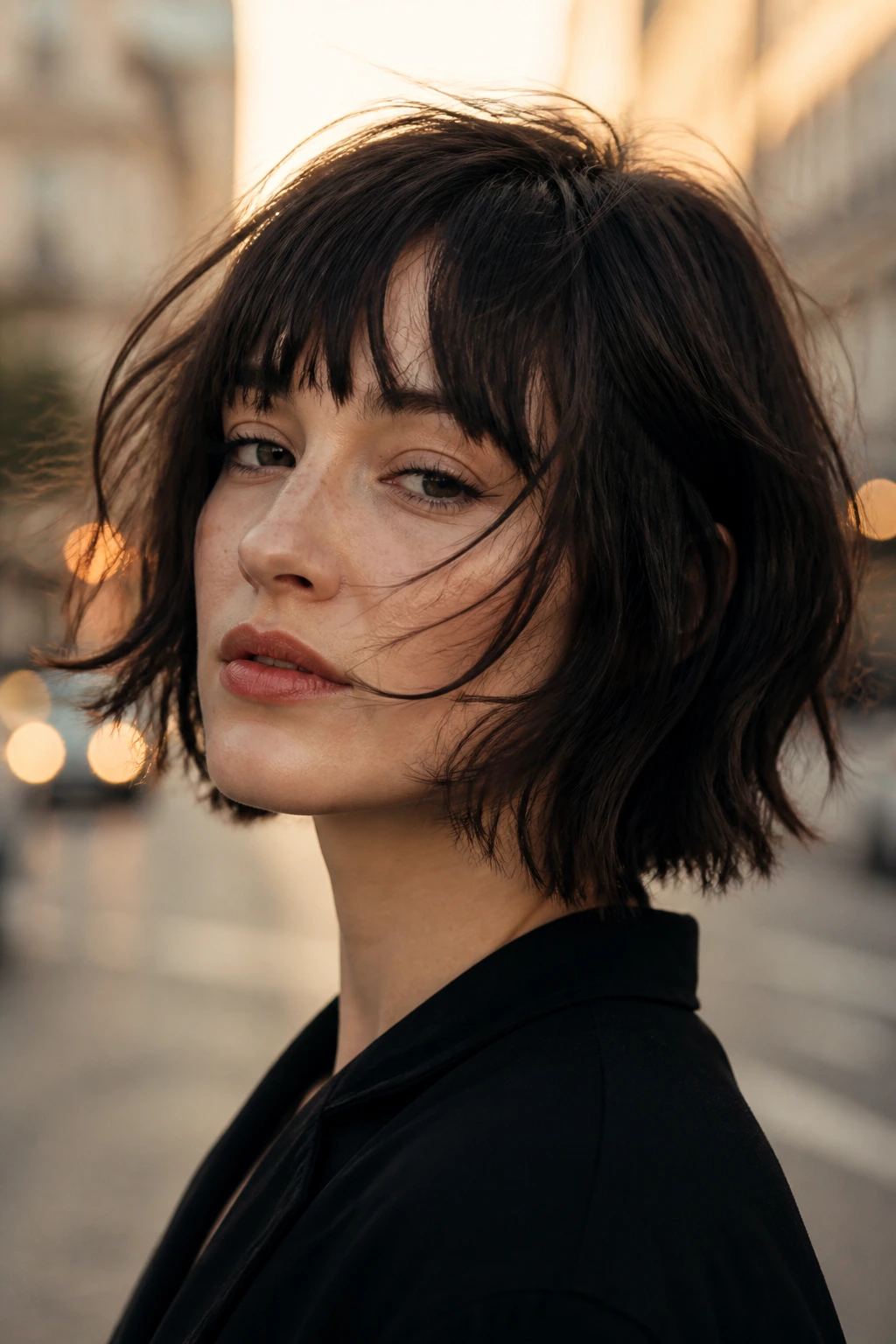
A lob is technically the longer cousin in this set, but the jagged fringe and shorter outline keep it squarely in alternative territory. The broken fringe helps the front feel airy instead of heavy.
This cut is a smart bridge if you want to go short without giving up all your length at once. It can tuck behind the ears, swing forward over the jaw, or get roughened up with a little spray. The bangs do a lot of the work, so they need shape — not just a straight trim.
If you’re growing out something even shorter, this one is a solid landing place.
30. Short Bob With Hidden Undercut And Fringe
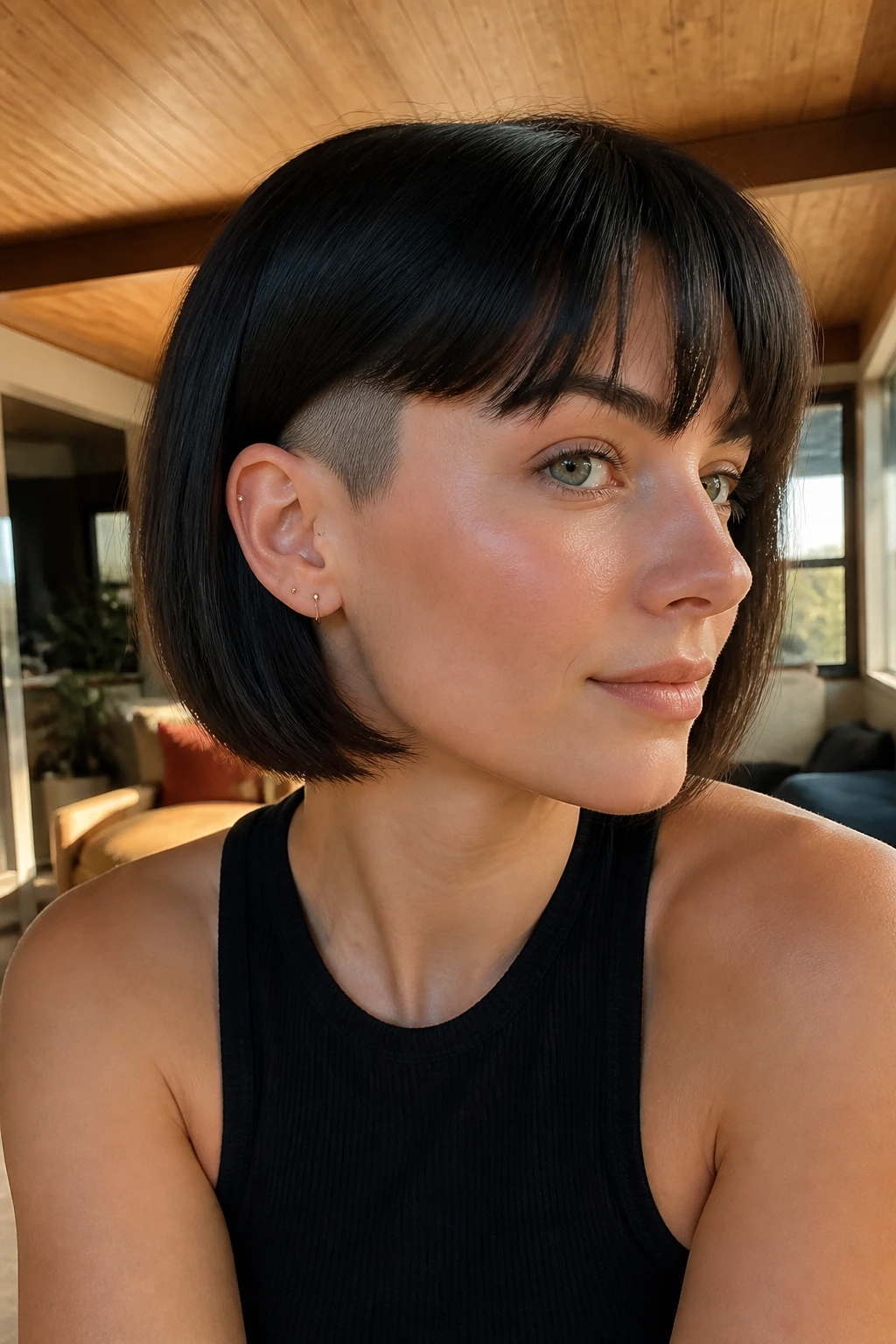
From the front, this can look almost classic. Then you turn your head and the undercut shows up, and the whole thing shifts.
That hidden removal of bulk is one of the best tricks for thick hair. It takes weight away from the bottom half of the cut without changing the visible outline too much. The fringe keeps the front interesting, whether it’s blunt, piecey, or slightly arched. It’s the sort of cut that gives you structure without shouting about it.
If you like a cleaner silhouette but still want some edge under the surface, this one lands well.
31. Androgynous Crop With Square Bangs
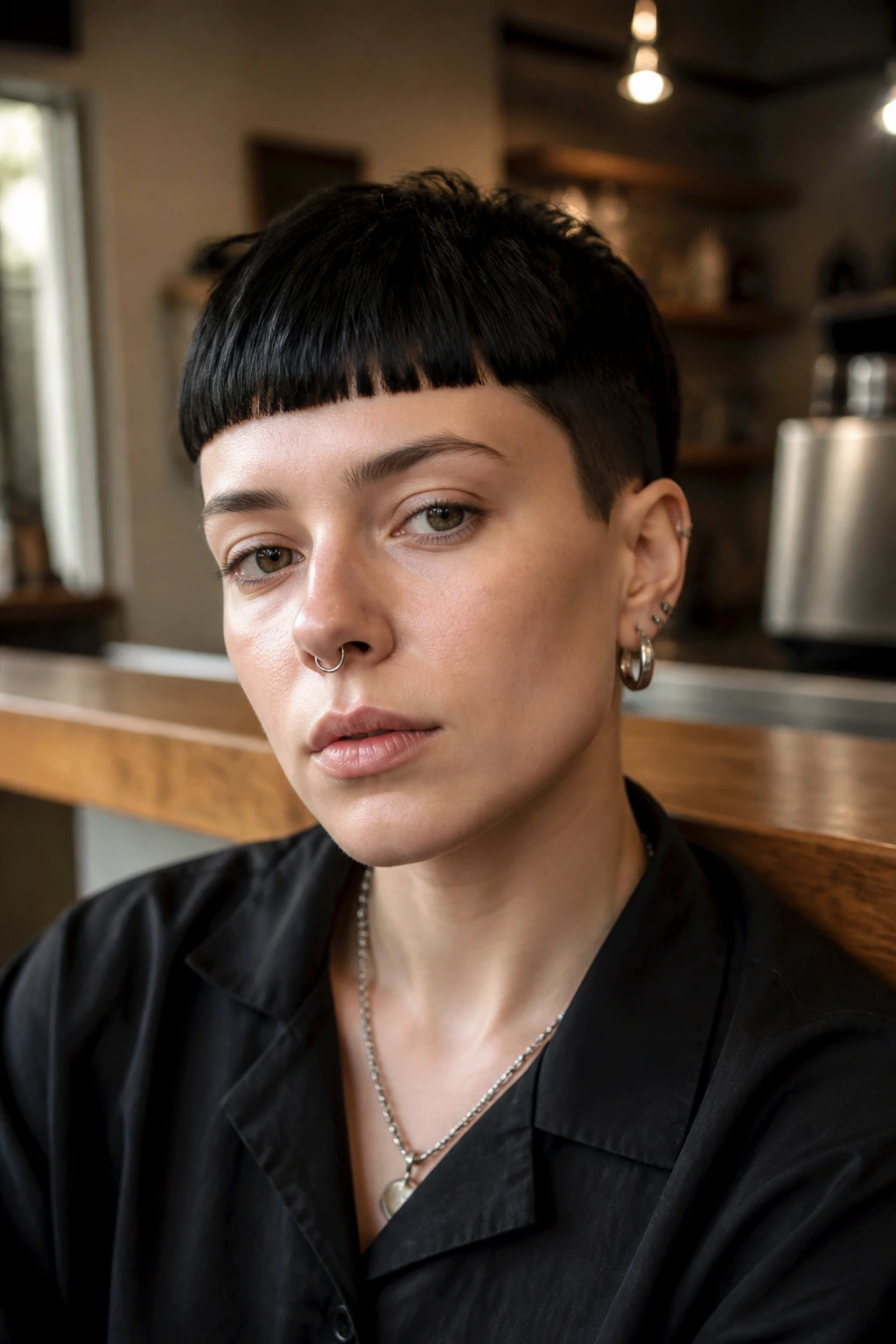
Square bangs give a crop a firm, architectural line. The result feels direct, not fussy.
This cut suits angular features especially well, but it can work on softer faces too if the fringe is softened a touch at the edges. The key is balance. The crop should stay compact around the sides, while the front keeps a clearly defined shape. If the bangs are too wispy, the look loses its force.
It’s a confident cut. Not loud, just certain.
32. Fluffed-Out Shag Pixie With Long Bangs
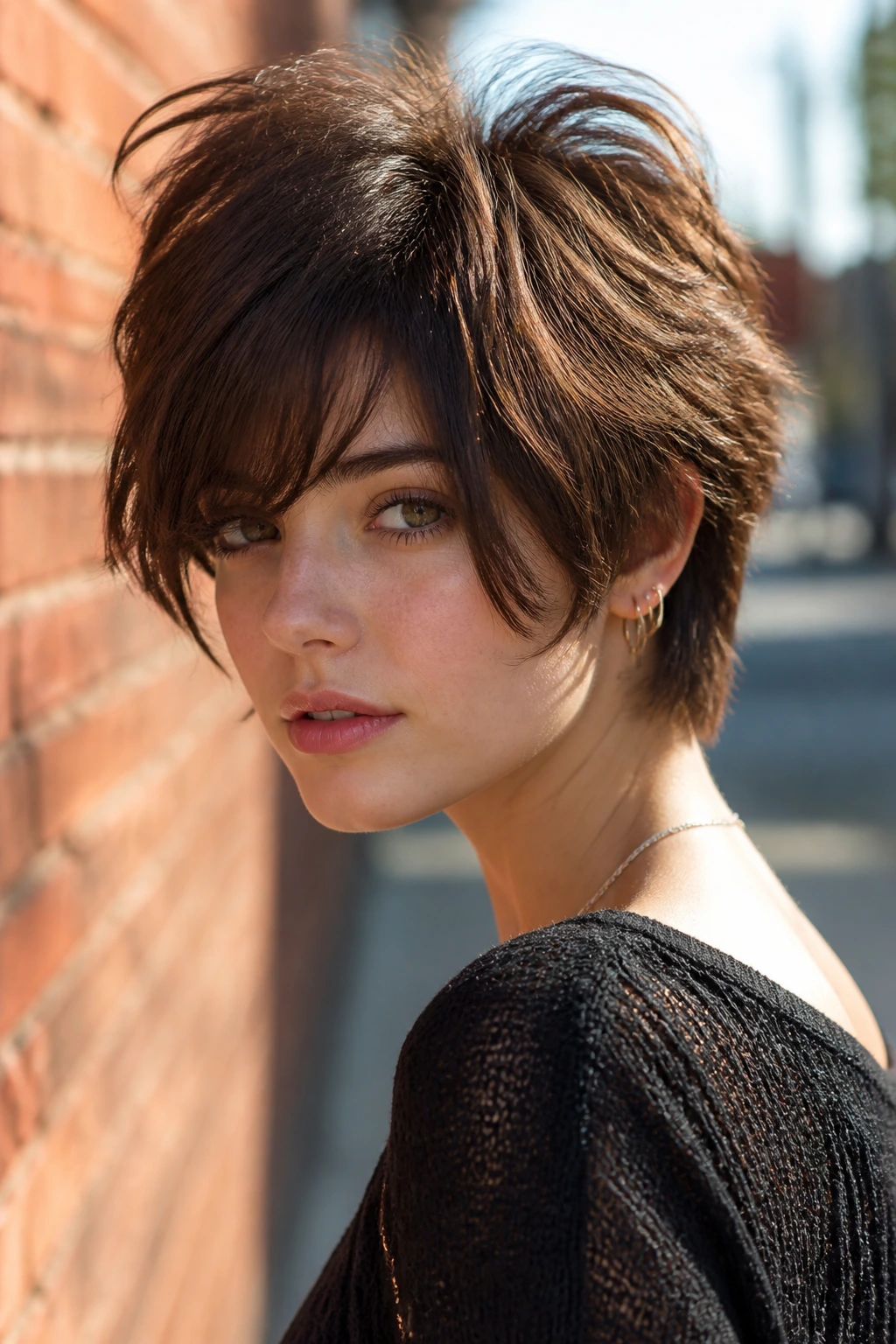
This one has lift and softness at the same time. The shag layers create air, the pixie length keeps the cut short, and the long bangs give you something to sweep across the face or tuck aside.
It works especially well on hair that has some bend or body because the shape wants movement. If your hair is very fine, a root-lifting mousse can help the crown avoid collapse. The long fringe is also forgiving — it gives you options on days when you do not want a sharp front line.
It’s a relaxed alternative look that still has shape.
33. Ear-Length French Shag With Side-Swept Fringe
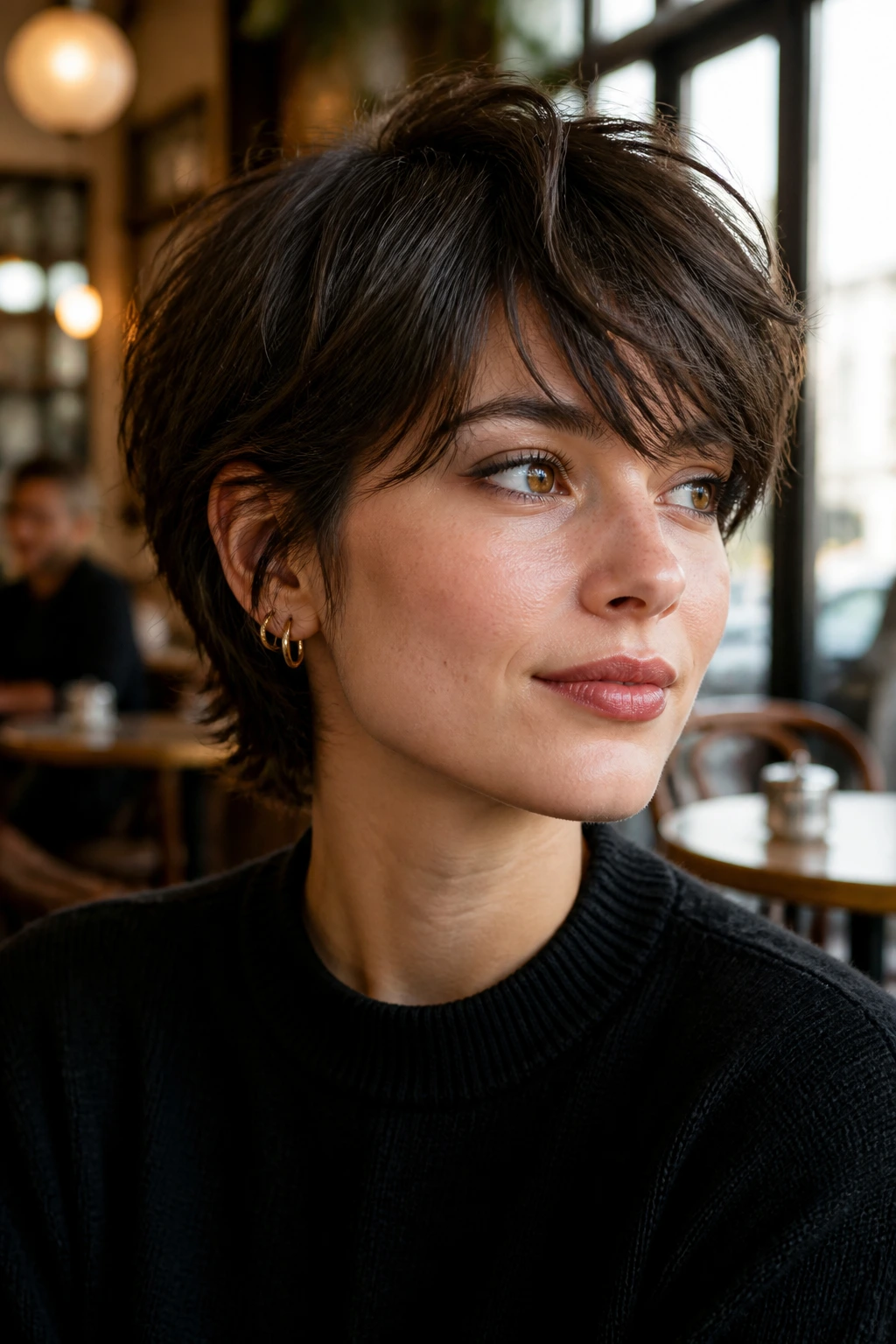
This cut borrows the neat jaw-hugging outline of a French bob and loosens it with shag layers. The side-swept fringe keeps the front softer and easier to wear than a severe baby bang.
The result feels a little Paris, a little punk, and not especially interested in being polished all the time. It’s a good choice if you want something short that can be tucked, flipped, or roughed up depending on the day. The side fringe also behaves well with a center or off-center part, which gives you some flexibility.
That flexibility matters. Not every short cut wants to be styled the same way twice.
34. Textured Crop With Baby Fringe
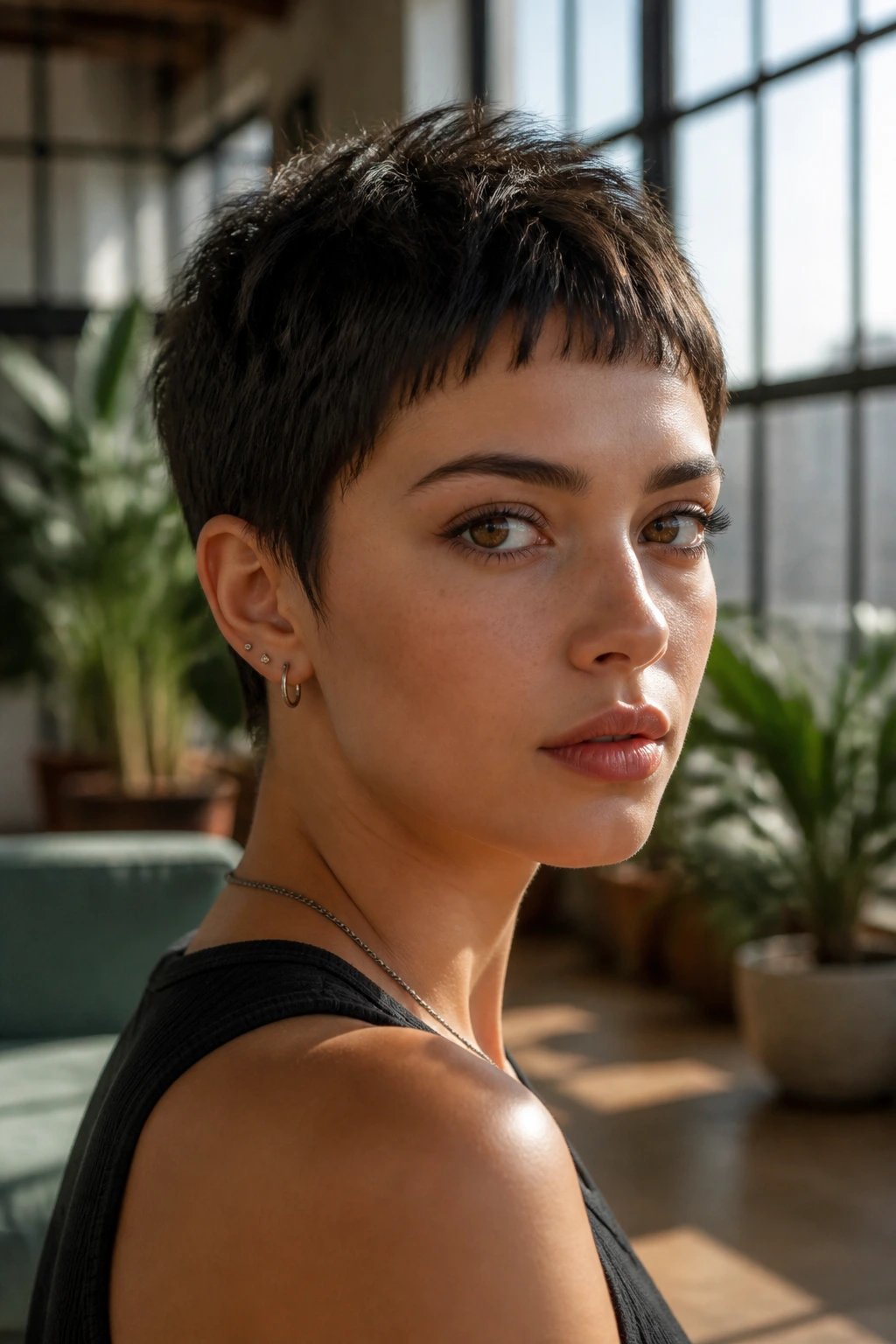
Baby fringe on a textured crop is a tiny bit daring and a lot easier than people expect. The crop gives the top some lived-in separation, while the short fringe keeps the face open and sharp.
This cut works best when the texture is intentional. A little movement through the crown, a little separation at the sides, and a fringe that sits just high enough to show the brow line. It’s a strong option if you want a short cut that reads artistic without needing much daily effort.
The trick is restraint. Too much product makes the fringe look sticky instead of airy.
35. Curly Crop With Halo Bangs
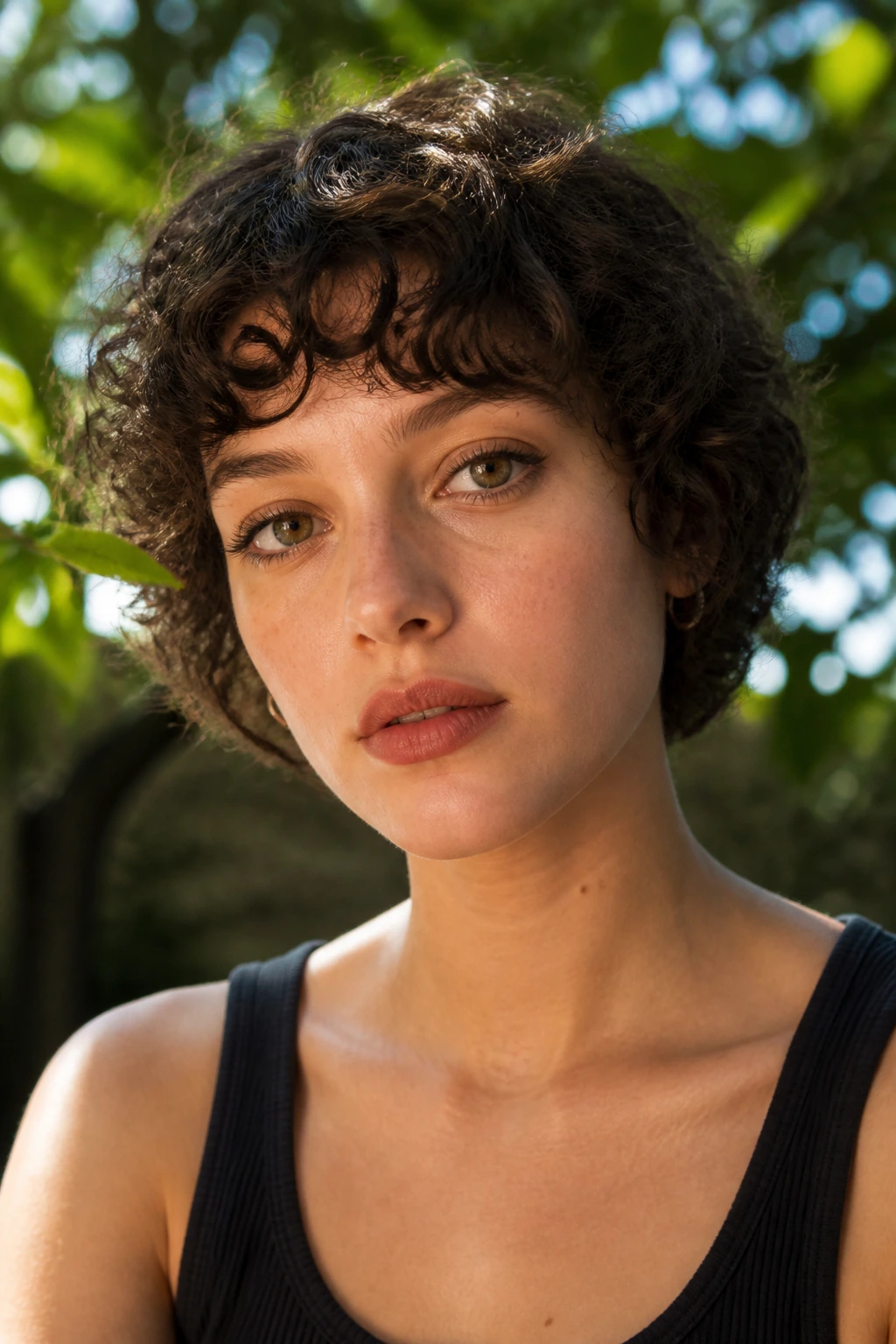
Halo bangs arc around the forehead and temple area in a way that suits curls beautifully. Instead of forcing the front to lie flat, the cut lets the curls frame the face in a soft ring.
This shape is excellent when you want fringe but don’t want a strict line. The bangs can be longer, lighter, and more forgiving because the curls create the shape for you. Dry cutting matters here too, since the curls will jump once they dry. If cut too short, the halo turns into a very different shape very fast.
It’s gentle, but not boring. That’s a nice combination.
36. Sculpted Pixie Mullet With Wispy Bangs
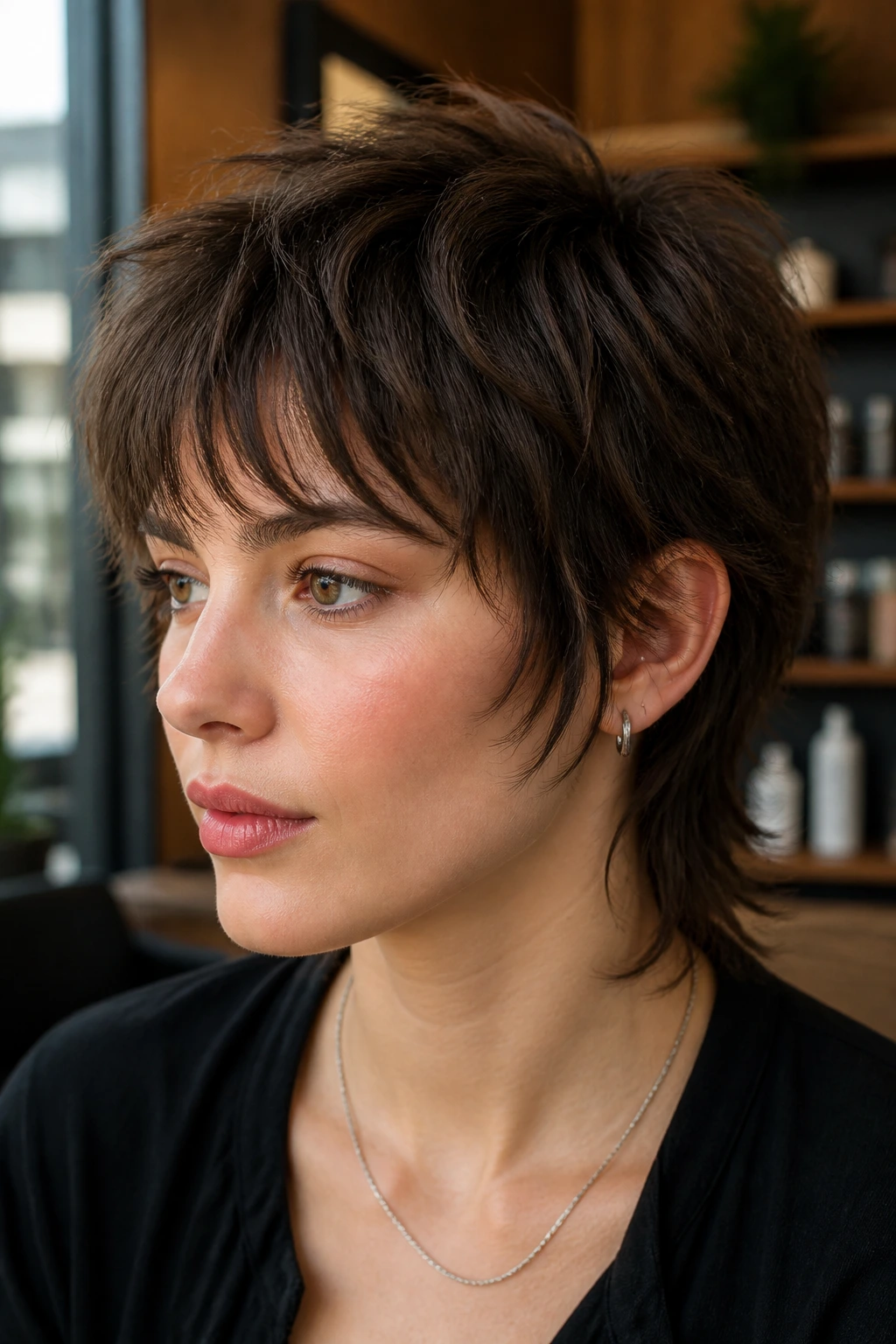
A sculpted pixie mullet sounds like a contradiction until you see it. The front stays airy with wispy bangs, the crown gets shape, and the back keeps a little length for movement.
This cut needs a steady hand. The outline should feel intentional even if the texture looks loose. Wispy bangs help keep the front from getting too heavy, and they also give the style some flexibility if you want to sweep them to one side or wear them more centered.
It’s a cut that benefits from a stylist who likes working with shape, not just trimming length.
37. Razor Bob With Piecey Curtain Fringe
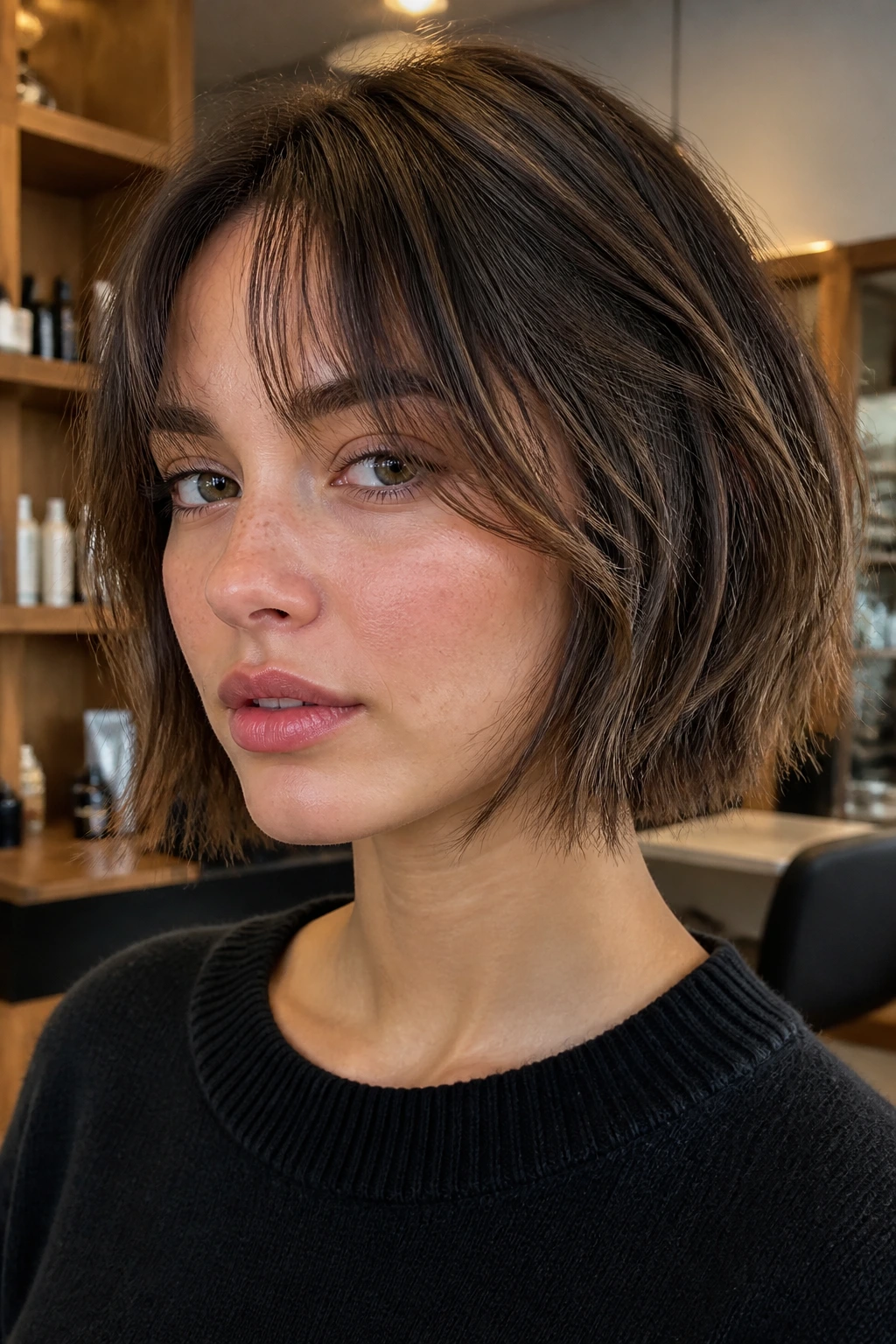
The razor bob has that clean-but-soft edge that makes short hair feel alive. Piecey curtain fringe keeps the front light and broken up, which is useful if you want something wearable without losing the alternative feel.
This is one of the easiest styles to move between dressed-up and messy. Blow it smooth for a more refined line, then rough up the fringe with a touch of paste and you’re in a different mood entirely. Thick hair often does well with this cut because the razor removes enough weight for the shape to move.
It’s a strong middle ground. Not too sweet, not too severe.
38. Messy Bowl-Bixie With Asymmetric Bangs
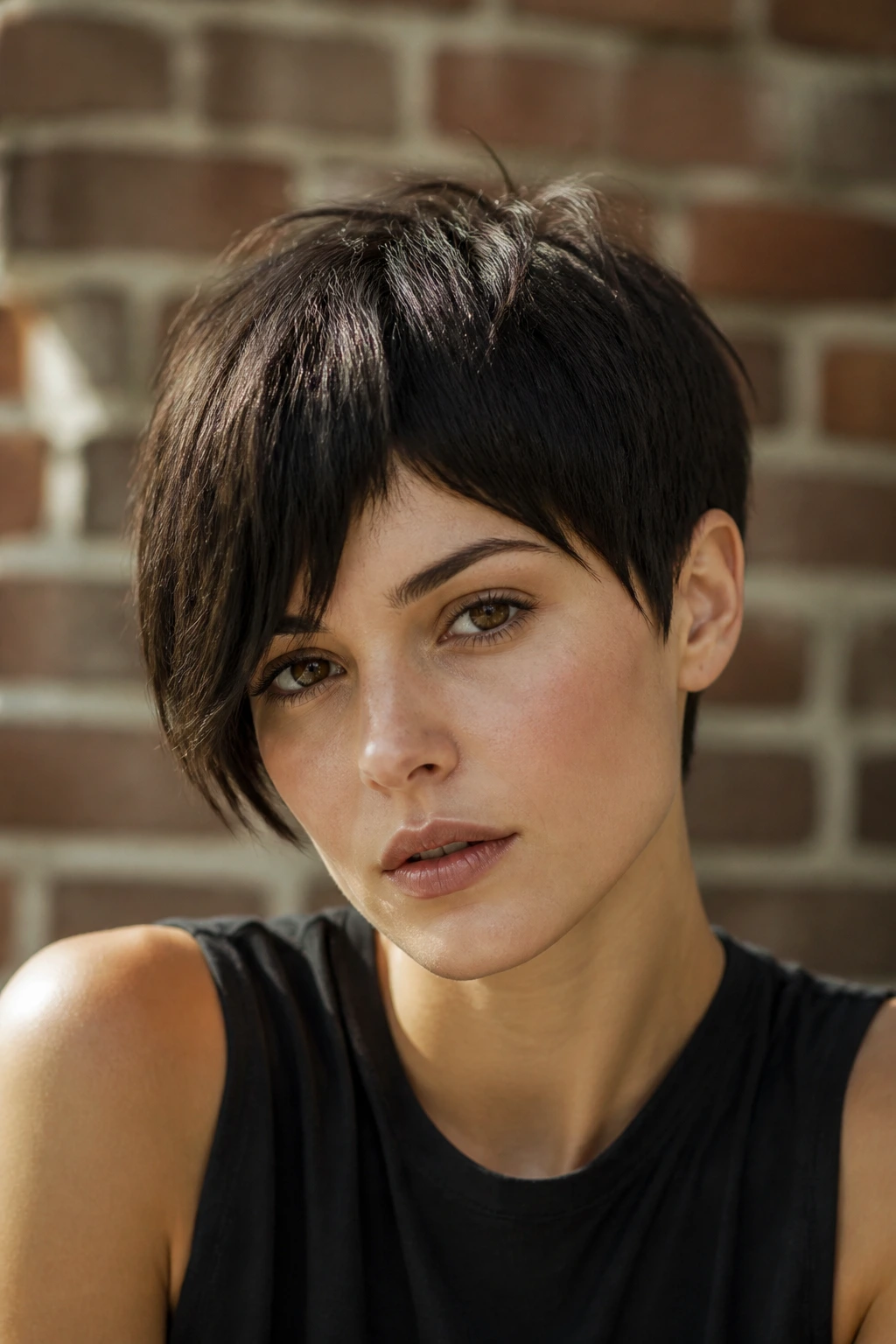
This is the most editorial of the bunch, and it knows it. The bowl-bixie shape gives you a rounded base with short length, while the asymmetric bangs break the symmetry and keep the front from looking too neat.
The best versions keep the cut playful rather than rigid. One side of the fringe can drop lower, the other can sit shorter, and the crown can stay a little rough. That imbalance is what gives the style life. It’s especially useful for people who like short hair but don’t want a clean, obedient line.
If you want a haircut that looks like it has a point of view, this is a strong finish to the list.
How Short Fringe Changes the Whole Cut
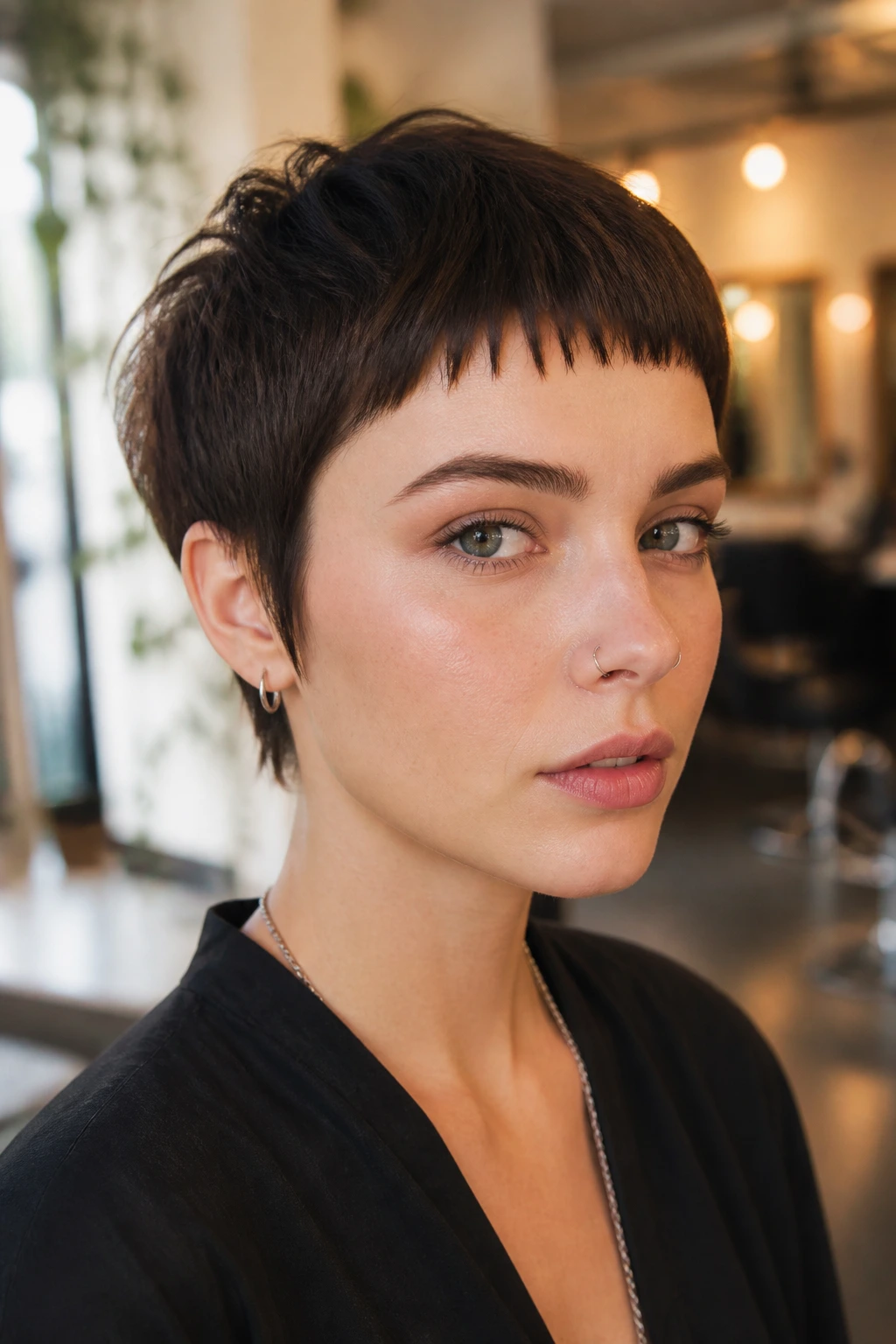
A fringe does more than cover the forehead. It changes where the eye lands, how wide the face appears, and whether a short haircut feels sharp or soft. That’s why two cuts with the same nape length can look nothing alike once the bangs are in place.
Micro fringe tends to push a cut into bolder territory. Curtain bangs open things up and make the face look less boxed in. Side-swept bangs are usually the safest entry point because they can be adjusted with a comb, a dryer, or a hairpin if they misbehave. Blunt bangs ask for confidence and regular trims. Wispy bangs buy you flexibility, but they only look good if they stay light and not stringy.
Essential Tools for Styling These Cuts
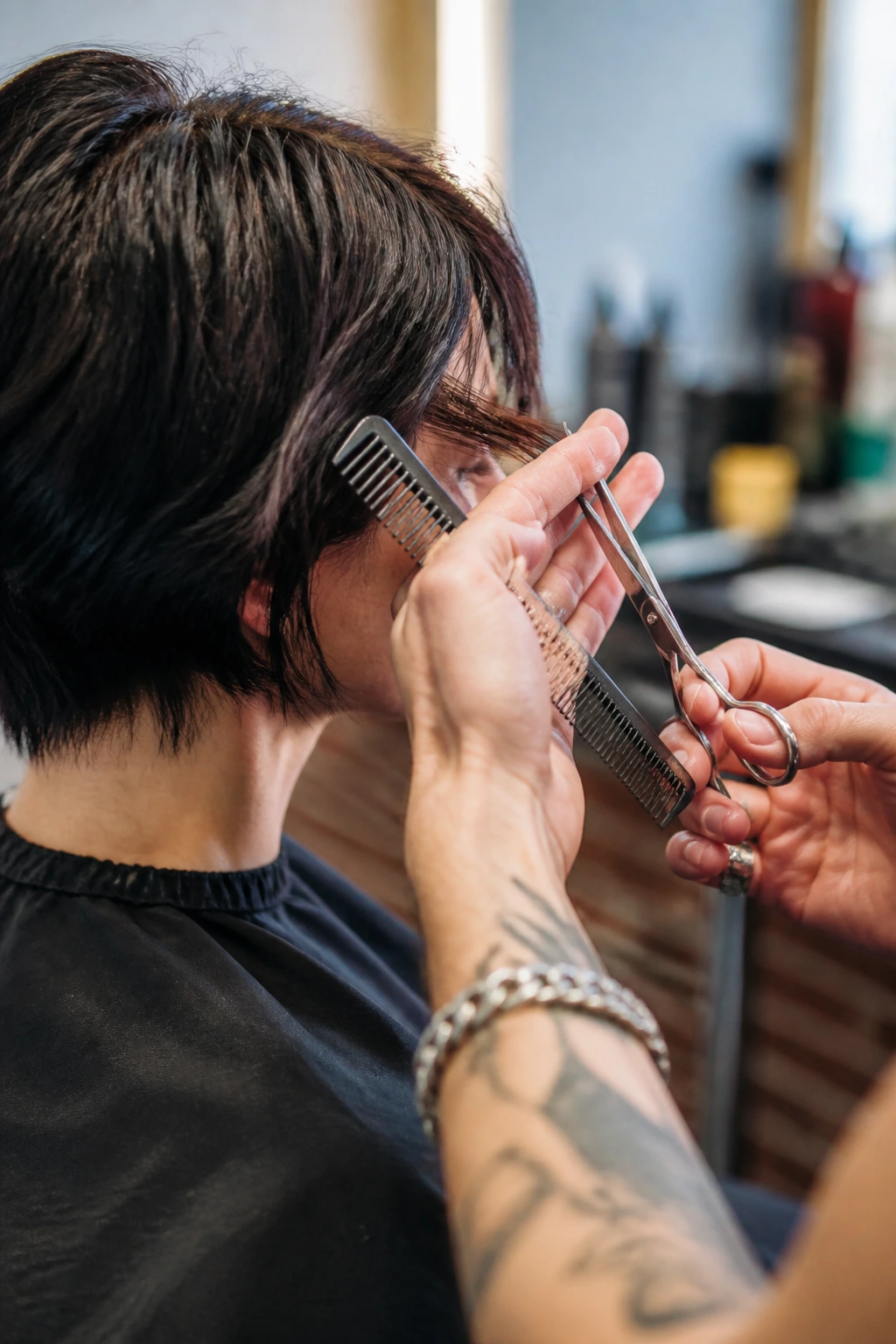
- Sharp haircutting scissors: Only for a stylist, really. Blunt kitchen scissors chew up fringe ends fast.
- Point-cutting or texturizing shears: Useful in the right hands for breaking up heavy lines without making the cut frayed.
- Blow dryer with a nozzle: Directs airflow so bangs don’t split in strange places.
- Round brush, 1 to 1.5 inches: Small enough for fringe control, large enough to bend the front without puffing it out.
- Wide-tooth comb: Helps with curl and wave patterns so you do not drag the shape out.
- Matte paste or pomade: Best for pixies, crops, and piecey fringe.
- Light mousse: Gives root support without making short hair sticky.
- Texture spray or dry shampoo: Good for second-day movement and keeping the crown from going limp.
- Diffuser attachment: Essential if you’re styling curly or wavy short cuts.
- Duckbill clips: Handy for setting the bang direction while hair cools.
- Microfiber towel or cotton T-shirt: Cuts frizz at the start of the routine.
- Flat iron: Optional, but useful for razor bobs, blunt bangs, and polished fringe lines.
Smart Consultation Notes for Your Stylist
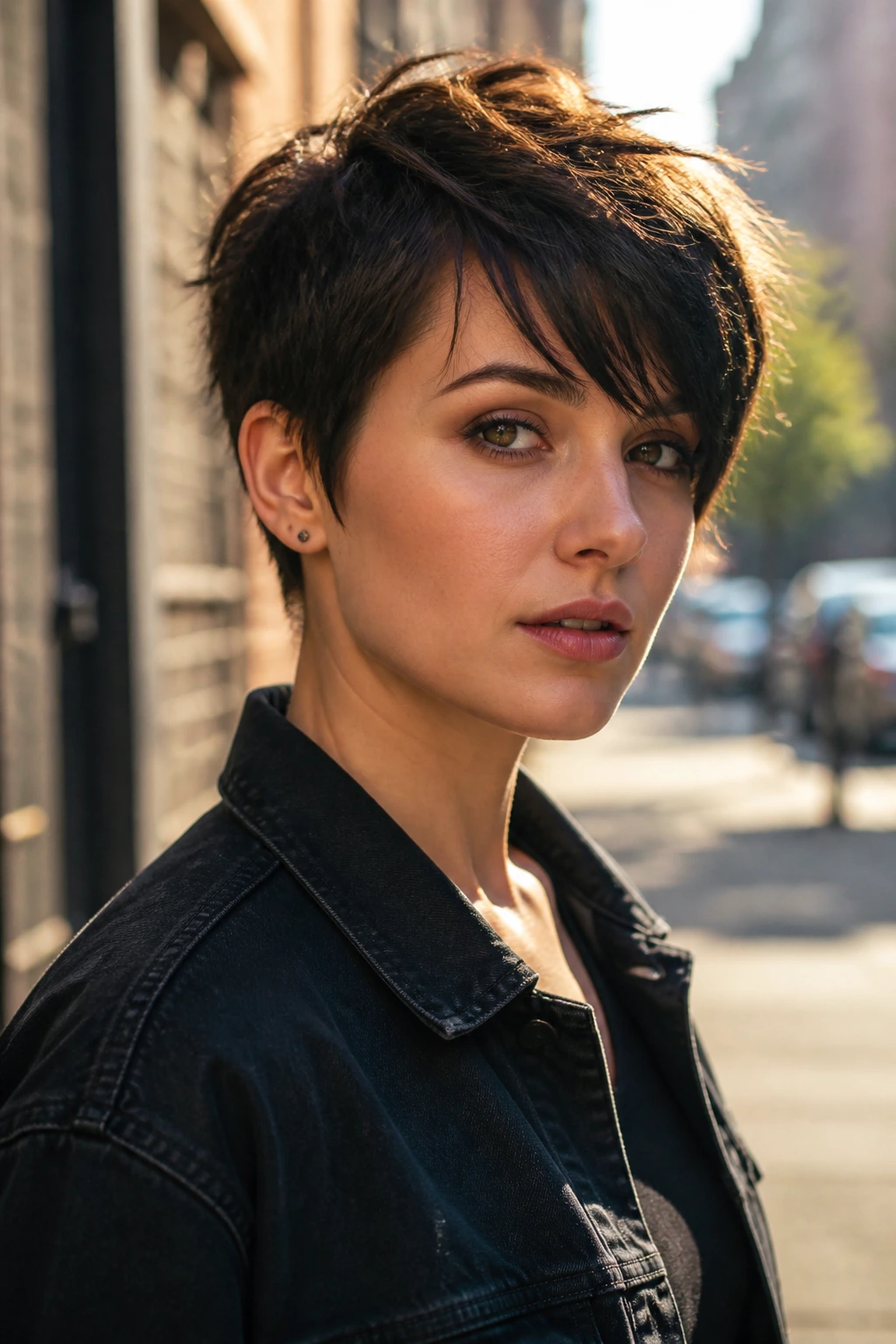
Bring more than one photo, and make sure the photos show the side view. A front shot alone lies about a short cut. The back and crown matter just as much, especially when the shape depends on stacking, undercutting, or a longer nape.
Talk about your fringe honestly. If you have a strong cowlick, say so. If your forehead is small, say so. If you wear glasses, say that too, because a bang that looks cute in a picture can sit right on the frames and drive you crazy by lunch. The same goes for hair density. Thick hair often needs weight removed underneath, while fine hair needs shape preserved so it does not collapse.
A good stylist will also ask how much time you spend on your hair. Answer plainly. A micro fringe and a razor bob can look fantastic and still be a terrible fit if you never want to blow-dry.
How to Style Them Day to Day
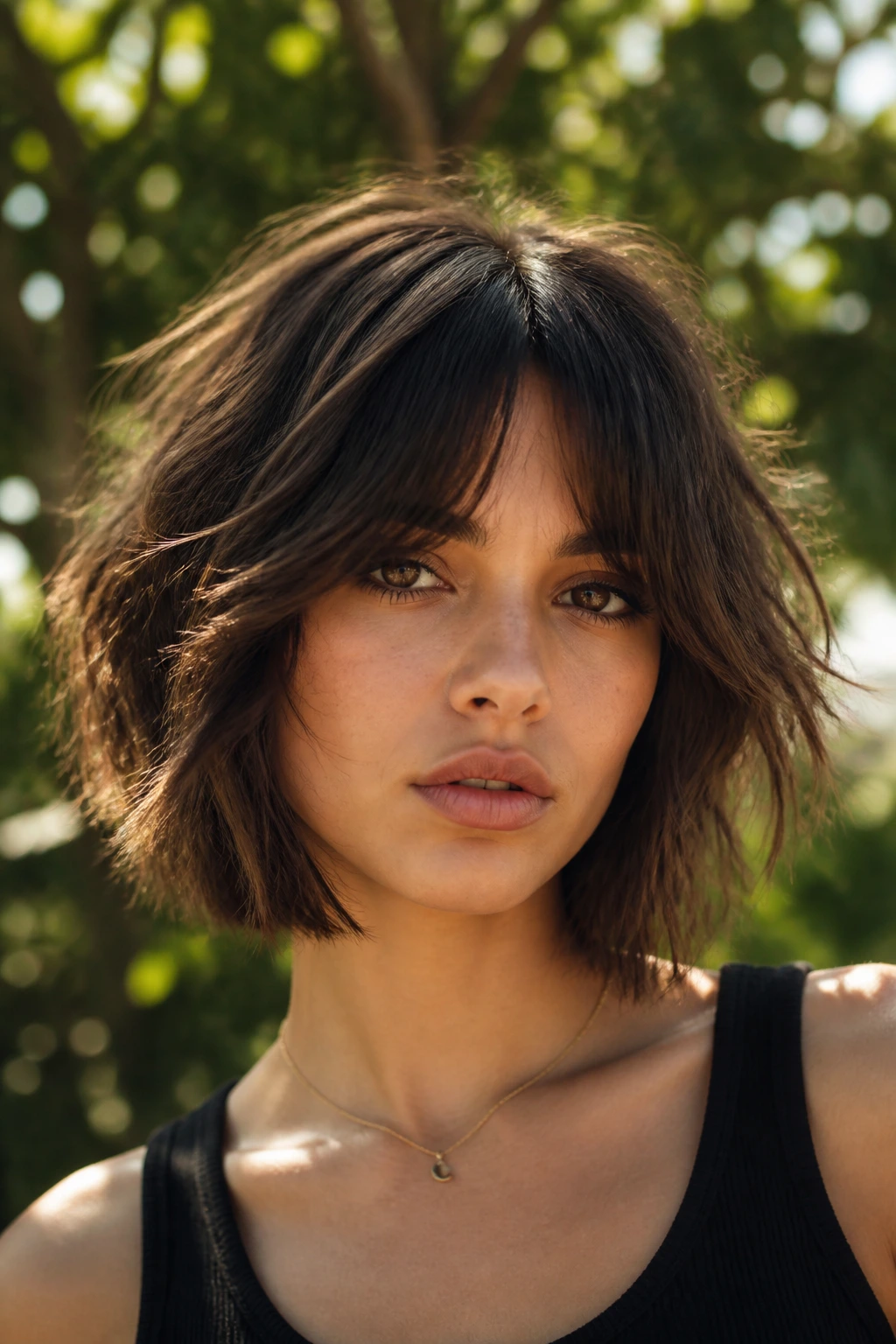
Air-Dry Routine:
Best for shags, wolf bobs, curly crops, and anything with a messy edge. Scrunch in a light curl cream or leave-in, then let the hair dry without touching it too much. Fringe may need a quick blast at the root so it does not dry in a stubborn direction.
Blow-Dry Routine:
Best for blunt bangs, French bobs, tucked-under bobs, and anything with a defined line. Blow the fringe from side to side first, then direct it where it needs to live. That little back-and-forth motion keeps the front from splitting in the middle too soon.
Quick Texture Fix:
On second-day hair, mist a little water or leave-in just on the fringe, then twist it with your fingers and let it cool. Short cuts remember shape better than people think, but they need a small reset when the front goes flat.
Product Rule:
Start with less than you think. A pea-sized amount of paste can be enough for a pixie fringe. A dime-sized amount can be too much if your hair is fine.
Additional Texture Boosters and Custom Touches

Texture Enhancement:
A small amount of sea salt spray at the roots gives short layers more grip, especially on bixies, shags, and crops. Use it before drying, not after, or it can leave the fringe feeling rough.
Customization:
If you want a softer result, ask for longer fringe edges and face-framing pieces that land at the cheekbone. If you want more edge, shorten the bangs slightly and keep the sides tighter. Tiny changes matter here.
Finish:
A dab of pomade on the tips of a pixie or micro fringe can separate the ends without making them crunchy. For bobs, a light shine serum on the very ends gives the cut a cleaner outline.
Make-It-Yours:
Fine hair usually looks best with shorter layers and lighter product. Thick hair often needs weight removed under the top layer. Curly hair should keep the fringe longer than it first seems to need. Coily hair usually benefits from shape cut dry so the bangs follow the real pattern, not the stretched one.
Maintenance, Trim, and Grow-Out Rules
Short alternative cuts with bangs look best when the fringe gets attention before the rest of the haircut does. A bang trim every 3 to 5 weeks keeps the line from dropping into your eyes or splitting into random pieces. The rest of the cut can often wait 6 to 8 weeks, depending on how tight the shape is and how fast your hair grows.
Grow-out is where these styles can actually be kind. A micro fringe becomes a short blunt fringe, then a textured brow-skimmer, then a curtain bang if you let it. A pixie can move into a bixie. A bob can soften into a lob. The only thing that causes trouble is letting the shape go too long without any cleanup. Once the fringe loses its line and the sides puff out, the whole cut feels tired.
If you sleep on your hair hard, a silk or satin pillowcase helps preserve the front. So does clipping the bangs into place before bed if they have a strong part they keep returning to.
Variations and Adaptations to Try
Softened Office Version:
Keep the same short cut, but trade micro bangs for a longer curtain or side-swept fringe. That gives you the alt shape without the sharper front line. It’s a smart move if you want the cut to read a little calmer in day-to-day life.
Curly-Friendly Rewrite:
Leave the bangs longer than you would on straight hair and cut them dry or almost dry. This keeps the fringe from springing up too high. It also preserves the cut’s shape once your curls settle.
Fine-Hair Lift Plan:
Ask for more shape at the crown and less bulk at the ends. A piecey fringe plus a tight nape can make fine hair look fuller without adding fake heaviness. Heavy layering usually backfires here.
Thick-Hair Weight Removal:
Internal layers, undercut panels, and razor work can help dense hair sit closer to the head. Without that, short alt cuts can explode sideways. The fringe should still keep enough weight to hold its line.
Grow-Out Friendly Fringe:
If you know you’ll want to change the cut later, keep the fringe long enough to tuck or part. That makes the next phase easier and saves you from an awkward in-between shape.
Common Mistakes That Flatten the Shape
Cutting the fringe too short on the first pass.
That’s how people end up with bangs that sit too high or bounce out of control. Start longer, then refine. Hair grows slower than regret.
Removing bulk in the wrong place.
If the top is thinned too much, the cut can collapse, especially on fine hair. If the sides are left too heavy, the shape puffs out at the cheeks. The fix is controlled weight removal, not random thinning.
Ignoring cowlicks and growth patterns.
A fringe that fights the hairline will split, twist, or curl away from the face. Work with the grain when you can. When you can’t, adjust the length so the bangs can be trained.
Using too much product.
Short hair shows buildup fast. What looks like definition at 8 a.m. can look greasy by noon. Start light and add only where needed.
Letting the bang area go untouched for too long.
Even when the rest of the cut still looks fine, the fringe can drag the whole style down. A tiny trim makes a bigger difference than most people expect.
Frequently Asked Questions
Do short alternative haircuts with bangs work on round faces?
Yes, but the fringe shape matters. Side-swept bangs, curtain bangs, and bottleneck bangs usually give more vertical line than a blunt mini fringe, which can widen the face if it lands too low.
Are baby bangs hard to live with?
They’re not hard in the technical sense, but they do ask for regular trims and some confidence. They show forehead shape, brow movement, and cowlicks fast, so they’re less forgiving than longer fringe styles.
Can curly hair pull off a short alt cut with bangs?
Absolutely, as long as the cut is shaped for shrinkage. Curly bangs need to be left longer than straight bangs, and dry cutting usually gives a more honest result.
What if I have a strong cowlick at the front?
Choose a fringe that can move with the pattern instead of against it. Side-swept, curtain, or see-through bangs are easier to train than a hard blunt line.
How often do I need to trim the bangs?
Most fringe styles need a cleanup every 3 to 5 weeks. Micro bangs and blunt lines can need attention a little sooner, especially if your hair grows fast.
Which of these cuts is easiest to style in under 10 minutes?
A shaggy bixie, a textured crop, or a soft bixie usually wins there. They look better with a bit of mess, so you don’t have to polish every strand into place.
Can I wear glasses with bangs?
Yes, but the fringe length should be chosen with the frames in mind. Bottleneck bangs, side-swept bangs, and longer curtain fringe usually sit more comfortably than a heavy blunt line.
How do I grow out a fringe without looking awkward?
Let the bangs lengthen into a side part or curtain shape, and keep the rest of the cut neat while the front catches up. Small trims around the edges help the grow-out look deliberate instead of abandoned.
A Fringe That Fits Your Face
The best short alternative haircuts with bangs do one thing especially well: they make the front of the haircut feel like part of the design, not an afterthought. That’s the difference between a short cut that looks chopped and one that looks chosen.
If you want the cleanest result, pay attention to the fringe first, the crown second, and the nape last. That order matters more than people think. Get the bangs wrong, and the whole shape feels off. Get them right, and even a tiny crop can carry a lot of personality.
A good short cut should feel like it belongs to your head the moment you see it in the mirror. When the fringe lands in the right place, that happens fast.
