



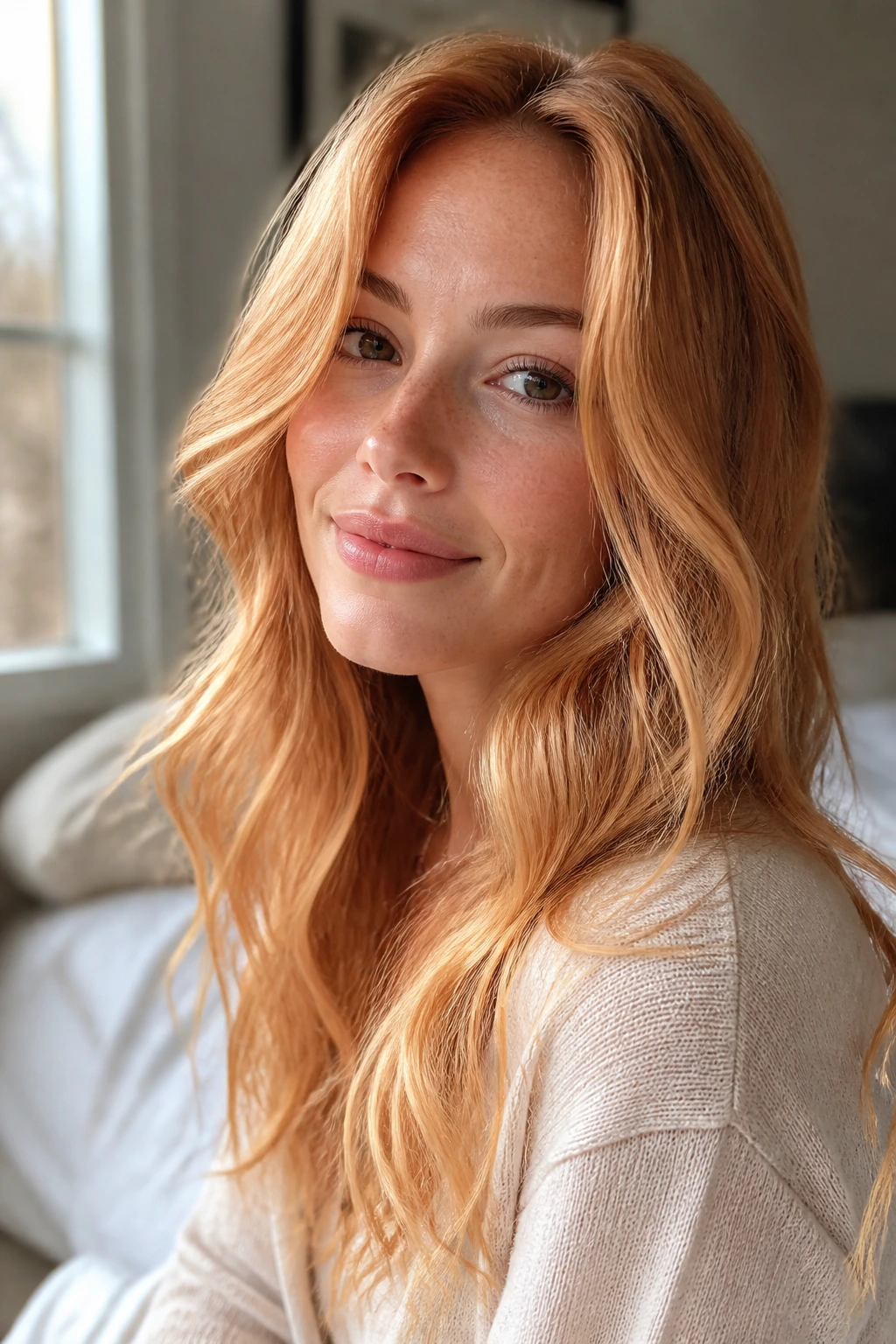
Strawberry blonde hair color ideas work because they sit in that narrow, interesting strip between blonde and red where the eye keeps changing its mind. In one kind of light, the hair looks peachy and soft; in another, it leans copper and warm; on a different base, the same family of color can turn creamy, rosy, or almost honeyed. That flexibility is why the shade keeps showing up in salons, and also why it goes sideways so fast when someone skips the boring part — the base level, the undertone, the porosity, the toning plan.
The best versions never look like one flat color dumped on the head. They have a little movement, a little sheen, and enough depth to keep the blonde from going chalky or the red from going loud. I’ve always thought that’s the real charm here. Strawberry blonde can look expensive and airy at the same time, which is a harder trick than people give it credit for.
These strawberry blonde hair color ideas run the whole range, from barely-there apricot glosses to deeper jammy blends that flirt with auburn. Some are low-maintenance, some need gloss refreshes, and some ask for a fuller lightening service, but they all rely on placement and undertone instead of one blunt formula. That’s where the good looks live.
Why These Strawberry Blonde Hair Color Ideas Earn Their Place
-
They give you warmth without trapping you in copper: A good strawberry blend can keep the hair looking soft in shade and bright in daylight, which is a lot more useful than a single flat red tone.
-
They work with different starting levels: On a level 8 blonde, a gloss can be enough; on a level 6 brunette, you usually need a lift plan first, and the shade list below makes that split obvious.
-
They make grow-out less annoying: Root shadows, balayage ribbons, and babylights keep the line at the scalp softer, so you are not staring at a hard stripe three weeks later.
-
They suit straight, wavy, and curly textures: The same strawberry formula behaves differently on each texture, which is why placement matters more than the photo filter does.
-
They let you steer the mood: A peach-leaning strawberry reads sweet and airy, while a cinnamon or jam version lands richer and more serious. Same family. Different attitude.
How Strawberry Blonde Hair Color Ideas Change on Different Bases
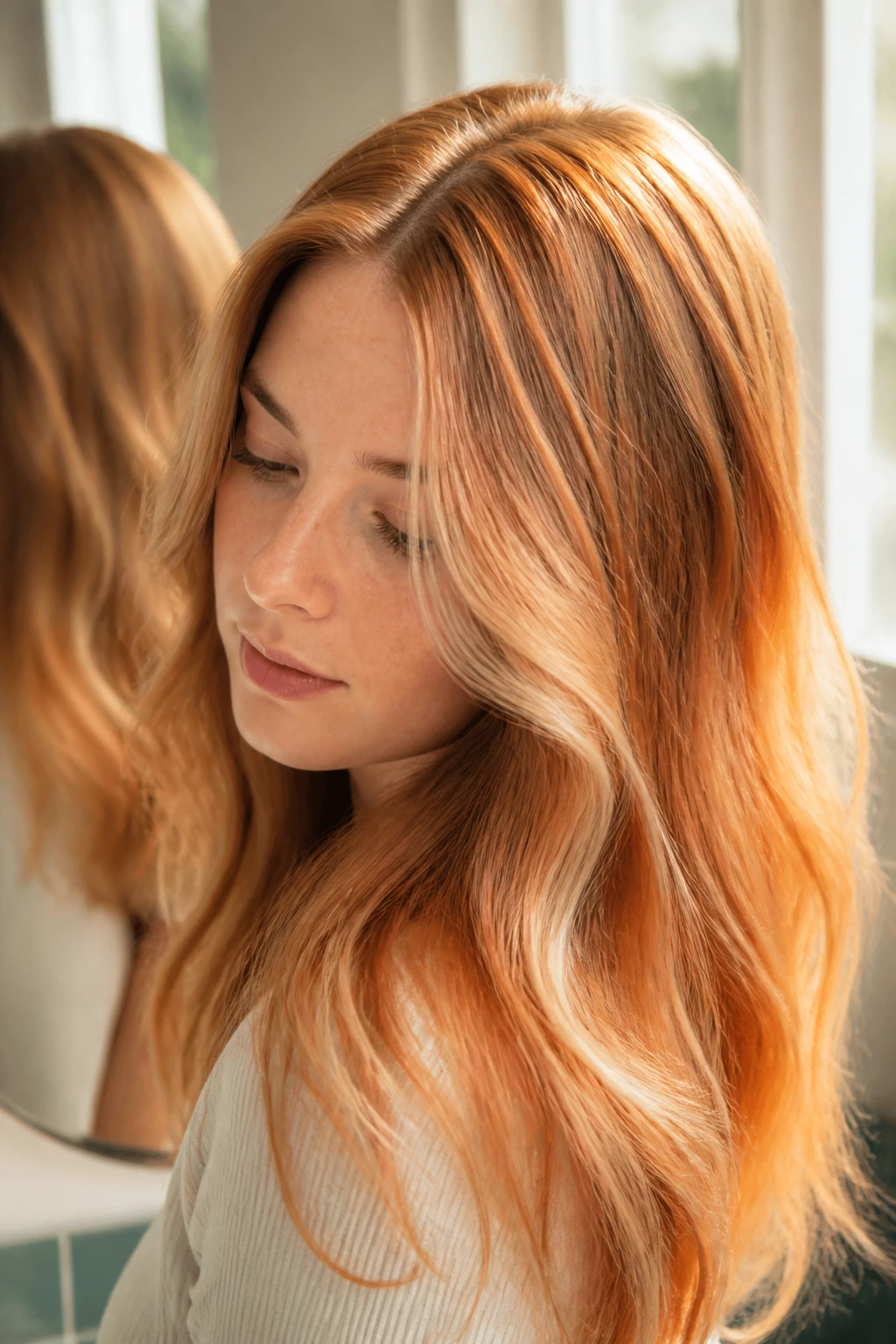
A lot of people bring in a photo and assume the shade is one thing. It isn’t. On pale blonde hair, strawberry blonde can look like a thin veil of apricot or rose gold laid over a very light canvas. On darker blonde or light brown hair, the same family of color gets deeper, with more copper and a stronger red read because the base underneath is doing half the work.
Porosity matters just as much. Hair that has been lightened before tends to grab red pigment fast, and red is the first thing to look strong when the hair is porous. That is why a glossy strawberry on overprocessed ends can turn louder than expected, while the same formula on healthy virgin hair looks softer and more even. If your lengths are thirsty, you usually want a gentler demi-permanent gloss, not a hard charge of pigment.
There’s also the question of undertone. Yellow-gold bases push strawberry toward honey or peach. Beige bases make it feel more champagne. Warm brunettes with orange undertones can wear a cinnamon strawberry that would look too intense on a cool blonde. That’s the part people miss when they ask for “strawberry blonde” as if it were one fixed color. It’s a family. The exact note changes with the hair underneath.
1. Soft Apricot Melt
Soft apricot sits on the quieter end of strawberry blonde, and that is exactly why I like it. The color looks like pale copper softened with cream — not orange, not pink, just a warm apricot veil that catches the light without shouting for attention. On a level 8 blonde base, a demi gloss in apricot-gold tones keeps the hair bright but gentle.
The best thing about this version is the grow-out. It fades into a warm blonde rather than a sharp red band, which means you can stretch appointments a little longer if your hair doesn’t pull too porous. Ask for a root tap one shade deeper than the mids if you want the color to look polished instead of washed out at the scalp.
Best for: natural blondes, fine hair, and anyone who wants warmth without a heavy copper read.
Ask for: apricot-gold gloss, soft root shadow, and translucent ends.
Skip if: you want a bolder red-blonde contrast.
2. Sunlit Strawberry Balayage
This is the version that looks like the sun did the work and then politely left. Hand-painted ribbons of strawberry gold sit over a blonde base, so the warmth shows up in patches instead of one solid sheet. The result is breezy and very dimensional, especially on wavy hair where the lighter pieces move around as you turn your head.
Balayage is a smart choice if you hate the obvious grow-out line. The darker root area keeps the scalp grounded, while the painted pieces near the mids and ends let the strawberry tone feel scattered and soft. I’d ask for a mix of copper-gold and golden-rose gloss on the lighter sections, because a single toner can make the whole thing look too uniform.
Best for: shoulder-length cuts, loose waves, and low-maintenance color lovers.
Ask for: hand-painted ribbons, soft lift through the mids, and a warm gloss.
Watch for: very yellow blonde underneath; it can push the shade toward peach unless the toner is balanced.
3. Rose Gold Strawberry Blonde
Rose gold strawberry blonde is the prettiest when it stays just a little restrained. The pink note should feel like it lives inside the blonde, not sitting on top of it like makeup. On level 9 hair, this can look airy and glossy, almost like blush reflected in sunlight.
The trick is restraint at the bowl. Too much pink and you’ve got pastel rose; too much copper and the rose disappears. I prefer this look with a soft beige base and a tiny bit of warmth through the ends, because that keeps it from going too sweet. It also looks especially good on straightened hair where the shine shows the rose reflect clearly.
Best for: cool-to-neutral blondes who want warmth without full copper.
Ask for: a sheer rose-gold gloss, not an opaque pink deposit.
Keep in mind: it fades faster than copper-heavy versions, so gloss refreshes matter.
4. Copper Whisper Highlights
Not every strawberry blonde needs to be loud. Thin copper whisper highlights tucked through a brunette or dark blonde base can create that faint red-gold sparkle that reads strawberry from a few feet away and more copper when you’re close. It’s subtle in the best way.
This works because the highlights are narrow and irregular. You’re not painting the whole head red; you’re letting copper sit in fine strands so the eye reads movement. On a cut with layers, those highlights break up the dark base and stop it from feeling heavy. If your hair is very dark, the copper needs a planned lift first or it will simply sit on top and look flat.
Best for: brunettes who want a small warm shift.
Ask for: fine copper foils, a soft gloss, and a root that stays deeper.
Styling note: a loose bend shows the highlight pattern better than pin-straight hair.
5. Honey-Drizzled Strawberry Blonde
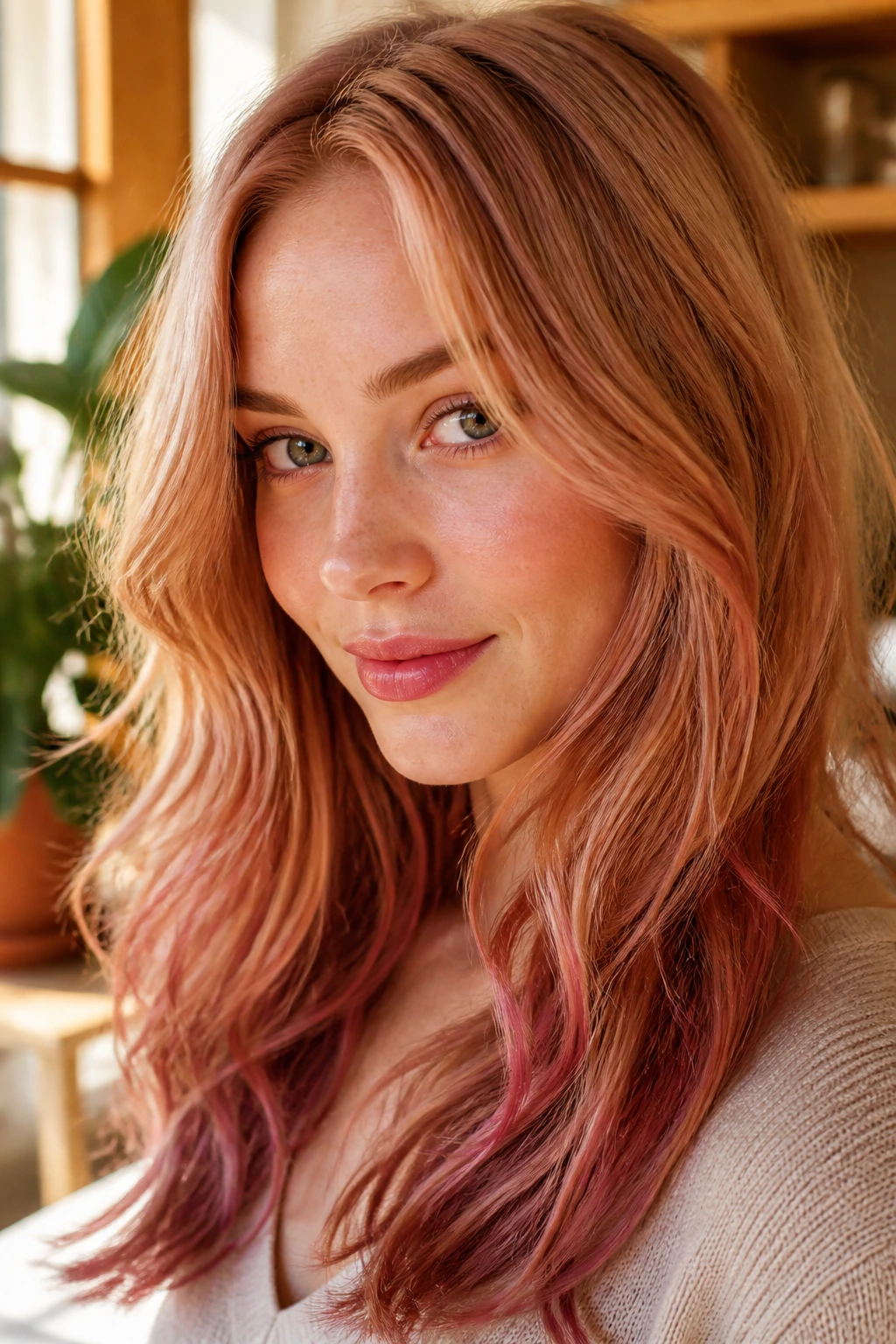
Honey drizzled strawberry blonde leans warm and golden before it leans red, which makes it easier to wear than some of the more copper-forward looks. The color has that buttery blonde base, but the ends carry a faint berry note that keeps it from becoming plain honey blonde. It’s one of the easiest shades to pair with natural makeup.
This is a good pick when you want to soften strong red undertones in the hair rather than emphasize them. A gold-beige gloss with just enough copper to keep the shade from turning dull usually does the trick. On fine hair, it can add the illusion of thickness because the mix of tones catches the light in a broken, layered way.
Best for: pale brunettes and light blondes wanting warmth first, red second.
Ask for: gold-beige ribbons with a whisper of copper at the ends.
Pro move: keep the root a shade deeper so the honey doesn’t look brassy.
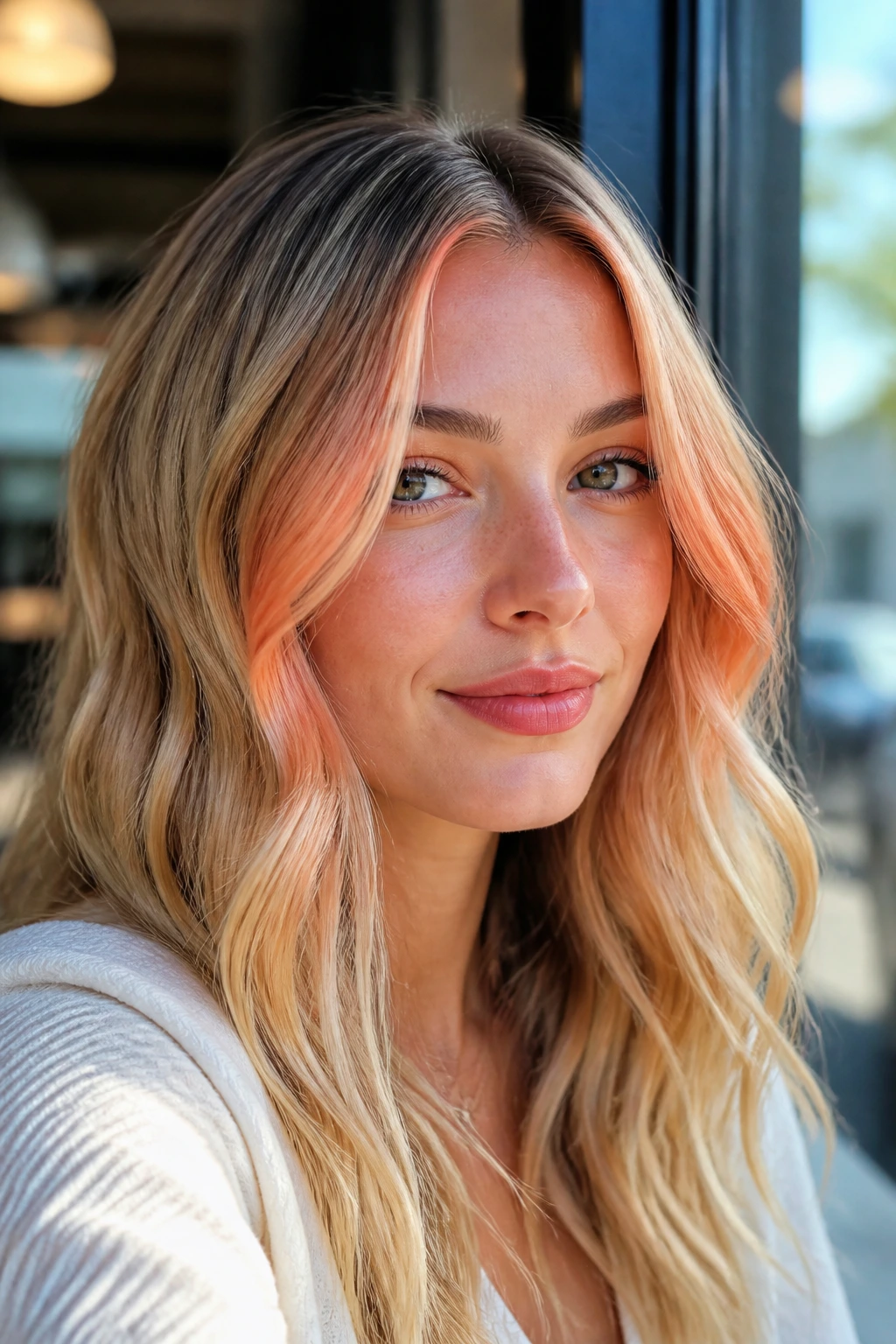
6. Peach Face-Framing Pieces
A bright face frame changes everything. Two or four peachy strawberry pieces around the hairline can wake up the whole face, even if the rest of the hair stays softly blonde. It’s the kind of color that looks deliberate with very little overall commitment.
I like this look for people who are nervous about going full strawberry. The face-framing pieces give you enough warmth to test the water, and if you wear a middle part or soft curtain bangs, the color lands right where it matters most. Ask for the pieces to sit one to two tones brighter than the surrounding hair so they read as an accent, not a mistake.
Best for: first-timers and people who want a lighter salon bill.
Ask for: peach-copper money pieces with a blonde backdrop.
One warning: if your base is already very warm, keep the peach lighter or it can drift orange.
7. Rooted Strawberry Lob
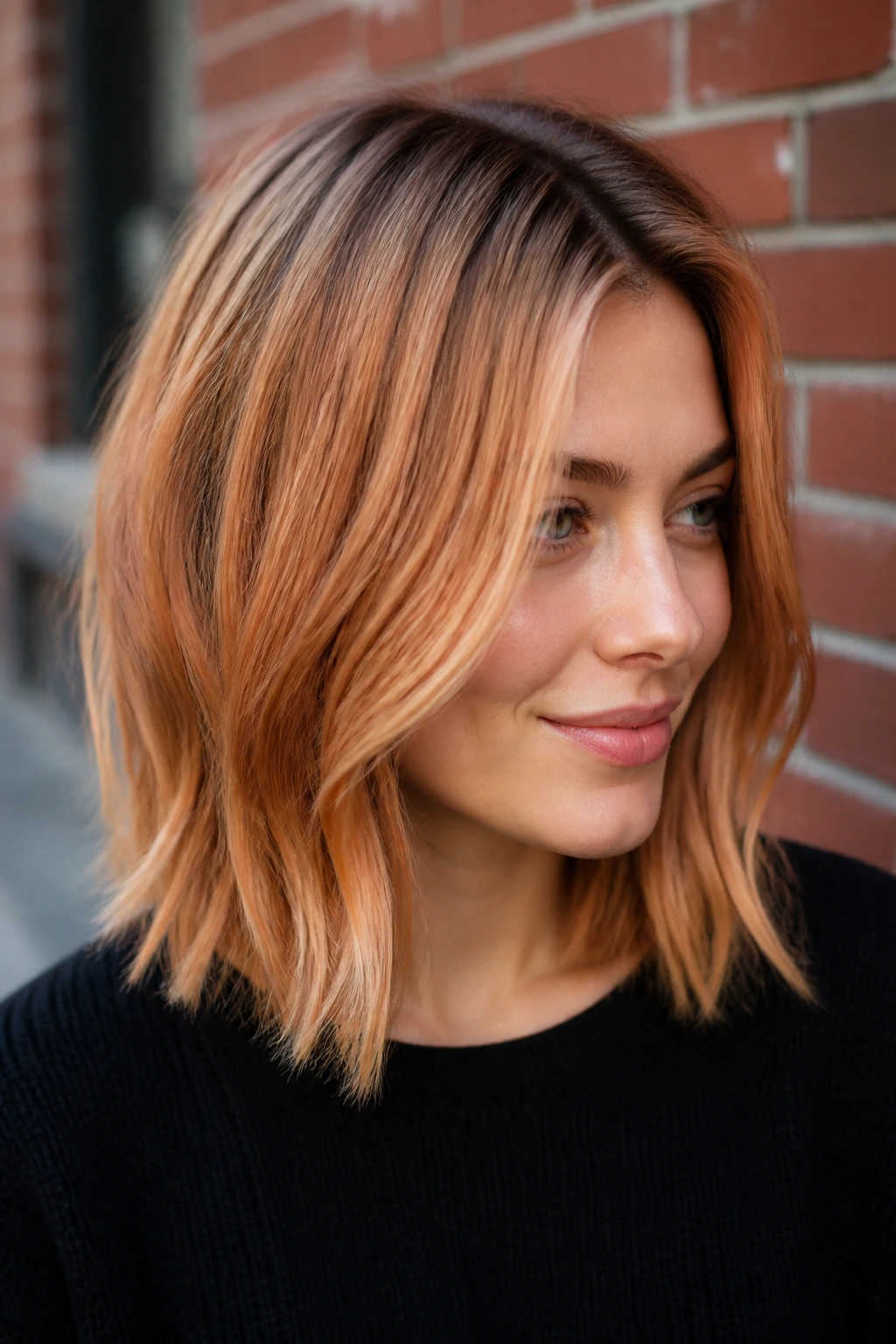
A collarbone lob with a shadow root is one of the most practical ways to wear strawberry blonde. The cut gives the color enough surface area to show off, and the root shadow keeps the whole thing from looking too freshly dyed on day one. It’s neat. It’s wearable. It grows out without drama.
The rooted version is especially useful if your natural color is darker than your ends. The scalp area stays a little deeper, while the mids and ends carry the strawberry warmth in a soft gradient. If you like straight styling, this one reads clean and expensive; if you wear waves, the layered lightness shows up even more.
Best for: busy schedules and shoulder-length hair.
Ask for: a root smudge, warm midlength ribbons, and a glossy finish on the ends.
Skip if: you want a bright, all-over red-blonde impact.
8. Champagne Strawberry Glaze
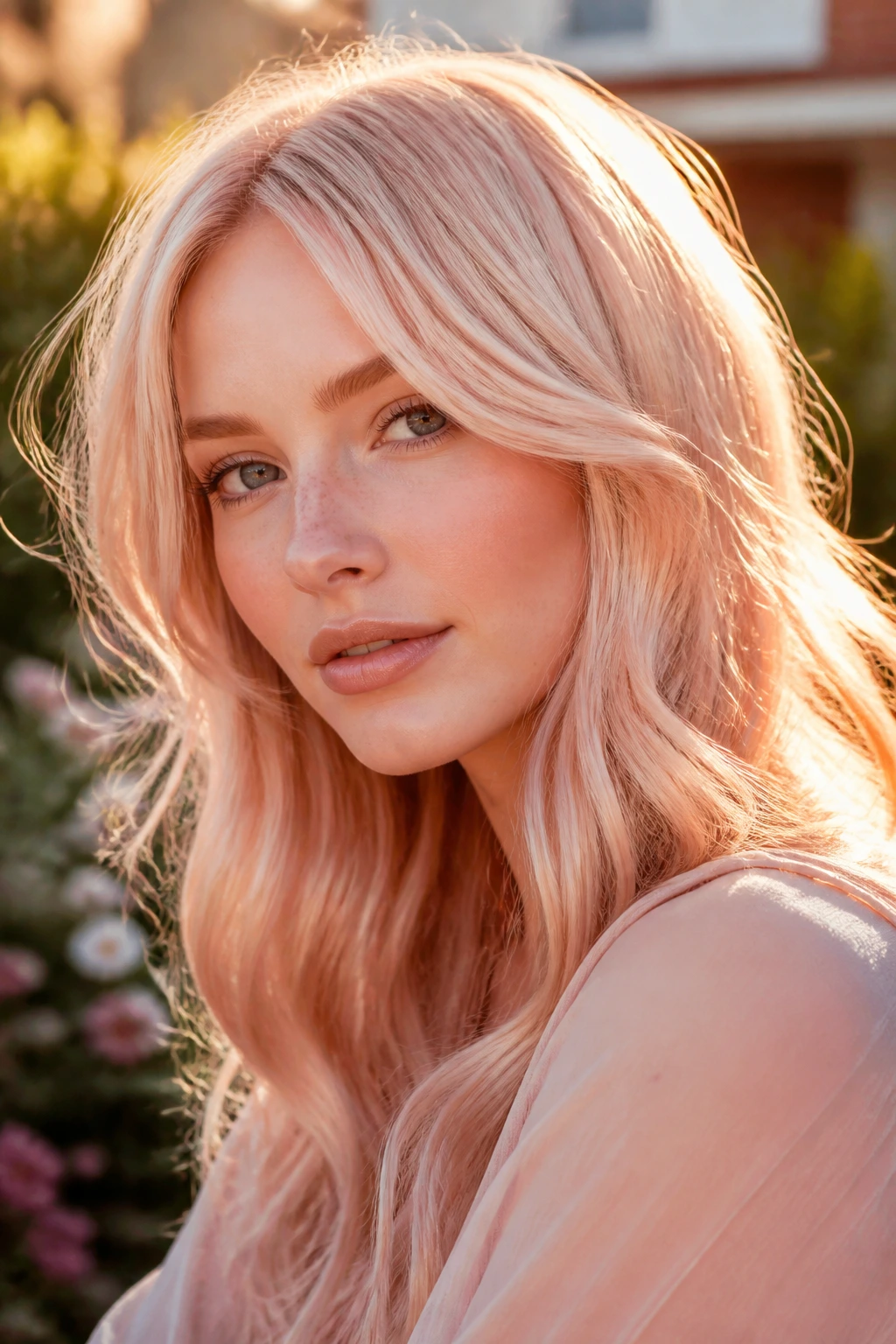
Champagne strawberry blonde has the polish of a salon gloss done properly. The shade is pale and refined, with just enough pink-gold warmth to keep the blonde from looking icy or flat. It reminds me of silk, honestly — smooth, light-reflective, and a little cooler than the apricot and honey versions.
This color works best on hair that already lifts cleanly to a pale blonde. You do not want to fight brassiness with this look; you want to balance it. A champagne gloss with a small copper note gives the hair a soft fizz instead of a straight red cast. If your hair is porous, the gloss may need to be weaker on the ends or you’ll lose the champagne and get an overcooked strawberry tint.
Best for: pale blondes who want warmth without orange.
Ask for: champagne-beige gloss with a pink-gold reflection.
Style tip: a smooth blowout shows this shade better than beach waves.
9. Ribboned Strawberry Dimension
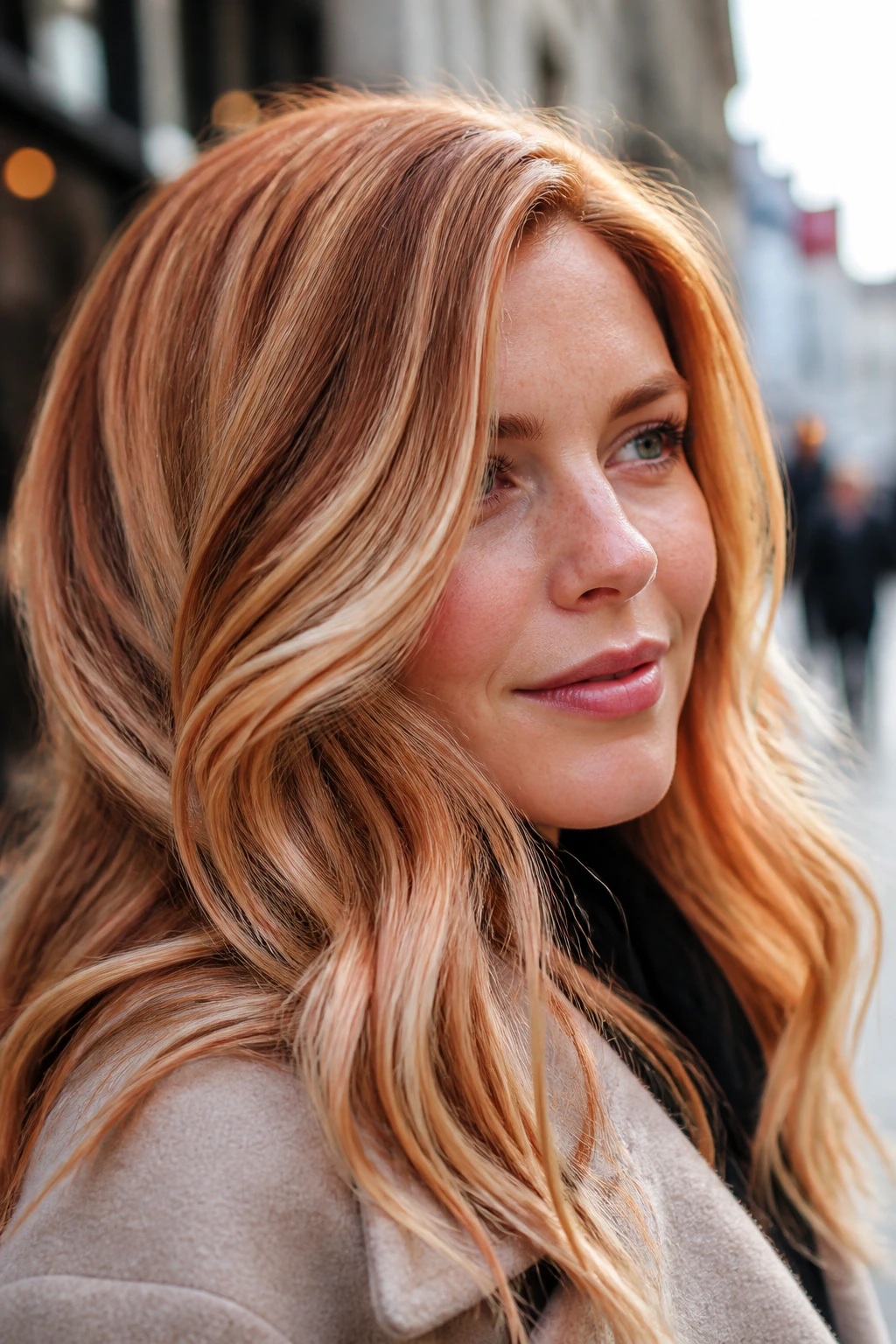
This is the version I’d point to if someone says their hair always looks flat after coloring. Ribboned strawberry dimension uses sliced highlights and lowlights to create strands that alternate between warm blonde, copper, and soft beige. The eye reads movement before it reads the exact color.
That extra depth matters. Strawberry blonde can go one-note fast when every piece is the same tone, and then the hair starts looking like a single wash of pigment instead of a live color. Ask for narrow ribbons through the top and a few deeper pieces underneath so the light hits something different every few inches. On layered hair, it’s especially good.
Best for: medium to thick hair that can hold visual texture.
Ask for: ribboned highlights, a soft lowlight, and a warm glaze on top.
Tip: don’t flatten this with heavy oil before styling; the dimension disappears.
10. Golden Strawberry Blowout
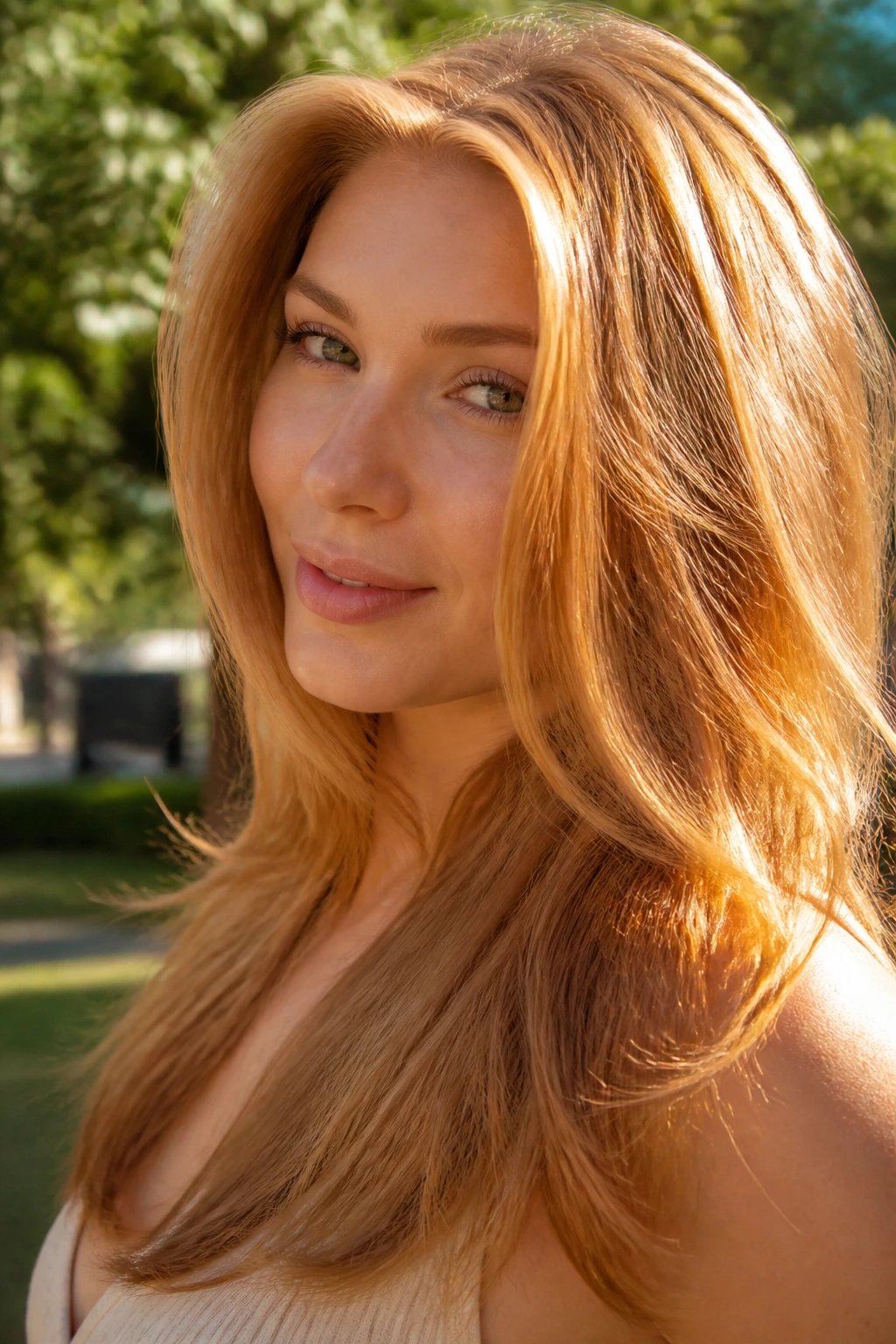
Golden strawberry blonde is the friendliest version of the shade, and a glossy blowout is the best way to wear it. The warmth sits more in the gold family than the red family, so the hair looks sunny, smooth, and bright rather than overtly copper. When the ends flip outward a bit, the color catches beautifully around the face.
This is the shade for someone who wants strawberry energy without a lot of red maintenance. It’s also a smart choice for cooler months if your skin tends to look dull against ash blonde. A golden strawberry glaze over level 8 or 9 hair can make the whole head look thicker because the light bounce is stronger than with a flat beige blonde.
Best for: straight hair, round brushes, and soft layers.
Ask for: golden-copper gloss with a clean, shiny finish.
Watch for: too much yellow in the base; that pushes the whole look out of strawberry territory.
11. Strawberry Blonde Bob with Soft Bend
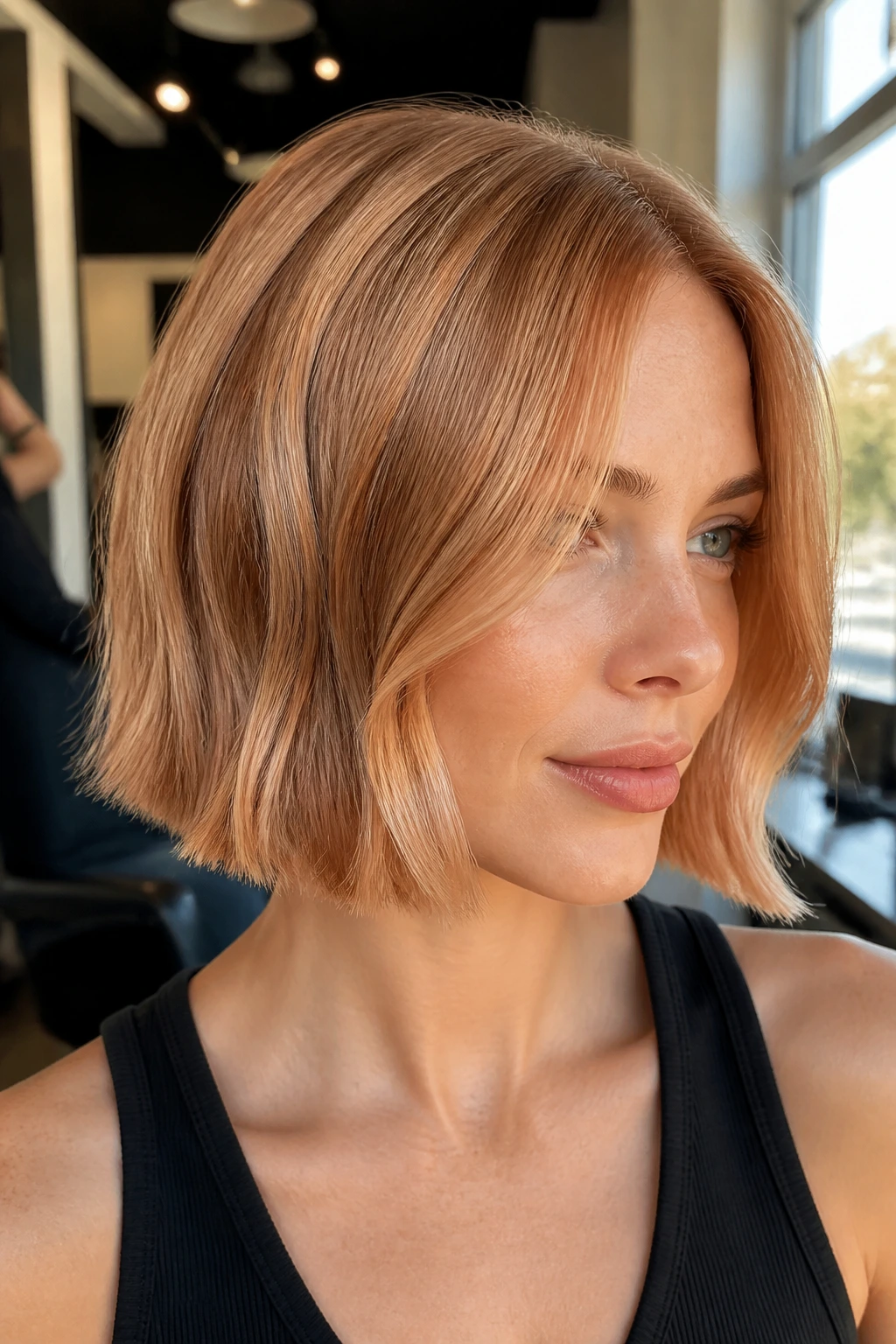
A bob gives strawberry blonde a sharper edge. The cut is blunt enough to keep the color crisp, but the soft bend in the styling stops it from looking severe. I like this version because the ends show the warmer color most clearly, and every wave creates another little panel of light.
On a bob, I’d keep the strawberry shade controlled rather than saturated. Too much red on a blunt cut can feel heavy fast. A pink-copper gloss with brighter face pieces usually does more than a full red blanket. If your hair is fine, the blunt line at the ends makes the color feel denser.
Best for: jaw-length to collarbone bobs.
Ask for: a soft copper gloss, face-framing brightness, and clean ends.
Styling note: a one-inch bend through the midlengths brings the color to life.
12. Pixie with Warm Strawberry Gloss
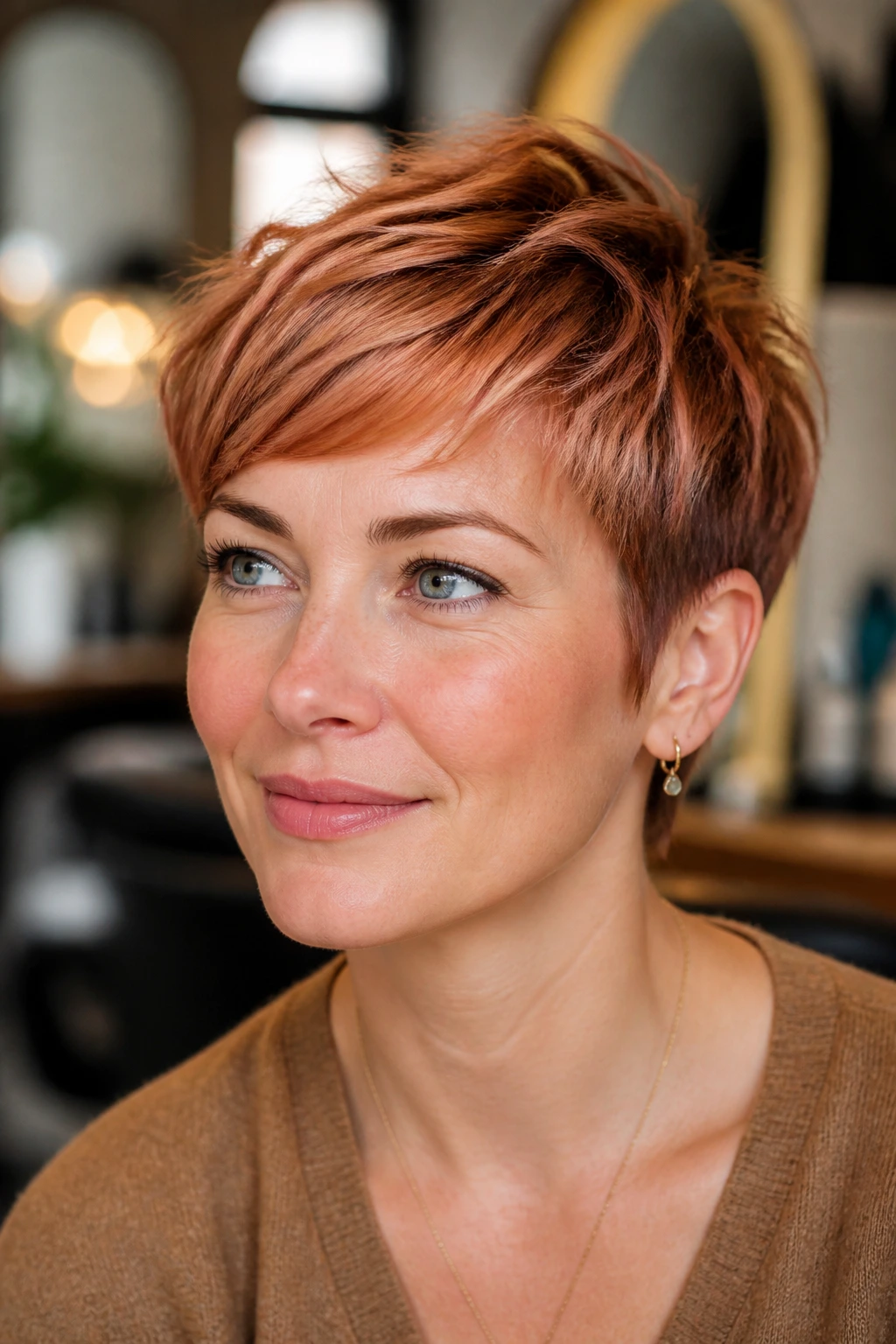
Short hair can wear strawberry blonde better than people expect. A pixie with a warm strawberry gloss picks up every bit of texture around the crown and fringe, which makes the shade feel lively instead of flat. Because there’s less hair overall, the color reads more as finish than as a blanket.
This is one of the most low-fuss ways to wear the family of color if you don’t mind regular salon visits. The cut itself stays visible, so the tone doesn’t need to do all the work. A gloss in copper-gold with a soft rose note usually looks best, especially if the sides are a shade deeper than the top. That tiny contrast keeps the crop from turning one-dimensional.
Best for: pixie cuts, textured crops, and strong bone structure.
Ask for: warm strawberry gloss, a slightly deeper side panel, and shine.
Keep in mind: short hair exposes color fade faster, so gloss timing matters.
13. Pastel Strawberry Wash
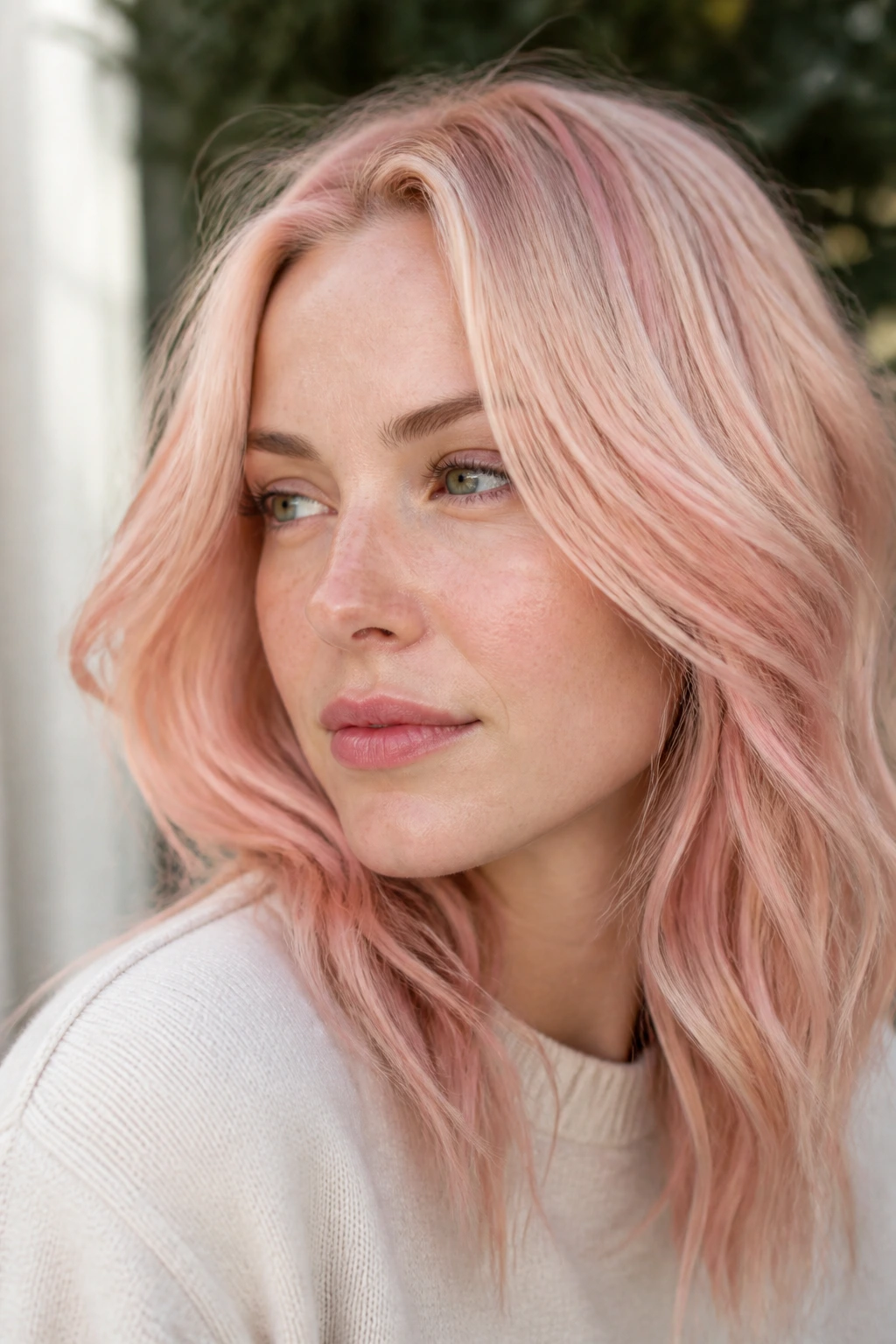
Pastel strawberry blonde is for when you want the color to whisper instead of speak. The result sits closer to blush than copper, and on very light hair it can look like a faint peachy haze that softens the whole head. It’s delicate, and it can look expensive when the base is clean.
The downside is obvious: pastel warmth fades fast, and porous ends may grab it unevenly. Still, if you love airy color and don’t mind refreshing it, this is one of the prettiest ways to wear the family. Ask for a translucent deposit rather than a solid toner. The hair should still look blonde through the warmth, not painted over.
Best for: pre-lightened blondes.
Ask for: a sheer blush-peach gloss, not a heavy copper toner.
Note: this version needs color-safe washing and a gentle hand with clarifying shampoo.
14. Sunset Melt Strawberry Blonde
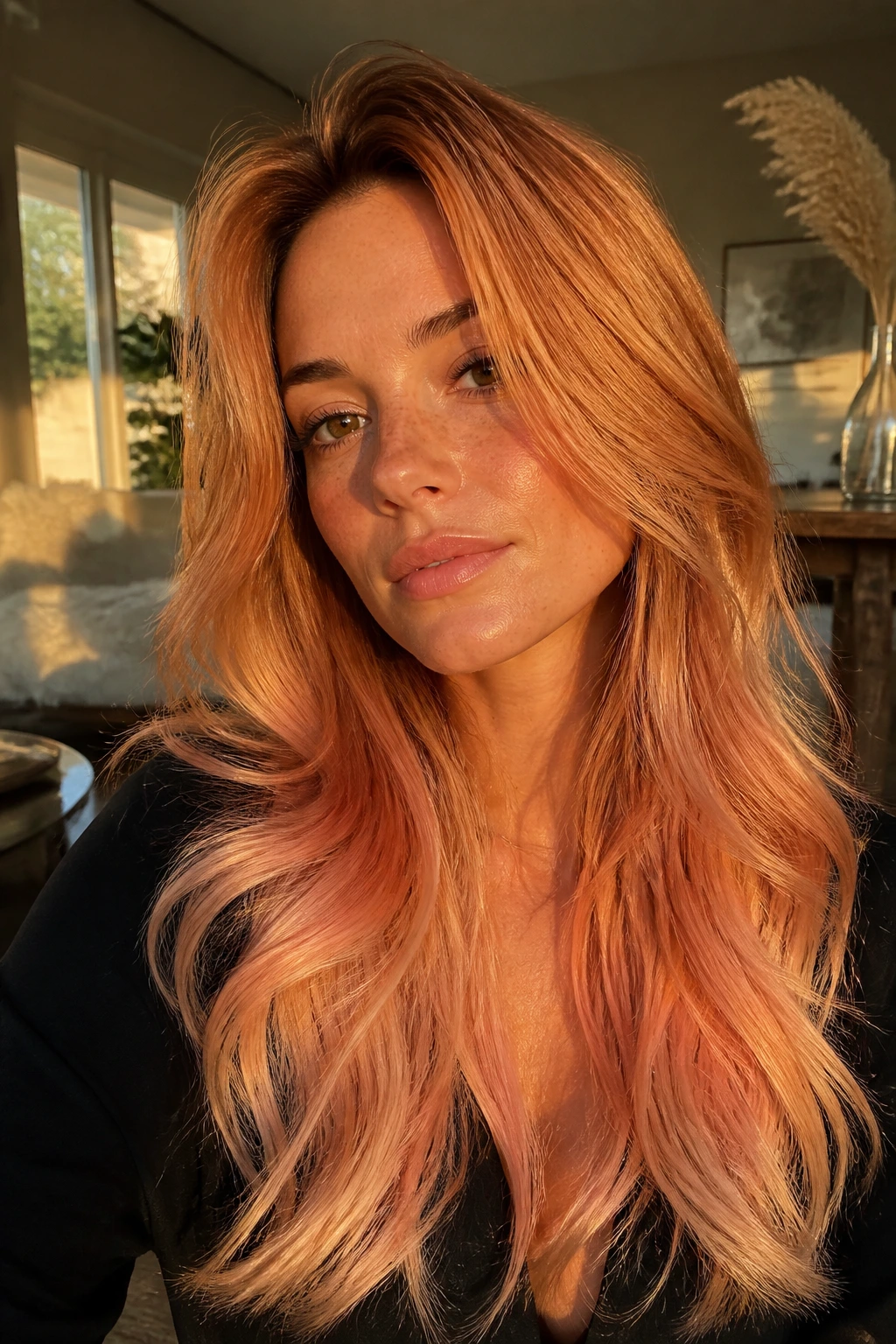
A sunset melt gives you that orange-gold-to-strawberry gradient people try to fake with filters. The roots usually stay deeper and softer, the mids turn warm amber, and the ends pick up a richer red-gold note. It’s a more obvious look, and that is the point.
This shade works because the color shift is gradual, not chopped into sections. The melt keeps the eye moving, which is why it looks especially good on long layers and curled ends. If you want this to stay elegant instead of costume-y, the red should live mostly in the lower half of the hair, with the top staying warm blonde and rooted. That little restraint keeps it wearable.
Best for: long hair, waves, and layered cuts.
Ask for: amber root depth, apricot mids, and strawberry ends.
Avoid: placing the strongest red too high near the scalp.
15. Money Piece Strawberry Blonde
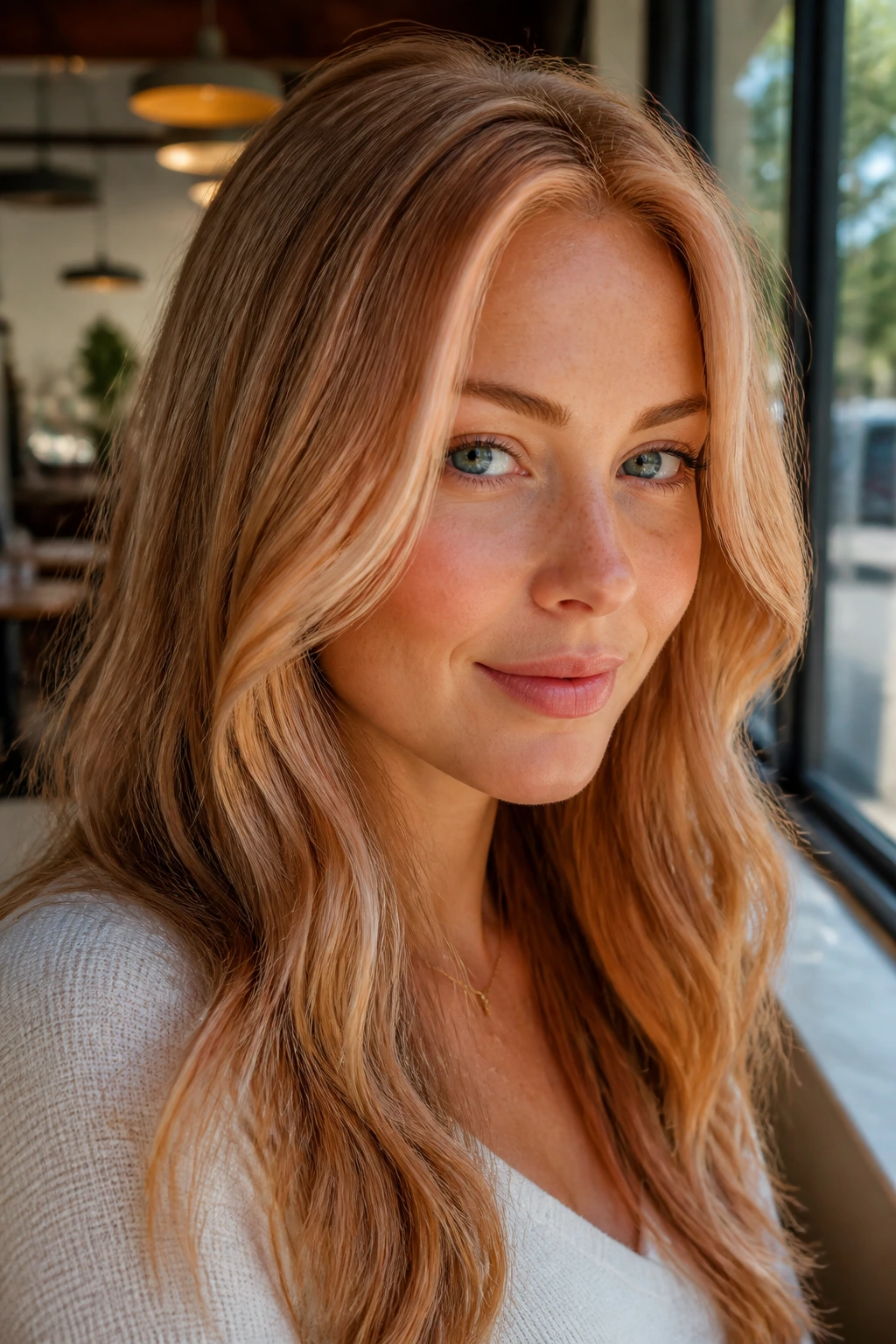
A money piece is the quickest way to make strawberry blonde show up in the mirror first thing in the morning. Two brighter front panels can shift the whole look, even if the rest of the hair stays soft and muted. It’s a strong move without a full head commitment.
I like this version when the client wants warmth but works in a setting that won’t love all-over red. The front pieces can be brighter strawberry-gold, while the rest of the hair stays more beige or honey. That contrast keeps the face bright and the grow-out easy. If you wear glasses, this can be especially good because the color sits where the frame and the hairline meet.
Best for: partial blonding appointments.
Ask for: bright face-framing strawberry pieces with softer ends.
Tip: keep the money piece slightly lighter than the rest of the blonde so it reads on purpose.
16. Cinnamon Strawberry Blonde
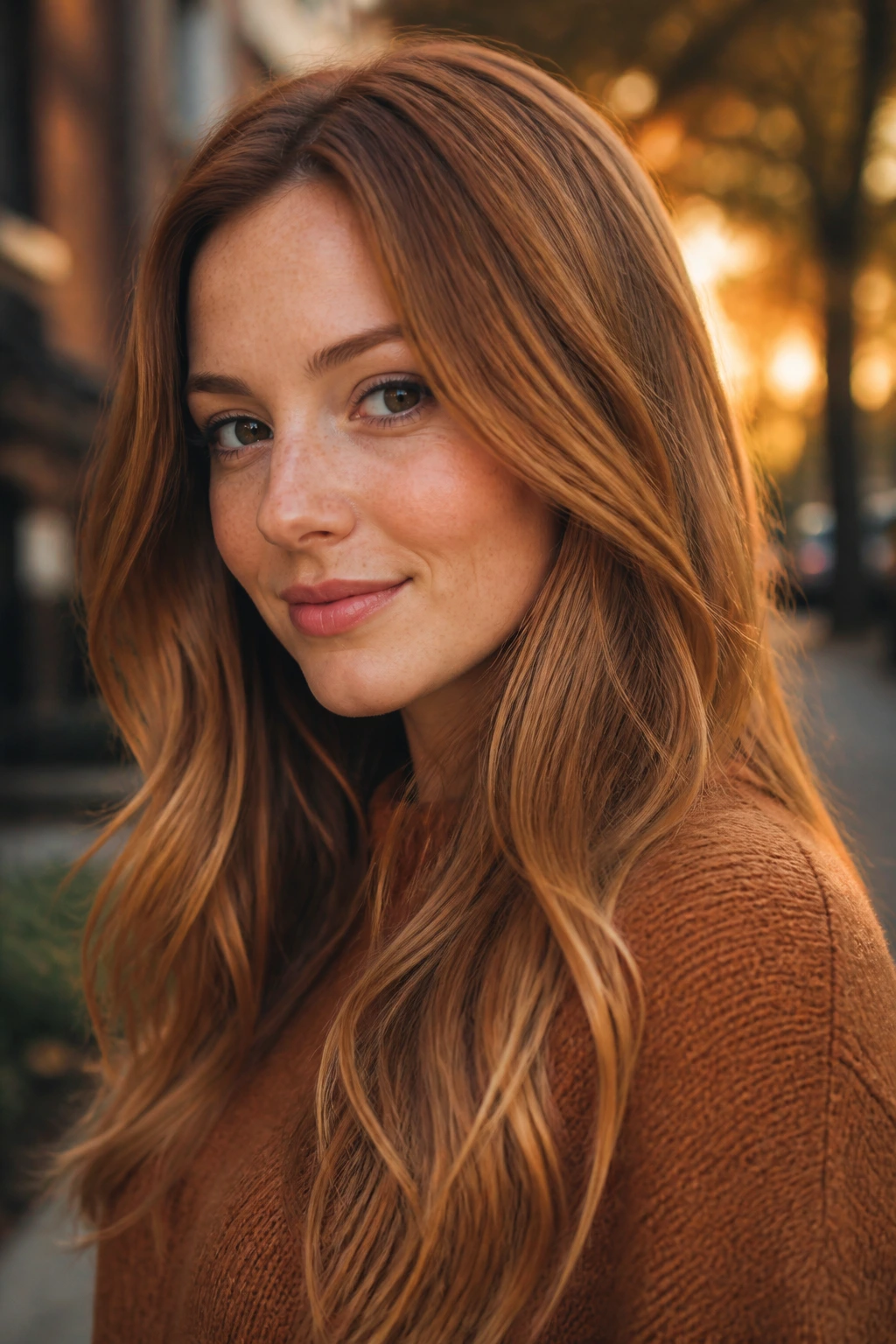
Cinnamon strawberry blonde leans deeper and a touch spicier. You still get blonde in the mix, but the red-brown note is stronger, which makes the color feel richer and less sunny. On medium brunettes, this can look like a warm transition shade rather than a dramatic change.
This is a good option if your skin likes warmer tones and you want the hair to feel more grounded. A cinnamon gloss with copper and a trace of brown-based warmth keeps the shade from going pumpkin. It also tends to flatter layered cuts because the darker pieces underneath add shadow where the lighter ends need it.
Best for: light brunettes and deeper blondes.
Ask for: cinnamon-copper gloss with subtle lowlights.
Note: if your hair is porous, ask for a test strand; cinnamon can grab dark very quickly.
17. Beige Strawberry Blonde
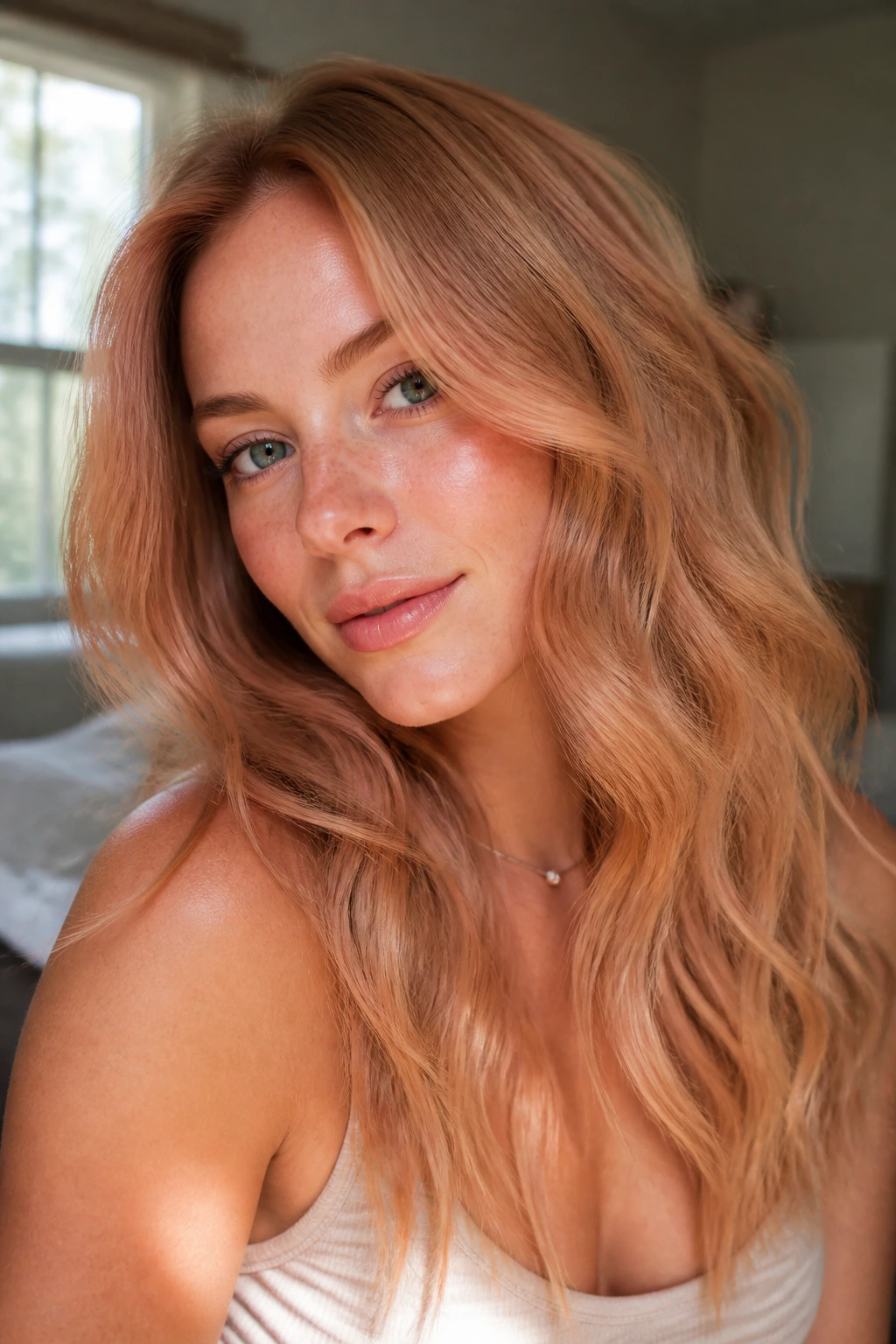
Beige strawberry blonde is the quiet cousin in the group. It keeps the warmth under control, so the result lands more neutral-blonde with a faint red-gold glow rather than a full copper read. I like it on people who hate brass but still want the hair to feel warm and human.
The color works by balancing gold and a soft rosy note against a beige base. That balance matters. Too much ash and you lose the strawberry; too much gold and it starts looking yellow. If you want this shade to last, ask for a gloss formula that refreshes warmth without flooding the hair with pigment. That’s the difference between a clean beige strawberry and a dull yellow blonde trying to be red.
Best for: neutral skin tones and minimal color upkeep.
Ask for: beige-blonde with a whisper of strawberry.
Styling note: soft bends and low-shine finishes suit this shade better than ultra-sleek glass hair.
18. Soft Copper Strawberry Blonde
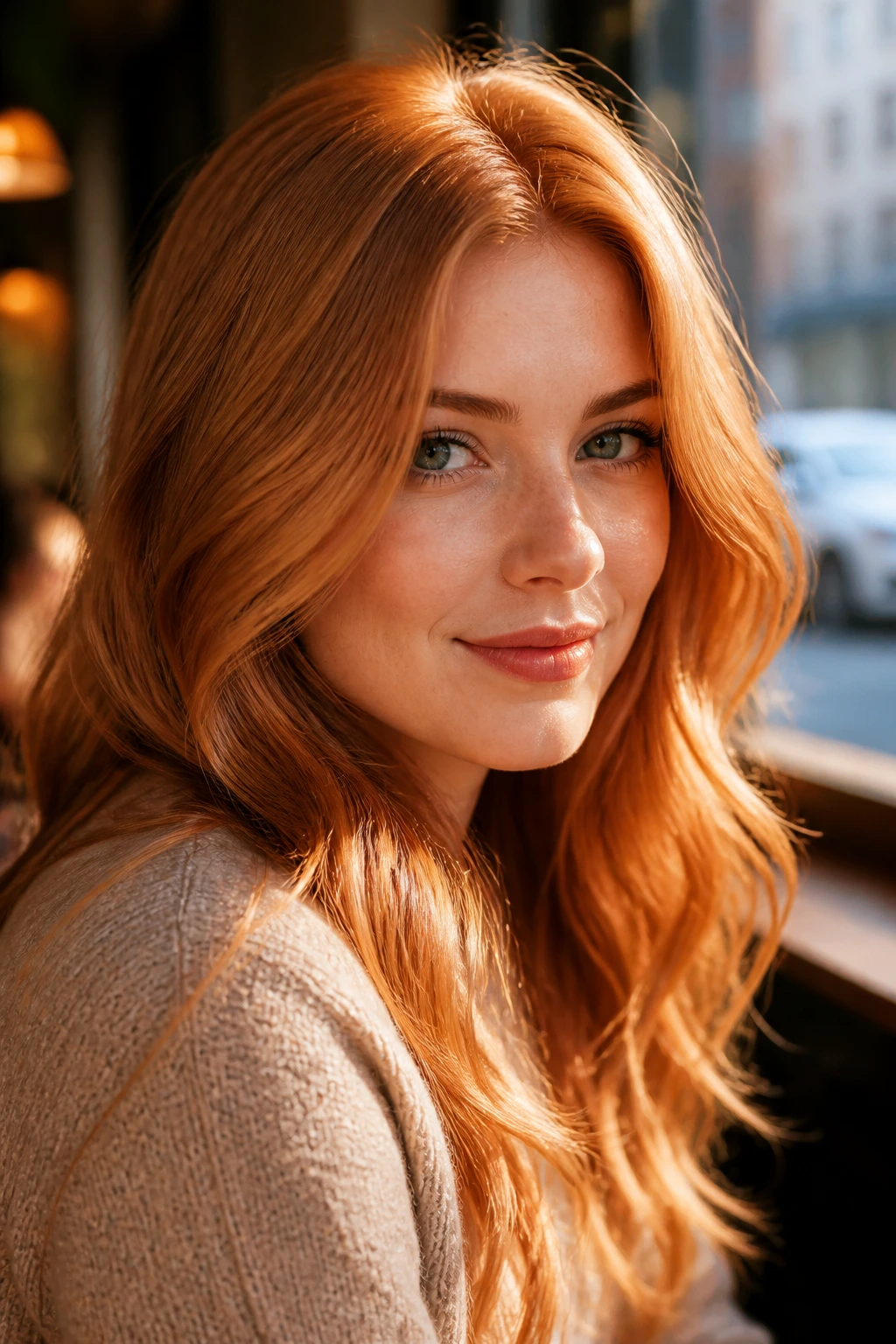
This is where strawberry blonde starts to step closer to the red side. Soft copper strawberry blonde still keeps enough blonde in the mix to read bright, but the copper note is present from root to end. The shade feels warm and polished rather than pastel.
If you’ve ever looked at strawberry blonde and thought it was too shy, this is the better lane. It usually suits level 7 to 8 hair, or dark blonde hair that can be lifted without too much damage. A warm copper gloss over a honey base gives you that controlled fire without losing the blonde identity. I’d keep the roots a half-tone deeper if you want the copper to look richer.
Best for: warm complexions and people who like richer reds.
Ask for: copper-heavy strawberry gloss with a soft root blend.
Watch for: over-lightened ends; they can turn too bright and break the balance.
19. Strawberry Ombre Fade
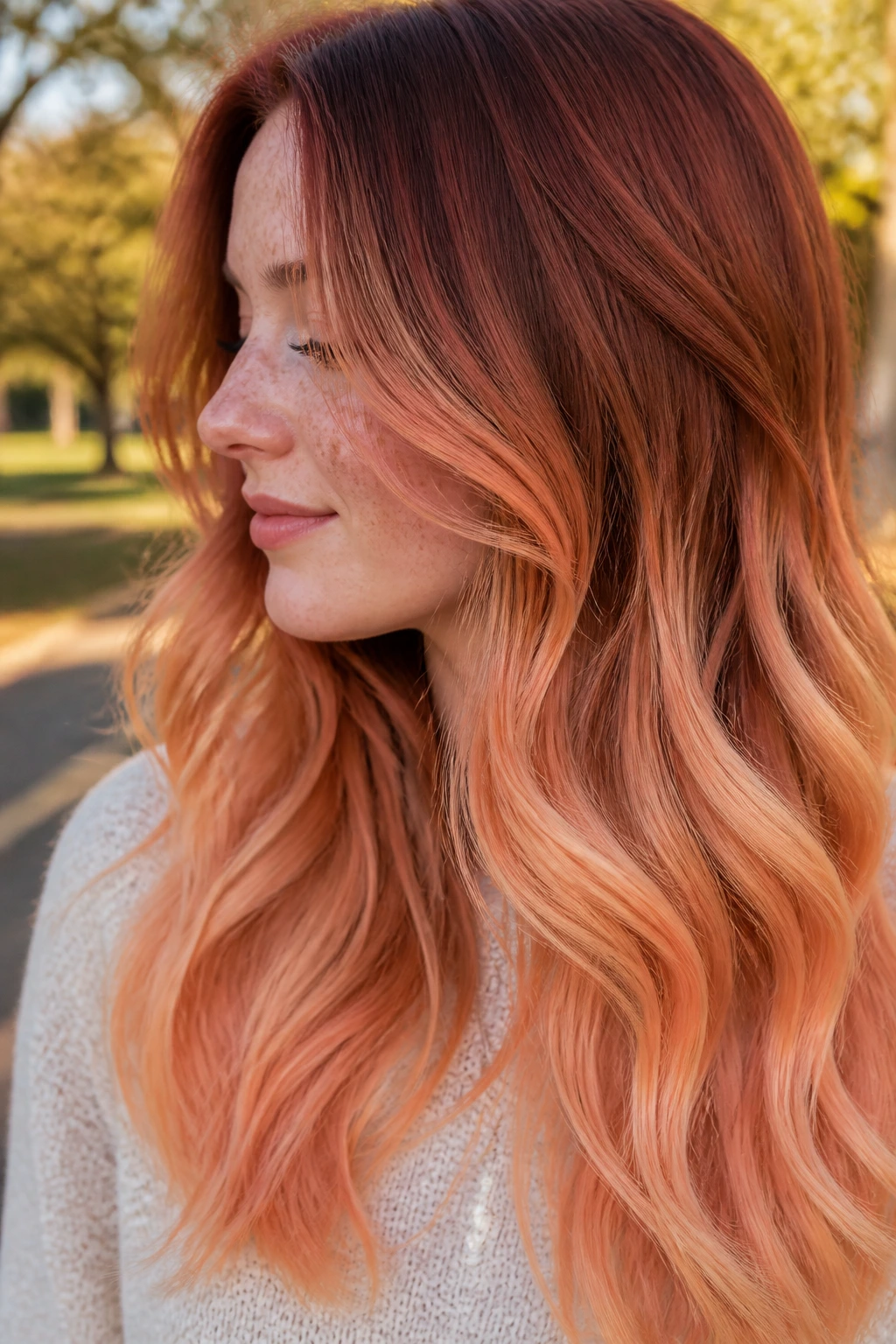
A strawberry ombré fade works because the eye gets a clear story: deeper at the top, brighter and more copper at the ends. That progression makes the shade easier to wear than a blanket red-blonde, and it gives long hair a little drama without forcing maintenance at the scalp.
The key is avoiding a hard line where the color changes. The fade should feel gradual, almost like the hair warmed up as it moved down. On straight hair, that subtle shift can be gorgeous; on waves, it gets even softer. If your ends are damaged, keep the lightest strawberry tone a little lower so the color doesn’t expose every rough edge.
Best for: long lengths and layered cuts.
Ask for: a rooted top, warm mids, and brighter strawberry ends.
Tip: gloss the ends a touch more often than the roots so the ombré stays smooth.
20. Creamy Strawberry Blonde
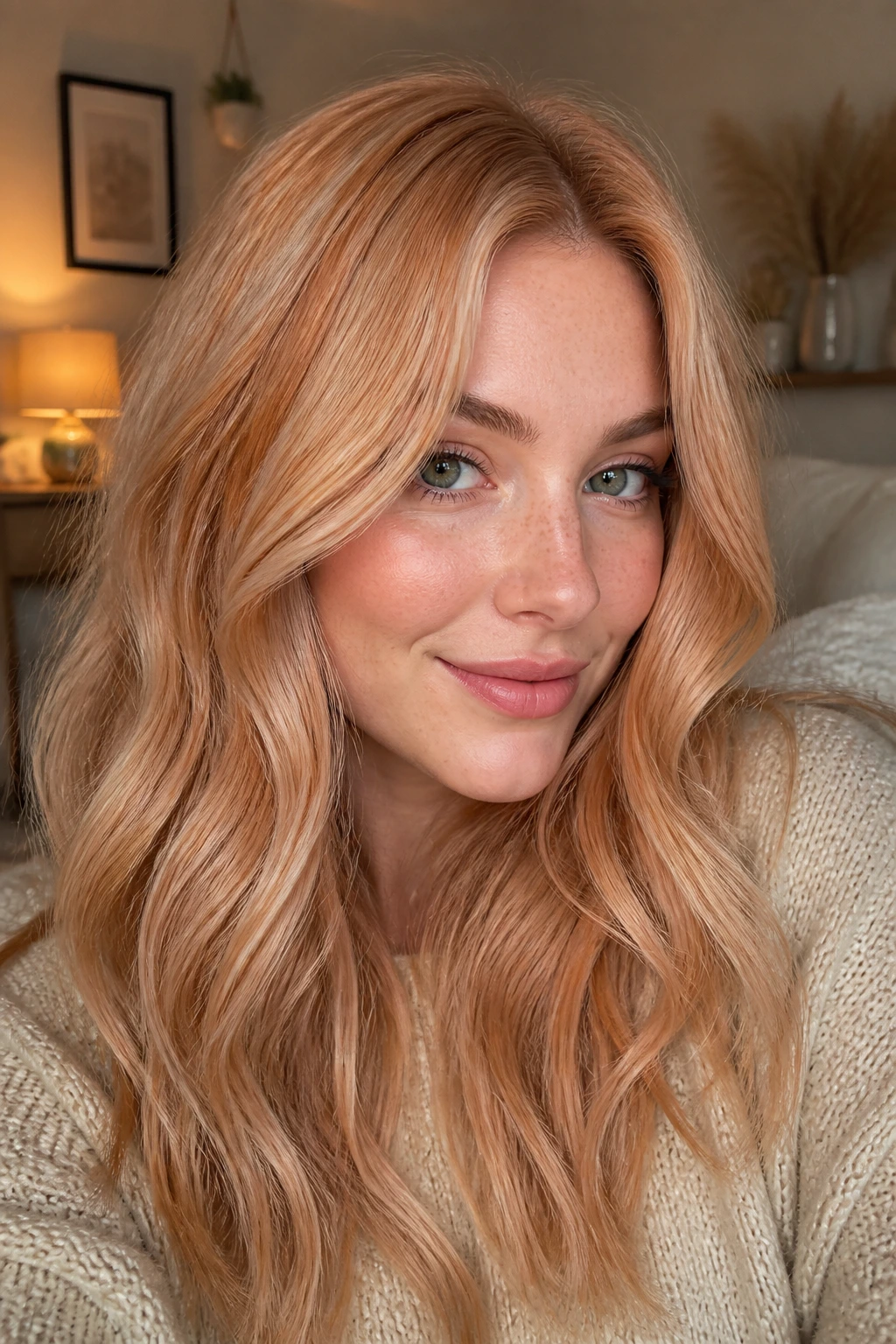
Creamy strawberry blonde is one of those shades that feels softer than it sounds. The warmth is folded into a milkier blonde base, so the hair looks plush and light rather than copper-heavy. It’s especially good on thick hair, where a creamy tone can prevent the whole look from feeling dense.
This shade needs a clean base to work well. If the blonde underneath is muddy or too yellow, the creamy note gets lost and you end up in brassy territory. A beige-rose gloss with a touch of gold gives the best result. I also like it with hair that has movement around the face, because the color reads almost like light spilling across the strands.
Best for: thick hair and pale blondes.
Ask for: creamy beige-blonde with a light strawberry wash.
Keep in mind: it looks best when the finish is glossy, not powdery or dry.
21. Curtain Bangs and Warm Ribbons
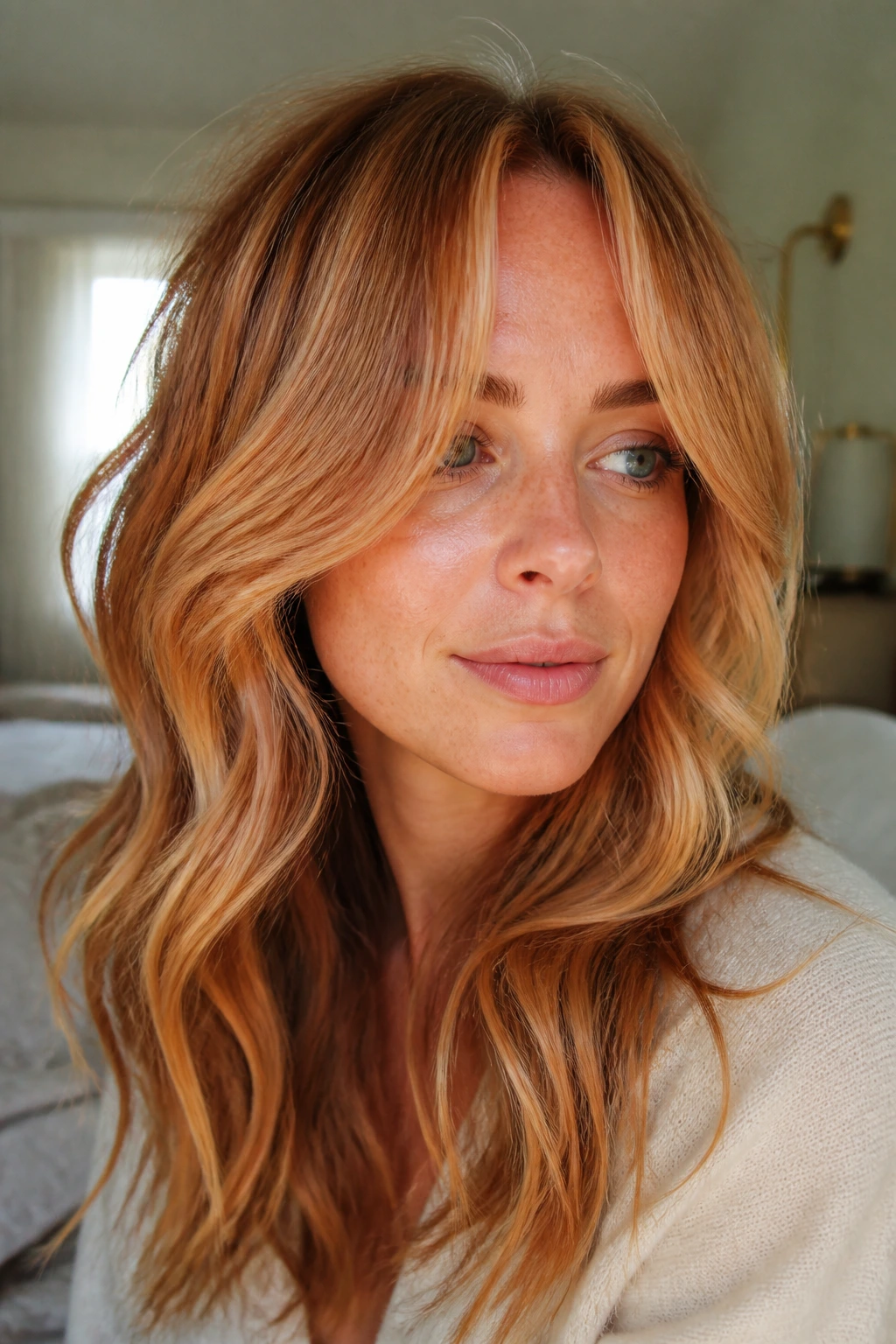
Curtain bangs and strawberry ribbons belong together more than people realize. The bangs create a soft frame, and the warm pieces around them make the face look brighter without needing a harsh money piece. The rest of the hair can stay soft and lived-in.
This look works best when the color sits in the midlengths and bangs, not just the ends. You want the movement to start near the eyes and cheeks, where the curtain fringe opens up. A mix of apricot and golden-copper highlights gives enough depth to make the bangs show up against the skin. If the fringe is too heavily toned, it can turn blunt; a softer glaze keeps it airy.
Best for: layered cuts with face-framing fringe.
Ask for: warm ribbons concentrated around the bangs and cheekbone area.
Style note: a round brush or bend in the fringe keeps the warm pieces visible.
22. Dusty Rose Strawberry Blonde
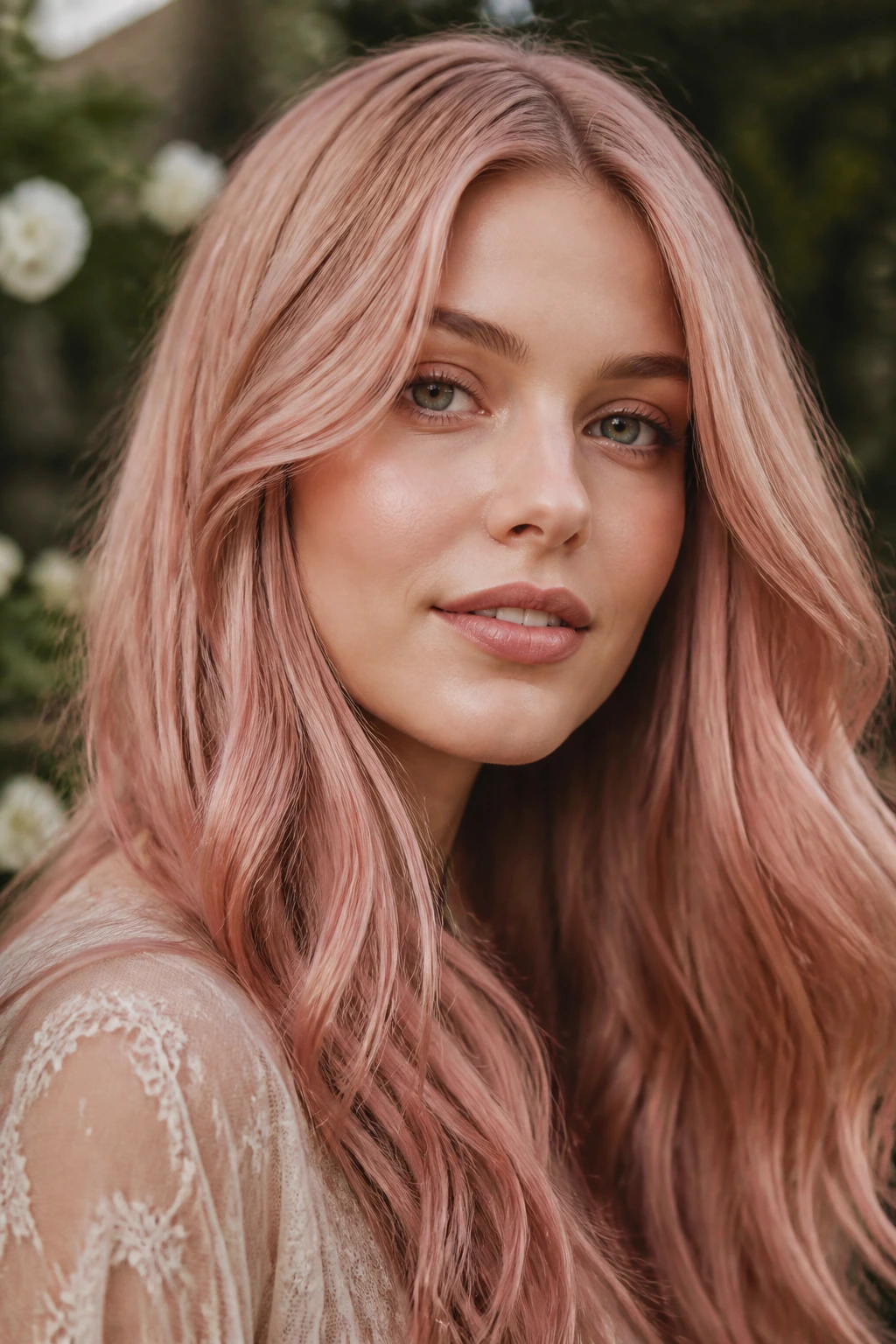
Dusty rose strawberry blonde is muted, a little romantic, and far less sugary than it sounds. The pink note is softened by beige, so the color looks like rose petals pressed into blonde rather than bright pink dye. It’s one of the more elegant options if you want warmth with a cooler edge.
The trick is keeping the red note soft enough that it doesn’t overpower the blonde. That usually means a very thin deposit and a base that isn’t too yellow. On straight hair, the color reads smooth and subtle; on waves, the rose bits show up in flashes. If your hair has a lot of gold already, this shade may need a neutralizing step before the gloss goes on.
Best for: neutral and cool undertones.
Ask for: dusty rose glaze with a beige blonde base.
Skip if: you want copper intensity. This is the quiet version.
23. Brunette-to-Strawberry Transition
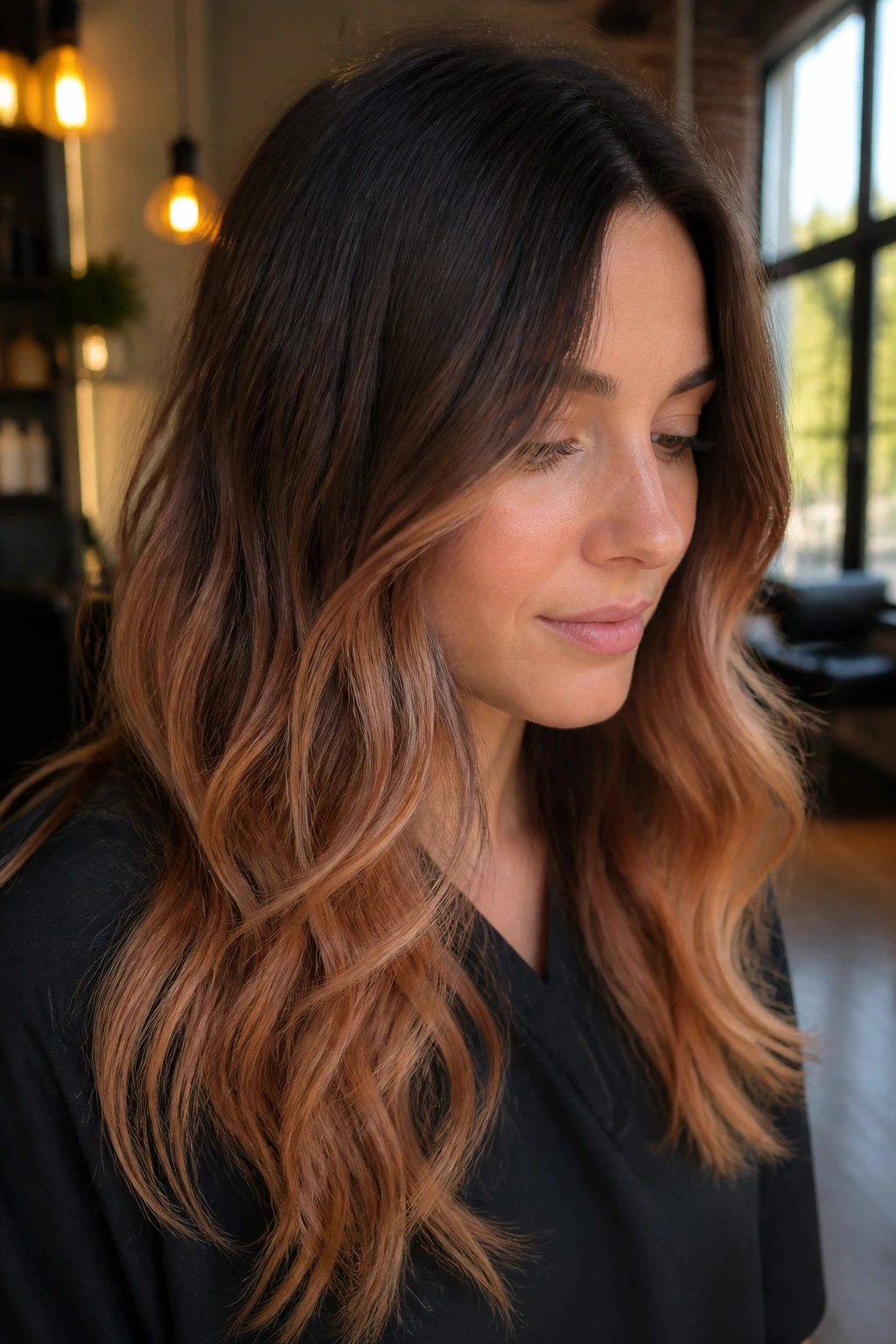
This is the one you choose when your starting point is brown hair and you want to land in strawberry blonde without frying it. The transition usually needs a lift plan first — often balayage or foiling — because brown hair won’t magically become strawberry with a gloss. The color story should move from deeper root warmth to lighter copper-blonde ends.
What I like here is the dimension. The hair keeps enough brown at the top to look grounded, while the lighter pieces around the face and ends carry the strawberry note. That makes the whole look feel expensive and believable. If your hair is level 5 or darker, be honest about how many sessions you want. One appointment can get you warmth, but a softer strawberry blonde usually takes patience.
Best for: light brunettes with realistic upkeep expectations.
Ask for: multi-step lift, warm toner, and a root that stays deeper.
Important: don’t ask for “blonde strawberry” without showing the colorist your starting level.
24. Blonde-to-Strawberry Refresh
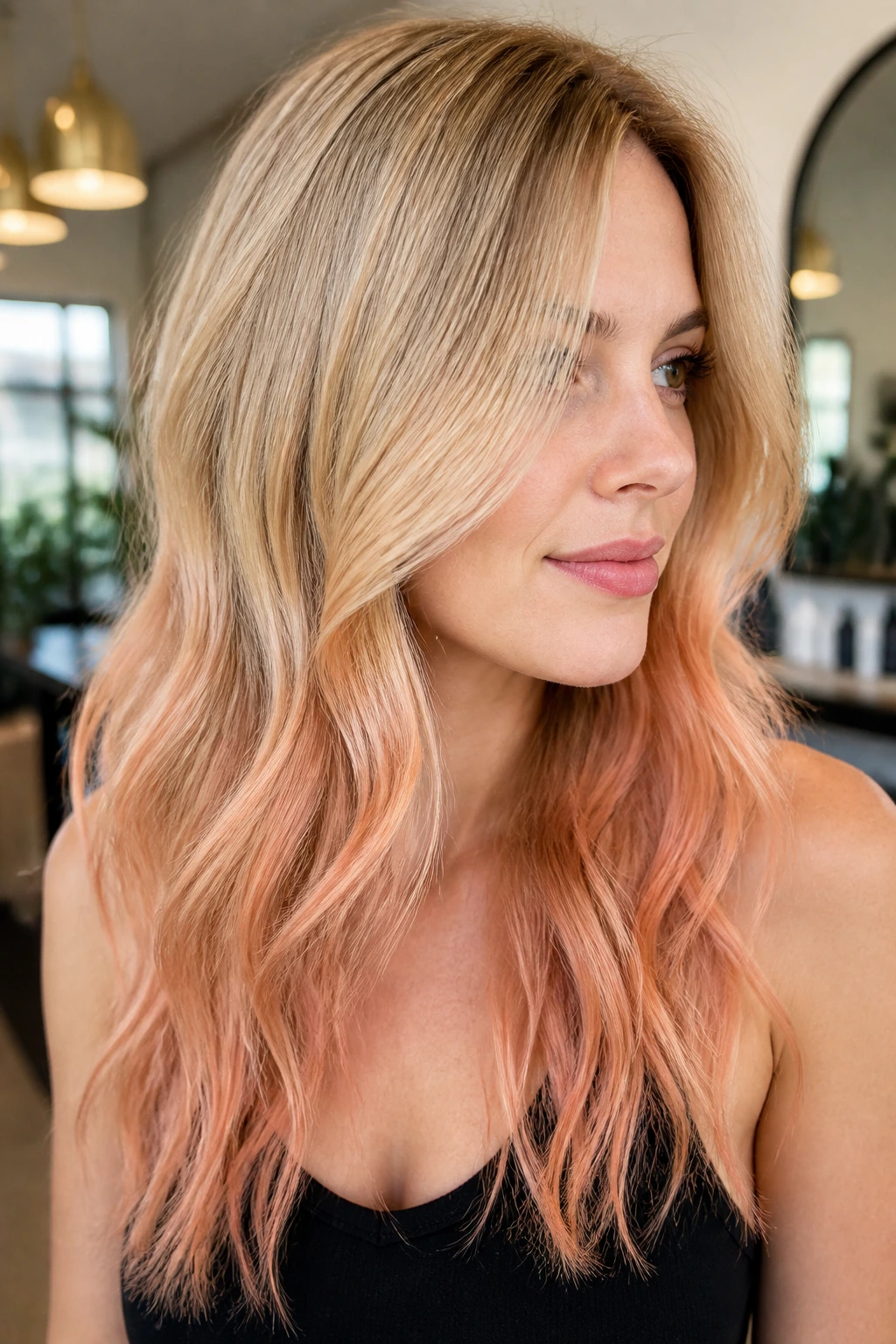
Sometimes the hair is already blonde, and the job is not lightening — it’s warming. A blonde-to-strawberry refresh keeps the base light while nudging the tone into apricot, peach, or rose-gold territory. It’s one of the easiest ways to change your look without changing the whole head.
This is where glosses earn their keep. Pale blondes can pick up strawberry color quickly, so a demi-permanent refresh is usually enough. If you want more copper, ask for a warm glaze on the ends and a sheer tone through the top. If you want softer strawberry, keep the formula translucent. The line between “warm blonde” and “too orange” can be tiny, so strand testing helps more than people expect.
Best for: already-light hair.
Ask for: peach-apricot gloss, no heavy lift.
Tip: this version looks best when the ends are hydrated and shiny, not frayed.
25. Babylight Strawberry Blonde
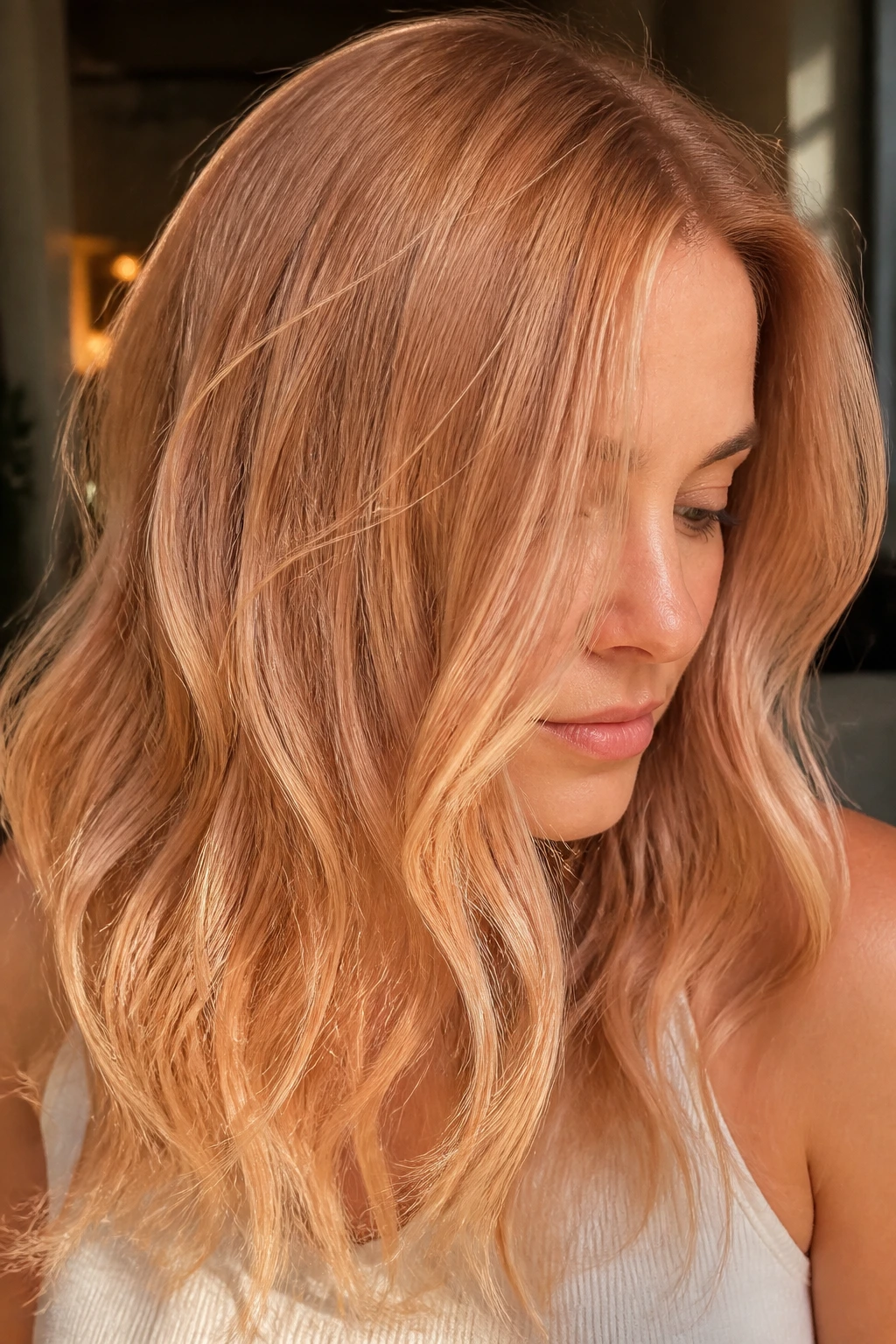
Babylights are perfect when you want the strawberry shade to look like it grew there. The highlights are so fine that the color reads as a soft haze rather than obvious streaks, which makes the whole head feel bright and expensive in a very quiet way. It’s one of my favorite methods for fine hair.
The reason babylights work so well here is simple: strawberry blonde can get stripey if the sections are too wide. Ultra-fine foils keep the warmth broken up, so you get a mix of light blonde, pale copper, and creamy beige. That creates movement even when the hair is worn straight. If your natural hair is darker, babylights alone may not carry enough warmth; they often need a gloss to finish the job.
Best for: fine hair and soft, blended color lovers.
Ask for: ultra-fine foils, warm gloss, and minimal contrast.
Note: babylights fade softly, but they still need toner refreshes to keep the strawberry note visible.
26. Curly Strawberry Blonde
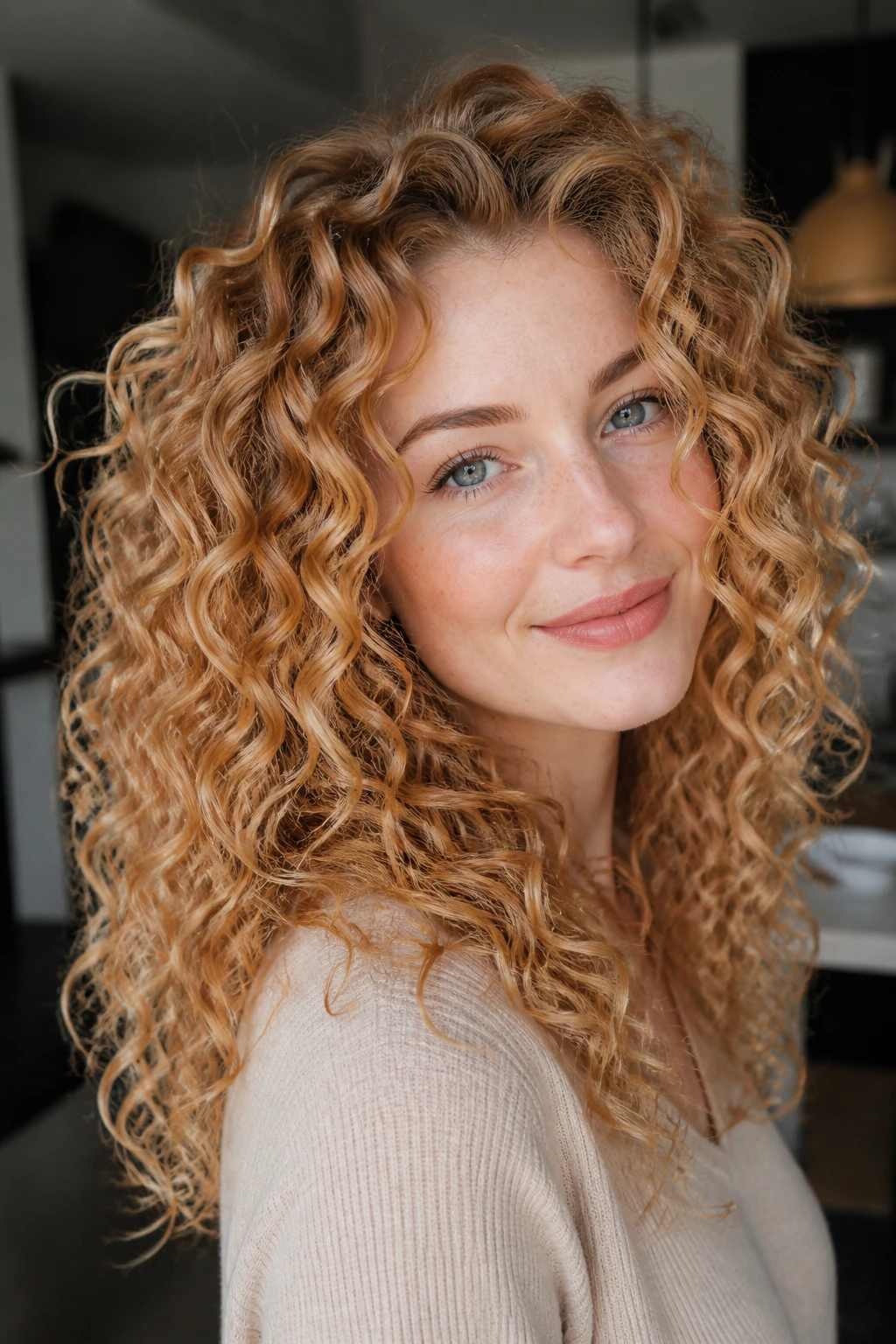
Curly hair changes the whole game. The color has to live where the curl opens, or it disappears into the pattern. Strawberry blonde on curls works best when the warm pieces are placed around the outer curve and the lighter strands sit where the ringlet catches light.
A curly cut makes this even better because the layers let the color move. I’d avoid one heavy all-over copper here; it can make the curls look dense and closed. Instead, use a mix of warm blonde, apricot, and tiny copper ribbons. The result is lively and dimensional, with each curl showing its own variation. If your curls are dry or porous, a more beige strawberry formula is safer than a saturated red-gloss version.
Best for: curly and coily textures with shape.
Ask for: curl-specific placement, warm ribbons, and soft lowlights.
Styling note: define the curls first, then judge the color. Wet curls tell lies.
27. Wavy Lob with Strawberry Ribbons
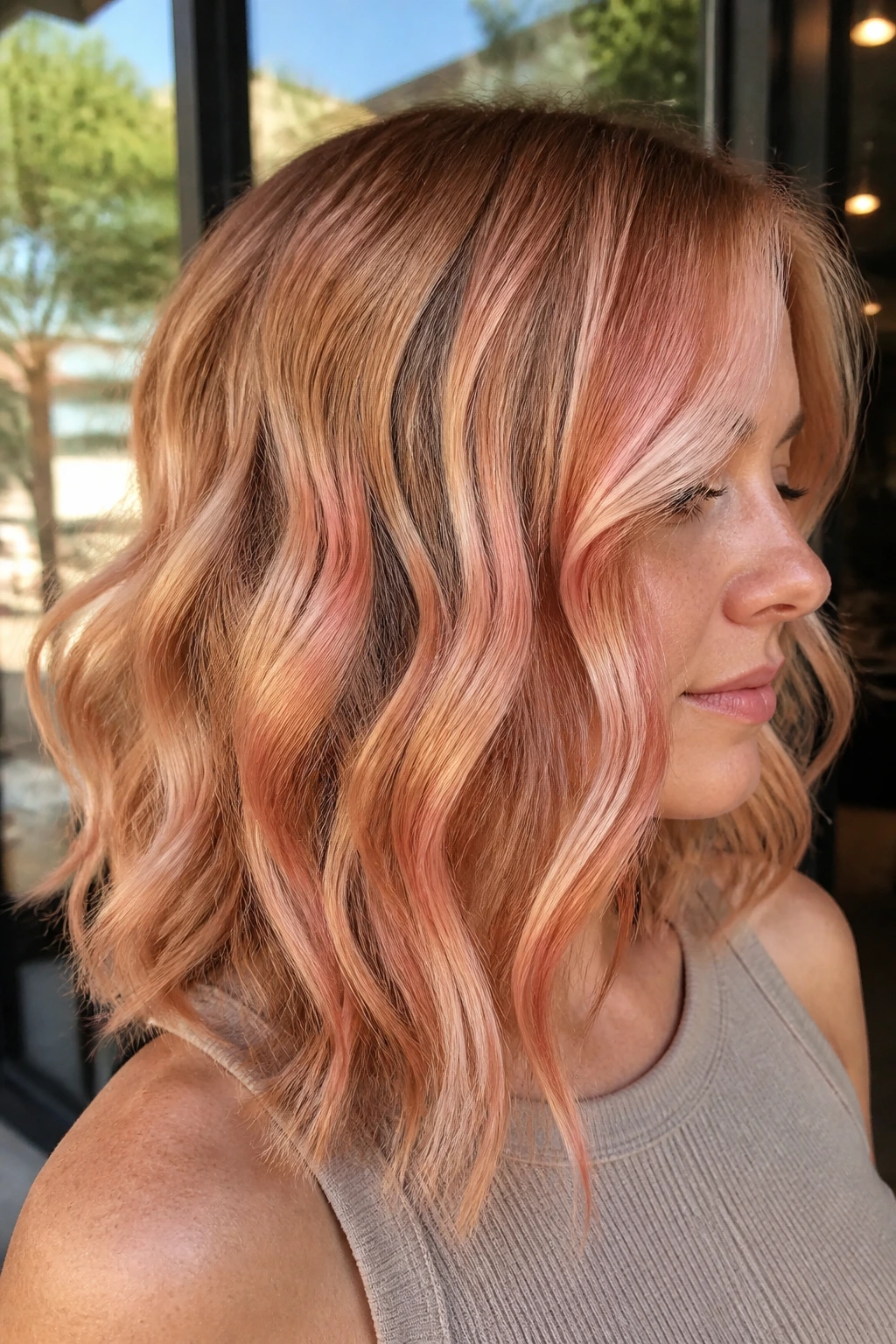
A wavy lob is a natural home for strawberry blonde because the bend in the hair acts like a frame for the color. The ribbons show up in the wave peaks and troughs, so the hair looks richer without needing a huge amount of pigment. It’s an easy style to live with.
This is one of those cuts where the color does not need to be uniform to look finished. In fact, uniformity would make it worse. Ask for varied placements — a few brighter pieces near the front, softer ones through the back, and a warmer glaze on the ends. That gives the hair movement even on second-day styling. A lob also makes grow-out easier because the bottom half gets trimmed regularly, so the most color-rich part of the hair stays fresh.
Best for: shoulder-grazing cuts and loose texture.
Ask for: mixed ribbons, a warm glaze, and soft root depth.
Pro tip: a 1.25-inch iron makes the color pattern pop without making the hair too curled.
28. Smoky Strawberry Blonde
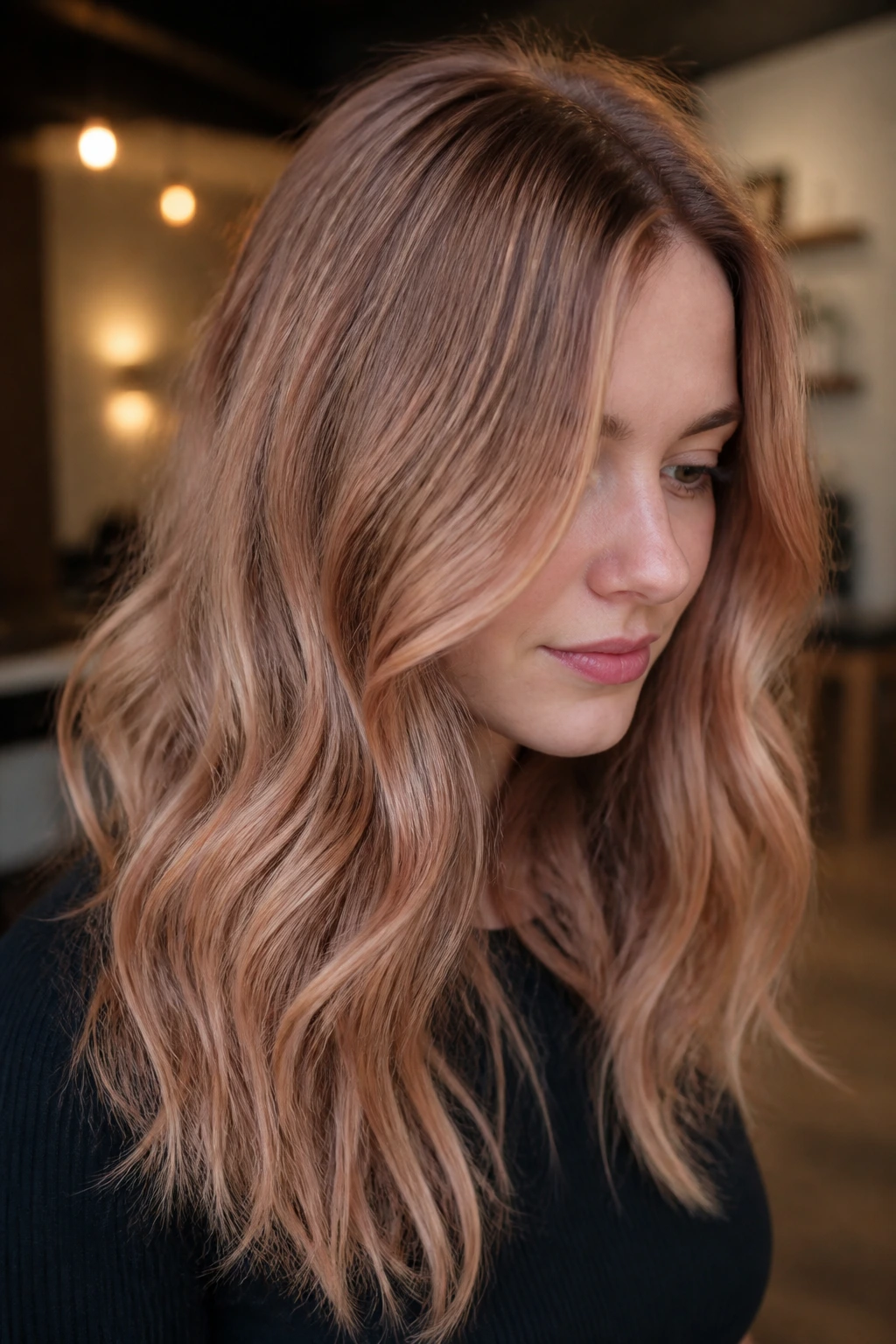
Smoky strawberry blonde is muted in a way that feels modern, not dull. The red note is softened with beige, taupe, or a touch of cool brown, so the hair keeps its strawberry identity without looking overly warm. It’s a smart pick if pure copper makes you look flushed.
This version is especially useful for people with neutral or slightly cool skin who still want warmth in the hair. The smoky part stops the shade from going orange, and it also makes the grow-out less harsh. I would not try this with a formula that is too light or too saturated; the whole point is to keep the tone controlled. A root shadow and a soft gloss are usually enough.
Best for: neutral-to-cool undertones.
Ask for: muted strawberry glaze with beige-brown depth.
Keep in mind: too much ash can erase the strawberry part, so balance matters.
29. Peach Sorbet Strawberry Blonde
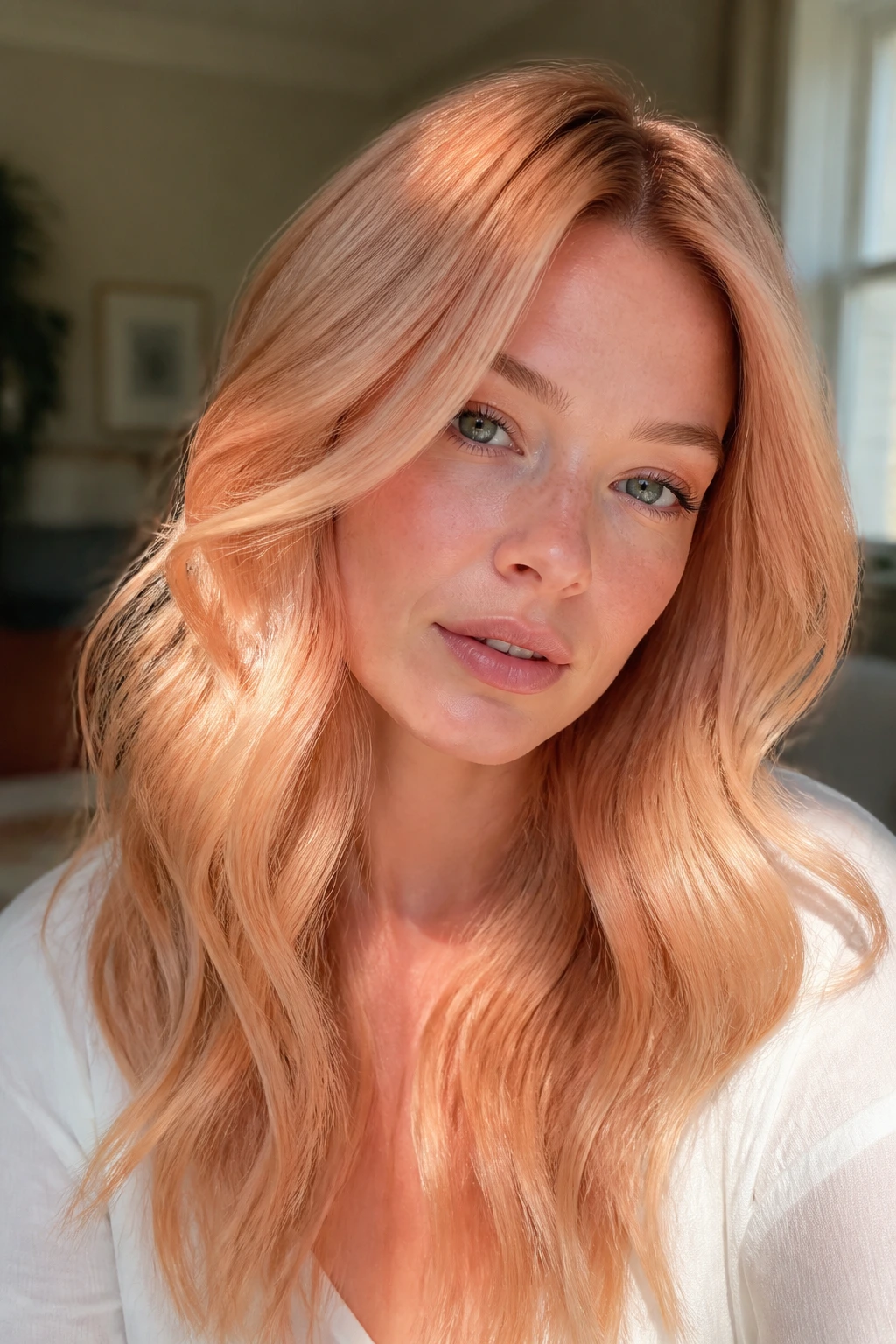
Peach sorbet is brighter and more playful than apricot, but it still lives in the strawberry family. The color has a juicy look — more peach skin than copper penny — and it reads lively on light bases. It’s one of the better choices if you want your hair to look warm in every kind of light.
What keeps this one from feeling childish is shine. Without gloss, peach can look dusty. With gloss, it turns smooth and almost translucent. On a pale blonde base, it can be a lovely change of pace for someone who wants color that feels fresh but not intense. I’d keep the roots slightly deeper and the ends soft, because peach gets loud quickly if it sits too high on the head.
Best for: light blondes and pale bases.
Ask for: peach-copper gloss with a blonde backdrop.
Styling note: airy waves suit it better than a tight curl or ultra-sleek finish.
30. Strawberry Shag
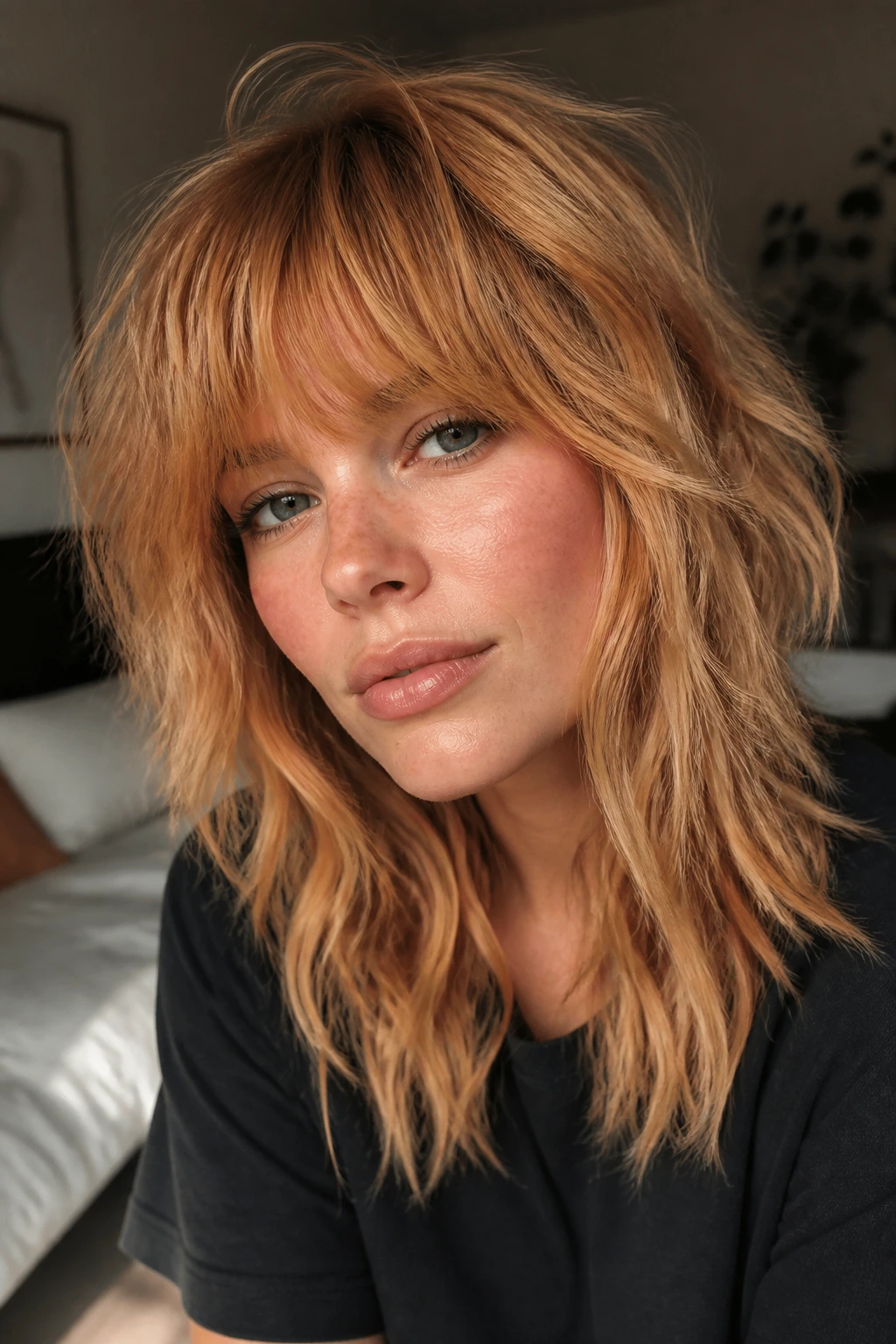
A shag gives strawberry blonde a little rebellion. The layers, fringe, and choppy texture keep the warmth from looking too sweet, and the color sits into the movement instead of floating on top. That makes the whole thing feel lived-in and cool rather than polished to death.
I like this look with slightly deeper roots and brighter midlengths, because the shag needs contrast to show the shape. If everything is the same strawberry tone, the cut loses its edge. A copper-gold base with pale strawberry ends usually works well. The fringe, if you have one, should stay a touch softer so it does not overpower the face.
Best for: layered, messy, textured cuts.
Ask for: root depth, warm mids, and brighter ends.
Tip: matte texture sprays can dull the color; choose a light mist instead.
31. Gloss-Only Strawberry Refresh
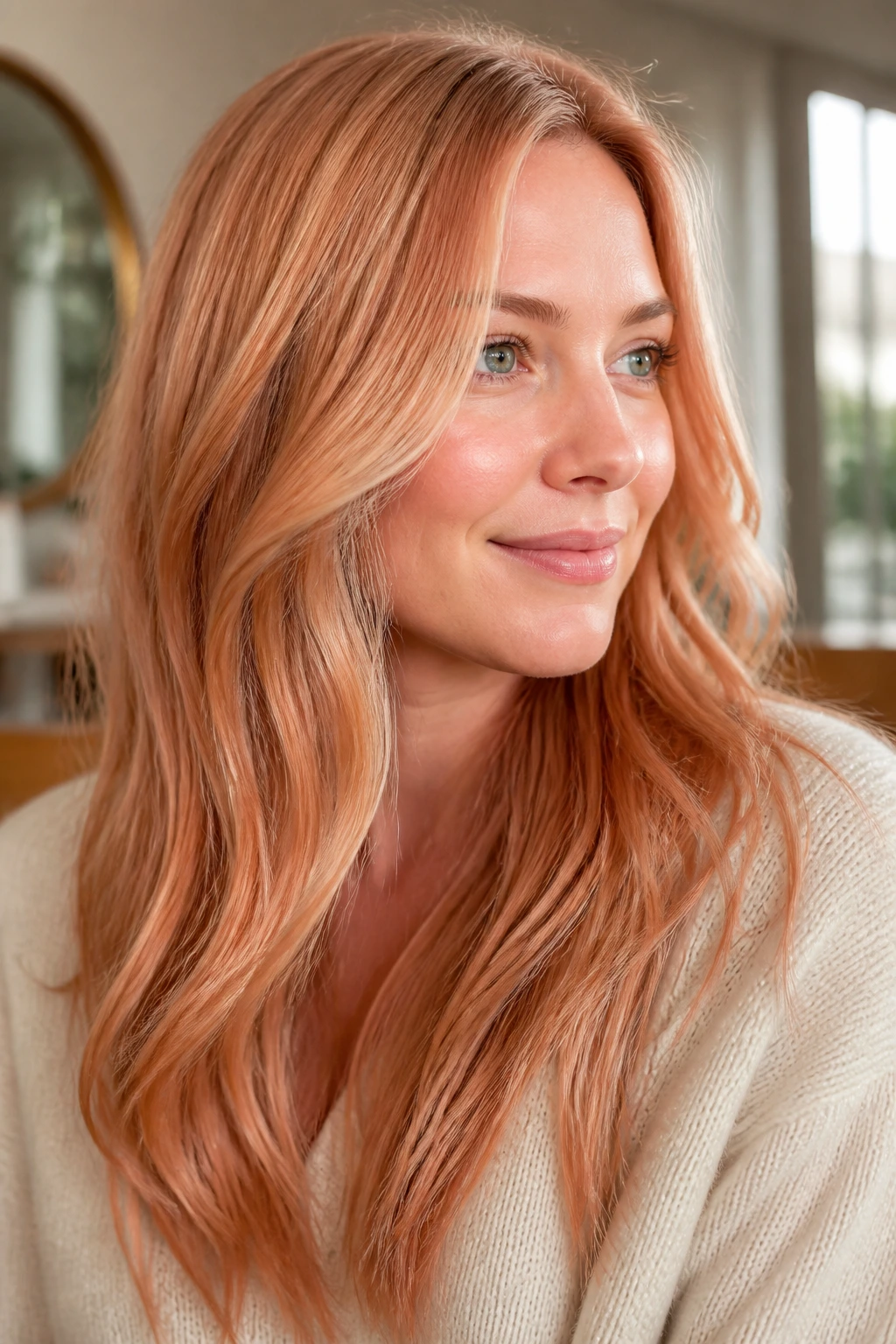
Sometimes you do not need new highlights. You need a gloss that wakes up what is already there. A gloss-only strawberry refresh is perfect for blondes who have gone a little dull, faded warm, or lost that soft peach note that made the color feel alive in the first place.
This is the least disruptive way to wear strawberry blonde. No big lift. No major sectioning. Just a demi formula that slips warmth back into the hair for shine and tone. On porous hair, this can be a lifesaver because it does not ask the strands to go through another full lightening service. If the hair is very pale, the gloss should be translucent or it will go too orange too fast.
Best for: maintenance appointments and faded blondes.
Ask for: a sheer strawberry gloss or toner refresh.
Important: this is not a fix for dark roots; it only improves the tone you already have.
32. Shadow-Root Strawberry Melt
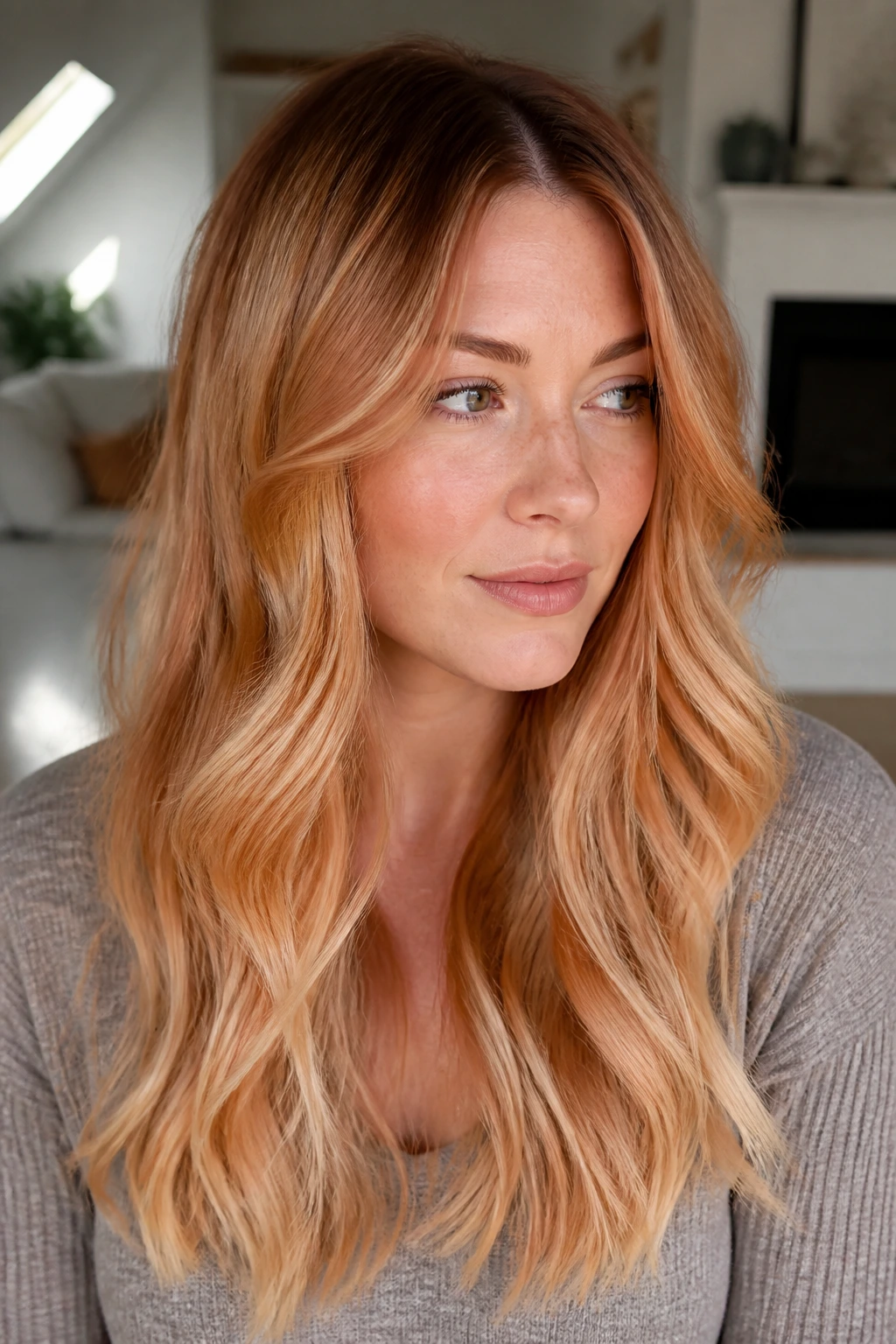
A shadow-root melt gives strawberry blonde a softer start at the scalp. The darker root melts into warmer mids and lighter ends, which makes the whole color feel seamless and easier to grow out. It’s especially good if you like your hair to look done without looking freshly done.
This technique is useful because strawberry tones can be unforgiving at the root. A root shadow prevents that too-bright halo effect near the scalp and makes the warm pieces look more expensive. Ask for a root one to two levels deeper than the mids, then let the strawberry bloom through the lower half of the hair. On longer hair, the melt creates a nice sense of depth that a single gloss cannot match.
Best for: anyone who hates obvious regrowth.
Ask for: a shadow root, warm mids, and glowing ends.
Styling note: a center part shows the melt cleanly; a side part makes it softer.
33. Jammy Red-Blend
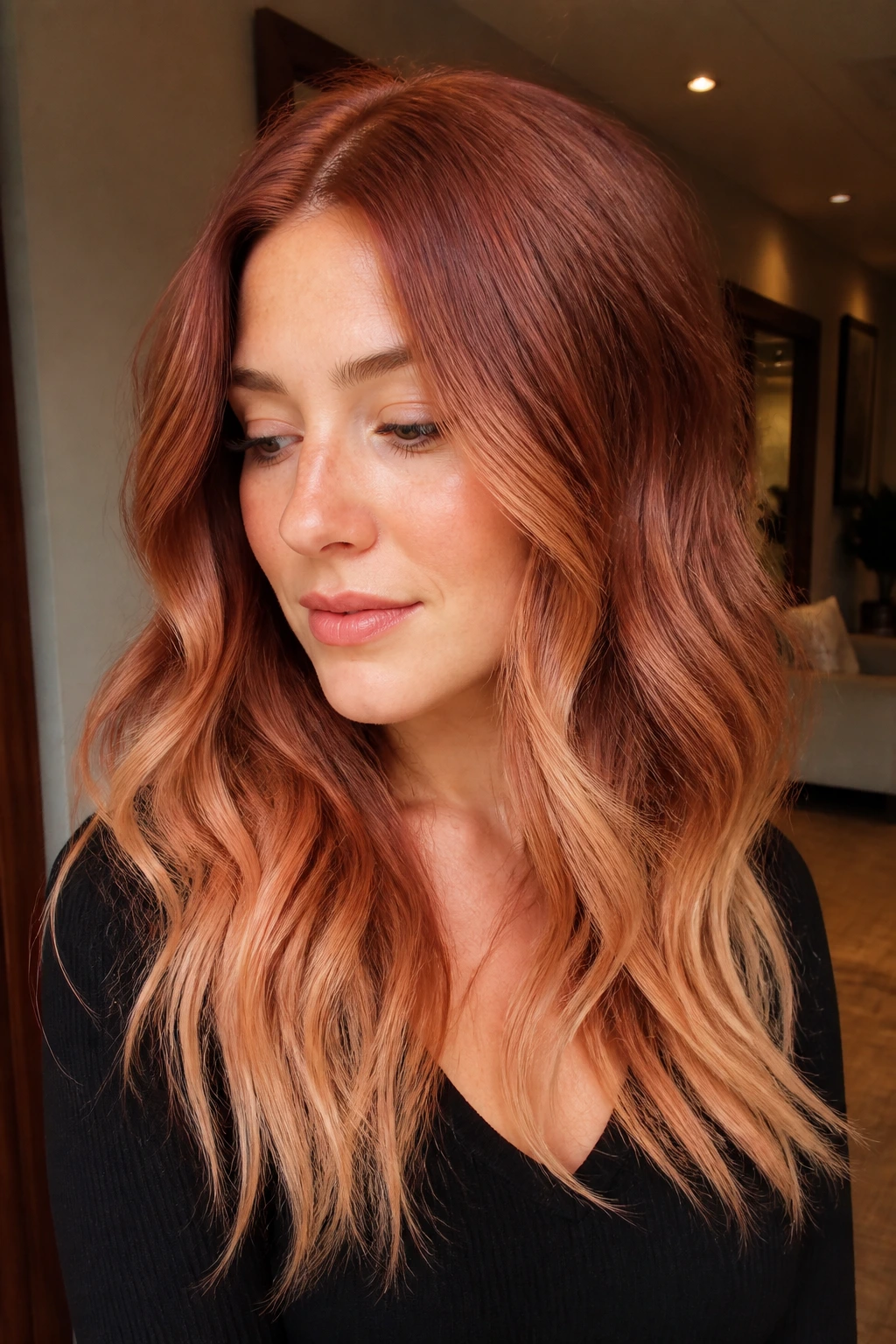
Jammy red-blend is for people who want strawberry blonde to stop pretending and lean into richer red. The color is deeper, darker, and more saturated, with a berry-copper look that feels plush rather than pale. It still keeps blonde brightness at the edges, but the red note is the star.
This is not the safest pick for someone who changes their mind every month. It does best when you’re comfortable with a stronger tone and a bit more upkeep. A warm red glaze over a dark blonde base can give you the jam effect without going all the way auburn. I’d keep the ends a touch lighter so the hair doesn’t close in visually.
Best for: people who want a richer, moodier strawberry.
Ask for: berry-copper depth with lighter ends.
Watch for: fast fading if your hair is porous or heat-styled daily.
34. Sandstone Strawberry Blonde
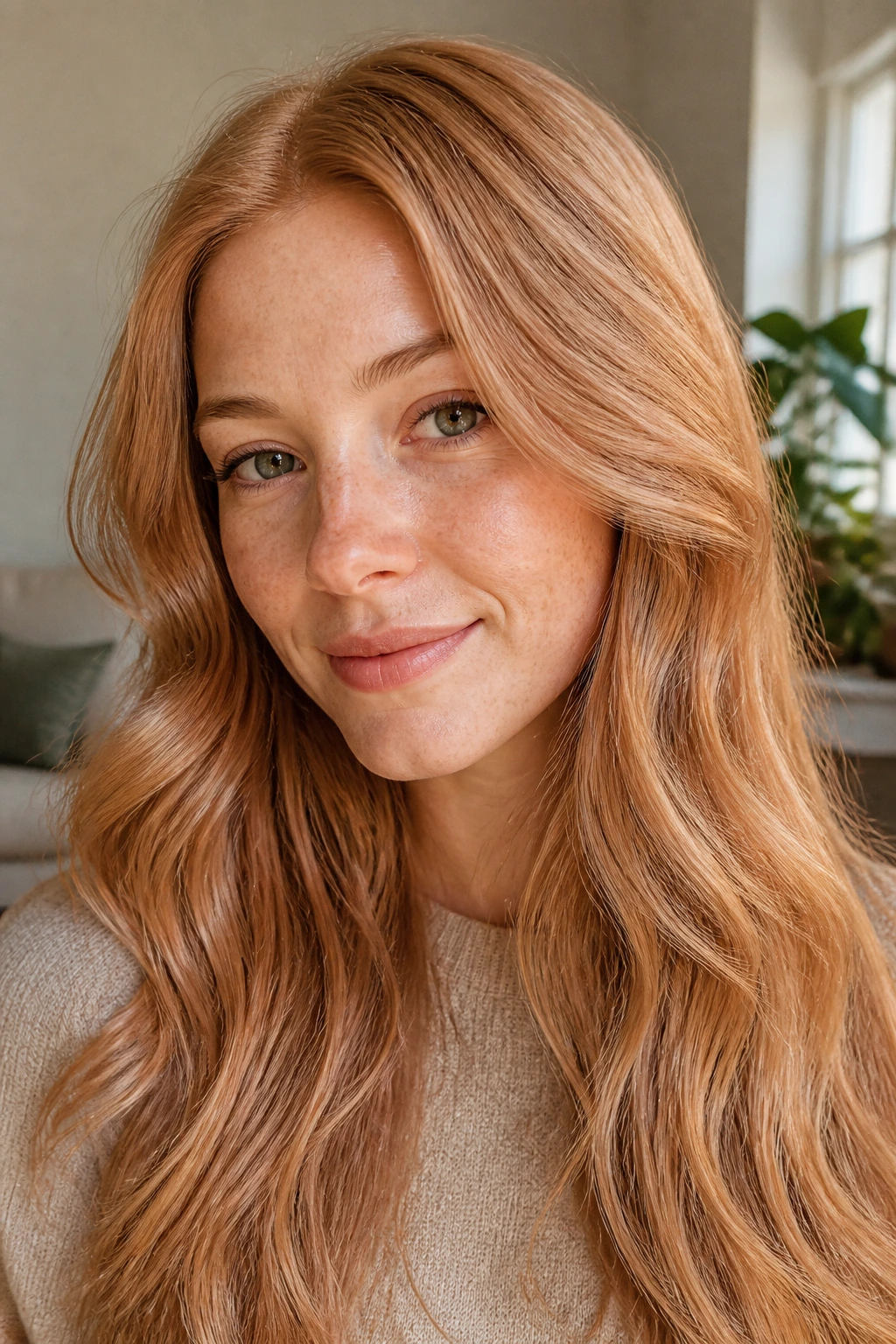
Sandstone strawberry blonde sits between beige and copper. It’s earthy, warm, and just muted enough to avoid the cartoon-red effect some strawberry shades can get when the formula is too bright. The name fits the look: warm stone with a faint rosy glow.
I think this shade is underrated because it works on so many faces. It softens features, plays well with neutral skin, and grows out without screaming for touch-ups. Ask for a beige base with copper and gold woven through the mids rather than a full red glaze. The balance should feel dry in a good way — not chalky, just grounded.
Best for: neutral skin tones and practical upkeep.
Ask for: beige-copper dimension with a soft gloss.
Style note: low bun styles and soft waves both show this tone well.
35. Cool-Pink Strawberry Blonde
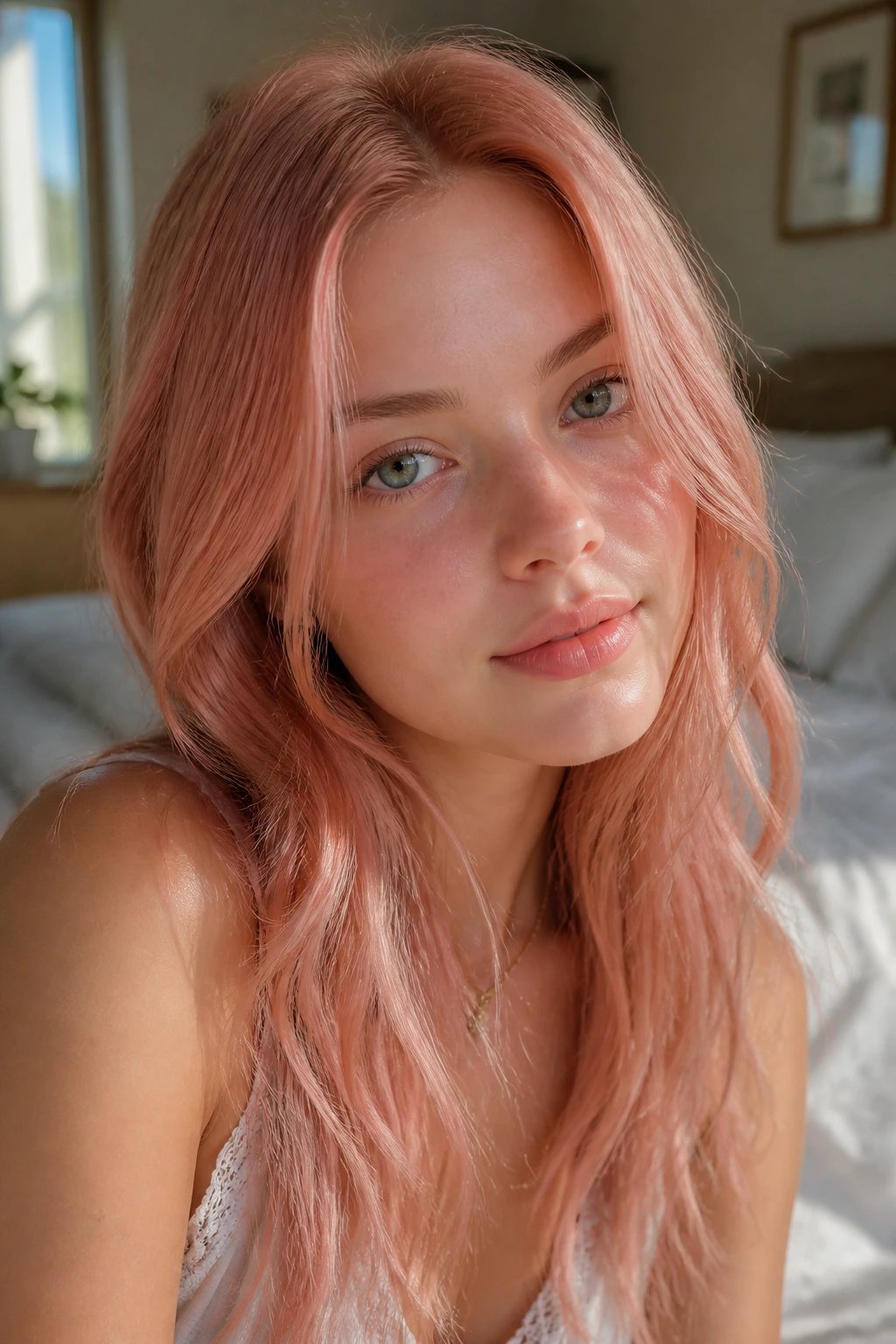
Cool-pink strawberry blonde keeps the rose side of the family in front. The warmth is still there, but the pink note is cooler and softer, so the hair can read almost blush-toned instead of copper-toned. It’s a nice bridge for people who like pink hair but want to stay wearable.
This shade can be tricky on yellow bases because the pink can get swallowed. A pale neutral blonde base usually gives the cleanest result. The color also tends to look best with sleek styling or loose bends where the pink reflect can sit on the surface. If you want a version that feels modern rather than sweet, this is it.
Best for: pale blondes and pink-leaning color lovers.
Ask for: cool pink gloss with a soft strawberry base.
Important: if the base is too warm, the pink note disappears fast.
36. Auburn-Strawberry Melt
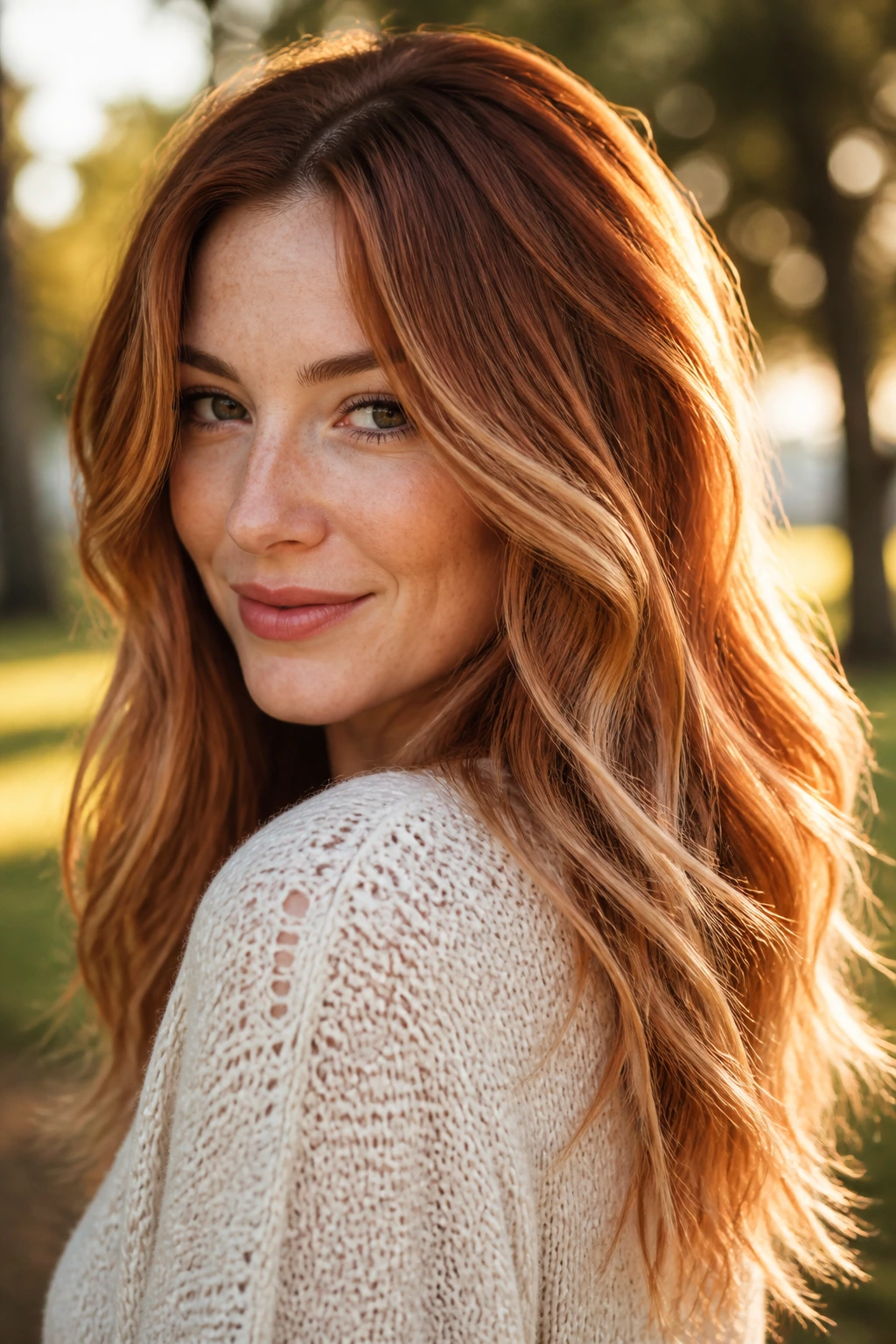
Auburn-strawberry melt is what happens when strawberry blonde grows up a little. The shade starts with richer auburn near the root or underneath and melts into lighter strawberry through the mids and ends. It feels deeper, more dimensional, and a bit more serious than the softer apricot versions.
This is a strong option for anyone with naturally warm hair who wants a color that looks expensive even when the roots come in. The auburn base gives the strawberry something to sit on, which makes the lighter pieces look brighter by contrast. If you want this to stay wearable, keep the auburn soft, not black-cherry dark. The whole point is warmth, not drama for drama’s sake.
Best for: warm brunettes and deeper blondes.
Ask for: auburn roots, strawberry mids, and luminous ends.
Tip: regular glossing keeps the auburn from turning muddy.
37. Velvet Strawberry Waves
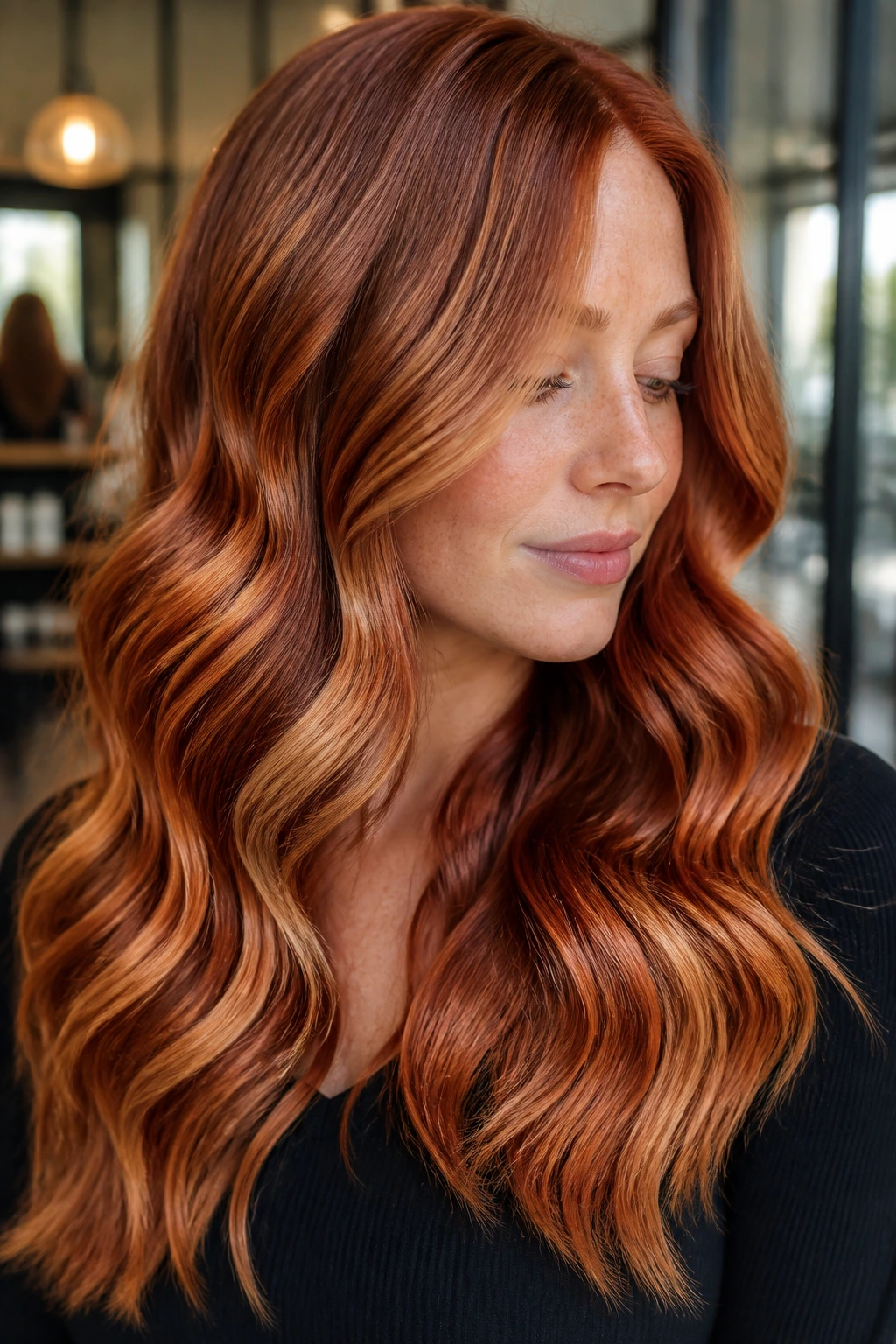
Velvet strawberry blonde is all about richness and shine. The color reads smooth, plush, and a little deeper than the airy apricot shades, but it still keeps that blonde lift in the brightest pieces. On soft waves, the color looks almost upholstered — dense in the good sense, with a lot of sheen.
This is one of the best versions if you want your hair to look full. The contrast between deeper lowlights and glowing strawberry pieces gives the wave shape something to catch. Ask for a glossy finish and a few strategically placed darker strands underneath. That shadow makes the lighter strawberry bits feel brighter than they actually are.
Best for: medium to thick hair and wave-heavy styling.
Ask for: rich strawberry gloss, lowlights, and shine.
Style note: wide waves show off the depth better than tight curls.
38. Soft Redhead Strawberry Blonde
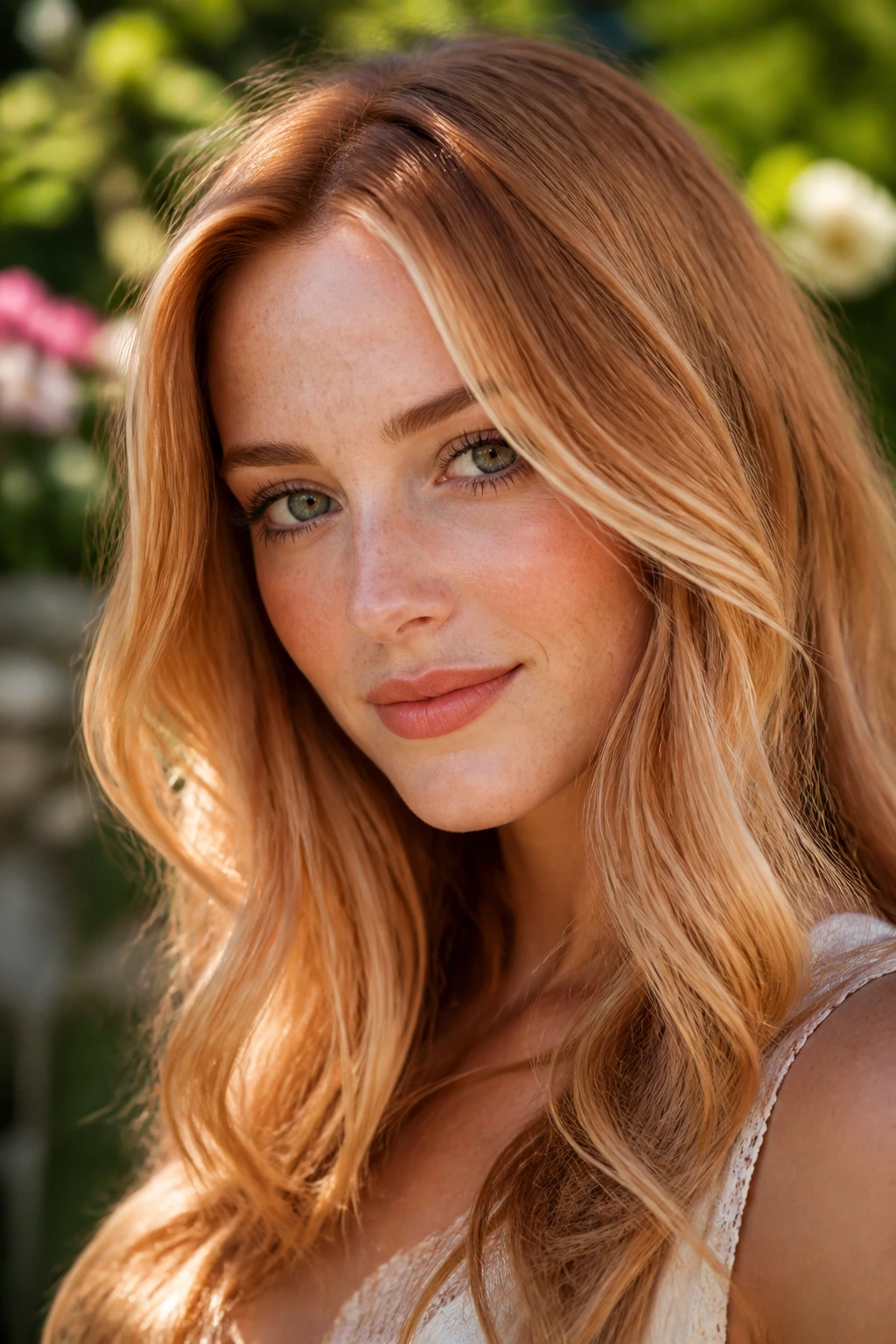
This is the closest a strawberry blonde shade gets to redhead territory without giving up the blonde lift. The color is warmer, deeper, and more copper-forward than the earlier, softer looks, but the lightness through the mids and ends keeps it in strawberry blonde instead of full auburn. It has presence.
If you want people to notice the color before they notice the cut, this is the one. It suits warm skin well, and it can be stunning on freckles or peachy undertones. Still, it needs a little balance so it does not go flat red. I’d ask for lighter ribbons around the face and lower half, with a rich copper root or glaze to anchor it. That contrast keeps the hair from looking like one solid block.
Best for: warm undertones and anyone flirting with full red.
Ask for: strong copper-strawberry depth with blonde lift at the ends.
One caution: once you go this rich, maintenance is part of the deal.
Why Dimension Beats One Flat Copper Sheet
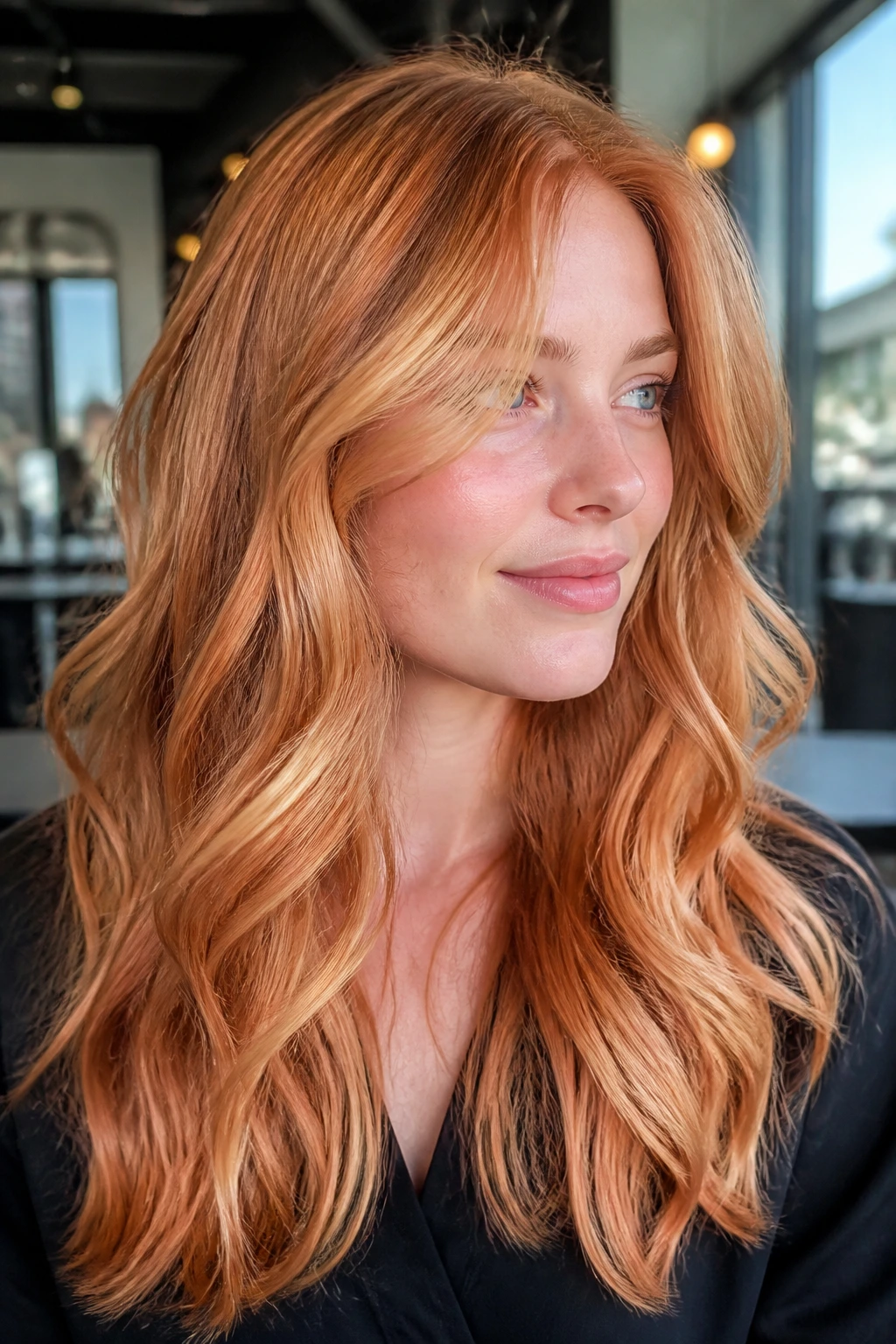
Flat color has its place, but strawberry blonde usually looks best when it moves. A single copper formula can look strong for a week and then awkwardly one-note after that, especially if the hair is long or textured. Dimension gives the color somewhere to go. It gives your eye breaks.
The easiest way to create that movement is to mix placement, not just pigment. Babylights, ribbons, root shadows, face-framing pieces, and lowlights all keep the shade from collapsing into one tone. Even a subtle gloss reads better when the base has a little contrast under it. That is why so many of the best strawberry blonde looks are really color plans, not single-color jobs.
There is also a practical side to this. Hair with depth hides fade better. Porous ends can go a little louder or lighter than planned, and lowlights keep that from ruining the whole look. If you want strawberry blonde to age well between visits, dimension is the thing that buys you time.
Essential Equipment for These Looks
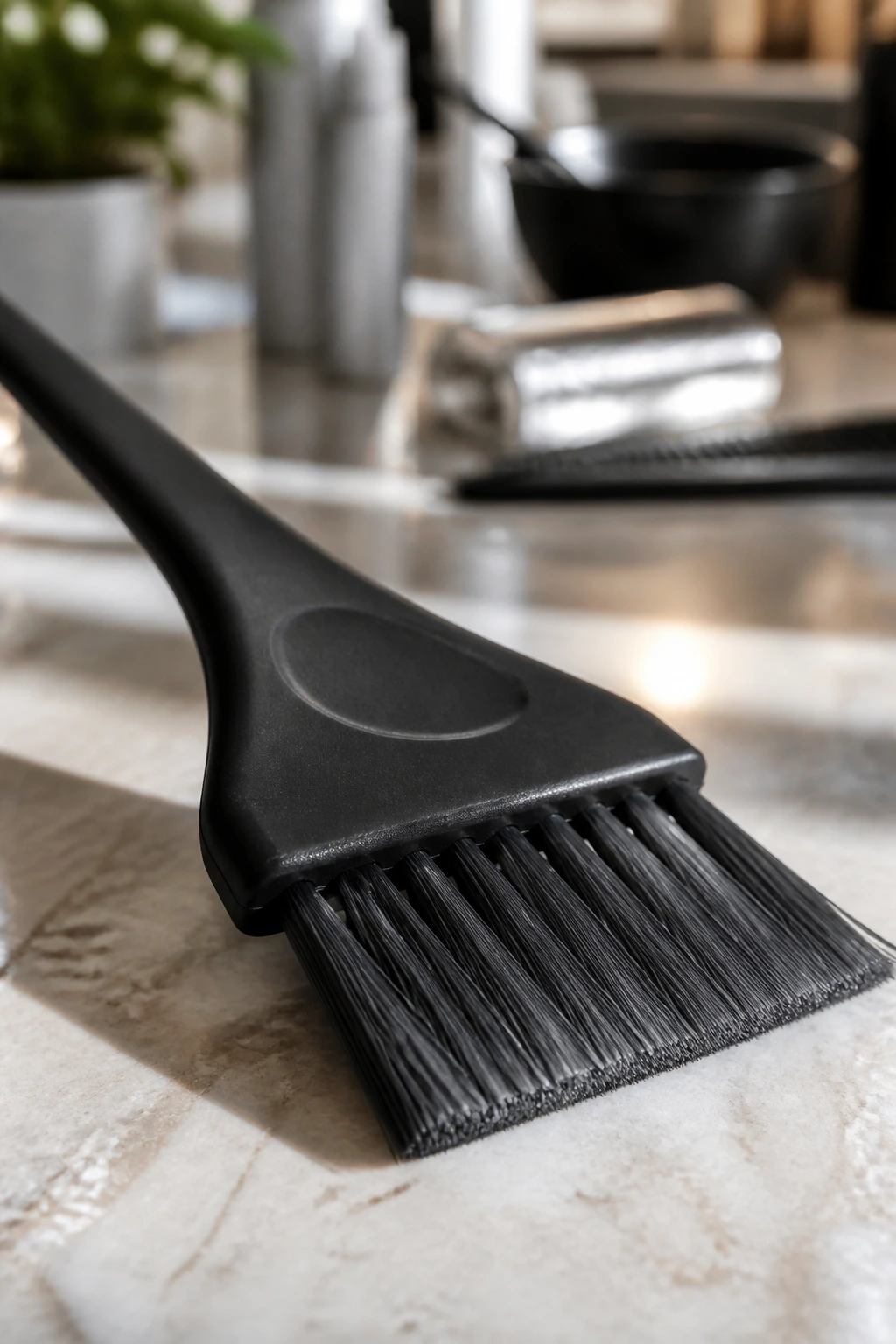
- Tint bowl and color brush: A basic must for glosses, toners, and any small-scale at-home refresh.
- Foils or balayage board: Useful for hand-painted ribbons, babylights, and controlled lift.
- Tail comb: The narrow end helps section fine face pieces and keep the parting clean.
- Sectioning clips: You need these for any layered color placement, especially on thick or curly hair.
- Color-safe cape or old towel: Strawberry and copper pigments stain fast; protect clothing and linens.
- Demi-permanent gloss or toner: The best way to keep strawberry blonde soft instead of harsh.
- Blue shampoo or purple shampoo: Blue helps when orange brass shows up; purple helps when pale yellow takes over.
- Heat protectant: Strawberry shades fade faster with repeated hot tools, and protectant slows that down.
- Wide-tooth comb or detangling brush: Less breakage means less frizz, which means the color looks cleaner.
- Shine serum or lightweight oil: A tiny amount on the ends makes warm tones look richer, not greasy.
How Strawberry Blonde Hair Color Ideas Change on Different Bases
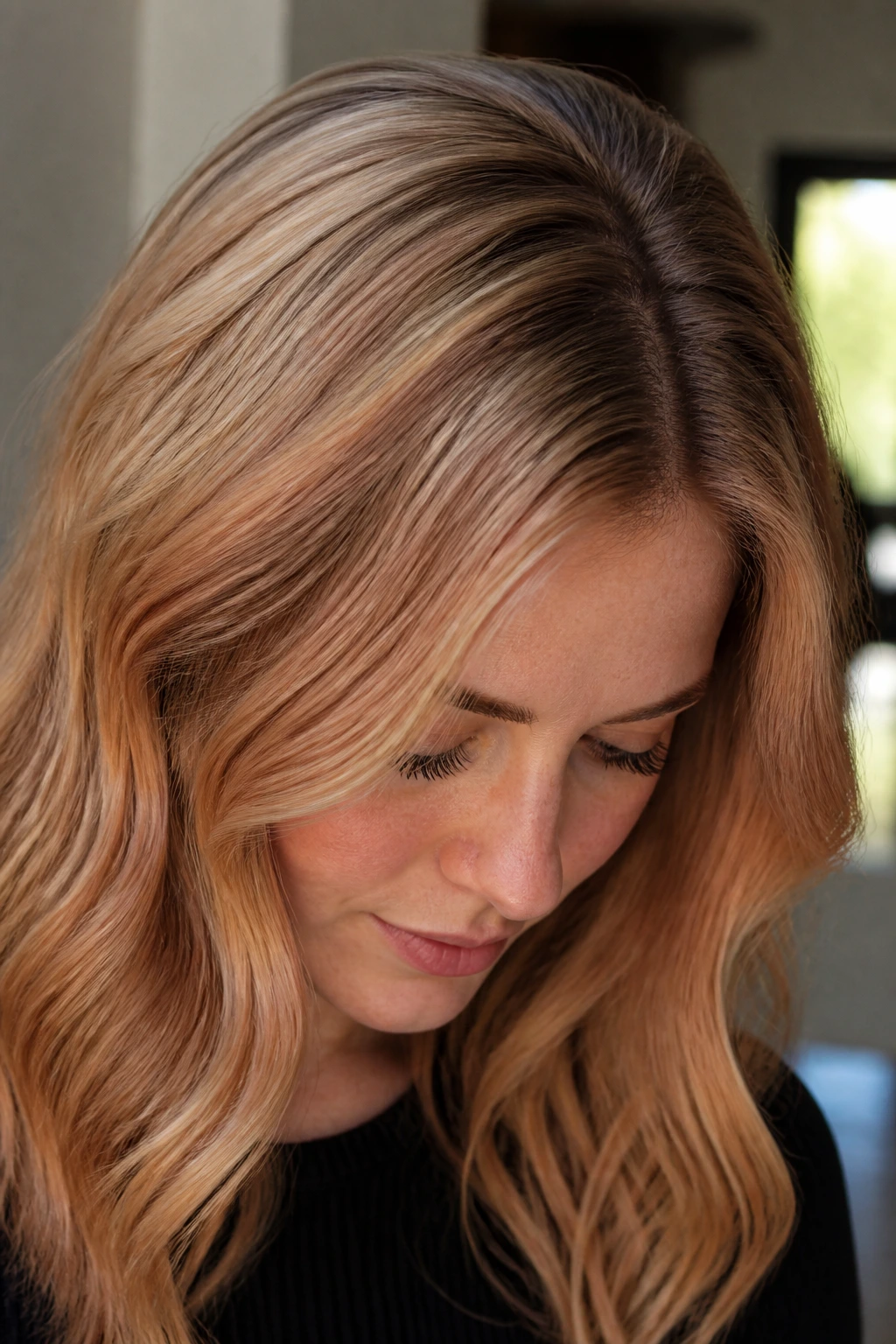
A client with level 9 blonde and a client with level 6 brown are not asking for the same thing, even if the reference photo is the same. That is the first conversation to have. On pale blonde hair, strawberry blonde tends to look sheer, rosy, and easy to control. On darker bases, it needs lift, and that lift changes the personality of the shade before the toner even goes on.
Porous hair makes the whole thing trickier. It grabs warm pigment fast, so the ends can turn too red while the roots stay soft. Healthy hair behaves more evenly, which is why glosses on fresh blonde often look so smooth. If your mids and ends are already sensitized, the safest plan is usually a lighter deposit with a second gloss later, not one heavy push all at once.
The same idea applies to undertones. Gold bases move the shade toward honey or peach. Neutral bases keep it beige. Orange-leaning brunettes can wear cinnamon or auburn strawberry beautifully, while cool bases often need a touch of pink or beige to avoid looking like melted copper. Once you start seeing those differences, the shade stops being mysterious. It gets much easier to choose.
Smart Shopping for Strawberry Blonde Hair Color Ideas
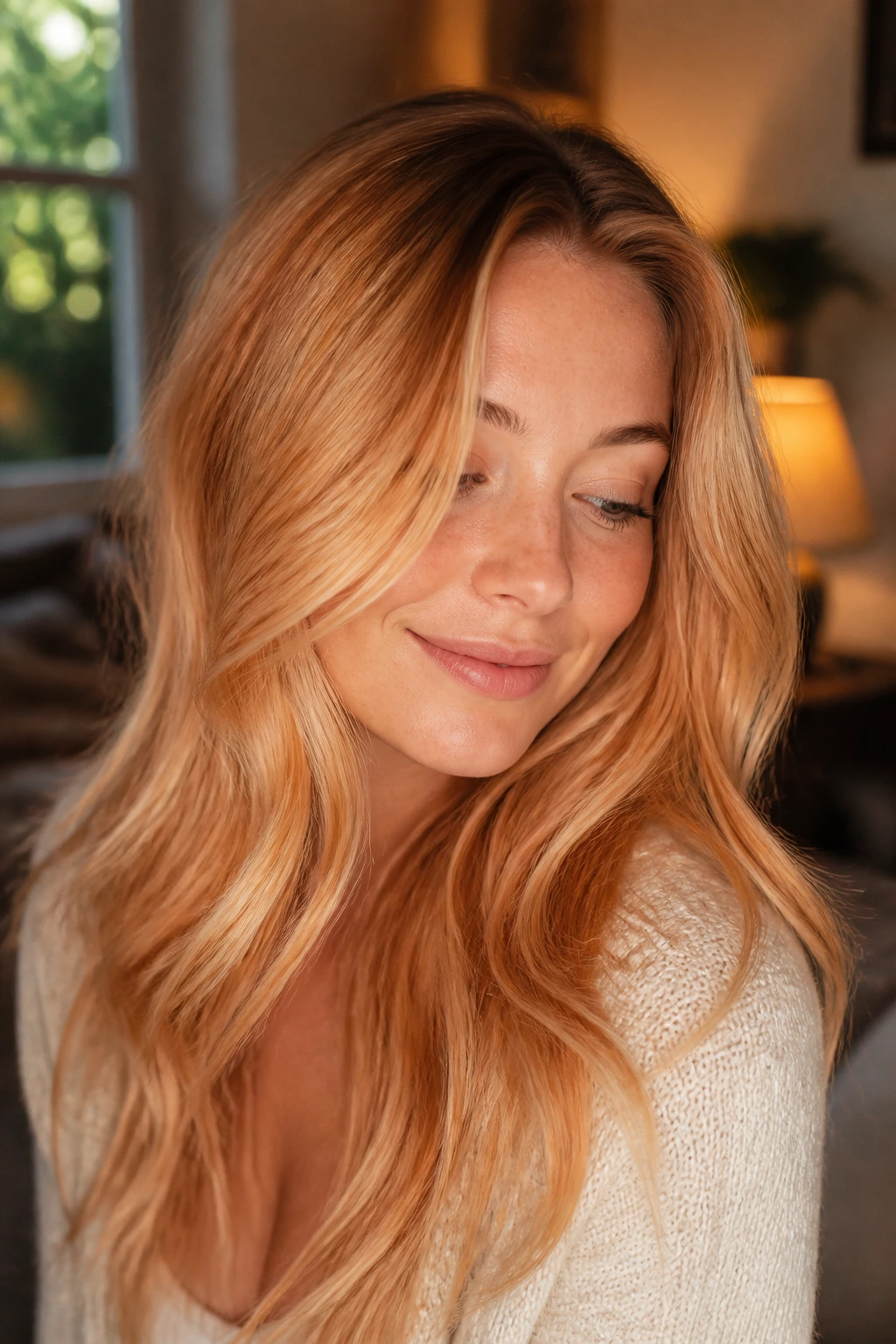
The smartest move is to think in terms of finish, not just color names. A gloss, a demi-permanent color, a root shadow, a babylight pattern, and a full lightening service all create different strawberry looks, even if the final photo looks similar. If you want low commitment, ask for a sheer glaze first. If you want brighter face-framing contrast, ask for a partial foil placement. If you want deeper copper richness, ask for more deposit and less translucency.
The level of your hair matters too. Level 8 and lighter blondes can usually wear peach, apricot, rose, and champagne versions with a gloss alone. Level 6 and darker hair often need lift before any of that reads as strawberry rather than brown. Porosity should guide the formula strength; fragile ends need less pigment and more control, or they will go too dark or too red. A good colorist will talk about that before touching the bowl.
Bring photos, but bring the right kind. Show one image for tone, one for brightness, and one for placement. A single filtered picture can lie about all three at once. If you can, point out whether you want the color to look stronger around the face, softer through the ends, or deeper at the root. Those three notes change the result more than people realize.
How to Wear Strawberry Blonde in Real Life
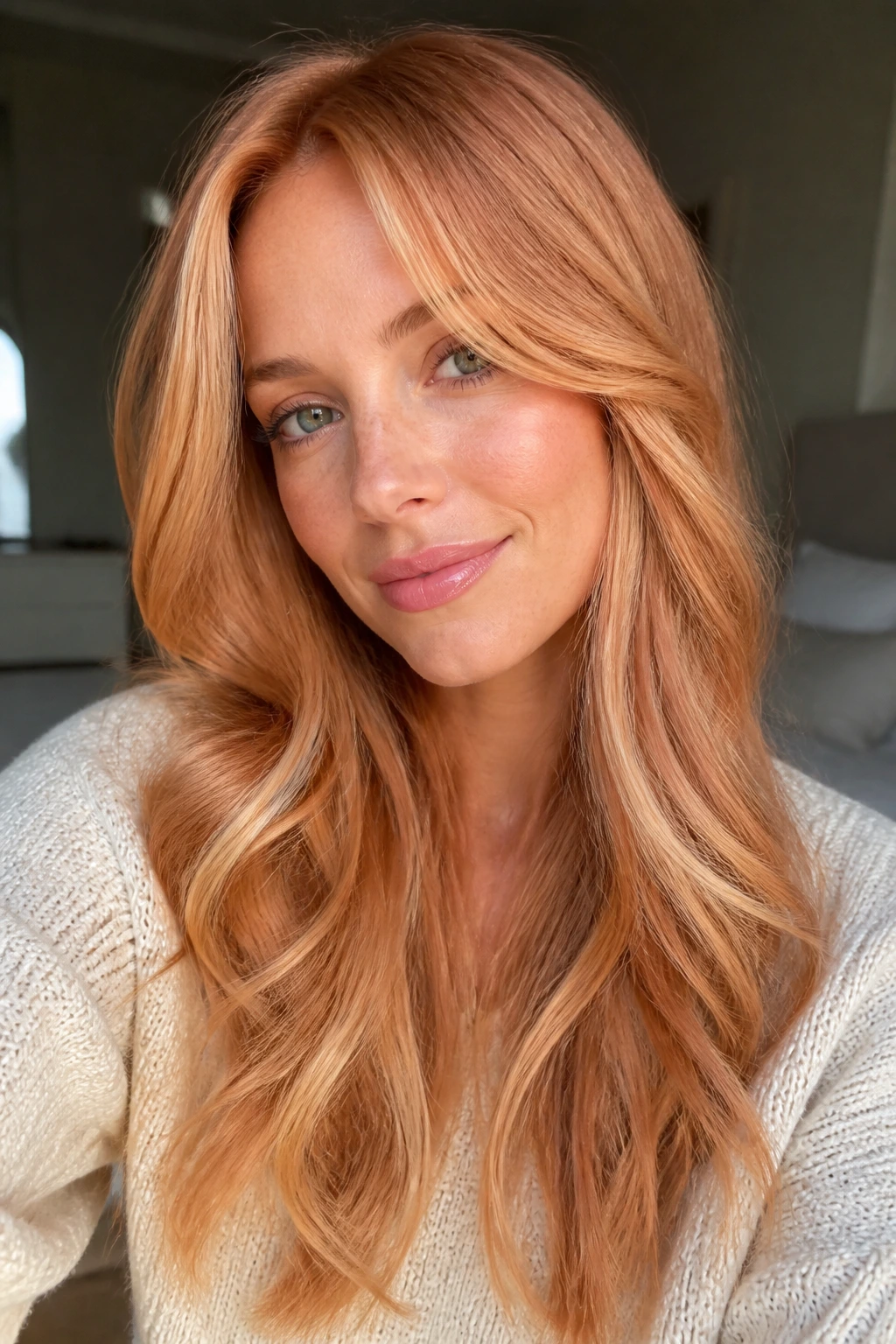
Presentation: Soft waves show the different warm tones best because the bends catch the lighter strawberry pieces. A sleek blowout makes champagne, beige, and rose-gold versions look cleaner. Short cuts need a little shine, while long layered hair can handle a bit more dimension.
Accompaniments: Warm neutrals tend to flatter the shade — cream, camel, sage, denim, muted teal, and soft brown makeup all work without fighting the hair. Peach blush and brown mascara usually look better here than icy pink or blue-based lipsticks. If the shade leans copper, keep the wardrobe colors slightly calmer so the hair stays the main event.
Portions: A full-head strawberry service gives the richest result, but a face frame, partial balayage, or gloss-only refresh can get you most of the way there. If you want subtle, ask for about 20 foils around the hairline and crown, then let the rest stay softer. If you want strong, you need more saturation through the mids and ends.
Beverage Pairing: At the salon, a cold sparkling water or iced tea is the safest choice because it won’t stain a fresh cape. If you’re heading out after, something light and clear keeps the mood in step with the color. Dark berry drinks and light-colored clothes are a clumsy combination.
Tiny Adjustments That Change the Finish
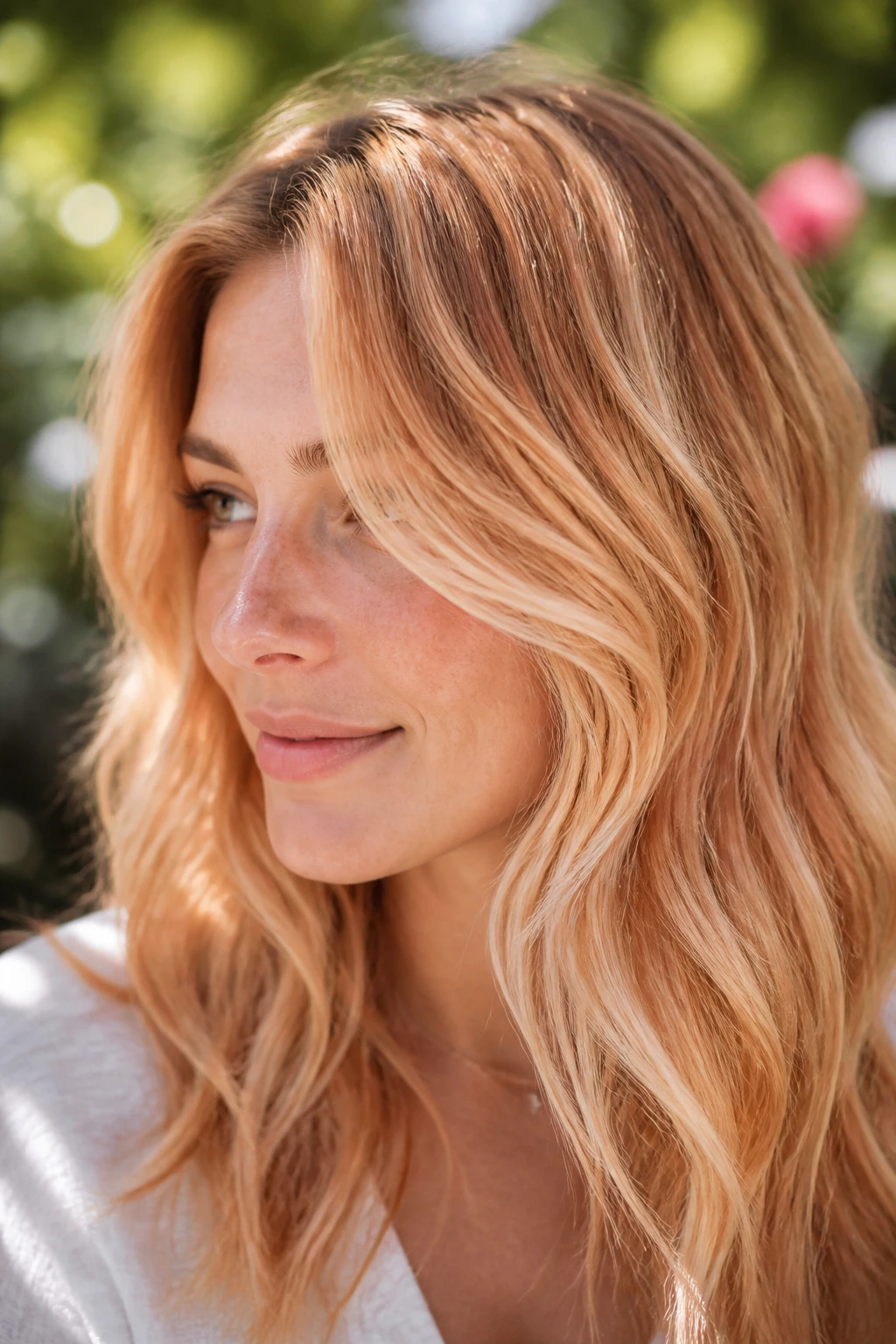
Tone Enhancement: A clear or slightly tinted gloss every few washes keeps strawberry blonde shiny instead of dusty. If the red note starts looking tired, a warm demi with gold-copper reflect usually wakes it back up.
Customization: Add a stronger copper glaze if you want the shade to feel richer and more red. Add beige or champagne if you want it softer and a little more expensive-looking in low light.
Serving Suggestions: Loose bends, a center part, and a little shine serum on the ends are the easiest finishing moves. If the color has face-framing pieces, tuck one side behind the ear for five minutes and let the contrast do the work.
Make-It-Yours: Fine hair usually benefits from babylights and gloss because heavy color can flatten it. Curly hair needs placement that respects the pattern. Gray blending works best when the strawberry pieces are woven around the silver rather than piled on top of it.
Keeping Strawberry Blonde Fresh Between Salon Visits
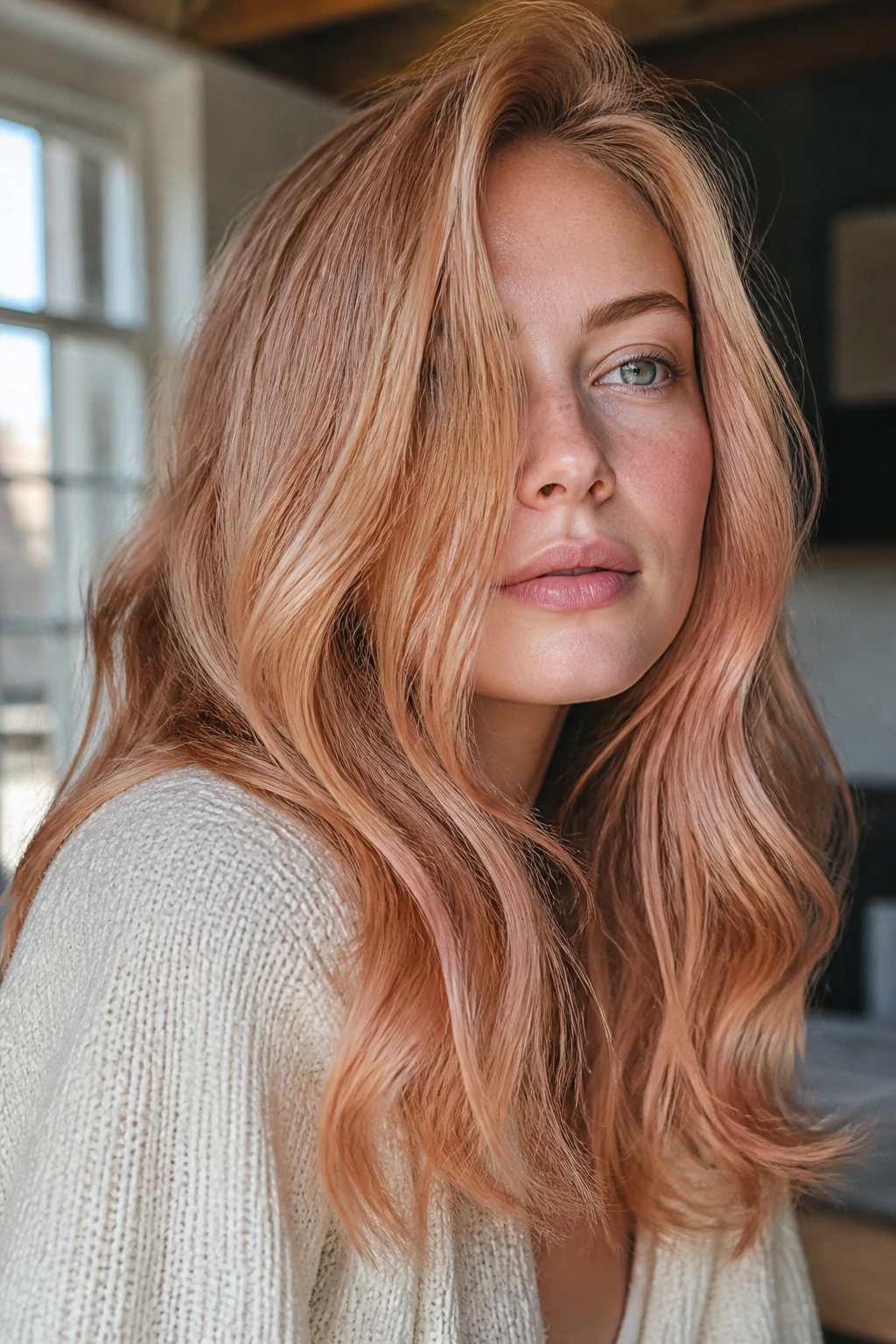
Wash less than you think you need to. That is the boring advice, and it matters here more than usual because warm red pigments fade fast in hot water and strong shampoo. If you can stretch washes to two or three times a week, do it. Use lukewarm water, not hot, and finish with a cooler rinse if you can stand it.
For the first 48 hours after coloring, let the hair settle. If you just had a gloss or demi service, washing too soon can strip away the tone before it has had time to settle into the cuticle. After that, use a color-safe shampoo and a conditioner that gives slip without heavy wax. Once a week, a moisture mask helps the ends stay reflective, which matters because dry strawberry blonde looks dull fast.
Gloss refreshes usually land every 4 to 6 weeks if you want the shade to stay clean. Root work depends on how fast your hair grows, but 6 to 8 weeks is a fair rhythm for most partial or full color services. If the shade starts to read orange, a blue-based product can help. If it goes too yellow, a purple shampoo can soften it. Do not overuse either one; both can turn the hair flat if you lean on them every wash.
Variations and Adaptations Worth Trying
-
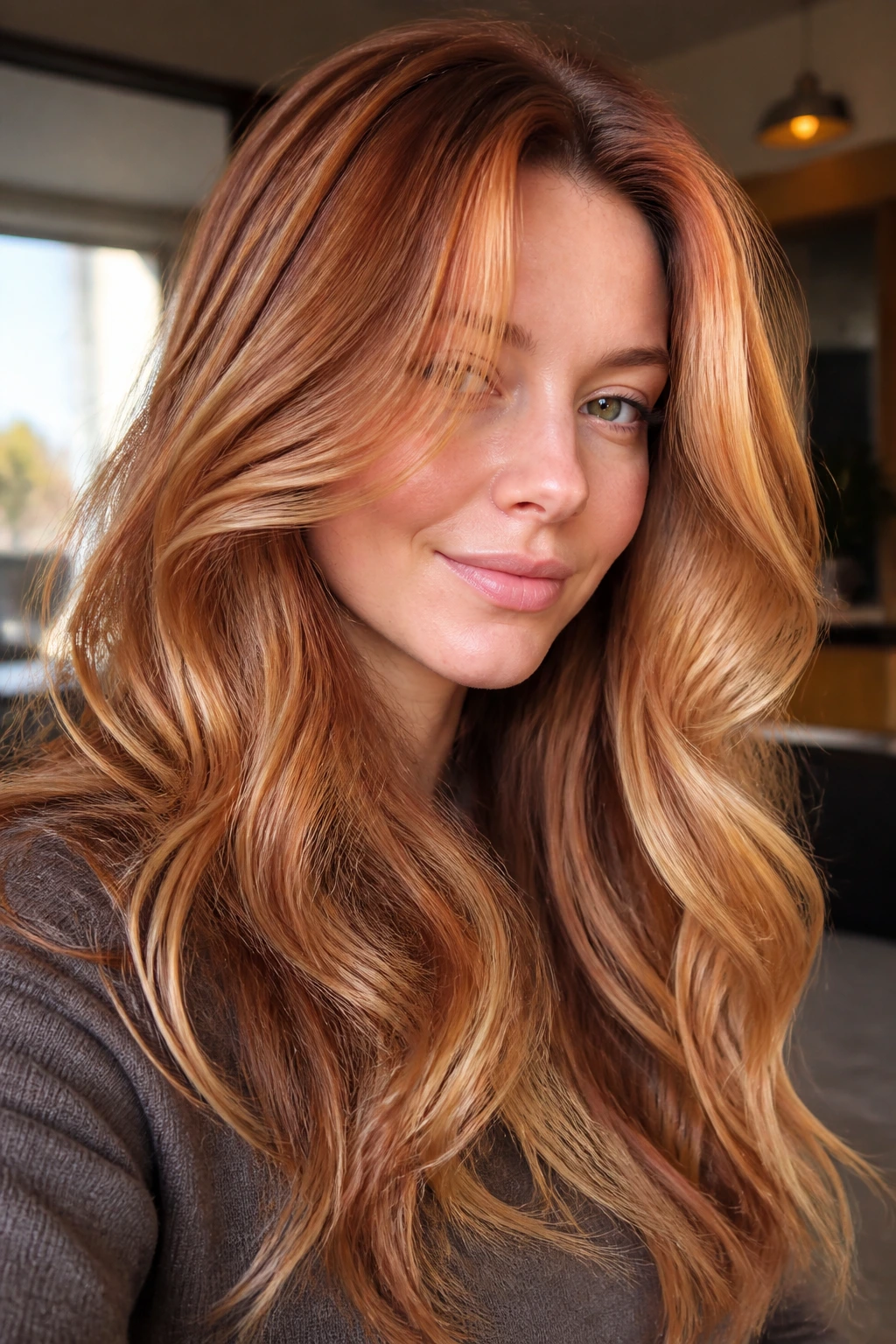
Rooted Weekend Strawberry: Keep the root deeper with a soft shadow and let the strawberry live mostly in the mids and ends. This is the low-maintenance option when you want grow-out to stay quiet.
-
Copper Jam: Push the red note deeper and richer, with more auburn in the formula. It suits warm skin and anyone who wants the shade to feel fuller and less blonde.
-
Blush Sorbet: Soften the copper and add a lighter pink reflect for a pale, airy finish. This works best on level 9 blondes that can hold a translucent tone.
-
Smoky Beige Strawberry: Use beige and a tiny bit of cool brown to mute the warmth. It is the one to choose if pure copper makes your skin look flushed.
-
Curly Halo Strawberry: Place brighter strawberry pieces around the outer curl pattern and keep the underlayers deeper. The shape does the rest.
-
Gray-Blend Strawberry: Weave warm strawberry ribbons around silver strands instead of covering the gray completely. The contrast makes the gray look intentional and the warm pieces look brighter.
Common Mistakes That Make the Shade Look Off
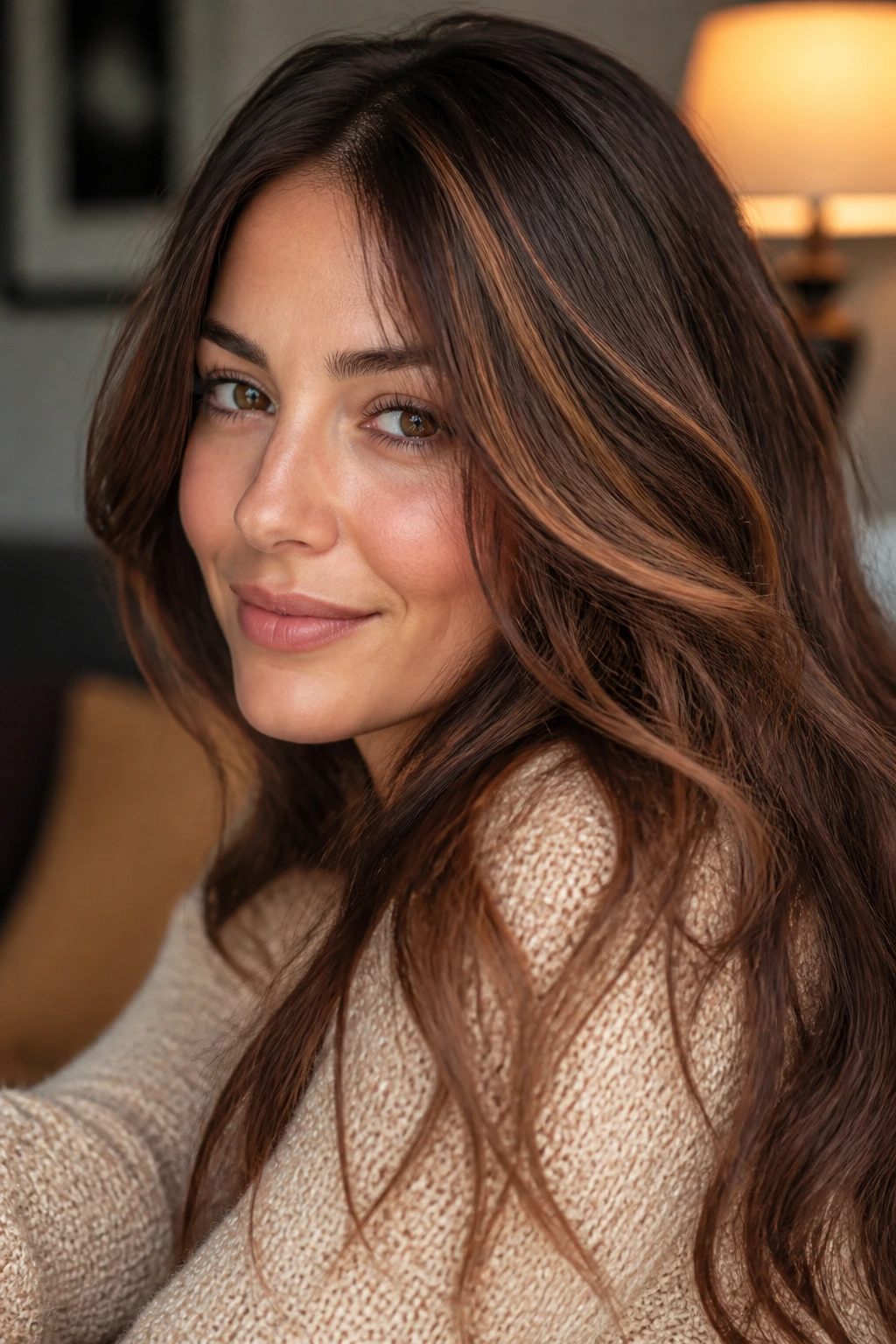
The first mistake is asking for strawberry blonde on dark hair without a lift plan. The result is usually just warm brown with a little copper at the ends. Nice enough, maybe. Not strawberry blonde. If your base is level 6 or darker, you need to talk about lightening first.
The second mistake is using purple shampoo like it is a toner. Purple can calm yellow, and blue can help with orange, but neither one creates the color story on its own. If the shade has faded, you usually need a gloss, not another round of shampoo.
The third mistake is bringing in a filtered photo and ignoring the base color. A blonde who wants peach strawberry and a brunette who wants the same photo need different formulas, different timing, and different patience. Show the tone you like, but also show your actual starting point.
The fourth mistake is overloading porous ends with red pigment. That is how strawberry blonde turns too hot at the bottom while the top stays soft. A good colorist protects the ends, sometimes with a weaker formula or by glossing them later.
The fifth mistake is forgetting maintenance. Warm shades fade. That’s the deal. If you want the color to keep its shape, plan on glosses, heat protection, and a wash routine that does not grind the pigment out every other day.
Frequently Asked Questions About Strawberry Blonde
Can strawberry blonde hair work on dark brown hair?
Yes, but not as a one-step miracle. Dark brown hair usually needs lift before the strawberry tone can show up clearly, otherwise it reads more like warm brown or copper. A balayage or foil placement plan gives you a better result than a heavy all-over color.
Is strawberry blonde the same as rose gold?
Not exactly. Rose gold leans pink and metallic, while strawberry blonde has more blonde and copper in the mix. Rose gold is usually softer and cooler; strawberry blonde is warmer and more flexible.
Will strawberry blonde fade orange?
It can, especially if the hair is porous or the base is very yellow. The fix is a balanced formula, cool water, gentle shampoo, and a gloss refresh before the color gets too brass-heavy. Blue shampoo helps with orange, but it should be used sparingly.
How often does strawberry blonde need to be touched up?
Glosses often need refreshing every 4 to 6 weeks if you want the tone to stay clean. Root touch-ups depend on the method, but 6 to 8 weeks is a fair rhythm for many people. Balayage and rooted looks can stretch longer.
Can you get strawberry blonde without bleach?
Sometimes, yes. If your hair is already light blonde or light copper-brown, a gloss or demi-permanent color may be enough. If your hair is darker than that, you usually need some lift to make the strawberry tone visible.
What makeup colors look best with strawberry blonde?
Warm peach blush, soft brown liner, cream shadows, and muted berry lips usually flatter it. Very cool pinks or icy taupes can fight the warmth in the hair. Beige, olive, and denim also tend to play nicely with the shade.
Does strawberry blonde work on gray hair?
It can, especially if the goal is gray blending instead of full coverage. The warm pieces soften silver strands and can make the hair look multi-tonal instead of striped. A gloss over the gray area often helps the blend feel smoother.
How do I ask for the right version at the salon?
Use three parts: the tone you want, the brightness you want, and where you want the color placed. Say things like “apricot gloss with a soft root shadow,” “copper ribbons around the face,” or “a beige strawberry refresh on my blonde base.” That tells the colorist far more than the phrase “strawberry blonde” alone.
A Shade With Room to Grow
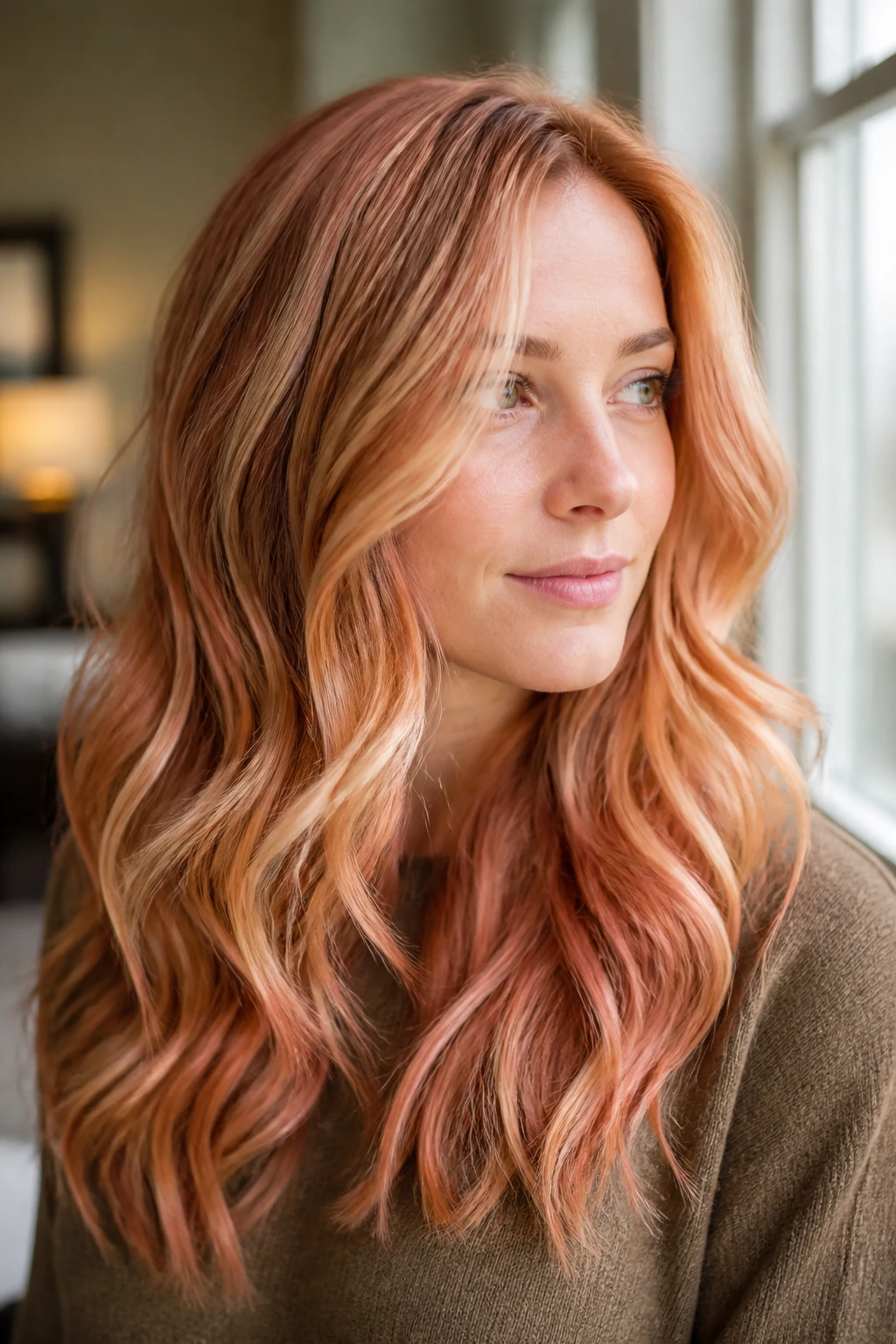
Strawberry blonde stays interesting because it is never only one thing. It can lean peach, copper, rose, beige, honey, or jammy red, and the change between those versions can be as small as a gloss formula or a different placement pattern. That gives you room to be specific, which is the whole point.
If you are heading to a salon, bring notes about the tone, the upkeep, and how much warmth you actually want on your skin. If you are staying in the soft end of the family, a gloss and a few face-framing pieces may be enough. If you want richer color, ask for dimension and root depth so the shade has somewhere to live beyond the first week.
The best strawberry blonde looks are the ones that match real hair, real light, and real maintenance habits. Get those three things right, and the shade has a way of looking like it was always meant to be there.
