



Retro hairstyles for older women have a funny reputation: people either picture a museum piece, or they picture the kind of lacquered helmet that leaves no room for a face. The good versions are neither. A soft victory roll, a brushed-out wave, a pageboy that flips just at the jaw—these shapes can make gray hair gleam, fine hair look fuller, and a strong face shape feel even cleaner.
What makes them worth paying attention to is structure. Mature hair often changes texture at the crown and ends, and vintage styling actually works with that instead of fighting it. A little lift at the roots, a clean side part, and a bend through the ends can do more than a dozen layers of product ever will. And when the style is chosen well, it looks polished without feeling stiff. That’s the sweet spot.
A few of these looks need hot rollers. Some need nothing more than a round brush, a couple of pins, and the nerve to keep the front soft. All of them reward a light hand and a sharp eye. The sections below break down the shapes that still earn their keep, and the ones that tend to age the styling instead of the woman wearing it.
Why These Retro Styles Still Feel Fresh
Softness matters more than nostalgia. The strongest retro looks here don’t freeze the hair in place; they build shape and leave a little air around it. That matters when you want definition at the crown or around the jaw without turning the whole head into a lacquered shell.
- Lift goes where hair usually falls flat: A little height at the roots keeps fine hair from sitting close to the scalp, especially around the crown and temples.
- The ends do useful work: Flipped, tucked, or rolled ends make the silhouette read finished, even when the length itself is modest.
- Silver and gray hair hold detail well: Cool-toned strands show bends, rolls, and brushed waves with extra clarity, which is a small gift when you want the style to read from across a room.
- These shapes play nicely with glasses: A swept side part or a soft roll keeps the frame area clean instead of crowding it.
- You do not need long hair: Several of the best vintage-inspired looks here work on jaw-length bobs, pixies with a longer top, and shoulder-grazing cuts.
The other reason they still work is practical. A lot of modern “easy” hair leaves you with nothing but texture and hope. Retro structure gives you a plan. That’s why these styles keep coming back.
1. Soft Victory Rolls
Soft victory rolls are what happens when you borrow from pin-up styling and leave the sharp edges behind. The hair lifts away from the temples, folds back in a clean arc, and gives the face room to breathe. On older women, that open space matters. It shows off cheekbones, earrings, and a strong jawline without making the top of the head look artificially tall.
Why it flatters mature hair
The rolls create shape where hair often goes limp first. If your crown is a little sparse or your hairline has softened, the style disguises both with a graceful curve rather than trying to cover everything. I like this look best on shoulder-length hair, but it can be built on shorter lengths if the top layers are long enough to twist.
A little mousse at the roots helps, but the real work comes from direction. Roll the hair away from the face, pin the base flat, then loosen the outer edge just enough to keep it from looking tight. Think sculpted, not sealed.
Best note: keep one or two thin pieces near the hairline softer than the rest. That one detail keeps the style from tipping into costume territory.
2. Pageboy Bob
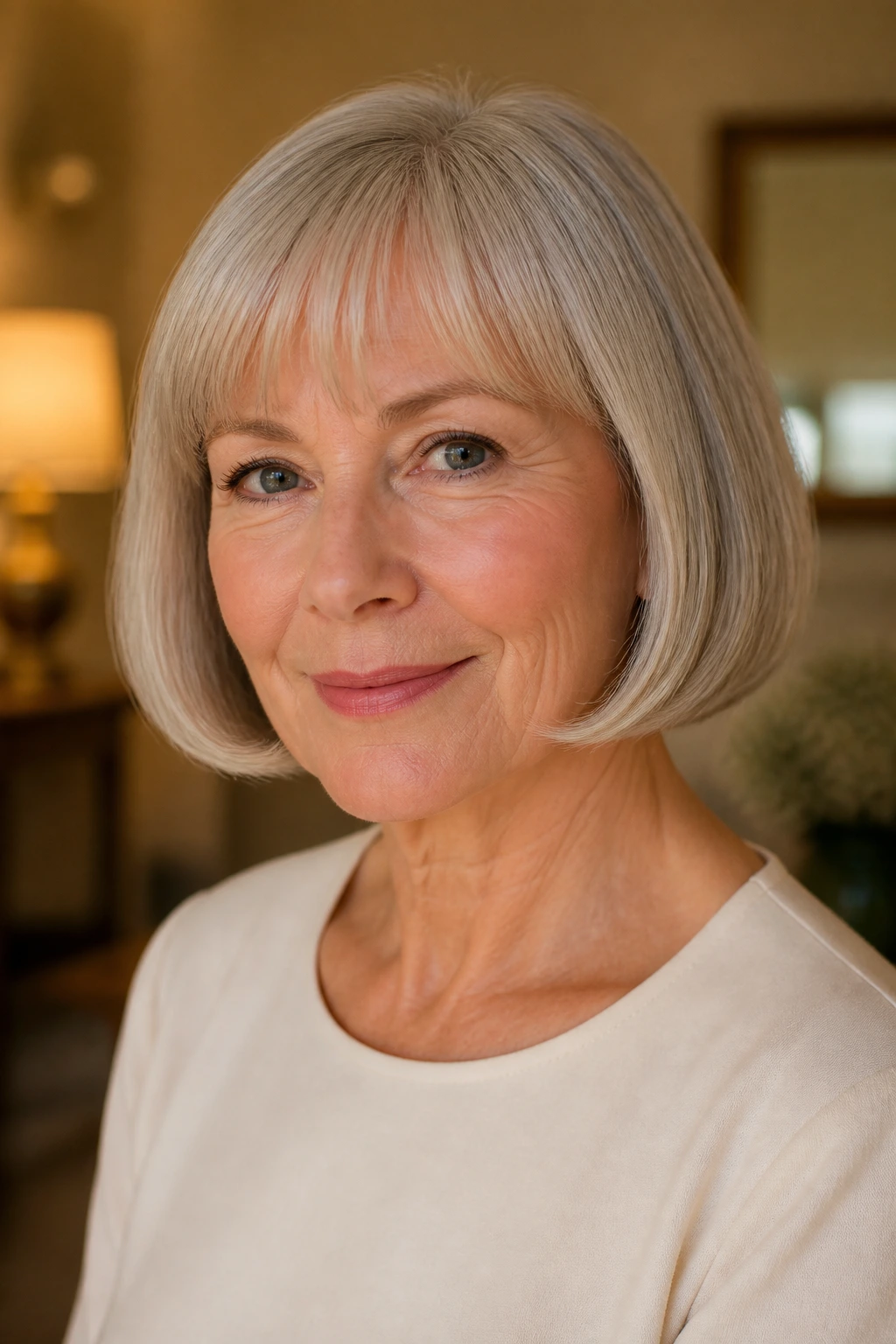
If your hair brushes the jawline and you want it to look intentional, the pageboy bob is one of the smartest shapes to borrow from the past. The curve under at the ends gives the cut its clean line, and the body through the middle stops it from looking boxy. On older women, it reads neat without being severe.
This is one of those cuts that improves the more you respect the outline. A round brush and a blow-dryer nozzle are enough for many hair types, but a 1½-inch curling iron can help if the ends refuse to bend under. Keep the top smooth, then give the bottom edge a soft inward turn. That’s the whole trick.
If your hair is fine, ask for a pageboy with subtle graduation at the back. If it’s thick, ask for weight removal under the surface so the line doesn’t puff out. The style is old, yes, but the best version is quietly modern: polished hair, clean jawline, no helmet effect.
3. The French Twist with a Soft Hairline
Want something elegant without looking overworked? A French twist is still the answer, provided you soften the front and don’t pull every strand back to the exact same tension. That one adjustment changes everything. The twist stays classic, but the face stays relaxed.
The shape works especially well for medium to thick hair because the twist has enough density to stay put. Fine hair can do it too, but it needs a little help: backcomb the interior lightly at the crown, smooth the outer layer, then pin in a vertical line so the twist doesn’t slip. Use long U-pins if you have them. They grip better than tiny bobby pins in slippery hair.
How to ask for it
If you’re wearing this for a special event, tell the stylist you want the twist to sit low and soft, not tight and high. Leave a whisper of movement around the temples. That keeps the face open and stops the style from feeling severe.
A French twist is also one of the best retro styles when you want your neckline to matter. It works with pearls, a collarbone-baring dress, or a crisp jacket. Very few hairstyles are this neat and this forgiving at the same time.
4. Brushed-Out Hollywood Waves
Hollywood waves are gorgeous in the old-film sense, but the version that works best on older women is the brushed-out one. You want large, smooth bends, not tight curls pretending to be waves. The final look should move in a single direction with a soft S-shape, usually swept to one side.
Set the hair in large rollers or with a 1½-inch iron, then let it cool completely before brushing. That cooling step matters. Warm curls brush out differently, and not in a good way. Once the hair is cool, use a boar bristle brush or a mixed-bristle brush to join the waves together. A light flexible-hold spray is enough. Heavy spray makes the surface stiff, and the whole charm of this style is the glide.
What makes it different
Unlike beach waves, Hollywood waves have a cleaner line near the ends. They also photograph well with silver hair because the curves show up clearly. If your hair is medium length, this is one of the most flattering vintage-inspired styles you can wear to a wedding, a dinner, or any event where you want your hair to look deliberately shaped.
The side part is doing more work than people realize. It gives the wave somewhere to travel, and that forward sweep is what keeps the style from flattening the face.
5. Crown Bouffant
A bouffant sounds bigger than it needs to be. The modern version is really just crown lift with manners. You build height at the top, smooth the outer layer, and leave the sides close enough to the head that the whole shape feels balanced. On older women, that balance is everything.
I prefer this style when the hair is shoulder length or longer, because the length at the back helps anchor the volume. Use a tail comb to create a top section, tease only the underside at the crown, then smooth the top with the back of the brush. If you over-tease the front, it reads as stiff. If you keep the lift concentrated near the crown, it looks full and expensive without needing much spray.
This style is a smart move if your hair tends to lie flat after a few hours. It also works with glasses because the height sits above the frame rather than crowding it. A little shine serum on the ends helps too. Just don’t touch the crown with it. That’s how the lift collapses.
6. Faux Bob with Tucked Ends
A faux bob is one of those styles that makes people stare twice, usually because it looks like a short cut from the front and a secret pin-up under the layers. The hair is rolled or tucked under at the nape, and the illusion depends on keeping the outside smooth. It’s especially handy if you’ve always wanted to try a bob without making a permanent chop.
The easiest version starts with curled ends. Once the hair is cool, roll the bottom length upward and pin it under itself at the back of the neck. Leave enough softness around the sides so the tuck doesn’t look like a hard fold. If your hair is thicker, split the lower section into two layers before tucking; one big roll tends to pop loose.
Best use case
This style shines for evening events, portraits, and any day when you want a shorter look without actually cutting your hair. It suits medium-length hair best, though longer lengths can do it too.
The charm is in the deception. From the front, you get the clean line of a bob. From the side, you get a little vintage theater. It’s neat, a little cheeky, and far less fussy than it sounds.
7. Feathered Flip
The feathered flip is pure movement. Hair is blown out, turned away from the face at the ends, and left with enough softness to move when you turn your head. The shape feels especially good on older women because it keeps the jawline from getting swallowed by heavy length.
Use a round brush, not a paddle brush, and direct the ends outward while the hair is still warm. That outward bend is what gives the style its personality. If your hair has a natural wave, you may barely need a curling iron at the ends. If it’s pin-straight, a 1-inch iron can help sharpen the flip.
- Keep the top smooth: The lift should live through the middle and ends, not puff around the crown.
- Turn the ends away from the neck: That gives the silhouette air.
- Use a lightweight spray: Anything sticky kills the swing.
The style is especially friendly to layered cuts. Layers support the flip instead of fighting it. If you want a retro look that doesn’t require a precise set or a dozen pins, this is one of the most forgiving options in the list.
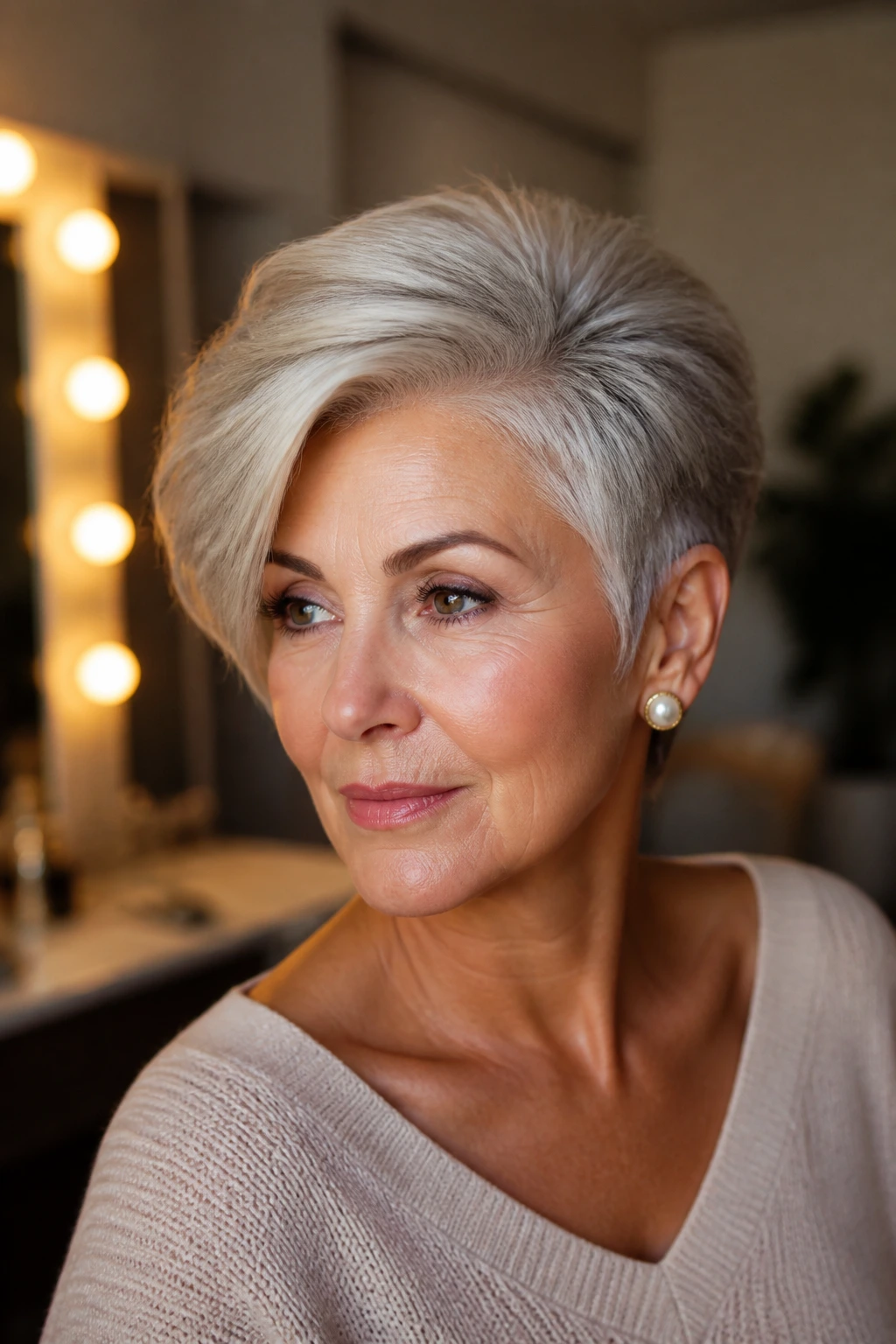
8. Side-Swept Pixie with a Retro Sweep
Short hair can absolutely go retro. It just needs one long line to hold the eye. A side-swept pixie with a longer top and a controlled sweep at the forehead can borrow from the glamour of older screen styles without feeling overdone. The trick is in the direction: the top should move diagonally, not straight up.
Work a pea-sized amount of cream or light pomade through damp hair, then blow-dry with a small round brush or even your fingers if the cut is already shaped well. Push the front section to one side and keep the ends soft. Too much product makes short hair separate into shiny little pieces, which is rarely the look you want.
This style does especially well with glasses because the sweep creates a clear line above the frames. It’s also a sensible choice for hair that’s naturally fine around the sides. You keep the top lively and the rest close to the head. Clean, sharp, and not trying to pretend the hair is longer than it is.
9. Pin Curl Set
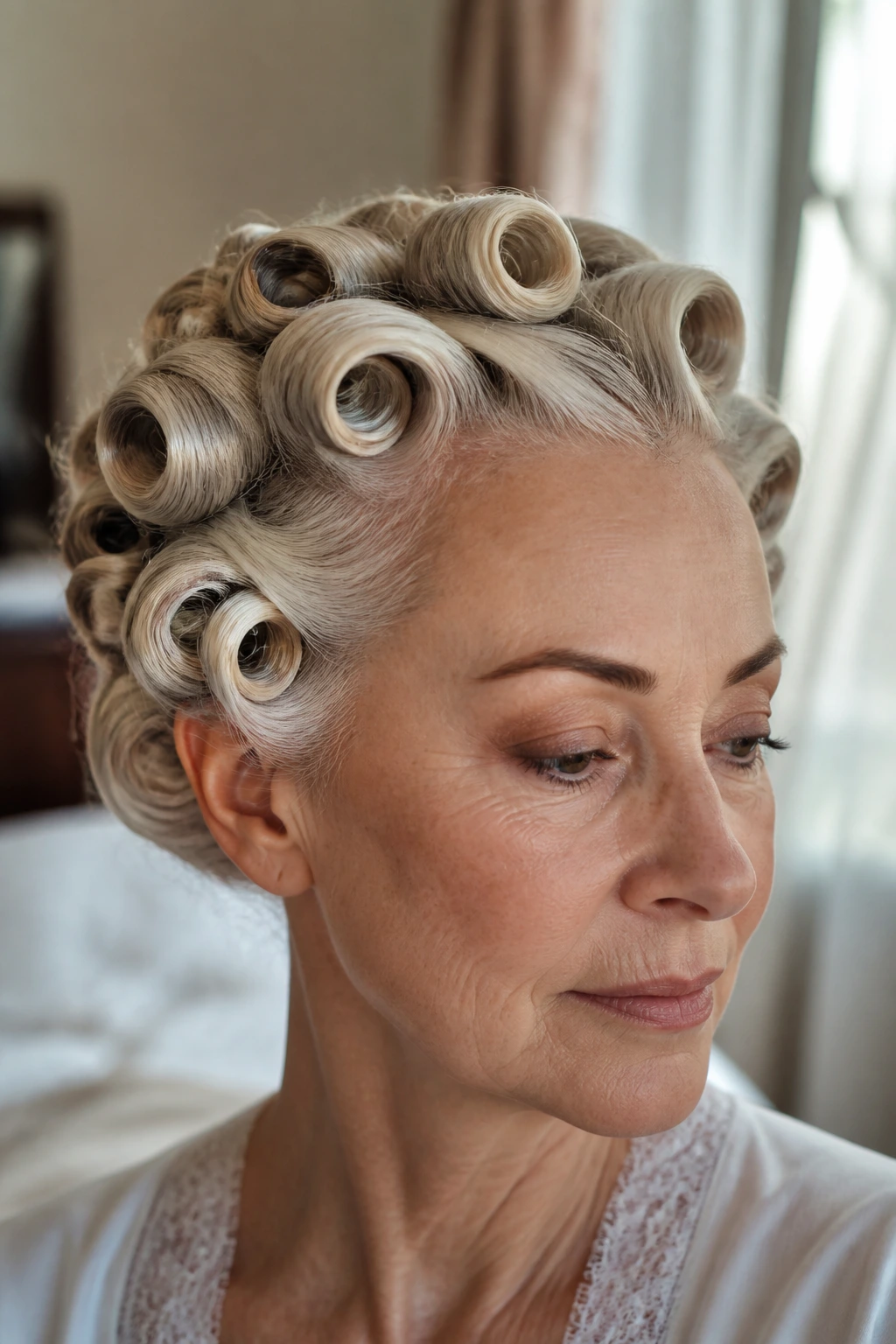
Pin curls are old-school in the best sense. They create soft, controlled waves without depending on heat alone, and they often hold better on resistant hair than a quick pass with a curling wand. If your hair is very straight, very fine, or a little stubborn at the temples, this style can give you the bend you’ve been missing.
How it holds
The curls are formed while the hair is damp or lightly misted, rolled flat against the head, and pinned until they cool or dry. That flat set is the whole point. It builds shape from the root through the end, so the wave doesn’t collapse halfway down the strand.
You can do an overnight set with foam rollers or traditional pin curls, then brush the shape out in the morning for a soft vintage wave. Or you can use a heat set and let the curls cool fully before removing the pins. The key is patience. Rush the cooling, and the style drops fast.
Pin curls are a quiet gift for gray hair too. The texture shows the pattern beautifully, especially when the finish is brushed but not over-polished.
10. Deep Side-Part Chignon
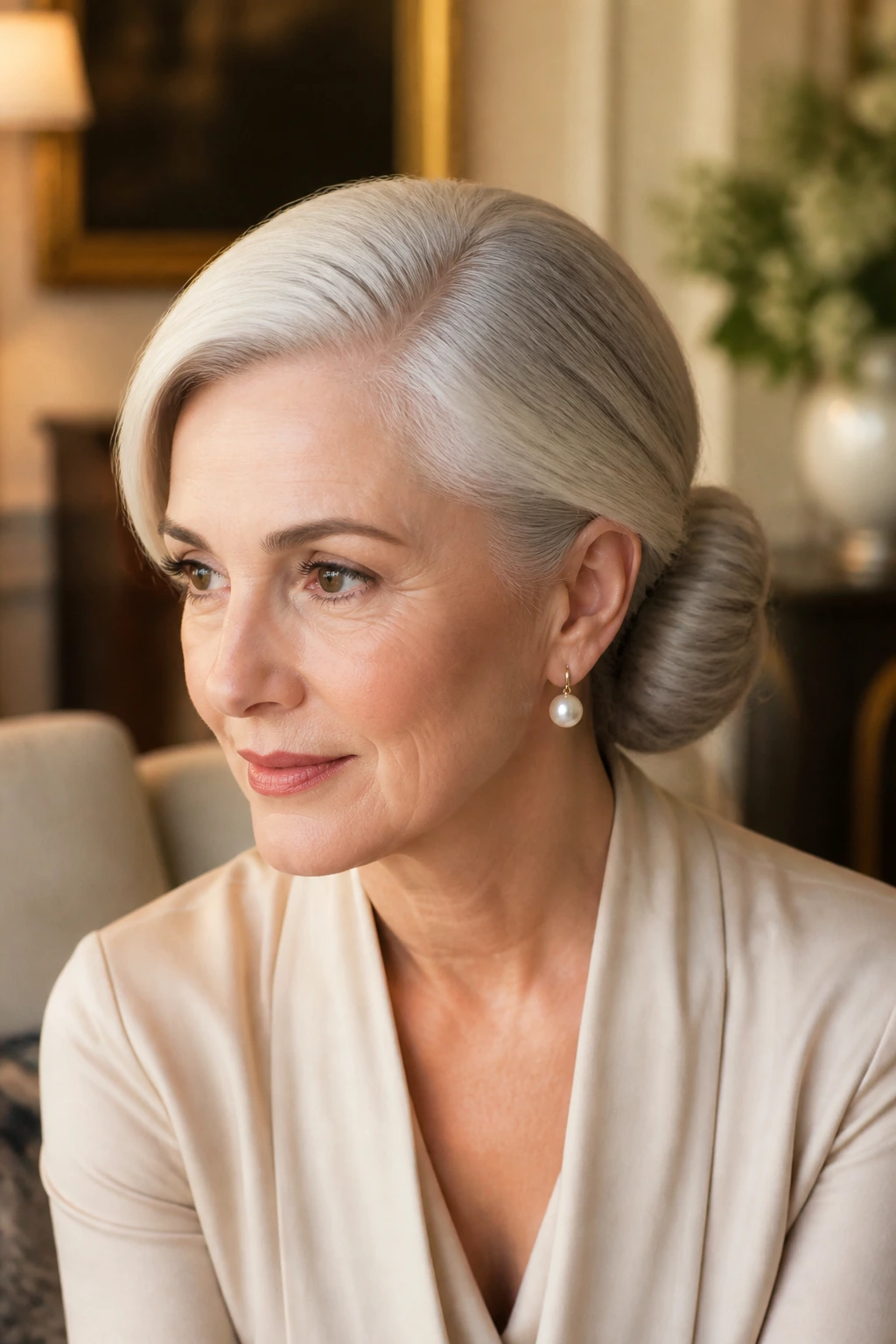
A side-part chignon is the sort of low bun that makes people assume you spent more time on your hair than you did. The deep side part gives the style its retro tilt, while the bun itself stays low and compact at the nape. If you keep the surface smooth and let one side sit a touch fuller than the other, the look stays soft instead of stern.
This is a strong choice for medium to long hair that needs to stay put through a long day. Gather the hair low, twist it into a loop or bun, and pin the center first so the weight is anchored. Then tuck the loose ends under and secure the shell of the chignon. A little backcombing at the crown helps the side part keep its lift.
What I like about this style is its range. It can go formal with a glossy finish, or softer with a few face-framing pieces left loose. Either way, the neckline looks cleaner, and earrings get their moment. That is usually enough.
11. Soft Beehive
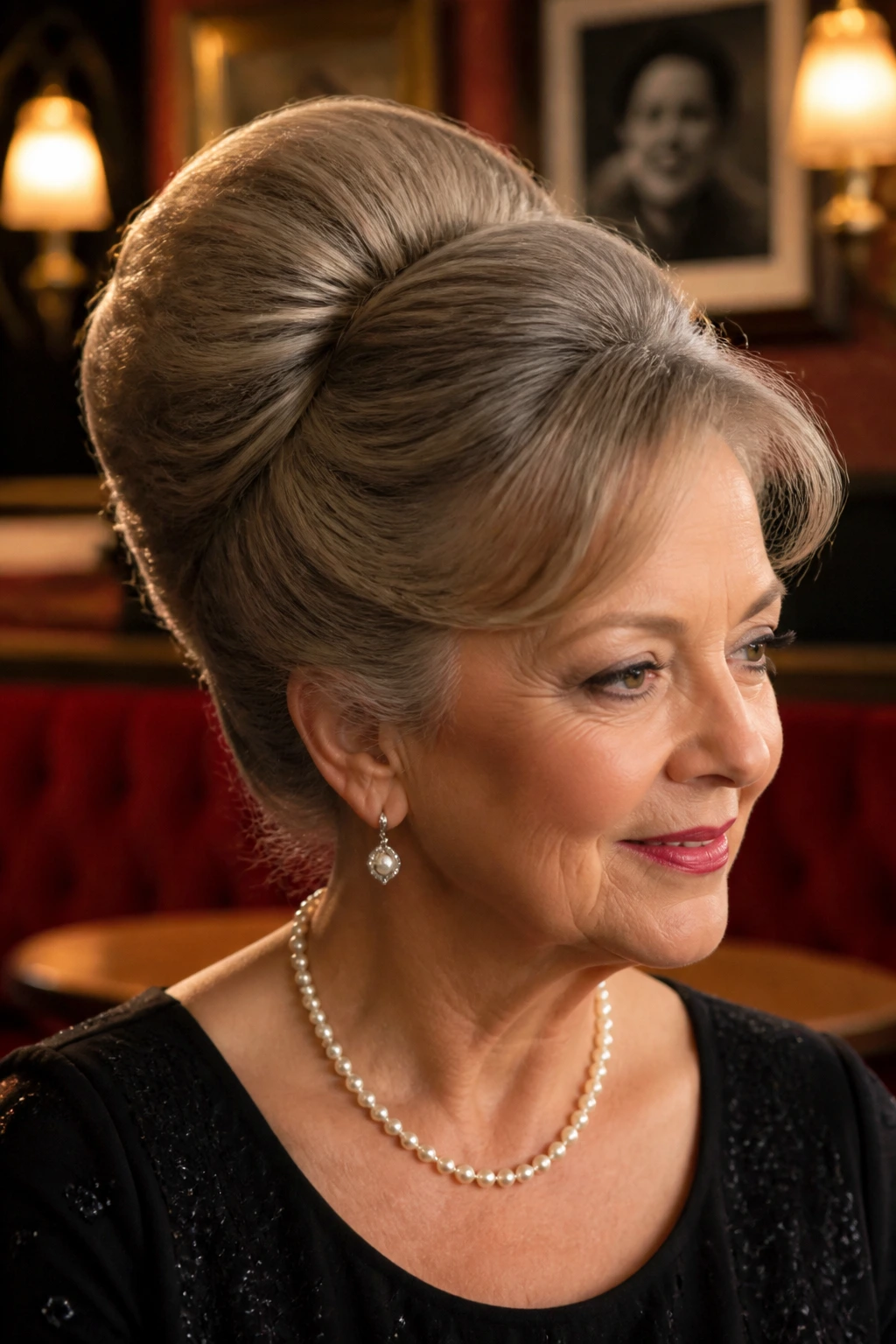
A soft beehive is not the sprayed-to-death version people remember from old photos. Done well, it’s just controlled height at the crown with a rounded back and a smooth front. The silhouette matters more than the volume. Keep that in mind and the style becomes elegant instead of stiff.
The best beehive on mature hair starts with sectioning. Tease the inner crown gently, not the surface, then smooth the outer layer over the lift. If the hair is fine, a small foam pad or padded insert can help. If it’s thick, you may not need one at all. Too much padding on thick hair makes the head look top-heavy.
A soft beehive works because it gives the face upward energy. It lifts the eye line. That’s useful when hair has lost some density around the top, and it’s one reason the style still gets attention whenever people want retro glamour without the full costume effect.
12. Underflipped Lob

The underflipped lob is one of the easiest vintage looks to wear every day. The hair hits somewhere around the shoulders, the ends bend inward, and the whole shape feels finished even when the styling is simple. If your cut already has a blunt edge, you’re halfway there.
Use a large round brush or a flat iron with a gentle curve to turn the ends under. Keep the front a little more polished than the back so the style frames the face instead of ballooning around the shoulders. A side part adds polish, but a center part can work too if the cut is balanced.
This is a smart choice for women who want a retro feel without obvious set waves or a lot of teasing. It looks good with a sweater, a blazer, or a simple dress. Nothing about it shouts. It just sits there looking neat, which is underrated.
13. Feathered Shag

A feathered shag has more movement than most vintage styles, which is why it suits women who don’t want their hair pinned down into one exact shape. The layers are built to flick away from the face, the fringe is soft, and the ends feel airy rather than blunt. It borrows from seventies styling, but the best version avoids the heavy, shaggy outline that can overwhelm a face.
What makes it work
The layers remove weight in the right places. Around the cheeks, that matters. Around the crown, it matters even more if your hair tends to flatten there. A little mousse at the roots and a diffuser can encourage the natural bend, but this style does not need perfect curls. A rough-dry finish often looks better than a too-precise one.
If your hair is fine, ask for feathering that starts below the cheekbone so you keep enough body. If it’s thick, a shag can remove the bulky triangle shape that so many layered cuts accidentally create. The point is movement. Not mess.
A feathered shag pairs well with glasses, by the way, because the fringe can sit softly above the frame instead of fighting it.
14. Marcel Waves
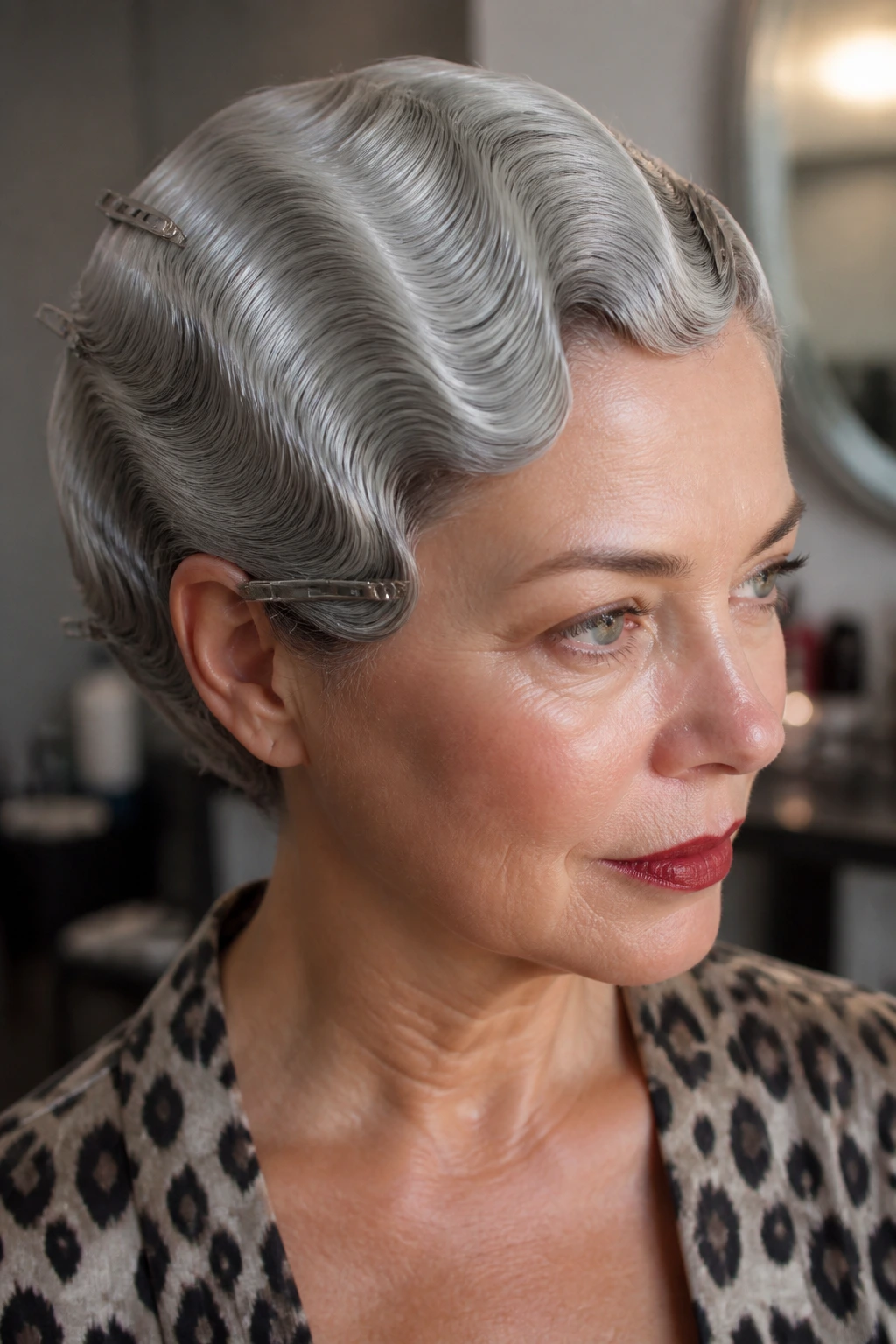
Marcel waves are the most sculptural style on this list, and they have a specific kind of drama. The waves are smooth, finger-shaped bends that travel in a repeating line, usually close to the head. On silver hair, they can look almost luminous because the light hits the ridges and valleys so cleanly.
This is not the fastest style to do at home. It asks for clips, a comb, setting lotion, and a little patience while each wave cools. If your hands are steady and you enjoy a precise set, though, it’s deeply satisfying. The hair should lie close to the head with the wave pattern clearly defined, not frizzy or over-brushed.
Marcel waves suit special occasions and short-to-medium lengths especially well. They also flatter older women who want a style with a strong line around the face. There’s nothing soft-focus about them, which is part of the appeal. They say exactly what they are.
15. Gibson Tuck
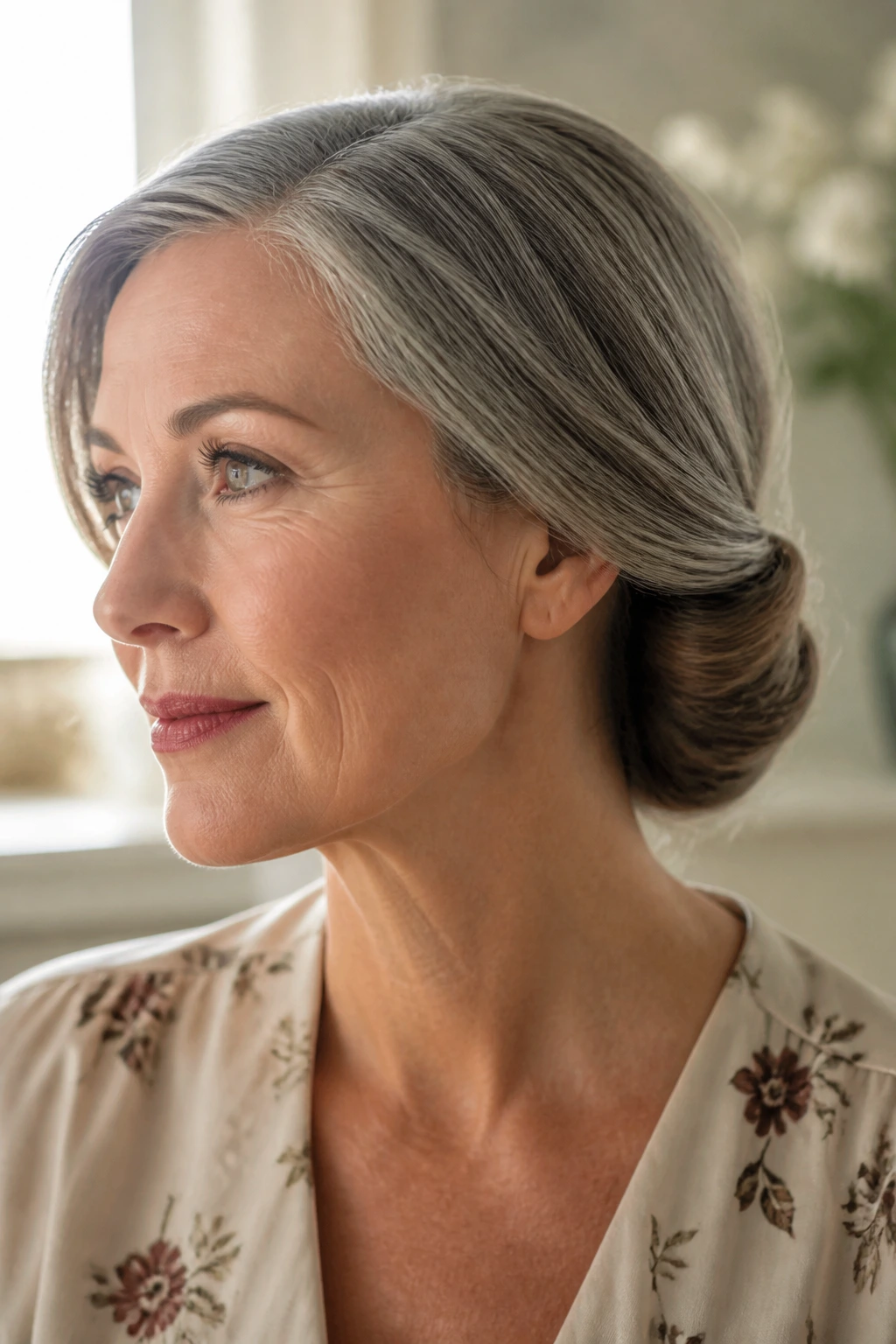
The Gibson tuck is one of those vintage styles that looks fussy in theory and almost easy in practice. The hair gathers low at the back, rolls upward into a tucked fold, and creates a neat, rounded shape at the nape. It’s soft, secure, and forgiving, which is why so many women keep coming back to it.
I like this style for medium-length hair that sits on the shoulders or just below them. You can add a little bend through the ends before tucking, but you do not need a perfect curl set. In fact, a bit of texture helps the pins grip. The front can be side-parted or softly swept back, depending on how much face framing you want.
The Gibson tuck is a useful answer for humid weather, long dinners, or any day when you want your hair to stay away from your neck. It also works beautifully with a decorative comb, a silk ribbon, or nothing at all. Clean lines. Soft back. Done.
Why Retro Shapes Work So Well on Mature Hair
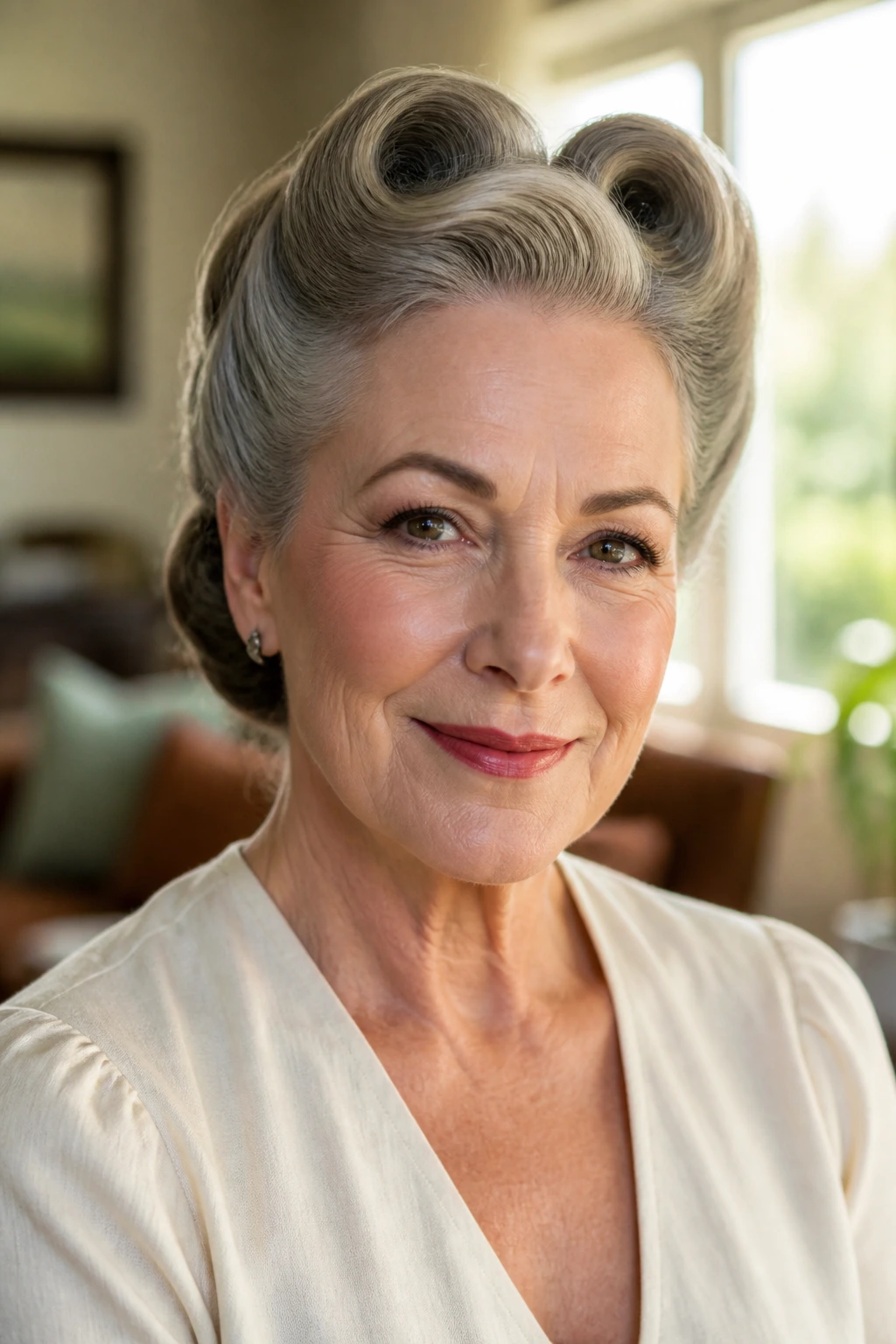
The best retro styles for older women solve three problems at once: they add shape, they keep the face open, and they don’t depend on endless length. That combination is the real reason these looks last. Hair with a little age on it often needs a clearer outline than it did before, especially if the texture has changed at the crown or the ends have gone wispy.
Lift is part of it, but not the whole story. A lot of women hear “volume” and think of teasing every inch of the head. That is usually the wrong move. The smarter play is controlled lift in one area—the crown, the side sweep, the front roll—while the rest stays clean. The eye reads that as shape, not bulk.
Color helps too. Gray, white, silver, and salt-and-pepper hair tend to show bend and polish more clearly than dark, flat strands. A brushed wave on silver hair can look almost carved. A smooth twist on white hair looks crisp in a way that brown hair sometimes doesn’t. That doesn’t mean color is the point. It means the structure gets a little extra help.
And honestly, these styles are just kinder to the face than overly long, heavy hair can be. Heavy length drags. Strategic shape lifts. That’s the whole argument in one line.
Essential Tools for Building These Looks
You do not need a drawer full of salon gear, but a few tools make these retro shapes much easier to control.
- Tail comb: Great for clean parts, sectioning, and placing pin curls with a straight line.
- 1-inch curling iron: Useful for tighter bends, flips, and setting smaller sections around the face.
- 1½-inch curling iron: Better for Hollywood waves, pageboy curves, and softer brush-out styles.
- Hot rollers or Velcro rollers: Ideal for crown volume and big retro movement without overworking the hair.
- Duckbill clips: Hold wave patterns, side sections, and cool-down curls in place.
- Bobby pins and U-pins: Use both; U-pins grip buns and twists more securely than tiny pins.
- Boar bristle brush: Smooths and blends waves without ripping apart the set.
- Round brush: A medium barrel gives the best turn-under for bobs and flips.
- Blow dryer with nozzle: Helps direct the hair while drying so the shape starts at the root.
- Setting lotion or mousse: Adds memory before heat or rollers; a small amount goes far.
- Flexible-hold hairspray: Keeps movement while stopping the style from collapsing.
- Dry shampoo: Useful on day two when the roots need lift and the surface needs a little grip.
- Satin scarf or bonnet: Protects the set overnight and reduces frizz at the temples.
If you only buy three things, buy the tail comb, a good round brush, and pins that don’t bend the first time you open them.
Product Picks That Hold Without Crunch
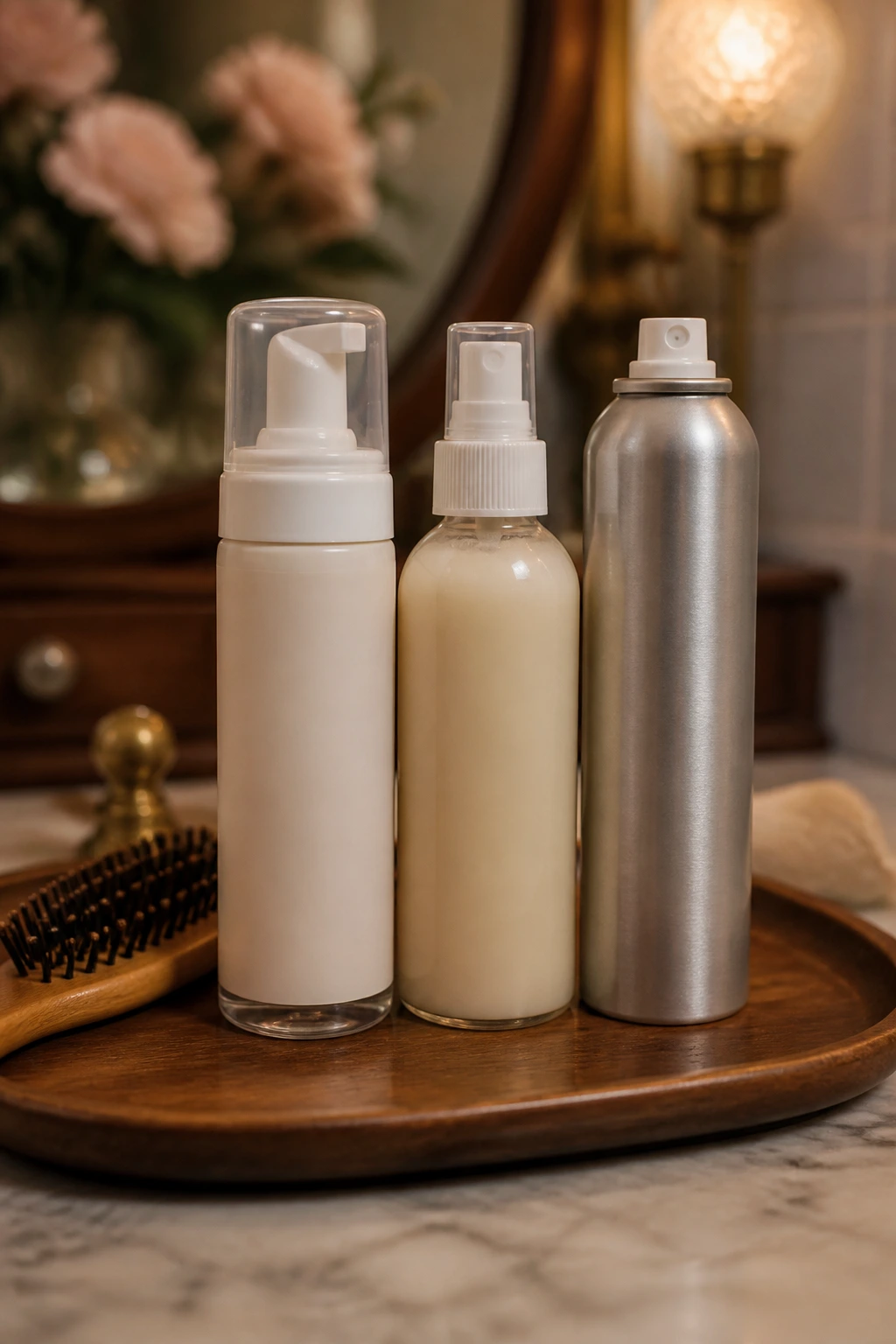
The difference between polished retro hair and stiff retro hair usually comes down to product choice. Strong hold is fine. Sticky hold is not. You want products that support shape without turning the surface into cardboard.
For fine hair, mousse is often the smartest first step. Work a golf-ball-sized amount through damp roots and mid-lengths, then blow-dry with lift at the crown. On hair that slips easily, a light setting lotion can help the curl or roller set hold its memory longer. Coarse or resistant hair often needs a smoothing cream before the heat goes on, but keep it off the roots or you’ll lose the lift you just built.
Flexible-hold spray is the unsung hero here. It lets you brush out a wave or pin a twist without cracking the finish. Save the heavier spray for the last pass only, and use it from a distance. If the nozzle is too close, you’ll get wet patches and a shell on top of them. That’s ugly in person and worse in wind.
A little dry shampoo at the roots on day two can revive lift without forcing another wash. It also gives pins something to hold onto if you’re restyling a twist or tuck. Not every retro look needs wet-hair products. Some of the best ones wake up better after a little powder and a brush.
How to Wear Them with Glasses, Earrings, and Collars
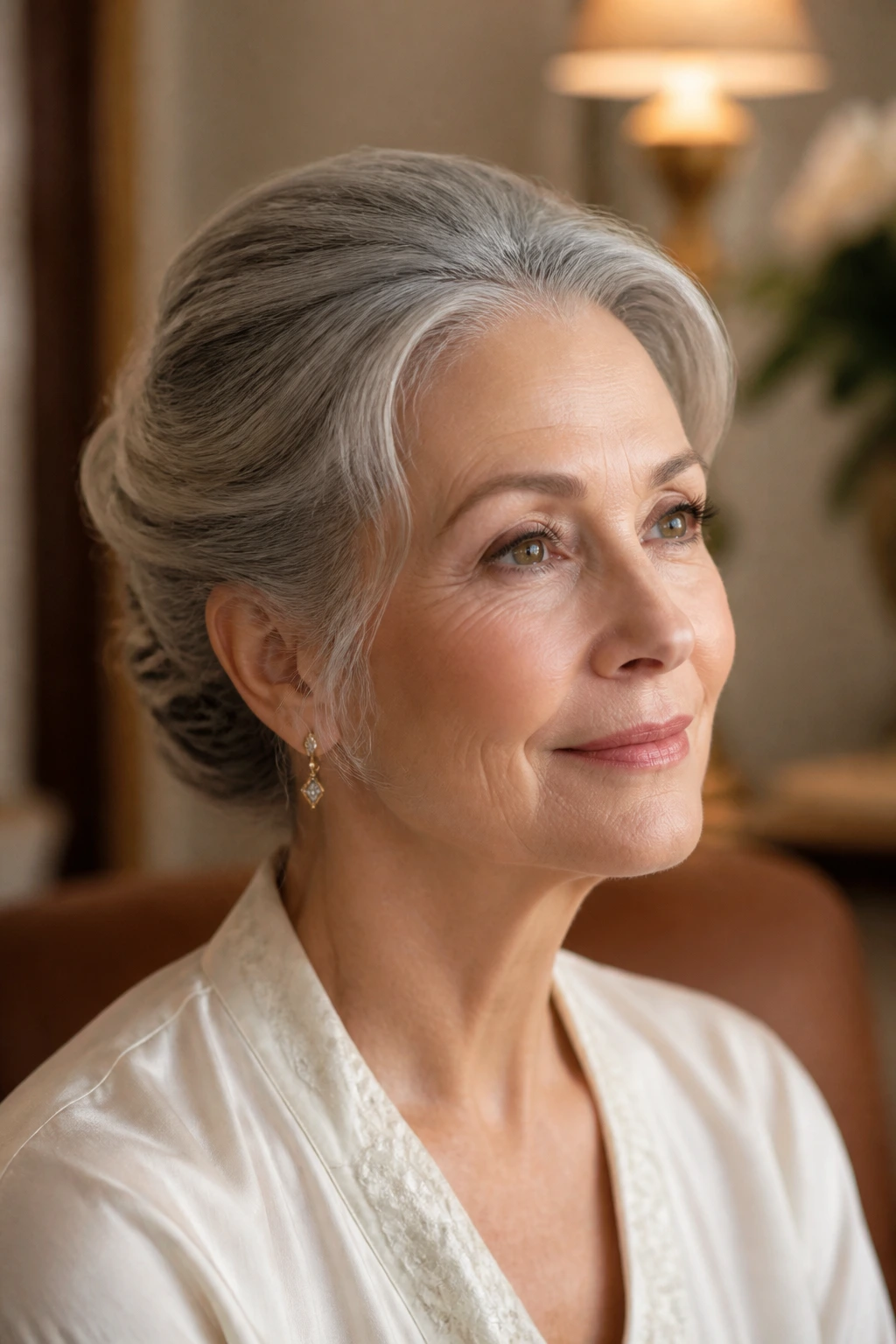
Presentation: Keep the silhouette clean where the accessories need room. If you wear glasses, a side part, pageboy, or soft pixie sweep keeps the temple area from getting crowded. With earrings, especially drop earrings or studs with a bit of shine, styles that pull the hair back at the sides let the face do its job.
Accompaniments: A French twist, Gibson tuck, or low chignon pairs well with higher necklines and structured jackets because the hair stays out of the fabric. Hollywood waves and feathered flips like open collars, scoop necks, and simple dresses; the movement around the shoulders looks better when it has space. If you wear pearls or a brooch, the quieter haircuts and updos let those details show.
Scale: Keep the height in proportion to your frame and your hair density. Fine hair usually looks best with moderate crown lift and softer sides. Thick hair can handle more structure, but even then, the most flattering retro styles usually stop just short of formal-pageant volume.
Best Match: Choose the style that supports the clothes you actually wear. A crisp bob or side-swept pixie feels right with tailored clothing. A brushed wave or Gibson tuck suits softer fabrics and dresses. You do not need to make every outfit “vintage.” Just let one thing lead.
Additional Styling Tips and Personal Tweaks
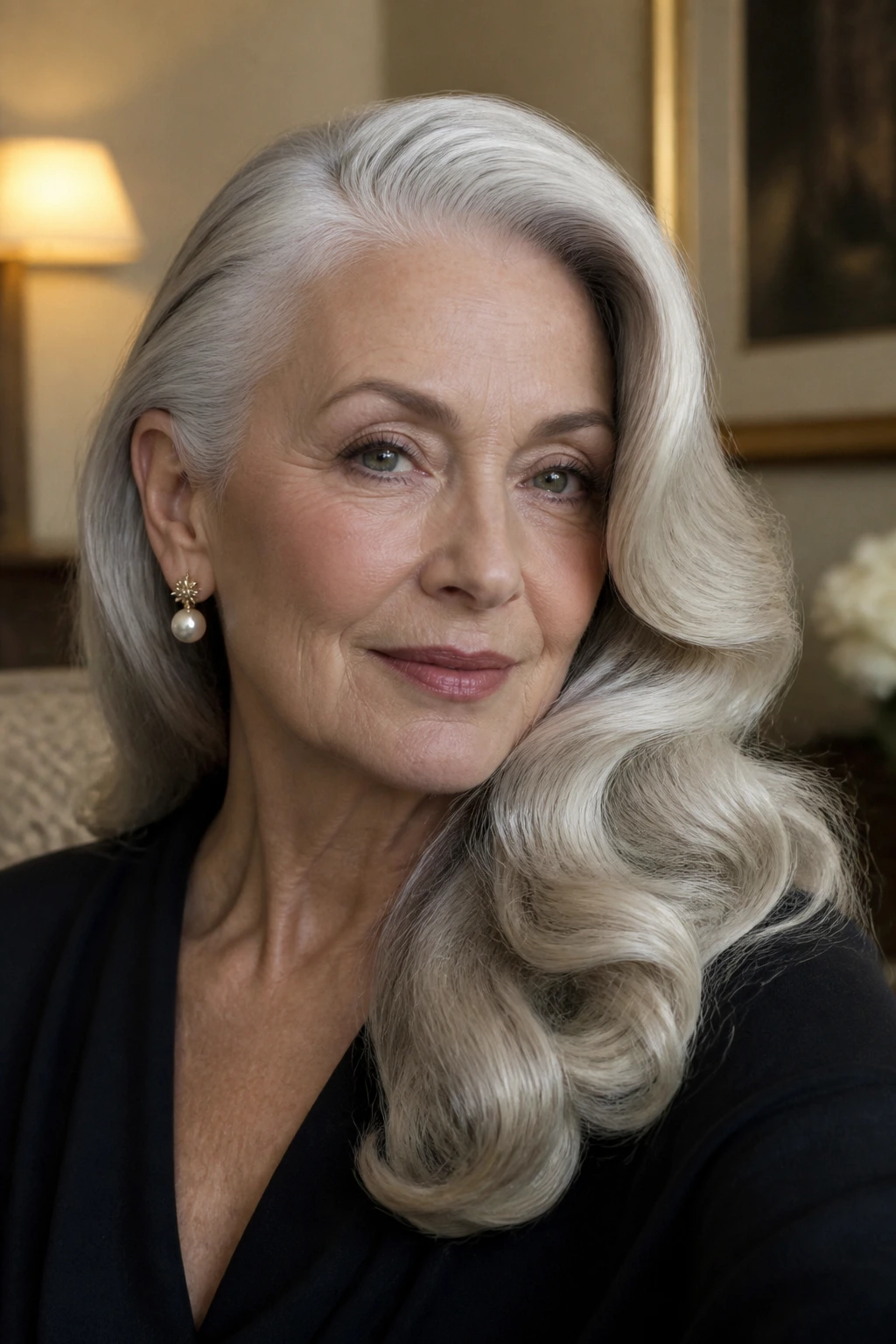
Shape Boost: If your hair falls flat by lunchtime, set the crown on two medium Velcro rollers while you do makeup, then remove them only after the hair is fully cool. That gives you lift without a pile of teasing at the roots.
Time-Saver: On shoulder-length hair, curl only the top half and ends when you’re doing a brushed-out wave or flip. The underlayers can be left quieter; nobody sees them, and they still support the shape.
Salon Ask: Ask for a cut that leaves enough length around the front to tuck, roll, or sweep. A retro hairstyle loses half its usefulness if the front pieces are too short to control.
Make-It-Yours: If you wear gray hair, add a touch of shine spray only to the mid-lengths and ends. If your hair is dark and dense, use a little texturizing spray before setting so the shape doesn’t collapse into a heavy block.
A small ribbon, a decorative comb, or even one well-placed pin can change the mood of the whole look. That is the part people skip. They shouldn’t.
The Mistakes That Make Vintage Hair Look Stiff
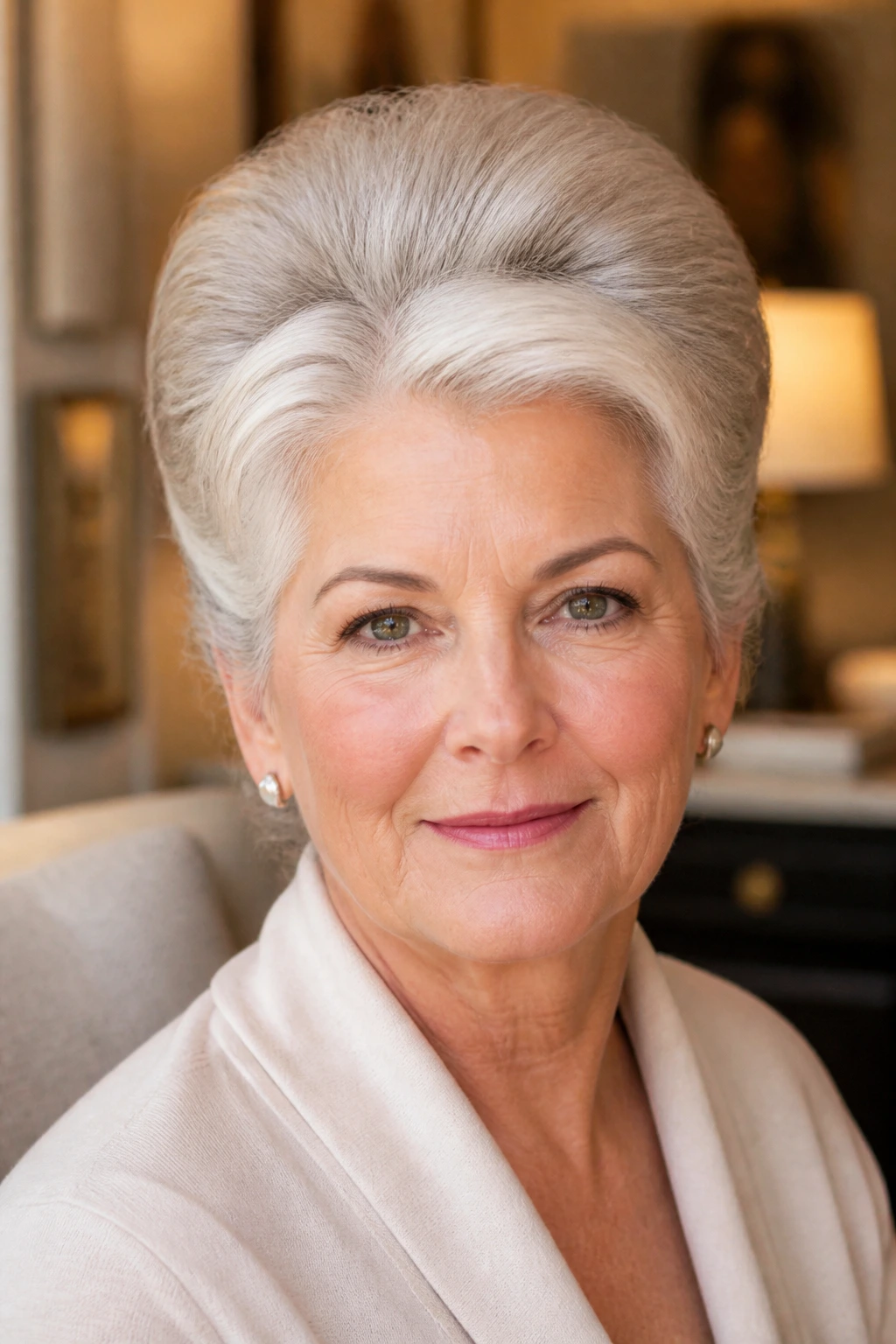
The most common mistake is too much product at the surface. Hair that feels glued down almost always looks older than the face wearing it. The fix is simple: build support underneath with mousse, padding, or a proper set, then keep the outside layer flexible.
Another one is putting height in the wrong place. If all the volume sits at the front or the sides puff out near the cheeks, the head starts to look wider instead of more shaped. Keep lift at the crown or through the top third of the head, then smooth the rest back into line.
People also over-curl the ends. Tight, springy ends make a pageboy or flip look dated in the wrong way. Use a softer bend and brush it out a little. You want direction, not a dozen tiny ringlets fighting each other.
Skip the habit of ignoring the back. A French twist, chignon, or faux bob can look lovely from the mirror and lumpy from behind. Check the rear view with a second mirror or a phone camera before you leave the house. That one minute saves a lot of regret.
Last, don’t force every retro style to look “perfect.” Slight softness around the temples, a loose tendril, or a brushed wave that moves a little is often what keeps the whole thing wearable.
Variations and Adaptations to Try
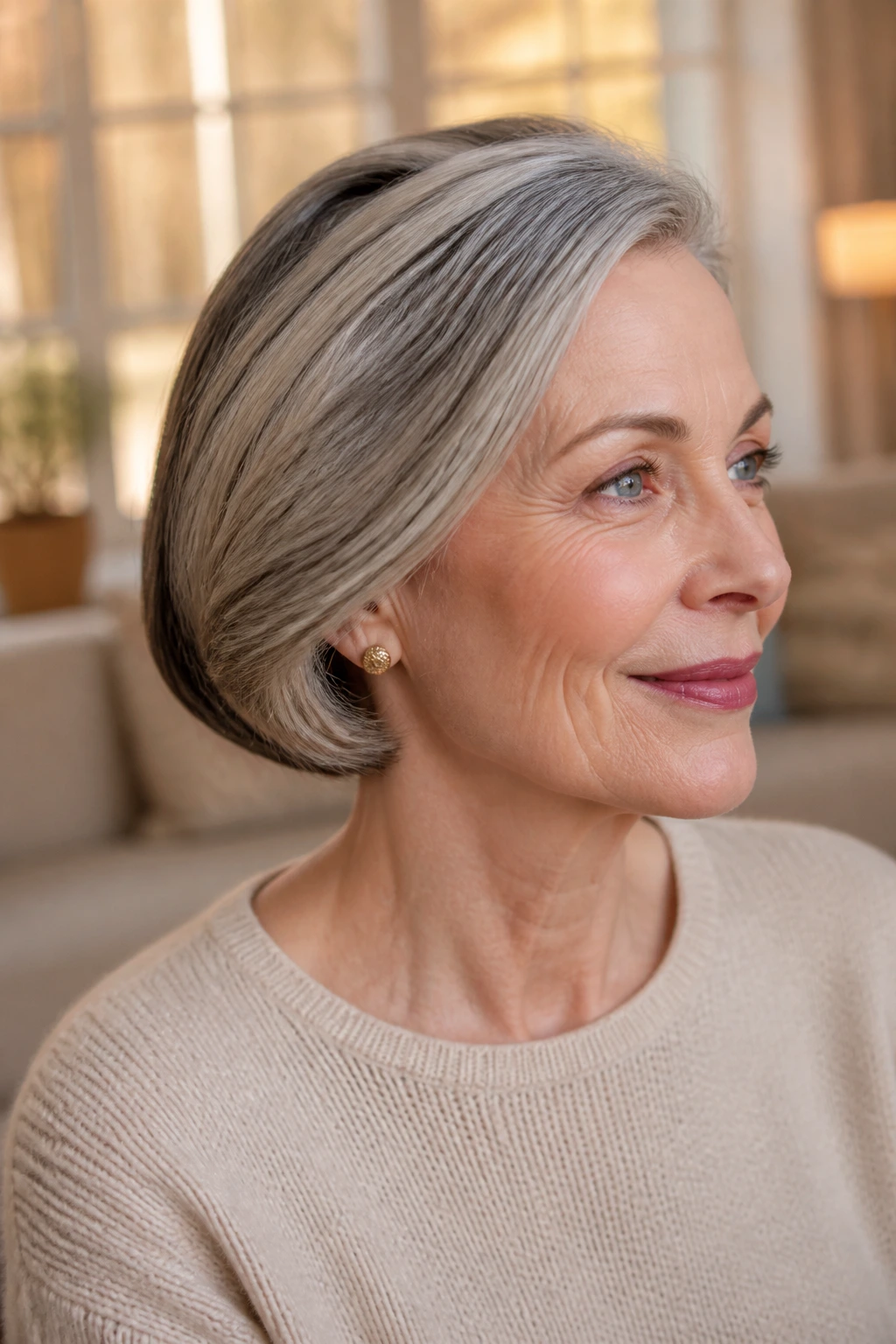
Silver Glow Set: Use a light shine serum on the ends only, then choose brushed waves, a soft twist, or a Gibson tuck. The reflective quality of gray and silver hair makes the shape pop without much extra effort.
Fine-Hair Lift Kit: Pick the pageboy, crown bouffant, or side-swept pixie. These styles build the illusion of fullness with lift at the roots, and they usually ask for less hair than a full wave set.
Thick-Hair Control Version: Use the French twist, deep side-part chignon, or faux bob. Thick hair can handle cleaner structure, and these shapes keep the bulk from spreading outward.
Heat-Free Night Set: Try pin curls, foam rollers, or a tucked roll while the hair air-dries. This is the route for anyone who wants retro texture without constant heat styling.
Short-Cut Remix: A side-swept pixie or a sculpted mini wave on the front section gives short hair a vintage note without pretending it’s long. The goal is shape at the fringe and crown, not fake length.
Keeping the Style Fresh Overnight and Between Washes

Most of these styles last better than people expect, but they need the right kind of bedtime. Loose waves and brushed flips benefit from a satin pillowcase or a soft scarf tied over the top. If you’ve set the hair in rollers or pin curls, let the curls cool completely before you sleep on them. Warm hair flattens faster.
French twists, chignons, and Gibson tucks often hold for a day or two if the pins are secure and the hair isn’t too slippery. In the morning, check the nape first. That’s where the first shift usually happens. A single hidden pin can fix a lot. Don’t tear the style apart with a brush before you inspect it.
For day-two refreshes, a small burst of dry shampoo at the roots and a gentle lift with your fingertips is usually enough. If the ends are fuzzy, wrap them around a large brush for 20 to 30 seconds with a little warm air, then let them cool before you touch them again. That cooling step is a small thing, but it keeps the bend in place.
If you use hot rollers or pin curls, you’ll often get the longest wear out of the whole set. That’s one reason old-school sets still have a place. They may take longer up front, but they don’t collapse as fast as a rushed curl.
Frequently Asked Questions
Which retro hairstyle is best for thinning hair?
A crown bouffant, side-swept pixie, or pageboy bob usually works well because each one creates shape without needing huge density. The key is controlled lift, not big teased volume all over the head.
Can I wear retro styles with glasses?
Yes, and some of them are better with glasses than without them. Side parts, soft pixies, pageboys, and low buns keep the temple area clean so the frames don’t compete with the hair.
Do gray and silver hair hold vintage waves better?
Often, yes. The texture can be a little drier, which helps a set grip, and the light catches the bends more clearly. Use a bit of moisture on the ends so the style doesn’t look frayed.
What if my hair is very short?
A side-swept pixie, sculpted front wave, or tiny pin curl set around the front can still bring in the retro feel. You do not need shoulder-length hair to borrow from vintage styling.
Are hot rollers better than a curling iron for these looks?
For big brushed-out waves and crown lift, hot rollers are usually easier because they cool the curl in place. A curling iron gives more control for flips, side sections, and smaller bends around the face.
How do I keep the style from going flat by midday?
Set the roots properly at the start, don’t overload the hair with cream or oil, and finish with flexible spray instead of heavy lacquer. If the crown falls, a couple of hidden pins or a small roller set while you do makeup can rescue it.
Can I make these styles work on naturally curly hair?
Yes, but the cut and prep matter. You’ll usually want to smooth the outer layer a bit, then choose styles like the French twist, chignon, or feathered shag that let the natural texture help instead of fight the shape.
What’s the easiest retro style to try first?
The underflipped lob is probably the least demanding. It only needs a bend at the ends and a clean part, yet it still reads as vintage enough to feel intentional.
A Softer Kind of Retro
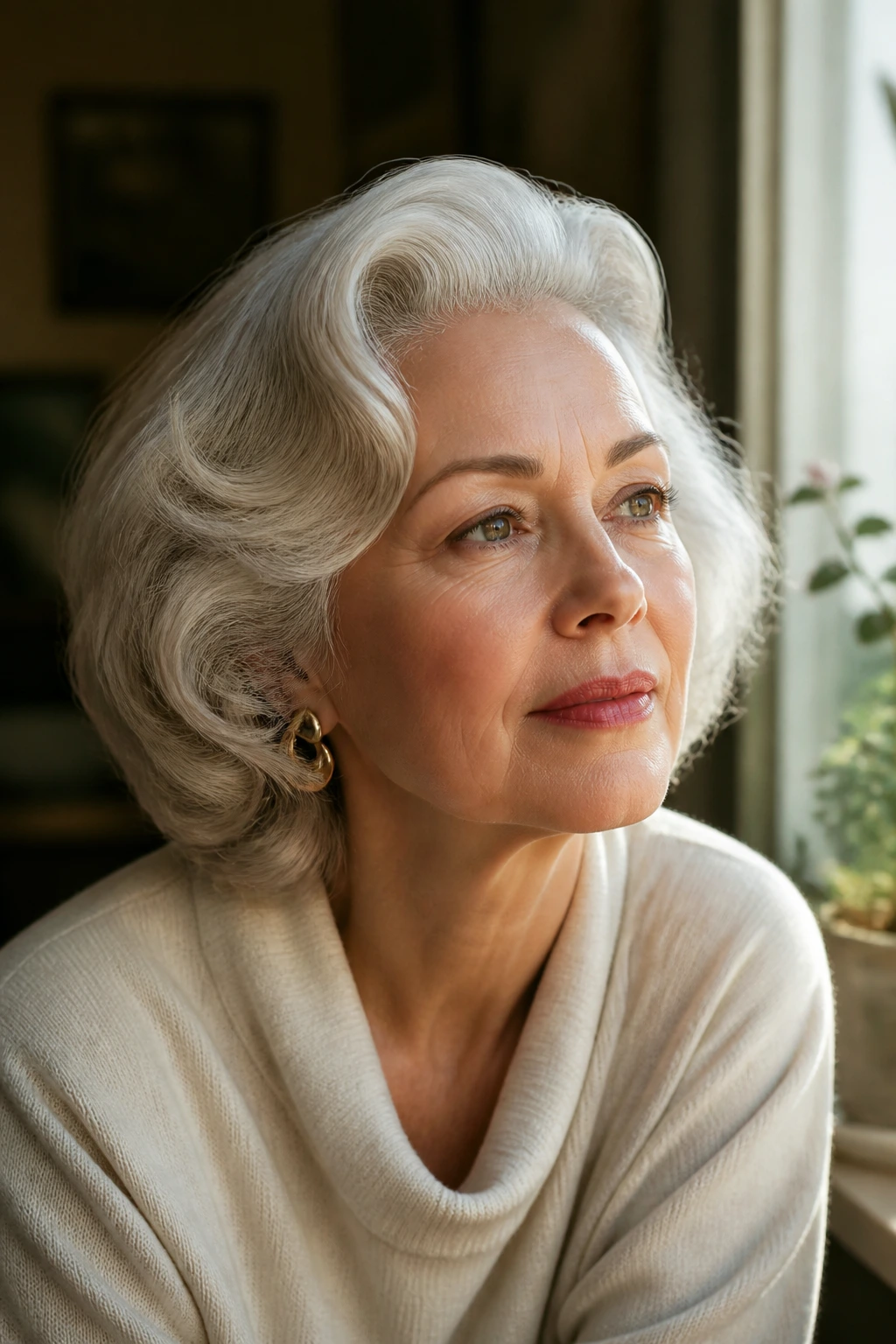
The best retro hair on older women never looks like it is trying to impersonate another decade. It keeps the useful parts—the lift, the curve, the sweep, the clean line at the neck—and drops the stiff, sprayed-up nonsense that ruins so many old photos. That’s why these styles still work. They shape the face instead of boxing it in.
Start with the one that matches your length and your texture, not the one that looks most dramatic on a mannequin head. A soft victory roll, a brushed wave, a pageboy, or a low tuck can say plenty on its own. The right version should feel like your hair with better architecture.
