



Brown lob haircuts have a sweet spot that a lot of longer styles miss. They sit long enough to swing, short enough to feel deliberate, and warm brown tones do something blunt cuts in lighter shades sometimes struggle to do: they make the hair look glossy, dense, and alive even when the styling is kept simple.
That’s the real charm of a rich warm brown lob. Chestnut, cocoa, maple, caramel, mahogany — these shades carry depth in the mid-lengths and a soft glow at the ends, so the cut looks more expensive than it has any right to after a quick blow-dry. A lob gives those tones room to breathe. Too short, and the color can look heavy. Too long, and the shape disappears into a plain curtain.
The best versions are never random. A half-inch change in length, a slightly different part, or a few carefully placed face-framing pieces can take the same brown from flat to polished. That’s why this cut keeps showing up again and again: it’s one of the rare styles that can be blunt, soft, wavy, sleek, or shaggy without losing its core shape. The trick is knowing which version fits your hair texture, face shape, and styling tolerance — and that’s where these 16 brown lob haircuts earn their keep.
Why These Brown Lob Haircuts Earn Their Place
-
Warm brunette tones read rich fast: Chestnut, caramel, and cocoa shades catch light without needing heavy blonde pieces, so the hair looks dimensional even on low-effort days.
-
The lob length does real face work: Hitting near the collarbone gives you movement around the jaw and neck, which keeps the style from feeling stiff or helmet-like.
-
These cuts grow out cleanly: A lob can go another inch or two before it starts to look messy, which is a big deal if you do not want a trim every few weeks.
-
You can keep the styling simple: A straight blowout, a loose bend, or a quick tuck behind one ear all work because the cut already has shape.
-
Warm brown is kinder to shine: Dark brown hair can look flat when the light hits it wrong; warm undertones soften that problem and make gloss or serum look more intentional.
-
The same cut can be worn three ways: Sleek, soft, or textured — and each version looks like a different haircut when the perimeter and part are handled well.
1. Chestnut Blunt Lob with a Center Part
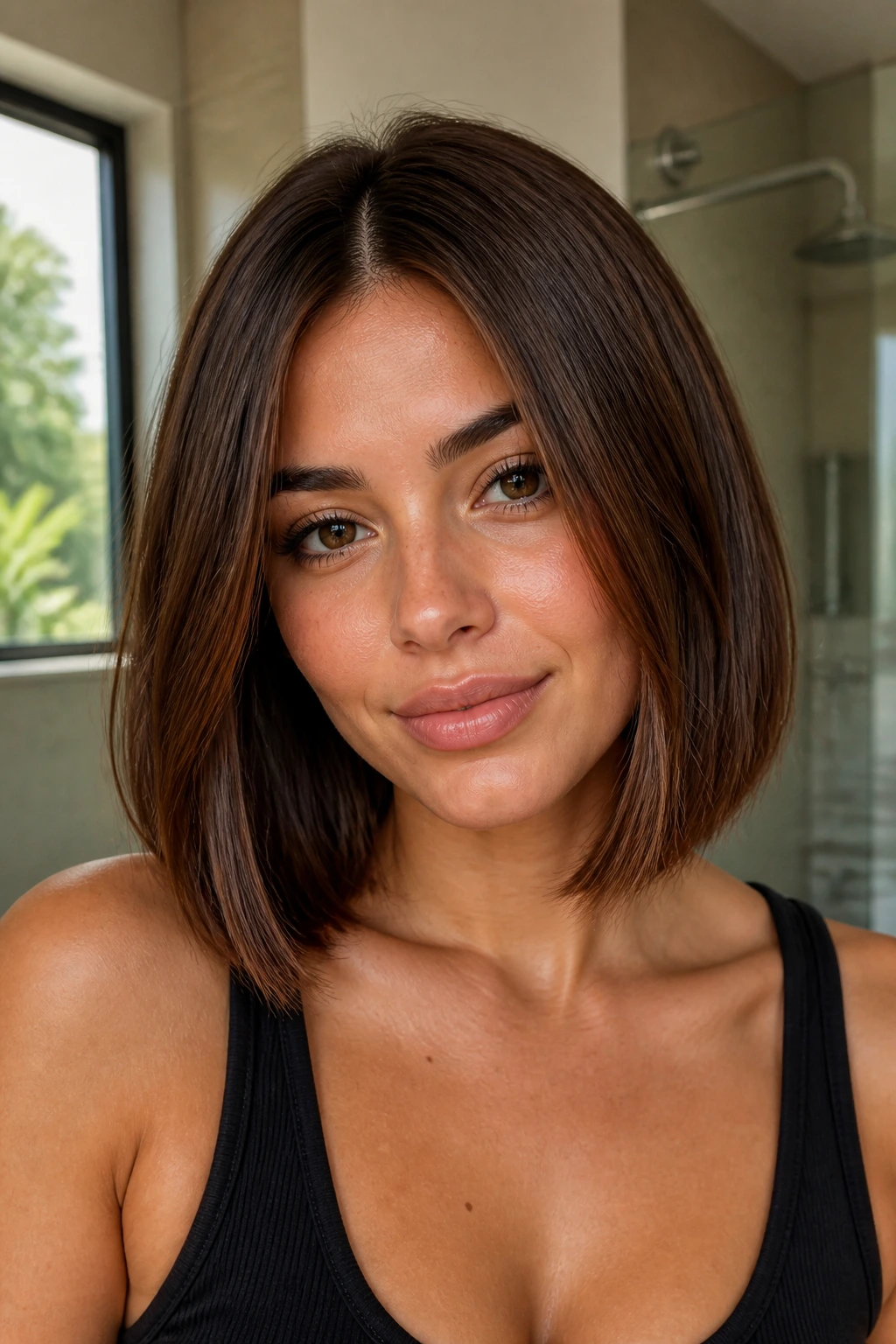
A chestnut blunt lob is the cleanest place to start, and honestly, it still feels a little underestimated. The line sits right around the collarbone, the ends are cut blunt, and the chestnut tone gives the whole shape a warm, polished finish that looks especially good when the hair is straightened just enough to show movement at the ends.
Why the Clean Edge Works
The blunt perimeter makes fine to medium hair look fuller because the eye reads a solid line instead of broken ends. Chestnut brown helps too — it has enough red-gold warmth to keep the cut from looking flat, but it doesn’t push into copper territory. That matters. Copper can take over fast.
This version is the one I’d point to if you want the haircut itself to do the heavy lifting. You don’t need layers everywhere. You need a good line, a center part, and a smooth finish with maybe a slight bend at the very tips.
- Best for: Fine hair, straight hair, anyone who likes a tidy outline
- Color note: Ask for a chestnut gloss at a level 5 or 6 brown
- Styling time: 10 to 15 minutes with a round brush or flat iron
- Maintenance: Trim every 6 to 8 weeks to keep the edge crisp
Pro tip: Ask your stylist not to over-texturize the bottom. A blunt chestnut lob looks denser when the ends stay solid.
2. Caramel Ribbon Lob with Soft Internal Layers
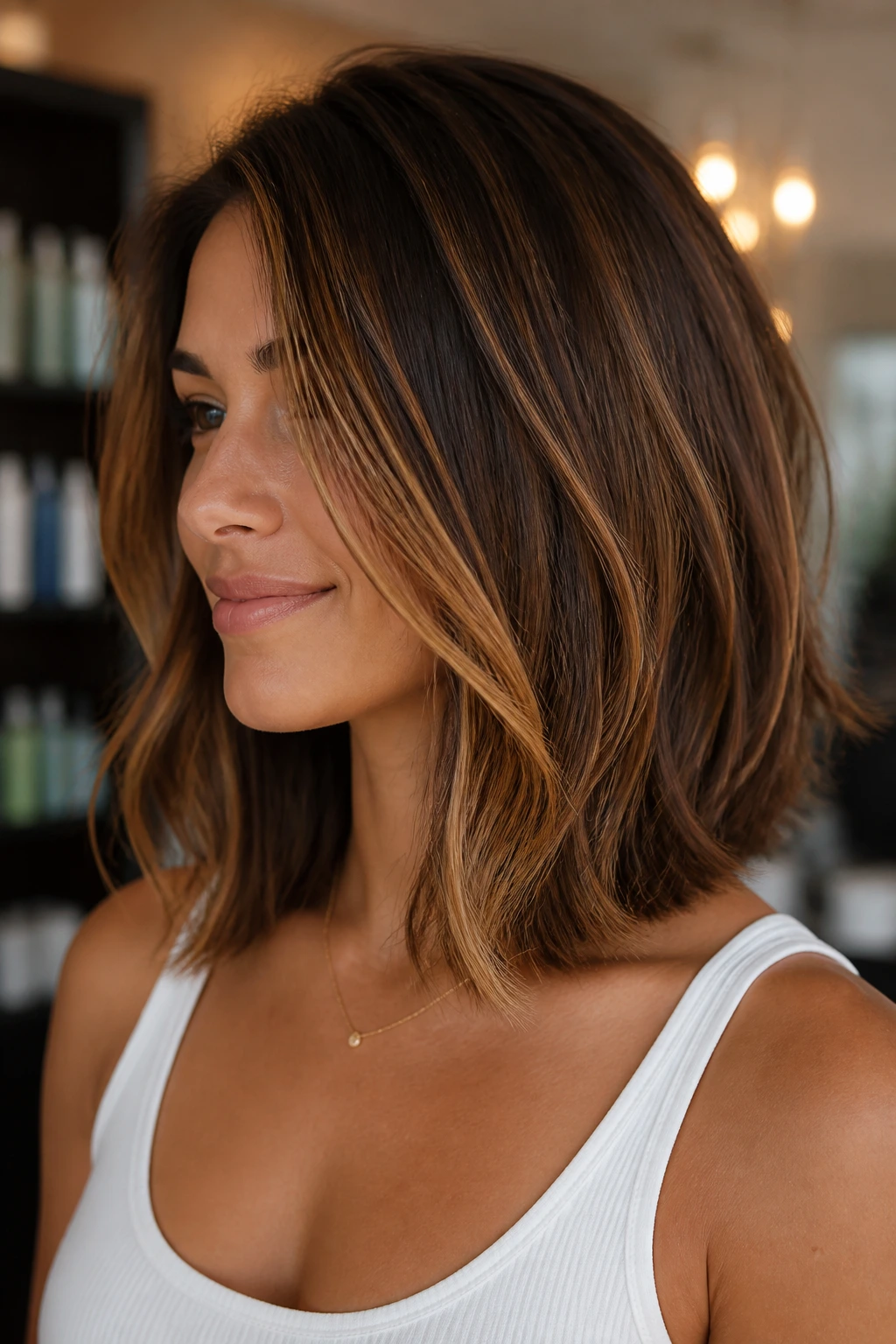
Caramel ribboning can make a lob look thicker, not lighter. That surprises people, because highlights are often treated like they’ll automatically remove density. The trick here is placement: thin caramel ribbons are tucked into the mid-lengths and around the face, while the interior layers stay soft and hidden.
The result is movement without the choppy, over-thinned look that ruins a lot of layered cuts. On brown hair, caramel reflects warm light beautifully, especially when the base stays a level 4 or 5 brunette. You get depth at the root, glow through the middle, and a gentler edge around the face.
I like this version for hair that feels a little heavy but not thin. It opens the haircut up without scattering the shape. The key is restraint. Too many ribbons and the whole thing starts to look stripey.
If you want this to hold, style it with a medium barrel curling iron and brush the curls out with your fingers. You’re aiming for loose bends, not ringlets. Keep the root area smooth, then let the caramel do the visual work.
3. Copper-Brown Lob with Curtain Bangs

Want warmth near the face without committing to full copper? This is the one. A copper-brown lob with curtain bangs has enough red and gold in the brown to look lively, but the base stays brunette, which keeps it wearable instead of loud.
Curtain bangs change the whole silhouette. They draw the eye inward, then open out toward the cheekbones, which is one of the easiest ways to make a collarbone-length cut feel more deliberate. On a warm brown base, that fringe area picks up light first, so the face gets a soft glow even when the rest of the style is minimal.
How I’d Style It
A round brush and a blow dryer nozzle are enough if the bangs are cut with a little length through the center. Dry the fringe first, pulling it away from the face, then bend the ends of the lob under just slightly. Don’t overcurl the bangs. They should fold, not flip.
This version plays nicely with oval, heart, and longer face shapes. It can work on square faces too, but I’d keep the bangs a little longer so they skim rather than stop abruptly at the cheek.
The color also matters here. A copper-brown gloss that leans toward cinnamon, not orange, keeps the fringe from looking harsh.
4. Espresso-to-Toffee Balayage Lob
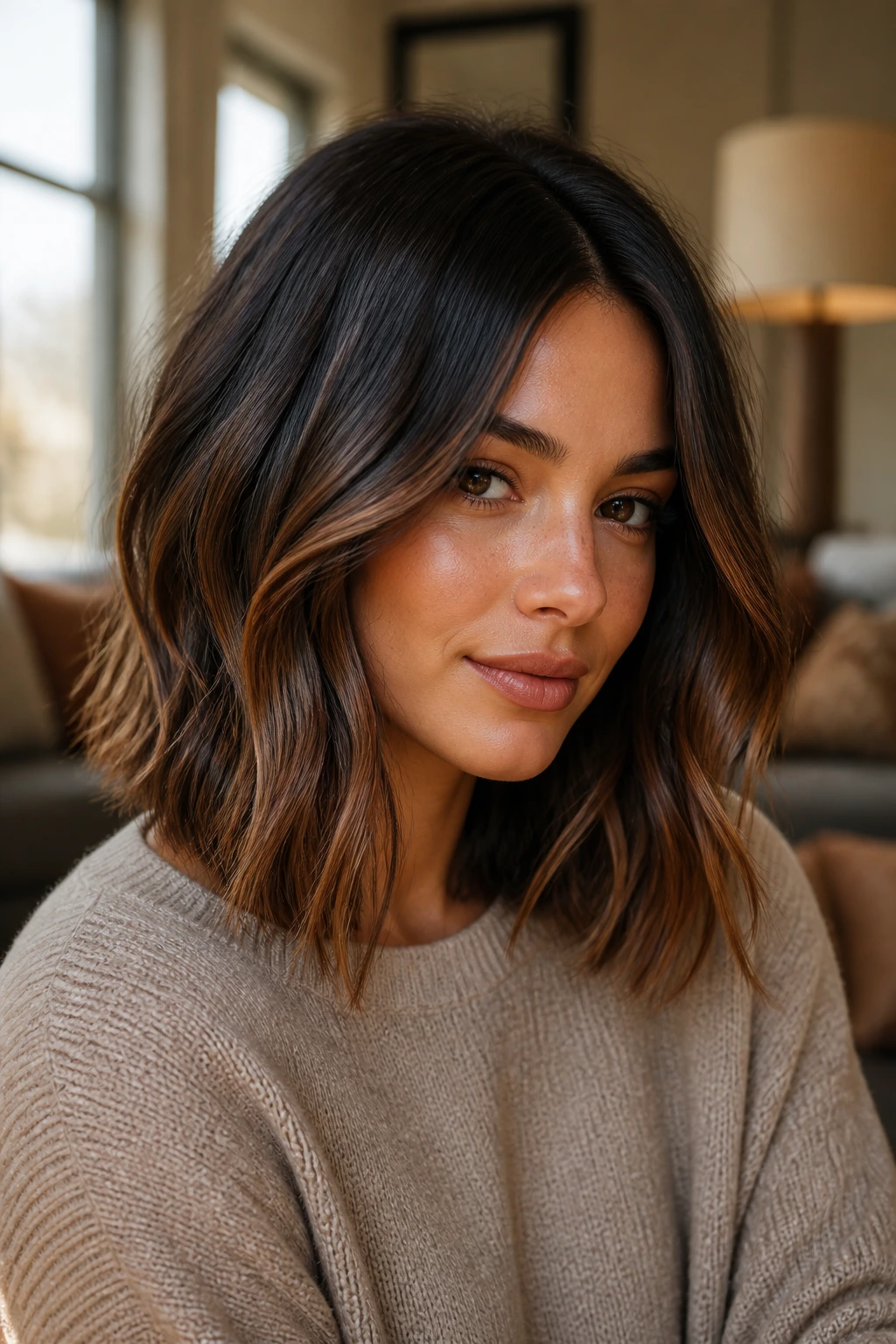
A dark espresso base fading into toffee ends is the fastest way to make a lob look like it spent time in a salon chair. It’s the contrast that does it. The roots stay deep and glossy, the mid-lengths soften into toffee, and the ends pick up enough warmth to stop the whole thing from feeling heavy.
This cut is especially good when you want color movement without a strong stripe effect. Balayage works here because the lift is painted where the hair naturally catches light — around the face, through the upper mid-lengths, and a bit at the ends. That keeps the shape of the lob intact while the color supplies the motion.
The beauty of this version is that it looks different depending on how you wear it. Straight and center-parted, it feels sleek. Waved with a side part, it turns soft and dimensional. The same color placement can do both.
- What to ask for: Espresso base with hand-painted toffee ribbons
- Best styling finish: Soft bends with a 1.25-inch iron
- Best for: Medium to thick hair that needs visual break-up
- Watch for: Over-lightening the ends, which can make them look dry
The cut should stay fairly clean at the perimeter. If the ends get too shattered, the color loses its contrast and just looks frayed.
5. Mahogany Lob with Bent Ends
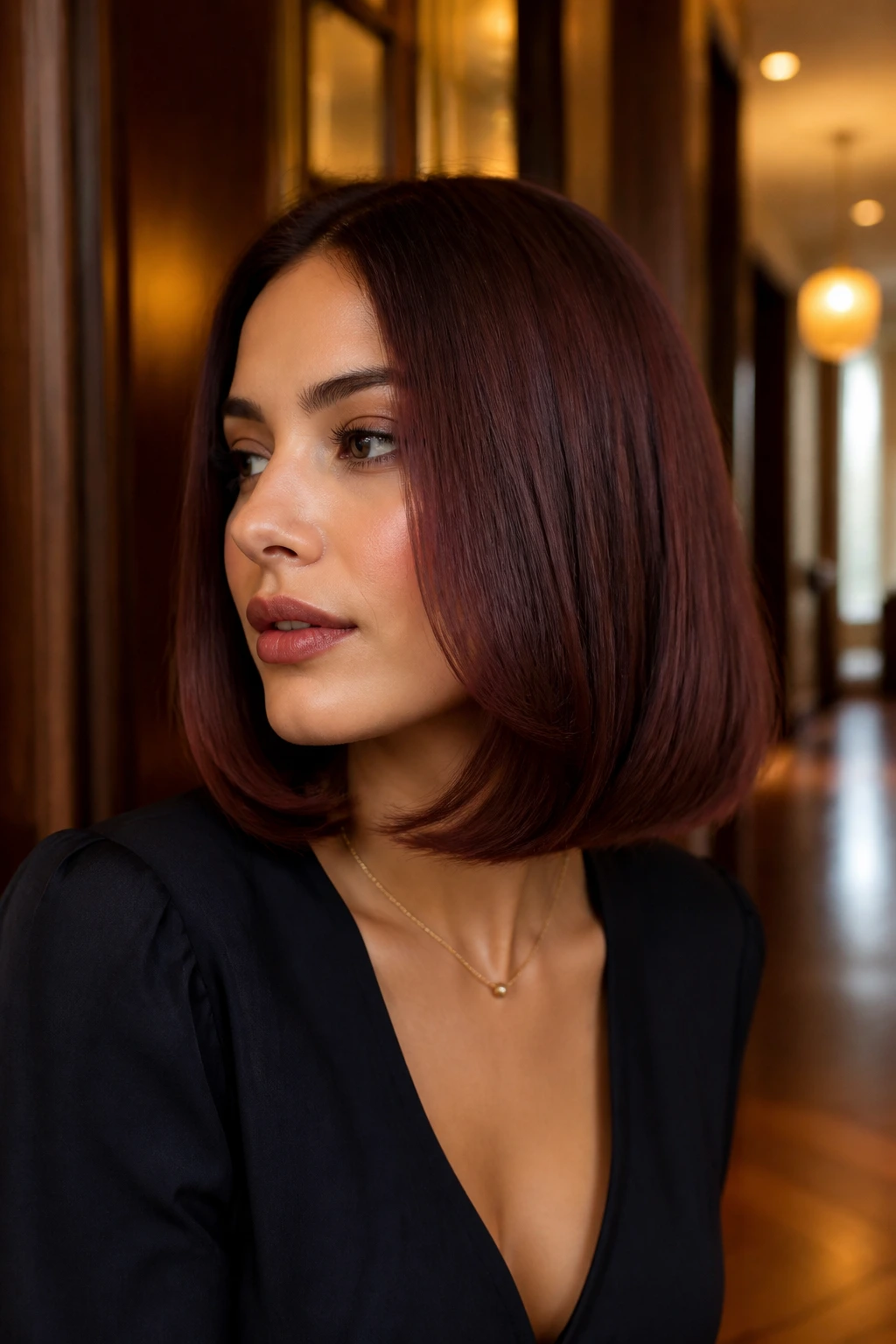
Mahogany has a depth that plain brown never quite reaches. It carries a red-brown richness that can look almost velvet-like under indoor light, especially when the ends are bent under in a smooth, deliberate curve. That little bend matters more than people think.
I prefer this shape on thick hair because it removes the blunt heaviness that a straight mahogany lob can sometimes pick up. The bend softens the line without killing the density. You still get that solid collarbone-length shape, but the edge feels more polished, more finished, less boxy.
The color itself does a lot of work here. Mahogany has enough warmth to keep the style from going muddy, but it stays grounded in brunette territory. If you’ve ever had a warm brown that turned a little orange in sunlight, mahogany is the calmer, more controlled version.
A paddle brush blowout will keep the bend smooth, but a medium round brush gives the shape more curve at the ends. Either way, don’t chase perfect uniformity. A tiny amount of asymmetry makes the haircut look lived-in instead of staged.
6. Hazelnut Shag Lob with Airy Layers
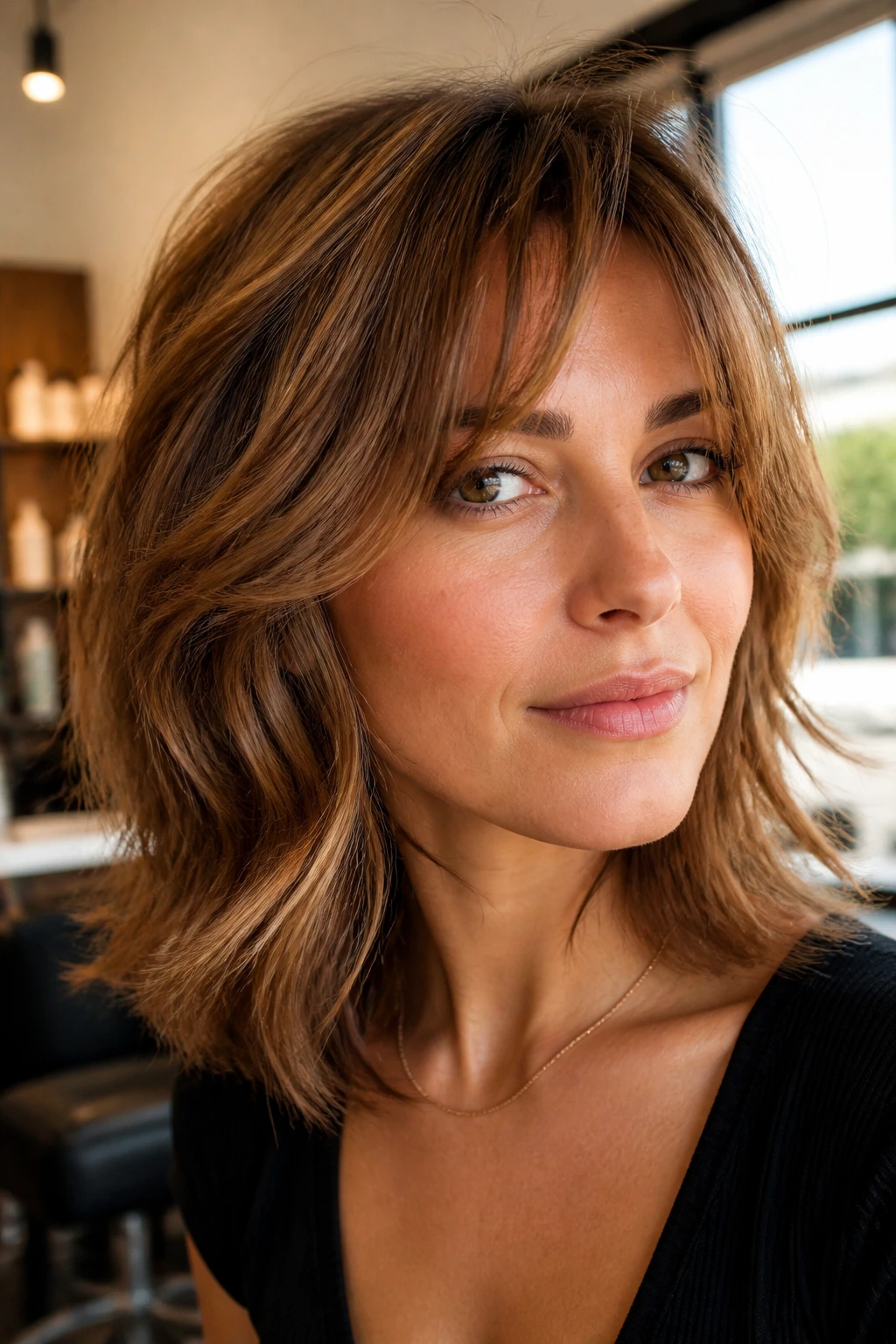
A hazelnut shag lob is not the same thing as a plain layered lob, and the difference shows immediately. The shag version has more movement through the crown and face, while the hazelnut tone keeps the whole thing warm and grounded so it doesn’t start looking choppy in a bad way.
This one suits wavy hair especially well. The layers give the wave somewhere to go, and the warm brown color catches on the bends rather than hiding them. On straight hair, it needs more styling, but the payoff is a softer, more undone outline than a blunt lob ever gives.
What Makes It Different
The crown is usually left a touch shorter, the face-framing pieces are cut with a little more angle, and the ends are lightly textured. That combination creates lift without making the shape airy to the point of collapse. Too much shredding and the lob loses its weight. Too little, and it becomes a regular layered cut with a trendy name.
Keep the color in the hazelnut family rather than going too light. A level 6 brown with gold warmth is usually enough. If the highlights get too pale, the shag shape can start to look disconnected.
Best pairing: A subtle side part and a bit of mousse scrunched into damp hair.
7. Honey-Brunette Lob with Face-Framing Pieces
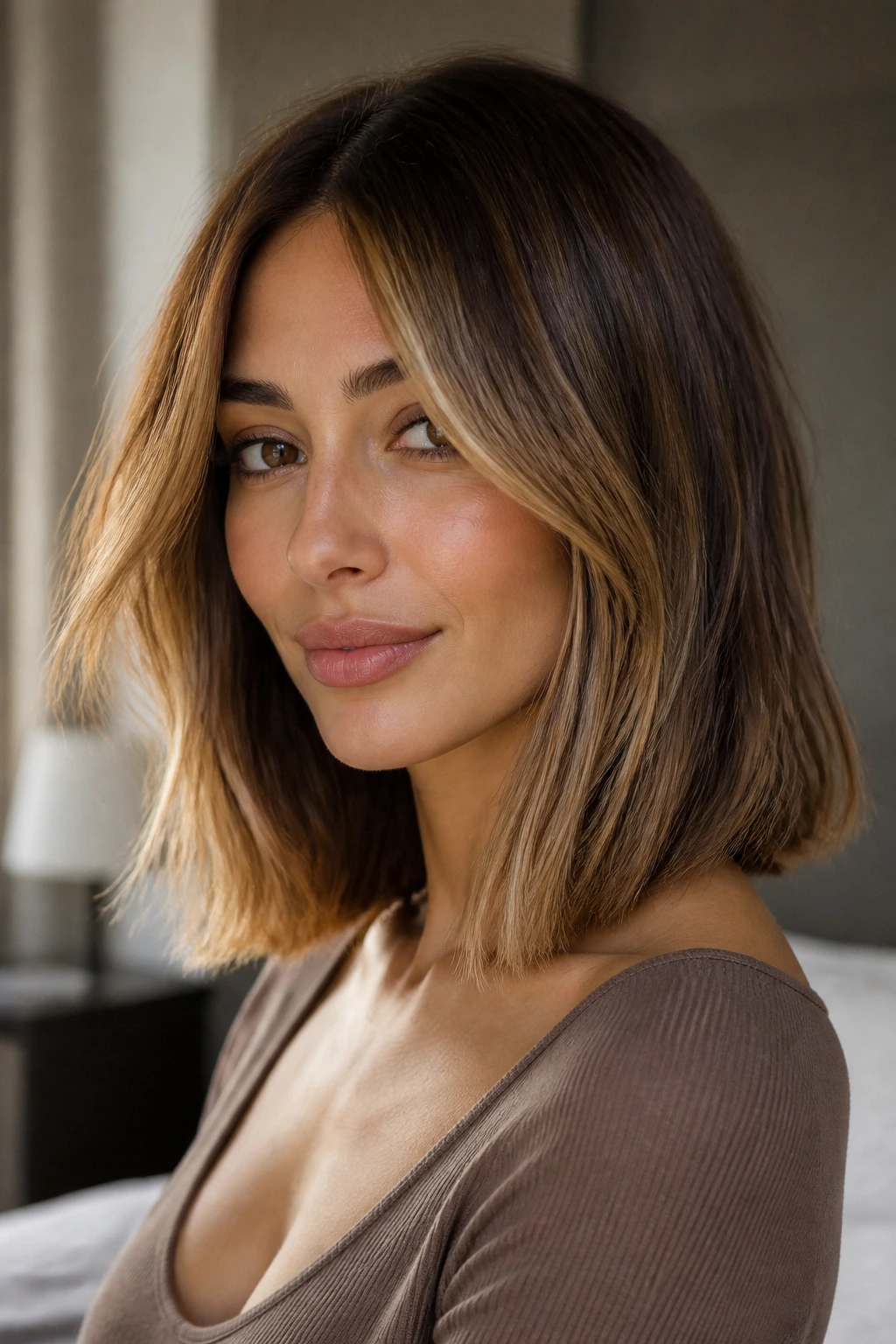
Here’s the thing with face-framing pieces: they can save a lob that feels too flat around the jaw. Honey-brunette does that job well because the warmer pieces live right where the eye lands first. The face gets brightness, the rest of the cut stays brunette, and the balance feels softer than a full highlight job.
This style is especially good if your hair tends to fall straight with no persuasion. The framing pieces can be curled away from the face with a 1-inch iron or blown out with a round brush, while the rest of the lob stays simple. That contrast creates shape fast. You do not need a full head of layers.
I’d keep the base rich, not too light. Honey should be a accent, not the whole story. The point is to make the cheekbones look higher and the collarbone area look cleaner. That small shift can change how the whole haircut reads.
If your hair is naturally dark brown, this is one of the easiest ways to warm it up without making a dramatic color jump. Ask for painted pieces that start lower near the jaw, not up in the root area, or the color can look stripey around the part.
8. Cinnamon Lob with a Side Part and Tucked Ends
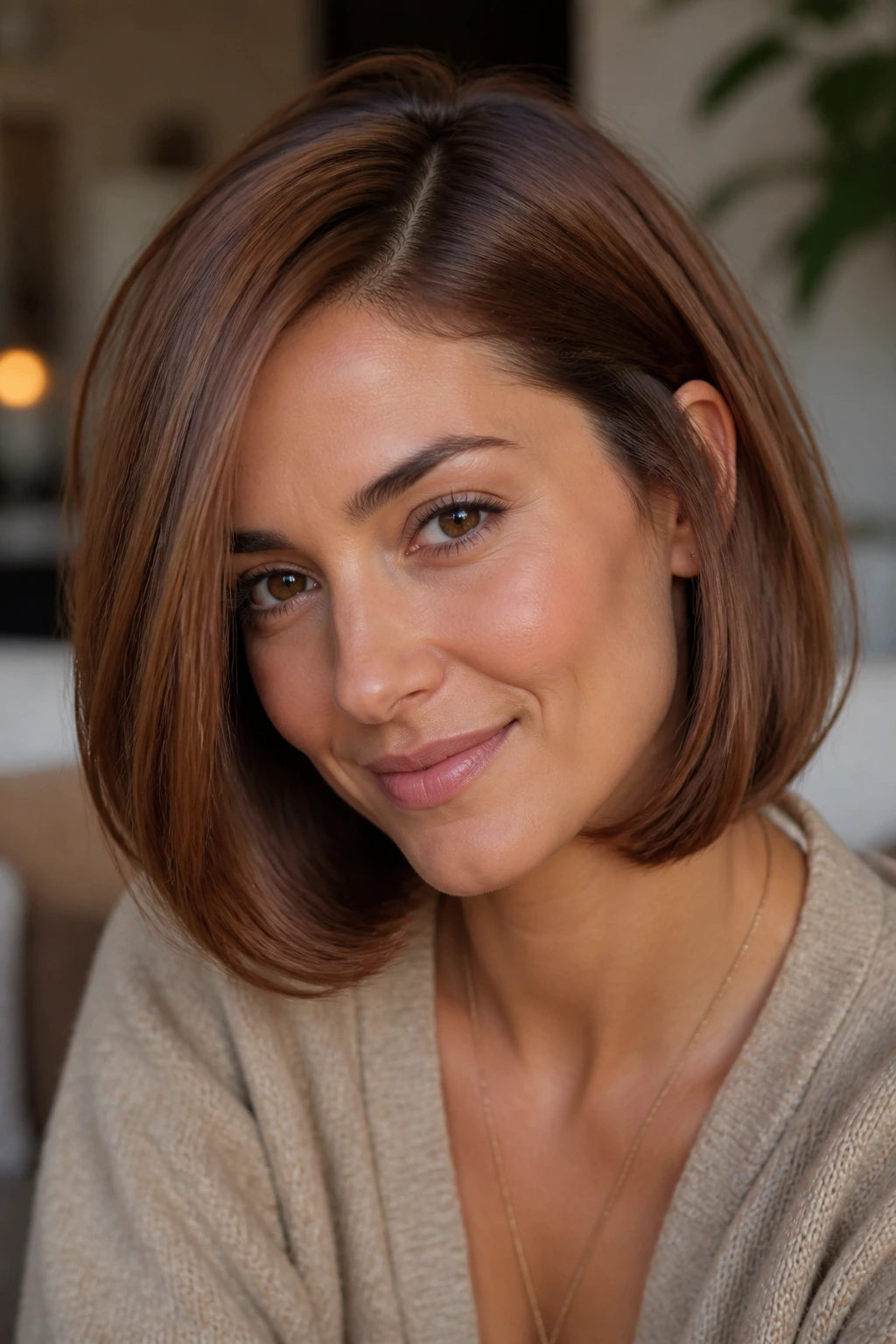
A side part changes a cinnamon lob more than most people expect. With the part shifted off-center, the warm brown tone gains movement, and the tucked ends create a little curve that feels old-school in the best way. This is a polished lob, but not stiff.
Cinnamon brown leans warm without looking red-heavy. It’s the shade I’d reach for when a client says, “I want something rich, but I don’t want it to shout.” That’s a useful sentence. The color should glow, not glow in the dark.
The tucked-ends finish is the part that gives this cut personality. One side grazes the cheek. The other side drops cleanly toward the collarbone. That asymmetry makes the shape feel more intentional, especially if the lob itself is cut fairly even.
This is a strong choice for straight or slightly wavy hair and for anyone who likes to wear earrings. The tucked side leaves room for a hoop, a gold stud, or a clean neckline. It has that quiet, put-together effect people keep trying to describe with too many words.
9. Maple Brown Wavy Lob
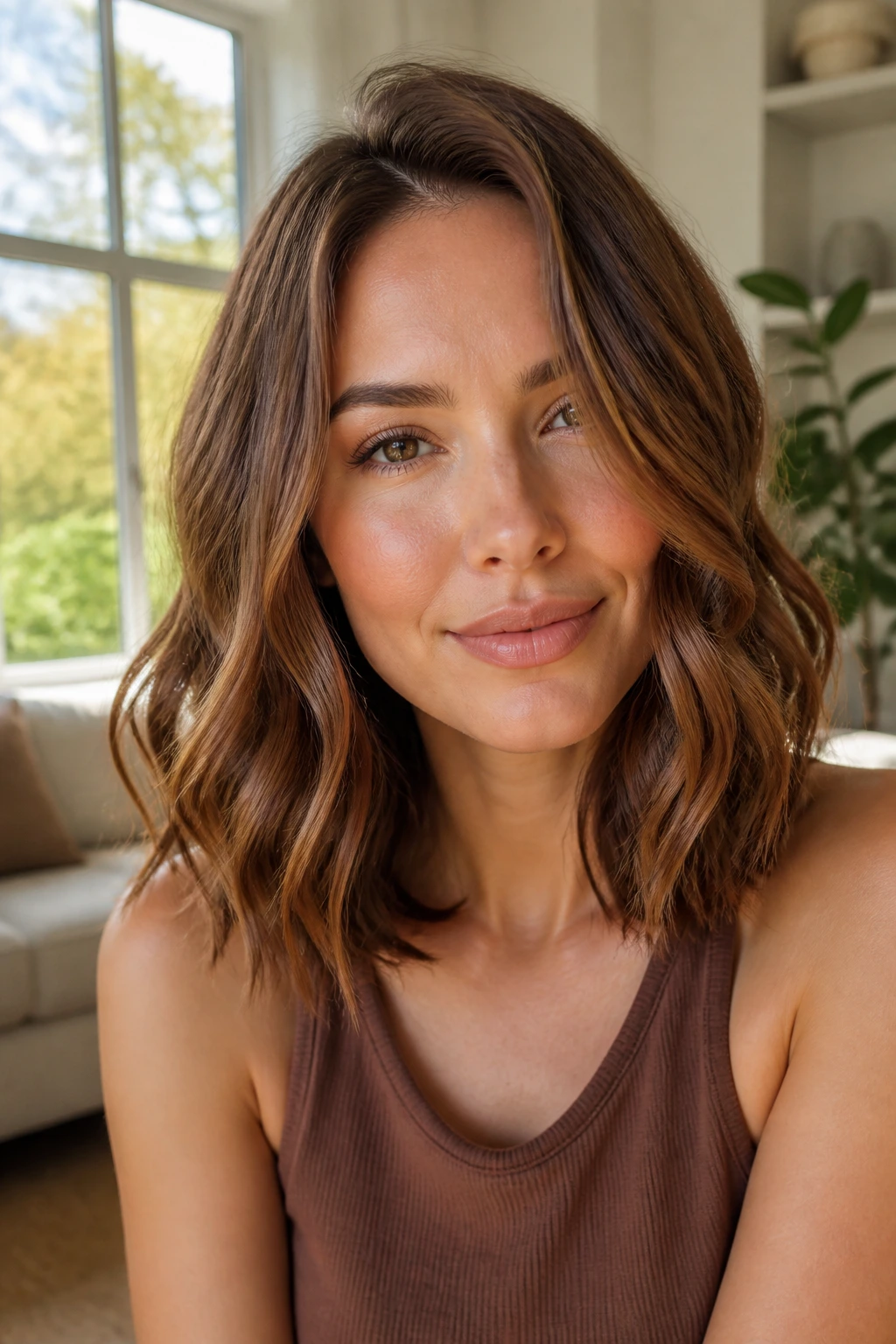
Do you want softness without losing shape? Maple brown is one of the easiest answers. The color has that toasted, almost syrupy warmth that makes loose waves look expensive, especially when the hair is cut at collarbone length and the perimeter stays clean.
What makes this version work is the wave pattern. The bend should be loose and broad, not tight or springy. Think one or two turns around a large curling wand, then a finger comb to break the curl apart. The warm brown tone catches on the ridge of each wave, so the texture becomes visible without looking crunchy.
How to Style It
Start with a light heat protectant and a small amount of smoothing cream through the mid-lengths. Bend random sections away from the face, alternate directions in the back, and leave the last inch or so straighter for a modern finish. That little straight edge at the bottom keeps the lob from looking too curled.
Maple brown also works well on layered cuts because the waves show each piece of movement without turning busy. If your hair is thick, keep the interior layers soft. If it’s fine, stay closer to a blunt edge and rely on the wave for shape.
This is one of the easiest styles to wear on repeat because it looks good from day one and day three. The texture ages well.
10. Auburn-Tipped Lob with Long Layers
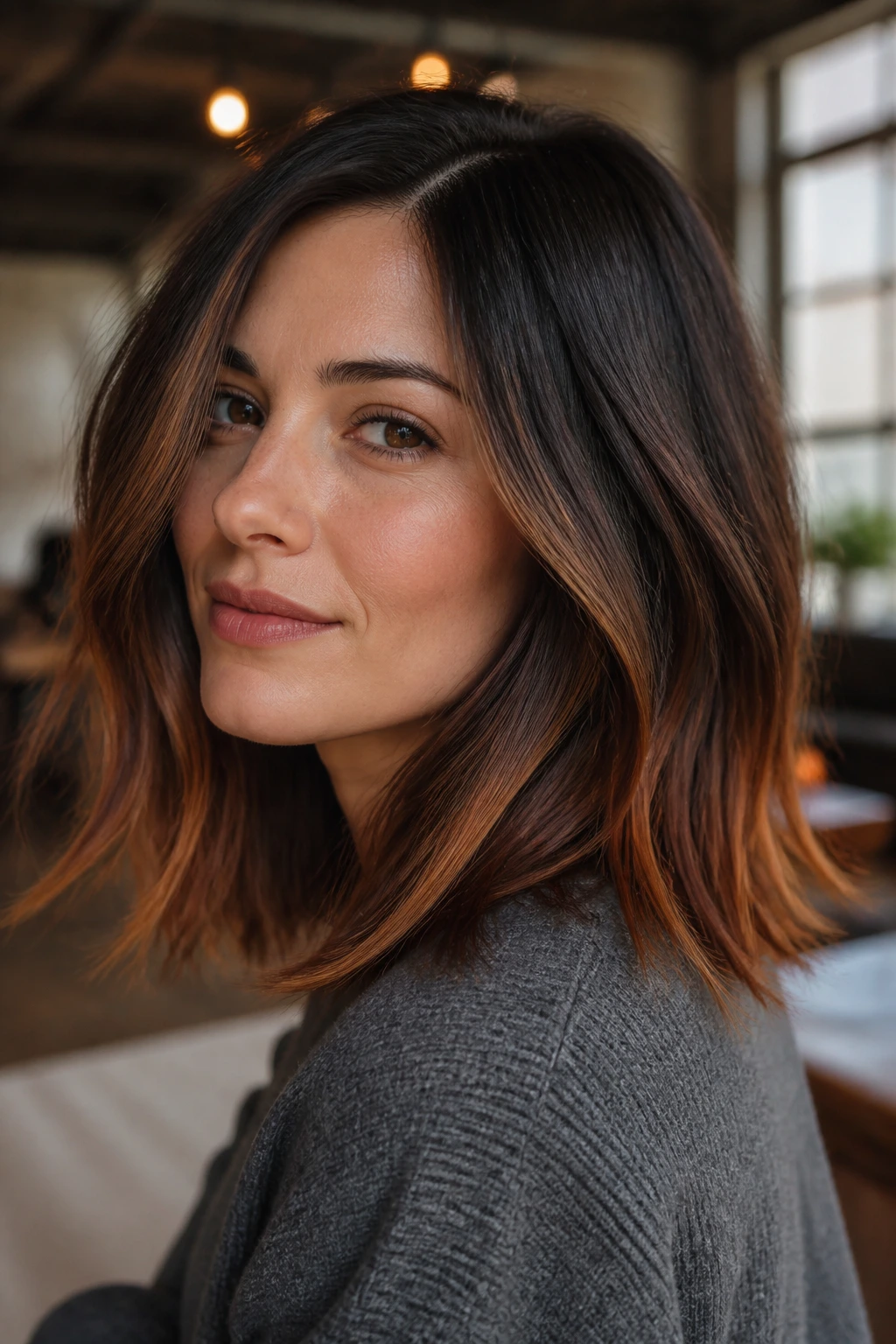
Auburn at the ends, brunette at the root, and long layers through the body — that’s the structure here. It sounds simple. It isn’t boring. The long layers keep the lob from sitting like a block, and the auburn tips give the ends a warm, lit-from-within finish that looks especially nice when the hair moves.
This style works best when the auburn isn’t painted too high. Let the darker base hold the crown. The auburn should live mostly in the lower half, where it can flick out a little or catch the light when you turn your head. If it starts too high, the whole thing can get reddish fast.
The cut itself needs a gentle shape, not a severe one. A few longer layers through the front and sides help the auburn pieces fall in a natural way. If the layers are too short, the color lands in odd spots and the lob loses that easy, grown-out feel.
This is the version I’d suggest to someone who likes warmth but wants a bit of edge. Auburn tips can look rich in direct light and deeper in shade, which gives the haircut more range than a single-tone brown.
11. Cocoa Lob with Invisible Layers
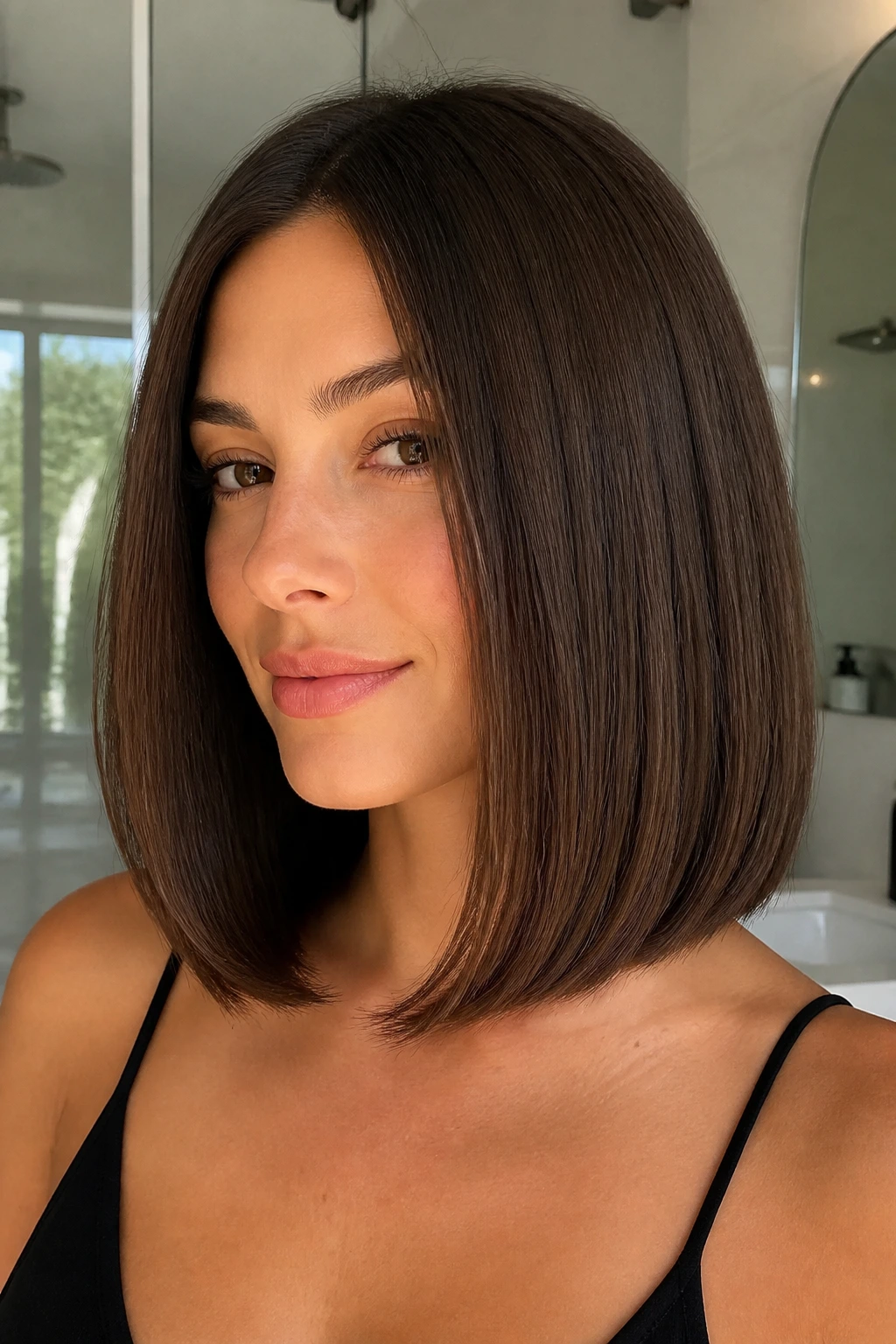
A cocoa lob is the quiet one in the group, and I mean that as a compliment. The base color stays deep brown with a soft warm undertone, and the layers are hidden so well that the cut looks almost one-length until it moves. Then the shape opens up.
This is a smart choice if you dislike visible choppiness. Invisible layers keep the ends from stacking on top of each other, which is useful on medium-to-thick hair that wants to puff out at the bottom. The perimeter still reads clean. It just doesn’t turn into a triangle.
The cocoa tone adds density in the best possible way. It gives the hair a smooth, soft-dark look that still catches enough light around the face. The result isn’t dramatic from across the room, but it looks expensive up close, which is often more useful anyway.
I’d wear this one with a smooth blowout or a soft bend under the ends. If you rough-dry it too hard, the invisible layering loses the whole point. The style wants order. Not stiffness, just order.
12. Toasted Almond Lob with Blunt Bangs
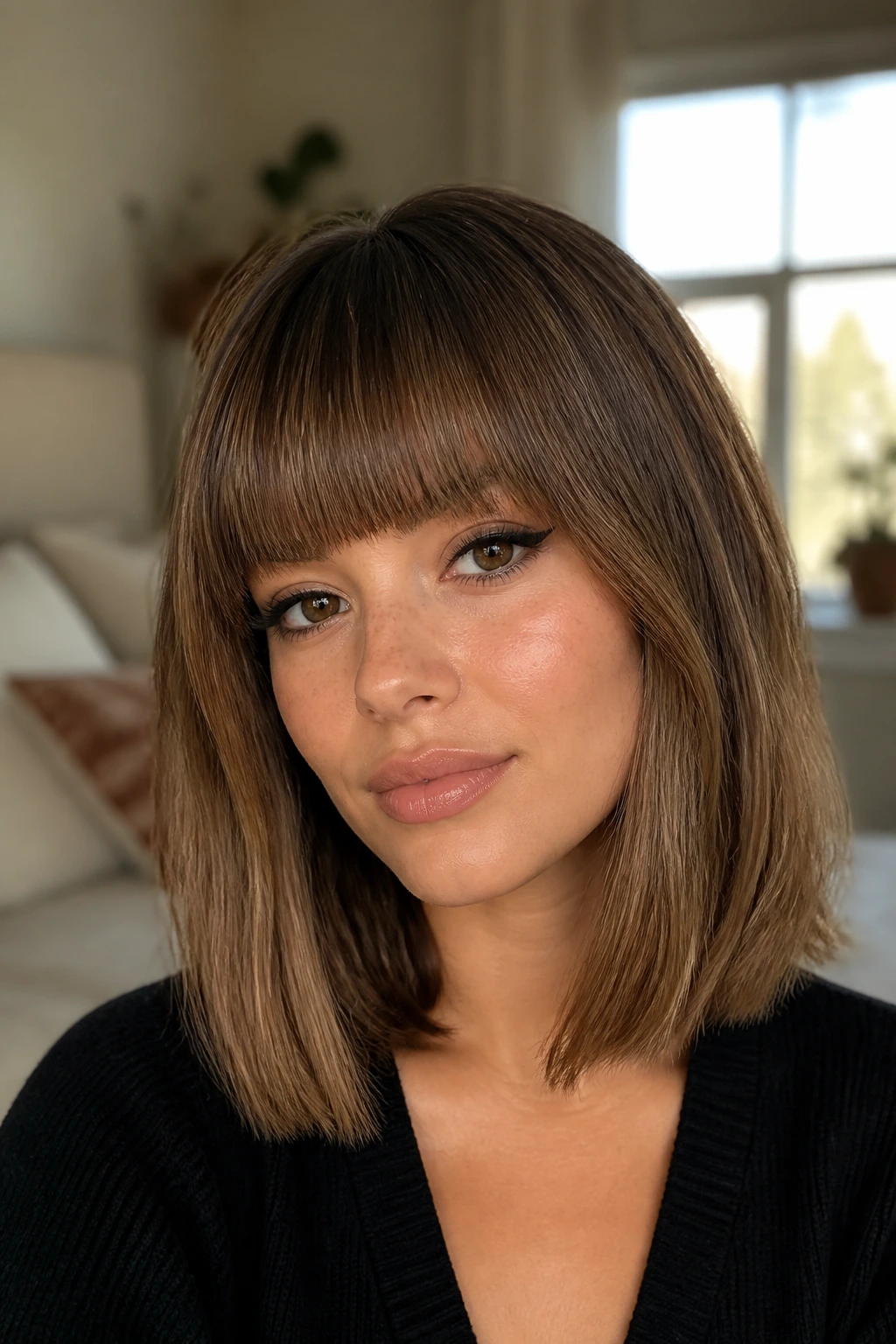
Blunt bangs change the mood of a lob fast. Add a toasted almond brown, and the haircut moves from soft to graphic in a way that feels deliberate, not fussy. The bangs bring attention to the eyes, the lob keeps the rest of the look modern, and the warm brown color keeps the whole thing from feeling too severe.
This cut works best when the fringe is thick enough to sit cleanly, but not so heavy that it blocks the face. A toasted almond shade — somewhere between beige-brown and warm honey-brown — helps the bangs stand out without creating a harsh strip across the forehead.
The rest of the lob should stay fairly clean. Too many layers fight the bangs. A strong fringe needs a calm body underneath it. I’d keep the ends blunt or only slightly textured, then wear the hair straight or with a very soft bend.
This is one of those cuts that either looks editorial or a little awkward. The difference is usually in the balance of the fringe length and the collarbone line. If the bangs are too short, the whole thing can feel boxed in. If they’re too long, you lose the point.
13. Amber Brown Lob with a Soft Undercurve
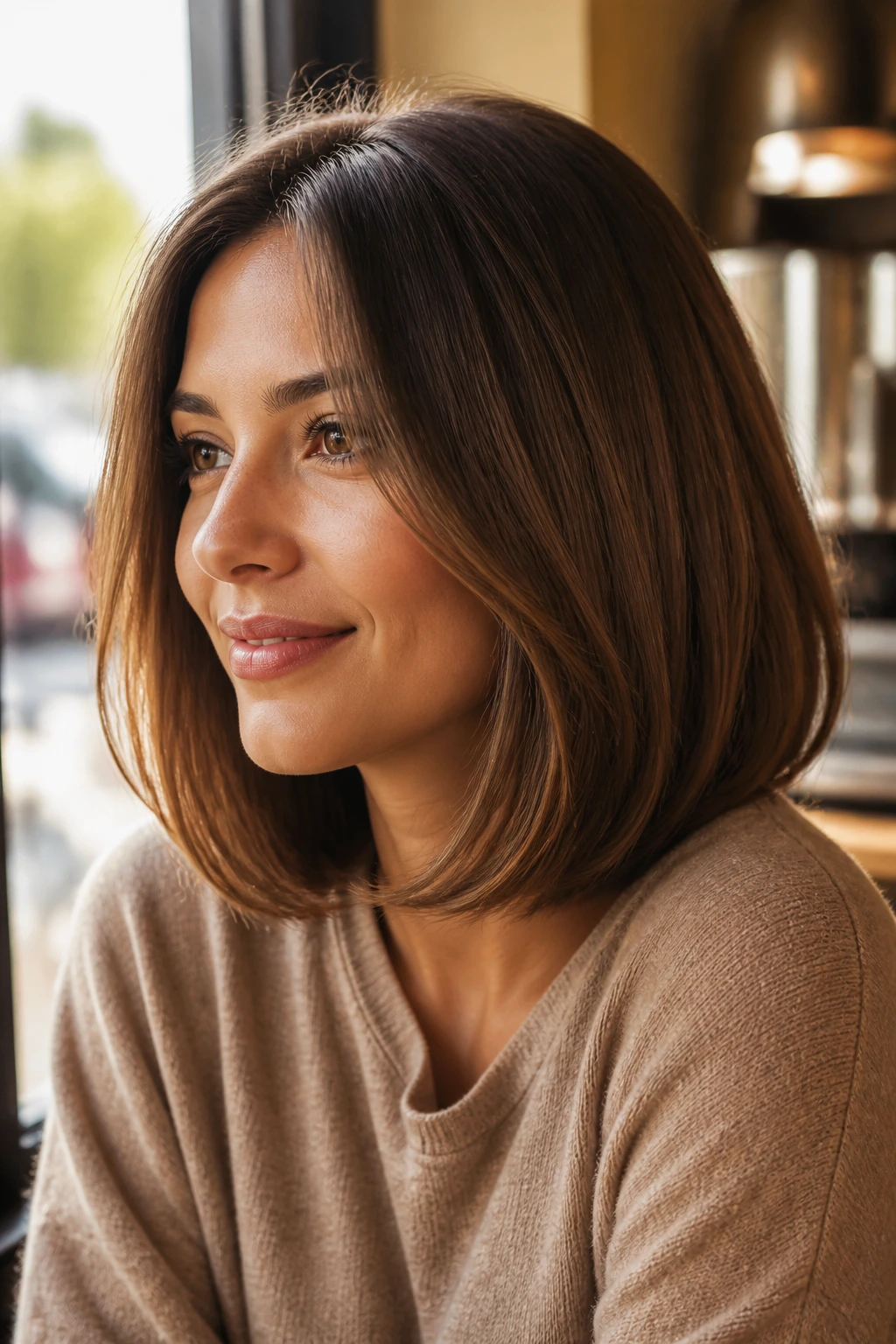
Amber brown is one of those shades that seems to catch warmth from every angle. On a lob with a soft undercurve, it feels especially pretty because the ends fold inward slightly, like the haircut is holding its shape instead of forcing it.
The undercurve is subtle. Not a big vintage flip. Just enough bend so the hem of the haircut tucks under the shoulders and neck line in a neat way. That’s what makes this version flattering on people who want the cut to look tailored without seeming rigid.
Amber brown also works well if your hair has a little natural wave but not enough to behave like a full texture cut. The color fills in some of the visual gaps, while the bend at the ends keeps the whole style cohesive. It’s a quiet trick, and a useful one.
If you want this to last through the day, set the shape with a large round brush or a blowout brush and let the hair cool before touching it. Warm hair forgets the shape quickly. Cool hair remembers.
14. Mocha Lob with a Collarbone Flip
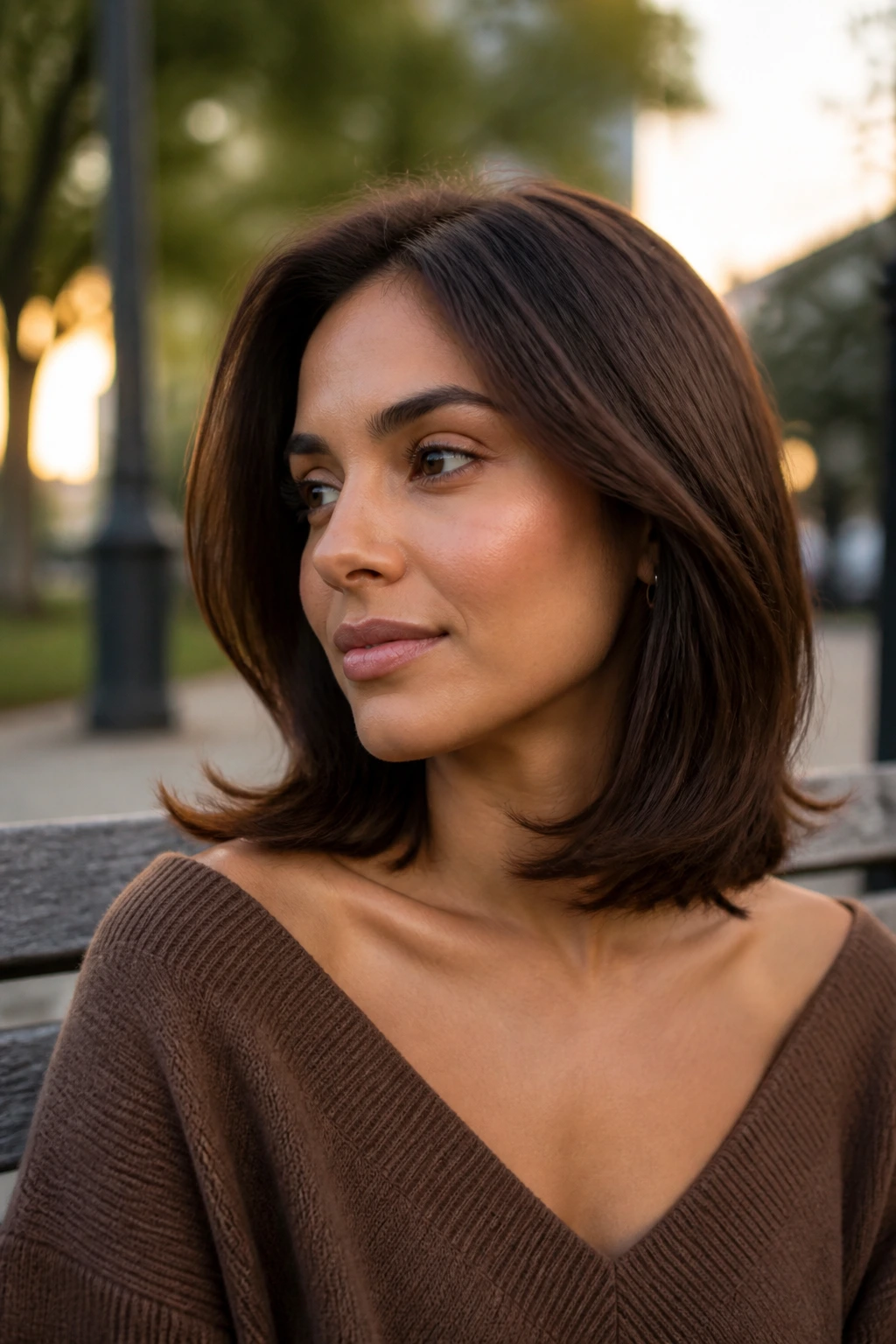
The collarbone flip is a small move with a big payoff. On a mocha lob, the flip keeps the ends from sitting dead straight, and the mocha color gives that movement a deeper, smoother look than a lighter brunette would.
This cut feels casual in the best sense. Not messy. Casual. The ends turn outward just enough to show the length and to keep the lob from clinging too closely to the neck. That matters more in humid weather or on hair that tends to puff when it’s bluntly straightened.
Mocha brown is also a forgiving shade if you want depth without harsh contrast. It sits in that middle zone where the hair looks rich, but not severe. On a lob, that makes the flip feel softer because the movement and the color are working together instead of competing.
Wear this one with a middle or soft off-center part. If the side part is too deep, the flip can become lopsided. A little symmetry helps the style stay relaxed instead of accidental.
15. Milk Chocolate Lob with Soft Undone Waves
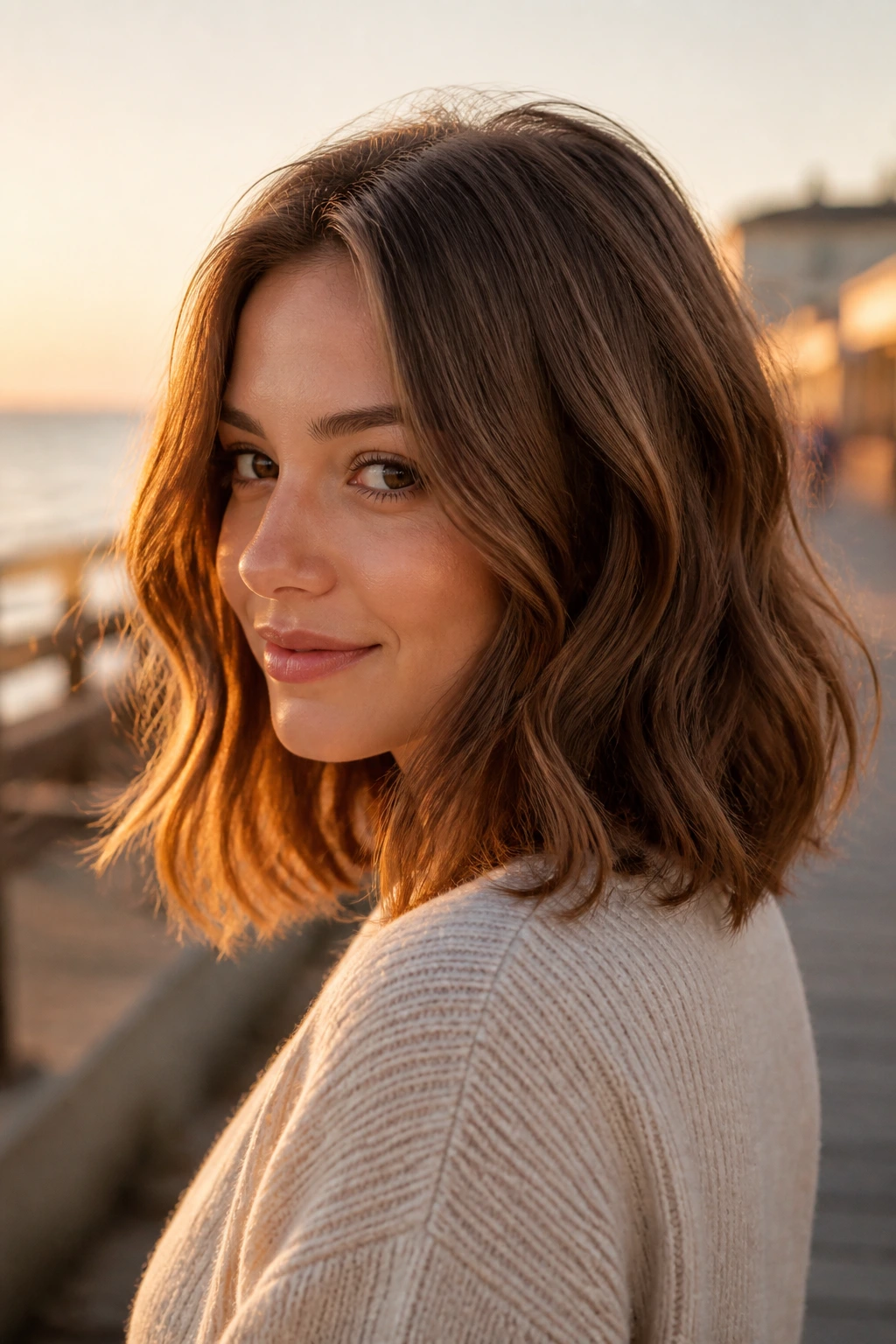
What’s the difference between a milk chocolate lob and a darker brown wave? Texture, mostly. The color is warmer and slightly lighter, which makes the wave pattern easier to see, but the shape still stays calm if the layers are kept minimal. It’s one of the easiest warm brown lobs to wear on a busy week.
The undone wave is the point here. You do not need perfect curls. You want bends that start a few inches below the root, travel through the mid-lengths, and disappear before the ends turn too uniform. That gives the style a softer, more expensive look than a tightly curled finish.
Milk chocolate is especially nice on medium hair density because it gives the eye enough variation to read movement without exposing every layer. Too much layering with this tone can make the ends look see-through. A cleaner perimeter solves that.
If you like a side part, this haircut bends around it easily. If you prefer center-parted hair, the waves keep the whole thing from looking severe. It’s a flexible cut, and that’s part of why it works so well.
16. Burnt Sugar Lob with Flicked-Out Ends
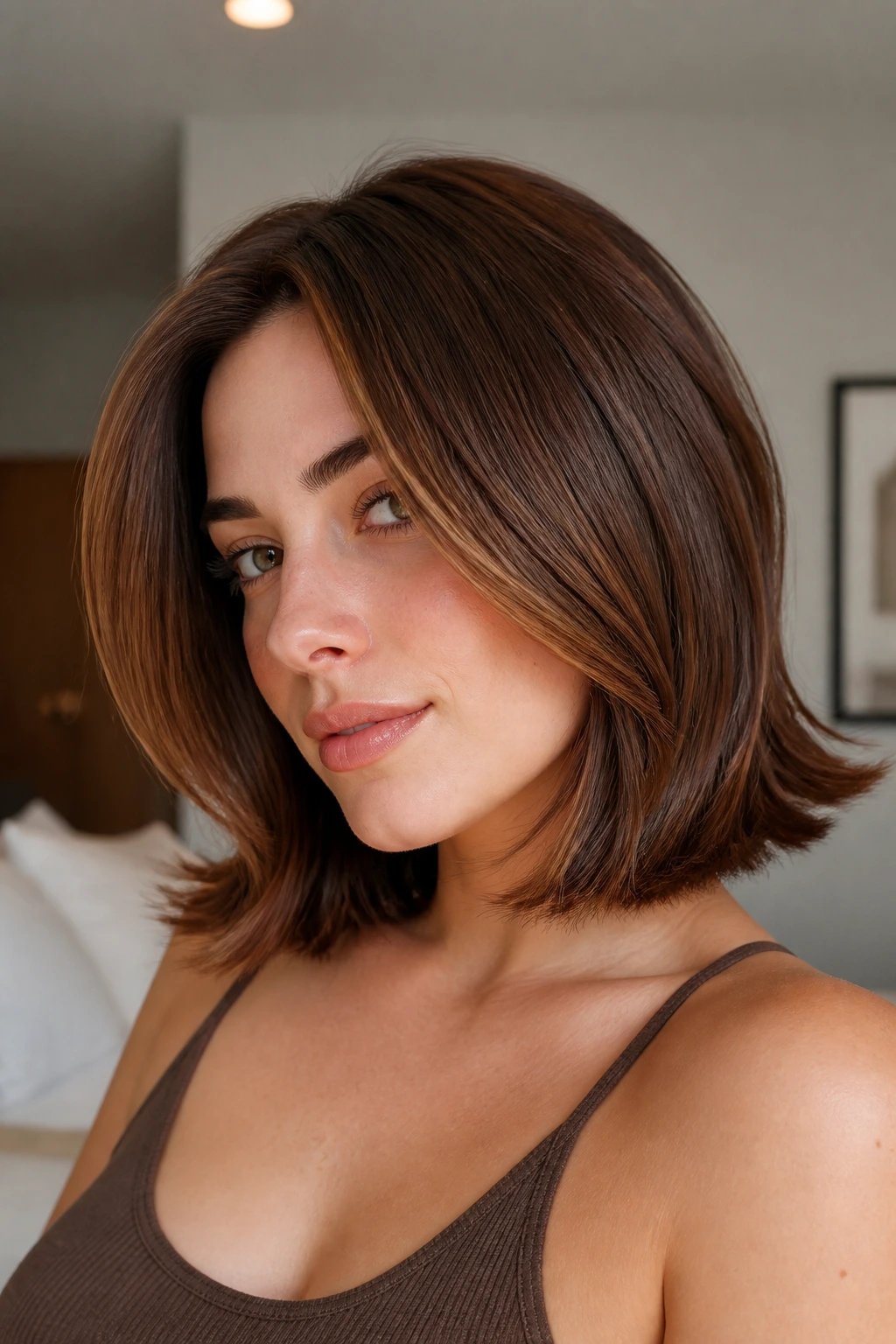
Burnt sugar is warm, glossy, and a little deeper than caramel. On a lob with flicked-out ends, it creates a shape that feels lively without drifting into high-maintenance territory. The flicks keep the cut from sitting too neatly, and the color keeps the movement looking polished.
This is a good choice if your hair naturally wants to curve out at the ends. Instead of fighting that bend, shape the haircut to support it. A slight outward flick can make the neck look longer and the jawline softer. It can also make a simple blow-dry look intentional, which is half the battle with a lob.
I like this version with a minimal face frame and a clean root area. Too many layers can muddy the flicked shape. The cut should be strong enough to hold its outline. The color should be rich enough to carry the shine.
If you want more drama, pair it with a deep side part and a glossy finish serum through the ends only. That gives the flick a sharper edge. If you want it softer, break the bend with your fingers after styling and let the ends settle a little unevenly.
Why Brown Lobs Look Better When the Tone Has Depth
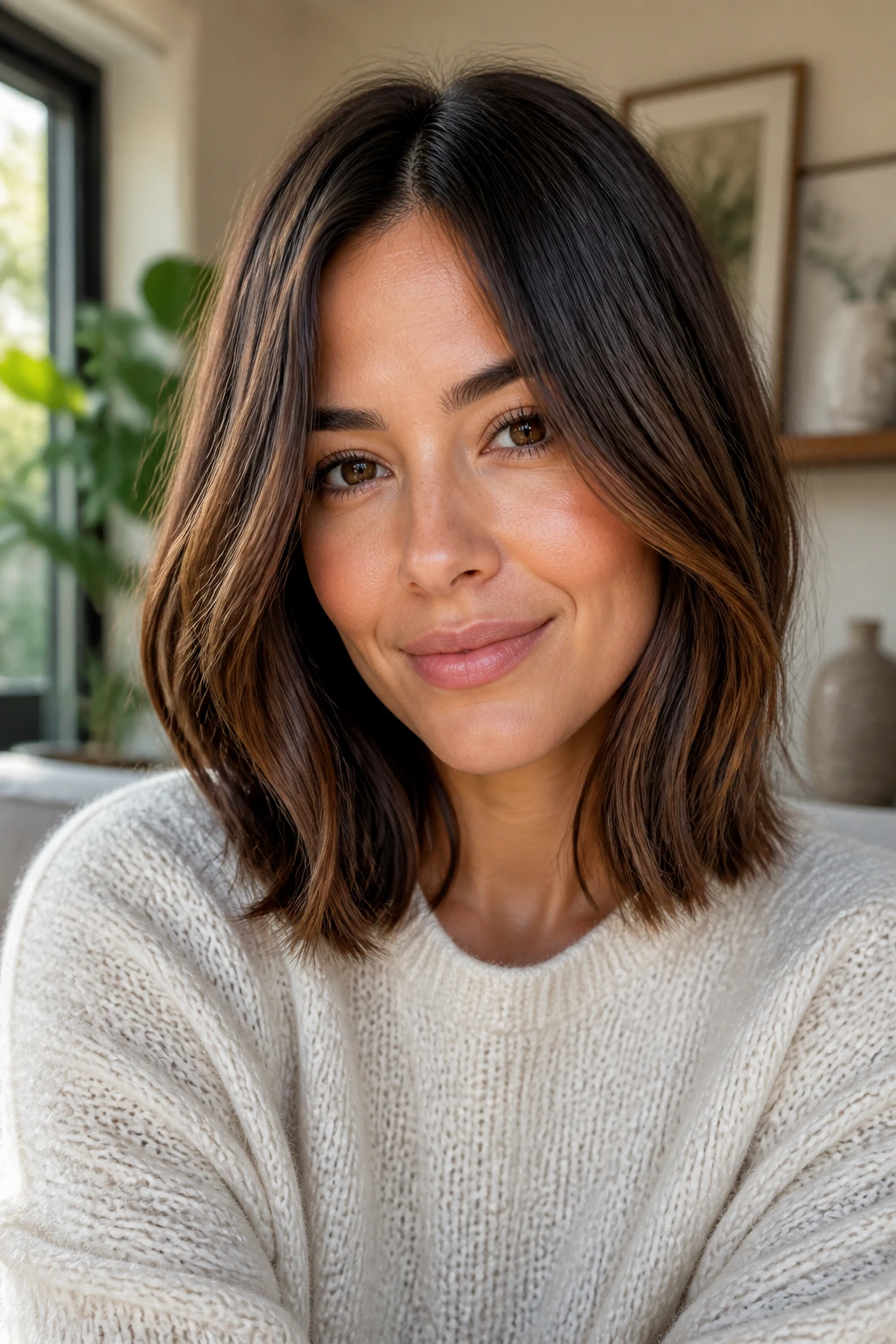
A warm brown lob works because the cut and the color do two different jobs at once. The lob supplies the shape. The brown supplies the glow. When the tone has chestnut, maple, caramel, mahogany, or cocoa depth, the hair doesn’t need constant lighting tricks to look dimensional.
That’s why flat brown is usually the real problem, not the length. A collarbone cut can look gorgeous on its own, but if the shade is too one-note, the edges disappear and the whole style reads as heavy. A warm brunette tone fixes that by picking up light at the ends and softening the shadow near the roots.
Face shape matters less than people think and more than they admit. A lob can sharpen a round face, soften a square jaw, lengthen the neck, or balance a long face, but the color changes the mood. Chestnut makes the cut look warmer. Espresso-to-toffee makes it more graphic. Copper-brown pushes it toward softness around the face. Same length. Different story.
The smartest brown lobs keep contrast under control. You want enough difference between root, mid-length, and end to show movement, but not so much that the haircut starts looking striped. That balance is the whole game. When it’s right, the hair looks like it belongs to the head instead of sitting on it.
The Tools That Keep a Lob Polished Without Overdoing It
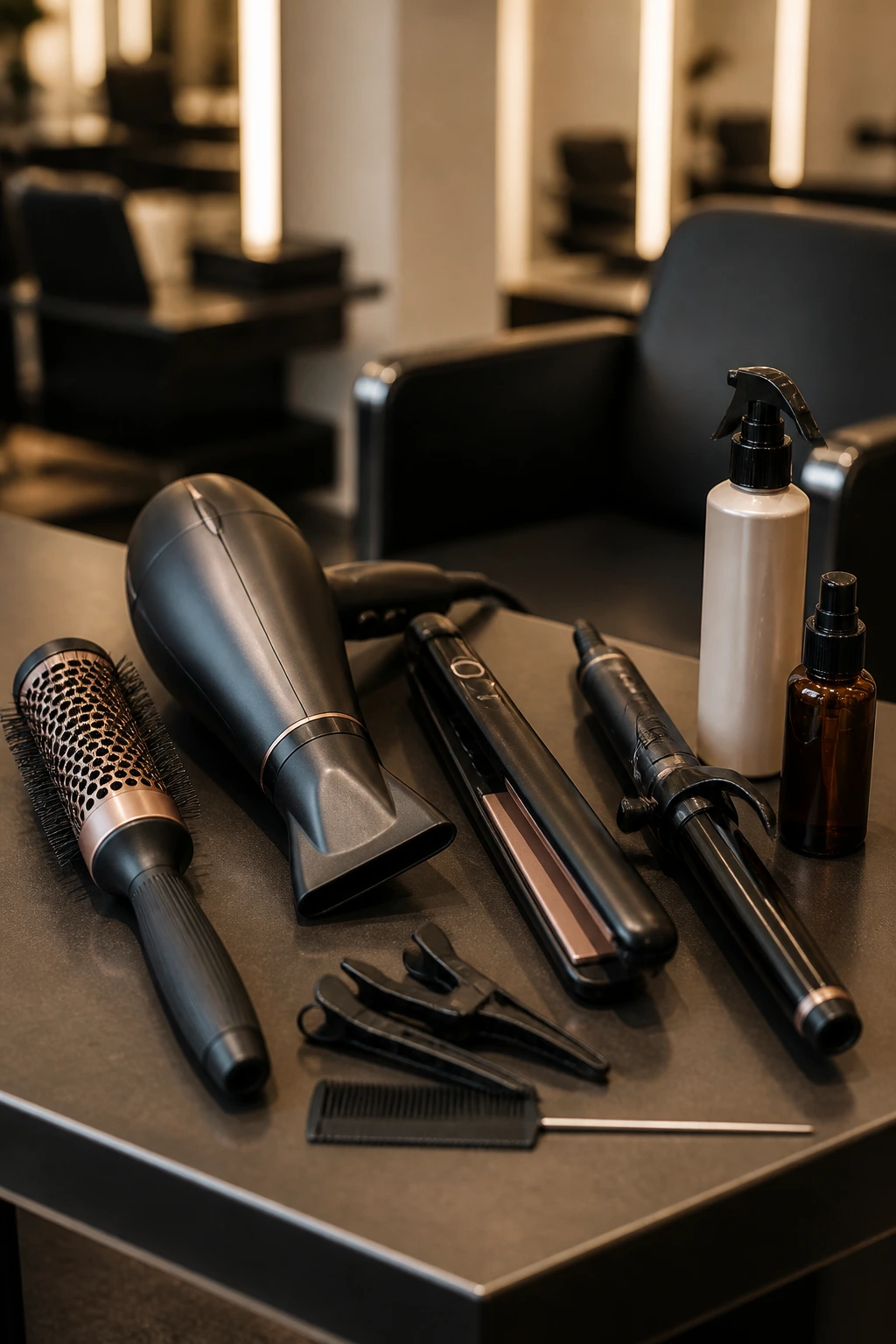
A lob doesn’t need a drawer full of gadgets, but it does need the right few. The difference between a clean shape and a sleepy one often comes down to brush size, heat control, and whether the ends are set while the hair is still warm.
- 1.5- to 2-inch round brush: Best for bending the ends under or outward without creating tight curls.
- Blow dryer with a nozzle attachment: The nozzle keeps airflow directed, which makes the cut smoother and helps the crown lie flat.
- Flat iron with adjustable heat: Useful for sleek finishes or a slight bend at the hem; keep the temperature lower on fine hair.
- 1-inch to 1.25-inch curling iron or wand: Good for loose waves and soft movement in layered lob styles.
- Sectioning clips: Small but useful. They keep the front pieces separate while you style the back.
- Tail comb: Handy for cleaner parting, especially if you wear a center part or a sharp side part.
- Heat protectant spray: Non-negotiable. Brown hair still gets dry and dull if you skip it.
- Lightweight shine serum or cream: One small pump on the mid-lengths and ends helps warm brown tones look glossy, not greasy.
If your hair is curly or coarse, a wide-tooth comb and a leave-in cream can be more useful than another hot tool. Sometimes the best equipment is the one that keeps you from fighting your texture.
Smart Salon and Shade Notes
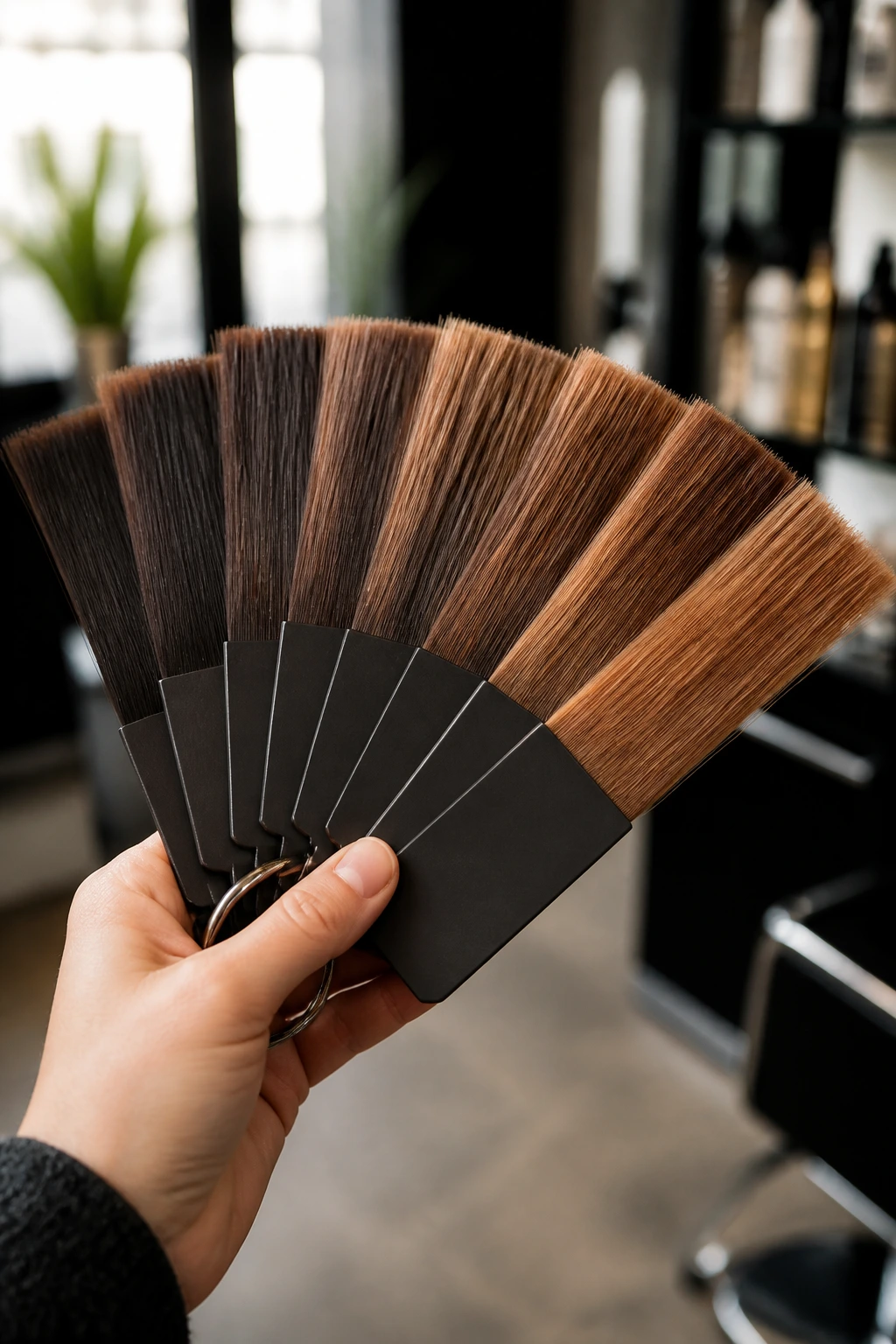
The most useful thing you can bring to a salon is not a mood board full of unrelated selfies. It’s a clear idea of what should stay solid, what should move, and how warm you want the brown to feel in daylight.
If you want a rich brown lob, talk in levels and undertones. A level 5 or 6 brown can sit in chestnut, cocoa, or caramel territory depending on the reflect. Gold-brown reads warmer and softer. Red-brown leans mahogany or cinnamon. Copper-brown adds more fire around the face. That small language shift matters because “warm brown” can mean five different things in the chair.
Ask how the color will grow out. Balayage around the face grows softer than foils all over the head. A gloss is lower maintenance than permanent color. A root shadow can blur highlights so the lob doesn’t look striped after a few weeks. If your natural hair is already dark, a gloss may do more for richness than a full lightening session.
For the cut, decide whether you want a blunt line, soft layers, or invisible internal movement. Thick hair often needs some internal removal so it doesn’t bell out at the ends. Fine hair usually looks best with a stronger perimeter and very little thinning. Curly hair needs its own logic entirely, and it should often be cut with the texture in mind, not forced into a straight-hair blueprint.
How to Wear These Lobs From Desk to Dinner

Everyday: A soft side part and a quick bend through the front pieces keeps the style from feeling too formal. If you have five minutes, tuck one side behind the ear and leave the rest loose. That tiny asymmetry does more than people expect.
Polished: Blow dry the lob smooth with the ends bent under slightly, then mist a light shine spray from mid-length to tip. A glossy chestnut or mocha lob looks sharper with this finish than with heavy texture. It’s clean. It doesn’t need much else.
Textured: For wavy versions, scrunch in a little mousse at the crown and bend alternating sections away from the face. Keep the ends a touch straighter so the shape doesn’t drift into ringlet territory. The warm brown color will catch on the wave pattern and do half the styling for you.
Accessories: Small hoops, a silk headband, or a metal clip on one side all work with a lob because the length doesn’t swallow them. I’d skip anything bulky near the ends; it tends to fight the line of the haircut. Keep the accessory near the temple or just above the ear, where it can frame the face instead of chopping up the shape.
For a quick rescue: Dry shampoo at the roots, a one-pass flat iron touch-up at the front, and a dab of serum on the ends can bring a flat lob back to life fast. No drama. Just shape.
Small Tweaks That Make the Cut Feel Yours
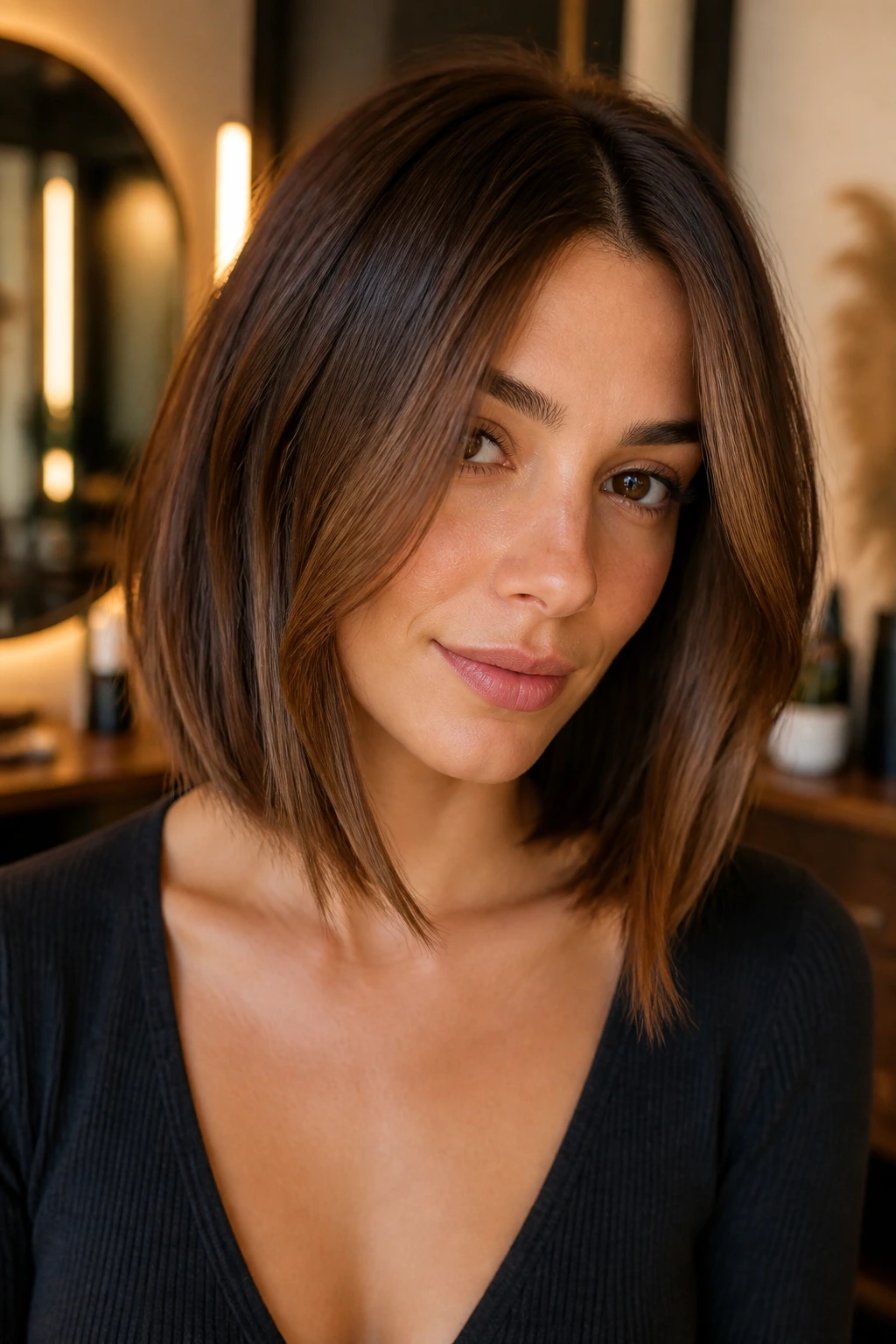
Gloss First: A demi-permanent gloss one level warmer than your base can make brown hair look deeper and shinier without changing the whole color story. It’s one of the easiest ways to keep warm tones from fading into dullness.
Parting Trick: A center part gives blunt lobs a clean, modern line. A soft side part makes layered and wavy versions feel looser and a little more flattering around the cheekbones. Try both before you decide the haircut needs changing. Sometimes the cut is fine; the part isn’t.
Face-Frame Shift: If you want your lob to feel softer, keep the first two front pieces slightly longer than the rest. If you want a stronger edge, keep the perimeter even and leave the face frame minimal. The difference is small on paper and obvious in the mirror.
Heat-Light Finish: A flat iron bend at the ends gives brown hair a neat, almost glassy finish. A curling wand gives it more motion and breaks up the line. Use the first when you want precision and the second when you want ease.
Make-It-Yours: Straight hair, wavy hair, thick hair, fine hair — all of them can wear a warm brown lob, but not all of them should be styled the same way. Fine hair likes a stronger outline. Thick hair likes internal weight removal. Wavy hair likes a cut that respects the bend instead of fighting it.
Maintenance, Styling, and Grow-Out Care
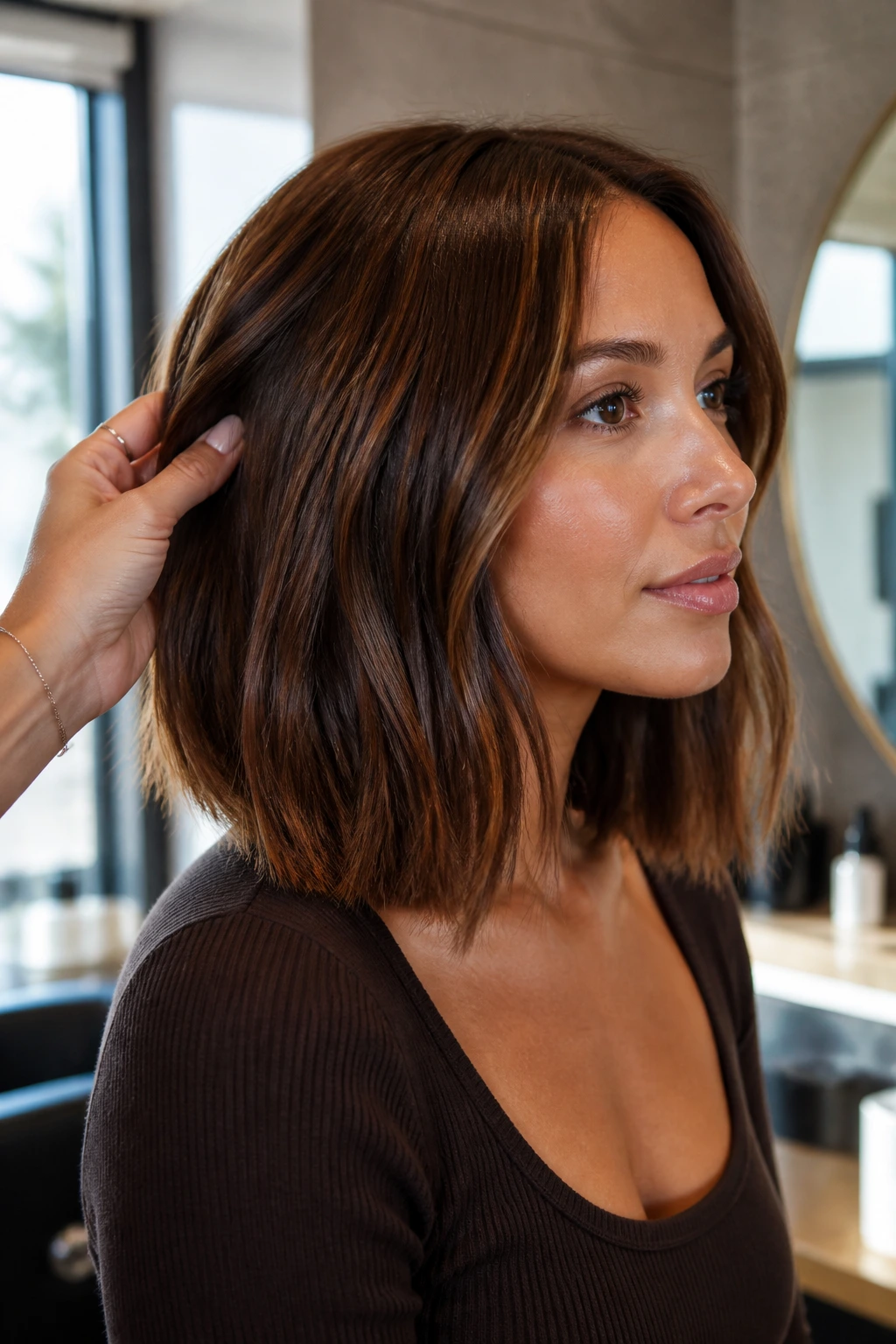
A lob only stays flattering if the shape stays in range. Once the perimeter drops too far below the collarbone, the clean line starts to blur. That doesn’t mean you need constant trims. It means you need a rhythm.
For a blunt lob, a trim every 6 to 8 weeks keeps the edge sharp. For a layered or shaggy lob, 8 to 10 weeks usually works because the shape has more room to grow. If you wear bangs or curtain fringe, those pieces often need a light dusting sooner. Not a full haircut. Just a tidy-up around the eyes.
Warm brown color benefits from glossing more often than people expect. A salon glaze every 4 to 6 weeks can keep chestnut, caramel, and mahogany from dulling out. If you color at home, choose a conditioner or deposit product that matches the warmth of the shade you already have. Don’t improvise with a random brown mask. That’s how warm tones turn murky.
Night care matters too. A loose silk scrunchie, a low clip, or a silk pillowcase can keep the ends from bending weirdly while you sleep. If you’re wearing waves, pineapple the hair loosely or twist it into a low wrap. The next morning, you’ll spend less time fixing the ends and more time pretending you woke up like this, which is the real goal.
For heat styling, keep the tool temperature honest. Fine hair usually doesn’t need more than 300°F. Medium hair often sits better around 325°F to 350°F. Thick, coarse hair can need more heat, but it still needs protectant first. Warm brown shades show dryness faster than people think, especially at the bottom of a lob where old ends live longest.
If you’re growing the cut out, ask for a soft dusting rather than a dramatic reshape. Keeping the front pieces longer while the back grows out helps the lob stay intentional during the awkward stage. That stage always exists. Better to plan for it.
Common Mistakes That Flatten a Brown Lob
-
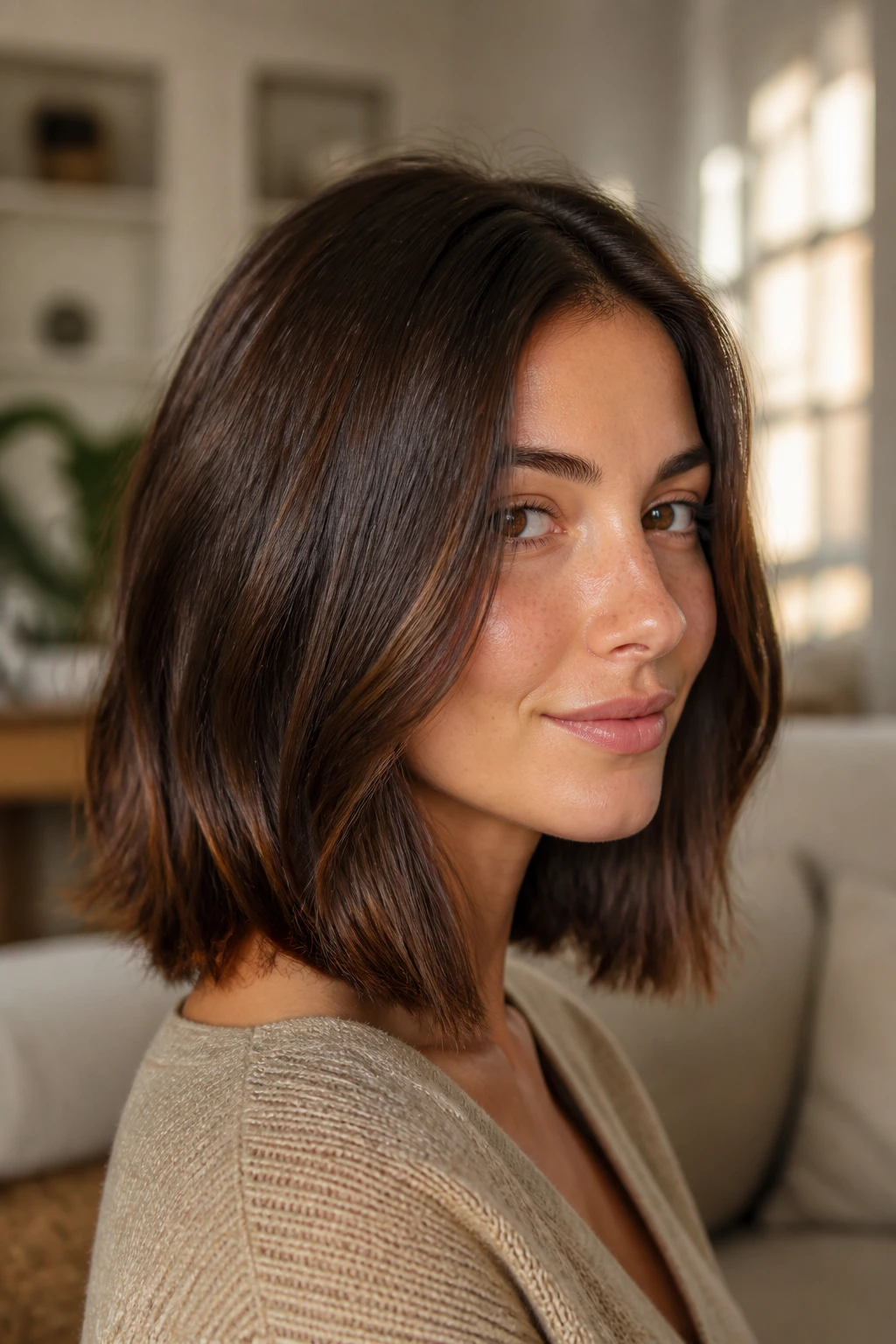
Cutting too much texture into fine hair: The ends start looking wispy and see-through. Ask for a blunt perimeter with only light internal shaping if you want the lob to keep its body.
-
Going too orange with the warmth: A brown that leans too copper can look brassy instead of rich, especially in bright light. Keep the reflect chestnut, cocoa, or mahogany if you want depth.
-
Skipping the perimeter check: A lob with uneven ends looks sloppy fast, even if the color is beautiful. Have the outline cleaned up every few weeks so the shape keeps reading as deliberate.
-
Styling every wave the same direction: That creates a stiff, round look that can swallow the collarbone line. Alternate directions and leave the ends slightly straighter for a softer finish.
-
Over-thinning thick hair: The haircut can puff out at the bottom or lose its weight in weird patches. Ask for internal movement, not aggressive thinning shears, unless your stylist has a very specific plan.
-
Ignoring the part: A blunt center part can sharpen one version of a lob and wreck another. If the haircut feels off, move the part before you blame the scissors.
Variations and Adaptations to Try
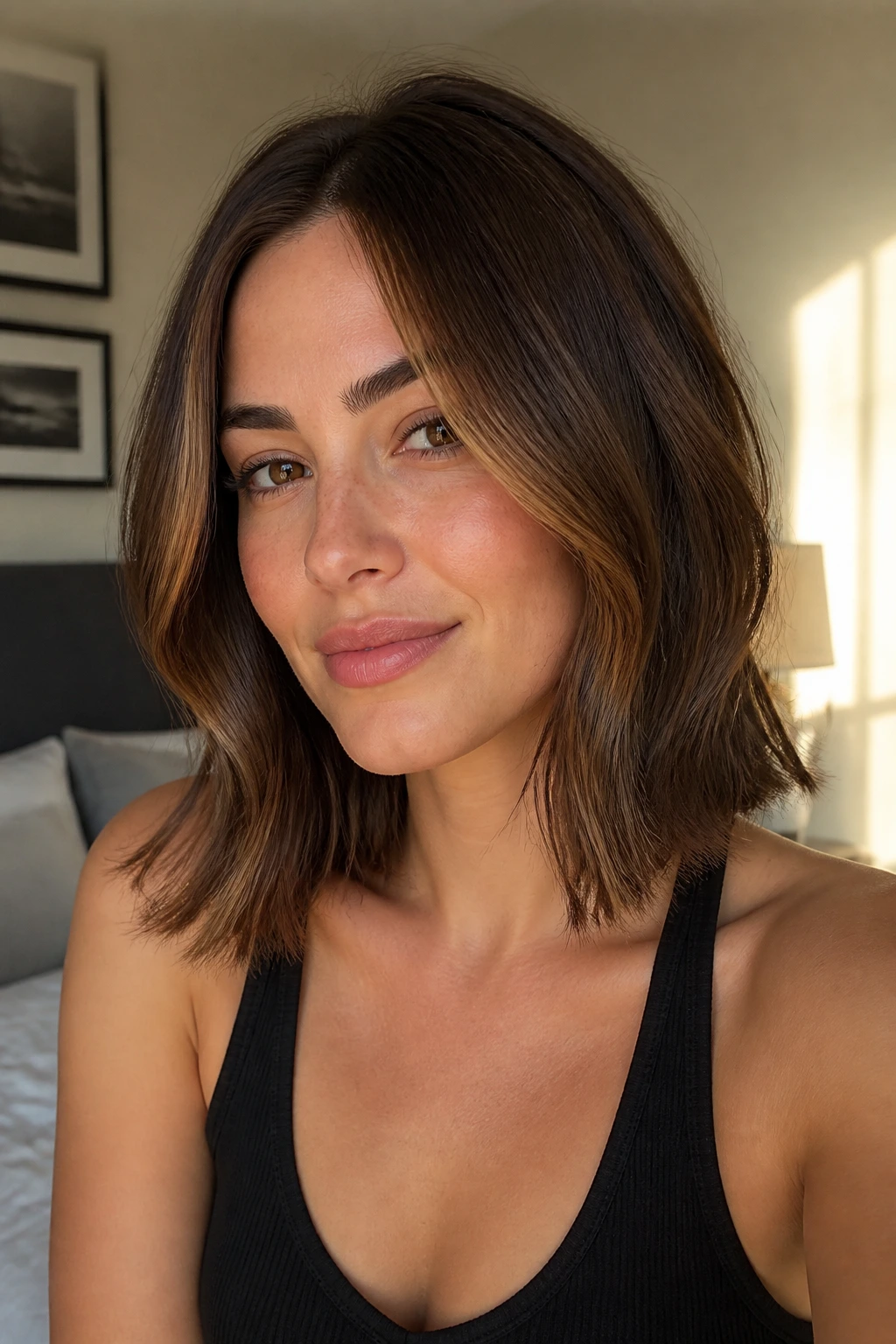
The Gloss-Only Chestnut Lob: Keep the cut blunt and the color close to your natural brunette, then refresh it with a warm chestnut gloss every few weeks. This is the least fussy version and one of the easiest to maintain. It works well if you want shine more than contrast.
The Face-Frame Caramel Lob: Leave the base dark and add caramel just around the face and top layers. This version gives you brightness where it counts while keeping the back of the hair rich and grounded. It’s a smart choice if you want dimension without a full balayage grow-out.
The Air-Dry Cinnamon Lob: Ask for soft layers, a little movement at the front, and a cinnamon-brown tone that reads warm in natural light. Add curl cream or light mousse, then let the hair dry with minimal touching. The result is softer and less styled in the obvious sense.
The Curly Warm-Brown Lob: Keep the length a touch longer in the front and cut it with your curl pattern in mind. Warm brown looks especially good on curls because the light catches the bends at different points. The shape should respect the curl, not flatten it.
The Polished Workday Lob: Stick to a solid mocha or cocoa brown and a clean undercurve. This version looks neat with a blazer, a turtleneck, or a plain tee that needs a little help. It is the haircut equivalent of a good white shirt.
The Grow-Out Lob: Keep the length just below the collarbone and avoid over-texturizing the ends. This adaptation is made to live through several months of growth without turning awkward. If you hate frequent salon visits, start here.
Questions People Ask Before They Chop Their Hair

Will a brown lob make fine hair look fuller?
Usually, yes — if the cut stays blunt and the color has depth. Fine hair tends to lose density when the ends are too shredded, so a solid edge plus a warm brunette tone often gives the best result.
Which warm brown shade looks the richest?
Chestnut and cocoa are the safest bets if you want richness without red overload. Mahogany is deeper and moodier, while caramel and honey-brunette read brighter around the face.
Can a lob work on thick, heavy hair?
Absolutely, but the cut needs control. Ask for internal shaping so the hair moves, while keeping enough weight at the perimeter to avoid a mushroom shape at the bottom.
How often should I trim a lob?
A blunt lob usually needs cleanup every 6 to 8 weeks. Layered versions can stretch a little longer, though bangs and face-framing pieces often need faster maintenance.
What if my lob keeps flipping out at the ends?
That usually means the hair is either cutting against the grain of your natural bend or it’s a little too short for the way you style it. A soft undercurve or a slightly longer length can calm it down fast.
Can warm brown hair look brassy?
Yes, if the tone is pushed too far into red-orange or if highlights get too light. A gloss or root shadow in the right brown family usually fixes the issue better than chasing more color.
Do curtain bangs go with every lob?
Not every lob, but they work well with softer versions like copper-brown, caramel ribbon, and maple waves. If your lob is very blunt and graphic, a fringe can change the mood a lot, so the cut should be planned with the bangs in mind.
How do I grow out a lob without hating the process?
Keep the front pieces long, trim the ends lightly, and let the cut become a slightly longer lob before it becomes anything else. The awkward stage is smaller when the outline stays deliberate.
The Brown Lob That Holds Its Shape
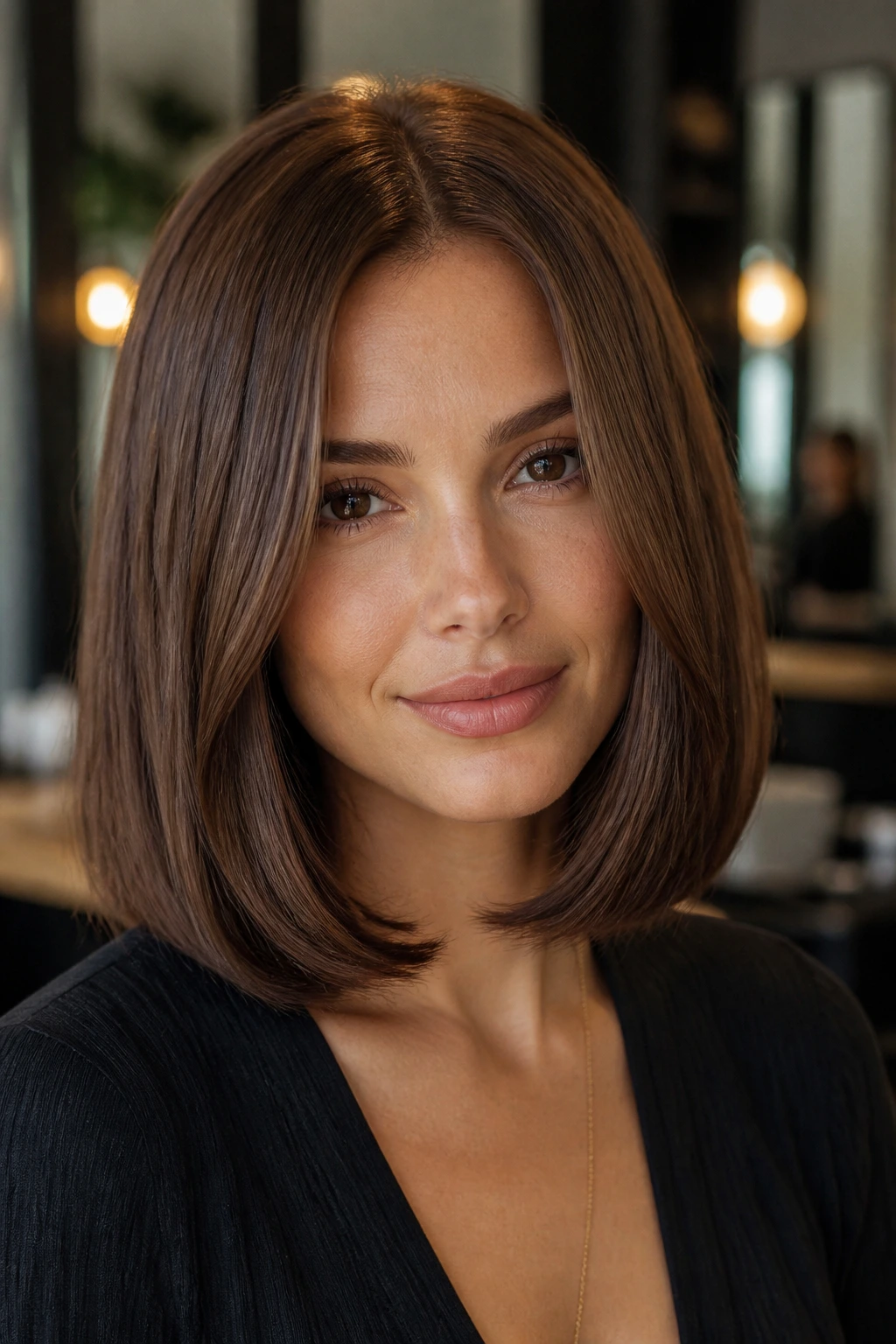
The best brown lob haircuts do two things at once: they keep the line clean, and they make the color look deeper than it does on its own. That’s why warm tones matter so much here. Chestnut, mocha, maple, cinnamon, mahogany — each one gives the cut a different mood, but all of them keep the hair from going flat.
There’s no single right version. A blunt chestnut lob has a sharper personality than a hazelnut shag. A caramel ribbon lob feels brighter around the face than a cocoa lob with invisible layers. The point is not to chase a trend. It’s to pick the shape and shade that make your hair look like the best version of itself when you’ve done very little to it.
That’s the kind of haircut worth keeping around. It grows out with some grace, photographs well in ordinary light, and still looks like you meant it even when you only had ten minutes and a round brush.
