



Fine hair does not need more drama. It needs a line.
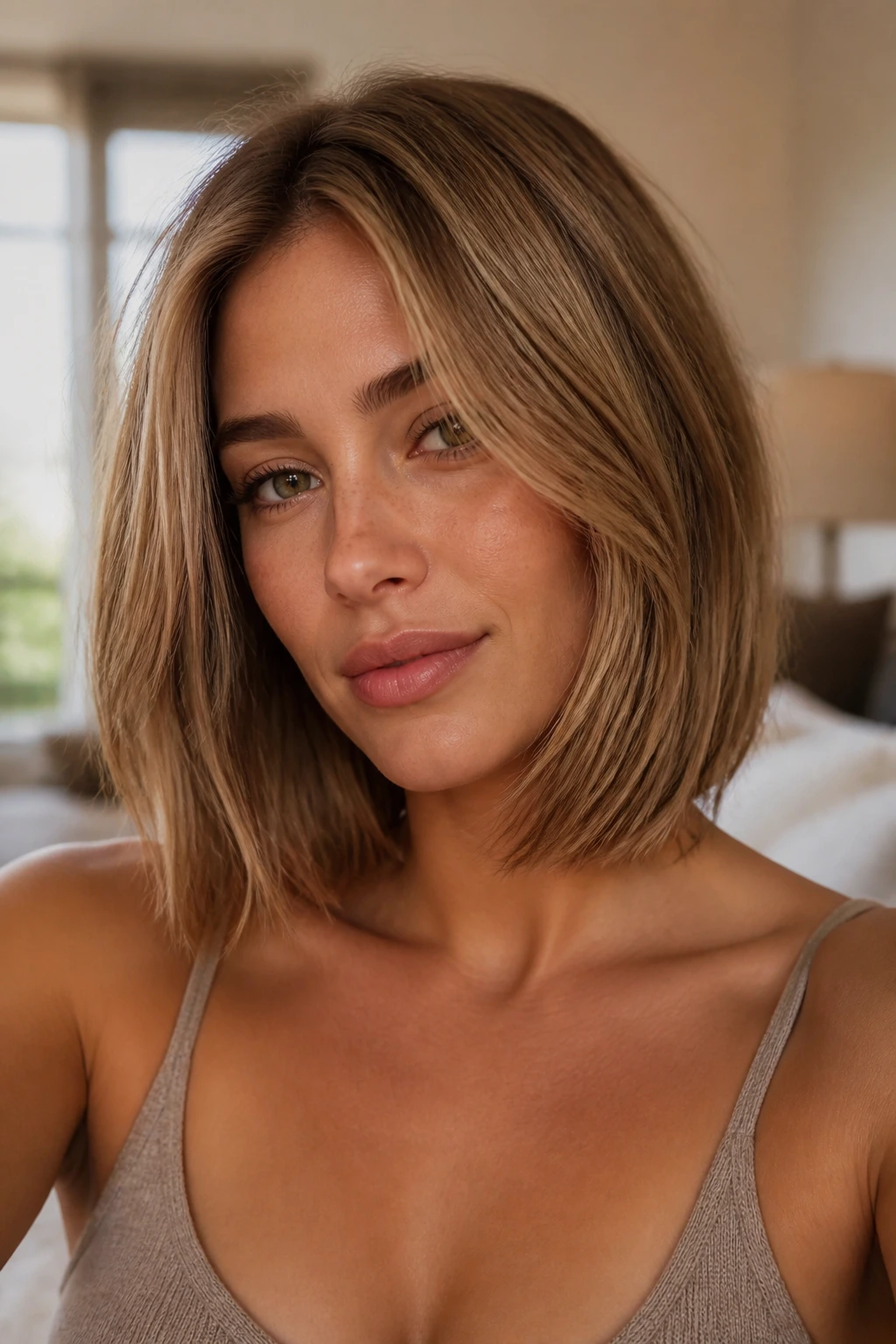
A good lob — especially one that lands around the collarbone — gives fine hair a place to stop before the ends go see-through, stringy, and oddly apologetic. That single choice changes the whole head: the perimeter looks denser, the shape holds longer, and the style still looks like a haircut even when you’ve done almost nothing to it.
The sweet spot is a long bob that sits in that in-between zone: not so long that weight drags everything flat, not so short that every cowlick turns into a daily negotiation. The right lob can be blunt, angled, lightly layered, air-dried, tucked, bent, or left almost alone. The wrong one can look expensive for about four hours and then collapse into a sad curtain.
These 27 low maintenance lobs for fine hair lean hard into the cuts and finishes that behave in real life. Some are clean and dense. Some use a small angle or a careful part. A few borrow a little texture or color depth so the hair reads fuller without requiring a blowout every morning.
Why These Lobs Earn Their Keep
-
They keep the ends honest: Fine hair looks thinner fastest at the bottom, and a lob keeps the perimeter compact enough that the last inch still feels present.
-
They buy you time between trims: A shape that lives at the collarbone or just above it can grow out for weeks before the outline starts looking shaggy.
-
They work with your natural bend: A lob can look finished with one pass of a flat iron, a quick round-brush bend, or an air-dry cream and a middle part.
-
They make less styling look intentional: A clean line, a soft angle, or a little face framing tells the eye there was a plan, even when there wasn’t much effort.
-
They reduce the product arms race: Fine hair often gets flattened by too much mousse, cream, or oil; these cuts need less of all of that because the shape is doing part of the work.
-
They forgive second-day hair: A good lob still has a visible outline after a night’s sleep, which is more than most longer fine-hair cuts can say.
1. Blunt Collarbone Lob for Fine Hair
This is the cut I’d hand to anyone who wants the most density with the least fuss. The blunt collarbone lob keeps every strand in one solid edge, so the ends read as full instead of feathery.
Ask for the line to land right around the collarbone with only a tiny bevel at the very bottom. That little bend keeps the hair from kicking out under sweaters and jacket collars, which is where fine hair starts to look messy fast.
If you air-dry, this one still holds its shape. If you blow-dry, even better. A straight perimeter does a lot of heavy lifting here.
2. Soft A-Line Lob
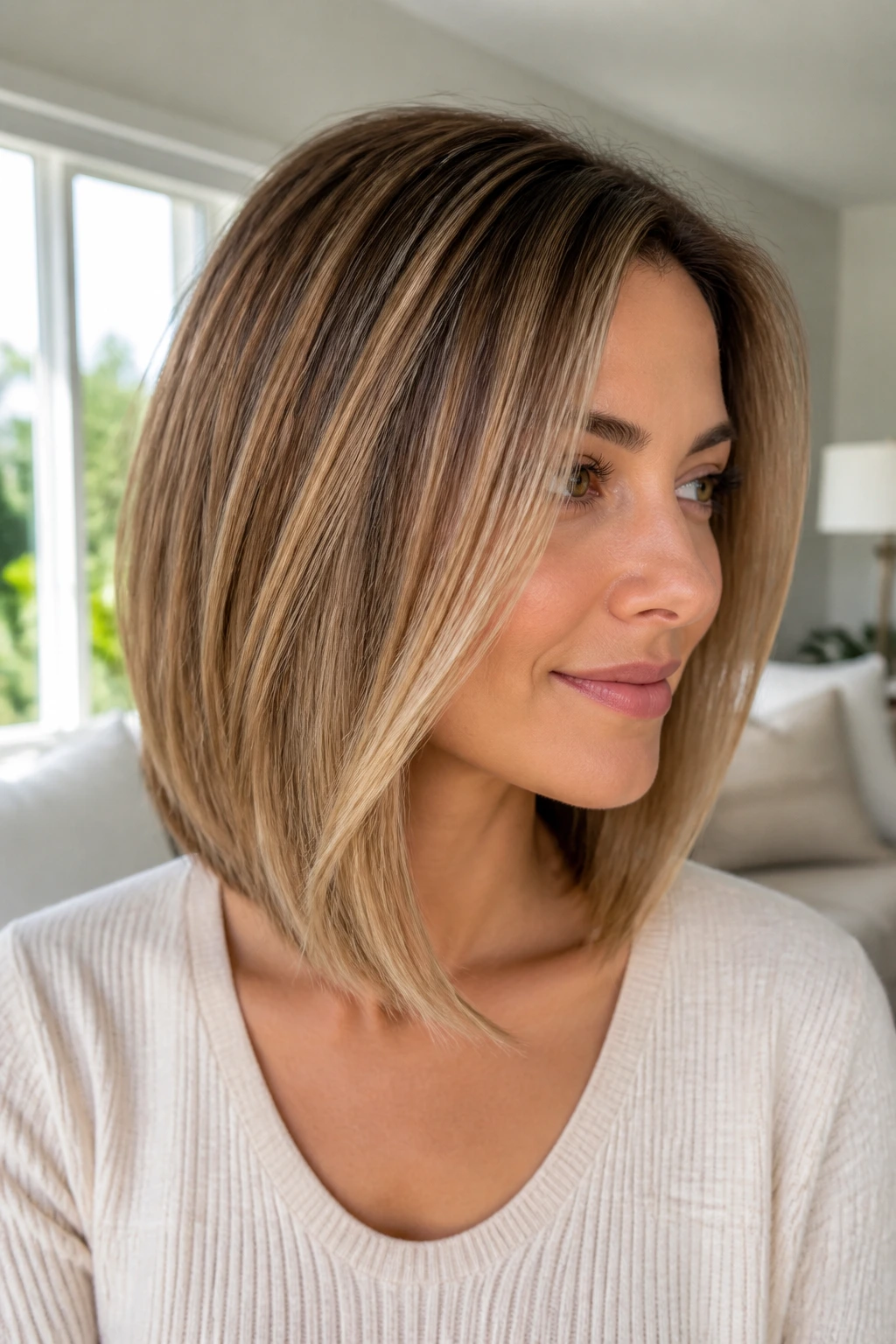
A small angle can do more than a pile of layers ever will. The soft A-line lob sits a touch shorter in the back and a touch longer in front, which gives fine hair a little lift without making it look chopped up.
Why the angle helps
The back gets a quiet boost at the nape, so the crown feels less flat. The front length draws the eye down and forward, which makes the whole haircut look deliberate instead of sparse.
Keep the front only about an inch or so longer than the back if you want it to stay easy. Too much angle turns into maintenance. Too little, and you might as well just go blunt.
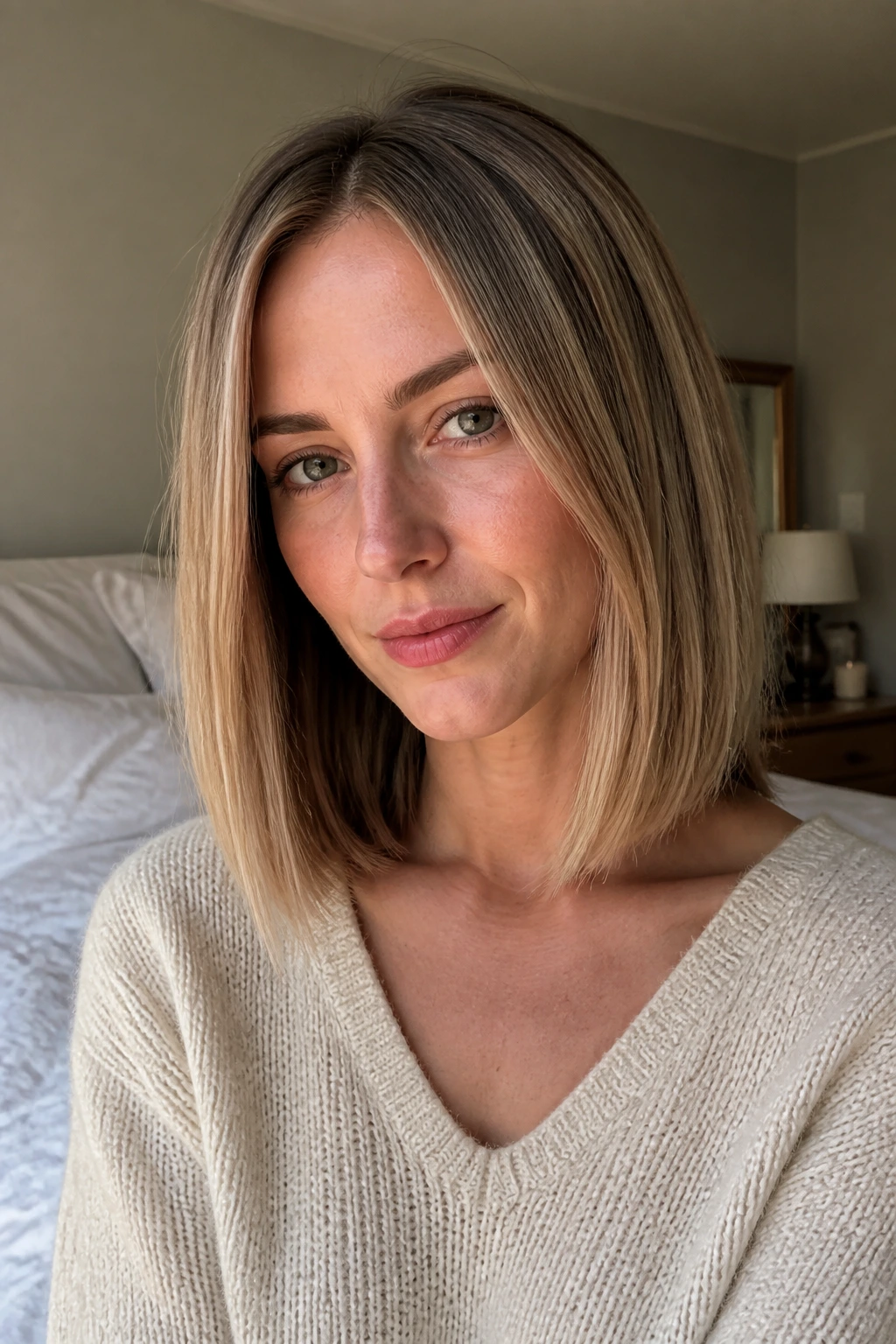
3. Center-Part Glass Lob for Fine Hair
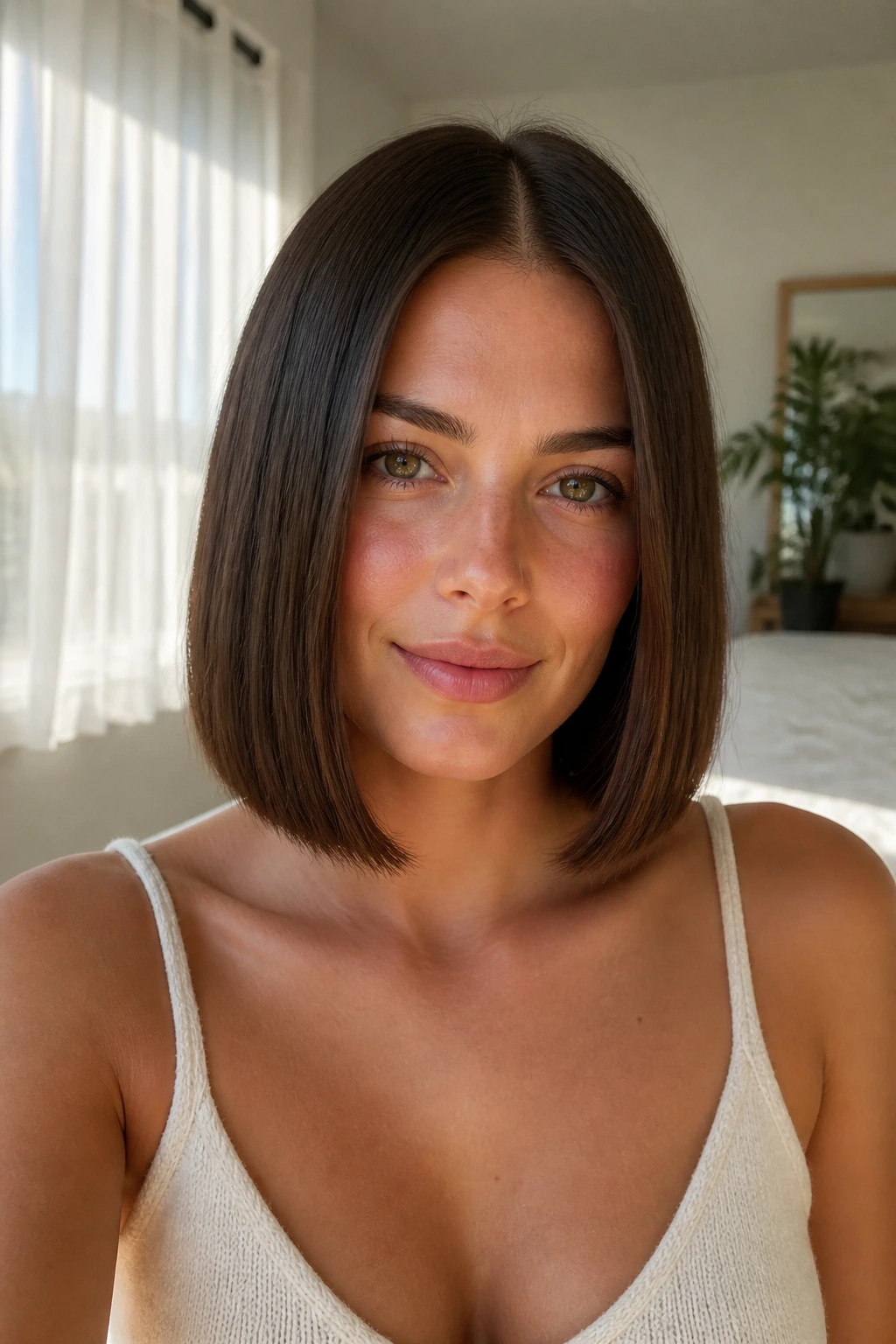
If your hair already likes to lie flat and smooth, stop fighting it. A center-part glass lob uses that tendency and turns it into a clean, polished shape with a dense-looking edge.
The key is a blunt base and a very restrained finish. You want shine, not weight. A pea-sized serum on the ends and a heat protectant before styling are usually enough; loading up the roots is how this look loses its clean line.
I like this lob because it doesn’t pretend to be bigger than it is. It looks controlled, and that can be more flattering than teased-out volume that collapses by noon.
4. Deep Side-Part Lob
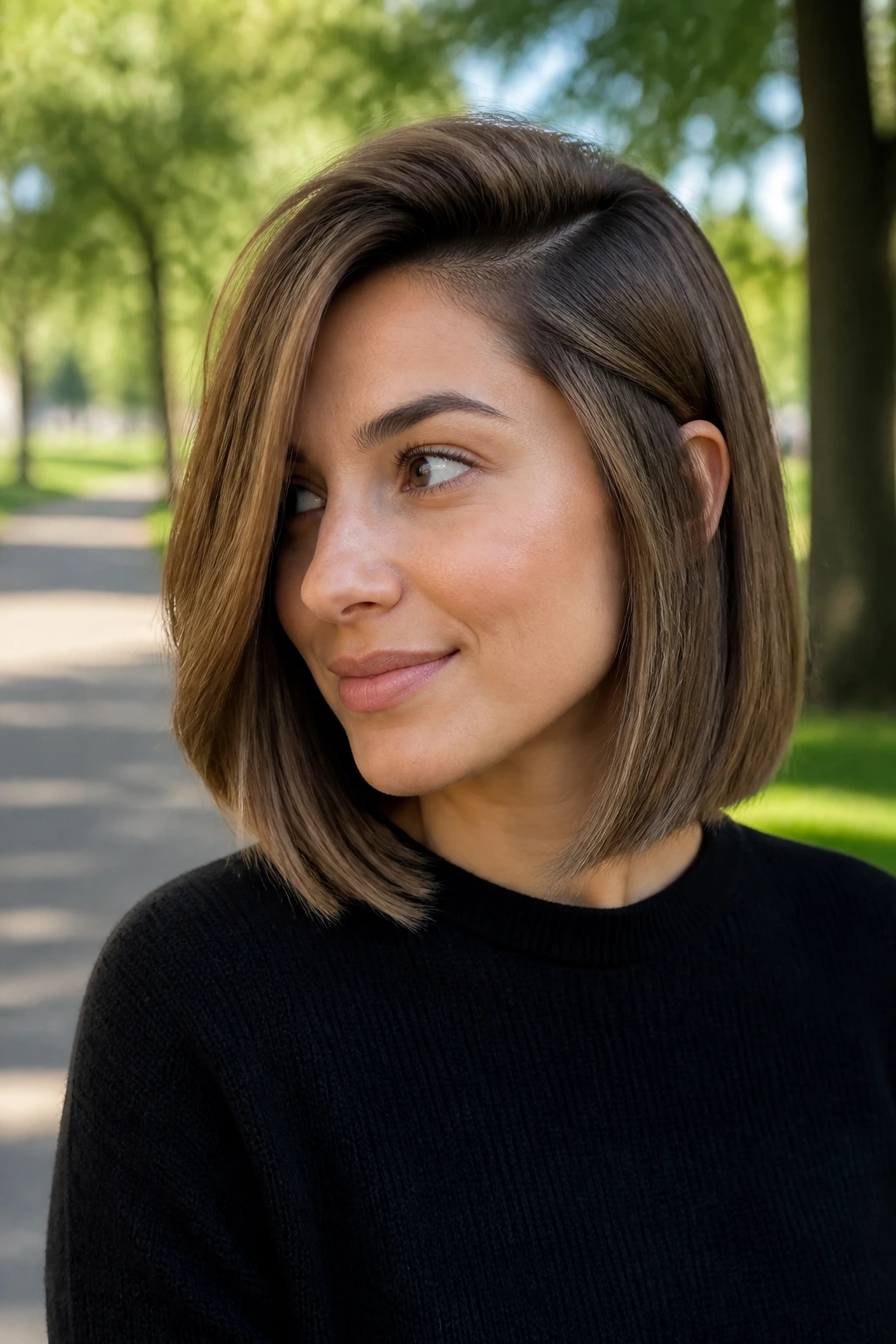
What if your roots go limp the second you step outside? A deep side-part lob gives you a built-in lift right where fine hair tends to cave in.
The part shift creates a little height at the crown, and the heavier side falls across the face in a way that looks fuller without extra cutting. It’s a good choice if your hair has a stubborn flat spot or if a middle part makes the whole head look a bit too strict.
Use a root-lift spray, blow-dry the roots in the opposite direction first, then flip the part back. That’s the whole trick. Not glamorous. Very effective.
5. Invisible-Layer Lob
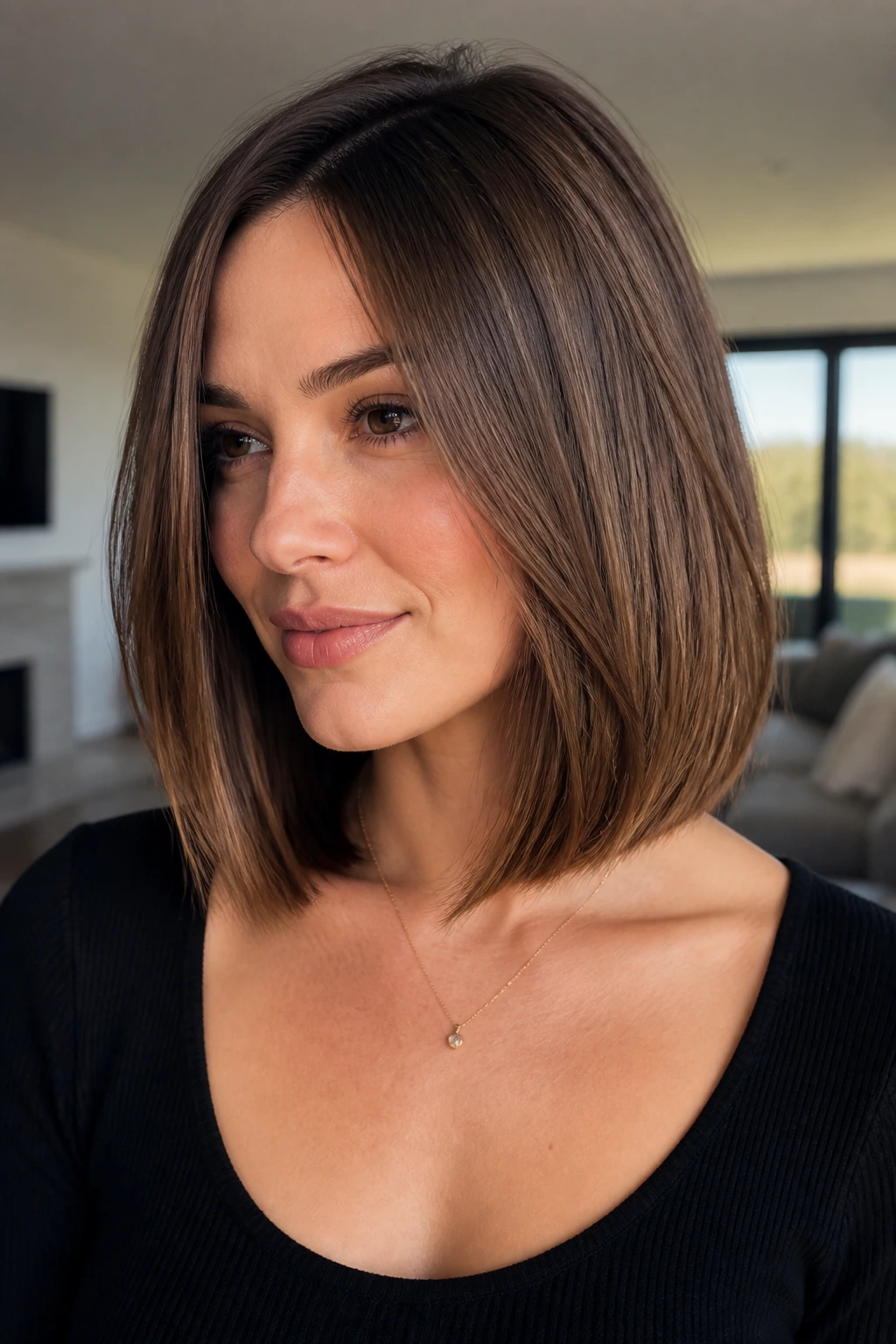
This is the cut for people who hate heavy hair but also hate seeing thin ends. Invisible layers live inside the haircut, not on the outside, so the perimeter stays strong while the interior moves a little more freely.
What to ask for
- Keep the outline blunt and visible.
- Put the internal shaping below the cheekbone.
- Skip razor thinning at the perimeter.
- Leave the front pieces long enough to blend into the rest of the cut.
That combination lets fine hair breathe without giving away the outline. It’s a clean compromise, and I prefer it to aggressive layering almost every time.
6. Air-Dry Wave Lob
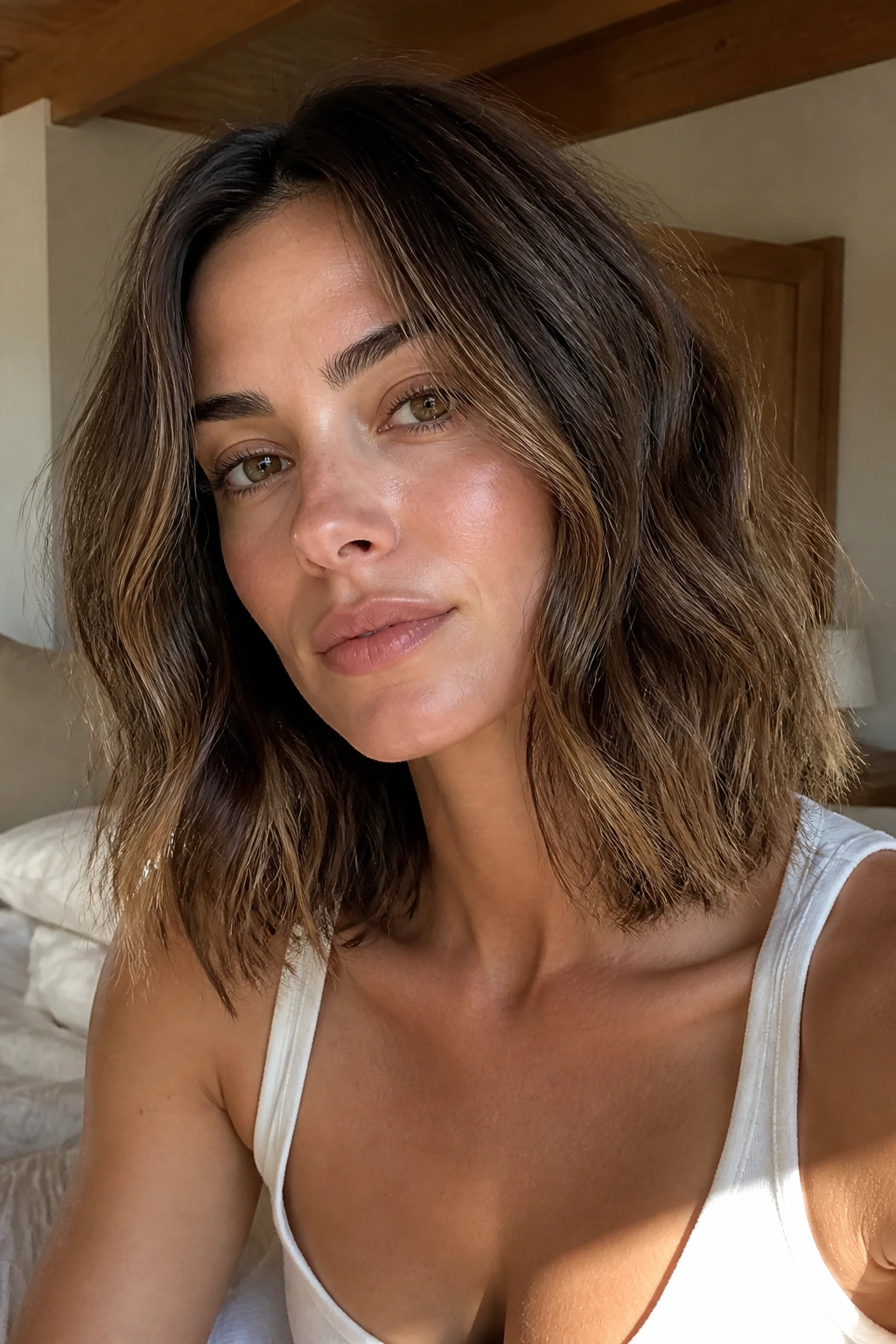
If your hair has even a mild bend, this one can save you a lot of heat styling. The air-dry wave lob is cut to let natural movement show up without turning the ends into a stringy mess.
Use a lightweight cream or foam on damp hair, scrunch the mid-lengths once or twice, then leave the roots alone. A microfiber towel helps; rough towel-rubbing can puff the cuticle and make fine hair look thinner than it is.
The best version of this lob looks calm, not overworked. A few uneven bends are enough.
7. Curtain Bang Lob

Curtain bangs can work on fine hair if they’re kept long, soft, and blended into the sides. Short fringe on fine hair is where you start seeing scalp separation and weird little gaps.
The lob underneath should stay simple. Let the bangs do the face-framing while the rest of the cut keeps a clean line at the collarbone. That gives you movement near the eyes without turning the whole haircut into a maintenance project.
This is one of the few fringe styles I’d call forgiving. The grow-out is graceful if the bangs start long enough to split naturally.
8. Face-Framing Lob
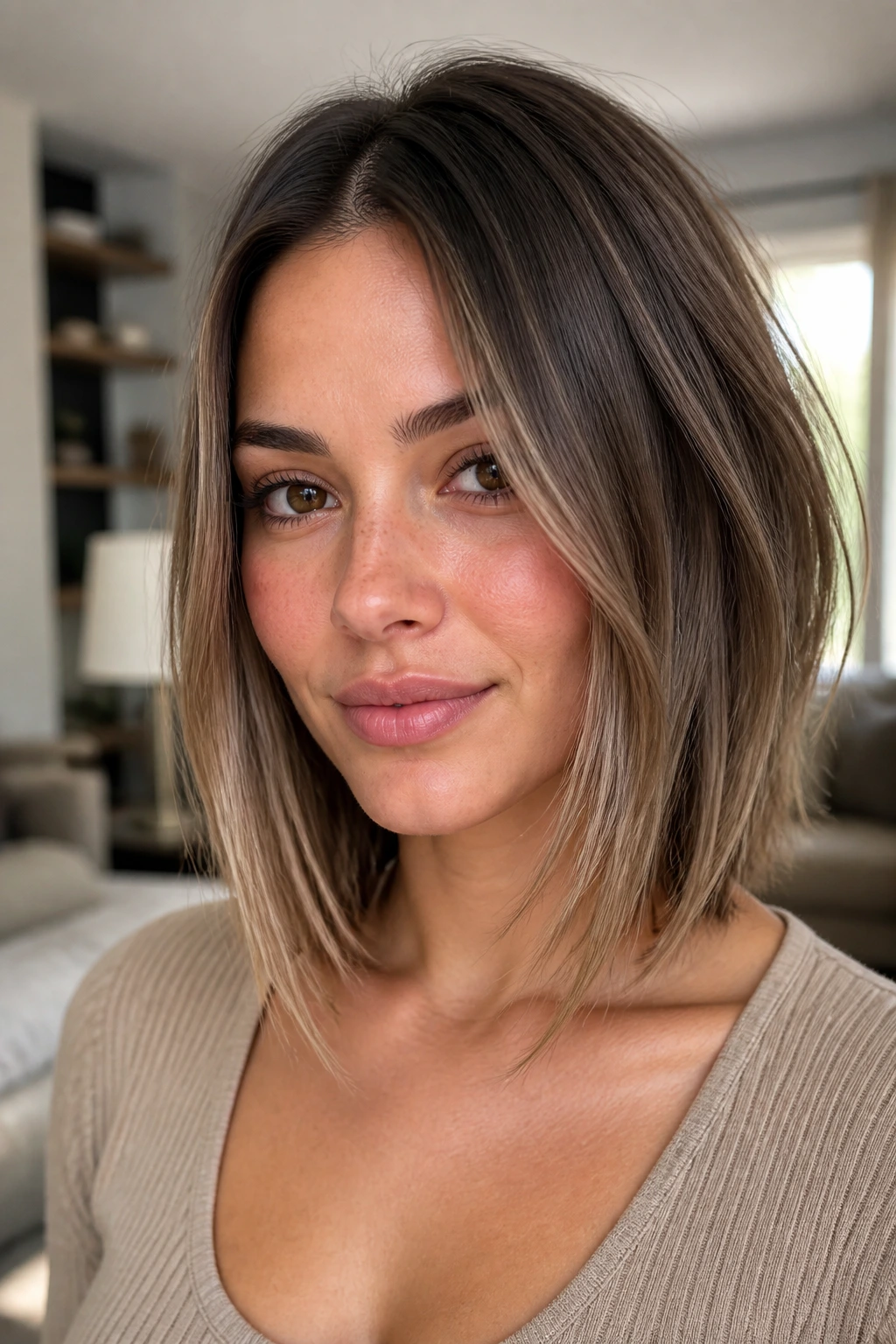
A face-framing lob is really a blunt or softly rounded lob with the front pieces left longer so they skim the cheekbones or jaw. Fine hair likes that because the shape gets interest without losing density at the ends.
It also makes low-effort styling easier. Pull the front pieces forward, give them a small bend, and the haircut looks finished even if the back is mostly untouched.
If you wear your hair up some days, this one is useful. The front still softens the face when the rest is clipped back.
9. Rounded-Edge Lob

A rounded-edge lob is for anyone who finds blunt cuts a little severe. The perimeter stays full, but the silhouette curves softly instead of drawing a sharp horizontal line across the head.
That curve matters. It keeps fine hair from looking boxy at the bottom while still preserving the density that makes a lob worth wearing in the first place.
A round brush under the ends during blow-drying helps, but even a natural bend can read this shape well. It’s one of those haircuts that looks like it belongs on the hair rather than forcing the hair to obey.
10. Slightly Choppy Lob
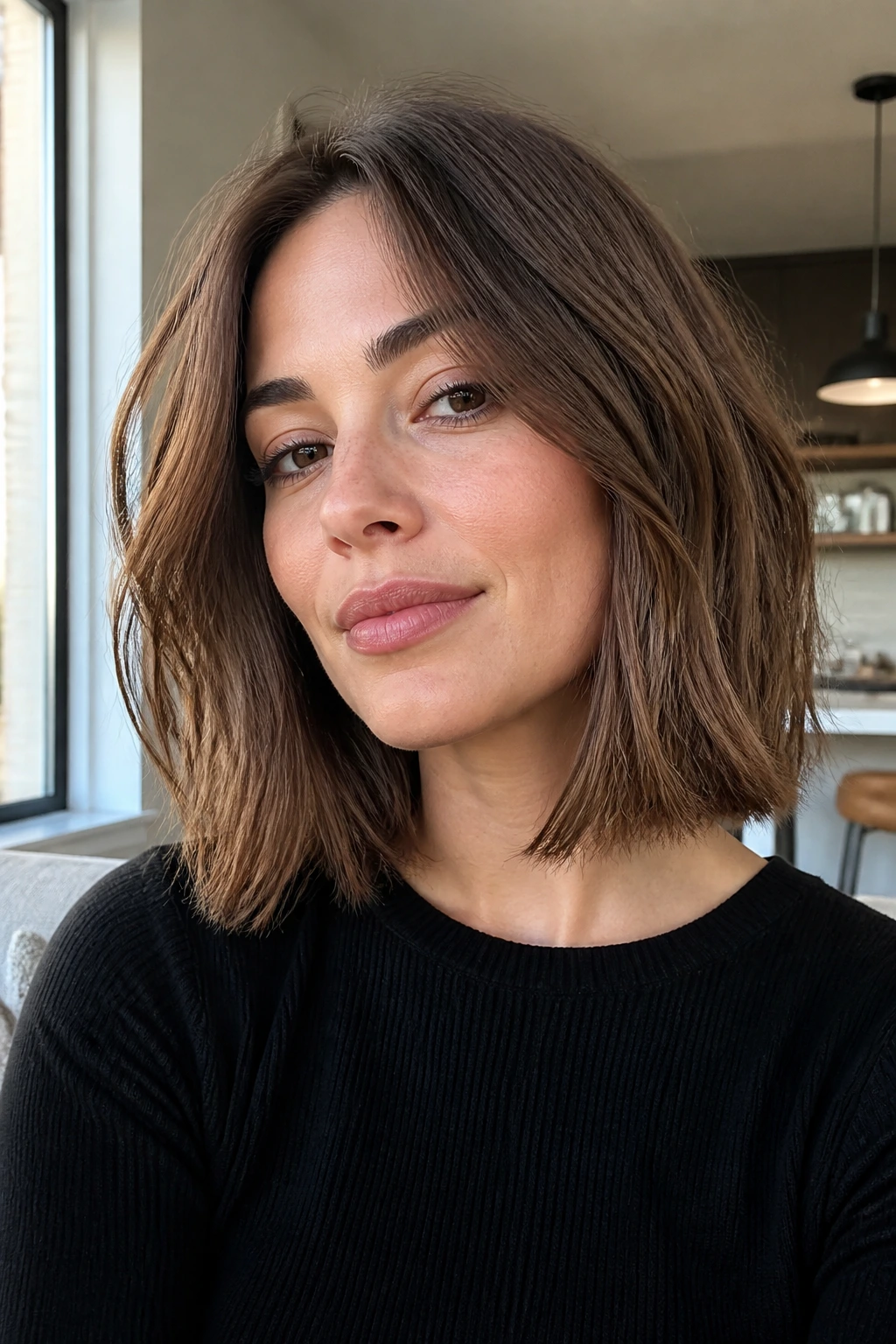
How do you get movement without making fine hair look shredded? Keep the chops slight.
A slightly choppy lob uses point-cut ends or tiny internal breaks in the line so the haircut doesn’t sit like a hard shelf. The difference is subtle. You should still see a perimeter; you’re not trying to erase it.
This one works best when the texture spray is used sparingly. Too much product turns the separated pieces into limp little ropes. A little grit at the mids is enough.
11. French Sweep Lob

A French sweep lob has a side-swept front section that falls across the forehead and opens toward one eye. It feels relaxed, and on fine hair that matters because you want the style to look easy, not staged.
The front should be long enough to tuck or sweep back without needing a fight. The rest of the cut can stay fairly simple — clean ends, a light curve, and no over-layering.
If you like to toss your hair behind your ear or wear sunglasses a lot, this is useful. The sweep gives the cut motion even when the rest is barely styled.
12. Flipped-End Lob
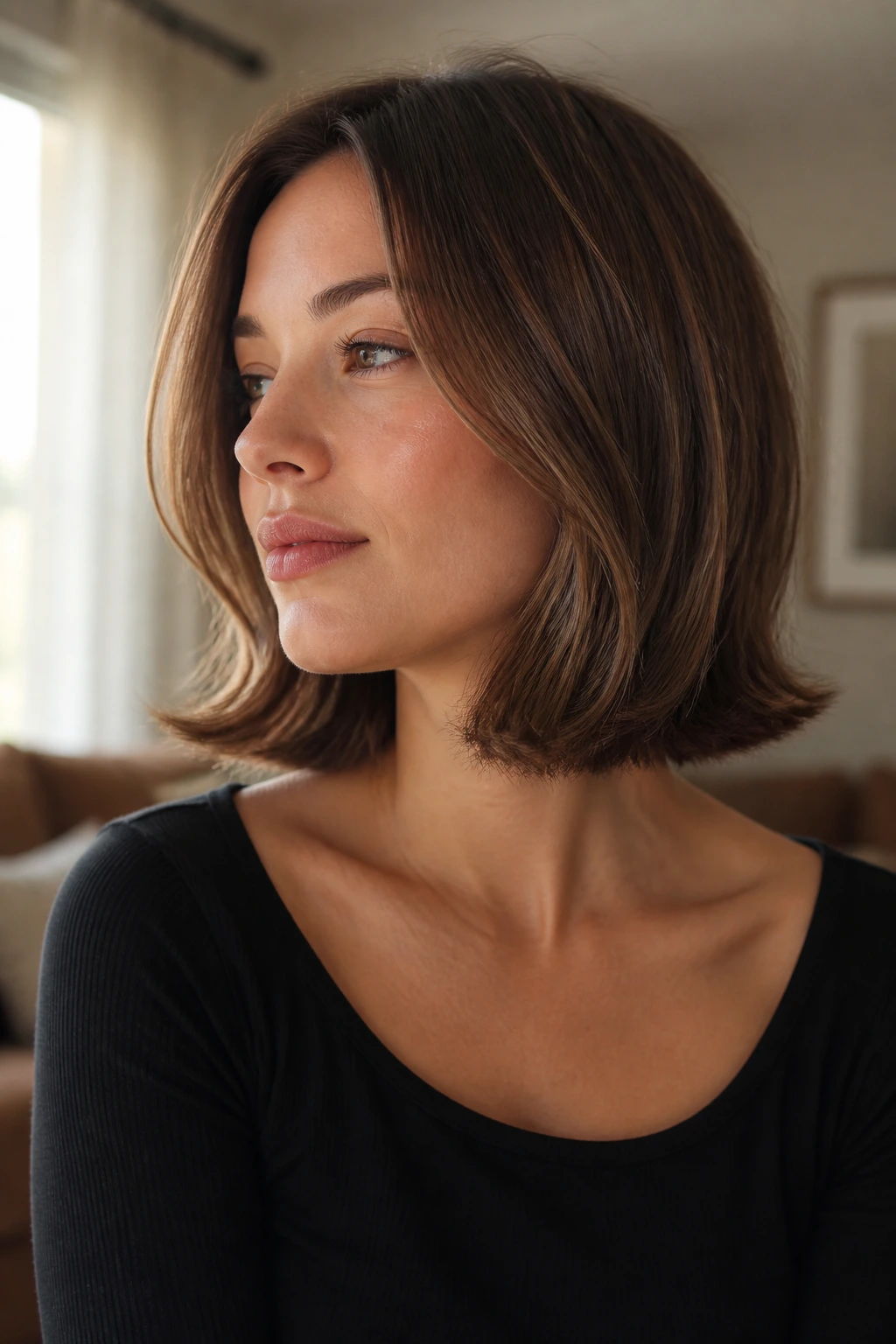
This is the haircut equivalent of “I had five minutes and a brush.” The flipped-end lob turns the ends slightly under or slightly out, which breaks up the flatness fine hair can get at the bottom.
You can create the flip with a round brush, a flat iron, or even just by setting the ends while they cool. The point is not curl. It’s a visible bend.
I like this on hair that falls limp but still has a little memory. The curve makes the haircut look more finished than a dead-straight dry down, and it doesn’t require much heat to hold.
13. Textured Undone Lob
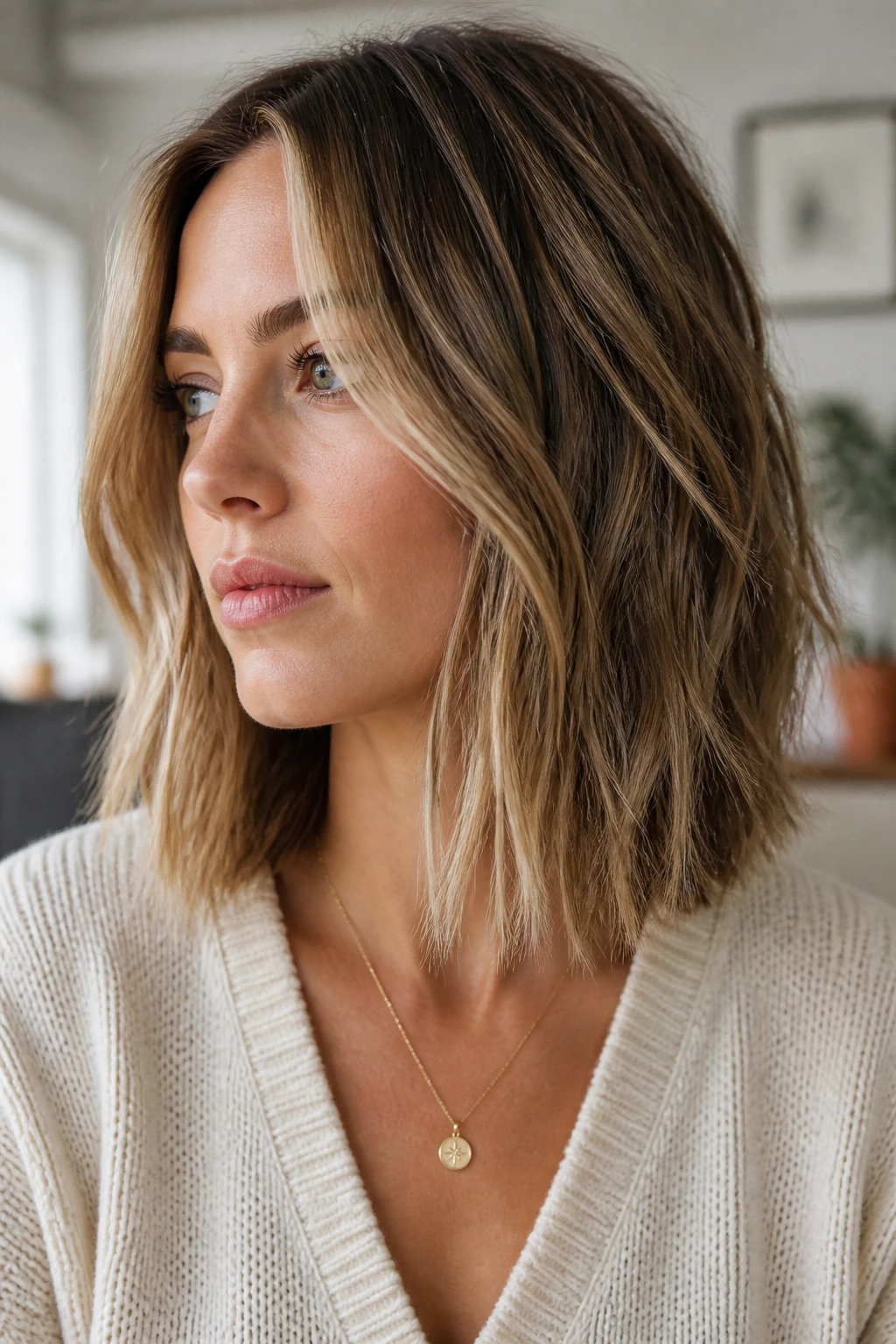
This one has a little grit, but not the crunchy, over-sprayed kind. A textured undone lob keeps the outline visible while giving the mid-lengths enough separation to move.
That balance is touchy on fine hair. Too much texture and the ends scatter. Too much cream and the whole thing sinks. I’d reach for a light dry texture spray and stop there.
It’s a good choice if you like the “I didn’t fuss” look but still want the haircut to carry the shape. The cut should do the work first. Texture just wakes it up.
14. Collarbone Shag-Lite Lob

A full shag can be a rough deal for fine hair. A shag-lite lob borrows the easier parts — a touch of face framing, some movement around the crown, a softer edge — without stripping the base apart.
The collarbone length keeps the line grounded. That matters. Fine hair needs a perimeter that can survive air-drying without disappearing.
If you want a little rock-and-roll mess without the upkeep of a true shag, this is the compromise I’d choose. It has enough movement to feel current, but not so much that it starts looking thin.
15. Side-Swept Fringe Lob

Side-swept fringe gives the front of the haircut a bit of motion without demanding bangs maintenance every morning. On fine hair, the appeal is simple: it breaks up the forehead area and leads the eye into the rest of the lob.
Keep the fringe long enough to blend. That way it grows out into face-framing pieces instead of sitting there as a separate project.
This is especially good if your crown gets flat but you don’t want a deep side part every day. The fringe gives you a soft diagonal line, which always helps fine hair look a little less strict.
16. Tuck-Behind-Ear Lob
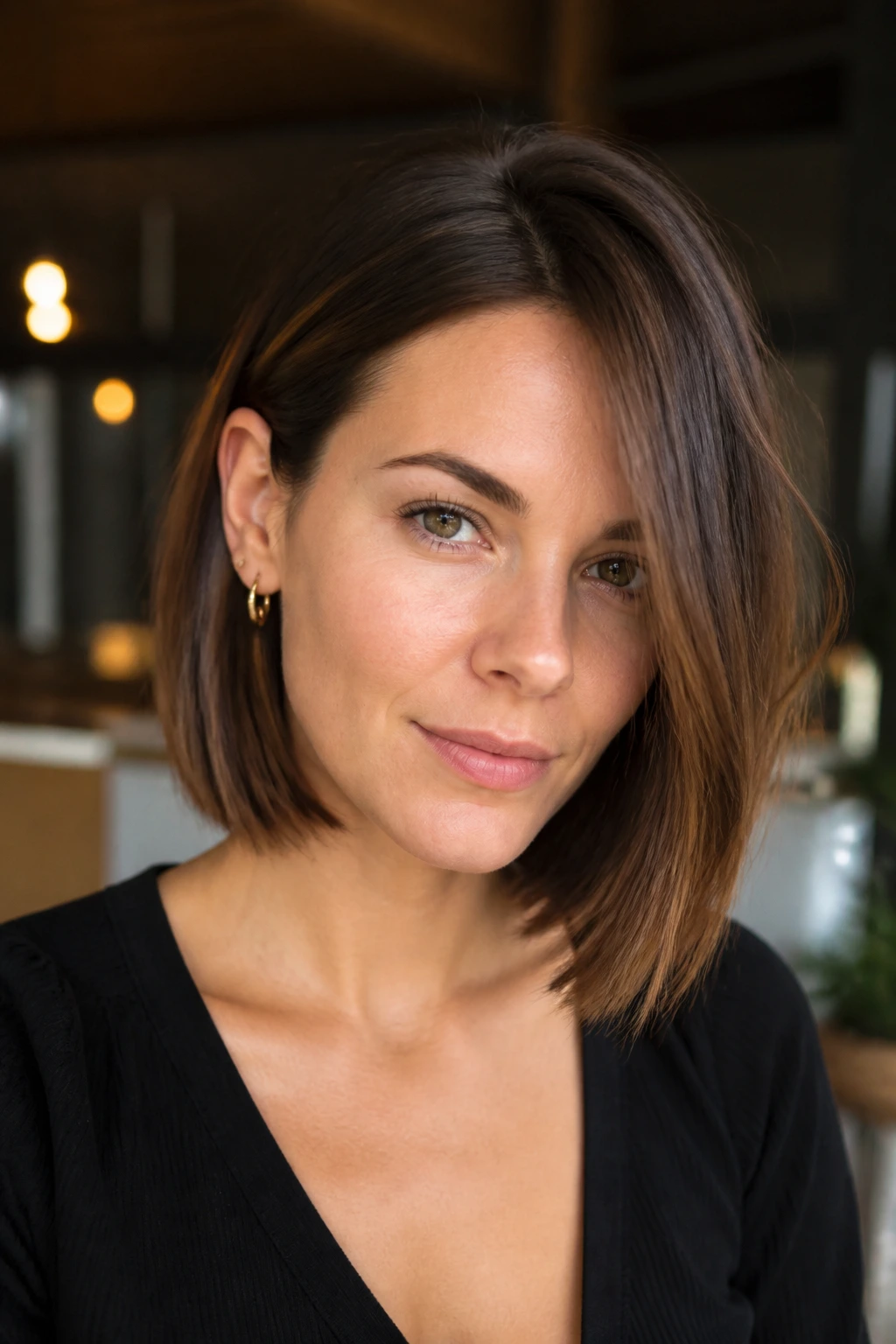
This one is almost too easy, which is why I like it. One side gets tucked, the other stays forward, and the whole lob suddenly looks intentional.
Fine hair benefits from that asymmetry because it creates visual lift around the cheek and jaw without adding layers that you’ll have to babysit. It also makes a blunt line feel lighter, which is useful if your hair tends to lie close to the head.
A clean side part or slight off-center part usually works best here. The tuck itself does the styling.
17. Shadow-Root Lob
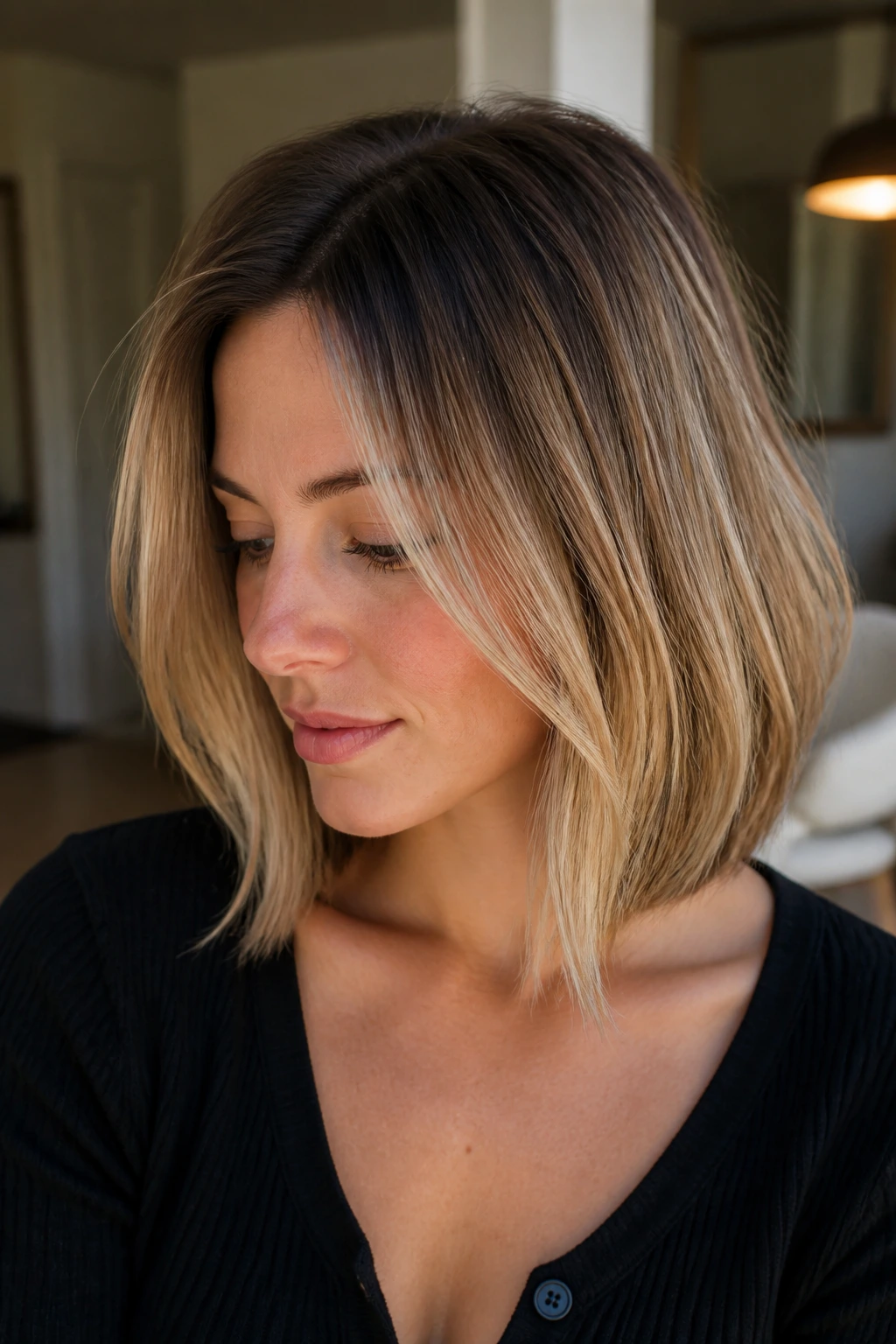
Color can rescue a lob that wants to flatten out. A soft shadow root — just a shade or two deeper at the base — makes fine hair read thicker at the top and helps regrowth look less obvious.
The contrast should stay gentle. Harsh stripes can make the ends look even thinner, which is the opposite of what you want. A subtle smudge at the root is enough.
I’d call this low maintenance in the best sense: less obvious root line, less urgency to refresh, and more depth where fine hair needs it most. It’s a quiet fix, not a loud one.
18. Longer-Front Lob
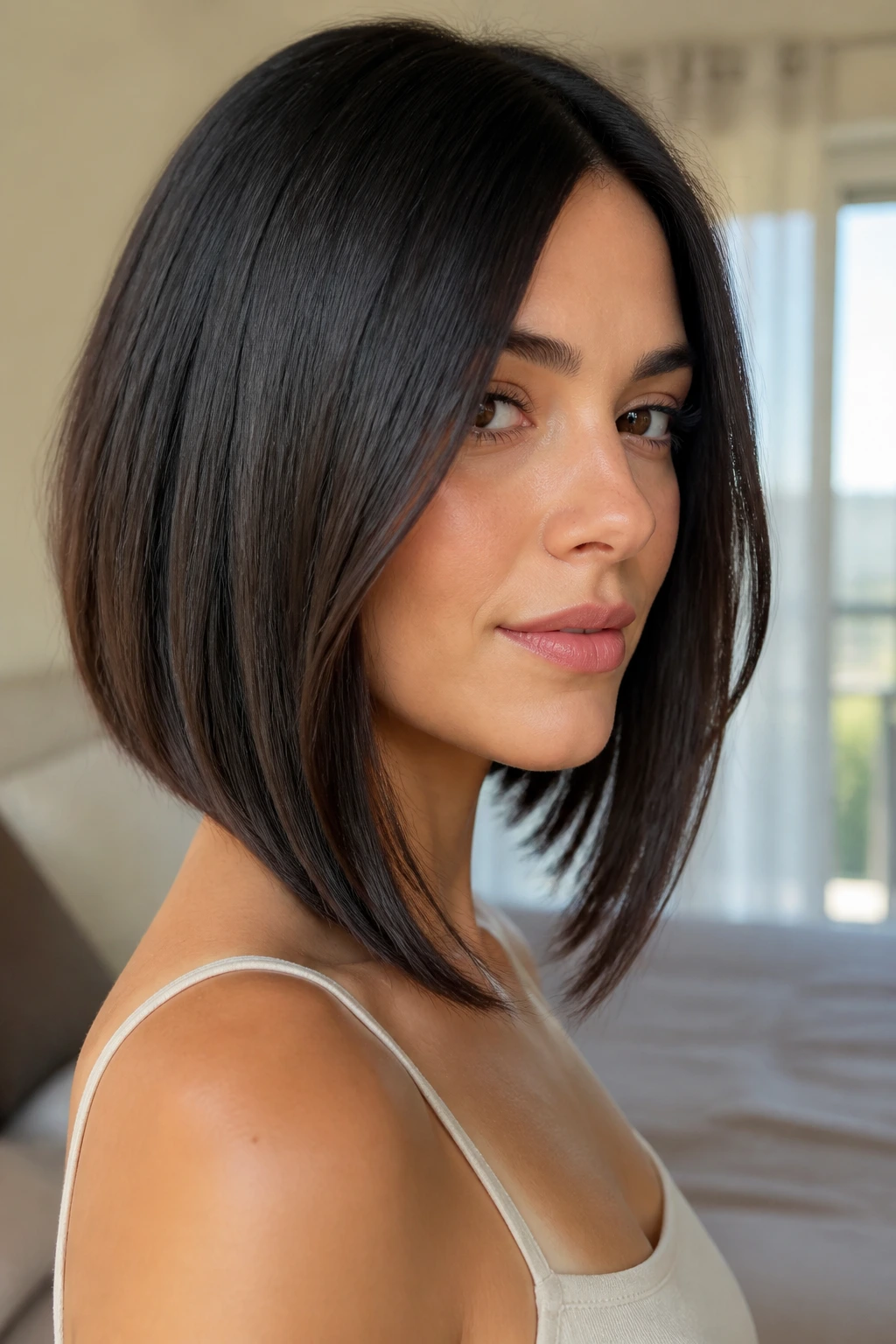
If you want to keep the neck feeling open while softening the face, a longer-front lob is a smart move. The front pieces graze a little longer than the back, so the shape moves when you turn your head.
That tiny angle keeps the cut from looking blocky. It also works well if you wear your hair half up, because the longer front sections keep some shape around the face even when the back is pulled away.
Ask for the front to stay subtle, not dramatic. A small difference in length does the job. A big one just means more upkeep.
19. Wavy One-Bend Lob
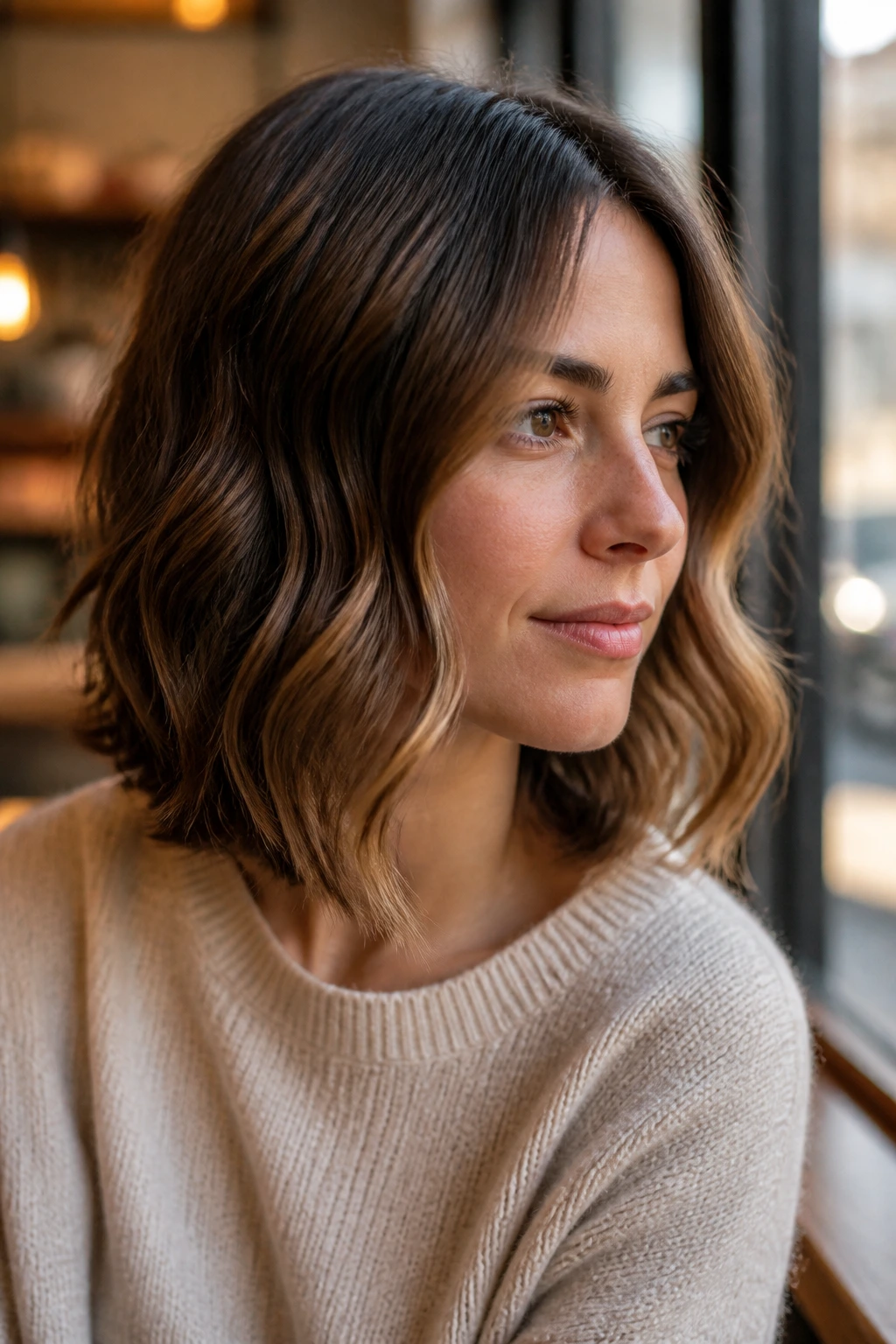
You do not need full curls here. One bend at the mid-lengths and a slight curve at the ends can carry the whole haircut, and that’s exactly why it works on fine hair.
Use a 1-inch iron or flat iron to make a soft bend in a few sections, then leave the rest a little imperfect. Uniform waves can look too set; a few uneven pieces make the style look more natural and less stiff.
This lob is especially useful if your hair can’t hold complex styling for long. One bend is enough. That’s the charm.
20. Chin-Skimming Lived-In Lob

A slightly shorter lob can look denser than a longer one, and this chin-skimming version proves it. By stopping closer to the jaw, the ends stay compact and the whole haircut feels thicker.
It does need a cleaner trim schedule, though. Fine hair at this length can go fuzzy at the perimeter if you ignore it for too long.
I like this on people who want a fresh shape without a lot of styling time. It can air-dry, bend, or tuck. It just does not like being forgotten.
21. Soft Razor-Lite Lob
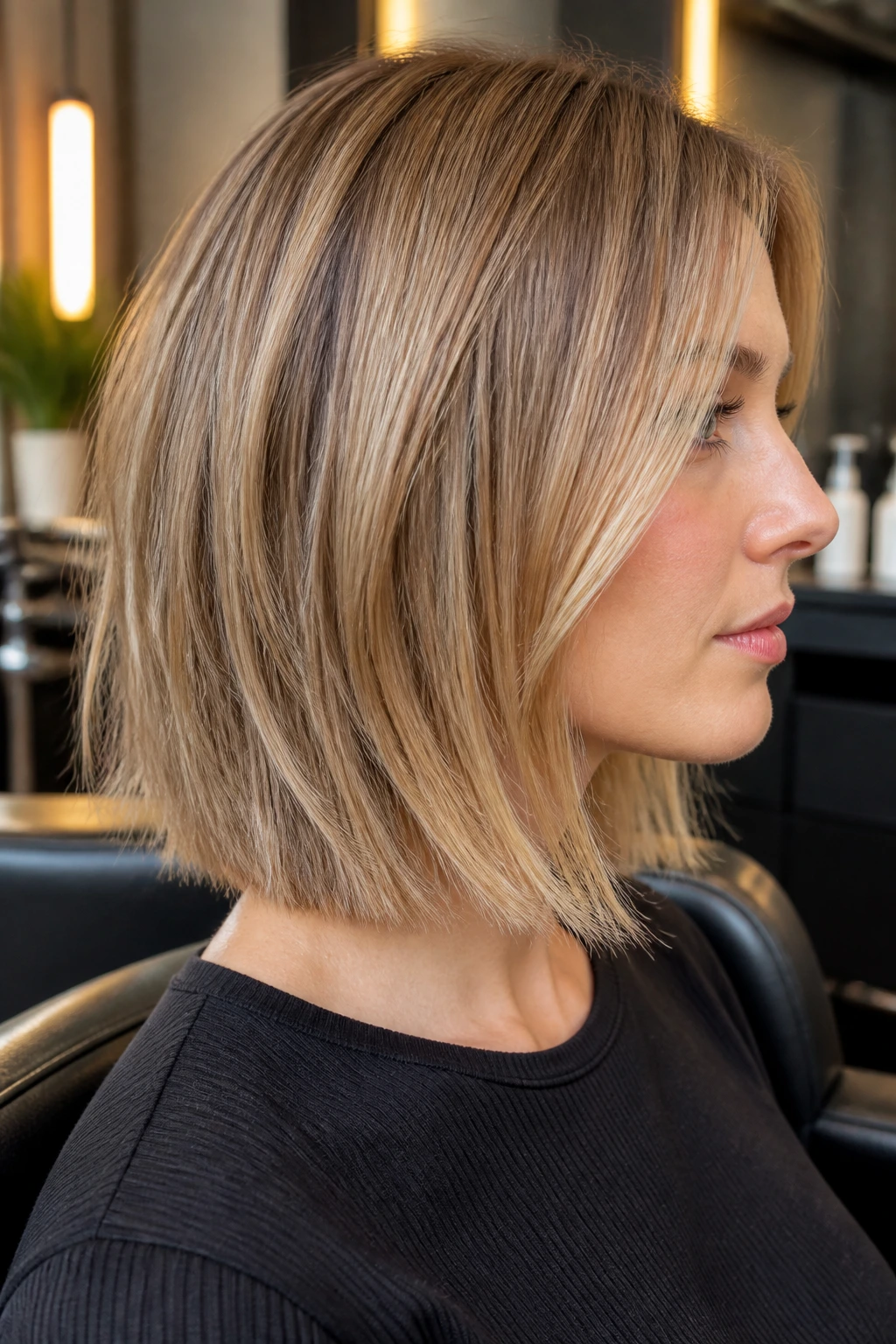
Razor cutting on fine hair is one of those things people love to overdo. A little can soften a lob; too much turns the ends into a frayed edge that looks sparse in daylight.
The version worth wearing keeps the razor work extremely light and only where the hair can tolerate it — usually the very bottom or a few front sections. The outline should still feel solid in your hand.
If your hair is silky and cooperative, this can take the edge off a blunt cut without wrecking the density. If your hair is fragile, skip it. No drama needed.
22. Graduated Nape Lob
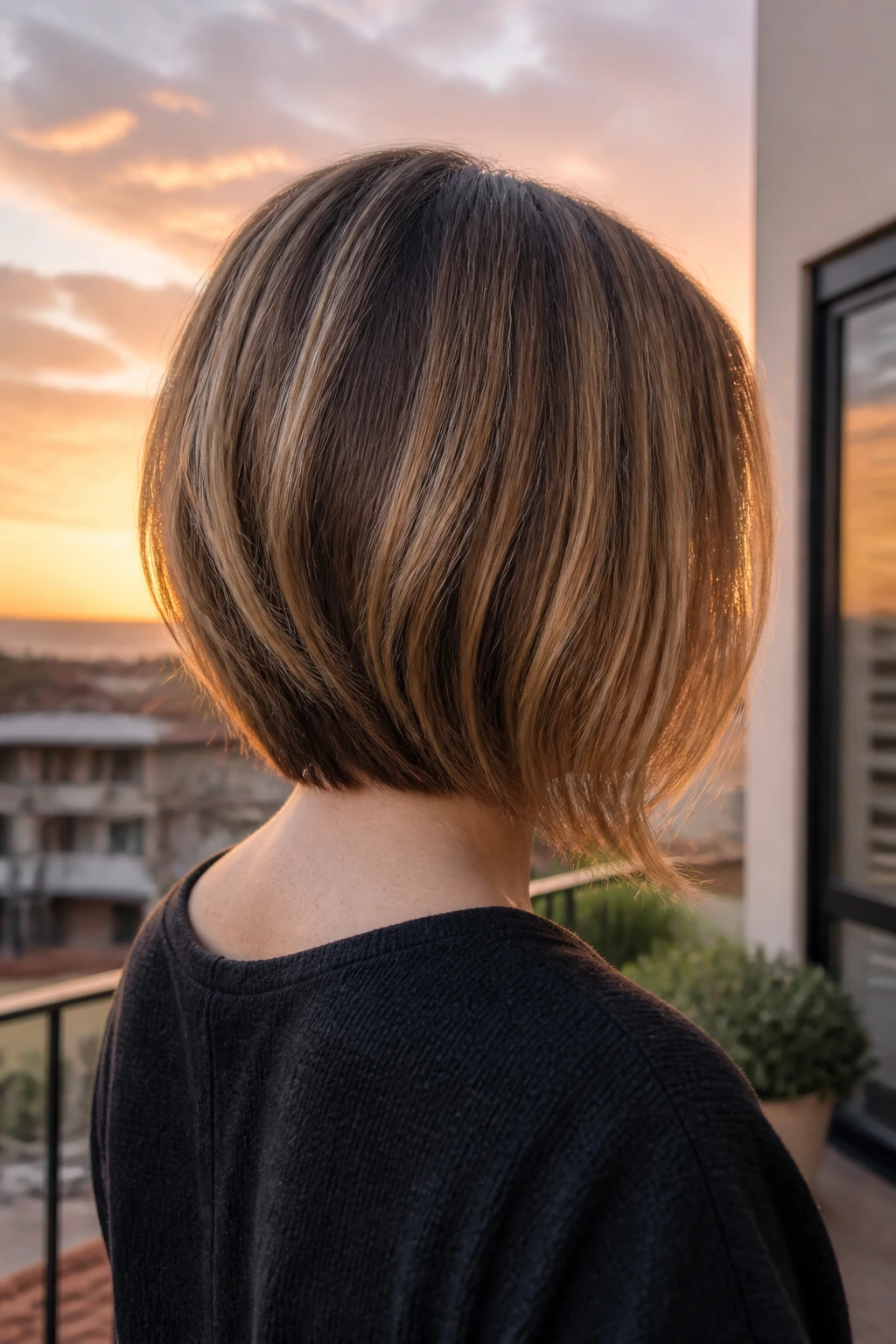
This cut gives the back of the head a gentle lift without going full stack bob. The graduation sits low at the nape, so the crown feels a little fuller and the shape stays cleaner from the side.
That’s helpful when fine hair collapses in the back faster than it does in front. A small build at the nape creates structure where the hair naturally wants to lie flat.
Keep the graduation soft. Too much angle starts looking old-fashioned fast. This version is about quiet support, not a hard architectural line.
23. Blunt Lob With Hidden Internal Weight
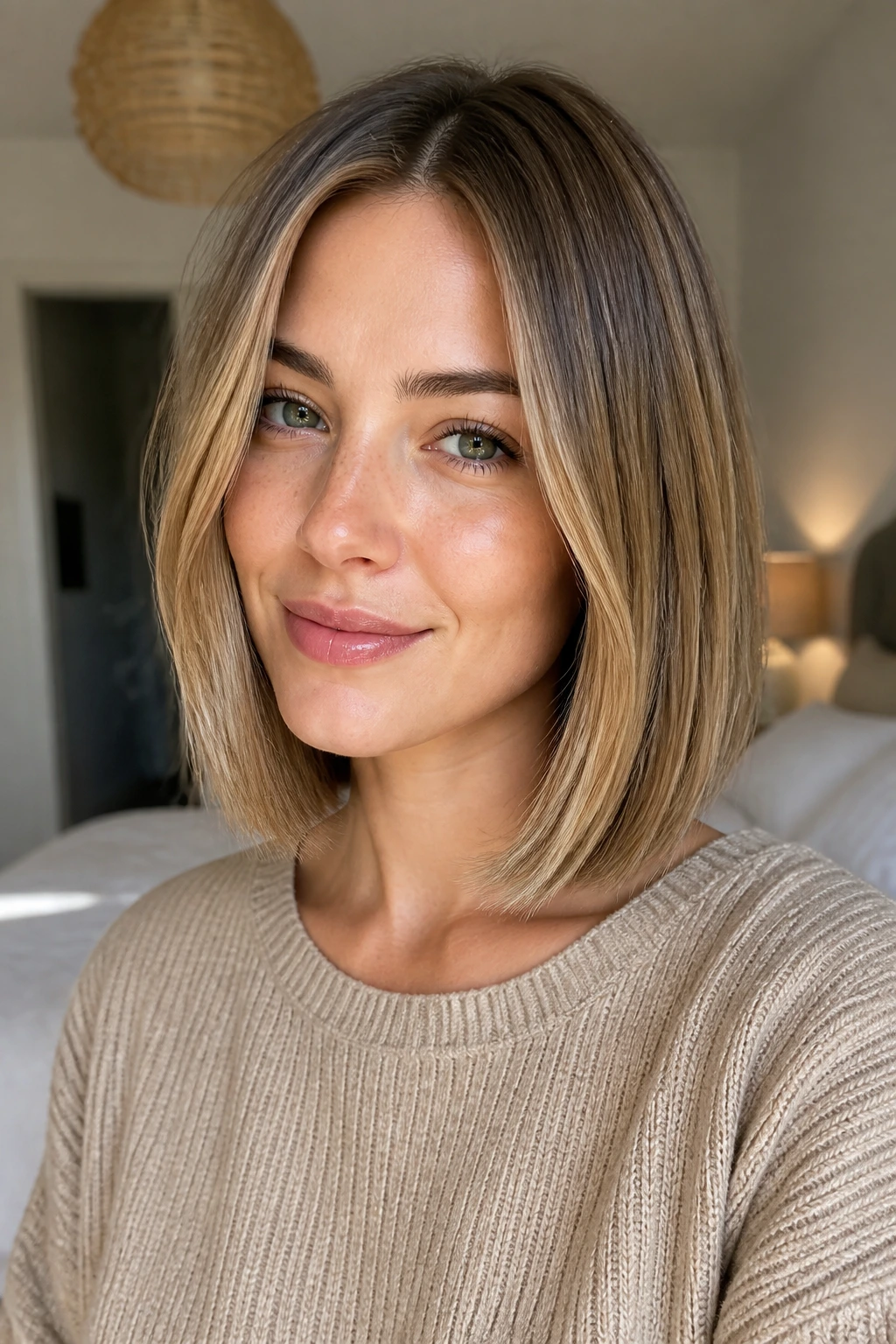
This one sounds contradictory because it is. The outside stays blunt and full, but the inside gets a little hidden shaping so the hair bends more easily and doesn’t puff out at the mid-lengths.
That makes it useful for fine hair that still has some body. You keep the dense-looking edge, but the haircut moves instead of sitting like a plank.
I’d ask for this if you want something polished but not stiff. It’s a good middle ground between a solid one-length bob and a fully textured lob.
24. Piecey Middle-Part Lob
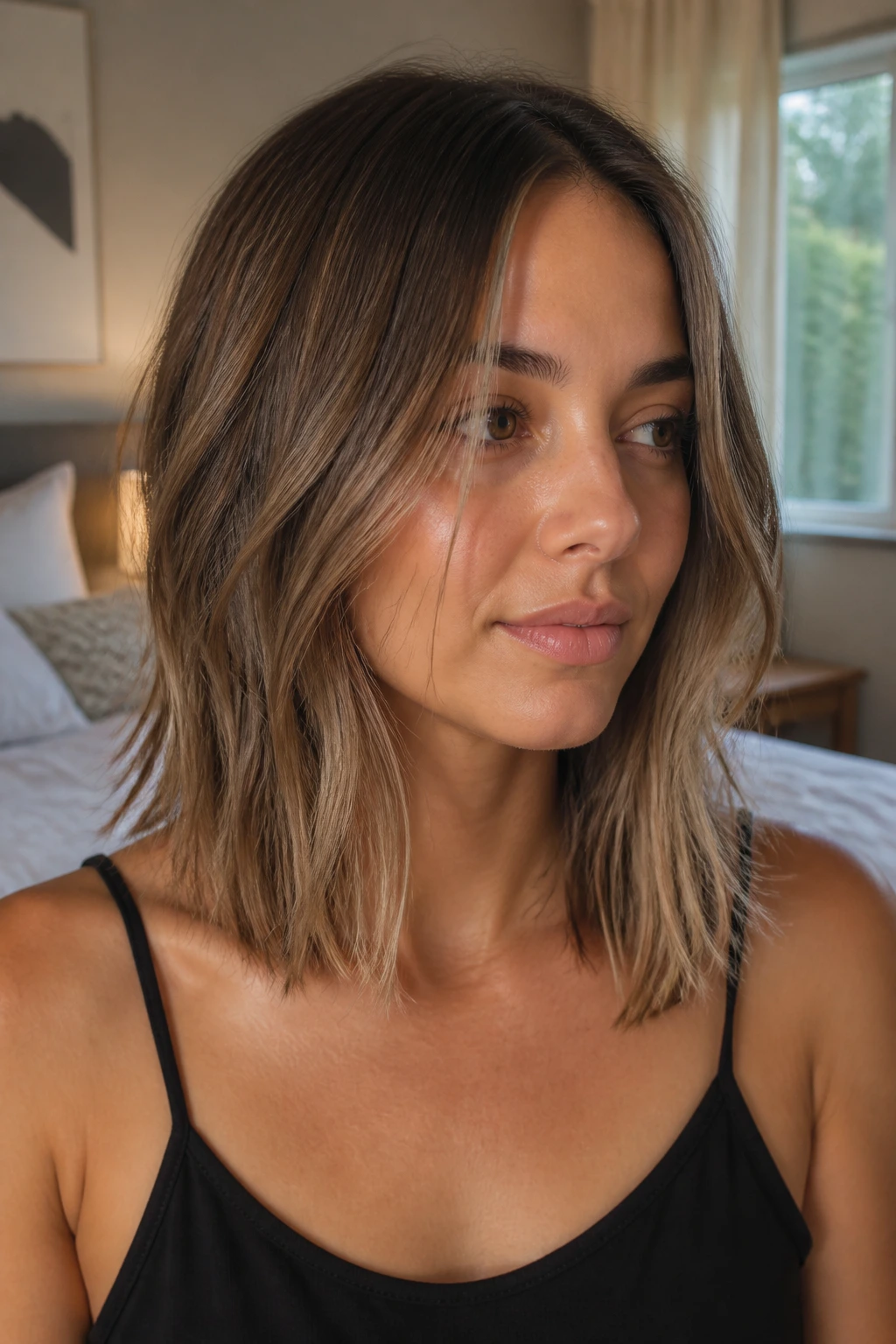
A center part does not have to mean severe. In a piecey middle-part lob, the front sections are separated just enough to soften the line, while the rest of the hair stays mostly one shape.
Use a small amount of texture paste or a light spray on the ends only. You want separation, not strings. That’s the difference between “effortless” and “why does this look dusty?”
This version works especially well if you like a little movement around the face but don’t want bangs. It’s minimal, but not flat.
25. Root-Lift Lob
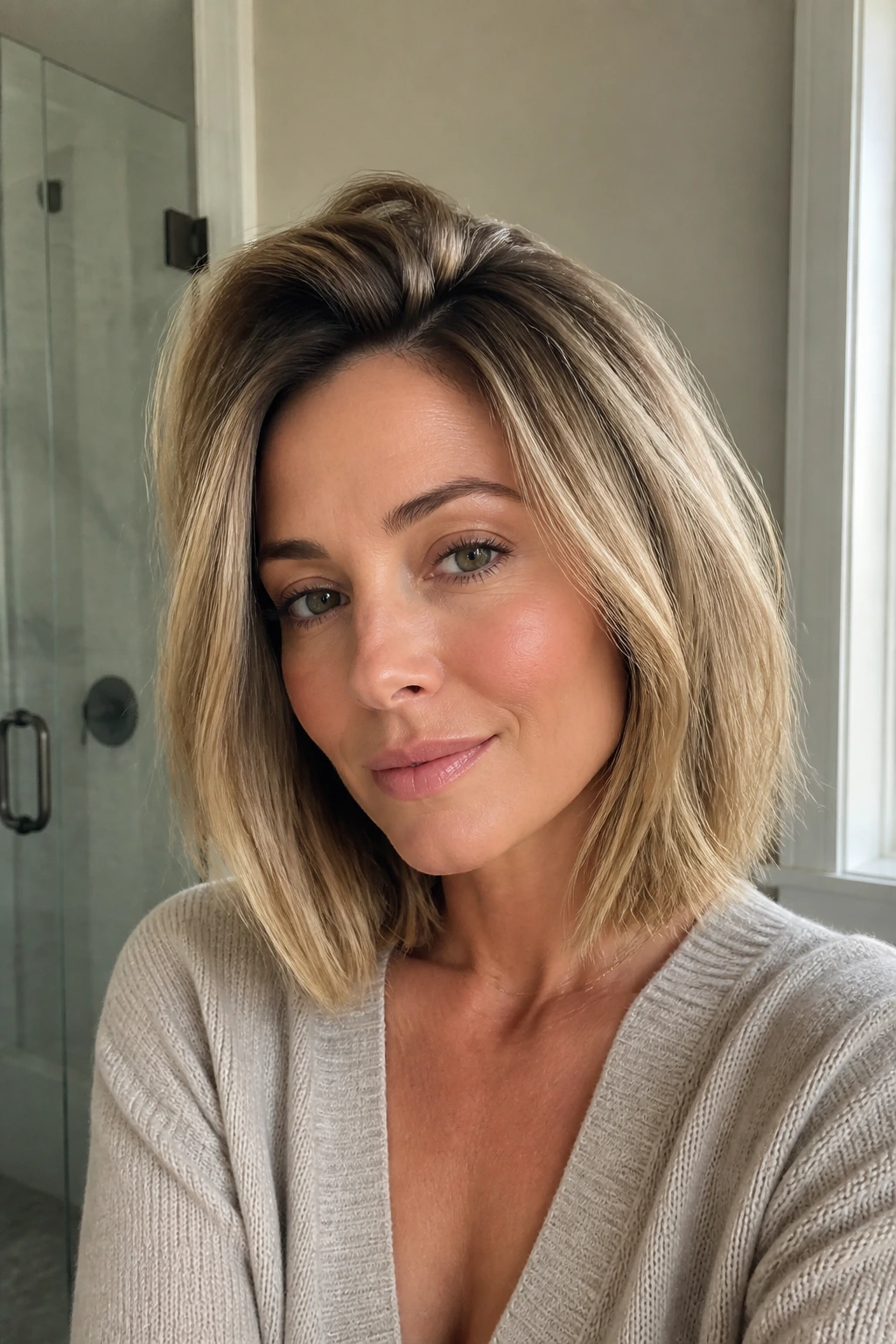
The cut matters, but so does the way you dry it. A root-lift lob is built to cooperate with crown volume: not huge, not teased, just a little height that keeps fine hair from sticking to the scalp.
I’d use mousse at the roots, rough-dry until about 80 percent dry, then clip the crown for a few minutes while it cools. That tiny pause makes a real difference. It’s also the kind of style that looks better after a full day than it does in the mirror right after you finish.
If your hair always falls flat at the top, this is the one to keep on the shortlist.
26. Grow-Out-Friendly Lob for Fine Hair

Some cuts fall apart when they grow. This one is built to drift.
The corners stay soft, the angle stays mild, and the perimeter holds enough weight that a few extra weeks do not make the ends look shredded. That matters with fine hair, because once the line gets too thin, the whole shape starts looking tired.
If you can’t book trims on a strict schedule, this is one of the safer choices. It still looks like a lob at week ten. That’s the point.
27. Polished Minimal Lob

If you hate hair that asks for too much, this is your lane. The polished minimal lob keeps the shape clean, the styling light, and the finish calm.
You might do nothing more than blow-dry the roots, give the ends a small bend, and smooth a trace of serum through the bottom inch. That’s enough. Fine hair often looks best when the cut is allowed to speak without a pile of products sitting on top of it.
This is the lob for people who want order, not volume theater. Quiet. Clean. Done.
Why a Lob Is the Sweet Spot for Fine Hair

Fine hair usually runs into the same problem at the same place: the ends.
Once length starts pulling the strand down past the shoulders, the last inch can get so thin that the whole cut loses its shape. A lob dodges that problem by keeping the perimeter in a zone where the hair still has enough density to read as a line. That’s why a collarbone cut can look thicker than hair that’s much longer, even when the amount of hair on your head never changed.
There’s another advantage that matters more than people admit. A lob gives you weight without heaviness. That sounds backwards, but it’s the whole reason the cut works. You want enough length for movement, enough structure to hold a part or a bend, and enough density at the bottom that the cut does not evaporate after a few hours.
A lot of fine-haired clients get talked into too many layers. I’m not against layers. I’m against layers that steal the one thing fine hair needs most: a visible outline. If the ends are too thin, the eye reads emptiness before it reads movement.
The Tools and Products That Make Fine Hair Easier to Style
-
Lightweight heat protectant: Use a spray or mist, not a rich cream, so the hair stays protected without getting coated.
-
Root-lift mousse or spray: Fine hair usually needs support at the scalp more than on the ends; apply this at the roots on damp hair.
-
Blow dryer with a nozzle: The nozzle keeps air focused, which helps the crown dry smoother and more controlled.
-
1-inch curling iron or flat iron: Either one can make the soft bend that gives a lob its shape without turning it into full curls.
-
Fine mist dry shampoo: Pick one that disappears into the roots instead of leaving a dusty cast.
-
Microfiber towel or soft T-shirt: These are gentler than a bath towel and don’t rough up the cuticle as much.
-
Tail comb: Useful for making a clean part, especially if you wear a center part or a deep side part.
-
Small clips or velcro rollers: Clips at the crown while hair cools; rollers can give the front a little lift without a lot of heat.
-
Light serum or finishing cream: Keep this for the last inch or two only. The roots do not need it.
How to Ask for the Right Lob in the Salon Chair
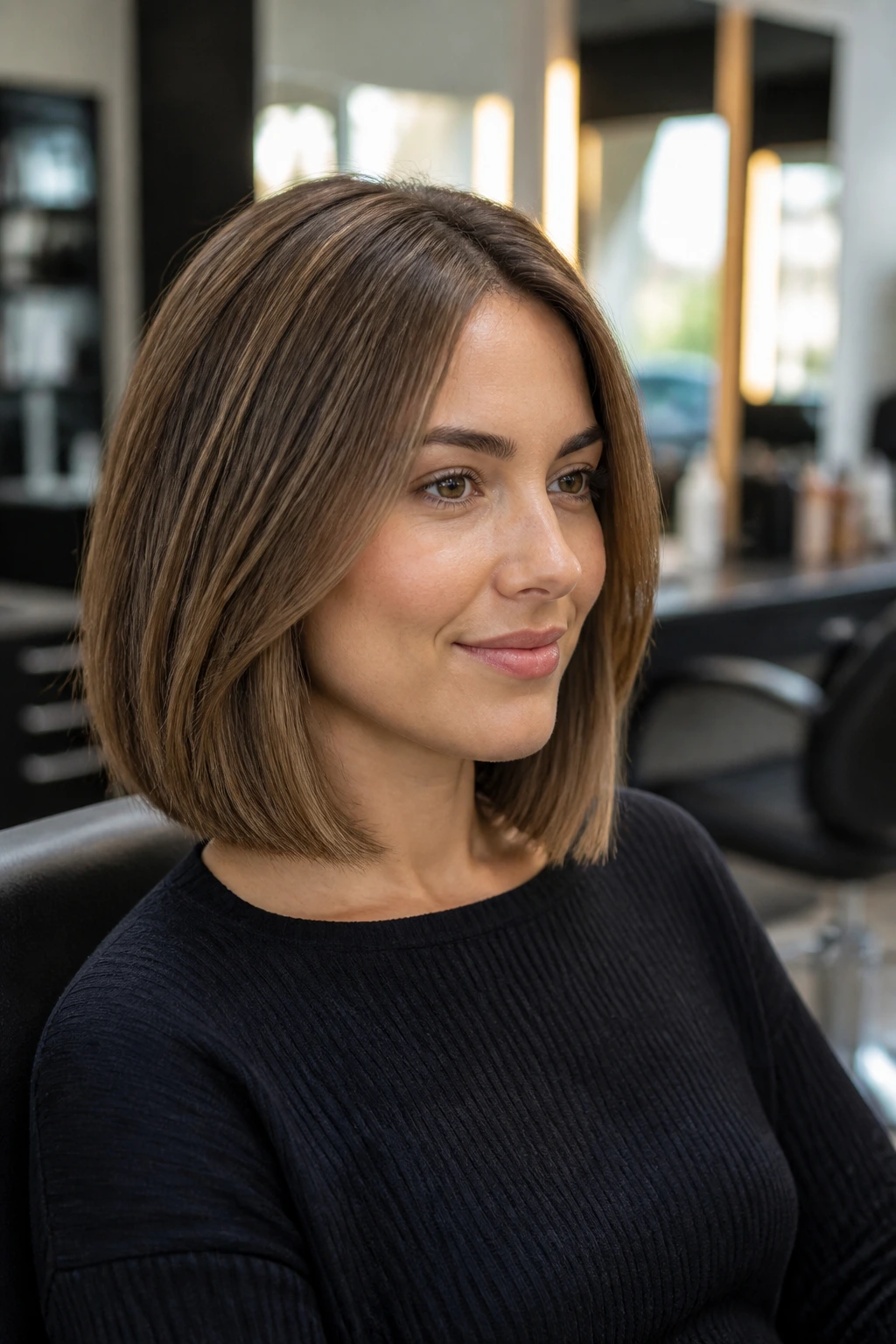
Length: Tell your stylist where you want the longest point to land — collarbone, just below the chin, or a little higher if you want the ends to look denser. Vague length requests are how fine hair ends up too long and too thin.
Perimeter: Ask for the outline to stay blunt or softly rounded. If you say you want “movement” and stop there, you may get more thinning than you wanted. Fine hair usually needs shape first, texture second.
Layers: If you want layers, ask for internal shaping or very light face-framing layers rather than all-over chopping. The outside line should still be easy to see when the hair hangs naturally.
Parting: Mention how you usually wear your hair. A cut built around a center part behaves differently from one built for a side part, and the difference shows up fast on fine hair.
Finish: Tell your stylist whether you mostly air-dry, blow-dry, or heat-style in a hurry. A good lob should fit your actual routine, not the one you might do on a good Sunday morning.
Bring a photo if you can, but bring one that matches your texture. A blunt lob on thick straight hair and a blunt lob on fine straight hair are not the same haircut in practice.
Easy Styling Moves That Keep a Lob Looking Full
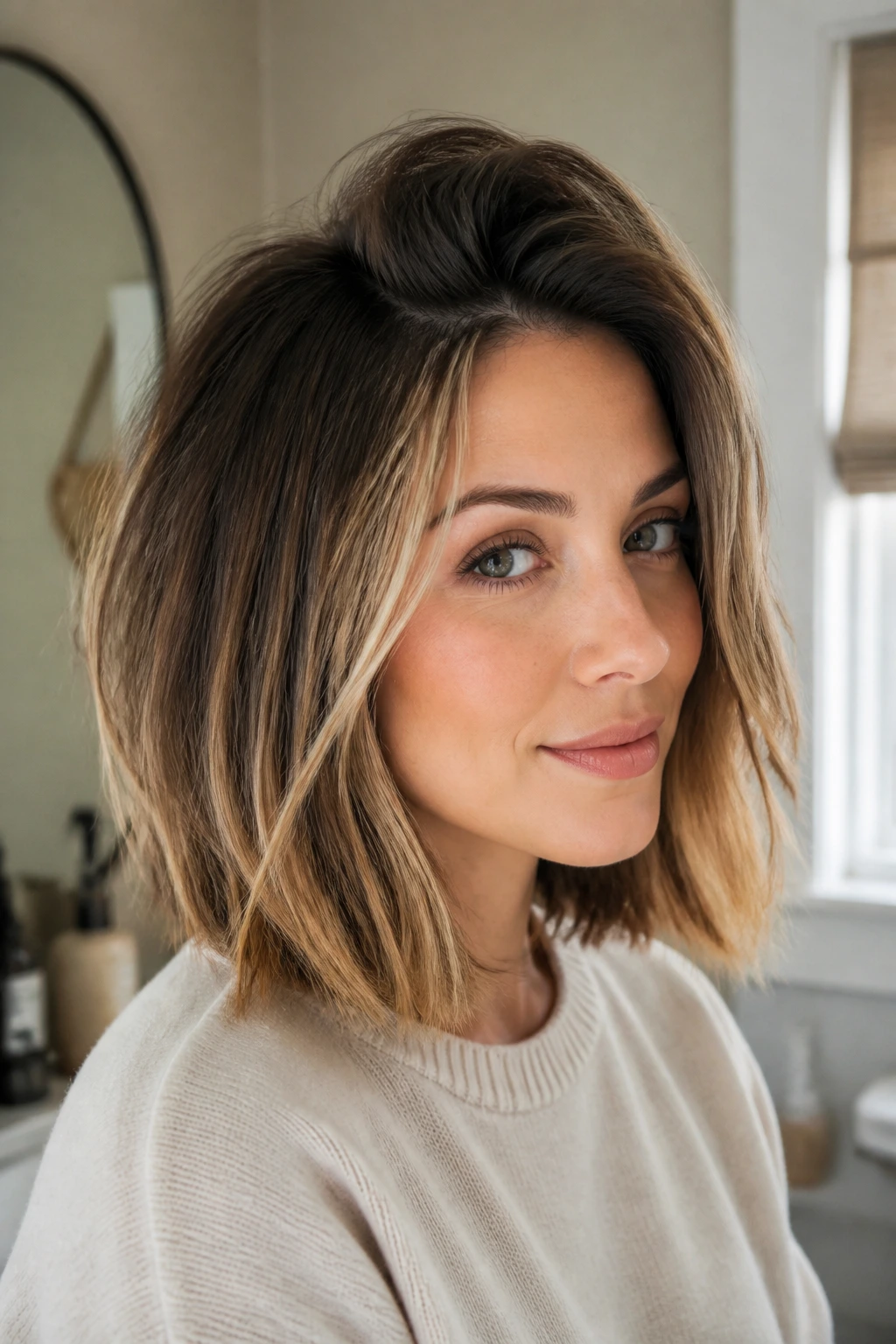
Root lift: Blow-dry the roots in the opposite direction of your part for the first minute or two, then flip the hair back. That small reset gives fine hair more height without teasing.
Bend, don’t curl: Wrap only the mid-lengths and leave the ends a little loose. A single bend is enough to make a lob look finished; tight curls usually read too styled on fine hair.
Set and cool: Clip the front sections up while they cool, or let a round-brushed section sit in a roller for five minutes. Cooling is where shape settles. Heat alone does not do the whole job.
Second-day rescue: A small puff of dry shampoo at the roots, a brush through the mids, and a quick touch of heat on the front pieces is usually enough to reset the shape. You do not need to start over.
Low-product rule: Fine hair goes flat faster when product migrates toward the scalp. Keep creams, oils, and finishing serums on the bottom inch or two, and use less than you think you need.
Common Mistakes That Make Fine Hair Look Flatter
-
Going too long: Once a lob drifts too far past the collarbone, the ends start to look sparse. The fix is a trim before the shape loses its edge.
-
Over-layering the cut: Too many layers strip away the outline fine hair depends on. Ask for internal shaping only, or keep layers very light and very controlled.
-
Using heavy cream at the roots: It makes the crown collapse. If your hair feels clean but looks flat, the product is probably sitting too close to the scalp.
-
Razor-thinning the whole head: A little softness is fine; too much razor work makes the ends fray and separate. Fine hair usually needs edge, not shredding.
-
Ignoring your part: Wearing the same flat part every day trains the hair to fall there. Switch the part by a half-inch or clip the roots while drying to change the direction.
-
Skipping trims for months: Fine hair doesn’t hide split ends well. Once the outline gets fuzzy, it reads thinner even if the actual density hasn’t changed.
Variations and Easier Alternatives to Try
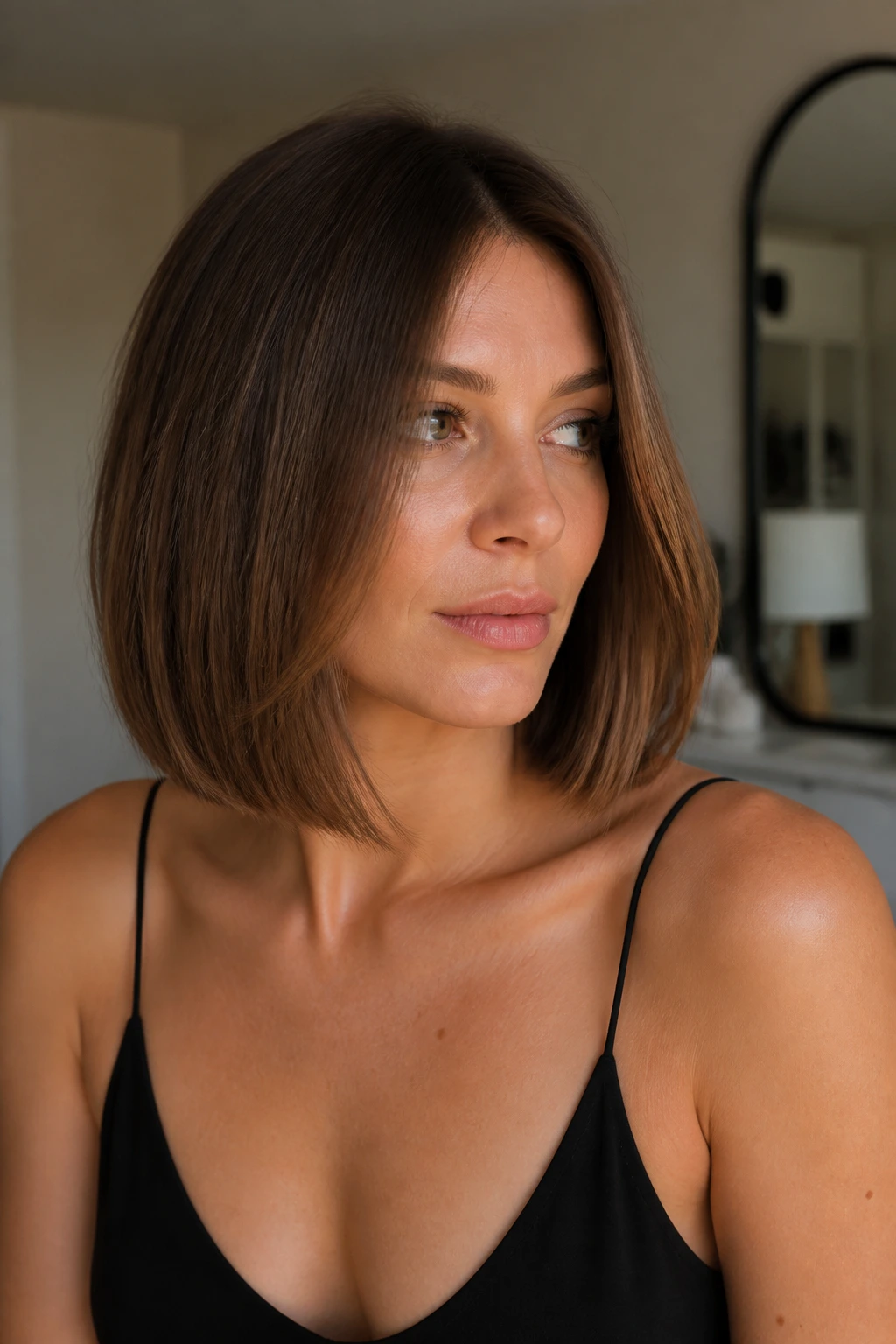
The Fringe-Free Version: Skip bangs altogether and keep the front sections long enough to skim the jaw. This is the cleanest, least fussy route if you want a lob that grows out quietly and never needs fringe re-training.
The Bend-and-Leave Version: Ask for a blunt or softly rounded base, then style it with one bend at the ends and nothing else. It’s a good fit if you want movement without layers and don’t plan to use hot tools every day.
The Face-Softening Version: Keep the perimeter dense, but add long face-framing pieces that start near the cheekbones. This softens a strong jaw or a narrow face without sacrificing the full look at the bottom.
The Dimension Version: Pair the lob with a shadow root or a few subtle highlights that stay close to your natural color. Fine hair often reads thicker when there’s a little depth through the mids, especially near the crown.
The Shorter, Denser Version: Move the length up a little closer to the chin if your hair is thin enough that collarbone length starts to feel stringy. You’ll lose some shoulder-grazing softness, but you’ll gain a stronger outline.
Keeping a Lob Full Between Trims
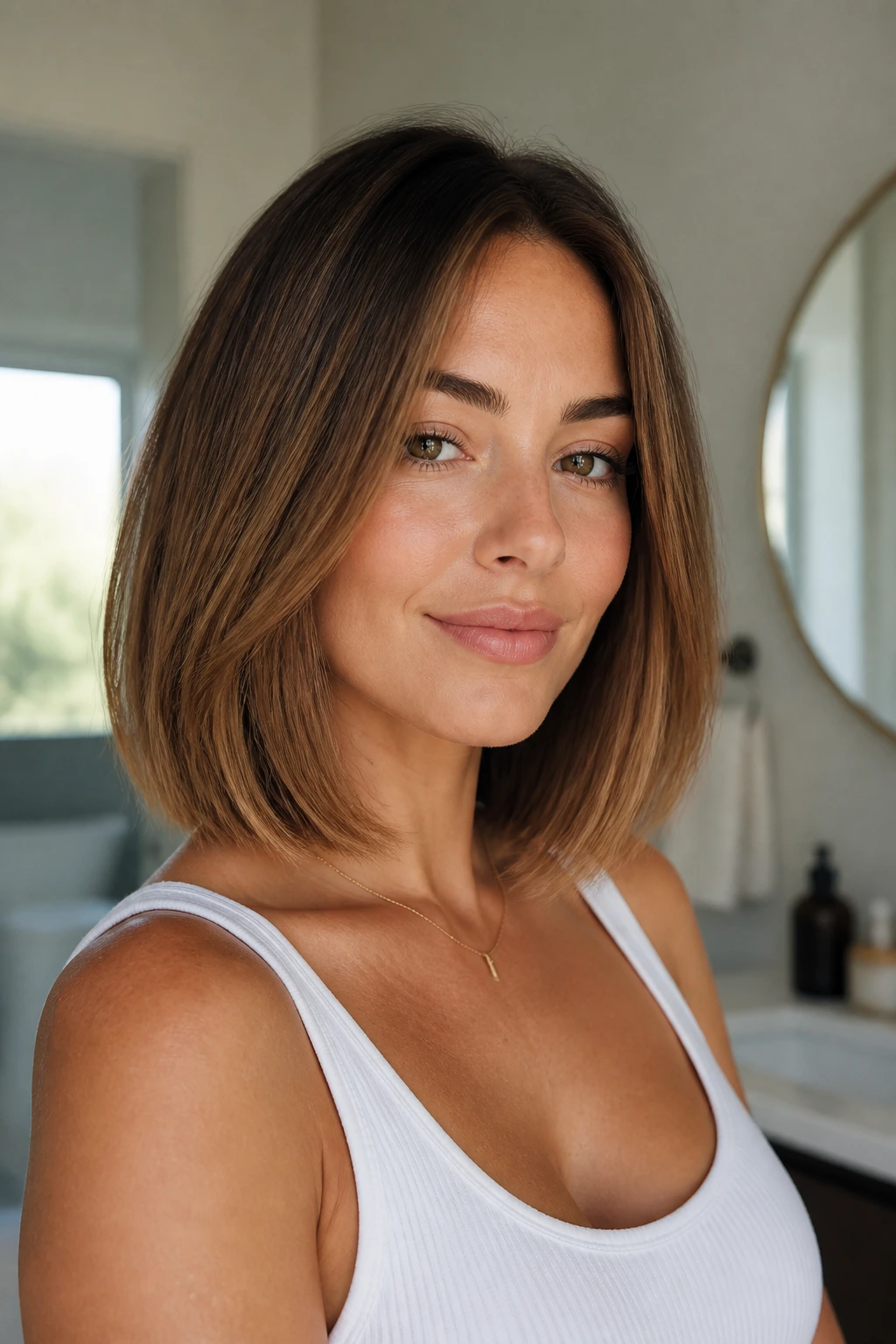
Fine hair shows wear faster than thick hair, which means the maintenance schedule matters more than people like to admit.
If you want a crisp outline, trim every 8 to 10 weeks. If you’re fine with a softer grow-out, you can stretch closer to 10 to 12 weeks, but once the perimeter starts looking fuzzy, the whole cut loses that dense lob effect.
Wash rhythm matters too. Many fine-haired people do better washing every 2 to 4 days, then using dry shampoo only on the days that need it. If product buildup starts making the roots sticky or dull, use a gentle clarifying shampoo every 2 to 4 weeks and keep conditioner away from the scalp.
At night, a loose clip, a soft scrunchie, or a silk pillowcase can save the shape. Fine hair doesn’t need to be wrapped in ceremony. It just needs less friction.
Lob Questions People Ask All the Time
Will a lob make fine hair look thinner?
Not if the cut is done with the right perimeter. A blunt or softly rounded lob usually makes fine hair look denser than longer lengths because the ends stay visible.
Should fine hair have layers in a lob?
Sometimes, but not many. Internal layers or gentle face-framing pieces can add movement, while too much layering steals the fullness at the bottom.
What length is best for fine hair?
The collarbone is the sweet spot for a lot of people because it keeps enough length for movement without letting the ends go wispy. Chin length can also work if you want a stronger-looking outline.
Can I wear a lob if I air-dry most days?
Yes, and some of the best lob shapes are made for air-drying. The cut should have a clean line and only modest shaping so it dries into something recognizable.
Do curtain bangs work on fine hair?
They do if they’re kept long and soft. Short curtain bangs can split in odd places, while longer ones blend more naturally into the sides.
How often should I trim a lob?
Usually every 8 to 10 weeks for a crisp line, or a little longer if you like a softer, grown-out edge. Fine hair shows split ends sooner, so waiting too long often costs you density.
What if my lob goes flat on day two?
Reset the roots, not the whole head. Dry shampoo at the scalp, a quick lift with your fingers, and a small bend through the front pieces usually bring the shape back.
Can straight fine hair pull off a lob without waves?
Absolutely. Straight fine hair can look especially good in a blunt or glassy lob because the clean line makes the hair appear thicker and tidier.
The Length That Keeps Paying Off

The reason lobs keep coming back for fine hair is simple: they respect the hair’s limits instead of fighting them. A good lob doesn’t ask the ends to do work they can’t do. It keeps the line clean, the shape visible, and the morning routine mercifully short.
If you want the version that feels right for you, start with the shape your hair already wants to hold. Then decide how much movement you can live with, how often you’re willing to trim, and whether you want the finish to be polished, soft, or a little undone. The rest is detail. Good detail, sure — but still detail.
And that’s the part I like most about this length. It keeps its shape without making a scene.
