



The prettiest updo hairstyles rarely look frozen in place. The shape is tidy, yes, but the hair around the face still bends. A few strands move when you turn your head, and that little bit of motion is what keeps the style from feeling stiff.
Soft polished is a specific lane, and I like it because it solves a problem that comes up again and again: you want the finish of a salon updo without the hard shell that makes some styles feel overworked. A low bun can look elegant or severe depending on where the pins sit, how much lift you leave at the crown, and whether the front pieces are curled away from the cheekbone instead of dragged flat.
These updo hairstyles lean on small, repeatable tricks — a clean part, one-inch bends on the front sections, crossed pins at the nape, a pea-size bit of shine cream through the mids and ends. Get those details right and the style starts to read as deliberate, not precious. Some of the best ones are the simplest, which is good news, because hair that looks soft on camera usually needs to be a little smarter in person.
Why These Updo Hairstyles Read Soft Instead of Stiff
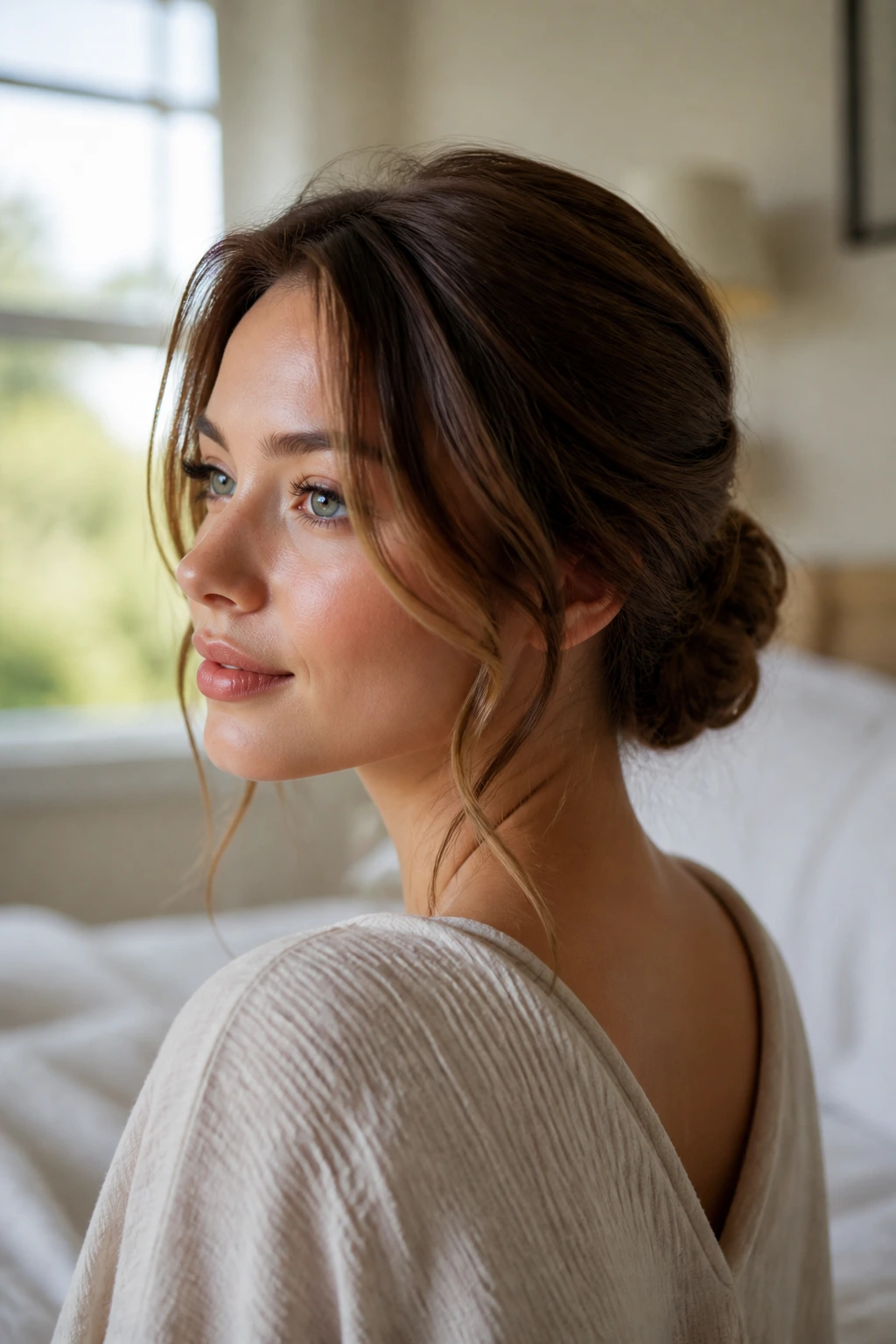
Face-framing pieces do most of the visual work. A narrow bend at the temples softens the outline without undoing the shape, and that matters more than a lot of people think.
Low anchors feel calmer than high ones. When the bun, knot, or twist sits near the nape, the style stays close to the head and looks more composed.
Hidden structure beats heavy product. Crossed bobby pins, a few U-pins, and one strong elastic usually hold better than a swamp of hairspray.
The crown needs lift, not tease-from-hell volume. A little space at the top keeps the style from collapsing against the head, but you do not need a stiff bump.
Shine belongs in the right places. Smooth the roots and the outer surface lightly; leave the ends pliable so the style still moves.
The Three Shape Rules That Keep an Updo Soft
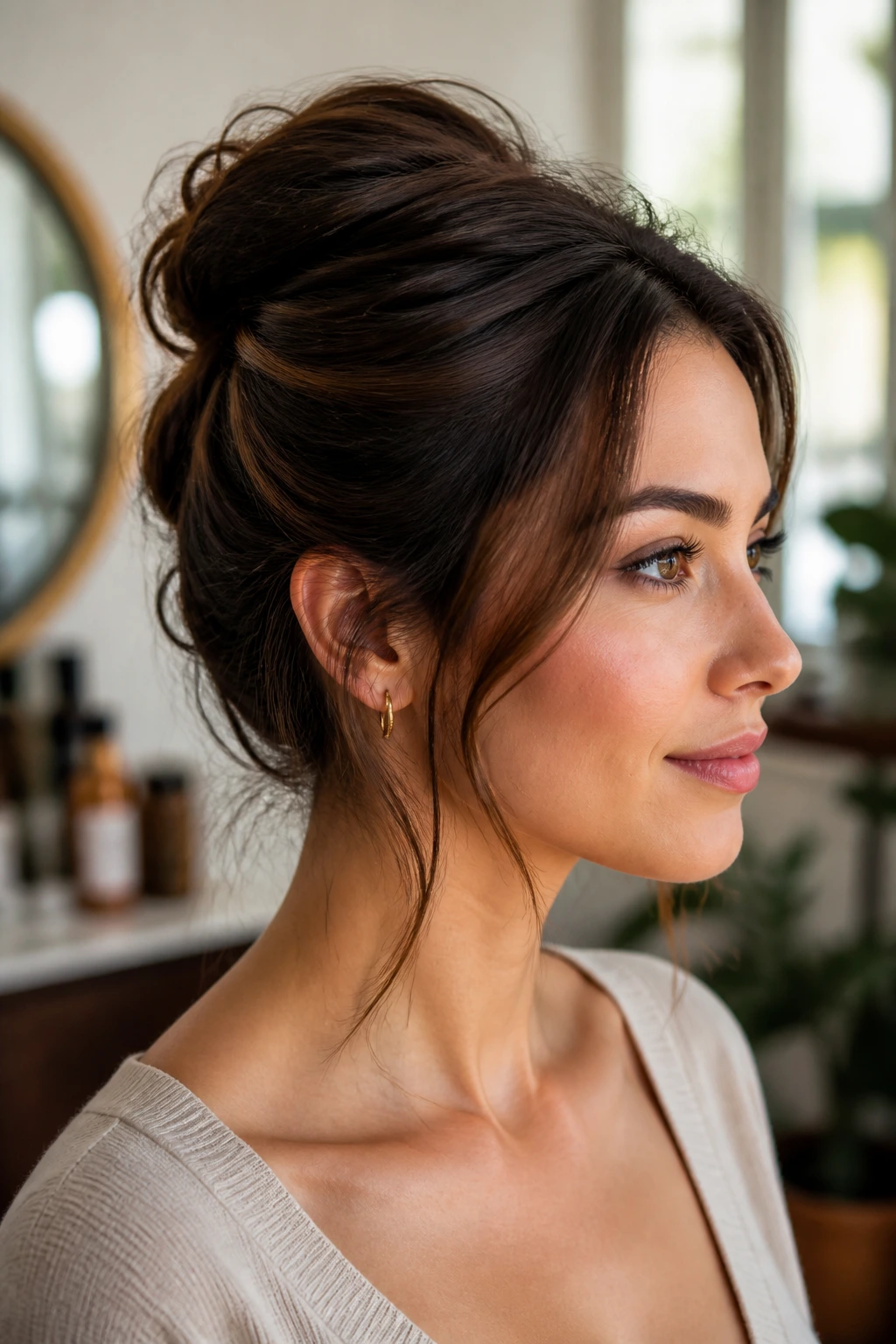
Keep the silhouette clean, not tight
A soft polished updo starts with a shape that makes sense from every angle. The front can be smooth, but the hair should still look like hair, not a molded cap. I like to think in terms of outline first: where does the eye land, where does the bun sit, where do the cheek pieces fall, and what happens when you turn sideways?
If the outline is good, the rest gets easier. That is the part many people skip. They start pinning before they decide where the weight should live, and the result is usually a bun that looks unsure of itself.
Put softness at the edges, not everywhere
This is the trick that saves the whole look. Keep the root area controlled, then let the softness live at the temples, the nape, or the ends of a braid. If every part of the style is loose, it reads undone. If every part is sleek, it reads severe. The sweet spot sits between those two extremes.
A tiny amount of bend around the face does more than a thick curtain of tendrils. One or two slim pieces, curled away from the face, can soften the jawline without swallowing it.
Lock the inside so the outside can stay pretty
Most polished updos fail because the support is flimsy. The surface may look good for five minutes, then the whole thing shifts when you move. That is why I always think about the hidden structure first: a pinned base, crossed bobby pins, a snug elastic, and enough grip at the section points to keep the shape from sliding.
Once the interior is secure, you can leave the outside calmer. Fewer visible pins. Less spray. Better texture.
1. Low Chignon with Face-Framing Tendrils
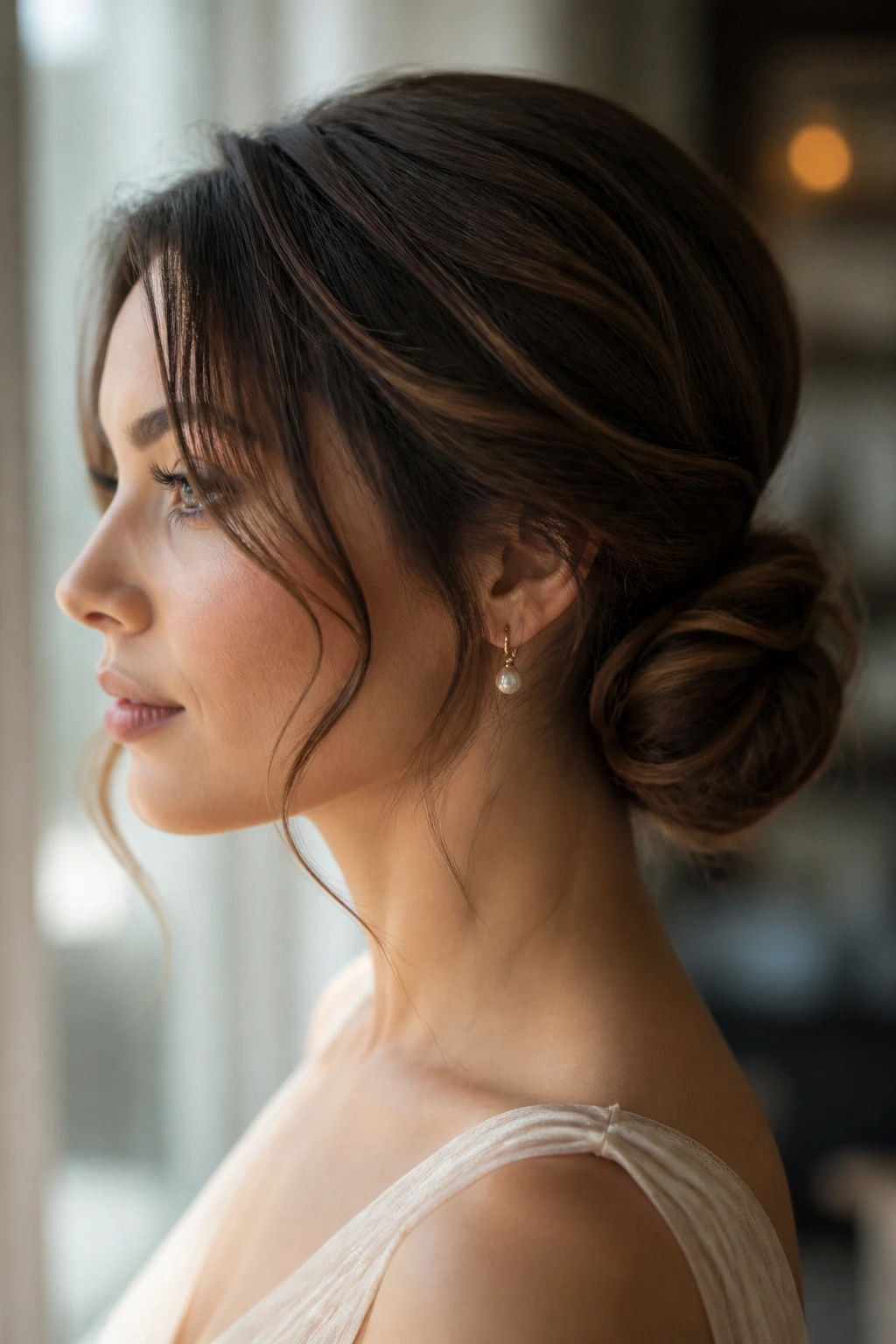
A low chignon is the one I reach for when I want the hair to look calm from the front and sculpted from the side. The knot sits at the nape, which keeps the silhouette clean and stops the style from fighting with a collar, necklace, or the neckline of a dress.
Why It Flatters
The low placement does something sneaky: it makes the jawline and collarbone look more open. Curl the front pieces away from the face with a 1-inch iron, then pin the bun with two crossed bobby pins and one U-pin at the base. That gives you polish without making the whole thing feel stiff.
- Best on medium to long hair
- Works especially well on second-day hair
- Keep the tendrils cheek-length, not chin-length, if you want a tidy finish
Quick tip: Mist the front pieces with light hairspray after curling, then leave them alone. Too much touching turns them frizzy fast.
2. Deep-Side-Parted Twisted Low Bun
If your hair falls flat at the crown, a deep side part will do more for the shape than extra product ever will. Start with the part before you do anything else. It changes the whole mood of the style.
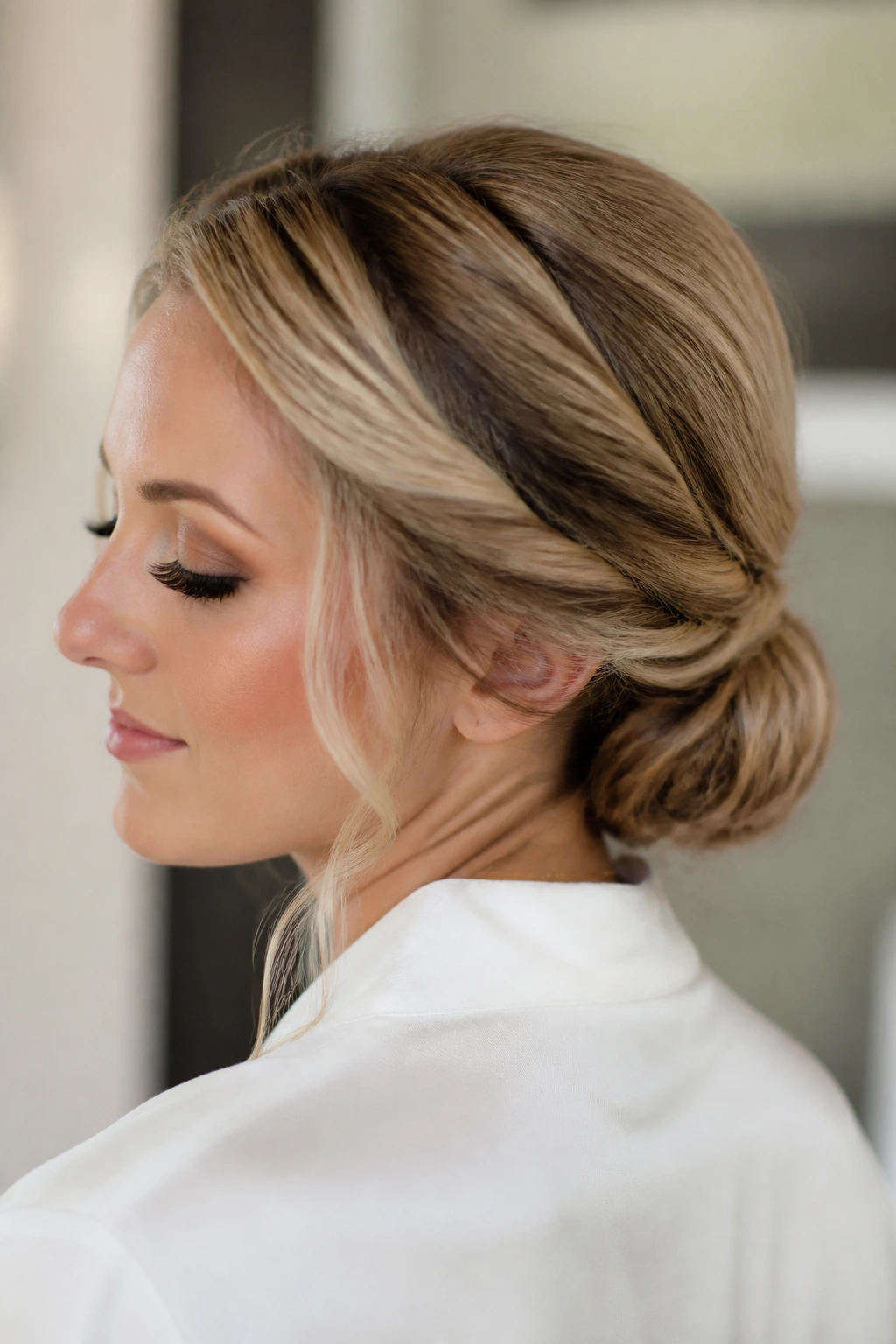
Split the hair into two sections and twist each side back toward the nape, then wrap the ends into a low bun. The asymmetry makes the style feel softer, and the twist lines keep it from reading plain. I like this on fine hair because the twists create the look of thickness without needing a giant teased crown that collapses an hour later.
Do not pull the part razor-straight all the way to the scalp. Leave a touch of lift at the roots so the style stays human.
3. Soft French Twist with Crown Lift
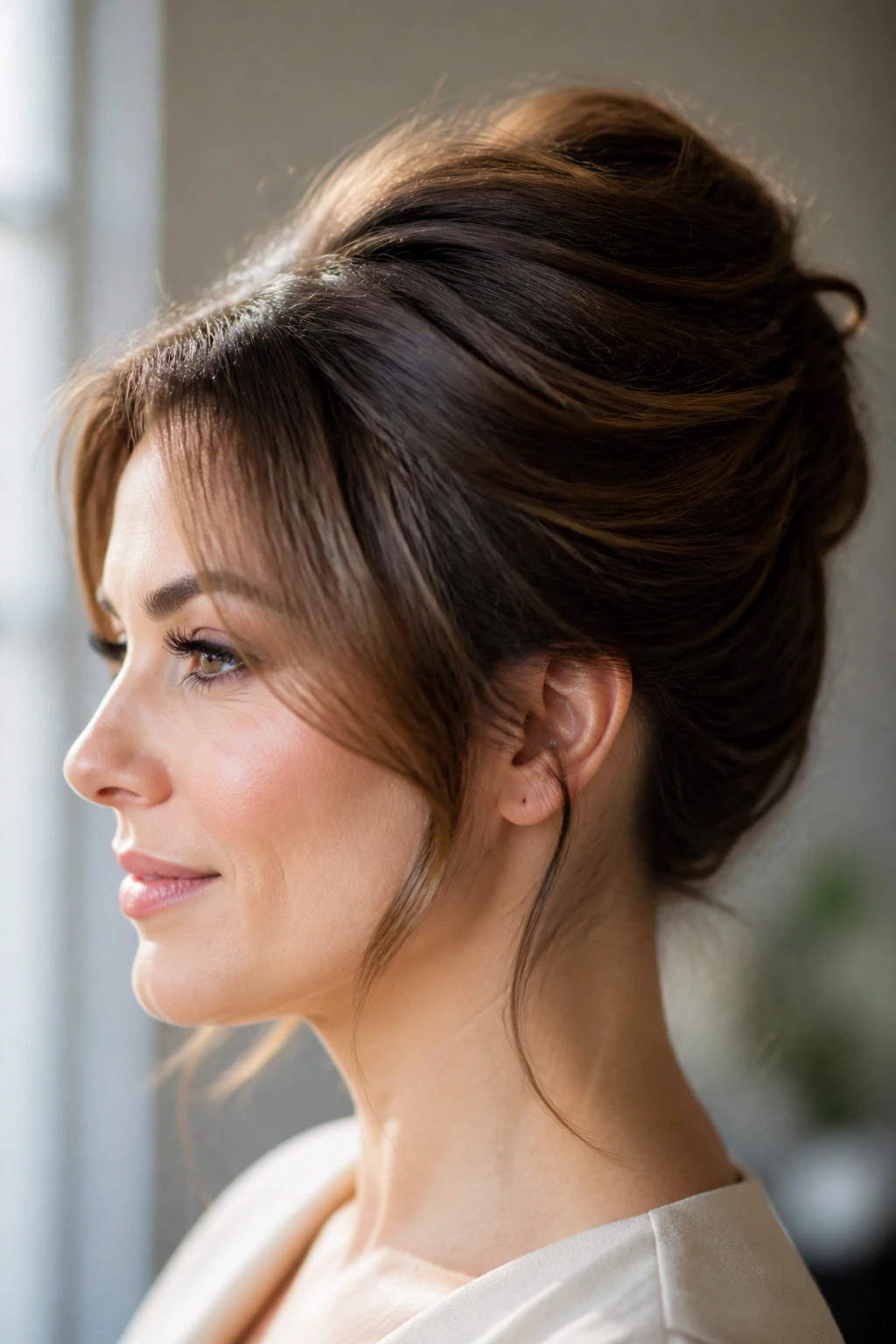
Can a French twist look soft? Yes — if you stop before it turns into a shell. That is the whole difference, really.
How to Style It
The secret is the crown. Lift it just enough so the head shape stays elegant, then gather the length and roll it upward without crushing the top. Pin at intervals as you roll, not just at the end. That keeps the twist smooth while still letting the outside curve feel gentle.
If the hair is very fine, a little texturizing spray at the roots helps the twist hold. If the hair is thick, clip the top section for a minute before pinning so it keeps some height.
What Makes It Softer
A French twist gets hard-looking when the sides are pulled tight. Leave a whisper of movement near the ears, and don’t flatten the front into a slick wall. A single loose piece at the temple can make the whole style feel less formal.
4. Braided Halo into a Nape Knot
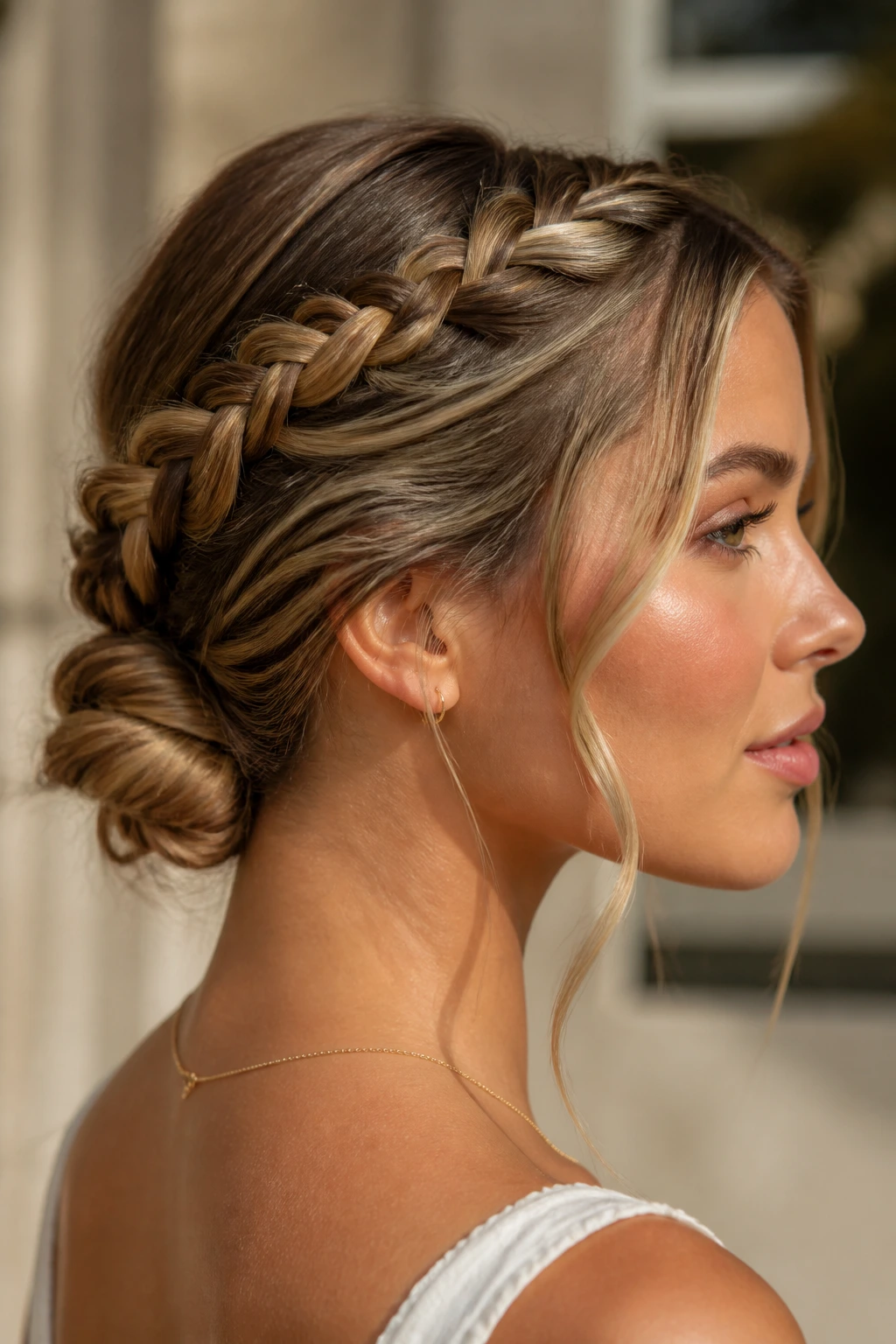
Picture a wedding guest who wants her hair off the neck but still wants movement around the head. This is that hairstyle. The braid wraps the perimeter, and the knot at the nape gives the style a finished center.
The braid softens the edges, which is why this works so well for a polished look that still feels romantic. Keep the braid medium-tight, not tiny and rope-thin, or it starts to look severe. A little fullness in the braid makes the halo read softer in daylight and in photos.
- Best for medium to long hair
- Nice for layered hair that needs control
- A small clear elastic helps hide the braid end before tucking
My opinion: this one looks richer when the braid is slightly pancaked with your fingers. Not flattened. Just eased out a touch so it has width.
5. Side-Swept Bun with Loose Ear Pieces
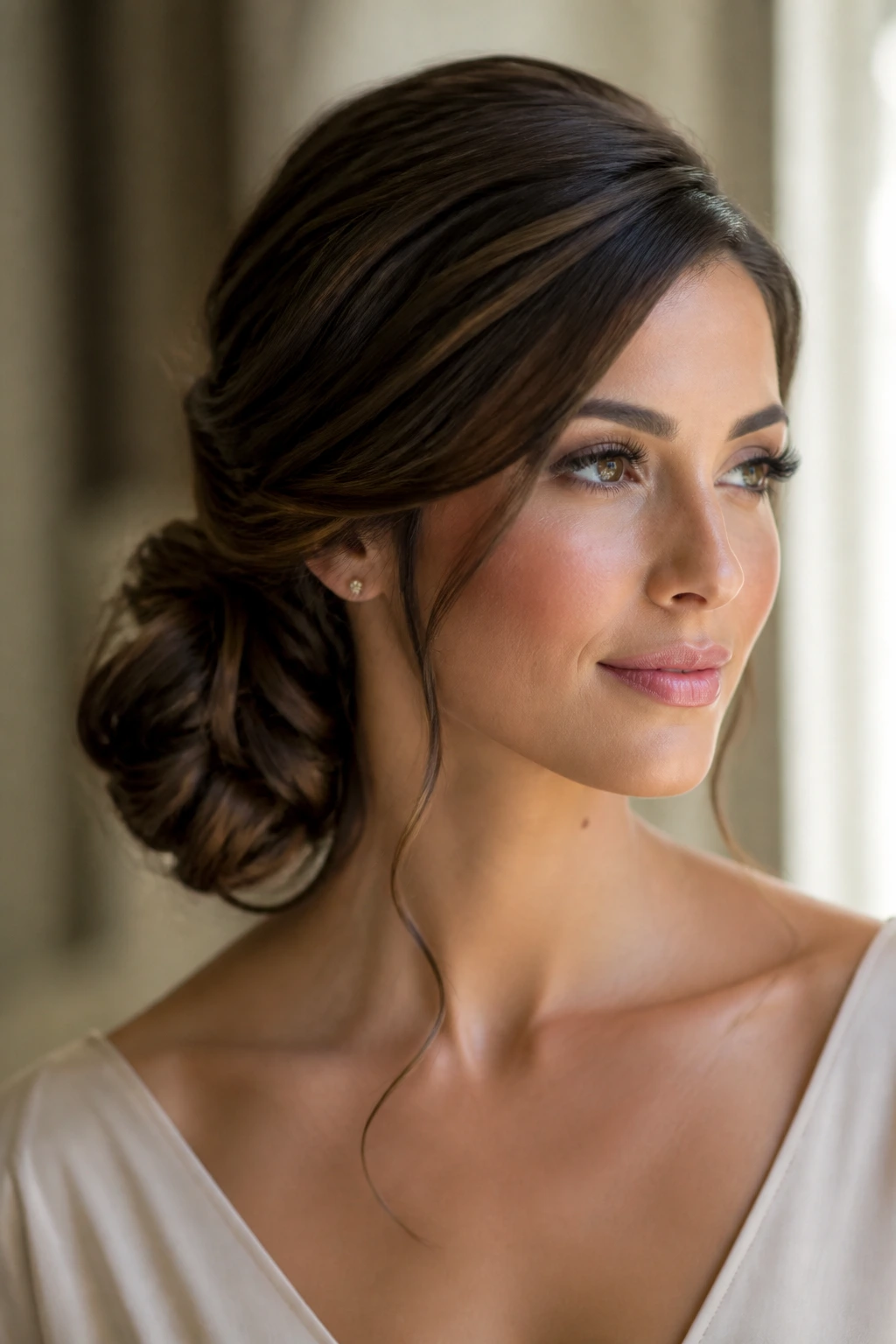
A side-swept bun has a built-in softness because the eye travels diagonally instead of straight down the middle. That diagonal line feels gentler, especially on strong cheekbones or angular collars.
Sweep the hair over one shoulder line first, then gather it low and off-center. Let a slim section fall near the ear, not as a big tendril curtain — that is where this style can go wrong. The bun itself should still be neat. The softness comes from the direction, not from a messy finish.
I like this with a satin blouse or an open neckline. It keeps the profile interesting without stealing attention from the outfit.
6. Knotted Nape Bun with Hidden Pins
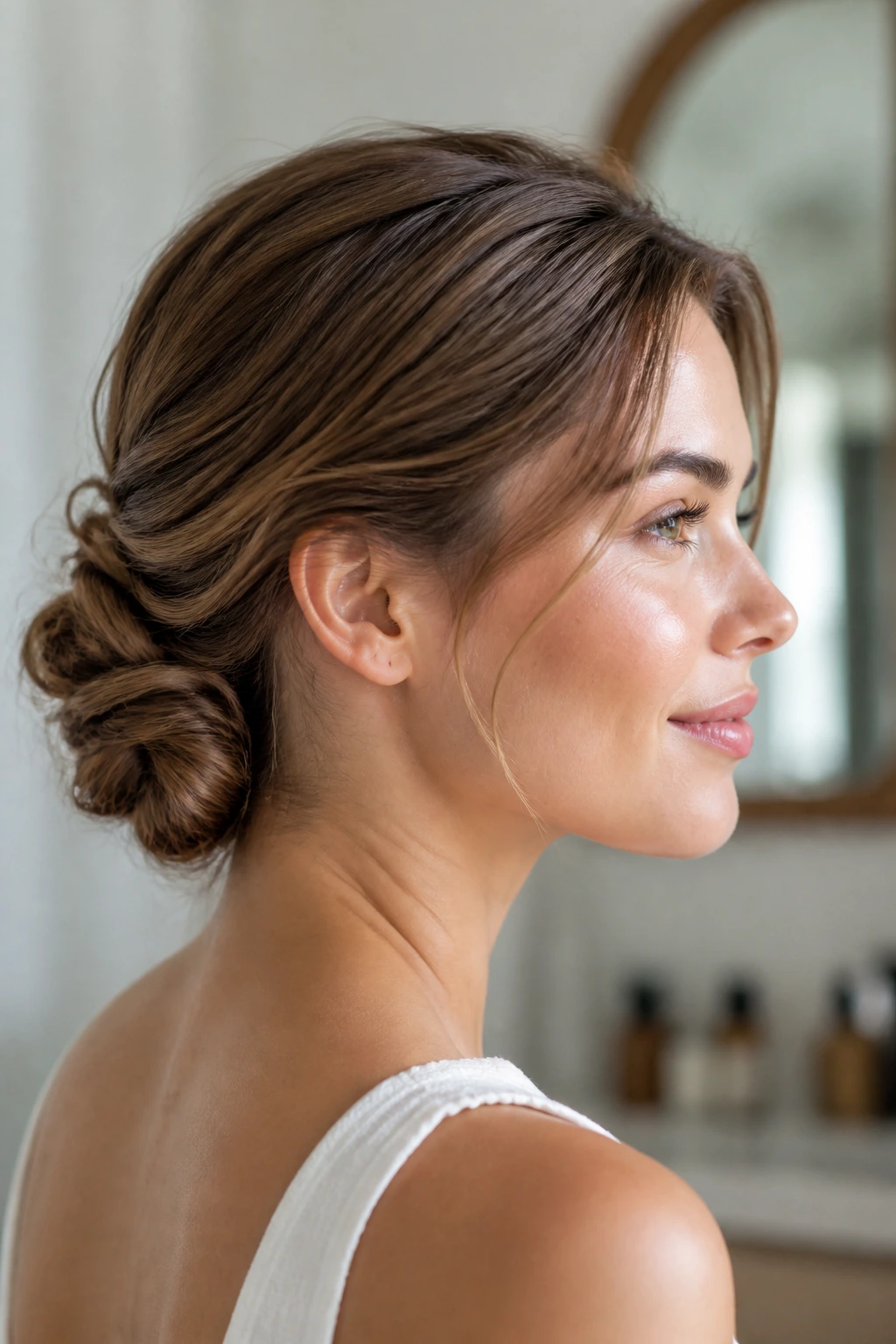
This is the bun I choose when I want structure and zero fuss in the same style. Instead of wrapping the length into a smooth coil, you tie it into one or two loose knots at the nape and tuck the ends under.
It sounds simple because it is. And that is why it works. The knot gives the bun texture without frizz, and the hidden pins keep the edges clean. Thick hair handles this especially well, though medium hair can do it with a little extra pinning.
The style feels polished when the knot is neat and the outside is lightly smoothed. It starts to look sloppy when the knot is oversized. Keep it close to the head.
7. Gibson Tuck with Airy Volume
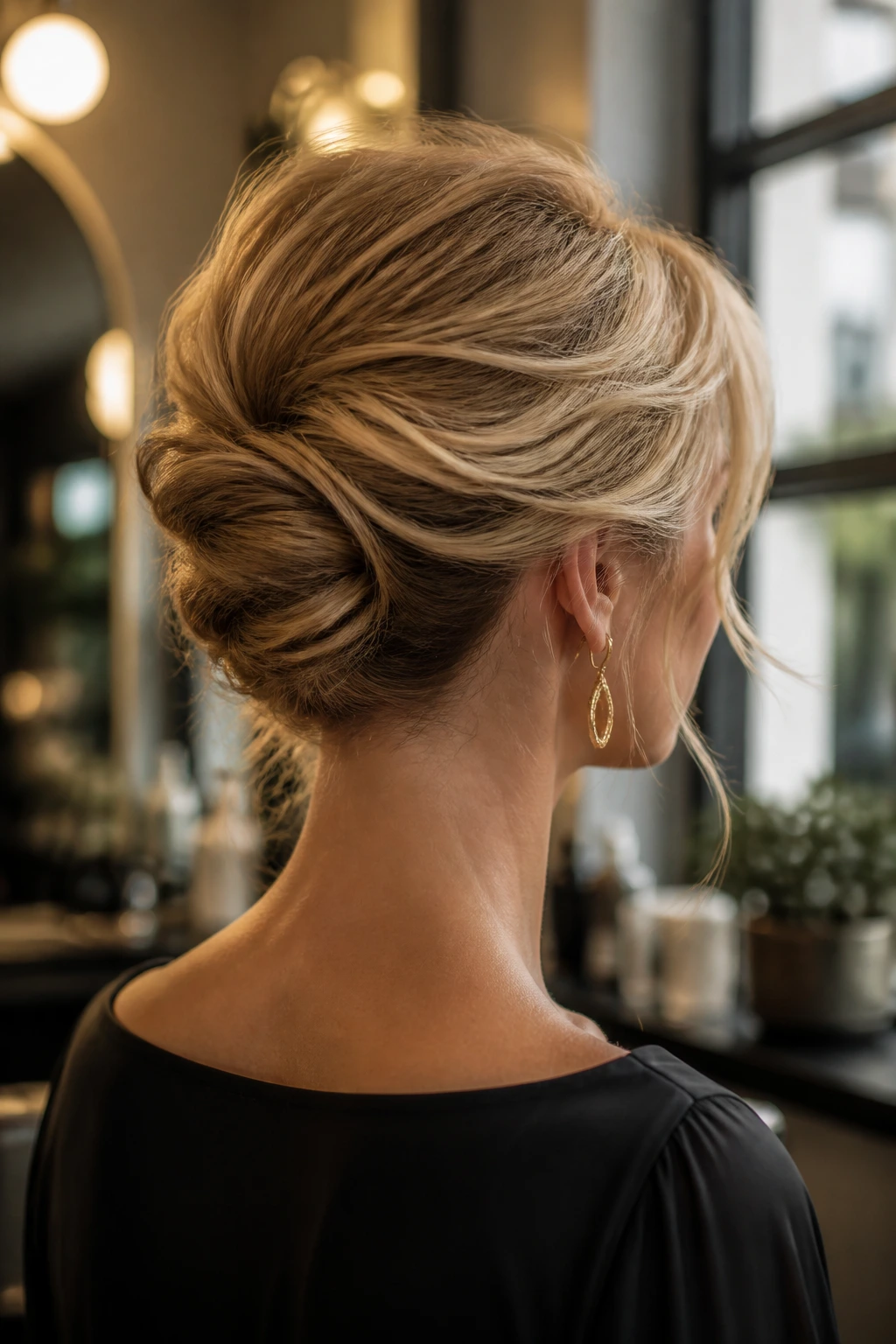
The Gibson tuck has this old-fashioned charm that never feels dusty when it’s done right. The hair rolls under itself at the back, which gives you a smooth line and a soft curve in one move.
The volume belongs at the crown, not the sides. That little lift lets the style breathe. If the crown is flat, the tuck can look like a school dance hairstyle. If the crown is softly rounded, it looks elegant and current.
How I’d Wear It
Use a lightweight mousse on damp hair, blow-dry with a round brush, then create a loose roll at the back and tuck the length under itself. Pin the roll with U-pins every couple of inches so the curve holds.
The Gibson tuck is especially good when you want the neck clear but do not want the severity of a full twist.
8. Rope-Twist Updo with a Smooth Base
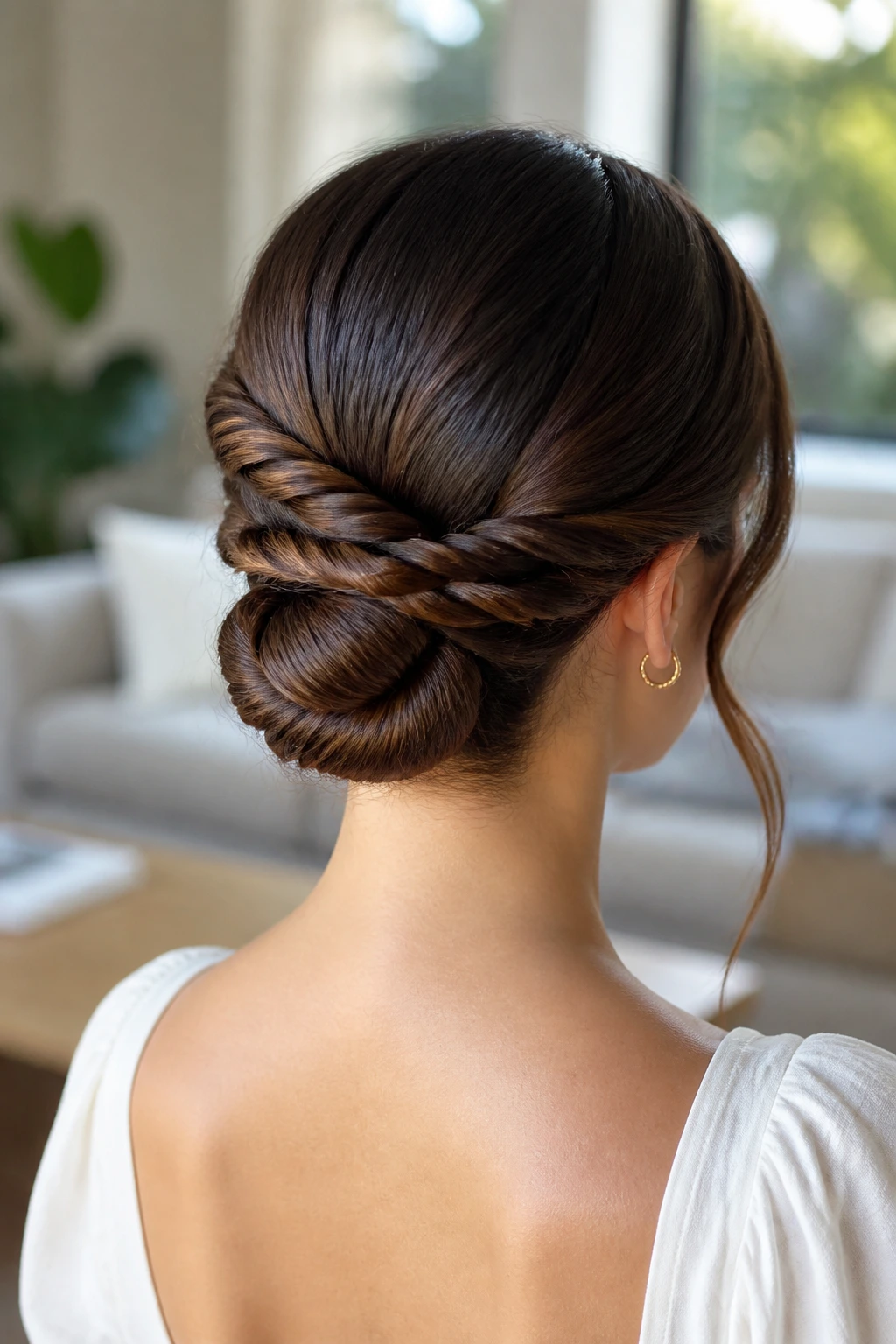
Unlike a braid, a rope twist gives you two clean lines instead of three. That makes the style look sleek faster, which is useful when you want polish without spending forever at the mirror.
Start with a smooth base, divide the hair into two sections, twist each section in the same direction, then wrap them around each other in the opposite direction. That tension is what keeps the rope twist from unraveling. Pin the twist into a low coil or bun and soften the front with one curved piece.
It’s one of the best options for medium-thick hair because the rope shape stays visible even when the style is compact. Thin hair can wear it too, but I’d add a bit of texture spray first so the strands grip.
9. Wrapped Ponytail Bun with a Clean Finish
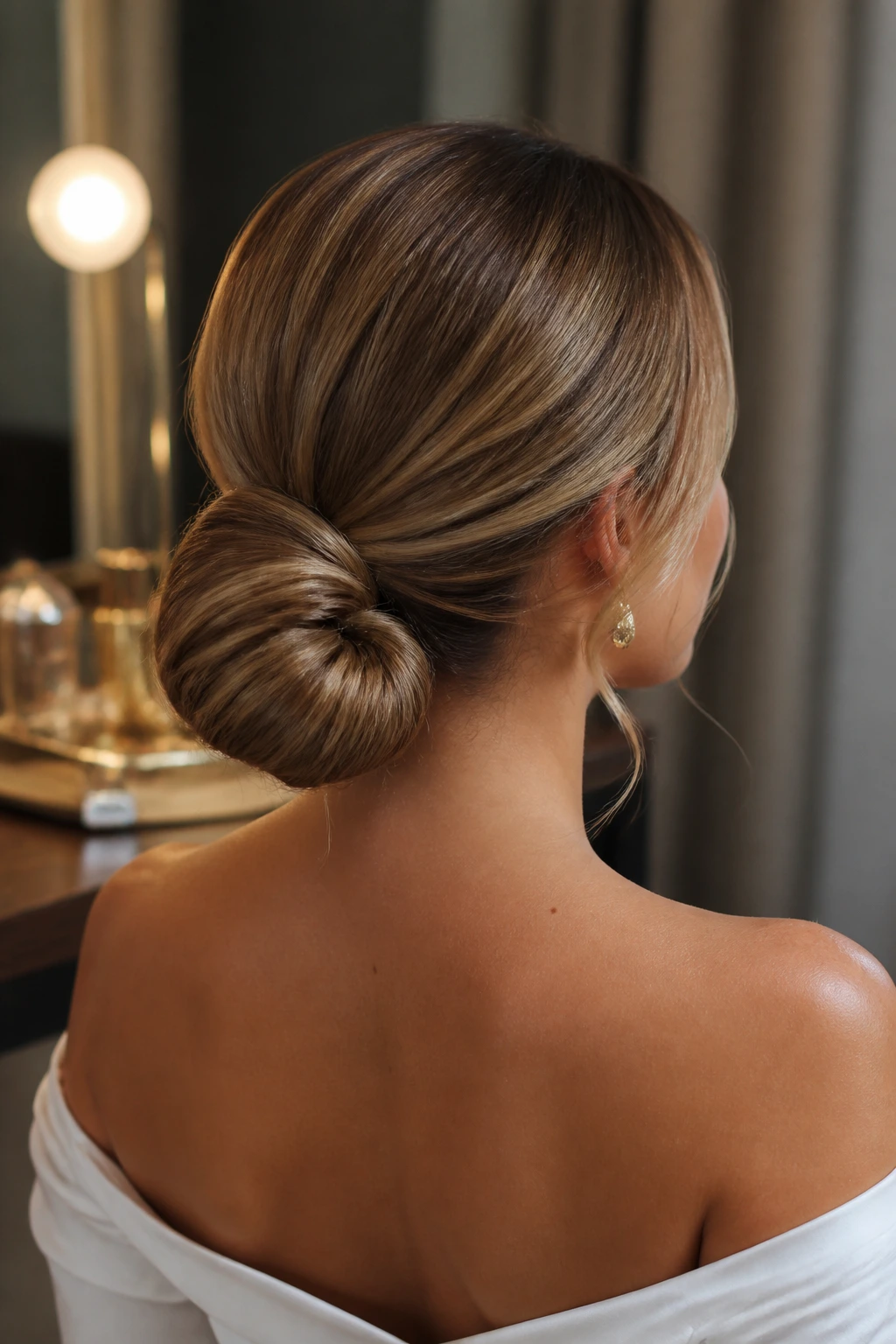
A wrapped ponytail bun is the easiest way to make a simple bun look intentional. First you make a low ponytail, then you wrap a section of hair around the elastic so the base disappears, and only then do you coil the ends into the bun.
That hidden elastic does a lot of heavy lifting. The style looks cleaner because the eye never gets snagged on a rubber band. I also like this shape when the outfit needs a tidier profile — blazers, high necks, dressy tops, all of it.
A small curl on the very ends helps the bun look softer. Straight ends can poke out and make the style feel unfinished.
10. Classic Ballet Bun with Whisper-Soft Edges
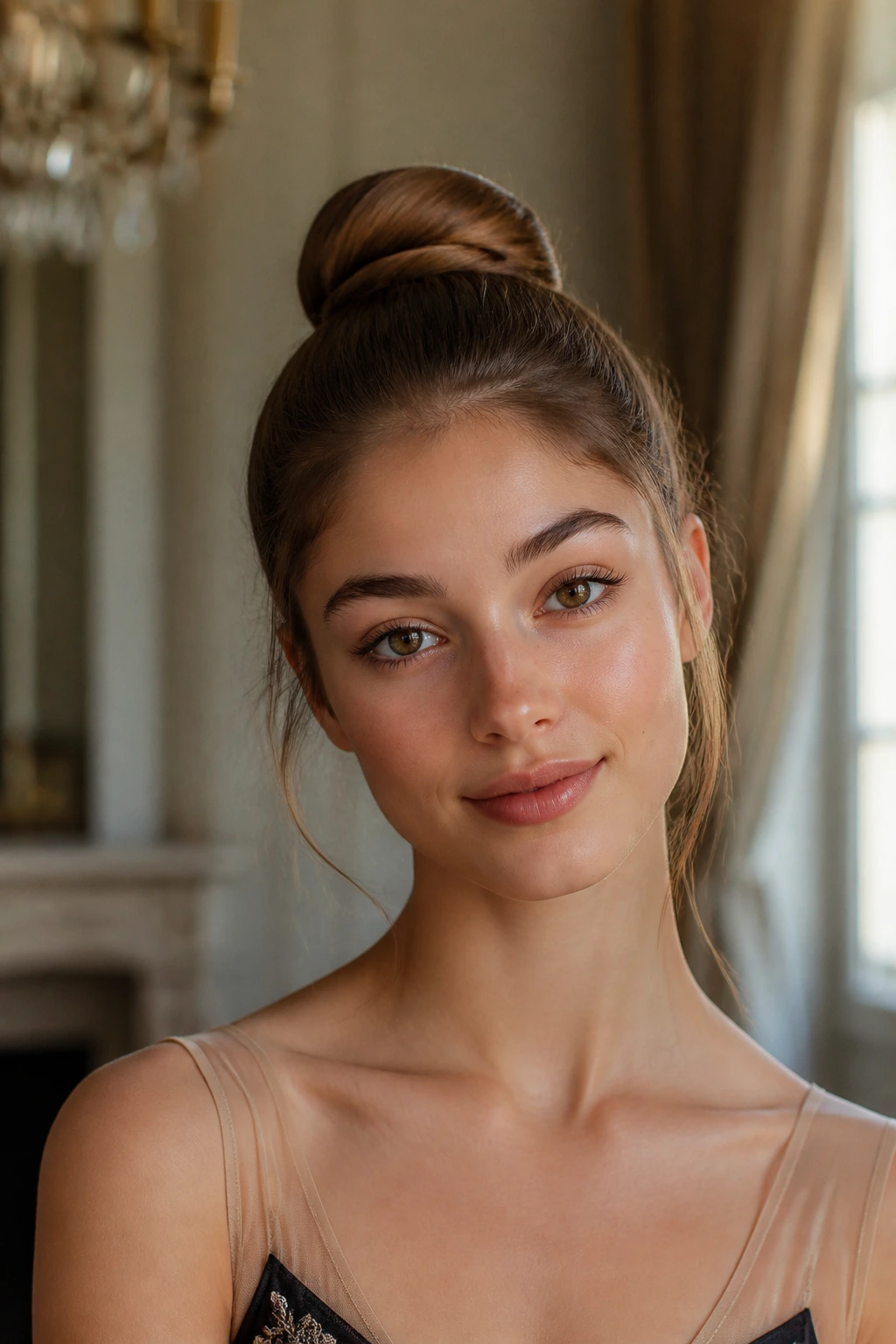
A ballet bun can look severe if you pull every strand back like you’re preparing for rehearsal, not dinner. The fix is not to make it messy. It’s to soften the perimeter.
Keep the bun smooth and centered, then leave just enough movement around the hairline to avoid that hard, lacquered look. If you’ve got shorter layers, tuck them under and pin them invisibly instead of spraying them into submission. The shape should be neat, round, and calm.
This one loves a clean middle part or a very subtle side part. A deep side part can make the silhouette feel too dramatic unless the rest of the look is pared back.
11. Crown Braid Chignon
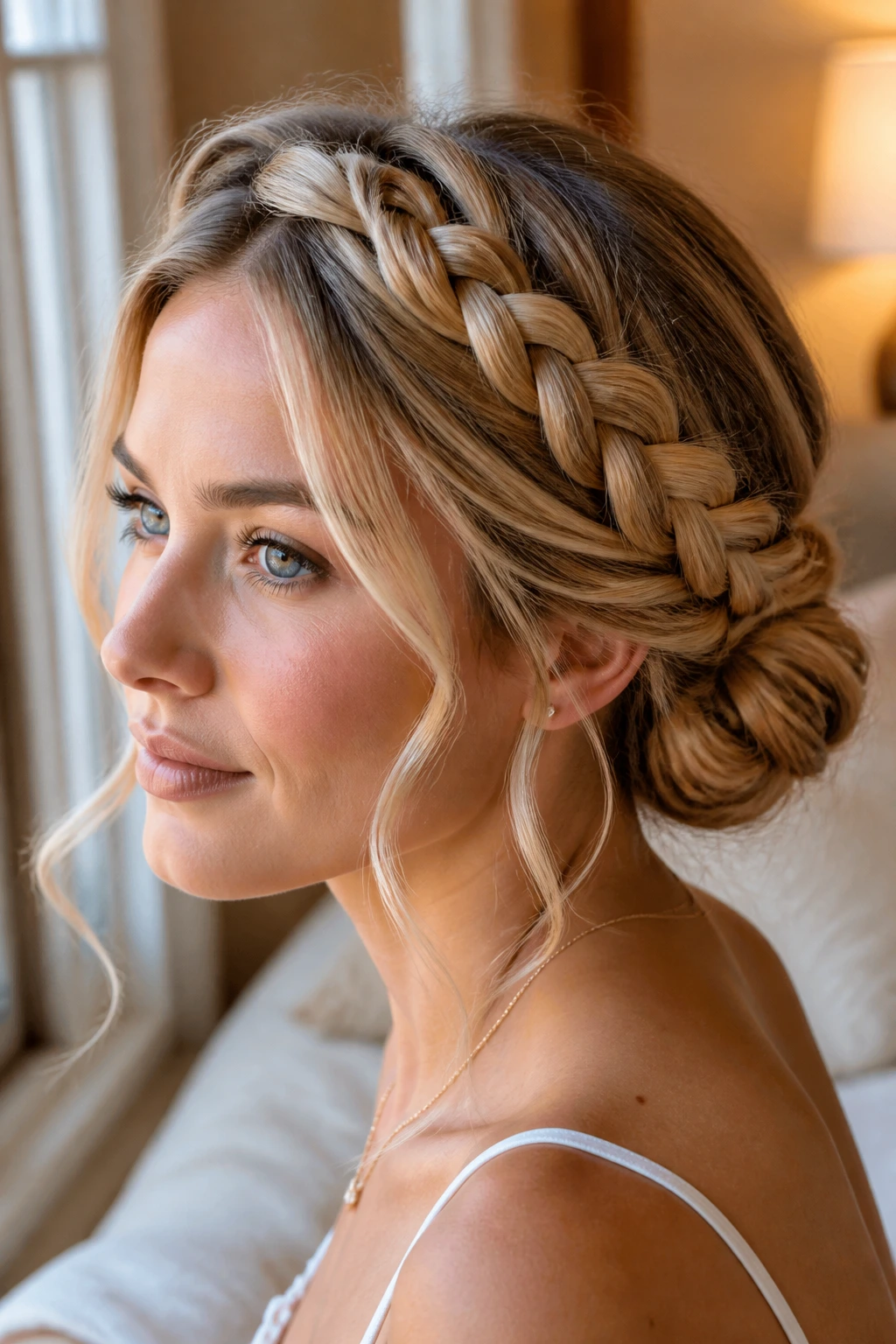
The crown braid gives the style texture right where people look first. That is why it works. It adds interest up top, then the chignon at the nape finishes the shape in a way that still feels refined.
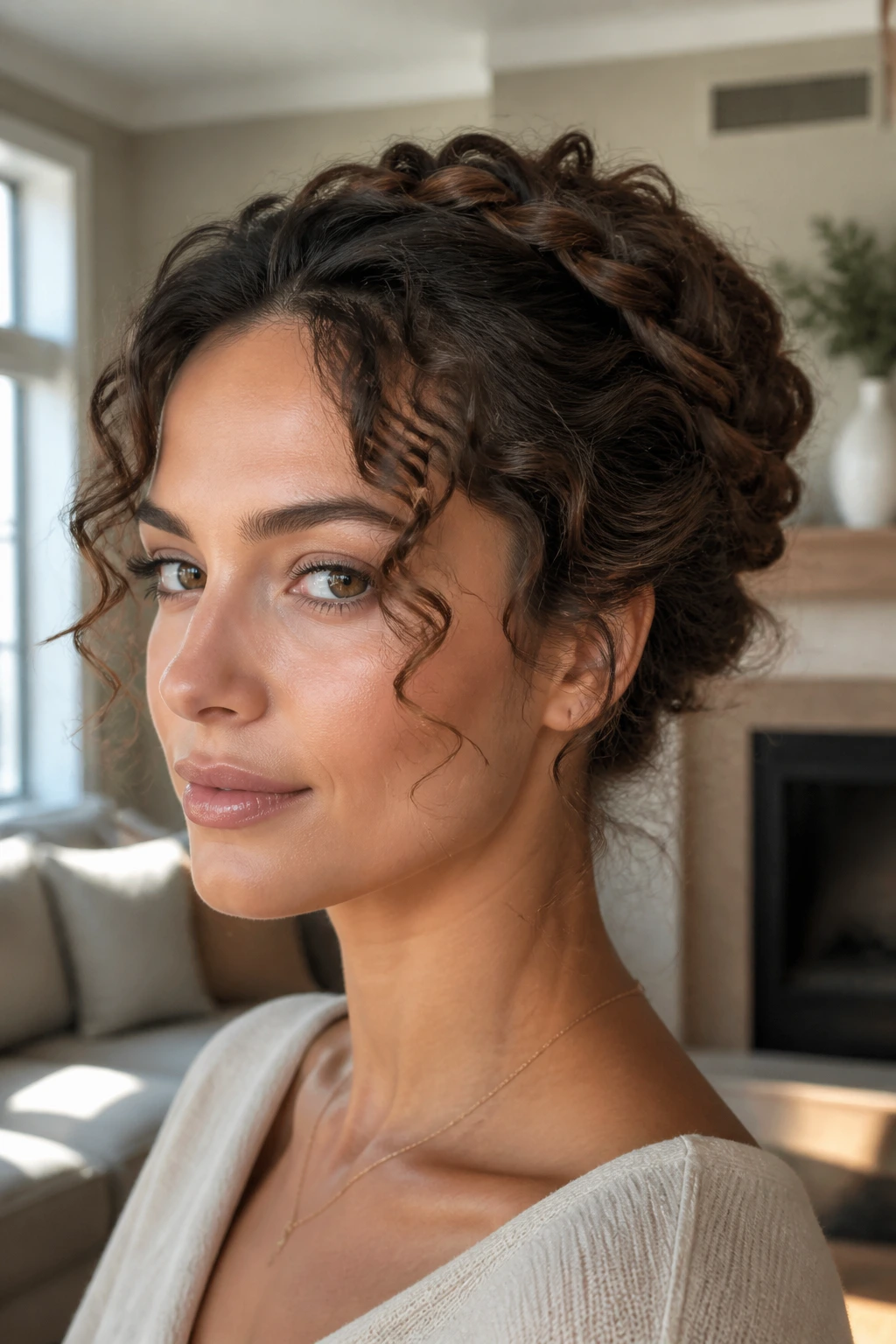
You do not need to braid all the hair tightly. A braid that’s too small can look busy. A wider, slightly eased braid reads softer and suits the “polished but not rigid” brief much better. Once the braid reaches the back, tuck it into a low chignon and let the ends disappear under the coil.
This is one of those styles that looks richer in person than it does on a phone screen. The braid catches light. The bun grounds it.
12. Loop-and-Tuck Roll
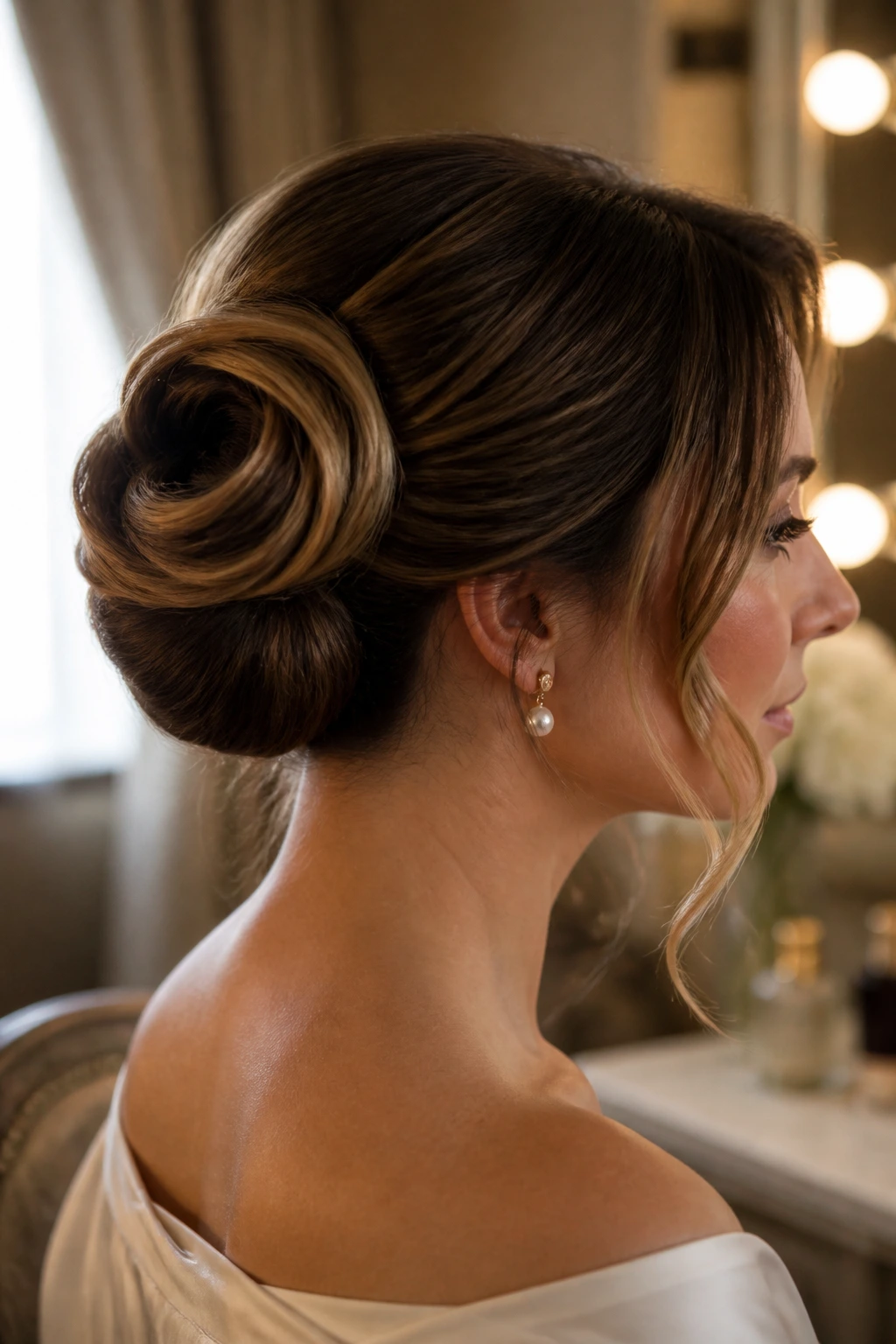
What I like about the loop-and-tuck roll is that it gives you shape without a lot of visual weight. The hair folds back on itself in a controlled loop, then the ends disappear under the roll.
The Short Version
It works on shoulder-length hair as well as longer lengths, which is a relief. Not every polished updo needs waist-length hair. The loop keeps the back smooth, while the tucked ends create that soft polished finish people want for events or work.
Use one or two small pins to secure each side of the roll. If the hair is slippery, clip the sections first and let them sit for a minute while you finish your makeup or outfit.
Why It Looks Softer Than a Standard Twist
The roll creates a rounded line instead of a sharp seam. That curve is the whole point. It makes the style feel gentle even when it’s pinned tightly enough to hold through a long day.
13. Pearl-Pin Low Bun
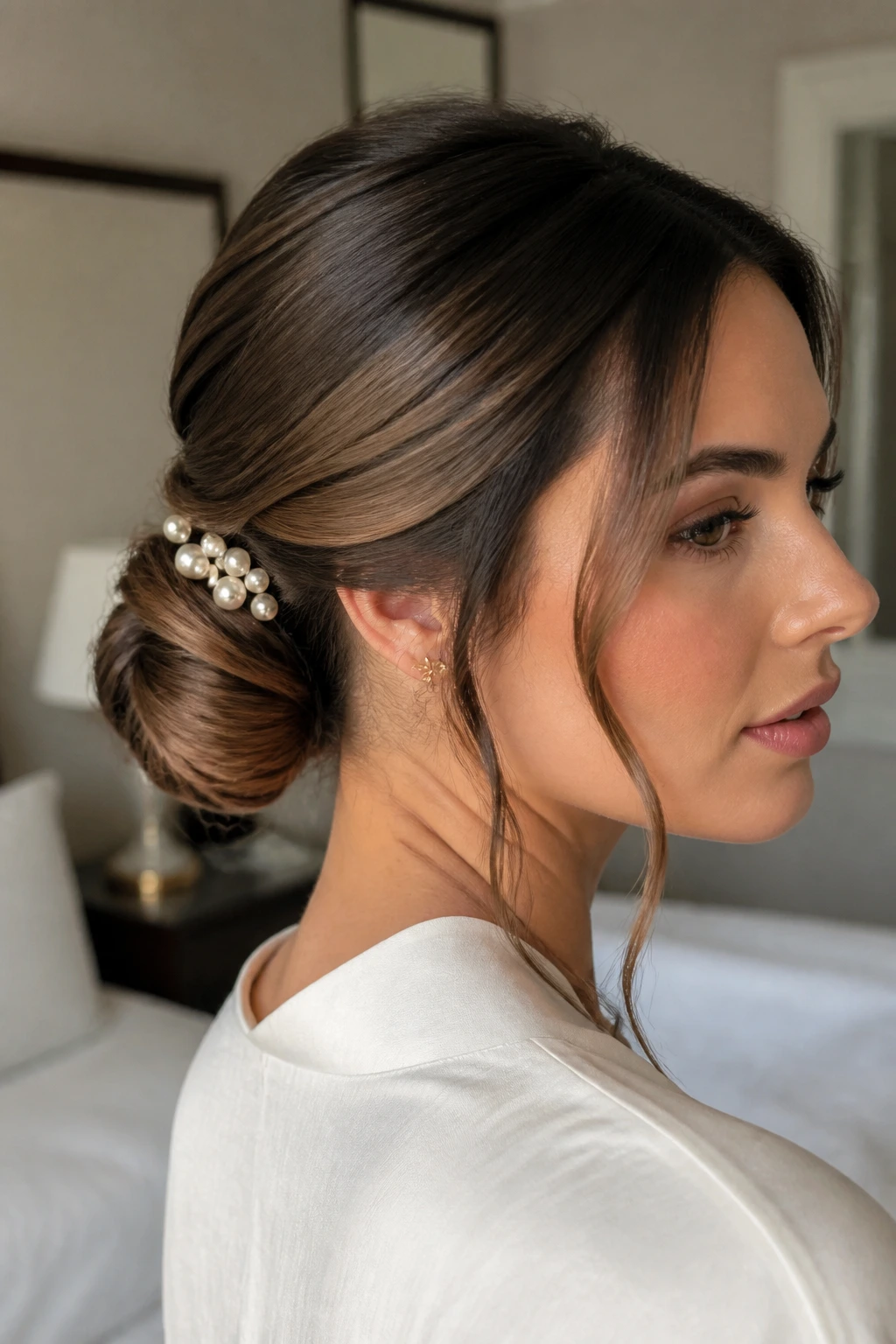
A pearl pin can change the tone of a low bun in about five seconds. Without the accessory, the style is clean and quiet. With it, the bun reads finished — almost like jewelry for the hair.
I like to keep the bun itself simple and let the pins do the decorative work. One cluster of pearl pins near the base is usually enough. Too many and the style starts to feel crowded, which fights the softness you’re after.
This is a good option when the hair is smooth and you want a little dress-up without adding a braid or twist. Keep the bun low, keep the outer surface tidy, and let the pearls sit slightly off-center for a less formal look.
14. Polished Top Knot with Soft Temple Pieces
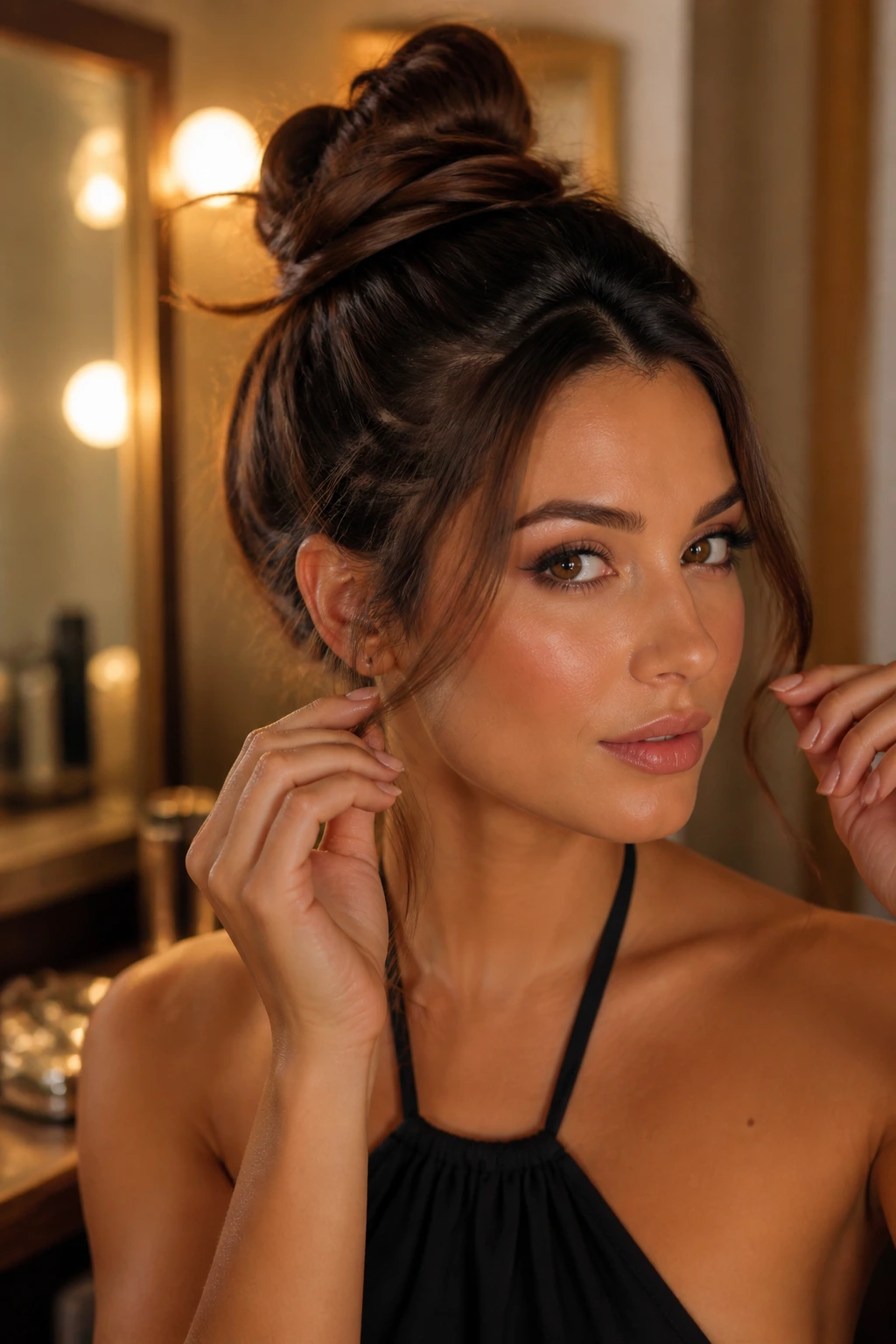
A top knot can absolutely fit a soft polished brief, but only if the edges behave. The height lifts the face, while the loose temple pieces keep it from looking severe.
This version works best when the knot is compact and the base is smooth. You want the height to feel deliberate, not like the hair was yanked into place on the way out the door. I’d curl the front pieces with a 1-inch iron and then separate them with your fingers once they cool.
The trick here is restraint. Keep the knot tidy. Keep the tendrils slim. That balance gives you polish without the stiff ballerina look.
15. Rolled Nape Bun
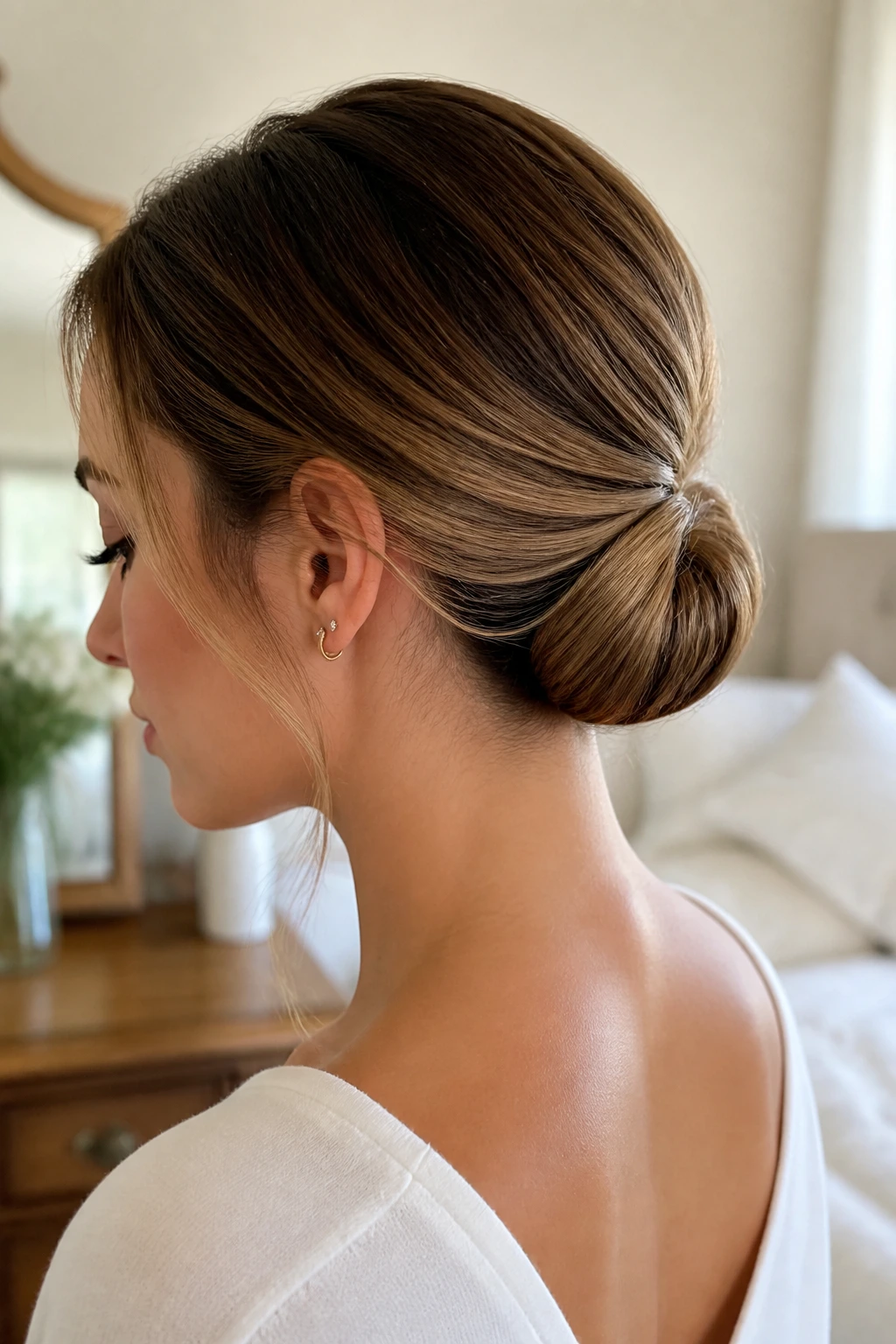
The rolled nape bun sits somewhere between a chignon and a French roll, and that middle ground is why it looks so good. It’s rounded, low, and tidy, but not so formal that it starts aging the face.
Start by smoothing the hair back into a low ponytail. Roll the length upward or inward toward the nape, depending on your hair density, then pin the roll flat against the head. A fine-tooth comb helps smooth the surface before you set it, but I would avoid over-combing once the roll is formed.
This one is especially flattering on people who want their earrings and neckline to be visible. It clears the face and neck cleanly, which makes the whole outfit look more composed.
16. Side Roll Updo
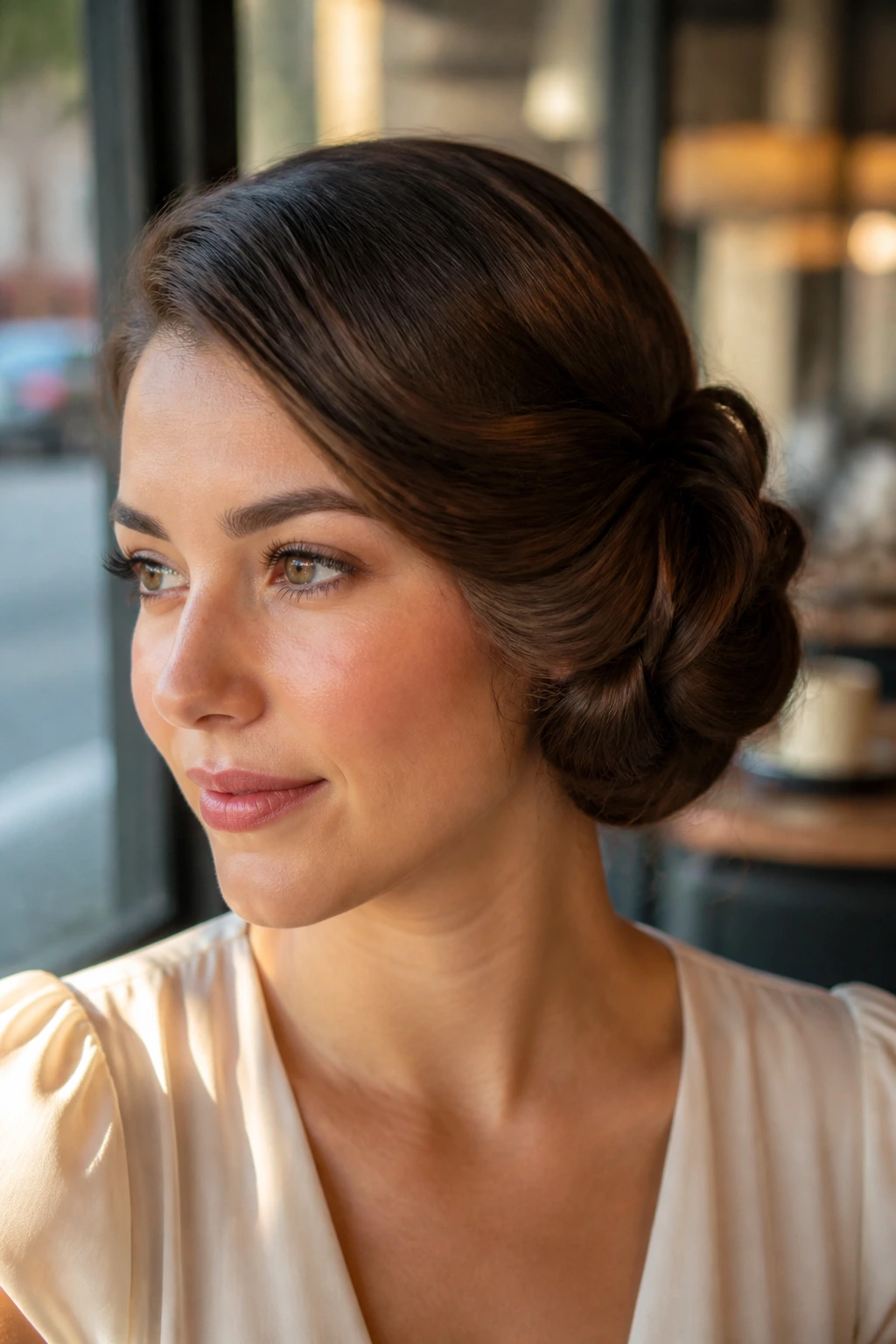
A side roll updo has a little old-Hollywood echo, and I mean that in a good way. It gives the hair a clean sweep to one side, then folds it into a compact roll that sits low and slightly off-center.
That off-center placement is what softens it. Straight-on symmetry can feel strict; a side roll has a little more movement in the shape. Use a smoothing cream at the roots, then keep the roll tight enough to hold but not so tight that the hair loses its bend.
This is a strong choice for shoulder-length hair that can feel awkward in bigger buns. The roll turns that in-between length into an advantage.
17. Infinity Twist Bun
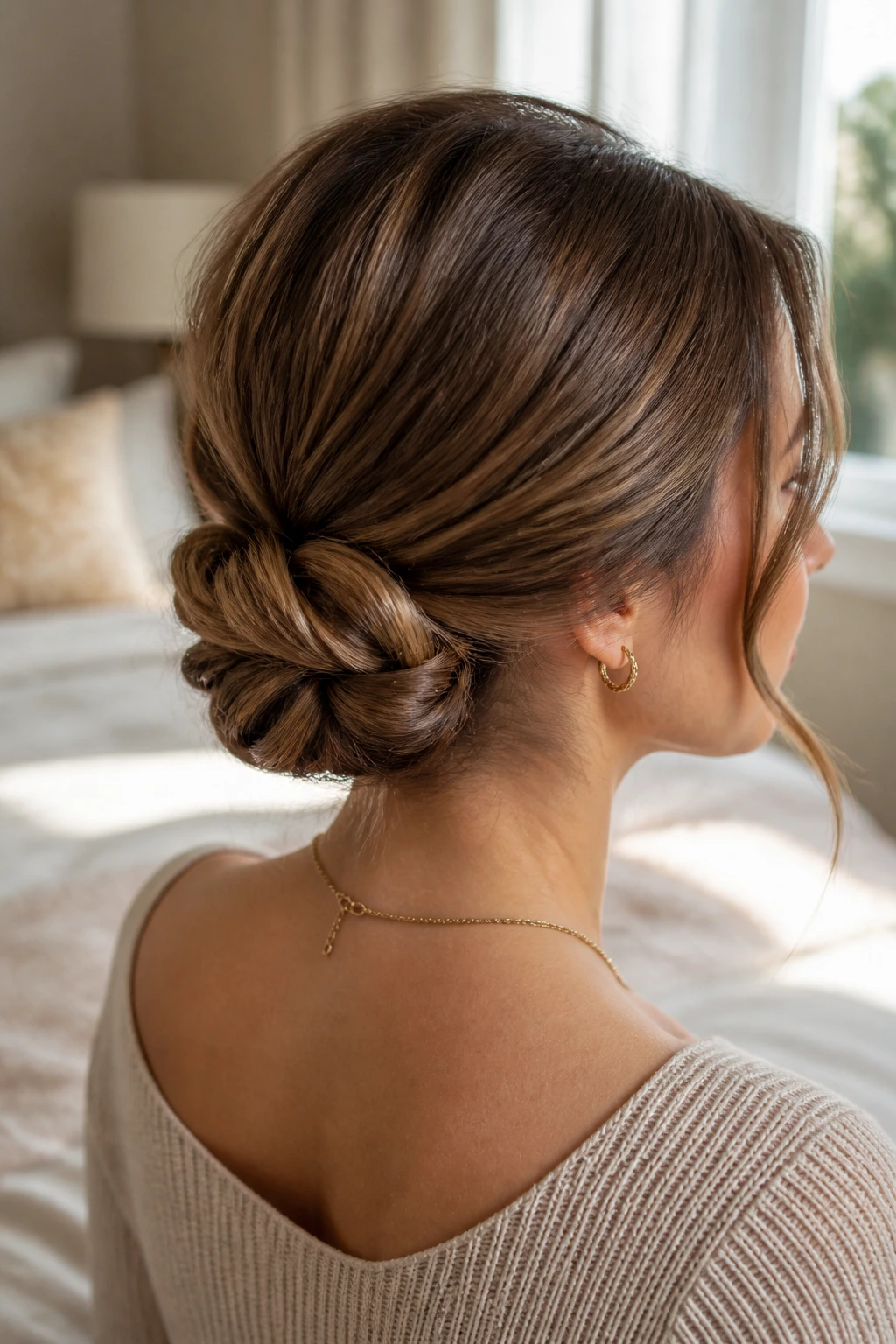
The infinity twist bun gets its name from the way the sections cross and loop around one another. It looks more intricate than it is, which is part of the appeal.
There’s a nice tension in this style: the lines are clean, but the overlapping sections create a soft, woven look. That makes it feel polished without being severe. It also holds up well on hair with a little grit, so second-day hair is your friend here.
I’d keep the bun low and the twists slightly relaxed. If you pull the sections too hard, the infinity pattern disappears. And that pattern is the whole point.
18. Braided Side Bun
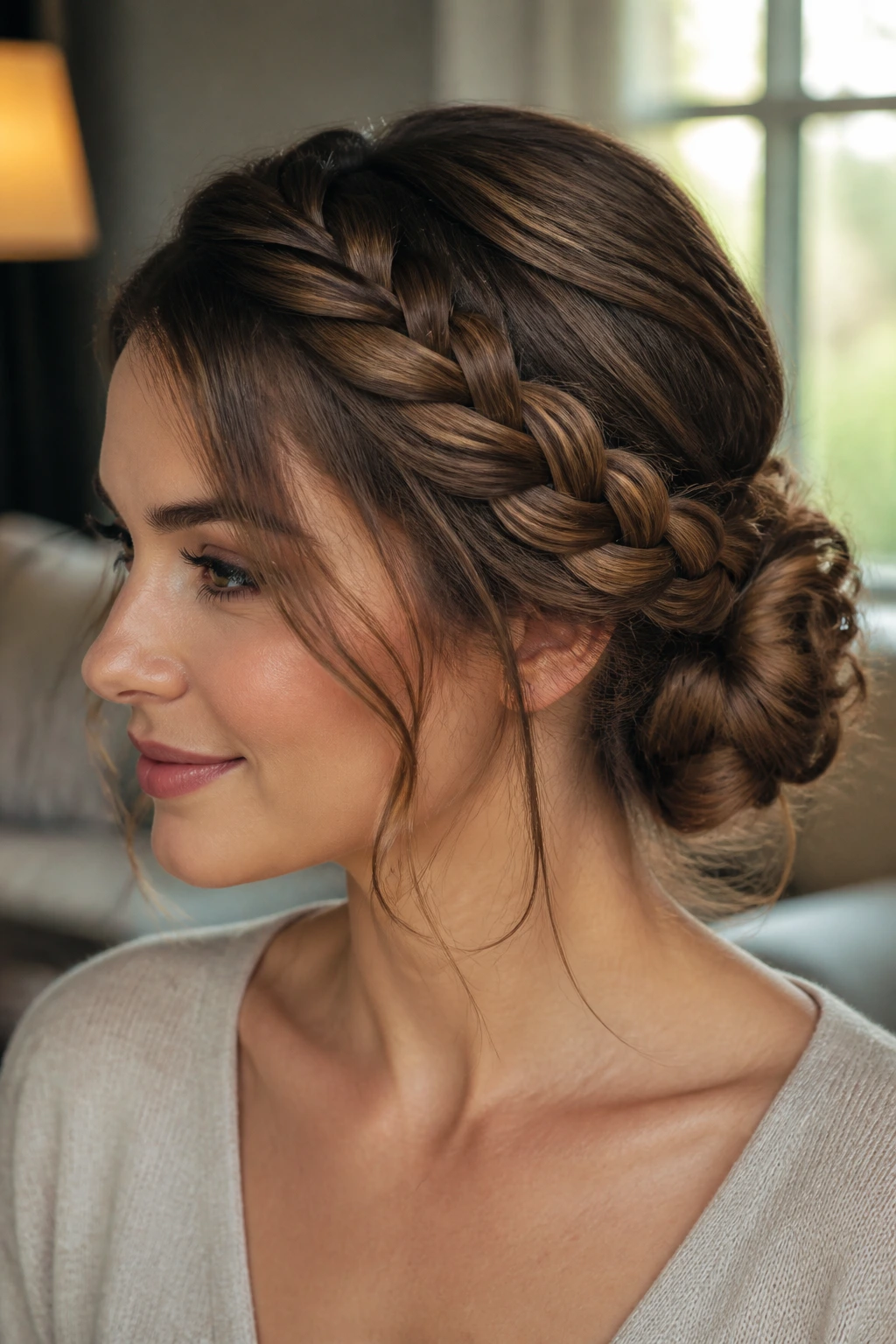
A braided side bun is what happens when you want texture and softness but not a lot of height. Braid one side, sweep it back, and gather everything into a bun that sits behind the ear or just below it.
The braid gives you interest near the face, while the bun keeps the back tidy. That balance is what makes the look feel polished instead of fussy. It’s a little less formal than a centered chignon, which is useful if you want the style to work for both daytime and evening.
This is especially nice with asymmetrical earrings. The braid frames one side, the bun anchors the other, and the whole style feels intentional.
19. Curled Pin-Up Roll
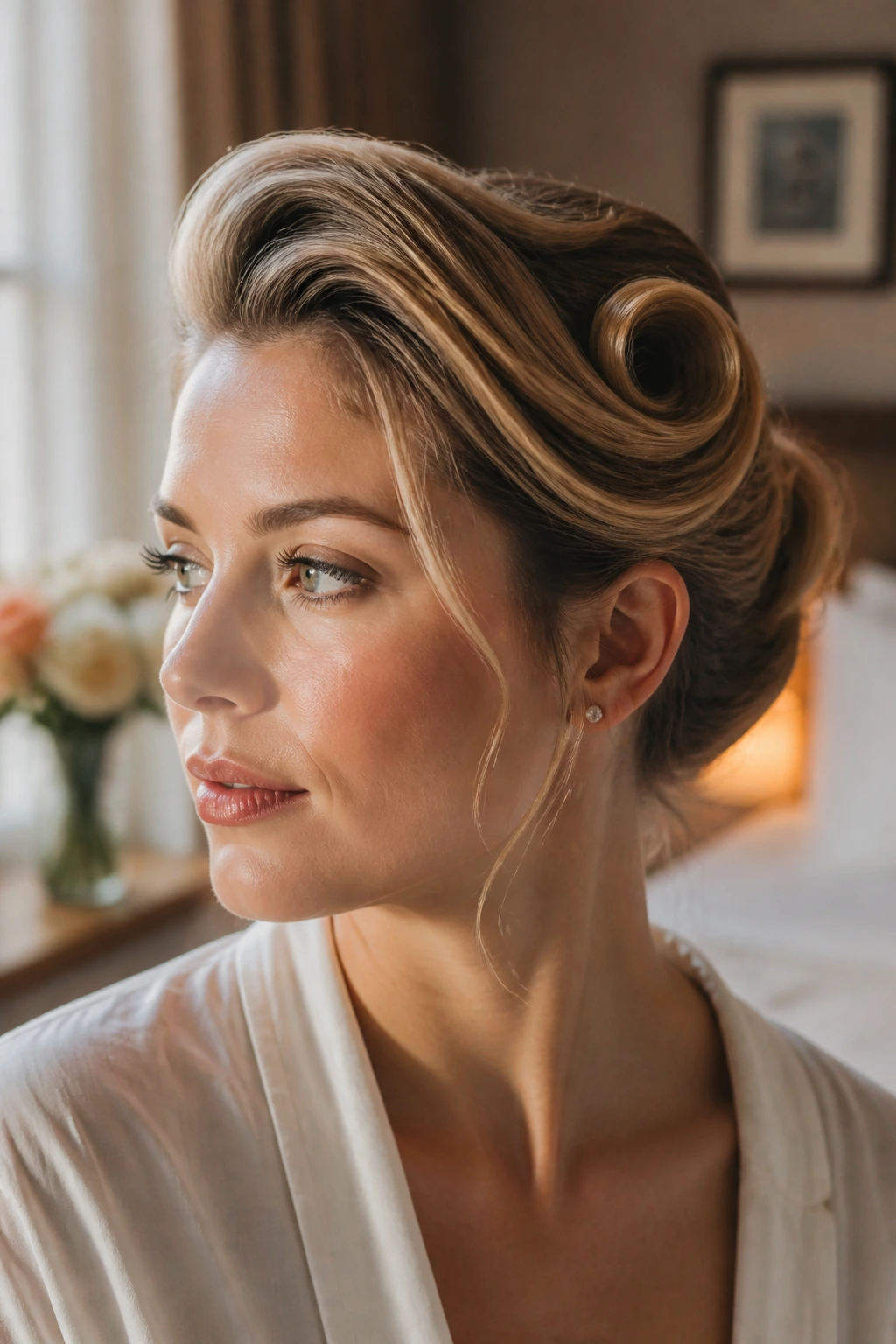
A curled pin-up roll has a vintage bend to it, but it can still read modern if you keep the surface smooth and the curl loose. The hair is rolled inward at one side or across the back, then pinned into place so the curve stays visible.
This style loves a little setting before pinning. A soft curl at the ends gives the roll shape, and a brush-through after cooling keeps it from looking too strict. I’d call this one a favorite for hair that needs a more sculpted silhouette without moving into full formal territory.
It pairs nicely with a sleek dress or a high-waisted outfit because the rolled shape feels polished from every angle.
20. Faux Bob Tuck
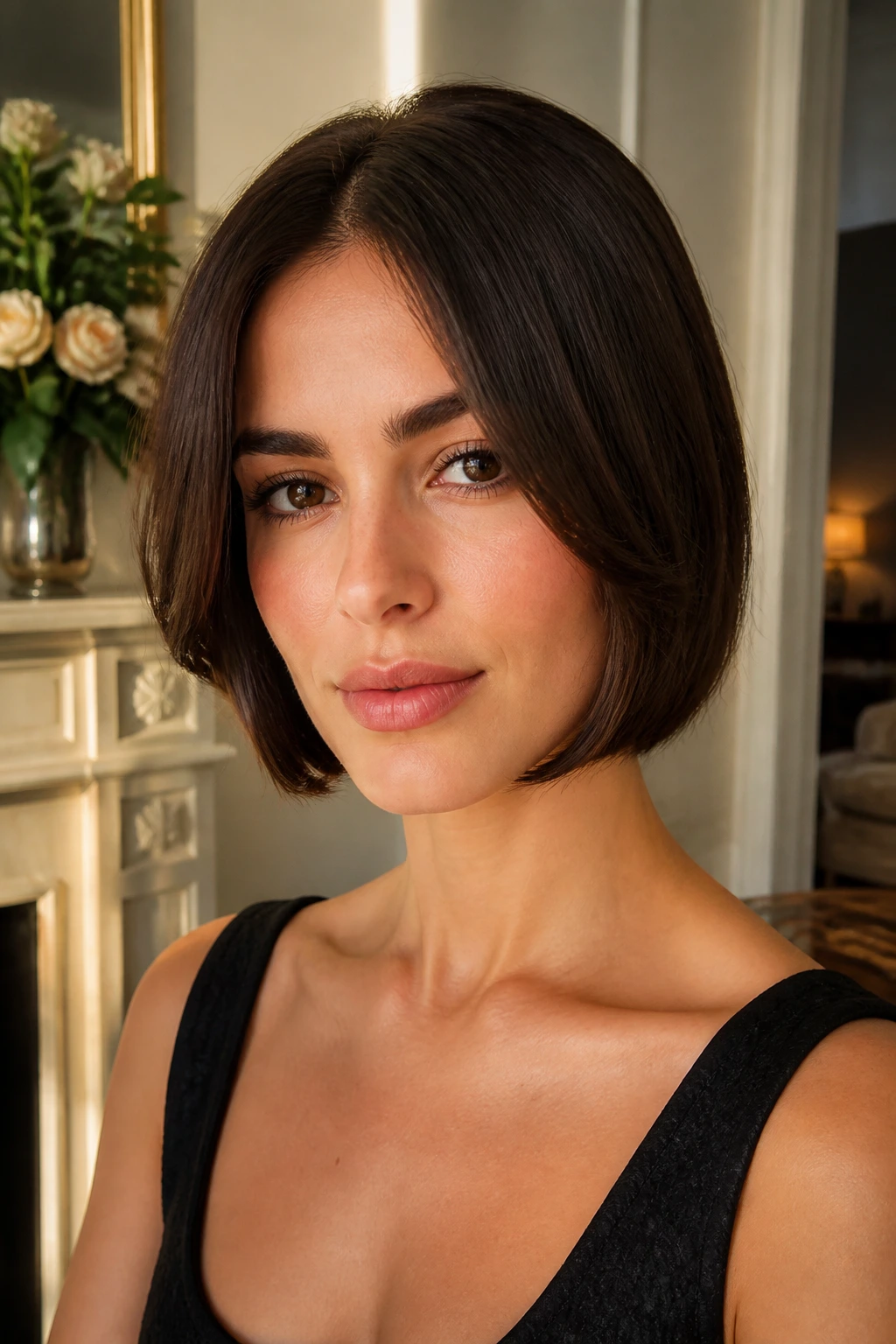
The faux bob is the best party trick on this list, and I stand by that. It lets long hair look short for a night, while the tucked ends keep the finish clean.
The important part is hiding the length without making the hair look trapped. Curl the ends first so they fold in easily, then pin them under at the nape in small sections. Leave a soft curve around the jawline. That gives the illusion of a bob instead of a hidden bun.
It’s a fun choice when you want a change without a haircut. And unlike some novelty styles, it can still look quiet and polished if you keep the surface smooth.
21. Double-Twist Low Bun
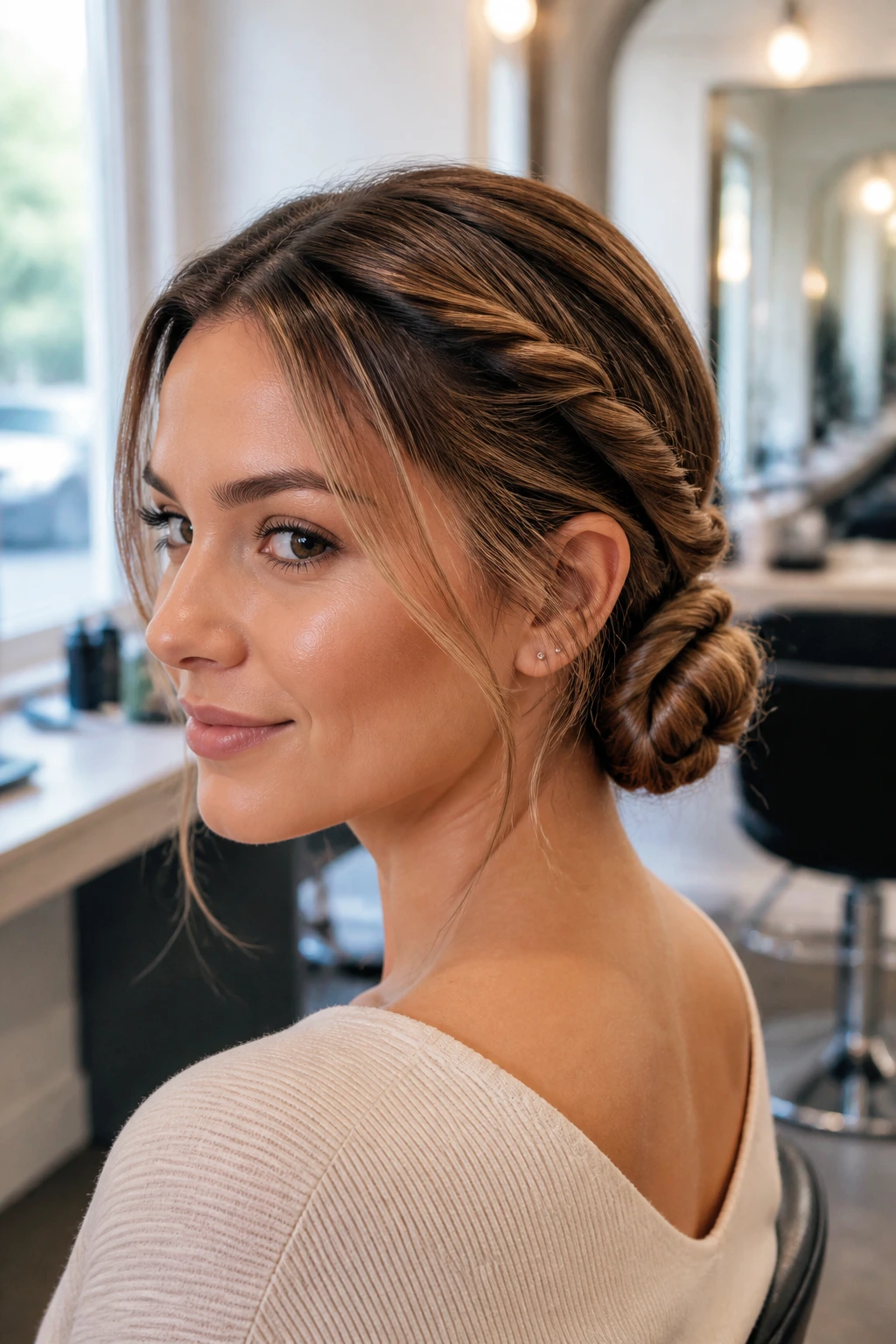
A double-twist low bun gives you structure in a way that feels gentler than a single wrapped coil. You twist two side sections back, then bring them together into a bun at the nape.
The separate twists create visual texture, which means you don’t need a lot of accessories to make it feel finished. I like this on medium and thick hair because the overlapping lines keep the bun from looking bulky. Fine hair can wear it too, though a little root texture helps the twists stay put.
The style works best when the twists are smooth at the start and softer at the ends. That little contrast keeps it from reading too tight.
22. Satin Ribbon Bun
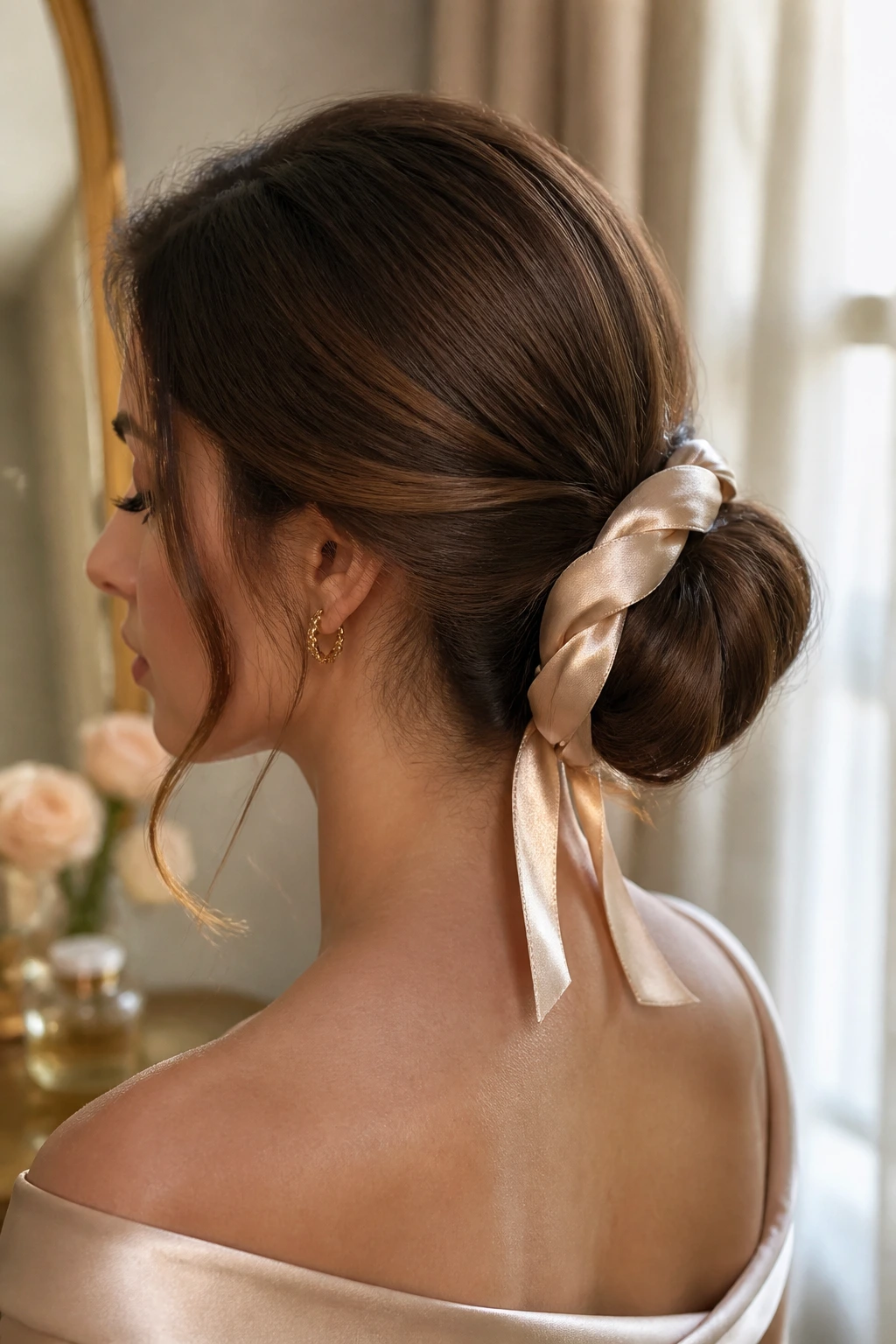
A satin ribbon bun is one of the simplest ways to make an updo feel dressed up without making it heavier. Tie the ribbon around a low bun, let the ends trail a little, and keep the rest of the hair controlled.
The ribbon should feel like part of the shape, not a last-minute decoration. Choose a shade that either matches the outfit or sits one tone deeper. Bright contrast can work, but for a soft polished look I usually prefer something quieter — ivory, blush, black, or a muted jewel tone.
This style is especially useful when your bun itself is very clean and you want one graceful focal point. The ribbon gives the eye something to land on.
23. Woven Low Knot
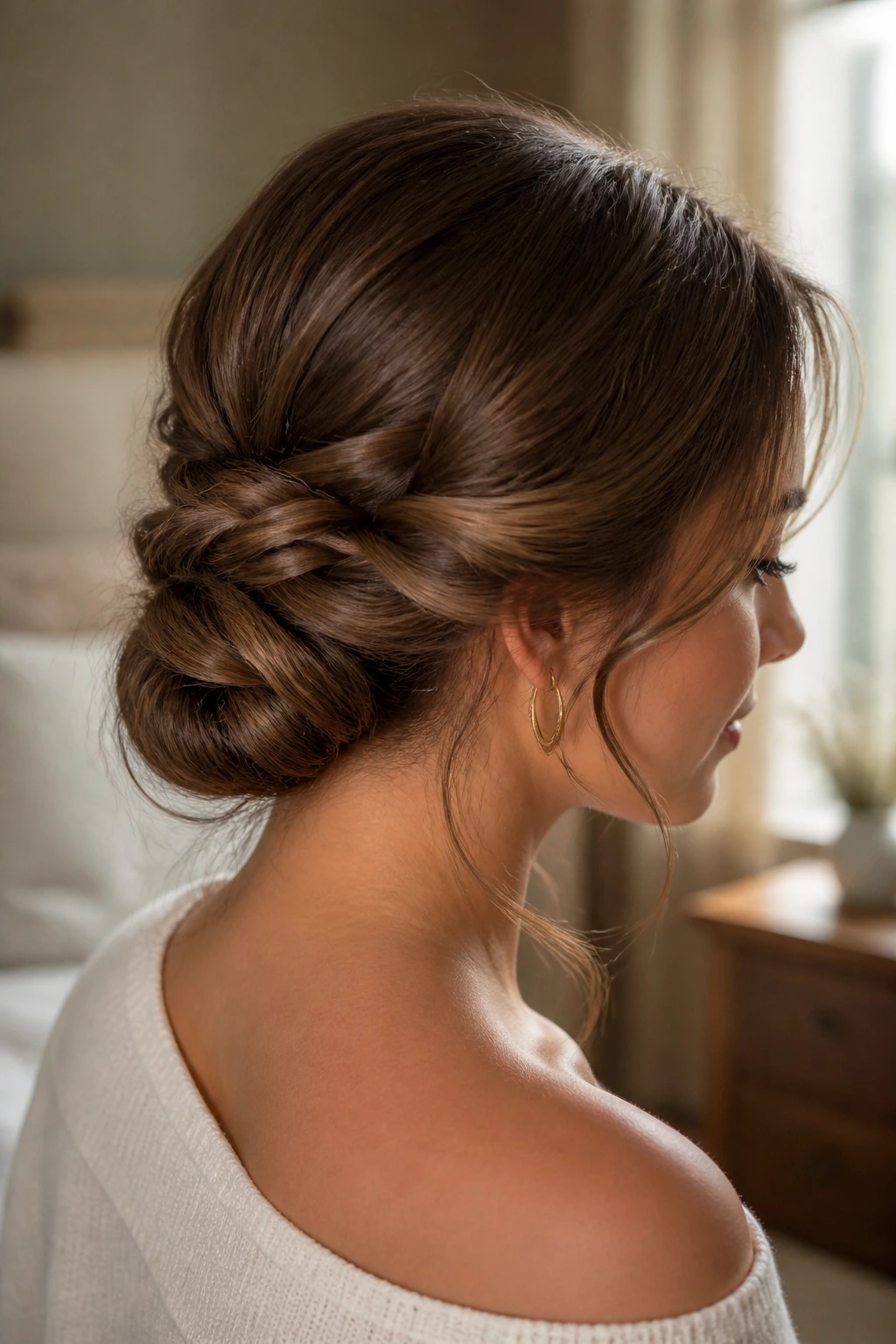
The woven low knot has a handmade feel that still reads refined. Hair sections cross over each other in a pattern before they disappear into the knot, so the surface has more depth than a plain bun.
That woven texture is what gives the style its softness. It breaks up the solid shape just enough to keep it from feeling stiff. I like it on layered hair because the shorter pieces can hide in the weave instead of sticking out.
Keep the knot low and round. If the woven sections get too loose, the style starts to lose its clean outline. A little tension goes a long way here.
24. Center-Parted Sculpted Bun
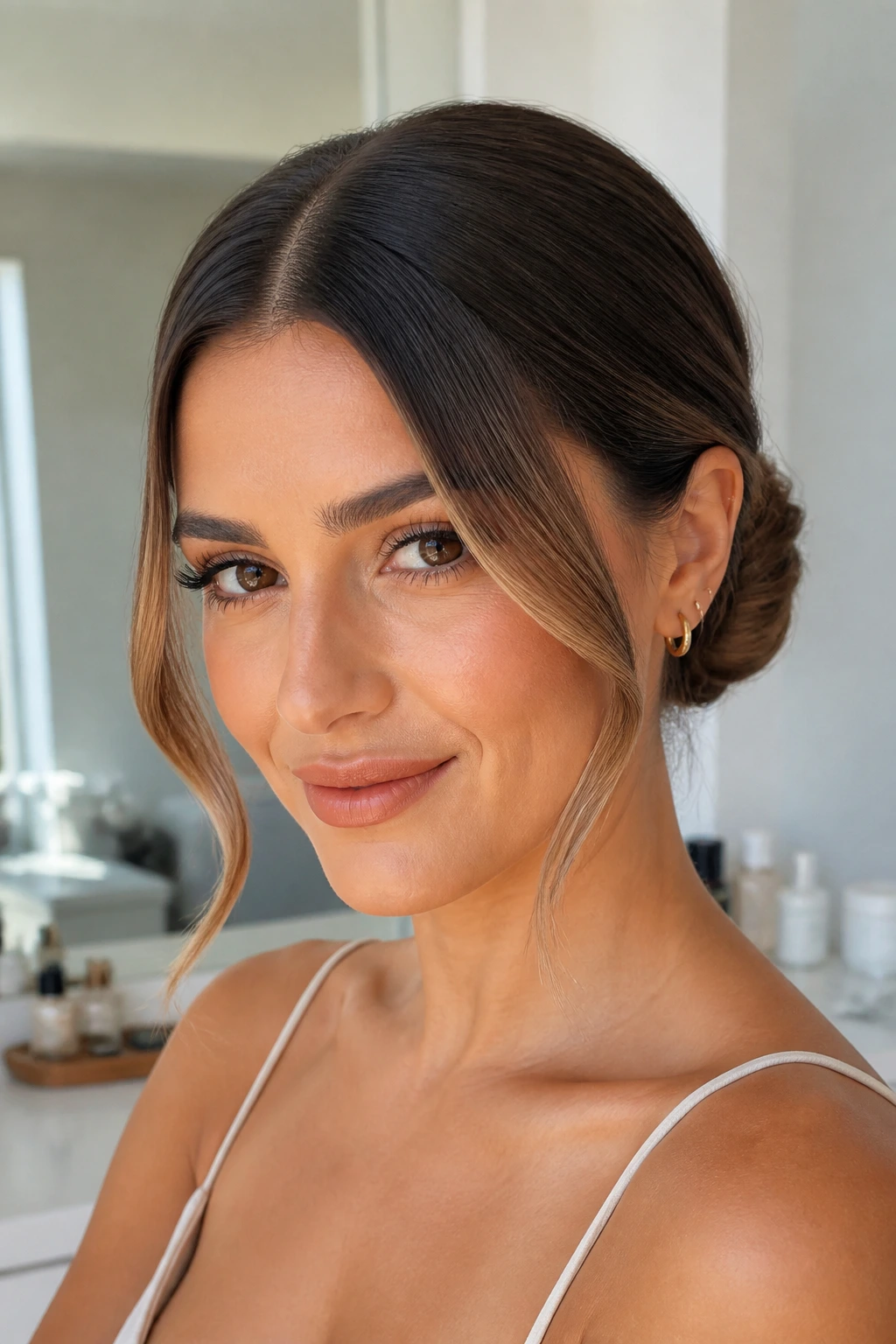
A center part can look very sharp, which is exactly why this bun works when you want a modern polished finish. The key is to keep the part neat and the bun sculpted, then soften the whole thing with a gentle bend at the front.
The part creates symmetry, but the bun itself should not be severe. Think smooth lines, low placement, and a base that sits close to the head. I would add a tiny bit of shine cream to the outer surface so the style reflects light without looking greasy.
This is a nice choice for strong features because it frames the face in a clean, balanced way. It looks composed without trying too hard.
25. Barretted Twist Chignon
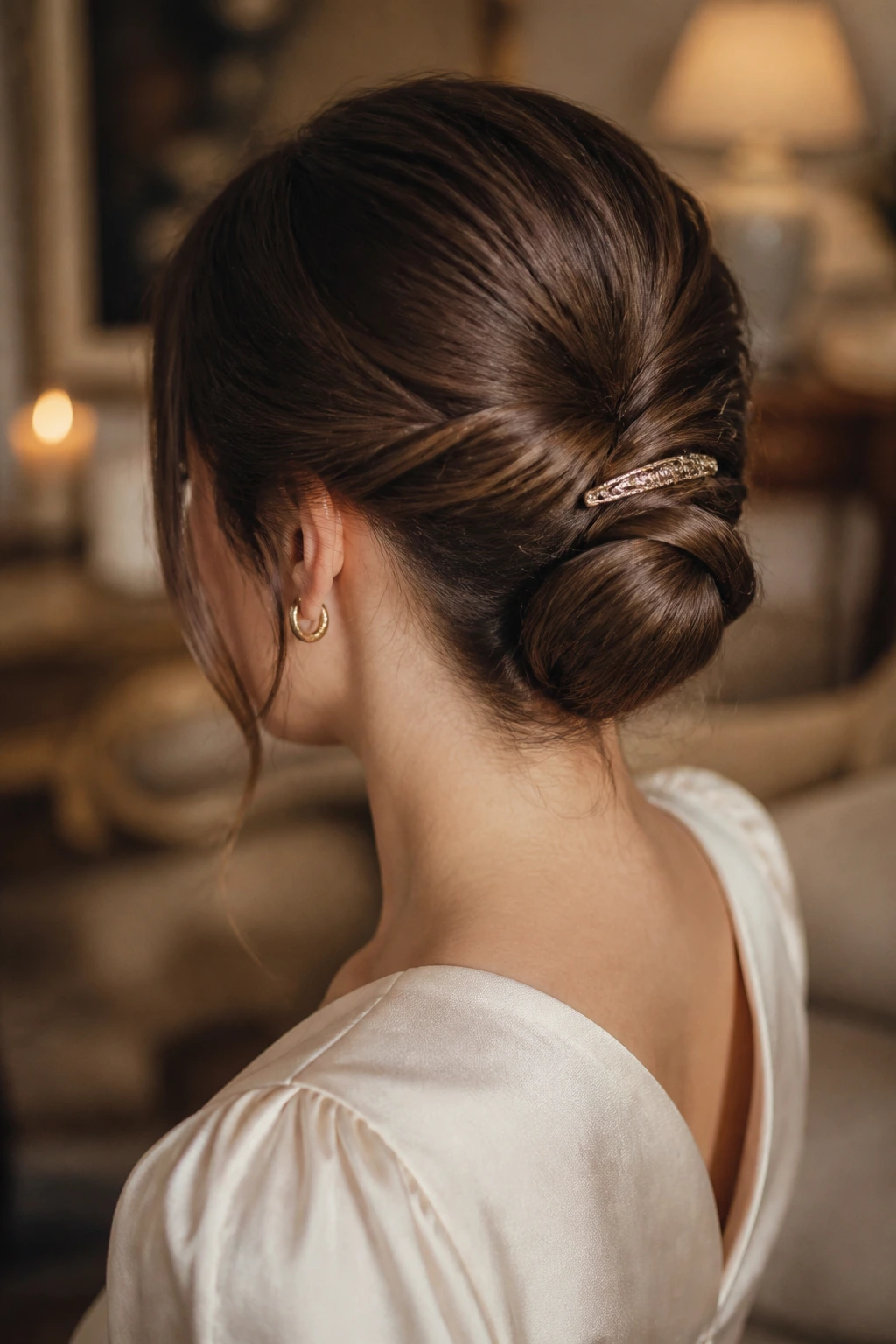
A barretted twist chignon closes the list because it’s one of the most practical polished styles you can wear. Twist the hair into a low chignon, then secure the finished shape with a decorative barrette instead of a plain pin set.
That last step matters. The barrette gives the style a visible finish point, which makes the whole look feel planned. I especially like this for medium-length hair, where a large bun can swallow the shape. The barrette keeps the back tidy and the surface soft.
Keep the twist compact and the accessory slim. A chunky clip can overwhelm the style and make it feel decorative in the wrong way. Thin metal, pearl, or tortoiseshell usually reads cleaner.
How Soft Polished Updos Actually Hold Together
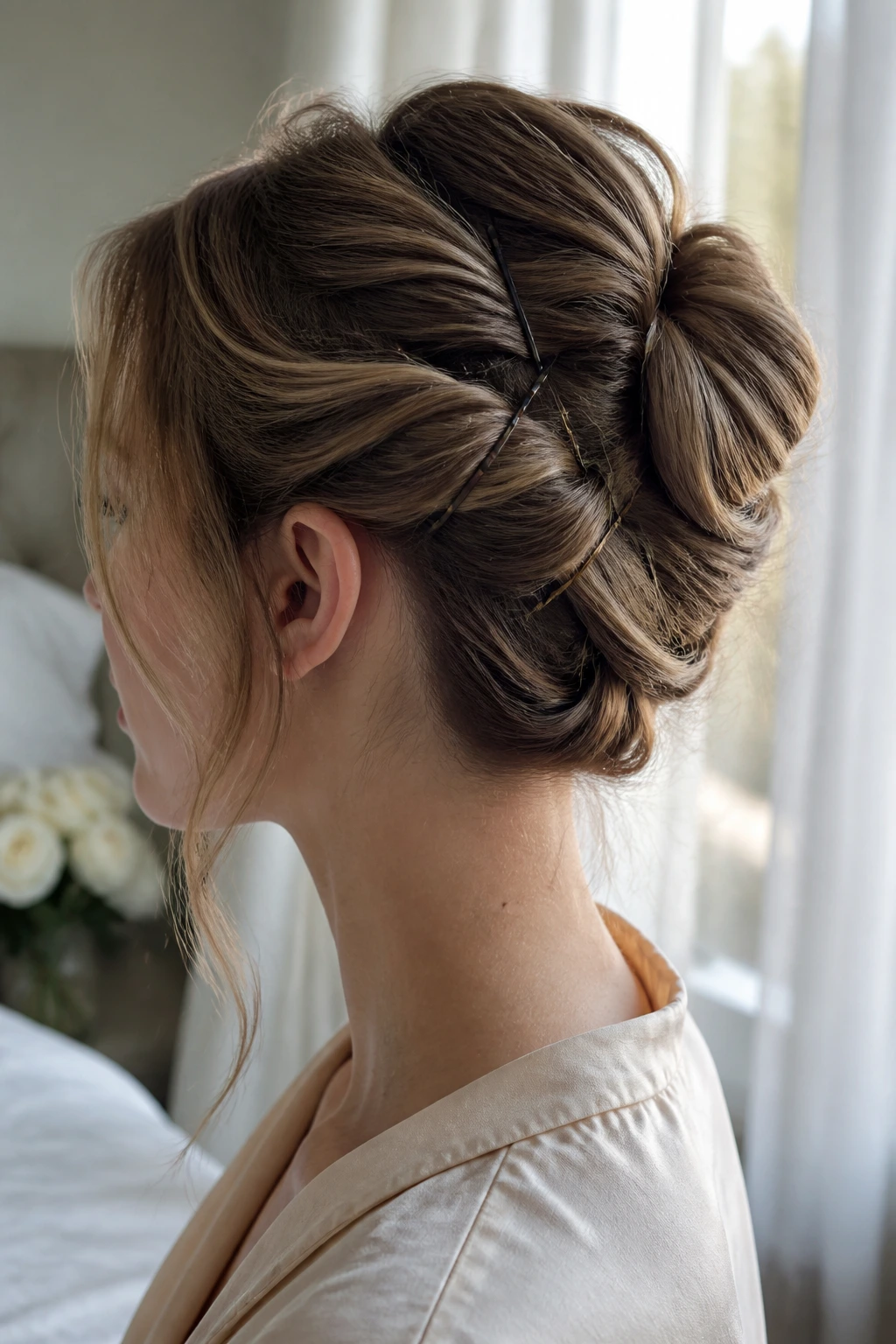
A style can look calm and still survive a full day. That’s the real job. The holding power comes from the hidden parts: the pins at the base, the sectioning before you twist, and the way you anchor the hair around the nape or crown before you let go of the outer surface.
A lot of people think shine is the deciding factor. It helps, but it is not the spine of the style. A chignon with a weak base will fall apart even if it gleams like glass. A slightly matte bun with good pins and a clean shape will outlast it every time.
The other reason these styles work is that they respect the hair’s natural movement. You are not fighting every strand into submission. You are guiding it. That is why they feel softer. That is why they last.
Essential Tools for These Hairstyles
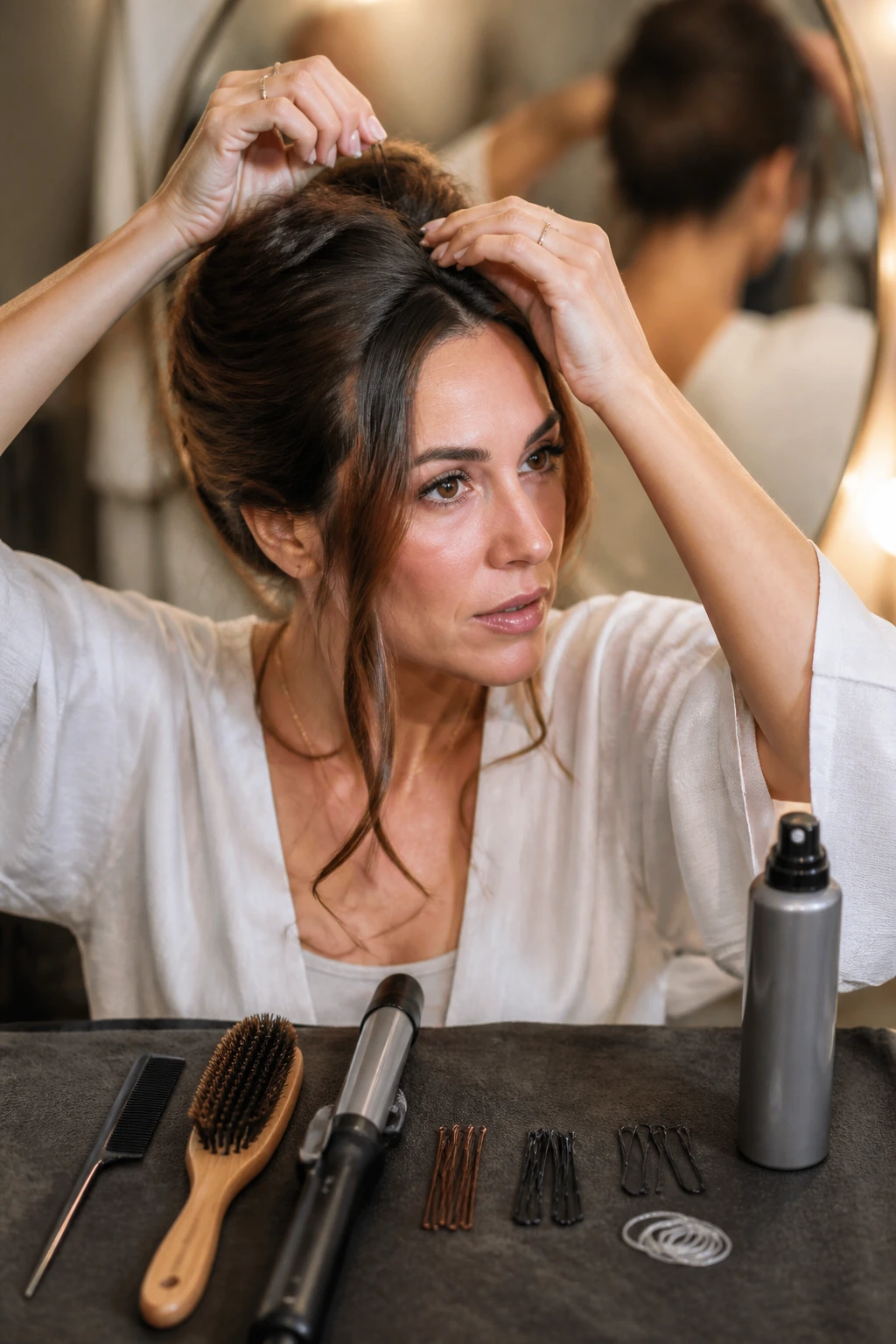
- Rat-tail comb: Use this for crisp parts, sectioning, and teasing tiny lifts at the crown.
- Boar-bristle brush: Good for smoothing the outer layer without making the hair look puffed.
- 1-inch curling iron or wand: The sweet spot for face-framing pieces and soft bends.
- Bobby pins in two shades: Keep one color close to your hair color; the others can be used where they’ll stay hidden.
- U-pins: These are the quiet heroes for buns, rolls, and French twists.
- Clear elastics: Handy for tying braid ends or securing small sections before tucking.
- Texturizing spray: Useful for fine or freshly washed hair that needs grip.
- Flexible-hold hairspray: Better than the stiff, crunchy stuff if you want movement.
- Sectioning clips: Keep loose pieces out of the way while you build the base.
- Small mirror or handheld compact: Worth it for checking the back. The front can lie to you.
Smart Product Picks for Updo Hairstyles
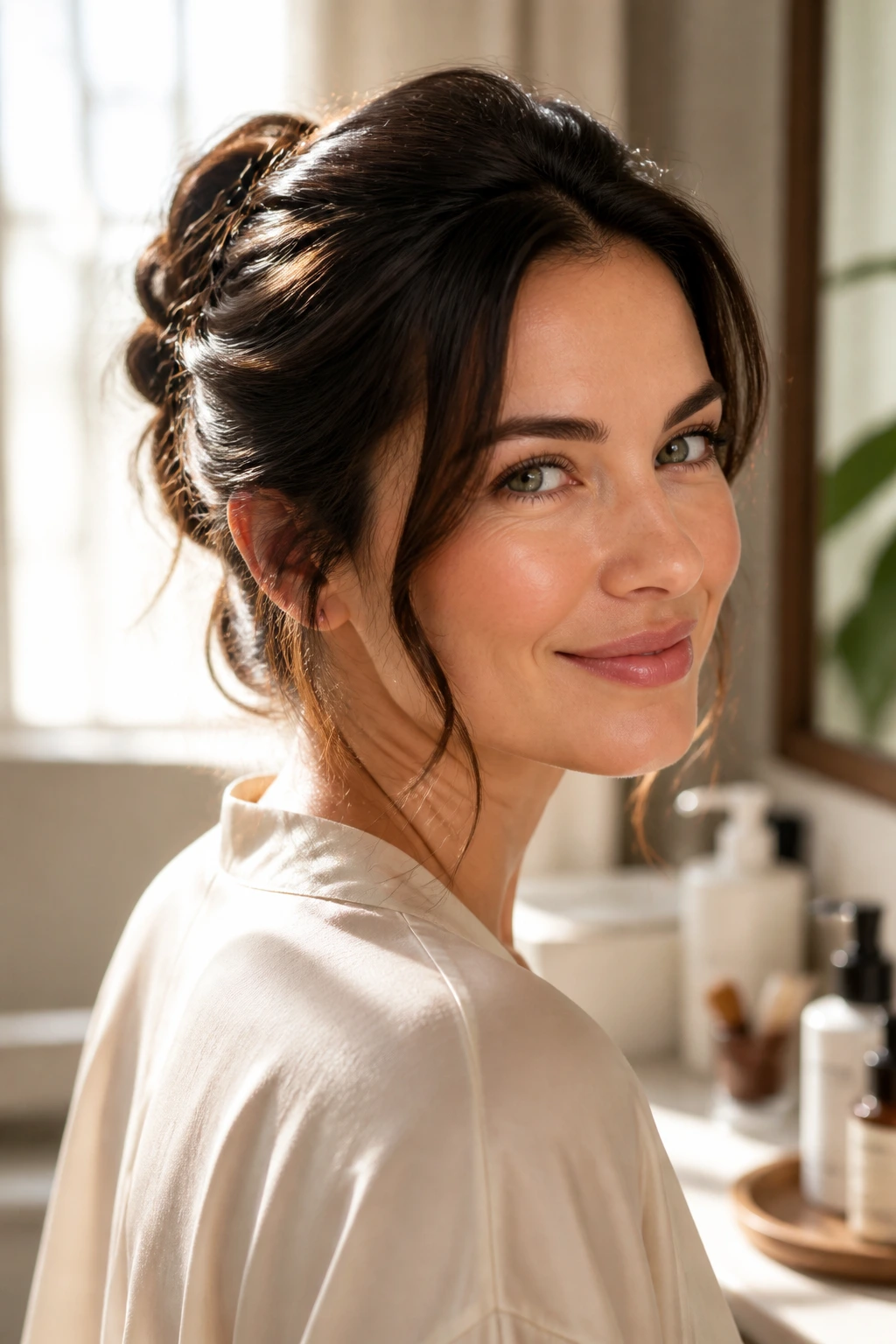
For fine hair: Reach for a lightweight mousse or root-lift spray before blow-drying. Fine strands need a little grit, and heavy oils near the scalp will flatten them fast.
For thick hair: A smoothing cream through the mids and ends helps the hair gather without puffing out. I also like a stronger elastic and a few extra U-pins, because thick hair can chew through weak holds.
For shiny finish: Use a pea-size amount of serum, warmed in your palms, and smooth it only over the surface and ends. Do not smear it near the roots unless you want the style to collapse before dinner.
For grip: Texturizing spray beats dry shampoo when you need real hold for twisting, braiding, or tucking. Dry shampoo can help, but texture spray usually gives better bite.
For accessories: Choose pins, combs, or barrettes that match the metal of your jewelry. That tiny detail keeps the whole look from feeling accidental.
How to Wear These Looks with Necklines, Earrings, and Event Dress
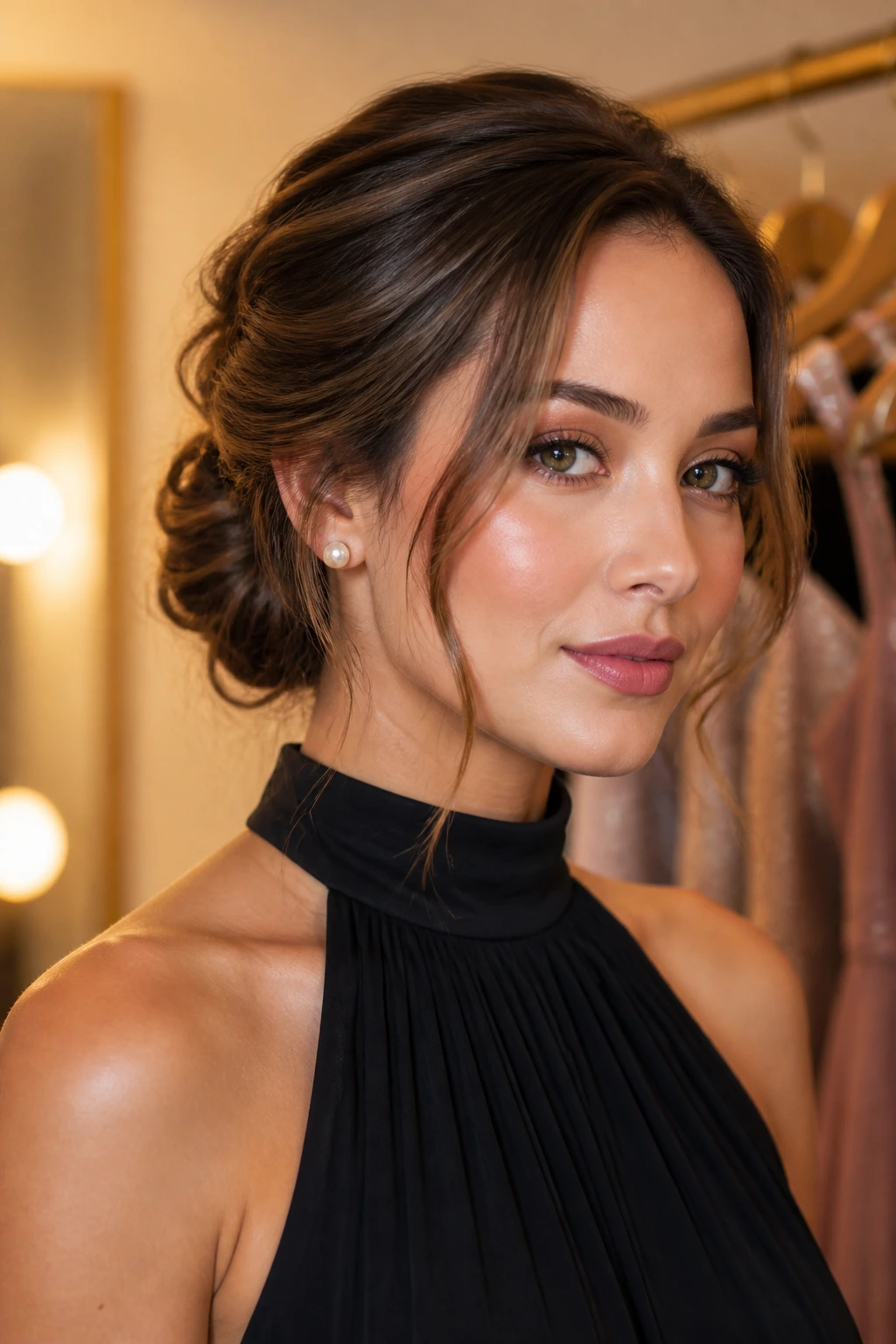
Neckline: Low buns, chignons, and tucked rolls sit beautifully with high necks, boat necks, and collared shirts because they clear the line of the fabric. A French twist or top knot gives more breathing room with open backs and wider necklines.
Earrings: If the updo already has braid detail, keep the earrings simple. Pearl studs, slim hoops, or a single drop usually work better than anything oversized. If the hair is very smooth and minimal, the earrings can carry a little more shape.
Occasion fit: A center-parted sculpted bun or French twist feels sharp enough for formal wear. A braided halo or pearl-pin bun lands in softer territory, which is useful for daytime events, showers, dinners, and anything where you want the hair to feel dressed but not severe.
Accessory pairing: One barrette, one ribbon, or one hair comb is usually enough. Pile on too many accents and the softness disappears. The best accessory is the one that looks like it belongs there, not the one that announces itself first.
Extra Polish Without the Helmet Effect
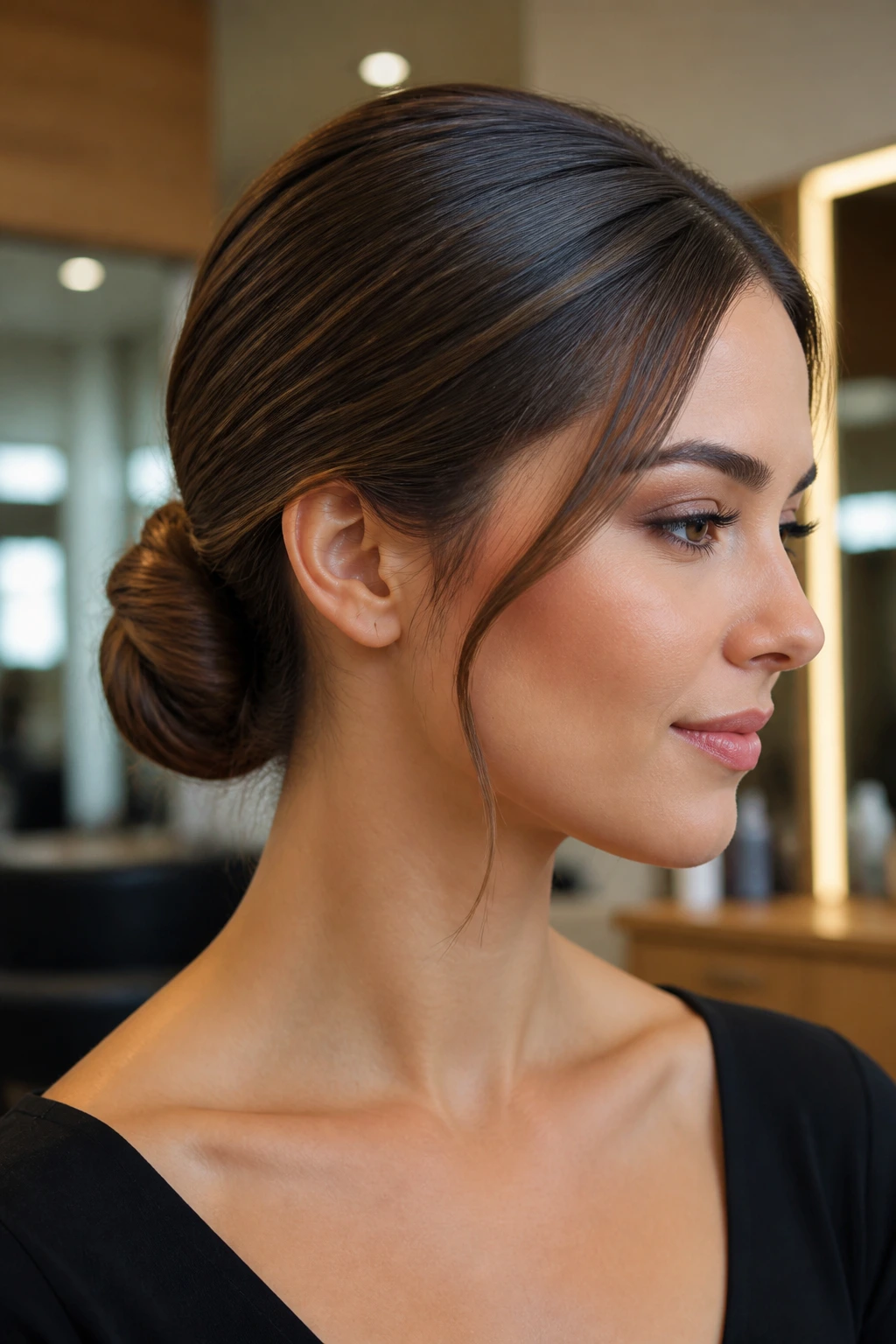
Sleekness boost: Smooth the roots with a boar-bristle brush before you pin anything. That keeps the base controlled without flattening the entire style into the head.
Texture boost: If the hair is too slippery, rough it up slightly at the mid-lengths with texturizing spray, then let it sit for 30 to 60 seconds before you twist. That tiny pause makes the hold much better.
Customization: Swap a center part for a deep side part, or trade a plain bun for a braid-wrapped version. Small changes alter the mood faster than most people expect.
Serving suggestions: Curl the front pieces away from the face, then separate them with your fingers only after they cool. If you want an even softer finish, tug the bun edges just a little after pinning so the shape looks rounded rather than packed.
Make-it-yours: Fine hair benefits from a lighter, more lifted version of these styles. Thick hair usually looks better when the bun is slightly lower and the pins are spread farther apart. Curly hair can keep more texture at the front and still look polished if the outline stays neat.
Keeping Your Updo Fresh Overnight and Into the Next Day
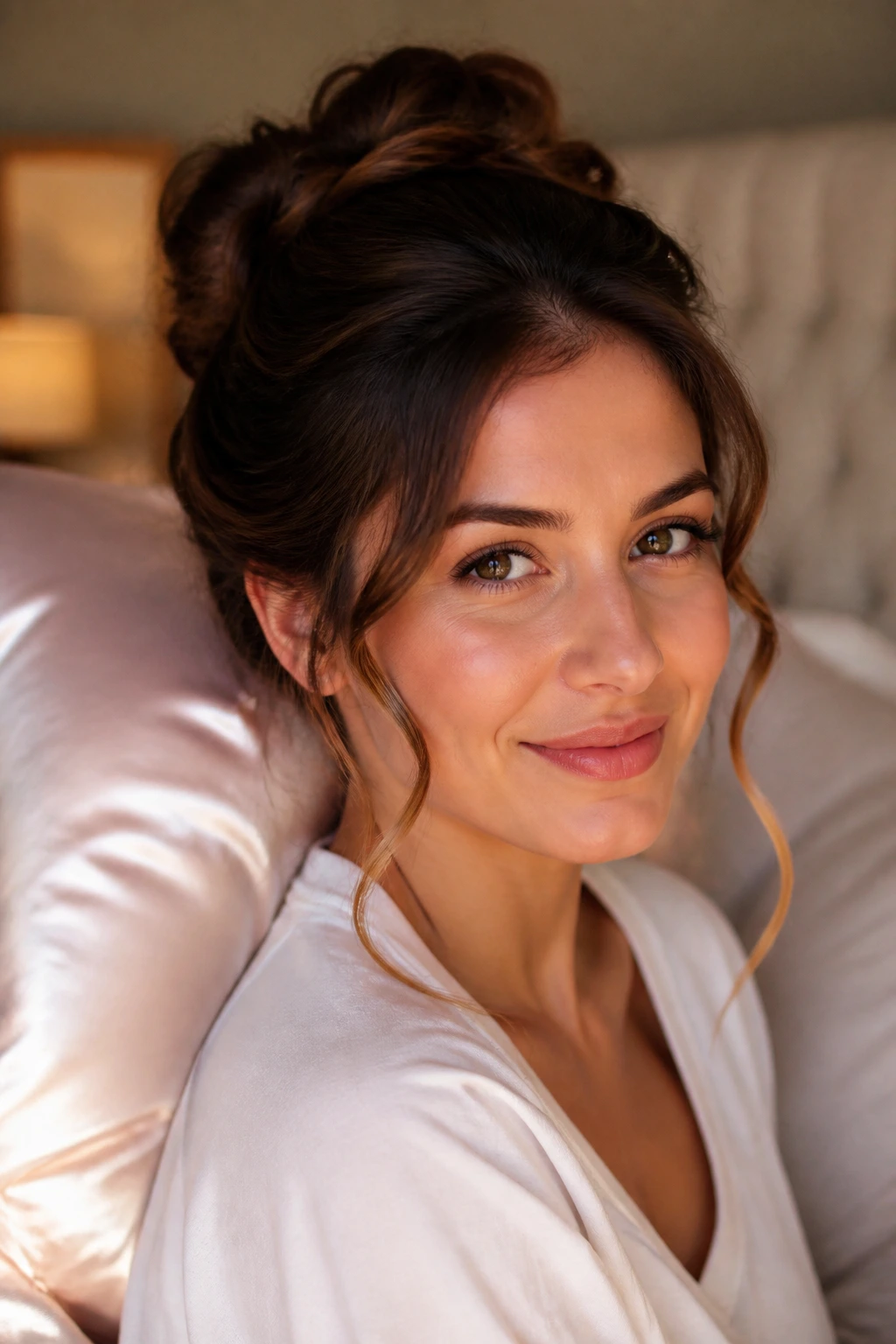
A soft polished updo can last longer than people give it credit for, but it needs a little care once the event is over. If you plan to wear the style for a full day, expect the front pieces to loosen first. That is normal. The base usually survives longer than the face-framing sections.
For overnight preservation, sleep on a satin pillowcase or wrap the hair loosely in a silk scarf if the style is not too tall. Don’t crush the bun flat under your head. If you need the shape to last into the next day, remove any decorative pins, then secure the bun with one or two hidden U-pins before bed.
In the morning, refresh with a small mist of water or a tiny bit of leave-in spray on your palms. Smooth the frizz, then re-pin only the pieces that shifted. If the front sections were curled, touch them up with a 1-inch iron for 5 to 10 seconds each. You do not need to rebuild the whole thing unless the base actually came apart.
Styles with braids, knots, and rolls usually keep their shape better than very loose buns. The trade-off is that they may need a little more finger-combing when you refresh them. I’d rather fix one bend than start from scratch.
Adaptations for Fine Hair, Thick Hair, Short Layers, and Curly Texture
Fine-Hair Cushion Bun: Use mousse, blow-dry with lift at the roots, and choose styles that lean on twists or loops rather than oversized buns. Fine hair needs structure, not bulk.
Thick-Hair Low Coil: Divide the hair into two or three sections before you shape the bun. That keeps the weight under control and stops the style from feeling bulky at the nape.
Short-Layer Tuck: Use the layered pieces as soft framing instead of trying to force every strand into the same knot. A tucked roll, French twist, or low chignon usually hides shorter layers better than a high bun.
Curly Texture Halo: Leave some of the curl pattern visible at the front and in the braid or twist. Curly hair reads polished when the outline is controlled, not when every curl is flattened.
Humidity-Ready Finish: Choose a style with a secure base and fewer loose ends, then finish with flexible-hold spray rather than heavy lacquer. Humidity attacks soft pieces first, so the tighter interior matters.
Common Mistakes That Make Updo Hairstyles Look Stiff
Pulling the hair too tight at the hairline. The symptom is an updo that looks harsh before you even leave the house. The fix is simple: leave a fraction more lift at the roots and soften the edges with a comb, not your palms.
Using too much spray too early. If you lock the style before shaping is finished, the hair gets crunchy and the pins slip less than you think. Shape first, spray last.
Leaving the front pieces too thick. Big tendrils can swallow the face and make the style feel heavy. Keep the face-framing sections slim and curl them away from the cheek.
Ignoring the back view. A style can look clean in the mirror and messy from behind. Check the back with a handheld mirror before you walk out the door.
Placing the bun too high for the outfit. A high knot with a high neckline can feel crowded around the neck. Move the shape lower when the clothing already has a lot going on.
Using the wrong pins for the job. Tiny pins for a heavy bun will not hold; giant pins visible on the surface will spoil the finish. Match the pin to the hair density and hide them in the twist or coil.
Frequently Asked Questions
How do I keep a soft polished updo from falling apart?
Start with a base that’s actually secure: elastic first, then pins, then decorative pieces if you’re using them. If the style is heavy, anchor it in more than one place at the nape so the weight doesn’t pull on a single point.
Can these updos work on shoulder-length hair?
Yes, especially the loop-and-tuck roll, Gibson tuck, side roll, and faux bob tuck. Shoulder-length hair usually does better with styles that use folding and pinning instead of big wrapping.
Do I need dirty hair for these styles?
Not dirty, but not squeaky fresh either if your hair is very slippery. Second-day hair often gives the best grip. If your hair is newly washed, add texturizing spray or a little mousse so the pins have something to catch.
What if my layers keep poking out?
That usually means the base is too loose or the layers were not smoothed in before pinning. Tuck shorter pieces into the twist or bun with a fine-tooth comb, then pin them flat to the head before you finish the outer shape.
Which style is fastest when I’m short on time?
The wrapped ponytail bun, low chignon, and knotted nape bun are the quickest once you know the motion. They need fewer section changes than braids or rolls, and they still look finished.
Can I wear a soft polished updo with curly or coily hair?
Absolutely. The goal is not to erase texture; it’s to control the outline. Keep the crown and sides neat, let the curls show in the braid or twist, and pin the shape where the hair wants to sit naturally.
How much hairspray is too much?
If the hair feels crunchy before you leave the bathroom, you’ve gone too far. Use enough to tame flyaways and hold the surface, then stop. Soft polished styles live or die by movement.
What’s the easiest way to hide bobby pins?
Insert them with the wavy side down toward the scalp and slide them into a seam, twist, or overlapping section. If you can see the pin, it usually means the pin is sitting on top of the style instead of inside it.
Soft Shape, Clean Lines
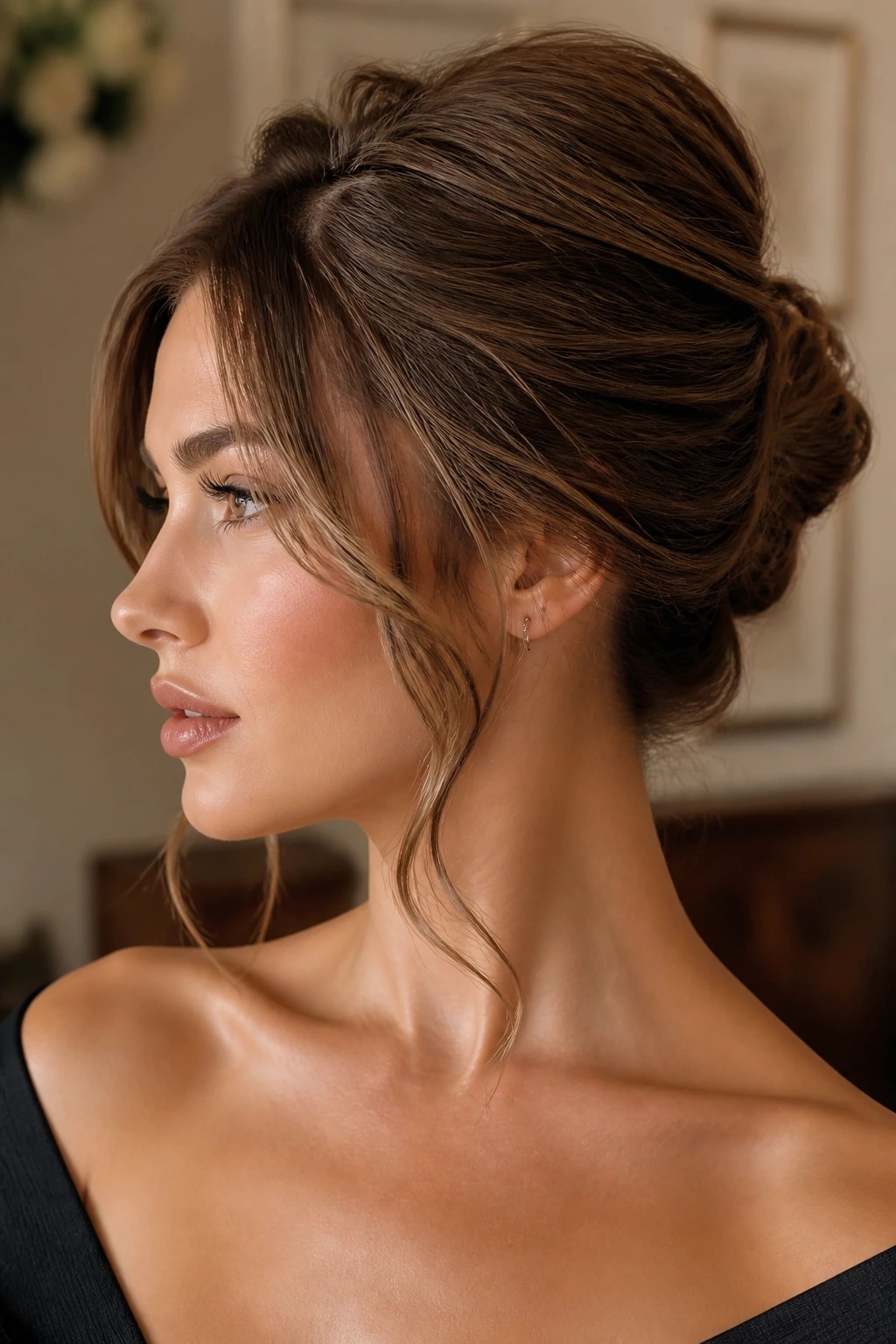
A polished updo does not need to feel strict. The best ones have a little bend at the face, a secure base at the nape, and enough softness around the edges that the whole style still looks like hair, not architecture.
That is the lane these 25 styles live in. Some lean classic, some feel romantic, and some bring a sharper line, but they all share the same useful idea: keep the structure quiet and let the finish breathe. When you get that balance right, the style looks deliberate from morning to night — and that is the part people notice first.
