



A layered lob can look expensive or awkward in the same haircut appointment, and the difference usually comes down to one thing: where the weight sits. Put the layers too high and the ends puff out like a triangle. Leave the cut too blunt and it hangs there like a shelf, all line and no life.
Layered lob haircuts work because the length gives the hair room to bend, swing, and tuck, while the layers stop it from feeling heavy around the jaw and shoulders. That sweet spot sits somewhere between the chin and the collarbone, where hair can move without losing its shape. The best versions do not scream for attention. They shift when you turn your head.
I keep coming back to this cut because it solves a very specific problem: you want softness, but you do not want your hair to collapse into shapeless fluff. The 22 ideas below cover the versions that do that well — feathered, blunt with hidden movement, shaggy, polished, thick-hair friendly, and the kind of lob that still behaves after a rough blow-dry and a late morning coffee.
Why These Layered Lob Haircuts Keep Showing Up in Good Salon Chairs
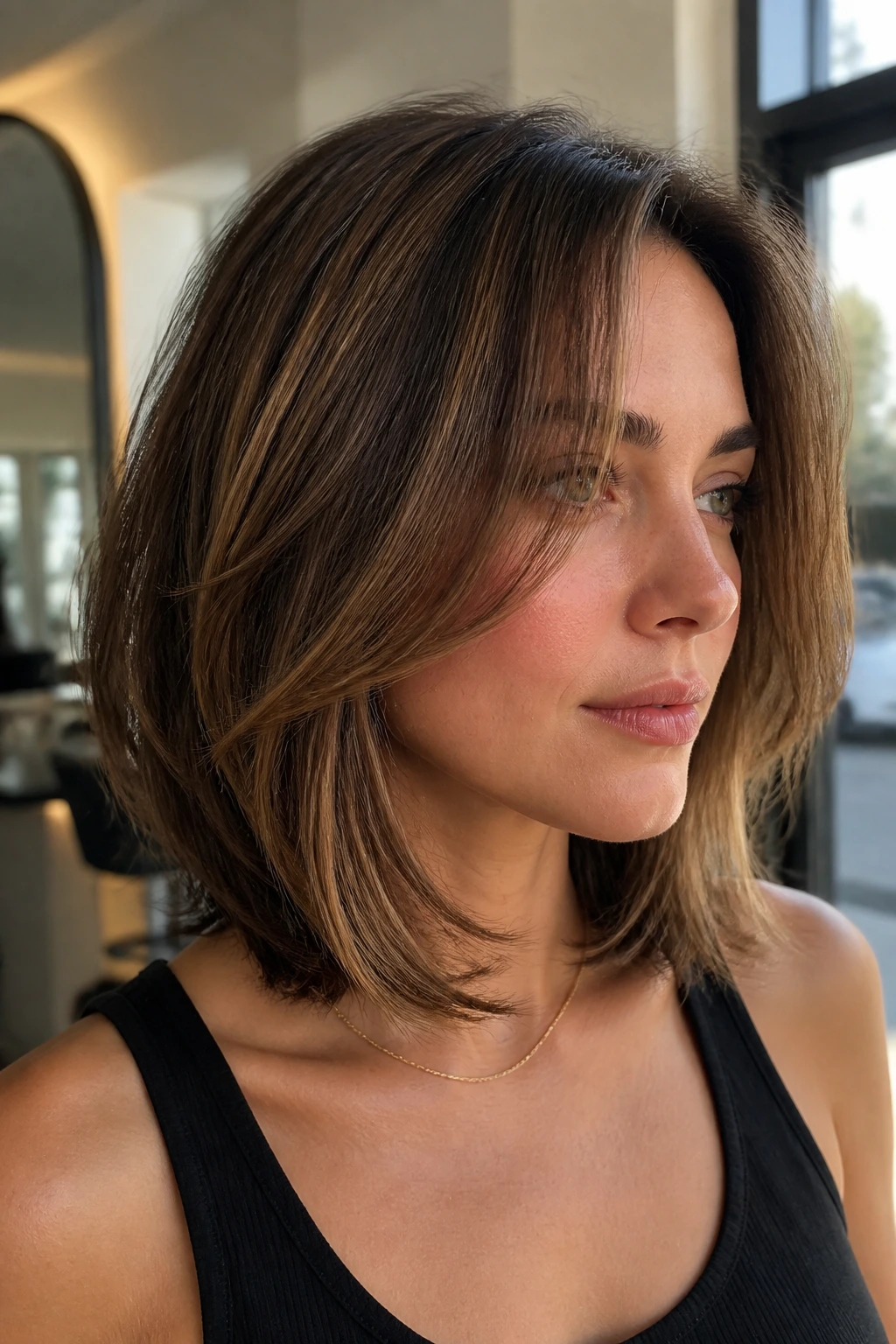
-
Movement Without Losing the Line: The best layered lob haircuts keep a clean outer edge while removing weight from the inside, so the ends still hang with purpose instead of flicking out randomly.
-
Easy Shape, Not High Maintenance: A collarbone-length cut can air-dry into a bend or take a round brush and turn into a smooth swing, which means the style works even on rushed mornings.
-
Texture-Friendly: Straight hair gets a little lift, wavy hair gets control, and thick hair loses that heavy, shelf-like feeling around the shoulders.
-
Grow-Out That Does Not Look Messy Overnight: When the perimeter stays intact and the layers are longer, the cut can soften out for several weeks before it starts looking shaggy.
-
Face-Framing Options: A few inches changed at the front can sharpen a jawline, soften a square face, or make a round face look longer without changing the whole haircut.
-
Room for Personal Style: You can wear the same base cut sleek, broken up, tucked behind one ear, or bent with a wand. The bones stay the same. The mood changes.
1. Feathered Collarbone Lob
This is the lob I picture when someone wants movement but still likes a clean outline. The ends skim the collarbone, and the layers are feathered low enough that the cut moves when you walk, not when a fan hits it. It feels soft around the face without looking wispy at the bottom.
What makes it work is restraint. The perimeter stays solid, while the interior gets small, careful slices of weight removed with point cutting or soft scissor work. If you have medium-density hair, this shape tends to sit well on its own. If your hair is thick, it keeps the silhouette from turning into a helmet.
The part that matters
Ask for the shortest layers to sit below the cheekbone if you want the movement to stay gentle. Anything much higher can make the crown too airy and push the shape upward. That is not the look here.
A quick bend with a 1.25-inch round brush or curling iron is usually enough. The feathering should look like the hair decided to soften, not like it was chopped into pieces.
- Best for: Medium to thick hair that wants softness without a shaggy finish.
- Styling note: Bend the front pieces away from the face, then brush them through so the curve stays loose.
- Watch out for: Layers that start too high at the crown. That turns the whole cut puffy.
2. Curtain-Bang Lob With Long Front Layers
Want movement right where people notice it first? This is the answer. Curtain bangs split the front in a soft center part, then melt into longer face-framing pieces that land around the cheekbones or lip line. The result is airy, not heavy, and the front of the haircut does a lot of visual work.
The charm here is that the bangs do not read like a hard fringe. They slide into the rest of the lob, which keeps the style feeling grown-out in a good way. On straight hair, they add bend. On wavy hair, they make the whole front look more deliberate.
How I’d wear it
If your face is round or heart-shaped, a curtain-bang lob can pull the eye downward and lengthen the shape a bit. If your hair is dense, keep the longest pieces substantial so the front does not thin out into ribbons.
A small round brush and a quick flip away from the face are enough. You do not need a tight curl. You want that easy split at the center and a soft sweep at the sides.
3. Invisible-Layer Lob for Straight Hair
Straight hair does not need obvious choppy layers to move. In fact, too much texture can make it look thinner than it is. This version hides the layers underneath the top surface, so the outer line stays sleek while the inside loses some weight.
That hidden structure is the whole point. The hair still falls in a clean sheet when it is freshly blown out, but it stops feeling like one flat curtain. If your hair hangs pin-straight and refuses to bend, this is one of the smarter cuts to ask for.
How to ask for the cut
Tell your stylist you want internal layers rather than a visibly chopped surface. If you say “a lot of layers,” you may end up with more texture than you wanted. The better phrase is simple: keep the outside clean, remove weight inside.
This style looks best when the ends are blunt enough to hold shape. A tiny bevel at the bottom can help, but don’t let the perimeter get too thin. Thin ends on straight hair look tired fast.
4. Blunt Lob With a Soft Interior
This one is for the person who likes a crisp edge but still wants the hair to move when it swings across the shoulders. The outer line is blunt, almost sharp, but the inside has enough shaping to stop it from sitting like a block.
It is a very good fix for fine hair. A blunt edge makes the ends look fuller, and the hidden layers keep the whole cut from becoming stiff. The movement is subtle, more of a swish than a wave, and that subtlety is the appeal.
The cut also photographs differently in real life than it does in a salon mirror. Under normal light, the edge looks clean and the interior gives it lift. Under bright overhead lighting, the layered movement shows up in the sides more than the back, which is exactly where you want it.
A tiny bend under the chin, made with a flat iron or blow-dry brush, keeps the look polished without making it old-fashioned.
5. Razor-Soft Textured Lob
There is a time for scissors, and there is a time for a razor. Thick, slightly wavy hair often takes to a razor-soft lob because the tool breaks up the ends and takes away that blunt, heavy feel. The cut reads airy and piecey, not chopped.
But this one needs a careful hand. On fine hair, too much razor work can make the ends look frayed. On dense hair, though, that softer edge can be exactly what stops the cut from ballooning at the sides.
What to watch for
The best razor-soft lob still keeps a shape. It should not look like someone attacked the ends and walked away. You want deliberate texture at the bottom, plus longer layers through the interior so the hair moves instead of frizzes.
This is one of the better cuts if you like a lived-in finish. A bit of dry texture spray, a finger comb, and a small bend with a wand can make it look done without looking fussy.
6. Loose Wave Lob With Long Ribbons
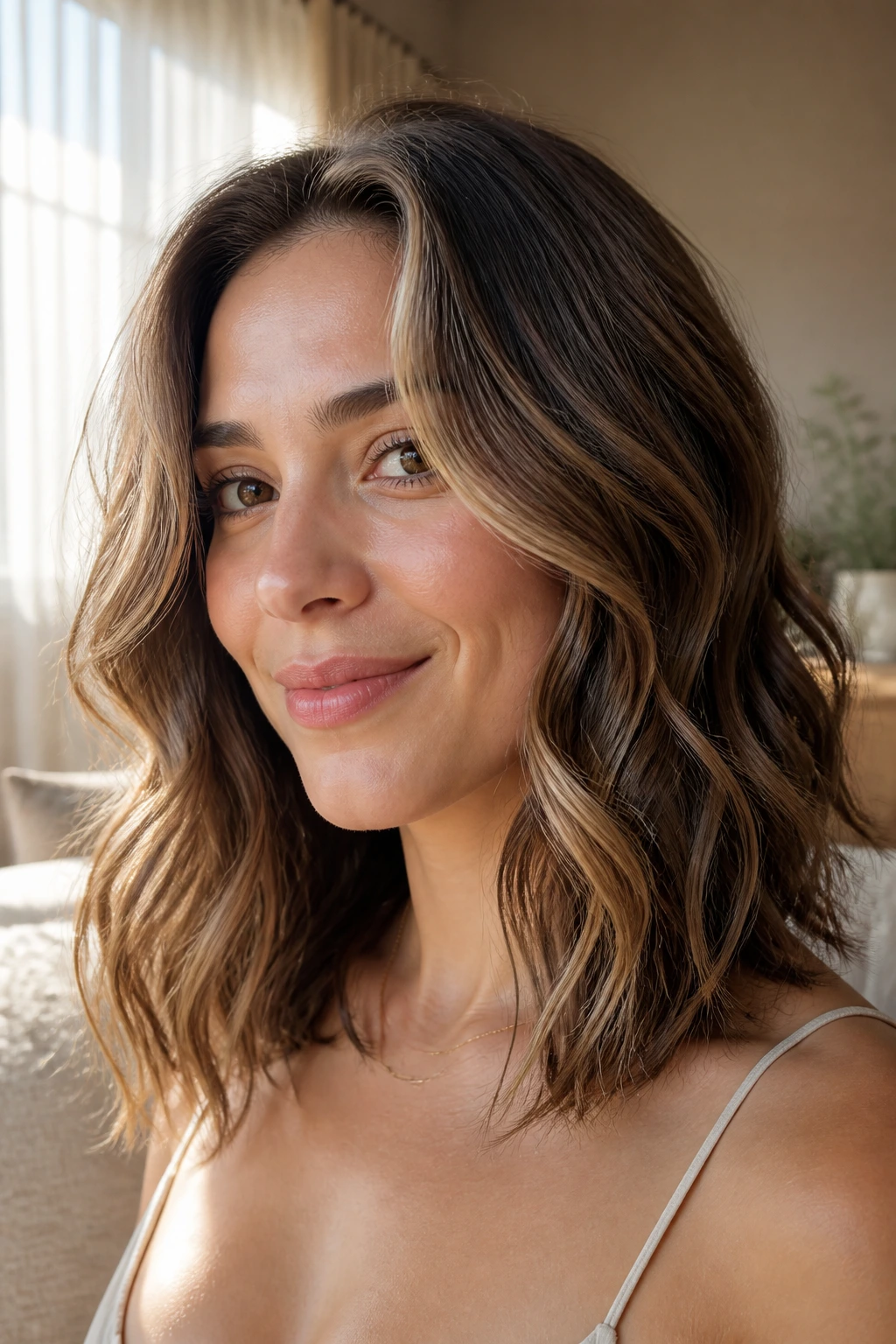
This version is all about broad, slow bends rather than tight curls. The layers are long enough that the wave falls in ribbons, and that ribbon effect is what gives the cut its softness. It looks especially good when the front pieces sweep back from the face.
I like this shape for medium-density hair that holds a bend but does not need a heavy layered structure. The whole cut feels light, almost swingy, and the movement shows up most when the hair is tucked behind one ear or draped over a shoulder.
How to style it
A 1.25-inch wand is the sweet spot. Wrap the sections away from the face, leave the last inch or two out, then brush through once the hair cools. That keeps the wave from turning into a curl.
A tiny bit of texture spray at the mid-lengths helps the ribbons hold. Do not soak the ends in product. The point is softness, not grit.
7. Side-Part Lift Lob
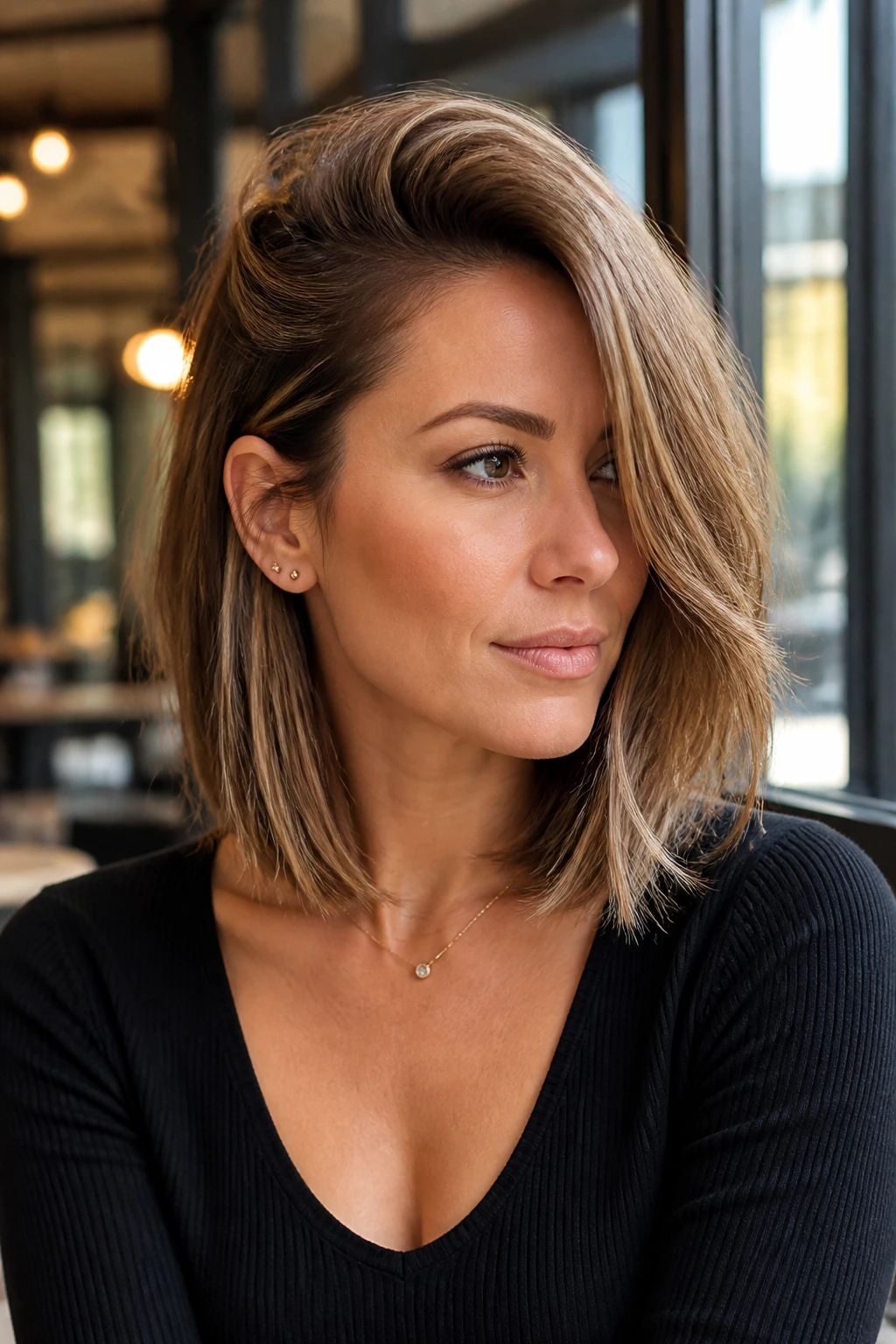
Flat roots can make a good lob look sleepy. A deep side part changes the whole mood in one move. The longer side gains lift at the crown, the shorter side opens up the face, and the layers fall in a way that feels more dimensional.
This style is especially useful if your hair tends to lie too close to the head. The side part creates a built-in rise at the top, so you get volume without teasing or heavy product. That matters because too much product will flatten the movement you are trying to build.
The part matters
Ask for layers that support the side part rather than fighting it. The front should have enough length to sweep across the forehead and still tuck behind the ear on the heavier side.
A root-lift spray at the part line and a round brush at the crown are usually enough. If you want more polish, bend the ends under on the long side and leave the shorter side looser. The asymmetry does the rest.
8. Cheekbone-Frame Lob
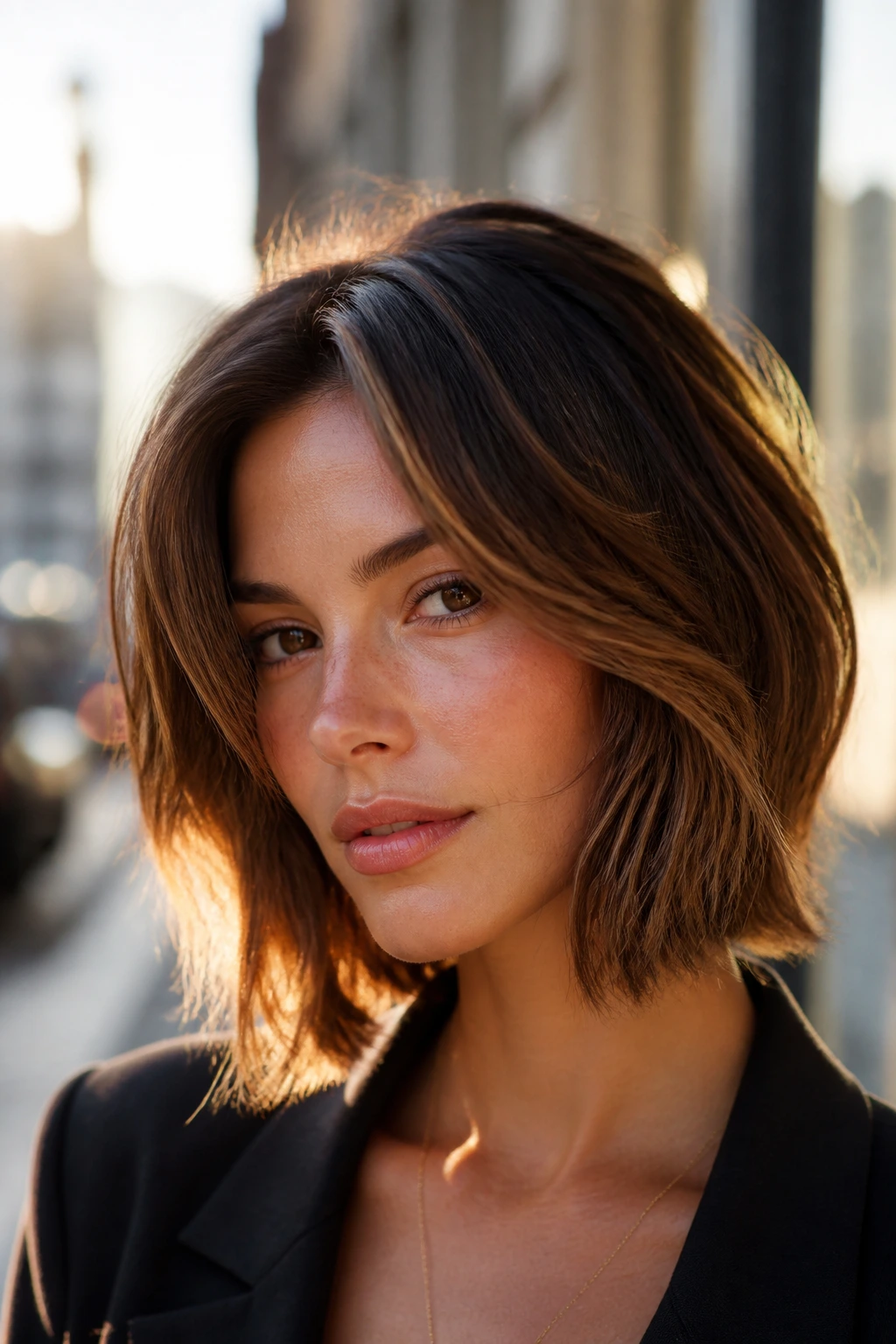
This is the lob for anyone who wants the haircut to do a little face work. The front layers start around the cheekbone, which pulls attention upward and gives the cut a lifted, airy feel. The rest stays longer and quieter.
The trick is not to start the shortest pieces too high. If they land above the cheekbone, the face frame can feel choppy. At the right length, though, the cut opens the face without stealing too much density from the sides.
It is a strong pick for round, square, or heart-shaped faces because the movement lands where the eye reads first. You get softness around the face and enough weight through the back to keep the lob grounded.
A few loose bends away from the face make this haircut shine. Nothing tight. Nothing overworked.
9. Choppy Texture Lob for Dense Hair
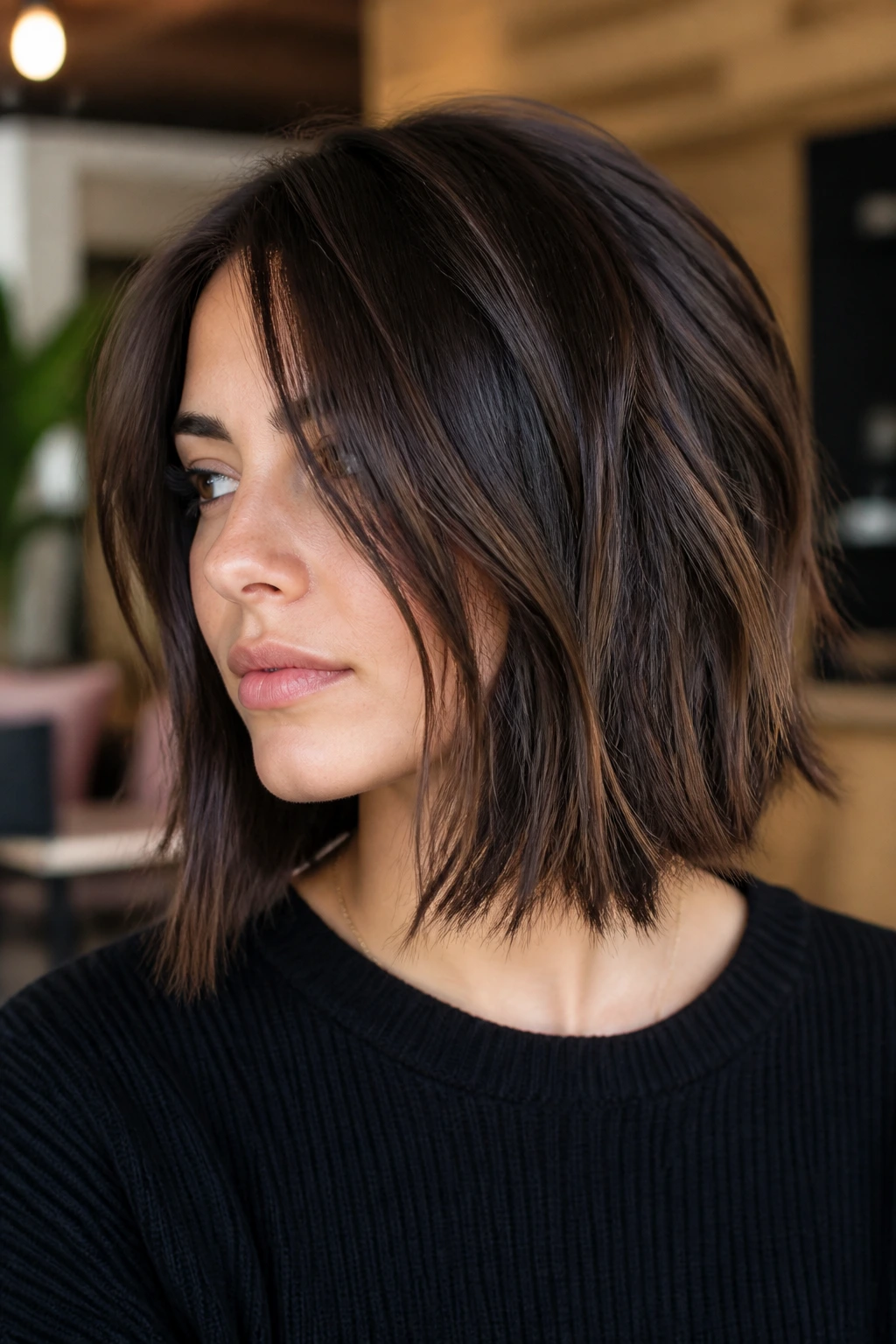
Dense hair can wear a lot of cut, but it can also go mushroom-shaped fast. A choppy texture lob breaks that heaviness apart by using uneven, deliberate layers through the sides and ends. The result is movement with a little attitude.
This is not the same thing as thinning the whole head. That mistake leaves the ends see-through and the top too full. A good choppy lob keeps enough weight at the perimeter so the shape still reads clearly from across the room.
What gives it life
The texture should look controlled, not shredded. Think point cutting, not aggressive slicing. The pieces should fall in slightly different lengths, which lets the hair swing instead of sitting as one solid block.
If you wear your hair naturally wavy, this cut can look effortless with a dab of cream and a scrunch. If you wear it straight, a flat iron bend at random sections keeps it from looking too neat.
10. Sleek Tucked Lob
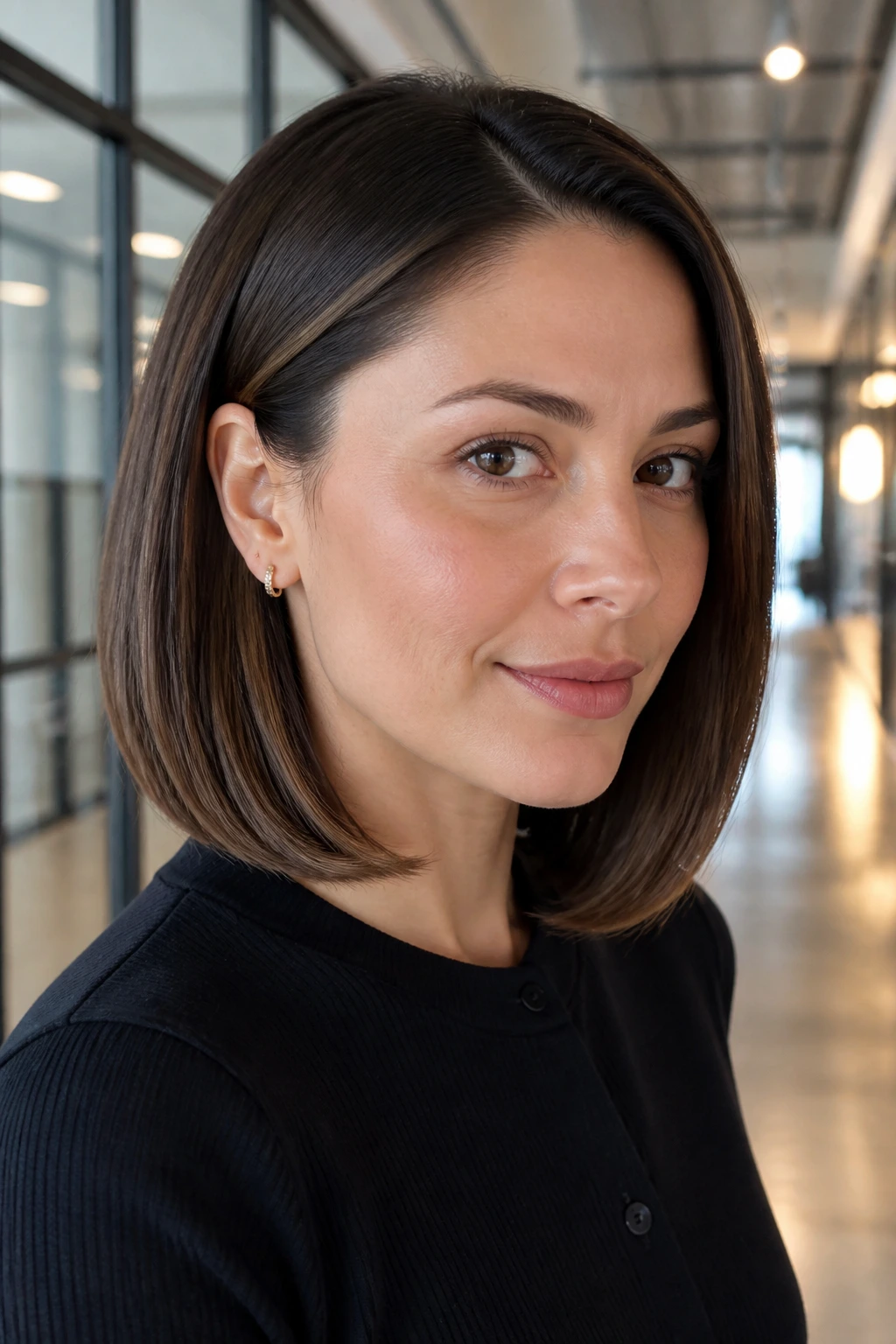
There is something satisfying about a lob that can go polished without losing softness. This one keeps the perimeter clean and the layering low-key, so it tucks behind the ears, sits under a blazer collar, and still has enough movement at the ends to avoid looking severe.
It is a good option if you work in a setting that likes neat hair but you do not want the haircut to feel stiff. The movement comes from a slight curve at the bottom and the way the front pieces move around the jaw.
A round brush or flat iron with rounded edges works well here. Bend the ends under just enough to suggest shape. If you go too far, the cut starts reading old-school. Too little, and it becomes a flat sheet.
This version loves shine. A drop of light serum on the ends — not the roots — keeps the line smooth.
11. Broken-End Parisian Lob
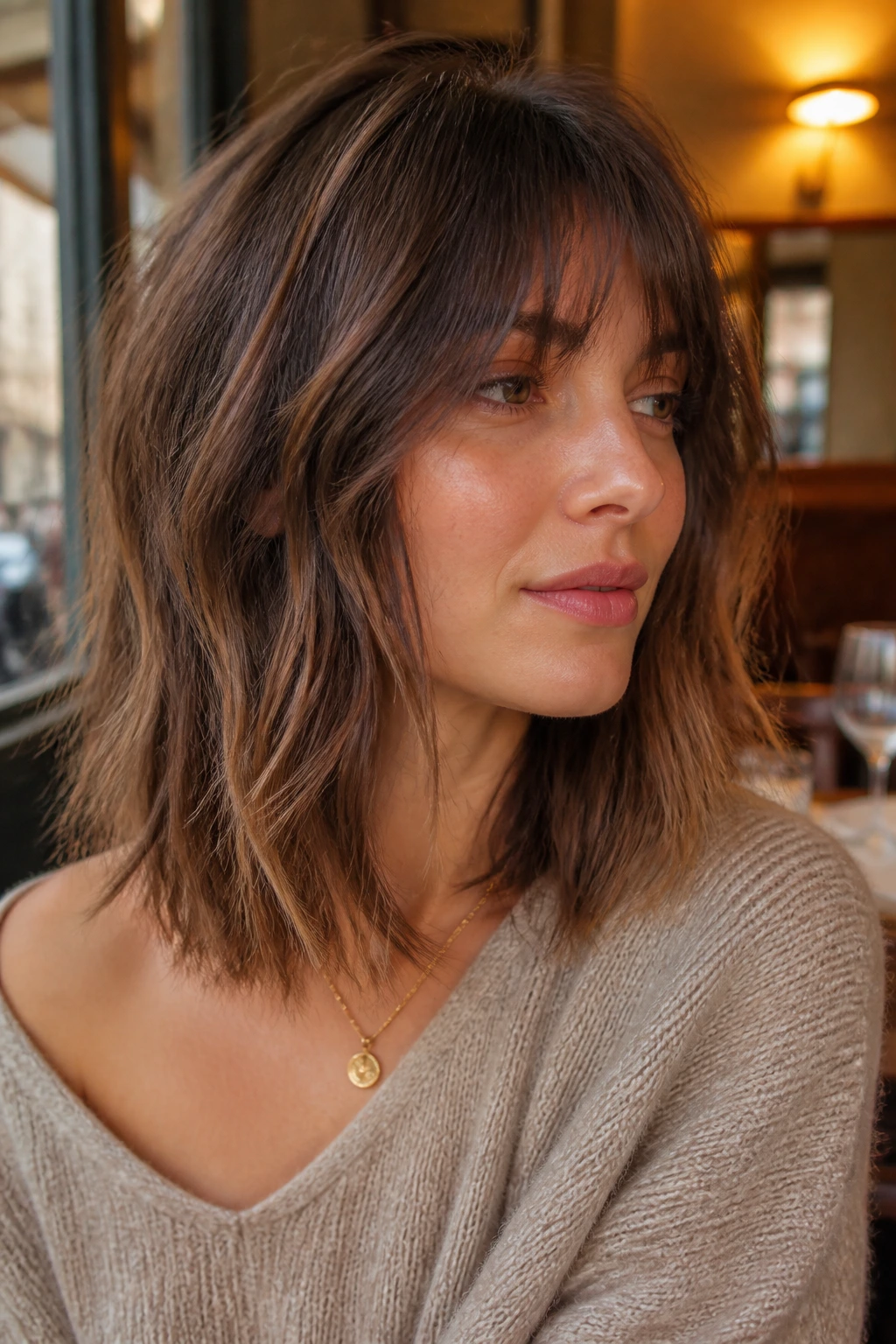
This cut has a little slouch to it, and that is the appeal. The ends are softly broken up, the layers are long, and the overall effect is relaxed without drifting into messy territory. It looks as if the hair dried on its own, even when it did not.
That undone finish comes from very light texturizing and careful styling, not from hacking the ends apart. Keep the line around the collarbone, soften the front a bit, and leave some movement in the mid-lengths. The shape should still feel intentional.
Styling note
A pea-size amount of cream through damp hair can keep this cut from frizzing, especially if your texture is a little rough at the ends. Let it air-dry or rough-dry, then bend a few front pieces with your fingers or a wand.
The result is best when the front doesn’t look identical on both sides. A little asymmetry makes the whole thing feel lived-in.
12. U-Shaped Lob With Long Layers
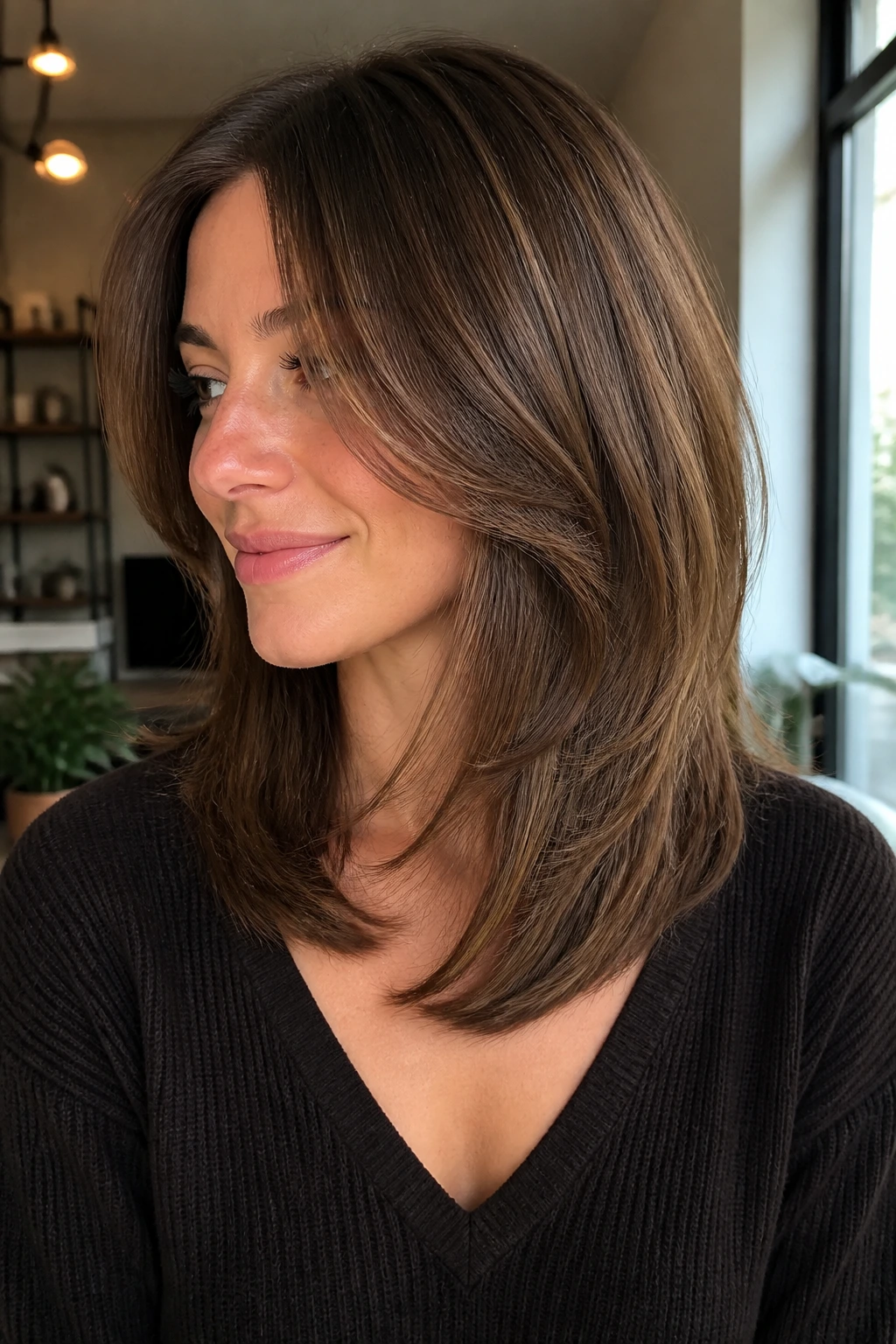
A U-shape gives a lob a softer edge than a straight cut across the back. The length curves gently, usually staying a touch shorter at the center back and longer at the front, which gives the eyes something smooth to follow. The long layers build movement inside that curve.
This shape is especially useful for thicker hair that needs direction. The curved outline stops the ends from looking blunt in a heavy way, while the long layers prevent the sides from spreading too wide. It is a good middle ground between sleek and airy.
The cut also grows out in a calmer way than a sharply angled shape. As the hair gets longer, the curve softens rather than collapsing.
A blowout with a large round brush brings out the U-shape nicely. Keep the bends loose, not curled, so the curve at the perimeter stays readable.
13. Deep Side-Sweep Lob
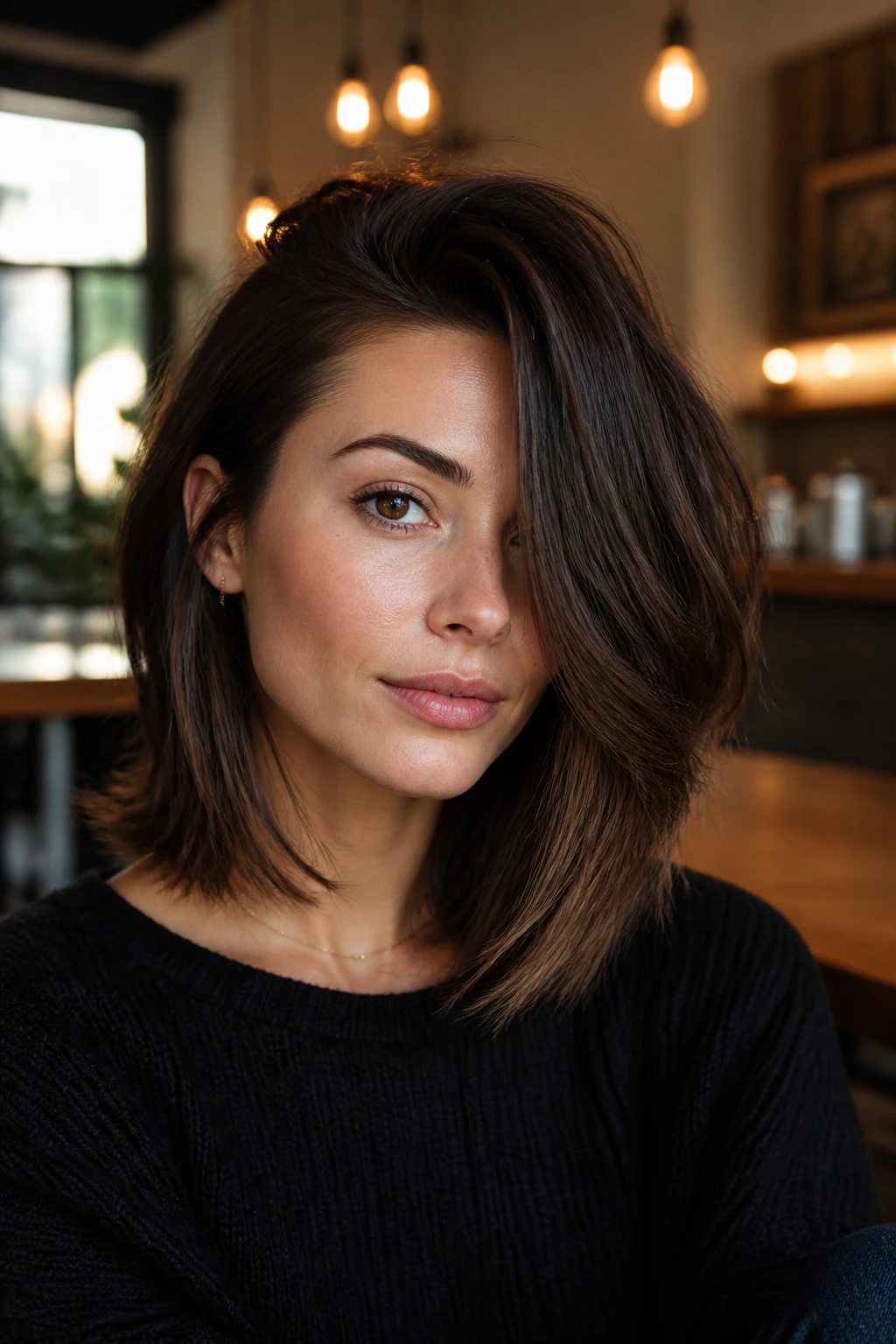
A deep side sweep changes the whole silhouette. One side falls fuller, the other side opens the face, and the layers move in a direction that feels a little more dramatic than the center-part versions. That sideways flow is what gives the haircut its energy.
If your roots go flat quickly, this is a good way to cheat some lift. The part creates height, the front length gives you something to sweep, and the back still keeps enough weight to anchor the look. It is a practical cut, but it does not look practical.
The longest front pieces should be long enough to tuck behind the ear if needed. That matters. A side-swept lob that cannot move out of the way becomes annoying fast.
Use a round brush at the roots and pull the front up and away from the face as you dry. The bend should fall softly, not in a stiff wave.
14. Bottleneck-Bang Lob

Bottleneck bangs start narrow at the center and widen out toward the sides, which gives them a softer read than blunt fringe. Paired with a lob, they pull the eye down and out, then blend into longer layers that keep the haircut light around the face.
This is a smart choice if you want fringe without giving up flexibility. You can wear the front pieces parted, swept, or brushed forward, and the cut still makes sense. The bangs carry enough shape to matter, but they do not dominate the haircut.
Why the shape works
The narrower middle keeps the forehead from feeling boxed in. The wider sides make the transition into the lob feel natural. That matters if you dislike bangs that look separate from the rest of the cut.
I would keep the rest of the lob fairly soft here. If the length is too choppy, the bangs and layers can compete with each other. Smooth interior layering lets the fringe be the star.
15. Piecey Balayage Lob
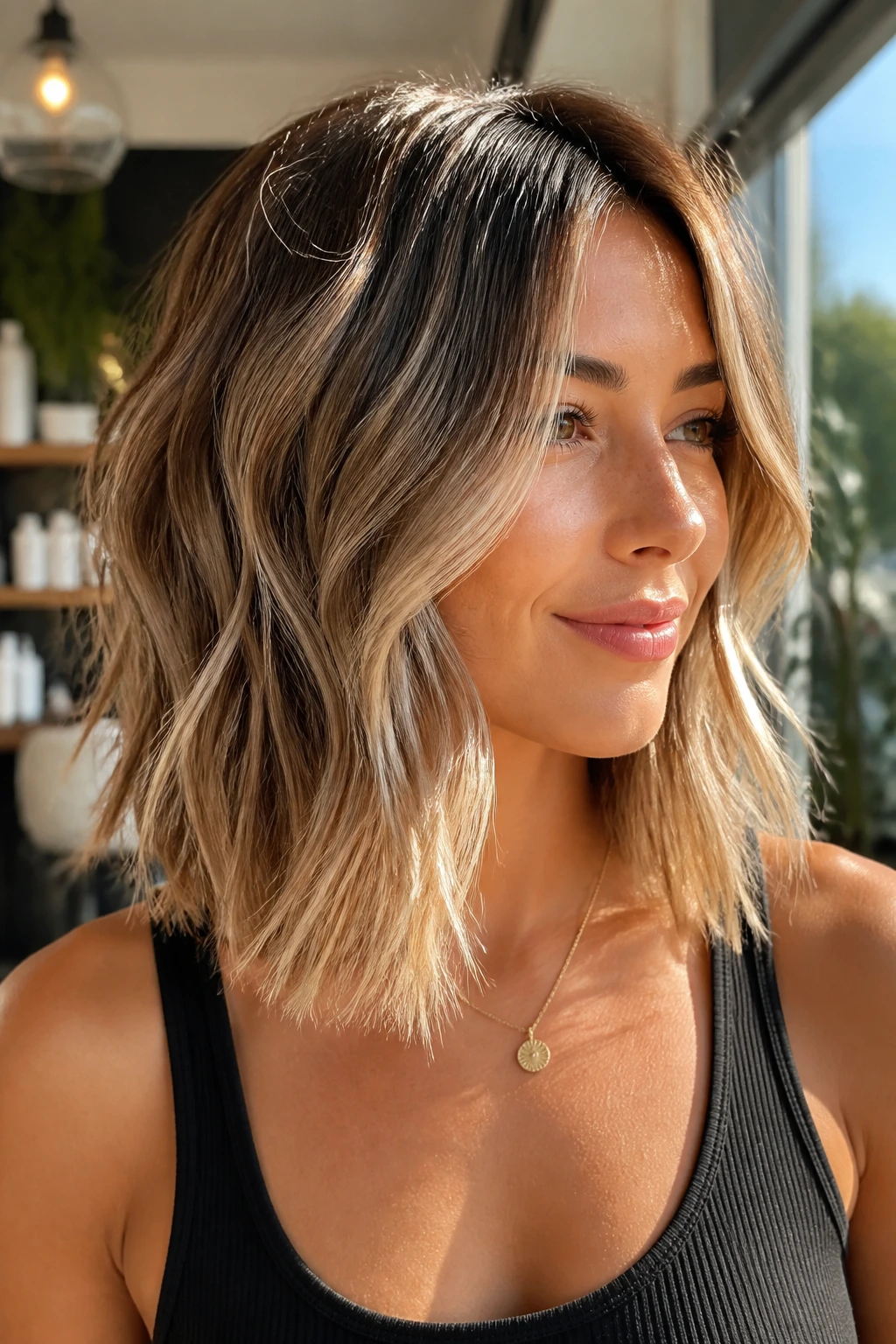
Color changes the way layers read. A piecey balayage lob uses light and shadow to show off the cut, especially when the ends are soft and the layers are long enough to catch the lighter pieces. The haircut looks more dimensional because your eye can follow the color movement.
This is one of those styles that works better in real life than in a flat photo. When the hair turns, the lighter pieces lift and the darker sections ground the cut. It gives the lob a kind of built-in motion.
Why color helps
If you already wear balayage, ask the stylist to place the brightest pieces around the face and through the ends where the cut bends. That makes the layers easier to see without forcing more texture into the haircut itself.
The styling can stay easy. A loose wave, a brush-through, and a little texture spray are enough. The color does half the work.
16. Rounded Fine-Hair Lob

Fine hair needs a careful hand. Too many short layers and the ends start looking see-through; too little layering and the cut sits flat. A rounded fine-hair lob splits the difference by keeping the edge full and using subtle graduation to support the shape.
The rounded perimeter gives the illusion of density, which is why this cut often looks better than a razor-heavy version on fine strands. You get softness around the face and movement at the sides, but the ends still look thick enough to matter.
The best thing about this shape is that it behaves when it is not styled to death. A little root lift and a small inward bend at the ends can be enough. Anything too curled starts to make the hair look shorter and thinner.
If your hair is fine but plentiful, ask for movement through the interior rather than texturizing the very bottom. That keeps the line from going sparse.
17. Air-Dry Lob for Natural Waves
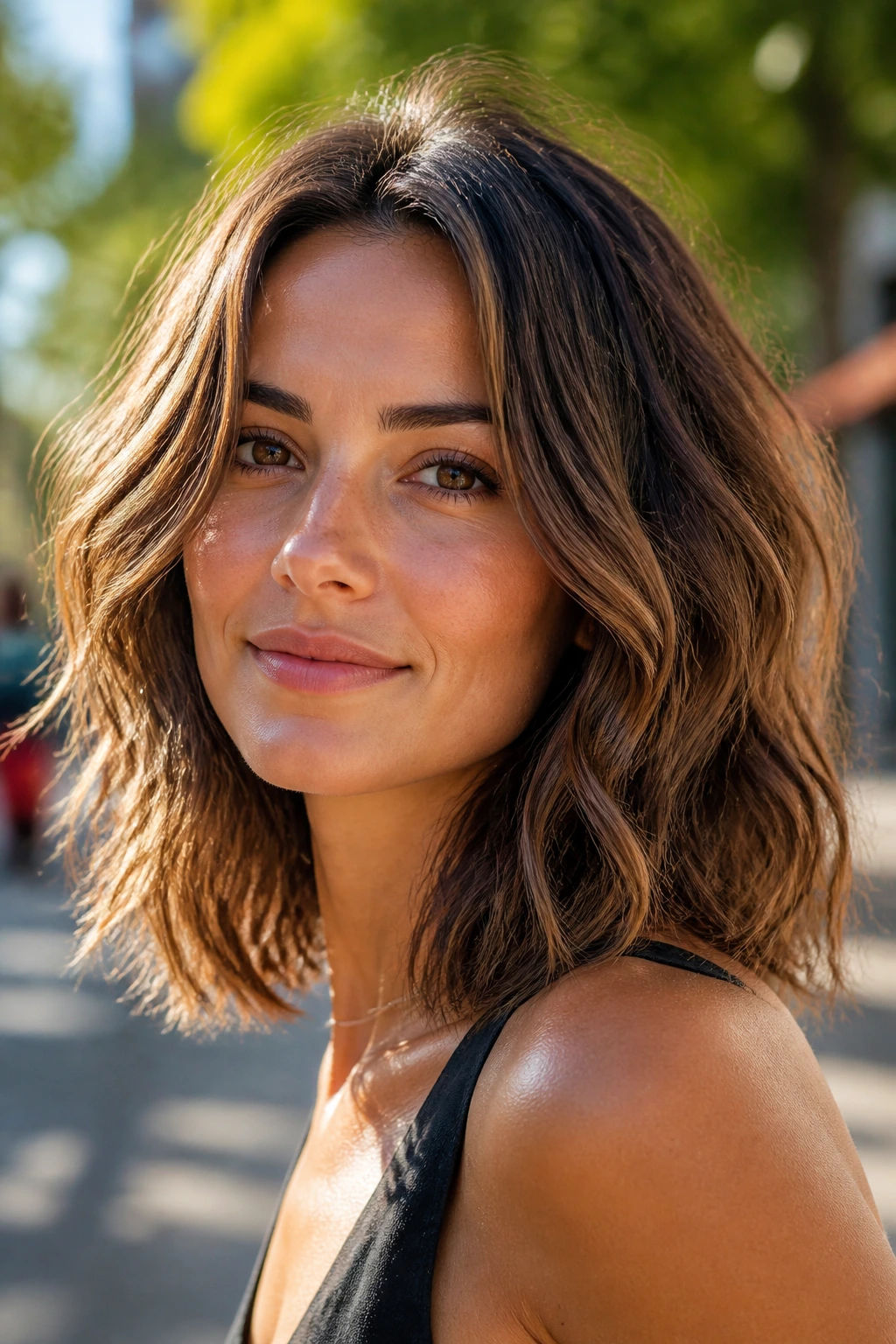
If your hair already bends on its own, do not fight it with a cut that expects pin-straight styling. This lob keeps the layers long and follows the wave pattern instead of chopping across it. The result is a shape that dries with movement instead of frizz.
The key is to preserve enough length that the waves can drop into place. Short layers can make natural wave patterns puff out at the sides. Longer layers, especially around the face and mid-lengths, let the texture fall in a smoother way.
How to let it do its thing
Work a light cream or wave product through damp hair, scrunch once or twice, and leave it alone for a while. If you like, diffuse on low heat until the roots are set and the ends feel dry but not crunchy.
This is the cut for people who want hair that looks like hair. Not a helmet. Not a curl demo. Hair.
18. Disconnected Underlayer Lob
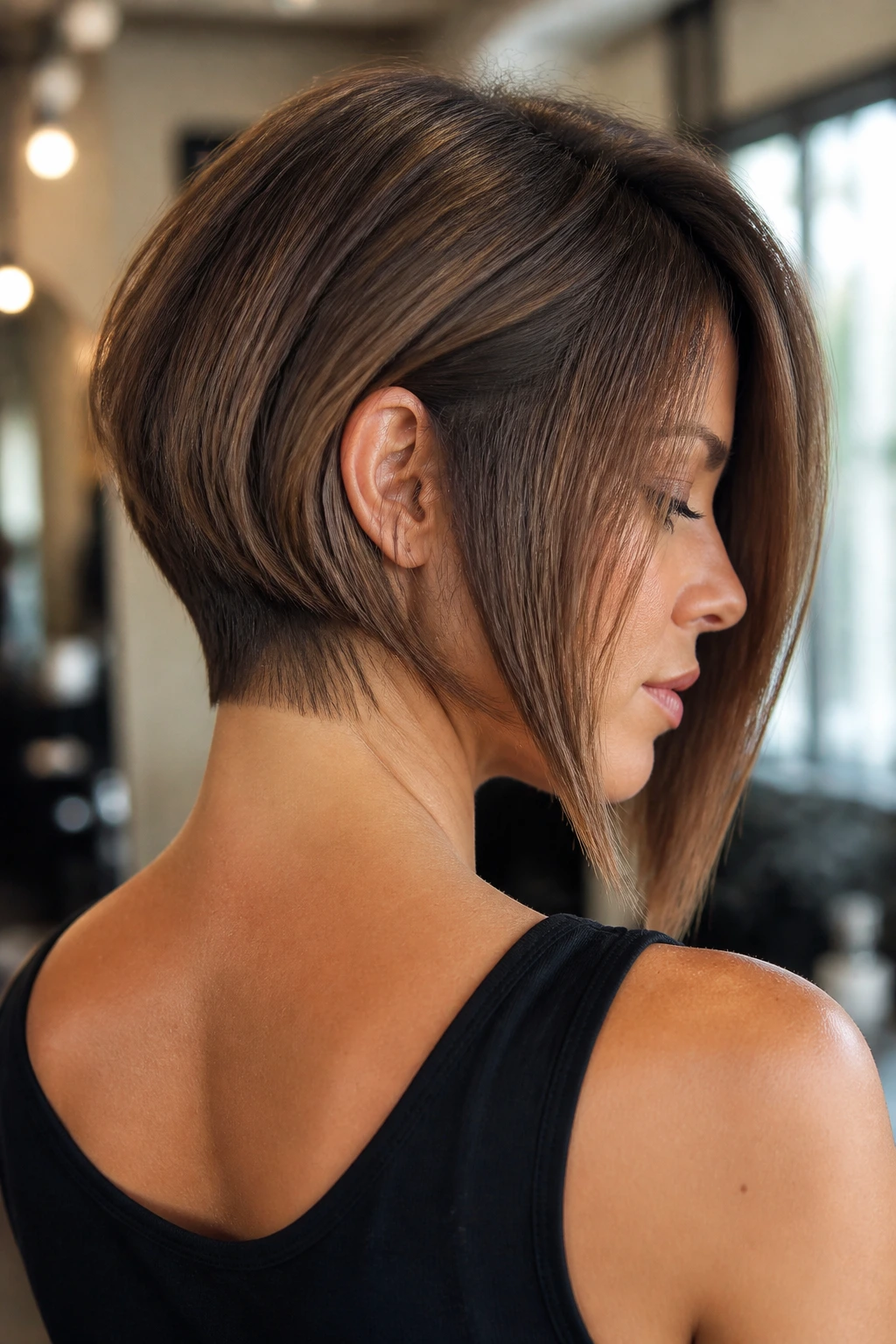
A disconnected underlayer lob hides some shorter length underneath the surface, so the top layer can stay longer and cleaner while the inside gets relief from weight. It sounds technical, but in practice it just means the cut moves more freely when you turn your head.
This is useful for hair that feels heavy at the nape or around the ears. The visible outline stays polished, while the hidden work stops the base from dragging the whole shape down. You get movement without a visibly choppy finish.
It is a quiet trick, and that is why I like it. Not every layered lob needs to look layered from ten feet away.
A smooth blow-dry shows this shape best. Pull the top sections over the brush and let the underlayer support the movement underneath. The result is soft, not obvious.
19. Soft Shag Lob

A soft shag lob sits between a shag and a classic lob. The crown has some lift, the fringe area feels airy, and the ends keep enough length to avoid looking like a full shag. It is relaxed, a little undone, and good for hair that likes to move on its own.
The danger with a shag-inspired lob is overdoing the texture. If the layers get too short, the haircut starts shouting. Keep the structure longer and the fringe softer, and the cut becomes easier to wear every day.
Why it stays soft
The crown should be lifted, not chopped short. That keeps the movement up top while the bottom holds the shape. The hair swings instead of exploding.
A dab of texture spray and a finger rake are often enough. If you need more polish, a quick pass with a flat iron on random sections keeps the shape from getting too fluffy.
20. Flip-Out Lob
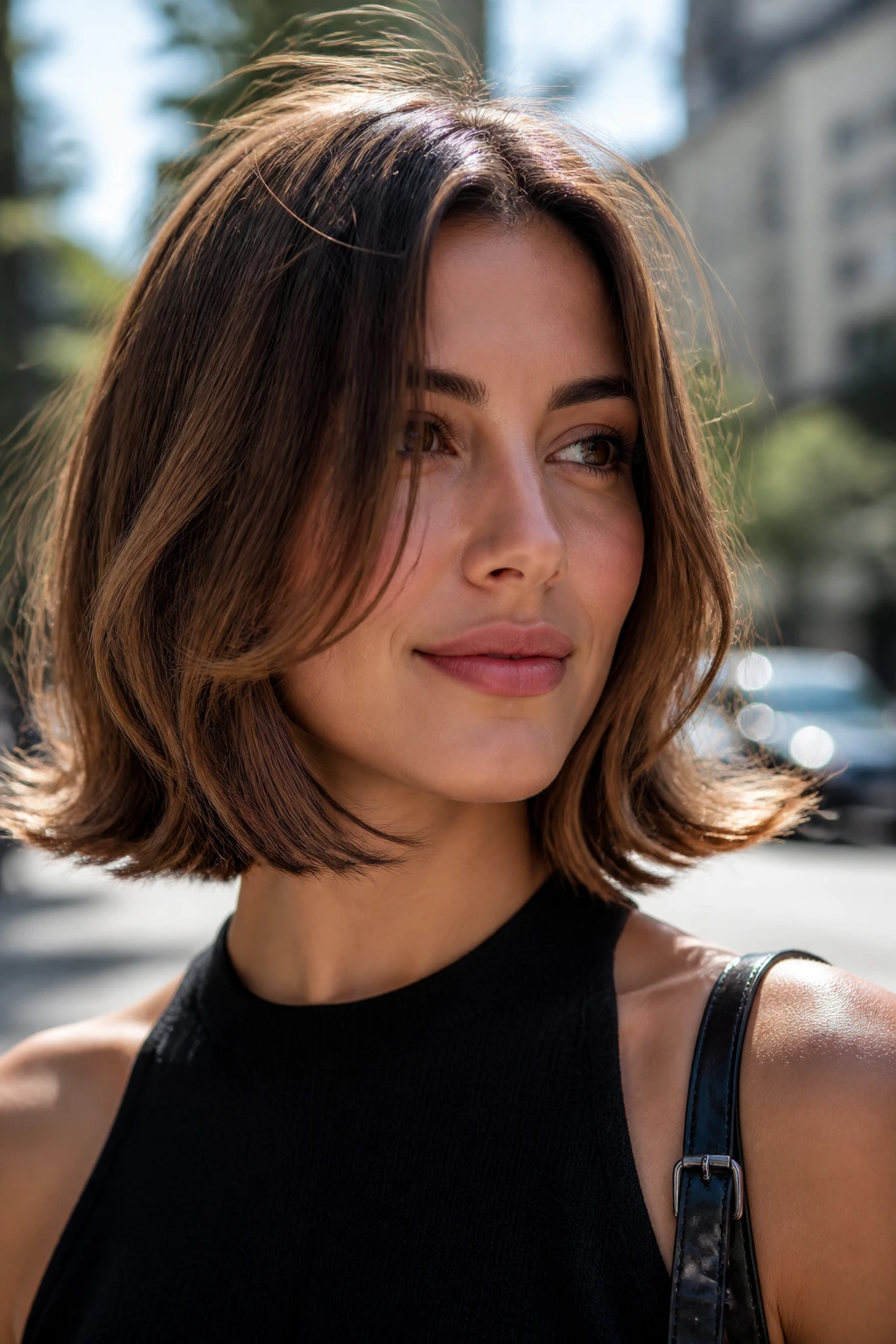
Flip-out ends can go wrong fast if the cut is too blunt or the styling is too stiff. When they work, though, they give a lob a playful, slightly retro movement that feels fresh instead of fussy. The ends turn away from the neck, which opens the whole shape.
This look needs layers that support the outward bend. If the perimeter is too heavy, the flip collapses. If the layers are too aggressive, the cut starts to look airy in the wrong places. The sweet spot is a clean base with enough internal softness to let the ends turn.
A round brush or flat iron can create the flip. Set the end of each section outward for a second or two, then let it cool in place. That cooling part matters more than people think.
It is one of the easiest ways to make a lob feel styled without looking overdone.
21. Long Face-Frame Lob
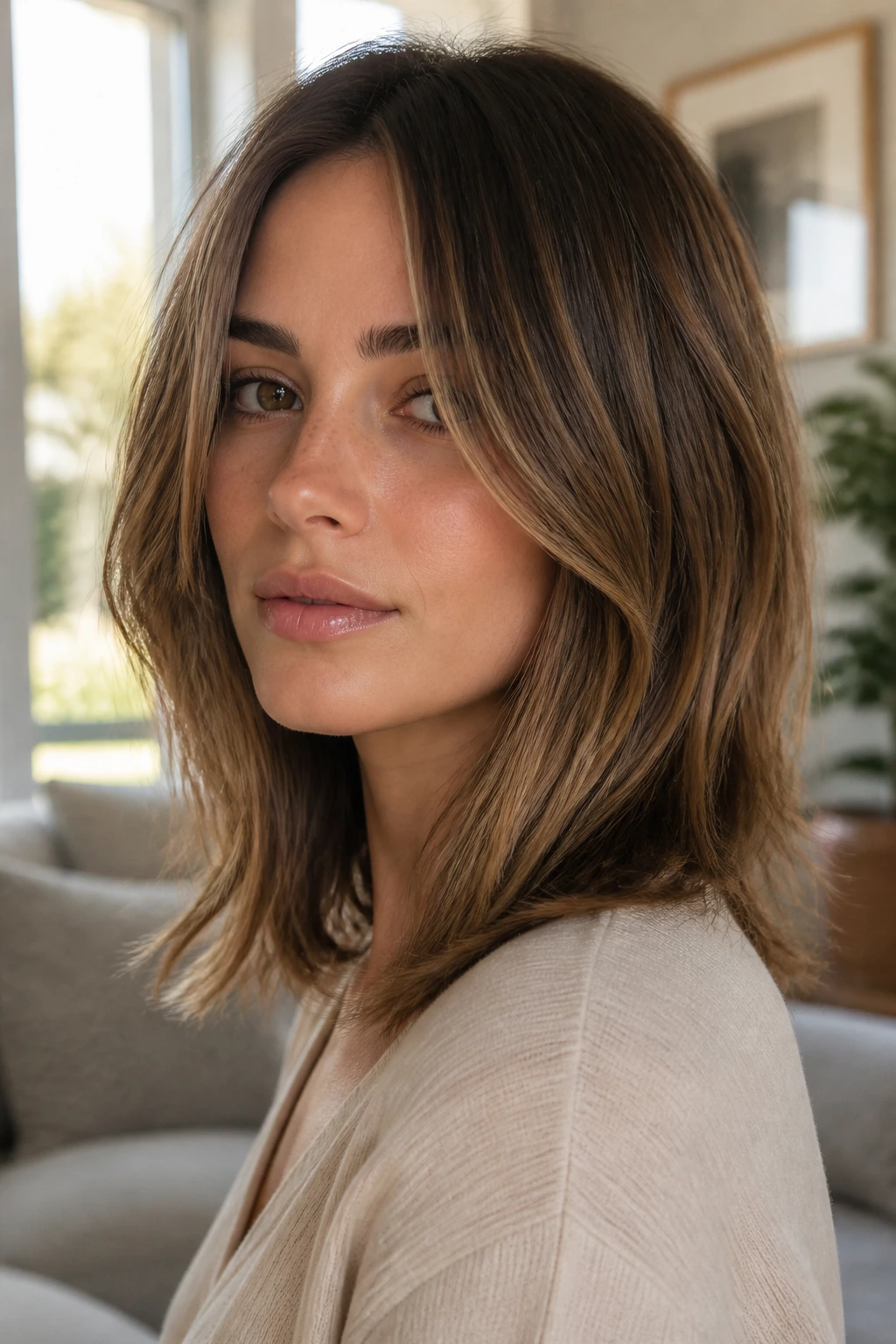
Some people do not want a lot of layers. They want the front to do most of the talking. That is where a long face-frame lob comes in. The exterior stays fairly calm, while the front pieces angle around the cheekbone, lip, or collarbone to give the haircut motion where it counts.
This cut is good if you tuck your hair behind your ears a lot. The face frame keeps the style from looking forgotten once the hair is tucked back. It also plays nicely with center parts, side parts, and low ponytails.
A few practical details make a difference:
- Keep the front long enough to move, not hang like two skinny strings.
- Leave the back full so the haircut keeps its weight and does not spread out.
- Ask for soft point cutting at the ends if you want the face frame to blend instead of stop.
This is the version I’d pick for someone who wants movement with the least visual noise.
22. Density-Managed Lob for Thick Hair
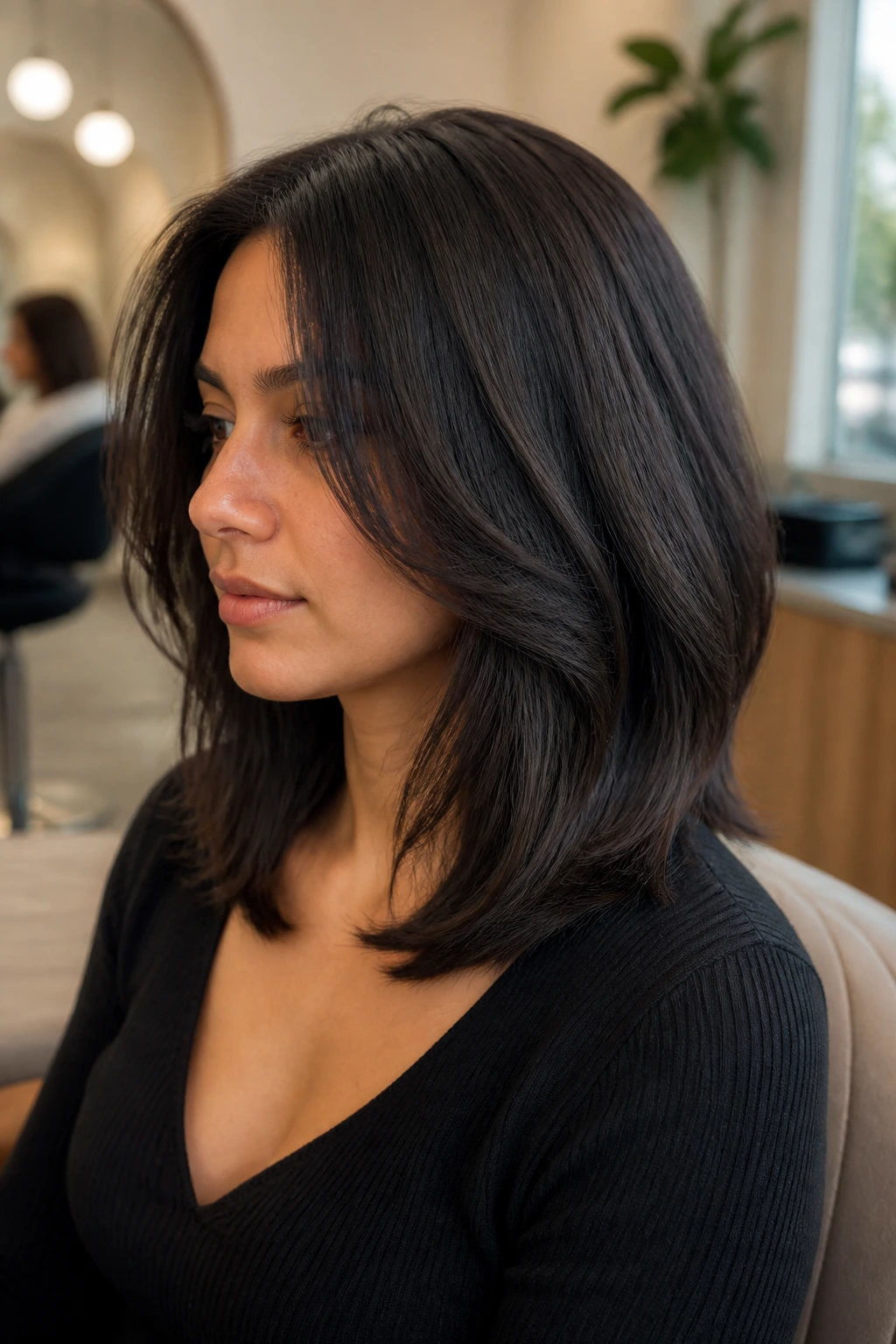
Thick hair can wear a lob with more authority than most textures, but it also needs the right kind of shaping or it will sit like a dense block. A density-managed lob removes weight where the hair stacks up — usually through the interior, around the sides, and sometimes near the nape — while keeping the perimeter clean enough to hold the silhouette.
This is the polished thick-hair option. Not the shredded one. The hair still feels full, but it stops ballooning outward at shoulder level. That difference matters in daily life, because a lob that holds its line takes less styling to look finished.
I would avoid over-thinning the ends here. Thick hair often gets butchered by too much texture. Better to keep the bottom solid and lighten the inside where nobody sees the cuts.
The best finish is controlled movement: enough bend to keep the hair from feeling heavy, enough line to stop it from looking frizzy. That balance is the whole game.
How the Layers Create Soft Movement Without Losing the Line
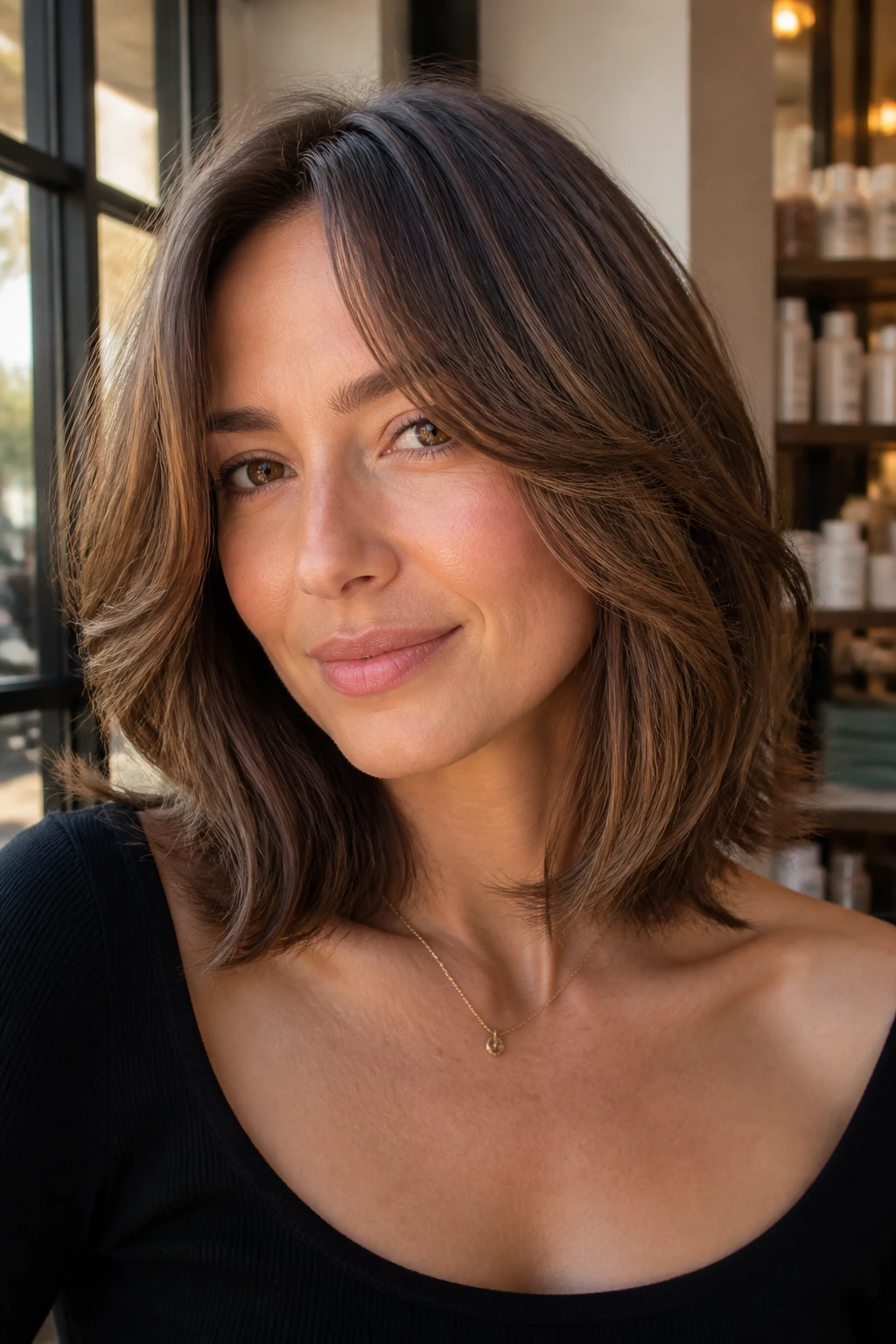
The movement in a good lob comes from weight control, not from piling on short layers. Hair has to have somewhere to go when it bends. If the shape is all one length, it can sit heavy and slide down. If the shape is chopped too hard, it can puff out and lose the clean edge that makes a lob feel modern.
Where the movement actually lives
Most of the time, it lives in the interior. That is where a stylist can remove bulk without making the perimeter look thin. The front can be softly framed, the crown can be lifted a little, and the bottom can stay strong enough to anchor everything.
Why the outline matters
The outer line is what keeps the haircut from wandering off into shag territory. A blunt or softly curved outline lets the layers move inside the shape instead of taking over the whole look. It is a small distinction. It changes everything.
Which textures need the least aggression
Fine hair usually needs the gentlest layering, because too much texturizing turns the ends sparse. Thick hair can take more interior shaping, especially around the ears and nape. Wavy hair often needs the least convincing of all; it just needs the cut to follow the bend it already wants to make.
What to Ask for at the Salon Chair

The fastest way to miss the mark is to ask for “a lob with layers” and leave it there. That phrase is too vague. Tell the stylist where the length should land, where you want the shortest face-framing pieces, and how you wear your hair on a normal weekday.
-
Length line: Say whether you want the front at the jaw, the collarbone, or slightly below the shoulders. That one detail changes the whole haircut.
-
Layer placement: Ask for long internal layers if you want softness, or more visible face framing if you want the front to move around your face.
-
Texture plan: If you air-dry, say so. If you blow-dry smooth, say that too. A cut that looks good only with a curling wand is a bad fit for most people.
-
Density concerns: Bring up thick, fine, or flat hair before the scissors come out. The amount of weight removed should match the hair you actually have.
Bring one photo for the length and one for the texture. Those are not the same thing. One photo tells the stylist how short you want to go. The other shows the finish you like once the haircut lives outside the salon chair.
Tools That Make a Lob Behave
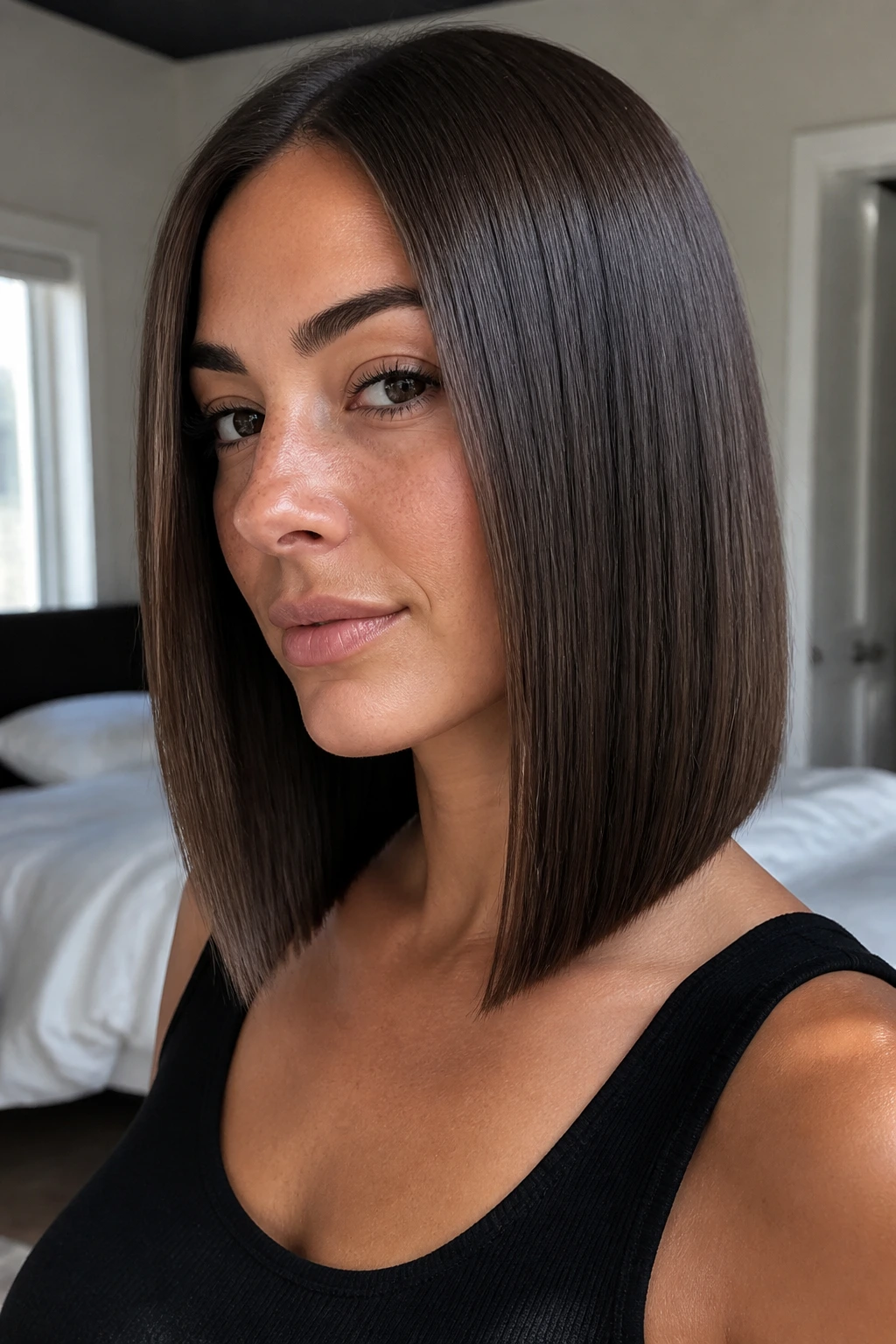
-
Blow dryer with a concentrator nozzle: Directs air where you want it and keeps the cut smoother around the ends.
-
1.25-inch round brush: Good for collarbone bends, soft flips, and face-framing curves that do not look stiff.
-
1-inch or 1.25-inch curling iron or wand: Useful for loose waves and piecey movement, especially when you do not want a tight curl.
-
Flat iron with rounded edges: Helps create a smooth bend under or out at the ends without leaving hard creases.
-
Heat protectant spray: Keeps the ends from drying out when you style the lob several times a week.
-
Light mousse or volumizing foam: Adds support at the roots without making the hair feel sticky.
-
Texturizing spray: Best for piecey, broken-up styles and soft shag versions.
-
Wide-tooth comb or detangling brush: Keeps wave patterns from getting crushed while the hair is damp.
-
Duckbill clips: Handy when you want to section the hair and keep the dry time even.
How to Style a Layered Lob on Busy Mornings
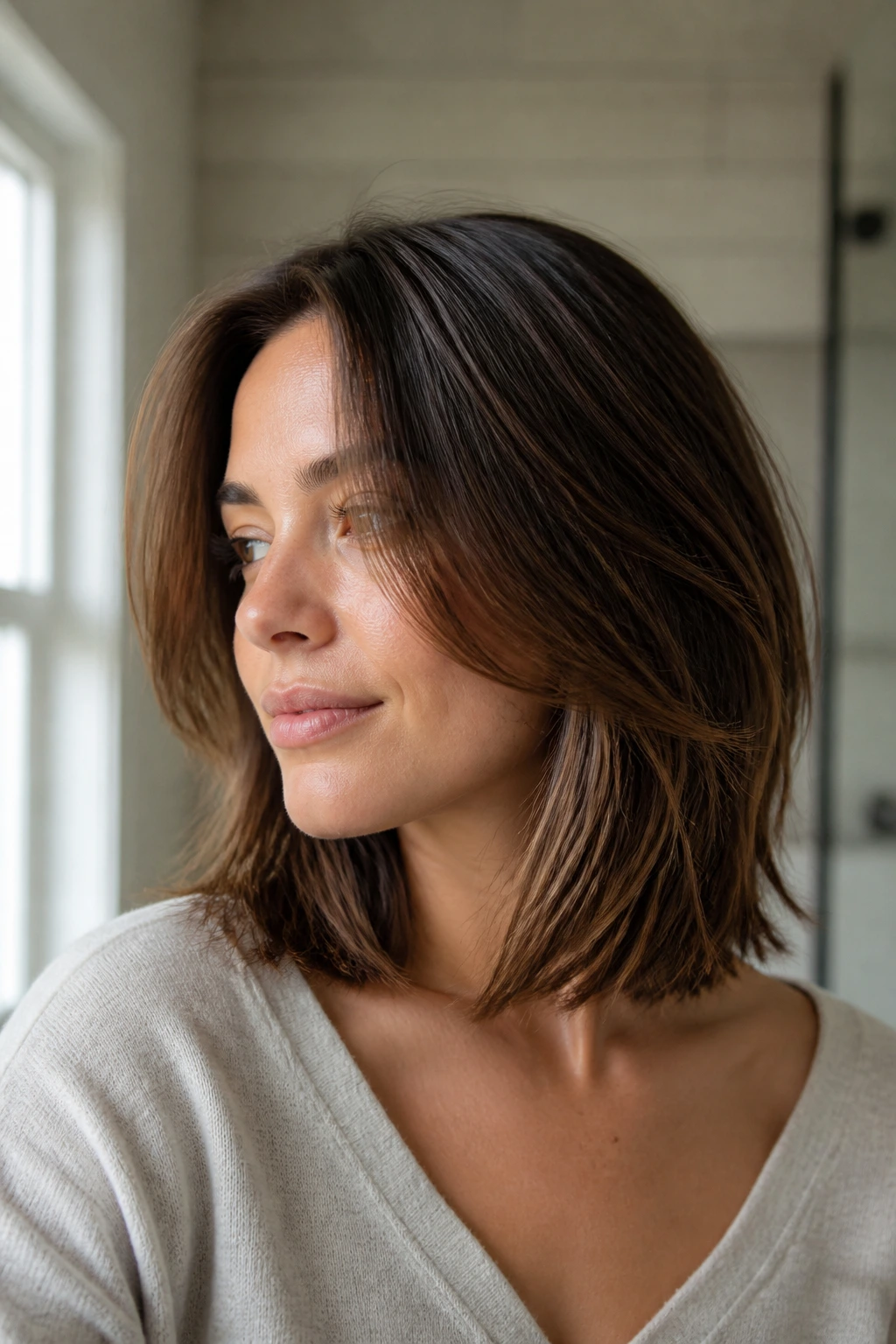
A layered lob does not need a full salon routine at home. It needs the right amount of bend in the right places. If you try to curl every section the same way, the cut can start looking too uniform. That is the mistake. Leave some pieces straighter, bend the front away from the face, and keep the ends soft.
For a smooth blowout
-
Apply heat protectant and a small amount of mousse at the roots.
-
Rough-dry the hair until it is about 80 percent dry.
-
Use a round brush to lift the roots at the crown and bend the ends under or out, depending on the version of the lob.
-
Let the hair cool before touching it. That cooling time locks in the shape better than constant brushing.
For air-dried texture
Work a cream or light wave product through damp hair, then scrunch once or twice and leave the mid-lengths alone. If you touch it too much while it dries, the wave turns frizzy. If a few front pieces need help, twist them around your fingers and leave them.
For day-two refresh
Mist the roots lightly with water or a curl refresher, add a touch of dry shampoo where the part starts to collapse, and bend only the front pieces. That is usually enough to make the whole cut look intentional again.
How to Keep the Shape Fresh Between Trims
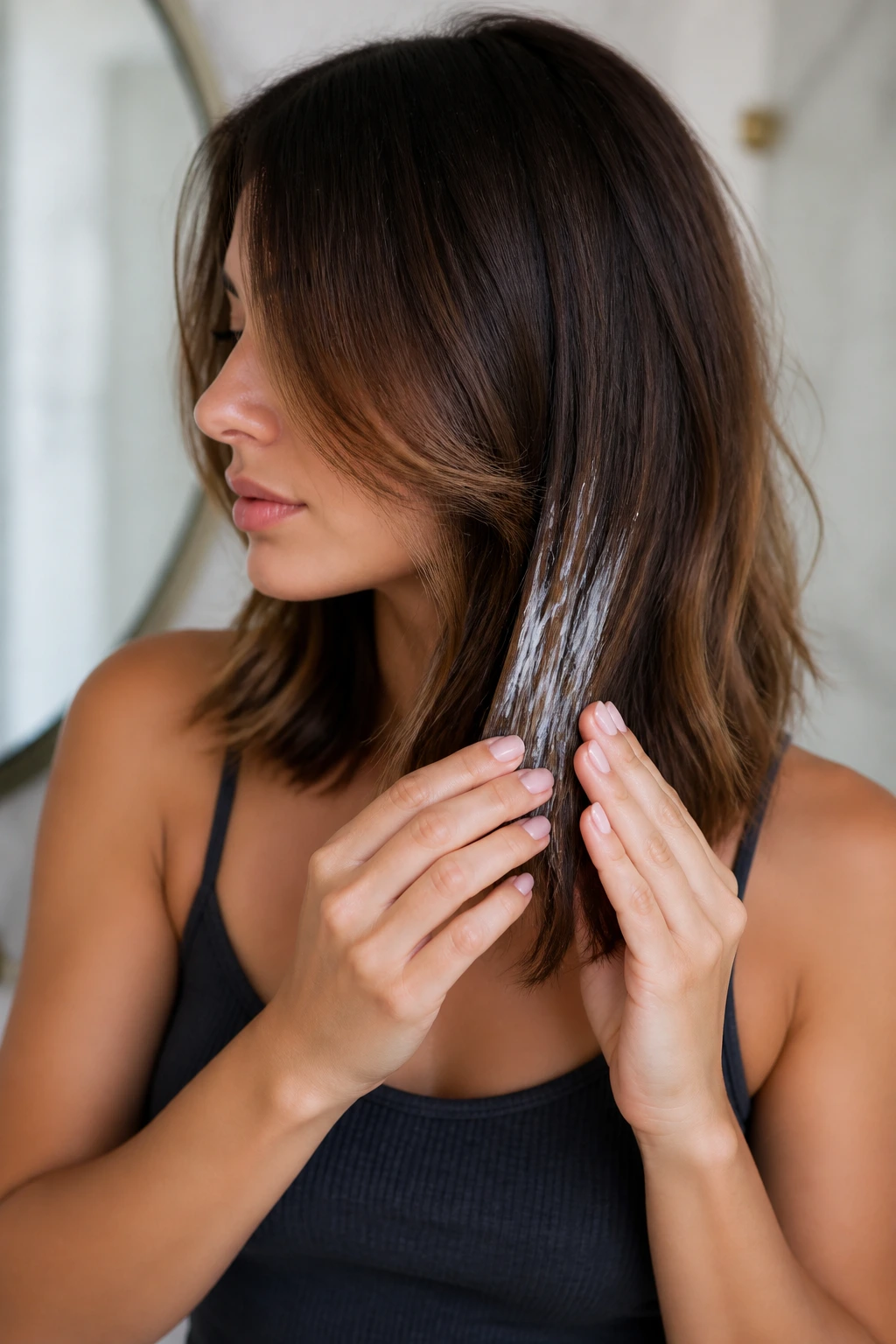
A layered lob looks best when the ends stay clean. Once the perimeter starts to split or the front layers grow past the cheekbone in a way that no longer flatters your face, the cut loses its balance. Most people need a trim every 8 to 10 weeks. If you wear bangs or a very precise face frame, 6 to 8 weeks is often more realistic.
The haircut usually shows wear in the same places first: around the nape, where the hair starts to kick up, and around the front, where the shortest pieces stop blending. That is your sign to book the trim, not wait until the whole style feels tired.
A couple of habits help the shape hold. Sleep on a silk or satin pillowcase if your ends catch easily. Use a light leave-in on the mid-lengths, not the roots. And if the hair starts to feel coated, wash it with a clarifying shampoo every 1 to 2 weeks so the movement does not get weighed down by product.
Mistakes That Turn a Lob Boxy, Puffy, or Stringy
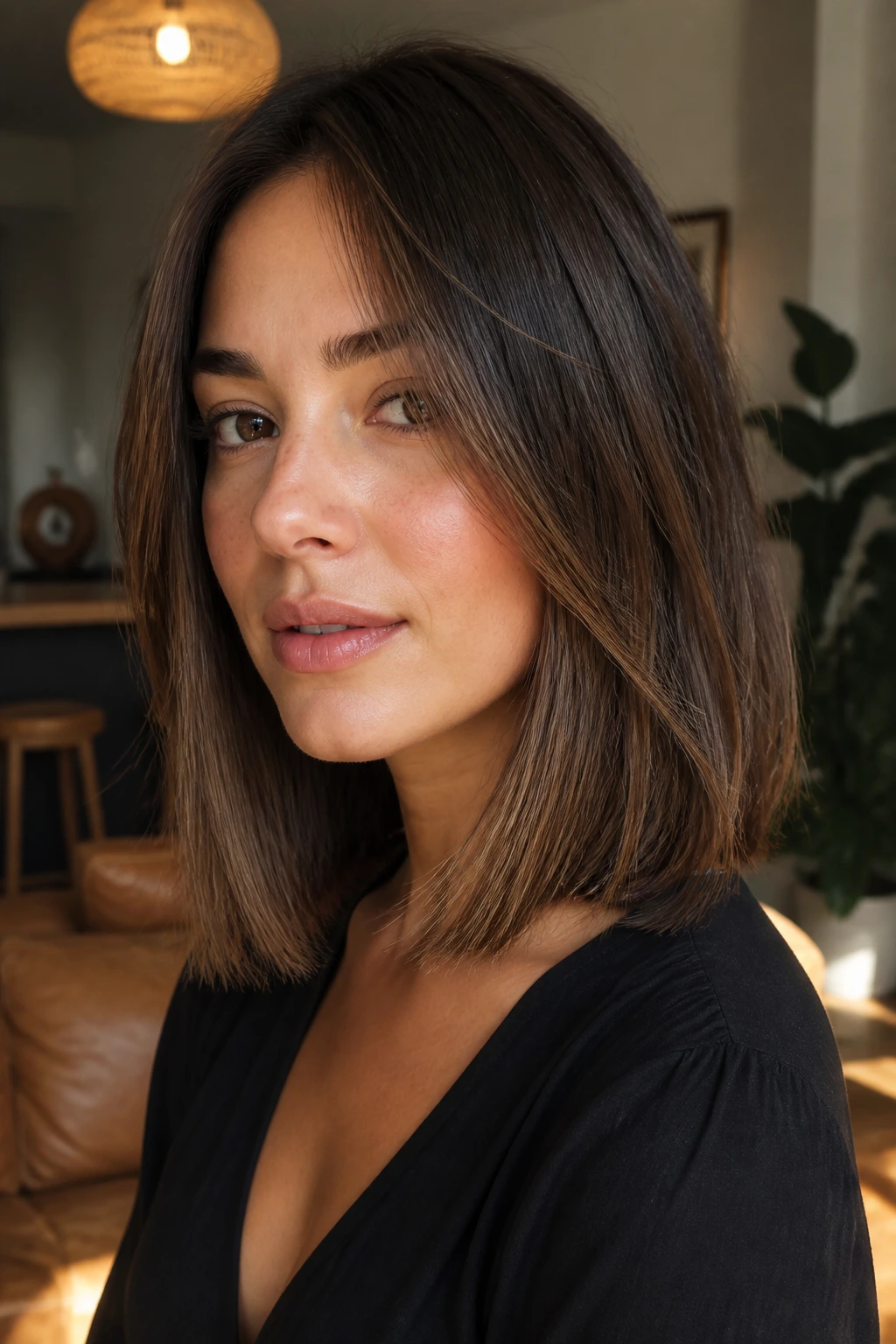
-
Layering too high at the crown: The cut puffs outward and loses its clean outline. Fix it by keeping the shortest layers lower and letting the movement live inside the shape.
-
Over-thinning fine hair: The ends turn see-through and the lob starts looking tired. A blunt edge with subtle interior shaping is the safer route.
-
Starting the face frame too short: Pieces around the face can look disconnected instead of soft. Ask for the shortest front pieces to hit the lip, chin, or cheekbone, depending on the effect you want.
-
Using too much oil near the roots: The shape collapses before lunch. Put smoothing products only from the mid-lengths down.
-
Styling every section the same way: The haircut ends up helmet-like. Alternate directions, brush some pieces through, and let the ends stay a little imperfect.
-
Skipping trim appointments: The lob grows into a heavy shoulder-length cut with no shape. That is not a style; it is just overdue maintenance.
Variations and Adaptations to Try
-
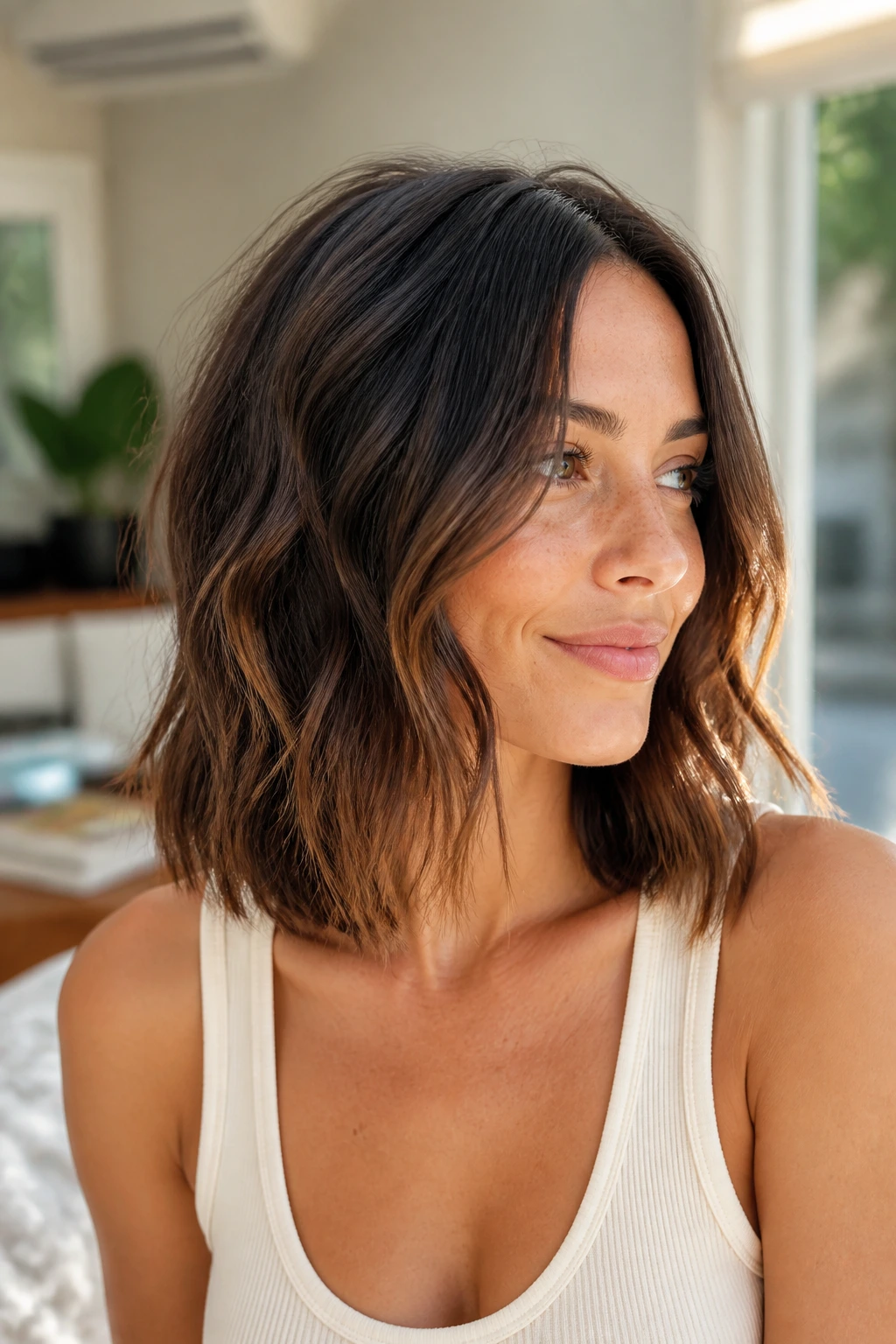
The Air-Dry Lob: Keep the layers long, use a soft cream, and let the natural wave or bend do the work. This fits hair that already has some movement and does not need heat every day.
-
The Polished Blowout Lob: Ask for more support at the front and a cleaner perimeter. It works for anyone who likes a smoother finish and does not mind a round brush.
-
The Curl-Friendly Lob: Keep the layers longer than you would on straight hair, so the curls do not spring into a pyramid. This is the one to ask for if your curls need room.
-
The Thick-Hair Release: Use interior weight removal and a tidy outer edge. It keeps dense hair from bulking up around the shoulders while preserving a full silhouette.
-
The Fringe-Forward Lob: Add curtain bangs, bottleneck bangs, or a long side fringe. This changes the whole personality of the cut without sacrificing length.
Frequently Asked Questions

What length counts as a lob?
Most people mean a length that sits between the jaw and the collarbone. The exact spot matters more than the label, because a lob at the chin behaves very differently from one that lands at the shoulders.
Are layered lobs good for fine hair?
Yes, if the layers stay subtle. Fine hair usually looks better with a strong perimeter and light internal shaping, because too many short layers can make the ends look thin.
Will layers make thick hair frizzy?
They can, if the stylist removes too much weight or uses aggressive texturizing at the ends. Thick hair usually does best with long internal layers and a cleaner bottom line.
Can I wear a layered lob if my hair is curly or wavy?
Absolutely, but the layer length should match your pattern. Curly hair usually needs longer layers so the curls do not spring upward too much, and wavy hair often looks best when the cut follows the bend it already has.
How often should I trim a layered lob?
Most versions need a trim every 8 to 10 weeks to keep the outline sharp. If you have bangs or a strong face frame, you may want to clean it up a little sooner.
Can I air-dry a layered lob and still get movement?
Yes, if the layers are cut with air-drying in mind. Use a light cream or wave product, leave the hair alone while it dries, and touch only the front pieces if they need direction.
How do I ask for soft movement instead of choppy layers?
Say you want long internal layers, a clean perimeter, and soft face framing. Those words steer the haircut toward bend and swing rather than broken-up texture.
What if my hair turns triangle-shaped after layering?
That usually means the layers started too high or the perimeter got too thin. Ask for more weight left at the bottom and less aggressive layering through the sides.
The Lob That Keeps Moving
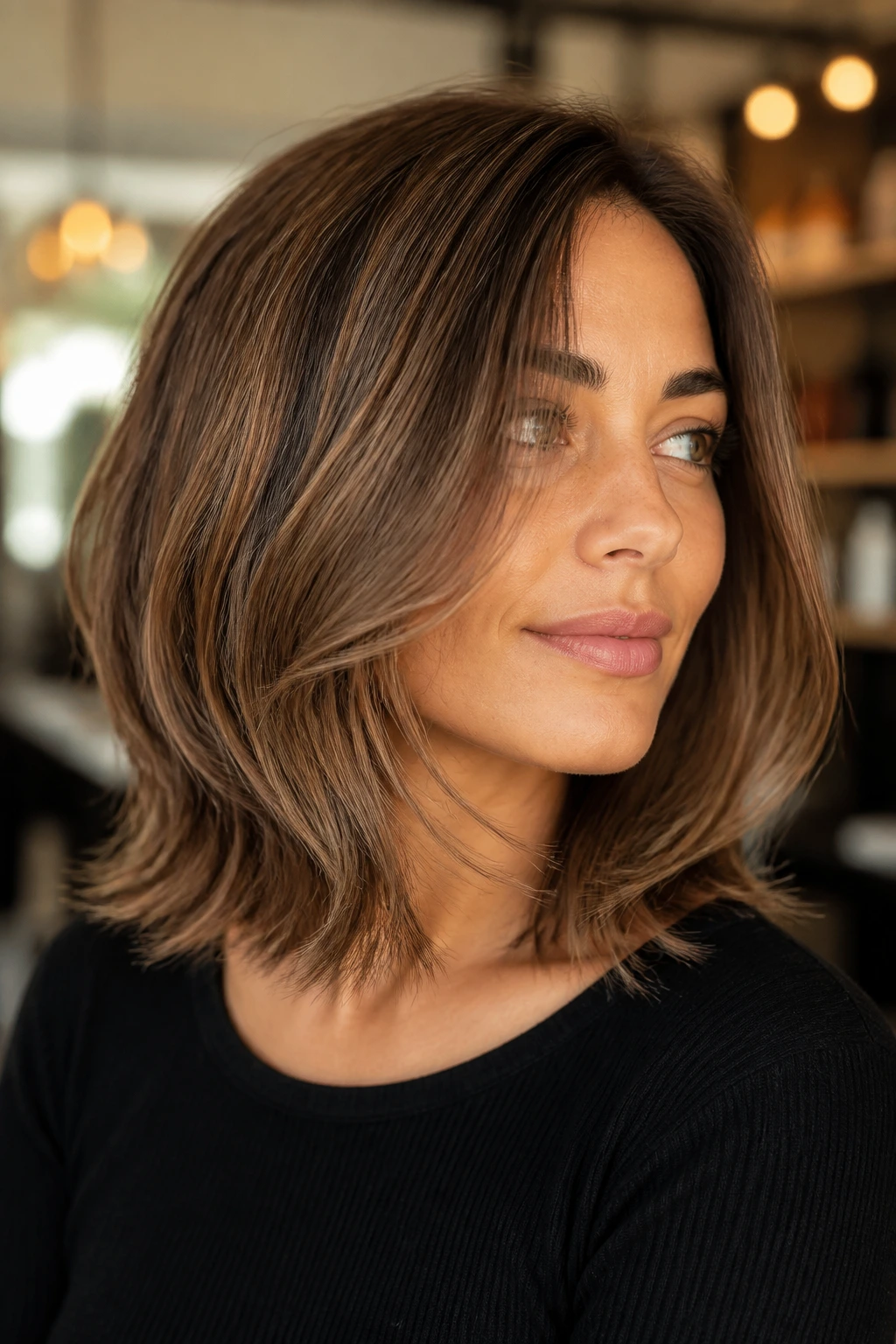
A good layered lob does not need to be loud to be useful. It can sit smoothly at the collarbone, bend around the jaw, and still move when you turn your head. That is the reason this cut keeps coming back into style salons and bathroom mirrors alike.
The best versions are the ones that leave you with options. Smooth it out. Rough it up. Tuck one side behind your ear. Let the layers do their quiet work.
If you want a cut that keeps its line while still feeling soft at the ends, that is the shape to ask for.
