



A lob haircut sits in that narrow strip of length that almost always looks intentional. Shorter than a shoulder-length cut, longer than a bob, it lands in the zone where the hair still moves, still tucks behind the ear, and still looks finished even when you skip a full blowout. That’s why the lob haircut keeps showing up in salons: it gives shape without the heavy drag of long ends.
The sweet spot matters more than people think. A cut that stops somewhere around the collarbone, jawline, or just below the shoulders changes how the neck reads, how the jawline shows up, and how much bulk hangs at the bottom. Move the line half an inch, and the whole mood changes. A blunt lob looks sharp. A layered lob feels softer. A waved lob looks lived-in without tipping into messy.
What makes flattering lob haircuts for women so useful is how many directions they can go. Straight and sleek. Choppy and cool. Softly angled. Full of body. Curly and rounded. A good long bob does not force one face shape or one hair type into the same mold. It works because the length can be tuned, not because it pretends everyone wants the same cut.
Why These Lobs Keep Working
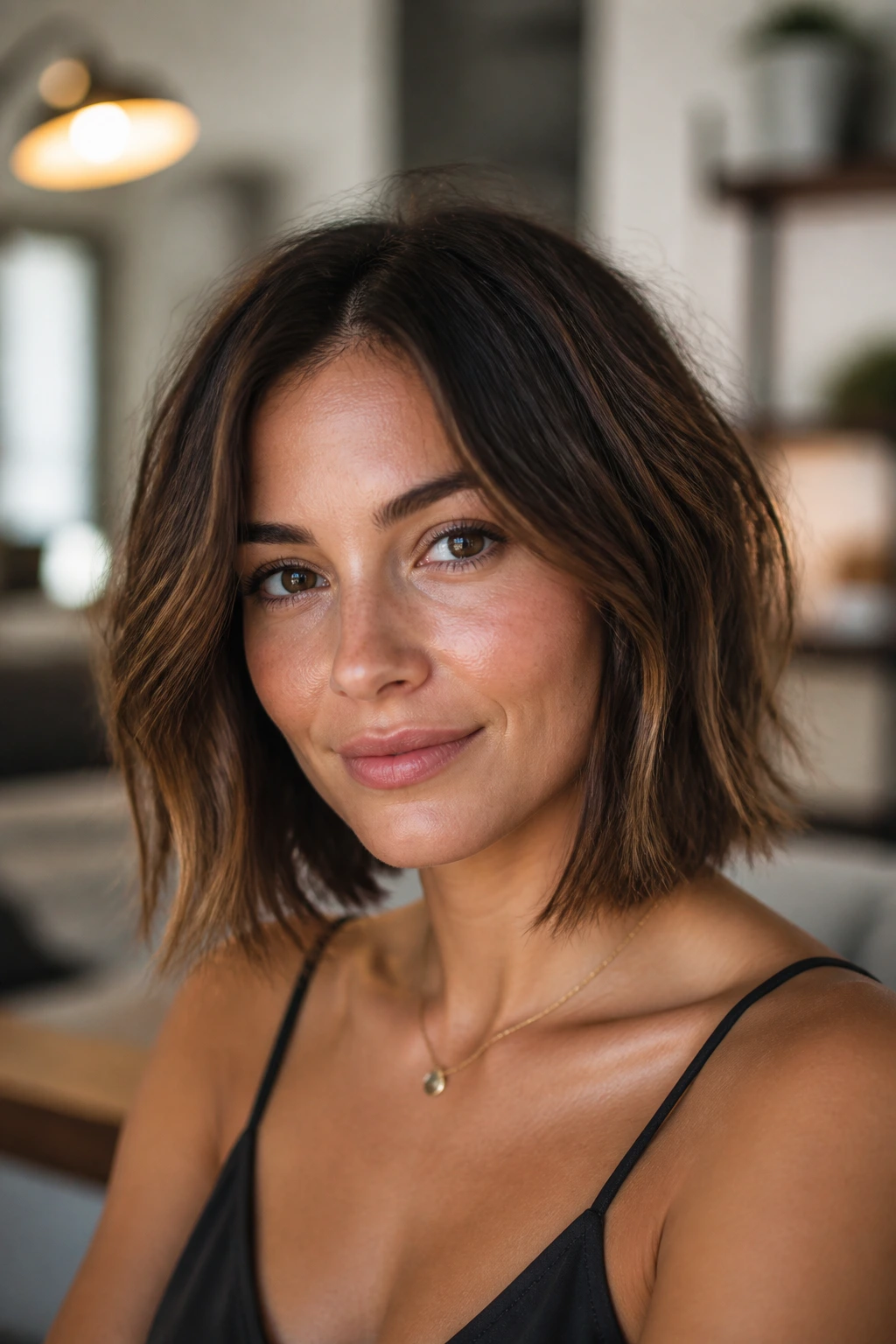
- Collarbone Placement: The cut lands where the neck narrows, which makes the whole silhouette look cleaner without chopping off too much length.
- Shape Range: A lob can be blunt, angled, layered, or feathered, so it can lean sharp or soft depending on how much structure you want.
- Texture Flexibility: Straight hair, waves, curls, and coarse strands all have a lob version that behaves well instead of fighting the cut.
- Grow-Out Grace: Most lob haircuts grow out in a less awkward way than a chin-length bob, especially if the ends are cut with a little movement.
- Styling Options: You can wear a lob blown smooth, bent at the ends, tousled, or air-dried and still keep the shape readable.
1. Blunt Center-Part Lob
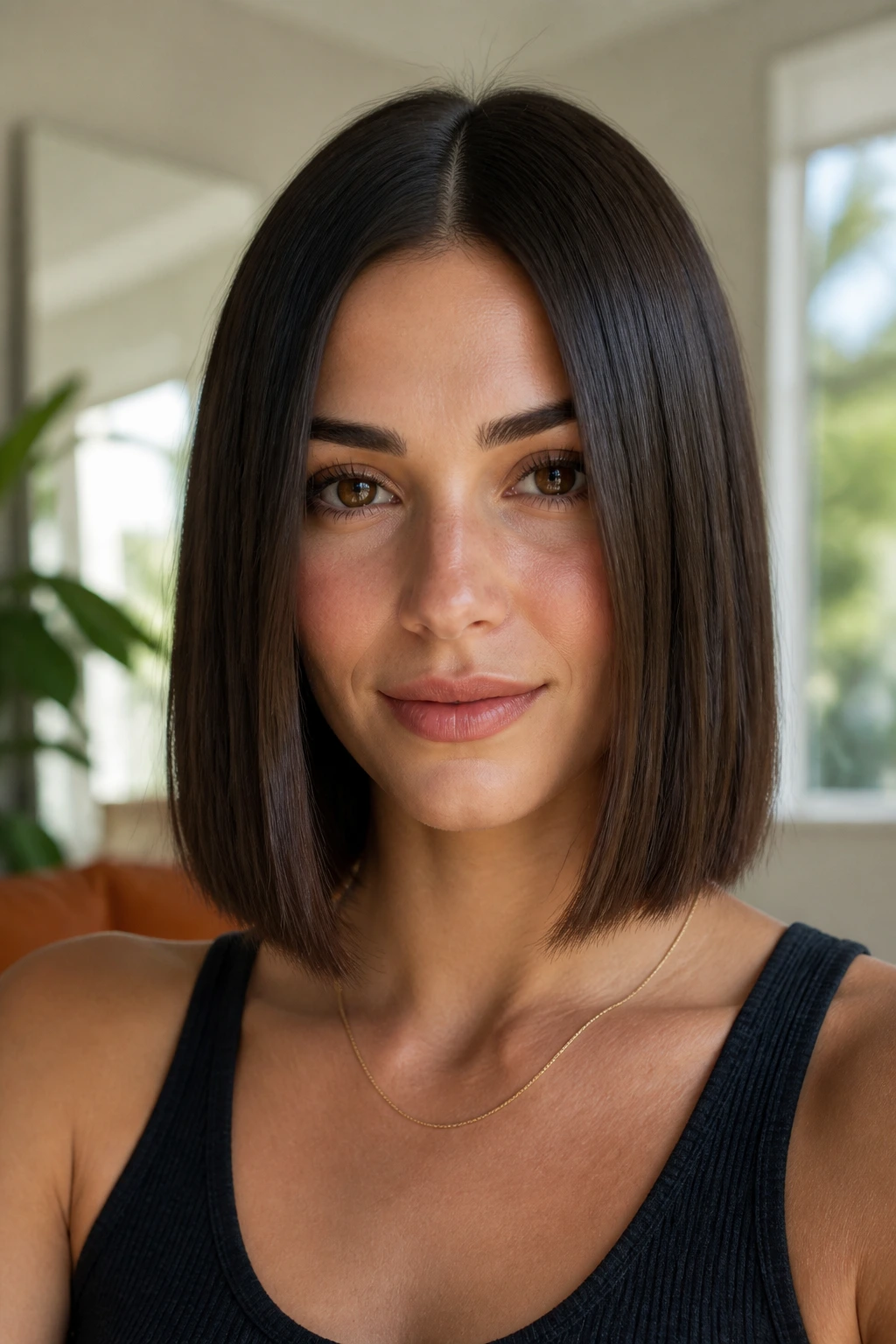
A blunt center-part lob is the cut that makes hair look expensive without begging for a lot of styling. The line is clean, the ends are even, and the middle part puts the focus right where the face opens up. It’s especially strong on straight or slightly wavy hair, where that razor-clean edge can actually show.
What gives this style its punch is the way it frames the jaw without crowding it. Keep the length around the collarbone or a touch below, and you get movement when you walk, but the outline stays crisp. If your hair tends to puff out, ask for a blunt perimeter with only minimal internal shaping.
Style it with a flat brush blow-dry or one slow pass of a flat iron. No need to overwork it. The charm is in the line.
2. Soft A-Line Lob
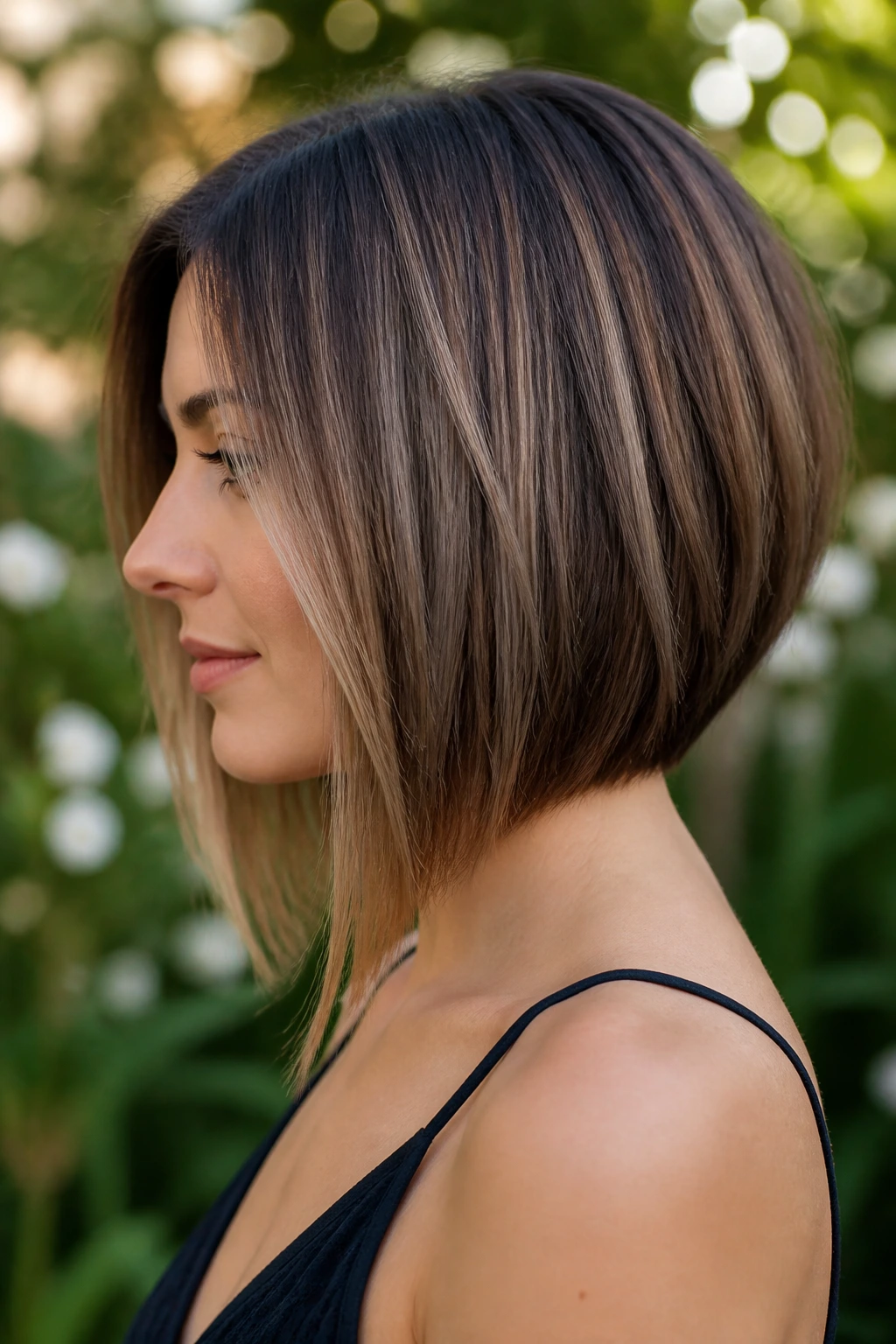
A soft A-line lob is one of those cuts that quietly does a lot of work. The front pieces sit slightly longer than the back, usually by an inch or two, which gives the face a little length without looking severe. I like it on women who want shape but don’t want a hard edge.
The angle matters most when the hair is tucked behind one ear or worn with a deep side part. Suddenly the length difference shows up and the whole cut looks more tailored. If your face is round or wide at the cheeks, that front dip helps draw the eye downward.
Ask for a soft angle, not a dramatic wedge. The best version still feels airy when the hair moves. Too much slope, and it starts acting like a dated inverted bob.
3. Collarbone Lob with Curtain Bangs
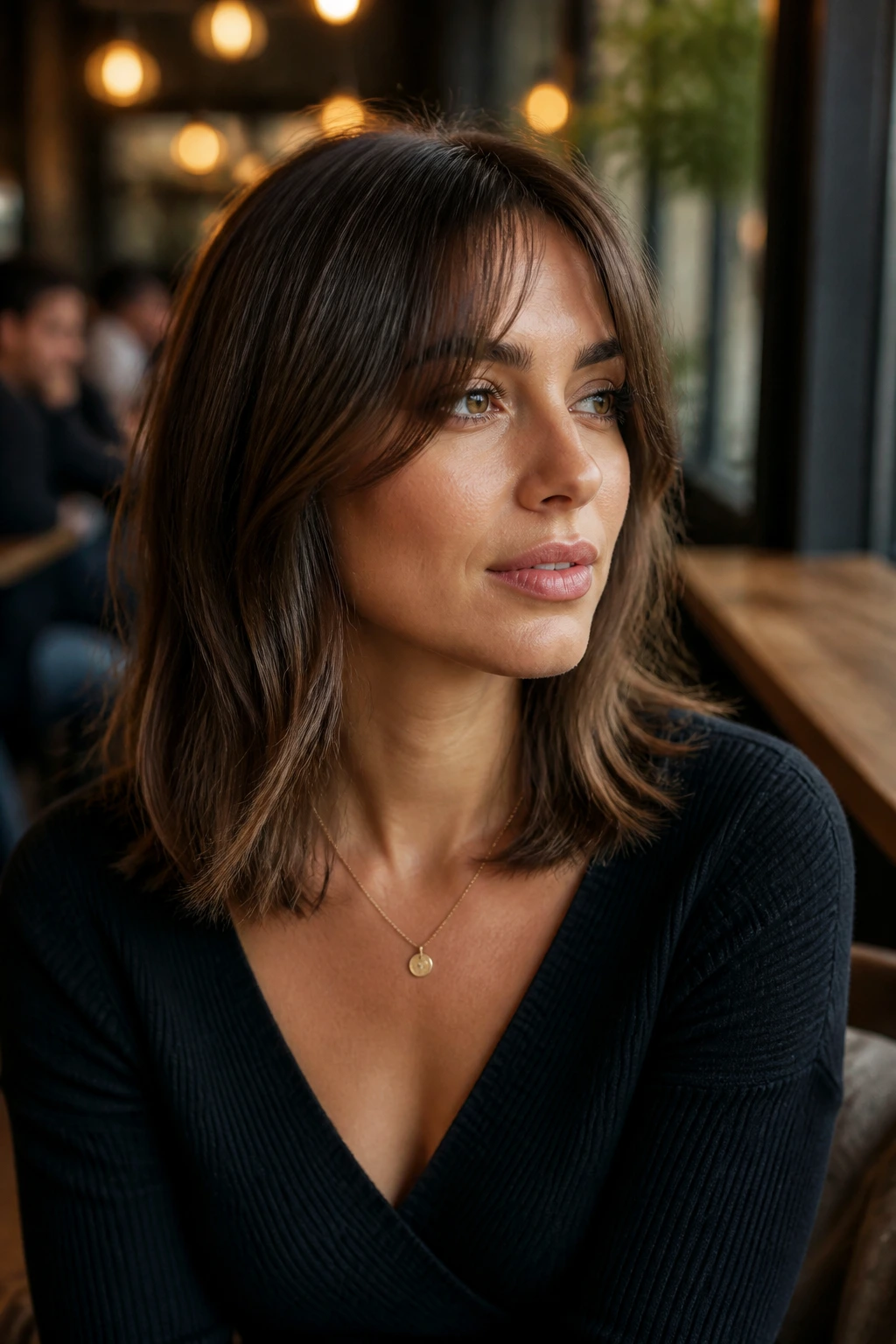
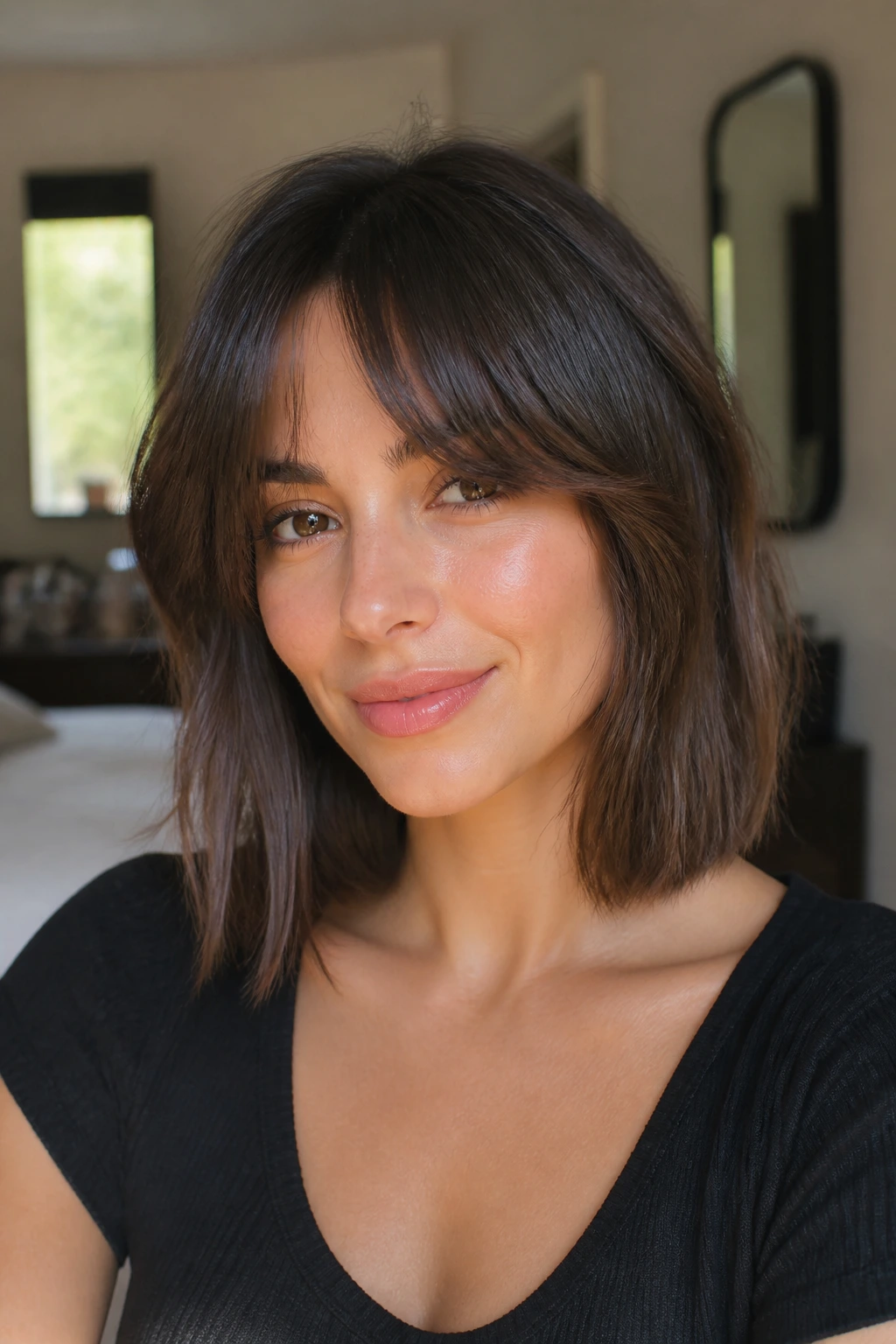
Curtain bangs and a collarbone lob are a good match because both pieces of the cut move away from the center of the face. The fringe opens at the brow, the length skims the collarbone, and the whole thing feels softer than a blunt bob with a hard line. There’s a reason this shape keeps showing up in salons. It flatters without looking fussy.
The trick is keeping the bangs long enough to sweep back. Short curtain bangs can turn the front heavy. Long ones blend into the sides and let you tuck the rest of the hair behind your ears on warm days or busy mornings.
This cut works best when the ends are lightly bent under or waved. Straight and flat, it can look a little too tidy. Add a soft bend at the cheekbone and the whole cut comes alive.
4. Choppy Textured Lob
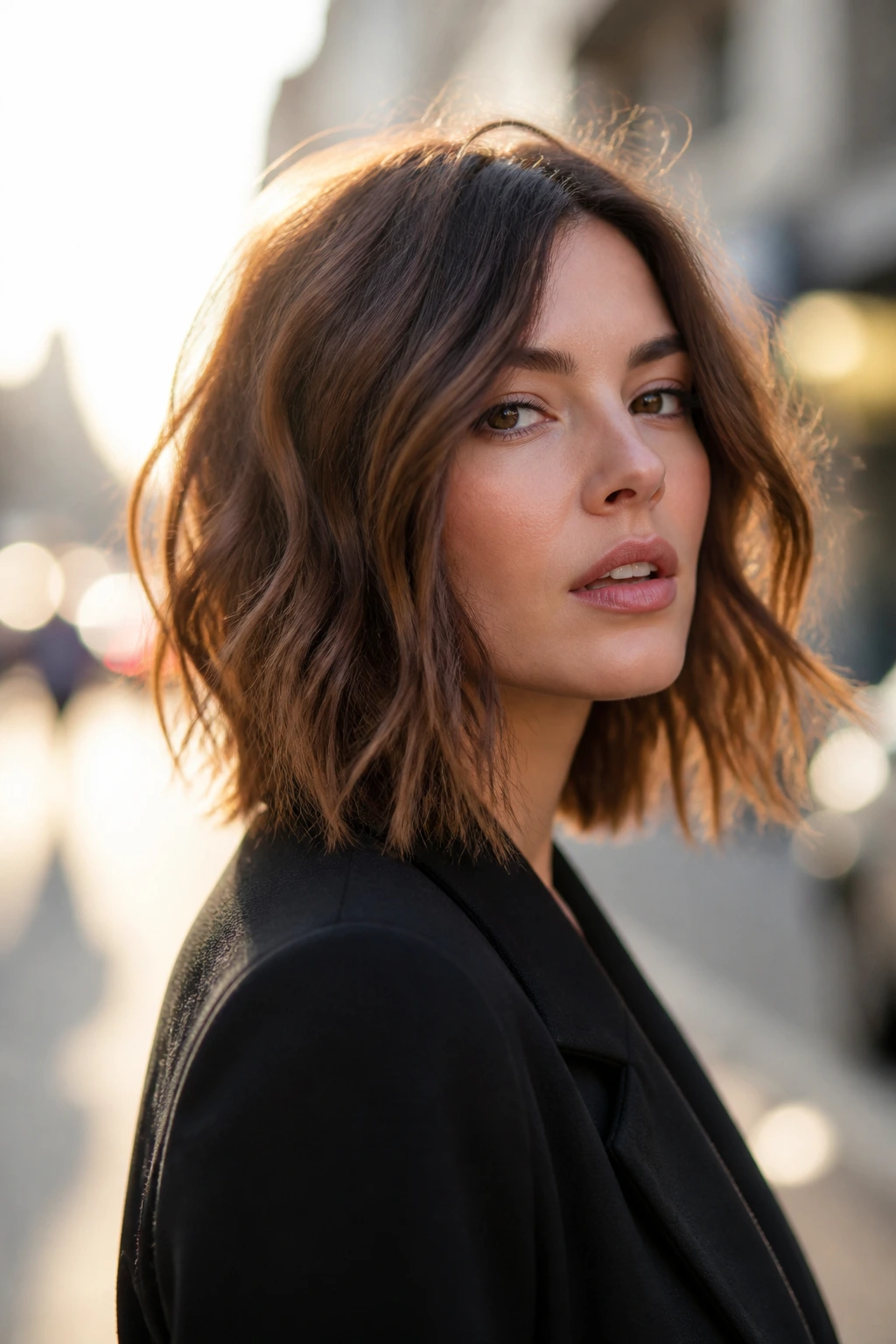
A choppy lob is for anyone who wants their hair to look like it has some attitude. The ends are broken up, the layers are uneven in a deliberate way, and the finish has that slightly undone edge that reads modern fast. It’s especially good if your hair is naturally wavy or has a bit of grit to it.
The strength here is movement. A choppy cut takes away the helmet effect that some one-length lob haircuts can create, especially on thicker hair. It also makes second-day hair easier, because the texture is already built into the shape.
Keep the layers soft enough to avoid frizzing out the ends. Too many short pieces and the cut loses its backbone. The best choppy lob still has a clear outline when it sits still.
5. Side-Part Lob for Round Faces

A side-part lob changes the whole geometry of the face. Instead of splitting the hair down the middle and adding width at the center, the side part creates a diagonal line that pulls the eye across the face. On round faces, that little shift can make a big difference.
I’d ask for the length to sit at or just below the collarbone, with the heavier side tucked slightly behind one ear when you want more lift. The goal is not to hide the face. It’s to give the cheek area some breathing room and avoid a cut that ends right at the widest point.
This version looks especially good with soft bends rather than tight curls. You want flow, not volume stacked in the wrong place.
6. Sleek Glass Lob
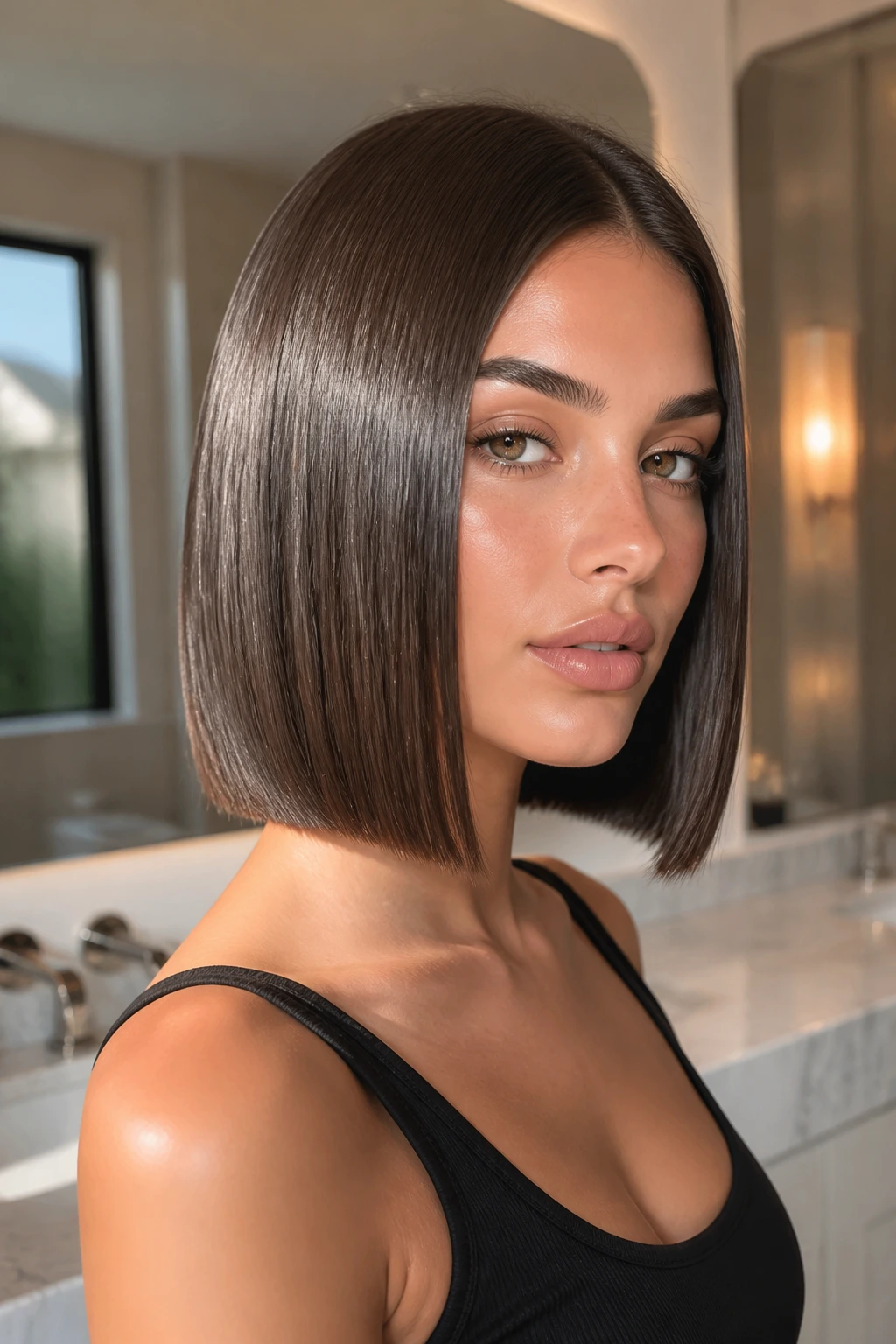
A sleek glass lob is blunt, polished, and a little bit cool in the best way. The shine is the point. When the cut is precise and the finish is smooth, the hair reflects light like a pane of darkened glass, and the line of the cut becomes the main event.
This works best on hair that can lie flat without a fight. Fine to medium strands often take to it easily, though thicker hair can wear it too if it’s properly thinned underneath. The perimeter should be exact. Any unevenness shows.
Use a heat protectant, a round brush or paddle brush, and a flat iron with a narrow plate if needed. Skip heavy oils near the roots; they can make the style collapse before lunch.
7. Tousled Beach-Wave Lob
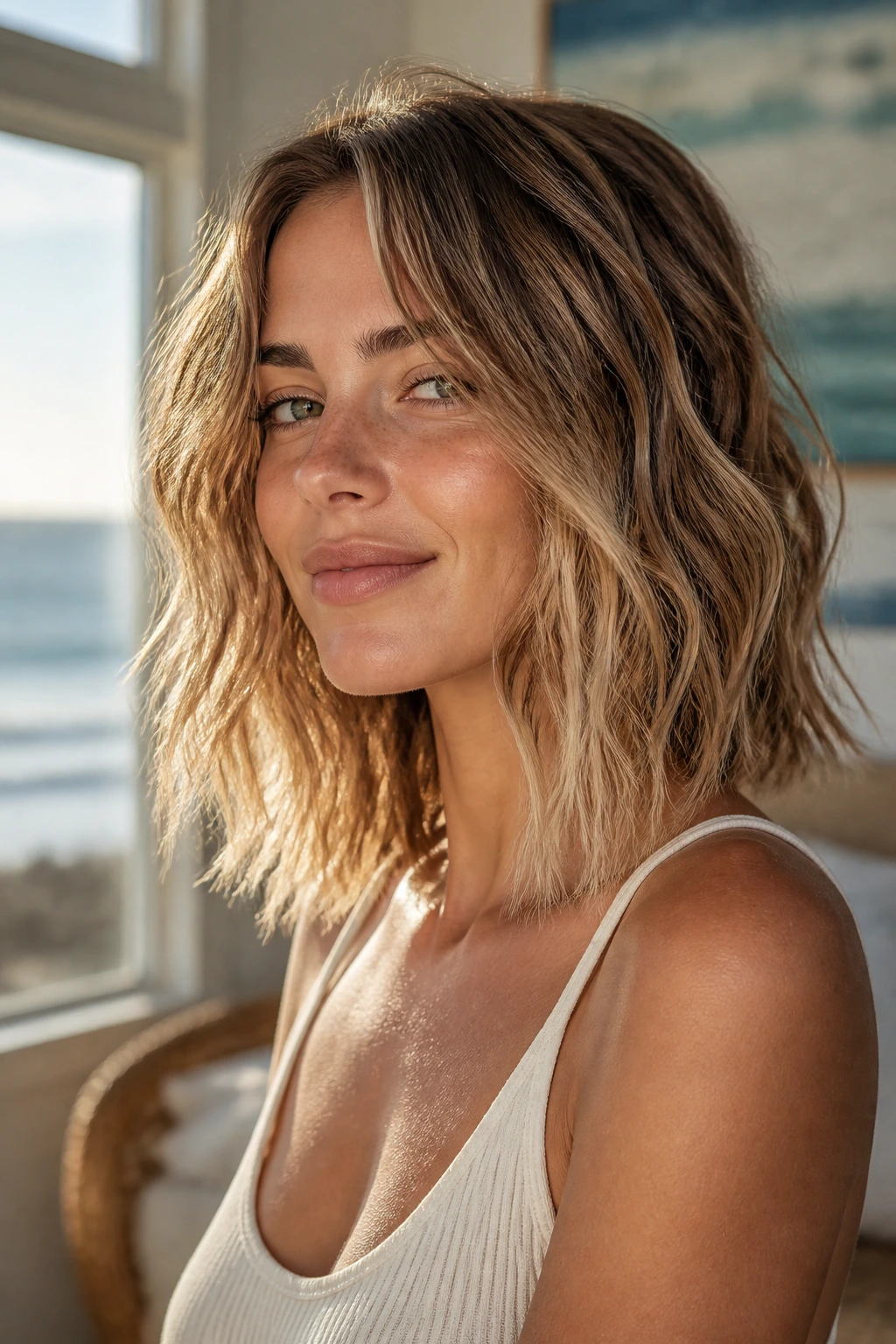
A tousled lob is the one I recommend when somebody wants length but doesn’t want to spend a half hour chasing perfection. The texture should look soft, not crunchy. Think loose bends, a few bent ends, and enough separation that you can see the shape of the cut.
This style flatters because it breaks up the straight vertical line of the hair. On longer faces, the width from the waves can balance the length. On narrow faces, the movement keeps the cut from looking too severe.
Use a 1-inch or 1.25-inch curling iron and leave the last inch out. Then shake the curls apart with your fingers, not a brush. If the wave pattern looks too uniform, it starts feeling old-fashioned. Messy is not the goal. Soft irregularity is.
8. Curly Defined Lob
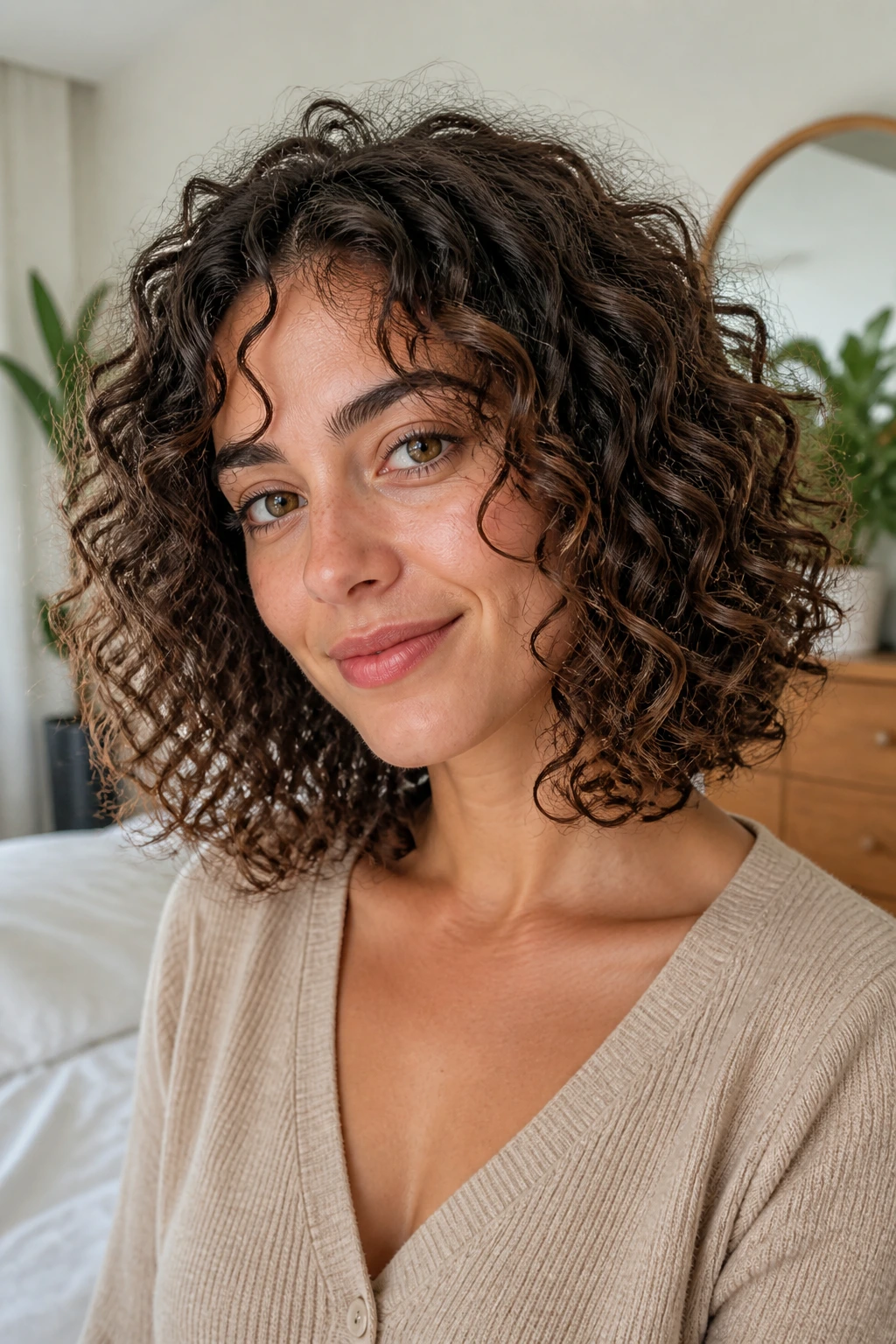
A curly lob works when the cut respects the curl pattern instead of fighting it. The length gives curls room to spring without piling too high around the head, and that matters. Too short, and curls can explode outward. Too long, and they can drag down and lose shape.
The best version usually sits somewhere between the chin and the collarbone, with a little rounding around the ends so the curls don’t hang in a triangle. The shape should follow the curl, not cut across it like a ruler.
Ask for dry-cutting or curl-by-curl shaping if your stylist does that well. And if they don’t, choose a stylist who really understands curly hair. That sounds blunt, but it saves a lot of bad shape later.
9. Layered Lob for Thick Hair
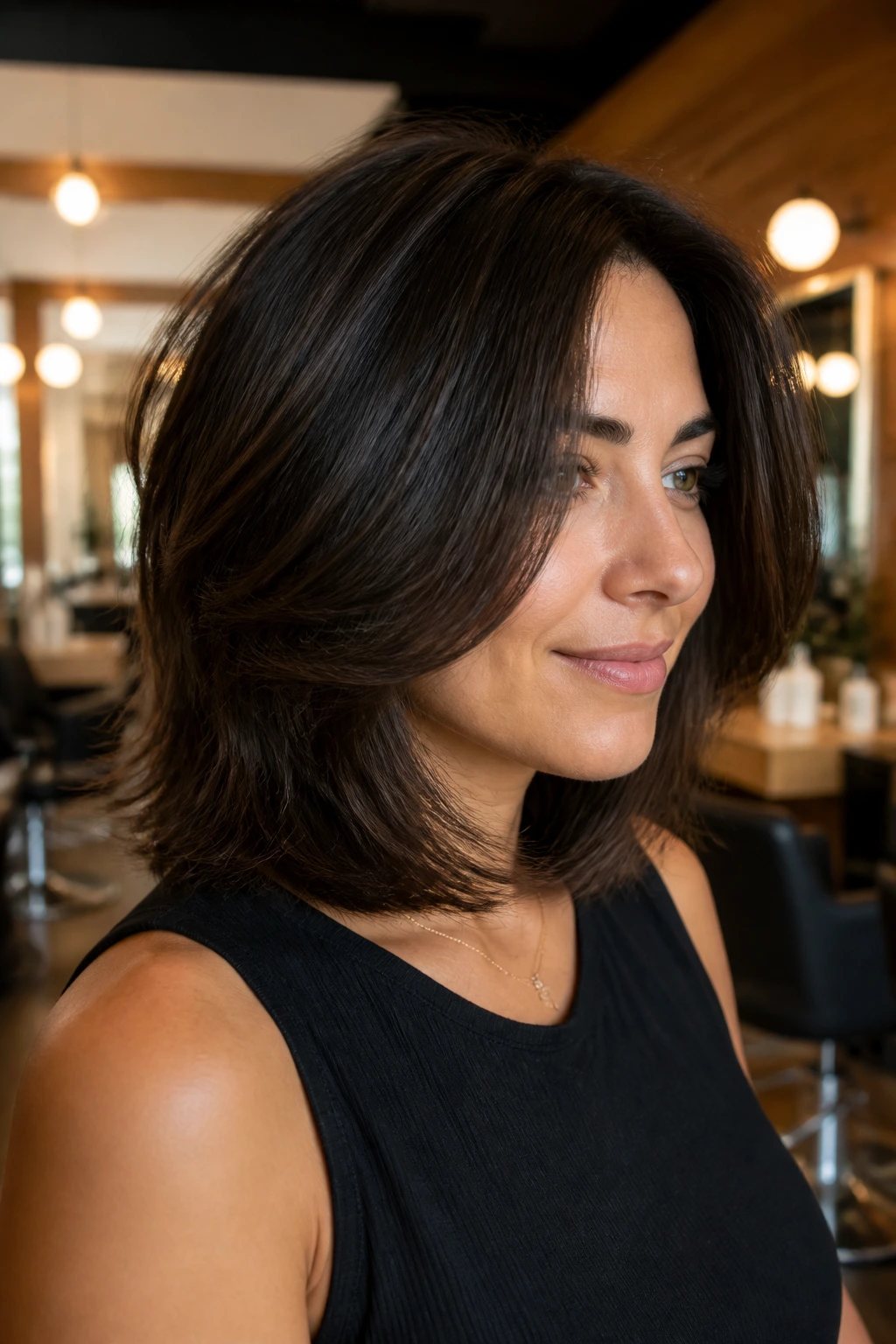
Thick hair needs release points. Without them, a lob can turn heavy at the bottom and puffy through the sides, which is not the look anyone wants. A layered lob for thick hair removes bulk where it matters and keeps the outline from feeling like a block.
The layers should be subtle enough to keep the ends from looking stringy. I’m talking about internal movement, not a staircase. The goal is to let the hair bend and sit better around the shoulders, not create choppy gaps.
This is one of the best lob haircuts for women who want to keep length but stop carrying around a thick curtain of hair. It cools down the shape fast. And it grows out well, which is a nice bonus.
10. Invisible-Layer Lob for Fine Hair
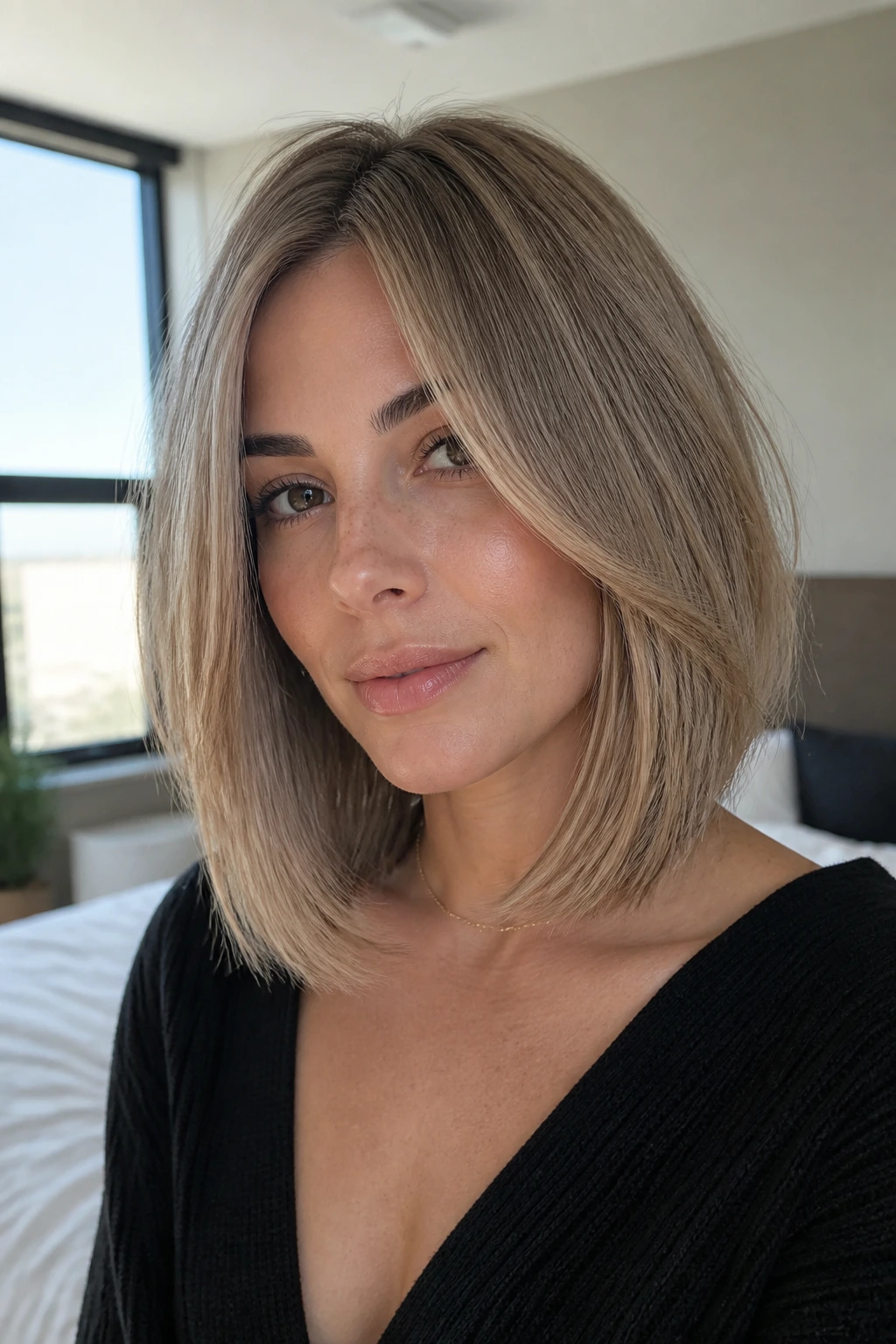
Fine hair likes shape, but too many obvious layers can make the ends look thin and wispy. That’s why an invisible-layer lob is such a smart choice. The cut keeps a clean perimeter while adding hidden movement inside the shape so the hair doesn’t fall flat.
The layers should be long and soft, almost invisible when the hair is dry. You’ll feel the difference more than you’ll see it. That subtle lift helps the hair move without sacrificing the density at the ends.
A root lift spray and a quick round-brush blow-dry do more for this cut than a pile of products ever will. Keep the finish light. Heavy creams weigh fine hair down fast, and the whole point here is bounce.
11. Shaggy Lob with Bottleneck Bangs

A shaggy lob with bottleneck bangs gives you softness at the front and grit through the ends. The bangs narrow near the brow and open around the cheekbones, which is exactly where a lot of women want some movement. It feels lived-in, but not lazy.
This cut works because the bangs bridge the gap between the shorter front pieces and the longer lob length. The result is a shape that looks intentionally layered from top to bottom. On wavy hair, it’s especially good. The texture does half the work.
If your hair is very straight, you’ll need a bit of styling to keep the fringe from splitting awkwardly. But when it’s done right, this is one of the easiest ways to make a lob feel current without going extreme.
12. Angled Lob with Long Front Pieces
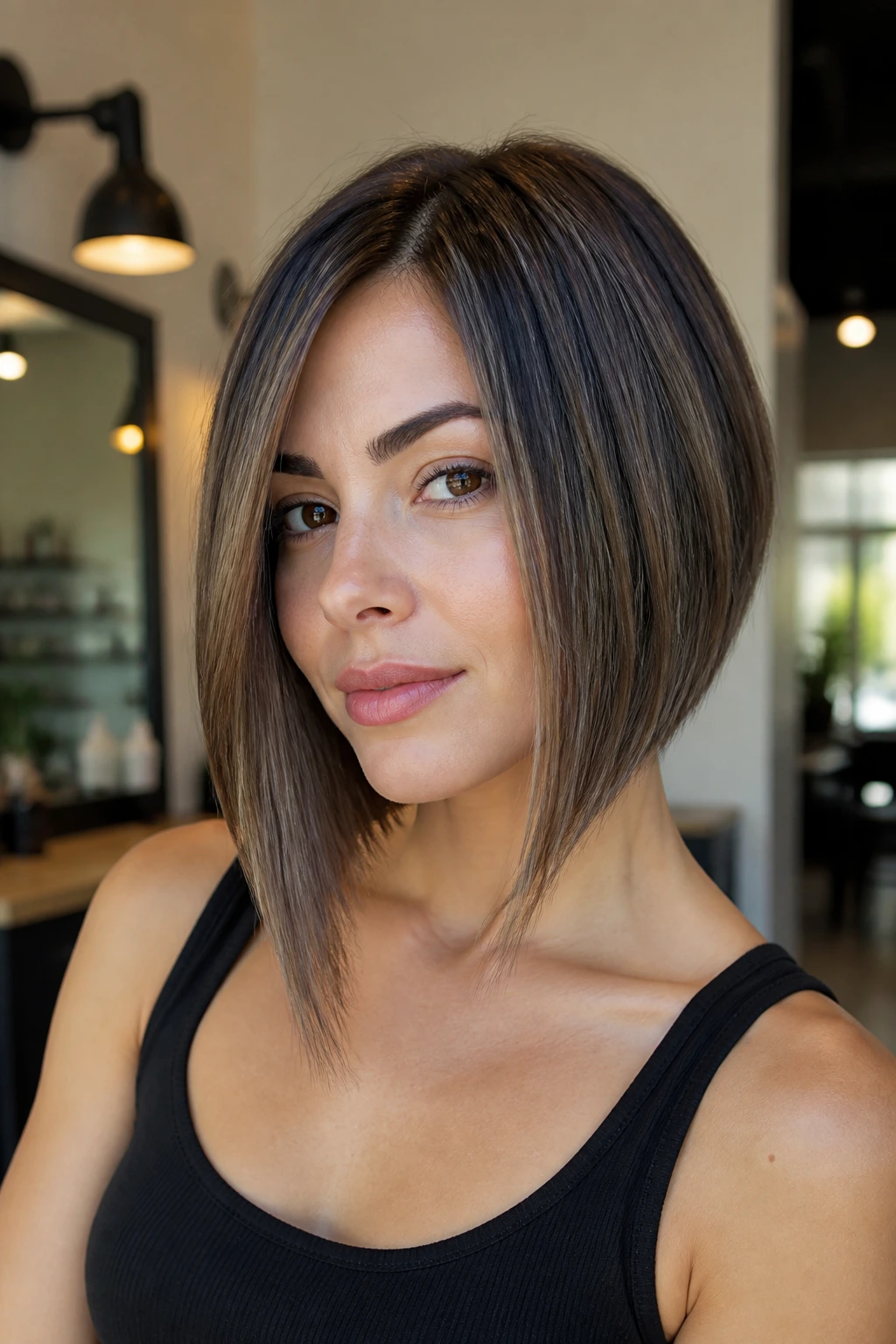
An angled lob with long front pieces gives the face a little visual lift. The front drops lower than the back, but the angle stays gradual, so the cut still feels wearable. It’s a nice choice if you want length near the face without giving up the cleaner neckline of a lob.
Those longer front pieces are doing real work. They soften the jaw, frame the cheek, and keep the cut from looking boxy when you tuck one side back. On square or round faces, that front length is especially helpful.
Keep the angle moderate. A steep line can age the cut fast. A gentle slope, though, gives you a shape that still looks good after a few weeks of grow-out, and that matters more than most people admit.
13. Feathered Lob with Soft Ends
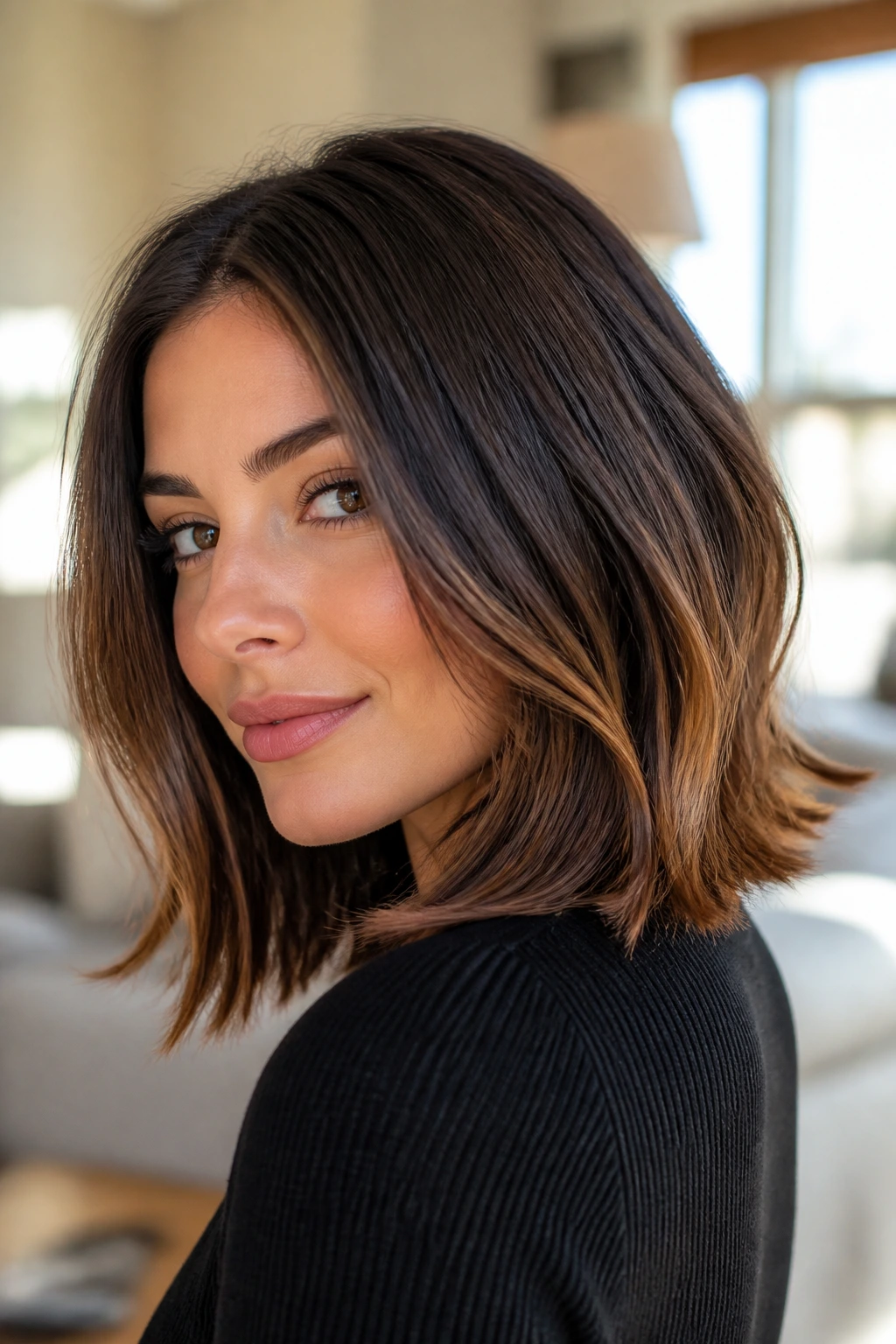
Feathered ends change the mood of a lob fast. Instead of a blunt stop, the hair tapers lightly at the ends, which makes the cut look softer and airier. It’s a good option if you want movement but don’t want the messier feel of a shag.
The feathering works best when the layers are controlled. You want the ends to flick and separate, not fray. On medium-density hair, it adds lightness without making the cut feel thin. On thick hair, it can stop the bottom edge from looking heavy.
I like this cut with a round brush and a slight bend under at the ends. That tiny curve keeps the shape polished. Straight and feathered can look a little too 1970s unless you’re deliberately going for that mood.
14. French-Girl Lob
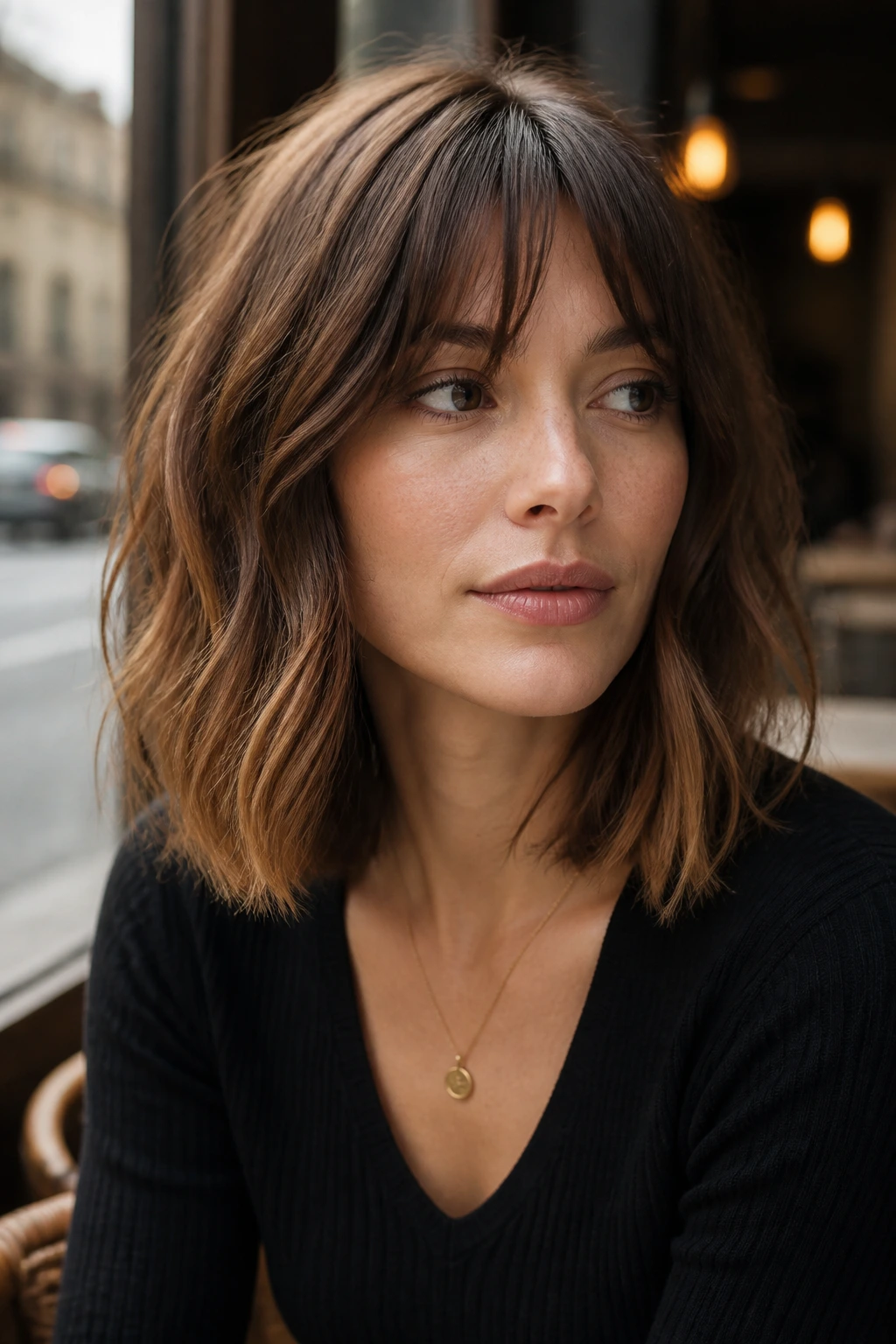
The French-girl lob is less about one exact cut and more about a feeling: slightly imperfect, softly shaped, and a little bit easy in the front. The ends are rarely dead-straight, the texture has some air in it, and the overall effect looks like you did not spend an hour chasing it.
What makes it flattering is the softness near the face. It doesn’t box you in the way a heavy bob can. Pair it with a gentle wave or a loose bend at the ends, and the whole cut feels more relaxed.
This one suits women who like hair that can be pushed around with their fingers during the day. If you need every strand in place, choose something sleeker. The charm here is that it looks better when it’s a little unsettled.
15. Old Money Lob
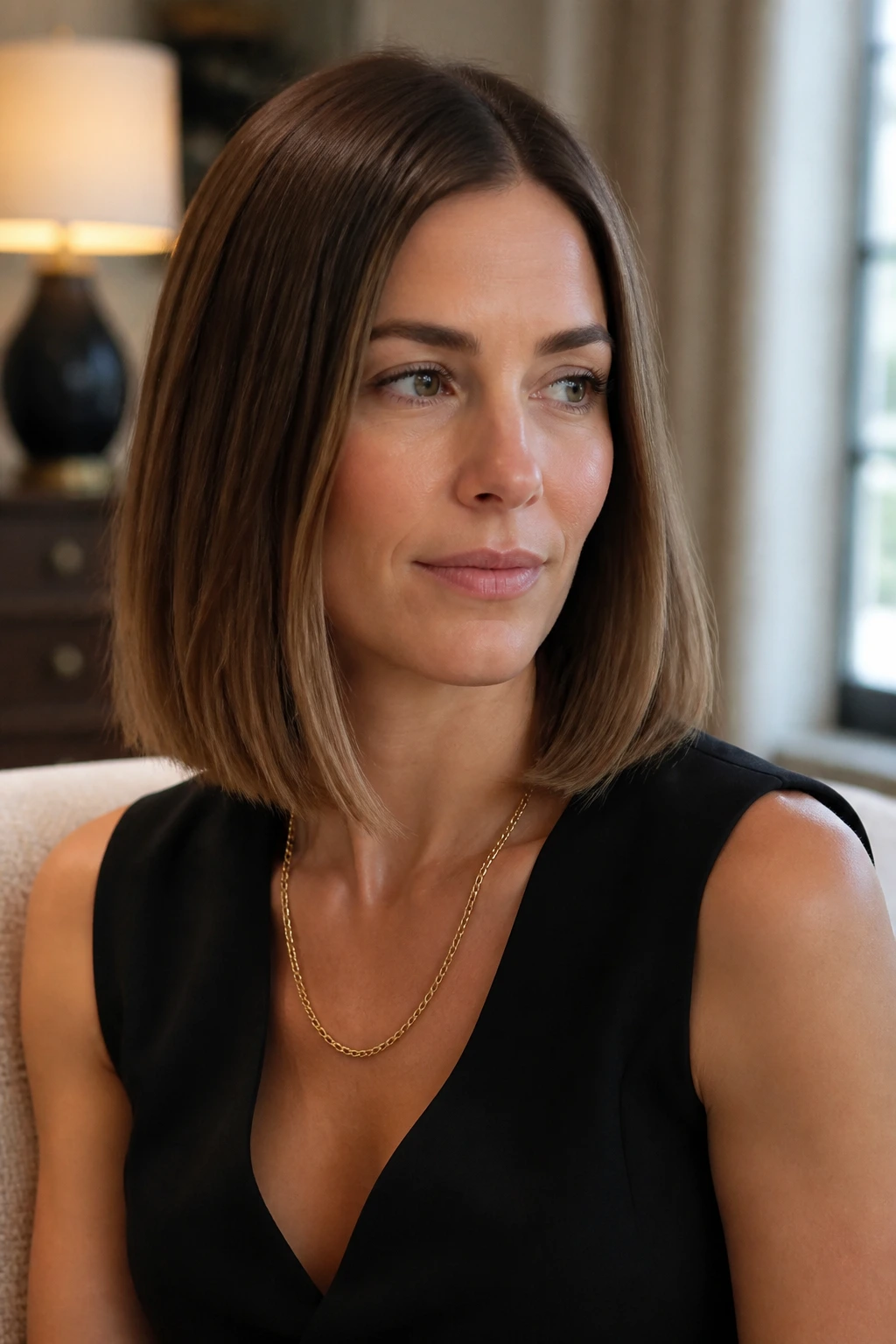
An old money lob is polished, quiet, and very deliberate. The length usually sits at the collarbone, the ends are smooth, and the styling stays controlled rather than over-textured. It’s not flashy. That’s the point.
This cut flatters because the line is elegant without being severe, and the finish makes the hair look healthy. A good blowout matters here. So does shine. If the cut is precise, even simple styling makes it look finished.
Keep the layers minimal. A stray bunch of choppy pieces can pull the look off balance. The whole thing works best when the haircut reads as expensive because it is clean, not because it’s loud.
16. One-Length Lob with Tucked Ends
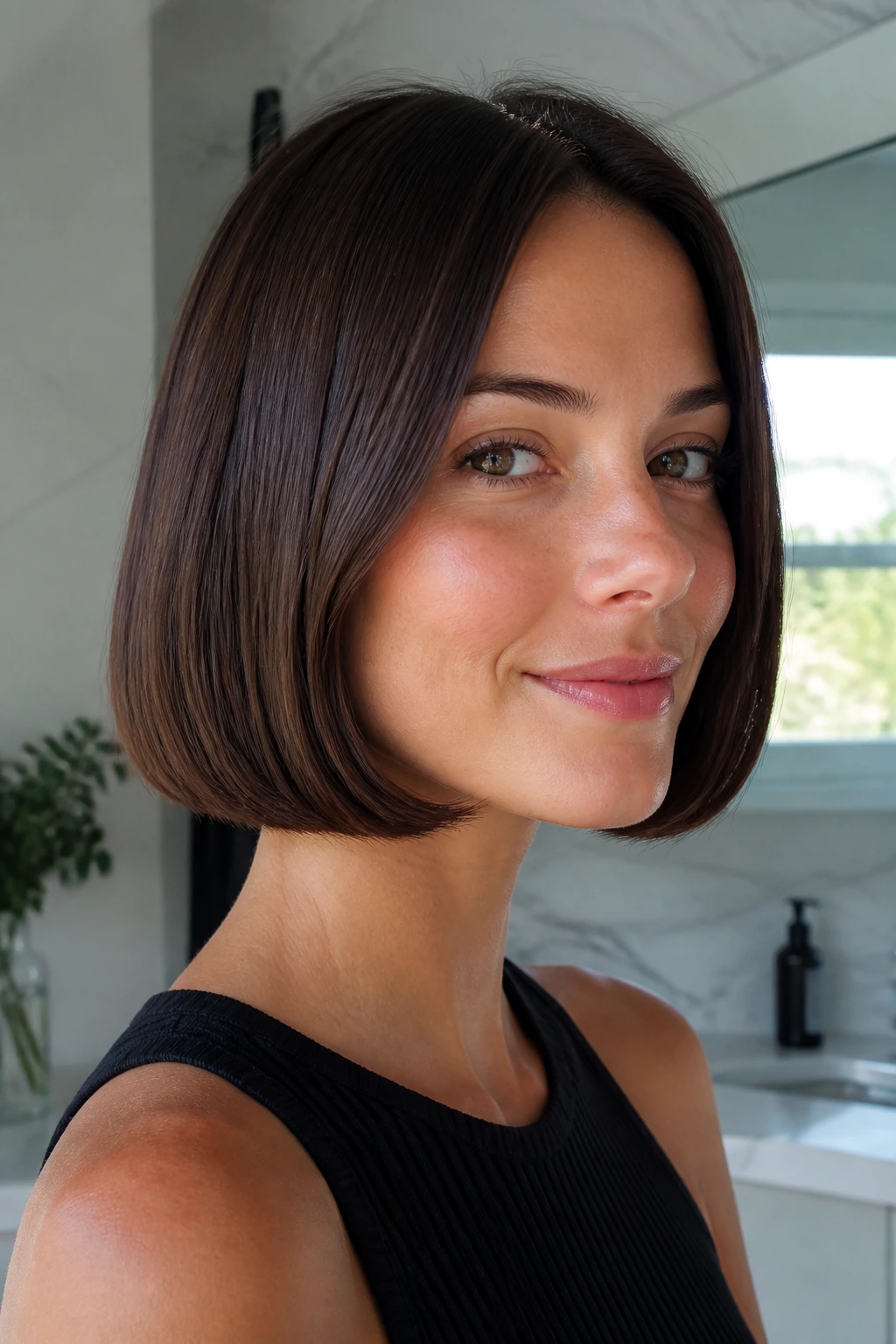
A one-length lob with tucked ends is a near-minimalist cut, but it still has shape. The edge is blunt, the outline is full, and the ends are often blown inward just enough to sit neatly against the jaw and neck. That tucked finish softens the bluntness.
This is a strong choice for women who like structure but do not want visible layers competing with the line. It can look especially good with a center part and a slightly curved under finish. The tuck also helps the cut show off the neck and collarbone in a way that feels clean.
If the hair is very thick, ask your stylist to lighten the interior a bit. Otherwise the ends can look bulky when tucked in. And nobody needs that.
17. Asymmetrical Lob
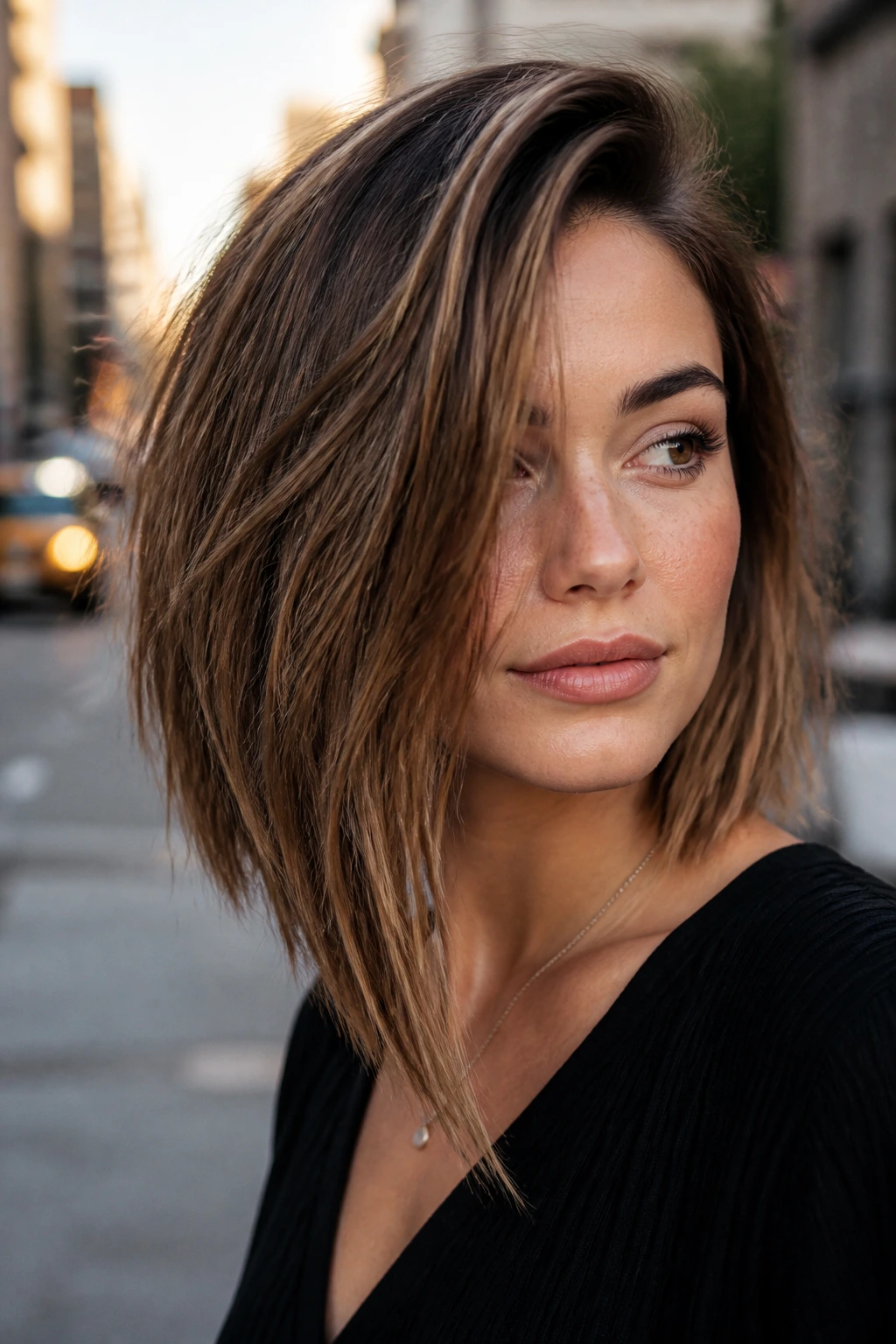
An asymmetrical lob is for the woman who wants the cut to look intentional from every angle. One side is longer than the other, often by a modest amount, and that off-balance shape gives the style energy. It’s not wild. It just refuses to be symmetrical in the usual way.
What I like about this cut is how it shifts focus. The eye keeps traveling across the line, which makes the face seem a little more sculpted. It’s especially effective if you tend to part your hair on one side every day anyway.
Keep the asymmetry subtle unless you want a louder look. Too much difference and the style starts doing the talking for you. A small shift is often enough.
18. Rounded Lob
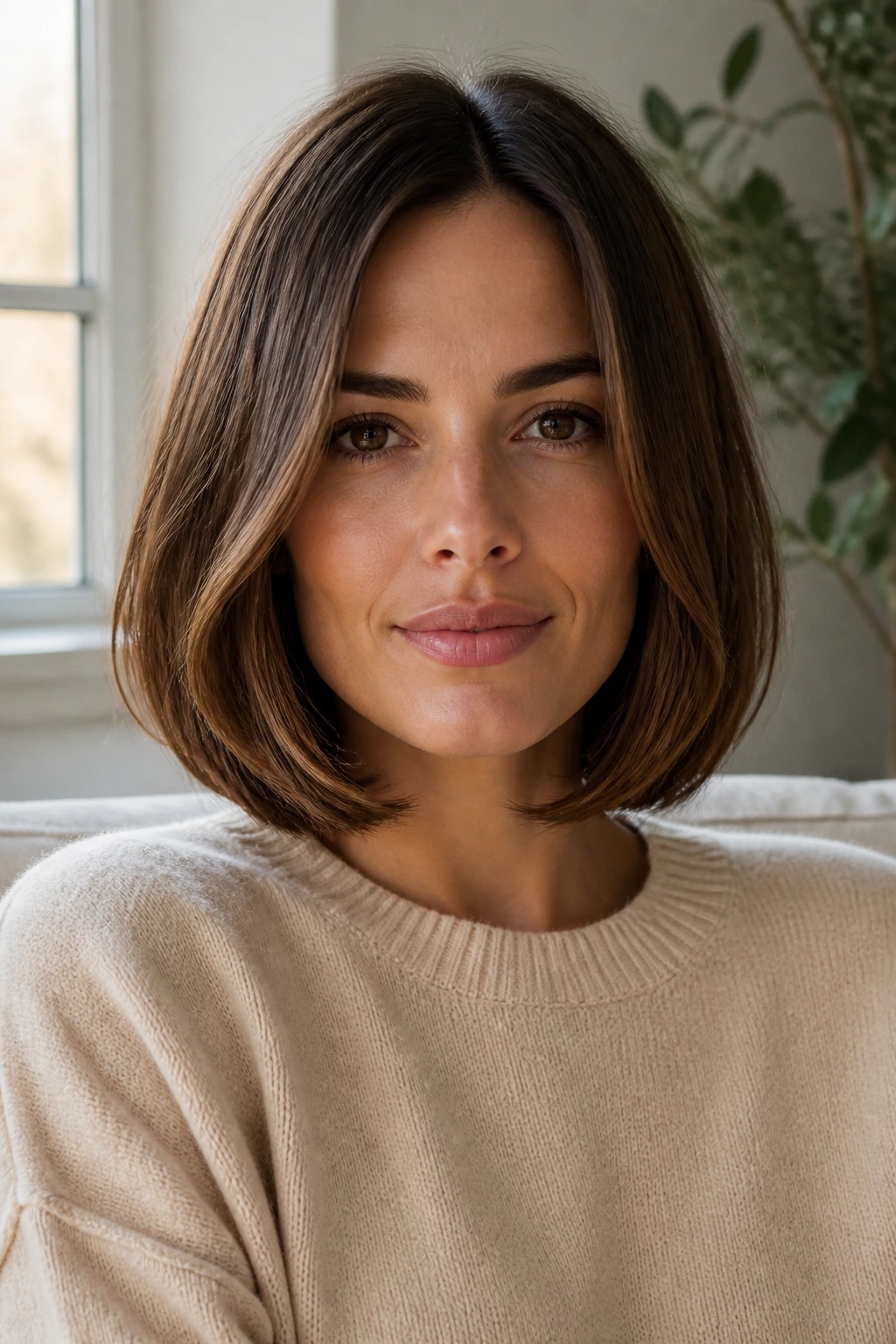
A rounded lob has a softer edge at the bottom, which makes it look fuller and more face-framing than a flat straight cut. The silhouette curves gently under at the ends, almost like the hair is wrapping itself around the jawline. It’s flattering in a very quiet way.
This shape helps when hair tends to look stringy at the ends. The rounding gives the cut body and a little bounce. It’s also useful if you want the lob to feel feminine without relying on curls or waves.
The key is control. Rounded does not mean helmet-like. The crown should still have some lift, or the whole cut can feel too tidy. A loose blow-dry with a medium round brush usually does the trick.
19. Flip-End Lob

Flip-end lobs have a little personality. The ends flick outward instead of curling under, and that tiny change adds movement without requiring full waves. It’s a good style when you want the hair to feel playful but still neat enough for work or dinner.
The flip works best when the lob hits the collarbone or slightly above it. Too long, and the ends won’t hold the bend as well. A 1.25-inch round brush or a flat iron bend at the bottom is enough to create the effect.
This is one of those cuts that can look retro if you overdo it, so keep the flip light. Think shape, not costume. The best version feels modern because it’s understated.
20. Wet-Look Lob
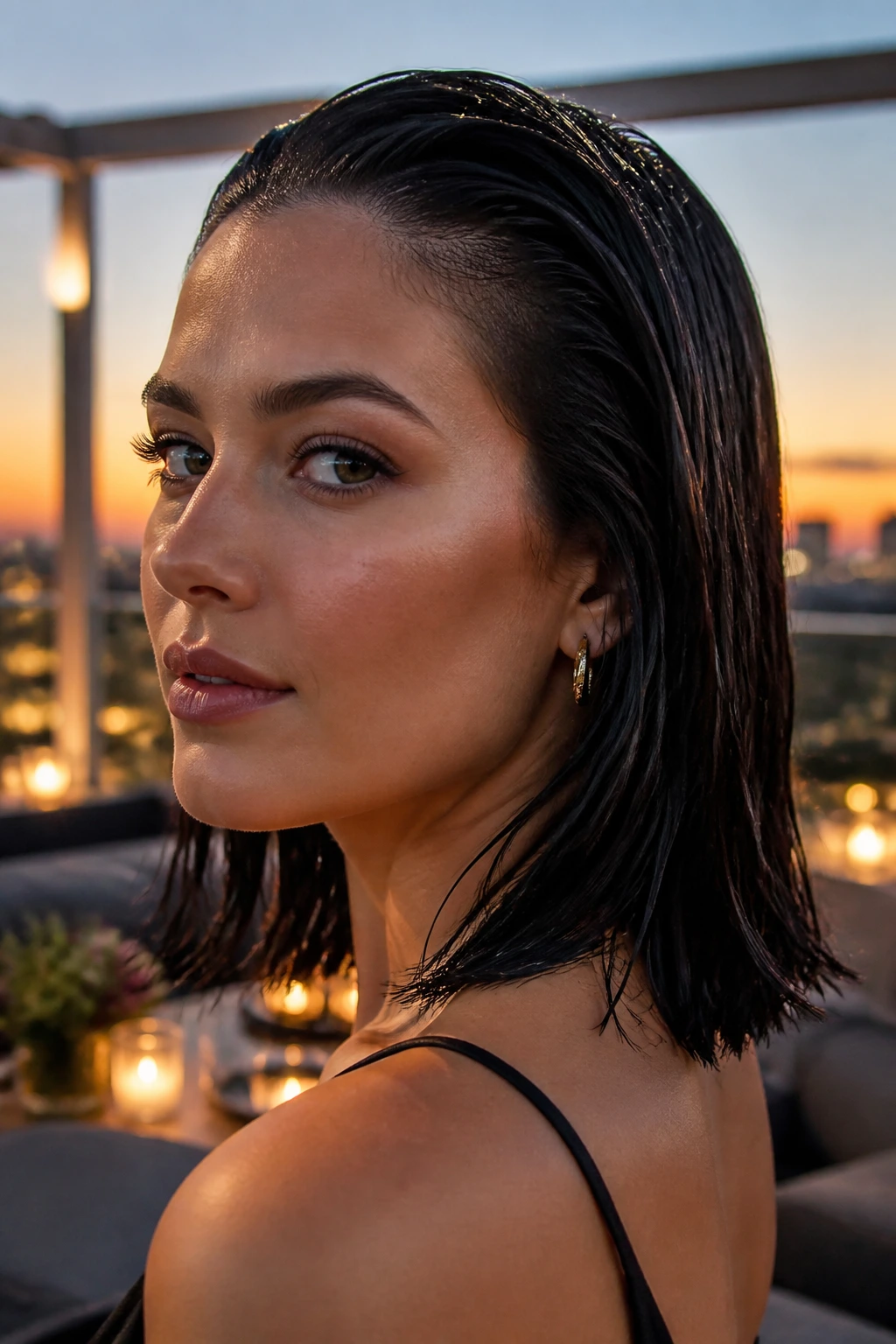
A wet-look lob is slick, sharp, and not for someone who hates product. The hair is combed back or parted cleanly, then coated enough to hold that glossy, damp finish. It turns the lob into a statement instead of a background style.
This works especially well on a blunt or slightly angled lob because the clean lines show up under the sheen. The face stays open, the hair stays close to the head, and the whole shape feels deliberate. It’s a strong evening option when you want the cut to look different without changing it.
Use the right gel or styling cream, and don’t scrimp on the comb-through. Uneven product distribution shows fast. And if you have very fine hair, a wet look can actually make the cut seem fuller at the roots. Strange, but true.
21. Dimensional Balayage Lob
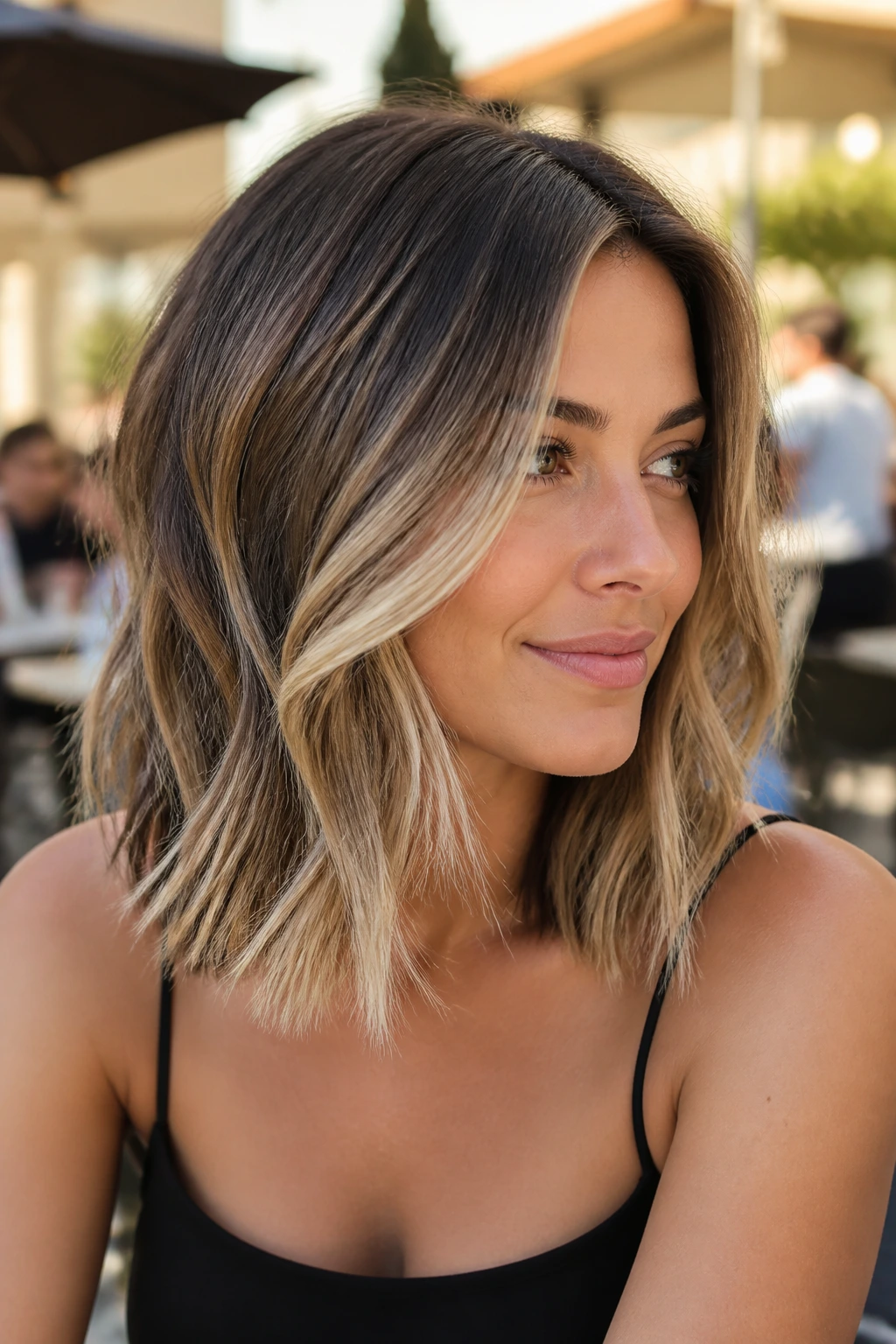
Dimensional balayage changes how a lob reads because the color carves out the layers and bends in the cut. Lighter ribbons through the front and mid-lengths keep the shape from looking flat. On a lob, that dimension matters a lot. The cut is often medium in length, so the color has to do some of the visual lifting.
This style flatters women who want movement without a heavily layered haircut. The balayage makes the ends look lighter and the face brighter, which softens the whole style. It also grows out more gently than a solid color with hard roots.
Ask for placement that follows the shape of the cut, not random streaks. The front pieces should usually carry a little more light, especially if you wear a side or center part.
22. Honey-Brown Lob with a Money Piece
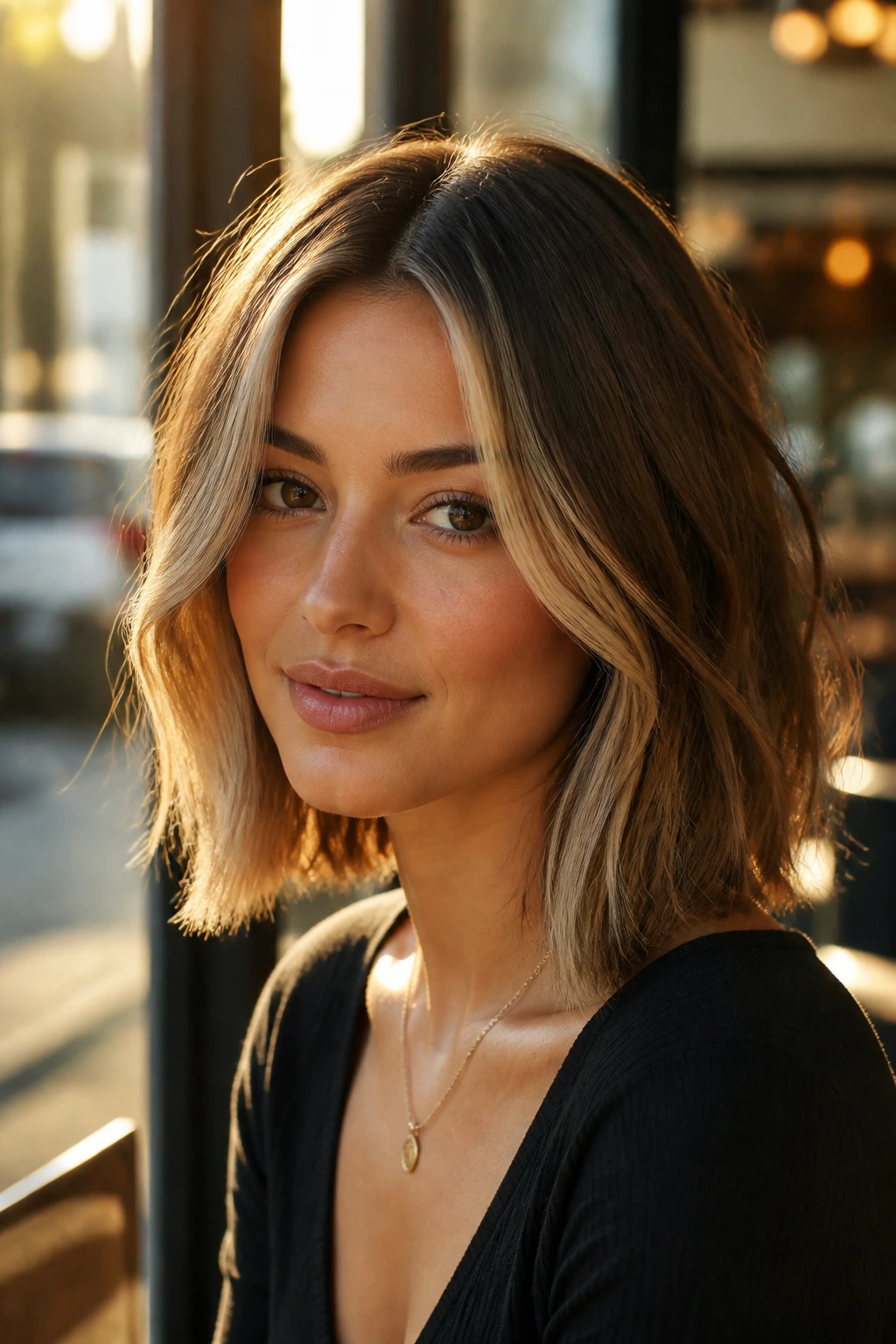
A honey-brown lob with a money piece is warm, bright, and easy on the face. The base color stays rich and brown, while the lighter front sections open up the cheeks and brow area. That front brightness is what people notice first.
It flatters because the contrast is concentrated where the face needs it most. The rest of the hair can stay calm and dimensional. On medium to olive skin tones, that honey warmth often looks especially natural. On cooler skin, it can still work if the front pieces are kept soft, not brassy.
Keep the money piece narrow enough to stay elegant. If it gets too thick, the cut starts looking stripey. A finer placement usually ages better.
23. Copper Lob

A copper lob is bold without needing a dramatic shape. Copper brings heat to the face, and on a lob it creates a very clean visual line from root to end. The color does a lot of the talking, so the cut can stay relatively simple.
What makes this flattering is the glow. Warm copper tones reflect light in a way that can make the skin look brighter and the hair look fuller. It’s a smart pick if your natural shade is somewhere between strawberry blond and auburn, though deeper brunettes can wear it too with the right color work.
A blunt or softly layered lob both work here. The big caution: copper fades. Fast. A glossing routine helps keep the tone from going flat and muddy.
24. Platinum Blunt Lob
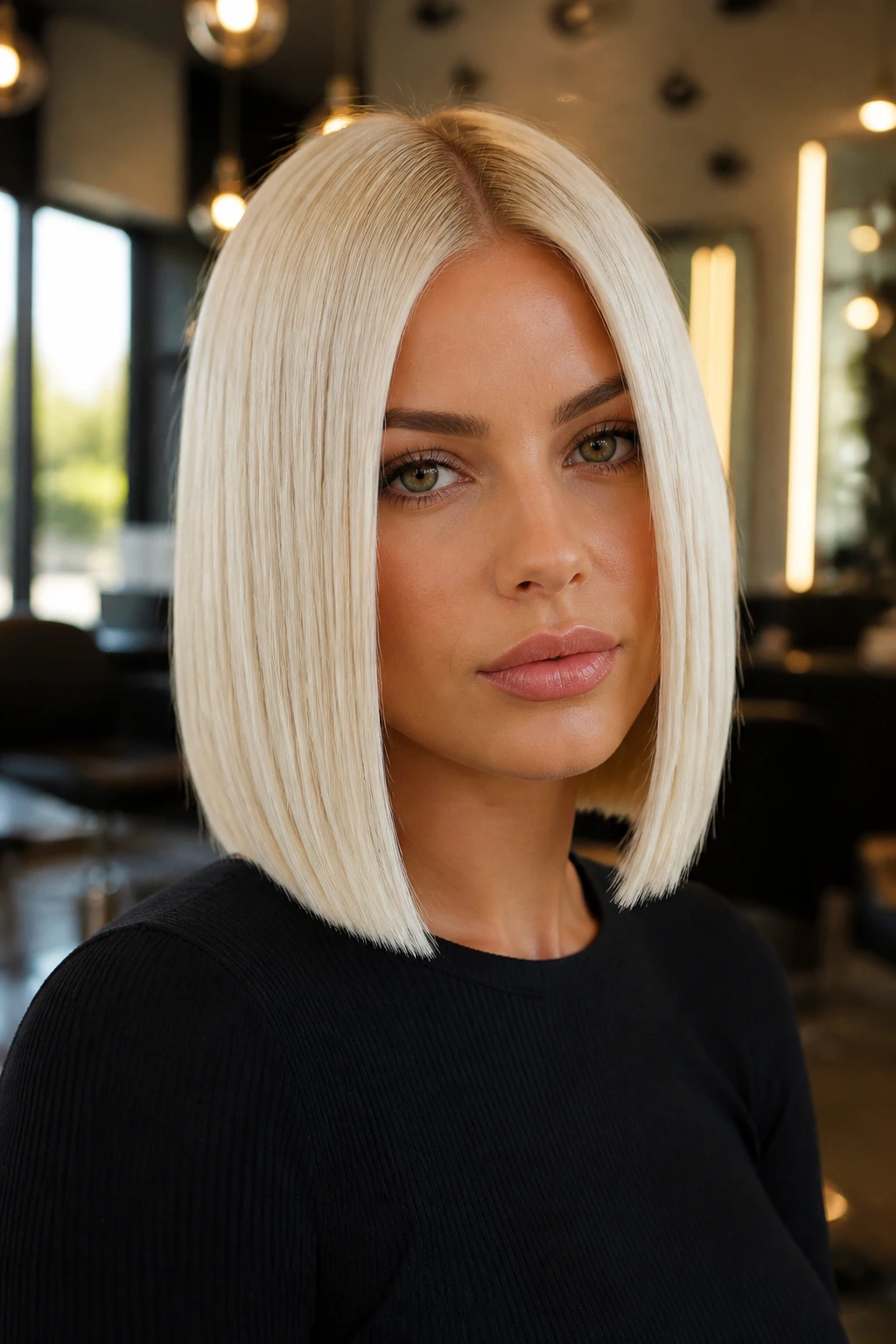
A platinum blunt lob is high contrast, high shine, and very clean. The cut needs to be precise because platinum leaves no place for a sloppy edge to hide. Every line shows. Every bend shows.
This style flatters on women who like a stronger, cooler look. The light color opens up the face, while the blunt edge keeps the shape grounded. It’s especially striking with a center part or a slightly off-center part that creates a little asymmetry.
The maintenance is real, though. Toner, moisture masks, and careful heat styling are part of the package. If you want low effort, this is not the lane. If you want a lob that makes a statement on sight, it’s a strong one.
25. Brunette Gloss Lob
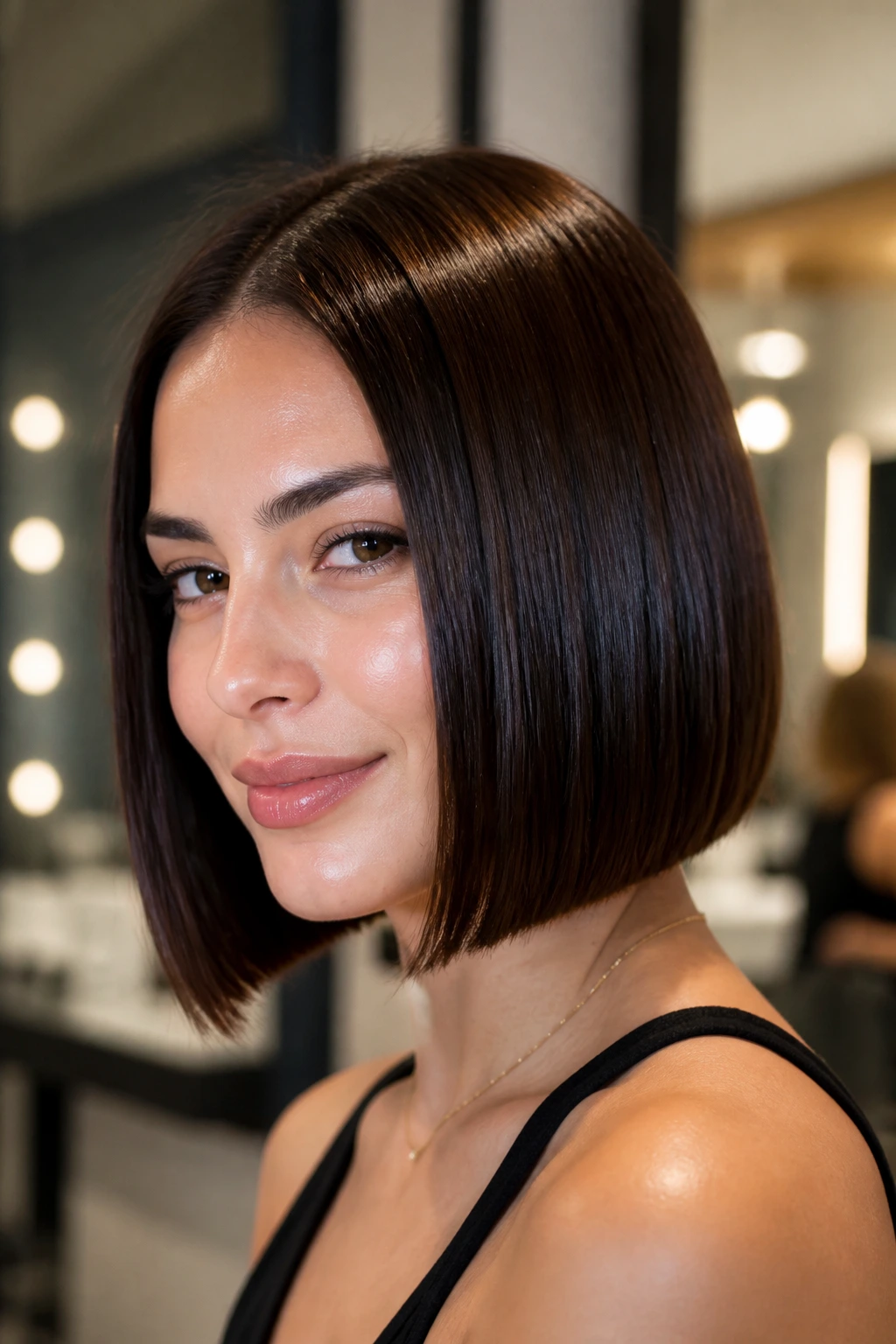
A brunette gloss lob is one of the most wearable styles on the list because the shine does half the flattering. Deep brown color with a polished finish gives the hair a dense, healthy look, especially around the ends where longer cuts can sometimes go thin or see-through.
This version works with blunt edges or subtle layering. What matters is the reflection. A smooth surface makes the cut look richer and more expensive, even when the styling is simple. It’s a cut that likes a good blowout and a drop of serum on the ends.
If your brunette hair tends toward flatness, ask for a gloss service or use color-friendly shine products. The difference is not subtle. It changes the entire read of the haircut.
26. Warm Caramel Lob
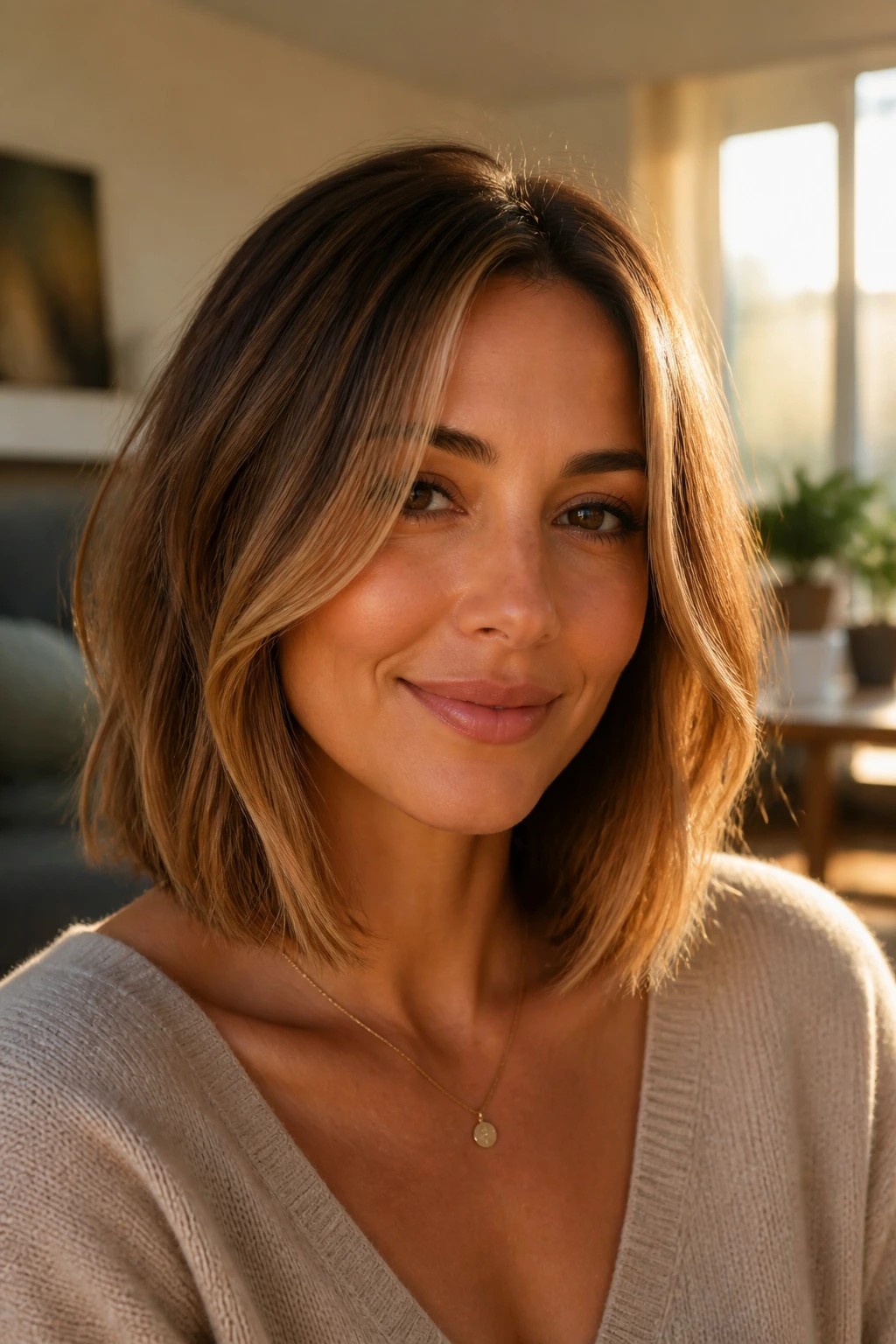
Warm caramel on a lob softens the shape instantly. The lighter pieces add depth around the face and through the ends, which makes the length look more fluid. It’s especially flattering on women who want brightness without going blond.
Caramel works because it sits between brown and gold, and that middle ground keeps the color soft. On a lob, the warmth can make the cut feel less severe than a solid darker tone. The effect is even better when the ends are slightly beveled or curled under.
Ask for blended placement rather than chunky streaks. The goal is to let the cut breathe. Harsh highlights can break that up fast.
27. Air-Dry Natural-Texture Lob
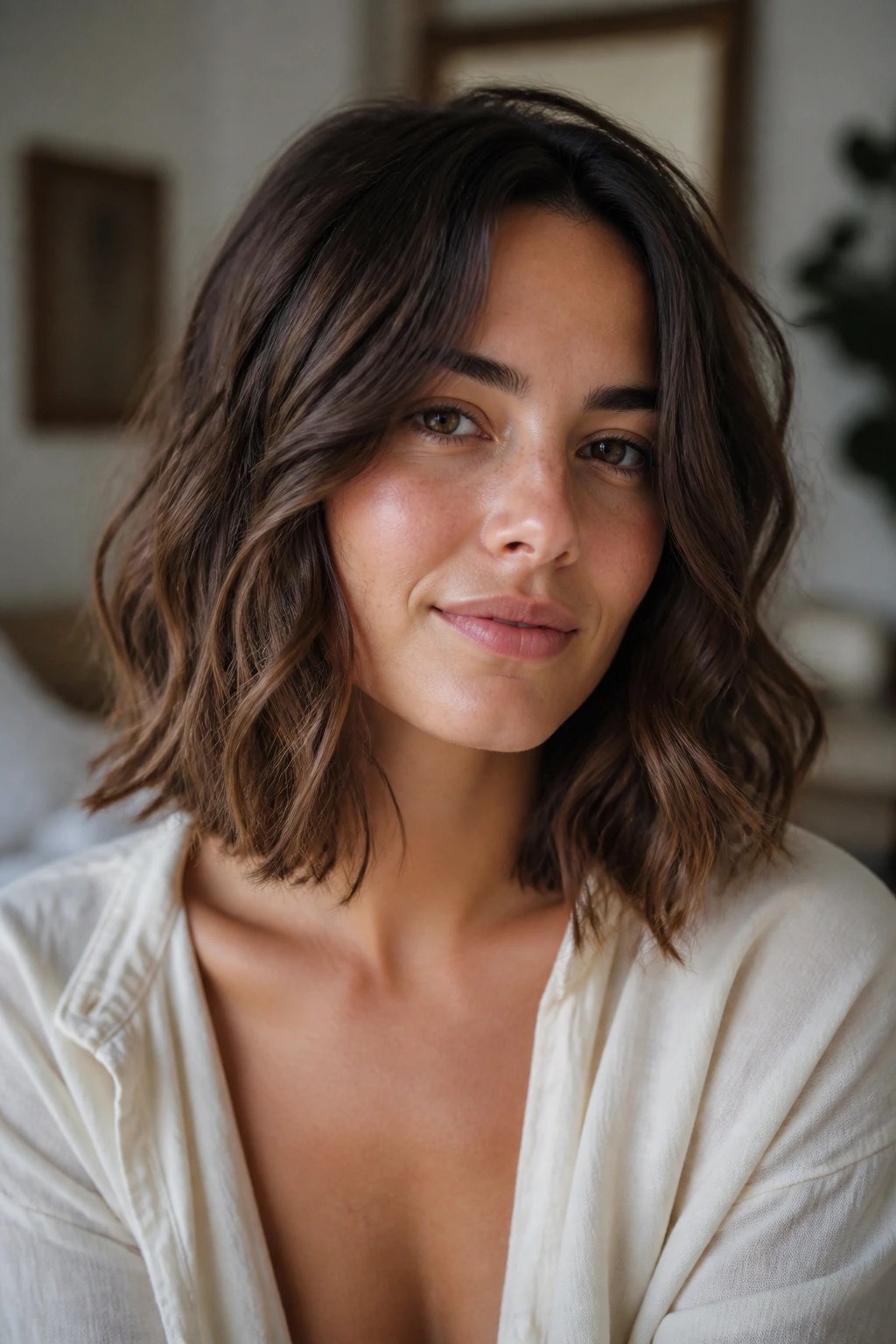
An air-dry lob is honest hair. No aggressive brushing. No polished finish. Just the natural bend or wave doing its thing while the cut gives it a shape that makes sense. That’s why it works so well for women who want a real-life haircut, not a salon-only haircut.
The length should support the texture instead of fighting it. If your waves puff at the sides, a little interior shaping helps. If your texture is more loose and irregular, a one-length or softly layered lob can keep it from collapsing.
The best part is time. Or the lack of it. Scrunch in a light cream, part it where it falls cleanest, and leave it alone long enough for the hair to set.
28. Hollywood Wave Lob
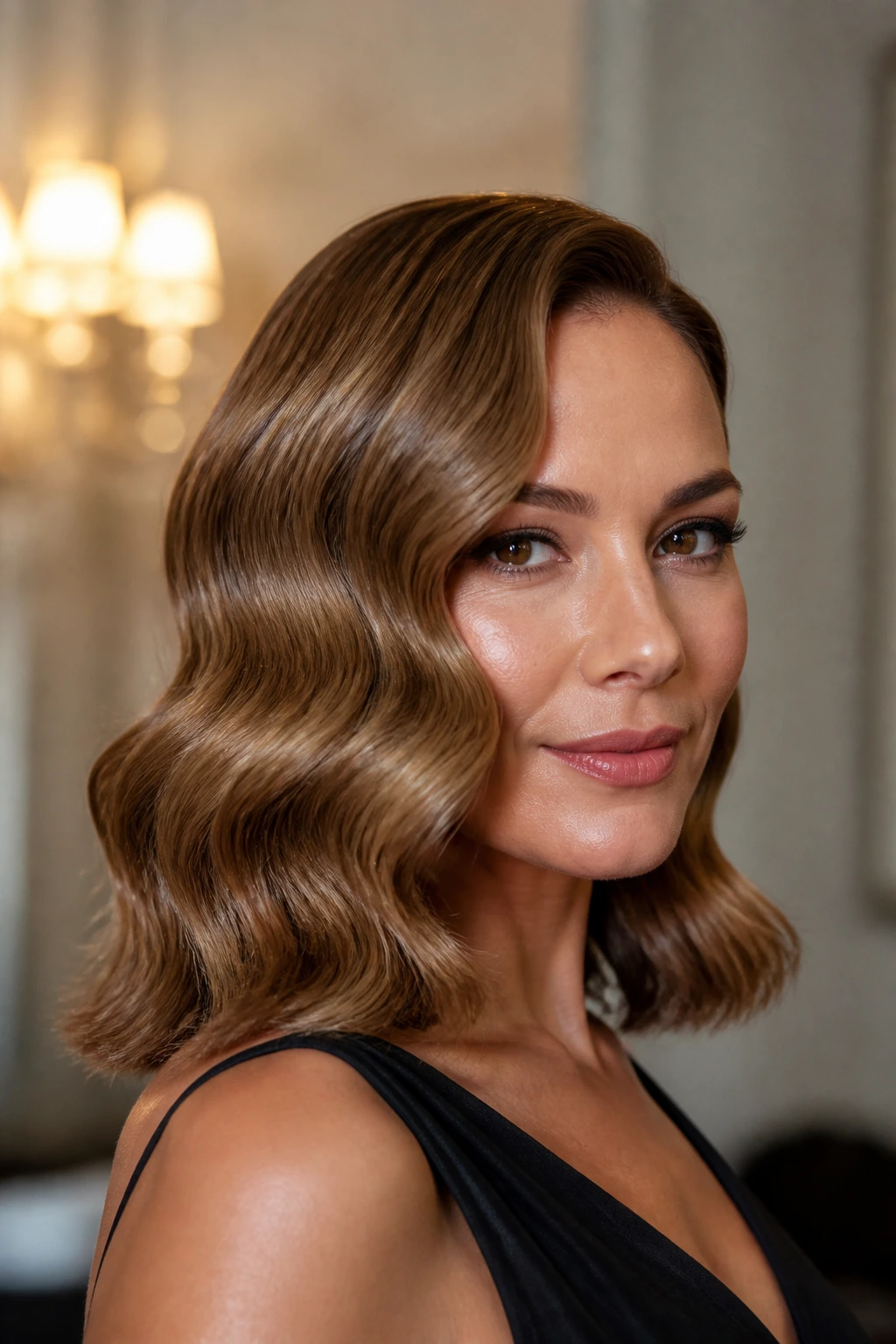
A Hollywood-wave lob gives shoulder-length hair the kind of polish usually reserved for longer lengths. The waves are smooth, sculpted, and bent in the same direction, which creates a formal, almost old-film outline. It’s a good choice when you want the lob to look dressed up instead of casual.
This style flatters because the wave pattern adds width at the cheek and jaw without adding bulk at the ends. The result is soft and controlled. On event nights, it reads elegant fast.
Use a larger barrel iron and set the waves in clips until they cool. That cooling step matters. If you skip it, the waves fall apart faster than they should.
29. Deep Side-Part Lob
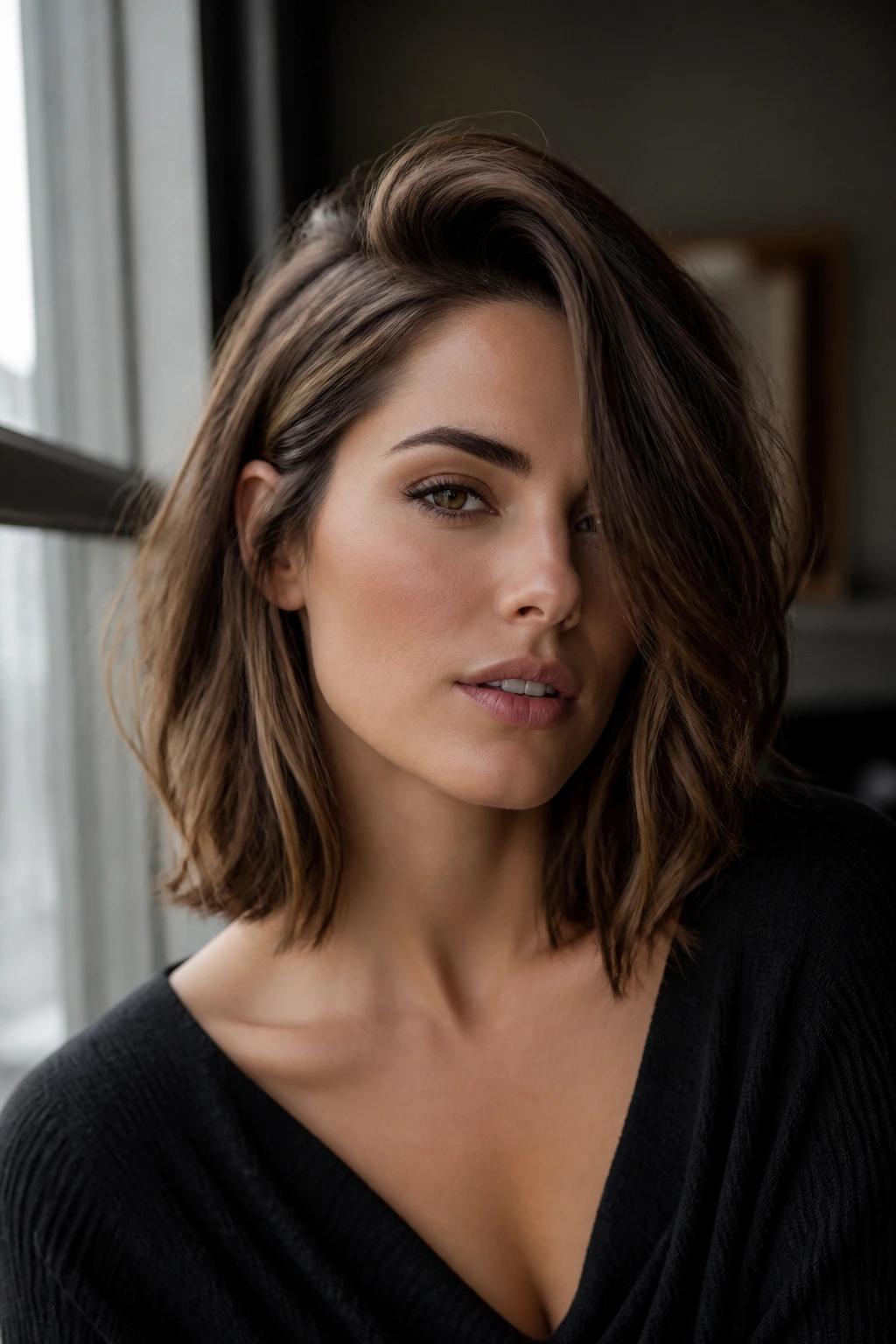
A deep side-part lob changes the face shape more than people expect. The heavier side gives lift at the root, a bit of drama near the brow, and a sweeping line that softens stronger jawlines. It’s one of the fastest ways to make a lob feel different without changing the cut itself.
The style is especially flattering for square or broad foreheads, because the asymmetry breaks up the width. It also gives fine hair a little root volume where it needs it most. Hair that falls flat in the middle often comes alive with a side part.
Keep one side sleek and the other slightly fuller. That contrast is part of the charm. Too much teasing, and it stops looking modern.
30. Mid-Part Lob with Face-Framing Layers
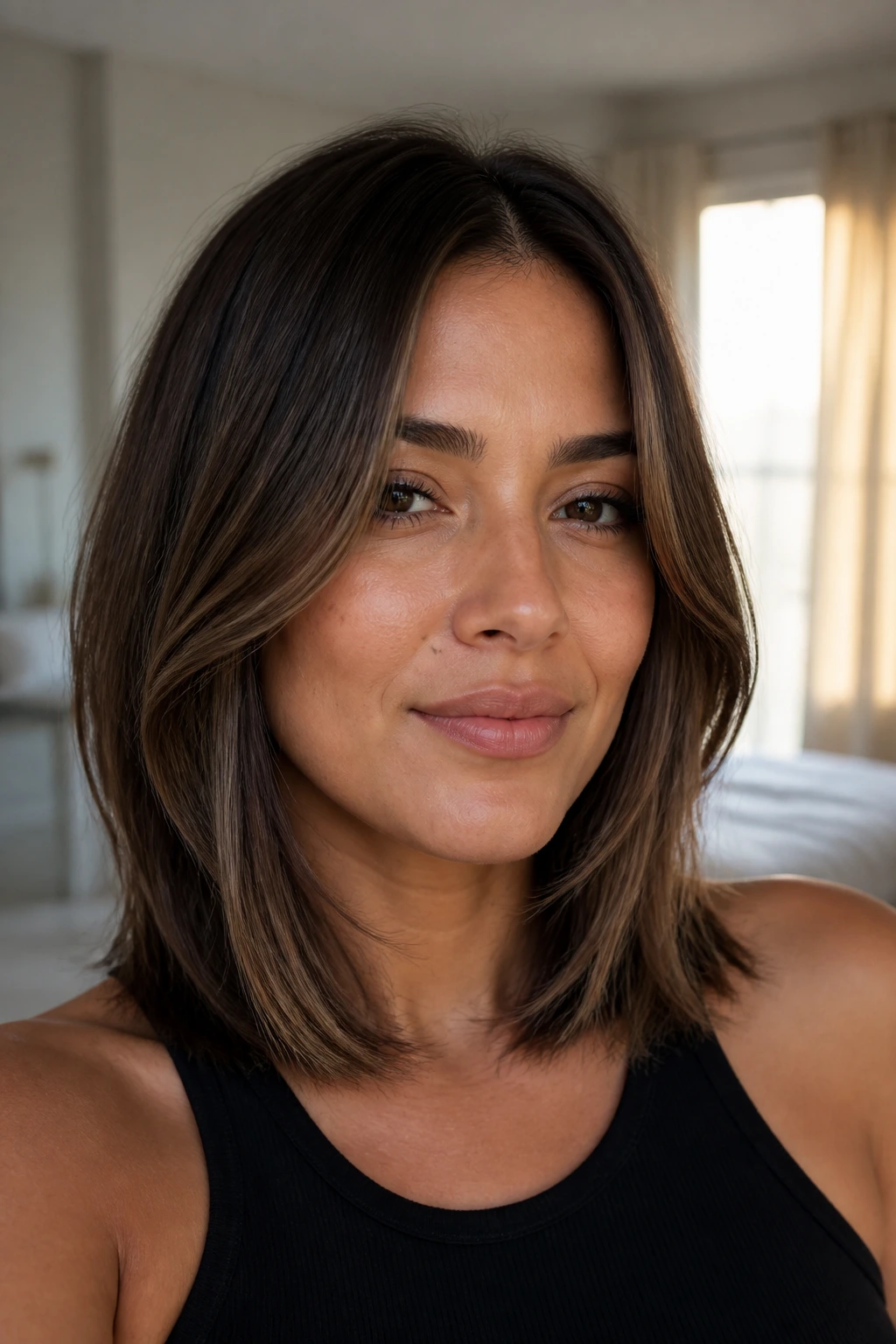
A middle-part lob can look severe if the cut is too solid, so face-framing layers solve that problem. The layers should start around the cheekbone or jaw and taper down toward the collarbone. That gives the face movement while keeping the overall shape stable.
This cut works beautifully on women who want the symmetry of a center part but need some softness around the edges. The layers guide the eye inward and then down, which can lengthen the neck and soften the chin area. It’s an easy way to make a blunt concept feel less rigid.
Keep the layers long. Short front pieces can jump into your face all day. Long ones behave better.
31. Shoulder-Skimming Lob
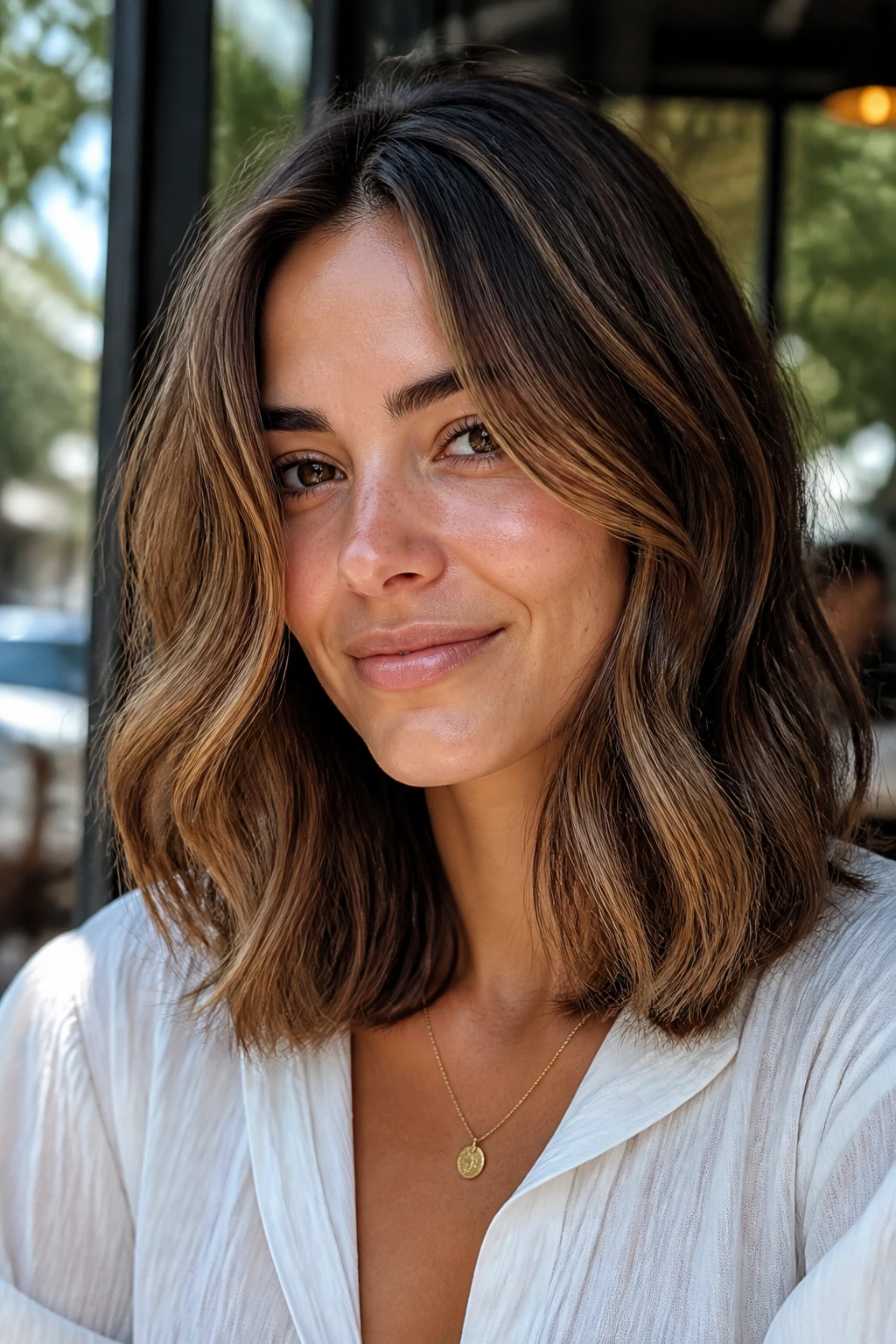
A shoulder-skimming lob sits just at the point where the hair grazes the shoulders instead of getting trapped on them. That tiny difference matters. It lets the hair swing, tuck, and move without flipping outward in an annoying way.
This length is flattering because it gives a little more softness than a shorter lob while still feeling lifted compared with long hair. It’s a smart middle ground for women who are easing into shorter hair and don’t want to feel as if they’ve jumped too far.
The cut works with waves, straight styling, and loose bends. If your shoulders are broad, the length can look balanced and clean. If they’re narrow, it still gives enough width to feel substantial.
32. Power Lob with Sharp Edges
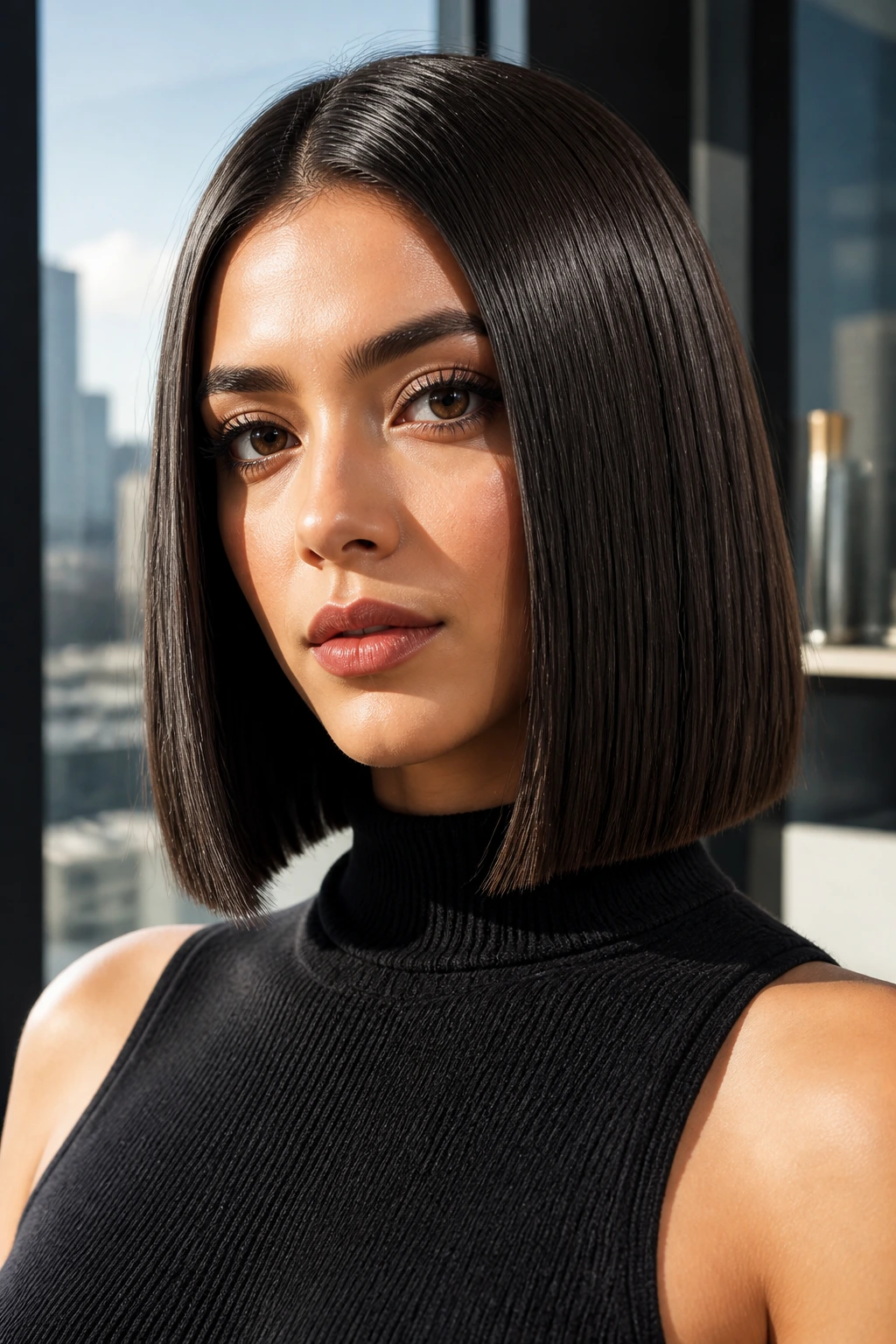
A power lob is clean, controlled, and not remotely shy. The ends are sharp, the line is strong, and the finish usually leans glossy or very smooth. It’s the haircut version of a fitted blazer.
What flatters here is the structure. The cut draws a clear perimeter around the face and neck, which can make features look more defined. If you like crisp clothes, structured makeup, or a sharp side part, this lob fits the same mood.
This is not the place for over-layering. The line needs to stay intact. A tidy blow-dry or ironed finish will keep the shape from losing its edge.
33. Soft Romantic Lob
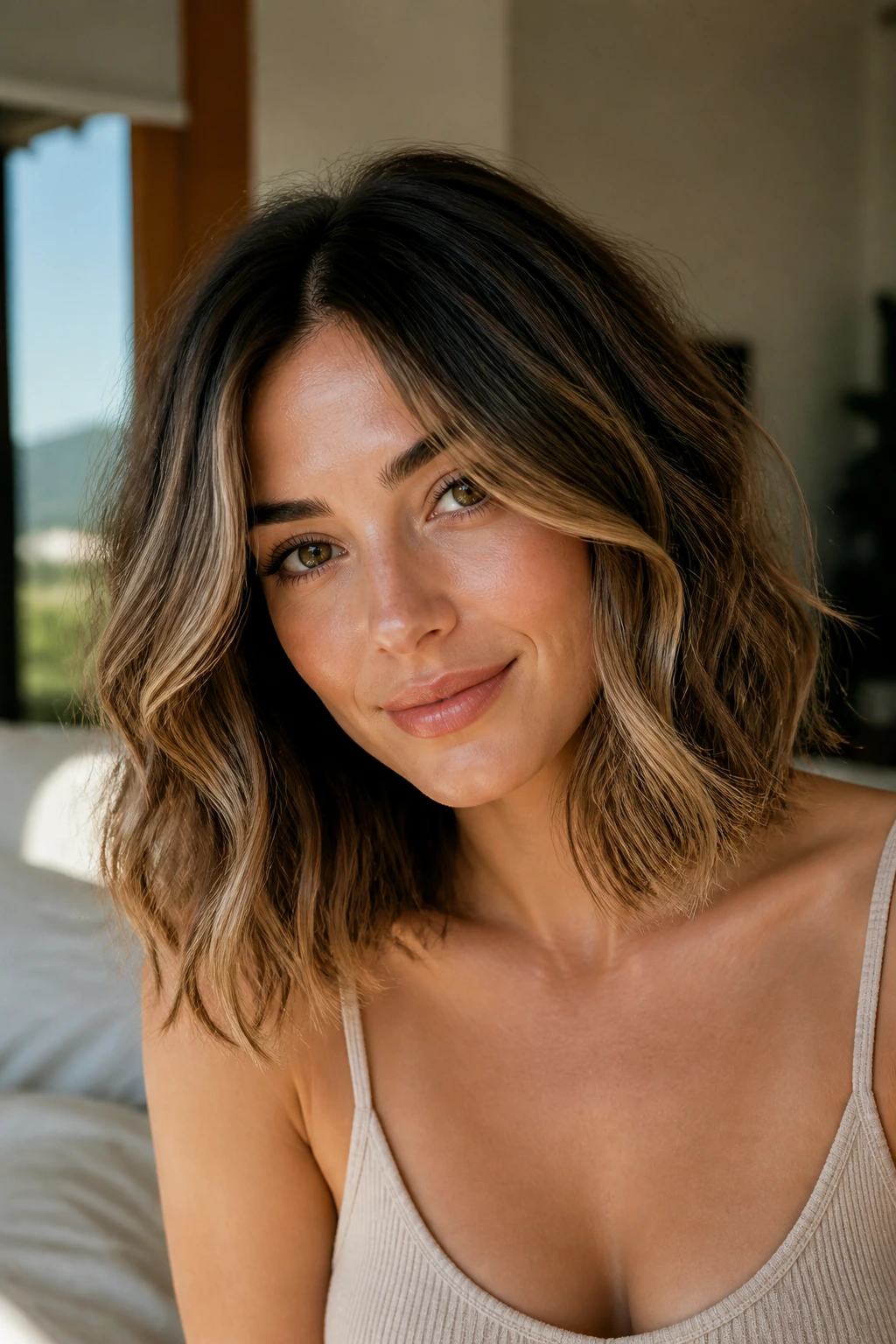
A soft romantic lob keeps the length, but the edge is gentler. The ends curve, the waves are loose, and the front pieces fall around the cheek rather than away from it. It’s one of the prettiest lob directions if you like hair that feels touchable.
This cut flatters because it frames the face without boxing it in. It can soften a strong jaw and make narrower faces look fuller through the sides. The softness is the whole point, though, so the styling should stay loose and breathable.
A medium-barrel iron, a little brush-out, and a touch of flexible spray are enough. Heavy hairspray would ruin it. You want movement that still remembers its shape.
34. Wedge Lob
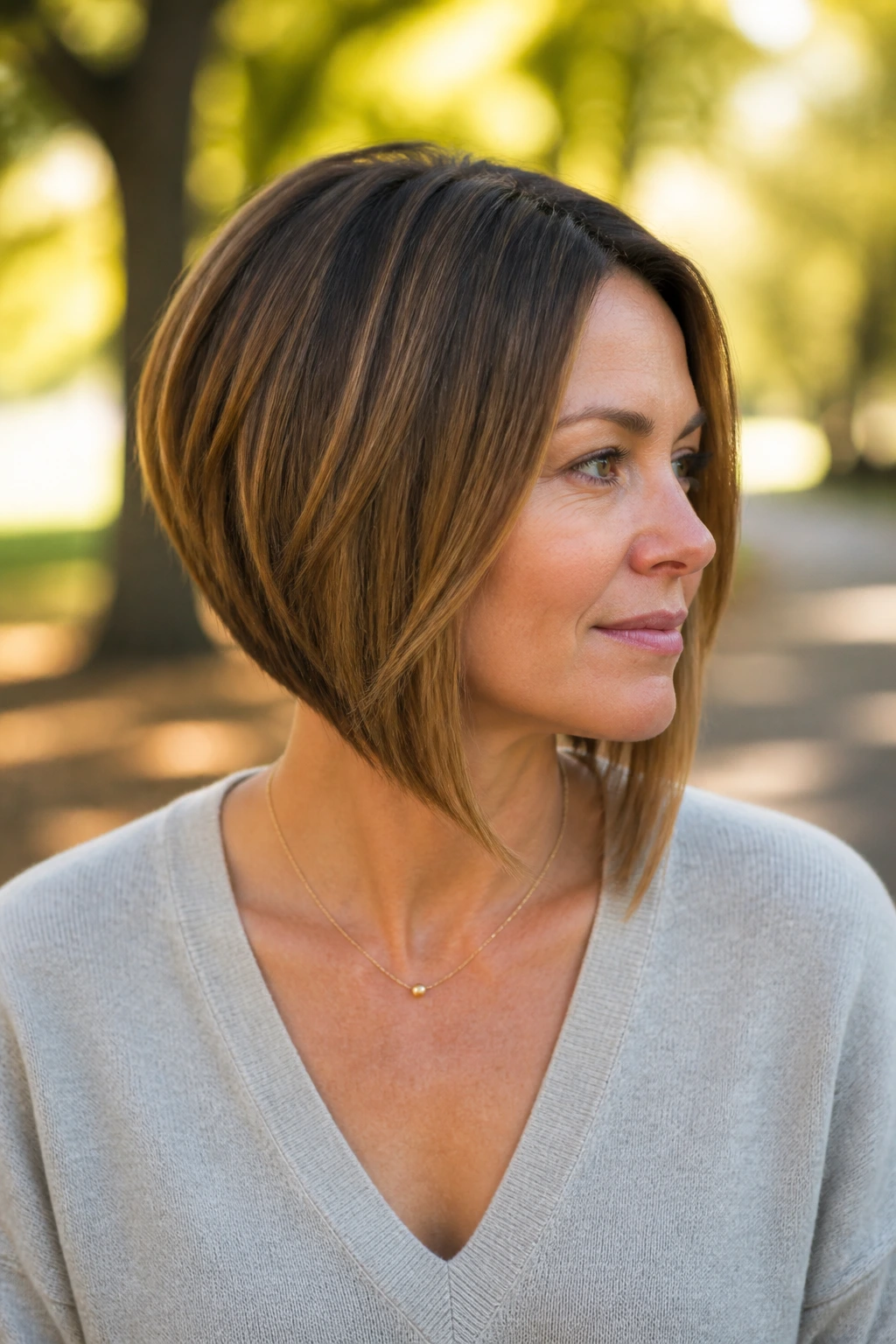
A wedge lob has a slight lift and slope through the back, which gives the style a more sculpted profile. It’s not as dramatic as a classic wedge cut, but the shape is there if you know where to look. The back sits a touch shorter, the front a touch longer, and the result feels tidy.
This is a good option for women who want some volume at the crown without obvious stacking. It also keeps the neckline neat, which helps if your hair tends to grow outward at the nape. The shape is practical and sharp at the same time.
I’d keep this one textured enough to avoid a helmet effect. The best wedge lob still moves when you turn your head. That’s the difference between tailored and stiff.
35. Micro-Layer Lob
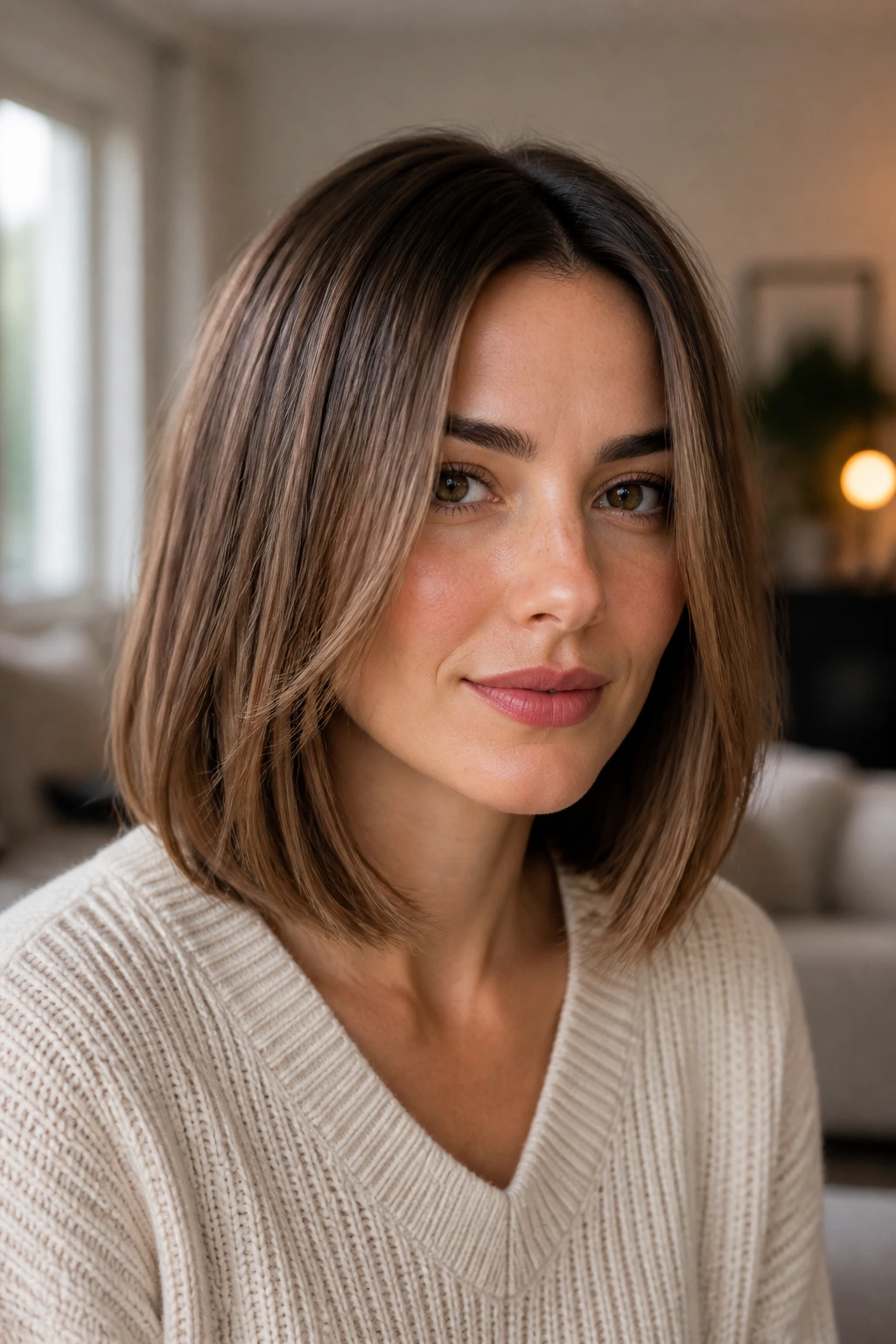
Micro-layers are tiny, strategic layers placed to create movement without changing the basic shape of the cut. On a lob, that means you get air and swing without losing the clean outline that makes the style flattering in the first place.
This is a strong option for women who want a soft finish but hate obvious choppy layers. The hair falls better, bends easier, and keeps some weight at the ends. On medium to thick hair, it can remove just enough bulk to stop the cut from looking dense.
The trick is restraint. Micro-layers are not visible drama. They’re hidden support. If your stylist starts slicing away too much, the effect is gone.
36. Razor-Cut Lob
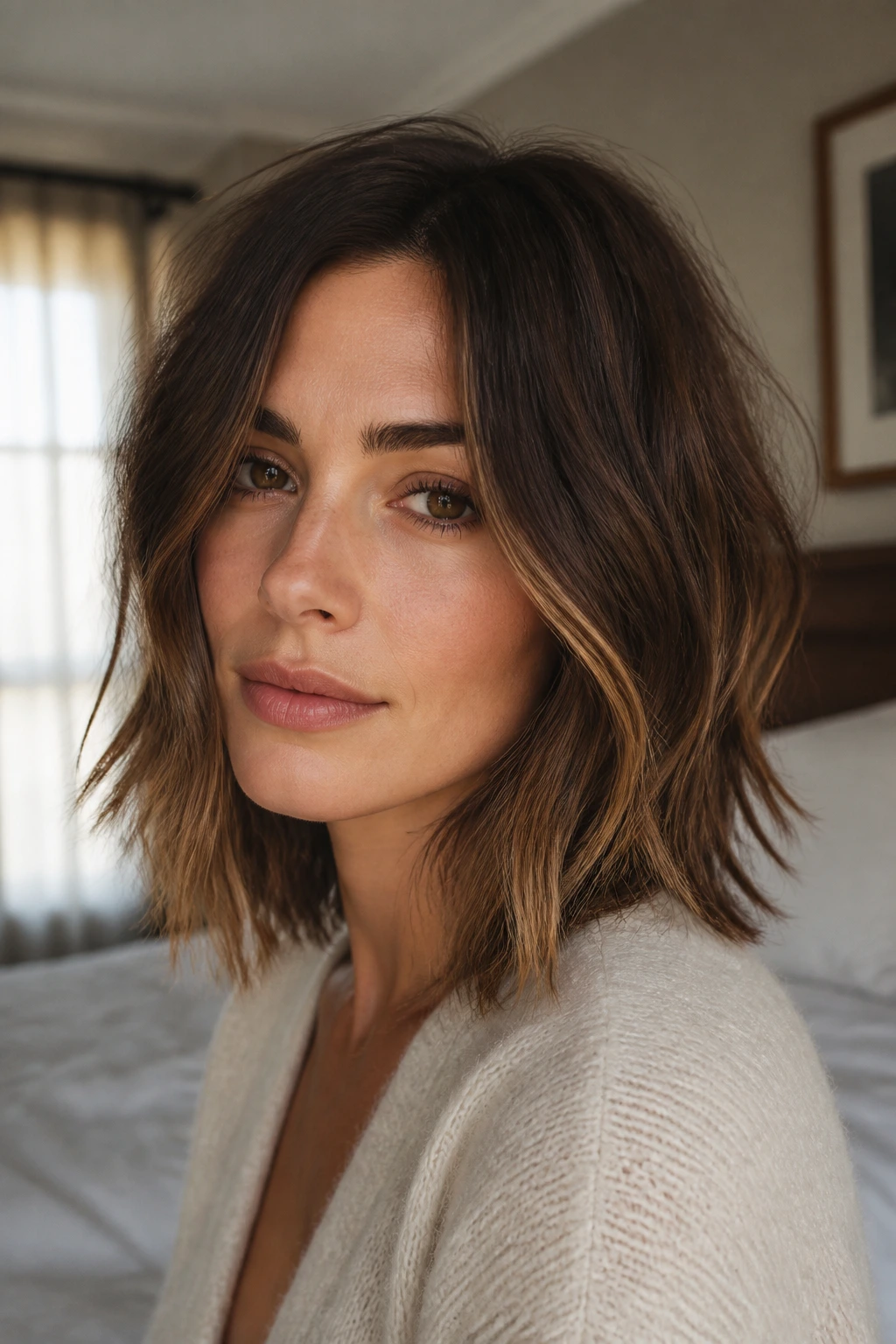
A razor-cut lob has a softer, more broken edge than a blunt scissor cut. That softness can give the hair a little edge and more air through the ends, especially if your texture is already a bit wavy. It’s less polished than a blunt lob, but that’s the point.
This cut flatters women who want movement built into the haircut itself. The ends don’t sit as heavily, and the overall shape feels lighter. On thicker hair, a razor can remove bulk in a way that makes the lob swing better.
Still, the razor has to be used with judgment. Too much and the ends can fray. Ask for softness, not shred. Big difference.
37. U-Shaped Lob
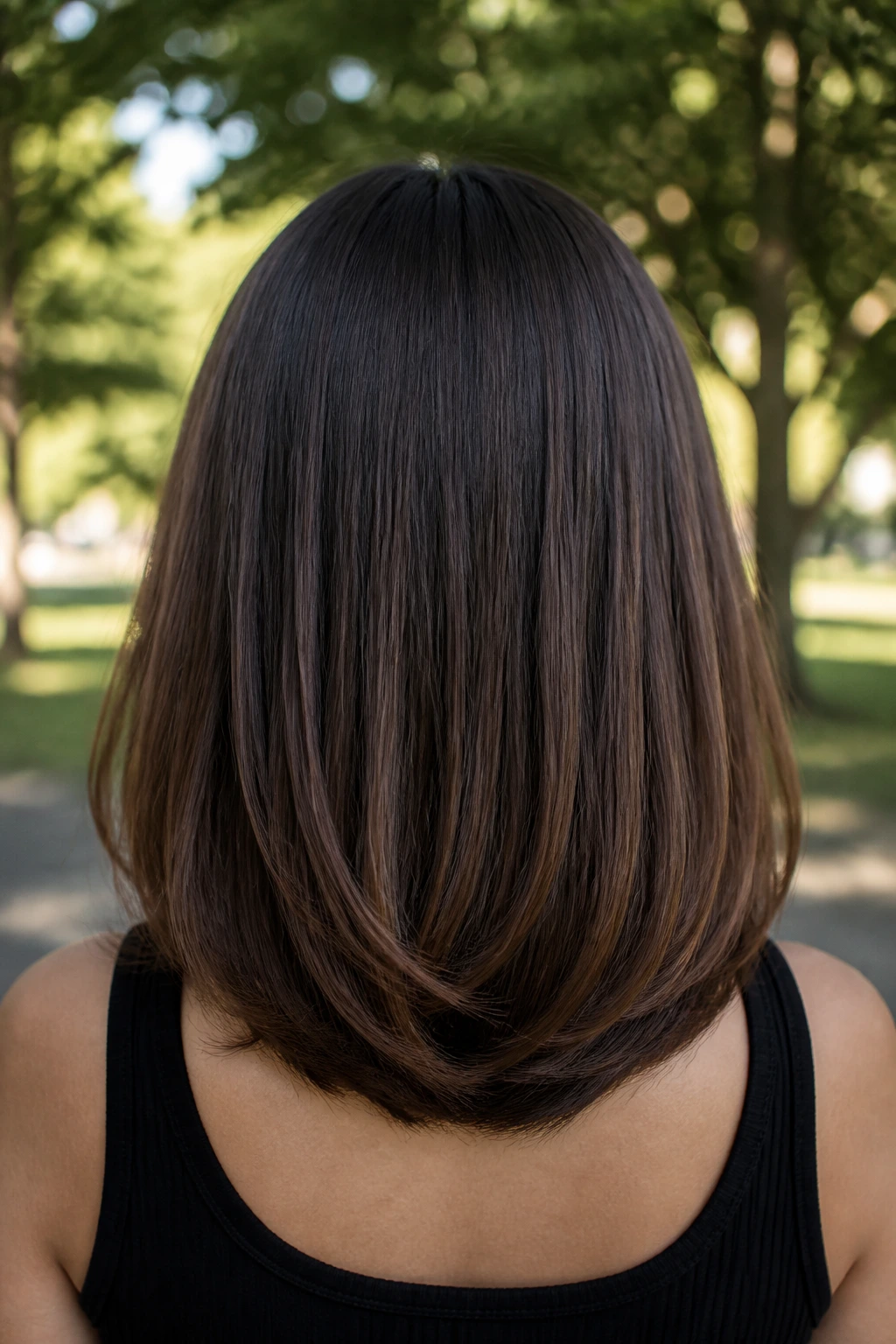
A U-shaped lob keeps the center a little longer than the sides, which makes the bottom edge curve gently instead of stopping in a straight line. That shape gives the hair more flow and a softer back view. It’s especially good if you want a lob that feels feminine without obvious layers.
This cut flatters because the curve can make the hair look fuller through the center while the sides frame the face. It’s a nice choice for women who wear hair down most of the time and want a shape that looks good from behind, not just in the mirror.
It also grows out with less fuss than a precise blunt line. That helps. Salon visits don’t always happen on the schedule we’d prefer.
38. Lob with Wispy Fringe

A wispy fringe softens the front without committing to a heavy bang. The pieces are light, a little broken, and easy to blend into the lob length around the face. It’s a smart entry point if you want fringe but fear the maintenance of a fuller bang.
This style flatters because it puts some movement around the eyes and forehead without shrinking the face. On larger foreheads, it can be a very balanced choice. On fine hair, the fringe should stay sparse enough to avoid looking limp.
The rest of the lob should stay fairly clean. Too many layers around the fringe and the shape gets fuzzy. A little lightness goes a long way here.
39. Wash-and-Go Lob with Minimal Layers
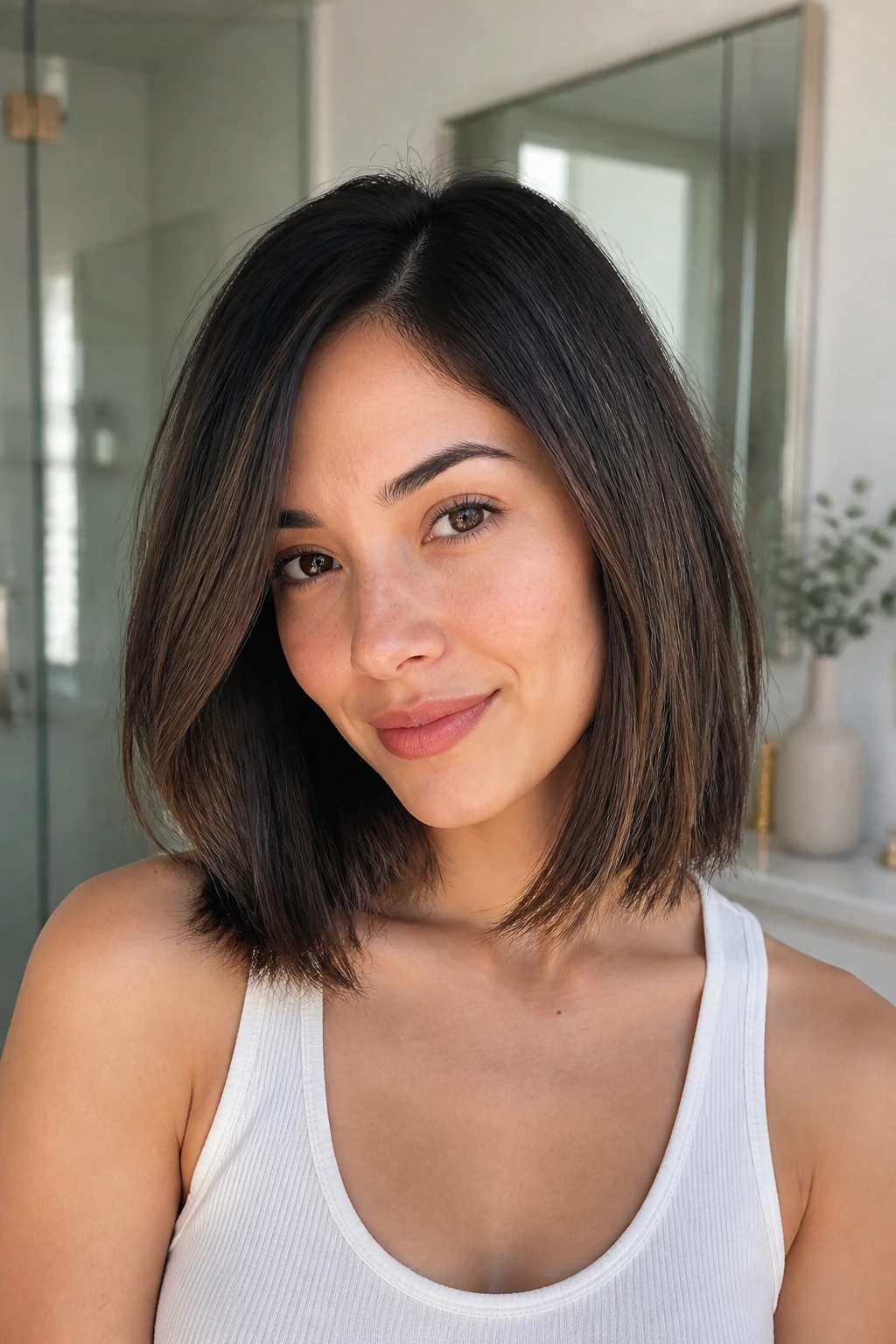
Some cuts want a styling routine. This one tries not to. A wash-and-go lob with minimal layers relies on a clean shape, a length that sits in a good spot, and enough texture to air-dry without fighting itself. It’s the kind of haircut that rewards a sensible cut more than a shelf full of products.
The flattering part is the simplicity. The line stays easy to read, the hair still moves, and you don’t need to redo it every time you wash it. If your natural texture already does most of the work, this is a smart lane.
Tell your stylist you want structure with restraint. That sentence can save you from getting a cut that looks cute for one blow-dry and confusing for the next six weeks.
40. Lob for Square Faces
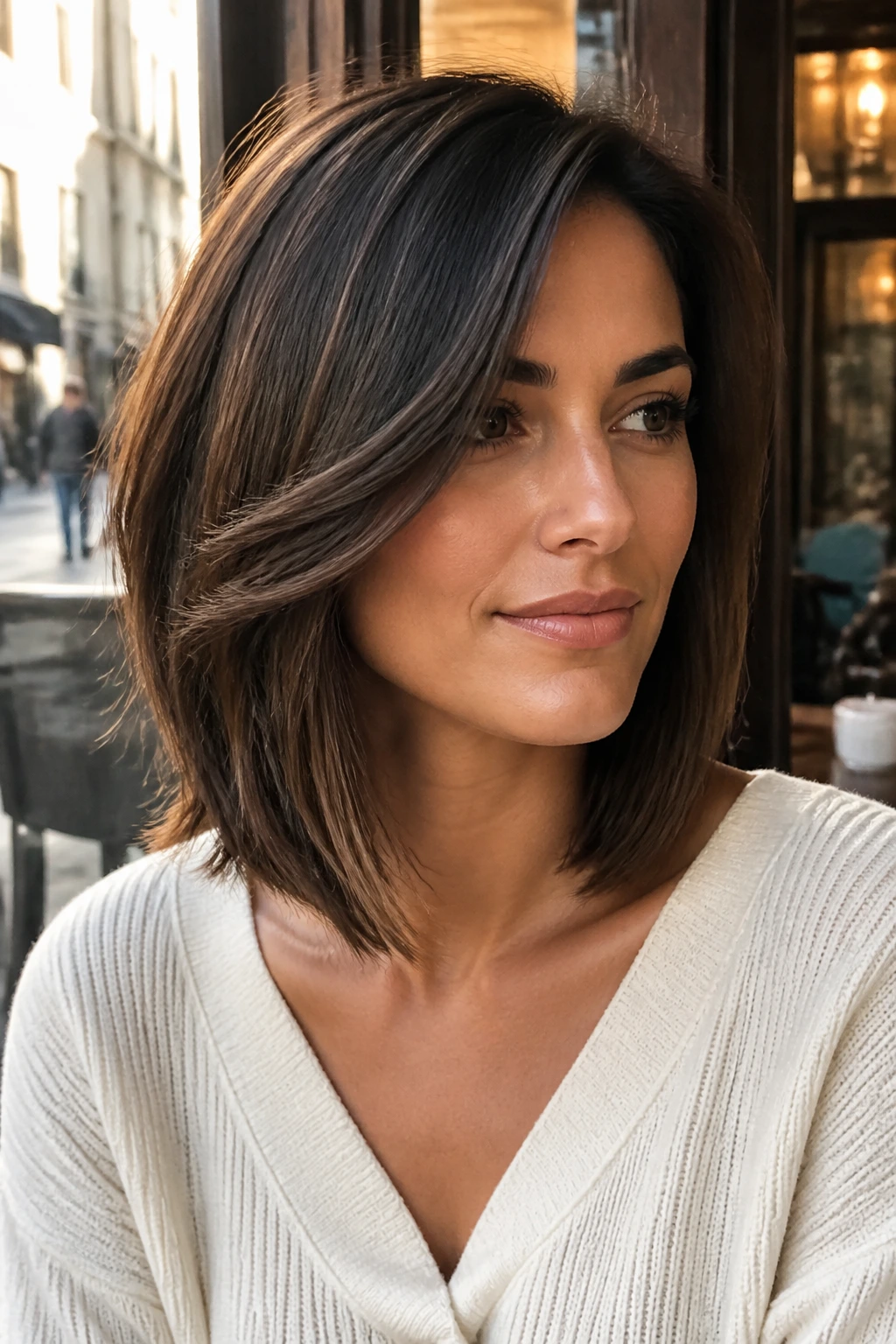
A lob for square faces should soften the angles without hiding the jaw completely. Longer front pieces, a side part, or soft bends around the cheekbones all help. The goal is to interrupt the straight horizontal line that can make the face feel boxier.
This is where a collarbone-length cut earns its keep. It gives the jaw a little room and lets the eyes travel downward. A blunt straight line can work too, but it usually needs some movement at the ends so it doesn’t feel too rigid.
Avoid a cut that ends exactly at the jaw unless you want to emphasize that shape. A little length goes a long way.
41. Lob for Heart Faces
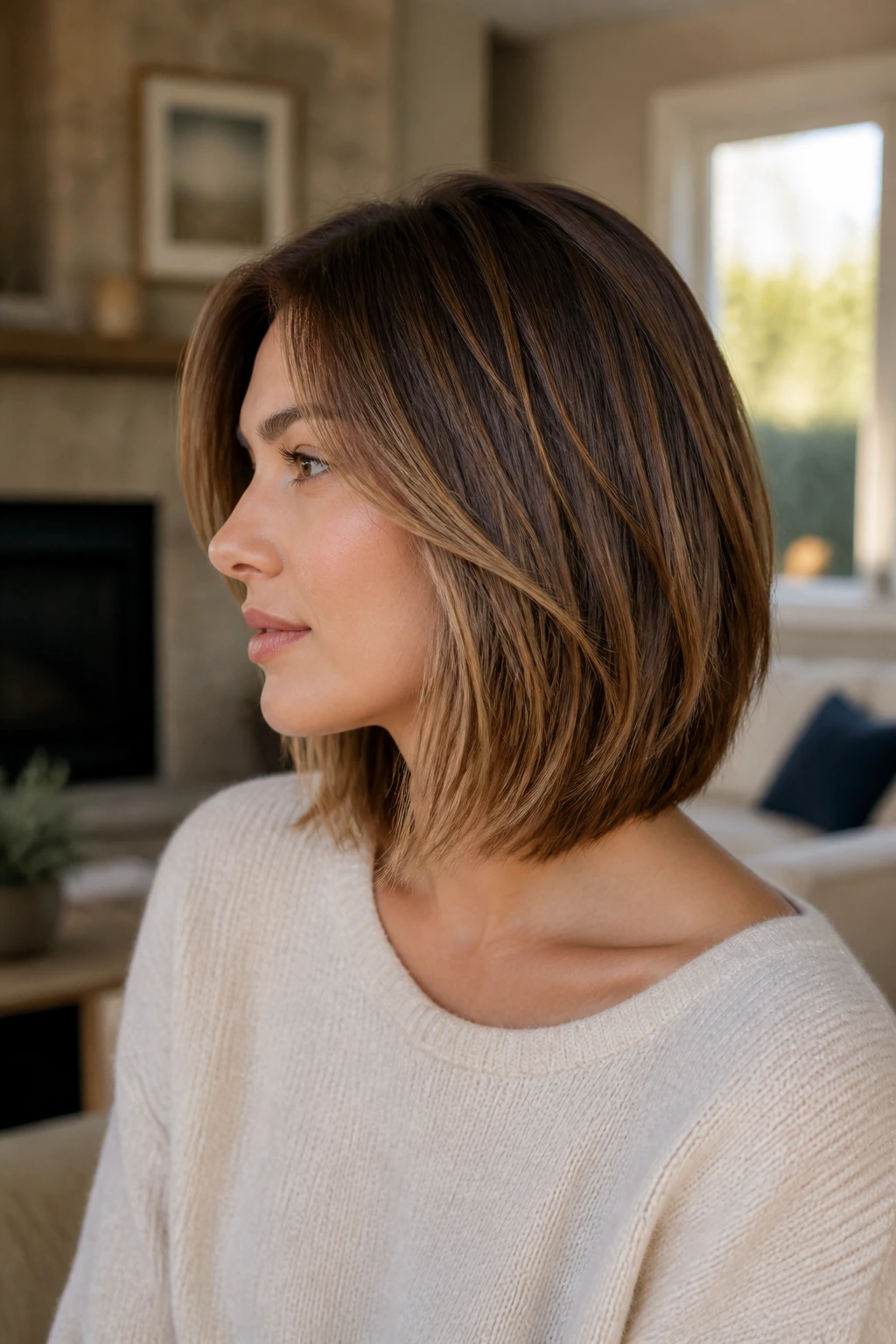
A heart-shaped face often looks best when the lob adds a little fullness near the jaw and keeps the top half from feeling too wide. That’s why soft layers, curtain bangs, or a rounded finish work so well. They balance the wider forehead and narrower chin without making the hair bulky.
Keep the front pieces from getting too short. When the longest bits skim the jaw or collarbone, they create a more even frame. A side part can help too if the forehead feels dominant.
This cut should feel balanced, not loaded up top. If the fringe is too dense, it steals attention from the rest of the face. Softness is the safer bet here.
42. Lob for Oval Faces
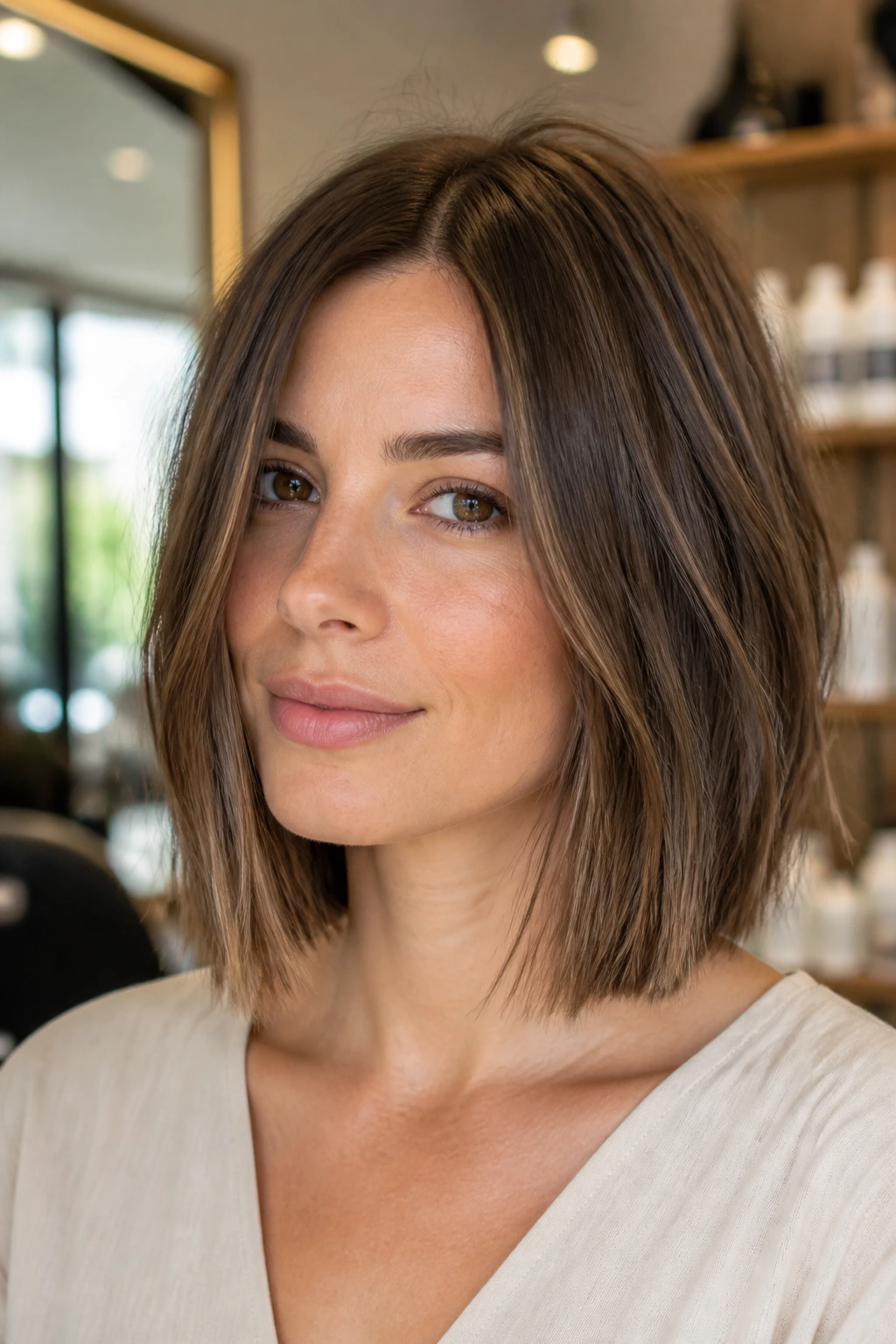
Oval faces can wear almost any lob, which sounds convenient until it turns into a boring choice. The best version uses the face’s natural balance instead of hiding it. A blunt lob, a curtain bang lob, or a softly layered lob can all work, depending on whether you want sharpness, movement, or softness.
What makes the cut flattering is proportion. Oval faces usually have enough length to handle a clean perimeter, but they also carry face-framing layers well. That means you can choose mood more than correction, which is a nice luxury.
If you have an oval face and straight hair, I’d lean blunt or slightly textured. If your hair is wavy or curly, layers can give the shape more life. Easy enough.
Why the Lob Shape Keeps Showing Up
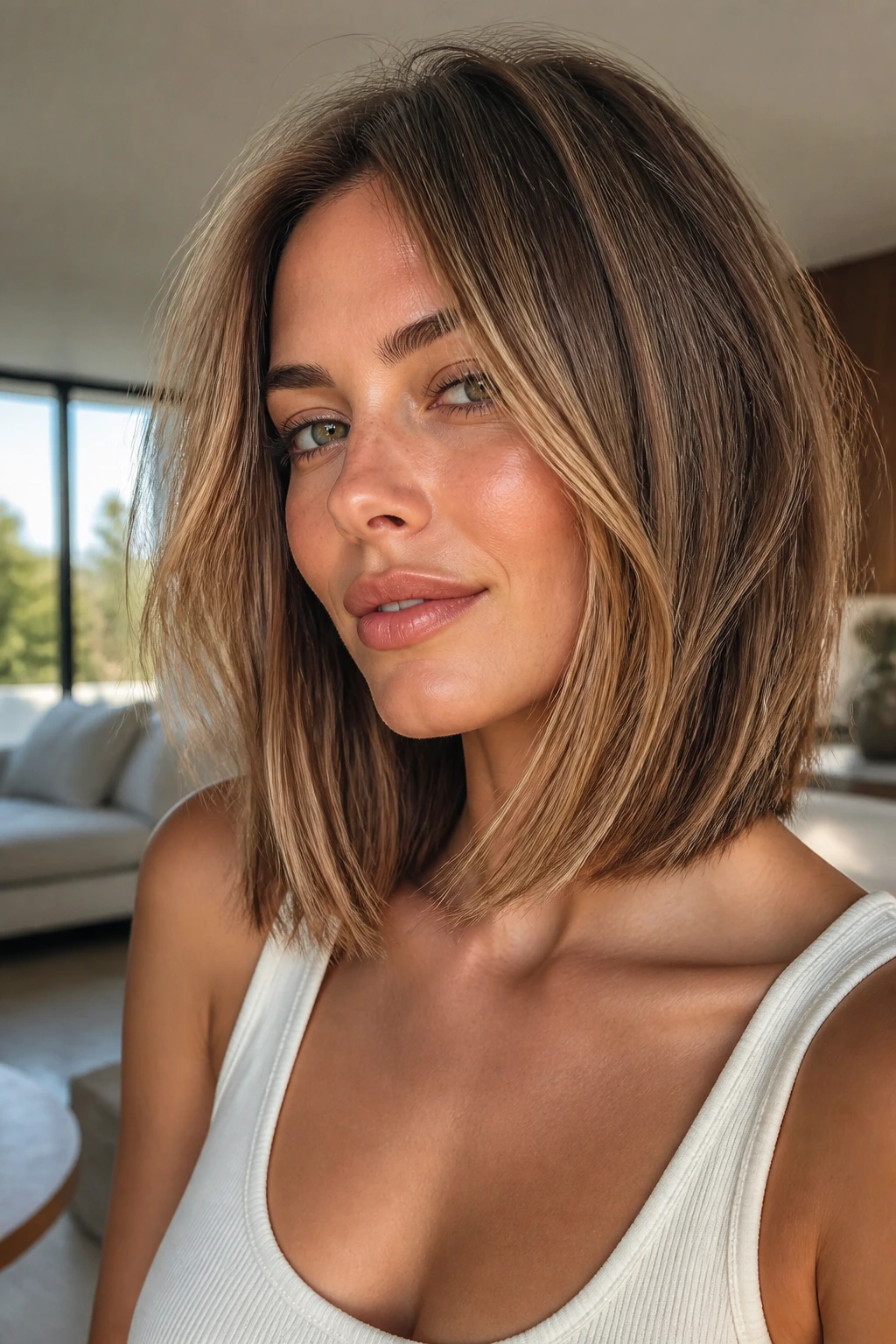
A lob is not doing magic. It just lands where the hair and face tend to cooperate. The collarbone gives the cut a resting point, the jaw gets some openness, and the style can still be tucked, waved, or blown smooth without a wrestling match at the mirror.
That length also buys you a little room when the cut grows out. A bob can go awkward fast. A lob usually has a longer runway. If you’ve ever felt trapped in the in-between stage of a shorter cut, you know why that matters.
The best lobs also solve a practical problem: they look considered on ordinary days. Not perfect. Considered. There’s a difference, and the cut lives in that space.
Essential Tools for Styling Lob Haircuts
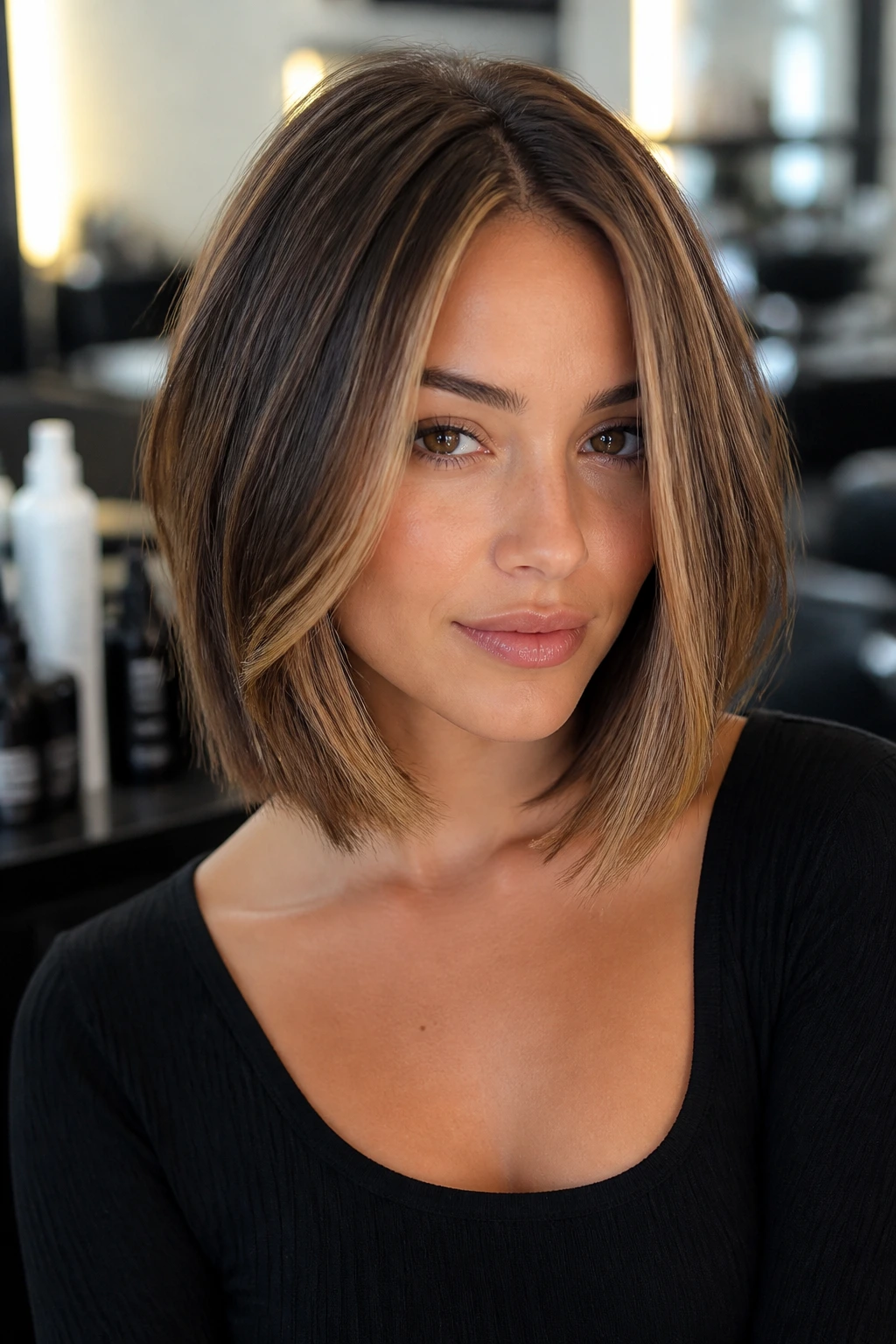
- Round brush, 1.5 to 2 inches: Good for bending the ends under and giving the lob a smooth, controlled finish.
- Flat iron with narrow plates: Useful for sleek styles, soft bends, and the occasional polished flip at the ends.
- 1-inch or 1.25-inch curling iron: Best for loose waves, lived-in texture, and face-framing bends that do not look overdone.
- Heat protectant spray: Protects the ends, which are the first part of a lob to show damage.
- Light mousse or root lift spray: Helps fine hair keep height at the crown without turning sticky.
- Texturizing spray: Gives choppy, shaggy, or beach-wave lobs a little separation and grip.
- Wide-tooth comb: Better than a brush for curlier or wavier textures that need shape, not frizz.
- Duckbill clips: Handy for setting waves while they cool or pinning sections during a blowout.
What to Tell Your Stylist Before the First Snip
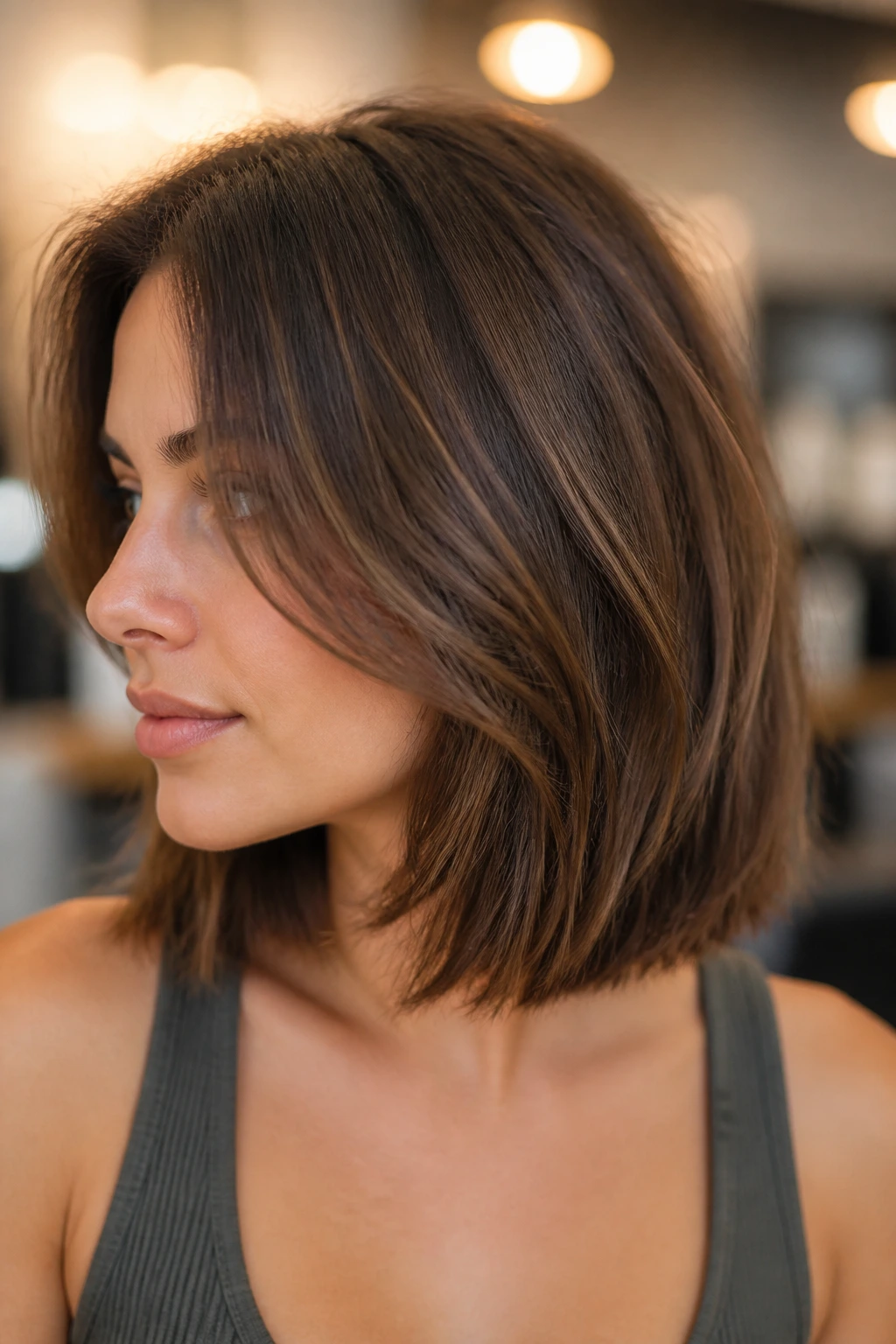
The difference between a lob that flatters and one that feels off usually comes down to the brief. Bring a photo or three, but also explain what you actually do with your hair. Air-dry only? Flat iron once a week? Tuck one side back? Those details matter more than the photo of a perfectly styled cut under studio lights.
Be direct about the outline you want. Say blunt, angled, feathered, soft, or layered. Stylists hear “lob” all day, and that word can mean a dozen different things. If the length needs to clear the shoulders or sit exactly at the collarbone, say so.
Hair density should guide the finish. Thick hair often needs weight removed from the inside. Fine hair usually needs the perimeter left strong. And if you have a cowlick or a stubborn part line, bring that up before the scissors touch anything.
How to Style a Lob Without Making It Complicated
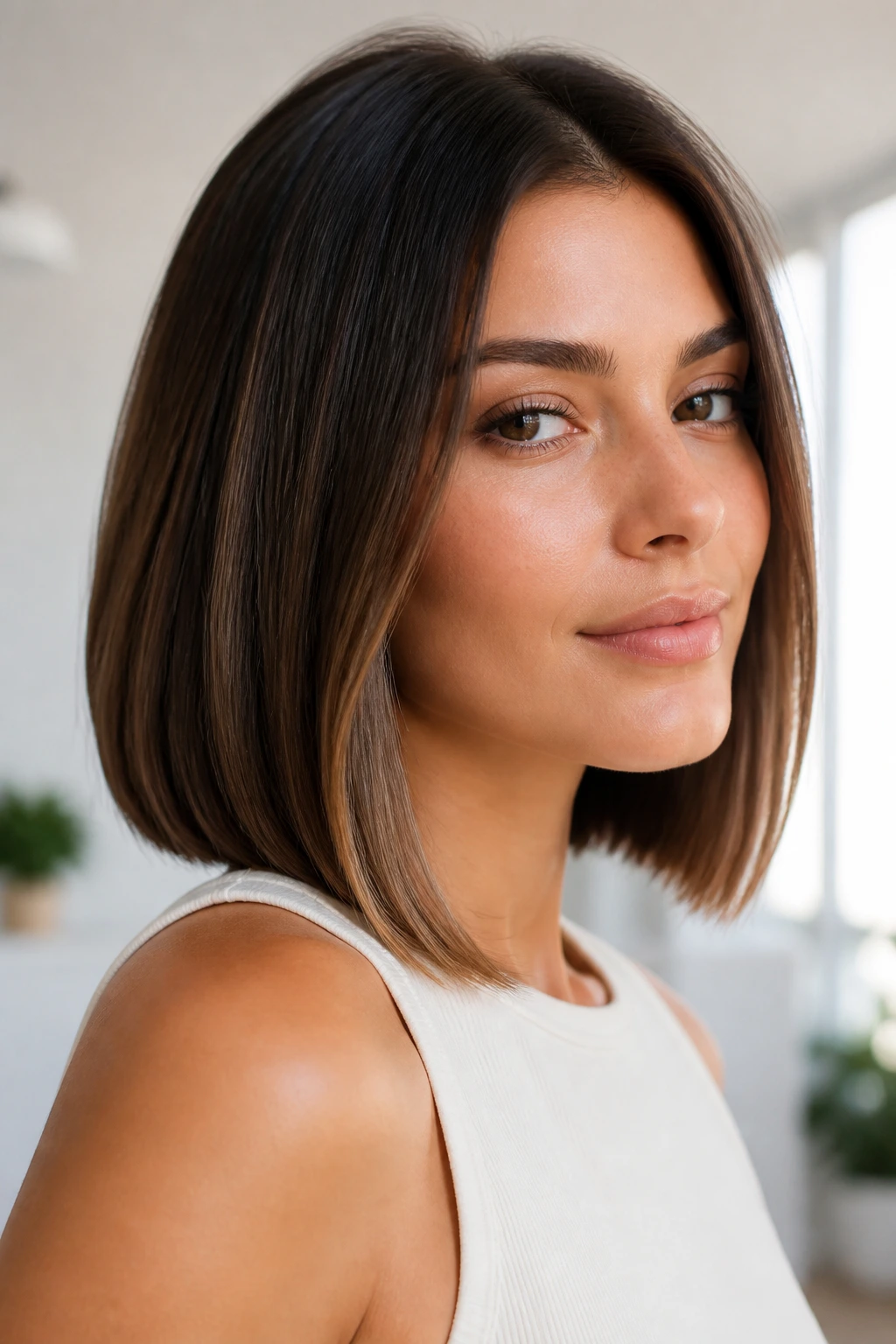
Straight and Sleek:
Blow-dry with a paddle brush or flat brush, then pass a flat iron through only the bends that need smoothing. Finish with a pea-sized amount of serum on the ends. The goal is shine and line, not poker-straight stiffness.
Soft Waves:
Wrap sections around a curling iron, leave the ends out, then brush through once everything cools. A lob usually looks best when the wave pattern is loose enough to show the cut. Tight curls can swallow the shape.
Air-Dried Texture:
Work in a light cream or mousse, scrunch the hair once, and leave it alone. Touching it too much makes the cut frizzy. That’s the part people mess up.
Quick Morning Reset:
Mist the ends, bend a few sections with a flat iron, and lift the crown with dry shampoo if needed. Ten minutes can be enough. You do not need to rebuild the entire head.
Common Mistakes That Make a Lob Lose Its Shape
The biggest mistake is cutting the lob too close to the widest part of the jaw or shoulders. That’s when the shape starts to feel heavy or boxy instead of open. A small change in length can fix it, so don’t treat the placement as a throwaway detail.
Another one: too many short layers on fine hair. The ends start to look thin, and the hair loses its body. If your strands are delicate, keep the structure stronger and use movement in the styling instead of slicing the cut apart.
People also overheat the finish. Flat ironing every day or blasting the ends without heat protectant makes lob hair look dry faster than longer cuts. The collarbone hits the ends against clothing and friction all day, so they need protection.
And yes, over-texturizing can ruin the line. A lob needs some shape to stay flattering. If every inch is broken up, it just looks tired.
Variations and Adaptations to Try
Fringe-First Lob:
If you want more face shape change without losing length, add curtain bangs or a wispy fringe. The front does the framing while the body of the cut stays easy to wear. This works well for higher foreheads or faces that need a little softness around the eyes.
Longer Grow-Out Lob:
Ask for a lob that sits just above the shoulders instead of at the collarbone. You’ll get a gentler grow-out and a little more flexibility for buns, clips, and half-ups. It’s a good choice if you’re not ready for a sharper neckline.
Curly-Respecting Lob:
For curls and coils, the best lob usually means dry shaping, soft layers, and room for shrinkage. The cut should support the curl pattern instead of trying to flatten it into a straight-hair template. That usually means more thought at the salon, less work at home.
Thicker-Than-Needed Lob:
If your hair is dense, keep the perimeter blunt and remove weight only inside the shape. You get the best of both worlds: fullness at the edge and less bulk where the hair tends to swell. This is one of the most practical ways to keep a lob from puffing out.
Color-Boosted Lob:
Balayage, a money piece, or even a soft gloss can make the cut read more dimensional. The haircut stays the same, but the shape becomes easier to see. That matters if your hair tends to sit flat in one solid color.
How to Keep a Lob Looking Sharp Between Salon Visits

A good lob usually wants a trim every 6 to 8 weeks if you like a clean edge. If you are growing it out, you can stretch that to 8 to 10 weeks, but the line will lose some crispness. Once the ends start brushing the shoulders in a way that flips awkwardly, it’s time.
At home, a quick blow-dry around the front and ends can stretch the life of the cut. You do not need a full salon finish every wash day. A little shaping at the ends, plus dry shampoo at the roots, can keep the silhouette readable for days.
Sleep matters more than people admit. A silk or satin pillowcase cuts down on friction, which helps the ends stay smoother. If your hair kinks easily, a loose low ponytail or a soft clip before bed can keep the shape from getting crushed.
Frequently Asked Questions
What face shape looks best with a lob haircut?
A lob can work on almost every face shape if the length, part, and front pieces are chosen with care. Round faces often do well with side parts or angled ends, while square faces usually like softer movement near the jaw.
Is a lob a good haircut for fine hair?
Yes, if the cut keeps a strong perimeter and does not get chopped into too many short layers. Fine hair usually looks fuller when the outline is clean and the texture comes from styling, not over-thinning.
Can thick hair wear a lob without looking bulky?
Absolutely. Thick hair often looks better in a lob than in long lengths because the weight is easier to control. Ask for bulk removal inside the shape, not around the edge, so the cut stays full but not puffed out.
Do lobs work with curly hair?
They do, but the cut has to respect shrinkage and curl pattern. A curly lob should usually be shaped by curl rather than forced into a straight line. If the stylist doesn’t know curly cutting well, keep looking.
How often should I trim a lob?
Every 6 to 8 weeks is the sweet spot if you want the shape to stay crisp. If you’re okay with a softer grow-out, you can go a little longer, but the ends will start to lose their line.
Which lob is easiest to style every day?
The one that matches your natural texture. If your hair is straight, a blunt or soft layered lob is usually easy. If it’s wavy, a textured or air-dry lob often takes less time than trying to smooth it out.
Can I tuck a lob behind my ears without ruining the style?
Yes, and that’s part of why the cut works so well. Ask for a little extra length around the face if you tuck one side often. That keeps the shape from looking too short when the hair is pinned back.
The Cut That Keeps Its Shape
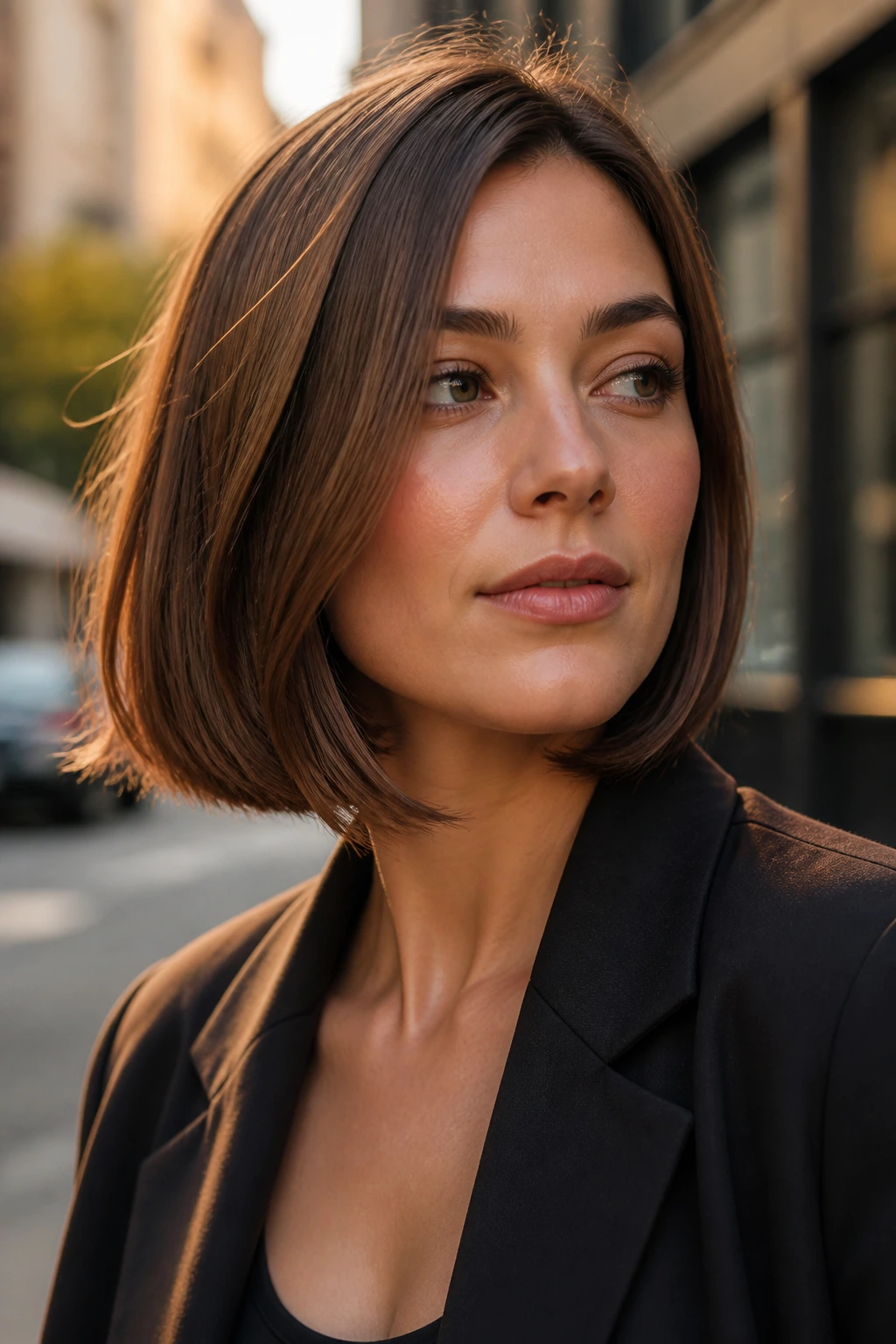
A lob earns its place because it sits in a sweet, forgiving length range. It can sharpen a jaw, soften a forehead, tame thick hair, or give fine hair a cleaner edge. That kind of flexibility is rare, and it’s why the cut keeps outlasting louder trends.
The best version is the one that matches your texture, your part, and the amount of work you actually want to do. That’s the whole game. Pick the shape that behaves well on ordinary days, and the haircut starts doing its job before you even reach for a styling tool.
