



Lob haircuts sit in that rare sweet spot where a haircut still feels like a haircut after a messy day, a bad blow-dry, or a rushed five-minute pass with a flat iron. The length is long enough to pull back when you need it, short enough to keep shape, and flattering enough that people keep coming back to it even after they swear they want “something different.” They usually do. Then they end up back at the lob.
What makes the long bob so useful is the way it changes with tiny adjustments. Move the perimeter to the collarbone, and the cut gets softer. Add a blunt edge, and the hair suddenly looks thicker. Slide in a few layers, and the whole thing starts moving when you turn your head. That’s a big reason the lob survives bad weather, grow-out, and all the little interruptions real hair has to live through.
There’s also a practical reason this length keeps winning. A lob can look polished without being fussy, and it can look undone without looking accidental. That balance is hard to fake. You need the right shape underneath, though, because “shoulder length” by itself is not a haircut. The difference between a flattering lob and a limp one is usually only an inch, maybe two, and where that inch lands matters more than most people think.
Why These Lob Haircuts Keep Working
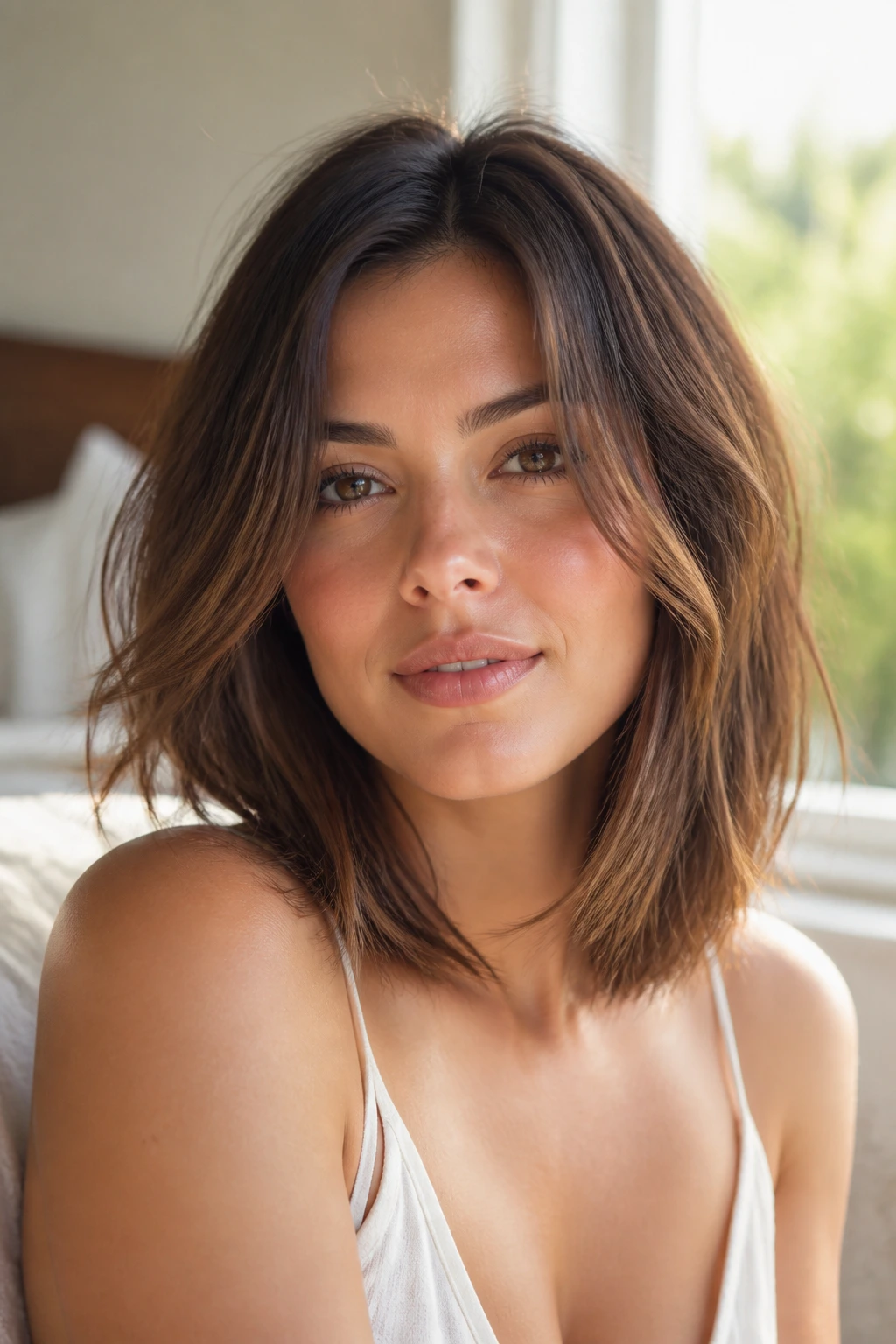
- The collarbone is doing half the work: When the ends skim that spot, the hair moves every time you breathe, shrug, or tuck it behind one ear.
- The same length can bend in different directions: One lob can be sleek, wavy, shaggy, or polished, and the haircut still reads as the same family.
- Fine hair gets a thicker-looking edge: A blunt or lightly layered lob holds more visual weight at the bottom, which keeps the ends from looking see-through.
- Thick hair gets room to breathe: Internal layers, a slight angle, or a soft shag keeps the shape from turning into a heavy shelf.
- It grows out without losing itself: A good lob still looks intentional after a few weeks of grow-out, which is more than most shorter cuts can claim.
- Face framing is easy to control: A small shift at the front can soften a jawline, open up the cheeks, or keep the length from dragging the face down.
How to Choose the Lob Length That Won’t Fight Your Face

A lob is not one fixed point. It’s a range, and that range is where the magic lives. The exact length you pick should answer three questions: where your hair falls, how much weight it carries, and what you do with it on a regular Tuesday morning.
Where the front pieces land matters more than the back
If you wear a middle part and let the front pieces sit near the cheekbone, the cut will feel lighter and more open. If the front hits just below the jaw, the whole style reads softer and a little more sculpted. That tiny difference changes the mood fast. One is airy. The other is more grounded.
Texture should steer the shape
Fine hair usually likes a cleaner edge, because blunt ends make the outline look denser. Thick hair often needs a little internal removal so the bottom doesn’t swell outward like a triangle. Curly hair wants space to spring, which means the “lob length” may need to live a touch longer when it’s dry than it looks when wet.
Your daily routine is part of the cut
If you air-dry almost every time, ask for a shape that still makes sense when it dries on its own. If you always blow it smooth, the perimeter can be a little sharper. And if you live in clips, buns, and half-up styles, make sure the cut can still fall cleanly after you take it down. That’s the part many stylists ask about first, and for good reason.
1. The Blunt Collarbone Lob
A blunt collarbone lob is the one I recommend when someone says they want their hair to look thicker without looking overworked. The line sits right on or just below the collarbone, which gives the ends enough weight to look dense and deliberate. There’s no floaty layer softening the bottom, so the shape reads clean from across the room.
It’s especially good for fine to medium hair that needs a stronger edge. If your hair tends to split into wisps at the bottom, this cut pulls it back into a single line. Keep the styling simple: a smooth blow-dry, a slight bend at the front, and a clean center or soft side part. Too much curl makes the blunt line disappear, and that’s the whole point here.
2. The Choppy Shag Lob
If your hair fluffs up when it should fall down, the choppy shag lob usually fixes the problem better than another blunt cut. This version leans into texture, with shorter pieces through the crown and broken-up ends that move instead of sitting still. It has a little grit to it. In a good way.
I like it for thick hair, wavy hair, and anyone who hates the feeling of a heavy curtain sitting on the shoulders. A sea-salt spray or lightweight mousse works better than a thick cream here, because you want separation, not softness. If the shape starts to feel too mullet-ish, the front needs a cleaner face frame. That’s the line between edgy and accidental.
3. The Angled A-Line Lob
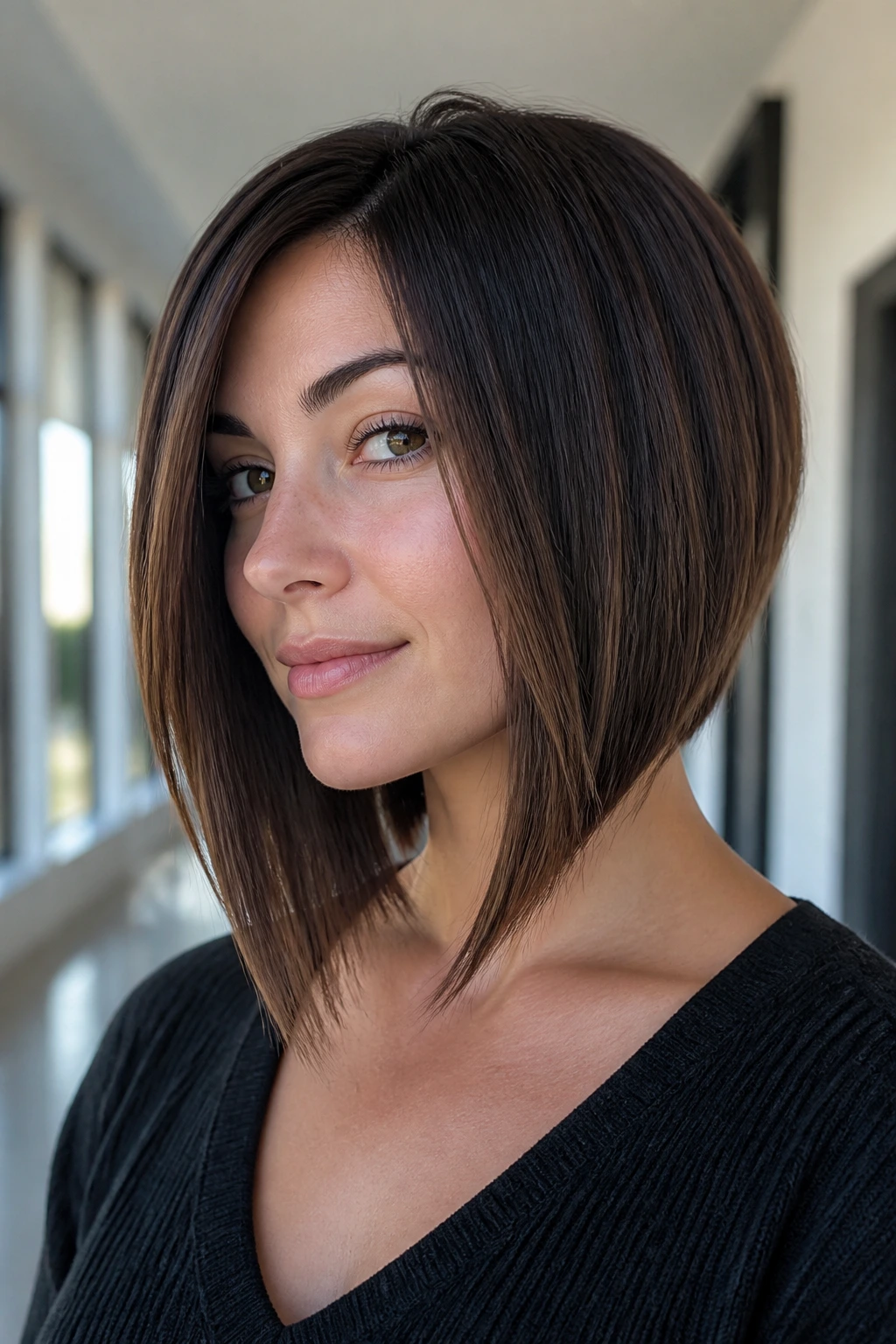
The angled A-line lob has that sharp, forward-leaning shape that makes the neck look longer almost by default. The back sits a little shorter, then the line gradually drops toward the front. It is a small geometry trick, and it works.
Best for people who want structure
This one reads polished even when it’s not perfectly styled. It’s especially nice on straight or lightly wavy hair, because the angle shows up clearly instead of getting lost in bend. Ask for the front to land around the collarbone and the back to sit just above it. If the angle is too extreme, the cut can feel dated fast. Keep it soft, not severe.
4. The Curtain-Bang Lob

A curtain-bang lob has that easy face-framing effect people keep trying to get from layers alone. The bangs split in the middle, sweep out toward the cheekbones, and make the whole haircut feel lighter around the face. It’s the kind of cut that can make a plain T-shirt look intentional.
This works beautifully if you want a lob that does something up front. The bangs also give you a place to tuck hair behind the ears without losing shape. Blow-dry the fringe first, rolling it away from the face with a round brush, then bend the rest of the lob in soft curves. If you let the bangs air-dry crooked, they will usually stay that way.
5. The Soft Wavy Lob
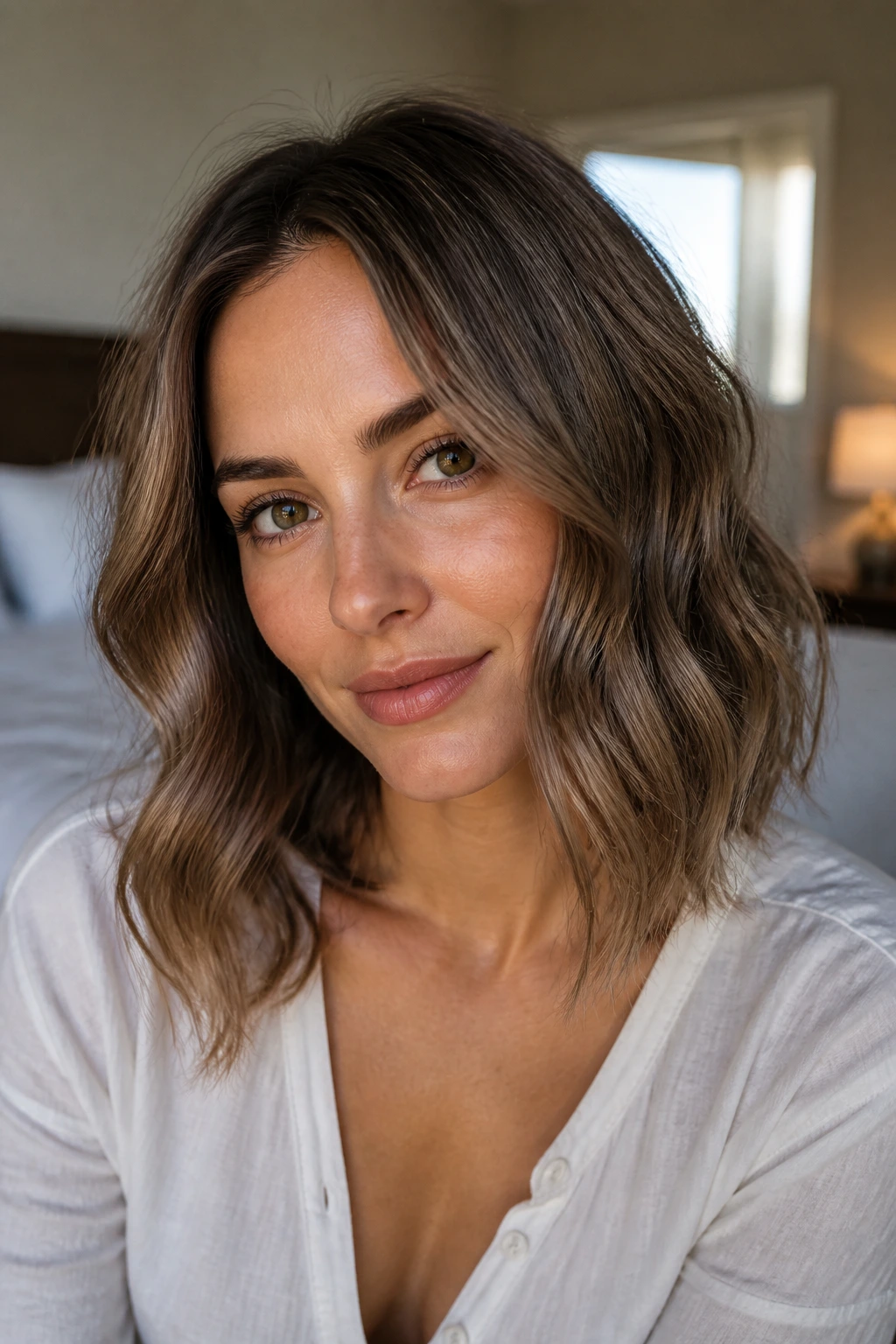
The soft wavy lob is the one that makes people think you spent more time than you did. It’s built around relaxed waves, not stiff curls, so the hair bends in long S-shapes that still show the cut underneath. The length usually sits just at or below the collarbone, which helps the waves fall instead of puffing out.
This is a nice choice if your natural hair has a little bend already. A one-inch curling iron or wand is usually enough; you only need to wrap the mid-lengths, leave the ends a bit straighter, and brush it out once it cools. That last part matters. If the wave is too perfect, the lob loses the easy feel that makes it work.
6. The Sleek Center-Part Lob
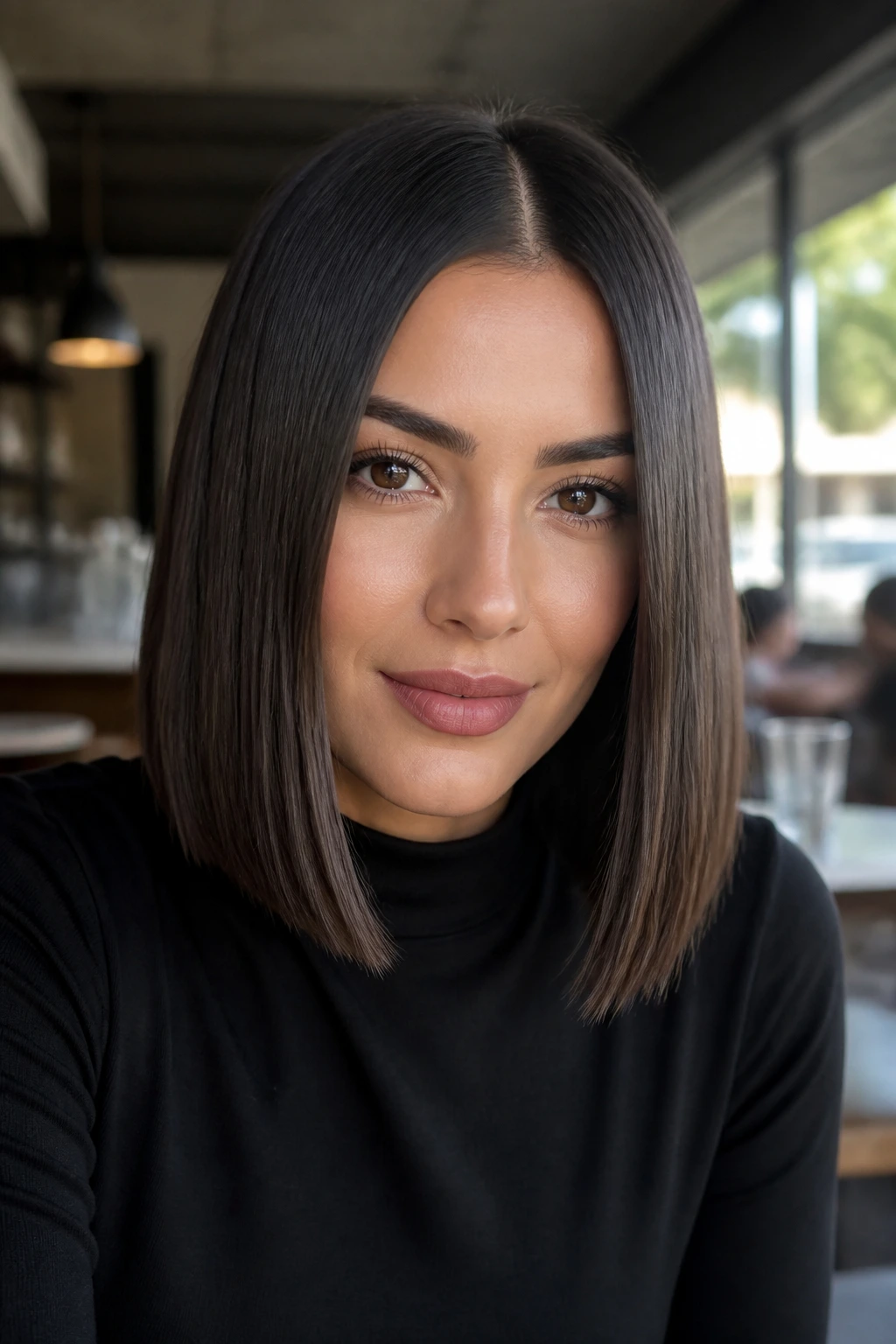
A sleek center-part lob is blunt in the best way. It’s smooth, controlled, and almost architectural, which makes it useful when you want the haircut to carry the outfit instead of the other way around. The center part keeps the shape balanced, and the straight perimeter gives the hair a harder edge.
This cut shines on straight hair, but it can be worn on wavy hair too if you’re willing to flatten the top a bit and chase down the flyaways with a paddle brush. Use heat protectant, of course, then blow-dry with the nozzle pointing down the shaft so the cuticle lays flat. A tiny amount of serum at the ends is enough. Too much and the whole thing collapses into strings.
7. The French-Girl Lob
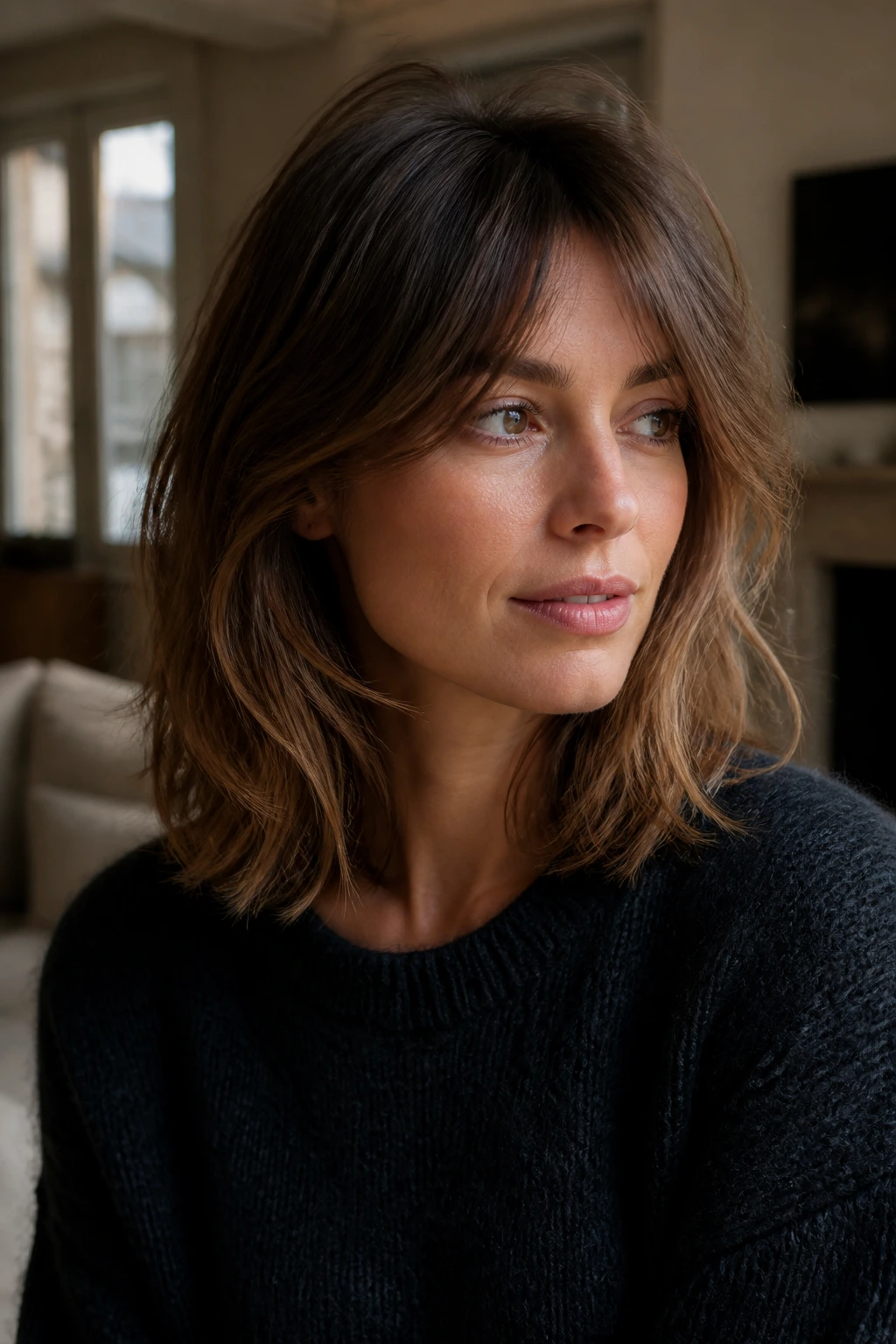
The French-girl lob is less about a single cut and more about a certain kind of looseness. The ends usually skim the collarbone, the layers are light, and the overall effect is slightly imperfect in a way that looks chosen rather than neglected. It can take a soft fringe, a side bend, or just a rough center part and a little texture spray.
What gives it that undone feel
It’s the movement at the front. Not the volume, not a huge curl pattern, just a little break in the line near the cheekbones and jaw. That softness makes the haircut feel lived in even when it’s fresh. If your hair is very flat, this version needs some root lift or it can read too plain. It wants a little air around it.
8. The Piecey Razor Lob
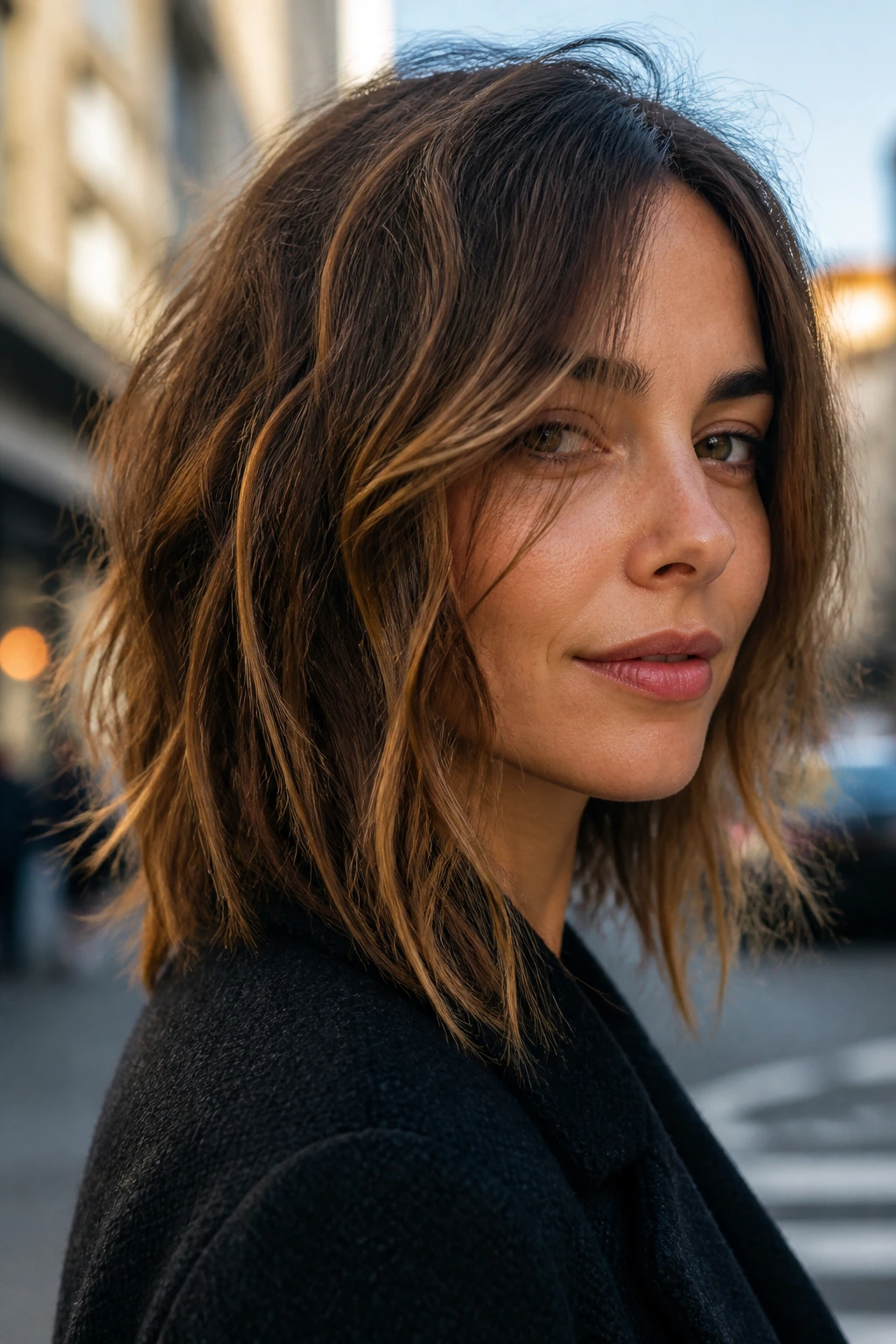
A piecey razor lob has sharper ends and more visible separation through the shape, which gives the haircut an edge that blunt cuts don’t have. The razor work removes some density and leaves the ends a bit feathery, so the style moves with less effort. It looks especially good on hair that tends to sit heavy around the face.
- Best hair type: medium to thick hair with a bit of natural texture.
- Styling move: use a light cream or spray wax and scrunch the front pieces only.
- Watch the finish: too much smoothing can wipe out the piecey detail and turn it flat.
This one has a little attitude. Not loud, just sharper.
9. The Glass Lob
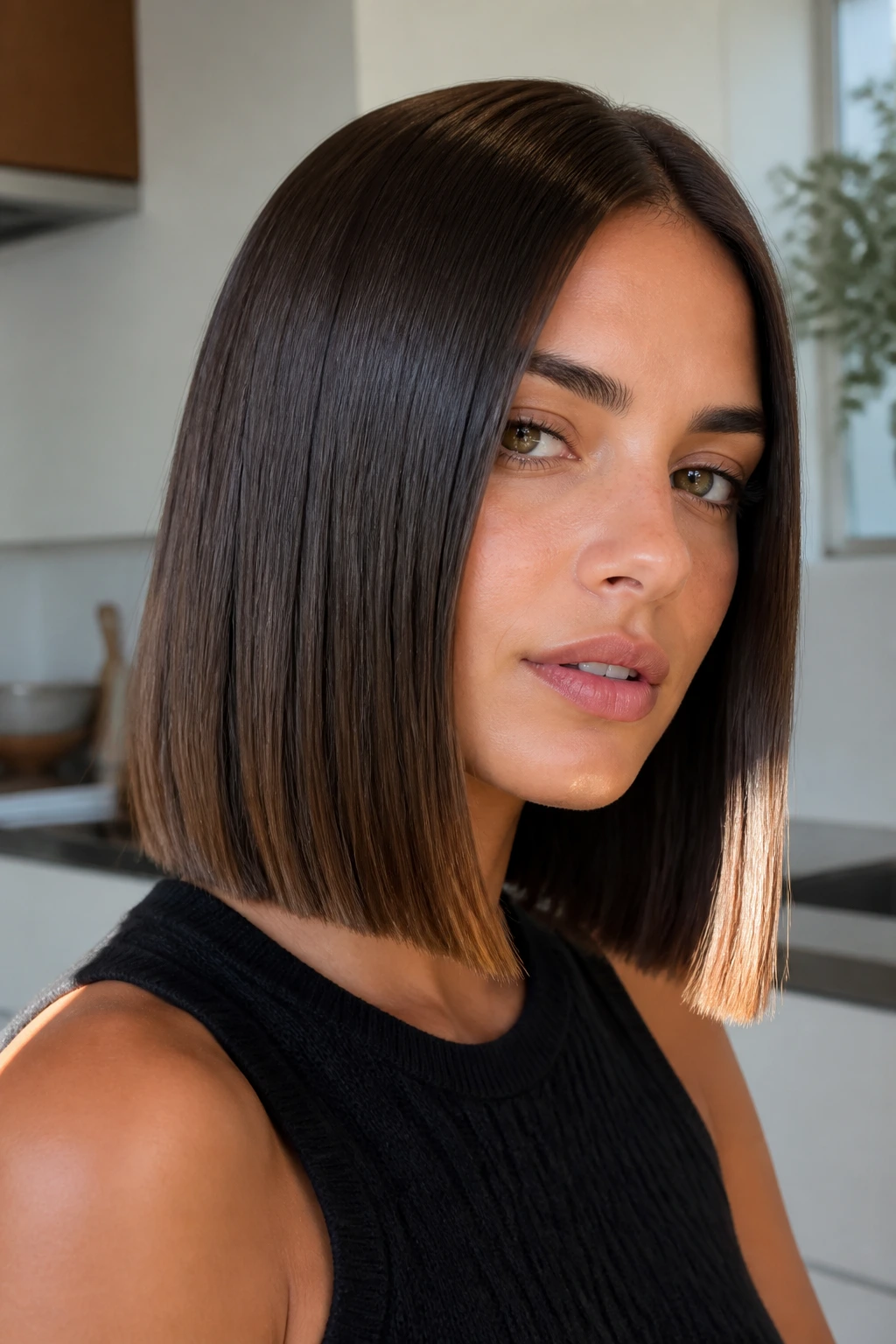
The glass lob is for the person who likes hair that looks deliberately smooth, reflective, and almost mirror-flat. The cut itself is usually one length or near one length, with a clean perimeter that makes the light bounce off the surface. It’s a blunt lob, but the finish is what separates it from the rest.
A blowout brush or flat iron gets you there faster than a round brush if your hair is already straight. The important part is the ends: they should sit together in one line, not flick in ten different directions. I prefer this shape on hair that can handle some shine. If your hair is porous and frizzy, the glass finish can take more work than it’s worth on busy days.
10. The Face-Framing Lob
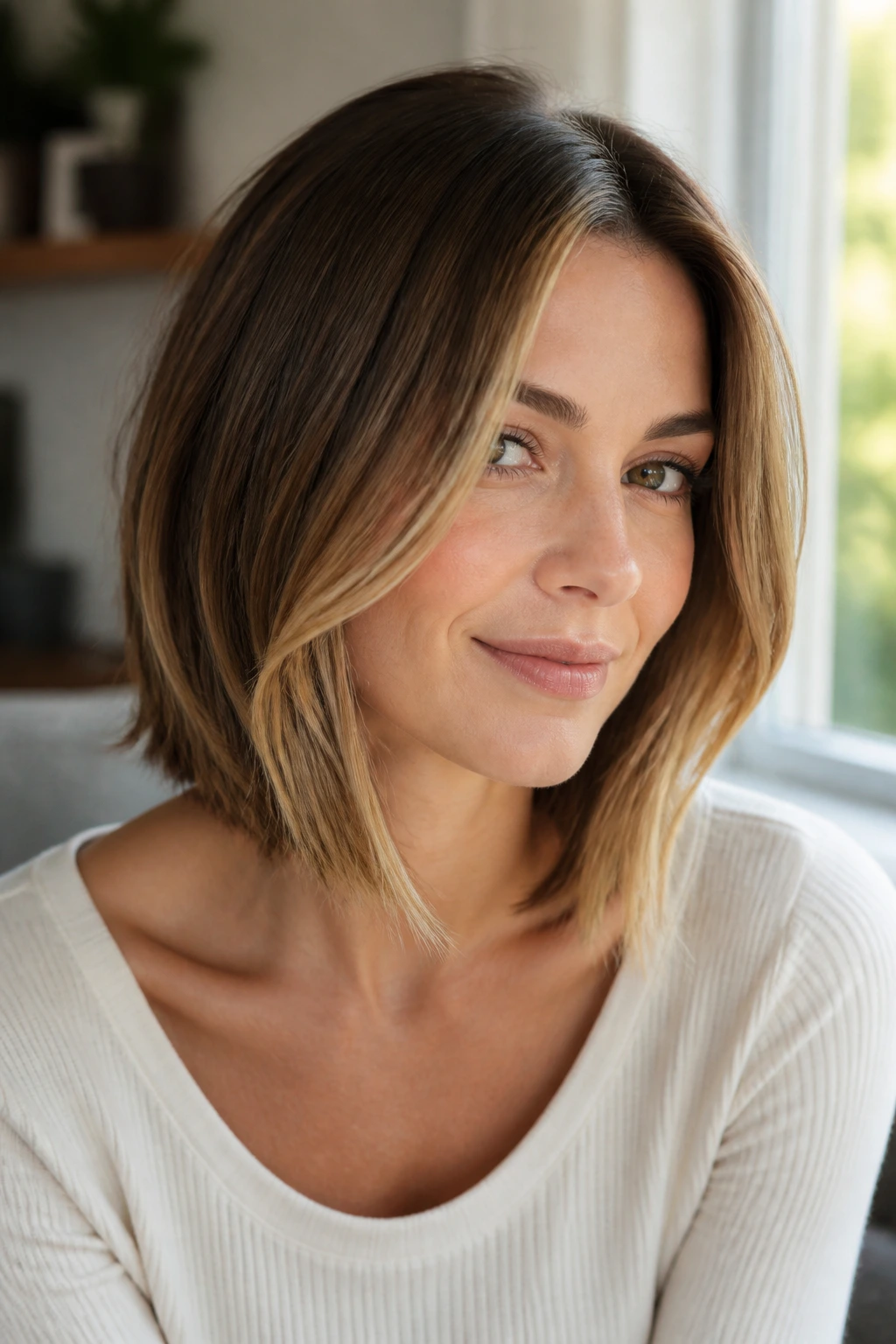
A face-framing lob keeps the overall length steady while shifting the attention to the front pieces. Those front sections are usually a touch shorter, often grazing the jaw or just below it, while the back stays longer and more even. That gives the cut a softer angle without turning it into a dramatic asymmetrical shape.
This is one of the smartest choices for round or square faces because the front pieces can be placed exactly where you want the eye to go. If you like wearing one side tucked behind the ear, this cut makes that look feel clean instead of chopped. Ask your stylist where the shortest front pieces should land when your hair is dry. Dry hair tells the truth.
11. The Curly Shape Lob
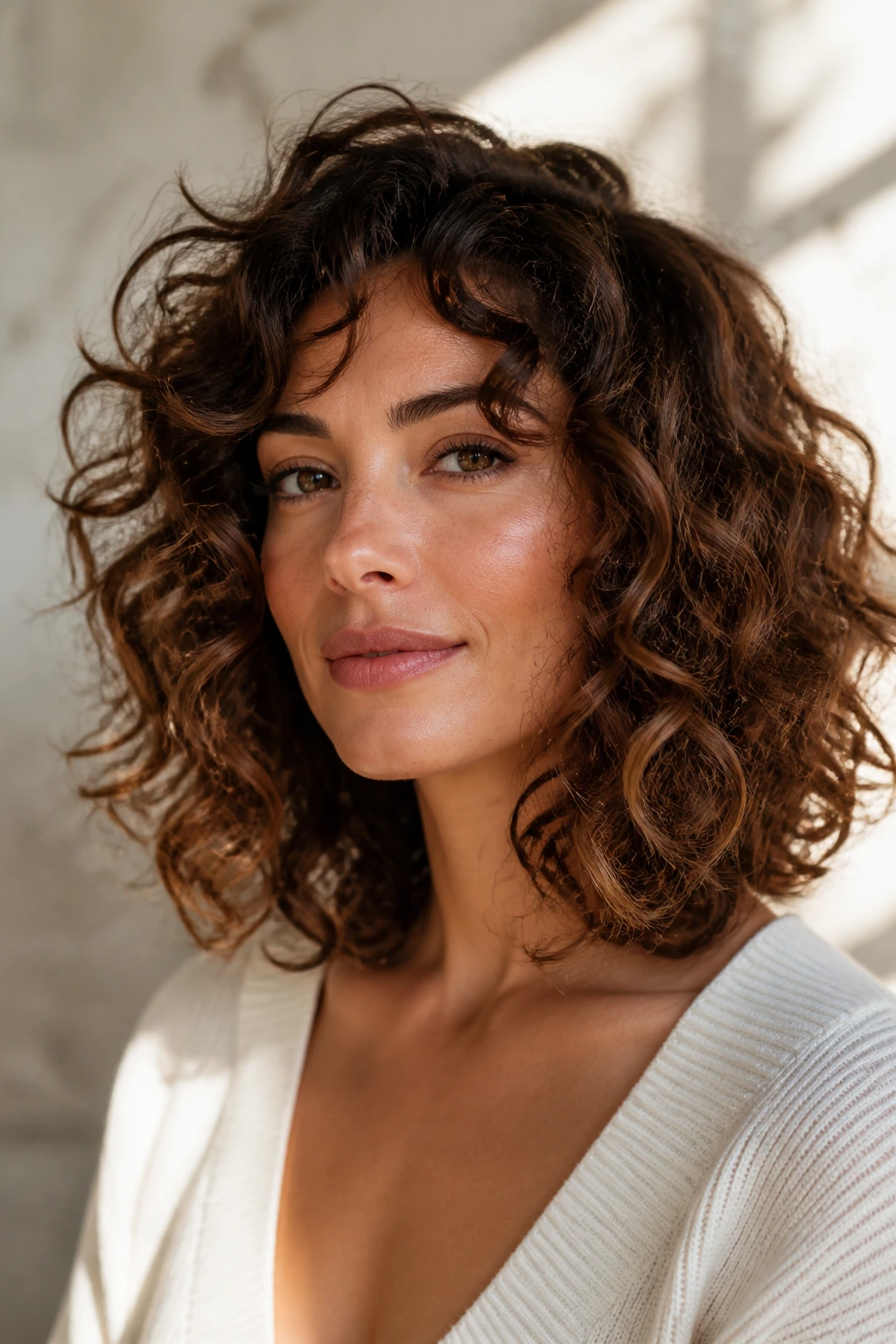
Curly lob haircuts live or die by shape. If the cut is made only on wet curls, the length can surprise you later when it bounces up. A good curly lob usually leaves a little more length than you think you need and works with the curl pattern instead of forcing it into a straight line.
The best versions have room at the shoulders and enough layering to keep the curl from bulking up at the bottom. That means the shape needs checking when dry. A curl-by-curl trim or a dry refinement around the perimeter can make a huge difference. If your curls are springy, aim for a slightly longer lob than your straight-haired friends would choose. Curly ends shrink. Every time.
12. The Flipped-Out Lob

The flipped-out lob brings a little 90s energy back without turning into costume hair. The ends curve away from the face instead of under it, which gives the whole shape a livelier outline. It works best when the hair hits just above the shoulders or right at the collarbone, because the flip has room to show.
A round brush and blow-dryer create the flip, but you can also tap it in with a flat iron by turning the wrist outward at the end of each section. Keep the flip loose. If the ends kick too hard, the cut starts to look too retro and a little stiff. The sweet spot is a soft bend that seems to happen on its own.
13. The Layered Movement Lob
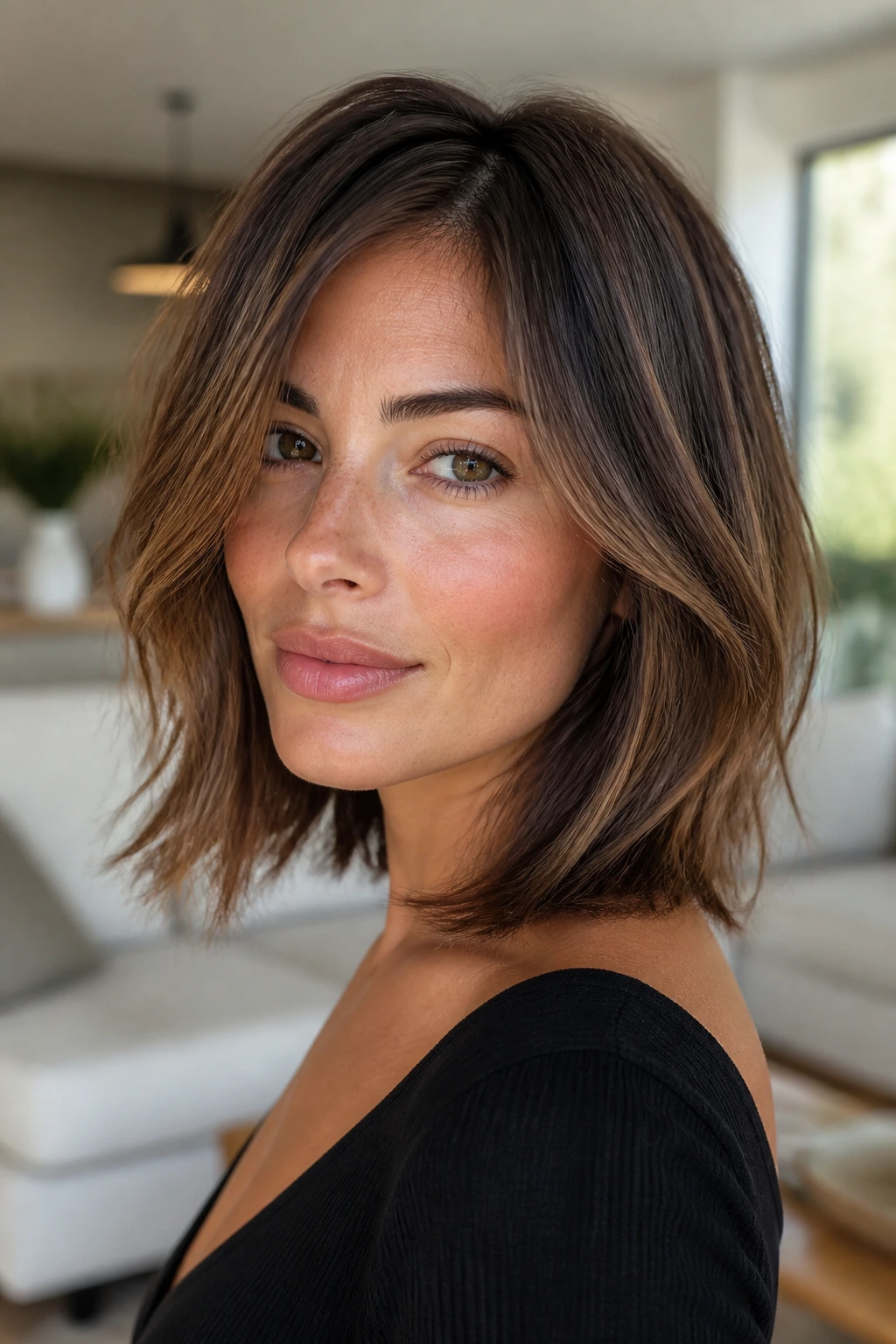
The layered movement lob is the answer when someone wants shape but does not want a shag. The layers are long, subtle, and tucked into the haircut so the perimeter still looks full. You get bend and swing without obvious steps.
Why it stays flattering
The layers remove weight where hair tends to drag, especially around the mid-lengths, but they leave enough bottom line to keep the cut from going fuzzy. That matters on thicker hair, where too much layering can make the ends look ragged. Style it with a medium round brush and aim the roots up and the ends slightly under. It should look like the hair was persuaded, not bullied.
14. The Side-Swept Lob
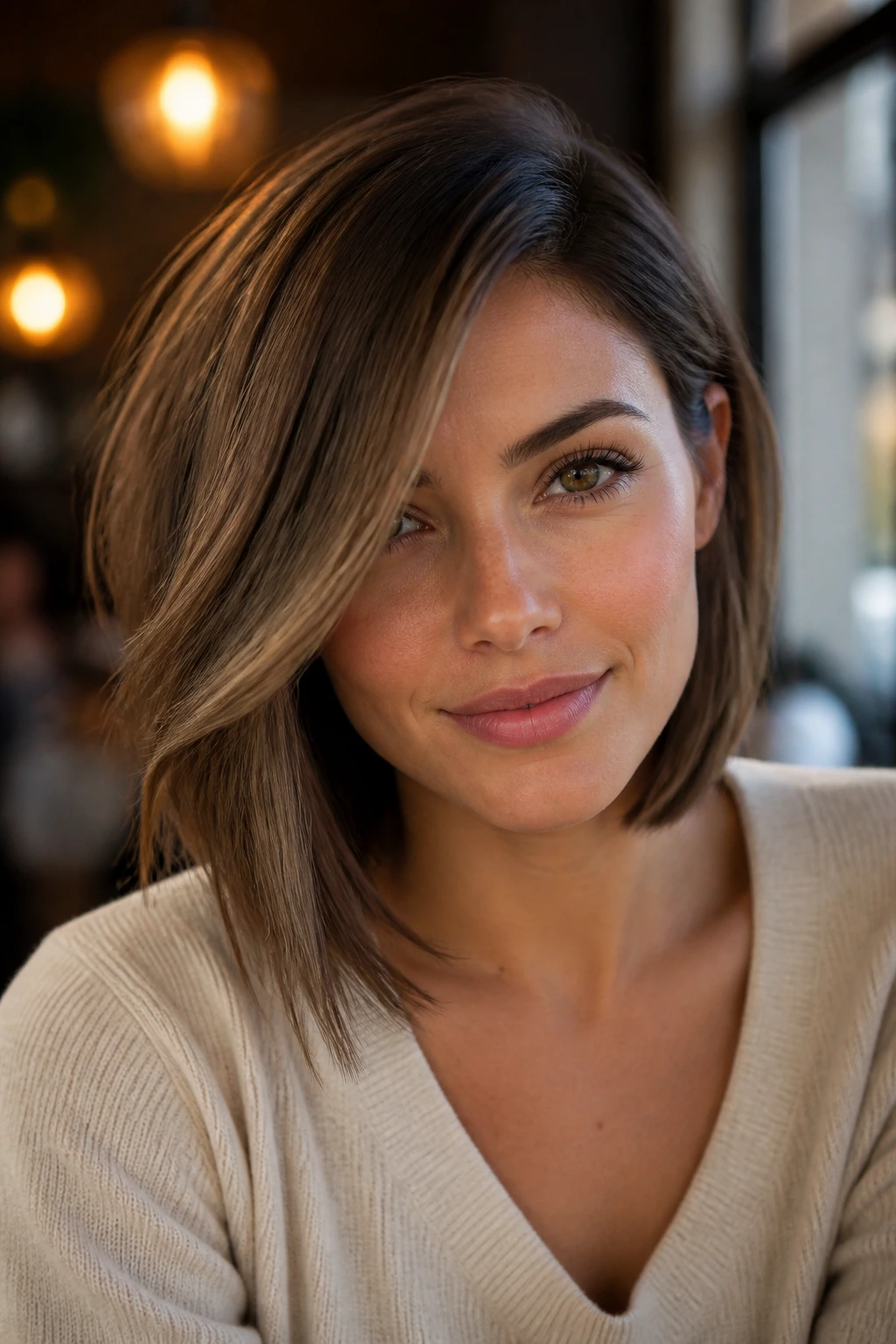
A side-swept lob gives you asymmetry without committing to a fully uneven cut. The part shifts off-center, and the front pieces sweep diagonally across the face, which makes the hair feel fuller on top and softer through the jawline. It’s a good fix for a flat crown.
This shape also works nicely if one side of your face feels more open than the other. The sweep adds movement where you want it and keeps the rest of the cut simple. I like it on hair that holds a bend, because the side part creates a natural curve. If your part keeps splitting back to the middle, clip it while it dries. The roots will listen.
15. The Italian Lob
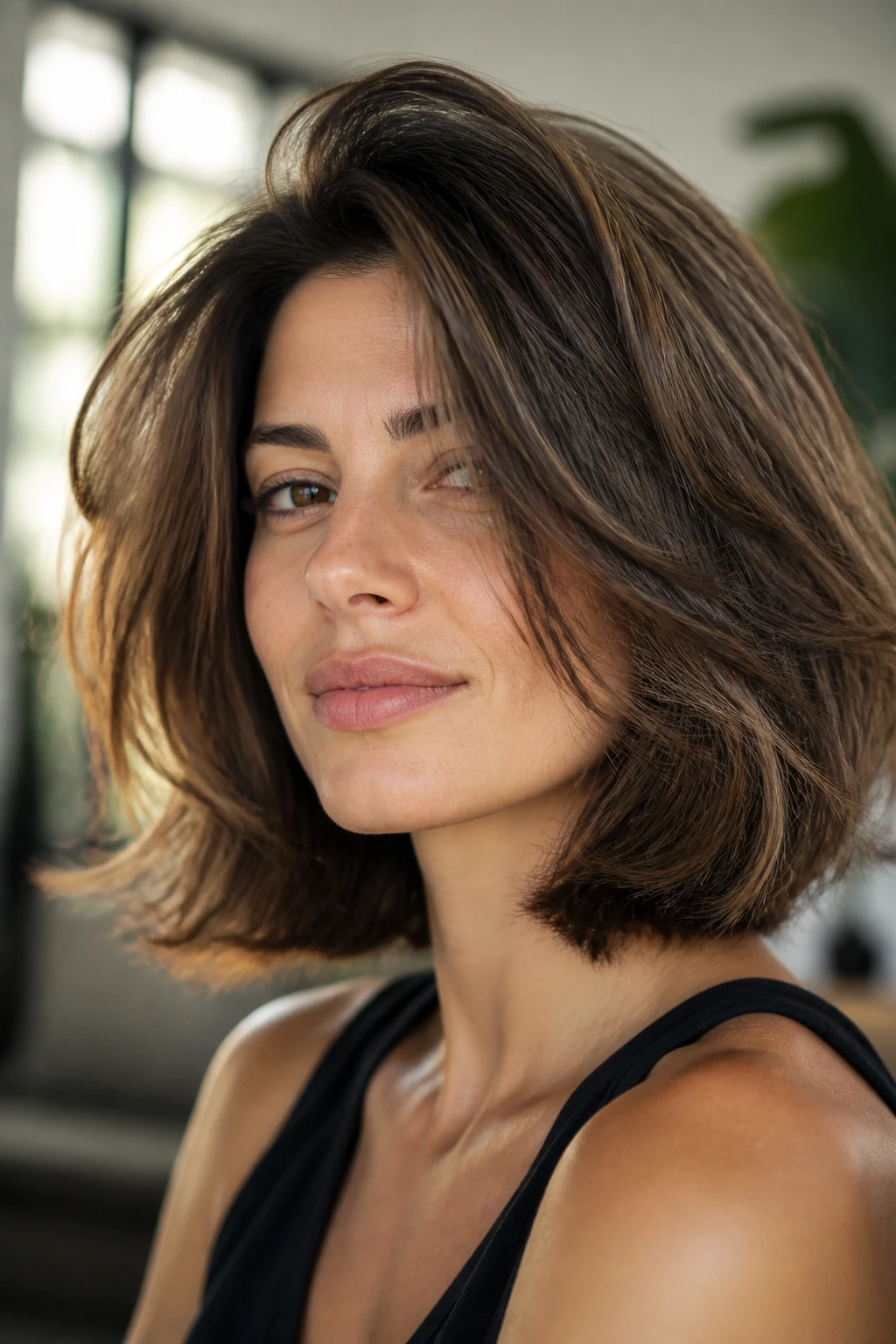
The Italian lob is all about fullness and bounce. It usually sits at a shoulder-grazing length with soft volume through the ends and a little lift at the crown, which gives the whole style a plush, finished feel. It looks expensive even when it isn’t, and that’s mostly because the shape is full, not over-layered.
This cut is good if your hair feels thin at the ends but still has enough body up top to support a blowout. Use a round brush, roll the ends slightly under, and leave the hair with a little movement rather than pin-straight precision. It should feel airy. Not floaty. There’s a difference.
16. The Invisible-Layer Lob
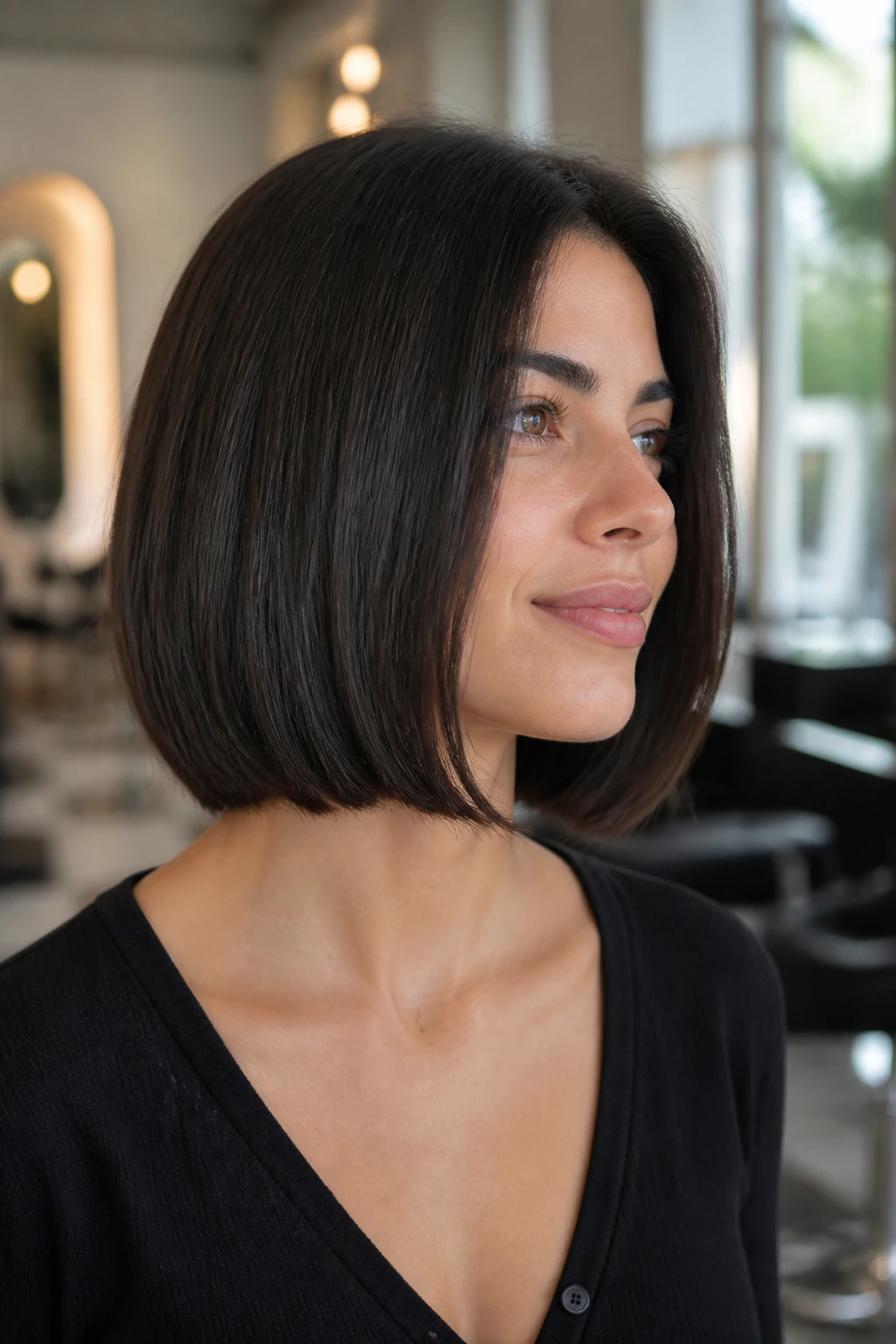
An invisible-layer lob is the one I reach for when someone wants volume but hates seeing the layers. The haircut looks blunt from the outside, yet the inside has just enough removal to stop heavy hair from sitting like a block. It’s a smart trick, and it’s not obvious unless the hair moves.
This is especially useful for thick straight or slightly wavy hair. You keep the clean edge, but the inside of the cut sheds weight so the shape can swing. Ask for the layers to stay tucked beneath the perimeter. If the layers show too much, the whole point disappears.
17. The Soft Wolf Lob
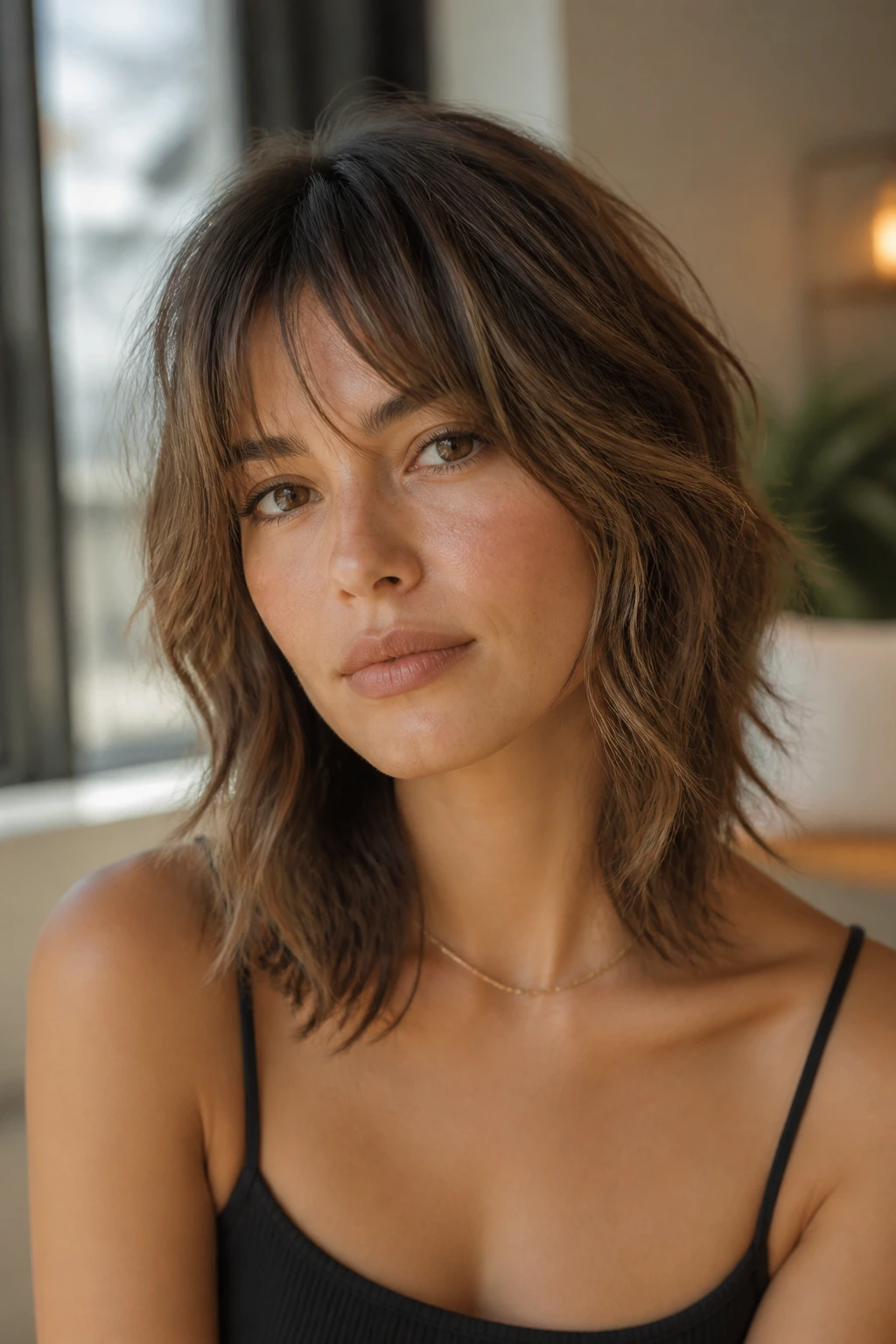
The soft wolf lob borrows a little energy from the wolf cut, but it keeps the length in long-bob territory so it remains wearable. Think shorter crown layers, broken-up texture, and a perimeter that still lands around the shoulders. It has edge without getting too wild.
This cut works when you want your hair to look lived in on purpose. It’s best with texture cream or a light mousse, and it looks better when it’s a little messy than when it’s fully polished. If you like hair that doesn’t need perfect styling to feel interesting, this one earns its keep. If you hate any sense of unevenness, skip it.
18. The Rounded Lob

A rounded lob curves gently toward the face instead of hanging in a straight box. The silhouette softens the jawline and keeps the bottom from feeling too hard, which is useful if blunt cuts make your hair look stiff. The curve can be subtle or obvious, depending on how much weight the stylist leaves near the ends.
When the rounded shape helps
It’s especially nice on heart-shaped faces and anyone with a narrow chin, because the line adds softness near the lower face. The trick is not to over-layer the sides. You want the curve to come from the perimeter, not from chasing wispy pieces around the face. Style with a round brush and let the ends tuck in just a little.
19. The Bottleneck-Bang Lob
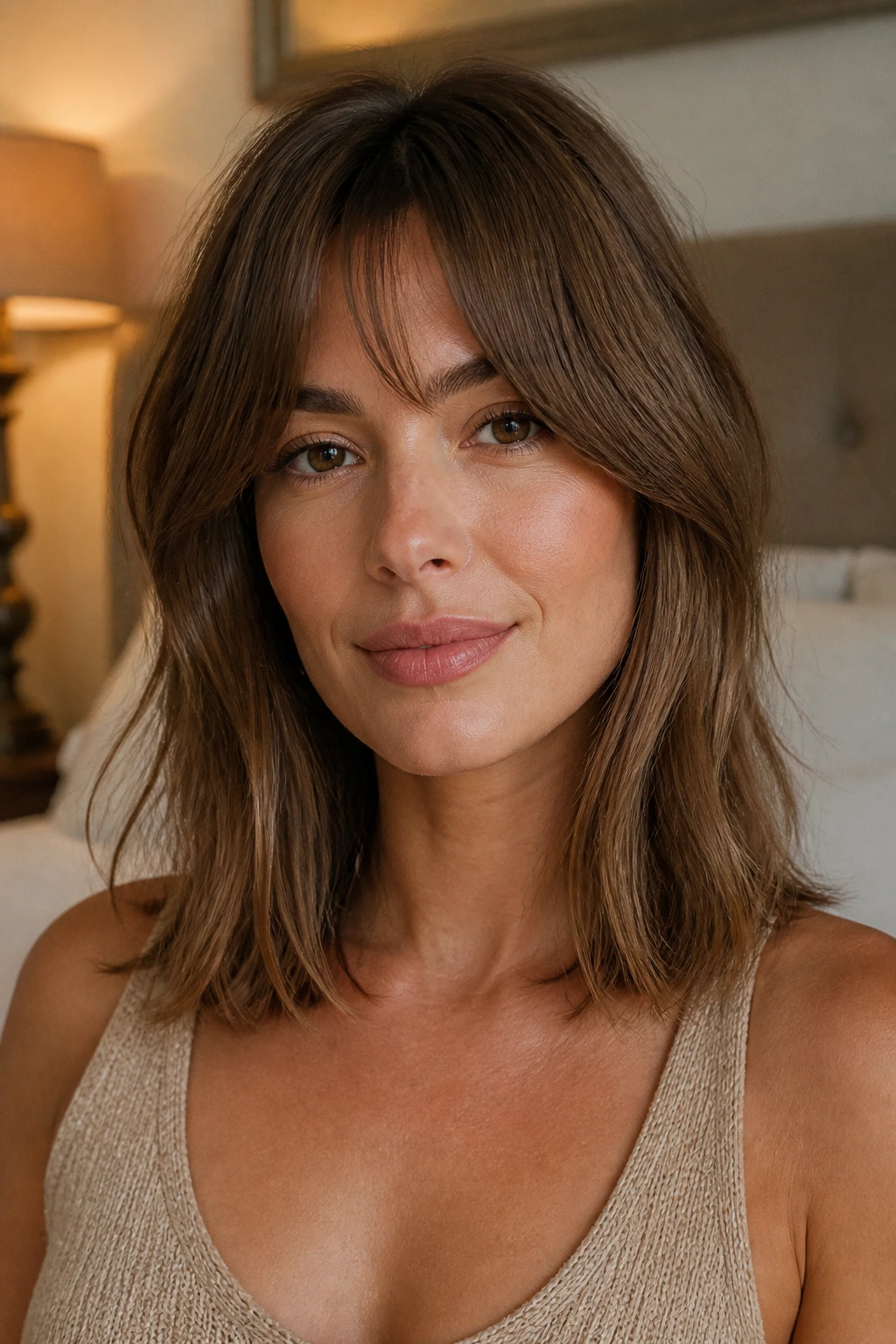
A bottleneck-bang lob gives you fringe without a heavy wall across the forehead. The center pieces are shorter, then the bangs open out toward the temples, which draws attention to the eyes and cheekbones. It has more shape than curtain bangs and less bluntness than a full fringe.
This cut works well if you like the idea of bangs but don’t want a strict line to babysit. It can soften a long face and bring more attention upward without closing the forehead in. The bangs need a little styling, yes, but not much. Blow them forward first, then sweep them apart with your fingers while they’re still warm. That part matters.
20. The Beachy Lob
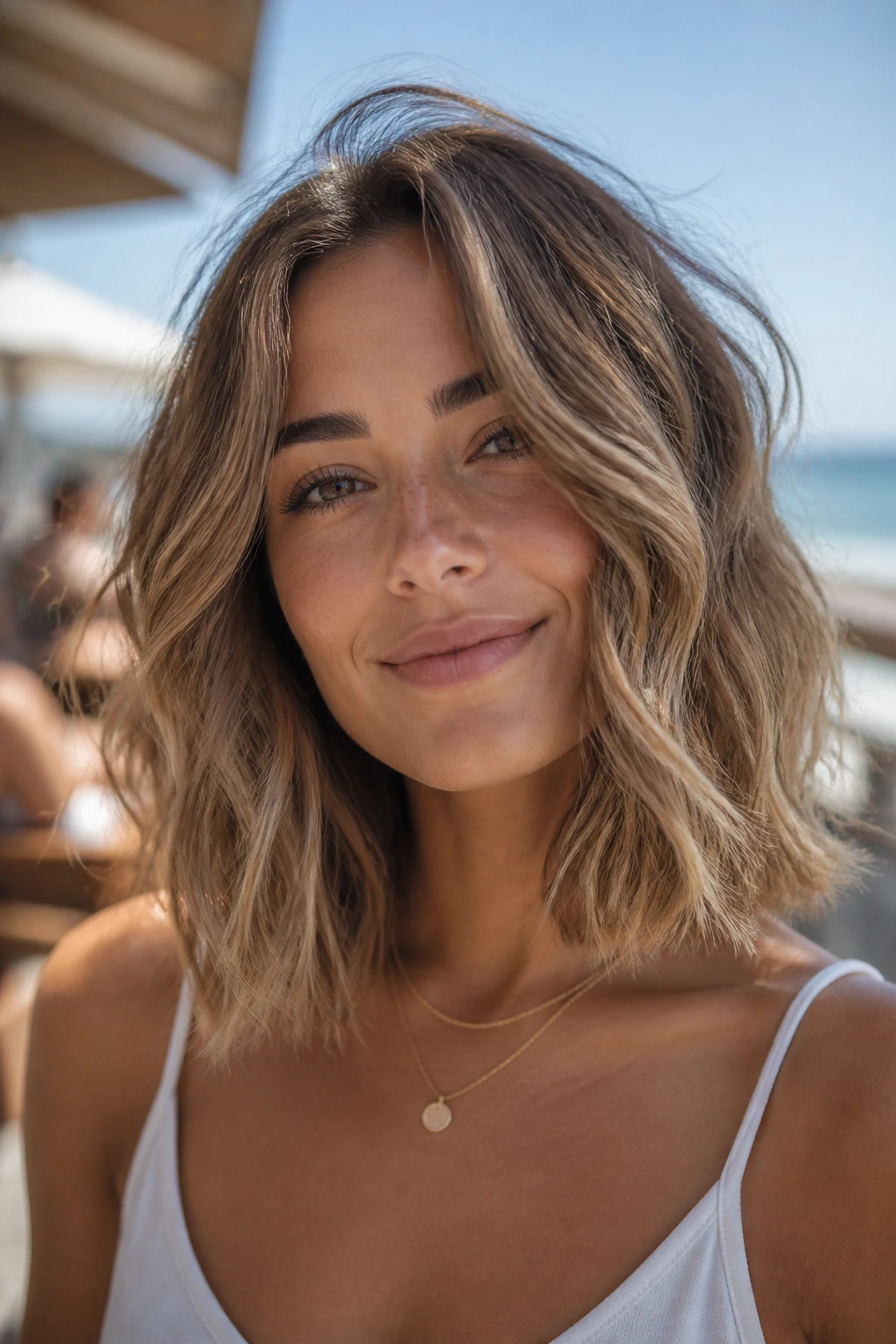
The beachy lob is the easygoing cousin in the group. It’s full of loose bends, a little movement through the mid-lengths, and ends that aren’t fussed over too much. The haircut itself often includes light layers so the wave pattern has somewhere to go.
This style is built for hair that likes texture spray, diffuser drying, or a quick bend with a curling iron. The goal is not a polished curl. It’s that slightly windswept feel where the hair looks touched but not overdone. If your hair is naturally straight, use a few larger sections and alternate curl directions so it doesn’t fall into one heavy wave. The messier it gets, the better it looks.
21. The Tucked-Behind-Ear Lob
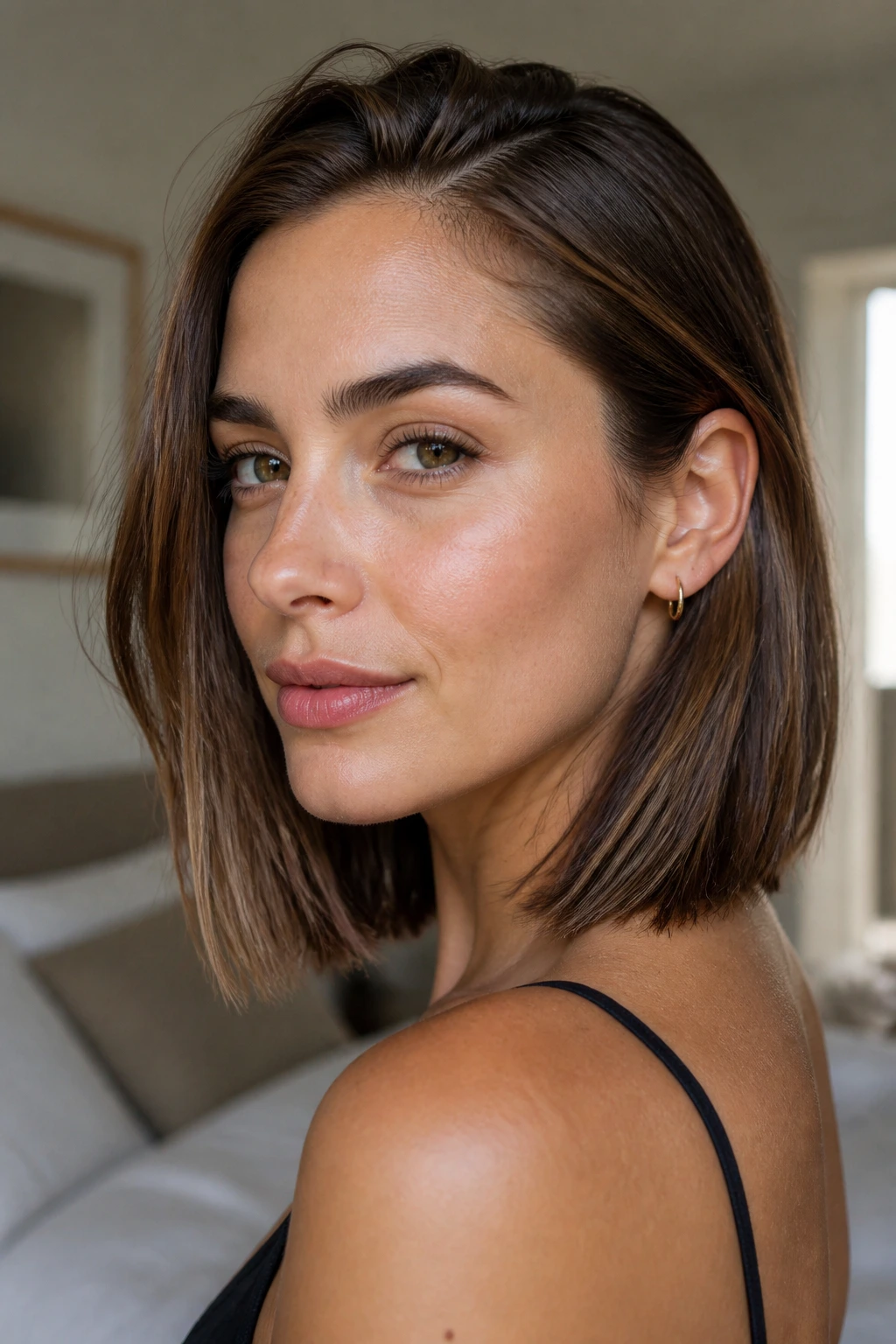
A tucked-behind-ear lob is one of those cuts that looks plain until you wear it, and then it suddenly has shape. The length is kept clean enough to slide behind the ear without poofing out, which exposes the cheekbone and sharpens the jaw a touch. It’s neat, low-fuss, and better than people expect.
This cut is especially useful if you wear earrings or glasses, because it leaves space around the face without needing a fringe. A soft side part helps, but a center part works too if the perimeter is strong. The important part is the front length. If the front is too short, the tuck looks accidental. If it’s too long, it drags.
22. The Deep Side-Part Lob
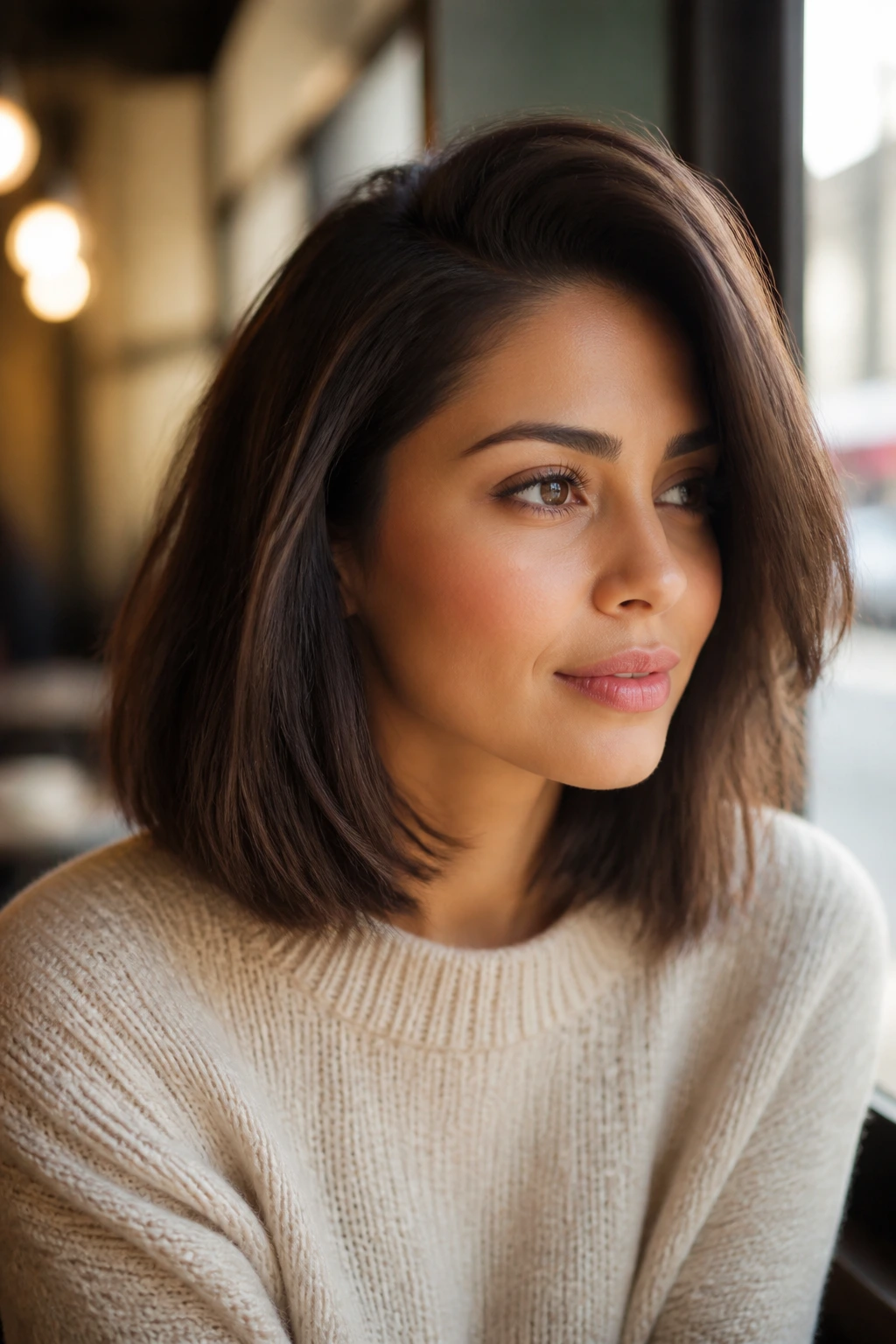
The deep side-part lob brings instant lift to the crown and a little drama through the front without needing a full restyle. Shifting the part over several inches changes how the hair falls, so one side gets volume while the other gets a sleeker line against the face. It’s a simple move with a big effect.
What changes most
The root height. That’s the first thing people notice, even if they can’t name it. A deep side part makes fine hair look fuller at the top and gives thick hair a more sculpted direction. If your part keeps slipping back, set it while the hair is still damp and clip the heavier side away from the face until it dries. Easy. Also surprisingly useful.
23. The Air-Dried Lob
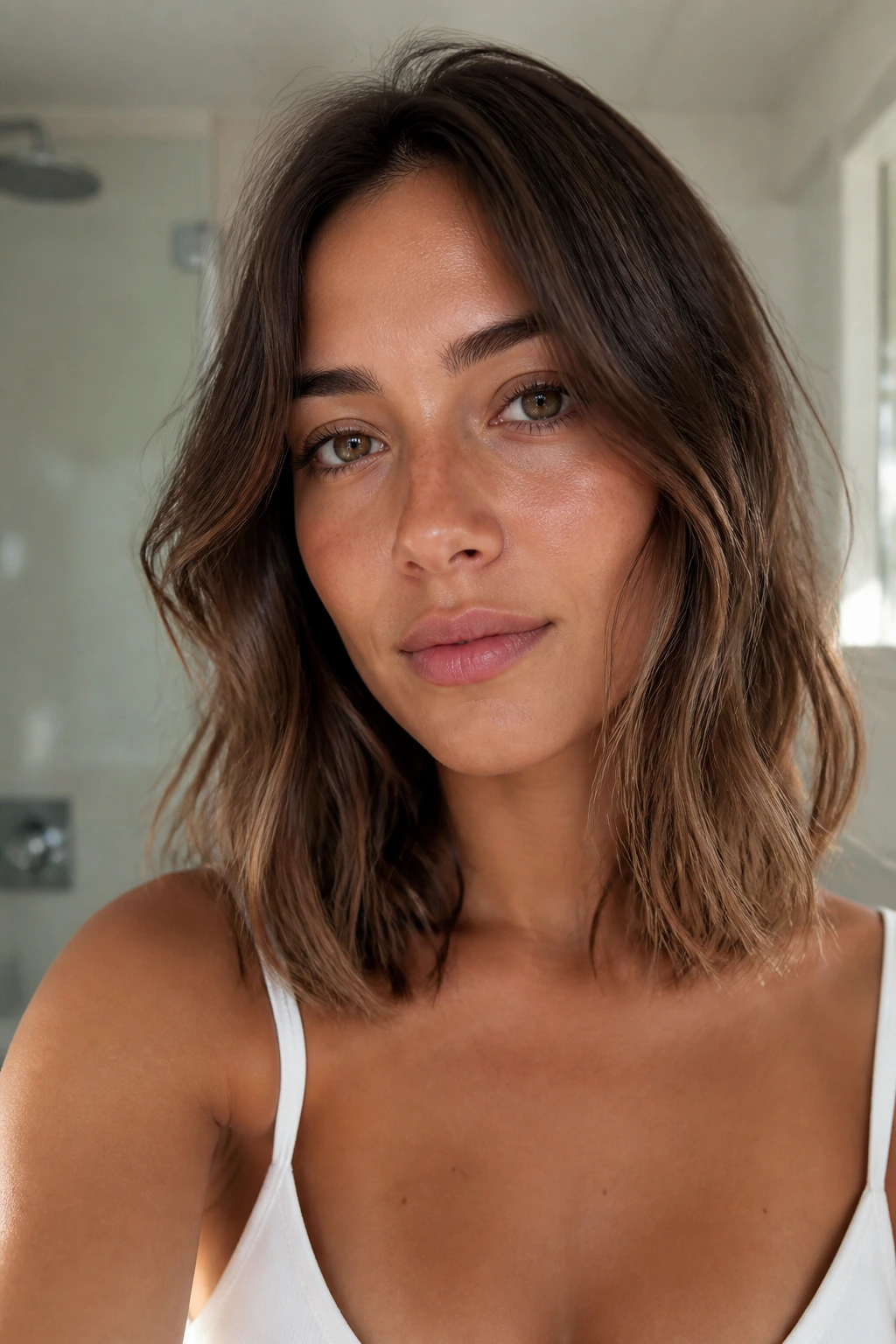
An air-dried lob needs a cut that behaves without heat, and that means the shape has to do some of the work for you. The best versions usually have soft layers, a length that doesn’t sit too high above the shoulders, and enough weight at the ends to keep the hair from puffing out as it dries.
This is the cut for people who would rather wait than wrestle with a round brush every morning. A leave-in cream, a little mousse, and a scrunch with a T-shirt towel are usually enough. If your hair has a natural wave, this version can look better on day two than day one. That’s not a flaw. It’s the appeal.
24. The U-Shaped Lob
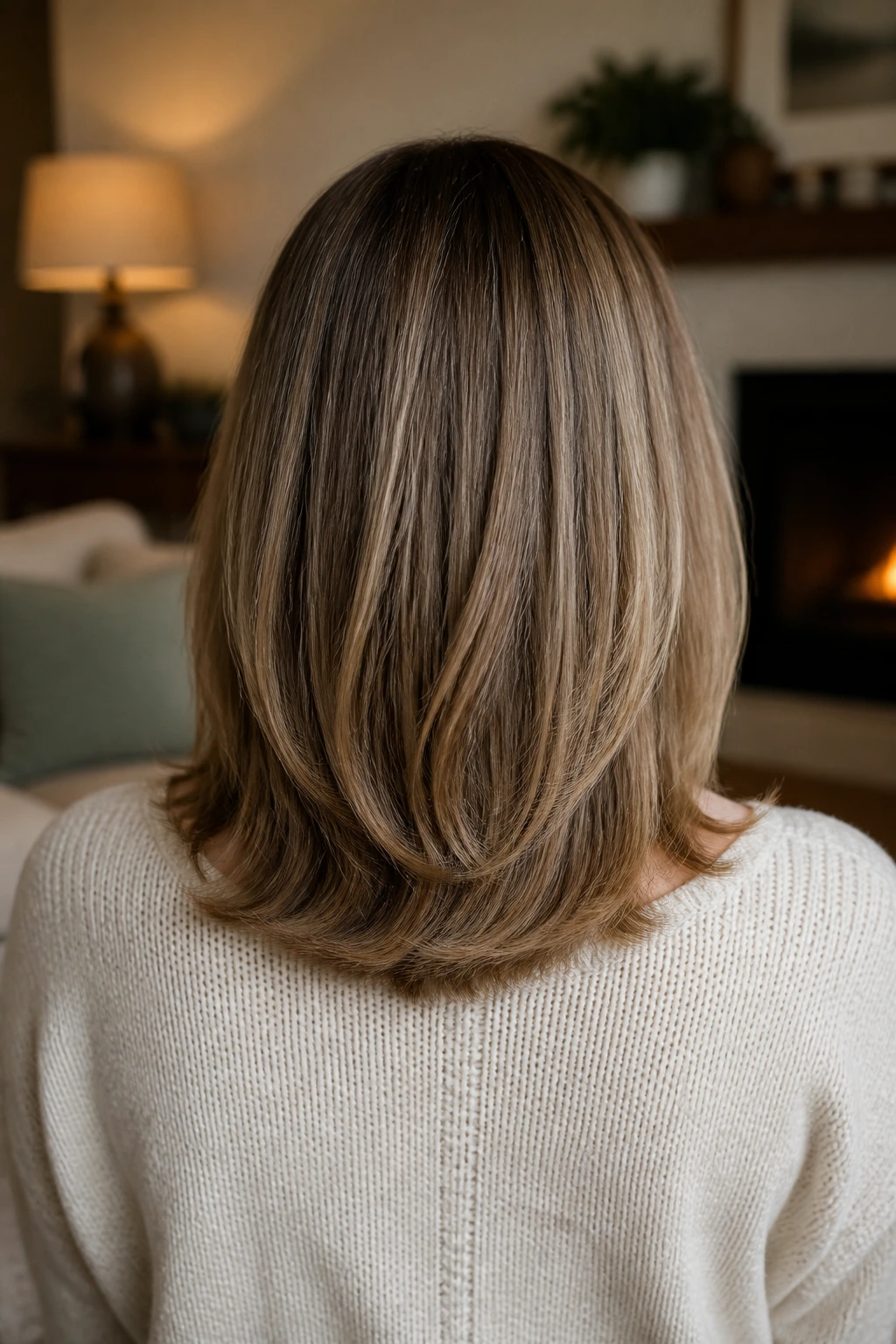
The U-shaped lob curves gently through the back instead of cutting straight across, which softens the outline and keeps the haircut from feeling blocky. The center back usually sits a touch longer than the sides, and that subtle drop gives the whole shape a more natural flow.
I like this shape when the hair needs softness but not too many layers. It keeps the ends from looking like a hard shelf and works well on medium to thick hair that holds its line. Ask for the curve to stay gradual. If the U gets too dramatic, the cut can start to look like a long haircut instead of a lob.
25. The Asymmetrical Lob
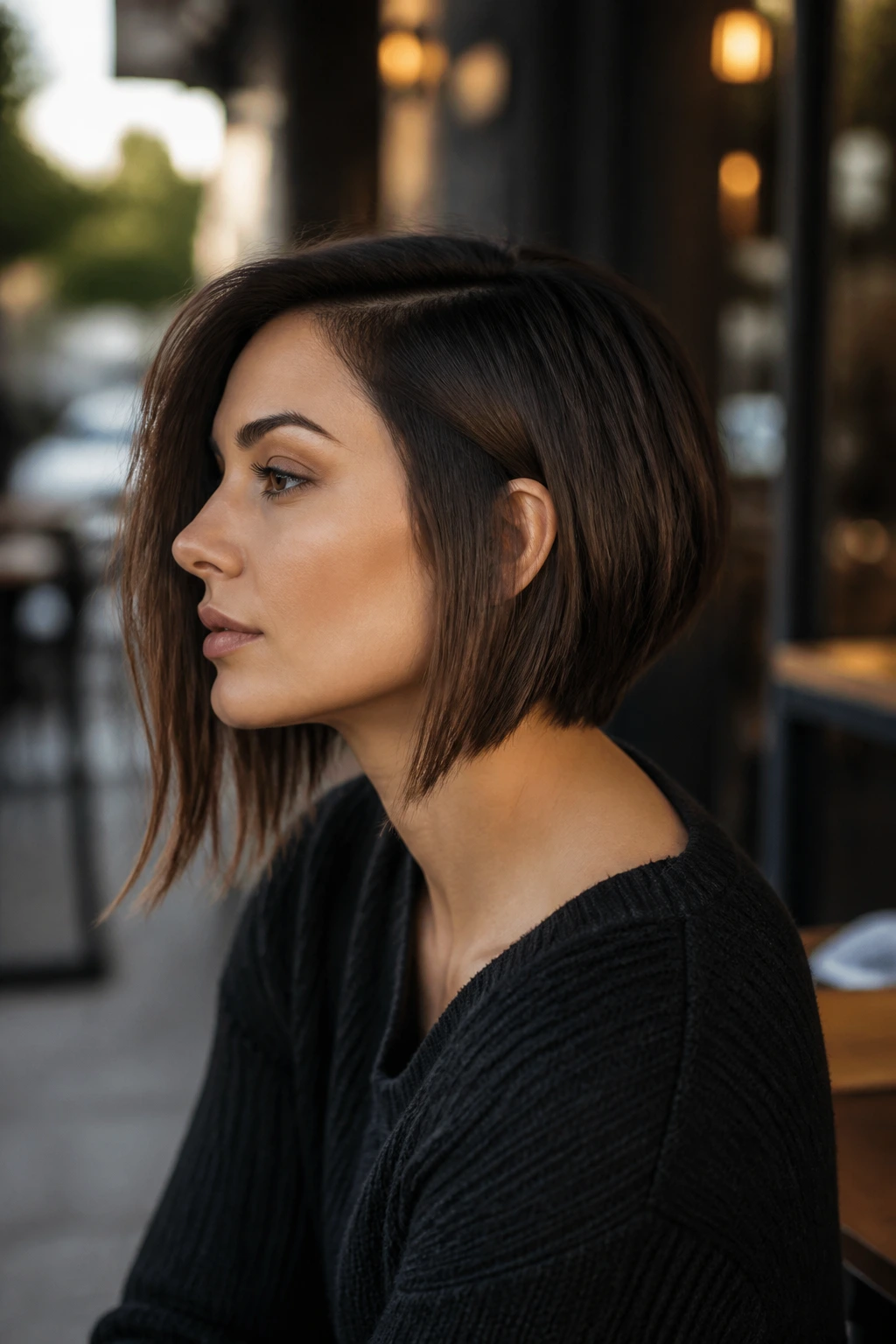
An asymmetrical lob uses uneven length on purpose, usually with one side a little longer than the other. It has more edge than the rest of the group, and it instantly changes the way the face reads. That slight imbalance can sharpen soft features or make a very classic cut feel less predictable.
This one needs confidence in the shape. If the difference is tiny, the haircut may look like it was cut unevenly by accident. If it’s too big, the shape can become hard to style. The best version keeps the asymmetry obvious enough to notice but subtle enough to wear every day. Clean lines help. So does a straight finish.
How to Brief Your Stylist Without Talking in Circles
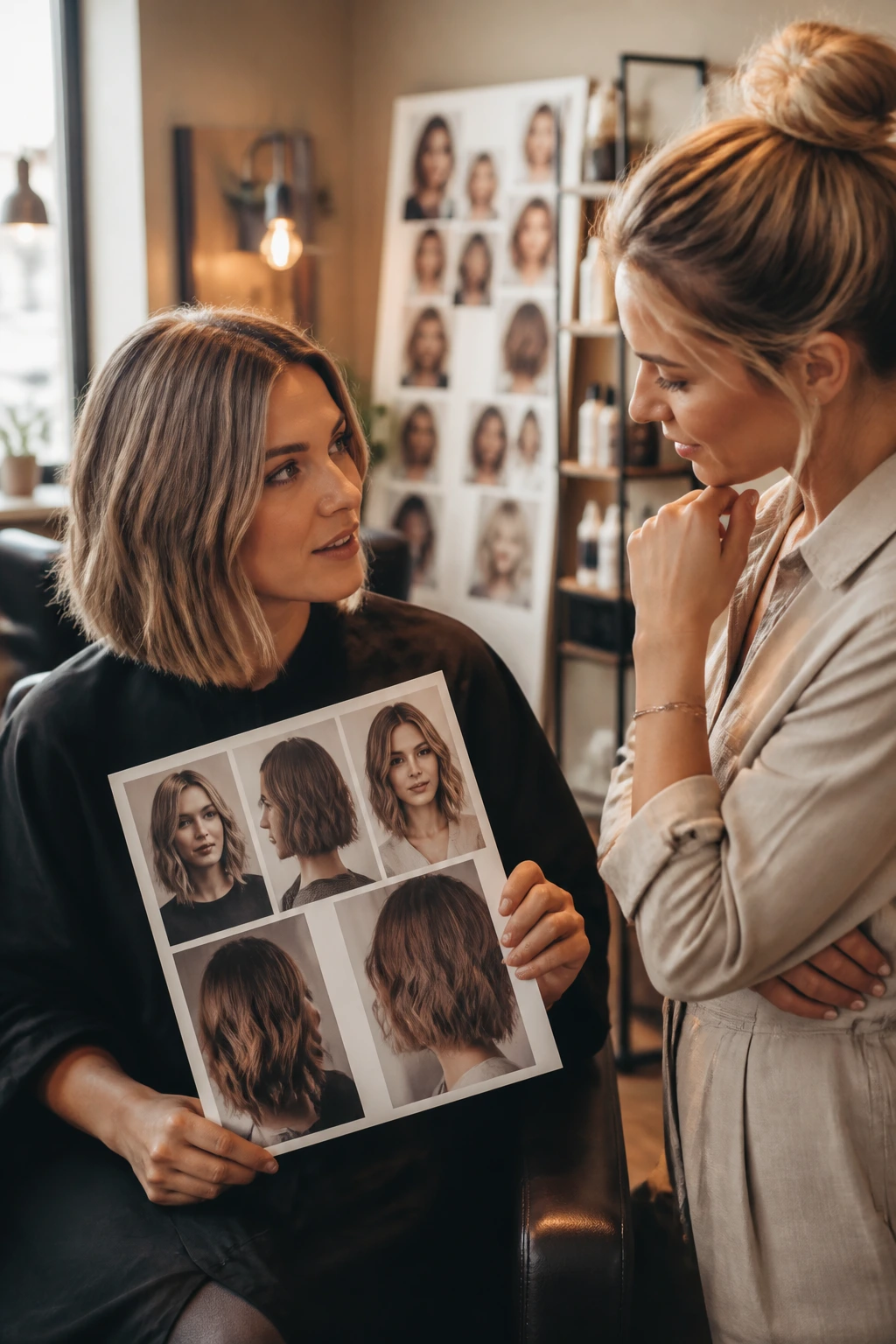
A good lob starts with a good conversation at the chair. Bring one or two photos, but also point to the parts you like: the front length, the way the ends fall, the amount of layering, the fringe shape. Photos alone can mislead, because a lob on dense hair behaves differently than the same cut on fine hair.
Length check: Ask where the front pieces will hit when your hair is dry, not wet. Dry hair tells you whether the cut will skim the collarbone or sit awkwardly on the shoulder.
Texture check: Say whether you blow-dry, diffuse, or air-dry most of the time. A stylist can place layers and weight removal very differently depending on that answer.
Parting check: Wear your usual part into the appointment if you can. A center part and a deep side part change the whole line of the cut.
Growth check: If you go too long between trims, ask for a shape that still looks clean after six or eight weeks. Some lobs are built for perfection. Others are built for real life. Pick the second one unless you enjoy scheduling your hair around your calendar.
How to Keep a Lob Looking Intentional Between Washes
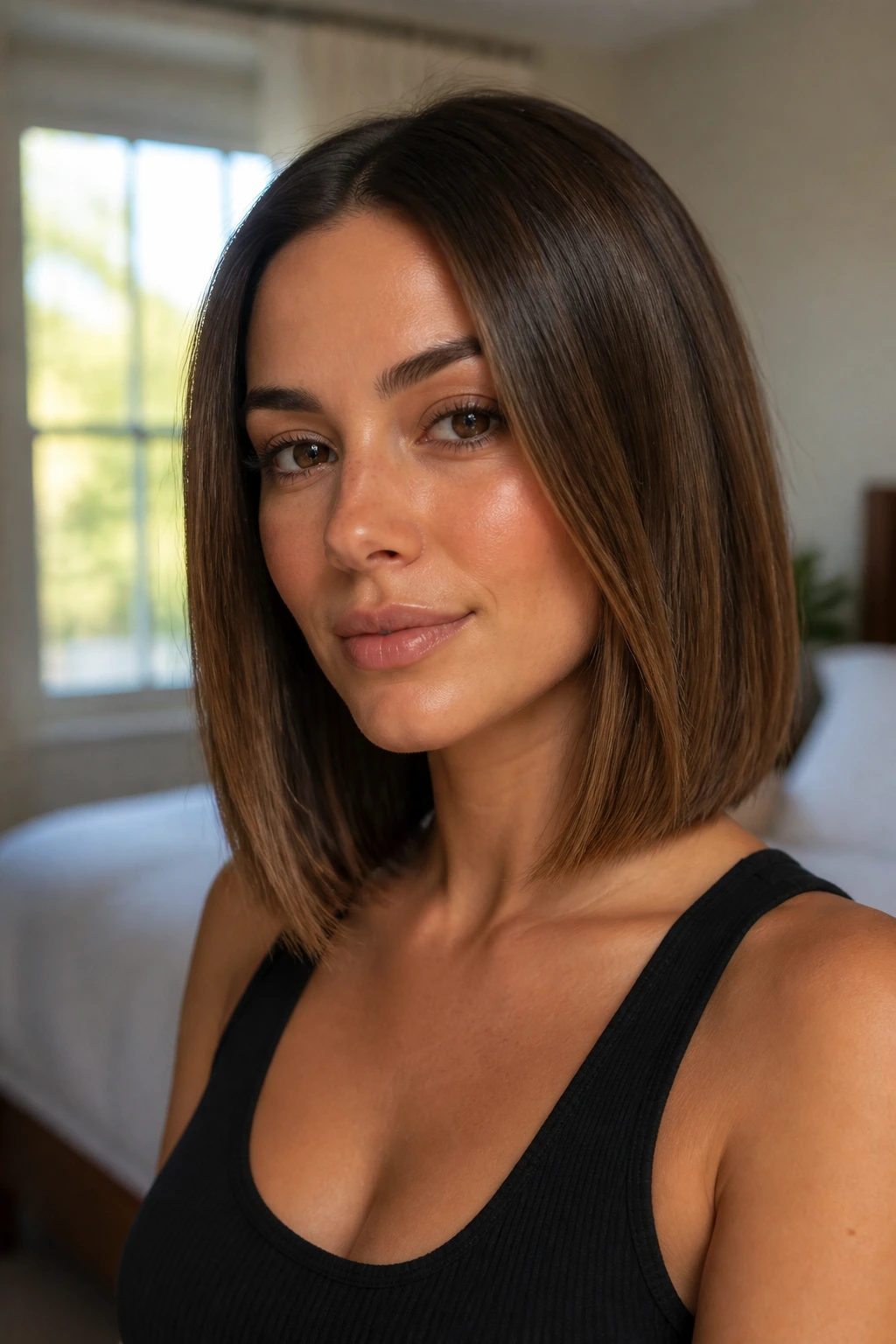
Lob haircuts look best when the outline stays readable. Once the ends fray or the crown goes flat, the shape loses its edge fast. That does not mean you need a full restyle every morning. It means the little maintenance habits matter more than they would with long hair.
A dry shampoo at the root can buy you a day or two of lift, but it should be brushed through so the top doesn’t look dusty. If the ends start to turn outward in a weird way, one quick pass with a flat iron or round brush usually fixes it. And if your lob starts to sit too close to the neck, a trim is overdue.
I’d also keep one styling product that matches the cut. Blunt and sleek lobs like serum or smoothing cream. Shaggy and wavy lobs like texture spray or mousse. Mixing the wrong product with the wrong cut is how people end up blaming the haircut for a finish problem.
Common Lob Haircut Mistakes That Flatten the Shape
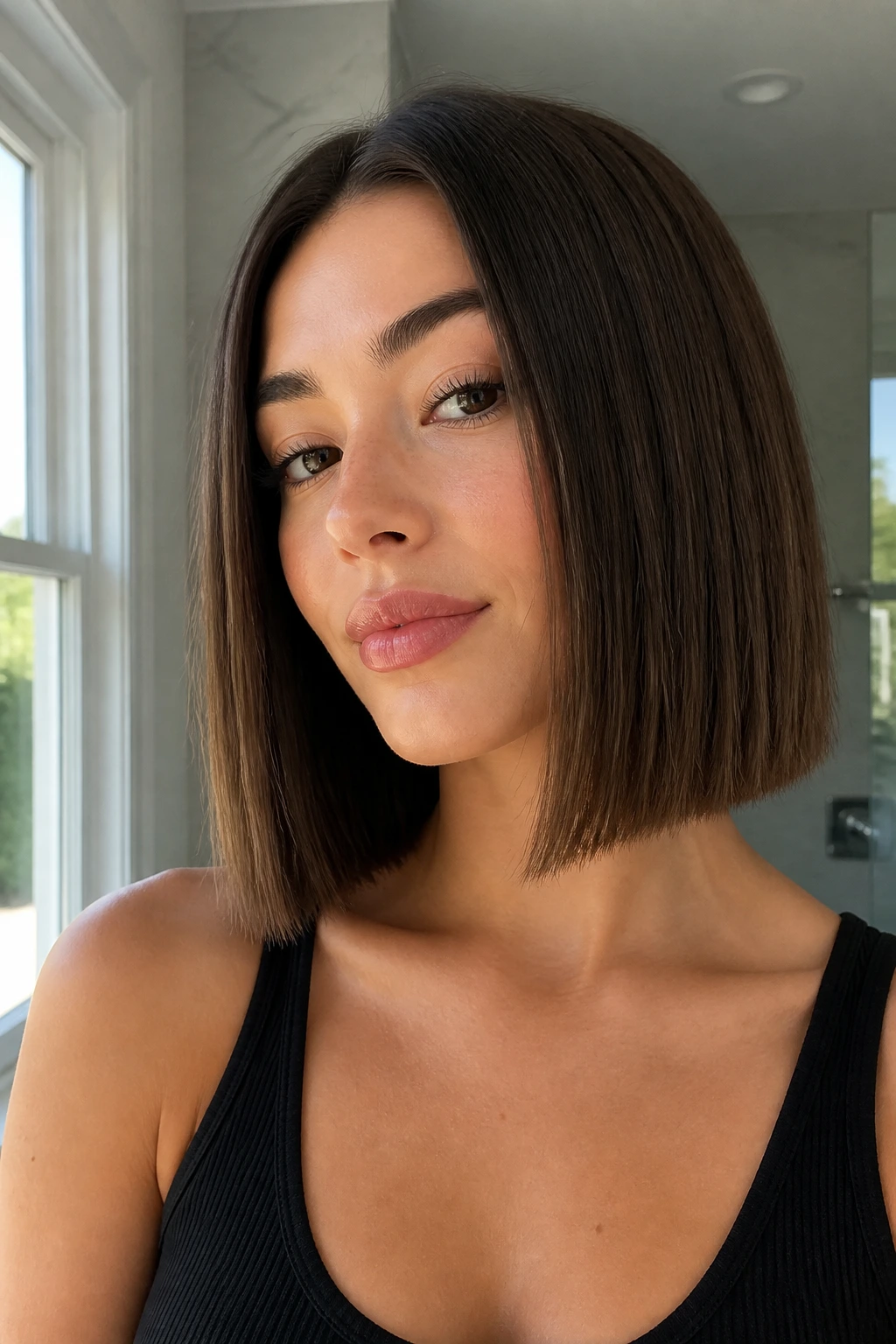
- Cutting the front too short: If the front pieces land above the jaw, the lob can turn boxy fast. Ask for a dry check before the stylist takes off too much.
- Over-layering fine hair: Too many layers make the perimeter look wispy, and the whole point of a lob is usually the outline. Keep the weight line.
- Leaving thick hair blunt with no internal removal: A heavy sheet of hair can hang like a curtain. A little hidden layering keeps it moving.
- Ignoring your natural part: Fighting a stubborn cowlick every morning is a waste of time. Let the part influence the cut, not the other way around.
- Styling the ends in every direction: If the pieces flip, bend, and curl all over the place, the lob loses its shape. Pick one finish and stay with it for the whole head.
Variations and Alternatives to Try

The Minimalist Lob: This version keeps the line blunt, the layers almost nonexistent, and the finish smooth. It’s the cleanest option if you like hair that sits neatly and doesn’t need much fuss.
The Fringe-Forward Lob: Swap in curtain bangs, bottleneck bangs, or a soft eyebrow-skimming fringe. This is a smart move when you want the haircut to frame the face harder without changing the length much.
The Texture-Heavy Lob: Add a shaggy perimeter, visible movement, and a rougher finish. It suits hair that already bends or anyone who wants the cut to look better when it’s a little imperfect.
The Soft Asymmetry Lob: Keep one side slightly longer and let the part sit off-center. The result feels more directional and can be a nice change if a regular lob looks too predictable on you.
Styling Tools That Actually Help With Lob Haircuts
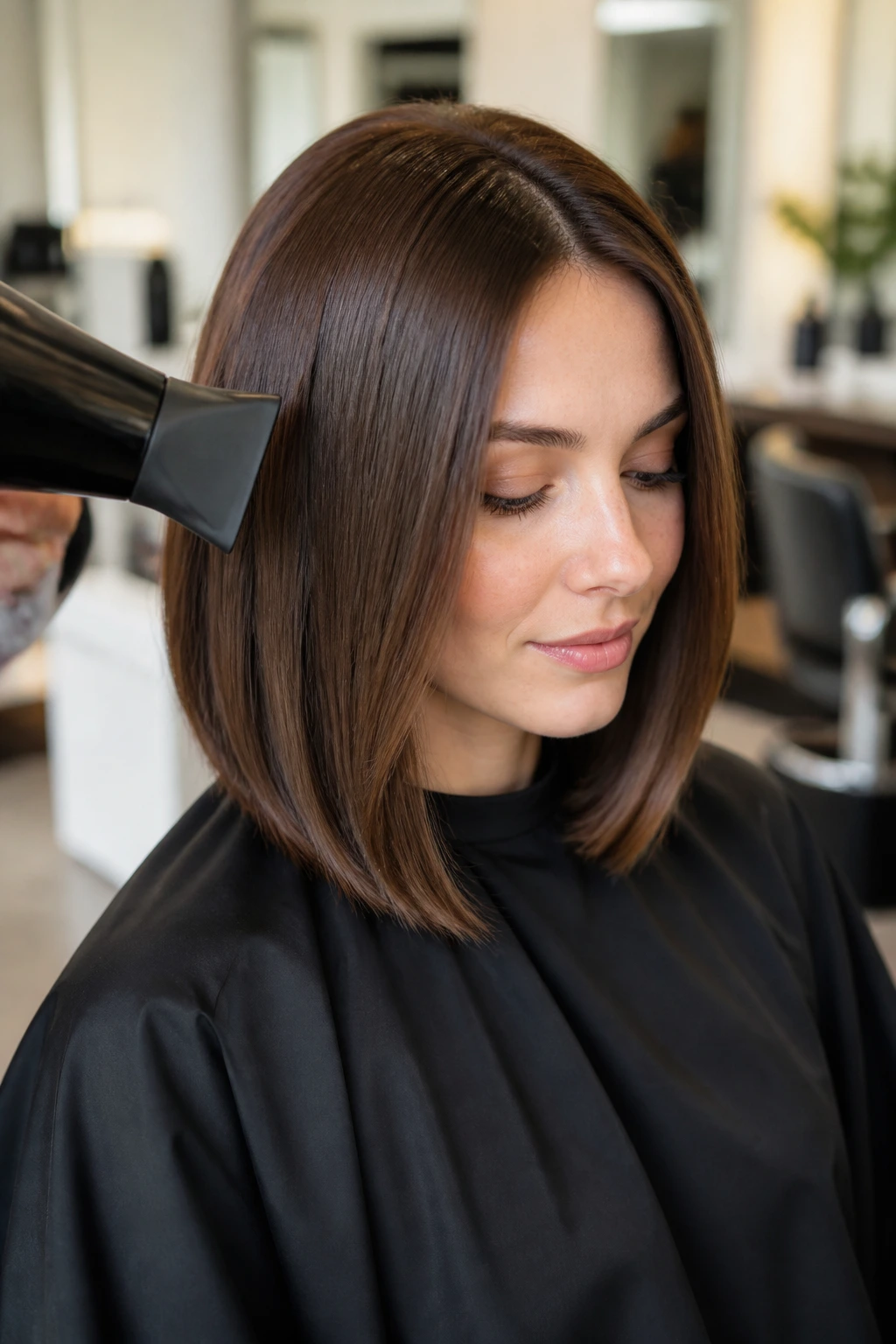
- Blow dryer with a nozzle attachment — Keeps the air directed down the hair shaft, which matters if you want a smoother finish.
- 1-inch curling iron or wand — Good for bending the mid-lengths without making tight curls that shrink the cut.
- Flat iron with rounded edges — Useful for sleek lobs, flipped ends, and quick touch-ups at the front.
- Medium round brush — Helps smooth blunt lobs and give the ends a subtle inward curve.
- Wide-tooth comb — Safer for distributing leave-in products through wavy or curly lobs.
- Sectioning clips — Keeps the top out of the way while you dry the lower layers.
- Heat protectant spray — Non-negotiable if you use hot tools more than once or twice a week.
- Texture spray or light mousse — Better for shaggy, beachy, or air-dried lobs than heavy creams that weigh the hair down.
Keeping the Cut in Shape Between Salon Visits
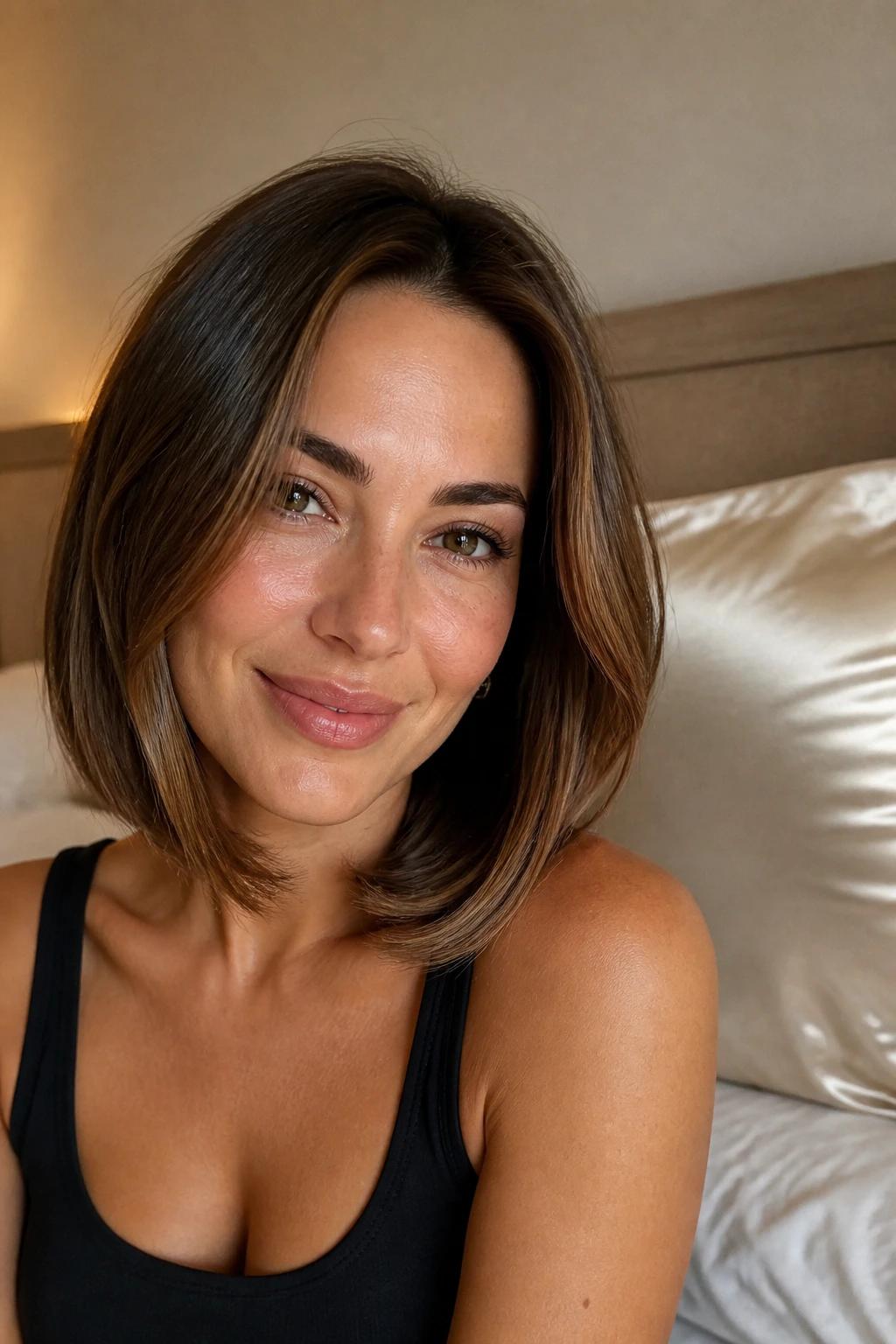
A lob usually holds its line for about 6 to 10 weeks, depending on how blunt it is and how fast your hair grows. The more precise the edge, the sooner it starts to look soft around the perimeter. Textured lobs can stretch a little longer before they feel off, because a bit of grow-out adds movement instead of wrecking the shape.
If the cut is blunt or glassy, plan for a dusting or trim on the shorter end of that range. If it’s shaggy, layered, or air-dried, you can often stretch it a bit longer, especially if you keep the front pieces from getting too long around the jaw. A good blow-dry or quick flat-iron pass can rescue the line for a few extra days, but it can’t fix a silhouette that’s grown past its shape.
At home, use a satin pillowcase or wrap the hair loosely at night if the ends kink easily. A little leave-in on the mid-lengths helps stop the bottom from turning fuzzy. And if the crown collapses by midday, it’s usually the product, not the haircut. Too much cream. Too little root lift. That’s usually the story.
Lob Haircut Questions, Answered
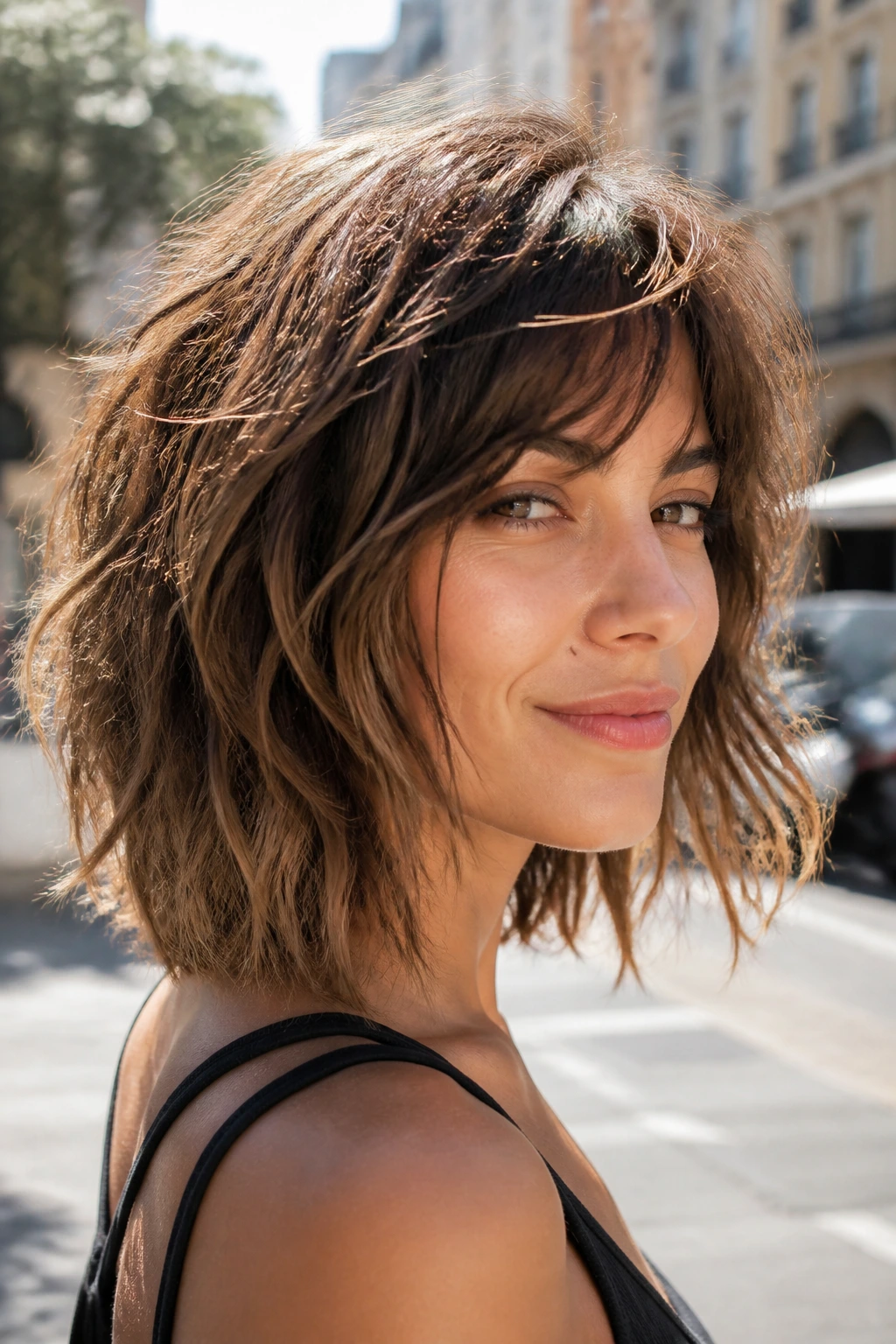
Does a lob suit every face shape?
A lob can be adjusted for almost any face shape, but the exact length and front pieces matter. Round faces usually like a little more length in front, while long faces often benefit from bangs or a rounded outline that softens the vertical line.
Is a blunt lob or layered lob better for fine hair?
Blunt tends to win if the goal is density at the ends. A few hidden layers can still help with movement, but too much cutting into the perimeter makes fine hair look thinner than it is.
Can curly hair wear a lob without shrinking too much?
Yes, but the cut needs to be shaped with curl pattern in mind. Most curls should be cut a bit longer than the final target length, because they spring up once dry.
How often should I trim a lob?
Most lobs need a trim every 6 to 10 weeks. Very blunt or polished versions lean toward the shorter end of that range, while textured cuts can usually go a little longer.
Will bangs make my lob harder to style?
They add one more section to deal with, so yes, there’s extra upkeep. Still, curtain or bottleneck bangs can make the whole cut feel more finished and can save you from needing lots of face-framing layers.
What if my lob flips out at the ends?
That usually means the hair is hitting your shoulders at an awkward point or the ends were not smoothed well enough. A slightly different length, a cleaner blow-dry, or a quick flat-iron bend usually solves it.
Can I air-dry a lob and still look polished?
Absolutely, if the cut is designed for it. Ask for soft internal layers and enough perimeter weight to keep the shape from puffing up while it dries.
What’s the easiest lob if I hate styling?
A collarbone blunt lob with a clean line and minimal layers is the least annoying option. It dries in a way that still looks deliberate, even when you do almost nothing to it.
The Length That Keeps Working
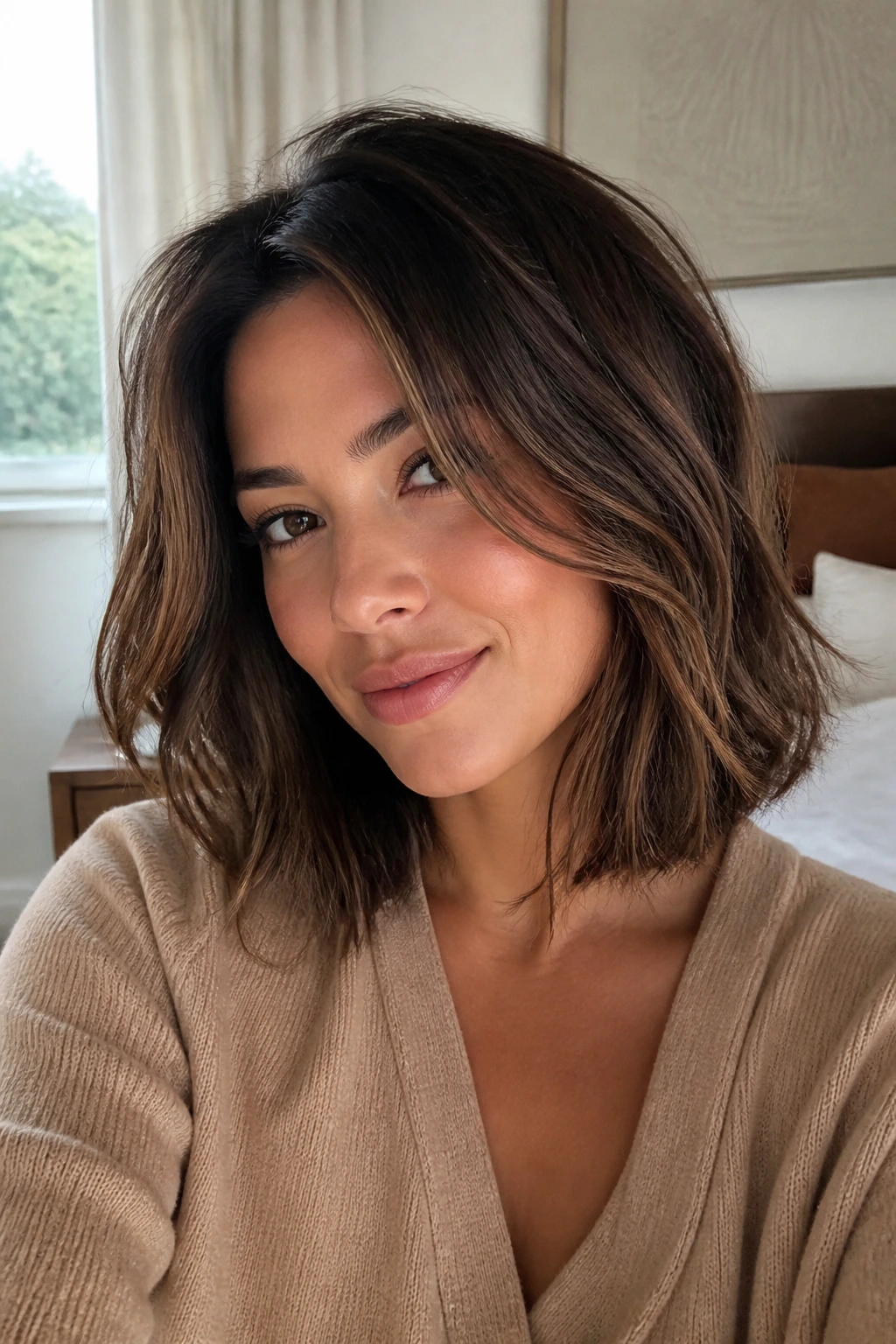
A good lob does more than sit between short and long hair. It sharpens the outline when you want structure, softens the face when you need balance, and survives the ordinary mess of real life better than most cuts in its range. That’s why the style keeps showing up in salons in one form or another: blunt, shaggy, sleek, curly, curved, or a little asymmetrical.
The best version is the one that matches how you actually wear your hair, not the one that looks nicest in a photo with perfect lighting. Bring a sense of where the front should land, how much effort you’ll spend styling it, and whether you want the cut to feel crisp or relaxed. That tiny bit of honesty at the chair saves a lot of regret later.
