



Thick hair can make a bob look expensive—or it can make it swell into a box by lunchtime. The difference is the cut. Choppy bob haircuts for thick hair work because they break up the weight in the right places, so the shape can move instead of sitting there like a solid helmet.
That sounds simple, but it’s the part most people miss. Thick hair is not the same as coarse hair, and coarse hair is not the same as curly hair with a lot of density. A smart bob respects that difference. It trims bulk where the hair traps it, keeps enough line to stop the ends from fraying into fuzz, and uses texture like a tool instead of a gimmick.
The bobs worth wearing are the ones that know where to be blunt and where to be broken up. Some sit right at the jaw and feel crisp. Others drop to the collarbone and swing a little when you turn your head. A few lean messy on purpose, which is often the best move when the hair itself already has a lot to say.
Why These Choppy Bob Haircuts Work So Well on Thick Hair

- They remove weight without erasing shape: Thick hair needs interior movement, not random thinning at the very bottom, or the ends puff up and the middle stays heavy.
- They keep the silhouette from turning square: A blunt edge on dense hair can look like a shelf; choppy texture breaks that line and gives the cut a softer bend.
- They style faster than one-length bobs: When the bulk is distributed well, a quick rough-dry, a round-brush pass, or a little air-dry cream goes further.
- They leave room for bangs and face-framing pieces: Thick hair can handle fringe, curtain bangs, side parts, and longer front pieces without collapsing the whole shape.
- They grow out more gracefully: A layered bob that’s cut with purpose tends to stretch into a lob without looking like it was ignored for months.
- They work with movement, not against it: If your hair bends, flips, or grows wide at the ends, the choppy finish gives it somewhere to go.
1. Soft Razor Choppy Bob
A soft razor bob has a light, feathered edge that makes thick hair feel less boxy the second it dries. The ends look broken up, but not shredded. That difference matters. You still get a clean bob line around the jaw, just with enough air in it to stop the cut from sitting like a brick.
Why It Works
A razor or slide-cut finish takes bulk out of the interior without leaving obvious steps. On very dense hair, that means the perimeter still feels deliberate while the inside stops fighting itself. I like this version best when the hair is thick but not especially curly, because the softness shows without frizz taking over.
Tell your stylist to keep the outline controlled and do the texture work inside the shape. If they overdo the razor on the last half-inch, the ends can get wispy and dry-looking fast. That is not the goal here.
- Best for: straight to softly wavy thick hair that sits heavy at the bottom.
- Ask for: a blunt-ish perimeter with soft internal texture.
- Style with: a lightweight cream and a bend at the last inch or two.
2. Blunt Underneath, Choppy Through the Top
A blunt bob underneath with choppy texture through the top is one of the smartest shapes for dense hair. It keeps the base strong, so the cut still has weight and polish, but it loosens the upper layers enough to stop the whole thing from ballooning. The result feels clean from a distance and more relaxed up close.
The trick is restraint. Too much layering near the perimeter and you lose the point of the blunt edge. Too little texture on top and the bob behaves like a heavy block. The middle path is where this cut lives, and it’s a good one.
Ask for a solid outline with choppy, piece-y internal layers that begin above the widest part of the head. That lets the hair settle without making the ends look too thin. It’s the sort of cut that looks especially good tucked behind one ear, because the strong base shows.
3. Collarbone Choppy Lob
Want the bob feel without committing to chin length? The collarbone choppy lob is the easy answer. It gives thick hair more room to fall, which means less mushrooming around the cheeks and less constant flipping at the nape. There’s a reason so many people end up here after trying a shorter bob first.
Best for people who hate frequent trims
A lob buys you breathing room. The added length keeps the hair from springing outward too hard, and the choppy layers keep the shape from getting stale or heavy. If your hair grows fast, that extra inch or two is a gift.
I’d call this the safest entry point for anyone nervous about shortening thick hair. It still has swing. It still looks intentional. And if you decide you want it shorter later, the lob gives your stylist a clean starting point instead of a dramatic correction job.
4. French-Girl Choppy Bob with Bangs

This cut has personality before you even style it. Shorter around the jaw, piecey through the ends, and usually paired with a soft fringe, it gives thick hair a bit of disorder in a good way. The bangs take some of the visual weight off the face, and the choppy body keeps the rest from feeling too neat.
It’s a strong choice if your hair has a bend to it already. Thick straight hair can wear this cut too, but it usually needs a little more work with a round brush or flat iron bend. Wavy hair gets the easiest win because the shape already wants to look a bit undone.
Ask for bangs that are light enough to split and move, not a heavy straight fringe that sits like a curtain. Thick hair can support bangs, but only if the front is cut with the same thought as the rest of the bob.
5. Side-Part Choppy Bob with Lift
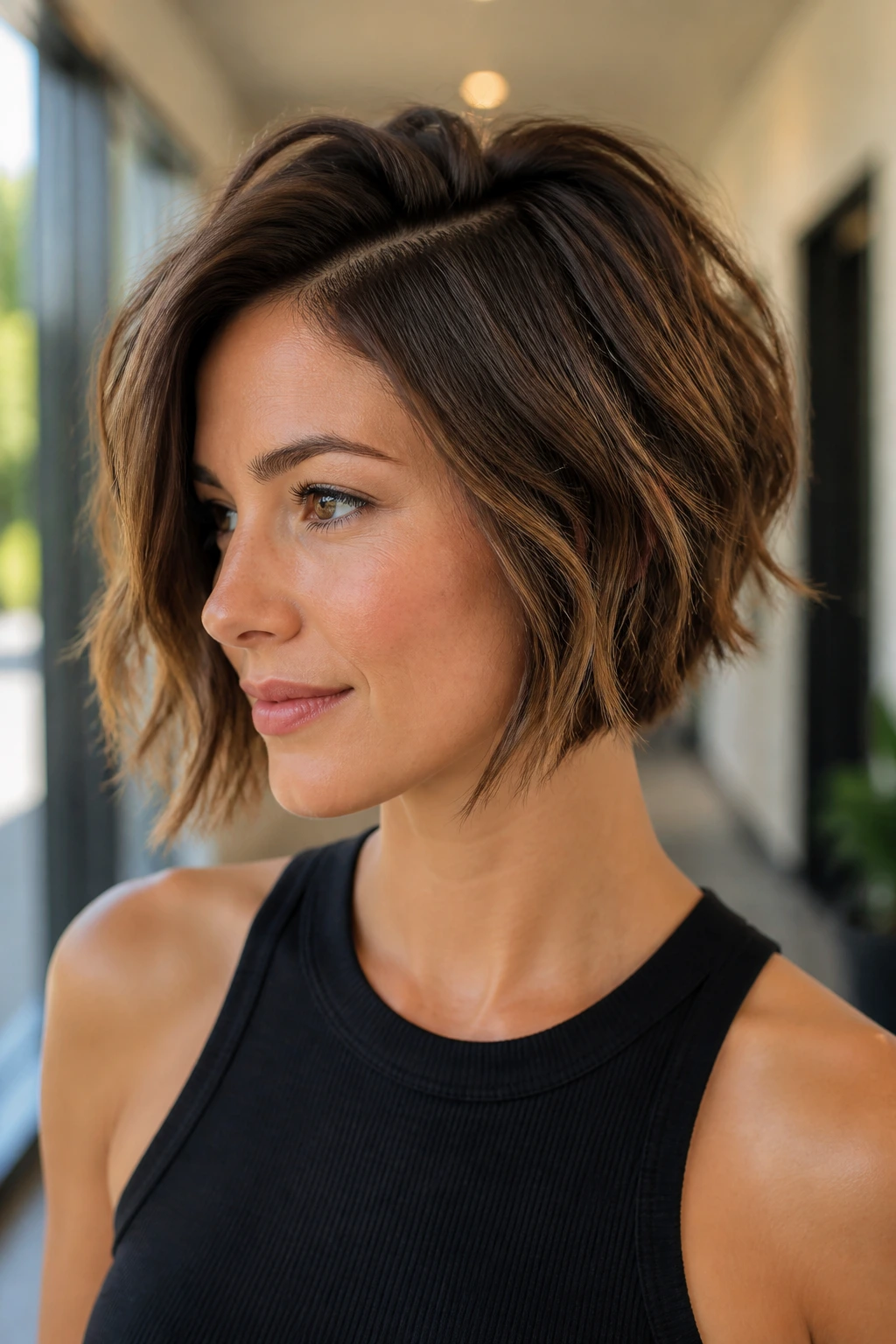
A side part changes everything. On thick hair, it lifts the root on one side and breaks the symmetry that can make a bob feel too heavy. A choppy side-part bob has a little drama built into it, but not the loud kind. More like the haircut walked in first and didn’t apologize for taking up space.
What makes it different
A center part tends to show everything at once: width, density, and any puff at the temples. A side part shifts the weight, which gives the eye a place to move. That makes this cut useful if your hair tends to expand at the crown or if your face shape benefits from more vertical lines.
Keep the front longer than the back by a small margin, not a dramatic angle. A subtle difference—maybe half an inch to an inch—creates lift without looking like a stacked wedge. Pair it with root-lift spray at the crown and a quick blow-dry using a nozzle, not a giant blast of air that throws the sides everywhere.
6. Inverted Choppy Bob
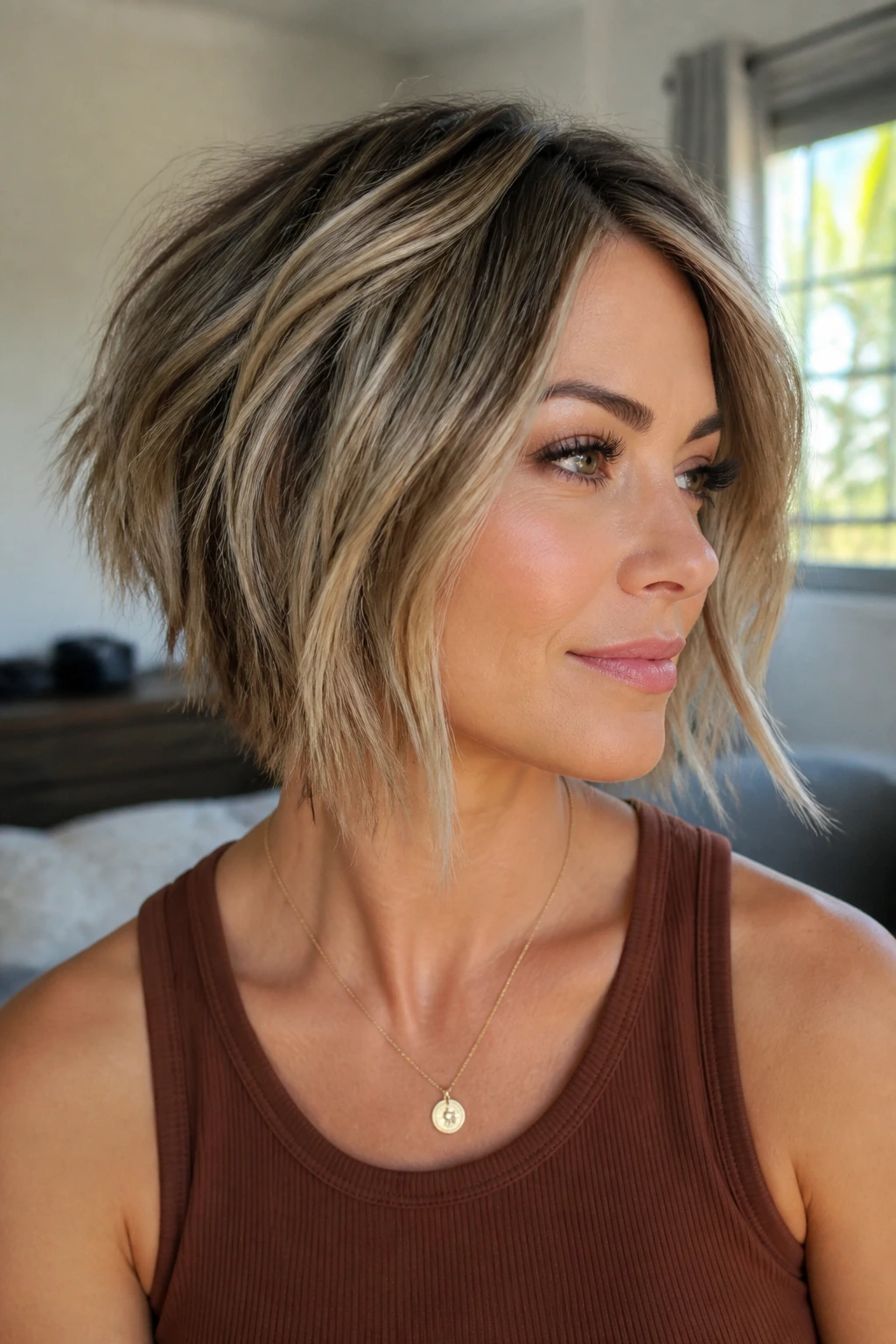
An inverted bob is shorter at the back and longer toward the front, and on thick hair that shape can be a lifesaver. It takes weight off the nape, where dense hair likes to bunch up, and lets the front pieces frame the face in a clean line. The choppy finish softens what could otherwise feel too architectural.
This is one of those haircuts that either looks sharp or looks overdone, with very little middle ground. The good versions have a smooth graduation in the back and jagged texture only where it helps movement. The bad versions stack too high and give you a stiff crown with a pointy front. Not ideal.
If you want this shape, mention that you want the back to sit close to the neck without building a shelf. That little detail changes the whole effect.
7. Curly Choppy Bob
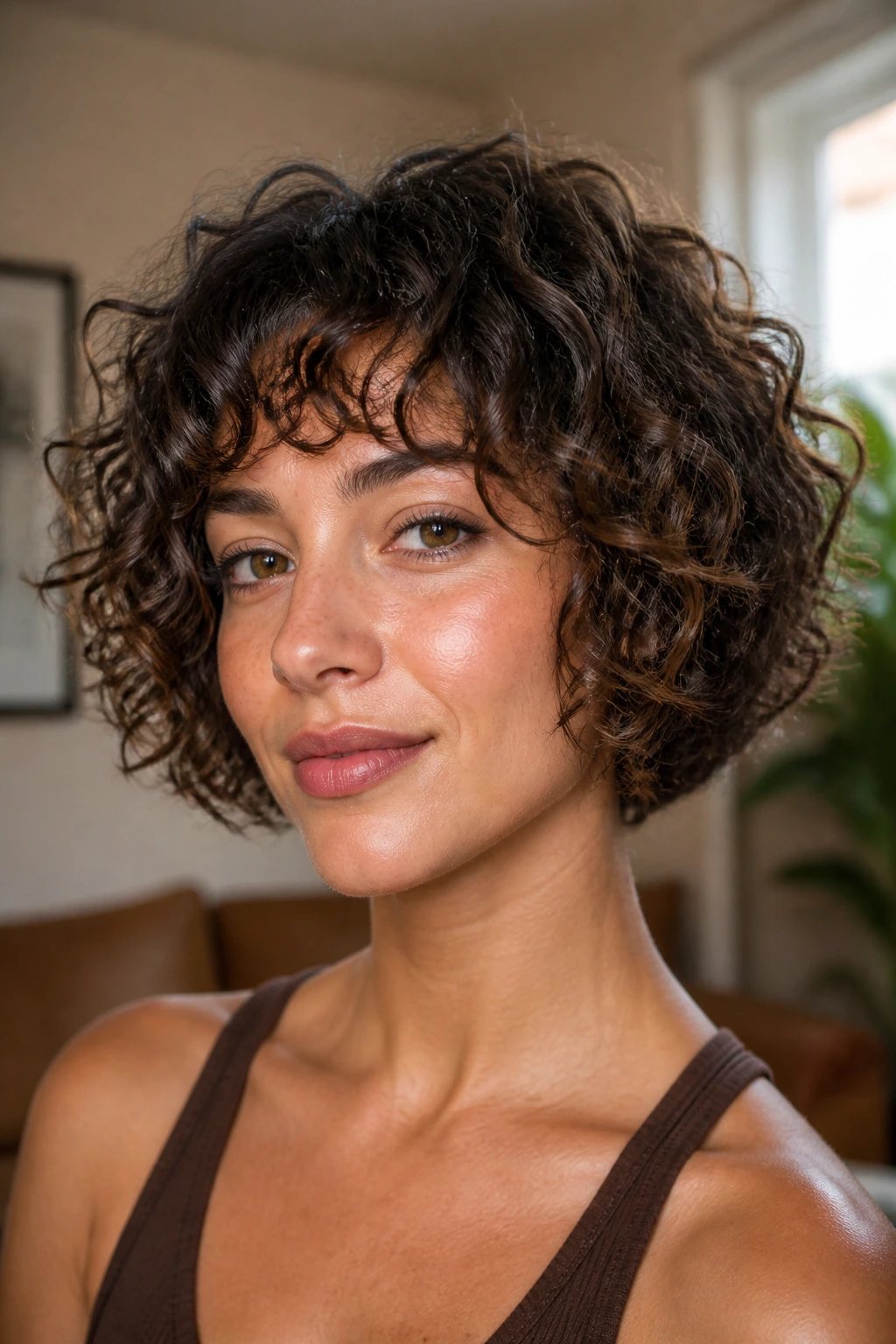
Curly thick hair needs a different set of rules. A choppy bob can look fantastic on curls, but only if the cut respects shrinkage and avoids over-thinning the curl clumps. When curls are left too long in some places and cut too short in others, you get a halo of fuzz and a lot of frustration.
Cutting the curl, not fighting it
A good curly bob is usually shaped dry or nearly dry, with the stylist watching how each curl falls in its natural state. That way the texture work follows the curl pattern instead of pretending it doesn’t exist. The choppy effect should come from shaping the curl masses, not carving them into random spikes.
Ask for longer internal layers and a soft perimeter. You want the curl pattern to stack into shape, not spread out like a fan. Diffusing with a low heat setting and a curl cream that doesn’t feel sticky will keep the shape from expanding too much.
8. Jaw-Length Choppy Bob with Tapered Nape
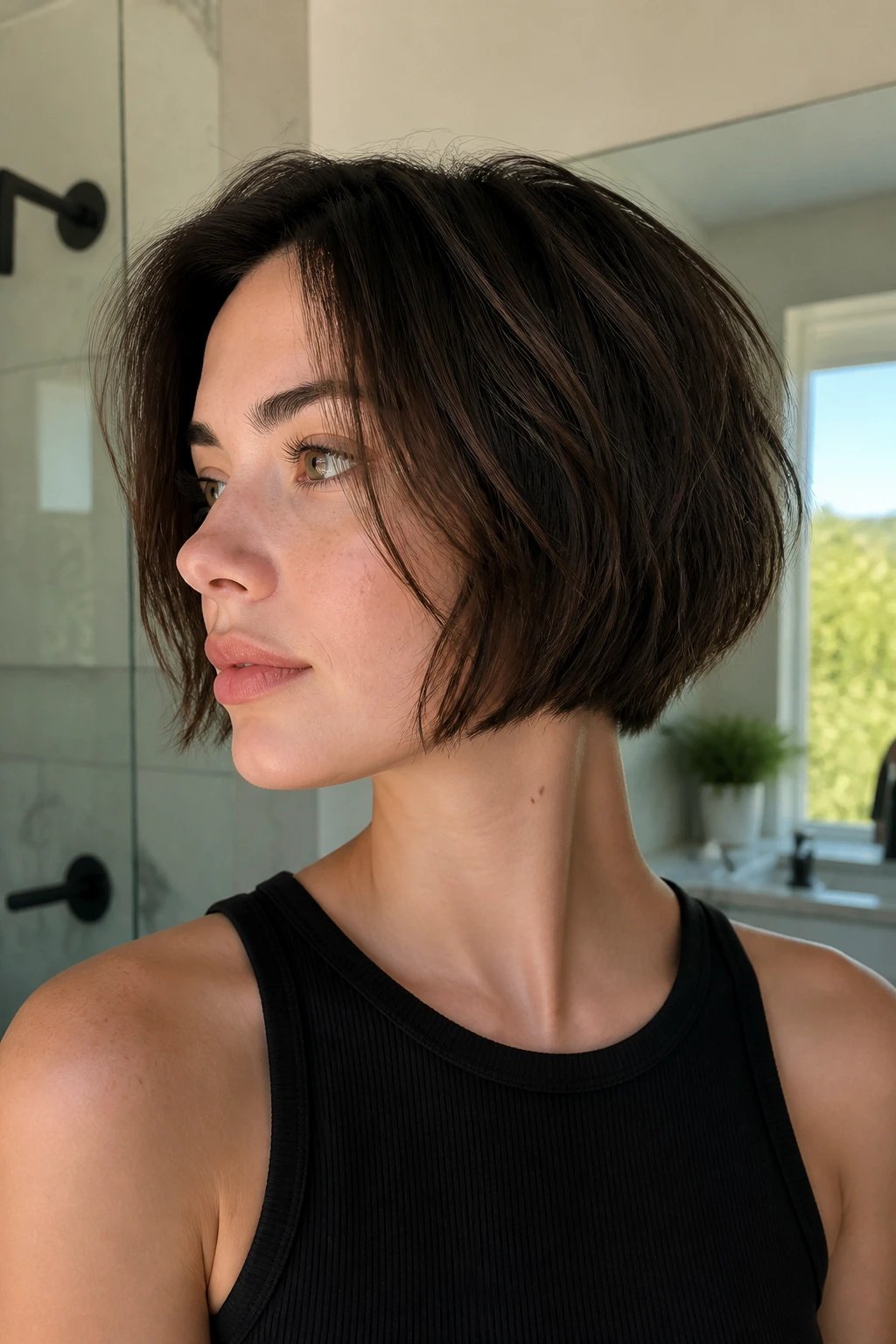
This is the crisp, shorter version of the idea. The jaw-length choppy bob sits where the face narrows, which helps thick hair feel contained instead of sprawling. The tapered nape cleans up the back, so the haircut hugs the neck a little instead of flipping out at the collar.
It works especially well when the hair is dense at the back of the head. If your bob always turns into a puffball after day one, this shape handles that problem directly. The shorter nape removes the place where bulk tends to collect, while the choppy top keeps the sides from looking too square.
- Good for: people who like neck exposure and a sharper outline.
- Styling note: blow-dry the nape first so it stays close to the head.
- Maintenance note: this shape asks for regular trims if you want to keep the line clean.
9. Wavy Choppy Bob with Piecey Ends
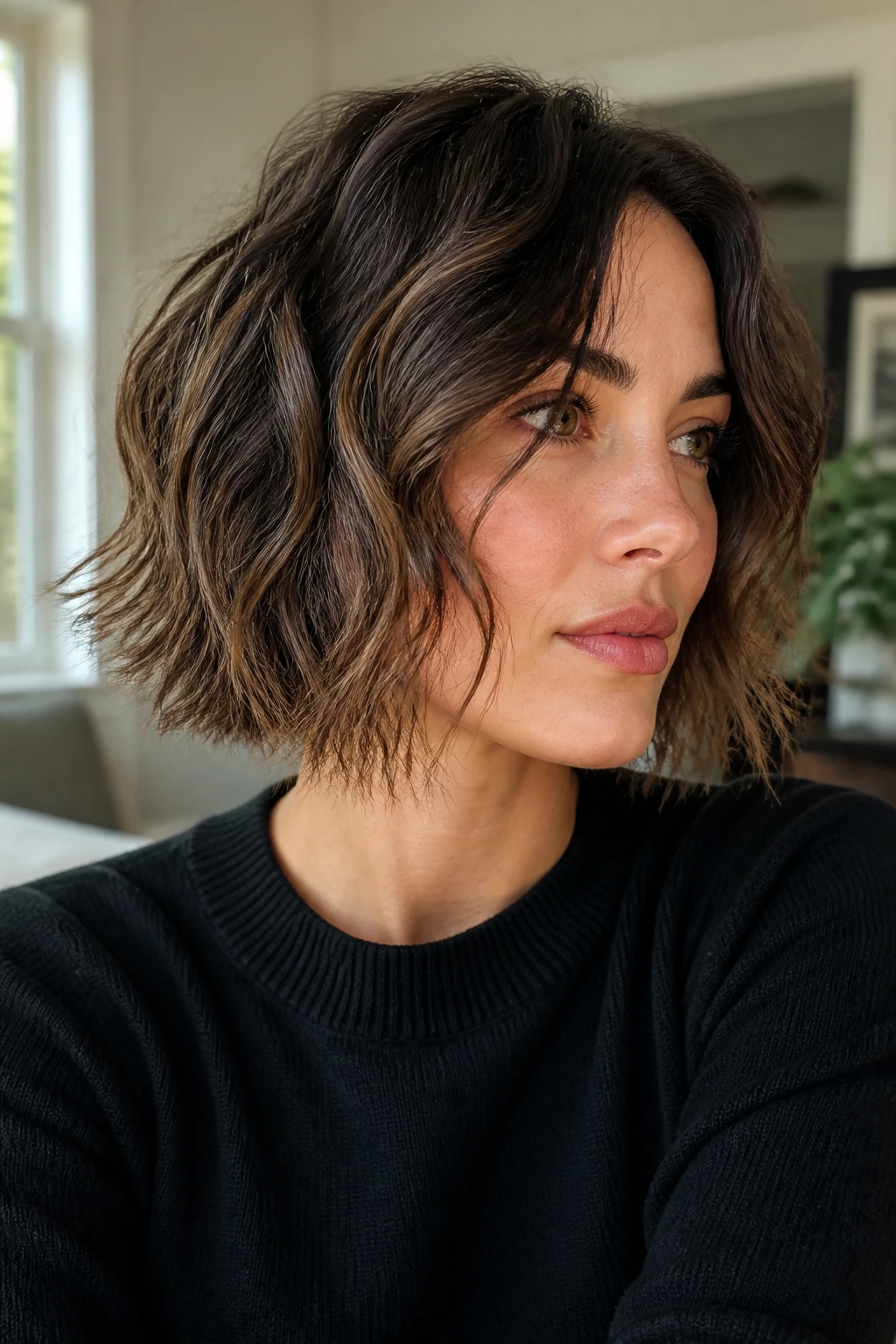
Waves and choppy edges make thick hair look lighter without actually cutting all the density away. That’s the charm of this bob. It doesn’t try to flatten your texture. It just breaks the shape into pieces so the eye sees movement instead of mass.
Why does it work so well? Because waves already create shadows. When the ends are cut into little bends instead of one blunt shelf, the hair looks less heavy and more alive. The cut can be shoulder-skimming or jaw-length, but the piecey finish is the part that changes the whole mood.
Use a small amount of texturizing spray on the ends, not a cloud over the whole head. If you spray too close to the roots, thick hair can get dry and stiff fast. A few scrunched sections around the face are usually enough.
10. Asymmetrical Choppy Bob
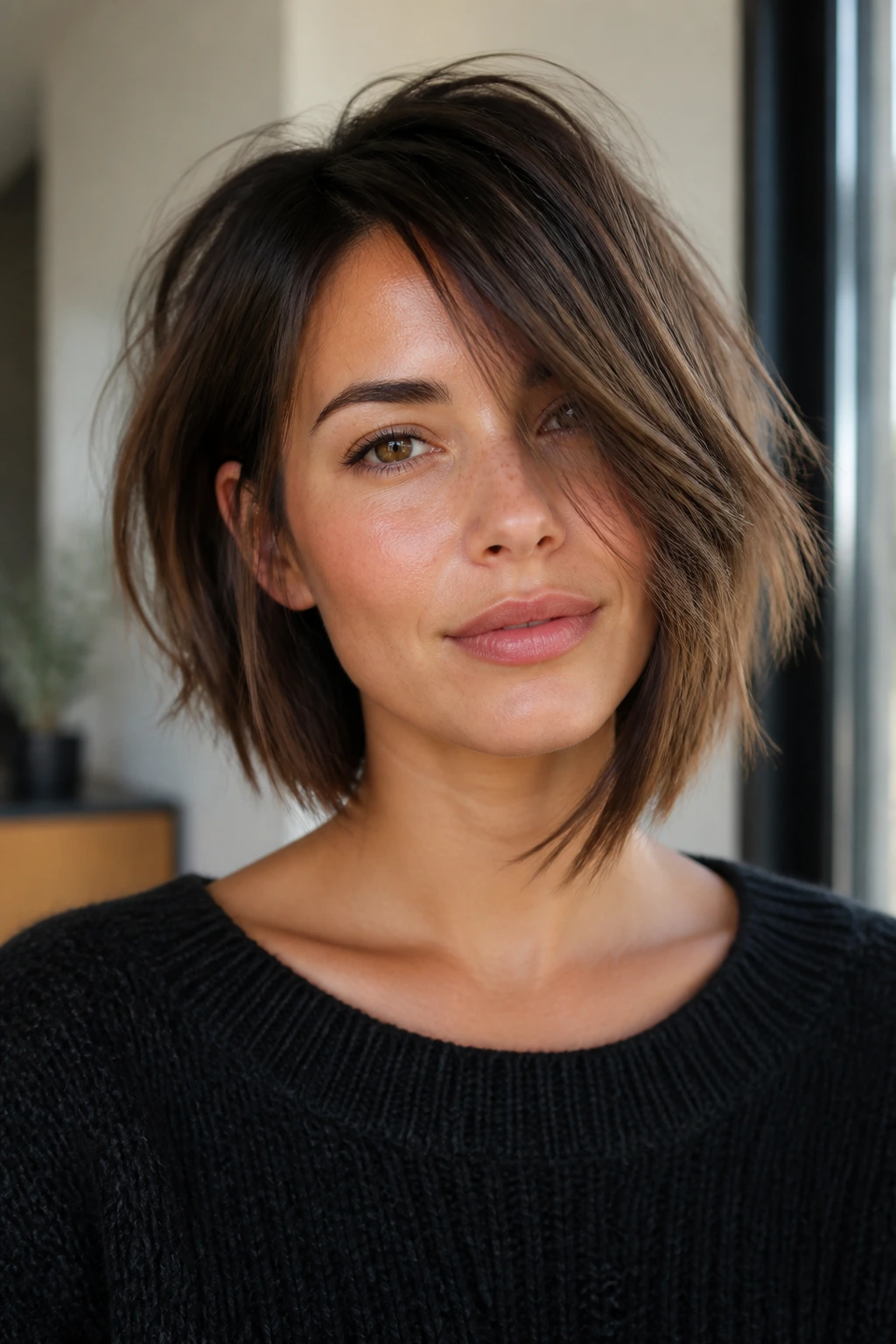
A little asymmetry goes a long way on thick hair. One side sits a touch longer, the other side sits a touch shorter, and the whole cut feels more deliberate because the eye can’t predict it so easily. That is useful when the hair itself already has a lot of weight and presence.
This version suits anyone who wants the bob to feel modern without leaning too hard into trend language. The asymmetry does the talking. The choppy ends keep it from reading as a severe angle, and the shorter side can be tucked behind the ear for a clean line.
Keep the difference subtle unless you want the cut to announce itself the second you walk in. A one- to two-inch variation is enough for most thick hair. More than that, and you are in statement territory, which is fine if that’s the point.
11. Layered Boxy Bob with Texture

Some people like a bob to keep its shape. Good instinct. A layered boxy bob keeps a fuller outline but uses internal texture to stop thick hair from looking like a block. It has width on purpose, which sounds dangerous until you see how useful it is for hair that naturally wants to spread out.
The key is where the layers land. You want them inside the shape, not cutting straight through the perimeter in a way that leaves the bottom feathered and weak. The texture should support the boxy outline, not steal it. That makes this version a nice fit for someone who likes structure and doesn’t want the haircut to look too airy.
If your hair is straight and dense, this cut can be a nice compromise between blunt and choppy. You get the line you want, plus enough movement to keep the ends from feeling stuck.
12. Shaggy Choppy Bob

This is the loosest, most lived-in version of the bunch. A shaggy choppy bob borrows from the shag haircut and keeps the bob length, which is why it works so well on thick hair that wants to puff or flip. The layers are more visible here, and the finish has a more casual shape.
It’s not a tidy haircut. That’s the point.
If you like hair that falls a little messily and looks better after a bit of messing with your hands, this one delivers. Thick hair has the density to support all that internal movement, and the shag influence keeps the shape from getting too formal. Use a diffuser, a dab of mousse, or even just a scrunch-and-go routine if your wave pattern cooperates.
13. Chin-Length Choppy Bob with Curtain Bangs

A chin-length bob with curtain bangs can do something useful that many short cuts cannot: it gives thick hair a frame without crushing the face. The bangs split at the center and open around the cheeks, which softens the short length and keeps the haircut from feeling abrupt. The choppy ends do the rest.
This version is a smart choice if your face is on the longer side or if you want a little more shape around the eyes. The curtain fringe draws attention upward, while the jaw-length body keeps the rest of the hair from turning into one wide line. It’s flattering in that old-fashioned sense of the word: it behaves well without looking boring.
The only catch is the bangs need some attention. A quick round-brush pass or a blow-dry with a small brush keeps them from separating in odd directions. Thick hair gives you enough density to make this work; you just have to keep the front from getting heavy.
14. Undercut Bob for Heavy Hair
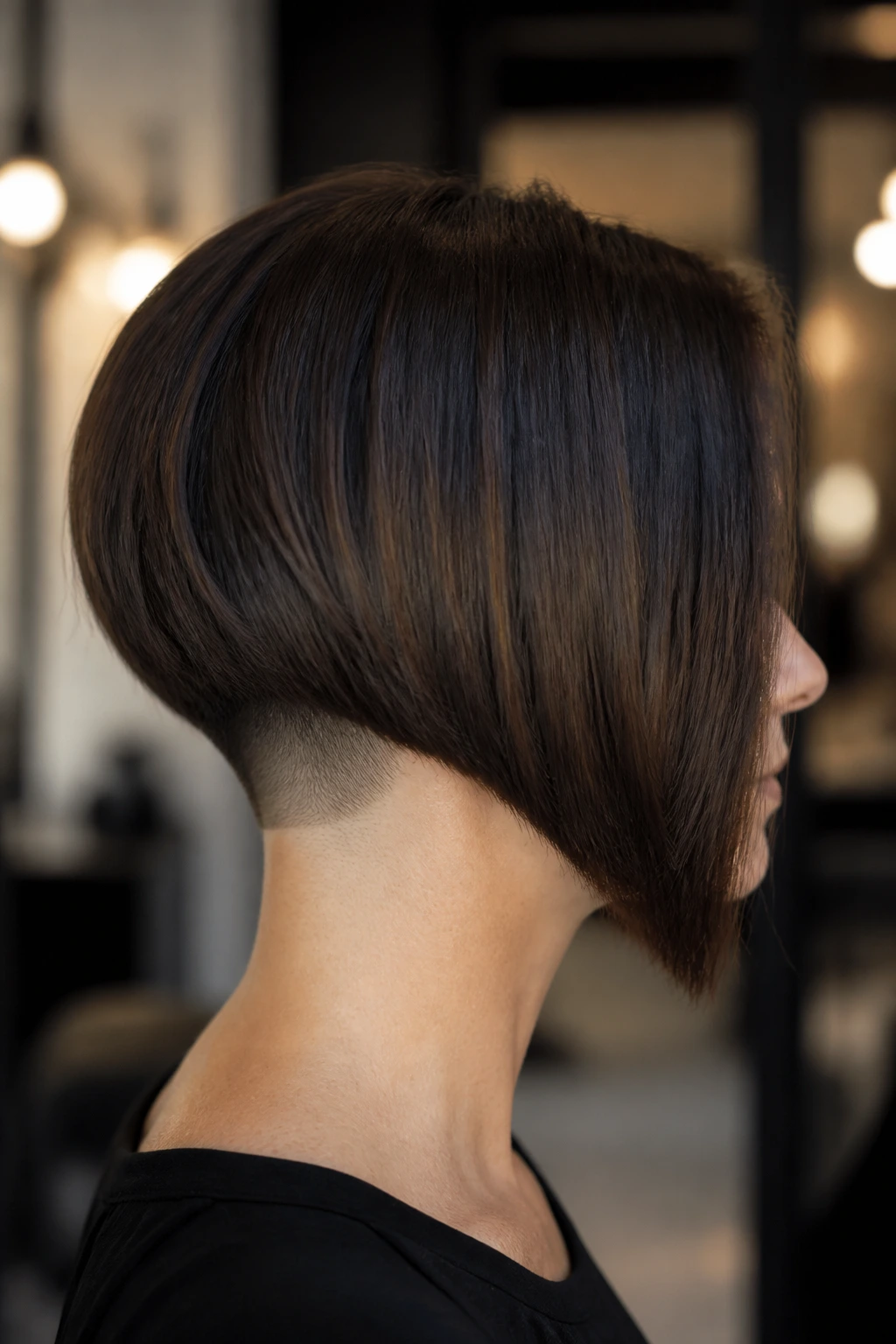
This is the bluntest answer to thick hair, and sometimes blunt is what’s needed. A hidden undercut or a very short nape section removes real bulk from underneath, which makes the bob sit closer to the head and cuts down on the mushroom effect that dense hair can create. If your hair feels heavy even when it’s freshly cut, this is the one that changes the rules.
Use this move carefully. A full undercut is not a small decision, and it changes how the cut grows out. But if your hair is very dense, especially at the nape or behind the ears, the payoff can be dramatic. The bob lies flatter, dries faster, and stops fighting the neck.
This is the cut I’d suggest for someone who is tired of carrying their hair around like a winter coat.
15. Sleek Choppy Bob with Invisible Layers
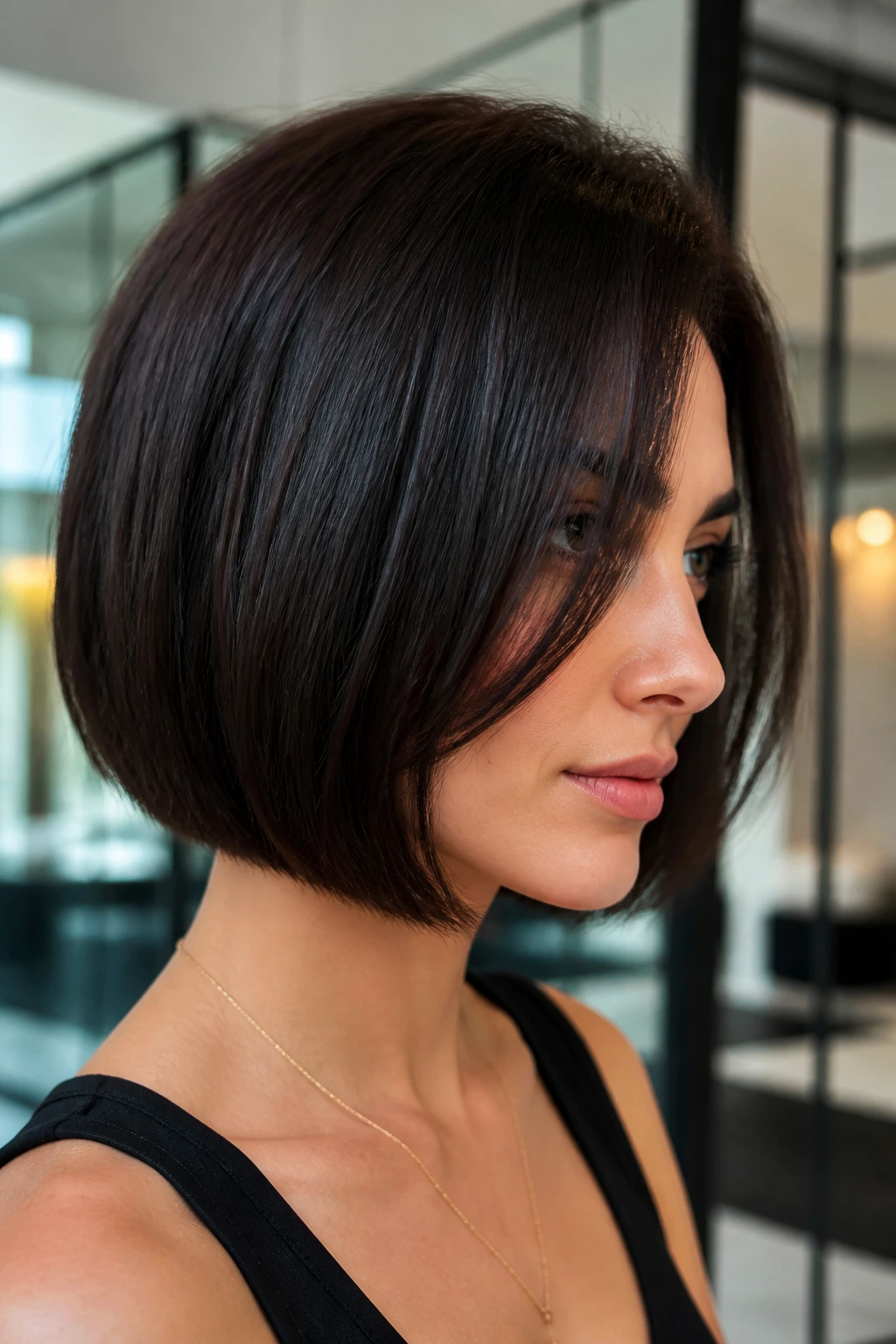
Can a choppy bob still look polished? Absolutely. The sleek version keeps the surface smooth while hiding the layering inside the cut, so thick hair gets movement without shouting about it. The line stays clean enough for work, dinner, or any setting where you want the haircut to look intentional rather than tousled on purpose.
What to ask for
Tell the stylist you want hidden internal layers and a smooth outer edge. The top layer should lie close enough to the head to keep the silhouette neat, while the interior gets enough texture to stop the sides from ballooning. Think controlled movement, not visible choppiness.
A flat iron bend at the ends or a round brush blowout will keep this shape in place. If the ends flip too much, the whole polished effect falls apart fast, so a little heat styling goes a long way here.
16. Air-Dried Choppy Bob with Natural Movement

Not every bob needs a round brush and a half hour of your life. A good air-dried choppy bob is cut to fall into place with as little fuss as possible, which makes it a favorite for thick hair with a natural wave or bend. The cut should look almost better once it loses that freshly washed puff and settles into itself.
This one works when the layers are placed with the hair’s own pattern in mind. Too much texture, and the hair frizzes. Too little, and the bob turns boxy as it dries. A balanced air-dry cut sits in the middle, letting the ends kick a little while the top stays controlled.
Use a small amount of leave-in cream, scrunch the mids, and leave the roots alone unless they need a little lift. If you keep touching it while it dries, thick hair tends to separate in weird ways. Walk away. That’s half the trick.
Why Thick Hair Needs a Different Bob Strategy
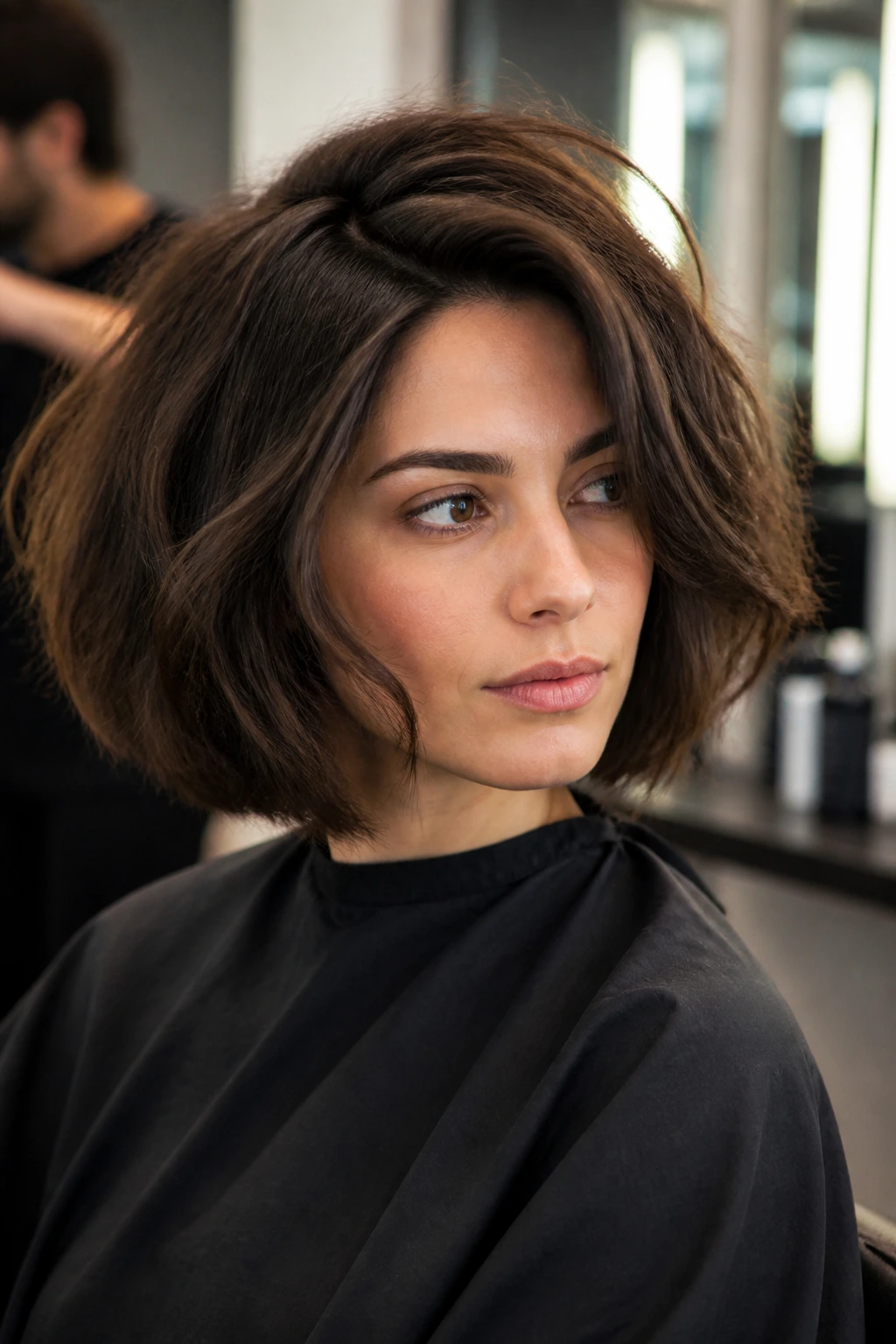
Thick hair is mostly about density, not just strand width. That’s where a lot of bad bob advice falls apart. Someone says “just add layers,” and suddenly the haircut has too many loose ends near the perimeter, while the middle still holds all the weight. The result is puffier, not lighter. Annoying. Predictable, too.
A choppy bob works when the structure is planned in layers of responsibility, if that makes sense. The perimeter keeps the shape. The interior loses bulk. The front pieces frame the face. The crown gets enough support to avoid collapse, but not so much that it balloons. When those jobs are mixed up, thick hair starts doing that triangular thing nobody asked for.
The other thing thick hair needs is room to move after it dries. Hair that’s packed too tightly into a blunt outline often looks sleek for about five minutes, then widens at the ends and expands through the middle. Choppy texture interrupts that. It gives the ends little places to land.
Density versus texture
Fine hair can be thick in density and still need a different cut than coarse hair with the same amount of fullness. Coarse hair tends to hold its shape harder. Wavy hair expands more when it dries. Straight thick hair can sit flat at the roots and flare at the bottom. The same bob will not behave the same way on all three.
That’s why a good stylist talks about bulk removal and movement, not just length. The best choppy bob haircuts for thick hair are the ones that respect where the hair wants to bulk up and where it wants to lie down. A few carefully placed snips do more than a hundred random texture cuts.
How to Get the Most Out of a Choppy Bob
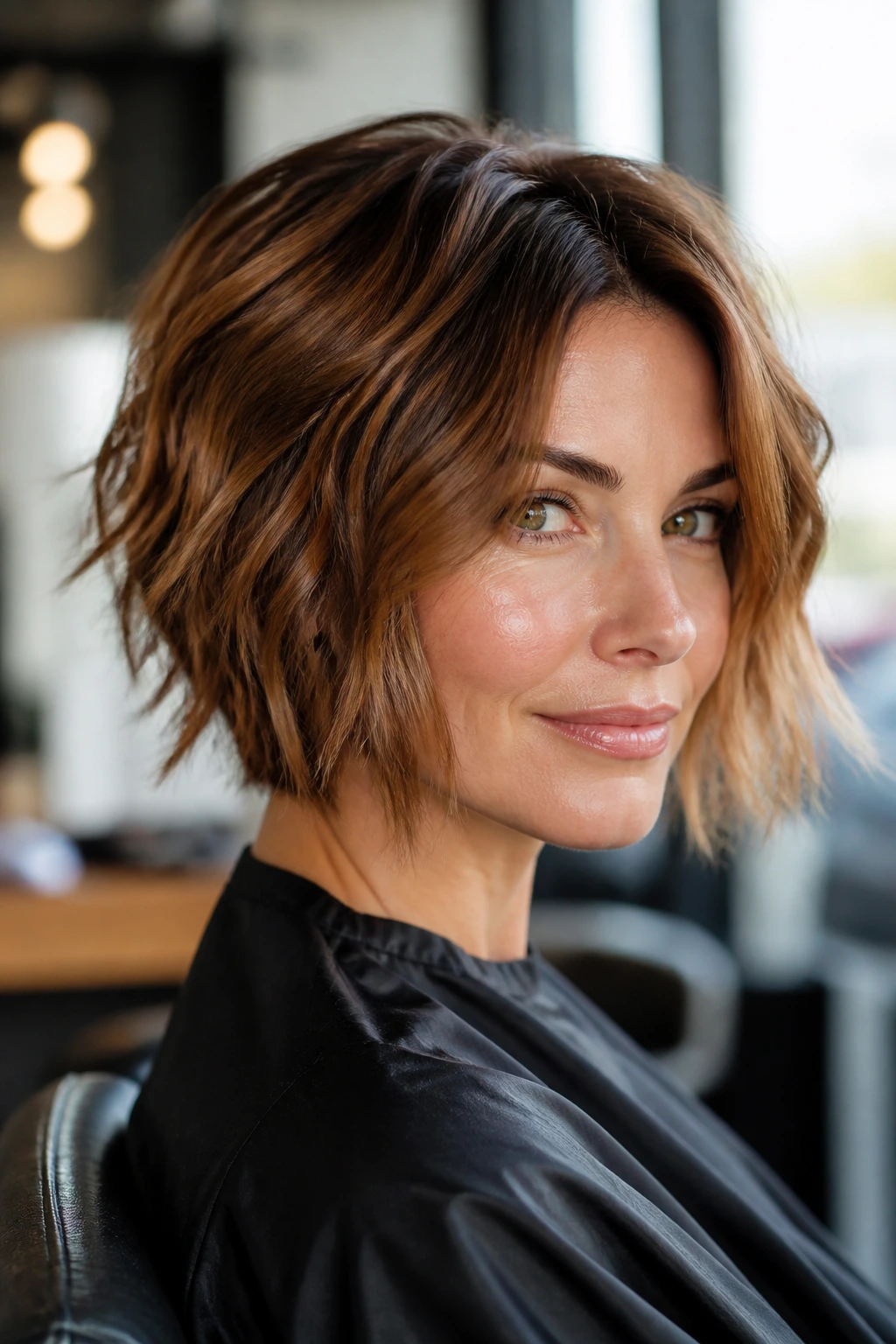
Start with the right length. If you are nervous, begin at the collarbone or just below the jaw. Thick hair shrinks visually once it’s cut, and a length that looks “safe” on the salon chair can land much shorter after drying. I’d rather start a hair too long and refine it than overshoot and spend six weeks waiting for the shape to grow back.
Keep the bulk removal inside the cut. Ask for interior texture, not thinning at the very tips. The ends already need enough weight to sit right; strip them too much and they stick out. What you want is movement through the middle and a perimeter that still knows where it belongs.
Match the styling to the cut. A sleek choppy bob wants a different finish than a shaggy one. Don’t blast every version with the same products and expect the same result. A small amount of mousse, a rough-dry, or a soft bend with a flat iron is often enough. Heavy creams can flatten the cut, and too much spray can make thick hair feel sticky fast.
Use the part as a shaping tool. A center part can make thick hair look wider. A side part can add lift. A soft off-center part often lands in the sweet spot, especially if your hair has a stubborn crown or a strong cowlick at the front.
Common Mistakes That Make Thick Bobs Puff Out
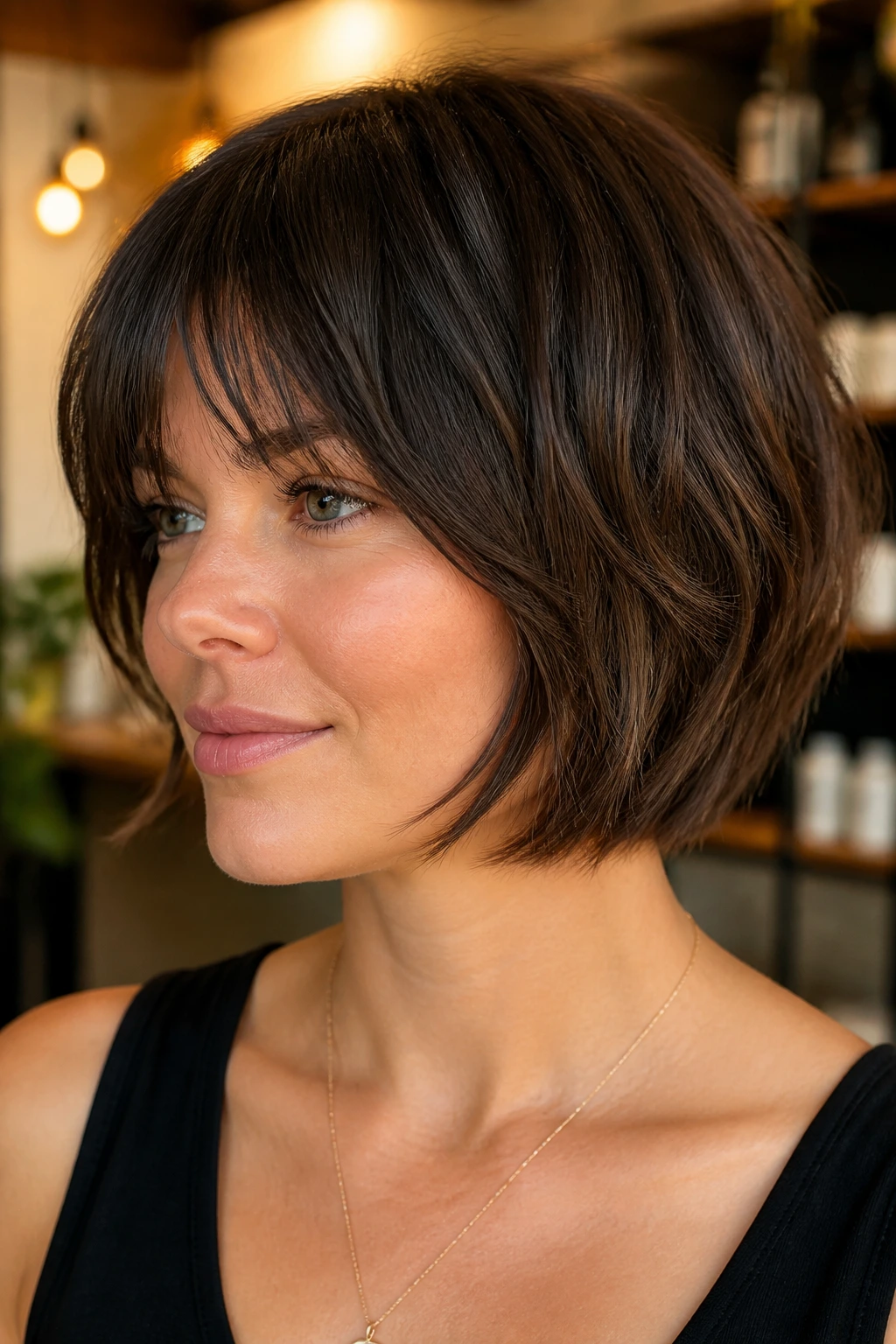
Mistake 1: thinning only the ends. The symptom is obvious: the bottom looks wispy, but the middle of the cut still bulks up like a triangle. The fix is interior texture, not over-thinning the perimeter.
Mistake 2: going too short too fast. Thick hair always looks shorter once it dries, and a jaw-length bob can jump to cheekbone height if your hair bends upward. Start longer if you are unsure, then trim back after you see how it behaves.
Mistake 3: over-layering curly or wavy hair. Too many layers can send curls in different directions and create frizz around the outline. Keep the layers controlled and let the curl pattern do more of the work.
Mistake 4: skipping the blow-dry on the nape. The back of a thick bob can kick out first and ruin the line. Even if you air-dry the rest, give the nape a little direction with a brush or your fingers.
Mistake 5: loading on heavy product. Creams and oils can make a choppy bob collapse into a slick, flat shape. Use enough to calm the ends, not enough to coat the whole head.
Variations and Alternatives to Try When You Want a Different Finish

The Soft Office Bob keeps the outline neat and the texture quiet. It works if you want movement without looking too undone at the ends. Ask for hidden layers and a controlled side part.
The Weekend Tousle leans looser, with more visible piecey texture and a bit of bend in the front. It’s a good fit for thick hair that naturally forms waves, because you are working with the pattern instead of forcing it flat.
The Curly Control Cut is built for dense curls that need shape more than thinning. The ends stay round, the interior stays balanced, and the curl clumps are preserved so the bob doesn’t puff into a halo.
The Sharp Angle Bob has more attitude and a stronger front line. It suits thick straight hair especially well, because the angle gives the eye a clean path and keeps the hair from feeling too wide at the sides.
The Grow-Out Lob is the practical choice if you know you hate frequent trims. It keeps the bob feeling current while giving you a little extra length when the shape starts to soften.
Essential Tools for Styling a Choppy Bob
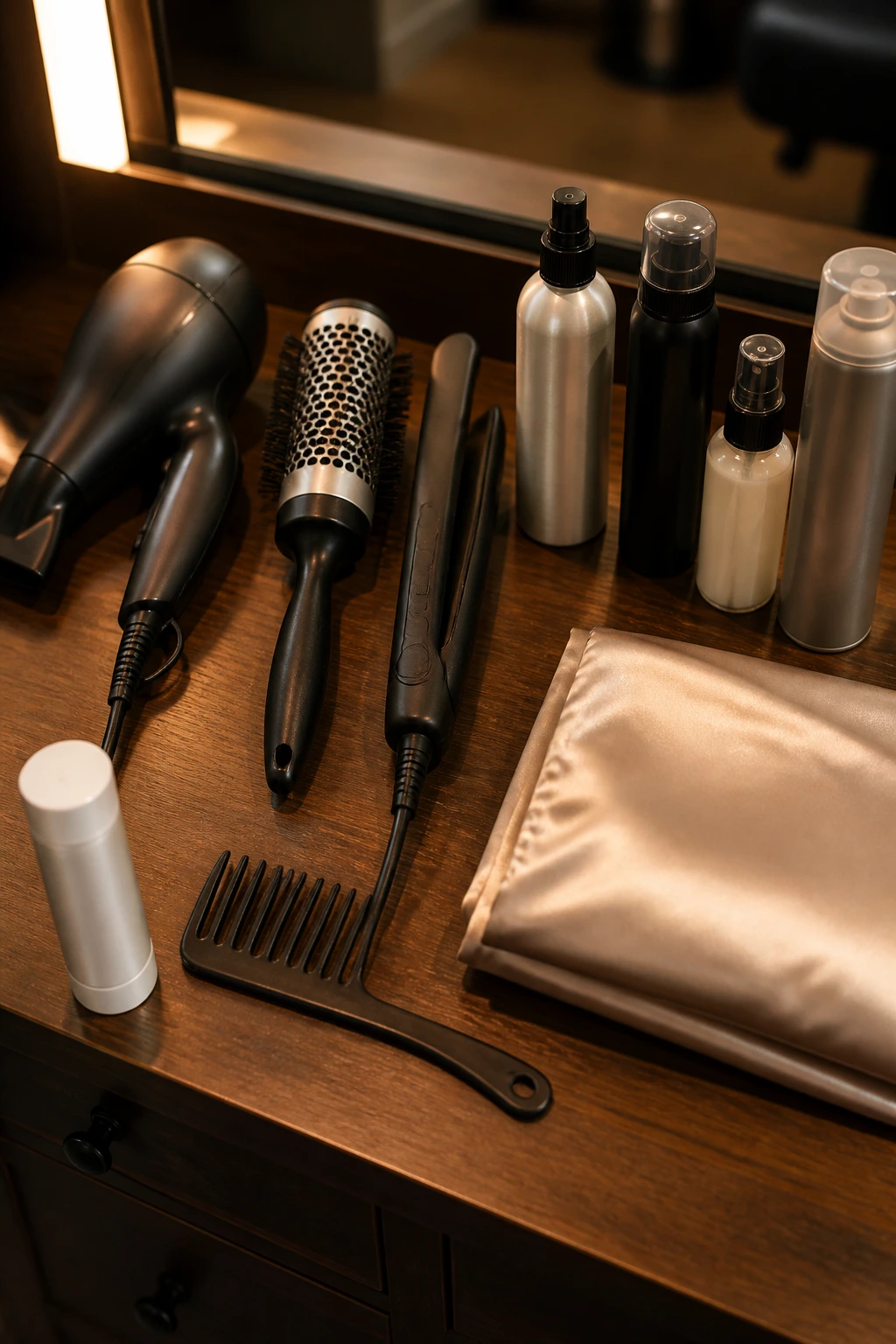
- Blow dryer with a nozzle attachment — Directs the air so thick hair doesn’t scatter while you dry it.
- Round brush, medium barrel — Best for lifting the root and giving the ends a slight bend.
- Flat iron with rounded edges — Useful for a soft curve on the last inch of the bob.
- Texturizing spray — Adds piece-y separation to the ends without making the whole head stiff.
- Lightweight mousse — Good for air-dried versions and waves that need a bit of body at the roots.
- Heat protectant spray — Non-negotiable if you use hot tools more than once a week.
- Wide-tooth comb — Helps distribute product through thick hair without pulling at wet strands.
- Dry shampoo — Keeps the roots from going flat and helps choppy layers stay lifted on day two.
- Silk or satin pillowcase — Reduces friction so the ends don’t wake up frizzy and bent in odd places.
- Salon scissors for bang trims at home, if needed — Optional, and only worth it if you know what you’re doing; otherwise let a stylist handle fringe.
How to Keep the Shape Sharp Between Salon Visits

A choppy bob on thick hair usually needs a trim every 6 to 8 weeks if you want the shape to stay clear. Shorter jaw-length versions may need a touch-up closer to 5 or 6 weeks, especially if your hair grows fast or if the back starts flipping out. Bangs are their own little project. They often need a trim every 3 to 4 weeks.
Wash frequency depends on scalp oil and product use, but thick hair often does better when you give it a day or two between washes. That lets the cut settle. A small amount of dry shampoo at the roots keeps the top from losing lift, and a tiny bit of leave-in on the mids keeps the ends from looking rough.
Sleep matters more than people admit. If your bob bends into a weird shape overnight, a silk pillowcase helps a lot. So does sleeping with hair tucked loosely away from the face instead of smashed under one cheek. If the cut is air-dried, re-misting the ends in the morning and scrunching them back into place can save you a full wash.
The other maintenance trick is honesty. When the cut starts bulking in the wrong place, do not wait until it’s a completely different haircut. That little in-between visit to clean the neckline or soften the front pieces can make the bob feel fresh again without a full appointment.
Frequently Asked Questions

Are choppy bob haircuts good for thick hair?
Yes, when the texture is placed with intent. Thick hair needs weight removed from the interior and enough structure at the perimeter to keep the shape from puffing out.
Should thick hair be cut blunt or layered?
Usually both. A blunt edge gives the bob a clean base, while internal layers or choppy texture prevent the cut from turning into one heavy block.
What’s the difference between a choppy bob and a shaggy bob?
A choppy bob keeps a clearer bob silhouette, even if the ends are broken up. A shaggy bob pushes the layers higher and feels looser, messier, and more layered from top to bottom.
Can I wear a choppy bob if my thick hair is curly?
Yes, and it can look excellent. The cut just needs to respect curl shrinkage, which usually means shaping it dry or nearly dry and avoiding over-thinning the curls.
How do I ask my stylist for this cut?
Say you want a bob with internal texture, a controlled outer line, and less bulk where the hair gets widest. Bring photos, but also tell them how much time you want to spend styling it.
Will a choppy bob make my hair look thinner?
It can make it look lighter, which is not the same thing as thin. The point is to reduce bulk and improve movement while keeping enough density for the shape to hold.
Can I air-dry a choppy bob on thick hair?
Yes, if the cut is designed for it and the product is light. A leave-in cream or a small amount of mousse is usually enough; heavy oils tend to flatten the cut.
What if my bob flips out at the ends?
That usually means the length is landing on a point where the hair wants to bend outward. A quick flat-iron bend or a slightly longer cut at the next trim often solves it better than piling on more styling cream.
The Bob That Lets Thick Hair Move
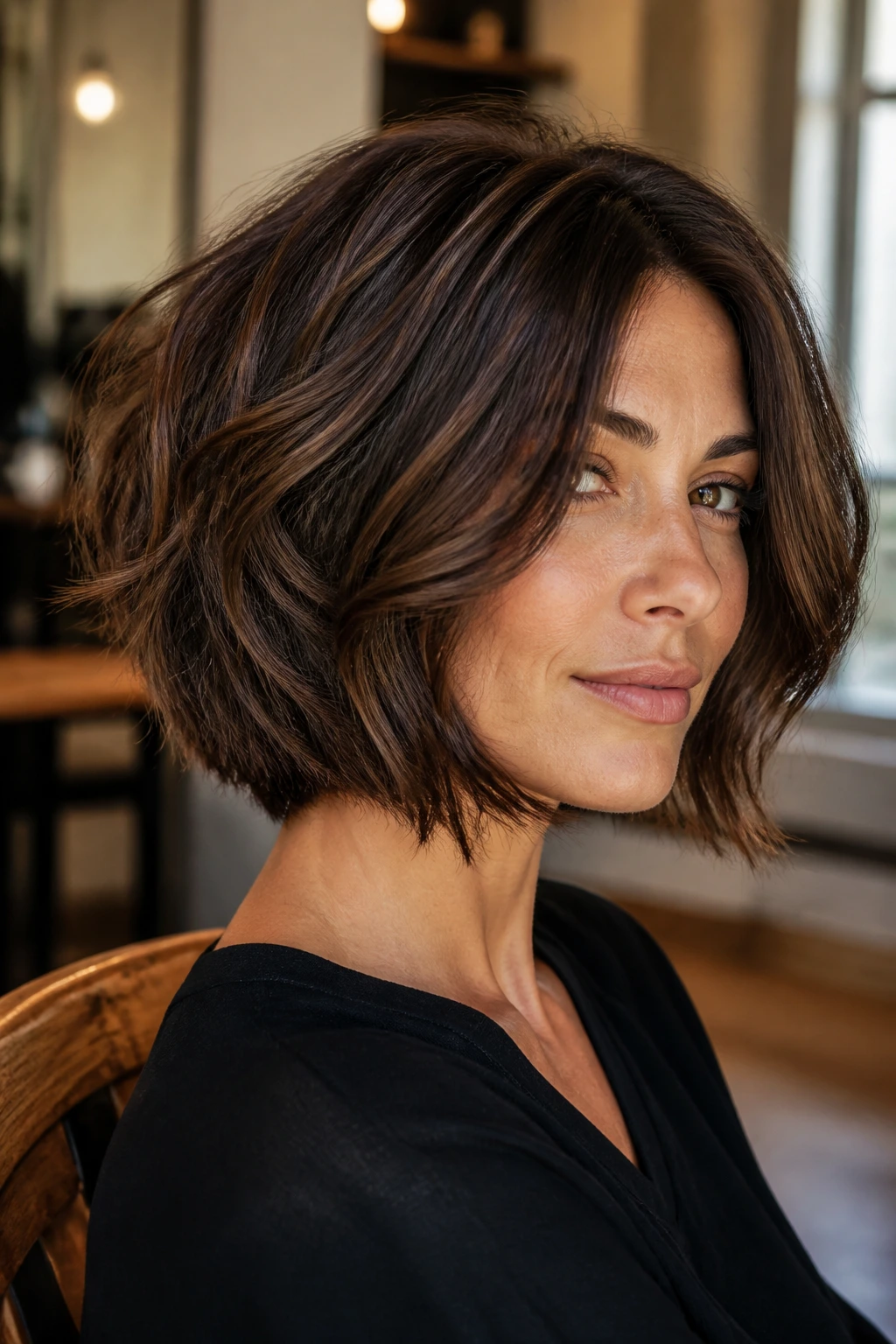
Thick hair does not need to be bullied into submission. It needs shape, weight control, and a haircut that understands where to bend and where to hold. That’s why the best choppy bob haircuts for thick hair feel so satisfying when they’re done well: they make the hair look lighter without making it look lost.
If you’re taking a photo to a salon, bring more than one. Bring the short version you like, the longer version you secretly want, and one that shows the front pieces you keep noticing on other people. The useful part is not copying a picture exactly. It’s showing your stylist where you want the weight to sit, how sharp you want the outline, and how much effort you’re willing to spend on your morning routine.
A good bob should move when you move. Thick hair can do that beautifully when the cut is built with a little judgment instead of a lot of chopping.
