



Shoulder-length curly bobs are the haircut equivalent of a well-made jacket: the right cut doesn’t fight the body underneath it, it follows it. That’s the whole trick. Once the curls hit around the shoulders, the shape starts to live or die on layers, because curl shrinkage can turn a promising bob into a puffed-out triangle or a flat little helmet with one bad snip.
The good versions have movement at the crown, a clean perimeter, and enough internal layering to let the curl pattern stack instead of sag. The best versions also account for the stuff stylists deal with every day and clients usually learn the hard way: one side may spring higher than the other, dense curls need weight removal in the middle rather than the ends, and finer curls can look fuller with a blunt edge and a few smart layers near the face. That’s why this length keeps getting picked. It’s forgiving, but not lazy.
And layered curly bobs are not one look. They can be rounded and polished, shaggy and cool, soft around the jaw, or long enough to skim the collarbone while still behaving like a bob. The real fun is in the details — where the first layer falls, how much width you want near the cheeks, and whether you want your curls to look sculpted or loose enough to move when you turn your head.
Why This Collection Stands Out
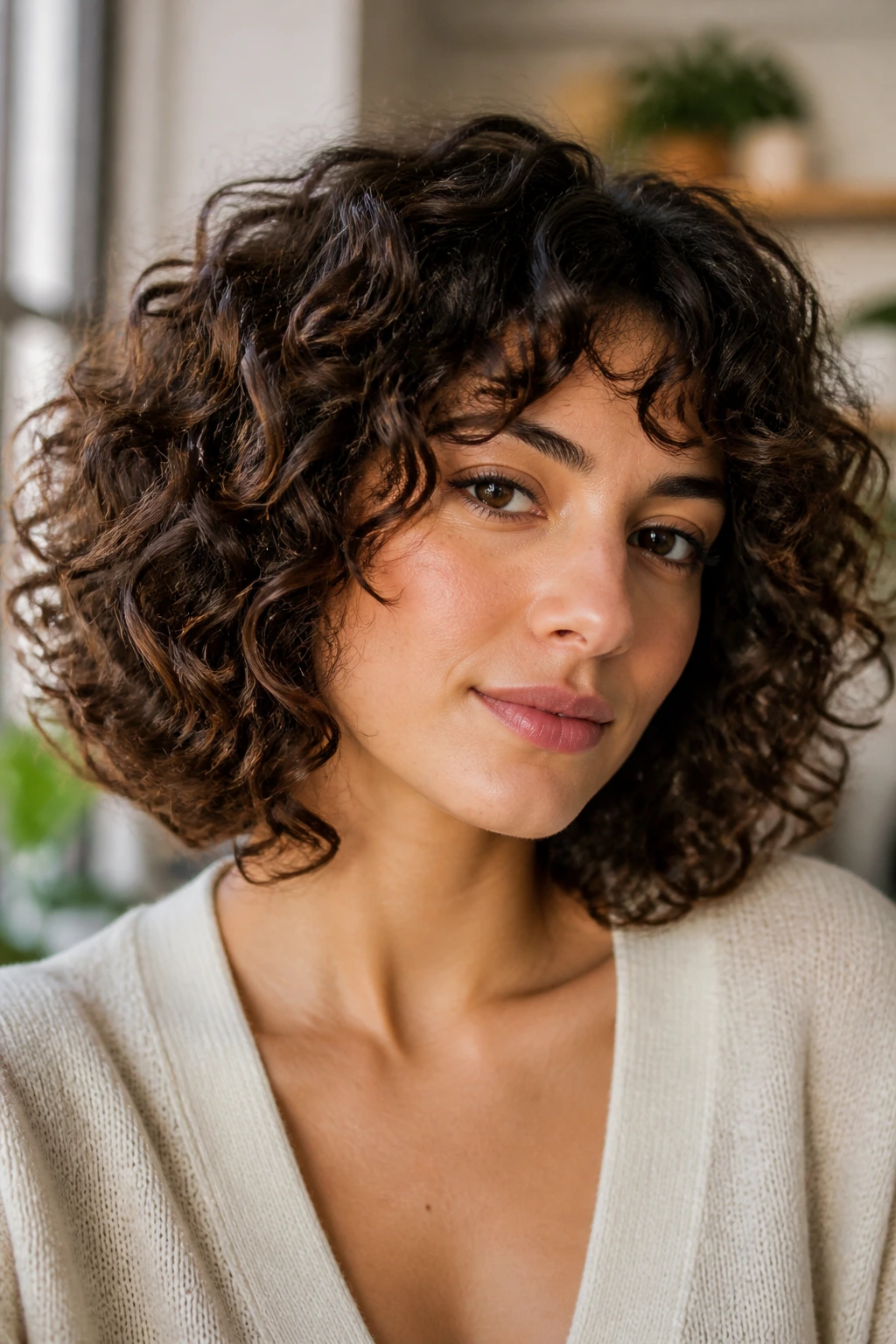
-
Built for shrinkage: Shoulder-length curls often jump up once they dry, so these looks leave enough length to keep the silhouette intentional instead of accidental.
-
Layers with a job: Every shape here does something specific — lift the crown, remove bulk, soften the jaw, or keep thick curls from turning into a bell shape.
-
Easy to personalize: A bob can lean polished, messy, romantic, or full-on shaggy without changing the basic length, which makes these cuts easy to adapt.
-
Works with different curl patterns: Loose waves, springy ringlets, and denser coils all need different layering, and this collection makes room for that.
-
Grow-out looks less awkward: A layered shoulder-length bob usually grows into a longer lob with decent shape, not a weird in-between box.
-
Plays well with styling shortcuts: A diffuser, a bit of mousse, and a careful scrunch can change the finish fast. That matters on the mornings when your hair has its own agenda.
1. Collarbone Halo Bob
A collarbone halo bob sits just long enough to brush the upper chest when dry, which gives curls room to spring without looking chopped off at the ends. The layers are soft and low, so the shape reads smooth and round instead of puffed out at the sides.
Best for: medium-density curls that need movement but still want a clean outline.
Ask for a perimeter that lands at or just below the collarbone, then ask for internal layers that start low enough to keep the bottom weight intact. If your curls shrink a lot, this is the kind of cut where the wet length can look almost suspiciously long. Fine. That’s the point.
2. Rounded Cloud Layers
This is the bob for people who want their curls to sit like a soft cloud around the head, not flare out in a triangle. The crown gets light layering, the sides stay plush, and the ends are left full so the shape looks airy rather than choppy.
A round cut like this is especially useful when your curl pattern is uneven. The layers help the tight pieces blend into the looser ones instead of showing off every mismatch. It’s a polished shape, but not stiff. The curls still move.
3. Curly Shag Bob
The curly shag bob is what happens when a bob stops trying to be neat and starts behaving like it was meant to have personality. Shorter layers around the crown, cheekbone-grazing pieces in front, and a little deliberate messiness give it that lived-in, slightly rock-and-roll edge.
Why it works
The layers do the heavy lifting here. They keep thick curls from building too much weight at the bottom, and they give lighter curls enough lift to avoid collapsing by midday. Ask for a shag that still keeps the perimeter around shoulder length so it doesn’t drift into mullet territory unless you want that. Some people do. Not everyone.
4. Curtain-Bang Curly Lob
Curtain bangs on a shoulder-length curly bob create a frame that feels soft even before styling. The part opens at the center, the bangs fall away from the face, and the longer length keeps the rest of the cut from feeling too short or too precious.
If your curls like to separate naturally, this cut is easy to live with. The fringe can be dried with a diffuser and a touch of styling cream, or it can be left looser for a softer bend. Either way, the front pieces should meet the cheekbones first and taper into the rest of the layers.
5. Deep Side-Part Bob
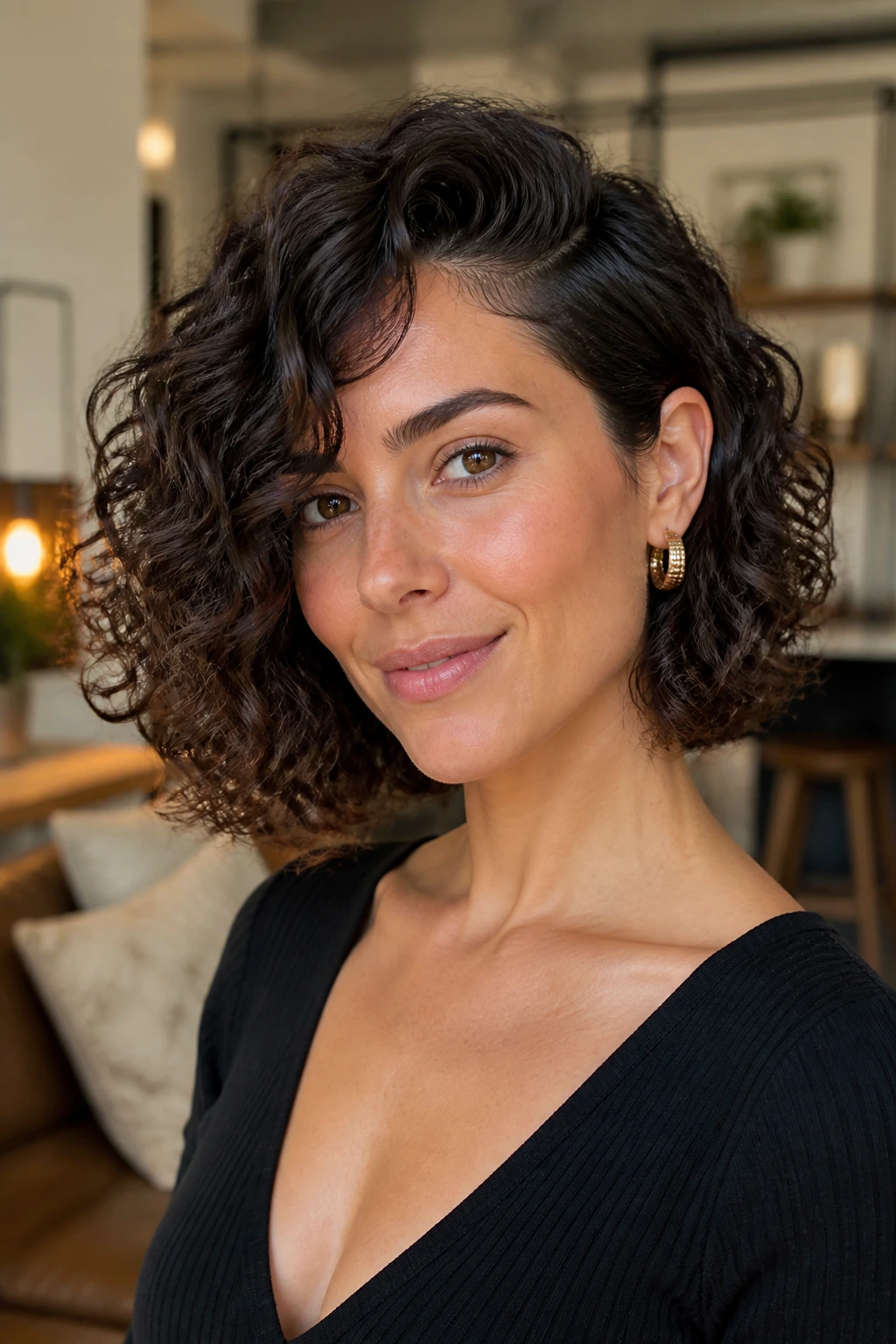
A deep side part changes the whole mood of a curly bob without changing the length at all. One side gets more lift, the other side tucks closer to the jaw, and the layers help that sweep look intentional instead of lopsided.
This is one of my favorite shapes for curls that go flat at the root. The side part creates instant volume, and the layers stop the heavier side from dragging the whole style down. If your curls are dense, ask for subtle face-framing on the heavier side so the shape doesn’t swallow your cheekbone.
6. Invisible Layer Bob

Invisible layers are the quiet overachiever of the curly bob world. You don’t see obvious steps, but you feel the difference when the curls dry and suddenly sit with better bounce, less bulk, and more room to form separate clumps.
This cut works especially well if you like a clean outline and hate that “I got layers, now my hair is everywhere” feeling. The stylist removes weight inside the shape rather than carving bold chunks across the surface. That means the bob still looks full from the outside, just less heavy in the middle.
7. Stacked Nape Bob
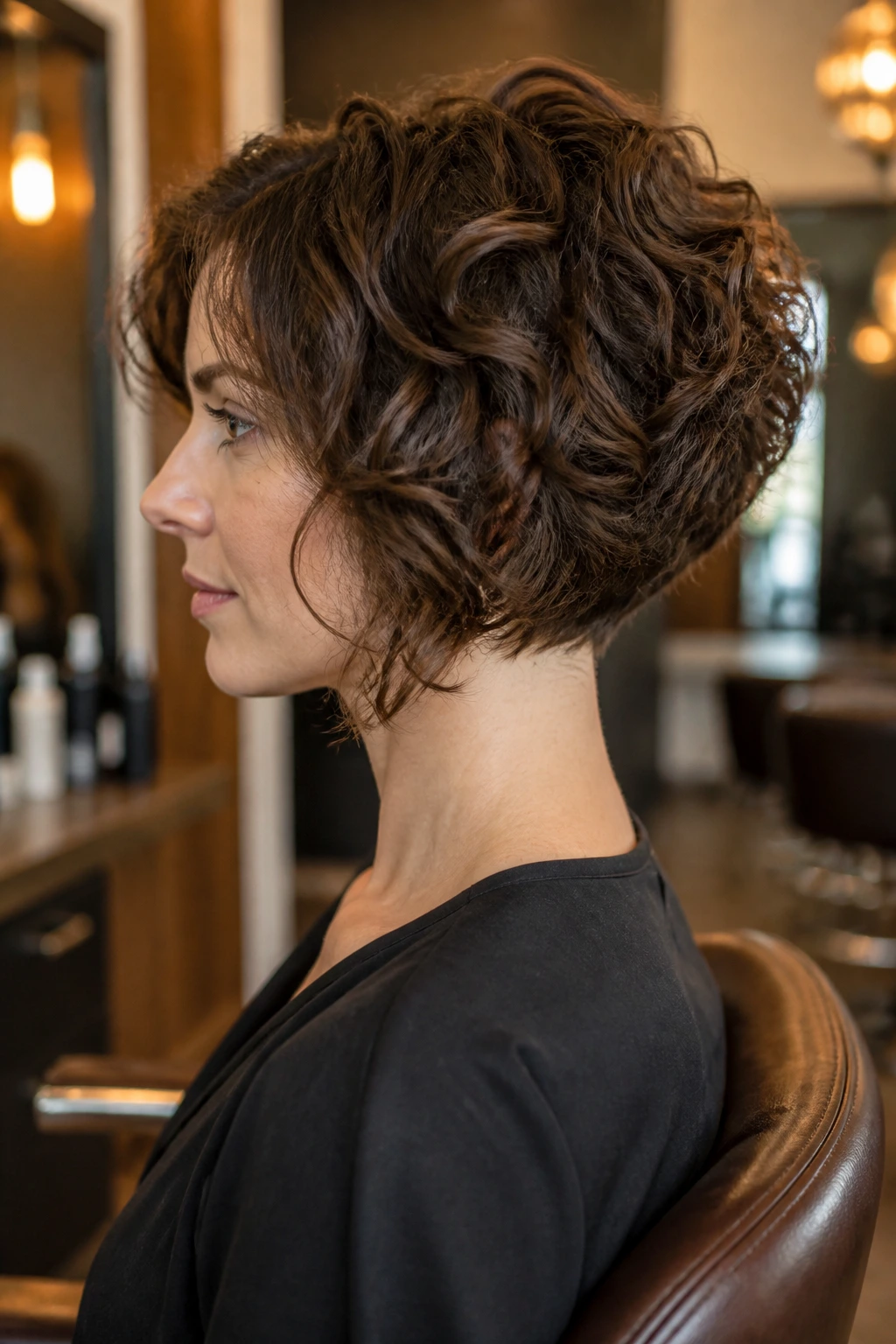
The stacked nape bob is the more structured cousin in this group. The back is cut shorter and a little fuller at the nape, which gives the crown a gentle lift and makes the whole shape feel lifted off the neck.
For curls, stacking has to be handled carefully. Too much and the back gets puffy; too little and the cut loses its shape. Ask for a controlled stack with longer layers as you move toward the sides. It’s a clean, sharp look, and it works best when the curls are defined enough to show the shape.
8. Tousled Long-Layer Lob

This one keeps the shoulder-length range but spreads the layers out so the curls fall in loose, uneven ribbons. It has that casual, touchable feel that looks best when the hair has some separation and not too much product.
The long layers help if your curls are strong at the bottom but flat at the top. They let the hair move without removing so much weight that the ends disappear. A little sea-salt spray can help, but don’t drown it. That crisp, gritty finish is not the goal here.
9. Asymmetrical Curly Bob
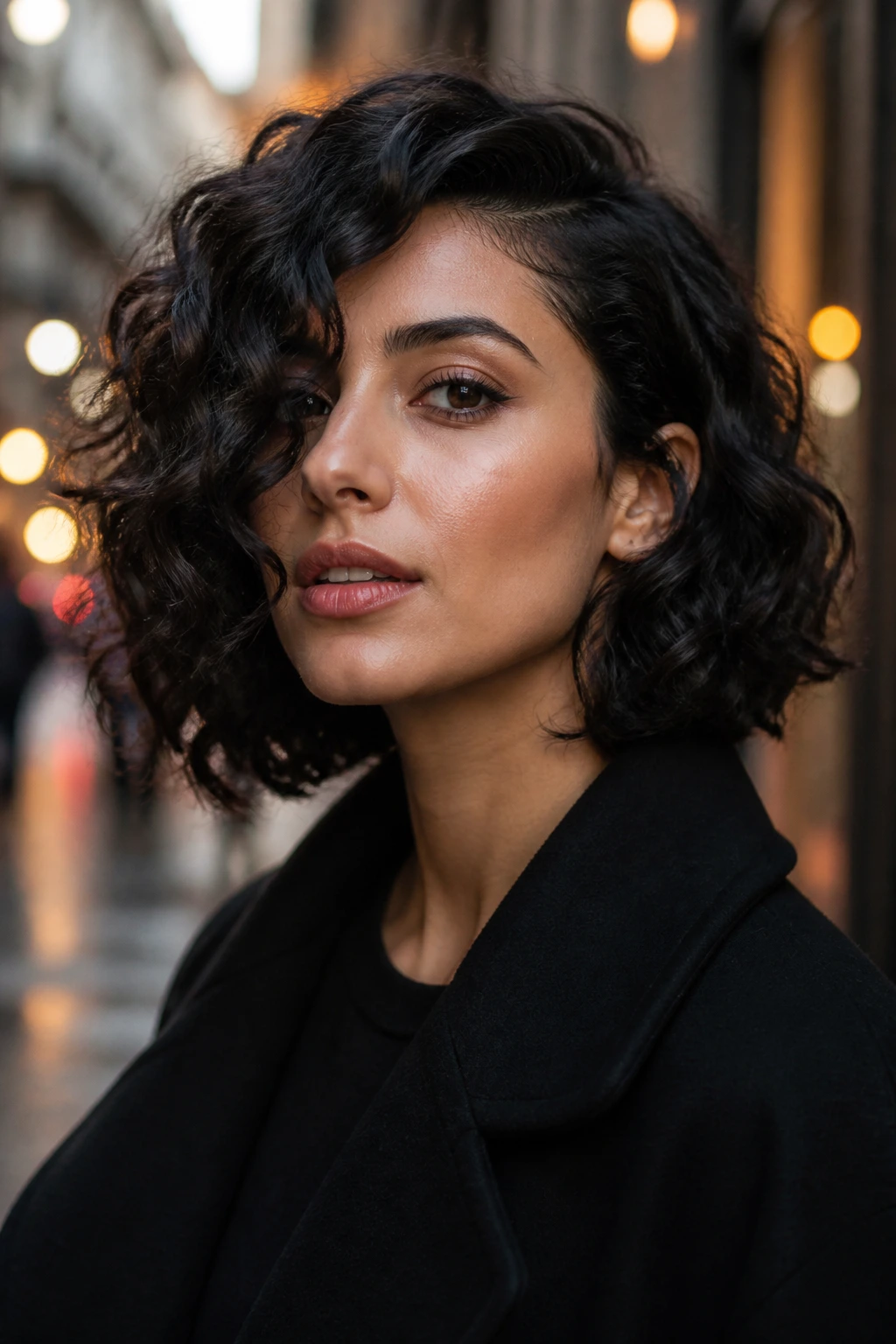
An asymmetrical bob leans into imbalance on purpose. One side is slightly longer, the other sits higher, and the curl pattern makes the difference even more visible when the hair is styled with a side part.
This cut gives you drama without needing extra length. It’s especially good if your curls naturally favor one direction or if one side of your head always dries differently from the other. The secret is keeping the difference subtle enough that it reads chic, not accidental. Half an inch can be enough. Sometimes that’s all it takes.
10. V-Shaped Layered Bob
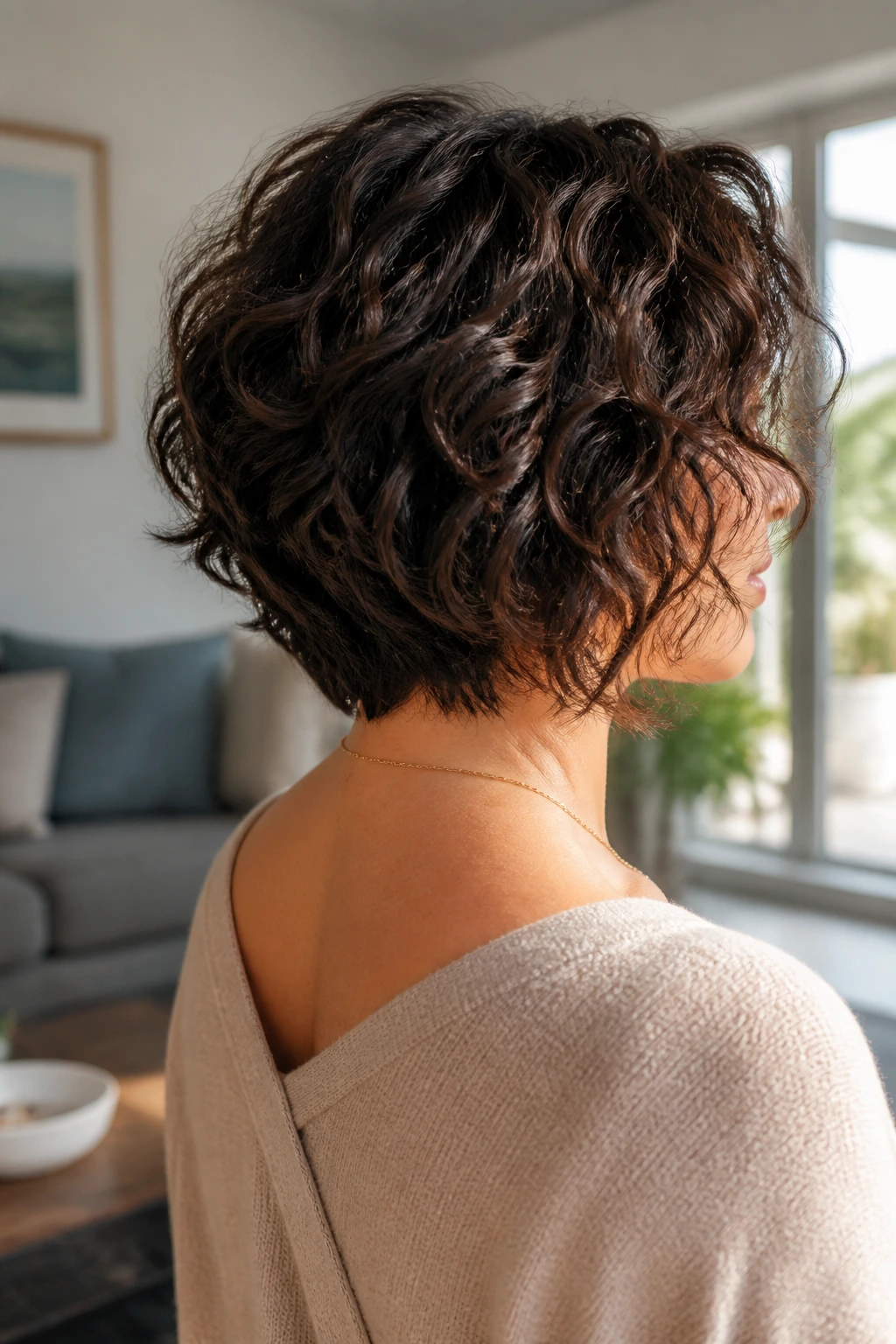
A V-shaped layered bob narrows slightly toward the back while keeping softness around the front. The layers angle down instead of sitting in one blunt shelf, which helps the curls fall with a bit more swing.
This shape can be a gift for thicker hair. It removes enough bulk to stop the ends from feeling heavy, but it keeps the front pieces long enough to frame the face. If you want the cut to look polished when worn half-up, this is one of the better options. The back still has shape instead of collapsing into a square.
11. Chin-Frame Layer Bob
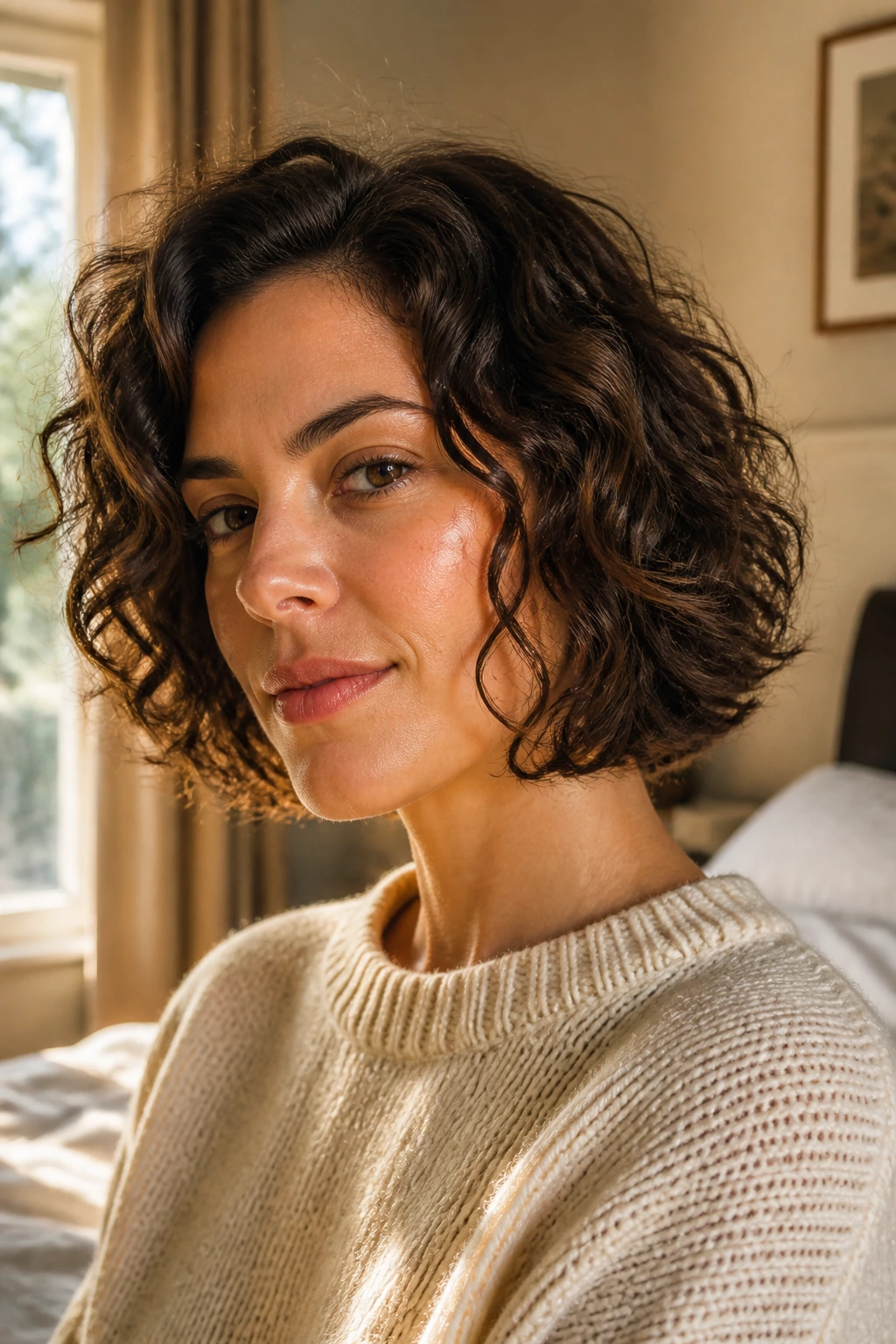
A chin-frame layered bob puts the emphasis right where you want it: around the jawline. The shortest layers brush the chin or just below it, and the rest of the curls fall in a soft halo around the face.
That front focus helps balance strong cheekbones, rounder faces, and curl patterns that need a little guidance. It’s a flattering cut when the client wants movement near the face but doesn’t want bangs. Ask for the layers to start at the chin, not above it, unless you enjoy constant trimming. You probably don’t.
12. Defined Ringlet Bob
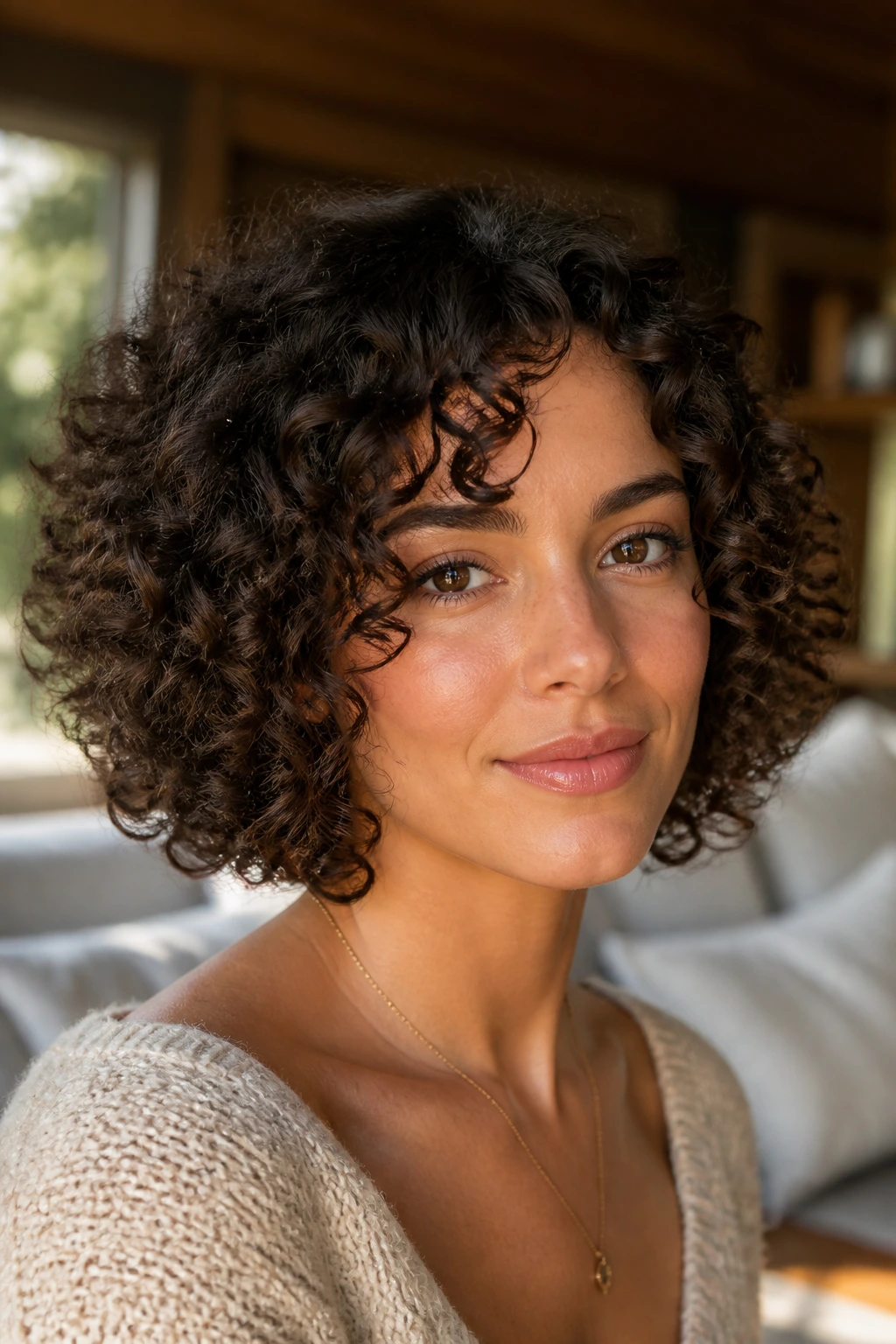
This bob is for curls that already know exactly what they want to do. The layers are minimal but intentional, keeping the ringlets separated and springy without breaking the shape into pieces.
What makes it work is restraint. Too much layering on a ringlet pattern can turn crisp spirals into frizzed-out bits with no clear form. Keep the layers soft, then style with a gel that dries into a light cast before you scrunch it out. The finish should look deliberate, not crunchy.
13. Airy Micro-Layer Bob
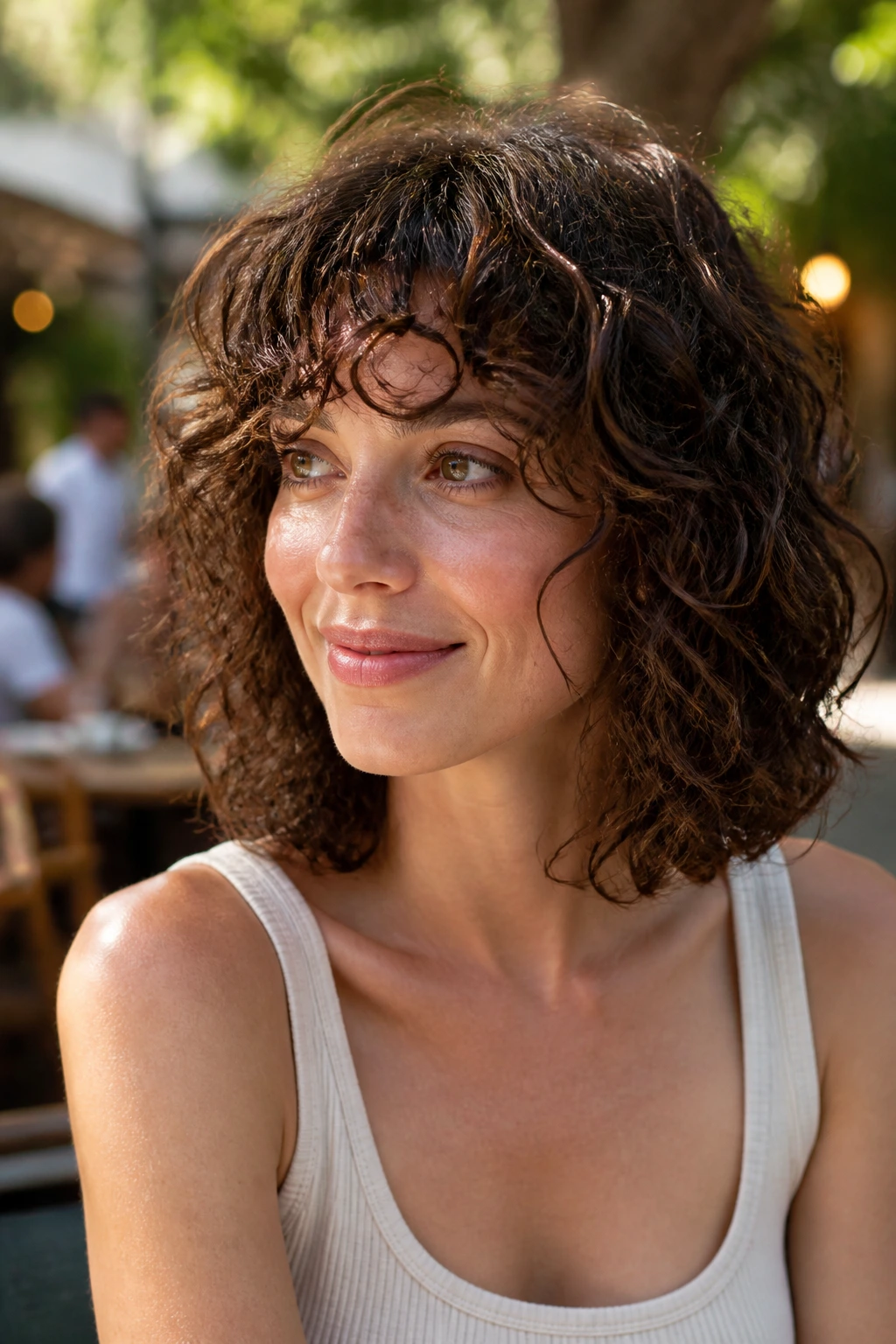
Micro-layers are tiny, discreet layers placed inside the cut to reduce heaviness without making the outline obvious. On shoulder-length curls, they can make a dense bob feel lighter at the crown and sides while preserving the perimeter.
This is a smart choice if your curls get wide instead of tall. The hair keeps its length, but the interior stops behaving like a solid block. Ask for the layers to be cut dry if possible, because the stylist can see exactly where the curl bulk lives. Wet curls lie. Repeatedly.
14. Side-Swept Fringe Bob

A side-swept fringe brings a soft diagonal line across the forehead and makes a curly bob feel a little more romantic. The layers around the face should connect into the fringe so there isn’t a hard break where the bangs stop.
This style is kind to curls that frizz at the hairline, because it gives the front some structure instead of asking it to behave on its own. Keep the fringe long enough to tuck back on lazy days. That flexibility matters more than people admit.
15. Wet-Look Sculpted Bob
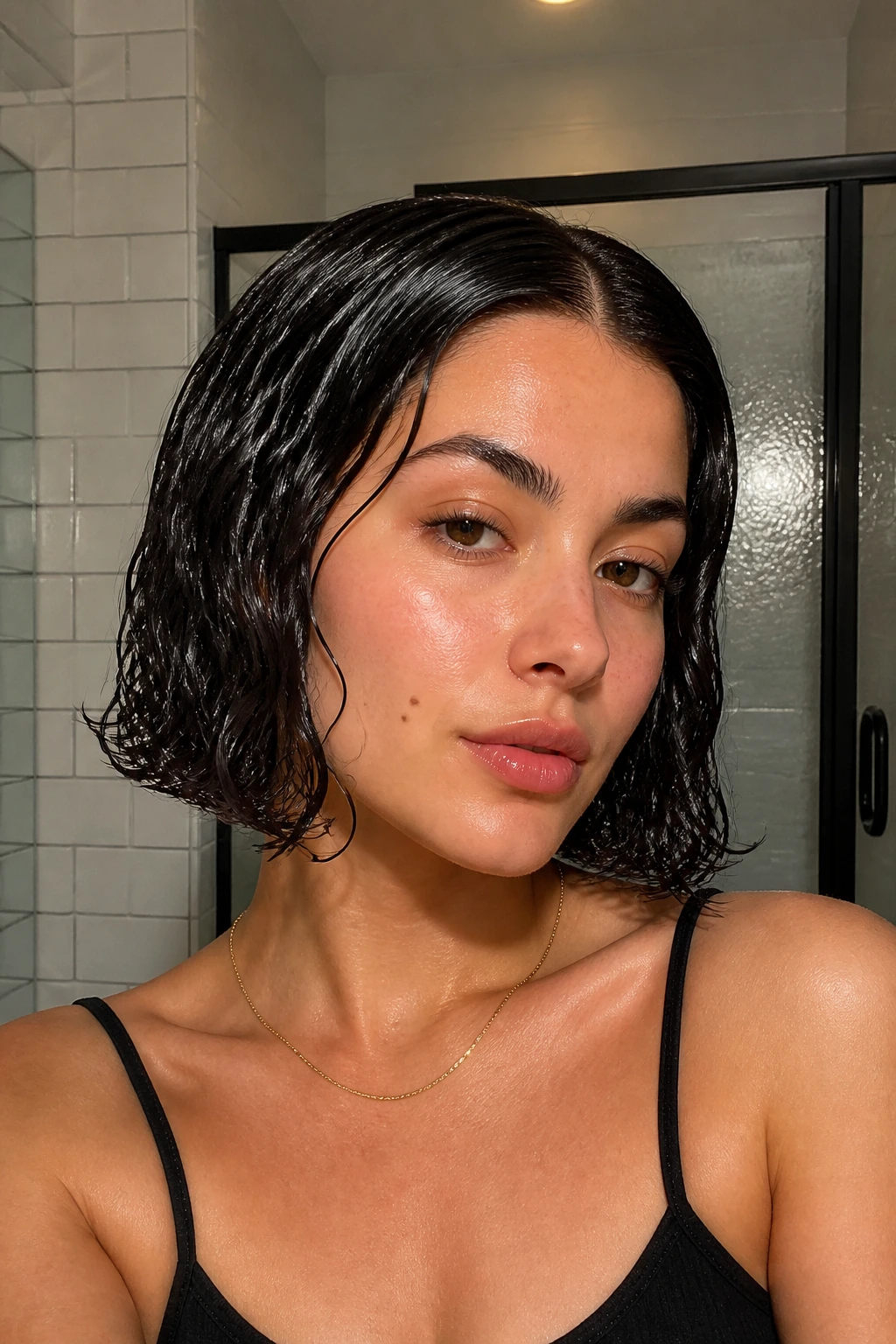
A wet-look sculpted bob leans into gel, gloss, and clean definition. The layers still matter, but here they’re used to shape the silhouette rather than create fluffy volume.
This is one of the sharper, more editorial choices in the whole set. It works best when the curls are medium to tight and the perimeter is clean. Use a strong-hold gel, comb it into soaking-wet hair, then diffuse gently until the cast sets. Don’t touch it too soon. That’s how you get frizz and regret.
16. Copper Dimension Bob

Color changes the way layers read, and copper is especially good at showing off curl movement. On a layered shoulder-length bob, the warmer tone catches the bends and turns every coil into part of the shape.
If your curls have a lot of depth, copper gives them visible outline. The haircut itself can stay simple: soft layers, a rounded perimeter, and a bit of face-framing. The color does some of the talking. So does the shine.
17. Sun-Lit Balayage Bob
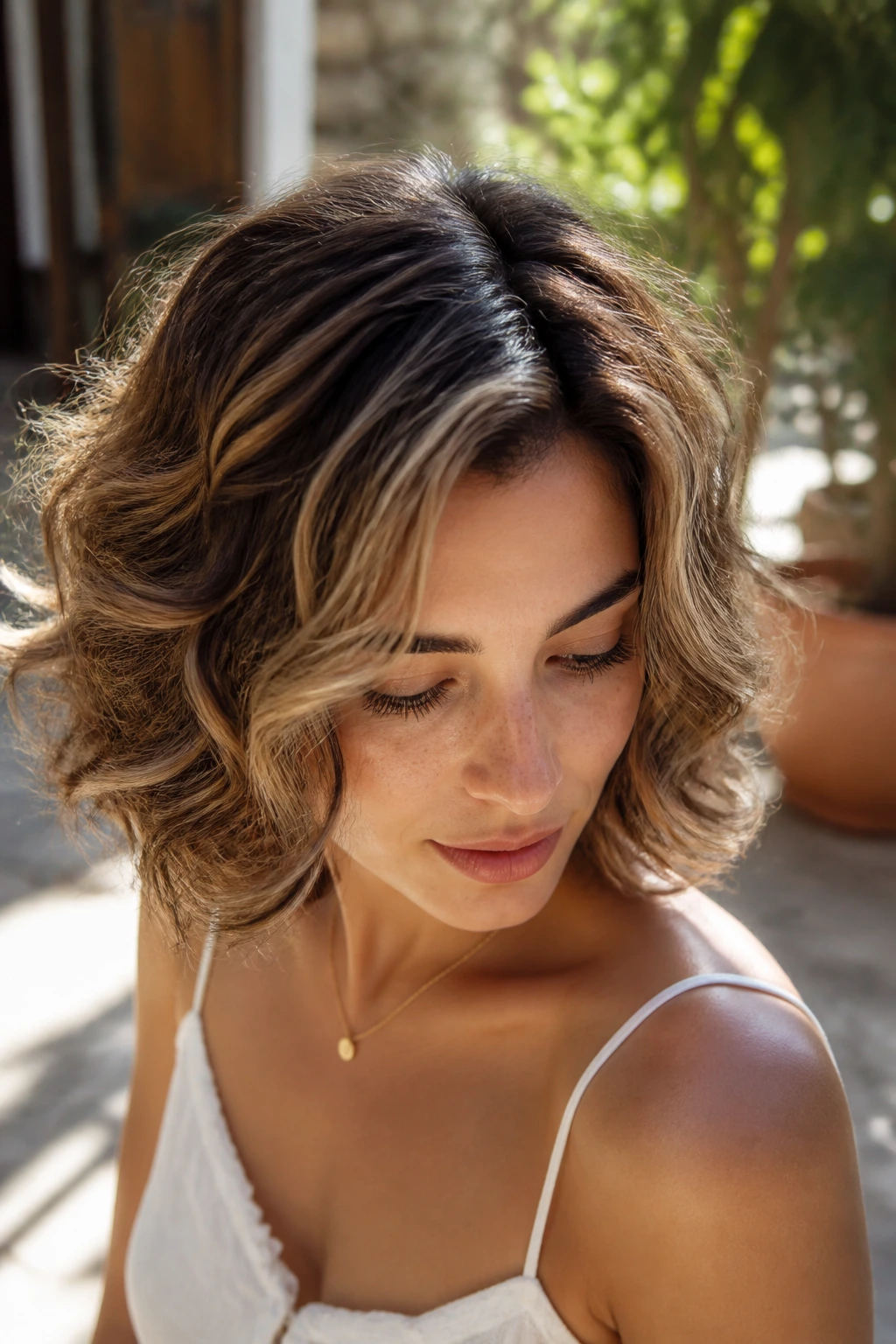
A sun-lit balayage bob uses painted lighter pieces to make the layers look more lifted and separated. It’s not about going blonde all over. It’s about placing brightness where the curls bend and where the face needs a little light.
This works especially well on layered bobs because the color shows the cut off. When the layers flip or stack, the lighter pieces make the movement visible from across the room. Ask for hand-painted ribbons around the face and the crown, not chunky stripes. Curly hair usually looks better when the color is a little blended and a little imperfect.
18. French-Inspired Curly Bob

A French-inspired curly bob tends to be shorter, softer, and a touch undone, with layers that let the curls fall naturally instead of forcing a hard shape. The overall effect is relaxed, but the outline is still controlled.
What keeps this from looking too casual is the perimeter. It should sit cleanly around the shoulders or just above them, even if the curls themselves are messy in a good way. Add a light fringe if you want the shape to feel more pared back. Or skip it and let the center part do the work.
19. Big-Volume Round Bob
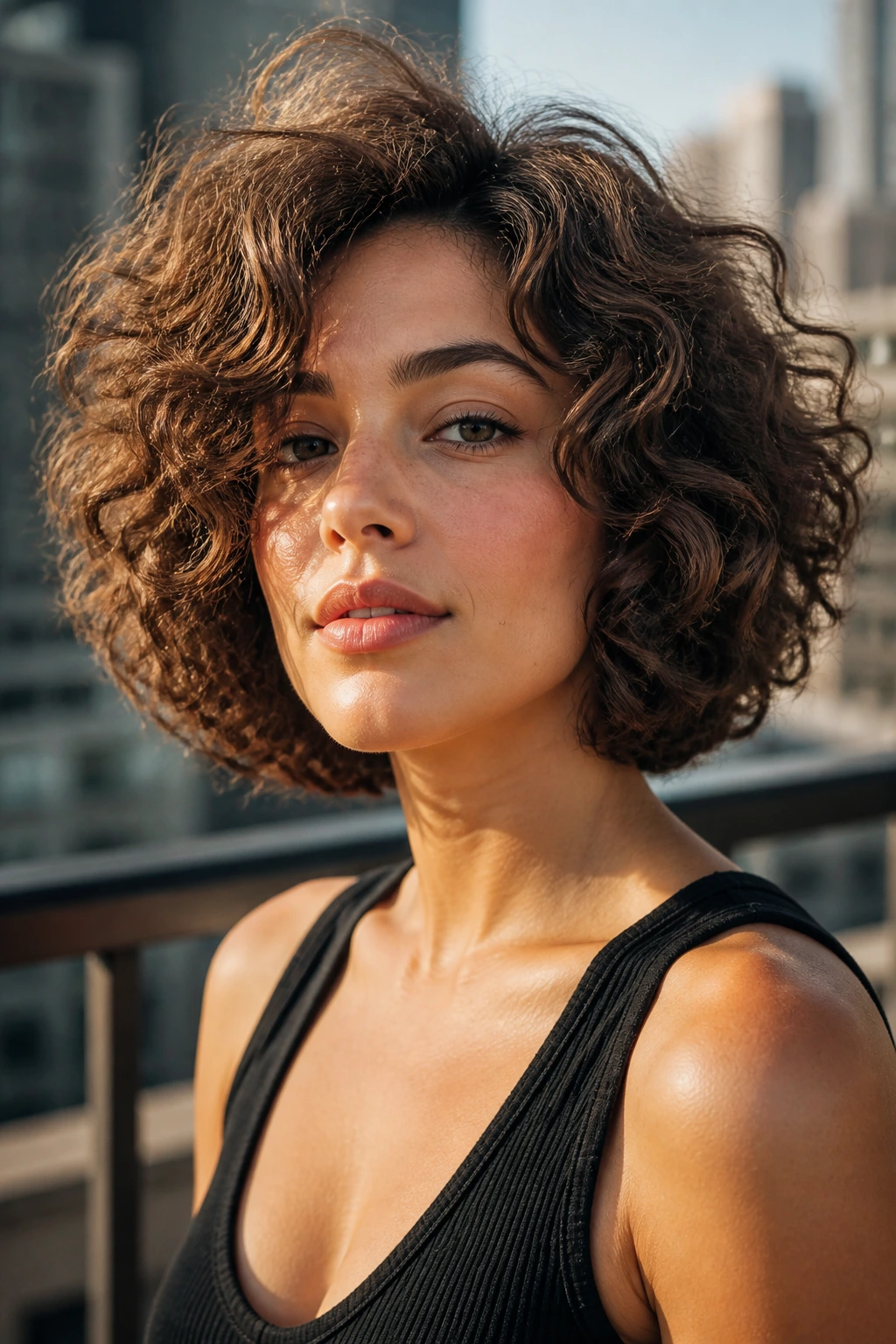
This one is for people who want the curls to make a statement from the first glance. The layers are rounded, the crown is lifted, and the side shape stays full so the cut reads bold and plush.
Big volume needs balance, though. If the layers are too short at the top, the bob can swell up like a bell. The better version keeps the crown light and the ends controlled. That gives you height without losing the bob shape. A diffuser with the head tilted side to side helps, and yes, it matters.
20. Wavy-Curly Hybrid Bob
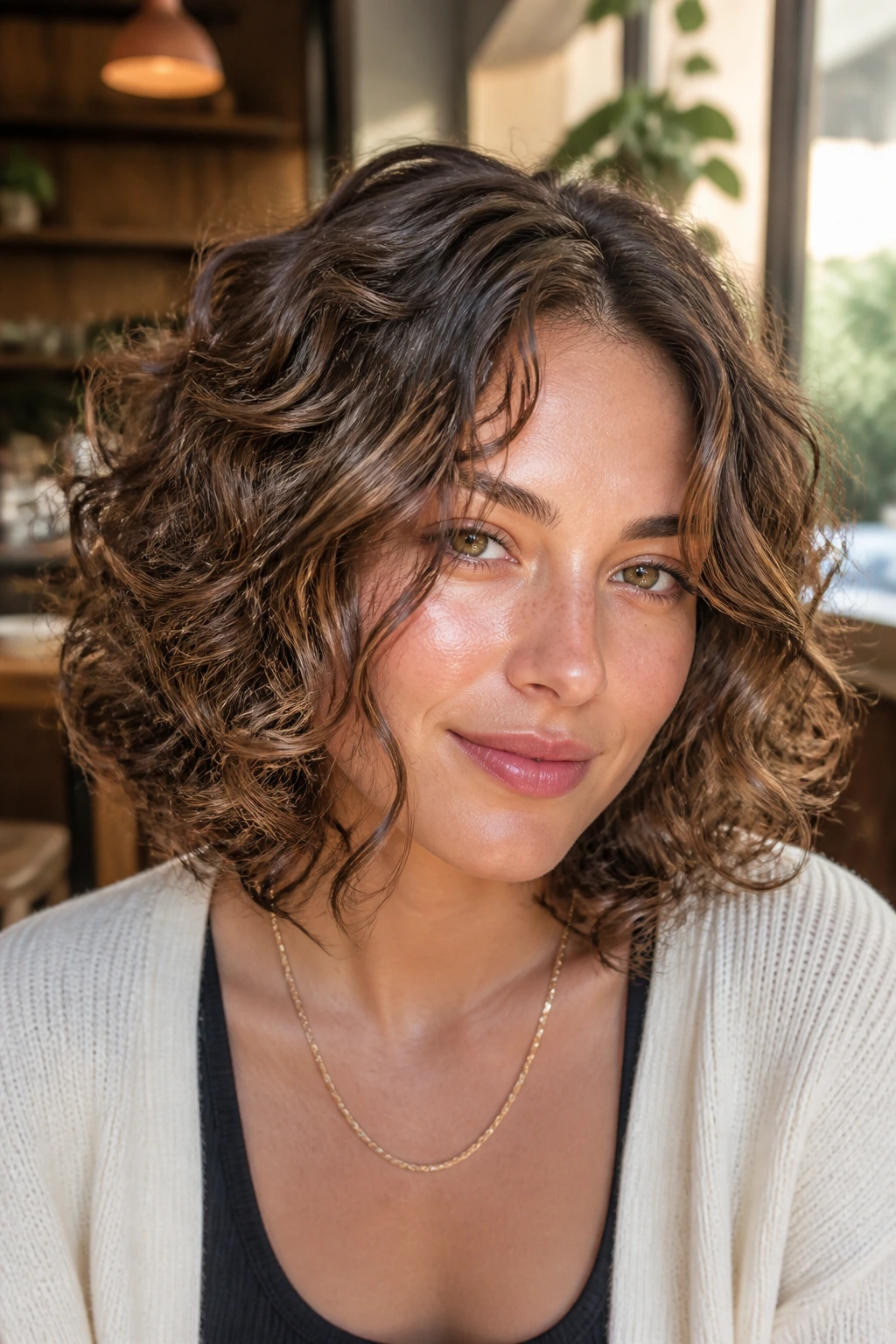
Not every head of hair fits neatly into one curl category. A wavy-curly hybrid bob works with hair that’s wavy at the top and tighter underneath, which is more common than people think.
The layers should respect that mix instead of trying to force one uniform finish. Longer face-framing pieces help the waves connect to the tighter curls, and a slightly softer perimeter keeps the shape from feeling too rigid. If your pattern changes by section, this is the cut that stops the difference from looking messy.
21. Thick-Hair Debulking Bob
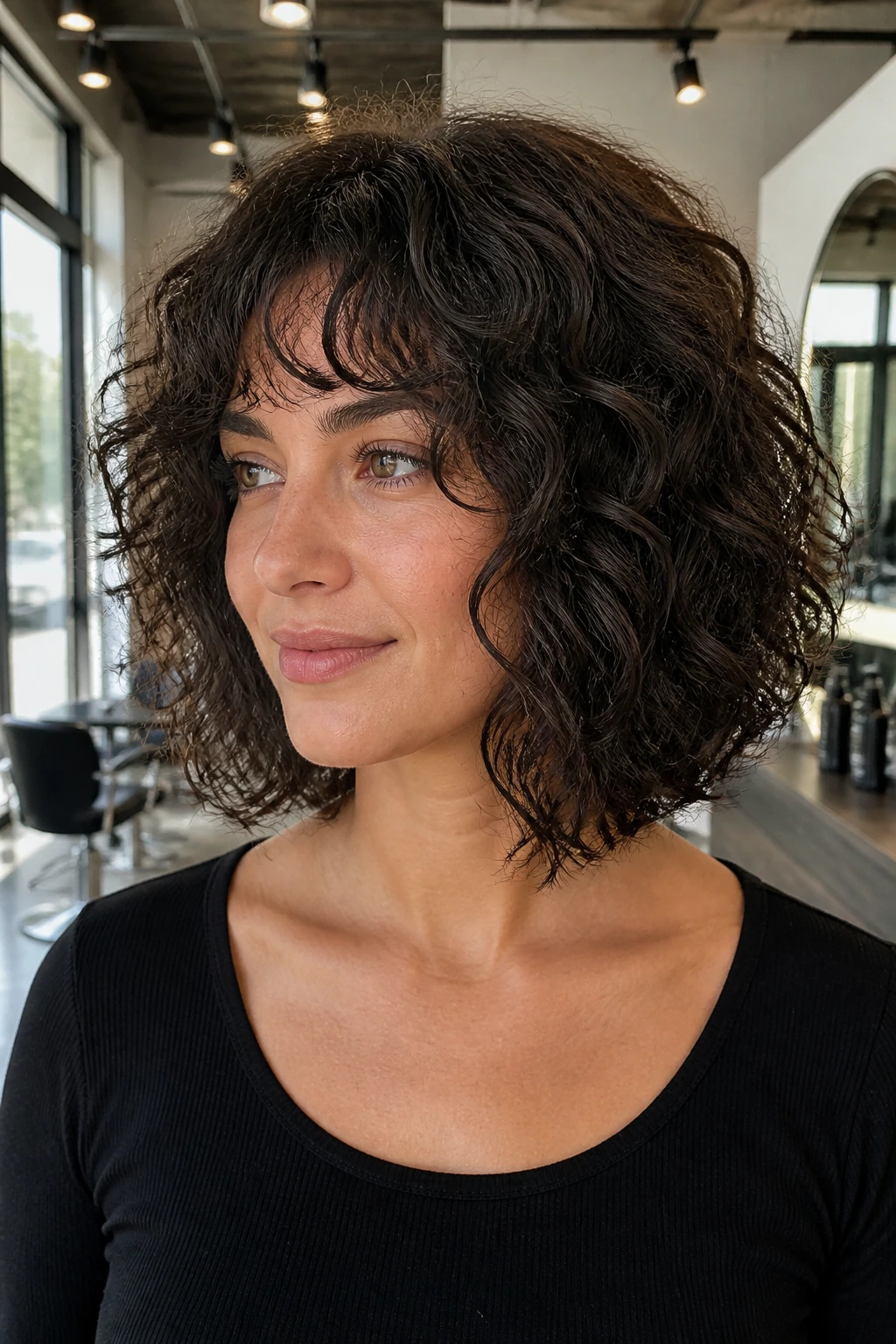
Thick curls need room, not punishment. A debulking bob removes weight from the inside so the haircut falls with less bulk around the sides and back, which keeps the shape from ballooning out.
The danger is overdoing it. Too much thinning can leave stringy ends and a halo of frizz where the curl clumps used to be. Ask for internal weight removal, not aggressive razor work all over the surface. The goal is a bob that moves. Not a bob that goes missing.
22. Fine-Hair Lift Bob
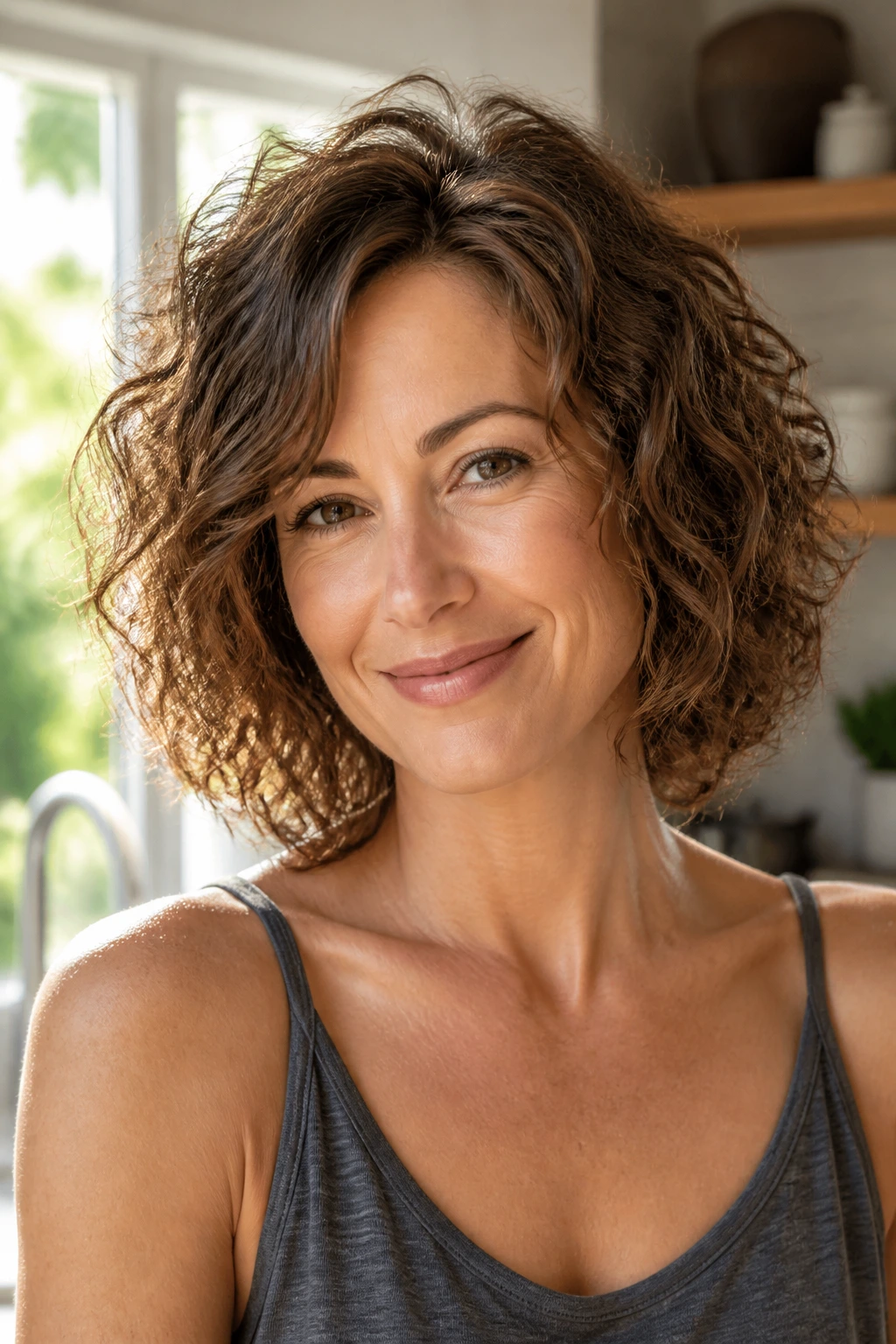
Fine curls can look fantastic in a shoulder-length bob, but only if the layers don’t get too ambitious. The shape needs enough fullness at the perimeter to avoid looking wispy, with just a few internal layers to create lift.
This cut often looks best when the shortest layers sit around the cheekbones and the rest stays relatively blunt. That gives the illusion of more hair without making the ends disappear. Mousse at the roots and a diffuser on low heat can help the crown hold. Small details, big difference.
23. Easy Grow-Out Bob
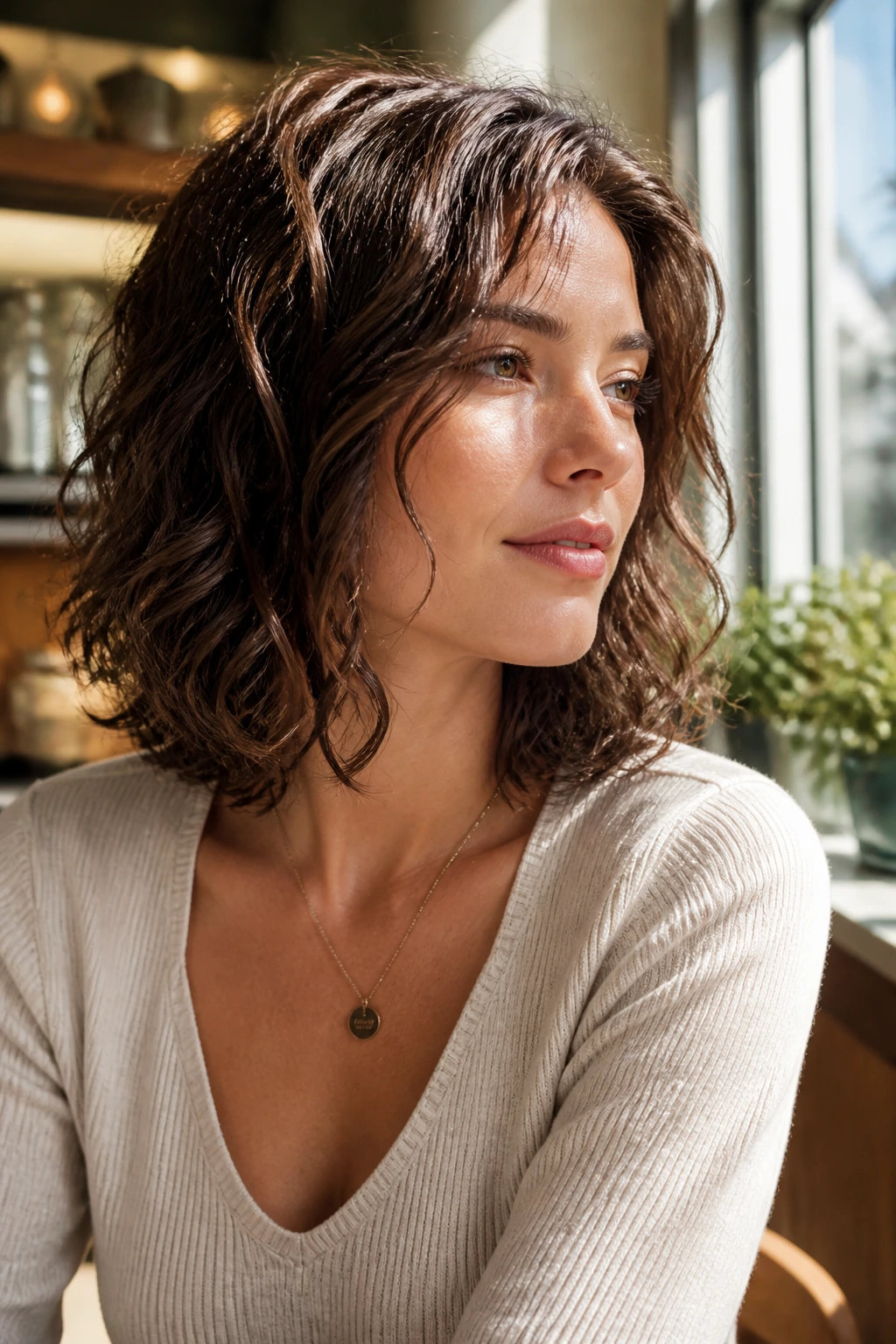
An easy grow-out bob is built to look decent at every stage between trims. The layers are soft, the ends are not overtextured, and the overall line stays close enough to shoulder length that a month of growth doesn’t wreck the shape.
This is a practical pick if you don’t want a haircut that demands constant maintenance. It also helps if your curls shrink unpredictably, because the shape won’t depend on one exact length. Ask for a clean baseline with gentle face-framing and very little aggression at the ends.
24. Polished Workday Bob
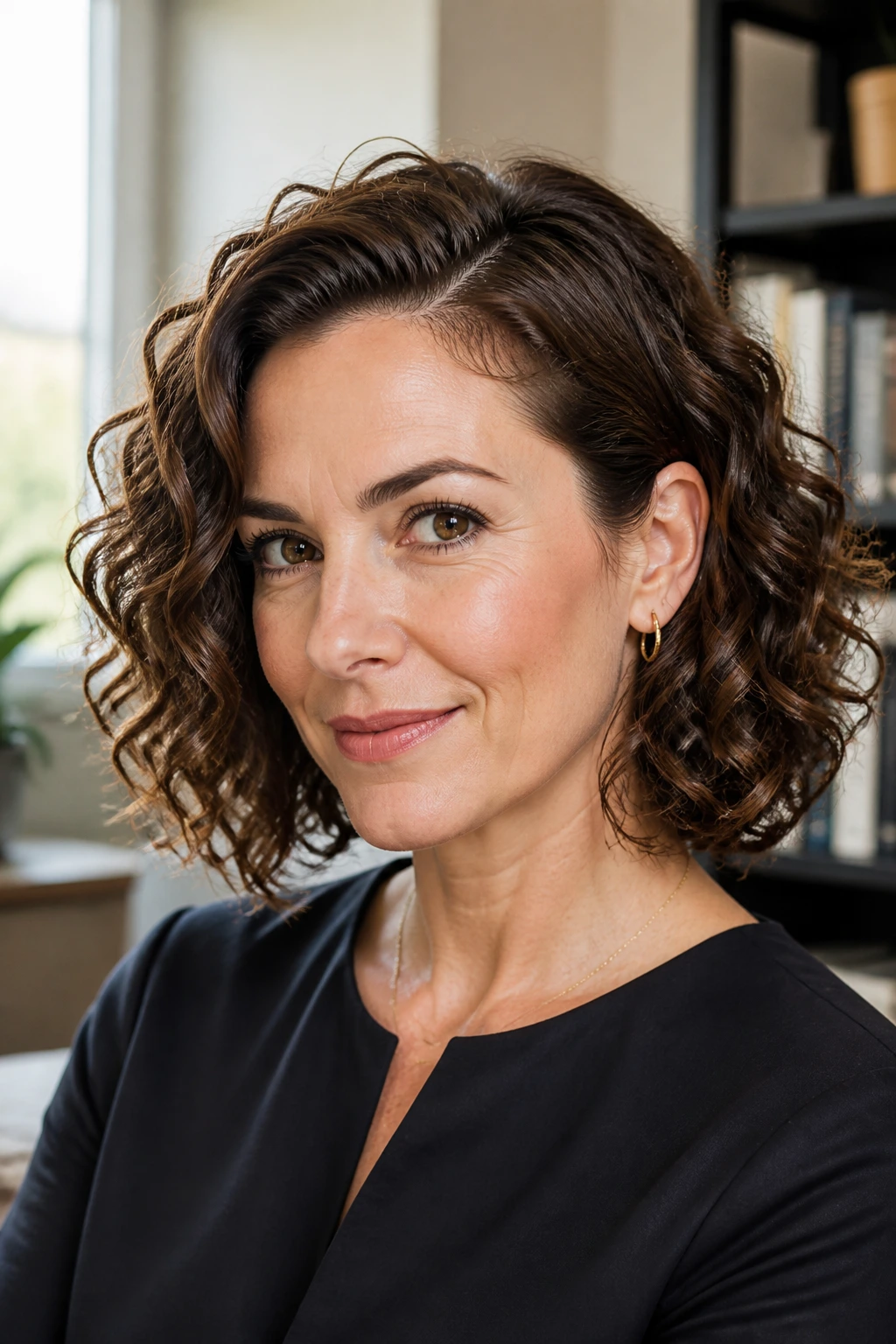
This bob is neat, controlled, and tidy enough for days when you want the hair to behave instead of wander off in five directions. The layers are tucked in rather than shouted from the rooftops, and the curl definition stays smooth.
What gives it that polished feel is the finish. A good cream-and-gel combination can keep the curls separated and glossy without making them look stiff. If you wear a side part and tuck one side behind the ear, the cut gets even sharper. Simple. Effective.
25. Air-Dry Weekend Bob
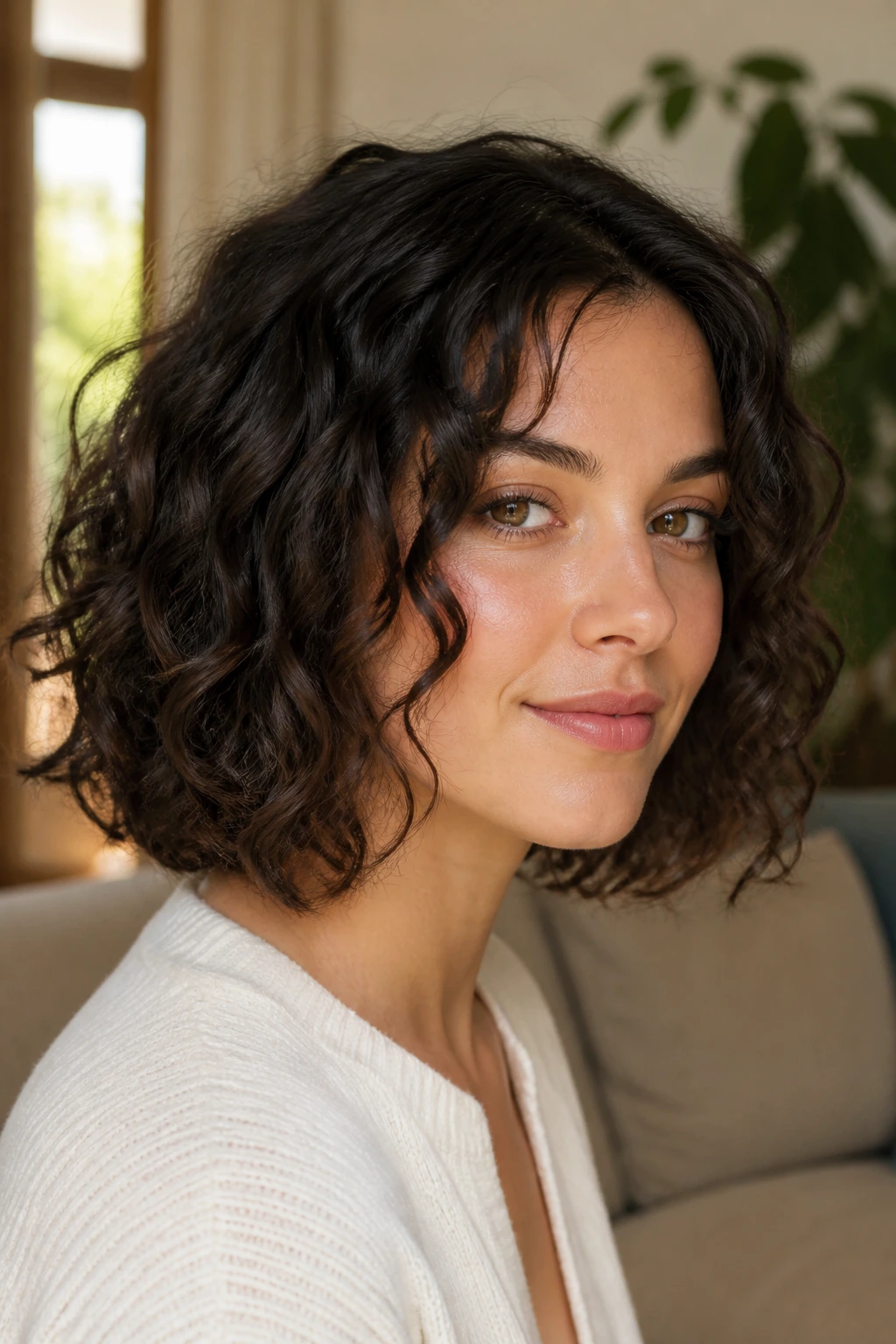
An air-dry weekend bob is for people who don’t want to negotiate with a diffuser every morning. The layers are placed so the hair still dries into a decent shape on its own, with enough movement near the front and enough control at the back.
This kind of cut works best when your curl pattern is already friendly and you’re not fighting huge density. Use a leave-in, scrunch in a light foam or gel, then leave it alone. Seriously, leave it alone. Air-dried curls often look better when they’re not being fussed over every ten minutes.
26. Retro Flip-End Bob
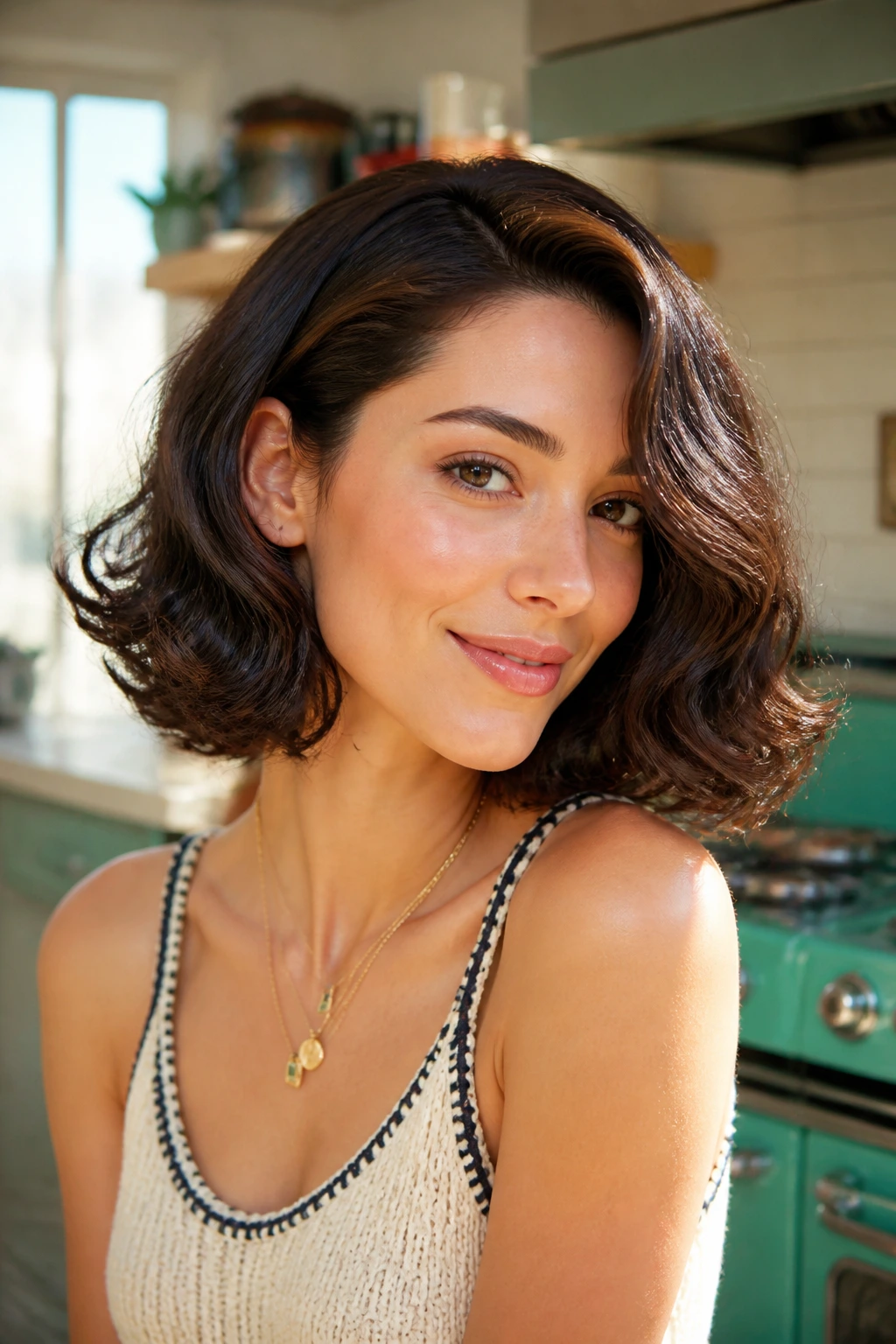
A retro flip-end bob plays with the ends turning outward a little, which gives the cut a playful, lifted finish. On curls, that flip can happen naturally or be encouraged with a round brush at the very ends if your pattern is loose enough.
The layered structure keeps the style from feeling dated in the wrong way. Instead, it looks deliberate, a little nostalgic, and a little cheeky. This works especially well with a clean side part and a bit of shine spray. Too much shine and it can get slick. A small amount is enough.
27. Face-Framing Money Piece Bob

This version uses brighter front pieces or simply stronger face-framing layers to put the focus around the cheeks and eyes. The cut itself stays shoulder length, but the front feels lighter and more open.
That matters on curly bobs because the face can disappear if the layers are too even. A money-piece shape gives the haircut structure without needing bangs. If you color it, keep the front pieces two shades lighter at most. Big contrast can look stripy fast on curls, and stripy curls are a pain to grow out.
28. Soft Wolf Bob
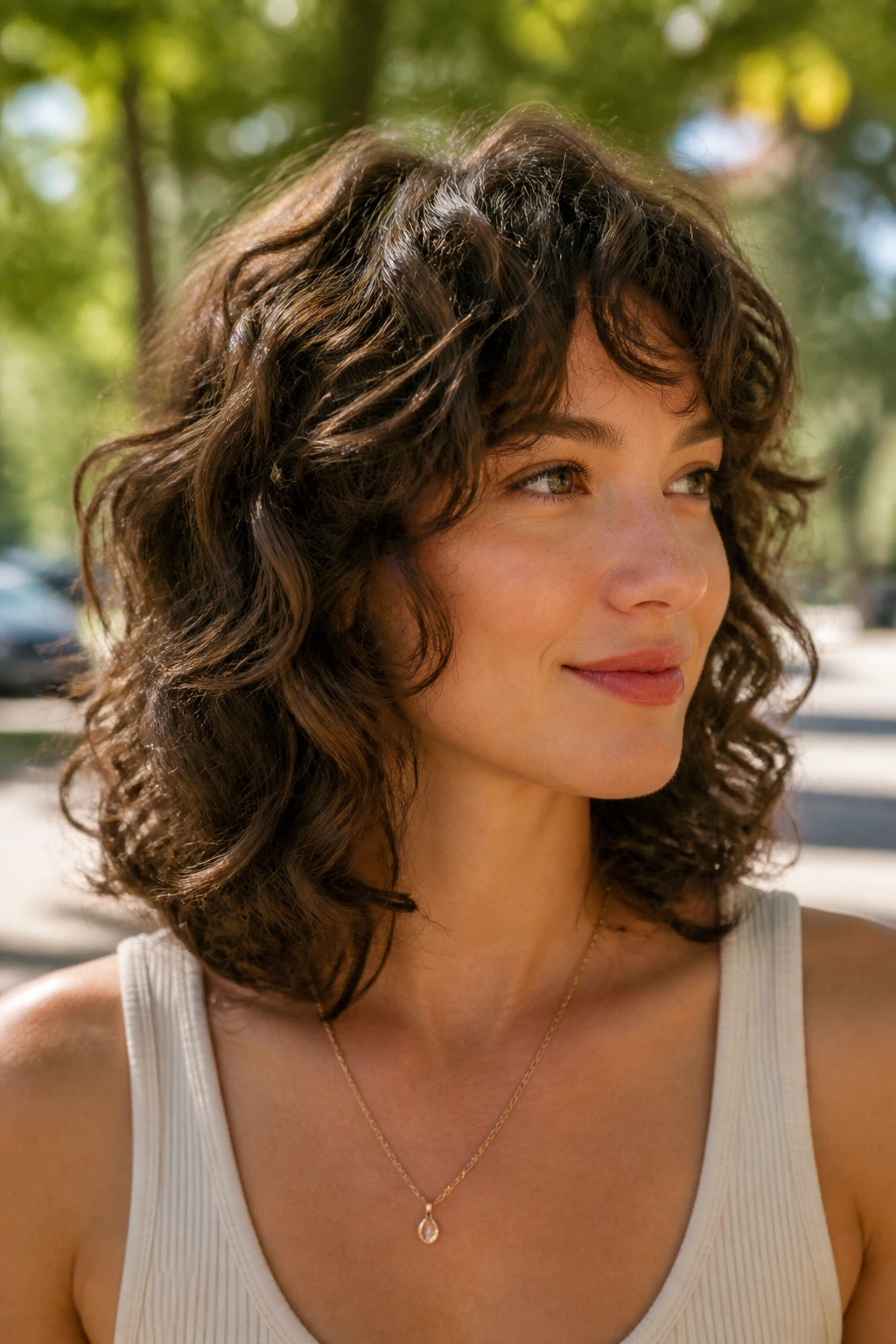
The soft wolf bob borrows a little from the wolf cut without fully committing to the full shaggy drama. The crown has lift, the layers taper through the sides, and the overall outline still reads as a bob.
This cut suits people who want movement but not neatness. It’s best when the layers are feathered just enough to make the curls sit lightly, not sliced so hard that the ends fray. If your curls are springy and a little wild, this is often the cut that makes them look intentional instead of unruly.
29. Tapered Nape Bob
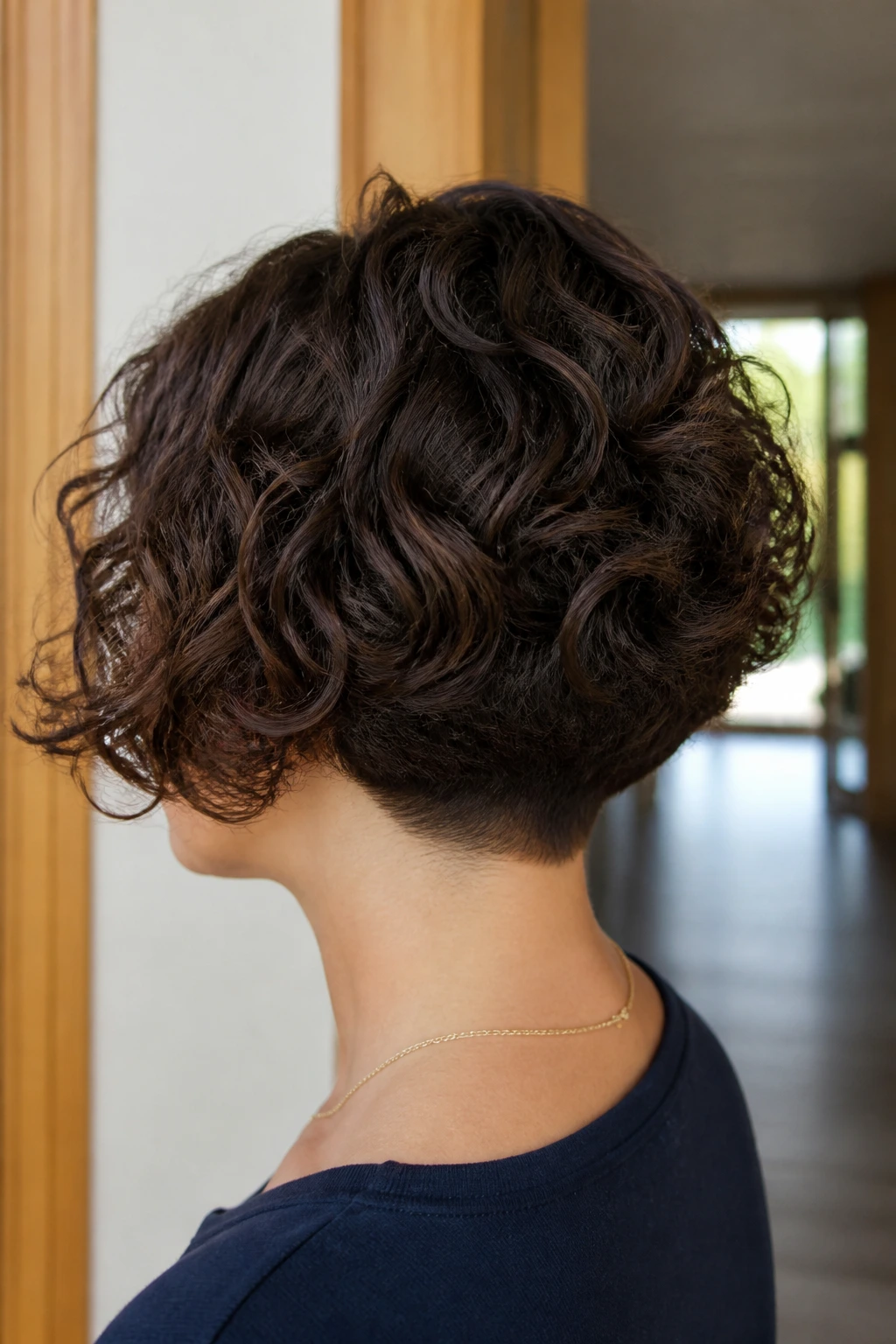
A tapered nape bob keeps the back neat and close while letting the sides and top keep more length. That taper helps the cut sit clean against the neck and gives the curls a bit of lift where they need it most.
It’s a useful shape for dense hair or hair that tends to puff at the back. The shorter nape removes bulk, while the longer layers prevent the cut from becoming too severe. Ask for the taper to be gradual. Sharp stacking can turn the back into a shelf, and nobody asked for a shelf.
30. Shoulder-Grazing Lob
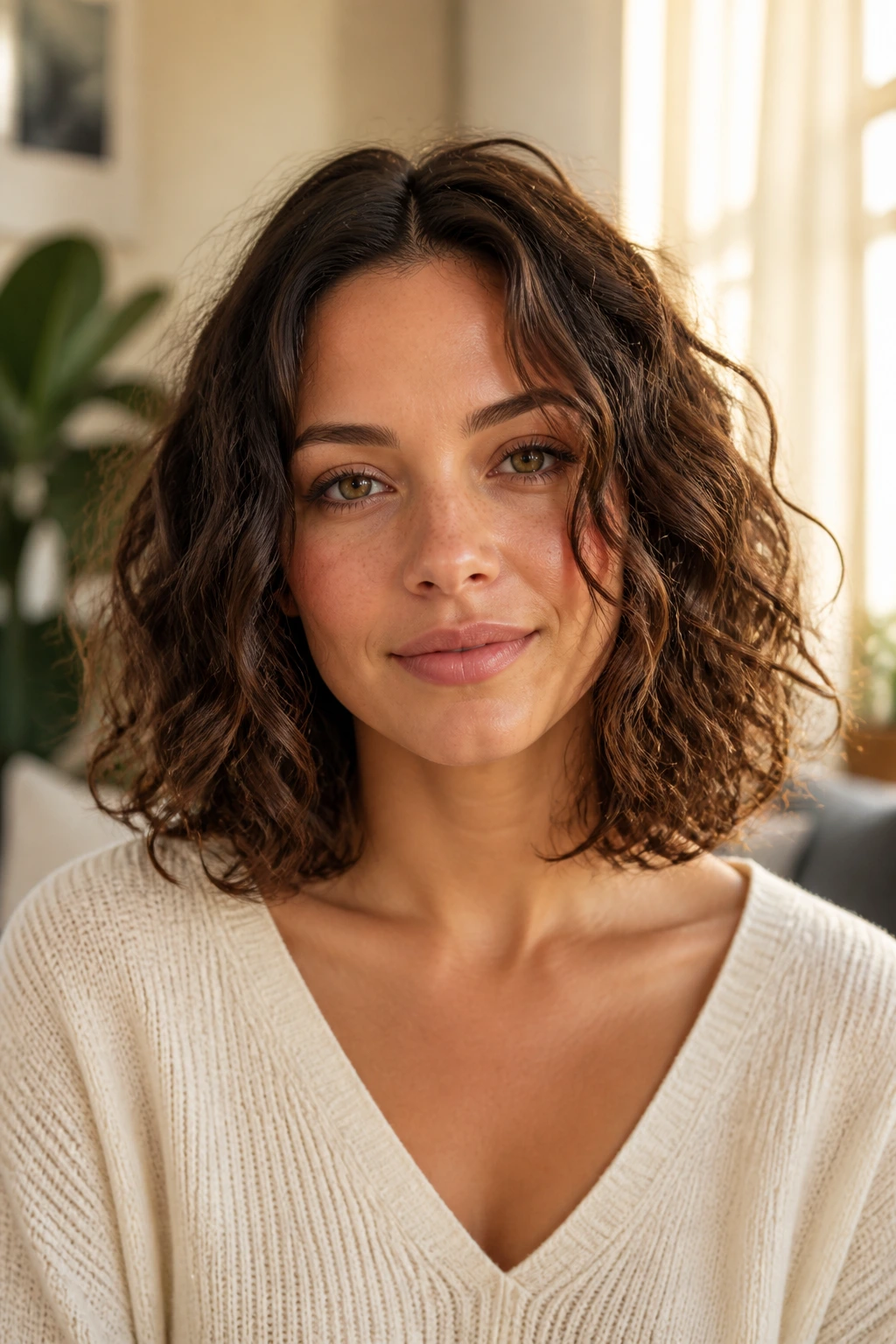
A shoulder-grazing lob sits right on the border between bob and longer cut, which gives curls extra swing. The layers can be subtle, but they still matter, because this length will collapse if everything is the same length.
This is a good choice when you want the bob feel without losing versatility for ponytails, clips, or a quick half-up twist. It’s also one of the easier shapes to grow out if you decide you’re not committed to the bob life forever. And if you are? Fine. It still looks good tucked behind a scarf or left loose.
31. Side-Volume Statement Bob

This style concentrates volume on one side, either through parting, layering, or drying direction. The result is a curly bob that feels a little glamorous and a little off-center in the best way.
The key is controlling the opposing side so the silhouette doesn’t turn into a mushroom. A deeper side part, a touch more layering at the crown, and careful diffusing on the lifted side all help. This is the kind of haircut that looks like it knows where the camera is, even if you’re just going to the grocery store.
32. Natural Texture Bob
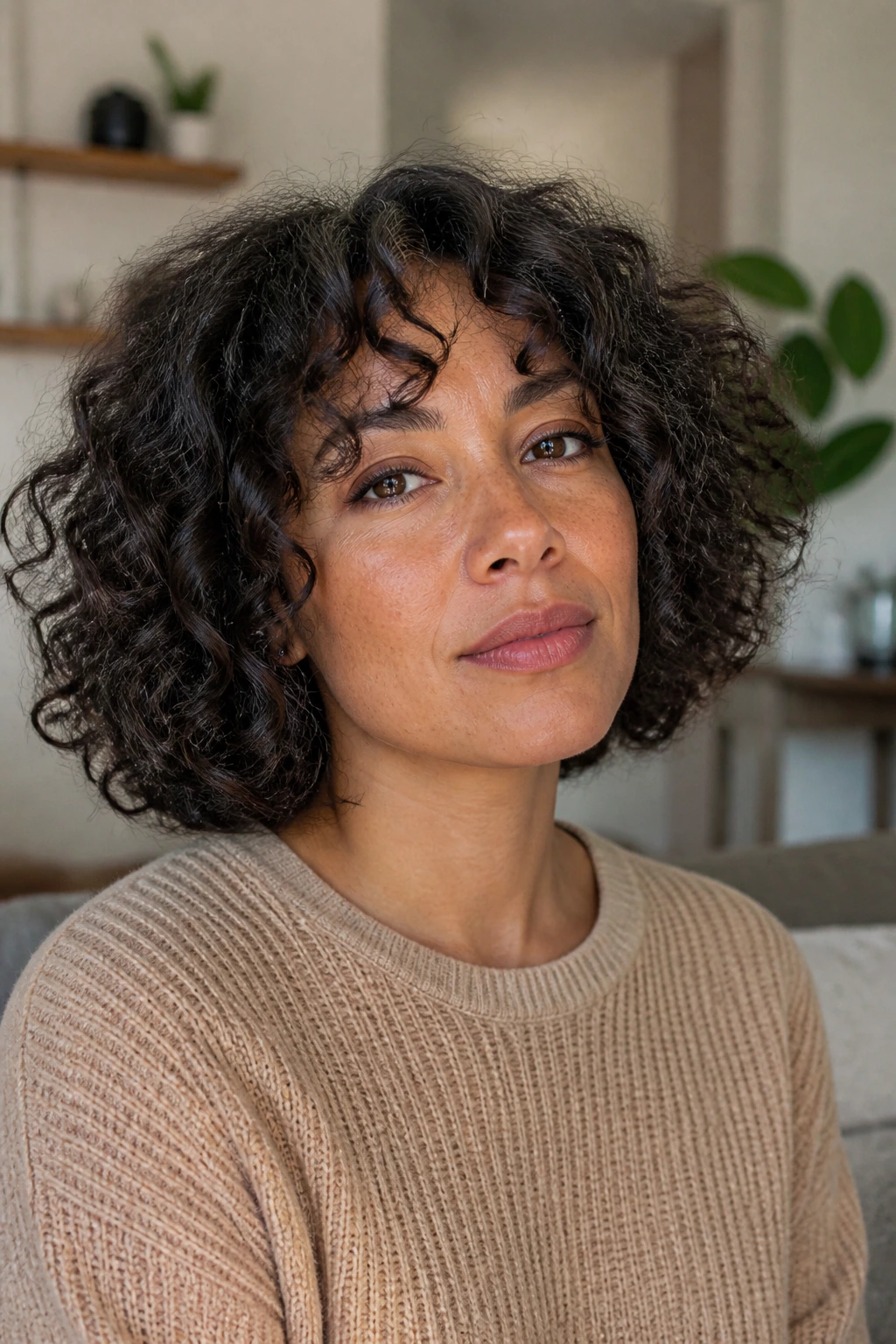
A natural texture bob keeps the curl pattern as the star and uses layers only to support it. No over-shaping. No heavy sculpting. Just enough layering to remove weight, keep the ends moving, and let your hair do what it already does well.
That’s why this cut earns its place at the end of the list. It’s the least fussy option, and sometimes that’s the smartest one. If your curls have a good shape on their own, don’t overcorrect them. Clean the ends, keep the layers soft, and let the texture show up unbothered.
Why Layering Changes the Shape of a Curly Bob
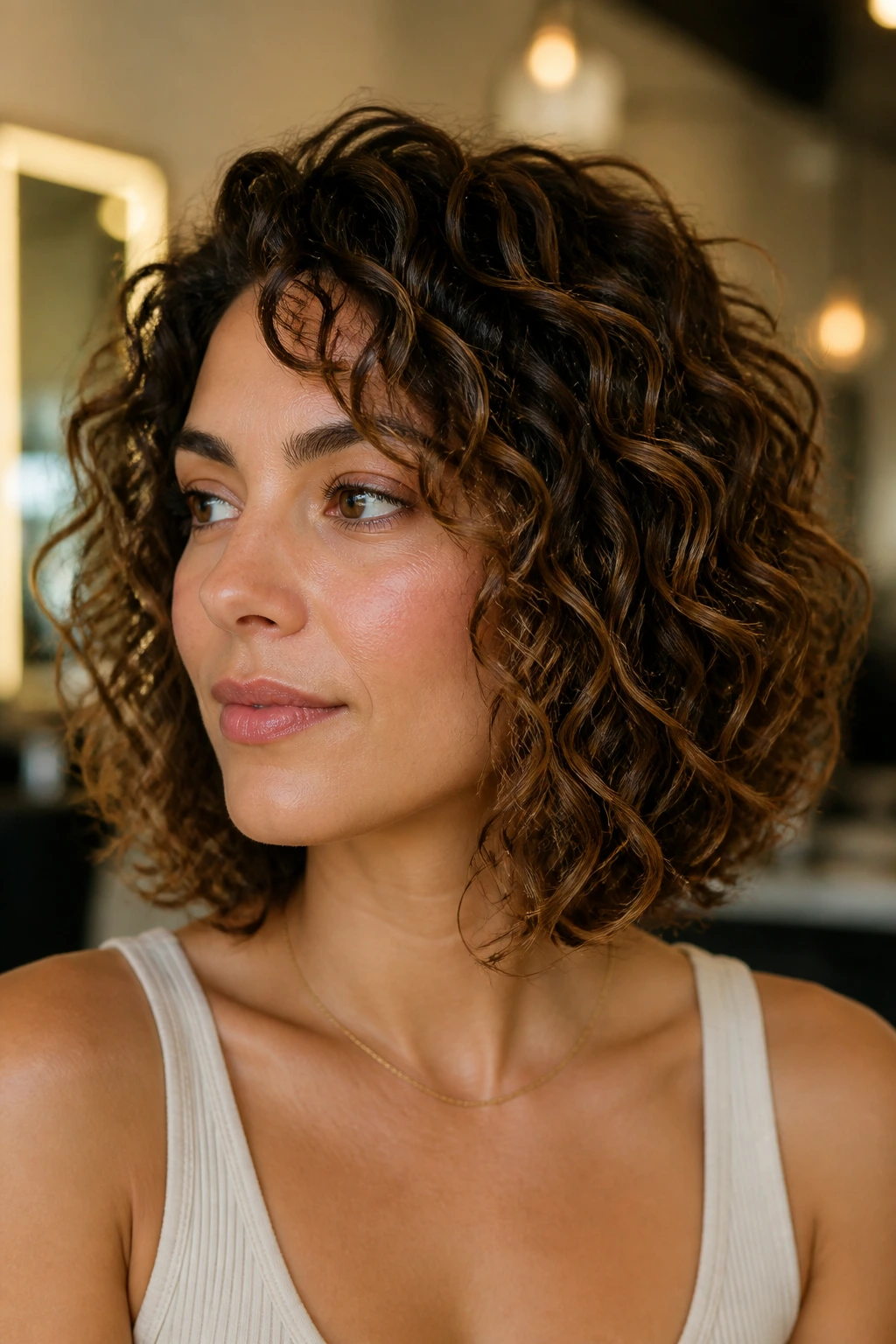
A layered curly bob is not just a shorter haircut with some extra texture thrown in. The layers control where the curl falls, how much the crown lifts, and whether the perimeter behaves like a shape or a cloud. On straight hair, layers can be a styling choice. On curly hair, they’re a geometry problem.
The curl pattern matters more than most people expect. Loose curls can flatten at the root if the layers are too heavy, while tighter curls can balloon if too much bulk sits at the sides. The sweet spot is usually a careful mix of perimeter length and internal weight removal, cut either curl by curl or after the hair is styled the way it actually lives. Dry cutting tends to help stylists see shrinkage. Wet cutting can work too, but only if the stylist knows how your curls contract.
And this length — shoulder grazing, collarbone brushing, somewhere in that zone — is where the shape starts to matter most. Too short, and the curls may spring into a wider silhouette than you want. Too long, and the bob loses that clean, bouncy edge. The layer placement is what keeps the cut from drifting into either extreme.
Essential Tools for Styling Shoulder-Length Curly Bobs
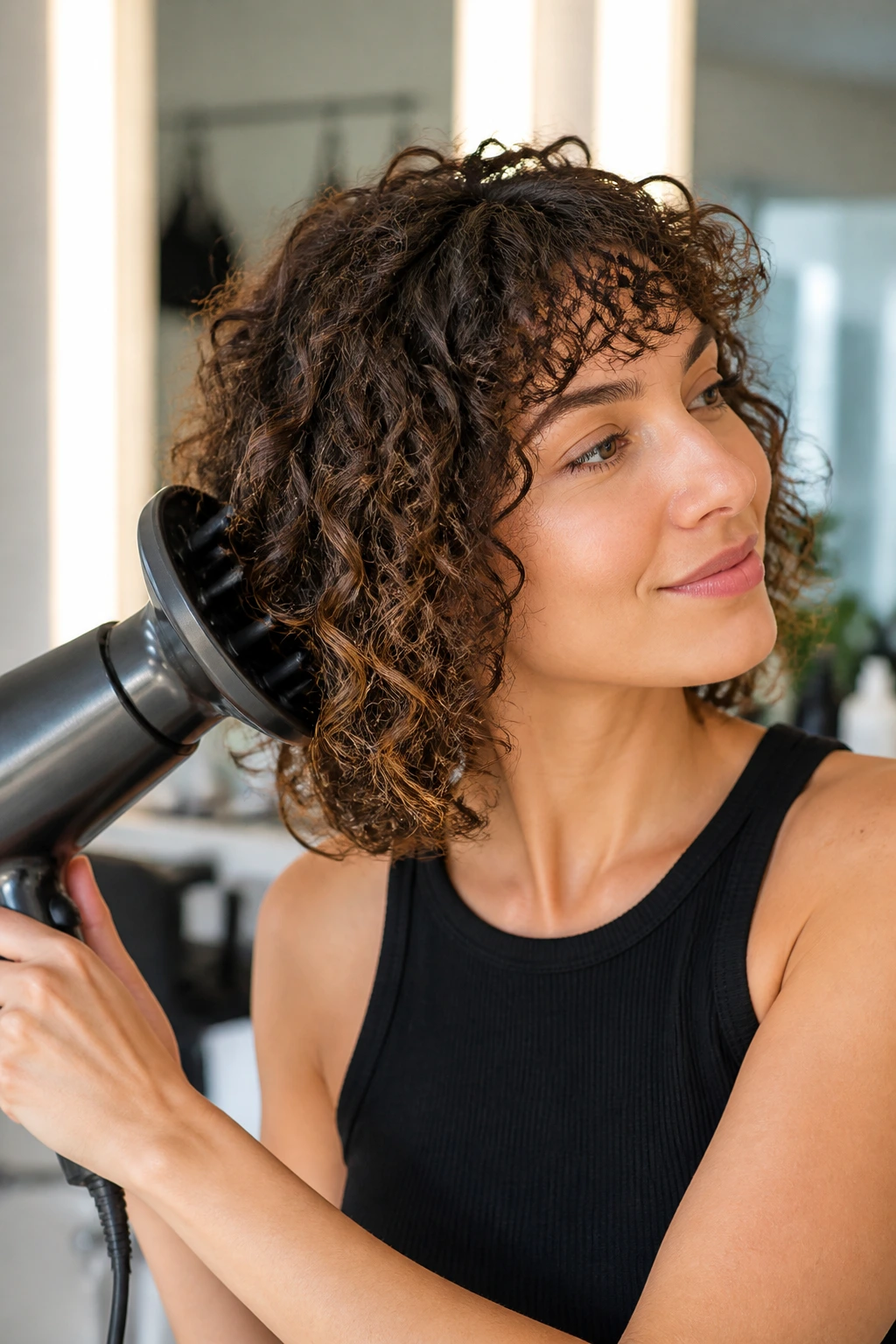
-
Diffuser attachment: A must if you want lift at the roots without blasting the curl pattern into frizz.
-
Wide-tooth comb: Good for distributing conditioner or leave-in without ripping apart clumps.
-
Curl cream: Helps soften the hair and keep the ends from looking dry, especially on layered cuts.
-
Mousse or foam: Gives the crown some memory and helps a bob hold its shape after diffusing.
-
Strong- or medium-hold gel: Useful when you want definition that lasts past the first hour.
-
Microfiber towel or cotton T-shirt: Better than a bath towel for scrunching out water without roughing up the cuticle.
-
Hair clips: Handy for pinning the crown while it dries if you want extra lift.
-
Tail comb: Useful for clean parts and sectioning when you’re styling around layers.
-
Spray bottle: A tiny amount of water can revive flattened sections without soaking the whole head.
What to Ask for When You Sit in the Chair
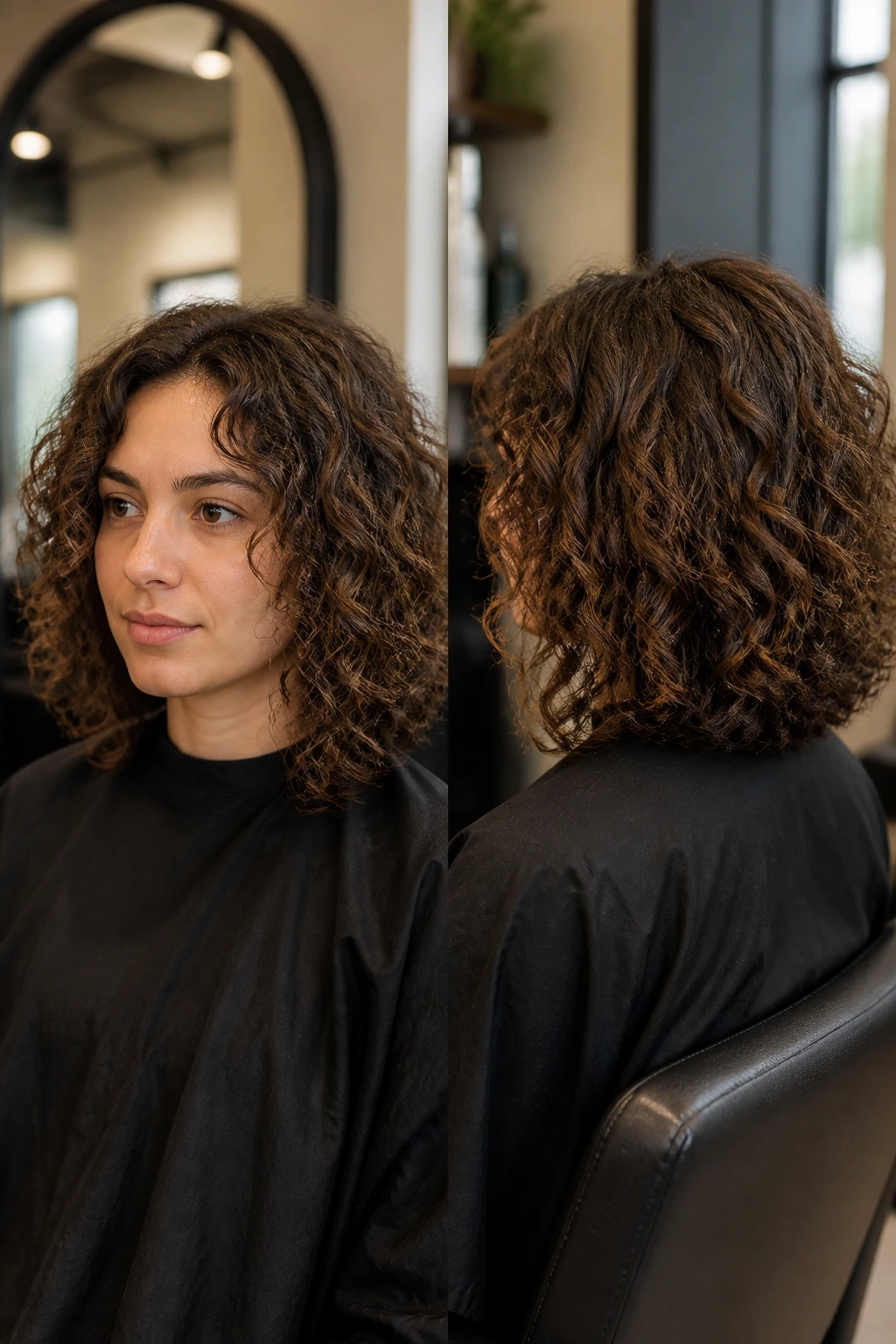
A good curly bob starts with a clear conversation. Tell the stylist where you want the longest pieces to fall when your hair is fully dry, not just wet. That one detail saves a lot of heartbreak.
Ask whether they cut curls wet, dry, or with a curl-by-curl approach. Dry cutting usually shows the real shape better, especially if your curls vary a lot from section to section. If your hair is thick, ask where they plan to remove weight. If they say “everywhere,” I’d ask them to be more specific. You want bulk taken out from the right zones, not the ends stripped thin because it looked exciting in the chair.
Bring a photo, yes, but bring a second one if you can. The second picture should show the same haircut from the back or side. That’s where shoulder-length curly bobs usually surprise people. The front may look lovely, and the back may be a whole different animal.
How to Style These Cuts Without Crushing the Curl
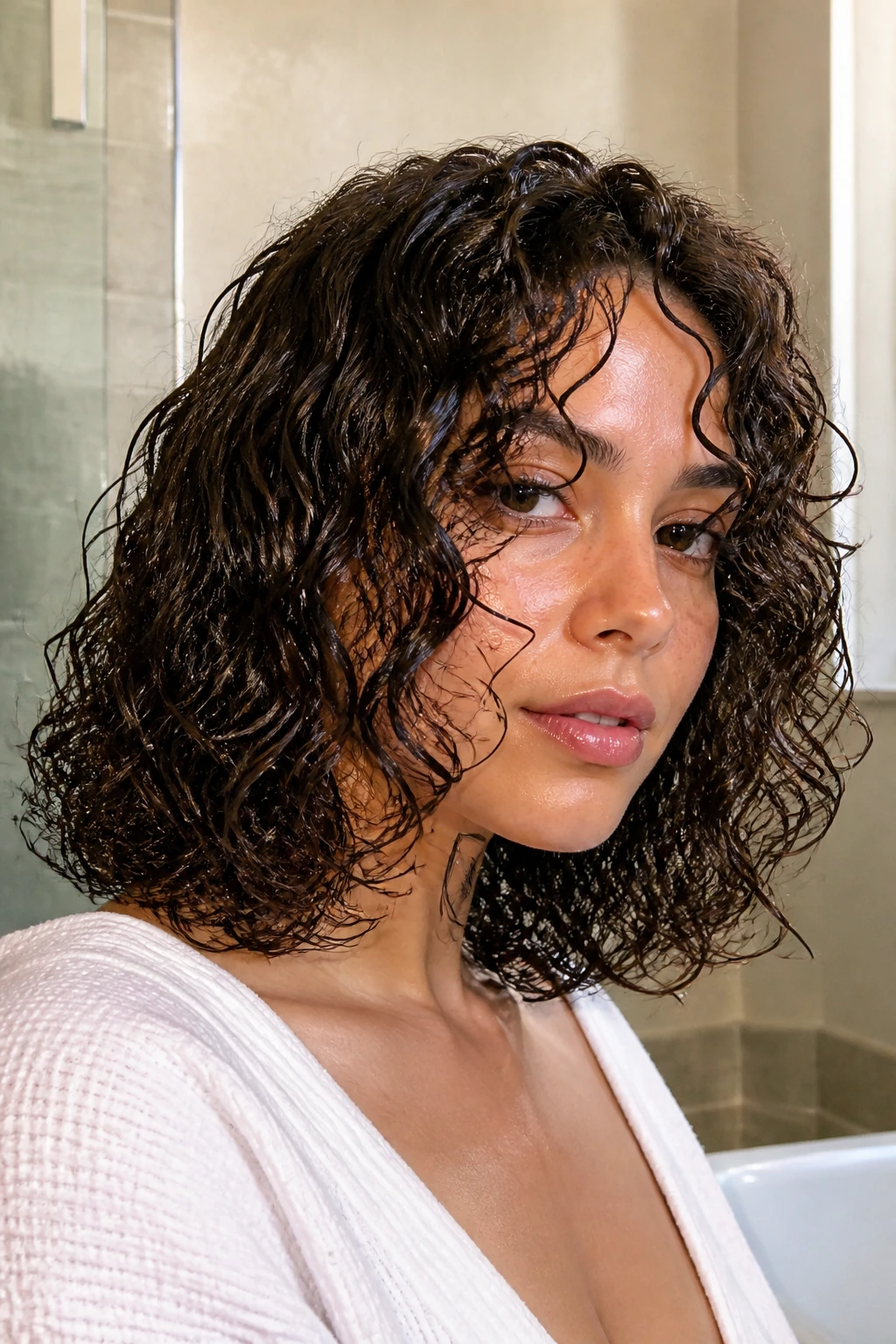
Start on soaking-wet or very damp hair. That’s when curl clumps are easiest to form, and layered bobs tend to behave better if you set the shape before the hair starts drying into random directions. Work in sections. Not huge sections. Small enough that product actually reaches the underside of the curls.
Use leave-in first, then cream or mousse, then gel if you want staying power. Scrunch upward with a gentle hand. If you rake too much, the layers separate into stringy pieces before they’ve had a chance to form the right shape. For diffusing, hover at the roots first, then cup the curls once they’ve started to set. That keeps the crown from collapsing under its own wetness.
Air-drying can work too, especially on softer curls. The trick is to leave the hair alone while it sets and resist the temptation to keep fluffing it. The bob needs a chance to decide where it wants to fall. Give it that.
Smart Maintenance Between Salon Visits
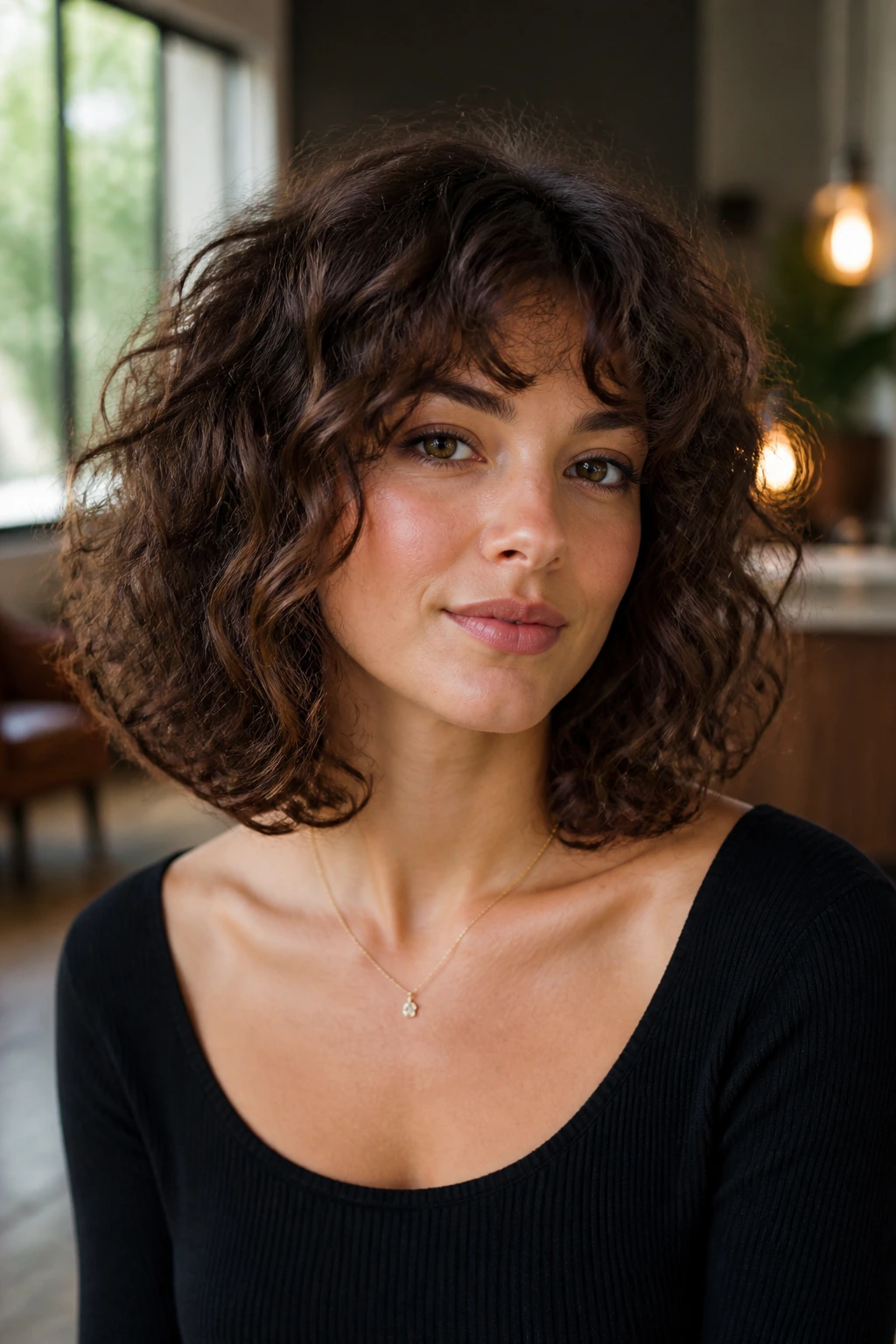
A shoulder-length curly bob usually needs a trim every 8 to 12 weeks if you want the layers to stay clean. Curls will hide some growth, but they’ll also hide some bad shape until one day the outline looks lopsided in the mirror. That’s not a moral failing. It’s just hair.
Refresh the shape with water and a little leave-in between washes. Focus on the top and the pieces around the face, because that’s where curls tend to flatten fastest. If the ends start feeling dry, a pea-sized amount of cream or a few drops of oil can help, but don’t smear oil all over the roots unless you want the bob to lose lift.
Clarify every few washes if product buildup is making the layers look heavy. Curly bobs can go limp when old gel and cream sit on the hair shaft. A gentle clarifying shampoo, followed by a good conditioner, often brings the bounce back faster than a new styling routine.
Additional Tips and Texture Boosters
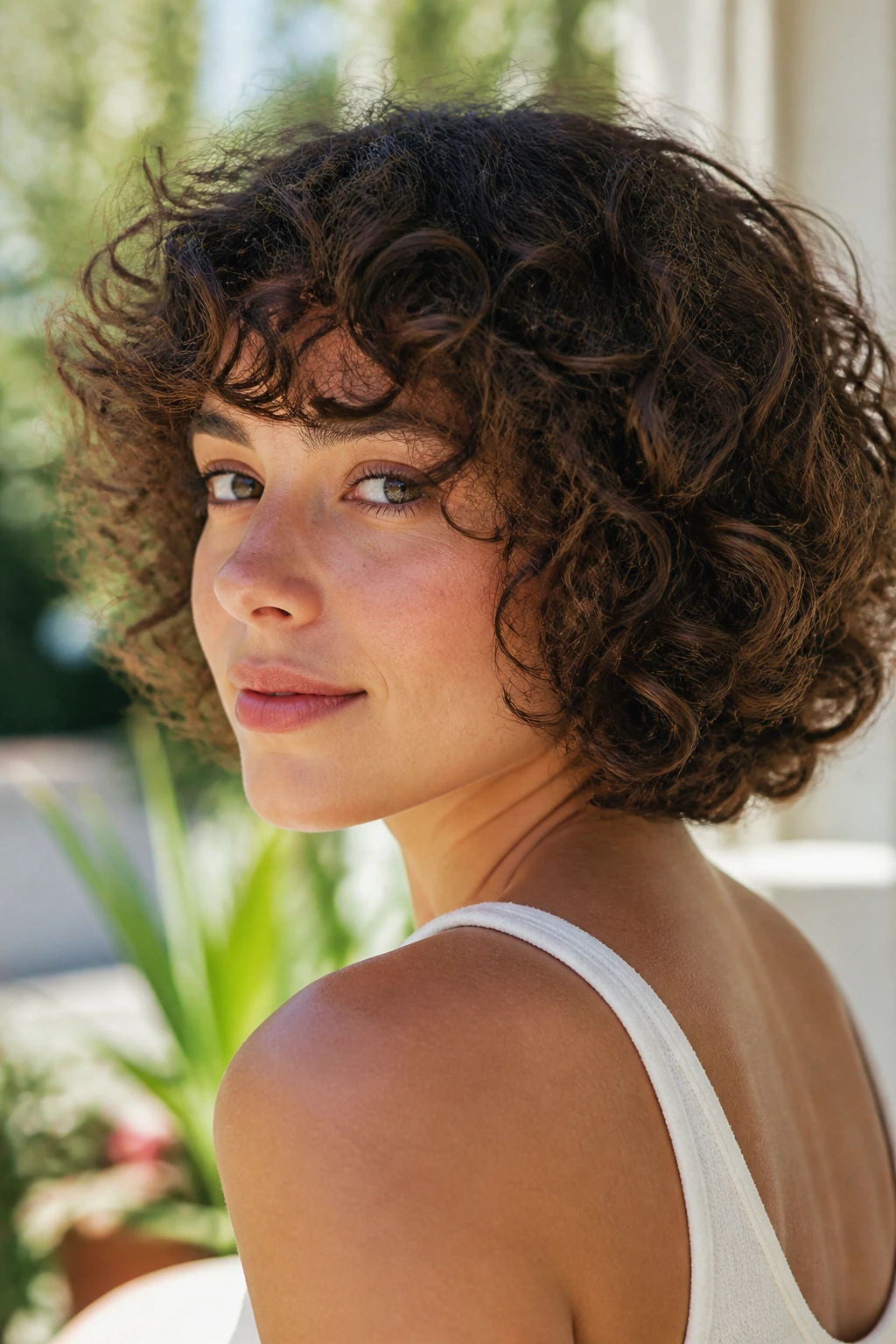
Shape Boost: If your crown is flat, clip the root area while the hair dries for 10 to 15 minutes. It gives the top some lift without changing the cut.
Definition Boost: Use gel on the outermost layers and cream on the interior. That combo keeps the perimeter clean while the middle stays soft.
Volume Control: Thick hair usually needs less product than you think. Start with a small amount, then add only where the curls look dry or puffy.
Face-Framing Trick: Tuck one front section behind the ear while it’s drying. It creates a subtle bend that shows off the layers near the cheekbone.
Make-It-Yours: If you love polish, blow-dry the fringe and crown first. If you love texture, let the air do most of the work and stop touching it.
Common Mistakes That Flatten a Curly Bob
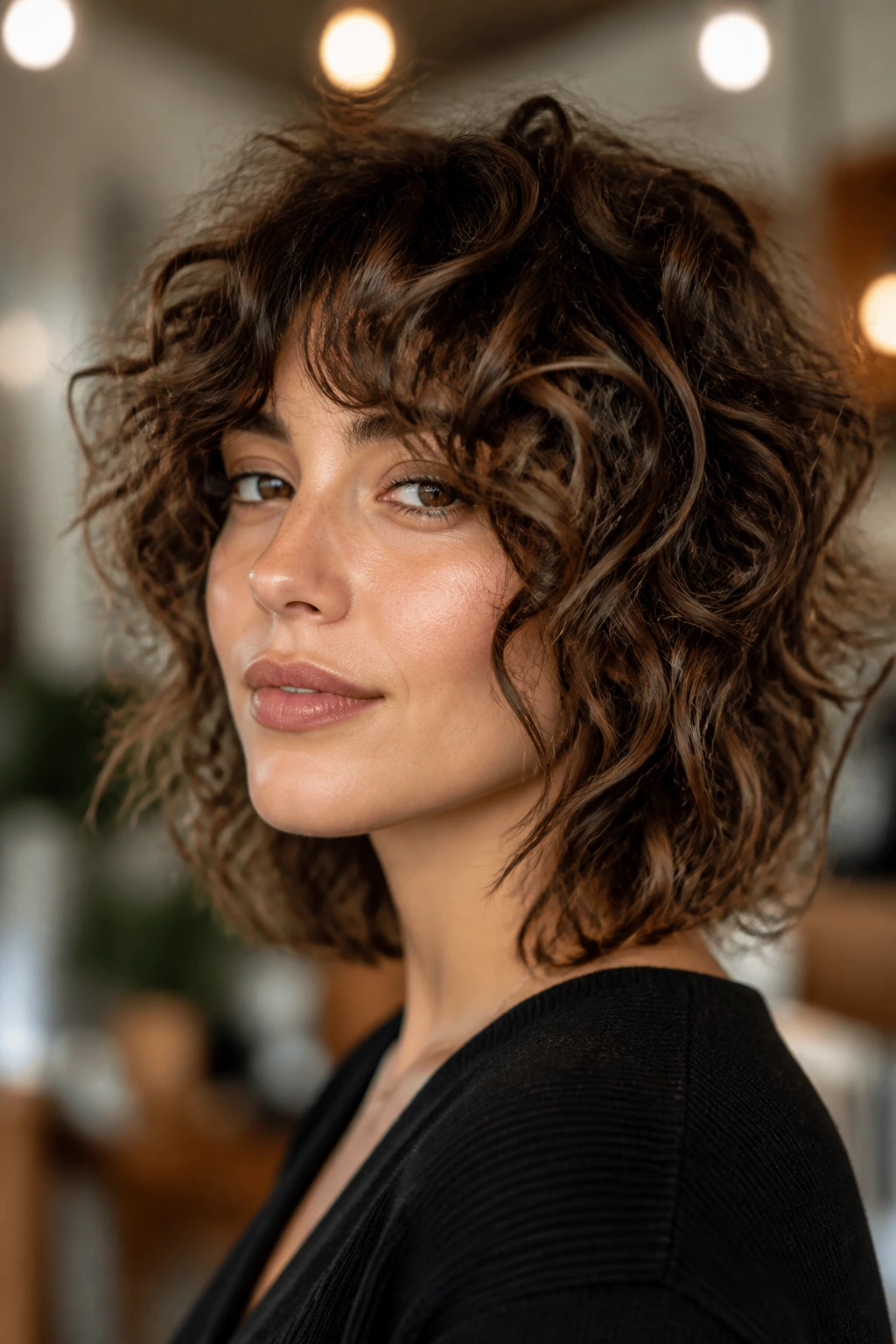
The first mistake is cutting the bob too blunt and too short at once. It sounds bold in the salon chair, then the curls dry up and fan out sideways. The fix is simple: leave a little more length than you think you need, especially if your hair has strong shrinkage.
Another common problem is over-thinning the ends. That creates frizzy, see-through tips that never seem to sit right, no matter how much product you use. Ask for internal layering instead of aggressive thinning shears unless your hair is exceptionally bulky and the stylist has a very clear reason.
People also fight the part too hard. If your curls naturally fall to one side, forcing a strict center part can make the shape look tense and flat. Try the part your hair already wants, then adjust by half an inch rather than making a dramatic change.
And then there’s product overload. Heavy creams, oils, and leave-ins can weigh down layers fast. Start lighter than you think. You can always add more. Taking it back out is the annoying part.
Variations and Adaptations to Try
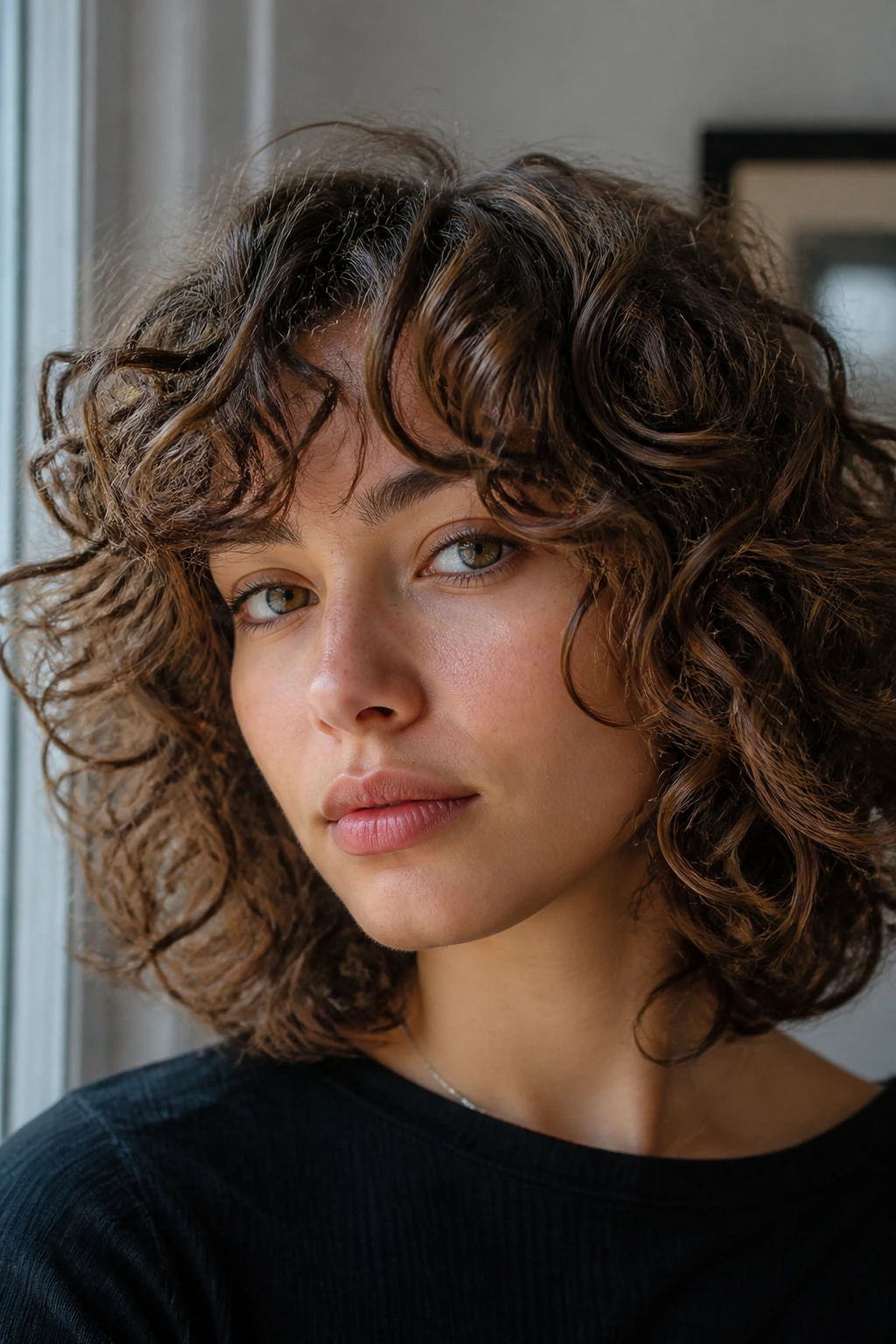
Bangs, But Softer: Add a loose fringe that blends into the face-framing layers. It softens the bob without chopping up the whole shape.
Shorter Crown, Longer Sides: If you want more lift, keep the crown layered a little shorter and leave the sides longer. That gives the bob a subtle wedge without going geometric.
Drier Finish, More Separation: Use a lighter gel and less cream if you like your curls piecey and airy rather than plush.
Thicker Perimeter, Less Layering: Fine curls often do better with a fuller edge and only a few internal layers. The bob looks denser, which is the whole point.
Color-Linked Shape: Add balayage or a money piece if you want the layers to show more clearly. Light catches the bends and makes the cut read sharper.
Frequently Asked Questions

Will a shoulder-length curly bob make my hair look shorter than I expected?
Usually, yes — curls shrink, and shoulder-length often means something closer to collarbone length when wet. That’s why stylists often leave the perimeter longer than the client first expects. The good news is that this length gives you room to adjust during the next trim.
Do layers make curly hair frizzier?
Not by themselves. Badly placed layers make curly hair frizzier. Good layering removes bulk where it helps and leaves the perimeter smooth enough to keep the shape controlled.
What’s better for this cut: diffusing or air-drying?
Diffusing gives you more root lift and more control over the finish. Air-drying is easier and often softer-looking, but it can flatten the crown if the hair is heavy. Many people use both: a little diffuser at the roots, then the rest air-dries.
Can fine curly hair pull off a layered bob?
Yes, but it needs a light touch. Too many short layers can make the ends look thin. Keep the perimeter fuller and add only enough internal layering to create lift at the crown and around the face.
How often should I trim it?
Every 8 to 12 weeks is a safe range for keeping the shape clean. If your curls grow fast or the layers are short and precise, you may want a touch-up closer to 8 weeks.
What should I do if one side curls tighter than the other?
Ask your stylist to balance the shape when the hair is dry, or at least partially dry, because that unevenness is normal on curly hair. In daily styling, let the looser side get a little more product and a little more diffusing time.
Can I wear this cut with a deep side part most days?
Absolutely. In fact, some layered curly bobs look better that way because the part creates lift and gives the front a softer sweep. Just don’t force the part so far over that the heavy side falls into your face all day.
What if the layers look choppy after a wash?
That usually means the product is too light, the hair was raked too much, or the layers were cut too aggressively for your curl pattern. Try styling in smaller sections and use a cream-gel combination to help the curls reconnect into bigger clumps.
The Shape That Keeps Working

A good shoulder-length curly bob doesn’t ask curls to behave like straight hair. It gives them a shape they can actually hold. That’s why layered versions are so useful: they account for shrinkage, bulk, and all the little asymmetries that make curls beautiful and annoying in equal measure.
The best version for you is the one that fits your curl density, your styling patience, and the amount of volume you actually want to see in the mirror. Some of these cuts are polished, some are messy, some lean sharp, and some feel almost weightless. All of them depend on the same basic truth: the layers have to serve the curl pattern, not fight it.
If you’re sitting on the fence, start with the softer shapes first — a collarbone halo bob, a rounded cloud cut, or an easy grow-out lob. They give you room to learn how your hair behaves at this length. After that, there’s plenty of room to get braver.
