



A stacked bob haircut can do something a lot of short styles never manage: it builds lift exactly where hair tends to go limp first. At the crown, at the nape, around the back of the head — those are the spots where a blunt, one-length bob can start to feel heavy or flat. A clean stack changes that. It lifts the silhouette, keeps the back neat, and gives the cut enough shape that it still looks intentional when you’ve been in it all day.
For women over 50, that structure matters more than the haircut trend cycle ever will. Hair often changes texture over time. It may get finer at the temples, coarser through the ends, or a little wavier in places that used to lie flat. A good stacked bob haircut works with those shifts instead of pretending they aren’t there. The result can be crisp, soft, airy, edgy, or polished — but it should never look pasted onto the head.
The best stacked bob is not the most dramatic one. It’s the one that gets the geometry right: shorter in the back, graduated through the nape, and shaped so the front falls where your face actually wants it to fall. That’s the sweet spot. Everything else is styling.
Why Stacked Bob Haircuts for Women Over 50 Keep Working So Well
- Built-in lift: The shorter, graduated back creates height at the crown without relying on teasing or a mountain of spray.
- Neckline control: A stacked nape keeps the back clean, which matters if you wear collared shirts, scarves, or statement earrings.
- Better balance for changing hair: Fine hair gets more body; thick hair loses the bulky shelf that can make a bob puff out at the wrong spot.
- Easy to personalize: A side part, fringe, longer front pieces, or soft texturing can change the mood without losing the shape.
- Gray hair looks deliberate: Silver, white, and salt-and-pepper tones show off the cut’s clean lines instead of getting swallowed by one heavy block.
- Faster styling time: Shorter back layers dry quickly, and that alone can make the cut feel much more practical than longer styles.
1. The Rounded Classic Stacked Bob
A rounded classic stacked bob is the one people picture when they hear the phrase, and for good reason. The back hugs the head, the crown rises gently, and the front stays close enough to the jaw to keep the line tidy. It has shape without looking fussy, which is a pretty hard balance to beat.
Why It Works
The rounded version is especially good when hair has lost some density at the top. The stack creates the look of fullness through the back, while the curve at the sides keeps the face from getting overwhelmed by width. If your hair is fine, this shape gives you the most return for the least styling effort.
A clean blow-dry with a medium round brush is usually enough. You want the ends to bend inward, not curl under so hard that the bob looks helmet-like. That little inward roll is what makes the shape feel finished.
- Best on straight to slightly wavy hair
- Keeps the neckline neat between trims
- Works nicely with side parts or soft center parts
- Looks sharp with earrings and open necklines
My favorite thing about this cut: it looks polished even when the styling is modest. That’s a useful trait, not a luxury.
2. The Soft Feathered Stacked Bob
A feathered stacked bob takes the same graduation in the back and softens the edges everywhere else. Think light, airy movement through the sides instead of a heavy, stacked block. The shape still has structure, but the ends move.
That softness matters if you want the haircut to feel less architectural and more forgiving around the cheeks. Feathering can take the edge off a strong jawline, soften a square face, and make thicker hair behave without losing the bob’s shape. It’s especially nice when you don’t want a severe outline.
The trick is restraint. Too much feathering and the cut starts to look wispy at the ends, which is not the same thing as soft. You want the barber or stylist to remove weight in a controlled way, usually with light point-cutting or careful texturizing near the perimeter.
Wear it with a loose side part and a round brush that bends the ends just a little. Done well, it moves when you walk. Not in a dramatic way. Just enough.
3. The Angled Stacked Bob With a Longer Front
Why does this shape feel so fresh even though it’s been around forever? Because the angle changes everything. The nape stays tight and lifted, while the front length drops forward toward the chin or even a bit below it, which creates a clean diagonal line across the face.
That diagonal is the whole point. It draws the eye downward in a smooth line, which can lengthen the look of the face and make the haircut feel a little more modern than a straight-across bob. It also gives you more to tuck behind the ear on one side, which is useful if you wear glasses or want to show off a necklace.
How to Wear It
This cut likes a smooth finish. A paddle brush will flatten the crown too much, so reach for a round brush or a vent brush with a concentrator nozzle. Blow-dry the top in the opposite direction first for lift, then guide the front forward to keep the angle visible.
If your hair tends to flip at the chin, ask for the front to be cut with that in mind. A slightly longer front can be a blessing. A too-short angle can land in the awkward zone and bounce outward at the wrong moment.
4. The Choppy Textured Stacked Bob
Picture a stacked bob that has had just enough attitude added to it. The back still rises, but the ends are broken up with choppy layers, so the shape reads more piecey than smooth. This is the cut for hair that likes movement and a little grit.
It’s a strong choice for thicker hair because the texture removes some of the dense, blocky feel that can make a bob sit too heavy around the jaw. It also works well if your hair has a natural bend, since the layers encourage that movement instead of fighting it. You get a shape that can look relaxed with minimal styling, which is handy on days when a round brush sounds like a bad joke.
- Best if your hair puffs out at the sides
- Works with a texturizing cream or a matte paste
- Needs less polish than a sleek bob
- Looks especially good with highlights, because the pieces catch the light differently
The line I’d watch here: don’t let the texture get so choppy that the silhouette disappears. The stack still has to be visible, or the whole cut just turns into “short hair with layers.”
5. The Silver-First Stacked Bob
A silver-first stacked bob does something smart: it treats gray hair as part of the design instead of something to hide. The stack gives the silver strands a clean shape to live in, and that shape matters because gray hair often has more texture and more shine variation than pigmented hair.
When this cut is paired with a bright silver, white, or salt-and-pepper tone, the layers become easier to read. The hair looks intentional. Crisp around the nape, light at the crown, and clear at the sides. No muddy heaviness.
The best version keeps enough length in front to frame the face softly. That matters because silver hair can look stark if the lines are too severe. A little movement around the cheekbone or jaw keeps the haircut from feeling harsh, especially on fine hair that has gone a bit wiry.
A purple shampoo can help, but don’t overdo it. Gray hair can turn flat and slightly chalky if you chase cool tone too aggressively. I’d rather see lively silver than dull lavender any day.
6. The Side-Swept Fringe Stacked Bob
A side-swept fringe changes the whole personality of a stacked bob. Without it, the cut can feel clean and architectural. With it, the haircut softens fast, and the eye goes diagonally across the face instead of stopping at the forehead.
That makes a difference if you want to soften forehead lines, balance a wider forehead, or take attention away from a very straight hairline. It also works nicely for women who wear glasses, because the fringe can sit above the frame instead of fighting with it. The side-swept shape is more forgiving than blunt bangs, which can be a little needy.
What Makes It Different
The fringe should blend into the front layers, not sit on top of them like a separate piece. Ask for movement, not a heavy curtain. If the bangs are too dense, they can make the whole haircut feel boxed in.
A side part with a soft bend at the fringe usually gives the best result. It looks relaxed, and it doesn’t require perfect styling to make sense. A little bend at the root. A sweep. Done.
7. The Curly Stacked Bob
Curly hair and stacked bobs have a tricky relationship, and that’s exactly why this cut works when it’s handled well. The stack removes bulk through the nape, while the curly top keeps the silhouette from looking too flat or too severe. You get a bob that has shape without turning into a triangle.
The key is cutting the curls in a way that respects shrinkage. If the back is stacked too aggressively on curly hair, the cut can spring up far shorter than expected and leave the shape unbalanced. Better to leave a little extra length and let the curl pattern show the line as it settles.
This cut loves a diffuser. Scrunch in a lightweight curl cream, dry on low heat, and stop touching it while it dries. Curly stacked bobs can go frizzy fast if you keep raking your fingers through them.
If your curls are loose, the shape will look softer and more modern. Tighter curls create a fuller silhouette with a bit more lift around the crown. Either way, the stack helps keep the neckline from getting bulky.
8. The Razor-Soft Stacked Bob
Not every stacked bob needs crisp edges. A razor-soft version trades some of that precision for a more broken, airy outline. The back is still stacked, but the ends are softened with a razor or light slide-cutting so the shape feels less blunt.
This is the cut I’d point to if you want movement without losing the bob’s backbone. It’s especially useful on medium-density hair that tends to sit in one heavy sheet. The razor work helps break up the line so the hair falls in lighter sections.
Why It’s a Good Middle Ground
It’s softer than a classic bob, but it keeps more polish than a shag. That middle ground is useful if you want your haircut to look current without getting too layered or too messy. You still have a shape to work with. You just don’t have to fight such a hard edge.
Razor cuts can be wonderful on straight hair, but they need a light hand. Too much slicing and the ends go see-through. That’s not softness. That’s damage wearing a haircut costume.
9. The Sleek Straight Stacked Bob
A sleek straight stacked bob is the version that says, “I like a clean line and I’m not apologizing for it.” The back is graduated, the front is smooth, and the whole cut sits with a crisp, polished finish that makes straight hair look expensive without being complicated.
This is one of the best stacked bob haircuts for women over 50 who want structure without frills. The stack gives lift in the back, but the sleek finish keeps the overall look sharp. It’s especially flattering if your hair naturally lies flat and you want the cut to do the work.
You need a good heat protectant here. Not a greasy one. A light mist or cream that won’t gum up the roots. Then use a flat brush or a round brush depending on how much bend you want at the ends.
A center part can make this feel a little more modern, but a side part softens the face better. If your hair is very straight and fine, avoid over-layering the sides. You want clean lines, not thin ends that look frayed under bright light.
10. The Neck-Grazing Stacked Bob
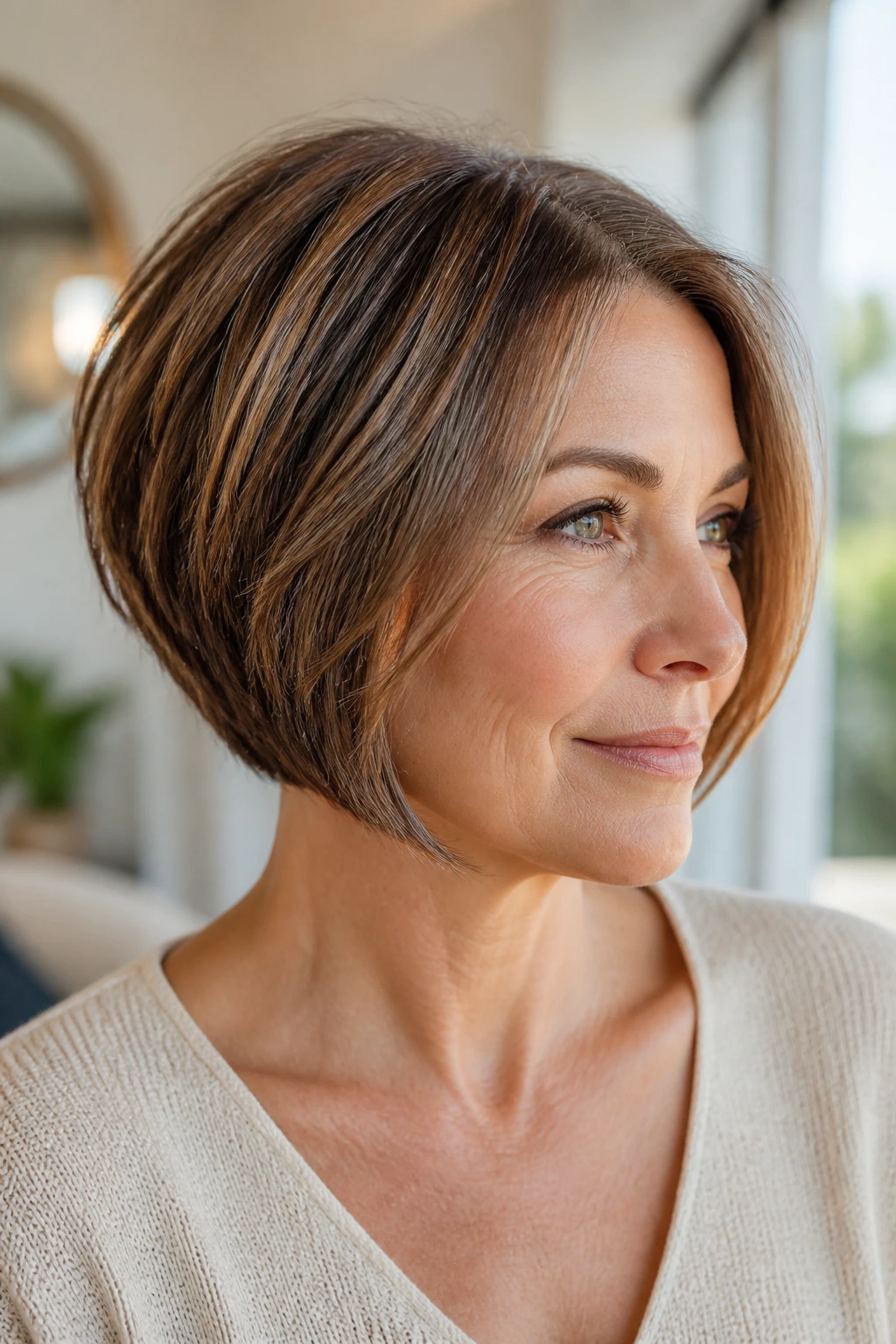
The neck-grazing stacked bob gives you a little more length than the classic short stack, and that tiny bit of extra length changes the wearability quite a bit. The back still lifts, but the front and sides skim the neck instead of sitting high above it.
That makes it a smart choice if you like the idea of a bob but don’t want your hair too close to the face. It also works if you want to tuck one side behind the ear or keep enough length for a small wave. The cut feels less severe and often grows out more gracefully.
- Good for women who want a softer transition from longer hair
- Comfortable if you dislike very short napes
- Easy to style with a blow-dry brush
- Looks balanced on oval, heart, and square faces
The risk here is losing the stack if the cut gets too long in the back. If the nape length creeps down too far, the silhouette starts to collapse. The back should still show lift. Otherwise it just becomes a longer bob with not enough structure.
11. The Asymmetrical Stacked Bob
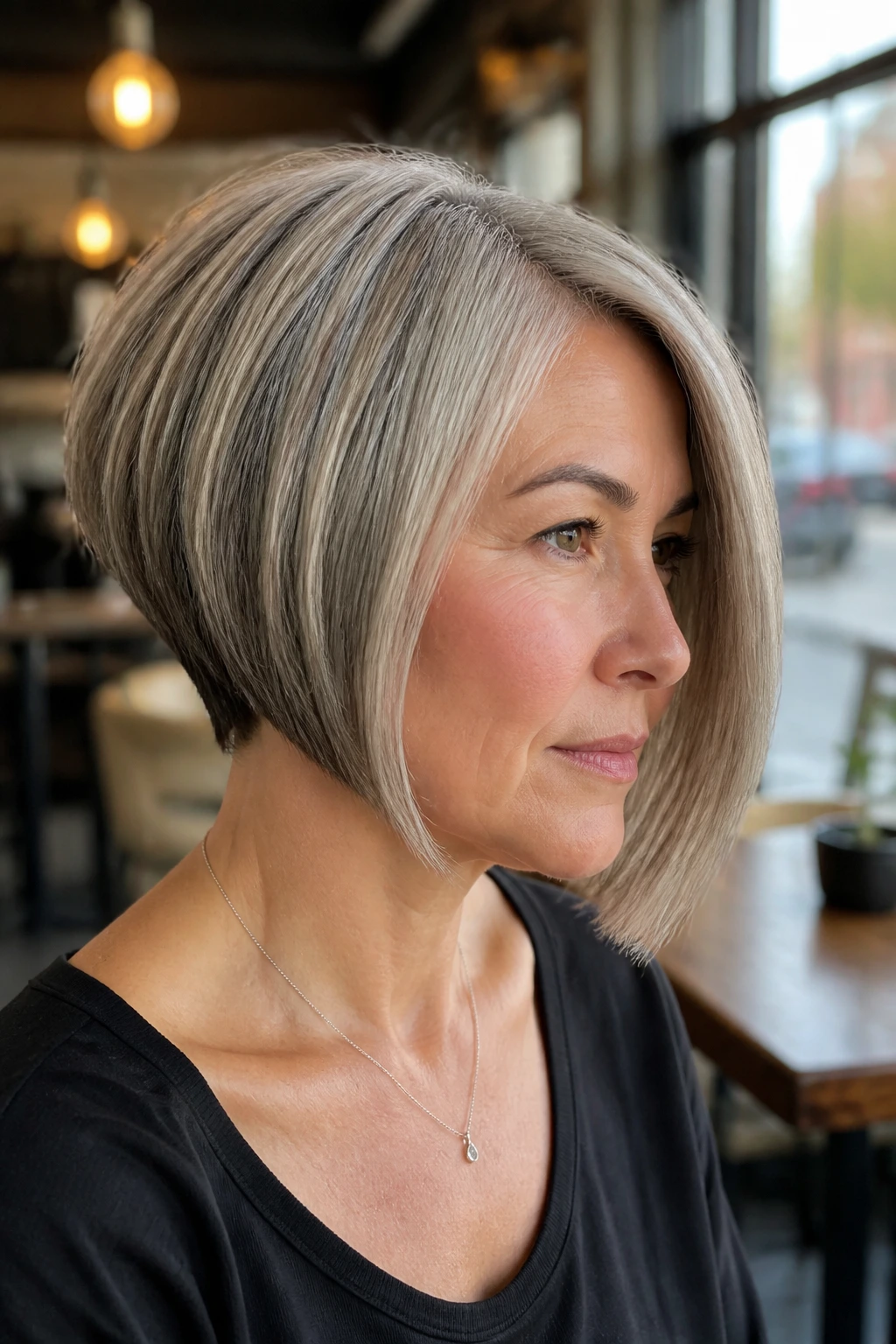
An asymmetrical stacked bob leans into the drama a little. One side is longer, the other side is tighter, and the stack in back anchors the whole shape so it doesn’t feel random. Done well, it looks sharp. Done badly, it looks like someone forgot to finish the haircut.
This is a good option if you like a stronger fashion edge but still want the practical benefits of a stacked back. The asymmetry can sharpen a soft face, create movement around the cheekbones, and make a simple outfit feel more deliberate. It also gives you room to play with a deep side part if your face suits it.
The best asymmetry is subtle enough that the haircut still reads as a bob, not a stunt. A quarter-inch here or there won’t matter much. A huge difference between sides can be hard to live with unless you want a much bolder effect.
If you wear glasses, check how the longer side lands near the frame. That little detail can make or break the whole thing.
12. The Feathered Volume Stacked Bob
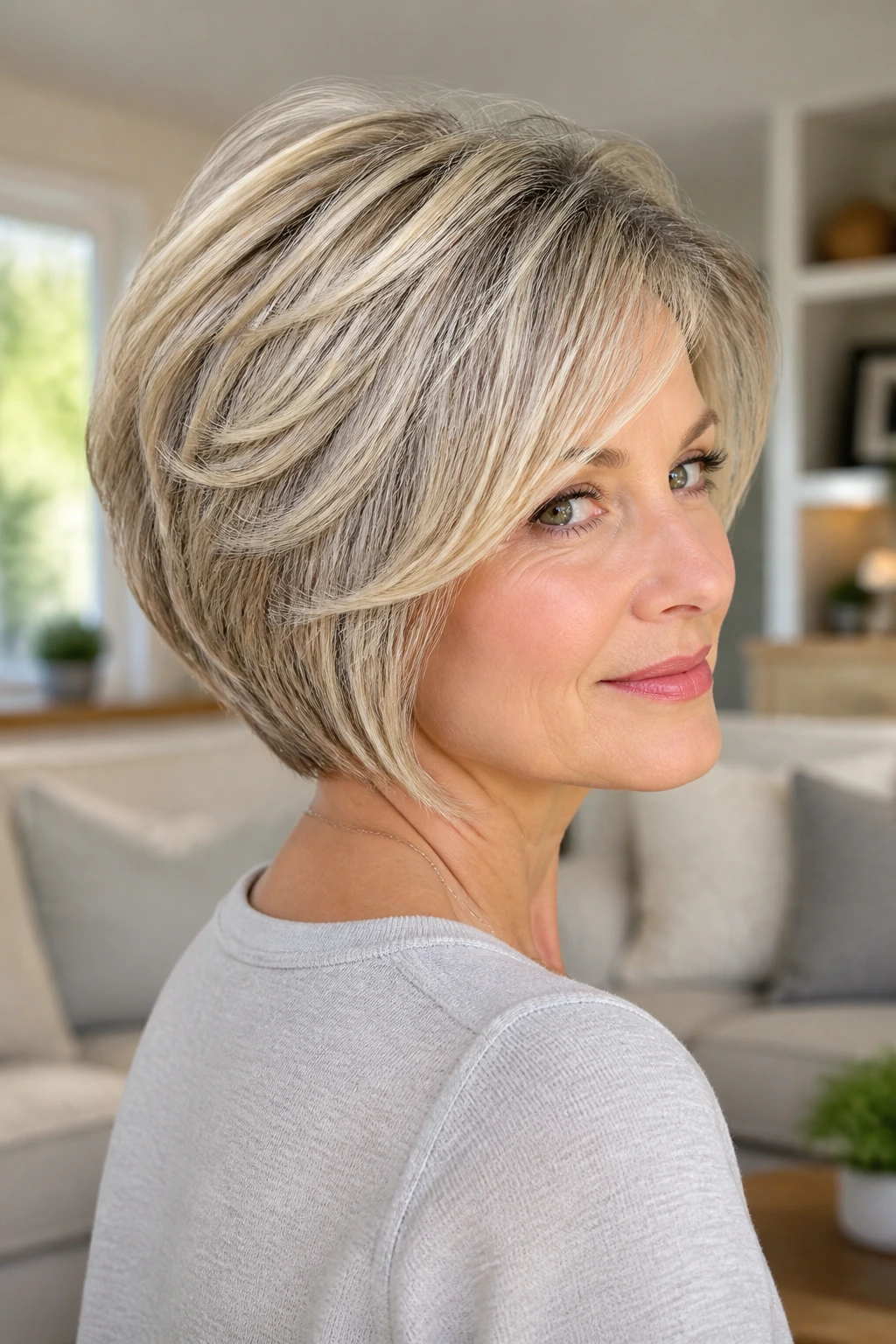
Need a haircut that adds lift without looking stiff? This is the one. A feathered volume stacked bob uses soft internal layering to build fullness at the crown and through the top, which is useful if your hair has gotten finer and you miss that old sense of body.
The stack in back does the heavy lifting, but the feathering keeps the top from collapsing into a flat cap. That matters. A lot of older cuts fail because they make the back look tidy while the top goes limp. This one tries to fix both.
How to Get the Most From It
Use a root-lifting mousse on damp hair and direct the airflow up and away from the scalp as you dry. Then bend the ends under with a round brush only at the very end. You want lift, not curls.
This shape can also take a light teasing at the crown if you’re careful and use a comb instead of a brush. Just a little. Enough to support the shape, not enough to create a nest.
13. The Wedge-Inspired Stacked Bob
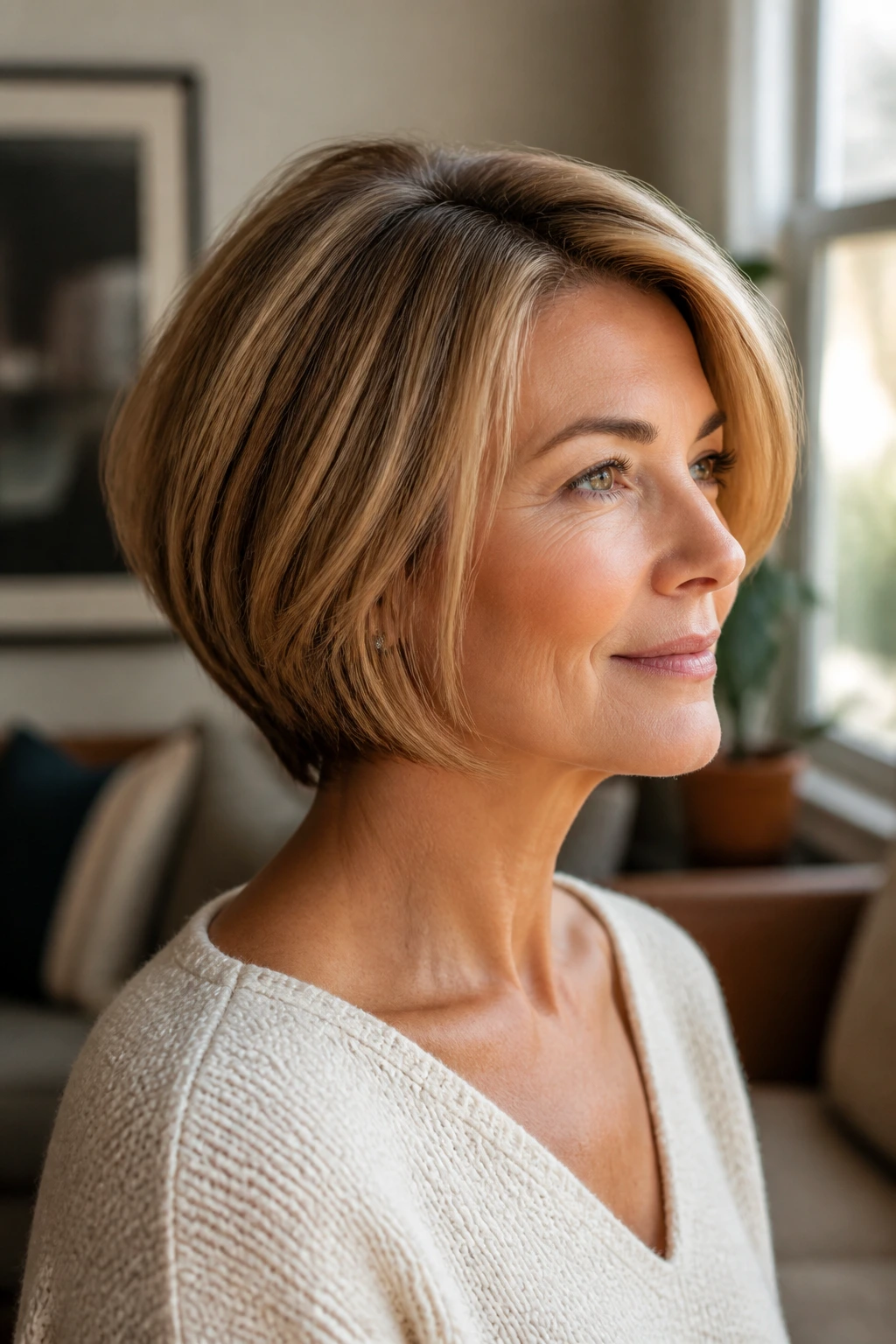
The wedge-inspired stacked bob borrows from the classic wedge cut, but it keeps the modern softness of a bob. The back is more sharply graduated, and the outline builds upward in a way that gives the head a lifted, rounded profile. It’s a strong, clean shape.
That shape suits women who want clear structure and don’t mind a cut that has a bit of attitude. It works especially well on straight or slightly wavy hair because the silhouette stays readable. On very dense hair, though, the wedge effect needs careful handling or it can become bulky near the crown.
A good wedge-inspired bob should not look stiff. If the perimeter is too hard and the layers are too short, the whole cut can start to feel dated in a hurry. Keep the front slightly softer than the back, and you keep the shape from going boxy.
It pairs nicely with bold glasses frames and simple necklines. The haircut already has a strong line, so the rest of the look doesn’t need to fight it.
14. The Deep Side-Part Stacked Bob
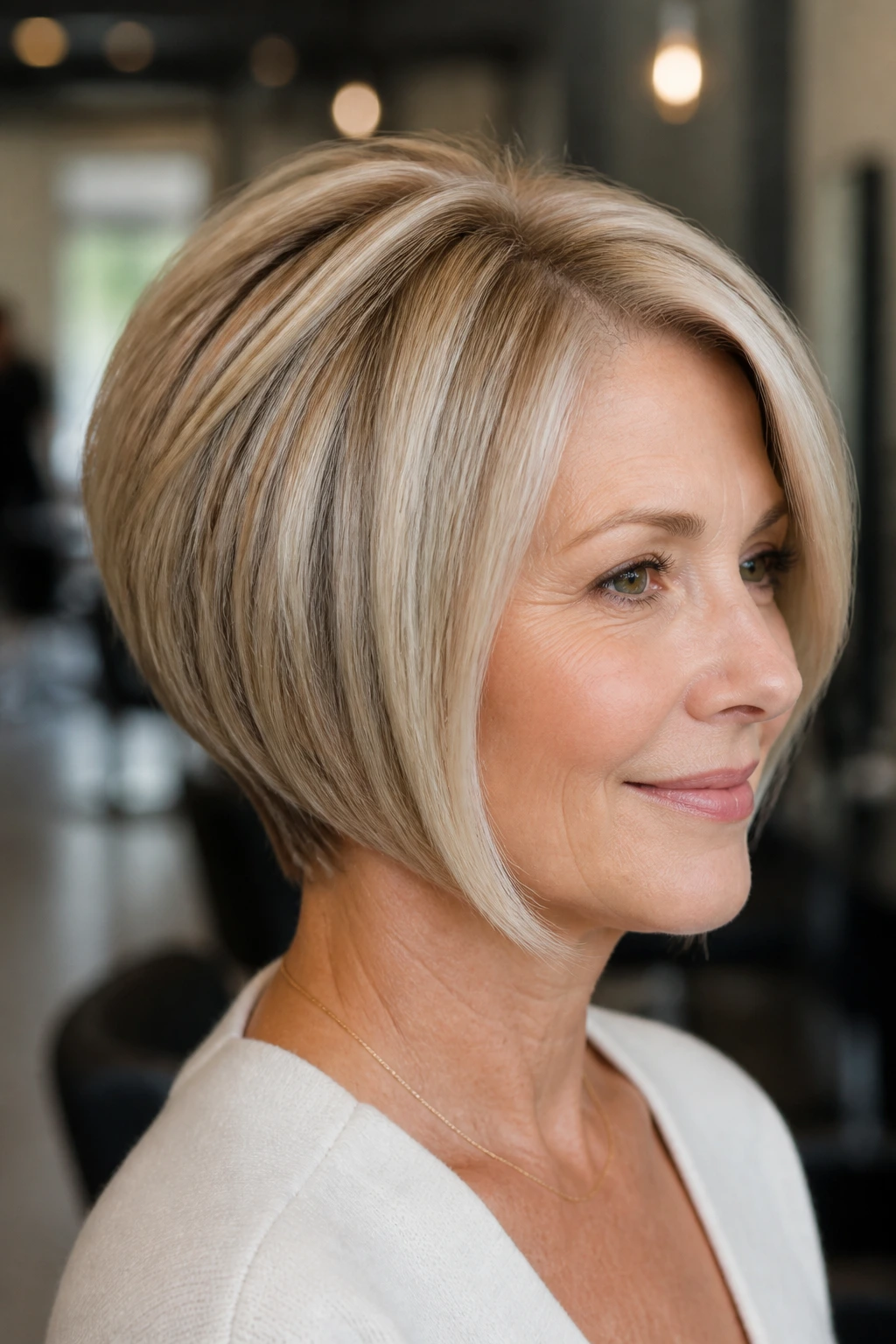
A deep side-part stacked bob changes the visual weight of the haircut without changing the cut much at all. That’s the neat part. You can take the same stacked shape and make it softer, more dramatic, or more face-framing just by moving the part over a few inches.
The deeper part gives you lift at the roots on the heavier side and a sweeping line across the forehead on the other. It’s a clever way to create movement in fine hair or to redirect attention if one side of your face has a stronger contour than the other. It also helps if your hair naturally resists being parted in the middle.
If your hair falls flat at the crown, this is a good styling move. A little root spray at the heavier side and a quick blow-dry against the part can lift the whole cut. Then smooth the front with a brush and let the bob fall into place.
The cut doesn’t need to be extreme to work. Sometimes a two-inch shift in the part is all it takes. Tiny change. Big difference.
15. The Salt-and-Pepper Stacked Bob
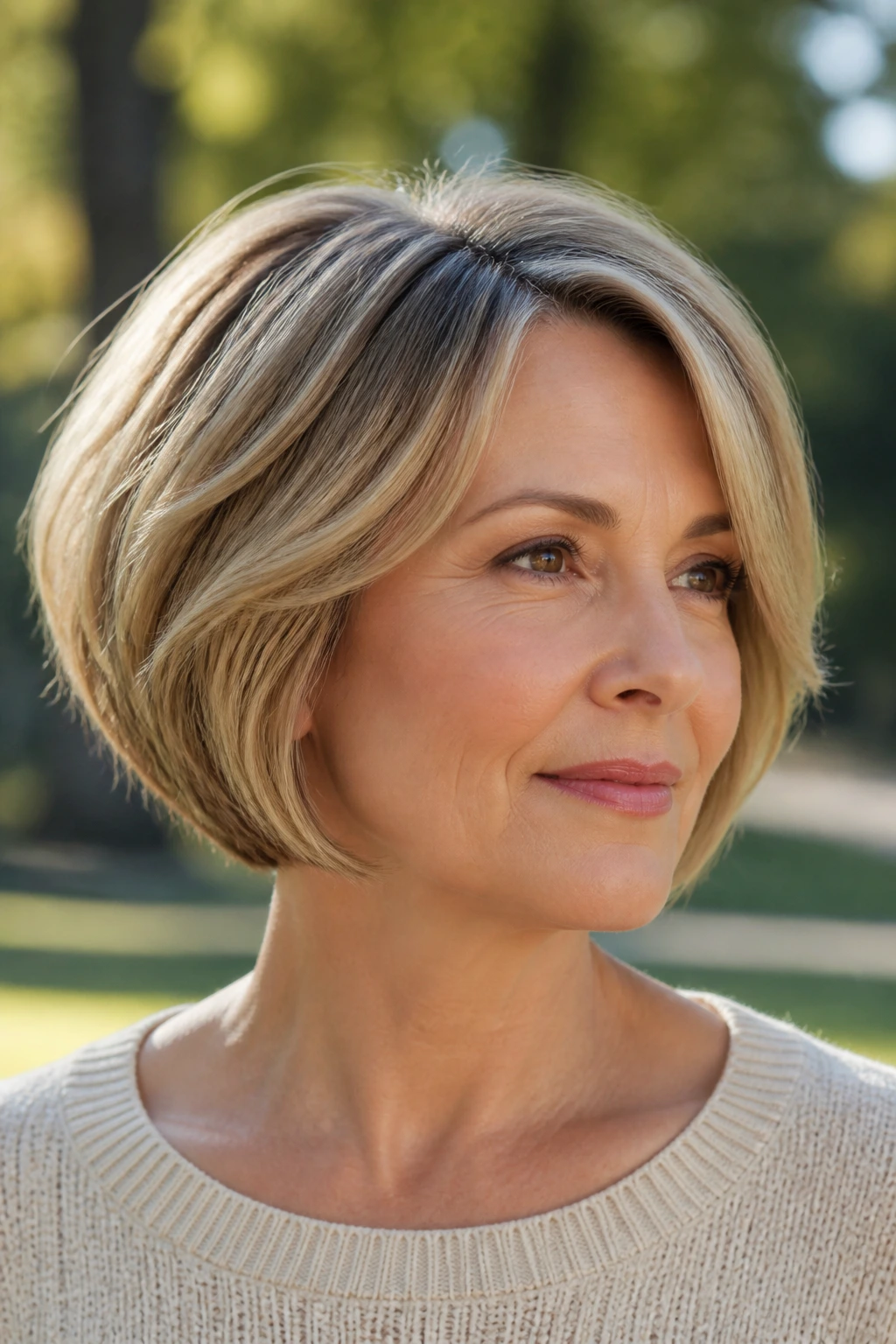
Salt-and-pepper hair has texture, sparkle, and a bit of unpredictability in the light. A stacked bob lets that mix show off instead of disappearing into a heavy shape. The layers catch the silver and darker strands in different places, which gives the cut movement even when you’ve barely styled it.
I like this version because it doesn’t ask the color to do all the work. The haircut does its part. The natural mix of tones does the rest. Together, they create a bob that looks lived-in in the best possible way.
If your salt-and-pepper hair tends to get coarse, ask for enough softness around the edges so the cut doesn’t puff. If it’s fine, keep the back graduated and the perimeter clean. Either way, the stack helps the mixed color look more dimensional.
A little shine cream on the ends can be useful here, but only a little. Too much and the silver loses that crisp, reflective quality that makes this color combination so appealing.
16. The Wash-and-Go Stacked Bob
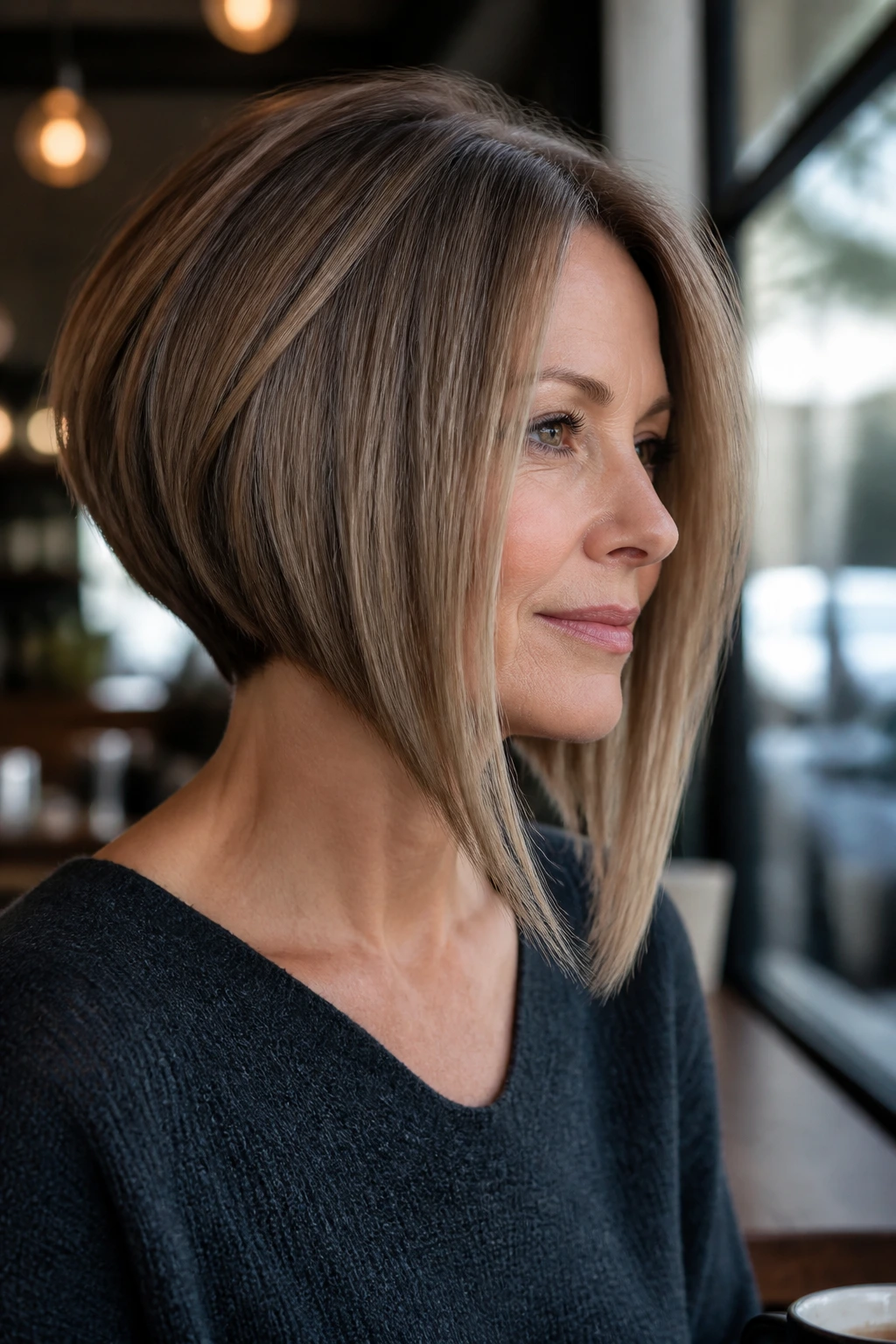
Can a stacked bob really be low-maintenance? Yes — if the cut is designed for your texture instead of against it. A wash-and-go stacked bob keeps enough structure in the back to hold shape, while the front and crown are cut to fall naturally with minimal styling.
This is a smart choice for women who want a bob that doesn’t demand a full blowout every time it’s washed. It works best on hair with a bit of natural bend or wave, because the movement helps the stack show itself. Straight hair can wear it too, but it may need a quick bend with the brush at the front.
How to Use It
Use a lightweight leave-in conditioner and a small amount of mousse or curl cream, depending on your texture. Scrunch, shake, and let the hair dry in its own direction. If needed, refine the crown with your fingers and a touch of diffuser heat.
The important part is the cut. If the back isn’t shaped carefully, there’s no wash-and-go magic at all. There’s just hair that won’t cooperate. The right stack makes the air-dry version possible.
Why the Stack Changes the Shape of the Head
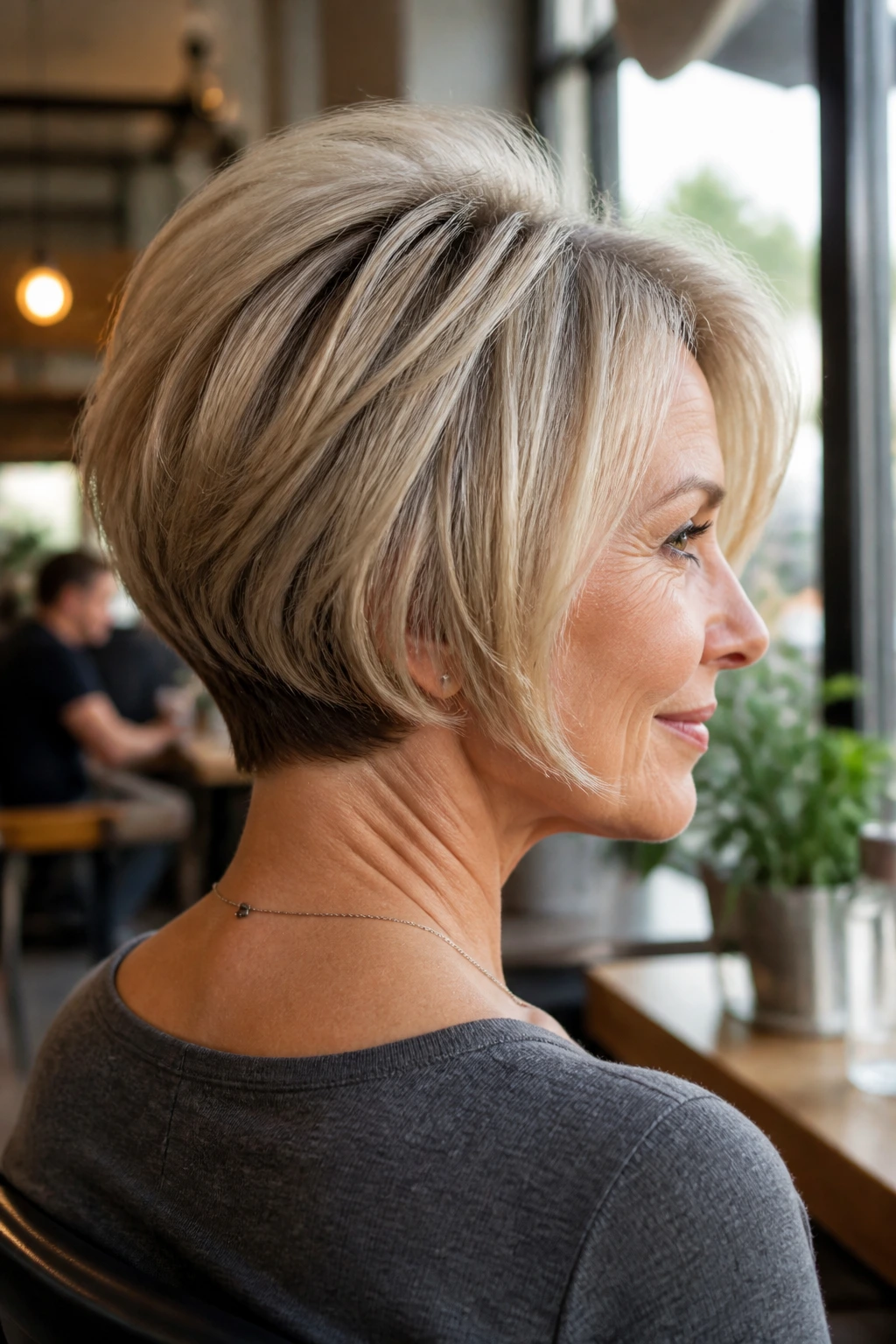
A stacked bob works because it redistributes weight. That’s the whole story, really. Shorter layers in the back move the bulk upward, the nape gets cleaner, and the crown has room to rise instead of collapsing into the neck.
That matters more than people think. A blunt bob can look fine when you leave the salon, then lose its shape as the day goes on. Wind, humidity, natural movement, and even the weight of your own hair can push it downward. A stacked cut resists that collapse because the geometry is doing the work, not just the styling products.
The other advantage is proportion. Hair that has thinned a little at the temples or grown heavier through the ends can make the face look out of balance. A good stack brings the eye up and back. It gives the head a tidier silhouette from every angle, and it usually makes earrings, collars, and necklines look better too.
Essential Tools for Styling a Stacked Bob
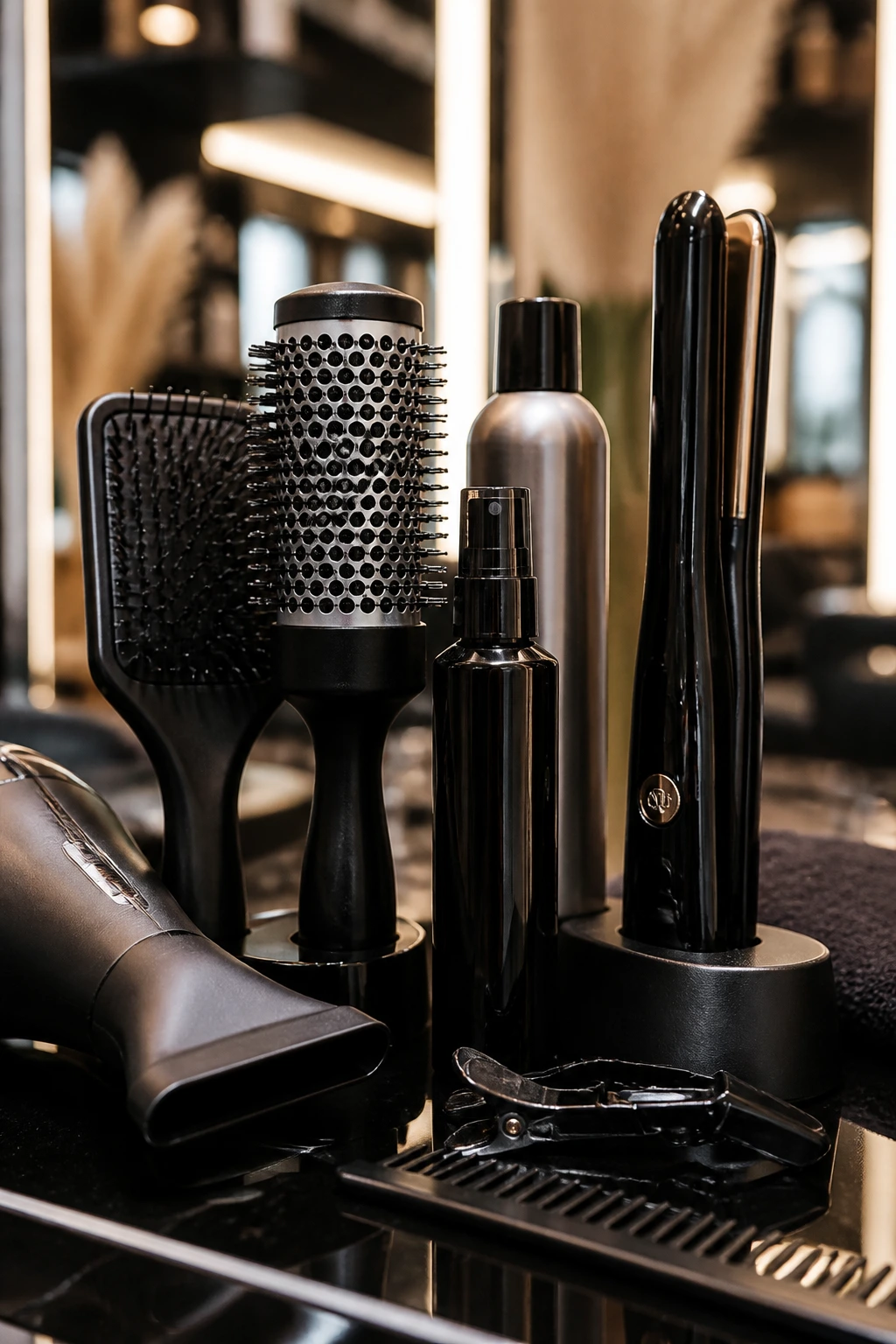
- 1.5-inch to 2-inch round brush: Best for building bend through the front and keeping the back rounded.
- Blow dryer with a concentrator nozzle: Directs the airflow so the cut keeps its shape instead of frizzing out.
- Vent brush: Handy for a fast rough-dry, especially on fine hair that falls flat easily.
- Heat protectant spray or cream: Keeps the ends from drying out when you smooth the bob with heat.
- Root-lifting mousse: Gives the crown some backbone without making the hair sticky.
- Texturizing spray: Useful for choppy, feathered, or asymmetrical versions that need a little grit.
- Small flat iron: Good for polishing the front pieces or bending out a stubborn flip.
- Sectioning clips: Keep the back and sides under control while you dry them in sections.
- Hand mirror: Lets you check the nape and see whether the stack is sitting cleanly.
- Light serum or finishing cream: One small pump is enough to tame flyaways on sleek or silver cuts.
What to Tell Your Stylist Before the First Snip
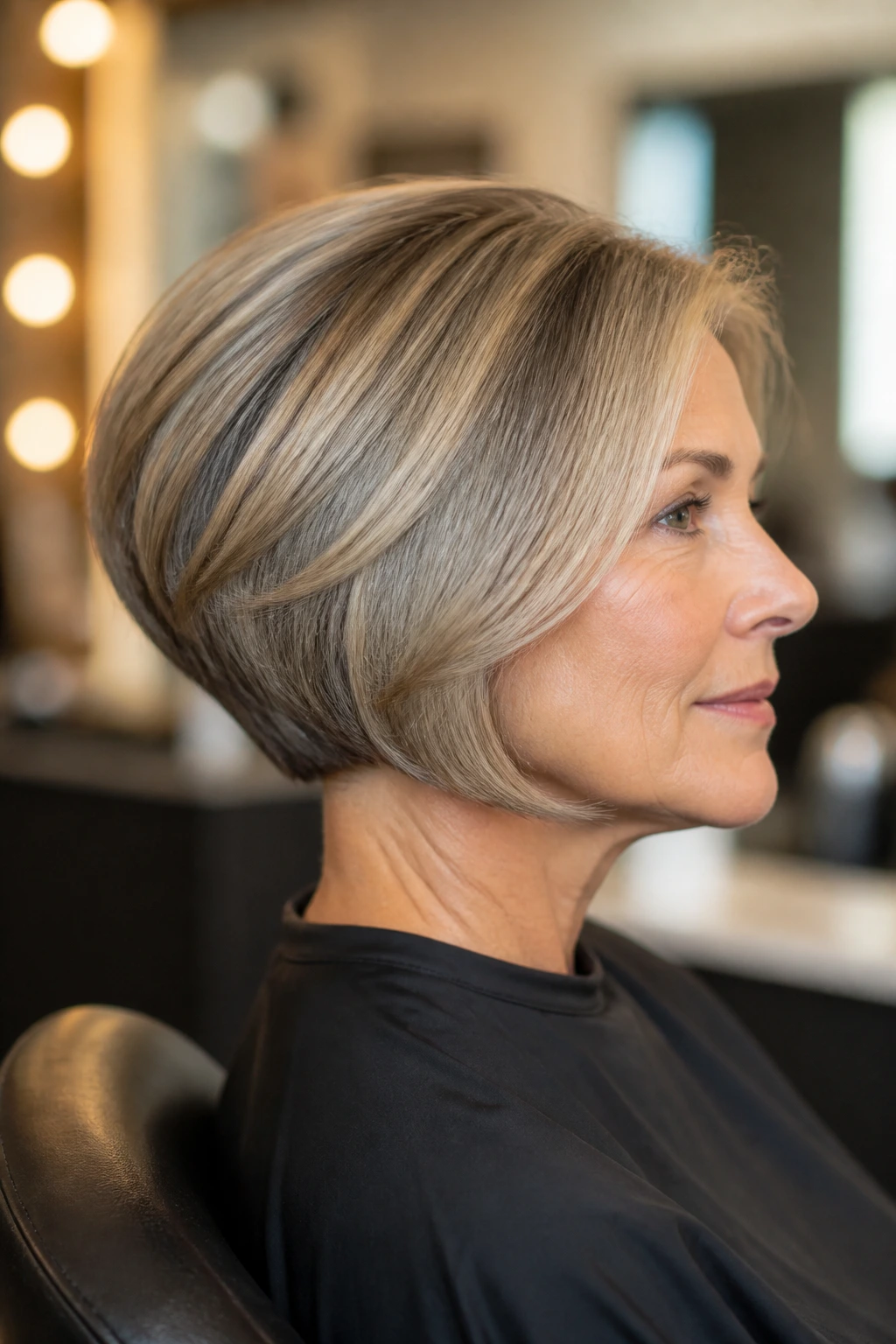
The fastest way to get the wrong bob is to say, “I want it shorter.” Short is not a shape. Short is a length. A stacked bob depends on graduation, and that means your stylist needs to know where the weight should sit, how much neck you want to show, and whether you want a rounded, angled, soft, or choppy finish.
Bring photos from the back, side, and front if you can. The back view matters more than people think. A stacked bob can look completely different depending on how the nape is handled. If you wear glasses, mention that. If your hair has a strong cowlick at the crown or along the neck, mention that too. Those little growth patterns change the cut more than most people expect.
If your hair is fine, ask for enough perimeter density that the ends don’t go wispy. If your hair is thick, ask where the bulk should come out so the back doesn’t puff like a bell. And if you want the cut to grow out neatly, say that out loud. Some stacks can be made sharper; others should be left a little softer so the grow-out doesn’t turn into an awkward month.
How to Style a Stacked Bob on Busy Mornings
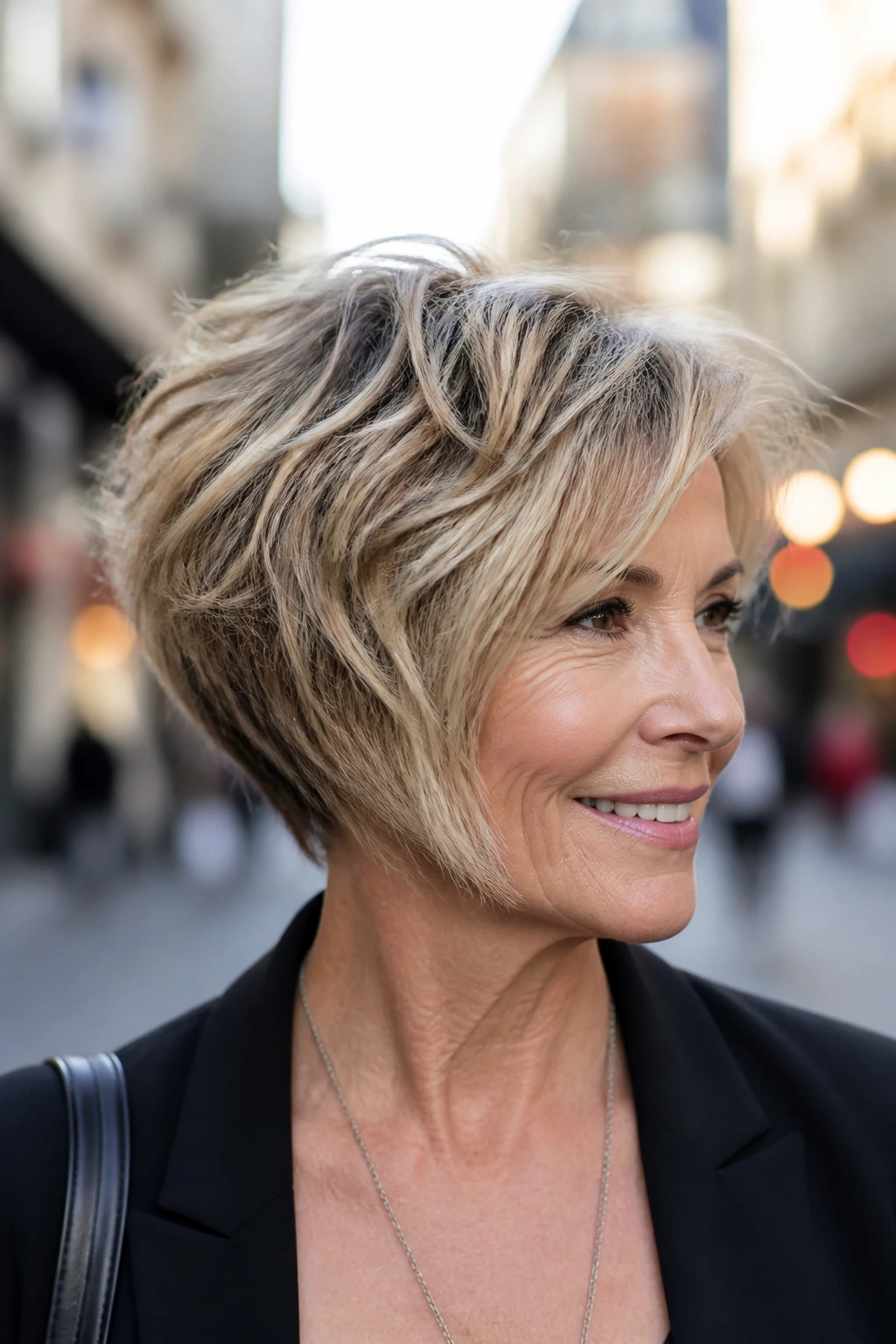
Fastest polish: Rough-dry the roots until they’re about 80 percent dry, then switch to a round brush only on the top and front. That keeps you from spending ten extra minutes drying parts of the hair that don’t need perfect attention.
Best lift trick: Lift the crown with the brush and direct the dryer upward from underneath the section. Hold for a few seconds, then let the hair cool in place. Heat sets the shape, but the cooling is what makes it stick.
Best product move: Use mousse on damp roots for fine hair or a smoothing cream through the mids and ends for thicker hair. Don’t pile on both. A stacked bob can go heavy fast if you load the cut with too much product.
Best day-two fix: Mist the roots with dry shampoo, then re-bend the front pieces with a small flat iron or a brush and dryer. You do not need to wash the whole thing again. Most stacked bobs wake back up with a quick refresh at the crown and around the face.
Common Mistakes That Flatten or Puff Out the Shape
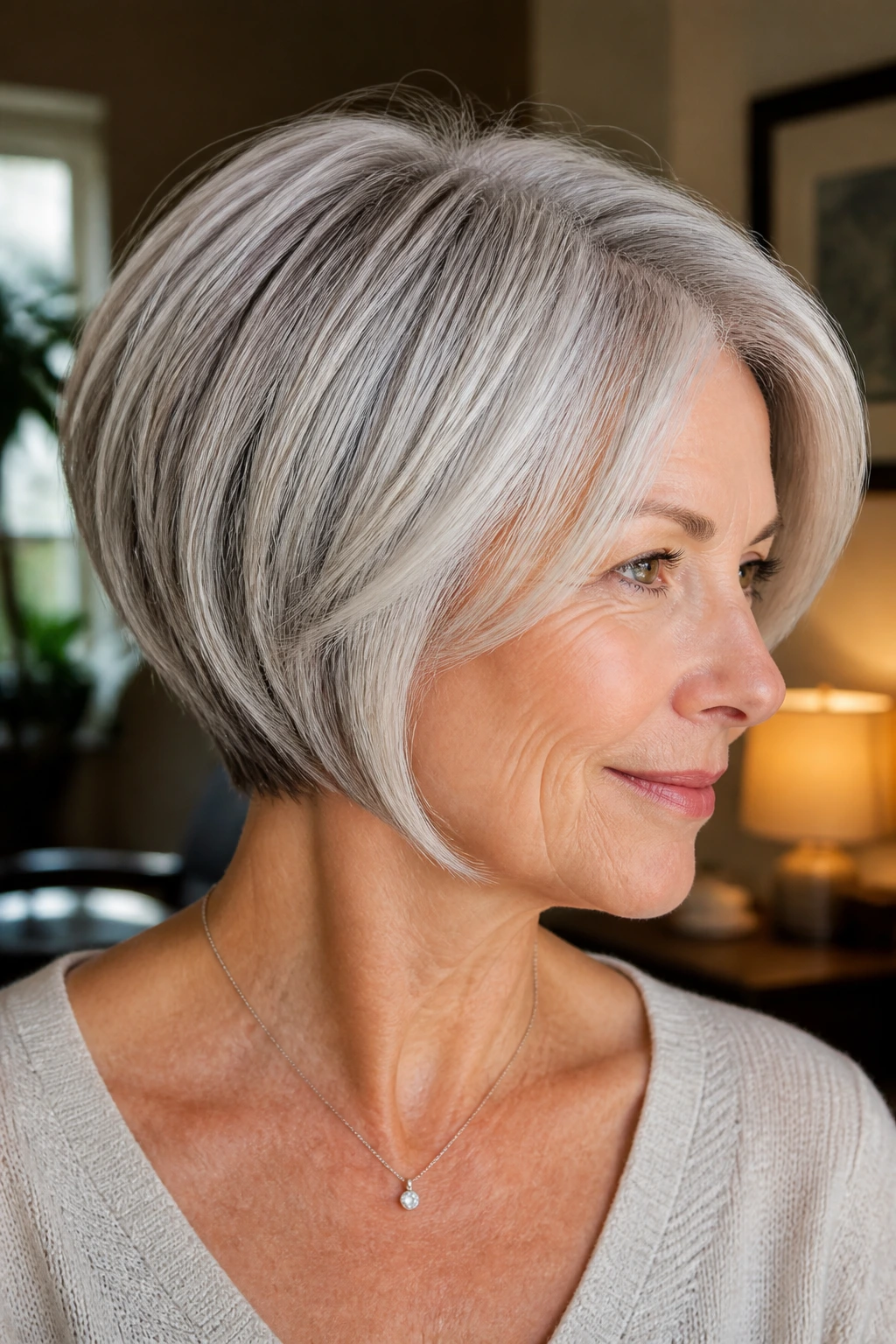
- Making the back too long: If the nape sits too low, the stack loses its lift and the haircut becomes a plain bob. The fix is a cleaner graduation through the back.
- Over-thinning fine hair: Too much texturizing on already light hair leaves the ends looking scraggly. Ask for shape, not feather dust.
- Ignoring the crown: A stacked bob without root lift can collapse at the top and make the back look heavy. Dry the crown first, not last.
- Cutting the front too blunt for your face: A hard front line can feel boxy around the jaw or chin. A slight angle or soft face-framing piece solves that.
- Using heavy creams on sleek cuts: Thick product makes the back sag and kills the clean line. Use a lighter serum or a small amount of mousse instead.
- Letting the neckline grow too long between trims: The shape starts to blur fast once the nape fills in. The stack is the part that shows wear first.
Variations and Adaptations to Try
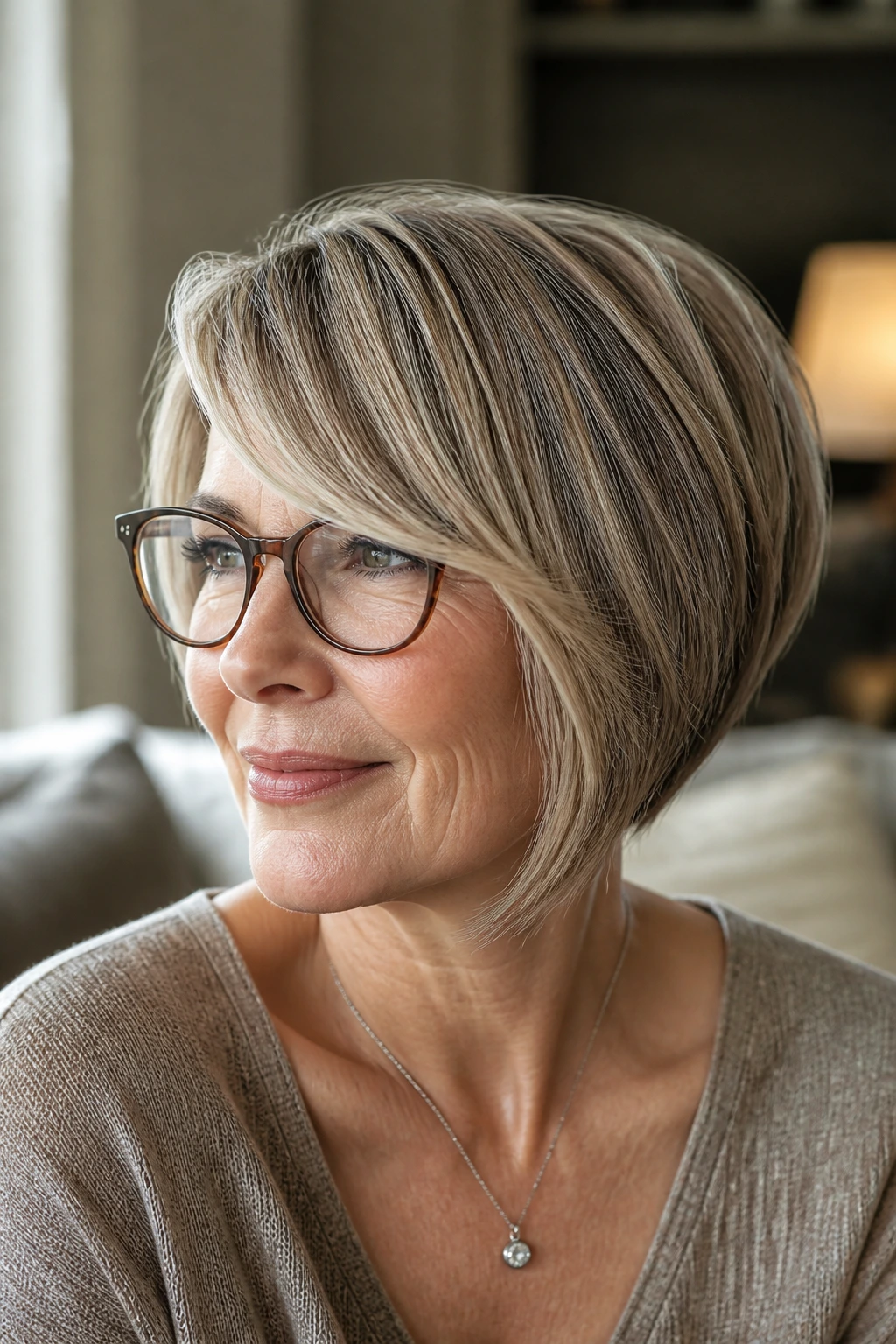
The Soft Collarbone Stack
Keep the front just below the jaw and let the back rise gently instead of sharply. This version feels easier if you’re coming from longer hair and don’t want a big change all at once.
The Glasses-Friendly Frame
Leave a little more length at the sides and keep the fringe soft so it doesn’t crowd the temples. This works well when you want the haircut to sit around frames instead of fighting them.
The Gray-Blend Dimension Cut
Pair the stack with fine highlights or lowlights that follow the shape of the cut. The dimension helps silver strands show movement instead of turning into one flat mass.
The Curly Crown Lift
Add more internal layering through the top and keep the nape neat. This lets curls build height at the crown while the bottom stays controlled.
The Low-Heat Air-Dry Version
Ask for a stack that supports your natural texture, then style it with leave-in conditioner and a small amount of cream. It’s ideal if you don’t want to blow-dry every time you wash your hair.
How to Keep the Line Sharp Between Salon Visits

A stacked bob looks best when the nape stays clean. That part grows out first, and once it does, the whole cut starts to lose the shape that made it worth having in the first place. Most people can stretch a bob a little longer than they think, but the back is the giveaway.
A trim every 6 to 8 weeks is a solid rhythm for keeping the stack visible. If your hair grows quickly or your neckline is very visible, you may want a small cleanup sooner. Even a tiny trim around the nape and sideburns can buy you a lot of time.
At home, don’t overload the cut with heavy conditioner near the roots. That’s one of the fastest ways to flatten the back. Use conditioner from mid-length to ends, rinse thoroughly, and keep the root area light. If your hair kicks out at the neck, a quick pass with a small brush and dryer after washing usually settles it more reliably than adding more product.
Frequently Asked Questions
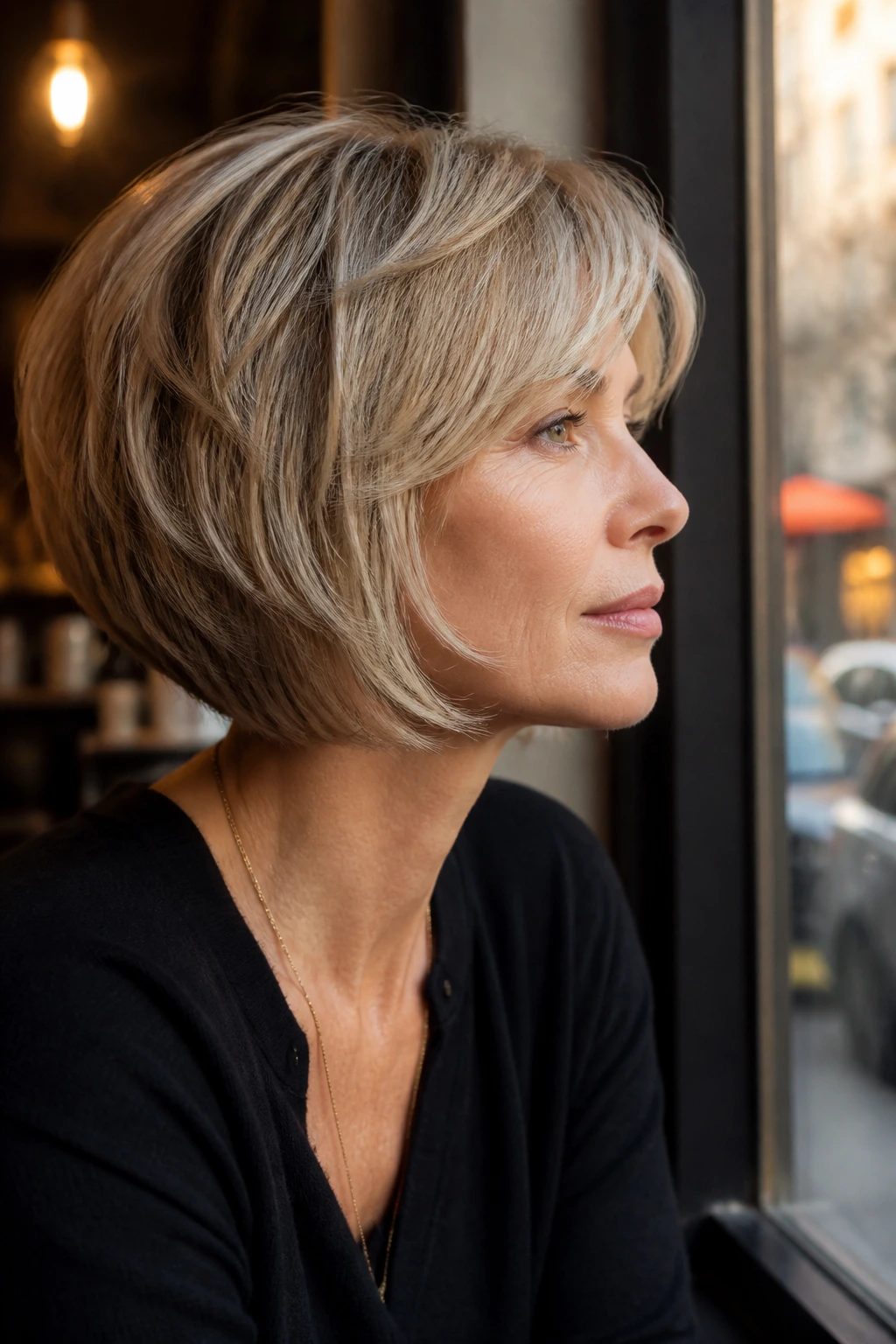
Is a stacked bob haircut flattering for fine hair after 50?
Yes, especially if the back is cut with enough graduation to build lift. Fine hair often looks better in a stacked shape than in a blunt bob because the cut creates body where the hair tends to fall flat.
Will a stacked bob work on curly or wavy hair?
It can, but the styling has to respect shrinkage and movement. Wavy hair usually gives the stack a soft, easy shape, while curly hair needs a careful cut so the back doesn’t spring up too short.
How short should the nape be?
Short enough to show a clean shape, not so short that it looks severe or grows out in a week. For most people, the right length leaves a visible curve at the neckline without exposing too much scalp or creating a hard shelf.
Does this cut make the face look wider?
It can if the sides are cut too blunt and wide at cheek level. A slight angle, soft front layers, or a side part usually keeps the shape from adding width where you don’t want it.
How often does a stacked bob need trimming?
A good rule is every 6 to 8 weeks. If you like a crisp nape and a visible stack, waiting much longer will let the shape blur, especially around the neckline.
Can I wear a stacked bob with gray hair?
Absolutely. In fact, the cut often looks sharper in gray, silver, or salt-and-pepper hair because the layers and graduation show up more clearly in the light.
What if my hair flips out at the ends?
That usually means the perimeter is sitting at the wrong length for your growth pattern or the styling isn’t directing the ends inward long enough. A tiny adjustment in the cut, plus a round brush or flat iron bend at the ends, usually fixes it.
Do I have to blow-dry it every day?
No, but the cut usually looks best when the crown and front get at least a little shaping. On air-dry days, a touch of product and a quick finger-scrunch can be enough if the stack itself is well cut.
The Shape That Still Has Lift
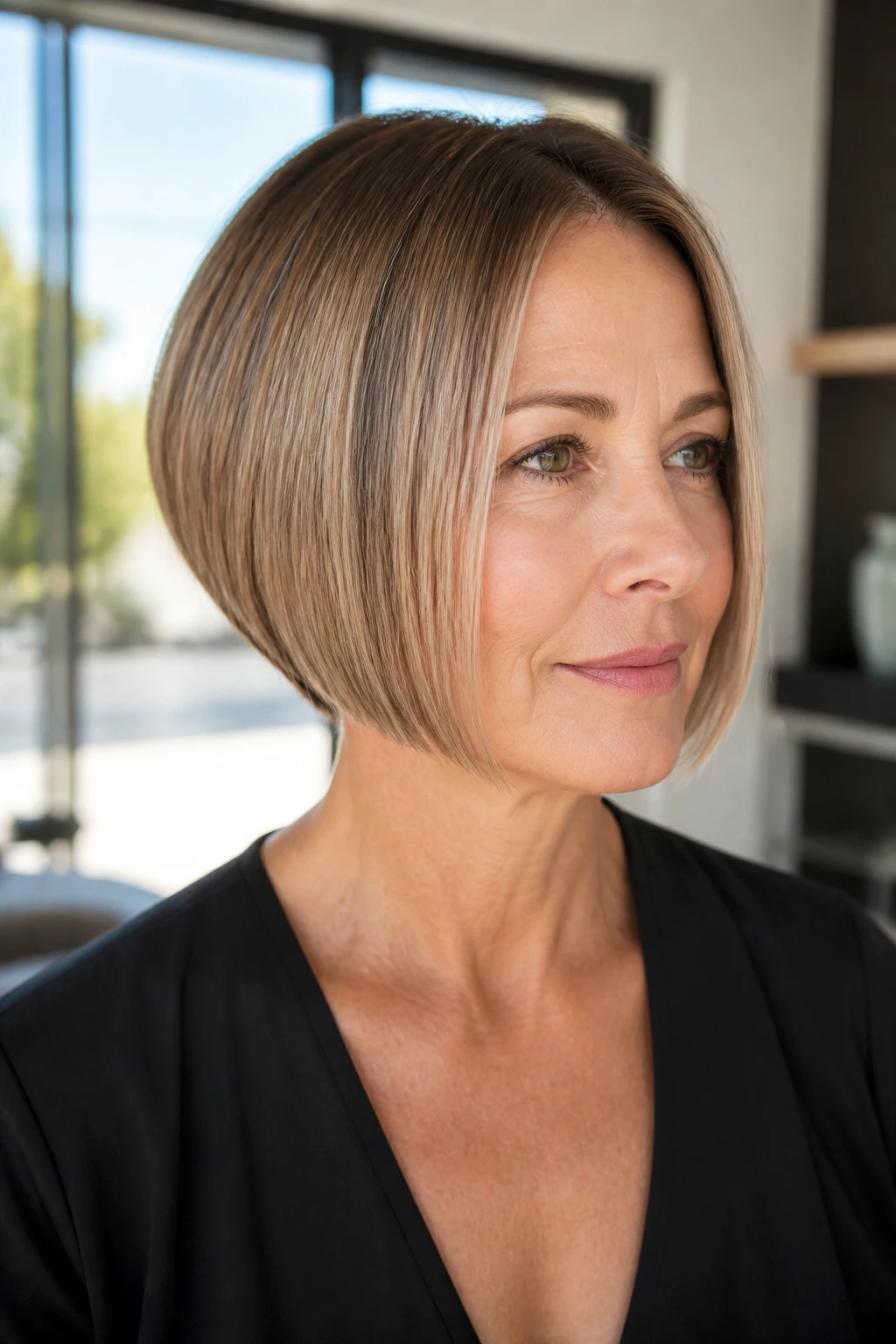
A stacked bob haircut is one of those rare styles that can look tidy, light, and modern without asking you to fight your hair every morning. That matters after 50, when the goal usually isn’t to look younger by force. It’s to wear a cut that makes sense on your head, your neck, your texture, and your actual routine.
The strongest versions all share the same idea: short, controlled back layers; enough length up front to soften the face; and a shape that keeps its line even when the day gets busy. Pick the stack that matches your texture, keep the nape clean, and don’t let the crown go flat. That’s where the whole haircut lives or dies.
