



A blonde bob haircut can look expensive in the best way—or it can look like the cut and the color never met. The difference is usually smaller than people think: a line that hits the right point on the jaw, a root that isn’t stripped to the bone, and a blonde tone that reads creamy instead of flat.
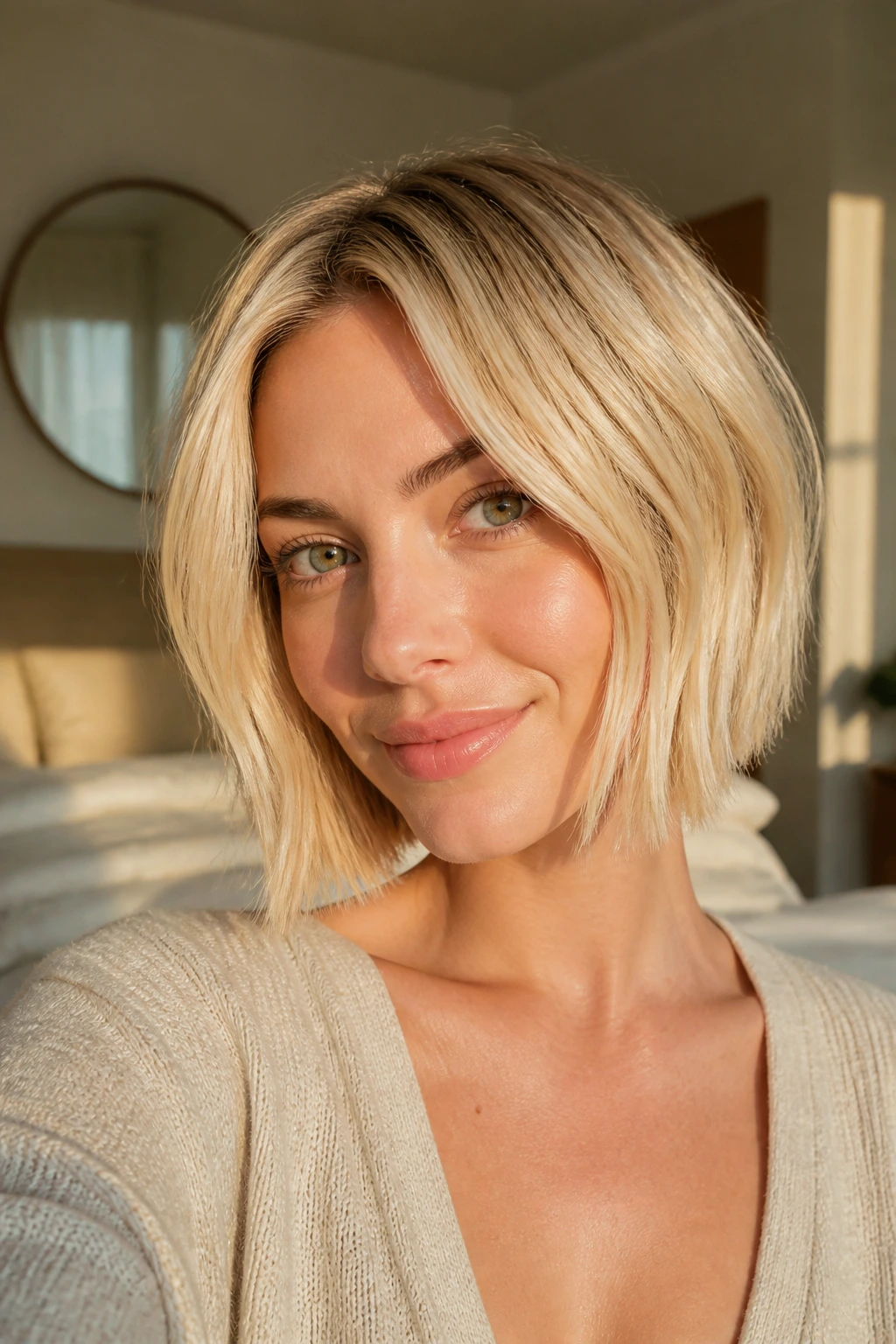
Blonde bob haircuts work because they put the light right where the eye lands first: the cheekbones, jawline, and neckline. That’s the magic. A beige bob at chin length can look brighter than a much longer platinum style, simply because the color sits closer to the face and the shape does more of the talking.
I trust a bob more when there’s a little depth at the root. A one-note blonde can look harsh in daylight; honey, champagne, and buttery tones with a soft shadow near the scalp have movement even when the hair is barely moving. That tiny bit of darkness is not a flaw. It’s the thing that keeps the blonde from shouting.
Why These Blonde Bob Haircuts Work So Well
-
Brightness Around the Face: A bob keeps the lightest pieces near the eyes and cheeks, where honey and champagne tones read sunlit instead of washed out.
-
Cleaner Grow-Out: Root shadow on a chin-length cut looks intentional, not neglected, because the darker root is only an inch or two before the blonde opens up.
-
More Shape for Fine Hair: Blunt ends and compact lengths give thinner hair a fuller edge, especially when the cut stops right at the jaw.
-
More Styling Range Than People Expect: A quick bend with a 1-inch iron, a straight blowout, or a tucked-behind-one-ear finish can make the same bob feel completely different.
-
Easy to Tune to Your Face: Curtain bangs, side parts, and angled fronts shift the mood fast without changing the whole haircut.
-
Less Drag From Damage: Shorter blonde hair shows split ends fast, which sounds annoying until you realize it pushes you toward healthier trims and better tone.
1. Soft Beige Blunt Bob
A blunt bob in soft beige blonde is the one I reach for when fine hair needs a hard edge and a little polish. The line should sit at the chin or just below it, where the hair can swing without collapsing into a thin-looking curtain.
Why It Works on Fine Hair
The blunt perimeter makes the ends look denser, which matters more than layers ever will on hair that tends to fall flat. Beige blonde keeps the cut from looking too stark under indoor light, and a whisper of root shadow stops the color from feeling one-dimensional.
- Best length: Chin to just under the jaw.
- Best tone: Beige, oat, or soft sand blonde.
- Best finish: A slight bend under at the ends.
- Watch for: Too much texturizing, which can leave the edge see-through.
My tip: Ask for the perimeter to be cut dry or nearly dry if your hair shrinks when it’s wet. That gives the stylist a truer read on where the bob will actually land.
2. Honey Balayage French Bob
Why does the French bob keep showing up in blonde form? Because the shape wants softness, and honey balayage gives it exactly that. The length usually sits between the cheekbone and the jaw, with a fringe that can graze the lashes or split in the middle if you want less commitment.
How It Feels When It’s Right
The whole cut should look a little airy, not carved. I like this version most when the blonde is painted around the face and through the top layer, leaving the underlayers just a shade deeper so the shape doesn’t turn into a bright block.
Styling Mood
A rough-dry with fingers and a touch of texture spray is enough here. If you have a natural wave, let the wave live. If you don’t, wrap just the ends around a 1-inch iron and stop before the curl gets precious.
This is the bob for people who want brightness without the hard edges of a platinum look.
3. Icy Platinum Micro Bob
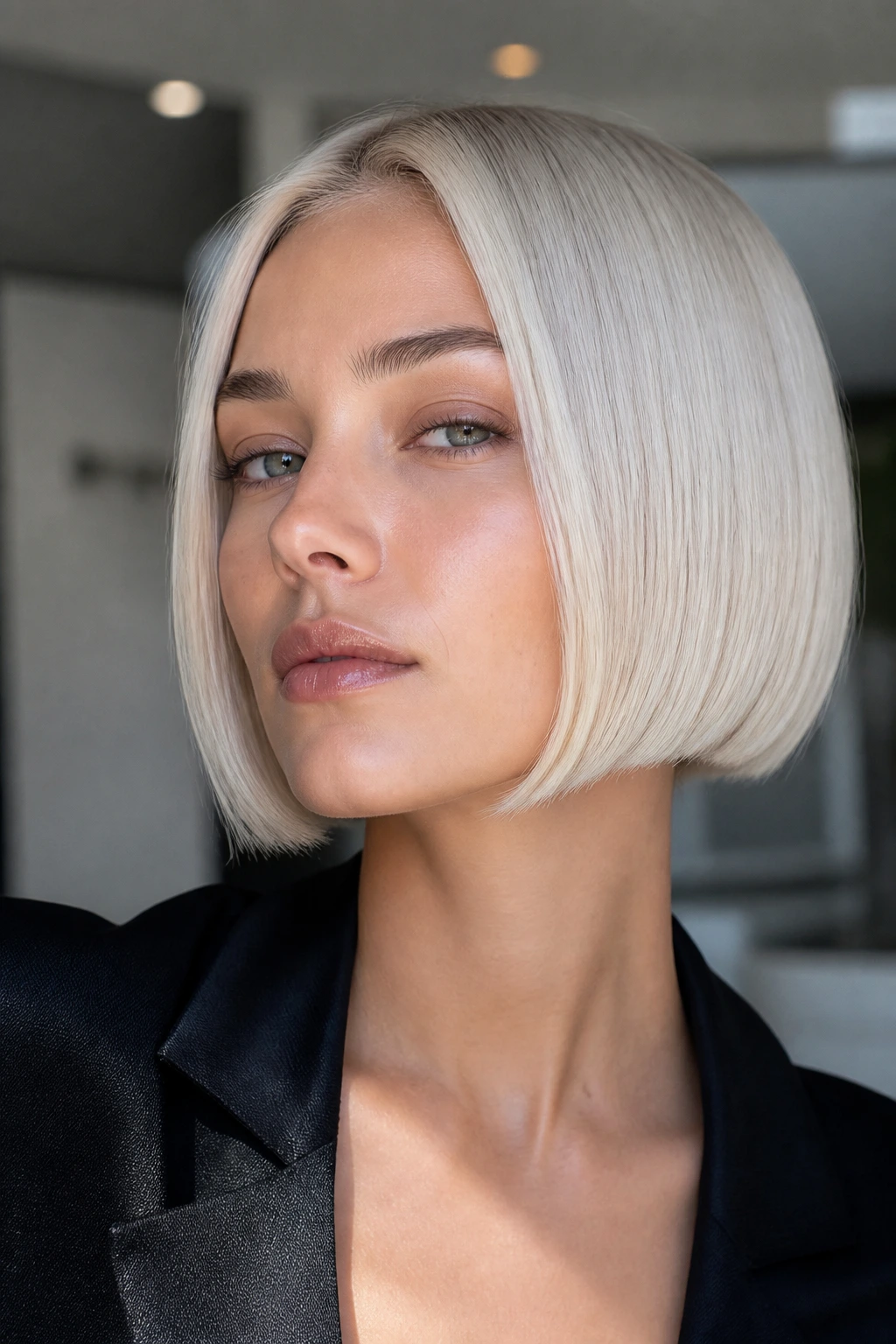
The shortest blonde bob on this list is also the boldest. A micro bob skims the jawline or lands just beneath the ears, and when the color is icy platinum, every line gets sharper. There’s no room for fuzzy ends or a lazy tone.
It works best when the haircut is exact and the lightening has been done carefully over time. If your hair is fragile, this is not the cut to rush into. The ends are short enough to look healthy, yes, but they also expose every mistake.
What to know before you commit
- Best for: Strong jawlines, straight textures, and people who like crisp lines.
- Color note: Ask for icy, not gray. Gray can flatten the face.
- Styling note: A tiny bit of pomade on the ends is enough.
- Reality check: It needs more frequent toning than a rooted blonde bob.
If you want something sharp enough to read from across the room, this is the one.
4. Butter Blonde A-Line Bob
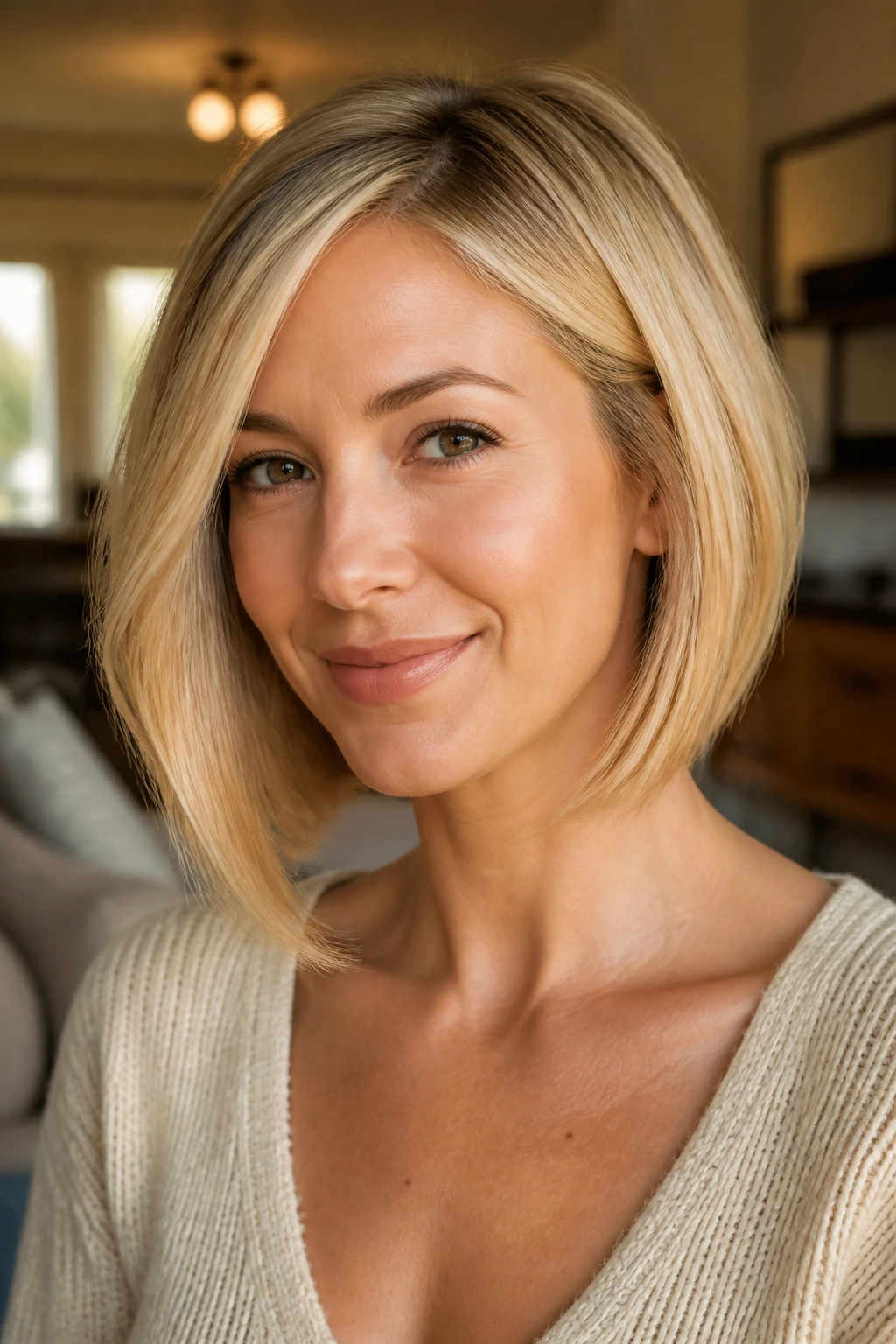
If you like movement but hate the look of too many layers, the A-line bob is the compromise that actually works. The back sits shorter, the front lands a little longer, and the whole thing creates a gentle swing when you turn your head. Butter blonde softens that angle so it looks warm instead of severe.
The front pieces should graze the jaw or the top of the neck, depending on how dramatic you want the line. Keep the back tidy, especially if your hair is thick. Too much weight there and the angle disappears fast.
- Best part: Slight off-center.
- Best tone: Butter, cream, or soft gold blonde.
- Best texture: Straight or loose bend.
- Best for: Hair that needs shape without losing fullness.
This cut has an easy confidence to it. Not fussy. Not noisy. Just clean and bright.
5. Shadow-Root Beach Bob
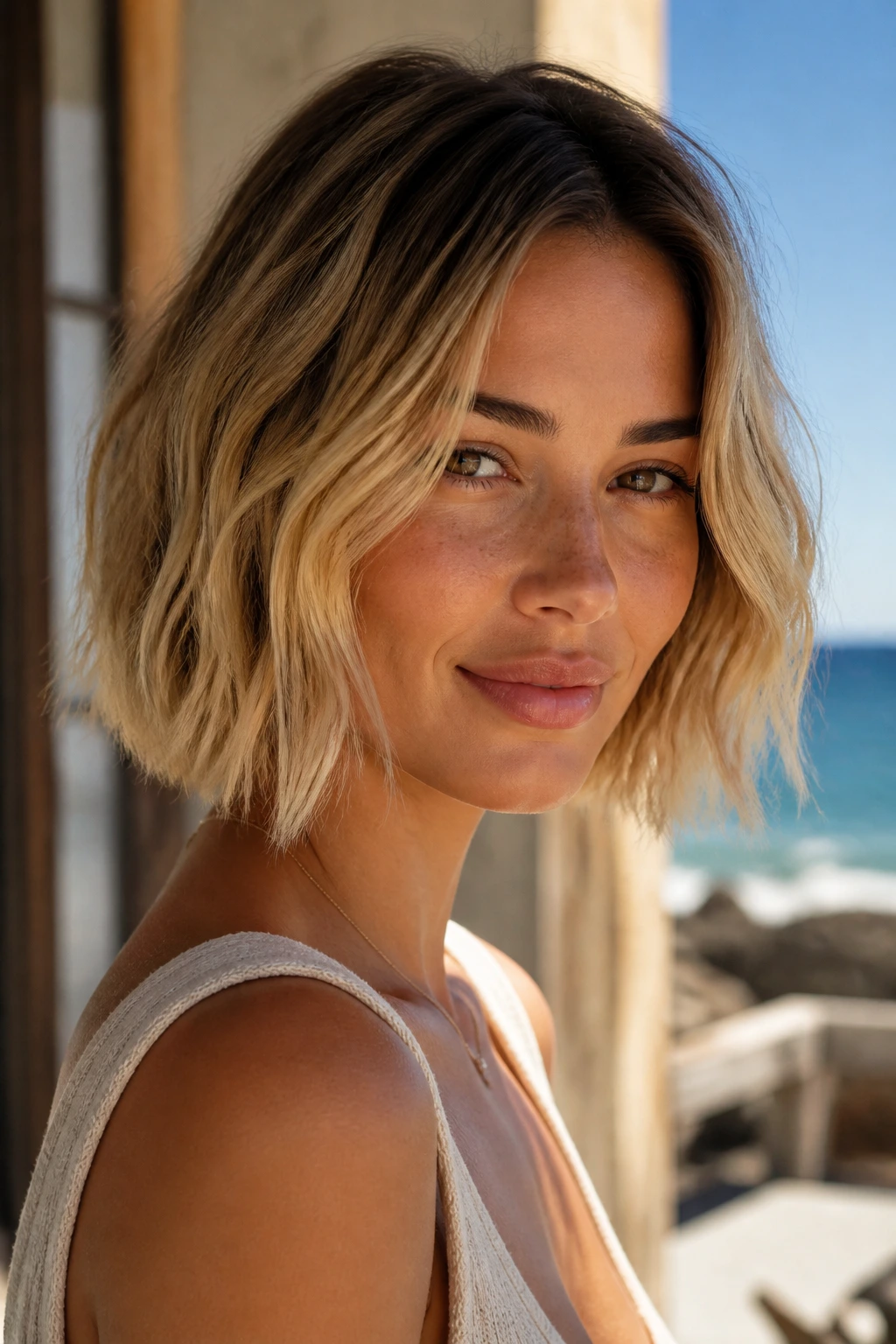
The shadow root is doing real work here. It stops the blonde from looking pasted on and gives the bob a softer grow-out, which matters if you don’t want to be at the salon every few weeks. Add loose beach waves, and the whole cut starts to feel lived-in in the good sense.
I’d keep the root shadow about an inch to an inch and a half, then let the brighter blonde begin through the mid-lengths. That gives you a natural fade from deeper root to lighter ends. It’s the easiest way to make a short blonde cut look sun-dried instead of overprocessed.
A 1-inch wand, wrapped in alternating directions and brushed out with fingers, gives the right kind of looseness. If the wave looks too neat, it’s too neat.
6. Golden Curly Bob
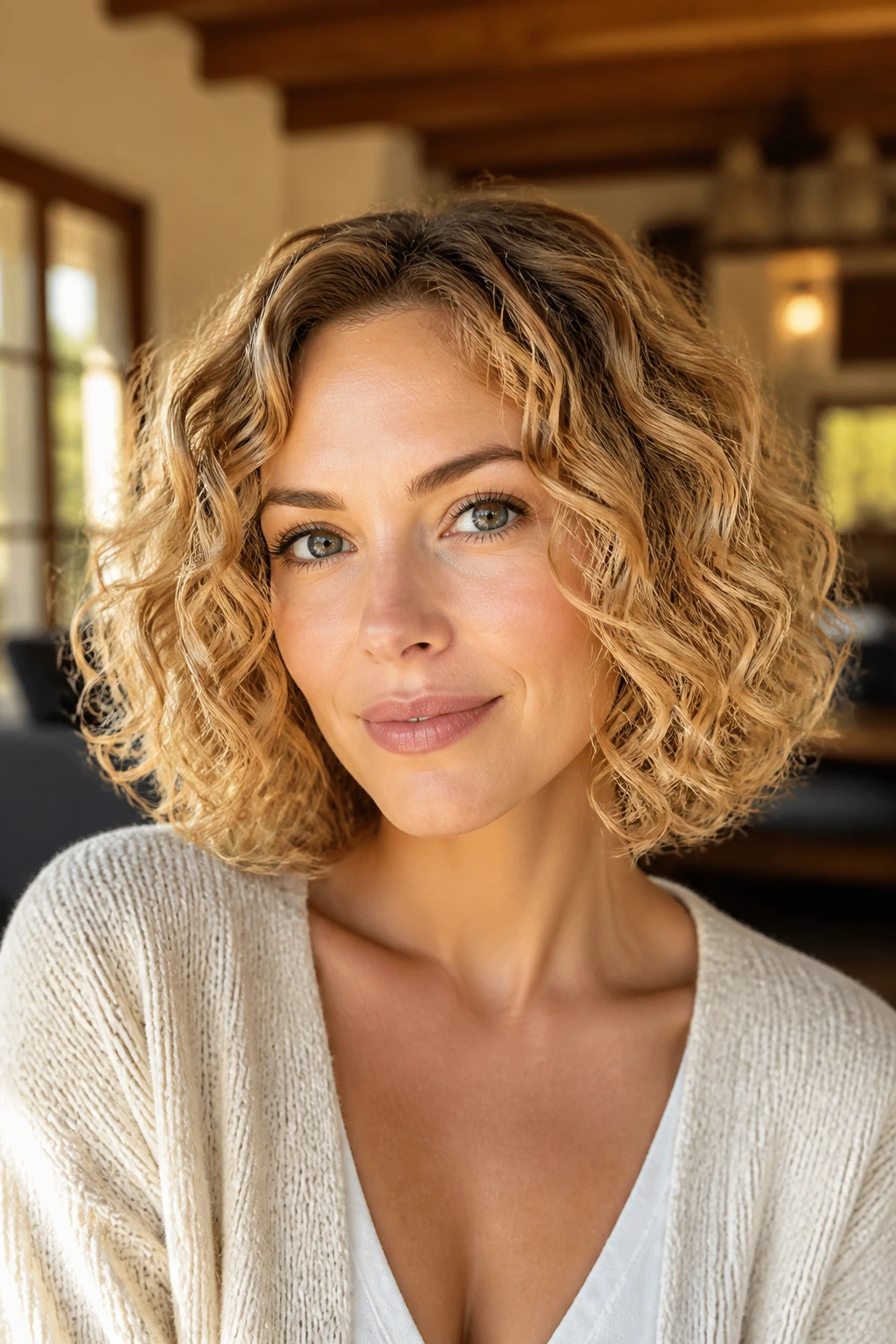
Curly hair and blonde can be a lovely pairing, but the cut has to respect the curl pattern first. A golden curly bob should keep enough length at the perimeter for the curls to coil without puffing upward into a triangle. Shorter layers can help, but they need to sit where the curl naturally breaks, not where a stylist thinks the shape should be.
What to ask for at the salon
- Cut on dry curls: That shows the true spring of the hair.
- Keep the perimeter longer: Curls shrink, and the bob needs room.
- Place the brightest pieces on the outer curl ring: That’s where the light catches first.
- Diffuse on low heat: High heat can flatten the curl pattern fast.
Golden tones are smart here because they warm up the texture and keep the curls from looking dull. A small amount of leave-in cream and a light gel is usually enough. Too much product and the bob loses its bounce.
7. Champagne Bob with Curtain Bangs
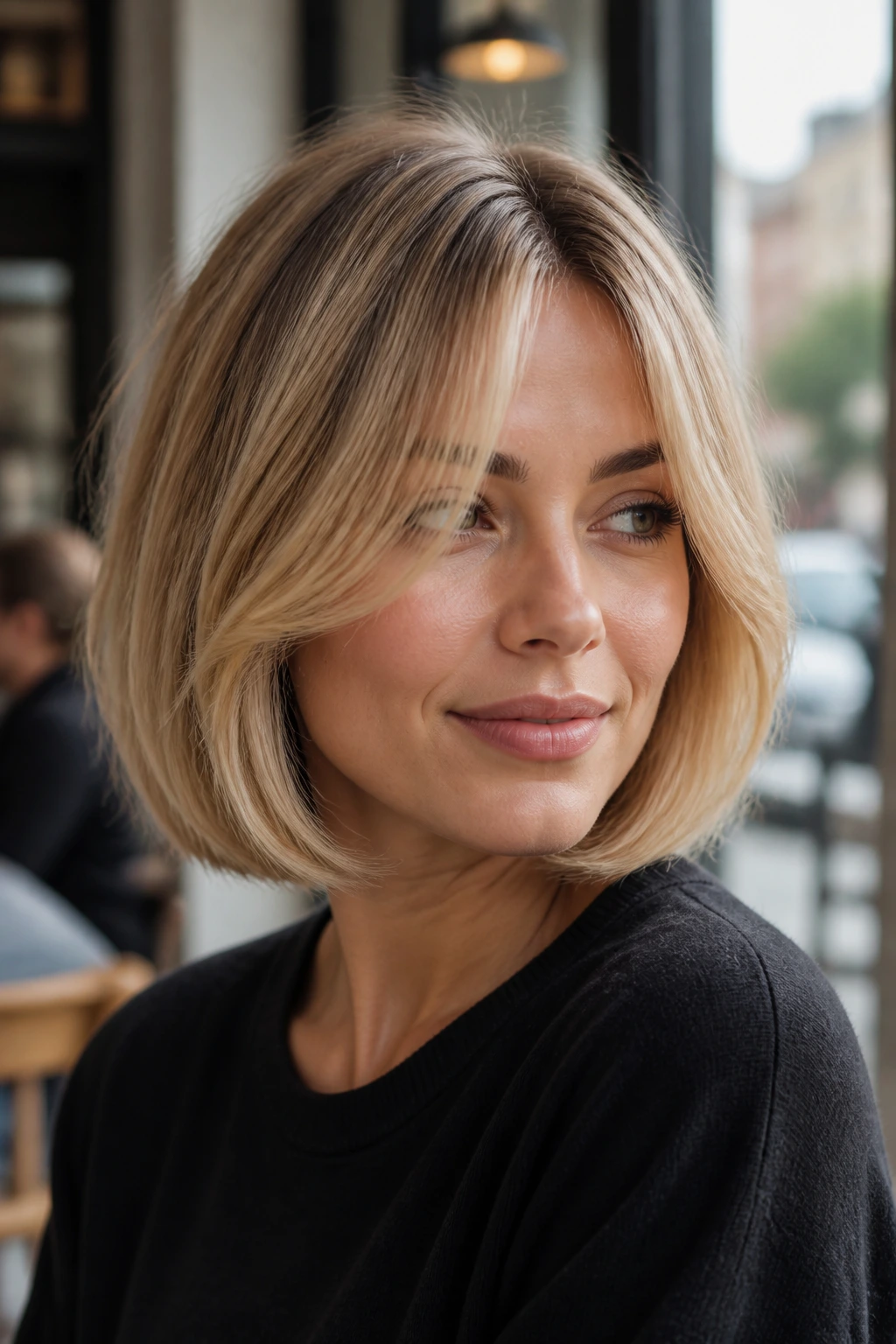
Need softness around the face without giving up the bob’s clean shape? Curtain bangs solve that faster than most people expect. They open the forehead, frame the eyes, and make a short blonde cut feel less severe, especially when the blonde sits in the champagne range—somewhere between beige and pearl.
The bangs should be longer at the center and sweep out toward the cheekbones, not chopped bluntly across the forehead. That shape gives the eyes room and keeps the cut from feeling boxed in. A middle part works best if your hair naturally falls that way.
This one flatters longer faces and stronger jaws in particular. If your forehead is short, keep the bangs a little longer and lighter through the ends. Short curtain bangs can turn heavy fast, and that ruins the softness you came for.
8. Ash Blonde Inverted Bob
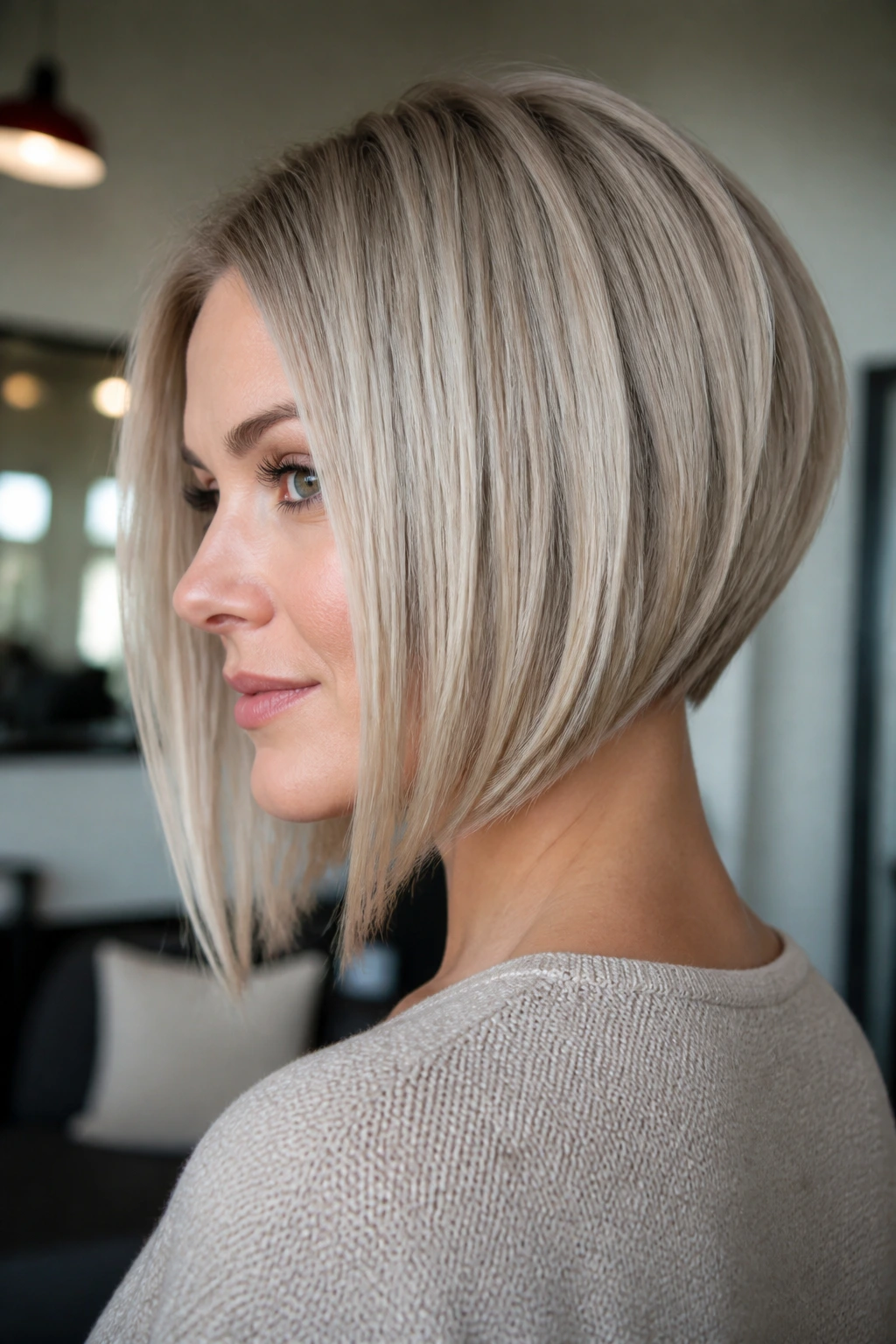
Cool blonde does not have to look severe. An inverted bob—shorter in the back, longer in the front—gives ash blonde enough structure to feel intentional, not flat. The stack in the back adds lift, while the longer front pieces keep the line elegant.
This cut is especially useful if your hair tends to collapse at the nape. The angle builds shape where you need it most, and the ash tone keeps the finish crisp. I like it on medium-density hair that needs a little internal support without visible layers.
- Best texture: Straight to slightly wavy.
- Best tone: Ash, pearl, or neutral beige with cool undertones.
- Best styling move: Smooth the top with a paddle brush, then bevel the ends under.
- Avoid if: Your hair frizzes the second it sees humidity.
It’s a cool look, but not cold. That matters.
9. Vanilla Lob with Loose Waves
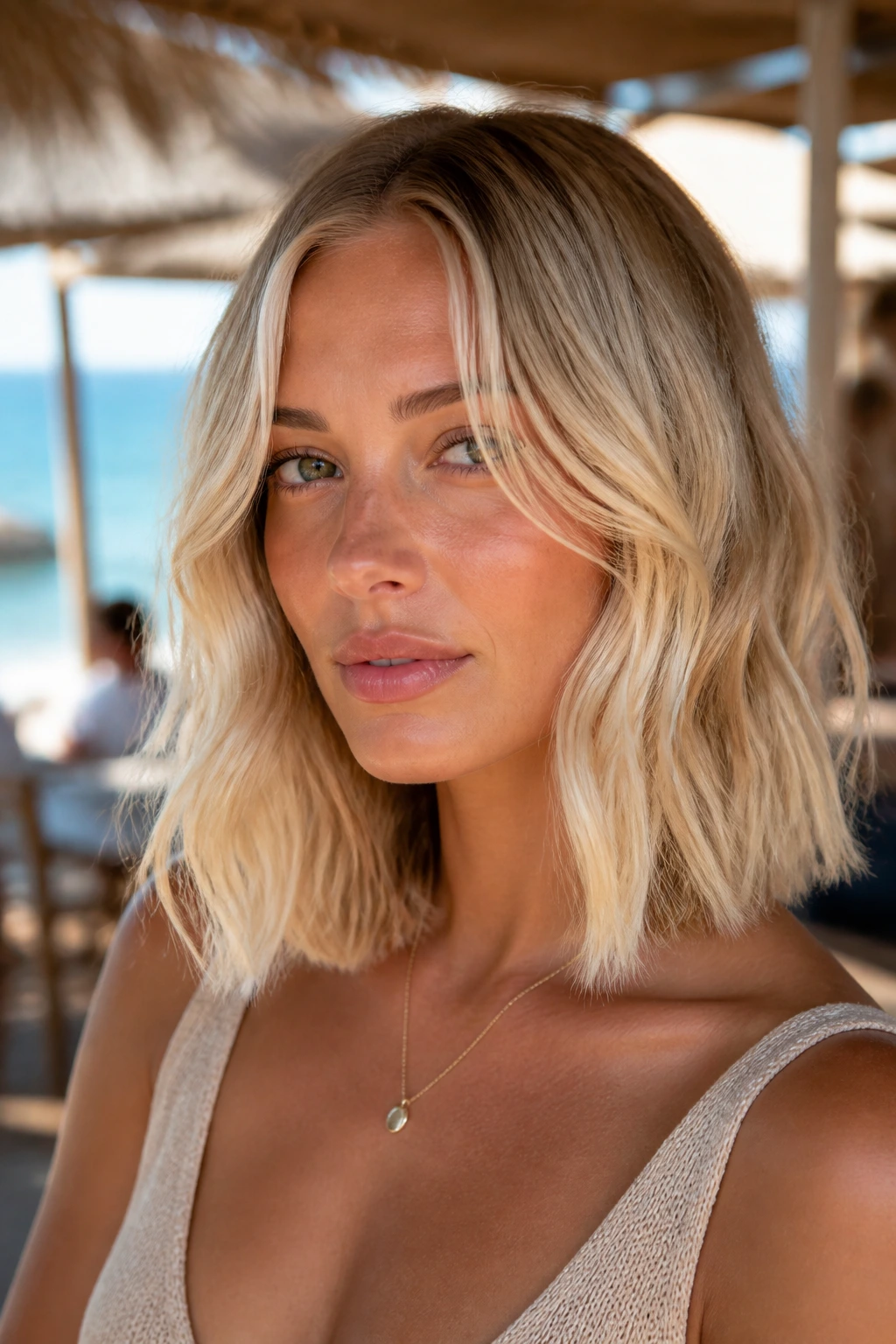
A lob gives you breathing room that a classic bob sometimes refuses to offer. At collarbone length, the cut still reads as short, but the extra inches make it easier to wave, tuck, pin, or wear straight without feeling too strict. Vanilla blonde keeps the whole thing light without drifting into yellow.
How it moves
The wave should start around the cheekbone or lower, not right at the root. If you curl the roots too much, the whole shape balloons and the blonde loses that clean, sun-kissed effect. A soft bend through the mid-lengths is enough.
This is the best choice if you’re growing out a shorter bob and want to keep the blonde fresh. It also suits hair that hates staying tucked under. A lob has a little more forgiveness.
10. Sandy Side-Part Bob
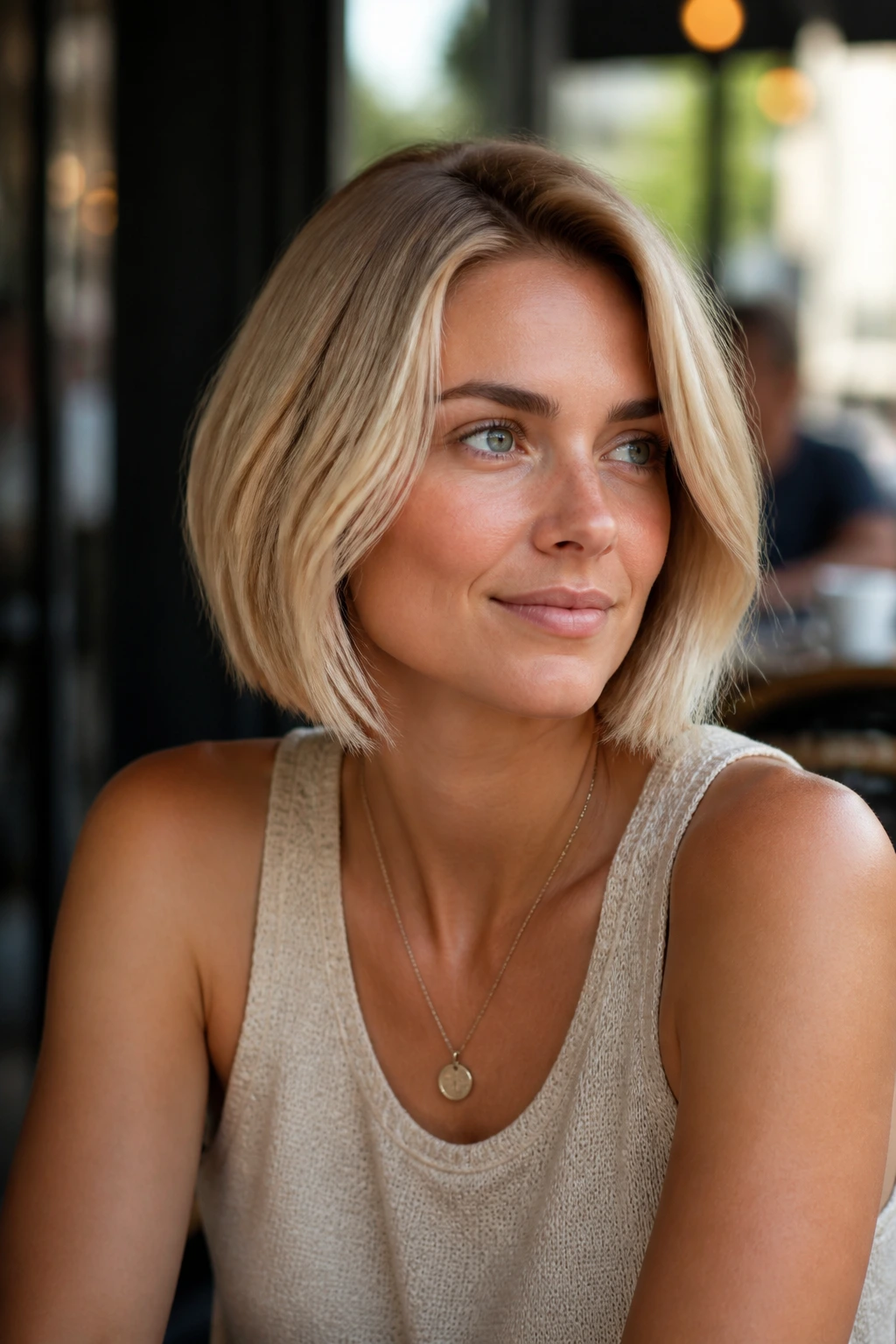
A side part can do more for a blonde bob than people give it credit for. It creates a longer line on one side and a cheek-sweeping panel on the other, which instantly softens a blunt shape. Sandy blonde keeps it grounded, with enough beige in the tone to avoid that too-bright, overly processed look.
This version is especially good if your crown is a little flat. The off-center part adds lift where you need it and breaks up the symmetry in a way that feels easy, not fussy. On straight hair, that detail matters a lot.
- Best for: Flat crowns, wider cheeks, or anyone bored with a middle part.
- Color note: Sandy blonde should look soft and dry, not yellow.
- Finish: A clean tuck behind one ear sharpens the shape.
- Bonus: Works well with oversized earrings.
It’s one of those cuts that looks like you didn’t try too hard. Which is the point.
11. Sleek Center-Part Bob
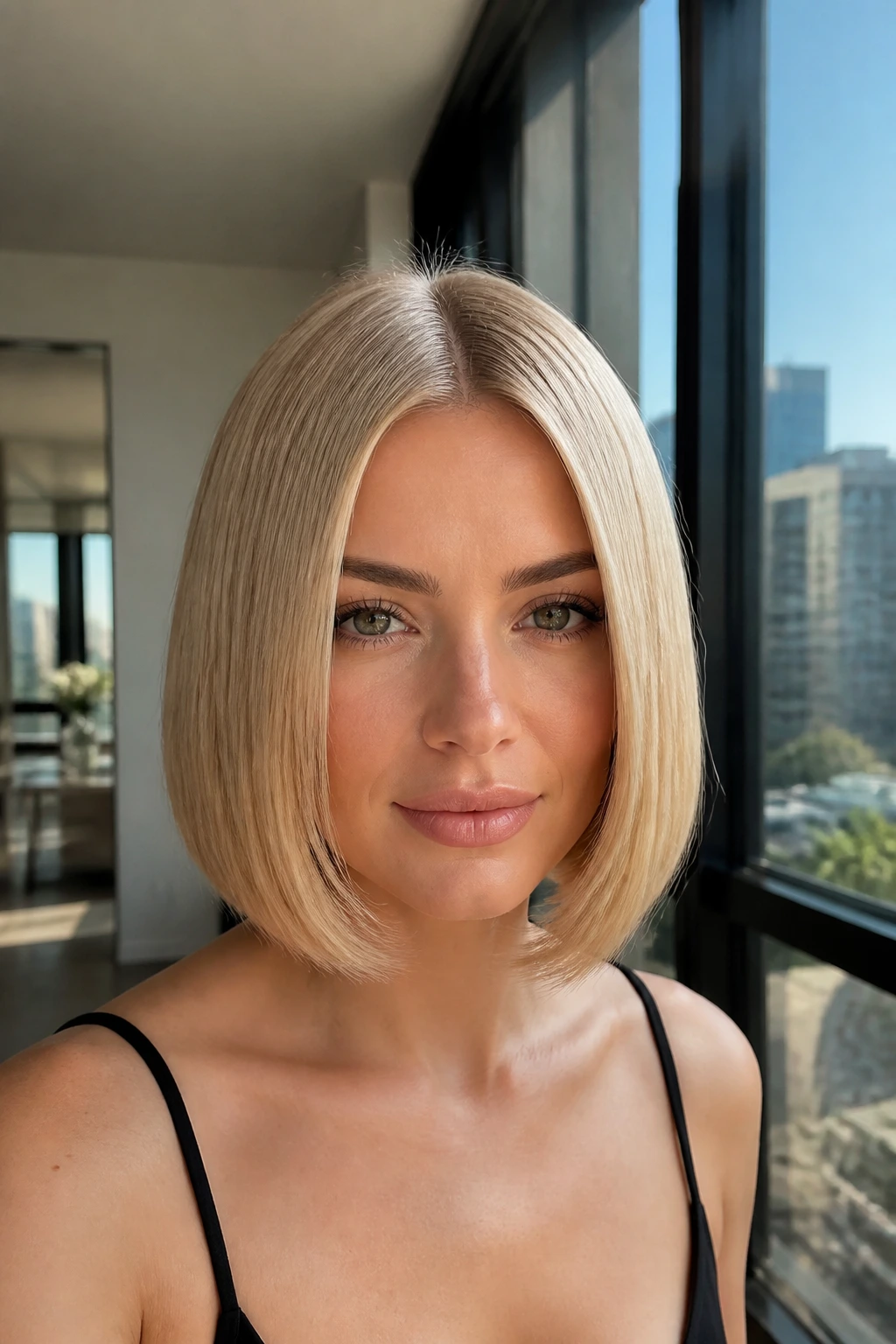
This is the most disciplined version of the bunch. A center-part bob asks for symmetry, shine, and a perimeter that sits neatly around the jaw or just above the shoulders. The blonde should be clean and glossy, with enough dimension to keep it from looking like a helmet under bright light.
I prefer this look with neutral blonde tones—cream, beige, or soft champagne—because they reflect light without flashing too cool or too warm. A 1.5-inch flat iron, used sparingly, keeps the surface smooth. A little serum on the ends helps, but only a little. Too much and the bob goes limp.
If your face is naturally asymmetric, tell your stylist. A center part exposes everything.
12. Shaggy Layered Blonde Bob
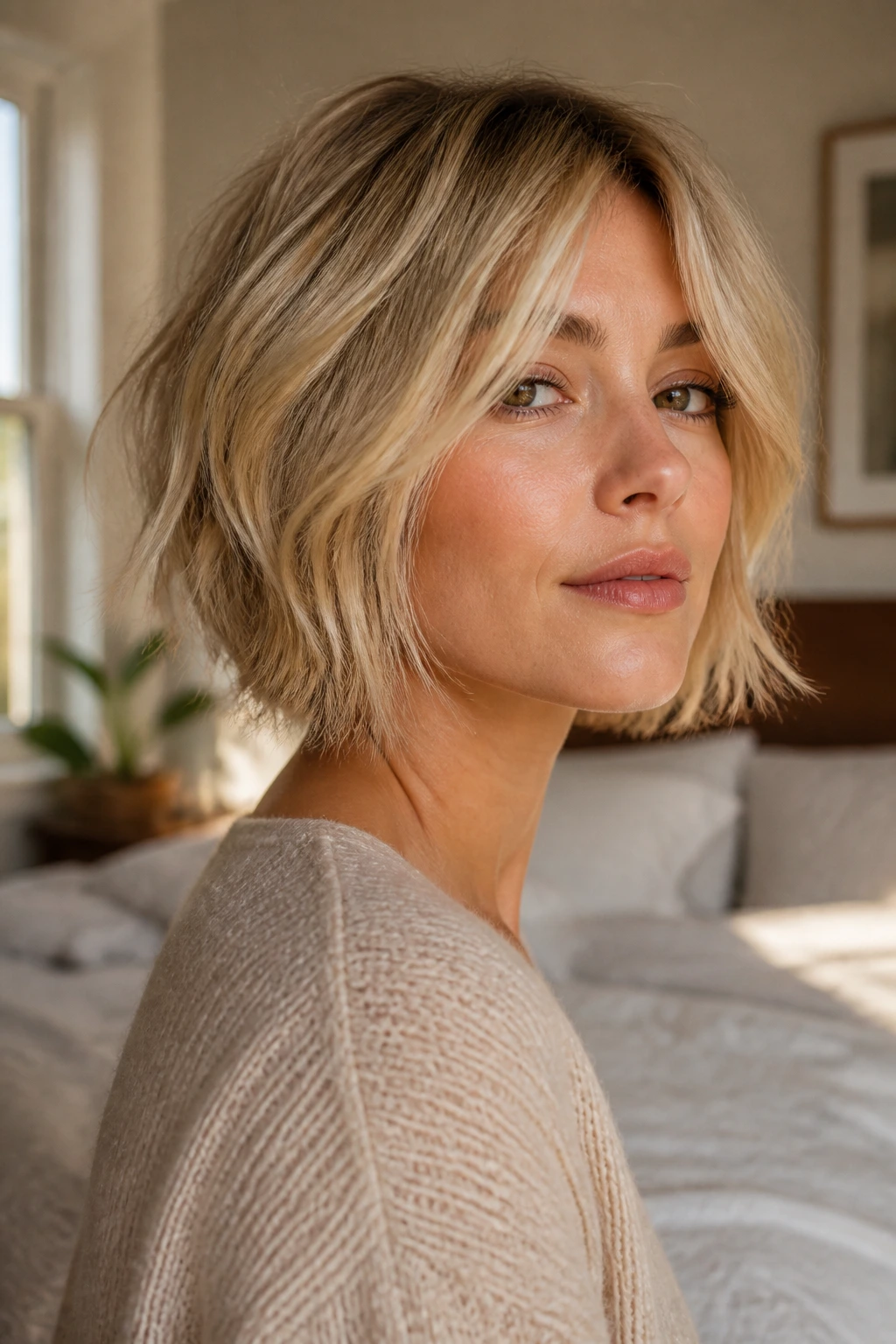
Can a bob be shaggy without looking messy? Yes, if the layers are placed with some restraint. The trick is to keep the texture around the cheekbones and jaw, where it adds movement, and avoid over-chopping the crown. Too many short pieces up top and the whole thing puffs out like a triangle.
Where the layers should sit
- Cheekbone area: To soften the face.
- Jawline: To keep the edge airy.
- Nape: To remove bulk without killing the shape.
This cut works well on dense hair that wants motion and on slightly wavy hair that doesn’t enjoy a perfect blowout. A light texturizing spray or mousse can give the ends a little separation. I’d skip heavy cream here unless your hair is coarse and dry.
13. Chin-Length Blended Bob
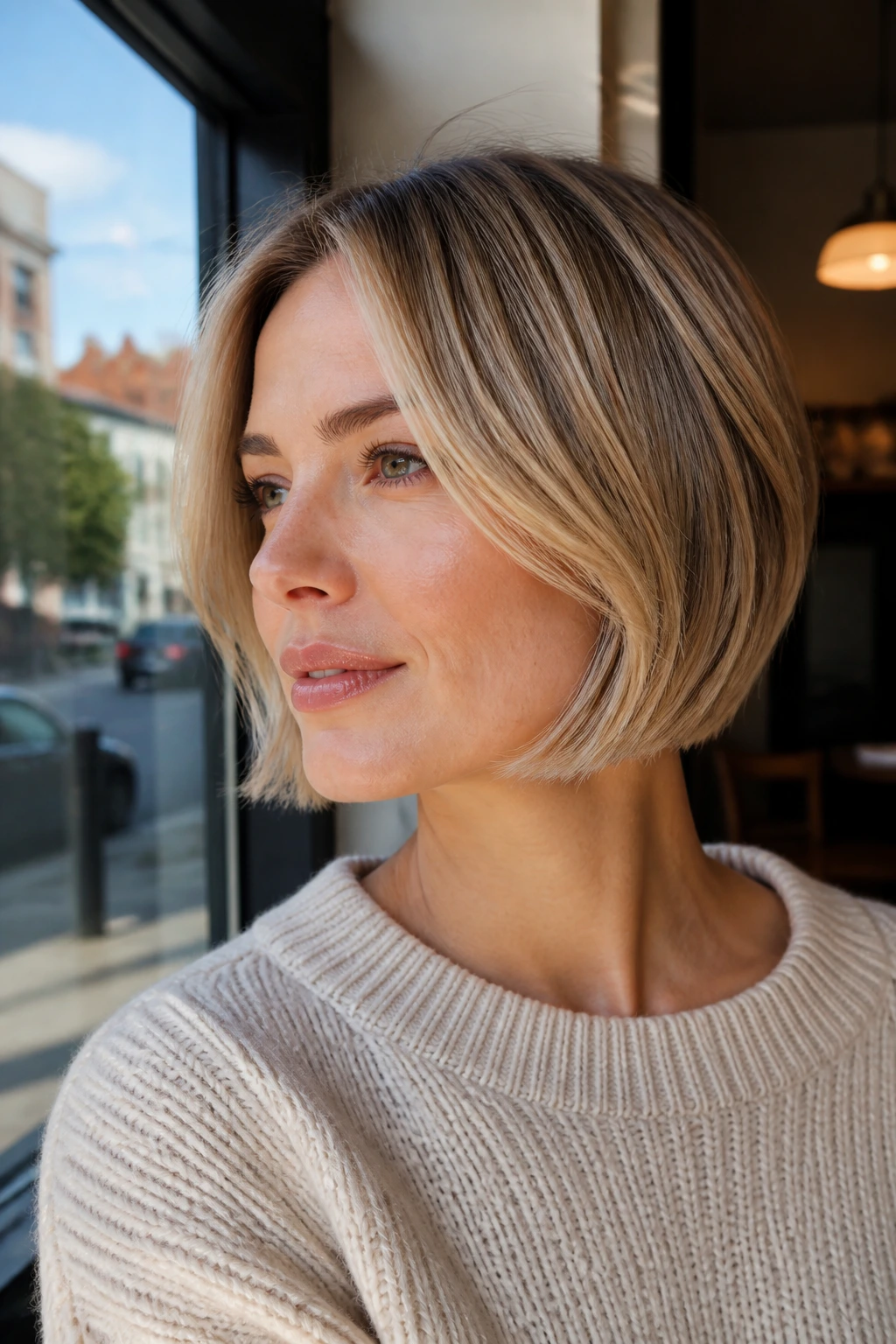
A chin-length blended bob sits in a sweet spot. It’s shorter than a lob, softer than a micro bob, and easier to wear than a severe blunt cut if your hair needs a bit of internal shape. The blend around the front should be subtle enough that you barely notice it—just enough to keep the cut from looking like a box.
This version works on hair that needs a tidy neckline but doesn’t like too much layering. It also helps if you want blonde to feel bright without going ultra-light. A soft beige or wheat tone keeps the shape warm, while the length near the chin keeps it crisp.
If your face is narrow, this cut can add a little width in a controlled way. If your hair is thick, ask for weight removal under the top layer only. That keeps the perimeter clean.
14. Side-Swept Bang Bob
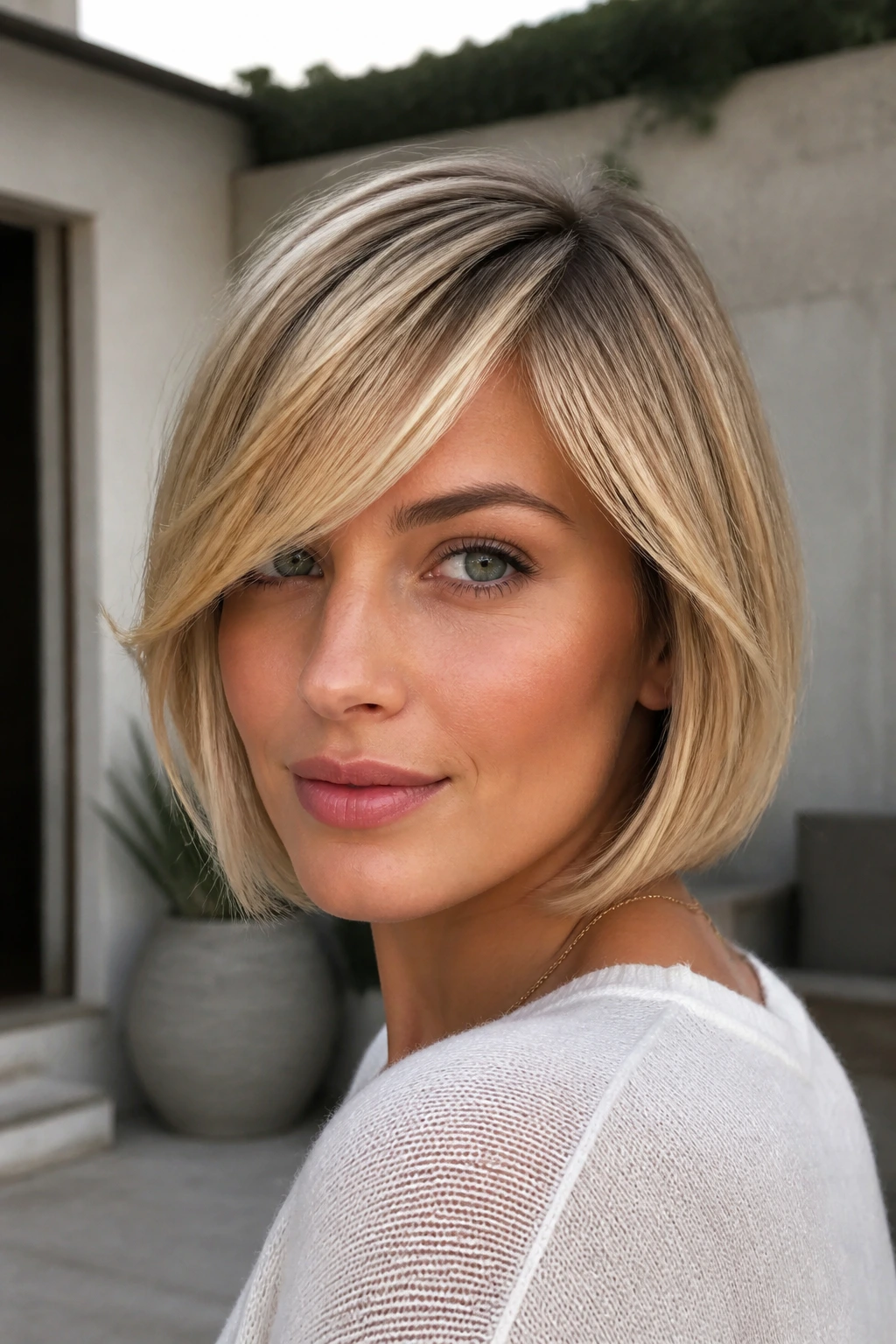
A side-swept fringe does one job very well: it breaks up the forehead line and gives the blonde somewhere to move. On a bob, that matters because the cut already brings attention upward. The bang softens the frame and makes the whole haircut feel less strict.
The fringe should be long enough to blend into the front pieces. If it’s cut too short, the shape gets choppy fast. A side sweep also works better than a straight-across bang when your hair has a stubborn cowlick. You can direct it while it’s still damp and let it cool in the right shape.
This is a good option for people who want coverage without the maintenance of a heavy fringe. It wears easier than it sounds.
15. Platinum Angled Bob
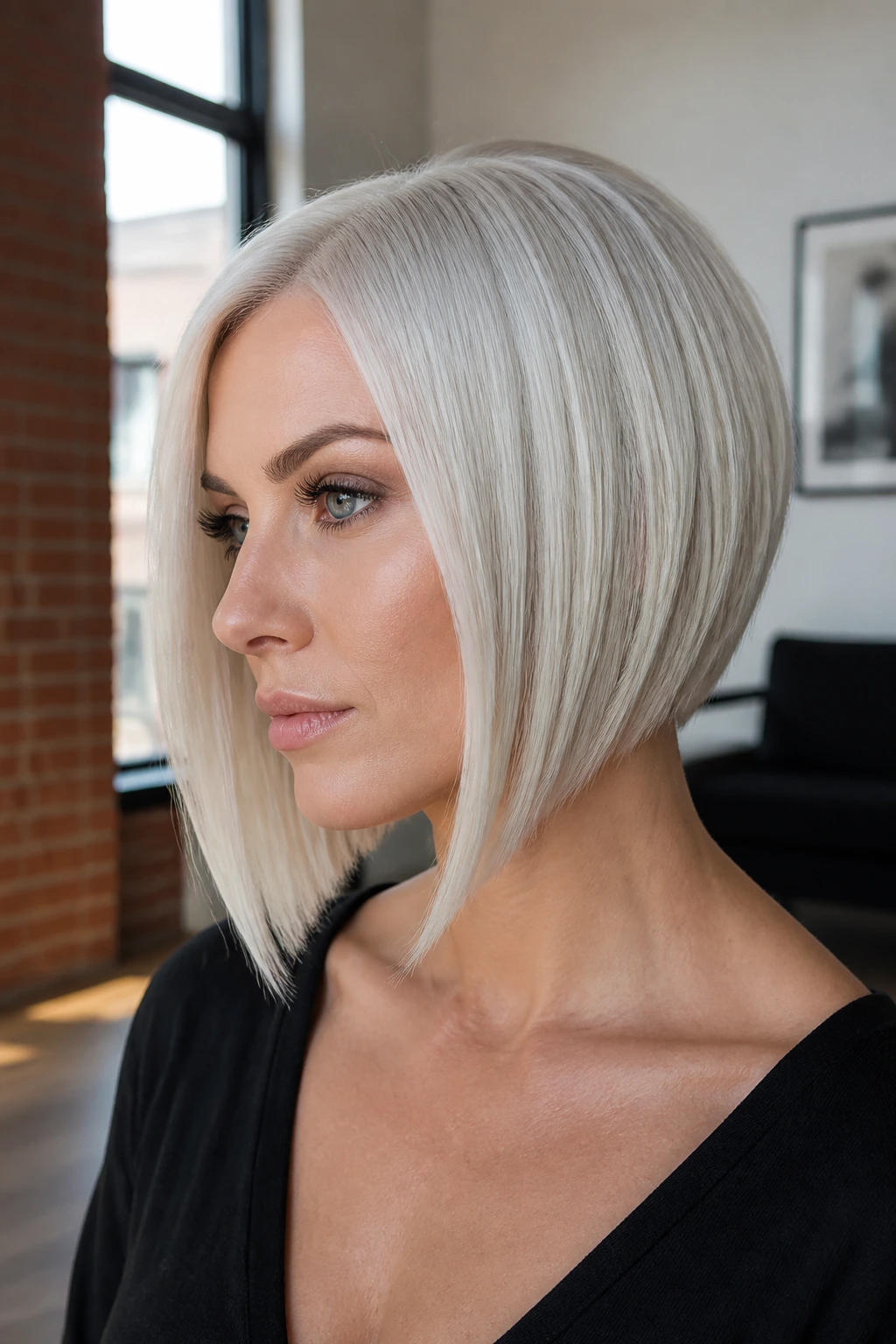
This cut has a strong point of view. A platinum angled bob gives you a sharp front line, a slightly shorter back, and a color that leaves no room for softness in the wrong places. It looks best when the angle is obvious enough to see in profile, not just on paper.
Because platinum exposes everything, the haircut has to be clean. Frizz, split ends, and weak tone show fast. If you want this look, you need to be honest about upkeep. That’s not a flaw. It’s the deal.
I like it most on people with a defined jaw and a neck they don’t mind showing off. It pairs well with plain necklines, minimal makeup, and a little edge in the wardrobe. If you want a bob that reads sharp from across the room, this is the one.
16. Mushroom Blonde Rounded Bob
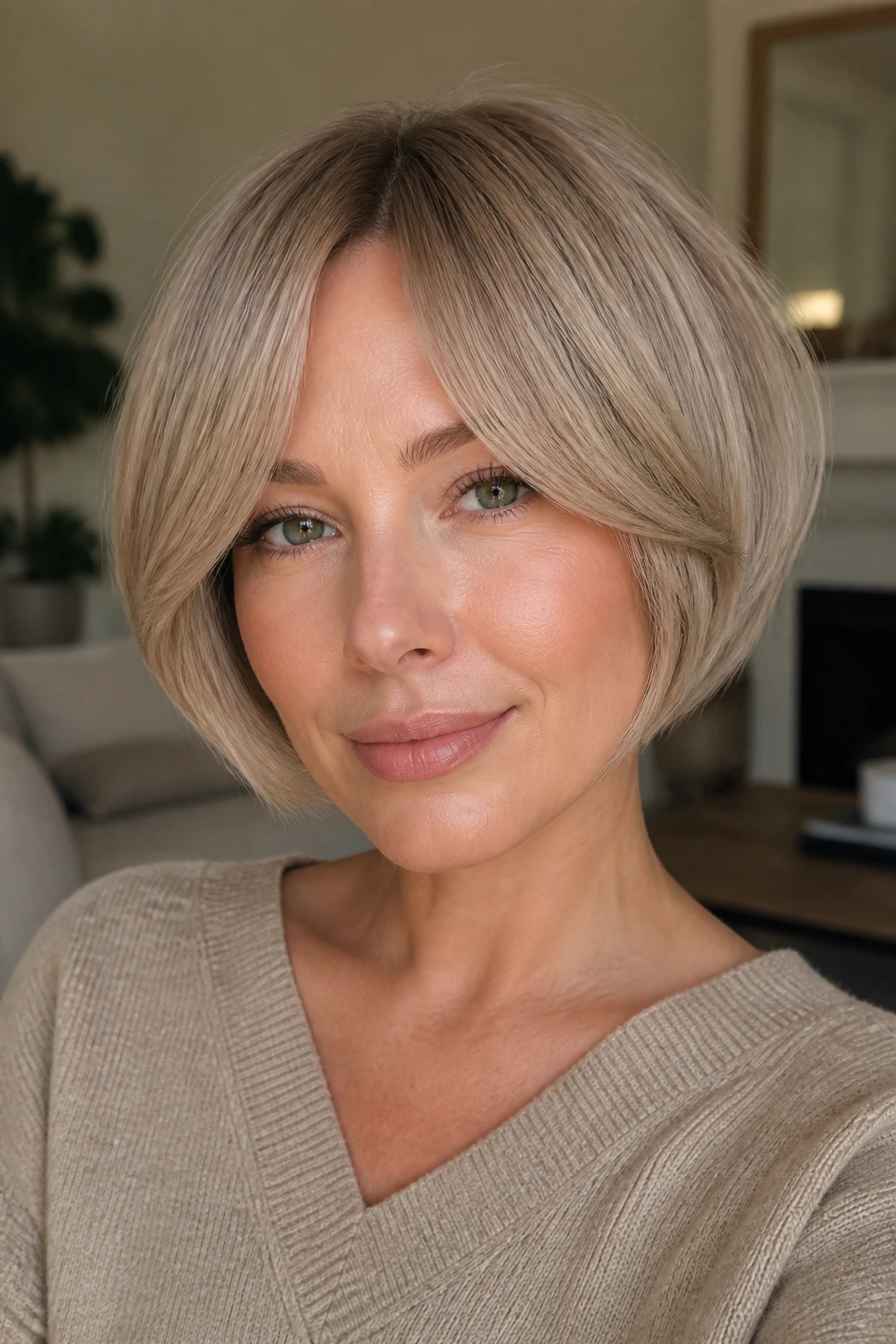
The rounded bob is quieter than the sharper cuts, and mushroom blonde gives it a soft, muted finish. The tone sits in that beige-ash middle ground, which keeps the hair looking expensive without leaning too warm or too icy. The shape curves gently around the head instead of building hard angles.
That curve matters more than the brightness. On thick hair, a rounded bob can remove the bulky corners that make short cuts feel heavy. On softer features, it adds structure without turning severe.
This is not the bob for someone who wants obvious drama. It’s for someone who likes a controlled shape and a blonde that looks a little misty in low light. Subtle, but not boring.
17. Wavy Parisian Bob
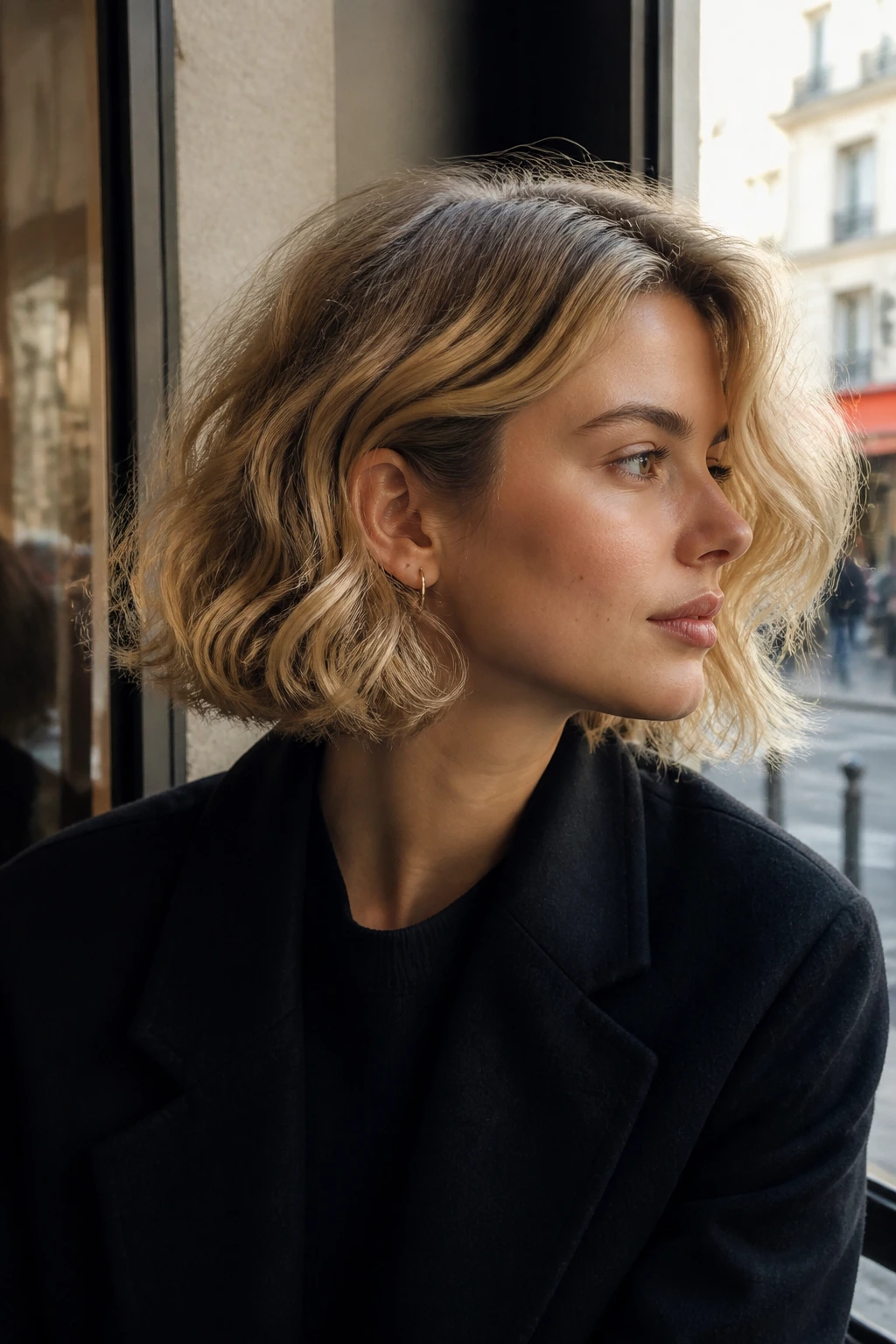
This is not a messy bob. It’s a managed one. The Parisian version keeps the wave loose, the ends a little imperfect, and the overall shape just tidy enough to feel deliberate. The blonde should be light through the top and softer underneath, so the texture has somewhere to live.
I’d keep the length at or just below the jaw, then add waves with a flat iron bend or a small iron, stopping before the curl looks polished. The point is movement, not curl. One side can tuck behind the ear; the other can fall forward. That slight imbalance is part of the charm.
If you hate spending half an hour styling your hair, this may be the best use of your time.
18. Razor-Cut Textured Bob
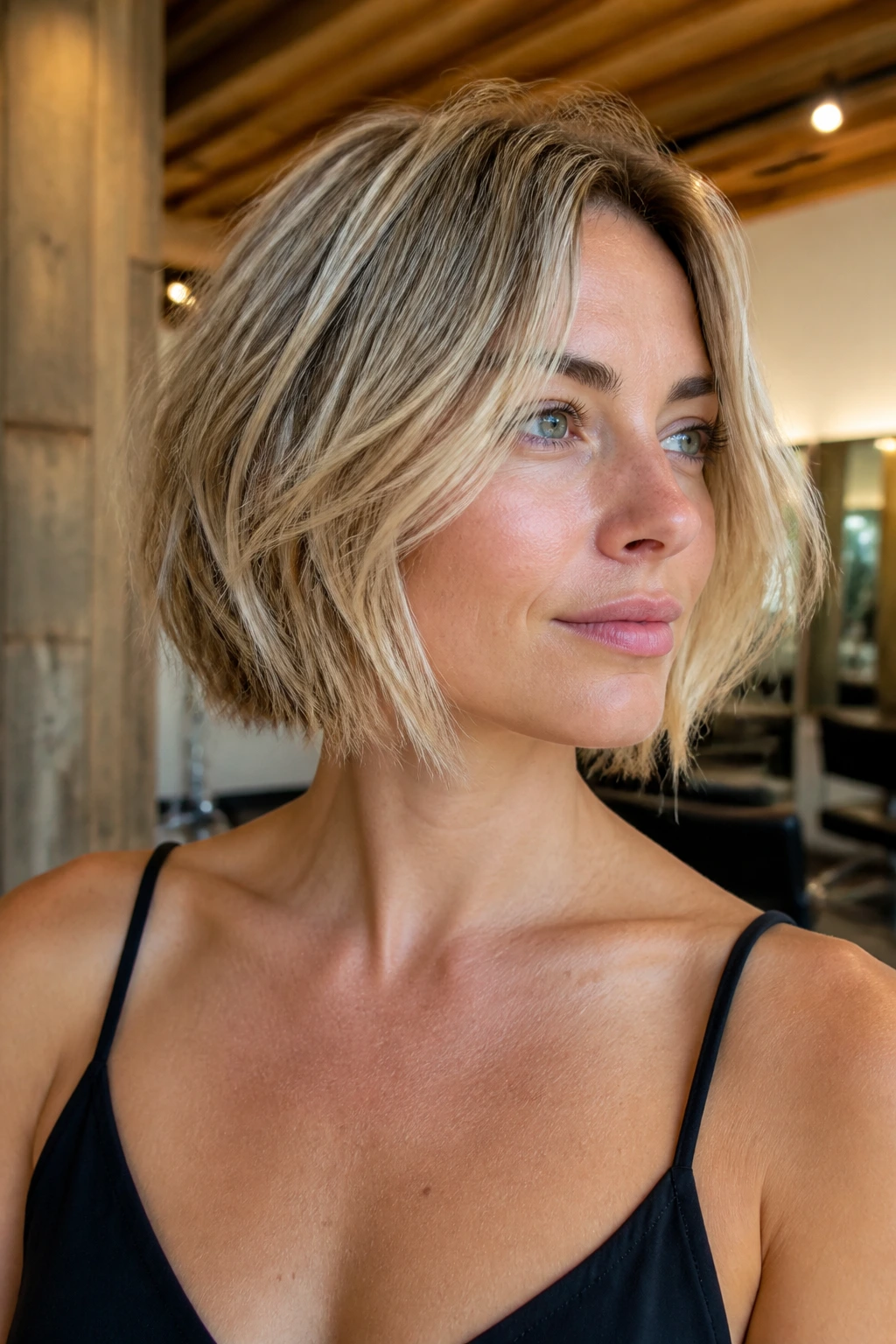
Razor cutting can be useful on a blonde bob, but only when the stylist knows where to stop. The right razor cut gives coarse or dense hair a softer edge and a little movement through the ends. The wrong one leaves the hair stringy and tired-looking, which is a bad trade for any blonde.
What to watch for
- Best for: Thick, straight, or slightly wavy hair.
- Color note: Works well with beige or wheat blonde.
- Styling note: A lightweight cream is better than heavy oil.
- Avoid if: Your hair already feels fragile or over-lightened.
I like razor texture when the goal is airy movement, not a shag. It makes the bob feel less blocky and more lived-in. Just don’t let the top get stripped too thin.
19. Rooted Wheat Blonde Bob
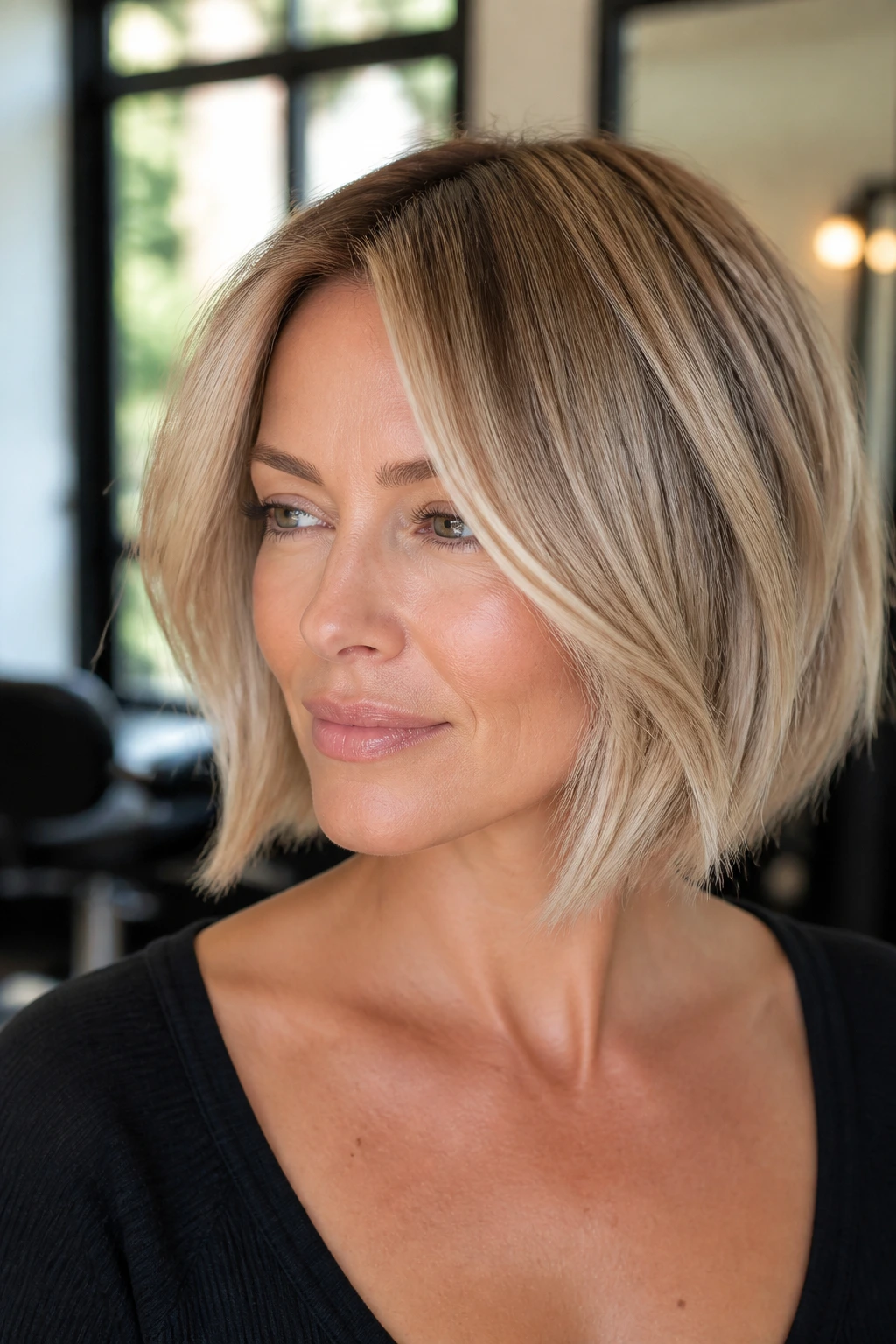
Wheat blonde is the warm neutral that never shouts. It sits between beige and gold, with enough depth near the root to keep the color from going flat. On a bob, that warmth feels especially good because the shorter length keeps the tone close to the skin.
This version flatters olive, golden, and neutral undertones in particular. The root shadow should be soft, not obvious, and the lighter pieces should live around the front and top layer. That keeps the face bright while leaving the rest of the bob grounded.
I’d choose this over an all-over pale blonde if you want low-maintenance brightness. It grows out with less fuss and doesn’t need constant toning to stay believable.
20. Glossy Blowout Bob
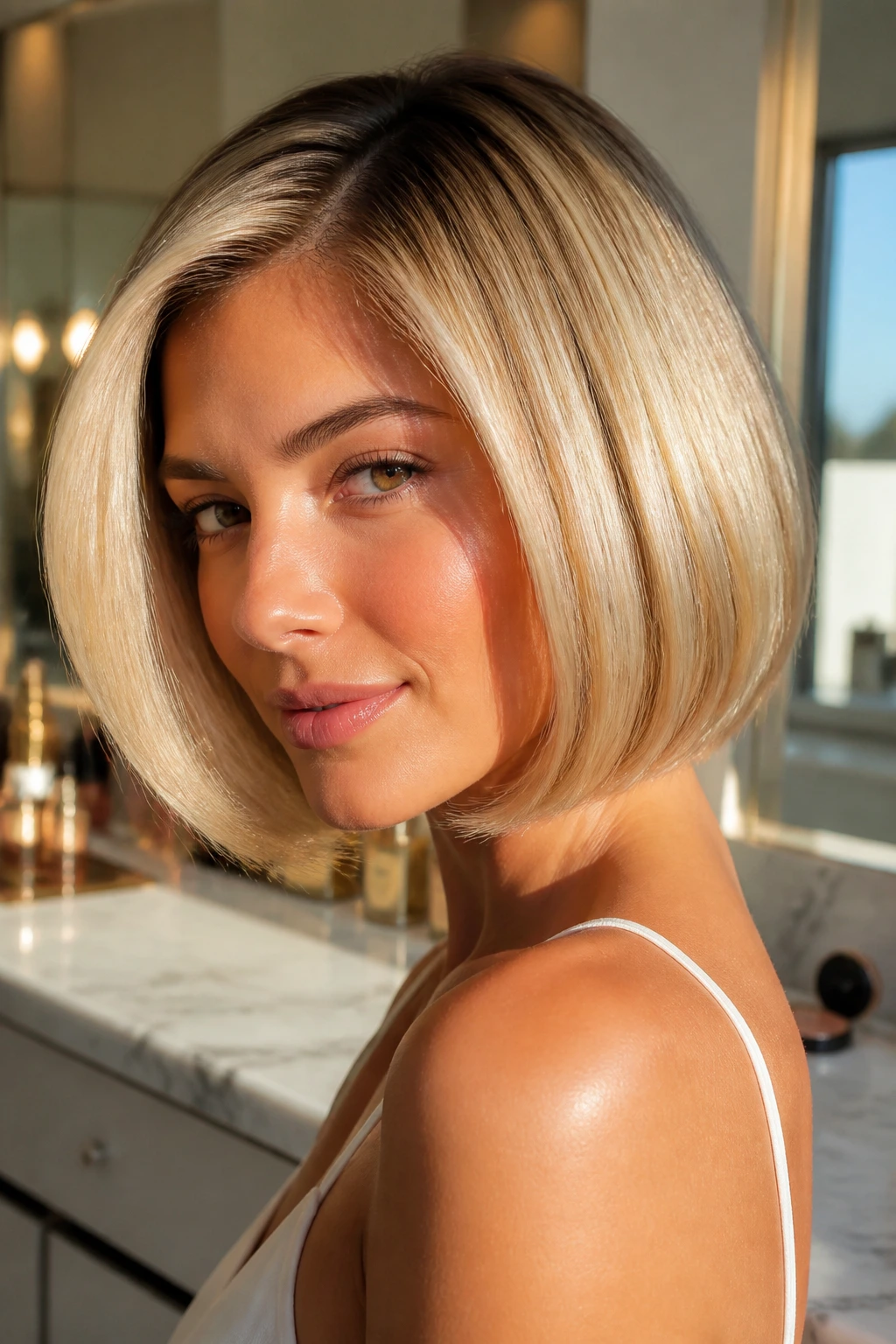
If airy texture feels too casual, the glossy blowout bob is the polished answer. The shape can be chin length or a little longer, but the finish is what matters: smooth roots, curved ends, and a surface that catches light without looking stiff. It’s the blonde bob that looks the most salon-made.
The trick is a round brush, a heat protectant with some slip, and enough tension while drying to keep the ends turning under. A little volumizing mousse at the roots helps, but don’t pile it on. The blonde should still move. Shine spray goes on the mid-lengths and ends, not the scalp.
This is the one I’d pick for a dinner, event, or any day you want the bob to look expensive without looking frozen.
Why Blonde Bob Haircuts Read Brighter Than Longer Hair
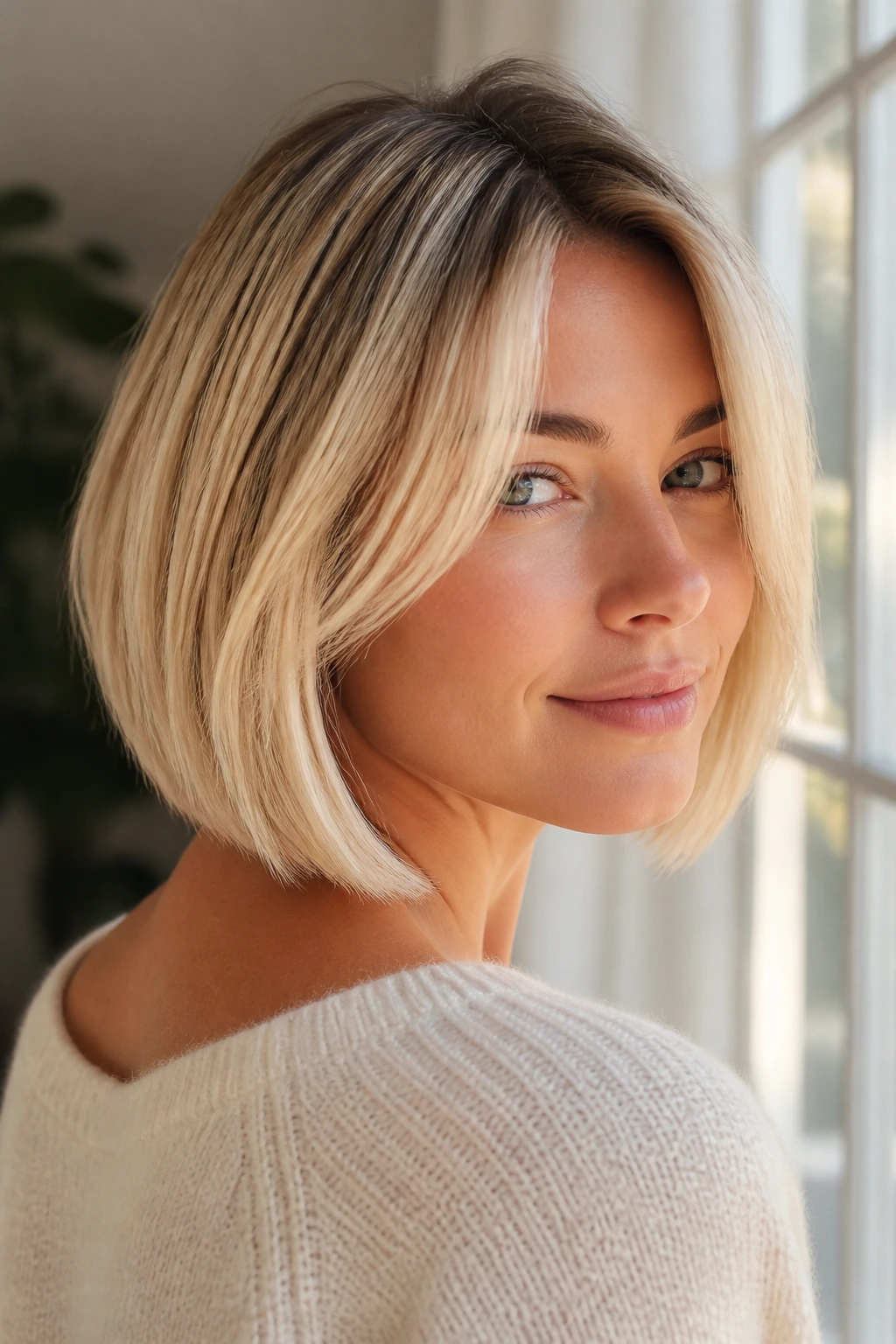
Short hair changes how light lands. That’s the whole trick. A blonde bob keeps the brightest pieces close to the face, so the color has less distance to travel before it hits your eyes, cheeks, and jawline. On longer hair, the light can get lost in the length. On a bob, it stays concentrated.
Root shadow helps more than people think. A slight dip in tone near the scalp gives the blonde a place to start, which makes the lighter pieces look richer. It also keeps the grow-out soft, and that matters because a bob needs clean edges. If the color turns harsh, the whole cut feels less finished.
I also prefer bobs because they show the haircut itself. Long blonde hair can hide a lot. Shorter lengths force shape to matter. When the perimeter is right, the blonde looks brighter by default, because the whole head reads as one designed shape instead of a pile of light ends.
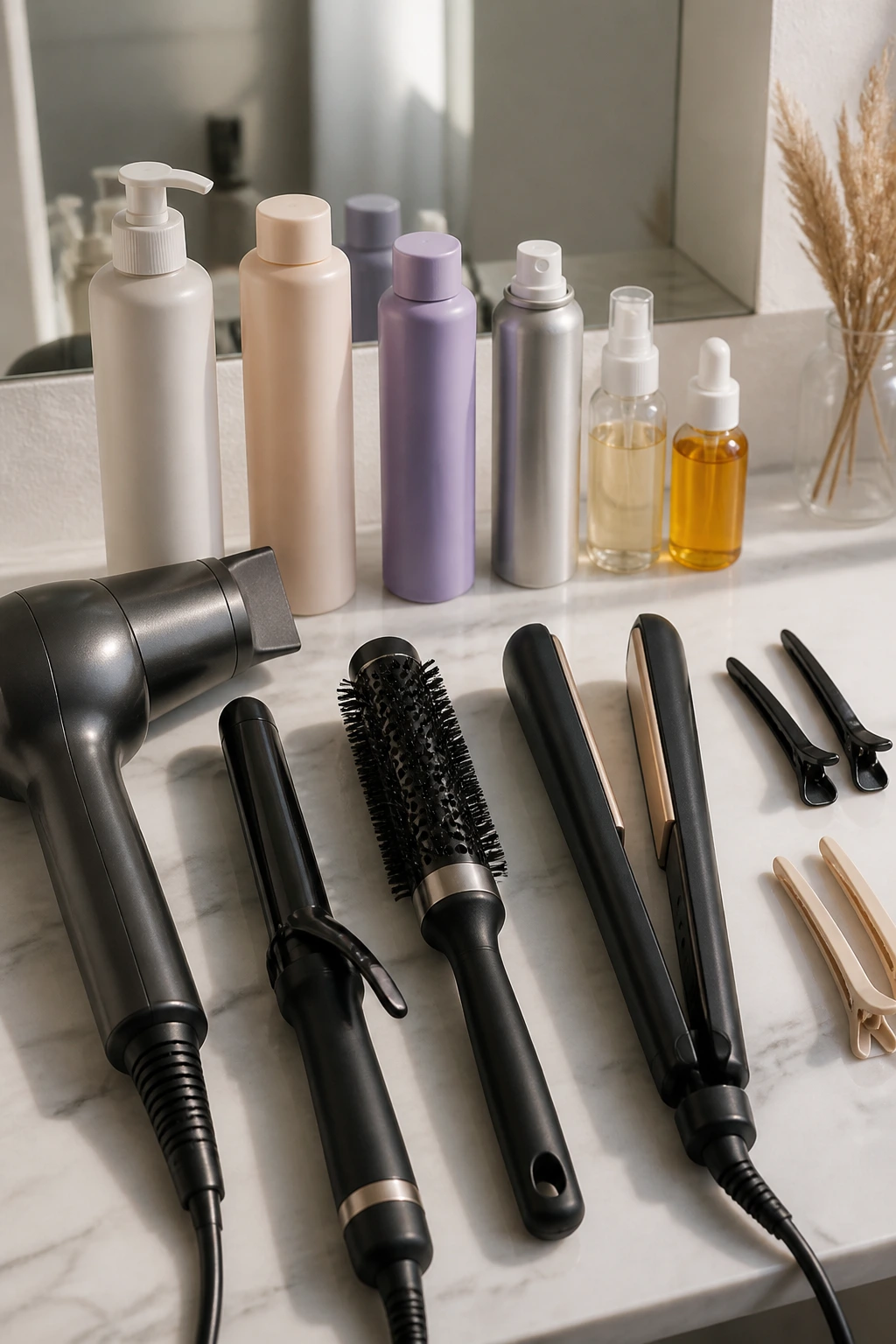
The Tools That Make a Bob Easy to Style
-
Blow dryer with a nozzle: The nozzle matters. It directs airflow so the cuticle lies flatter and the blonde looks shinier.
-
1-inch curling iron or wand: Best for loose bends and soft waves that keep a blonde bob from looking too stiff.
-
Small round brush: A brush around 1.25 to 1.75 inches helps tuck the ends under without making them too round.
-
Flat iron with rounded edges: Useful for sleek bobs and gentle bevels at the ends.
-
Sectioning clips: Essential if you want an even blowout. Messy sectioning gives messy shape.
-
Heat protectant: Use it every time. Blonde hair shows heat damage fast.
-
Color-safe shampoo and conditioner: Keeps tone from fading into straw or brass.
-
Purple shampoo: Use it sparingly, not as a daily cleanse. Once a week is enough for most blondes.
-
Dry shampoo: Great for preserving a bouncy bob on day two or day three.
-
Lightweight finishing oil or serum: A drop or two on the ends gives shine without flattening the whole cut.
How to Ask for the Right Blonde Bob Cut and Color
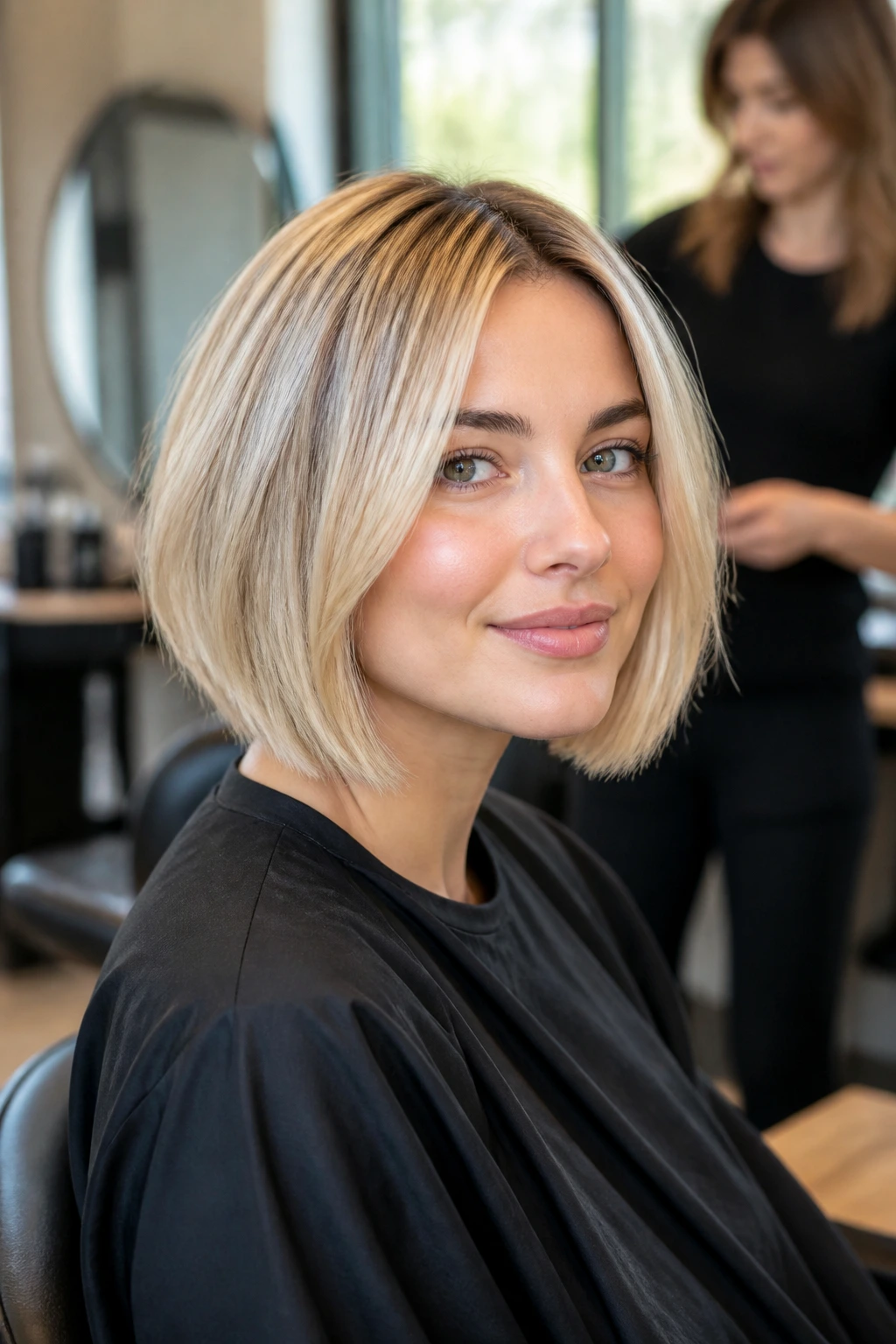
The best salon conversations are specific. Bring photos, yes, but also say where you want the front to hit: chin, lip, jaw, or collarbone. That one detail changes the entire haircut. A bob that lands an inch lower can read soft and airy; a higher cut can feel sharp and editorial.
Talk about the blonde in plain language
Say beige, honey, champagne, ash, wheat, or platinum. Those words tell the stylist what kind of brightness you want. If you want dimension, ask for a root shadow or soft babylights around the face. If you want a cleaner look, ask for a brighter perimeter with fewer lowlights underneath.
Be honest about your hair’s behavior
If your hair kicks out at the ends, frizzes in humidity, or sits flat at the crown, say so. A good bob should work with that pattern, not fight it. Hair that’s thick at the nape may need undercutting. Fine hair may need a blunt edge and less texturizing. Curly hair needs the cut planned around shrinkage, not wishful thinking.
Bring two kinds of photos
One should show the shape. The other should show the color. That sounds obvious, but it saves a lot of confusion. A stylist can copy a tone from one picture and a perimeter from another more easily than trying to guess what you mean by “sun-kissed.”
How to Wear a Blonde Bob Every Day
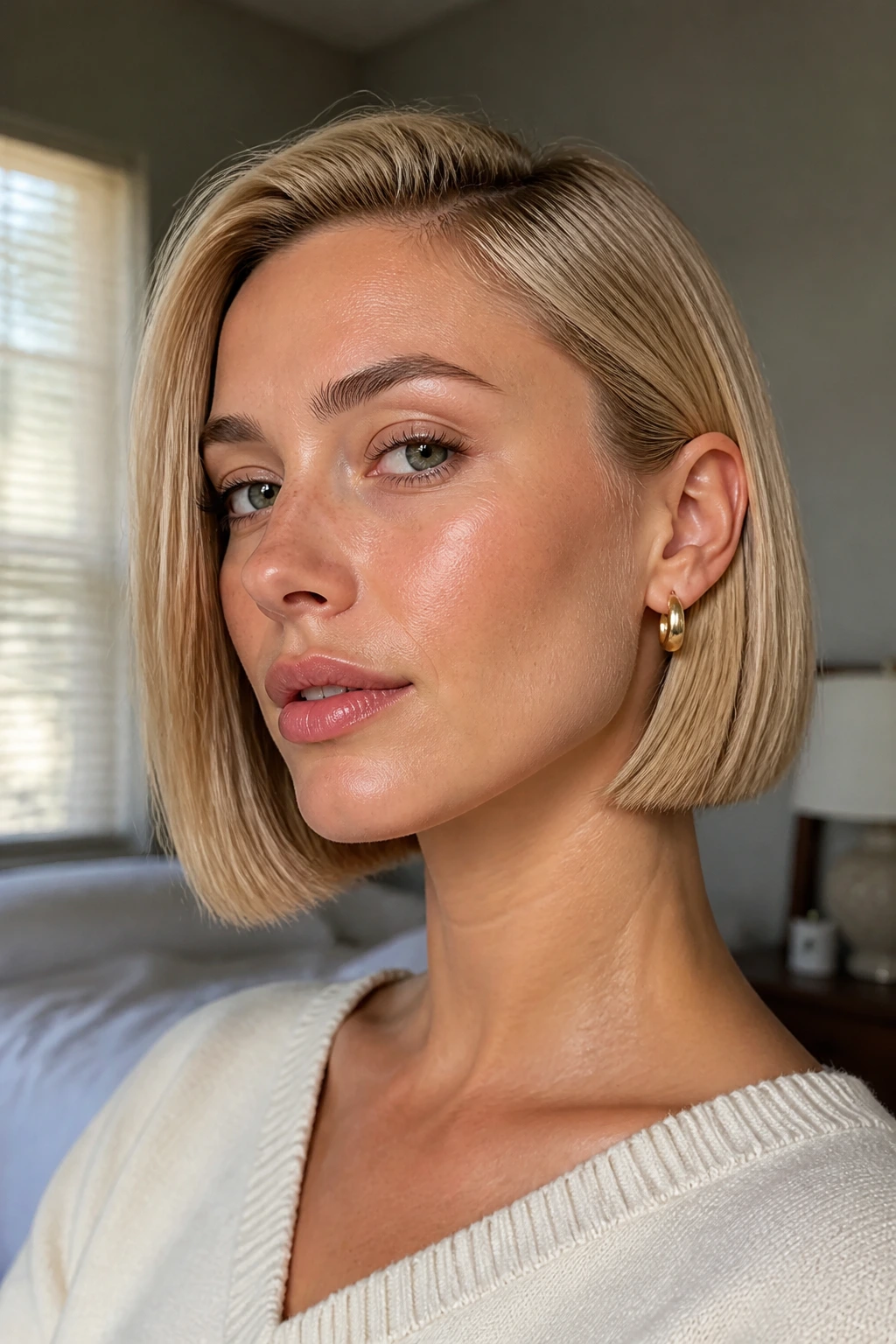
Presentation: A blonde bob looks sharp when the part and finish match the cut. Wear a blunt beige bob sleek and tucked behind one ear, or let a shaggy blonde bob dry with a little uneven bend for a looser feel. The shape should lead; the styling should follow.
Companions: Small hoops, a clean neckline, and simple makeup suit most bob lengths. If the bob is icy or platinum, a defined brow and a little blush keep the face from getting washed out. Warm blondes like honey and wheat usually look better with softer clothing colors near the face—cream, olive, camel, black if you want contrast.
Balance: If your face is rounder, keep a little length in the front or add a side part. If your face is long, curtain bangs or a softer wave can break up the vertical line. Thick hair usually likes more structure. Fine hair usually likes a stronger perimeter and less layering. That sounds basic because it is basic, but it’s where most bad bob decisions start.
Finish: Use shine spray when you want polish. Use texture spray when you want the cut to look a little undone. Do not use both with a heavy hand. Blonde hair shows product buildup fast, and a dusty bob is not the same thing as a textured one.
Extra Styling Tweaks That Change the Whole Mood
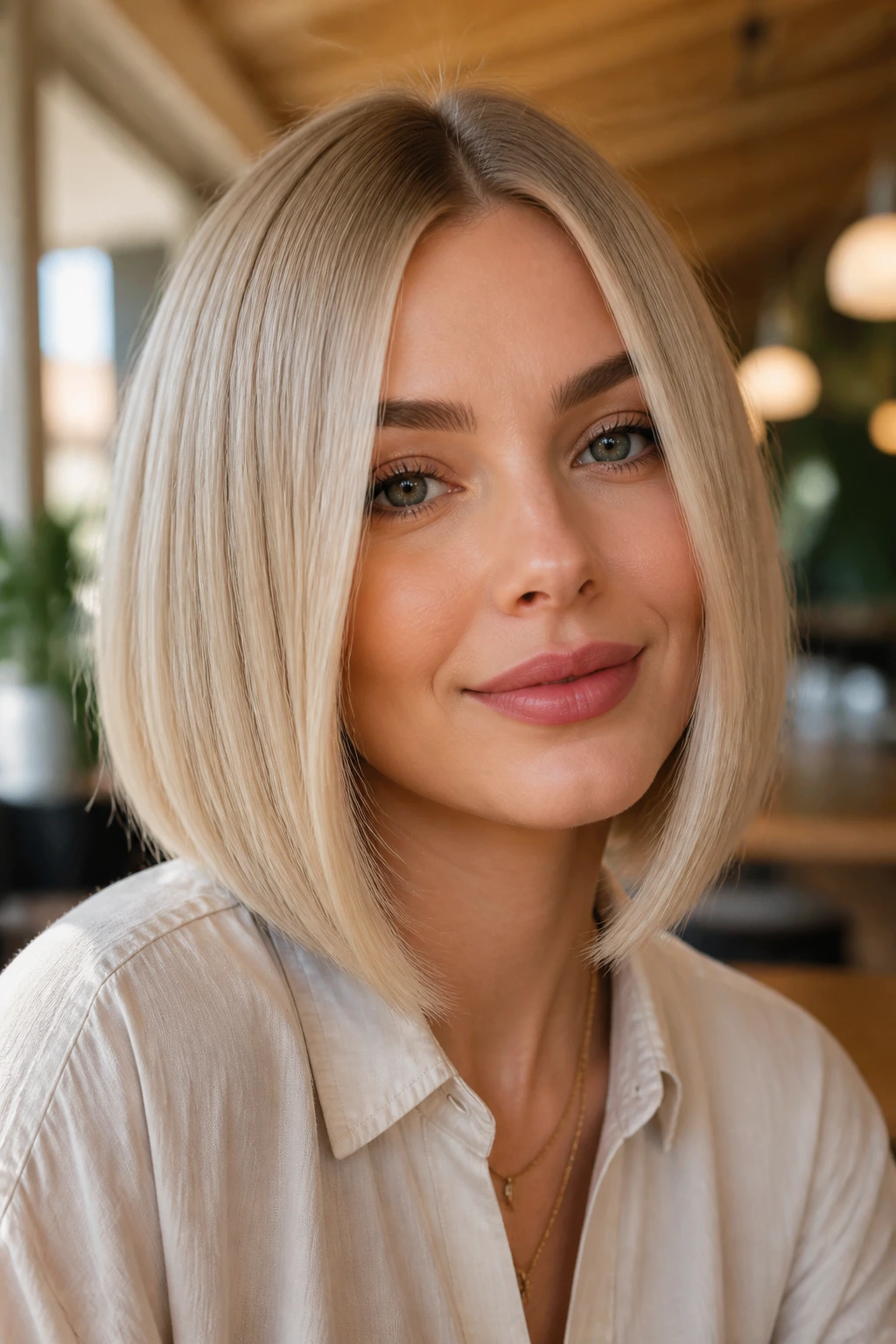
Tone Boost: A clear gloss or glaze can shift the blonde from brassy to creamy in one appointment. If the hair starts to look dull, don’t jump straight to purple shampoo. Sometimes it just needs shine and a tone refresh.
Shape Shift: Changing the part by one inch can change the whole cut. A center part makes a bob look cleaner and more graphic. A side part softens it. Tucking one side behind the ear creates asymmetry without cutting anything.
Texture Control: Want a softer finish? Bend the ends under with a round brush. Want a cooler, looser feel? Let the ends flip a touch and keep the roots less lifted. A bob does not need to be styled the same way every day, and that’s part of why it stays interesting.
Make-It-Yours: Fine hair usually looks best in a blunt or slightly angled shape. Thick hair often needs interior removal, not more layers on the outside. Curly hair wants length left at the perimeter. Straight hair can handle the cleanest lines, which is why the sleek bob keeps coming back.
How to Keep the Shape and Tone Fresh
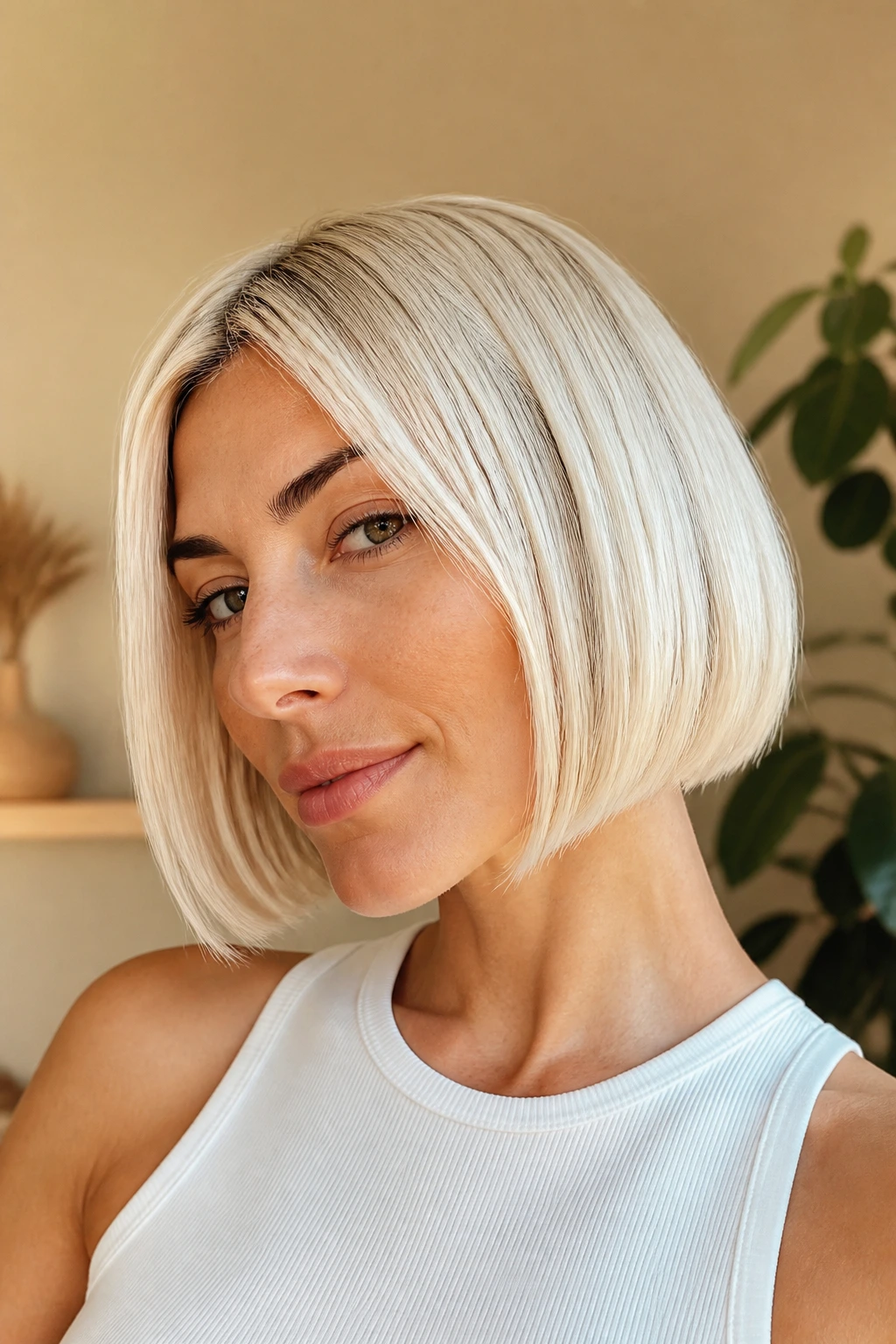
A blonde bob loses its edge faster than people expect, so trims matter. Every 6 to 8 weeks is a good range for keeping the line clean. If you stretch beyond that, the ends start to kick out, the perimeter gets fuzzy, and the whole cut looks more tired than grown out.
Tone maintenance depends on how light you go. Beige and honey blondes can usually go a little longer between glosses. Platinum and icy blondes need more frequent tone refreshes, sometimes every 4 to 6 weeks if the hair lifts brassy fast. Purple shampoo helps, but use it like a tool, not a habit. Once a week is enough for most heads of blonde hair.
At home, protect the finish. Blow-dry with a nozzle when you want smoothness. Use heat protectant every time you add hot tools. Sleep on a silk or satin pillowcase if your bob tends to flip in the wrong direction overnight. If you air-dry, keep your hands out of it until the shape sets. Touching it too much is how a clean bob turns fuzzy before lunch.
Variations and Adaptations to Try
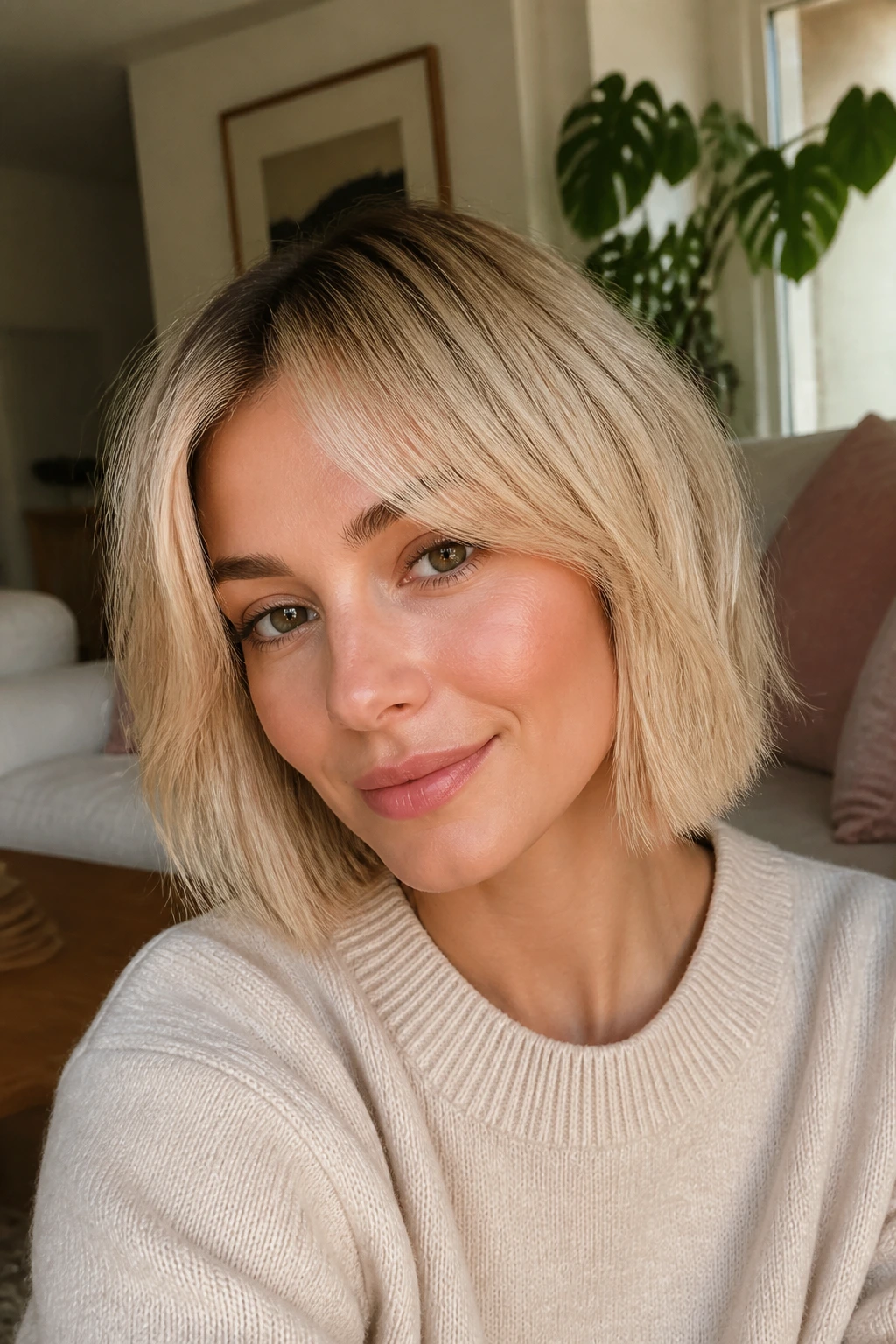
Rooty Honey Glow: Keep about an inch of depth at the root and brighten the front pieces with honey ribbons. This version is kinder to grow-out and easier to wear if you don’t want salon visits to feel constant.
Cool Champagne Shift: Swap warm gold for a beige-pearl tone and keep the finish glossy. It suits people whose skin pulls pink or neutral and want the blonde to look clean rather than sunny.
Curly Air-Dry Bob: Leave a little more length at the perimeter, add gentle internal layers, and let the curls set with cream and gel. This variation works when you want shape without a daily blowout.
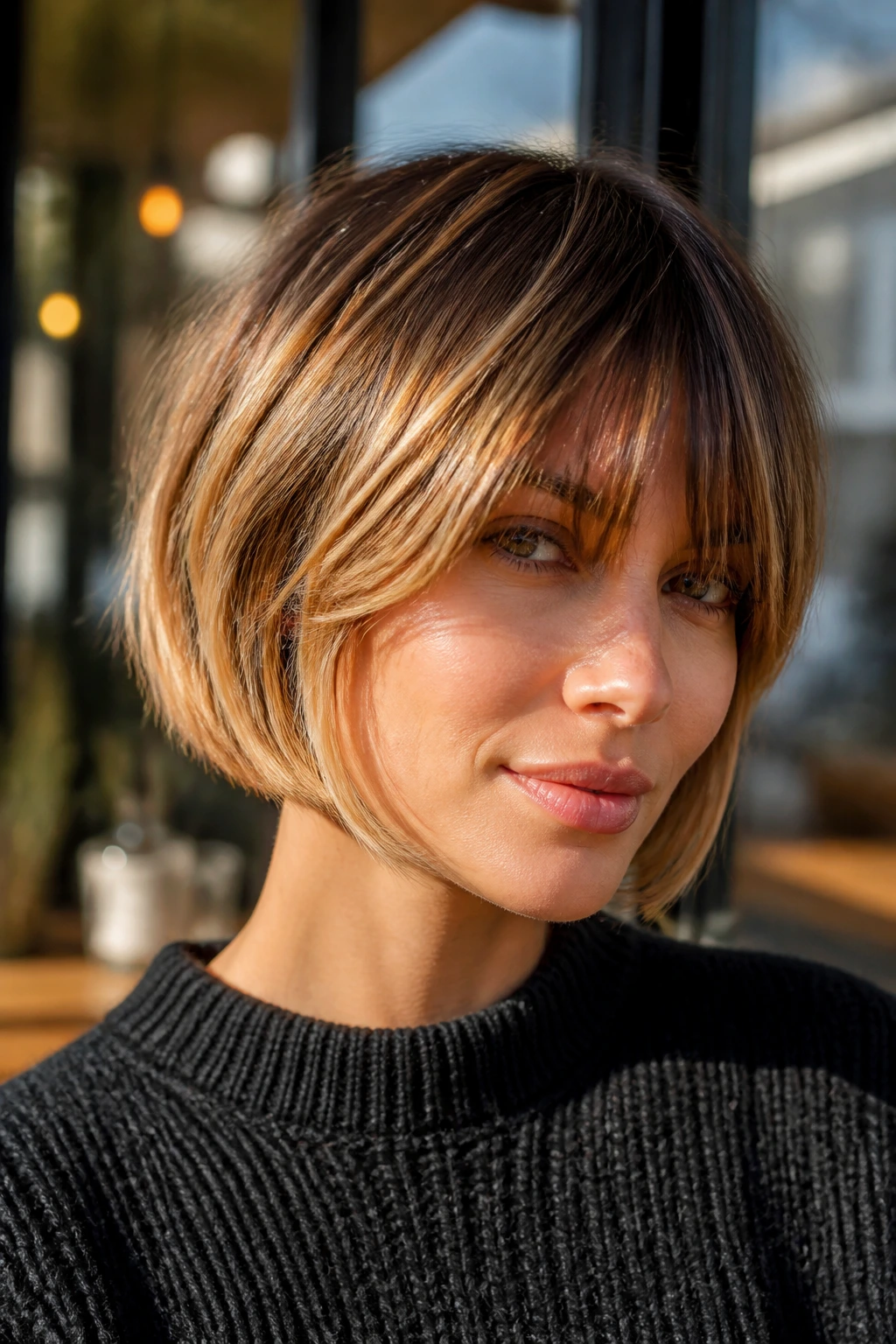
Soft Fringe Upgrade: Add curtain bangs or a side-swept fringe to a blunt or angled bob. The bang line softens the forehead and makes the blonde feel less severe around the face.
Low-Maintenance Grow-Out: Choose a collarbone bob with subtle angle and a soft shadow root. It’s the easiest route if you like the idea of blonde bob haircuts but don’t want the upkeep of a short platinum cut.
Common Mistakes That Flatten the Look
-
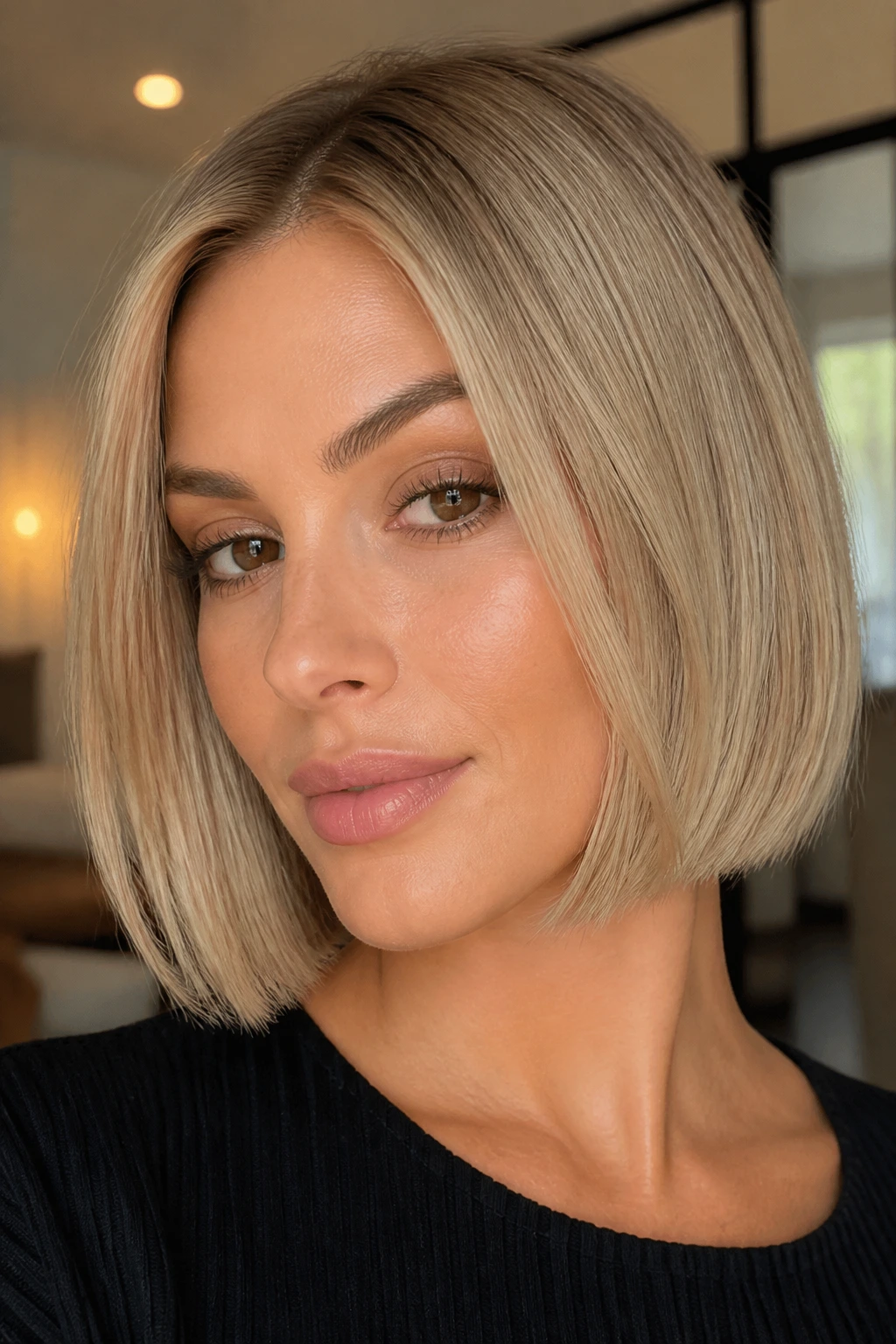
Cutting too much off the front on thick hair: The bob can puff outward and lose the swing you wanted. Keep some length in the front so the shape has weight.
-
Going one-tone blonde from root to tip: The result can look flat and over-lightened. A tiny bit of root depth and a few soft lowlights add dimension that the eye actually notices.
-
Using purple shampoo like a daily cleanser: The hair can turn chalky or dull. Use it sparingly, then follow with a hydrating conditioner.
-
Ignoring cowlicks and growth patterns: A bob that fights a stubborn part or a strong front swirl will never sit right for long. The fix is to cut with the pattern, not against it.
-
Skipping trims because the hair is still short: Short hair doesn’t forgive grown-out edges. Once the line blurs, the cut stops looking intentional fast.
-
Overloading texture spray: Too much makes the blonde look dusty and dry. A light mist is enough. Then stop.
Frequently Asked Questions
Which blonde bob haircut is best for fine hair?
A blunt bob at the chin or just below it is usually the safest bet. The clean edge makes the hair look denser, and a soft beige or champagne tone keeps it from feeling harsh.
Does a blonde bob work on curly hair?
Yes, but the cut has to respect shrinkage. Curly bobs need a perimeter with enough length to let the curl form, plus highlights placed where the outer curl catches light.
How often should I tone a blonde bob?
Most blondes do well with a gloss or toner every 4 to 8 weeks, depending on how light they are. Platinum and icy shades need the most upkeep; beige and honey tones can stretch longer.
What face shape suits a bob with bangs?
Curtain bangs are the easiest to wear because they soften the forehead without taking over the face. Longer faces, heart shapes, and strong jaws often like them best.
Can I go blonde if my hair is naturally dark?
Yes, but it’s usually a staged process. Dark hair often needs several lightening sessions, and a good root shadow or lowlight plan keeps the result from looking flat or overdone.
Is a blunt bob easier to maintain than a layered bob?
Usually, yes. Blunt bobs keep their line longer and show less styling chaos. Layered bobs can be easier for movement, though, especially if your hair is thick or wavy.
Why does my bob flip out at the ends?
That usually means the ends were cut slightly too blunt for your texture, or the blow-dry didn’t direct them inward long enough to set. A round brush, a bit more bevel, or a small trim can fix it.
Can a blonde bob grow into a lob without looking awkward?
Absolutely. Ask for a soft shape as it grows, not a hard line that suddenly becomes a shelf. A few light dusting trims keep the transition smoother.
A Brighter Line at the Jaw
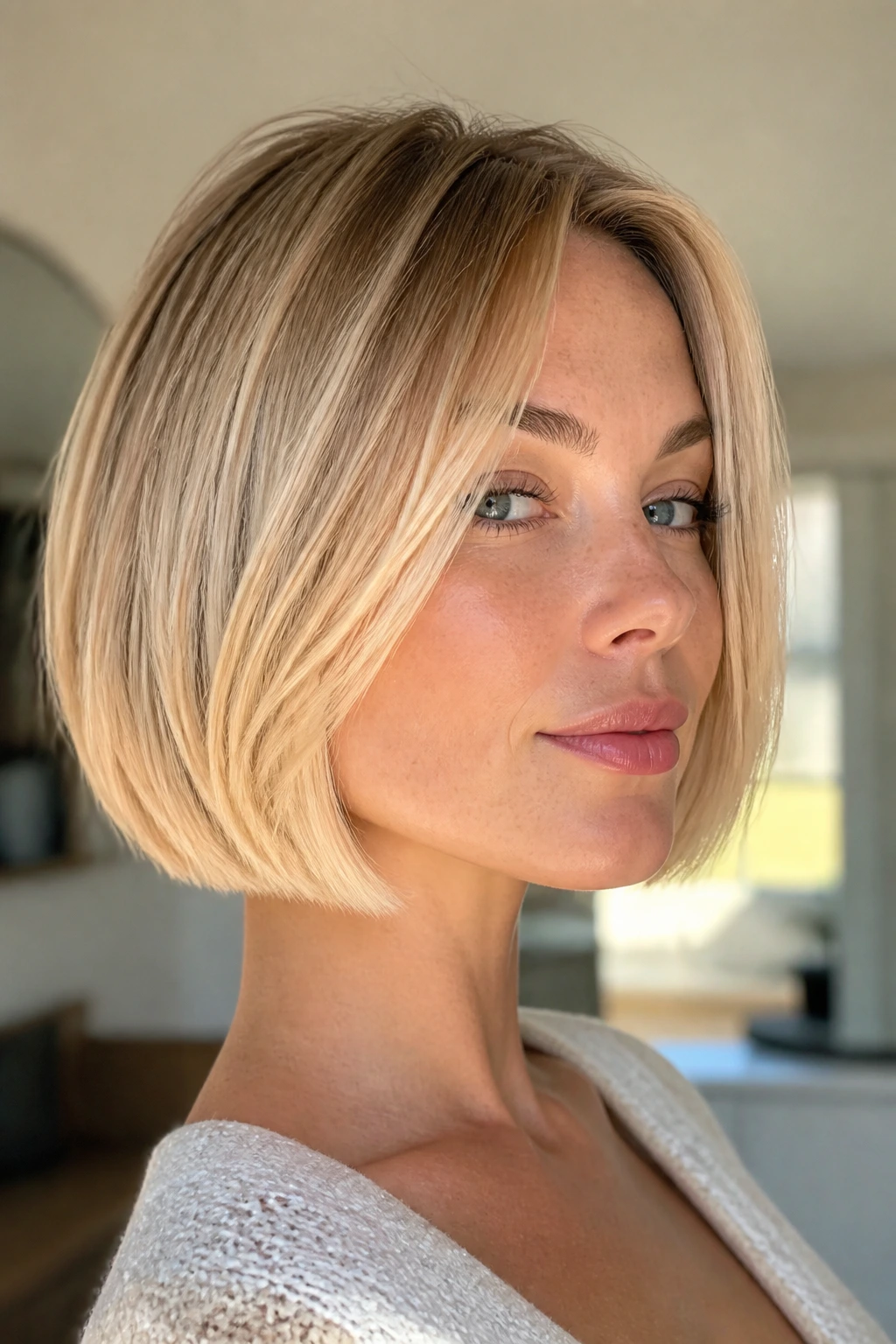
The best blonde bob haircut is not the brightest one in the room. It’s the one with enough depth at the root and enough shape at the edge to make the color look deliberate. That’s what gives a bob its lift: not bleach for the sake of bleach, but a clean line, a good tone, and a little restraint.
Pick the version that matches how your hair already behaves—straight, wavy, curly, thick, fine—and the whole thing gets easier to live with. That’s the real appeal here. Once the shape makes sense, the blonde starts doing its job without asking for a fight.
