



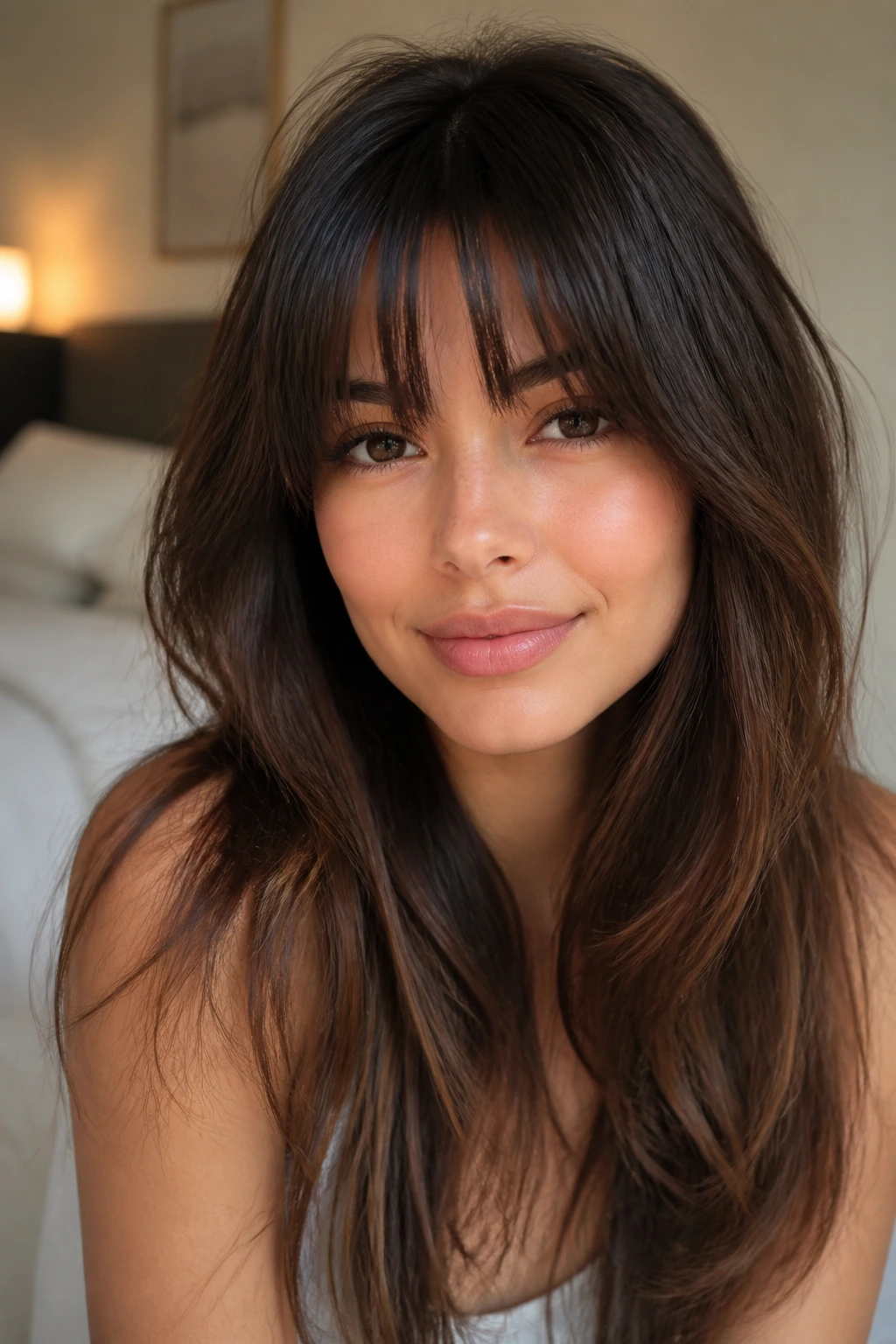
Round faces and long hair can be a gorgeous pairing, but bangs are where the whole cut either sharpens up or slides into softness without much shape. The best bang styles for long hair and round faces do not try to fight your face with a blunt wall of hair; they add angles, lift, and movement so the eye travels up and down instead of hanging out side to side.
That’s the trick people miss. A fringe is not just a cute front section. On a round face, it becomes architecture: it can stretch the face visually, break up fullness at the cheeks, or soften a strong forehead without turning the whole look heavy. The difference between “fresh and face-framing” and “my hair ate my face” is often just an inch or two of length, plus the direction you style it.
Long hair gives you room to play. You can go soft and wispy, open with a center part, or lean into a more dramatic sweep and still keep the rest of the length feeling light. Some of these looks are easygoing. A few are polished. One or two are a little braver. Good.
Why These Bang Styles Are Worth Your Time
-
They change the silhouette without losing length: You keep the drama of long hair while getting a front shape that does real work around the forehead and cheekbones.
-
They’re easier to personalize than a full chop: A fringe can be trimmed, thinned, split, or tucked into layers without committing you to a whole new haircut every time you get restless.
-
They suit different textures better than most people think: Straight, wavy, curly, and coily hair can all wear bangs; the shape just has to respect the way your hair actually falls.
-
They grow out more gracefully than a hard blunt line: The right fringe slides into face-framing pieces instead of turning into an awkward shelf two weeks later.
-
They help a round face read a little longer: Diagonal lines, center splits, and cheekbone-skimming ends direct attention vertically, which is the whole game here.
1. Curtain Bangs That Open at the Cheekbones
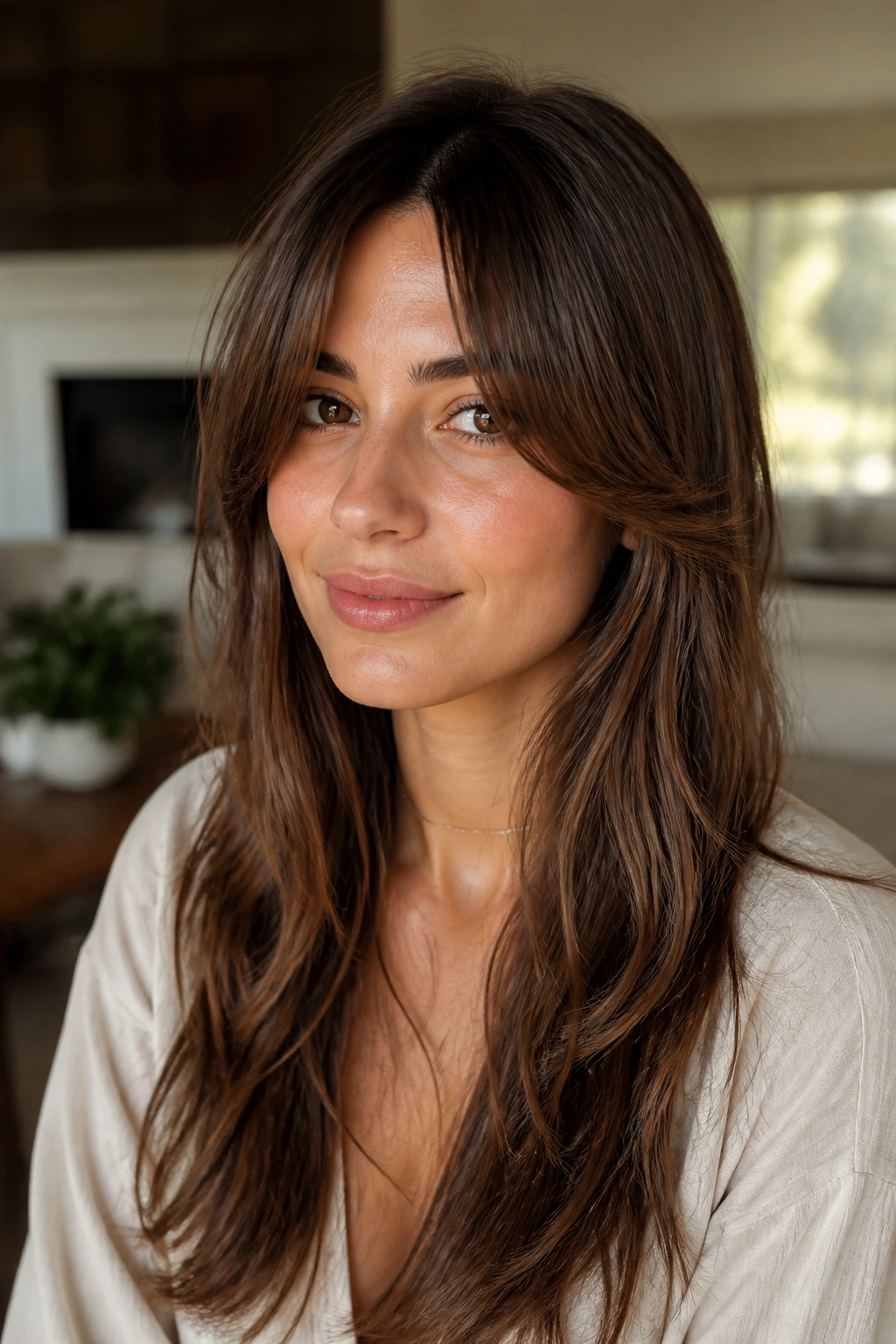
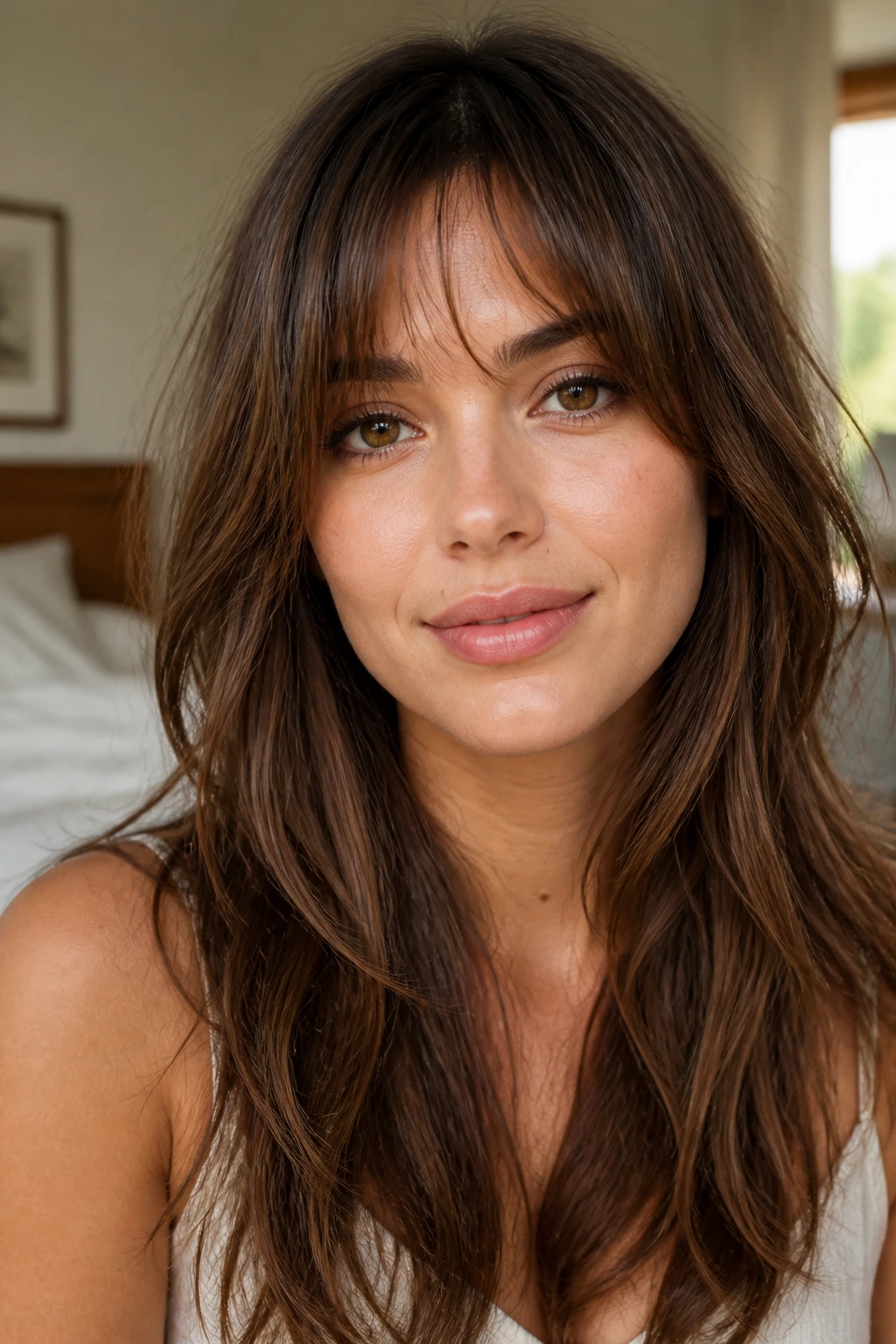
Curtain bangs are the cleanest place to start if you want bangs for long hair and round faces without a hard front edge. The center stays shorter, the sides sweep longer, and the shape bends away from the face like a soft frame instead of a curtain rod. On a round face, that outward sweep matters because it interrupts width right where the face tends to feel fullest.
Why They Work
The split in the middle creates a vertical lane that pulls the eye down. The longer side pieces keep the look from stopping abruptly at the widest part of the face, which is where blunt fringe can get a little bossy. If your hair is straight, the cut reads airy. If it’s wavy, it lands with a softer, lived-in bend.
- Ask for the shortest point to hit around the bridge of the nose.
- Let the side pieces brush the cheekbone or the top of the lip.
- Blow-dry the bangs forward first, then split them away from the face with a round brush.
Best for: anyone who wants movement and a forgiving grow-out.
2. Bottleneck Bangs With a Narrow Center
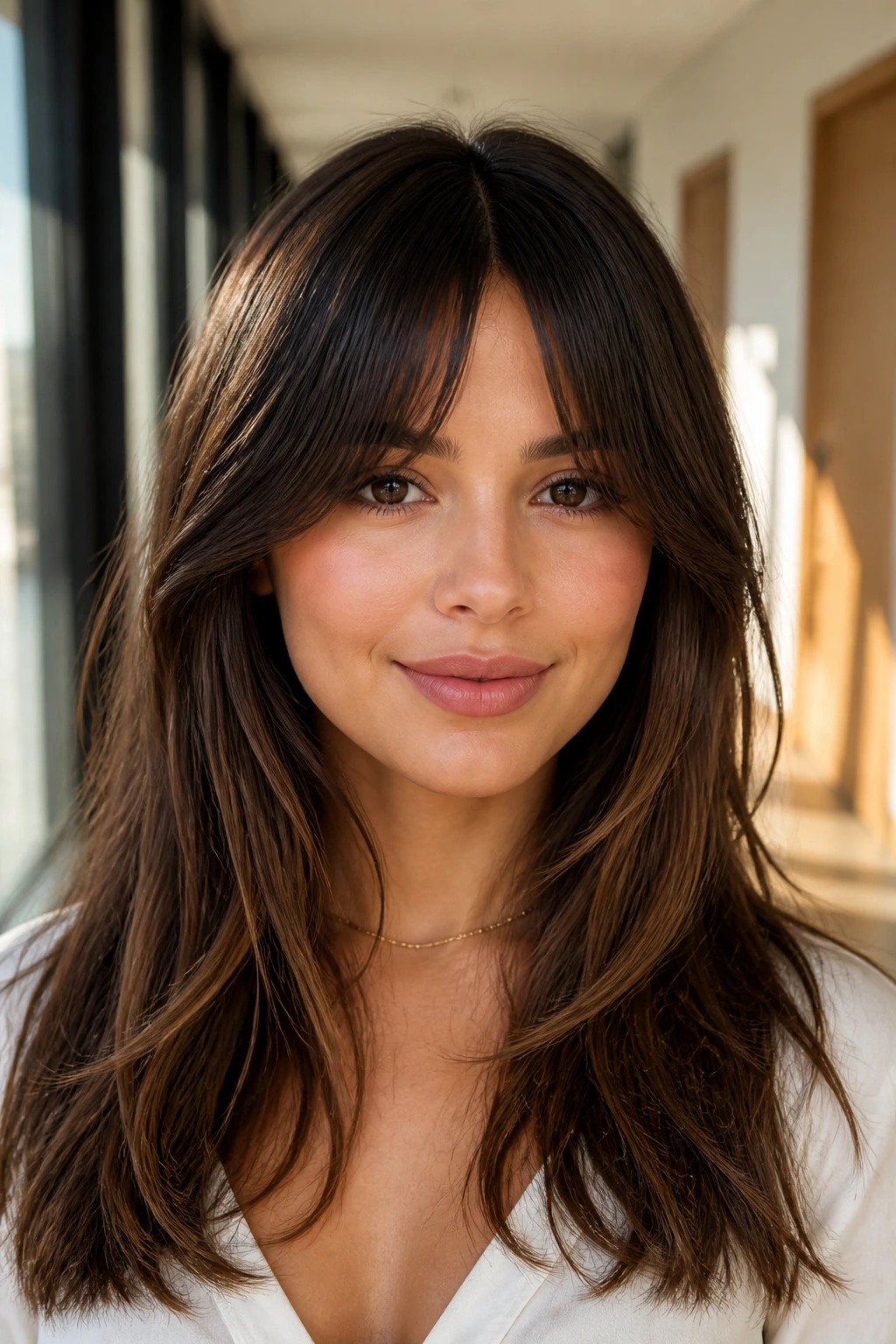
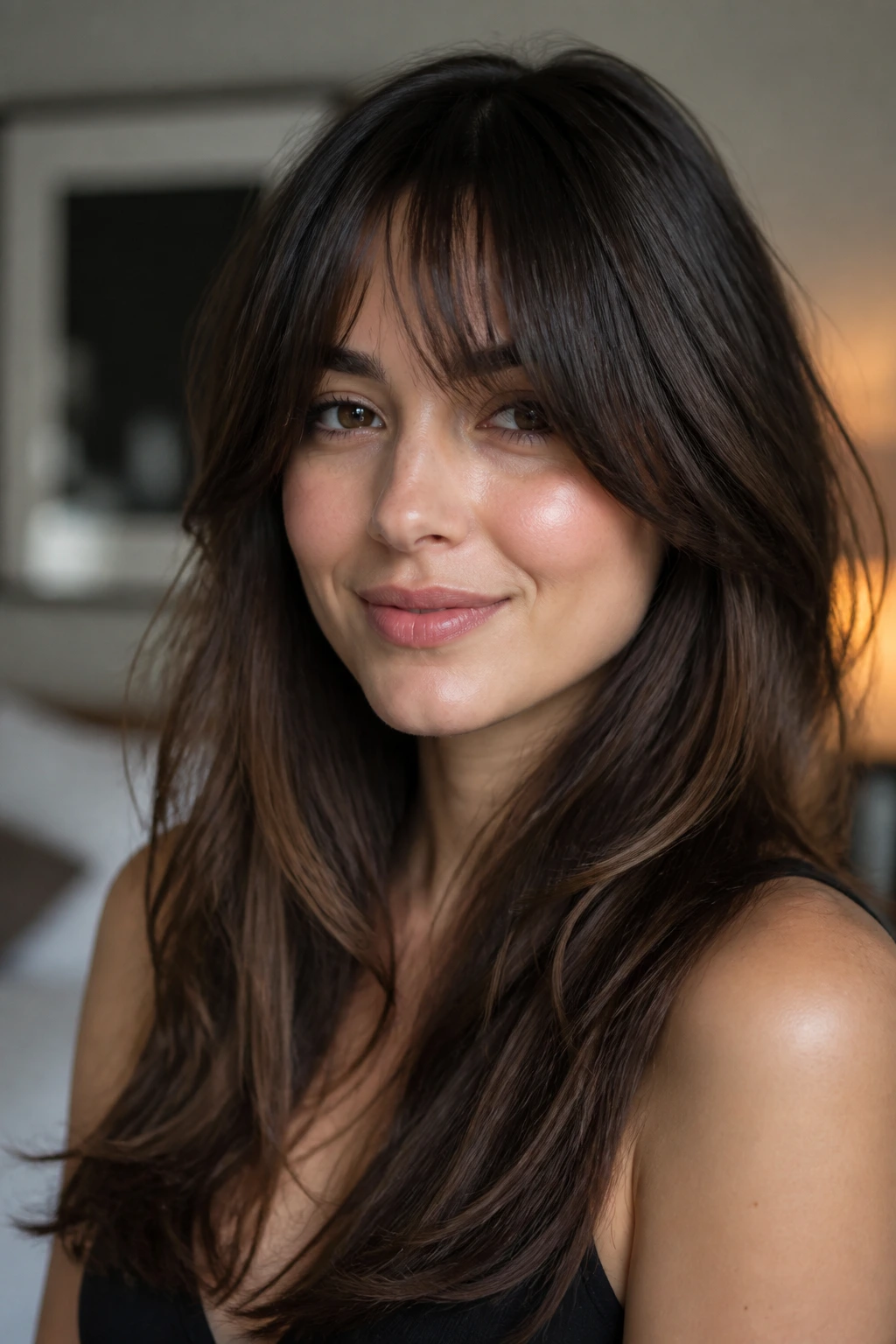
Bottleneck bangs are the quiet overachiever of the group. The center stays narrow and slightly shorter, then the fringe opens wider at the temples and cheekbones, which gives a round face a cleaner vertical path. I like this shape when someone wants something a little more styled than curtain bangs but not nearly as blunt as a full fringe.
The name fits the shape perfectly. Tight at the top, open at the sides. That visual narrowing in the center helps break up forehead width without making the front of the haircut feel heavy. On long hair, bottleneck bangs can look almost tailored, especially if the rest of the length is sleek or softly waved.
They do need a decent blow-dry. If you let them dry flat and crooked, the whole effect gets muddy fast. I’d ask for the center to sit just above the brows, with the side pieces dropping to the cheekbones, because that gives you room to style them in a sweep or a middle split.
3. Side-Swept Bangs From a Deep Part
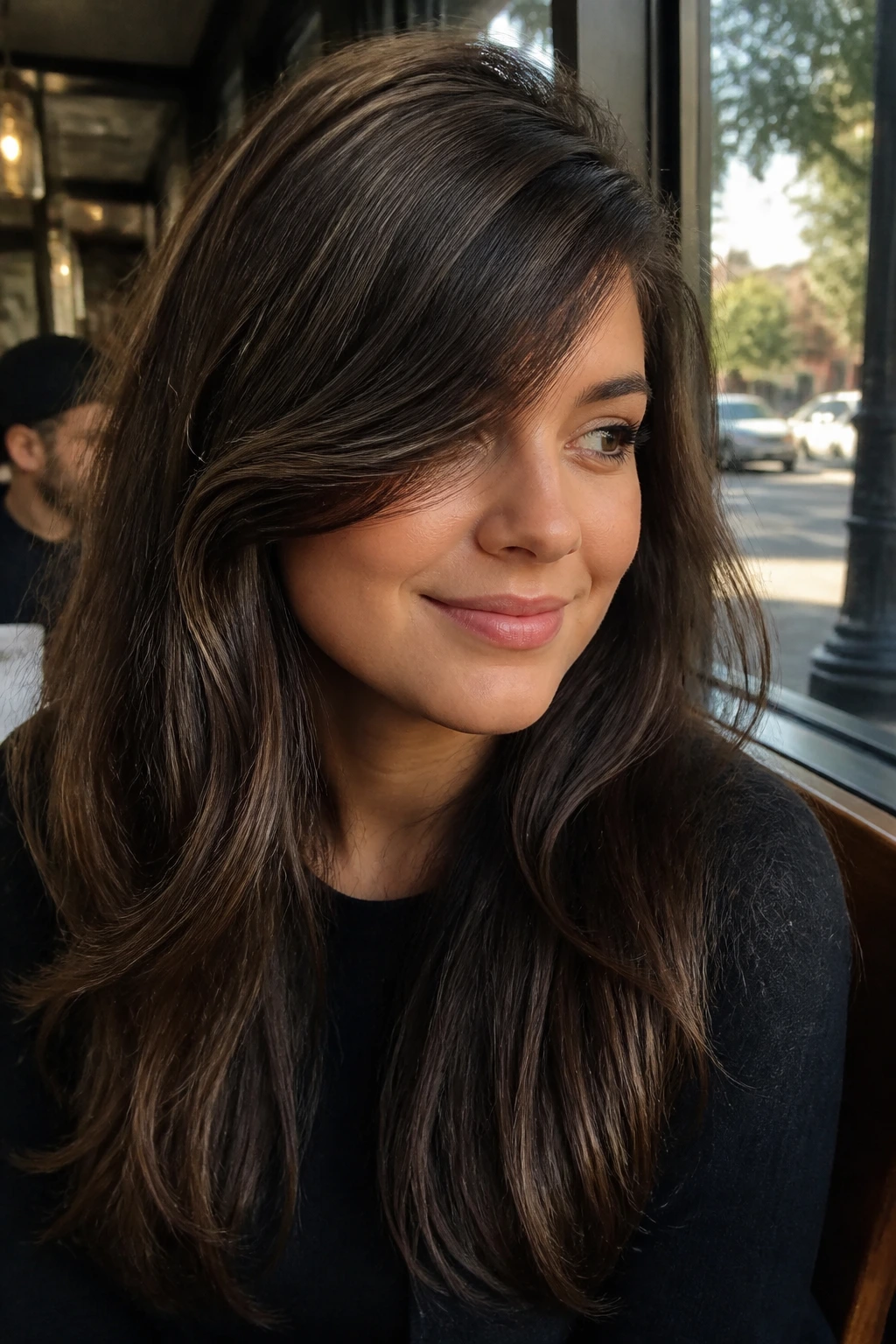
Side-swept bangs are the old reliable, and for good reason. A deep part sends the fringe diagonally across the forehead, which is one of the easiest ways to make a round face read longer. The line is slanted, not horizontal, so the eye keeps moving instead of parking at the widest part of the face.
How to Style It
The best version of this look is not a floppy chunk draped over one eye. It’s a controlled sweep with a little lift at the root and a soft bend through the ends. I like it on long hair that already has layers, because the bangs can melt into the side pieces instead of sitting there like an afterthought.
- Blow-dry the bangs in the opposite direction first.
- Flip them back across the forehead with a medium round brush.
- Use a light mist of hairspray at the root only.
This one is ideal if you want a fringe that can disappear into a ponytail, a twist, or a half-up style on days when you do not want to think about it.
4. Feathered Fringe That Softens the Forehead
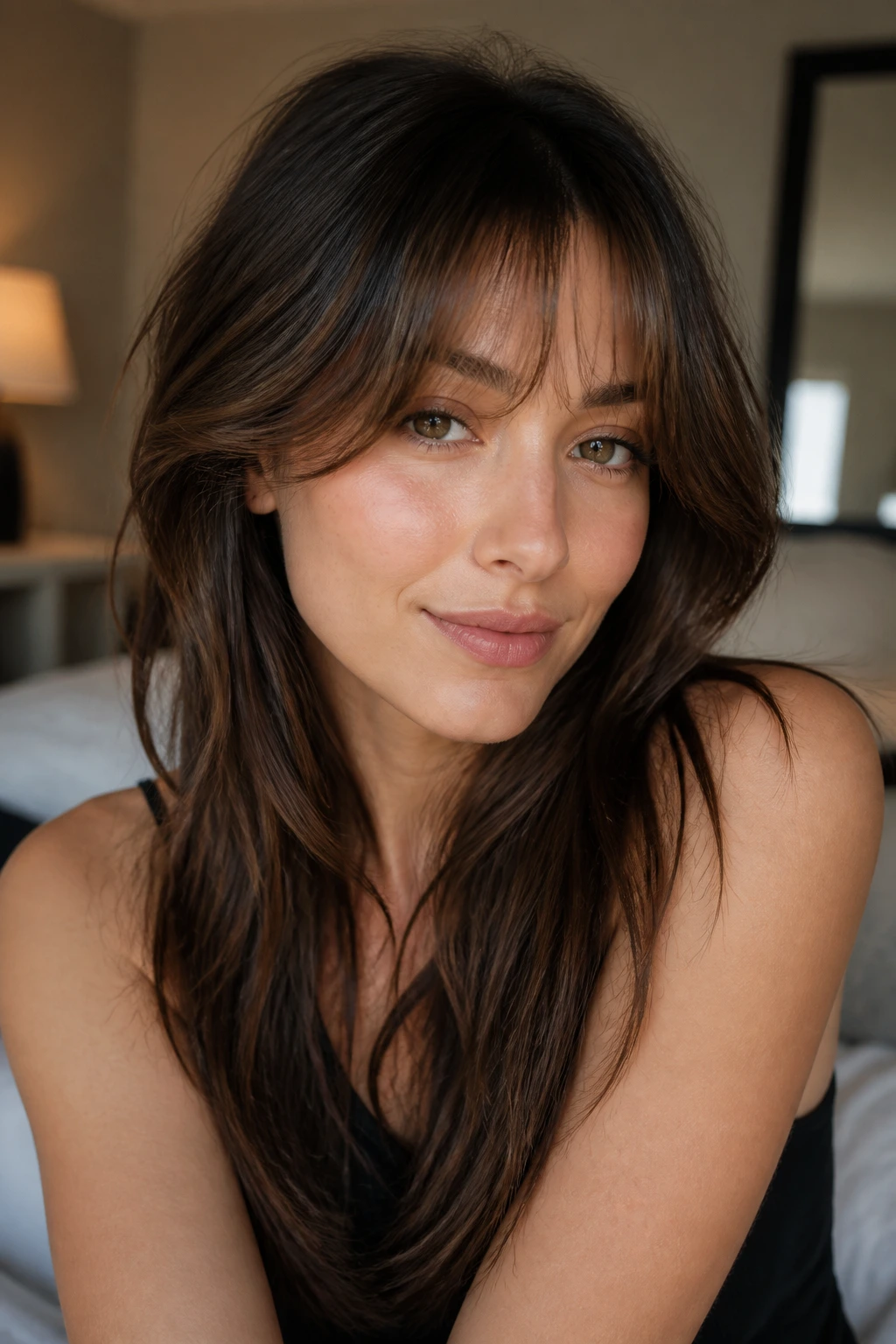
Feathered bangs are for people who want softness, not a statement block of hair across the front. The ends are textured and light, which keeps the fringe from feeling dense against a round face. On long hair, that airiness matters, because the rest of the length already brings enough weight.
The beauty of feathering is that it breaks up the line. Instead of one straight band, you get little tapered pieces that move when you walk. That motion keeps the front of the cut from making the face feel boxed in. It also plays well with layers, especially if your stylist likes to connect the fringe into the cheekbones instead of leaving a hard step.
I’d choose this if you love the idea of bangs but hate fuss. They’re not as precise as curtain bangs, and that’s the point. The cut can look slightly undone and still read intentional, which is a nice trick when your hair air-dries with a bit of wave.
5. French-Girl Bangs With Piecey Texture
French-girl bangs have a certain casual snap to them. They usually sit lower and feel a little more lived-in than a polished salon curtain, with piecey ends that don’t make a perfect line. On a round face, that looseness helps because the fringe does not sit like a shelf right across the widest part of the forehead.
I’m fond of this look on long hair that has some bend or texture. Straight hair can wear it too, but you need a bit of separation—otherwise the bangs can turn into a heavy strip. Ask for a softer center, not a dense block, and keep the edges broken up so they can move.
The whole thing looks best when it is not overworked. A touch of texture spray and a quick finger-style is usually enough. If you are the type who wants bangs that look better slightly imperfect, this is your lane.
6. Arched Full Bangs That Curve Above the Brows
Arched full bangs are a stronger choice, and I like them more than most people do on round faces, provided the curve is soft. A gentle arch sends the eye upward and gives the forehead a shaped outline instead of a hard wall. The key is keeping the bangs full enough to matter, but not so blunt that they flatten the whole face.
The curve should feel like a quiet smile, not a ruler. If the center sits a touch shorter and the corners taper slightly longer, the fringe can make the eyes look lifted without adding width. Long hair helps here because the length below keeps the cut from feeling too top-heavy.
What to Ask For
Ask for fullness through the center with softer edges at the temples.
Ask for the ends to be texturized rather than thinned out aggressively.
Skip the super-short, ultra-straight version unless you want a very sharp look and you’re ready to style it every morning.
This one is best if you like a more deliberate fringe and you do not mind a little upkeep.
7. See-Through Bangs That Keep the Face Open
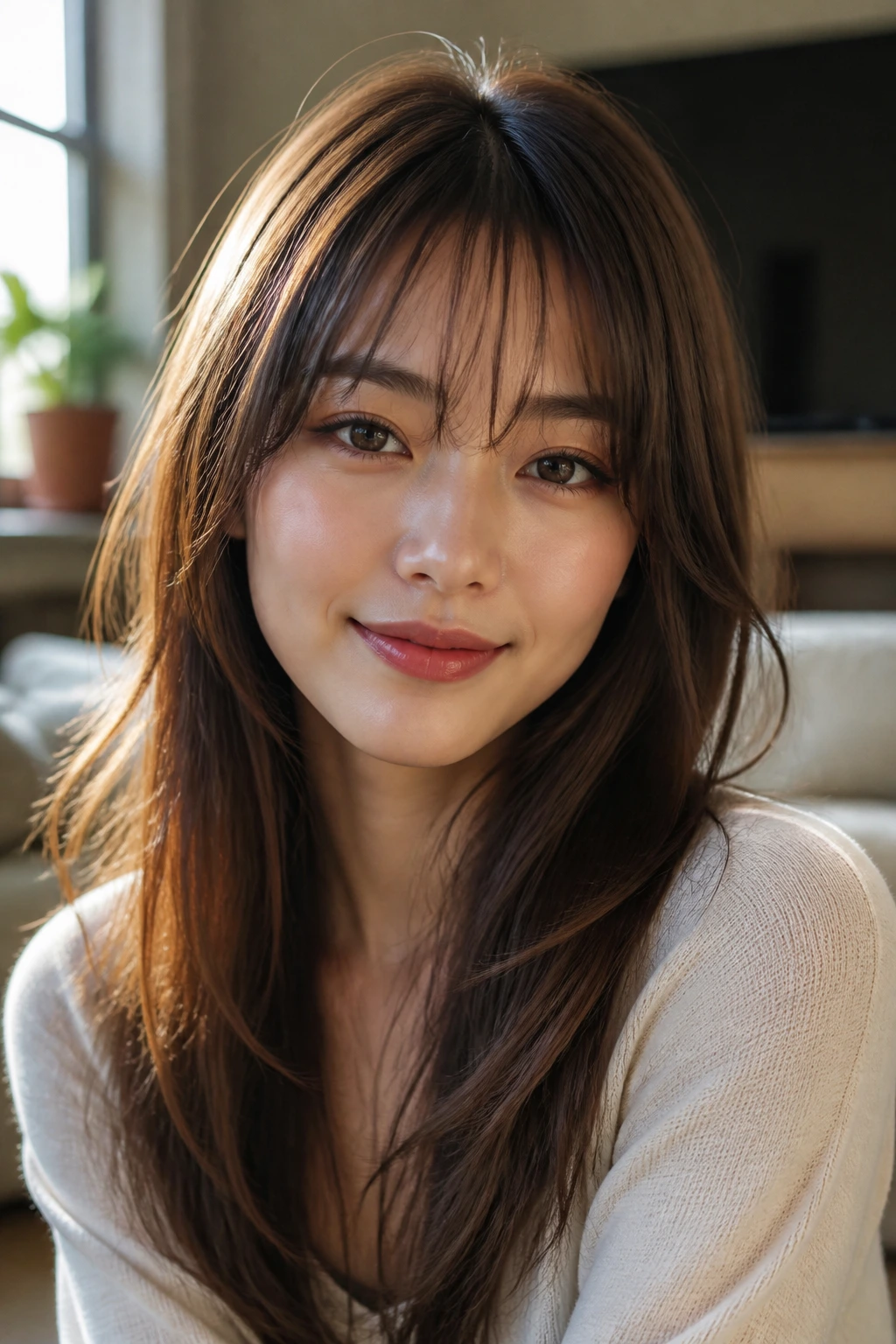
See-through bangs are airy enough to let some forehead show through, which is exactly why they work on a round face. The fringe gives you coverage, but it does not close the whole top of the face. That little bit of negative space keeps the look lighter.
This style has more usefulness than people think. It’s especially good if your hair is thick and a solid fringe feels too dense, or if you want something softer than blunt bangs but not as open as a full curtain split. The strands are fine and spaced out, so the cut reads delicate rather than heavy.
A small round brush or a flat iron can give the front pieces a slight bend, but don’t chase a perfect finish. The point is softness. If the bangs lie too flat, they lose the see-through effect and start acting like a regular full fringe. Nobody needs that.
8. Blowout Bangs That Curl Under the Eye Line
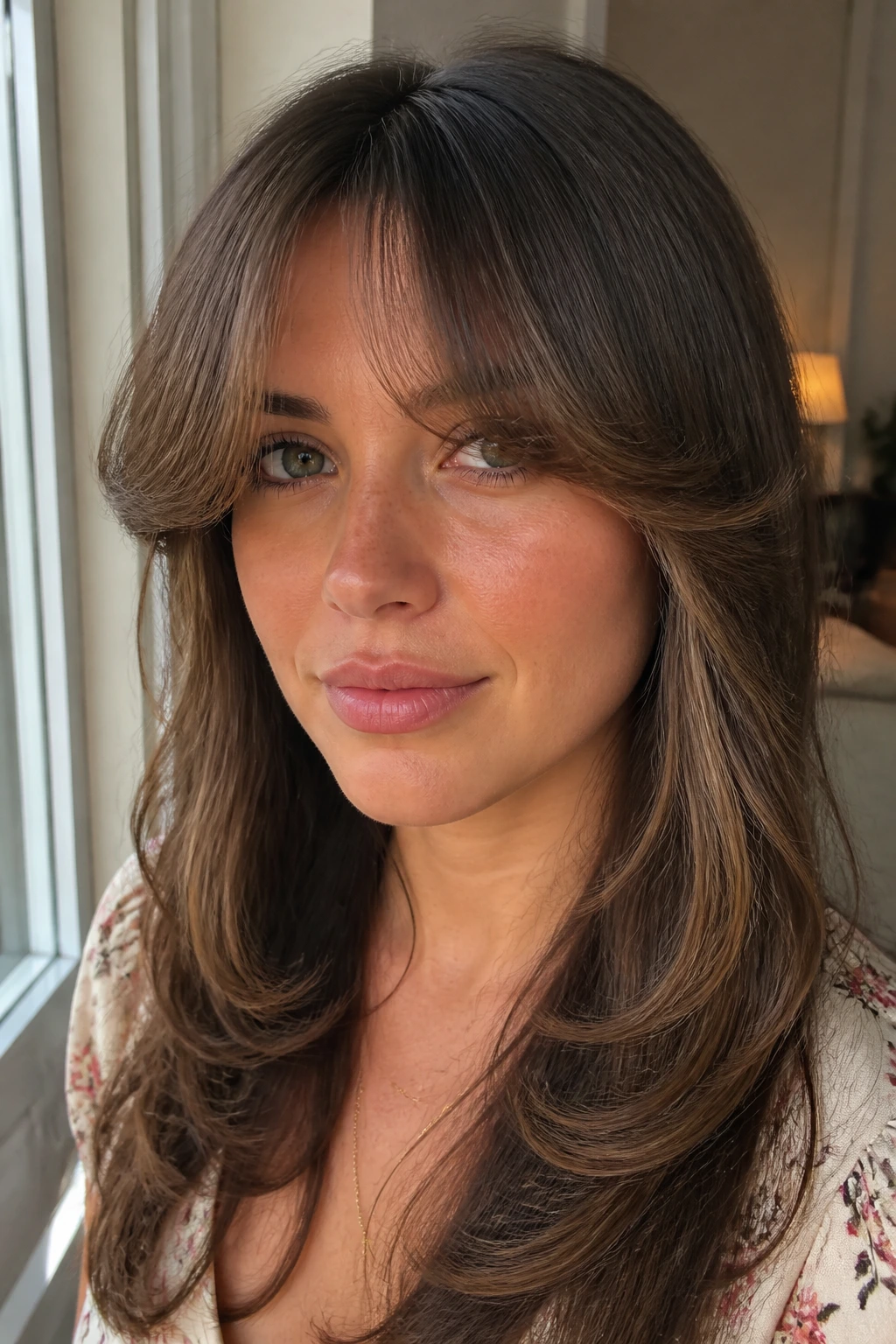
Blowout bangs are basically the salon-chair version of a fringe. They arc under with a rounded brush and sit in that glossy, face-framing zone just above or around the eyes. On long hair and round faces, the shape works because the rounded bend adds lift at the roots and length through the sides.
The trick is keeping the root from collapsing. If the bangs are smushed flat, they can make the forehead read shorter. If they’re brushed up and over with a soft bend, the whole front of the haircut looks more lifted and longer. I like this shape when the rest of the hair has movement, because the fringe and the length echo each other.
This is not a lazy style. It wants a quick daily blow-dry, and it likes a cool shot at the end. But if you enjoy hair that looks finished, this one gives you that polished edge without needing a severe cut.
9. Shag Fringe That Blends into Long Layers
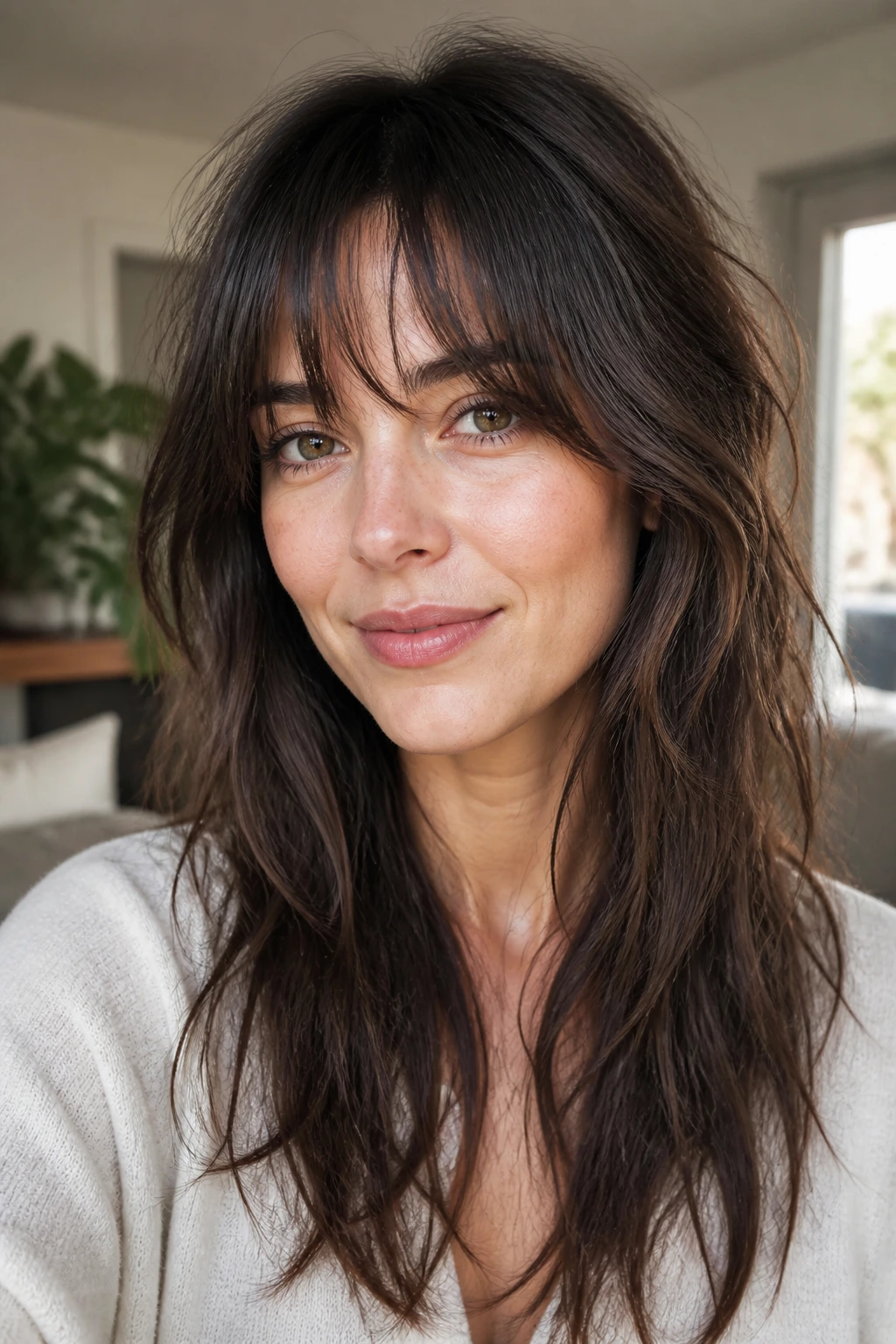
Shag fringe is where bangs get a little more attitude. The pieces are choppy, the texture is built in, and the fringe almost refuses to behave like a single solid line. That’s useful on a round face, because broken-up texture creates vertical movement and keeps the front from feeling wide.
Long hair makes shag fringe easier to wear. The length underneath softens the edge, so the bangs don’t dominate the whole haircut. You get that undone, modern shape up front, but the long layers keep the silhouette balanced.
The Look to Aim For
Think separated, not spiky.
Think airy, not hacked to bits.
If your hair has wave, this shape is one of the easiest bangs styles for long hair and round faces to live with, because the texture works for you instead of against you.
It’s a good pick if you like hair that looks a little cooler on day two than it did on day one. Some cuts do that. This is one of them.
10. Split Bangs With Long Face-Framing Pieces
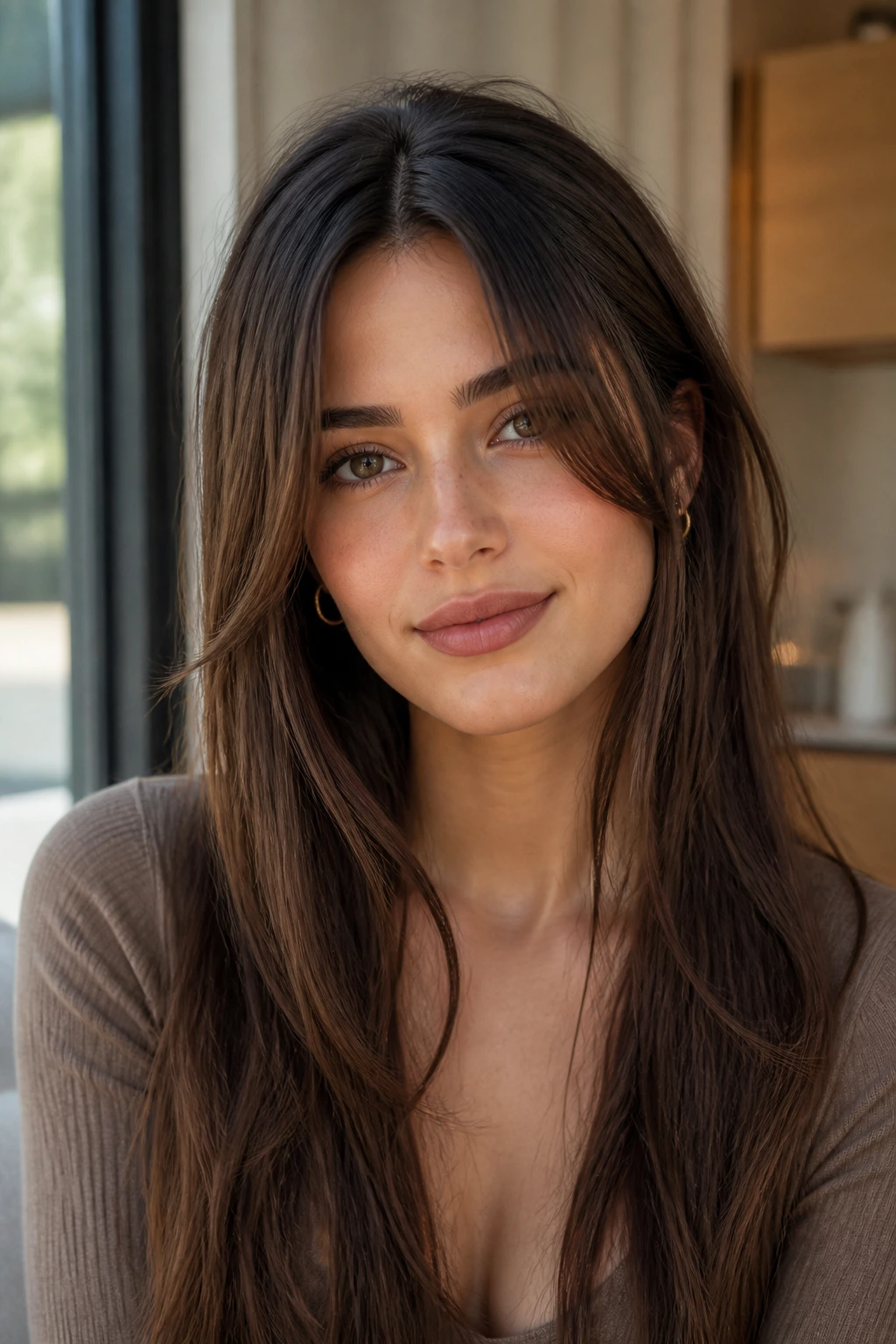
Split bangs are a close cousin of curtain bangs, but they often feel a touch more dramatic. The center opens cleanly, then the front pieces keep dropping into the face-framing layers. For a round face, that opening is useful because it gives you a clear vertical break right in the middle.
I like this style when the hair is long enough to carry some weight around the jaw and collarbone. That extra length below the fringe stops the whole look from reading too “bang-heavy.” The face-framing pieces should hit around the cheekbone or lip, not stop short at the widest part of the face.
This is one of those cuts that looks good in motion. When you tuck the side pieces back, the shape changes. When you wear them loose, the split adds softness. It’s flexible, which I always appreciate, because not every style needs to behave the same way every day.
11. Brow-Grazing Piecey Bangs
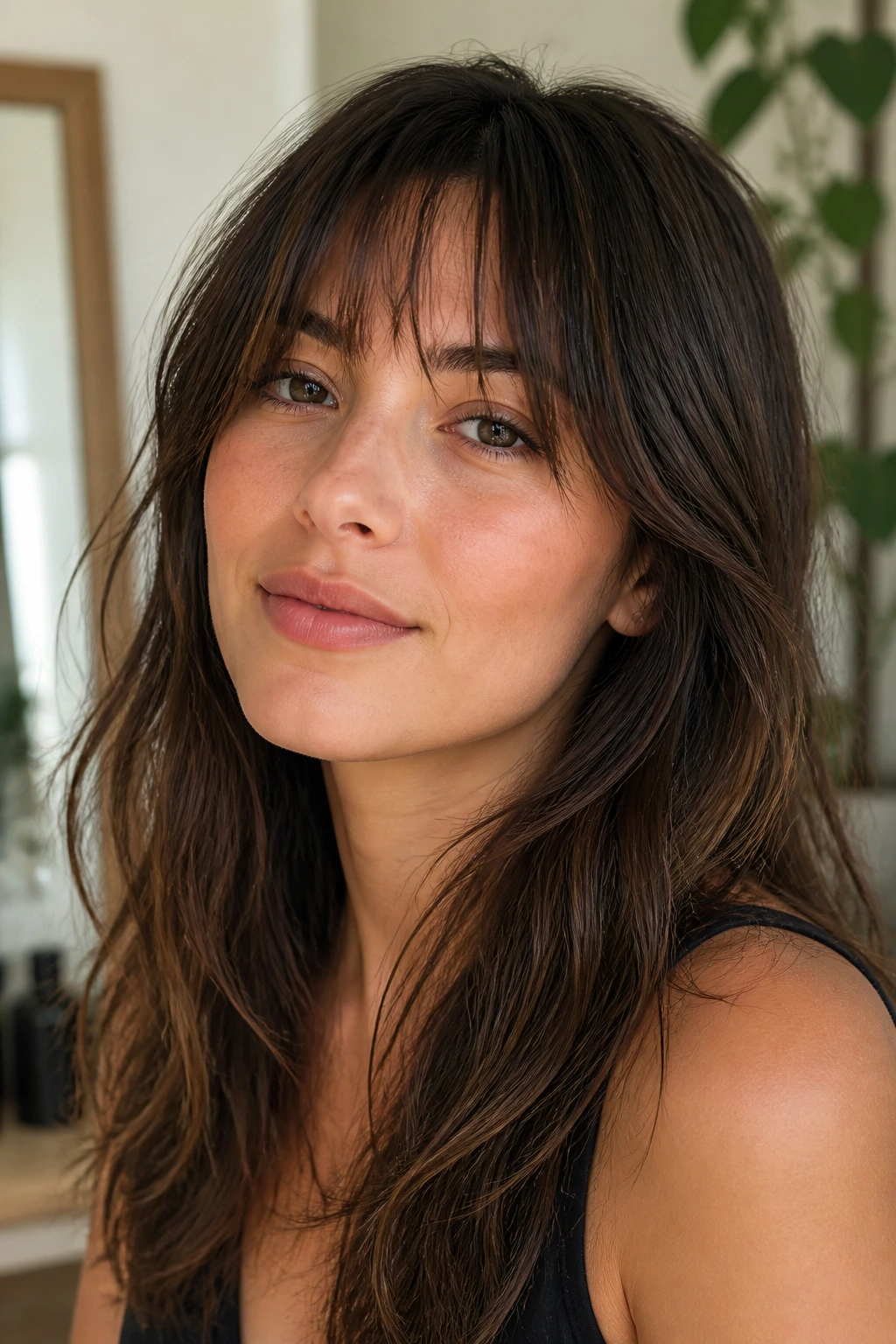
Brow-grazing piecey bangs are for people who want to feel the fringe without committing to a thick block of hair. The pieces sit around the brows, but they stay separated enough that the forehead can still show through in places. That looseness keeps a round face from feeling overwhelmed up top.
This look does best with a little texture. If your hair is very fine, a tiny bit of styling cream at the ends gives the pieces some definition. If your hair is thick, ask your stylist not to remove too much weight from the middle, or the bangs can start to separate into random wisps instead of intentional pieces.
The nice part is the grow-out. Because the fringe is already broken up, it slides into the rest of the haircut without a dramatic awkward stage. You can push it aside, center-part it, or let it fall a bit messier and it still makes sense.
12. Asymmetrical Bangs With a Longer Sweep
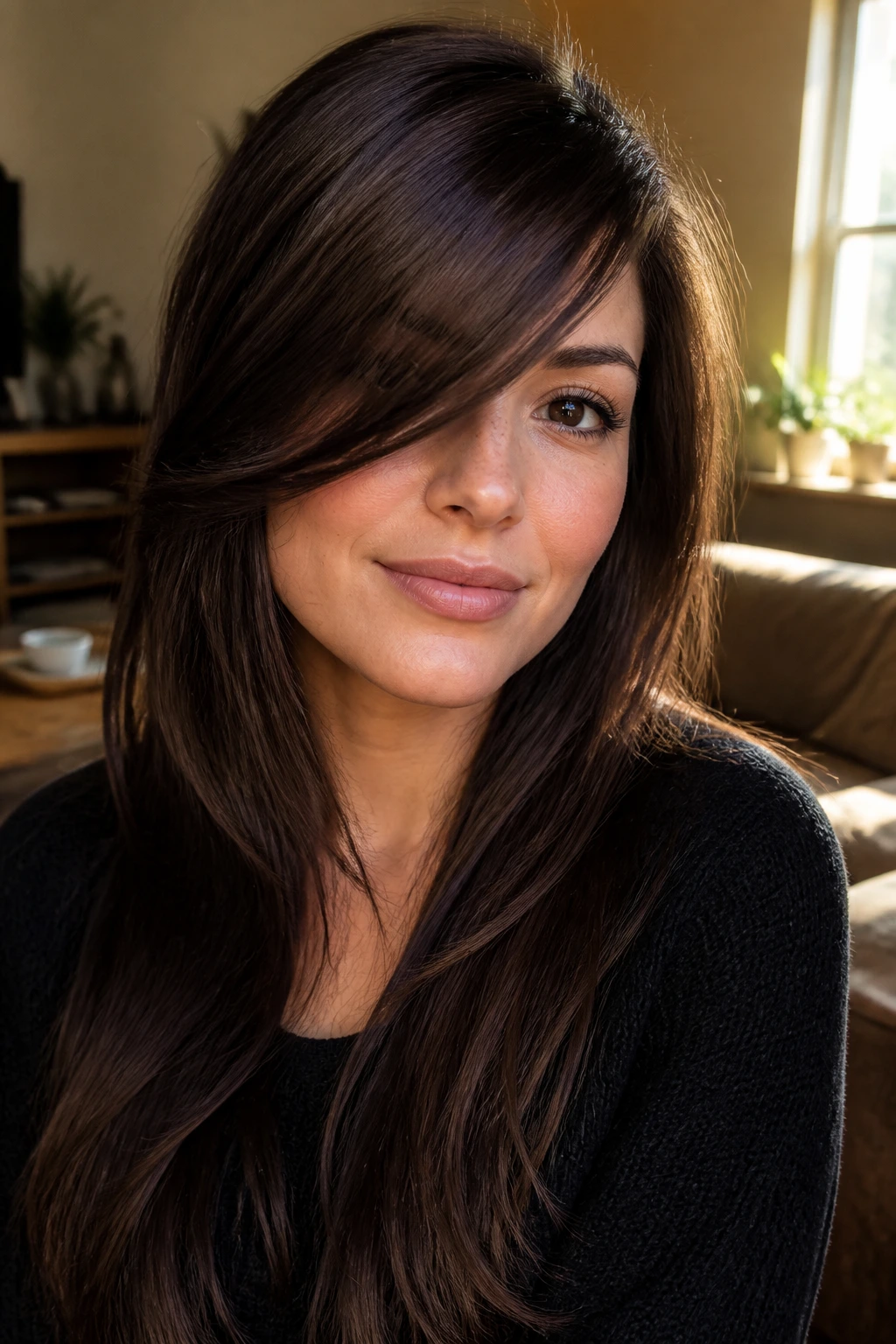
Asymmetry is underrated on round faces. When one side of the fringe runs longer than the other, the eye gets a diagonal line to follow, and diagonals are your friend when you want the face to read a little slimmer. Long hair gives this look enough context so it doesn’t feel like a mistake.
The key is making the asymmetry look deliberate. You do not want a bang that accidentally fell uneven; you want a sweep that was clearly designed to sit longer on one side. The shorter side can skim the brow, while the longer side grazes the cheekbone or even brushes the jaw.
I like this shape for people who wear a side part almost every day. It takes advantage of that habit instead of fighting it. If you already know your hair wants to fall one way, let it.
13. Crescent Bangs That Stay Shorter in the Center
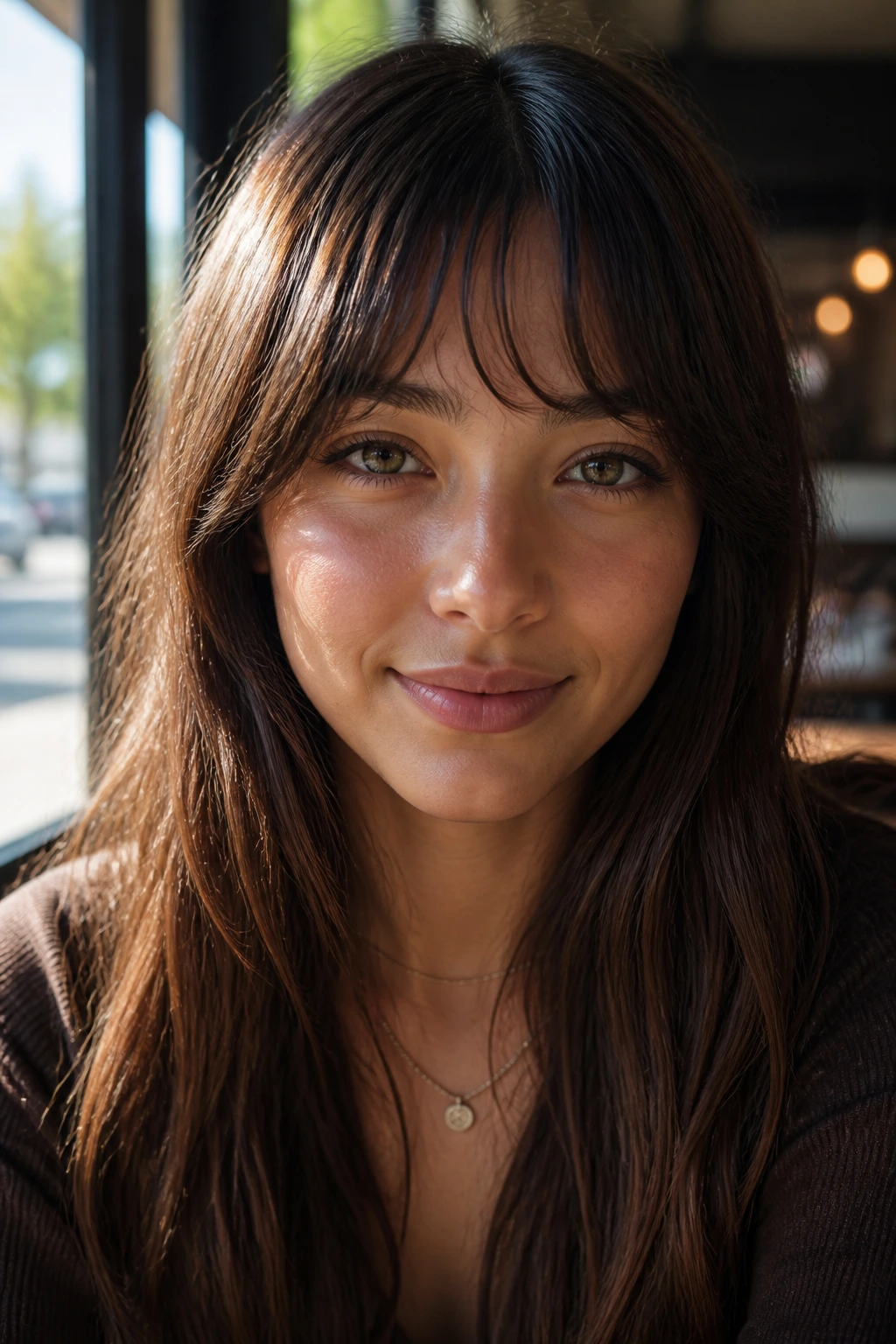
Crescent bangs curve like a soft arc, with the center a little shorter and the sides gradually longer. That subtle curve helps a round face because it keeps the top of the face open while still giving you the presence of a full fringe. It’s a cleaner shape than curtain bangs, but less severe than a blunt cut.
The best crescent bangs do not look rigid. The curve should feel smooth, and the edges should be soft enough that the fringe can move with the rest of the hair. On long hair, this shape often looks richest when the ends of the side pieces blend into layers around the cheek and upper jaw.
A round face usually benefits when the shortest point does not sit too low. If the center drops deep onto the forehead, the whole shape can feel heavy. Keep the center near the brows, let the sides drift longer, and the haircut keeps its lift.
14. Grown-Out Fringe That Still Looks Intentional
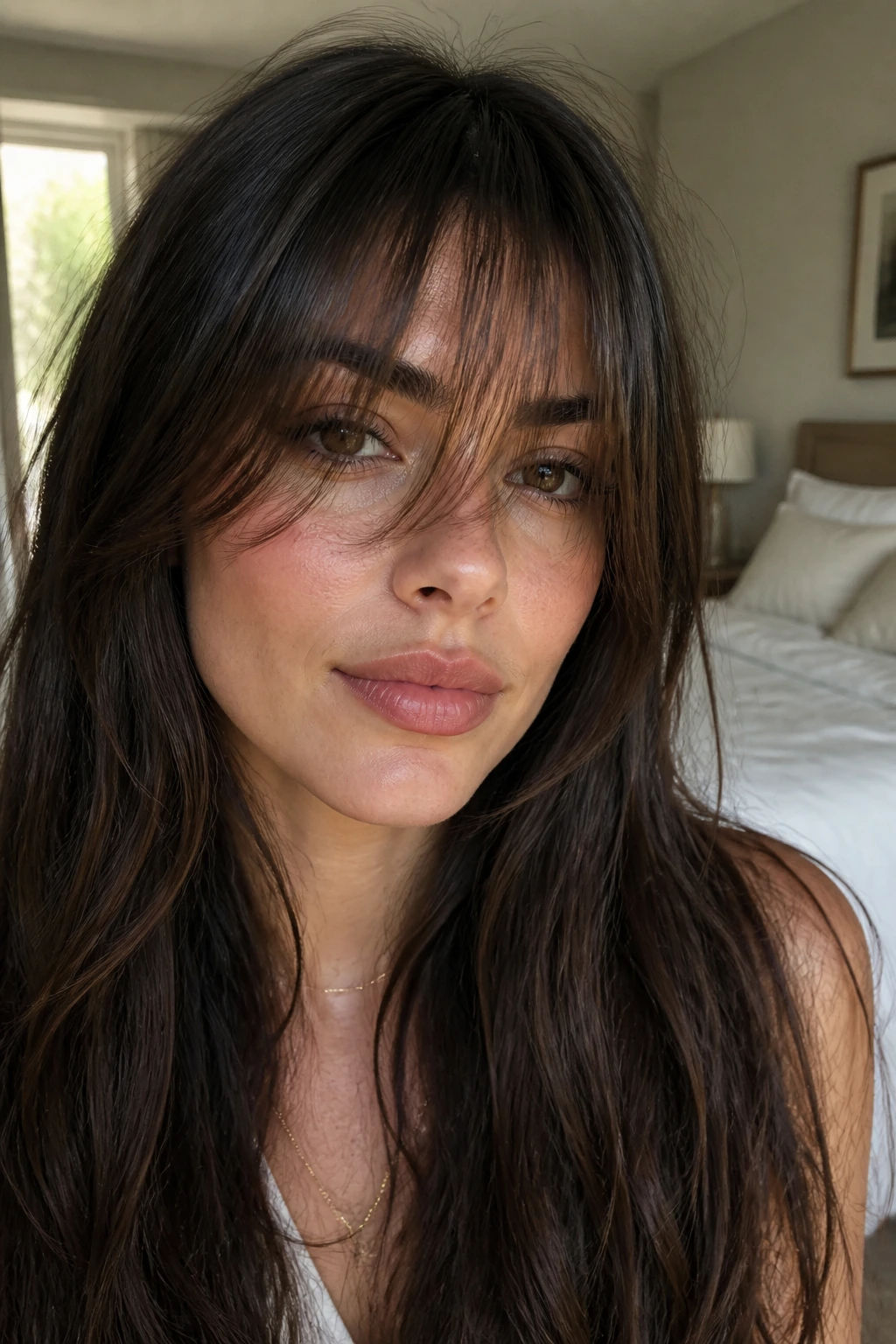
Grown-out bangs are a category all by themselves, and I’m including them because not everyone wants a sharp, freshly cut line. A fringe that has already softened into the rest of the haircut can be one of the easiest bang styles for long hair and round faces, especially if you hate daily styling.
The reason it works is simple: the line is broken. Instead of a crisp border across the forehead, you get a softer veil of hair that can be tucked, split, or swept depending on the day. Round faces usually benefit from that kind of flexibility because the cut doesn’t lock you into one horizontal shape.
There’s a sweet spot here. Too grown out, and the bangs just hang there. At the right length, though, they blend into the layers and look casually good in a way that only slightly planned hair can pull off.
15. Soft Blunt Bangs With Tapered Temples
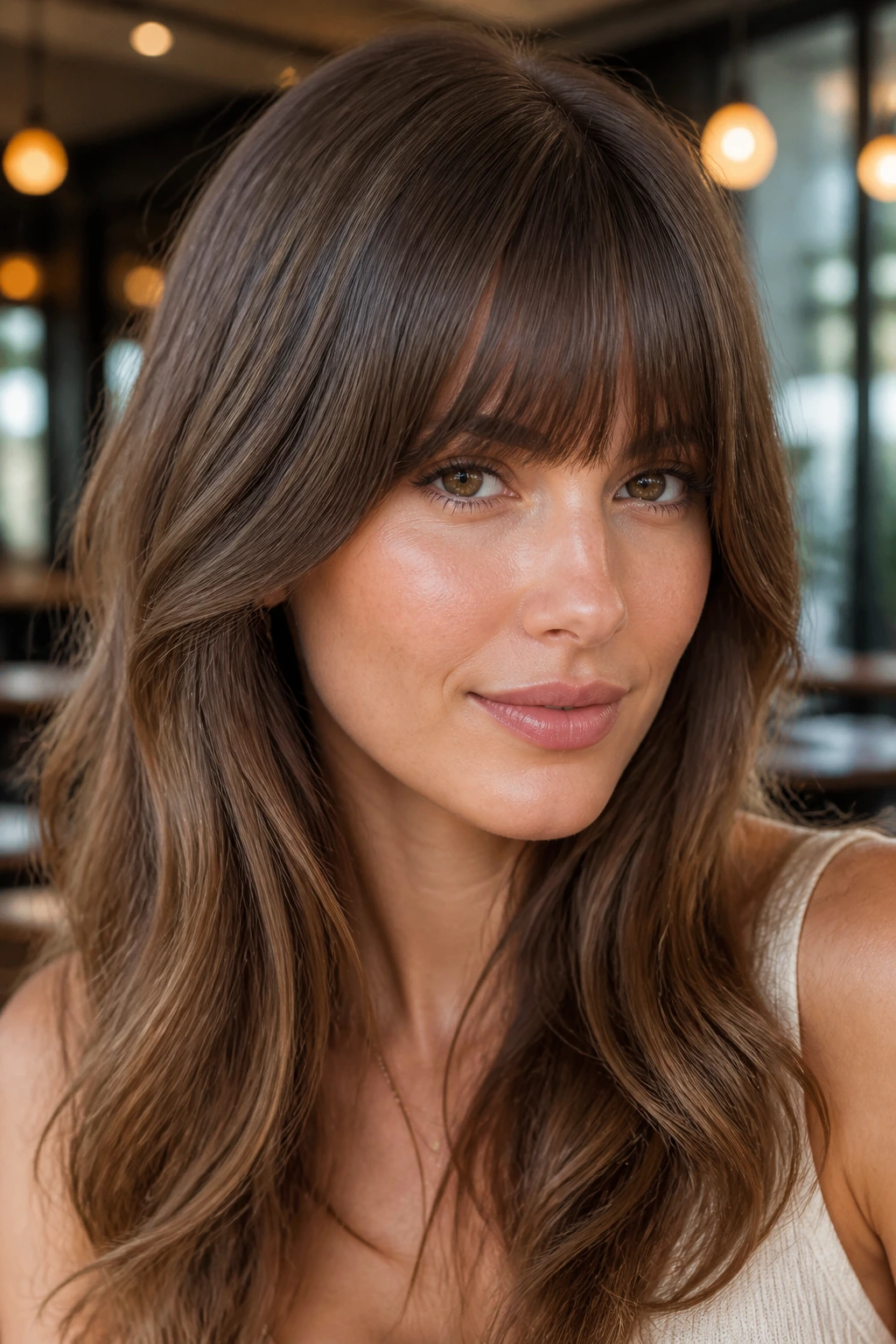
Soft blunt bangs sound contradictory, and that is exactly why they work. You get the presence of a full fringe, but the temples are tapered so the sides do not hit the face like a slab. On a round face, that taper makes a huge difference because it keeps the front from looking boxy.
I would choose this version over a true heavy blunt fringe almost every time for this face shape. The center can still be substantial, even a little thick, but the corners need to feather out into the side pieces. Long hair balances the look beautifully because the length below adds vertical line and keeps the fringe from taking over the whole haircut.
If your hair is thick, this style can be a gift. There’s enough density to make the bangs sit well, but the taper removes the puffiness that can make thick fringe feel clunky. If your hair is fine, ask for enough weight to keep the bangs from floating apart.
16. Long Side Fringe That Nearly Becomes Layers
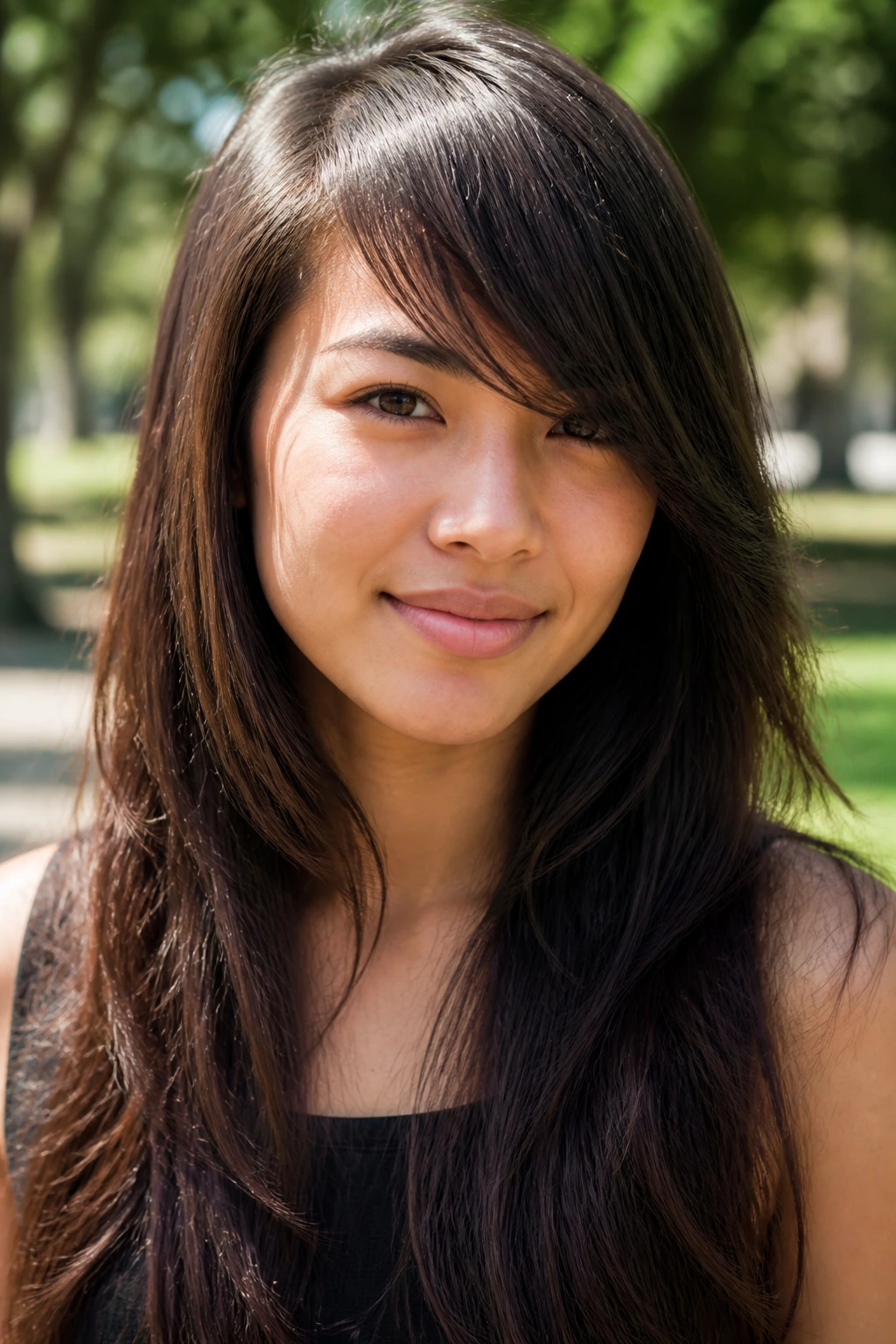
A long side fringe is one of those cuts that barely announces itself, and that’s its strength. The front section sweeps from a deep part and drifts into the length instead of sitting like a separate bang. For a round face, that stretched diagonal is useful because it lengthens the front plane of the haircut.
This is a good choice if you want bang energy without the maintenance of full fringe. You can tuck it behind the ear, clip it back, or let it travel across the forehead on days when you want more shape. The line should feel fluid, not stiff.
What I like most is how well it plays with long layers. The fringe and the haircut stop competing with each other. They become one long shape, and that kind of continuity can be very flattering on a face that already has soft curves.
17. Choppy Fringe for Hair With Natural Texture
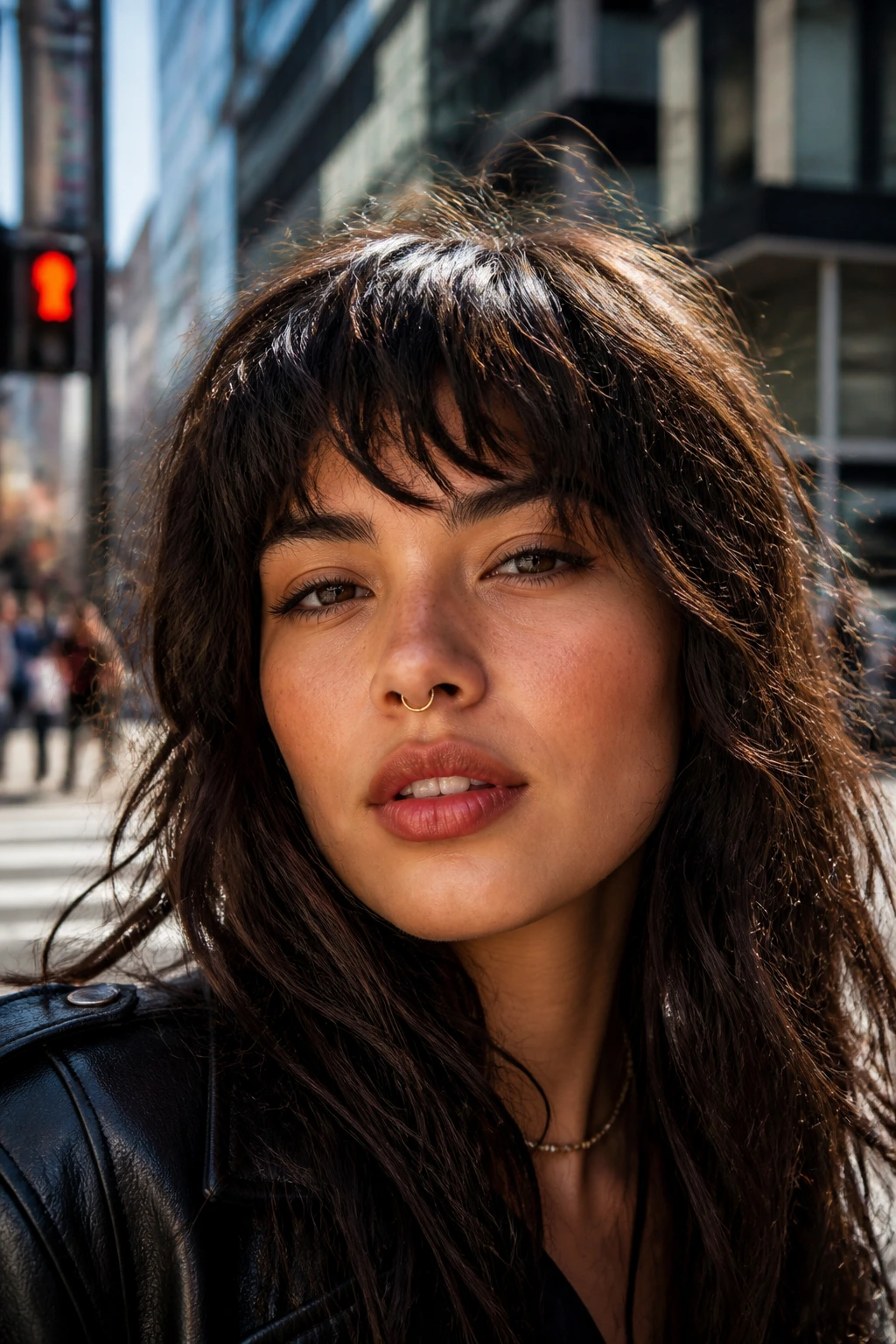
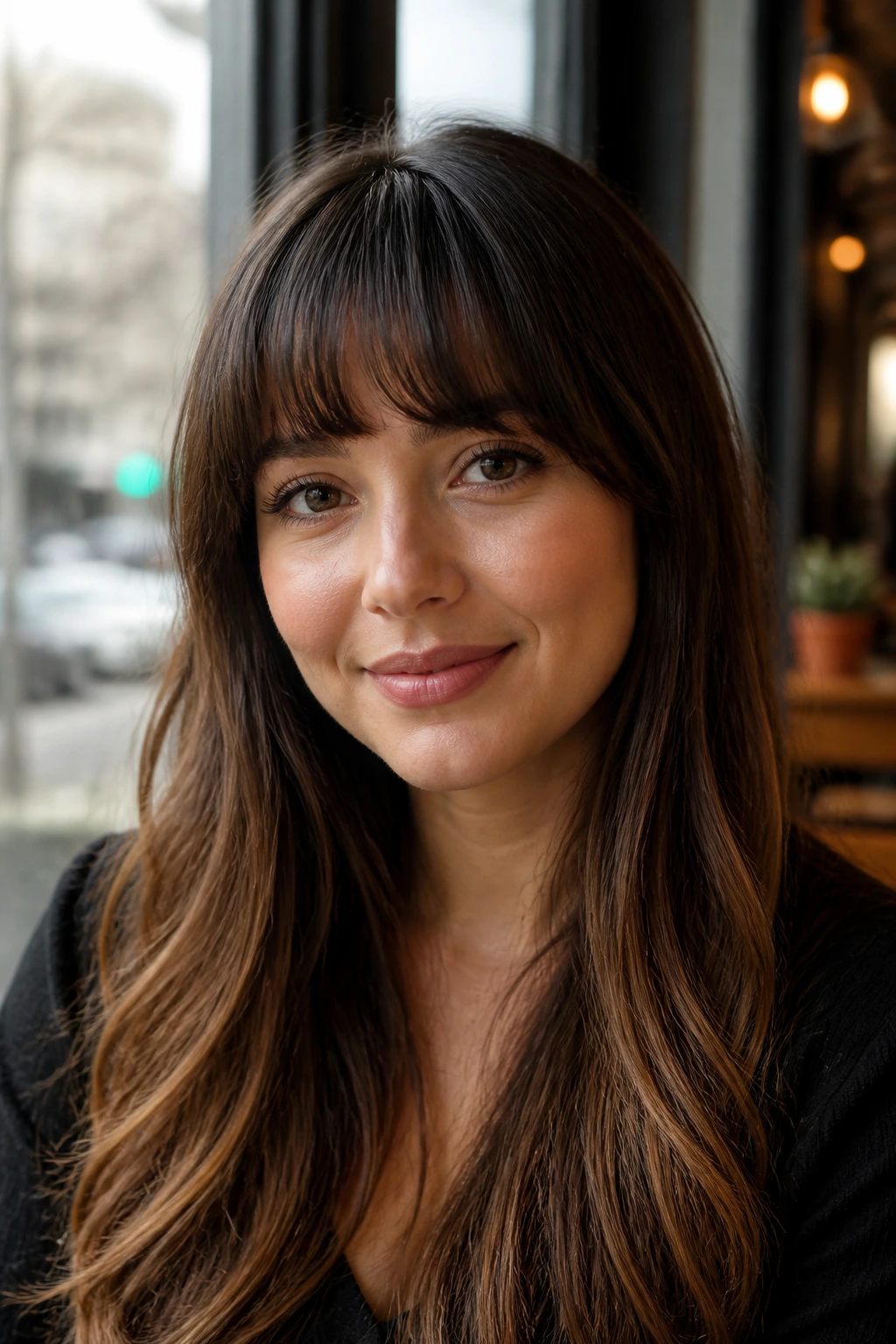
Choppy fringe has teeth. Not literally, thankfully, but it does have a broken, uneven edge that gives the front of the haircut some grit. On a round face, that broken line is helpful because it stops the fringe from reading as one wide horizontal band.
Texture is the reason this style works. If your hair has wave, a little bend, or that slightly roughened finish that fresh layers often have, choppy bangs can look fantastic. If your hair is pin-straight and slippery, they can look too separated unless you style them every day.
I would not pair this with a heavy, blunt-long hairstyle. It wants some movement in the rest of the cut. Long hair with loose layers or a soft shag makes the choppiness feel deliberate instead of random.
18. Curly Curtain Bangs That Respect Shrinkage
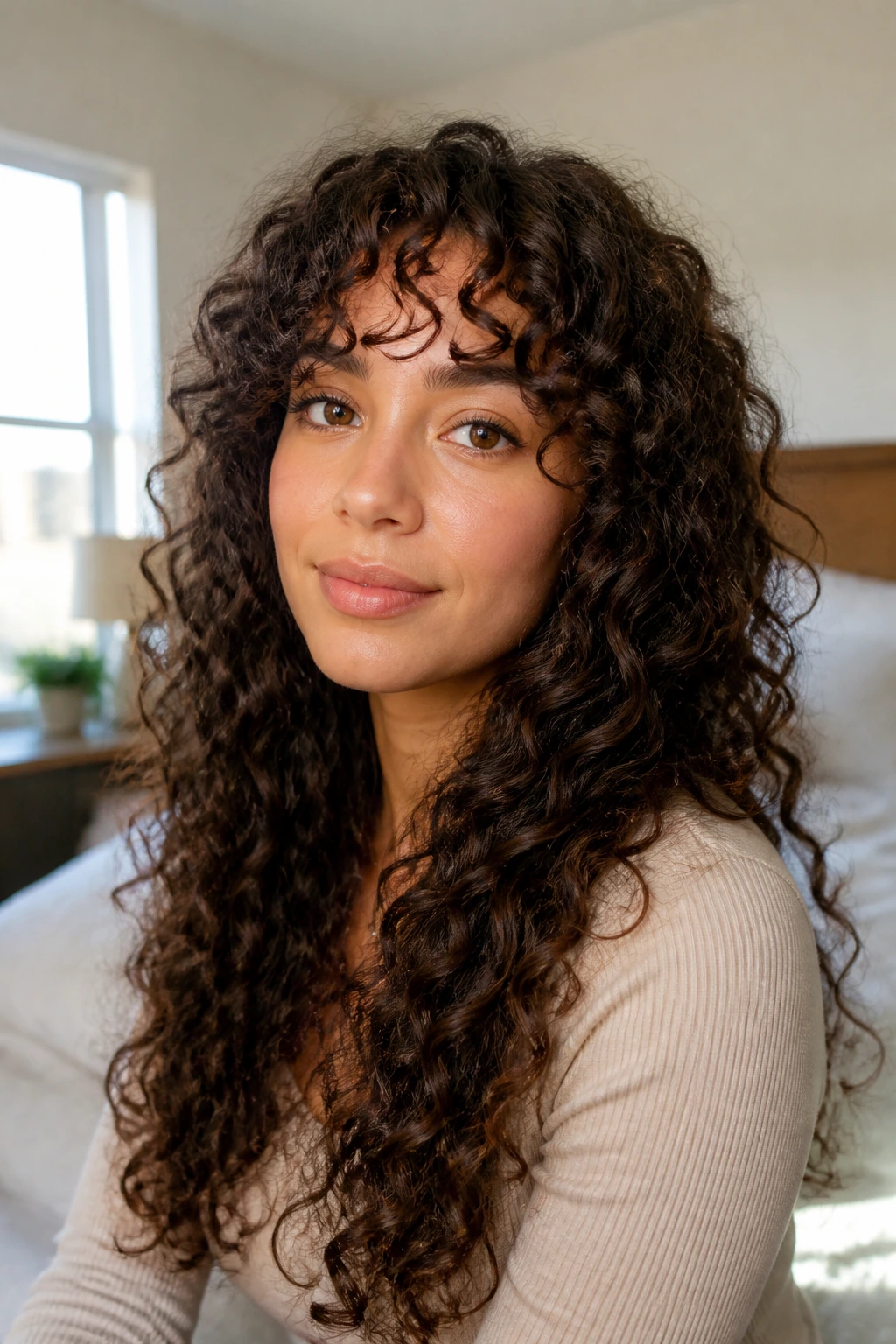
Curly curtain bangs are one of the smartest options for textured hair, and more people should ask for them. The fringe is cut with shrinkage in mind, so the center can land where you actually want it once the curls dry. On a round face, the split opening helps the face read longer while the curls keep the front soft.
This is not a wash-and-go fairy tale. The cut has to be shaped to your curl pattern, and your stylist should know whether your curls spring up 1 inch, 2 inches, or more when dry. If they cut the bangs too short while wet, you will spend weeks waiting for them to behave.
Long hair is useful here because it gives the curls weight and length below the fringe. The bangs can bounce up front while the rest of the hair stretches the silhouette downward. That balance is the whole reason this style works.
19. Birkin-Inspired Fringe With Soft Ends
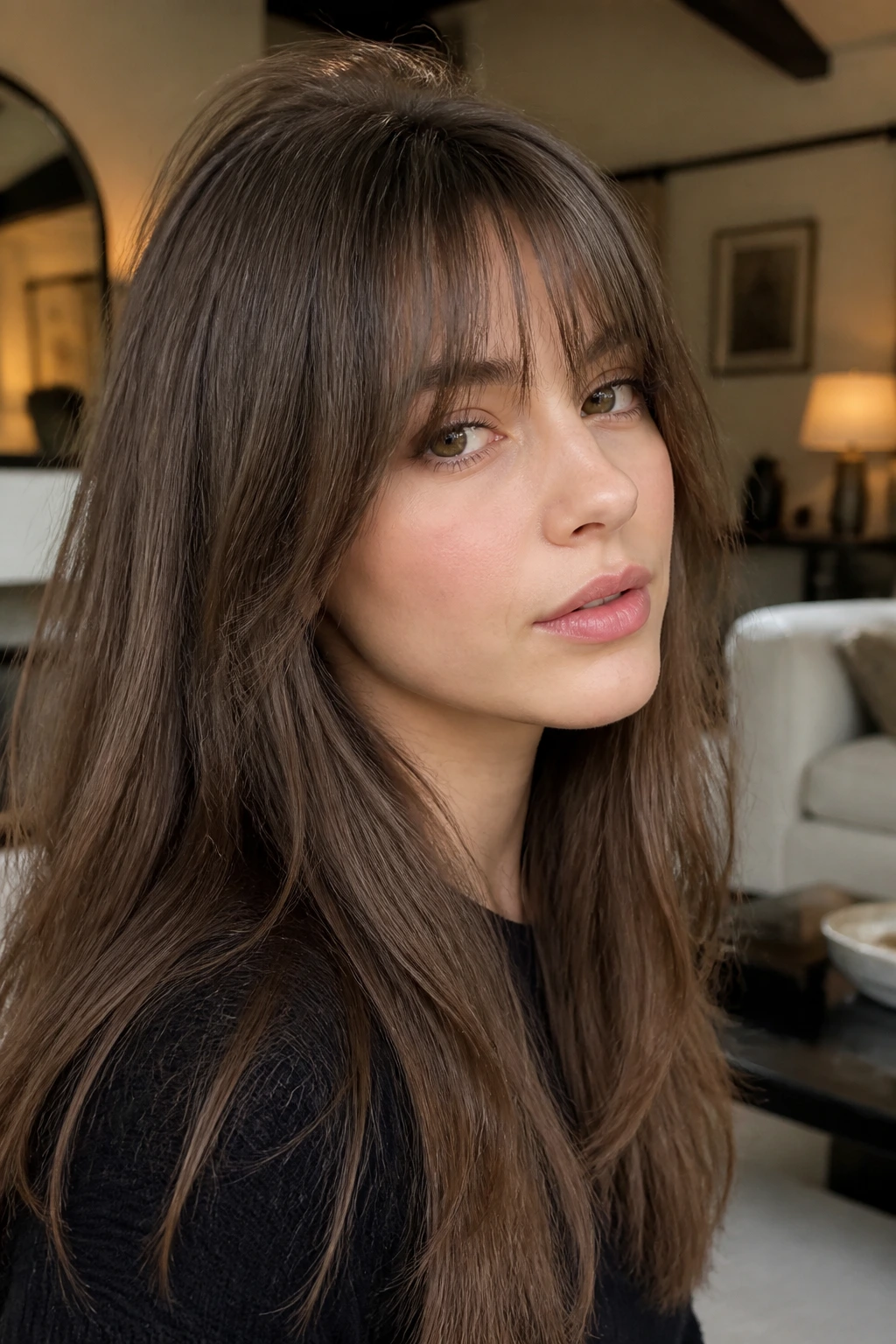
Birkin-inspired bangs lean a little straighter and heavier than curtain bangs, but they still need softness around the edges to flatter a round face. I like this shape when the fringe sits around the brows with slightly broken ends and the rest of the hair stays long and relaxed. The contrast keeps the cut from looking severe.
This style can be gorgeous if your forehead is a little longer and your face has soft cheeks. The fringe gives you front presence, while the long hair keeps everything from feeling too short up top. The danger is overdoing the density. Too much weight and the whole look gets square.
The solution is pretty simple: keep the edges airy, and do not let the center drop too low. A little separation goes a long way here.
20. Micro Bangs With Long, Lean Length Below
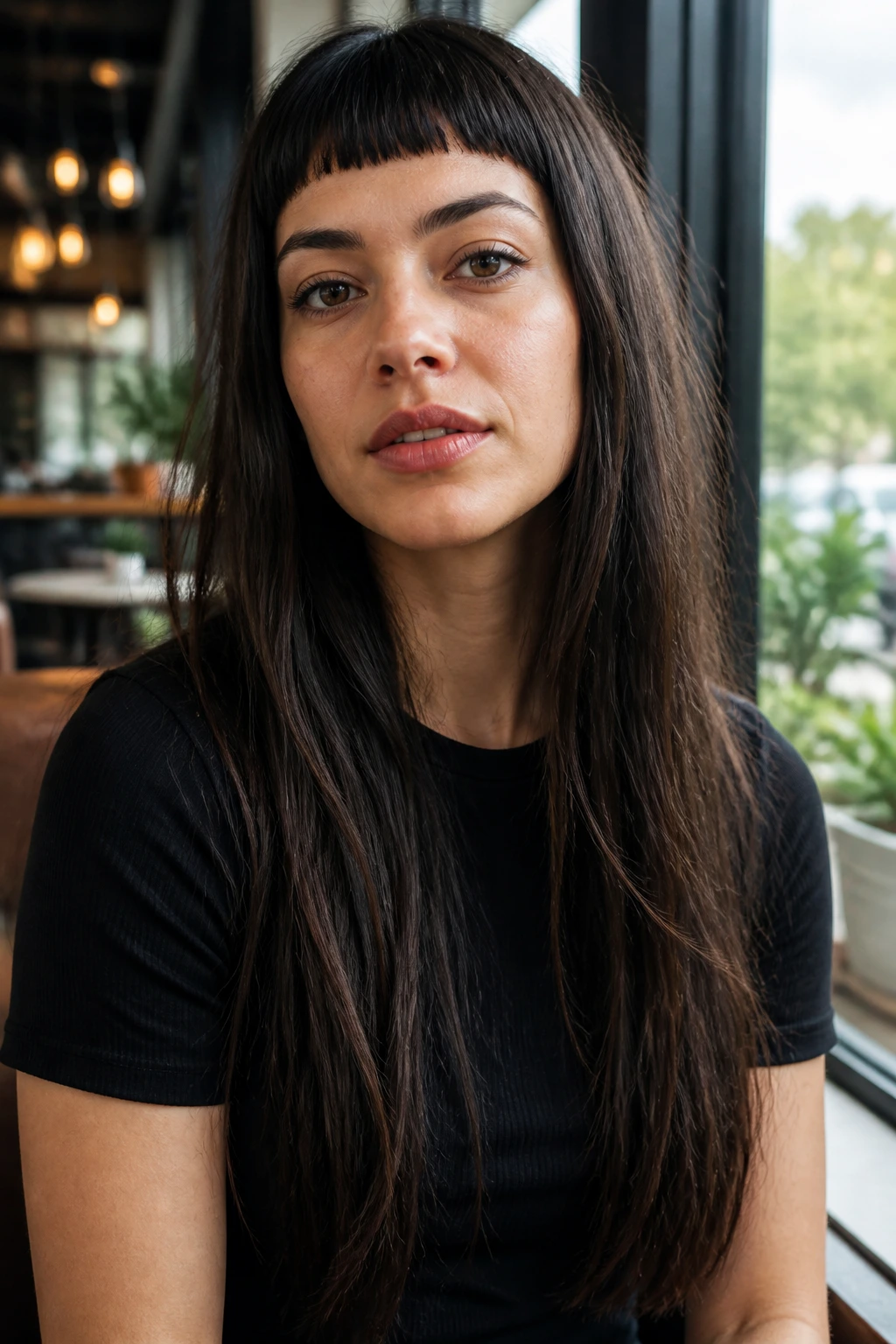
Micro bangs are the bold one in the room. They are short, obvious, and not remotely shy. On a round face, they can actually work if the rest of the haircut is long, lean, and clean, because the contrast between the tiny fringe and the long length creates a strong vertical shape.
I’m not going to pretend this is a soft choice. It isn’t. It works best when you want the bangs to feel like a feature, not a background detail. The face gets a lot of openness through the sides, and the long hair pulls the eye down, which keeps the cut from feeling top-heavy.
This is the style I’d save for someone who enjoys maintenance and does not mind a bit of edge. It’s dramatic, and drama needs a reason.
21. Face-Framing Fringe That Melts Into Long Layers
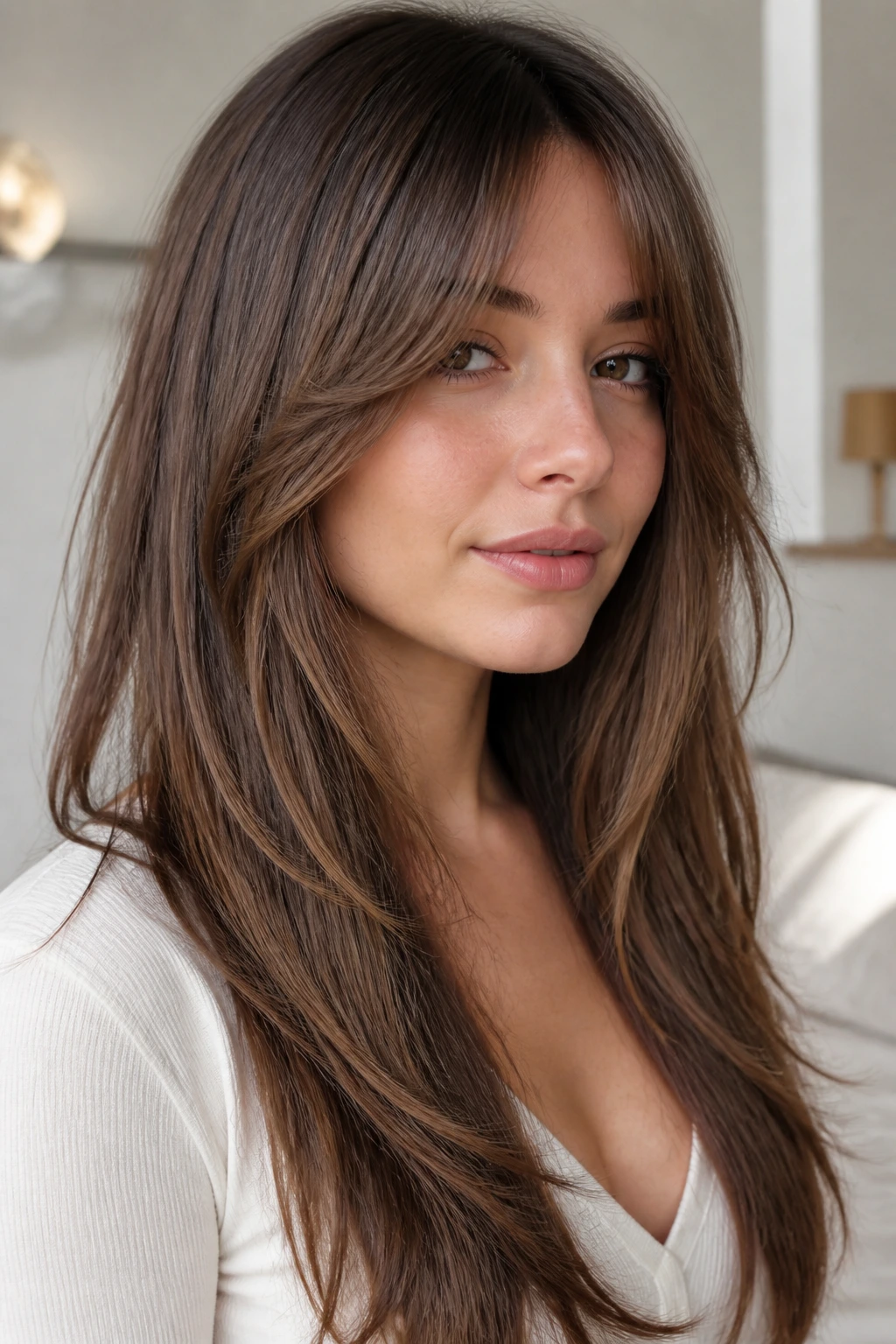
Face-framing fringe is the least “bang-like” of the bunch, and that’s why some people end up loving it the most. The front pieces are short enough to count as fringe, but they melt straight into long layers around the cheeks and jaw. On a round face, that blend is useful because it creates shape without drawing a hard border around the forehead.
The cut looks especially good when the layers start around the cheekbone and continue downward. That placement pulls the eye past the widest part of the face and down into the length of the hair. It’s subtle, but subtle can be very effective when the goal is to lengthen rather than to make a big statement.
If you are nervous about bangs, this is probably the safest exit ramp. You still get movement around the face. You still get a change. You just don’t get the maintenance headache of a strict fringe line.
Why Bangs and Long Hair Change the Shape of a Round Face
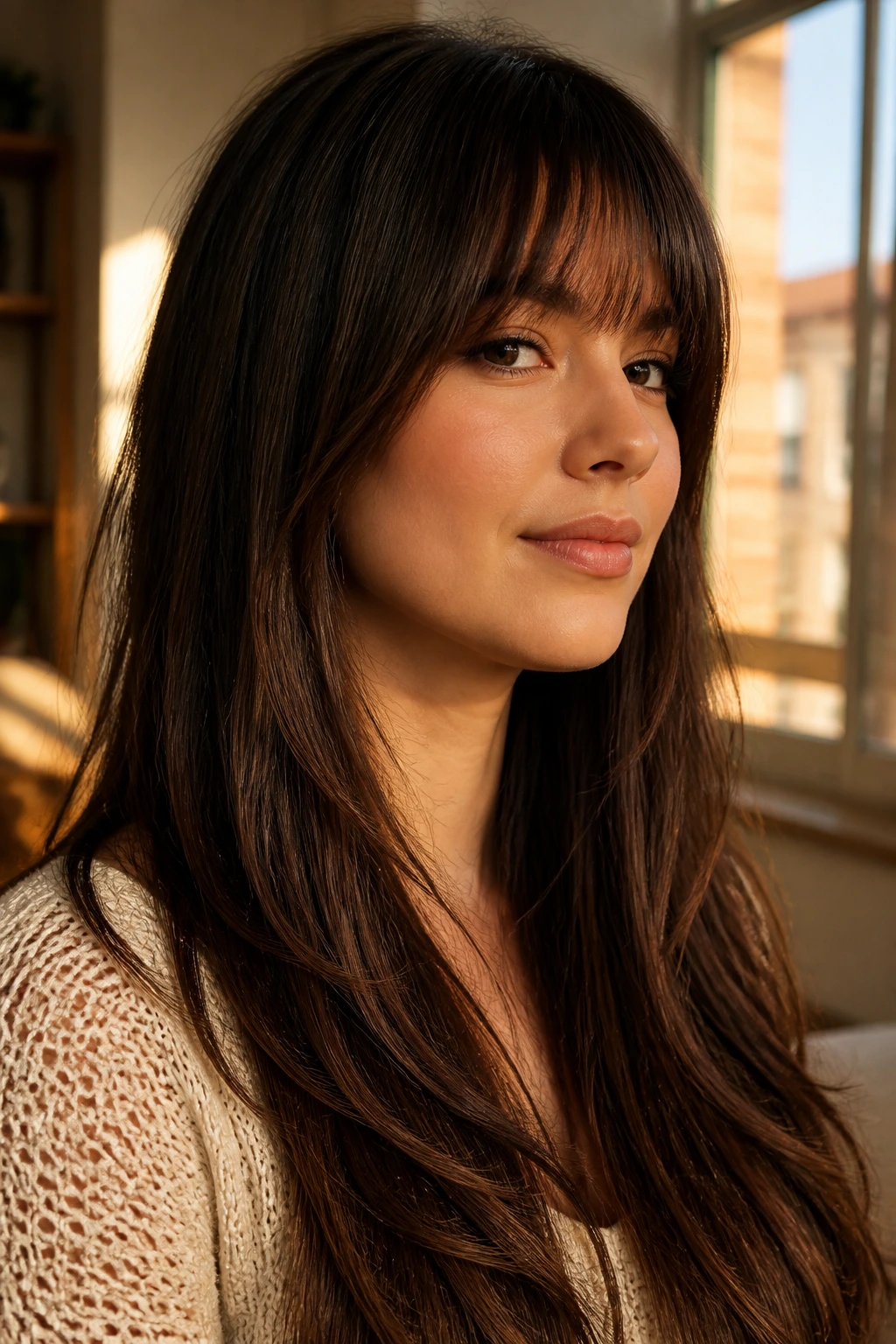
A round face usually has soft width through the cheeks, a gentle jawline, and not much obvious angle from forehead to chin. Bangs can either amplify that softness or interrupt it. The useful ones do the second thing.
What matters most is direction. A straight horizontal line tends to widen. A diagonal or split line tends to lengthen. That is why curtain bangs, side-swept fringe, bottleneck shapes, and long face-framing pieces keep showing up in flattering looks for round faces. They do not hide the face; they just give the eye a better route to follow.
Long hair helps because it creates a second vertical line below the face. Short hair can still work, but long hair gives the fringe more context. A cheekbone-skimming bang with chest-length layers feels balanced. The same bang with a blunt bob can get visually crowded fast.
Thickness matters too. Dense bangs bring weight, and weight can be lovely if the shape is tapered. Too much bulk at the brow line, though, makes the top half of the face feel shorter. That’s why lightness at the edges, even in a fuller fringe, often makes the difference between flattering and fussy.
Tools That Make Fringe Styling Less Annoying
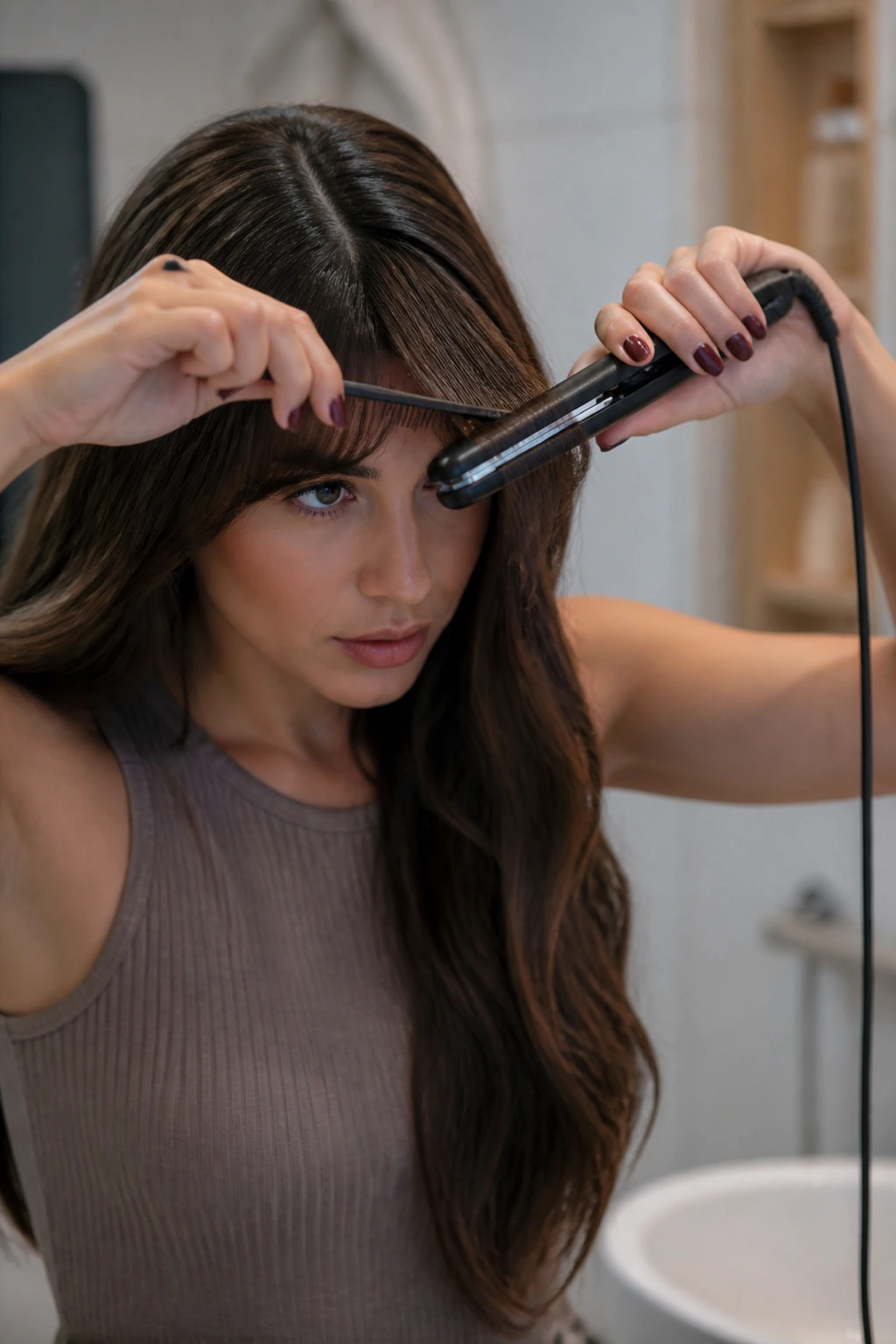
A fringe is a small section of hair, but it is weirdly needy. The good news is that you do not need a drawer full of gadgets.
-
Round brush, 1 to 1.5 inches: Small enough to shape the fringe without creating a giant curl; I reach for 1.25 inches most often.
-
Blow dryer with a nozzle: Direct airflow keeps the roots from exploding in random directions and helps the fringe sit where you want it.
-
Duckbill clips or small sectioning clips: Useful for pinning the side pieces out of the way while the bangs cool.
-
Fine-tooth comb: Best for parting the fringe cleanly and smoothing the roots before you start drying.
-
Small flat iron: Handy for piecey bangs, side sweeps, or quick fixes on cowlicks that refuse to lie down.
-
Velcro rollers: Not mandatory, but they’re excellent for blowout bangs and arched fringe when you want a little root lift.
-
Dry shampoo: Bangs show oil first. A light dusting at the root buys you a day or two.
-
Light-hold hairspray: Enough to keep the shape, not enough to turn the front of your hair into cardboard.
-
Texture spray or light styling paste: Good for French-girl, shag, or see-through bangs that need separation.
How to Ask for the Right Fringe in the Salon Chair
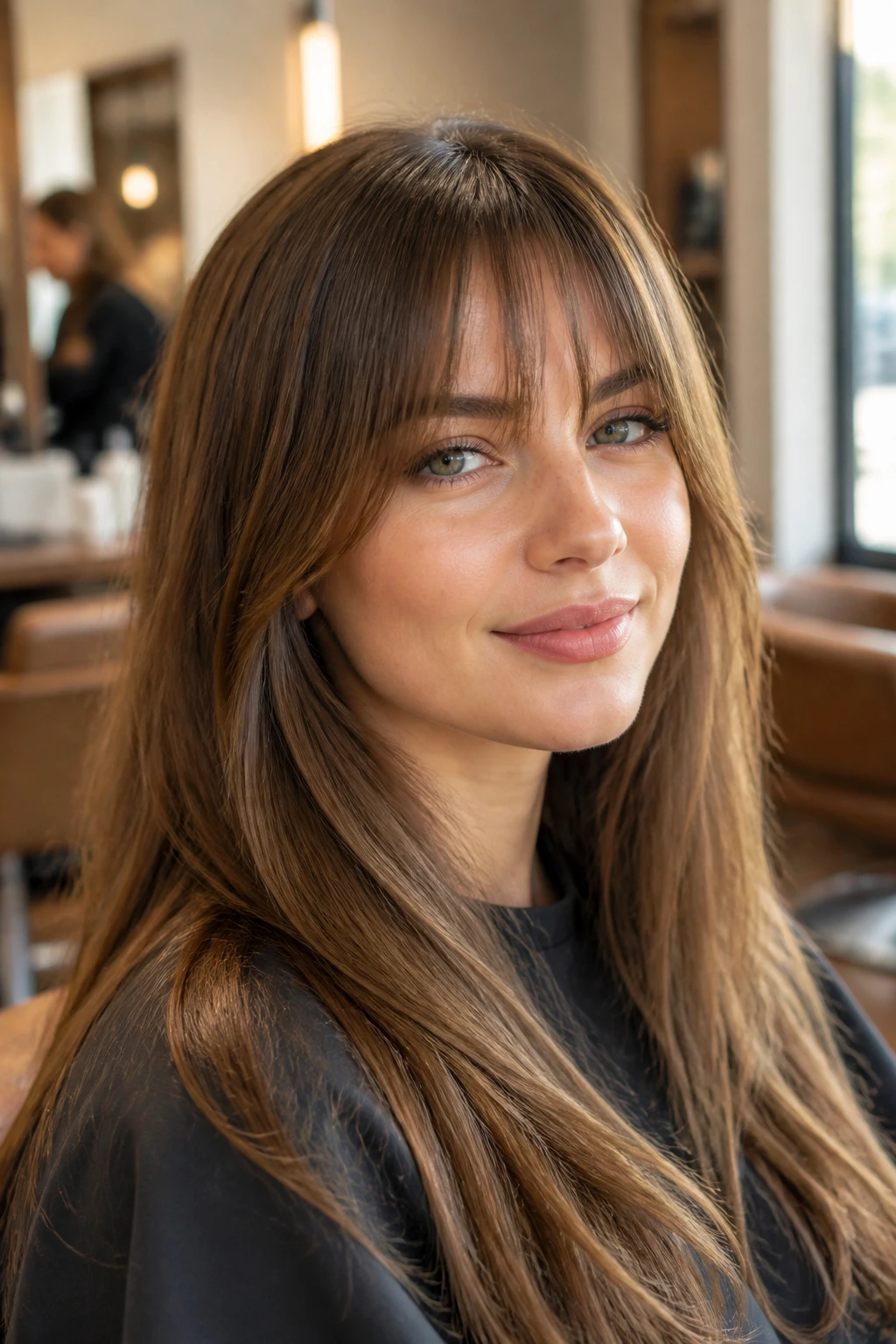
Bring photos. Not one photo. Three is better, and make sure at least one shows the side view, because that is where the real story lives. A fringe that looks cute from the front can sit entirely wrong from the profile if the length is off by an inch.
Tell your stylist about your part, your cowlicks, and how much work you’re willing to do in the morning. That last part matters more than people admit. If you air-dry your hair and leave the house five minutes after getting dressed, you do not want a bang shape that needs a full round-brush production every day. If you like blow-drying, say so.
Be specific about where you want the fringe to hit. Cheekbone, brow, bridge of the nose, top of the lip. Those words help. If you have a round face and want a softer shape, ask for more length at the sides than at the center and ask them not to make the fringe too dense at the temples.
One more thing: I’d rather see a bang cut too long first than too short. Too long can be refined. Too short has to grow out.
Daily Styling Moves That Keep Bangs from Falling Flat
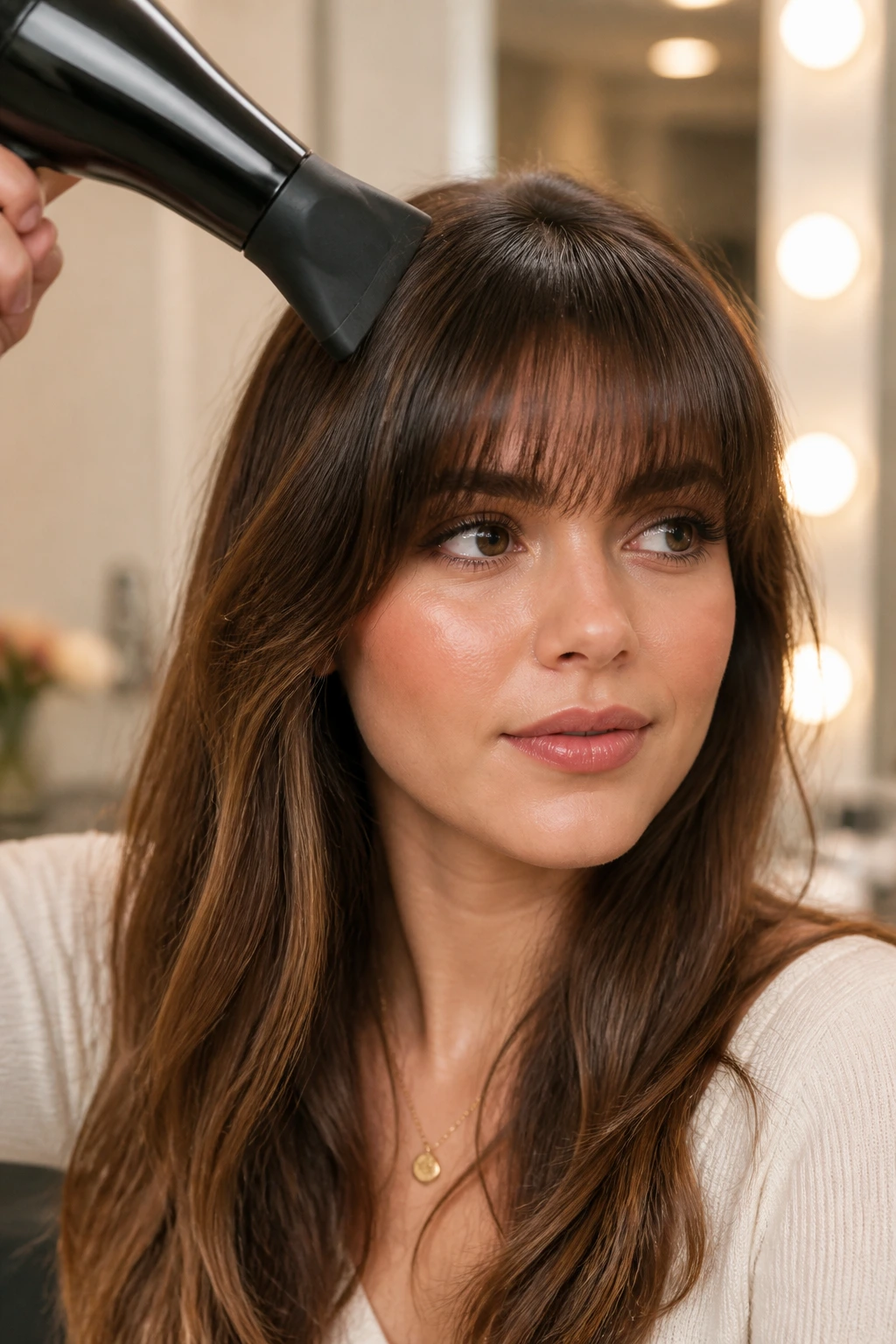
Start at the root, not the ends. That’s the part that decides whether the fringe lifts or collapses. Blow-dry the bangs forward first, then direct them slightly side to side as they cool so they don’t set into a straight, flat strip.
Use product like a whisper. A pea-sized amount of styling cream, paste, or smoothing balm is enough for most fringes. Put it on the ends, not the scalp, or the bangs will look greasy by lunch.
Let them cool in shape. Hair remembers the temperature it dries in. If you style the fringe and then yank it apart immediately, you lose the bend. Clip it for a minute or two while the air cools around it, then release.
Refresh the front without redoing the whole head. A quick mist of water on the fringe only, then a round brush and the blow dryer for 30 seconds, can rescue a flat bang faster than starting over in the shower.
Common Mistakes That Make Bangs Work Against You
-
Cutting the fringe too short at the center: The bang starts sitting above the brow line and pulls the eye upward in a way that can make a round face look wider. The fix is a longer center with side pieces that taper away.
-
Making the fringe too dense: Thick, heavy bangs can overwhelm the forehead and make the haircut feel boxy. Ask for internal softness or separation so the fringe has movement.
-
Ignoring the cowlick: A stubborn front hairline can split the bangs in odd places or make them kick up. Tell your stylist where your hair wants to go, then style against that direction first so it settles better.
-
Cutting bangs dry without checking shrinkage: Curly and wavy hair can rise a full inch or more as it dries. If the cut is based only on wet hair, the final shape can end up much shorter than planned.
-
Flattening the crown: Round faces usually look better when there is a little lift at the top. If the crown goes limp, the bangs can feel like they’re sitting on the face instead of framing it.
Variations and Alternatives to Try
Thick-Hair Softening: If your hair is dense, ask for internal layering inside the fringe so the front doesn’t feel bulky by noon. A dense bang can work on a round face, but the edges need to stay light.
Fine-Hair Lift: Fine hair does better with a cleaner, lighter fringe shape—see-through, piecey, or bottleneck styles are usually kinder than a heavy blunt cut. A small root lift spray helps, but don’t drown the bangs in product.
Curl-Friendly Shape: Curly and coily hair needs a bang cut with shrinkage and spring in mind. Curtain or split fringe shapes usually win here because they open the forehead and let the texture do the work.
Low-Maintenance Grow-Out: If you hate trims, choose long side fringe, face-framing layers, or a grown-out curtain shape. These slide into the rest of the haircut instead of asking for constant re-cutting.
Glasses-Friendly Fringe: If you wear glasses, avoid bangs that hit exactly at the frame line. A slightly longer curtain, side-swept, or split shape usually sits better and keeps the face from feeling crowded.
How to Keep Bangs Looking Fresh Between Trims

Bangs need more attention than the rest of long hair. That’s not vanity. It’s oil, sweat, and forehead contact. The front section usually needs a refresh every day or two, even when the rest of the haircut can coast.
For soft, layered fringe like curtain or bottleneck bangs, a trim every 6 to 8 weeks usually keeps the shape tidy. Fuller styles, like soft blunt bangs or Birkin-inspired fringe, often need a touch-up sooner, around 4 to 6 weeks. The more precise the line, the more often it needs maintenance. That’s the deal.
Dry shampoo earns its place here. Use it at the roots, let it sit for 30 seconds, then brush it through. If the bangs still look flat, re-shape just the front section with a round brush or a small flat iron instead of washing your whole head. That saves time and keeps the rest of the hair from getting overhandled.
At night, clip the bangs away from the face if they get sweaty or if you sleep hard on one side. A small Velcro roller can help preserve a blowout fringe overnight, which sounds fussy until you try waking up with less chaos at the forehead.
Frequently Asked Questions About Bang Styles for Long Hair and Round Faces
Which bang style is most flattering for a round face?
Curtain bangs and bottleneck bangs are usually the safest starting points because they open the face in the middle and taper at the sides. That said, a long side fringe or split fringe can flatter just as well if your hair likes a deep part.
Should round faces avoid blunt bangs?
Not automatically. A blunt shape can work if the corners are softened and the fringe sits with enough length to avoid a boxy line. A harsh, dense wall of hair is the problem, not the idea of fringe itself.
Can curly hair wear bangs with a round face?
Absolutely, but the cut has to respect shrinkage and curl pattern. Curly curtain bangs or split fringe shapes tend to be easier than a straight-across bang because they keep the face open and let the curls move.
How short should bangs be on a round face?
Short enough to create shape, long enough to avoid crowding the forehead. For many people, the sweet spot is somewhere between the brow and the bridge of the nose at the center, with the sides dropping longer.
What if bangs make my face look wider?
Usually the fringe is too dense, too short, or too horizontal. Switch to a split, diagonal, or softly tapered shape, and keep a little lift at the crown so the front does not sit flat against the face.
How often should I trim bangs?
Most fringes need attention every 4 to 8 weeks, depending on how crisp the shape is and how fast your hair grows. Full, precise bangs need the most upkeep. Grown-out and layered styles can stretch longer.
Can I grow bangs out without looking awkward?
Yes, if the fringe was cut with side pieces and layers in mind. Curtain bangs, bottleneck bangs, and face-framing fringes grow out cleanly because they already have a direction to fall into.
Do I need to change my part to wear bangs?
Not always. Some styles are built for a center part, others for a deep side part, and some can move between the two. Your cowlick and natural fall matter more than the trend cycle does.
A Fringe That Works With Your Length
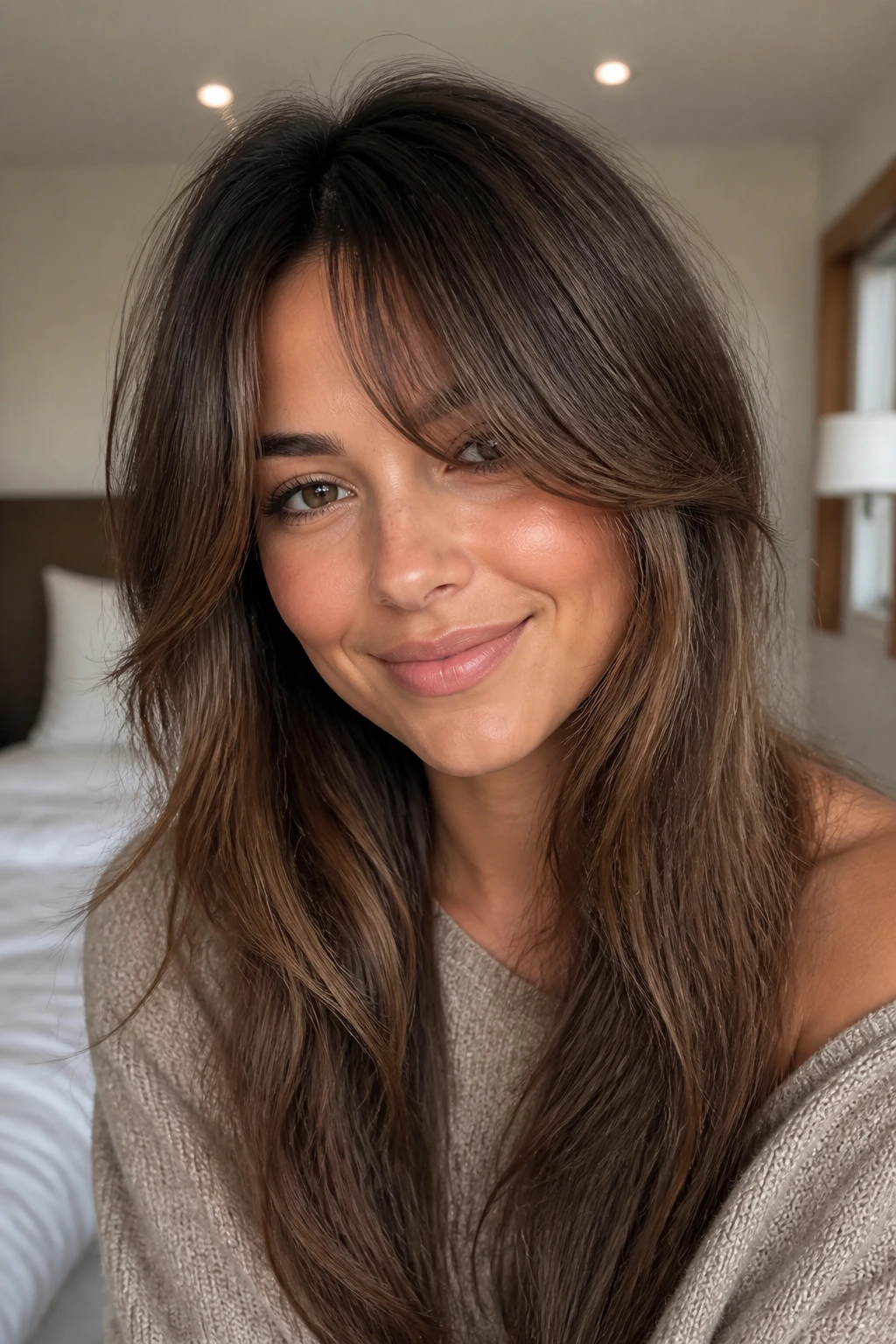
The best bangs for a round face are not the ones that hide everything. They are the ones that give the eye a better route to follow. Curtain shapes, diagonal sweeps, soft arches, and blended layers all do that in slightly different ways, which is why there is no single answer that fits every head of hair.
Long hair makes the whole thing easier. It gives the fringe room to breathe, room to grow, and room to move from polished to casual without looking unfinished. If you choose a bang shape that respects your texture and your patience level, the haircut starts doing the work for you the second you part it.
Start with the style that feels closest to your daily life, not the most dramatic one on the list. The haircut should make your face look like your face, only with better lines.
