



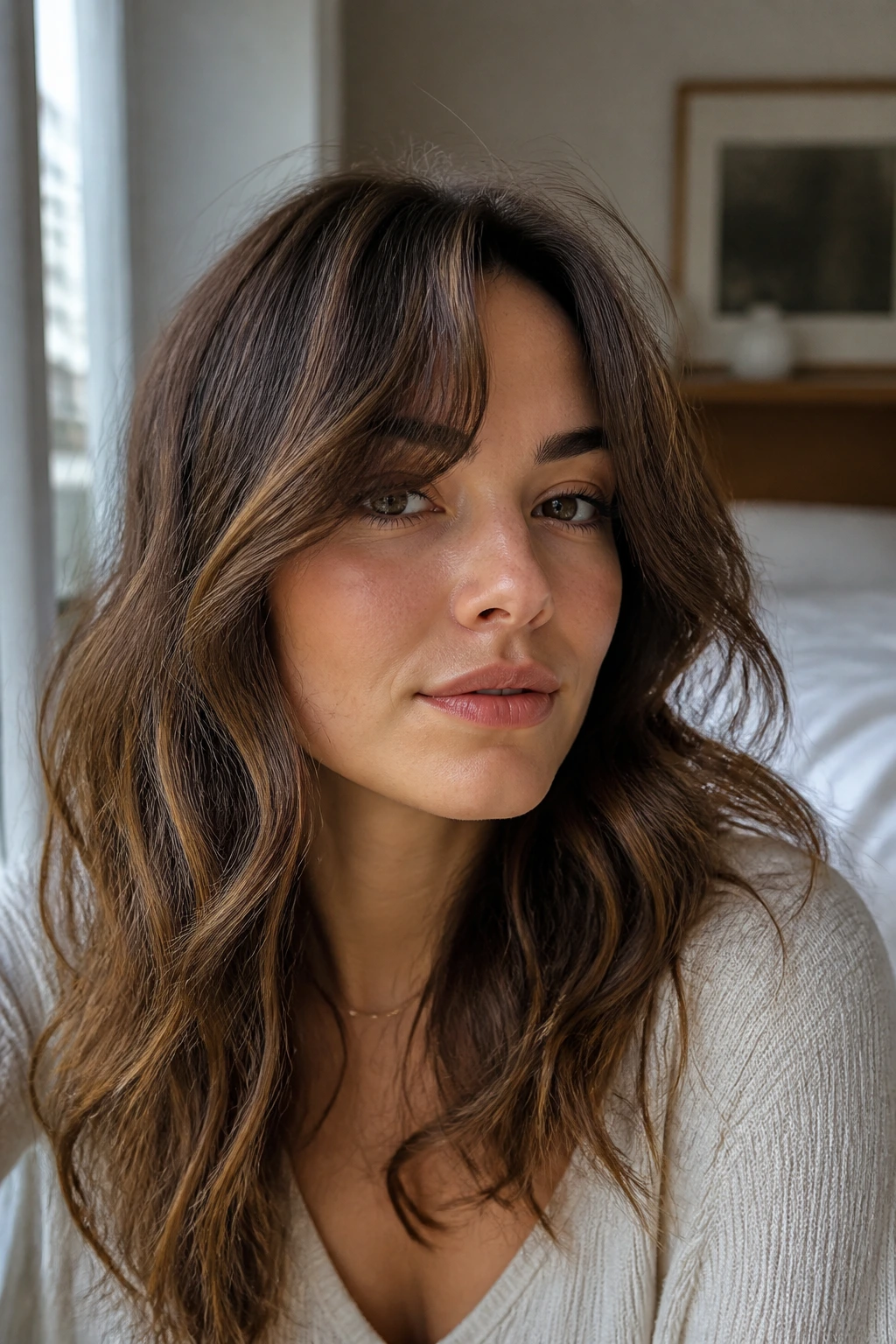
Some haircuts fight your texture. Curtain bangs for wavy hair usually do the opposite.
That’s why they keep showing up on heads that have a little bend, a little frizz at the ends, and a front section that never quite obeys a flat iron for long. A curtain fringe can look soft and casual when you air-dry it, then turn polished with a quick round-brush pass and a puff of dry shampoo at the roots. The trick is choosing the right length, density, and shape so the bangs work with the wave instead of collapsing into it.
My own bias is toward bangs that start a touch lower than most people expect. Wavy hair has spring in it. Cut too short and the center pops up, the sides kick out, and the whole thing starts looking like it needs daily negotiation. Leave enough length to bend, separate, and settle, and the style starts behaving like it was built for real life.
Why Curtain Bang Styles for Wavy Hair Keep Winning
-
They move with the hair: Waves already give the front section shape, so a split fringe can fall into place with less coaxing than a blunt bang that wants perfection.
-
They grow out cleanly: The longer sides blend into face-framing pieces, which means the awkward in-between stage is softer and less obvious than with a straight fringe.
-
They can flatter different face shapes: A shorter center can open the eyes, while longer sides can soften a jawline or narrow a broad forehead.
-
They leave room for texture: Some styles stay airy and piecey; others can be brushed smooth. The same cut can live in two different moods.
-
They suit more than one styling routine: You can air-dry, diffuse, round-brush, or use a flat brush and still keep the curtain shape intact.
-
They don’t demand a rigid part: A center split is the classic move, but a slight offset often works better on waves with a stubborn cowlick.
1. Cheekbone-Skimming Curtain Bangs
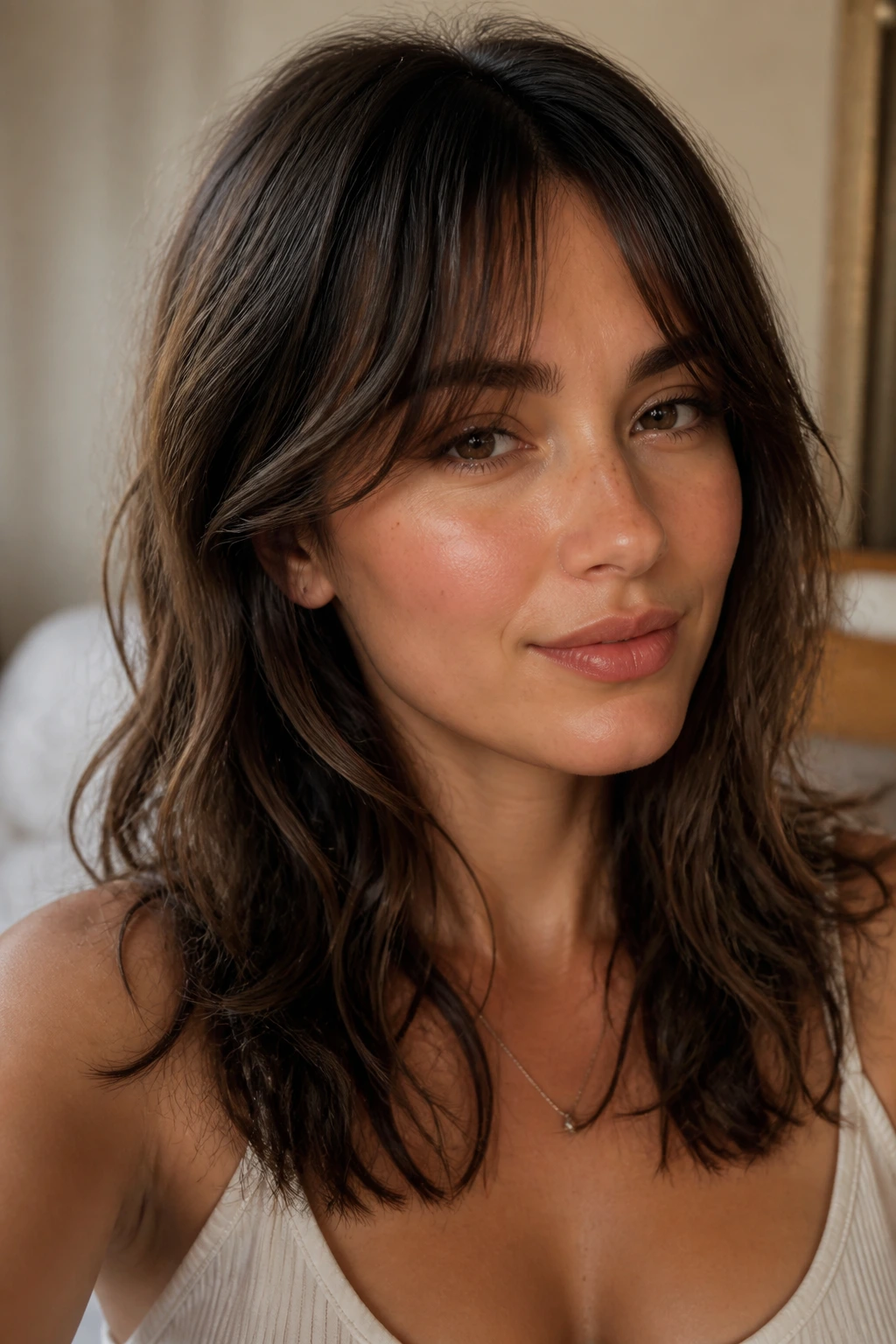
These are the bangs I recommend when someone wants movement without a lot of daily wrestling. The center lands around the upper cheekbone, then slides down toward the temple in a soft diagonal. On wavy hair, that length lets the bend do its thing instead of springing straight up.
Why They Work
The shape is forgiving. If your wave pattern is loose, the bangs bend around the face instead of sitting in one stiff line. If your waves are fuller, the longer sides stop the fringe from turning into a block. They also play nicely with medium to long layers, which is usually where this cut really starts to look intentional.
A quick blow-dry with a small round brush is enough. Don’t chase perfect symmetry. You want a little curve, a little separation, and a center that parts cleanly before it falls into the rest of the haircut.
2. Brow-Grazing Split Fringe

A brow-grazing curtain fringe hits the sweet spot between “I have bangs” and “I still want to see my forehead move.” It frames the eyes first, then melts outward so the edges don’t feel abrupt. On waves, this shape can look especially good when the hair has a soft, loose S-bend.
The center piece sits just above or right at the brow line. That’s short enough to matter, long enough to tuck under a round brush for a minute or two. If your waves are bouncy, ask for the center to be cut dry or nearly dry; otherwise it can shrink higher than you wanted.
Quick Notes
- Best for: loose to medium waves
- Styling time: 3 to 6 minutes
- Watch for: cutting the center too short
- Looks best with: a light side bevel at the temples
My favorite thing about this shape: it makes mascara and brows do half the work.
3. Jawline Curtain Bangs
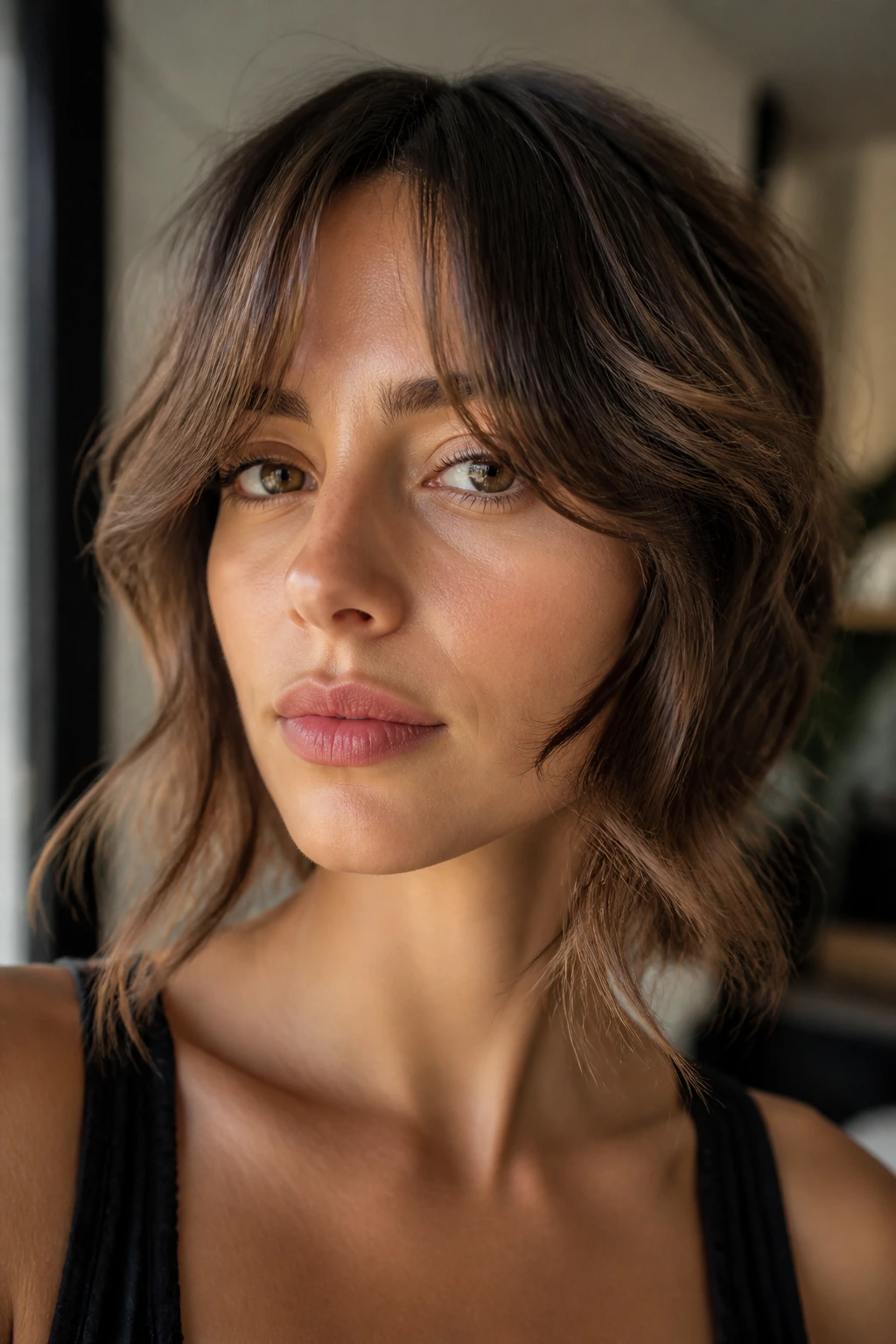
When someone says they want bangs but refuses to commit to bangs, this is often the answer. Jawline curtain bangs start long enough to tuck behind the ears on a bad day, then sweep inward when styled. They make wavy hair look deliberate without asking for a full blowout.
The big advantage is scale. The jawline is a forgiving landing spot because it gives the front pieces enough length to move, but not so much that they disappear into the rest of the cut. If your waves puff up in humidity, this version stays useful longer than shorter fringe.
I like this cut on people with stronger jawlines or longer faces. It adds softness right where the face starts to narrow, and the ends can be point-cut so they don’t feel heavy.
4. Bottleneck Curtain Bangs
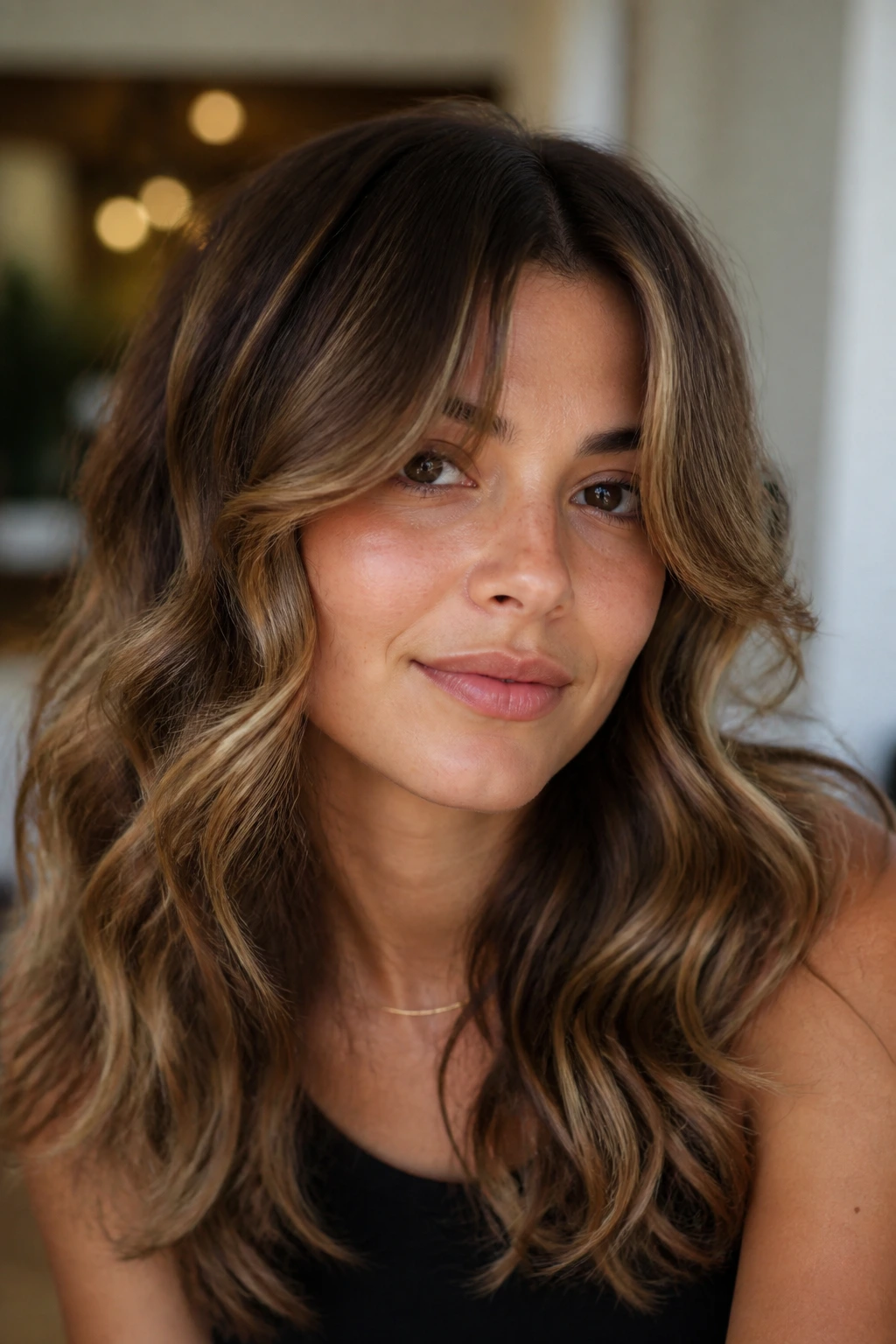
Bottleneck bangs earn their name honestly. They’re narrower through the center and wider near the cheekbones, which creates a shape that feels a little more sculpted than classic curtain fringe. On wavy hair, that taper matters because it keeps the middle from looking like a heavy curtain panel.
This version works best when the center is cut shorter than the sides by a noticeable amount. Not extreme. Just enough to let the middle sit above the brow while the sides drift toward the cheek. The curve looks especially good if your waves already form a soft bend in the front.
If you like a cut that looks styled even when you haven’t done much to it, this is a strong pick. It reads a little more fashion-forward than standard curtain bangs, but it still behaves like a wearable haircut.
5. Long Layered Curtain Bangs
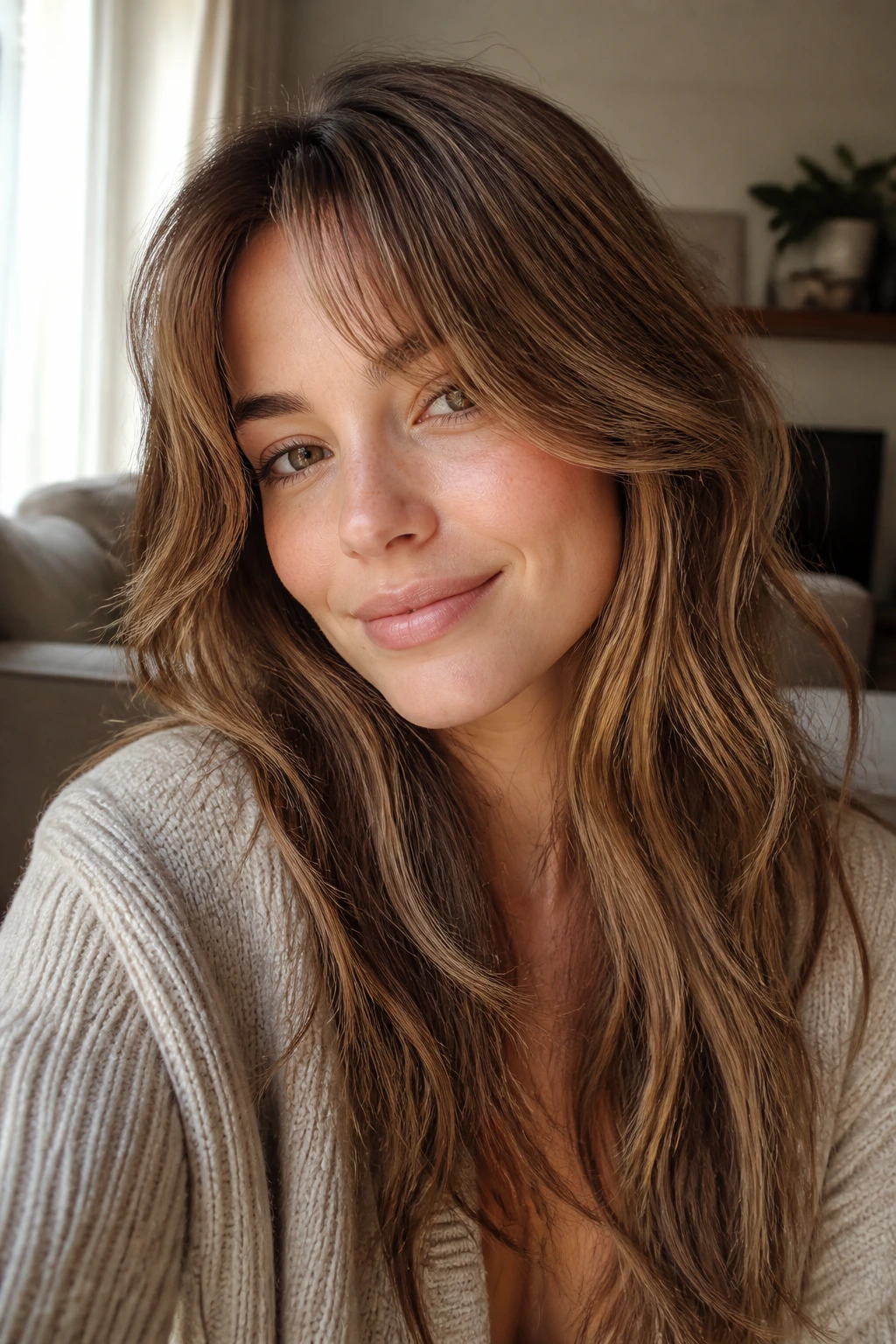
Long layered curtain bangs are the safest bet for anyone new to fringe. They blend into the haircut so gradually that the front pieces feel like part of the layers instead of a separate event. That matters with waves, which can get bulky fast if the front is cut too bluntly.
The secret is to keep the center long enough to fold into the wave pattern. Think of this as a face-framing layer that happens to split at the part, not a short bang that’s trying to pretend it’s a layer. That distinction saves you from the helmet effect.
I love this shape for people who air-dry a lot. It still looks good if you give it a quick finger twist and let the rest of the hair dry on its own. No heroics required.
6. Feathered 70s Curtain Bangs
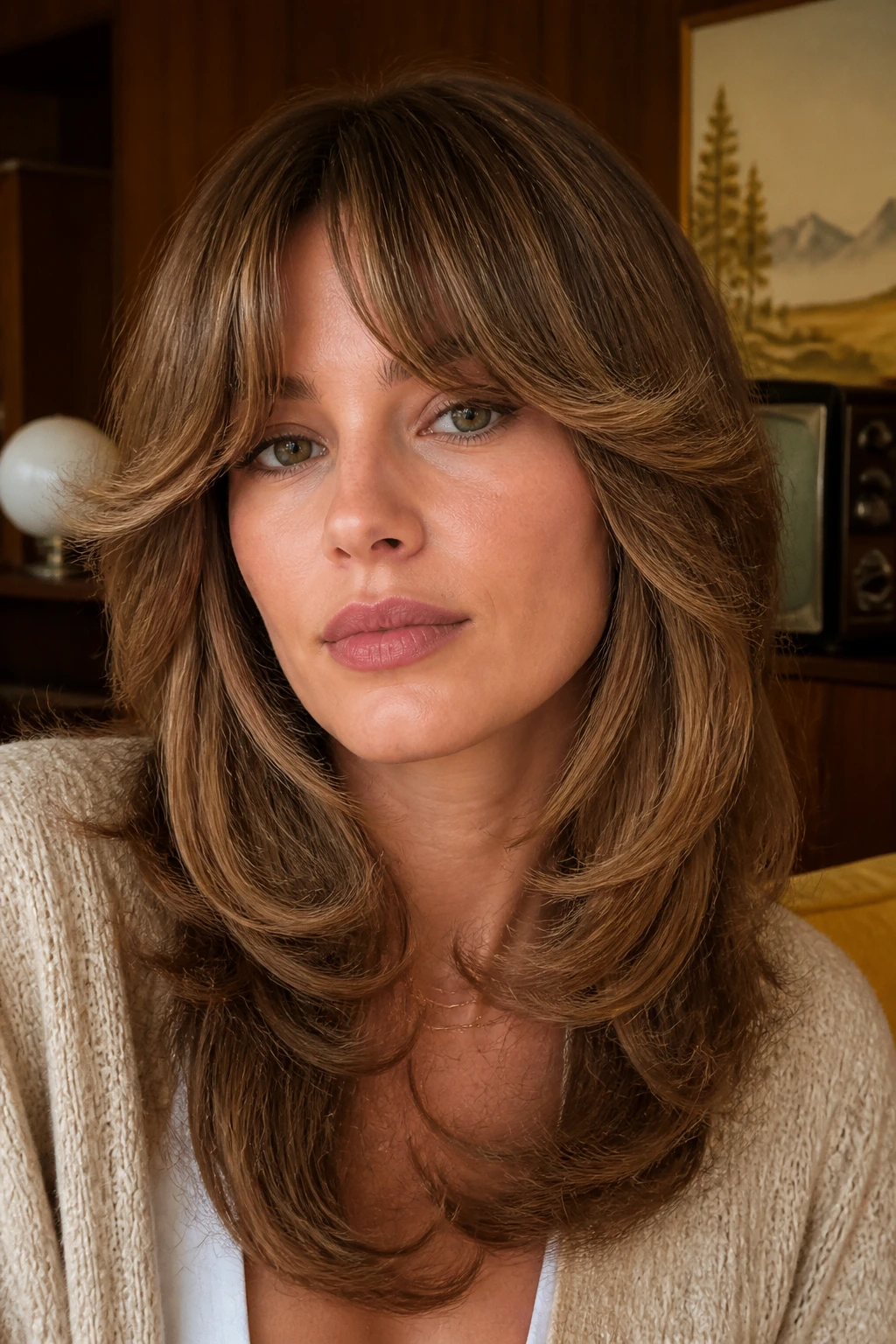
This is the version with a little drama in its bones. Feathered curtain bangs have soft, flipped-out ends and more visible movement through the midsection. On wavy hair, they can look fantastic because waves already supply the bend the style needs.
Why It Feels Different
Feathering removes some of the weight that can make curtain bangs hang like drapes. The result is lighter at the edges and more open around the eyes. If your hair is medium-thick, this shape lets the front pieces breathe instead of sitting flat against the forehead.
A round brush or a hot brush helps, but the finish should not look stiff. You want the ends to skim outward, not curl into a hard roll. If the front starts looking too perfect, break it up with your fingers.
7. Piecey Wavy Fringe
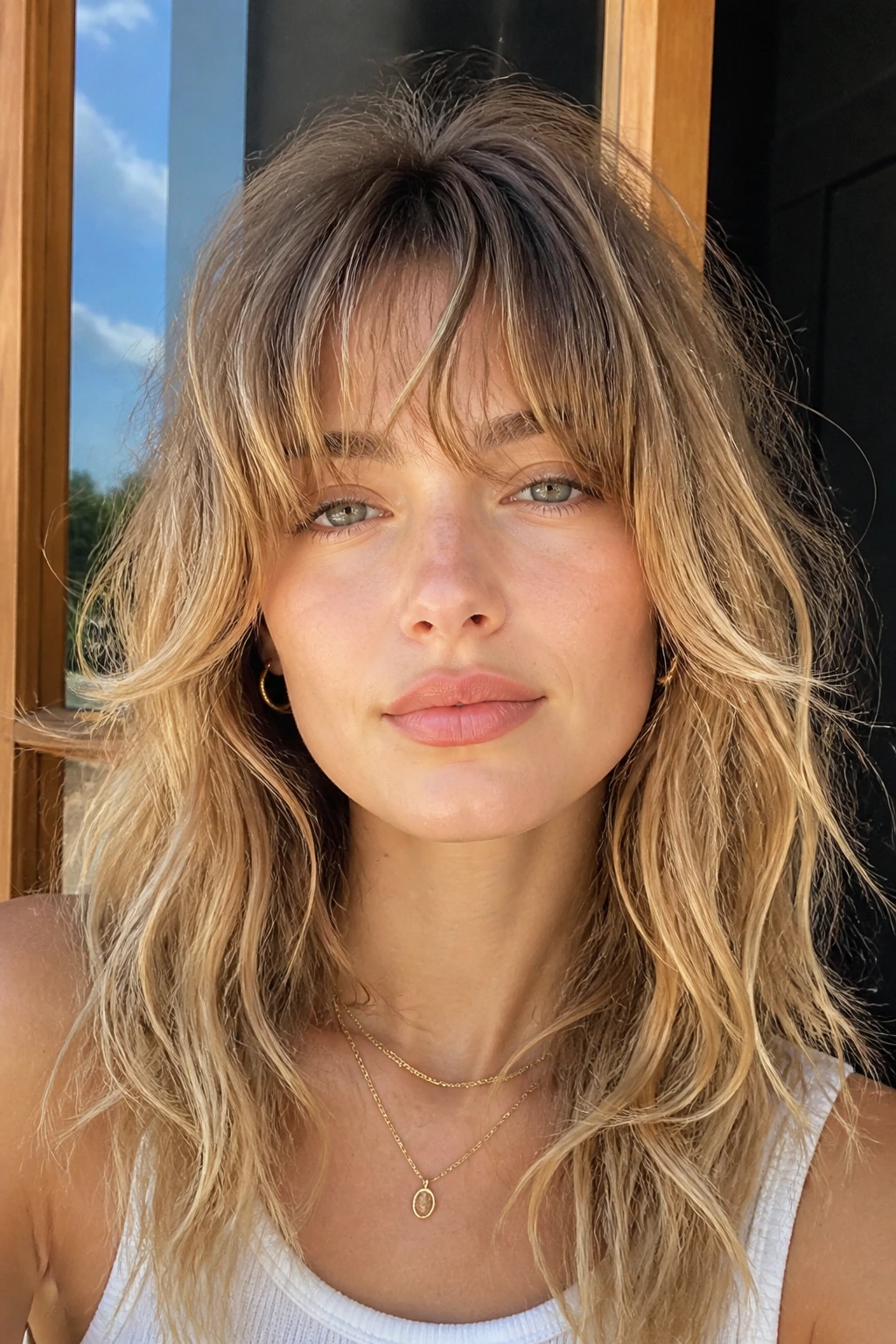
Piecey fringe is for people who like their texture visible. Instead of one smooth curtain, the front falls in separated, defined strands. That makes wavy hair look especially alive, because the natural bend gets a chance to show up instead of being brushed into one soft sheet.
This cut needs a little restraint. Too much product and the pieces clump. Too little and the fringe loses shape by lunch. A pea-sized amount of mousse or a light texture spray at the roots usually does the job.
I’d choose this if your hair already has a beachy quality and you don’t want to fight it. The whole point is to look like the fringe settled that way on purpose.
8. Soft Rounded Curtain Bangs

Soft rounded curtain bangs curve inward before opening out, almost like a shallow smile across the forehead. On wavy hair, the rounded edge keeps the front from looking too angular. It’s a good answer when straight-across bangs feel too severe and very long pieces feel too hidden.
The shape works especially well if your face has softer angles or if you wear your hair with a loose side part. The bangs should not be cut like a bowl. That’s the trap. Ask for a rounder silhouette, but with texture through the ends so the wave can break it up.
A few minutes with a brush and dryer usually gives this enough polish. After that, leave it alone. Over-touching tends to flatten the front and make the curve disappear.
9. Shaggy Curtain Bangs
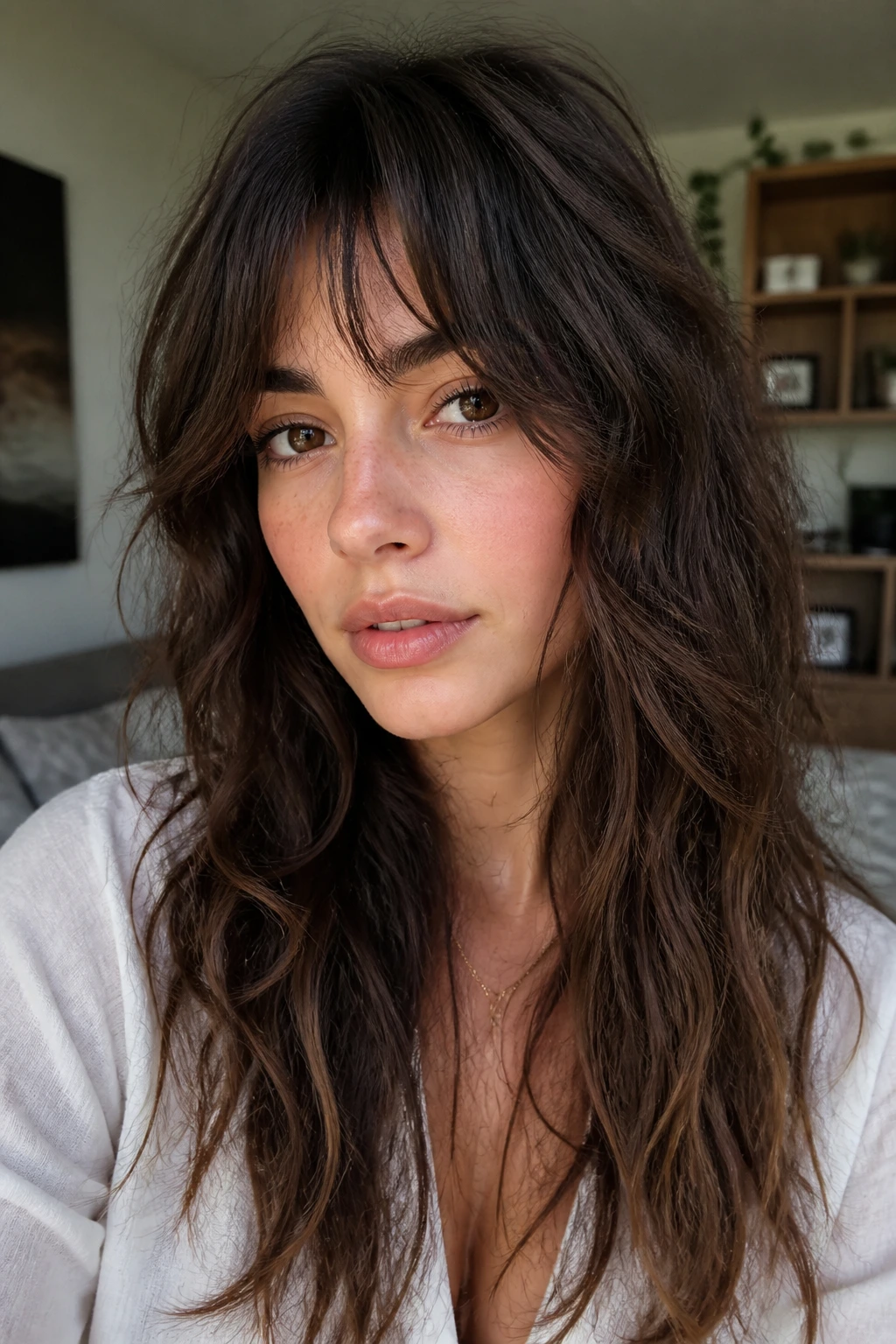
Shaggy curtain bangs are not neat, and that is the point. They’re cut to sit inside a shag, so the fringe has uneven length, broken-up ends, and a little attitude. Wavy hair loves this because the cut works with uneven texture instead of pretending every strand bends the same way.
The shaggy version is especially good if your waves swell up after a wash day. A cleaner, polished curtain bang can sometimes feel too tidy against a more lived-in haircut. This one matches the rest of the head.
What Makes It Work
- Point-cut ends keep the fringe soft.
- More layering near the temples prevents a blocky front.
- Texture spray can help the pieces stay separated.
- A diffuser gives the waves enough lift without puffing the roots too much.
10. Airy Whisper Bangs

Airy whisper bangs are for fine waves, or for anyone who wants the tiniest amount of face framing without a heavy fringe. They’re light, almost see-through in places, and they usually sit a little longer than a true bang so the hair can move freely.
The danger here is overcutting. If you remove too much length, the lightness turns into limpness. The better approach is to keep the front soft and slightly sparse, then style it with a small brush and a touch of root lift.
These bangs are the ones that look best when they’re not trying hard. If your hair gets oily fast, this style needs dry shampoo at the roots sooner than the rest of the haircut. The fringe itself should stay piecey, not slick.
11. Dense Center, Soft Sides Curtain Bangs
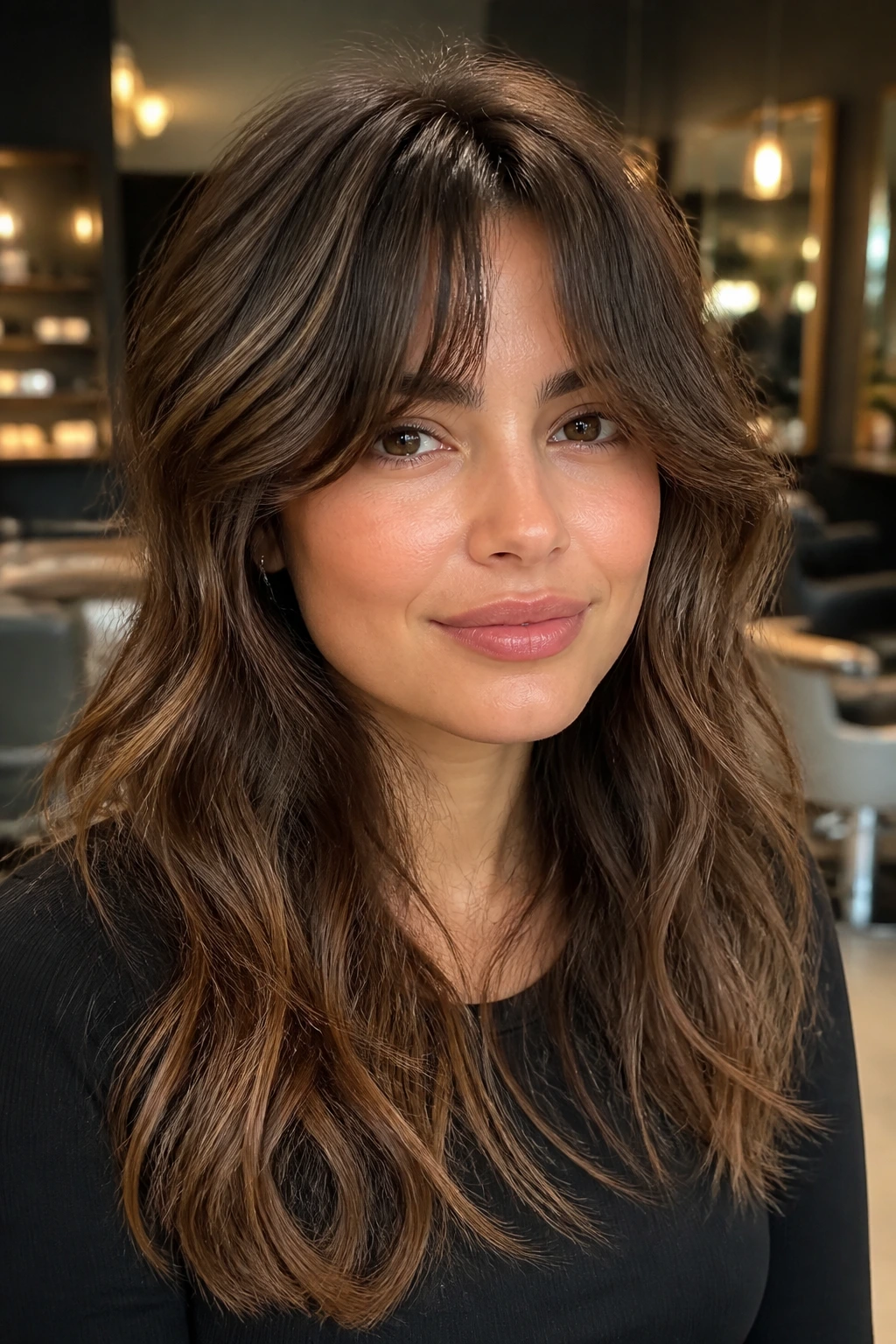
This shape is for people who want a bit more presence at the center but don’t want the sides to feel heavy. The middle carries more density, then the weight gets peeled away as the bangs travel toward the temples. On wavy hair, that taper keeps the front from ballooning.
A denser center can be a smart move if your wave pattern is loose and your hair tends to separate too much at the part. It gives the bangs enough substance to show up without making the face look boxed in.
The style needs thoughtful texturizing. Not aggressive thinning. Just enough to remove the hard edge and let the sides move. If you’re thinking of going for this one, ask for softness through the perimeter and keep the inner layers controlled.
12. Collarbone-Grazing Curtain Bangs
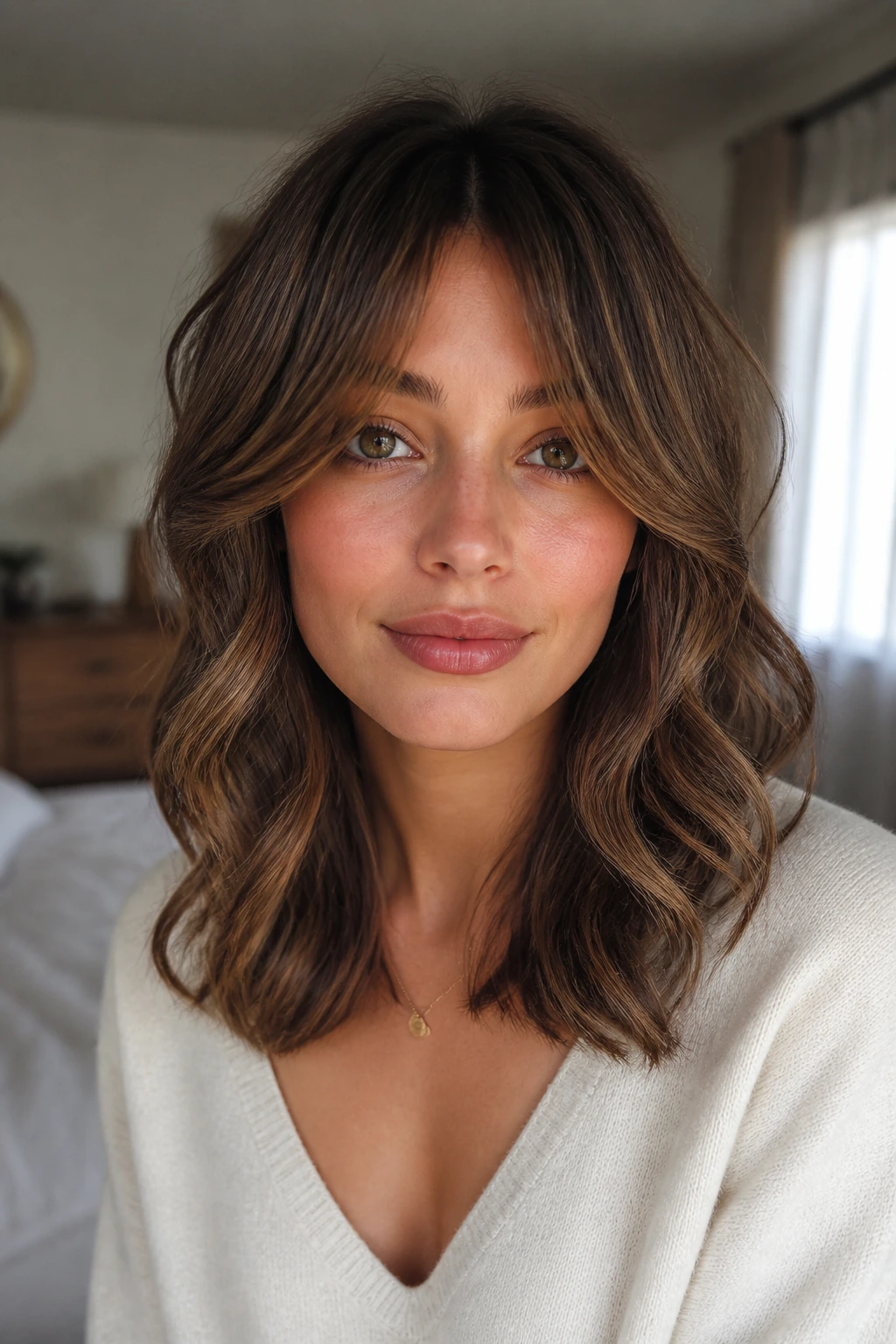
Call these bangs if you want fringe that behaves more like a frame than a statement. The front pieces drift all the way down toward the collarbone, which means they blend into the haircut almost immediately. For wavy hair, that length is a gift. It’s long enough to bend, long enough to tuck, and long enough to survive a missed styling day.
This is the sort of cut that works when you like the idea of curtain bangs but not the maintenance. The face-framing effect is still there, but it lives at a softer volume. If your hair is thick, the weight at this length helps keep the ends from springing up too aggressively.
I’d choose this if you’re growing out shorter fringe. It turns the awkward stage into a style.
13. Side-Swept Curtain Hybrid
Not everyone wants a strict center part. Good. A side-swept curtain hybrid takes the split shape and nudges it off center, which can be a relief for waves with a stubborn cowlick at the front. The result is softer, less symmetrical, and often easier to live with.
How It Changes the Look
The off-center part lets one side carry a little more weight, which can help if one front section always falls flatter than the other. It still opens around the face, but it won’t look as formal as a dead-center split. That slight asymmetry can be flattering, especially on hair that naturally falls that way anyway.
If you wear your hair with a side part most days, this is the version I’d lean toward. Fighting your parting pattern usually makes bangs harder, not prettier.
14. French-Girl Curtain Bangs
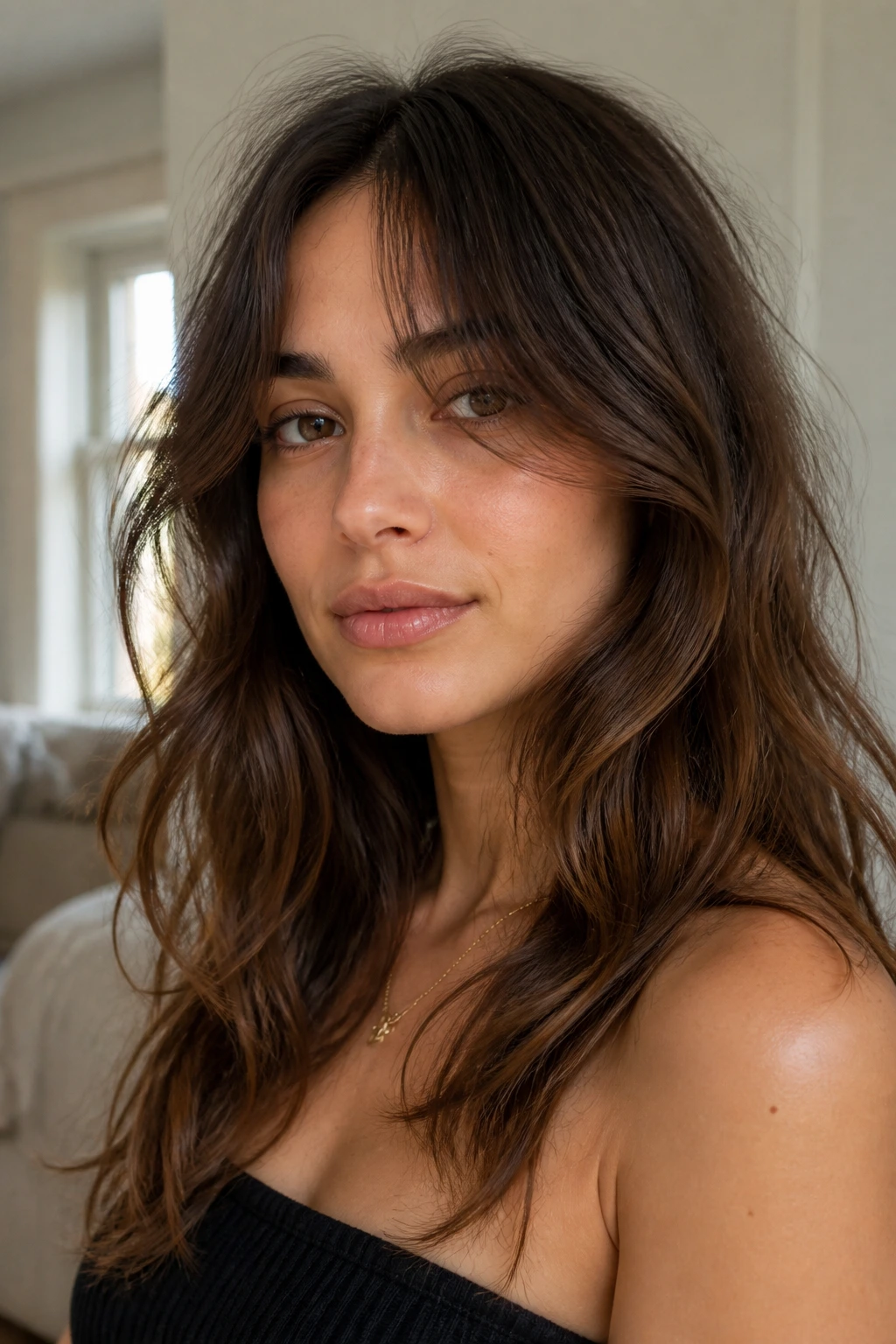
French-girl curtain bangs are usually a touch shorter in the center, with soft texture and a relaxed finish. They’re the kind of fringe that looks casual in the best possible way, as if the hair fell into place after a quick shake rather than a full routine.
On wavy hair, this shape depends on restraint. You don’t want a thick, heavy block at the forehead. You want a soft split that opens naturally and lets the ends bend around the brows and cheekbones.
This style suits people who like a little polish but don’t want the bangs to steal the whole haircut. If you keep the rest of your waves loose and slightly undone, the fringe fits right in.
15. Retro Full Curtain Bangs
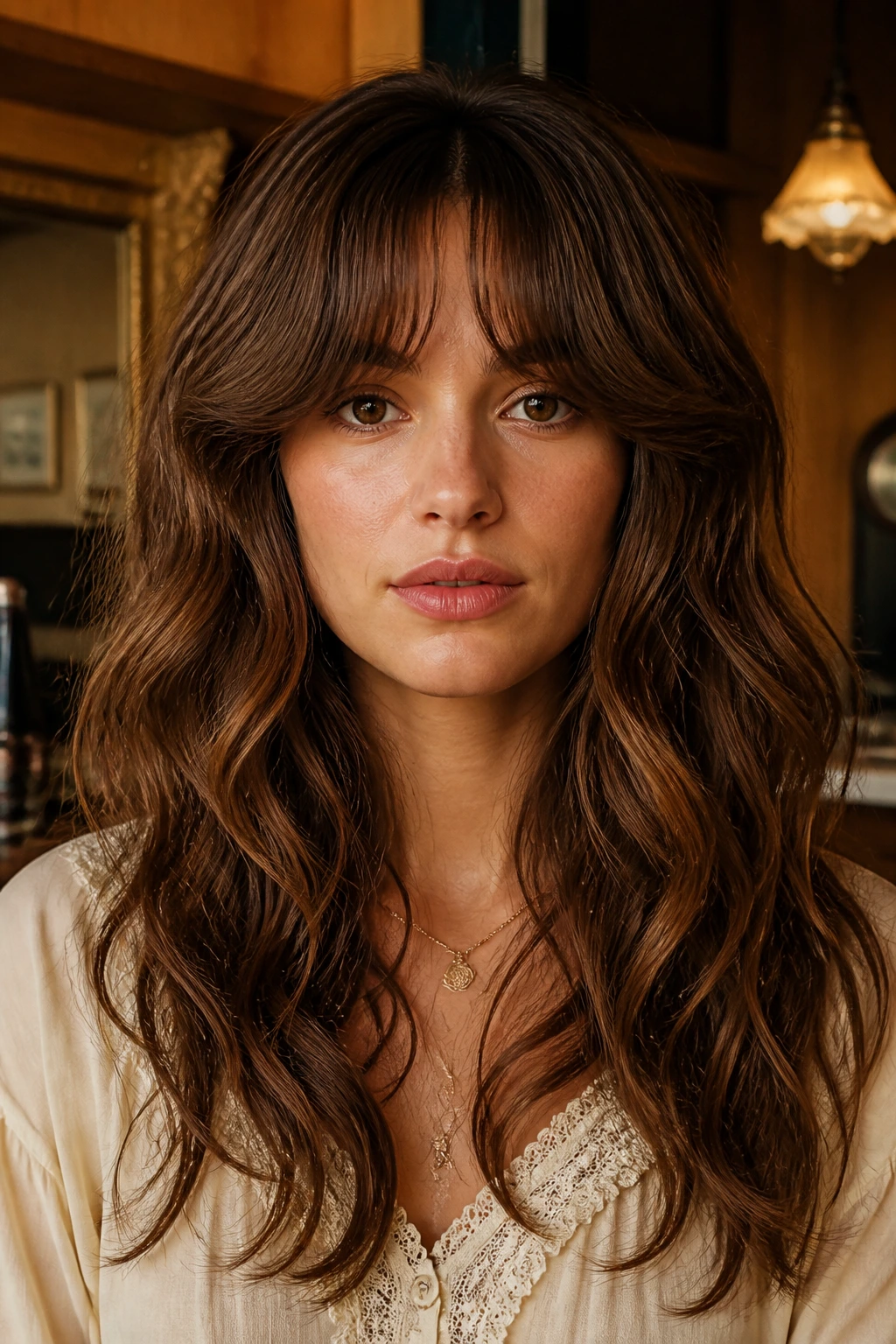
Retro full curtain bangs bring more density and more drama than the lighter versions. The center is fuller, the sides are still split, and the whole thing has a lush, polished look. Wavy hair can carry this beautifully if the bangs are cut with enough length to move.
The key is balance. Full does not mean blunt. If the center is too straight or too short, the style loses its softness and starts fighting the wave pattern. Ask for density, yes, but keep the perimeter feathered.
This one works especially well when you like a big blowout finish. It has that old-school salon feel, but the wave pattern keeps it from looking too formal.
16. Crescent-Shape Curtain Bangs

Crescent bangs have a gentle arc that starts shorter in the middle and curves longer as they move out. They don’t just split at the center; they form a subtle moon shape across the forehead. On wavy hair, that curve can look clean without feeling rigid.
The style is useful if your face is longer or if you want the bangs to shorten the visible forehead without cutting too much into the sides. The arc gives movement to the front, and the wave pattern helps soften the transition.
It’s a sneaky little haircut. From a distance, it reads simple. Up close, the shape is doing a lot of work.
17. Choppy Curtain Bangs
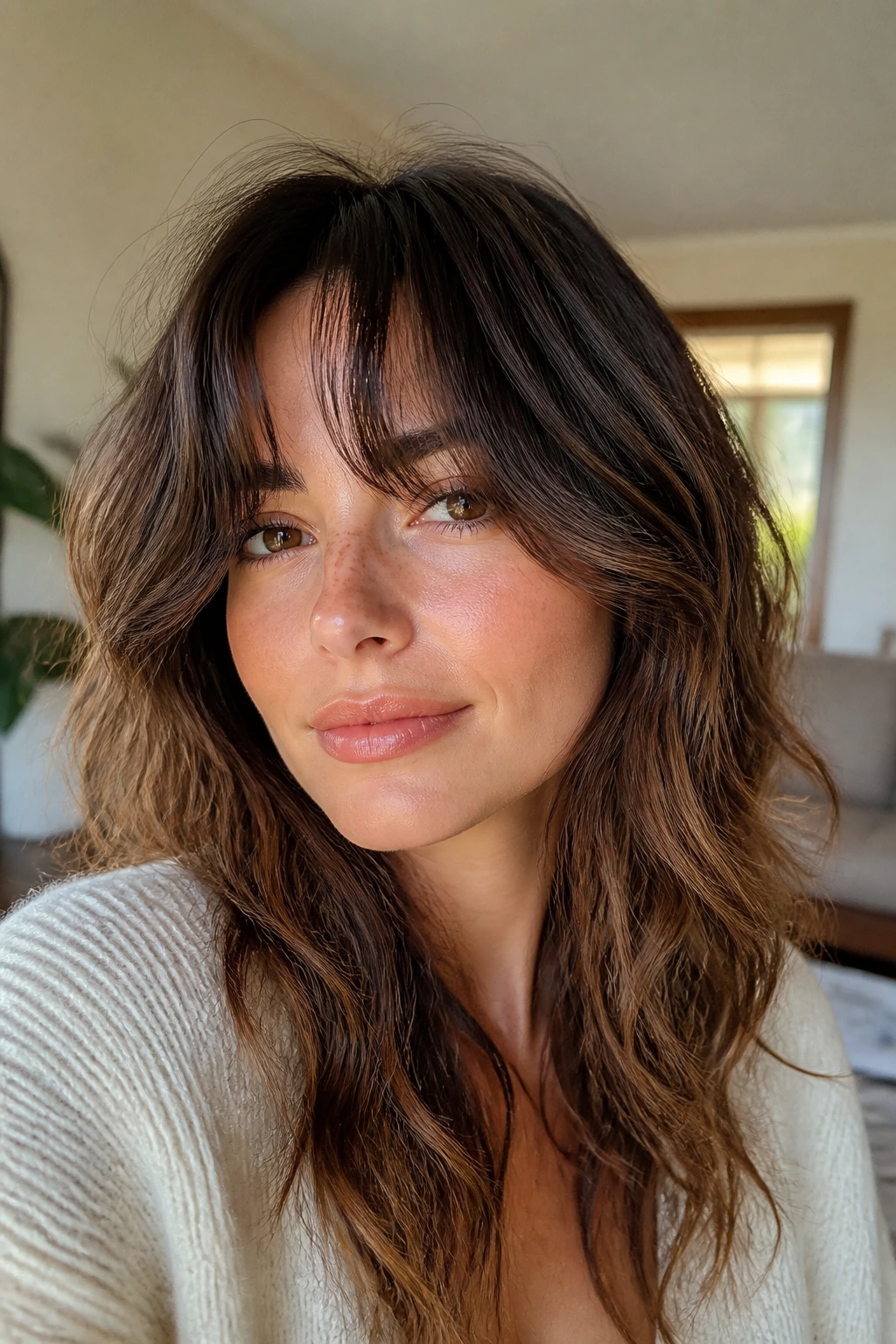
Choppy curtain bangs are cut with a little edge left in them. The texture is broken, the ends are uneven, and the shape looks a bit more modern than smooth, blended curtain fringe. Wavy hair makes the choppiness easier to wear because the natural bend hides any overly precise lines.
Quick Fit Check
- Best for thicker waves
- Good if you like texture over polish
- Works with shag cuts and layered lobs
- Needs dry styling, not heavy cream
This is a good call if your hair gets too soft and sleepy when it’s over-conditioned. The sharper texture helps the bangs hold their shape, even when the rest of the haircut is moving around.
18. Face-Framing Layers with Curtain Bangs
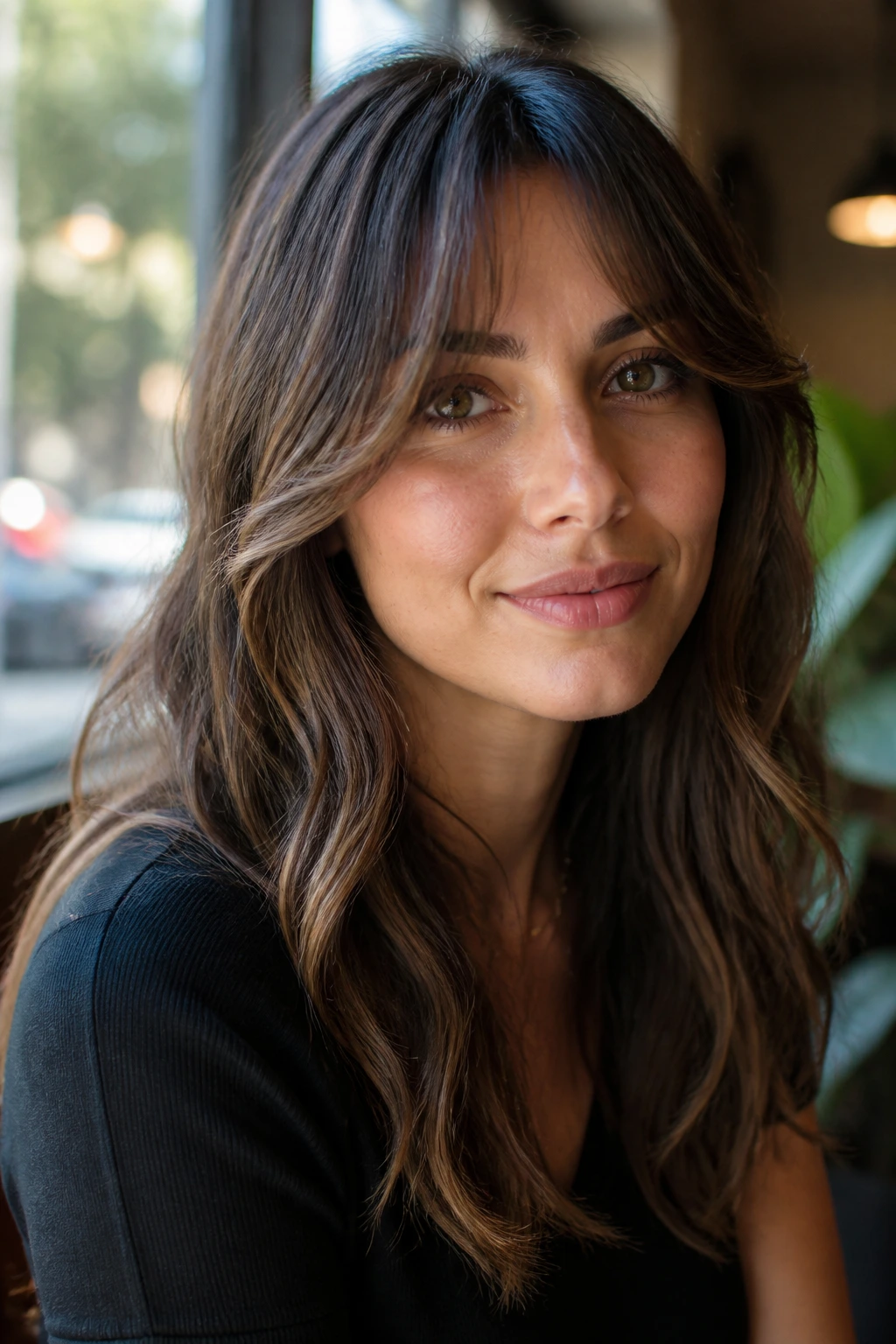
This is the version for people who don’t want their bangs to look like bangs. The front pieces blend directly into face-framing layers, so the curtain shape is there, but it’s buried inside the haircut rather than sitting on top of it.
Wavy hair loves this because the transition is smooth. One section isn’t fighting another. The fringe lands, then the layers keep going. That continuity makes the cut feel expensive in the quietest possible way.
If you wear your hair up a lot, this one is especially practical. The front pieces still soften the face when the rest gets clipped back.
19. Center-Parted Long Fringe
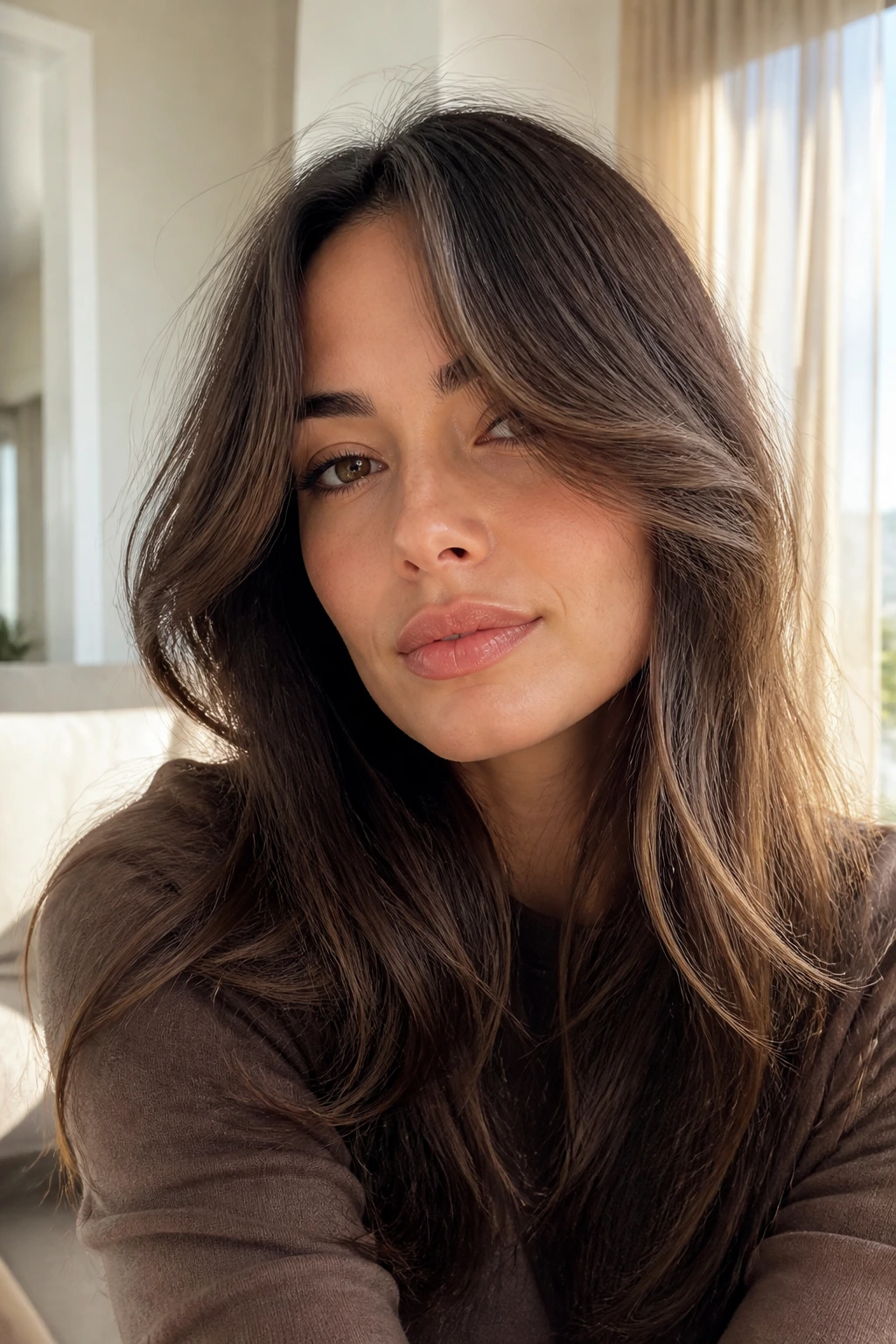
Long fringe split down the middle is the minimalist version of this whole family. It barely whispers “bangs,” which is exactly why it works on wavy hair that doesn’t want to be fussed over. The pieces are long enough to tuck, twist, or blend into a wave.
The finish should feel loose rather than styled. A small bend at the cheek and a little lift at the roots are enough. If the fringe is too polished, it can start to look disconnected from the rest of the haircut.
I like this on people who are cautious about commitment. It gives you the shape without forcing the issue.
20. Wispy Short Curtain Bangs

Short and wispy curtain bangs are for the brave, but they can be very good on the right wavy hair. The center sits higher, the edges stay light, and the whole thing has a floaty, almost featherlike feel.
The catch is shrinkage. Waves can spring upward faster than you expect, especially if the front is cut wet and left too short. If you want this look, ask for the length to be checked dry and keep the center softer than you think you need.
It’s a sharper style than the longer versions. When it works, it really works. When it’s off by half an inch, you notice immediately.
21. Glam Blowout Curtain Bangs
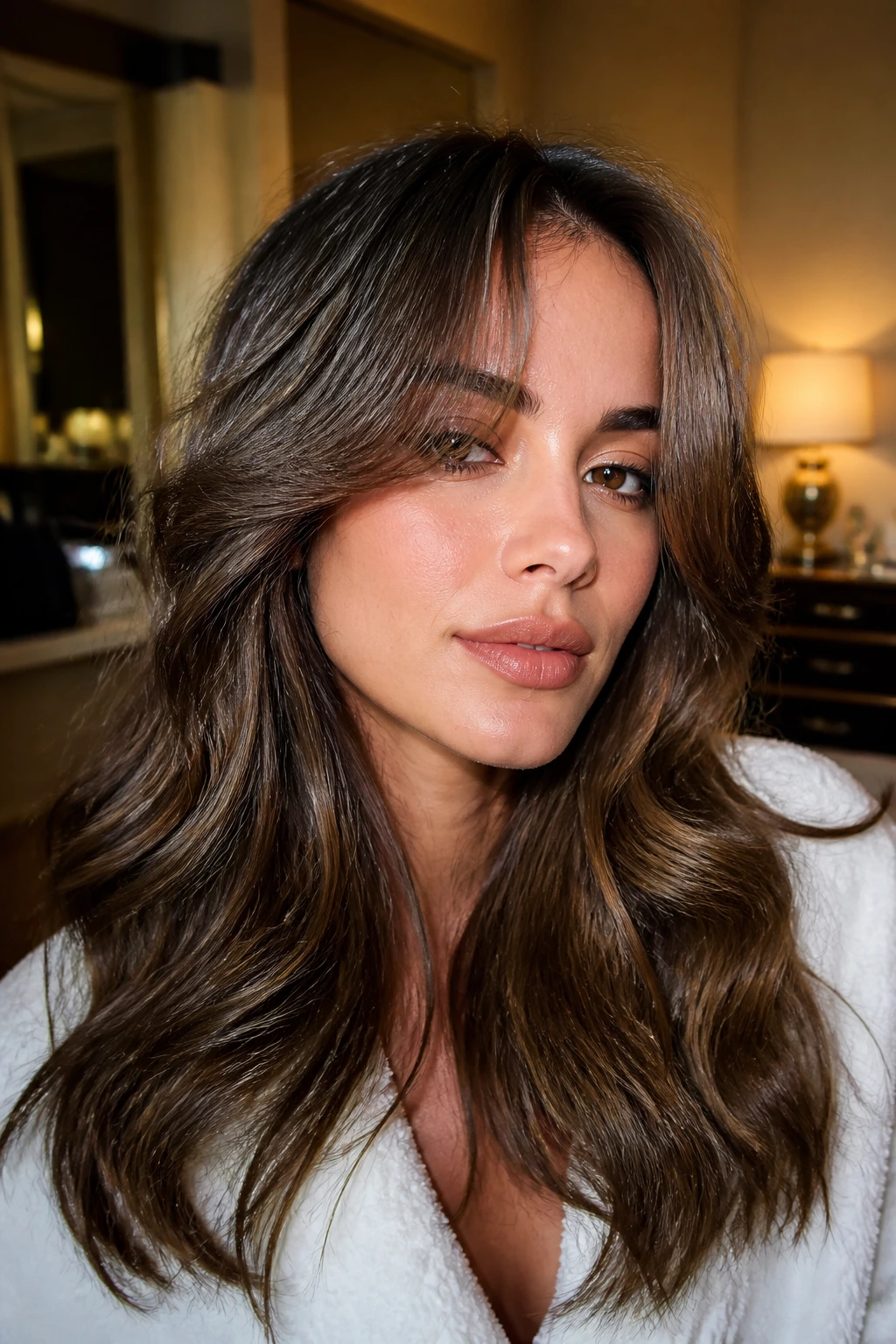
This is the polished one. Glam blowout curtain bangs are meant to be styled with tension, a round brush, and a bit of patience. The hair lifts at the roots, curves away from the face, and settles into a smooth bend that looks especially good with wavy hair because the texture underneath gives it life.
You do not need a massive barrel brush. A small-to-medium round brush is enough to direct the front pieces without turning them into curls. The goal is bounce, not ringlets.
If you like your fringe to look finished even when the rest of the hair stays softer, this is your version. It makes the front feel intentional fast.
22. Beachy Fringe
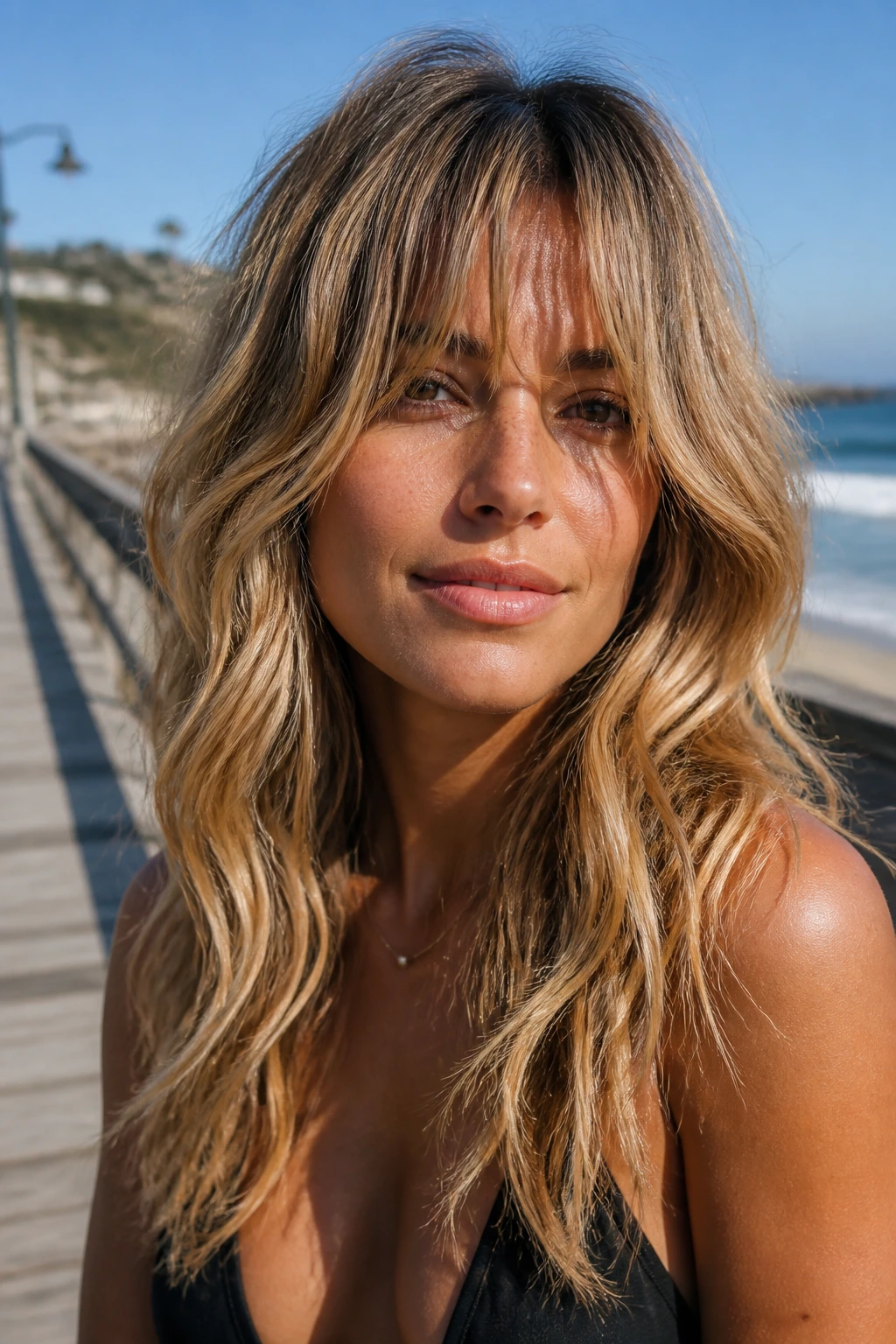
Beachy fringe is what happens when curtain bangs lean into texture and stop pretending to be sleek. The pieces separate a little, the ends move freely, and the whole front section has that sun-dried, piecey behavior waves already know well.
This style depends on a lightweight product hand. A drop of mousse or a mist of salt spray is enough. Anything heavier steals the shape and leaves the bangs sticky at the forehead.
It works especially well with shoulder-length or longer wavy hair. The bangs don’t need to do all the talking. They just need to nod in the right direction.
23. Soft Shag Curtain Bangs
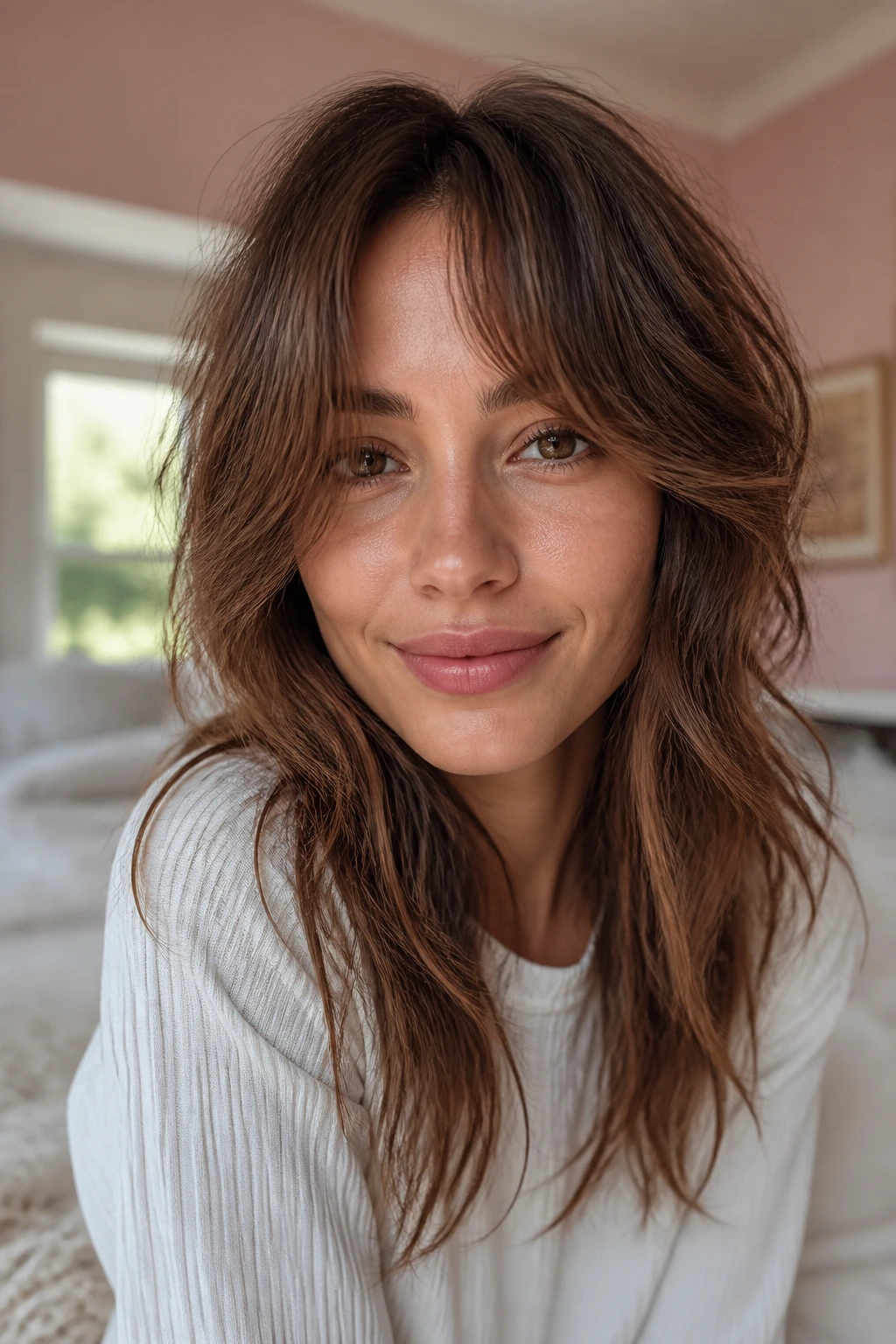
Soft shag curtain bangs are what happens when the fringe and the layers are clearly on the same team. The front is feathered, the sides are broken up, and the ends merge into the rest of the cut with very little fuss. Wavy hair usually makes this style look like it belongs there from day one.
I like this for hair that gets a little big after a wash. The shag structure gives the wave somewhere to go. Instead of puffing out like a triangle, the front pieces fall into separate, movable sections.
If you like texture but not chaos, this is a smart middle ground. It has edge. It still behaves.
24. Tapered Temple Sweep

Tapered temple sweep bangs keep the center lighter and shorter while sending more length toward the temples. That shape can be a lifesaver if your forehead is narrow, if you want more width around the face, or if your waves split oddly in the middle.
The taper matters because it keeps the fringe from feeling heavy at the root. The front opens gradually, so the eye moves outward instead of stopping at one dense center panel. On wavy hair, that makes the whole cut feel less crowded.
This version also works if you like to wear sunglasses or tuck hair behind your ears. The longer sides stay useful even when the center is pushed around.
25. Mid-Length Curtain Bangs

Mid-length curtain bangs sit in the zone where they’re neither too bold nor too shy. They land around the brows and cheekbones, which gives you enough fringe to frame the face without making the haircut feel overplanned.
That middle ground is part of the appeal. Wavy hair can be dramatic on its own, so sometimes the smartest fringe is the one that supports the hair instead of competing with it. Mid-length curtain bangs do that well.
They’re also easy to reset. A quick mist of water, a brush-through, and a minute of blow-drying usually brings them back. Not bad for a cut that lives in the center lane.
26. Thick Wave-Friendly Fringe
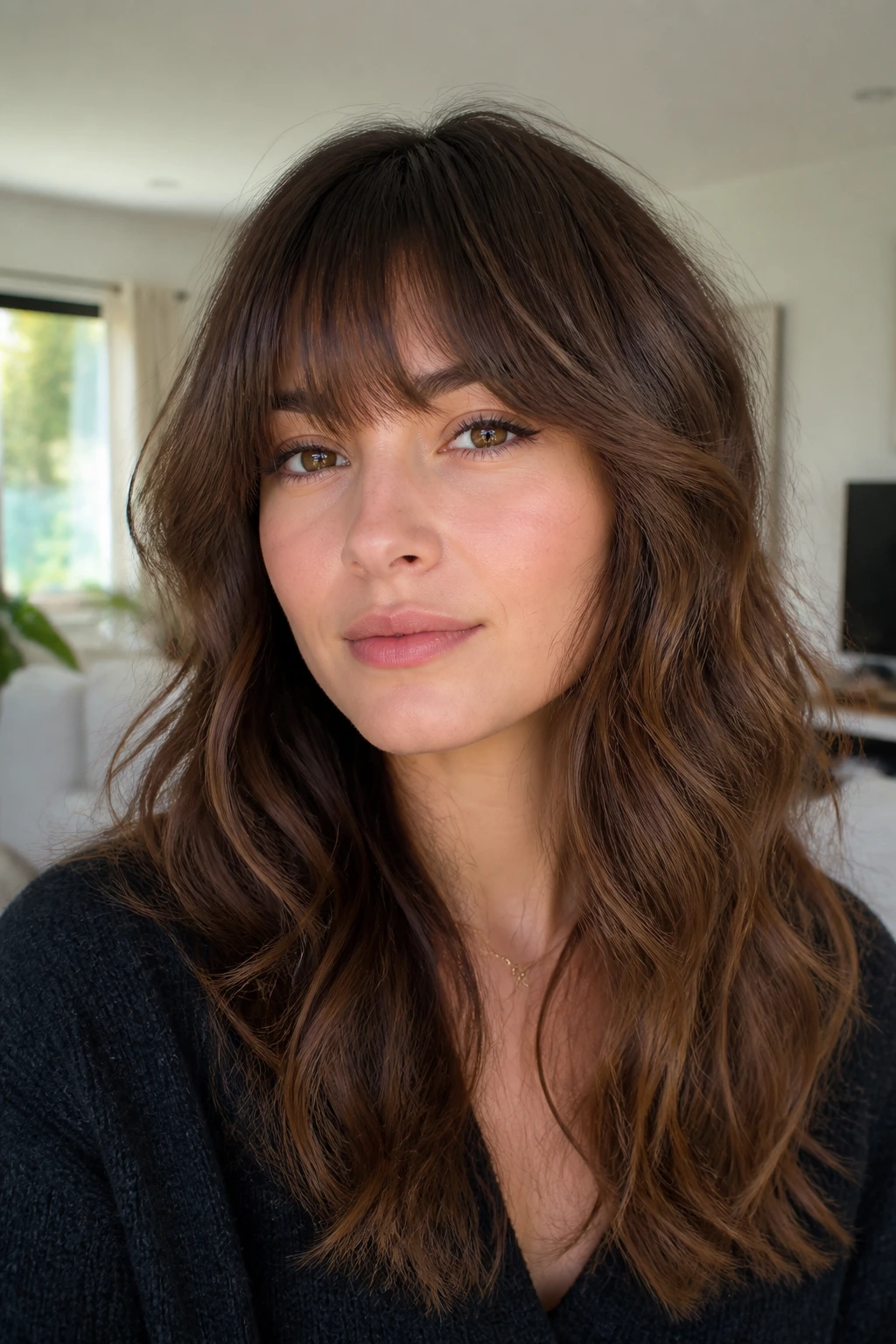
Thick fringe on wavy hair only works if the cut gives the front enough shape to split. If the center is too heavy and the sides are too blunt, you get a shelf. If it’s cut with real taper, you get a flattering frame with more presence.
A Few Things That Help
- Point-cut the ends so the fringe doesn’t sit as one solid mass.
- Keep the longest side pieces connected to the cheekbone area.
- Use a light cream only on the ends, not the roots.
- Blow-dry the center forward first, then split it.
This is a good choice for coarse hair or a very full wave pattern. It gives the fringe enough weight to show up, which matters when the texture wants to puff.
27. Invisible Curtain Bangs
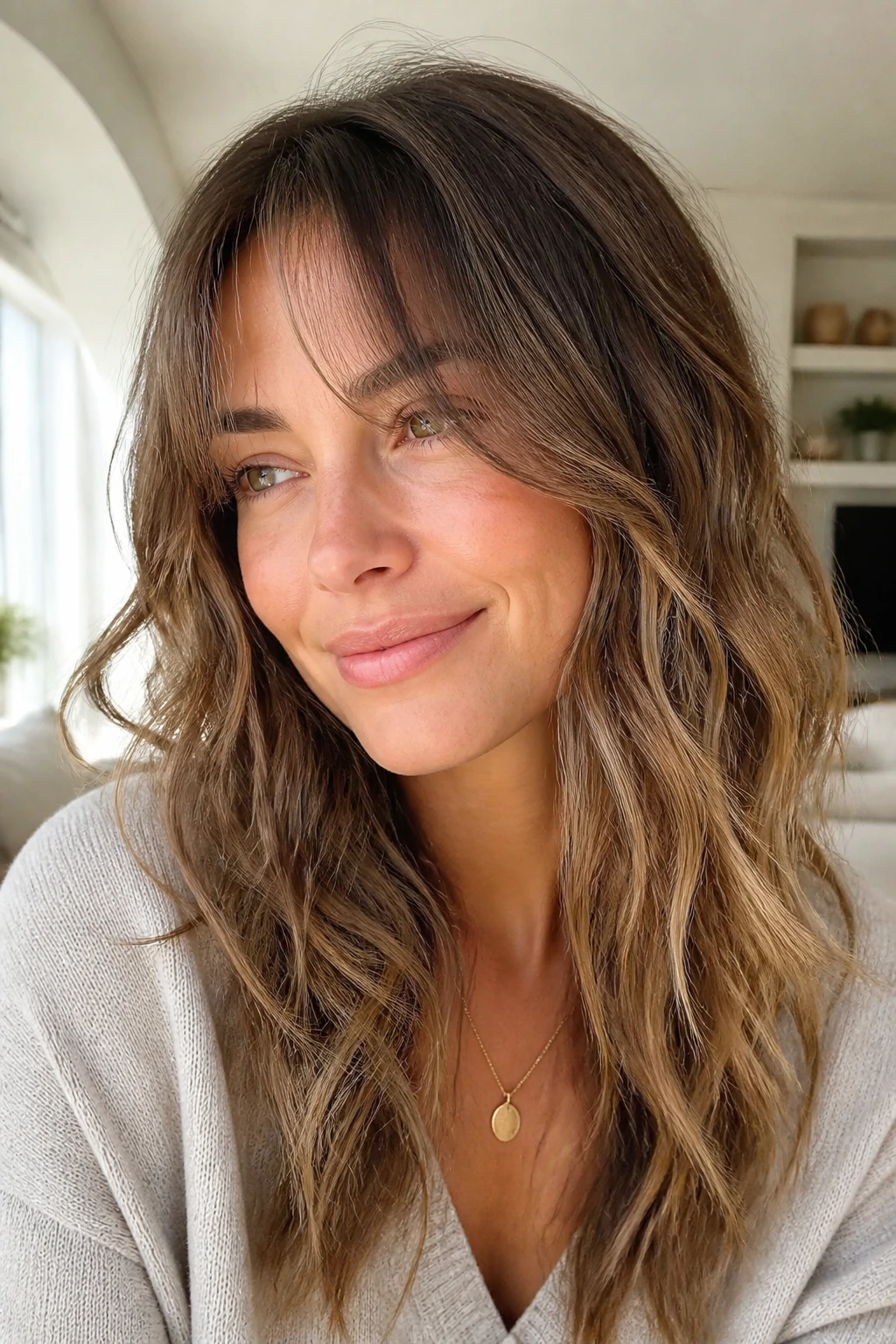
Invisible curtain bangs are the most subtle version in this whole crowd. They blend so closely into the front layers that you barely notice them until they’re styled. That makes them ideal for wavy hair if you want the softness of a fringe without a clear bang line.
The haircut should rely on long, tapered pieces that sit around the face and only reveal their shape when parted. Air-dry them, and they nearly disappear. Blow-dry them, and the frame opens up.
I’d pick this if you’re experimenting and don’t want a strong commitment. It gives you room to play without locking you into a more obvious fringe.
28. Grow-Out Curtain Bangs

Grow-out curtain bangs are not a compromise. They’re a strategy. The whole point is to keep the fringe looking good while it gets longer, which is why the shape stays split, tapered, and easy to tuck.
Wavy hair is unusually good at this stage. The bends help hide the fact that the bangs are changing length, and the front pieces can start living as layers before they’re fully out of the bang zone. That is a gift, frankly. Not every haircut has a useful awkward phase.
If you’re tired of trims, this is the version to choose. It won’t stay short forever, but it won’t punish you while it grows.
Why Curtain Bangs for Wavy Hair Work So Well
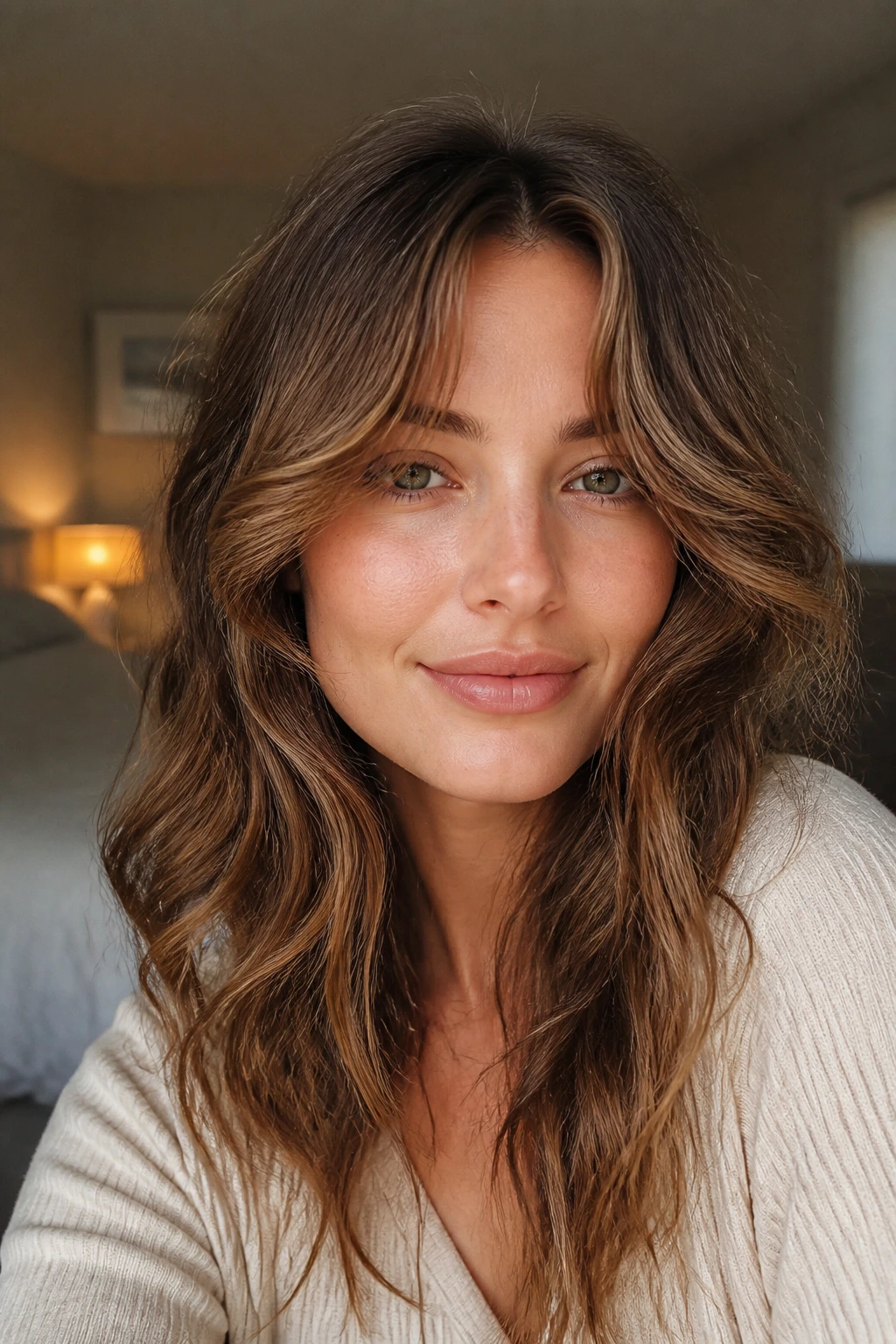
Waves need a haircut that respects their movement. Curtain bangs do that better than blunt fringe because the split in the center gives the hair a place to separate naturally, and the longer sides let the bend unfold instead of fighting it. The result is a front section that can look soft after air-drying or more finished with a few minutes of styling.
The length matters more than most people realize. Too short, and the wave springs up. Too dense, and the front turns heavy. Too thin, and the fringe vanishes into the layers. The sweet spot is a cut that leaves enough weight to frame the face while still letting the ends break apart a little.
The shape also matters more than the product. A good curtain bang on wavy hair should hold some curve even when you’ve done very little to it. That usually means there’s enough taper through the sides, enough weight at the center, and enough connection to the rest of the haircut that it doesn’t sit there like an afterthought.
Essential Tools for Styling the Fringe
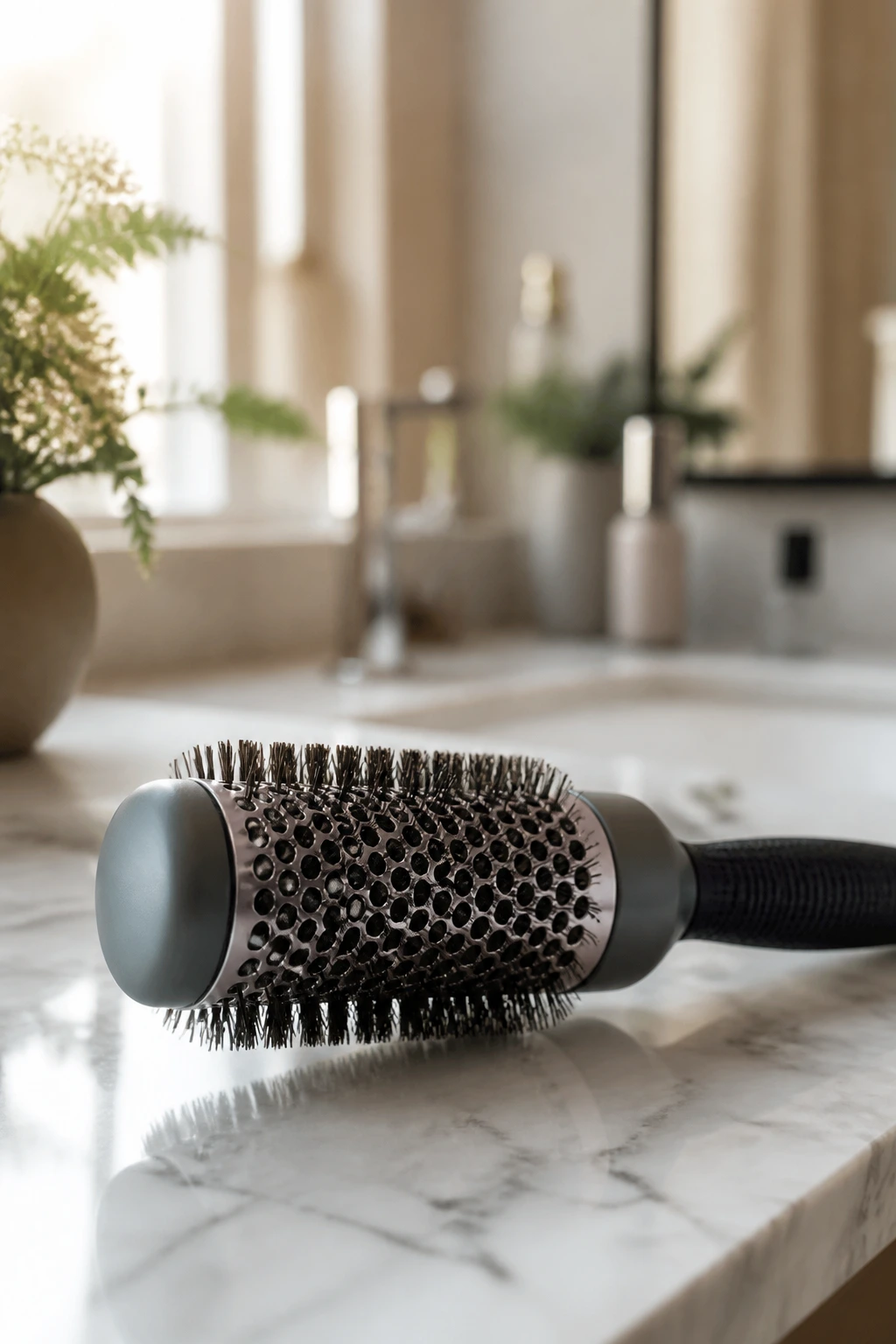
-
Small round brush: A 1- to 1.5-inch brush gives enough bend through the front without making the ends curl too tightly.
-
Blow dryer with a concentrator nozzle: The nozzle keeps air moving in one direction, which helps the bangs lay where you want them instead of blowing everywhere.
-
Heat protectant spray: Bangs get more heat exposure than the rest of the hair because they’re styled more often. Don’t skip this.
-
Light mousse or styling foam: A small amount at the roots gives wave-friendly lift without leaving the fringe crunchy.
-
Dry shampoo: Useful for the forehead area, which usually gets oily faster than the lengths.
-
Duckbill clips: Handy for setting the bangs out of the way while the rest of the hair dries or while you do makeup.
-
Wide-tooth comb or tail comb: Good for making a clean center part and for separating the front without over-brushing.
-
Small flat iron or hot brush, optional: Worth keeping around if you want to smooth only the front pieces without redoing the whole head.
How to Choose the Right Curtain Bang Length for Wavy Hair
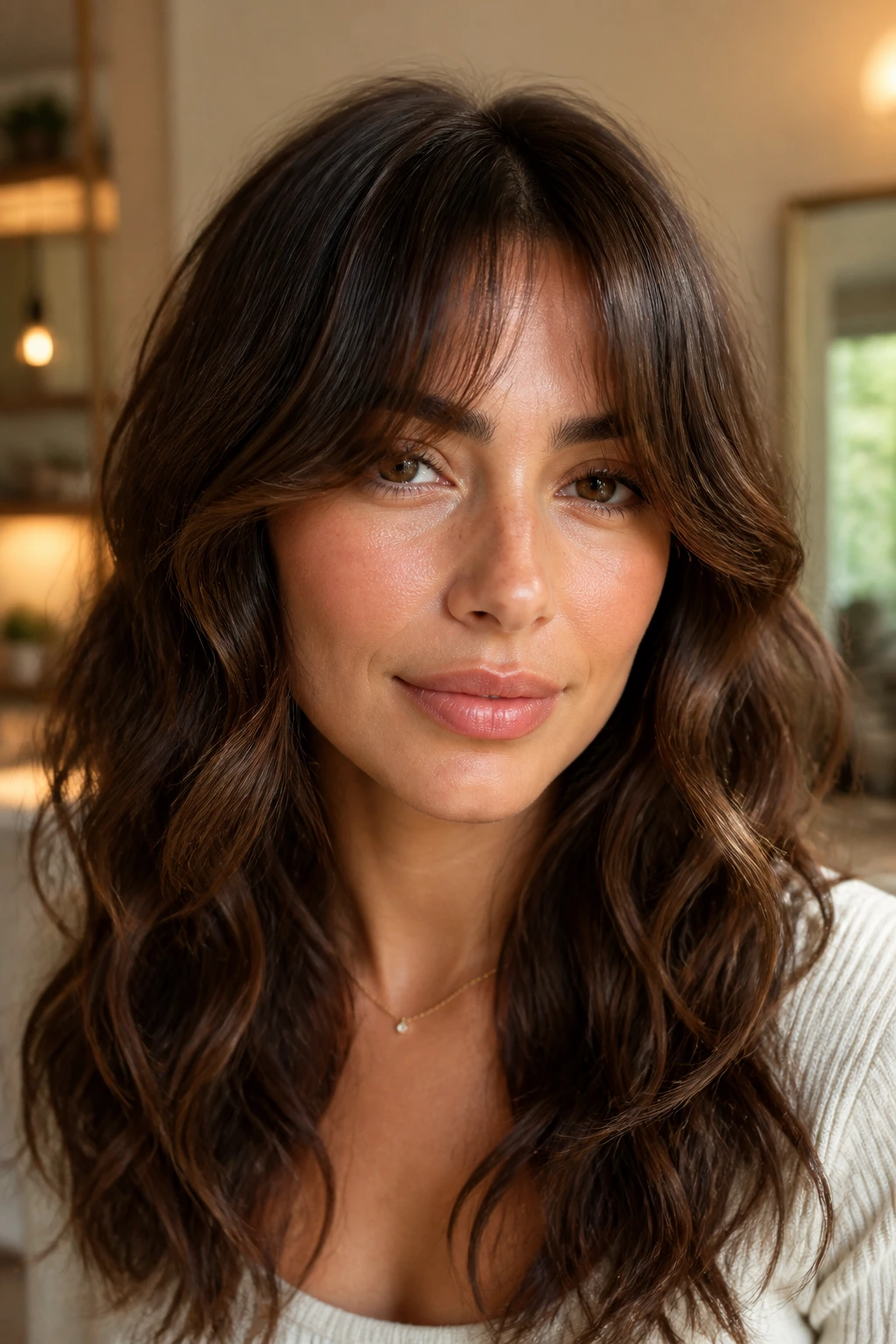
The safest rule is simple: start longer than you think. Wavy hair almost always springs up more than straight hair once it dries, and that spring can turn a “soft brow graze” into a bang that lives too high on the forehead. A stylist who works with texture should cut the front with that bounce in mind, not against it.
If your waves are loose and fine, you can usually go a bit shorter through the center because the hair won’t shrink as dramatically. If your waves are coarse, dense, or prone to frizz, length buys you control. It gives the fringe room to bend instead of balloon.
Face shape matters, too. A shorter center can open the eyes and shorten a long forehead. Longer sides can soften wider cheekbones or a stronger jaw. The right length isn’t a trend decision. It’s a balance between how your waves behave and what part of your face you want the fringe to sit near.
How to Ask for the Cut Without Getting a Helmet Shape
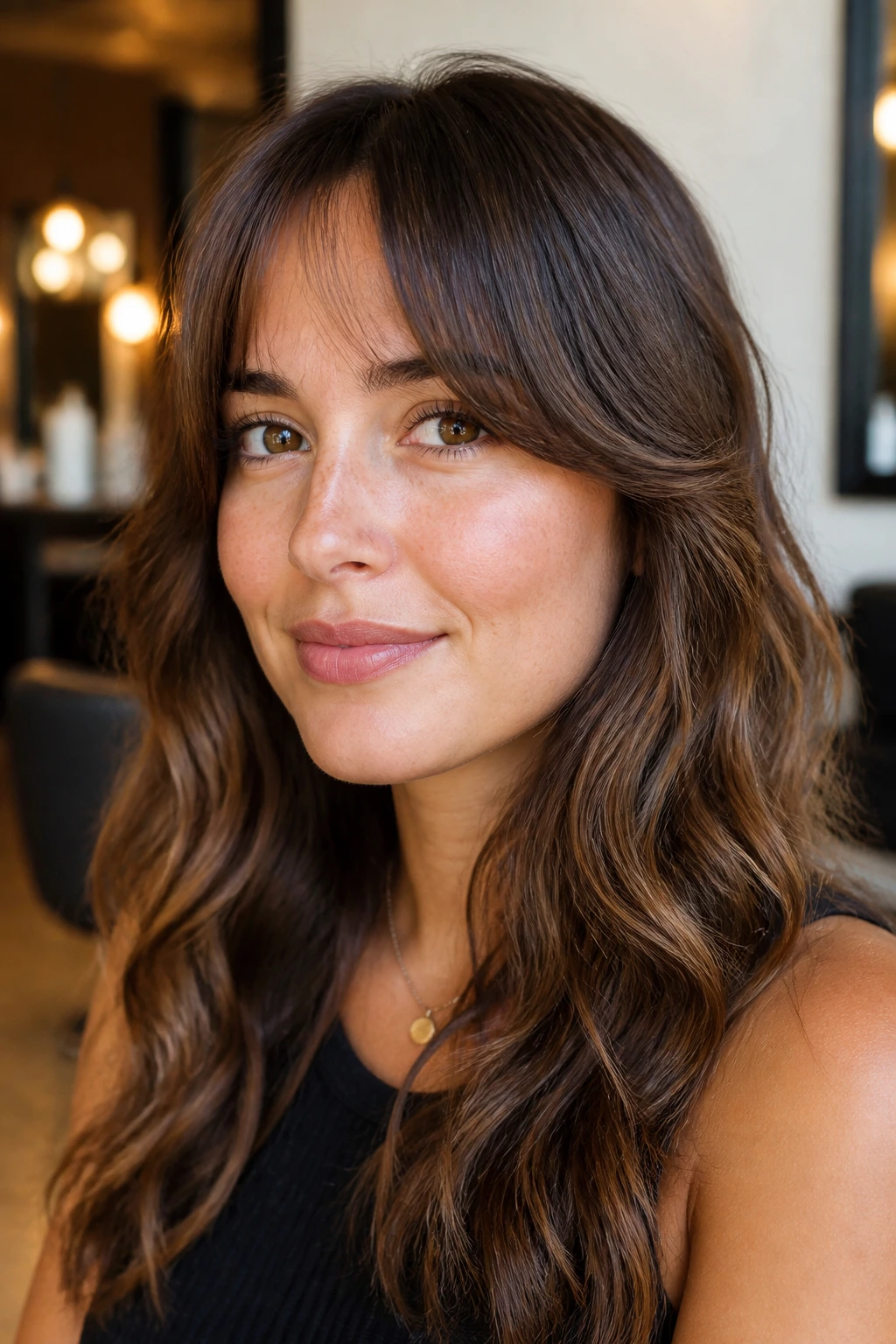
Bring photos, yes, but bring the right kind. Show your stylist bangs that have similar density and wave pattern, not just the same general vibe. A thick, polished blowout fringe on straight hair will not translate cleanly to looser texture. The cut may, but the maintenance won’t.
Say what you need in plain language. Ask for a center that stays longer than the brows if your hair shrinks, and ask for the sides to blend into your face-framing layers instead of stopping abruptly at the cheek. If you wear a side part on most days, mention that before scissors touch anything.
One more thing. Ask to see the bangs as they dry. A good stylist will check the fall before making the final snip. That half-minute can spare you weeks of irritation.
How to Style Curtain Bangs on a Busy Morning
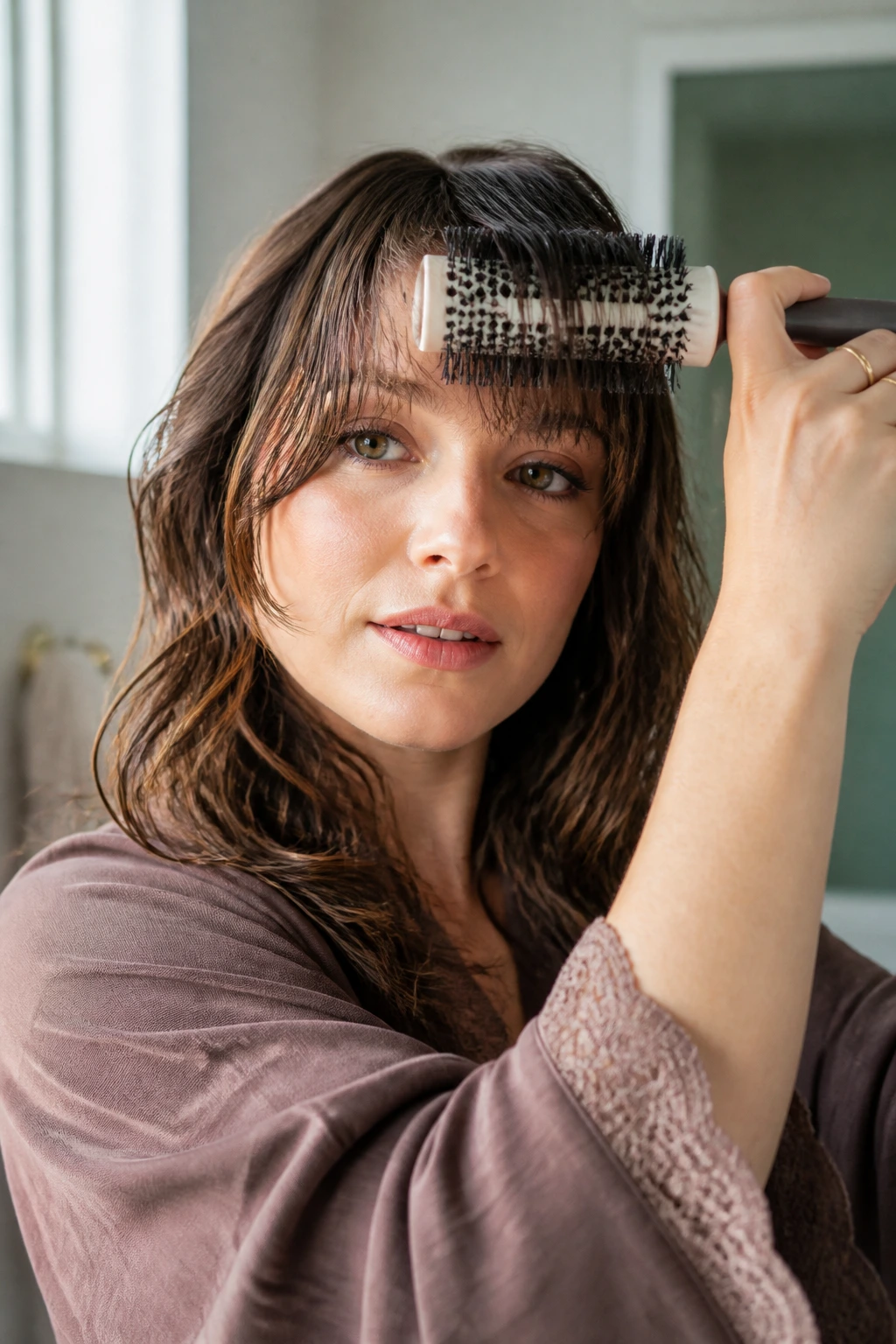
A lot of bad bang advice starts with the wrong assumption: that the front needs a full salon finish every day. It doesn’t. What it needs is direction.
Start with damp bangs, not soaking wet ones. A little moisture gives you control without making the front sit heavy for ages. Aim the dryer at the roots first, then pull the hair side to side with a round brush or your fingers until the center lies where you want the split. If you want a softer finish, let the ends air-dry the rest of the way. If you want a sleeker line, spend another minute smoothing the bend.
Root lift first. Always. If the base collapses, the whole fringe collapses.
For second-day bangs, dry shampoo at the roots and a quick blast of air are often enough. If the ends have gone strange, mist them lightly, reshape, and stop touching them. Overworking the front is how waves turn frizzy by noon.
Common Mistakes That Flatten Wavy Curtain Bangs
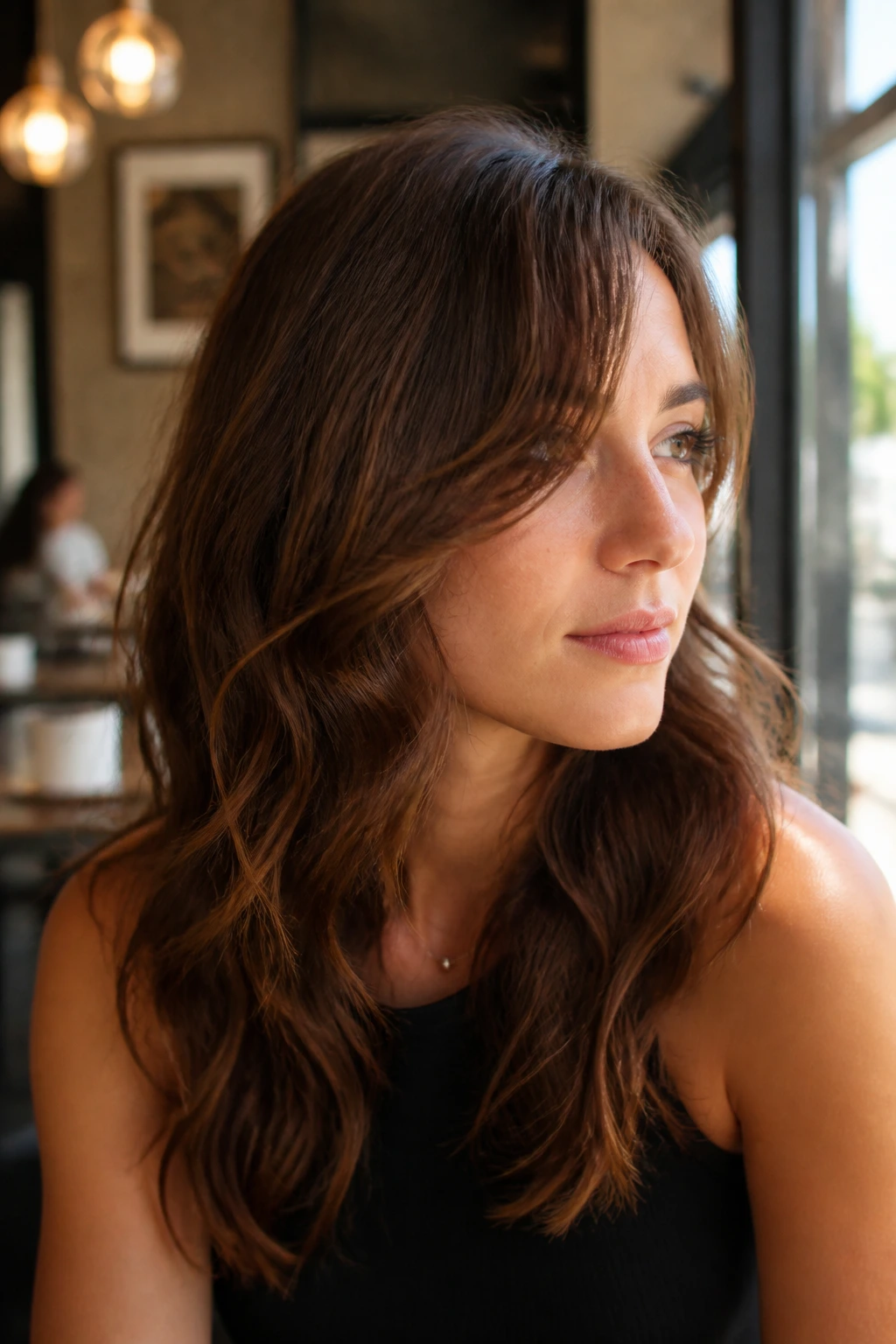
The biggest mistake is cutting the center too short. On wavy hair, that usually means the bangs spring upward and separate in a way that feels accidental. The fix is boring but important: leave the center longer, especially if your hair is coarse or springy.
Another problem is too much weight through the middle. A dense center with blunt sides can sit like a shelf. It may look fine when freshly cut, then feel stiff every time it dries. Point-cutting and tapering the edges helps the fringe move instead of sitting there.
Heavy creams are a sneaky issue, too. They can make the front look oily by midday, especially on skin that gets warm quickly. Use lighter products near the roots and save richer creams for the lengths.
And then there’s the parting problem. If your cowlick pushes the hair one way and you insist on a strict center part, the bangs will keep fighting you. A slight offset is not a failure. It’s a fix.
Ways to Change the Shape Without Recutting It
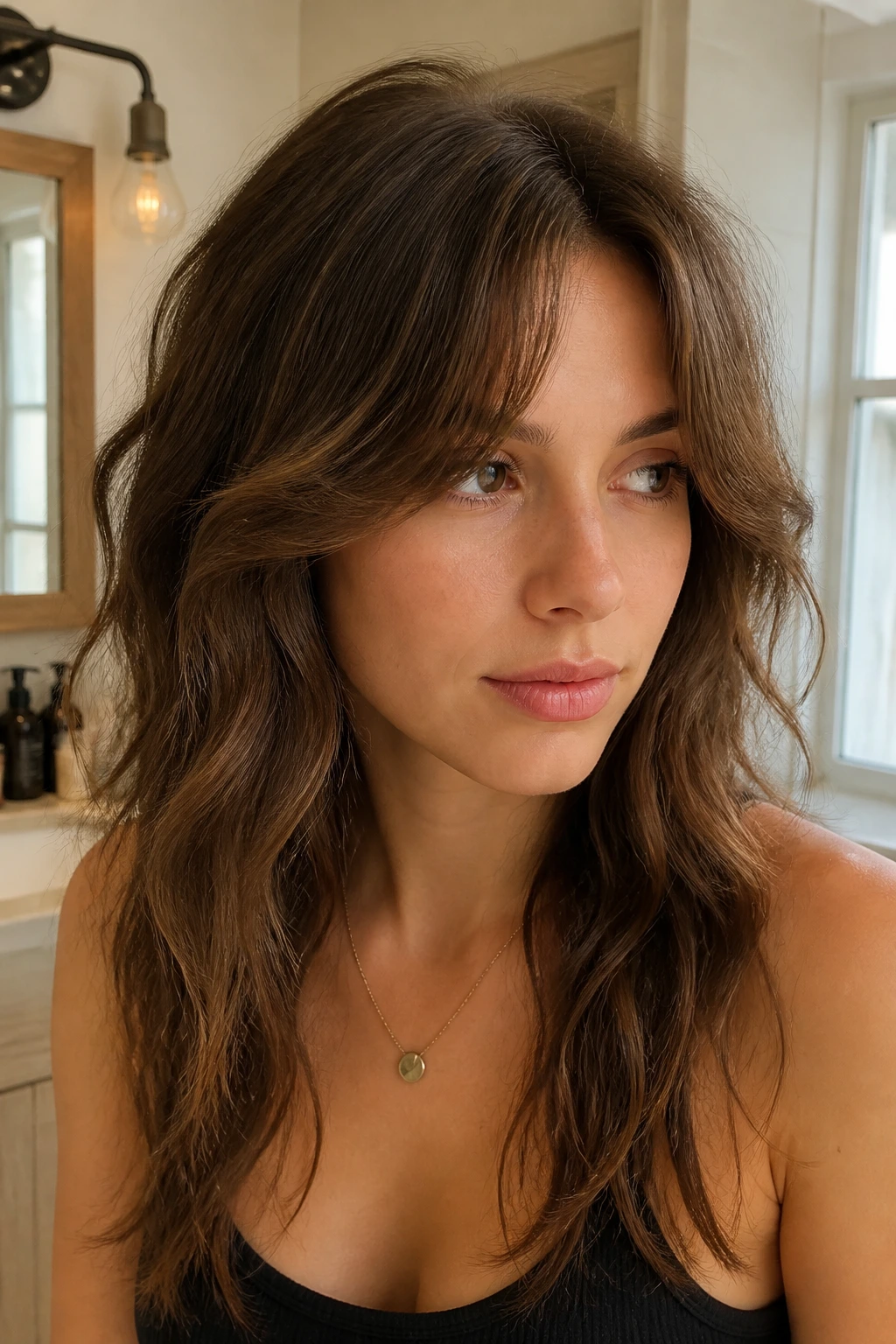
Soft sweep: Shift the center part half an inch to one side and dry the fringe in that direction. You keep the curtain shape, but it looks less rigid.
Air-dry bend: Scrunch a little mousse into damp front pieces and twist each side once before letting it dry. This gives a softer, more lived-in finish that works well for beachy waves.
Blowout polish: Use a round brush and direct the bangs away from the face, then let the ends curve back in. The shape gets smoother, cleaner, and a little more glamorous.
Pin-and-set reset: Clip each side of the fringe back from the face for 10 to 15 minutes after blow-drying. The set helps the bend hold when the hair wants to fall flat.
Textured shag finish: Add a mist of texture spray and separate the front pieces with your fingers. This turns a smoother curtain into something choppier and more casual without a haircut.
Keeping Them Fresh Between Salon Visits
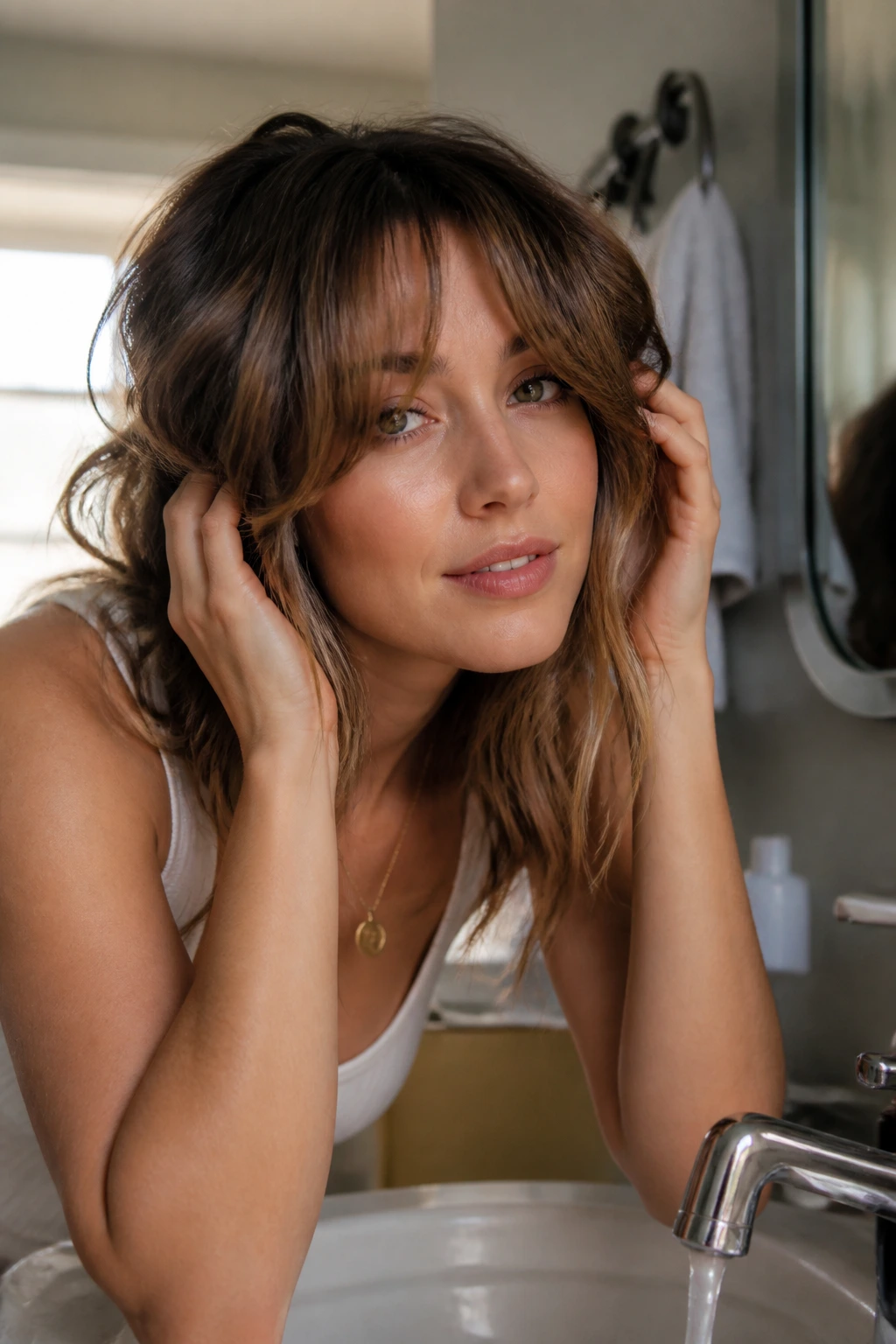
Curtain bangs usually need attention sooner than the rest of the haircut. The front grows into the eyes first, and waves tend to show that shift faster because the shape depends on movement. A trim every 5 to 8 weeks keeps the center from dropping too low, though some people can stretch it longer if the fringe is already built for grow-out.
The forehead zone gets oily faster than the lengths, so bangs often need more frequent washing or at least a quick rinse at the sink. If that sounds annoying, it is. Still, a clean front makes a huge difference. A little dry shampoo can help, but if you pile it on every day, the texture starts to feel dusty.
For between-wash fixes, wet the fringe lightly, blow-dry the roots back into place, and stop before the ends overheat. Bangs are small. They do not need a full routine every time. They need direction.
Additional Ways to Make the Shape Work for You
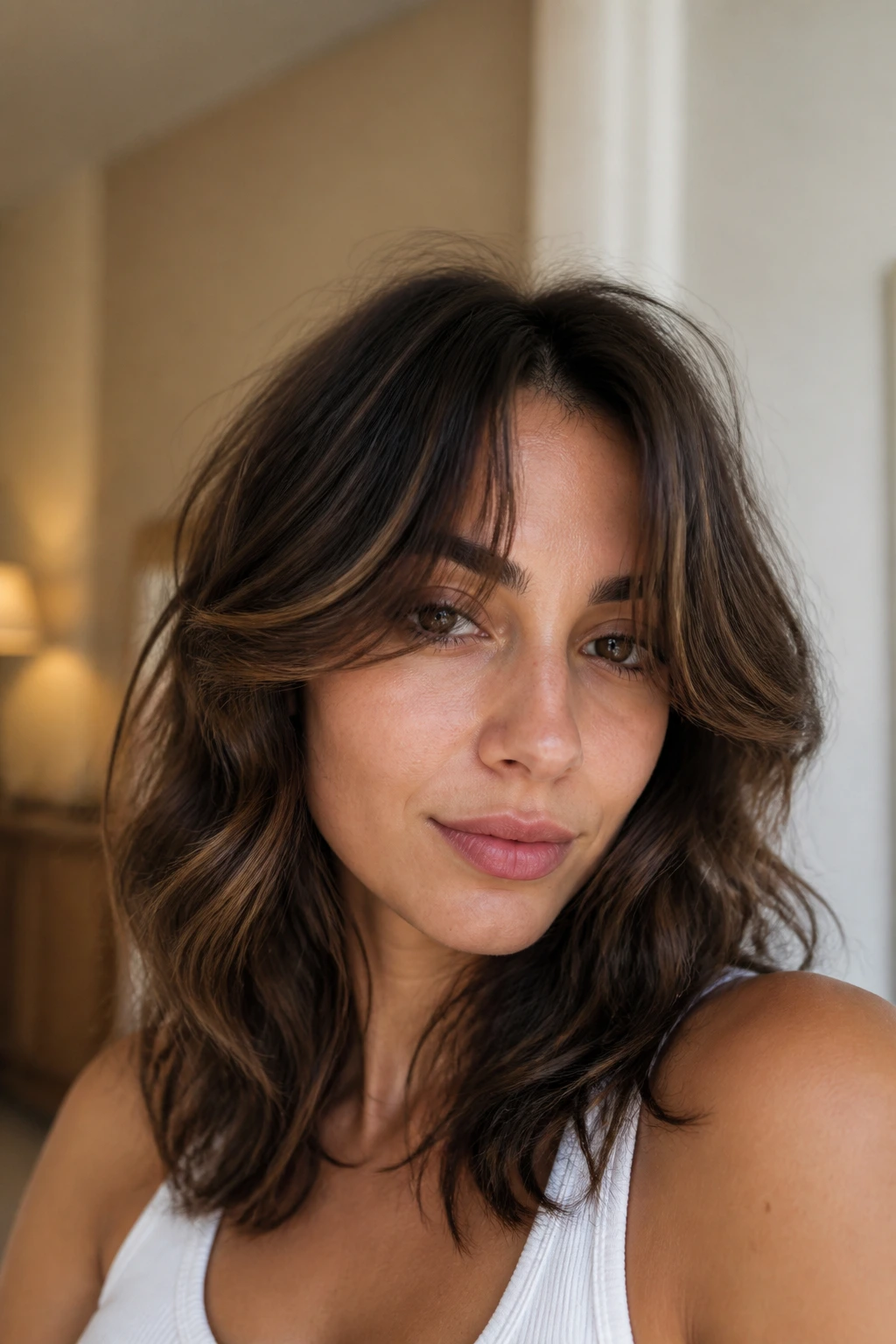
Shape Boost: If the front sits too flat, dry the bangs in the opposite direction for 20 to 30 seconds first, then sweep them back into the split. That tiny reset adds lift at the root.
Texture Control: If your waves frizz easily, use a pea-sized amount of mousse on damp bangs and keep heavy oil away from the forehead. The goal is controlled bend, not slickness.
Personalization: Want a softer look? Keep the sides longer and the center only slightly shorter. Want more frame? Shorten the center a touch and let the sides angle toward the cheekbones. Small changes make a big difference here.
Salon Shortcut: Ask for point-cut ends and a little internal weight removal rather than a blunt cut. That keeps the fringe from feeling boxy the second it dries.
Variations and Adaptations to Try
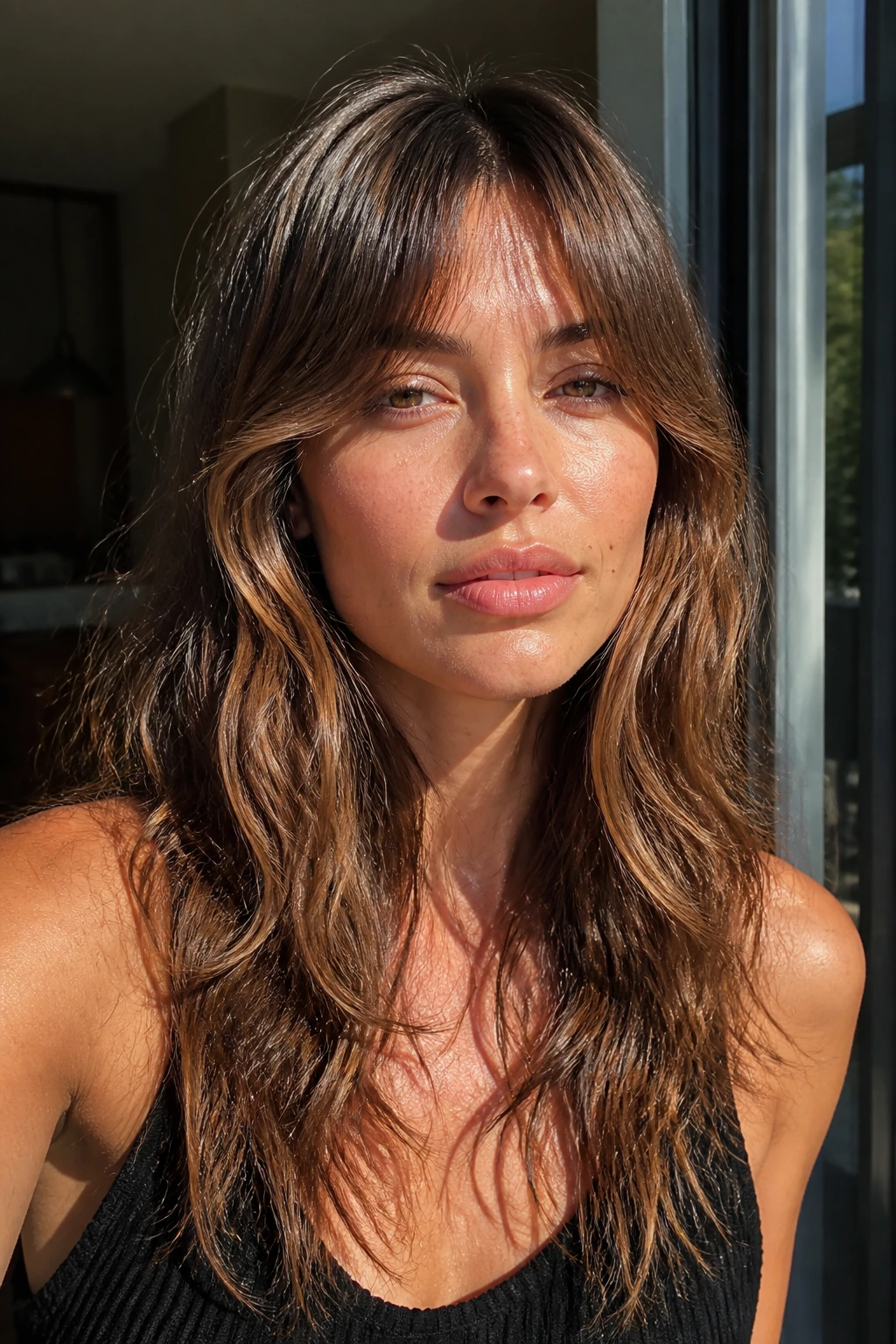
The Air-Dried Curtain: Ask for a slightly longer center and softer taper through the sides. This version is cut to look good with barely any styling, which makes it a smart choice if you live in mousse and finger-combing.
The Polished Blowout Fringe: Keep the center a little shorter and the temples more blended so a round brush can lift everything away from the face. This one has a smoother finish and suits people who like the front to look intentionally styled.
The Shagged-Out Split: Add more layering through the front and let the ends stay piecey. It fits thicker waves that want texture and movement instead of smoothness.
The Off-Center Curtain: Shift the part a little to one side and keep one front section fuller. This is useful for stubborn cowlicks or for anyone who prefers a less symmetrical frame.
The Grow-Out Version: Start longer than you think and let the sides stay well below the cheekbone. It keeps the haircut looking neat even as the bangs drift into layers.
Questions People Ask About Curtain Bangs on Wavy Hair

Do curtain bangs work on every wave pattern?
Not every wave pattern wants the same length or density, but most can wear some version of a curtain fringe. Loose waves usually handle shorter centers well, while coarse or springy waves tend to do better with more length and taper.
How short should curtain bangs be on wavy hair?
Longer than you’d use on straight hair. A center that lands around the brows or slightly below usually gives enough room for the wave to settle without springing too high.
Can I air-dry curtain bangs?
Yes, though they usually look better if you guide the roots for a minute first. Air-dried bangs can work beautifully when they’re cut with enough length and lightness to bend on their own.
How often do they need a trim?
Most people end up trimming the front every 5 to 8 weeks. If you want to keep the shape crisp, err toward the shorter end of that range.
Will curtain bangs make my face look wider?
They can, if the sides are too short and too full. Longer side pieces usually soften that effect and pull the eye down and outward instead of adding width at the top.
What if my bangs split too far apart?
That usually means the front is too heavy at the center or your part is fighting the cut. A little root lift, a smaller center section, or a slight part shift can fix it.
Can I grow them out without a weird stage?
Yes, and that’s one of the reasons people like this style. As they get longer, they start behaving like face-framing layers, which makes the grow-out feel less abrupt.
Should I trim them at home?
You can dust the ends if you know what you’re doing, but a dry trim from a stylist is safer. Wavy bangs shrink in ways that are hard to predict when you’re holding kitchen scissors and hoping for the best.
A Fringe That Moves With You
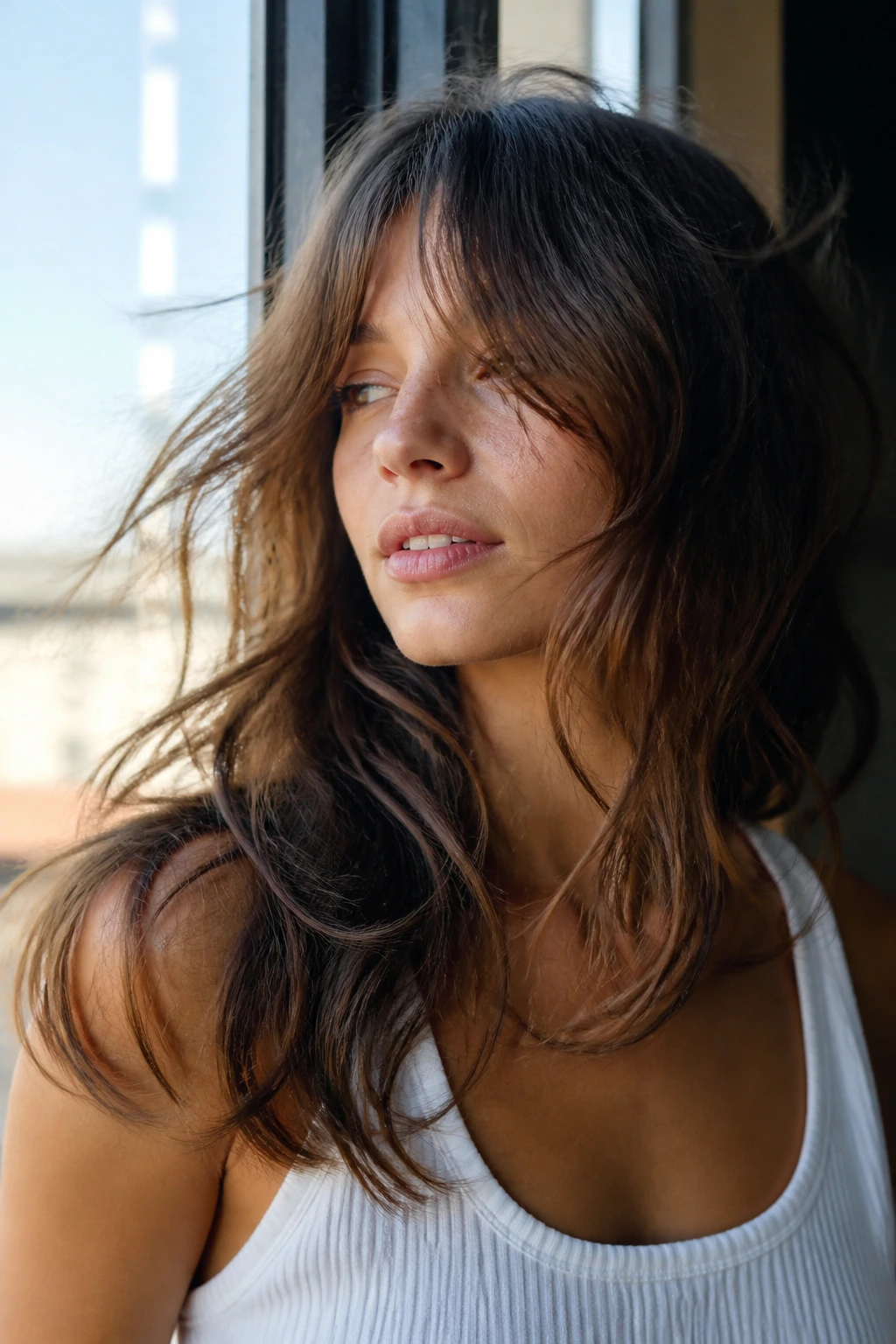
The best curtain bang styles for wavy hair do not fight the bend. They use it. That’s the whole appeal, really: a fringe that can look soft when you’re in a hurry, then a little more finished when you take five minutes and a round brush to it.
If you want the safest place to start, choose one of the longer, cheekbone-skimming versions and keep the center a touch longer than you think you need. Waves reward patience. They also punish overcutting. Get the length right, and the rest gets easier every time you wash, dry, and wear it out the door.
