



A curly fringe can change a round face fast — but only if the cut respects shrinkage. Chop the bangs like they’re straight hair and they spring up into a little shelf. Leave room for the curl pattern, and the whole shape starts working in your favor: more line through the center, less width at the cheeks, and a face that looks a touch longer without looking forced.
That’s the part most people miss. Round faces don’t need to be hidden; they need direction. The best curly hair with bangs for round faces builds that direction with diagonal pieces, temple length, and a little air around the forehead instead of a heavy wall of curls across the widest part of the face.
The styles below cover soft curtain pieces, shags, bobs, pixies, afro shapes, and a few bolder cuts for people who like their hair to have some attitude. Some are easy to air-dry. Some need a diffuser and five quiet minutes. Some look better with a little mess in them — and that’s not a flaw. That’s the point.
Why This Collection Works for Round Faces
-
It uses vertical lines on purpose: Curls that fall longer through the center or at the temples pull the eye down instead of out, which helps a round face look a little more elongated.
-
It gives the forehead room to breathe: Bangs that split, feather, or open at the middle keep the front of the face from turning into one solid block of hair.
-
It respects curl shrinkage: A half-inch trim on damp curls can become an inch and a half of bounce after drying, so these styles are built with that spring in mind.
-
It works with different curl densities: Loose waves, ringlets, and tight coils each get a shape that keeps the fringe soft instead of bulky.
-
It leaves room for glasses, earrings, and real life: These cuts don’t all demand full glam to make sense; several look better when they’re a little imperfect.
1. Center-Part Curtain Bangs on Mid-Length Curls
Curtain bangs are the easiest place to start if you want bang shape without committing to a blunt line. On mid-length curls, they open the forehead right down the middle and drop into the cheek area, which gives a round face more length and less width.
Why It Flatters a Round Face
The trick is the center gap. That small opening breaks up the horizontal line across the forehead, and the longer sides act like soft brackets around the cheeks instead of a shelf across them. Ask for the shortest point to land around the bridge of the nose or just below it when dry; on springy curls, that often means cutting a bit longer than feels safe in the chair.
- Keep the temple pieces longer than the center, usually to cheekbone length or a touch below.
- Ask for face-framing layers that blend into the bangs instead of stopping abruptly.
- Works best when the curl pattern has enough bend to fall forward on its own.
- If your hair puffs wide at the sides, keep the bang width narrow and the sides soft.
My blunt advice: if your curls spring hard, do not let anyone cut curtain bangs at eyebrow length while they’re wet.
2. Long Shag with Cheekbone-Skimming Fringe
A shag gives a round face something blunt bangs never do: built-in movement. The layers break up the width, and the fringe can land at cheekbone level so the front of the face reads longer and leaner.
The reason this cut keeps showing up on curly heads is simple. It looks good even when it’s not “done.” The layers at the crown add lift, the longer ends keep the silhouette from turning into a triangle, and the fringe stays light enough to move.
You want internal removal here, not a pile of short bits on top. Too many short pieces can make the crown frizz up while the ends hang flat. A good shag has shape, not fluff. That difference matters.
What to Ask For
Ask for layers that start high enough to create lift but not so high that the crown gets puffy. The bang pieces should skim the cheekbone or just hit the top of the lip when dry, then curl upward into place. That little extra length is your insurance policy.
3. Side-Swept Bangs on a Shoulder-Length Lob
Side-swept bangs are the low-drama answer when you want the face to look a little longer without making the front of the hair too busy. On a curly lob, the diagonal sweep cuts across the forehead and sends the eye down toward the jaw.
The best version isn’t a stiff comb-over. It’s loose, a little broken up, and long enough to tuck behind the ear when you need it out of the way. That makes it especially useful if you wear glasses or if your curls behave differently from one side to the other.
How to Style It
Part the hair a little off-center, then push the heavier side forward while the opposite side stays softer and shorter. A small clip at the roots while the fringe dries can help train the direction. Once dry, scrunch out any hard cast with dry hands so the bang line doesn’t look rigid.
- Keep the longest sweep grazing the cheek, not stopping at the widest part of the face.
- Great for curl patterns that collapse if the fringe is too short.
- A light mousse at the root helps the side part stay in place.
- The bang can grow out neatly into a front layer.
4. Bottleneck Bangs on Defined Ringlets
Bottleneck bangs are one of the smartest shapes for a round face because they start narrow in the center and widen slowly as they move outward. On defined ringlets, that shape looks neat without getting severe.
I like this cut because it gives you control. The center opens the face, the sides soften the cheeks, and the fringe never turns into one heavy curtain. If your curls are springy, the narrow center can still land at the nose or upper lip when dry, which keeps the finished shape from floating up too high.
Ask the stylist to cut the center a little longer than they think. Seriously. Ringlets do their own math.
A Good Bottleneck Bang Has These Traits
- Shorter center pieces that don’t touch the lashes
- Longer sides that melt into the first face-framing layer
- Enough spacing between curls that the fringe doesn’t form one solid block
- A soft finish, not a hard arc
5. Curly Pixie with Long Feathered Fringe
A curly pixie can work on a round face if the top is left long enough to create height and the fringe is feathered, not chopped blunt. Short sides expose the jawline; the longer front gives the eye somewhere to travel.
This is a cut for people who like a little edge and don’t want to spend forever styling. The shape depends on contrast. If the sides are too full, the face looks wider. If the fringe is too short, you lose the length you were trying to create. So the sweet spot is a long front panel that bends over the forehead and tapers at the temples.
Keep the top a couple of inches longer than the sides, and let the curls fall in pieces. A tiny amount of gel on the fringe is usually enough. More than that, and the front starts behaving like a helmet, which is the opposite of what you want.
6. Deva Cut with Face-Framing Bangs
A Deva-style cut is built around the curl pattern instead of fighting it, which is why it makes so much sense for curly hair with bangs for round faces. Each curl is shaped in its natural state, so the fringe and the face-framing pieces fall where they should after drying.
The real win here is precision. Round faces need the bangs to be soft around the cheeks and slightly longer at the temples, and curl-by-curl cutting makes that easier to control. It also helps when one side grows faster than the other — which happens more often than people admit.
Why Dry Cutting Matters
Dry cutting shows the true curl spring. A stylist can see how far a piece bounces, how wide it sits, and where it pulls the eye. That means fewer surprises after wash day. If you’ve ever left a salon with bangs that looked fine when wet and suspiciously short by dinner, you already know why this matters.
7. Wolf Cut with Piecey, Airy Fringe
The wolf cut is for someone who wants movement, lift, and a little attitude in the same haircut. On a round face, the choppy layers keep the silhouette from widening out, while the fringe stays piecey instead of heavy.
This cut works because it builds texture at the crown and keeps the ends longer and looser. That upward shape gives the face a little more length, and the bangs don’t sit in one thick strip across the forehead. They break up. They move. They behave like they have somewhere to be.
Best for People Who Want Less Polish
- Strong curl pattern with natural separation
- Medium to thick density
- A willingness to use diffuser heat on the crown
- A preference for rough, lived-in texture over smooth, exact lines
If you like hair that looks better after you’ve been out in it for an hour, this is your lane.
8. Halo Afro with Curved Bangs
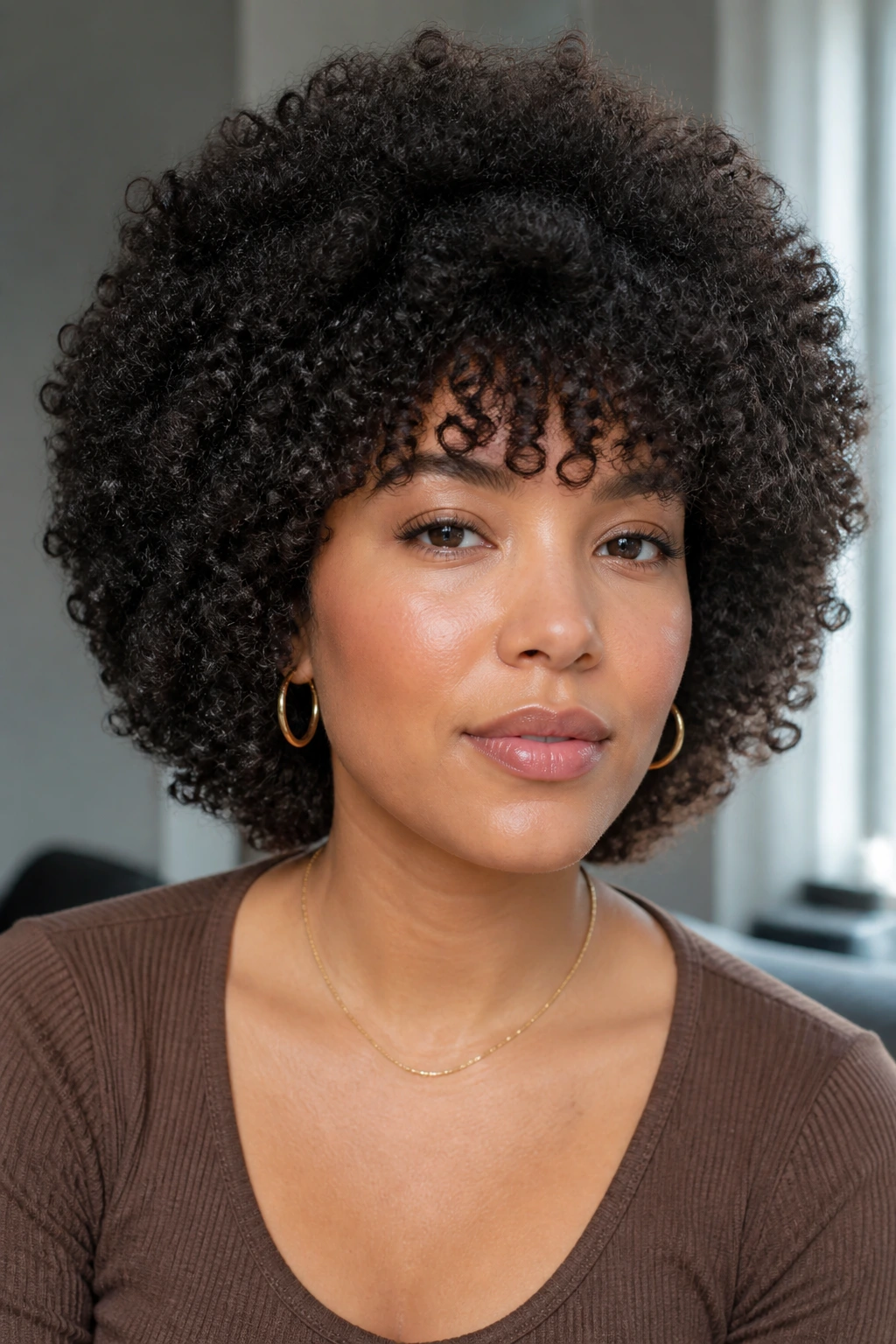
Can a fuller shape flatter a round face? Absolutely — if the silhouette goes up before it goes out. A halo afro with curved bangs does exactly that.
The shape should read like a soft dome with lift at the crown and a curve around the forehead, not a round puff that sits at cheek level. The bangs can be shaped slightly shorter in the center and longer at the temples so the front doesn’t lock into one wide line. That tiny difference matters more than people think.
What I like here is the confidence of it. The cut doesn’t hide the face; it frames it with intention. The bangs should feel airy, not boxed in, and the side shape should leave some open space near the cheeks so the hair doesn’t crowd the widest part of the face.
9. Curly Bob with Broken-Up Brow Bangs

A bob that hits around the jaw can be very good on a round face, but only if the bangs don’t make the top half feel heavy. Broken-up brow bangs solve that. They give you the fringe effect without the hard line.
This is the kind of bob that looks expensive when it’s cut well and awkward when it isn’t. The trick is separation. You want little gaps between the curls so the forehead peeks through. That keeps the cut from reading as one solid helmet shape.
- Keep the bob length at or just below the jawline.
- Ask for fringe pieces that vary slightly in length.
- Avoid a thick, straight-across bang line.
- Let the front curls fall in small clumps instead of brushing them flat.
A bob like this is sharp, but not severe. That’s the whole charm.
10. Long Layered Curls with Grown-Out Bangs

This is the style for people who like bangs but do not want a standing appointment with the salon every few weeks. The bangs start as a fringe and slowly dissolve into long front layers, which is useful if you want softness around a round face without a hard maintenance schedule.
The grown-out fringe works because it keeps the front open while the rest of the hair stays long and fluid. There’s no abrupt stop point around the cheeks. Instead, the bangs become part of the layer system, and that keeps the shape light.
Quick Shape Facts
- Best when the shortest piece lands around the cheekbone
- Easy to tuck behind the ear on day two
- Works well with off-center parts
- Gives you the option to pin the fringe back without fighting the haircut
11. High-Volume Top Layers with Temple Bangs
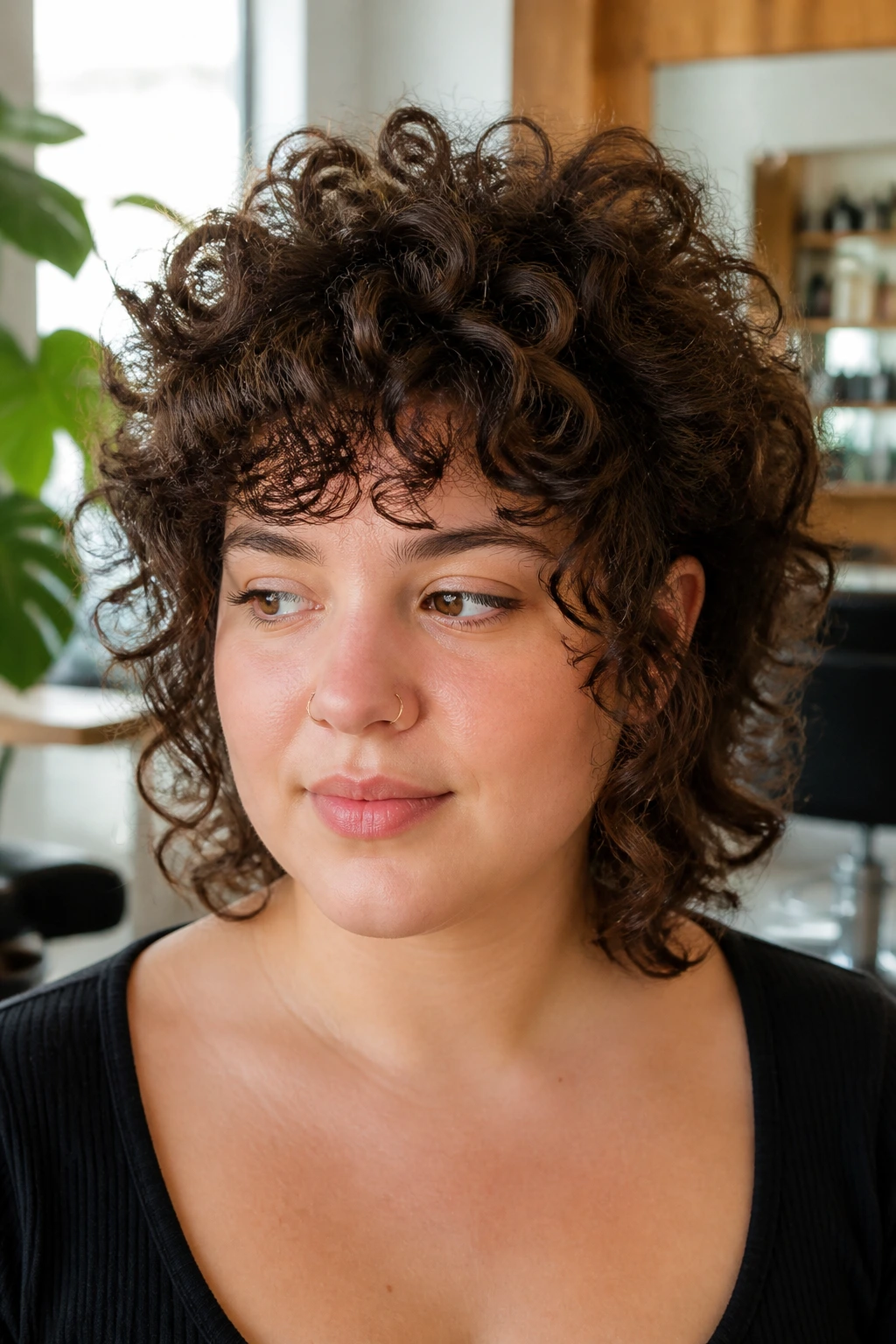
If your hair tends to go flat at the roots, this shape is worth a serious look. The crown stays full, which adds height, and the temple bangs keep the sides from getting too wide around the cheeks.
I like this cut on round faces that also have short necks or fuller cheeks, because the visual lift changes the proportions fast. The top layers should rise, not spread. The temple pieces should sit longer and softer than the center fringe so the forehead doesn’t get boxed in.
This is not a quiet haircut. It has personality. But the personality is useful — it creates a strong top line and a cleaner frame around the face. If the roots are clipped up while drying, the whole shape gets a little more architecture.
12. Midi Cut with Diagonal Bangs

A diagonal bang line does more work than people give it credit for. On a midi cut, the angle draws the eye from one side of the forehead down toward the jaw, which is exactly the kind of movement a round face likes.
The Diagonal Line Does the Heavy Lifting
The best part is that this shape doesn’t have to be dramatic. Even a mild side angle can soften the width of the face. You want one side of the fringe to start shorter near the brow, then drift longer as it approaches the cheek. That slope keeps the front from looking flat or square.
I’d choose this over a blunt fringe if your curls are medium density and you want a little control without turning the haircut into a project. The diagonal gives you softness on the days you air-dry and enough shape on the days you diffuse.
13. Soft Micro-Fringe Coil Cut
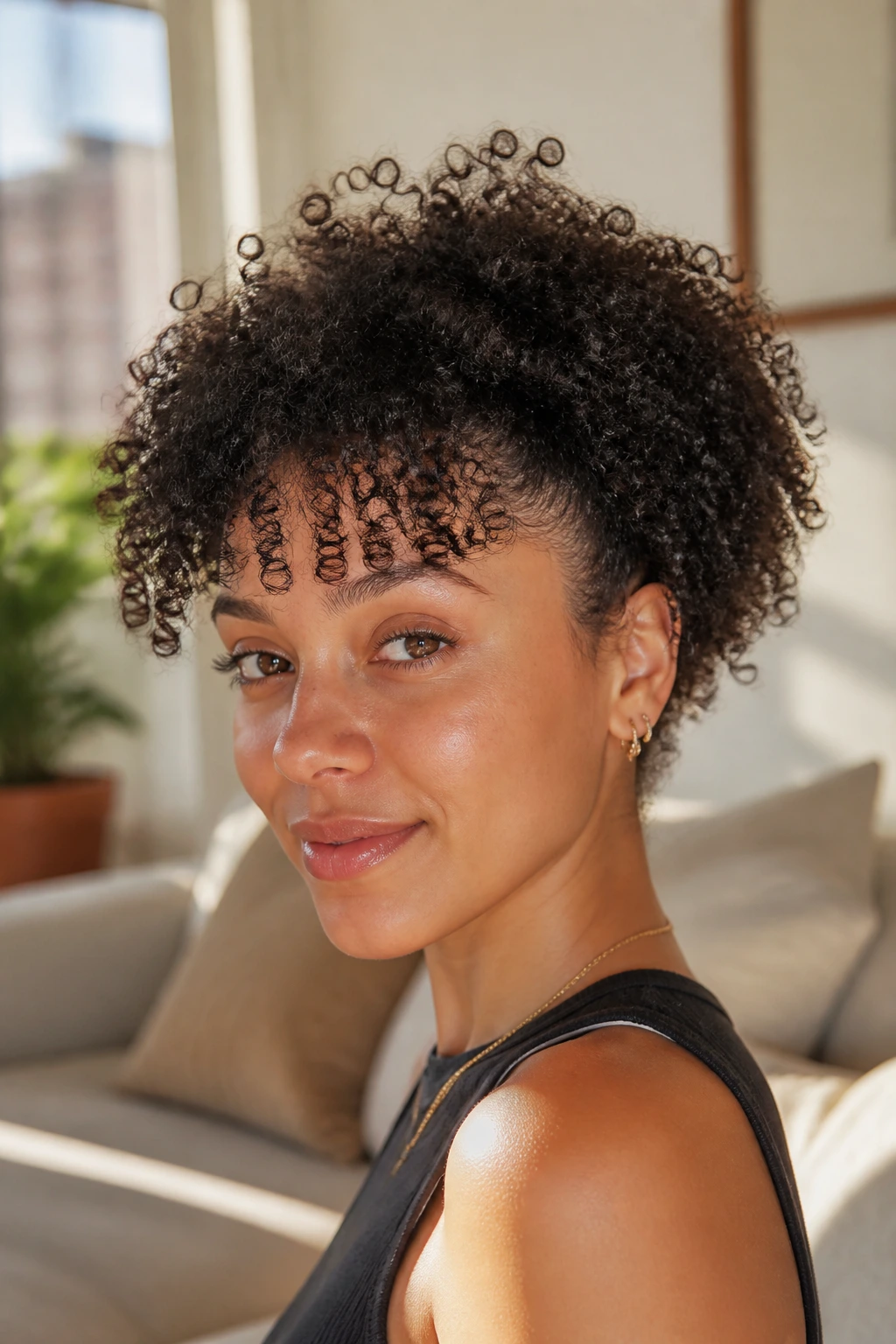
Micro bangs on a round face sound risky, and if they’re cut too dense or too straight, they are. But on tight coils, a soft micro-fringe can look crisp and modern when the rest of the cut has height and length.
The key is that the fringe must stay airy. Not flat, not heavy, not dense enough to cover the forehead like a curtain. A soft micro-fringe should show some skin between the curls and keep the edges irregular. That irregularity is what stops it from widening the face.
If the curl pattern is tight enough to shrink a lot, leave more length than you think in the center. The fringe can sit high above the brows, but the side shape should still reach out toward the temples so the cut doesn’t feel chopped off.
Best When
- The crown has lift
- The face is more oval-round than fully circular
- You want a bold front shape without long bangs
- You’re fine with trims every few weeks
14. Tapered Cut with Front Curl Accent
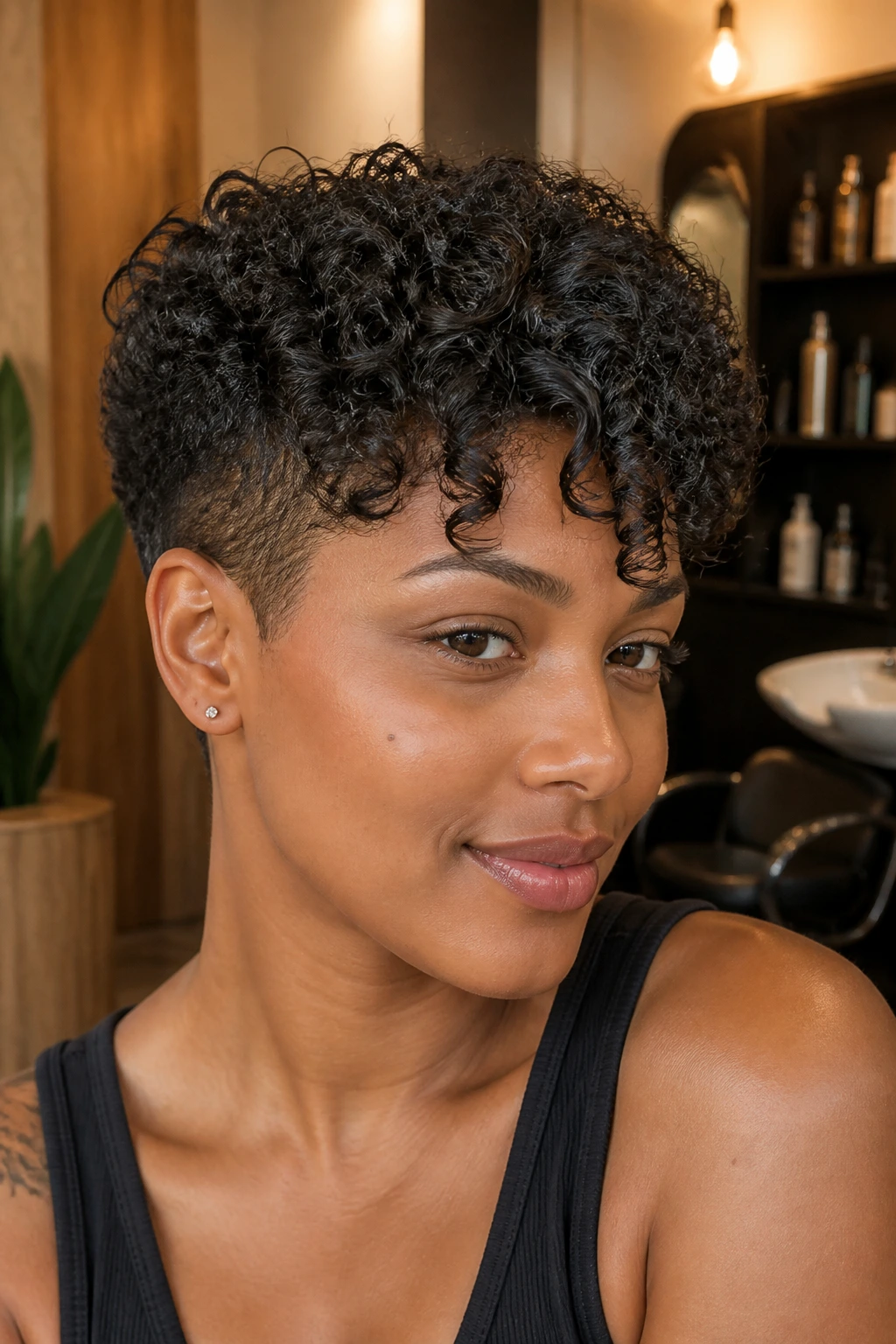
This cut is all about contrast. The sides and back taper down close enough to show structure, while one or two curls at the front fall longer and softer over the forehead.
That front accent gives a round face a diagonal line without making the whole haircut look busy. It also keeps the face open. Instead of a block of bangs, you get a single curl or small cluster of curls that land where they should — often around the brow or upper cheek.
- Ask for the front to be left slightly longer than the rest of the fringe.
- Keep the taper smooth so the sides don’t puff outward.
- Use a tiny amount of cream on the front pieces only.
- Let one curl lead; don’t force the front to mirror perfectly.
This is a sharp cut with a soft move built into it.
15. Shoulder-Length Spiral Cut with Split Fringe
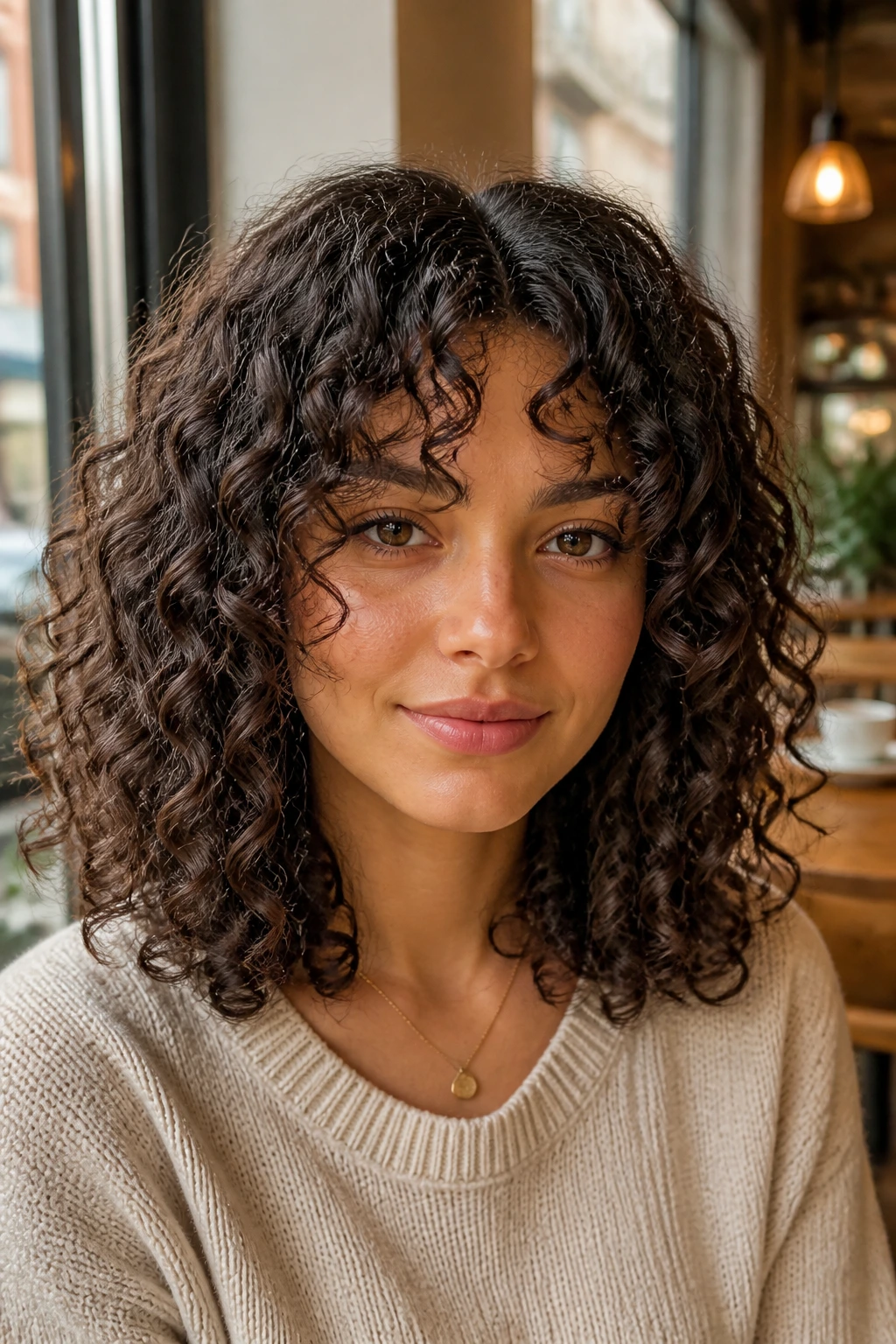
A split fringe is like curtain bangs with a little more looseness in the middle. Instead of two equal halves, the front opens irregularly and lets the spirals fall where they want. On a round face, that open center is a gift.
The split keeps the forehead from looking crowded, and the shoulder-length cut gives the face a long frame that lands below the cheekbones. That combination helps the features look a little leaner without taking away the softness that curly hair brings.
Why the Split Helps
A perfectly even fringe can read too boxy on curls. A split fringe breaks that line. It also plays well with side parts, which means you can change the shape without changing the cut. If one side of your curl pattern is stronger than the other, this version makes that difference work for you instead of against you.
16. Shullet with Sweeping Bangs
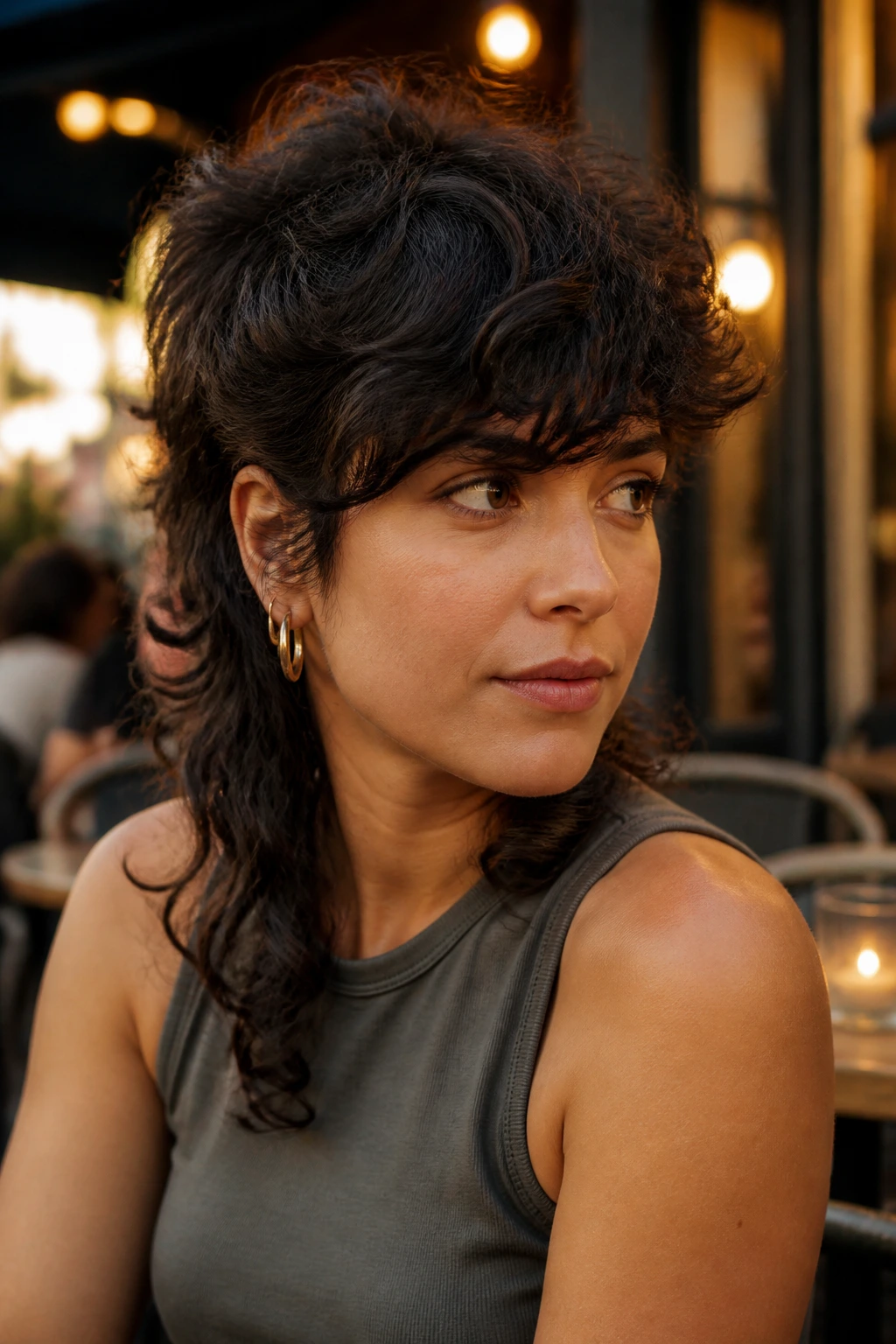
The shullet — shag in front, mullet length in back — is for people who want movement and edge in the same breath. On a round face, the sweeping bangs and longer back length create a strong vertical line that keeps the silhouette from turning too circular.
This is not a shy haircut. The front needs to be soft and swept, not blunt, and the crown should have enough lift to keep the whole shape alive. The beauty of the shullet is that it gives you a lot of shape without making the sides bulky. That’s a win if your curls naturally expand at cheek level.
You either like this look or you don’t. There’s not much middle ground. But if you want something with personality that still respects a round face, it’s a very strong choice.
17. Asymmetrical Curly Crop with a Long Bang Panel
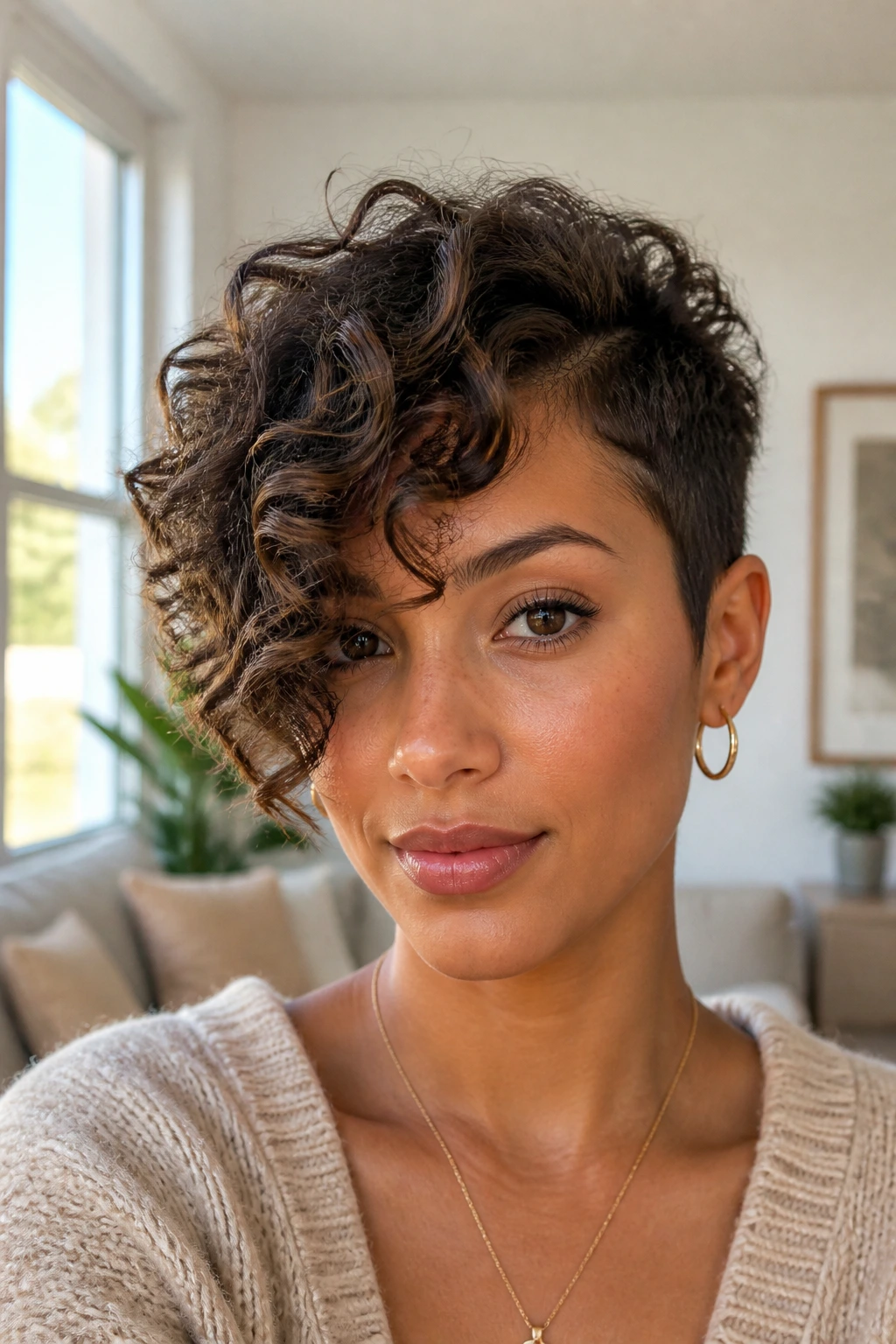
An asymmetrical crop is one of the fastest ways to break up roundness, because the eye has to travel. One side stays shorter, the other carries a longer bang panel that curves over the forehead or cheek.
The long panel is the important part. It creates a diagonal line across the face, which adds length without needing a lot of hair. On curls, that panel should be cut longer than a stylist might expect, because the spring can pull it up by an inch or more.
I’d call this the fashion-forward answer for anyone who wants a short cut but doesn’t want the face to look broader. Keep the asymmetry obvious. If both sides end up nearly even, you lose the whole effect.
How Curly Hair With Bangs for Round Faces Changes the Silhouette
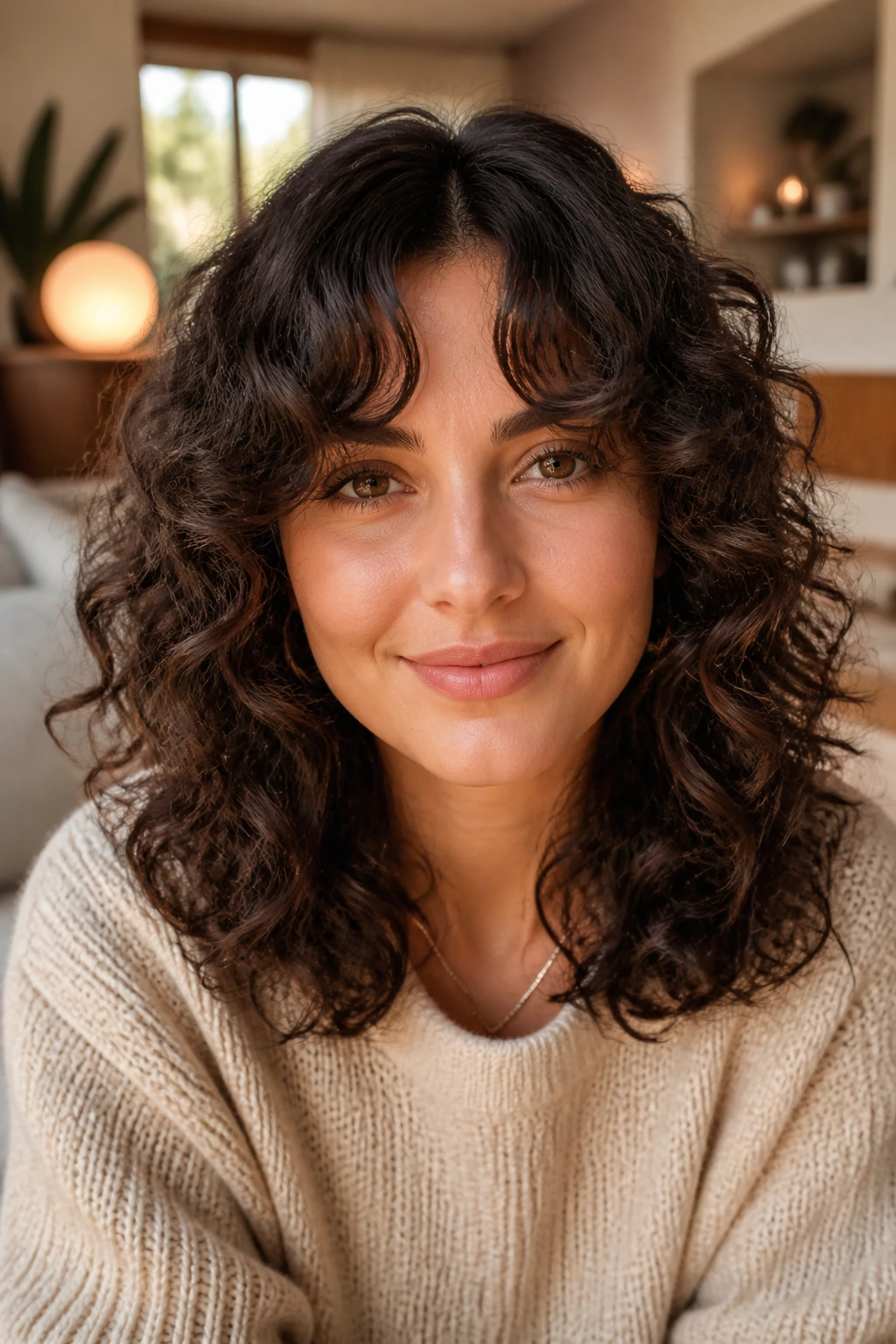
Round faces usually read widest around the cheeks, so the haircut has to create a little more structure above and below that area. Curls already bring softness. The job of the bangs is to add direction.
That direction comes from three places: a center opening, longer temple pieces, and lift at the crown. A fringe that hangs straight across the forehead can make the face feel shorter and wider. A fringe that breaks in the middle, curves at the sides, or starts slightly below the brows does the opposite. It nudges the eye vertically.
Shrinkage changes everything here. Curly bangs almost never settle where they look like they’ll settle when wet, which is why dry cutting or curl-by-curl shaping helps so much. If the shortest point is supposed to land at the brow, a curl pattern with a lot of spring may need the cut line another half-inch to an inch longer. Tight coils may need even more.
The other piece people ignore is temple length. Temples are not decoration. They are the lines that stop the cut from widening out across the cheeks. When those pieces skim the upper cheek or jaw, the face gets a cleaner outline. When they stop too high, the front can balloon.
The Tools That Make Styling Easier
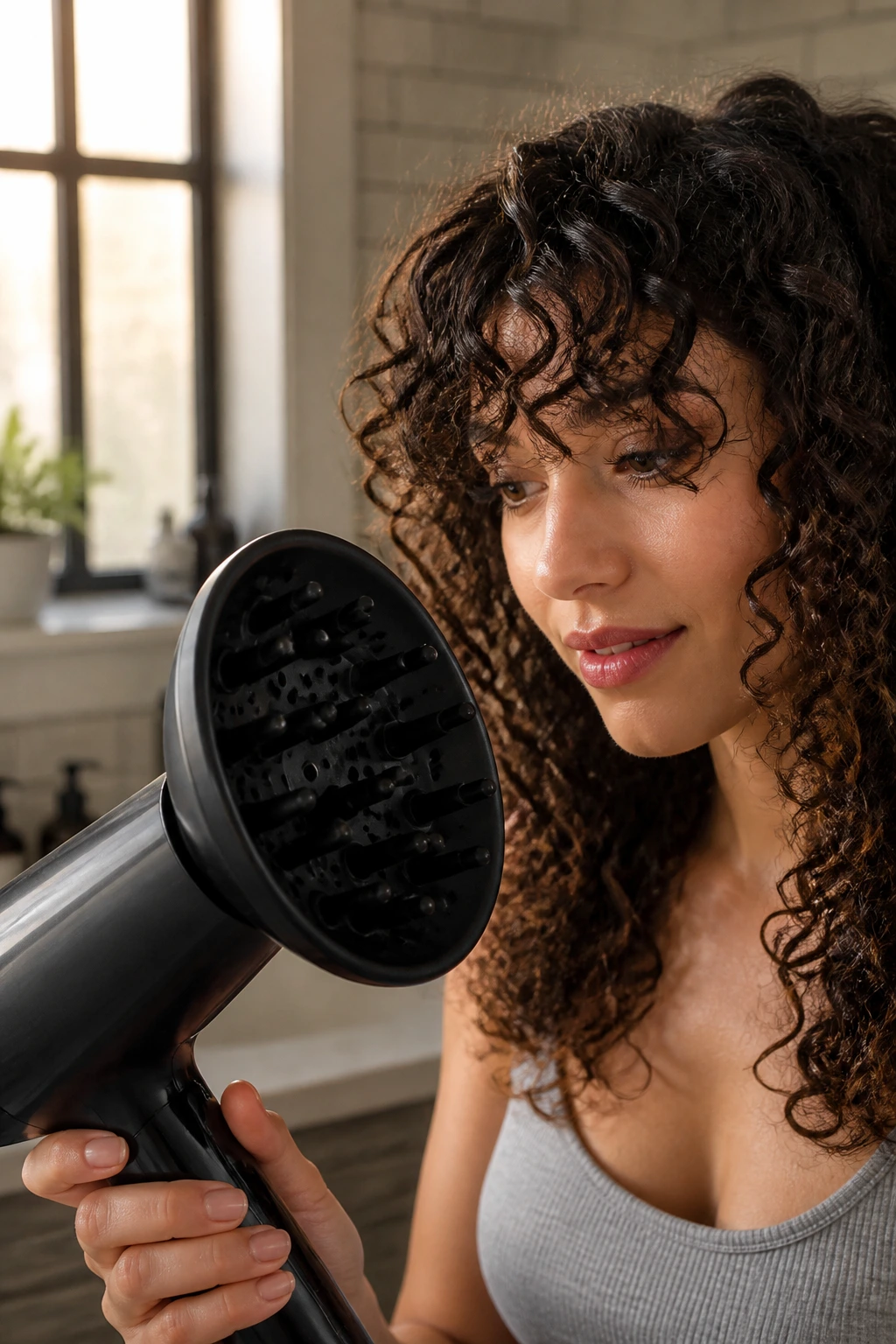
You don’t need a bathroom full of gadgets, but a few good tools make bangs behave a lot better.
- Diffuser attachment: A diffuser dries curls with less blast and keeps the fringe from flying apart; look for one with a deep bowl and adjustable airflow.
- Microfiber towel or cotton T-shirt: These pull out water without roughing up the cuticle the way a rough bath towel can.
- Wide-tooth comb: Good for distributing product without stretching the curl pattern flat.
- Duckbill or root clips: These are handy when you want extra lift at the crown or want to set a bang direction while drying.
- Spray bottle with water: A light mist can reset a fringe that’s gone weird after a long day.
- Lightweight gel or mousse: Gel gives better hold on humid days; mousse is lighter when the hair is fine or easily weighed down.
- Satin pillowcase or bonnet: Bangs flatten fast if they’re sleeping naked on cotton.
- Small mirror with good light: Sounds basic. Isn’t. You’ll use it every time you try to fix one curl that’s sticking out at 4 p.m.
What to Ask for at the Salon Before the Bangs Are Cut
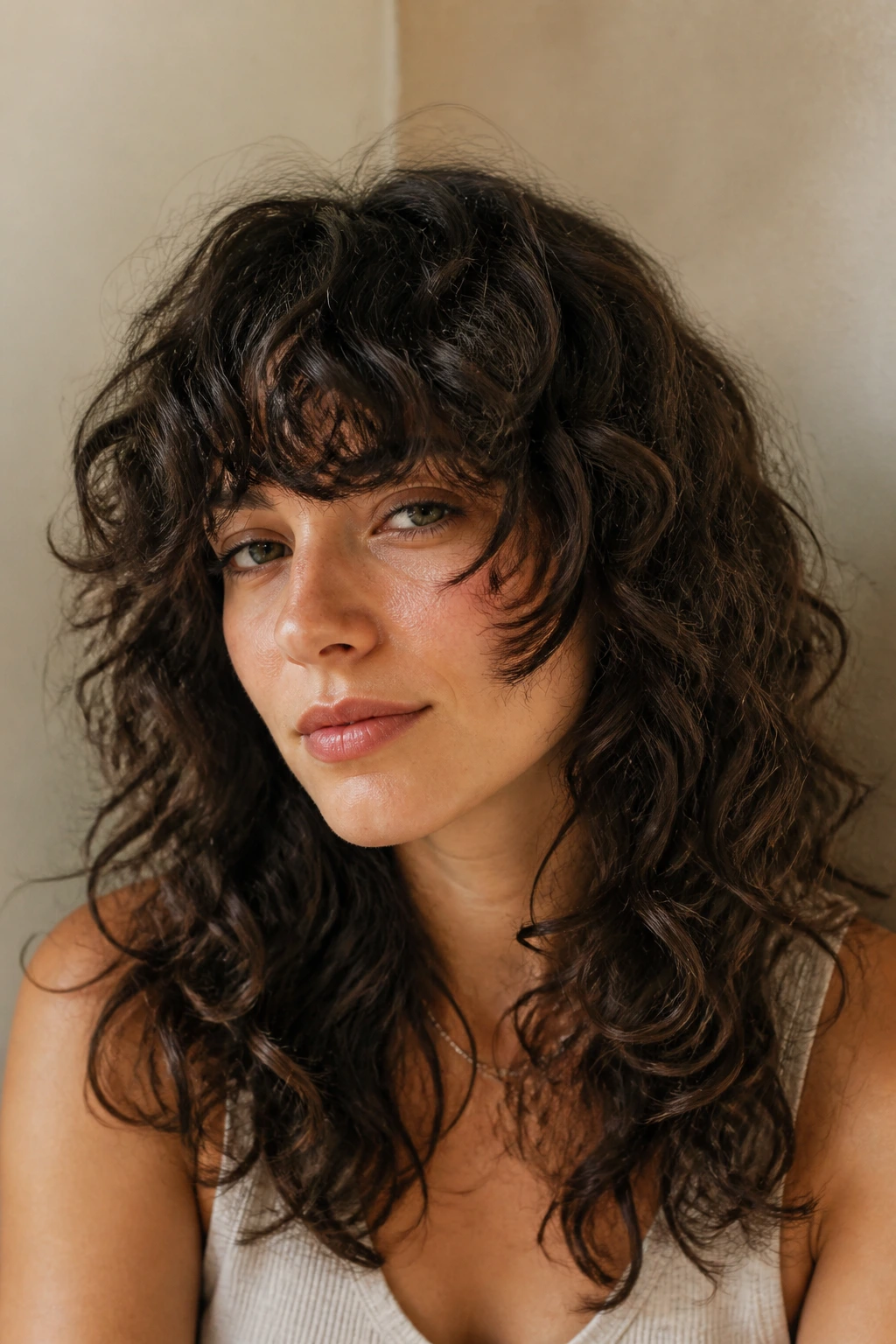
Bring photos, yes, but bring photos of hair that behaves like yours. A loose wave on fine hair does not mean the same thing as a loose wave on dense, coarse curls. The curl pattern matters, and so does density.
Ask for the bangs to be cut in their natural state if the stylist works that way, or at least close to it. If they prefer a wet cut, ask how much extra length they leave for shrinkage. On springy curls, leaving the fringe longer by 1/2 inch to 1 1/2 inches is often the difference between flattering and annoying.
Tell them whether you wear glasses, pin the front back often, or hate daily restyling. Those answers change the shape. A round face with glasses usually needs temple pieces that avoid the frame edge. A low-maintenance person usually needs a bang that blends into layers instead of one that demands constant trimming.
If your curls are uneven, say so. Most are. One temple may spring tighter than the other, and a good cut works with that instead of pretending symmetry will appear later by magic.
How to Wear These Styles Day to Day

Everyday shape: For most of these cuts, the fastest routine is a light leave-in on the mids and ends, gel or mousse on the fringe, then 5 to 10 minutes with a diffuser. Let the bangs dry first if you can; wet fringe drips the whole front into a flat triangle.
When you want polish: Clip the roots at the crown while the hair is damp, especially on shags, wolf cuts, and halo shapes. That little lift keeps the face from looking too wide and makes the front layers sit where they should.
With glasses: Leave the center slightly longer and keep the temple pieces soft. A bang that keeps crashing into the frames is usually too short or too wide. The cleanest shapes skim above or around the top line of the glasses instead of fighting them.
On humid days: Use less cream and a bit more hold. Heavy product plus humidity makes the fringe separate in weird ways. A light cast from gel is annoying for five minutes and helpful for six hours.
When bangs grow out: Part them a little off-center and let the longest pieces blend into the cheek layers. That is how a cut keeps its shape without looking like an emergency.
Additional Styling Moves That Pay Off
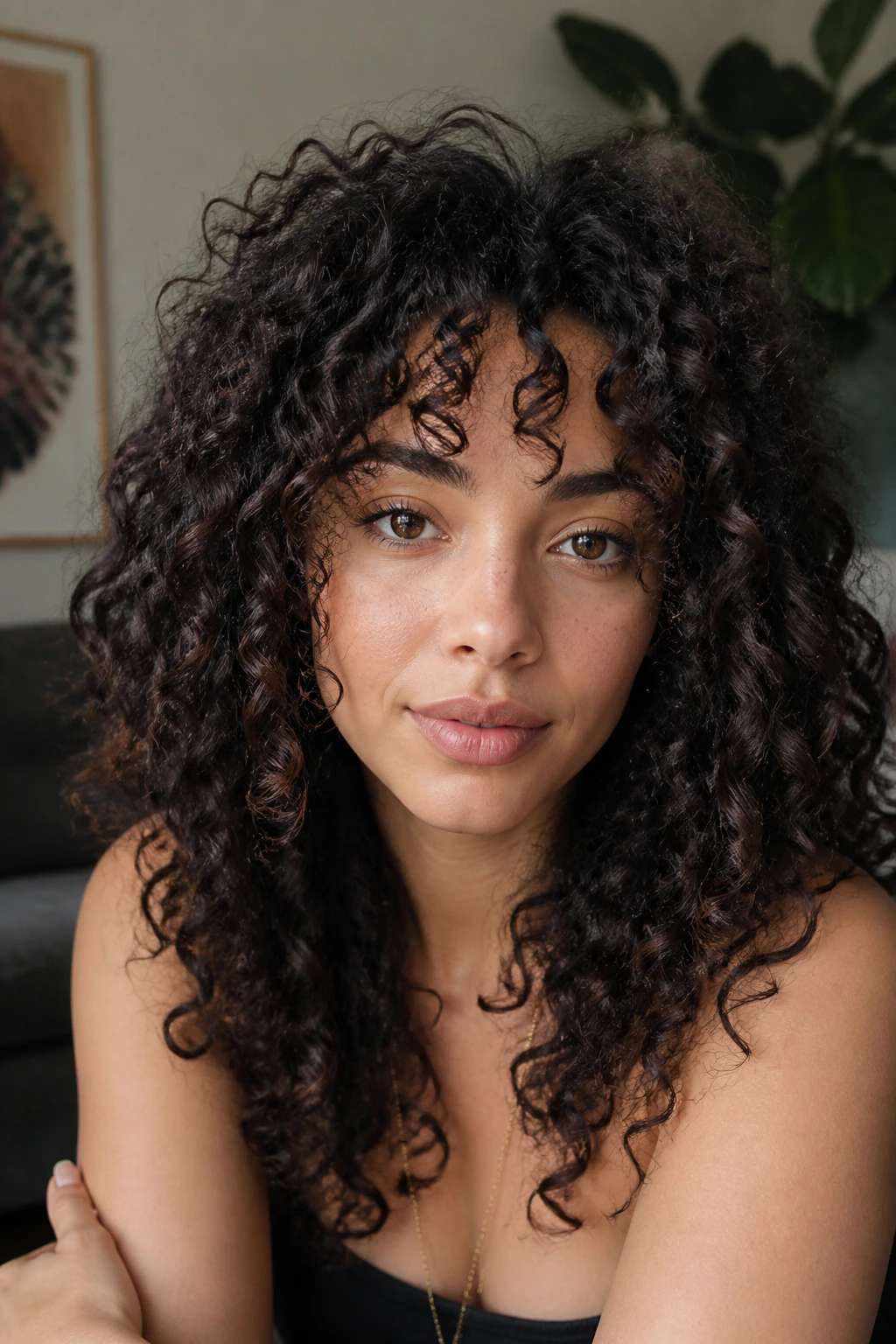
Root Lift: Clip the fringe roots up and away from the forehead for the first few minutes of drying. That tiny lift keeps the bangs from collapsing into the face and makes the whole cut look cleaner.
Fringe Control: Use product sparingly on the bang area — usually a pea-sized amount of gel or a dime-sized puff of mousse is enough. Too much weight at the front is the fastest way to lose the shape.
Time-Saver: If one curl in the fringe does something odd, finger-coil only that piece instead of restyling the whole front. One curl. Not the whole head. That’s the kind of small fix that saves a morning.
Pro Move: Dry the bangs first, then finish the rest of the hair. If the fringe is left for last, the moisture from the rest of the head keeps it in a weird, puffy state.
Cost-Saver: A spray bottle, clips, and a satin pillowcase do more for curly bangs than another expensive bottle of product ever will.
Common Mistakes That Make the Shape Fight You
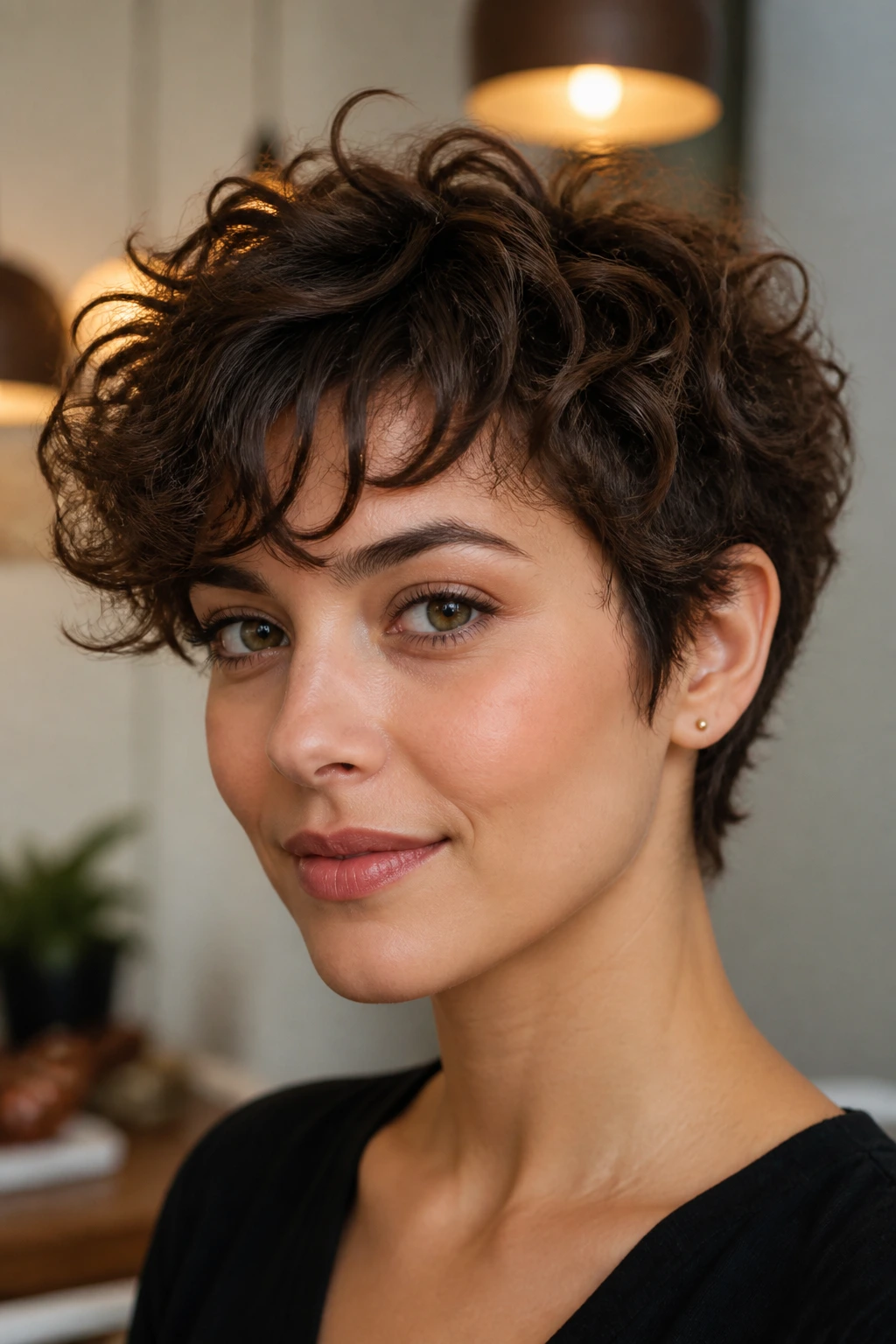
Cutting the fringe as if it’s straight hair: The bangs look fine in the chair, then bounce up and stop high on the forehead. The fix is simple: cut for shrinkage, and leave the shortest point longer than you think you need.
Making the bangs too wide: If the fringe stretches from temple to temple, it can make a round face look broader. Keep the bang width focused near the center or just beyond the brow arch, then let the sides blend in softly.
Loading the front with heavy cream or oil: The bangs start clumping into skinny strings or drooping flat. Use lighter product at the front and save richer creams for the ends.
Skipping crown lift: Flat roots make the face look rounder, even if the bangs themselves are fine. A little lift at the scalp changes the whole profile.
Forcing symmetry on uneven curls: Curl patterns rarely match perfectly on both sides. If you keep trying to flatten them into identical twins, the front turns stiff and overworked. Let the natural bend lead the shape.
Trimming bangs too often at home without a plan: Tiny panic snips add up fast. If you’re not working with the dry curl pattern in a mirror, the fringe can drift shorter by accident. That’s how a soft bang turns into a stubborn little ridge.
Variations and Adaptations to Try

Loose-Wave Soft Frame: If your hair is more wavy than curly, keep the bangs longer and lighter so they don’t spring into your eyes. This version works best when the front pieces skim the brow and the sides stay soft at the cheekbone.
Dense-Curl De-Bulked Fringe: Thick curls need more internal removal and a narrower bang section. The goal is a fringe that moves, not a wide wall that steals the whole forehead. Good for people whose hair expands the second it gets humid.
Glasses-Friendly Curve: This adaptation keeps the center a touch longer and the temples softer so the frames have room. It’s useful if you wear glasses daily and don’t want the bang line rubbing against the top edge all afternoon.
Grow-Out Curtain Merge: If you hate frequent trims, ask for bangs that are already on their way to becoming face-framing layers. The cut still opens the face, but it can grow for weeks without looking awkward.
Short-Cut Balance: For pixies and crops, the safest version keeps the top longer and the fringe feathered. That creates height where a round face needs it and avoids the mushroom effect that short curls can create when the sides are too full.
Wash-Day, Refresh-Day, and Bang-Trim Maintenance
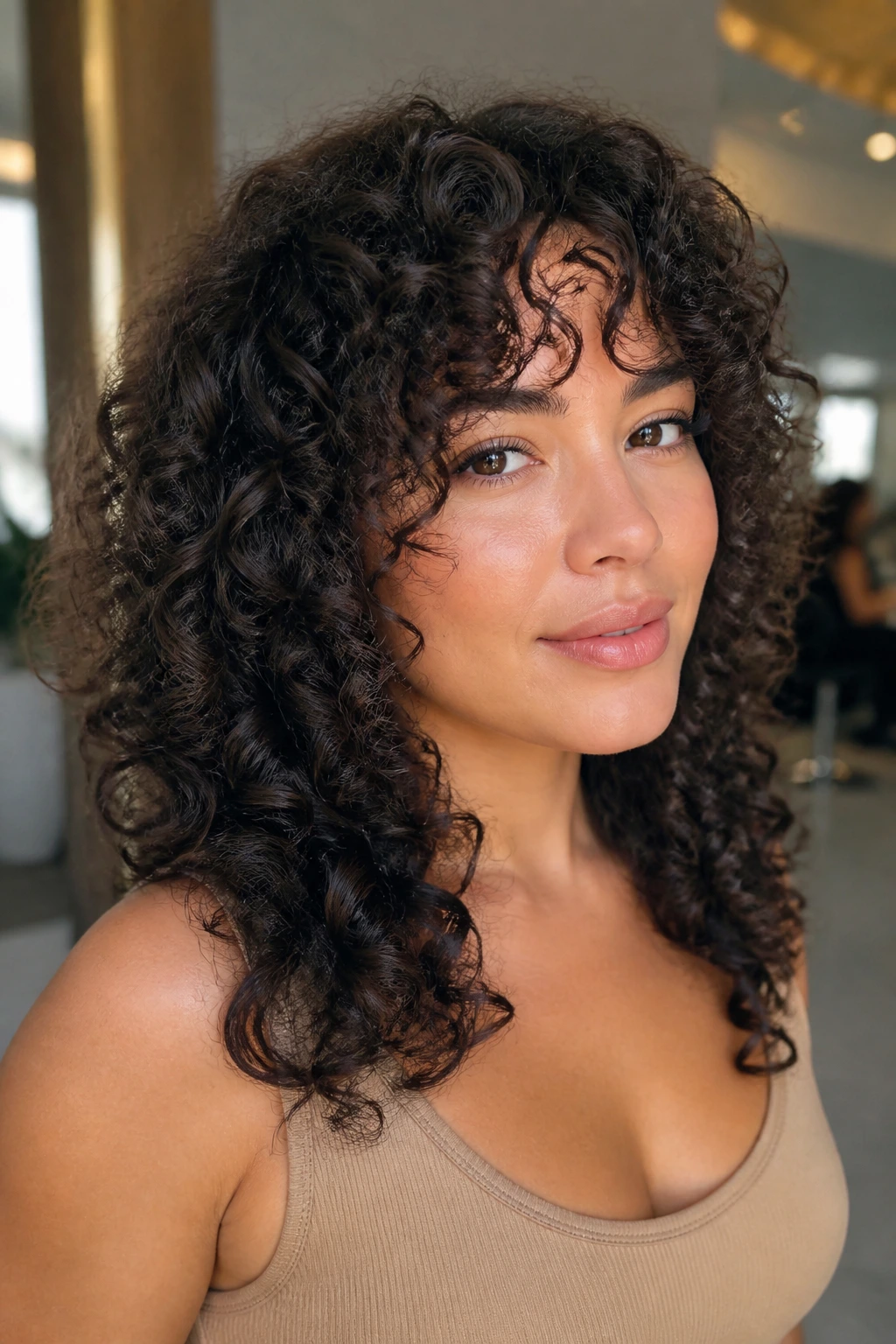
Curly bangs need more attention than the rest of the cut, mostly because they sit where sweat, skin oils, and forehead heat land first. On wash day, dry the fringe early, clip the roots if needed, and let the front set before you start fussing with the rest of the hair. That alone can buy you a cleaner shape.
Between washes, a light mist of water is usually enough to wake the bang back up. If the fringe has gone stringy, add a tiny bit of mousse or gel, scrunch once, and let it dry again instead of piling on more product. More product is not the answer. It usually makes the front sticky and flat.
For sleeping, a satin pillowcase helps, but a loose bonnet or a very loose pineapple can keep the front from getting smashed. If your bangs are short, pinning them back with a soft clip overnight can keep the shape from kinking in a bad spot.
Salon trims for the fringe usually land every 3 to 5 weeks, depending on curl tightness and how exact you want the shape to stay. The rest of the cut may only need shaping every 8 to 12 weeks. That gap is normal. The bangs are the part that asks for attention first.
Frequently Asked Questions
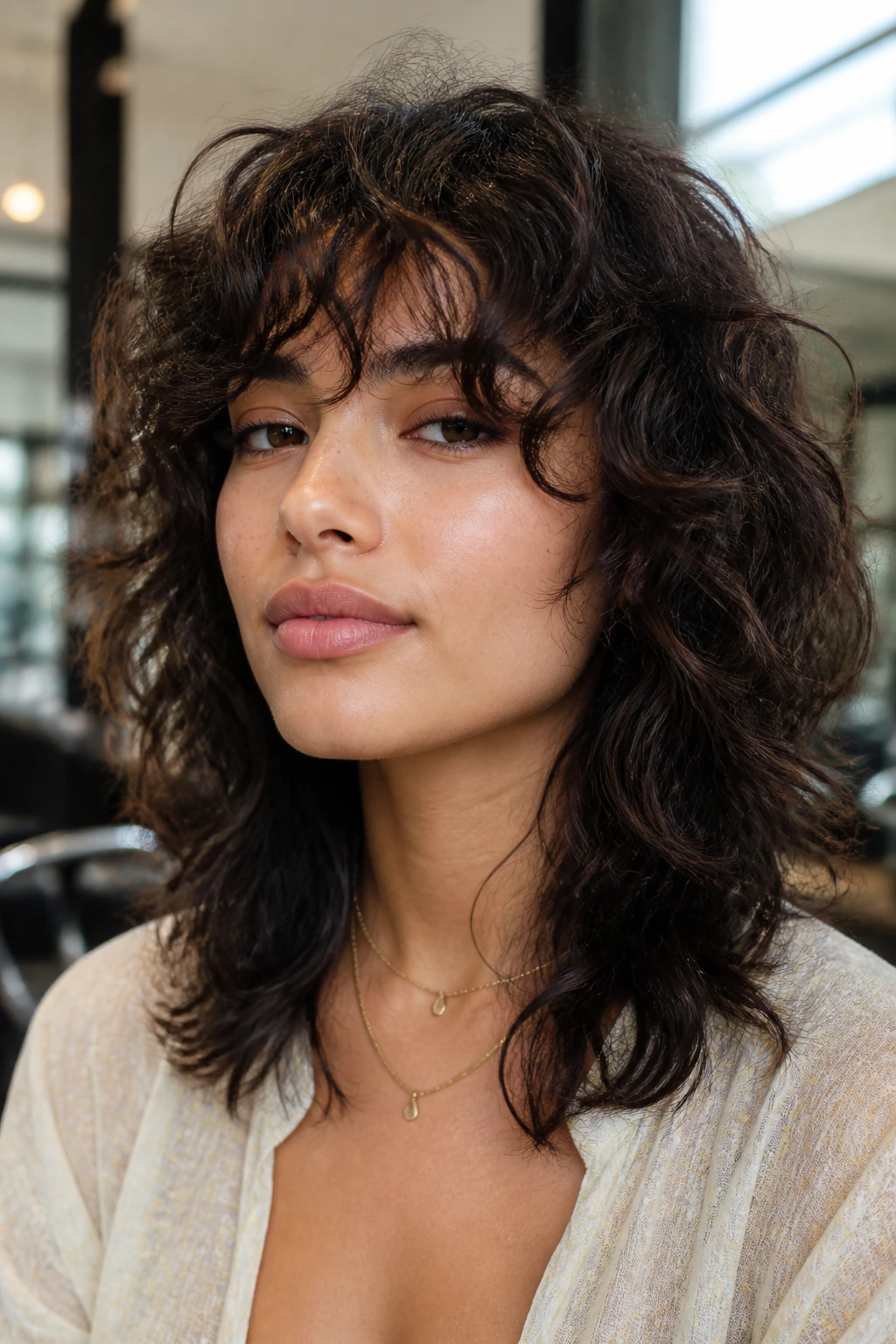
Are bangs bad for round faces?
No, but the wrong bang shape can work against you. A blunt, wide fringe can make the face feel broader, while curtain pieces, diagonal lines, and longer temple sections usually create a cleaner outline.
Should curly bangs be cut dry or wet?
Dry cutting is usually safer because it shows the true curl spring. If a stylist cuts wet, they need to leave extra length for shrinkage and explain exactly how much room they’re building in.
What bang length is safest if I’m nervous?
Ask for the shortest point to land around the nose bridge or upper cheek when dry, then blend the sides longer. That gives you a fringe that can grow down into curtain shape instead of forcing you into a short cut you didn’t want.
Can I wear curly bangs with glasses?
Yes. Keep the fringe a little longer at the center and softer at the temples so the bangs don’t collide with the frames. A heavy, wide fringe is the one that tends to fight glasses.
What if one side of my bangs curls tighter than the other?
That’s normal, and a good cut should account for it. Ask for the stronger side to be left slightly longer so it can balance out after drying, then style with a bit more product only on the side that frizzes faster.
Do curly bangs need heat styling every day?
No. Most of these styles work with air-drying, a diffuser, or a quick mist-and-scrunch refresh. Heat can help with direction, but the haircut should still look like itself without it.
Can fine curly hair pull off bangs on a round face?
Yes, if the fringe stays light and the crown has some lift. Fine curls usually do better with airy curtain pieces or split bangs than with a thick block of hair at the front.
What if my bangs puff out by noon?
That usually means the front was cut too wide or styled with too much cream. Use lighter product, dry the fringe first, and ask for a narrower bang section next time so the shape doesn’t balloon across the forehead.
The Fringe Shapes I’d Actually Recommend

If you want the safest starting point, curtain bangs, bottleneck bangs, and long grown-out fringe are the three shapes I’d put at the top of the list. They give a round face length, keep the front soft, and grow out without turning into a disaster between trims.
If you want something sharper, the shag, wolf cut, curly bob with broken bangs, and asymmetrical crop bring more attitude while still respecting the face shape. The whole trick is the same no matter the cut: keep the front light, keep the temples longer, and let the curls spring where they want to spring.
That’s the part worth remembering. The best curly hair with bangs for round faces is rarely the shortest or most obvious version. It’s the one with enough length to curl, enough angle to lengthen, and enough softness to move when you do.
