



Curly hair has a way of rewriting the plan the second it dries. A lob that looks neat on damp hair can bloom into a triangle, a mushroom, or a soft cloud depending on where the weight lands, which is why lob haircuts for curly hair need their own logic.
That’s the whole game with a long bob and curls: the cut has to respect spring, shrinkage, and the way your pattern stacks on itself from root to end. Too blunt in the wrong place and the shape goes heavy. Too many layers in the wrong hands and you get halo frizz with no real line left to the haircut.
The good versions sit in that sweet spot between chin and shoulder, where curls still move but don’t collapse into a shapeless mass. Some are crisp and graphic. Some are shaggy and lived-in. Some are the kind of cuts that make wash day easier because the shape does half the work before you even reach for a diffuser.
Why These Curly Lobs Deserve a Spot in Your Rotation

-
The length is forgiving: A lob usually lands in a zone where curls can shrink, bounce, and still look intentional instead of awkwardly short at the sides.
-
The silhouette can be tuned: You can go blunt, angled, rounded, or layered without leaving the long-bob category, which gives a stylist room to work with your pattern instead of against it.
-
Grow-out is less fussy: When a lob starts to soften, it tends to look like a longer, looser version of itself rather than a haircut that has lost the plot.
-
It handles density well: Thick curls can keep their fullness, while finer curls can get a lift from careful layering instead of being dragged down by extra length.
-
It plays nicely with styling habits: Middle part, side part, fringe, diffuser, air-dry, gel cast — the lob can take all of it without needing a totally different cut every time.
-
It keeps curls visible: That matters more than people admit. Good curly haircuts should show off the pattern, not hide it under a blunt curtain of length.
1. The Collarbone Curly Lob
A collarbone lob is the safest place to start, but “safe” doesn’t mean boring. When the hem hits right at the collarbone, curls have enough room to hang and separate, which keeps the haircut from puffing out at the chin. It also gives you a little swing when you turn your head, and curls love a moving target.
This shape works especially well if your hair shrinks a few inches after drying. Ask your stylist to check the cut dry or mostly dry, and make sure the front lands just a touch longer than the back. That tiny difference can save you from ending up with a chin-length shape once the curls wake up.
Best for: people who want one cut that can go polished or messy without fighting the curl pattern.
Stylist note: ask for the perimeter to skim the collarbone, not sit exactly on top of it. That extra sliver of length matters.
2. The Blunt Curly Lob
The blunt curly lob looks simple until you see it dry. Then the shape does something useful: it reads fuller, denser, and a little more graphic than a heavily layered cut. If your curls are already springy, the blunt line gives them a shelf to rest on instead of letting them scatter.
What you lose in softness, you gain in presence. This cut is one of the best options for medium to thick curls that don’t need much help looking substantial. The trick is keeping the perimeter clean while avoiding heavy-handed thinning near the ends, because sliced-up ends can make a blunt lob frizz at the bottom edge.
A blunt curly lob is also one of the easiest shapes to style on low-energy days. You can mist, scrunch, and go. The outline does the talking.
3. The Airy Layered Curly Lob
If a blunt lob feels too boxy, this is the answer. An airy layered curly lob removes just enough weight to keep the sides from ballooning while leaving the overall shape intact. It’s a careful cut, not a chop-happy one, and that difference shows the first time your curls dry in clean ribbons instead of one giant cloud.
The best version of this cut usually keeps the layers longer near the front and softer through the crown. That keeps the top from getting too flat while preventing the bottom from looking chopped up. Curls with a loose S-pattern or medium spring tend to love this shape because the layers let each clump sit where it wants to sit.
What to ask for
- Longer internal layers through the mid-lengths
- A perimeter that still feels like a lob, not a shag
- Minimal thinning if your hair frizzes easily
4. The Side-Part Volume Lob

A side part can do more for curls than a lot of people expect. Shift the part, and suddenly the whole lob rises at the crown, the front pieces stack differently, and the haircut gets a little lift where it used to lie flat. For curls that tend to collapse on top, this is a simple fix with a big payoff.
The side-part volume lob works best when the stylist keeps one side slightly heavier so the cut doesn’t split into two identical curtains. You want a sense of movement, not an obvious asymmetry that looks accidental. On a good day, the side part makes the face look longer and the curls look more awake.
I like this one for anyone who wears one side tucked behind the ear. That tiny habit changes the silhouette in a way that feels personal instead of salon-perfect.
5. The Deep Side-Swept Curly Lob

The deep side-swept lob has a little drama in it, and curly hair wears drama well. Sweep the top over hard to one side, and the curls fall in a cascade that gives instant height at the root and softness around the face. It’s the kind of lob that looks styled even when you only spent five minutes on it.
This shape is especially nice for medium-density curls that need help escaping the flat spot at the part. The front can be cut with enough length to sweep across the forehead without disappearing into a puff of frizz. If your curls are tighter, the style still works, but you may want the front pieces left long enough to keep the sweep visible after shrinkage.
A deep side part also buys you some flexibility. On a rough day, you can flip it back to center. On a good day, the whole cut looks intentional with almost no effort.
6. The Angled Lob That Slants Forward

Angled lob haircuts for curly hair are the ones I reach for when someone wants length in front and fewer bulk issues at the back. The front stays longer, the nape gets a little shorter, and the whole line slants forward just enough to give the neck some room. Curly hair benefits from that kind of grading because the back often gets heavy first.
The angle doesn’t have to be severe. In fact, a gentle slope is usually better on curls, since too much difference between front and back can look spiky once the hair dries and bounces upward. A mild angle still gives you the visual pull forward, which can slim the face and keep the silhouette from feeling boxy.
This is a strong choice if your curls pile up at the back of the head. It keeps the cut from wearing you.
7. The Rounded Curly Lob
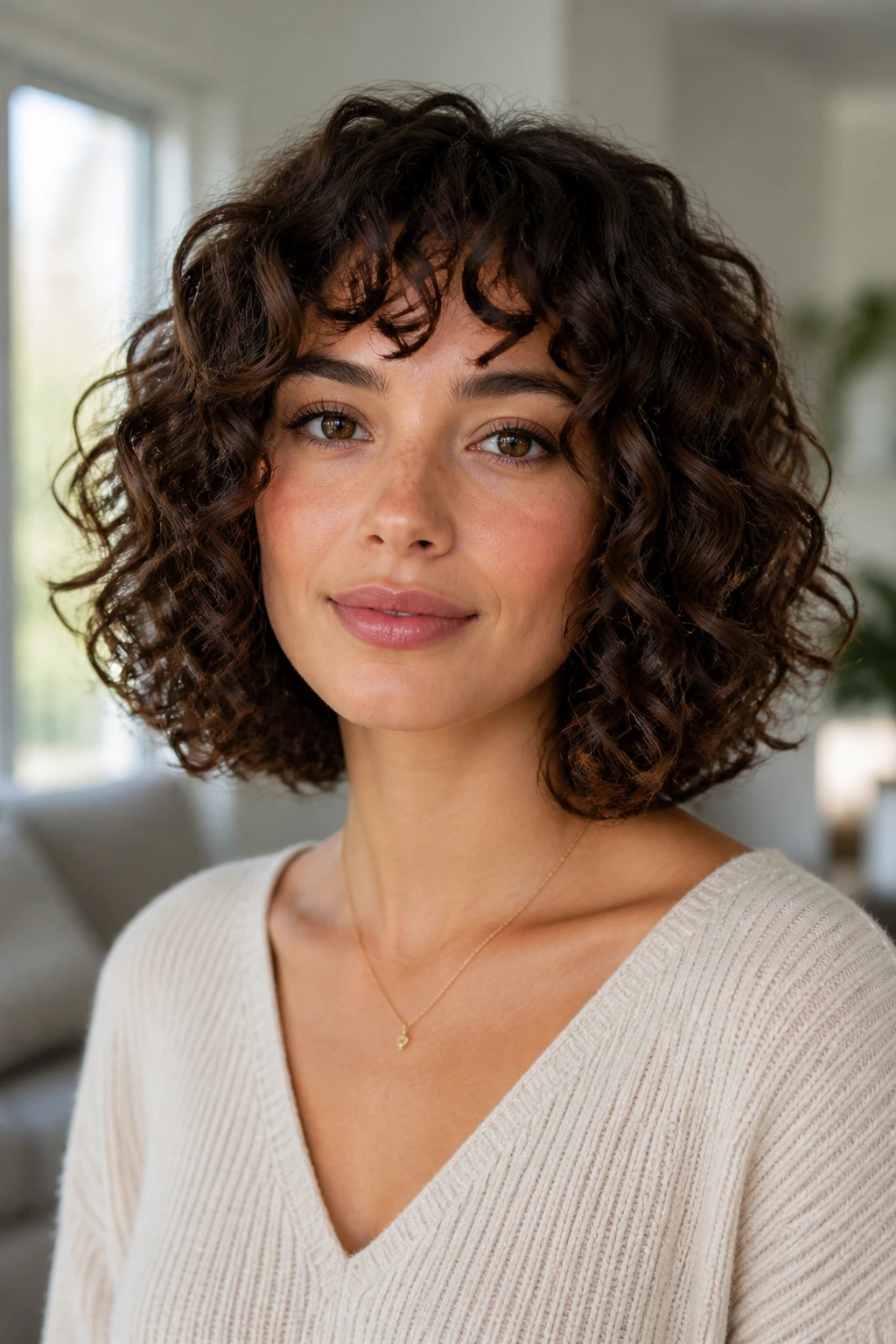
A rounded lob follows the curl pattern instead of fighting it. The outer line curves softly instead of cutting straight across, which helps the haircut echo the natural spring of the hair. That matters because curly hair rarely falls in a perfectly straight sheet anyway. Why pretend it does?
The rounded shape works especially well for people with more uniform curl patterns. If your curls are consistent from root to end, the contour can look almost sculpted when it dries. The volume stays centered, the edges soften, and the overall shape feels balanced rather than wide at the sides.
This cut also tends to be kinder to dense hair. When the perimeter is rounded, you don’t get that hard shelf effect some blunt cuts create around the jaw. It’s a calmer look. Less edge, more flow.
8. The Shag-Inspired Curly Lob

The shag-inspired lob is for people who like their curls a little wild. It takes the long-bob shape and breaks it up with layers that move independently, which means the haircut looks piecey, lived-in, and just a little rebellious. If you’ve ever wanted curls that seem to bounce in different directions on purpose, this is the lane.
A shaggy lob is usually a good fit for looser curls and waves that can handle more layer movement without falling flat. It also works for people who wear a diffuser often, because the diffused shape helps separate the layers so the haircut doesn’t collapse into one thick mass. I’d avoid going too aggressive with the layering if your hair already frizzes at the ends. You want texture, not shredded ends.
Good signs this cut will suit you
- Your curls clump easily
- You like a messy finish
- You don’t want a strict outline
9. The Face-Framing Curly Lob
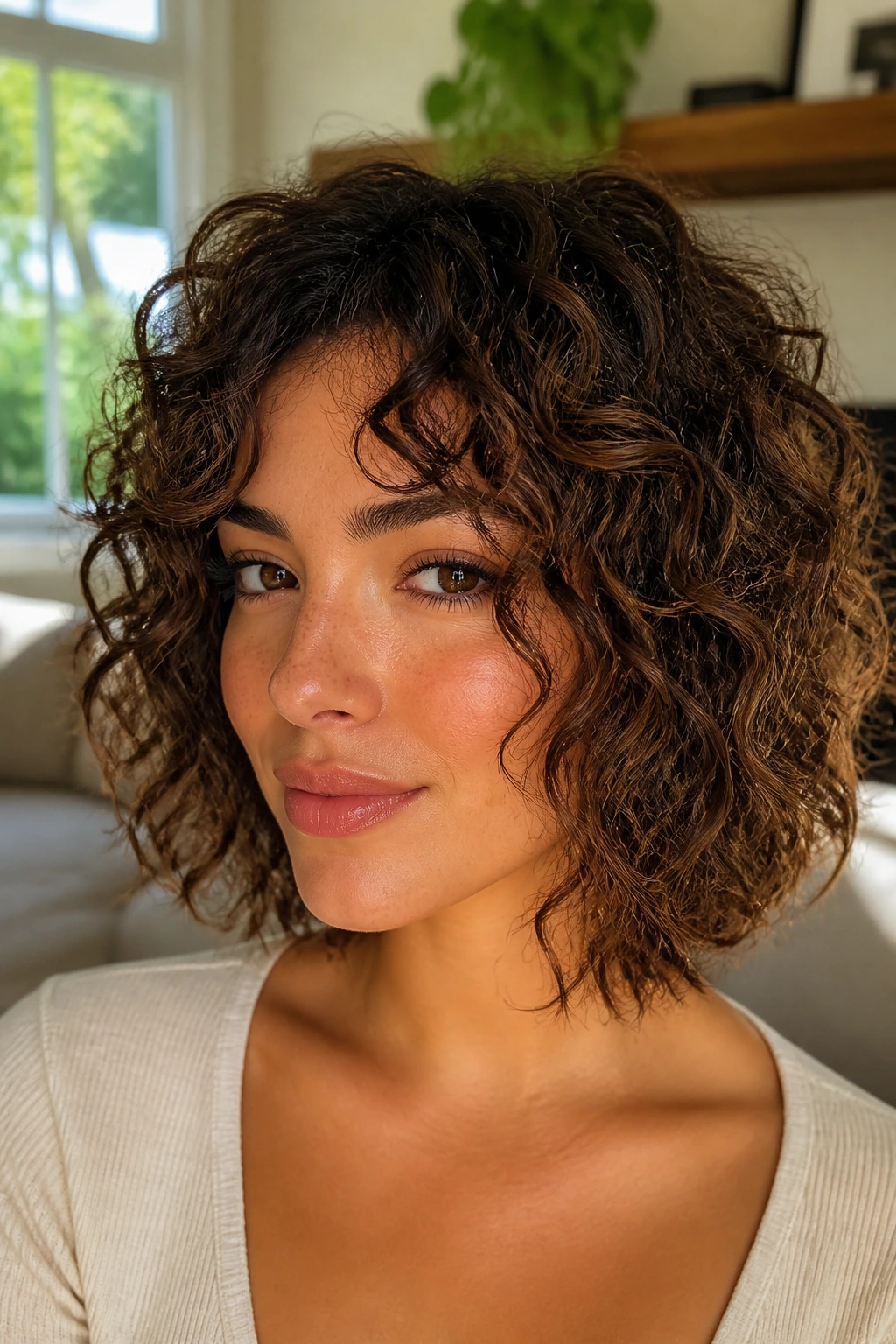
Face-framing lob haircuts for curly hair are all about where the first layer lands. Put that first bend near the cheekbone or lip line, and the cut starts shaping the face instead of sitting around it. That can be a smart move if you want the lob to soften a strong jaw, highlight the eyes, or make the whole haircut feel more tailored.
The front pieces need enough length to show up after shrinkage. That’s the part people miss. Curls can lose a surprising amount of visual length once dry, so a face-framing piece that looks perfect wet may land awkwardly high once it dries. Leave room.
This is a nice option if you want the rest of the lob to stay fairly simple. A little action in the front can do most of the visual work.
10. The Curly Lob With Curtain Bangs
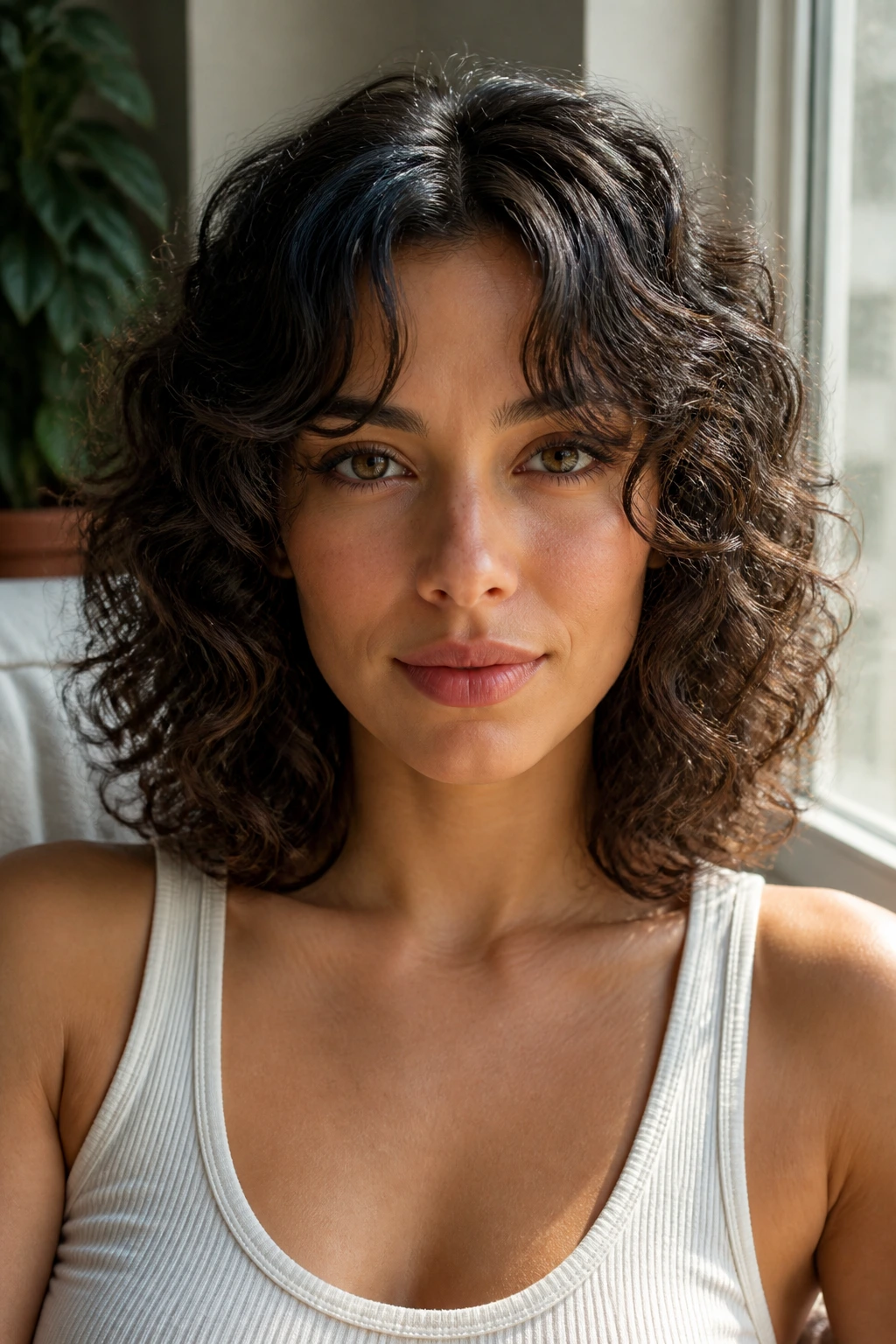
Curtain bangs change the math. Add them to a lob, and suddenly the haircut feels lighter around the forehead while the length still gives the curls somewhere to fall. The bangs open in the center, which keeps the front from feeling heavy and lets the curls move without forming a straight, blunt fringe line.
This combo works especially well on curls that puff out when they’re cut too short across the brow. Curtain bangs give shape without trapping the forehead under a solid block of hair. They’re also easier to grow out than a blunt bang, which matters if you’re not ready for a lifelong commitment.
I’d ask for the shortest pieces to start around the cheekbone, not the eyebrow, unless your curls are loose and predictable. Shrinkage is real, and bang regret is a fast way to ruin a perfectly good lob.
11. The Micro-Layer Lob for Dense Curls
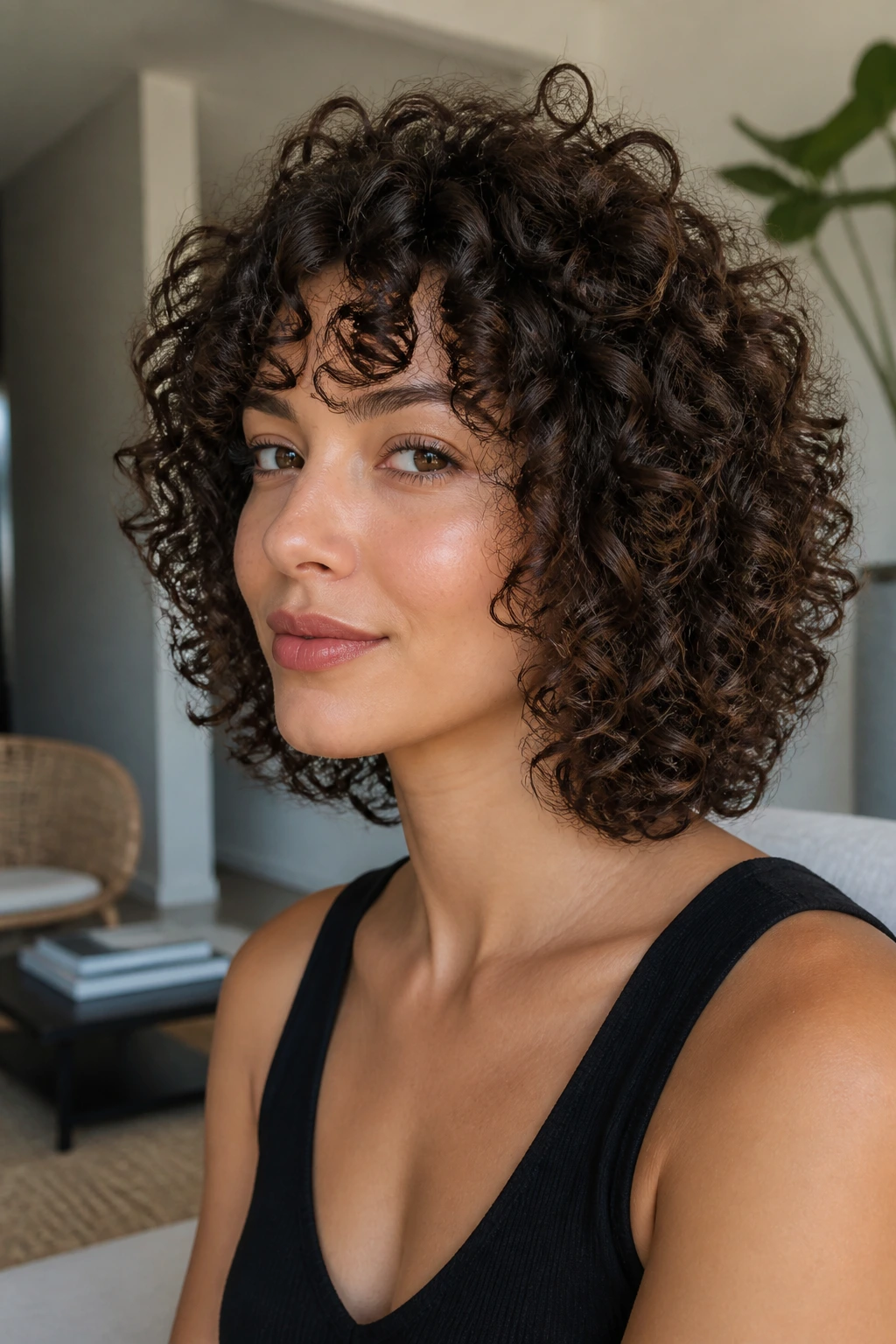
Dense curls need a different kind of layering. Too much of it, and the cut gets fluffy at the ends. Too little, and the inside swells up like a pillow. A micro-layer lob threads the needle by removing weight in small, strategic sections without tearing the outline apart.
This cut is often best for thicker 3B to 4A textures that collect bulk in the middle of the head. The layers are there, but they’re quiet. They help the curls sit on top of one another instead of pushing the whole shape outward. On the right hair, that means less triangle and more controlled volume.
A lot of people assume dense curls need a lot of thinning. Usually they don’t. They need a smarter line, not a butchered one.
12. The Inverted Lob With a Tucked Nape
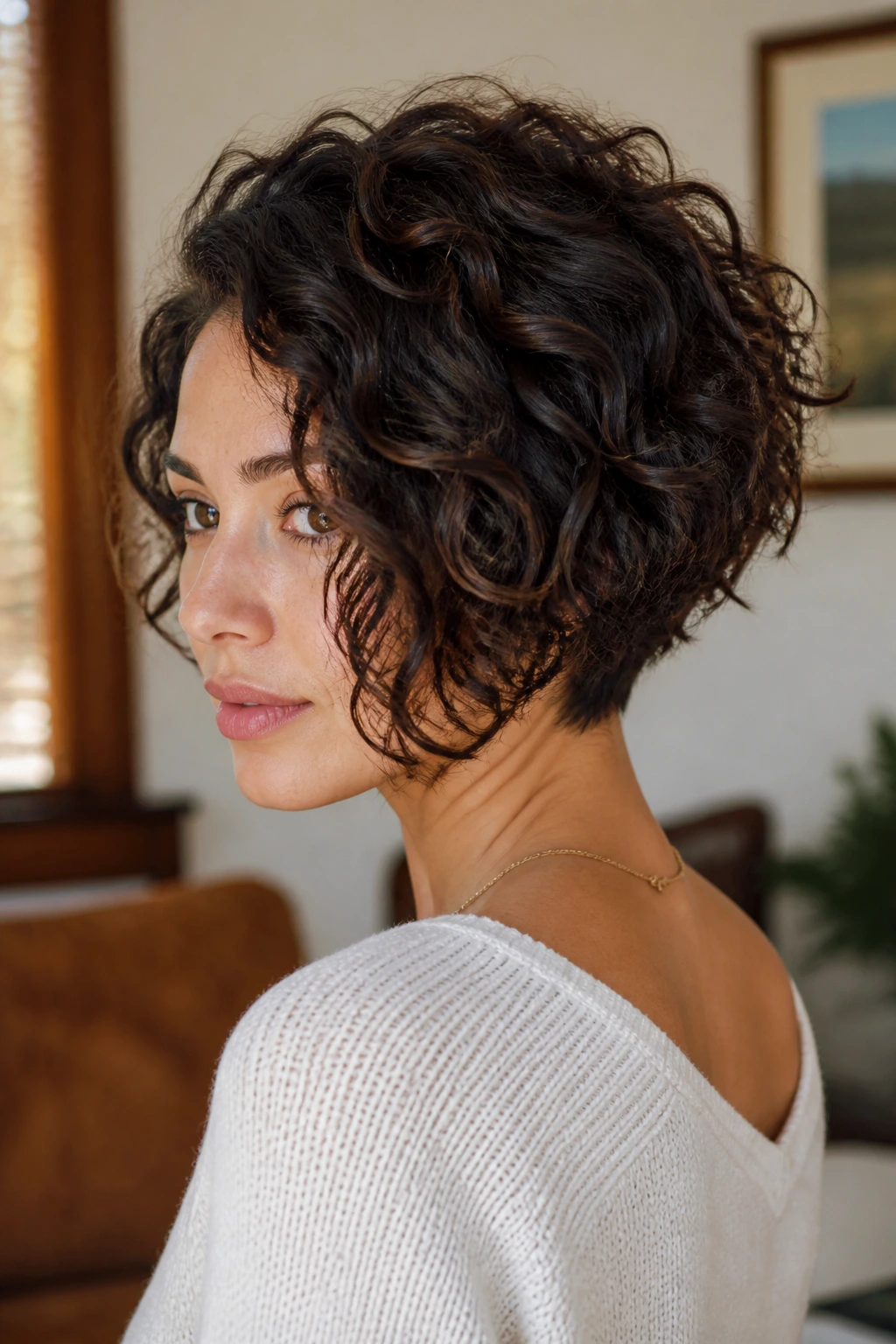
An inverted lob gives the nape some breathing room. The back sits shorter, the front stays longer, and the whole shape tapers in a way that can make curls feel lighter without losing the length people actually like to see. It’s especially useful if your hair gets heavy at the back of the head or if you wear jackets and scarves that crush the neckline.
The tucked nape also helps the haircut dry faster at the back, which is a small but real bonus if you’re diffusing or air-drying in a hurry. The front keeps enough length to frame the face, while the shorter back keeps the shape from drooping.
This is one of the better lob haircuts for curly hair if you want a little polish without committing to a steep angle. It’s subtle. That’s the point.
13. The Dry-Cut Deva-Style Lob
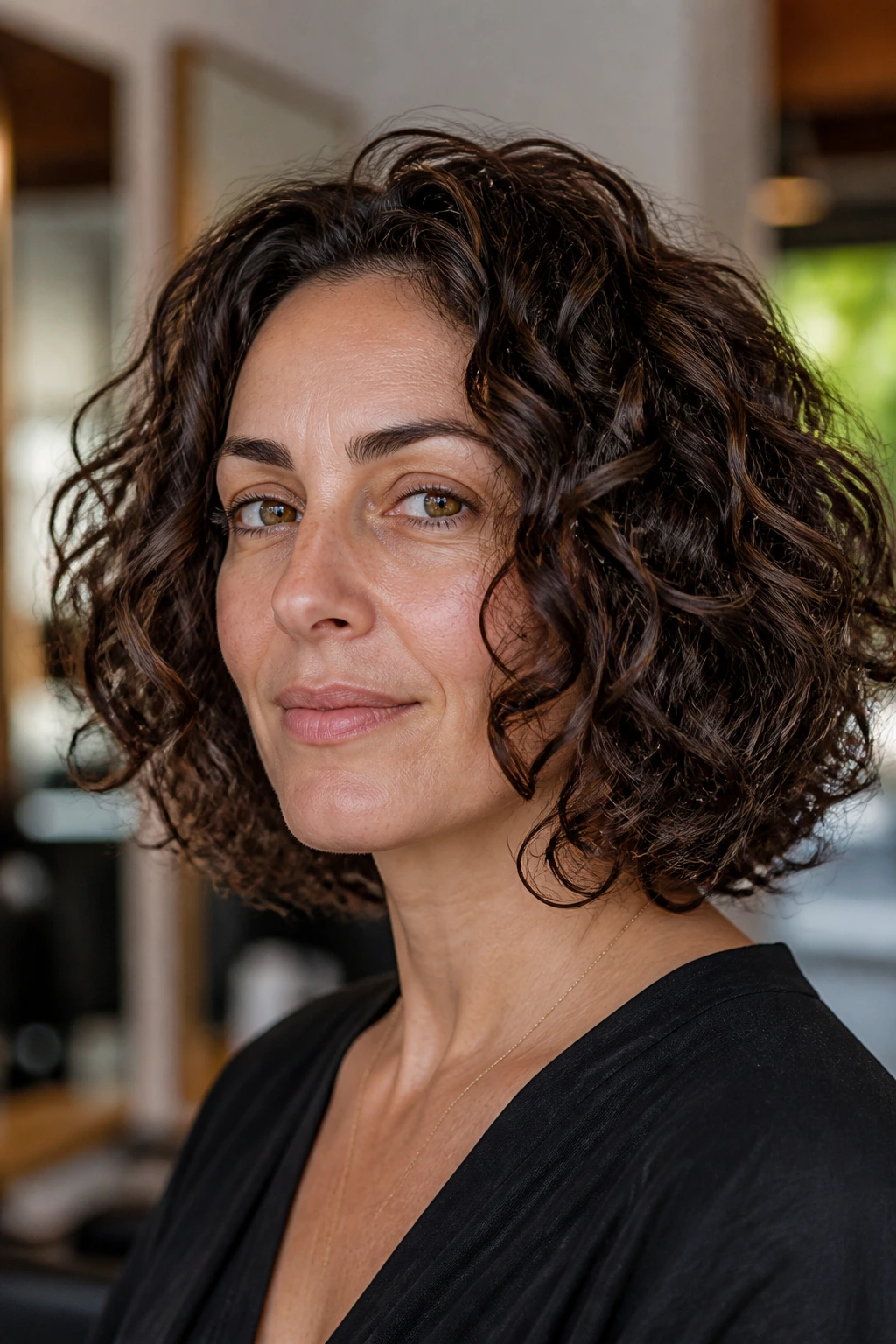
The dry-cut Deva-style lob is less about trend and more about precision. Cutting curls dry, curl by curl, lets the stylist see where each coil sits when it’s behaving like itself. That matters because curls can spring up, bend sideways, or split differently once they’re dry, and wet cutting hides a lot of those surprises.
This approach works best when the goal is a custom shape rather than a uniform outline. If one side grows faster, if the crown wants lift, if the front pieces need a little more length — dry cutting can account for all of it. The result usually feels less generic and more made for the actual head it lives on.
If you’ve had curly cuts that looked fine in the chair and strange at home, this is worth asking about. Not every stylist cuts dry well, but when they do, you can see why people keep coming back.
14. The Tousled, Beachy Curly Lob
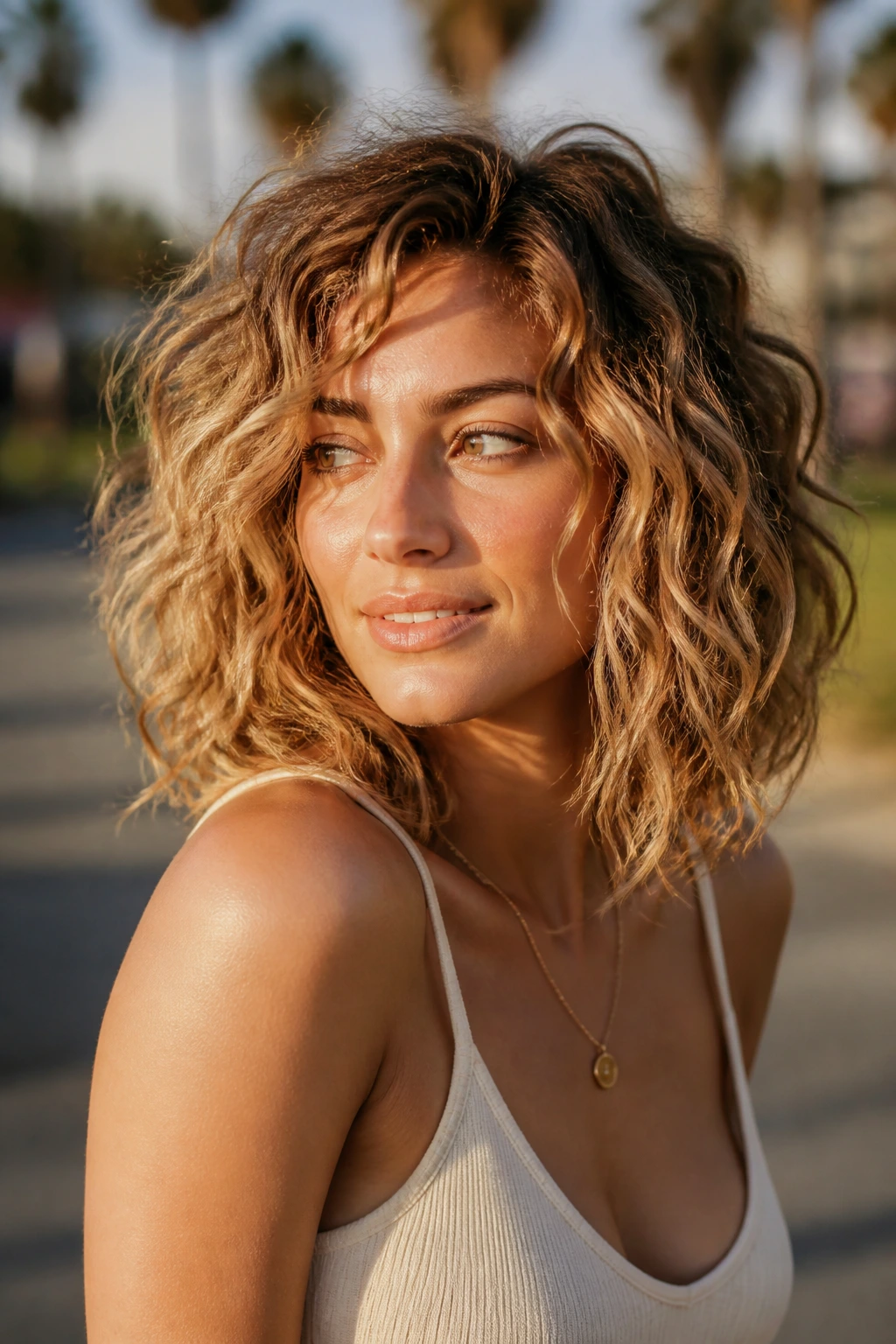
Beachy doesn’t have to mean flat ironed waves from a bottle. On a curly lob, it can mean a cut that gives the hair a little room to separate and fall apart on purpose. The line is softer, the layers are loose, and the ends are shaped in a way that looks casual instead of too neat.
This version works best if your hair likes a messy finish and you don’t want every curl clump to sit in a perfect row. It’s a forgiving lob, which makes it a good choice for people who refresh their hair more often than they fully restyle it. A light cream, a soft gel, and a diffuser on low heat are usually enough.
If your curls are very tight or very dense, keep the layering mild. Beachy should still read as a haircut, not as a stylist’s accident.
15. The Polished Spiral Lob
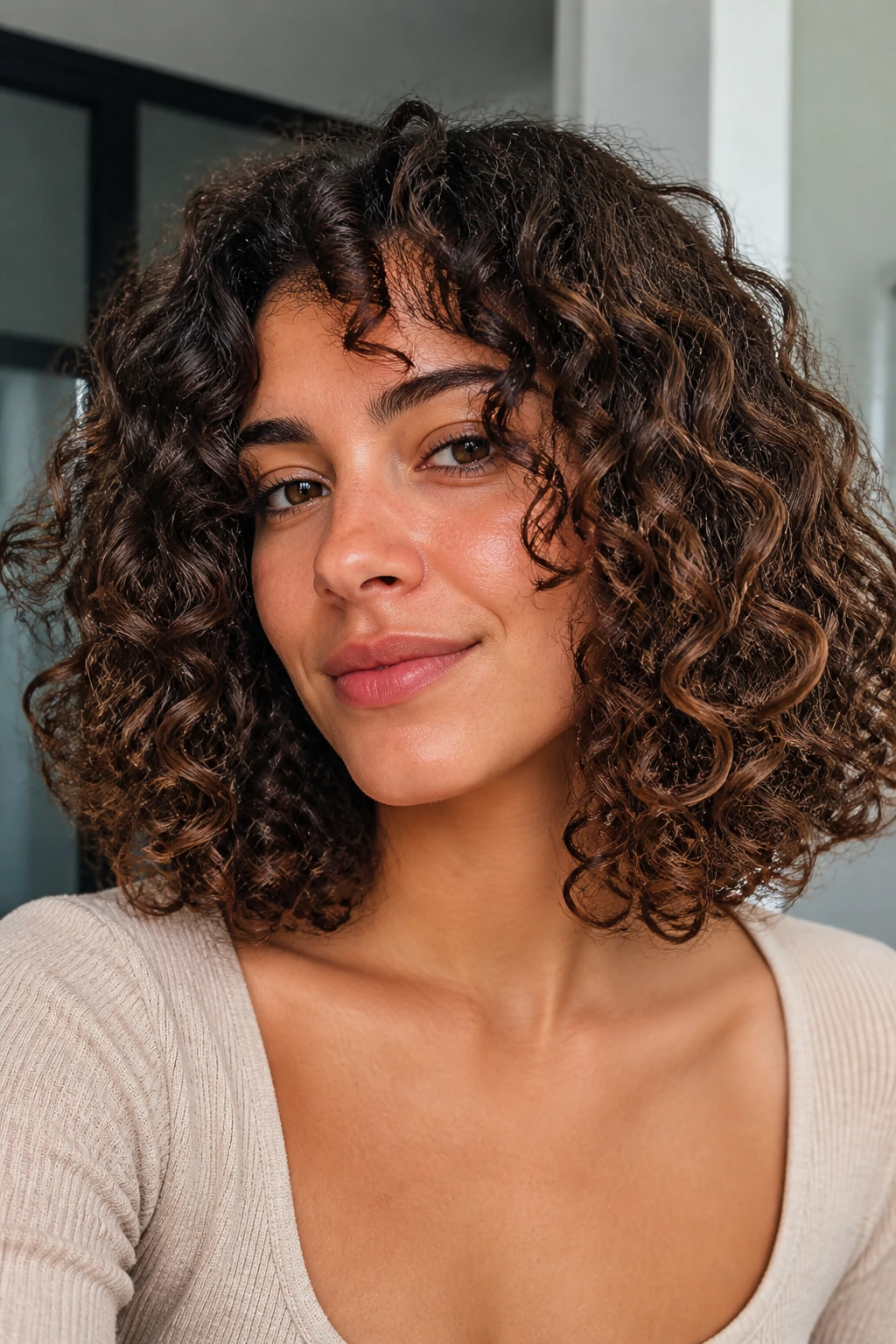
Sometimes polished is the point. A polished spiral lob keeps the perimeter clean and lets the curls fall in organized rings, so the haircut looks smoother and more deliberate than a shaggy version. It’s a nice fit for spiral-shaped curls that already group neatly when styled with enough water and hold.
This cut usually needs less fraying at the ends and more respect for curl definition. That means a light touch with the scissors and not much aggressive texturizing. The goal is to preserve the spiral, not break it apart for the sake of movement.
I like this one for office days, events, or any time you want the haircut to look finished without looking stiff. It’s one of the few curly lob haircuts that can read almost tailored without losing texture.
16. The Low-Maintenance Wash-and-Go Lob
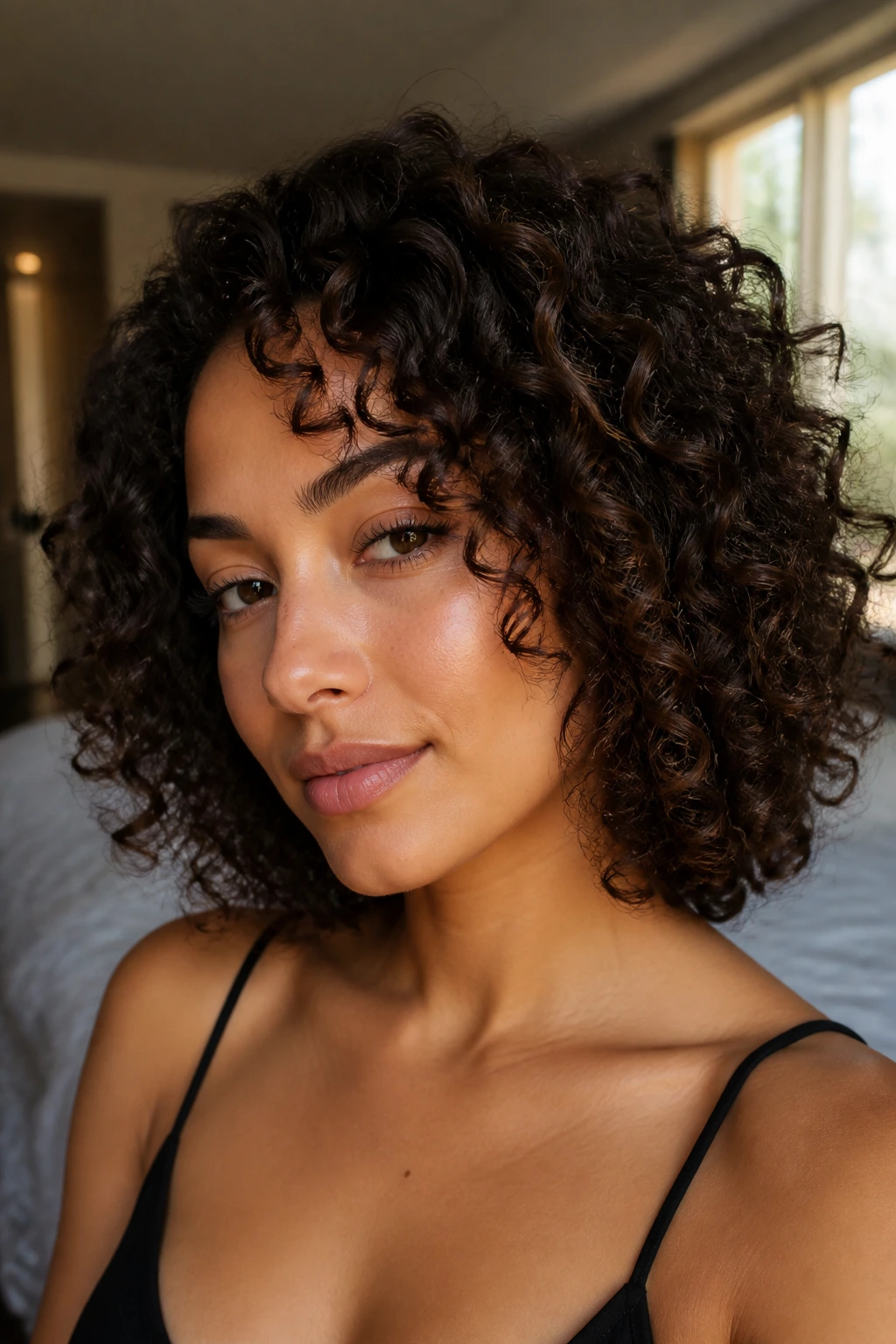
If you want a cut that behaves on day one and day four, this is the one to watch. A wash-and-go lob is built to dry into a shape that needs very little coaxing. The outline is simple, the layers are just enough, and the haircut doesn’t depend on fancy styling to look good.
The best wash-and-go lob usually lands between chin and collarbone with a perimeter that can survive shrinkage. It shouldn’t be so heavily layered that the hair goes wide, and it shouldn’t be so blunt that the bottom row looks stale by midday. Balance matters here more than flash.
This is the cut for people who would rather spend ten minutes styling than forty. Practical can still look good. Sometimes better.
17. The Thick-Hair Lob With Internal Weight Removal
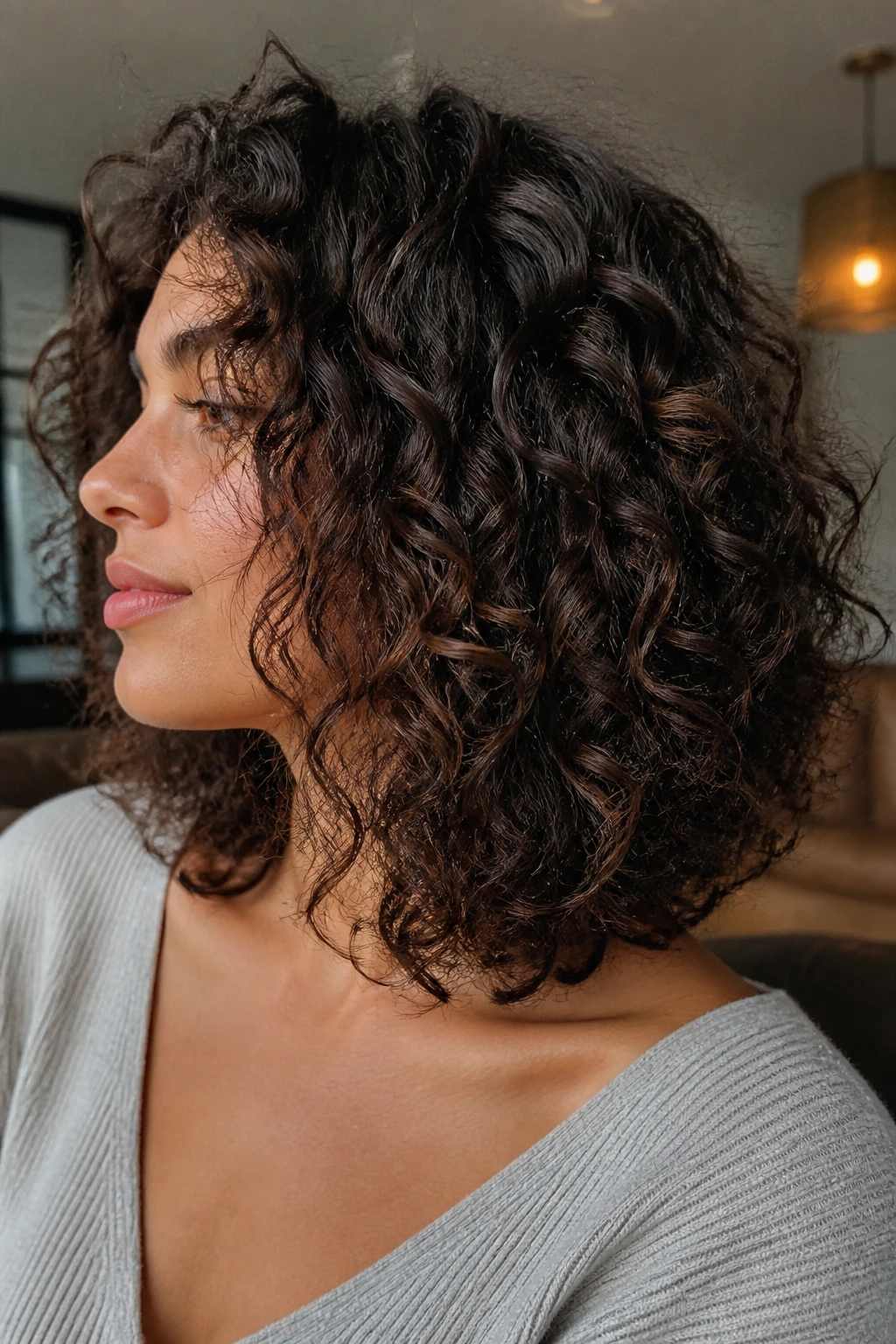
Thick hair can wear a lob, but not a blunt one without some strategy. Internal weight removal lets the stylist clear out the hidden bulk inside the haircut while keeping the outside shape strong. That way, the hair doesn’t balloon under its own weight.
The important part is restraint. You want the interior lightened in the places that create puff, not sliced so aggressively that the ends go wispy and thin. Thick curls usually look best when the perimeter still has enough substance to anchor the shape.
This kind of lob is a gift if your curls dry into a shelf at the sides. It narrows the silhouette without flattening the hair into nothing. That’s harder to do than it sounds.
18. The Fine-Hair Lob With Strategic Layers

Fine curls need a lob that doesn’t eat its own shape. Too many layers, and the haircut disappears by the time it dries. Strategic layers keep the crown lifted and the ends from looking stringy, while still preserving enough mass for the curls to read as a full shape.
The best version for fine hair usually keeps the perimeter a little stronger and the layers limited to the spots that go flat first. Around the crown, a touch of height helps. Through the back, too much slicing is a bad trade. You want the hair to move, not vanish.
This cut is often the difference between “my curls look thin” and “my curls look airy.” Those are not the same thing.
19. The Lob for Round Faces

Round faces need length in the front more than they need drama everywhere else. A lob that sits just below the chin and extends past the jawline can create a long, clean line that makes the face feel more vertical. Add a soft side part or a slight angle, and the effect gets stronger.
The pieces near the cheekbones matter most here. If they hit too high, the haircut can widen the face. If they fall just below the jaw, the eye moves downward instead of outward. That’s the quiet detail that makes this cut work.
This shape does not need to be severe to be flattering. Soft is enough. Sometimes soft is better.
20. The Lob for Square Jaws
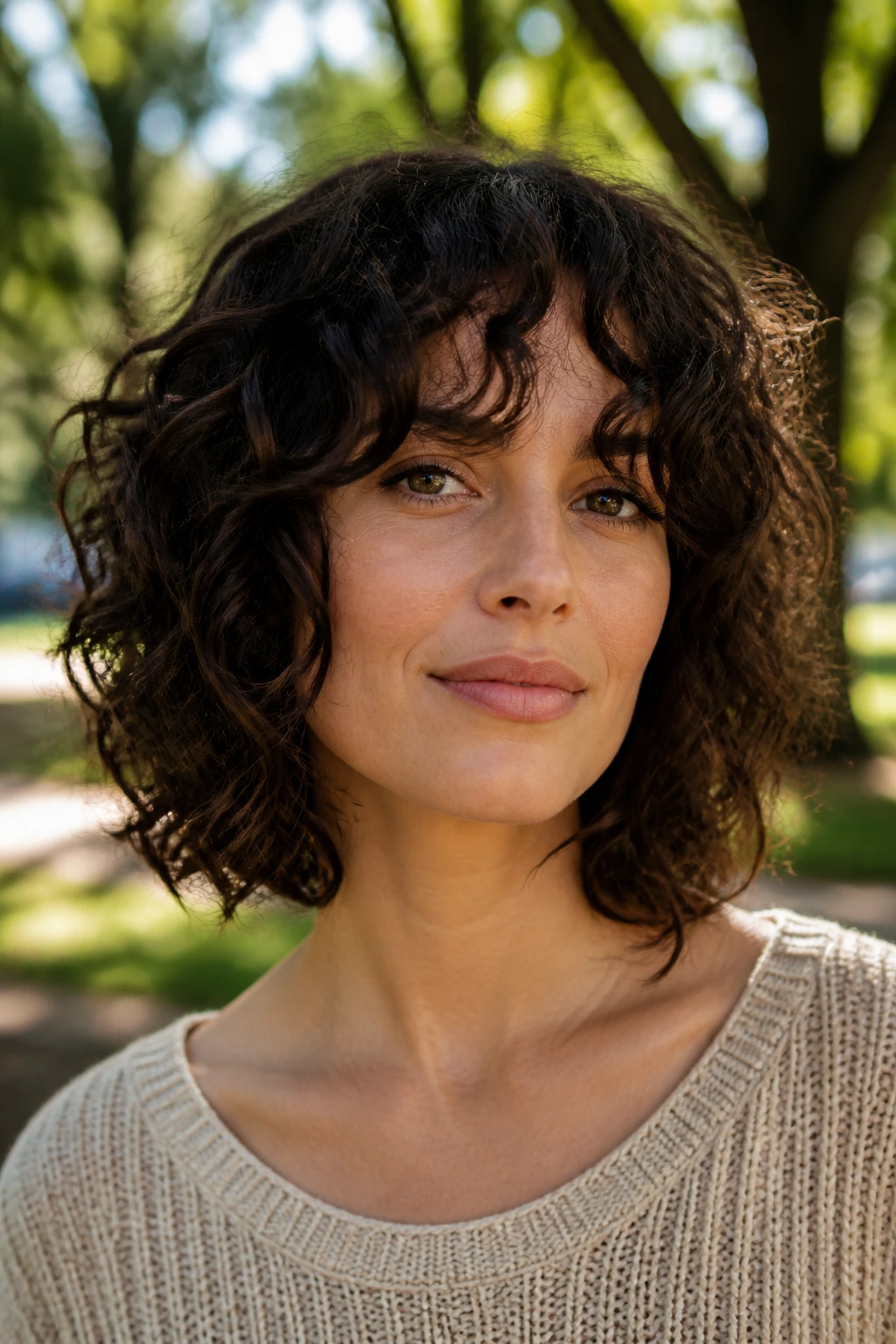
Square jaws soften nicely when the line sits below the cheekbone. A curly lob can help by placing movement around the sides of the face instead of letting the haircut end right at the jaw, where a strong line might echo the face shape too closely. The goal is not to hide bone structure. It’s to let the curls blur it a little.
Longer front pieces, curtain bangs, or a rounded outline can all help here. The shape should feel curved, not boxy. If the stylist cuts a hard horizontal edge right on the jaw, the result can feel abrupt. Leave some air in the front.
This is one of those cuts where a small shift of an inch or two makes a big visual difference. Annoying? Maybe. Worth it? Absolutely.
21. The Grown-Out Bob Lob
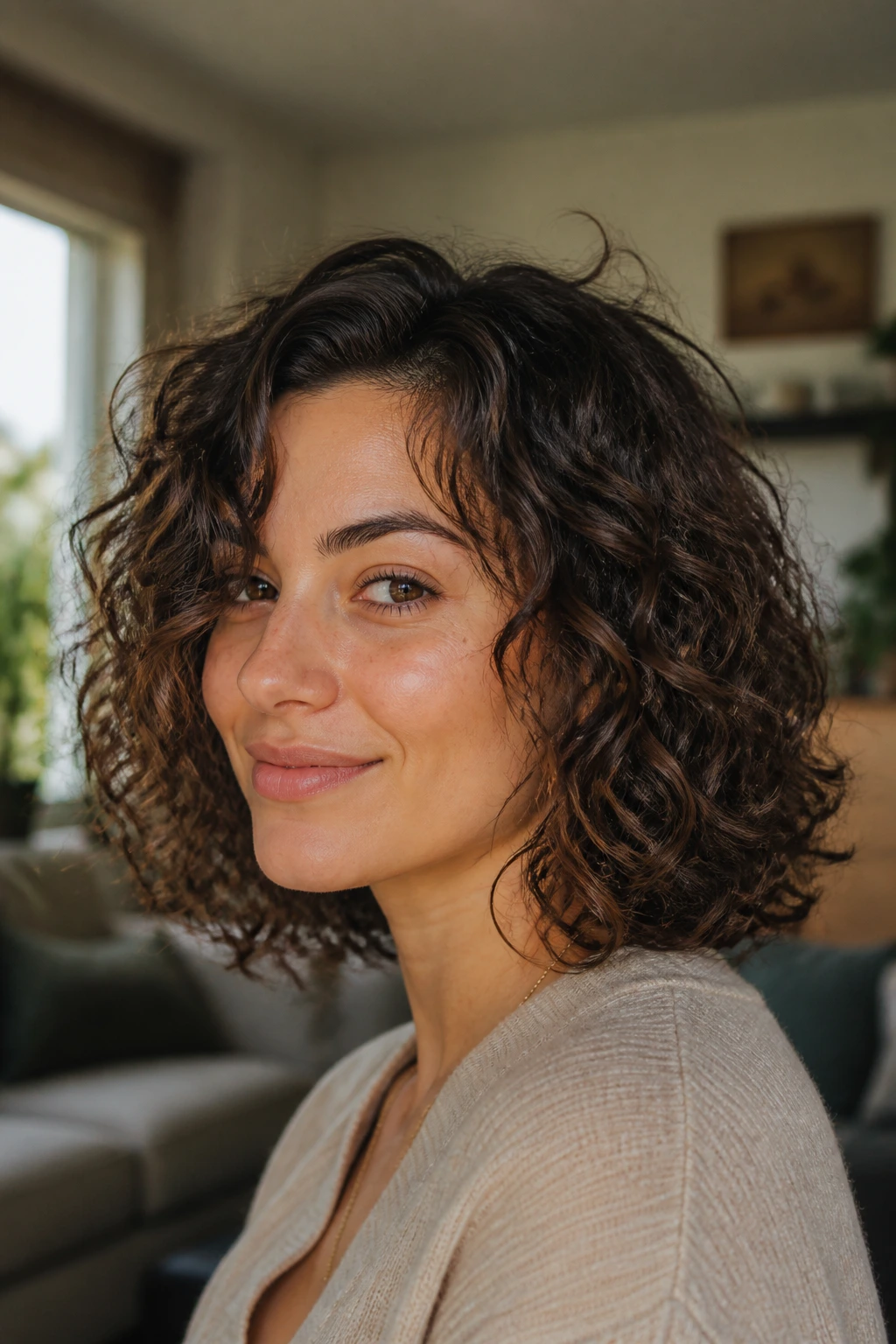
The grown-out bob lob is the shape you choose when you’re not ready to lose every inch. It sits in that in-between zone where a bob has started breathing again and a lob has not yet turned into long hair. Curly hair often looks especially good here because the extra length helps the ends clump instead of fizz out.
What makes this cut useful is its honesty. It doesn’t pretend to be sharp and crisp forever. It gives you a structure that still makes sense as it lengthens, which is useful if you like to stretch time between cuts. A little softness at the ends is part of the charm.
This is also a smart transition shape if you’re growing out a shorter curly cut and don’t want to spend the whole process waiting for it to look intentional. It already does.
22. The Bold Bangs Curly Lob
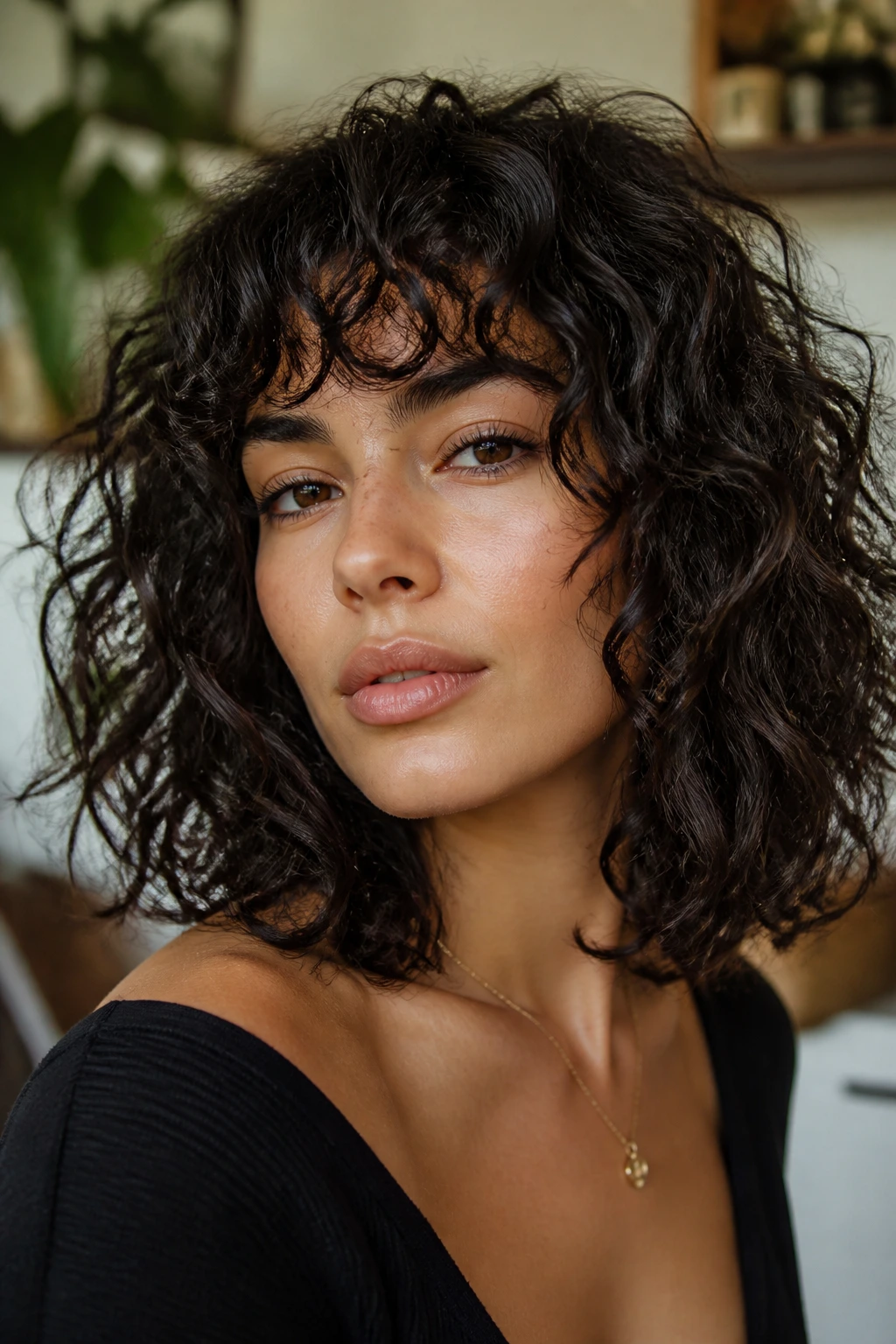
Bold bangs and a curly lob make a loud pair in the best way. The bangs bring the attention up, while the lob keeps the rest of the length grounded. If your curls are consistent and you like hair with a little personality, this combination can look sharp, modern, and a little bit cheeky.
The fringe needs room to shrink, which means it usually should be cut longer than you think. A full curly bang that looks eyebrow-length wet may land much shorter once dry. That’s not a warning to avoid them. It’s a warning to respect them.
This version is for people who want the haircut to make a statement before the rest of the outfit even shows up. It’s not quiet. That’s the fun of it.
Why the Lob Works So Well on Curly Hair
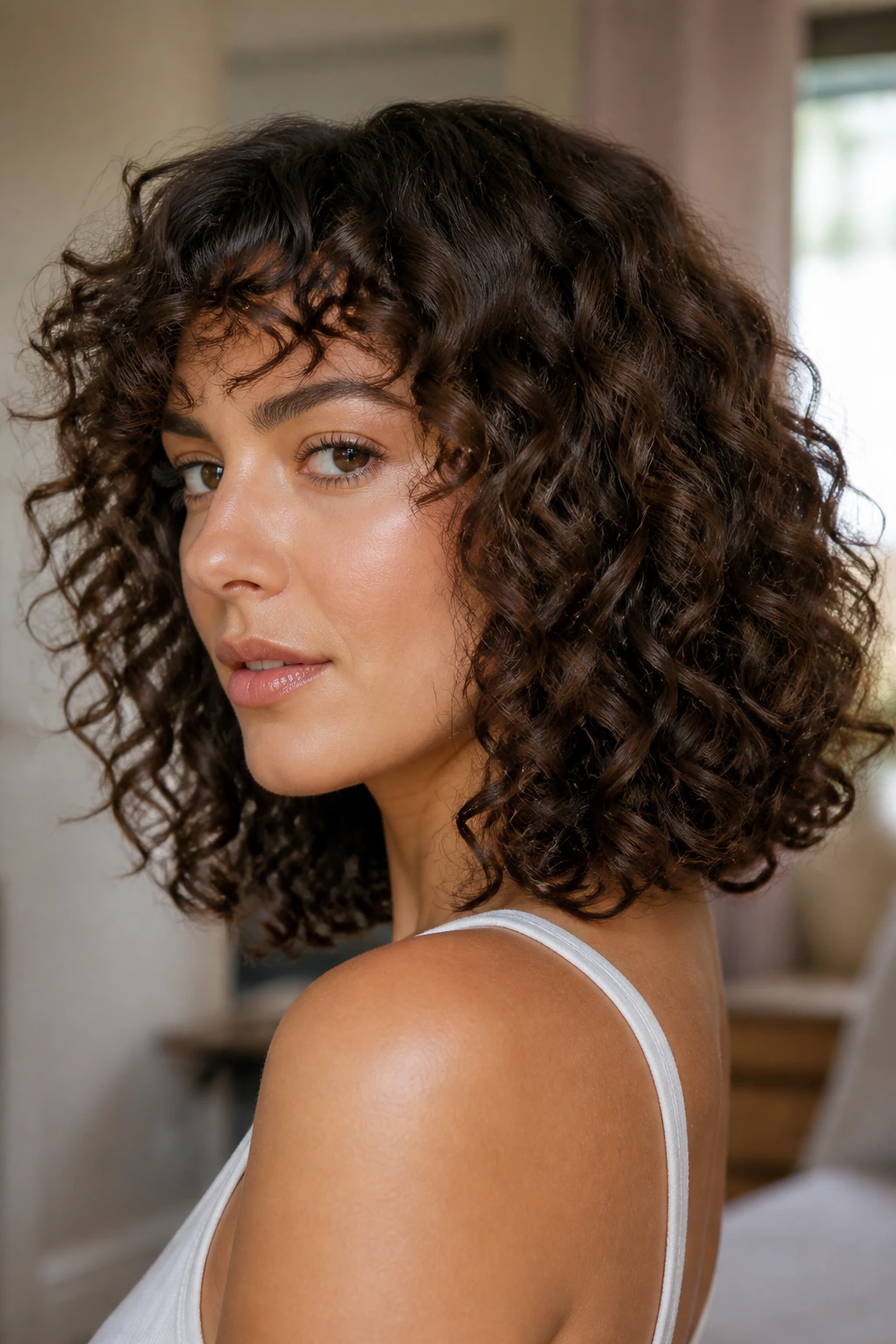
Curly hair behaves like a stack of springs. Cut it too long, and the bottom gets heavy enough to pull the pattern downward. Cut it too short, and the curls bunch up on themselves and start rising where you did not ask them to. The lob lives between those two bad options.
That middle ground matters because the haircut still has enough weight to keep the curls from flying apart, but not so much length that the shape slouches. The perimeter can do a lot of work here. A clean line gives the eye something to read, even when the curls themselves are doing their own unpredictable dance.
There’s also a practical side people love to ignore until wash day gets annoying. A lob is long enough to clip back, diffuse, pineapple, or tuck behind the ear, but short enough to dry faster than waist-length curls. That balance makes the shape useful, not just pretty.
And frankly, curly hair looks better when it’s cut with the curl pattern in mind. That sounds obvious, but a lot of bad cuts come from treating curls like damp straight hair. They are not. The spring changes the whole geometry of the haircut.
How to Choose the Right Lob for Your Curl Pattern and Density
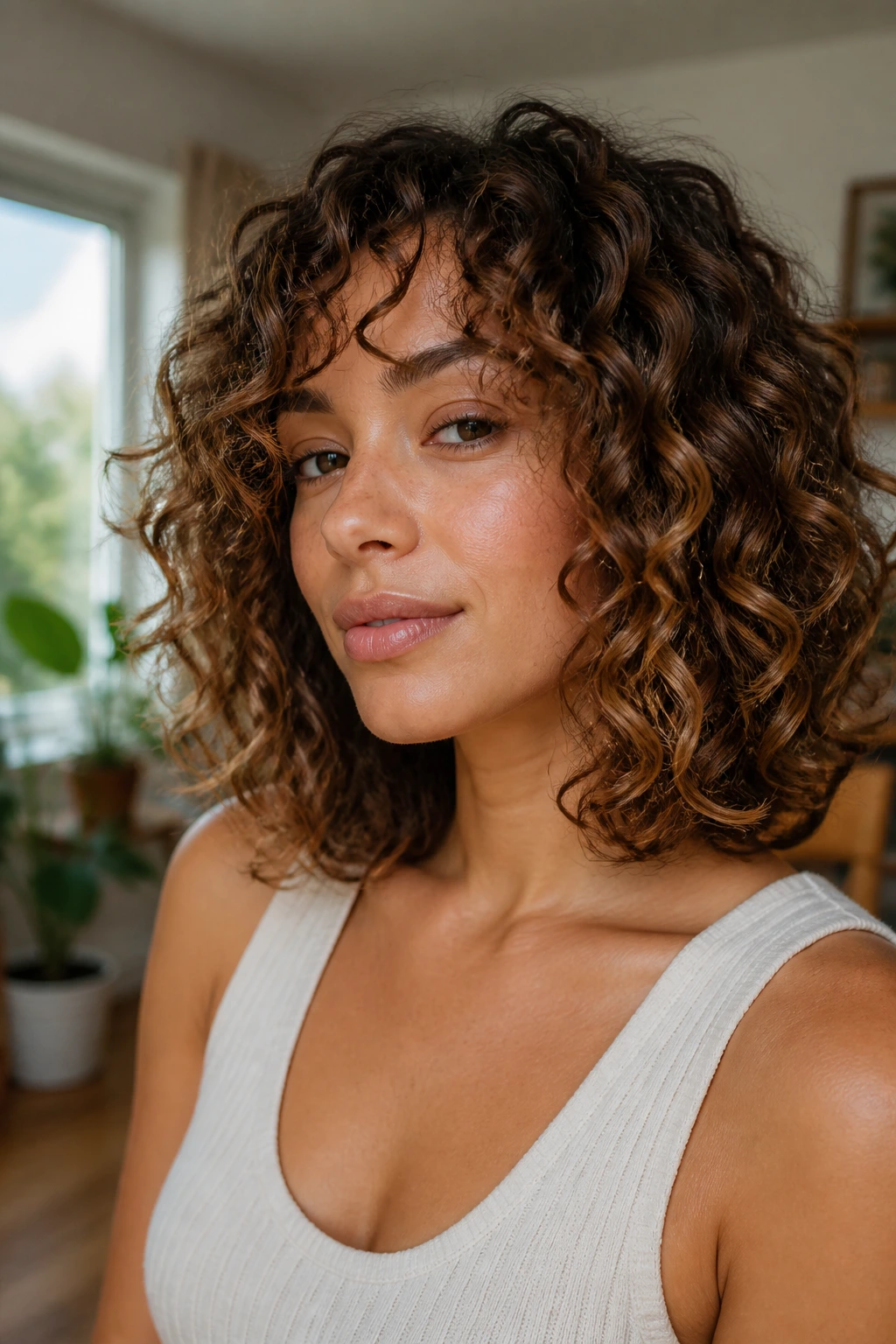
Start with the curl pattern, then look at density, then think about how much time you’re willing to spend styling. That order matters. A loose 2C wave and a dense 3C coil might both fit inside a lob, but they need different amounts of layering and different amounts of perimeter weight.
Loose waves and 2C curls
Looser patterns usually tolerate a blunt edge better because they don’t shrink as dramatically. A collarbone lob, an angled lob, or a side-part version tends to work well here. If the hair is fine, keep the layers light so the ends don’t disappear.
3A to 3B curls
This is the sweet spot for airy layering, rounded shapes, and face-framing pieces. These curls usually have enough spring to carry shape, but they still need the cut to control bulk. A lob that’s too blunt can puff at the sides; too many layers can leave holes.
3C curls and tighter textures
Tighter curls often do best with careful dry cutting and internal shaping. The cut should respect shrinkage and keep the outline strong. Dense 3C hair can handle more structure, while finer coils need less slicing and more patience.
Dense versus fine hair
Dense hair usually needs weight removed in the middle, not at the perimeter. Fine hair usually needs the opposite: fewer layers, a stronger line, and enough length to keep the curls from turning sparse. Same haircut category. Very different job.
What to Tell Your Stylist Before the First Snip
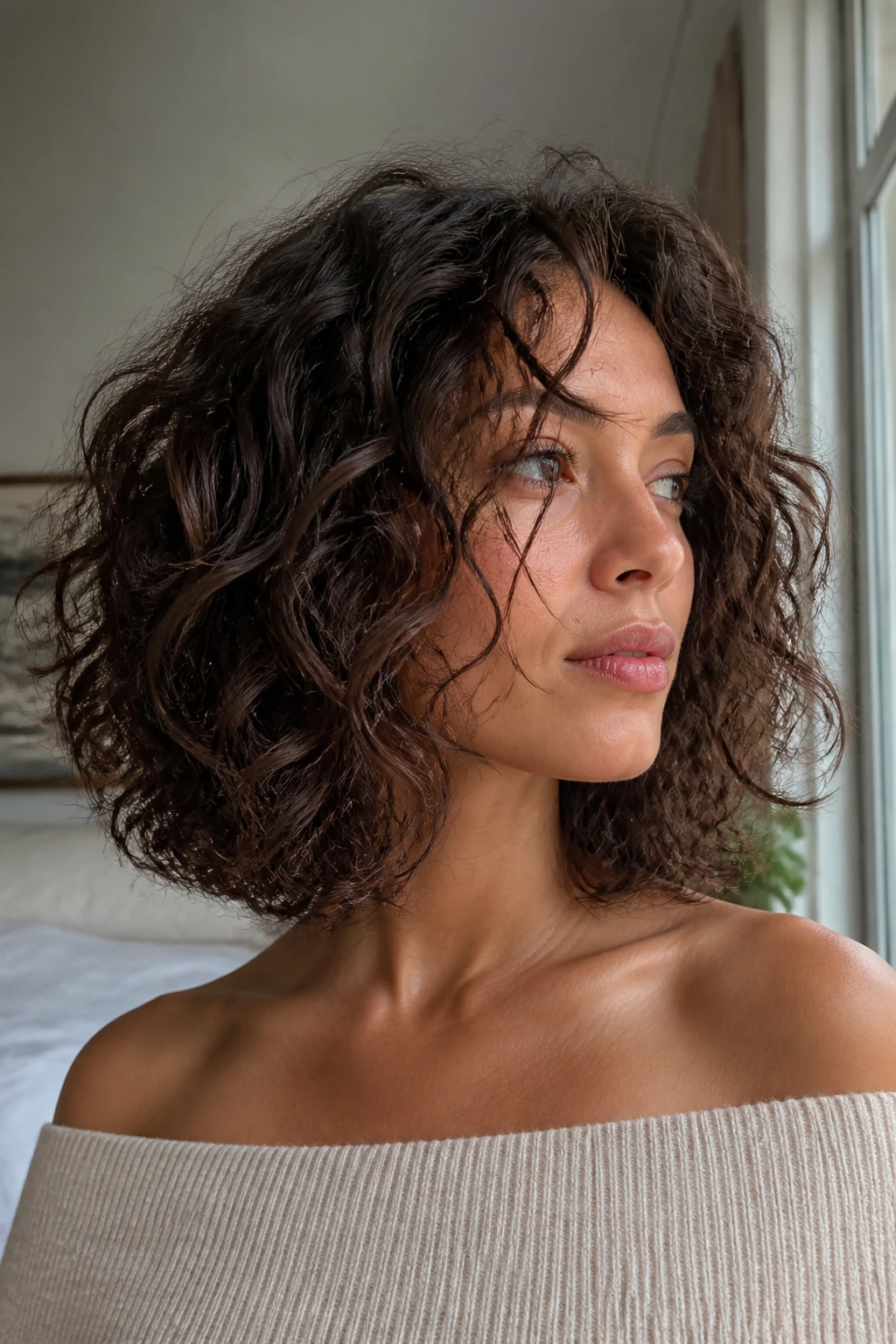
Bring pictures, but bring the right pictures. A curly lob on hair that looks nothing like yours is not especially useful. The better reference is a cut on a similar curl pattern, similar density, and similar face shape. That gives the stylist something real to work from instead of a wish list.
Say where you want the length to land when the curls are dry, not just when they’re wet. That part matters more than people think. If you like the front pieces to touch the collarbone, say that plainly. If you wear a side part 90% of the time, say that too. The cut should fit your actual habits.
A few things worth mentioning out loud:
- How much your curls shrink
- Whether you air-dry, diffuse, or both
- How often you want trims
- Whether you like volume or a sleeker edge
- If you want bangs, and how much forehead you’re willing to show
Also ask whether the stylist cuts curls dry or checks the shape dry before finishing. That one question filters out a lot of bad outcomes.
Tools and Products That Make a Curly Lob Easier to Wear
-
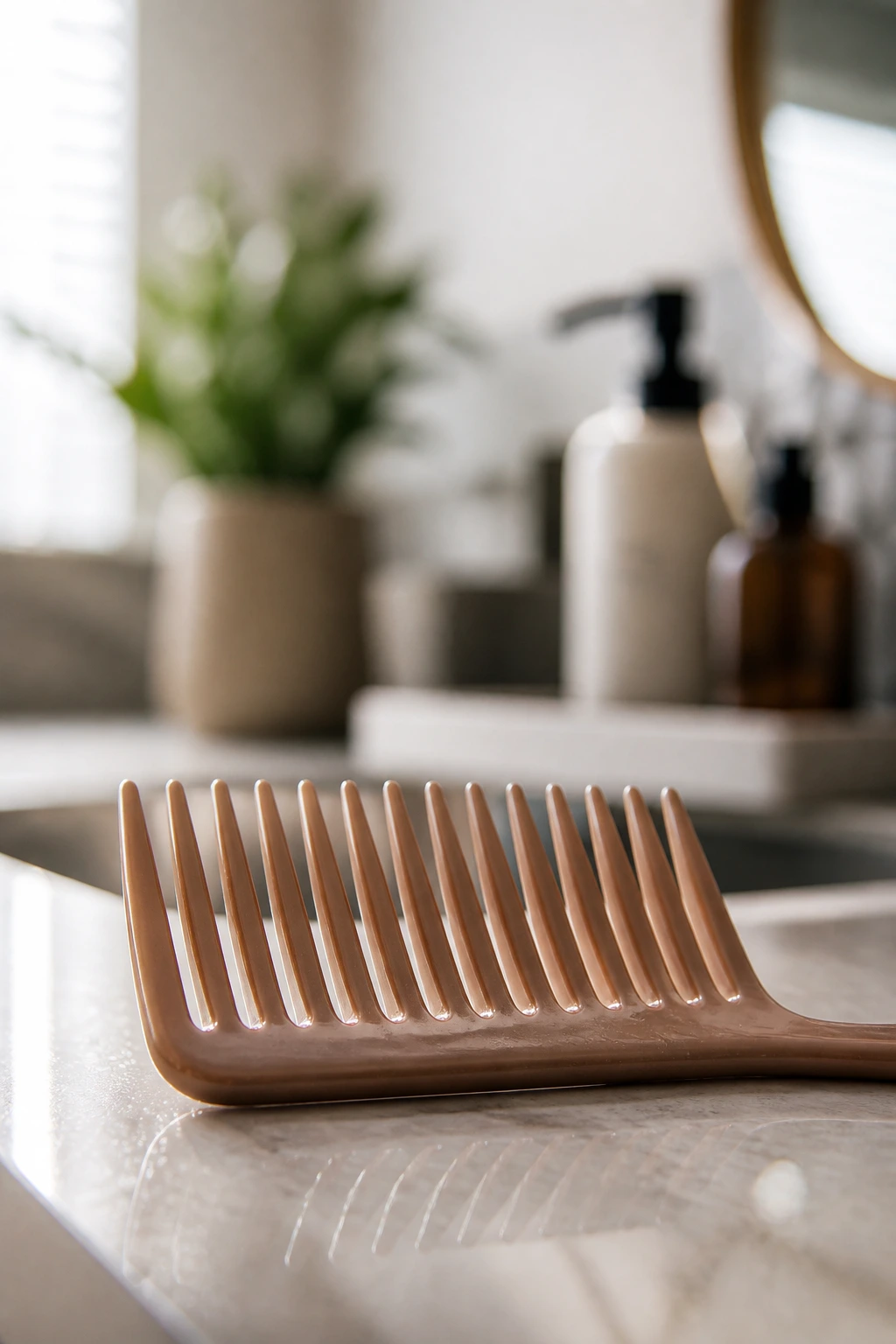
Wide-tooth comb: Good for detangling in the shower without dragging curls apart.
-
Microfiber towel or cotton T-shirt: Dries the surface without roughing up the cuticle the way a terry towel can.
-
Duckbill clips or root clips: Helpful if your crown goes flat and you need a little lift while drying.
-
Diffuser attachment: Keeps curl clumps intact and helps the lob dry with more shape at the roots.
-
Leave-in conditioner: Gives the mid-lengths enough slip so the haircut doesn’t feel dry by midday.
-
Curl cream or light gel: Cream softens; gel holds. Most curly lobs need some version of both.
-
Spray bottle with water: Handy for second-day refreshes and for reactivating product without starting over.
-
Hand mirror: Worth having if you want to check the nape and see whether the back is drying evenly.
How to Style and Refresh Lob Haircuts for Curly Hair
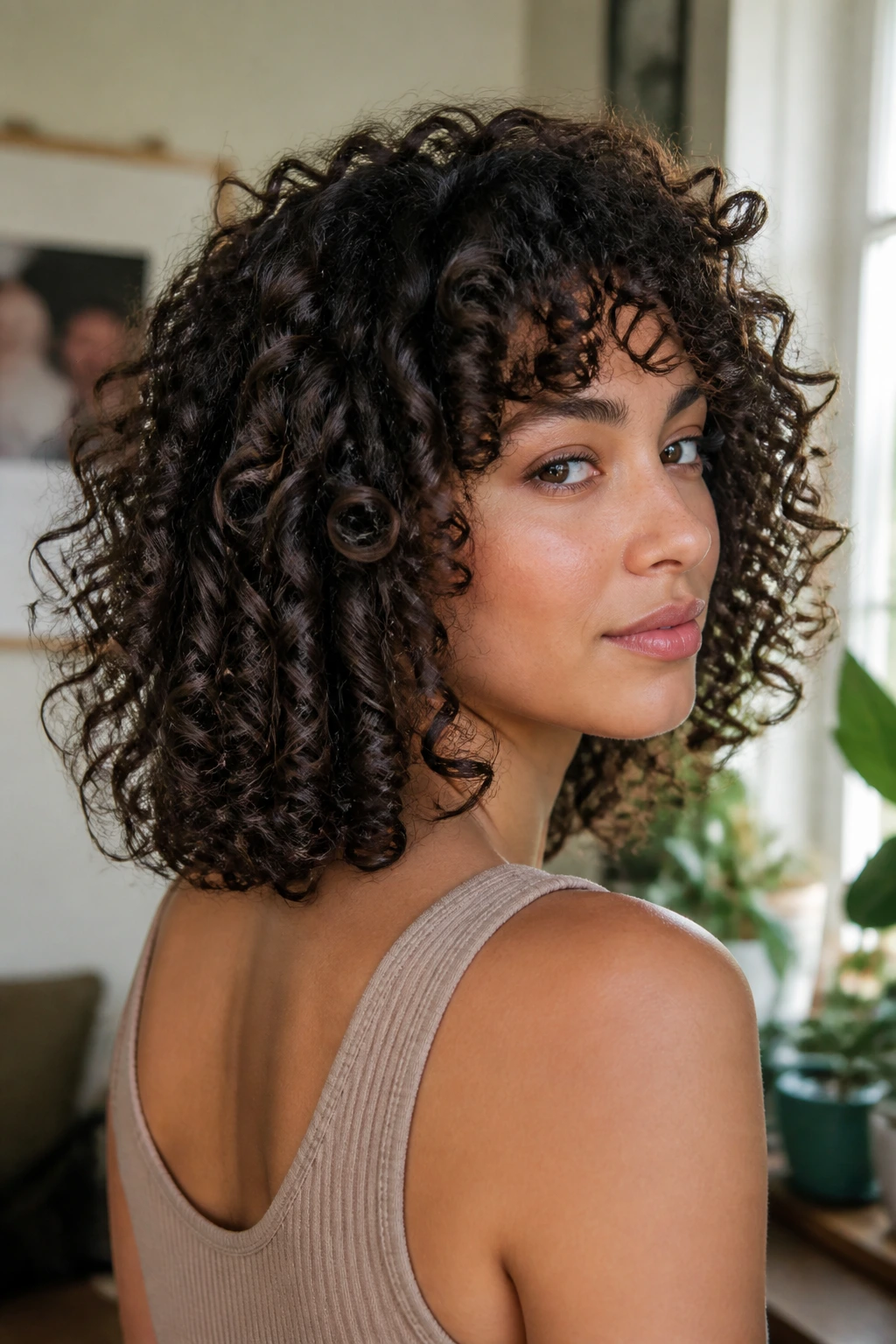
Wash Day: Start with soaking-wet hair. Rake in leave-in conditioner, then add curl cream or foam where your hair needs softness, and finish with gel if you want a firmer cast. The lob shape usually looks best when the product is distributed evenly from mid-length to ends, not piled just at the top.
Drying: Scrunch with a T-shirt or microfiber towel, then diffuse on low heat and low airflow. If you keep touching the curls while they’re still damp, you will create frizz right at the surface, and the cut will lose the clean edge that makes a lob look finished.
Second-Day Reset: Mist the front and crown with water, smooth a pea-sized amount of gel between your palms, and scrunch where the curl clumps need to regroup. You do not need to soak the whole head again. Most of the time, the front pieces and the part are what need help.
When the Crown Goes Flat: Clip the roots while the hair dries or flip the part to the other side for a day. Small changes do more than people expect.
When the Ends Puff Out: Use one drop of light oil on your hands and press it over the outer layer. Press. Don’t rub.
Common Mistakes That Turn a Lob Into a Triangle
-
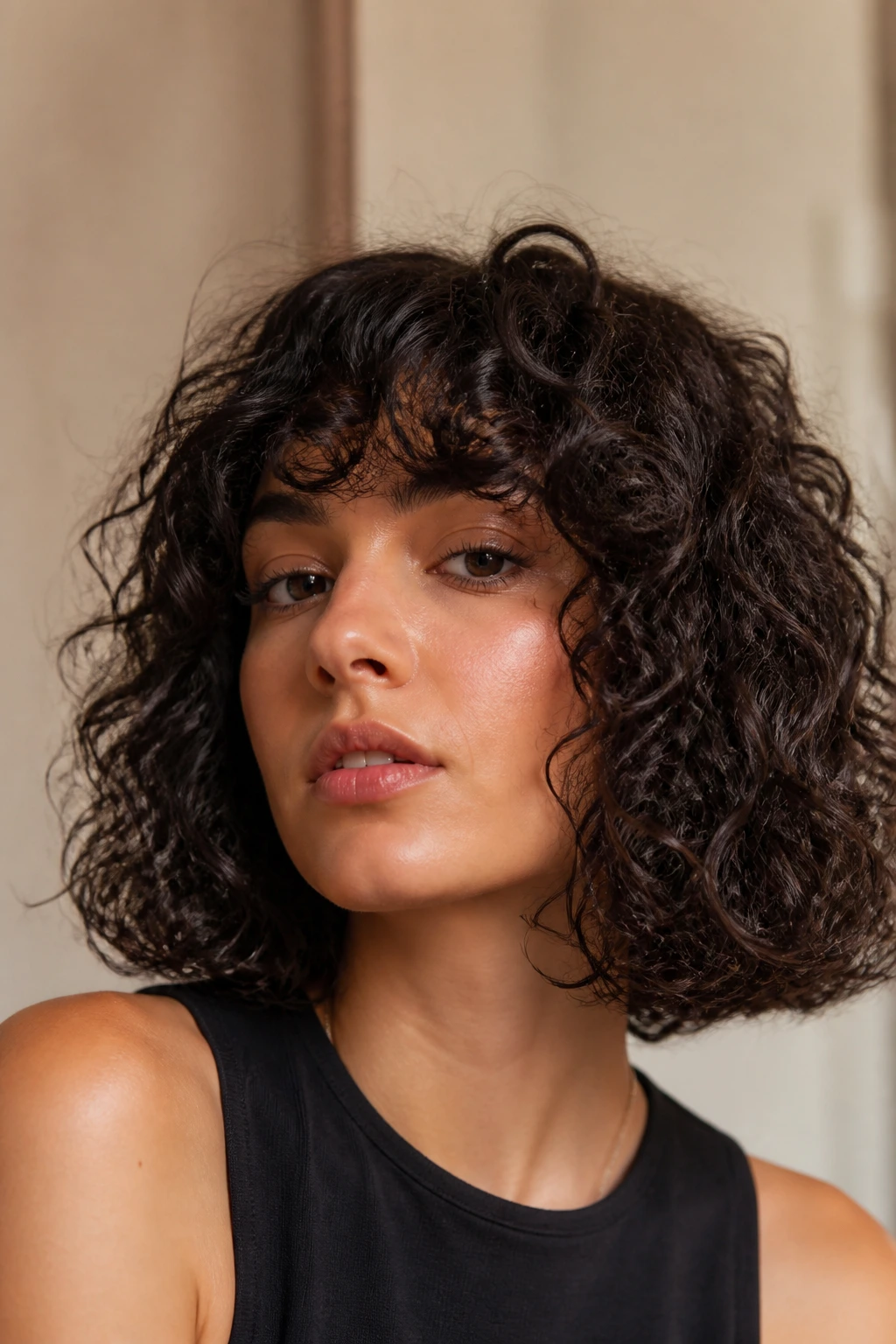
Cutting it wet and trusting the wet shape: Wet curls stretch. If the stylist does not account for shrinkage, the finished cut can land much shorter and rounder than planned.
-
Thinning the ends too much: The bottom starts to frizz and lose weight, which makes the haircut look thin even when the hair is dense.
-
Leaving the front too short: Once the curls dry, the front can bounce up above the jaw and make the whole lob feel boxy.
-
Using too much heavy cream on fine curls: The crown slumps, the ends stick together, and the haircut loses movement.
-
Ignoring the part: A middle part can flatten one face shape and flatter another. A side part can fix a lot of lift issues before they start.
-
Chasing symmetry that curls won’t keep: Curly hair will never sit like a ruler-drawn straight cut. Aim for balance, not identical sides.
Variations and Alternatives to Try
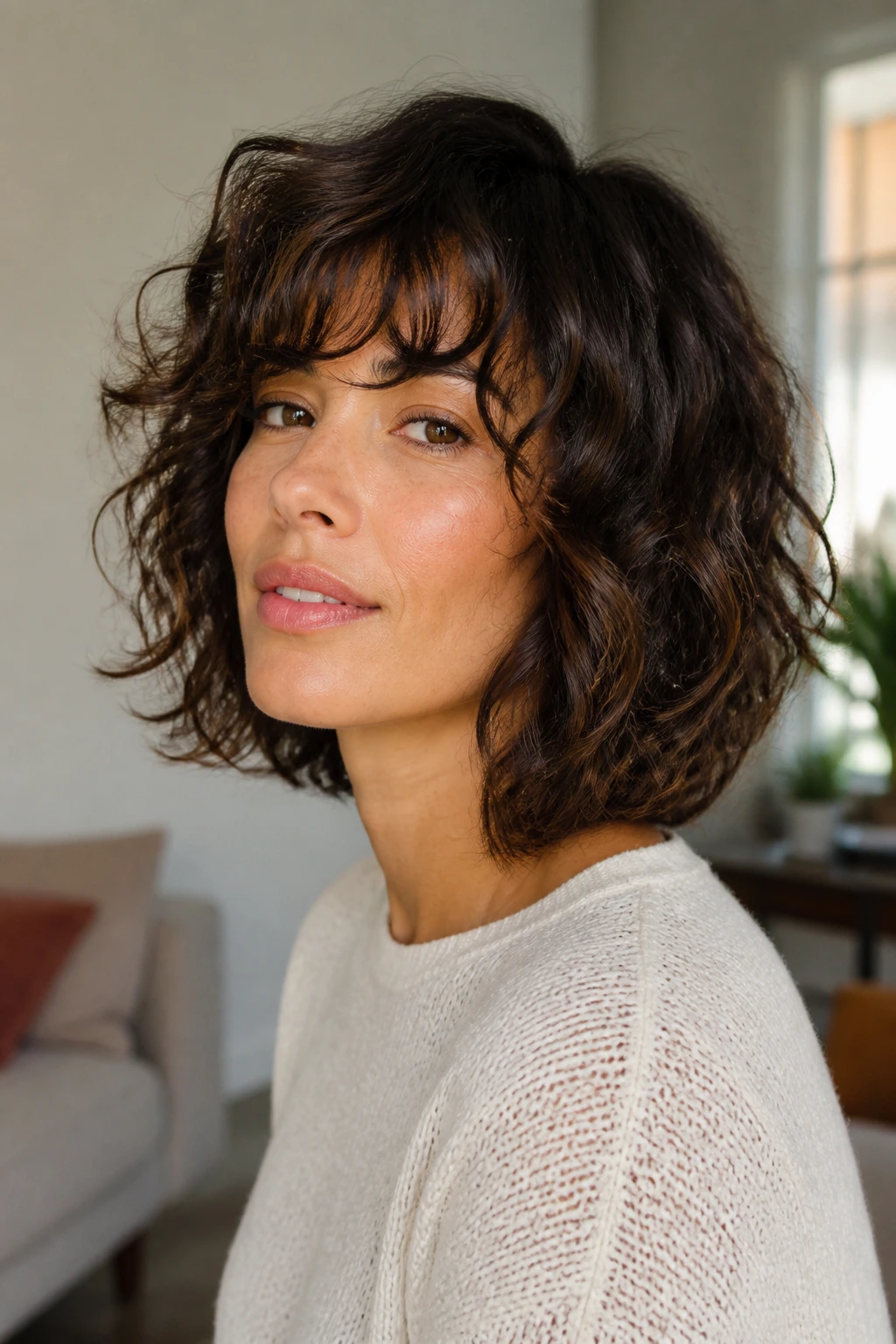
The Soft A-Line Lob: Keep the front a little longer than the back, but soften the angle so it doesn’t look severe. This works well if you want the neck to feel open and the face to look a bit longer. It’s also one of the easier cuts to grow out.
The Fringe-Forward Lob: Add curtain bangs, bottleneck bangs, or a fuller curly fringe to shift attention upward. This is a good option if you want the haircut to feel fresh without losing length everywhere else. The fringe should be left longer than you think so it can settle after drying.
The Curl-Cut Shag Lob: Build in more layers through the crown and mid-lengths for movement and lift. This suits people who like volume and a looser outline. It’s less tidy than a classic lob, but it has personality.
The Minimal-Maintenance Lob: Keep the perimeter clean, limit layering, and let the curls do most of the work. This is for people who want a shape that survives a few lazy wash days. It grows out gracefully, which is half the point.
The Side-Swept Editorial Lob: Push the part hard to one side and let the length fall in a dramatic curve. It’s a stronger look, but it can be very flattering on curls that need root lift and face-framing at the same time.
Trim Timing, Grow-Out, and Maintenance

A curly lob stays sharp longer when the perimeter is checked before the ends start looking see-through. For most curl patterns, a trim every 8 to 12 weeks keeps the line crisp. If you like a softer, longer grow-out, you can stretch that to 12 to 16 weeks, but the shape will start reading less like a lob and more like a mid-length cut.
Product buildup can flatten a lob faster than people expect, especially if you use a lot of cream or oil. A gentle clarifying wash every couple of weeks can reset the roots without stripping the curls bare. If the hair feels rough afterward, follow with a richer conditioner or a hydrating mask.
Sleep matters too. A loose pineapple, a satin bonnet, or a satin pillowcase keeps the top layers from getting squashed overnight. If your lob has bangs or strong face-framing pieces, pin those sections loosely so they don’t wake up bent in strange directions.
When the cut grows out, don’t panic at the first hint of softness. Curly lobs often look better with a little age on them. The line loosens, the layers settle, and the whole thing starts to read less “fresh from the chair” and more “this hair knows what it’s doing.”
Frequently Asked Questions About Curly Lob Haircuts
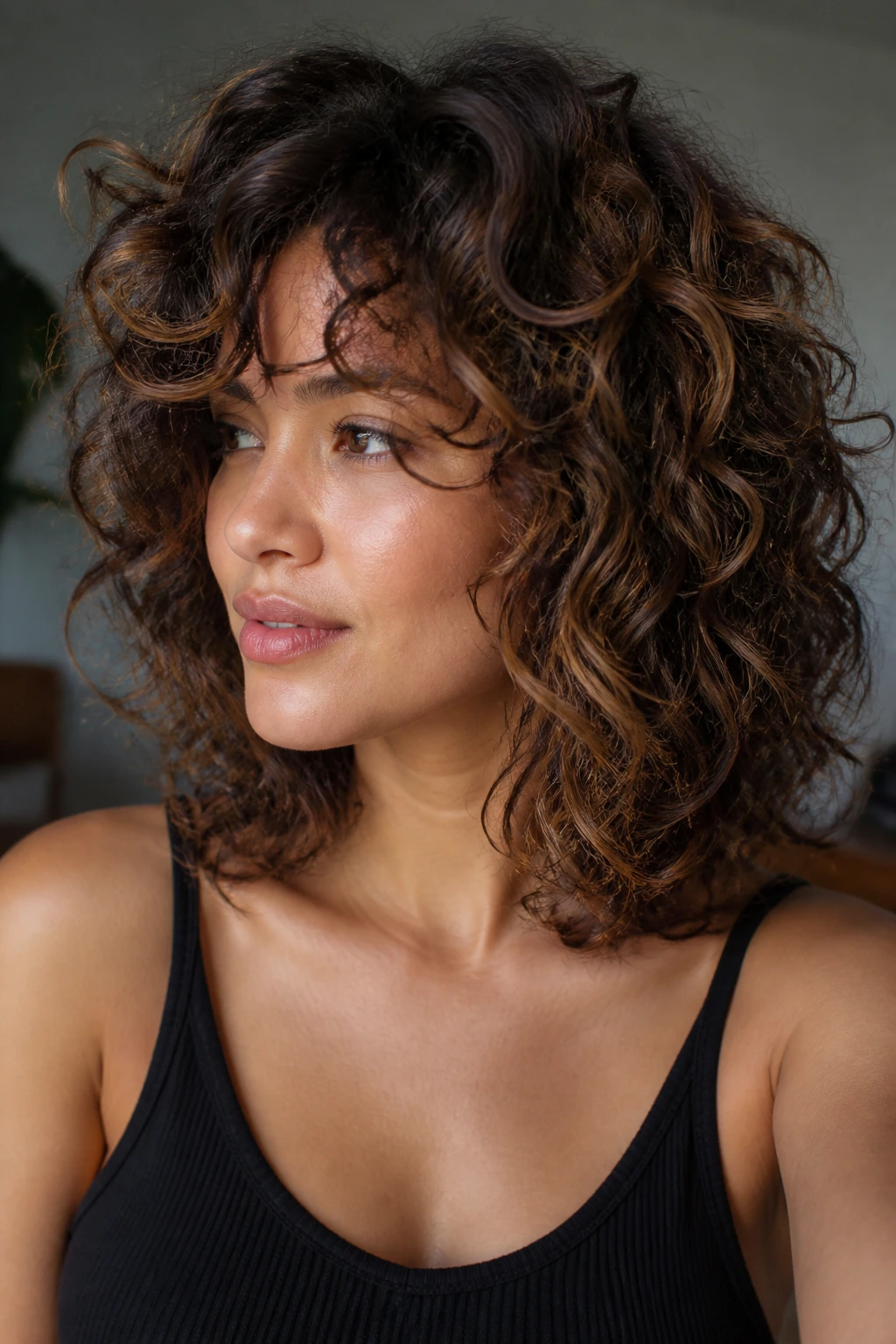
How short can a curly lob be before it turns into a bob?
For most curly patterns, once the dry length starts sitting around the jaw or above it, the cut begins reading more like a bob. The safest lob zone is usually somewhere between the chin and collarbone when dry, with enough extra length to account for shrinkage.
Is a blunt lob bad for curly hair?
No, but it needs the right curl pattern and the right density. Thick or springy curls can hold a blunt edge well, while very fine or highly frizz-prone hair may need a little layering so the bottom does not puff outward.
Should curly lobs be cut wet or dry?
Dry or mostly dry cutting usually gives the best read on the finished shape, because curls change a lot as they dry. Wet cutting can still work if the stylist knows how your hair shrinks and checks the shape again after drying.
What if my curls shrink much shorter than I expect?
Tell the stylist where you want the haircut to land after shrinkage, not before it. If your hair shrinks several inches, leave extra length in the front and around the collarbone so the lob still reads as a lob once it sets.
Can fine curly hair wear a lob without looking thin?
Yes, but the cut needs restraint. Keep the layers minimal, preserve a stronger perimeter, and avoid over-thinning the ends. Fine curls usually look better with a clean line than with lots of carving.
Do bangs work with a curly lob?
They do, but they need room. Curtain bangs, bottleneck bangs, or a soft curly fringe tend to be easier than a blunt brow line, because curls shrink and spring differently across the forehead.
How often should I trim a curly lob?
Every 8 to 12 weeks keeps the shape neat for most people. If you prefer a softer, grown-out look, you can wait a bit longer, but the ends will start to lose the clean outline that makes a lob feel intentional.
What if one side flips out more than the other?
That usually means the curl pattern, not the haircut, is doing the talking. Try changing the part, refreshing the louder side with a little more hold, or asking for a small adjustment at the next trim rather than trying to force both sides to behave the same way.
A Shape That Lets Curls Breathe
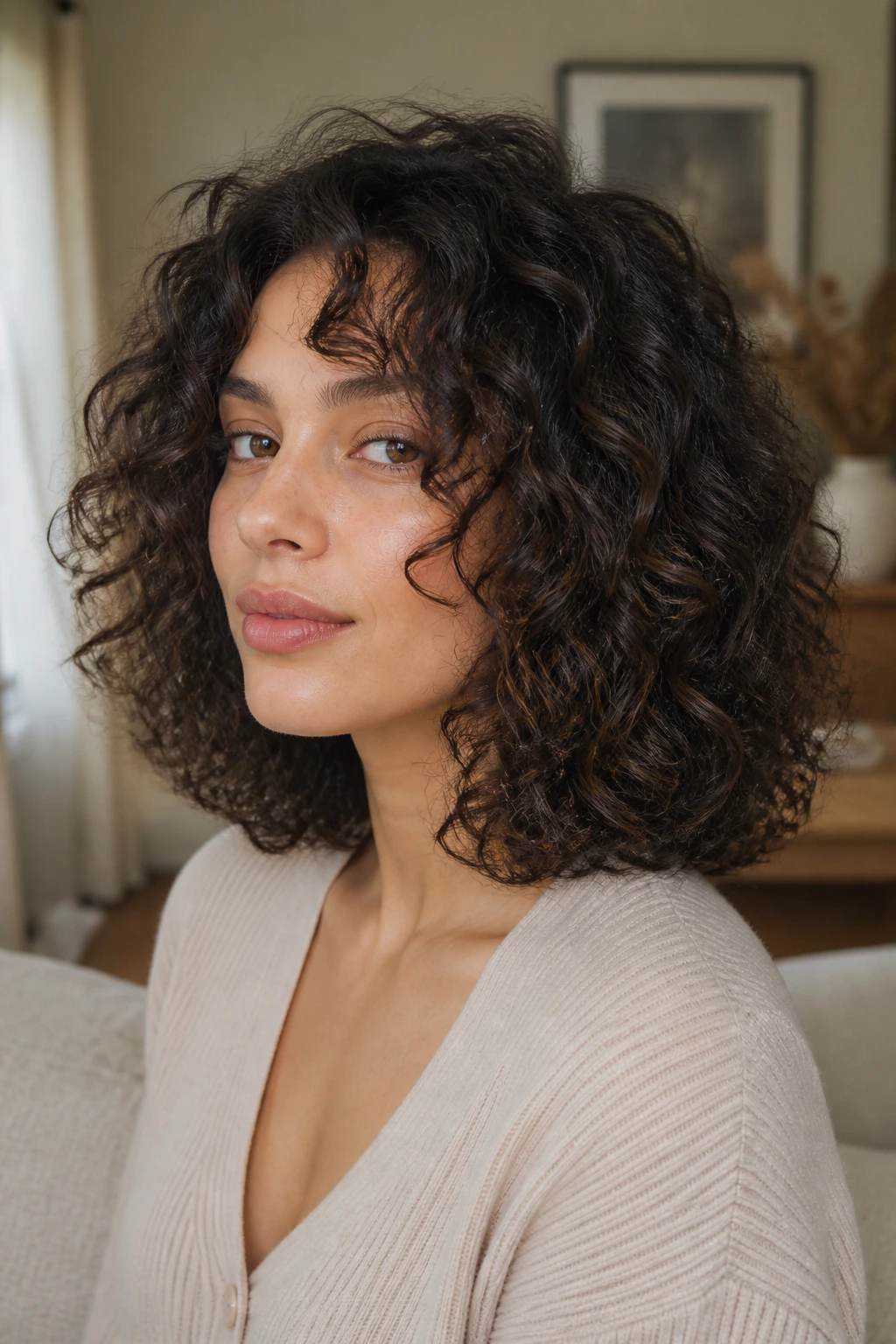
A good curly lob doesn’t bully the hair into one neat picture. It gives the curls a clear outline, then lets them move inside it. That’s the part people respond to, even if they can’t name it: the haircut looks like it belongs to the hair instead of sitting on top of it.
If you’re standing between short and long, the lob is still one of the most useful places to land. It gives you shape, it grows out with less drama than a sharp bob, and it leaves enough room for curls to do their strange, lovely thing without turning into a triangle by Tuesday.
Pick the version that matches your curl pattern, your density, and your patience level. The right one will look good on wash day, better on day three, and still make sense when the ends start to soften.
