



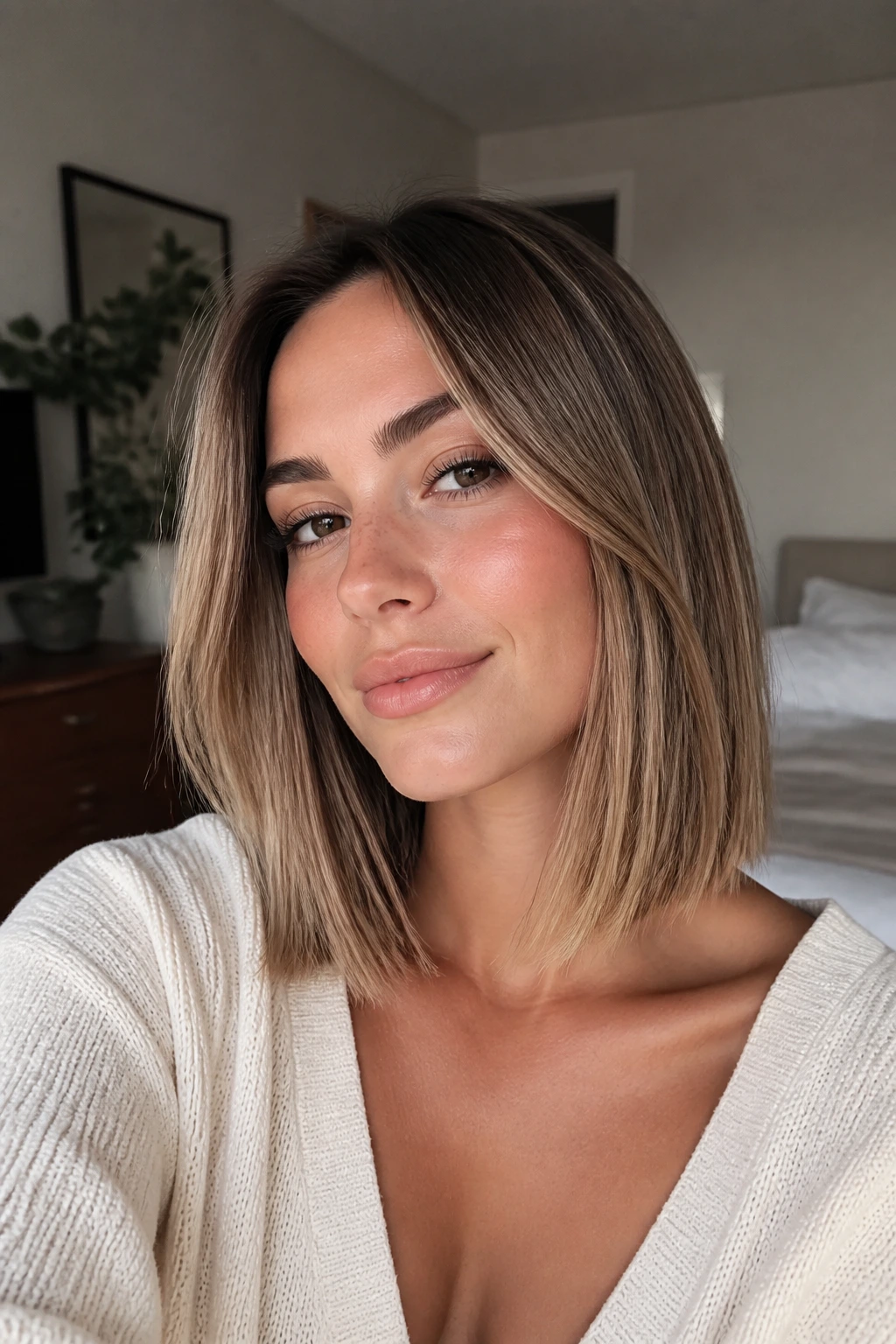
A lob haircut does something long hair rarely allows: it gives the ends a clean line without stealing the swing that makes long hair feel like yours. On long hair, that matters. A collarbone cut can make heavy lengths move again, sharpen tired ends, and stop the whole shape from collapsing into a curtain.
That is why lob haircuts for long hair keep showing up in salon chairs. They work as a reset when the bottom few inches look worn out, but they also work as a style choice when you want something easier to blow-dry than waist-length hair. The trick is in the details — one extra inch in front changes the face, a blunt edge changes density, and a soft interior layer changes whether the cut sits like a sheet or a cloud.
Some lobs want a round brush and patience. Others look better finger-styled and a little messy. A few are sharp enough to need a flat iron pass, and a few are practically made for air-drying. The right one depends on how your hair falls now, not on some fantasy photo from a salon wall, and the 33 ideas below make those differences obvious.
Why These Lob Haircuts Are Worth Your Time
-
Long Hair, Less Drag: A lob takes weight off the bottom without forcing you into a short cut that feels like a personality change.
-
Shape You Can Actually See: Collarbone length shows off the cut line, so blunt edges, soft layers, and face-framing pieces all read clearly instead of disappearing into extra length.
-
Easier Daily Styling: A good lob usually needs fewer minutes at the blow dryer because there’s simply less hair to tame at the ends.
-
Better Grow-Out: When a lob grows, it tends to soften instead of turning into a messy triangle, especially if the perimeter was cut well in the first place.
-
Room for Your Texture: Straight hair, waves, curls, and thick coarse hair all behave differently in lob form, which is exactly why there are so many versions here.
-
Salon Photos Make Sense: The differences are visible. You can point to the front length, the back angle, the fringe, or the layering and actually ask for something specific.
1. Blunt Collarbone Lob
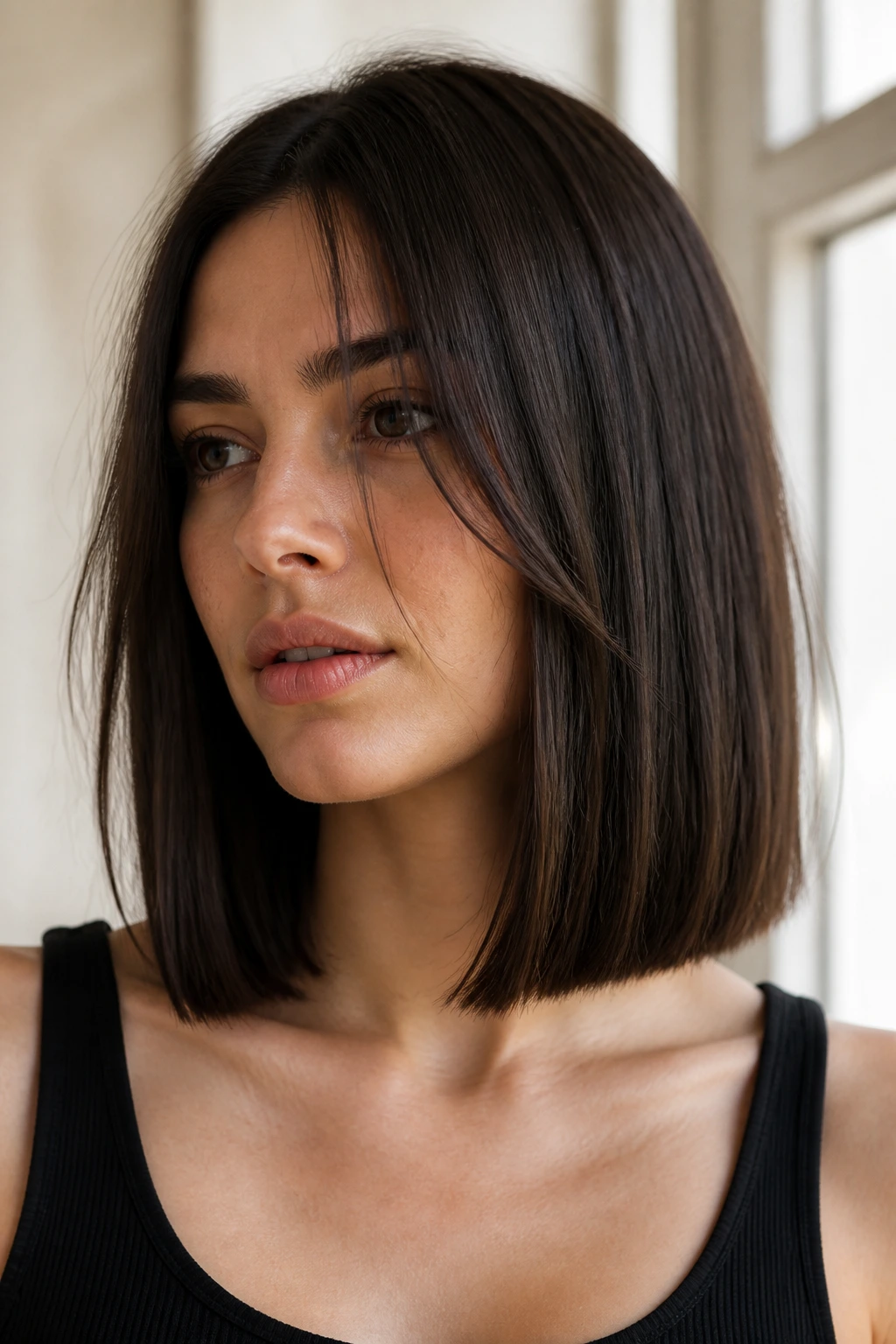
This is the cut I recommend when long hair has started to look stringy at the ends. A blunt collarbone lob puts a hard line right where the neck and shoulders change the silhouette, and that clean edge makes even ordinary hair look deliberate. It’s especially good if your hair is dense, because the straight perimeter keeps the bottom from flaring out.
Why It Works
Ask for one clean length at the front with only minimal interior softening. If the stylist starts slicing in layers everywhere, the whole point gets lost. The magic here is the weight line — the hair sits with a little more gravity, but not so much that it drags.
A blunt lob also gives you options. Wear it air-dried and slightly bent at the ends, or blow it straight with a paddle brush and a touch of serum. Either way, the edge stays visible.
- Best for: Thick straight hair, wavy hair that goes limp at longer lengths
- Avoid if: You want lots of movement through the ends
- Styling cue: Tuck one side behind the ear to show the line
Pro tip: Keep the ends trimmed every 6 to 8 weeks or the bluntness turns fuzzy fast.
2. Soft Layered Lob with Hidden Movement

This version keeps the perimeter calm while hiding the movement inside the cut. It’s the lob for people who hate seeing obvious layers but still want their hair to bend instead of hang like a sheet of paper. The outside line stays neat. The inside does the work.
What I like here is the restraint. A stylist can remove bulk from the middle and lower interior without breaking the outline, which means your hair still looks full from the front. On long hair, that matters because too much layering can make the bottom look thin before you’re ready for that.
If your hair has a little wave, this cut usually wakes it up without forcing it into a shag. If your hair is straight, it stops the ends from looking heavy and lifeless. Ask for layers that start below the chin and blend softly toward the collarbone.
3. Lob with Curtain Bangs

Want the easiest way to make a lob feel softer around the face? Add curtain bangs. They break up the front line without locking you into a heavy fringe, and they slide into the rest of the cut instead of sitting on top of it like a separate idea.
The best curtain-bang lob has a center part and a gentle cheekbone sweep. Too short, and the bangs fight the length. Too blunt, and you lose the easy movement that makes this combo good in the first place. Keep the shortest pieces around the nose or upper cheek, then let the sides drop into the lob.
How to Wear It
Curtain bangs look best when they’re lightly blown away from the face with a round brush or even just twisted dry. A little bend is enough. You do not need perfect symmetry here, and honestly, the slightly uneven version usually looks better.
4. French-Girl Lob
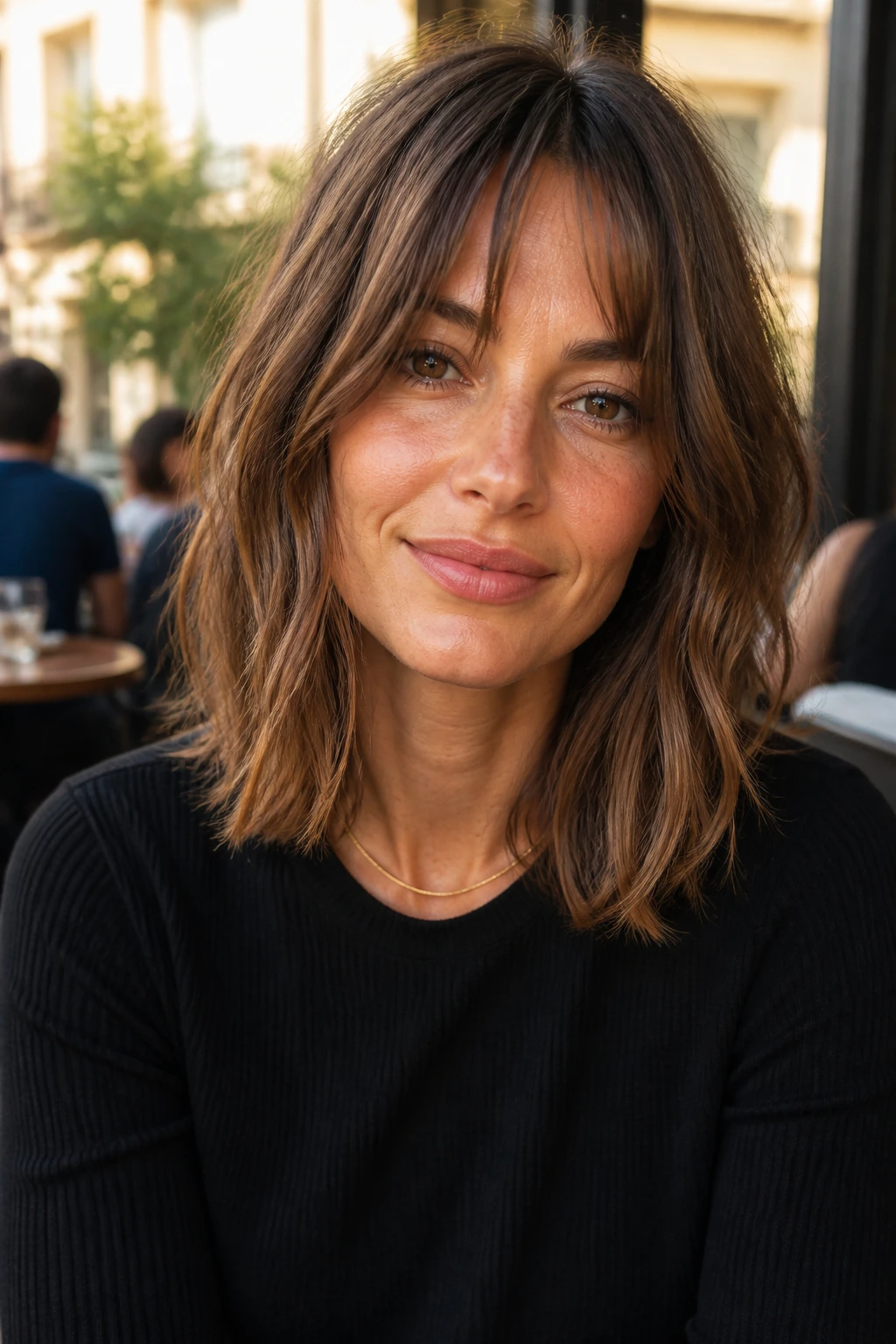
A French-girl lob has that slightly undone shape that never looks overworked. The length usually sits at or just below the collarbone, the ends are soft rather than razor-sharp, and the whole cut feels like it was meant to be air-dried after a good cut, not fussed over for 40 minutes.
It suits long hair because it keeps the old length logic — movement, softness, ease — but trims away the part where long hair starts to go flat and fussy. The trick is not to over-style it. A small amount of mousse at the roots and a bend through the mid-lengths is enough. If you flat-iron every wave out of it, you kill the charm.
Ask your stylist for a slightly piecey perimeter with soft internal texture. Not choppy. Not shaggy. Just enough irregularity that the cut moves when you turn your head.
5. Choppy Textured Lob
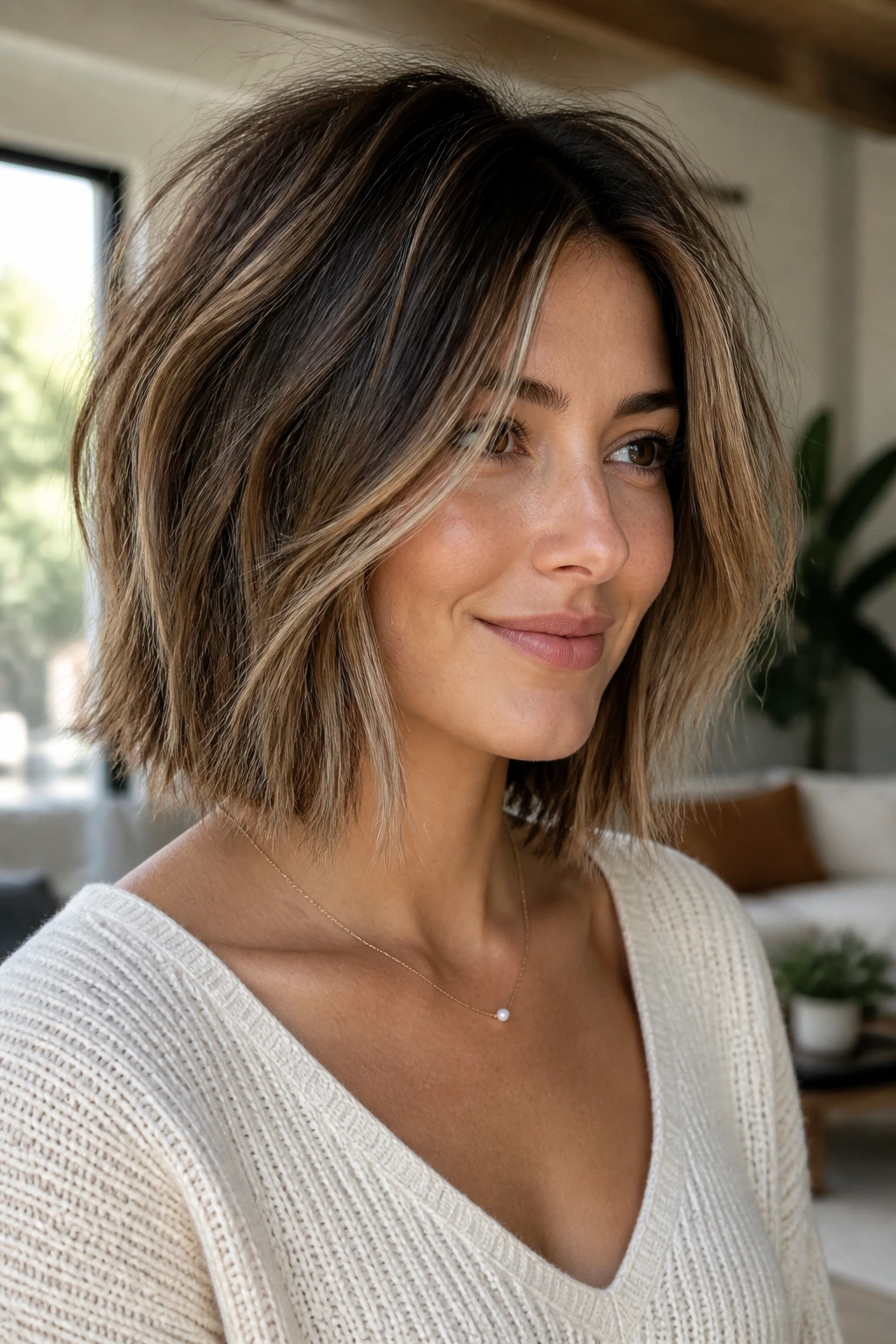
A choppy lob is the one that looks like it got a little attitude after the scissors came out. The ends are broken up, the texture is visible, and the whole shape feels lighter than a blunt lob. It’s a smart cut if your hair falls flat and you want the ends to read as separate pieces rather than one smooth line.
The risk is overdoing it. Too much choppiness on already fine hair can leave the perimeter thin and sorry-looking. On thicker hair, though, the texture can be a gift. It breaks up bulk and makes the cut easier to toss into waves with a curling iron or a couple of braids overnight.
What to Ask For
- Soft point-cut ends, not razor-thin strands
- Light internal texture through the mid-lengths
- No heavy stacking in the back
A good choppy lob still has a shape. It just doesn’t look precious.
6. A-Line Lob
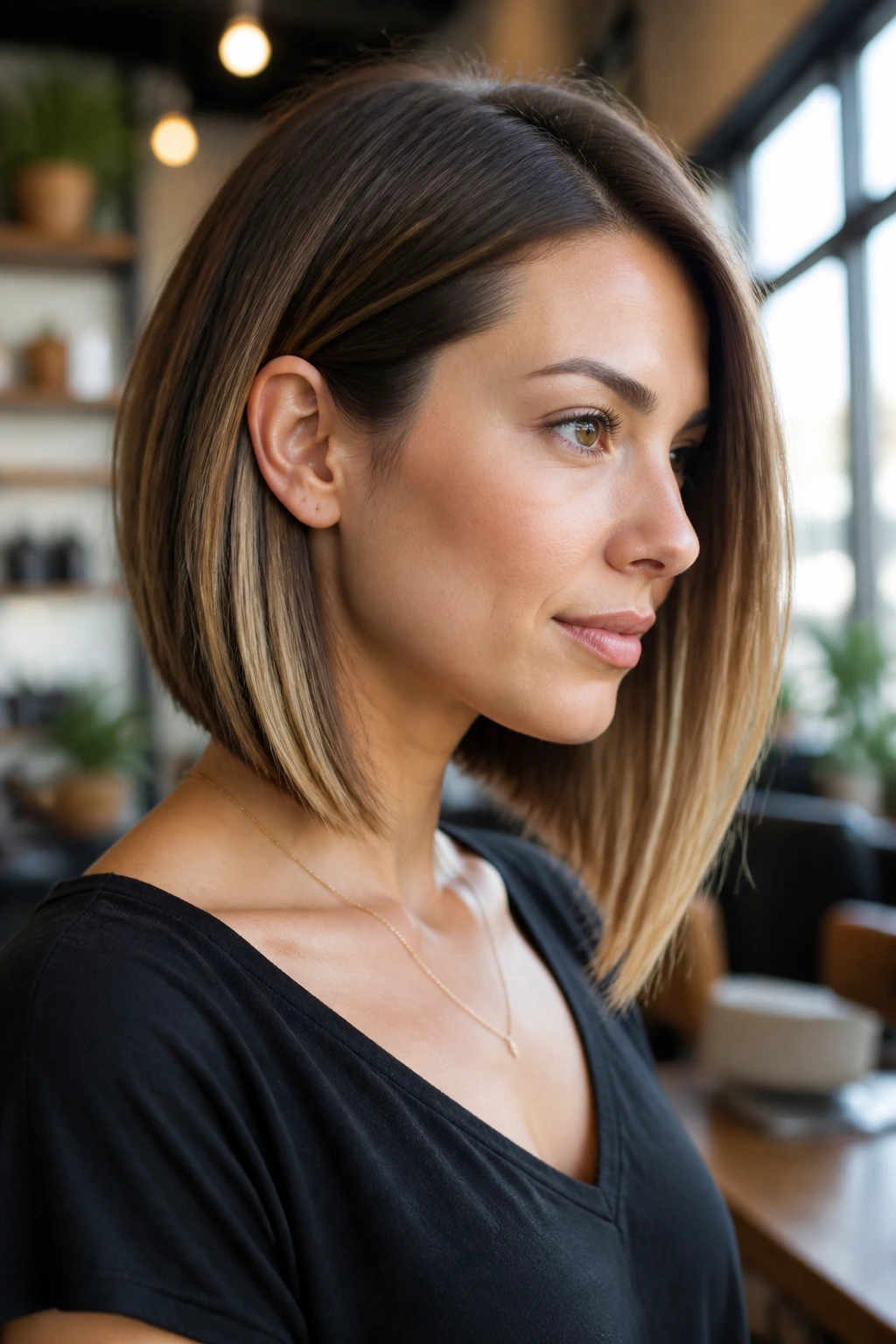
This is the lob with a clear angle: shorter in the back, longer in the front. It’s the cut people choose when they want the front to skim the clavicle while the nape stays a little tighter and lighter. The profile looks sharp from the side, which is why it flatters people who want a longer neck line or a little more structure.
I prefer this version on straight or softly waved hair because the angle reads cleanly. On very curly hair, the difference between back and front can blur unless the cut is done with shrinkage in mind. That’s not a dealbreaker, just something to plan for.
The best A-line lobs have enough length in front to tuck behind the ear without exposing the angle too aggressively. That little detail keeps the cut wearable instead of architectural.
7. Center-Part Wavy Lob
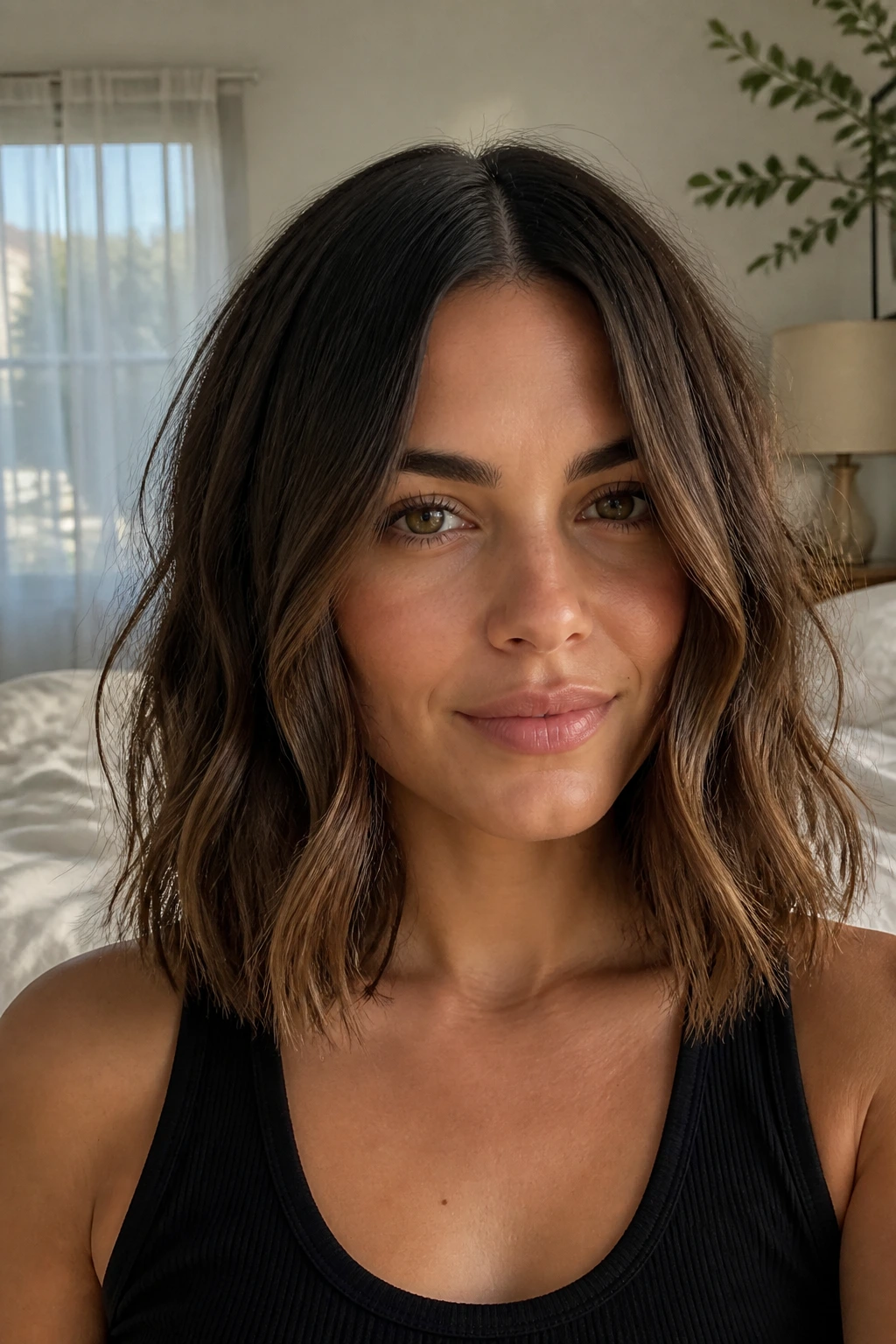
A center-part wavy lob is plain in the best sense. Nothing about it shouts, which is why it stays useful for so many hair types. The part creates symmetry, the waves add softness, and the length sits in that sweet spot where hair can still move when you turn your head.
The key is keeping the wave pattern loose. Think 1-inch to 1.25-inch curling iron bends, or a flat iron twist if that’s your habit. Tight curls make the shape read too short. Flat iron-straight hair can make it feel severe. The wavy middle ground is what gives the cut life.
This works especially well if your long hair has been wearing you instead of the other way around. There’s less weight at the ends, less time under the dryer, and more visible shape around the jaw and collarbone.
8. Side-Part Lob with Long Fringe
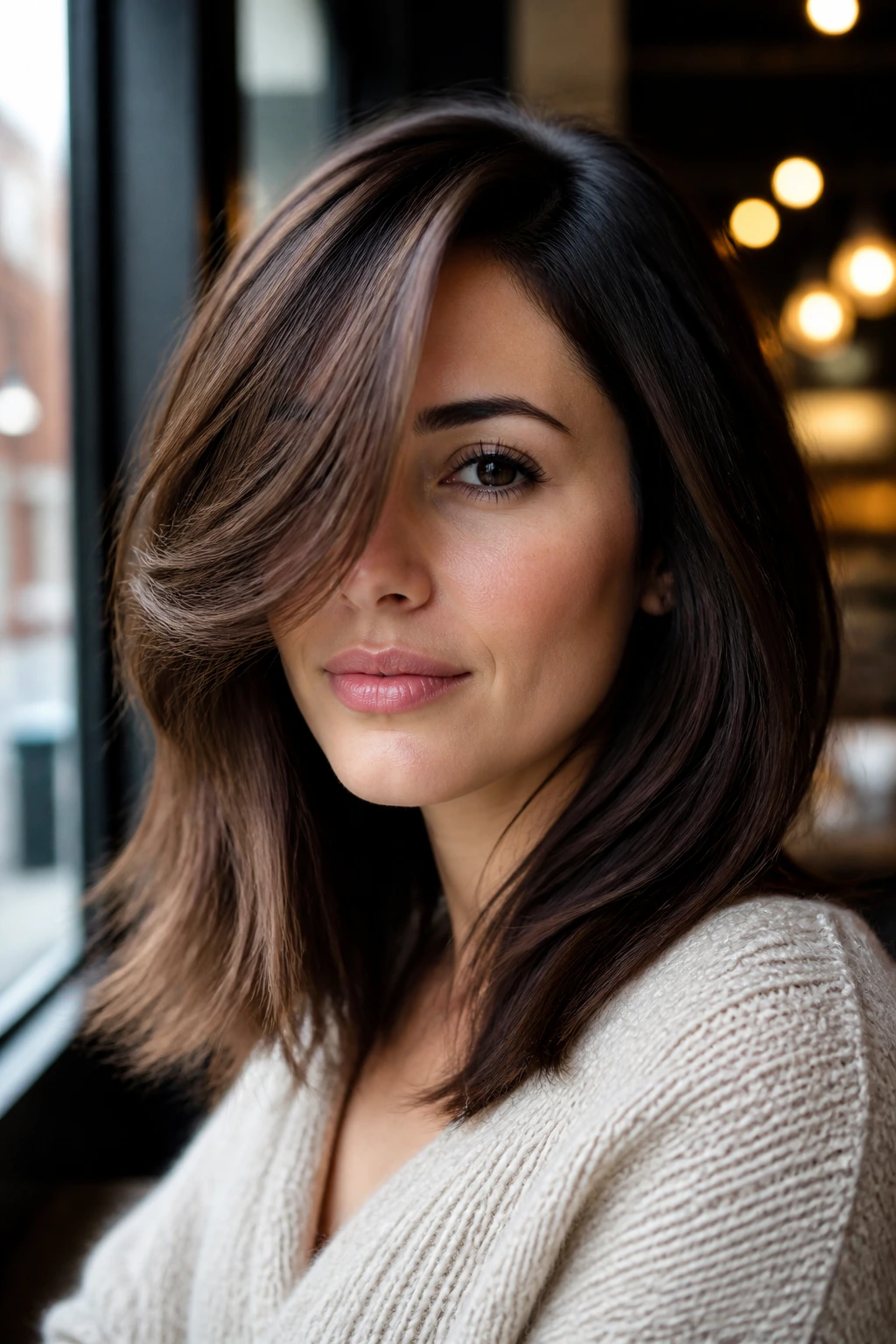
A deep side part changes the mood of a lob fast. Push the hair over, and the whole cut gets more drama, more lift at the roots, and a longer line across the forehead. Add a long fringe — not bangs exactly, more like a sweeping front section — and the effect becomes softer and more flattering for round or square faces.
The side-part version is one of my favorite fixes for hair that always goes flat in the middle. A strong part gives the roots a place to stand up, especially if you hit them with a root spray before drying. The fringe then bridges the gap between face and length so the cut doesn’t feel boxy.
Keep the fringe long enough to tuck back or redirect. If it’s too short, the whole thing loses its easy flow.
9. Face-Framing Lob
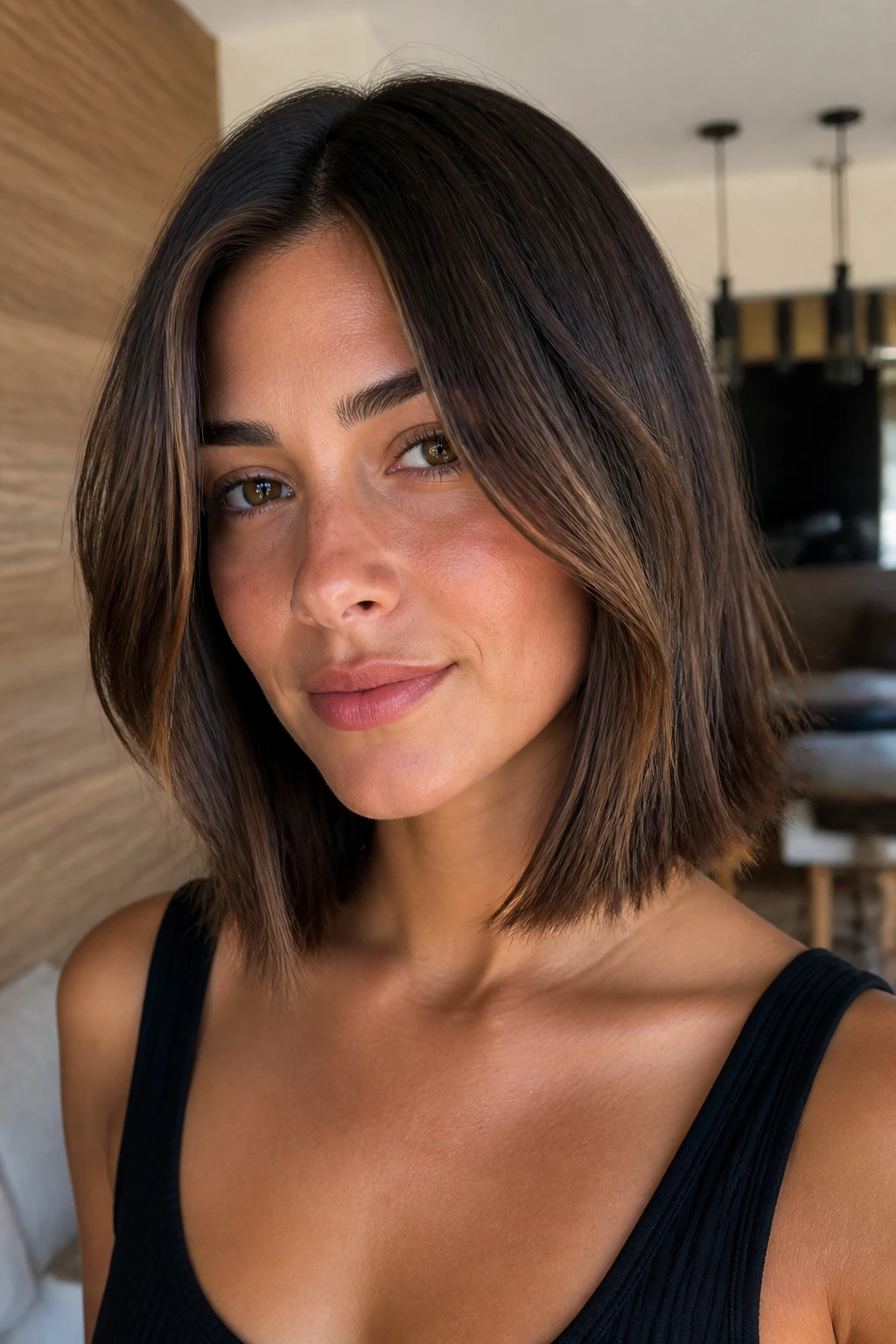
Want to keep the back simple but give the front some motion? Go face-framing. This lob keeps the body of the cut clean while the pieces near the cheeks and jaw fall a little longer and softer. It’s not as obvious as curtain bangs, and that’s the appeal.
The framing pieces should start somewhere around the chin and drift into the collarbone, depending on how much contour you want. On long hair, that subtlety matters because a heavy front can swallow the rest of the cut. Keep the face frame light enough to move when you tuck the hair behind your ears.
Best For
- People who wear their hair down most days
- Anyone who wants shape without a full fringe
- Wavy or straight textures that need a little front motion
This is the cut that quietly fixes a lot of boredom.
10. Razor-Cut Lob
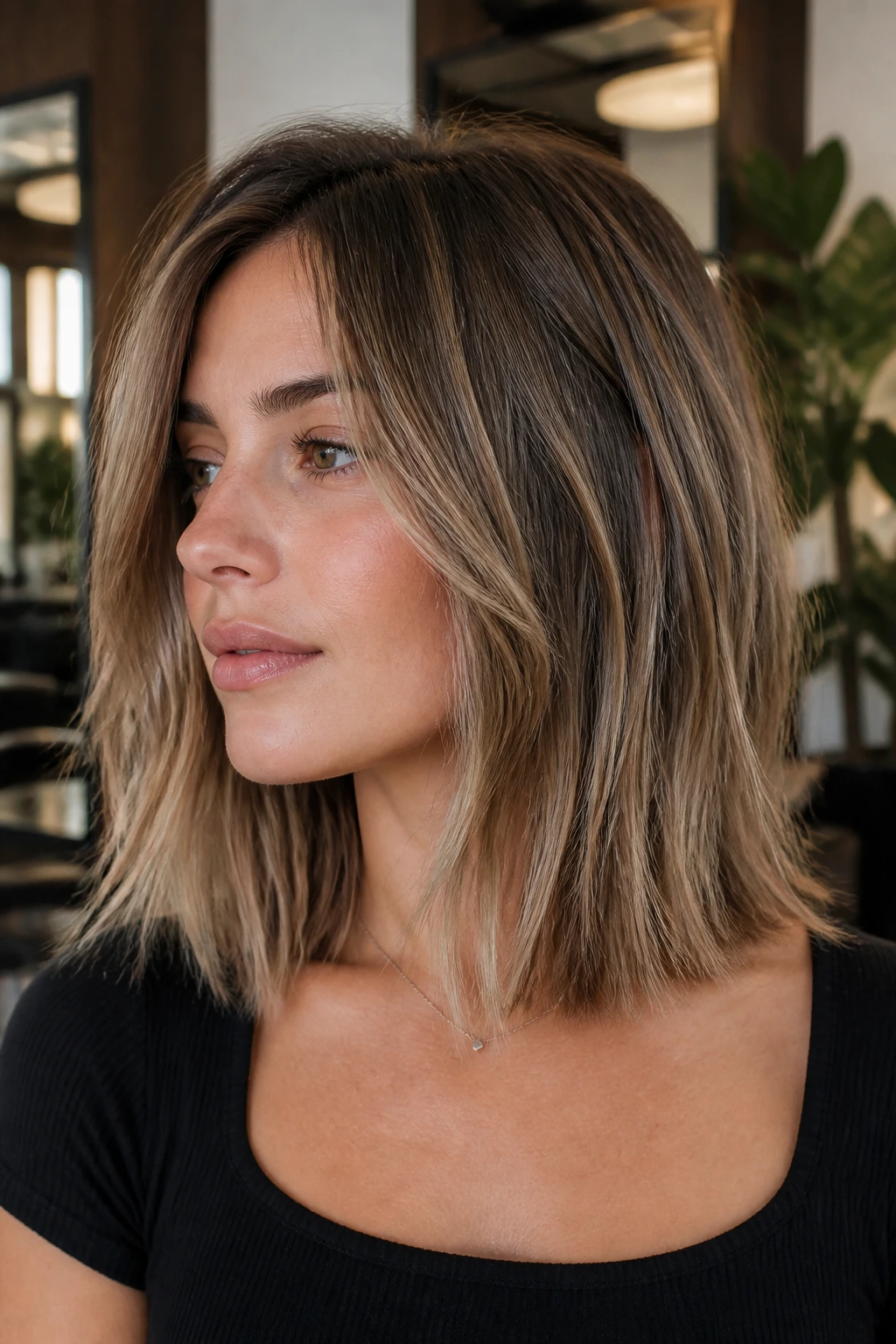
A razor-cut lob has a feathered, airy feel that scissors can’t always imitate. The ends look softer and less packed together, which is useful if your hair is thick, coarse, or stubborn about lying flat. It can make the lob feel lighter without removing all the weight from the perimeter.
Not every head of hair loves a razor, though. Fine or fragile hair can fray at the ends if it’s cut too aggressively, and that just looks tired. The best razor lob still has control. It’s not shredded. It’s edged.
If you want this shape, ask for soft razored movement on the ends only and keep the rest of the line fairly stable. That gives you texture without chewing up the length.
11. Sleek Glass Lob
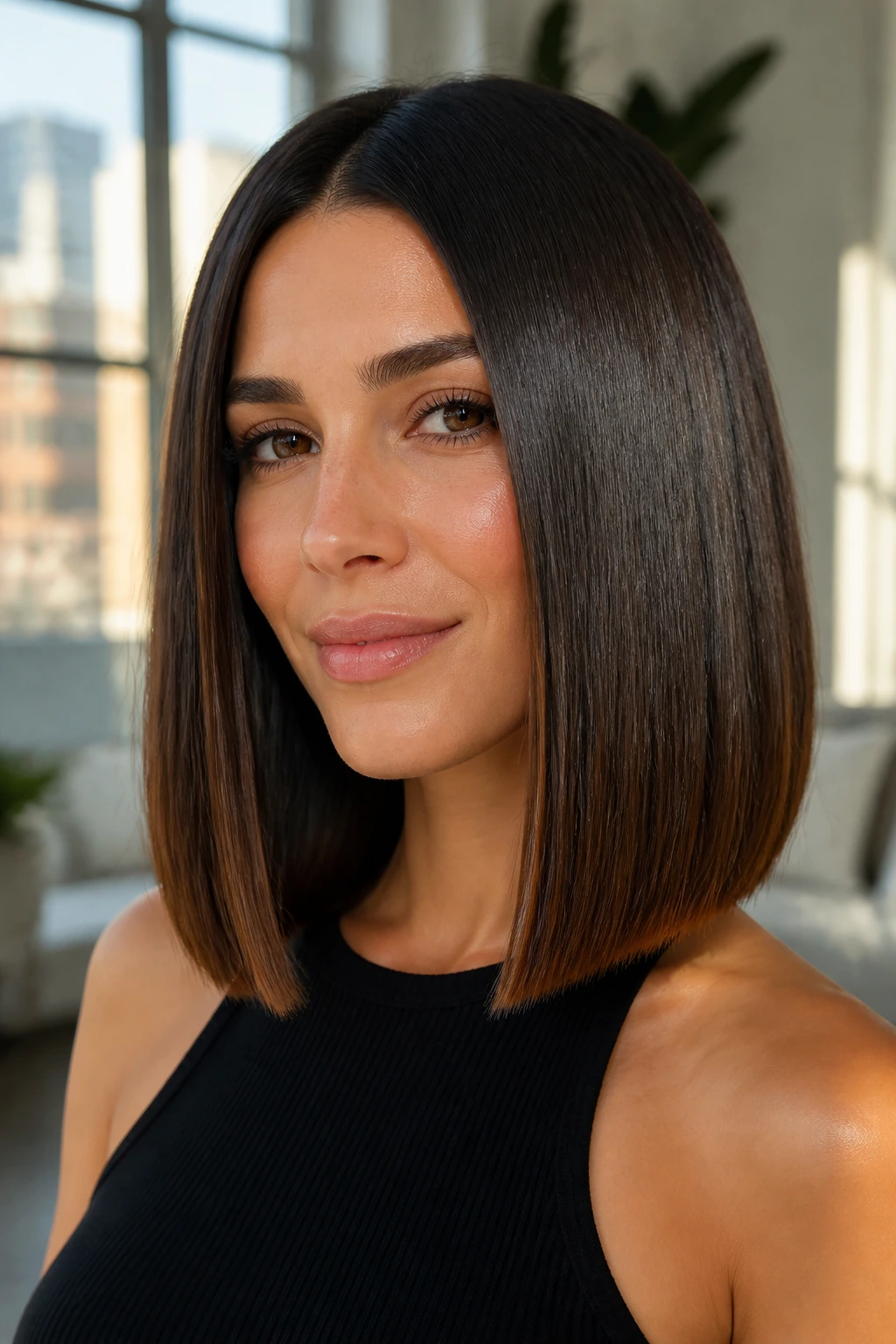
A sleek glass lob is about shine, line, and precision. The cut itself is usually blunt or almost blunt, and the styling is polished enough that each strand lies close to the next. On long hair, this can feel almost startling the first time you see it after years of softer layers.
It works because the collarbone length allows the line to stay visible without the maintenance of very short hair. A center part helps, but the real requirement is clean edges and a good blow-dry. A heat protectant, a paddle brush, and a flat iron pass over the ends are usually enough.
If your hair is naturally frizzy, this cut asks for more upkeep than a shaggy version. Fine. That’s the trade. The payoff is a very crisp silhouette that makes the ends look dense and healthy.
12. Air-Dry Lob
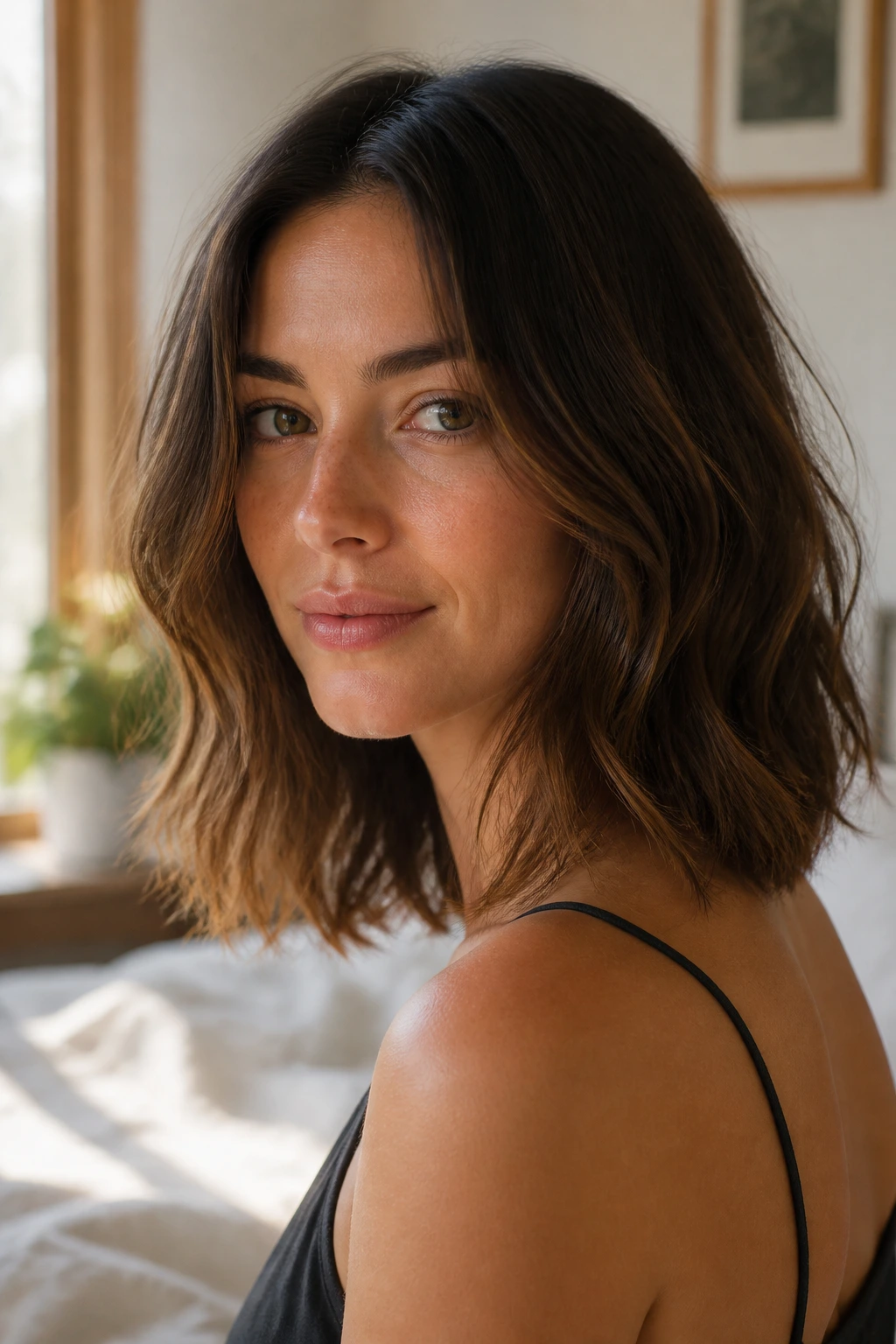
Some haircuts are designed for the blow dryer. This one is designed to survive without it. An air-dry lob keeps the shape gentle, with enough layering to let the hair fall into place but not so much that the ends kick out in odd directions. If your hair has a natural bend, this is a forgiving choice.
The best version doesn’t rely on perfect waves. It works just as well with a slight S-pattern, a soft flip at the ends, or even straighter hair that gains a little texture as it dries. A light cream or mousse is usually enough. Heavy oil can make it collapse.
You want the cut to look intentional even when you’ve done very little. That’s the whole point.
13. Lob with Bottleneck Bangs
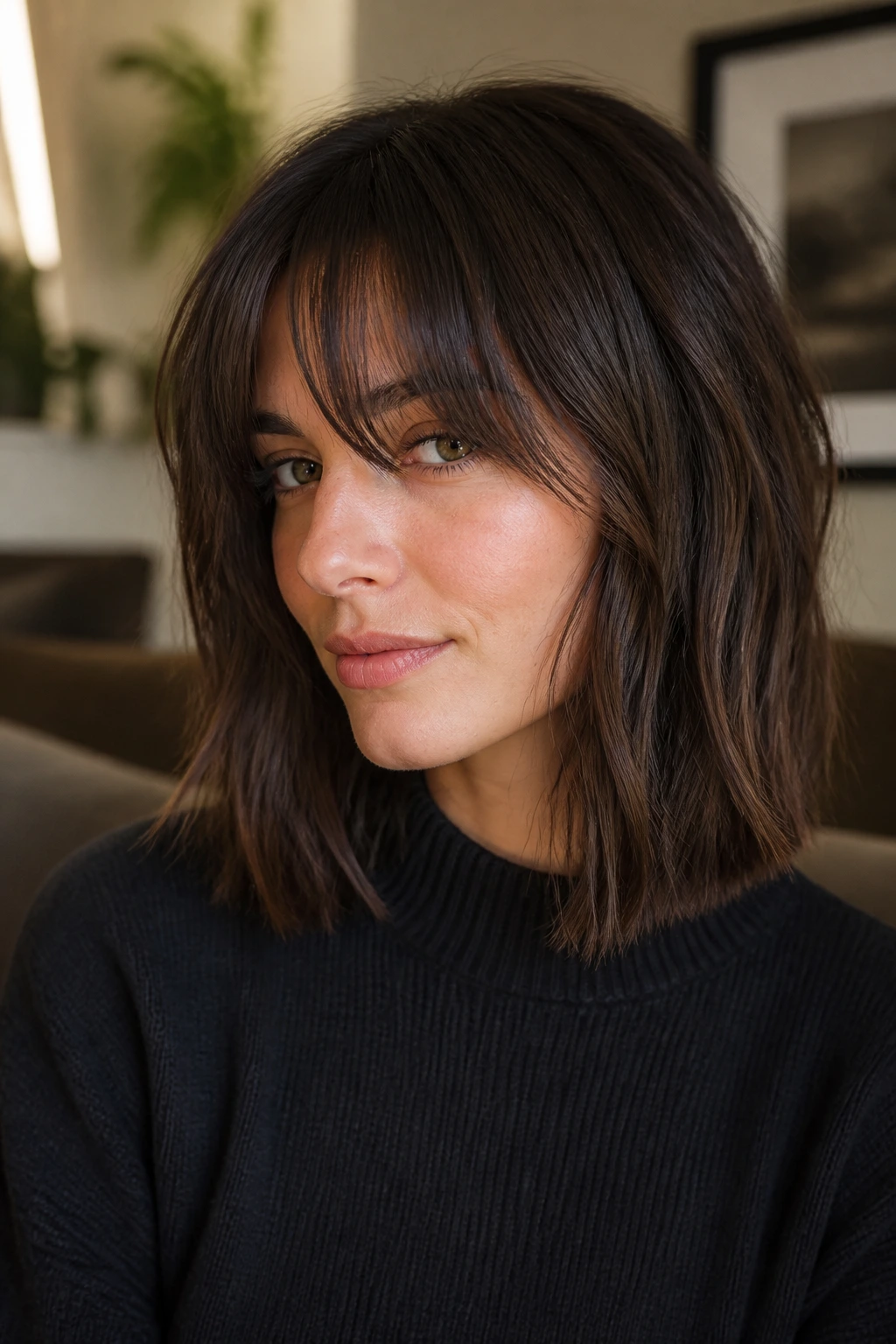
Bottleneck bangs are a little narrower at the top and wider toward the sides, which makes them softer than a straight fringe and more structured than curtain bangs. On a lob, they give you face detail without stealing the whole show. The result feels balanced, not busy.
I like this combination on long hair because the bangs add interest at eye level while the lob keeps the lower half clean. You get movement around the forehead and cheekbones, then a calmer line through the rest of the cut. It’s a smart fix if your face needs a bit more framing but you do not want full bangs glued across your forehead.
Keep the bangs long enough to push apart naturally. If they’re too short, they stop looking like part of the haircut.
14. Shaggy Lob
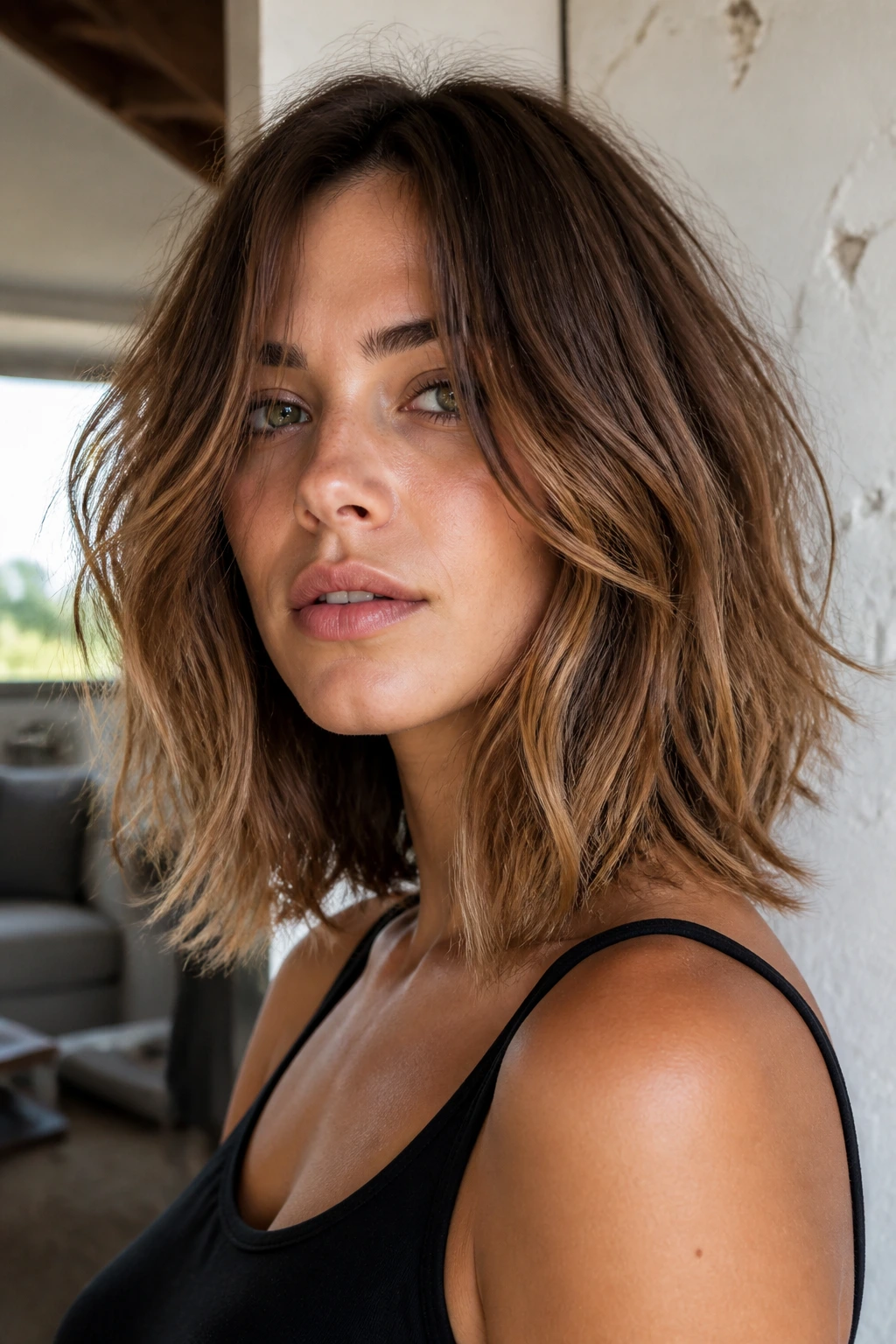
A shaggy lob is the unrulier cousin in this lineup. The layers are more visible, the ends are more broken up, and the shape has a lot more movement than a blunt or softly layered lob. It’s a good answer for hair that looks too heavy when it’s all one length.
The best shaggy lobs avoid the “I got hacked at with scissors” problem. You still want a shape, especially around the face and crown. But the point is lived-in texture, not a perfect line. This cut likes mousse, diffuser drying, and a little scrunching.
If you’re a low-fuss person who still wants edge, this is one of the easier versions to live with. It gets better when it’s not perfect. That’s rare.
15. Rounded Lob
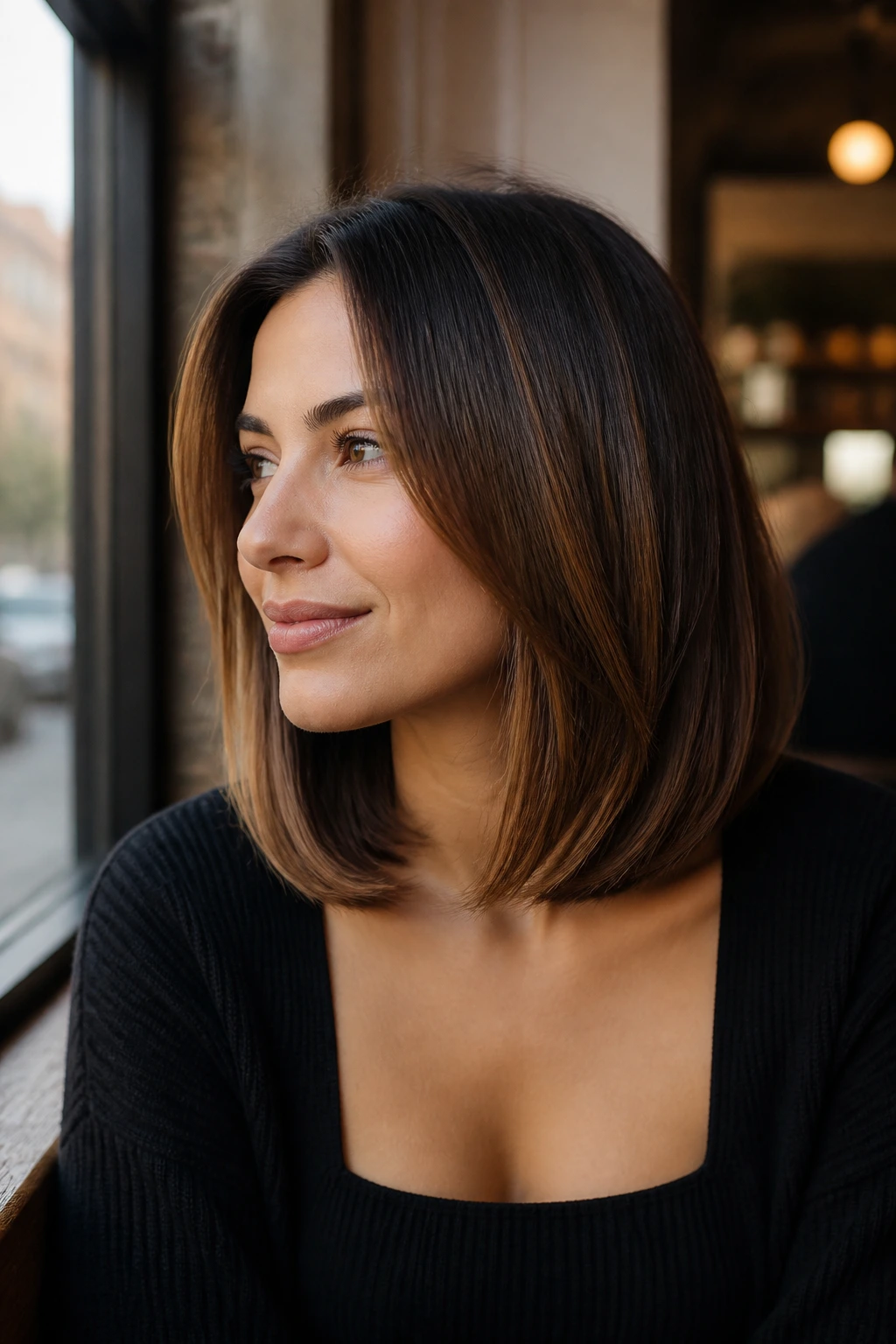
A rounded lob curves gently around the face instead of hanging straight down like a square panel. That slight inward shape softens a strong jaw, adds some body near the crown, and keeps the whole haircut from feeling severe. It’s a nice choice if you have naturally straight hair that tends to fall flat.
The roundness usually comes from a combination of subtle layering and a careful blow-dry with a round brush. You’re not creating a curl. You’re just nudging the ends inward enough to give the cut a contour. On long hair, that can be the difference between “trim” and “shape.”
This version feels polished, but not stiff. There’s a reason it keeps showing up in stylists’ notebooks.
16. Inverted Lob
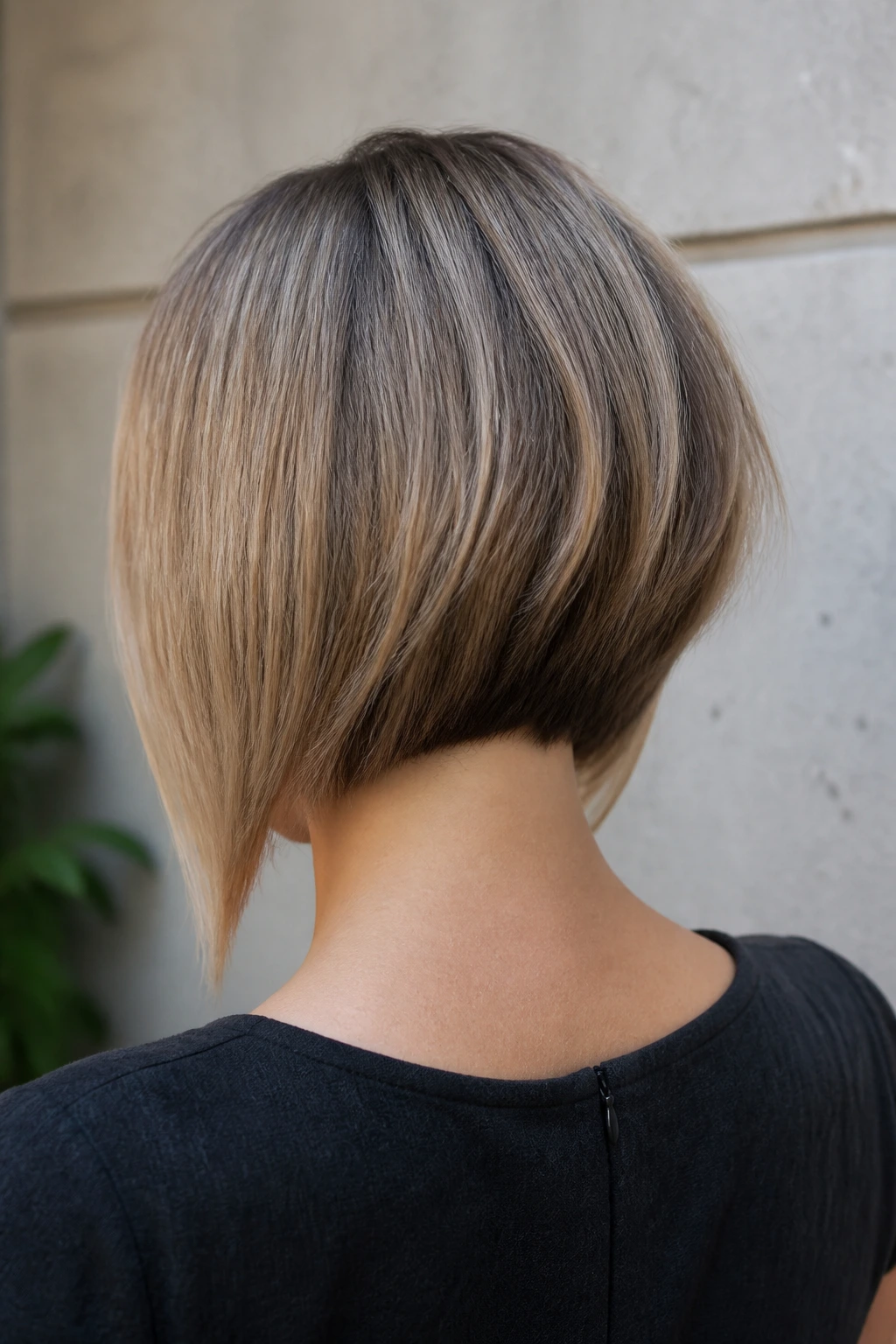
An inverted lob is the sharper, more dramatic cousin of the A-line. The back is noticeably shorter, and the front drops longer in a way that feels deliberate from every angle. It gives the neckline breathing room and adds a little edge without needing layers everywhere.
I’d choose this when I want the back to sit clean against the head and the front to act like a frame. It is especially useful for people who feel buried under long hair and want a visible change without losing the ability to tuck the front behind the ears.
Best on
- Straight to wavy textures
- Medium to thick density
- People who like a clean side profile
If you want softness, this is probably not your first choice. If you want structure, it has plenty.
17. Bouncy Blowout Lob
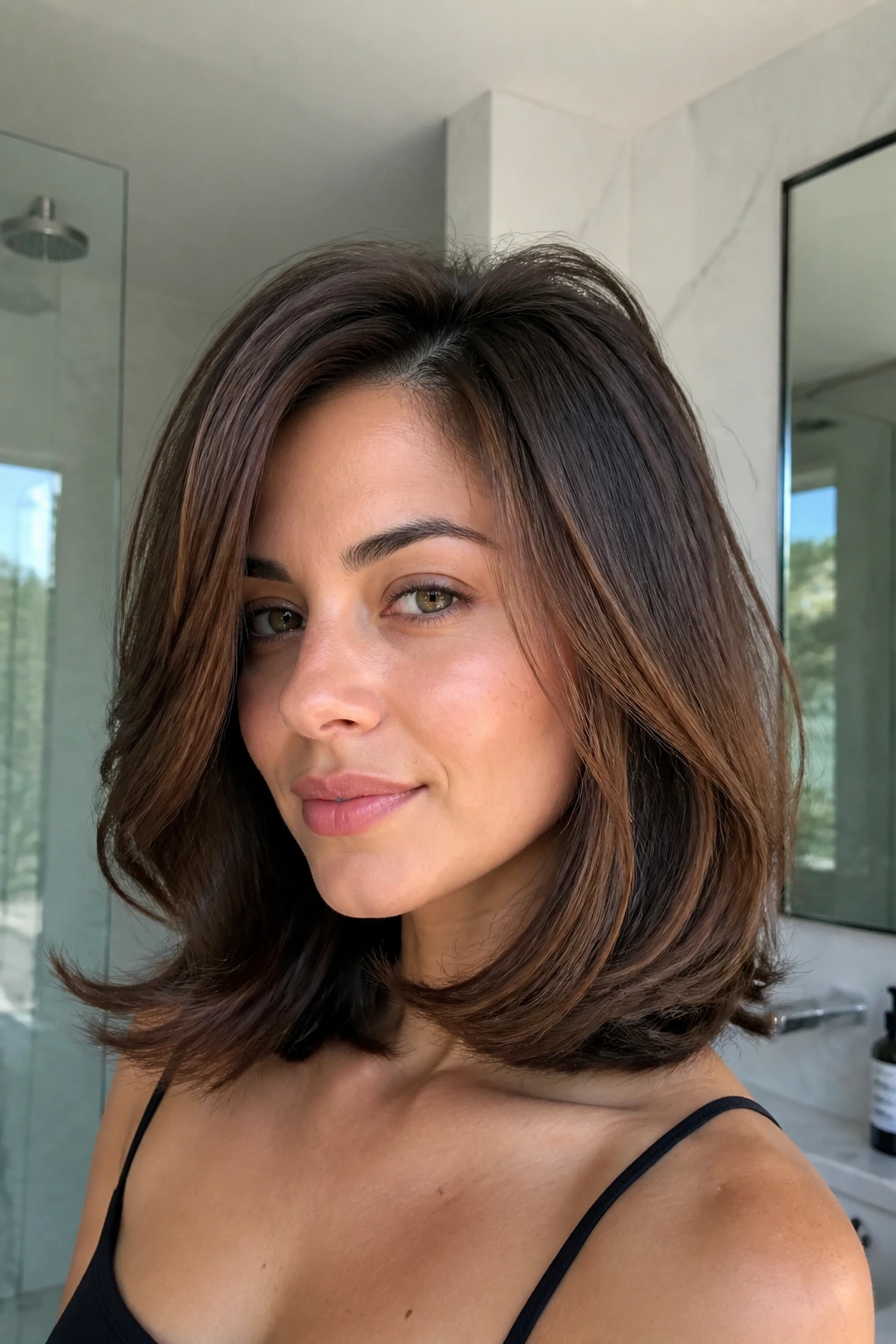
This is the lob that looks like it has a little air under it. The layers are placed to support volume, the ends curve away from the face or slightly under it, and the whole thing wants a round brush and a decent blow-dry. It’s the most salon-finished version in this list.
The cut is only half the story. If you try to wear it flat, you lose the bounce that gives it personality. A medium round brush, a nozzle on the dryer, and sectioning clips matter here more than they do on the air-dry versions. Dry the roots first, then work the ends last so the shape doesn’t fall before it sets.
If you like hair that moves when you walk, this is the one.
18. Curly Lob
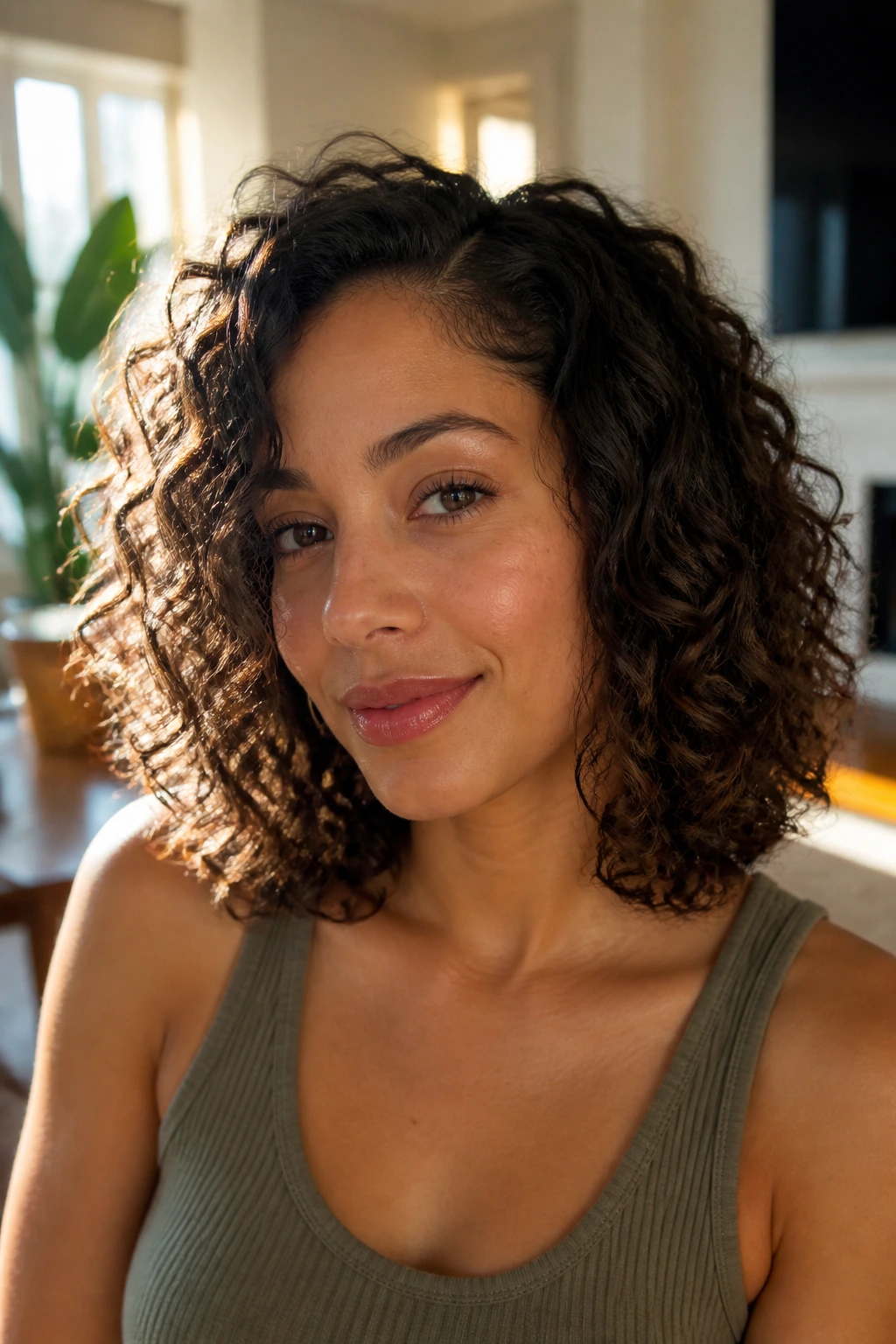
Curly hair changes the lob conversation because shrinkage is real. A curl that lands at the collarbone when wet can spring several inches shorter once it dries, which means the cut has to respect the curl pattern instead of fighting it. A good curly lob usually feels fuller, rounder, and more alive than its straight-haired cousins.
I prefer a dry or curl-conscious cut for this shape. That way the stylist can see where the curls sit, where the bulk lives, and how the front pieces fall. You want enough length to show the curl shape, not so much that the curls stretch into heaviness.
What to Ask For
- Length set with your curls in mind, not just wet hair
- Soft shaping around the face
- Minimal thinning at the ends
If your curls are tight, ask how much they expect them to bounce after drying. That conversation saves regret.
19. Lob for Thick Hair
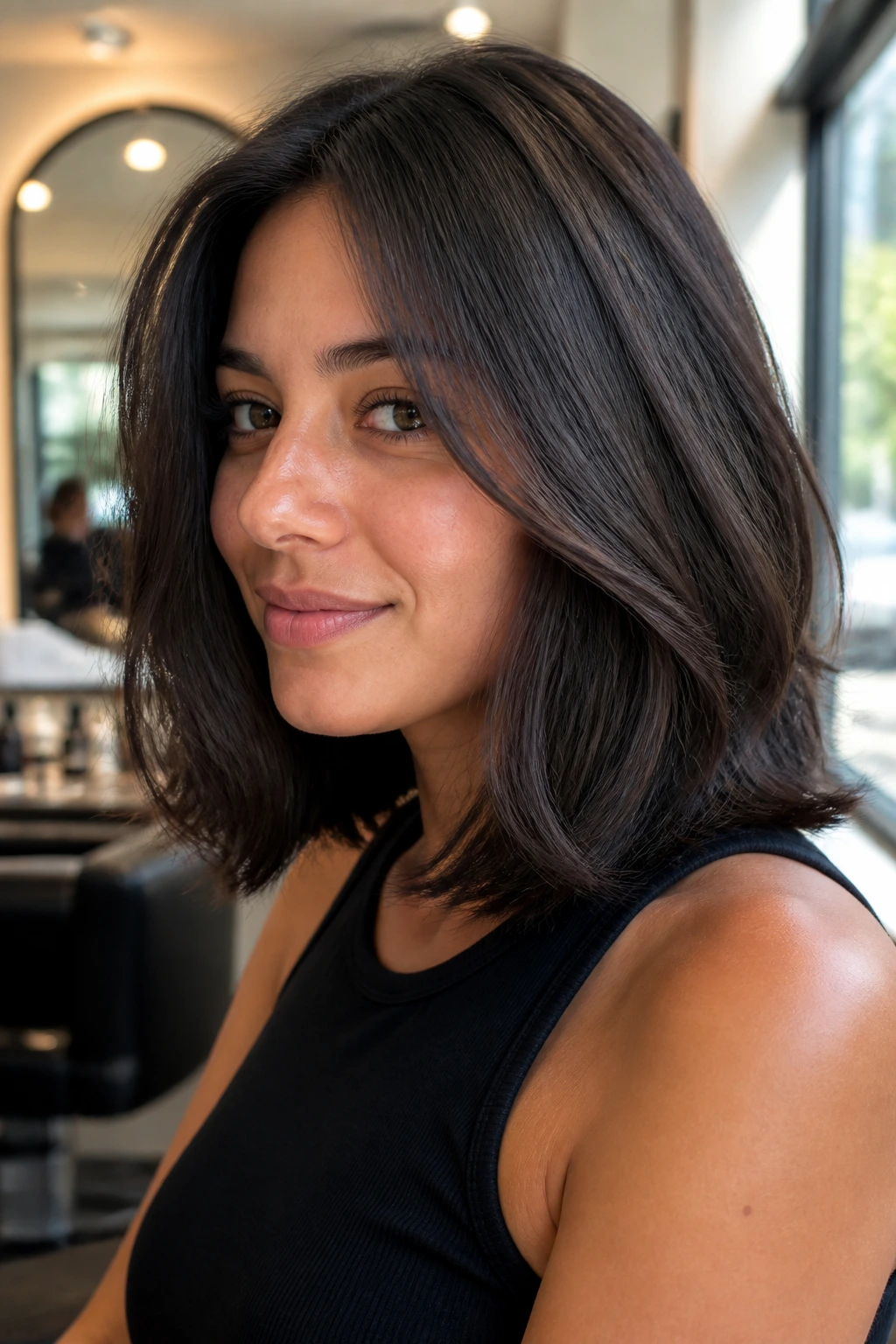
Thick hair can make a lob look fantastic or enormous. The difference is how much bulk gets removed inside the cut. A good thick-hair lob keeps enough weight in the perimeter to stay smooth while reducing the density inside so the shape doesn’t puff out at the sides.
The mistake is over-thinning. I see this a lot. A stylist gets enthusiastic with a razor or texturizing shears, and suddenly the ends look wispy while the surface still feels heavy. What you want instead is controlled removal, usually in the interior and lower mid-lengths.
This cut works best when the outline stays strong. Thick hair already gives you body. You do not need to chase volume. You need shape.
20. Lob for Fine Hair
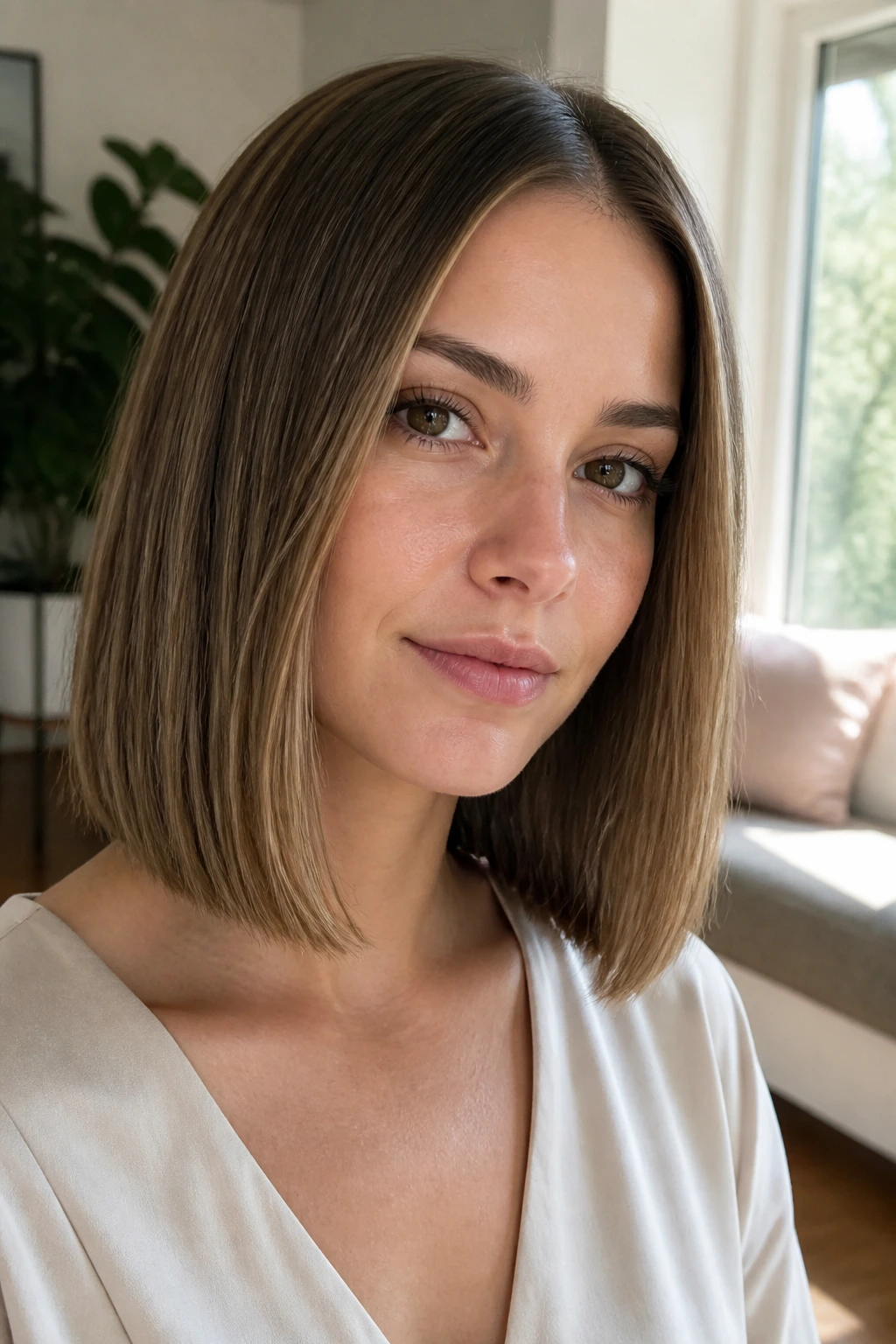
Fine hair needs a different sort of discipline. Too many layers can make the ends look see-through, which is the last thing you want if you’re trying to keep a lob looking full. The safest version is usually blunt or nearly blunt, with very subtle face framing.
A fine-hair lob can look thicker than long hair because the shorter length reduces how much the strands sag under their own weight. That’s the whole trick. The line at the bottom reads denser, and the hair often holds a wave better once it’s not carrying all that extra length.
If you want movement, keep it internal and light. If you want fullness, keep the perimeter clean.
21. Deep Side-Swept Lob
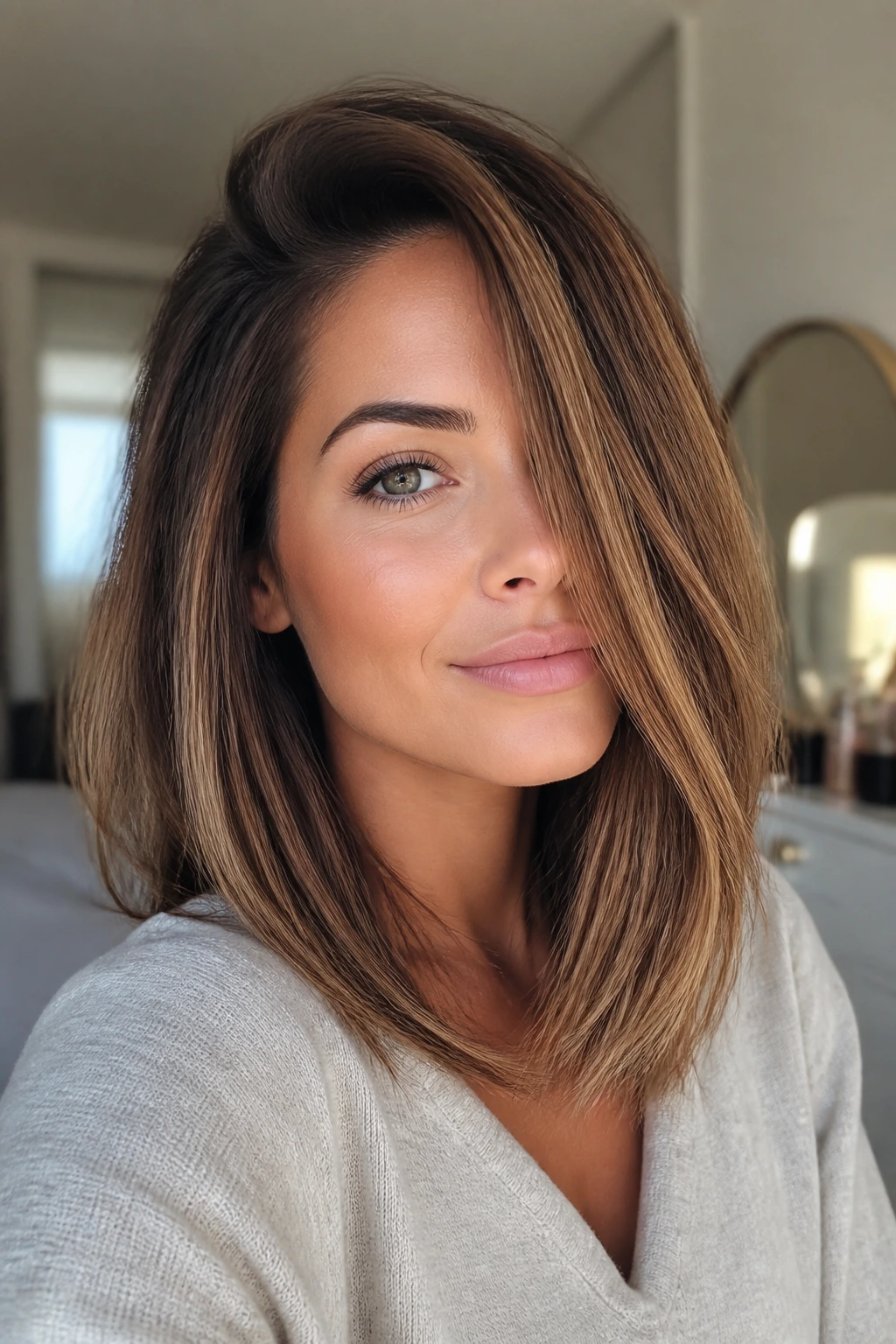
A deep side-swept lob has a little old-school glamour in it, and I mean that in the best way. The side sweep creates lift at the root, softens the forehead, and lets the rest of the cut fall in a long diagonal line. It’s one of the easiest ways to make a lob feel dressed up without changing the haircut itself.
What makes it work is the contrast. The swept side gives height and drama; the other side lies flatter and cleaner. That imbalance is the point. It’s flattering on long faces, round faces, and anyone whose hair tends to split down the middle and behave like a curtain.
Use a root-lifting spray at the crown if you want the part to hold. A lazy side part collapses fast.
22. Minimalist One-Length Lob
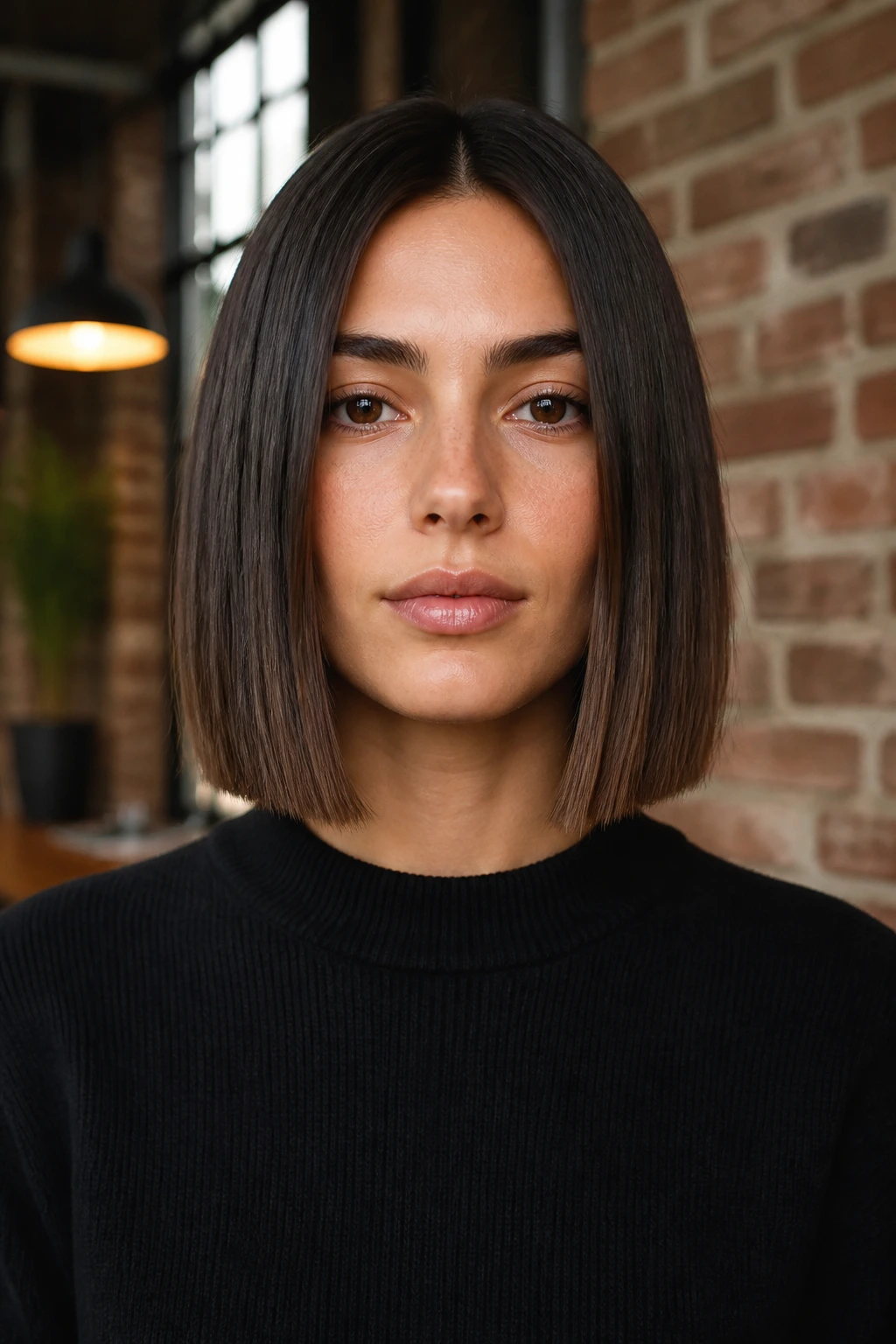
This is the purest version of the cut. No obvious layers. No bangs. No soft shag logic. Just one sharp length, usually sitting somewhere between the chin and collarbone, with enough precision that the whole haircut feels intentional from the first glance.
A one-length lob is easy to underestimate because it sounds plain. It isn’t. Every tiny mistake shows. The ends need to be even, the line needs to be clean, and the parting has to suit the face. If that sounds fussy, it is. The payoff is a haircut that looks expensive in that quiet, almost annoying way people notice without being able to name why.
If you like simple clothes and clean lines, this cut makes a lot of sense.
23. Tousled Beach Lob
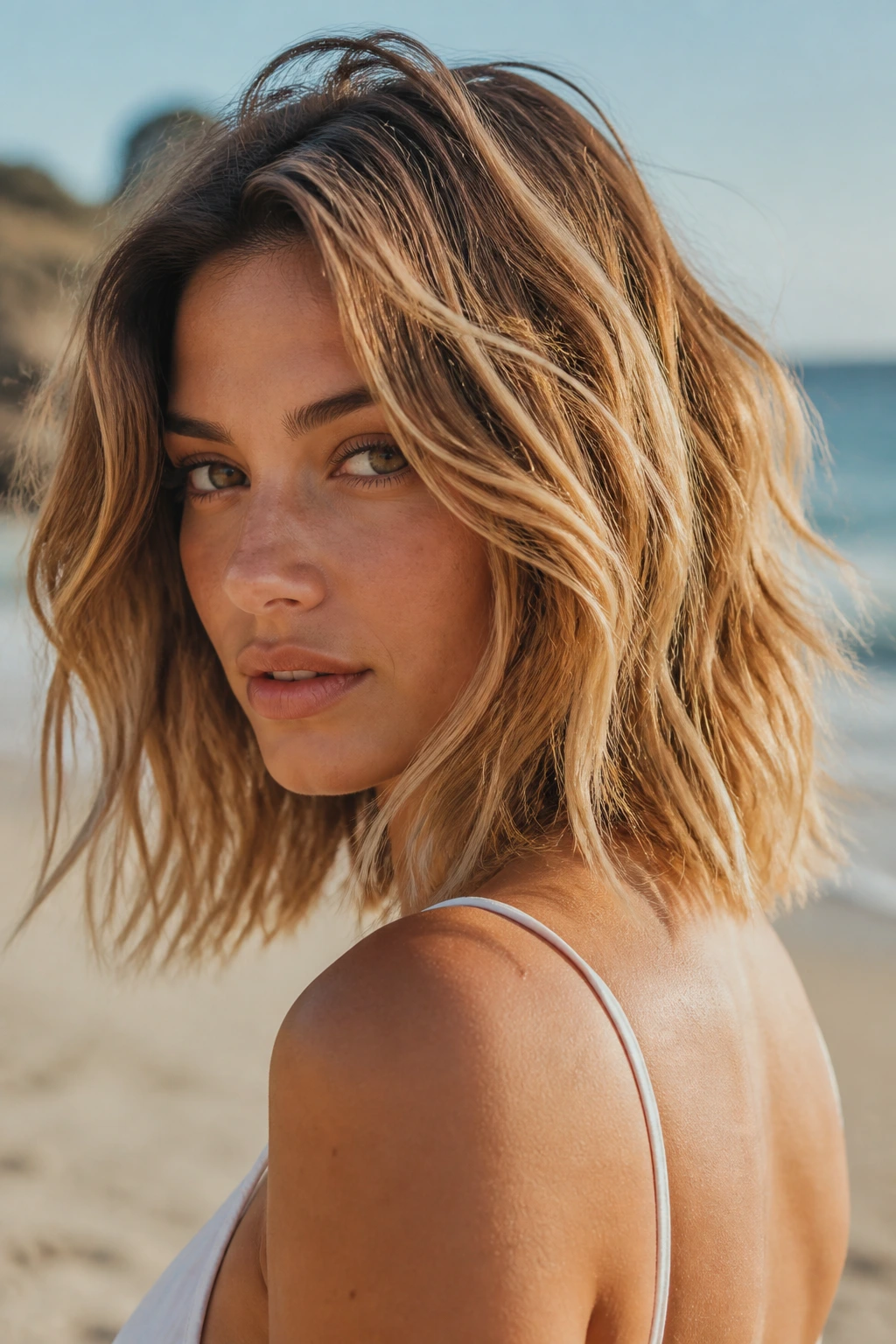
A tousled beach lob is the friendliest version of “I didn’t try too hard” that still looks finished. The ends are loose, the waves are irregular, and the overall feeling is soft rather than sculpted. It’s not about salt spray alone. It’s about a cut that lets the spray or mousse do enough without collapsing.
This style works best when the base haircut has some movement already. A blunt chop can wear beach waves, but a little internal texture helps the bend land more naturally. Scrunching, twisting random sections around a wand, and breaking up the waves with your fingers keeps it from turning into old prom hair.
The good version looks lived in. The bad version looks sprayed into place. There’s a difference.
24. Lob for the Grow-Out Stage
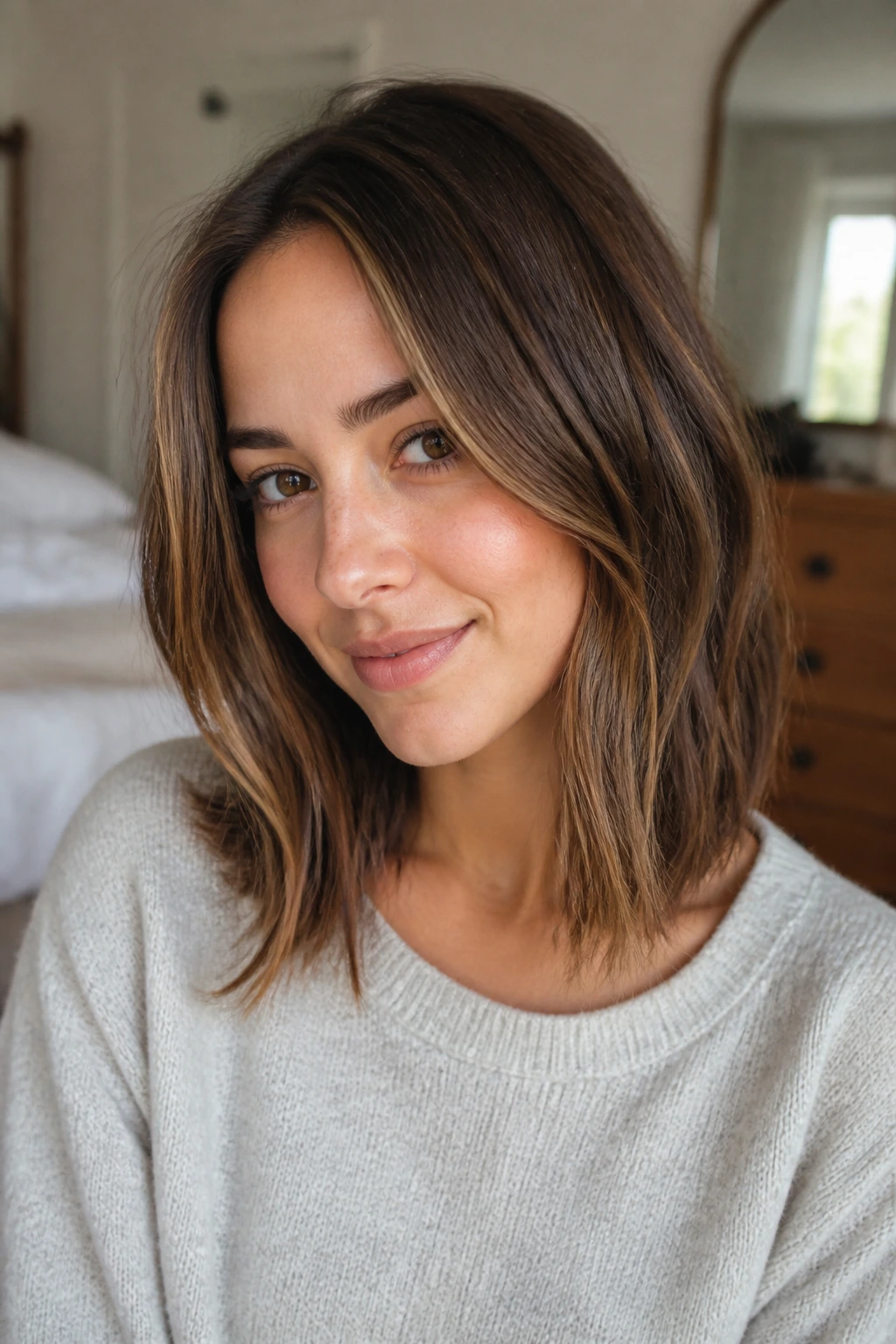
A grow-out lob is the haircut you get when your long hair has gone past the point of being cute and is starting to look tired at the ends. It takes off enough length to refresh the shape, but not so much that you feel like you’ve crossed into a different category.
This cut should feel forgiving. The layers are soft, the line is easy, and the overall length gives you room to style it straight, wavy, clipped back, or tucked into a low knot. That flexibility matters when you’re unsure how short you want to go. It buys you time.
If you are nervous about losing length, this is the safest place to start. It’s a haircut with an exit plan.
25. Scandi Lob
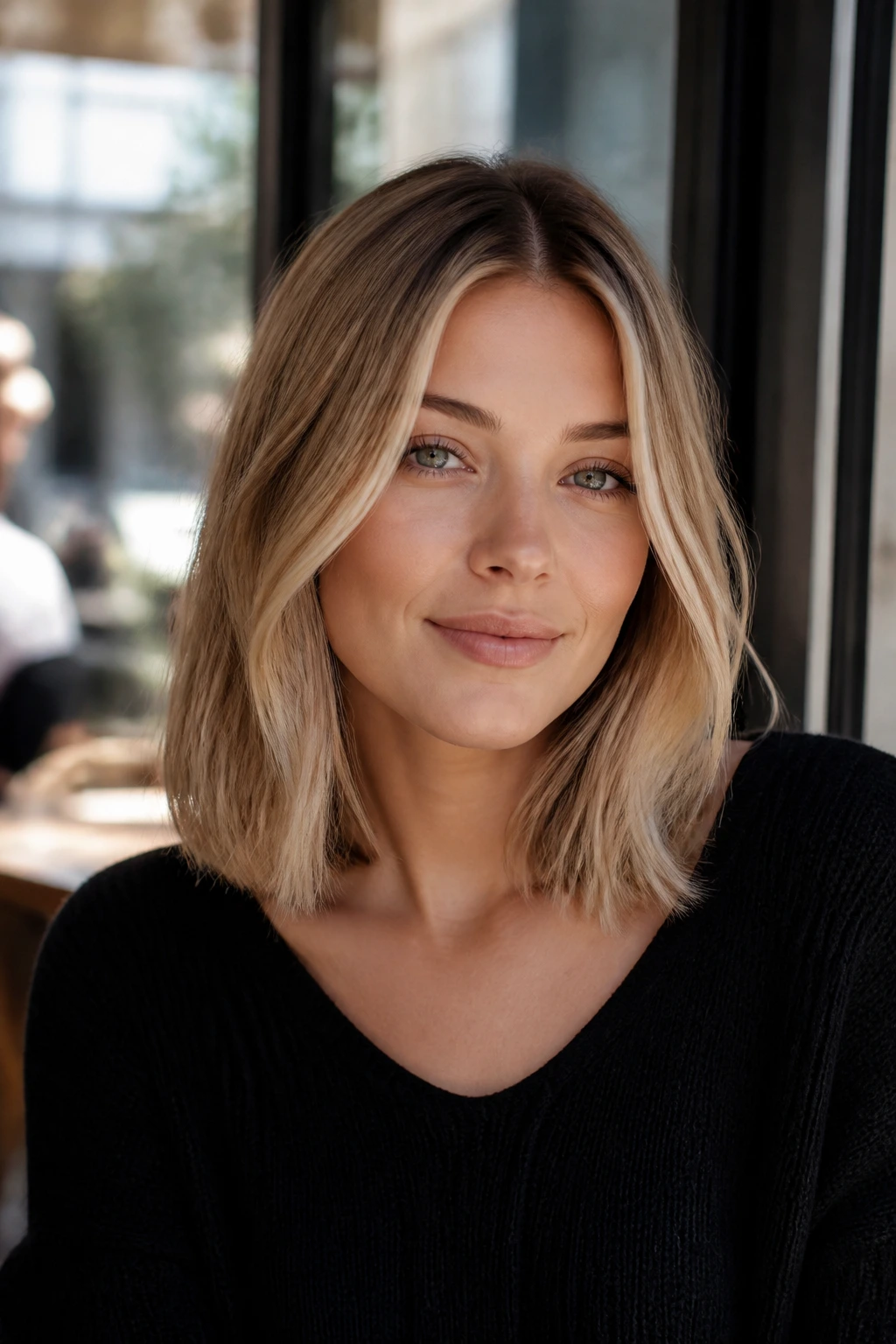
A Scandi lob leans clean, airy, and quietly polished. The length is usually simple, the texture is soft rather than choppy, and the whole cut relies on movement that feels almost accidental. It suits people who like their hair to look neat without looking stiff.
There’s often a slight bend through the ends and a center or near-center part. Sometimes the front pieces are a touch longer, but not in a showy way. This isn’t a loud haircut. It’s the one that makes your hair look calm, which is useful if you wear a lot of structured clothes or want a cut that doesn’t fight your face.
The maintenance is moderate. You still need regular trims to keep the outline fresh, because a clean lob loses its charm when the ends fray.
26. Retro Flipped Lob
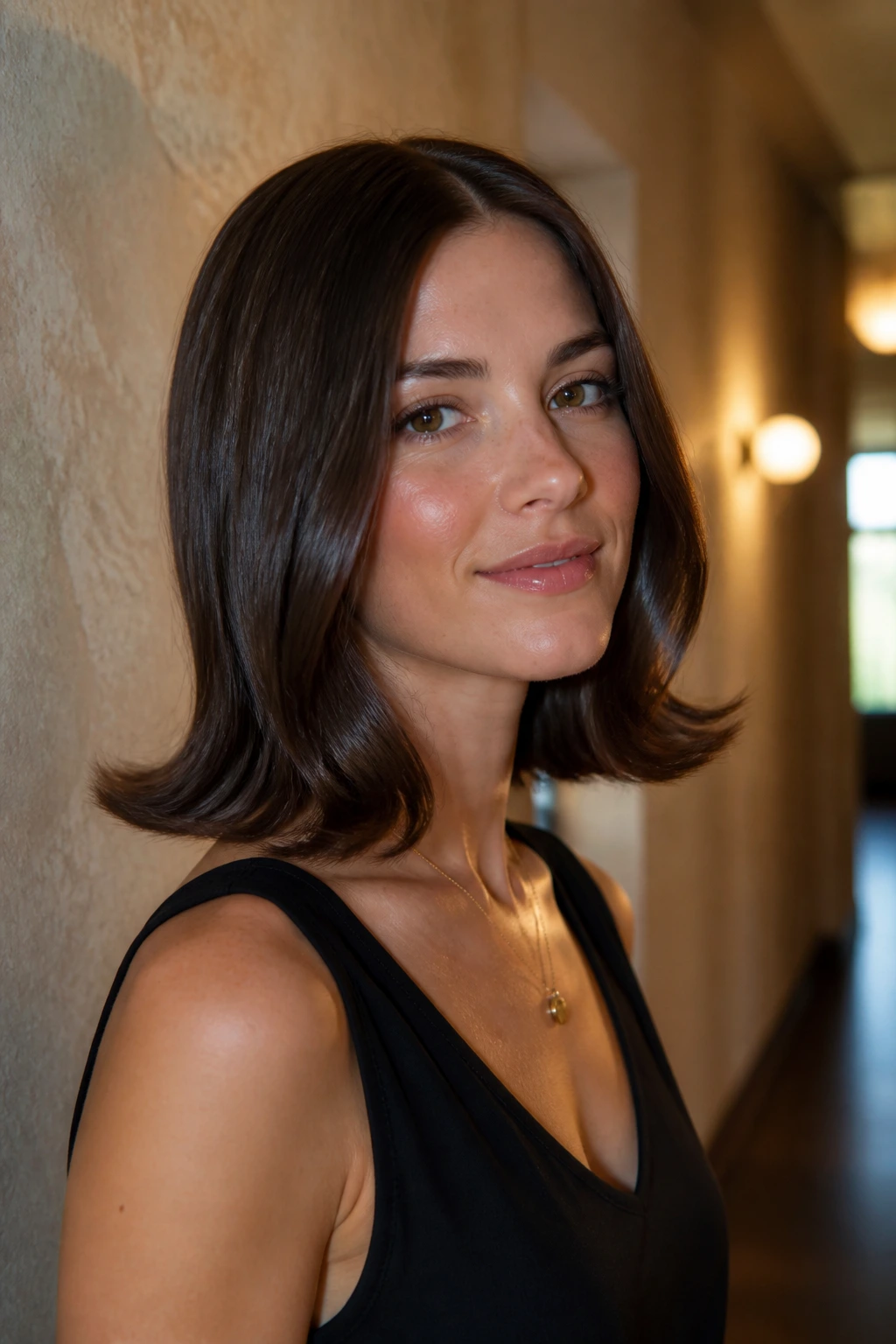
Flip the ends out, and the whole mood changes. A retro flipped lob borrows from older blowout shapes, but it reads modern when the length stays at the collarbone and the finish is neat rather than costume-y. The flip gives the haircut a little bounce and keeps the ends from hugging the neck too closely.
I like this one on straight hair that can look a touch severe when worn sleek. Turning the ends outward softens the line and adds a bit of movement at the shoulders. A medium round brush or a flat iron flick at the bottom is enough.
Quick note
If your hair is very thick, keep the flip subtle. Too much turn-out can make the ends feel bulky. Small movement is better than a cartoon curl.
27. Piecey Lob with Micro-Layers
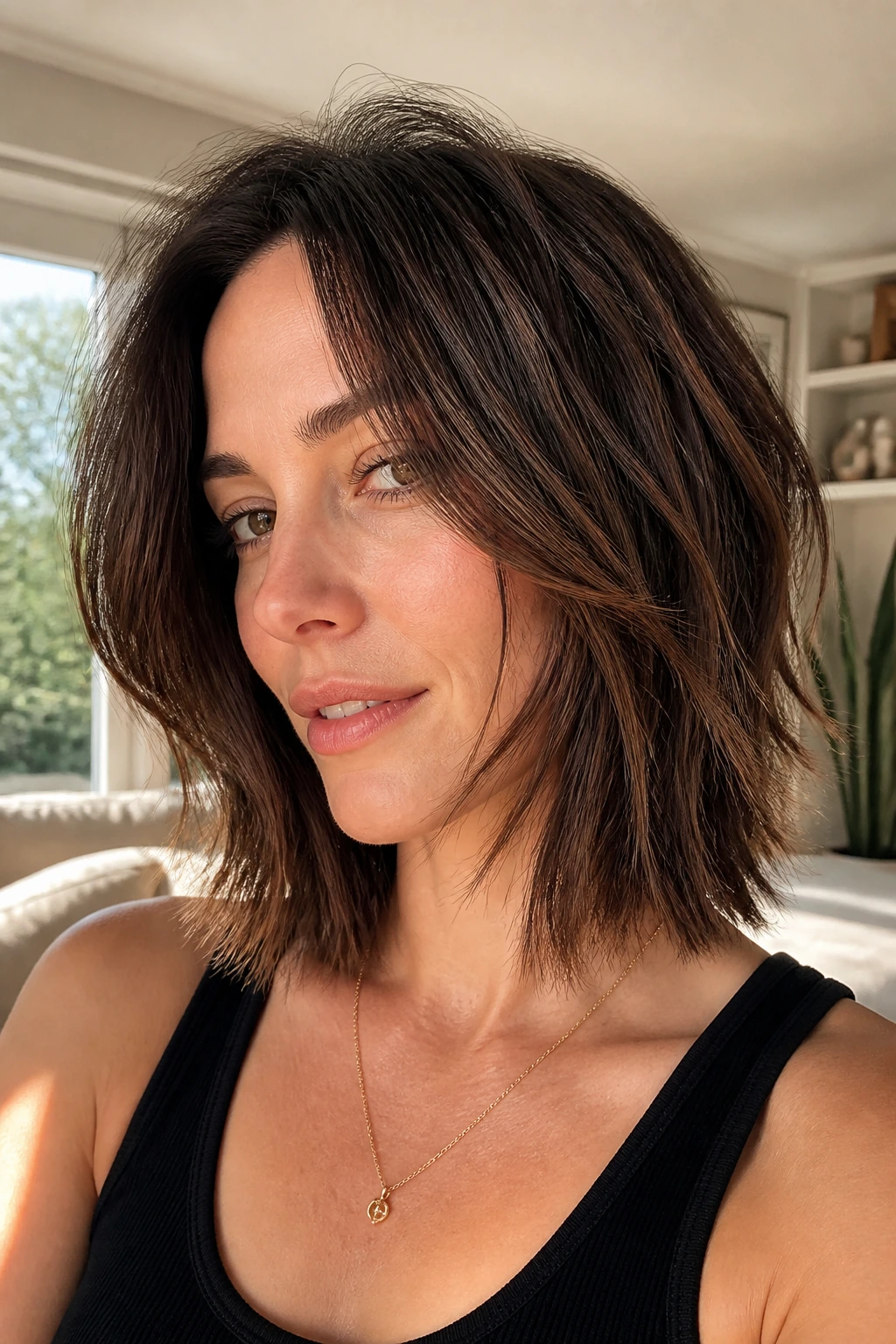
Micro-layers are the sneaky part of this cut. You don’t see them as a big shape change, but you feel them when the hair breaks into pieces instead of sitting as one heavy block. That makes this lob a strong option for hair that needs texture without a dramatic haircut.
The key is restraint. These layers live inside the shape, usually around the lower mid-lengths and around the face. They’re enough to help waves separate and enough to keep thick hair from forming a blunt wall at the bottom.
If you’ve ever loved a haircut for the first week and then hated how it settled, micro-layers can help. They age better because the movement was built into the cut from the start.
28. Lob with Wispy Bangs

Wispy bangs make the front feel light rather than crowded. On a lob, that matters because the haircut already has a strong horizontal line. A soft fringe breaks that line gently and adds a little flutter around the eyes without demanding daily precision.
The bangs should be airy enough to separate with your fingers. If they’re too dense, they stop being wispy and start acting like a full fringe. Keep them feathered and a touch longer if you’re unsure. That gives you room to tuck them, part them, or let them fall forward on their own.
This is a good choice if you want softness near the face but do not want curtain bangs that travel all the way into the sides.
29. Dimensional Highlight Lob
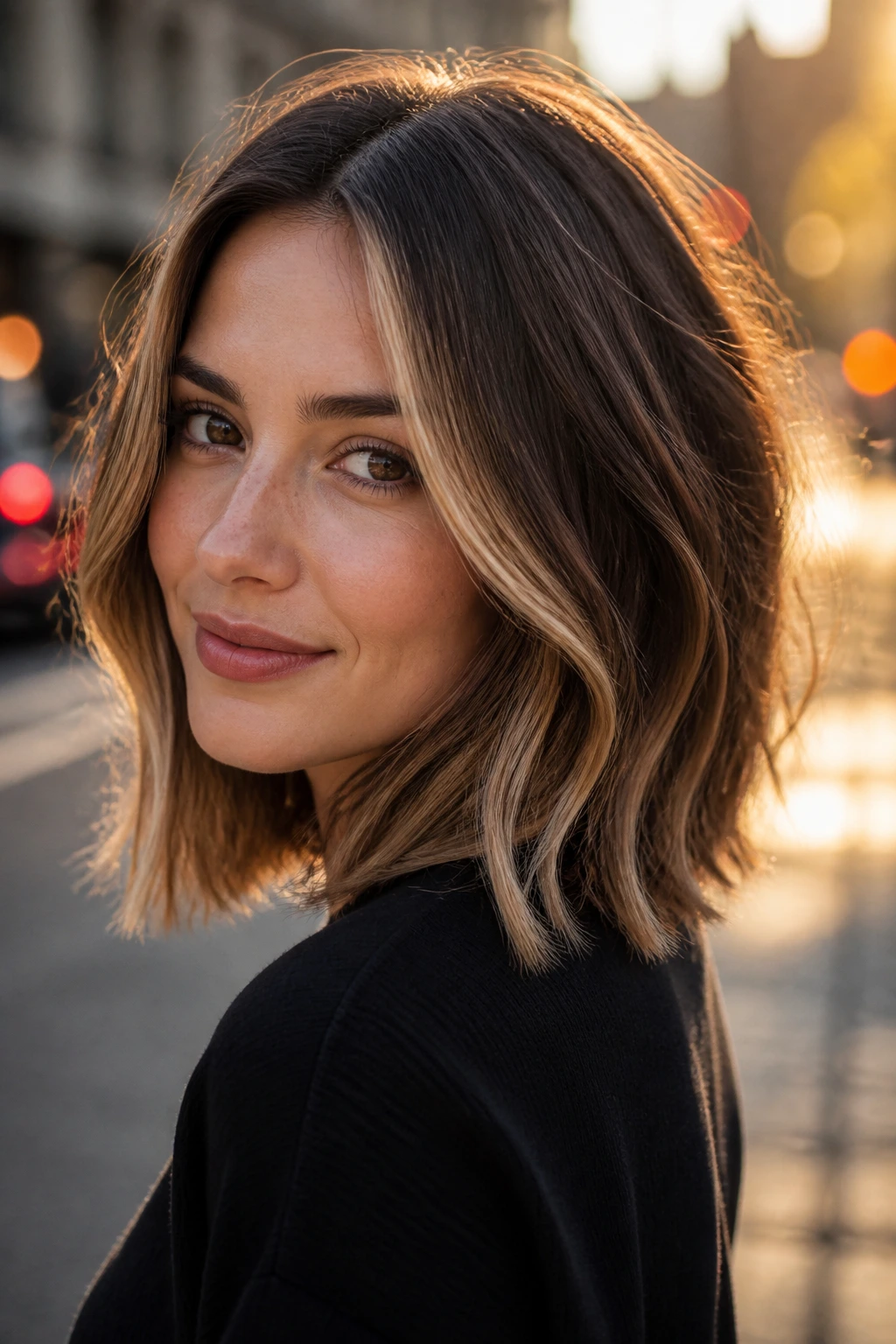
This one is a haircut first, but the cut is designed to show off dimension. A blunt or softly layered lob gives color room to move, especially when highlights sit around the face and through the lower lengths. The cleaner the line, the more obvious the color variation becomes.
If you wear highlights, this cut can make them look expensive without changing your whole styling routine. The shape catches light at the ends and around the face, and the collarbone length keeps the contrast visible. It’s one reason stylists pair lobs with balayage so often — the two ideas work together without trying too hard.
Ask for a cut that won’t chop away all the bright pieces. Keep the perimeter long enough to show the color bands, not just the root shadow.
30. Low-Maintenance Lob with Soft Ends
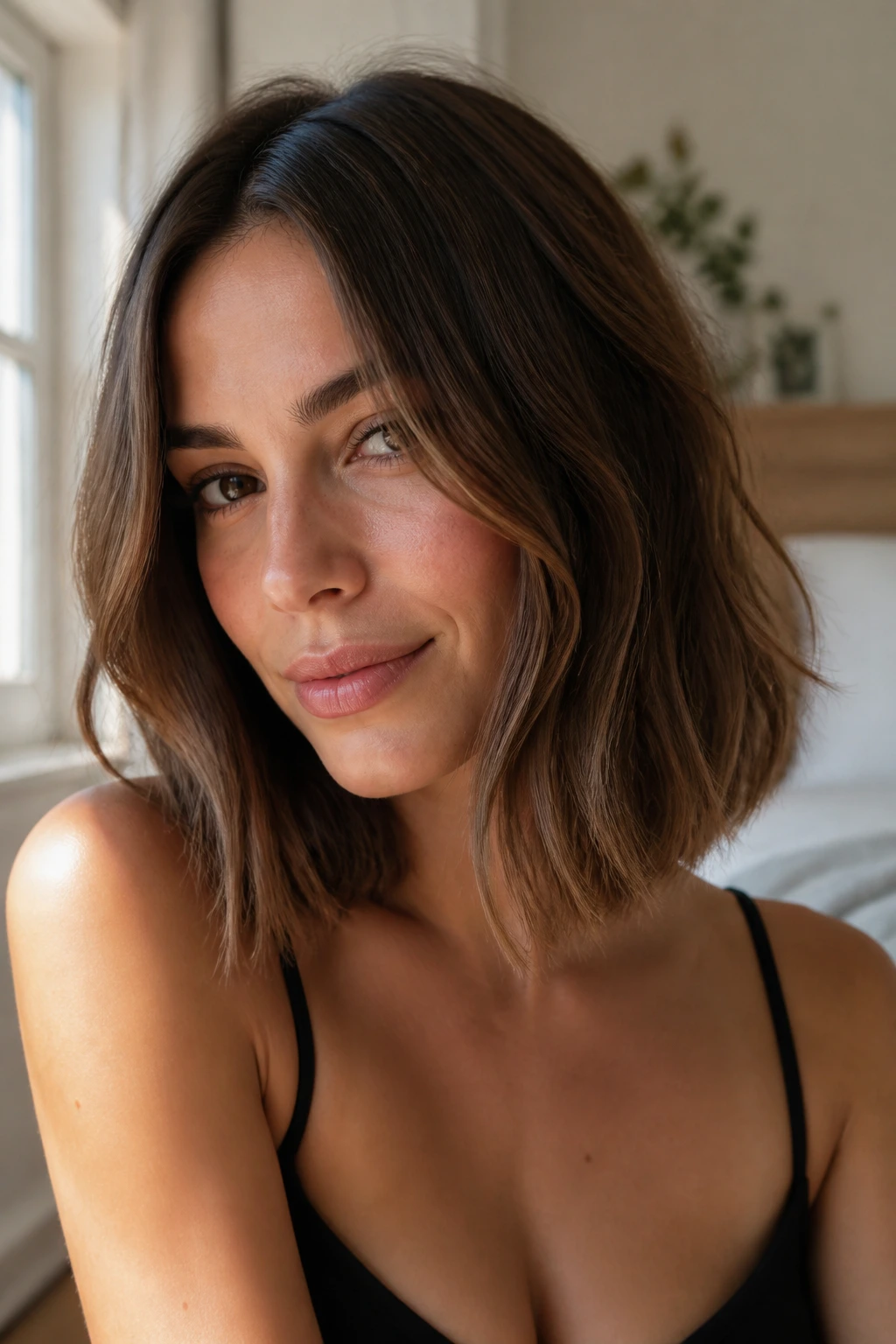
This is the practical cousin in the family. The ends are softened just enough that grow-out doesn’t look harsh, but the haircut still has a visible shape. It’s a smart choice if you want to see a stylist less often and still have hair that looks considered.
Soft ends are usually point-cut or lightly texturized, which stops the line from getting too blocky. That makes day-two hair easier too. A little bend, a little clip, and you’re done. No full blowout needed.
Best for people who
- Want a lob that survives messy mornings
- Prefer a softer edge over a sharp one
- Don’t want obvious regrowth lines after 6 weeks
This cut is boring only if you think boring is a flaw. It’s not. It’s useful.
31. Angled Lob for Round Faces
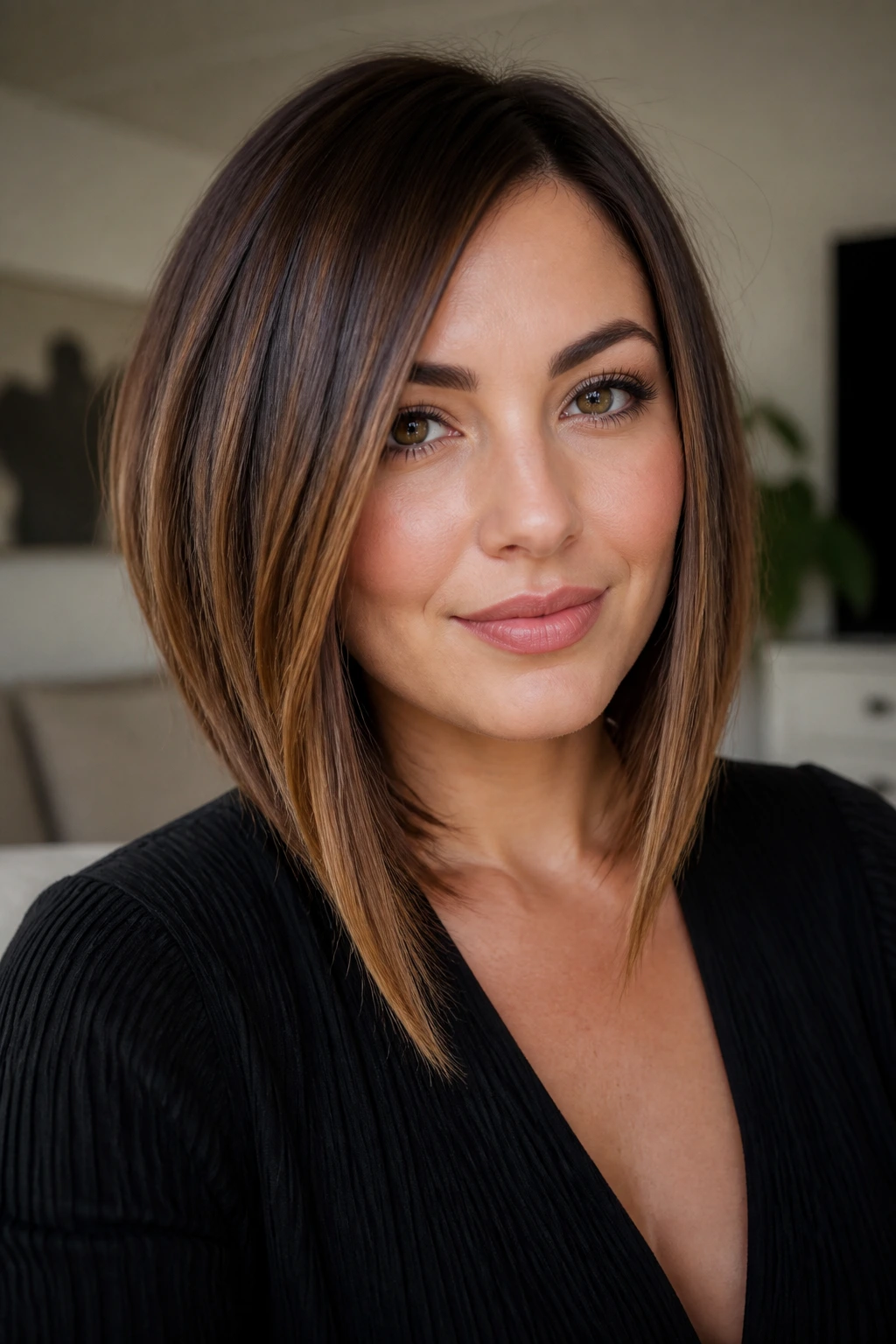
A longer front angle can change how the face reads, and this lob uses that trick well. The front pieces skim lower, which helps create a vertical line, while the back stays a bit shorter and cleaner. That combination adds length without dragging the whole cut downward.
The angle should be visible, but not severe. Too much slope and the haircut starts looking dated. Too little and the face-shaping effect disappears. I usually like a soft diagonal that starts around the jaw and falls toward the collarbone.
If your hair likes to puff at the sides, keep the styling smooth near the cheek and add a little bend only at the ends. That keeps the silhouette leaner.
32. Long-Layer Lob for Heavy Hair
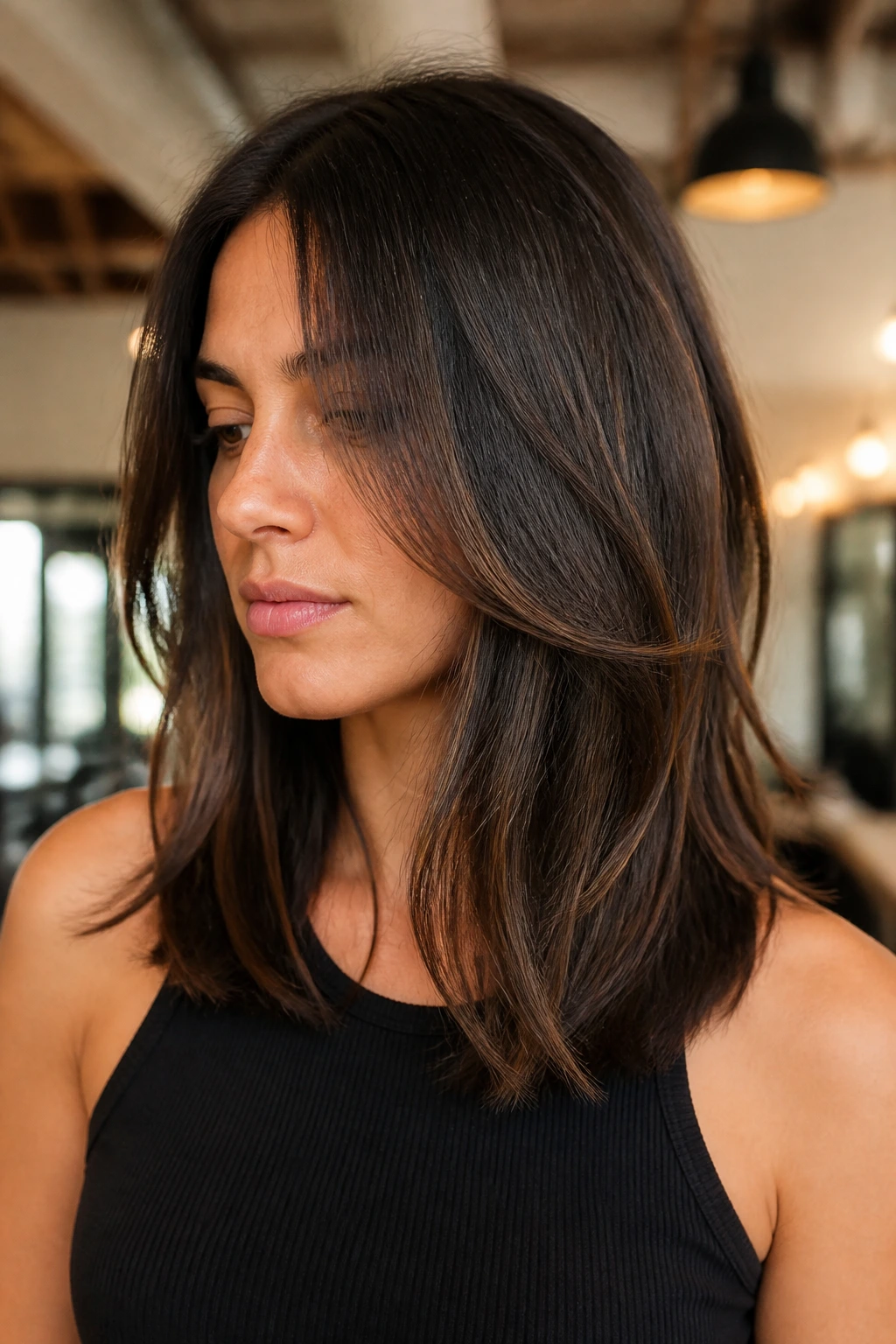
Heavy hair needs room to move, and long layers are the answer when you don’t want to lose the overall length line. This cut removes mass in longer sections, usually below the cheekbone and through the lower half, so the hair doesn’t sit like a blanket.
The trick is keeping the layers long enough to blend. Short layers on heavy hair can kick out and make the head look wider than it is. Long layers let the weight shift without turning the cut into a shag.
If your hair feels hot, dense, or too thick to dry comfortably, this version can be a relief. The styling gets faster, and the shape stops fighting your neck.
33. Sharp Modern Lob with Tucked Ends
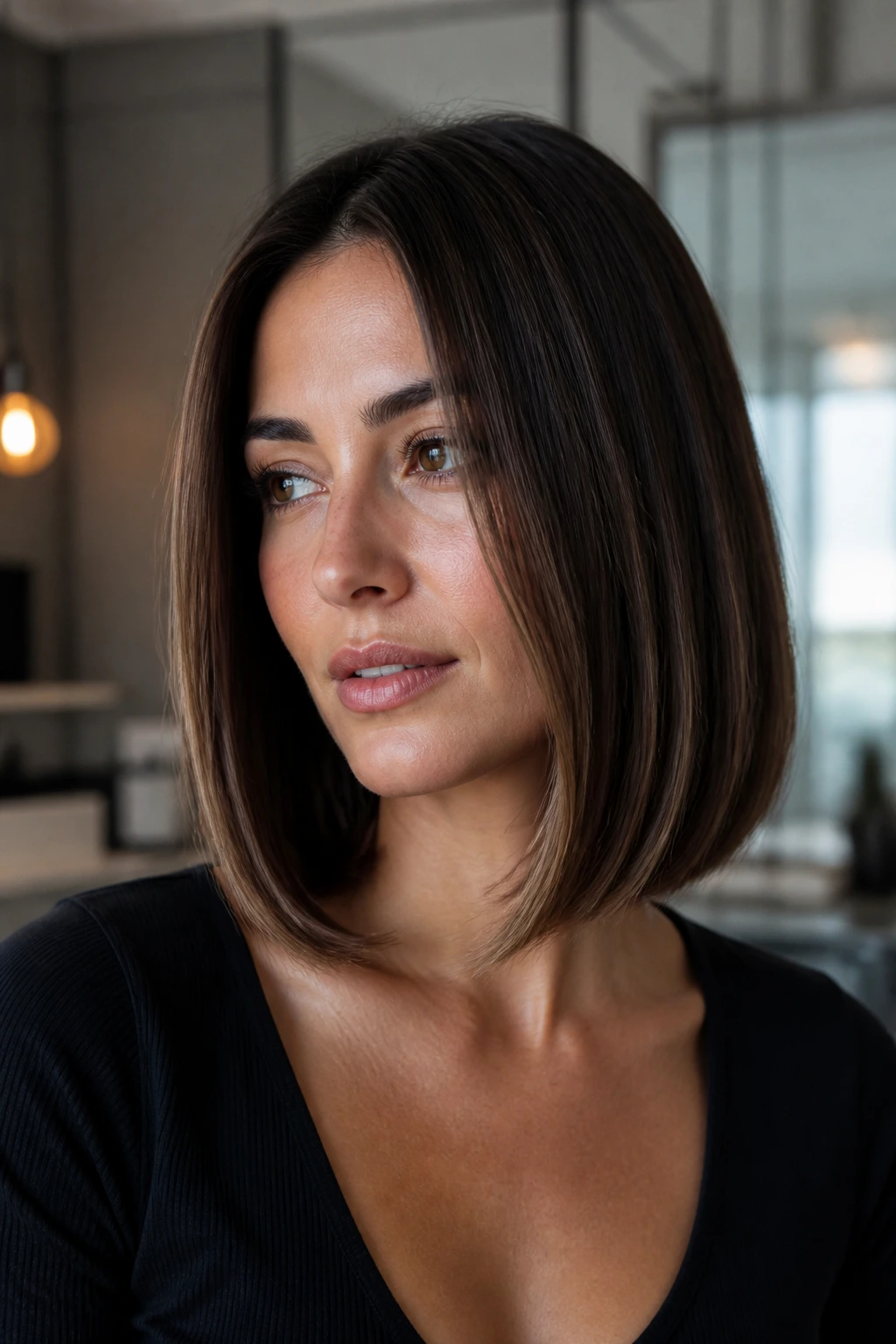
This is the lob with a polished, slightly fashion-editor edge. The line is clean, the ends are tucked in with a brush or flat iron, and the overall finish feels sleek without becoming stiff. It’s a strong look on long hair because the shorter length lets the shape speak for itself.
The tucked end detail matters. It keeps the haircut from looking flat and boxy, and it softens the perimeter just enough to make the cut wearable every day. If you wear structured clothes, clean makeup, or simple basics, this lob tends to fit right in.
What to ask for
Ask for a collarbone length with a clean perimeter, then style the ends under with a small round brush or a quick flat iron bend. That tiny inward curve keeps the cut from feeling blunt in a bad way.
Why a Collarbone Lob Changes the Shape of Long Hair
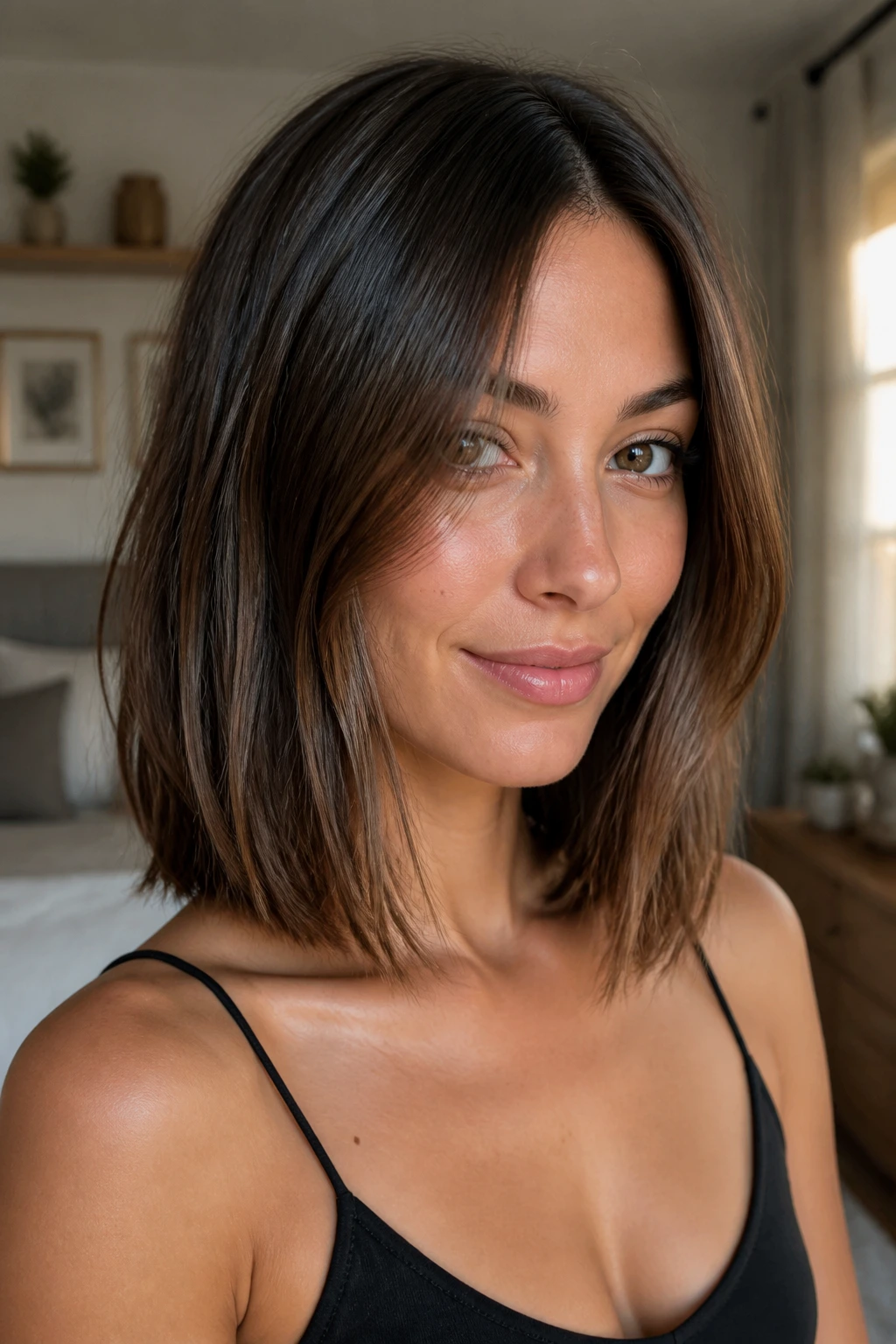
A lob changes long hair because it changes where the weight sits. With long hair, the heaviest part usually pulls everything down, which is why ends get wispy and roots flatten out. Once the length comes up to the collarbone or thereabouts, the cut stops dragging quite so hard, and the hair can move in a cleaner line.
That’s also why the same lob can look completely different from one head to the next. Thick hair needs bulk control. Fine hair needs a denser perimeter. Curly hair needs shrinkage room. Straight hair benefits from a clean edge that reflects light instead of swallowing it. The shape is simple. The adjustment is not.
A lob is never just “shorter hair.” It’s a shift in proportion. Your neck shows more. Your shoulders matter more. The front pieces start doing actual face-framing work instead of hiding in the length. That’s what makes the cut feel like a real change even when you keep plenty of hair.
How to Explain the Cut to Your Stylist
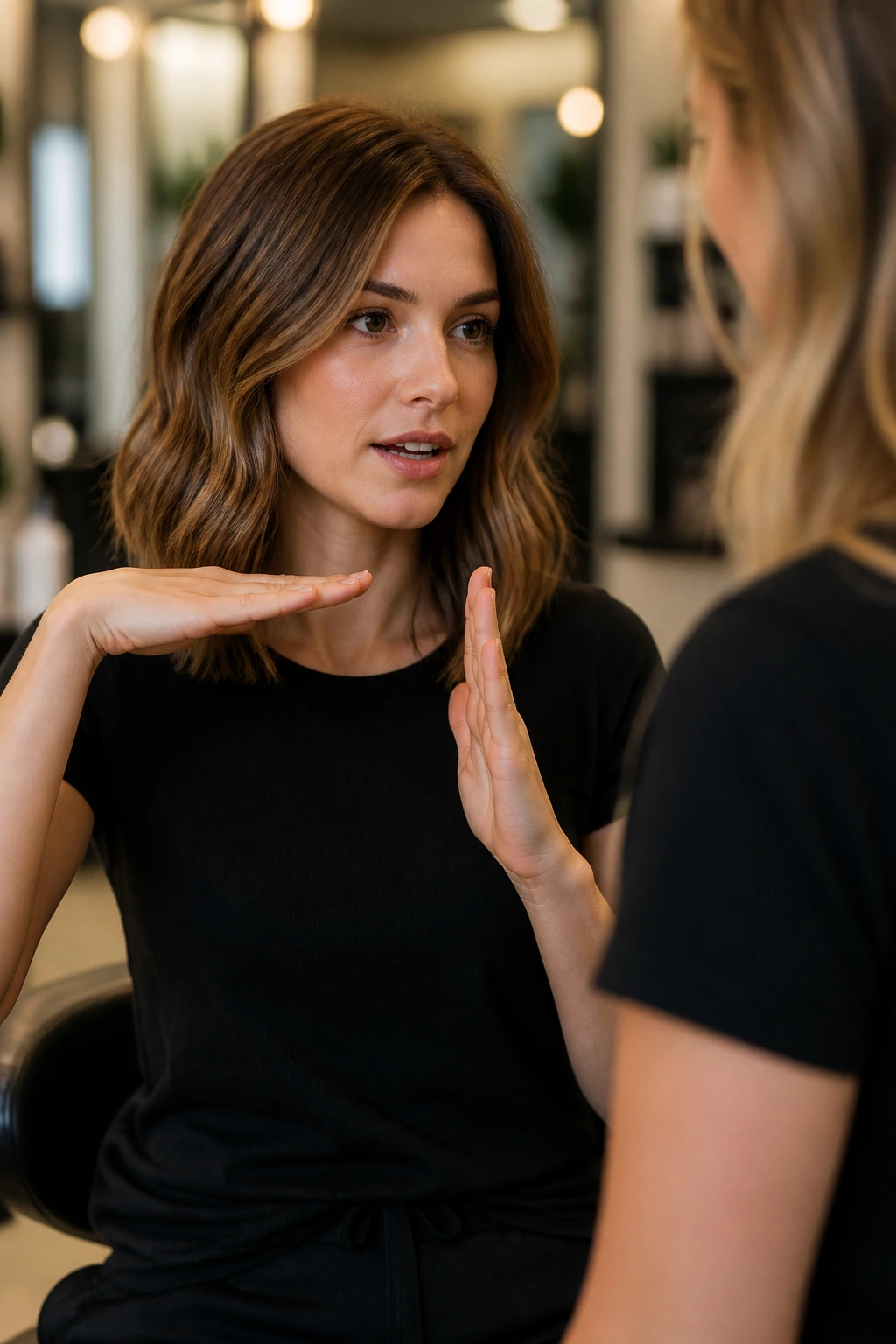
Bring photos, yes, but bring words too. A good stylist can read a picture, yet the real information lives in the details you point out. Say where you want the front to hit — chin, jaw, or collarbone — and say whether you want the back shorter, equal, or slightly angled forward. Those three choices change the whole haircut.
If you like a blunt look, say no heavy layering through the bottom perimeter. If you want movement, say you want internal texture, not obvious steps. That phrasing matters because “layered lob” can mean five different things depending on the person holding the scissors.
A few useful notes to give before the first cut:
- How you wear your part most often
- Whether you air-dry, blow-dry, or heat-style
- How much density your hair has at the ends
- Whether you want to still tie it back
- How often you’re willing to trim it
That last one matters more than people think. A crisp blunt lob and a low-maintenance soft lob are not the same haircut. They don’t age the same way either.
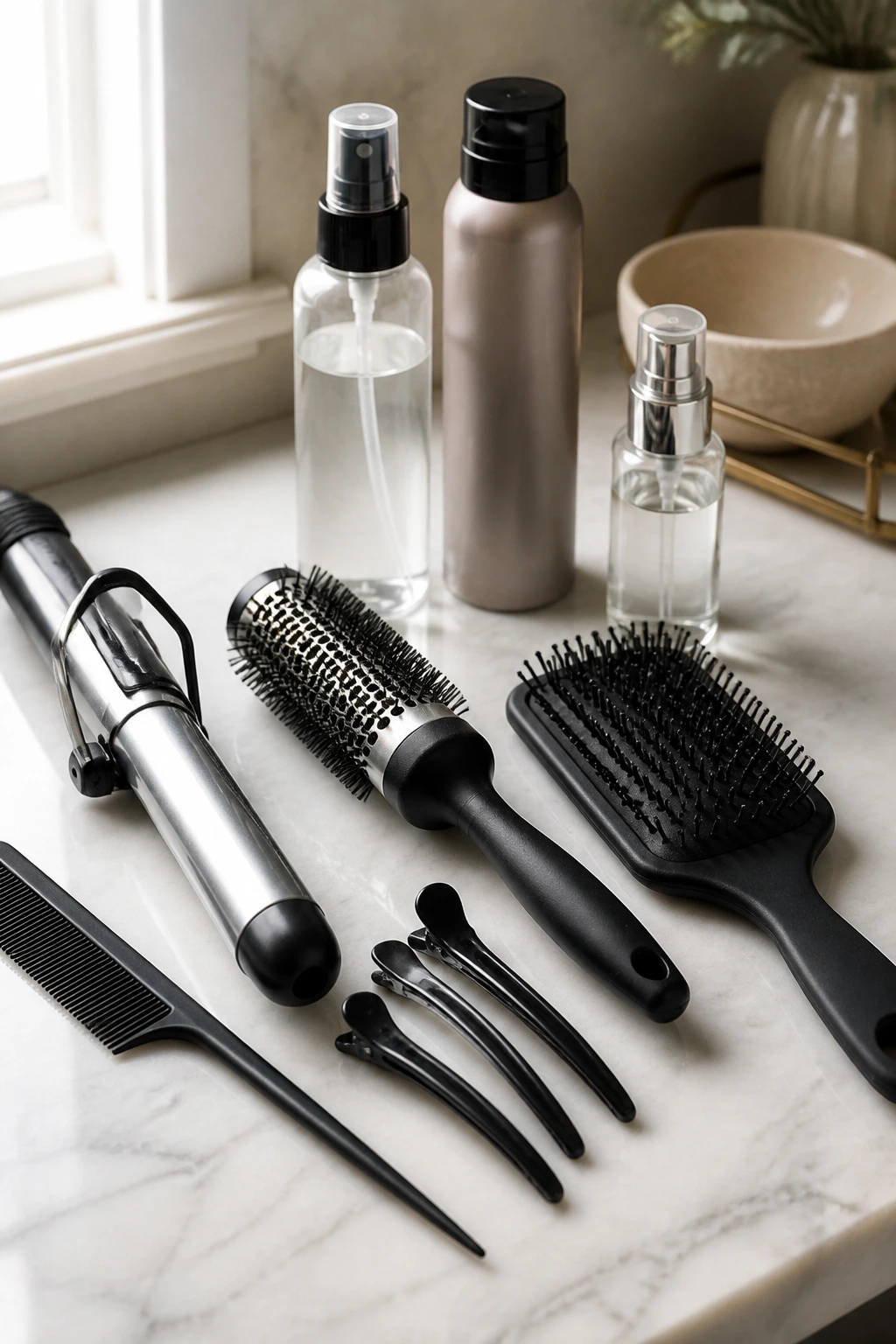
Brushes, Clips, and Products That Make a Lob Behave
-
Tail comb: Useful for clean parts and sectioning, especially if your lob has a strong line or a center part.
-
Sectioning clips: These make blow-drying less chaotic. Four clips are enough for most medium-density hair.
-
1-inch to 1.25-inch curling iron or wand: Best for soft bends, waves, and a little movement through the mid-lengths.
-
Round brush, medium size: Good for rounded ends and bouncy blowouts without making the shape too puffy.
-
Paddle brush: Better for sleek, straight lob styles and for getting the cut line smooth.
-
Heat protectant spray: Use it before any hot tool pass. Lob ends sit near the shoulders, which means they often get hit with more heat than you think.
-
Light texture spray or mousse: Helps piecey, beachy, or shaggy versions hold their shape.
-
Shine serum: One small pump is enough for blunt, glassy, or sharp modern lobs.
-
Inspiration photos from three angles: Front, side, and one shot of the texture you want. A single front view is not enough.
How to Keep the Length Looking Clean Between Appointments
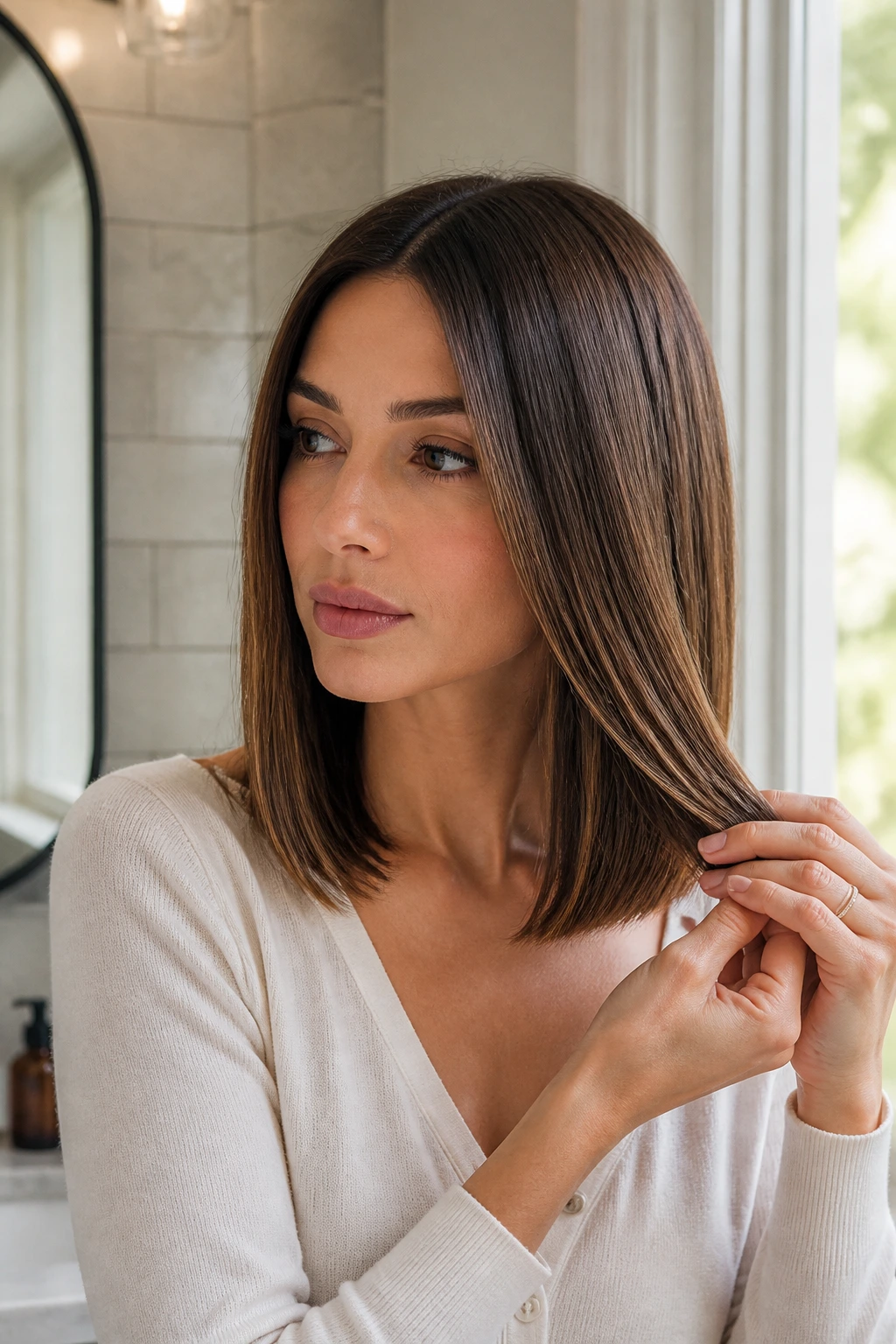
A lob looks sharp when the ends stay clear. Once they start fraying, the whole haircut loses its point. That’s why trim timing matters more here than on very long hair. A blunt lob usually wants a trim every 6 to 8 weeks. A softer layered lob can stretch to 8 to 10. Fringe needs its own schedule, often every 3 to 4 weeks if you want it to sit properly.
The daily fix is simpler. Don’t overload the ends with oil. Don’t sleep on wet hair if you can help it. And if your lob is straight or sleek, a quick pass with a brush and dryer at the front pieces can rescue the shape faster than a full wash. For wavy or curly versions, a small amount of water and leave-in product at the mid-lengths is often enough to wake them up.
A silk pillowcase helps, though a loose clip or soft scrunchie at the nape can do a lot too. The less the ends get crushed, the longer the line stays readable.
Common Mistakes That Can Throw the Shape Off
The biggest mistake is cutting the lob too short in the front without checking how the hair actually falls. A front piece that sits above the jaw can look sharp in a photo and awkward in real life, especially if your hair naturally curves under. The fix is to keep the front long enough to tuck and test the line in the mirror before taking more off.
Over-layering is another trap. Fine hair gets see-through. Thick hair gets fluffy in the wrong places. Either way, the clean outline disappears. Ask for the lightest possible shaping first, then add more only if the bulk truly needs it.
One more: ignoring your part. A center part, side part, and off-center part change how a lob hangs around the face. If you never wear a middle part, don’t let the haircut get designed as if you do. That’s how a technically good cut ends up feeling wrong on your head.
Variations and Adaptations to Try
The Air-Dry Lob: Keep the perimeter soft and add only enough internal texture to support your natural bend. This works best if you want the haircut to look good with minimal effort and no hot tools.
The Sleek Power Lob: Choose a blunt or nearly blunt line, then wear it straight with a center part and a little shine product. It’s crisp, modern, and especially good on medium to thick hair that likes to hold a line.
The Curly-First Lob: Have the cut shaped around your curl pattern, not against it, and keep the length long enough to account for shrinkage. This version gets better when the curls have room to spring.
The Fringe-Heavy Lob: Add curtain bangs, bottleneck bangs, or wispy bangs to pull attention upward. It’s a good choice if you want the face frame to carry more of the look than the body of the cut.
The Grow-Out Lob: Keep the edges soft and the layers long so the haircut stays flattering for months, not weeks. This is the best pick if you hate constant salon visits and still want a shape that reads on purpose.
Lob Haircut FAQs for Long Hair
How short is a lob supposed to be?
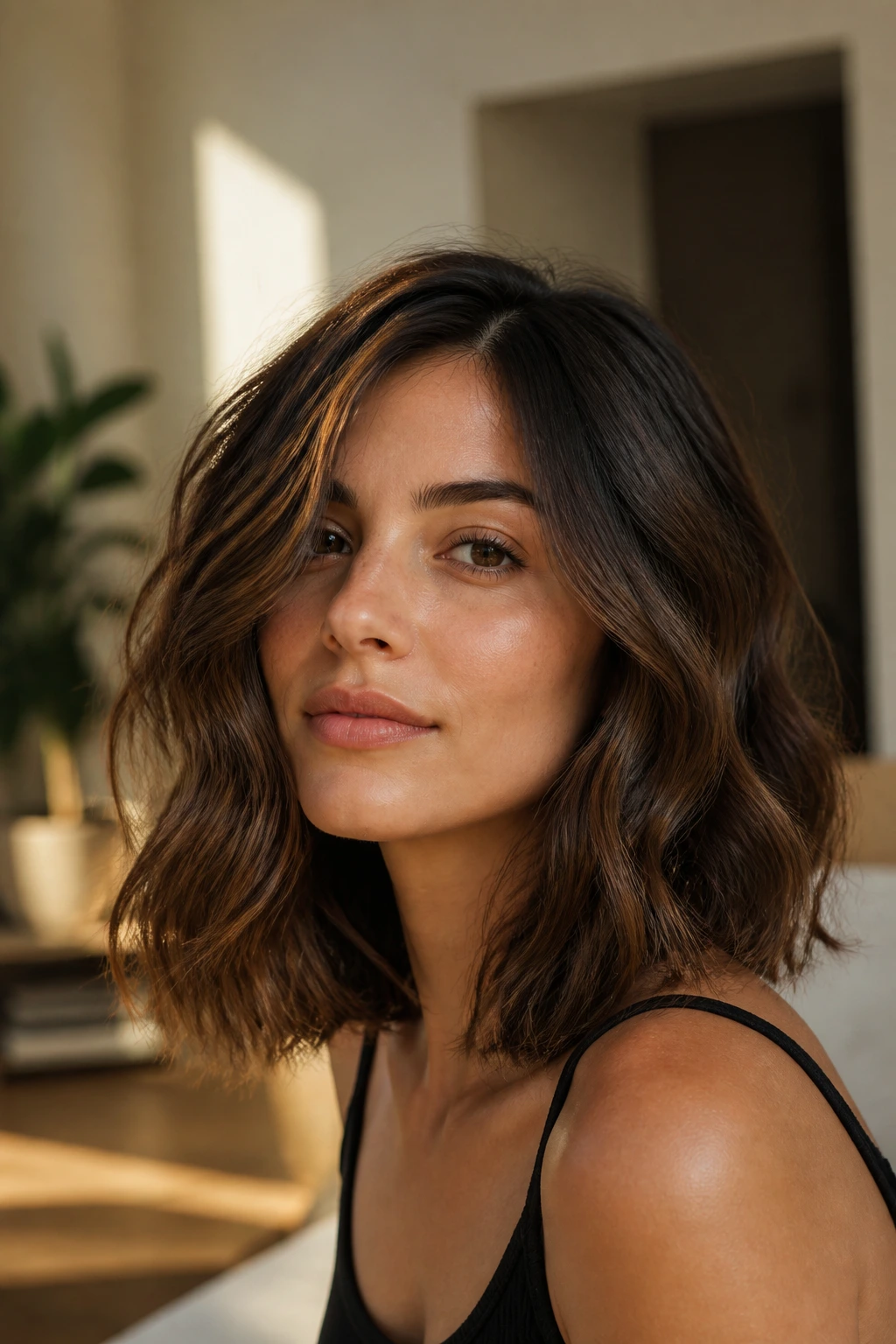
Usually somewhere between the chin and the collarbone, though the exact point depends on your face shape and hair texture. If you like to tuck hair behind your ears or tie it back, keep enough length to do that comfortably.
Will a lob make my hair look thinner?
Not if it’s cut well. Fine hair often looks fuller at lob length because the shorter shape takes stress off the ends, while thick hair needs a smarter interior shape so the bottom does not spread out.
Can I keep my long hair feel while wearing a lob?
Yes, if the stylist leaves enough front length and doesn’t over-layer the perimeter. A soft, collarbone-grazing lob keeps some of that long-hair swing without the heavy drag.
What should I ask for if I want movement but not a shag?
Ask for soft internal layers, a stable outer line, and no aggressive texturizing at the ends. That keeps the haircut mobile without breaking it up too much.
Does a lob work on curly hair?
Absolutely, but the cut should respect shrinkage. A curl-aware lob is usually shaped dry or with curl pattern in mind so the finished length lands where you actually want it.
How often should I trim a lob?
Blunt versions usually need a trim every 6 to 8 weeks to keep the line clean. Softer lobs can go a little longer, though fringe often needs its own shorter trim cycle.
Can I still put a lob into a ponytail?
Usually yes, especially if the front pieces are left long enough. A low pony, clip-up, or half-up style is much easier when the lob sits near the collarbone rather than above the jaw.
What if my hair flips out at the ends?
That usually means the line was cut in a way that fights your natural bend. A slight rounding or a tiny amount of weight left in the ends can help, and a quick brush-under style often fixes it without another haircut.
The Shape That Never Feels Heavy
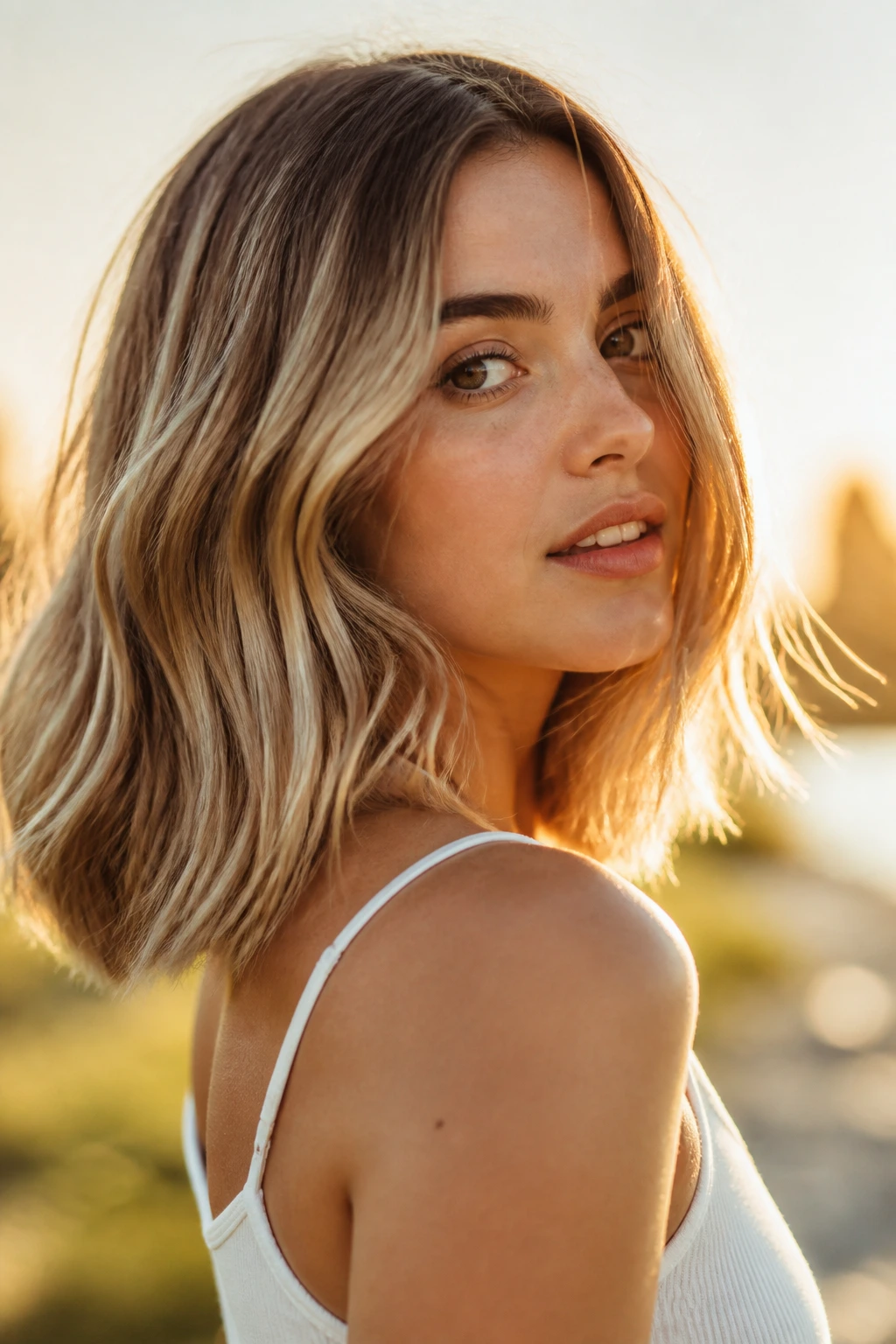
A lob works because it respects the part of long hair people actually like — the movement, the softness, the way it can swing when you turn your head — while stripping away the dull weight that builds up at the bottom. That is why it keeps surviving fashion cycles. It isn’t a gimmick. It’s a shape that solves a real problem.
The best part is how much room it leaves for personality. You can wear it blunt, shaggy, curly, flipped out, tucked under, center-parted, or swept to one side, and the cut still reads as a lob. Bring a few good photos, be honest about how you style your hair, and let the length land where your face and texture want it to. That’s the move that keeps the haircut looking like it belongs to you.
