



Brunette lobs for fine hair over 50 work because they keep enough weight at the ends to look full, but they do not sit so long that the shape goes limp by lunch. That middle ground matters. Fine hair loves a clean perimeter, and a lob gives it one without forcing you into a severe chin-length chop or a stringy long cut that hangs around the shoulders and frays at the edges.
The brunette part matters more than people think. A flat, one-note brown can make fine hair look thinner than it is, while a layered brunette tone — chestnut, mocha, cocoa, espresso, walnut — builds shadow and thickness at the outline. A little depth around the ends, a soft lift at the crown, and a front piece that grazes the cheekbone can change the whole read of the haircut. Suddenly the hair looks intentional. Not big. Not puffy. Just fuller, cleaner, and easier to live with.
I keep coming back to lobs for one reason: they respect the actual texture of the hair you have. They don’t demand a lot of density that isn’t there. They work with the quiet reality of fine hair after 50 — softer ends, flatter roots, a little less spring, maybe a few silver strands that catch the light faster than the rest. The right lob doesn’t fight any of that. It edits it.
Why These Brunette Lobs Earn Their Keep
-
The length stays in the weight zone: Most of these cuts sit between the collarbone and the top of the shoulder, where fine hair keeps enough body to avoid that see-through, whispy finish.
-
Brown color does quiet heavy lifting: A rich brunette shade creates shadow at the perimeter, which makes the ends read thicker than they would in a single flat tone.
-
The styles don’t rely on aggressive layering: Instead of stripping out density, they use tiny shifts in length, face-framing pieces, or subtle bevels to make the cut move.
-
They work with real styling time: A lot of these looks can be done with a round brush, a blow-dryer nozzle, or a 1-inch iron. No salon circus.
-
They flatter changing features: After 50, a haircut often has to do more than one job — soften the jaw, keep the neck open, and play nicely with glasses. These lobs handle that without looking overdone.
-
They are easier to grow out than short crops: If you get tired of bangs or want to soften the outline later, a lob gives you room to adjust without starting over.
1. The Blunt Collarbone Lob in Deep Chestnut
A blunt collarbone lob is the most reliable starting point if your fine hair likes to collapse at the bottom. The line lands right where the shoulder begins to support the ends, so the cut doesn’t hang in air like longer hair often does. Deep chestnut adds a little warmth without turning brassy, and that warmth helps the perimeter look denser.
This version works because it keeps the eye on the shape, not the scarcity. Fine hair often looks best when the ends are clean and the layers are minimal. A sharp line at the bottom gives the whole style a firm edge, and that edge is what makes the hair look thicker than it is.
Why It Works
The blunt line acts like a visual shelf. Your hair sits on it. That matters more than volume spray, frankly.
If you like an easy styling routine, ask for a one-length lob that skims the collarbone with only a slight bevel at the very ends. You want movement, not feathering. Too much internal layering here turns the bottom into a see-through fringe, and that’s the exact look we’re trying to avoid.
Style Note
Blow-dry with a medium round brush, lifting the roots at the crown and turning the ends under just enough to show a clean curve. A pea-sized amount of shine cream on the mids and ends is enough. More than that and fine hair starts to separate.
2. The Soft A-Line Lob with Mocha Depth
Why does the A-line shape keep showing up on fine hair? Because it gives the front a little drama without taking length away from the back. The front pieces sit a touch longer, which pulls the eye downward and makes the hair feel fuller around the jaw and neck.
Mocha brown is a smart shade here. It has enough richness to deepen the shape, but it doesn’t go so dark that the cut loses movement. If your hair is naturally fine and a little flat, a mild A-line can bring lift without making the haircut look stiff or severe.
Best for:
- Hair that flips at the jawline
- Faces that need softening around the cheek area
- People who want a little more shape than a straight blunt cut
Keep the angle subtle. A steep A-line on fine hair can look stringy in the front if the density isn’t there. Ask for the back to sit just above the collarbone and the front to drop about 1 to 1½ inches longer. That small difference is enough.
3. Curtain Bangs on a Walnut Lob
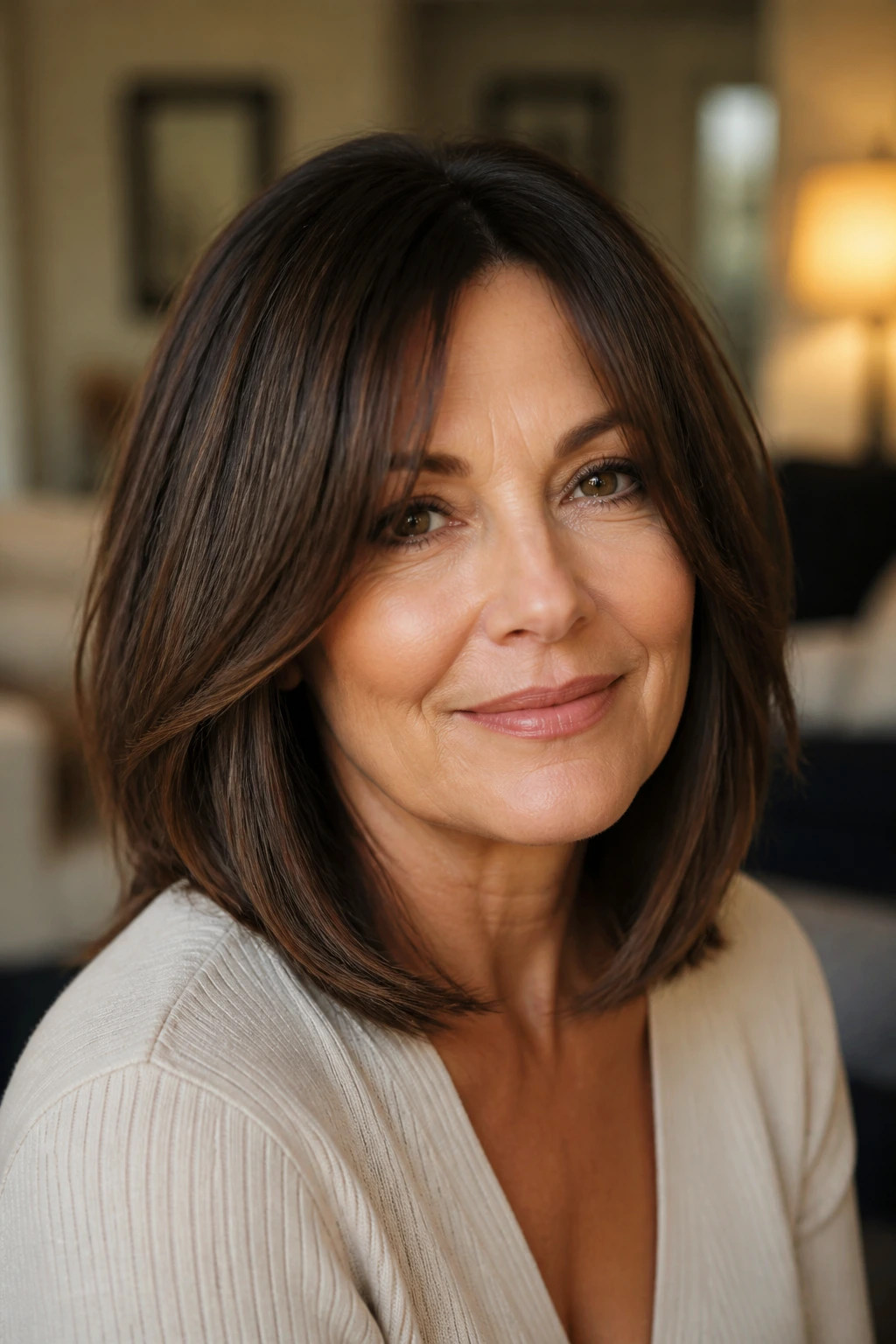
Curtain bangs can do more for fine hair than people expect, especially when the crown has lost a bit of lift. They split softly down the middle and fall away from the face, which adds width where fine hair often needs it most: around the top third of the haircut.
A walnut brunette lob with curtain bangs has a warm, soft look that doesn’t shout. The bangs draw attention to the eyes and cheekbones, and the lob keeps the rest of the shape calm. That balance matters. If the bangs are too heavy, they drag the whole style down. If they’re too sparse, they disappear.
The best version lands with the bangs starting a little shorter in the center and blending longer at the sides. Ask for the shortest point to sit around eyebrow level or just below, then soften the side pieces so they sweep into the lob instead of cutting off abruptly.
How to Wear It
This cut looks best with a small round brush or a Velcro roller at the front for 5 to 10 minutes after drying. That tiny bit of set keeps the bangs from splitting awkwardly, which they love to do if you just air-dry and walk away.
4. The Deep Side-Part Espresso Lob
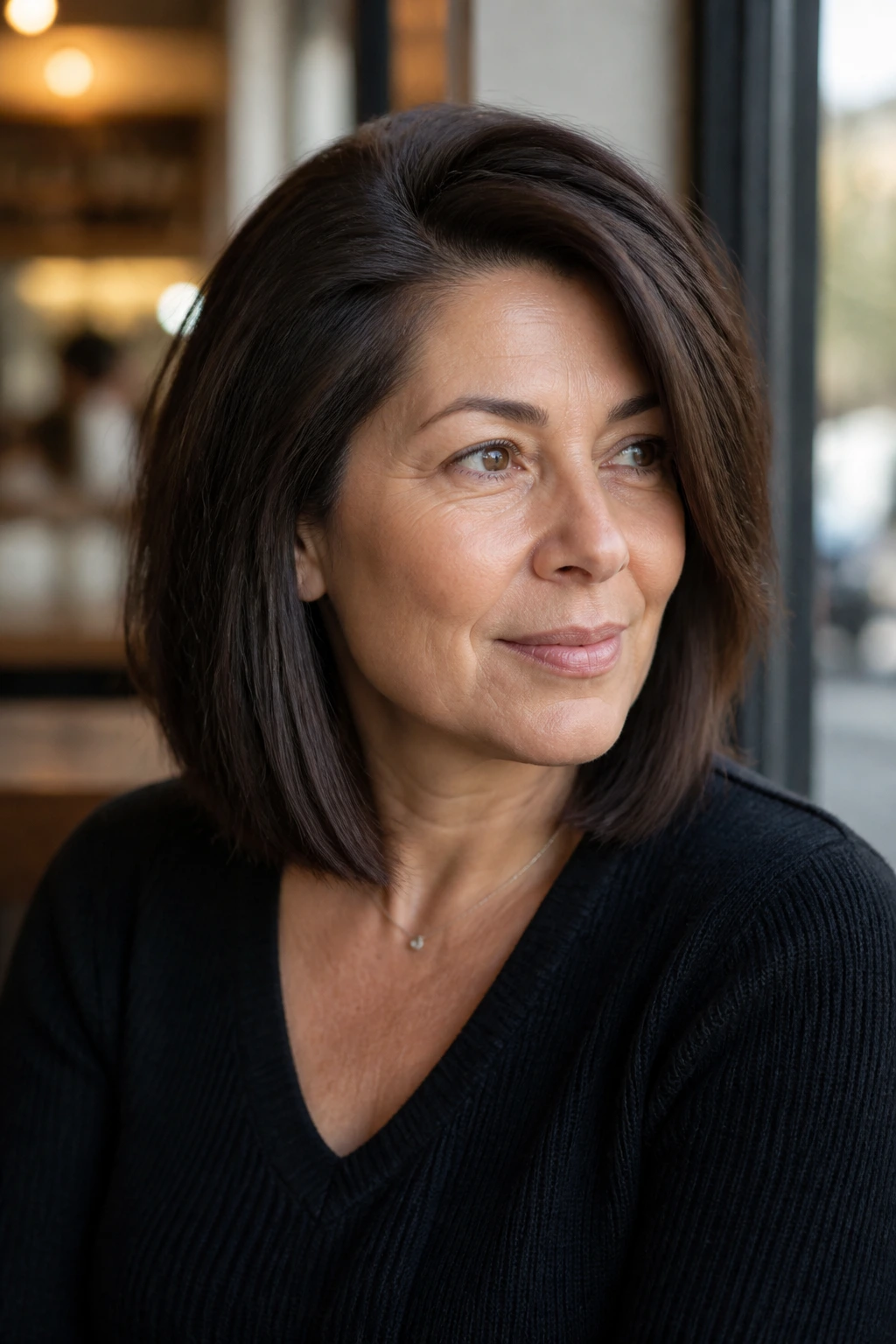
A deep side part is one of the cheapest tricks in the haircut book, and it still works. One shift in parting can create a lift at the root that no amount of teasing can fake. On fine hair, that lift matters because it changes the silhouette before the rest of the hair even moves.
Espresso brown gives this lob a sharper edge, especially if your hair is naturally cool-toned or your grays are coming in silver rather than white. The side part keeps the look from feeling flat or too symmetrical. It also helps if one side of your hair tends to lie flatter than the other. Most of us have a weak side. Hair knows. It always knows.
What Makes It Different
This cut is less about the cut itself and more about the architecture of the style. The side part gives you height, the lob gives you density, and the darker brunette tone grounds the whole thing so it doesn’t look airy in a bad way.
If you wear glasses, this is especially good. The side sweep opens the face without crowding the frames.
5. Feathered Mocha Layers That Keep the Ends Full
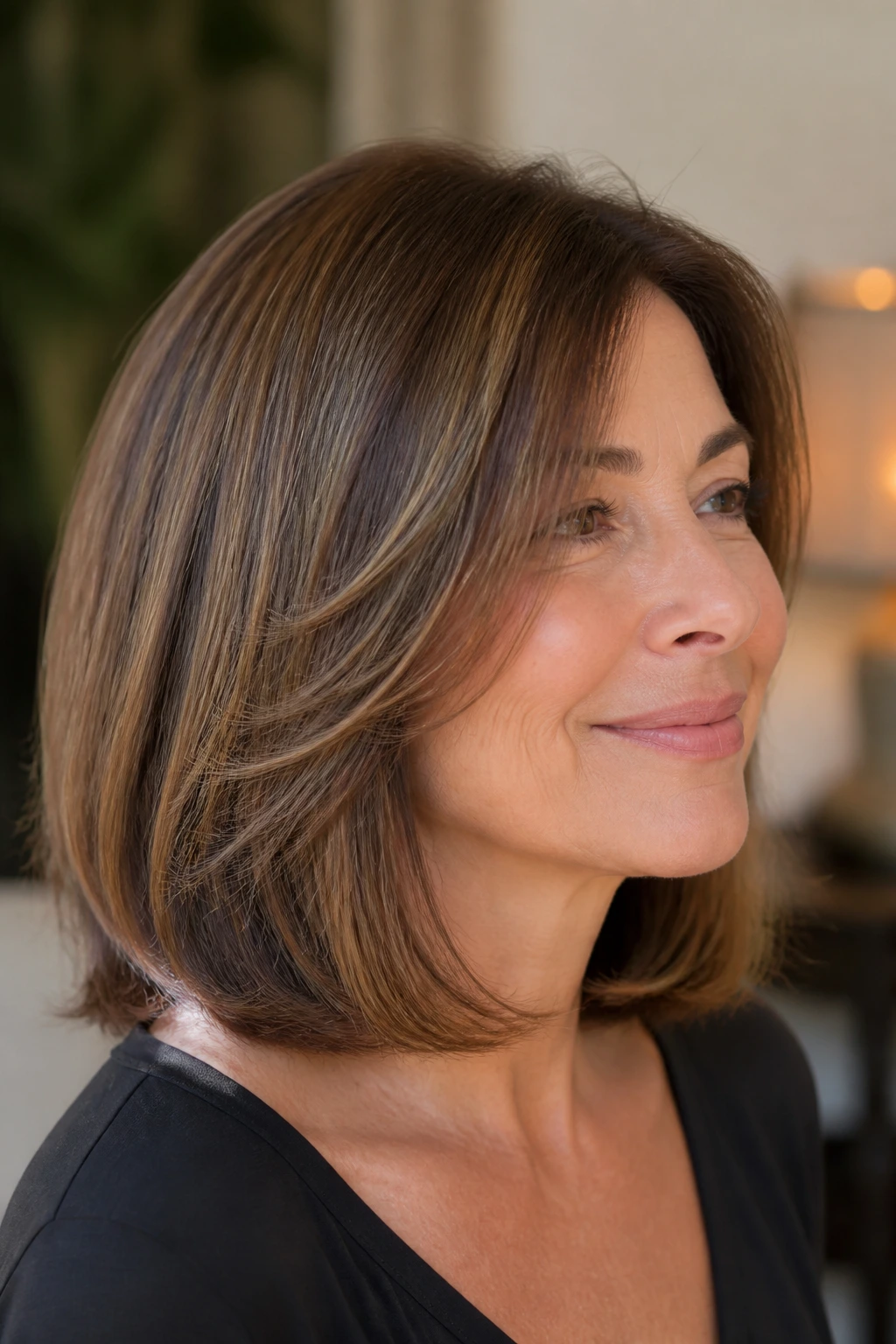
Feathering has a bad reputation when it goes too far. On fine hair, the wrong kind of layering can turn the ends into a shaky outline with not enough substance. But feathered layers done lightly — and I mean lightly — can make a lob breathe without losing its shape.
A mocha brunette shade is a nice match because it gives the cut softness. The trick is to keep the layers internal and long, so they support the outline rather than break it apart. Think of it as building movement inside the haircut while keeping the edge intact.
If your hair feels limp but not thin at the ends, this is a solid choice. The layers remove just enough weight to let the top move, but the bottom still looks like a lob, not a shag that lost its nerve halfway through.
Quick styling cues
- Dry the crown first for lift.
- Use a round brush to bend only the top layer.
- Leave the last inch of the ends calmer than the rest.
That last bit matters. Fine hair looks thinner when every strand is curled the same way.
6. A Caramel Brunette Lob with Mid-Shaft Waves
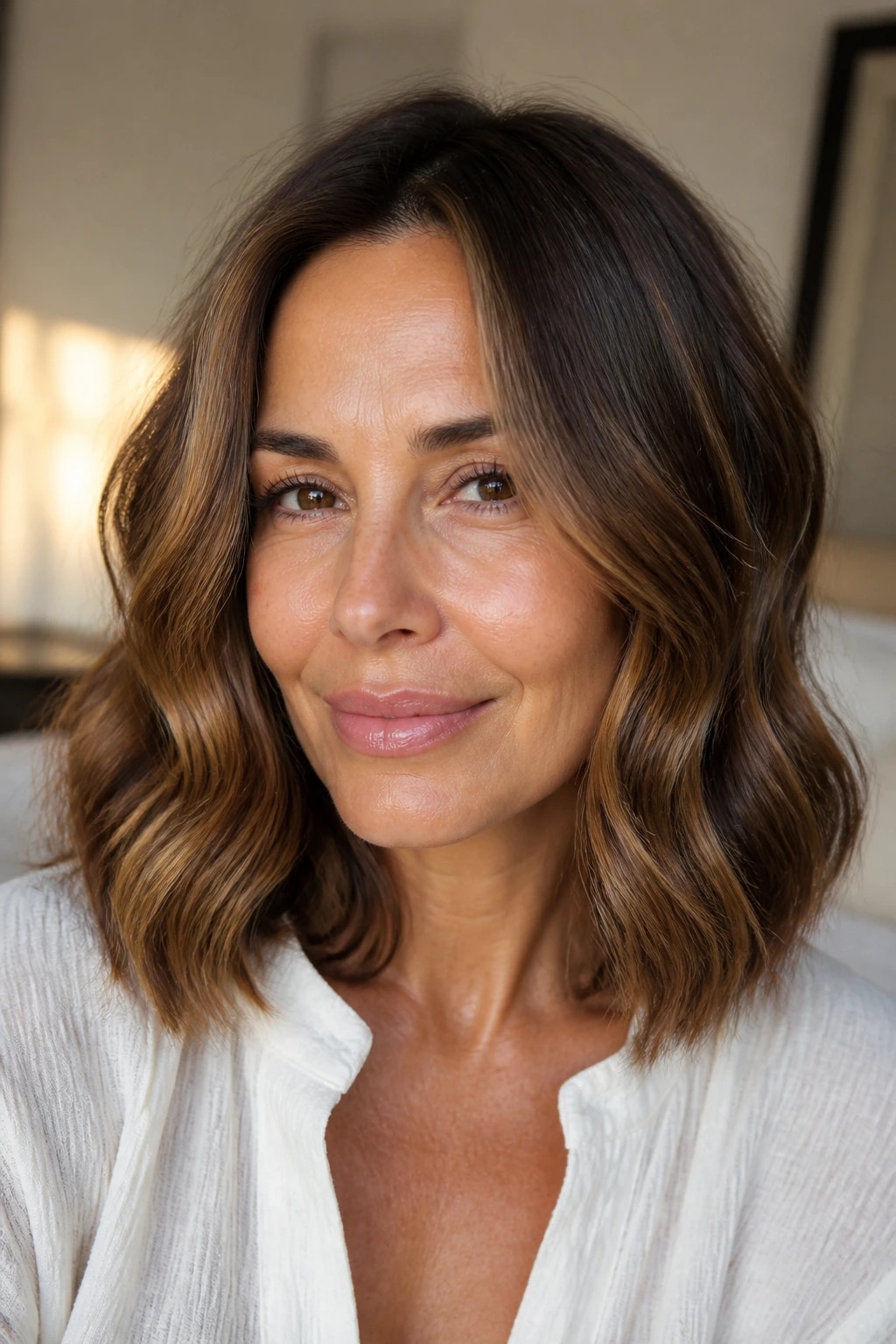
A lob with soft mid-shaft waves is the one people think of when they hear “easy hair,” but the difference between polished and puffy lives in the wave placement. Start the bend halfway down the hair, not near the scalp. That preserves volume at the root and avoids the triangle shape that can happen when fine hair is waved from the top.
Caramel ribbons around a brunette base add enough contrast to make the waves visible. Not streaky. Visible. That’s a better goal. If the hair is one flat brown shade, the wave can disappear the second you brush it out.
This cut is a good fit if your hair falls flatter on day two and you want something that still looks deliberate after sleeping on it. A 1-inch curling iron or a medium wand works well. Alternate directions, leave the last inch straight, and shake the waves loose with your fingers, not a brush.
The look in one sentence
Soft, bent, and slightly undone — the kind of lob that still looks like hair after a windy lunch outside.
7. The Glassy Chocolate Lob with a Clean Center Part
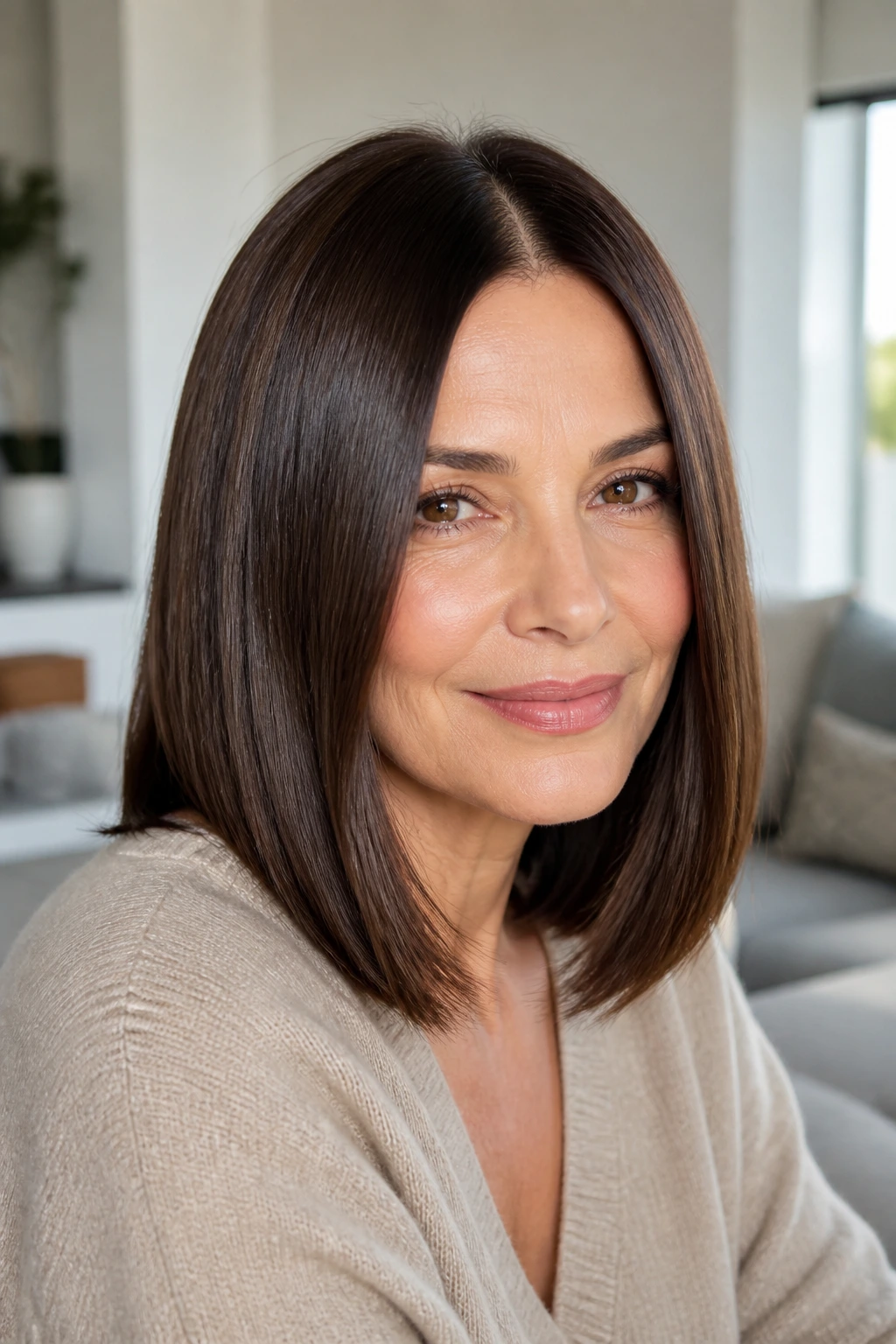
A sleek, glossy lob can be excellent on fine hair when the cut is blunt and the color is rich enough to carry the shape. Chocolate brown gives the hair depth, and a center part builds symmetry. That symmetry can be very flattering after 50, especially if your face has softened and you want the hair to mirror that calm.
This style needs healthy ends. If the bottom is rough or frayed, straight styling just makes the thinness more obvious. A tidy trim every six to eight weeks keeps the line solid, and a heat protectant with a little slip helps the hair reflect light instead of scattering it.
A center part doesn’t work for everyone, but on the right face it’s clean and modern without trying too hard. If your hair naturally falls that way, don’t fight it. If it doesn’t, don’t force it.
How to get the shine without the limpness
Use a smoothing serum only from mid-length to the ends, and keep product off the roots. One drop too many at the crown and the whole thing goes greasy.
8. Choppy Cocoa Ends with a Piecey Finish
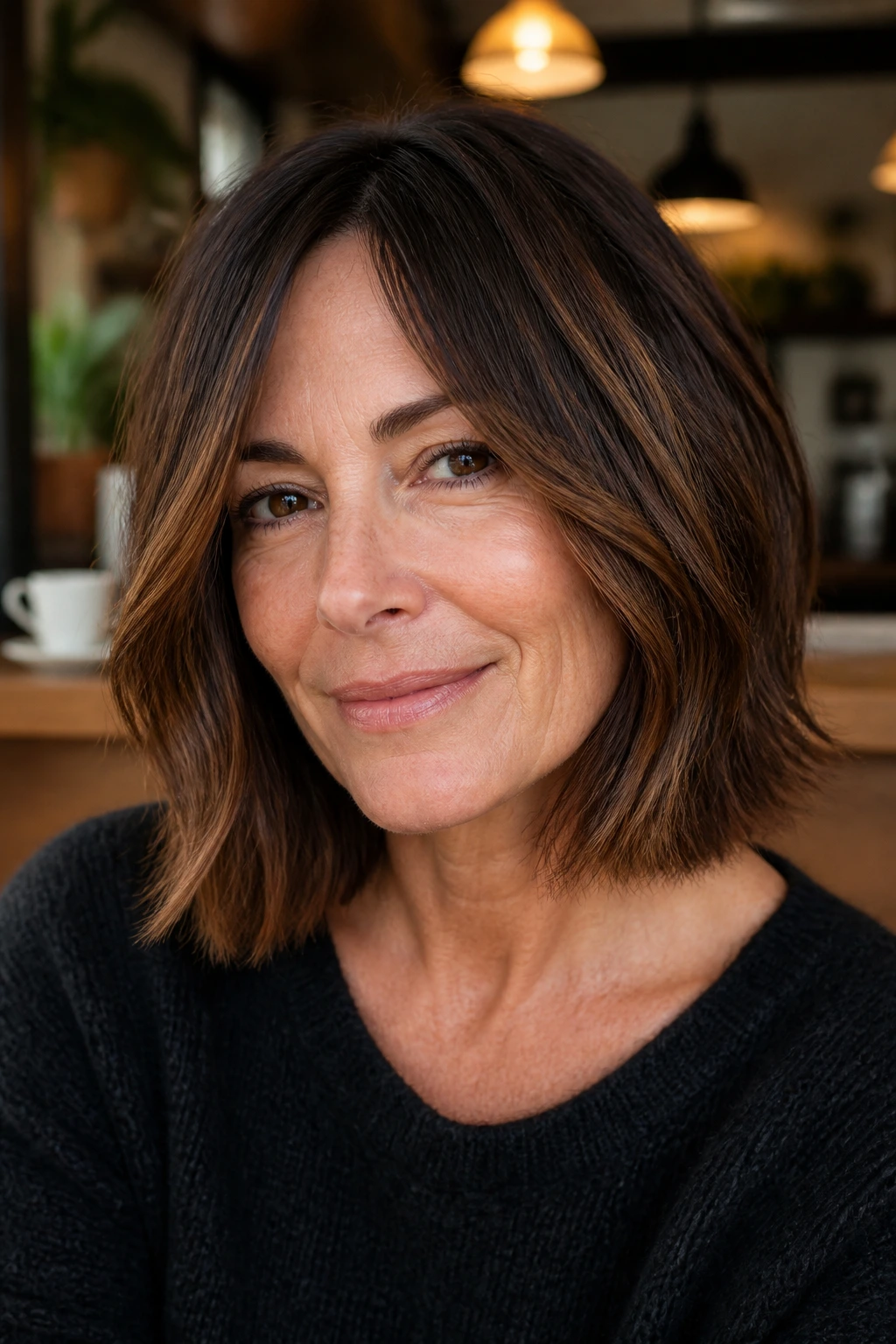
Some fine hair needs a little attitude. Not a lot. Just enough. A choppy cocoa lob keeps the body of the cut fairly strong while giving the ends a piecey finish that looks relaxed instead of stiff. The key is restraint — the pieces should feel intentional, not hacked up.
This works best if your hair already has some natural bend or you like using a texturizing spray. Ask the stylist for point-cutting at the ends rather than heavy texturizing through the middle of the hair. That keeps the ends from looking thin while still giving them a bit of separation.
The color should stay rich and grounded. Cocoa, walnut, or soft chestnut all work because they support the cut’s texture. A very pale brown can make choppy ends look less like texture and more like breakage. That’s not the same thing, and your hair knows the difference.
Tiny styling trick
Use a flat iron to flick just a few random ends outward, then mist a light texture spray from below. It creates movement without turning the whole head into a wave helmet.
9. Face-Framing Mocha Pieces That Start at the Cheekbone
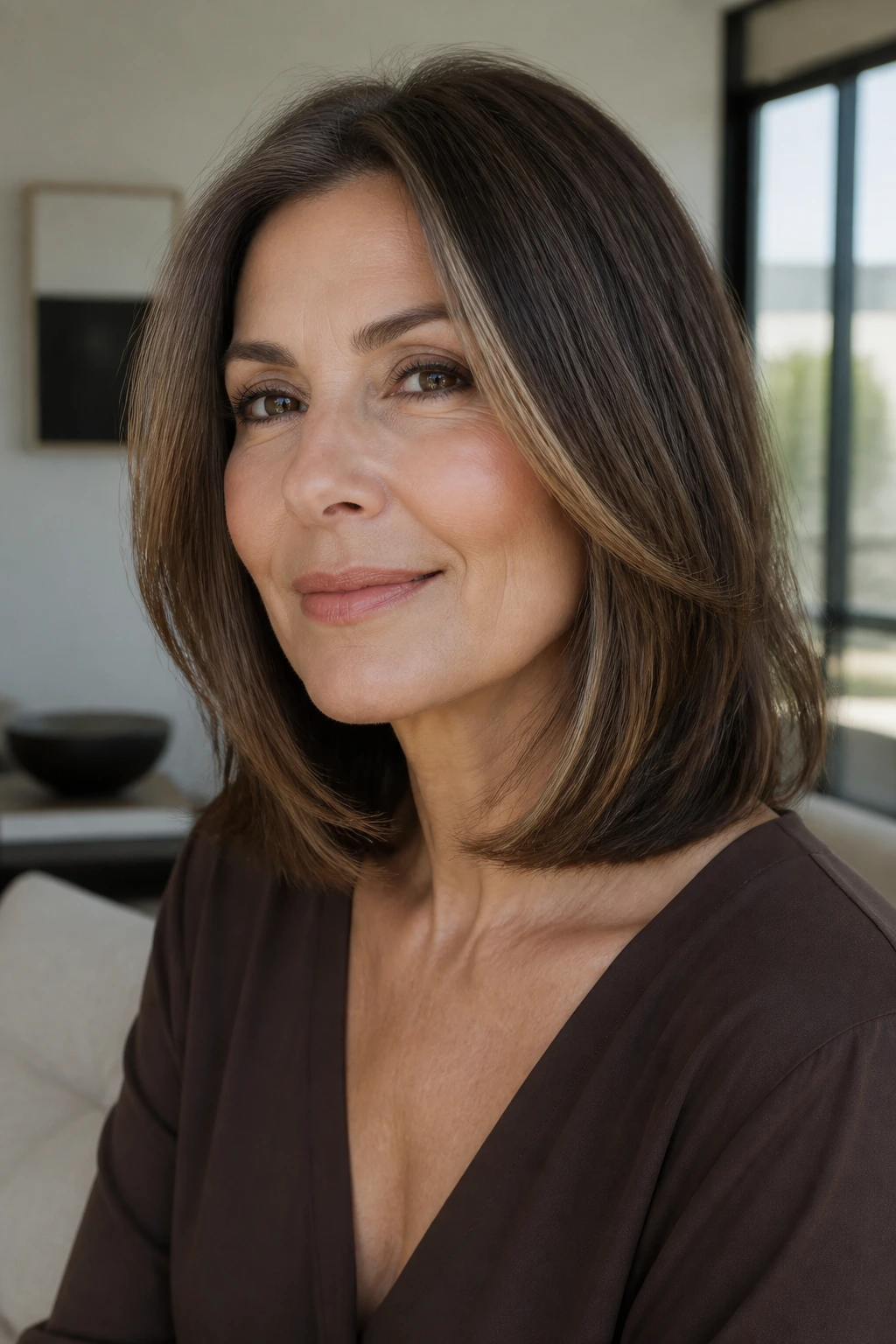
This is one of the most flattering shapes if your lower face has softened a bit and you want the hair to do some quiet lifting. The face-framing pieces start around the cheekbone, then blend into the lob. That draws the eye upward and makes the jawline look a little lighter.
Mocha brown keeps the front from looking harsh. A few softer strands around the face are enough; you do not need thick face curtain sections. Fine hair benefits more from strategic placement than from weighty chunks of color or cut.
What to ask for
- Front pieces that begin around the cheekbone or just below it
- A soft taper into the lob, not a dramatic angle
- Light texturizing only at the very ends
This cut is especially useful if you wear hair behind one ear a lot. The front pieces still do something when the rest is tucked back. That sounds small. It isn’t. Small details are often the difference between a cut that feels flat and one that feels finished.
10. The Slightly Inverted Chestnut Lob
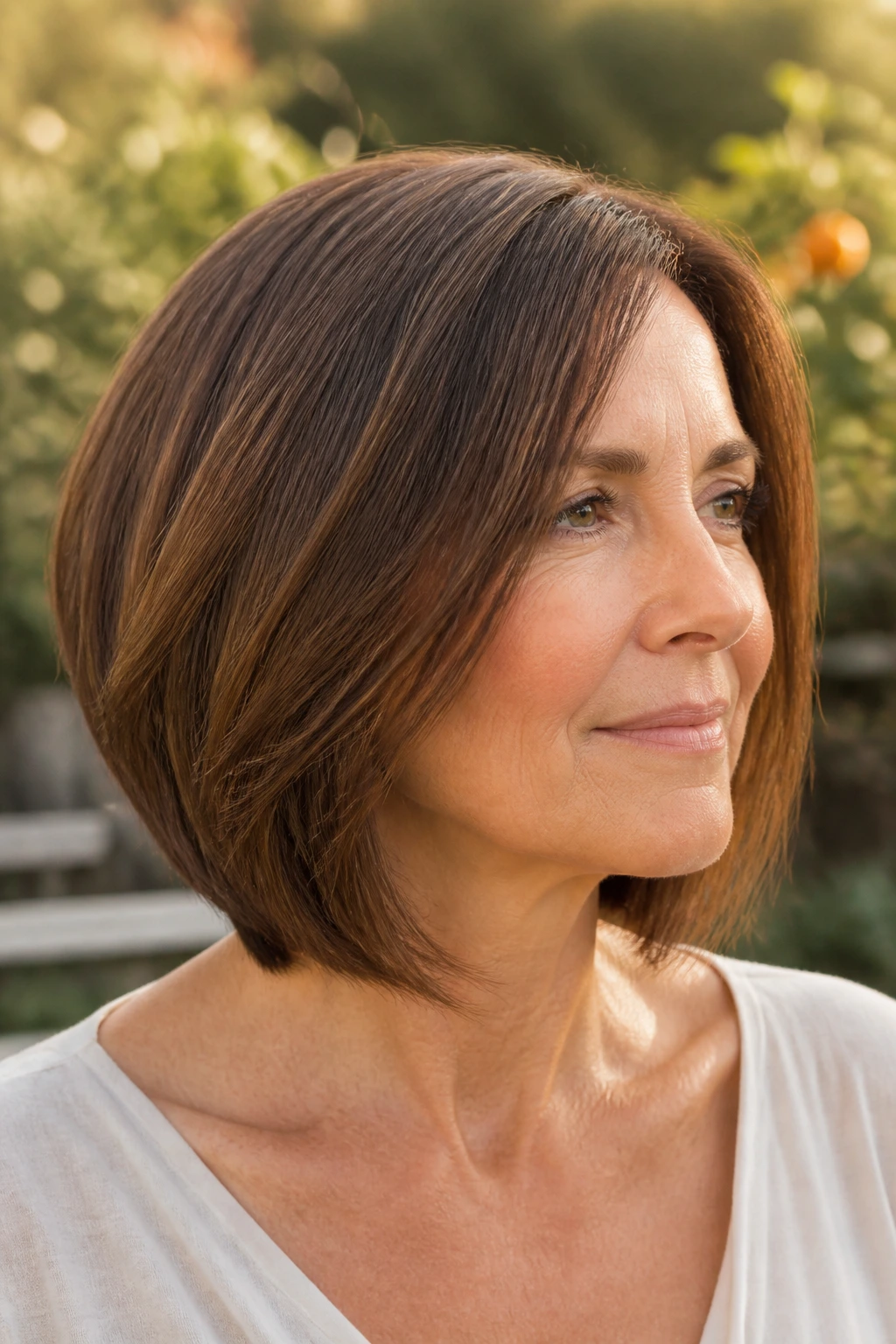
A subtle inversion gives the back a little lift and keeps the front from drooping. On fine hair, the trick is not to go dramatic. A steep inverted lob can make the back look stacked and the front look stranded. A slight version keeps the shape modern while staying wearable.
Chestnut brown is a nice partner for this cut because it softens the lines and adds warmth near the neck. If your hair tends to collapse at the nape, a touch of stacking there gives it structure without turning it into a short bob.
Why it helps fine hair
The inverted shape creates the feeling of volume at the back where hair often goes limp. The front length keeps the style from feeling too short or boxy. It’s a quiet fix, not a flashy one.
Ask your stylist to keep the transition gentle. You want a lean angle, not a dramatic corner. If the back is too short, you lose the shoulder-skimming elegance that makes a lob so useful in the first place.
11. A French-Girl Lob with Wispy Fringe
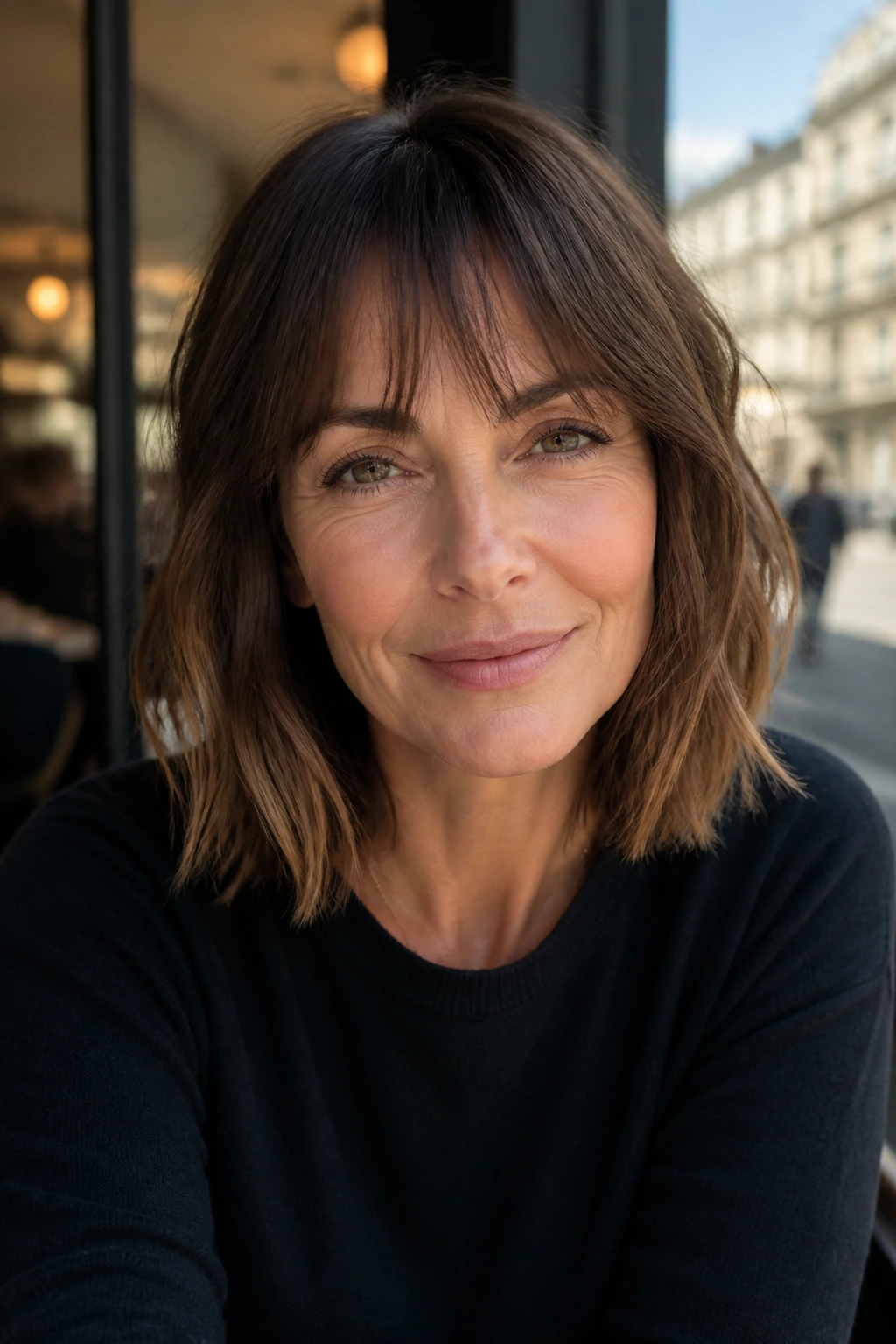
A soft fringe can make a lob feel less formal, which is handy if your hair has started to look too neat in all the wrong ways. The French-girl version keeps the fringe airy and slightly uneven, with the rest of the lob sitting just at the collarbone. It looks best when the brunette shade has a little warmth — not orange, not ash, just enough richness to keep the cut from going flat.
This is a good cut for people who want a little face interest without going all-in on bangs. The fringe should not be heavy. It should sit light on the forehead and break up the vertical line of the face. Fine hair can carry this well because the fringe doesn’t demand much density.
Styling note
Dry the fringe first, from side to side, with a small brush. If you let it air-dry untouched, it often splits in the middle and then refuses to cooperate for the rest of the day.
The rest of the lob can stay a little undone. That contrast is part of the charm.
12. The Rounded Blowout Lob in Soft Brown
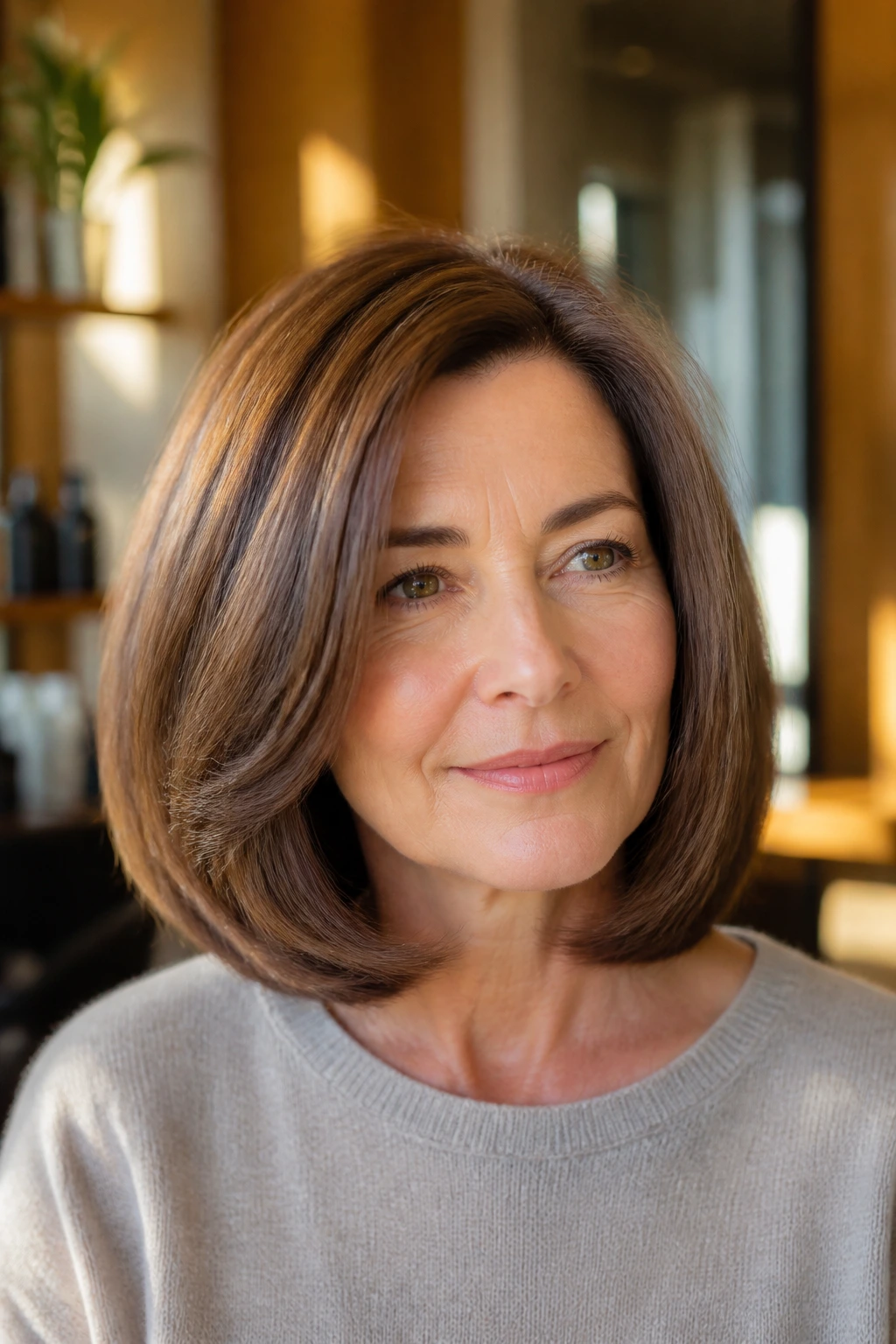
A rounded blowout shape is one of the easiest ways to make fine hair look better without a dramatic cut. The hair curves under at the ends and lifts at the crown and sides, which gives the whole head a fuller outline. It’s a classic salon shape for a reason. It flatters, and it photographs well in real life too — though that’s not the point. The point is that it fills out the profile.
Soft brown shades work especially well here because they keep the shape calm. If you go too dark, the curve can look stiff. If you go too light, the ends can look airy in a way that exposes the thinner bits.
How it reads on the head
- Fuller at the sides
- Neat at the neck
- Soft around the cheek area
This style is especially good if you like a little polish. It doesn’t need curls. It needs round-brush direction and a cool shot at the end of the blow-dry. That little cool-down matters more than people think.
13. The Razor-Soft Warm Brown Lob
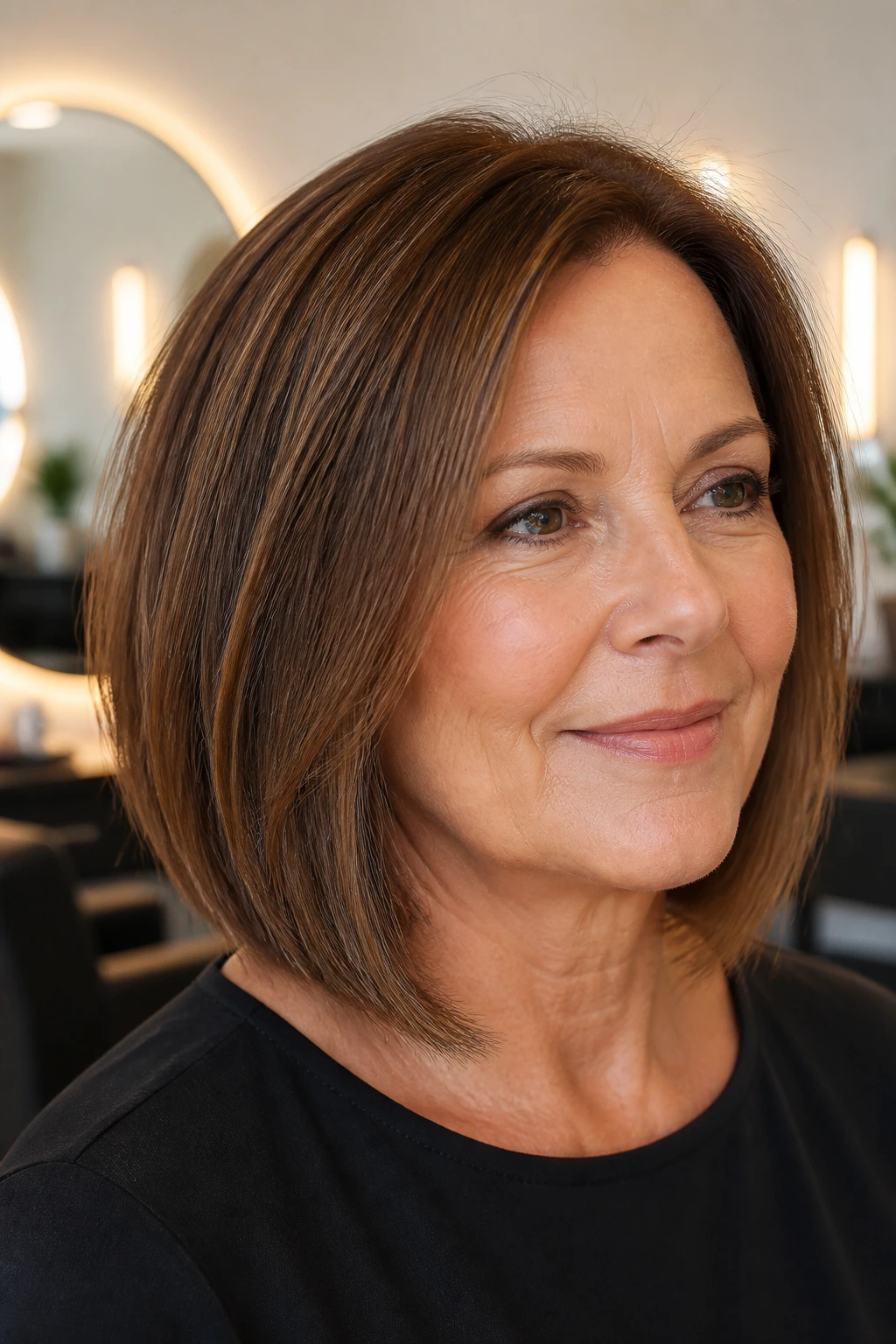
A razor cut on fine hair sounds risky, and sometimes it is. Done badly, it shreds the ends. Done carefully, it softens a blunt line just enough to give the lob movement. The key is control. You want the lightest touch, usually on very straight hair that already behaves well.
Warm brown is the right color partner because it makes the softness feel deliberate instead of damaged. The cut works best when the stylist uses the razor only at the perimeter and not through the whole head. Too much slicing and the ends lose their strength.
This one is for hair that feels dense enough to handle a little edge-softening. If your hair is sparse at the bottom, skip it. Seriously. A blunt or beveled line will give you more hair visually than any razor trick.
Good sign to watch for
After the cut, the ends should move when you shake your head, but they should still look like a solid line when your hair is still.
14. The Money-Piece Lob in Brunette and Beige Light
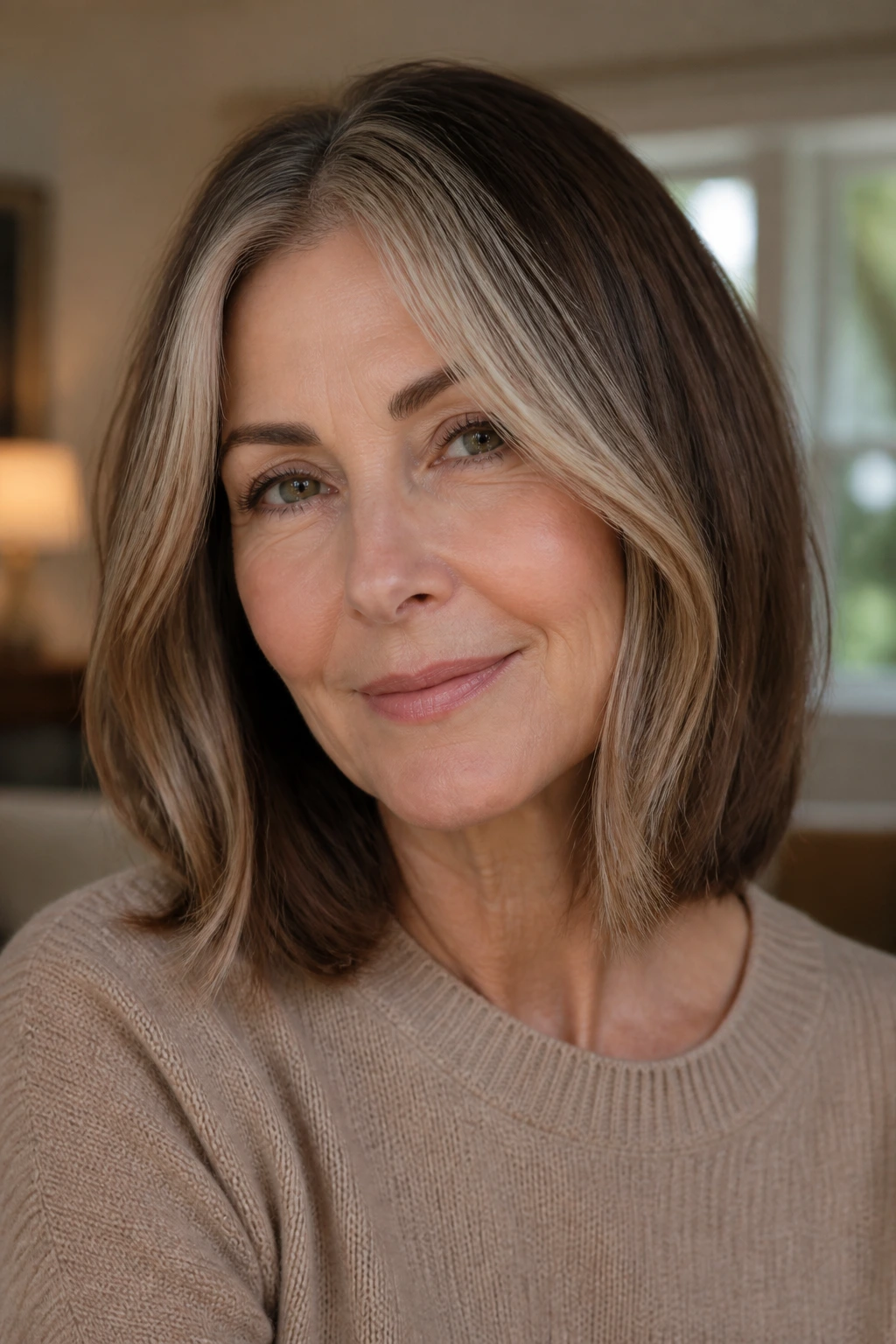
A lob with subtle money pieces can wake up the whole face, especially if the rest of the brunette base is rich and grounded. The lighter strands sit near the front hairline and cheekbones, which brightens the area around the eyes and pulls attention upward. That’s useful if your natural brown has gone a little flat or if your skin tone has warmed up over time and you want the hair to keep pace.
The trick is subtlety. A pale blonde stripe would fight the cut and show off the fineness of the hair. A soft beige-brown or caramel ribbon blends better and still gives you that face-lifting effect.
Best when:
- You wear your hair behind one ear
- Your roots are darker than your ends
- You want brightness without full highlights
This style works because the contrast sits at the perimeter, not all over the head. That keeps the interior darker and therefore fuller-looking.
15. Bottleneck Bangs with a Smoky Brunette Lob
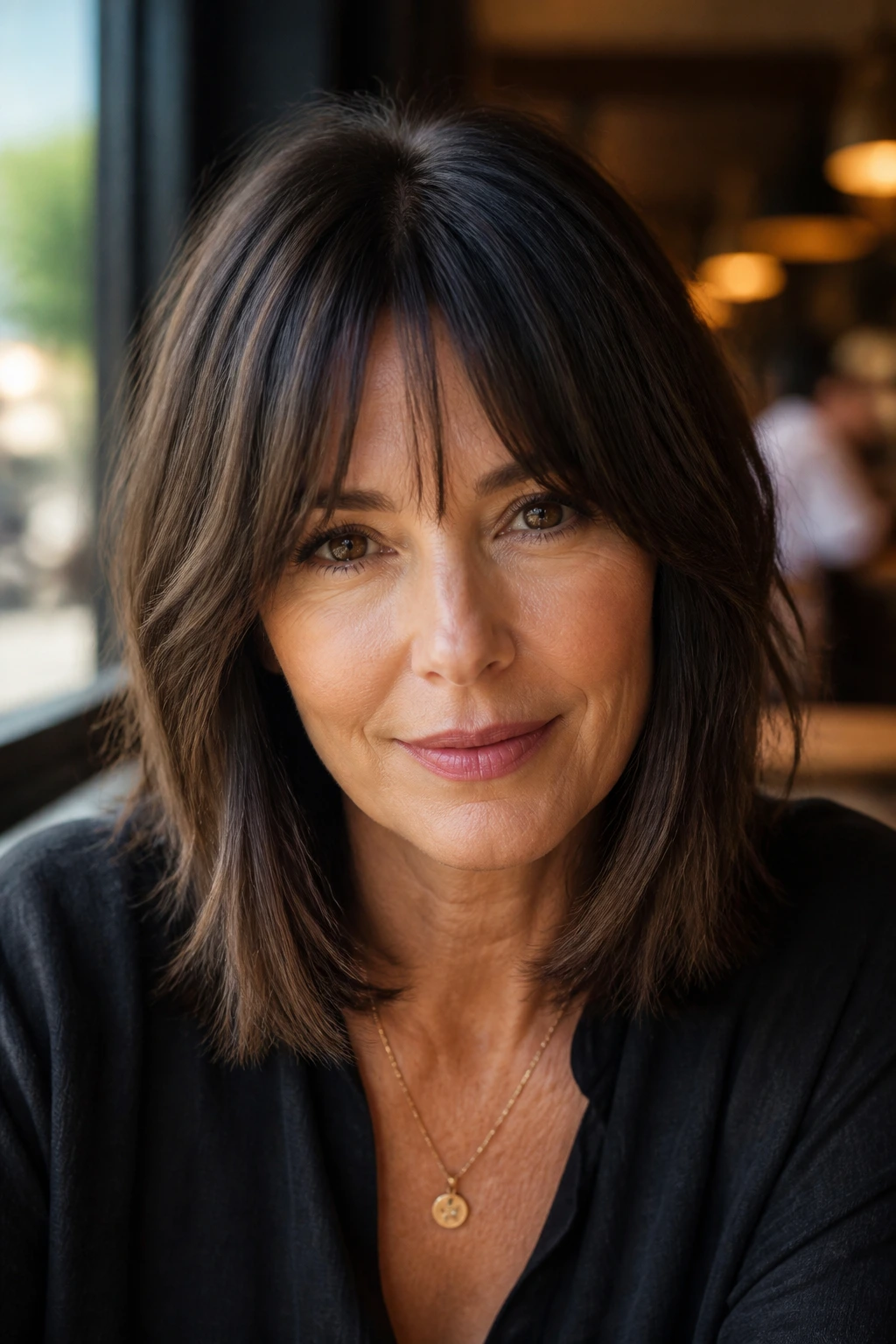
Bottleneck bangs are a smart middle road if full bangs feel too heavy and curtain bangs feel too open. The center is shorter, then the sides graduate longer around the temples. That shape helps with forehead coverage and lets the haircut blend into the lob without a hard line.
Smoky brunette — a cool, muted brown — pairs well because it keeps the look soft and modern. It also helps if your hair has a mix of brown and silver coming through. The cooler tone can make the blend look deliberate instead of patchy.
The best part? Bottleneck bangs can disguise thinning near the temples because they don’t stop abruptly. They taper. That taper matters. It gives the face width where fine hair often needs a little visual support.
Tiny caution
Keep the bangs light. If they’re cut too thick, they sit like a curtain and flatten the front of the hair. Fine hair rarely benefits from extra bulk in the fringe zone.
16. The Tucked-Under Cocoa Lob
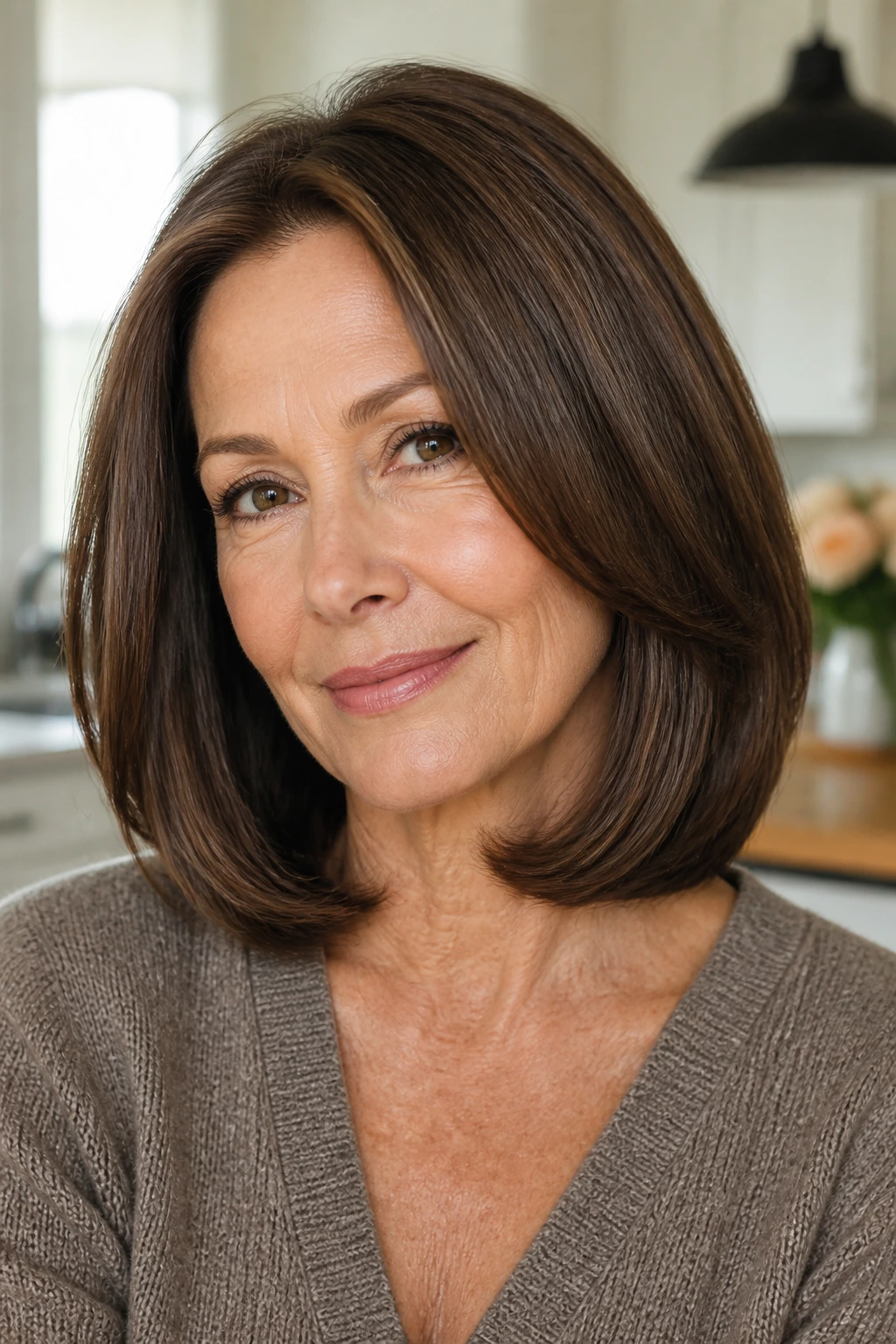
This is the neat one. The tidy one. The haircut that behaves when you need it to. A tucked-under lob uses the shape of the blow-dry to bend the ends in toward the neck, which makes fine hair look controlled and full rather than wispy and open. Cocoa brown gives it richness and helps the line stay visible.
It’s a great choice if you wear collared shirts, simple earrings, or glasses. The curve at the ends keeps the style close to the head without making it flat. That’s the sweet spot. Close, but not pressed down.
How to style it well
Use a round brush just on the bottom two inches of hair. Lift the section, roll it under, and let it cool before you drop it. If you let it fall warm, the bend often disappears by the time you get to the door.
This one also ages well because it looks intentional even when the blowout is a little imperfect.
17. The Shag-Lite Brunette Lob for Natural Movement
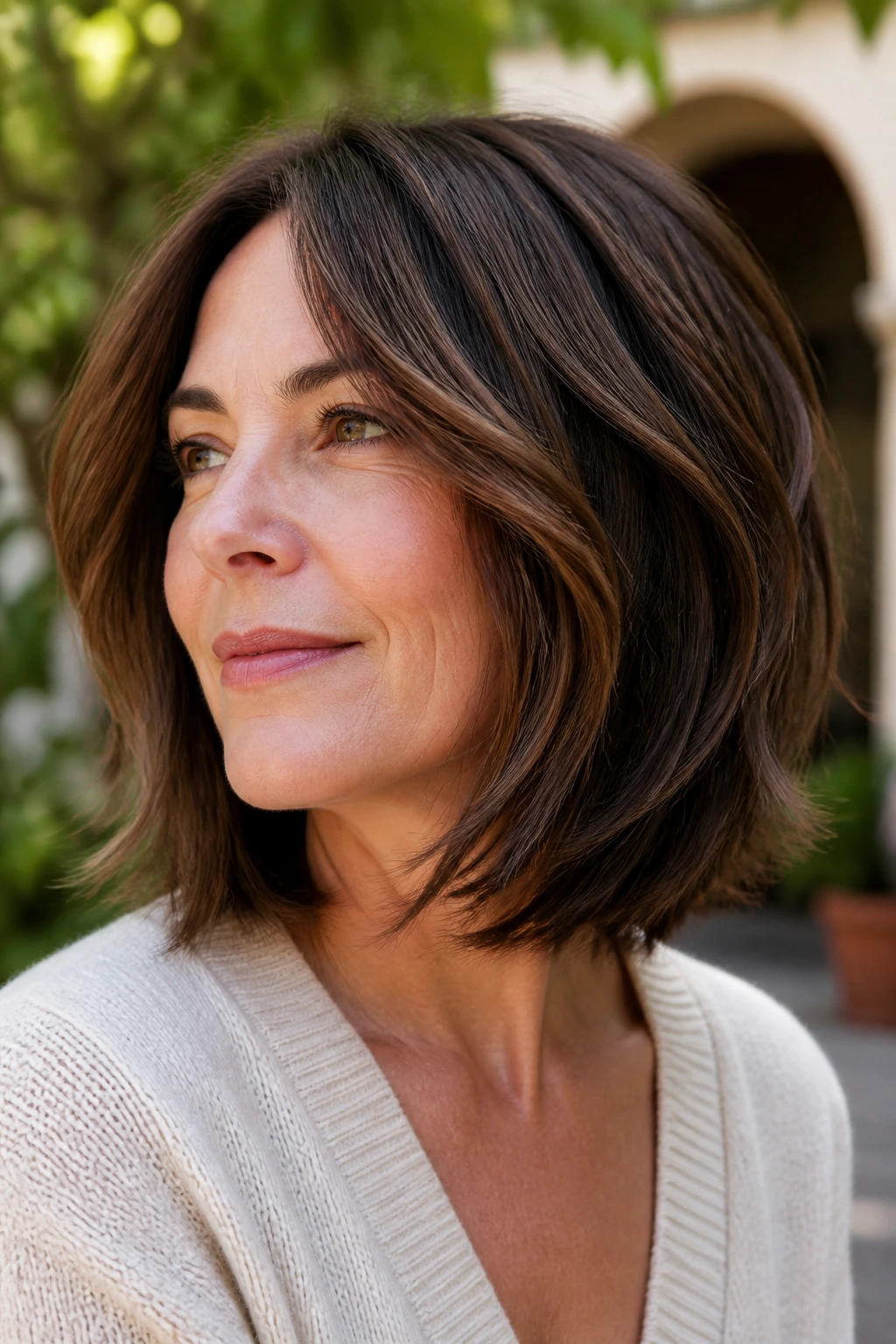
A true shag can be too much for fine hair over 50. The layers can eat the ends and leave the shape looking scraggly. But a shag-lite lob — just a few soft layers at the crown, some cheekbone movement, and a strong lower line — can give you that easy motion without the roughness.
This cut suits hair that has a wave pattern but not enough thickness for a full shag. The brunette shade should stay dimensional, with lowlights or a slightly deeper root so the texture doesn’t read as sparse. If the color is one flat brown, the layers can look sharper than they should.
The balance to ask for
Keep the bottom line solid. Let the top move. That’s the whole trick.
A good shag-lite lob should still look like a lob when it’s brushed out. If it stops looking like one, the layers went too far. Fine hair needs shape first and freedom second.
18. A Blunt Beige-Brunette Lob That Handles Gray Blending Well
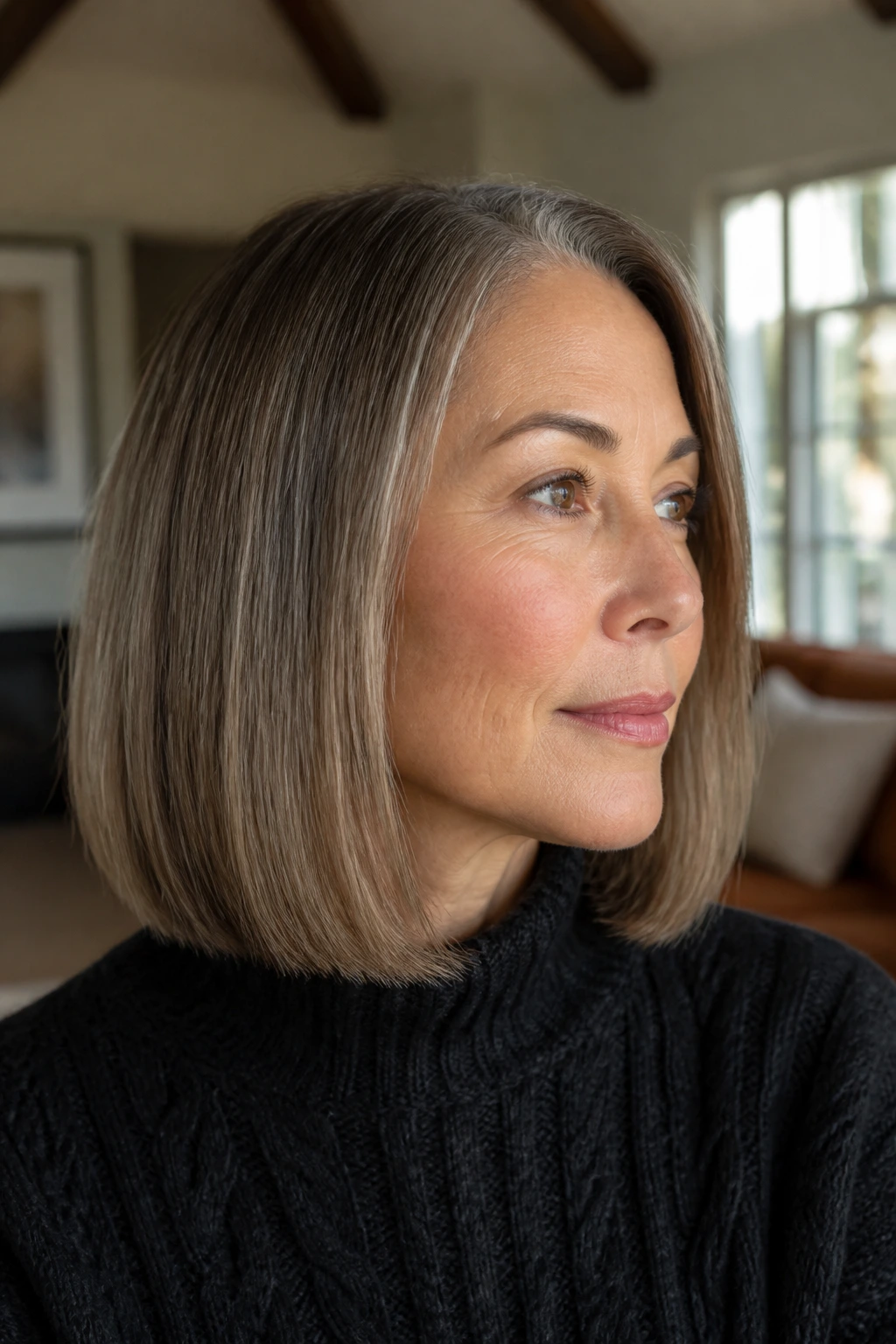
If you’re blending gray into brown, a blunt lob is often the cleanest place to do it. The crisp edge keeps the mixed tones from looking fuzzy, and a beige-brunette base gives the silver strands somewhere to live. The result isn’t uniform, and that’s the point.
This cut is especially good when the gray appears around the hairline or temples. A darker root shadow with softer mid-lengths and a clean collarbone line can make the blend look polished instead of patchy. No heavy layering here. The shape needs to hold the eye.
Why it’s useful
Gray strands can make fine hair feel more fragile because they reflect light differently. A blunt edge and a controlled brunette tone give the style more visual weight.
If you want to ease into gray blending without a dramatic color shift, this is one of the most forgiving lobs on the list.
19. The Side-Swept Fringe Lob in Cocoa Brown
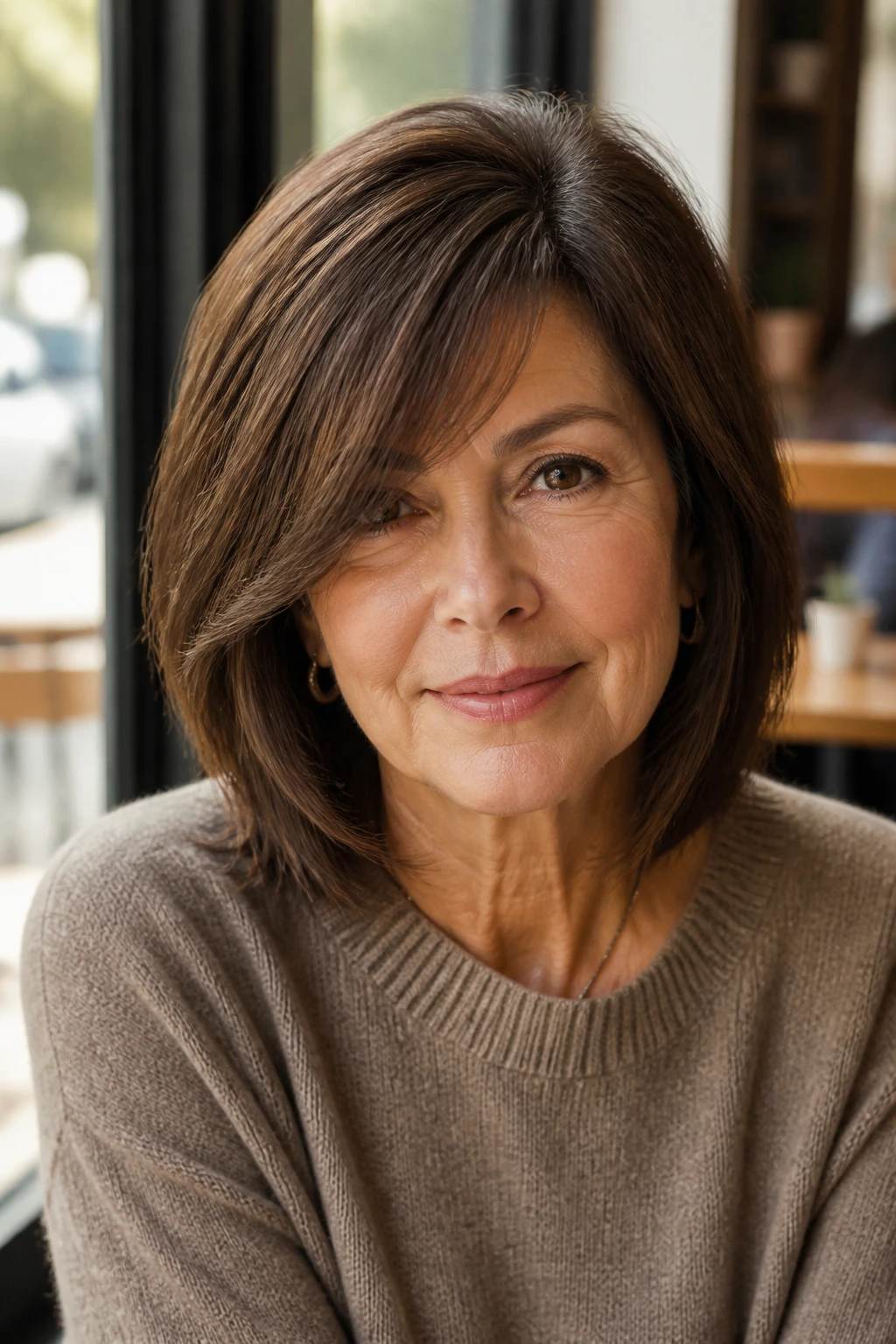
A long side-swept fringe gives you softness right where fine hair often loses it. The sweep builds movement across the forehead and leads the eye into the lob instead of dropping straight down the face. Cocoa brown keeps the whole thing grounded and adds a little depth at the root and around the fringe.
This is a good option if your hairline is thinner at one temple or if your face feels a little long and you want the haircut to add width. The side fringe creates shape without committing you to a full bang, which can be a blessing if your hair changes from day to day.
Styling hint
Set the fringe with the direction you want it to live in. If you fight the natural fall, it will win. Hair always wins in the end.
The rest of the lob can stay smooth or slightly bent. The fringe provides the movement, so the body of the cut doesn’t need to do all the work.
20. Sunlit Balayage on a Brunette Lob
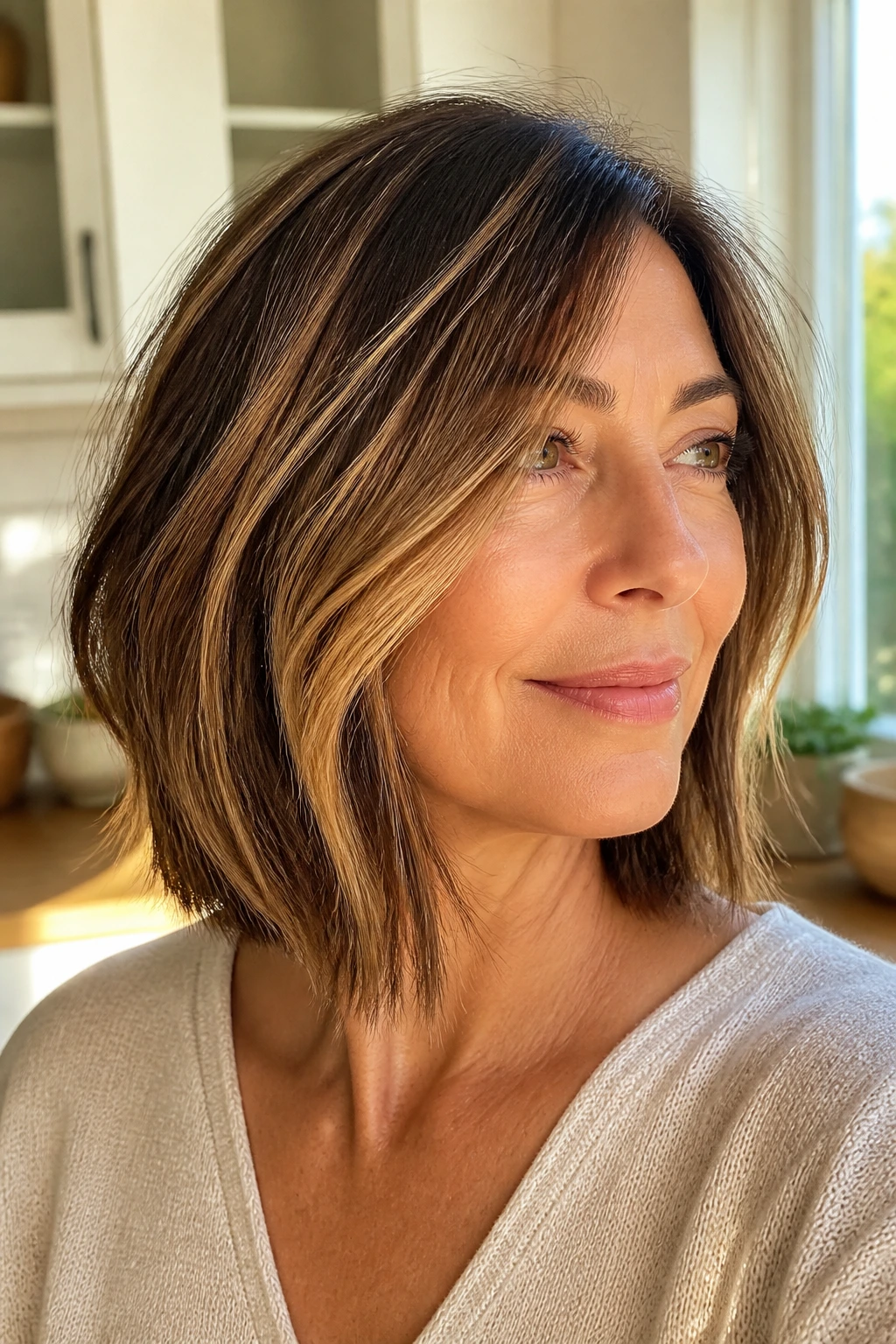
Balayage can be a mess on fine hair if it’s too light, too stripey, or packed high on the head. But a restrained sunlit version — deeper brunette at the roots and mids, with a few soft lifted pieces around the outline — can make a lob feel thicker because it creates contrast and depth.
This is one of the better choices if your hair is one solid medium brown and you feel like the cut disappears from a distance. A gentle balayage gives the eye a reason to follow the shape. The lighter strands should be placed where hair naturally bends: around the face, through the upper mids, and near the ends.
What to avoid
Too many highlights near the crown can make fine hair look more transparent. Keep the light pieces lower and softer.
It’s a smart option for people who want dimension without a high-maintenance highlight pattern. The grow-out is calmer, and the lob shape keeps it all looking tidy.
21. The Invisible-Layer Wave Lob in Rich Mocha
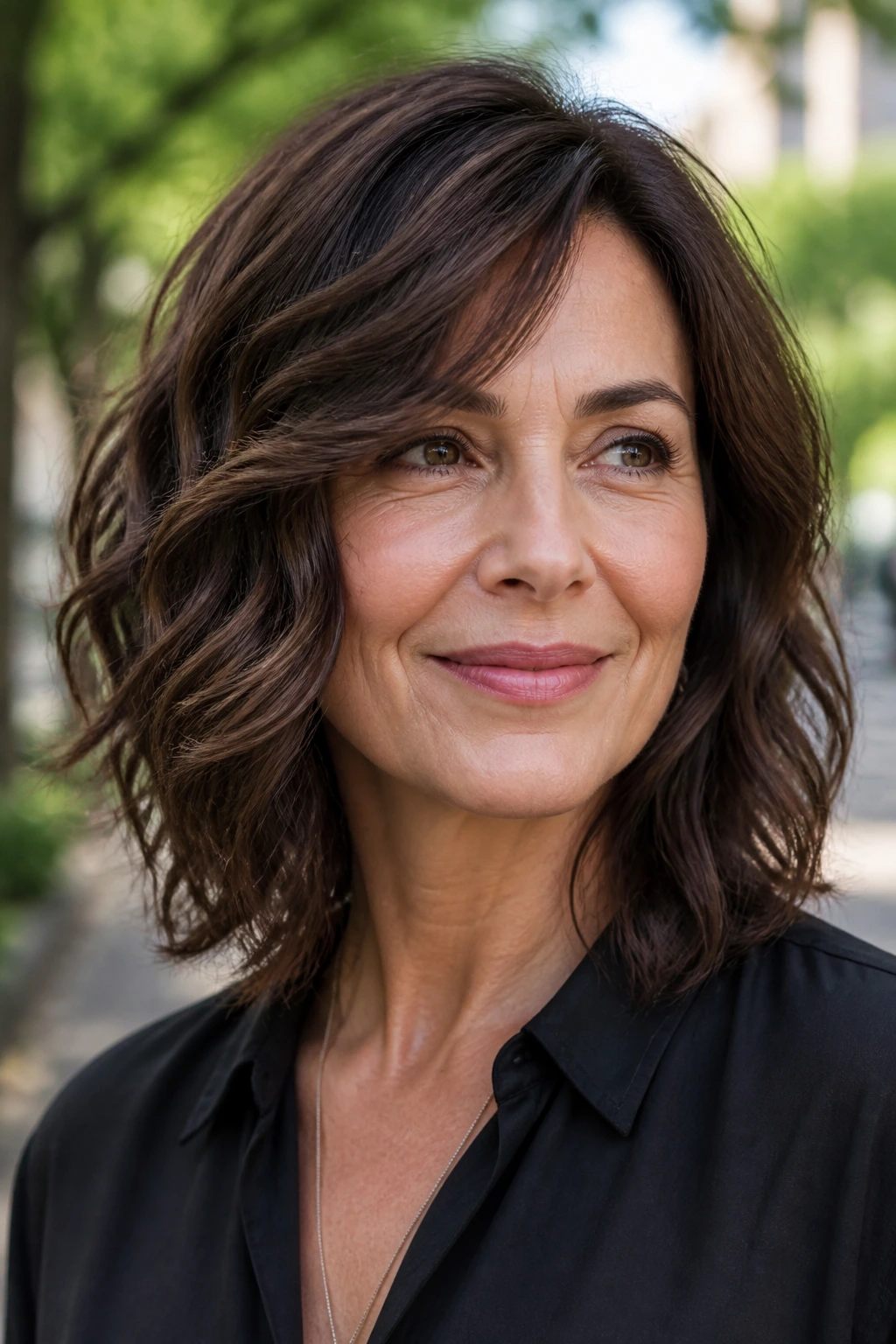
This one is for people who want movement without seeing the layers at all. Invisible layers sit inside the haircut, so the outline stays full while the interior gets a little bend and air. On fine hair, that’s a useful trick because the bottom keeps its thickness and the top gains a bit of lift.
Rich mocha is a strong color choice here. It gives the waves depth and makes the texture visible without turning the whole cut into a contrast-heavy style. You get motion, not frizz. That distinction matters.
Why it stands out
The haircut looks calm from the outside and active when you move. That’s a good thing. Hair should not have to perform from every angle.
If you like a 1-inch iron, this style is a gift. If you prefer to air-dry, it still works, but you’ll want to twist a few sections around your fingers while the hair is damp so the invisible layers settle with a bend instead of a collapse.
Why a Brunette Lob Works So Well on Fine Hair After 50
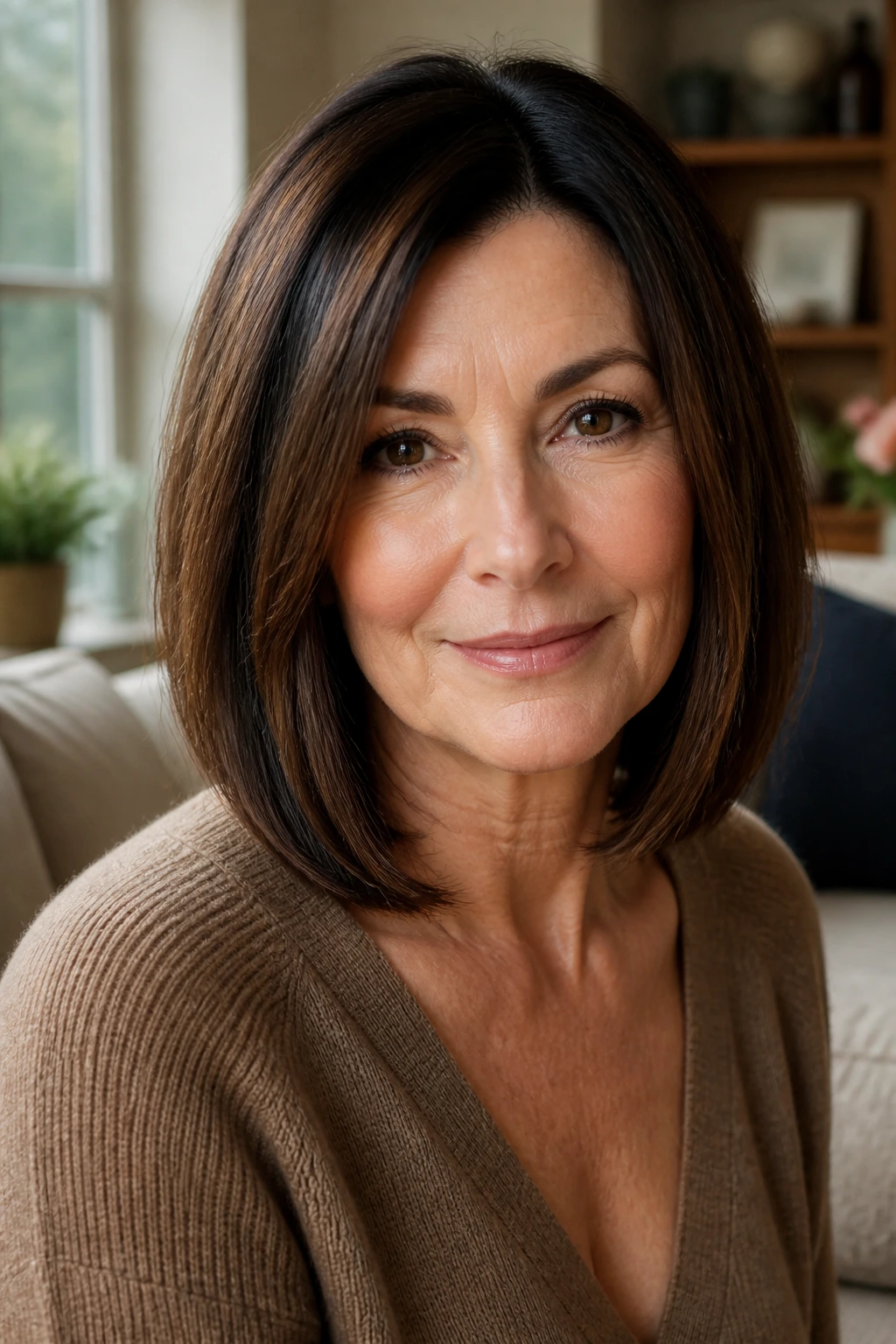
The lob earns its place because it solves two problems at once: it keeps enough length to feel grown-up and soft, and it stays short enough to protect the ends from looking too thin. Fine hair after 50 often loses volume first at the crown and the perimeter, and a lob helps both areas by keeping the outline compact. That compact shape is doing a lot of work, even when the cut looks simple.
Color is part of the architecture. A brunette base with depth near the roots and mids creates a shadow that makes the hair look fuller at the edges. Lighter brunette ribbons can brighten the face, but the stronger the shape you want, the more important it is to keep some darkness in the interior. Too much light all over can make the hair look airy in the wrong way.
And there’s a practical bonus: lobs are easier to trim into shape, which means the haircut can stay crisp between salon visits. That matters when your ends start to go soft fast. The line is the point. Lose the line, and the whole thing starts to look tired.
How to Ask for the Right Lob Without Losing Density
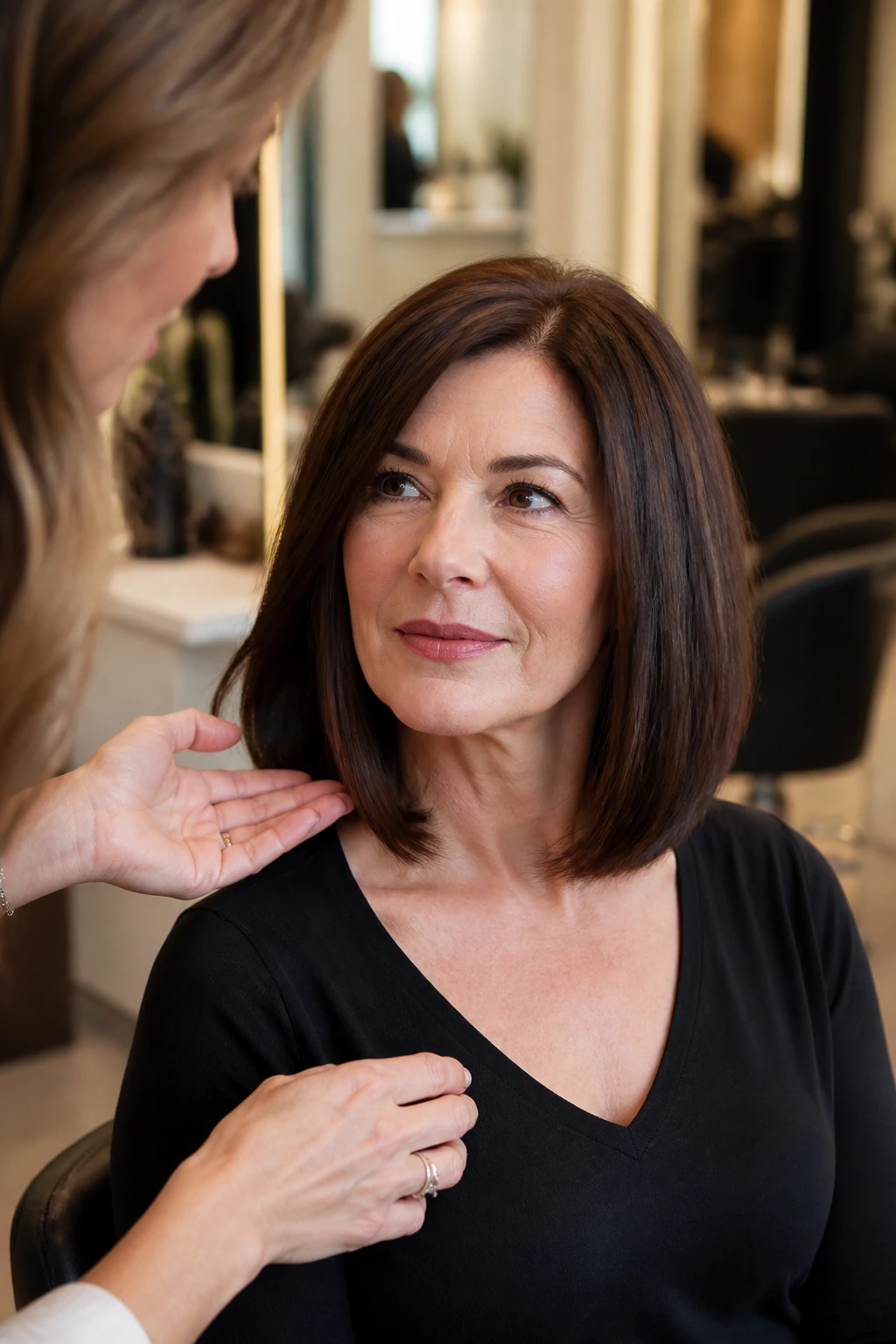
A good salon conversation saves you from a haircut that looks cute for one day and flimsy for six weeks. Start with the length. Tell your stylist you want the hair to hit between the collarbone and the top of the shoulder, not graze the shoulder blades. That range keeps the ends supported and gives fine hair enough visual weight to hold its own.
Be specific about layers. If you want movement, ask for minimal internal layering or soft face-framing only. If you say “lots of layers,” many stylists will hear permission to thin the ends. That is usually the wrong move for fine hair. You want the shape to move, not to shed.
A few useful phrases:
- “Keep the bottom line solid.”
- “I want fullness at the ends.”
- “Please avoid over-texturizing the perimeter.”
- “Can we keep the front pieces long enough to open the face?”
Bring photos, but bring the right ones. Show a cut that has the same hair density as yours, not a photo of a model with twice the amount of hair. That mistake costs people more bad haircuts than any other one I see.
Styling Moves That Give Fine Hair More Lift
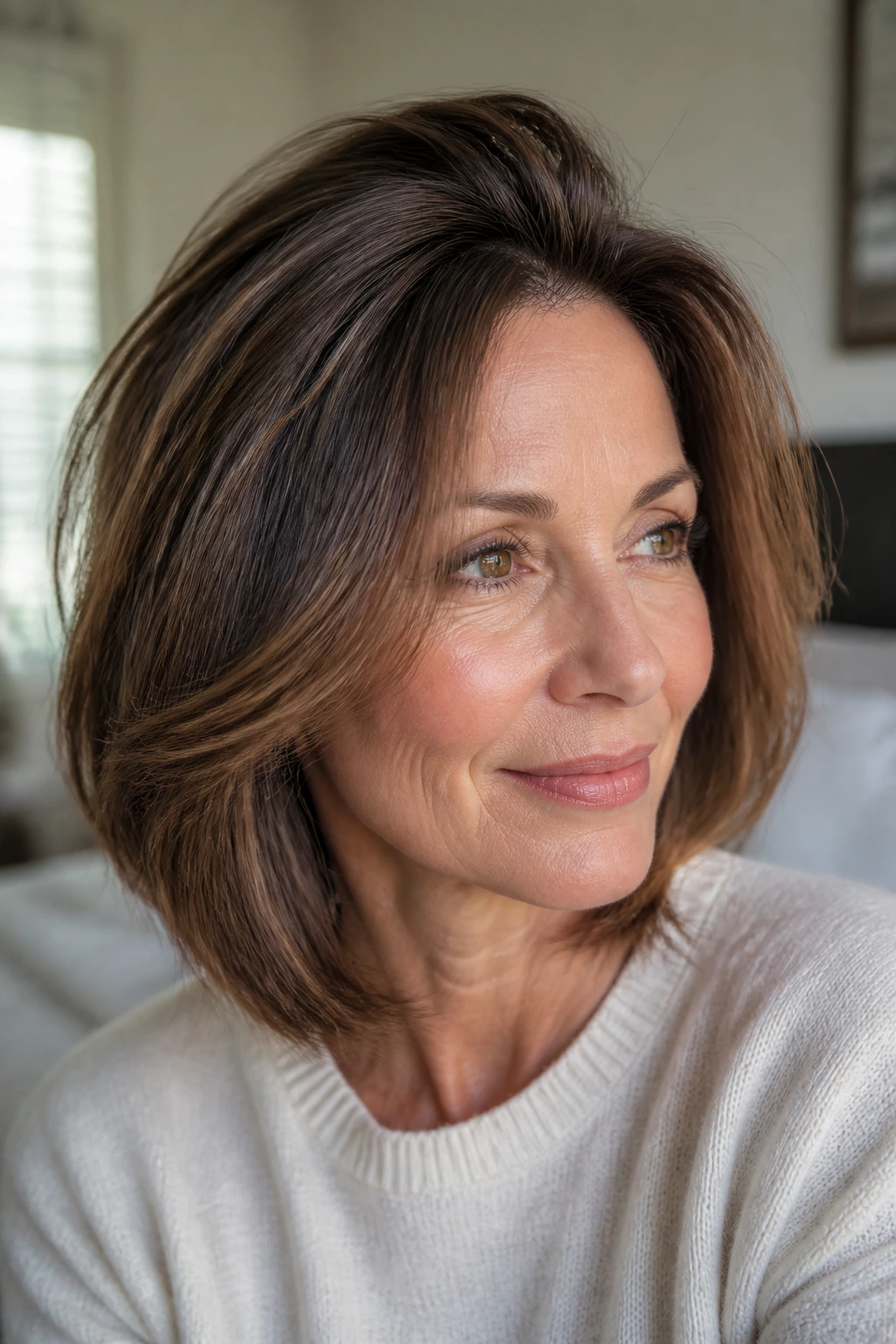
Fine hair responds well to small, targeted styling changes. You do not need a shelf of products. You need the right ones in the right places. Start with root-lift spray or a lightweight mousse at the crown and near the part line. That gives the roots a little grip before the blow-dryer starts flattening everything.
A round brush is still worth it, even if you only use it on the top two layers. Lift the roots upward and slightly backward at the crown, then bend the ends under or away from the face depending on the style. That direction matters. It changes the silhouette more than an extra pump of product ever will.
Best styling habits for these lobs:
- Blow-dry the roots first.
- Keep conditioner off the scalp.
- Use heat protectant every time you add heat.
- Finish with a cool shot so the shape sets.
If you use a curling iron, leave the last inch or so of the ends out. That keeps the style from looking dated and helps the hair read thicker. Tight curls on fine hair can look smaller, not fuller. Slight bends are kinder.
Common Mistakes That Make a Fine-Hair Lob Look Thin
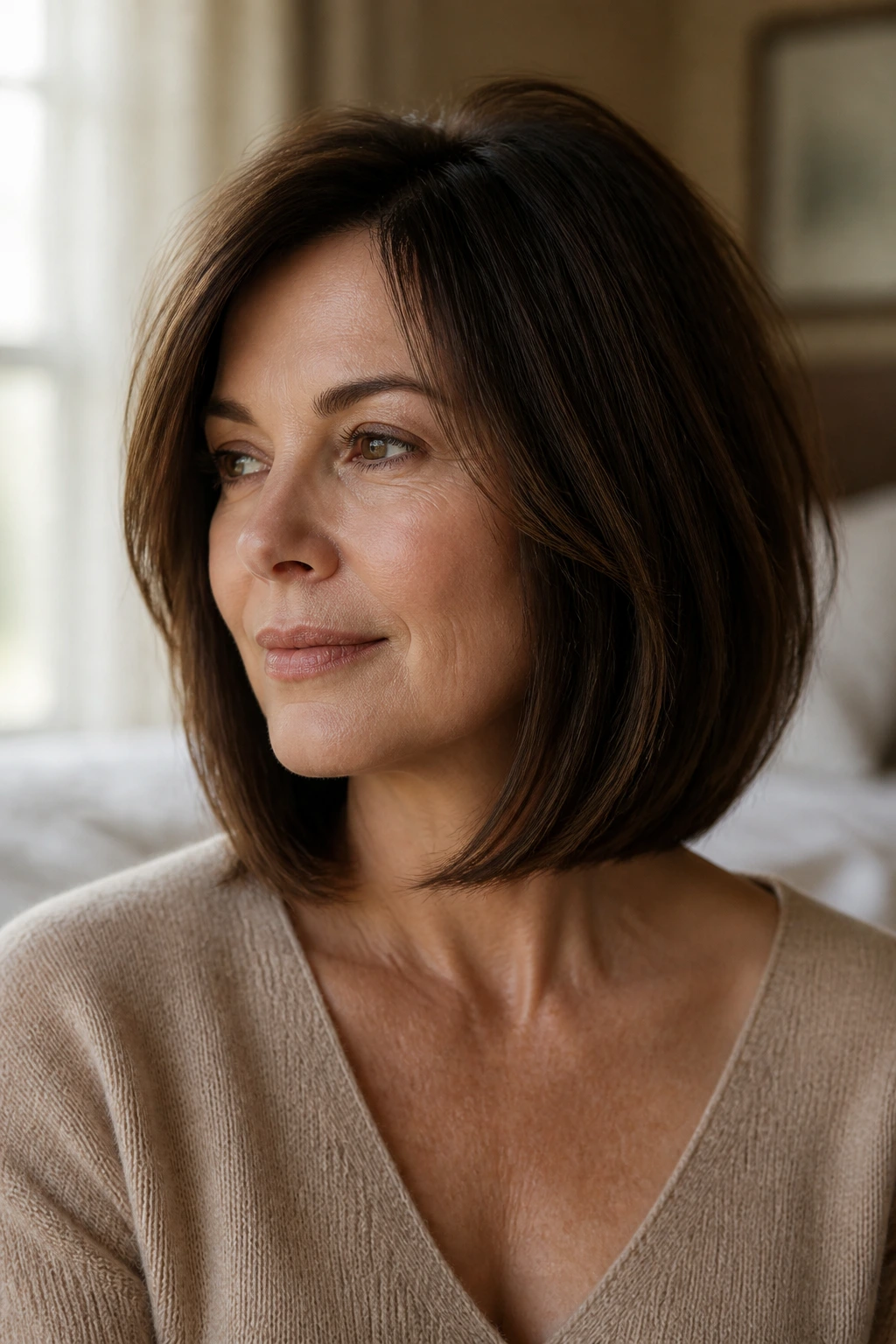
The first mistake is over-layering. It sounds harmless, even flattering, until the ends go wispy and the haircut starts floating apart. Fine hair needs some room to move, yes, but it needs its perimeter more. If the bottom edge is too thinned out, the whole style loses its anchor.
Another common one is cutting the lob too long. Once fine hair drops far past the collarbone, the weight pulls the shape flat and exposes the ends. A long lob can work, but only if the hair density is there. If it isn’t, shorter is often better.
Color can hurt too. One flat medium brown with no shadow or brightness can make the cut disappear. The fix is subtle dimension — not stripes, not chunky highlights, just enough tonal change to show where the hair bends and where the outline sits.
Finally, heavy styling products can wreck the look. Thick oils, dense creams, and too much dry shampoo can pile up on fine hair fast. The result is a dull, separated finish. Use lighter formulas and keep them mostly from mids to ends. Roots need lift, not sludge.
Brunette Lob Variations Worth Trying Later
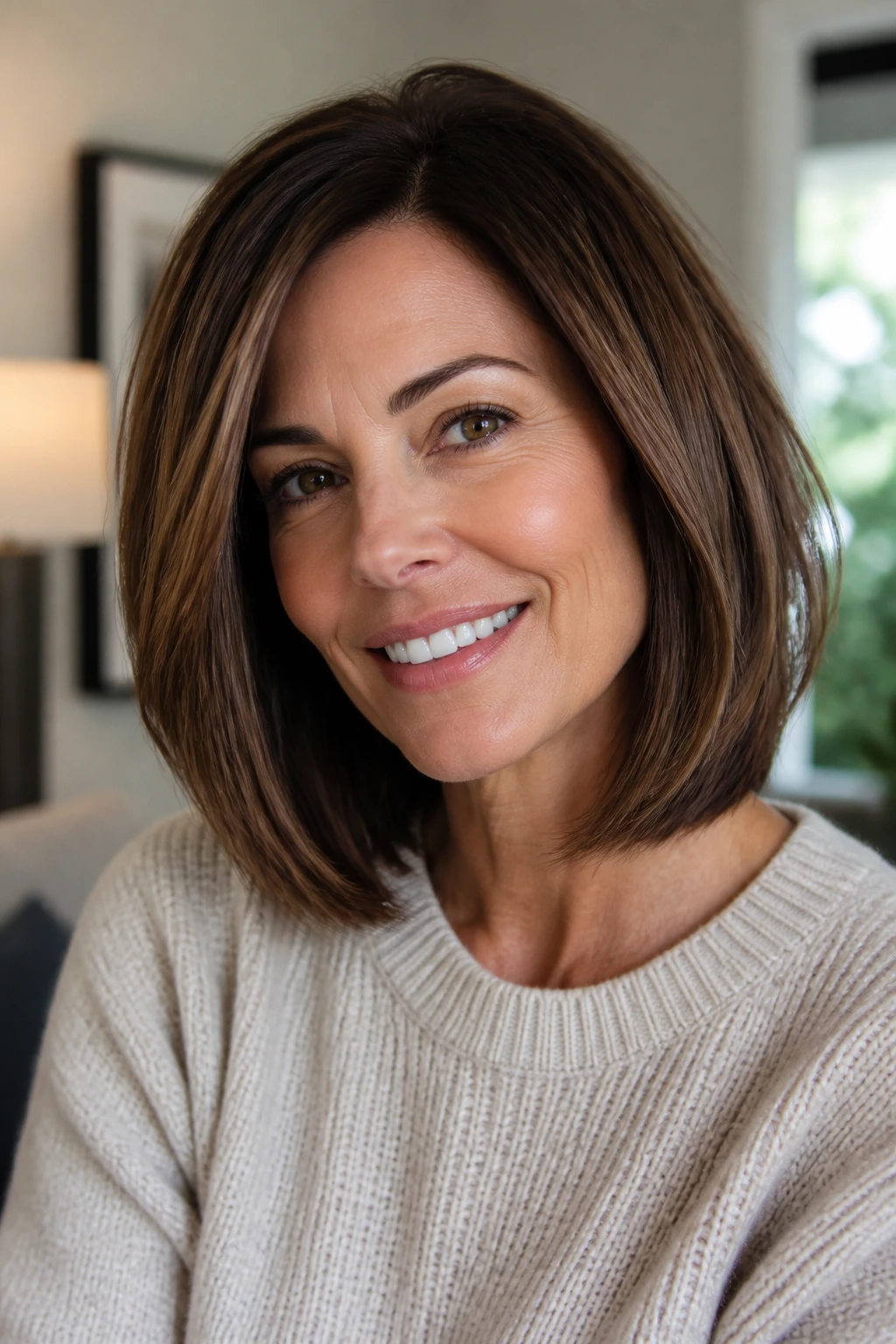
The Gray-Softening Chestnut Lob: Add a gloss in a warm chestnut tone every few weeks if your silver strands want to pop too sharply. The result is a softer blend that still keeps the brunette feel intact.
The Low-Maintenance Air-Dry Lob: Ask for long internal layers and a blunt base, then scrunch in a light mousse and let the hair dry with a side part. This version works when you want shape without a full blowout.
The Polished Salon-Blowout Lob: Keep the cut blunt, then style with a round brush and a touch of smoothing cream for a sleek finish. Good for events, meetings, or any day you want the haircut to look more deliberate.
The Weekend Wave Lob: Use a 1-inch iron to bend random sections away from the face, brush them out, and mist with light texture spray. It’s the most casual option on the list and the easiest one to refresh on day two.
The Slightly Longer Lob: If you’re nervous about going short, keep the hair just below the collarbone and preserve the same blunt outline. You still get the thick-looking perimeter, just with a little more swing.
Tools That Make These Styles Easier
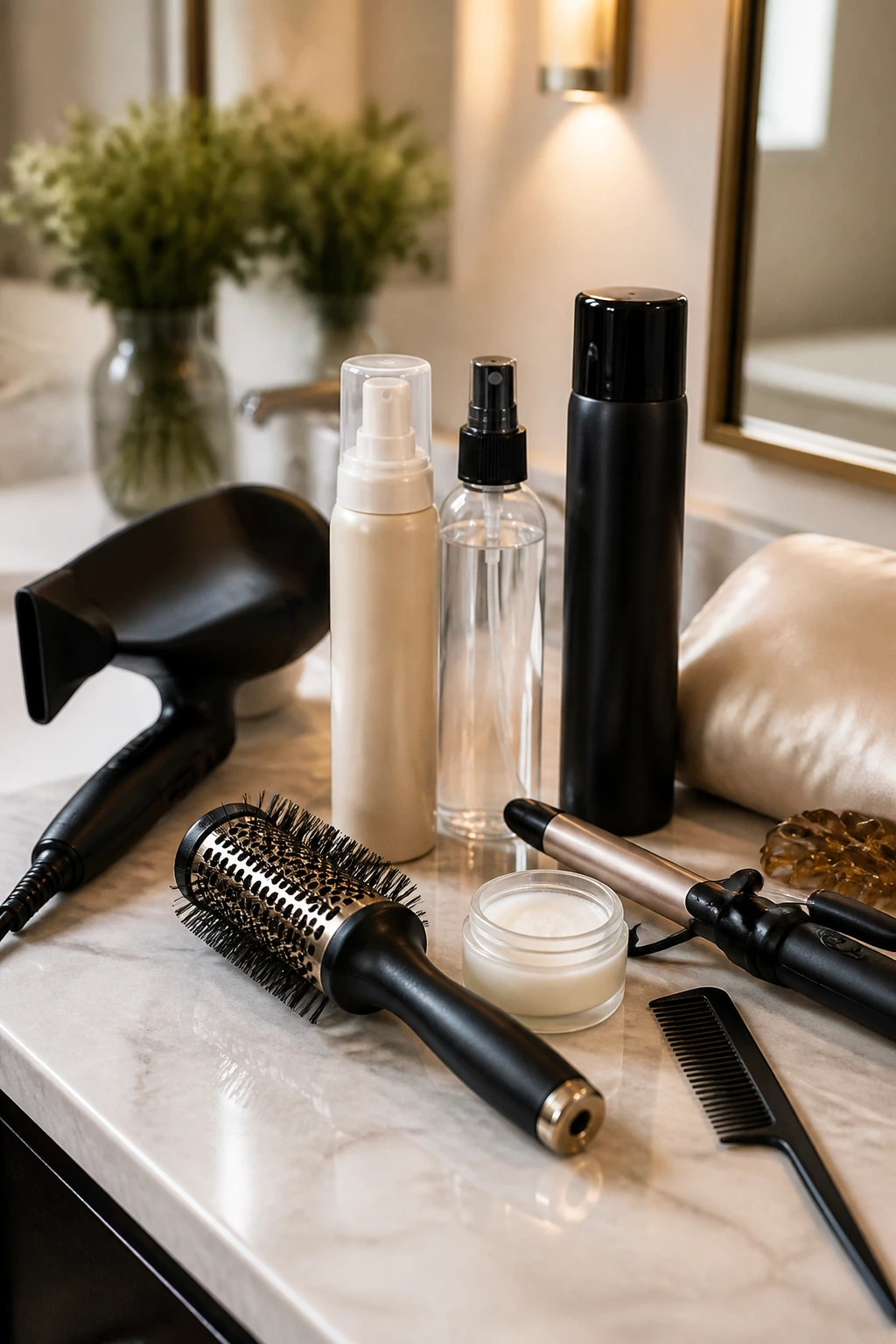
- Blow-dryer with a nozzle attachment: The nozzle directs air along the hair shaft, which helps smooth fine strands instead of blasting them every which way.
- Medium round brush: Best for lifting roots and curving the ends under on lobs that need shape.
- Root-lift spray or lightweight mousse: Gives the crown a little structure without making the hair tacky.
- Heat protectant spray: Non-negotiable if you use a flat iron or curling iron more than once a week.
- 1-inch curling iron or wand: Ideal for soft bends, especially on the wave and fringe versions.
- Tail comb: Useful for clean parting, root sections, and a neater crown lift.
- Lightweight finishing cream or serum: A tiny amount on mids and ends adds polish without flattening the roots.
- Dry shampoo: Helps extend the style on day two, especially if the crown softens overnight.
- Clips: Handy for sectioning while you dry the top layers first.
- Satin pillowcase: Not glamorous, but it cuts down on rough morning frizz and tangles.
How to Keep the Shape Between Salon Visits
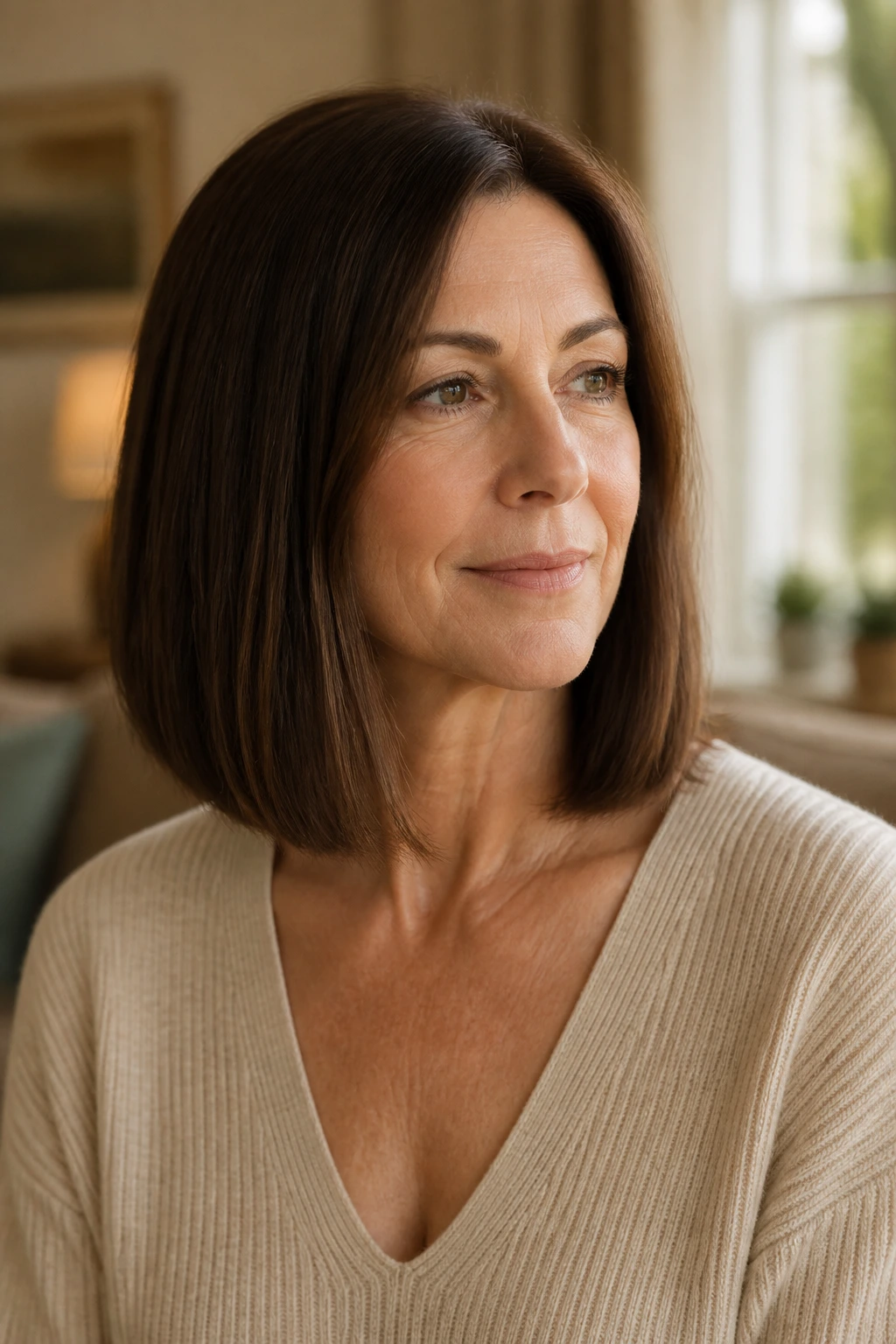
Fine hair usually holds a cut shape for about six to eight weeks before the ends start to blur. If your hair grows quickly or your nape gets bulky, trimming on the shorter side of that window keeps the lob crisp. The goal is not dramatic length loss. The goal is to stop the perimeter from fraying.
Color touch-ups depend on how much gray you’re blending and how dimensional the brunette is. A gloss or toner every six to eight weeks can keep chestnut, mocha, or cocoa shades from looking muddy. If you only need a tone refresh around the face, your colorist may be able to target those pieces and leave the rest alone.
At home, use gentle shampoo and light conditioner, and keep the conditioner below the ears unless your ends are very dry. After sleeping, a quick mist of water on the front pieces, a touch of mousse, and a blow-dry on the crown can bring the style back faster than starting from scratch. If you use dry shampoo, spray it at the roots, wait 30 seconds, then brush lightly. Dumping it on and immediately raking through just leaves powdery buildup.
Frequently Asked Questions
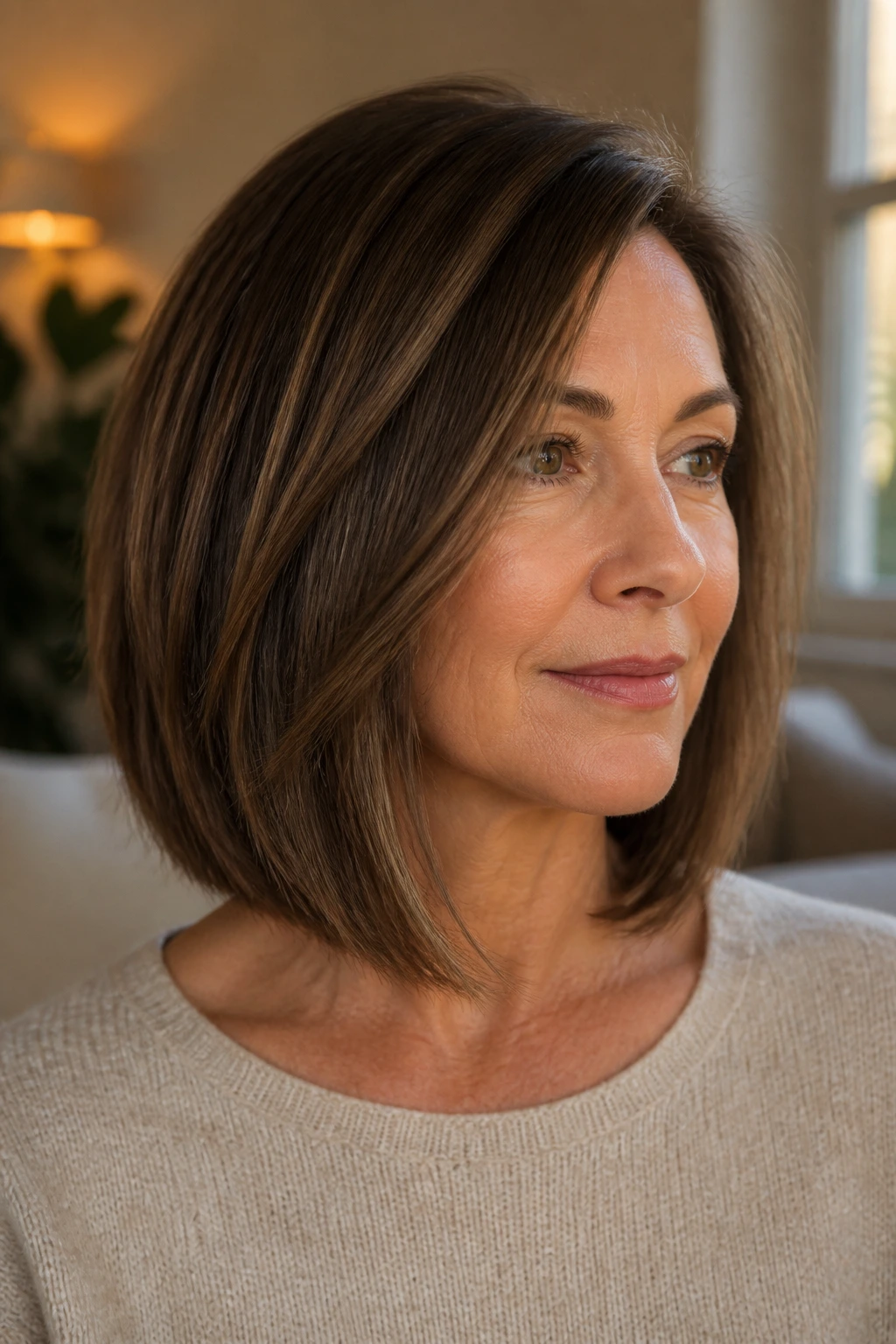
How short should a lob be for fine hair over 50?
The sweet spot is usually between the collarbone and the top of the shoulder. Shorter than that can work, but the collarbone zone keeps enough weight in the ends to make fine hair look thicker.
Are layers bad for fine hair?
Not always, but heavy layering is usually the wrong move. Fine hair does better with soft internal layers or face-framing pieces that keep the bottom line strong.
Which brunette shade makes fine hair look fullest?
Rich chestnut, mocha, and cocoa tend to work well because they create depth without looking flat-black. A little tonal variation at the ends or around the face helps the cut read thicker.
Can I wear a lob if my hair is thinning at the crown?
Yes, and a deep side part or a bit of crown lift can help. A blunt perimeter plus root volume at the top often does more for the overall shape than extra layers ever would.
Do bangs make fine hair look thinner?
Only if they’re too heavy or too short. Curtain bangs, bottleneck bangs, and soft side-swept fringe usually work better because they stay airy and blend into the rest of the cut.
What if my hair is naturally wavy?
A lob can work beautifully on wavy fine hair if the layers are kept gentle. Ask for enough structure to let the wave sit, but not so much layering that the ends scatter.
How often should I trim a brunette lob?
Every six to eight weeks is a good rhythm for most fine hair. If the ends split quickly or the line starts to lose shape, stay on the shorter end of that range.
Can I let gray blend into a brunette lob without constant color work?
Yes. A dimensional brunette base with soft lowlights or a gloss can make the gray grow in more quietly. A blunt lob helps the blend look deliberate instead of fuzzy.
A Lob That Holds Its Shape
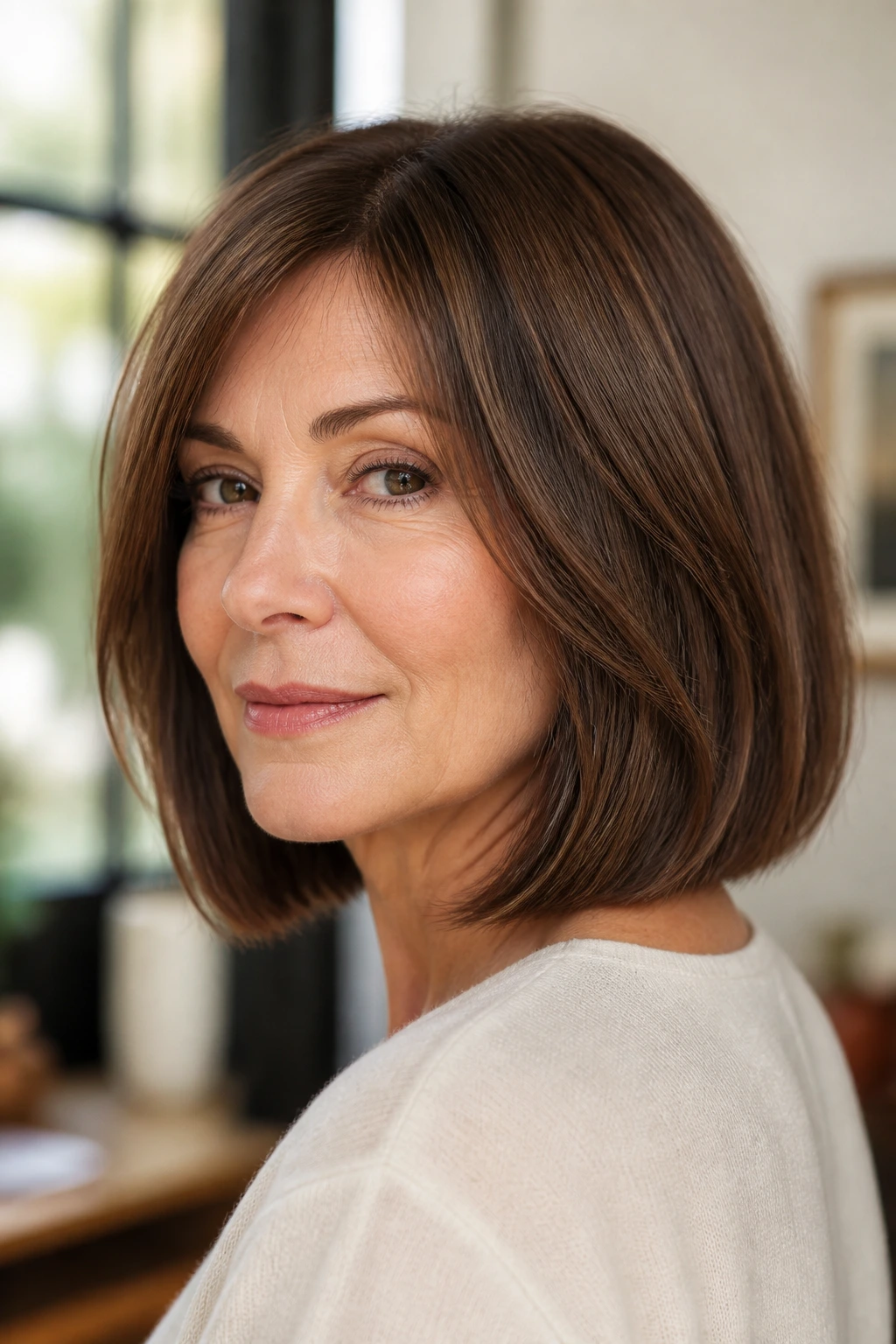
The best thing about a good brunette lob is that it doesn’t need to shout. It just sits there, holding its line, giving fine hair a stronger outline and a little more presence than people expect from a cut this simple. That’s the real appeal. Not drama. Not tricks. Shape.
If you’re choosing one place to start, pick the version that protects the ends first and adds movement second. Fine hair over 50 usually looks best when the cut respects what’s there instead of trying to invent a texture that isn’t. A blunt edge, a smart brunette tone, and a few well-placed layers can do more than a drawer full of styling products ever will.
Pick the lob that matches how you actually wear your hair, then live with it for a week before you decide what to tweak. Hair reveals its preferences fast.
