



A long bob has a funny habit of making hair look more deliberate than a shorter cut ever can. The ends still have enough weight to swing, the shape still touches the collarbone or the jaw in a flattering way, and the whole cut feels considered instead of fussy. For older women, that matters. A lob can soften a strong jaw, give fine hair more presence, keep thick hair from ballooning at the sides, and sit neatly with glasses, earrings, and real life.
The part I like best is that a long bob doesn’t force one story onto every head of hair. On gray hair, it can look crisp and elegant. On wavy hair, it can look relaxed and modern without drifting into “I forgot to style it.” On straighter textures, the line can be sharp enough to make the haircut itself do the work. And if you’ve ever had a short cut that felt too severe or long hair that started looking tired at the ends, a lob lives in the middle with a lot more intelligence than people give it credit for.
There’s a reason stylists keep coming back to it. The lob gives shape without taking away options. You can tuck it, wave it, smooth it, flip the ends under, or leave it a little undone and still look finished. The trick is picking the right version for your hair density, face shape, and how much styling you’re actually willing to do on a Tuesday morning. Some of these cuts are neat and architectural. Others are soft enough to let the texture lead. A few are especially good if you want to lean into silver, white, or salt-and-pepper hair instead of covering it up.
Why These Long Bob Haircuts Keep Working So Well
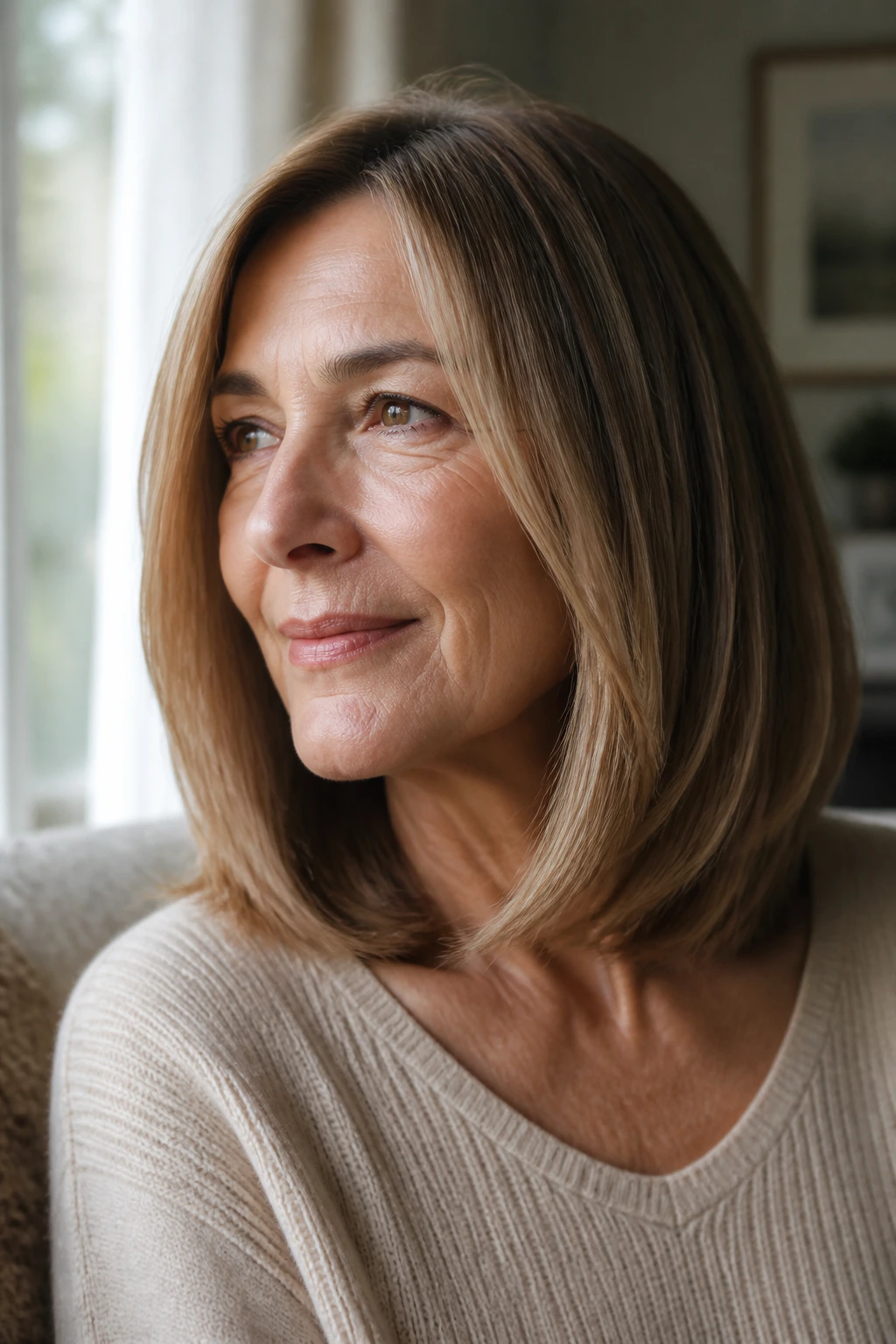
Face-framing length: A lob usually lands somewhere between the jaw and the collarbone, which lets the cut skim the neck instead of sitting right on it.
Better weight control: The extra length at the ends helps fine hair stay from looking wispy, while layers can stop thick hair from turning into a triangle.
Gray hair looks sharper here: Silver and white strands often show off the cut line better than dyed hair because the light hits the shape so cleanly.
Less commitment, more options: You can wear it straight, wavy, pinned back, or half up without fighting the haircut every day.
Works with real glasses and earrings: A lob leaves room around the face, so frames, hoops, and statement studs don’t get lost in the hair.
1. Feathered Collarbone Lob
A feathered collarbone lob is one of those cuts that looks like it took effort when, in practice, it often just needs a round brush and a little patience. The ends are lightly feathered so they move instead of sitting in a blunt shelf. That soft edge is kind to hair that has thinned a bit at the crown or around the temples, because it adds motion without removing too much density.
Why It Works
The collarbone length keeps the cut from feeling severe. Feathering around the ends softens the outline, which matters if your hair gets puffy when it’s one-length all the way around. It also gives you room to tuck one side behind the ear without the whole shape collapsing.
Good For
- Fine to medium hair that needs airiness
- Women who want movement without full-on layers
- Softening a square or long face shape
Styling Note
Use a medium round brush and aim the ends slightly away from the neck. A quick bend at the bottom is enough.
2. Blunt Mid-Length Lob
A blunt lob is the haircut I’d pick if someone told me their hair felt thin, stringy, or a little forgettable at the ends. The straight line gives the illusion of density. It’s not flashy. That’s the point. A clean, blunt edge can make gray hair look polished and make fine hair look more intentional than it really is.
The best version lands near the collarbone or just above it, where it can still swing a little. Too short and it starts reading like a bob-bob. Too long and the shape loses that crisp edge that does the heavy lifting.
Why It Works
No layers means the perimeter stays solid. That gives the eye a firm line to follow, which is especially useful on hair that’s lost bulk. If your hair is straight or mostly straight, this cut can look sharp with almost no styling.
Ask Your Stylist For
A one-length lob with minimal internal layers, a slightly beveled edge, and enough length to tuck behind the ears.
3. Side-Swept Layered Lob
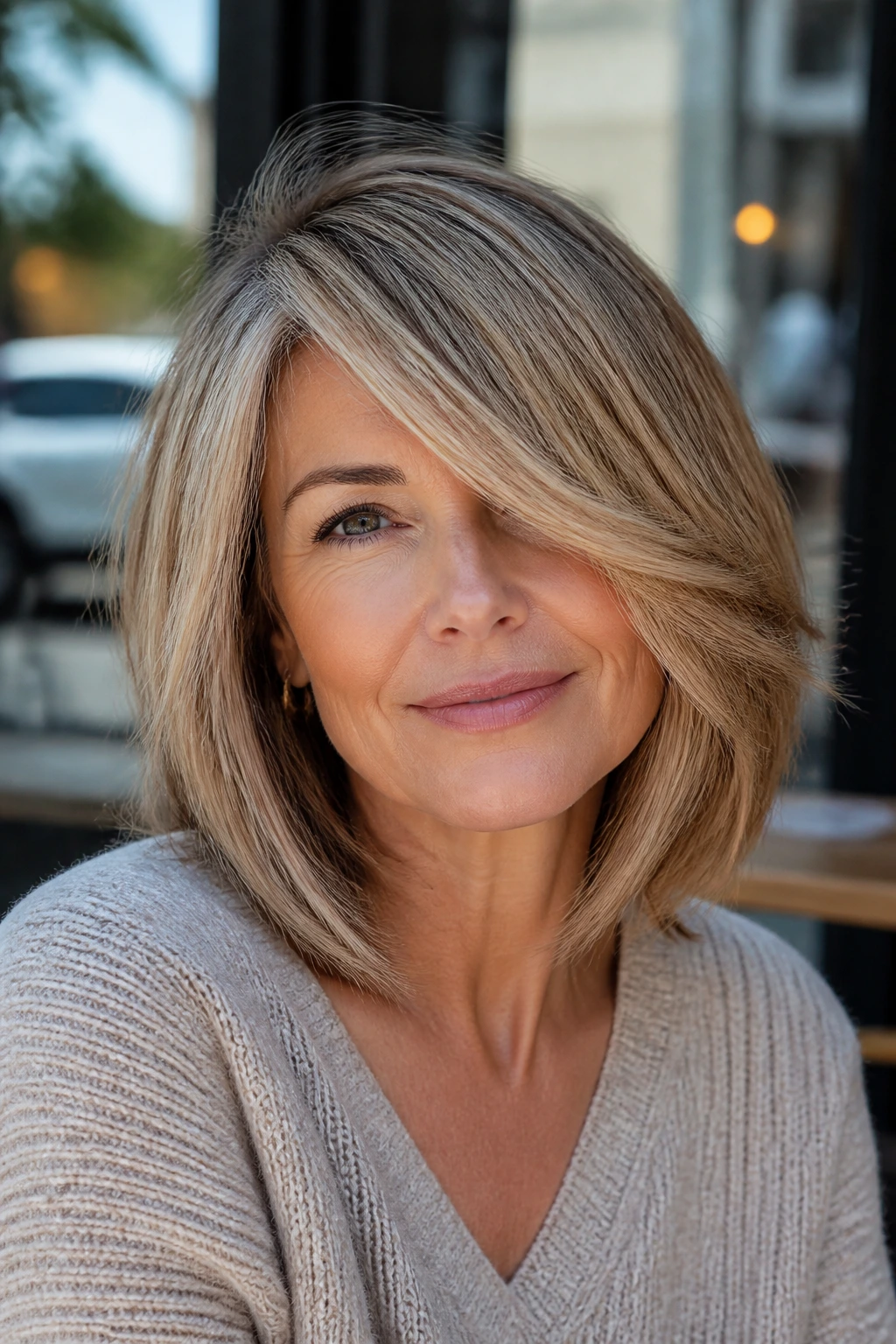
A side-swept layered lob has a little more drama in the front, and I mean that in the best way. The deep side sweep builds lift at the root, then the layers fall softly across the face instead of hanging straight down. If you’ve got a flatter crown or you’re tired of hair separating along the same part every day, this cut changes the silhouette fast.
It also does something useful near the cheekbones. Hair that sweeps across one side of the forehead can soften a high forehead and give the face a longer diagonal line. That diagonal is forgiving. It looks good whether the hair is blow-dried smooth or left with a bit of bend.
H3: Where It Shines
- Hair that has lost root lift
- Round or square faces that like diagonal lines
- Anyone who wants a little asymmetry without going edgy
H3: Styling Cue
Blow the front up and over the part with a vent brush, then pin it for five minutes while it cools. That bit of cooling is what makes the lift last.
4. Soft Shaggy Lob
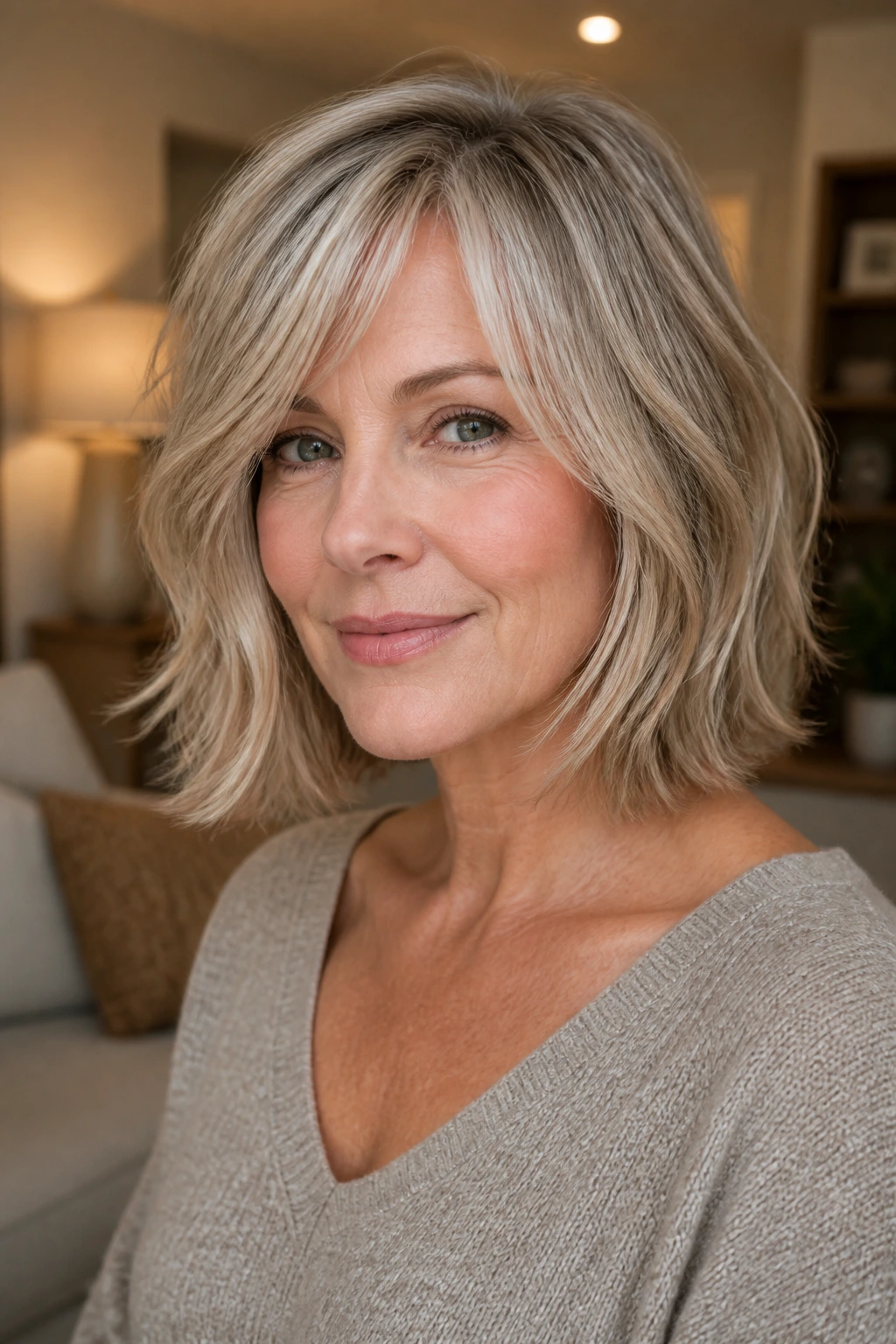
A shaggy lob is for the woman who wants movement and refuses to spend half her morning negotiating with a curling iron. The layers are softer than a classic shag, so you get texture without those harsh, choppy ends that can look too young or too trendy in the wrong hands. On wavy hair, it can look almost effortless. On straighter hair, it needs a little product to avoid falling flat.
The key is restraint. If the layers are cut too high, the shape can start to fray. Keep the movement around the lower cheek, jaw, and collarbone, where it gives the face some lift without swallowing the haircut.
Why It Works
A softer shag breaks up bulk while keeping enough length to feel feminine and easy to pin back. It’s a good choice if your hair naturally bends and you’d rather work with that than flatten it out.
Best Styling Products
- Lightweight mousse at the roots
- Texturizing spray on dry ends
- A dime-size amount of cream if your hair gets puffy
5. Angled Lob That Skims the Jaw
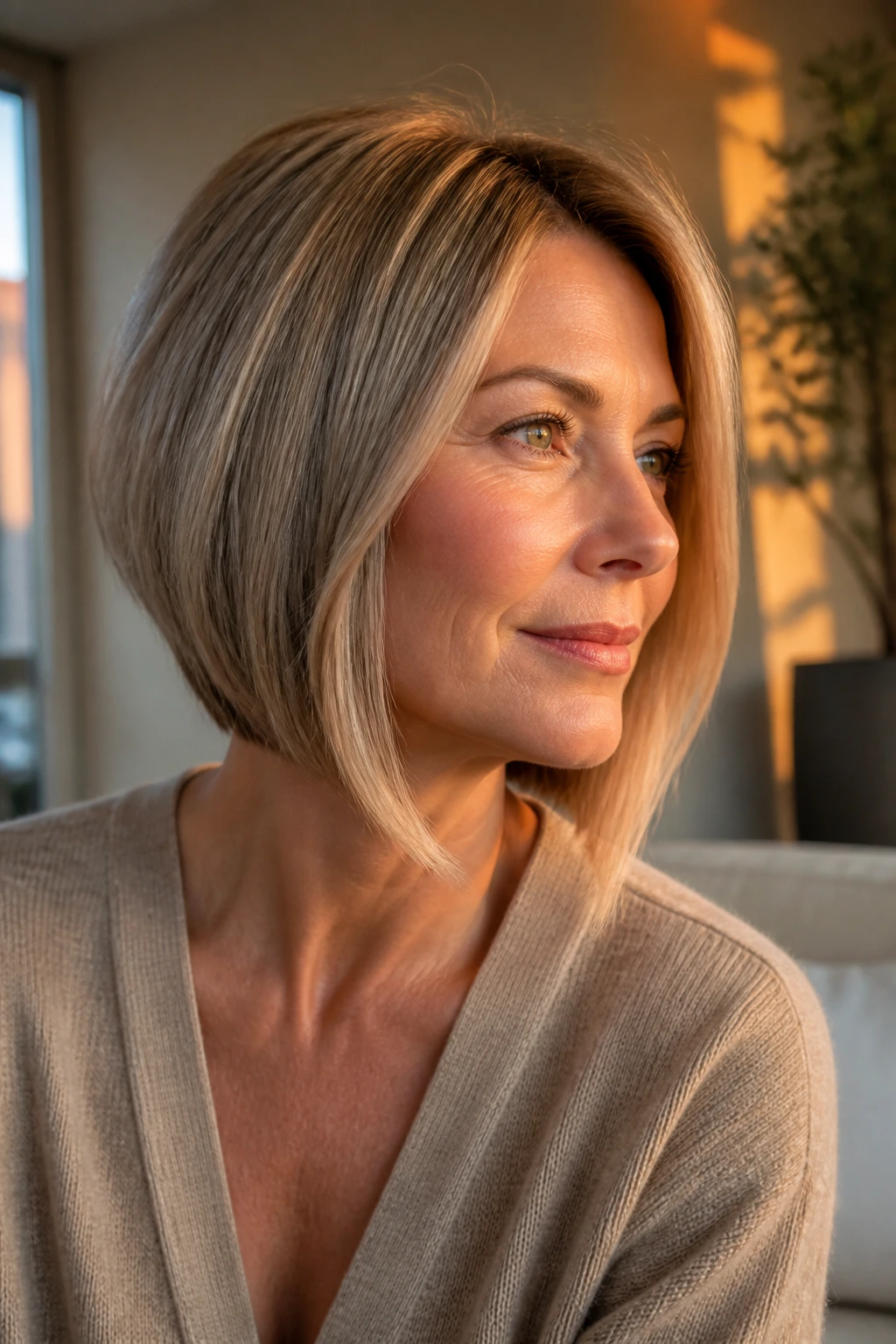
This one has posture. The front pieces are a little longer than the back, so the cut falls forward and skims the jawline instead of sitting evenly all the way around. That angle can sharpen a soft face, slim a fuller cheek, and make the neck look longer. It’s a quiet trick, but a useful one.
The reason I like this shape on older women is simple: it gives structure without making the cut stiff. You get a bit of swing in the front, and the back stays neat enough to keep the whole thing looking clean from behind.
The Shape in Practice
The shortest point usually sits at the nape or just above it, with the front reaching toward the collarbone. That difference in length should be subtle, not dramatic. Too much angle and you get a dated “stacked” effect.
Who Should Try It
Women with soft jawlines, rounder faces, or hair that needs a little structure after a long grow-out.
6. Curly Shoulder-Length Lob
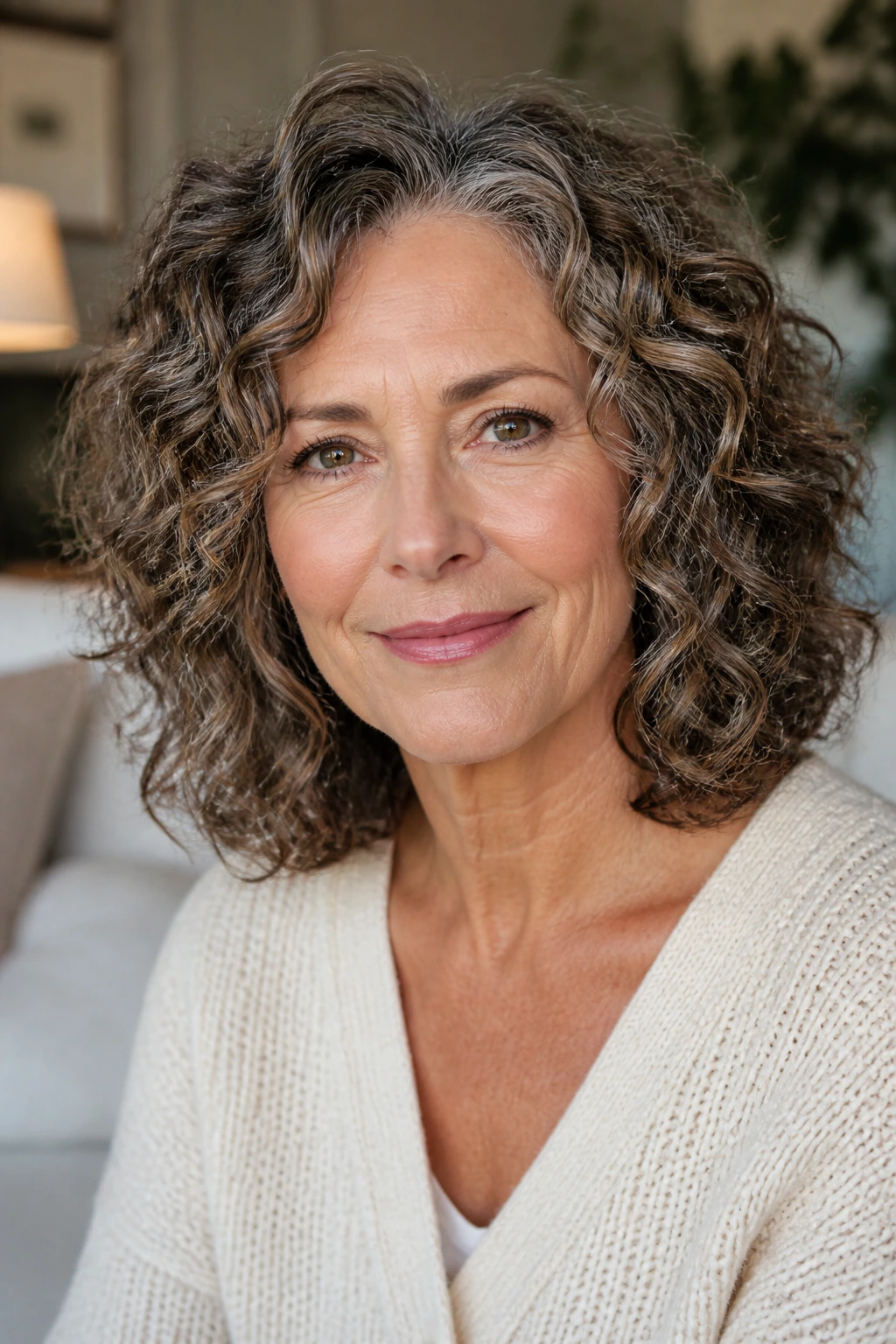
Curly hair and lob length are a good match, but only if the cut respects shrinkage. A curly shoulder-length lob should be cut with the curl pattern in mind, not against it. If the hair dries springier than expected, the length can bounce up several inches, so a stylist who cuts curls dry or near-dry usually gets a cleaner result.
The nice part is that this length gives curls enough room to form rings and bends without dragging them down. It also keeps the style from getting too triangular if the layers are balanced.
H3: What to Watch
- Ask for curl-by-curl shaping or a dry cut
- Avoid heavy thinning shears on loose curls
- Keep a few longer face-framing pieces so the shape doesn’t puff out
H3: Best Finish
A leave-in conditioner, a light gel, and a diffuser on low heat. Don’t rough it up too much. Curls need a little respect.
7. Silver-Glint Textured Lob
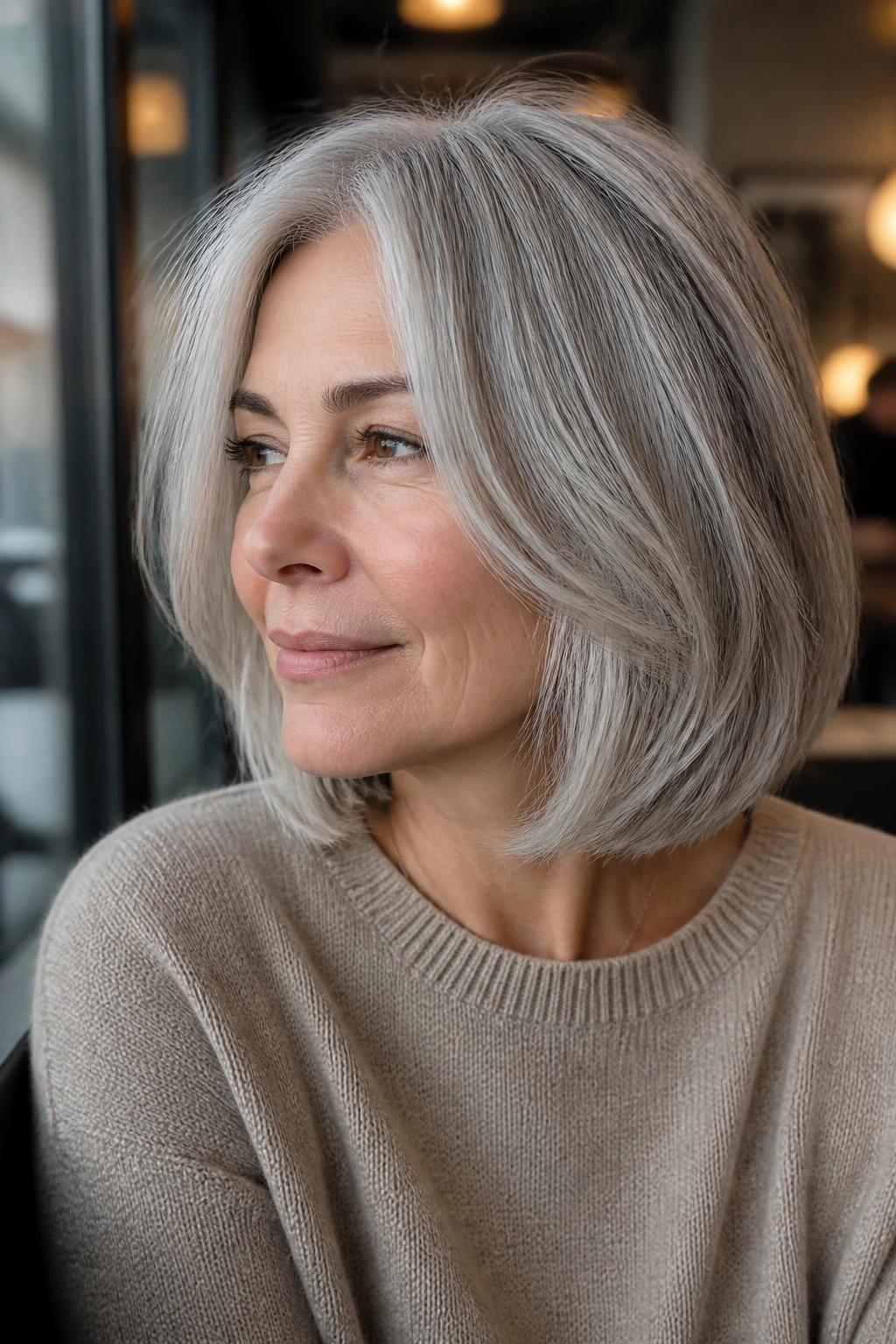
Silver hair likes a clean cut line, but it also benefits from a bit of texture so the surface doesn’t look flat or helmet-like. A silver-glint textured lob gives you both. The ends stay defined, while soft internal layers keep the shape from sitting like a helmet on the head.
There’s also something sharp about gray and silver hair in a lob. The color tends to show off the haircut’s geometry. A blunt edge can look icy and neat. A bit of texture can make the whole thing look modern without trying too hard.
Why It Works
Gray and silver strands often have a coarser feel, so a textured perimeter keeps them from puffing at the bottom. That makes styling easier and keeps the silhouette from getting too boxy.
Styling Note
Use a shine cream sparingly. Too much product makes silver hair look dull. A pea-sized amount is enough.
8. Curtain Bang Lob
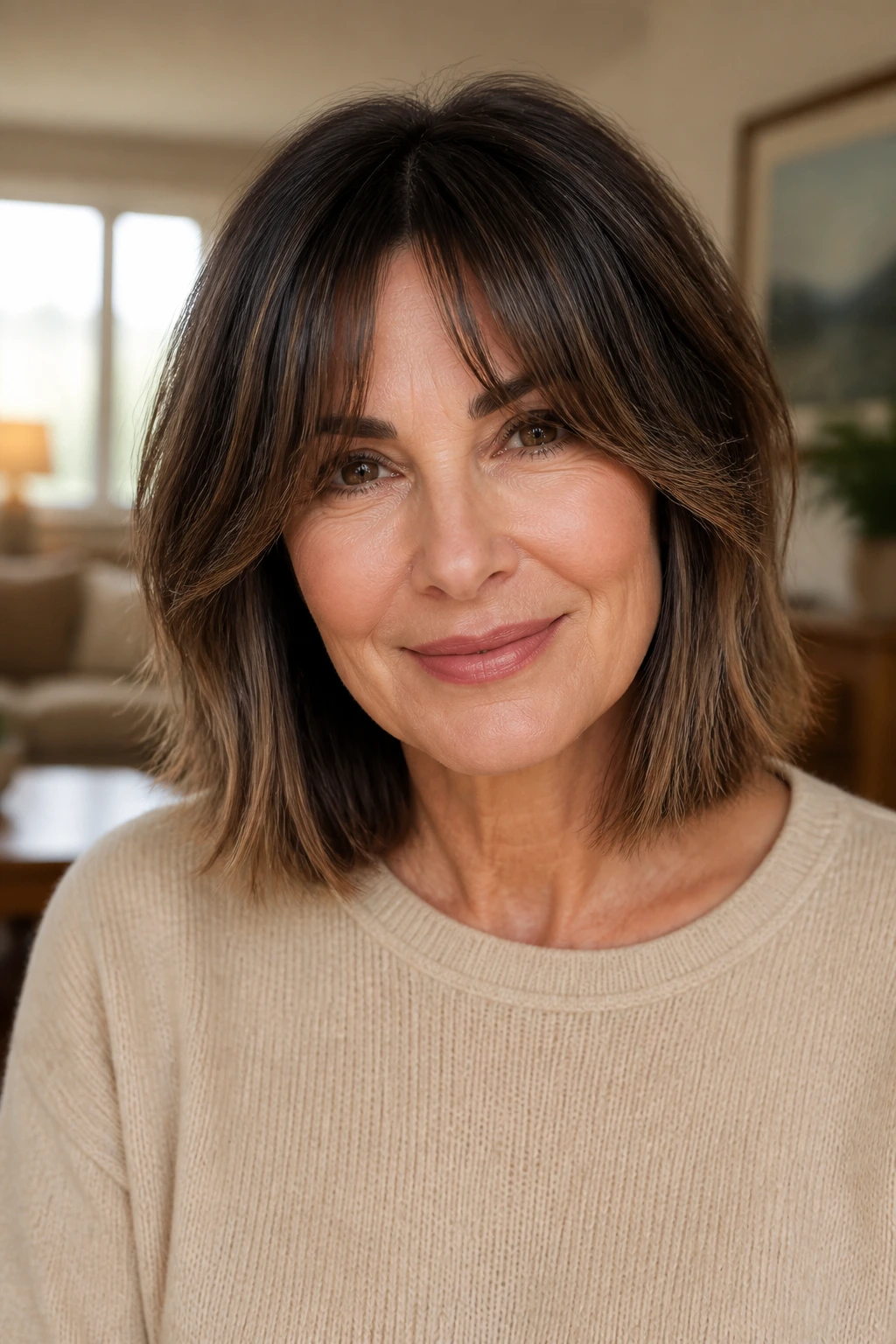
Curtain bangs and a lob have a nice working relationship. The bangs open away from the center, so they soften the forehead and fold into the rest of the haircut instead of sitting on top of it. That matters if you want forehead coverage without the upkeep of a blunt fringe.
The shape works especially well when the bangs are kept a little longer at the cheekbone. Short curtain bangs can feel cute. Longer ones feel more refined, and they grow out with less awkwardness.
Why It Works
The curtain effect creates a soft frame around the face and makes the rest of the lob look fuller. It’s one of the easiest ways to make a simple cut feel finished.
Best For
- Straight to wavy hair
- Foreheads that feel too open without bangs
- Anyone who wants a softer line around the eyes
9. Face-Framing Lob With Cheekbone Layers
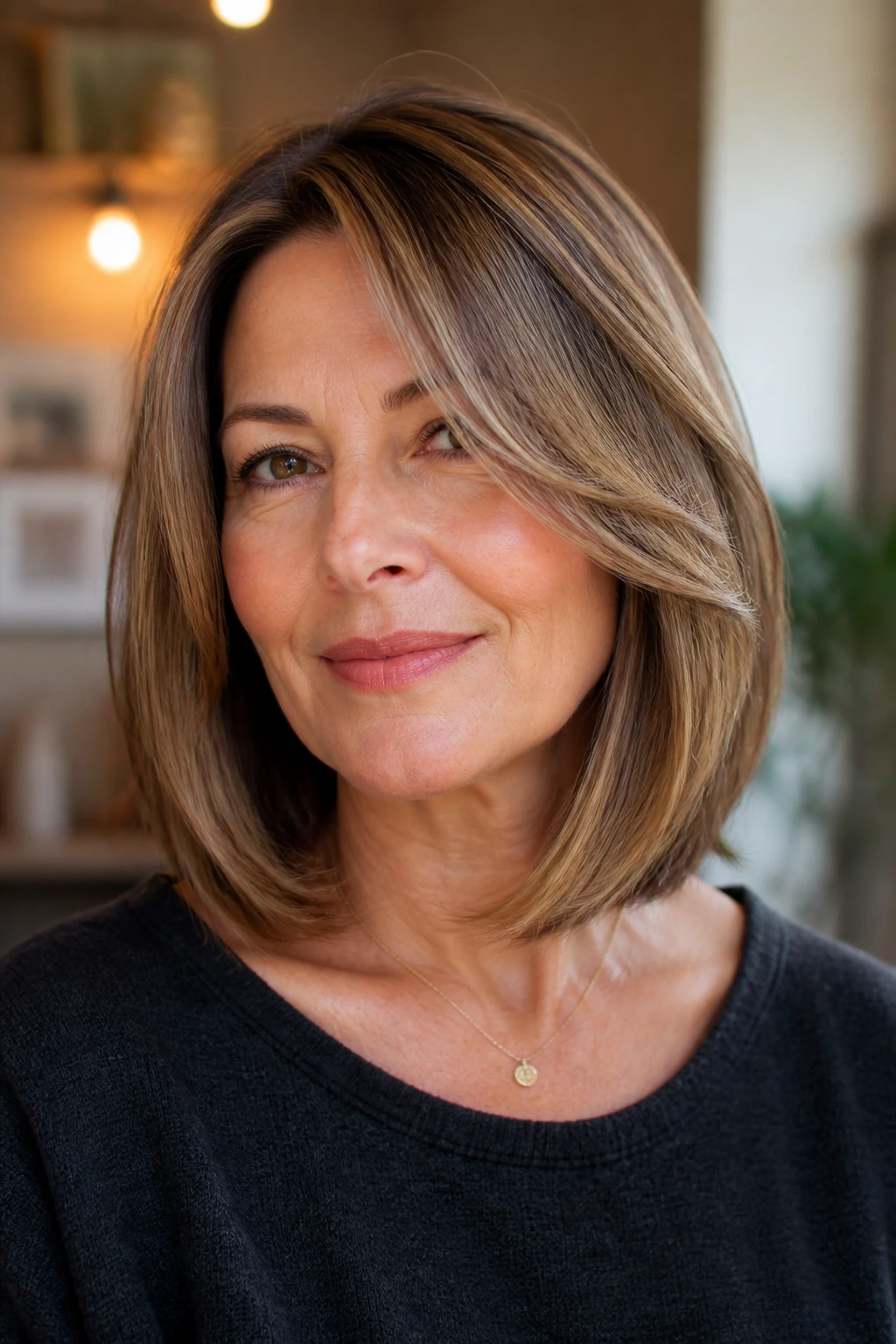
If a haircut needs to do a little face-sculpting, this is the one I’d point to. Cheekbone layers draw the eye upward and forward, which can brighten the face in a way a single blunt line never will. The rest of the cut stays fairly long, so the layers don’t run wild.
The beauty here is that the haircut does not ask for a lot of styling. A quick round brush pass near the front is often enough. Let the back stay simpler. That contrast keeps the shape from looking overworked.
H3: Ask For
Long face-framing pieces that start around the cheekbone, with softer layers underneath to keep the ends from feeling sparse.
H3: Good If You Want
A cut that works with earrings, reading glasses, and a bit of root lift at the front without stacking volume at the crown.
10. Deep Side Part Lob
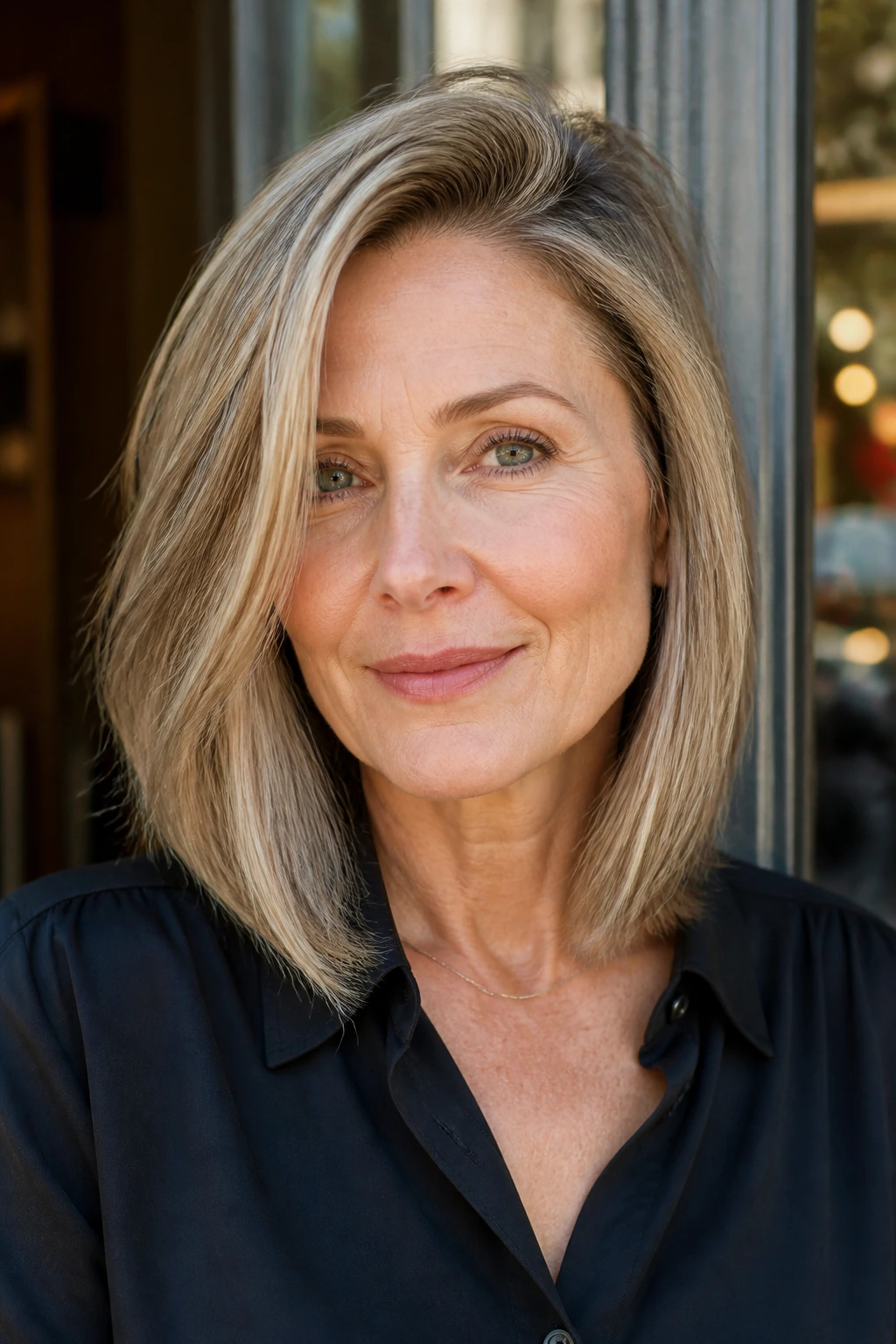
A deep side part can change a lob more than people expect. The haircut itself might be fairly simple, but once the part shifts off center, the roots lift, the forehead opens on one side, and the whole style gets a stronger shape. If your hair has started lying too flat in the same old place, a part change alone can be enough to wake it up.
This is a good answer for fine hair that needs immediate body. It’s also kind to cowlicks that fight the middle part and make the hair split in annoying places.
Why It Works
A side part creates asymmetry, and asymmetry usually looks fuller. The heavier side can fall across the cheek while the lighter side lifts at the root.
Styling Cue
Set the part while the hair is damp, then blow-dry the root in the opposite direction for 10 to 15 seconds before laying it back down.
11. Beachy Wavy Lob
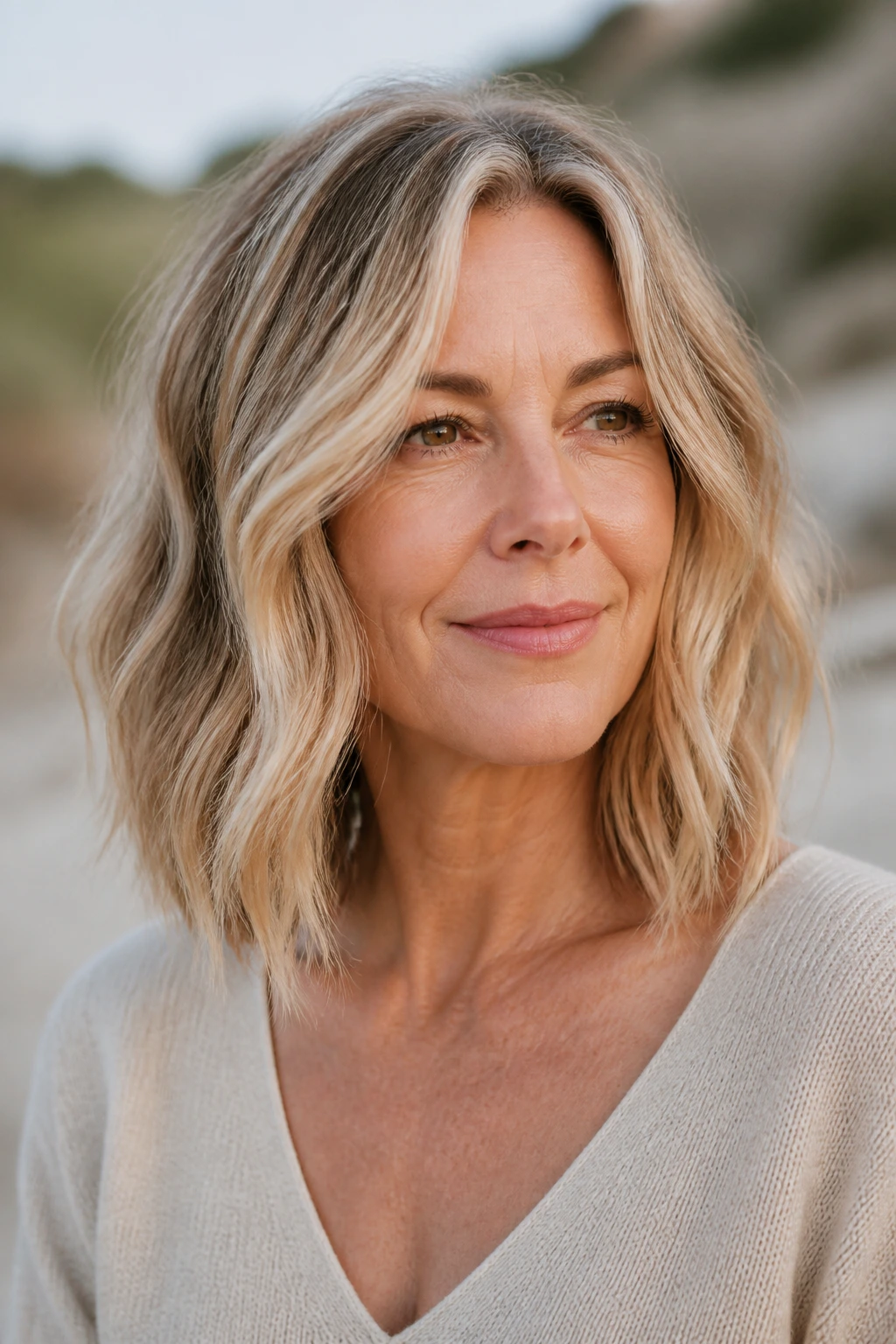
A beachy wavy lob sits in that useful middle ground between polished and relaxed. The waves don’t need to be perfect. In fact, if they’re too even, the whole thing starts to look staged. The better version has a few straighter pieces mixed in with the bends, which makes it look like hair that lived a real life before it was styled.
This cut suits older women who want movement without a lot of layering. The wave pattern itself does the visual work. A center or slight off-center part keeps the face open, and the length gives the waves room to fall.
What Makes It Easy
Use a 1-inch iron or a large wand, leave the last inch out, and rake the curls apart with your fingers once they cool. That cool-down step matters more than people think.
Finish
A light mist of flexible hairspray, not a stiff shell. If the hair feels crunchy, you used too much.
12. Glassy Sleek Lob
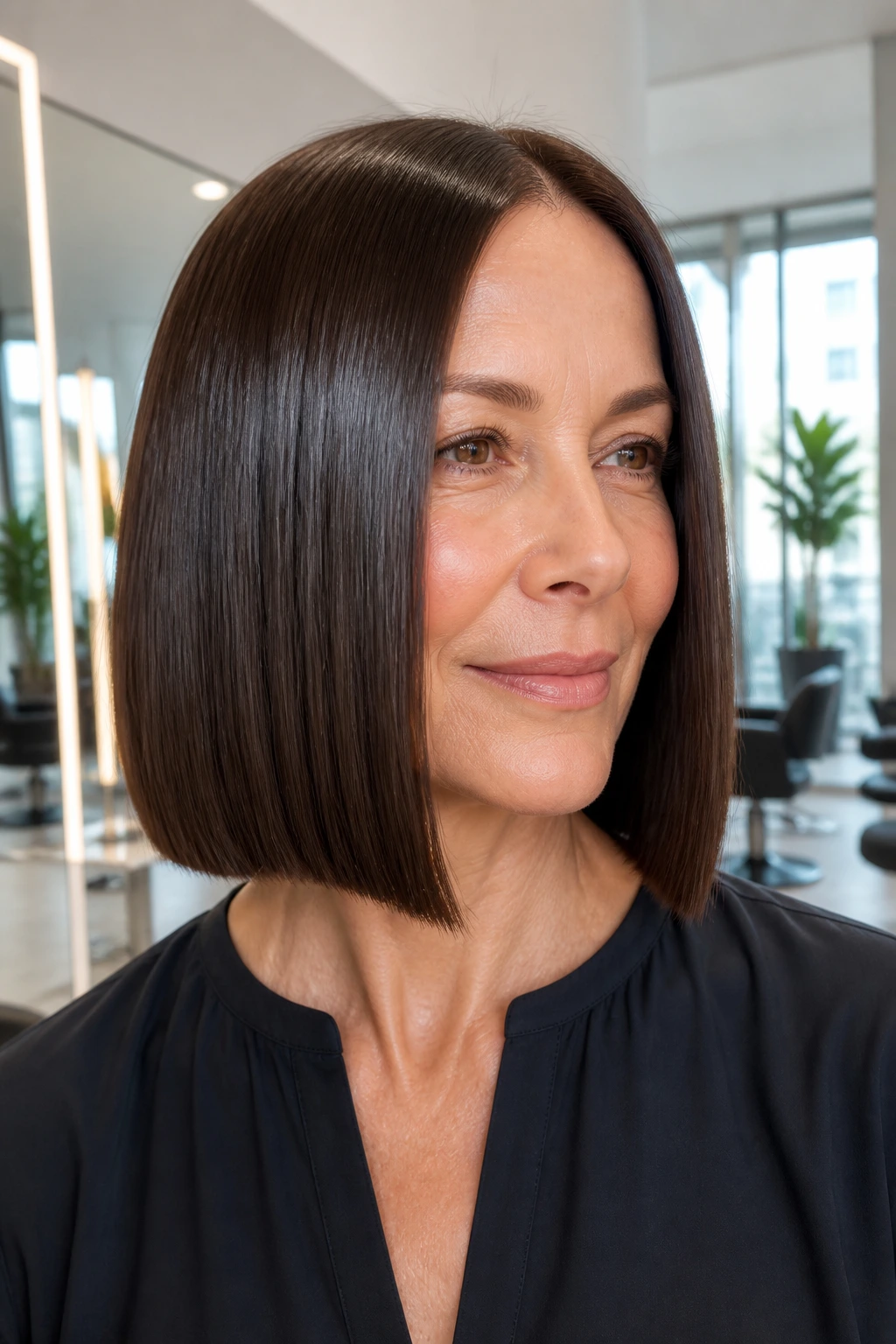
A sleek lob can look expensive in the plainest sense of the word: the lines are clean, the ends are blunt, and the surface has enough shine to show every curve of the cut. On straight or slightly wavy hair, it’s a strong choice because it doesn’t hide anything. The shape has to be good, or the cut won’t hold up.
This version is especially nice for women whose hair is still fairly dense and who want the haircut to read polished without curling it every day. It also loves a good middle part if the face shape can take it.
Why It Works
The smooth finish puts all the attention on the shape. That means the cut has to be precise, but when it is, the result looks crisp and deliberate.
Styling Cue
Use a flat brush or paddle brush while blow-drying, then seal the ends with one pass of a flat iron if needed. Don’t overheat the front pieces. They show damage faster.
13. Tapered Nape Lob
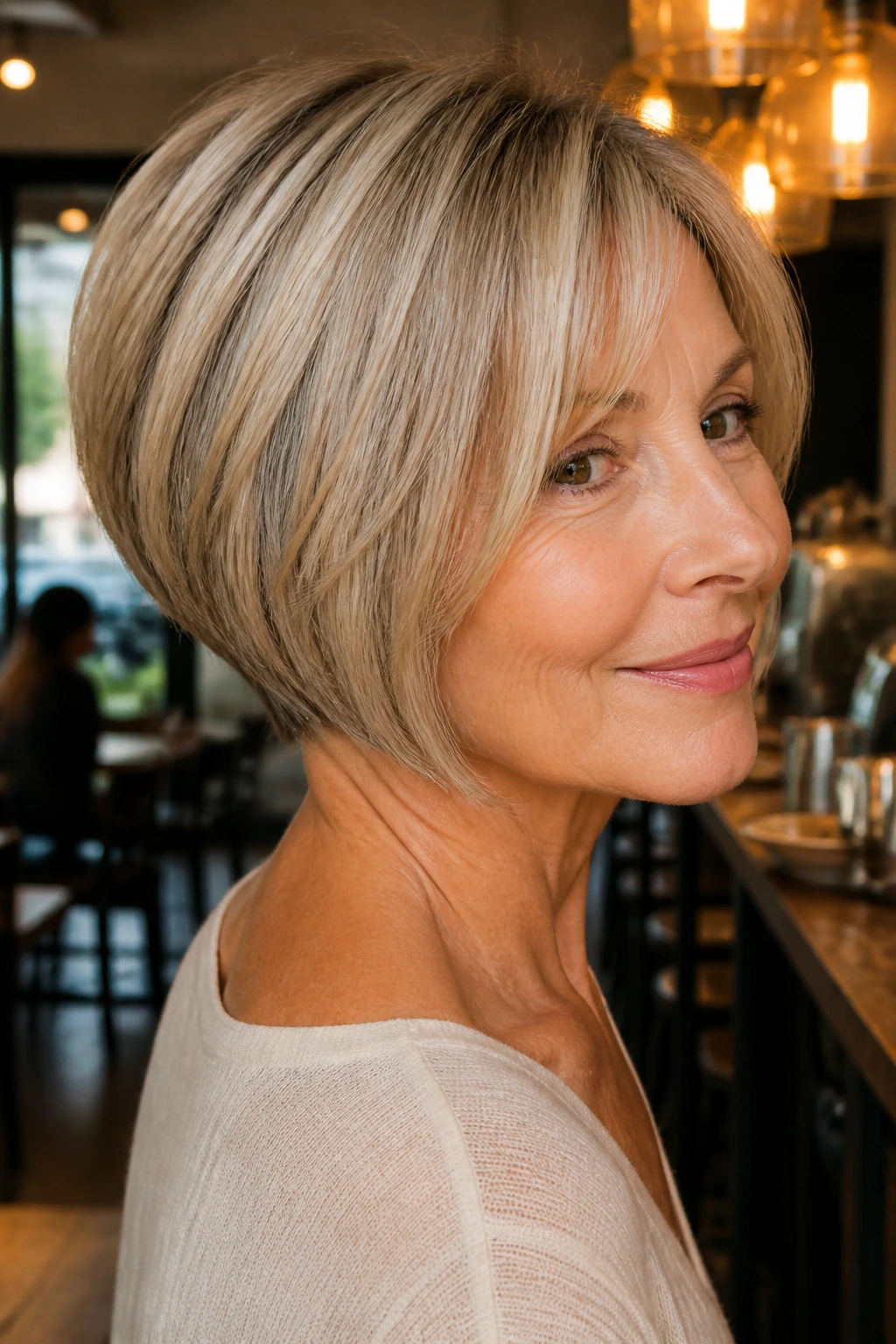
A tapered nape lob keeps the back snug without going short enough to feel severe. The nape is trimmed a little closer, then the shape opens out toward the front. That subtle taper gives the cut a tidy neckline, which is handy if you want the hair off the collar but still want enough length around the face.
The cut works well under jackets, turtlenecks, and scarves because the back doesn’t bunch up. It’s practical, but not plain.
H3: Good For
- Women who like clean necklines
- Thick hair that gets bulky at the nape
- A cut that looks neat in profile
H3: Ask For
A gentle taper, not a stacked bob. The difference matters.
14. Airy Layered Lob for Thick Hair
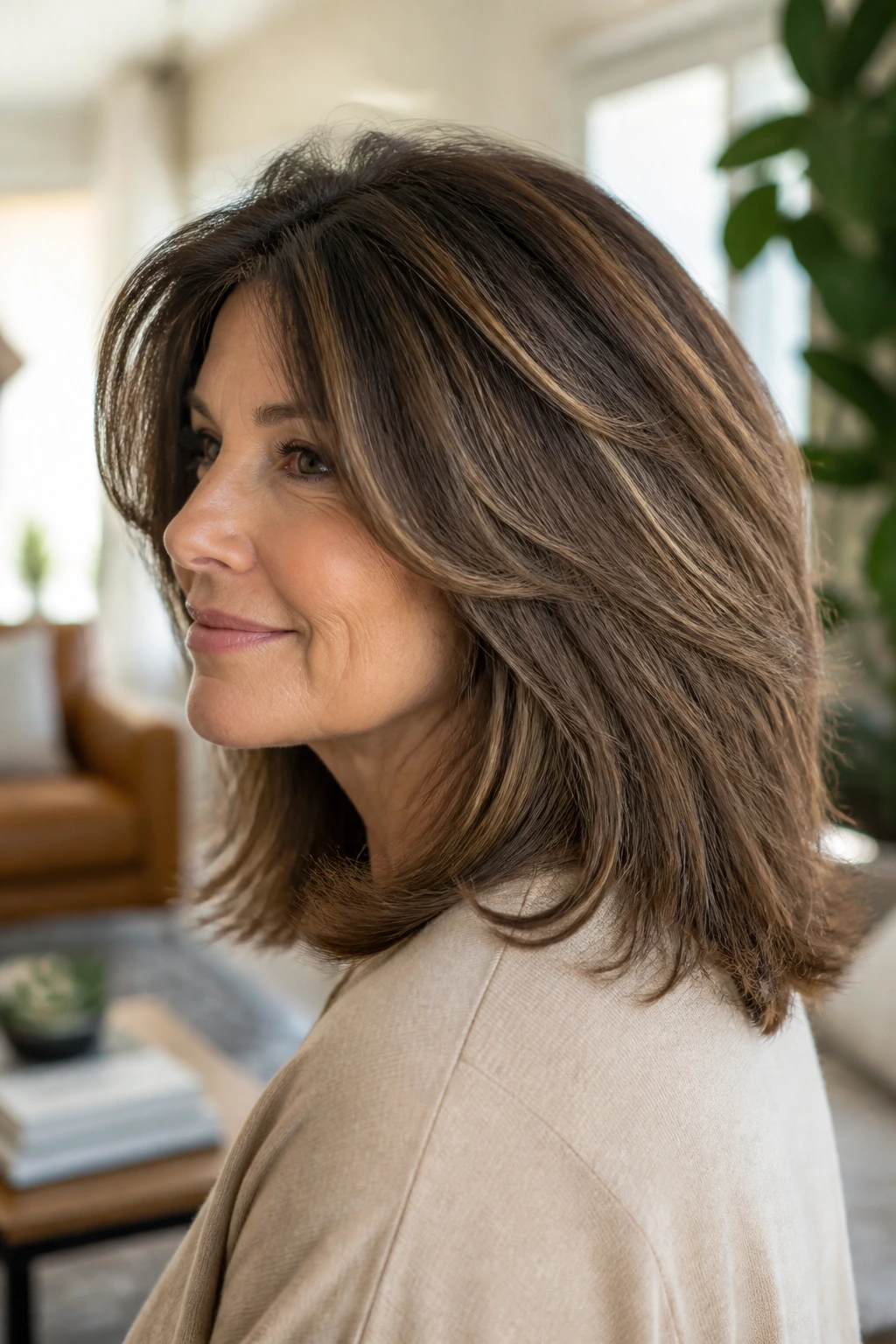
Thick hair can turn a lob into a shelf if the weight is left in the wrong places. An airy layered lob takes some bulk out from the inside, not from the perimeter, so the shape keeps its line while moving instead of bulging. That’s the sweet spot.
A good layered lob for thick hair should feel lighter when you lift it, but it should not look thin at the ends. Too much thinning and the cut frizzes out. Too little and you’re back to the triangle again.
Why It Works
The internal layers remove density where hair piles up, especially through the sides and back. That helps the ends bend under or flip out on purpose, instead of doing both at once.
Best Styling Tool
A paddle brush for smoothing and a blow dryer with a nozzle. If you try to dry thick hair without direction, it usually wins.
15. Bottleneck Bang Lob
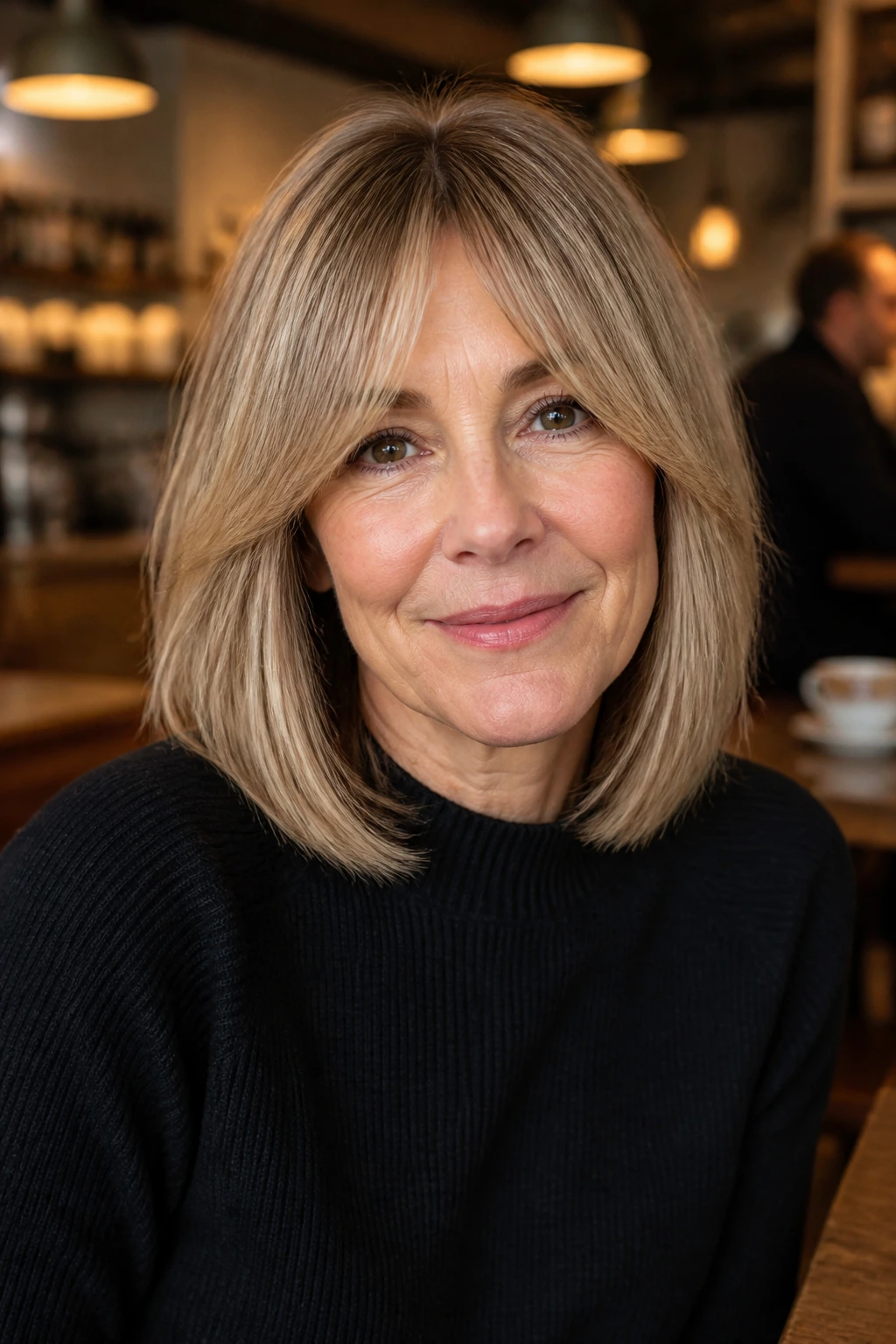
Bottleneck bangs are the softer cousin of a full fringe, and they sit nicely on a lob because they narrow near the center and open wider at the sides. That shape flatters the face without boxing it in. If blunt bangs feel too heavy or too much like homework, this version is easier to live with.
The trick is keeping the length long enough that the bangs can sweep into the side layers. Then the whole haircut starts to read as one shape instead of bangs plus bob.
Why It Works
The narrower middle draws attention to the eyes, while the side pieces soften the temples and cheekbones. It’s a neat bit of balance.
Styling Cue
A small round brush or even a roller at the front can help the bangs curve instead of sticking straight down.
16. Rounded Lob for Thinning Hair
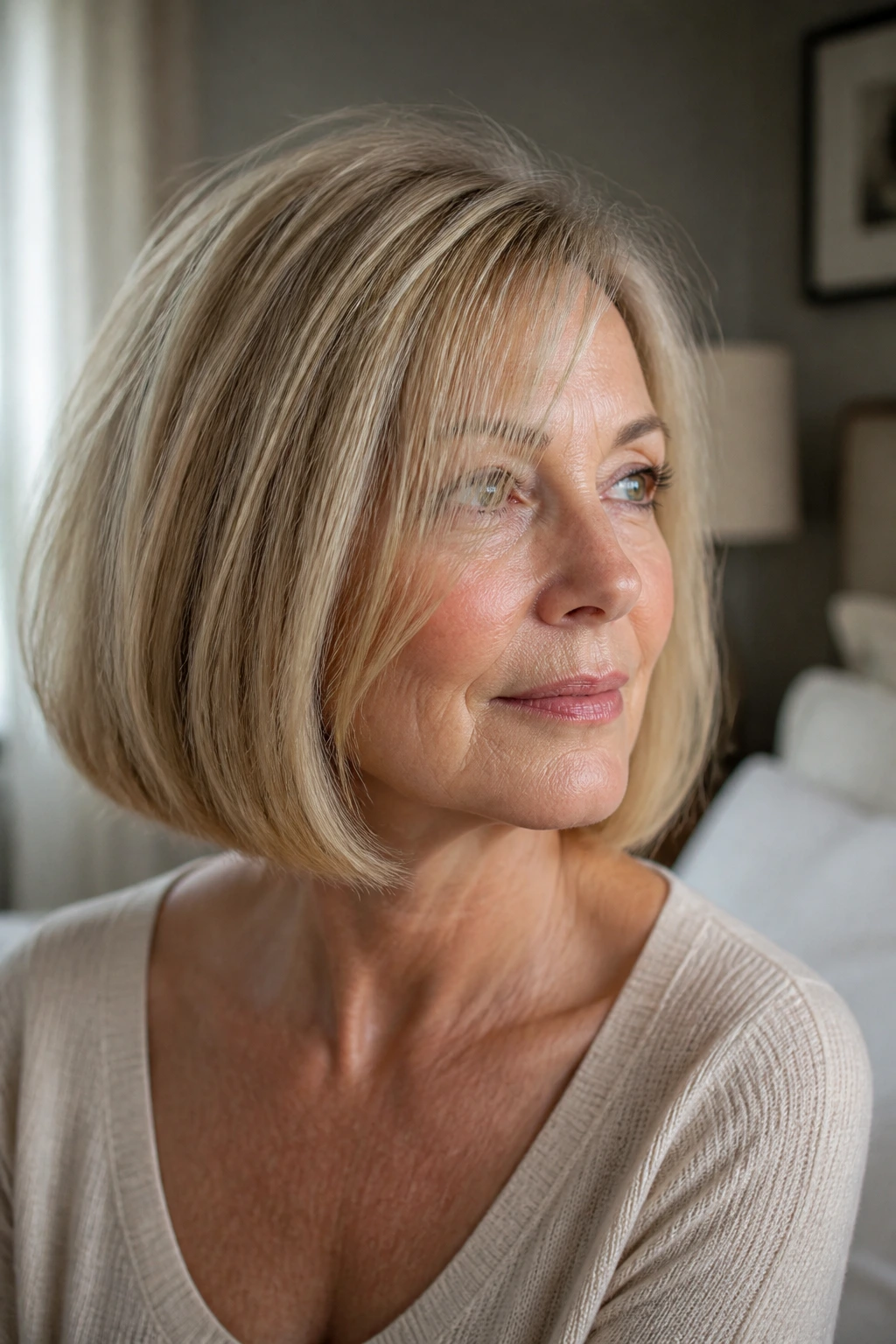
A rounded lob is one of the smartest options for thinning hair because the shape can create fullness without relying on a lot of layer stacking. The perimeter curves gently under, which gives the eye a fuller outline. That matters when the ends are starting to feel see-through.
The haircut should stay soft around the sides and fuller through the bottom third. I’d avoid aggressive razoring here. Thin hair usually needs structure more than it needs texture.
H3: What to Ask For
A rounded silhouette with blunt-ish ends and light face-framing pieces only where they help the face.
H3: Style Note
A root-lifting mousse at the crown and a small round brush at the ends go farther than heavy sprays. Heavy product can drag fine hair down by noon.
17. Salt-and-Pepper Tousled Lob
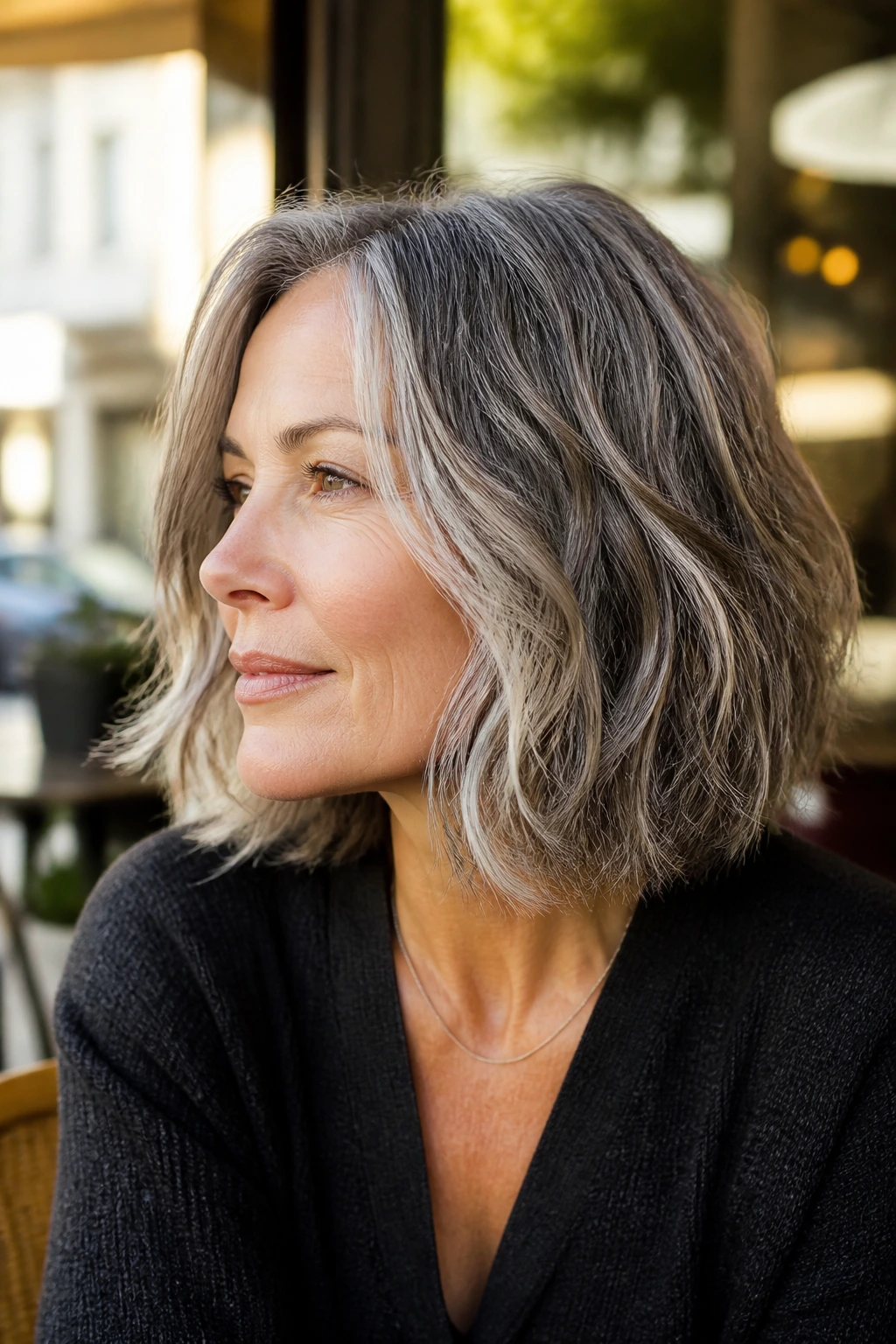
Salt-and-pepper hair has texture built in, and a tousled lob lets that mix of shades show instead of hiding it under a too-perfect blowout. The movement in the cut catches the contrast between dark strands and silver ones, which gives the haircut a lot of life without needing much color work.
This is a forgiving style if your hair has changed texture over time. A little bend at the ends and a few broken-up pieces near the front keep it from looking stiff.
Why It Works
The tousled finish breaks up the outline, which keeps the color variation from looking harsh. It also makes natural grays blend into the haircut rather than sit on top of it.
Best Match
A mild wave, a side part, and a lightweight cream. That’s enough for most days.
18. Subtle Inverted Lob
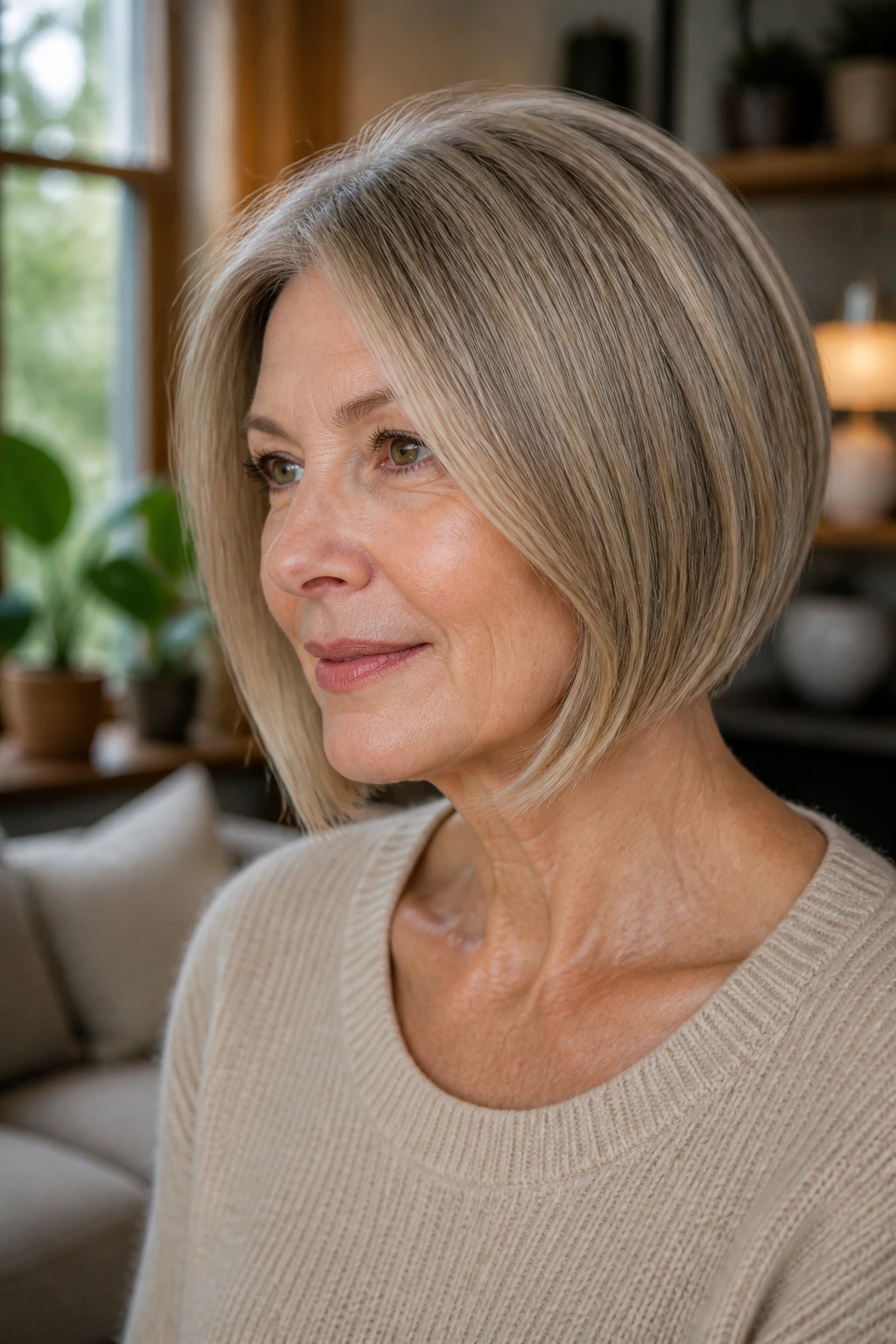
A subtle inverted lob has a slightly shorter back and longer front, but the difference is small enough that you notice the shape before you notice the geometry. That’s the version I prefer. Too much inversion can look dated fast. Keep it soft and the cut stays modern.
The shape can make the neck look longer and add a little lift at the back of the head, which helps if the hair tends to collapse flat.
Why It Works
The forward angle elongates the face and creates motion without needing a ton of styling. It’s a neat fix when you want the hair away from the neckline but not cropped short.
Styling Cue
Tuck the front under with a round brush, then let the ends settle on their own. Don’t overcurve them.
19. Shoulder-Skimming Lob with Fringe
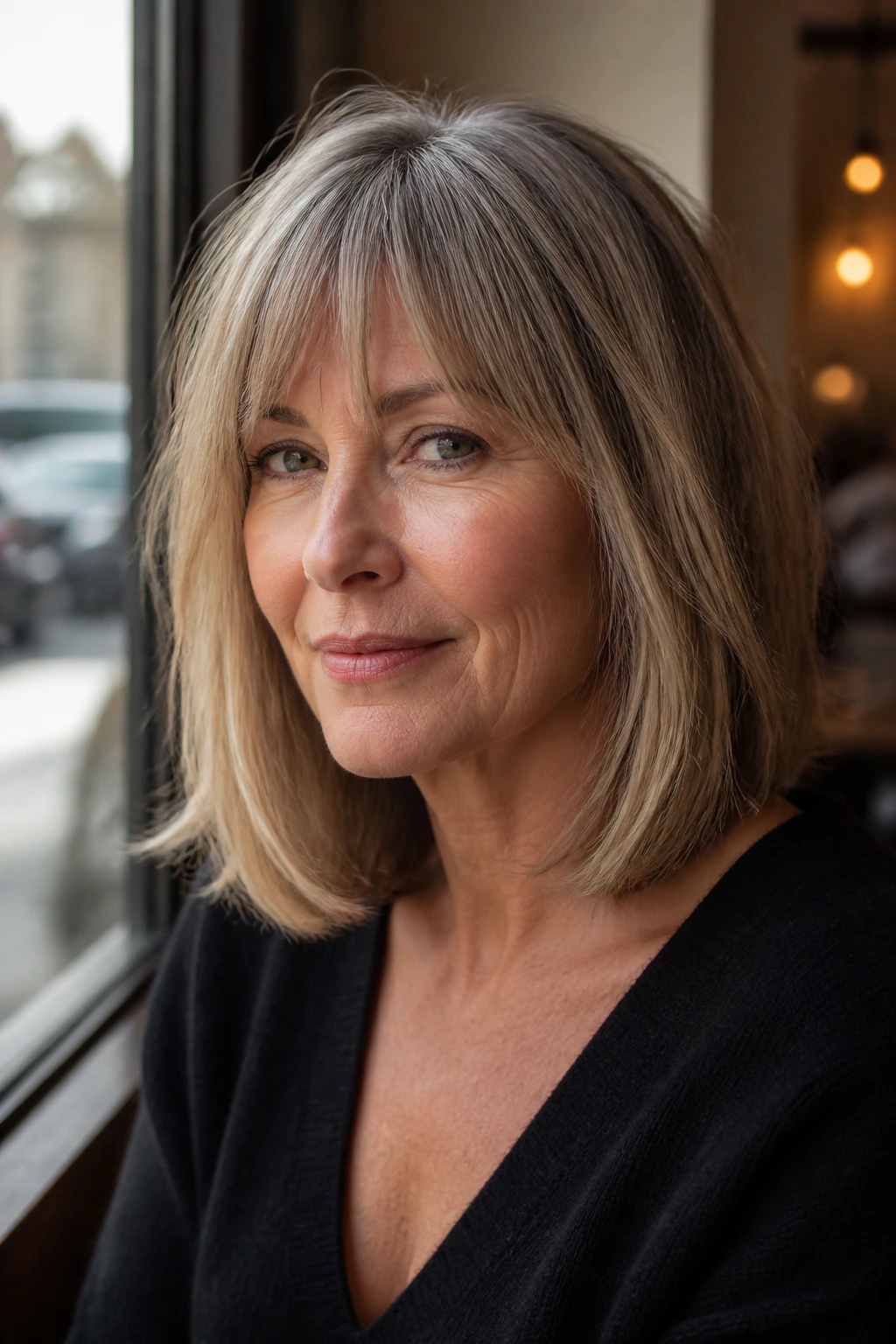
A shoulder-skimming lob with fringe has a grounded, easy shape. The length lands right where hair can be tucked, clipped, or left loose, and the fringe gives the cut a focal point. If you like hair around the face but don’t want bangs committed to the forehead, a soft fringe can do the job with less fuss.
The key is keeping the fringe soft enough that it blends instead of competing with the cut line. A dense, blunt fringe can make the rest of the lob look heavy. A lighter fringe keeps air in the style.
H3: Good For
- Women who wear glasses
- People who like to pin the sides back
- Hair that needs a little face framing without a hard line
H3: Styling Cue
A drop of styling cream on the fringe prevents frizz without making it piecey in a bad way.
20. Piecey Lob with Razored Ends
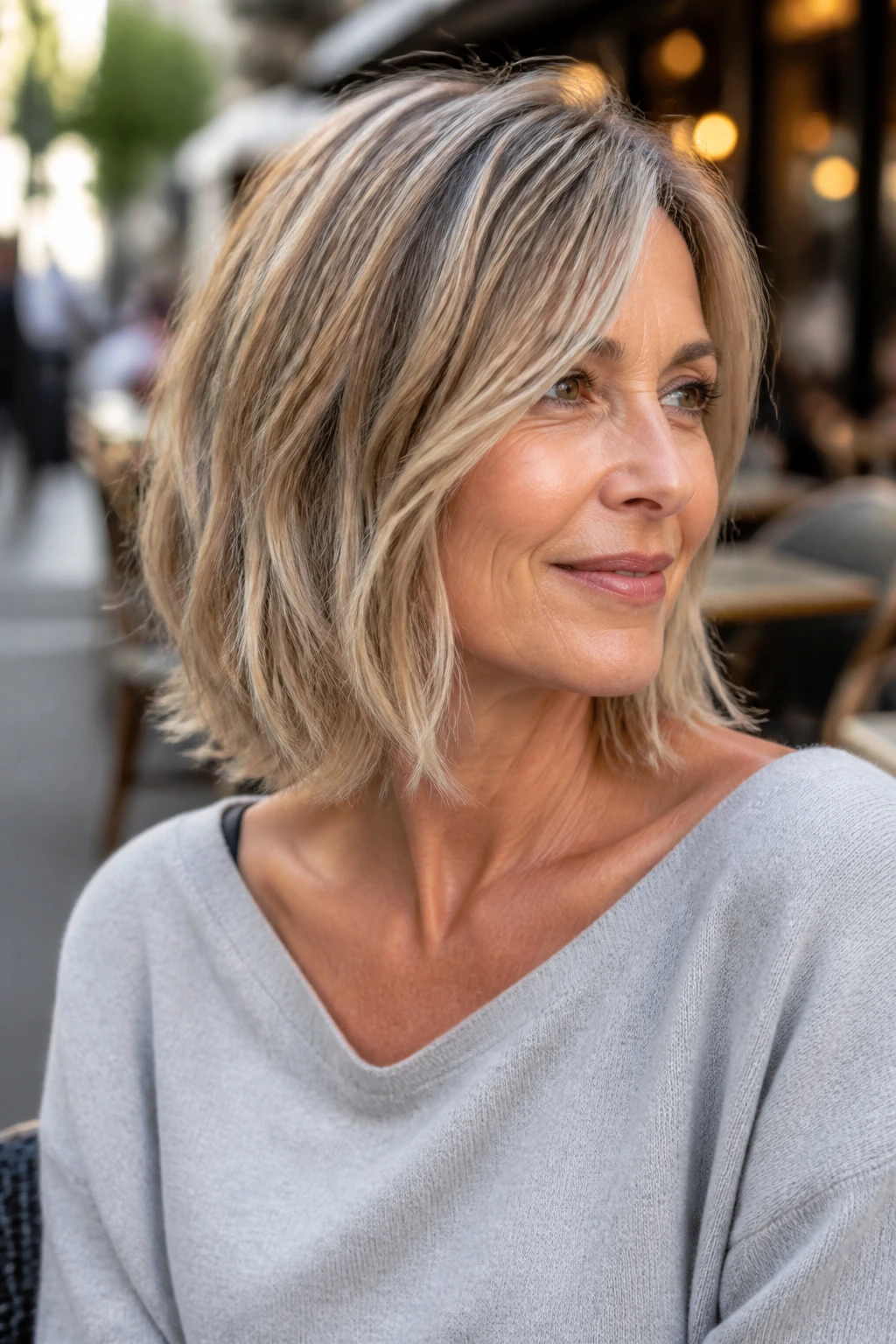
Razored ends can be a mess if they’re overdone. Used well, though, they give a lob that broken-up, piecey look that works especially well on medium-density hair. The ends don’t sit as one heavy line; they separate a bit, which adds movement and lightness.
I’d avoid this on very dry hair or hair that already frays easily. On healthy hair with some bend, though, it can look sharp and casual at the same time.
What It Adds
Texture, movement, and a softer edge around the perimeter.
What to Watch
Too much razor work can leave the ends fluffy. You want definition, not fuzz.
21. Warm Caramel Lob with Dimension
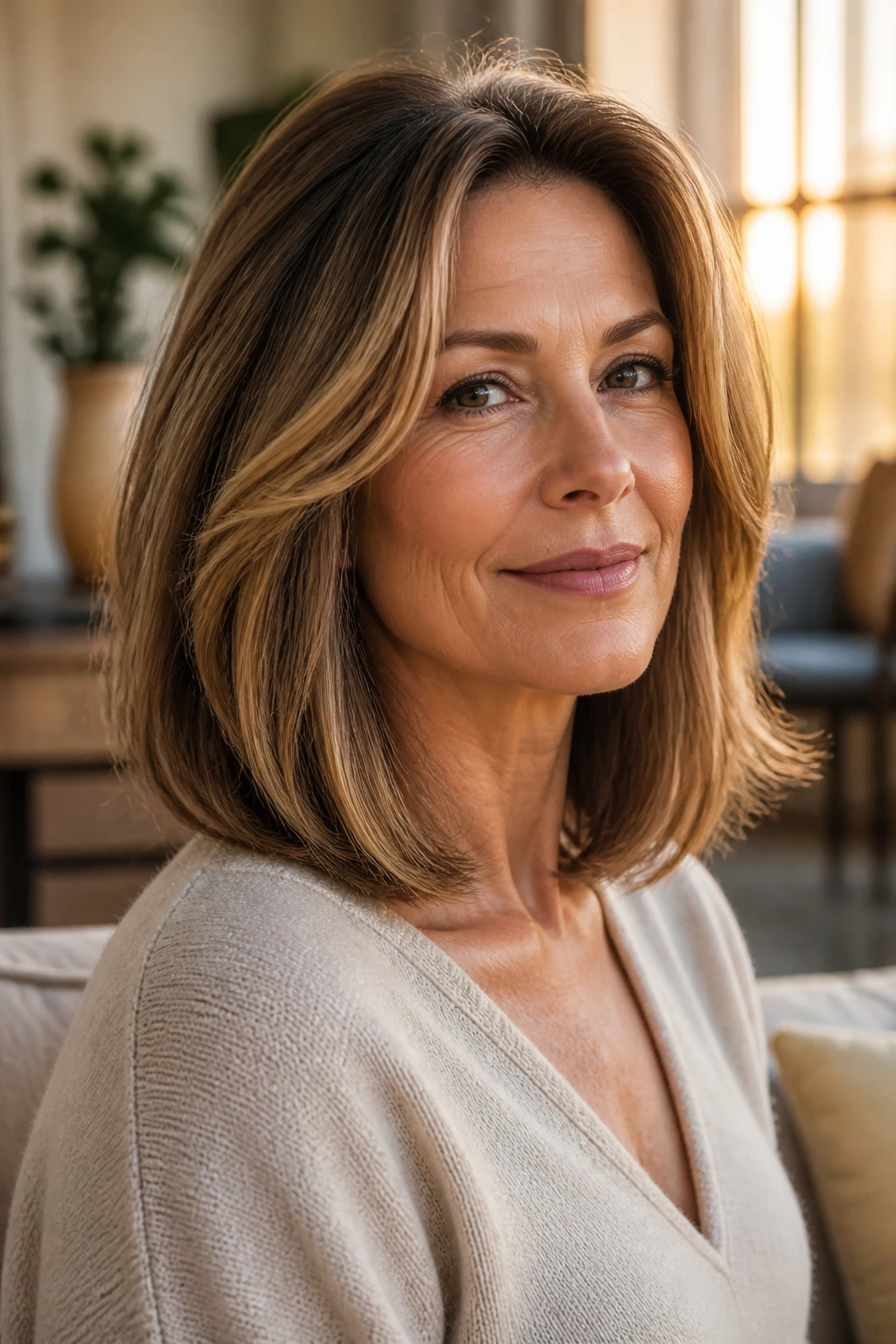
Color can change the whole feel of a lob. Warm caramel highlights around the front and through the surface make the cut look fuller because the eye reads depth and movement. On older women, this can be a smart way to soften the transition into gray or to brighten skin that’s gone a bit cool in tone.
The cut itself can be simple. The color is what lifts it.
Why It Works
Light pieces around the face create a frame, while deeper tones underneath keep the hair from looking flat or washed out. That contrast gives a blunt lob more shape and a layered lob more definition.
Styling Note
If you curl it, the color pattern shows best with a loose bend, not a tight spiral.
22. Gray-Blending Lob with Babylights
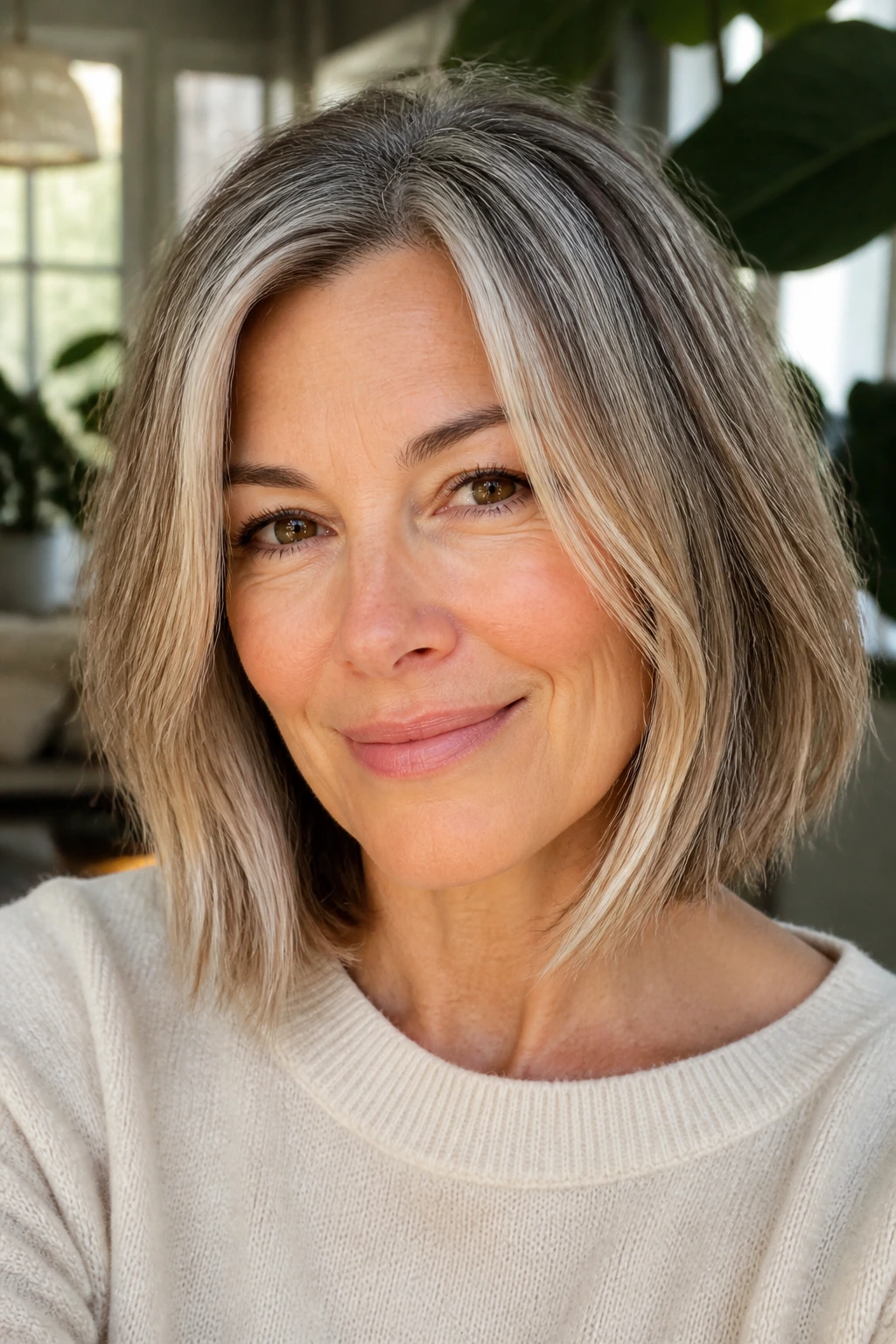
Babylights are tiny, fine highlights, and on a lob they can blur the line between natural gray and dyed hair without making the color streaky. That’s useful if you’re growing in silver but still want a little softness around the face. The cut stays elegant; the color stays quiet.
This works best on a lob with some movement. The light pieces need a surface to catch on, or they disappear into the whole head and don’t do much.
Why It Works
The micro-highlights break up the block of color and make regrowth less obvious. You get a softer grow-out line, which means fewer harsh appointments.
Best For
Women who want gray blending rather than full coverage, especially on medium or light brown hair.
23. French-Girl Lob
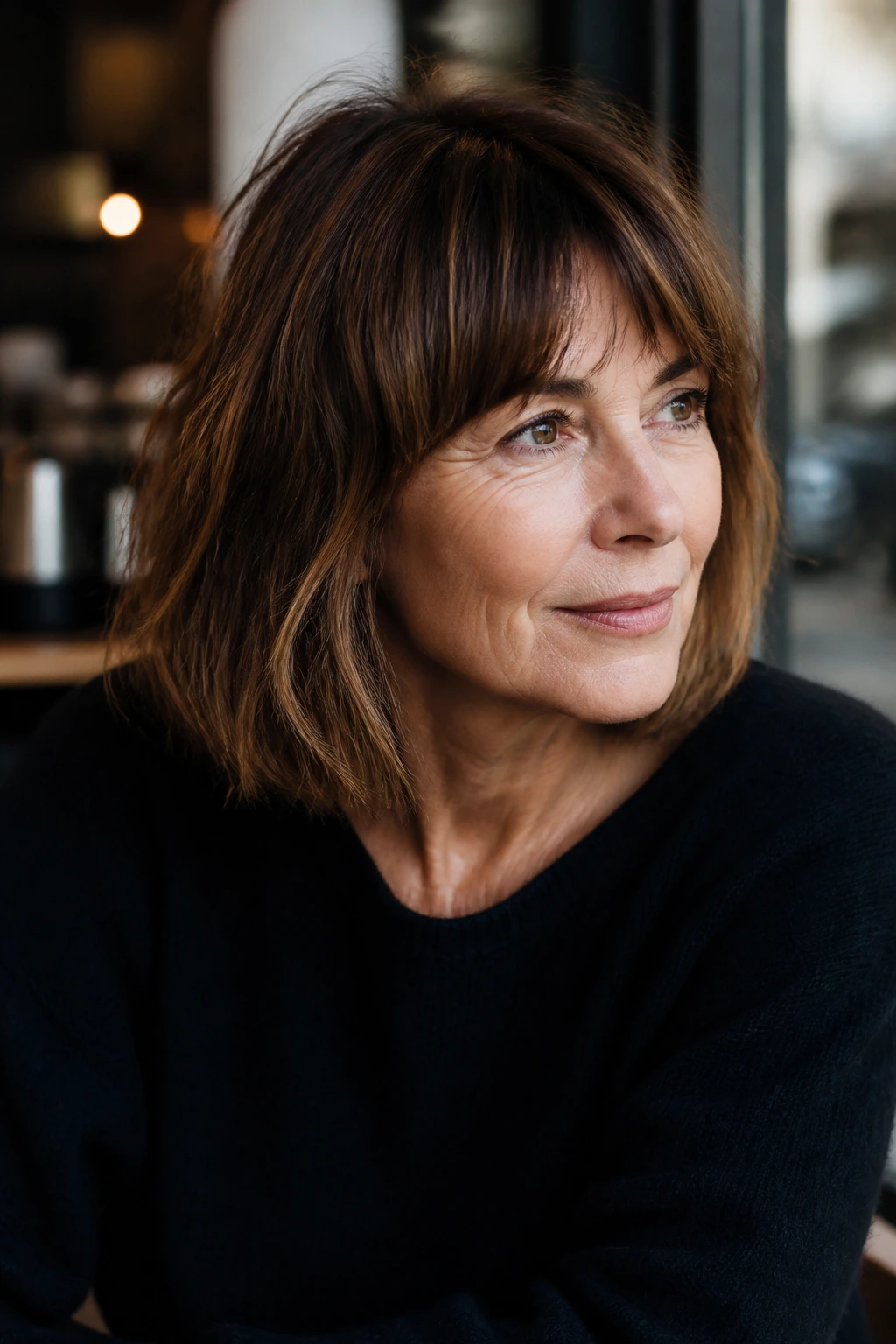
The French-girl lob usually feels a little offhand in the best possible way. It’s cut with soft ends, a bit of natural texture, and a shape that doesn’t beg for perfect blow-drying. The result is hair that looks like it belongs to a person who has places to be and not a blowout that needs protecting from the air.
It suits women who like understated hair with a little bend. Nothing too round. Nothing too blunt. Just enough shape to make the cut look intentional.
Why It Works
The softness around the ends keeps the style from feeling too engineered. If your hair has some natural wave, this cut lets it show.
Styling Cue
Scrunch in a light styling cream, twist a few front pieces while damp, and let it air-dry. Don’t touch it too much while it dries.
24. Wash-and-Go Lob
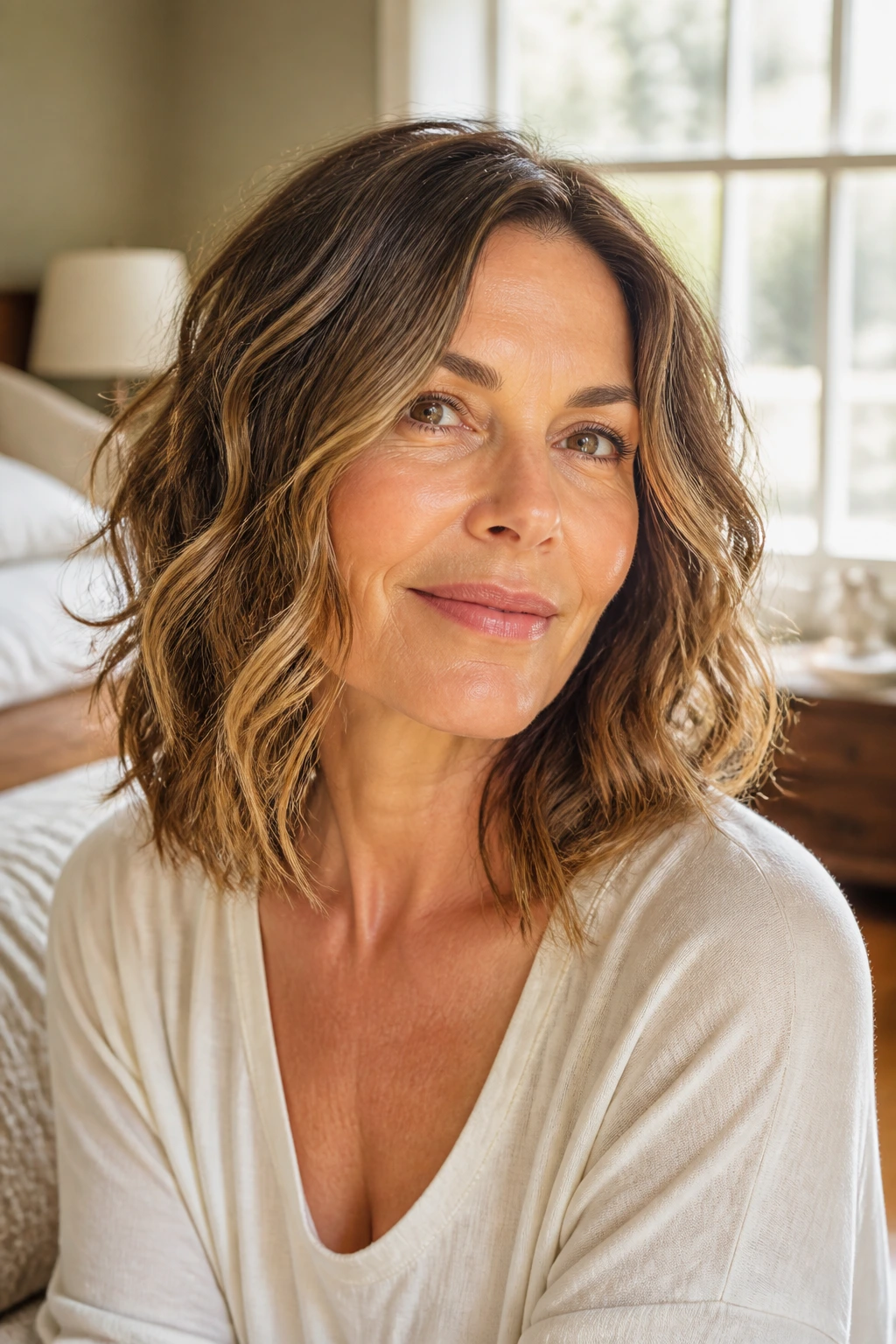
A true wash-and-go lob depends on the haircut more than the styling. If the cut is shaped well, the hair can dry into a useful, easy outline with little effort. That makes it a strong option for women who do not want to spend half the morning with hot tools.
The best wash-and-go versions have balanced layers, a length that doesn’t flip wildly at the shoulders, and enough movement to keep the shape from drying into a slab. Wavy and slightly curly hair often handles this best.
Why It Works
The haircut does the shaping before the styling even starts. That’s the whole point. When the ends sit in the right place, the hair dries with less argument.
H3: What to Ask For
A lob cut to work with your natural bend, not against it, with minimal fuss around the perimeter.
H3: Product Note
A leave-in and a touch of gel or cream are usually enough. More than that can make the hair limp.
25. Polished Event-Ready Lob
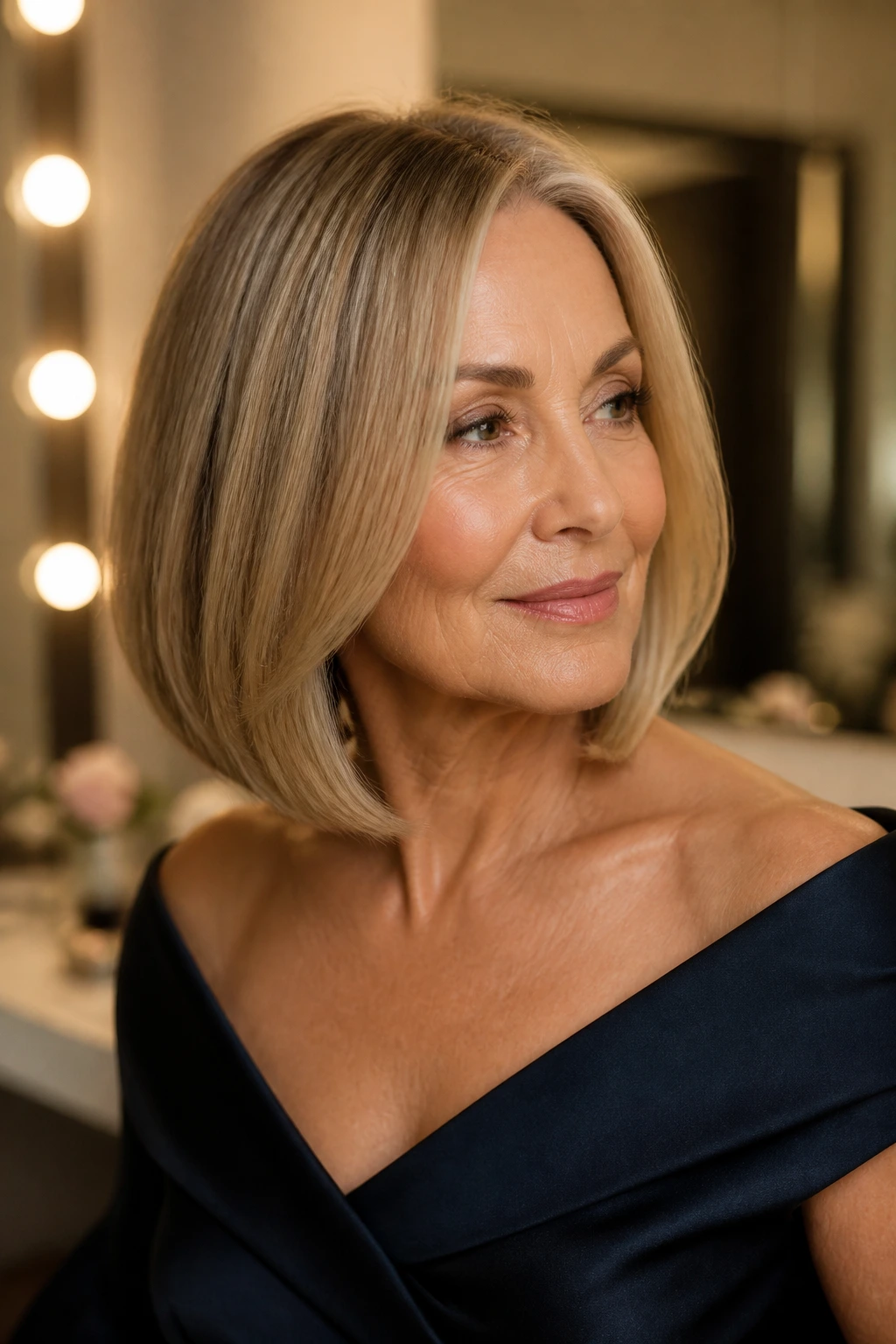
A polished lob earns its keep when you need your hair to look finished in a hurry. The ends are smooth, the shape is clean, and the cut has enough length to be tucked, pinned, or curled into a soft bend. It’s the lob I’d pick for dinners, weddings, theater nights, and any moment when hair should behave without becoming the center of attention.
This style is a good reminder that older women do not have to choose between “easy” and “elegant.” A neat lob can do both, as long as the line stays fresh.
Why It Works
The cleaner the perimeter, the better this cut behaves when styled. It also looks good as it grows out, which is half the battle.
Best Finish
A smoothing serum at the ends, a light mist of hairspray, and one extra pass over the front with a flat iron if needed.
Why the Lob Still Makes Sense for Mature Hair
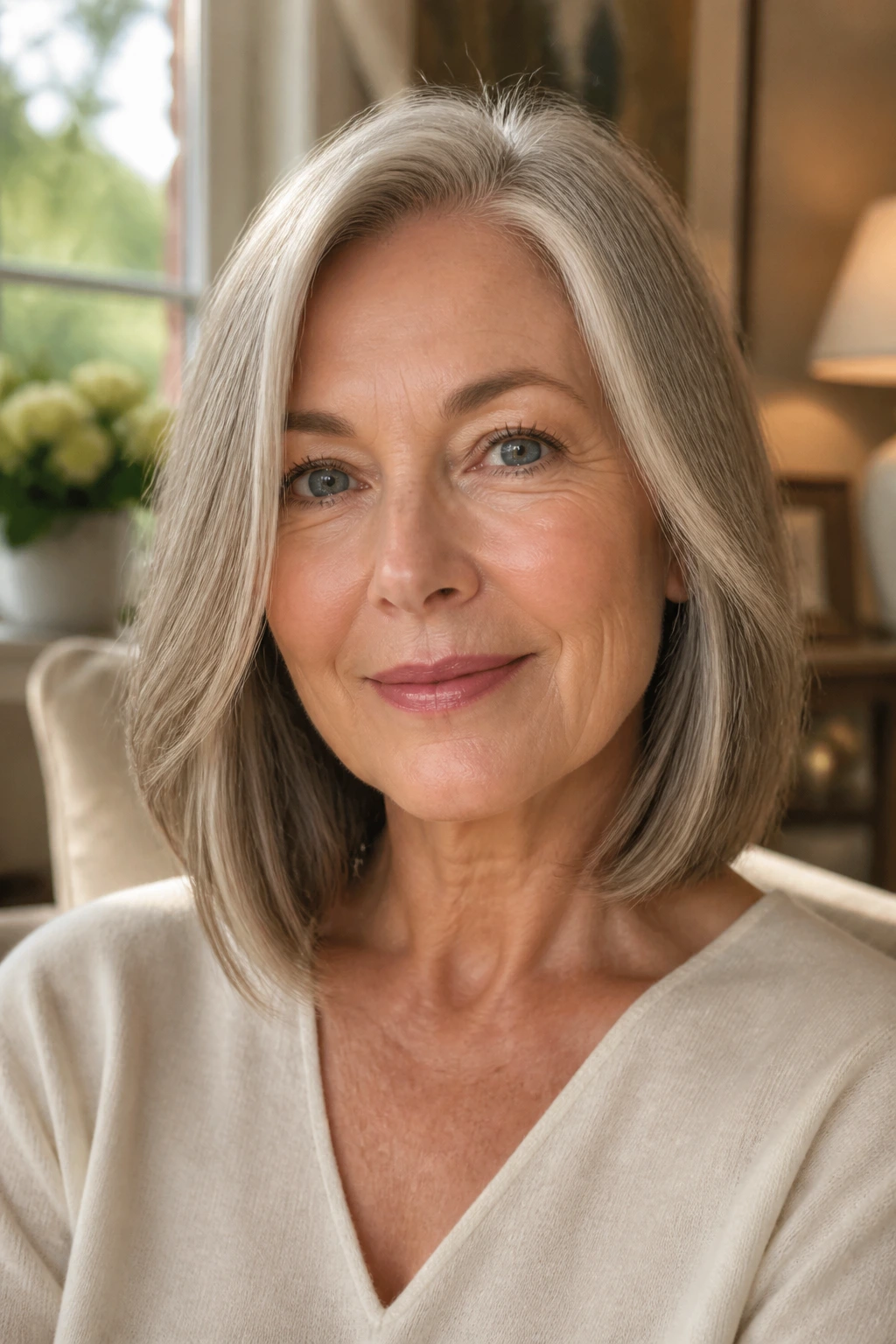
A long bob keeps earning its place because it solves problems that show up with age without looking like it’s trying too hard to solve them. Hair can get finer at the temples, a little drier through the ends, and less cooperative around the crown. A lob works with those changes because the cut line gives shape, while the length gives flexibility.
The collarbone zone matters more than people think. Hair that lands there can still move, but it doesn’t drag the whole face down the way longer lengths sometimes do once the ends get sparse. A good lob also leaves enough room for earrings, glasses, and necklines that would fight with shorter cuts. There’s a practical side to beauty, and this is one of those cuts where the practical side is doing half the work.
How to Ask for the Right Lob at the Salon
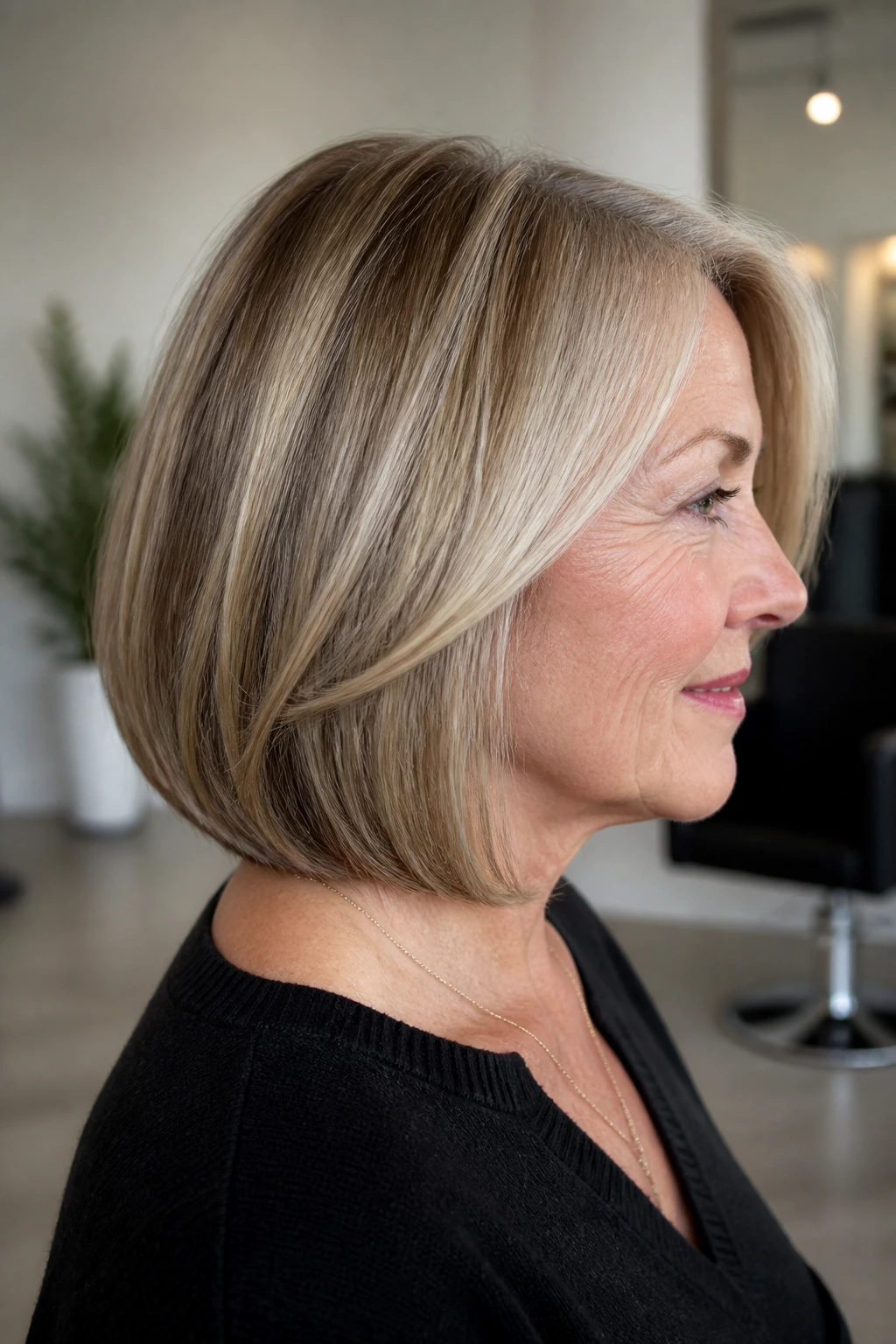
A good salon consultation saves more heartbreak than any styling trick. Bring a photo, but bring a useful one — not a picture of somebody with a completely different texture and density unless you want to explain that you’re borrowing only the shape. Tell your stylist where you part your hair, how often you heat-style it, and whether you prefer tuckable length or a cleaner neckline.
Be specific about the parts that matter. Say whether you want blunt ends, soft layers, a side part, bangs, or a shape that can air-dry. If your hair is fine, ask the stylist not to over-thin the perimeter. If it’s thick, ask where bulk should come out and where it should stay. The wrong kind of thinning can leave ends that flutter around like dry feathers.
Essential Tools for Styling These Lobs
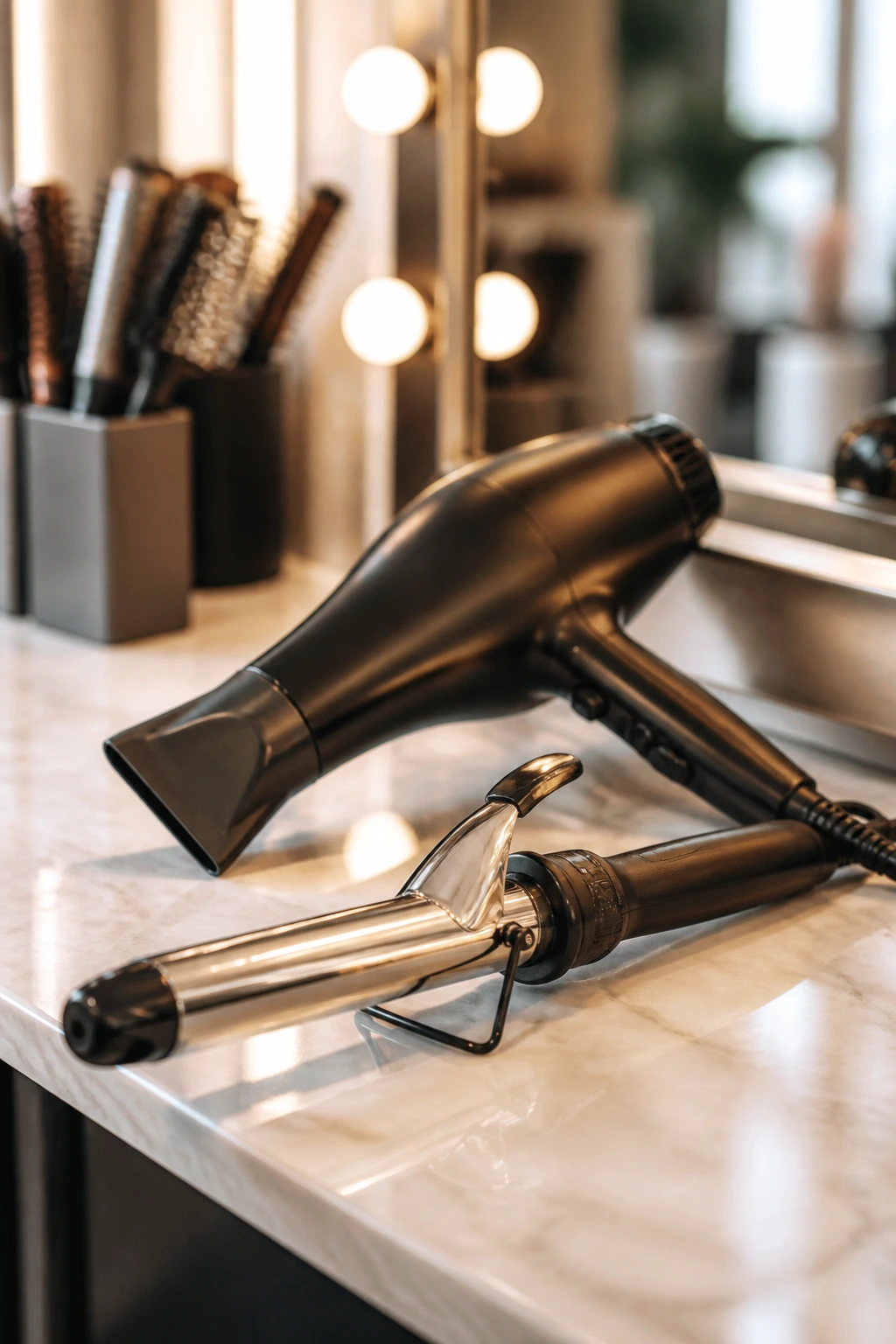
- Blow dryer with a nozzle: Helps direct the hair and smooth the cut line without blasting the shape apart.
- Medium round brush: Useful for bending the ends under or flipping them softly away from the face.
- Paddle brush: Better for sleek, smooth lob styles and fast drying on straighter hair.
- 1-inch curling iron or wand: Makes loose waves and bendy ends without overcurling the whole head.
- Light mousse or root lift spray: Adds lift at the crown without making the hair sticky.
- Heat protectant spray: Non-negotiable if you use a dryer or iron more than once a week.
- Shine serum or lightweight cream: A tiny amount smooths frizz and makes gray or silver hair look crisp, not greasy.
- Sectioning clips: Small but useful, especially if the front pieces need extra shaping.
How to Wear These Long Bobs Day to Day
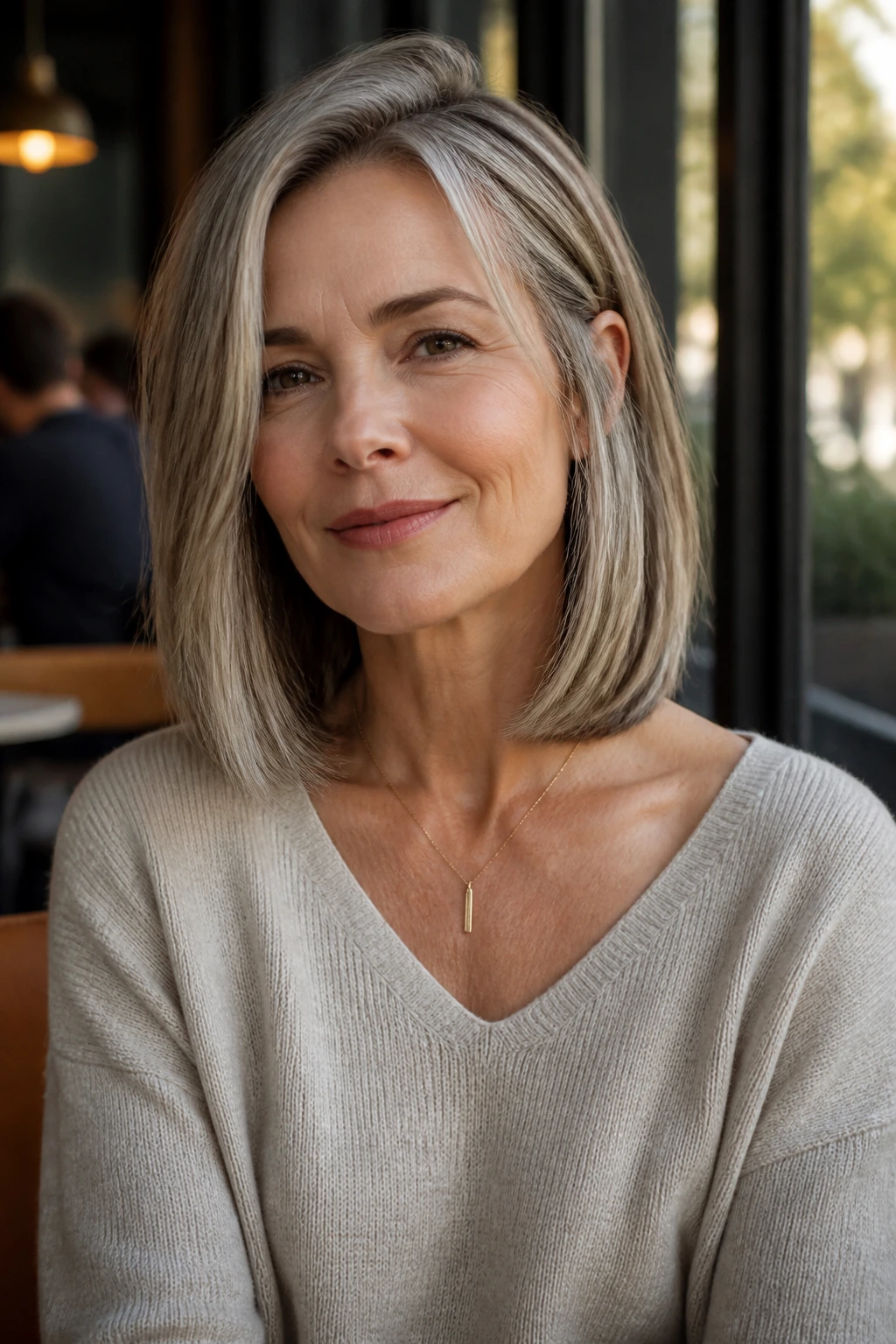
Presentation: A lob looks best when the silhouette is clean at the shoulders. Let the ends sit where they want to fall, then refine only the front pieces if needed.
Quick polish: For straight or wavy hair, a five-minute pass with a round brush at the ends is often enough. The cut should do the rest.
Texture days: On wavy or curly hair, scrunch in a small amount of cream and let a few pieces stay imperfect. That broken-up finish makes the shape look less forced.
When you want more lift: Flip the part, mist the roots with water, and blow-dry the crown in the opposite direction for a minute or two. Small change. Big effect.
With accessories: Long bobs play nicely with clips, headbands, and one-sided tucks. They do not need to be hidden to look good.
Styling Tricks That Make the Cut Look Better
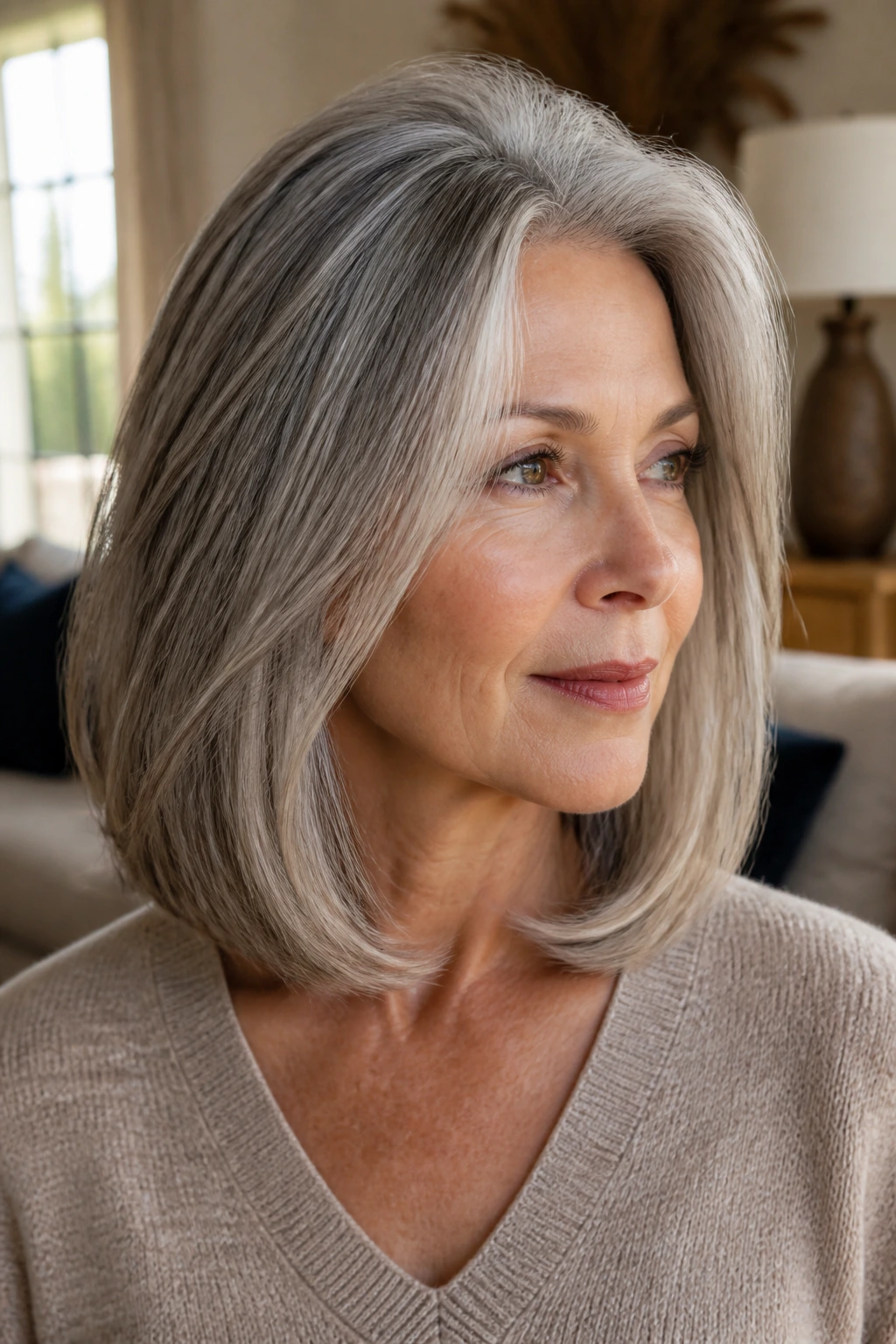
Root Lift: Start volume at the crown, not the ends. If the base is flat, the whole haircut reads tired.
End Direction: Decide whether you want the ends to curl under, bend out, or stay blunt. Mixed signals at the bottom make the cut look accidental.
Face Framing: Focus styling on the front two inches near the face. That’s where the eye goes first, and it’s where a little polish goes farthest.
Gray Hair Finish: Use less product than you think. Silver and white strands show buildup fast, and buildup kills shine.
Common Mistakes That Make a Lob Age Fast
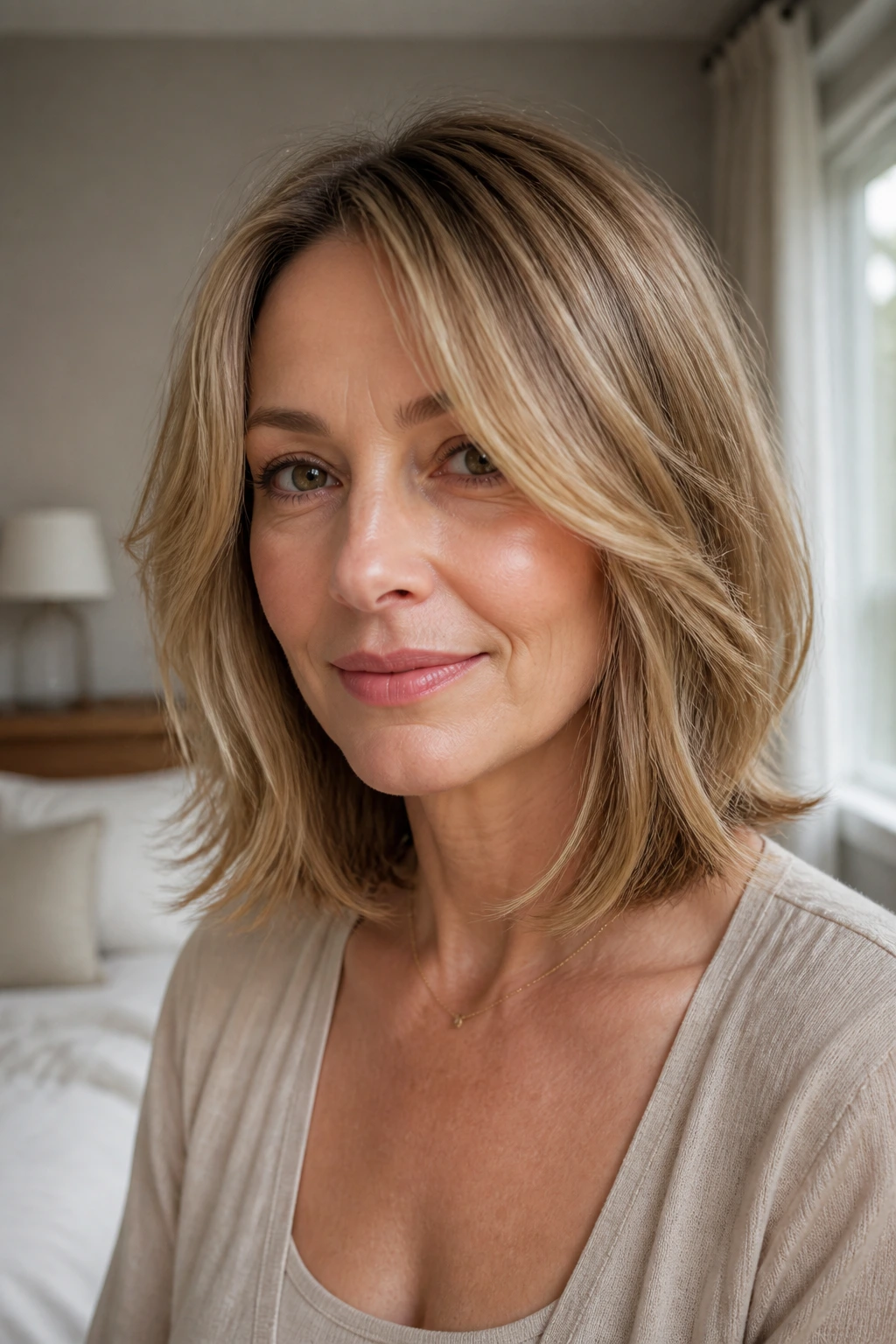
The first mistake is cutting the layers too high. You get movement for a week, then the shape starts floating away from the head and turning fluffy at the sides. Keep most of the weight in the lower half of the haircut unless your hair is very thick and needs removal.
The second is letting the neckline get shaggy for too long. A lob needs a clean perimeter. Once the ends start fraying or flipping in odd directions, the whole haircut loses its crispness. That’s why regular trims matter more with this shape than with a longer, more forgiving cut.
A third mistake is using too much product on fine or gray hair. Heavy cream, oil, or serum can sit on top of the strands and make the cut look dull. Start with a small amount. Seriously. You can always add more.
Variations and Alternatives to Try
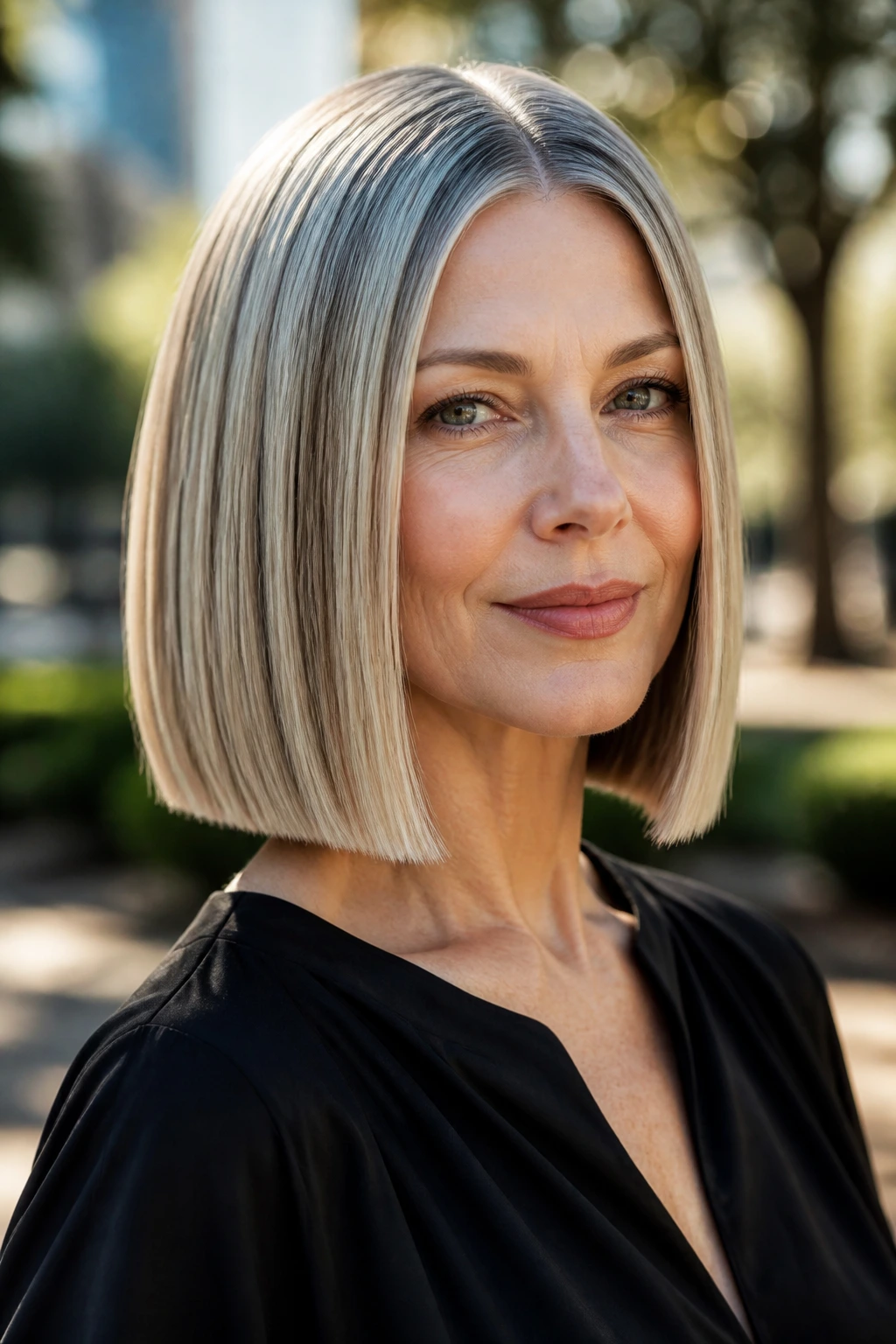
The Glass-Polished Lob: Keep the line blunt, the part centered, and the finish smooth for a sharper, more formal look.
The Soft Air-Dry Lob: Ask for gentle layers and shape the front so it dries into a natural bend with almost no heat.
The Gray-Blend Lob: Pair a clean cut with subtle highlights or babylights if you want to soften the grow-out between salon visits.
The Textured Curly Lob: Let the curl pattern lead and cut the shape dry so the final length lands where you actually want it.
Make the Most of Your Lob at Home
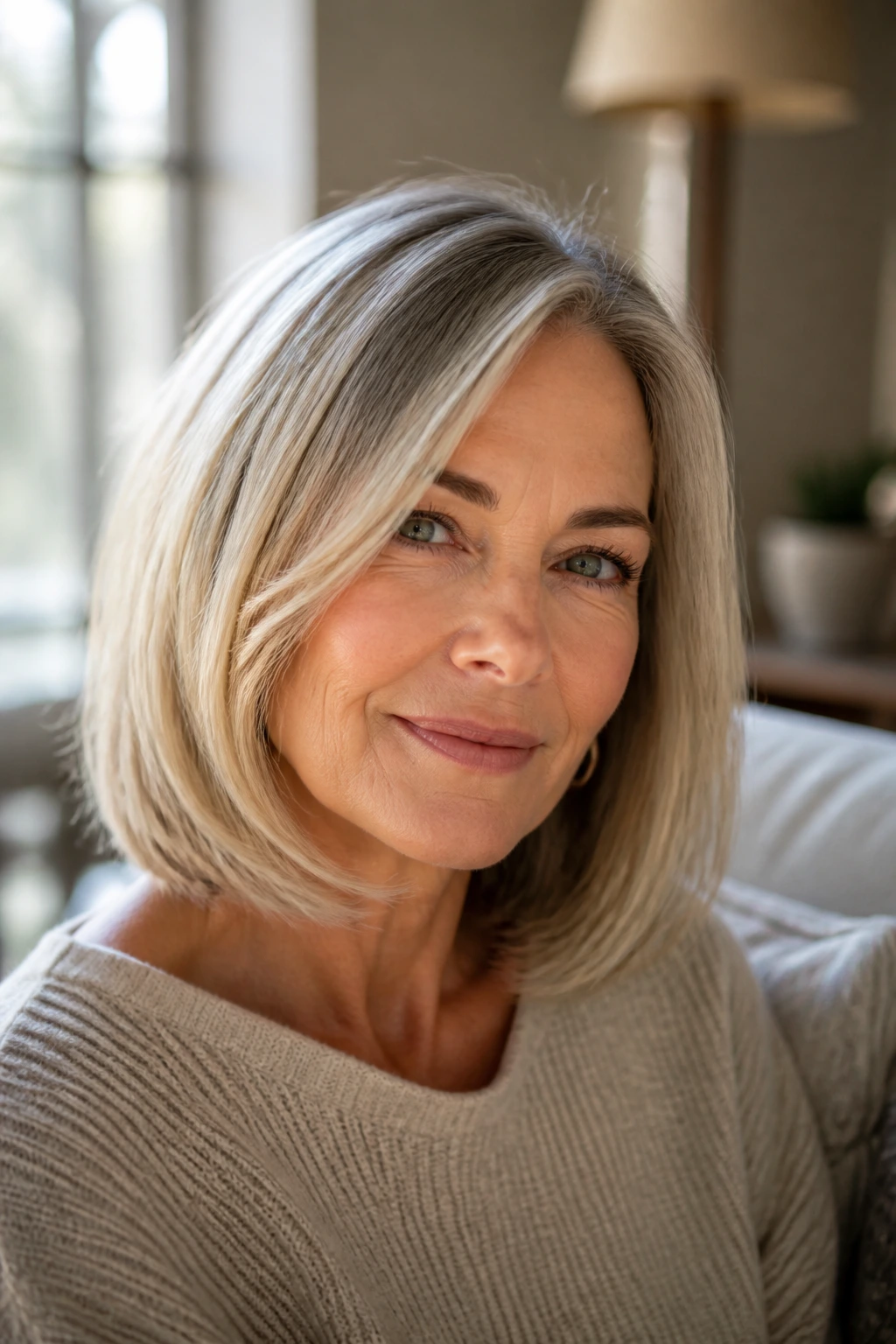
Flavor Enhancement: A little shine spray on the ends can wake up a dull lob fast, especially on gray or silver hair that has gone matte.
Customization: If your face feels too open, add curtain bangs or a longer side-swept fringe. If your hair feels heavy, add internal layers rather than cutting the whole perimeter shorter.
Serving Suggestions: Okay, not serving in the food sense — but the style looks especially good with earrings that reach just below the jawline, a soft collar, or a neckline that doesn’t fight with the hair.
How to Keep a Lob Looking Fresh Between Salon Visits
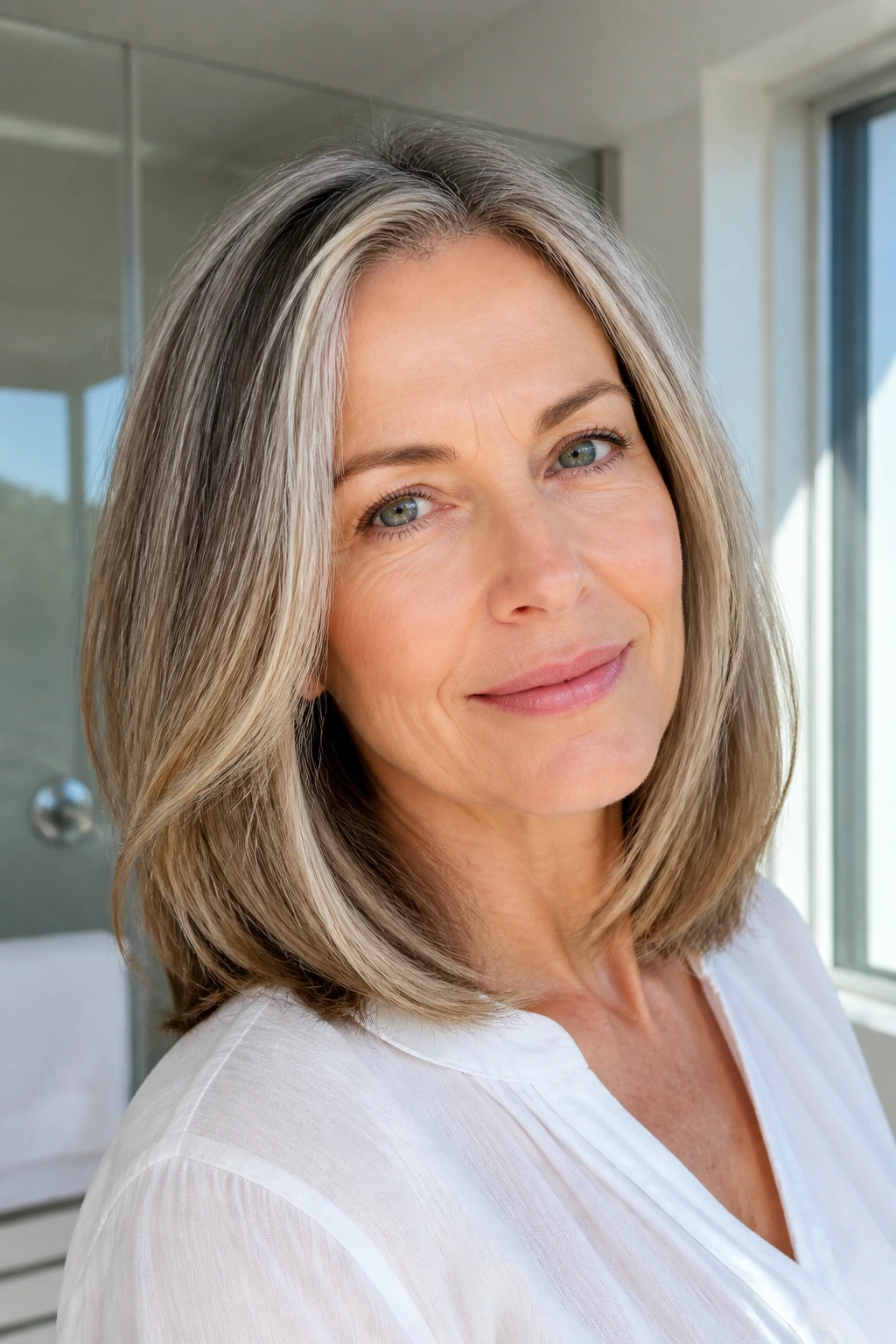
A lob holds its shape best with trims every 6 to 8 weeks. If the cut is blunt and precise, I would not push that much longer. The ends show wear quickly. If you wear a textured lob with soft layers, you can sometimes stretch that a bit, but the neckline still needs attention before it starts looking fuzzy.
At home, use a clarifying wash every couple of weeks if your hair gets coated with serum or spray. Product buildup is sneaky. It makes the hair look flatter at the root and duller at the ends. For heat styling, keep the iron on the lower side unless your hair is coarse and resistant. A medium setting usually does the job without baking the cut into straw.
Frequently Asked Questions
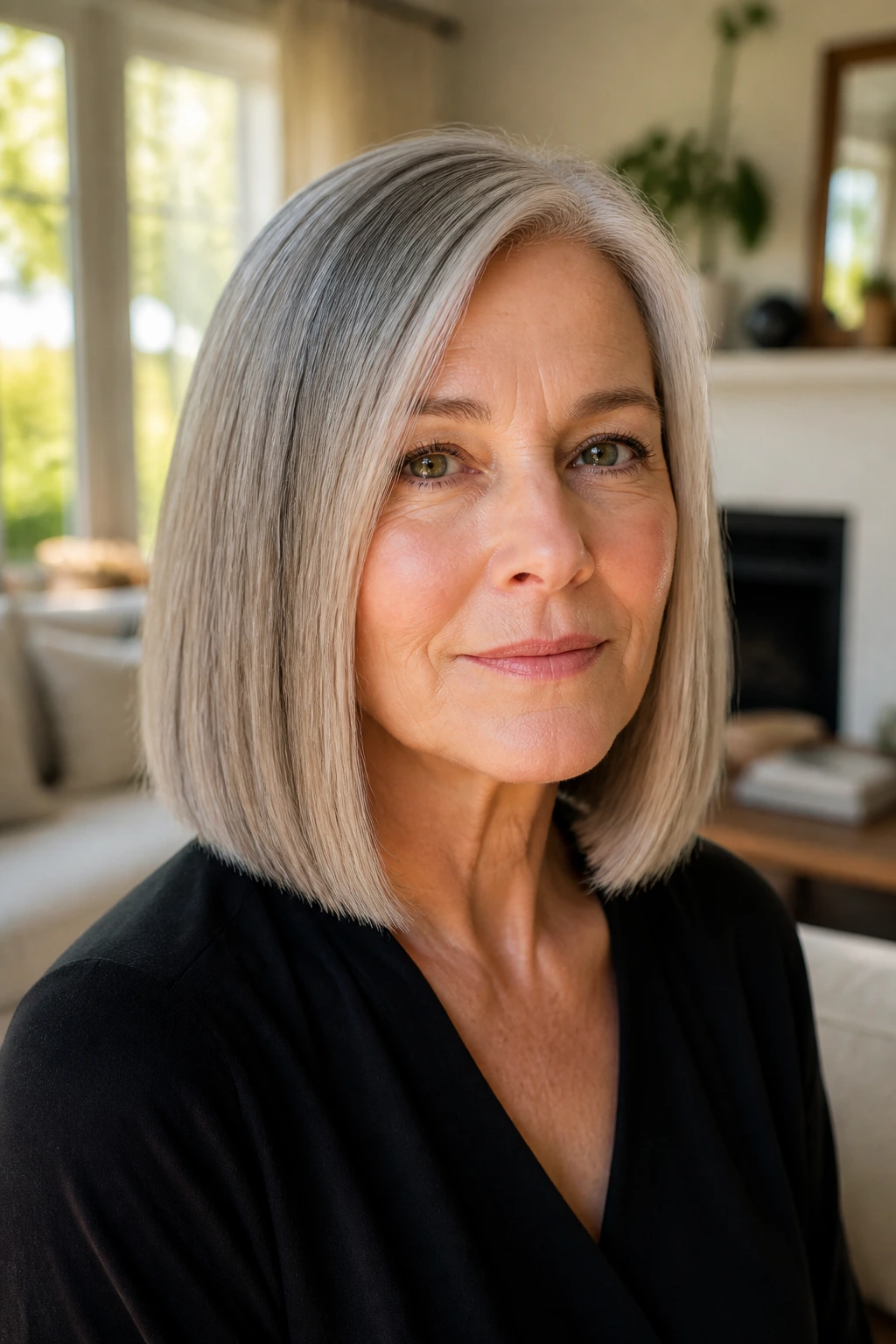
Is a lob good for fine hair on older women?
Yes, if the cut keeps enough weight at the ends. A blunt or softly layered lob usually gives fine hair more body than a long style with wispy ends.
Should a lob be blunt or layered?
If your hair is fine, blunt often wins. If it’s thick, wavy, or heavy around the sides, soft layers can keep the shape from puffing out.
Do bangs work with a long bob?
They do, but the right bang matters. Curtain bangs, bottleneck bangs, and side-swept fringe usually grow out more gracefully than a short blunt fringe.
What face shape suits a lob best?
Most face shapes can wear one. The real question is where the lob lands and how the front pieces are cut. A jaw-skimming angle flatters differently than a collarbone-length blunt line.
How often should I trim a lob?
Every 6 to 8 weeks is a safe range if you want the shape to stay clean. If the ends start to split or flip strangely before then, book sooner.
Can gray hair wear a lob without looking harsh?
Yes. In fact, gray hair often looks excellent in a lob because the cut line shows up so clearly. Soft texture or subtle layers can keep it from feeling severe.
What if my lob flips out at the ends?
That usually means the cut is sitting right on a shoulder or the weight line is too blunt for your texture. A stylist can adjust the length by even half an inch and change the behavior a lot.
Can I wear a lob curly one day and smooth the next?
Absolutely. That’s one of the cut’s best traits. Just make sure the shape works in both states, because a lob that only looks good blown out is a nuisance in disguise.
Why This Cut Keeps Its Place

The long bob keeps showing up because it is useful before it is fashionable. It gives mature hair a shape that holds, a length that still feels like hair, and enough flexibility to work with texture instead of fighting it. That combination is harder to find than people admit.
Pick the version that matches your hair’s habits, not just the photo on your screen. A good lob should make your morning easier, your profile cleaner, and your hair feel like it belongs to you again.
