



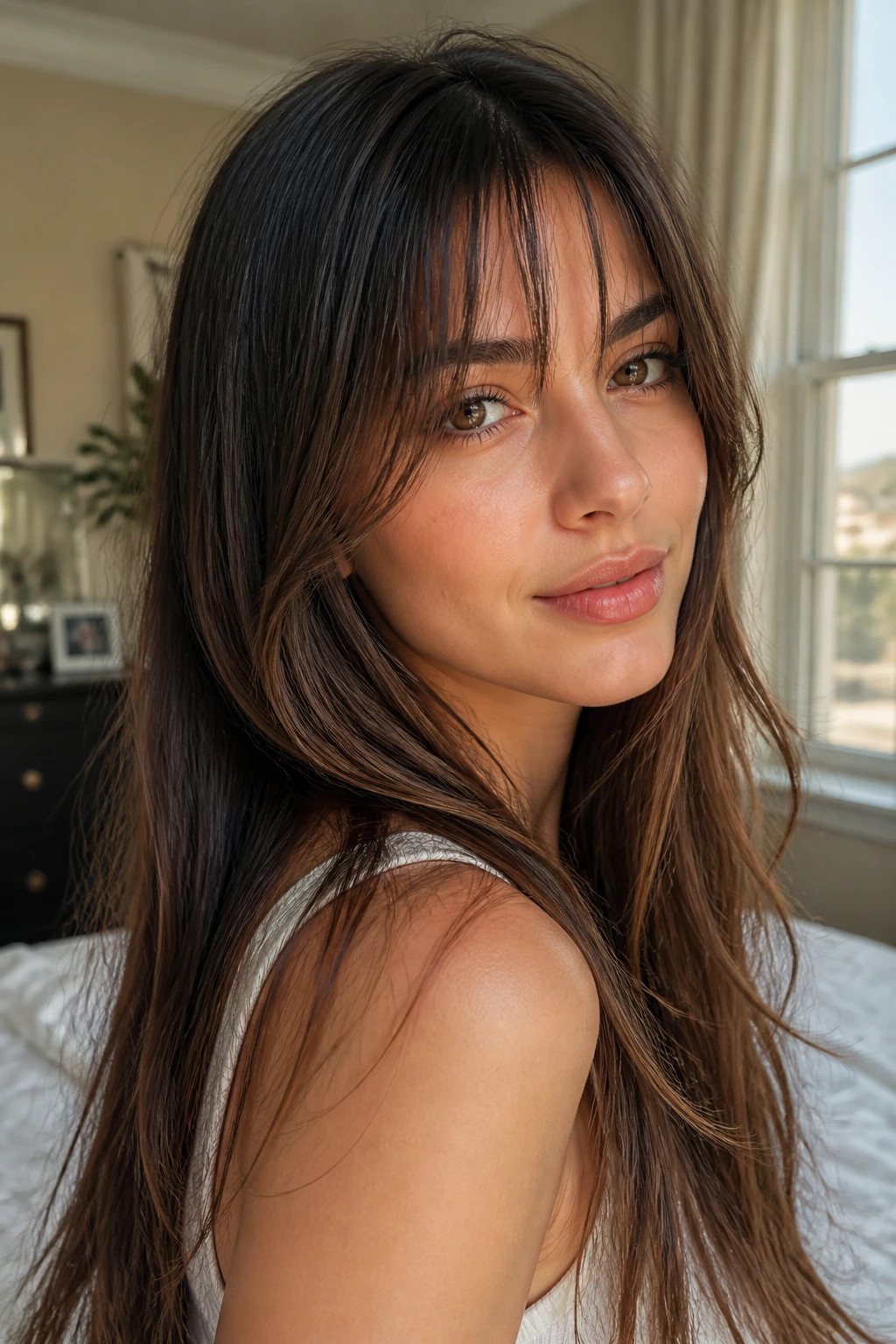
Long hair can go flat around the face in a way that makes even a fresh cut look oddly heavy. That is exactly where subtle face-framing bangs for long hair earn their keep: they change the front line, loosen the silhouette, and leave the length alone.
I like this category because it solves a very specific problem. You want movement near the eyes, cheekbones, and jaw, but you do not want the full commitment of blunt bangs that need daily babysitting and a prayer the minute humidity shows up.
The sweet spot is small. A half-inch here, a cheekbone-length piece there, a softer edge instead of a hard shelf. That tiny shift can make a long cut look lighter, more awake, and a lot less curtain-like around the face. The styles below move from barely-there fringe to longer, more blended front pieces, and each one has a different personality. Some are easygoing. Some are polished. A few are sneaky. All of them keep the length in play.
Why These Bangs Make Long Hair Feel Lighter
-
You keep the length people notice first: Most of these cuts keep the front pieces long enough to tuck behind the ear, so the change reads as shape, not sacrifice.
-
The grow-out is kinder: A soft fringe that starts at brow, cheekbone, or lip level tends to blur into layers instead of forming a sharp shelf two weeks later.
-
They work with ponytails and clips: When the front is cut in a gentle arc or split shape, it still looks intentional pulled back, which is more useful than a heavy fringe that fights every updo.
-
Texture gets room to breathe: Wavy and curly hair often looks better with a little opening around the face than with one blunt line across the forehead.
-
They can fix heavy long layers: If the back of your hair is all length and little else, a face frame gives the whole cut a front edge without changing the overall shape.
-
The styling window is manageable: Most of these cuts settle into place with a round brush, a small flat iron, or even a quick dry-shampoo refresh instead of a full salon blowout every morning.
1. Soft Curtain Fringe
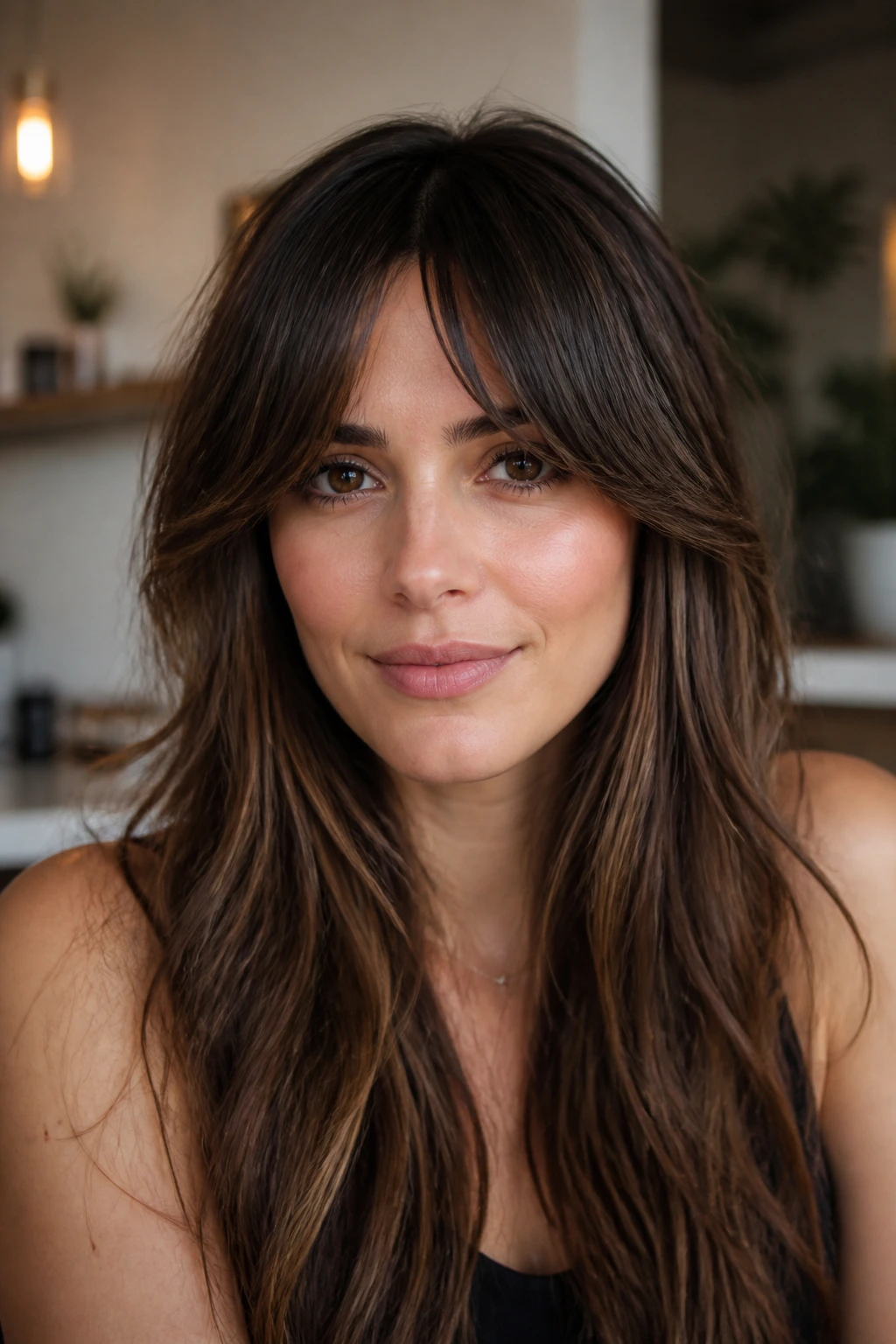
A soft curtain fringe is the safest place to start if you want something noticeable but not dramatic. The center usually splits near the bridge of the nose or just above it, while the sides taper toward the cheekbone. On long hair, that little opening in the middle stops the front from feeling heavy.
Why it works
This shape works because it gives your eyes a clear path up the middle and keeps the longest pieces connected to the rest of the haircut. The front doesn’t sit like a lid. It falls away from the face in a soft V, which makes it look relaxed even when the rest of the hair is straight and polished.
A few details that matter
- Ask for the shortest point to land around the brow or just under it.
- Keep the side pieces long enough to brush the cheekbone.
- If your hair bends easily, ask for a dry cut or a cut on mostly dry hair.
- Blow-dry the center piece forward first, then split it with fingers.
My blunt opinion: if you want a fringe that still behaves on day three, start here. It is the least fussy version of bangs that still looks like a real haircut.
2. Bottleneck Bangs
Bottleneck bangs are narrower in the middle and wider at the sides, which gives them a shape that feels tailored instead of heavy. The center is short enough to frame the eyes, but the outer pieces open up around the temples and cheeks. On long hair, that shape keeps the front from looking dense.
The reason people keep coming back to this cut is simple: it gives structure without turning into a wall of hair. The forehead gets a little coverage, the cheekbones get some attention, and the whole front line feels tucked in rather than chopped off. Thick hair especially likes this shape because the stylist can remove bulk where it matters instead of thinning the whole bang section into dust.
If your hair is broad at the forehead or fuller around the temples, this is one of the cleanest solutions. The curve creates a narrower center and a softer edge, which plays well with long lengths that need a bit of movement near the face. A round brush and a light bend at the ends are usually enough. No need to overwork it.
3. Cheekbone-Skimming Side Bangs
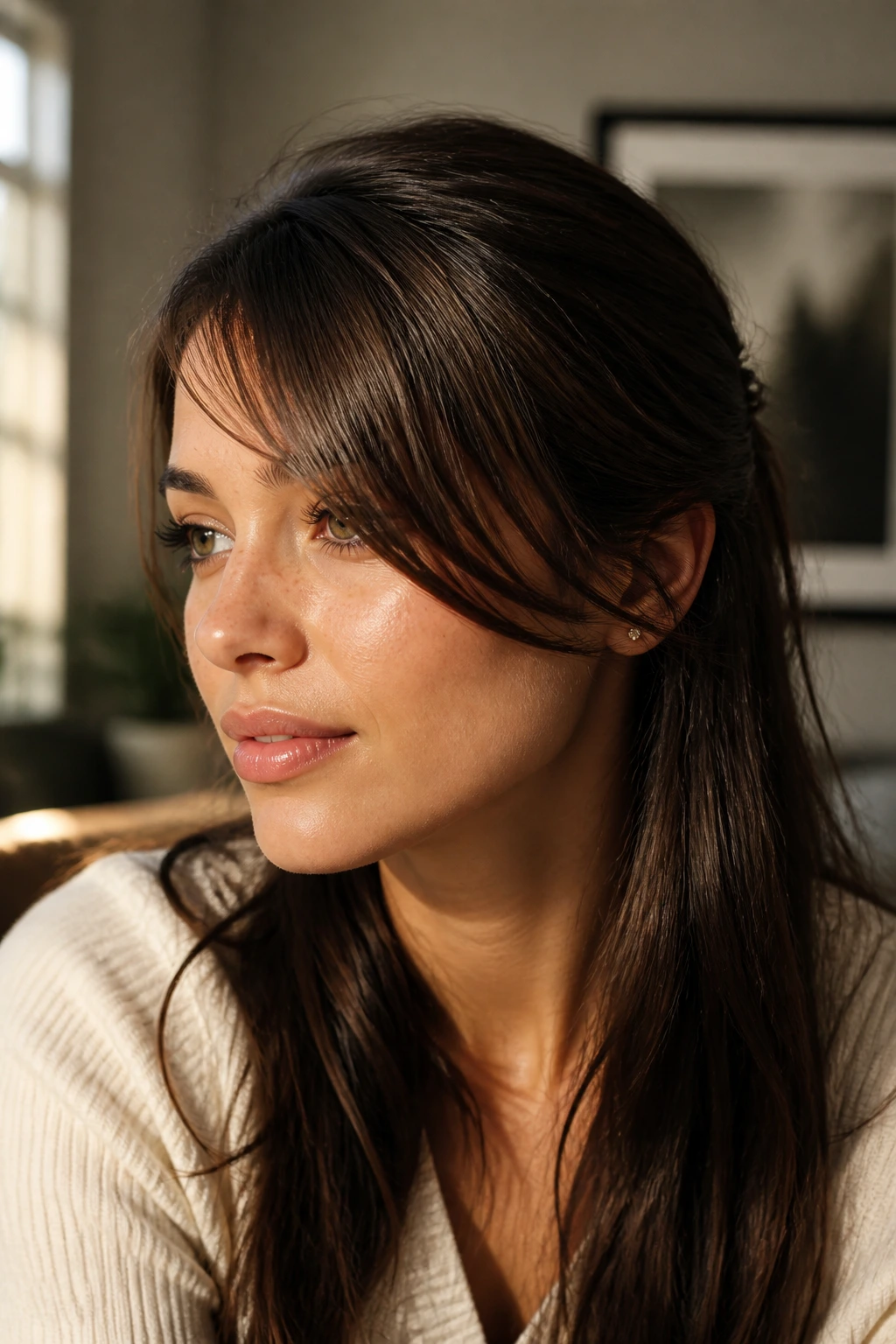
Side bangs still work, but only when they are cut with enough length to move instead of flip. The best version starts at a deep side part and sweeps across the forehead, ending around the cheekbone rather than above the eyebrow. That extra length keeps them from looking dated or overly stiff.
Why does this style still matter? Because a deep side sweep can solve a rough hairline, a stubborn cowlick, or a forehead you do not want to cover completely. It also looks good with tucked hair, half-up styles, and loose buns, which is part of the reason I still see it on people who don’t want to fuss all morning.
How to ask for it
- Keep the shortest front piece at eyebrow-to-brow-bone length.
- Let the longest piece land near the top of the cheekbone.
- Cut it so it can blend into long layers when tucked back.
- If your part is fixed, tell the stylist where your hair naturally falls.
This one is less about drama and more about control. A clean sweep can soften a whole haircut fast.
4. Wispy Brow-Grazing Fringe
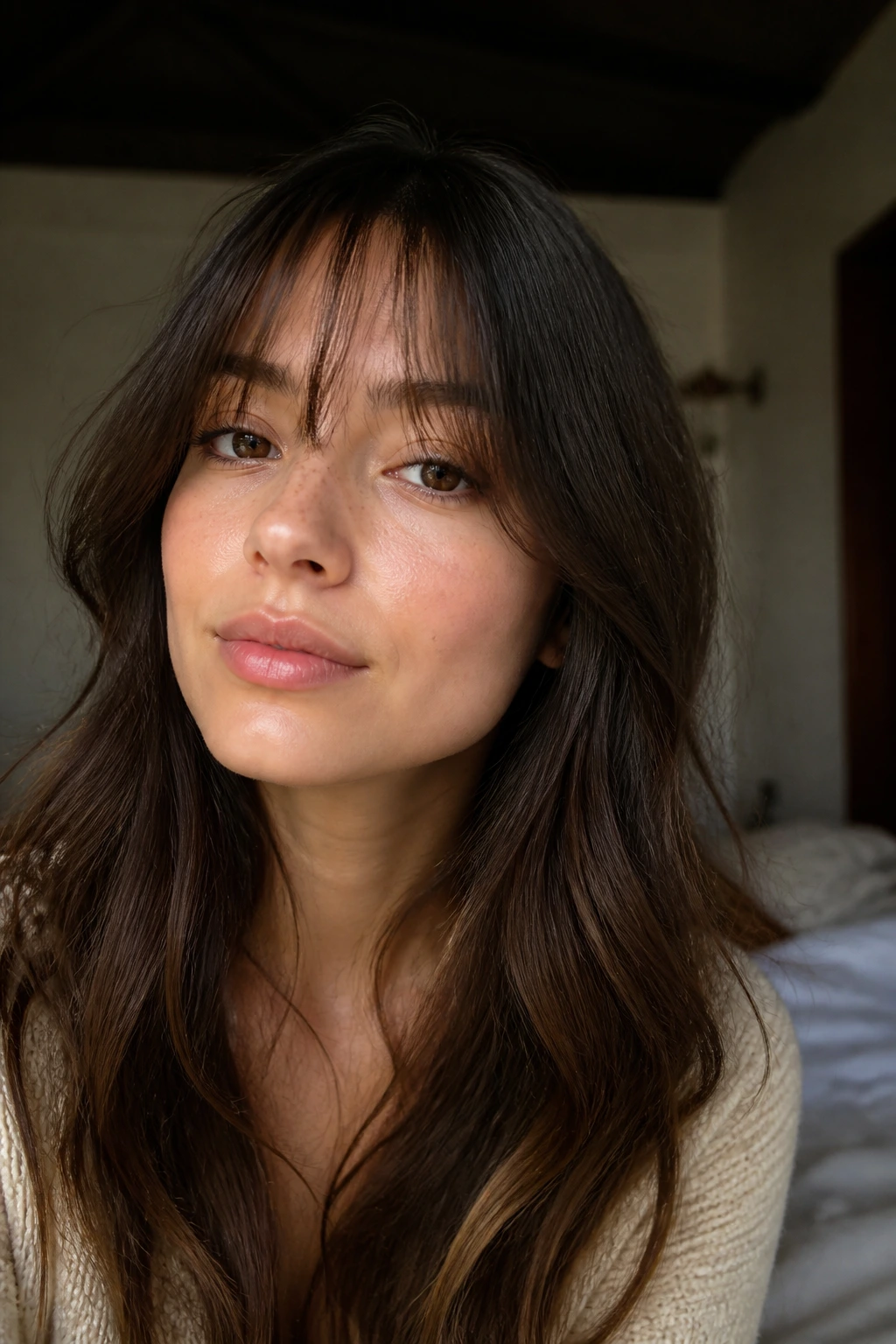
A wispy brow-grazing fringe is the lightest touch on this list. The pieces sit right around the brow line, but they are cut thin enough that you can still see a bit of forehead through them. Done well, it feels airy, not sparse.
That balance matters. If the fringe is too thin, it looks accidental. If it is too dense, it stops feeling subtle and starts behaving like a full bang. The trick is to remove enough weight for movement while keeping the outline soft and visible. Point cutting helps here; so does leaving a few slightly longer pieces in the middle so the fringe doesn’t turn into one straight strip.
This cut flatters fine hair when the front is dense enough to stay visible but not so heavy that it falls flat in a flat, greasy sheet by noon. It also works on long hair that needs a little face detail without losing that clean length through the back. Use a tiny round brush and a quick lift at the roots. Too much serum kills the shape.
5. Long Arc Bangs
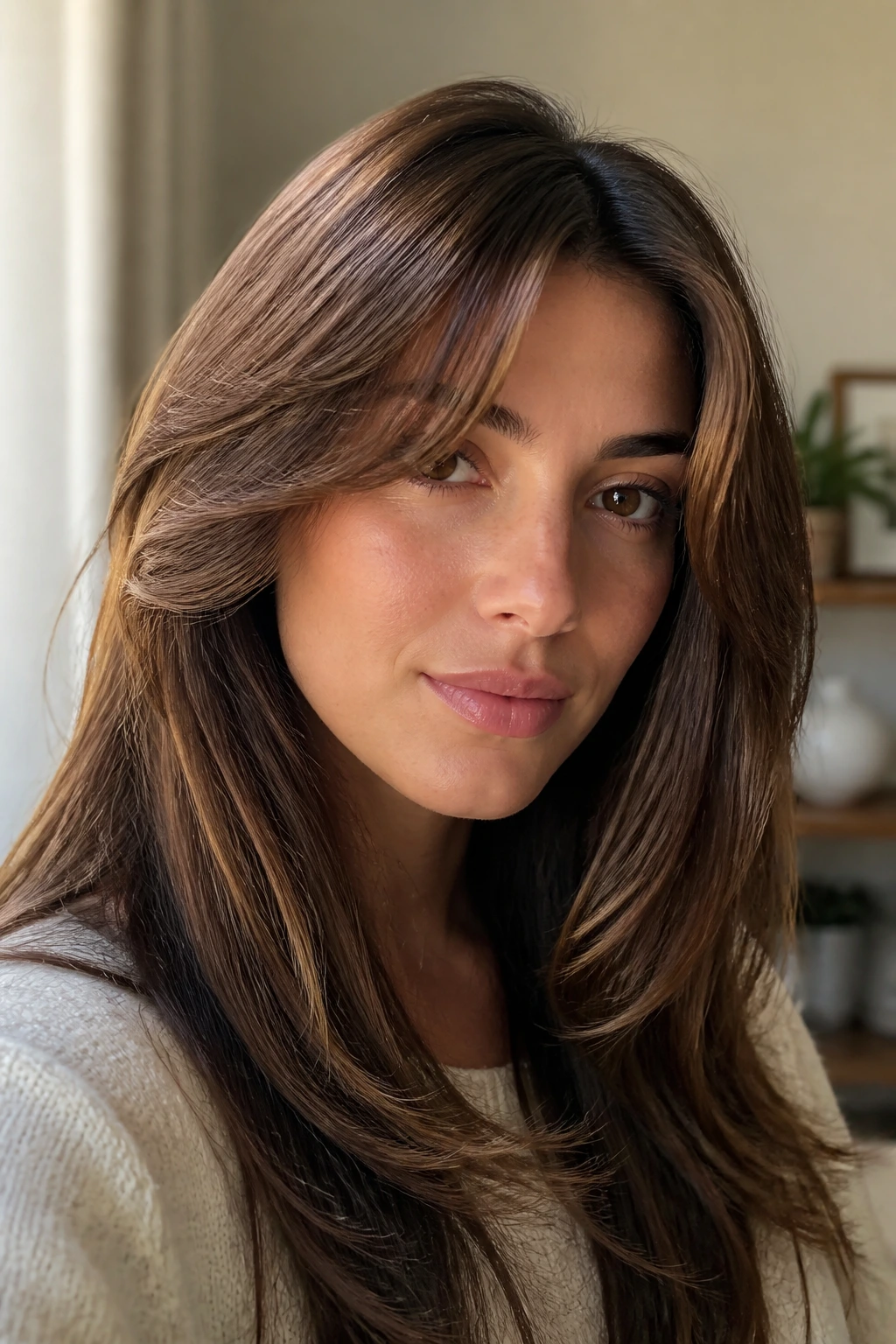
Long arc bangs follow a gentle curve from temple to temple, with the highest point sitting around the center of the forehead and the sides dropping down toward the cheekbones. The result feels rounded and soft instead of blunt or blocky. That arc is what keeps long hair from looking severed at the front.
I prefer this shape on people who want to soften a strong forehead or bring a little balance to long, straight hair. Straight lengths can be beautiful, but they can also drag the face downward if the front has no lift. A long arc gives that lift without making the haircut obvious from across the room.
It looks best when the ends are feathered, not sliced cleanly. Ask your stylist to connect the bang section to the first layer on the side so the cut slides into the rest of the hair. If you want a polished finish, a round brush and a cool shot work better than hot air alone. The cool shot locks in the curve.
6. Piecey Swoop Bangs
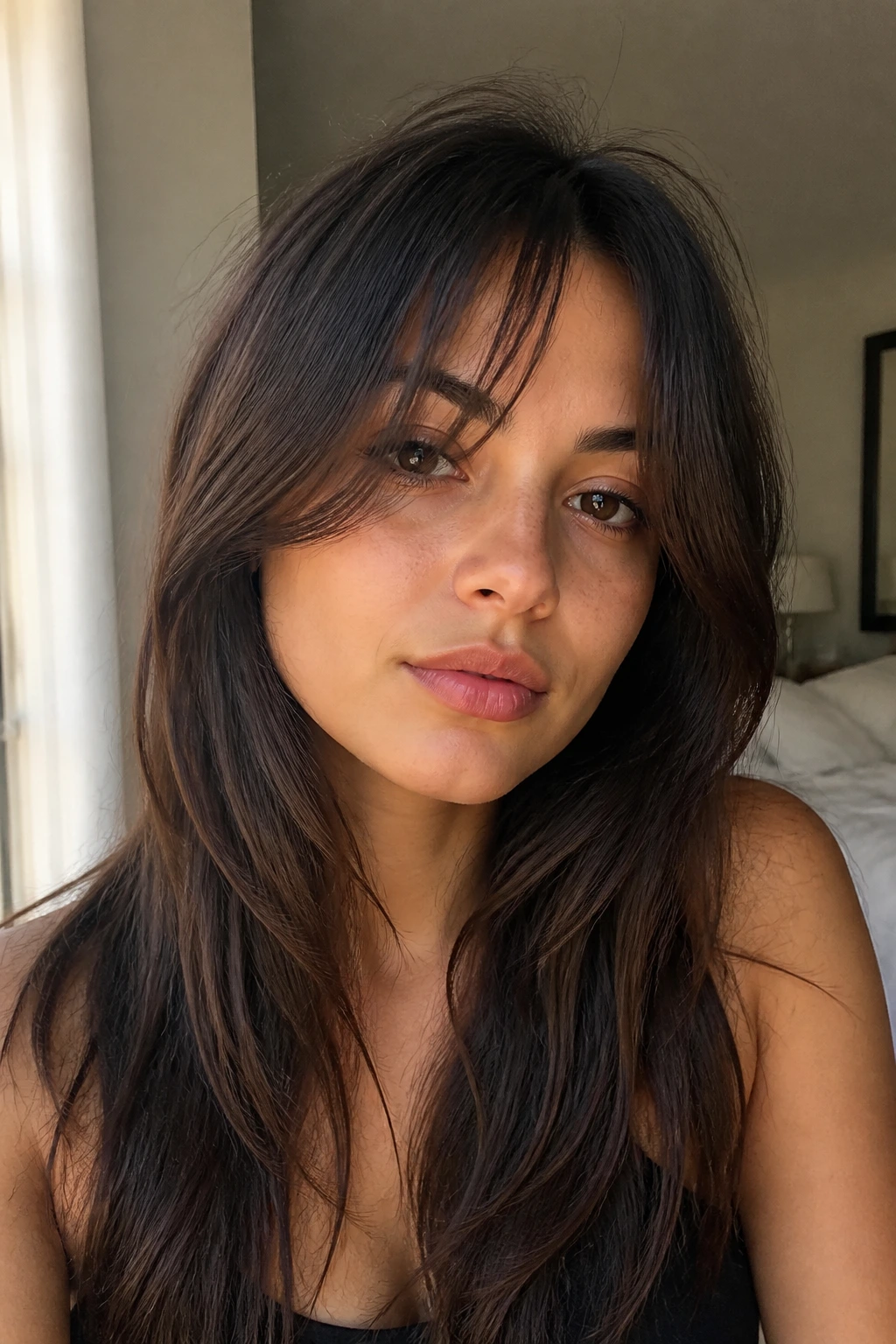
Piecey swoop bangs are for people who like a little texture around the face, not one smooth curtain. Instead of one continuous line, the fringe is separated into smaller sections that move across the forehead with a slightly undone bend. It feels lighter because the eye can read the gaps between pieces.
Unlike a soft curtain fringe, this version leans into separation. That can be a blessing if your hair is naturally wavy or if your front pieces like to split on their own anyway. It also means you can wear it with a bit of lift at the roots and let the ends fall where they want. That relaxed shape is the whole point.
Best way to wear it
- Use a small amount of mousse or light styling cream.
- Dry the roots side to side before settling the part.
- Twist a few front pieces around your fingers while they are warm.
- Finish with a flexible spray, not a crunchy one.
It is a good choice if you want movement that looks casual instead of overdone. The texture does the talking.
7. Collarbone Face Frame
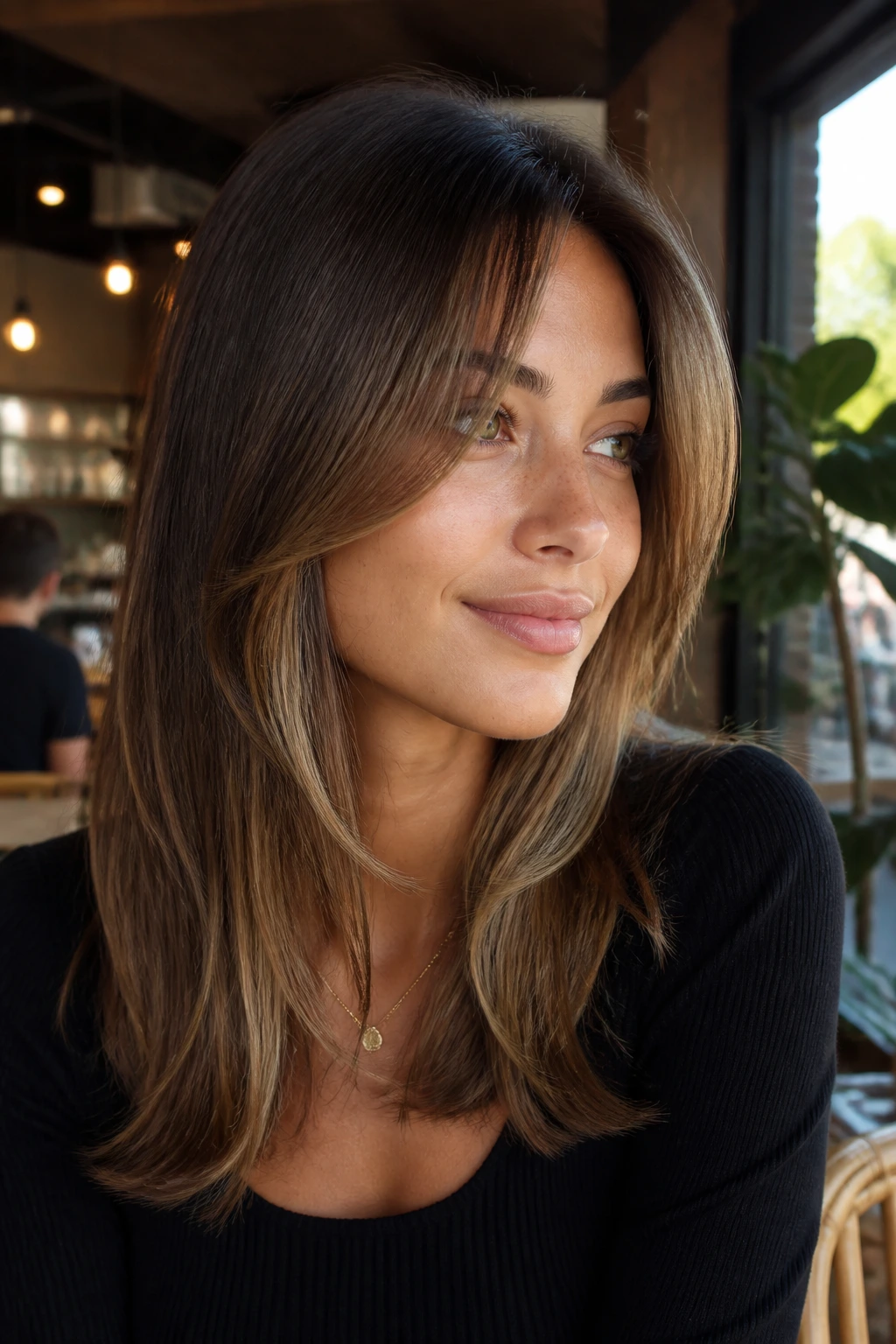
This one is technically more face framing than bang, but it belongs here because it does the same job with even less commitment. The shortest front pieces start around the chin or jaw and stretch down toward the collarbone, melting into long layers. You get movement around the face without anything sitting on the forehead.
That makes it a smart pick if you keep your hair pulled back a lot or if bangs have annoyed you in the past. The front still changes the shape of the haircut, but it never gets trapped in the wrong direction when you clip the hair up. It is also forgiving on fine hair, because the front pieces do not have to be heavily thinned to avoid bulk.
The catch is that it only reads as subtle if the layers are blended well. If the front is cut too bluntly, it can look like two disconnected pieces hanging on either side of the face. Ask for a soft connection from the cheekbone down to the collarbone. That little slope is what makes it feel expensive rather than accidental.
8. Blended Layered Bangs
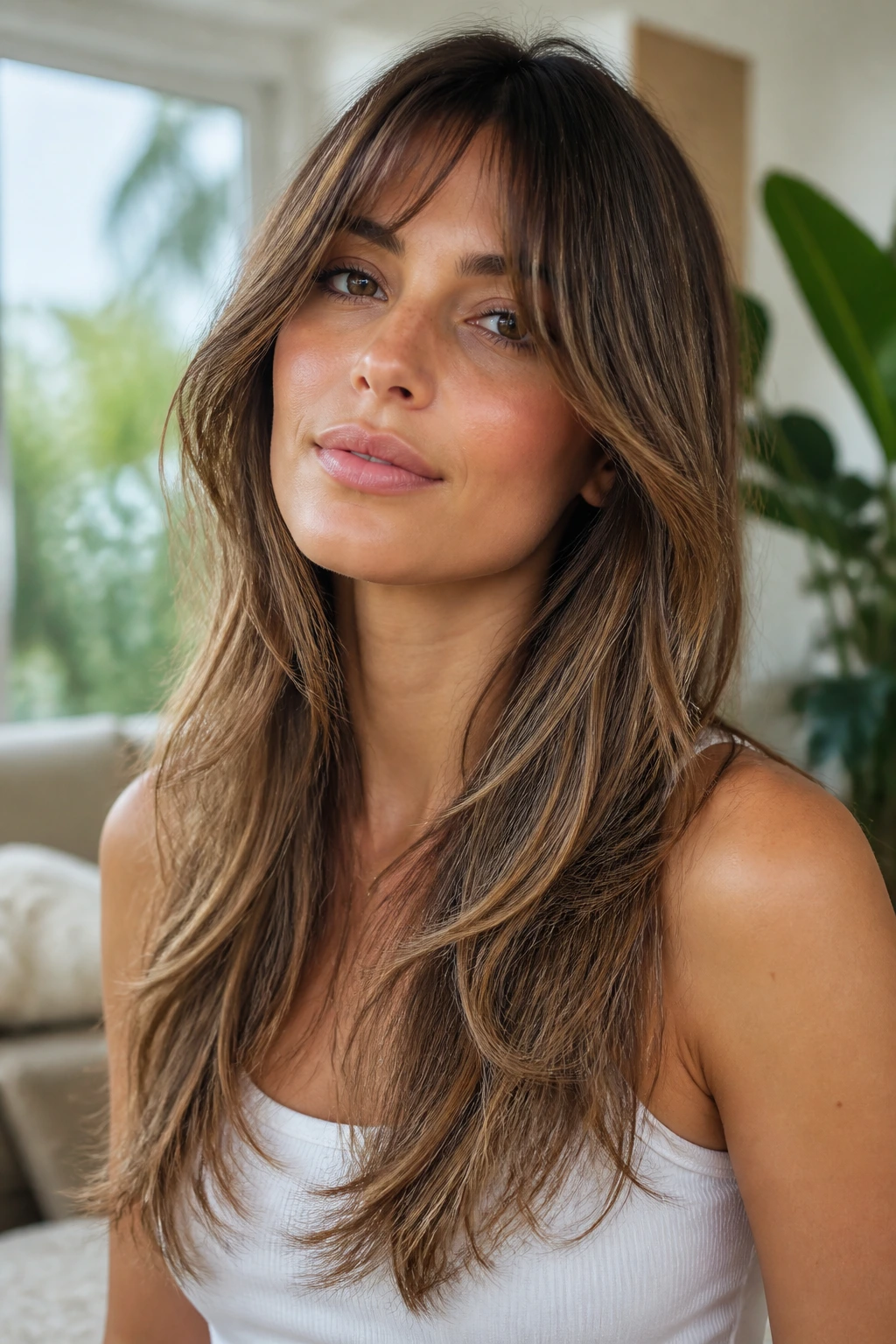
Blended layered bangs are what happens when the fringe disappears into the haircut instead of shouting for attention. The front pieces are cut so they start as bangs and end as long layers without an obvious border. You see movement. You do not see a line.
This is one of the best choices for thick long hair, because the weight can be spread across the front instead of sitting in one dense rectangle. A stylist may use point cutting or slide cutting to soften the edges and remove bulk from the inside of the section. That gives the front a lived-in shape without leaving it ragged.
The style also ages well between trims. Even when it grows, it tends to look like part of the haircut rather than an awkward phase. If you want the front to feel more expensive and less obvious, this is a strong bet. It is the kind of cut people notice without being able to name exactly why.
9. Shaggy Face Curtains
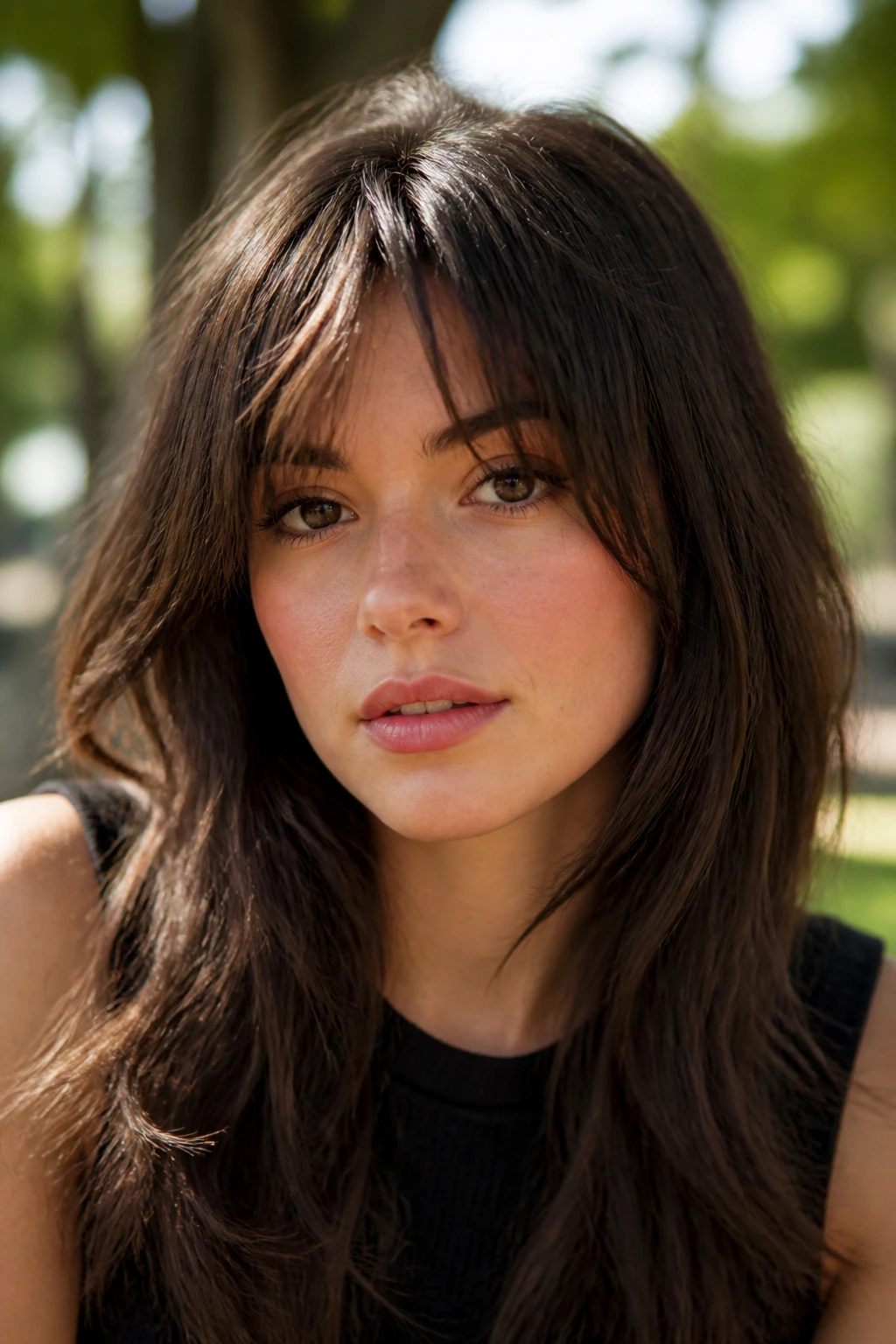
Shaggy face curtains have a softer, choppier edge than classic curtain bangs. The center still parts, but the ends are broken up a little, which keeps the shape from getting too tidy. On wavy hair, that texture can be lovely. On straight hair, it gives the front some grit.
Why does it work on long hair? Because the shag influence keeps the face frame from looking pasted on. The front pieces move independently, which helps a lot if your hair is dense or if the rest of the cut is long and one-length. It gives the haircut some air around the face without taking much off the perimeter.
I like this version for people who air-dry more than they blow-dry. A bit of mousse, a scrunch, and maybe a pass with a diffuser is often enough. If you want the ends to look intentionally broken up rather than frizzy, ask for the fringe to be cut with pointy, chipped ends rather than blunt ones.
10. Soft U-Shaped Fringe
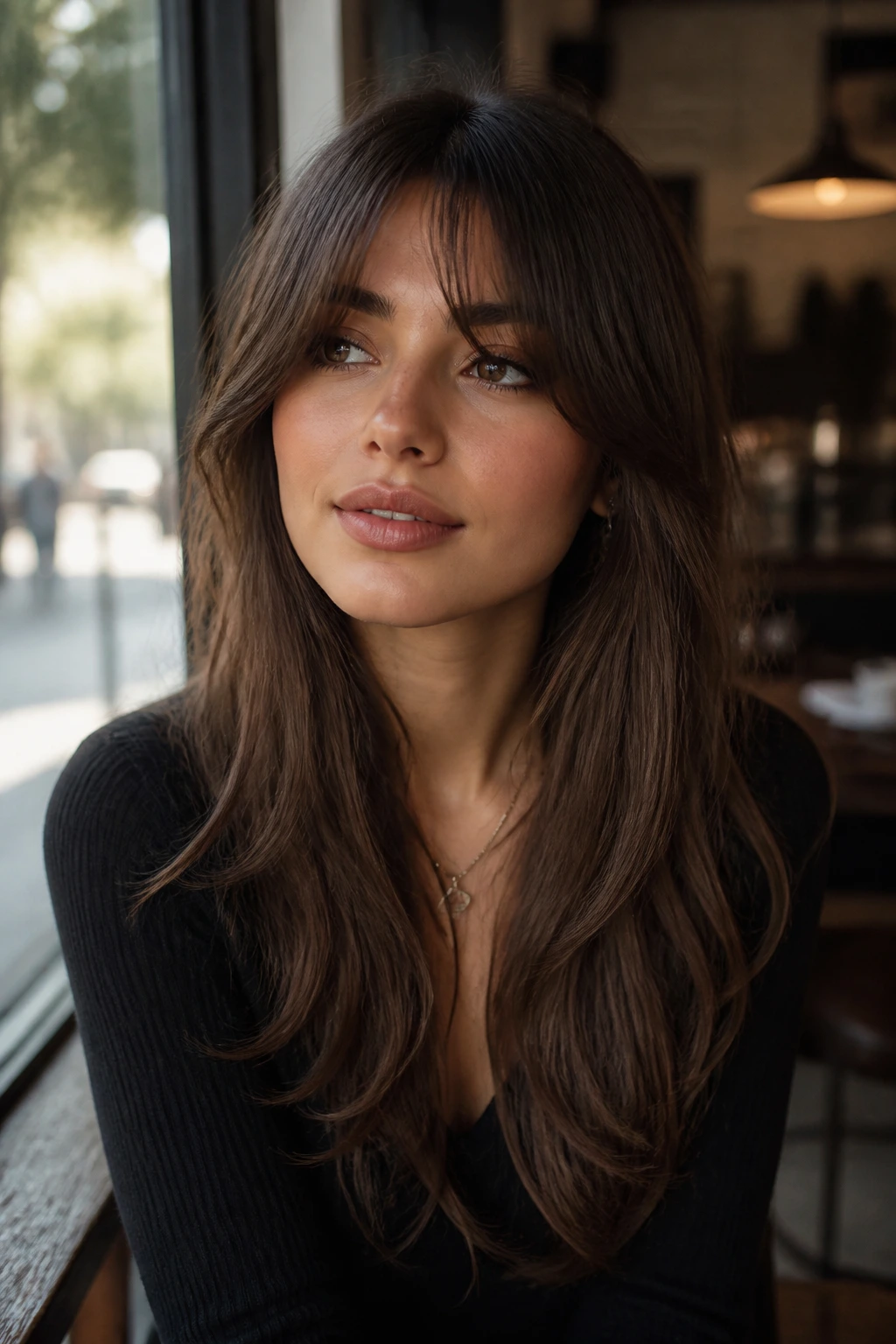
A soft U-shaped fringe sits a little shorter in the middle and drops longer toward the temples, but the curve is gentle rather than dramatic. Think rounded opening, not sharp arch. That shape gives the face a frame while keeping the forehead from feeling crowded.
It’s a particularly useful shape if you want the front to feel friendly around the eyes without losing the long line of the haircut. The center can land at brow level, while the sides taper toward the cheekbone or even just past it. On long hair, that keeps the front pieces visually connected to the rest of the cut.
What to ask your stylist for
- A rounded center that does not sit as a straight shelf.
- Longer sides that blend into the first layer.
- Soft internal texture, not heavy thinning.
- Enough length to wear with a middle part and a slight shift.
The shape looks calm. That is the whole appeal. It does not fight the rest of the hair.
11. Grown-Out Fringe
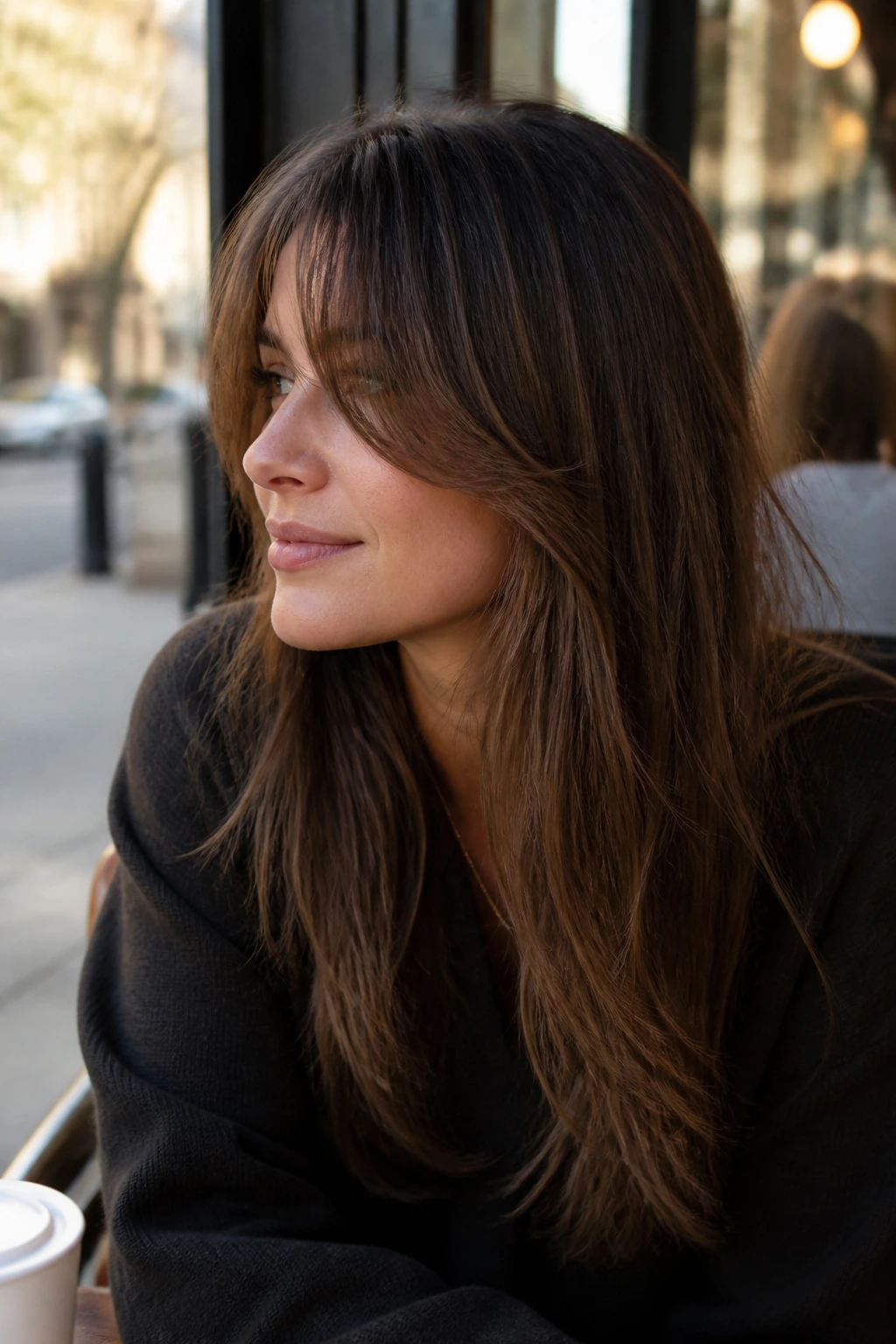
A grown-out fringe is not a mistake pretending to be a style. It is an intentional long fringe cut so it already looks like it has a few weeks of grow-out built in. The shortest pieces hover around the lashes or cheekbones, and the sides melt into the front layers with almost no hard line.
This is the one I reach for when someone says they want bangs but hates maintenance. The payoff is in the movement. The forehead gets softened, the eyes get a little frame, and the haircut never looks trapped if you skip a blowout. You can pin it back, split it down the center, or let it fold into the side layers.
If you are tired of the daily bang battle, this is the honest answer. Ask for a cut that already lives in its second stage. Then you can trim only the shortest pieces when they start grazing your eyes. That is a lot less annoying than trying to keep a blunt fringe in line every morning.
12. Jawline-Taper Bangs
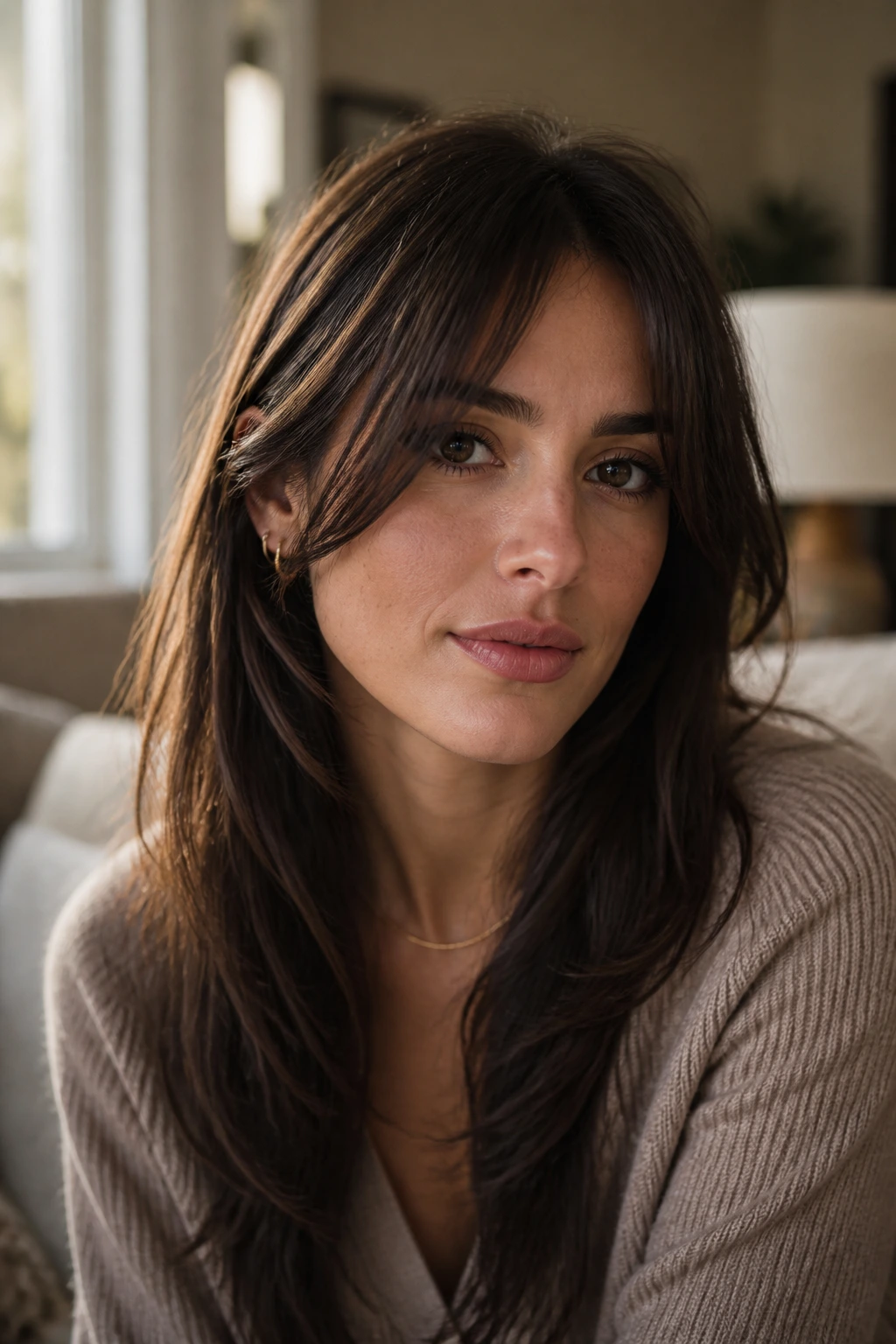
Jawline-taper bangs use the front pieces to guide the eye downward in a soft diagonal. The shortest point usually begins around the cheekbone or just below the brow, and the pieces lengthen until they brush the jawline. That taper can make the face look longer and leaner without going harsh.
It is a useful trick if your long hair feels too heavy around the cheeks. By keeping the front pieces angled, you create movement where the silhouette needs it most. The front no longer just hangs straight down. It starts to travel.
This style works especially well on square or round faces, where the taper can soften the widest point. Keep the ends feathered, though. If the cut is too blunt, the shape turns into a heavy diagonal, which is not the goal. You want a piece that slips, not a blade line across the face.
13. Butterfly Bangs
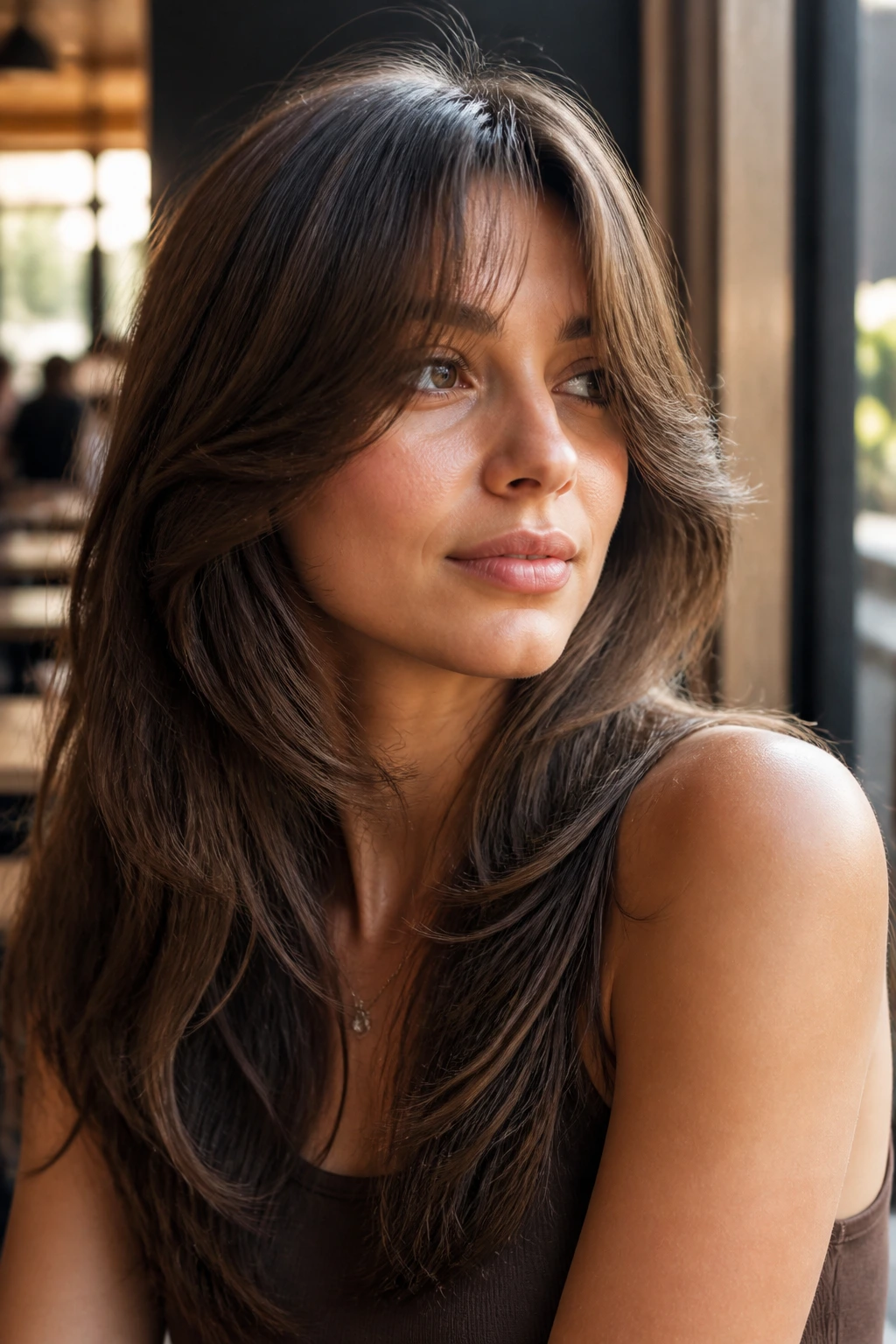
Butterfly bangs borrow the airy, layered feeling of a butterfly haircut and bring it into the front section. The shortest pieces sit around the brow or cheekbone, while longer layers spread out on the sides like wings. The front gets lift, but the length stays soft.
This is a good option when you want volume near the face without giving up the long outline of your hair. It works nicely on blowouts because the bend at the front layers catches the brush and creates movement around the cheeks. The shape can make long hair feel lighter even when the back is still full.
Why it stands out
The middle is not the whole story here. The outer pieces matter just as much, because they keep the fringe from collapsing into a flat strip. Ask for the front to connect into the shortest face layers, then keep the taper soft. The more the cut follows the natural fall of your hair, the more believable it looks.
14. Air-Light Brow Skims
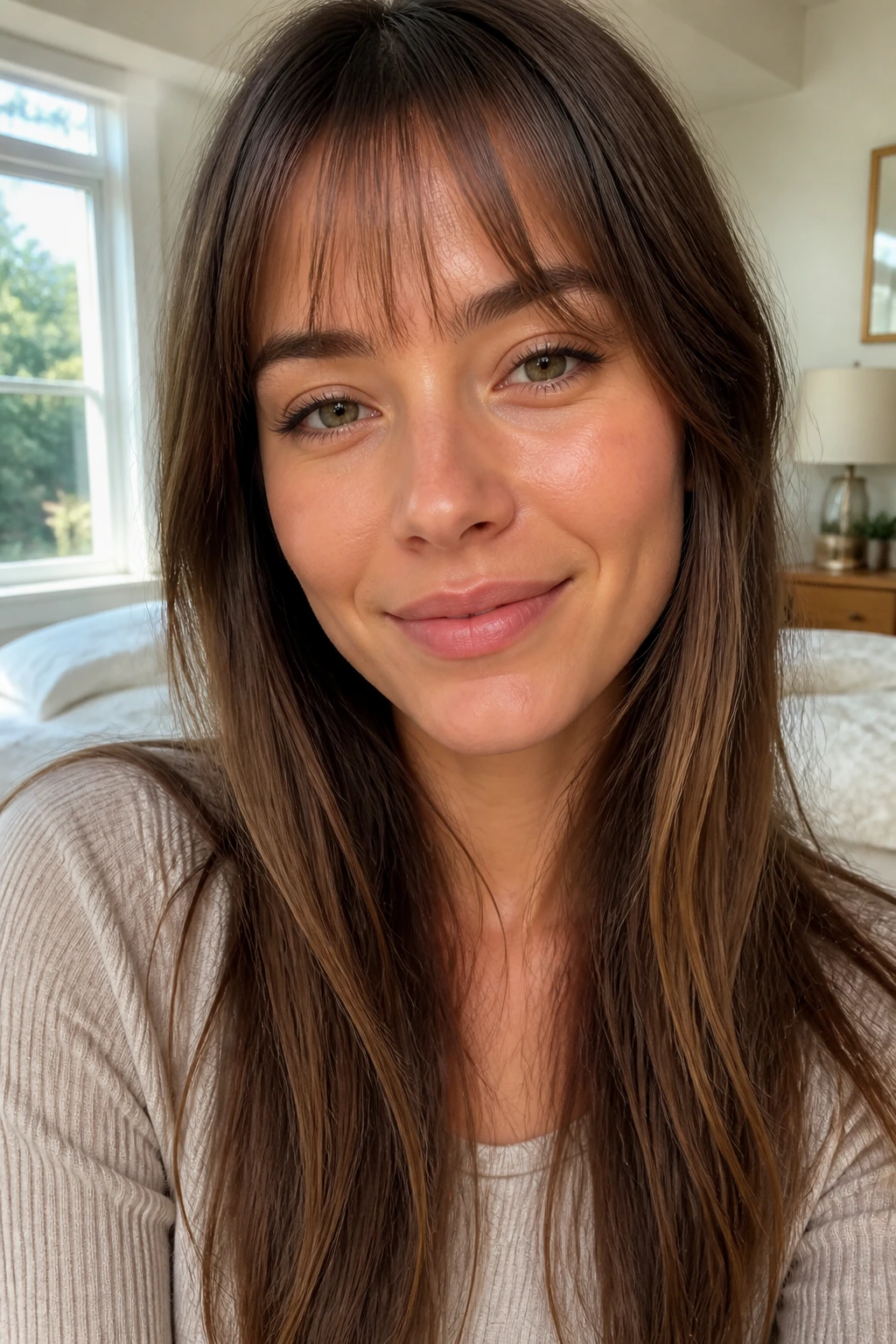
Air-light brow skims are about as delicate as a fringe can get without disappearing. The pieces land around the brow line, but they are sparse enough that you can see the shape of your forehead through them. That gives the front just enough definition to matter.
This works best on fine hair that still has enough density at the front to hold a line. If the hair is too thin, the style can go transparent fast. But when the balance is right, it looks clean and easy. The front brightens the face without crowding it.
I would not over-style this one. A tiny blow-dry brush, a light mist of texturizing spray, and maybe a touch of dry shampoo at the roots is usually enough. Heavy creams weigh it down. Heavy oils make it collapse. Keep the product light and the shape stays neat.
15. Long Arched Bangs
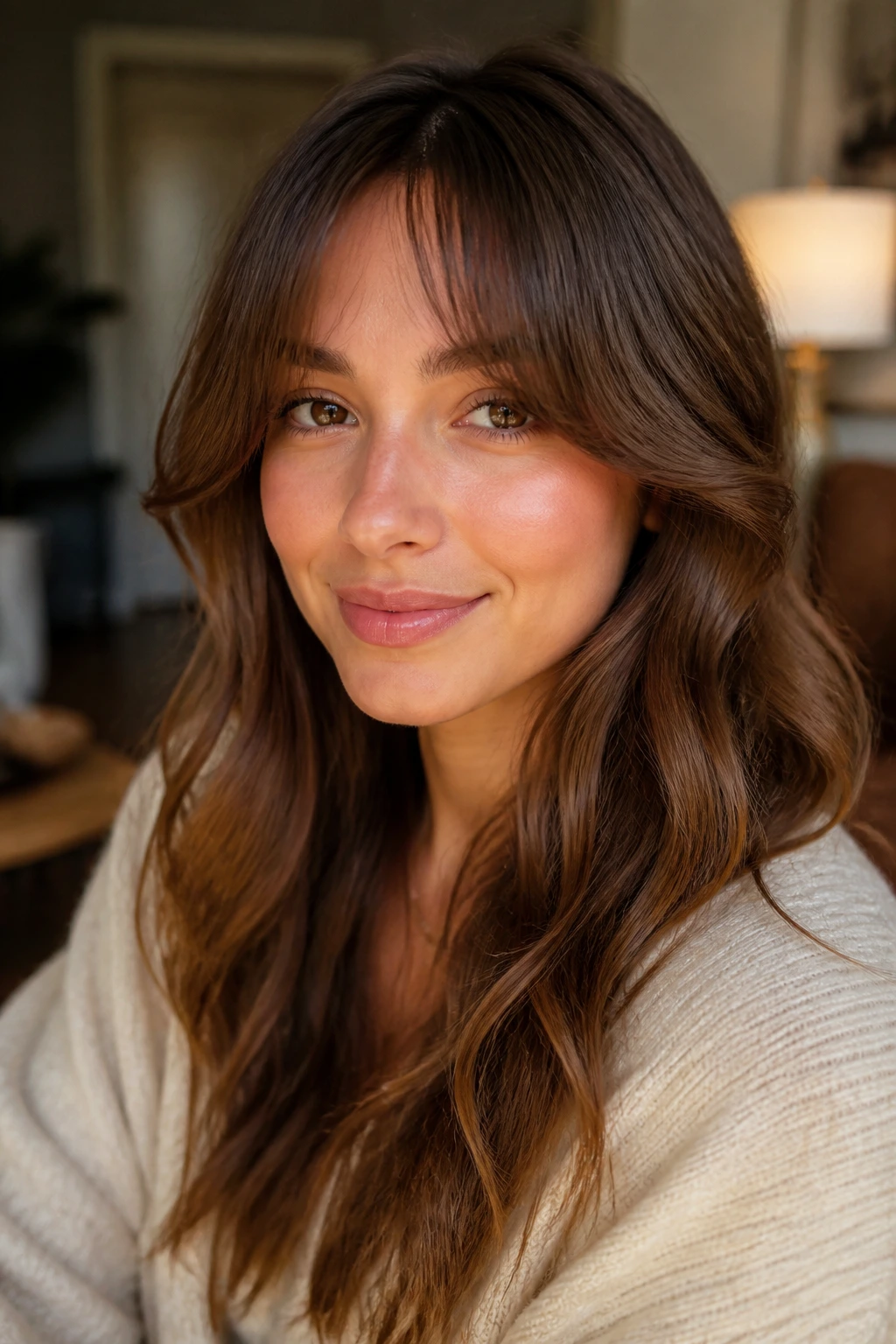
Long arched bangs curve softly across the forehead like a shallow bridge. The center is the most visible point, but the sides drop away before the fringe ever feels blunt. It is a flattering shape if you want the face to look open while still getting a little frame near the eyes.
What makes the arch work is the softness of the curve. Too deep, and it can look retro in a way you did not ask for. Too flat, and you lose the point of the shape. The best version feels like it was drawn with a loose pencil line, not a ruler.
This style can be especially nice with loose waves because the curve of the bang echoes the bend in the rest of the hair. Ask your stylist to keep the edges feathered so the arch doesn’t look carved. If you wear a middle part, the fringe can still split naturally after drying and look fine.
16. Diagonal Sweep Fringe
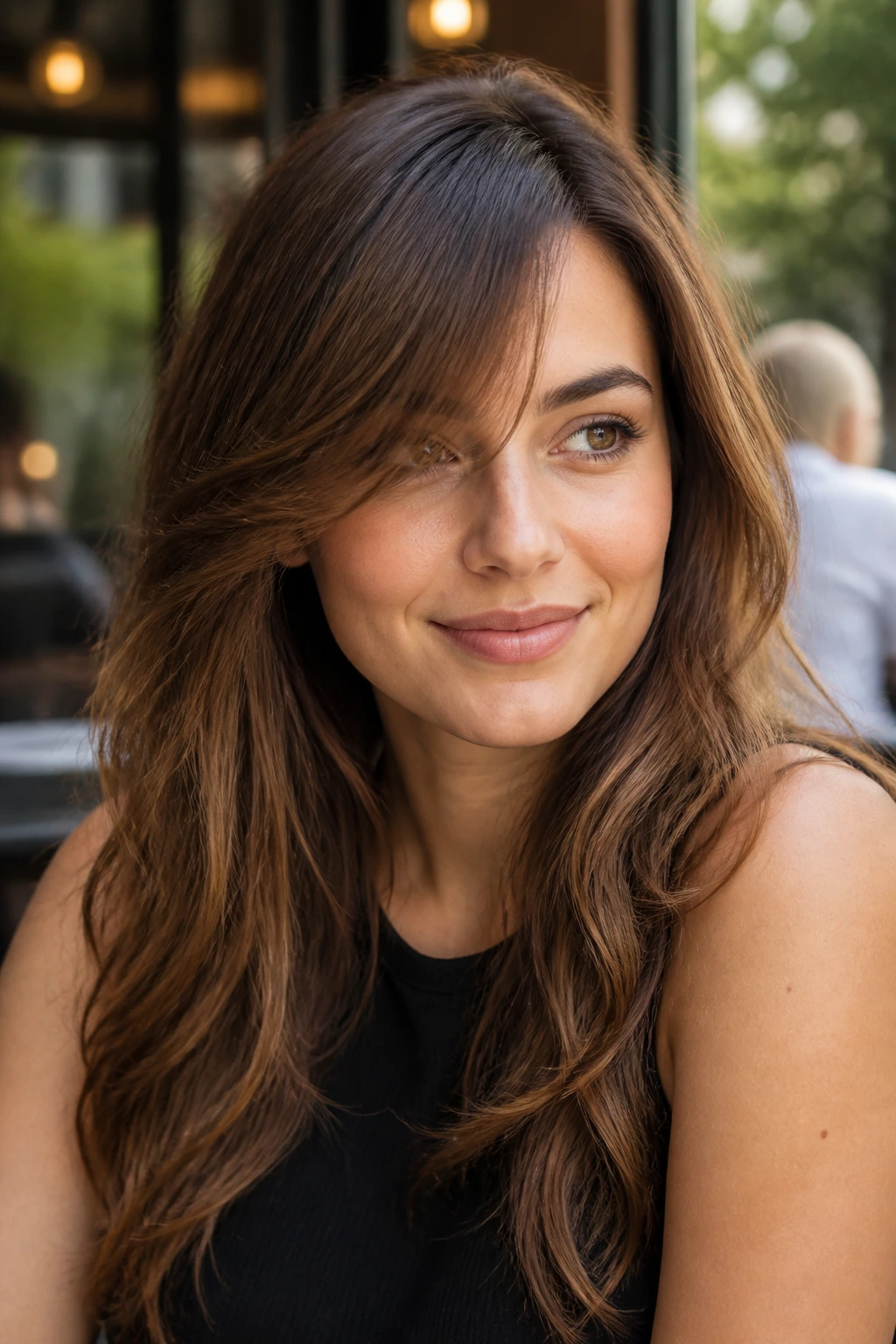
A diagonal sweep fringe is a side-parted version of soft bangs, but with more intent. The front pieces move from one side of the forehead to the other in a clean diagonal line, usually stopping near the cheekbone. It is more directional than a curtain fringe and less full than a classic side bang.
The style is useful when your hair has a strong part already. Instead of fighting it, the cut leans into the direction the hair wants to go. That means less daily wrestling. If you have a cowlick that pushes everything to one side, this can feel like relief.
The diagonal line also pairs well with long layers because it keeps the front moving while the rest of the hair stays soft. I like it on people who wear their hair down most of the time and want a front section that does not collapse the minute they step outside. A little root lift at the side part helps a lot.
17. Tapered Split Bangs
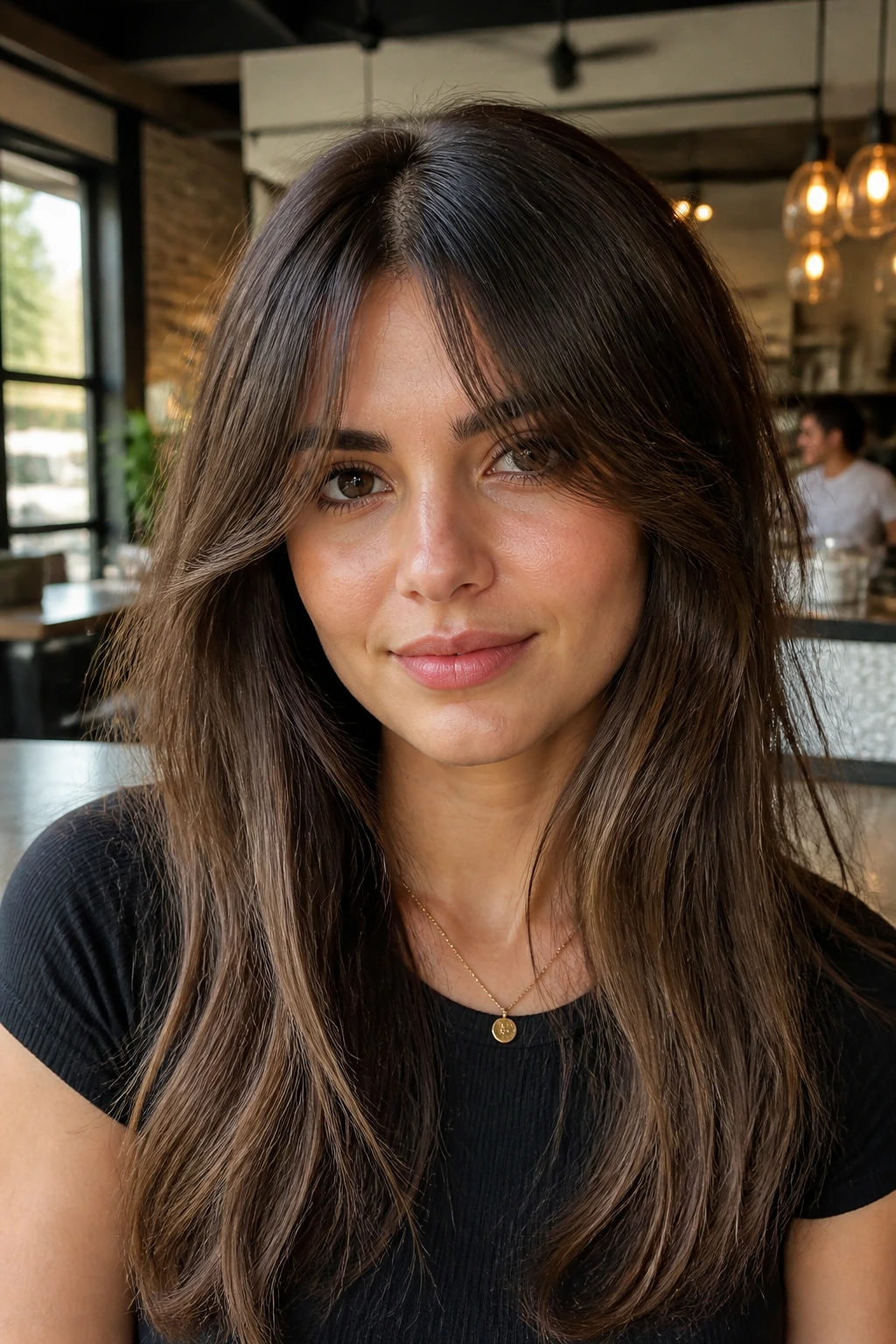
Tapered split bangs are a cleaner, lighter cousin to full curtain bangs. They part down the center, but the pieces are cut with a soft taper so the density drops as they move outward. You get the opening of a middle part without the weight of a blunt fringe.
This shape is excellent for thick hair that wants to sit in one heavy block. The taper keeps the front from puffing out, and the split gives the face a bit of lift. Because the sides stay longer, the style still blends into long layers instead of ending abruptly.
If you want something subtle, ask the stylist to keep the center only slightly shorter than the sides. The goal is separation, not a dramatic V. This is one of those cuts that looks almost too simple in the chair and then suddenly makes sense when the hair moves.
18. Lip-Grazing Curtain Pieces
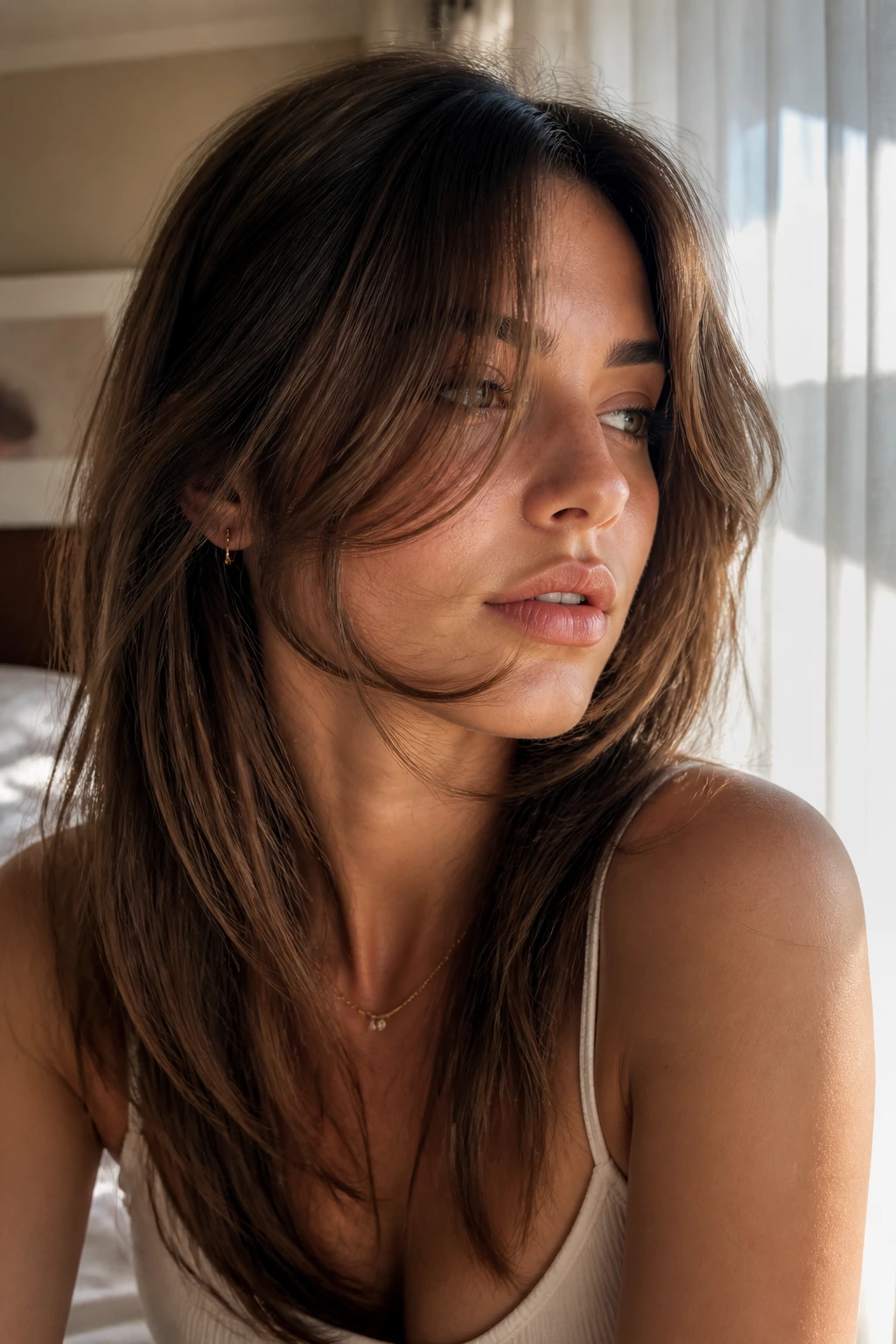
Lip-grazing curtain pieces are long enough to feel almost flirtatious, but they stay soft because they do not sit on the forehead like a true bang. The shortest front bits land around the lips or upper cheek, then sweep away toward the sides. That length gives the face a frame without crowding the eyes.
This is one of the more glamorous options on the list, but the glamour is subtle. The shape can make long hair look expensive in a quiet way, especially when it is blow-dried with a soft bend. It suits layered cuts well because the front and the sides start to tell the same visual story.
The practical upside is that these pieces can be tucked, pinned, or left loose. If you hate bangs touching your forehead, this is a very workable compromise. It feels like bangs when the hair is down and like face-framing layers when it is pulled back. That flexibility is why it earns a spot here.
19. Rounded Face Frame
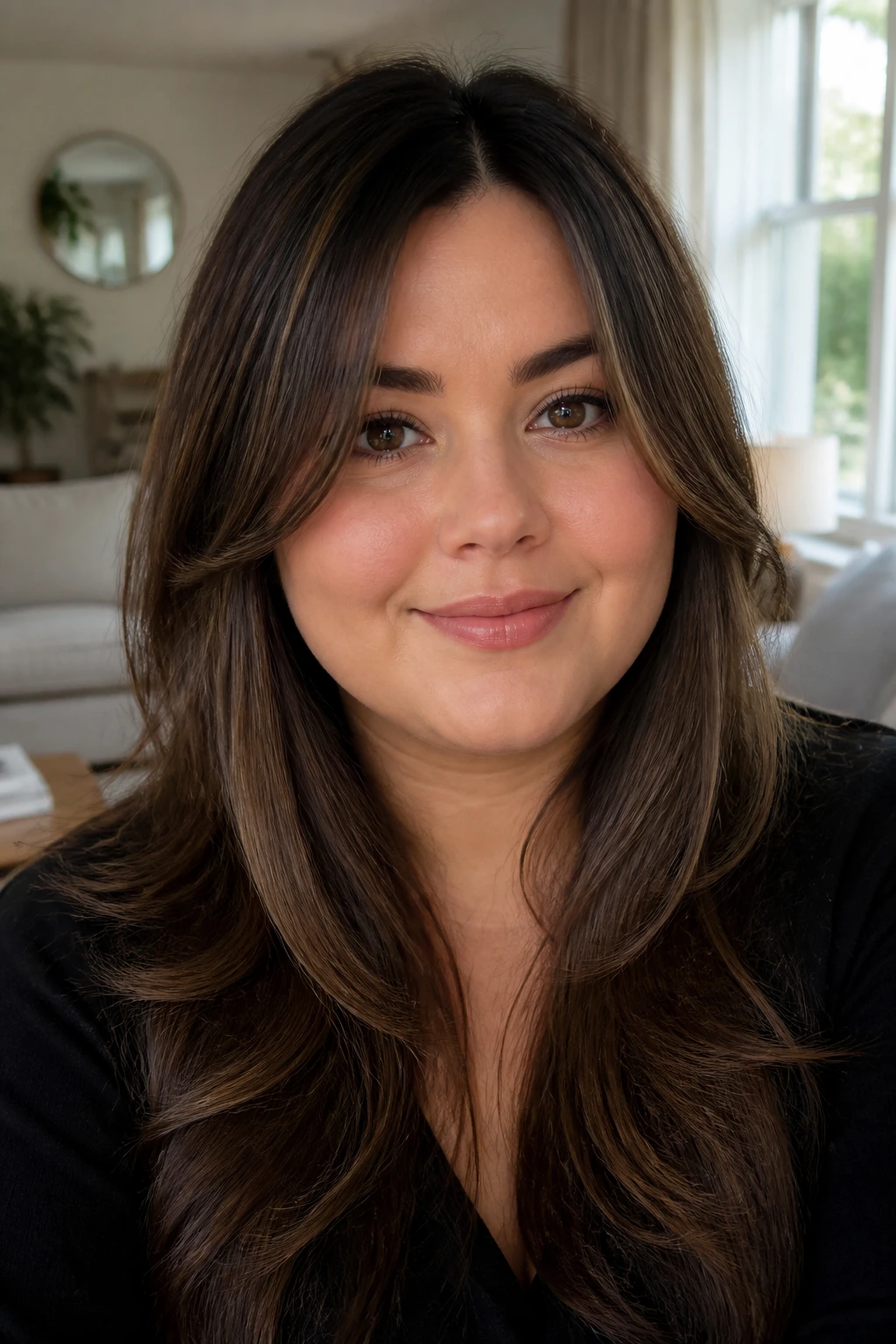
A rounded face frame curves around the cheeks and jaw in a softer circle than a straight curtain or side sweep. It starts lighter near the temples and follows the shape of the face instead of cutting across it. The whole effect is gentler, which is useful if your long hair tends to drag the features downward.
This is one of the better choices for square faces because the curve softens the angles near the jaw. It also works on long faces if you keep the center a touch fuller and avoid letting the front get too long too quickly. The point is to create a frame that feels shaped, not just dropped in front.
The haircut needs balance. If one side is much thicker than the other, the round effect breaks. Ask for the front to be cut dry enough that the natural fall shows up. That way the shape lands where your hair actually sits, not where it looks best only in the chair.
20. Undone Long Bangs
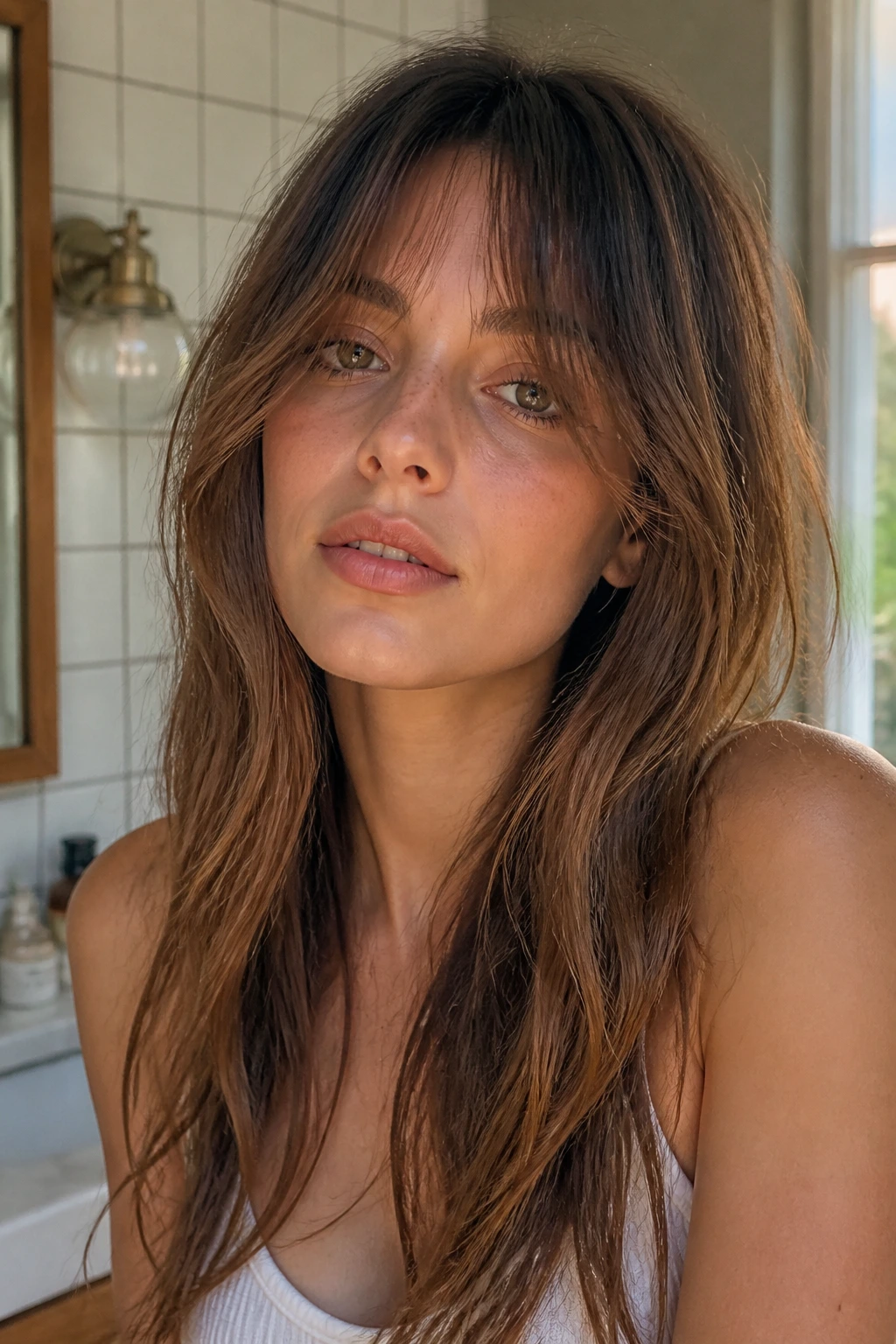
Undone long bangs are for people who want the front to look casually styled even on a lazy day. The pieces are long enough to move around the face, but the ends are cut in a rougher, more textured way so they never look overly neat. It gives the cut a slightly lived-in edge.
I like this version on hair that already has some bend or wave. The imperfection becomes part of the design instead of a problem to fix. If you try to make this fringe too smooth, it loses its charm. Let it fall a little unevenly. That is the point.
The styling is easy: dry the roots, twist the ends slightly with your fingers, and stop touching it. Too much brushing makes it fall into one piece, and then it starts looking flat. A mist of light hold spray is enough if you want the front to stay separated.
21. Soft Textured Fringe
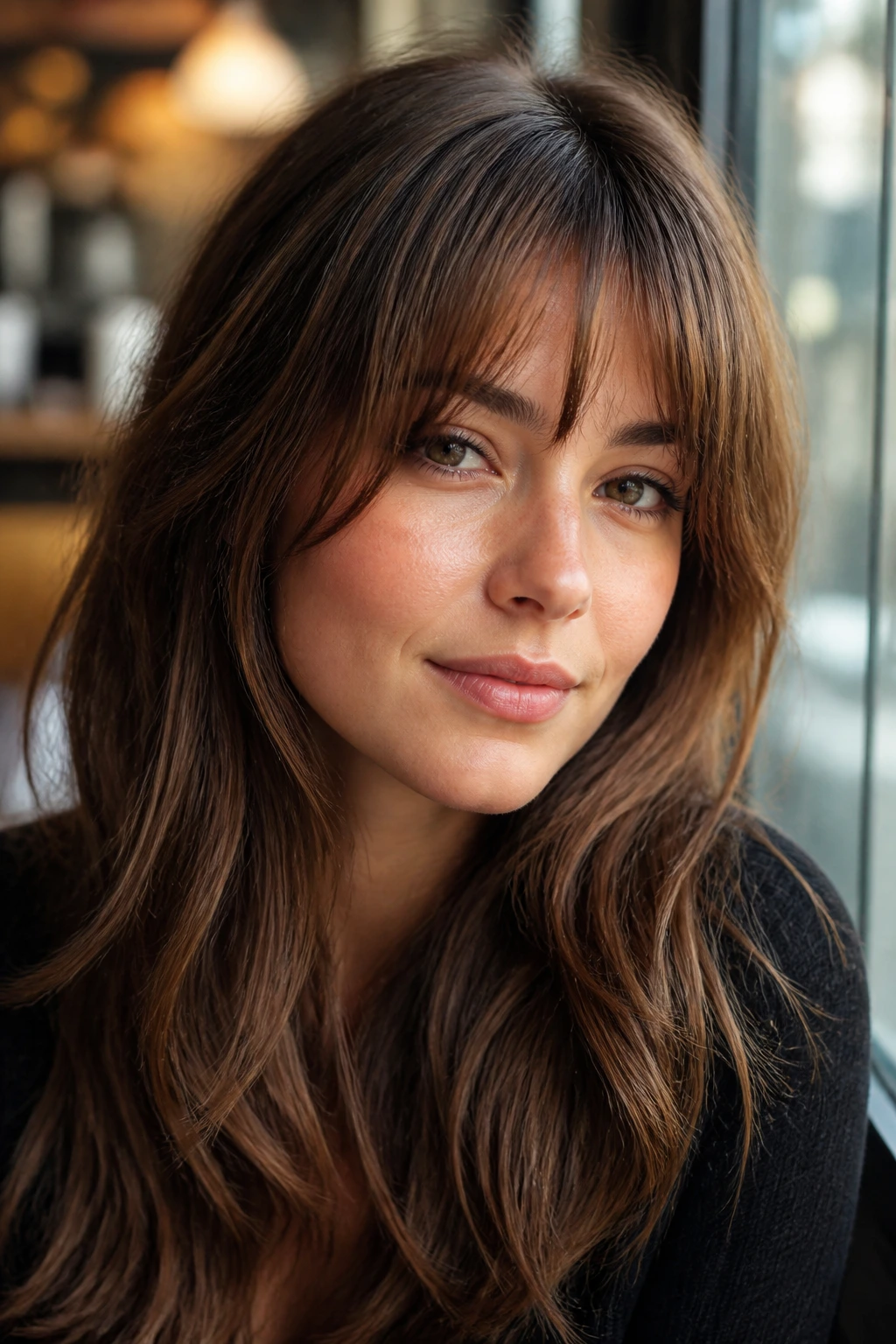
Soft textured fringe sits in the middle ground between blunt and wispy. The pieces have enough thickness to frame the face, but the ends are point-cut so they never feel blocky. On long hair, that matters because a hard fringe line can fight the softness of the length.
This cut works well on medium to thick hair, especially if the front section tends to puff or stick up. The texture lets the fringe fold instead of sticking straight out. It also makes the cut easier to wear with a center part, because the pieces can part and regroup without looking broken.
A stylist may use light point cutting or subtle slide cutting here. I would avoid over-thinning the section; too much removal and the front goes stringy. Keep enough hair there to show a shape. That little bit of weight is what keeps the cut from turning into flyaway confetti.
22. Elongated Baby Curtain Bangs
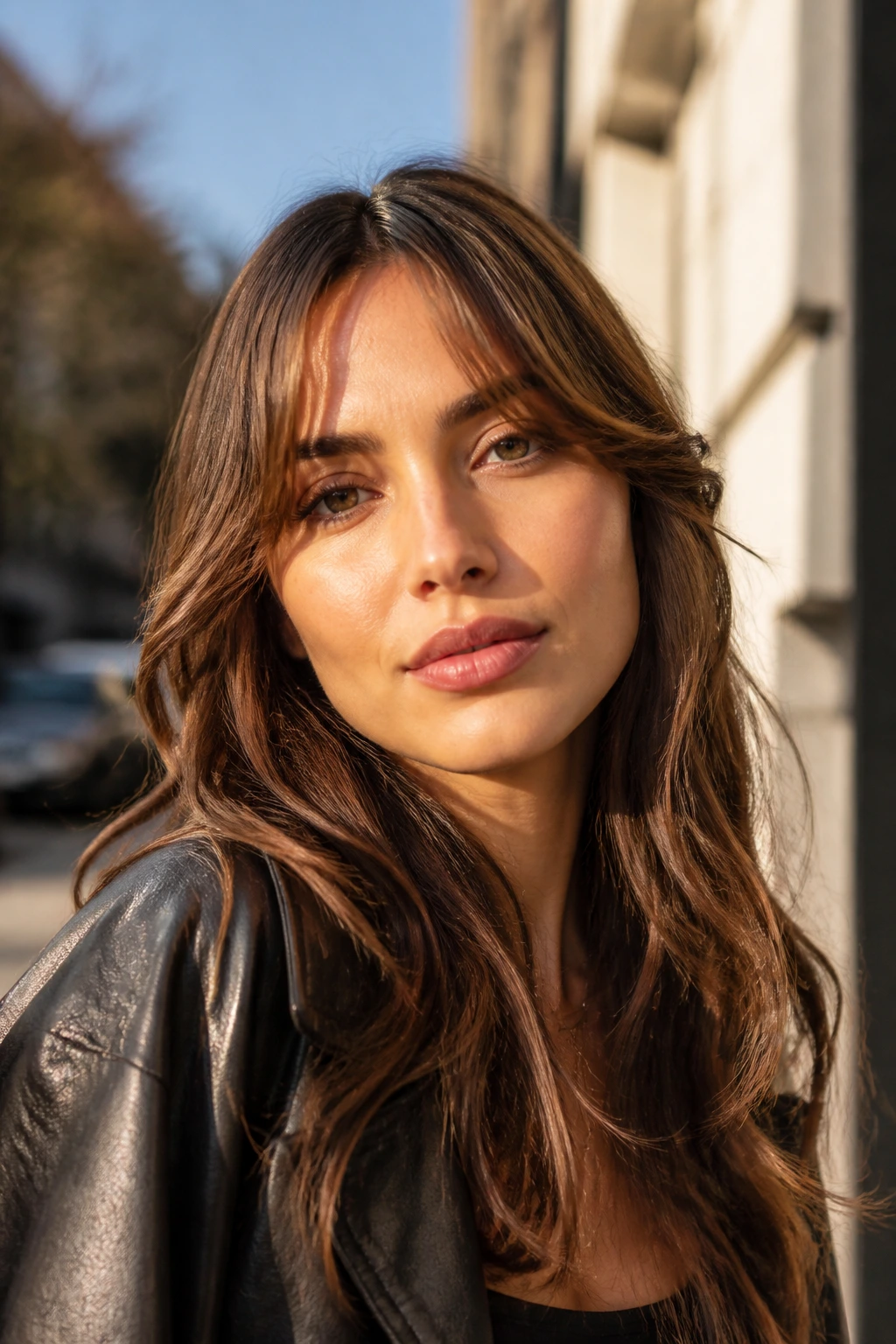
Elongated baby curtain bangs are a small, modern hybrid. They sit shorter than classic curtain bangs, but they are still split at the center and feather outward into the sides. The result is a forehead opening that feels intentional rather than full coverage.
This is a good choice if you want a little more edge than a standard curtain fringe but still don’t want a dense bang. It is also nice for people with smaller foreheads or shorter faces, because the shorter center makes room without eating up vertical space. The side pieces keep it soft so the cut does not turn severe.
The danger is cutting them too short before seeing how they fall dry. That is how you end up with a front section that behaves like a much stronger bang than you wanted. Keep the center modest, and let the sides do the softening. That is what makes the shape read as subtle.
23. Invisible Layer Bangs
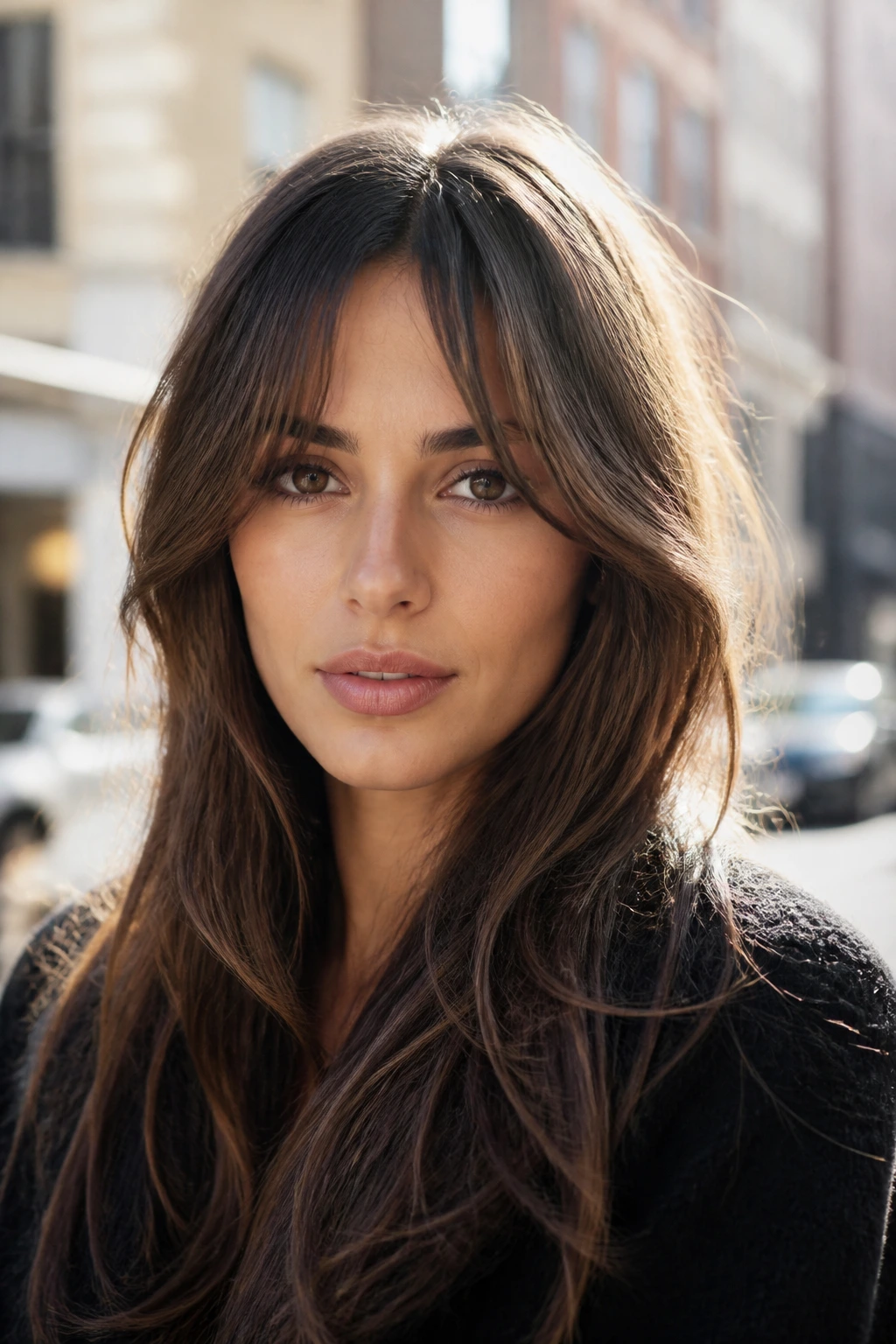
Invisible layer bangs are the “did she get bangs?” version of a face frame. The front is cut in a way that blends into the first layers so well that the fringe almost disappears unless the hair moves. You still get a shift around the eyes and cheeks, but no obvious bang line.
This is ideal for someone who wants change without a headline. The haircut looks like long layers from most angles, then suddenly the front opens a bit and the face feels lighter. It is especially useful for people who wear their hair half-up, because the front still has enough shape to stay interesting when the rest is pinned back.
Ask for the shortest pieces to start near the cheekbone and transition softly into the longer front. The more dramatic the internal connection, the more invisible the bang becomes. It is subtle by design. That is what makes it clever.
24. Temple-Starting Fringe
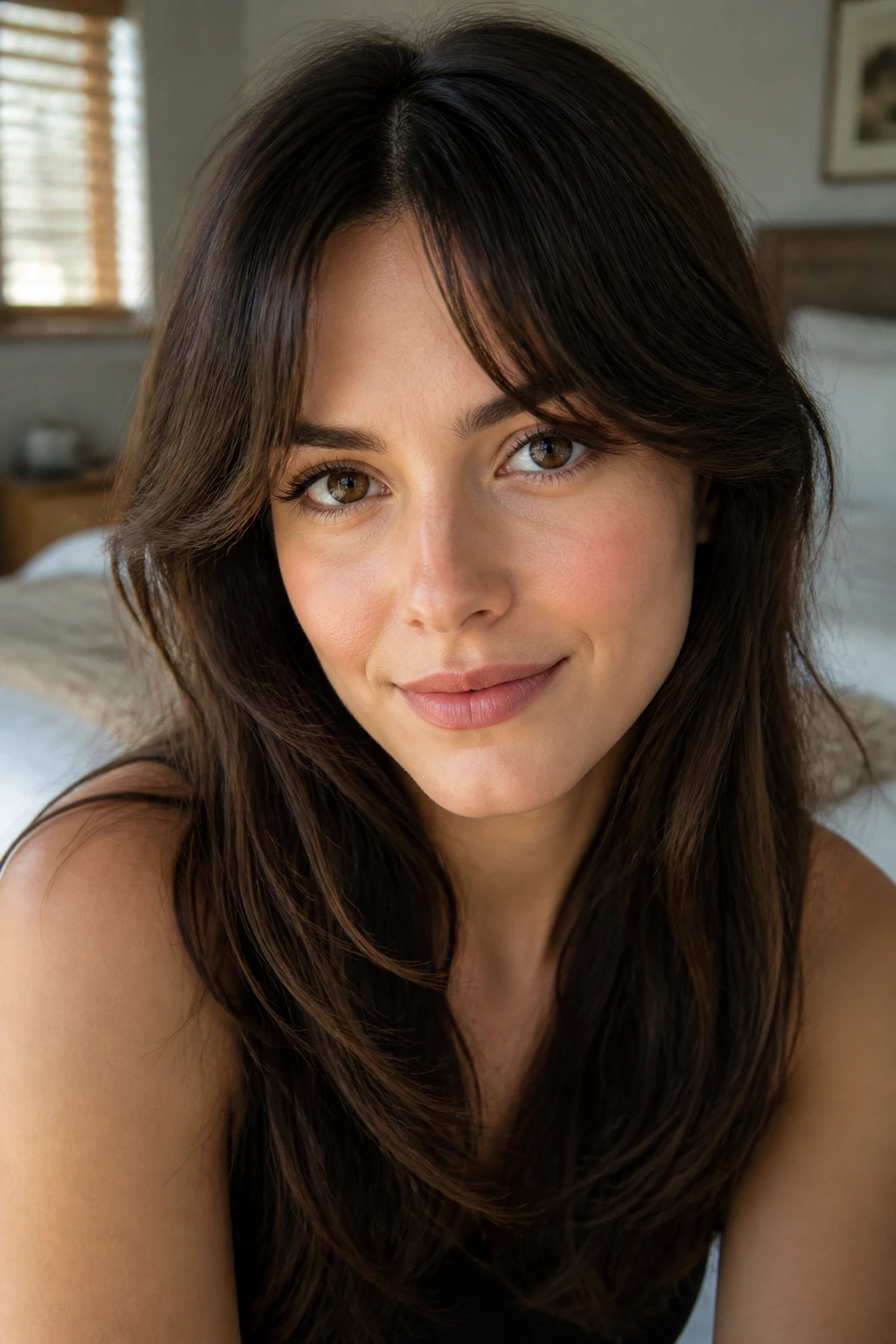
Temple-starting fringe leaves the center of the forehead open and places the emphasis at the sides, where the hair begins around the temples. That placement gives the front a little framing without crowding the middle of the face. It is a smart move if you want the line of the haircut to feel lighter right away.
This style can be especially flattering for round or fuller faces because it draws attention outward rather than straight across. The center stays open, so the face keeps its vertical space. At the same time, the temples and cheekbones get enough softness to stop long hair from hanging like one heavy sheet.
The cut looks best when the temple pieces are soft and slightly feathered. If they are too blunt, the style stops feeling subtle. Keep the shape loose, and let the longer layers take over as they move down the face. It is a quiet trick, but a useful one.
25. Center-Open Veil Bangs
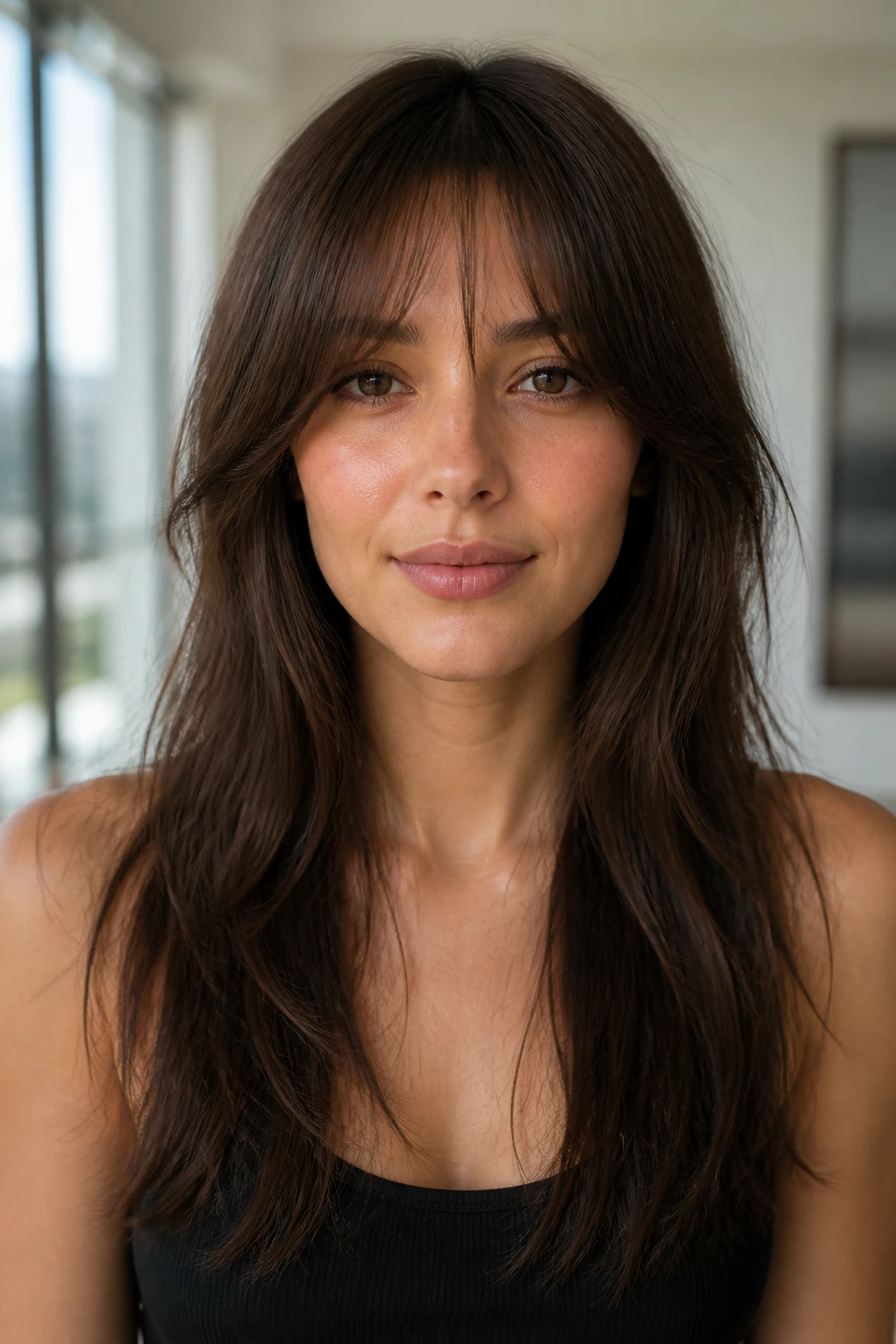
Center-open veil bangs are airy enough to feel almost transparent in the middle, with the shape spreading gently toward the sides like a light curtain. They do not cover much forehead. They just soften it. That makes them one of the easiest ways to change the front of long hair without creating a heavy bang section.
They work particularly well on straight or slightly wavy hair because the center split stays clean. If your hair is very thick, the veil can get too dense unless the stylist removes some weight from the inside. Keep the ends soft and the center light, and the effect stays delicate instead of bulky.
I like this shape for people who already wear a center part and want something that lives there naturally. There is no need to force a new part or retrain the hair every morning. It just sits down the middle and opens the face a little. Easy. Clean. Not fussy.
26. Long Feathered Fringe with Tapered Ends
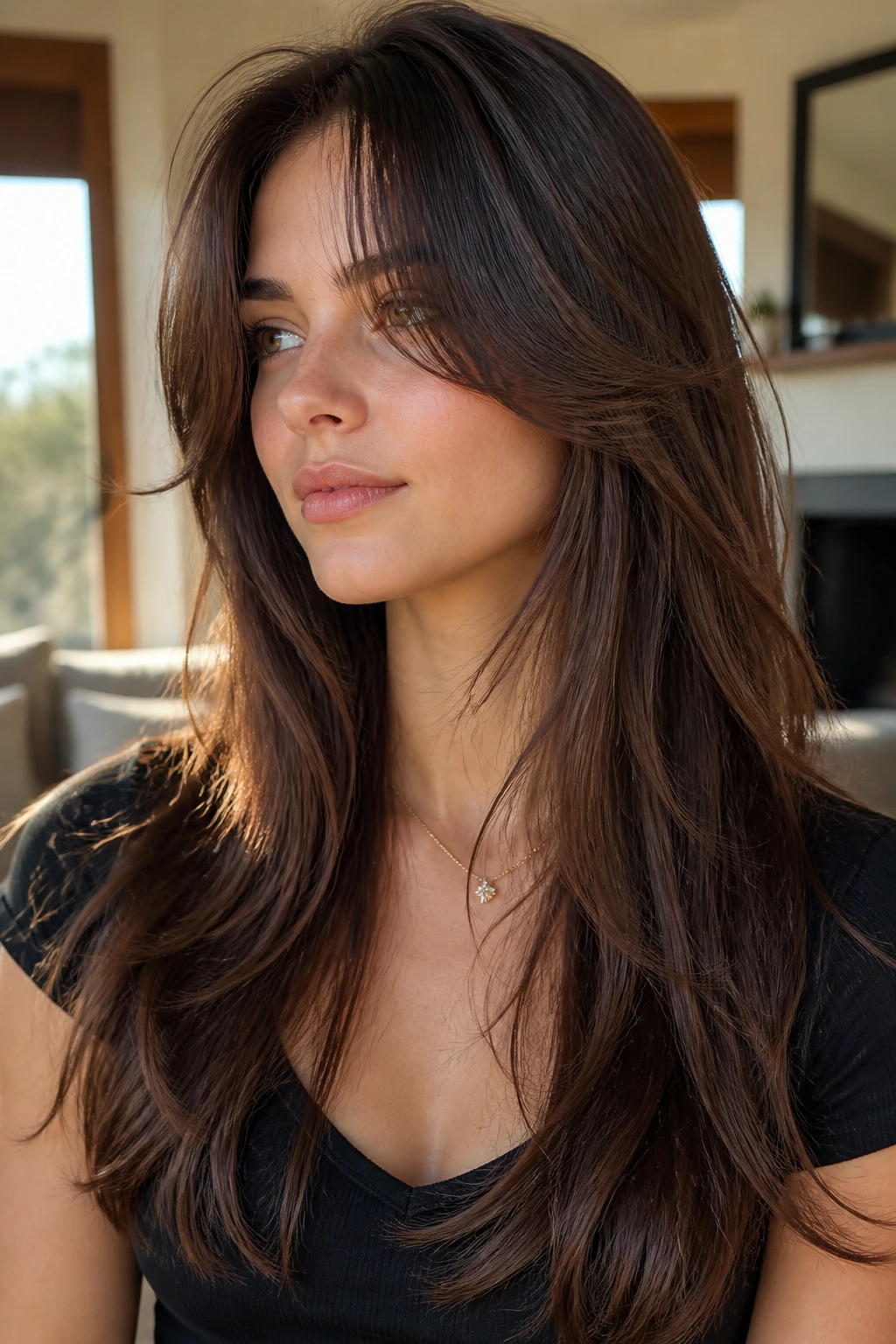
Long feathered fringe with tapered ends brings back one old-school idea in a much softer way. The pieces are layered so they move like feathers, but the taper at the ends keeps the fringe from looking too airy or too retro. On long hair, that feathering gives the front motion while preserving length.
This is a strong pick if you like blow-dried hair with a little swing. The brush catches the layered ends and bends them away from the face, which makes the haircut look lighter right away. It is also useful if the rest of your hair is one length and you need some front action to balance it out.
Ask for the layering to stay soft near the temples. If the feathering is too aggressive, the fringe can get choppy fast. The nicest version feels like the front has been brushed into shape rather than chopped into pieces. That difference matters more than people think.
27. Mixed-Length Fringe
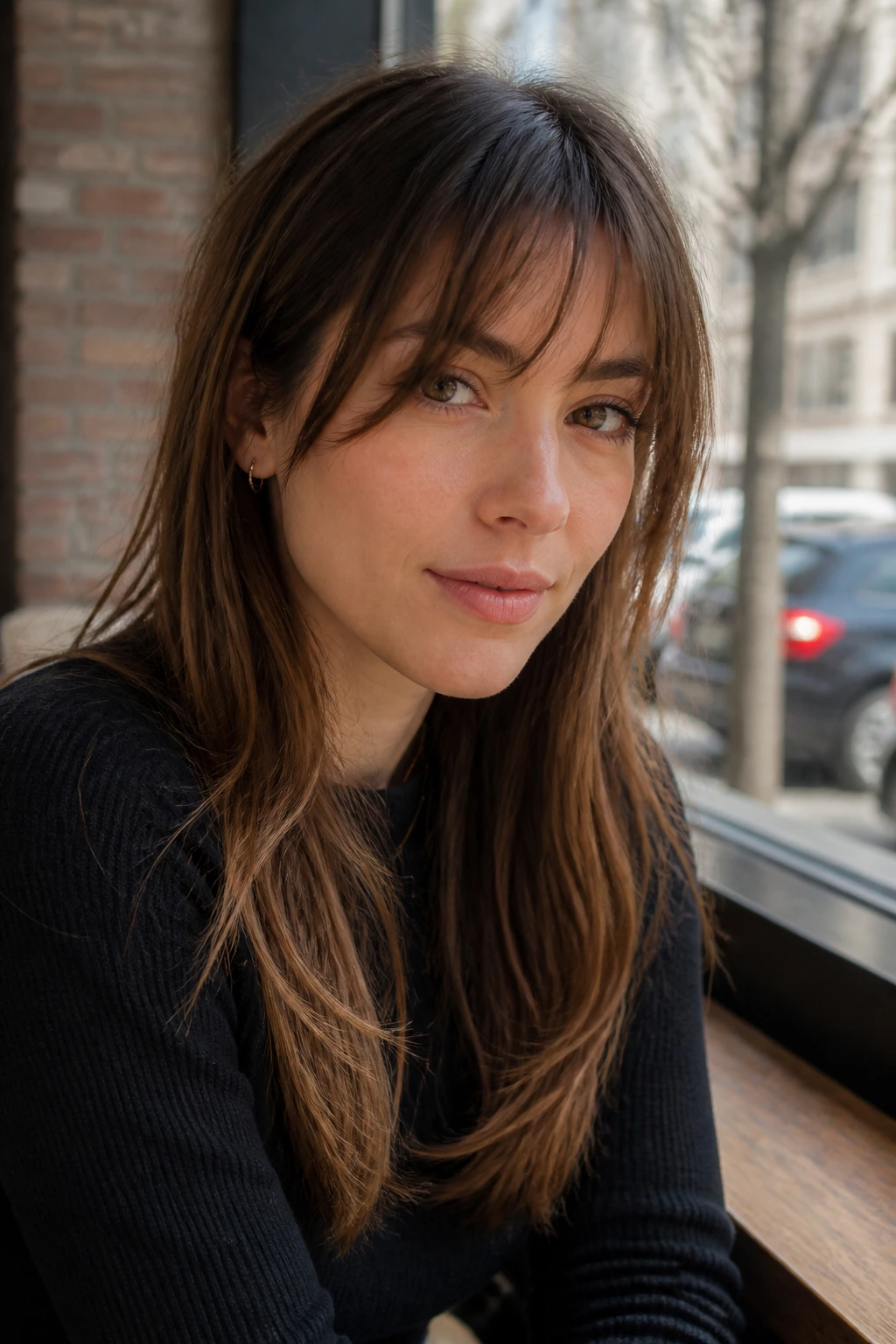
Mixed-length fringe breaks the front into staggered pieces instead of one even line. Some sections sit a little shorter, some a little longer, and the unevenness creates movement around the face. It is a good way to keep the bang area from looking too perfect or too heavy.
This cut is especially helpful for dense hair that resists softening. Instead of thinning everything out, the stylist can vary the lengths so the fringe bends and shifts more naturally. The result feels more alive. It also grows out in a friendlier way because there is no single clean edge that starts misbehaving all at once.
If you like a haircut with a bit of edge but still want it wearable, this is worth considering. It is not chaotic. It is controlled unevenness. That sounds small, but it changes how the front moves every time you tuck it, brush it, or let it fall out of place.
28. Soft Wedge Bangs
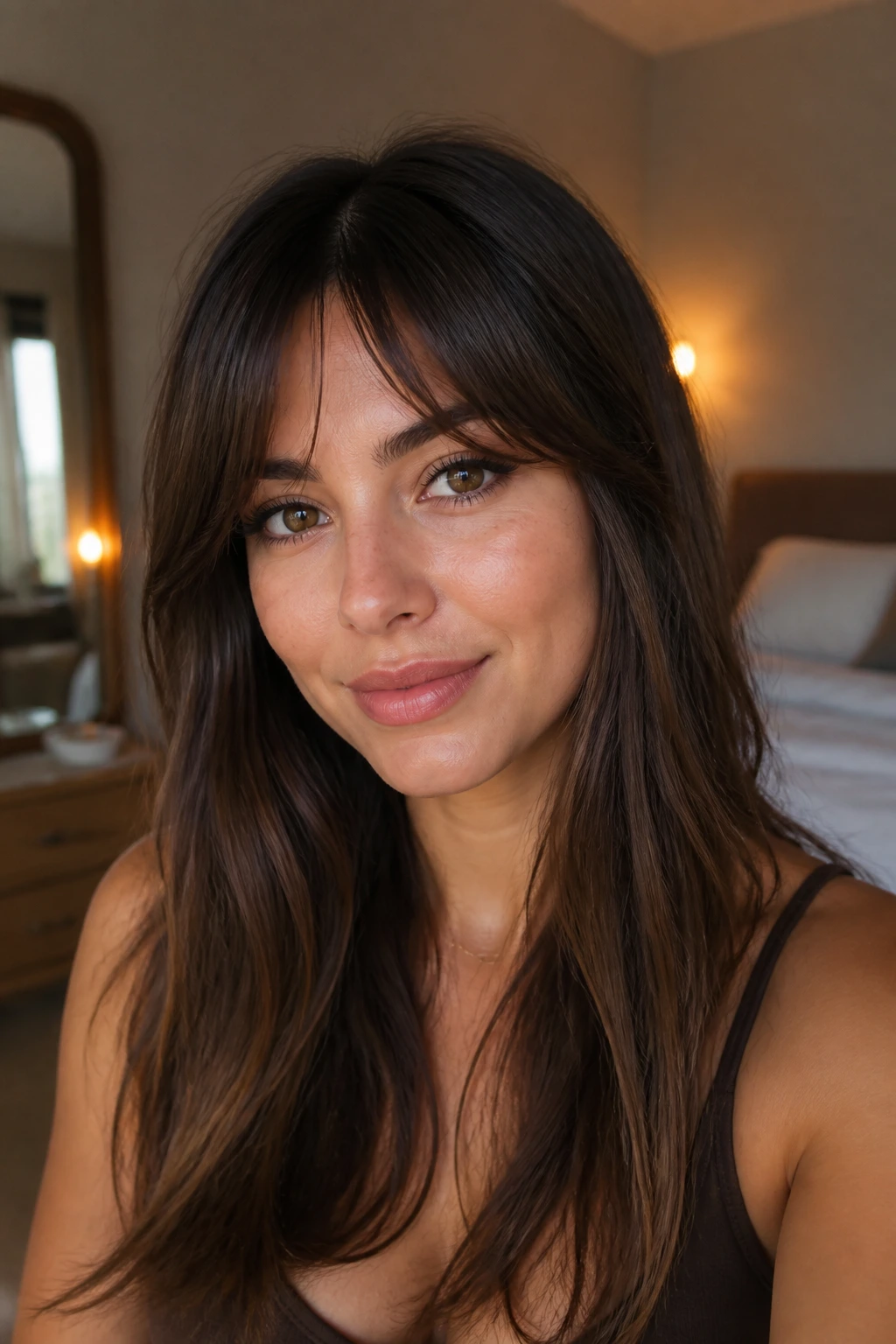
Soft wedge bangs form a gentle triangular shape, with the shortest point near the center and the sides lengthening just enough to open the face. The wedge is there, but it is blurred at the edges, so the cut never feels severe. On long hair, that structure gives the front a clean point of interest.
This shape can help if your hairline feels wide at the temples or if the front keeps falling flat and shapeless. The wedge gives the eye something to follow without building a full curtain. It is a tidy shape, which I like, but it still needs softness. Keep the ends feathered and avoid over-defining the center point.
The best version usually sits just under the brow at the shortest point and drifts toward the cheekbone at the sides. That spacing keeps the forehead from looking boxed in. It is a subtle architectural move, and I mean that in a good way. The front gets a little structure, then the rest of the hair can do its long, easy thing.
How to Style Subtle Face-Framing Bangs Without Flattening Them
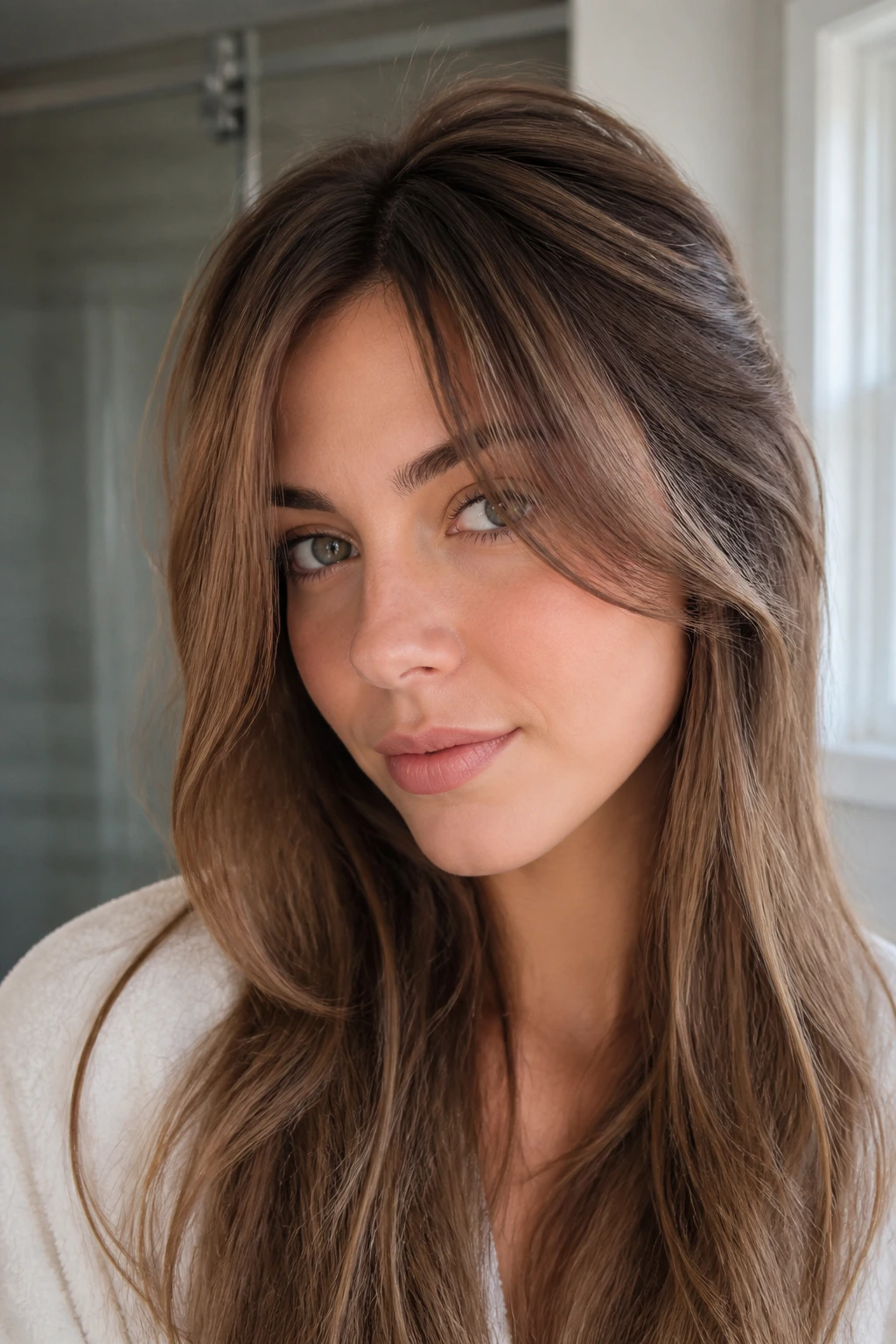
The biggest styling mistake is treating every fringe like it wants the same brush and the same heat. It does not. A soft face frame needs a little direction at the root, not a blast of heat that makes the front cling to the forehead. I usually start by drying the fringe in the opposite direction of how I want it to sit, then I swing it back into place once the root has memory.
Root control matters more than polish. If the roots sit flat, the whole shape goes limp. A round brush, a nozzle on the dryer, and a cool shot at the end do more than a pound of finishing cream ever will.
For wavy or curly hair, dry the front first and let the shape form before you touch the rest. That keeps the fringe from shrinking shorter than you planned. For straight hair, a small brush or even a bend from a flat iron works fine, but keep the pass light. One slow pull is enough. Two often makes the front too straight and shiny for this kind of cut.
If you air-dry, scrunch the front pieces with a touch of mousse, then pin them aside for the first ten minutes so the root does not set in the wrong direction. That little trick saves a lot of frustration.
The Mistakes That Make Soft Bangs Look Choppy or Limp
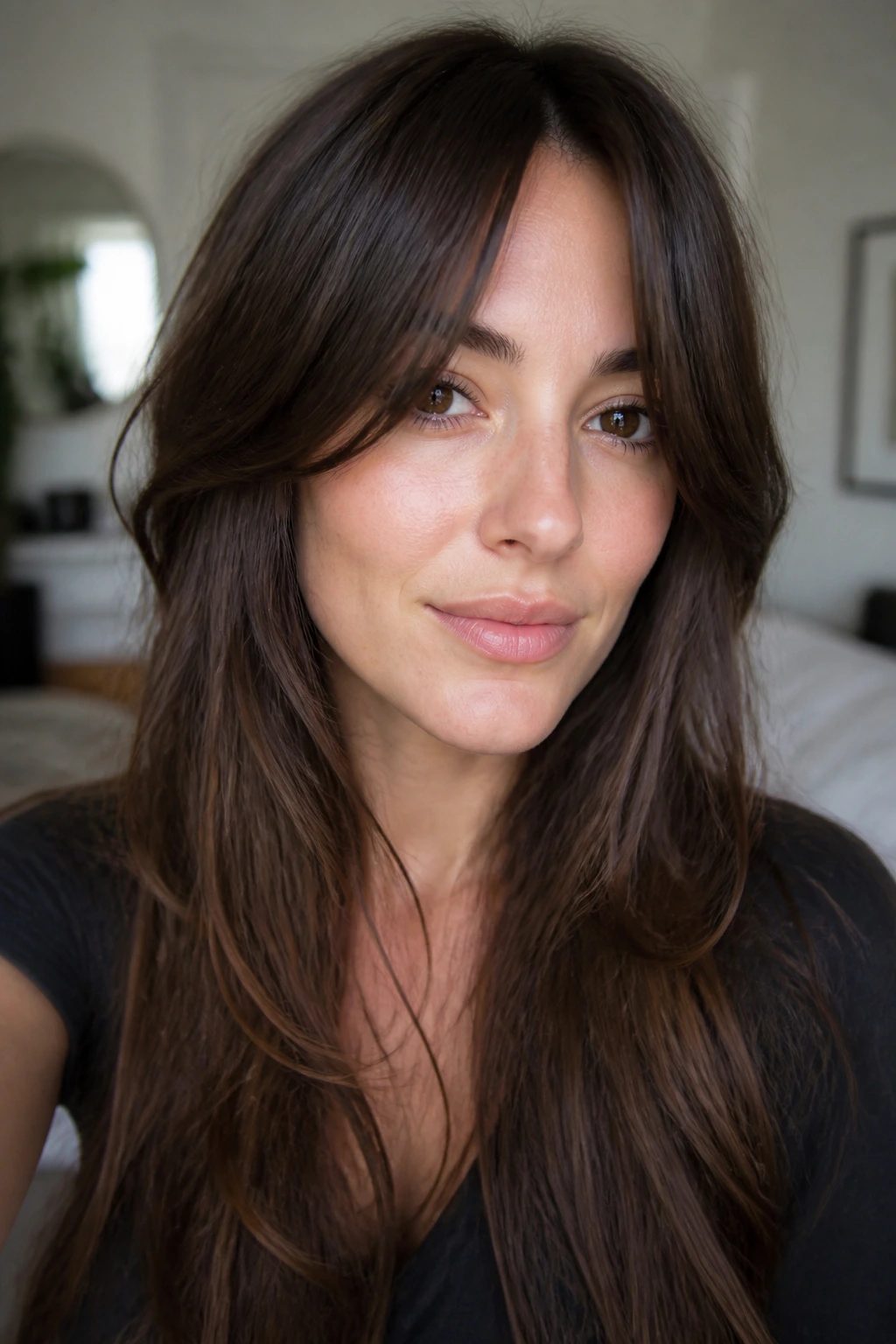
The first mistake is cutting too short too soon. You see the fringe sitting above the brow in the salon mirror and think it looks fine, then it springs up another half inch after the first wash. The fix is simple: leave the first cut longer than your instinct wants, especially if your hair has bend or shrinkage.
Another one is over-thinning fine hair. If the stylist removes too much density, the fringe turns transparent in a bad way and separates into lonely little wisps. Ask for softness at the ends, not a strip of hair that has been thinned until it can barely hold its own shape.
Ignoring your part is a classic mistake. If your hair naturally splits a certain way, a center-open bang or strong curtain shape may fight you all day. A side sweep or temple-starting frame may work with your cowlick instead of against it.
Heavy creams and oils are another problem. They make the front pieces stick together and lose the airy movement that makes these cuts work. Use the lightest styling product you can get away with.
Finally, people wait too long to trim the front. Bangs do not need full salon maintenance every time, but they do need a quick dusting before they hit the eye line and start poking around like they own the place.
Variations and Adaptations to Try
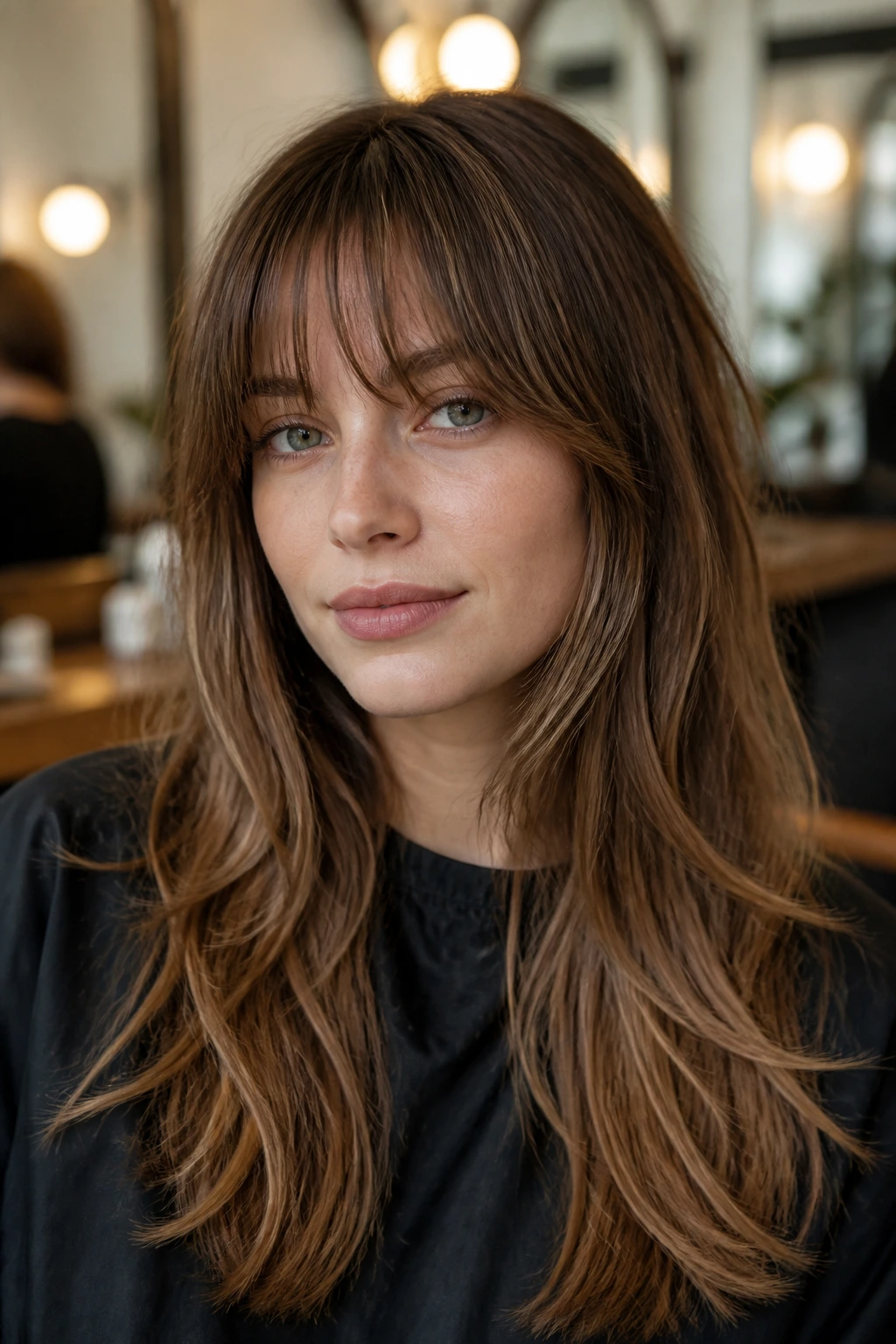
The Curly-First Version: Keep the front longer and cut it dry so the curl pattern shows where the pieces will actually land. This version works best when the shortest point is left well below the brow, because curls tend to jump shorter after washing.
The Straight-Hair Polished Version: Ask for cleaner edges and a subtle bend at the ends, then style with a round brush for a smooth curve. This gives long hair a more finished front without making the bang section feel heavy.
The Fine-Hair Featherlight Version: Keep density low but not sparse, and ask for point-cut ends so the fringe moves instead of collapsing. A little dry shampoo at the roots helps the front hold shape longer.
The Thick-Hair Softening Version: Remove bulk from the inside of the section and leave the outline soft. Thick hair usually needs structure in the middle and softness at the edge, not random thinning from top to bottom.
The Deep-Part Sweep Version: Shift the part farther to one side and let the front ride that line. This is a good fix for cowlicks, and it makes the fringe look intentional on days when you don’t want to fight the mirror.
The Brushes, Clips, and Shears Worth Having Around
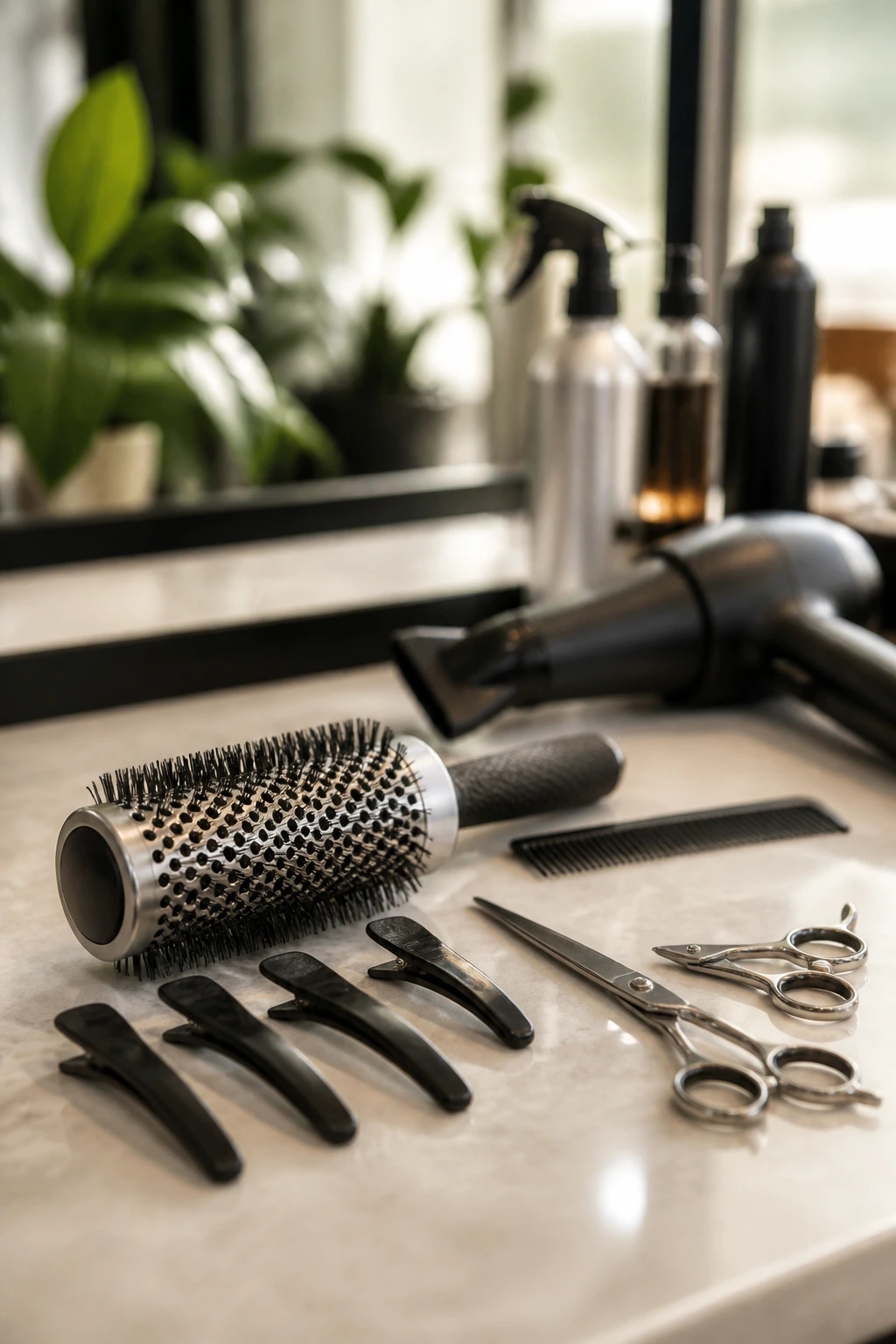
- A 1 to 1.5-inch round brush: Small enough to bend fringe without ballooning the root.
- A blow dryer with a concentrator nozzle: Directs airflow so the front sits where you want it.
- Duckbill clips: Useful for holding the rest of the hair out of the way while you dry the front first.
- A fine-tooth tail comb: Helps you place the part cleanly and separate narrow sections.
- Lightweight heat protectant: Keeps the front from getting dry and frizzy if you use heat most days.
- Dry shampoo: A forehead-saver for the second day and beyond.
- Sharp haircutting shears: Non-negotiable if you trim tiny bits at home; kitchen scissors will chew the ends.
- Mini flat iron, optional: Handy for a quick bend in a stubborn piece or a side sweep that won’t cooperate.
- Flexible-hold spray: Keeps the shape moving instead of locking it into a helmet.
Keeping Subtle Face-Framing Bangs in Shape Between Trims
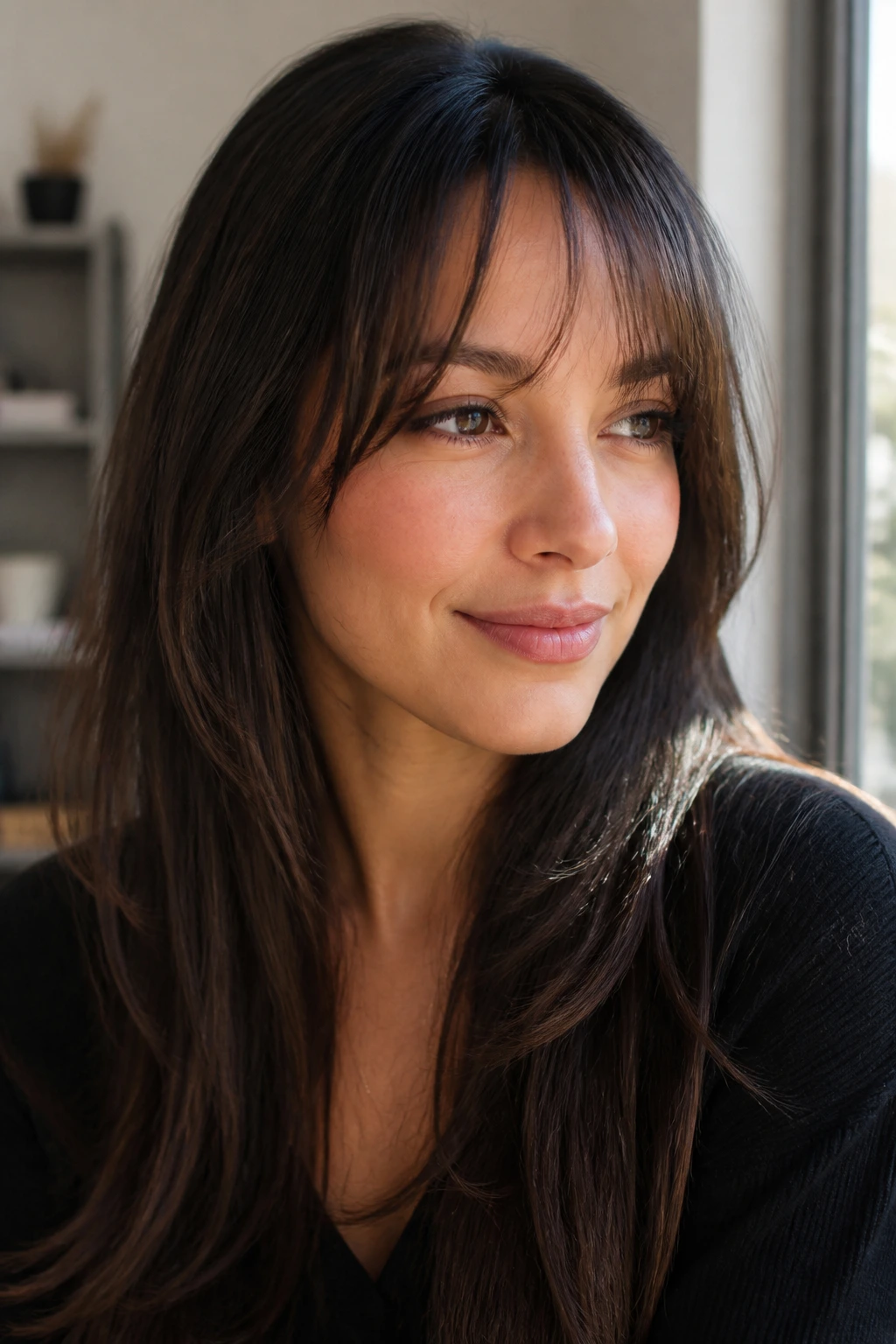
These styles live on small upkeep. The front pieces pick up oil faster than the rest of the hair because they sit against the forehead, and that alone can flatten a soft fringe in a day. A quick blast of dry shampoo at the roots, applied from about 6 to 8 inches away, usually brings the shape back without making it dusty.
If you blow-dry, dry the front first and separate it from the rest of the hair with clips. That keeps the root from drying bent in the wrong direction while you deal with the lengths. For most of these cuts, a trim every 6 to 8 weeks keeps the shape readable. If you chose a longer, grow-out style, you can stretch that to 8 to 10 weeks and still look intentional.
At night, don’t sleep with the front pieces soaked in product. That is how they wake up in a weird bend that takes twice as long to fix. If you wash at night, dry the fringe completely before bed or pin it back loosely so it does not set in a dent. A silk pillowcase helps, but the bigger win is not letting the hair sleep in a wet, scrunched mess.
If the style starts to separate awkwardly, don’t panic and don’t panic-cut. A tiny trim can help, but a lot of the time the issue is product build-up or a root that needs to be reset with water and a brush.
Frequently Asked Questions
Are subtle face-framing bangs easier to grow out than blunt bangs?
Yes, because the longest pieces already blend into layers. When they grow, they tend to look like part of the haircut instead of an obvious line that sits in the middle of your face.
Do these bangs work with a center part?
Some do very well, especially curtain, bottleneck, center-open veil, and tapered split shapes. If your part is fixed and your hair keeps fighting you, ask for a version that respects the part instead of forcing a new one.
What if my hair is thick and puffy at the front?
Ask for internal weight removal, not random thinning at the ends. Thick hair usually needs the front section to be shaped so it folds softly, otherwise it can flare out like a triangle around the forehead.
Can fine hair wear a face-framing bang without looking sparse?
Absolutely, but the cut has to keep enough density at the front to read as a shape. A wispy brow-grazing fringe or air-light brow skim works well when the pieces are soft but not stringy.
What should I tell the stylist if I want something low-maintenance?
Say you want a face frame that still looks right after a few days and can tuck behind the ear. That usually points them toward longer curtain pieces, a grown-out fringe, or a collarbone-level frame instead of a short, high-maintenance bang.
Will these styles work with curly hair?
Yes, if they are cut dry or cut with curl shrinkage in mind. Curly hair usually needs the shortest point left longer than straight hair so the front does not spring too high after the first wash.
How do I fix bangs that separate down the middle in a weird way?
A little water at the roots, a quick side-to-side blow-dry, and a light styling product usually resets the split. If the separation keeps happening, the issue may be the cut, not the styling.
Can I wear these with ponytails and buns?
That is one of their best traits. Longer face-framing pieces, especially bottleneck, temple-starting, and collarbone versions, look deliberate when pulled back instead of leaving a bare forehead.
A Softer Frame for Long Hair
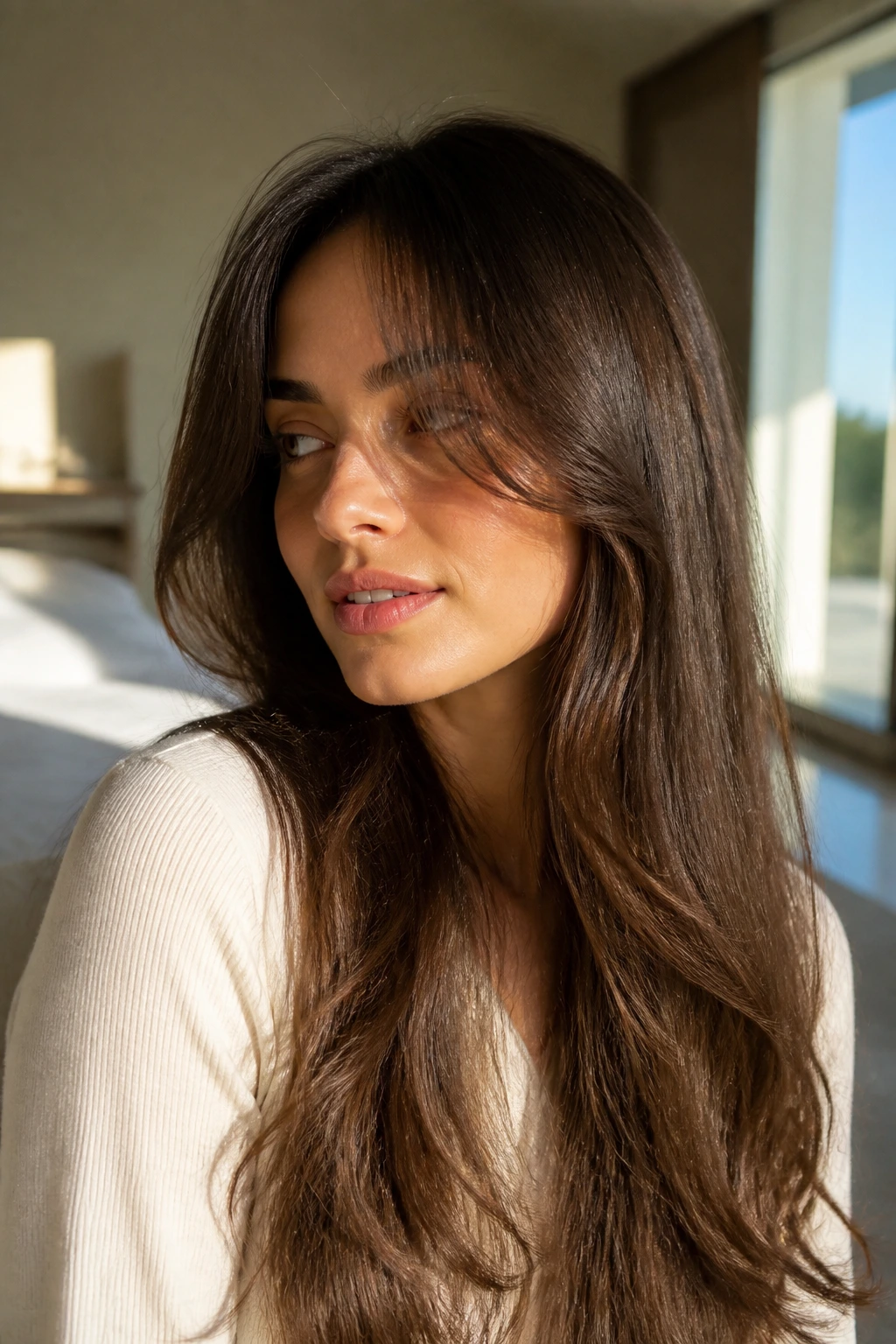
The nice thing about subtle fringe is that it changes the whole haircut without asking your hair to become someone else. Long hair can get heavy around the face, and a soft bang or front layer solves that with a few inches, not a total chop.
If you want the change to feel easy, start with the longest version that still gives you shape. That leaves room to refine later. Hair grows. Scissors do not put length back.
And if you’ve been staring at the same long length for ages, this is one of the cleanest ways to wake it up without losing the thing you liked about it in the first place. Pick the version that matches your texture, your part, and your patience level, then let the front do its quiet work.
