



Micro bangs are not polite. They cut across the forehead with a hard little line, and on long hair that contrast is the whole point. Long hairstyles with micro bangs have a built-in tension that feels sharper than a curtain fringe, lighter than full bangs, and a lot more decisive than people expect from such a tiny strip of hair.
The nice surprise is how much shape that little fringe can change. A waist-length cut can suddenly look graphic. Soft waves can look a little tougher. A curly cloud can feel more intentional. The downside is equally real: micro bangs show oil, cowlicks, and bad cutting choices fast. There’s nowhere to hide. If the line is off by even half an inch, you see it every time you pass a mirror.
Still, that’s exactly why the pairing works. Long hair gives you room to play, and micro bangs keep the look from floating away into generic “long and styled” territory. The best versions don’t fight the fringe. They build around it, so the bangs look like a deliberate front edge rather than a last-minute thought.
Why This Collection Feels Different
-
The length stays the anchor: Micro bangs strip away forehead coverage, so the rest of the hair has to carry the silhouette, and that makes long hair read even longer.
-
The fringe does the punctuation: A two-inch or three-inch bang line changes the mood faster than layers ever will, especially when the lengths are kept clean and deliberate.
-
Texture matters more than perfection: Straight, wavy, curly, and coily hair all work here, but each one needs a different dry-down and shaping habit.
-
You get edge without losing ponytail options: That tiny fringe gives you attitude, while the rest of the hair still goes up, braids back, or falls loose when you want it to.
-
The cut shows your styling choices fast: Glossy, matte, piecey, soft, or severe — all of it shows up more clearly when the front line sits high on the forehead.
-
It’s easier to personalize than people think: Move the fringe a little higher, keep the temples softer, or add layers through the body, and the whole look shifts without changing the basic idea.
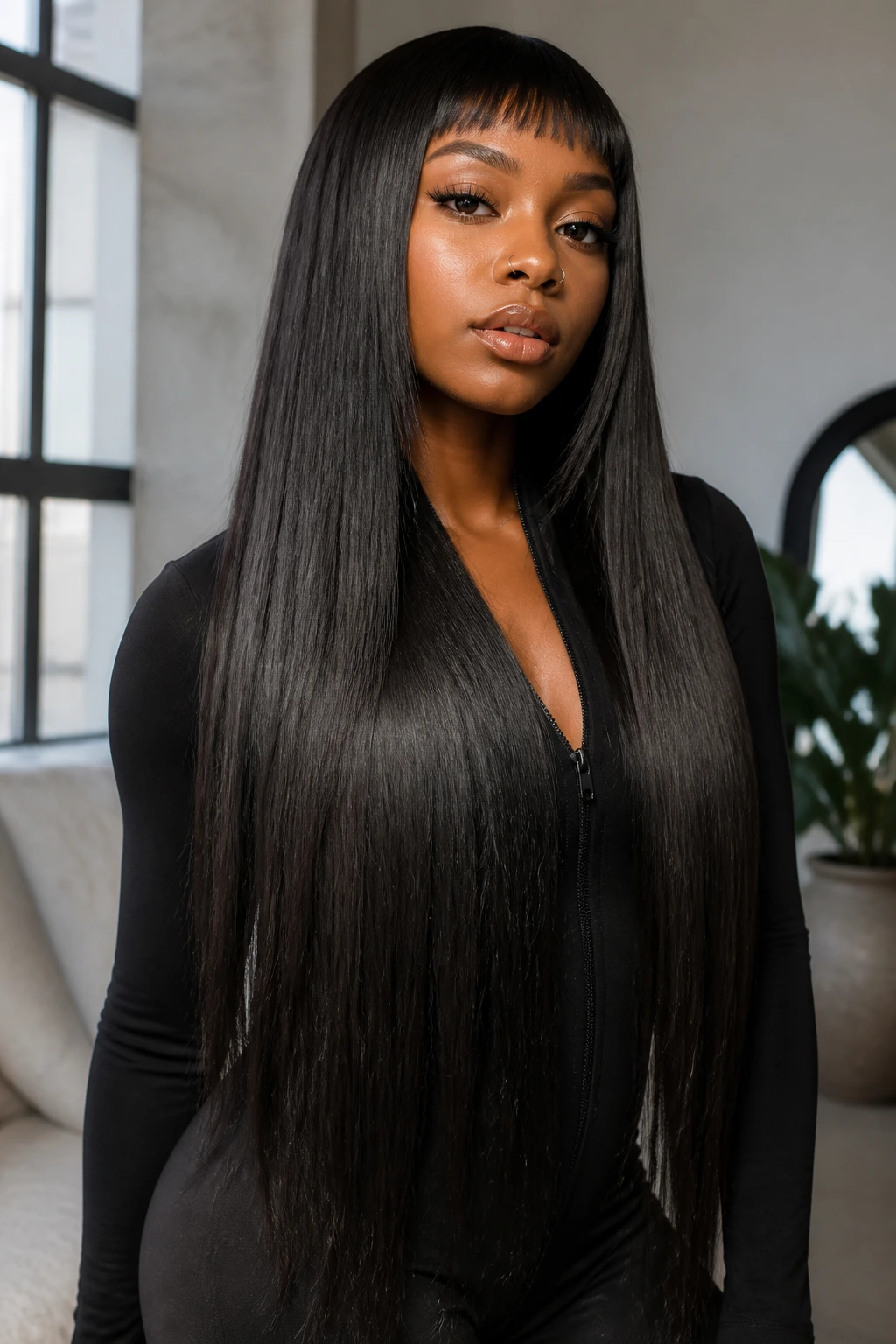
1. Waist-Length Silk Press with Razor Micro Bangs
Sleek hair and micro bangs make a blunt little power move together. The lengths fall in a clean sheet, the fringe sits high and short, and the whole shape feels controlled in a way that can look almost architectural when the shine is right.
Why It Works
The contrast is the appeal here. A waist-length silk press already gives you that long, continuous vertical line; the micro bangs interrupt it just enough to keep the cut from feeling plain. On dense or medium hair, this also shows off movement in the ends, because the front stays cropped while the rest of the hair hangs with weight.
The best version has a glassy finish at the top and a soft bend only at the very ends. If the bangs are too thick, the look turns heavy fast. If they’re too wispy, they disappear against the rest of the hair. You want a clear line across the forehead and a smooth fall everywhere else.
Best for: straight or straightened hair that holds a flat, polished finish for most of the day.
What to Ask For
- A micro fringe that sits well above the brow, with the shortest point centered and the temples left a touch softer.
- Long layers only if you want movement at the ends; otherwise keep the body one length.
- A blunt perimeter if you like the stark look, or slightly beveled ends if you want the line to move.
One small opinion: this is one of the few styles where a tiny bit of flyaway control matters more than volume. Puff at the crown ruins the whole point.
2. Long Feathered Blowout with Floating Micro Fringe
This is the version I reach for when someone wants long hair to look expensive without looking stiff. The fringe is short and crisp, but the rest of the hair has that round-brush lift that makes everything feel airy instead of flat.
A feathered blowout plays nicely with micro bangs because the bangs create a fixed point while the lengths stay soft and bendy. The face opens up. The neckline feels lighter. And if the hair has any natural body at all, the style holds that lived-in bounce for hours without collapsing into helmet shape.
Why It Works
The short fringe stops the whole style from becoming generic 90s blowout hair. That’s the trick. The roundness at the ends and the clipped bang line are opposites, and the contrast keeps the cut interesting from every angle.
I like this best on medium-thick hair that can hold a root lift without turning frizzy. Fine hair can do it too, but you need a good blow-dry spray and a bit of lift at the crown. If the bangs are cut blunt, the look reads modern. If they’re chipped and airy, the style gets softer and a little less formal.
- Use a 1.5-inch round brush for the bangs and a larger brush, around 2 inches, for the lengths.
- Blow the fringe side to side first so it doesn’t split weirdly.
- Finish with a light mist of flexible hairspray, not a crunchy one.
Nope, you do not want stiff bangs with this. They’ll fight the movement in the rest of the hair.
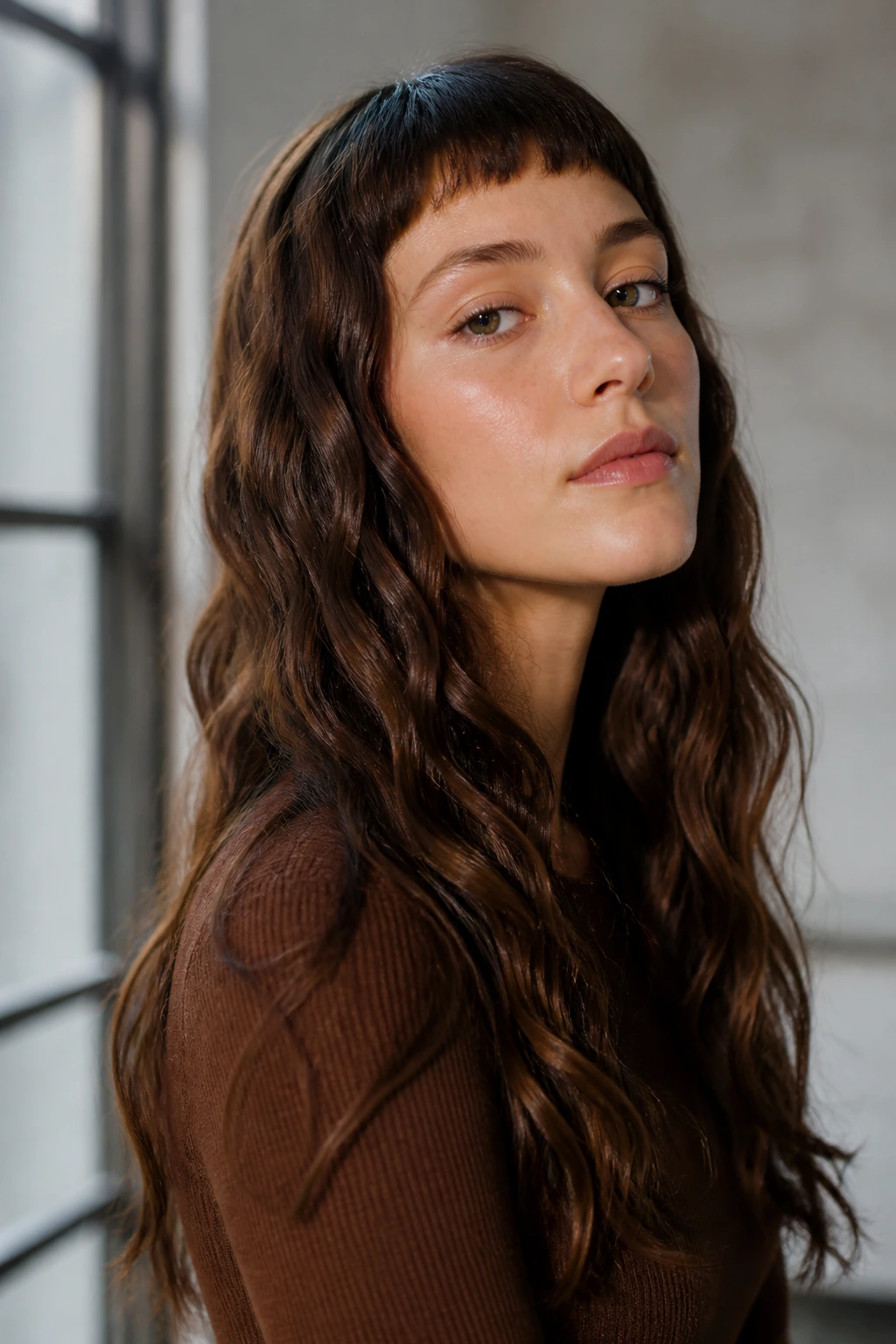
3. Mermaid Waves with Choppy Micro Bangs
Why do these two things work together so well? Because mermaid waves are all softness and flow, while micro bangs cut across that softness like a little black line in a sketch.
The result is pretty without going sugary. Long waves can get sentimental fast if every piece is rounded and airy. A chopped micro fringe fixes that. It gives the face a frame that feels a little sharper, which matters more than people realize when the lengths are loose and glossy.
How to Wear It
A 1.25-inch curling iron gives you the most believable wave pattern. Wrap the hair away from the face, leave the ends out for a second or two, and brush it out after it cools. The bangs should stay piecey, not curled under in a baby-doll way.
This works especially well if your hair has some natural wave already. A tiny bend in the fringe and a looser wave through the lengths look expensive in person, even if the styling takes less time than a pin-straight finish.
Best for: medium to thick hair, or finer hair with a bit of grip from salt spray and dry texture spray.
What Makes It Different
The waves carry movement, but the fringe keeps the shape from floating away. That tiny strip of hair across the forehead gives the whole style a point of view. Without it, this would just be long wavy hair. With it, the look has an edge.
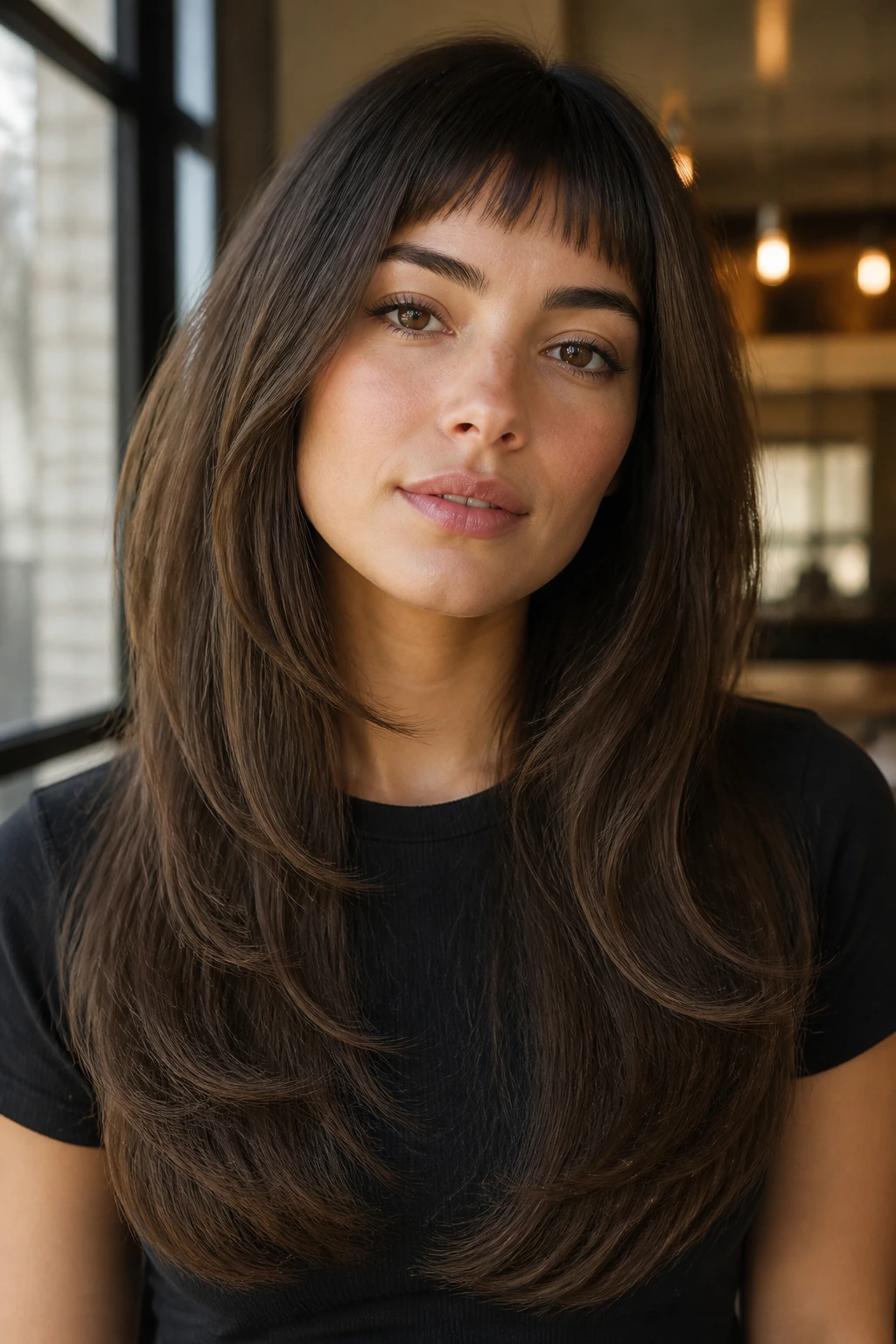
4. Long Shag with Wispy Micro Bangs
The long shag is the most forgiving place to put micro bangs. That’s partly because the cut already likes texture, and partly because it does not demand perfection. A few uneven pieces around the face actually help.
The bangs can be wispy and a little chipped, which makes them easier to live with as they grow. The layers through the sides and back keep the silhouette from feeling bulky, and the fringe becomes part of the movement instead of sitting on top of it like an afterthought.
Why It Works
A shag gives micro bangs somewhere to go. Without layers, a very short fringe can feel abrupt. With shaggy length, the whole haircut seems connected from the brow to the ends.
This is the best option if you hate spending 20 minutes on your hair before coffee. A little mousse at the roots, a quick diffuse or air-dry, and maybe a twist with your fingers is often enough. The shape is supposed to look touched, not polished to death.
Good for: thick hair, wavy hair, and anyone who wants a fringe that can look better on day two.
Watch for: over-thinning the bangs. If they get too sparse, the forehead shows in awkward gaps and the cut loses its frame.
5. Blunt Long Hair with Boxy Micro Bangs
This one has a mood. Not a soft mood. A sharp one.
A blunt long cut with boxy micro bangs works because both pieces speak the same language. The hair falls in a solid line, the fringe sits like a neat block above the brows, and the whole effect is clean enough to look almost graphic. If your hair is dense, this can be a gorgeous way to use that density instead of fighting it.
Why It Works
There’s no pretending here. The style asks for precision, and if the cut is off, you’ll know it right away. But when it’s right, the result is striking because the micro bangs echo the blunt perimeter. Nothing feels accidental.
This version also flatters people who like structure in their clothes and makeup. A strong lip, a crisp collar, an earring with a little swing — these all make sense with this haircut. It’s the kind of style that looks best when the rest of the outfit doesn’t compete with it.
Best For
- Thick or medium-thick hair that holds a strong edge.
- Straight textures that can stay smooth without constant touch-ups.
- Anyone who likes a very clear shape around the face.
A tiny warning: if your hair is fine and feather-light, this can go limp at the ends and leave the fringe looking too dominant. The line needs enough body to back it up.
6. Curly Lengths with Rounded Micro Bangs
Can curly hair wear micro bangs? Yes — but the haircut has to respect shrinkage. That is the part people get wrong, and it’s why so many curly fringes end up too short the day after the cut.
The good version is rounded rather than flat. The bangs sit a little curved across the forehead, the curls spring naturally, and the long lengths keep their shape without getting too wide around the sides. When it’s done well, the face gets a lovely open frame and the fringe becomes part of the curl pattern instead of a separate event.
What to Tell Your Stylist
Ask for the bangs to be cut dry, or nearly dry, in their natural curl pattern. That matters more than any styling product. If your hair springs up an inch when it dries, the cut should account for that before the first snip.
Use a lightweight cream or gel on the fringe and let it set without constant touching. Curly micro bangs can look fantastic with a little separation. They do not need to be ironed into submission.
One good rule: if you want a softer result, keep the side pieces a touch longer than the center so the fringe arcs gently instead of stopping like a hard line.
7. High Ponytail with Straight Micro Fringe
A high ponytail and micro bangs make a sharp little contrast that never feels lazy. The ponytail pulls the hair up and back, showing the neck and jaw, while the fringe keeps enough front detail to avoid that severe gymnast-clean look unless you want it.
It’s also one of the easiest ways to wear long hair when you want the length out of your way but still want the haircut to look intentional. The bangs do the talking up front. The tail or wrap at the back keeps the rest of the hair useful.
Why It Works
The ponytail raises the visual center of gravity, and the micro bangs counterbalance it. Without the fringe, the face can feel too exposed. Without the high ponytail, the bangs can feel too strong. Together, they’re balanced in a way that’s oddly satisfying.
This is especially good for straight or stretched textures that can lie smooth at the hairline. A little edge control at the front and a wrapped ponytail base keep the finish clean. If you want it to feel less sporty, leave two small face pieces out near the temples — not bangs, just a softer edge.
Quick Styling Notes
- Smooth the crown first so the ponytail sits high and doesn’t droop by noon.
- Keep the fringe dry and separate; a damp bang against the forehead turns strange fast.
- Use a small boar-bristle brush to polish flyaways.
8. Half-Up Knot with Airy Micro Bangs
A half-up knot is where micro bangs get a little playful. The top section goes up, the length stays loose, and the tiny fringe keeps the face framed even when the crown is pulled away.
This is one of those styles that looks better with second-day hair. The slight grit helps the knot hold, the bangs stay piecey, and the ends of the loose hair can keep a little bend instead of being too slick. It’s relaxed, but not sloppy. There’s a difference.
Why It Works
The half-up shape gives the hair two jobs: some of it is lifted, some of it is left alone, and the bangs bridge the gap between the two. That little front section becomes the most deliberate part of the whole style, which is why the fringe should be light and slightly separated rather than dense.
I like this when the rest of the haircut has layers. The layers stop the lower half from looking heavy, and the micro bangs stop the top from looking too sweet. If the knot is twisted high, the fringe should stay straight. If the knot sits lower, you can soften the bangs just a touch with a flat iron bend.
Tiny tip: the style works best when the knot is a little messy on purpose. Too neat and it starts feeling bridal in the wrong way.
9. Braided Crown with Free Length and Micro Fringe
Braids can swallow the face if you’re not careful. Micro bangs solve that problem fast. They keep the forehead visible and stop a full braided style from looking too closed-in.
This look has a bohemian edge, but the fringe keeps it from drifting into costume territory. The braid can wrap around the head, sit across the crown, or pull back from the temples. The long lengths can stay loose, wavy, or lightly curled. The short fringe is the part that makes the whole thing feel current.
What Makes It Different
The micro bangs cut the sweetness. That’s the real reason this works. Braided crown styles often lean soft and romantic, which is fine until they become a little too predictable. The short bang line gives the style a smarter outline and keeps the forehead from vanishing under the braid.
This is a good choice if you like long hair but also want your face visible in photos. The braid frames the head, the fringe frames the eyes, and the loose lengths keep the shape from feeling tight. If you’re using braids on day-old hair, a light mist of water and a touch of cream on the ends can help the strands behave.
10. Low Chignon with Neat Micro Bangs
A low chignon and micro bangs look cleaner than people expect. The bun sits at the nape, the neck gets exposed, and the fringe keeps the front from feeling severe or overdone.
This is the style I’d pick for an event if I wanted the hair to look deliberate without looking precious. The bun can be twisted, tucked, or pinned with a few visible bobby pins. The fringe can stay blunt for drama or be softened just at the corners for a less rigid finish.
Why It Works
The chignon gives you a strong back view, which means the front has to earn its place. Micro bangs do that easily. They create a face-level detail that balances the simplicity of the bun and makes the whole look feel finished.
This also plays well with statement earrings and open necklines. A plain turtleneck, a square neckline, or a sharp collar all sit nicely with this haircut because the hair itself stays restrained. If you have fine hair, tease the bun lightly at the base before pinning so it doesn’t look too small next to the fringe.
A practical note: if the bun is too polished and the bangs are too shaggy, the style splits in two. Keep the texture language consistent.
11. Big Barrel Curls with Baby-Short Fringe
This is glamour with a little bite. Big curls bring volume and movement, while the micro bangs keep the whole thing from looking soft and samey.
The curls need to be large, polished, and brushed into a loose pattern — not tight ringlets. The bangs stay short and controlled, which creates a strong contrast across the forehead. If you want a style that looks dressed up without sliding into vintage costume, this is a good lane.
Why It Works
Big curls naturally create width, and micro bangs create height. That push and pull can be beautiful when the cut is balanced correctly. The bangs also make the style feel more editorial, because they interrupt the roundness of the curls with a crisp horizontal line.
I’d use a heat protectant first, then a 1.5- to 2-inch curling tool depending on density. After the curls cool, brush them out with a soft paddle brush so they fall in large pieces. The fringe should be styled separately and kept a little firmer than the rest of the hair.
Best for: thick hair, medium hair with lots of natural body, and anyone who likes a dramatic front edge.
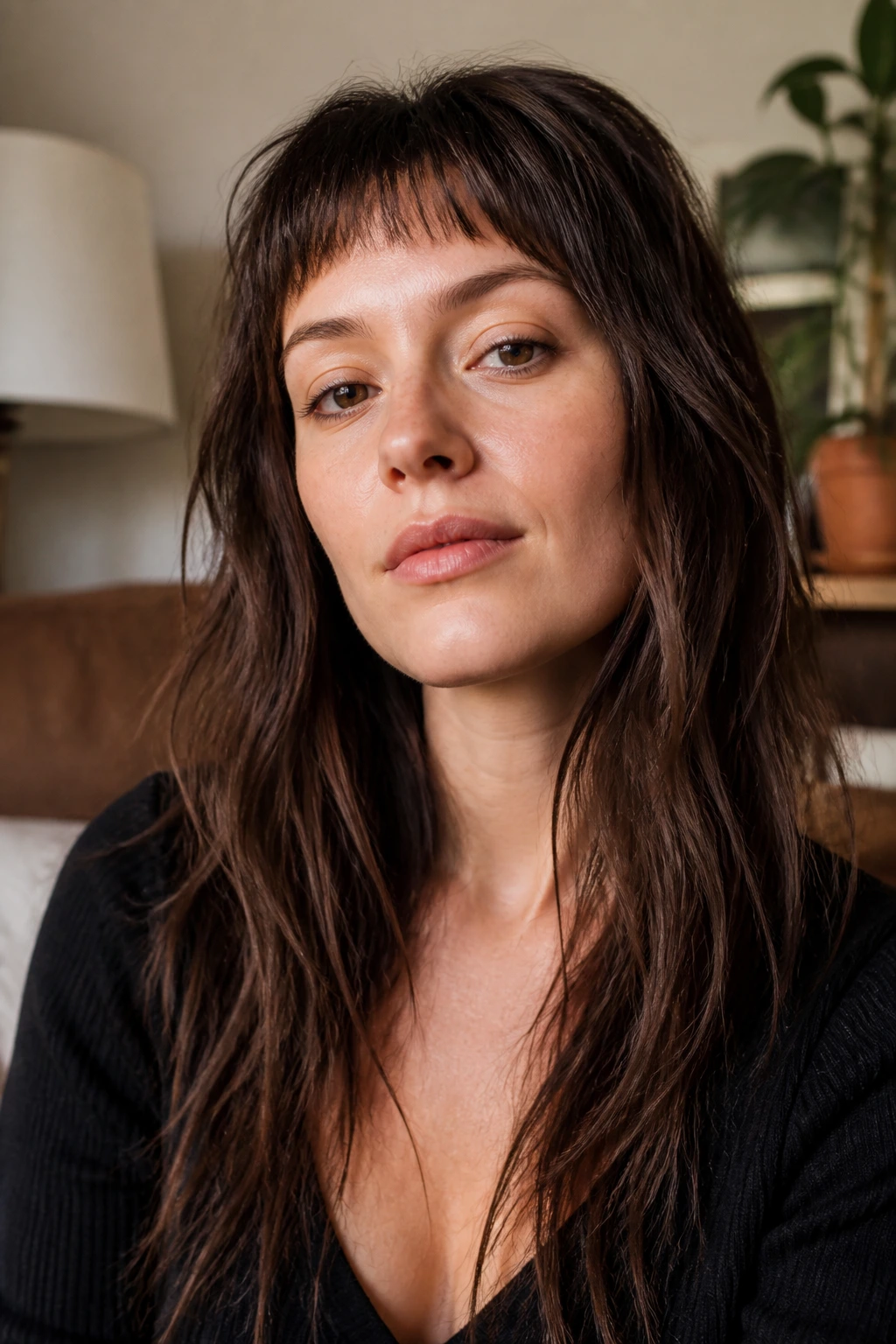
12. Wolf Cut Length with Ragged Micro Bangs
The wolf cut and micro bangs are cousins. Messy cousins, but cousins all the same.
Both live off texture, choppy layers, and a sense that the haircut should look a little wild on purpose. The long pieces around the shoulders and collarbone keep the silhouette feminine if that’s your thing, while the micro bangs add the sharp little top note that makes the cut feel rebellious rather than merely shaggy.
Why It Works
A wolf cut already breaks the hair up into pieces, so a rigid bang line would look too formal. Ragged micro bangs match the energy of the layers. They’re short, but not neat. Choppy, but not feathered to the point of vanishing.
This style likes dry texture spray, a diffuser, or just a rough blow-dry with your fingers. It doesn’t need glassy smoothness. It needs movement. If your hair is thick and tends to feel bulky around the sides, this cut can remove some of that weight while keeping the overall length.
What to Watch For
- Don’t let the bangs get too thin.
- Don’t flatten the crown.
- Don’t try to polish every piece into place.
A little irregularity is the point. The hair should look like it has a pulse.
13. Beachy S-Bends with Slightly Choppy Micro Fringe
Beachy waves can get sleepy if they’re not anchored by something sharper. Micro bangs fix that. They keep the style from melting into generic “effortless hair” territory, which is a phrase I’m frankly tired of seeing used like it means anything.
The S-bend pattern in the lengths is soft and easy. The fringe should be slightly choppy so it doesn’t read too severe against the relaxed movement through the rest of the hair. The result feels casual, but not accidental.
Why It Works
The bends in the hair catch the light in a broken, loose way. A micro fringe gives that softness a frame. If you use a flat iron, bend the hair alternately forward and back in large sections, then rake through with your fingers rather than a brush.
This is one of the easiest looks to wear when you want long hair to feel lighter. It’s also forgiving if your hair texture is somewhere between straight and wavy. A little sea-salt spray at the mids and a light serum at the ends can keep the finish piecey without turning the bangs greasy.
Tiny opinion: this style gets better on day two. The bends relax, the fringe settles, and the texture starts to look lived-in instead of freshly made.
14. Long Center-Parted Hair with Blunt Micro Bangs
A center part and micro bangs sounds like a contradiction until you see it on the head. The part opens the length in two clean halves, and the tiny fringe sits like a small graphic block above the brows. It’s symmetrical, but not soft. That’s the appeal.
This is the sort of style that looks especially good when the hair is shiny and the ends are trimmed clean. If the lengths are rough, the whole thing can look unfinished. When the lines are crisp, though, it has real presence.
How to Wear It
Keep the part sharp and the fringe straight. Let the lengths fall without too much bend if you want a modern look, or add just a whisper of curve at the ends for softness. Earrings and makeup matter here because the face is so visible — a bare face can make the style feel harsher than it really is.
Best for: people who like symmetry, minimalism, and hair that looks intentional from across the room.
If you’re unsure about going fully blunt, ask for the center of the fringe to be short and the edges to be softened by a fraction. That little adjustment keeps the cut from feeling boxy.
15. Natural Coils with Curved Micro Fringe
Curly and coily hair can wear a micro fringe beautifully, but the shape has to be cut for the way your hair lives, not the way it looks wet in a salon chair. That means dry cutting, shrinkage awareness, and a little patience.
The fringe usually works best with a gentle curve rather than a flat line. The long coils around it can stay full and springy, which gives the face a lovely halo effect. The bangs stay short enough to read as micro, but not so short that they fight the curl pattern.
Why It Works
The short fringe gives the curl shape a clear starting point. Without it, long coils can sometimes feel like they start somewhere below the forehead and skip the face entirely. With micro bangs, the eye goes straight up to the face, then out into the length.
I’d keep a curl cream or light gel on hand and let the fringe dry where it wants to live. Touching it too much while it dries makes the shape frizzier and less defined. If your crown is very dense, a slightly longer temple section can help the bangs blend into the sides instead of popping out as a separate block.
A blunt truth: this look is best when you trust your curl pattern. Trying to force it into a straight-bang shape usually makes everything harder.
16. Wet-Look Lengths with Sleek Micro Bangs
Wet-look hair is not subtle, and micro bangs make it even less so. The lengths are slicked back or smoothed close to the head, the fringe stays short and glossy, and the finished shape feels dramatic in a very clean, modern way.
This is the style for nights out, formal events, or any time you want the hair to act like a sharp accessory rather than a soft frame. It works because the fringe keeps the face from disappearing under all that product and shine. Without it, the wet look can feel a little too bare.
Why It Works
The wet finish compresses the hair, so the micro bangs become the one place where shape still matters. They have to be neat, even, and deliberate. I’d use gel sparingly through the lengths and a lighter product on the fringe so it stays defined without dripping onto the forehead.
The haircut itself matters here. If the bangs are slightly uneven in a good way, the style feels expensive and editorial. If they’re too blunt and the wet look is too heavy, the result can look like you got caught in a rainstorm. Small difference. Big effect.
Best for: straight or stretched textures, strong cheekbones, and people who don’t mind being noticed.
How Long Hair and Micro Bangs Balance Each Other
Long hair brings drag; micro bangs bring tension. That’s the whole equation, and it’s why the pair can feel more modern than full bangs with long lengths. The fringe cuts a line across the forehead, the rest of the hair keeps moving, and your eye keeps bouncing between the two.
That balance matters even more if you tend to wear your hair the same way every day. A micro fringe gives the haircut a front-facing detail, which means even a plain ponytail or a simple loose blowout can read as styled. It also changes how people see proportion. The forehead looks shorter, the eyes stand out more, and the length feels longer because there’s no bulky fringe stealing space.
The strongest versions have a clear decision behind them. Sleek lengths need a crisp fringe. Textured lengths need a chipped or wispy fringe. Curly lengths need a dry-cut fringe that respects shrinkage. When the two halves speak the same language, the haircut stops feeling trendy and starts feeling like it belongs to the person wearing it.
Tools That Make the Fringe Easier to Wear
You do not need a bathroom counter full of stuff, but you do need the right few tools. Micro bangs show every sloppy step, so cheap shortcuts tend to backfire.
- Small round brush: A 1-inch or 1.5-inch brush is the easiest way to smooth the fringe without flattening the roots.
- Blow dryer with a narrow nozzle: The nozzle gives you direction and keeps the bangs from blowing every which way.
- Flat iron with slim plates: Handy for a tiny bend or quick polish on the fringe, especially if the rest of the hair is already styled.
- Heat protectant spray: Use it before any hot tool. The fringe sits close to the face, so fried ends show up fast.
- Dry shampoo: Saves the bangs on oily days and keeps the front from looking stringy.
- Light styling cream or serum: A pea-size amount can calm fuzz on straight hair and give curls a little definition.
- Duckbill clips: Useful for setting the fringe aside while you dry the rest of the hair.
- Wide-tooth comb or soft brush: Better than yanking through damp curls or waves with a stiff brush.
- Silk or satin pillowcase: Cuts down on bed-head kinks and helps the front stay smoother overnight.
What to Tell Your Stylist Before the First Snip
A micro fringe is not the place for vague instructions. “Short bangs” and “some texture” can mean three different things to three different people, and that’s how you end up with a fringe that feels too blunt, too thin, or too high.
Bring photos of people with the same hair density and texture you have. That part matters more than face shape alone. Tell your stylist how much forehead you want visible, whether you want the center to be the shortest point, and whether the temples should blend into the sides or stop cleanly. If your hair is curly or coily, ask for the fringe to be cut dry or in a dried state close to how you wear it.
Say the actual maintenance level you’re willing to live with. A true micro fringe usually needs trims every 2 to 4 weeks if you want it to keep the same shape. If that sounds annoying, ask for a slightly longer version that can still be worn short but won’t fall apart the minute it grows.
One detail people forget: talk about your cowlicks. If you have one at the front hairline, the cut needs to work with it, not against it. That may mean a little more weight in one area or a tiny shift in the part.
Styling and Maintenance Between Wash Days
Micro bangs are easiest when you stop pretending they can be treated like the rest of your hair. They sit against the skin, pick up oil, and react to sweat faster than the lengths do. That’s normal.
A quick refresh in the morning usually works better than a full wash. Mist the fringe with a tiny bit of water, brush it into place, then blow-dry it side to side for a few seconds. That movement keeps it from separating in a weird clump. If the hairline gets oily, a small puff of dry shampoo at the roots is enough; don’t cake it on or the bangs will look dusty.
At night, a silk pillowcase helps, but so does simply keeping the front section from being crushed flat. Some people clip the fringe very lightly to one side. Others use a satin scarf. The goal is not perfection. It’s preventing the kind of weird bend that takes ten minutes to fix in the morning.
Trim wise, micro bangs are needy. Every 2 to 4 weeks is the rhythm if you want them to stay short. Past that, they start drifting into short fringe territory, which is a different look entirely.
Common Mistakes That Make Micro Bangs Look Harsh
The biggest mistake is making the bangs too thick. Heavy micro bangs swallow the forehead and turn the whole haircut rigid. The fix is a lighter internal weight or softer edges, especially if the hair around the face is already dense.
Cutting them too short is the second problem. A micro fringe that sits too high can jump from bold to severe, and there’s no graceful recovery if the line is above where your face wants it to sit. Leave a touch more length than you think, then reassess after the hair dries and settles.
Ignoring texture is another trap. Curly hair cut wet, or straight hair cut without checking how it falls, can shift by a surprising amount once it dries. The result is often a fringe that sits crooked or floats away from the forehead. Cut the way the hair actually behaves, not the way it looks in the comb.
The last big one: styling only the fringe and forgetting the rest. Micro bangs need the lengths to support them. If the rest of the hair is limp, frizzy, or shapeless, the bangs end up looking like a random add-on. A little polish through the mids and ends changes everything.
Variations That Soften or Sharpen the Look
The Softer Micro: Keep the center short but let the outer corners sit slightly lower. That gives you the short-bang effect without the hard-edged feel, and it’s the easiest version to grow out if you change your mind.
The Graphic Cut: Ask for a crisp, even line and pair it with blunt long hair or a sleek blowout. This version reads strongest when the perimeter is tidy and the shine is high.
The Curly Dry-Cut Version: Let the stylist shape the fringe dry, curl by curl, so shrinkage is built into the cut. This is the move if you want the bangs to bounce instead of stick out.
The Grow-Out Friendly Fringe: Keep a little more length at the temples and a touch more weight in the center so the bangs can slide into side pieces later. It still feels micro, but it buys you more room.
The Punk-Tilt Version: Go choppier, add more texture, and pair it with wolf-cut or shaggy lengths. That one is for people who want the fringe to feel a little unruly on purpose.
Questions People Actually Ask About Micro Bangs
Do micro bangs work with every long haircut?
Not every one, no. They work best when the rest of the hair has a clear shape — blunt, layered, textured, curled, braided, or pinned up. A totally shapeless long cut can make the fringe look like a separate decision.
Are micro bangs hard to style every day?
They are easier than full bangs in some ways and fussier in others. There’s less hair on the forehead, but the short length means every bend and cowlick shows fast, so a quick blow-dry or brush-through is usually needed.
Can curly hair wear micro bangs without looking too short?
Yes, if the fringe is cut for shrinkage. Dry cutting is the safer route, and the bangs usually need to be left longer than straight hair would need. A curl pattern that springs a lot can lose an inch or more once it dries.
How often do micro bangs need trims?
Usually every 2 to 4 weeks if you want the same short shape. If you’re happy letting them drift a little, you can stretch that longer, but the look changes quickly once they start hitting the brow.
What if I have a cowlick at the front?
That does not mean you can’t wear the style. It means the cut should account for the direction of the growth pattern, and you may need a stronger dry-dry routine in the morning. A stylist who checks the front hairline before cutting is worth listening to.
Can I wear them with a ponytail or bun?
Absolutely. That’s one of the best parts of long hair with micro bangs. The fringe keeps the front intentional while the rest of the hair gets lifted out of the way.
Do micro bangs make the face look shorter?
They can, yes, because they expose more forehead and shift the eye line upward. That effect is strongest when the fringe is blunt and high. Softer or slightly longer versions feel less dramatic.
Can I grow them out without an awkward stage?
You can, but there will be a stage. The trick is to let the corners lengthen first so they slide into face-framing pieces instead of hanging like a shelf. Side parts, clips, and a bit of texture help more than pretending the grow-out does not exist.
Tiny Fringe, Big Length
Micro bangs change long hair in a way that full bangs rarely do. They don’t soften the face so much as sharpen the whole picture. That little strip of hair becomes a line, and long hair behind it suddenly looks more deliberate, more modern, and a lot less anonymous.
The styles that work best all do the same thing in different languages. Some lean sleek. Some lean shaggy. Some lean curly, braided, or glossy enough to catch the light in a hard edge. The fringe stays small, but it keeps the rest of the hair honest. That’s the appeal, plain and simple.
If you’ve been circling the idea, start with a version that leaves a little room to breathe — softer edges, slightly longer temples, and long hair that already has shape. The smallest fringe can carry more attitude than people expect, and once it sits right, the rest of the hair feels newly awake.
