



Short hair does not forgive a bad fringe. One missed inch around the forehead, and a crisp pixie starts looking boxy; one heavy section too far forward, and a neat bob turns into a curtain that eats your face.
That’s why bang styles for short hair need their own rules. The fringe that looks airy on shoulder-length layers can sit like a shelf on a chin-length cut, while the same razor-soft edge that feels cool on a shag can disappear on a sleeker bob. Short hair changes the proportions, and proportions change everything.
Hairline, cowlicks, density, glasses, forehead height, curl pattern — all of that shows up faster when the rest of the haircut is short. The styles below aren’t just “bangs,” either. They’re different ways of using fringe to change the shape of a cut, which is why some of them are sharp and graphic, some are soft and forgiving, and a few are basically a polite escape hatch if you’re not ready to commit.
Why Short Hair Bangs Need Their Own Rules

Short hair exposes the forehead faster.
With a pixie or bob, the fringe sits closer to the eyes and brow, so even a small length shift changes the whole outline. A half-inch can mean “light and airy” or “I need a trim this week.”
Cowlicks stop being background noise.
On longer hair, a stubborn front swirl can hide under weight. On short hair, it pushes one side open, lifts a corner, or splits the fringe down the middle whether you asked for it or not.
Density matters more than length.
A thick fringe on short hair can look like a helmet if it’s cut blunt and heavy. A fine fringe can look see-through if the stylist takes too much off the base.
The grow-out window is short.
That’s not a warning. It’s just reality. Short bangs tend to tell on themselves quickly, which is why styles that blur into layers or split at the center are often easier to live with.
Face shape is only part of the story.
Forehead height, glasses, hair texture, and how much styling you’re willing to do usually matter more than the old face-chart rules people repeat at salons.
What to Ask Your Stylist Before the First Snip

A good fringe starts with a very plain conversation. Bring photos, yes, but bring the right kind: front view, side view, and one photo of the style on someone whose hair texture looks at least vaguely like yours. A screenshot of a polished blowout on dead-straight hair tells you almost nothing if your own hair bends at the crown and splits near the brow.
Say how much upkeep you’ll tolerate. That part matters more than people admit. A micro fringe on a pixie can look fantastic on day one and feel annoying by day ten if you hate frequent trims. Curtain pieces and split bangs buy you more breathing room, while blunt lines ask for regular maintenance and a hand that knows how to dry them.
And name the trouble spots. If you have a cowlick at the center, a high temple, a deep side part, or glasses that sit high on the bridge, say so. Good stylists work around those details. They don’t pretend they aren’t there.
The Tools That Keep Short Bangs in Shape
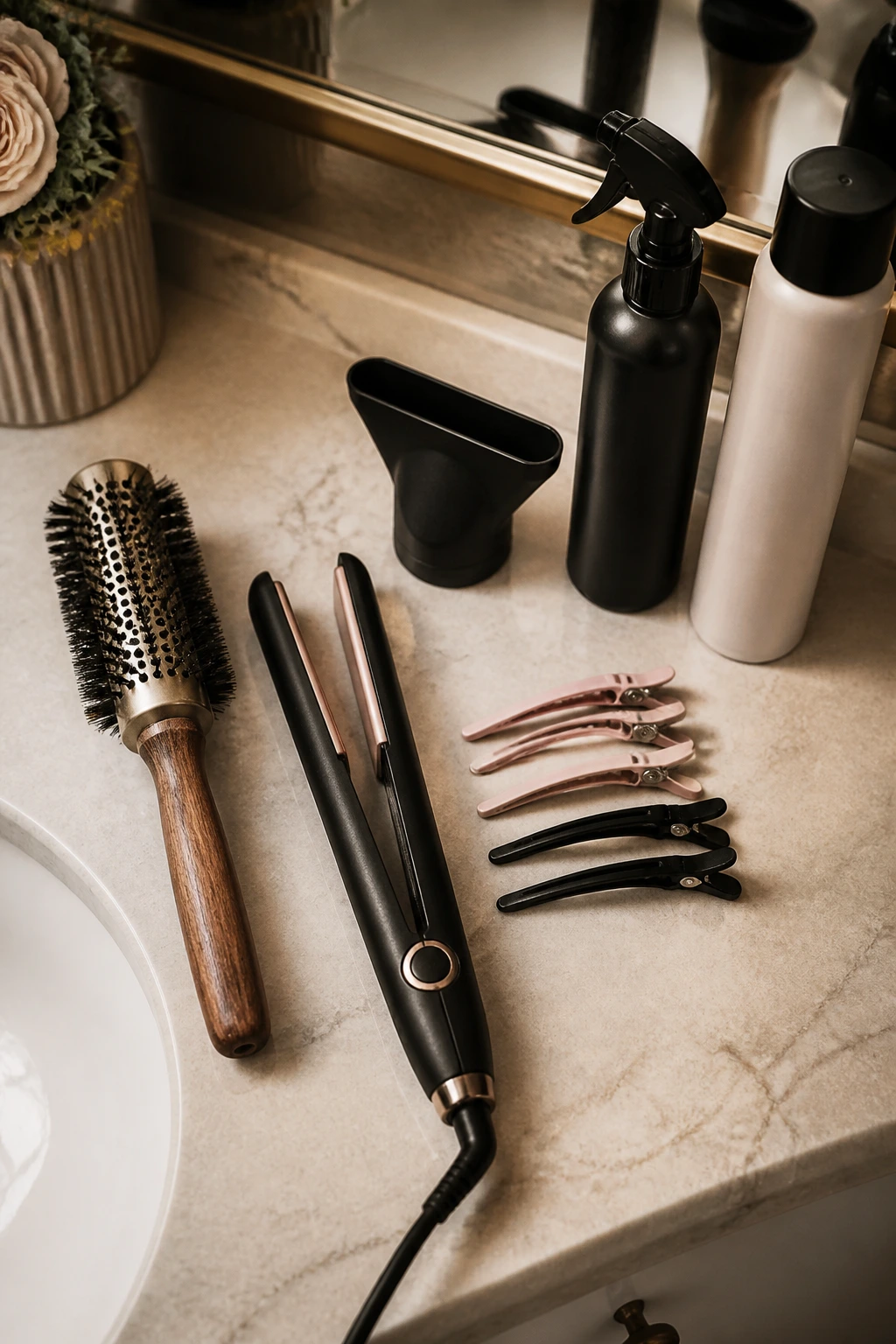
- 1-inch round brush: Small enough to bend short fringe without creating a huge curl at the ends.
- Mini flat iron: Useful for a quick C-curve on blunt or side-swept bangs; keep it on dry hair only.
- Duckbill clips: These hold roots up while they cool, which helps the fringe remember its shape.
- Concentrator nozzle: Directs the dryer where you want it instead of blasting the bangs apart.
- Texturizing spray: Adds separation to wispy, choppy, and piecey fringe.
- Dry shampoo: Saves day-two bangs from forehead oil and gives them a little grip.
- Diffuser: The cleanest way to dry curly or coily fringe without wrecking the pattern.
- Fine-tooth comb: Good for clean sectioning and for resetting a side part.
- Handheld mirror: Worth it. The side profile is where bad fringe decisions show first.
- Salon shears: If you trim at home, use real cutting shears — not kitchen scissors, ever.
1. Micro Fringe on a Cropped Pixie
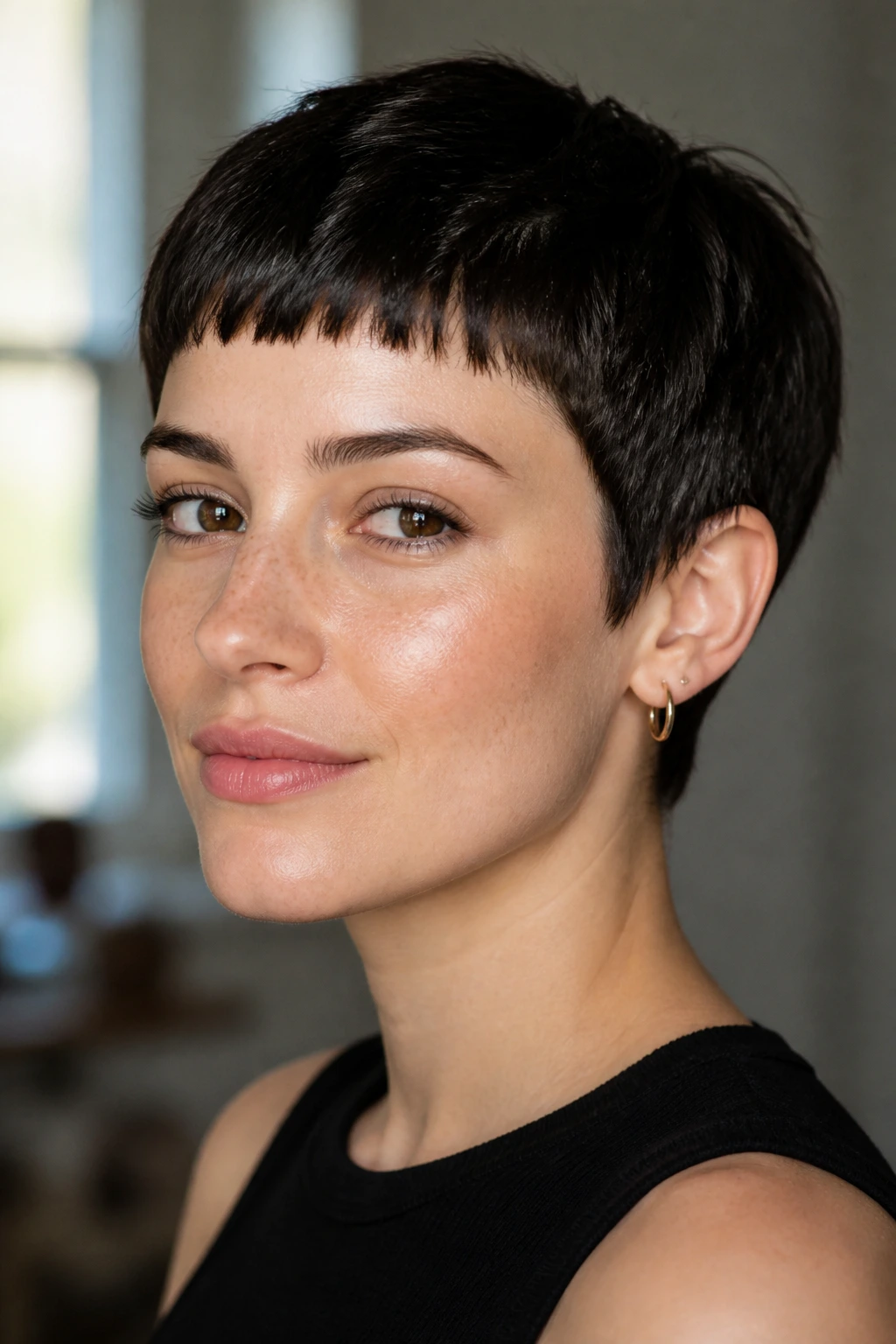
A micro fringe on a pixie is tiny, sharp, and a little daring in the best way. It leaves the brows mostly visible, which means the cut looks deliberate instead of heavy, and the whole face gets a clean frame rather than a curtain.
Why It Works on a Pixie
This shape works because it keeps the top of the haircut light while still giving the front edge some personality. On a cropped pixie, that tiny line across the forehead pulls attention to the eyes and cheekbones. It’s strongest when the hair has enough density at the root to hold a clean edge, not a fluffy one.
- Ask for point-cutting at the tips so the fringe doesn’t look like a ruler line.
- Keep the sides soft and short; a bulky temple with micro bangs looks top-heavy fast.
- Trim every 2 to 3 weeks if you want it to stay neat.
Tip: A micro fringe looks best when the roots are lifted, not flattened.
2. Curtain Bangs with a Chin-Grazing Bob
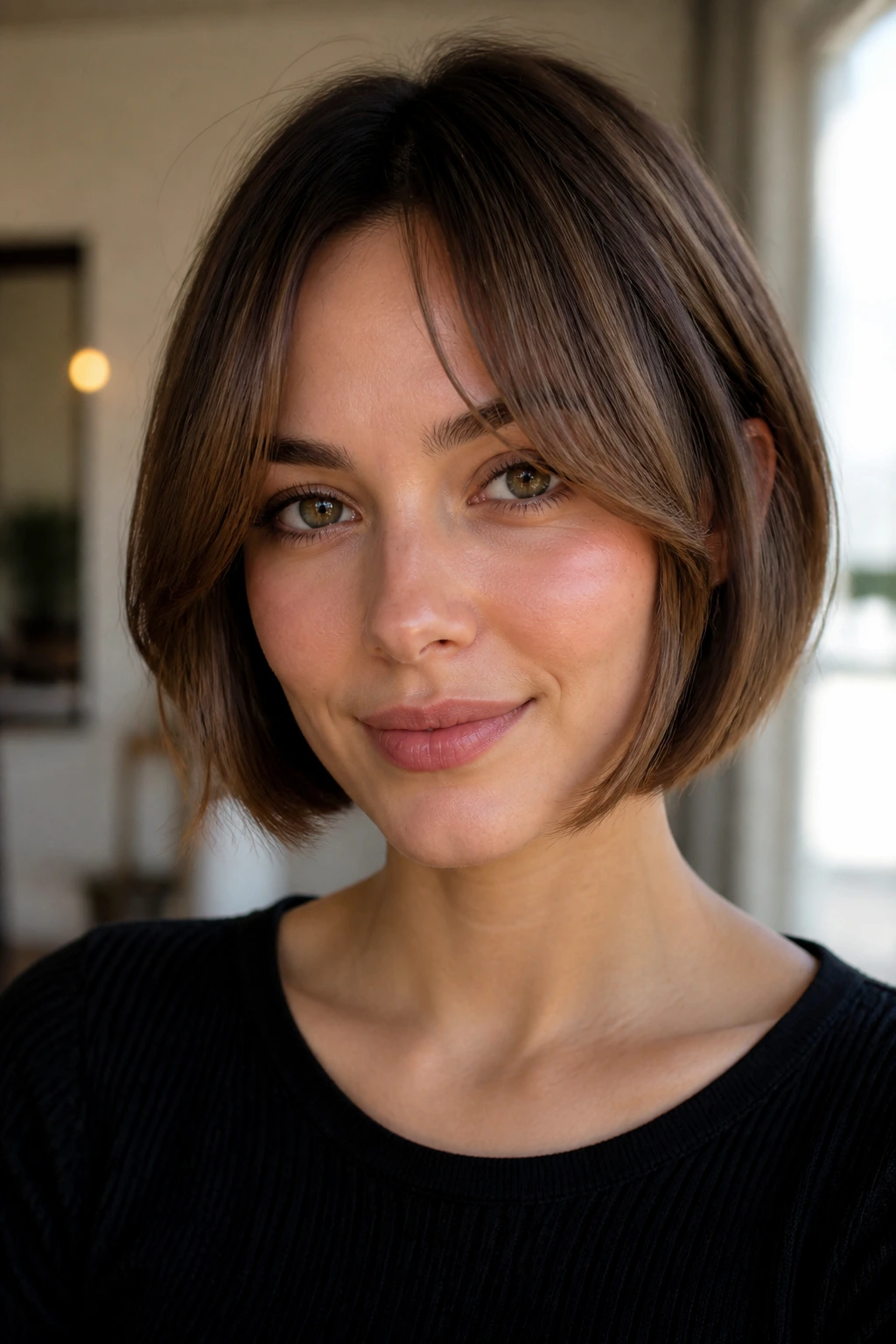
Curtain bangs on short hair are popular for a reason: they soften a bob without stealing the whole show. The center part opens the face, and the shorter pieces around the cheekbones make the haircut feel less square.
The trick is the length. On short hair, curtain bangs usually need to start shorter than people expect, then blend out toward the jaw so they don’t swallow the sides of the bob. If the ends hit the exact same point as the cheekbone line, the shape can get bulky. Keep them airy, and they fall into place with far less fuss.
3. Side-Swept Fringe That Hides a Higher Hairline
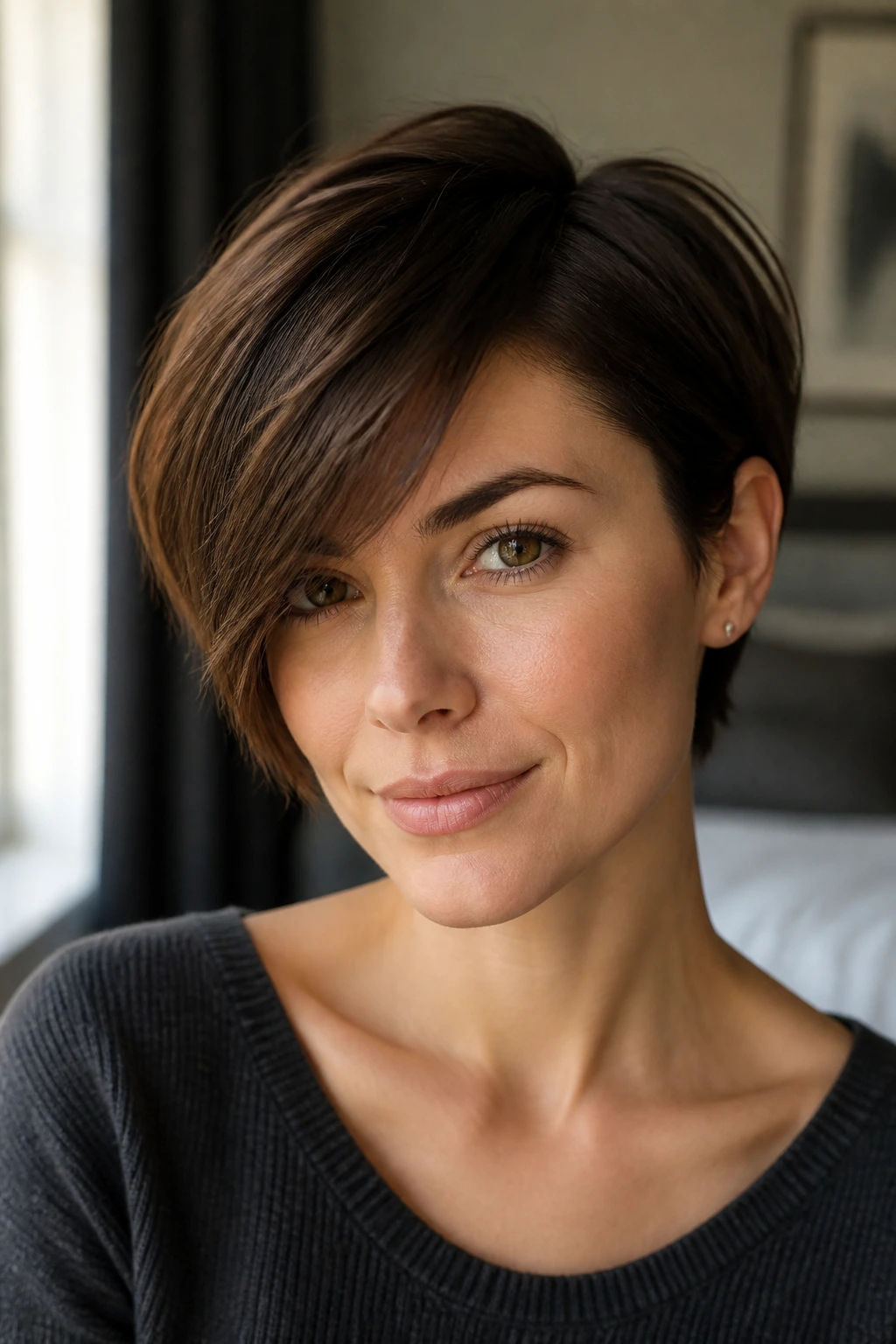
Do you want fringe without committing to a full front line? Side-swept bangs are the easy answer. They’re useful on short hair because they break up the forehead without boxing it in, and they can be tucked back, pinned, or blown across in a few seconds.
How to Wear It
This style works best when the bang has enough length to move but not so much that it hangs in your eyes. A short bob with a side-swept fringe feels cleaner when the sweep follows the hair’s natural part instead of fighting it. If one temple grows faster than the other, the side sweep hides that mismatch nicely.
A light cream at the ends and a quick blast from the dryer are usually enough. Heavy oil is not your friend here.
4. Blunt Brow-Grazing Bangs on a Sleek Bob
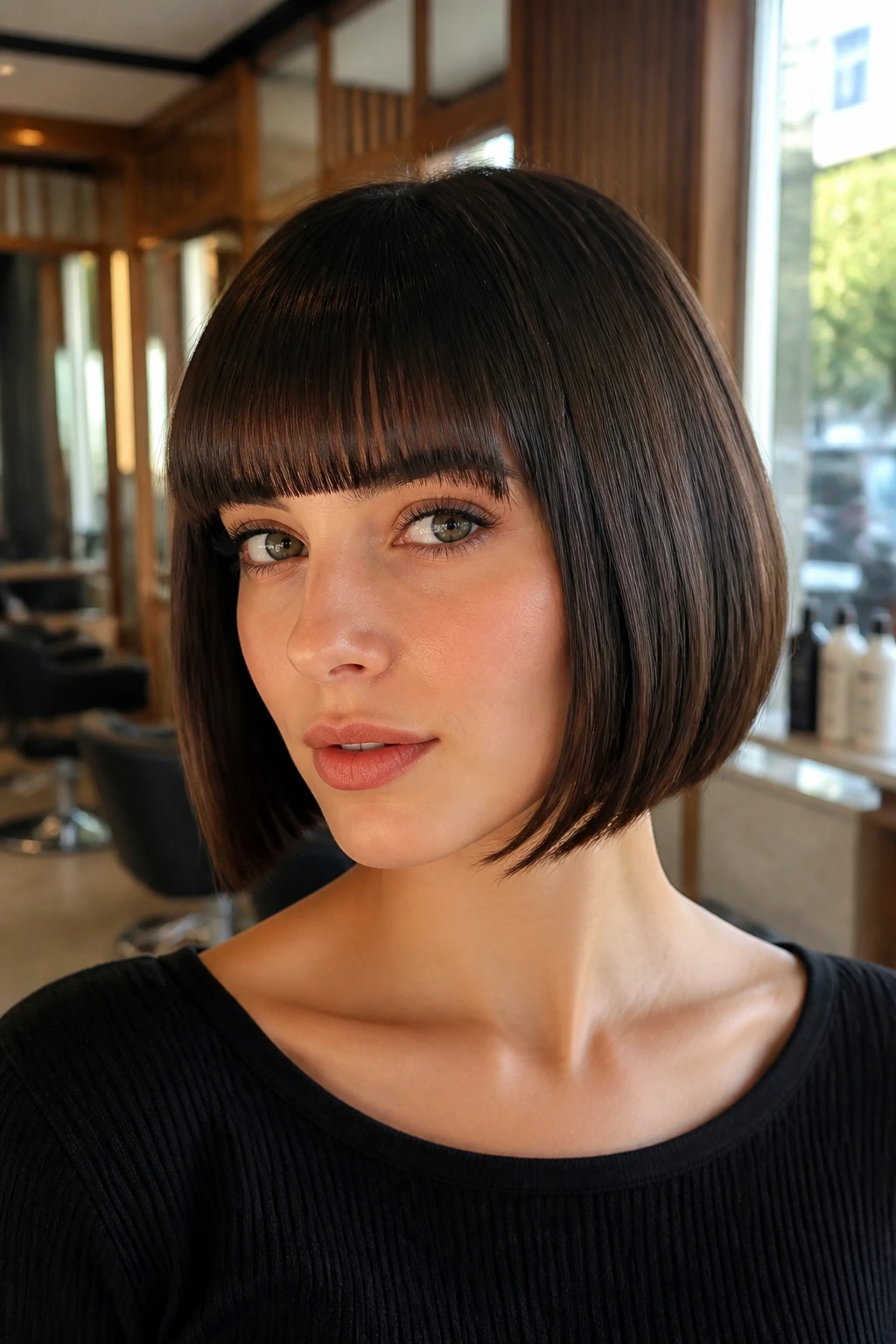
A blunt brow-grazing fringe is the opposite of shy. It gives a short bob a hard edge, and if the hair is straight or nearly straight, the result looks polished in a way that messy fringe never quite can.
The danger is weight. Too much density, and the bangs sit like a shelf. Too little, and the line breaks apart by lunchtime. Ask for a blunt perimeter with a little softening at the ends so the shape stays solid without looking pasted on. This one is for people who don’t mind a trim schedule and like their haircut to read from across the room.
5. Wispy Piecey Bangs for Fine Hair
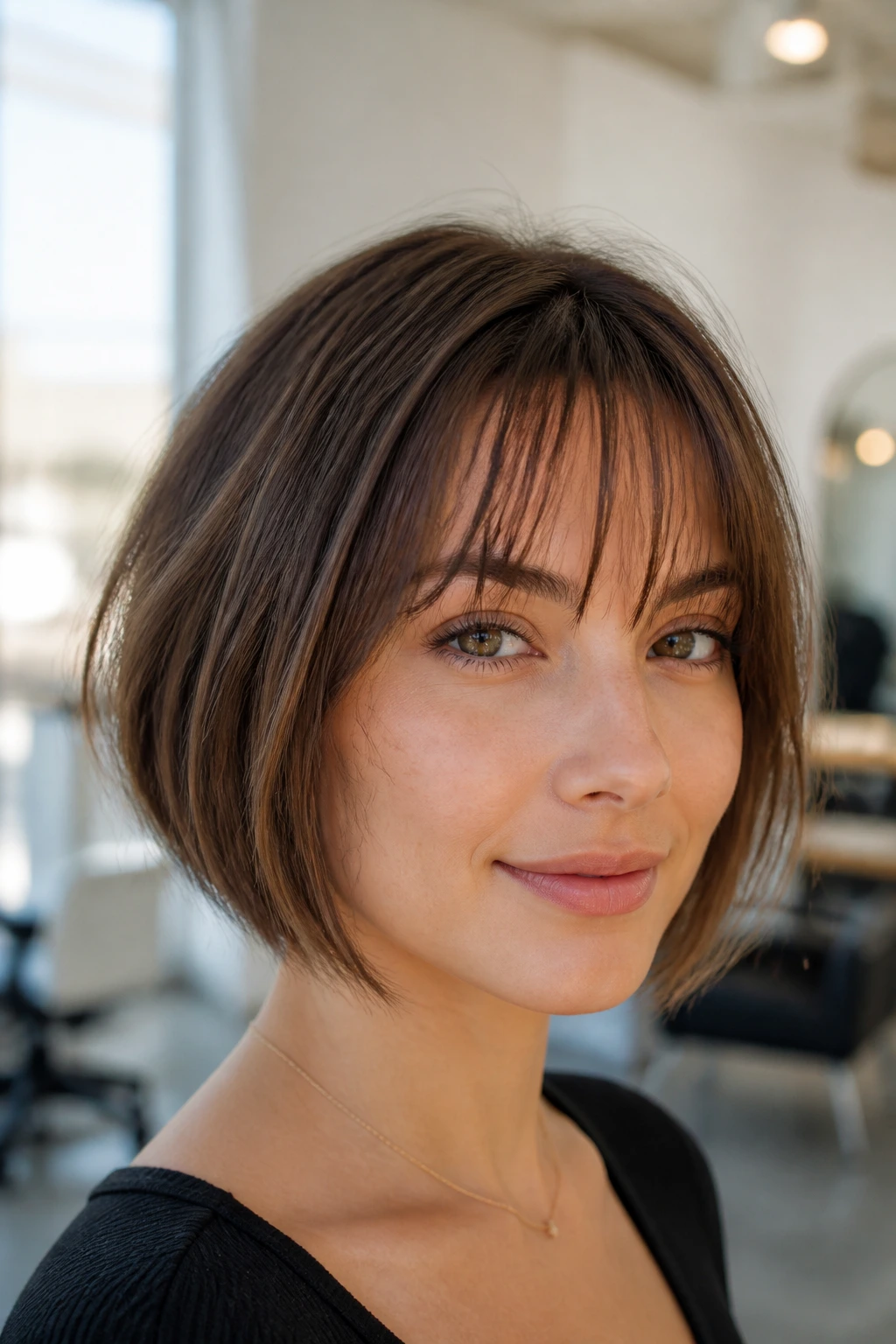
Fine hair and short fringe can be a bad pairing if the cut is too dense. Wispy piecey bangs fix that by letting the forehead show through in small, intentional gaps, which makes the front feel lighter and less blocky.
You’ll usually want a bit of dry texture here — not a lot, just enough to separate the strands. A tiny round brush, a light mist of texturizing spray, and fingers instead of a heavy comb are usually the whole game. The payoff is that the fringe moves instead of sticking to the forehead in one flat sheet. That movement is the point.
6. Choppy Textured Bangs for a Shaggy Crop
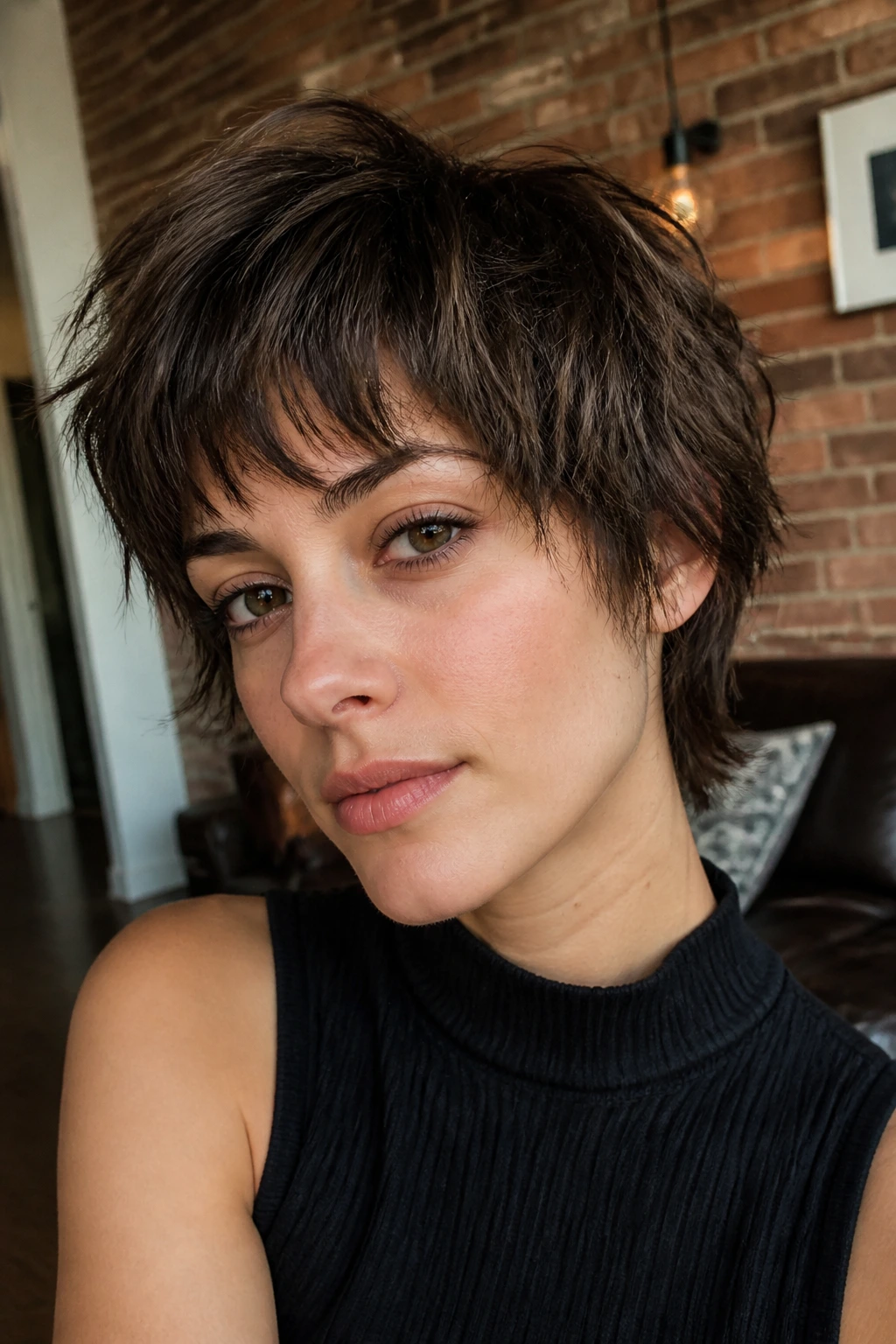
Compared with a blunt line, choppy bangs look less precious and more lived-in. That makes them a nice fit for short shags, cropped layers, or anything with a little rock-and-roll mess around the crown.
They work because the eye reads the broken edge as movement, not damage. Ask for a soft point-cut or razor-soft finish, and keep the shortest pieces a little longer than you think they need to be. The texture will make them read shorter once they dry. If you like hair that looks better after it’s been touched and mussed, this is one of the safer fringe shapes to choose.
7. Bottleneck Bangs That Narrow and Open in the Right Places
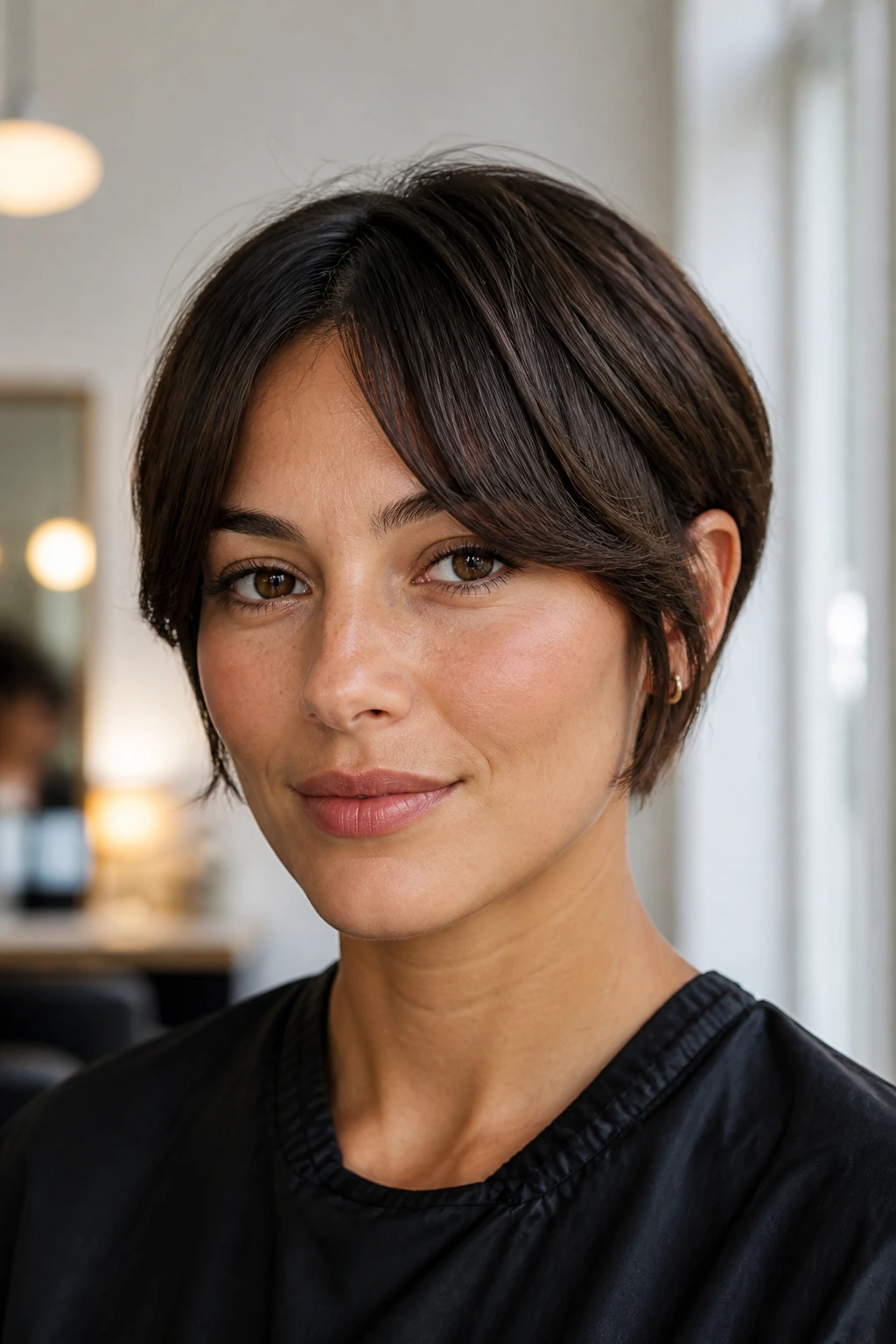
Bottleneck bangs are clever. They sit narrow near the center, then open wider near the temples, which makes the forehead look framed rather than boxed in. On short hair, that shape can be more flattering than a straight fringe because it keeps the front light while still giving you coverage where you want it.
Best for
- Bobs that need softness around the face.
- Hairlines that aren’t even all the way across.
- People who want fringe that grows out without looking sloppy.
The shape matters because it leaves room for the eyes and brows to breathe. That keeps the haircut from feeling crowded.
8. Baby Bangs for a Sharp, Graphic Edge
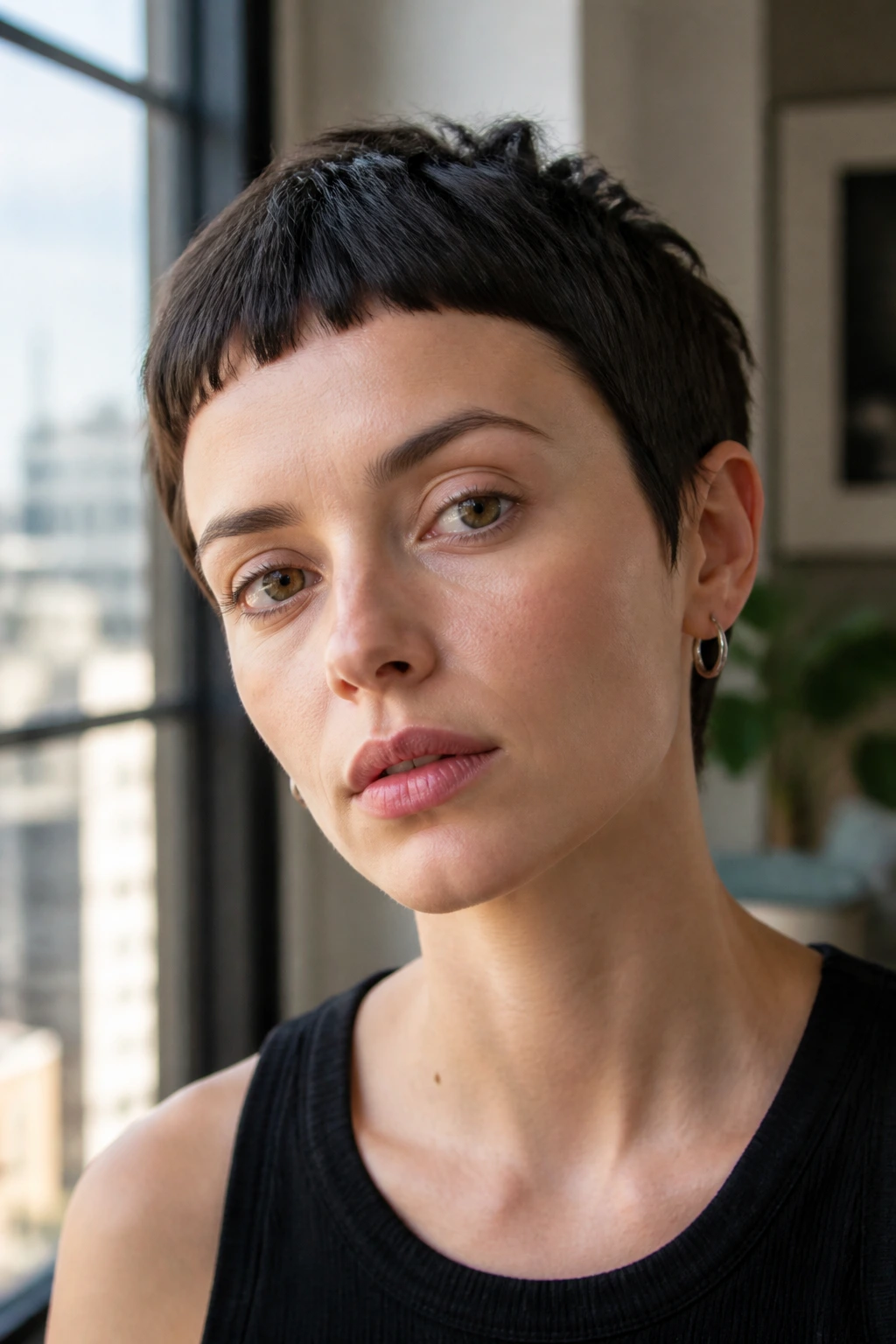
Baby bangs are short enough to make a point, and they know it. On short hair, they add a clean, editorial line that can make a plain crop look intentional in about five seconds.
They’re not forgiving, though. The cut sits high on the forehead, so every wrinkle in the texture shows, and every uneven snip shows faster. If you try this style, ask for the shortest point to sit above the brows with a tiny bit of softness at the edges. Hard, chunky baby bangs can look stiff. A slightly broken edge gives the style life.
9. Feathered Fringe for a Softer Front
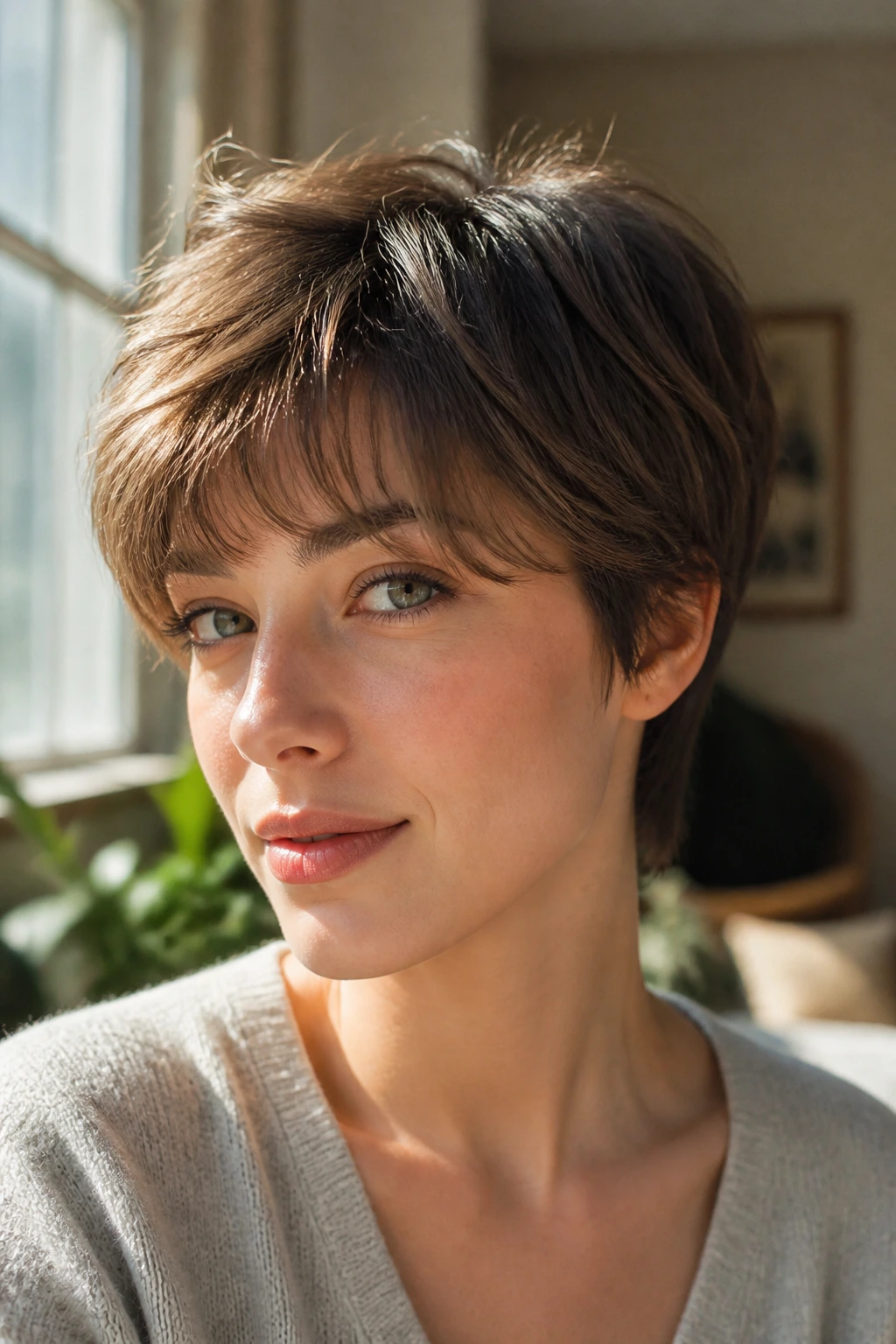
Feathered fringe has an old-school softness that works better on short hair than people give it credit for. The pieces are light, brushed forward, and then bent away just enough so the front doesn’t sit flat against the face.
This style is a good bridge if you want bangs but hate the feeling of a solid wall across your forehead. It’s especially useful on short cuts that already have a lot of shape at the crown. A feathered front prevents the haircut from looking too severe. Keep the blow-dry gentle and the product light.
10. Curly Fringe That Respects the Curl Pattern
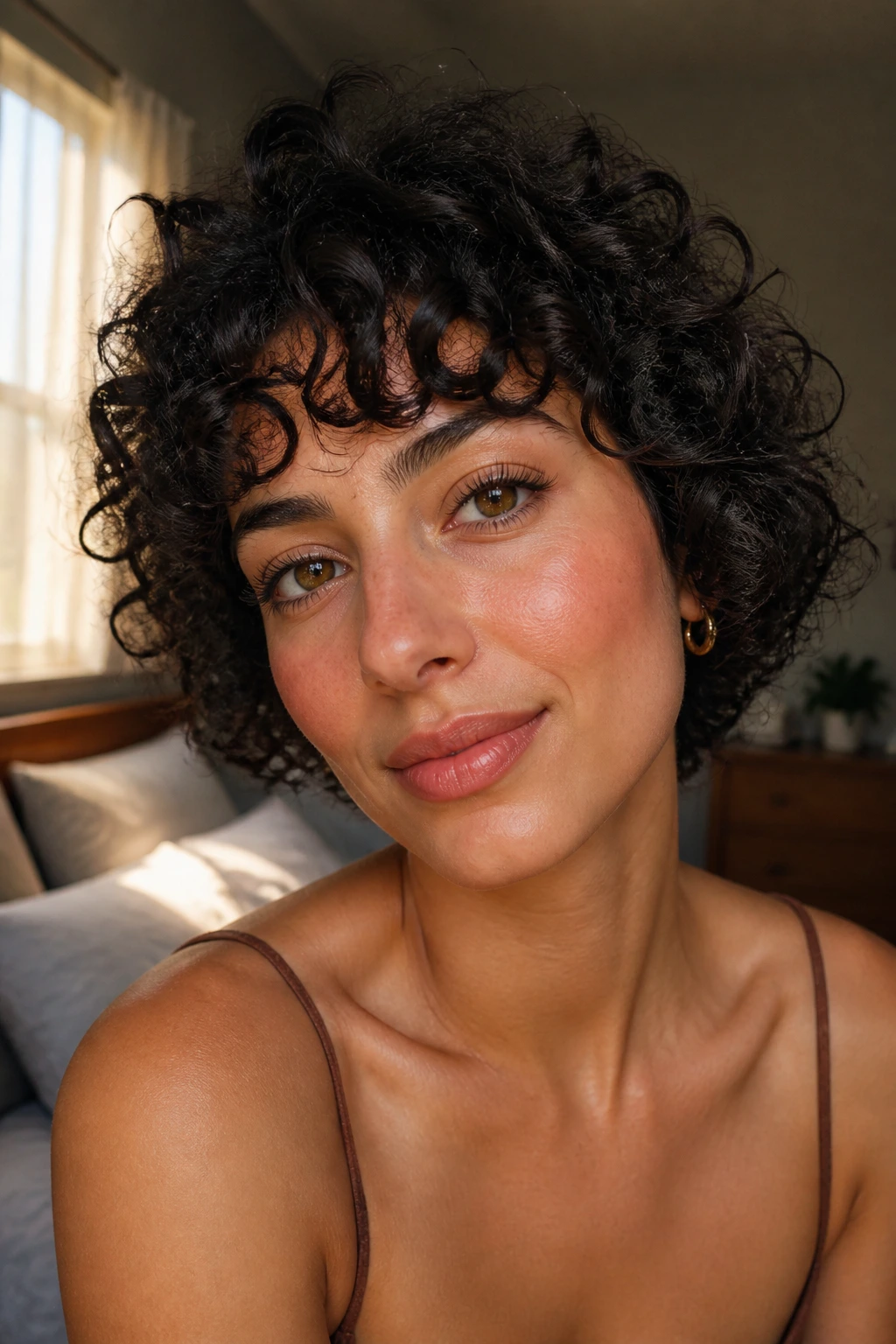
Curly bangs should be cut for the curl, not against it. If the fringe is trimmed wet and left too short, it will spring up and sit way above the brows, which is a rude surprise the first time you air-dry it.
What Makes It Work
Cutting curly fringe dry, or at least close to dry, lets the stylist see where each curl lands. On short hair, that matters even more because the surrounding layers are already cropped and the bang can’t hide in length. The smartest curly fringe feels shaped, not forced.
- Leave extra length for shrinkage.
- Use a diffuser or air-dry with curl cream.
- Avoid brushing it dry unless you want a puffier halo.
11. Arched Bangs That Open the Eyes

Arched bangs curve gently across the forehead, usually a touch shorter in the center and a little longer at the sides. That shape opens the eye area and keeps the front from looking like one straight block.
I like this style on short hair when the wearer wants polish without bluntness. It gives structure to a bob or pixie without the hard line of a classic full fringe. The arch also plays well with brows that already have a strong shape. Let the curve follow the face instead of fighting it, and the whole cut looks more expensive than it really is.
12. Split Fringe for an Easy Grow-Out
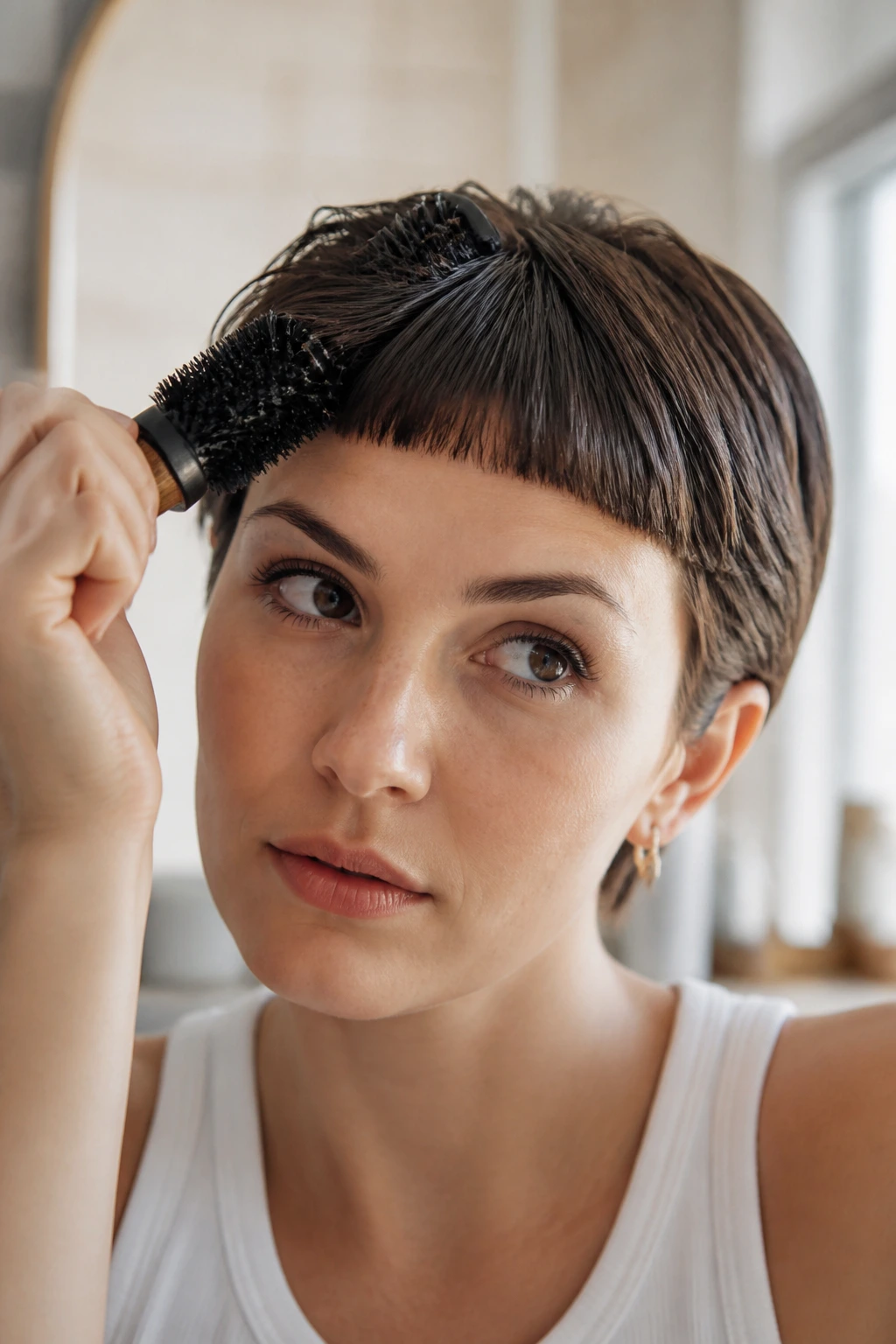
A split fringe is a relief if you want the feeling of bangs without the daily commitment of a full front section. The pieces part near the center and fall to either side, which means you can wear them forward on one day and tucked off the face the next.
This is one of the better fringe choices for short hair if you hate the “I need a trim right now” panic. It also makes the face look a little longer, which helps a short crop avoid feeling boxy. A split fringe likes a bit of root lift and a soft bend at the ends. Nothing stiff.
13. Asymmetrical Bangs for a Modern Angle

Asymmetrical bangs shift the whole mood of a short haircut. One side hangs longer, the other lifts or tucks away, and suddenly the front has a diagonal line that changes the face shape in a useful way.
Why It Flatters Short Hair
The uneven length keeps the style from feeling heavy across the forehead. It also gives your stylist a place to hide a strong cowlick or balance a side that feels wider than the other. The result is edgy, but not in a costume-y way.
If you like pieces that can be flipped, tucked, or pinned, this fringe is a smart one to keep in the running. It grows out with less drama than blunt bangs, too.
14. French Girl Fringe on a Wavy Bob
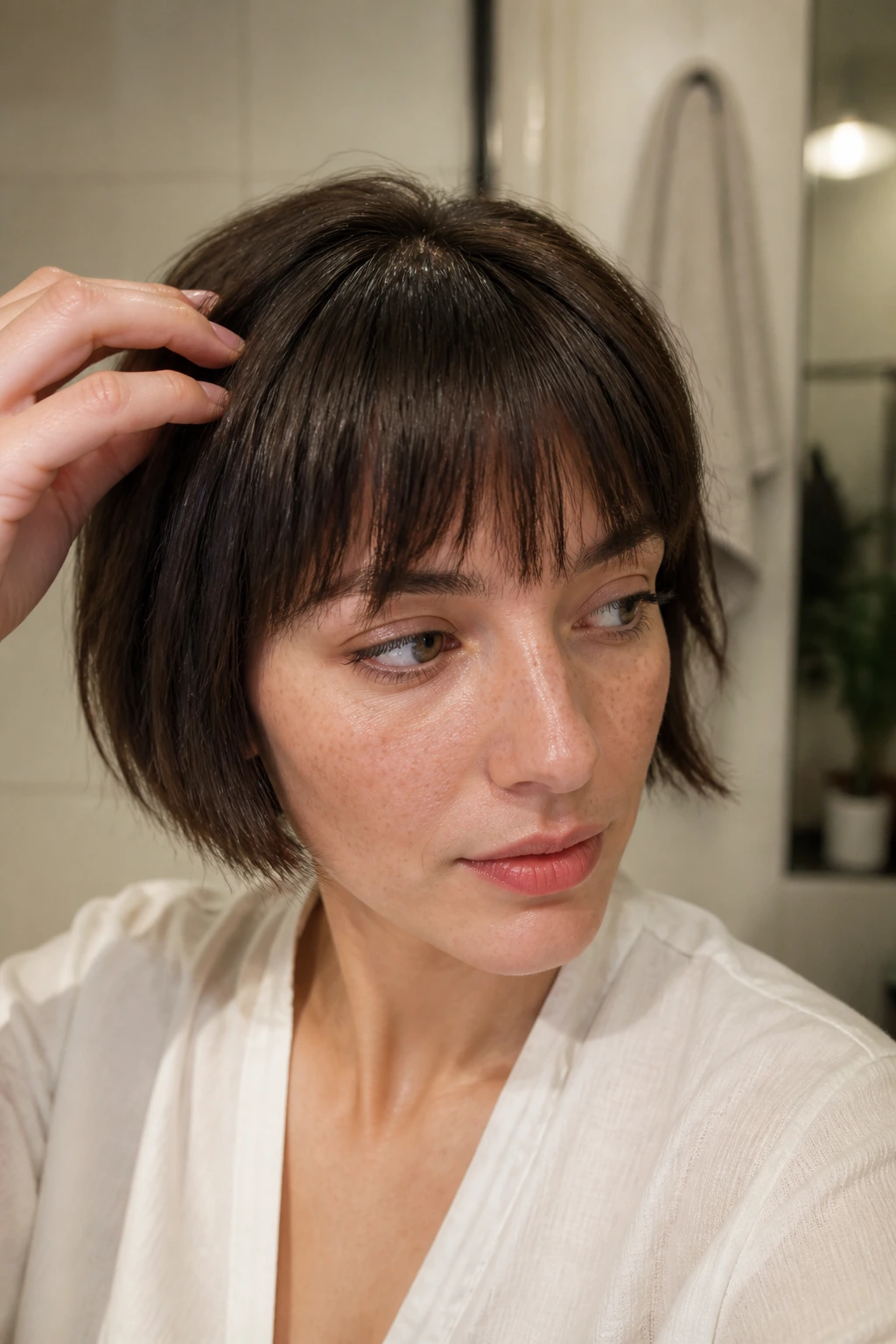
French girl fringe gets copied badly all the time. The good version is soft, a little imperfect, and not obsessed with symmetry. On a short wavy bob, that looseness is the whole appeal.
The pieces should sit near the brows and move a little when you turn your head. Too much precision kills the look. The best version has ends that break apart instead of forming a solid line, and it tends to look better on hair that can hold a slight bend. If your hair is naturally wavy, this fringe can feel less like styling and more like letting the cut do its own thing.
15. Long Side Fringe for a Short Lob
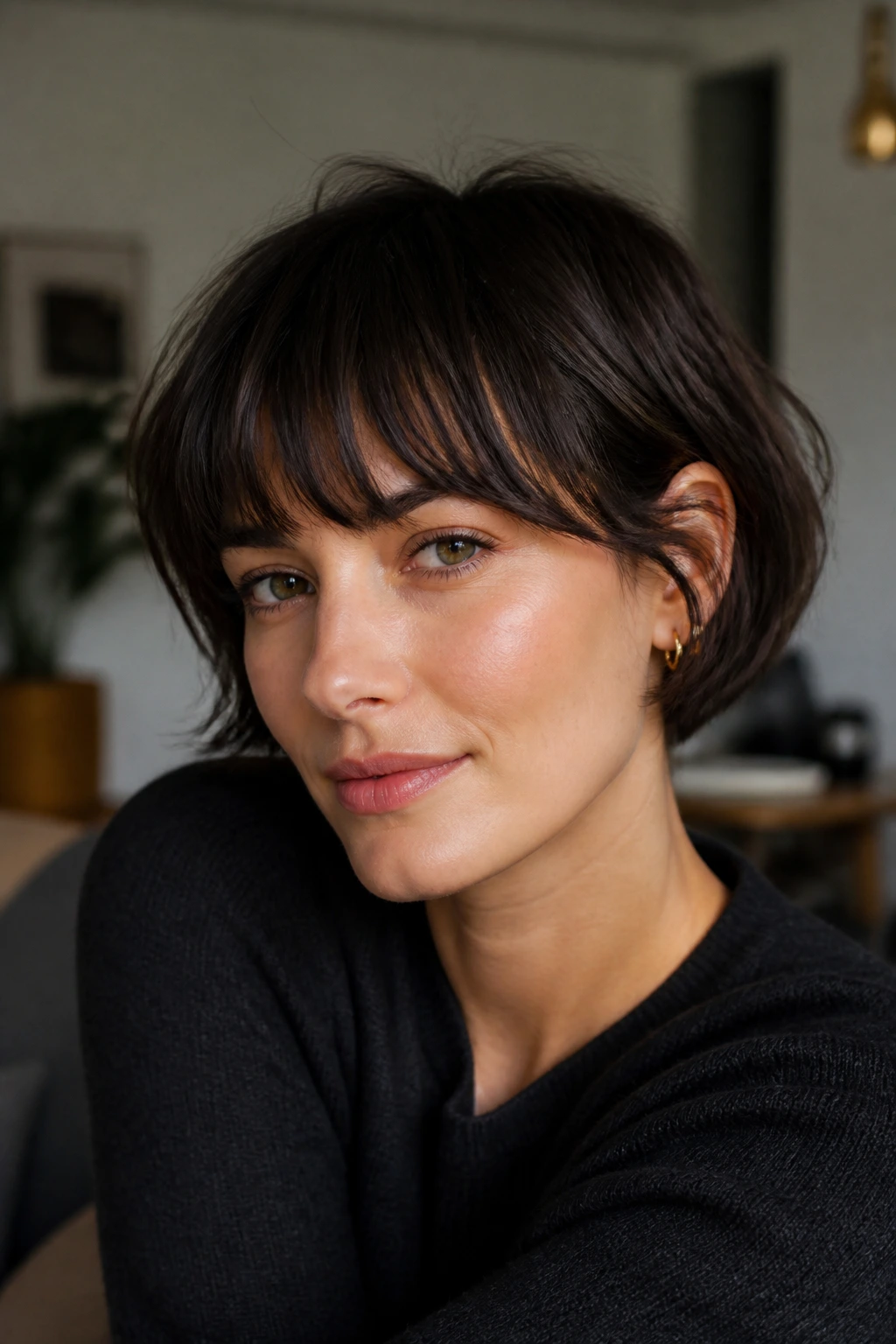
A long side fringe is the low-drama choice that still changes the haircut. It slides into the rest of a short lob, softens the face, and gives you a front section long enough to tuck behind one ear if you’re tired of looking at it.
How It Behaves
This style works because it doesn’t demand perfect symmetry. If the hair is straight, the fringe can be smoothed with a brush and dryer. If it bends or frizzes, the side sweep still reads well because the shape is broad, not tiny and precise.
It’s one of the easiest bang styles for short hair to live with if you’re nervous about a full fringe. Not fancy. Very useful.
16. Razored Bangs for Piecey Movement
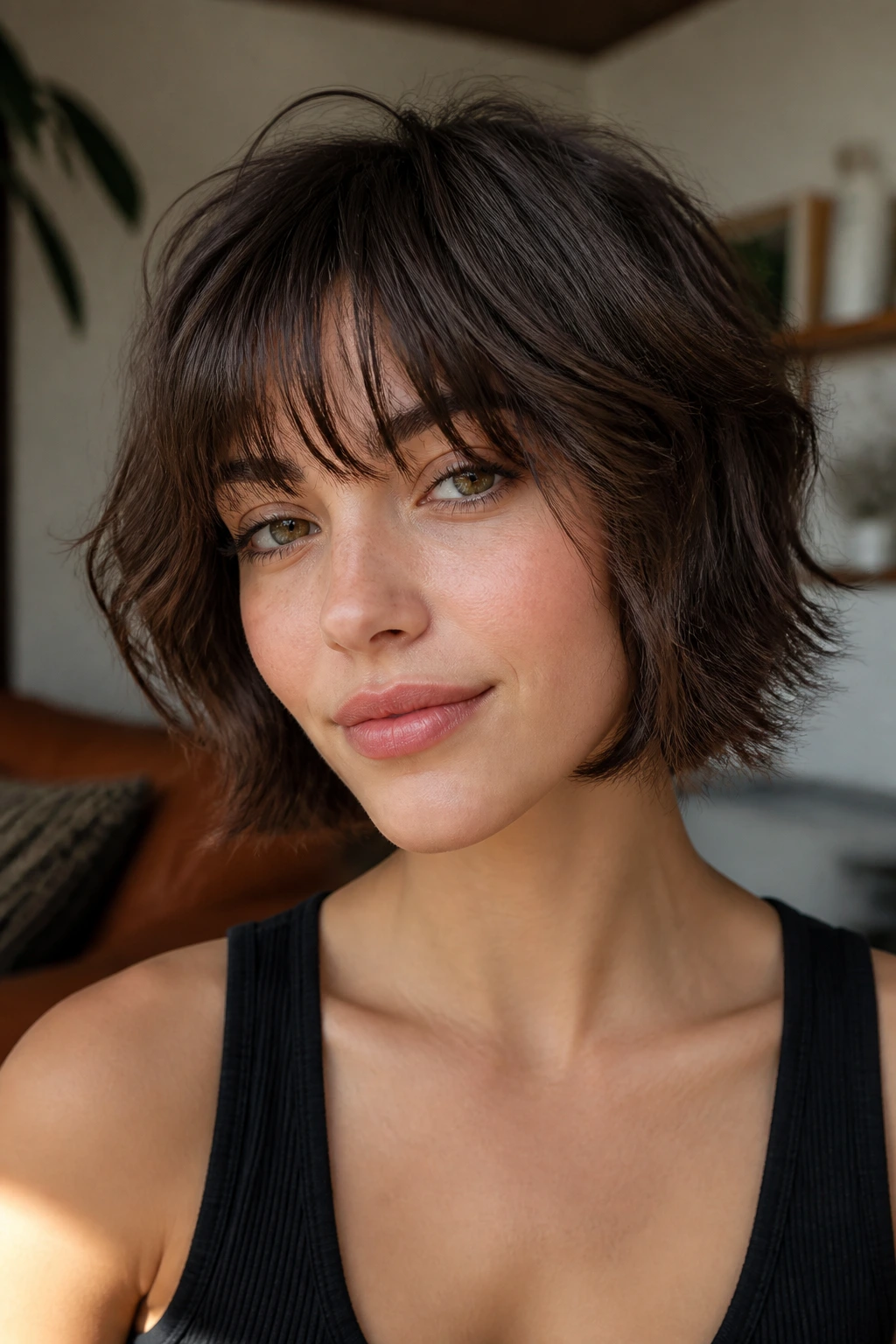
Razored bangs bring movement into thick hair without forcing the whole front to sit like a slab. The razor takes off bulk and leaves a softer, more broken edge, which can be a gift on a dense bob or crop.
Best for Thick Hair
- Removes weight near the forehead.
- Helps the fringe separate into pieces instead of one block.
- Gives a little bend when air-dried.
Use this style if your hair tends to puff up when it’s cut blunt. It’s also helpful if you want a fringe that looks better with a bit of mess. If you love sleek, rigid lines, skip it.
17. Crescent Bangs for Rounded Softness
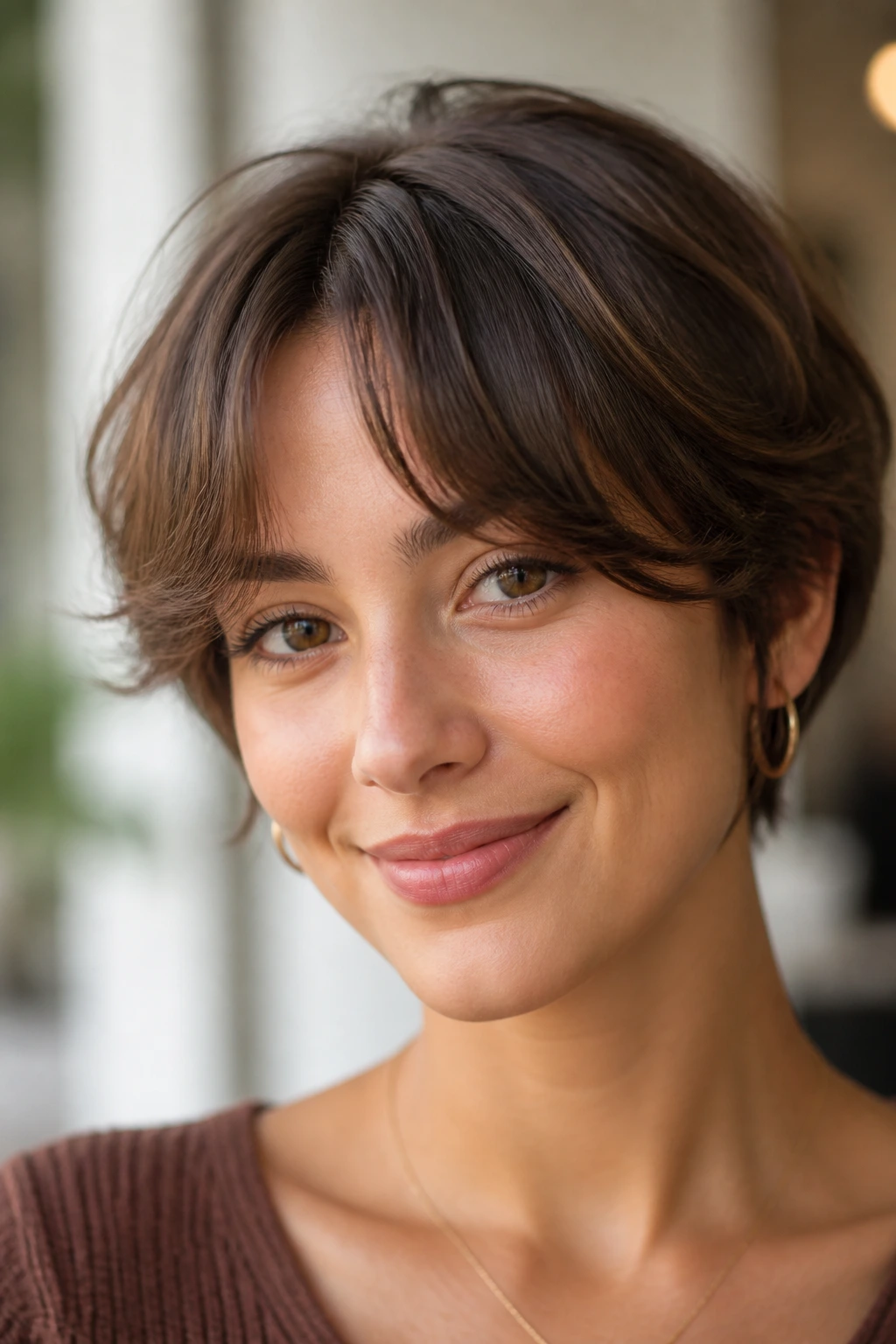
Crescent bangs curve upward at the sides, which makes the face look softly framed rather than heavily covered. On short hair, that curve matters because it keeps the fringe from colliding with the cheekbones or sitting flat over the brows.
The shape works especially well when the haircut already has some roundness, like a fuller bob or a softly layered crop. It brings the eyes into focus without turning the forehead into a closed box. A crescent fringe can also make a short haircut feel more balanced if the jaw is sharper than the top of the head.
18. Tapered Fringe That Blends into Layers
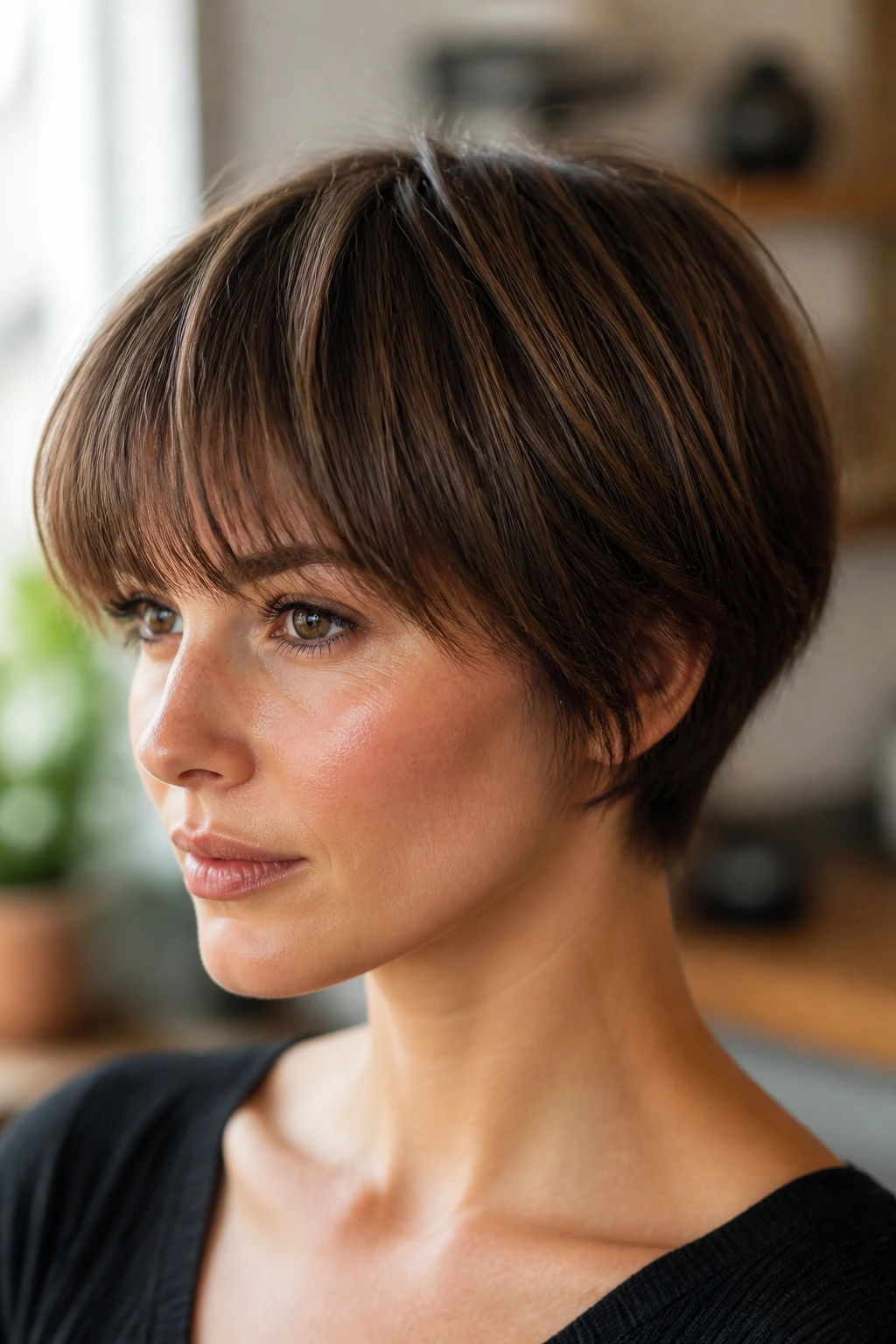
Tapered fringe is for the person who wants bangs to disappear into the haircut instead of announcing themselves at every mirror check. The center or front edge starts heavier, then gradually softens into the side layers.
That gradual shift matters on short hair because there isn’t much extra length to hide a rough transition. A tapered fringe keeps the front from looking chopped off. It also grows out in a calmer way than a hard line. If you like the idea of bangs but don’t want everyone to know they’re bangs, this is one of the cleanest options.
19. Peekaboo Bangs with a Deep Side Part
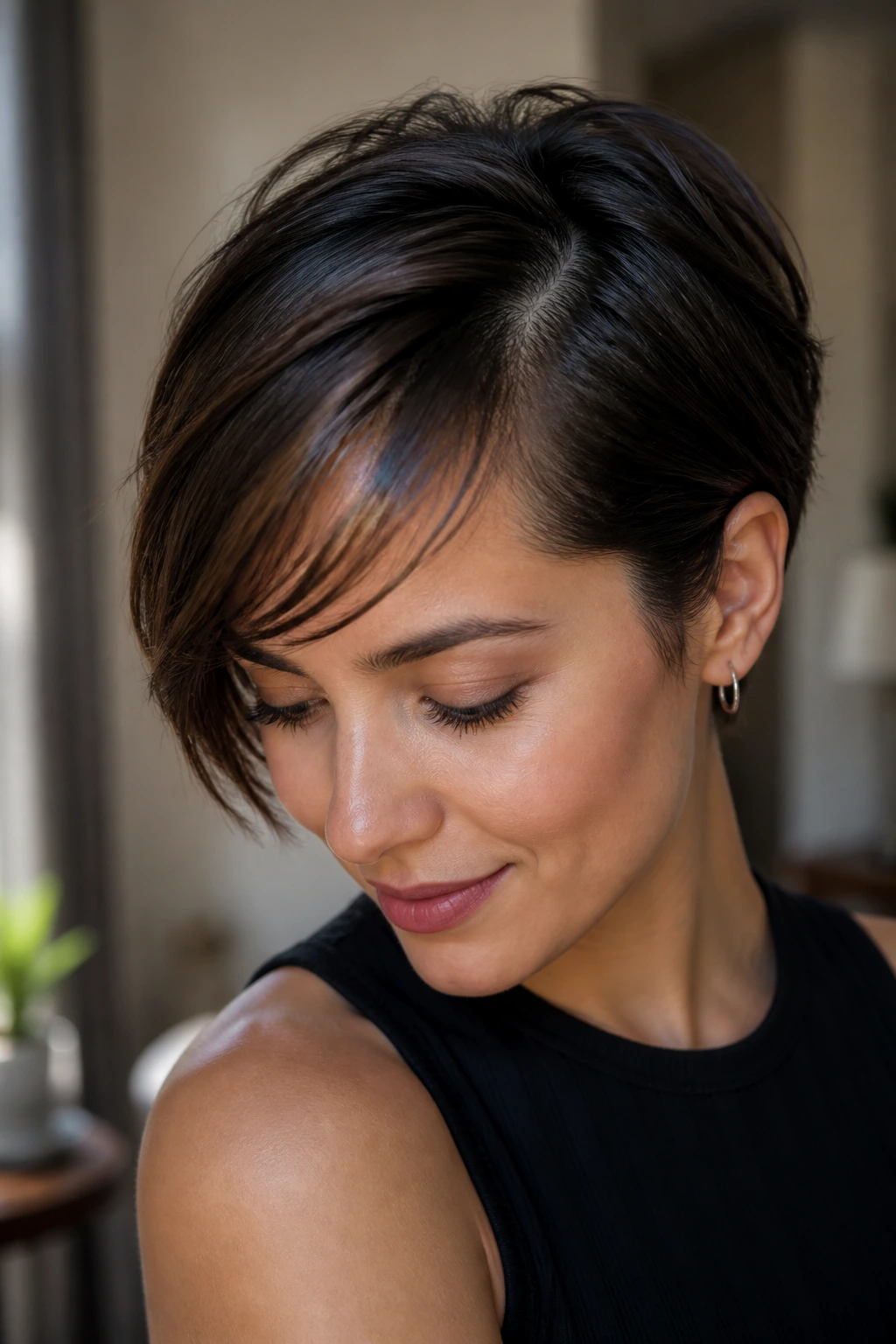
Peekaboo bangs are a little sneaky. Most of the time they hide under a deep side part, then they fall forward only when you tilt your head or push them loose.
When They Make Sense
This is a smart move for anyone who wants fringe in the haircut but not constantly across the face. Short hair handles this better than people expect because the cut has less length to trap the front in place. The part becomes part of the style, which is handy if you like changing your face shape from day to day.
Keep the roots lifted and the ends soft. If the fringe is too blunt, the peekaboo effect turns into a sideways wall.
20. Shag Bangs with a Mullet-Leaning Crop
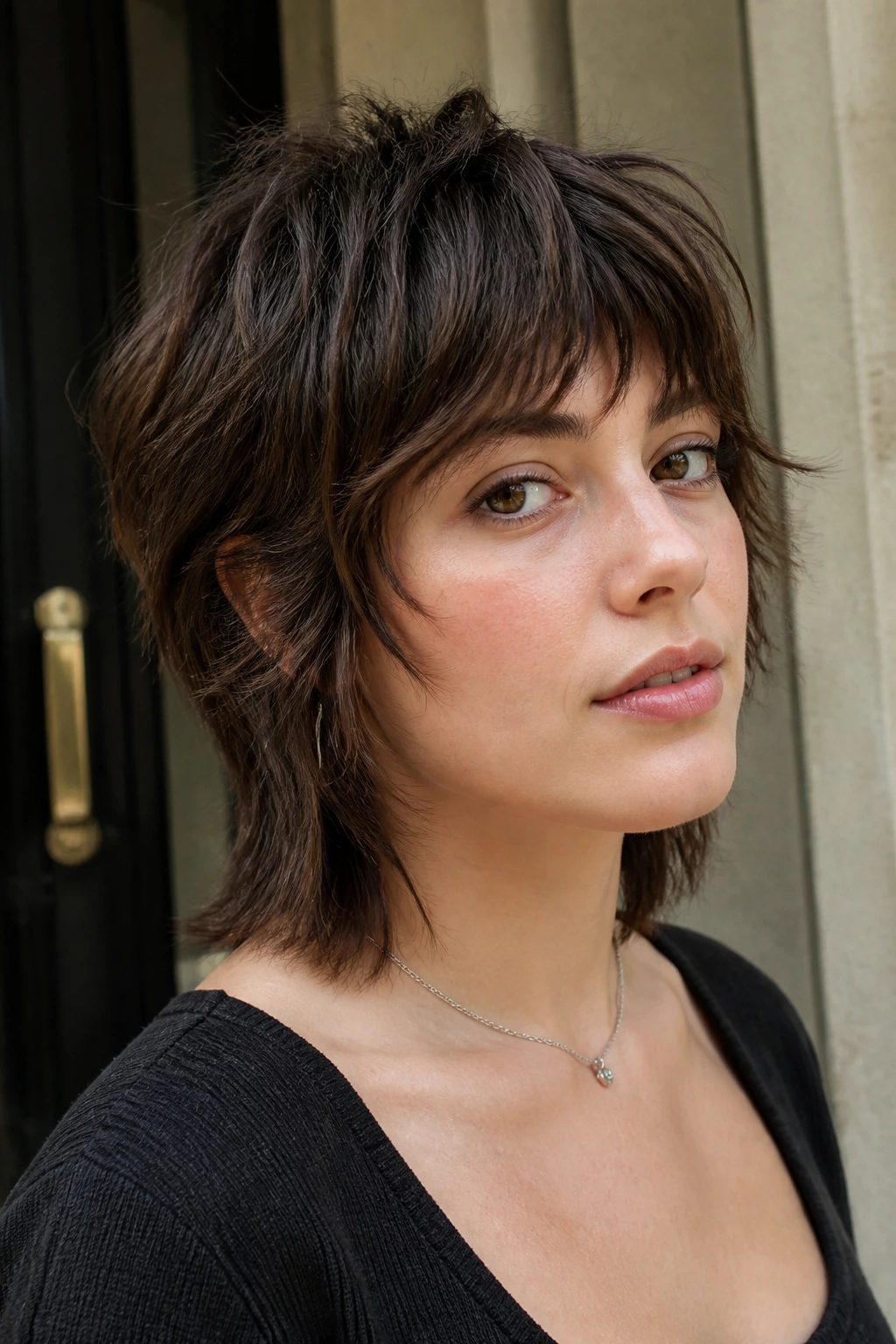
A shaggy crop with fringe has attitude because the bangs are not isolated; they belong to the whole haircut. That’s why this style feels more alive than a single straight fringe on a tidy bob.
The front pieces should break apart into the side layers, not sit as one formal panel. That gives the cut movement around the forehead and keeps the crown from looking too neat. If your hair already has texture or tends to kick out at the ends, this style makes use of it instead of fighting it. Clean lines are not the point here.
21. Soft Brow-Skimming Fringe for Glasses

Glasses change a fringe more than most people expect. A brow-skimming style works because it leaves a little air above the frames, so the bangs don’t keep rubbing the lenses or collapsing under the weight of the glasses.
Fit Notes
- Keep the length just above or right at the brow line.
- Ask for softness around the corners so the frame doesn’t compete with the fringe.
- Avoid a blunt bang that lands directly on thick rims unless you like constant trimming.
This is one of the most practical short-hair bang styles if you wear frames all day. It looks neat, and it behaves.
22. Face-Framing Bangs for a Grow-Out-Friendly Cut
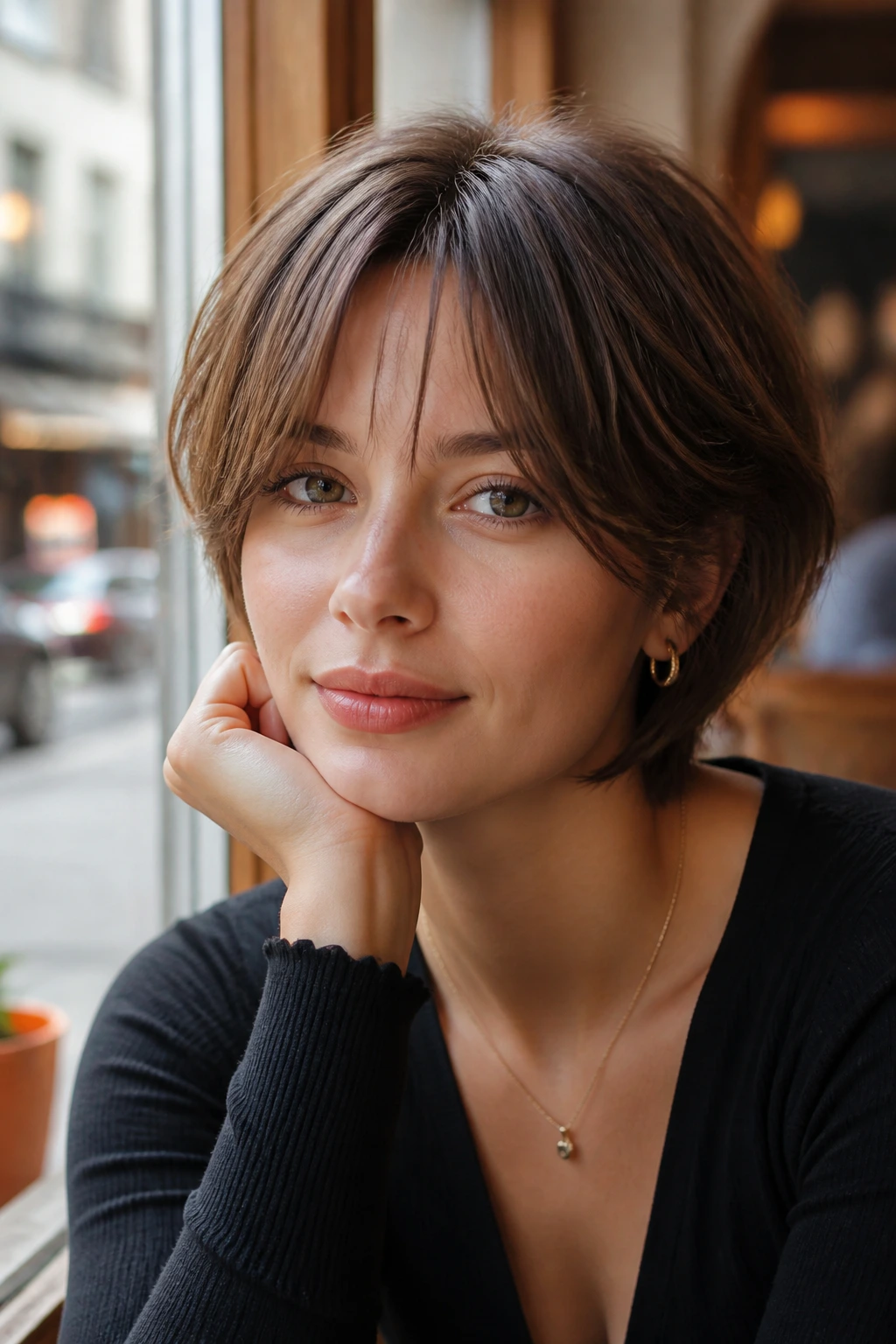
Face-framing bangs aren’t a full fringe, and that’s why they’re so useful. The pieces start near the front and fall into the sides, which makes short hair feel lighter around the face without locking you into a strict bang shape.
I think of this style as the “test drive” version of fringe. It gives you the look of something new, but it grows out into layers instead of turning into a weird in-between stage. That makes it a good choice if you like change but hate maintenance. A little bend at the ends keeps the framing soft.
23. Curved C-Cut Fringe for Straight Hair
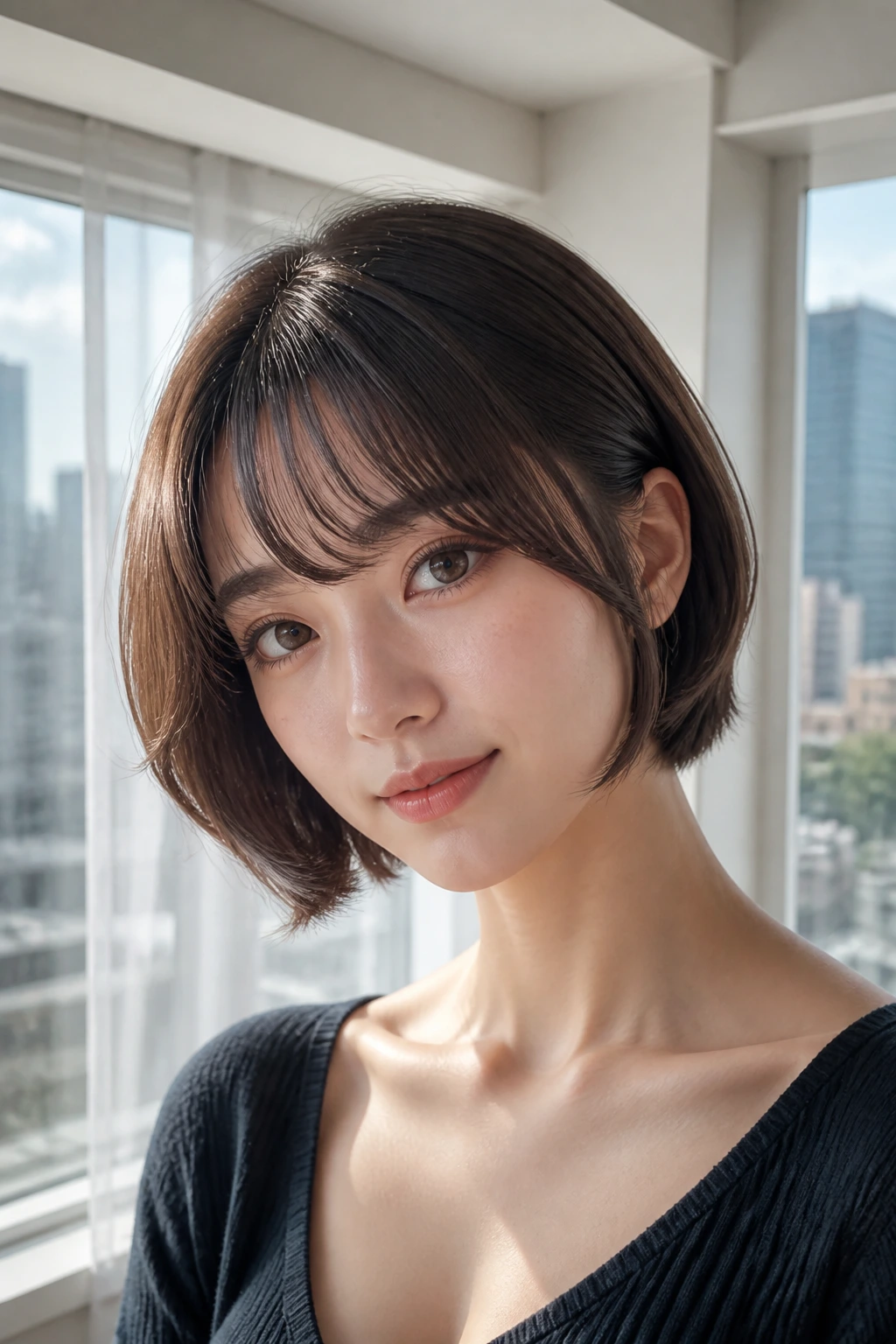
A C-cut fringe bends inward like, well, a soft C. On straight short hair, that curve adds shape where a blunt edge can look too flat.
Why It Helps
The curve pulls the eye toward the cheekbones and gives the front of the haircut a more polished line. Because short straight hair can sit close to the head, even a tiny bend makes a big difference. If the fringe is cut too heavy, the C shape gets lost. If it’s too thin, the curve collapses.
This style likes a small brush and a quick pass from the dryer. Keep it smooth, not stiff.
24. Undone Swoop Bang for Air-Dry Days
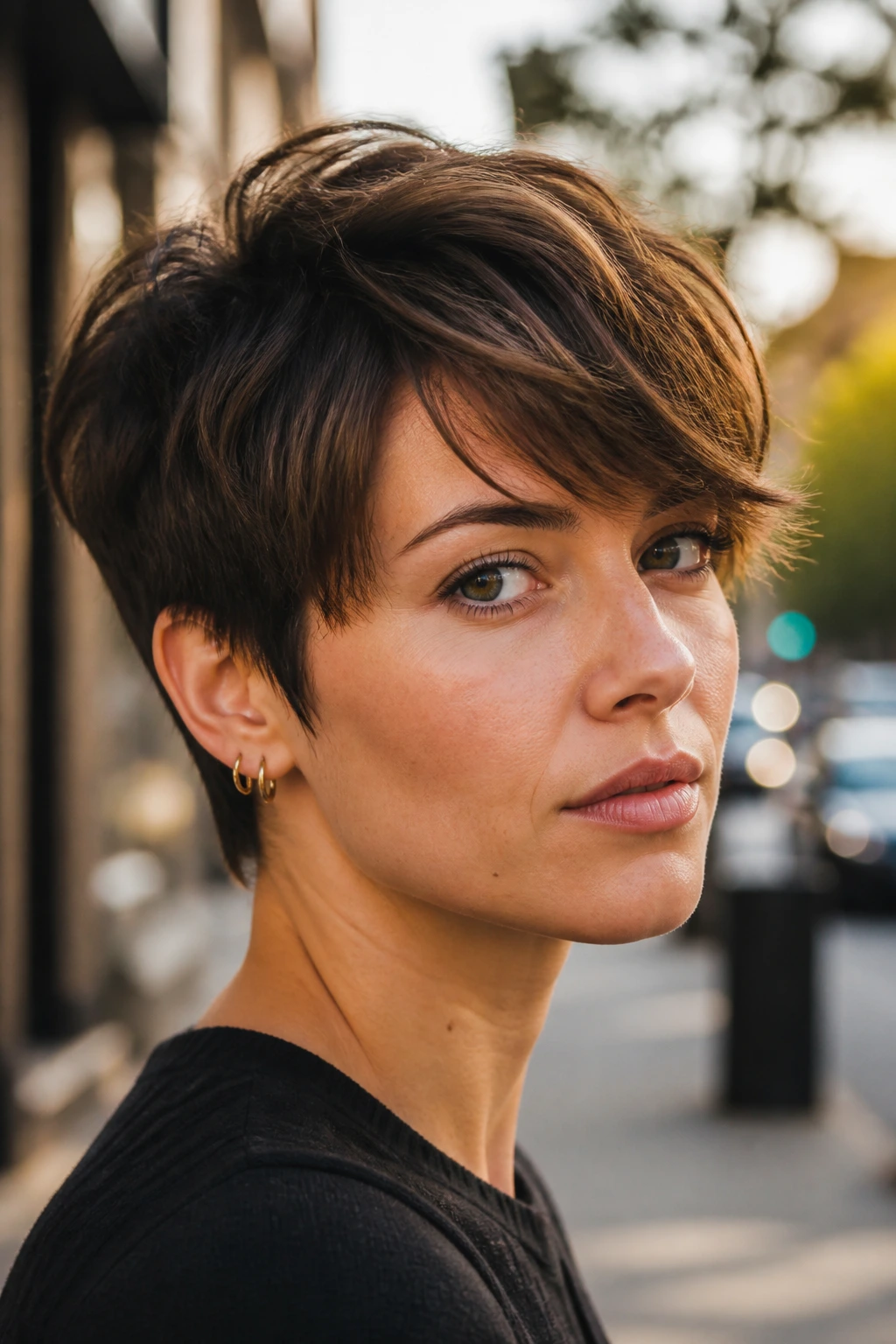
Some fringes demand round brushes and patience. This one doesn’t. An undone swoop bang works with a quick hand, a little natural texture, and an air-dry routine that doesn’t involve standing in front of the mirror for twenty minutes.
The front section should be long enough to sweep across the forehead, then bend just a little as it dries. If your short hair already has a soft wave, this can be one of the easiest fringe styles to wear. The trick is not to fight the bend. Let it go slightly crooked. That’s the point.
25. Heavy Eyelash Bangs for Thick Hair
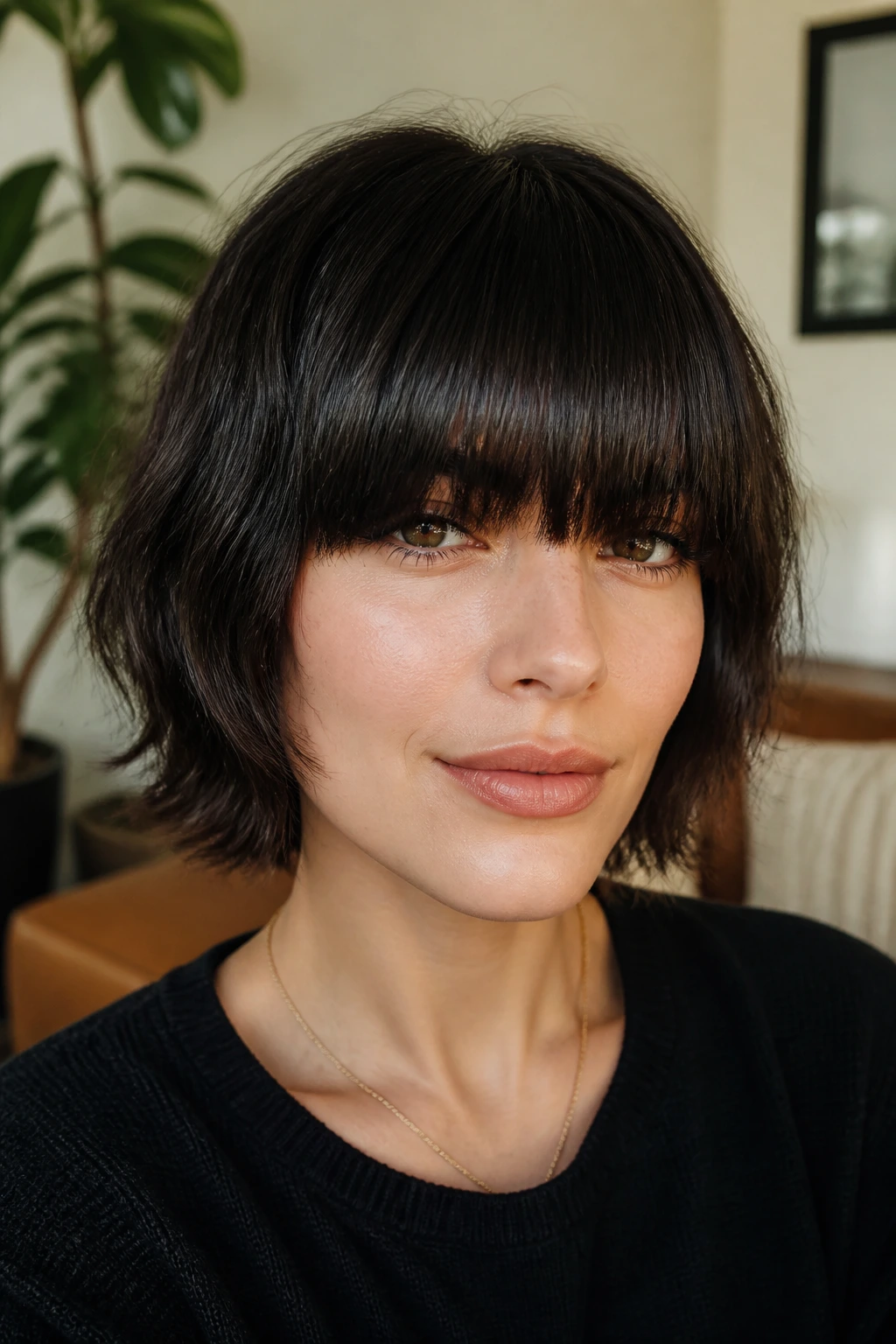
Heavy eyelash bangs sit just at or below the lashes, and on thick hair they can look lush instead of overwhelming. The density gives the fringe a plush, full feel, which is useful if fine, airy bangs always leave you feeling underdressed.
Why Thick Hair Carries It
- The weight keeps the fringe from splitting apart too quickly.
- The length makes the line feel intentional, not severe.
- The thickness lets the bang hold shape even on humid days.
Ask for enough softness at the ends so the fringe doesn’t press hard into the eyes. Thick hair can handle fullness; it doesn’t need a blunt brick of it.
26. Invisible Bangs for Minimal Commitment
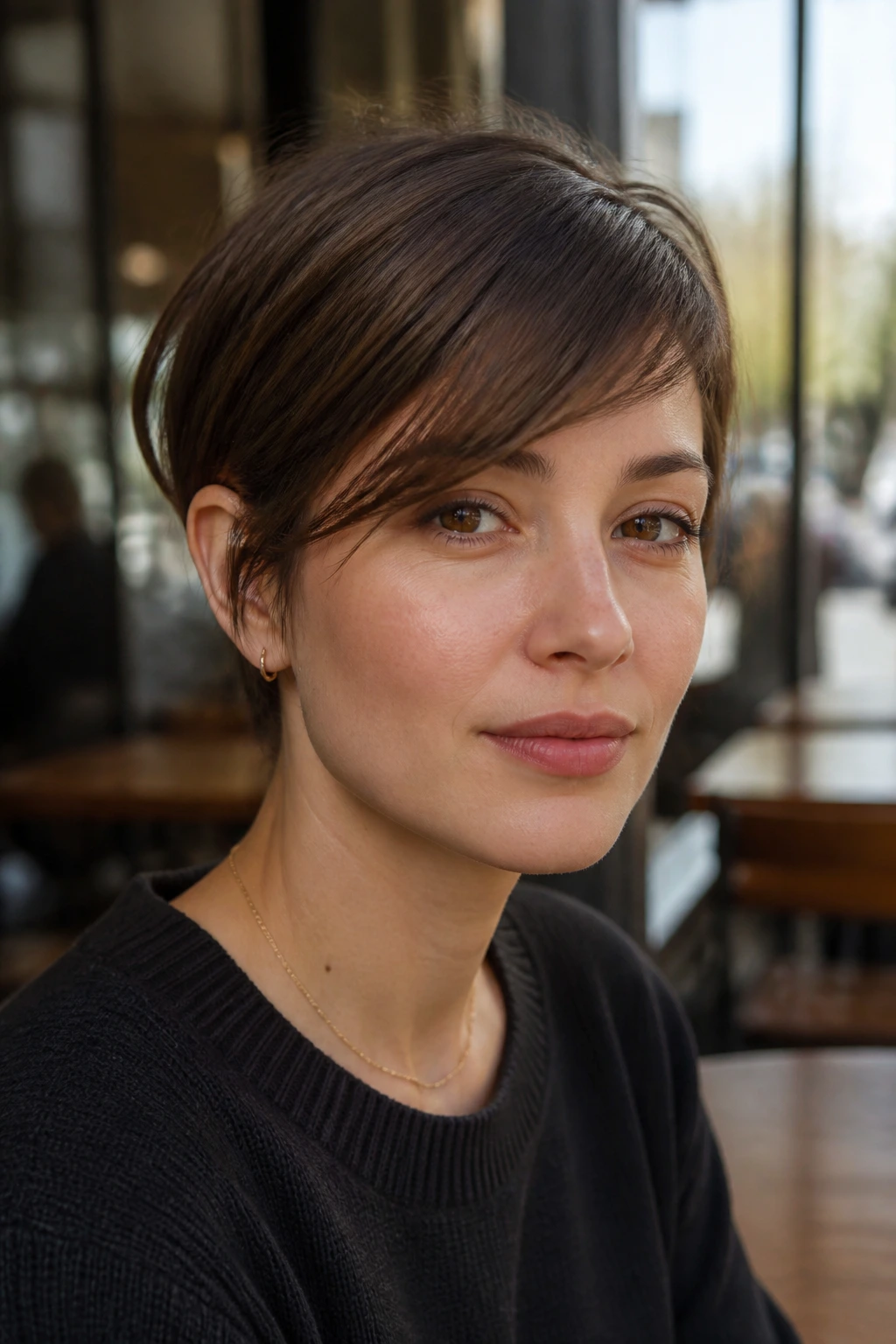
Invisible bangs are the fringe version of “I want to look like I didn’t try, but I did.” They’re cut so they blend into the front layers and can disappear into the rest of the haircut when you don’t want them front and center.
This is a smart choice if you like the idea of bangs on short hair but keep backing out at the last second. The style doesn’t scream fringe. It whispers it. You can push it into a side sweep, split it, or wear it down depending on the day. That flexibility is the whole value.
27. Textured Baby Curtain Bangs
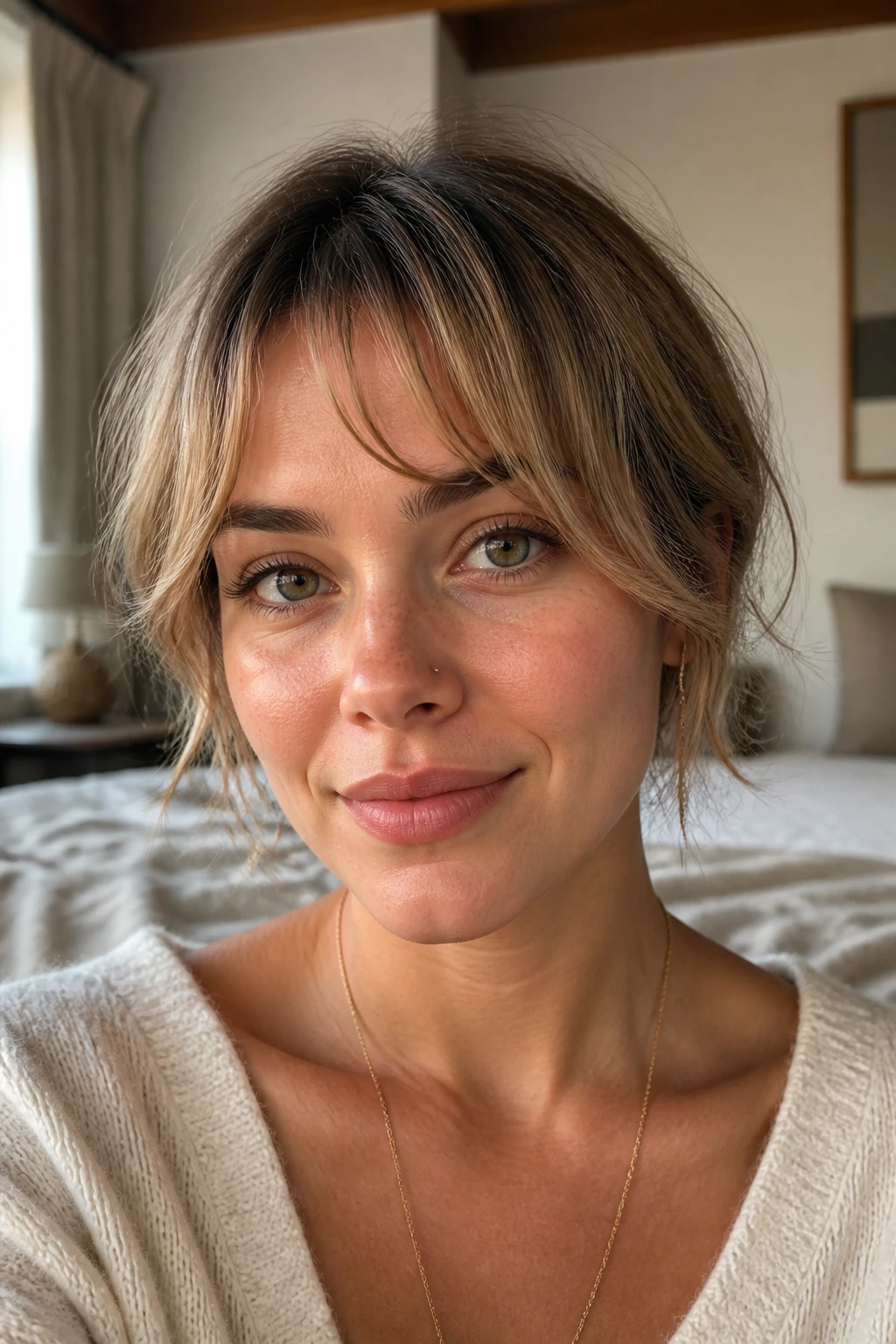
This one sits between curtain bangs and baby bangs, which is exactly why it feels fresh. The center is short enough to open the forehead, but the sides carry enough length to soften the transition into the rest of the cut.
Best Use
It works on short hair when you want something lighter than a full curtain fringe and less sharp than a baby bang. The texture keeps it from looking too staged. A little pieceiness around the center makes the style feel modern, not costume-like.
If you like a fringe that can be flipped open or closed depending on mood, this is a sneaky good pick.
28. Rounded Full Fringe on a Bowlish Bob
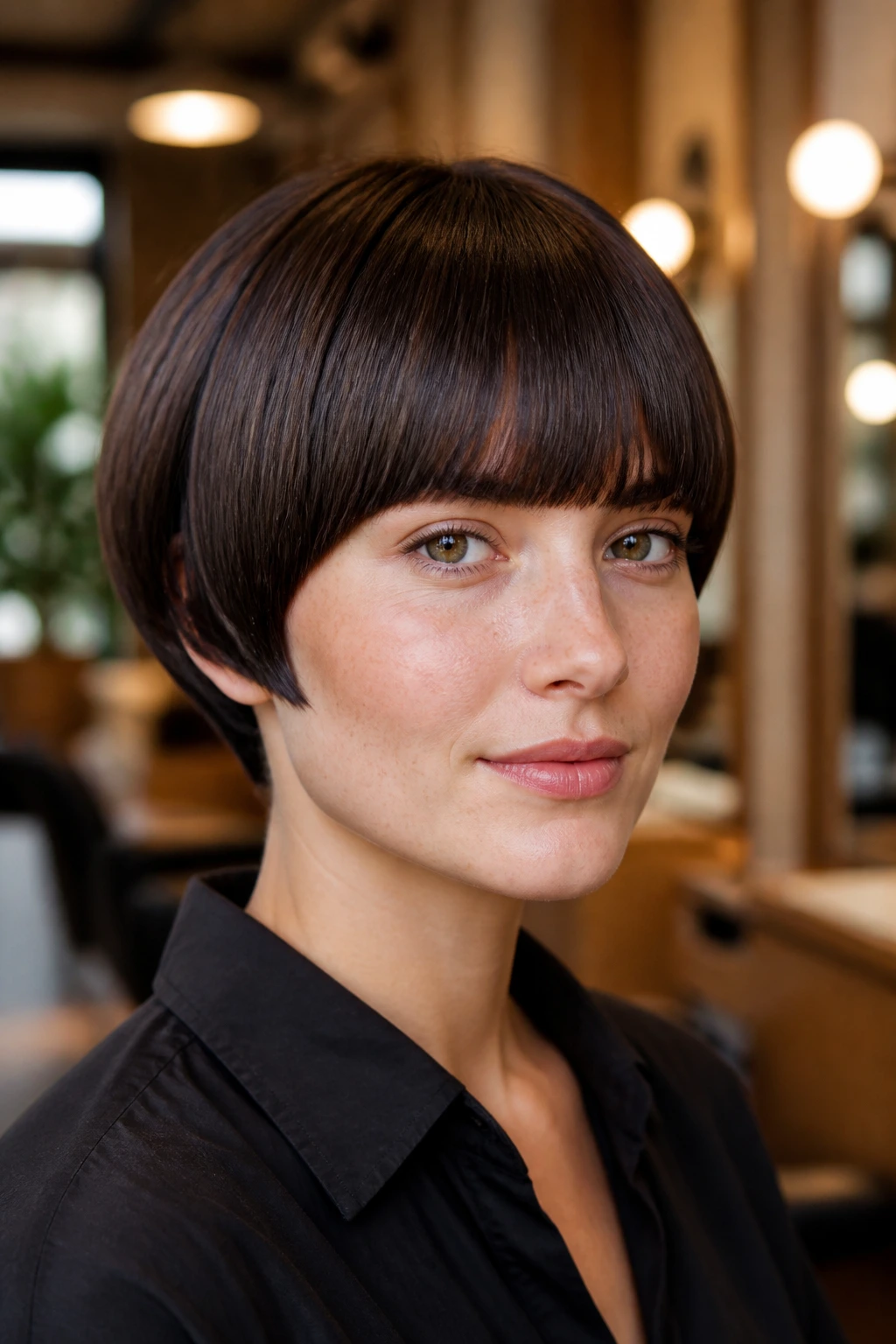
A rounded full fringe on a bowl-leaning bob is bold, geometric, and not trying to be casual. The curve mirrors the haircut’s shape, which is why the look feels cohesive instead of accidental.
That cohesion matters. On a short bob with a strong silhouette, a straight fringe can sometimes look pasted on. A rounded fringe follows the line of the haircut and gives the whole shape a bit of architecture. It does need regular trimming, though. If you let it go too long, the curve starts to sag and the whole thing loses its snap.
29. Pin-Curled Vintage Fringe
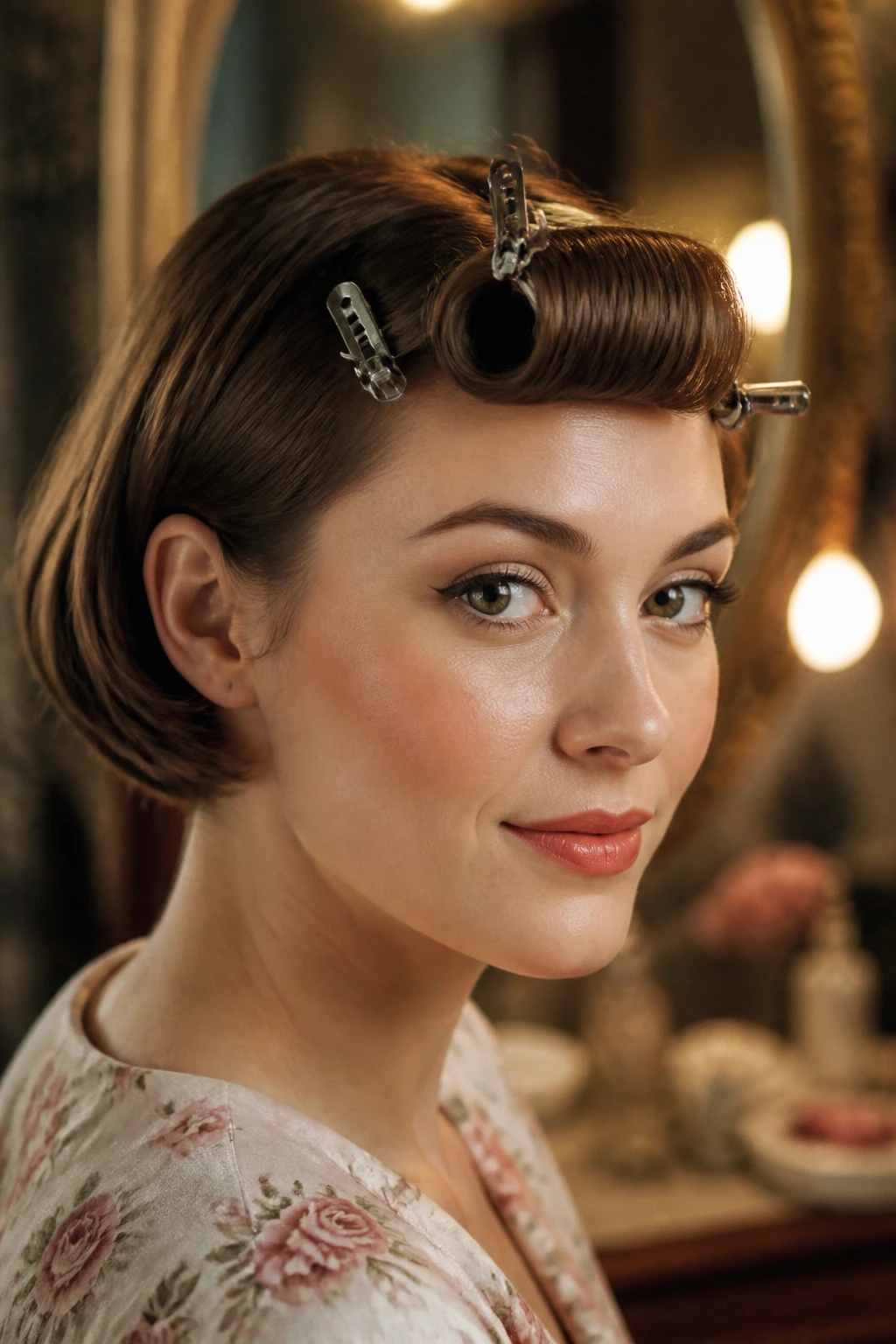
Pin-curled fringe is for people who enjoy a little ritual. The front section gets set into a soft curl or roll, then pinned or brushed into shape once it cools. The result has a polished, old-school finish that suits short hair surprisingly well.
How It Reads
The style works especially well on bobs and shoulder-brushing crops that have enough top length to hold a set. It doesn’t need to look costume-y; the clean curve at the front can be subtle. A tiny barrel iron, foam roller, or pin curl can create the shape. What matters is that the curl cools fully before you move it.
30. Swept-Over Fringe with Underlayers
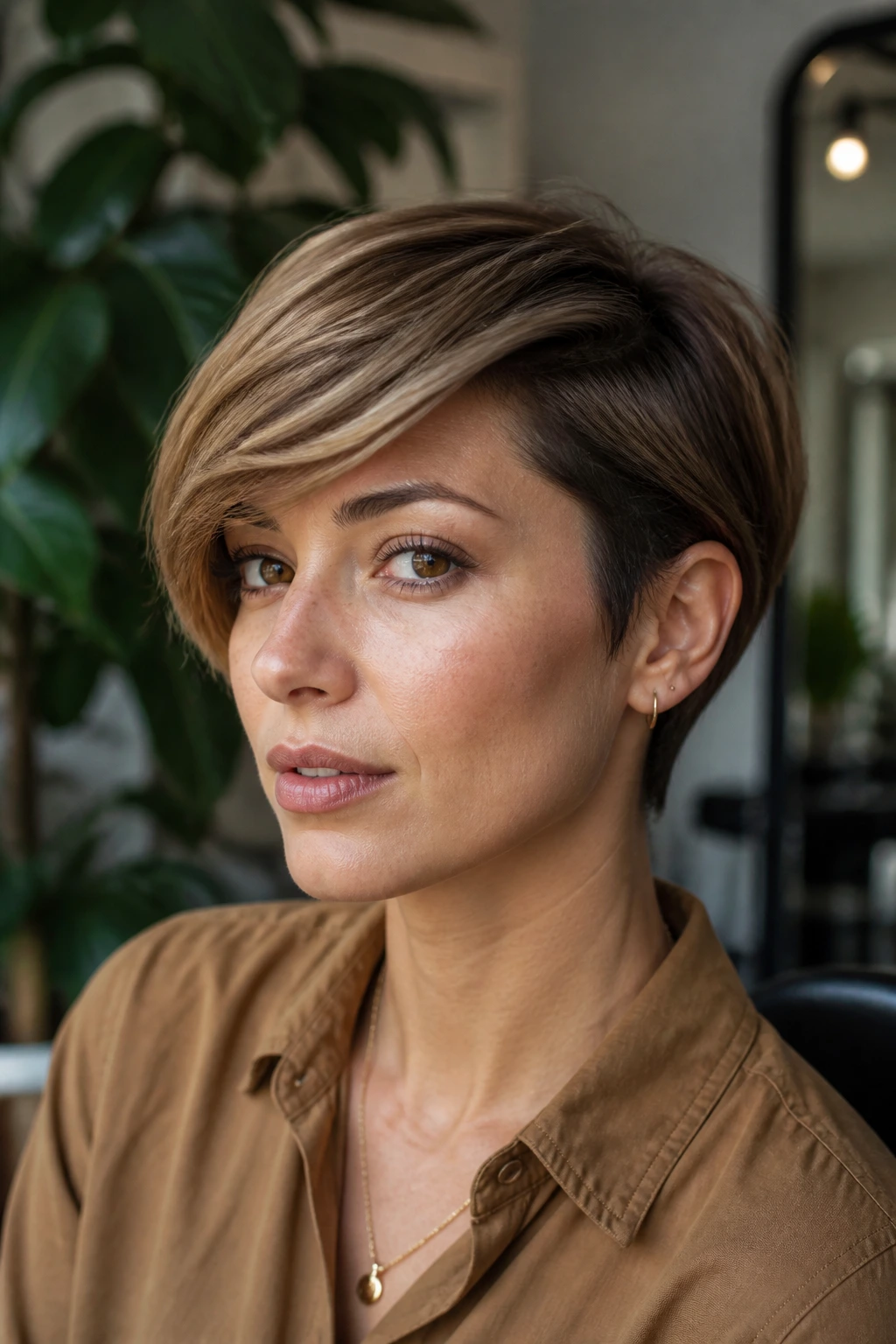
This is a smart way to get volume at the front without showing every layer all at once. The top section sweeps across the forehead, while shorter underlayers hide beneath it and keep the style from collapsing flat.
I like this on short hair that needs a little lift near the crown. The underlayers support the sweep, which makes the fringe feel fuller without turning into a heavy slab. It’s also a good fix if the front of your haircut wants to separate into awkward little pieces. Swept correctly, it looks intentional. Swept badly, it can look like a grown-out side bang, so the direction matters.
31. Short Coily Fringe for Natural Texture
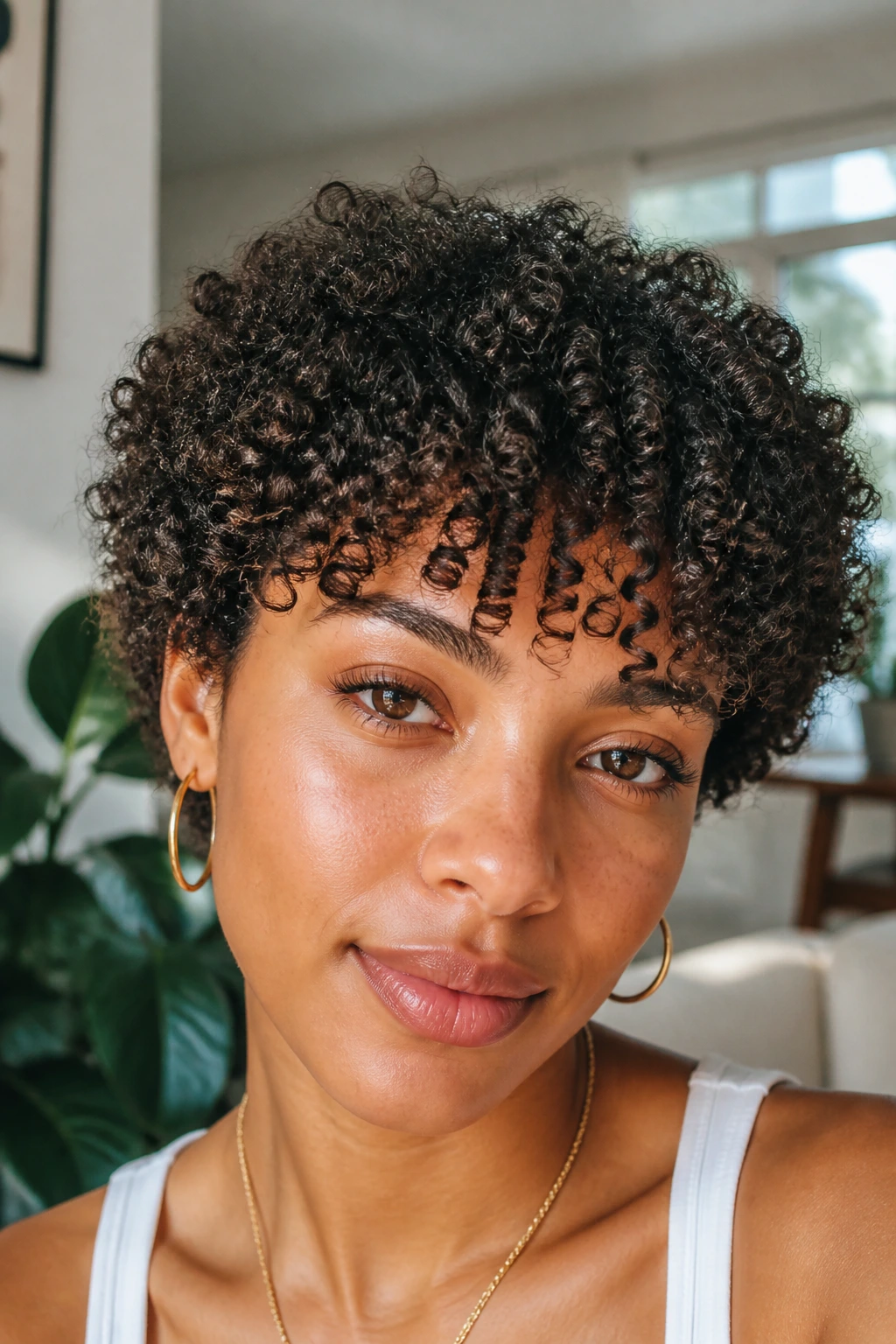
Coily fringe on short hair should follow the coil pattern, not some imaginary straight line. That means the shape may look shorter in some spots and longer in others, and that’s fine — it’s how the texture behaves.
The Important Bit
Cut it dry or nearly dry so shrinkage doesn’t ruin the shape. A coily fringe that lands right at the brows when wet can jump well above them once it dries. The best version has room to move and enough length at the front to sit softly instead of springing into a tight puff.
Use a small amount of cream or gel, then leave it alone. Too much handling makes the fringe frizzy fast.
32. Clip-In Bangs for a Noncommittal Test Drive
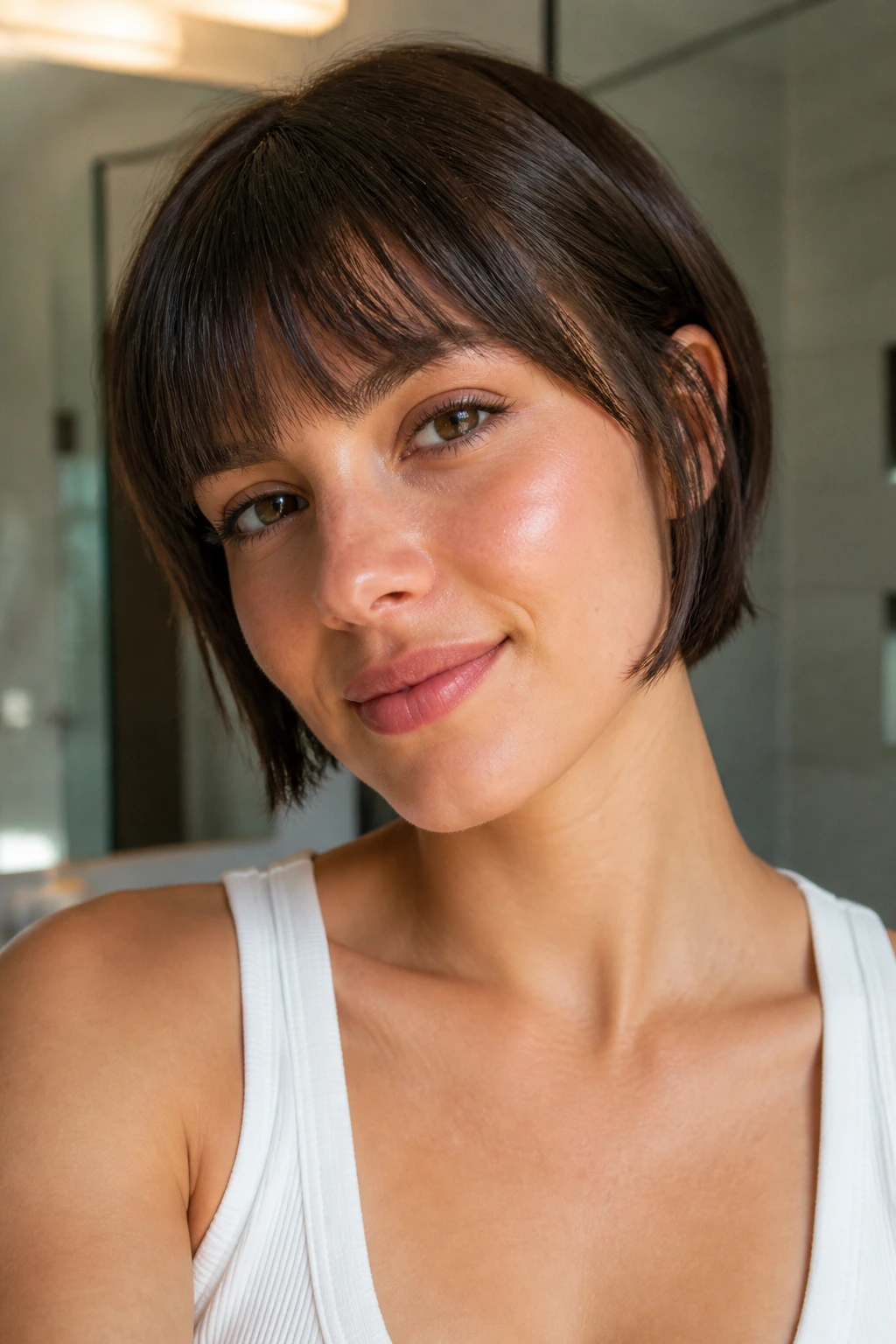
Clip-in bangs aren’t a haircut, which is exactly why they belong on this list. If you’ve been circling fringe for months and still can’t bring yourself to cut, they let you test the shape on a real head, with your own glasses, your own forehead, and your own morning routine.
Why They’re Useful
They show you more than photos ever will. You can see whether a blunt front feels too heavy, whether side-swept pieces get swallowed by your bob, and whether the idea of bangs is actually the same as the reality of bangs. That’s valuable. Not glamorous. Valuable.
If you’re undecided, clip-ins are the cheapest honesty check in the category.
Why the Right Fringe Changes the Whole Cut
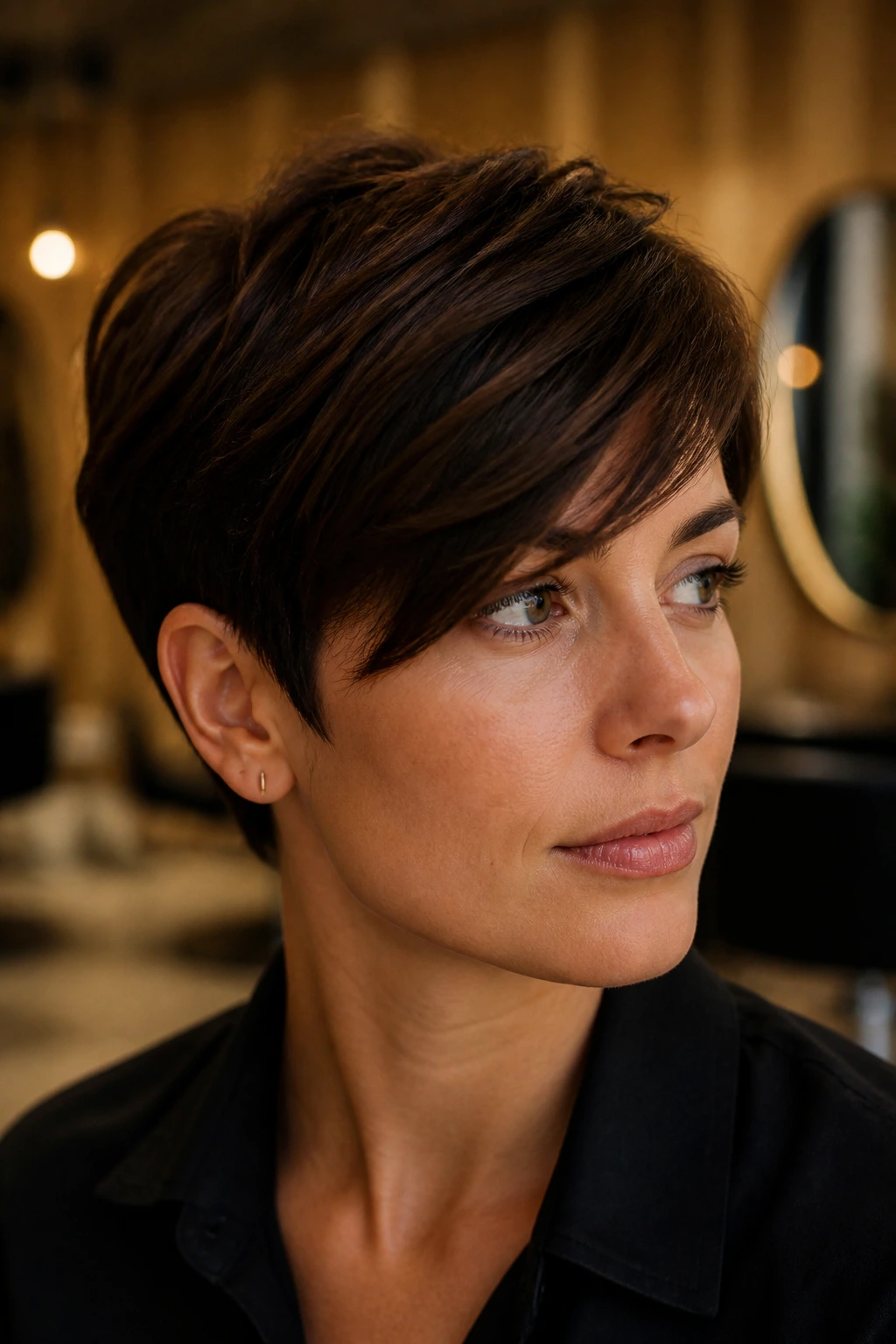
Short hair can look chic on its own, but the right fringe gives it direction. Without that front piece, a crop can feel too open, and a bob can feel a little unfinished. With it, the same haircut can lean sharp, soft, retro, or edgy depending on where the bang starts and how it moves.
The best part is that there isn’t one right answer. A micro fringe, a soft sweep, and a split curtain are all useful for different reasons, and the useful one is the one that fits your hairline, your texture, and the amount of time you actually want to spend in front of a mirror.
How to Style Short Bangs Without a Daily Battle
Short bangs behave better when you style them while the roots are still slightly damp. Start with the fringe separated from the rest of the hair, then direct the dryer at the roots first, not the ends. If the roots dry in the wrong direction, the ends can look fine and the whole front still sits wrong.
A small round brush or a fine brush works better than a giant one here. Pull the hair where you want it to land, then hit it with cool air for a few seconds so the shape stays. If you have a cowlick, brush the fringe in the opposite direction first, then sweep it back to your chosen side. That little trick helps a lot more than people expect.
Product should stay light. Too much cream or oil turns bangs greasy by noon, and short hair shows that faster than long hair does. Use texture spray or dry shampoo at the roots if the fringe needs grip, not shine.
Common Mistakes That Make Short-Hair Bangs Look Off
- Cutting them too wet: Wet hair lies. Once it dries, short fringe can jump half an inch or more, especially if your texture is wavy or curly. The fix is a dry or nearly dry consultation for tricky hair.
- Making them too dense: A solid wall of hair across a small forehead can feel heavy fast. If the fringe starts to look helmet-like, ask for texture at the ends or take out a little bulk in the center.
- Using too much product: Oil, serum, and thick creams sink short bangs to the forehead and make them separate in strange clumps. Start with a tiny amount and add only if the texture really needs it.
- Ignoring the cowlick: A stubborn front swirl will push the bangs apart or kick one side up. Work with it through parting and drying direction instead of pretending it isn’t there.
- Trying to trim in a rush: Short bangs show every uneven snip. If you’re not trained with shears, leave the first cut alone and only dust the ends between salon visits.
Ways to Change the Look Without Cutting More Hair
Side-Part Reset: Shift the part an inch or two farther over and let the fringe fall in a new direction. That simple change can turn a blunt front into a side sweep without scissors touching your head.
Pin-Back Curtain Test: Clip the center pieces away from the face and leave the sides loose for a few hours. It gives you a curtain-bang effect and lets you see whether you like the forehead opening before anyone trims a thing.
Texture Spray Flip: Mist the roots lightly, twist the front section once, and let it dry with a bend. The result is softer and messier than a set wave, which works well for shaggy or layered short hair.
Frame-Friendly Tuck: If glasses keep fighting your fringe, tuck the shortest bits slightly above the frame line and leave the rest to skim the sides of the face. That small shift keeps the cut from crowding your lenses.
Root Clip Lift: Clip the bangs up at the root for ten minutes while they cool, then release them. It adds height without changing the length, which helps blunt or heavy fringe feel less stuck to the forehead.
Maintenance, Trimming, and Grow-Out
Short bangs need more attention than people want to hear, but the schedule depends on the style. Micro fringe and baby bangs usually need cleanup every 2 to 3 weeks. Blunt brow-grazing fringe often looks best around the 3- to 4-week mark. Curtain, side-swept, and split styles can stretch longer because they blend into the rest of the haircut instead of hanging as a solid line.
If you wash your face in the morning and the bangs get damp, dry them right away. Leaving them to air-dry crooked is how a neat fringe turns into a stubborn bend. At night, clip them off the forehead if you’re oily or sweaty at the roots. That tiny habit keeps them from separating into odd ridges by morning.
Grow-out gets easier when you redirect the part early. Don’t wait until the fringe is in your eyes. Start sweeping it sooner, and it will behave better while it lengthens.
Frequently Asked Questions
Which bang style is easiest to live with on short hair?
Side-swept fringe, split fringe, and curtain-style pieces are the most forgiving because they blend into the haircut instead of sitting as one hard line. They also tolerate a bad hair day better than blunt bangs.
Can I wear bangs with a pixie cut?
Yes, but the shape matters. Micro fringe, feathered fringe, and soft side-swept pieces usually work better than a heavy, full-width bang because they keep the pixie from looking crowded at the front.
Do short bangs work if I wear glasses?
They can, and often better than long bangs that end up fighting the frames. Brow-skimming, feathered, or side-swept fringe usually clears the lenses more cleanly than blunt shapes that land right on the frame line.
What if my hair has a strong cowlick at the front?
Choose a style that lets the hair move with the swirl instead of against it. Split fringe, side-swept fringe, and peekaboo bangs are usually easier than a dead-straight front line that the cowlick will keep breaking apart.
How often should short bangs be trimmed?
Most styles need touch-ups every 2 to 4 weeks, depending on how precise the shape is. A soft curtain or split fringe can go longer; a micro fringe starts losing its shape faster and needs more frequent cleanup.
Can curly hair have short bangs without looking weird?
Absolutely, but the cut has to respect shrinkage. Ask for the fringe to be shaped dry or nearly dry, and leave extra length so the curls land where you actually want them.
Should I cut bangs at home if my hair is short?
I wouldn’t start there. Short hair magnifies every uneven line, and a tiny mistake near the forehead changes the whole cut. If you want to test the idea, clip-in bangs are the safer experiment.
What if the bangs look too heavy after the cut?
Don’t panic and don’t keep trimming at random. Try changing the part, blow-drying the roots the opposite way, or asking for a little interior texturizing at the salon so the front separates more naturally.
A Fringe That Fits the Cut
The best bangs for short hair don’t fight the haircut. They steer it. A blunt line can make a bob feel sharper, a soft sweep can make a pixie less severe, and a split fringe can give you just enough change without turning your morning routine into a project.
The smart move is to match the fringe to the way your hair already wants to fall. Cowlicks, glasses, density, and texture matter more than a generic face chart, and the right choice is usually the one that works on day three, not just the one that looks pretty in the salon mirror.
Pick the shape that suits your hairline, your styling patience, and the cut you already wear well. The mirror gets easier after that.
