



Middle-part bangs are honest.
They show the cowlick at your hairline, the way your roots lift or collapse, and whether the rest of your cut has enough shape to hold its own. On medium-length hair, that honesty is a gift. You get enough length for movement, enough weight for control, and enough room around the face to make a center split look deliberate instead of accidental.
The sweet spot sits somewhere between the jaw and the collarbone. Shorter than that, the fringe can start to dominate the whole cut. Longer than that, the shape can slip into a heavy curtain that hides the face instead of framing it. Get the balance right, and medium length hairstyles with middle part bangs stop being one look and become a whole set of usable ideas.
What matters most is texture, not trend. A soft lob, a shag, a blunt midi, a curly shoulder-length cut — they all behave differently around a center part. The 16 styles below lean into those differences instead of pretending one bang shape works the same on every head. Start with the version that matches how your hair already falls, and the rest gets a lot easier.
Why These Styles Keep Working
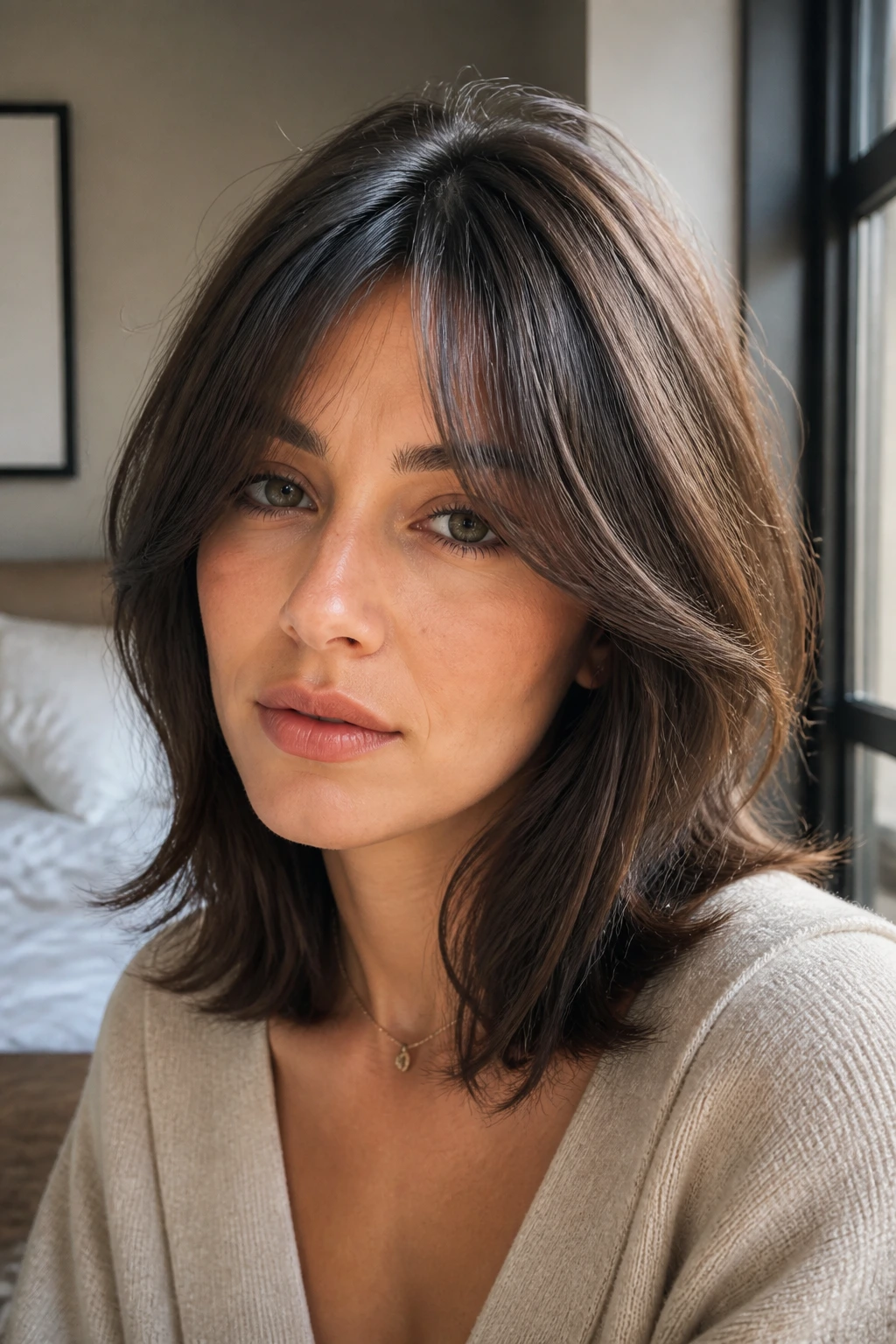
-
The length carries the fringe without swallowing it: Hair that lands at the collarbone or shoulder gives middle-part bangs enough body to blend in, instead of letting the front pieces float awkwardly by themselves.
-
A center split softens best when the edges are cut on purpose: Longer temple pieces, cheekbone-skimming layers, and a shorter center point keep the line from feeling blunt or severe.
-
Medium length leaves room for air and movement: A bend at the ends, a loose wave, or a straight finish all make sense here, which means the cut can change with your styling mood.
-
The grow-out stage is easier to live with: Curtain fringe and split bangs can fold into face-framing layers instead of turning into a shelf that hangs in your eyes for months.
-
You can make the cut read polished or undone without changing the shape: A round brush gives you a salon blowout look. A diffuser, salt spray, or a quick air-dry gives you something looser.
-
It works across more textures than people expect: Fine hair gets lift from a blunt perimeter, thick hair benefits from weight removal, and waves get a shape that looks built in rather than pushed into place.
1. Soft Collarbone Lob With Feathered Center-Part Bangs
This is the cleanest place to start if you want middle-part bangs without drama. The collarbone length gives the hair enough swing to move, while the feathered fringe keeps the front from looking heavy. The whole cut lands in that useful middle ground where it looks finished even when you do almost nothing to it.
Ask for a lob that sits right at the collarbone, with soft internal layers and a fringe that opens at the center and gets longer toward the cheekbones. The shortest point should skim the bridge of the nose or just brush the lashes, not sit high on the forehead. That small detail matters. A center fringe cut too short can feel abrupt fast.
Best for: fine to medium hair that needs shape without losing bulk.
Styling note: a 1.5-inch round brush and a quick bend away from the face are enough. You do not need a glassy blowout to make this one work.
The reason I like this cut is simple. It behaves. On a rushed morning, a little root lift at the part and a soft curve at the ends still look intentional. On a better morning, the fringe sweeps open and the layers move just enough to catch light without turning frizzy.
2. Blunt Midi With Long Curtain Bangs
Can a blunt line and a soft fringe live in the same haircut? Absolutely, and the contrast is what makes this one interesting. The straight perimeter gives the style backbone, while the long curtain bangs keep it from feeling boxy around the jaw.
This cut works especially well on thicker hair, because the blunt edge can hold weight without looking flat. The bangs should start longer than you think — usually around the cheekbones — and open gradually so the middle part feels like a frame, not a split seam. If the fringe is too short, the whole shape starts shouting.
Why it works on dense hair
The heavy line at the bottom keeps the length looking clean, and the curtain fringe breaks up the width around the face. That matters if your hair tends to puff outward when it air-dries. With this cut, the ends stay controlled while the front pieces do the softening.
A flat iron gives this one its sharpest version. A round brush gives it the friendliest one. I prefer the brush if you want movement; the iron if you want the line to look crisp from root to end. Both work, but they tell a different story.
3. Textured Shag With Piecey Middle Bangs
On wavy hair that dries with a little bend, this cut feels almost easy. The shag lives on movement, and the center-part bangs let the texture do its own thing instead of forcing every strand into the same direction. It has that slightly broken-in feel from the first wear.
Best for waves: 2A to 2C hair usually gets the most out of it, especially if your hair likes to puff at the crown and collapse at the ends.
What to ask for: razored or slide-cut layers, plus a fringe that opens at the center and tapers down to the cheekbones.
Product note: mousse at the roots and a small amount of cream through the mid-lengths is usually enough. Heavy oil on the fringe will make the whole look separate in odd little chunks.
This cut is not about smoothness. It is about shape.
If you like a little edge, ask your stylist to keep the ends choppy rather than polished. The bang pieces should fall separately, not form one thick curtain across the forehead. That separation is what gives the style its personality, and it looks better the second day than the first.
4. C-Shape Layers That Fall Around the Cheekbones
A middle part does not have to be severe. C-shape layers prove that. The front pieces curve inward, then fall away from the face in a gentle arc that keeps the whole cut soft, even if the rest of the hair is straight.
This style is a smart answer for anyone who wants face-framing without a big bang commitment. The “bangs” here are more like the beginning of a longer frame — just enough center split to open the forehead, then enough length at the temples to skim the cheekbones and jaw. It flatters round and heart-shaped faces especially well because it draws the eye downward.
The cut looks best when the shortest front pieces land around the high cheekbone, not the brow. Too short, and the curve loses its quiet shape. Too long, and it can disappear into the rest of the hair. The magic is in that middle zone.
I like this one because it stays useful. You can tuck the front pieces behind your ears, bend them under with a round brush, or let them fall loose with a soft wave. The haircut does not fight you.
5. Sleek Straight Midi With Bottleneck Bangs
Shiny, straight, and a little sharp at the ends. That is the mood here. Bottleneck bangs start narrower at the center and open wider around the brows and temples, so they sit beautifully on a medium-length cut that keeps the rest of the hair calm.
This is one of the cleanest choices for straight or straightened hair. The narrow center of the fringe makes the middle part look intentional, and the longer side pieces soften the forehead without hiding it. If your hair is thick, ask for the bang area to be thinned only slightly; too much removal can make the fringe flip apart in a weird way.
What makes it different
Unlike a classic curtain fringe, bottleneck bangs have a more defined center point. That gives the haircut a little more attitude, especially when the ends are polished and the perimeter is even.
A flat iron works well here, but keep the bend subtle. You want the hair to skim, not curve into ringlets at the ends. A drop of shine serum on the last two inches of hair is enough. More than that and the fringe starts to piece apart in a greasy way that ruins the clean line.
6. Choppy Midi Bob With Airy Fringe

Compared with a blunt bob, this cut gives you more lift where you want it and less bulk where you do not. The choppy ends keep the middle-length shape from feeling heavy, and the airy fringe stops the front from closing in on the face.
This is a good pick for fine hair that tends to flatten by lunchtime. The uneven texture makes the body look fuller, especially if the stylist keeps some of the internal layers close to the crown. The bangs should be soft and separated, not dense. Dense fringe on fine hair can swallow the whole cut.
Quick shape notes
- Keep the ends lightly razored or point-cut.
- Ask for bang pieces that graze the cheekbones.
- Use dry texture spray at the roots, not oil at the ends.
- Keep the center part clean so the fringe does not drift too wide.
The best part is how fast this one moves from casual to styled. A rough blow-dry gives it enough edge. A quick pass with a brush gives it a neater finish. Either way, the cut keeps a little air around the face instead of sitting flat and still.
7. Rounded Blowout Layers With Curtain Bangs
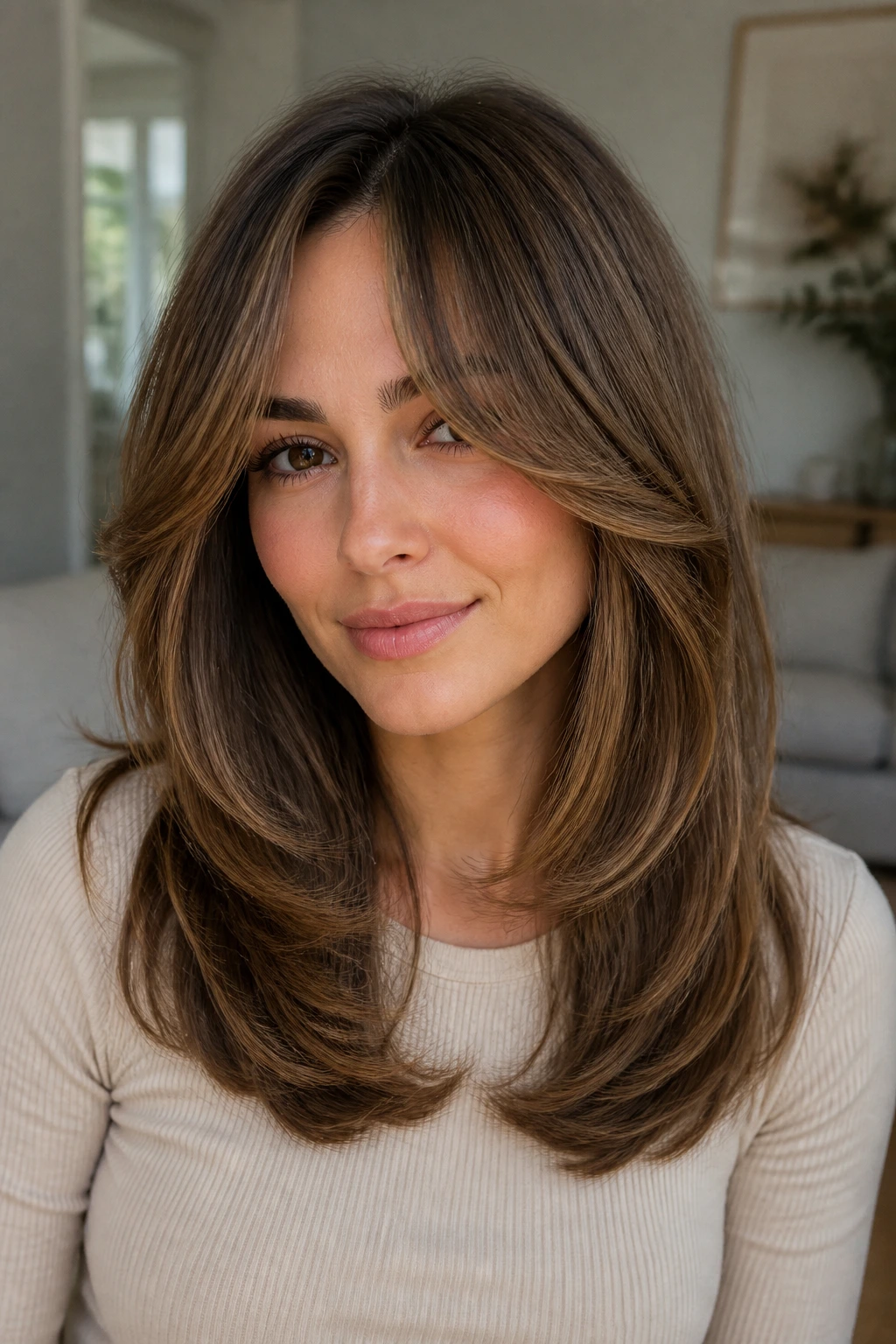
If you like a salon blowout but you do not want to live inside a round brush, this is the cut. Rounded layers build volume through the mid-lengths, and the curtain bangs echo that curve so the whole shape feels connected instead of separate.
The styling here matters, but not in a punishing way. A medium round brush — usually 2 inches, maybe a touch smaller if your hair is fine — gives the bangs their bend. The layers around the face should lift away from the cheeks, then settle back in around the collarbone. That little swing is what makes the haircut look expensive without trying too hard to be.
The round-brush effect
Blow-dry the fringe first. Seriously. If the bangs dry flat while the rest of the hair is still wet, they tend to split in whichever direction they feel like.
Velcro rollers can help if you want more hold through the top and front. Even 10 minutes while you do your makeup can change the shape enough to matter. The cut itself does half the work, but a little setting makes the curve last.
8. A-Line Lob With Longer Temple Pieces
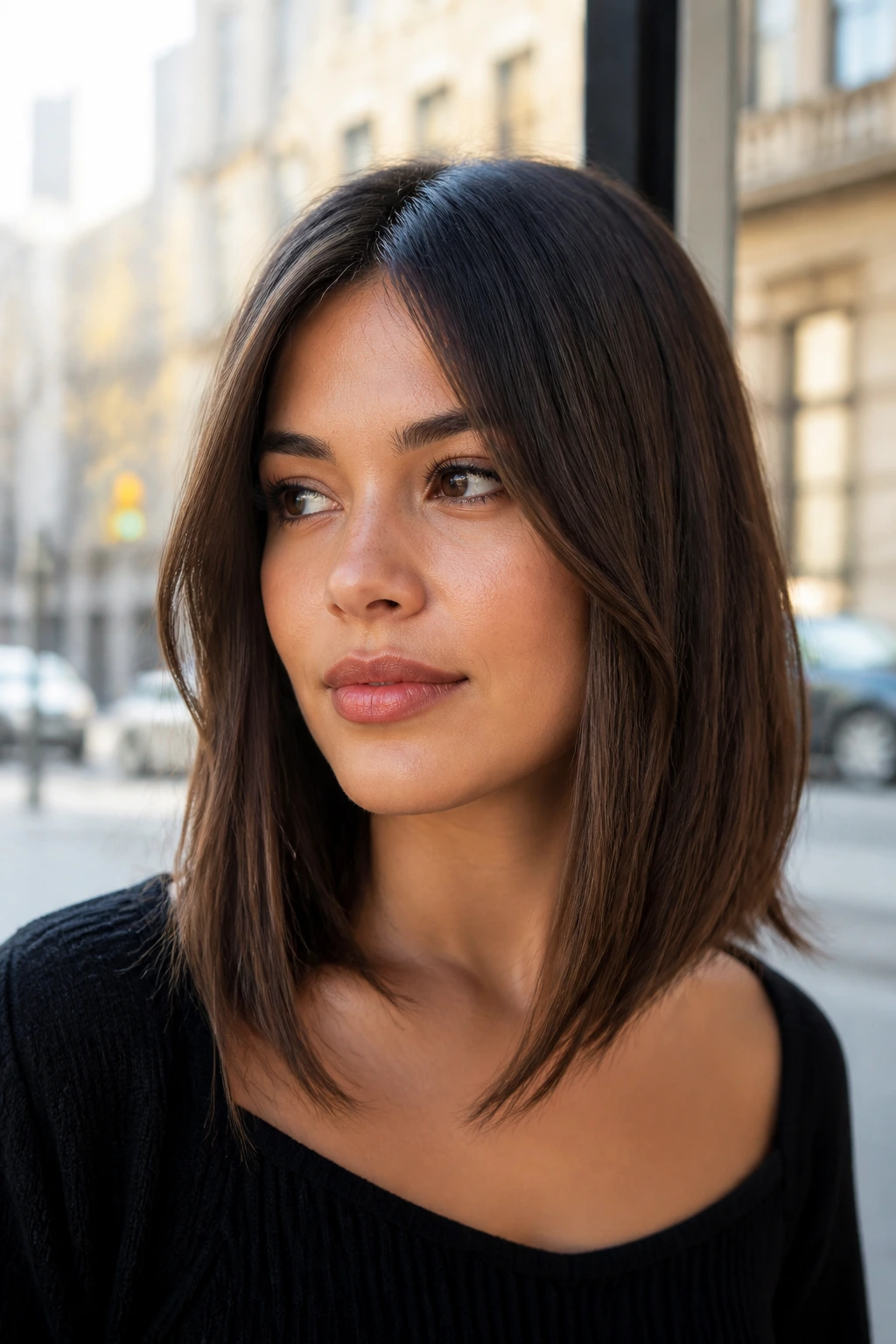
What if your jawline is the part you want to soften? An A-line lob handles that job better than people expect. The back sits a little shorter, the front length comes forward, and the center-part bangs flow into longer temple pieces that pull the eye down and out.
This is a nice choice when you want a little geometry. The shape feels cleaner than a shag and less strict than a blunt midi. It gives you a line, but not a hard one. The front pieces should land below the cheekbone if you want the face-framing effect to read clearly.
The angle in the cut does a lot of visual work. It lengthens the neck, narrows the look of the jaw, and keeps the bangs from hanging like a shelf across the forehead. If you have strong features, that balance can be useful. If you want softness, ask for the temple pieces to be point-cut rather than blunt.
This is one of the most versatile versions in the whole group. Straightened, it feels clean. Waved, it picks up movement at the ends and suddenly looks less architectural. Either way, the center split stays in place because the front has enough length to cooperate.
9. Modern Wolf Cut at Midi Length
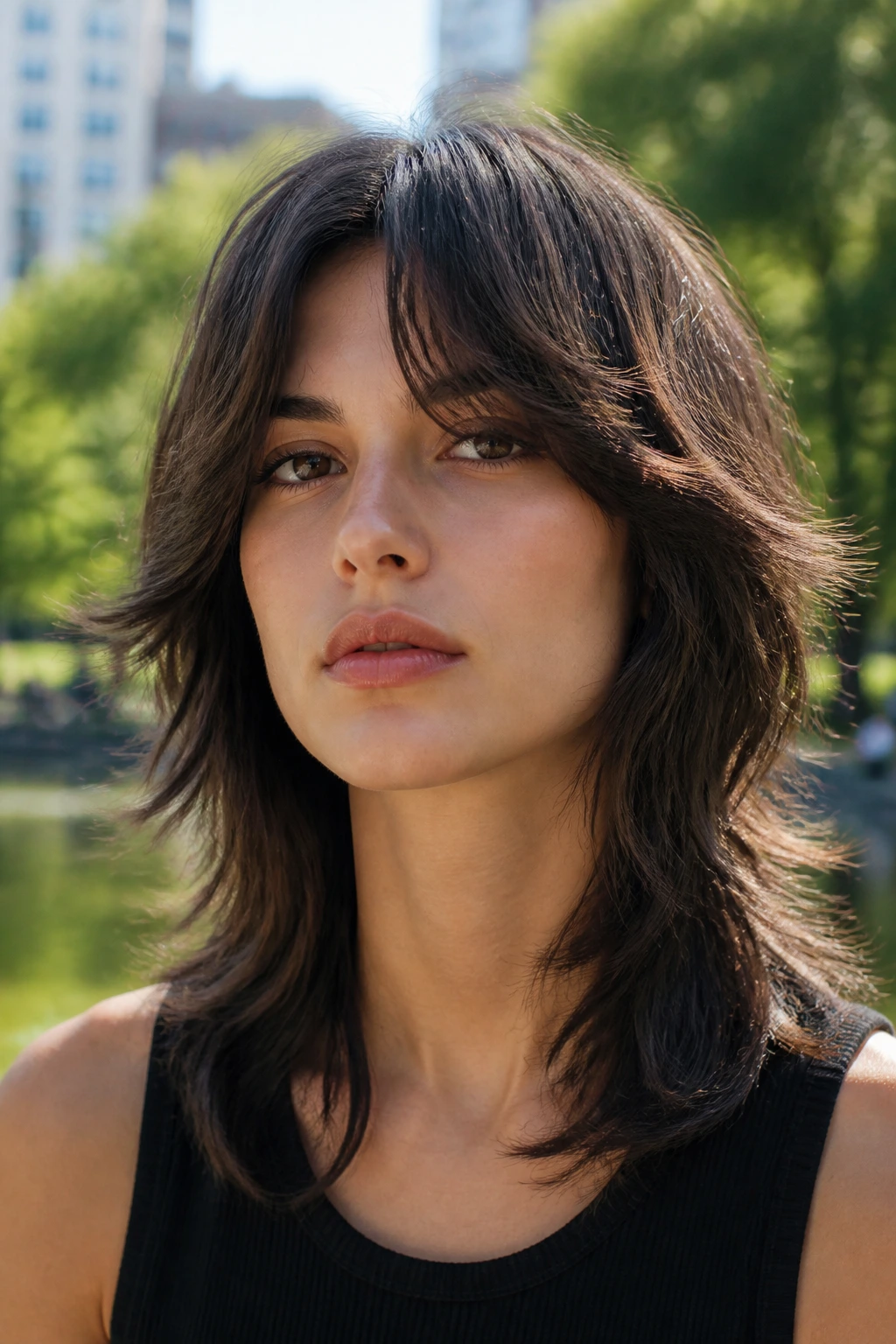
If your crown lies flat by midday, another heavy layer is not the answer. The midi wolf cut gives you lift at the top, looseness through the middle, and a center fringe that breaks up the forehead without looking stiff. It has edge, but the medium length keeps it from going full costume.
The short layers around the crown matter here. They create that little bit of height that makes the rest of the hair move instead of hanging in one shape. The bangs should stay soft and split enough to match the cut’s messy energy. A hard, blunt fringe would fight the rest of it.
Best on thick or wavy hair: the density gives the layers something to work with, and the waves keep the finish from looking overstyled.
Best styling move: mousse at the roots, a diffuser on low heat, and hands off once the hair starts to dry. If you brush this cut too much, the whole point gets lost.
I like this one for people who want a bit of roughness around the edges. It does not pretend to be polished, and that is the point.
10. One-Length Midi With Sheer Bangs
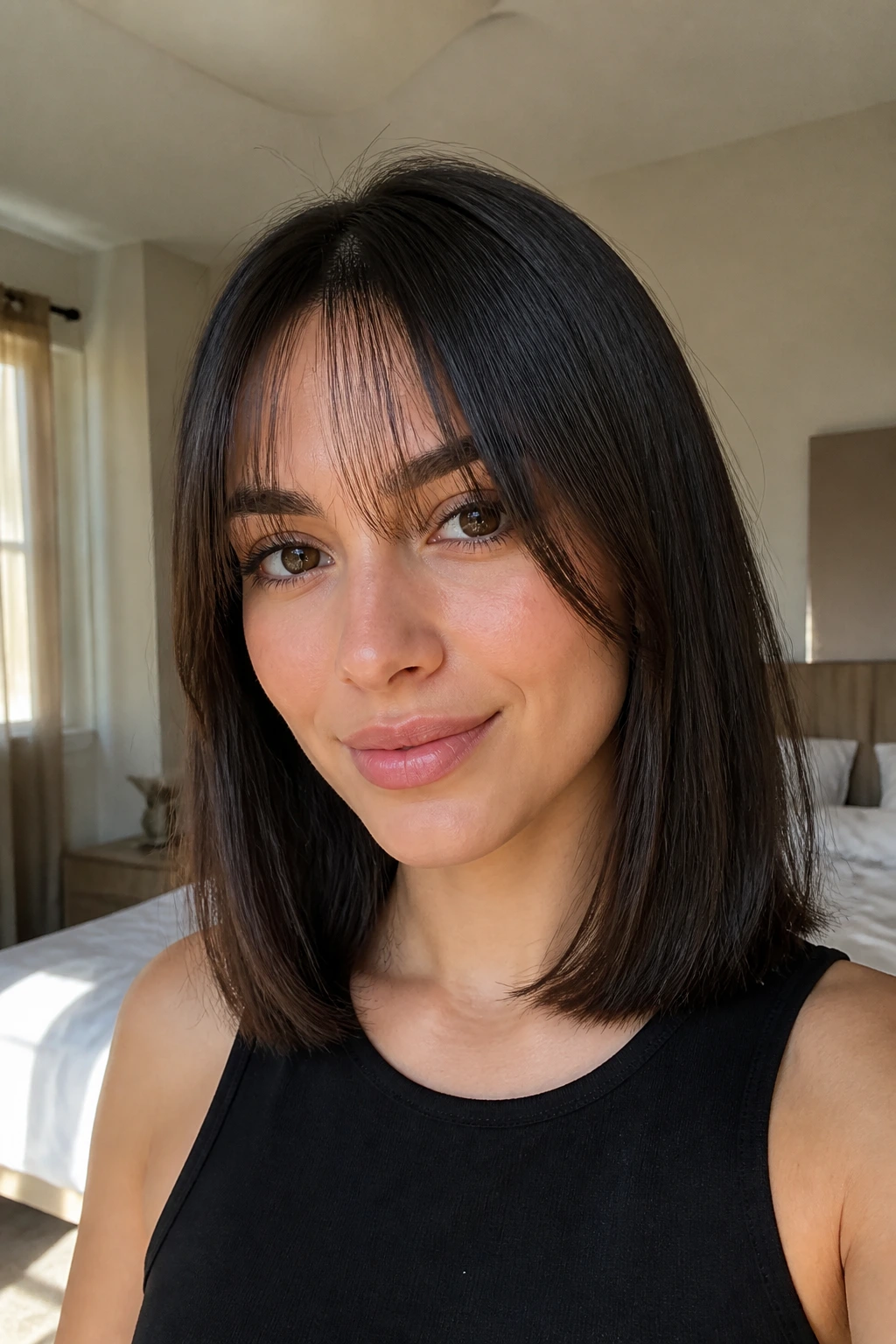
Unlike a shag, this one stays calm. The shape is mostly one length, which gives the hair weight and a clean outline, while the sheer middle-part bangs add just enough movement at the forehead to keep it from feeling heavy.
This is a good move for fine hair or straight hair that gets frayed by too many layers. The blunt perimeter makes the ends look fuller, and the light fringe gives the face some shape without demanding constant styling. The bangs should be airy enough that you can still see some forehead through them. That translucence is the whole trick.
Sheer bangs need careful cutting. Too much density and they stop being sheer. Too little and they disappear. The sweet spot usually sits around eyebrow to lash length at the center, with the sides a touch longer so they can fold into the rest of the haircut.
I reach for this shape when I want the hair to look composed on a day when the rest of life is not. It behaves well in a ponytail, too, which is worth mentioning because not every fringe can say that.
11. Feathered Layers With Swoopy Curtain Fringe
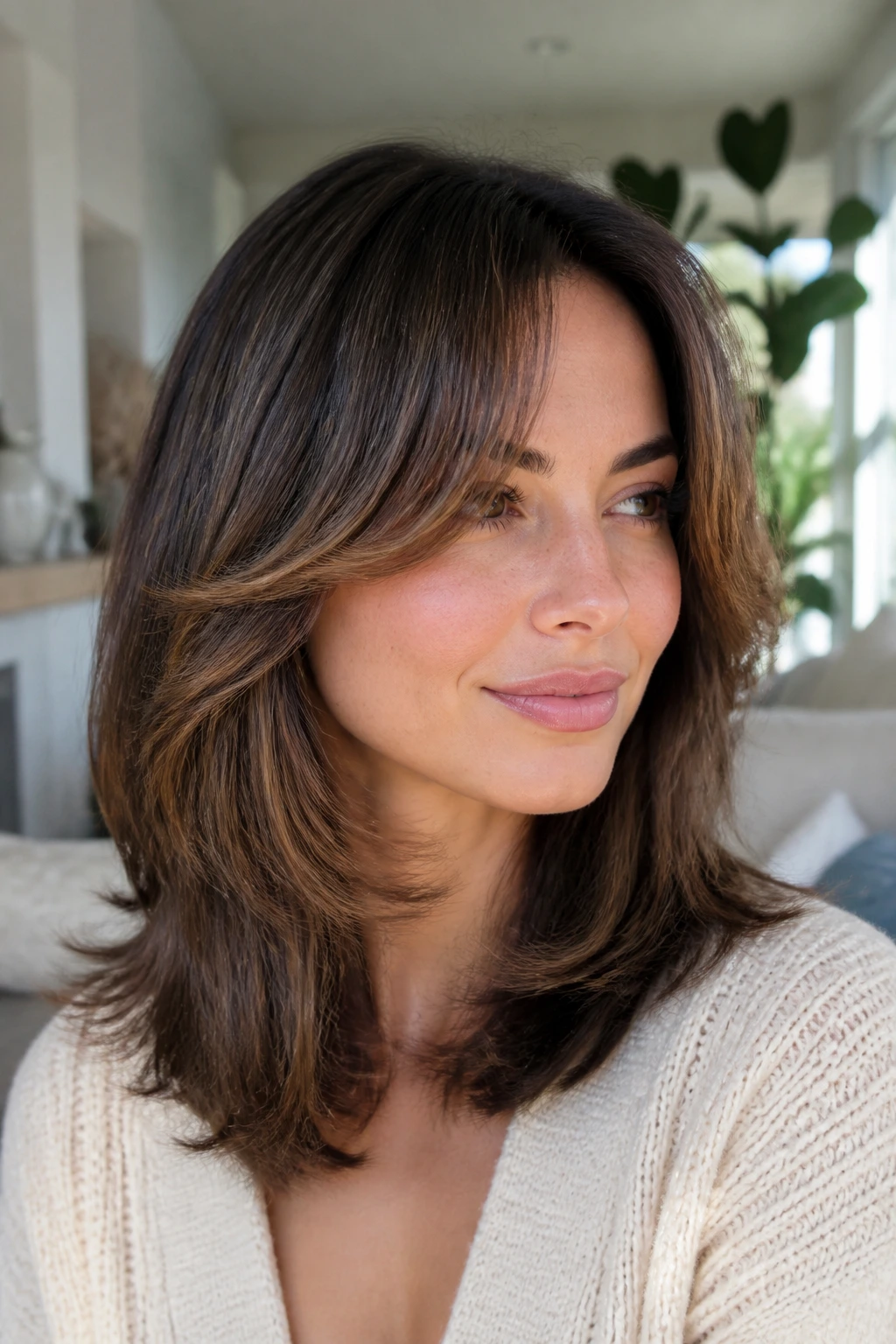
Feathered layers are the cleanest way to make medium hair move when you walk. The ends are soft, the fringe sweeps rather than drops, and the whole cut has a lightness that straight-up layers can miss if they are cut too blunt.
This shape works especially well if your hair has medium density and a little natural bend. The bang pieces should curve away from the face starting around the bridge of the nose, then widen toward the cheekbones. That gives the fringe room to fall open instead of sticking to the center line like a split curtain.
What to ask for
Ask for the layers to begin below the chin if you want to keep the length feeling full. If the layers start too high, the cut can get wispy fast. The goal is feathering, not thinning.
A large round brush or a hot-air brush can make this one look polished in minutes. Keep the heat moderate and the tension light. Tugging too hard on the fringe flattens the bend, and then you lose the swoop that makes the cut work.
12. Tousled Mid-Length Waves With Bottleneck Fringe

Loose waves, a soft bend at the fringe, and that slightly slept-in texture that looks better when it is not too neat. This cut has a relaxed feel, but the bottleneck bangs give it a little structure so it does not drift into shapelessness.
The wave pattern should be loose, not crimped. A curling iron around 1 inch or 1.25 inches usually makes sense here, wrapped away from the face and then brushed out once the hair cools. The bangs need less heat than the rest. A gentle bend is enough, especially if the center is a touch shorter than the sides.
This works because the fringe and waves speak the same language. The bangs open the face; the waves keep the rest of the length from feeling heavy. That makes the cut easy to wear with a T-shirt and equally fine with something more dressed up.
A little sea-salt spray at the mid-lengths can help, but do not flood the fringe with it. The front pieces need softness, not stiffness. If the bangs feel rough to the touch, there is too much product on them.
13. Deep Side-to-Center Transition Cut
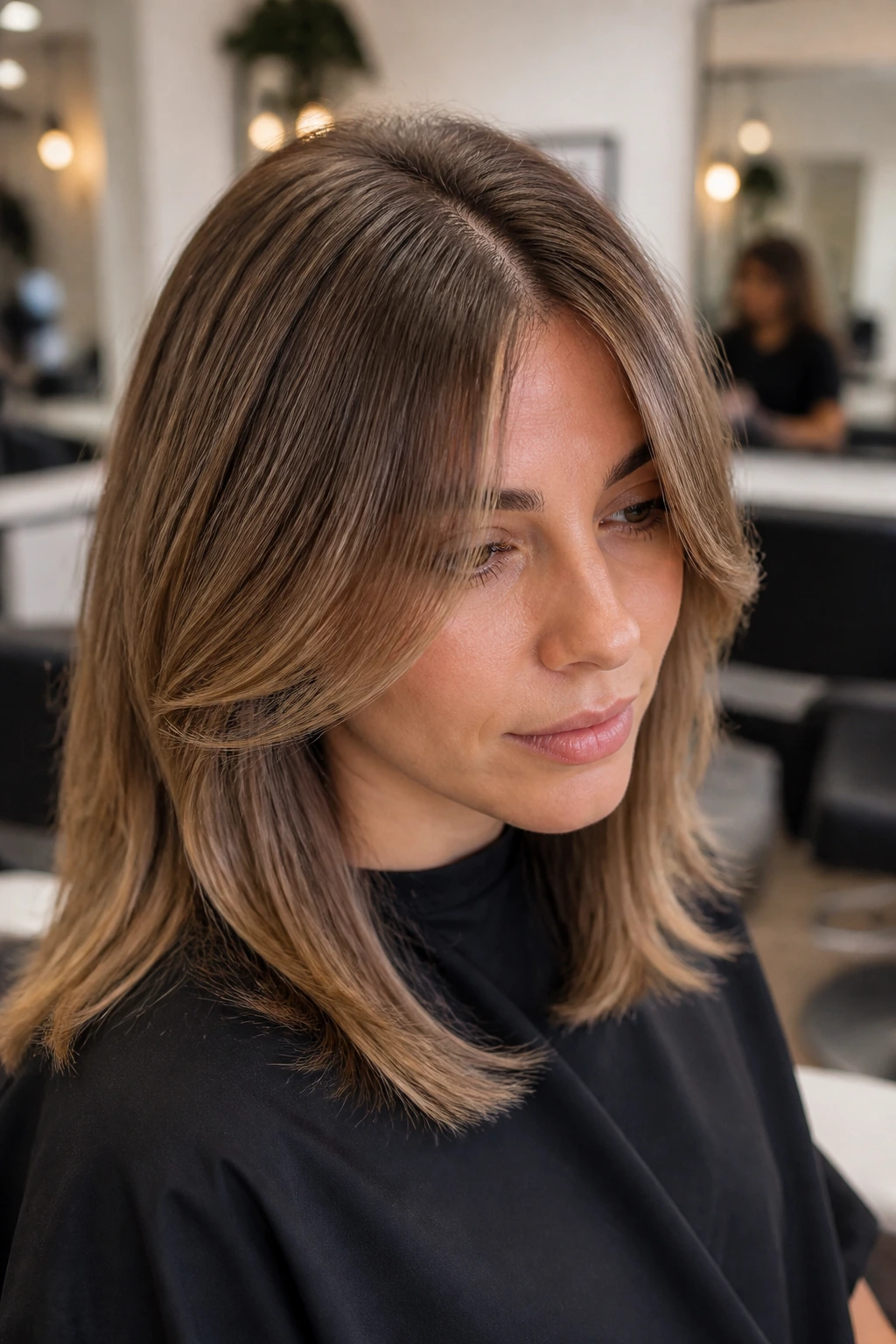
The part does not need to be ruler-straight. In fact, if you have a cowlick or a stubborn hairline, a deep side-to-center transition can make middle-part bangs look far more natural than a strict split ever would.
The trick is in the movement from slightly off-center at the root to true center through the fringe. That tiny shift helps the hair settle instead of fighting your scalp. The bangs still read as middle-parted, but the line feels softer and less rigid.
This is a smart option if your face is asymmetric in a way you want to downplay. A perfectly centered part can make some features feel extra direct. A gradual transition eases that pressure and keeps the front pieces from separating in a weird V shape.
It also plays nicely with soft layers around the jaw. The whole cut can be worn neat, tucked, or slightly messy without looking like it lost the plan halfway through.
14. Polished Shoulder-Length Chop With Heavy Curtain Fringe

Some cuts whisper; this one speaks up. The shoulder-length chop gives you enough mass for a solid outline, and the heavier curtain fringe takes up more room on the forehead than a sheer bang, which makes the style feel bolder and more deliberate.
This shape suits medium to thick hair best. Fine hair can wear it, but the fringe needs to stay soft enough that it does not take over the whole head. The curtain pieces should still open at the center, but they can be fuller and sit closer to the brows than in a lighter version.
The styling target here is smoothness with a bit of bend at the ends. A paddle brush can help if you want the hair straighter through the body, while the fringe usually looks better with a round brush for a little inward curve. That contrast keeps the cut from reading flat.
If you wear glasses, this cut can be a good fit because the fringe can sit just above or just around the frame line. You may need a longer temple piece, though, so the bang does not clash with the sides of the lenses.
15. Razor-Cut Midi With Grown-Out Bangs

Do you hate trimming bangs every few weeks? Then stop chasing a blunt fringe and ask for a razor-cut grow-out shape. This style keeps the front soft from day one, which means the middle part can shift a little and still look like it belongs there.
The ends are slightly tapered, not chopped into a hard line. The bangs are longer, lighter, and more forgiving than a classic curtain set, so they can blend into the rest of the cut as they grow. That makes this one a smart choice if you want fringe but not the maintenance that usually comes with it.
Best for
- Hair that grows fast at the front.
- Anyone moving out of shorter bangs.
- Thick hair that needs some edge removed.
- People who like a bit of piecey movement near the face.
The caution is simple: a razor can fray the ends if the hair is already fragile or very fine. In that case, ask for point-cutting instead. The goal is softness, not fuzz.
16. Curly or Wavy Medium Cut With Split Bangs

Curly hair can wear middle-part bangs without turning into a triangle. The trick is to respect the shrinkage and cut the fringe longer than a straight-haired person might expect. A split bang that lands near the cheekbones when dry keeps the front open and balanced.
This cut works best when it is shaped on dry hair or at least partially dry hair, because curls lie. They look longer when wet and spring up when they dry, sometimes by an inch or more. If the shortest point of the fringe is cut too high, it can bounce straight out of the forehead and stay there.
Leave-in cream and a light gel can help the split stay defined without going crunchy. Finger-coiling just the front pieces is often enough. You do not need to fight the whole head into submission.
I like this style because it acknowledges how curls behave instead of forcing them into a straight-haired template. The medium length gives the curls weight, the middle split gives the face breathing room, and the front pieces can move without collapsing into one dense curtain.
Why Medium Length and Middle Parts Work Together So Well
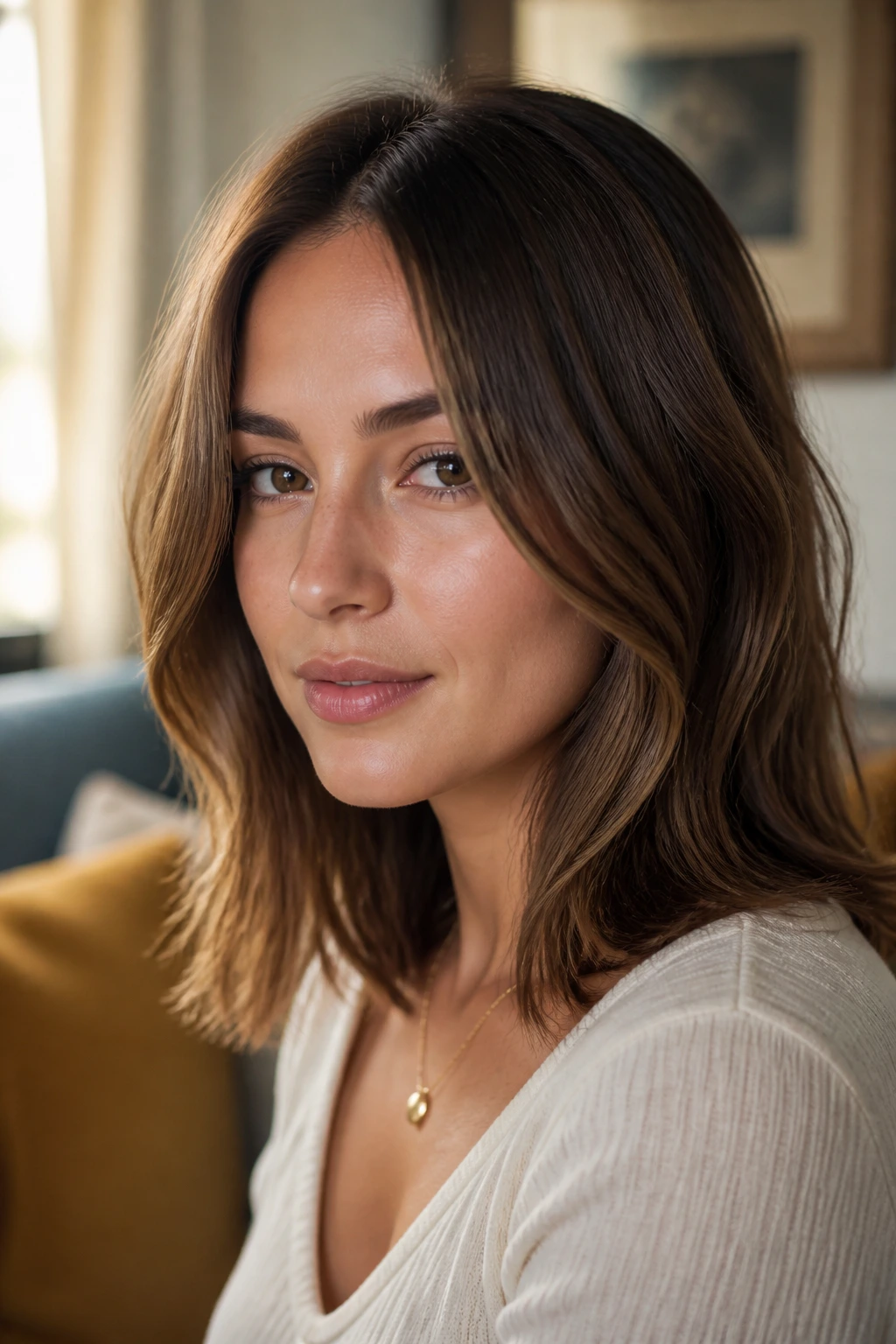
The reason this combination keeps coming back is structural, not fashionable. Medium-length hair has enough weight to settle, but not so much that it drags the fringe flat. That matters more than people think. A center-part bang needs the rest of the haircut to support it, or the front pieces start doing all the visual work and the shape loses its balance.
There is also a face-framing effect that only happens when the front pieces are cut with intention. A middle part opens the forehead, yes, but the real shape comes from the lengths around the cheekbones and jaw. If those pieces are too short, the cut looks blunt. If they are too long, the fringe disappears. The sweet spot sits in that middle range where the hair falls open, then folds back in around the face.
The best versions of these styles leave room for weather, texture, and a little bad behavior from your hairline. That is why they tend to age well. The cut still works when the roots are slightly grown out, when the wave pattern changes, and when you only have time for a quick bend with a brush. It is a forgiving set of shapes, and forgiving haircuts are underrated.
Essential Tools for Styling These Looks
-
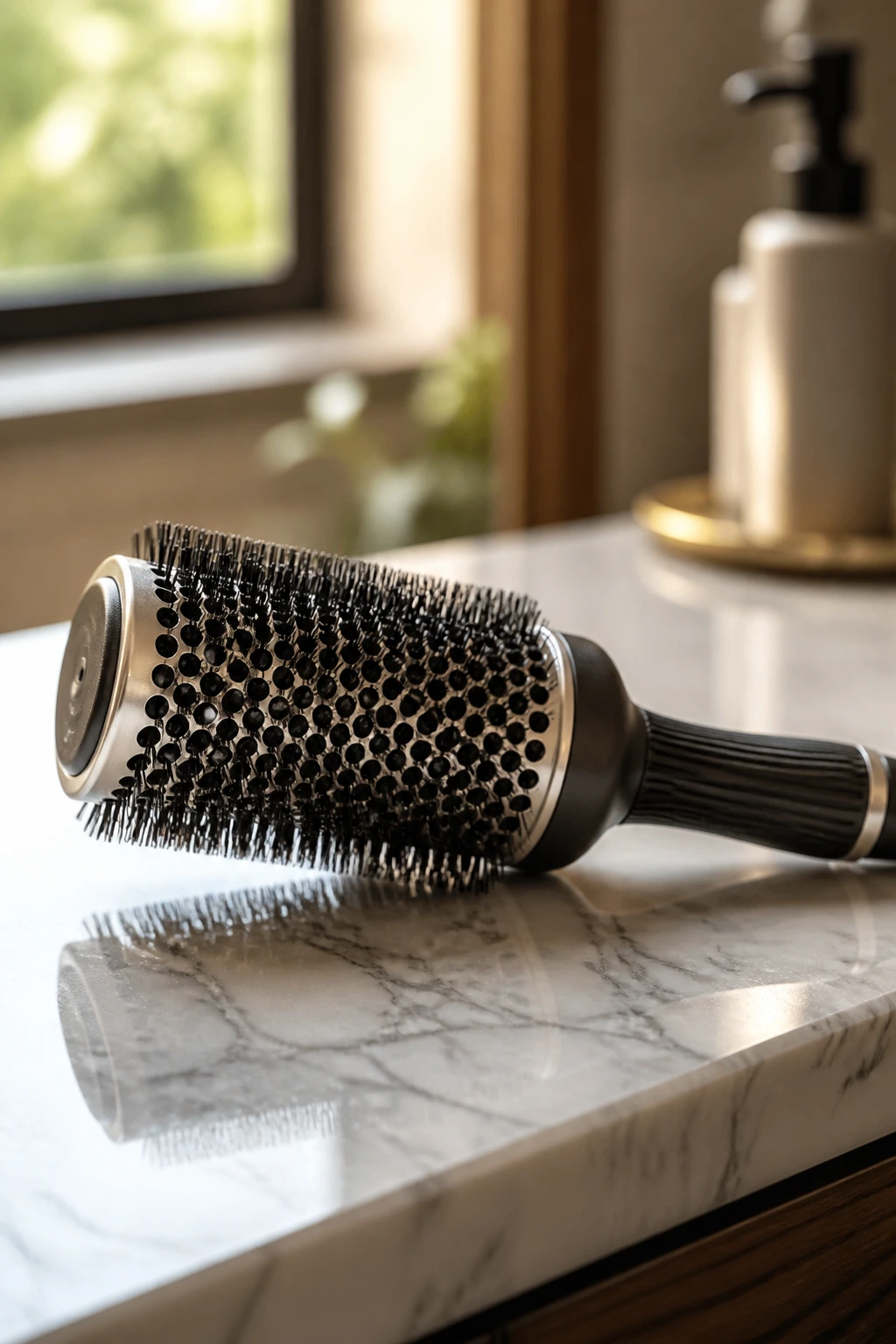
1.5- to 2-inch round brush: Big enough to give the fringe a bend, small enough to control the front pieces without flaring them out.
-
Blow dryer with a concentrator nozzle: The nozzle matters more than people admit; it helps aim the airflow at the root so the center part does not puff up randomly.
-
Heat protectant spray: Use it on damp hair before any blow-dry, flat iron, or curling iron. The fringe gets damaged fastest because it is touched first and styled most often.
-
Lightweight mousse or root-lift foam: Best for lobs, shags, and rounded blowouts. Put it at the roots and through the mid-lengths, not just on the bangs.
-
Texturizing spray: Useful for choppy, shaggy, or wolf-cut shapes that need separation. A little goes a long way.
-
Dry shampoo: Helps on day-two hair and keeps the center part from getting oily and piecey in a bad way.
-
Duckbill clips or sectioning clips: These make blow-drying bangs far easier. Clip the rest of the hair away so the fringe can dry in the direction you want.
-
Flat iron: Best for sleek midi cuts and bottleneck bangs. Use it to smooth the ends, not to press the hair into a hard board.
-
Diffuser attachment: Essential for curls and useful for waves that need shape without frizz.
-
Wide-tooth comb: Better than a brush on wet curly or wavy hair. It keeps the front from ballooning before styling.
What to Ask for at the Salon
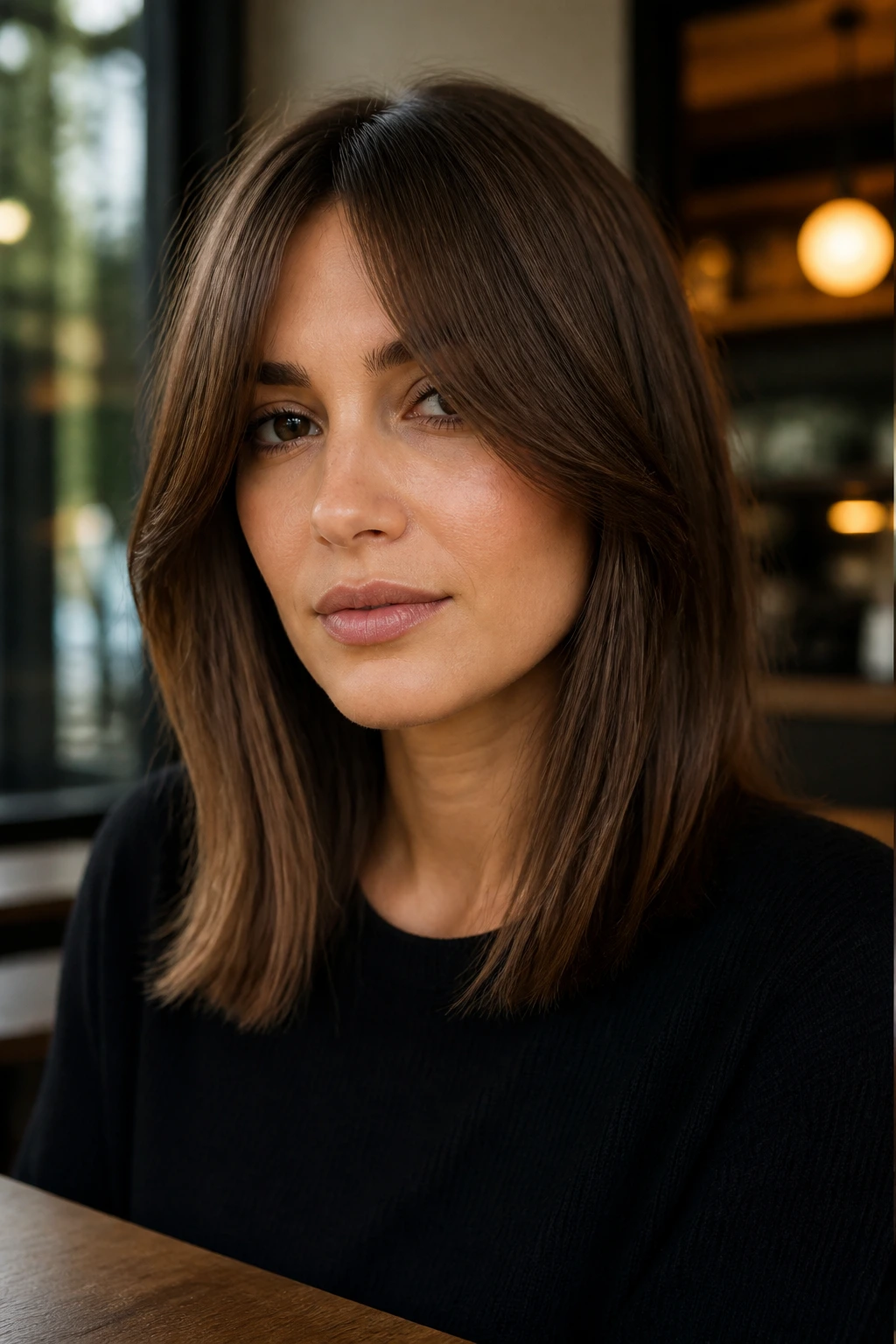
The easiest way to get a good result is to be plain about what you want. Say where the length should sit — collarbone, shoulder, or slightly above — and say what the fringe needs to do. “Middle-part bangs” can mean soft curtain pieces, a bottleneck shape, or a stronger split fringe. Those are not the same cut.
Bring photos, but bring the right kind of photos. One image should show the overall shape. Another should show the bang length and how wide you want the opening at the center. If you only show one face shape with one hair texture, you may get a copy that does not translate to your own head.
Tell the stylist how your hair behaves on a regular day. Does it puff at the crown? Stick to the forehead? Split on one side? That detail matters more than whether you plan to heat-style it sometimes. A good cut should work on your normal hair, not your best hair day.
Curly and wavy clients should ask for the front pieces to be cut in the way they will wear them, not stretched straight unless the stylist knows how your curl pattern behaves. And if you have a cowlick at the hairline, say so. Hiding that detail is how people end up with bangs that fight them every single morning.
How to Wear and Style Them on Real Mornings

Straight and glossy: Best for blunt midi cuts, bottleneck bangs, and the more polished lob shapes. Blow-dry the fringe first, then smooth the ends with a flat iron or paddle brush so the whole cut looks clean from root to tip.
Loose and airy: Best for shags, feathered layers, and softer curtain bangs. Use mousse on damp hair, scrunch lightly, and let the bangs fall with a gentle bend instead of forcing them into a rigid line.
Pinned back and practical: Best for the grow-out versions and the softer lob shapes. A small clip at each temple can keep the fringe open while still letting the middle split show.
Day-two texture: Best for wolf cuts, choppy mids, and wavy styles. A quick mist of water or leave-in spray at the front, then a finger-comb through the bangs, is often enough. Too much brushing can wreck the texture and leave the center part looking wider than you want.
Additional Tips and Shape Boosters
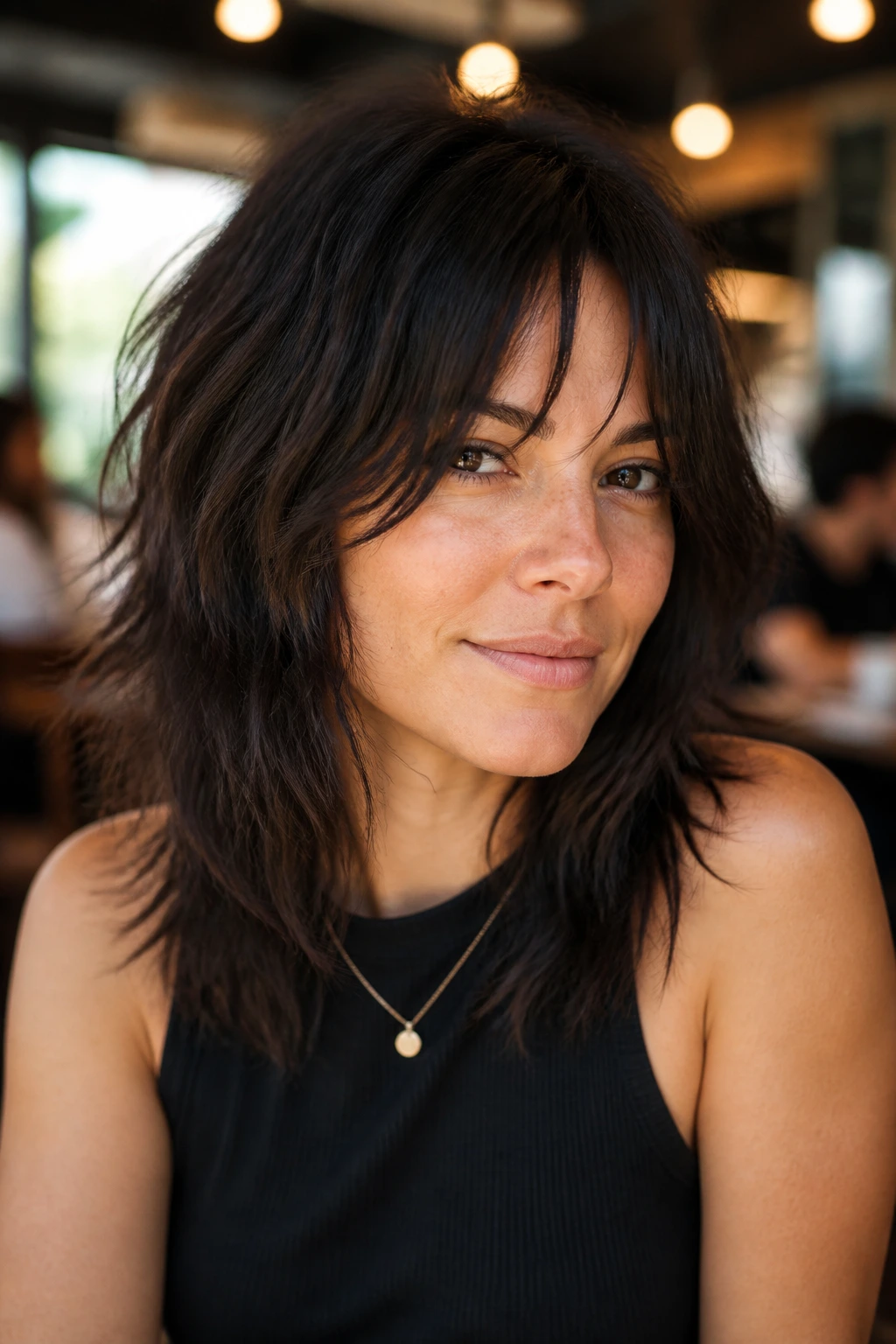
Root Lift: Start the blow-dry at the crown and hairline, not the ends. If the roots sit flat, the whole center-part fringe loses its shape before you even leave the bathroom.
Fringe Separation: Use a tiny bit of lightweight styling cream on the very ends of the bangs if you want piecey movement. Keep it away from the roots, or the fringe will clump and look greasy.
Face-Framing Balance: Longer temple pieces are the secret weapon here. They soften the line around the cheeks and keep the middle part from looking like it was cut in isolation.
Texture Choice: Fine hair tends to look better with a cleaner perimeter and lighter fringe. Thick hair usually needs internal weight removal so the front does not balloon outward. Straight hair likes definition; wavy hair likes restraint.
Finish: If the haircut starts to look too serious, bend only the front two inches of each side away from the face. That tiny move opens the style up without changing the shape.
Trim Schedule, Washing Rhythm, and Night Care

Middle-part bangs need more maintenance than the rest of the haircut. That does not mean constant salon visits, but it does mean the fringe should be trimmed on a schedule, not whenever it gets in your eyes enough to annoy you. Blunt or fuller curtain bangs usually need a clean-up every 3 to 5 weeks. Softer, grow-out fringe can stretch to 6 to 8 weeks if the shape is already blended well.
Medium-length layers generally hold their shape longer than bangs do. A full trim every 8 to 12 weeks usually keeps the ends from looking ragged, especially if the cut is blunt or collarbone length. If you wear a shag, you may prefer the shorter end of that range because the texture starts to lose its edge when the layers grow too far apart.
Washing rhythm depends on the hairline more than the bangs themselves. If your roots get oily fast, the fringe is usually the first place it shows. A little dry shampoo at the part can buy you a day, but it should not become the whole plan. Too much buildup around the fringe makes the hair limp and chalky at the same time, which is a bad combination.
At night, keep the front from being crushed under your pillow. A loose clip, a silk pillowcase, or a quick re-center of the bangs before bed can save you ten minutes in the morning. If your hair is wavy or curly, pineapple the longer length loosely and leave the fringe free so it does not dry in a bent shape you did not ask for.
Variations and Adaptations to Try

Soft Grow-Out Version: Keep the center fringe longer and let it melt into the layers at the temples. This is the easiest version to live with if you do not want to trim bangs often, and it still reads as a middle-part style.
Thick-Hair De-Bulked Version: Ask for internal weight removal, not aggressive thinning on the surface. This keeps the hair from puffing out around the face while preserving enough body for the fringe to sit cleanly.
Fine-Hair Volume Version: Keep the perimeter blunt and the bang area light. A soft fringe with too many short layers can expose the scalp faster than you want, so use shape, not subtraction, to create movement.
Curly-Friendly Version: Have the stylist cut the fringe longer and shaped to the curl pattern. A dry cut or a curl-specific shaping session helps the split fall naturally instead of springing into a different line after the shower.
Glossy Straight Version: A sleek midi with bottleneck bangs and minimal layering gives you the cleanest silhouette. It works well if you like a sharp center part and do not want visible texture at the ends.
Razor-Soft Version: For people who like movement but hate blunt edges, a light razor finish on the mid-lengths and a soft fringe opening can give the cut a slightly undone edge. Keep this away from very fragile hair.
Common Mistakes to Avoid
-
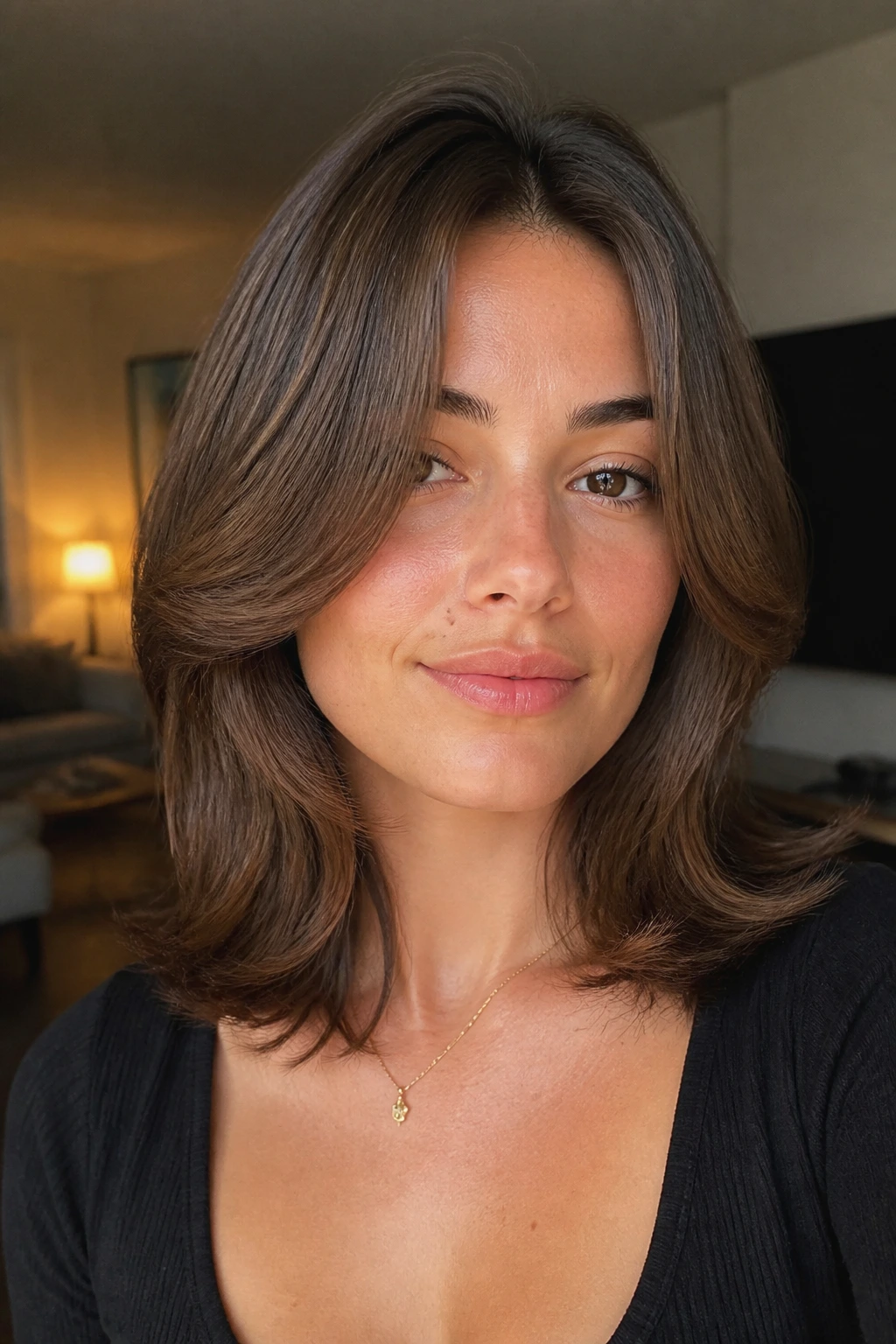
Cutting the center too short: If the shortest part of the fringe sits high on the forehead, the middle part can look harsh fast. Keep the center point closer to the bridge of the nose or just above the lashes, then let the sides taper longer.
-
Thinning the fringe until it frizzes apart: Heavy-handed razor work on fine or dry hair can leave the bangs looking wispy in the wrong way. Use point-cutting or gentle texturizing instead.
-
Ignoring the hairline’s natural split: A strong cowlick can make a straight middle part fight back every morning. Build the cut around that pattern instead of pretending it is not there.
-
Putting too much product on the front: Oil, cream, and heavy serum travel fast on bangs. A tiny amount is enough, and the safest place for most of the product is the mid-lengths and ends.
-
Leaving the temple pieces too short: If the sides of the fringe stop high on the face, the cut loses its soft frame and starts popping outward. Longer temple pieces give the style its shape.
-
Skipping regular bang trims: Fringe grows fast enough to change the whole feel of the haircut. Even a tiny trim can keep the center split open and prevent that heavy, overlong curtain effect.
Middle-Part Bang Questions People Ask Most

Which face shape works best with middle-part bangs?
A lot of face shapes can wear them, but round, heart, and oval faces usually get the easiest fit because the center split opens the face while the longer side pieces add balance. Square faces can wear them too, especially when the fringe starts softer and the layers curve around the jaw.
Are middle-part bangs good for fine hair?
Yes, if the cut keeps the perimeter clean and the fringe light. Fine hair usually looks better with a blunt or softly blunt base than with too many short layers, because extra layering can make the ends look thin and the bangs look sparse.
Can curly hair pull off this look without straightening?
Absolutely. The key is to cut the bangs longer and shape them while the curl pattern is visible, not stretched flat. That keeps the fringe from springing up too high and gives the center split room to open naturally.
How do I stop the bangs from splitting in the wrong place?
Blow-dry the roots in the direction you want before the hair dries all the way, and clip the fringe while it cools if needed. A cowlick may never disappear, but a well-cut fringe and a little direction at the roots usually tame it enough to look intentional.
How often do I need a trim?
Shorter or fuller fringe usually needs attention every 3 to 5 weeks. Softer curtain styles can stretch longer, but once the center point starts falling into the eyes, the shape changes whether you want it to or not.
Can I grow these bangs out without looking awkward?
Yes, if the cut already has enough length at the temples. The fringe can blend into face-framing layers, which makes the grow-out look more like a shape change than a problem stage.
Do I need a blowout every day?
No. A good cut should still hold together with a rough dry, a quick bend at the front, or a little texture spray. The blowout just sharpens the shape; it should not be the only way the haircut makes sense.
What if my forehead is small or I wear glasses?
Go longer at the center and avoid a heavy, full fringe. Glasses need space around the brow line, and a shorter center point can crowd the frames fast. A softer split with longer side pieces usually works better.
The Cut That Keeps Its Shape
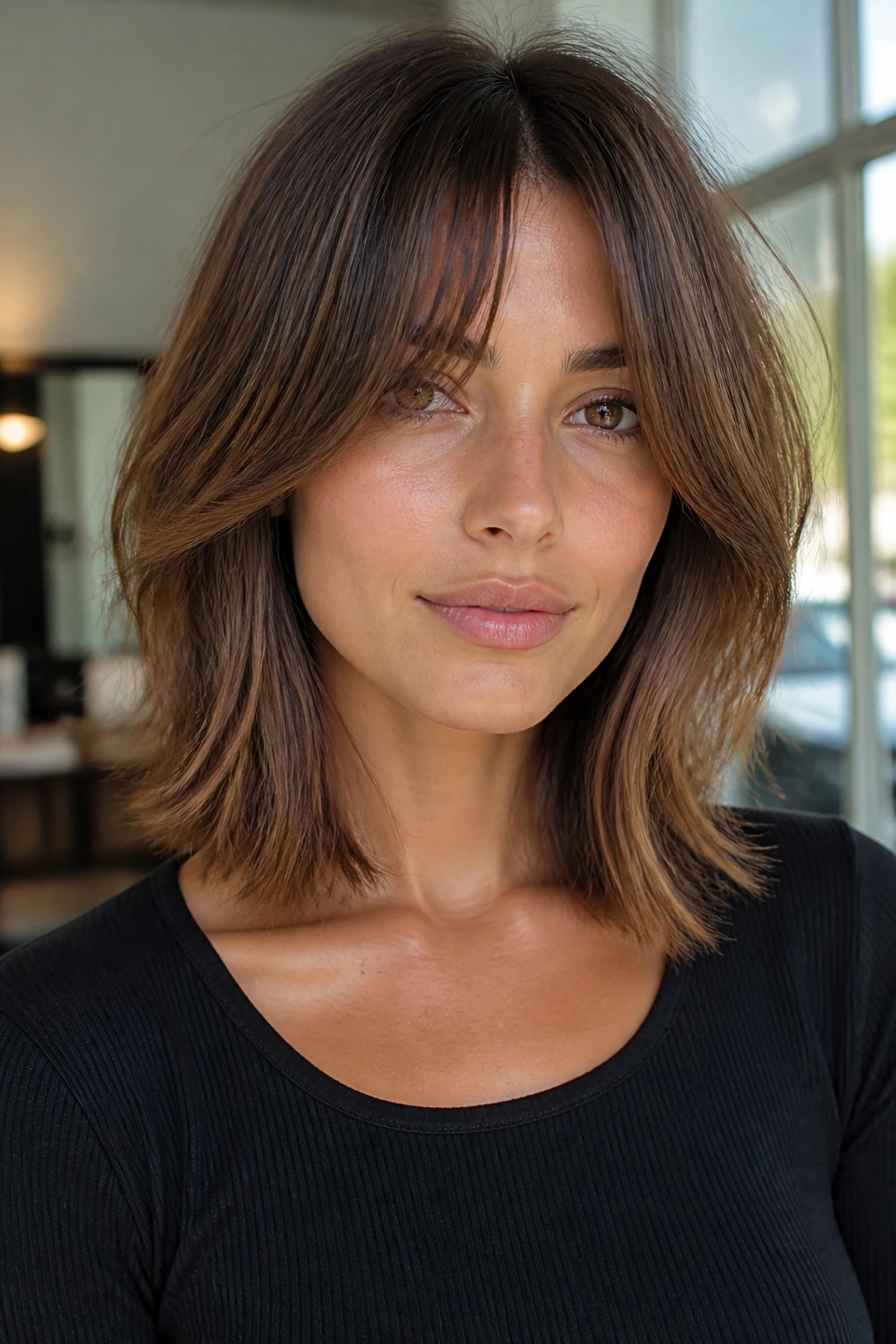
The best middle-part fringe is the one that looks like it belongs to the haircut, not something pasted onto the front as an afterthought. That is the common thread running through all 16 styles here. The shape can be sleek, shaggy, blunt, airy, or curly, but it still needs balance between the fringe, the length, and the way your hair naturally falls.
If you want the easiest version, start with a collarbone lob or a soft shoulder-length cut and keep the center fringe long enough to tuck behind the brow when it needs to. That gives you wiggle room. It also gives your stylist something useful to work with instead of asking the bang to solve every problem on its own.
Pick the version that matches your texture, your cowlicks, and how much time you actually want to spend with a brush in your hand. The haircut will do the rest.
