



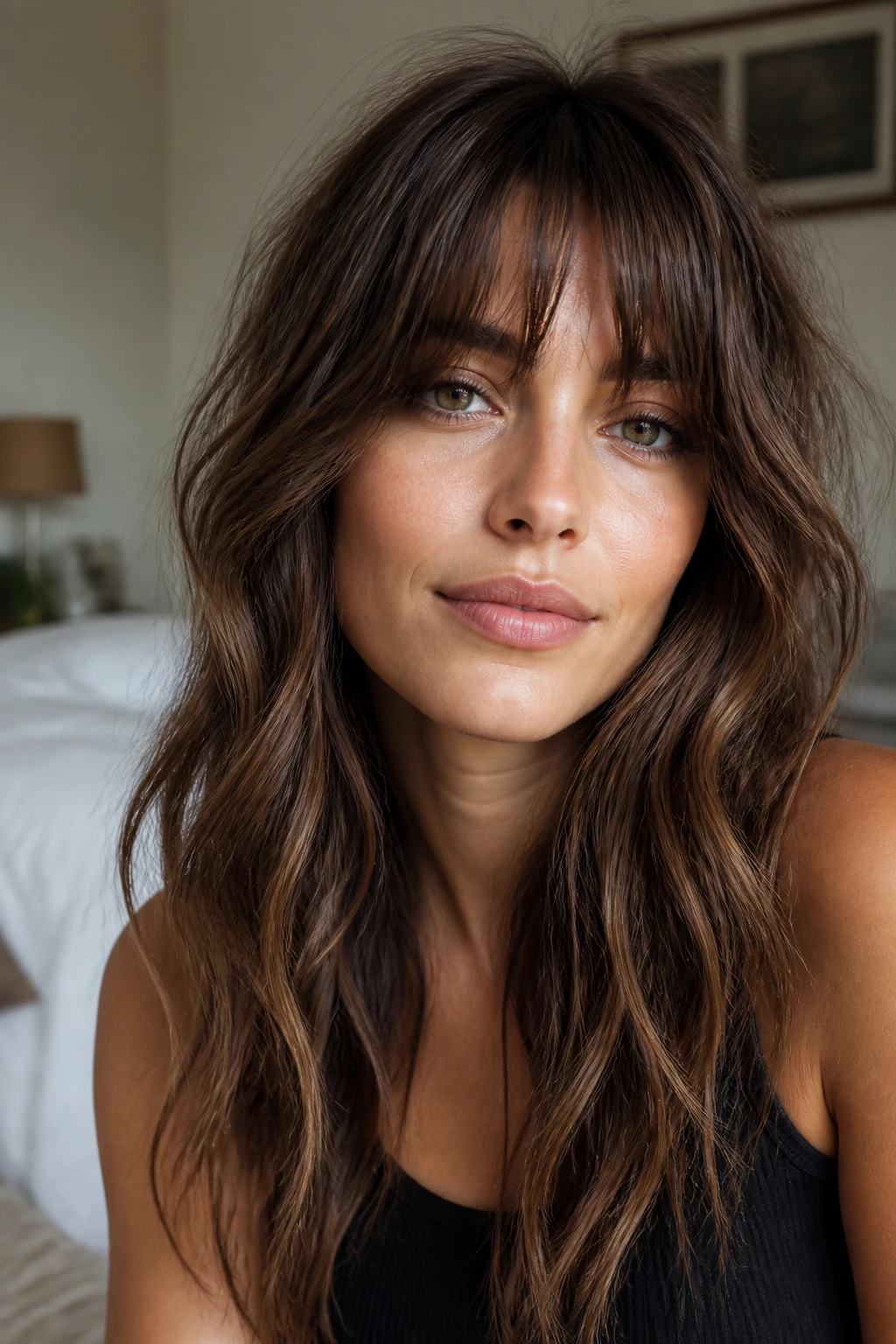
Long hair with choppy bangs for wavy hair can look expensive in the best way—soft, a little broken up, and moving even when you stand still. The trick is that the cut has to respect the wave pattern instead of flattening it. If the bangs are cut too blunt, too short, or too densely, they start acting like a lid. If they’re cut with a little air in them, they flutter, separate, and make the whole shape feel alive.
That’s why this pairing keeps coming back in salon chairs. Wavy hair already has bend and texture; choppy bangs don’t fight that bend, they echo it. The result is less “helmet fringe,” more face frame with attitude. And no, the fringe does not need to be perfectly even to look polished. In fact, a slight mismatch at the ends is often what makes it work.
The best versions also solve a practical problem. Long hair gives you room to keep the perimeter soft, while the bangs bring the focus up around the eyes and cheekbones. So you get length without the weight dragging everything downward. That balance matters more than people think, especially if your waves swell up in humidity or collapse after a few hours. The good cuts are built for that messiness.
Why These 21 Long Hair With Choppy Bangs Looks Work So Well on Wavy Hair
-
The wave pattern does part of the styling for you: Choppy ends break up the line of the fringe, so the bangs fall into loose pieces instead of a hard wall across the forehead.
-
The length keeps the cut from feeling boxy: Long hair leaves room for face-framing layers, which keeps the bangs from making the whole shape too wide or too top-heavy.
-
The grow-out is kinder: A blunt fringe screams for a trim the second it grows a quarter inch; a choppy fringe softens as it gets longer and still looks deliberate.
-
The texture gives you flexibility: Some days the fringe sits piecey and airy, other days it bends more; both versions fit the haircut instead of ruining it.
-
The styling options are wider than they look: You can air-dry, diffuse, rough-blow-dry, or give the front pieces a quick bend with a small iron, and the cut still makes sense.
-
The shape can be tuned to your density: Fine waves need lighter bangs and less layering, while thick waves can carry more internal texture without looking sparse.
1. Feathered Mermaid Length with Broken-Up Bangs
This is the version for someone who wants the drama of long, flowing hair without the dead weight around the face. The length hangs low and glossy, but the bangs are cut into soft, uneven pieces that fall between the brow and the upper lash line. When the waves catch a little bend, the fringe separates just enough to show skin, which keeps the style from looking heavy.
The magic here is restraint. The layers should start low—usually below the cheekbones—so the ends keep their fullness while the front stays light. On medium-density wavy hair, that balance gives you movement without the frizz halo that comes from over-layering. It feels feminine, but not fussy.
A tiny detail matters: the shortest bang piece should usually be slightly longer than your first instinct says. Wavy hair shrinks when it dries. Leave room for that, and the shape stays soft instead of bouncing up to an awkward length.
Best for: oval, heart, and longer face shapes.
Watch for: too many face layers. That turns this into fluff.
2. Soft Shag with Piecey Bangs
If your waves have opinions, this cut listens to them. The soft shag uses shorter layers at the crown and through the top half of the hair, which gives the waves room to spring instead of hanging in one flat sheet. The choppy bangs echo that movement, so the whole cut feels like it’s in motion from root to tip.
This is one of my favorite options for hair that gets puffy in humidity. The shag shape removes enough bulk to keep the sides from ballooning, but it does not chop the length into a mullet-ish mess. That difference is everything. A good shag should look intentionally ragged, not like you lost an argument with the scissors.
The bangs should be piecey, not wispy to the point of disappearing. A little density in the center keeps the fringe from looking see-through when the hair separates later in the day.
Best for: medium to thick waves that need air at the crown.
Quick note: if your hair is coarse, ask for point cutting instead of aggressive razor work.
3. Waist-Length Layers and a Wispy Choppy Fringe
Want the long-hair payoff to stay visible? This is the cut. The perimeter sits down around the waist or upper hip, but the front gets a softly broken fringe that skims the brows and blends into very long face-framing pieces. You still get the feeling of “long hair,” not just a curtain of texture.
The wispy bangs matter here because they stop the length from feeling too precious. A blunt fringe on waist-length waves can look disconnected, like two separate hairstyles glued together. Choppy pieces fix that by letting the bang line breathe. The effect is lighter, more lived-in, and frankly more believable on natural waves.
This shape also suits hair that grows fast and hates frequent trims. The fringe can move through a few awkward stages without losing the style. That’s a small thing until you live through it.
4. Center-Part Waves with Curtain Bangs and Choppy Ends
The center part turns the whole thing softer, especially if your bangs already like to split on their own. Instead of fighting the natural break, this cut leans into it. The bangs sit a little longer at the center, then sweep outward into face-framing pieces that land near the cheekbones. The ends stay choppy enough to keep the front from looking too neat.
Why it works on wavy hair
The center part gives the waves a clean anchor point. From there, the fringe can fall to either side in a way that feels relaxed rather than over-styled. If your wave pattern creates a subtle bend near the temples, that bend helps the curtain pieces flick away from the face instead of collapsing forward.
This version is especially good if you want bangs but don’t want to lose access to your forehead every day. The fringe can be tucked, parted, or bent with a round brush, and it still reads as a bang.
How to wear it
- Blow-dry the center piece downward first, then curve the sides away from the face.
- Keep the longest bang pieces about cheekbone length when dry.
- Use a pea-size amount of styling cream only on the mids and ends.
5. Bottleneck Bangs on Long Beach Waves
Bottleneck bangs earn their place because they solve a real problem: they give you more structure than curtain bangs without the bluntness of a full fringe. The center is shorter, the sides open gradually, and the edge is broken up just enough to work with waves that refuse to lie flat. On long beach waves, the shape looks casual but still edited.
I like this cut on people whose hairline or forehead makes them nervous about heavy bangs. The bottleneck shape narrows the middle and widens only where it needs to, which keeps the frame around the eyes neat. The choppy finish stops the whole thing from feeling drawn on with a ruler.
A good stylist should cut this with your natural bend in mind, not against it. If your waves lift at the root, the center pieces need more length than you think. Otherwise, they bounce up and lose the balance.
6. Face-Framing Cascade with Razor-Cut Bangs
This one has a little edge to it. The front pieces are cut into a cascading slope that starts near the cheekbones and drops into long layers, while the bangs are softened with a razor or point-cut finish. The result is airy and a little undone, which suits wavy hair that already has texture in the body.
The key word here is softened. Razor-cut bangs can look beautiful on wavy hair, but only when the hair can support the separation. On fine hair, too much razor work makes the fringe look thin and stringy. On fuller waves, though, the pieces fall with more swing and less bulk, which is exactly the point.
This style works best when the longest front layers stay intact. If they get chopped too high, the cascade loses its long-line drama and starts to feel accidental.
7. Long Wolf Cut for Wavy Hair
The long wolf cut is for the person who wants movement with a bit of bite. The crown gets shorter layers, the ends stay long, and the bangs break into uneven pieces that almost look disconnected from the rest of the haircut. Almost. That near-disconnect is what gives the style its edge.
Why It Feels Right on Wavy Hair
Waves help this cut avoid the sharp mullet line that can happen on straighter textures. The bend through the mid-lengths blends the crown into the back, so the whole shape reads as shaggy rather than costume-y. Choppy bangs are the glue. They echo the roughness up top and keep the front from getting too polished.
Best if you want:
- volume at the crown without losing length
- a fringe that can air-dry and still look intentional
- a haircut that gets better when it’s a little messy
Be careful with this part
If your hair is very fine, too much crown layering can make the top collapse. Keep the bangs slightly longer and the upper layers less aggressive.
8. Glossy Blowout Waves with Airy Bangs
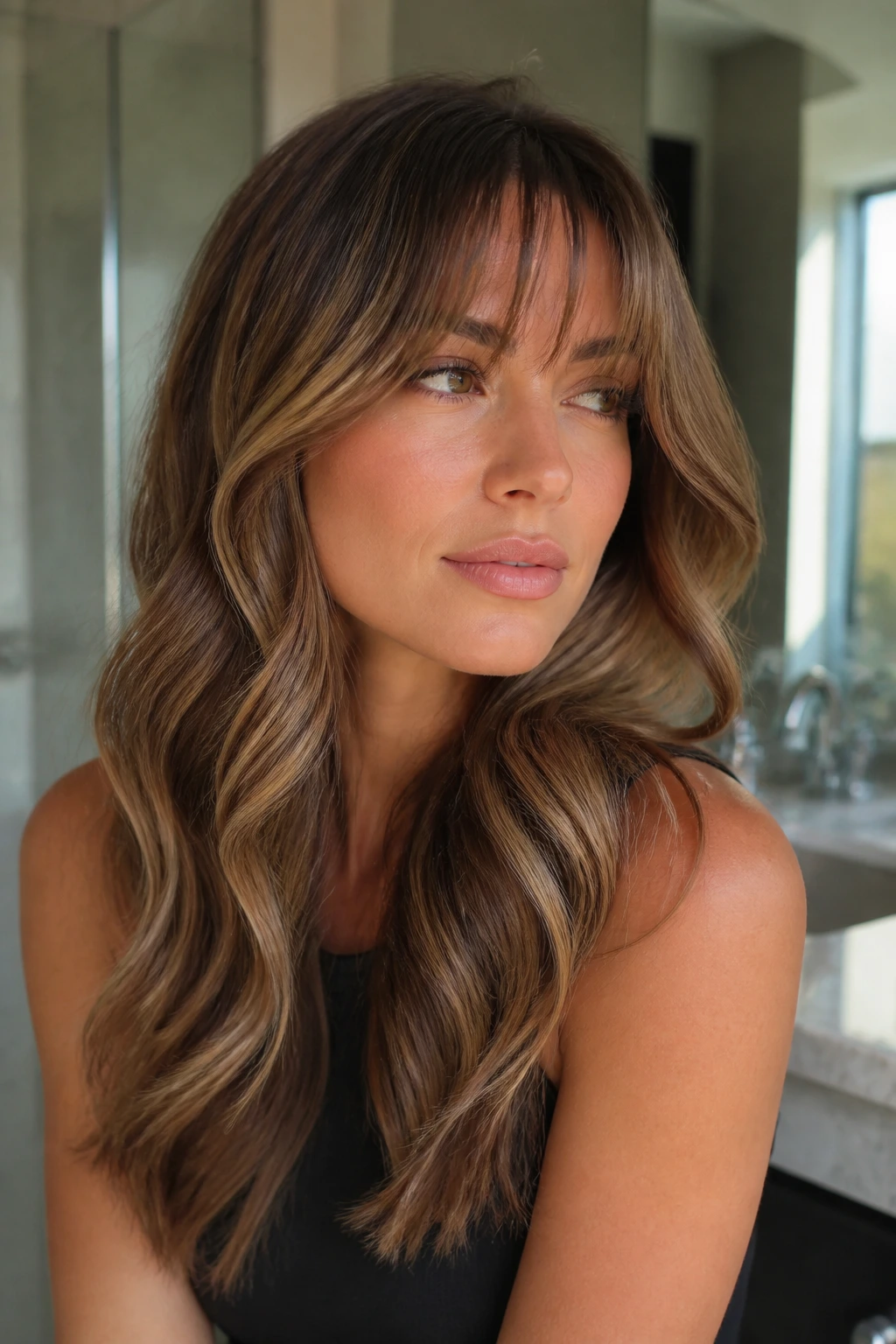
Who says choppy bangs have to look beachy? This version proves they can look smooth and expensive, too. The waves are loose and brushed out, the ends curve softly, and the bangs stay airy enough to keep the face from looking too severe. It’s a cleaner finish, but not a stiff one.
This cut is a smart choice if your hair gets fuzzy when left to air-dry. A round brush, a medium barrel iron, and a good heat protectant can make the front pieces lie just enough without flattening them. The fringe still needs separation, though. You’re aiming for movement, not a helmet.
The best part is how it handles a long day. A polished wave can sag, sure. But when the bang line is choppy, the style keeps some life even after the roots soften.
9. Boho Layers with Uneven Fringe
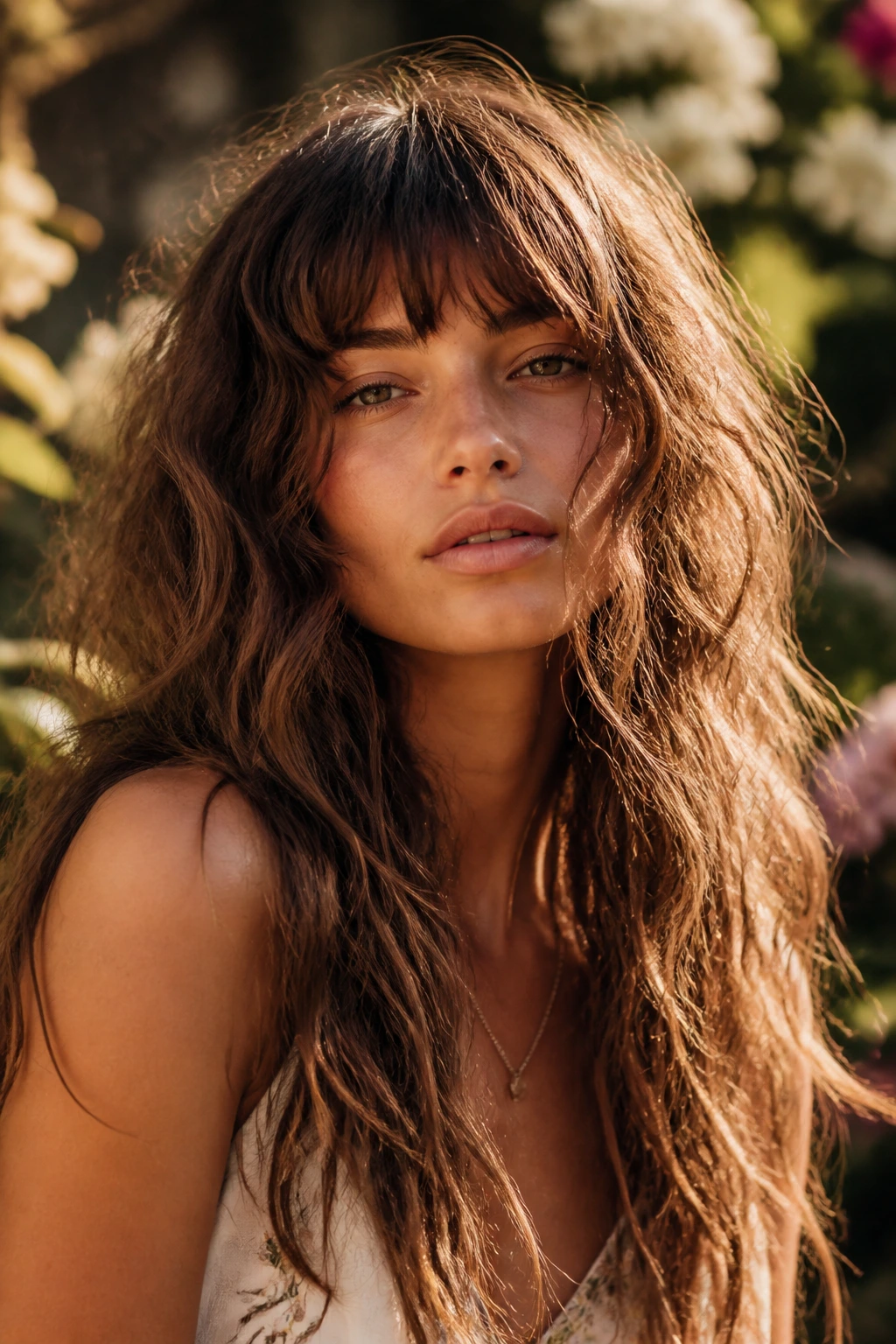
There’s a reason this look keeps showing up on people with naturally wavy hair. It doesn’t pretend to be precise. The layers are uneven on purpose, the fringe is broken into soft pieces, and the whole thing has that slightly wind-tossed feel that makes wavy hair look like it’s doing the work for you.
The trick is to keep the front from getting ragged in a careless way. The pieces around the temples should still connect to the rest of the cut, even if they’re not identical in length. That little overlap is what keeps the style from reading like a bad self-haircut.
This version shines when you wear your hair loose most of the time. A center part or soft off-center part both work, but the bangs should land with enough slack that they can move when you tuck one side behind your ear.
10. Brow-Skimming Choppy Bangs on Thick Waves

Thick wavy hair can carry a fuller fringe, and this cut takes advantage of that. The bangs sit right at the brows, but they’re broken up with point cutting so the line never feels blunt. The rest of the hair stays long and layered just enough to keep the density from turning into a triangle.
What makes it different
A lot of stylists get nervous and thin thick bangs too hard. That backfires fast. You end up with see-through ends that separate in clumps and stick to the forehead. Better to keep the fringe substantial, then texture the edges so the bangs move as a group instead of as a frayed mess.
Best details to ask for
- keep the center dense enough to cover the brow line
- remove bulk underneath, not from the visible top layer
- leave the side pieces long enough to blend into the wave pattern
This is one of the few fringe styles that can look even better on day two, once the roots have a little grip.
11. Side-Part Waves with a Soft Choppy Sweep
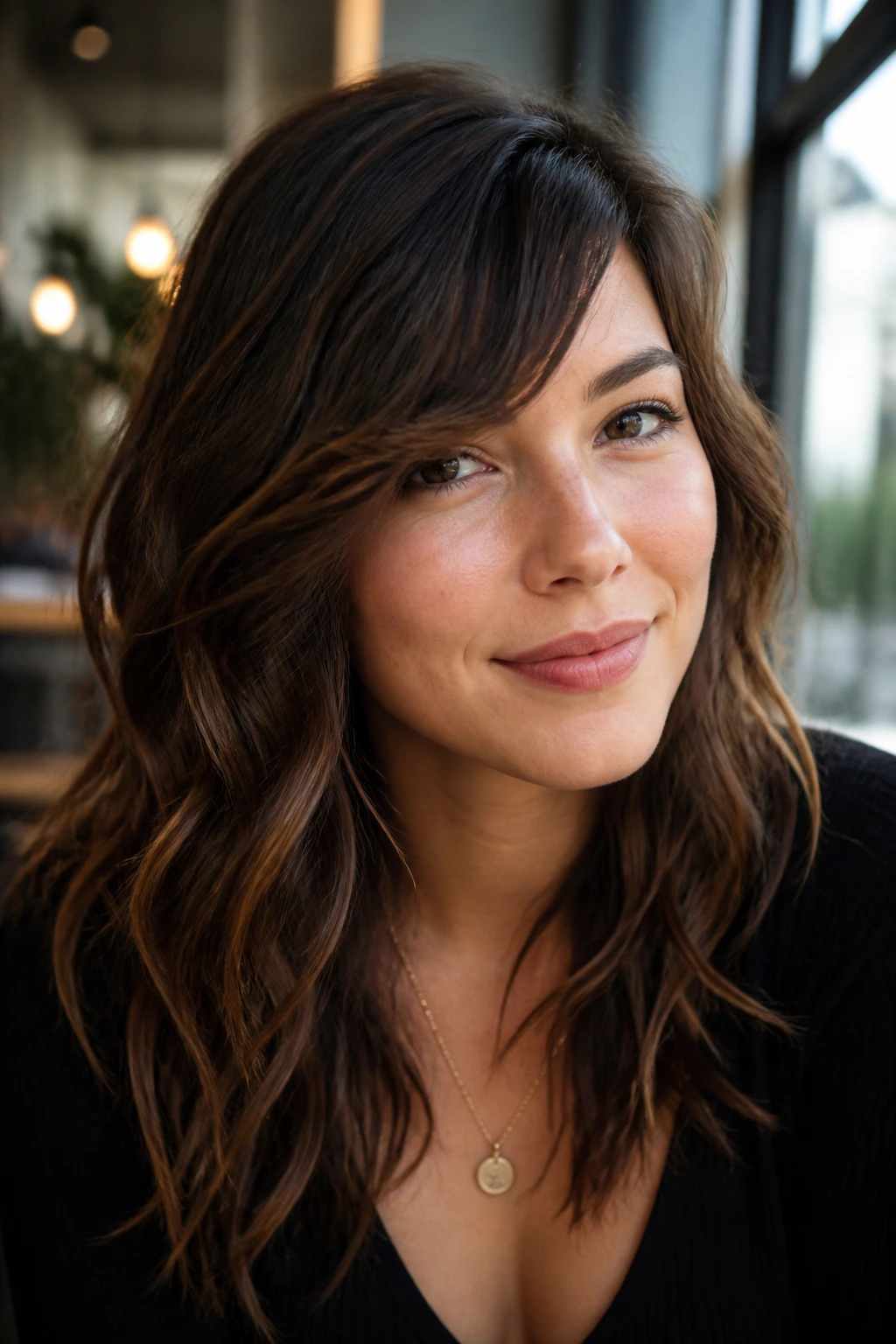
A side part changes the whole mood. Instead of a centered curtain or a direct brow line, the fringe sweeps diagonally across the forehead and breaks into uneven pieces as it falls. That diagonal line is flattering on rounder faces and easy on strong cowlicks, because it works with the bend instead of demanding a perfect split.
The side part also gives the roots a lift that a center part sometimes flattens. On wavy hair, that little bit of height can keep the bangs from sitting like a flat sheet. The choppy ends prevent the sweep from looking too grown-up or too formal. It stays soft.
If you like wearing sunglasses or reading glasses, this is one of the easiest bang shapes to live with. The fringe can shift without losing the entire cut.
12. Butterfly Layers and Broken Bangs
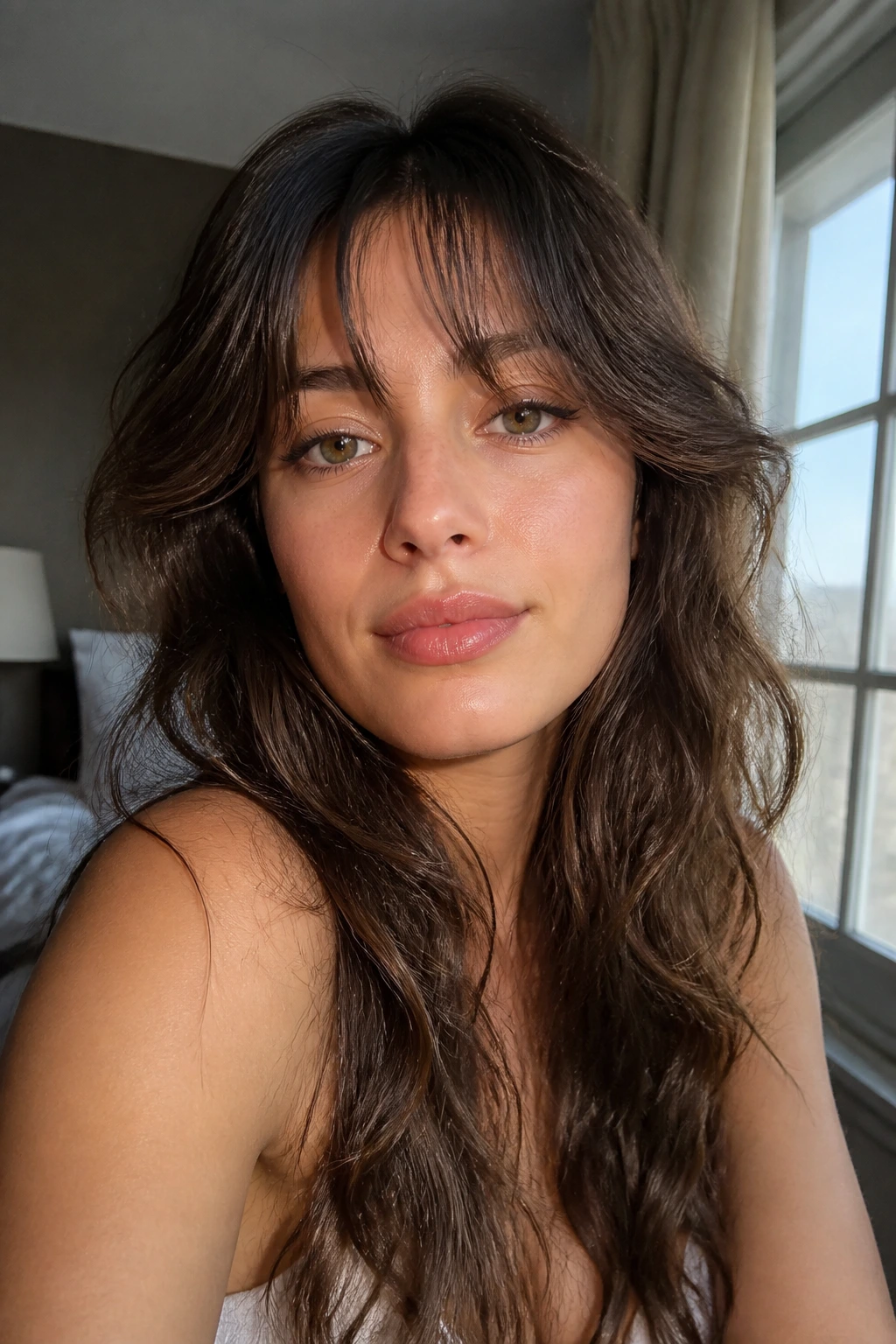
Butterfly layers give you the best kind of visual contrast: shorter pieces around the face, long layers through the back, and enough separation that the waves show up in all the right places. Add choppy bangs, and the front becomes lighter without cutting away the length you’ve spent growing.
Where the shortest pieces should land
Usually near the chin or a touch above it. That gives the front enough lift to open the face while leaving the long back lengths untouched. If the shortest face frame starts too high, the haircut can start acting like a shag. Not bad, just different.
Why I like it for wavy hair
The layers catch the wave at different points, which makes the texture obvious even if your waves are uneven from one side to the other. The fringe pieces can be a bit irregular without looking sloppy, because the rest of the haircut already has that layered rhythm.
This is a strong choice if you want softness near the face but still love the feeling of length moving down your back.
13. Low-Maintenance Air-Dry Cut with Textured Fringe
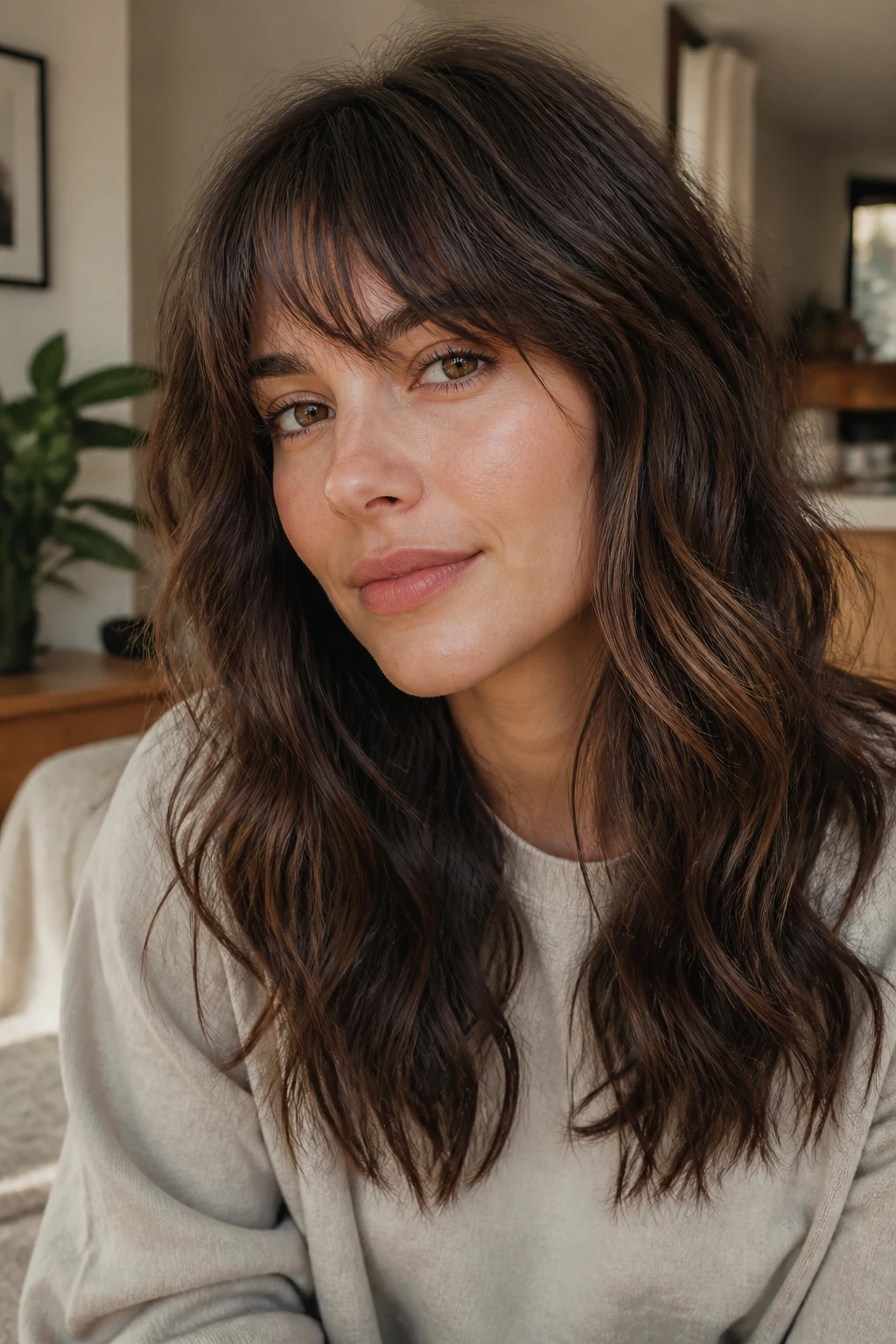
Some people want a haircut that looks better the less they fuss with it. This is that cut. The bangs are textured, but not so thin that they disappear when air-dried. The long layers are shaped to fall naturally around the shoulders, so you can scrunch, twist, and go.
The fringe is the part that needs the most planning. If it’s too short, it springs up and separates in odd places. If it’s too heavy, it dries into a flat strip. The sweet spot is a choppy fringe that sits long enough to settle with your wave pattern but short enough to frame the eyes. That balance is hard to fake after the cut is done.
A little mousse goes a long way here. Apply it at the roots and through the bang area while the hair is damp, then let the front dry with a side clip for a few minutes if your wave pattern is stubborn.
14. Dense-Hair Debulked Ends and Piecey Bangs

Heavy, dense waves need shape more than they need more cutting. That distinction matters. This style keeps the perimeter long but removes bulk from the interior so the hair can move instead of sitting in one thick block. The bangs are piecey and broken up, which keeps the front from swallowing the face.
The easiest mistake with dense hair is taking too much off the outside line. Don’t. You lose weight control fast, and the ends puff out while the mid-lengths stay heavy. Better to debulk inside the shape and keep the visible line clean.
This cut often looks best when the bangs are slightly longer at the temples. That helps the fringe slide into the side lengths instead of stopping abruptly at the cheek.
15. Fine-Hair Volume Cut with Light Choppy Bangs
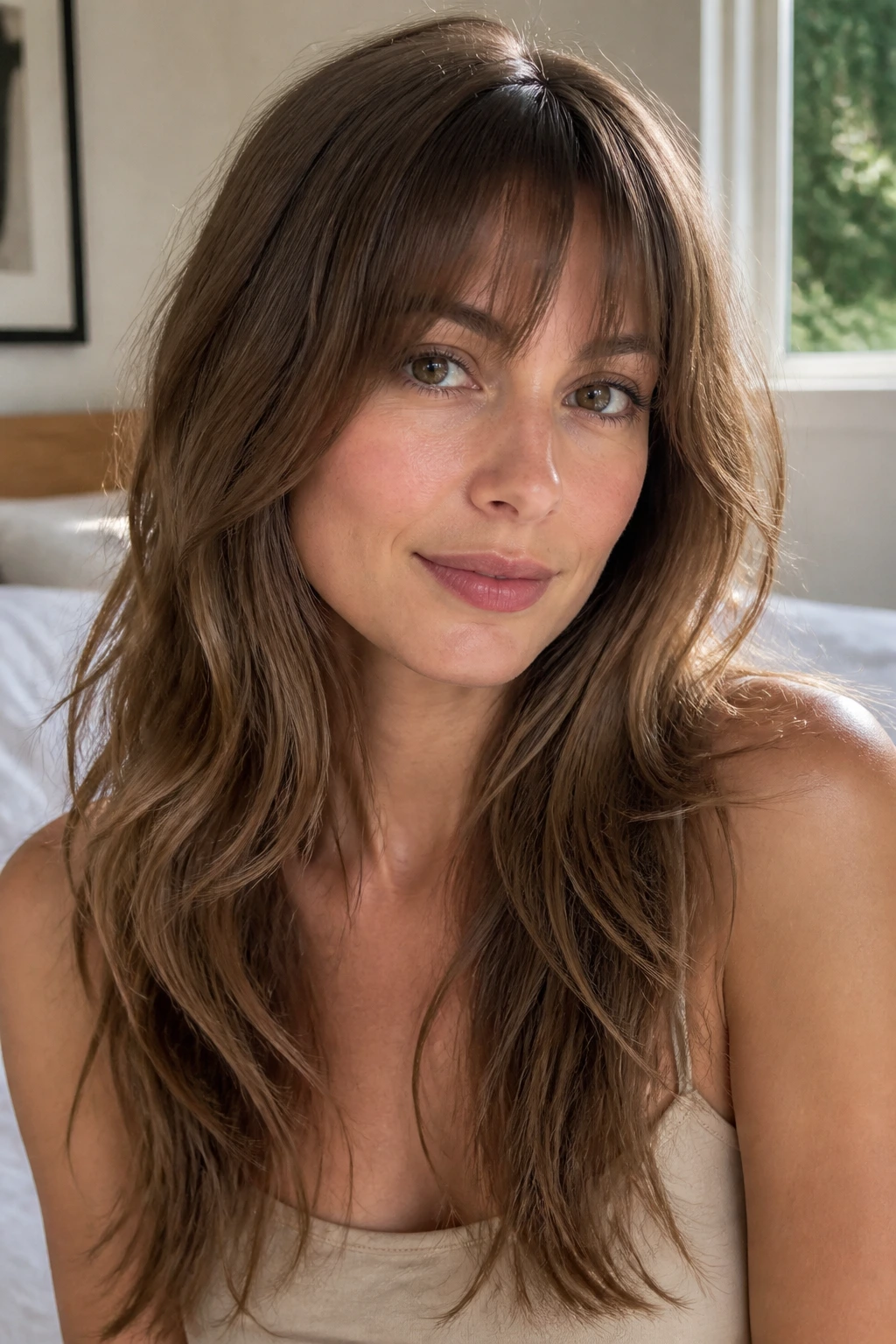
Fine wavy hair can wear choppy bangs just fine, but the cut has to stay light. That means fewer layers, longer face framing, and a fringe that’s broken up without being shredded. The goal is movement and lift, not a see-through curtain that reveals the scalp when the wind hits it.
A lot of people with finer waves think they need more texture. Usually, they need smarter texture. Short bangs can spring too high and separate too fast, especially if they’re cut with a heavy hand. Leave the fringe a little longer and let the wave pattern do the piecey work for you.
Root lift spray, a small round brush, and a quick blow-dry at the front can make this shape look fuller than it really is. That tiny bit of styling goes a long way.
16. U-Shaped Length with Scattered Fringe Pieces

The U-shape keeps the ends rounded and full, which is a nice counterpoint to the broken texture at the front. Instead of a straight edge across the back, the hair dips slightly in the center and rises at the sides. That gives the whole cut a softer, more expensive-looking line.
The scattered fringe pieces are what make it feel modern. They aren’t a full bang, and they aren’t just stray face-framing layers. They sit in that useful middle ground where the forehead gets a little coverage but the face still opens up around the eyes.
This is a quiet haircut. Not boring. Quiet. It works when you want the hair to look styled without shouting, and it flatters waves that bend in loose S-patterns rather than tight curls.
17. Half-Up Friendly Fringe
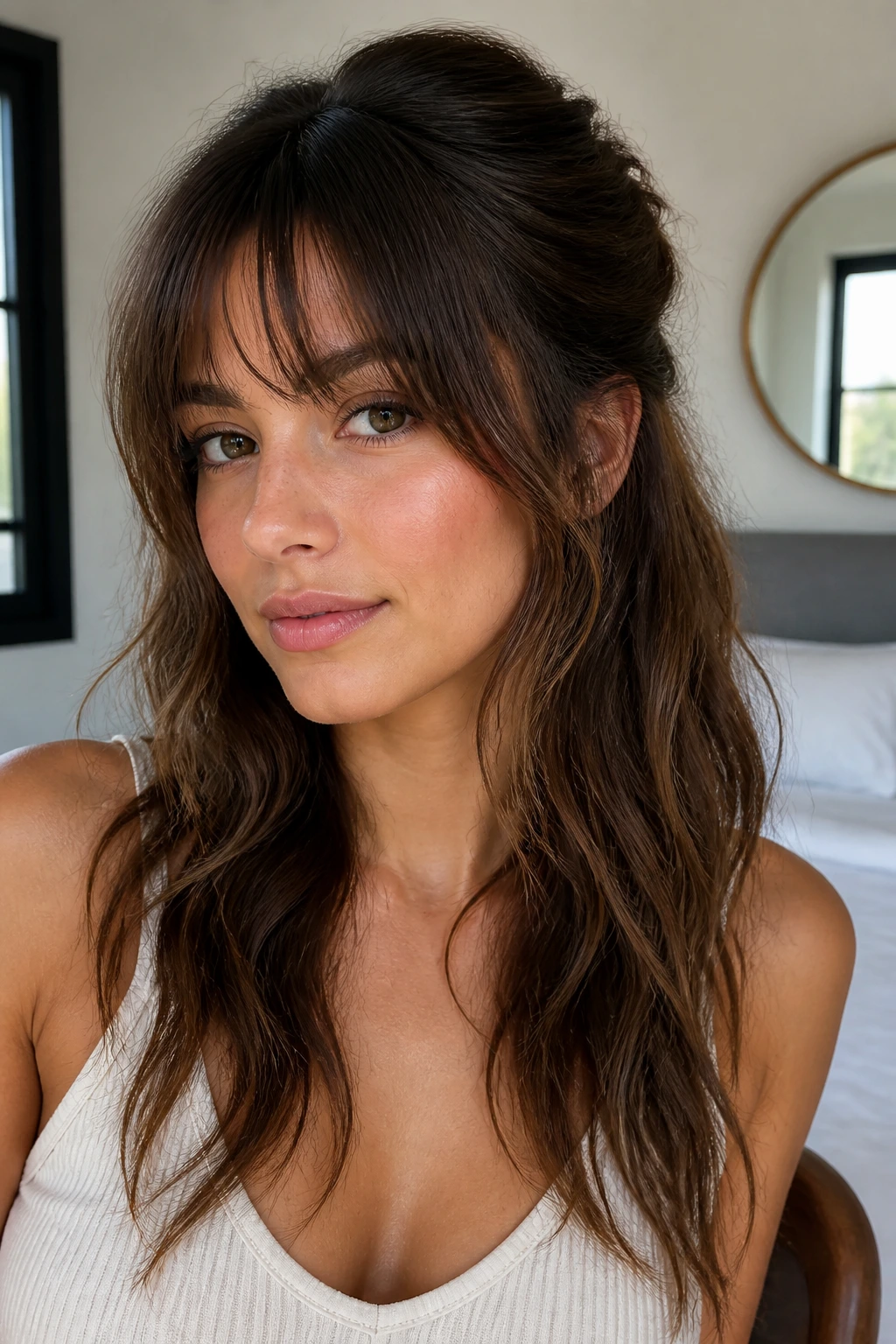
Some fringe cuts look fine when the hair is down and awkward the second you pull it back. This one solves that. The bangs are cut with enough softness and length that they can fall out of a half-up style in loose pieces, instead of sticking straight up or disappearing into the elastic.
The long layers around the face matter here. They keep the front of the haircut from feeling empty when the top is pinned back. That makes this one especially practical if you work out, wear clips a lot, or just get tired of hair touching your neck.
A tiny claw clip, a half-up twist, or even a low pony all work with this shape. The fringe pieces should be left long enough to escape the tie and frame the face on their own.
18. Highlighted Ribbon Waves with Choppy Bangs
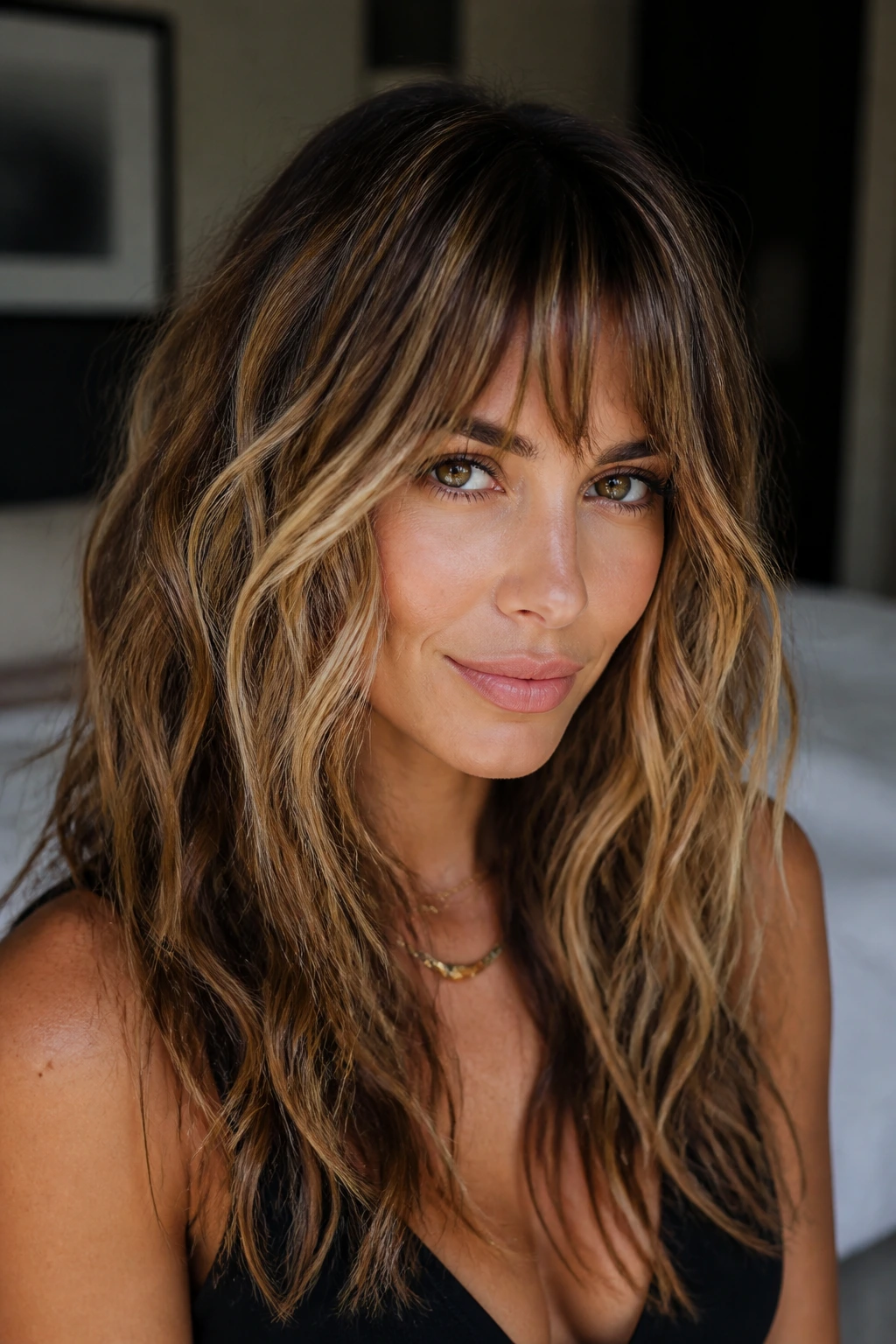
Color changes the way choppy bangs read. Add some ribbon-like highlights around the front pieces, and suddenly the texture becomes easier to see. The light catches the broken ends, the wave pattern shows up more clearly, and the bangs stop blending into the rest of the hair.
This is a smart move if your hair is naturally dark and dense. Without dimension, choppy bangs can sometimes get lost. A few brighter strands near the face fix that fast. The cut doesn’t need to be louder; it just needs contrast.
Keep the highlights soft around the fringe. Streaky, chunky light pieces can make the bangs look striped instead of textured. A few well-placed ribbons near the cheekbones are enough.
19. Rounded Layers with a Soft Broken Fringe

Rounded layers keep the silhouette gentle. Instead of sharp steps, the hair flows from shorter front pieces into longer mid-lengths and then into the back. The fringe is broken, but only enough to keep the front from feeling dense. It’s a calm haircut with a little movement in the edges.
This one flatters people who want their hair to look finished on a regular Tuesday, not only after a full styling session. The rounded shape behaves well as it air-dries, and the bangs can be tucked or brushed down depending on the day. That makes the cut forgiving in real life, which is honestly what most people need.
The shape also works beautifully with soft waves that don’t make dramatic bends. You get the illusion of fuller texture without forcing the hair into a style it doesn’t want.
20. Grown-Out Bangs That Still Look Intentional
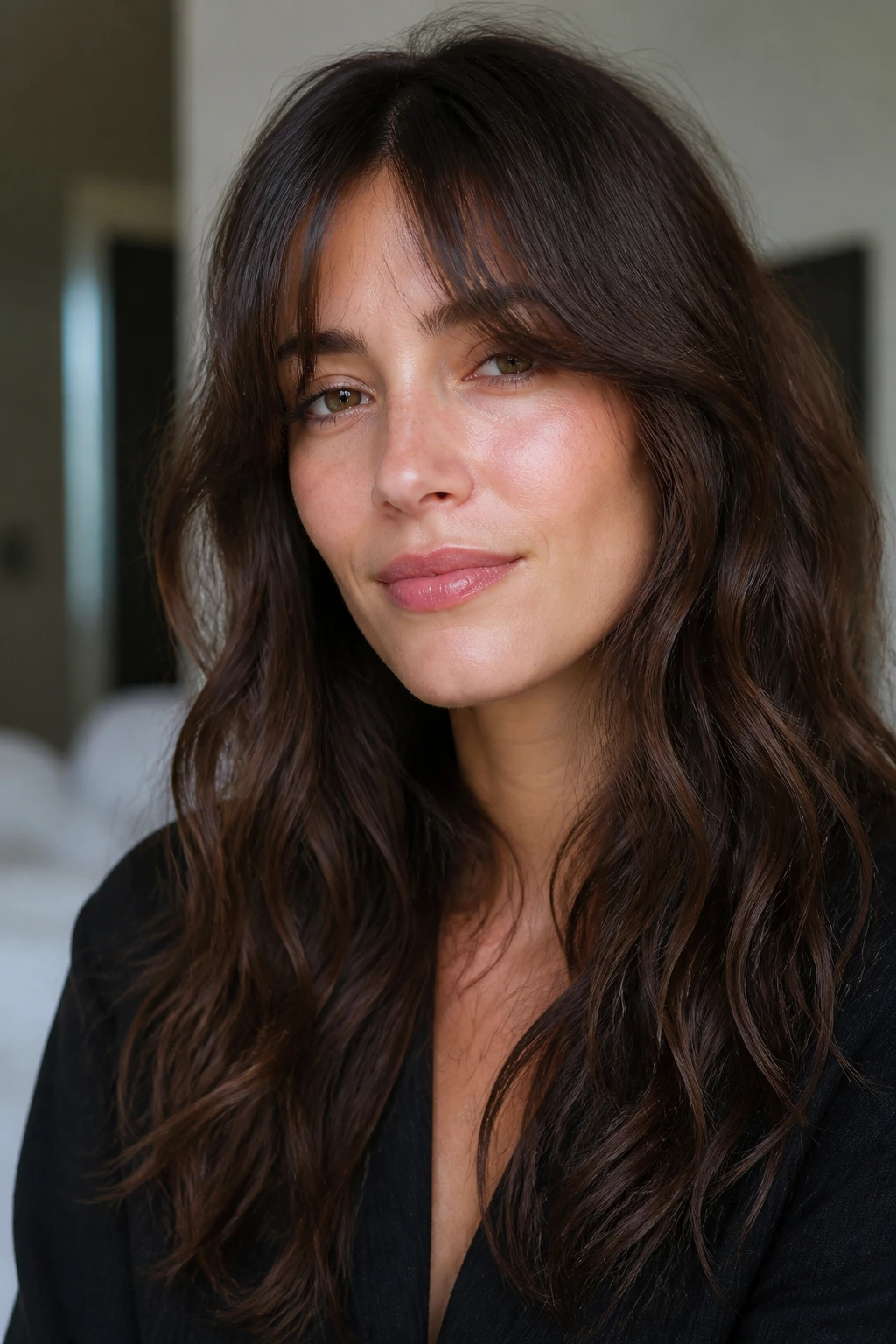
This is the haircut for the in-between phase, and I mean that as a compliment. The bangs are cut so they can grow into curtain pieces without a messy line, which means the awkward stage lasts less time. The front stays choppy enough to keep the face frame alive, even when the fringe drops past the brows.
That matters because waves show growth faster than straight hair does. As soon as a fringe starts to lose its shape, the uneven pieces either fall beautifully or look abandoned. This version leans into the first outcome. The longer center pieces blend into the sides, and the outer bang pieces soften into the front layers.
If you hate the feeling of being locked into a trim every four weeks, this is a safe bet.
21. Polished Glam Waves with Choppy Fringe
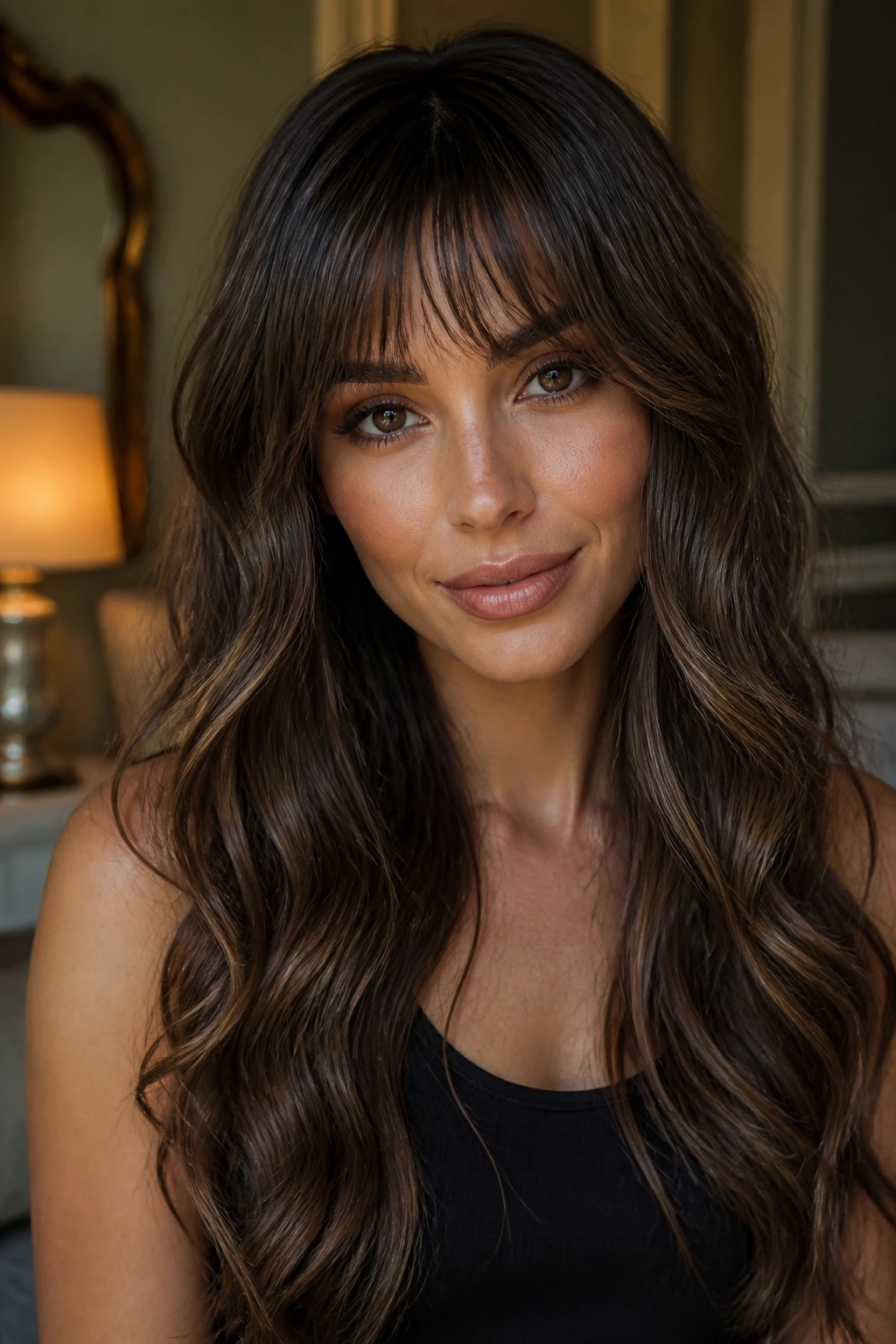
Here’s the version that proves choppy bangs do not belong only to messy, boho looks. The waves are smooth, the ends are brushed into a clean flow, and the fringe stays intentionally broken at the tips so it frames the eyes instead of covering them. It feels dressed up, but it still has movement.
A 1.25-inch curling iron or a large round brush gives this shape its glide. The trick is to keep the wave uniform through the lengths while leaving the bangs a little irregular. That contrast keeps the style from tipping into pageant hair. Smooth body, piecey fringe. Done.
This is a strong option if you wear statement makeup, earrings, or structured clothes. The haircut balances all that polish with a bit of edge around the face.
Why Long Hair With Choppy Bangs Works Better Than a Blunt Fringe
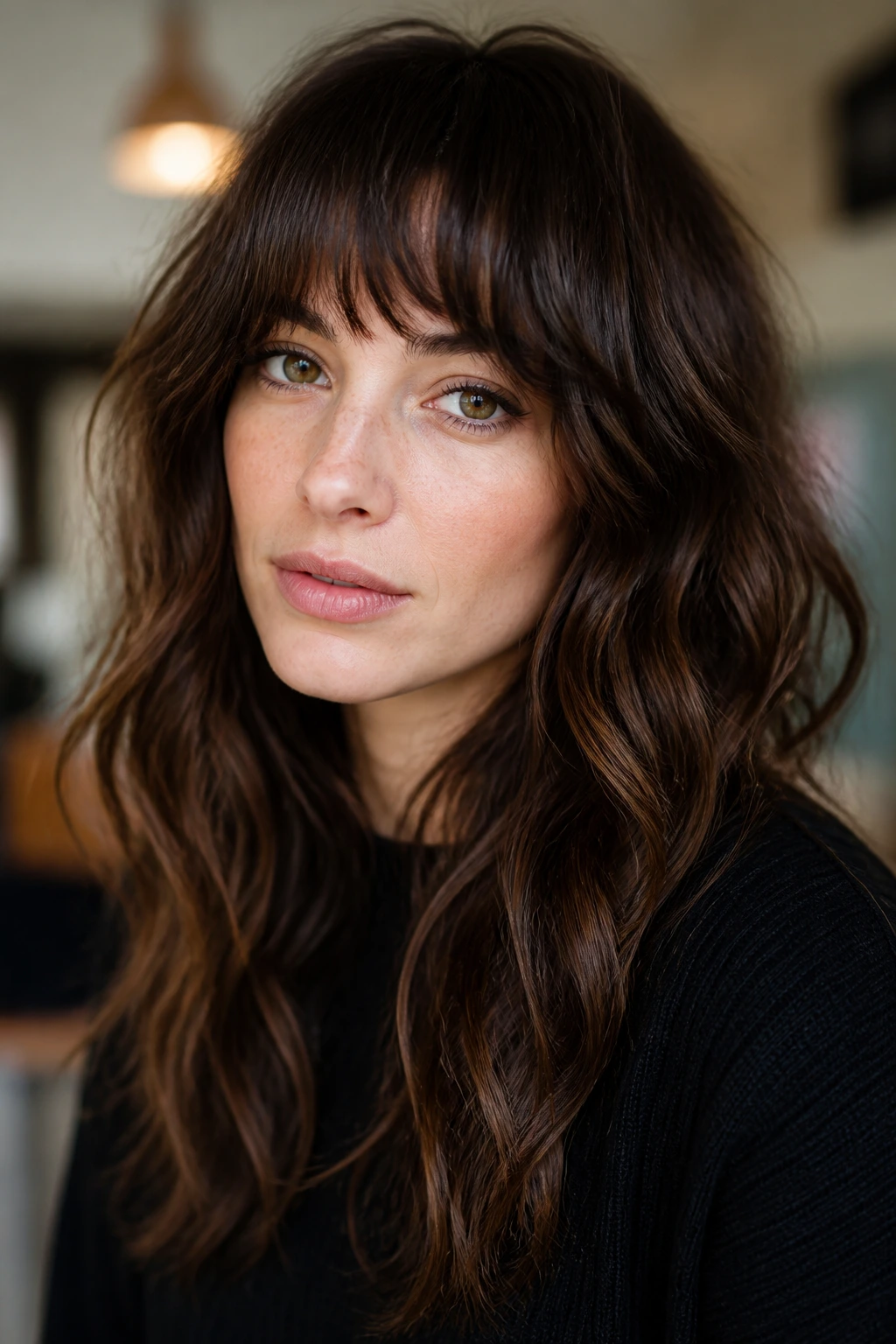
A blunt fringe on wavy hair can work, but it asks for more control than most people want to give it. The hair has to sit cleanly across the forehead, the wave has to behave, and the length has to stay even after drying. That is a lot to ask from a texture that bends, swells, and shifts shape depending on the weather. Choppy bangs cut that pressure down.
The reason is simple: irregular edges forgive movement. If one section curls up more than the next, the haircut still looks intentional because the line is already broken. That makes the style easier to live with on busy mornings, after workouts, or in humid air that turns perfect blow-dry hair into a shrug.
Long hair does the other half of the work. It keeps the silhouette from feeling too short or too top-heavy, which is a real risk with fringe on wavy hair. The length gives the bangs room to breathe. So instead of one heavy shape sitting on your face, you get layers, motion, and a front section that can change through the day without falling apart.
Essential Tools for Styling Wavy Hair Bangs
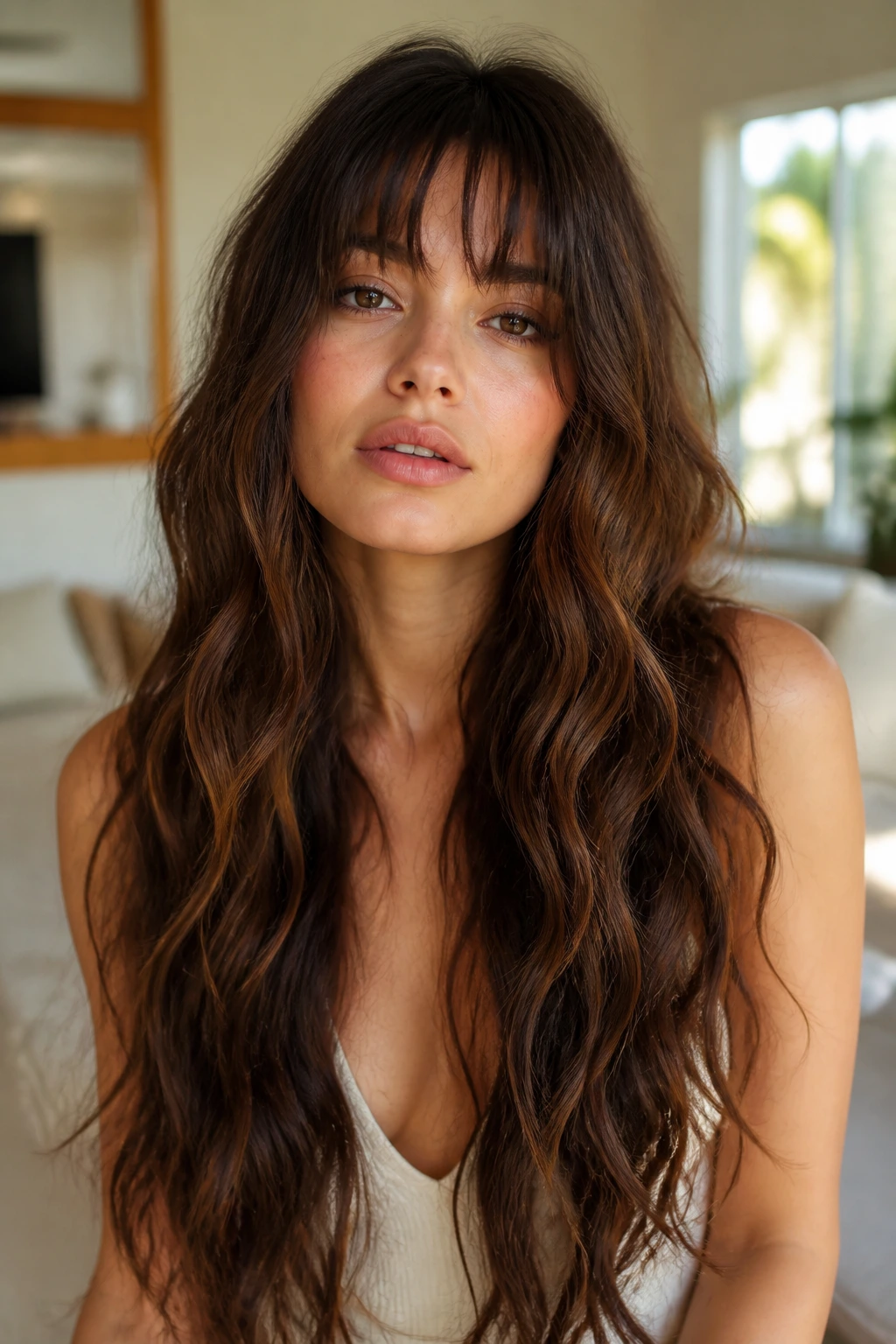
-
Wide-tooth comb: Good for detangling damp hair without stretching the wave pattern flat.
-
Duckbill clips: Useful for holding bangs in place while they dry, especially if the front wants to split.
-
Blow dryer with diffuser: Helps set the wave with less frizz and gives the fringe a softer bend.
-
1-inch or 1.25-inch round brush: Best for shaping the bangs and face frame without over-smoothing the rest.
-
Curling wand or iron: Handy when you want to re-bend the front pieces in under 5 minutes.
-
Heat protectant spray: Non-negotiable if you use any hot tool, even on the fringe alone.
-
Lightweight mousse: Adds grip to the roots and keeps the bangs from going limp by midday.
-
Texturizing spray: Gives the choppy pieces a little separation without turning them crunchy.
-
Dry shampoo: Useful for the forehead zone, which tends to get oily faster than the rest of the hair.
-
Hair clips and a silk scrunchie: Good for setting the fringe overnight or pulling the lengths back without dents.
What to Ask for at the Salon Chair
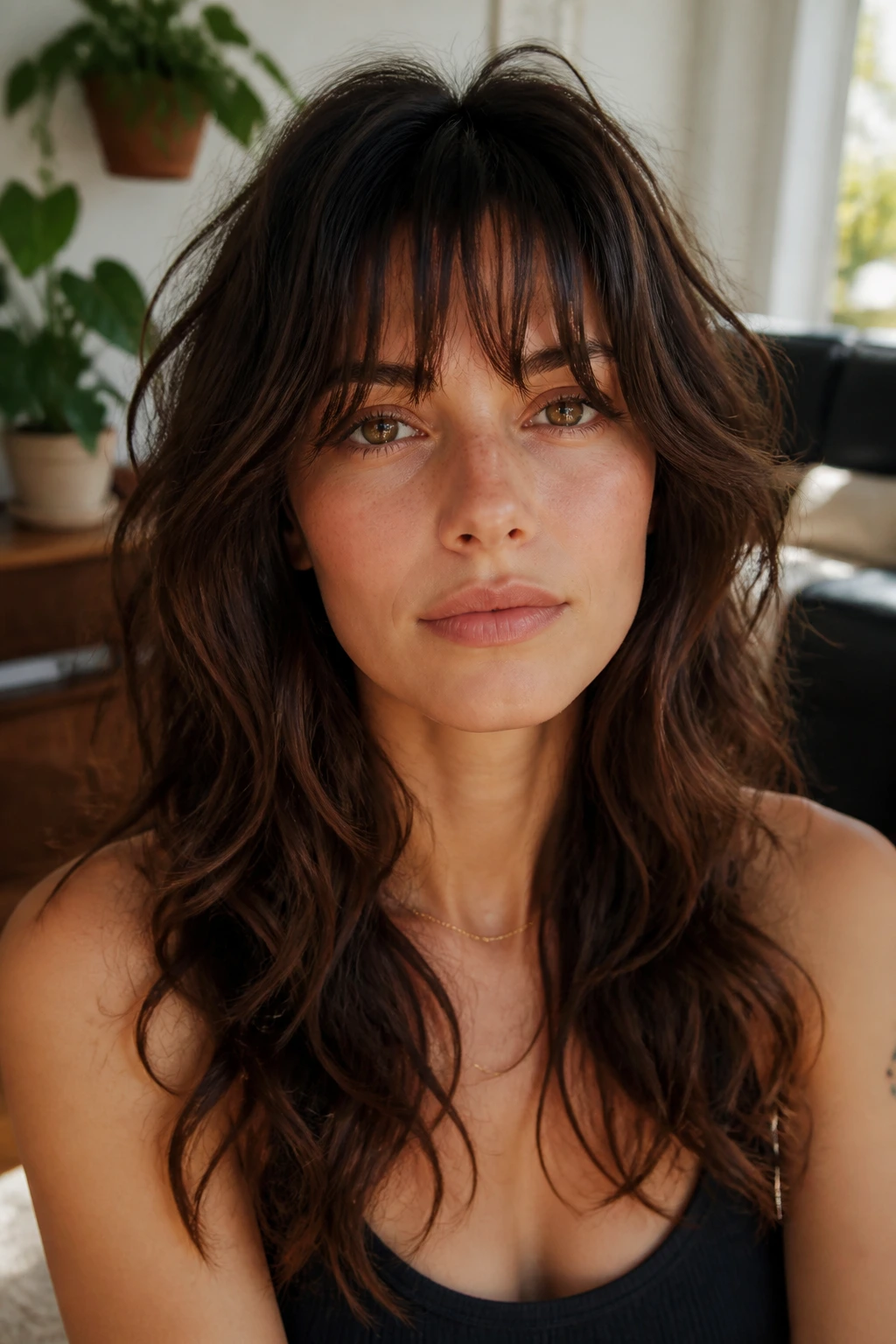
Bring photos, yes, but also bring a clear description of how your hair behaves when it’s dry. That matters more than a celebrity picture. A stylist can copy the shape in a photo and still miss the way your wave springs up or how your fringe splits at the center. Say where your waves get puffy, where they collapse, and whether your bangs usually sit flatter by the second day.
Ask for the bangs to be cut with your texture in mind. On strong waves, that often means cutting them dry or mostly dry, then point cutting into the edge instead of drawing a hard line straight across. The difference is visible the second the hair dries. A dry or near-dry cut also helps the stylist see how much the fringe shrinks, which saves you from the too-short regret that shows up an hour later at home.
Be specific about the shortest point. If you want the fringe to live near the brows, say whether you mean brow-skim, brow-graze, or slightly below. Those details are not nitpicking. They tell the stylist how much room to leave for shrinkage and how much balance the face needs from the rest of the cut. If your hair is dense, ask where bulk should come out. If it’s fine, ask where to leave weight in place. That one conversation changes the whole result.
How to Style the Fringe on Wavy Mornings

Air-Dry: Work a small amount of mousse through damp roots and the first 2 to 3 inches of the fringe. Comb the bangs into place, then clip them lightly or twist them away from the face for 5 to 10 minutes while the roots set. Release them before they dry completely so they don’t lock into a weird bend.
Blow-Dry: Point the dryer downward across the bangs, then use a round brush to curve the pieces slightly under or away from the face. Keep the airflow moving; staying in one spot too long makes the fringe puff. If you want extra lift, flip the brush up at the root for the first pass, then smooth the ends down.
Refresh: Mist the bangs with water from a spray bottle, pinch out the old bend with your fingers, and re-dry just the front section. You do not need to rewash the entire head every time the fringe goes limp. The front area usually only needs 60 to 90 seconds of attention.
Finish: Use a tiny bit of texturizing spray or dry shampoo at the roots, then separate the ends with your fingertips. Avoid heavy creams near the forehead. That’s the fastest way to make piecey bangs look greasy.
Small Tweaks That Change the Whole Cut
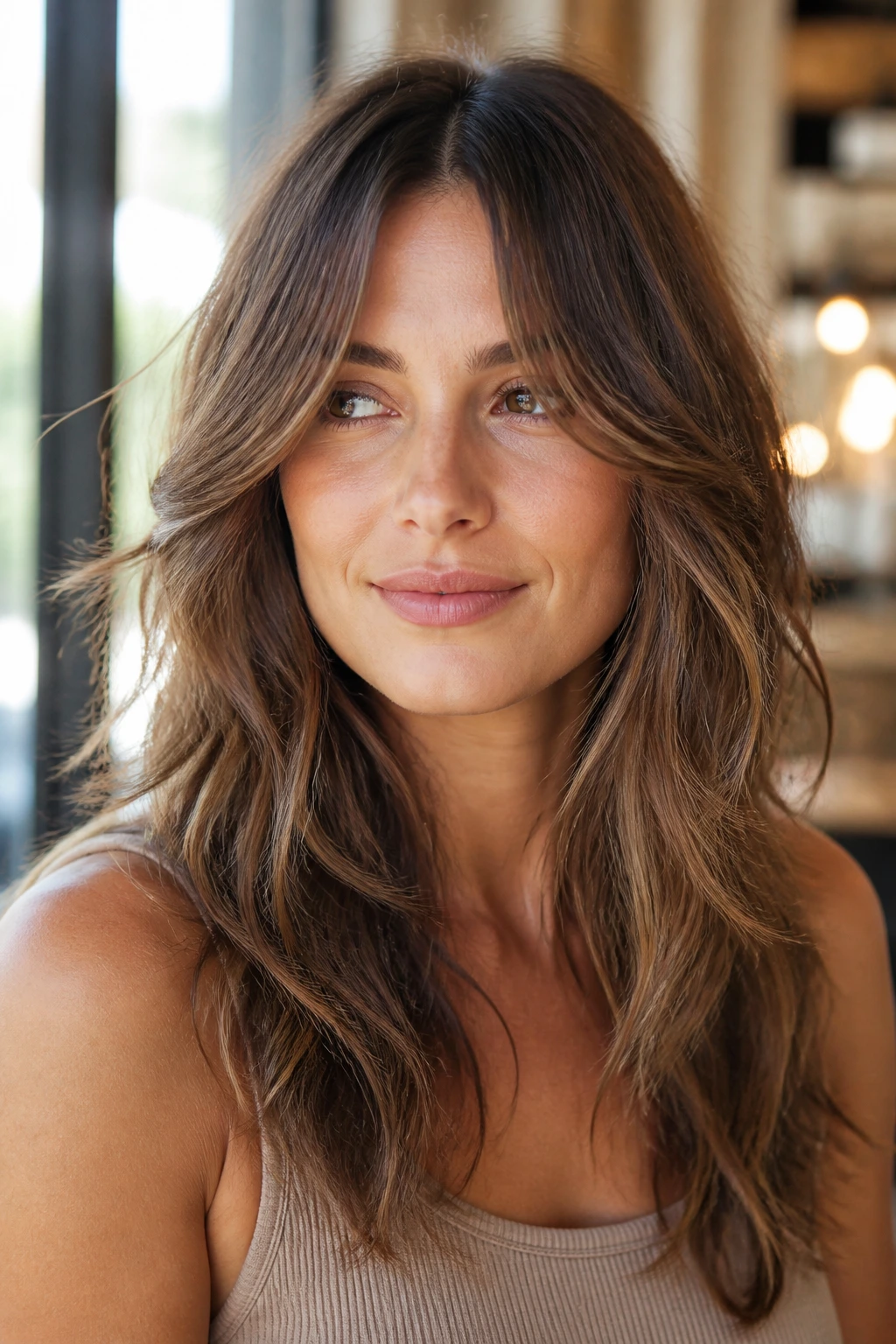
Longer Temples: Keeping the side pieces a little longer softens the transition from bangs to layers. It also helps round faces and strong jawlines.
Shorter Center Pieces: A slightly shorter middle section draws the eye upward and works well if you want the fringe to feel more visible.
More Crown Lift: Shorter layers at the top create a looser, fuller shape. Useful for flat roots, but don’t overdo it on fine hair.
Softer Ends: If you want the cut to feel polished rather than edgy, ask for gentler point cutting instead of a shredded finish.
Brighter Face Frame: A few highlights around the fringe show off the chopped texture and keep the front from disappearing into dark waves.
The nice thing is that these changes are small. You are not rebuilding the haircut. You’re nudging the mood.
Keeping the Cut in Shape Between Trims
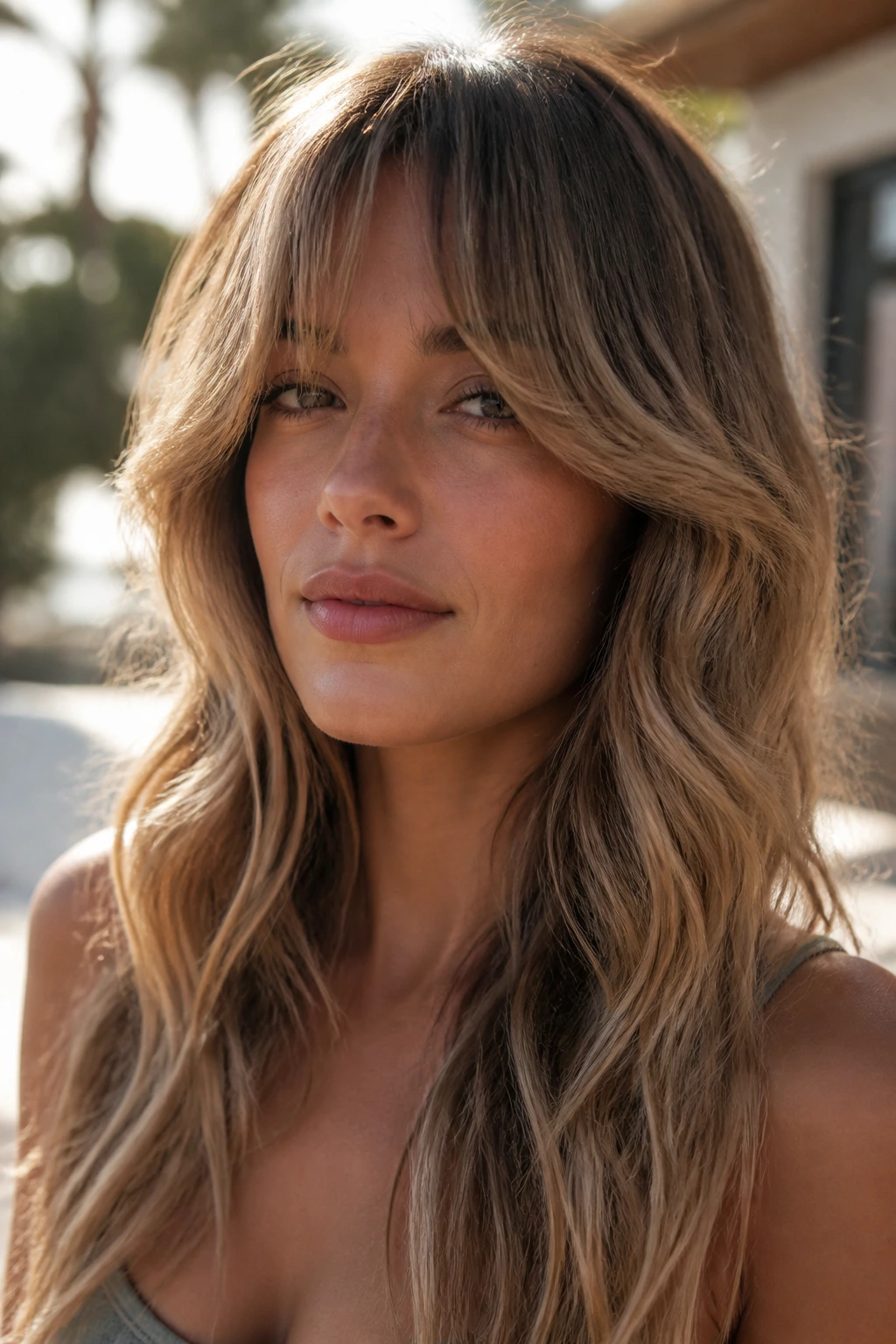
Bangs are the part that asks for the most attention, and I’d rather say that plainly than pretend otherwise. Plan on a fringe trim every 4 to 6 weeks if you want the shape to stay crisp around the eyes. The full length and layers can usually stretch to 8 to 12 weeks, depending on how fast your hair grows and how precise you like the perimeter.
At night, keep the front section from getting crushed. A loose clip at the crown, a soft roller, or even tucking the bangs into a shallow bend under a satin headband can save you a full restyle in the morning. If you sleep on a cotton pillowcase and wake up with a bent fringe, a quick mist and 30 seconds of blow-drying usually fixes it.
For day-two and day-three hair, dry shampoo is your friend, but use it with a light hand. Spray it at the roots and at the hairline, wait 30 seconds, then brush or finger-comb it through. If you pile on too much, the bangs turn dusty and dull instead of piecey. And if the waves start to separate in odd places, don’t panic. A tiny re-bend with a wand on the front pieces is often enough to make the whole cut look fresh again.
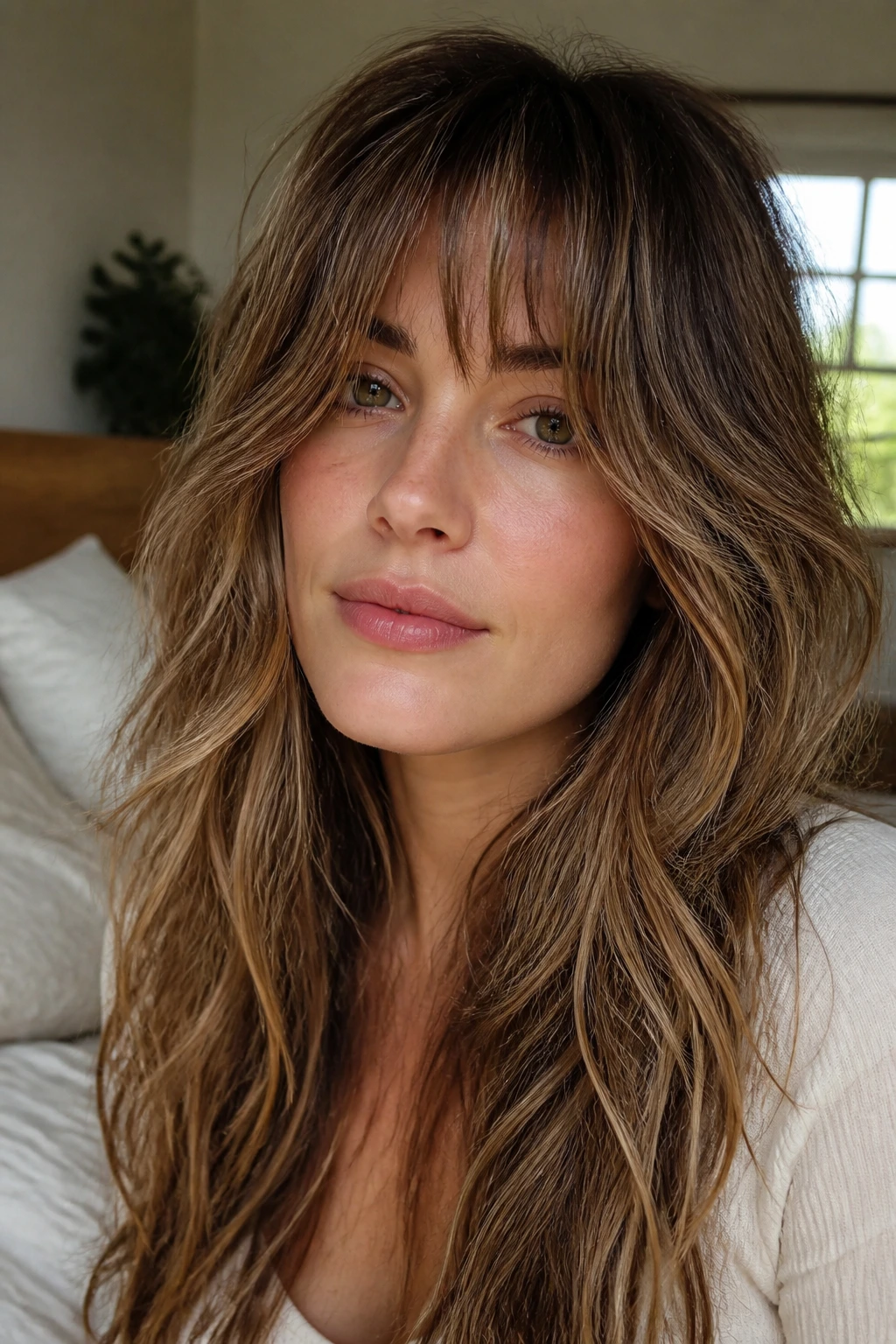
Common Mistakes That Flatten the Fringe
-
Cutting the bangs too short: Wavy hair shrinks. If the fringe is cut at the desired length while still wet, it can bounce up an inch or more when dry. The fix is simple: leave extra length at the first cut and refine once the hair dries.
-
Over-thinning the visible top layer: Thin, shredded bang ends can look airy in the chair and stringy two hours later. Ask for controlled point cutting and keep enough weight in the middle of the fringe.
-
Using heavy creams near the forehead: A pea-size amount can become a greasy line fast. Keep creamy products on the mids and ends, then use mousse or dry shampoo at the root area.
-
Ignoring the natural part: If your hair wants to split slightly off-center, forcing a dead center part can make the bangs buckle. Work with the natural fall and let the fringe settle where it wants.
-
Starting layers too high: Short layers around the crown can make long wavy hair puff outward like a triangle. Keep the shortest face-framing pieces lower unless you specifically want a shaggy shape.
-
Leaving the fringe to dry untouched: Once a wave dries crooked, it stays crooked. Comb it into place, clip it, twist it, or shape it while it’s still damp.
Smart Variations to Try Next
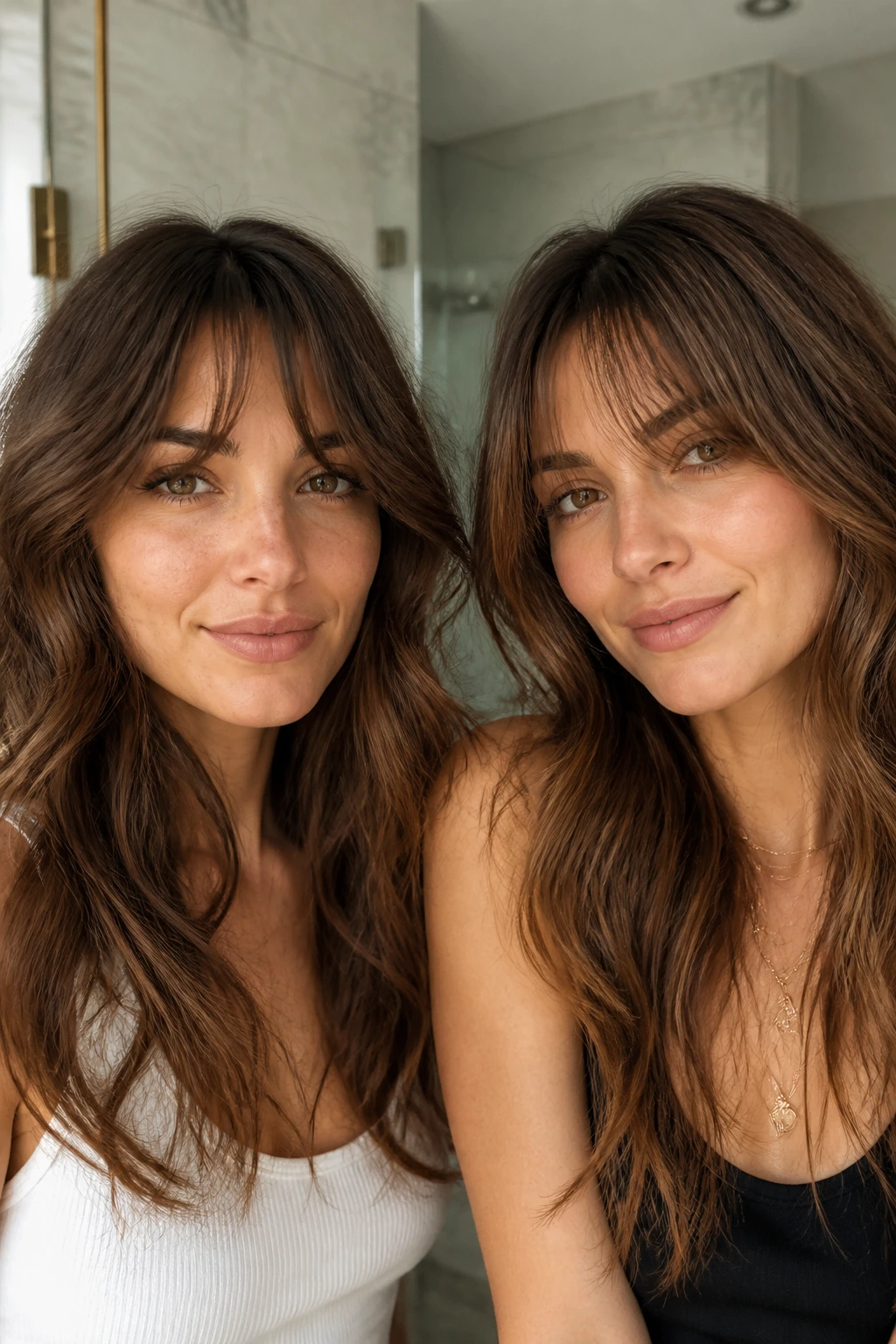
The Curtain-First Version: Start with longer bang pieces that sit near the cheekbones and only a modest broken center. This is the safest route if you’re fringe-curious but not ready for a full bang commitment.
The Thick-Hair Edit: Keep the fringe denser and remove bulk underneath instead of shredding the top layer. The result is a bang that holds its shape all day without getting see-through.
The Fine-Hair Lift: Ask for fewer layers and a lighter, longer fringe that can be styled with mousse and a round brush. This version needs less cutting and more smart shaping.
The Glam Blow-Dry Version: Use a large round brush or 1.25-inch barrel, smooth the waves into soft bends, and keep the fringe piecey at the ends. Good for polished events, bad for people who want zero effort.
The Grow-Out Friendly Version: Ask the stylist to leave the shortest fringe piece just below the brow line and the outer pieces long enough to reach the cheekbones. That buys you time between trims and makes the awkward stage less awkward.
The Color-Glow Version: Add soft highlights around the face frame and fringe. The choppy ends show up more clearly when light hits them, which makes the texture read from across the room.
Frequently Asked Questions
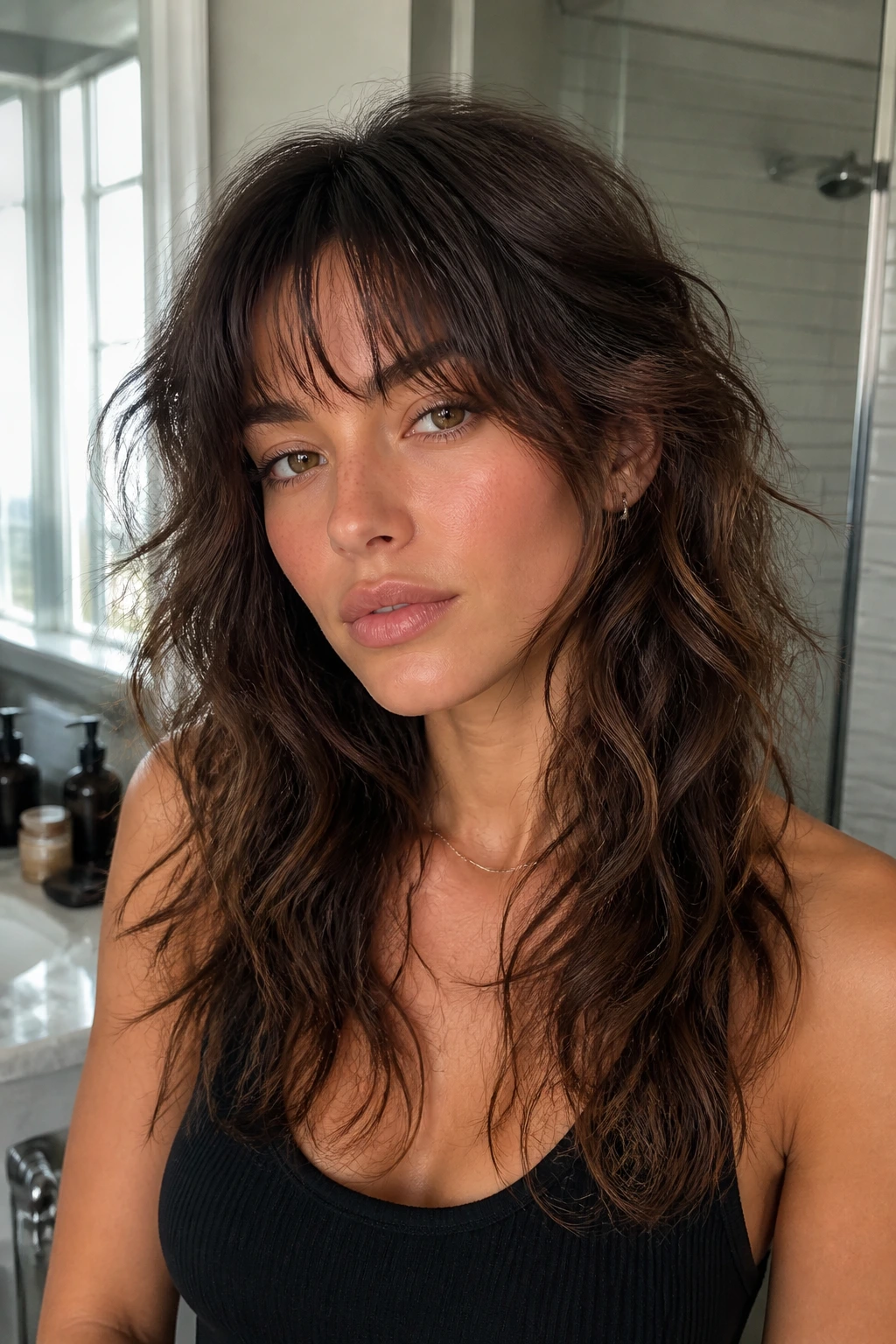
Can wavy hair really pull off choppy bangs?
Yes, and often better than straight hair can. The natural bend breaks up the fringe line, so the bangs look airy instead of stiff. The main thing is to leave enough length for shrinkage.
Should choppy bangs be cut wet or dry?
On wavy hair, a dry or mostly dry cut usually gives a better read on shape. If the hair is cut wet, it can bounce up more than expected once it dries, which is how people end up with bangs they did not mean to buy.
Are choppy bangs good for thick hair?
They can be excellent, as long as the bulk is removed in the right places. Thick waves need weight taken out from underneath, not a shredded top layer that turns frizzy by lunch.
Will long hair with choppy bangs make my face look wider?
Not if the front pieces are placed well. Longer temple pieces and face-framing layers usually soften the width, while a heavy, blunt bang line can push the face wider than you want.
How often should I trim the bangs?
Most people need a fringe cleanup every 4 to 6 weeks. If your waves shrink hard or your bangs sit right on the brow, you may want even tighter timing.
Can I air-dry this haircut and still make it look good?
Absolutely. Mousse, a little root control, and a brief clip or twist at the front are usually enough. The bangs may need a quick touch-up, but the rest can dry naturally.
What if my bangs keep splitting in the middle?
That usually means the natural part or a cowlick is winning. Dry the front in the opposite direction for the first minute, then let it settle back where it wants. A side-swept or curtain shape may behave better than a centered one.
What products keep the fringe piecey instead of stringy?
Light mousse, a touch of texturizing spray, and dry shampoo at the roots are safer than heavy oils or thick creams. If the bangs start to clump, you’ve probably used too much product near the forehead.
Can I wear choppy bangs with glasses?
Yes, and it can look sharp when the length is right. Keep the fringe a touch longer so it doesn’t fight the frames every time you blink or tilt your head.
The Fringe That Moves With You
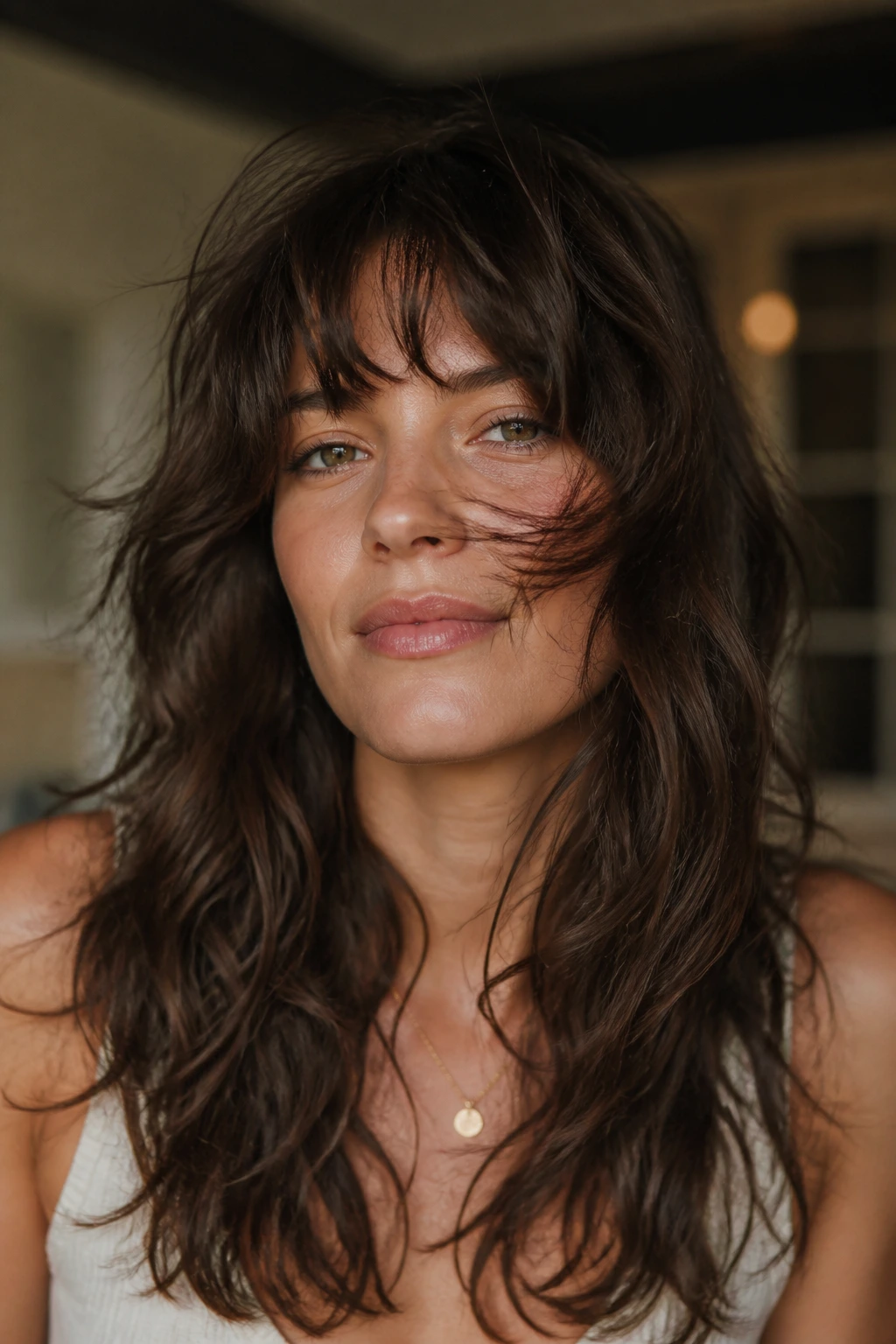
The best long hair with choppy bangs for wavy hair does not sit there and behave. It shifts. That is the whole point. The fringe can break apart a little, the waves can swell a little, and the cut still holds together because the shape was built for movement in the first place.
That is why I’d pick this combination over a blunt, over-controlled fringe almost every time for wavy texture. It gives you softness around the face, length through the body, and enough irregularity to survive a normal day without a full styling ceremony. Bring the right photo to the chair, ask for the right amount of slack at the front, and leave room for your waves to do their thing. The haircut gets better when it can breathe.
