



A round face can wear bangs beautifully — if the fringe knows when to back off. A hard line across the forehead tends to flatten everything; bottleneck bangs do the opposite, starting narrow through the center and opening near the temples so the eye keeps dropping toward the cheekbones instead of stopping at the widest point.
Long hair changes the game again. Once the length goes past the shoulders, a blunt fringe can start to feel like a lid on top of a very heavy curtain. Bottleneck bangs loosen that feeling. They leave air in the middle, bend softly at the sides, and give the haircut a face frame that looks thought through rather than bolted on.
The best versions are never identical. Fine hair needs wisps, thick hair needs weight taken out, curls need shrinkage planned before the scissors touch them, and a cowlick can move the whole center line by half an inch. That tiny half inch matters. It changes whether the fringe sits like a soft frame or spends the morning fighting your forehead.
Why These 23 Bottleneck Bang Styles Earn Their Place

Balances Width: The bottleneck shape narrows the visual line across the forehead and pushes the eye downward, which helps a round face read a little longer.
Protects the Length: Long hair keeps its vertical weight, so the bangs can do the framing work without turning the whole cut into one heavy block.
Grows Out Better: Because the side pieces are already part of the design, the awkward stage looks softer than it does with a blunt micro-fringe.
Adapts to Texture: Straight hair, waves, curls, and thick bends all handle this shape differently, which is exactly why the cut can be tailored instead of copied.
Styles Fast: Most versions need only a round brush, a blow dryer, or a quick flat-iron bend at the front.
1. The Classic Bridge-of-Nose Bottleneck Bang
This is the shape most people picture when they hear bottleneck bangs: shortest at the center, then soft and longer as the pieces move toward the temples. On long hair, it feels clean rather than severe, which matters a lot on a round face.
Why It Works on a Round Face
The center opens the forehead just enough to keep the cut from closing in. The longer sides slide over the cheekbones and pull the eye down the face instead of side to side.
Keep the shortest point around the bridge of the nose or just below the brows, then let the side pieces graze the top of the cheekbone. That spacing gives the style room to breathe.
- Best for: medium to thick straight hair
- Salon note: ask for a soft center, not a blunt shelf
- Daily move: round-brush the center up, then bend the sides away from the face
2. A Soft Curtain Blend That Opens at the Cheekbones
This version starts with the easy movement of curtain bangs and tightens into the bottleneck shape once it reaches the cheeks. It’s a smart choice if you like a little softness near the eyes but don’t want the whole front to disappear into one broad curtain.
The face-framing pieces are the part that sell it. If they stop right at the cheekbones, the haircut starts to carve out space around the face instead of sitting flat across it.
I like this one for long hair that already has layers through the ends. The bangs echo that movement instead of competing with it.
3. Feather-Light Bottleneck Bangs for Fine Hair
Fine hair can go limp fast, so a heavy front section is usually a bad trade. This version keeps the center narrow and the side pieces airy, which lets the hair sit with separation instead of swinging down in one flat sheet.
What Makes It Different
The trick is not adding more hair. It’s removing the bulk in the wrong places so the bangs can move without collapsing. A stylist should point-cut the ends lightly and keep the middle slightly shorter than the sides.
For styling, a puff of root spray at the front and a quick blow-dry with a small round brush is enough. No need to fight it with ten products.
4. Dense Bottleneck Bangs That Calm Thick Hair
Thick hair can make this shape look full in a good way, but only if the center and sides are thinned with purpose. Otherwise the fringe can sit like a solid curtain with a tiny dip in the middle, and that misses the point.
Here, the inner weight gets taken out while the perimeter stays neat. That keeps the bangs from puffing out at the temples, which is where thick hair likes to make itself known.
Best move: ask for internal texturizing, not a bunch of choppy ends. The bang should still read as one shape. Just a softer one.
5. Side-Swept Bottleneck Bangs With a Deep Part

If you wear a deep side part, this version gives you the bottleneck effect without forcing the front to sit symmetrically. The shorter section falls toward the higher side of the part, then the longer side drifts across the forehead in a way that feels lived-in rather than fixed.
That diagonal matters on a round face. Diagonals break up width. Straight lines announce width.
This is the one I’d point to if you want fringe, but not the feeling that your forehead has been boxed in.
6. Round-Brushed Bottleneck Bangs With a 90s Blowout Bend
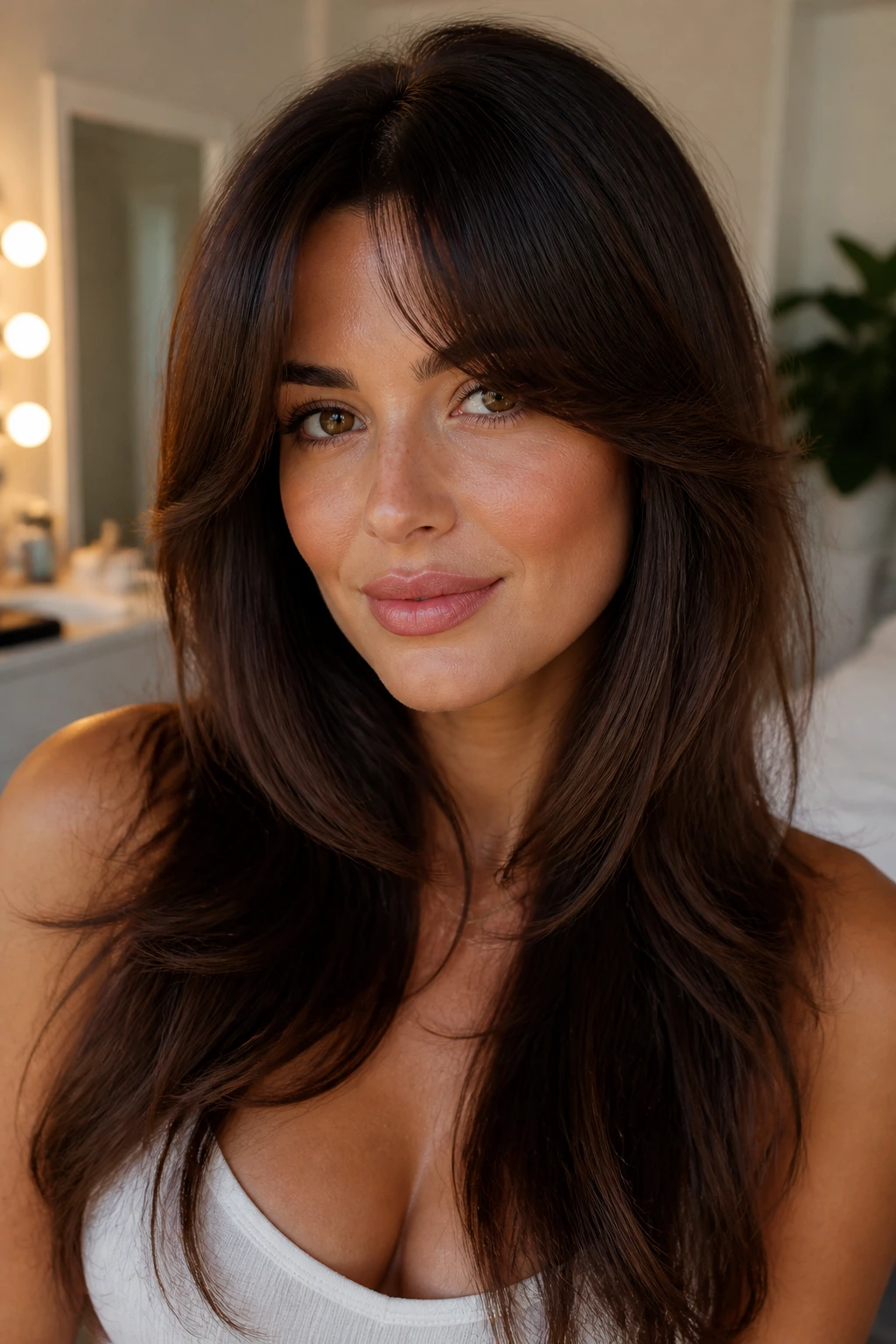
A big, polished bend at the front changes the whole mood of the cut. The bangs still open in the middle, but the side pieces get that soft lift you see when a round brush and a blow dryer actually cooperate.
The visual trick is simple: root lift at the center, then a gentle curve back and away from the cheeks. That curve keeps the face frame from hanging straight down, which is where round faces can start to look wider than they are.
A medium round brush and a concentrator nozzle do most of the work. If the brush is too large, the bend turns lazy. If it’s too small, the front looks too curled.
7. Air-Dried Bottleneck Bangs on Loose Waves

Wavy hair gives this cut a little shrug, and I mean that in the best way. The waves keep the bangs from looking over-groomed, while the bottleneck shape stops the fringe from ballooning across the face.
What to Watch For
Shrinkage matters here. A wave that looks harmless when wet can spring up a full inch as it dries, so the side pieces usually need to be left longer than you think. If the stylist cuts them too short, the shape loses its taper.
A light cream, a finger twist, and a clip at the root for ten minutes can be enough. The goal is bend, not control.
8. Razor-Textured Bottleneck Bangs for Extra Movement

Razor cutting changes the finish fast. The edges look softer, the pieces separate more easily, and the whole bang line gets that faint, airy edge that scissors sometimes miss.
On long hair and a round face, that softness helps. A hard edge near the eyes can feel boxy. Razor texture keeps the front from turning into a little wall.
This version works best when the rest of the haircut has movement too — long layers, loose ends, or a bit of bend through the mids. If the rest of the hair is ultra-straight and heavy, the bangs can look disconnected.
9. Bottleneck Bangs That Give Fine Hair a Fuller Front

This cut is less about volume and more about the illusion of it. The center stays short enough to give lift, while the side pieces are light but not wispy to the point of disappearing.
A tiny root lift at the front makes a bigger difference than most people expect. Fine hair tends to lie flat where the bangs meet the scalp, so a little direction at the root keeps the shape from sinking into the forehead.
Quick Notes
- Keep product light so the bangs don’t separate into strings.
- Blow-dry the center first, while it’s still damp.
- Let the side pieces dry away from the face for a cleaner taper.
10. Shaggy Bottleneck Bangs for Long Layers

Shaggy doesn’t mean messy here. It means the fringe joins the layers instead of sitting on top of them like a separate thing. On long hair, that matters because the cut starts to feel like one system, not two competing haircuts.
The bottleneck shape gets softer in this version. The center is still shorter, but the edges break up a little more and blend into the rest of the layers.
I like this one for round faces because it doesn’t draw a hard line anywhere. Everything moves. Nothing blocks the cheekbones.
11. Bottleneck Bangs With Long Face-Framing Pieces

This is the version for anyone who wants the bang to melt into long face-framing layers. The shortest center piece opens the forehead, then the side pieces travel all the way into the jaw or even the collarbone.
That longer descent is useful on round faces. It creates a longer path for the eye to follow, and that path is doing part of the slimming work.
If you like hair tucked behind one ear, this cut is especially good. The layers still show. They just don’t scream for attention.
12. Sleek Bottleneck Bangs on Straight, Long Hair

Straight hair shows every line, so this version needs clean placement. The center should sit soft and narrow, not blunt, and the sides should curve just enough to keep the front from looking like a ruler laid across the face.
The upside of straight hair is precision. You can see the taper clearly. You can also see the moment it goes wrong, which is why a dry check after the cut matters.
This style is for the person who likes a crisp finish but doesn’t want the severity of a straight-across fringe.
13. Cowlick-Friendly Bottleneck Bangs
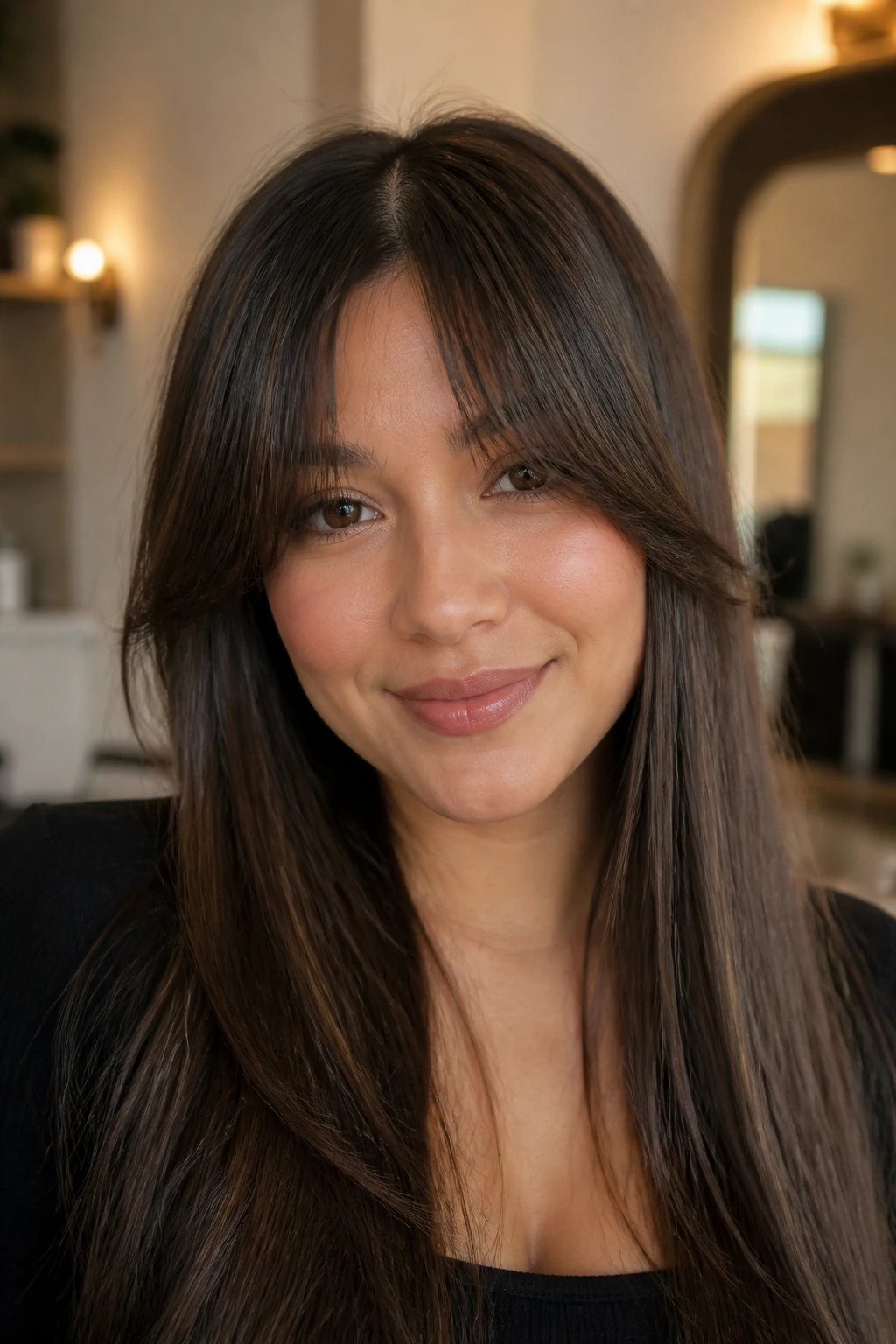
Cowlicks at the front are rude. They split, lift, and push the bang line in directions you did not approve. A bottleneck shape can still work, but the center usually needs to start a touch longer so the cowlick does not pop it straight up.
The Shape That Helps
Ask for the center to be cut with the growth pattern in mind, not against it. The longest side pieces should be left long enough to anchor the front when the cowlick tries to open it up.
A root clip right after washing helps train the direction. So does drying the cowlick side first, not last.
14. Butterfly-Cut Bottleneck Bangs

The butterfly cut brings lift higher up the head, then the bangs echo that lift with a lighter center and sweeping sides. It’s a neat pairing because the top half of the hair and the front fringe start working in the same direction.
On a round face, that top lift matters. Height at the crown helps extend the face, and the bang shape stops the whole style from sliding back into width.
This one looks especially good when the ends are blown out with a soft bend. Flat ends can make the top volume feel disconnected.
15. Curly Bottleneck Bangs With a Tapered Center
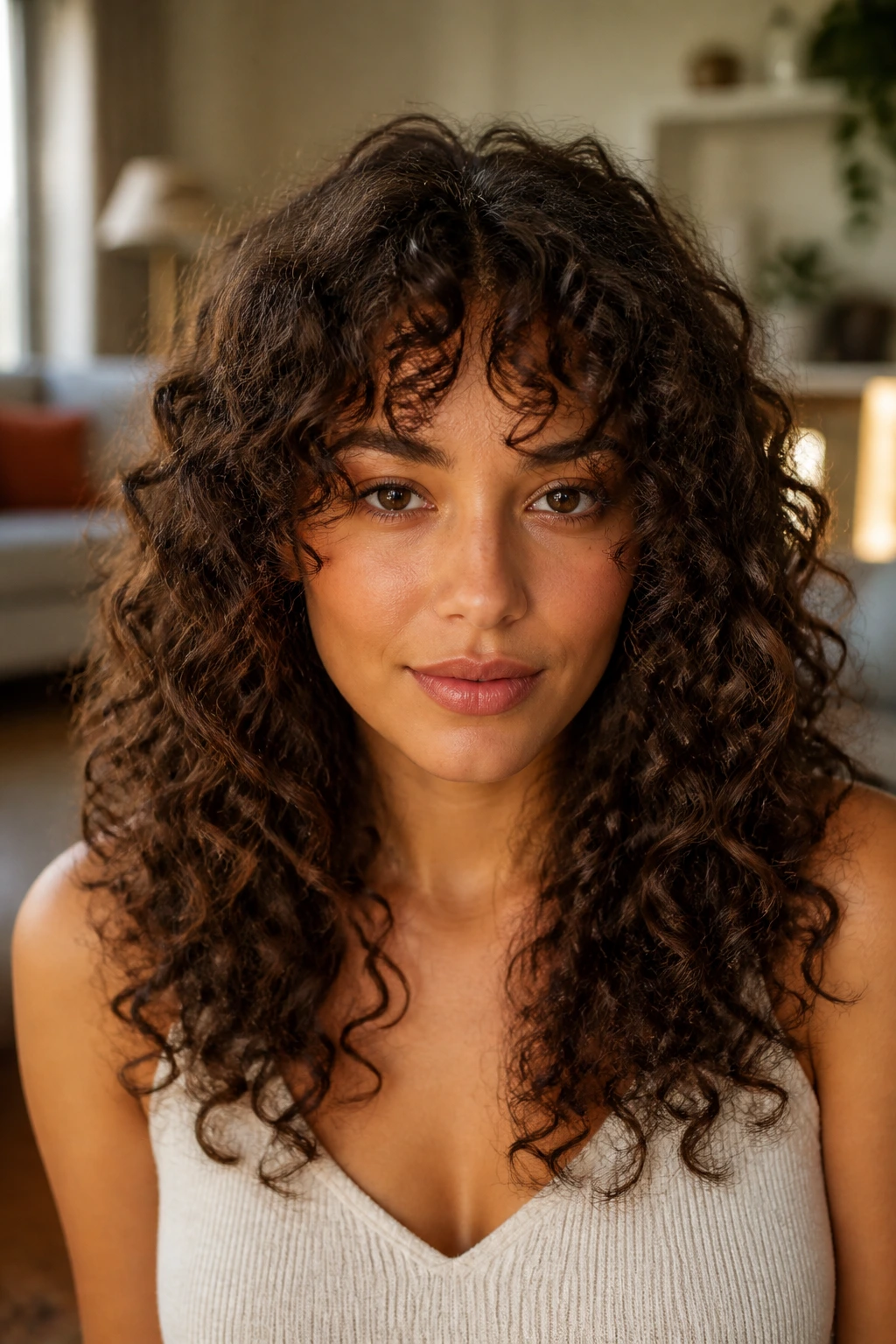
Curly hair does not play by the same rules as straight hair, and trying to force it will only make the bangs short in the wrong places. The center has to be longer than you think, because curl shrinkage can take off a full inch or more.
The best version is cut dry, curl by curl, with the taper planned around where the curls sit once they settle. That keeps the shortest point from springing too high and turning into a tiny crown of bang.
I like this cut because it respects the curl pattern. It doesn’t flatten it. It just gives it a shape.
16. Crown-Lift Bottleneck Bangs for Flatter Roots
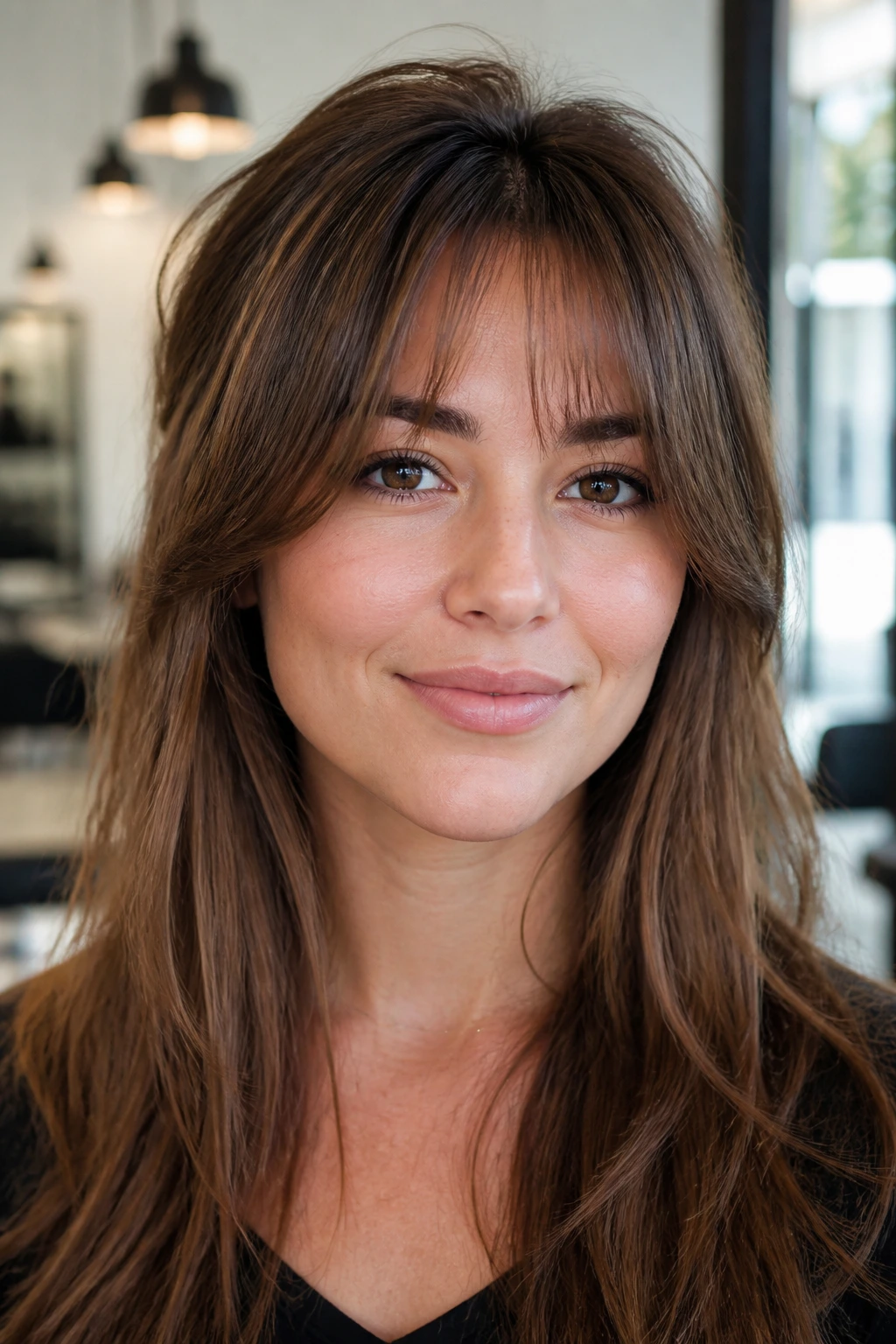
Flat roots at the front can make bangs fall into the face too fast. This version puts more of the visual lift at the crown, then lets the bottleneck taper do the softening around the cheeks.
A little mousse at the root and a quick lift with a round brush changes the front shape in a way that lasts longer than a heavy cream ever will. The hair doesn’t need to be huge. It just needs to be off the scalp.
This is a good fix if your long hair tends to sit close to the head and needs a bit of height to balance a round face.
17. Grow-Out Friendly Bottleneck Bangs

Some bangs look good on day one and a little grumpy three weeks later. This one is built to age better. The center isn’t cut so short that it gets trapped above the brows, and the sides are long enough to keep sliding into the layers as they grow.
Why It’s Easier to Live With
The front never becomes a blunt shelf, so the grow-out phase looks intentional for longer. If you decide you want to move on, the pieces can become curtain bangs without a hard reset.
That’s worth a lot. A fringe that can change shape buys you time.
18. Low-Maintenance Bottleneck Bangs for Busy Mornings

This version is for people who want the shape more than the styling routine. The center stays soft, the sides stay long, and the cut is done with enough texture that it falls into place after a quick blow-dry or even a little finger-twist.
It won’t look as polished as a round-brushed blowout every single day. Fine. That’s the point.
What you get instead is a fringe that can be misted, dried, and pinned into shape in minutes. On long hair, that low-effort front keeps the whole cut from feeling overworked.
19. Glam Bottleneck Bangs With Soft Volume

This version is all about lift, bend, and a little drama at the front. The center opens the face, then the sides sweep out in a way that feels dressed up without being stiff.
Volume works here because it is controlled. The bang should rise at the root, not puff out at the ends. That detail keeps the style flattering on round faces, where too much width at the sides can flatten the effect.
Use a round brush and a light spray at the roots. Heavy hairspray makes this look older than it needs to.
20. Bottleneck Bangs That Work in Updos
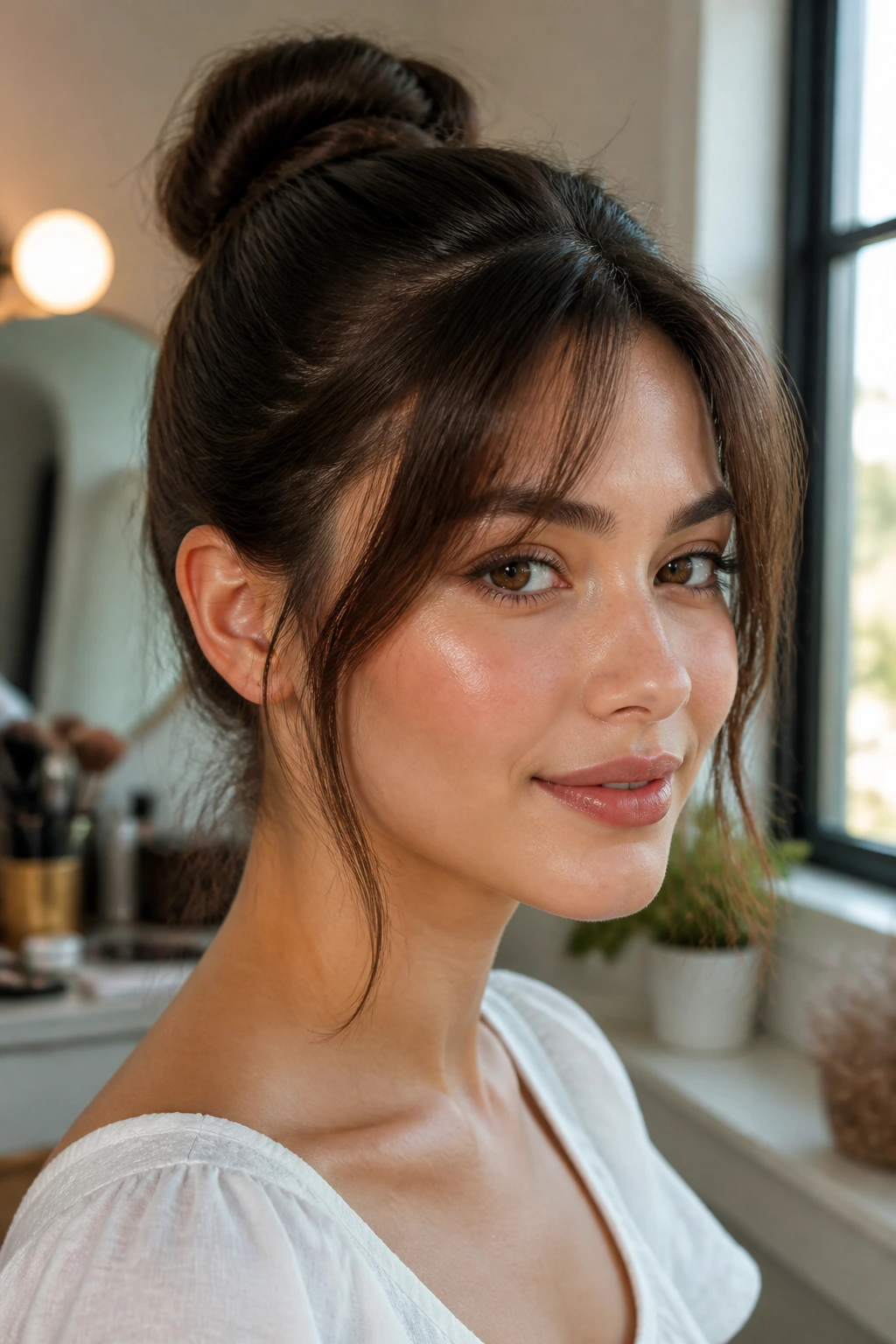
If you wear your long hair in buns, clips, or ponytails, this version matters. The side pieces are long enough to stay visible when the rest of the hair is off the neck, which keeps the fringe from looking like a stray piece of grooming.
The shortest center should still open the forehead, but the taper needs enough length to fall around the temples when the back is pulled up. That way the face frame stays present even when the rest of the hair disappears.
This is one of the most practical versions in the bunch. It earns its keep on days when your hair is not down.
21. Jaw-Skimming Bottleneck Bangs for Extra Slimming

When the side pieces hit around the jawline, they create a longer vertical line down the face. That can be especially useful on a round face because the jaw becomes part of the frame instead of the widest point being the only thing people see.
The center still stays shorter, but not so short that it fights the length in the sides. The whole cut should feel like it is drawing an outline, not cutting one.
I’d choose this version if you like your hair long, but you want the front to do more work without losing softness.
22. Bottleneck Bangs With a Lower Starting Point

Not every forehead wants a short center. If your forehead is a little shorter or your hairline is strong, lowering the shortest point can make the cut sit more naturally and keep the face from feeling crowded.
That lower starting point still creates the bottleneck shape. It just happens a touch farther down, usually near the bridge of the nose or even slightly below. The side pieces then sweep out toward the cheekbones as usual.
The result is calmer, less perched, and easier to grow out. Sometimes that restraint is the whole trick.
23. Dramatic Bottleneck Bangs With Long Swooping Sides

This is the boldest version here, and it works because the drama is kept at the sides instead of the center. The fringe opens the forehead, then the long swoops travel along the face in a way that adds length and movement without making the haircut heavy.
The long sides matter more than people think. They create the line that changes the face shape. Skip that length and the whole style loses its point.
If you want your long hair to feel glamorous but still soft around a round face, this is the version that gives you the most shape without turning rigid.
Why Bottleneck Bangs Play So Well With Long Hair and Round Faces

The reason this fringe keeps showing up on round faces is not fashion noise. It’s geometry. Long hair gives you vertical length, and the bottleneck shape edits the width at the forehead without cutting off the cheekbones or jaw.
The middle part of the fringe matters because it opens the center of the face. The side pieces matter because they bring the eye down and out in a controlled way. Put those two things together and you get a front shape that does quiet correction without looking corrective.
A blunt fringe can be lovely, but it asks for more precision and more commitment. Bottleneck bangs are looser than that. They have a little give, and that makes them easier to live with when your face is already soft and full through the cheeks.
The Tools That Make the Shape Sit Right
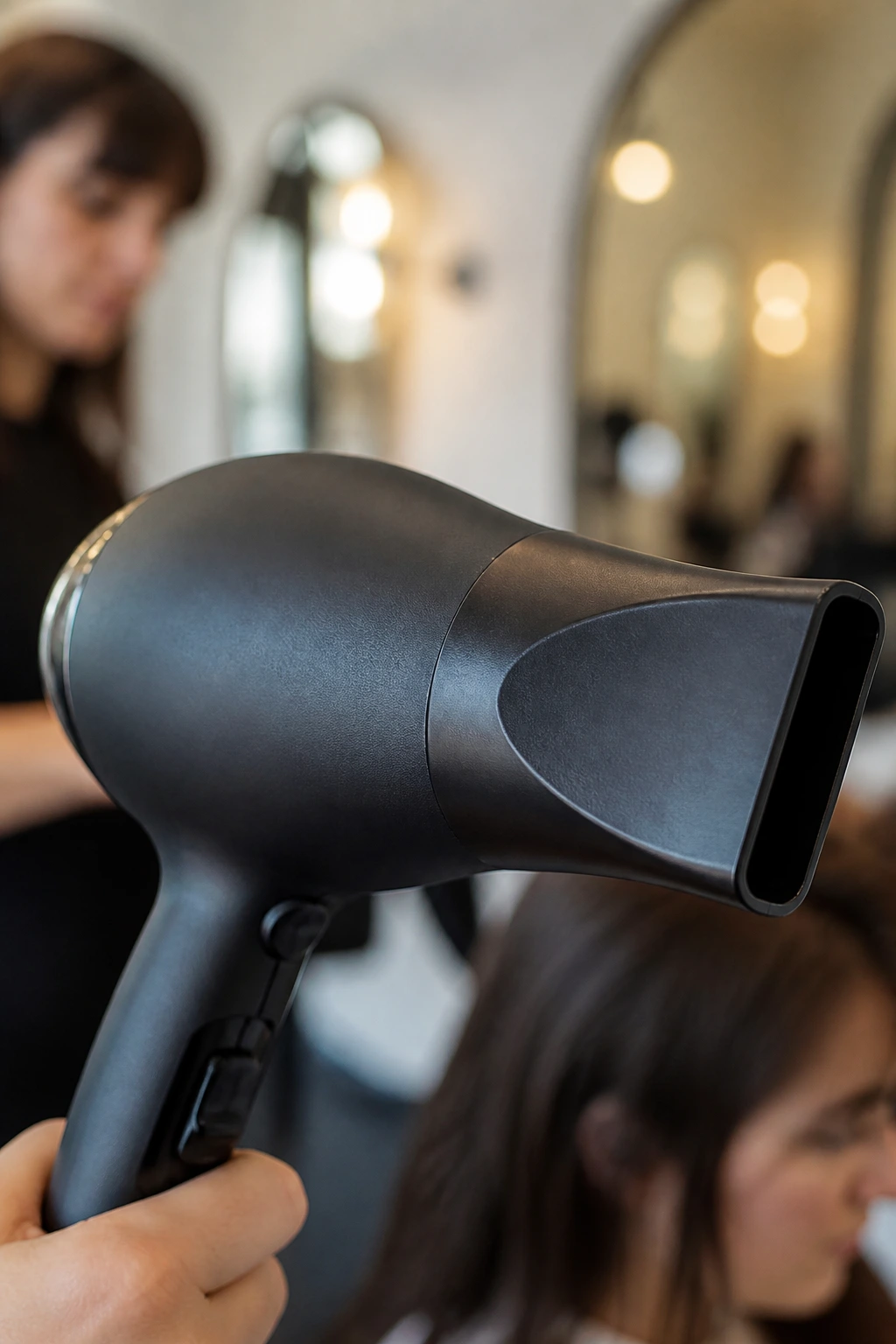
- Blow dryer with a concentrator nozzle: Directs air at the roots so the center can lift instead of puffing.
- Small to medium round brush: A 1- to 1.5-inch brush gives enough bend without turning the bangs into curls.
- Flat iron with rounded edges: Useful for a quick turn at the ends when the bangs need one clean sweep.
- Tail comb: Helps with clean parting and with moving the center point a fraction left or right.
- Duckbill clips or small sectioning clips: Keep the side pieces out of the way while the center dries.
- Heat protectant spray: A light mist is enough; heavy sprays make bangs feel greasy fast.
- Light mousse or root lift spray: Best when the front falls flat by midday.
- Dry shampoo: Good for day-two bangs, but use it sparingly so the front doesn’t turn chalky.
- Light hairspray: A flexible hold spray keeps the shape in place without freezing it.
How to Ask for the Cut Without Getting a Boxy Fringe

Bring photos, but bring the right photos. A picture of someone with a similar hair texture and face shape is worth more than ten screenshots of bangs on a different head. If you have long hair and a round face, your stylist needs to see where the sides should land on you, not just on a stranger.
Center Point: Ask for the shortest piece to sit around the bridge of the nose or just below the brows, depending on your forehead length and cowlicks.
Side Fall: Tell them you want the side pieces to taper into the cheekbones or jaw, not stop at the outer eye and leave a hard corner.
Weight: If your hair is thick, ask for internal texturizing. If your hair is fine, ask for soft point cutting instead, so the ends do not look shredded.
Dry Check: Have the fringe checked dry before you leave. Wet hair lies.
That one step saves more bad bangs than any speech about “low maintenance” ever will.
How to Style Bottleneck Bangs So They Don’t Fight You

The front of the hair is the first thing that gets weird if you rush it. Start there. Not the ends, not the crown. The bangs.
Round-Brush Lift: Dry the center section first, lifting it up and slightly forward before rolling it away from the face. That keeps the shortest point from sitting flat against the forehead.
Flat-Iron Bend: If the ends are sticking out, use the iron only on the last inch or so. A tiny turn away from the face is enough. You do not want a full curl unless that is the look you’re after.
Air-Dry Shortcut: On wavy hair, twist the damp front sections once and clip them back for 10 to 15 minutes. That helps the taper land in a softer place.
Day-Two Reset: Mist the roots lightly with water or a setting spray, then reheat for 10 seconds with a brush or your fingers. A tiny reset beats soaking the bangs and starting over.
Small Tweaks That Change the Finish Fast

Texture Boost: A pea-size bit of light cream on the side pieces can stop them from separating into thin, flyaway strands.
Part Shift: Moving the part just 1 inch off center can lengthen the face shape more than people expect. On a round face, that little move matters.
Soft Edge: Ask for point-cut ends instead of a blunt line if you want the fringe to sit quietly against long layers.
Heat Control: Use medium heat, not the hottest setting. Bangs are short, and they scorch faster than the rest of the hair.
Make-It-Yours: If you wear glasses, leave the center a touch longer so the frames and fringe do not clash at the top of the lens.
Maintenance, Wash Days, and Grow-Out

Bangs get oily faster than the rest of the hair because they sit against the forehead all day. If you wash the whole head less often, you can still refresh the front by rinsing just the fringe or clipping it back while you wash the rest.
A trim every 4 to 6 weeks keeps the bottleneck shape from losing the center point. If your hair grows fast, or if the bang starts falling into your eyes before that, trim the middle by a tiny amount and leave the sides alone. The taper is what makes the cut work. Lose that, and you’re back in blunt-fringe territory.
When you want to grow them out, don’t try to force one dramatic shift. Let the center lengthen first, then start blending the side pieces into your longest face-framing layers. That way the grow-out looks like a choice, not a mistake.
Common Mistakes to Avoid

The easiest way to ruin bottleneck bangs is to make the center too wide. The shape stops reading as a bottleneck and starts reading as a heavy curtain. On a round face, that can add width right where you do not want it.
Another problem is cutting the side pieces too short. If they stop before the cheekbone, the face frame loses its taper and the bangs can feel chopped. Keep them long enough to travel.
Cowlicks are another trap. If you ignore the growth pattern and cut the center too short, it will spring up and split. A slightly longer center plus directional blow-drying solves most of that.
Product can also go bad fast. Too much serum or cream makes the front hang in greasy strands. Use the smallest amount you can get away with.
And please, do not trim these with kitchen scissors. Uneven edges show immediately at the front of the face. Use hair scissors, or leave the cleanup to a stylist.
Variations and Adaptations to Try
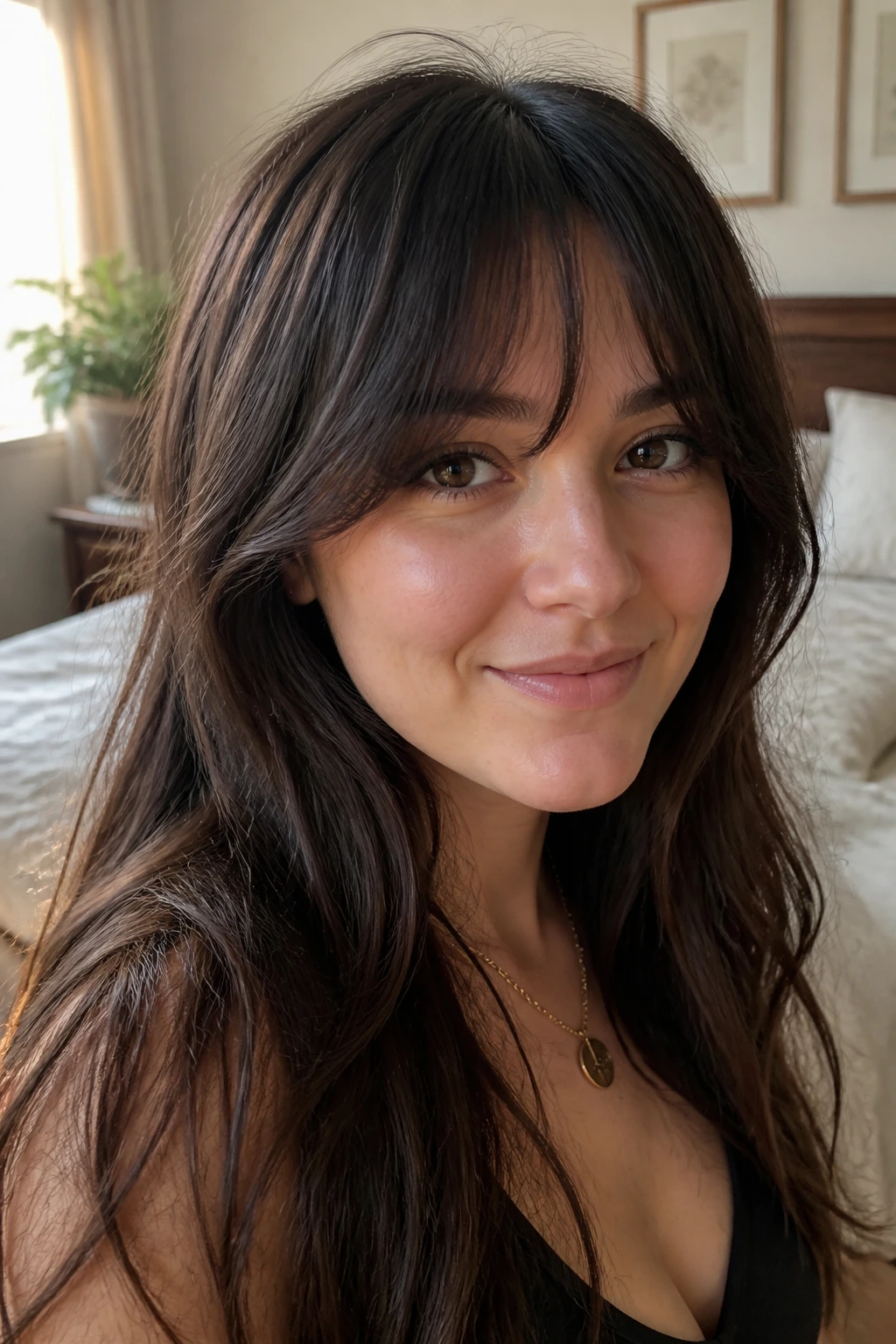
The Soft Center Sweep: Keep the shortest point a little lower and let the sides feather out gently. This works well if your forehead is shorter or you want a calmer frame.
The Curl-Friendly Taper: Cut the bangs dry and longer than you think you need, then let the curl pattern settle before refining the edge. It keeps the fringe from jumping too high.
The Thick-Hair Feather Back: Remove weight from the inside of the bang and keep the outer edge clean. This is the version that stops thick hair from turning into a triangle at the front.
The Air-Dry Version: Build in soft layers and enough length that the bangs can dry with a bend from your natural texture. Good for wavy hair and for people who hate round brushes.
The Updo Partner: Leave the side pieces long enough to tuck behind the ear or drape alongside a bun. That keeps the fringe working even when the rest of the hair is pinned up.
The Grow-Out Curve: Ask for the center to be only slightly shorter than the sides, so the whole front can slide into curtain bangs over time. Useful if you know you’ll want a change later.
Frequently Asked Questions
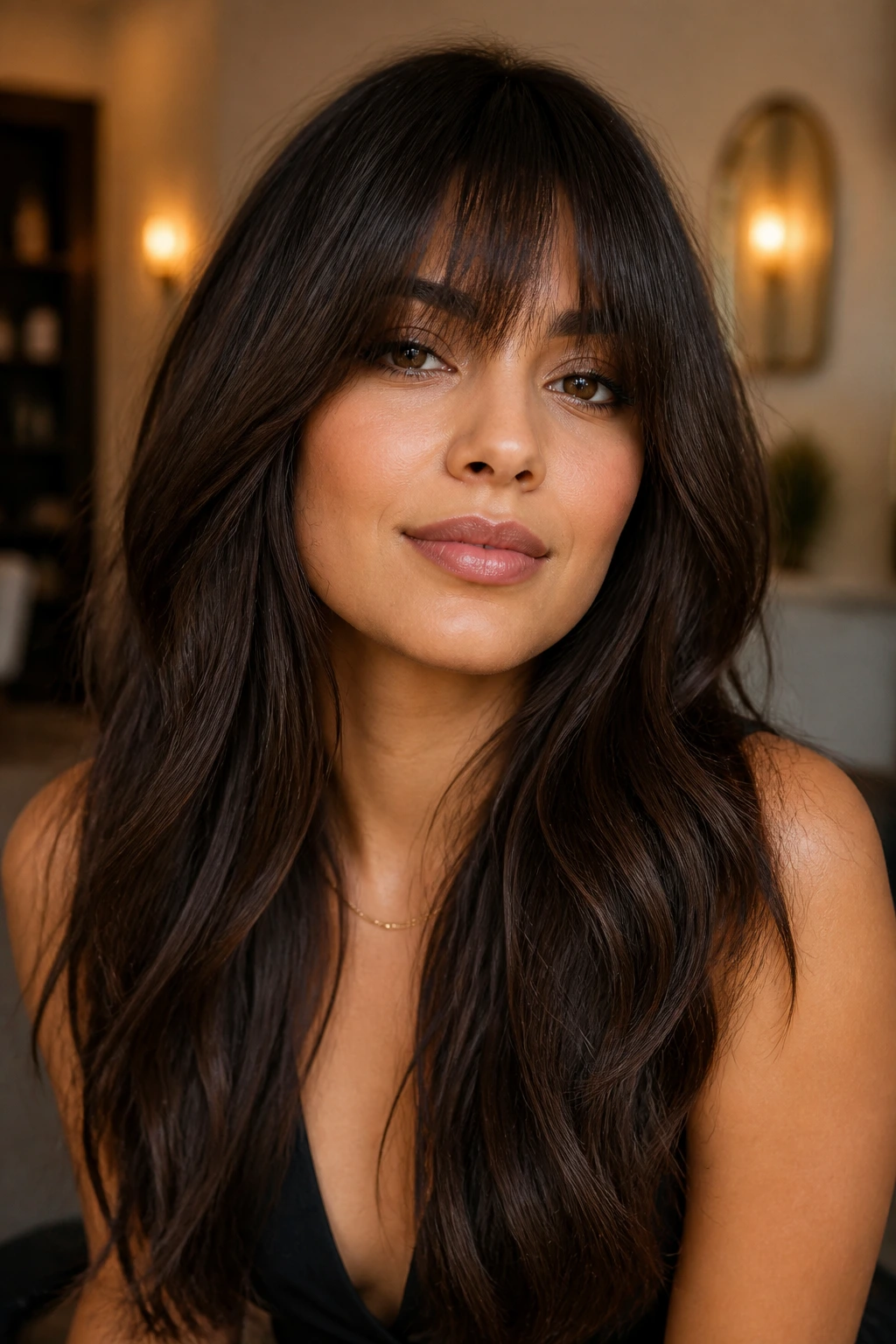
Do bottleneck bangs really flatter round faces?
Yes, when the center is kept narrow and the side pieces are long enough to guide the eye downward. The shape breaks up width at the forehead and cheek level, which is where round faces usually need help.
How short should the center be?
For many long-hair cuts, the safest range is around the bridge of the nose to just below the brows. If your forehead is shorter, start lower; if your forehead is longer, you can go a little higher.
Can thick hair handle bottleneck bangs?
Absolutely, but thick hair needs internal weight removed so the front doesn’t puff out. Ask for soft texturizing rather than a choppy, shredded edge.
What if my hair is fine and flat?
Keep the center soft, use a light root lift product, and dry the bangs first so they don’t collapse under the rest of the hair. A tiny bend away from the face usually helps more than extra product.
Can curly hair wear this shape?
Yes, and it can look lovely, but the cut should be planned around shrinkage. Curly bangs are best cut dry, with the stylist watching where each curl actually falls.
How often do I need trims?
Every 4 to 6 weeks keeps the center from getting too long and the taper from losing its shape. If you are between trims, a tiny cleanup on the center only is usually enough.
What if the bangs split because of a cowlick?
Dry the front in the direction you want it to sit, and clip the root while it cools. If the split is stubborn, leave the center a touch longer next time so the cowlick has less power.
Can I grow bottleneck bangs into curtain bangs later?
Yes, and this is one of the nicest things about the shape. Let the center lengthen first, then merge the side pieces into your face-framing layers instead of cutting everything back to equal length.
The Fringe That Keeps the Face Moving

Bottleneck bangs work because they don’t bully the face. They frame it, open it, and give long hair a front shape that feels lighter than a blunt fringe but more deliberate than a random curtain. On a round face, that balance matters. It keeps the look soft without losing structure.
If you’re choosing a starting point, go softer and slightly longer rather than shorter and wider. The taper can always be refined, and the front of the haircut will tell you fast if it needs a little more length or a little more lift.
That’s the real appeal here. The shape does its job quietly, then keeps working as it grows.
