



Medium length hair is where bangs stop being a dare and start being a real design choice. A collarbone cut, a blunt lob, or a softly layered shoulder-length shape can take fringe without losing the movement that makes the haircut feel alive. The right bang styles for medium length hair can sharpen the face, soften a jaw, or make an otherwise plain cut look deliberate in a way that’s hard to fake.
The catch is that bangs are honest. They show you your cowlicks. They show you how oily your forehead gets by noon. They show you whether you actually want to blow-dry your front pieces every morning or whether that sounded cute in the chair and less cute on a Tuesday.
So the trick is not “Should I get bangs?” It’s which fringe shape fits your hairline, your texture, and the amount of effort you’re genuinely willing to give it. Get that part right, and medium length hair becomes a very good canvas. Get it wrong, and you spend weeks pinning things back with the kind of quiet resentment that only hair can cause.
Why This Collection Works on Medium Length Hair
-
Cheekbone lift: Medium length hair gives fringe enough surrounding length to frame the eyes and cheekbones instead of sitting like a separate piece on top.
-
Grow-out room: If you change your mind, collarbone length and lob-length cuts make it easier to blend bangs into face-framing layers without a dramatic chop.
-
Texture flexibility: Straight, wavy, and curly hair can all wear bangs here, but the shape has to match the way your hair actually falls, not the way it looks under salon lighting.
-
Style range: The same medium cut can read sharp, soft, shaggy, or polished just by changing the bang line and density.
-
Lower-risk commitment: A fringe on medium length hair is easier to adjust than a tiny crop and less likely to disappear than bangs on very long hair.
-
Front-of-head balance: The right fringe can make a medium cut feel fuller up top, which matters if your ends are thick and your crown tends to lie flat.
1. Curtain Bangs for Medium Length Hair
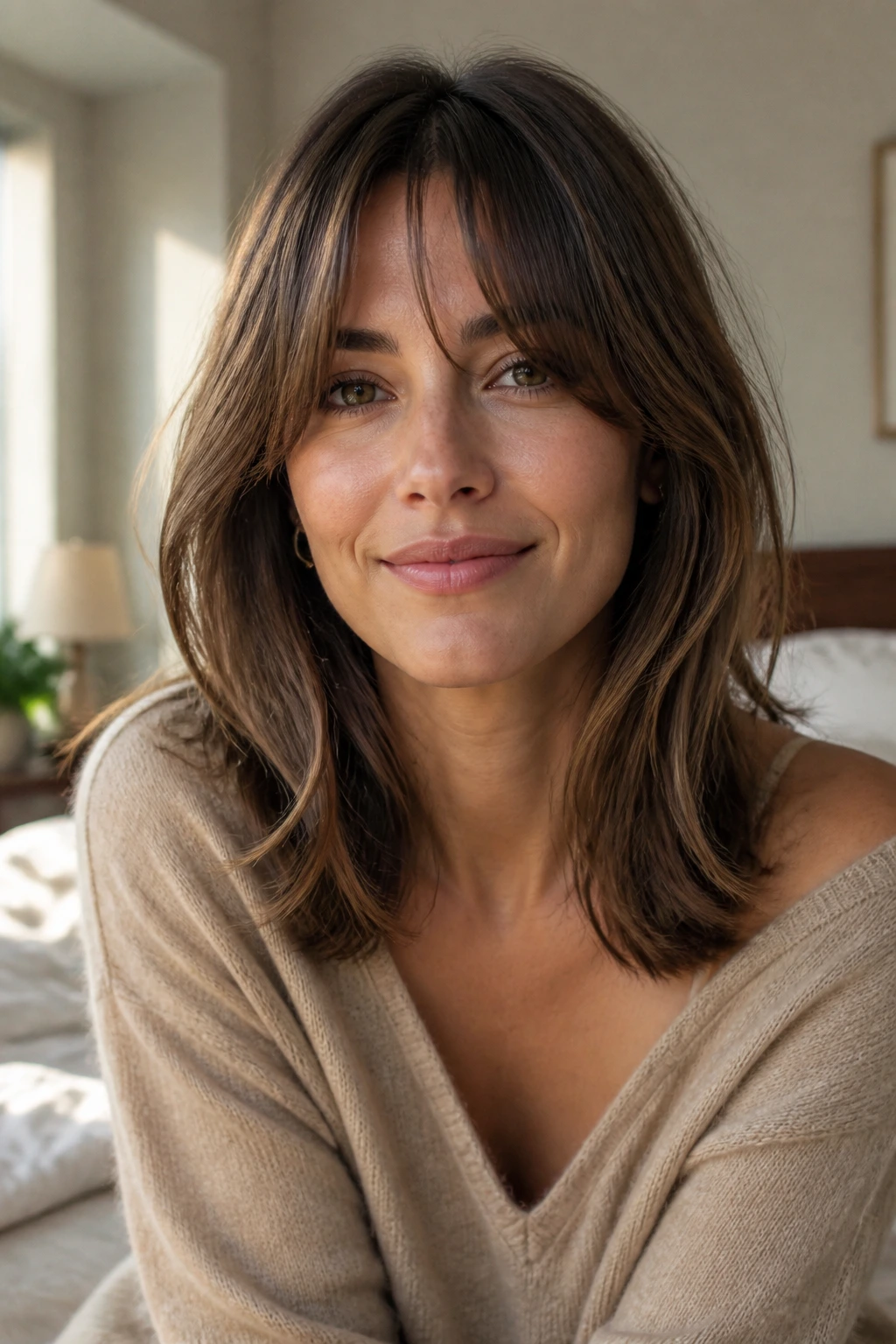
Curtain bangs are the style most people think of first, and for good reason. They split at the center, drop softly to each side, and open the face the way a good set of drapes opens a window. On medium length hair, they look especially right because the surrounding cut has enough weight to support the sweep without making the fringe look lonely.
What makes them work is the bend. The shortest point usually sits around the bridge of the nose or a little lower, then the sides taper down toward the cheekbones. That shape gives you forehead coverage without the hard stop of a blunt fringe, which is one reason curtain bangs keep showing up on lobs and shoulder-length cuts.
Best when you want movement, not a wall of hair
- Works well with center parts and soft off-center parts.
- Takes to a round brush, large Velcro rollers, or a quick blow-dry bend.
- Grows out into face-framing layers without screaming “I’m growing out bangs.”
I like curtain bangs on medium length hair because they forgive a missed styling day better than a blunt fringe ever will. They’ll fall a little imperfectly and still look intentional. That matters more than people admit.
2. Bottleneck Bangs for Medium Length Hair
Why do bottleneck bangs keep turning up in good haircuts? Because they solve a messy problem. The center stays narrow and soft, then the width opens out near the brows and temples, so the fringe feels shaped without taking over the whole forehead.
On medium length hair, that shape sits neatly between curtain bangs and a full fringe. It gives you the face-framing effect people want from bangs, but the opening at the center keeps the cut from looking too heavy. The result is gentle at the front and fuller at the edges, which helps if your medium cut has some movement around the jaw.
They’re also kinder to growth. Once the center gets a little long, the side pieces keep doing the work. You do not get the awkward shelf that some blunt bangs hit after three weeks.
Good fit: square jaws, broad foreheads, or anyone who wants bangs that move without needing a perfect blowout.
Watch for: cutting the middle too wide. That ruins the bottleneck shape and makes it read as a broken curtain fringe.
3. Side-Swept Bangs for Medium Length Hair
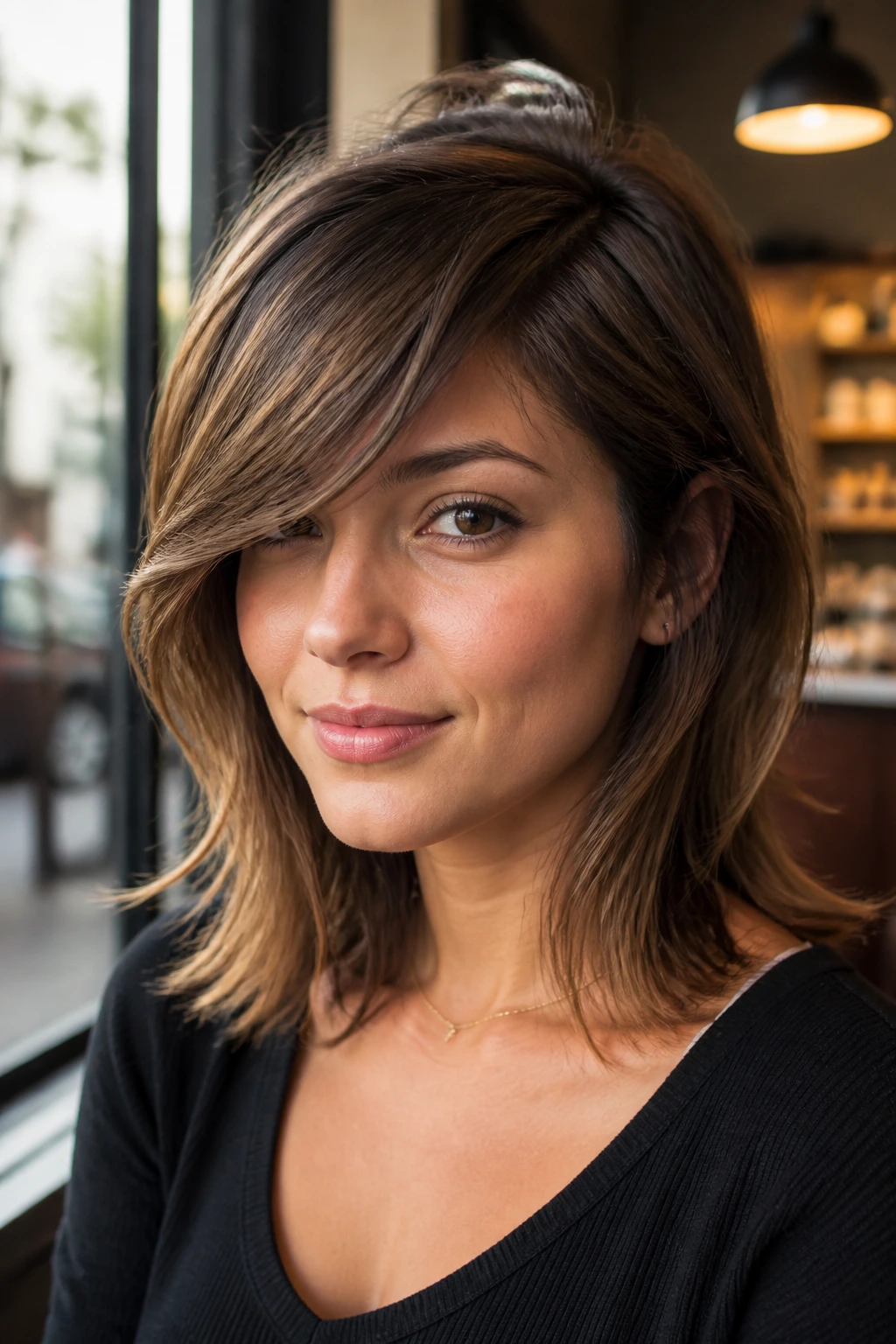
If you hate the feeling of hair sitting in the middle of your forehead, side-swept bangs are the cleanest escape hatch. One direction does the work, and the rest blends into the medium length cut with almost no drama. They’re a little old-school, sure, but old-school isn’t a flaw when the shape flatters your face and takes five minutes to style.
The best side-swept version on medium length hair starts at a deep-ish side part and narrows toward one eyebrow before sliding into the cheekbone area. That gives the hair some lift at the root instead of letting it collapse flat against the forehead. On a blunt lob, it softens the edge. On layered shoulder-length hair, it keeps the front from looking boxy.
They’re especially useful if your hair naturally wants to part to one side. Fighting that can turn every morning into a minor argument.
I’d choose this if: you want bangs but still need to tuck them back easily.
Skip it if: you know you’ll resent one-direction styling and want something that can sit in the center without a fight.
4. Wispy Bangs
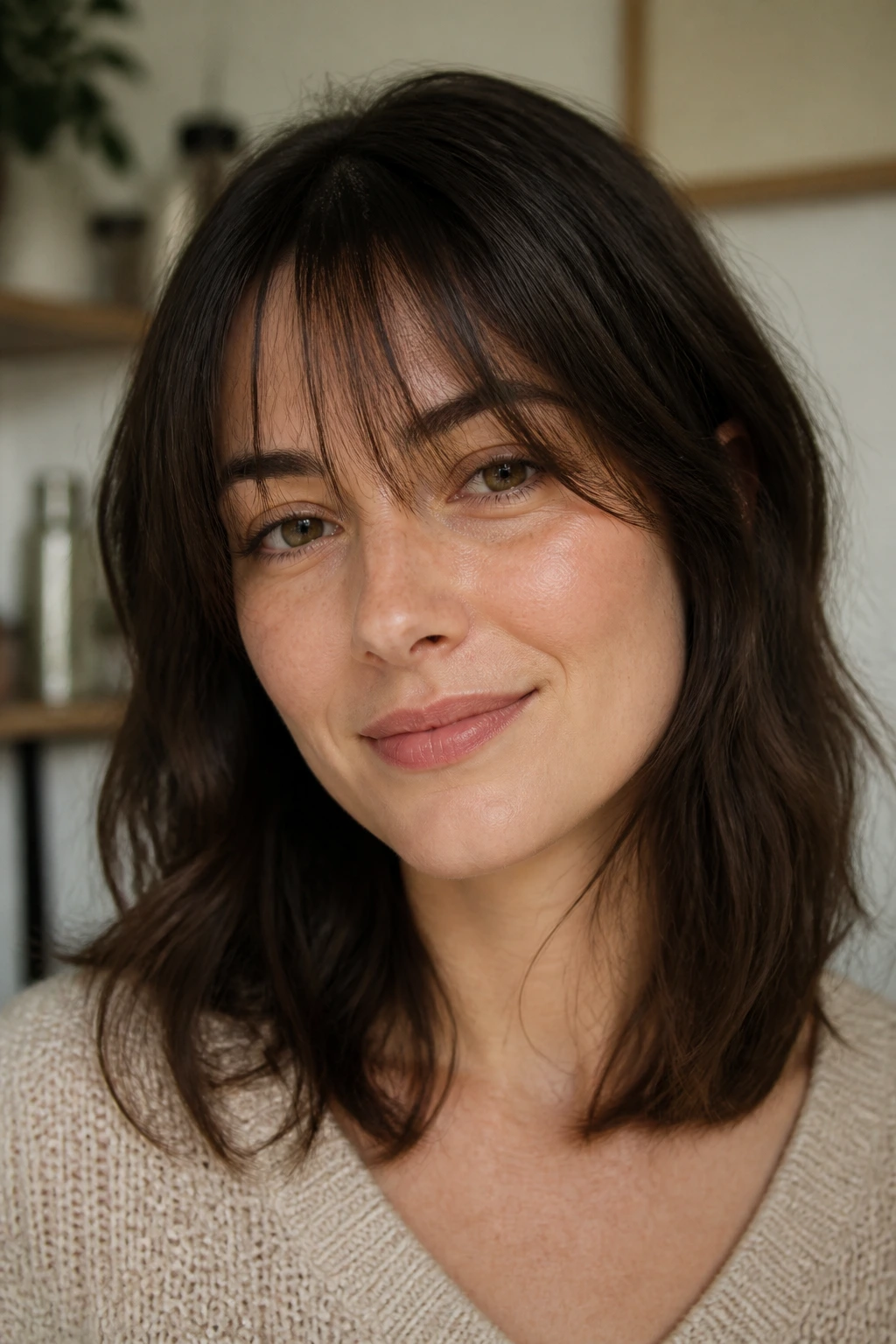
Wispy bangs are the quiet ones. They don’t arrive as a solid line; they arrive as a soft veil, with little gaps between the strands and a lighter feel around the forehead. On medium length hair, that lightness keeps the haircut from getting too dense at the front, especially if the rest of the cut already has some body.
They work beautifully on fine to medium hair because the fringe does not need to be heavy to read as bangs. A little separation goes a long way. You see the forehead through them, which sounds like a small thing until you realize how much less severe they feel than a blunt fringe.
The downside is obvious: if you over-thin them, they stop looking wispy and start looking accidental. That is a bad zone. Wispy bangs should still have a shape. They’re light, not unfinished.
A tiny bit of dry shampoo at the roots keeps them from clumping by midday, especially if your hairline gets warm fast.
5. Blunt Brow-Grazing Bangs
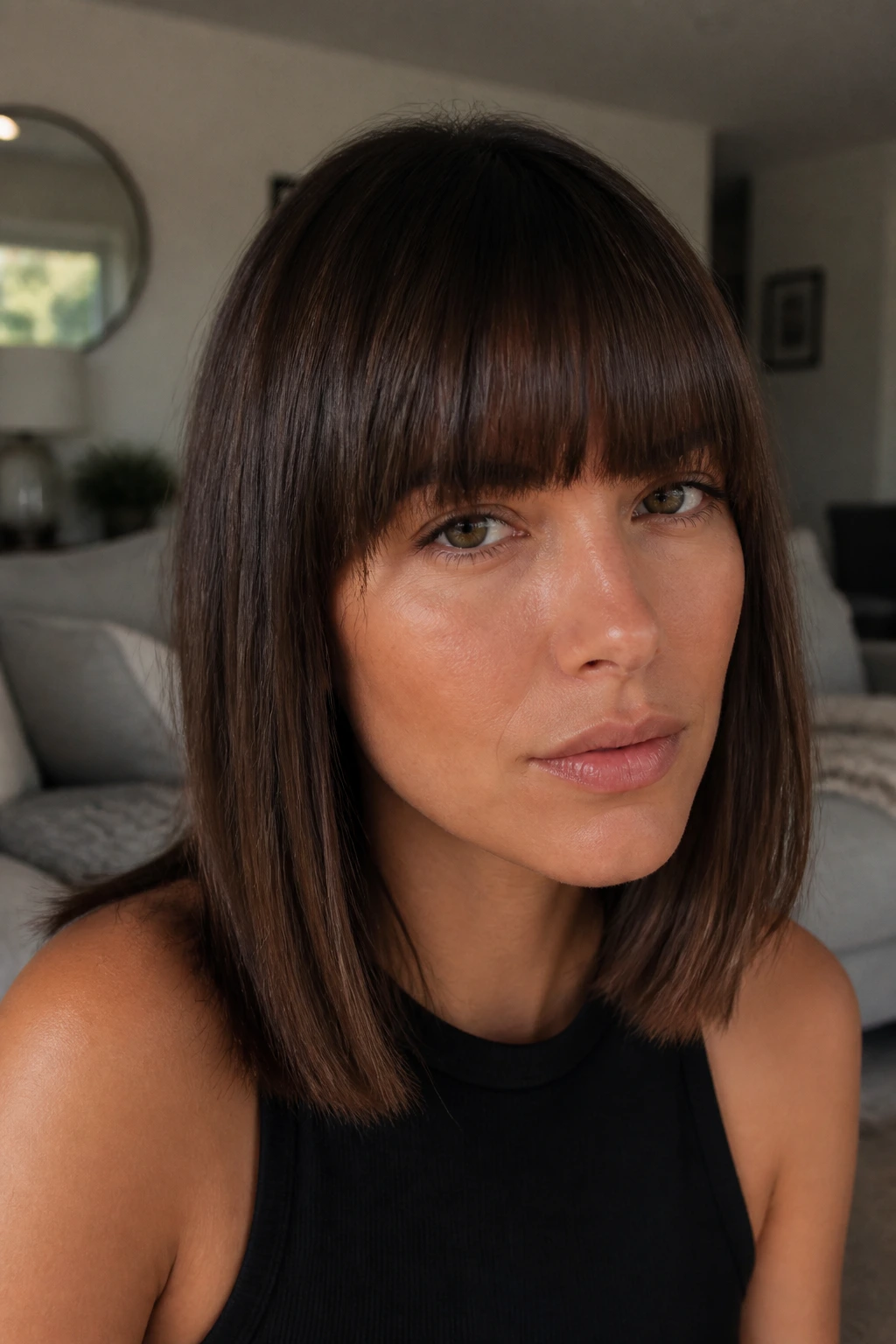
Blunt bangs hovering at the brows are the sharpest option in this group, and I mean that in the best way. They draw a clean line across the face, which can make medium length hair look more architectural and less casual. If your cut is otherwise simple — straight lob, one-length bob, shoulder-length hair with blunt ends — this fringe adds the missing edge.
The key is length. Brow-grazing bangs should sit just at or slightly below the brows so they don’t look chopped off. Any shorter, and the line gets fussy. Any longer, and you lose the crispness that makes them work in the first place.
They’re most convincing on straight hair or on hair you’re willing to smooth with a blow-dryer and brush. A natural wave can work too, but the line needs attention. They’re not a “wash and forget” fringe.
I’d call this the most opinionated bang on the list. It knows exactly what it wants to be, and it expects you to cooperate.
6. See-Through Bangs
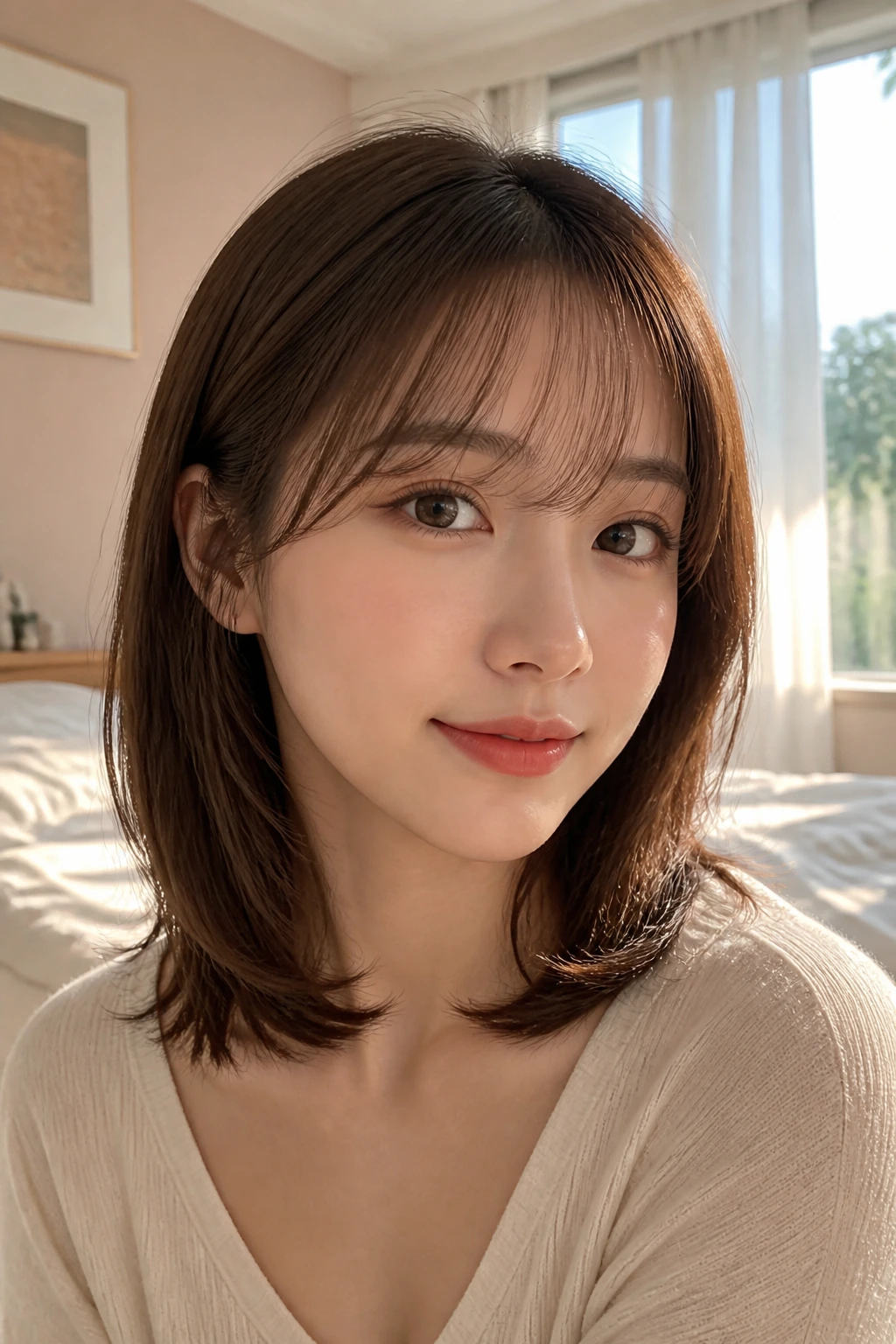
See-through bangs are intentionally sparse, with enough density to frame the forehead but enough space between the strands that they feel almost translucent. That’s different from wispy bangs, which are airy but still read as a fringe. See-through bangs feel lighter, softer, and a little more delicate.
On medium length hair, they’re useful when you want some forehead coverage without putting too much hair up front. If your cut already has layers or you have a lot of width through the sides, this style keeps the top from feeling crowded. It also helps in warm climates, where a dense fringe can turn into a damp curtain faster than you’d like.
What makes them different
- They’re thinner by design, not by mistake.
- They usually sit flatter and lighter than a curtain bang.
- They need careful cutting so the sparsity looks intentional.
The one thing you cannot do is accidentally over-thin them. A see-through fringe should feel soft, not sparse because the hair was removed without a plan. There’s a real difference, and you can see it from across the room.
7. Shag Bangs
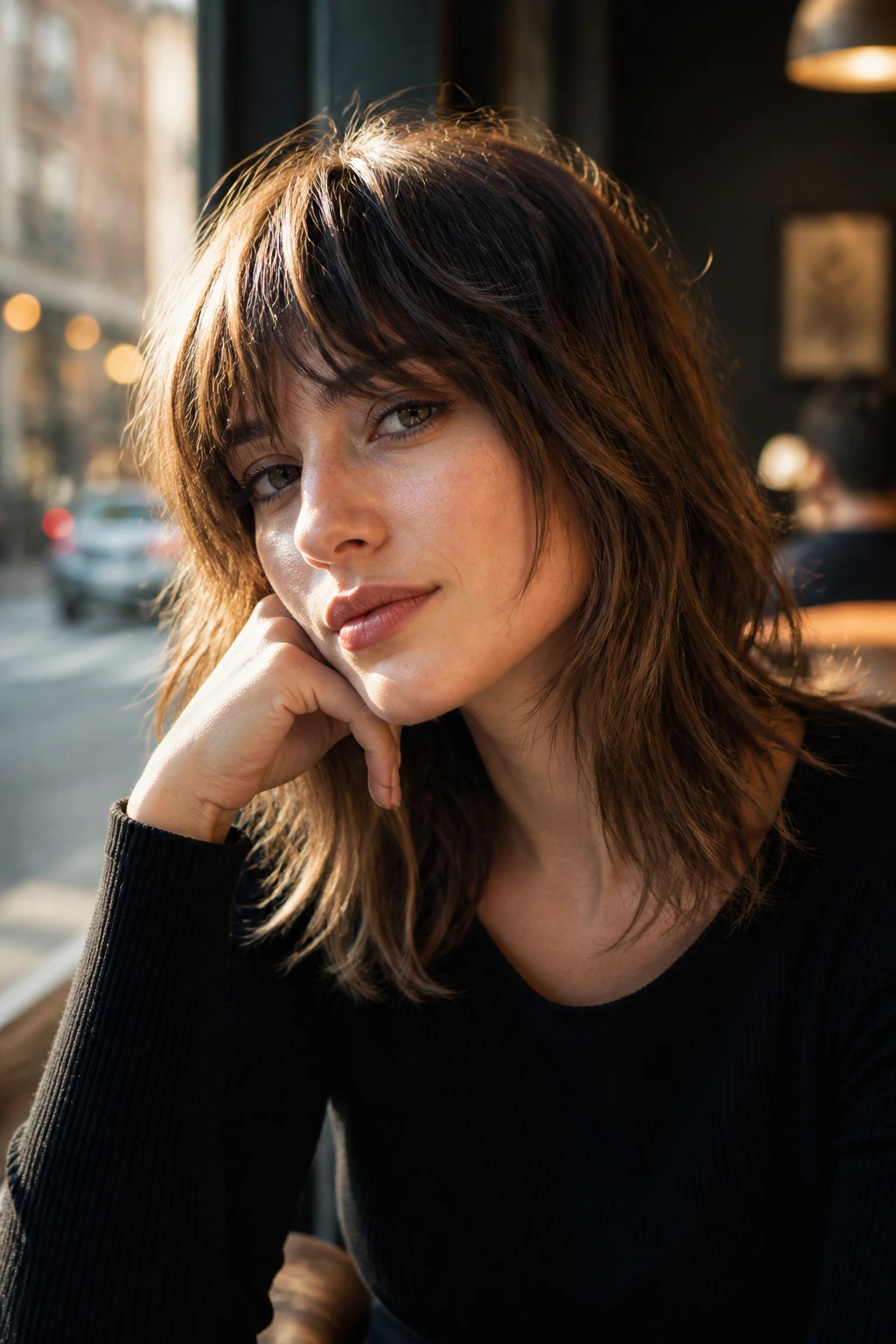
Shag bangs don’t sit politely. They lean, break apart a little, and blend straight into the layered body of the haircut. That’s exactly why they look so good on medium length hair. A collarbone shag or a layered lob already has movement in the ends; the fringe just continues the same language at the front.
This is one of the best choices if you air-dry a lot. The shape does not need to be perfect. In fact, perfection can make shag bangs look stiff. A little bend, a little separation, a little unevenness — that’s the point.
They also help if your hair is thick and tends to sit in one heavy sheet. Breaking the fringe into a shag shape lightens the front without making it look skinny. A dry texturizing spray or a small amount of paste is usually enough.
If curtain bangs are the neat cousin, shag bangs are the one who shows up with boots and a leather jacket.
8. Feathered Bangs
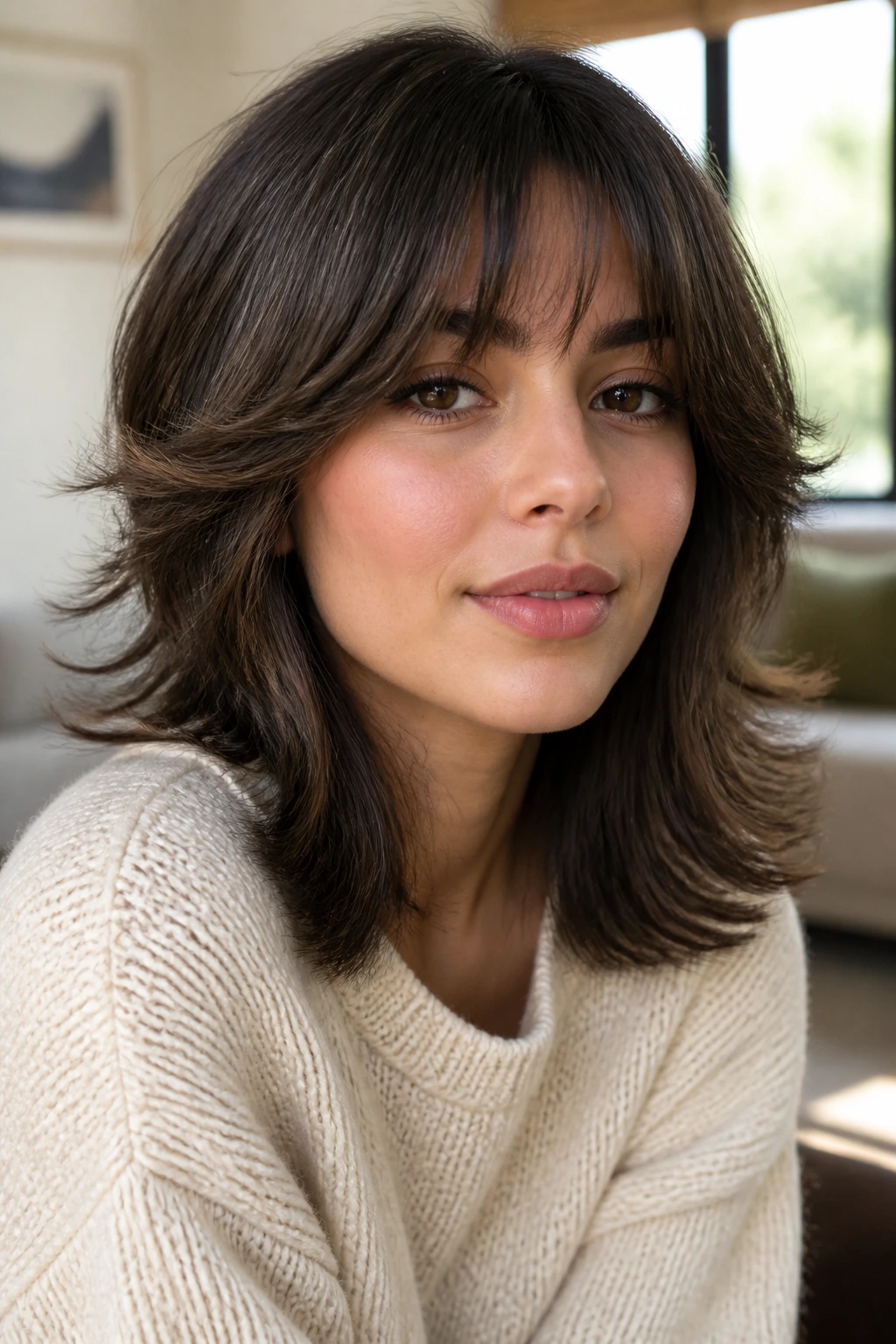
Feathered bangs have that outward flick at the ends that instantly changes the mood of a medium haircut. They soften bluntness, and they make the front pieces feel airy without making the fringe disappear. On medium length hair, that feathered finish keeps the haircut from lying too flat across the forehead.
They need a round brush, a warm blow-dry, and a little patience. Pull the brush down and then slightly out at the ends, letting the hair curve away from the face instead of clamping straight down. The effect is lighter than a blunt bang and less broken up than a shag bang.
I think feathered bangs work best when the rest of the cut has some layers through the sides. If the hair below the fringe is too heavy and straight, the contrast can look dated. When the haircut has movement, though, feathered bangs fit right in.
They’re a good middle ground for anyone who wants softness but not fuzziness. That’s a narrower lane than it sounds.
9. Choppy Bangs
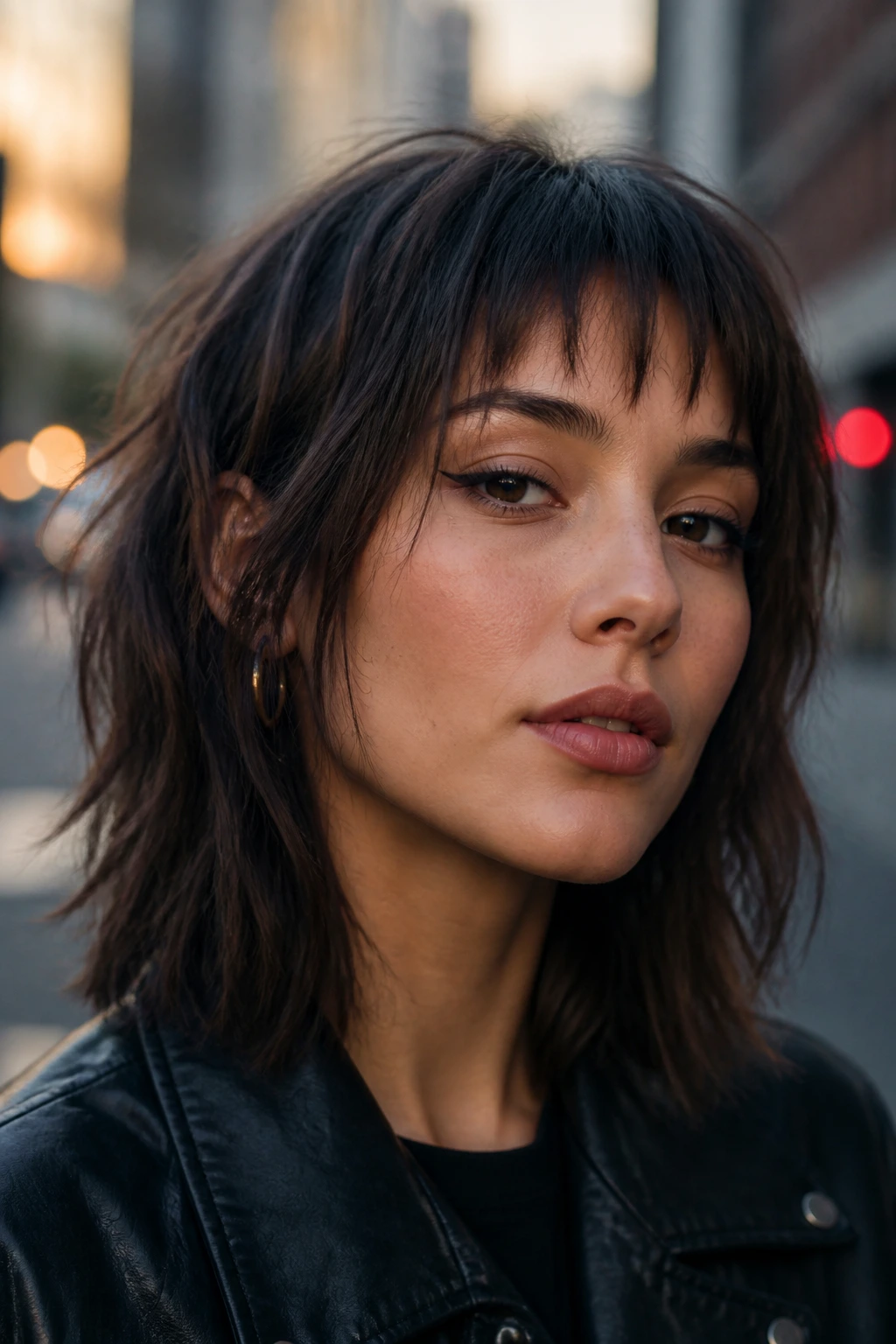
Choppy bangs are the ones with little changes in length across the fringe, so the line feels broken up rather than perfectly even. That irregularity is the whole charm. On medium length hair, especially thicker medium length hair, the choppy edge keeps the front from becoming one solid block.
The best version is cut with point cutting or a similar texturizing method, not hacked into shape with blunt scissors. You want variation, but you still want a visible shape. A good choppy fringe looks piecey and deliberate; a bad one looks like someone got distracted halfway through.
These bangs pair well with textured bobs, shaggy lobs, and cuts that already have a little edge. They can also hide a cowlick better than a straight line, because the unevenness gives the hair somewhere to go.
If your hair is very fine, keep the choppiness subtle. Too much can make the fringe look thin instead of textured, and that is a miserable trade.
10. Micro Bangs
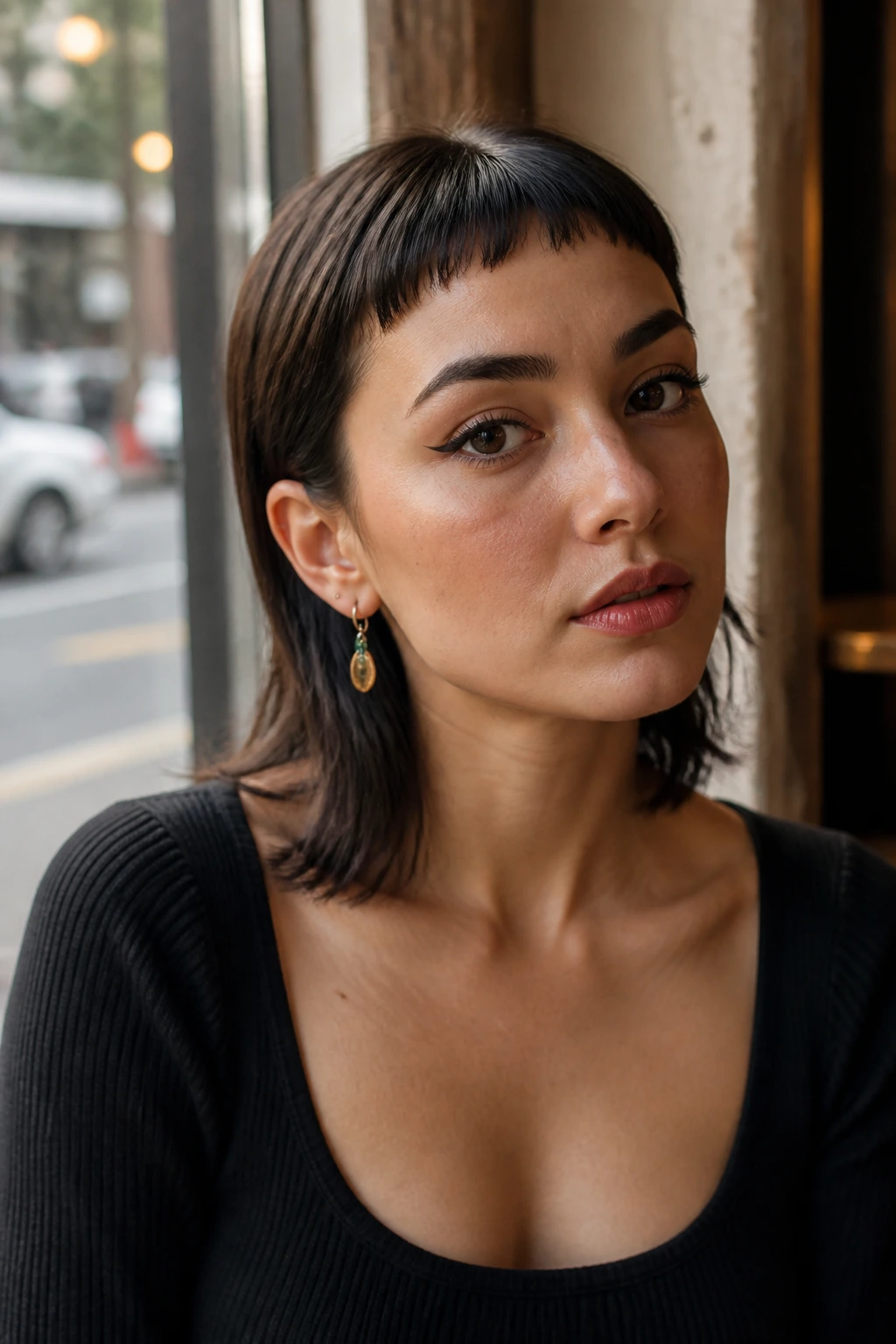
Micro bangs are not shy. They sit high on the forehead, often well above the brows, and they make the rest of medium length hair look almost calm by comparison. If you want a fringe that changes your face shape instantly, this is it.
They work best when the haircut underneath is simple and clean. A sharp bob, a straight lob, or a medium cut with minimal face-framing layers lets the micro fringe do the talking. Too much movement everywhere else, and the whole look can start to feel crowded.
You do need to like maintenance. Micro bangs grow out quickly in visual terms, even when they’ve only changed a little in length. The line loses its punch once it gets too close to the brows, so trims matter here.
I’m not going to pretend these are for everyone. They’re specific, and they know it. But if you like a strong brow, visible cheekbones, and a haircut that says something before you do, micro bangs have a real place.
11. Birkin Bangs
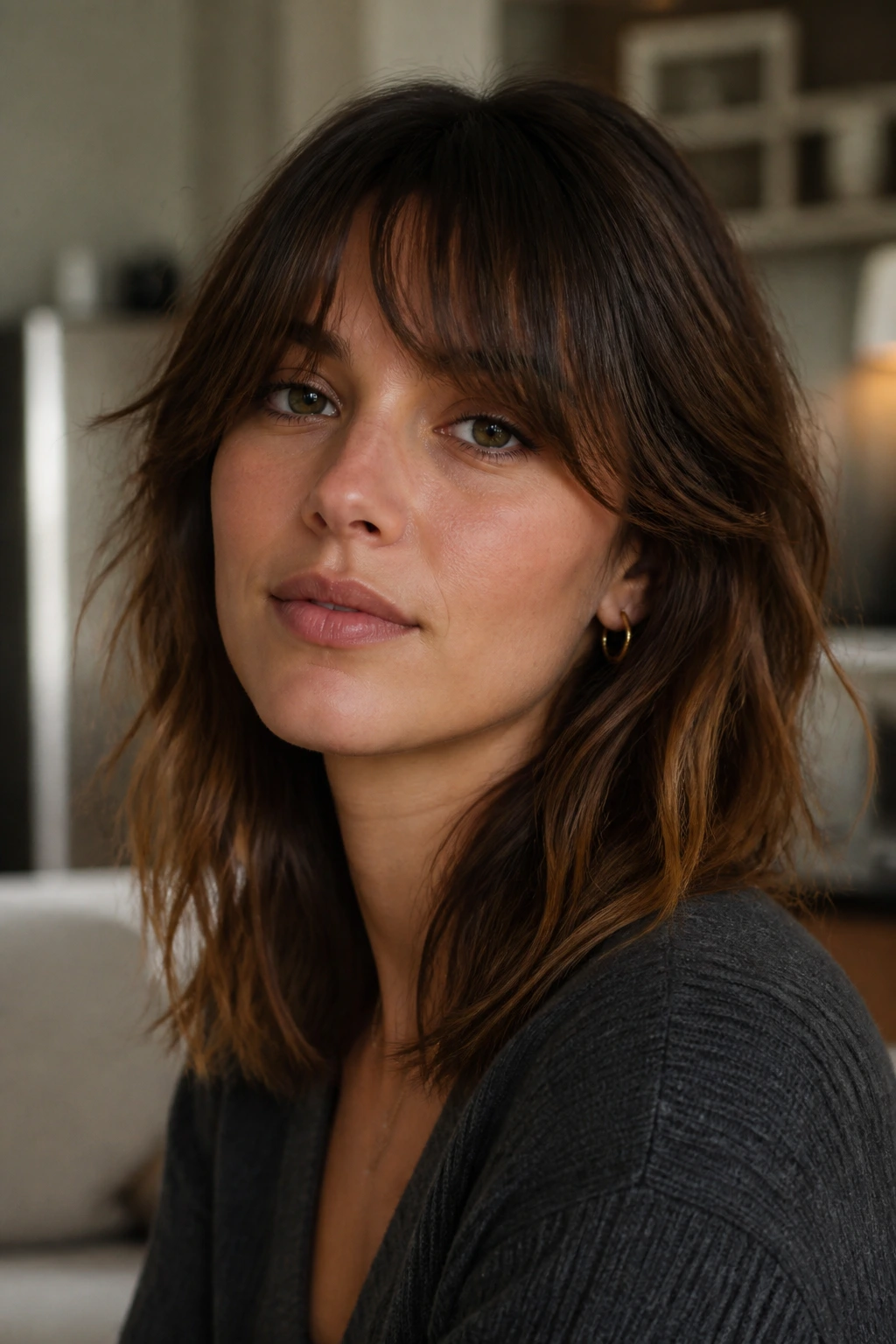
Birkin bangs have a soft, lived-in feel that makes them one of the easier fringes to wear on medium length hair. They’re longer than a blunt brow-grazer, but not so long that they disappear into the rest of the cut. The ends usually touch the lashes or sit just above them, and the shape is loose enough to look slightly imperfect.
That looseness matters. Birkin bangs should not look shellacked. They want a little bend, a little bend at the center, maybe even a strand or two that sits where it wants. The whole point is that they feel worn in rather than ironed flat.
This style is especially good if your hair naturally bends at the ends or if you like a fringe you can tuck away on bad mornings. It’s also kind to medium length hair because the bang line blends into the side pieces instead of sitting like a separate haircut.
A soft mist of texturizing spray and a quick pass with a small brush is usually enough. Clean, but not precious.
12. Curly Bangs
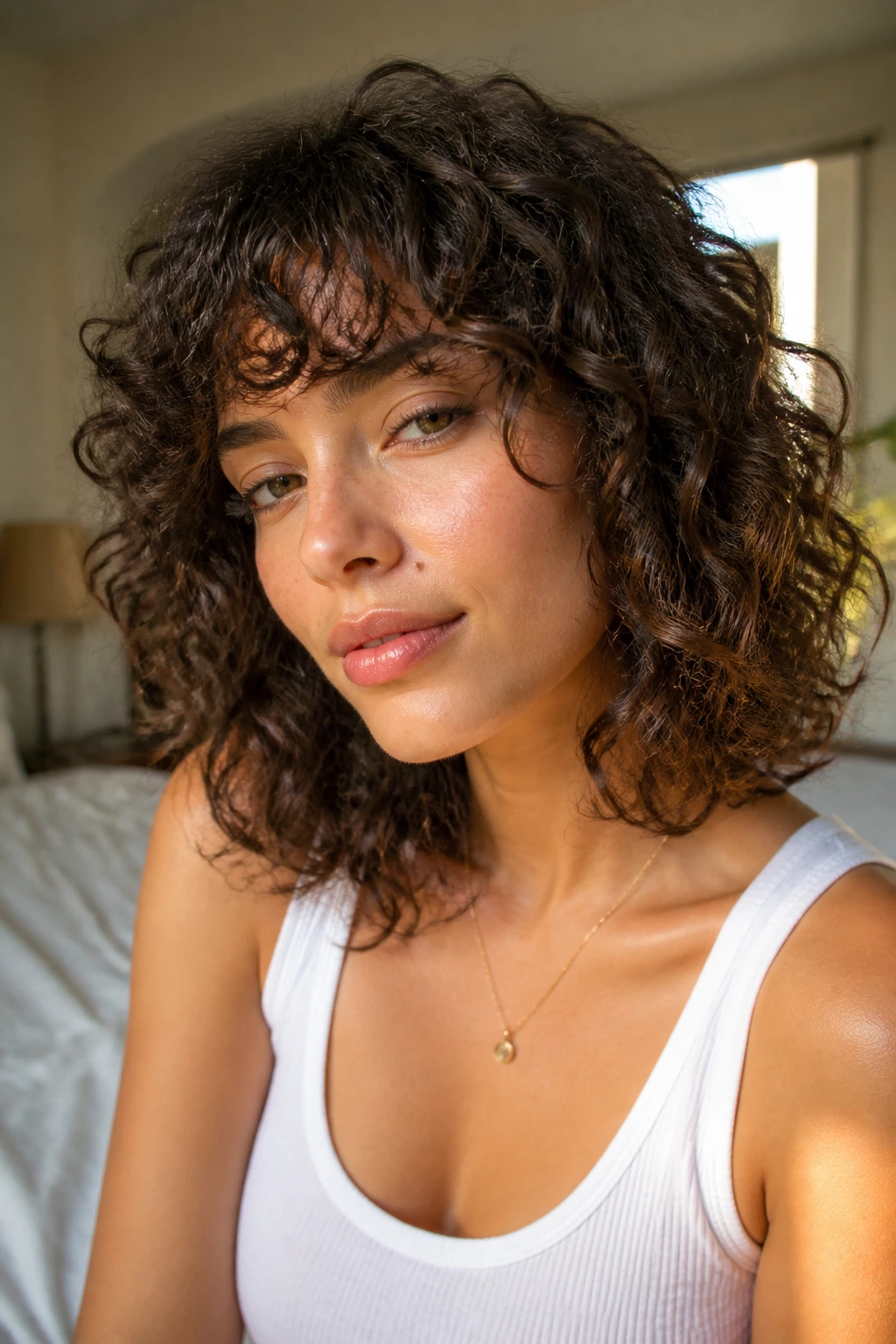
Curly bangs need a different kind of respect. Don’t cut them like straight hair and hope for the best. Curly fringe shrinks, bends, and shifts as it dries, which means the line has to be planned around the curl pattern, not against it.
On medium length hair, curly bangs can be one of the best ways to keep the cut balanced. The fringe brings shape to the front, while the length around the shoulders gives the curls room to sit without ballooning. That balance matters. Without it, curly bangs can feel too wide or too short.
The best curly fringe is usually cut dry or nearly dry so the stylist can see the real spring of the curl. You also want a bit of extra length left in reserve. Curl shrinkage is not a theory; it is a thing that happens in the mirror.
A curl cream or light gel can help the bangs hold their shape, but don’t load them up. Too much product pulls curls down and makes them stringy.
13. Rounded Bangs
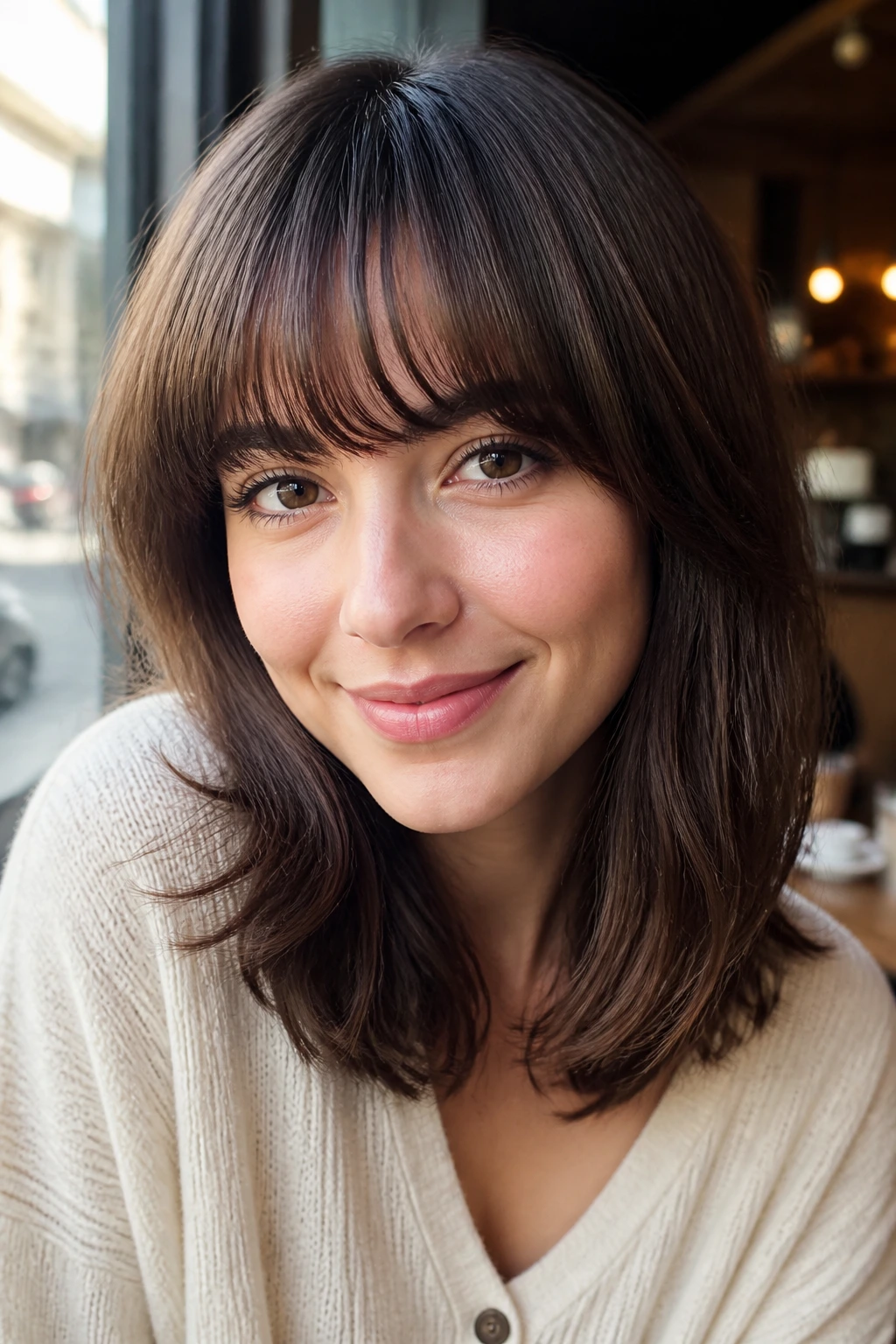
Rounded bangs follow a softer arc across the forehead, with the middle sitting a little fuller and the sides tapering down gently. They’re less blunt than straight-across bangs and less split than curtain bangs, which makes them useful when you want a defined fringe that still feels smooth.
On medium length hair, rounded bangs help soften strong lines elsewhere in the haircut. If your lob is blunt or your shoulders carry a lot of width, the curve at the front keeps the cut from feeling boxy. The shape can also flatter longer faces because it adds visual width around the eyes.
The trick is not to make the arc too tall. A high rounded fringe can look like a helmet. A lower, softer curve feels cleaner and easier to live with.
Rounded bangs are one of those styles that look more elegant than trendy, which I say as a compliment. They don’t beg for attention. They just make the haircut feel finished.
14. Heavy Full Fringe
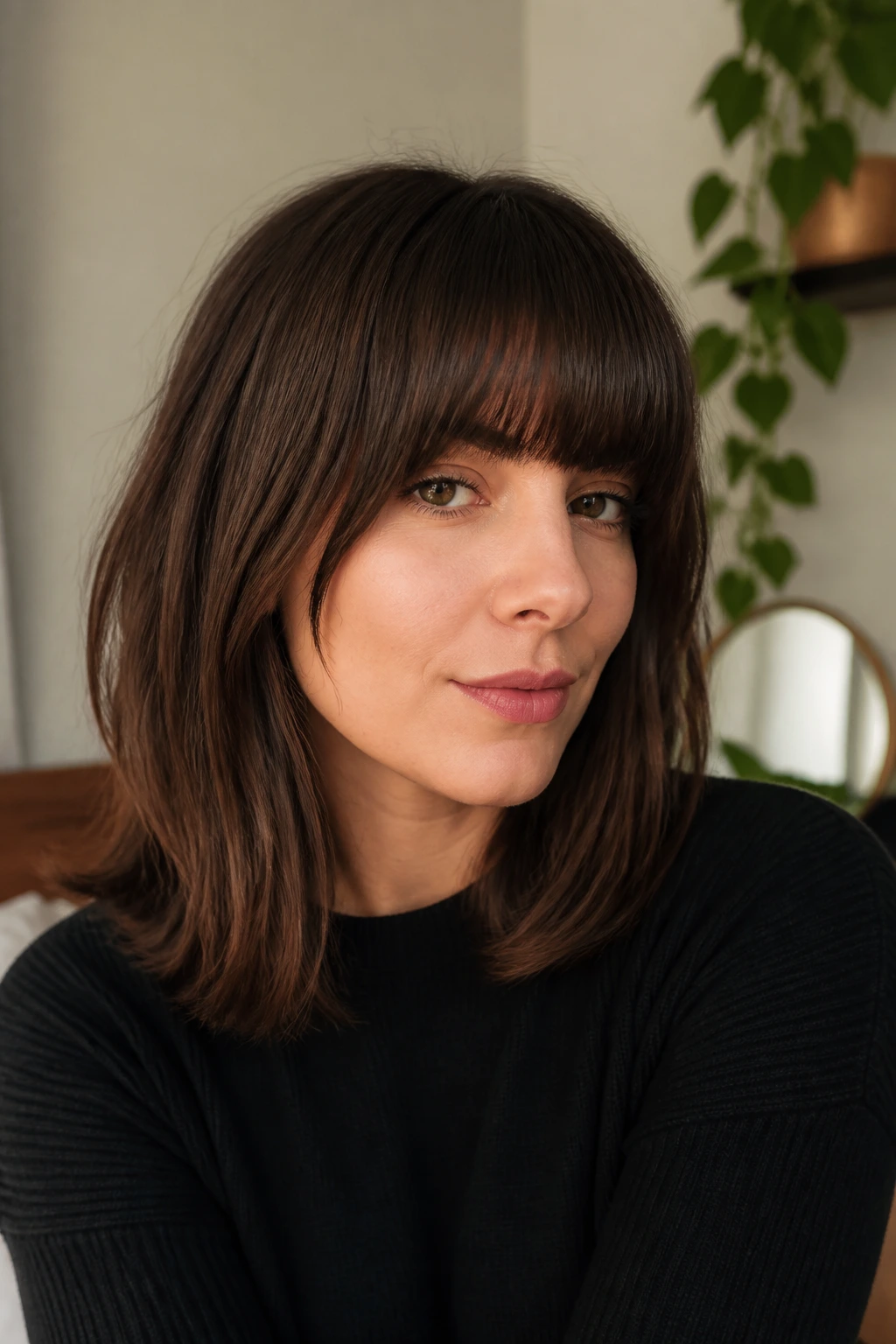
A heavy full fringe is the densest option here, the one that gives you a solid curtain of hair across the forehead. On medium length hair, it can create a really strong contrast: simple length below, serious fringe above. That contrast is the whole appeal.
This style loves thick hair. If your hair is fine, a heavy fringe may need help from a stylist who knows how to build the line without making the ends look wispy. On thicker hair, though, the weight helps the bangs sit in place and gives the haircut a certain groundedness.
The maintenance is real. Heavy fringes show oil quickly and need trims often, usually every 3 to 4 weeks if you want the line to stay clean. They also behave best with a blow-dryer and brush, not just air-drying and hope.
I wouldn’t call this low-effort. I would call it committed. If that suits your daily routine, the payoff is a fringe that can make a plain medium cut feel sharper in one swipe.
15. Piecey Bangs
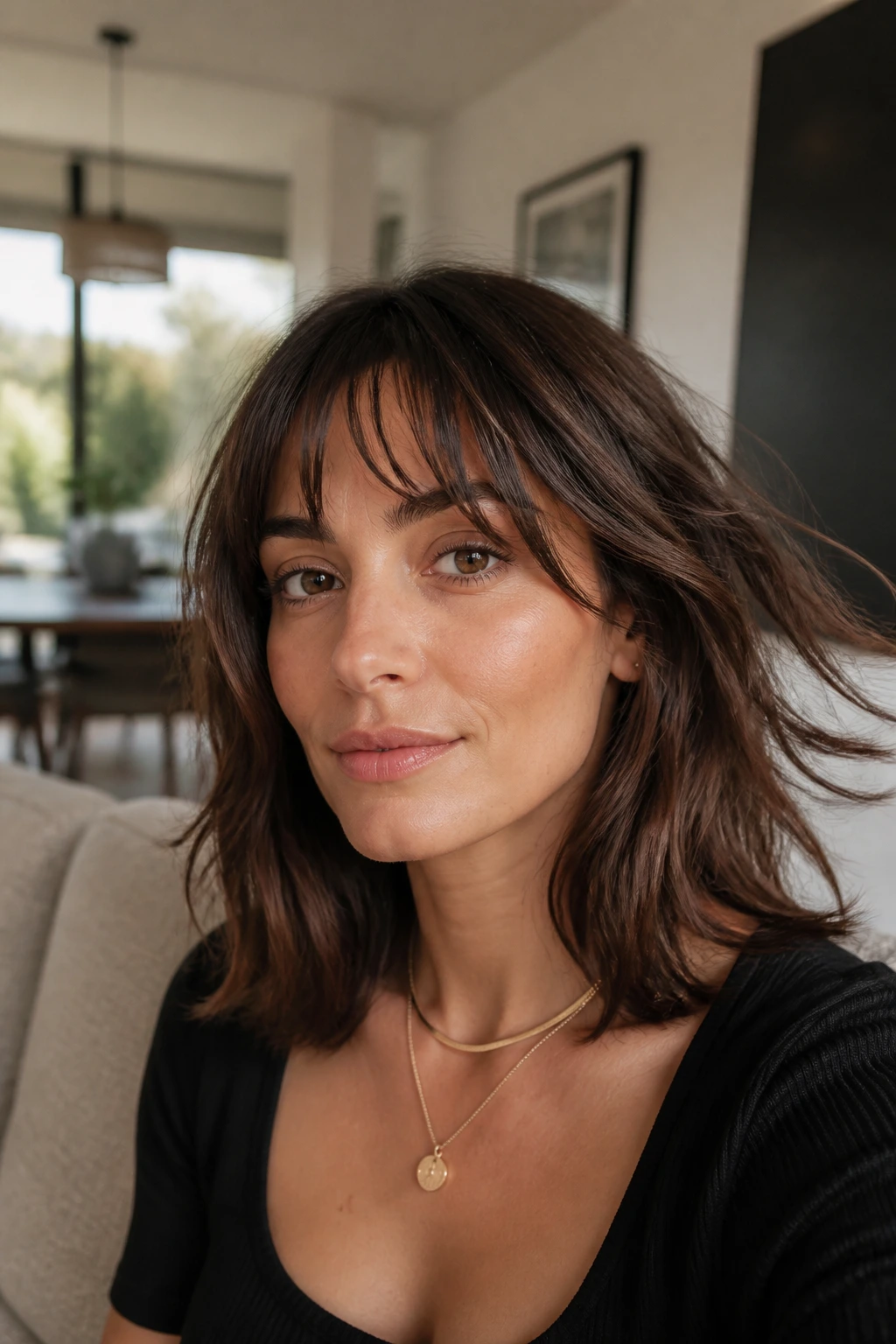
Piecey bangs are all about separation. Instead of one smooth line, you get little sections that sit near each other but don’t merge into a single block. The result feels relaxed and a touch undone, which is why this fringe works so well with medium length hair that already has texture.
The styling move here is tiny. Use a little paste, cream, or wax on the fingertips and pinch small sections apart once the hair is dry. The goal is not to make every strand visible. The goal is to let the front break into pieces instead of freezing into a sheet.
This style is especially good on second-day hair, when the front has a bit of grip and doesn’t slide flat. It also plays well with layered lobs and shaggy shoulder cuts.
Piecey bangs can look fashionable without looking overworked. That’s a small but useful distinction. Hair that looks touched and hair that looks fussed over are not the same thing.
16. Razored Bangs
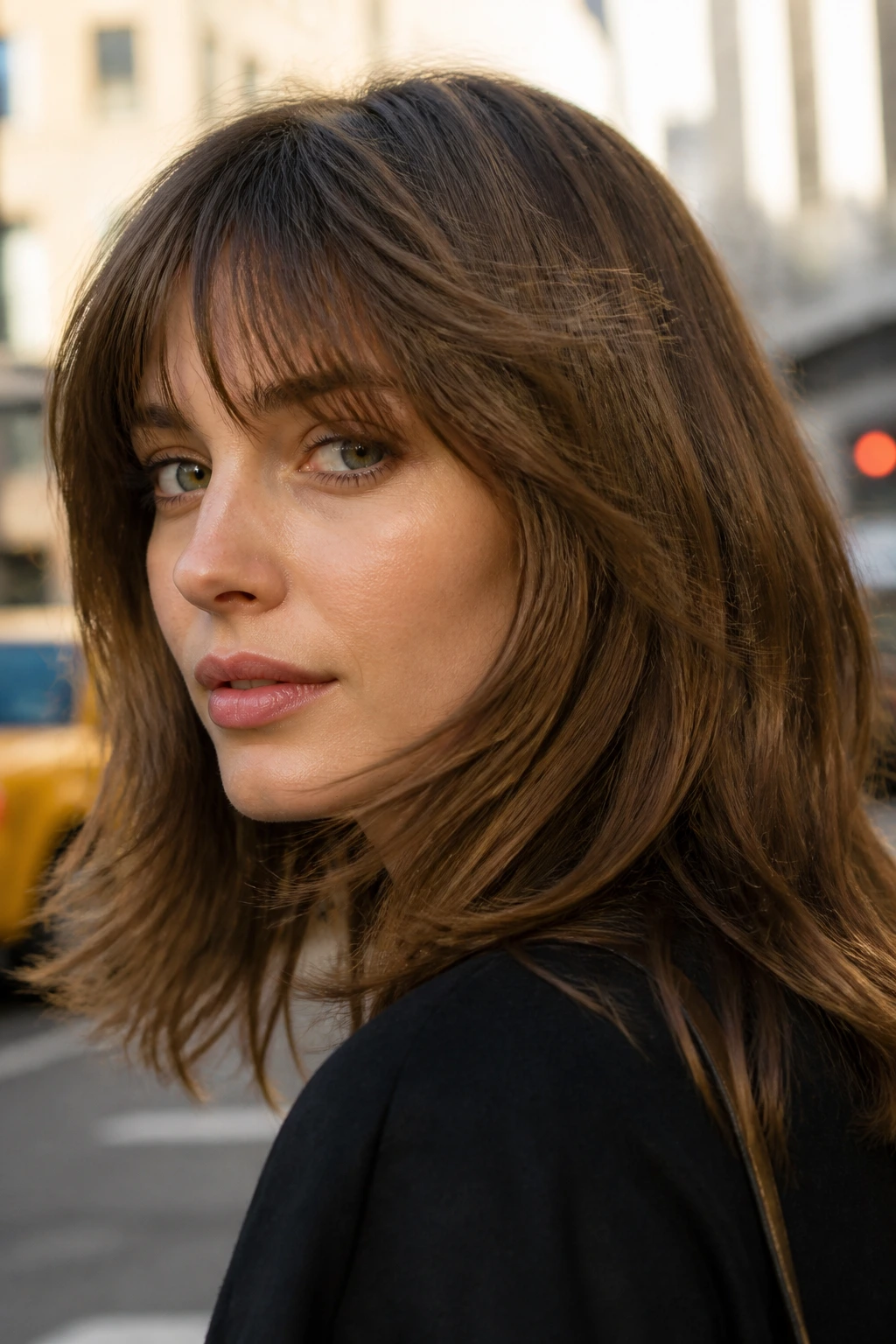
Razored bangs are cut with softer, more tapered ends, usually using a razor rather than blunt shears. That gives the fringe a light, feathery edge that moves easily on medium length hair. The whole effect is softer than a straight line and a little cooler than a classic wispy fringe.
They’re especially good if your cut already has motion in the ends. A razored fringe blends into layered medium hair in a way that feels natural, not stapled on. The movement is subtle until the wind hits, and then the shape really shows itself.
There is a catch. If your hair is very dry, frizzy, or prone to puffing up, razor cutting can make the edge look rough unless the styling is handled carefully. A smooth finish matters here.
I like razored bangs for people who want softness without losing edge. They sit in that narrow lane between polished and messy, which is exactly where a lot of good medium hair lives.
17. Grown-Out Fringe
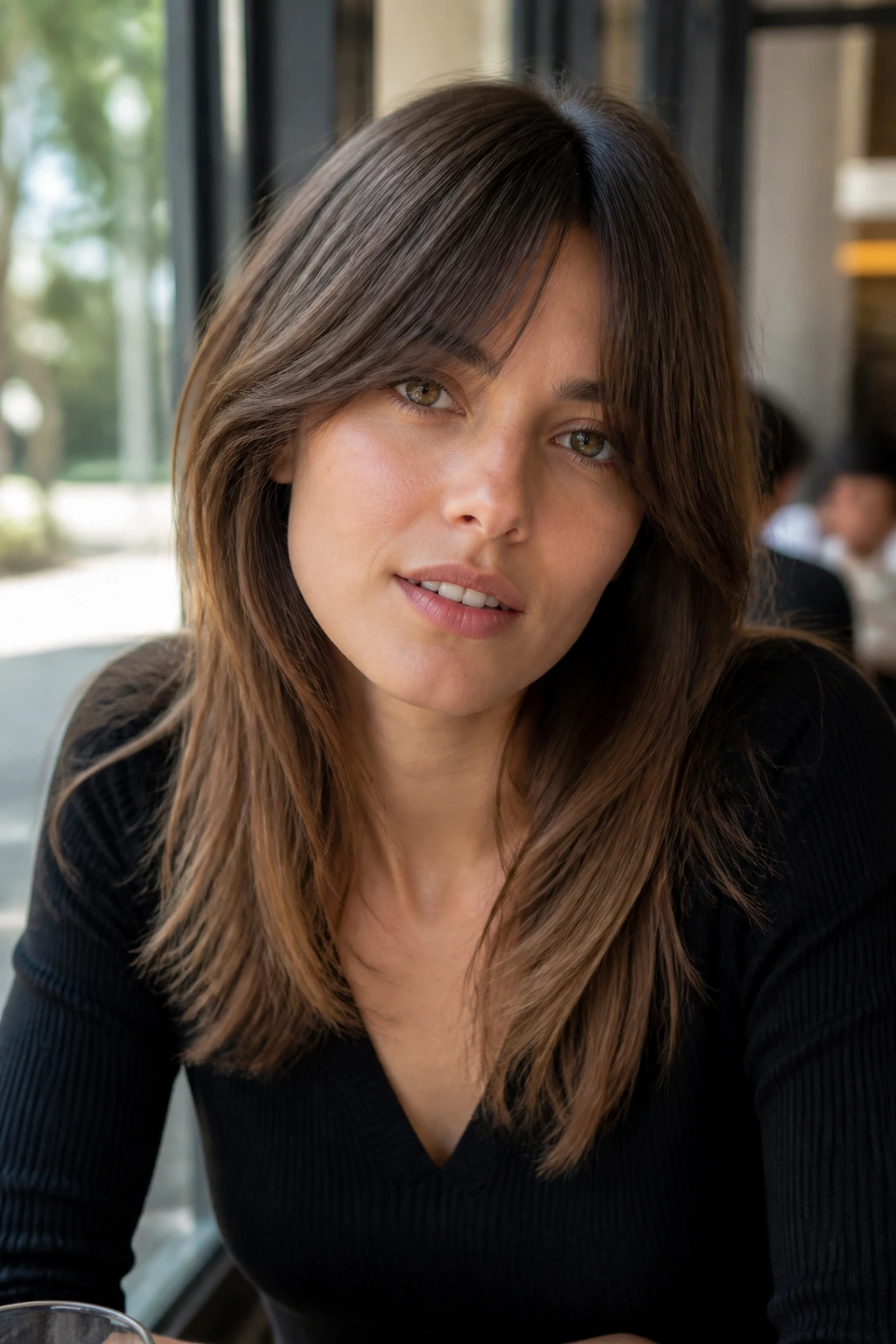
Grown-out fringe is not a failure state. Done on purpose, it’s one of the most useful bang styles for medium length hair because it turns the awkward in-between stage into the haircut itself. The fringe sits longer, often blending into cheekbone or jawline pieces, so you can tuck it, twist it, or let it fall naturally.
This is a smart choice if you want the feel of bangs without the daily upkeep of a short fringe. The front still changes your face shape, but not in a way that demands a round brush every single morning.
It also helps if you’re growing out bangs you already have. Instead of waiting for them to vanish into the rest of your hair, you let them become part of the layers. Medium length hair gives those pieces enough length to blend without getting lost.
A grown-out fringe can look softer than almost any other option on this list. It’s quiet. It’s forgiving. And if you like to tuck your hair behind one ear, it behaves very nicely there.
18. Swoopy Face-Framing Fringe
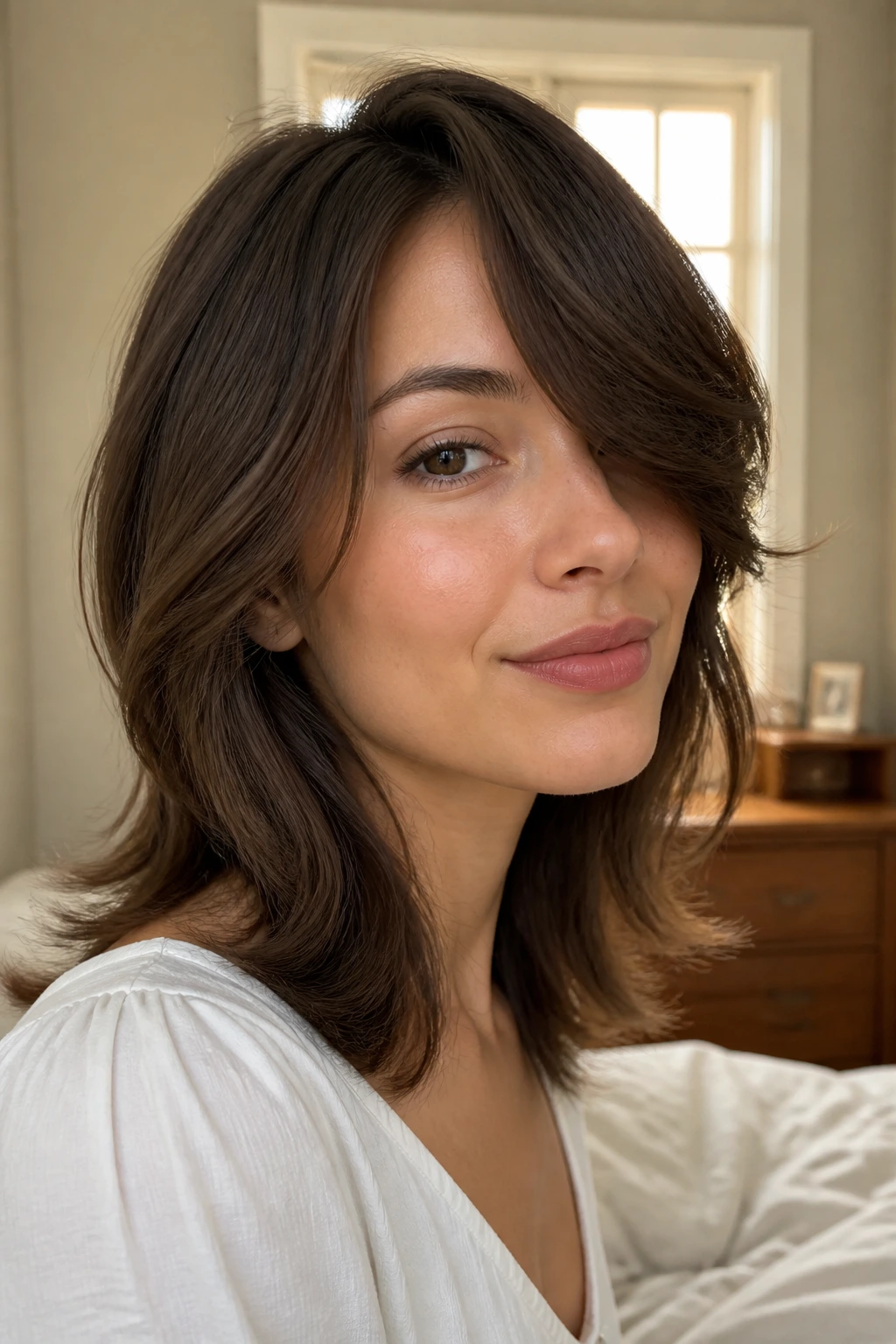
Swoopy face-framing fringe is the dramatic cousin of side-swept bangs. The pieces are longer, the curve is deeper, and the whole front section sweeps across the forehead before melting into the cheekbones. On medium length hair, that shape creates movement without asking for a full fringe commitment.
The best thing about this style is how it works with a deep side part. If your hair naturally falls that way, the sweep looks easy. If your hair resists a center part, this fringe gives you a direction and lets the shape feel intentional instead of accidental.
It’s especially good with layered shoulder-length hair because the front pieces can echo the motion of the rest of the cut. The haircut feels like it’s moving even when you’re standing still.
This is one of the more forgiving styles for grown-out bangs, too. The swoop can keep living as it gets longer, which is rare enough to be worth noting.
19. Tapered Fringe
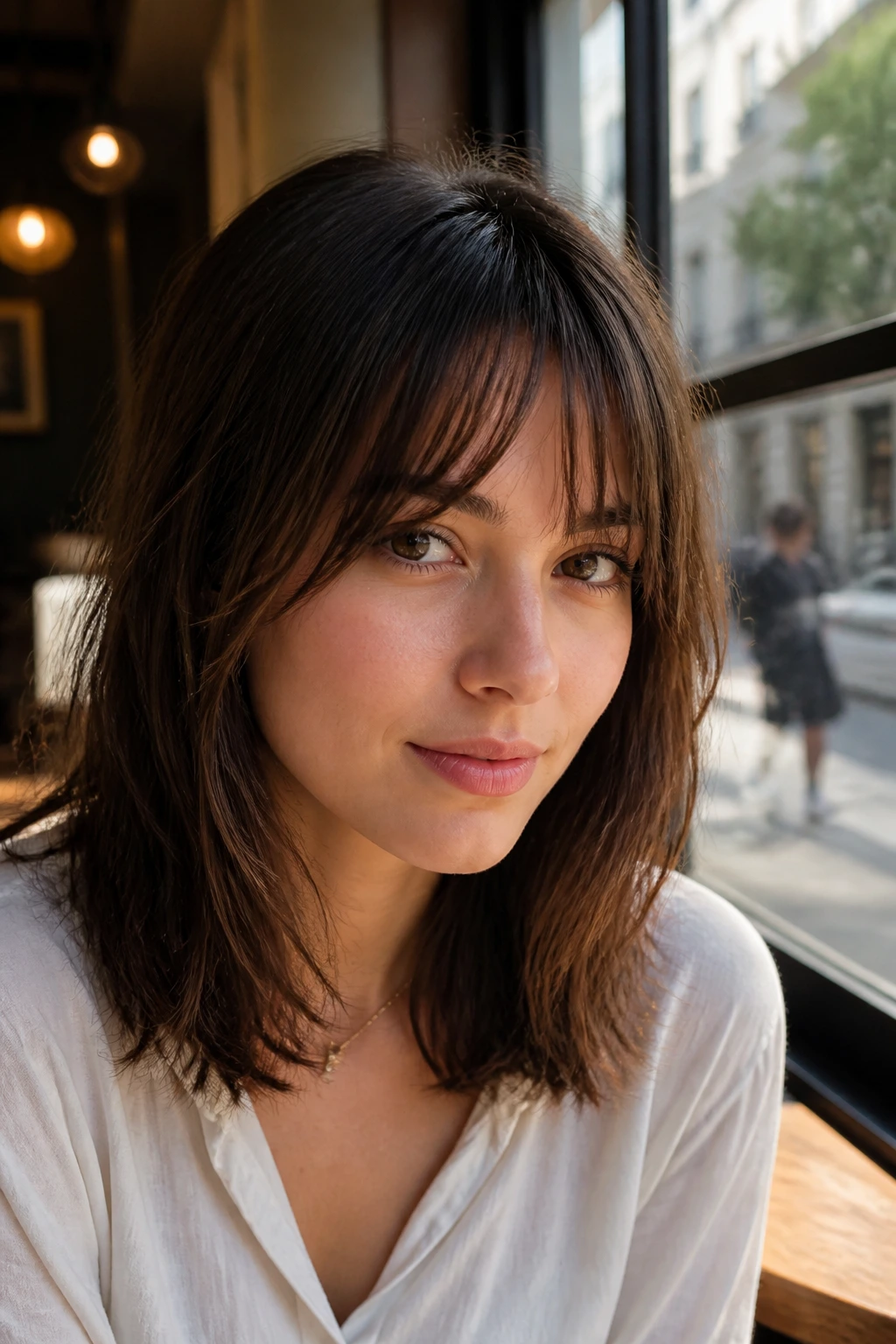
Tapered fringe starts shorter in the middle and lengthens at the edges, but the shape stays softer and more blended than a hard curtain bang. Think of it as a controlled transition rather than a split. On medium length hair, that transition helps the front pieces fold into the rest of the cut without a visible seam.
This shape is useful if you like a fringe but hate a sharp line. It gives structure without looking stiff, and the longer edges make it easier to tuck the hair back on one side. The result feels balanced, especially on shoulder-length cuts that already have a little body.
I also like tapered fringe for people who want a safer first step into bangs. It reads as fringe, but it doesn’t dominate the face. That makes the grow-out stage much easier.
If your stylist starts talking about “softening the corners,” this is the family of bang shapes they probably mean.
20. Arched Bangs
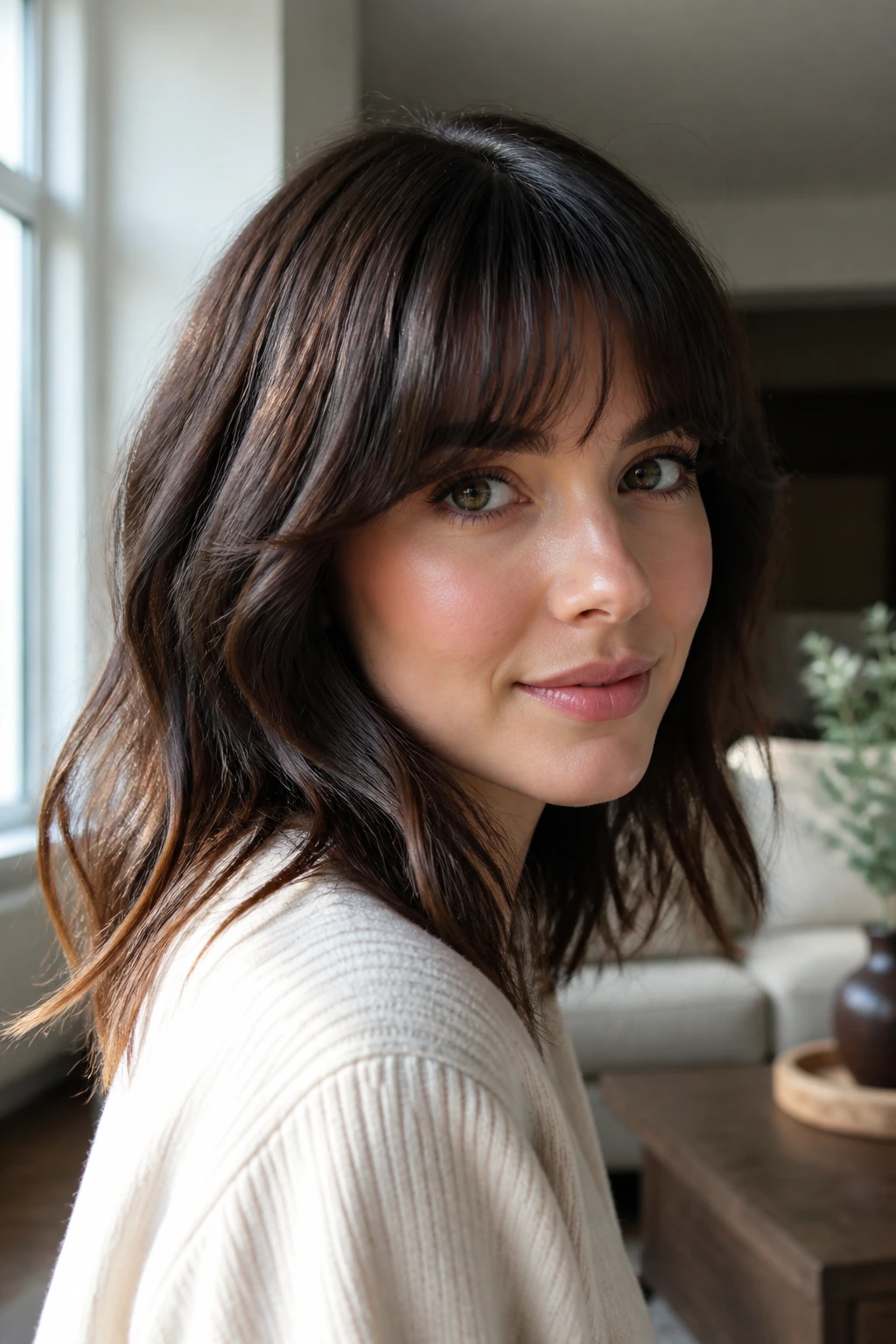
Arched bangs follow the shape of the brows in a gentle curve. The middle sits a touch lower or fuller, and the sides rise enough to create a soft arch across the forehead. On medium length hair, that curve can make the cut look neater and more deliberate in a single move.
What I like about arched bangs is that they draw the eye where you want it — right to the eyes. They do that without the bluntness of a straight fringe. That makes them useful if you want some front coverage but don’t want the line to feel heavy.
They do ask for a careful cut. A sloppy arch looks awkward fast, because the whole style depends on the curve being even. This is one I would not DIY unless you really know how your hair behaves when dry.
Medium length hair helps because the rest of the cut can stay clean and simple while the fringe carries the shape. Too many competing layers, and the arch loses its clarity.
21. Baby Bangs
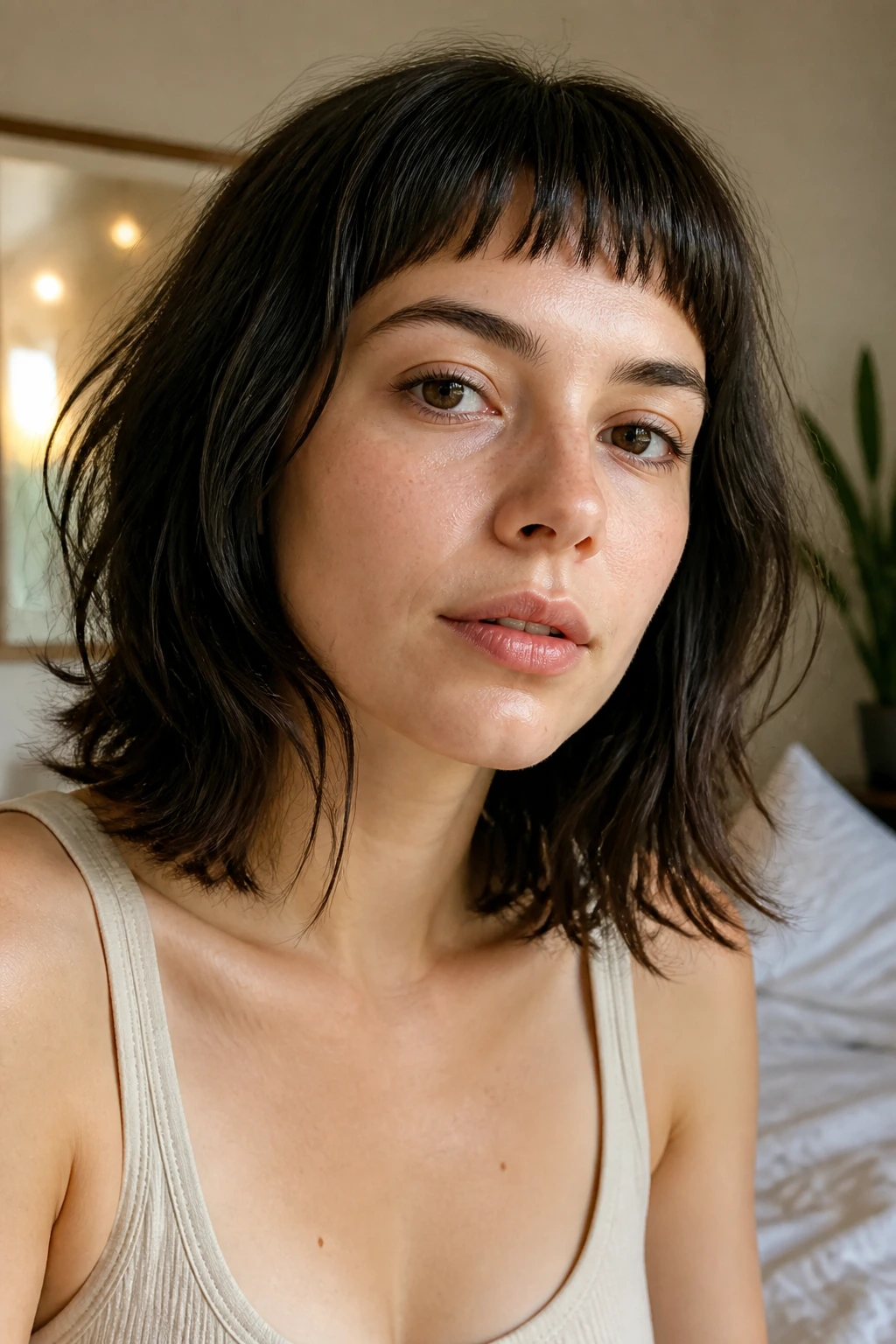
Baby bangs are shorter, softer, and a little less severe than micro bangs, even though people often mix them up. They usually sit well above the brows but still keep a touch of texture, which makes them easier to wear on medium length hair than the more graphic, high-cut versions.
They’re a bold move, but not a loud one if the texture is broken up enough. The short length opens the face, shows the brows, and makes the rest of the medium cut feel unexpectedly calm. That contrast is part of the appeal.
They do best on hair that can stay in place without too much puffing. Very curly or very frizzy textures can make the shape shoot upward fast. A bit of smoothing cream or a flat iron touch-up may be needed.
If you want fringe with attitude but not a full drama scene, baby bangs sit in a useful middle ground. Short enough to notice. Soft enough to live with.
22. Layered Fringe
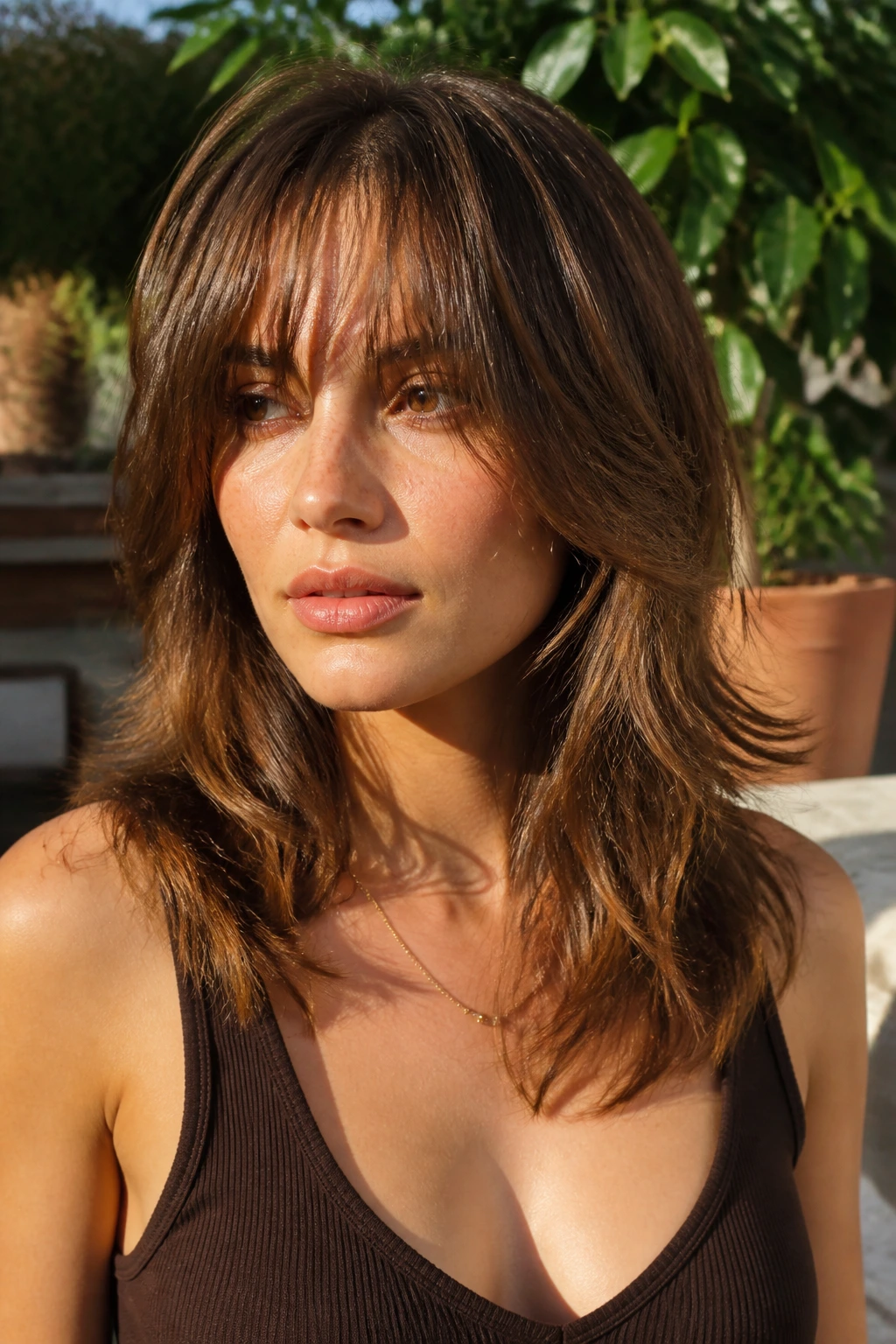
Layered fringe is exactly what it sounds like: bangs cut to work with the rest of the haircut’s layers instead of sitting as one flat front piece. On medium length hair, that blending makes the whole cut feel connected. You can see the flow from fringe to cheekbone to ends.
This is a smart choice for thicker hair, because layers can remove bulk without leaving the fringe too sparse. It also helps if you like movement and don’t want to be stuck styling a perfect line every morning. A layered fringe usually falls into place with less effort than a blunt one.
The best part is the grow-out. Because the fringe already lives in the same family as the rest of the cut, it transitions more gracefully when it gets longer. That means fewer awkward weeks in the mirror.
It’s not the flashiest style here. It’s one of the most practical, which is different.
23. Invisible Fringe
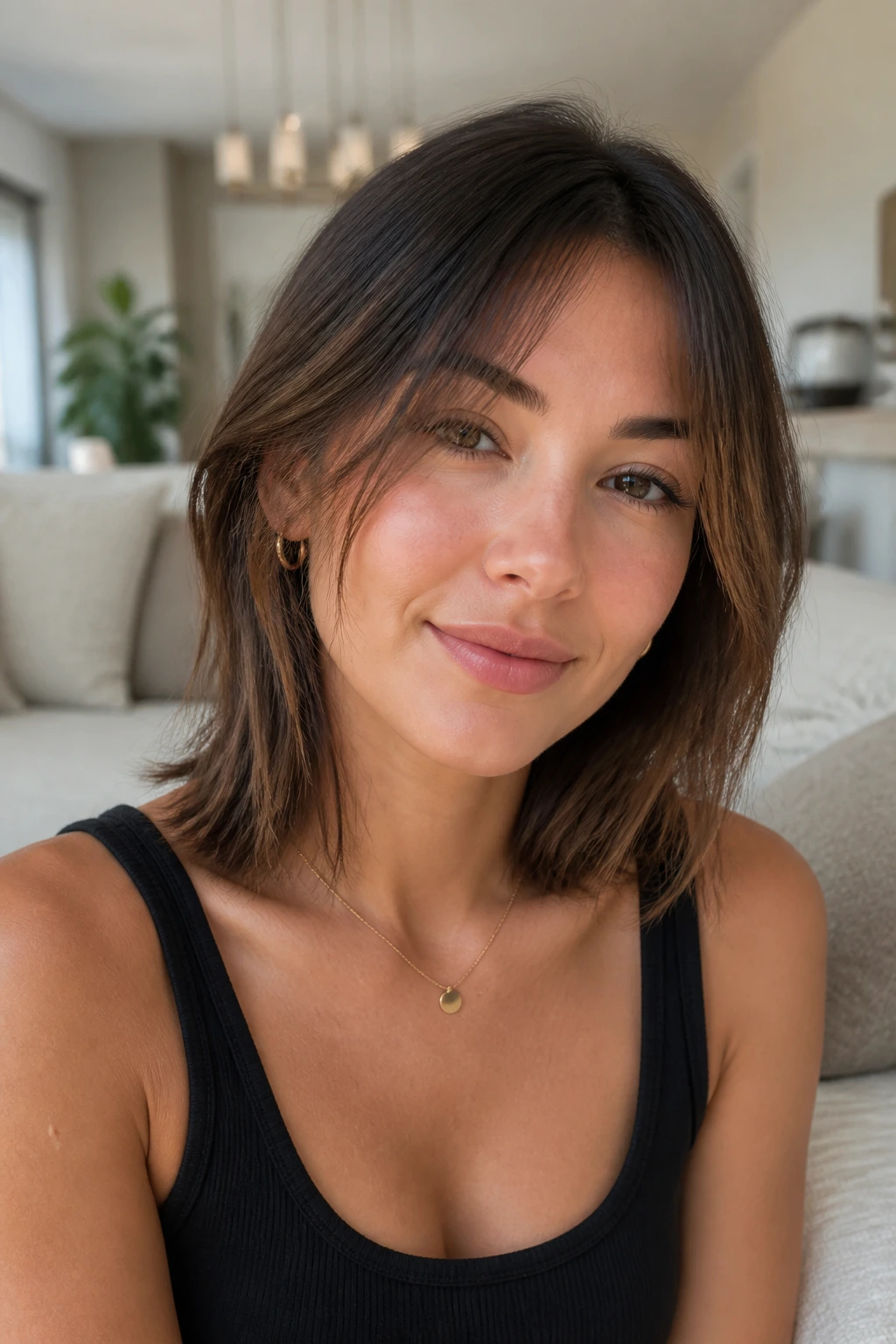
Invisible fringe is the fringe for people who are fringe-curious but not fully committed. It’s built from very soft, subtle front pieces that barely announce themselves as bangs until the hair moves. On medium length hair, that softness blends beautifully because there’s enough length around the face to hide the transition.
This style can be a smart starting point if your hairline is stubborn or if you want something that can disappear into the rest of the cut on command. It’s also useful if you keep changing your mind about bangs. One day it reads as a fringe. The next day it reads as face-framing layers.
The key is restraint. Invisible fringe only works when it is cut to be subtle. If the pieces are too short or too dense, the whole idea falls apart.
I think of this as the least dramatic bang on the list, which is exactly why some people end up loving it. It lets you try the idea of bangs without handing your whole forehead over to the experiment.
What to Tell Your Stylist Before the Fringe Is Cut
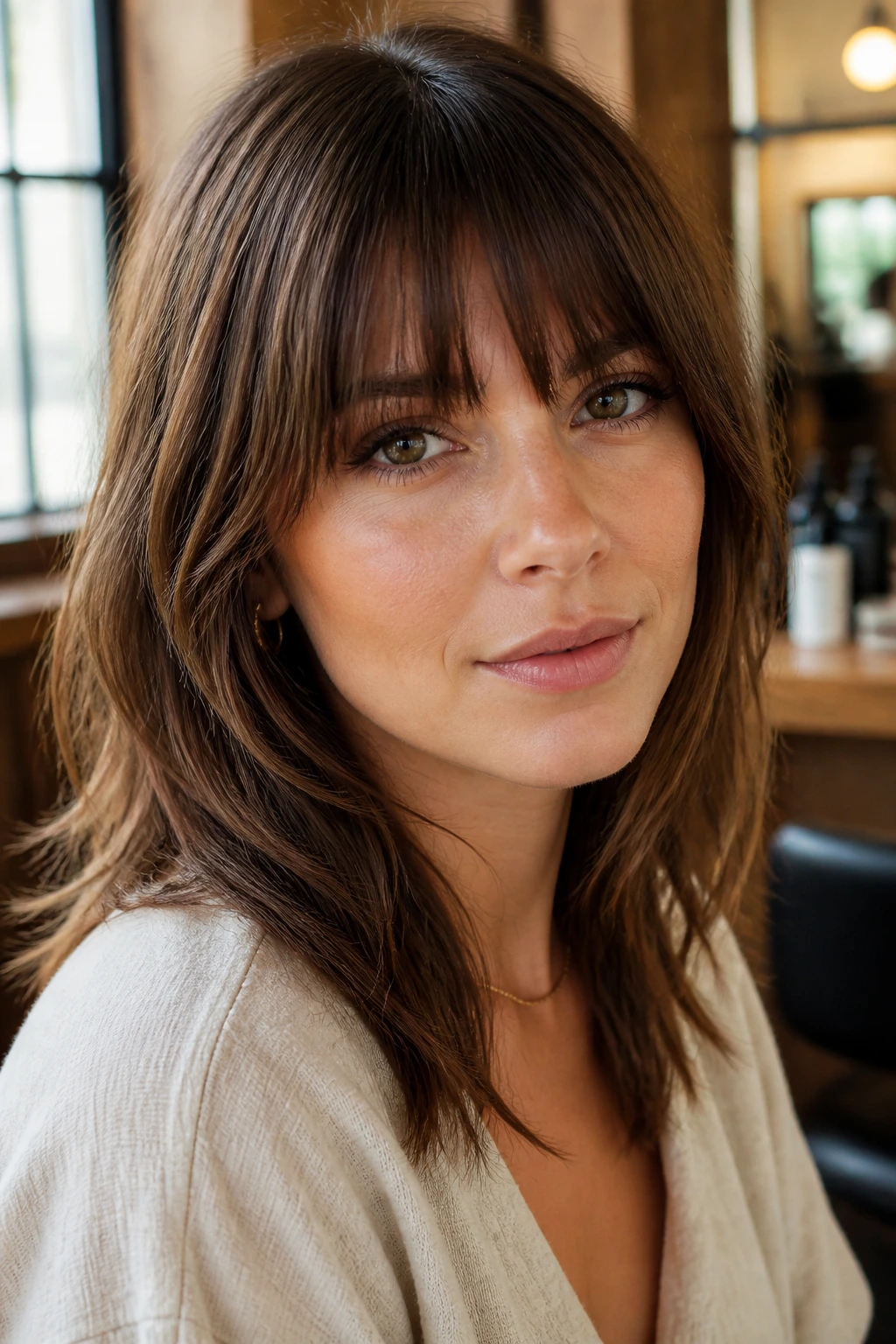
A good fringe starts before the scissors touch your hair. If you usually wear a center part, say so. If your hair insists on a side part, say that too. A stylist can cut the bangs to work with your default pattern, but they can’t guess it if you walk in with your hair tucked back and your part hidden under a clip.
Bring photos, but bring the right ones. Show the front, the side, and — this is the part people skip — a picture of the fringe when it’s moving. Static photos lie. Bangs in motion tell the real story, especially on medium length hair where the front has to blend into the length behind it.
Cowlick check: ask the stylist to look at how your hair lifts at the hairline when it’s dry.
Density check: start lighter if you’re unsure; adding hair to a fringe is easy, taking it away is less friendly.
Length check: ask for the first cut a touch longer than your dream length, because dry hair often bounces up.
I also like to hear the words “how often do you blow-dry your front pieces?” before a fringe is cut. If the answer is never, the shape should be chosen with that in mind. Hair has to fit the morning you actually live, not the one you imagined.
The Tools That Make Bang Styling Easier at Home
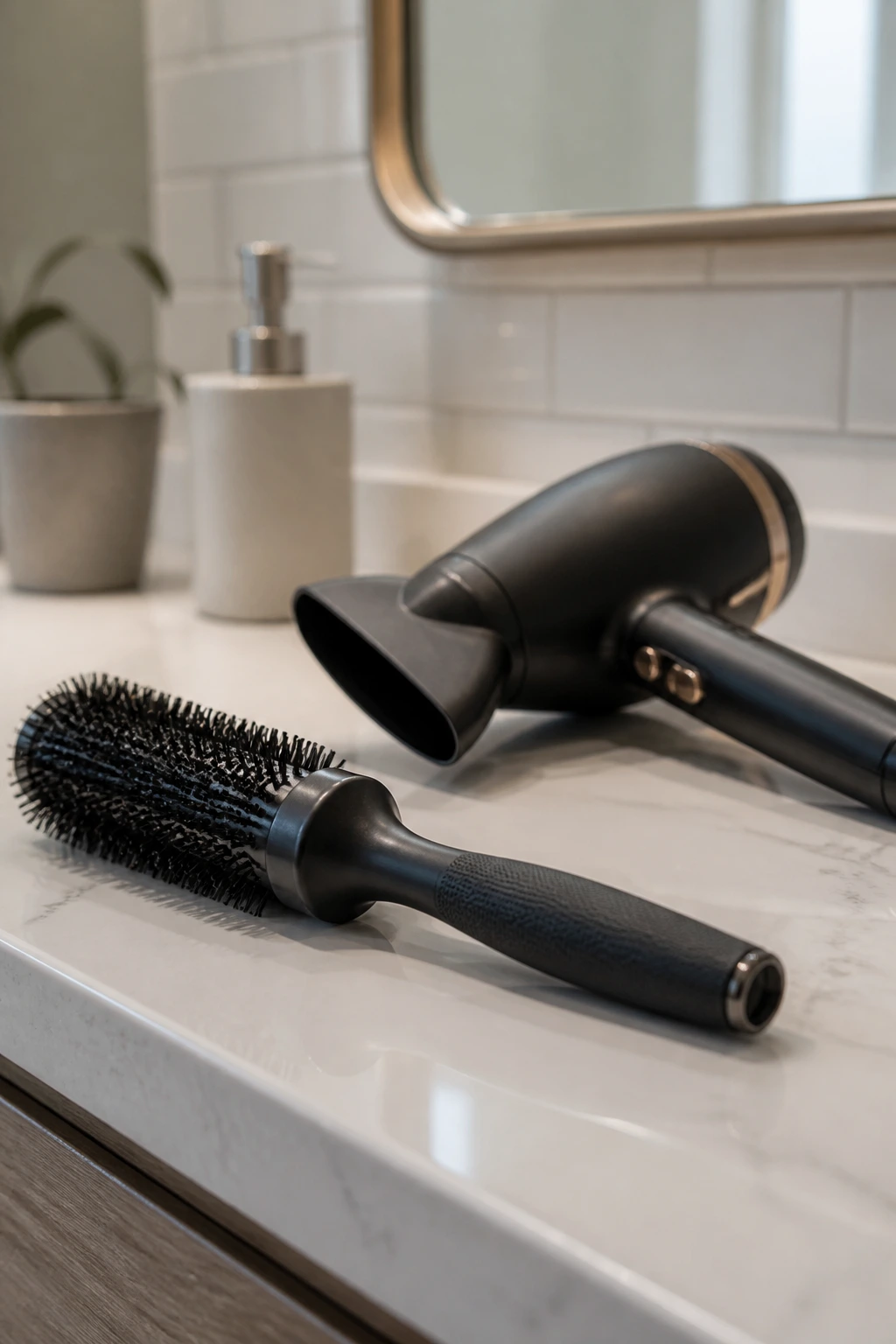
A few tools do more work than people expect. A small round brush gives you bend at the root and a cleaner curve through the ends. A blow dryer with a nozzle keeps the airflow focused so the fringe doesn’t puff in every direction before it dries.
You’ll want a tail comb for parting and lifting the roots, especially with curtain, bottleneck, or side-swept shapes. Duckbill clips help keep the rest of the hair out of the way while you dry the front, which matters more than it sounds because bangs are easier when the surrounding hair isn’t stealing the heat.
A mini flat iron is useful for one stubborn kink or a sharp brow-grazing edge. A texturizing spray or tiny amount of paste helps piecey, shag, and choppy bangs keep their separation. Dry shampoo earns its place fast, since forehead oil can flatten fringe faster than the rest of the haircut.
If your hair is curly, add a diffuser and a curl cream to the list. Straightening curly bangs every day is a chore; shaping them to dry well is much smarter.
The Mistakes That Turn a Good Fringe into Regret
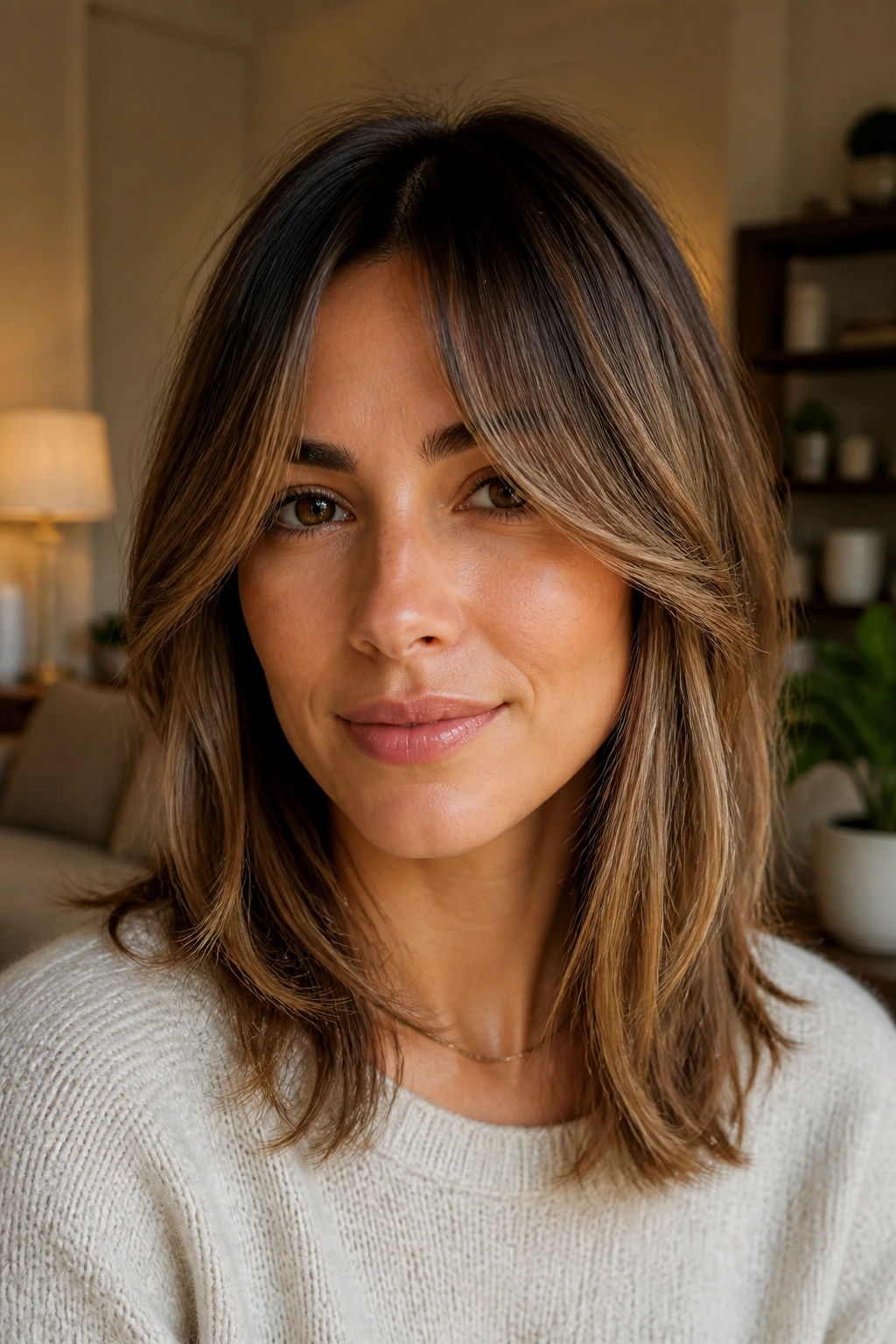
Cutting them too short on day one: hair springs up as it dries, and bangs that looked perfect in the chair can jump half an inch after styling. The fix is simple — start longer and trim in small passes.
Ignoring the growth pattern: if the fringe fights a strong cowlick, it will split and separate no matter how lovely it looked in the mirror. Ask the stylist to work with the swirl, not against it.
Going too thick on medium length hair: a dense fringe can swallow the face and make the cut feel heavy at the front. If the rest of your hair already has body, ask for less density and keep some movement around the temples.
Treating every fringe the same: a blunt brow-grazer and a curtain bang do not want the same styling routine. One needs a cleaner line; the other needs bend and separation. Match the product and the brush to the shape.
Forgetting the trim cycle: bangs grow fast relative to the rest of the cut. Once they sit in your lashes and start blocking your eyes, the style changes from intentional to annoying.
Ways to Adapt Fringe for Different Textures and Comfort Levels
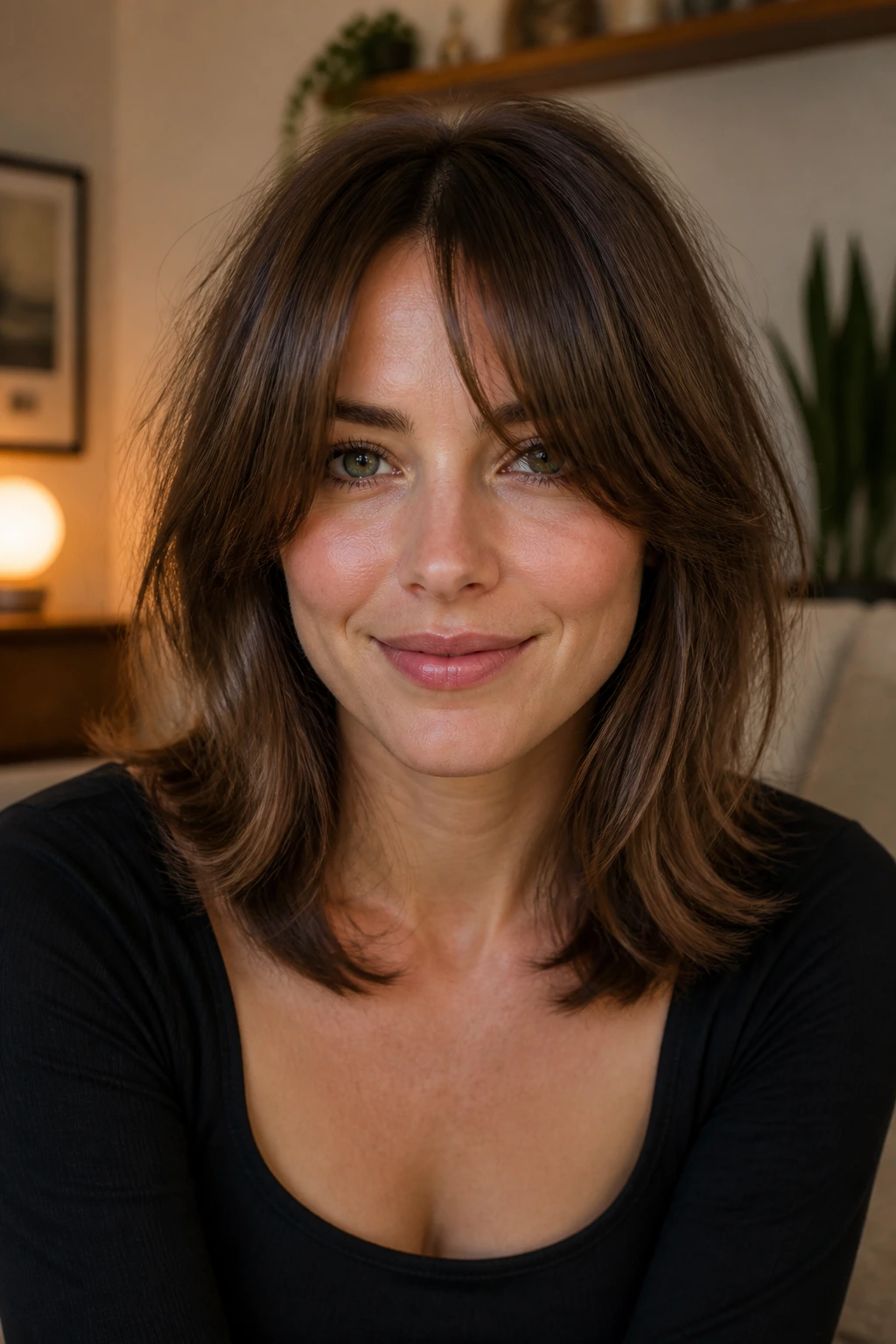
The Low-Lift Curtain Edit
If you want bangs with minimal daily fuss, ask for a curtain shape that starts a little longer and leans into your natural part. This version is easier to air-dry and much easier to grow out. It suits medium length hair that already has some soft layers.
The Thick-Hair Softener
For dense hair, a layered or razored fringe can remove bulk without leaving the front too wide. The point is to keep the movement, not to erase the mass entirely. This version works best when the rest of the cut has shape through the ends.
The Curl-First Fringe
Curly and wavy hair does better when the fringe is cut with the texture in mind, often a bit longer than you think and shaped dry. That lets the front pieces spring into their real form instead of collapsing into a surprise shape after the shower.
The No-Commitment Fringe
Invisible fringe and grown-out fringe are both smart if you want the feel of bangs without a hard line. They let you clip, tuck, or part the front differently depending on the day. That flexibility is gold if your routine changes a lot.
The Bold Statement Version
Micro bangs or a heavy full fringe will change the entire read of medium length hair. Choose them only if you like seeing your haircut first and your forehead second.
How to Trim, Wash, and Grow Out Bangs Between Salon Visits

Bangs need more frequent attention than the rest of the haircut, and pretending otherwise is how they become annoying. A blunt or micro fringe usually needs a trim every 3 to 4 weeks if you want the shape to stay crisp. Curtain, bottleneck, and grown-out styles can often go 5 to 6 weeks before they feel truly off.
Wash the front pieces more often than the rest of your hair if they get oily fast. Sometimes a quick sink rinse and a round-brush dry is enough. That tiny reset keeps the fringe from splitting in the middle of the day and dragging the whole cut down with it.
When you’re growing bangs out, shift the part a little at a time and let the front pieces merge into your layers. Don’t force a hard middle part the second you get tired of the fringe; that often makes the transition look more awkward, not less.
Sleep can flatten bangs in weird ways, so let them cool fully before clipping them up or tucking them away. The shape is set while the hair cools. That detail sounds small. It isn’t.
Frequently Asked Questions
Which bang style is easiest to grow out on medium length hair?
Curtain bangs, bottleneck bangs, and invisible fringe usually grow out the cleanest because they already blend into the sides. They can turn into face-framing layers without an obvious line in the middle of the forehead.
What bangs work best if my hair is fine?
Wispy bangs, see-through bangs, and soft curtain bangs usually work well on fine hair because they don’t ask for a dense line that the hair can’t support. Heavy full fringe can work too, but only if the hair has enough body to keep the shape from collapsing.
Can curly hair wear bangs without straightening them every day?
Yes, but the fringe has to be cut for the curl pattern, usually dry or nearly dry. Curly bangs need extra length for shrinkage and a styling method that shapes the curl instead of fighting it.
How often should bangs be trimmed?
Shorter, blunt, or micro styles often need a trim every 3 to 4 weeks. Softer styles like curtain bangs or grown-out fringe can stretch to 5 or 6 weeks before they lose their shape.
What if my bangs split down the middle all day?
That usually means your cowlick or part is stronger than the cut. Try a style that works with the split — curtain, bottleneck, or side-swept bangs — instead of forcing a solid straight-across fringe.
Can I cut bangs at home?
You can trim tiny amounts, but a full bang cut is harder than it looks because hair springs up when it dries. If you’re new to fringe, let a stylist set the shape first, then maintain the ends cautiously between visits.
Do bangs make medium length hair look shorter?
Sometimes, but not always in a bad way. A full blunt fringe can tighten the shape and make the cut feel denser, while curtain or side-swept bangs usually keep the length reading clearly.
Which bang style is best if I want low maintenance?
Grown-out fringe, invisible fringe, and softer curtain shapes tend to be the most forgiving. They can air-dry with a bit of movement and don’t fall apart the second they get a little longer.
The Fringe That Fits Your Routine
The best fringe on medium length hair is the one that makes sense at 8 a.m., not the one that looks clever under salon lights. Some styles want a round brush and a few extra minutes. Some want almost nothing. The right choice is the one you’ll actually keep shaping once the novelty wears off.
What medium length hair gives you is room. Room to blur a line into layers. Room to grow out a decision without a dramatic reset. Room to make bangs look like part of the haircut instead of a separate event.
Pick the shape that matches your mornings, your texture, and your tolerance for maintenance, and the haircut starts pulling its weight. The rest is just a trim every few weeks and a mirror with honest lighting.
