



Curtain bangs can look fussy on shorter cuts. On long hair, they finally have room to do their job.
The front pieces sweep out, skim the cheekbones, and melt into the rest of the length instead of sitting there like a hard little line across the face. That’s the part people miss. Long hairstyles with curtain bangs are not about covering the forehead and calling it a day; they’re about shaping the whole outline so the hair moves when you turn your head, not just when you stand in front of a mirror.
The cut works because it gives you options. You can wear the length sleek and sharp, broken up with bends, curled loose, tied back, braided, or shoved into a claw clip at lunch without losing the shape around your face. And when the bangs grow out — which they will — the center split keeps them useful longer than blunt bangs ever do.
Why This Set Works So Well on Long Hair
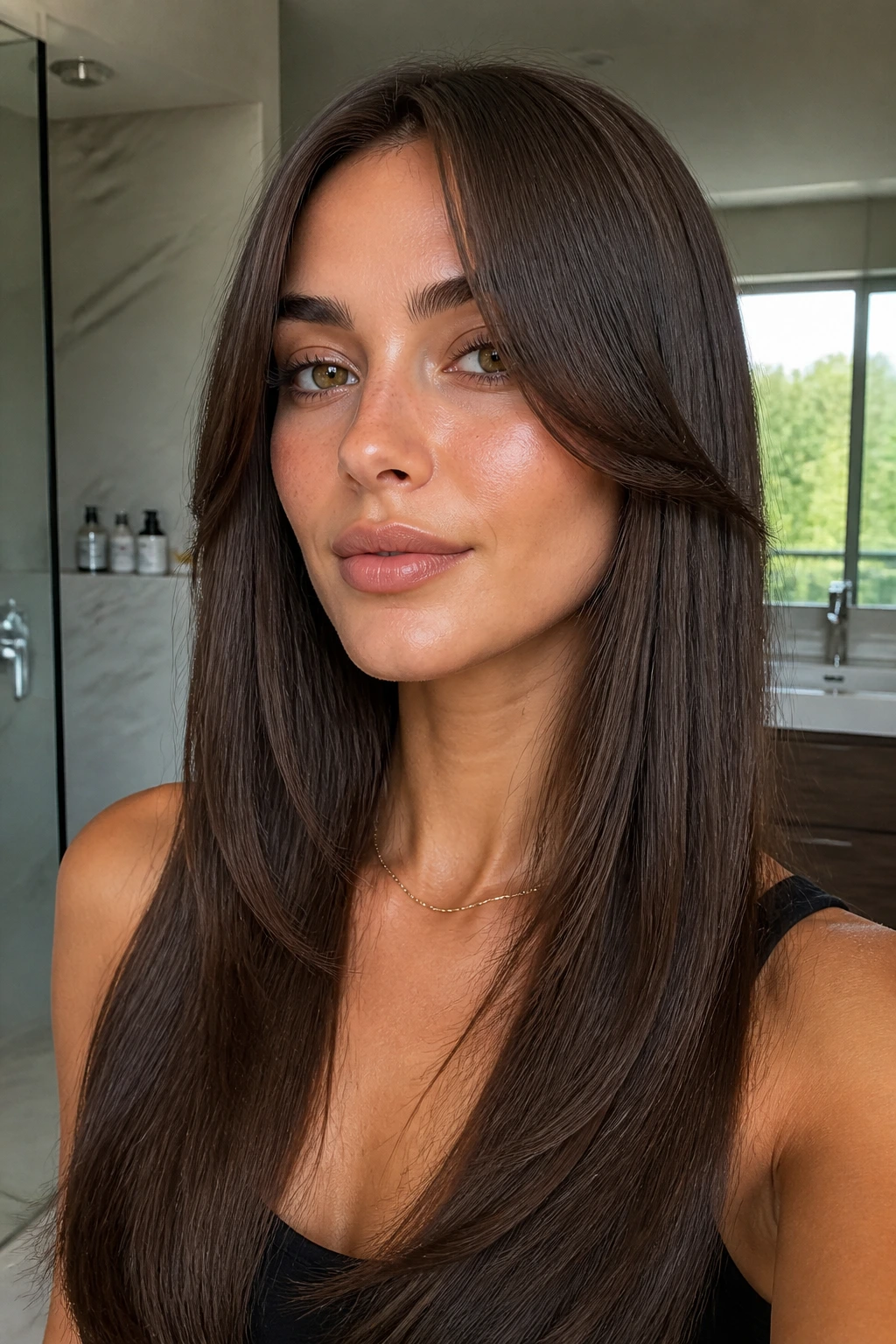
- Face-framing without sacrificing length: Curtain bangs open at the center and taper into the sides, so you keep the drama of long hair while softening the front.
- Easy grow-out: A longer fringe can slide into layers instead of turning into an awkward helmet line after three weeks.
- Works with heat or no heat: A round brush, a curling iron, or a bit of air-drying can all land in the same neighborhood if the cut is balanced well.
- Better shape for thick hair: The front pieces can pull some visual weight away from the ends, which keeps very heavy hair from looking like a curtain in the bad sense.
- Useful with pulled-back styles: Even when the back is clipped up, the bangs keep the face from looking bare and severe.
- Good canvas for color: Highlights, money pieces, and subtle dimension show up more clearly when the front layers have movement.
1. Sleek Length with Soft Curtain Bangs
This is the quietest look in the group, and that’s why it works. Straight, glossy length makes the curtain bangs read as a shape choice rather than a trend piece. The front falls from the center part, bends gently at the cheekbone, and then disappears into the rest of the hair like it was always meant to be there.
A good version of this style depends on the cut, not on brute-force straightening. The shortest pieces should land around the cheekbone or just below it, then taper toward the jaw so the line opens instead of drooping. If the bangs are chopped too short, the whole effect turns stiff fast. Too long, and they stop framing anything.
What makes it feel expensive-looking
- The ends are blunt enough to look healthy, but not so blunt that they feel heavy.
- The part stays clean.
- The front pieces bend away from the face, not inward toward the eyes.
A flat iron with a slight curve at the wrist is enough here. Keep the root smooth, then add one soft bend through the front third of the hair. That little shift keeps the style from looking flat and severe. It’s a sharp look, but not a harsh one.
2. Loose Beach Waves and Cheekbone Curtain Bangs
Loose waves and curtain bangs get along because neither one needs to be perfect. The waves break up the length, and the bangs give the face a clear frame, even when the rest of the hair is a little messy in the best possible way. This is the style that looks like you ran a curling iron through five pieces of hair and stopped before you got obsessive.
The trick is to keep the bends large. A 1.25-inch iron or wand usually lands in the sweet spot for long hair. Wrap the mid-lengths around the barrel, leave the last inch or two out, and curl away from the face on the front pieces so the curtain shape opens properly.
Why it hangs together
The bangs shouldn’t become tiny ringlets. They need a bend, not a curl. That’s what keeps the look modern instead of prom-ish.
A dry texture spray at the roots can help if your hair collapses by midday. The length should still move when you run your fingers through it, and the front pieces should keep that cheekbone brush — the part that makes people think the cut was done on purpose instead of by accident.
3. The Butterfly Cut With a Full Curtain Fringe
The butterfly cut and curtain bangs are cousins. They’re both built on the same idea: give the front and top more lift while leaving the length long and useful. On thick or medium-density hair, this can be one of the best ways to keep long hair from feeling like a single heavy sheet.
The shorter face-framing layers sit around the cheekbone and lip line, then the longer layers drop back into the rest of the hair. Curtain bangs connect those two zones. They make the cut feel lighter at the front without chopping off the main length in the back.
If you like volume around the face, this is the one. It almost always looks better with a blowout than with pin-straight styling, because the whole point is motion. The top layer lifts. The front falls open. The ends stay long enough to swing.
A blunt perimeter can fight this cut. Soft ends work better. So does a little interior layering through the mid-lengths, especially if your hair is dense enough to hold a shape without much help. The best versions have air around the face and weight at the bottom — not puff, not fluff, just movement.
4. V-Shaped Length With Floating Bangs
A V-cut gives the back of the hair a pointier, more dramatic finish, and the curtain bangs keep the front from feeling too sharp. That contrast is the whole story. The eye reads the softness at the front first, then follows the length down to the tapered back. It’s a clean line, but not an uptight one.
This shape is especially good if your hair is very thick and tends to eat up styling. The V removes some visual bulk from the ends while the bangs keep the front from hanging flat against the cheeks. You get shape without losing that long, dramatic silhouette people usually want from this kind of cut.
Best when you want:
- A stronger outline in back
- A lighter face frame in front
- Enough length to wear waves, braids, or polished straight styles
A V-cut can look a little severe if the layers are too aggressive. Keep the transition soft, especially around the shoulders. The curtain bangs should feel like they belong to the same haircut, not like they were added later in a panic.
5. U-Shaped Ends With Polished Curtain Bangs
The U-shape is calmer than the V-shape. The length curves slightly at the back, which makes the ends look fuller and the whole haircut a little more rounded. Add curtain bangs, and the front gets enough movement to keep the style from becoming all one note.
This is one of those haircuts that looks plain until you see it in motion. Then it makes sense. The front opens. The sides fall just enough to graze the collarbones. The back keeps its body. It’s a smart choice if you wear your hair straight a lot and want the outline to feel finished even on the days you do almost nothing to it.
A light serum on the ends helps. Not much. A drop or two is enough if your hair is fine; a bit more if it’s coarse or porous. Too much oil at the roots will squash the curtain shape, and that little mistake is easy to make when the cut already feels soft.
6. Long Shag With Piecey Curtain Bangs
A long shag is the opposite of polished length, and that’s the fun of it. The cut is built from layers that show their edges a little, so the curtain bangs don’t have to look silky or perfect. They can be piecey, airy, even slightly uneven at the ends, and the haircut will still make sense.
This style loves texture spray, matte paste, and hands more than brushes. If your hair has any wave at all, the shag can make it look deliberate. If your hair is straight, it gives you something to rough up with a curling wand or a diffuser. Either way, the bangs sit in the middle of the face and break up the severity that long hair can sometimes have.
What to watch for
The danger is going too short at the front. With a shag, the layers already do a lot. If the bangs start too high on the forehead, the whole thing can feel choppy in a bad way. Keep the shortest point near the cheekbone and let the rest fan out from there.
This is the style for people who don’t want their hair to look freshly blown out every day. A little grit helps. So does a slightly messy part.
7. A Bombshell Blowout With Extra Height at the Crown
Big hair and curtain bangs are made for each other. The bangs break the front open, and the blowout gives the rest of the hair enough lift to keep the whole shape from falling inward. When done well, this style has a clear crown, soft sides, and ends that curve under just a touch.
You need a round brush, a blow dryer, and some patience. Section the bangs first. Dry them forward, then sweep them back from the face so the bend lands on the cheekbones instead of the eyes. After that, work through the rest of the hair in sections, pulling each one up and over the brush to get that rounded silhouette.
The crown matters more than the ends
If the top is flat, the whole blowout looks sleepy.
That’s why a root-lifting mousse or spray at the base can help more than extra oil on the lengths. Use a clip to set the front away from the face while it cools. That tiny pause makes the shape hold longer, and it’s one of those boring little steps that separates a nice blowout from one that collapses by lunch.
8. Soft Romantic Curls With a Split Fringe
Romantic curls give long hair a bit of drama, and curtain bangs stop the front from looking overdone. That’s the balance. The curls should be loose enough to brush out with your fingers, while the bangs stay soft and separated in the middle so the face doesn’t disappear under all that volume.
A 1-inch or 1.25-inch curling iron works well here, but the real trick is direction. Curl the pieces around the face away from the face, then switch directions through the rest of the hair to keep the pattern from looking stiff. Once the curls cool, rake through them lightly with a wide-tooth comb or your fingers. Not a brush. You’ll lose the shape.
This style gets better when the bangs are a little longer. If they hit too high on the forehead, the curls start to feel costume-y. If they sit around the cheekbone, the whole thing looks softer and more expensive without trying too hard.
It’s a good choice for dinners, photos, weddings, or any day when you want the hair to look intentionally styled without turning into helmet hair.
9. Half-Up Twist With Loose Face-Framing Pieces
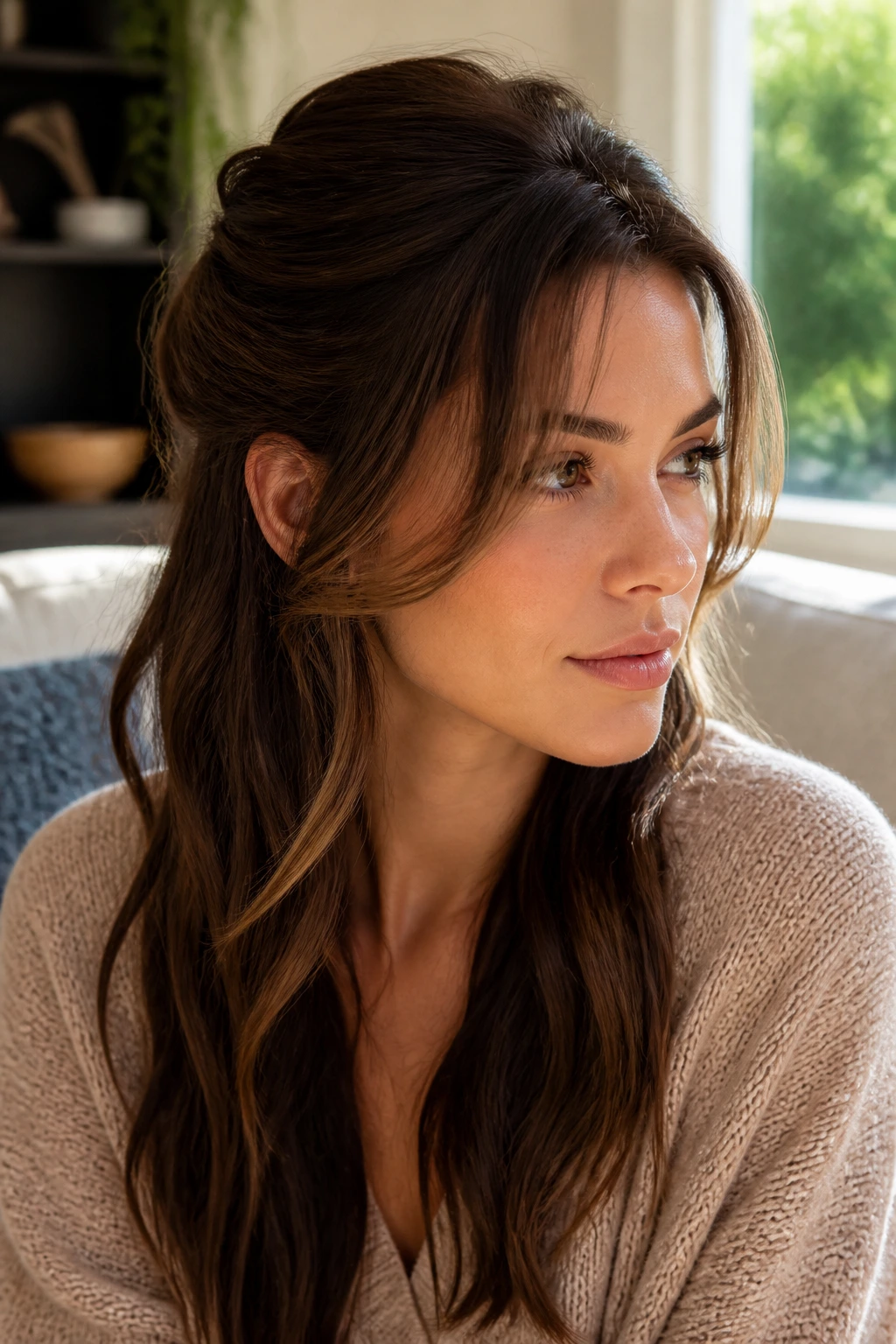
Half-up styles can be blunt around the face if you pull everything back too cleanly. Curtain bangs fix that. They leave enough softness at the front to keep the hair from looking severe, even when the rest is twisted or clipped out of the way.
The easiest version is a half-up twist. Gather the top section from temple to temple, twist it once or twice, and pin it at the back of the crown. Let the curtain bangs fall free, and leave a few long pieces around the sides if the face needs a little more softness. The bottom half should still hang heavy enough to show off the length.
A style like this works especially well when the bangs are a little longer than usual. They need to graze the cheekbones and then drift into the side layers, not stand there as a separate line. That’s the whole point. The haircut should feel like one continuous shape.
This is also one of the best styles for second-day hair. The top gets a little lift from the twist, the roots look less flat, and the front pieces keep the whole thing from feeling thrown together.
10. Low Ponytail With Face-Framing Curtain Bangs
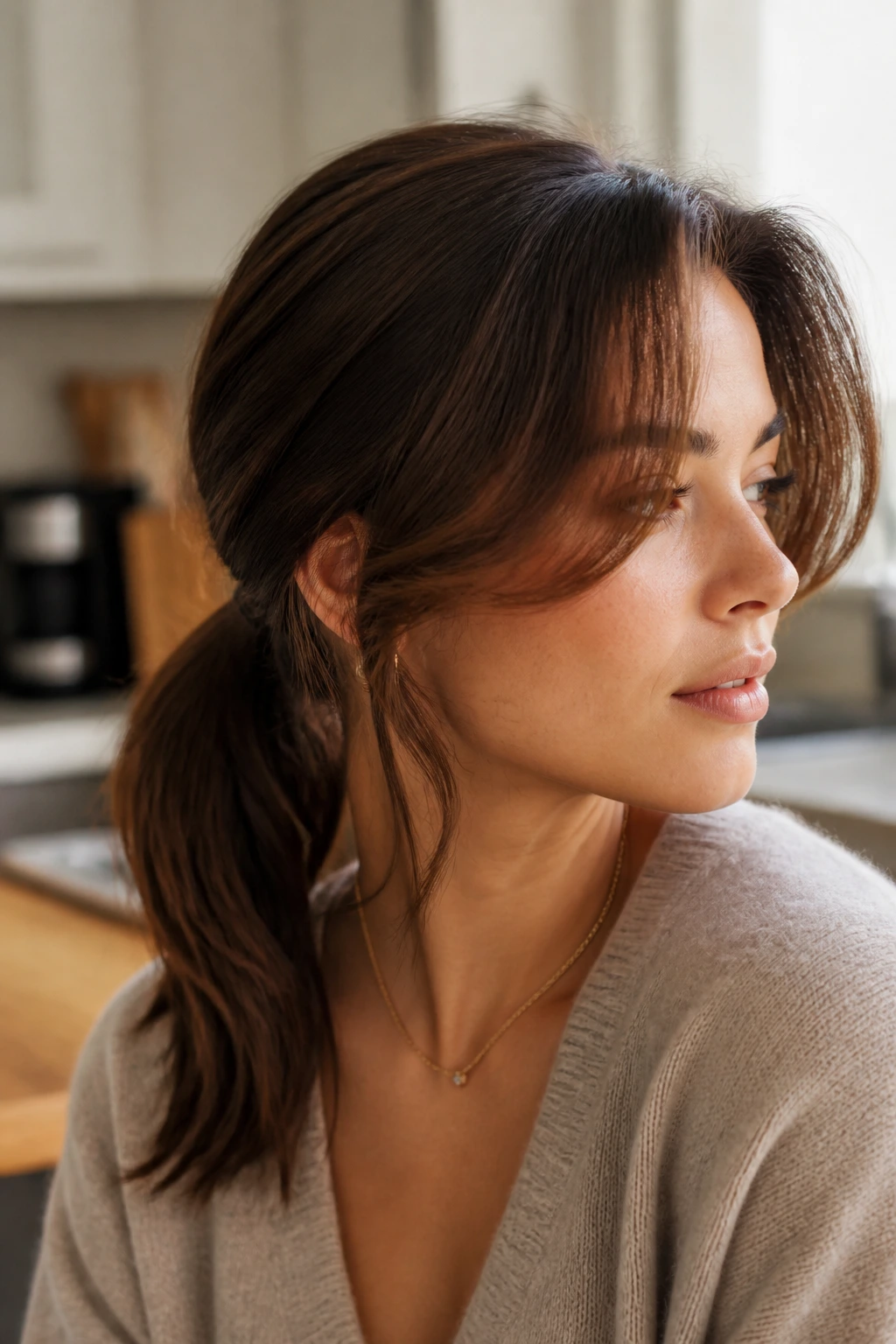
A low ponytail sounds plain until you add curtain bangs. Then the shape changes. The front keeps some softness near the eyes and cheekbones, while the back stays neat enough for work, errands, or a dinner where you do not want hair in your soup.
The ponytail itself should sit low and a little loose, not yanked tight against the skull. If you pull the crown too hard, the bangs lose their job. Leave a bit of lift at the top, then wrap a small section of hair around the elastic if you want the finish to look cleaner.
Small details matter here
- Keep the front pieces out before securing the pony.
- Use a light spray, not a shellacking one.
- Bend the bangs away from the face with a brush or iron so they don’t collapse into the cheeks.
This style can look plain if the pony is too neat and the bangs are too flat. A little looseness is better. Not sloppy. Just enough movement to keep the face from feeling boxed in.
11. Long Braids and Wispy Curtain Bangs
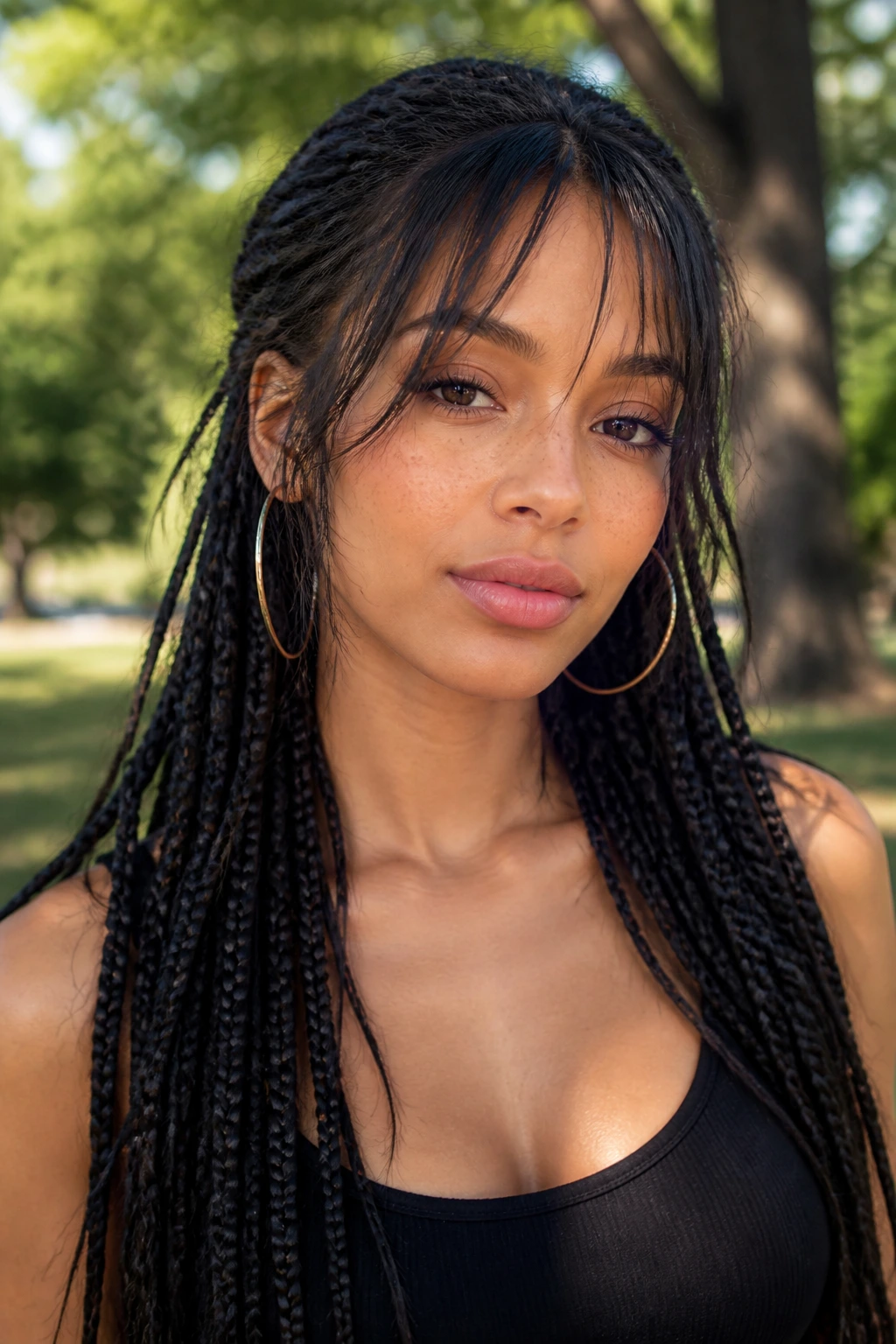
Braids and curtain bangs make a surprisingly good pair because the braid handles the length while the bangs keep the front from looking too pulled back. A single loose braid down the back gives the style a soft, lived-in feel. Two braids lean more playful. Either way, the fringe keeps the face open.
A wispy version of curtain bangs works best here, especially if the braid is thick. Too much weight at the front competes with the braid. A lighter fringe lets the braid stay the star without leaving the face empty. If your hair is long enough for a fishtail braid, the texture looks even better because the bangs provide a cleaner front frame against all that woven detail.
This style also solves the problem of long hair feeling heavy on the neck. You get the braid, but you don’t lose the softness that makes long hair flattering in the first place.
A little texture spray at the roots helps the braid hold. The bangs can stay clean and soft; the braid should have enough grit to stay put.
12. Curly Long Layers With a Rounded Curtain Fringe
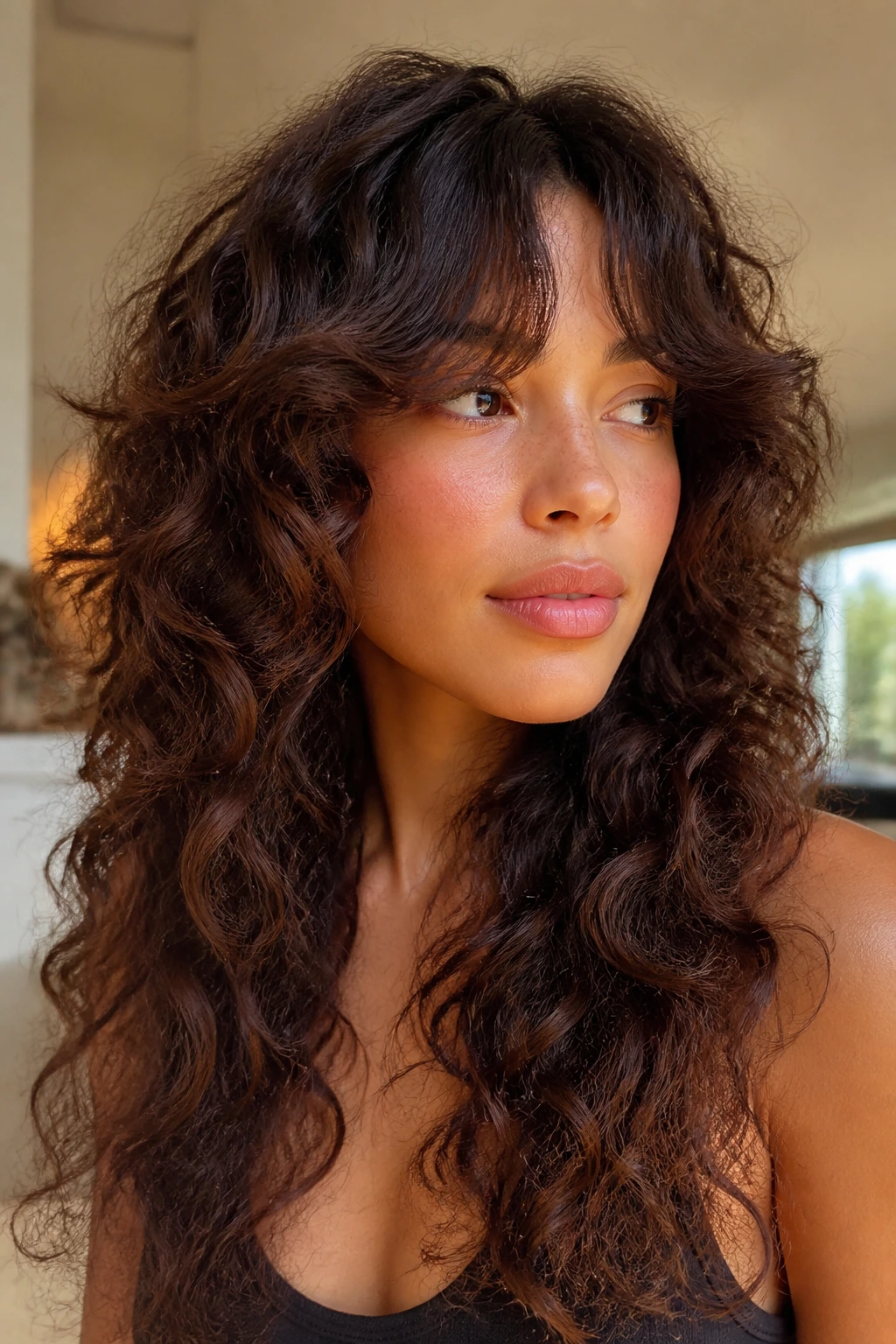
Curly hair changes the rules, and that’s fine. Curtain bangs can work beautifully on curls, but they need to be cut with shrinkage in mind. What looks like cheekbone length when wet may spring up to the nose when dry, so the bang should usually be left longer than you’d expect.
The best curly version has rounded layers that move with the curl pattern instead of fighting it. The front pieces open in the middle and blend into the layers at the sides, which keeps the face frame soft and the overall shape balanced. A diffuser helps, but the cut does most of the work.
How to keep it from turning triangular
Ask for layers that remove bulk through the interior, not just around the perimeter. That way the curtain bangs don’t sit on top of a heavy triangle of curls.
A curl cream or leave-in with enough slip can help the fringe separate instead of clumping. If the bangs dry too short, mist them lightly and stretch them with your fingers while they dry. The goal is a soft split, not a rigid curtain.
13. Razor-Cut Length With Airy Curtain Bangs
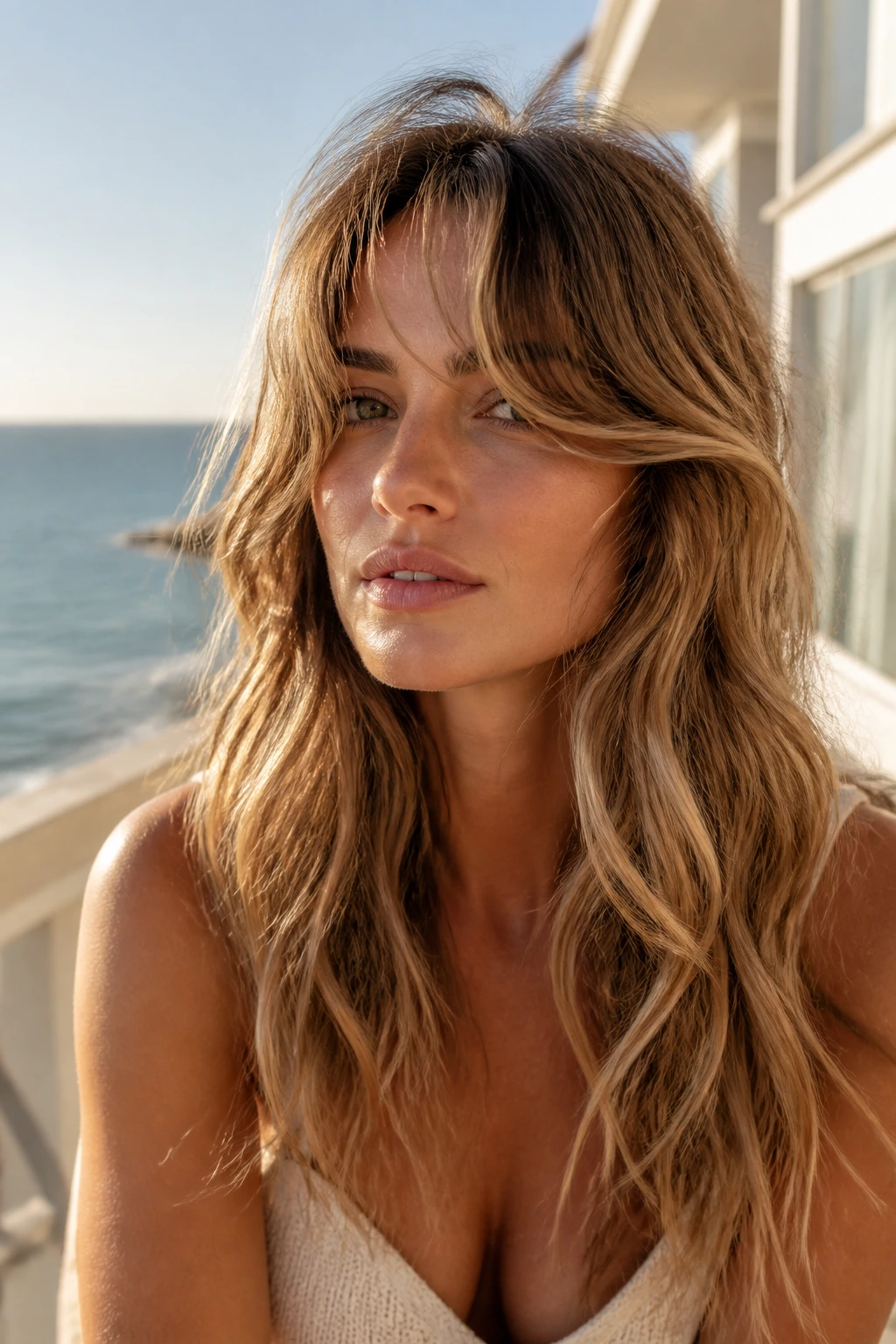
A razor-cut perimeter makes curtain bangs feel lighter before you even pick up a blow dryer. The ends have a softer edge, the front pieces feather out a little, and the whole haircut seems to float instead of sitting in one solid block.
This look is especially useful if your hair is dense and tends to look heavy at the bottom. A razor cut can remove visual weight without taking away too much length. The curtain bangs fit that same logic: they open the face, but they don’t create a hard line. Done well, the style looks deliberate and a little undone at the same time.
The catch? The razor has to be used with care. On fragile or very dry hair, too much slicing can leave the ends frayed. That’s why this version works best when the stylist knows how your hair behaves when it’s dry, not just when it’s wet and easy to cut.
Add a light texture spray and let the front pieces fall where they want. Over-styling kills the airy feel.
14. Feathered Layers With a 70s-Inspired Fringe
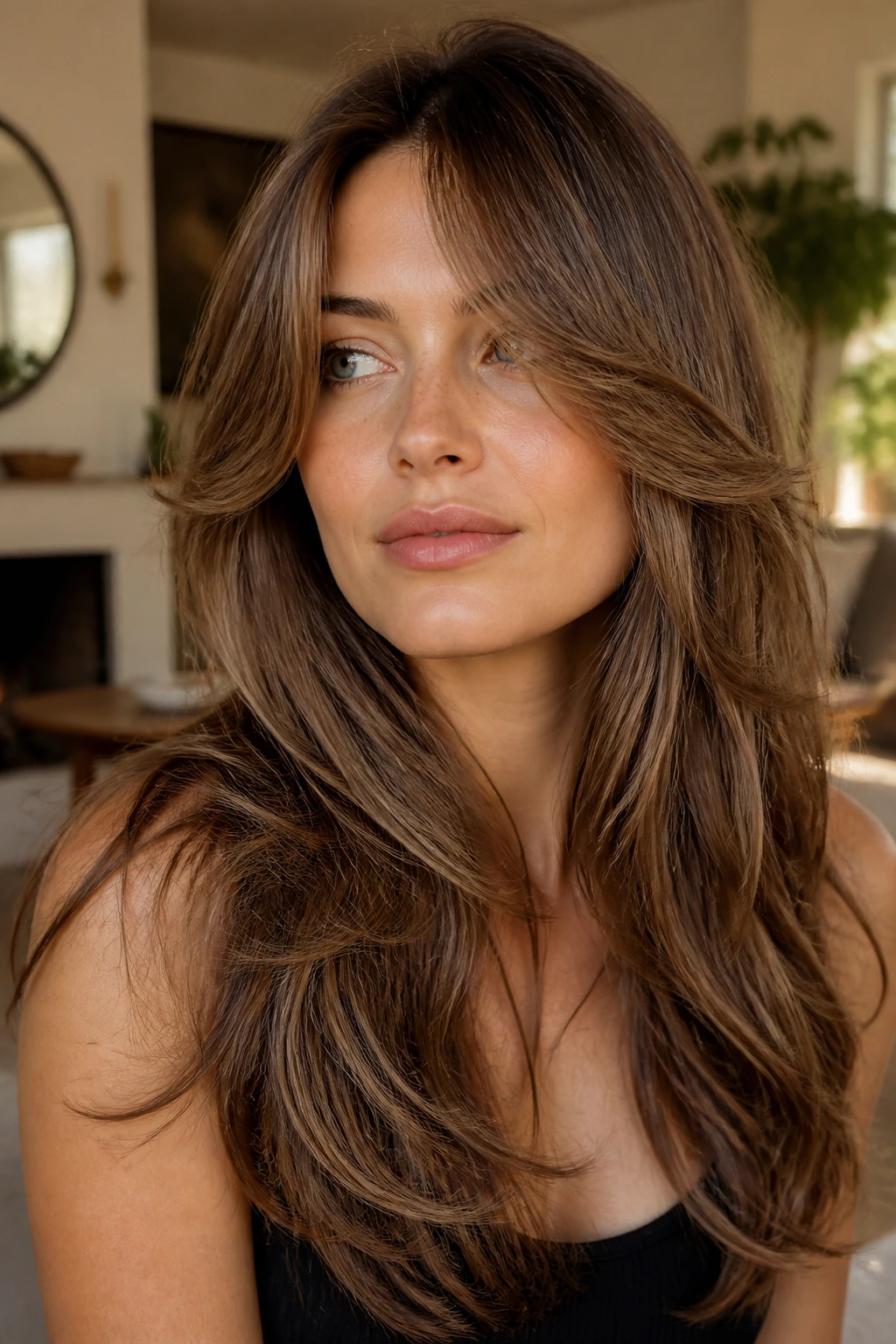
Feathered layers are built for movement. The ends bend away from the face, the top has lift, and the curtain bangs connect everything with that split-down-the-middle shape that keeps the front from looking heavy. The result feels a little retro, but not in a costume way.
What makes this style work is the direction of the layers. They should push off the face and open outward, especially around the cheekbone and jaw. That gives the bangs a place to sit. If the layers are all cut at the same level, the fringe can look isolated. With feathering, the whole haircut breathes.
A blow dryer and round brush are enough to bring it to life. Roll the front pieces back and away from the face. Let the ends flick just slightly. You do not need a perfect curl. You need a shape that moves when you do.
This is one of the few looks that can survive a little humidity and still look intentional. The softness is part of the charm.
15. Sleek Straight Length With Tucked Curtain Bangs
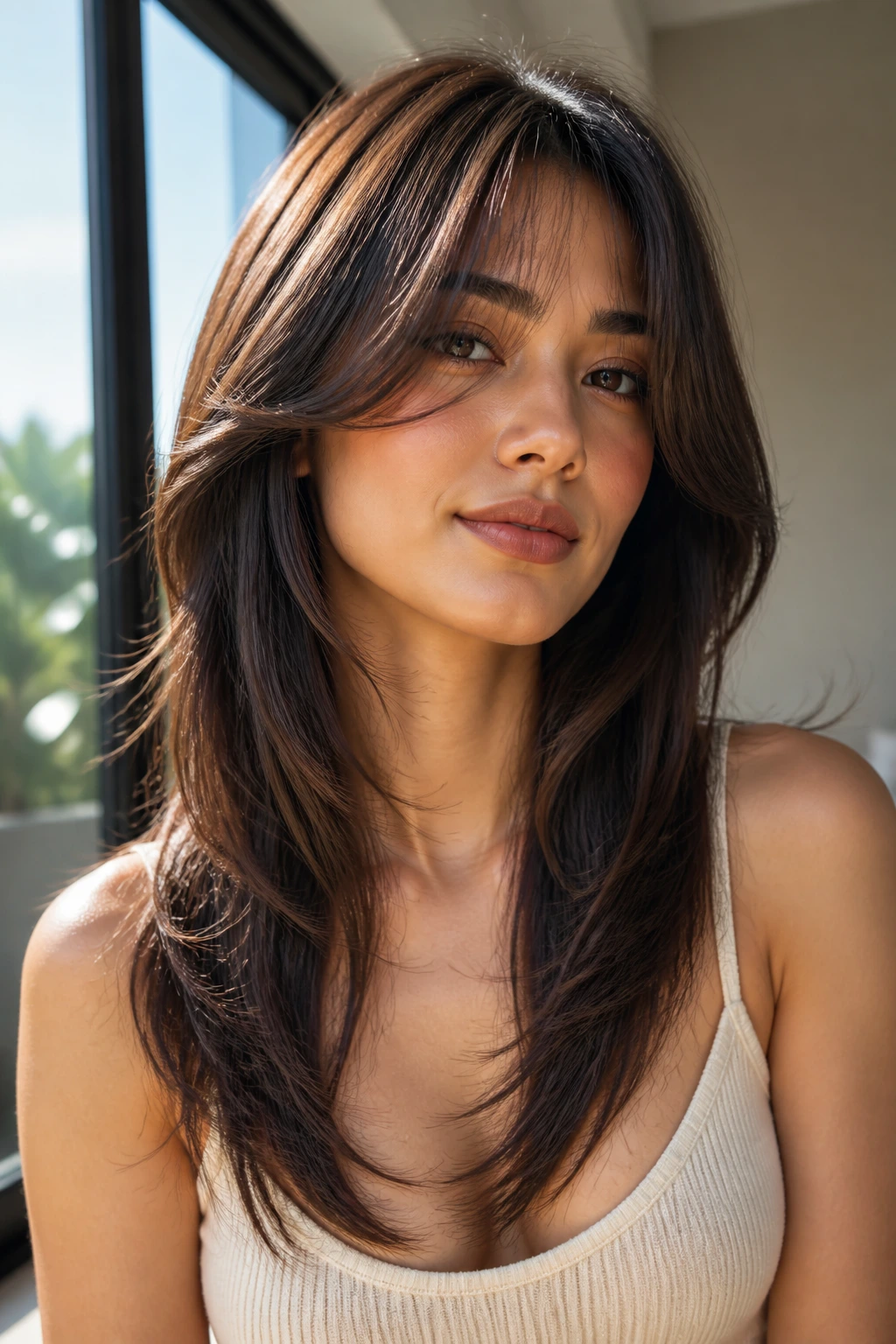
Straight hair and curtain bangs can look too severe if the line is too clean. The trick is to keep the straightness, but loosen the front just enough to let the bangs bend and tuck. That small curve changes the whole haircut.
The best version uses a flat iron sparingly. Straighten the lengths, then curve the front pieces slightly away from the face. You can tuck one side behind the ear and leave the other loose, or keep both sides floating. Either way, the bangs need a little movement or the style becomes boxy.
Why it beats blunt bangs on long hair
Blunt bangs stop the eye hard. Curtain bangs keep the face open.
That matters when the rest of the hair is long and sleek. The contrast gives you structure without making the front feel closed off. If your hair is fine, this look can actually make it appear fuller because the straight lengths read as clean and the bang bend creates a little visual depth near the eyes.
A heat protectant is non-negotiable here. Straight styles show damage fast.
16. High Ponytail With Scattered Face-Framing Pieces
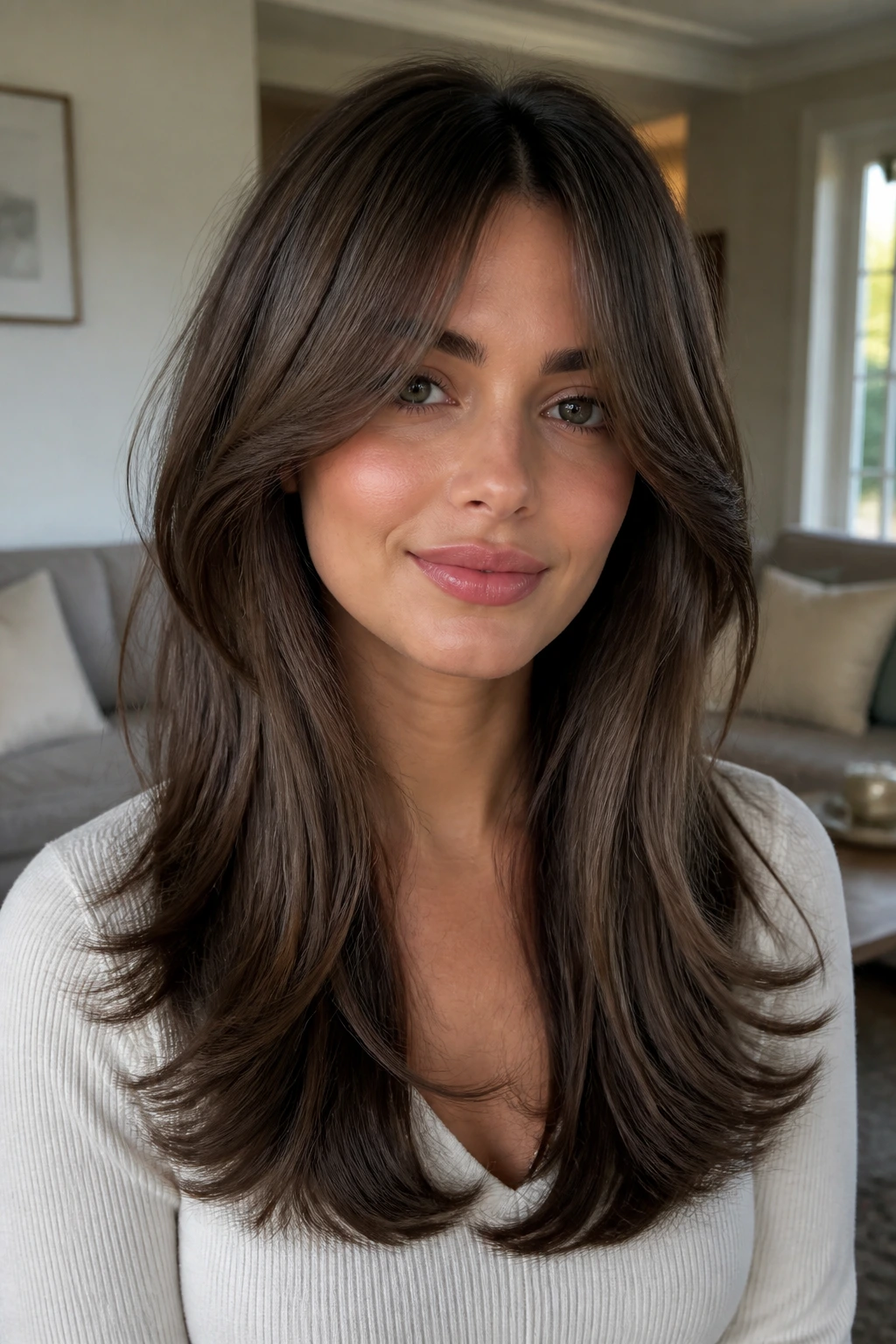
A high ponytail with curtain bangs feels sharper than a low one, but the bangs keep it from looking too pulled back. The pony gives lift at the crown, and the face-framing pieces soften the line around the forehead and temples. It’s a useful look when you want your hair off your neck but still want some shape up front.
Keep the ponytail high, but not yanked so tight that it drags the front flat. Leave the bangs loose before you secure the elastic. If the front pieces are long enough, they should curve past the cheekbones and help the style feel more balanced from the side.
A small amount of volume at the crown makes a big difference. Tease lightly if needed, or lift the roots with a dry-texturizing spray before gathering the hair. A high pony with no crown lift can look a little gym-class. With lift, it looks finished.
This one also works well when you’re in a hurry. The bangs do most of the visual work.
17. Claw-Clip Half-Up With Soft Curtain Bangs
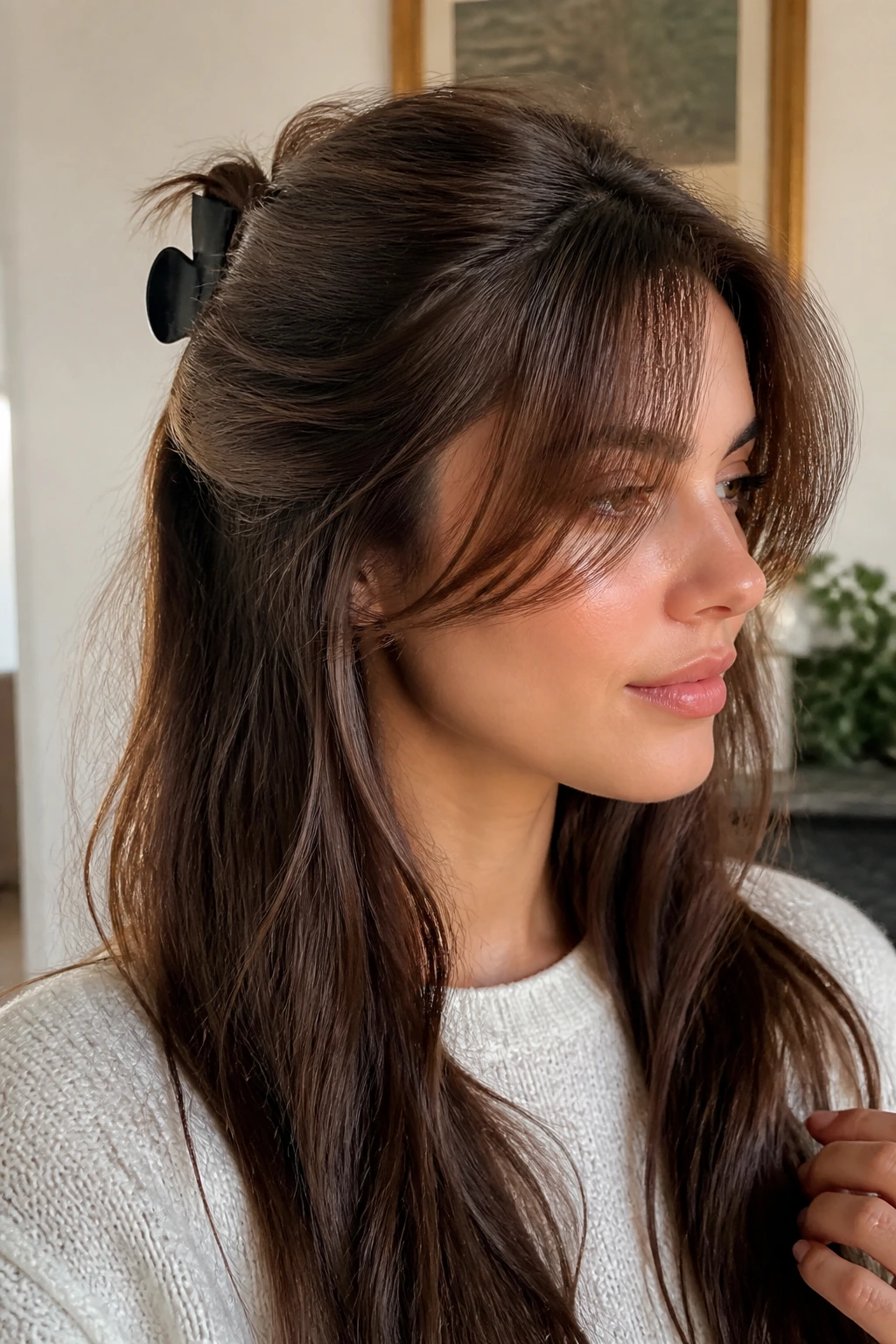
The claw clip has become a lifesaver for long hair because it gives you shape without a full commitment. Curtain bangs make it even easier. The front stays soft, the top section gets clipped up, and the length drops from the clip in a way that still shows off how long the hair is.
The best version is loose on purpose. Twist the top section once or twice, fold it into the clip, and let some ends poke out if that’s how your hair wants to fall. Curtain bangs should stay free, not trapped in the clip or tucked too tightly behind the ears. If the front is too polished, the style loses the easy shape that makes it work.
This is the fastest look on the list. It takes less than five minutes when the hair already has a little texture. And because the bangs frame the face, you don’t need to spend ten more minutes trying to make the top section look “done.”
A matte clip usually holds better than a glossy, slippery one. Small detail. Big difference.
18. Waterfall Braid With Curtain Bangs
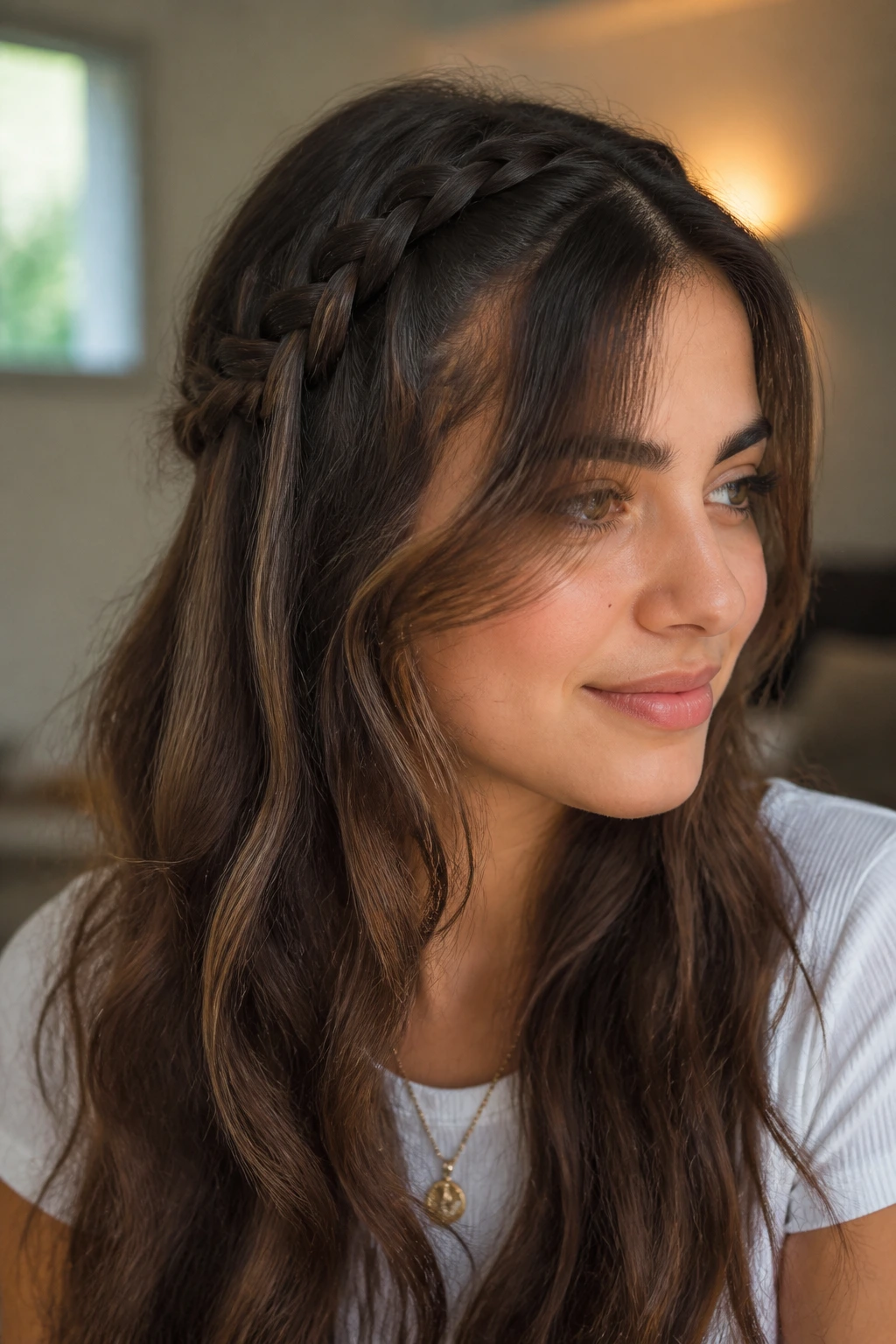
A waterfall braid looks complicated until you break it down: strands drop through the braid while the rest continues along the side of the head. Curtain bangs suit this style because the braid already puts enough detail around the face. The bangs soften the top and stop the braid from feeling too formal.
This look works best on hair with some texture or a little hold product. Clean, slippery hair tends to let the braid slide apart. A touch of mousse or texturizing spray at the roots gives the braid grip. The bangs should stay loose and slightly bent, not stiff or too curled. You want the front to feel as soft as the braid is intricate.
It’s a good choice for weddings, photos, or any occasion where you want long hair to feel special without piling it all into an updo. The braid does the fancy part. The curtain bangs keep it wearable.
19. Long Layers With Money Pieces and Curtain Bangs
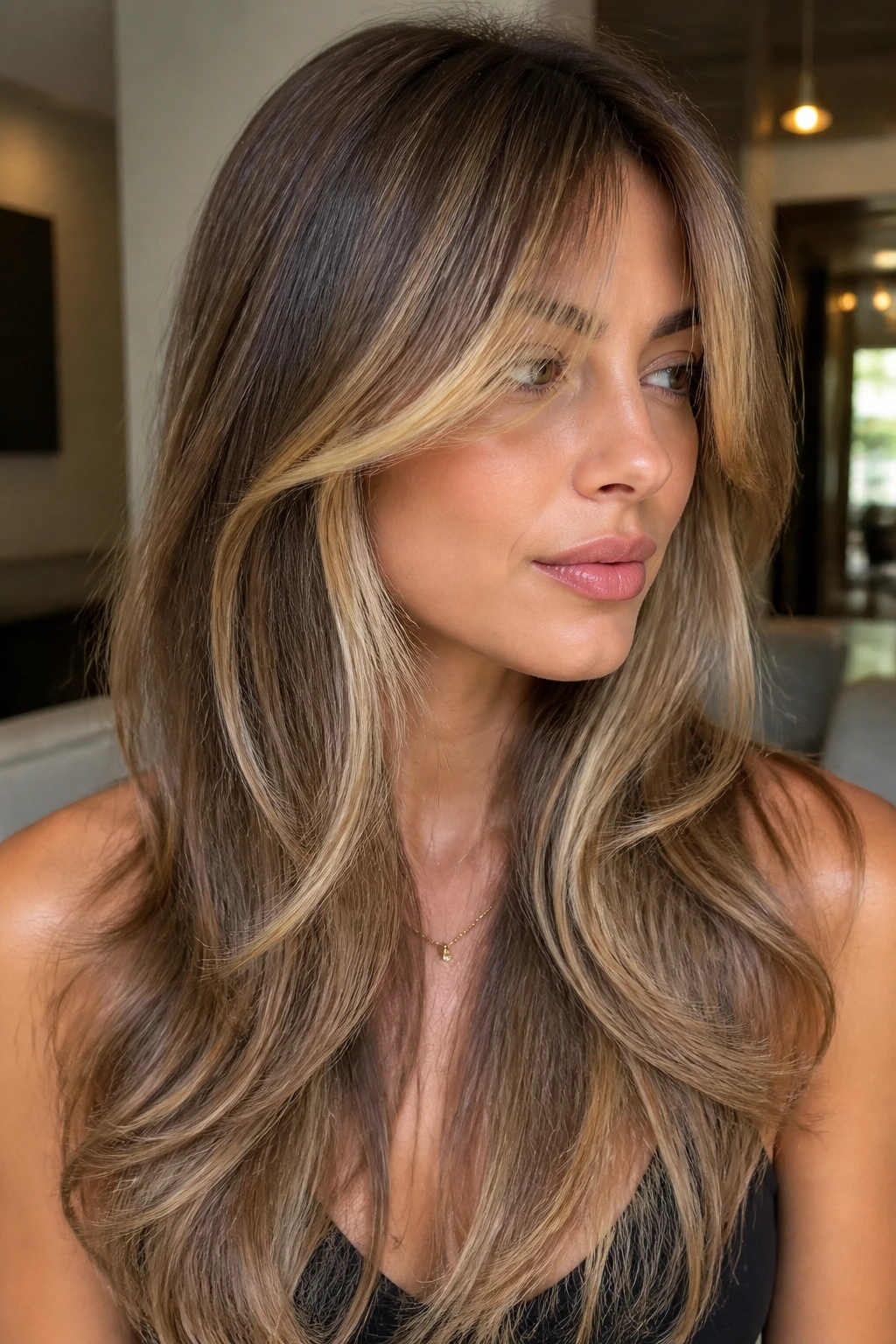
Color changes the shape of curtain bangs more than people expect. A lighter money piece around the face makes the split in the fringe visible from a distance, and long layers keep that brightness from looking like a patch. The bangs and front pieces become the anchor for the whole color story.
This is one of the strongest looks if you want dimension without dramatic cutting. The layers are still long, but the face gets brightness and movement from the color placement. It works especially well when the lighter pieces fall from the bangs into the first layer below the cheekbone, because the eye follows that line naturally.
Best when the color is placed with restraint
Too much lightness around the face can flatten the shape. Two to four well-placed lighter pieces often do more than a full halo of highlights.
If your base color is dark, the contrast can make the curtain bangs pop even when the rest of the hair is worn straight. If your base is already light, lowlights can give the bangs more definition. Either way, the fringe becomes part of the color plan, not an afterthought.
20. Wash-and-Go Natural Texture With a Soft Curtain Fringe
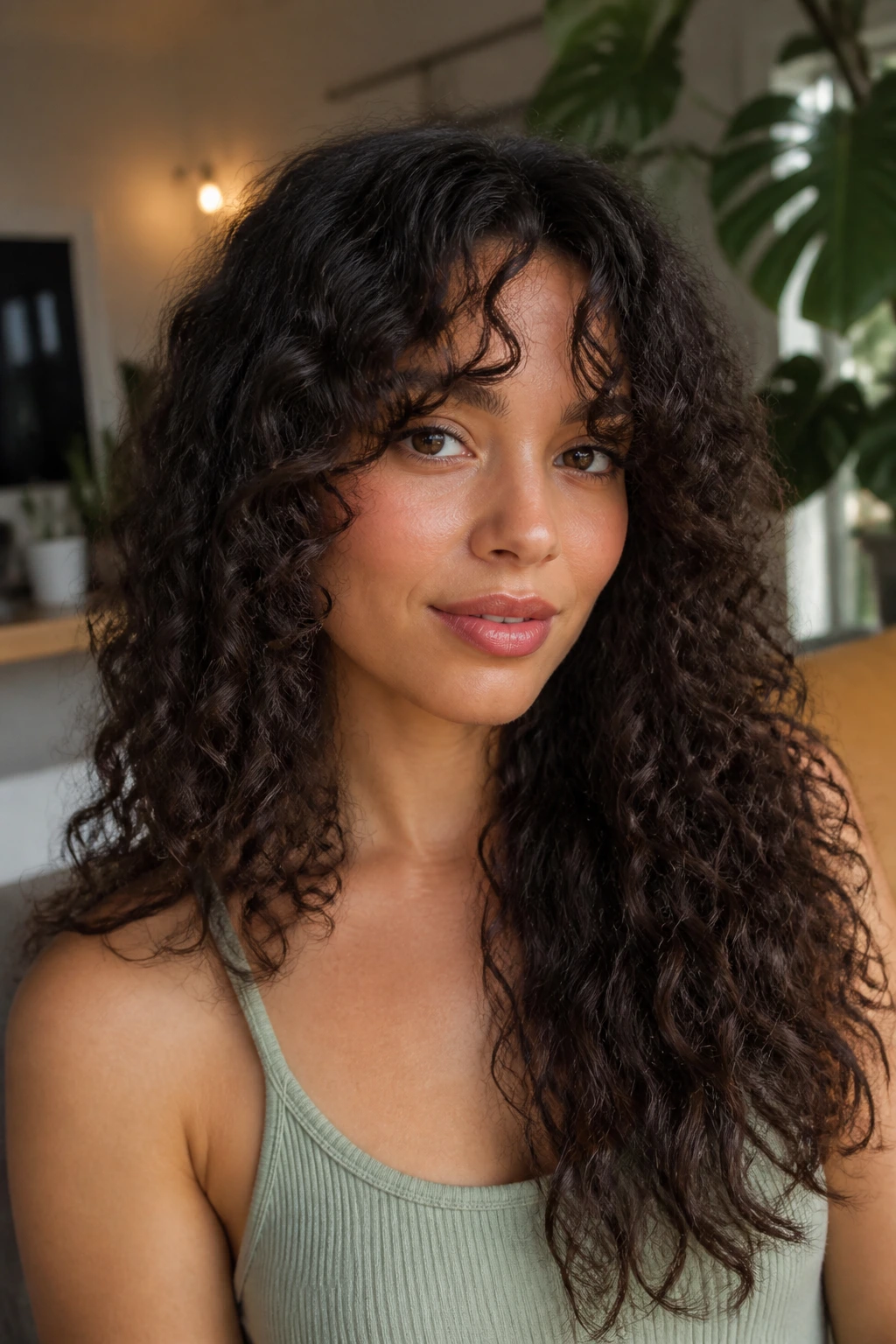
This is the style for people who do not want to fight their hair every morning. A wash-and-go cut with curtain bangs relies on texture, not heat. The bangs should be cut with the natural pattern in mind, then styled with leave-in conditioner, curl cream, or a light foam depending on how your hair behaves.
The key is length. Curly or wavy curtain bangs usually need to be left longer dry than straight hair does wet. That way they can shrink up and still land near the cheekbone instead of disappearing into the forehead. The rest of the long hair should have enough internal layering to keep it from turning into one heavy triangle.
Air-drying works best when the hair is left alone. Touching it too much while it dries can wreck the split in the bangs and make the front puff out. A diffuser helps if you want more lift. Either way, the style should look like your texture, not a battle against it.
Why Curtain Bangs Make Long Hair Feel Lighter
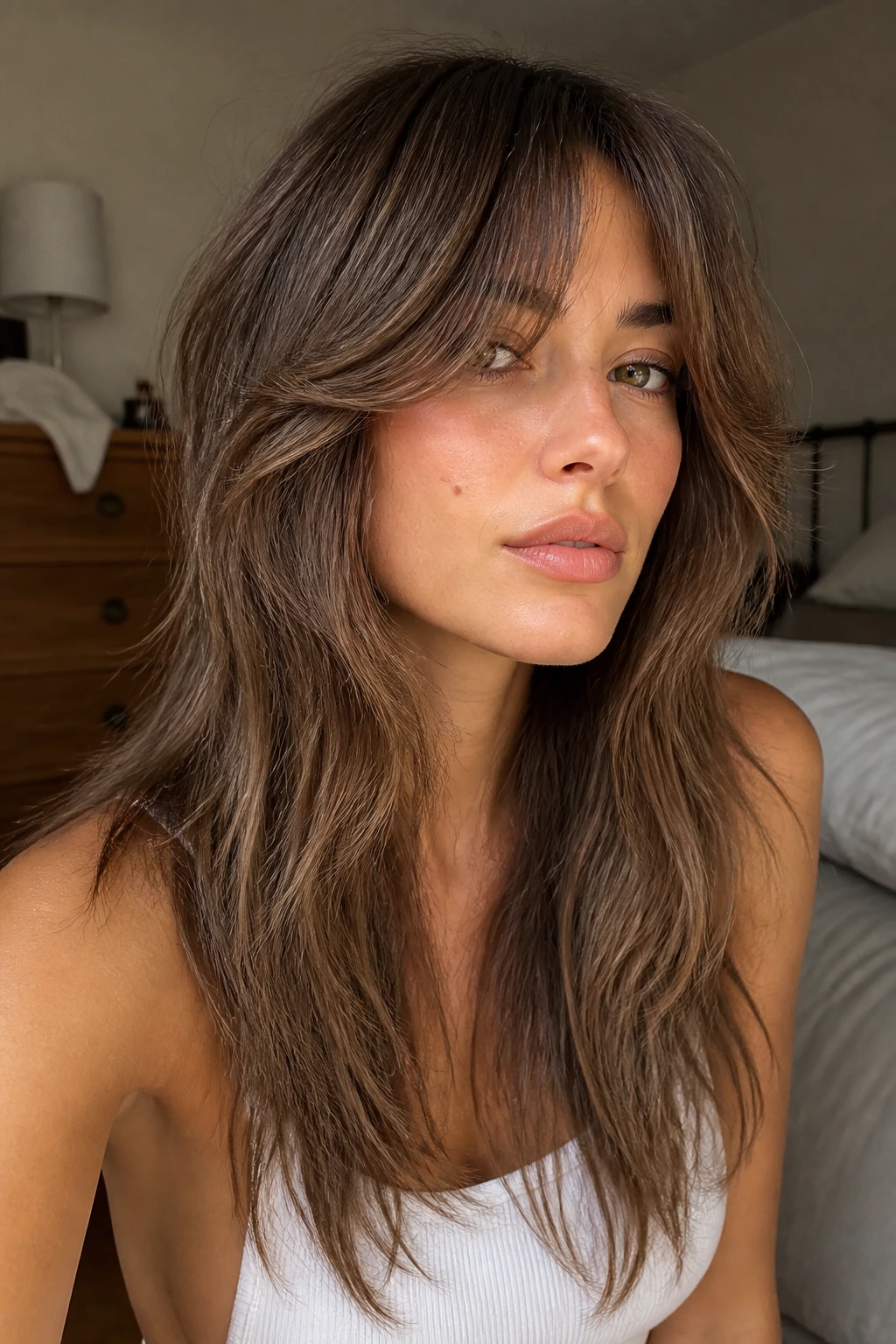
Long hair can get monotonous. That’s the honest truth. A straight sheet of length down the back does not need much imagination to read as heavy, even when the hair itself is healthy and shiny. Curtain bangs fix that by interrupting the vertical line right where the eye lands first: the face.
The front pieces open the haircut. They give the cheekbones a job. They soften the forehead without hiding it, which sounds small until you see the difference in the mirror. A long cut with no front detail can feel like it starts at the shoulders. Add curtain bangs, and the whole shape starts at the eyes.
There’s also a practical side that gets overlooked. Curtain bangs are easier to live with than blunt fringe because they buy you time between trims. They can be pushed into a blowout, tucked into a braid, or left alone on a lazy day without turning into a crisis. That flexibility matters more than a lot of people admit. Hair that can survive both a polished dinner and a greasy coffee run is hair that gets worn, not just admired.
What to Ask Your Stylist Before the First Snip
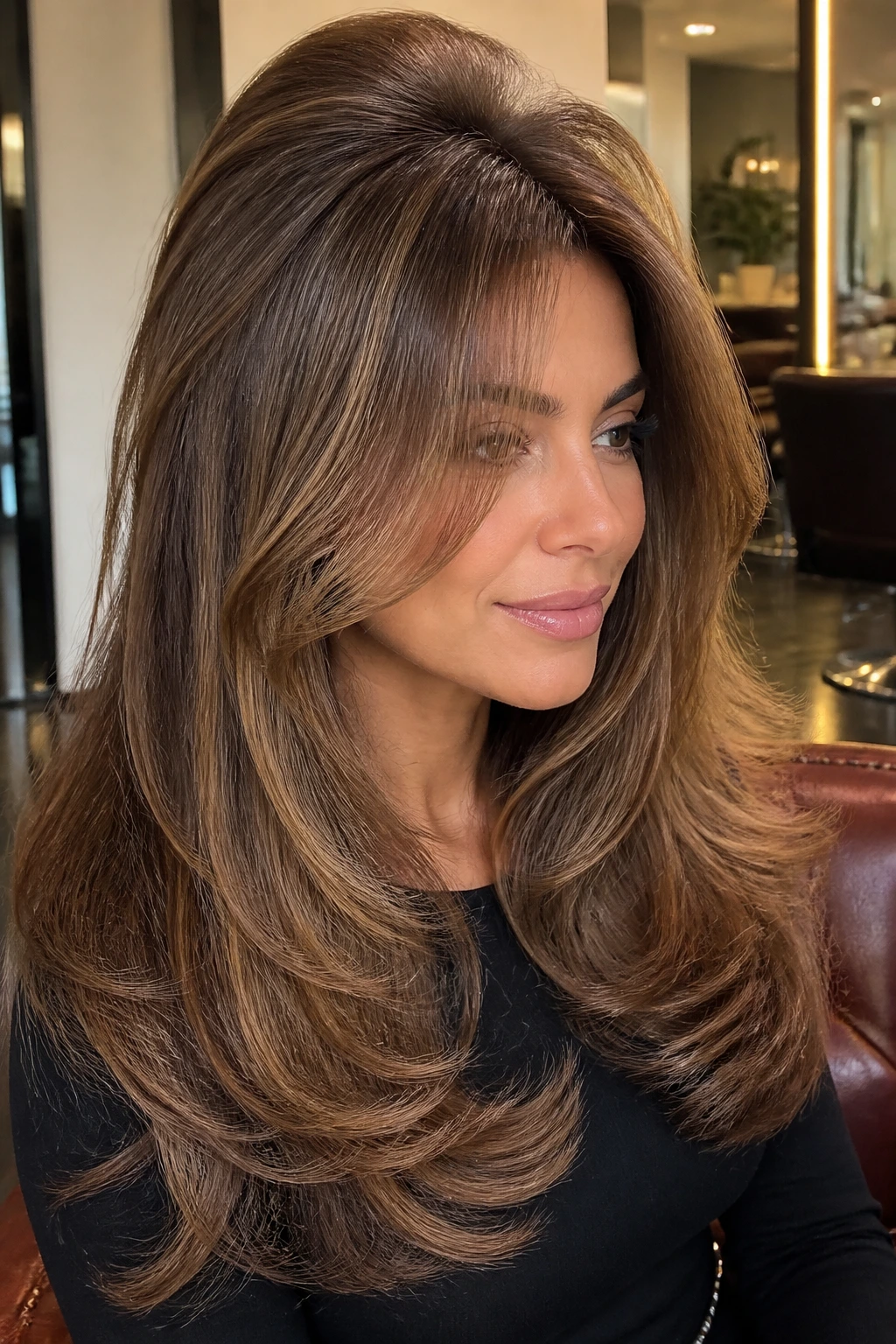
The biggest mistake is asking for “curtain bangs” and stopping there. That phrase covers a lot of territory, and the difference between a flattering version and a frustrating one usually comes down to where the shortest point lands.
Bring a few notes to the chair.
- Where do you want the shortest pieces? Cheekbone, lip, or jawline all create a different effect.
- How much layering can the rest of your hair handle? Thick hair usually needs more interior shape; fine hair usually needs a lighter touch.
- Do you wear your hair straight, wavy, or curly most of the time? The bangs should be cut for the way you actually style them.
- How much maintenance are you willing to do? A stronger fringe shape needs more blow-drying and more regular trims.
A stylist should also see how your hair falls when it’s dry, not only when it’s wet and obedient. That matters a lot with curtain bangs. Wet hair can lie. Dry hair tells the truth. If your texture is wavy or curly, ask for the fringe to be checked in its natural state so the shape doesn’t spring up too far or split too wide.
Tools That Make These Styles Easier to Wear
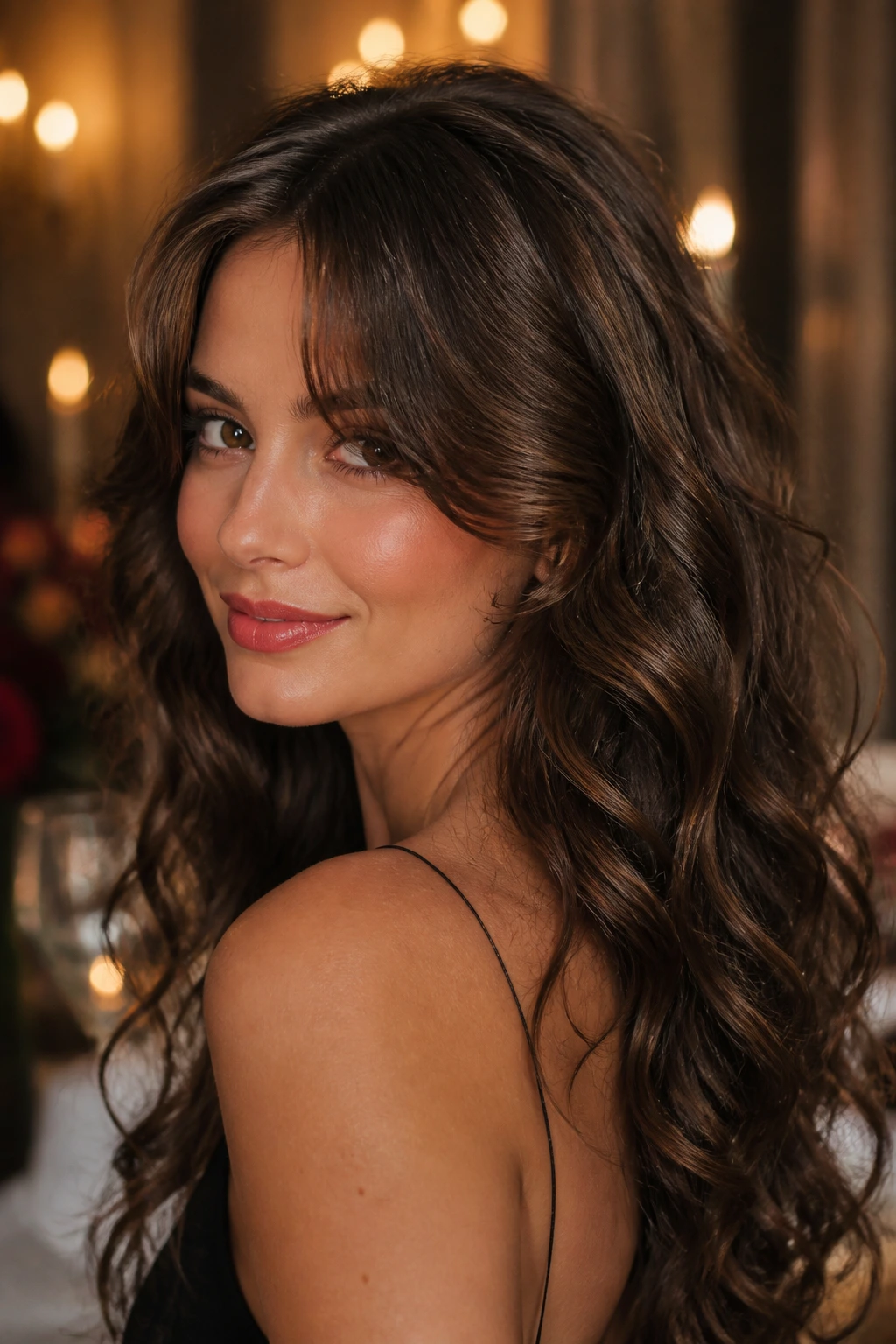
- Round brush, 1 to 1.5 inches: Best for bending curtain bangs away from the face and lifting the roots.
- Blow dryer with a concentrator nozzle: Helps direct the airflow so the front doesn’t puff out in random directions.
- Flat iron: Useful for straight looks and for adding a small bend to the front pieces.
- 1-inch or 1.25-inch curling iron or wand: Good for waves, curls, and loose shape through long layers.
- Heat protectant spray: Keeps the front pieces from drying out, especially if you style them often.
- Texturizing spray: Adds grip to braids, shags, and half-up looks without making the hair stiff.
- Dry shampoo: Helps the bangs stay lifted at the roots between washes.
- Velcro rollers or large clips: Handy for setting the front while it cools after blow-drying.
- Wide-tooth comb: Better than a brush for loosening waves and curls without wrecking the shape.
- Satin pillowcase or bonnet: Helps the fringe hold its bend overnight instead of getting crushed flat.
How to Wear Long Hair With Curtain Bangs From Workday to Dinner
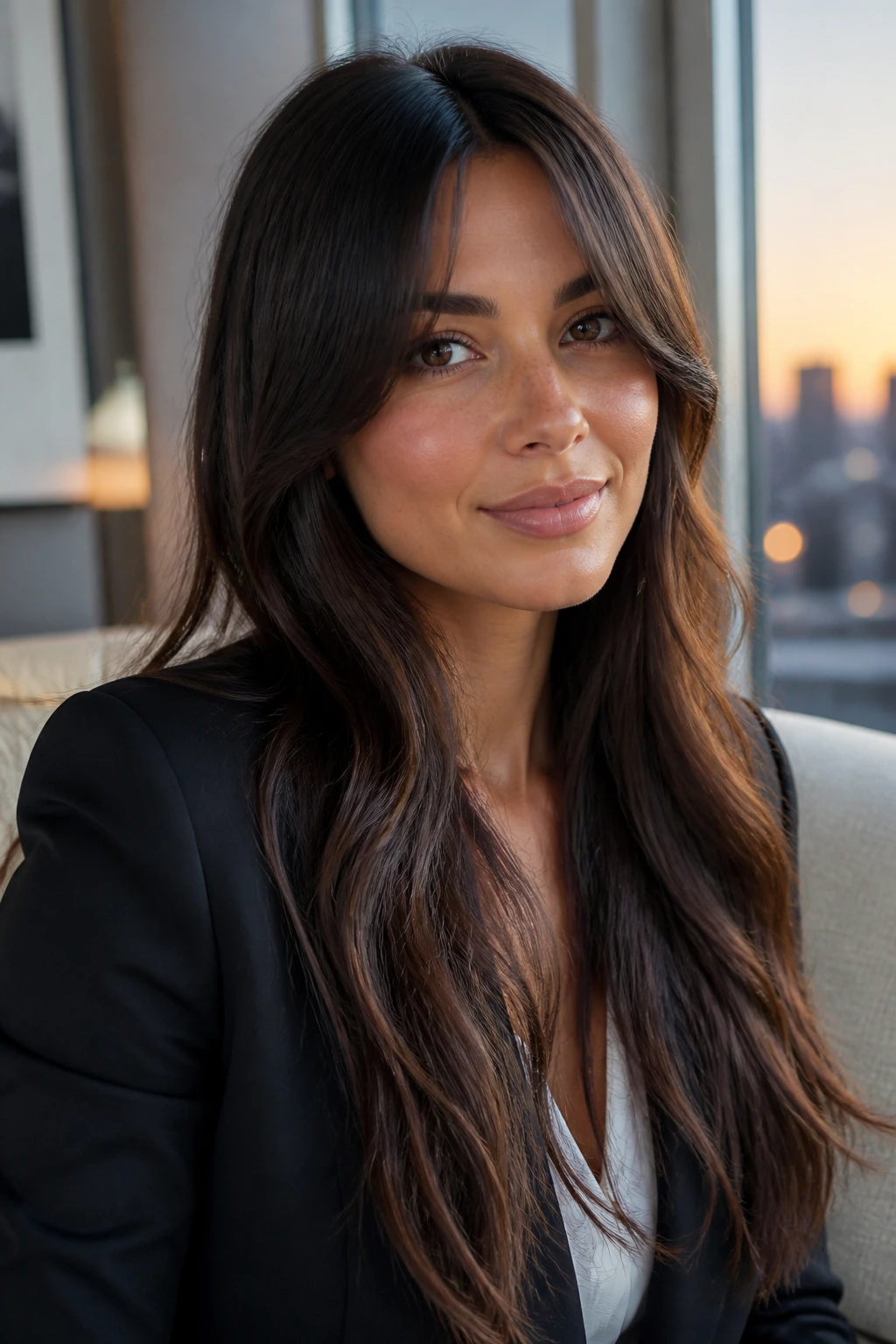
Presentation: The cleanest version is a center part with the front pieces bent softly away from the face and the lengths left either sleek or lightly waved. That shape looks polished without needing to be rigid, which matters when the bangs are doing a lot of the visual work.
Accompaniments: Curtain bangs sit especially well with simple necklines, hoop earrings, and collars that do not fight the face frame. Crewnecks, scoop necks, and open collars let the fringe stay visible. High-neck knits can work too, but then the hair needs a little more lift at the crown so everything doesn’t flatten together.
Portions: If you’re pulling the hair back, leave enough around the front that the bangs still read as a shape, not as stray pieces. Two to four front sections are usually enough for most long cuts, but thick hair may need more deliberate separation. If the length is very heavy, keep the top half looser so the bangs don’t get swallowed by the rest of it.
Beverage Pairing: A crisp iced coffee, a plain sparkling water, or a dry glass of white wine all fit the mood this haircut creates. That sounds silly until you notice that the style itself sits in that same zone — easy, sharp, and not overworked.
Small Styling Tweaks That Change the Whole Look
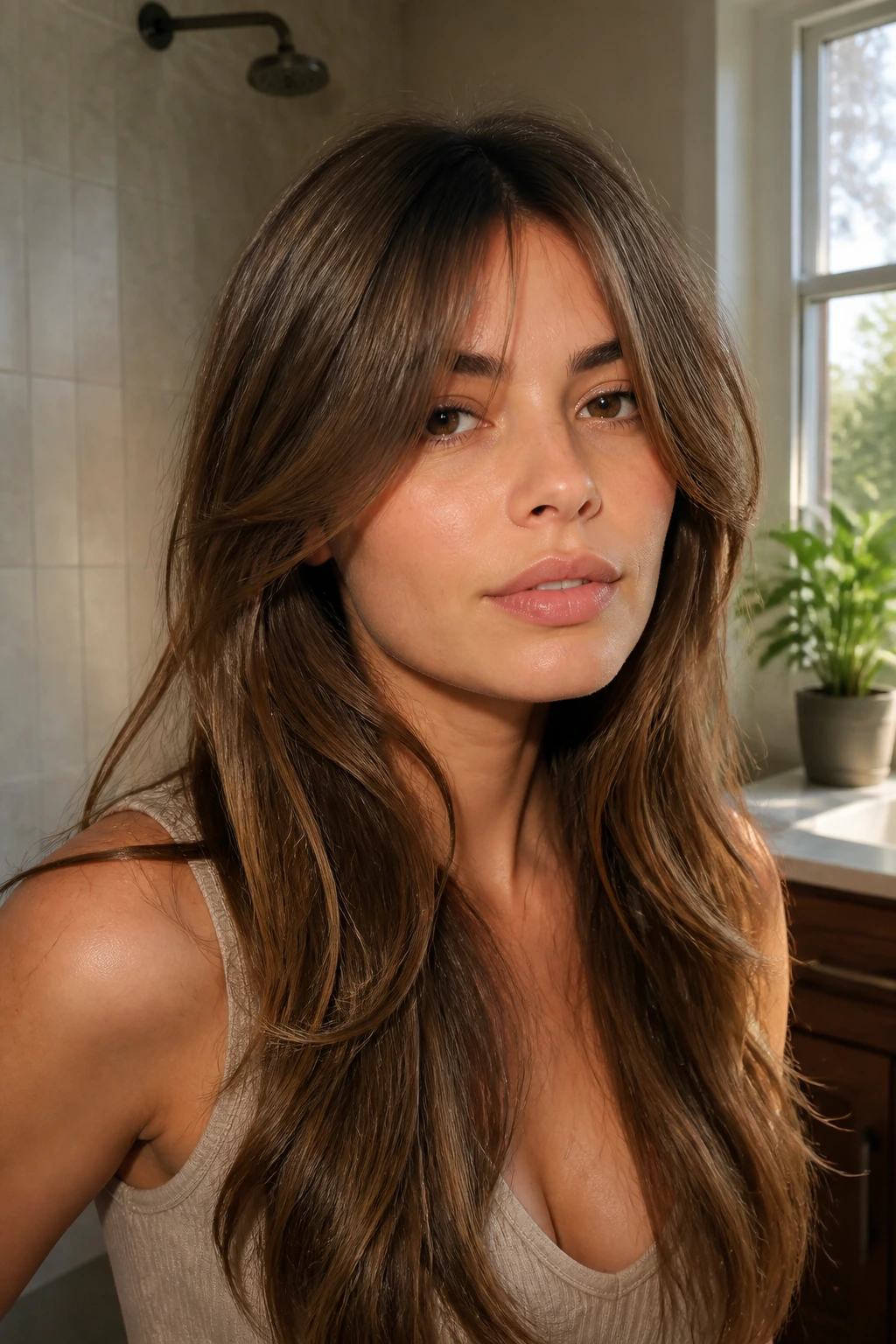
Blow-Dry Boost: Dry the bangs forward first, then sweep them off the face with a round brush while they cool. That little bit of cooling time keeps the bend from collapsing the second you step outside.
Texture Boost: If the hair looks too clean and slips flat, work a bit of texturizing spray into the roots and the mid-lengths around the face. Curtain bangs need grip. Silky hair can actually be harder to keep in shape than slightly rough hair.
Shape Boost: Change the length of the shortest face-framing pieces before you change the rest of the haircut. Moving those front sections up or down by even half an inch can turn the whole style from sweet to sharp, or from soft to glam.
Accessory Boost: A small clip, a barrette at one side, or a thin headband can change where the bangs fall without hiding them. That’s useful on days when the front feels too flat and you do not want to rewash your hair.
Color Boost: A lighter face frame or a few lowlights through the front layers can make the curtain shape show up more clearly. The cut gets more readable when the front and the length are not the exact same tone.
Keeping Curtain Bangs in Shape Between Salon Visits
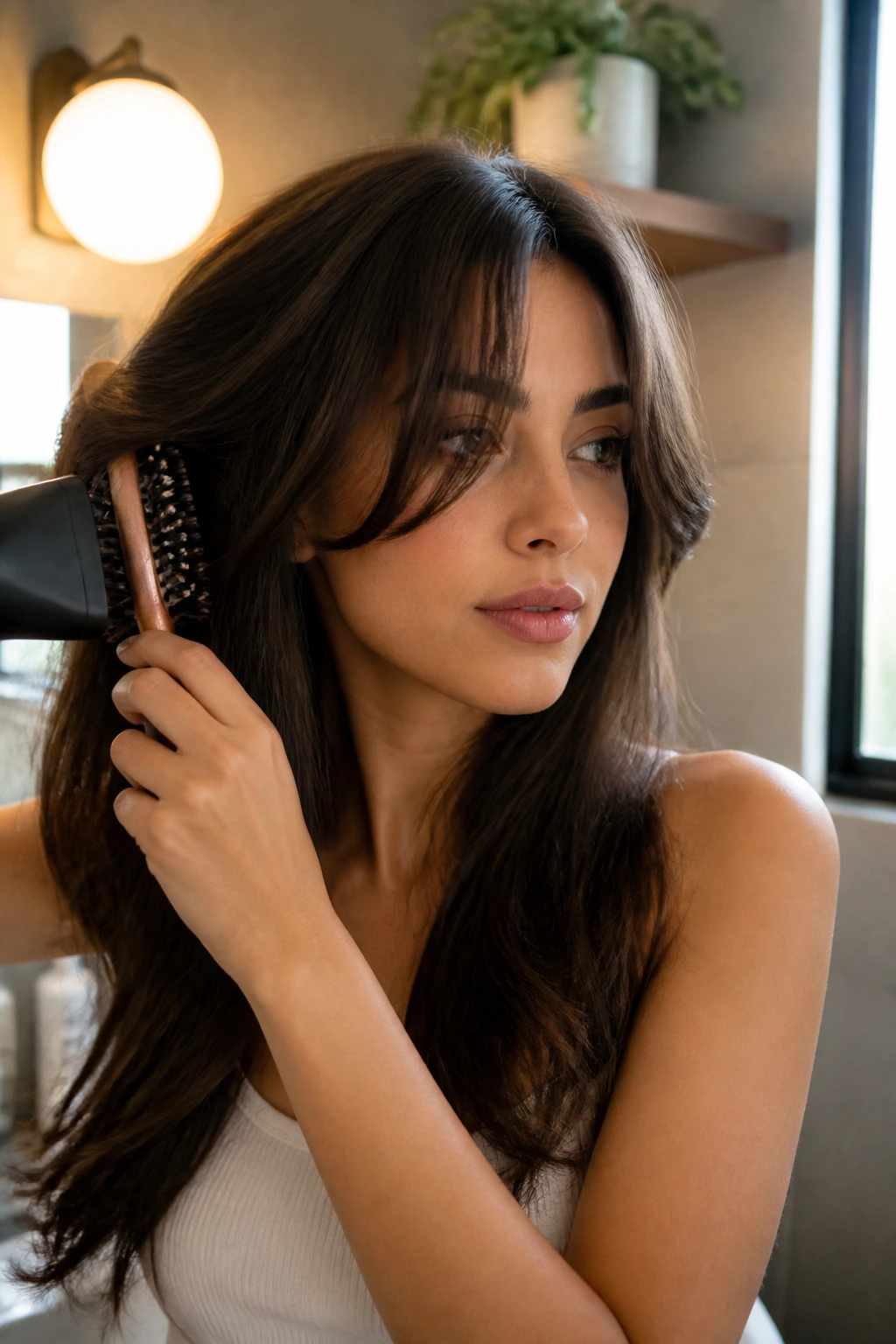
Curtain bangs need more attention than the rest of long hair, but not in a dramatic way. A trim every four to six weeks usually keeps the front pieces from sliding too far into the cheeks or eyes. The length in the back can often go longer, especially if the shape is built from layers and not one blunt edge.
The day-to-day routine is simple. If the roots get oily, use a little dry shampoo at the front section only — not a cloud all over the head, which can make the bangs feel dusty. If the hair is straight, a quick brush-and-bend with a round brush or flat iron usually resets the front in under five minutes. Wavy and curly hair often needs a mist of water, a dab of leave-in, and a finger twist to bring the split back.
Sleep matters more than people think. A satin pillowcase helps the bangs keep their bend, and clipping the front loosely back while it dries can stop it from drying in a weird forked shape. If you wash your hair often, the bangs may need a touch-up every morning. If you wash less often, they usually settle into a softer, easier rhythm by day two.
Mistakes That Flatten the Front or Break the Shape
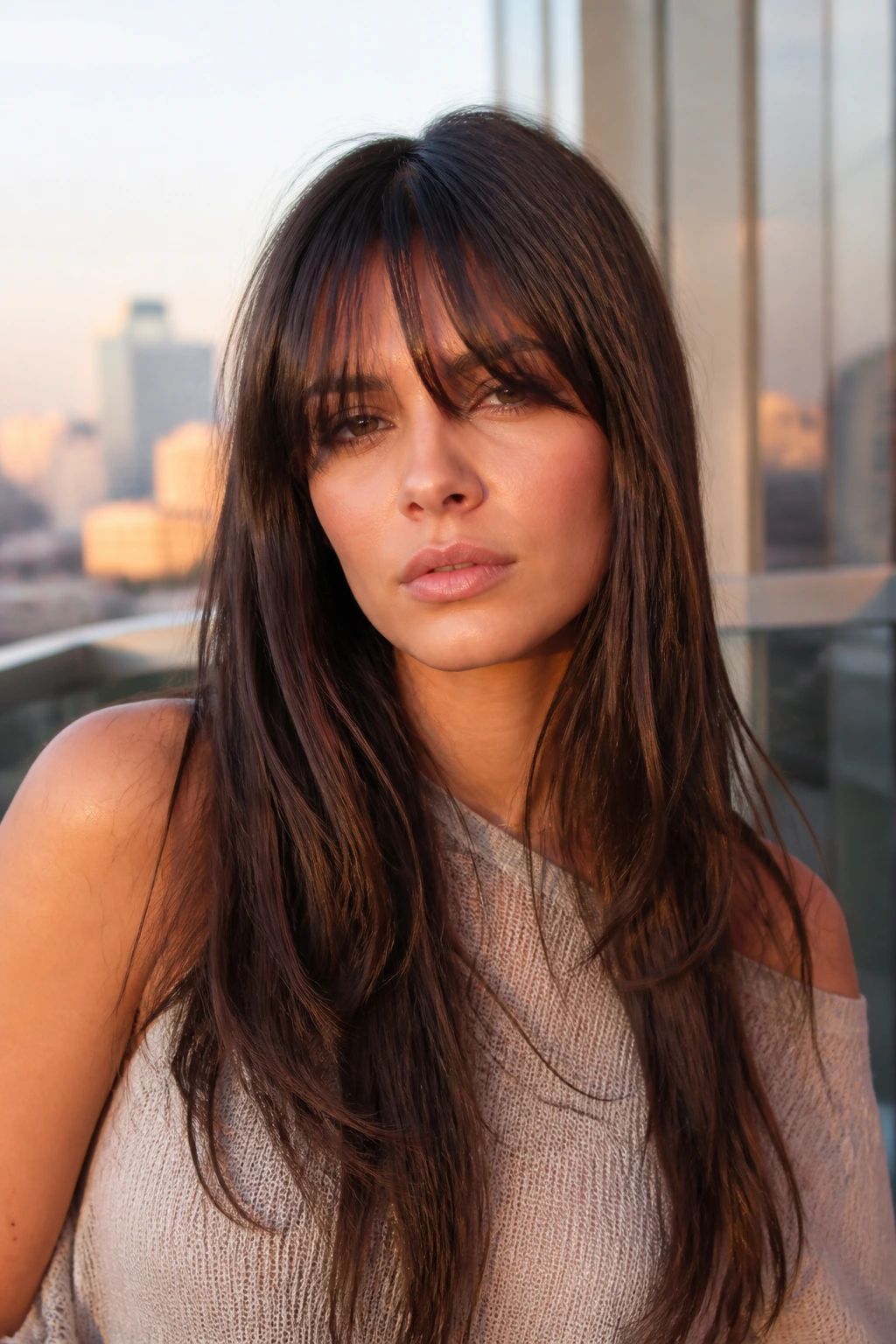
Cutting the shortest point too high: If the bangs start too far up the forehead, they stop looking like curtain bangs and start looking like chopped fringe. The fix is to keep the shortest piece around the cheekbone or lower and let the side pieces carry the shape.
Flattening the roots with too much oil: A heavy serum near the front can drag the bangs straight down and make them separate in awkward strands. Keep oils and creams on the mids and ends, then use dry shampoo or a light texture spray at the roots.
Styling the front inward instead of away from the face: Curling the bangs toward the cheeks makes the face frame collapse inward. Bend them back and out, especially at the ends, so the split stays open.
Ignoring the rest of the haircut: Curtain bangs need a haircut that supports them. If the lengths are all one bulk with no layering, the bangs can look like a separate piece glued on top. The front and the back need to share the same language.
Overworking fine hair: Too much round brushing, too much product, too much heat — fine hair gives up fast. Use less product than you think, keep the sectioning clean, and stop once the bangs have a soft bend. They do not need to be pumped full of volume to look good.
Named Variations and Different Ways to Wear the Look
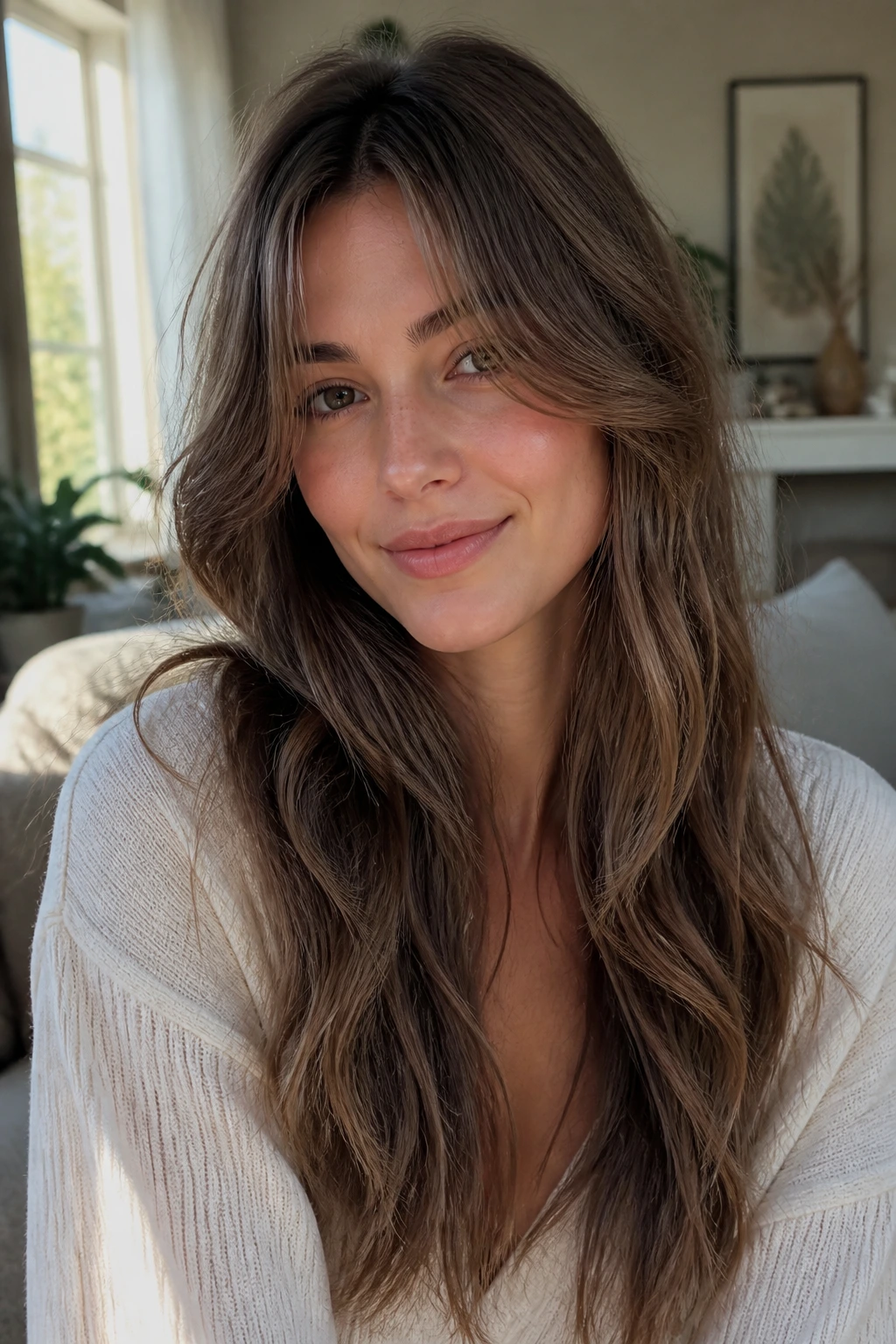
The Air-Dry Edit: Keep the layers lighter and the bangs a touch longer, then use leave-in conditioner and a curl cream or foam. This version works well for wavy hair that already has a soft bend and doesn’t want daily heat.
The Fine-Hair Lift: Ask for a slightly shorter face frame with gentle internal layers through the crown. A bit of root mousse and a round brush at the front keeps the curtain shape visible without making the ends look thin.
The Thick-Hair Sweep: Go for stronger layering through the interior and a soft taper around the cheekbones. This helps remove bulk so the bangs open properly instead of sinking into the rest of the hair.
The Curly Frame: Let the bangs be cut dry in the natural curl pattern, then keep them longer than you would on straight hair. A diffuser and a light cream help the front stay separated without puffing out.
The Soft Glam Version: Add a deeper bend through the lengths and a little more height at the crown. This is the one for dinners, photos, and anything where the hair should look styled but not lacquered.
Frequently Asked Questions About Long Hairstyles With Curtain Bangs
Do curtain bangs work on very long hair?
Yes, and often better than on medium-length cuts. The extra length gives the bangs a place to blend, so the front doesn’t feel chopped off from the rest of the style.
Will curtain bangs suit a round face?
They can, especially when the shortest pieces land around the cheekbones and the layers angle downward. That vertical line helps lengthen the face instead of widening it.
How often do curtain bangs need trimming?
Most people need a touch-up every four to six weeks to keep the shape clean. If your hair grows quickly or your bangs sit right on the eyes, you may want them cleaned up sooner.
Can I wear curtain bangs without heat styling?
Absolutely, but the cut has to match your texture. Wavy and curly hair usually does better air-dried with a bit of product, while very straight hair may need at least a quick bend at the front to keep the shape open.
What if my bangs split too wide apart?
That usually means they’re too heavy at the sides or too short at the center. A stylist can rebalance the angle, and at home you can guide the front with a round brush so the split sits closer to the cheekbone.
Do I need layers with curtain bangs?
Most long hair benefits from at least some layering. Without it, the bangs can look disconnected from the rest of the cut and the length can feel too solid.
Can curtain bangs work in a ponytail?
Yes, that’s one of their best tricks. Even a plain ponytail looks softer when the bangs frame the face and keep the style from feeling pulled back too tightly.
Are curtain bangs hard to grow out?
Not usually. They blend into long layers more gracefully than blunt bangs, which is one reason people keep coming back to them after they’ve sworn they were “done with bangs.”
The Shape That Keeps the Fringe Interesting
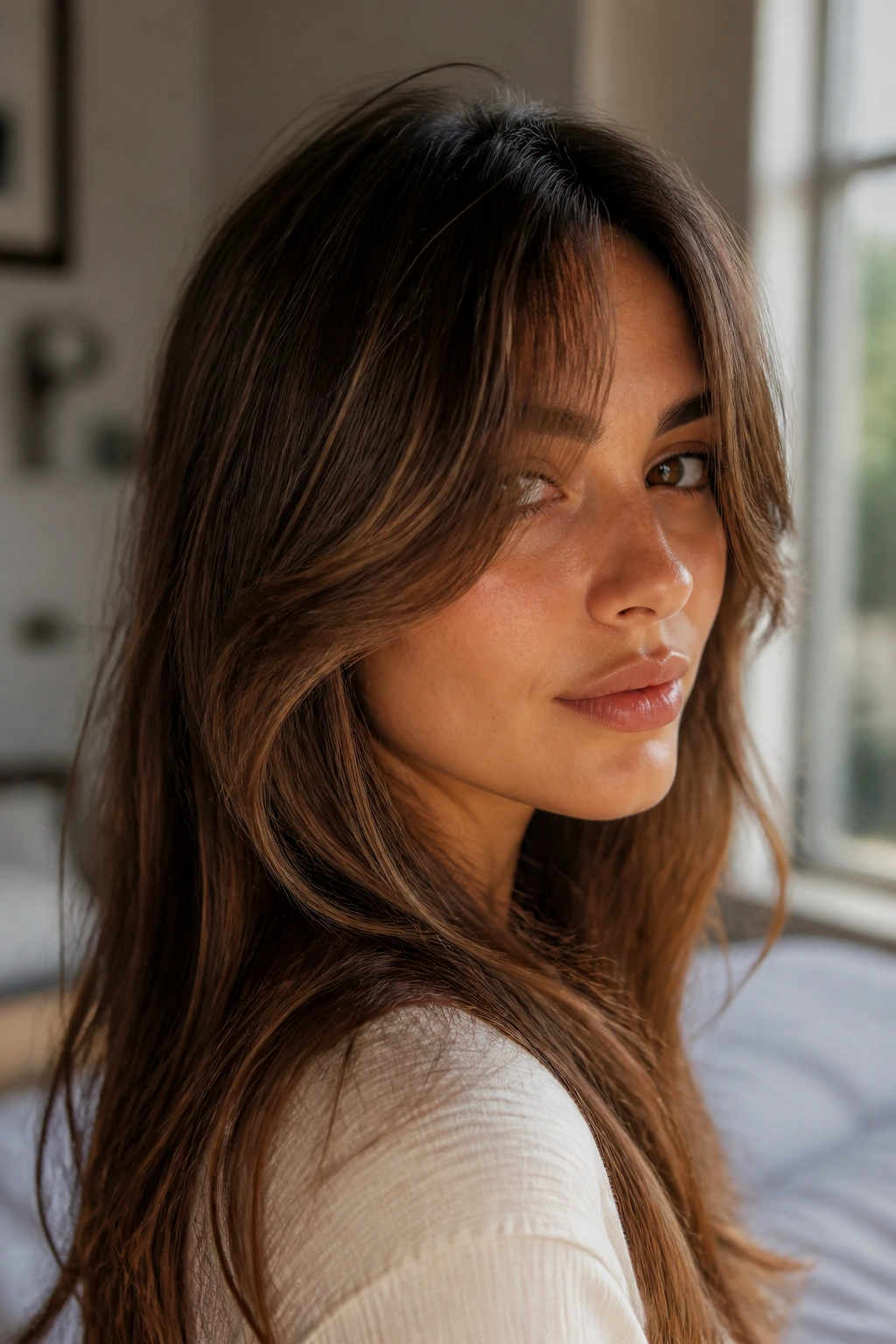
Long hair can get heavy in a hurry. Curtain bangs stop that from happening at the front, and they do it without stealing the length that makes the style feel dramatic in the first place.
That’s the real appeal here. You get softness near the face, movement through the sides, and enough length left over to tie up, braid, wave, or wear straight when you’re in a hurry. The haircut keeps changing shape in small ways, which is exactly why it stays useful.
If you want long hair that feels like it has some architecture instead of just hanging there, curtain bangs are worth the chair time. Give the front room to fall, keep the layers honest, and let the shape do the work.
