



Short hairstyles with bangs have a way of making a face look more awake without asking for a lot of length. A blunt bob with a neat fringe reads sharp and deliberate; a shaggy crop with soft bangs reads easier, airier, a little less polished but more interesting. Same basic idea. Completely different mood.
The catch is that bangs are not a background detail. They sit in the first inch or two of hair growth, where cowlicks, oil, and shrinkage show up fast. Cut them wrong and you’ll spend a month pushing them off your forehead. Cut them well and the whole haircut feels balanced before you even touch a styling tool.
A good short cut with fringe does a lot of quiet work. It can sharpen a jawline, soften a strong brow, hide a forehead you don’t want to think about, or make a short shape feel finished instead of choppy. The best versions don’t just sit there and look cute in a salon mirror. They move, bend, and settle in a way that still looks like a real haircut at 4 p.m., after a commute, a wind gust, and one too many times running your hands through it.
Why You’ll Love This Collection
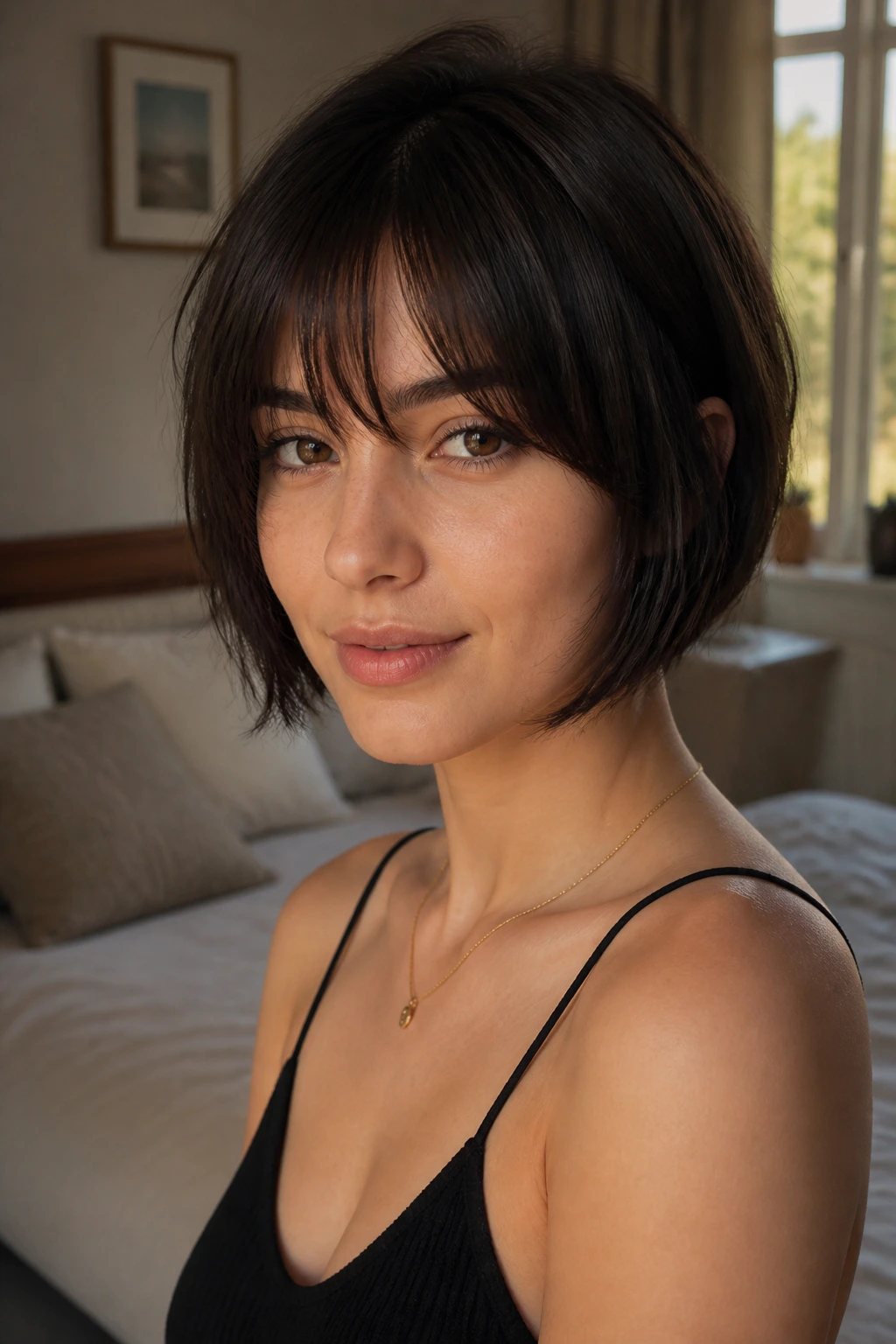
-
Face-framing without length: Bangs change the shape of a short cut fast, so you get a new look without growing hair halfway down your back first.
-
More options than most people expect: Short hair with fringe is not one look; it can be blunt, shaggy, curly, sleek, cropped, or soft around the edges.
-
Better balance for tricky features: A fringe can balance a high forehead, soften a strong hairline, or make a short cut feel less severe.
-
Easier daily styling than long hair: A chin-length bob or pixie needs fewer brush strokes and less product than shoulder-length hair that has to be blown out end to end.
-
Good for texture, not just straight hair: Waves and curls can look especially lively with the right bang shape, as long as the fringe is left long enough to move.
-
Fast grow-out potential: Curtain bangs, side bangs, and feathered fringes give you more room if you decide you want the front to blend back in later.
1. The Blunt French Bob With Brow-Skimming Bangs
A blunt French bob with brow-skimming bangs has a kind of clean little confidence to it. The line sits around the jaw, the fringe lands just at or above the brows, and the whole shape looks best when the edges are crisp enough to show that they were meant to be blunt. It’s a short hairstyle with bangs that does not need extra decoration to make its point.
Why It Works
The blunt perimeter keeps the cut from looking puffy, which matters a lot when the fringe is dense. If the bangs and the bob are both heavily layered, the shape can start to fray at the edges and lose the sharp line that makes this haircut work in the first place.
It suits straight to slightly wavy hair especially well, because those textures hold a clean edge without a fight. If your hair bends more than that, the cut can still work, but the front usually needs a quick pass with a round brush or flat iron so the fringe does not kick off to one side.
Best For
- Oval and heart-shaped faces
- Fine to medium hair density
- Anyone who likes a neat, graphic outline
Pro tip: Ask for the bangs to be cut dry or nearly dry. A wet fringe often shrinks higher than people expect, and this style loses a lot of its charm if the brows disappear under it.
2. The Textured Pixie With Piecey Fringe
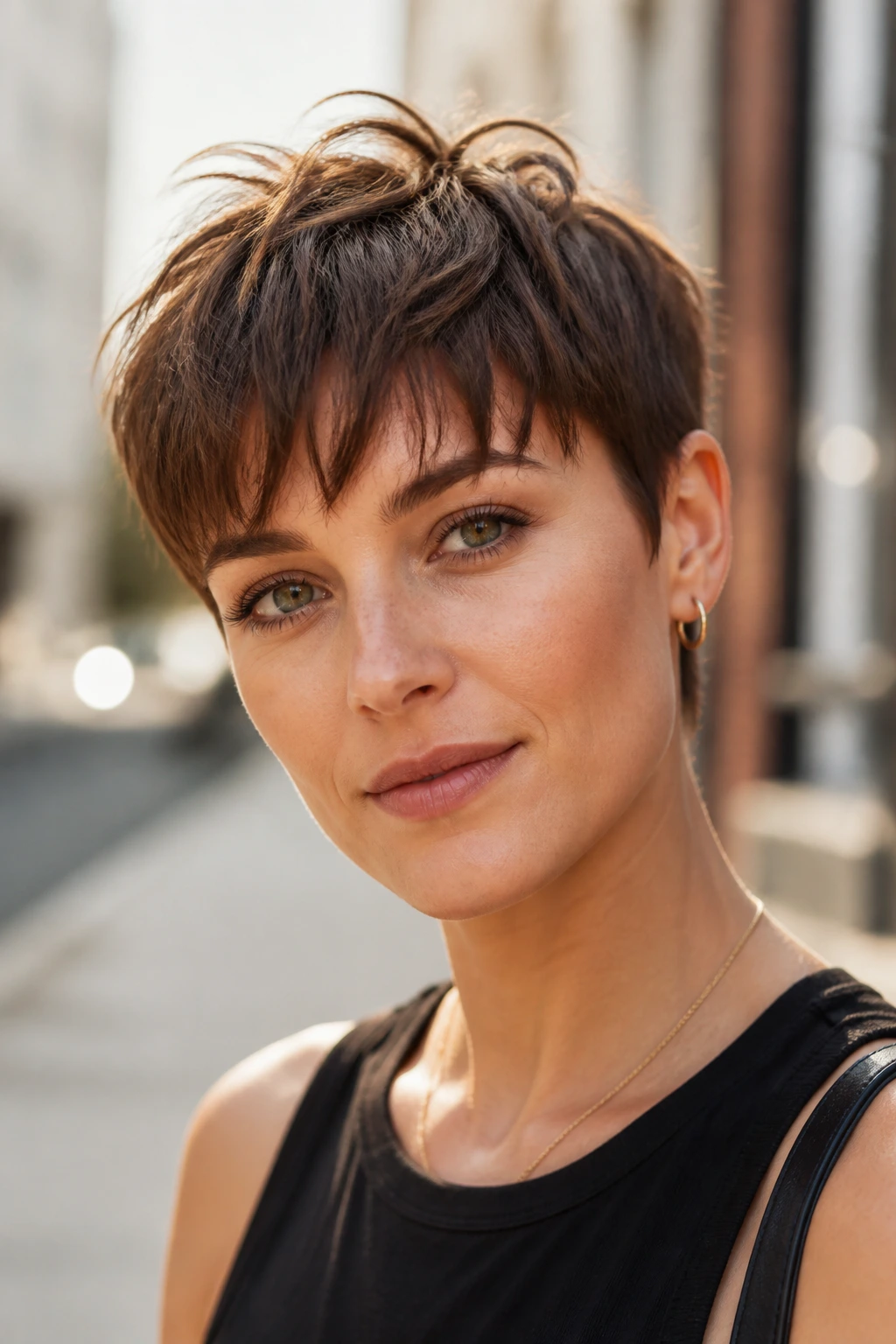
This one is all about separation. The top stays short, the sides stay tidy, and the fringe gets cut into little movable pieces instead of one heavy block. It looks casual in the best sense, like the hair already knows where it wants to go.
Why it works on busy mornings: the texture does half the styling for you. A pea-sized bit of matte paste rubbed through the crown and fringe is usually enough to wake it up. No need to chase every strand into place.
If you’ve got fine hair, this is one of the smartest short hairstyles with bangs because the choppy fringe gives the illusion of more fullness at the front. Thick hair works too, but the cut has to be debulked carefully so it doesn’t puff out like a helmet by noon.
What to ask for
- Short, tapered sides
- Soft point-cut fringe
- A little extra length at the crown for movement
Pro tip: Keep the fringe a touch longer than you think you want. Piecey bangs look better when they can land unevenly across the forehead instead of sitting like a ruler line.
3. The Curly Crop With Soft Bangs
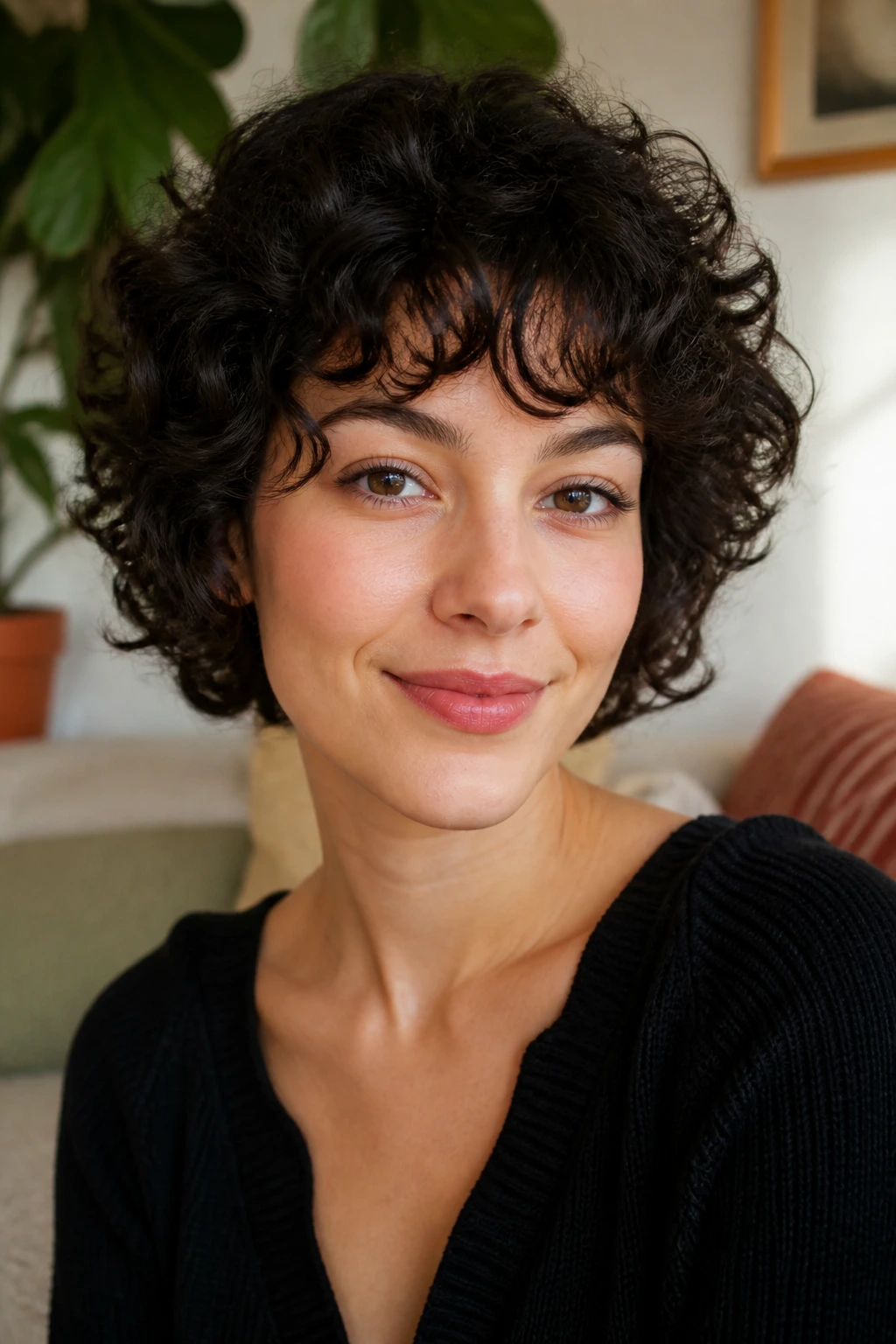
A curly crop with soft bangs is one of those cuts that looks easy when it’s done well and frustrating when it isn’t. The fringe shouldn’t be forced flat. It should move with the curl pattern, touch the forehead lightly, and leave a little space between the curls so the front doesn’t turn into one dense wall.
The smartest version is usually cut dry, curl by curl, or at least nearly dry. That matters. Curly hair springs in a way straight hair never will, and if someone cuts the fringe too short while it’s wet, you may spend months waiting for it to settle.
This cut is especially nice when the curls are loose to medium, because the bangs can sit softly instead of puffing straight out. A little curl cream and a diffuser are enough for most days. Anything heavier starts weighing the front down.
4. The Jaw-Length Bob With Curtain Bangs

There’s a reason this shape stays in circulation. The jaw-length bob gives you enough structure to feel intentional, and curtain bangs break up the front without boxing the face in. The center part opens the middle, while the longer sides sweep toward the cheekbones.
It’s one of the easiest short hairstyles with bangs to grow out because the fringe already blends into the rest of the cut. That saves you from the awkward “I’m growing out bangs and I look like I lost a bet” stage.
A small but useful detail
Keep the shortest part of the curtain fringe at or just below the brow line, then let the side pieces slide toward the jaw. If the center gets too short, the shape starts to separate in a way that feels accidental rather than soft.
Best with blow-dried smoothness, but it also works when the ends are a little bendy. That tiny bend through the front can keep the haircut from looking too formal.
5. The Bixie Cut With Long Side Bangs
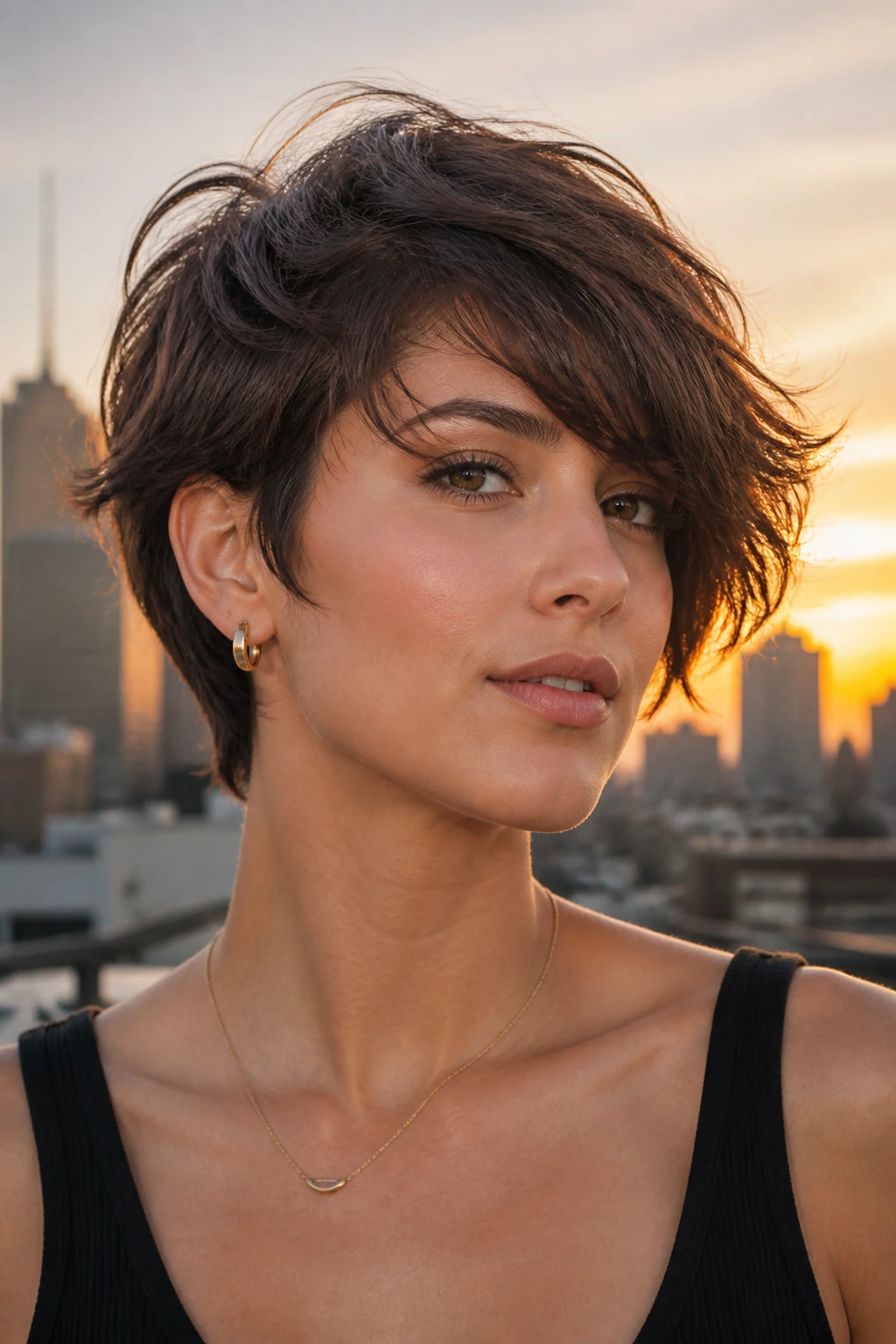
The bixie sits between a bob and a pixie, and that in-between length is exactly why it feels so wearable. Long side bangs soften the front, while the cropped back keeps the whole style light around the neck and ears. It’s a useful cut if you want short hair without going full pixie.
Unlike a blunt bob, the bixie gives you room to play with direction. You can sweep the fringe across the forehead, tuck it back with a tiny clip, or let it fall diagonally for a little asymmetry. That flexibility matters on days when your hair doesn’t want to cooperate.
It works especially well for straight or wavy hair that has a bit of bend but not enough curl to create a full fringe on its own. Ask for texture through the top, not just the ends; otherwise the long side bang can lie flat and lose its shape.
6. The Stacked Bob With Wispy Bangs
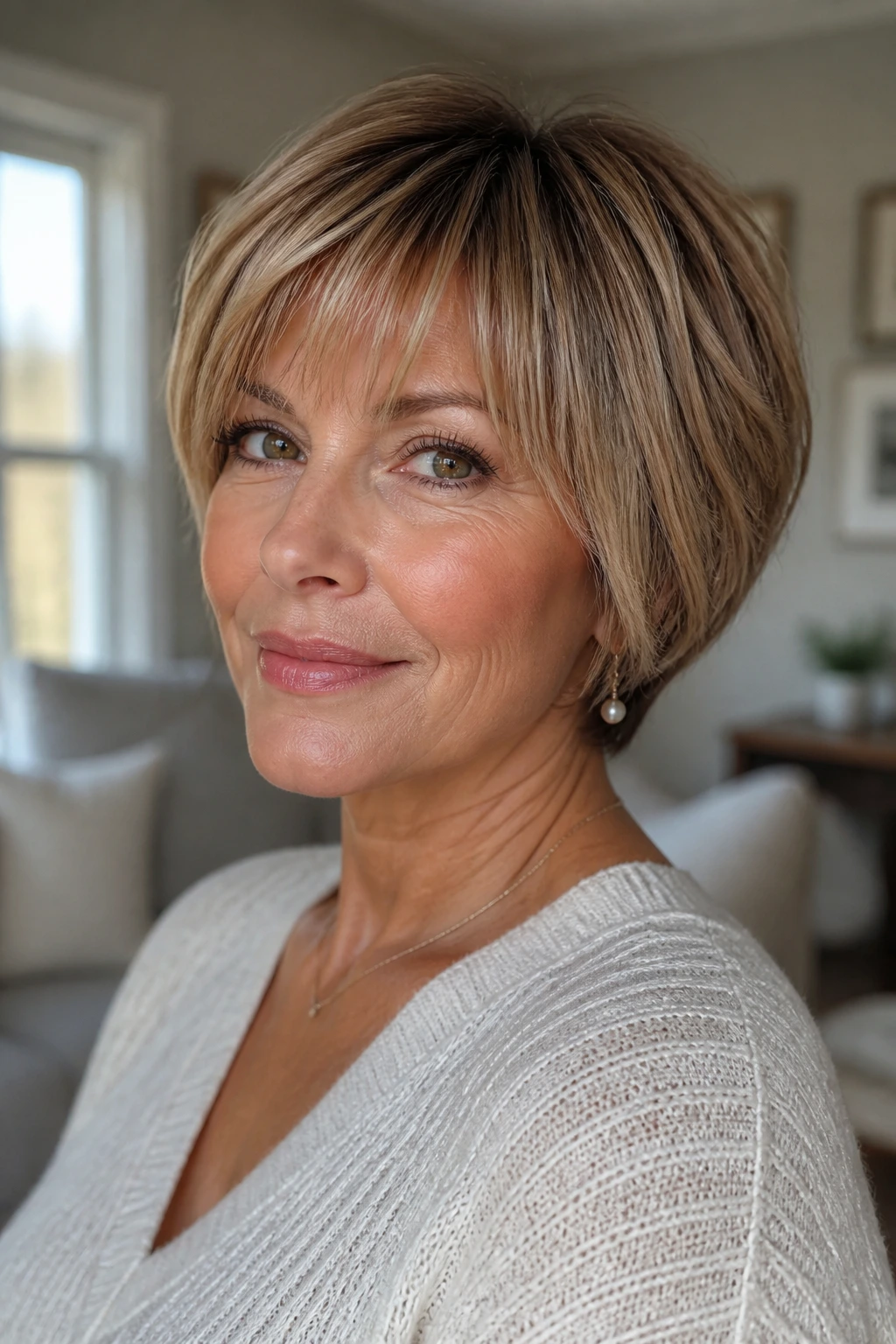
A stacked bob gets most of its lift from the back. The shorter layers under the crown build shape, which keeps the neckline clean and stops the cut from collapsing into the neck. Add wispy bangs and the front softens just enough to balance all that structure.
This is a strong choice if your hair is thick and tends to sit heavy. The stacked back removes weight where you don’t want it, and the wispy fringe keeps the front from looking boxy. The result feels tailored, not stiff.
One thing people miss: wispy bangs need a good haircut more than a lot of product. If the fringe is cut into fine strands with no sense of the natural fall, it can look stringy instead of airy. Keep the pieces connected, not thinned to the point of weakness.
7. The Shaggy Crop With Bottleneck Bangs
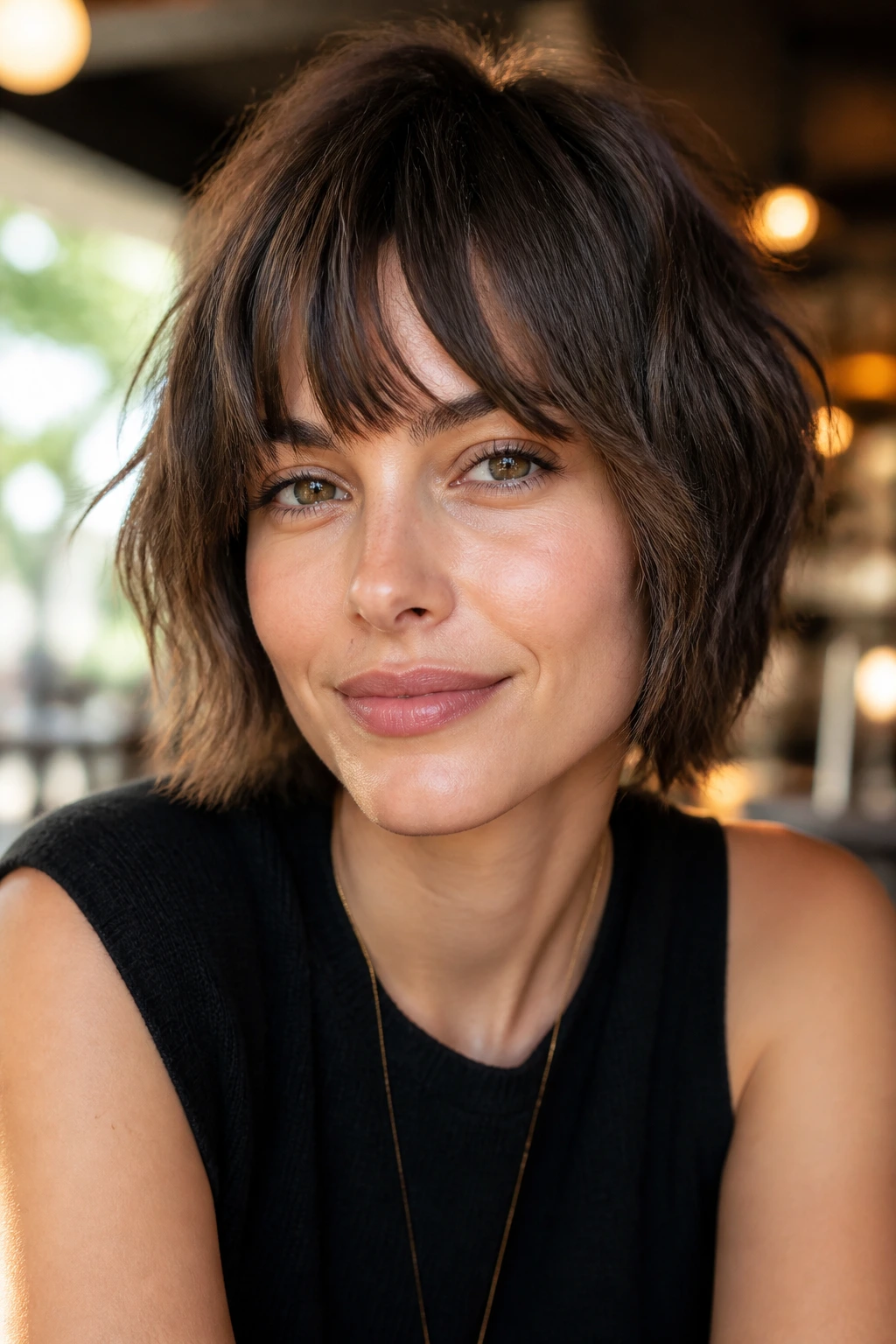
Bottleneck bangs are shorter in the center and longer toward the temples, which gives the front a natural curve. On a shaggy crop, that shape works because the cut already wants movement. The fringe becomes part of the flow instead of sitting on top of it.
What makes it different
The center part of the fringe doesn’t need to be perfectly even. It just needs to be long enough to sit near the brows, then open toward the sides. That slightly narrower center is what makes bottleneck bangs feel softer than straight-across fringe.
This cut is a nice fit for wavy hair and medium density hair that likes texture but not too much bulk. It can also soften a wider forehead without making the whole haircut feel heavy. A little texturizing spray on the ends is usually enough.
8. The Micro-Bob With Baby Bangs
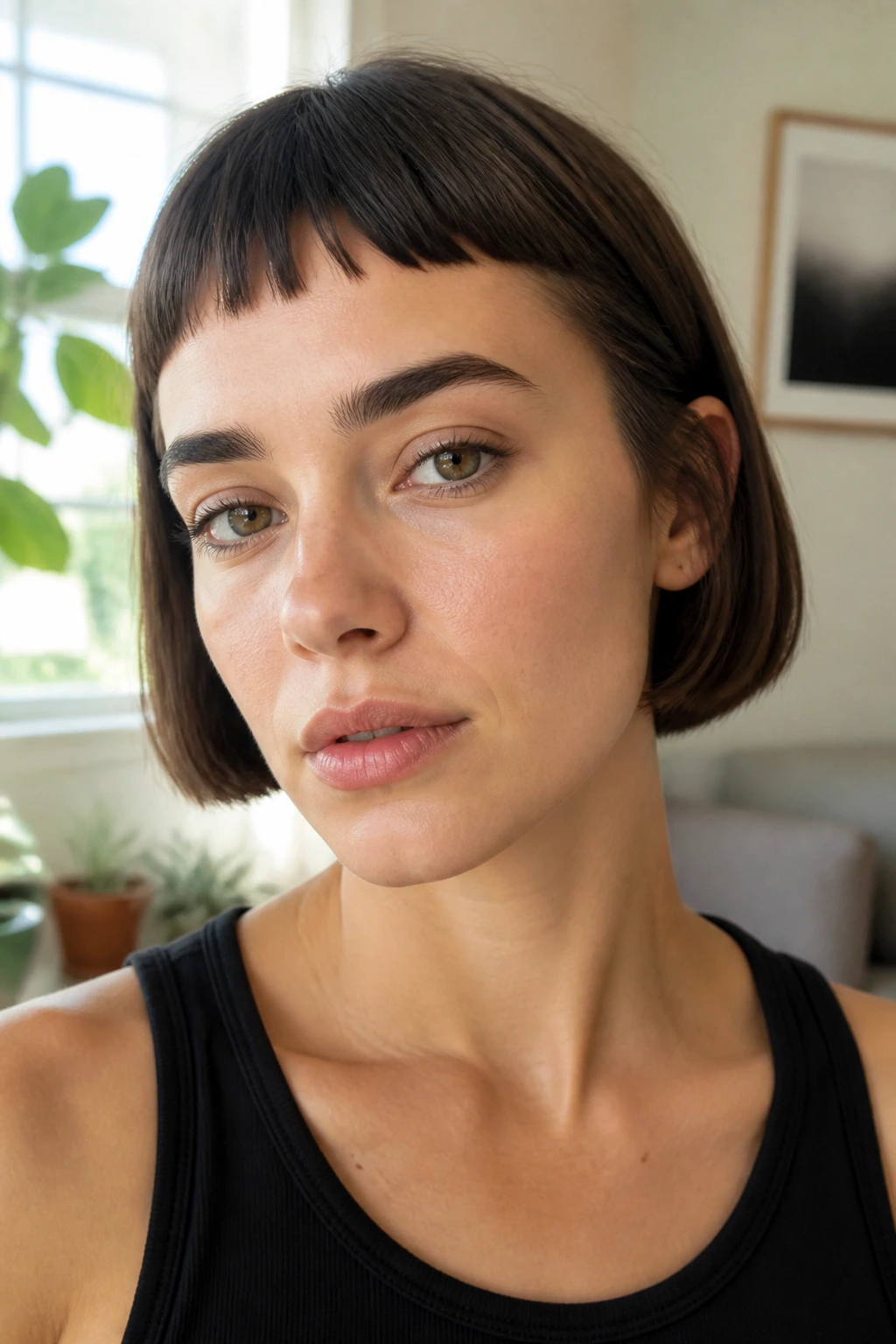
Tiny bangs are not subtle. They sit high on the forehead, and the whole cut reads a little sharper because of it. Pair them with a micro-bob that ends around the lips or chin, and you get a short haircut that feels graphic from the first glance.
This is not the most forgiving option. It needs regular trims, clean styling, and a willingness to let the haircut make the statement for you. If you want a fringe you can mostly ignore, skip this one.
But if you like a cut with real edge, baby bangs can be excellent. They work best on straight or slightly wavy hair, and they often look smartest when the rest of the bob is smooth rather than overly textured. Keep the fringe narrow and precise. Too much width, and the whole face can look crowded.
9. The Asymmetrical Crop With Deep Side Bangs
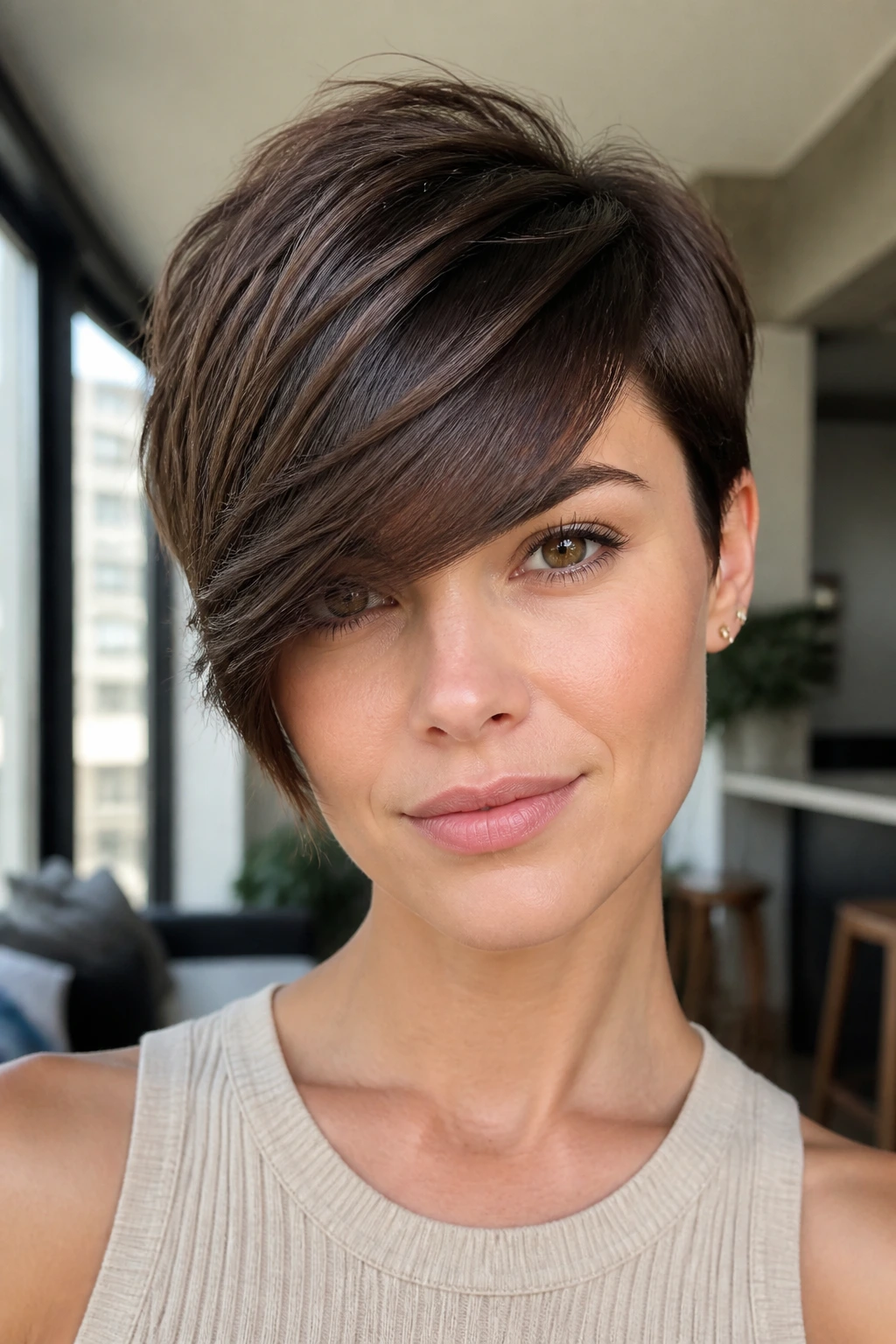
A deep side bang changes the mood of a short cut in a hurry. Instead of cutting the face in half, it slides across one side and lets the other open up, which creates a diagonal line that feels dynamic and a little dramatic.
The asymmetry does useful work on square or angular faces because the diagonal softens hard edges. It also helps if your hair naturally parts off-center. Fighting that growth pattern is a waste of time; this cut leans into it and makes the part look deliberate.
The best part
It doesn’t need perfect smoothness to work. In fact, a bit of texture through the fringe makes the side sweep look richer. A light styling cream on damp hair and a quick brush toward the chosen side usually does the trick.
10. The Tapered Pixie With Feathered Fringe
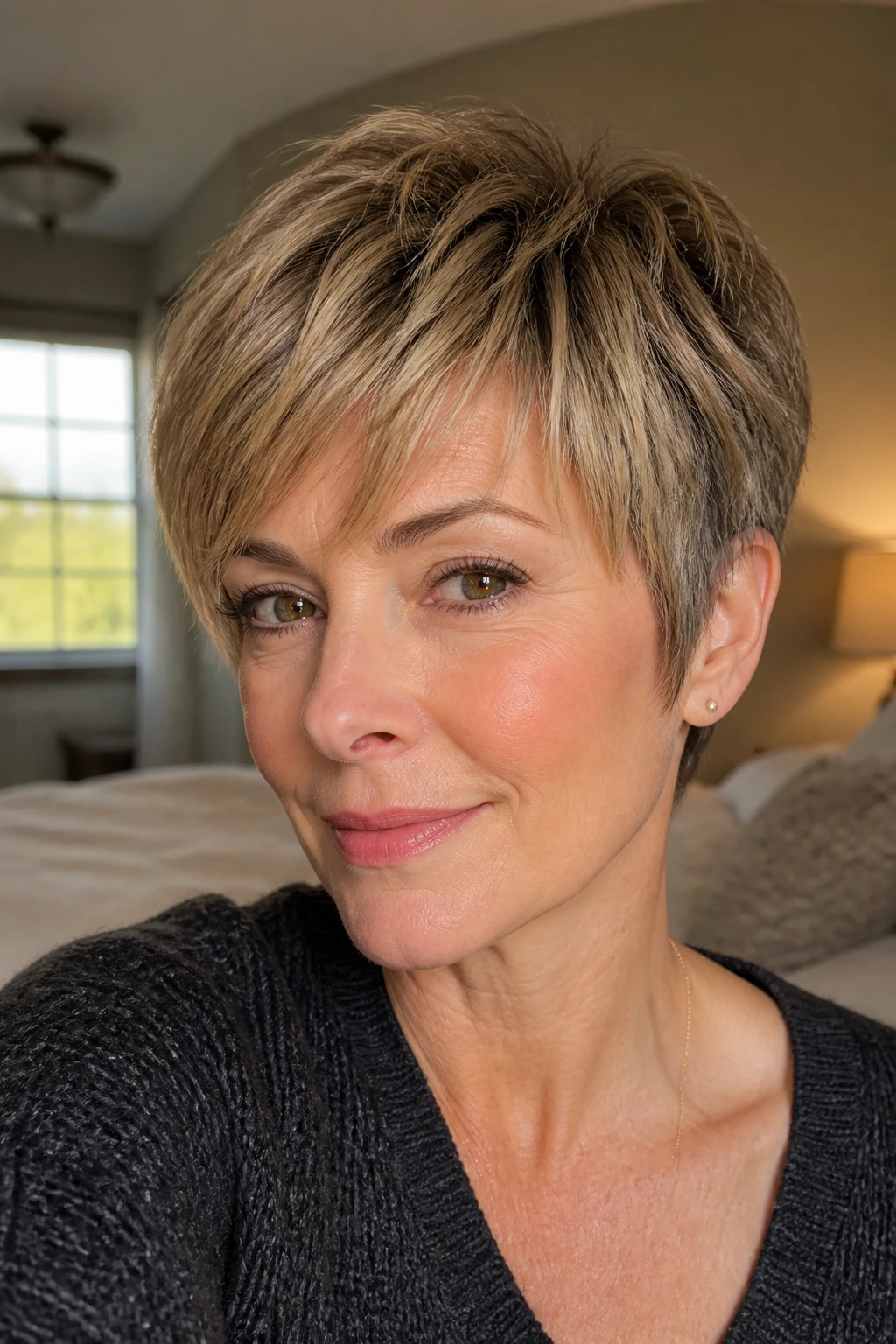
A tapered pixie keeps the back and sides close to the head, which creates a neat line around the ears and neck. The feathered fringe gives the front a softer landing so the cut doesn’t feel too severe. That contrast is the whole point.
If you’ve got fine hair, this shape can be a lifesaver. It makes the most of what’s there without asking the hair to fake fullness it doesn’t have. Feathered fringe also grows out gracefully, which is more useful than people admit.
The trick is keeping the fringe light, not wispy in a weak way. Think soft ends, not see-through ends. If the bangs are over-thinned, they separate into strings and stop framing the eyes at all.
11. The Rounded Mushroom Bob With Soft Bangs
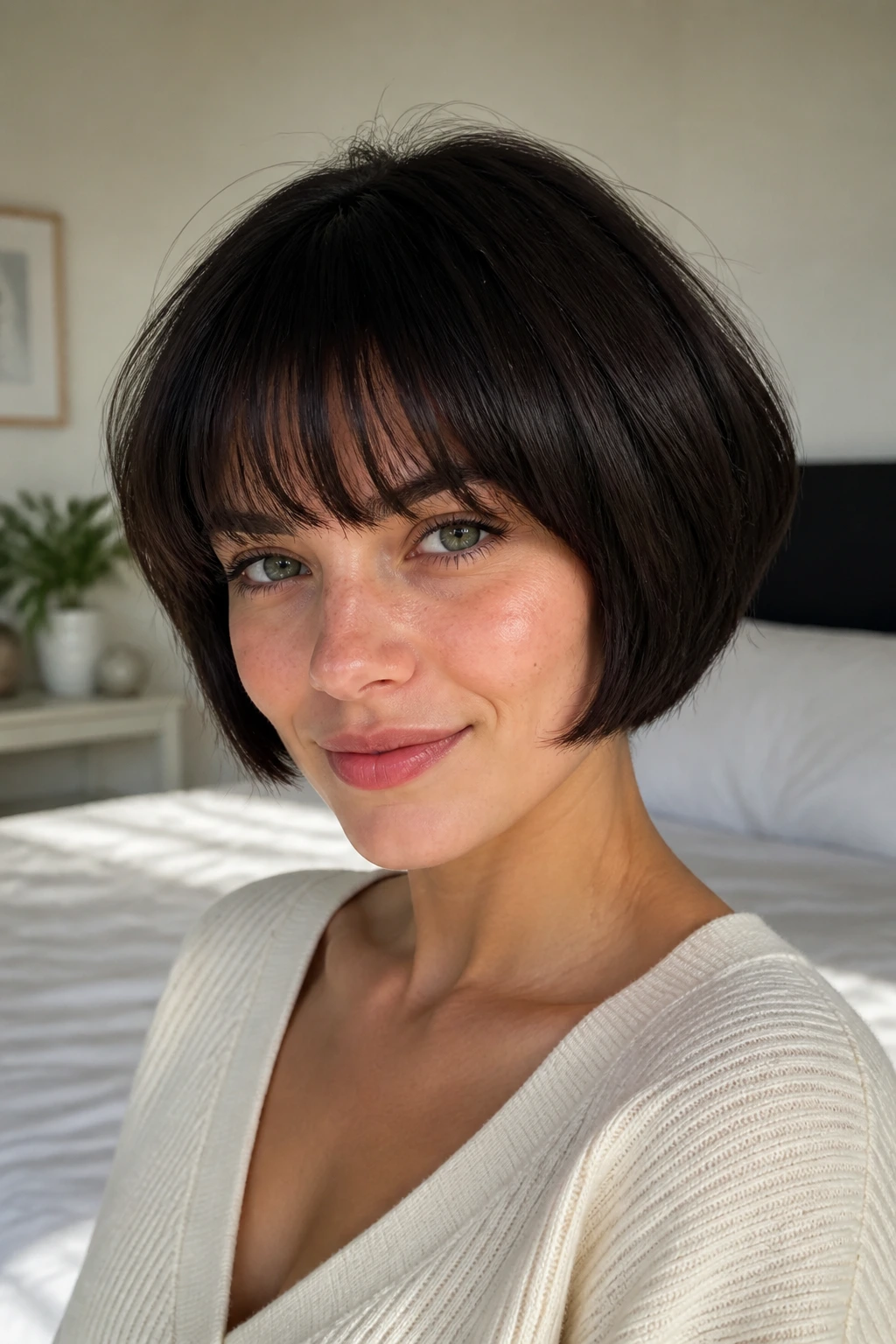
The rounded mushroom bob is one of the most overlooked short hairstyles with bangs, probably because the name sounds more retro than it should. Done well, it has a curved silhouette that wraps around the head and a fringe that follows that roundness instead of fighting it.
This shape suits thick hair especially well because the hair already has enough body to hold the curve. The soft bangs keep the front from becoming too helmet-like, which is the main risk with any rounded cut.
It can look especially good when the ends are tucked under just a little with a round brush. That slight inward bend keeps the silhouette polished without making it stiff. If your stylist leaves too much weight at the corners, though, the shape can start to sit square instead of rounded.
12. The Wavy Chin-Length Cut With Grown-Out Curtain Bangs
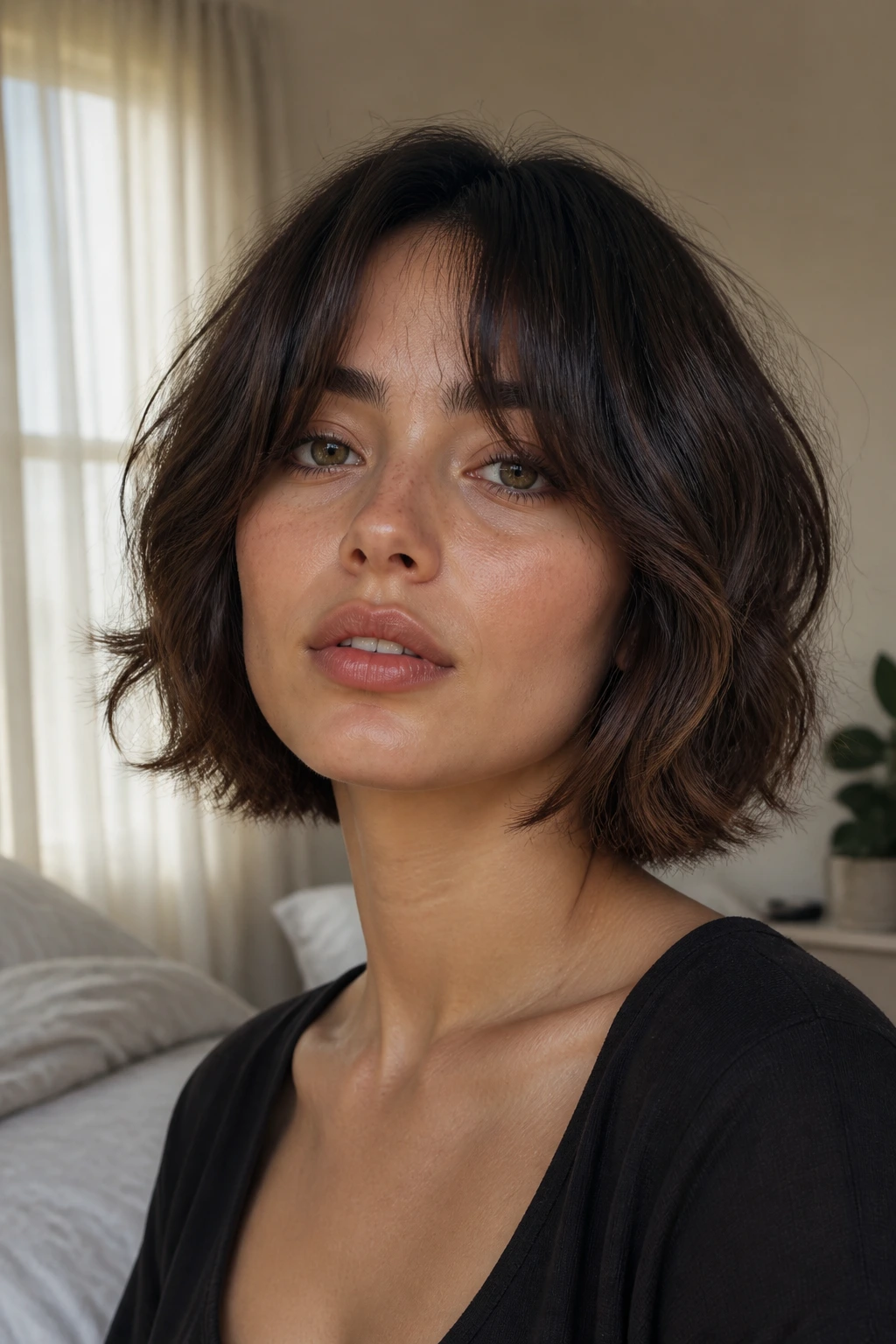
This cut feels relaxed in a way a lot of shorter styles try to fake. The chin-length shape gives the hair enough swing, and the grown-out curtain bangs blend into the front pieces instead of announcing themselves every second.
It’s a smart middle ground if you want bangs but you are wary of a strict fringe. The parted front can be pushed open, tucked back, or left to fall around the face depending on how the day goes. That flexibility is the appeal.
Wavy hair loves this shape because the movement keeps the bangs from lying flat and heavy. A little sea-salt spray at the mids and ends helps, but don’t drown the front in product. Grown-out bangs look best when they still have air in them.
13. The Undercut Pixie With Long Top Bangs
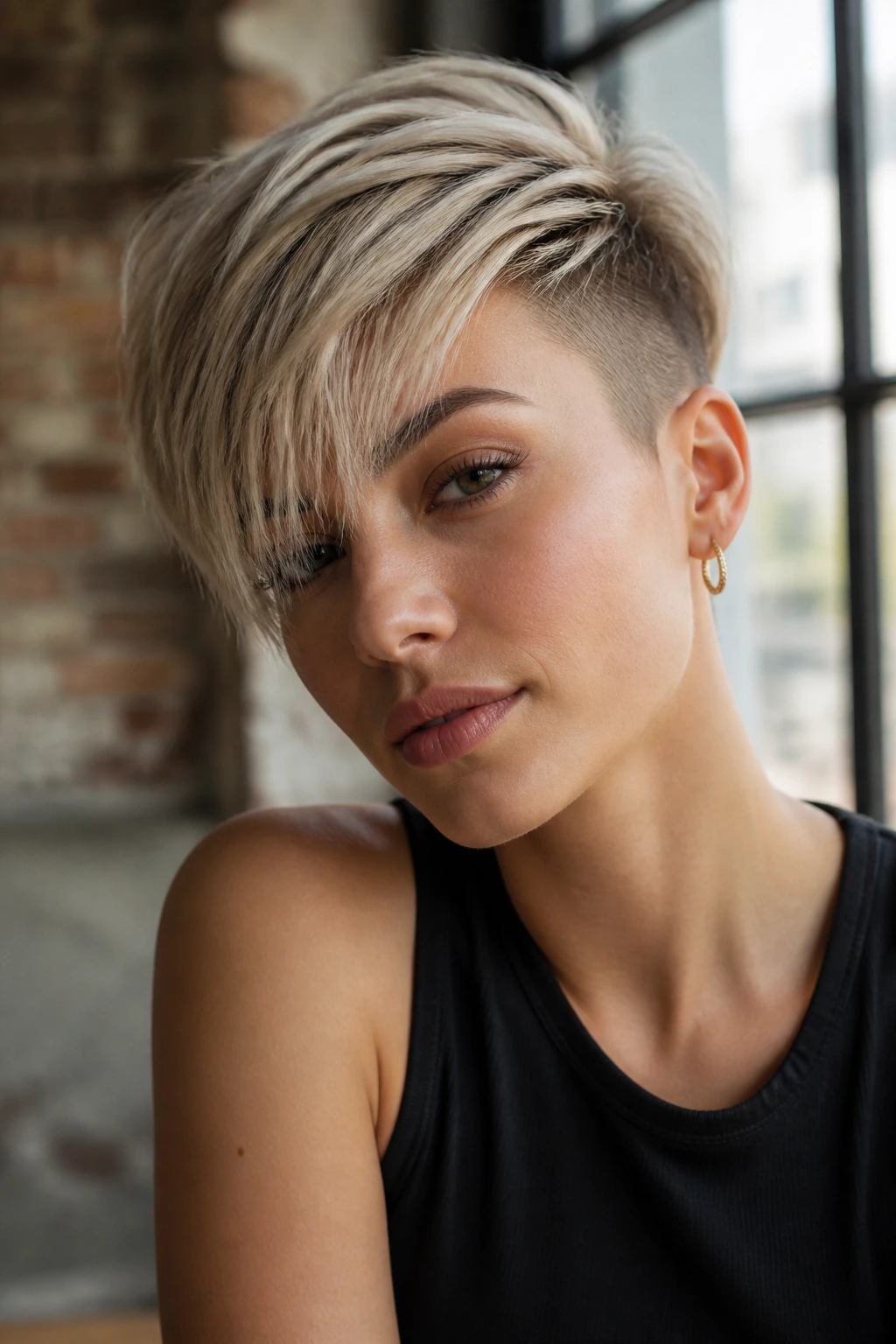
An undercut pixie has a very specific kind of confidence. The sides and back are clipped close, sometimes very close, while the top is left longer so the fringe can sweep forward, sideward, or across the forehead in a heavier arc.
That long top section gives you styling options the more cropped pixies don’t have. Slick it over for a cleaner finish. Push it forward for a stronger fringe. Rough it up with paste for a pieceier look. The undercut underneath keeps the shape light no matter how much hair sits on top.
This cut works best if you like contrast. It is not a soft, invisible haircut. It’s a haircut with a point of view. If your hair is very dense, the undercut can save you from the dreaded puff at the crown, which is worth its weight in scissors.
14. The Feathered Crop With Choppy Bangs
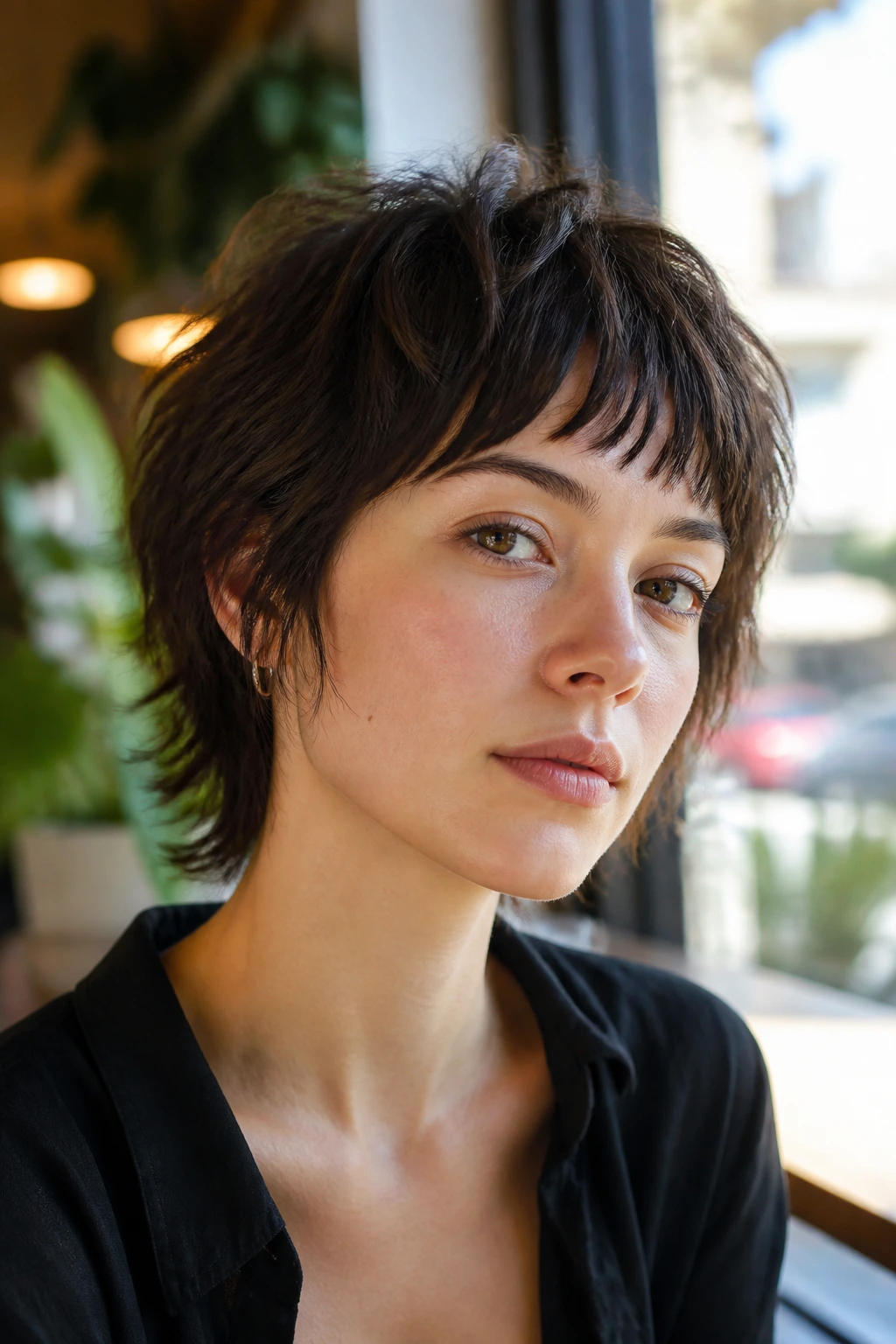
Feathered layers and choppy bangs make a short cut feel loose without looking unfinished. The fringe should land in uneven pieces, but not random ones; there’s a difference. Good choppiness looks directed, not hacked at.
This style works nicely on hair that sits between straight and wavy. It has enough natural bend to hold the feathered layers, but not so much curl that the bangs spring apart into separate sections. A quick blow-dry with a nozzle and fingers is often enough.
One thing I like about this cut is that it forgives a little roughness. If the ends bend a touch or the fringe is not perfectly centered, the texture absorbs the mistake. That’s rare in a short cut, and it’s why this one has staying power.
15. The Short Wolf Cut With Full Fringe
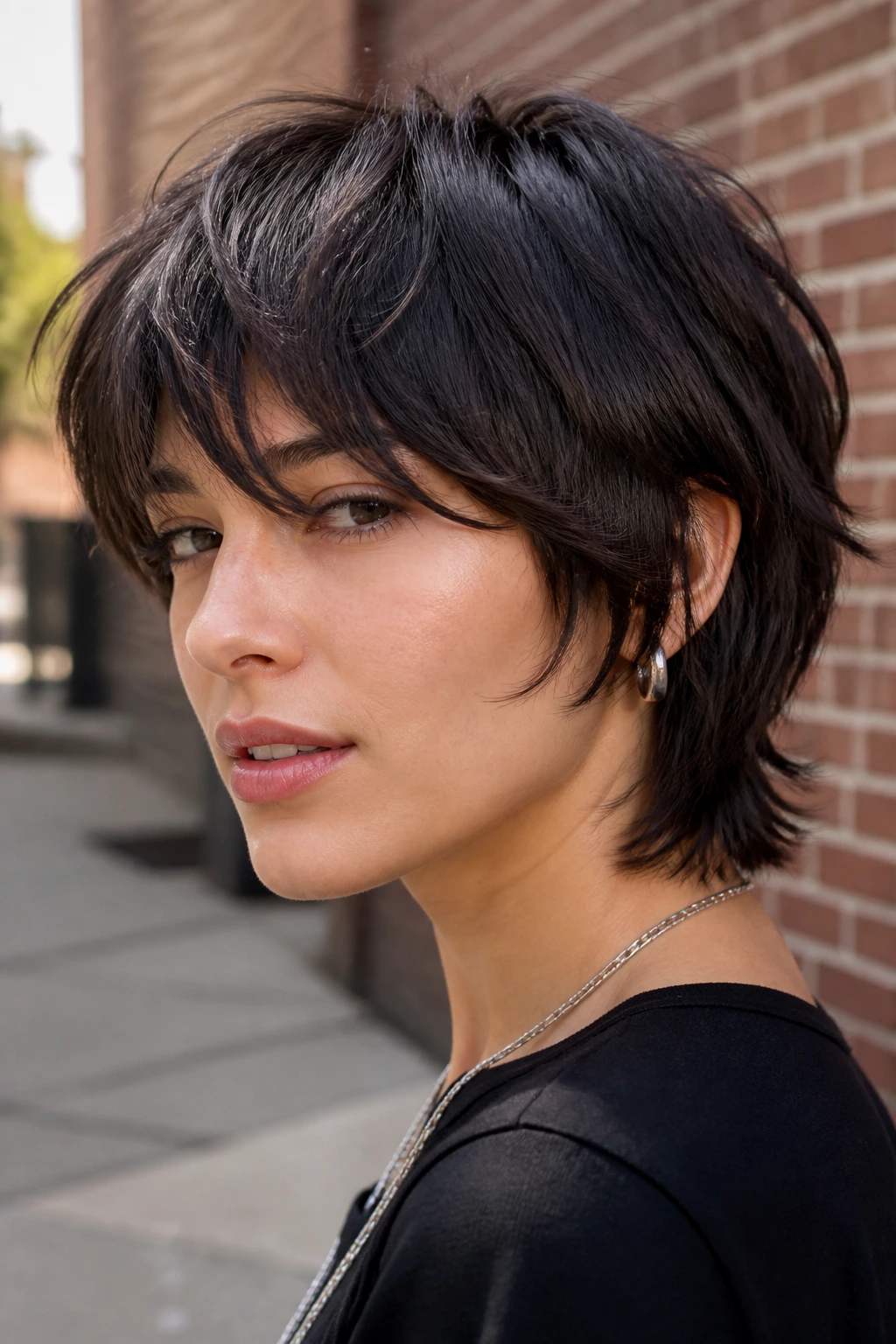
The short wolf cut keeps the shaggy spirit of the wolf cut but compresses it into a shorter frame. The layers pile a bit more at the crown, the ends stay broken up, and the full fringe gives the front some weight so the cut doesn’t scatter.
It’s a good choice if you want movement and a bit of edge, but not a shape that turns into a flat helmet after two hours. The fringe grounds the style. Without it, the top can feel too busy.
This cut usually looks best when styled with a little mess on purpose. A diffuser, a light mousse, or a scrunched-in texture cream can give the layers grip. Straightened too much, it loses the point. Left alone, it can look charmingly wild or just plain shapeless, so the styling matters.
16. The Sleek Chin Bob With Side-Swept Bangs
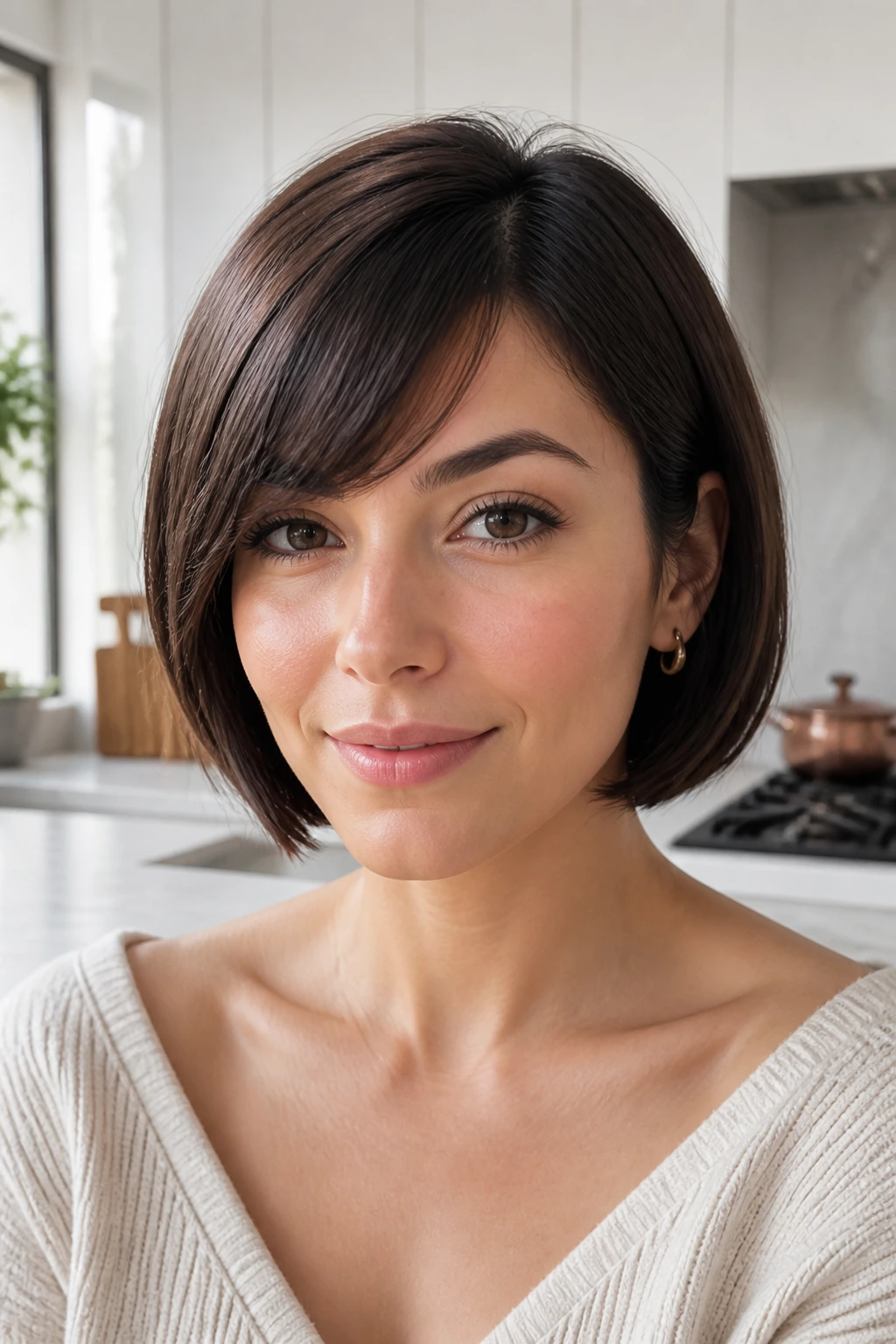
A sleek chin bob is one of the easiest cuts to wear with a side-swept fringe because the smooth line of the bob mirrors the smooth angle of the bangs. The result is tidy without feeling severe.
This is the cut for people who like polish but don’t want a harsh blunt line across the forehead. The side sweep keeps the face open, which can be kinder around glasses, strong brows, or a forehead you prefer not to emphasize. It also grows out with less drama than a micro fringe.
The key is keeping the finish smooth, not greasy. A small amount of serum on the ends is enough. Too much product near the bangs and the whole thing starts to collapse into your cheekbones, which is not the effect you want.
Why Short Hair and Fringe Change the Whole Silhouette
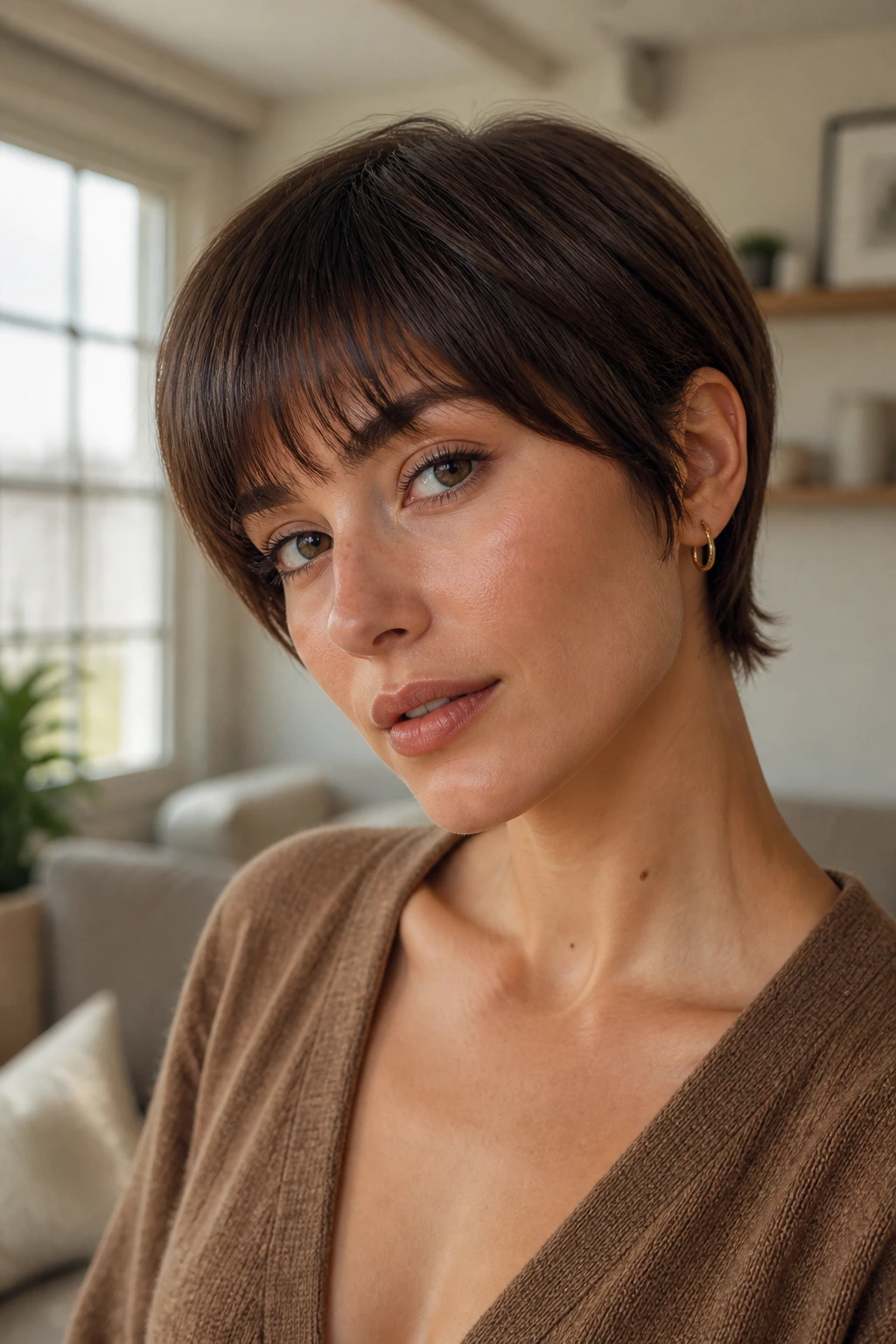
Bangs do more than cover skin. They change where the eye lands first, and on short hair that matters even more because there’s less length to hide behind. A fringe can make a bob feel sharper, a pixie feel softer, or a crop feel more balanced around the face.
The other reason this pairing works is weight distribution. Short hair usually relies on line and shape instead of length, so the front becomes a big visual zone. Add bangs, and you get a second shape inside the cut. That can make a haircut feel fuller at the front without actually adding bulk everywhere.
Hairline details matter here. Cowlicks, forehead length, brow shape, and even glasses can change how a fringe sits. A good short cut with bangs respects those details instead of pretending every head is the same. That’s why a fringe cut by eye, not by template, usually looks better once the client leaves the chair.
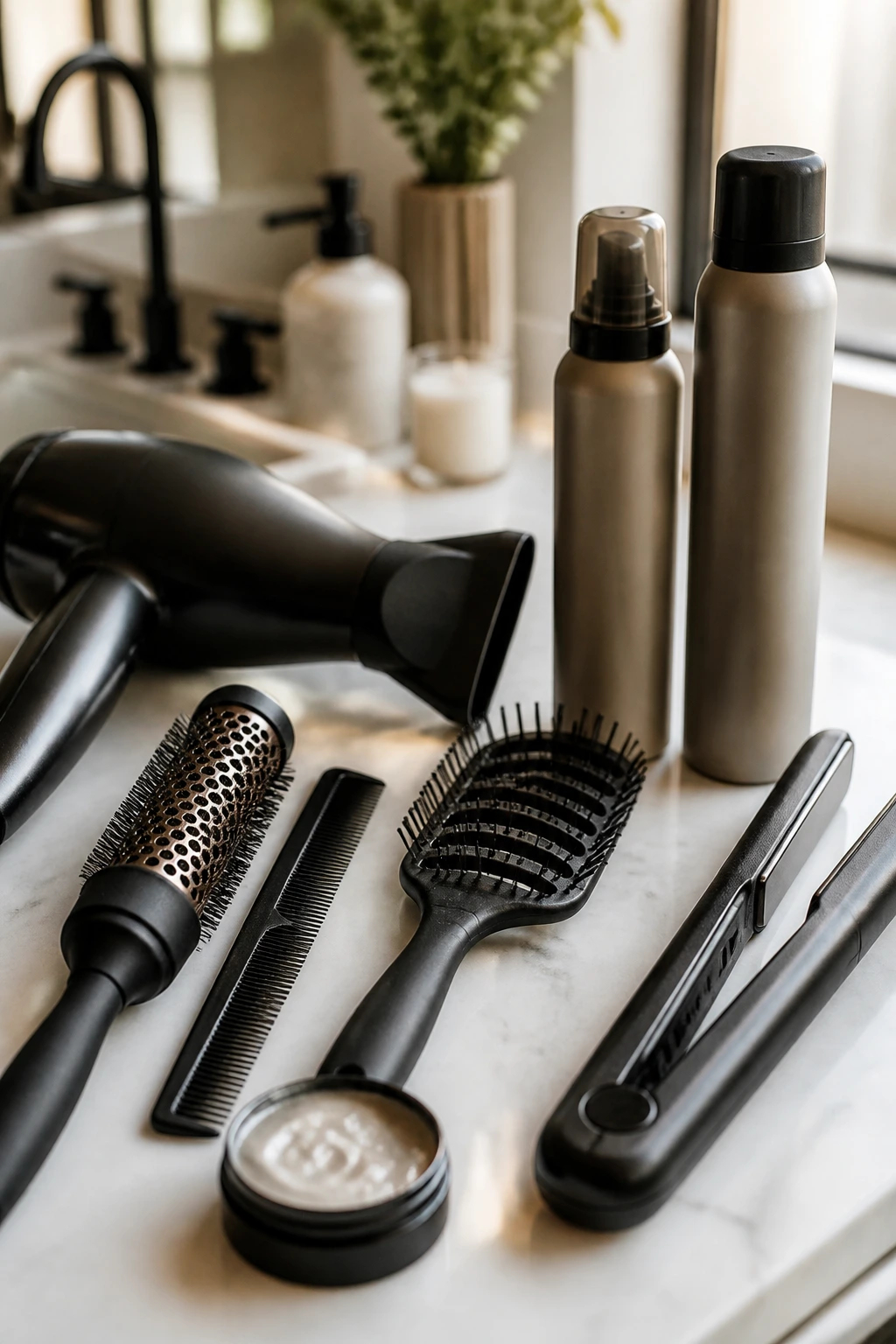
Essential Tools for Styling Short Hair With Bangs
-
A blow dryer with a concentrator nozzle — directs the front flat or slightly curved, which matters more on bangs than on the rest of the head.
-
A small round brush, 1 to 1.5 inches — useful for shaping bobs, bending curtain bangs, and smoothing the fringe without making it puffy.
-
A fine-tooth comb — helps set parts, clean up the fringe, and guide a side sweep when the hair wants to split.
-
A vent brush or paddle brush — good for quicker dry-down on pixies and crops, especially if you don’t want a full blowout.
-
Matte paste or styling clay — best for piecey pixies, bixies, and feathered crops that need separation instead of shine.
-
Lightweight mousse — gives wavy or curly bangs some support without turning them stiff or crunchy.
-
Dry shampoo — useful for the front hairline, where bangs get oily first and start sticking together.
-
A 1/2-inch to 1-inch flat iron — helpful for smoothing a stubborn fringe or adding a tiny bevel to a blunt bob.
-
Styling cream or lightweight serum — keeps frizz under control on curly or coarse bangs, but use it sparingly near the roots.
How to Match the Cut to Your Hair Texture, Hairline, and Face Shape
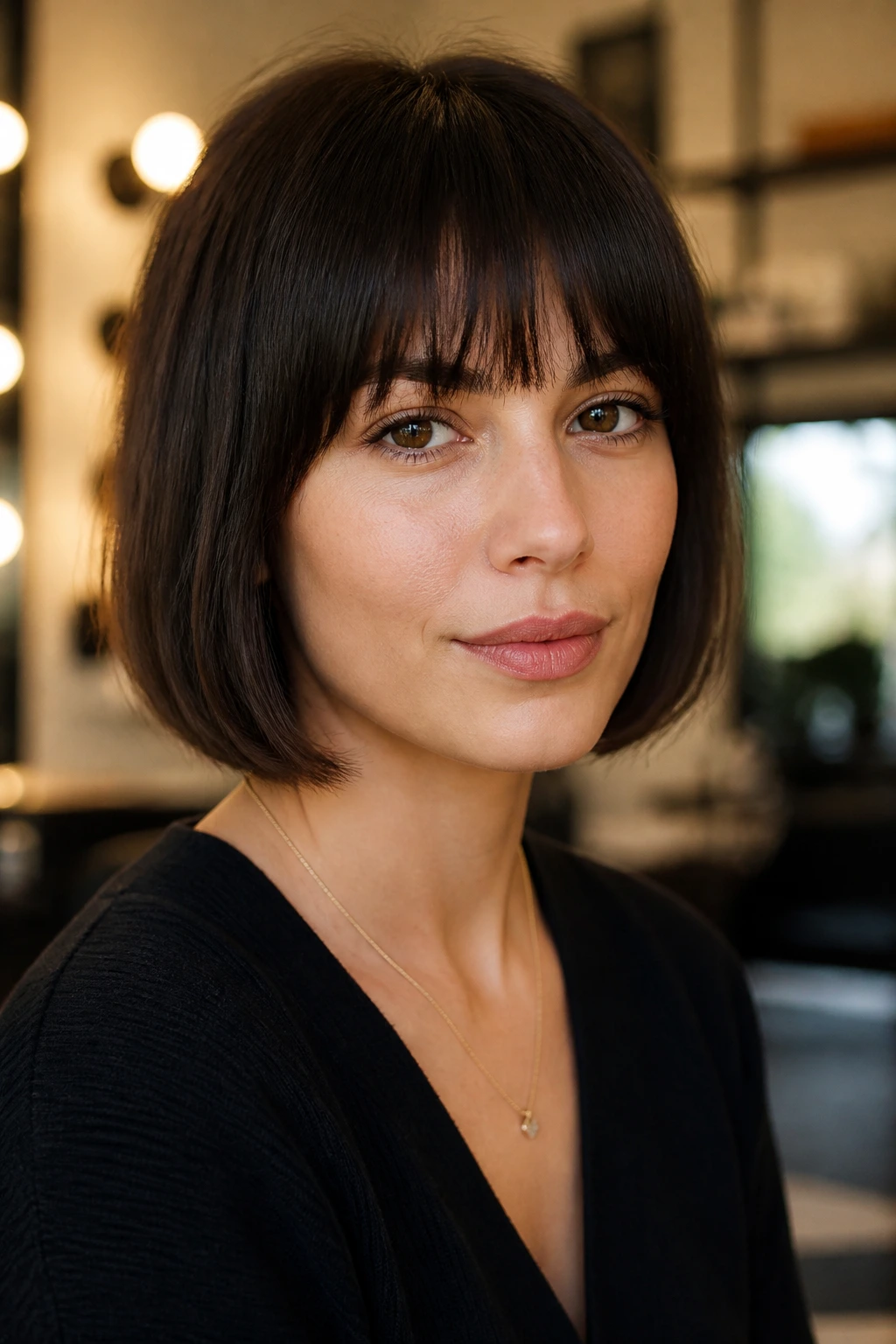
Straight hair likes structure. A blunt bob, sleek chin cut, or French bob usually behaves better when the fringe has a clear line. If your hair is very fine, ask for bluntness at the perimeter and only light texturing inside, because too much slicing makes the ends disappear.
Wavy hair often does best with bangs that are not cut too short. Curtain bangs, bottleneck bangs, and side-swept fringe give the wave room to bend without kicking into your eyes. If the cut is too tight at the front, the wave pushes the fringe around and you spend all morning fixing it.
Curly hair needs a little more respect. Cut the bangs longer than you think, preferably dry or nearly dry, and let the curl pattern decide the final length. A sharp line on curly fringe can turn into a surprise crop after the first wash.
Face shape matters, but not in a rigid, do-this-not-that way. Round faces often like a little height or a diagonal line. Square faces often soften nicely with curtain bangs or a feathered fringe. Longer faces usually benefit from brow-grazing fringe or a fuller bang that brings the visual focus down. And if you wear glasses, leave enough room so the fringe doesn’t crash into the frames every time you blink.
How to Wear These Cuts on Busy Mornings
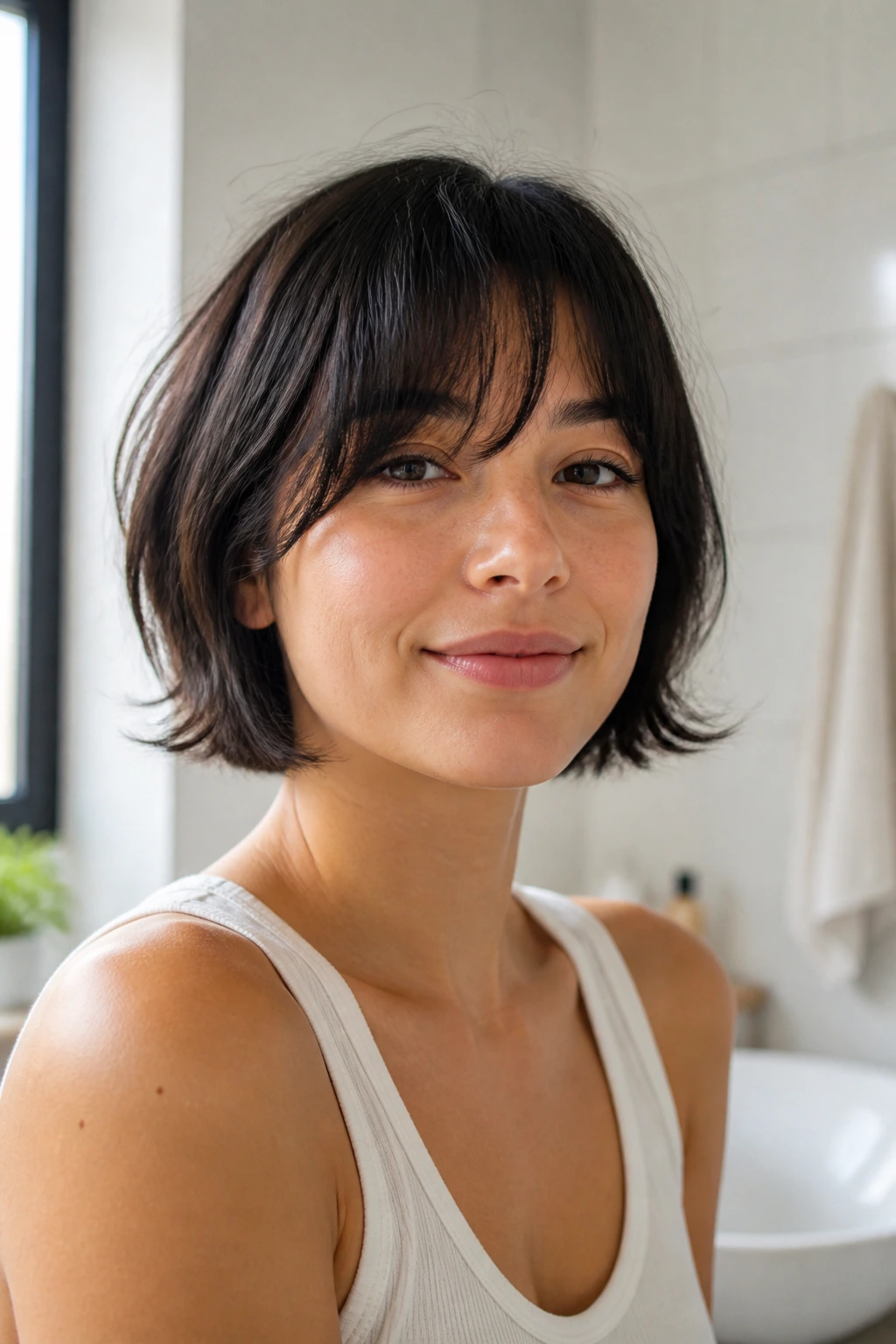
Air-dried texture: If your hair falls naturally into waves or bends, work a small amount of mousse through the fringe and let it dry with your hands off it. Pushing bangs around while they dry is how you get weird bends that last all day.
Quick blowout: Use the nozzle, aim the air downward on the bangs, and finish with a round brush or flat brush depending on the shape. A few seconds of heat, then a few seconds of cool air, helps the front set without that helmet feel.
Glasses-friendly styling: Keep the fringe a touch longer at the temples and sweep it slightly away from the frames. That stops the bangs from bunching where the glasses sit and gives the whole cut room to breathe.
Second-day rescue: A puff of dry shampoo at the roots plus a damp fingertip through the fringe is often enough. Bangs do not need a full shampoo every time they misbehave. They usually need less product, not more.
Small Finishing Moves That Make the Style Look Intentional
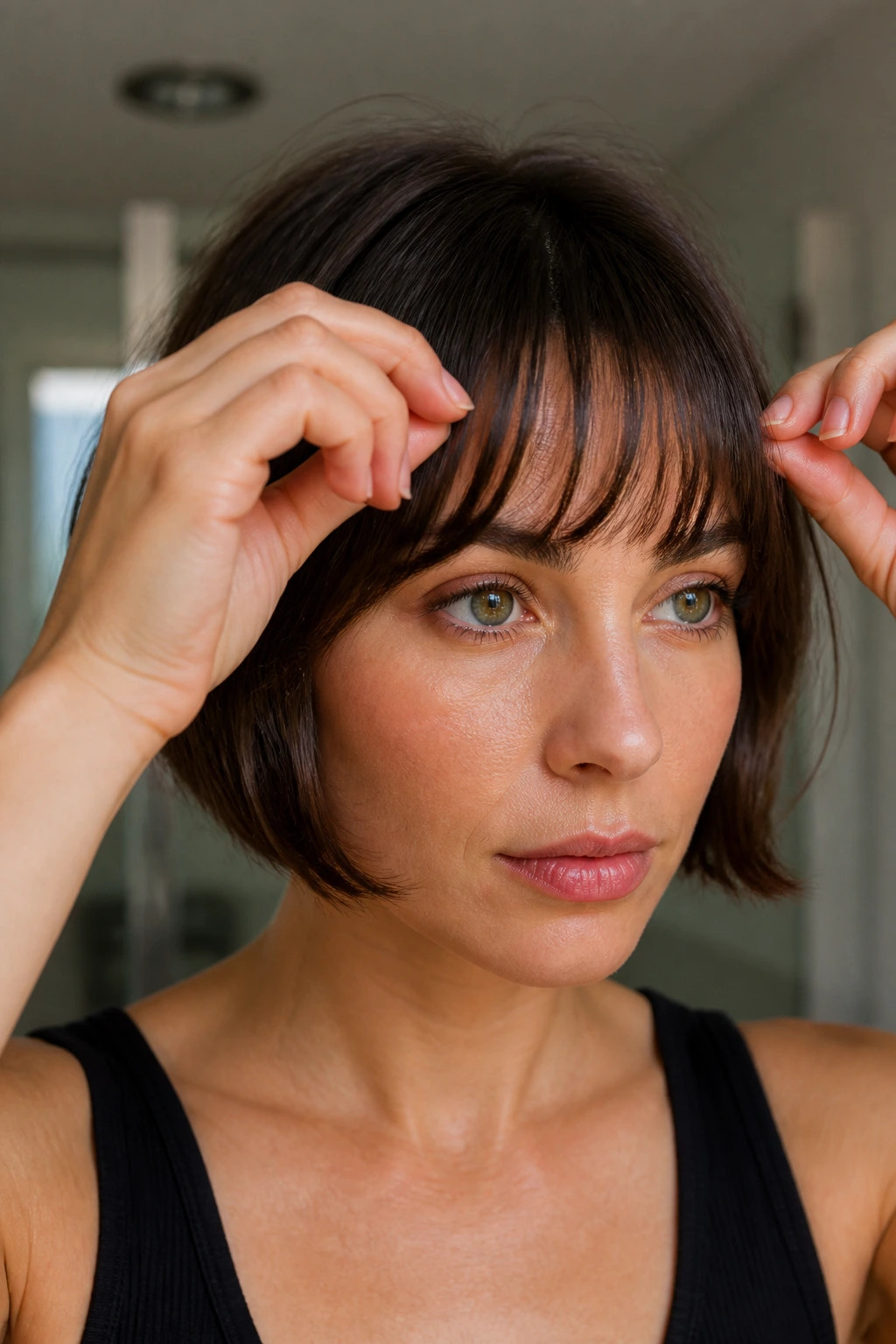
Root lift: A touch of mousse at the crown before drying keeps a short cut from lying flat against the head. Don’t overload it. A little goes a long way, and too much mousse on bangs makes them feel sticky.
Piece separation: On pixies and shags, work a tiny amount of paste between your fingertips and pinch the ends lightly. You want little broken-up bits, not crunchy spikes.
Soft bevel: For bobs, bend the ends inward just enough that the line curves, not flips. That one movement can make a chin-length cut feel finished instead of accidental.
Front reset: If the fringe gets weird halfway through the day, mist it with a little water, comb it into place, and let it air for two minutes. Bangs often recover better from a small reset than from another round of heat.
Common Mistakes That Make Bangs More Annoying Than They Need to Be
-
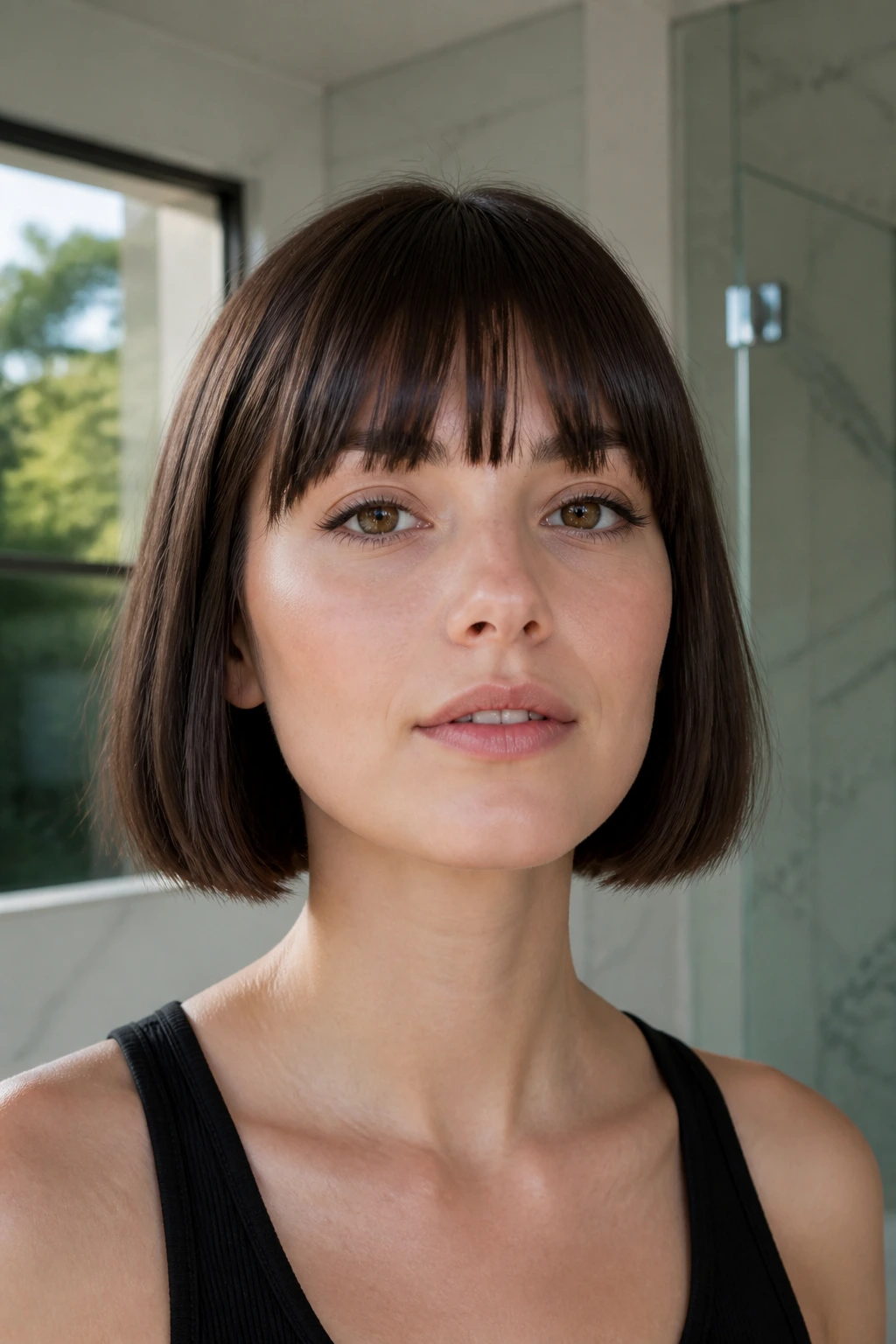
Cutting the fringe too short on wet hair: The bangs look fine in the chair, then jump half an inch once they dry. The fix is simple: leave them longer, especially if your hair bends, curls, or has a stubborn cowlick.
-
Over-layering fine hair: Fine hair can lose its shape fast if the bob or pixie is thinned too much. The symptom is a wispy, see-through front with no weight at the edge. Ask for controlled texturing, not aggressive thinning.
-
Ignoring the front growth pattern: A strong cowlick will split a straight fringe every time. If that’s your hairline, choose curtain bangs, side bangs, or a longer fringe that can cooperate with the split instead of fighting it.
-
Using too much product near the bangs: Fringes get oily first. A heavy cream or oil at the roots makes them separate and stick together by lunchtime. Keep product off the scalp and use the smallest amount you can get away with.
-
Skipping trim appointments for too long: A short cut with bangs loses its shape faster than long hair does. Once the fringe covers the eyes or the bob starts rounding out, the cut stops looking crisp and starts looking grown out in the unhelpful way.
Variations Worth Asking for at the Salon
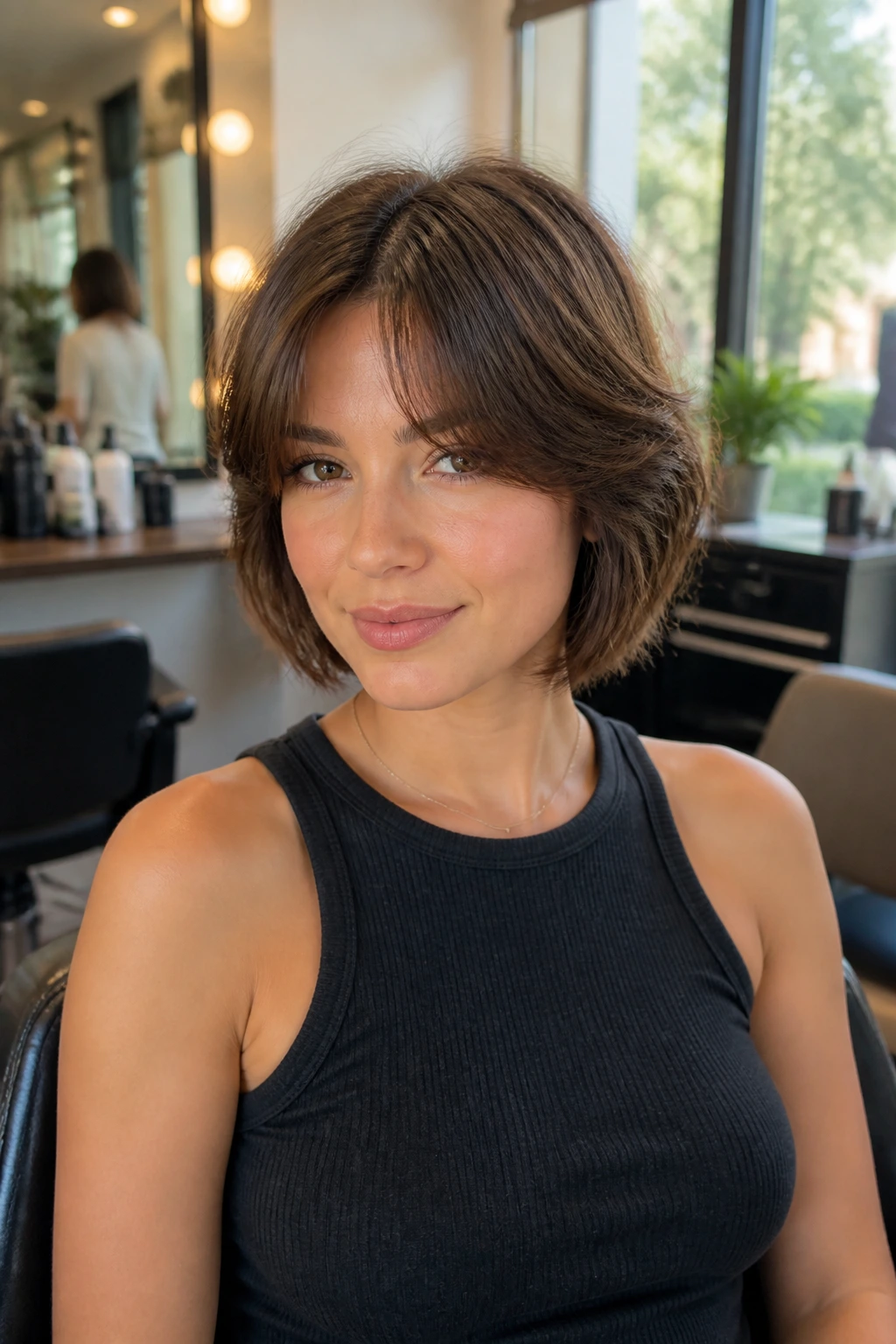
The Air-Dry Version: Ask for a softer fringe and more movement through the top if you rarely use hot tools. This works especially well on waves and curls, where the natural bend should do most of the work.
The Glassy Version: Keep the bob or pixie clean at the perimeter and pair it with a smoother fringe. This one looks best when the finish is polished and the line is clear, not fuzzy.
The Grow-Out Version: Choose curtain bangs, side bangs, or a longer bottleneck fringe if you want more room to change your mind later. These shapes can slide into layers instead of turning into a blunt wall.
The Glasses-Friendly Version: Leave the fringe a touch longer at the center or temples, depending on where your frames sit. The goal is to keep hair and glasses from fighting over the same space on your face.
The High-Texture Version: Ask for broken-up ends, a messier crown, and a fringe that separates into chunks. This is the best direction if you like a crop that looks lived-in rather than exact.
Trims, Wash Days, and Day-Two Maintenance
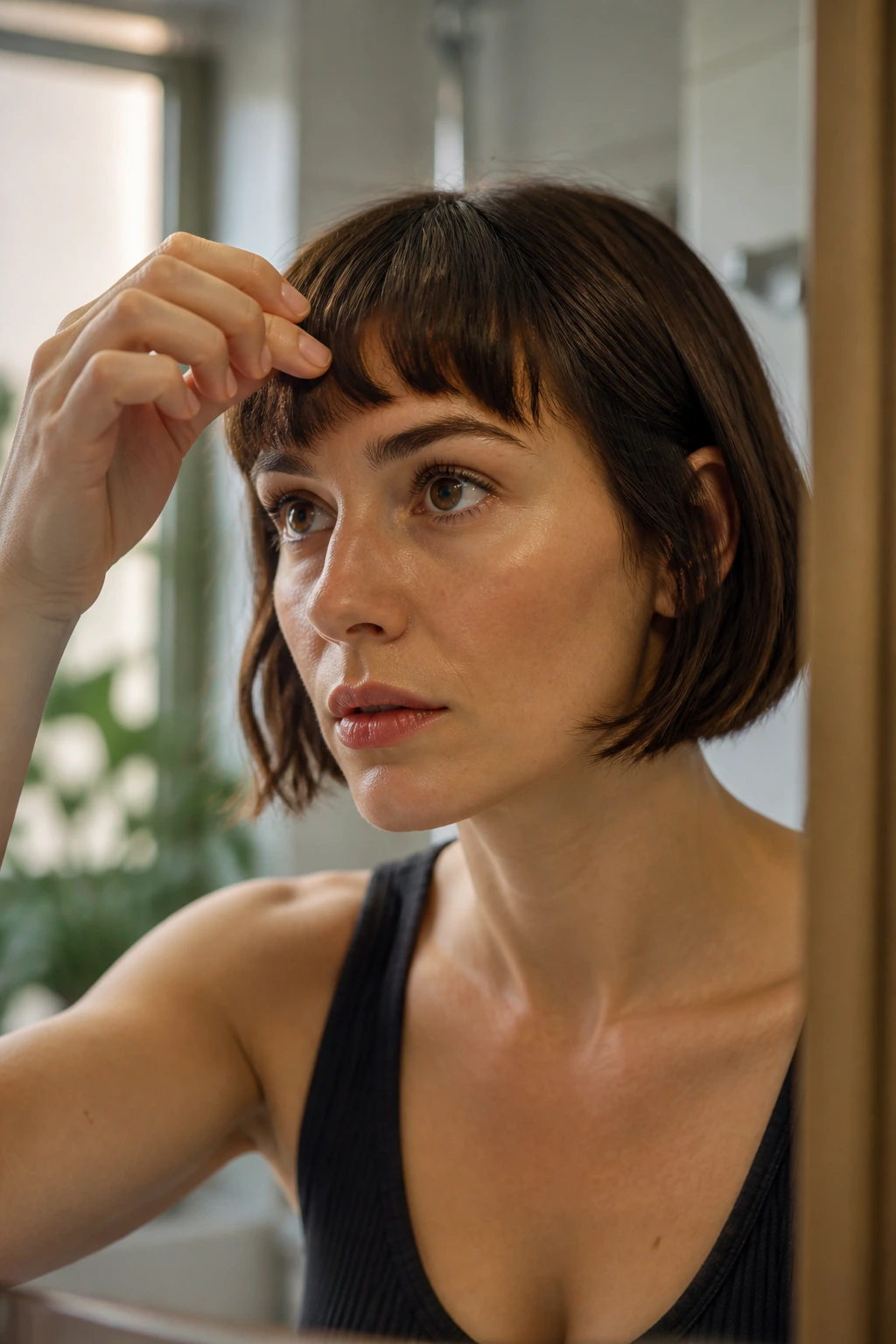
Short hair with bangs is not high drama, but it does ask for a rhythm. Most fringes need attention every 3 to 5 weeks, because a half-inch of growth can completely change where they sit. Bobs usually want a shape refresh every 6 to 8 weeks, while pixies and undercuts often need a cleaner line closer to 4 to 6 weeks if you want them to stay neat.
Wash the fringe more often than the rest if it gets oily fast. That doesn’t always mean shampooing the whole head. A quick sink rinse on the front section, followed by a blow-dry at the roots, can buy you another day or two without flattening the whole style.
Dry shampoo helps, but use it early, not as a last resort after the fringe has already gone limp. Spray it at the roots from a short distance, let it sit for a minute, then brush or finger it through. If you pile on half the can, the bangs will look dusty instead of fresh.
At night, a loose clip can keep the fringe from setting into a weird bend while you sleep. Morning swirls are easier to fix than bent bangs. Usually. The trick is catching the problem before it becomes a full haircut argument in the mirror.
Frequently Asked Questions About Short Hairstyles With Bangs
Which short hairstyle with bangs is easiest to maintain?
A jaw-length bob with curtain bangs or a chin-length bob with side-swept bangs is usually the easiest to live with. Both let the fringe blend as it grows, which buys you time between trims and makes bad hair mornings less dramatic.
Do bangs make a short haircut harder to style?
A little, yes, because the front shows every cowlick and oil slick first. But the tradeoff is worth it if you want the haircut to change your face shape without adding length, and a good fringe routine takes only a few minutes.
What bangs work best with curly hair?
Longer, softer bangs tend to work best on curls. Curtain bangs, airy fringe, or a curly crop with enough length to bounce instead of puff usually looks better than a blunt straight-across bang that fights the curl pattern.
Can I wear short hair with bangs if I wear glasses?
Absolutely. The main thing is spacing. Keep the fringe slightly longer near the temples or choose a side-swept or curtain shape so the bangs don’t sit directly on the frames and create that bulky front triangle.
How often should I trim short bangs?
Most people need a fringe trim every 3 to 5 weeks, sometimes sooner if the hair grows fast or the bangs are very short. If you wait until they’re in your eyes, the cut has already started to lose the part that made it special.
What if my bangs split down the middle?
You’re probably dealing with a cowlick or a strong growth pattern. Instead of forcing a blunt bang, switch to a curtain fringe, side bang, or longer bottleneck shape that can follow the split instead of pretending it isn’t there.
Should bangs be cut wet or dry?
Dry or nearly dry is safer for most bangs, especially on wavy or curly hair. Wet hair can shrink up more than you expect, and a fringe that looks perfect in the chair can end up too short once it settles.
Can short hairstyles with bangs work on fine hair?
Yes, but the cut has to be handled with care. Fine hair usually looks better with blunt edges, light internal texture, and a fringe that isn’t over-thinned, because wispy bangs on fine hair can disappear fast.
How do I grow out bangs without looking awkward?
Start blending them into curtain bangs or side bangs early. A little face-framing length around the temples helps the fringe disappear into the rest of the cut, which is far easier than waiting for one blunt line to grow past your eyes.
The Shape That Keeps Paying Off
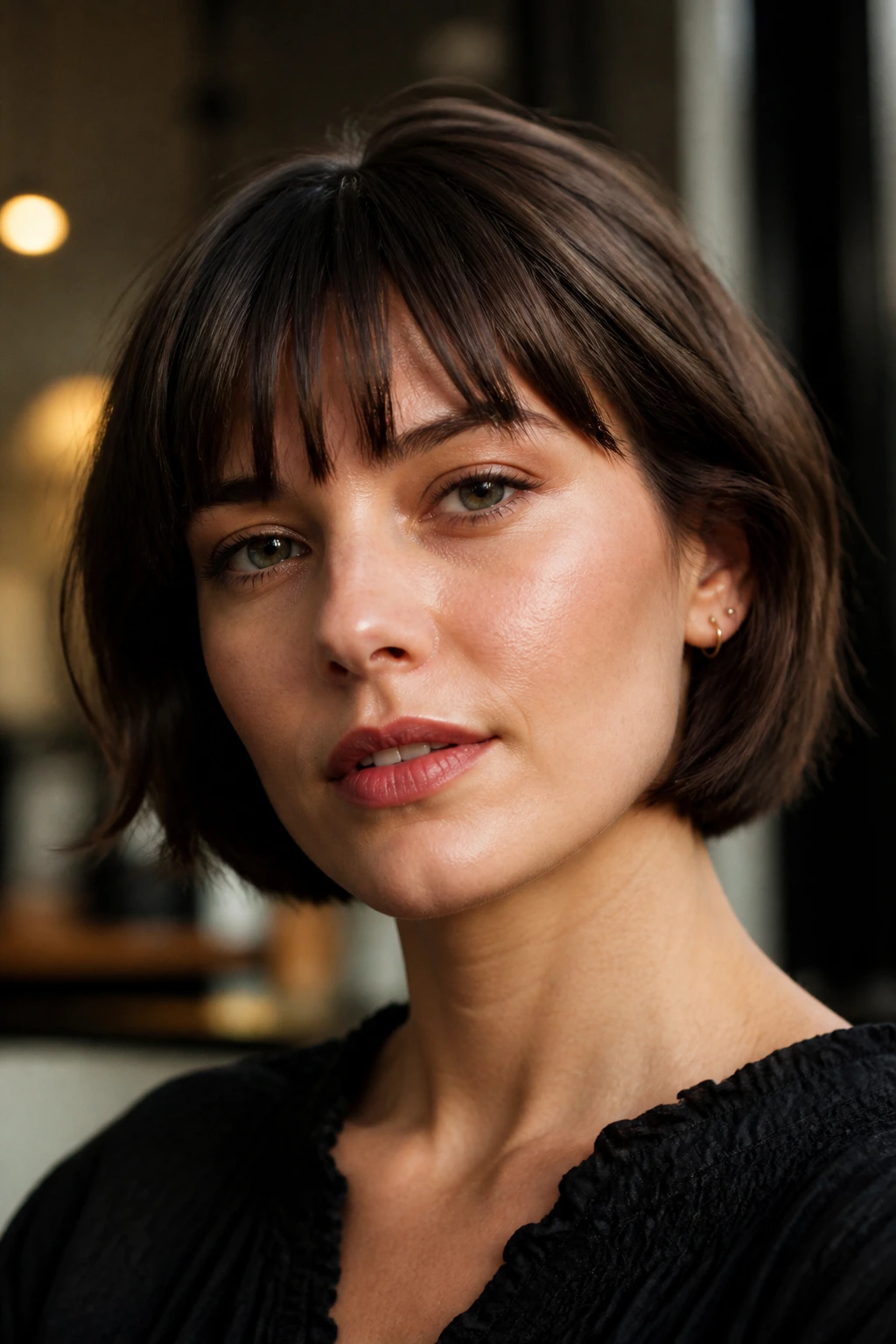
The nicest thing about short hairstyles with bangs is that they do not all ask for the same personality. Some are neat and graphic. Some are soft and bendy. Some look polished with a round brush, and some look better when you leave them a little rough at the edges.
A good fringe changes more than people expect. It changes how the eyes read the haircut, how the jawline feels under it, and how much effort you need in front of the mirror before the day starts. That’s why the best version is the one that works with your hairline and texture, not the one that looks identical in a photo.
Pick the shape that matches your actual hair, keep the bangs trimmed before they turn into a curtain of their own, and let the cut do the framing. That’s the whole game.
