



Curtain bangs can save a medium-length cut that has started to feel a little anonymous. Medium length hairstyles with curtain bangs sit in that sweet spot where hair still moves, still tucks behind the ear, and still gives you enough length to play with a bend, a wave, or a blunt edge that grows out without turning weird overnight.
The fringe is the whole trick. When the shortest point lands around the cheekbone and the longer pieces brush the jaw or graze the lip, the bangs open instead of sitting like a block across the forehead. That slight spread is what makes the style feel softer and less fussy than a straight-across bang. It also explains why one curtain fringe looks airy and expensive-looking while another looks like a half-finished grow-out. The difference is usually just length, weight, and where the stylist started the face frame.
Medium length gives curtain bangs room to make sense. Go too short and the fringe can take over the whole haircut. Go too long and the face-framing pieces disappear into the ends. In the collarbone-to-shoulder zone, the cut has enough length to swing, but not so much that the shape gets lazy. That’s why so many people keep circling back to this range, even after trying something more dramatic.
Why These 18 Cuts Keep Their Shape

- They work with real morning hair: Curtain bangs can be re-centered with a quick blow-dry or a flat brush pass, even if the rest of the cut just gets a rough dry.
- They soften the front of the face without hiding it: A good curtain fringe opens at the center and frames the cheekbones instead of dropping into one heavy line.
- They grow out better than blunt bangs: The longer edges blend into layers, so you’re not trapped in a strict 3-week trim cycle.
- They fit more than one texture: Straight, wavy, and curly hair all handle curtain bangs, but each texture asks for a different weight and length.
- They give you styling choices: You can wear them blown out, tucked, flipped, or air-dried, and the haircut still makes sense.
1. Collarbone Lob with Soft Curtain Bangs
The collarbone lob is the plainspoken workhorse of medium-length hair, and I mean that in the best way. It sits right where the shoulder starts to interfere, which gives the cut movement without turning it into a maintenance project. Add curtain bangs that start around the cheekbone, and the whole shape gets softer at the front while staying neat through the ends.
Why this cut flatters so many faces
A lob like this is especially useful if you want a shape that can look polished in daylight and still behave when it air-dries slightly imperfect. The line at the bottom stays blunt enough to feel intentional, while the fringe breaks up the forehead and keeps the front from looking boxy. It’s a smart cut for anyone who wants structure without a hard edge.
Best styling note
A 1.25-inch round brush and a quick blow-dry at the front are usually enough. Don’t chase a giant curl; just give the bangs a gentle bend away from the face, then let the rest fall naturally. The best version of this cut looks like hair that knows where it wants to sit.
- Keep the fringe a little longer than you think.
- Ask for the front pieces to hit the jaw, not the nose.
- A soft shine spray on the ends helps the lob look expensive, not flat.
One-line tip: If your hair flips out hard at the ends, leave the bottom blunt and do not texture it to death.
2. Choppy Shag with Long, Sweeping Fringe
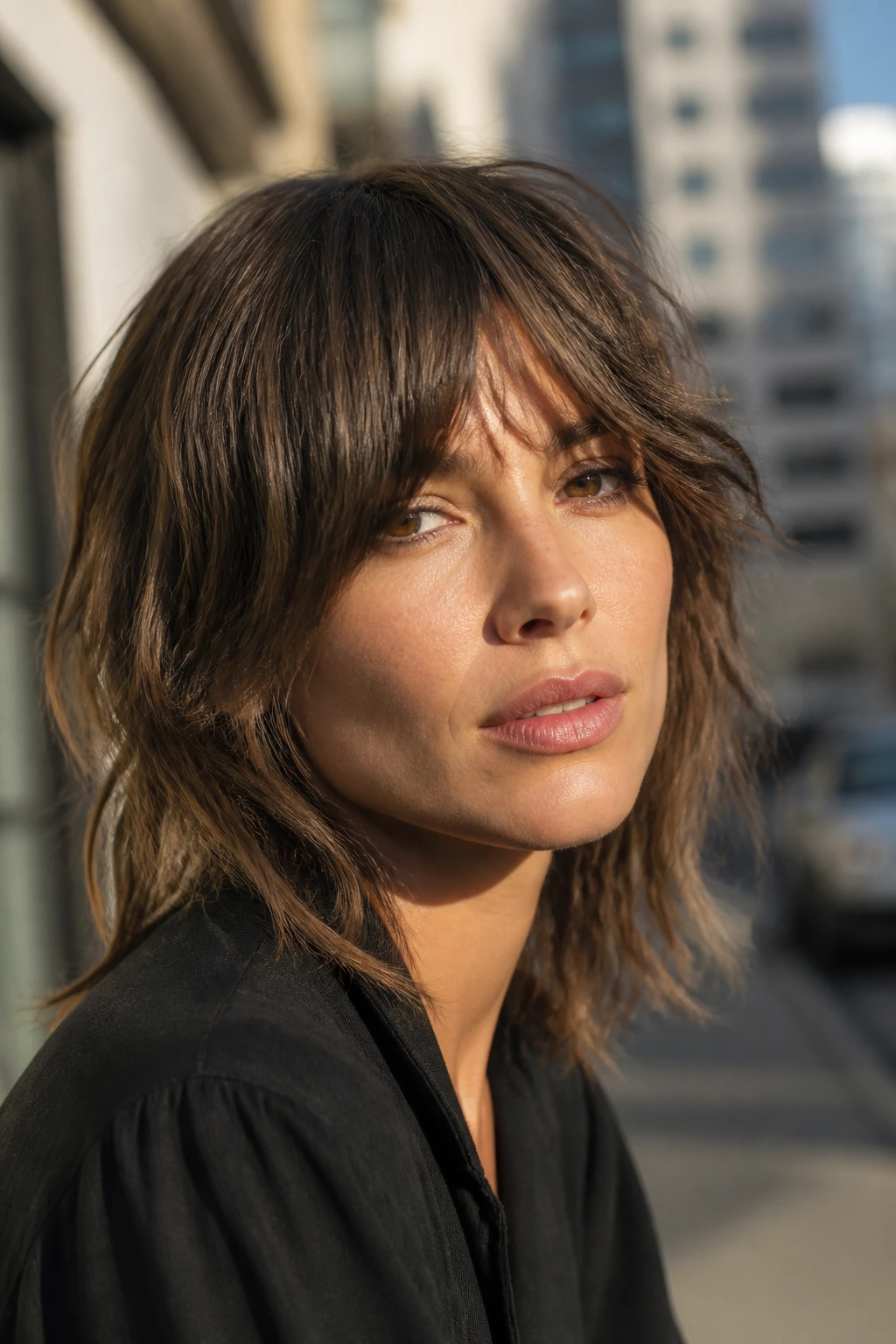
A shag and curtain bangs are old friends for a reason. The cut wants movement, and the fringe wants air, so the two meet in the middle without fighting for attention. The best version lands around the shoulders with broken-up layers that make the ends kick in different directions.
The trick here is restraint. If the layers start too high, you get a triangle. If the bangs are too short, you lose the sweep and end up with a frizzy shelf across the forehead. Keep the curtain pieces long enough to brush the cheekbones, and the shag reads as relaxed instead of over-cut.
This is the kind of haircut that looks best when you stop trying to control every strand. Scrunch in a mousse, rough-dry the roots, and let the rest do its thing. Perfect symmetry would ruin it.
3. Blunt Midi Cut with Airy Curtain Bangs

Why does this pairing work so well? Because the blunt ends give you a clean edge, and the curtain bangs stop that edge from feeling severe. The result is a medium-length haircut that still has a little swing but doesn’t rely on heavy layering to create shape.
This style is especially good if your hair is fine and you don’t want the ends thinned out too much. A blunt midi cut keeps the perimeter looking full, while the bangs add movement up front where you need it most. The line at the bottom should feel crisp when the hair is dry and smooth.
Best for
- Straight to slightly wavy hair
- People who hate fuzzy ends
- Anyone who wants a fringe without constant drama
What to watch for
If your bangs are too dense, they’ll swallow the face. Ask for airy curtain bangs with a soft center split and a gradual taper toward the temples. That little taper matters more than most people think.
4. Butterfly Layers with Face-Framing Curtains
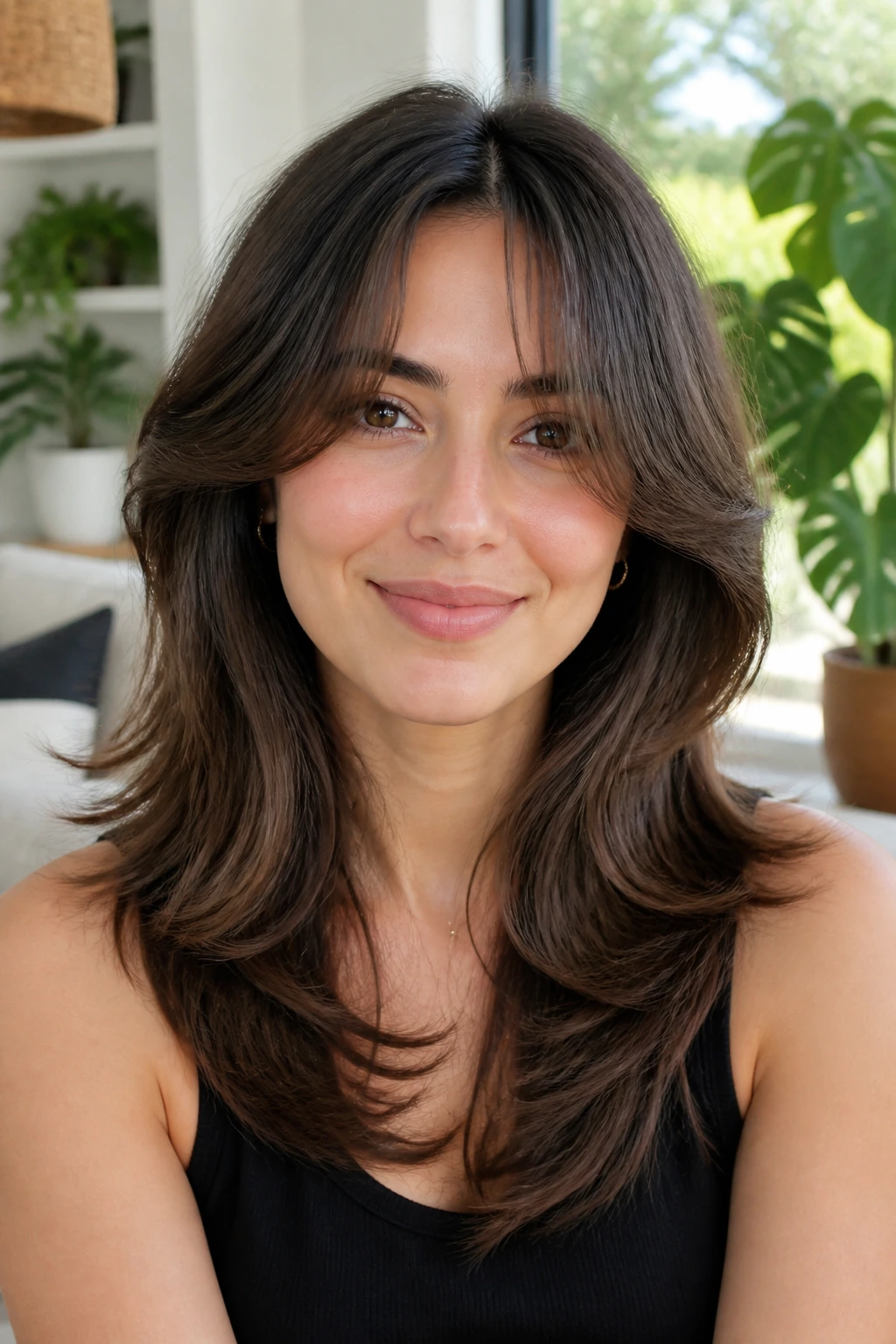
Butterfly layers are built to give you two things at once: volume around the crown and softness through the front. Add curtain bangs, and the whole haircut starts doing that flattering little lift near the cheekbones that makes the face look more open. It’s one of the few layered looks that can feel full and light at the same time.
The shape works because the shortest face-framing pieces stay around the lips or chin while the rest of the hair drops longer through the back. That contrast is what creates the “butterfly” effect. You get the idea of a short layer without losing the length that sits on the shoulders.
This cut likes a round brush or a big velcro roller set at the front. Give the roots a lift, bend the bangs away from the face, and let the long layers keep their swing. Skip the tiny iron curls; they’ll make the cut look dated fast.
5. C-Shaped Layers with a Rounded Blowout

A C-shaped cut is for anyone who likes the ends to curve inward a little without looking curled. Think of it as a clean medium-length shape with layers that bend gently around the cheeks and jaw. The curtain bangs echo that curve, so the front and sides feel connected instead of chopped apart.
This style looks especially good when you blow-dry with a round brush and roll the front away from the face before bringing it back in. The movement should be soft. If the curve is too tight, the haircut starts looking formal in a bad way, like it’s trying to be a 1990s salon poster.
The reason it works on so many heads is that the rounded shape gives the eye a path to follow. Straight lines can be unforgiving. A C-shaped frame is a little kinder.
6. Shoulder-Length Curls with Separated Fringe
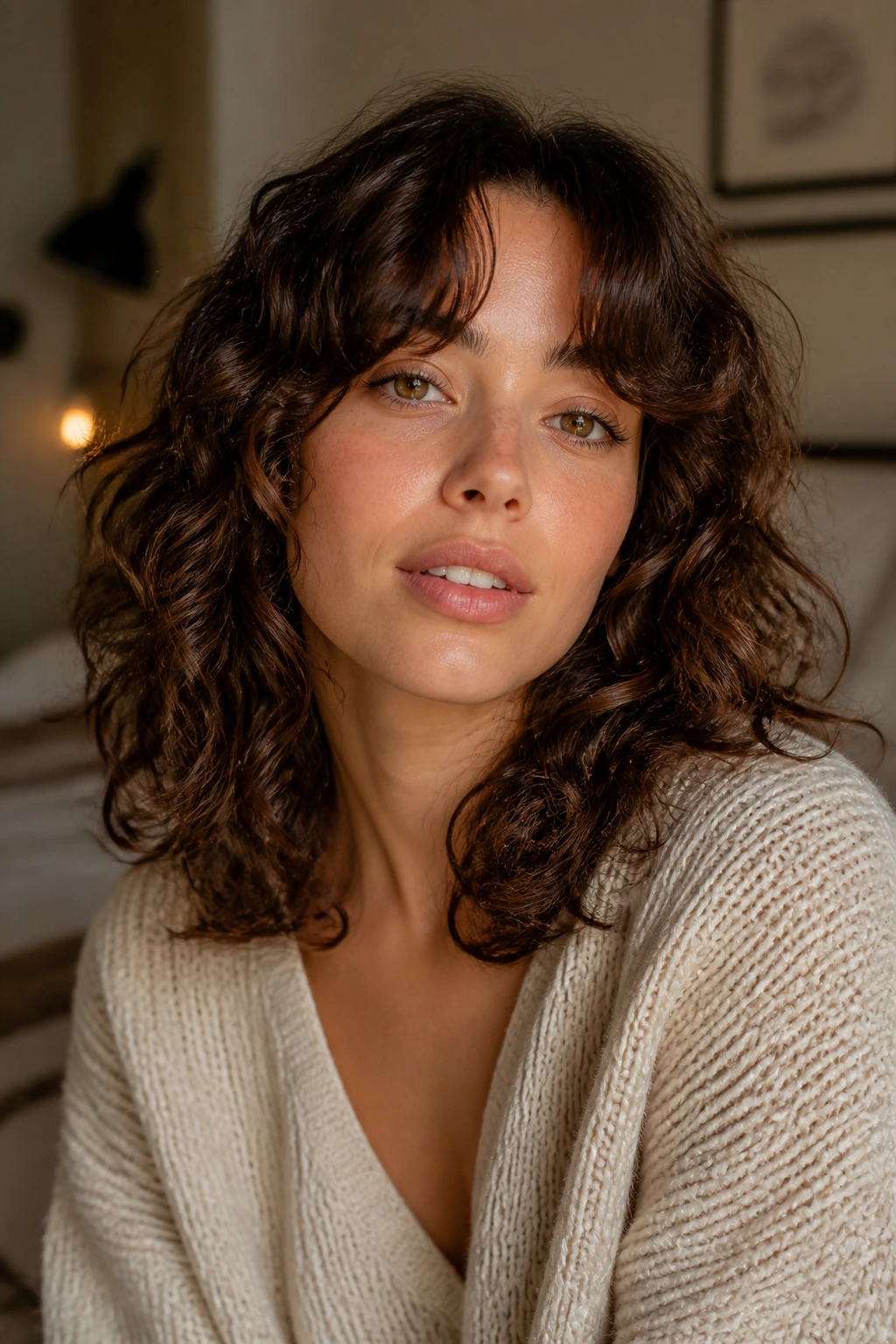
Curly hair and curtain bangs can absolutely coexist, but the bang needs room to spring. A shoulder-length curly cut with curtain bangs should be shaped while dry or near-dry, because curl shrinkage will change everything once the hair dries fully. If you cut the fringe too short, it can float up and sit in a place you never asked for.
The good version keeps the bangs a little longer at the center and lets the outer pieces blend into the first face-framing layer. That gives the curls a soft drape instead of a triangle-shaped shelf. I like this shape when the curls are loose to medium tight and have enough length to fall around the cheekbones.
Use a light gel or cream, then separate the fringe with your fingers after drying. Don’t comb it to death. The little bits of separation are what make the front feel intentional.
7. Sleek Glass Lob with Middle-Part Curtains
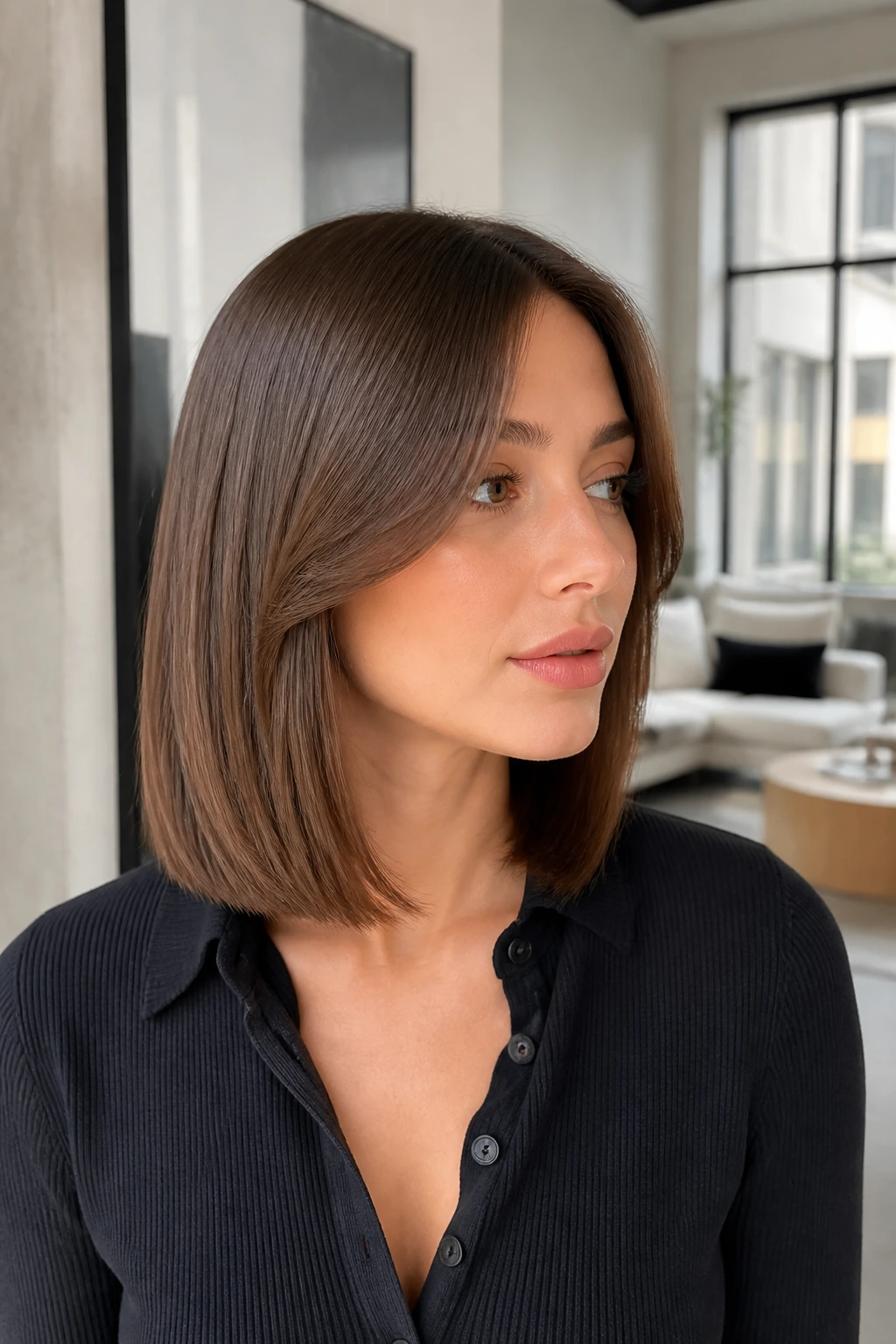
A sleek lob with curtain bangs is the cleanest-looking option in the whole group. It’s sharp, smooth, and a little glossy when you finish it right. The bangs split down the middle and sweep to each side, which softens the face enough to keep the cut from looking severe.
This style depends on prep. Start with a heat protectant, then smooth the hair in small sections with a blow dryer and nozzle or a flat iron if your texture needs it. The ends should tuck under or stay straight, but not puff out. The curtain bangs should feel like they belong to the haircut, not like they were tacked on later.
It’s a strong choice if you wear tailored clothes or want your hair to look neat with almost no visual mess. Very little fuzziness. Very little guessing.
8. Razored Midi Cut with Tousled Ends
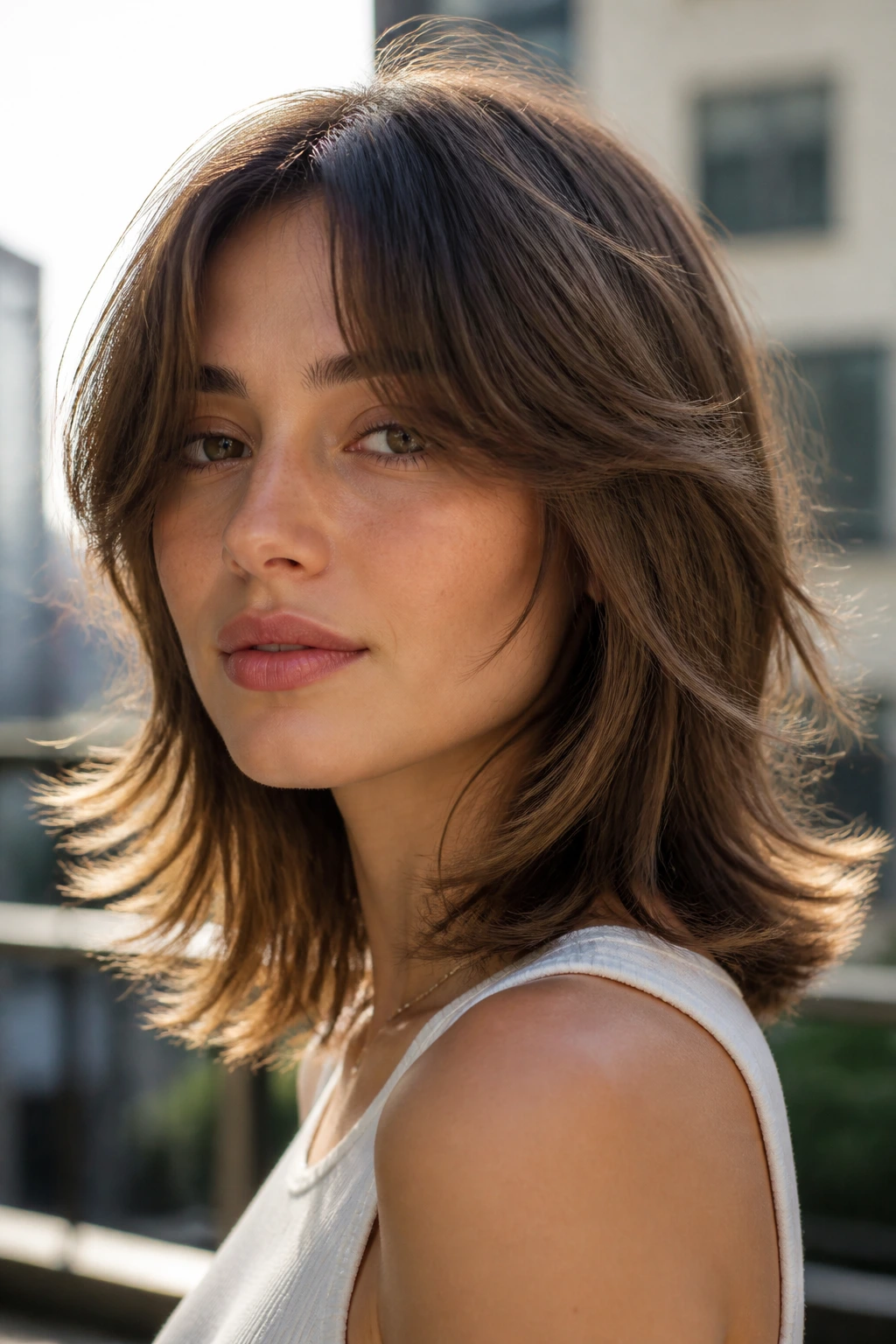
A razored midi cut has a softer edge than a blunt bob, but it’s not as broken-up as a shag. That middle ground is where the curtain bangs do their best work. They can sweep into the face frame without the rest of the cut turning too wispy.
The razor gives the ends a feathered finish, which helps if your hair feels heavy when it grows past the shoulders. It also removes some of the blocky weight that can happen with thick hair. The key is not to overdo the texturizing. You want motion, not shredded ends.
What it looks like in practice
The hair should move when you turn your head. Not swing wildly. Just enough bend that the layers catch the light in chunks instead of one solid sheet.
If your hair is naturally straight, a sea-salt spray or a light texture mist can bring the ends to life. If it’s wavy, let it dry halfway before scrunching. That usually gives the fringe a cleaner split.
9. Soft Wolf Cut with Curtain Bangs

The wolf cut gets a bad reputation when it’s too aggressive. The softer version, especially at medium length, is much easier to wear. It keeps the crown volume and the shaggy shape, but the layers are eased down so the cut still feels wearable at work, not just in a photo.
Curtain bangs are the right companion here because they balance the rougher texture through the rest of the haircut. The fringe should be long enough to melt into the layers around the temples. If the bangs stop too high, the whole style can look choppy in a way that feels accidental.
This is a good cut if you want something with edge but don’t want to spend every morning styling it with precision. A diffuser, a little mousse, and a few finger-coiled pieces are usually enough. Leave some frizz. It suits the shape.
10. Retro Blowout Lob with Lifted Bangs
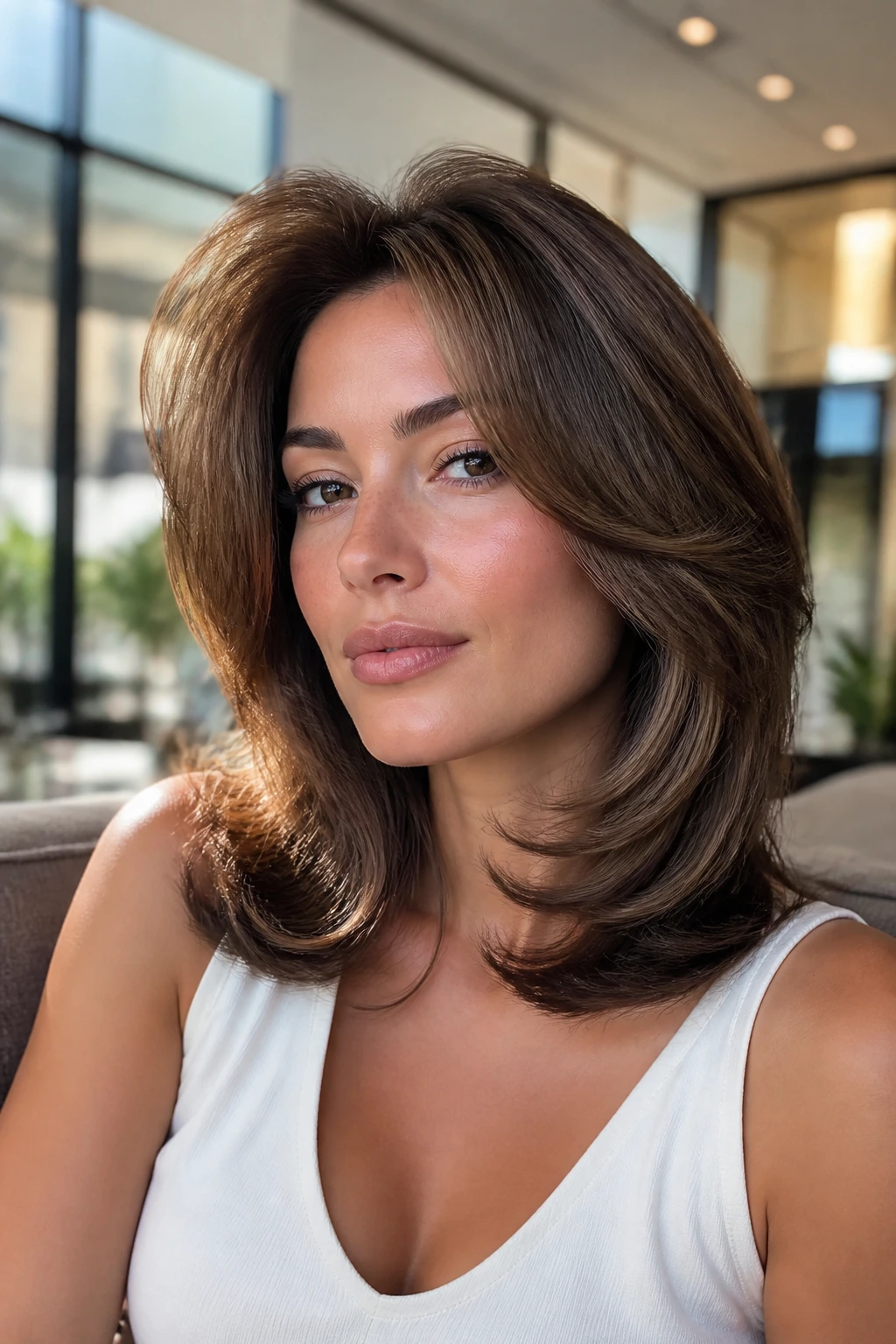
This one is all about volume at the front. The blowout lob uses roundness and lift to make medium-length hair feel fuller, and curtain bangs finish the job by framing the face with a soft bend instead of a sharp line. If you like hair that has a little bounce at the ends, this is a strong pick.
The blowout should start at the roots. Clip the bangs up while they cool, then set the ends around a large round brush so they curve away from the face before rolling back. That cooling step matters. Hair remembers shape better when it cools in place, and that’s one reason salon blowouts last.
This style is worth the effort if your hair tends to fall flat at the crown. It doesn’t need to be perfect all day. It just needs enough structure to keep the shape readable.
11. Feathered Layers for Fine Hair
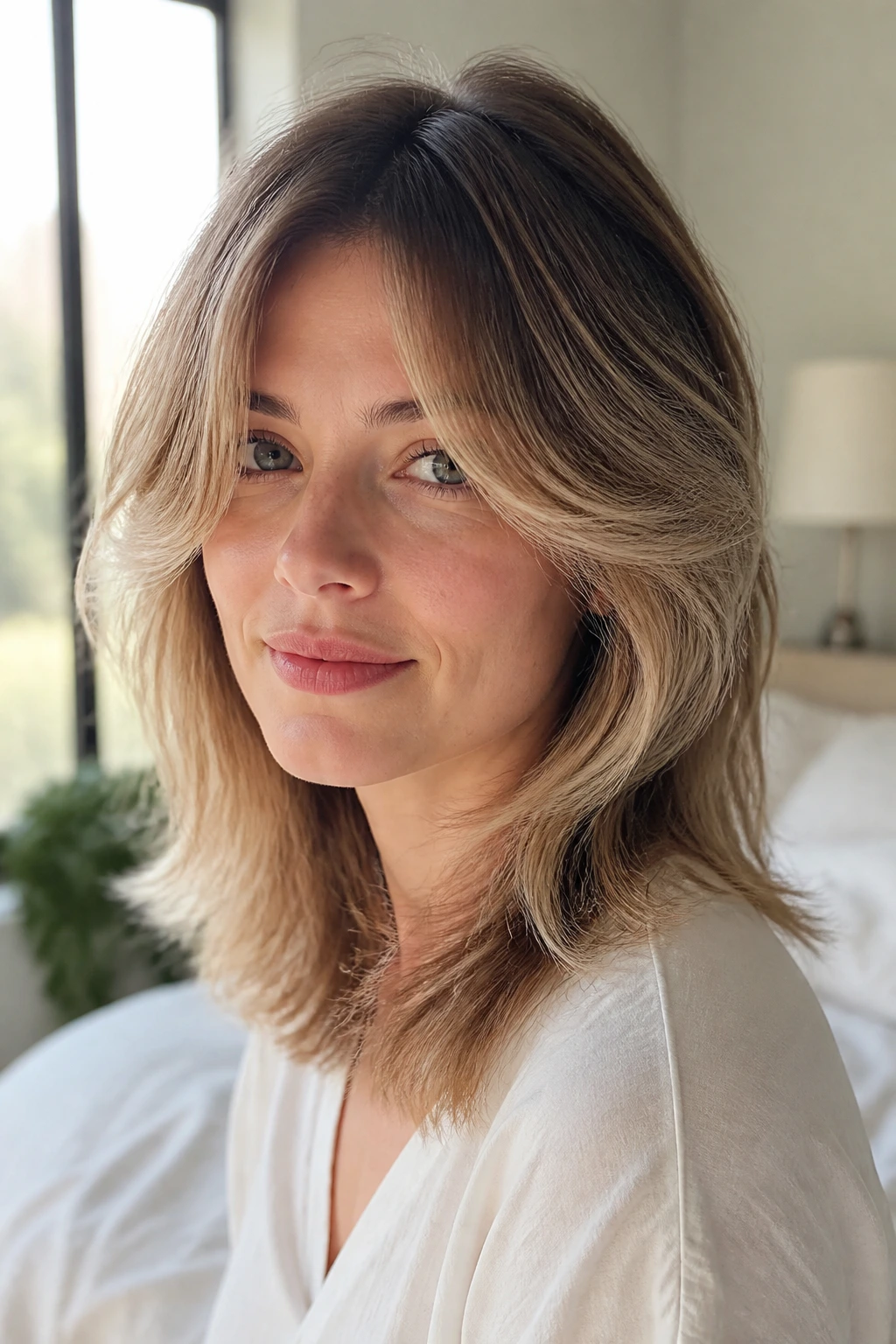
Fine hair needs a different kind of layer. Too much thinning, and it goes limp. Too little, and the haircut hangs like one flat curtain. Feathered medium-length layers with curtain bangs split the difference by keeping the perimeter soft while giving the front a little lift.
The bangs should be light, not chunky. Ask for a fringe that opens gradually, with the shortest point around the cheekbone and the longest point near the jaw. That keeps the front from collapsing into the rest of the hair. Fine hair loves this kind of gentle shaping because the cut looks fuller when the ends are left a little airy.
A root-lift spray at the front helps a lot. So does a light mousse through damp hair. Heavy oils are the enemy here; they flatten the whole thing before you even leave the house.
12. De-Bulked Lob for Thick Hair
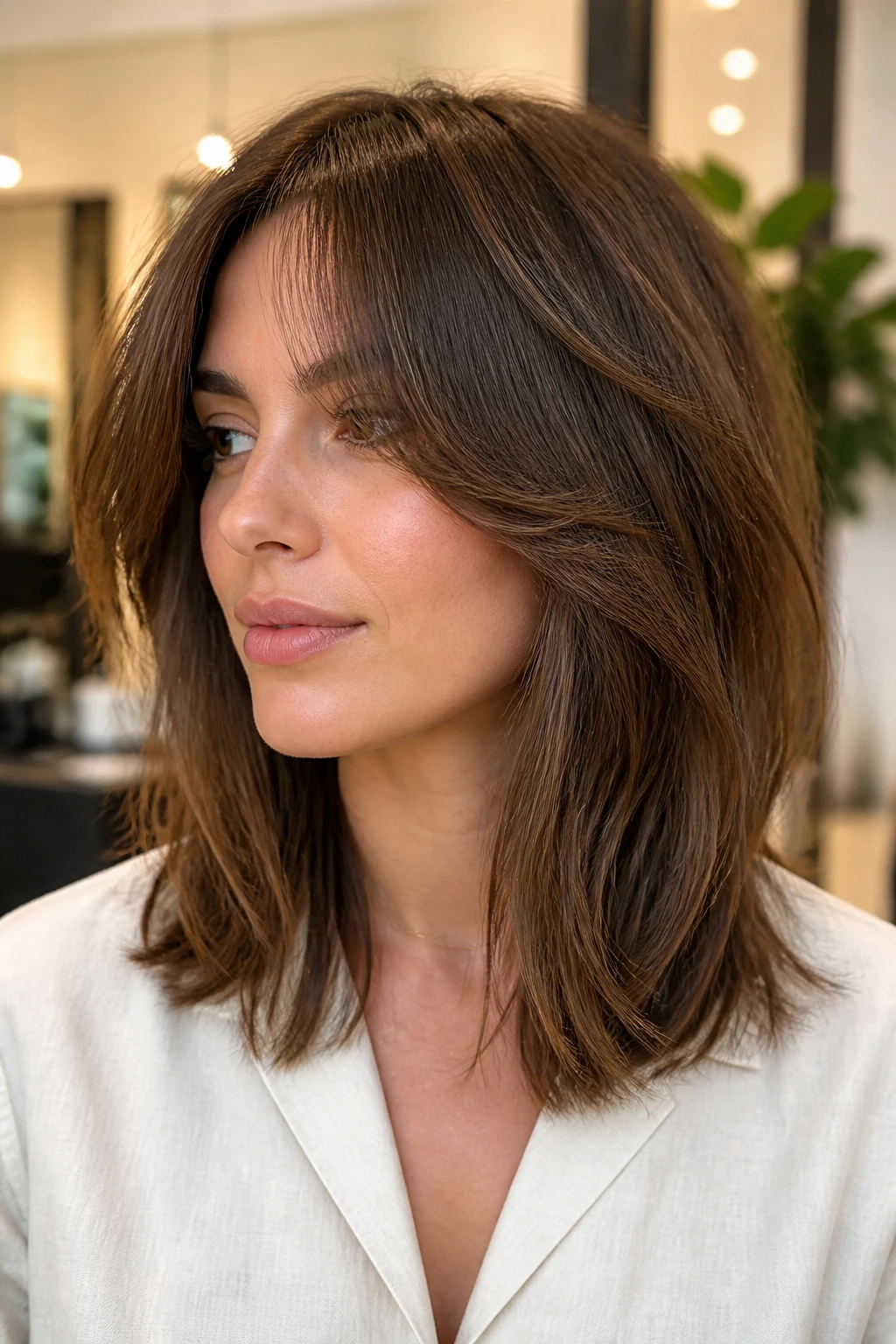
Thick hair can wear curtain bangs beautifully, but it needs internal weight removal rather than a bunch of short layers sprayed all over the head. A de-bulked lob keeps the outside shape clean while reducing the heaviness inside the haircut. The bangs should be soft enough to split, but not so thin that they disappear.
This is where a stylist’s sectioning matters. The wrong cut can create puffiness at the sides, which makes the face frame stick out like shelves. A better cut keeps the movement low and the ends controlled. Think swing, not bulk.
Ask for the fringe to stay long enough to tuck behind the cheekbones when needed. Thick hair grows fast, and you’ll appreciate the extra length when the bangs need to sit to the side on humid days.
13. One-Length Shoulder Cut with Minimal Layers
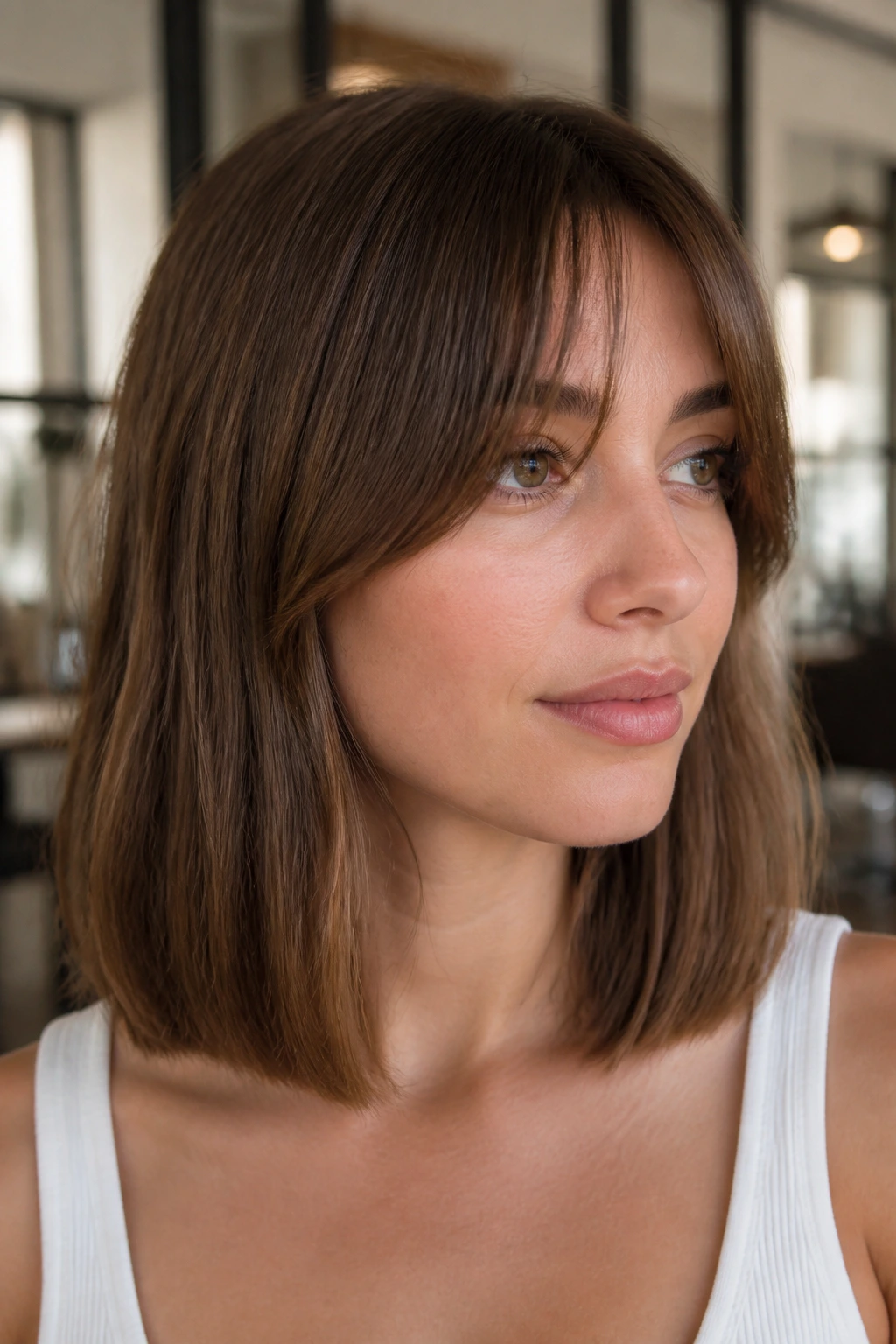
Not every curtain bang haircut needs a mountain of layers. A one-length shoulder cut with a soft fringe is a cleaner, calmer version of the look. The ends stay even, the hair feels heavier in a good way, and the curtain bangs provide just enough movement at the front so the haircut doesn’t go stiff.
This shape is useful if your hair already has texture on its own. Waves, bends, and even a little frizz can make the blunt line less severe. The bangs should be the only visible softness in the shape, which gives the haircut a nice contrast.
It’s also one of the easiest cuts to maintain. Trim the ends, keep the fringe in check, and the haircut keeps working. No complicated layer map. No constant rebalancing.
14. Soft Mullet with Longer Ends
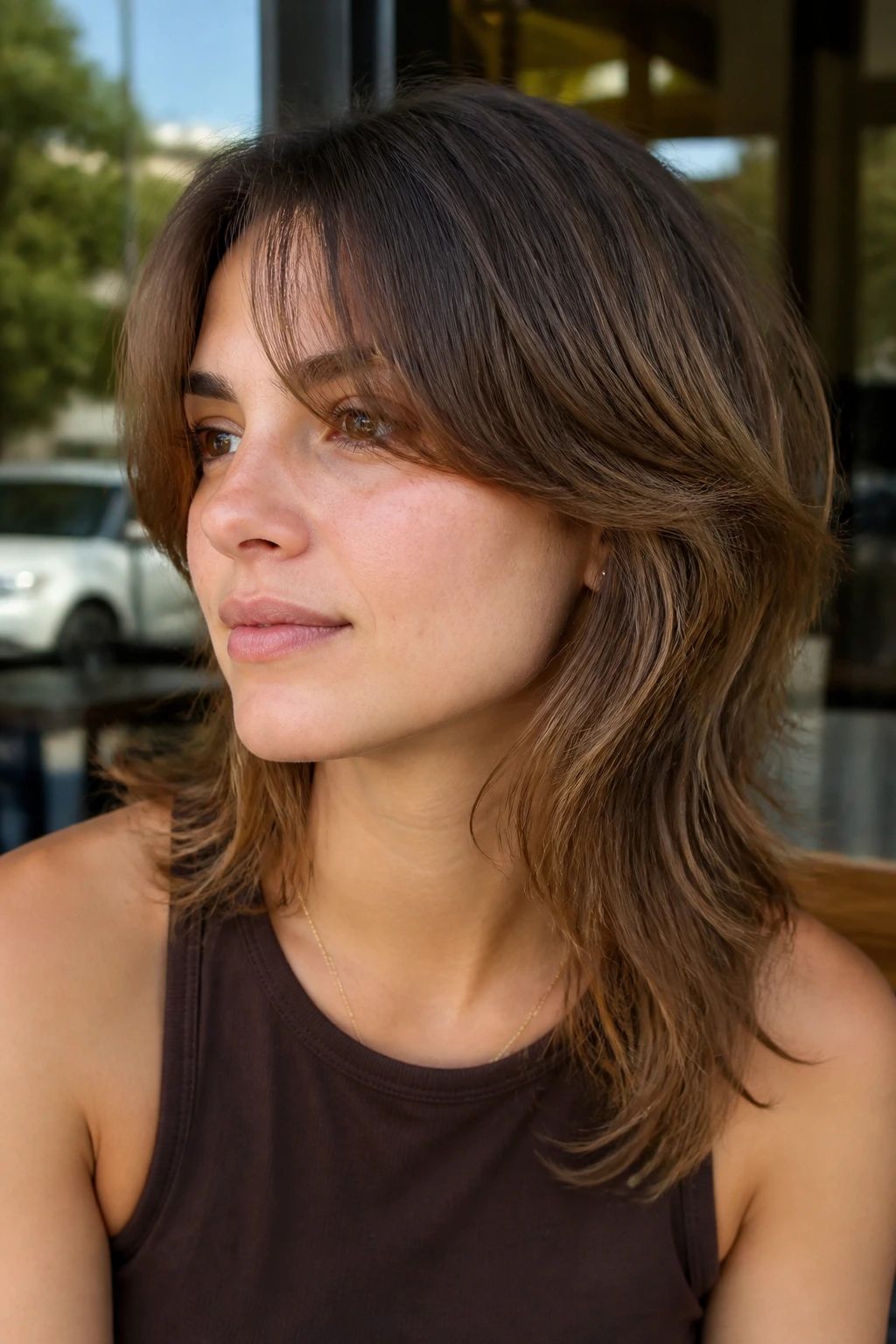
A soft mullet sounds scarier than it is. The modern version is more of a layered medium cut with extra length in the back and face-framing pieces that blend forward. Curtain bangs help it read as stylish instead of chaotic because they bridge the gap between the shorter front and the longer back.
The shape suits people who like movement and don’t mind a little edge around the neckline. Keep the crown lift modest and let the front layers drop into the cheekbones. If the difference between front and back is too dramatic, the haircut starts shouting.
This style likes texture spray and a slightly dirty second-day feel. Freshly washed hair can make it seem too fluffy, especially on fine strands. A little lived-in grit helps the shape hold together.
15. Clavicut with Outturned Tips

A clavicut lands right at the collarbone, which means the ends are long enough to flip and short enough to feel current without trying too hard. Add curtain bangs, and the whole cut gets a nice forward motion. The fringe opens the face while the outturned tips keep the neckline from looking heavy.
This is one of my favorite versions for people who want something easy to wear with both straight and wavy styling. The outturned finish can be done with a blow dryer brush or a flat iron bend at the very ends. Don’t curl the whole head. Just give the last inch or two a tiny kick.
The cut works because the collarbone acts like a built-in line. The hair hits that point, turns, and moves. Simple. Clean. Hard to mess up if the length is right.
16. Air-Dried Wave Cut with Long Fringe
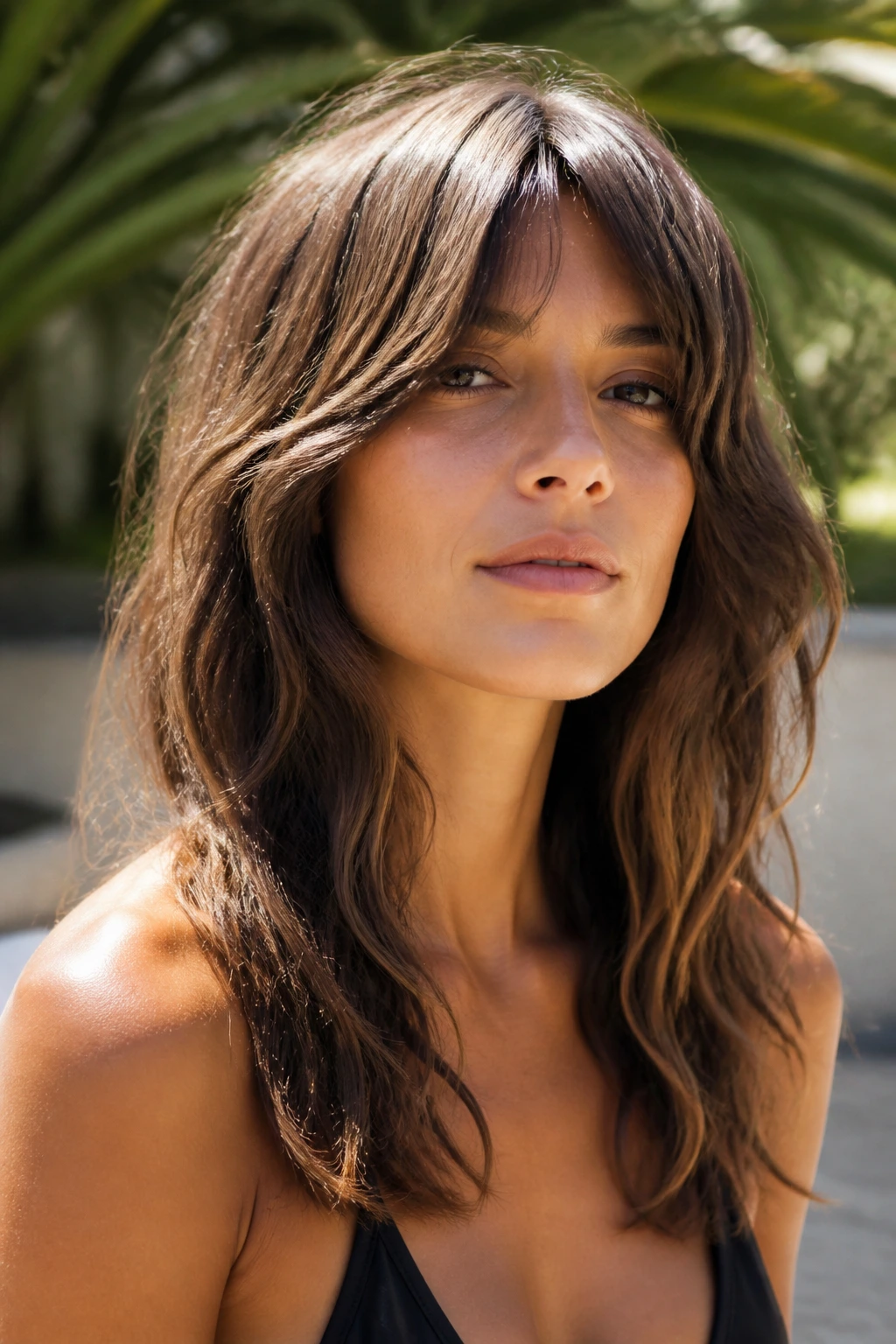
Some hair looks best when you stop fighting it. An air-dried wave cut with long curtain bangs takes advantage of natural texture instead of forcing a polished blowout every time. The layers should be cut to encourage a soft bend around the face, and the fringe should be long enough to settle once the hair dries.
The important part is preparation. Work a leave-in conditioner or light curl cream through damp hair, then twist the bangs away from the face for a few minutes before letting them fall. That helps the front open instead of drying in one flat clump.
This cut is honest. If your wave pattern is uneven, the shape will show it. That’s not a flaw. It’s the point.
17. Off-Center Curtain Bangs with a Deep Side Part
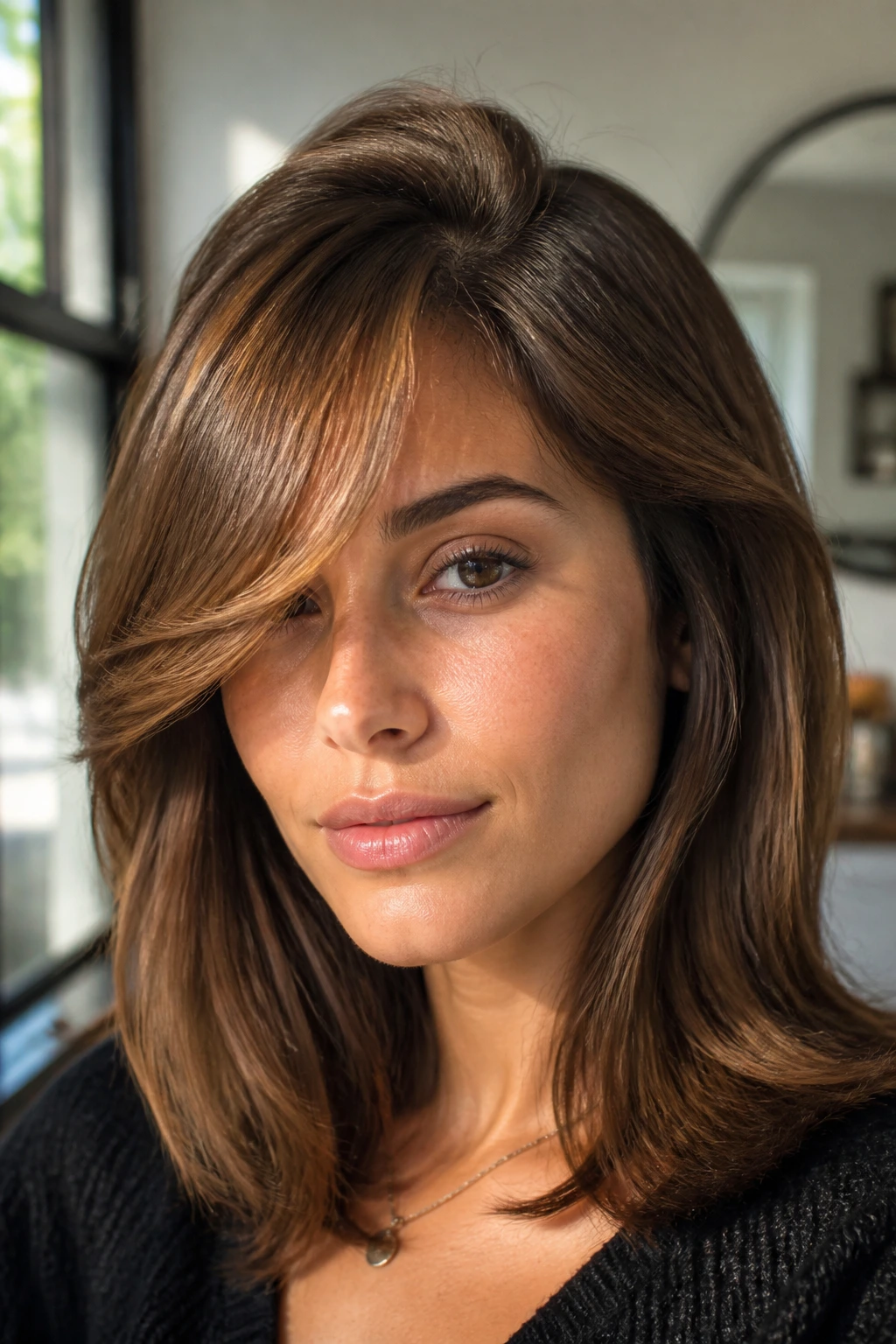
What if you like curtain bangs but hate a strict middle part? Go off-center. A deep side part with curtain bangs lets the fringe fall across the forehead in a softer, more angled way, which is useful if your face is long, narrow, or simply better suited to asymmetry.
The cut still needs the same length logic: shorter at the cheekbone, longer toward the jaw. The difference is where you place the break in the fringe. A side part gives the bangs more swing and can help stubborn cowlicks behave because you’re not forcing a dead-center split every day.
This version is especially friendly on days when the roots are doing their own thing. The part can move a little and the haircut still holds together. It’s a small shift, but it changes the mood a lot.
18. Grow-Out Friendly Layered Cut
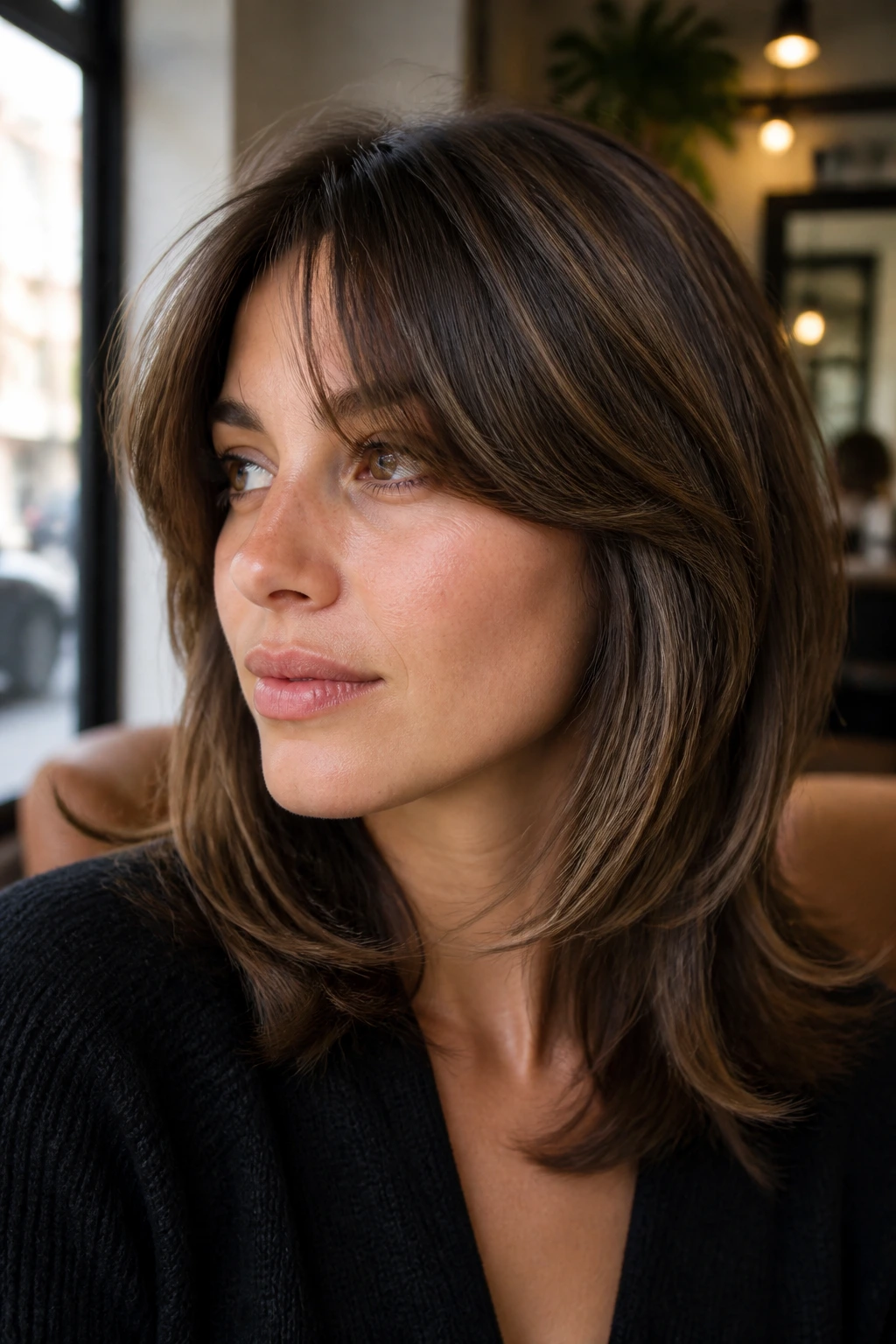
The best grown-out haircuts don’t look like accidents. They look planned for the next three months. A grow-out friendly layered cut with curtain bangs keeps the front long enough to blend into the sides while the ends keep enough shape that the whole style still reads as deliberate.
This is the version I’d choose if you don’t want to live in the salon chair. The fringe should be soft and layered, not micro-cut. The longest pieces should already be close to the cheek or jaw so they can slide into the rest of the hair as they grow. That buys you time.
If you love a haircut but hate the awkward middle stage, this is the one to save. It gives you shape on day one and a decent grow-out later, which is rarer than it should be.
Why Medium-Length Hair and Curtain Bangs Keep Working

Medium length gives curtain bangs a real job. On very long hair, the fringe can feel disconnected if the layers don’t match. On very short hair, the bangs can dominate the whole cut. In the collarbone-to-shoulder zone, the face frame, the ends, and the bulk of the hair all live close enough together that the style feels balanced.
That balance is also practical. You can blow-dry the front and leave the rest rough. You can tuck the length behind the ears and still keep the bang shape. You can grow the fringe out without being stuck in that blunt, awkward line that makes people reach for bobby pins out of despair.
The other reason this combo keeps showing up is texture flexibility. Straight hair gets definition, wavy hair gets direction, and curly hair gets a frame that doesn’t fight its own pattern. It’s one of the few haircut families that can be tailored a dozen different ways without losing the core idea.
What to Ask for at the Salon
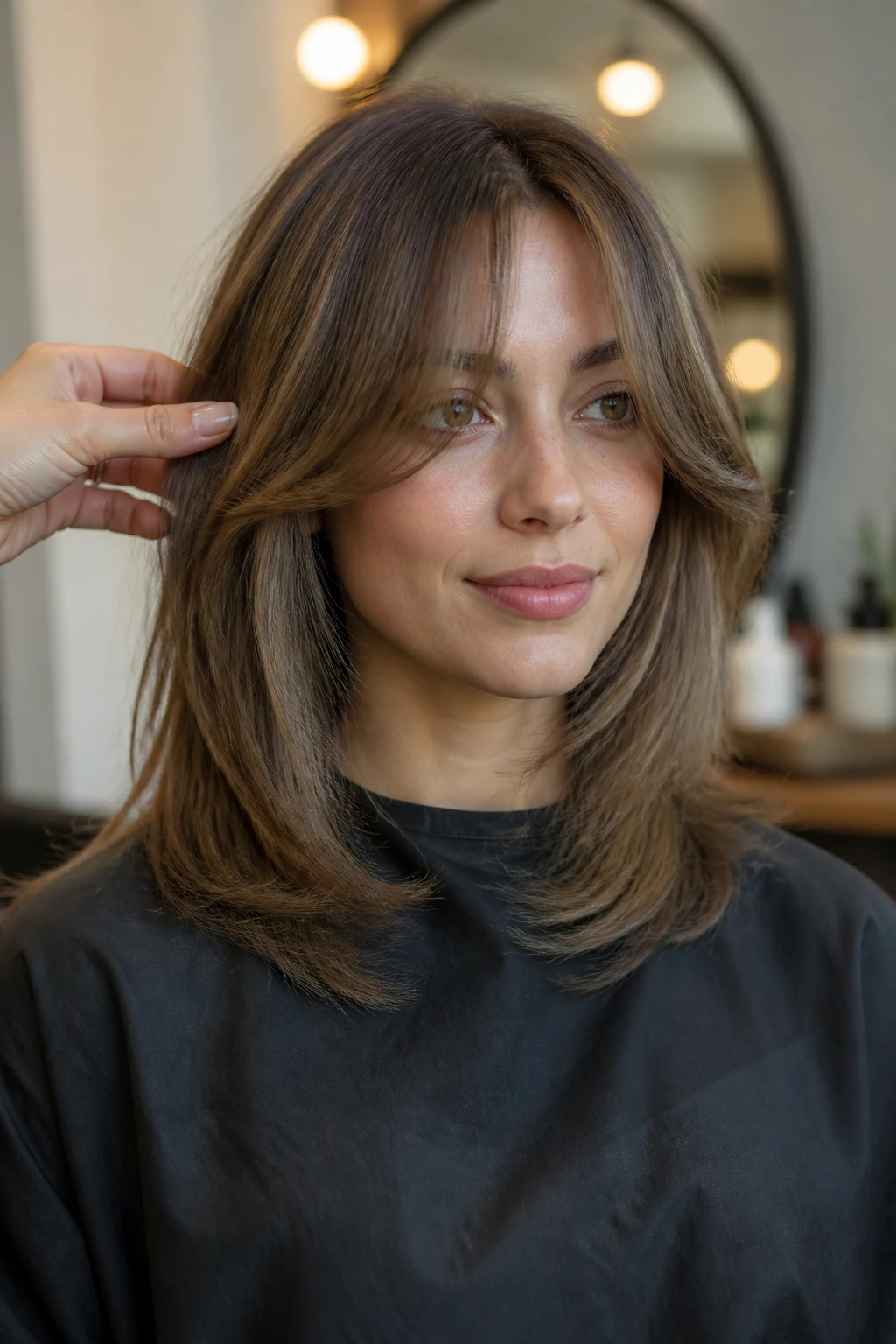
Bring photos, yes, but also bring a sentence. Photos show the mood; the sentence explains the mechanics. Say where you want the shortest point of the curtain bangs to land, where the longest pieces should hit, and how much face-framing you want around the cheek and jaw.
If you have thick hair, ask for internal weight removal instead of heavy layering through the surface. If your hair is fine, ask the stylist not to thin the fringe too much. If your hair grows with a cowlick at the front, mention it before the scissors come out. That tiny detail changes the whole cut.
A few things worth saying out loud
- “I want the shortest bang piece around the cheekbone.”
- “I don’t want the layers starting too high.”
- “My hair is thick, so I need movement without losing the ends.”
- “My fringe needs to work when I air-dry.”
That’s the part many people skip. Then they wonder why the haircut looks right only for the first 48 hours.
Tools That Make Styling Easier
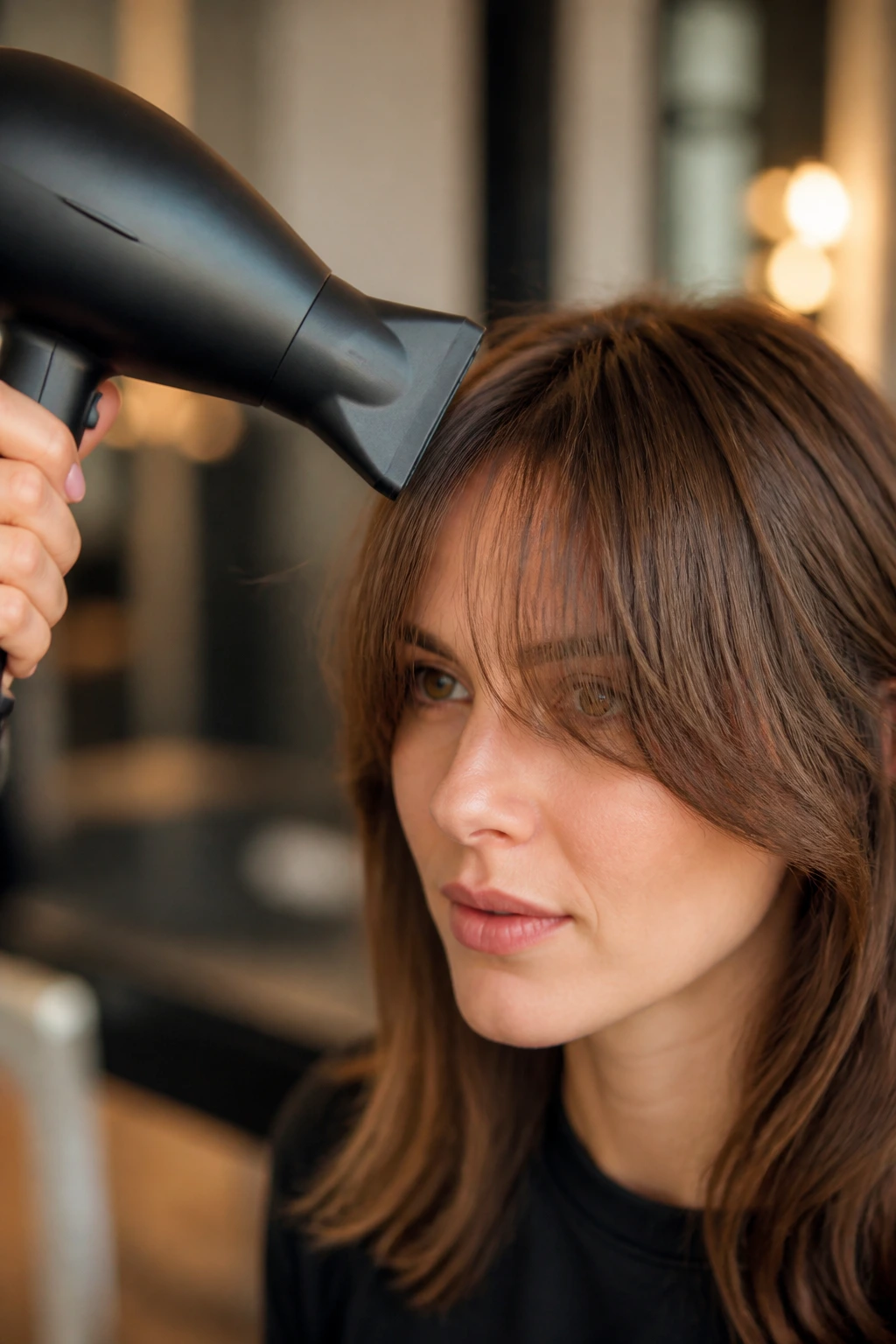
- Blow dryer with a nozzle attachment: Gives the bangs direction instead of blasting them apart.
- 1.25-inch round brush: A good middle-size brush for bending the fringe and smoothing the front pieces.
- Vent brush: Faster for rough-drying roots and keeping lift at the crown.
- Heat protectant spray: Non-negotiable if you use a round brush or iron near the front.
- Lightweight mousse: Helps waves and curls keep shape without turning crunchy.
- Root-lift spray: Useful when the crown falls flat and the bangs start looking disconnected.
- Velcro rollers or duckbill clips: Nice for setting the fringe while it cools.
- Texturizing spray: Good for shag, wolf cut, and razored ends when the finish needs a little grit.
- Flat iron: Handy for a small bend at the ends or to tame a stubborn front section.
How to Style Them on Busy Mornings
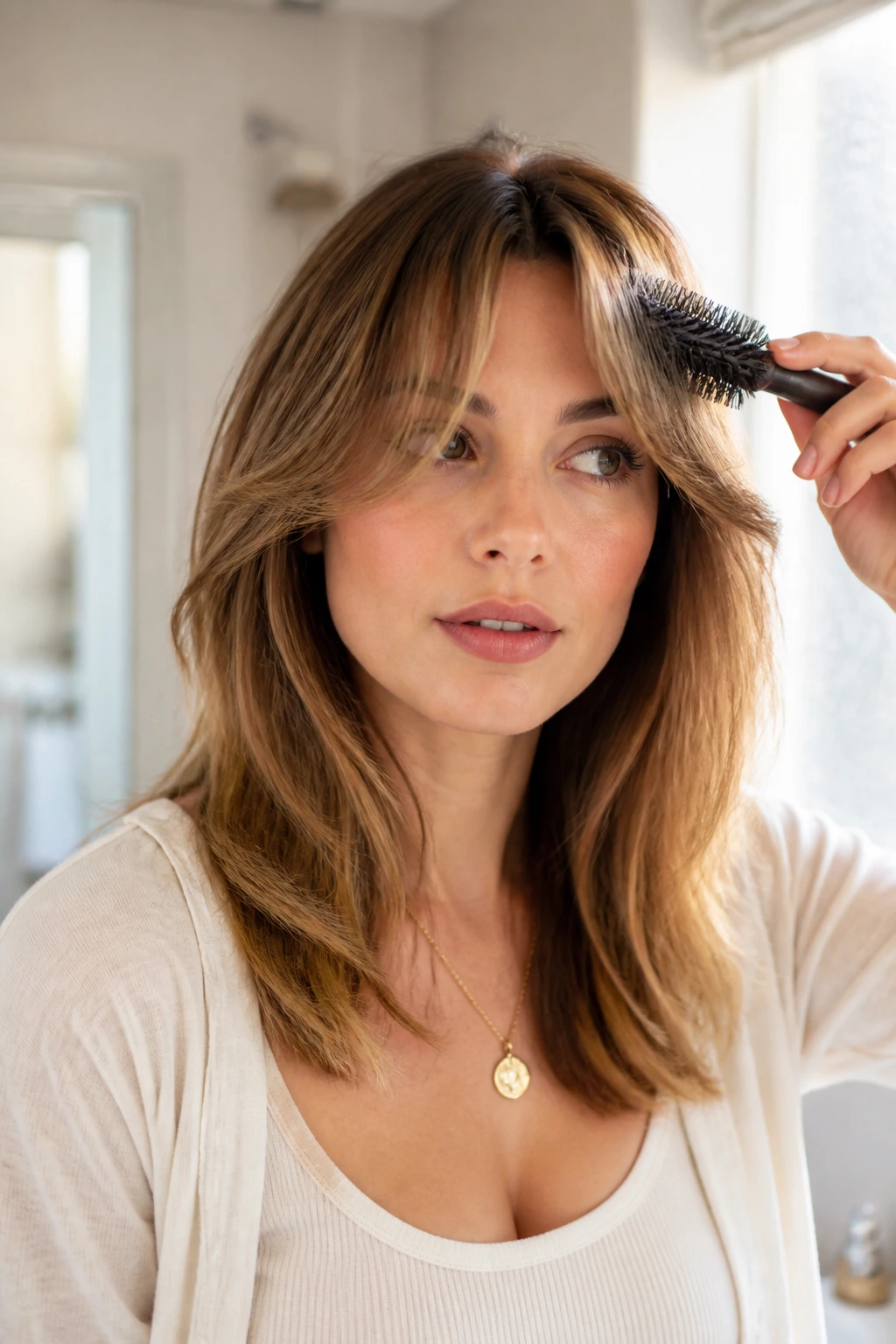
The fastest version of curtain bangs is not a perfect blowout. It’s a controlled front section and an honest rest of the head. Focus on the bangs first, because that’s where the shape lives, then rough-dry the length and stop before you turn the whole thing into a project.
Straight hair
Use a round brush or even just a paddle brush with a dryer nozzle. Bend the fringe away from the face, then back toward the cheekbones. A tiny pass at the ends is enough; if you keep going, the hair starts to look overworked and loses the clean line that makes the cut good in the first place.
Wavy hair
Work in a bit of mousse while the hair is damp. Dry the bangs with a brush so they don’t split in random places, then let the rest of the hair fall where it wants. If you need extra shape, twist the face-framing pieces loosely and let them cool before shaking them out.
Curly hair
Dry the fringe in smaller sections and use your fingers instead of a brush once the curl pattern is set. The goal is separation, not slickness. A little frizz around the face is usually better than crunch.
Common Mistakes That Flatten the Shape
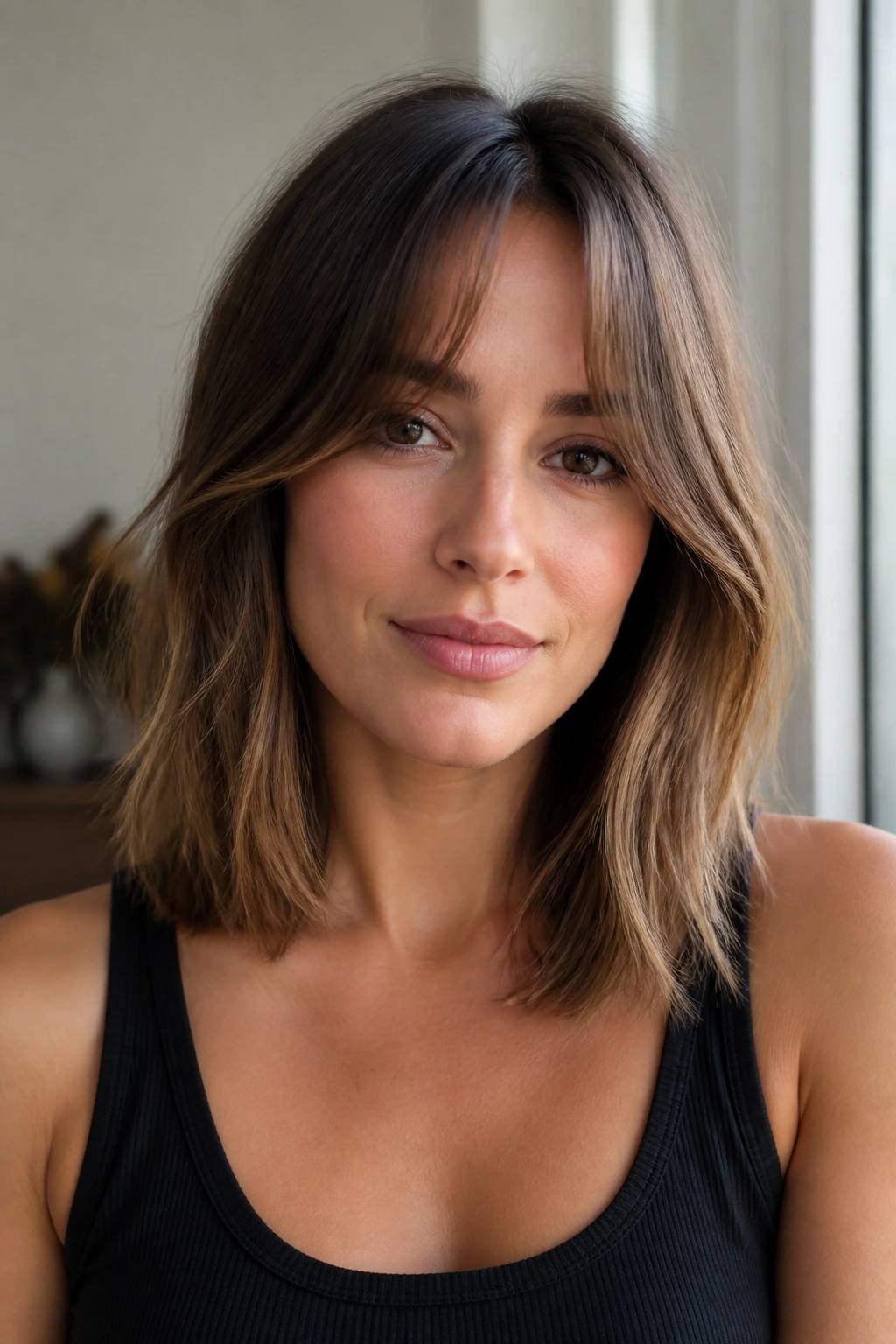
The first mistake is cutting the bangs too short. Curtain bangs are not baby bangs with a middle part. If the shortest point sits above the cheekbone, the fringe can pop up, split oddly, or lose the softness that makes it flattering.
The second mistake is starting the layers too high. That’s how you get the puffy triangle shape that makes medium-length hair look wider at the sides. Keep the movement focused around the face and lower sections unless the hair is very thick and needs internal removal.
Skipping heat protectant is another one. The front pieces are the most touched, brushed, and restyled part of the haircut, so they fry fast if you’re blowing them out daily. The damage shows as frizz and a rough, split look right where you want softness.
One more: trying to force curtain bangs to part in exactly the same place every day. If your cowlick pushes them off-center, let it. Working with the front pattern usually looks better than fighting it into a perfect line.
Ways to Change the Look Without Cutting More Hair

The Soft Blowout Version
Use a round brush at the front and keep the ends smooth. This version works when you want the haircut to read polished, especially with a blazer or a sharp neckline. The bangs should bend away from the face, not curl into a ring.
The Air-Dried Version
Let the hair dry with a bit of leave-in cream and a loose twist at the fringe. This suits wavy and curly textures best, and it keeps the cut from looking overstyled. Some unevenness is part of the charm.
The Textured Weekend Version
Add texture spray at the mids and ends, then break up the bangs with your fingers. This gives shags, wolf cuts, and razored mides a rougher edge. Good if you want movement that feels lived-in.
The Polished Workday Version
Smooth the front, tuck one side behind the ear, and keep the line at the ends neat. The haircut looks more structured without losing the softness of the fringe. Useful when you need the style to behave for a long day.
The Grow-Out Version
Let the fringe slide a little longer and start blending it into the front layers. This is the easiest version to live with if you hate strict trims. The shape shifts, but it doesn’t collapse.
Trim Schedule and Grow-Out
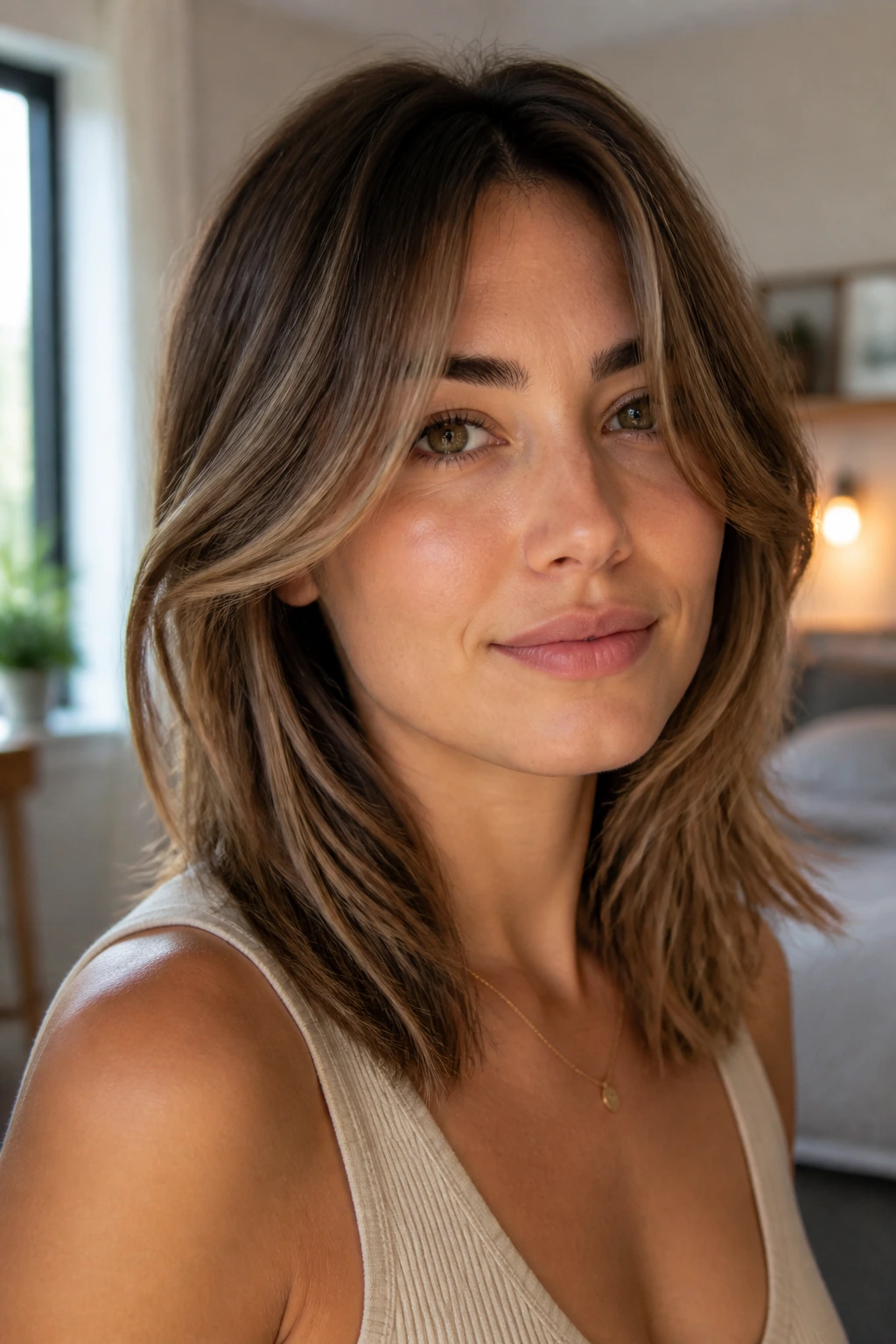
Curtain bangs are forgiving, but they’re still bangs. If you like the split to sit right at the cheekbones, plan on trimming the fringe every 4 to 8 weeks depending on how fast your hair grows. Some people can stretch longer, especially if they like a softer, less precise look.
The rest of the medium-length cut usually needs a shape refresh every 8 to 12 weeks, though thick hair and layered cuts may need cleanup sooner if the ends start puffing out. I’d rather trim a little early than let the front pieces drag into your mouth and call it a style choice.
When you’re growing the fringe out, don’t panic-cut it shorter the second it gets annoying. That’s how people stay stuck in bang limbo. Let the front pieces blend, use a side sweep on lazy days, and keep the layers trimmed so the shape stays clean.
Curtain Bangs Questions People Ask First

Do curtain bangs work on fine hair?
Yes, but they need a light hand. Ask for a softer fringe with less bulk and keep the layers lower so the ends still look full. Heavy thinning can make fine hair go flat fast.
Can I get curtain bangs with curly hair?
You can, and the cut can look lovely, but the fringe must be left longer than you’d expect because curls shrink. A stylist who cuts curly hair dry or near-dry will usually get the balance right better than someone cutting it straight wet and hoping for the best.
How often do curtain bangs need trimming?
Most people need a fringe trim every 4 to 8 weeks. If you like a shaggy, grown-out shape, you can stretch it longer. If you want the bangs to sit right at the cheekbones, keep a shorter trim cycle.
What if my bangs separate in a weird place?
That usually means the cowlick or front growth pattern is stronger than the styling. Blow-dry the roots in the direction you want first, then clip the bangs while they cool. If they still split badly, your cut may be too short or too thick at the center.
Can I style curtain bangs without a round brush?
Yes. A paddle brush, vent brush, or even your fingers can work if the bangs are already cut well. You may not get the same lifted bend, but you can still create a clean open part and a soft face frame.
What face shapes suit medium-length hair with curtain bangs?
Oval, round, square, and heart-shaped faces can all wear them, but the bang length changes the effect. Longer curtain pieces tend to soften a wide forehead or a strong jaw, while shorter ones add more lift around the eyes. The shape is more important than the label.
How do I grow curtain bangs out without that awkward stage?
Keep the ends trimmed so the rest of the haircut stays neat, and let the fringe blend into the front layers instead of trying to hold one exact bang line forever. Side parts, clips, and a small bend at the front all help during the in-between months.
Do curtain bangs need heat styling every day?
No. They look best with a little direction, but that doesn’t always mean a full blowout. A quick root reset, a brush-through, and a tiny bit of heat at the front is often enough.
The Fringe That Stays Useful
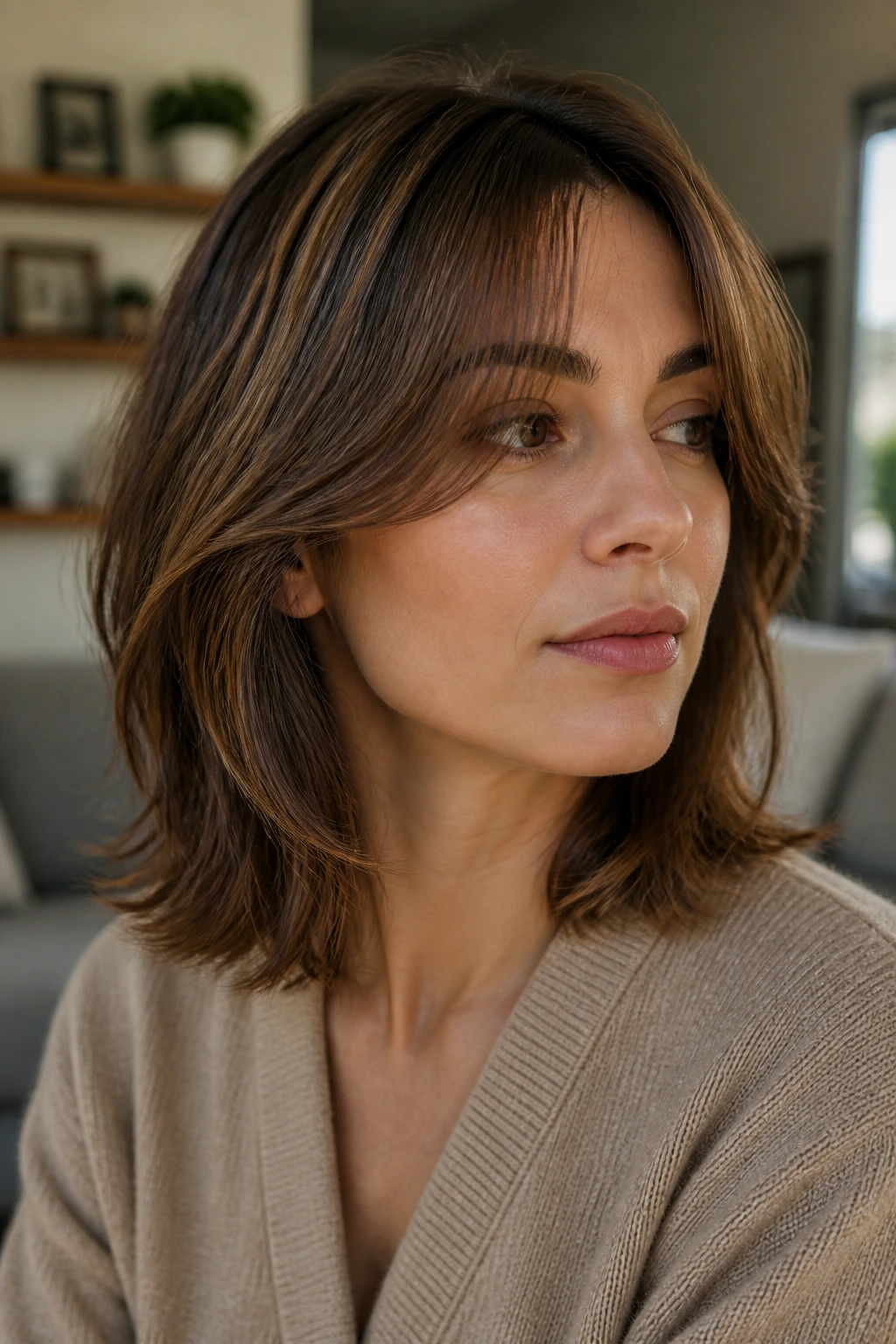
The reason medium-length hairstyles with curtain bangs keep coming back is simple: they solve more problems than they create. They soften the face, give the haircut a front-facing shape, and still let you wear your hair up, tucked, waved, or straight without feeling like you committed to one look forever.
If you’re saving photos, save the ones that show the bang length from the side, not just the front. That’s where the cut’s real character lives. A fringe that opens at the cheekbone and blends into the jawline will usually give you more options than the dramatic version you first fall for on a phone screen.
The best next step is the least glamorous one. Pick the shape that matches your texture, then ask for the exact bang length before the scissors touch your face. Get that part right, and the rest of the haircut tends to fall into place.
