



Fine hair can go limp in a hurry, which is exactly why short hair with wispy bangs for fine hair keeps showing up in salon chairs and on people who are tired of chasing volume all morning. The cut works because it doesn’t ask fine strands to do too much. It keeps the outline compact, lets the fringe stay light, and leaves enough movement around the face that the style still looks alive after a long day.
A heavy bang line is usually the wrong move here. It can swallow the little density you have at the front and make the whole haircut feel flatter than it is. Wispy bangs do the opposite. They skim the forehead, break up that solid curtain effect, and leave a bit of air between the strands, which is exactly what makes the cut feel fuller instead of heavier.
I like haircuts that keep their shape without a wrestling match with a round brush. These do that. The best versions below lean on clean edges, soft texture, and bangs that are cut to float rather than sit like a shelf. No helmet hair. No limp fringe. Just a short shape that makes fine hair look intentional.
Why This Collection Works for Fine Hair

-
The fringe stays light: Wispy bangs take less visual weight off the front hairline, so the cut never looks like it has been over-thinned at the front.
-
The shape stays compact: Shorter lengths stop fine ends from hanging into stringy pieces that make the whole head read thinner than it is.
-
You get movement without chaos: The best versions use soft layering and a little texture, not choppy shredding that can make fine hair look frayed.
-
Styling is faster than with longer cuts: A quick bend with a blow-dryer or a flat iron usually gives enough lift to keep the shape from collapsing.
-
Grow-out is less annoying: Wispy bangs tend to blend as they get longer, which matters when your trim schedule slips by a week or two.
-
There’s a fit for almost every texture: Straight, slightly wavy, and even loosely curly fine hair can wear these cuts if the bang shape is adjusted correctly.
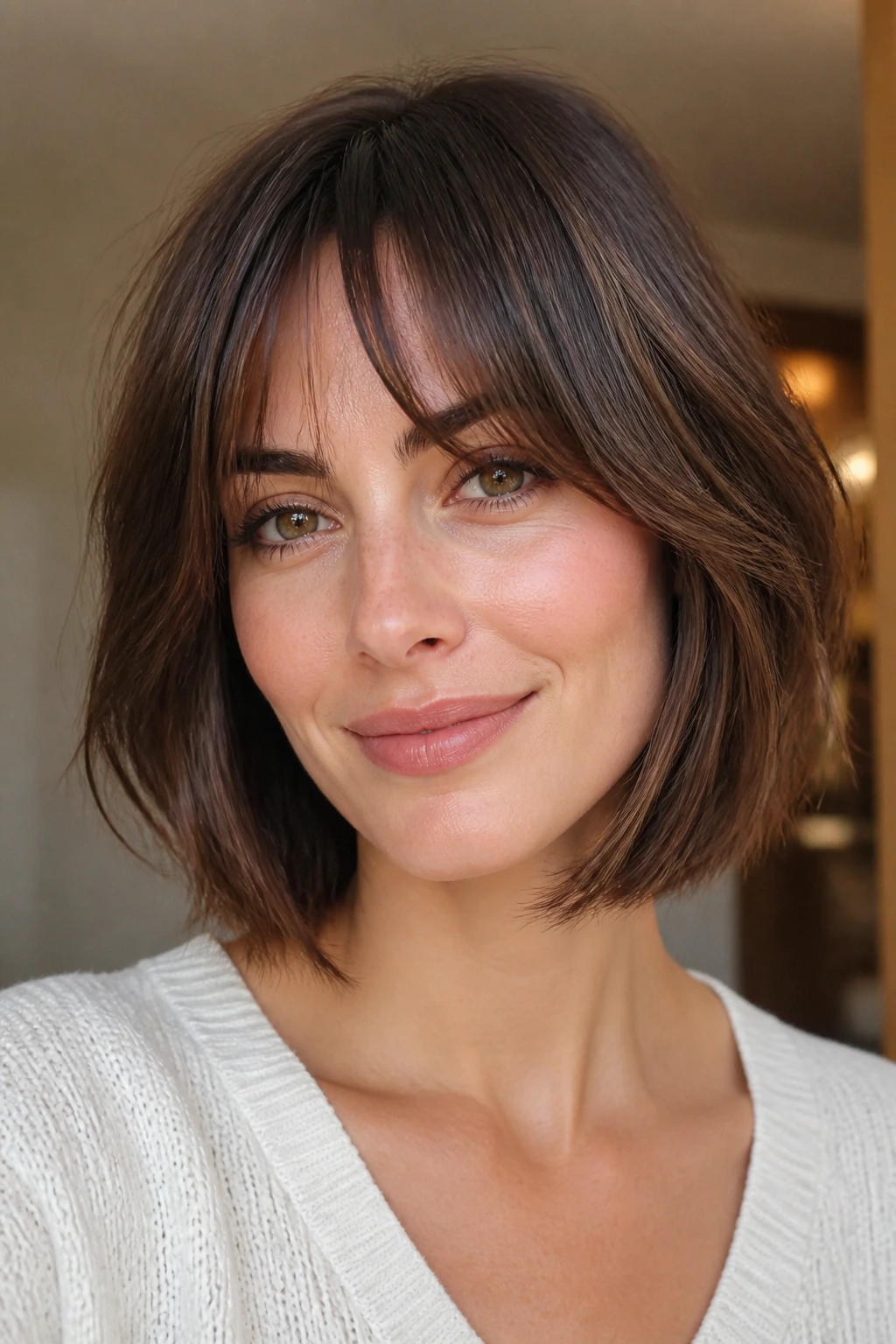
1. French Bob With See-Through Fringe
The French bob is the neat little troublemaker of short hair. It sits around the jaw, sometimes a touch above it, with a fringe that looks soft enough to breathe. On fine hair, that matters. The clean perimeter gives the illusion of density, while the see-through bang keeps the front from turning into a flat block.
Why it works for fine hair
A jaw-skimming line gives your ends a solid edge, which is the easiest way to make fine hair feel thicker without adding bulk. The wispy fringe keeps the forehead from looking boxed in, and that tiny bit of skin showing through the bang line makes the style feel lighter.
A center-split or slightly off-center finish suits this cut well. It keeps the bangs from sitting too heavy on one spot, which is where fine hair usually starts to sag.
Best note to ask for
- Keep the fringe soft and point-cut, not chopped blunt.
- Leave the perimeter clean at the jaw.
- Ask for enough density through the sides so the bob still looks full when tucked behind the ears.
2. Chin-Length Blunt Bob With Wispy Bangs
This is the cut I point to when someone says, “I want my fine hair to look thicker, but I do not want layers everywhere.” The blunt edge does most of the work. The wispy bangs keep the front from feeling too severe.
The blunt line at the chin creates a visual stop, and that makes the hair look denser than a longer, feathered cut would. The fringe softens the face without stealing weight from the rest of the style. Simple. Smart. Good-looking from the side, too.
If your hair falls flat at the crown, this shape helps because the interest sits low and close to the face. You’re not relying on volume at the top. You’re letting the edge do the heavy lifting.
3. Bixie With Feathered Bangs
A bixie is what happens when a pixie and a bob stop arguing and meet in the middle. It keeps the short, airy feel of a crop, but there’s enough length around the ears and nape to soften the outline. Fine hair likes that middle ground.
The feathered bangs matter here because a bixie can get too edgy if the fringe is cut too hard. A little softness around the forehead keeps the cut from looking abrupt. The whole thing feels light, not sparse.
Quick styling cue
Use a pea-sized amount of mousse at the roots and rough-dry with your fingers first. Then bend the bangs with a small round brush or even the side of the brush handle if you want a looser finish. Don’t overwork it. The beauty of a bixie is that it looks better with a little bend than with a polished helmet.
4. Rounded Bob With Soft Micro Bangs
What happens when you want a little French-girl shape but your hair is too fine for a heavy fringe? You go rounded and keep the bang short and wispy. That’s the trick here.
The rounded bob follows the curve of the head, which can be a lifesaver for fine hair that wants to collapse at the sides. The micro bangs stay airy so the front doesn’t become the focal point. Instead, the shape reads as soft and balanced.
Why this one is sneaky-good
It works especially well if your hair grows out with a natural curve or if you’ve got a gentle wave. The cut does not fight that movement. It uses it.
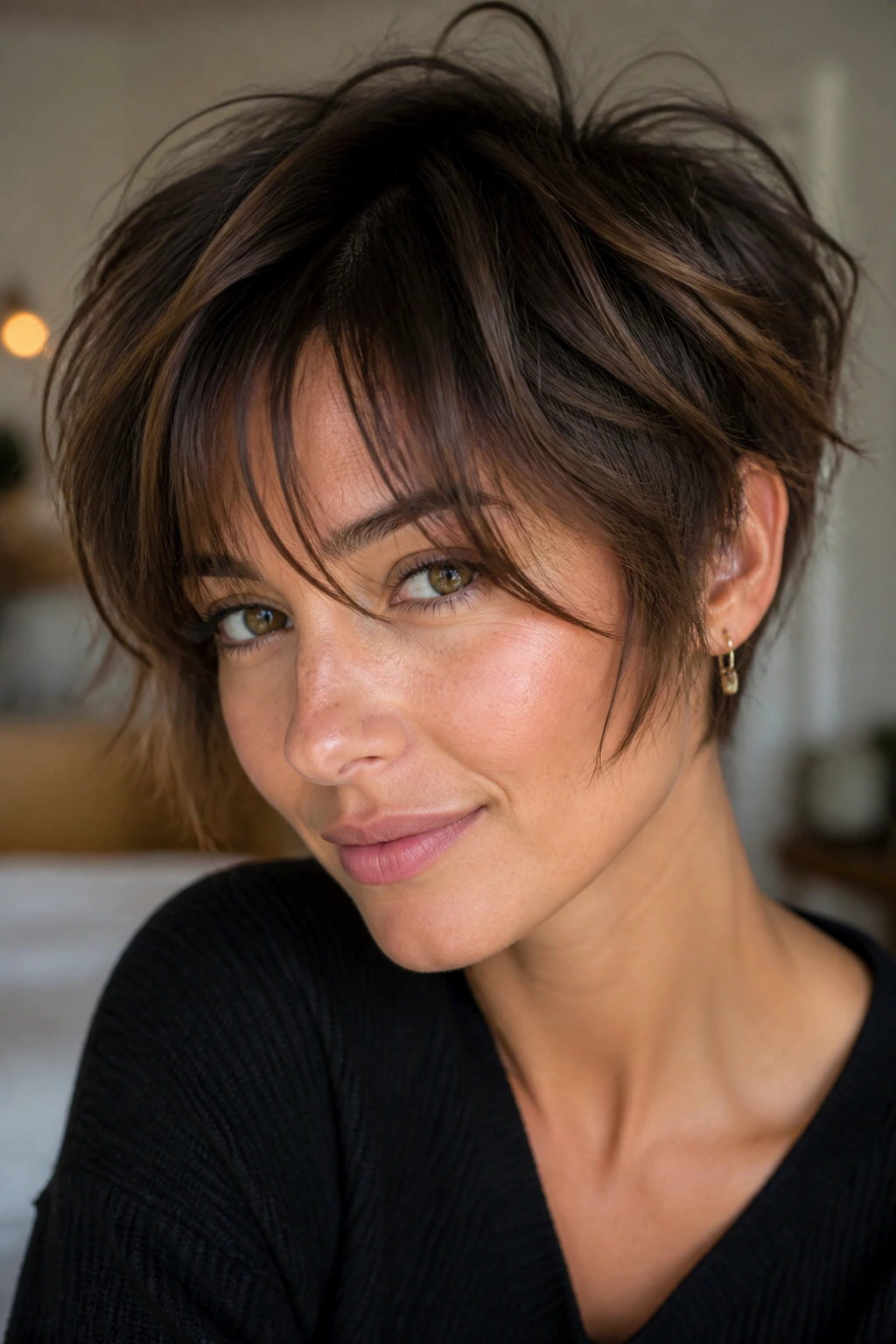
5. Shaggy Pixie With Long Wisps
A shaggy pixie is a little messier than a classic crop, and that’s the point. Fine hair often looks better when it’s allowed to break up into pieces instead of sitting as one flat sheet. Long wisps around the fringe and temples keep the haircut from feeling severe.
This is one of the best options if you like texture but hate bulk. The back stays short, the top gets a touch more room, and the bangs can be swept or split depending on the day. It has more edge than a standard bob, but not enough to feel precious.
If your hair grows in fast around the ears, this shape also buys you a little grace between trims. That’s not nothing.
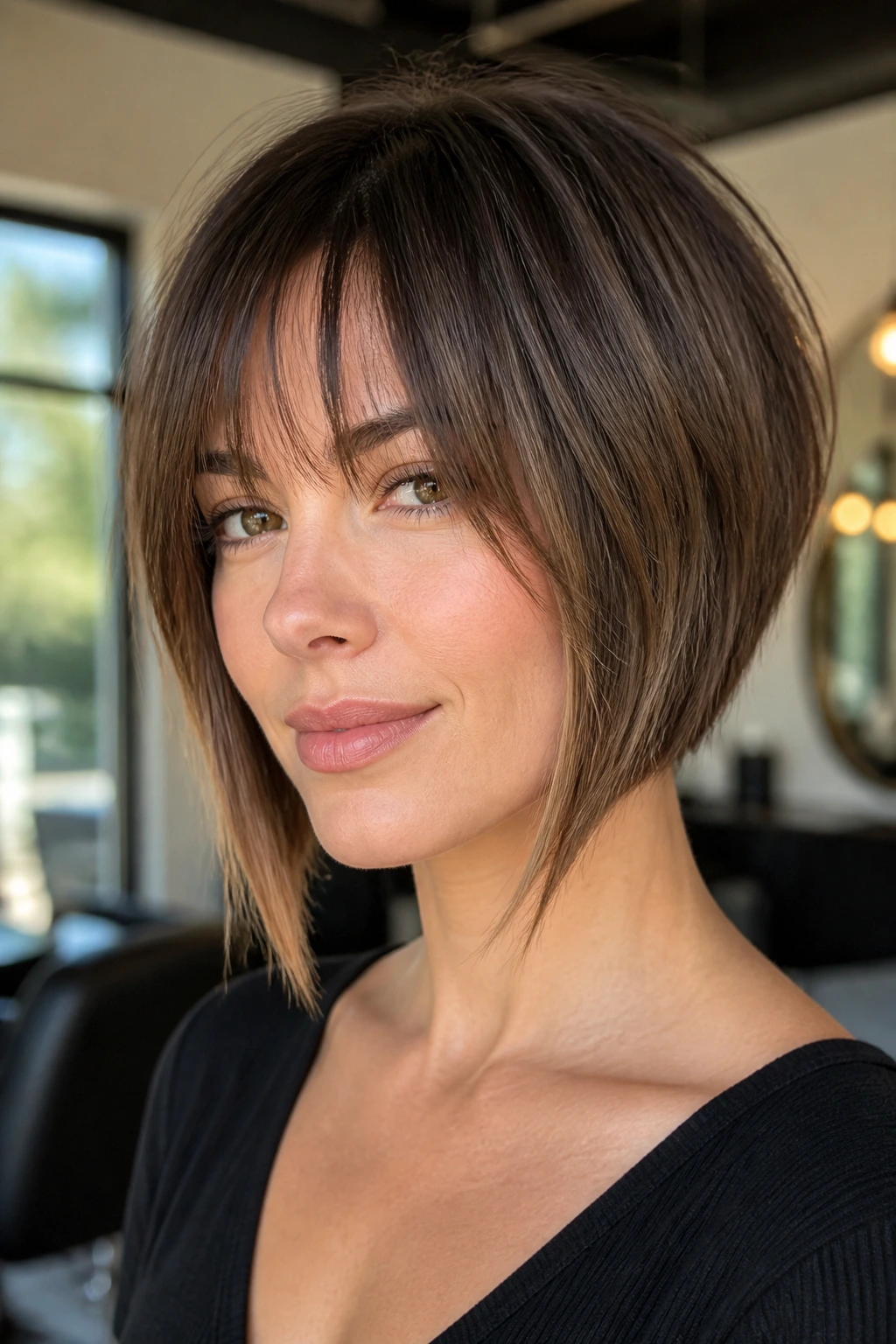
6. Inverted Bob With Broken Fringe
The inverted bob gives you lift in the back and longer pieces in the front, which is handy when fine hair needs a stronger silhouette. The broken fringe keeps the face open so the cut does not slide into “school picture day” territory.
I like this shape for someone who wants structure. The back stack creates a little lift at the nape, and the front pieces taper forward in a way that feels modern, not stiff. The wispy bangs sit between the two and soften the whole line.
H3: Where it shines
- Fine, straight hair that falls flat in one-length cuts
- Faces that benefit from a bit of length near the cheekbones
- Anyone who wants the back to feel fuller without teasing
7. Short Lob With Airy Curtain Bangs

A short lob sits just long enough to tuck behind the ears, but not so long that fine hair gets weighed down. Add airy curtain bangs, and you get one of the most forgiving shapes in the whole bunch.
The middle split lets the bangs fall away from the center of the forehead, which helps if your hairline is a little sparse or you hate a full bang across the front. The longer sides draw the eye down and out, which adds balance.
This cut is also a good compromise if you’re nervous about going too short. It reads easy, not abrupt. And it grows out without turning into a disaster.
8. Tapered Crop With Side-Swept Bangs
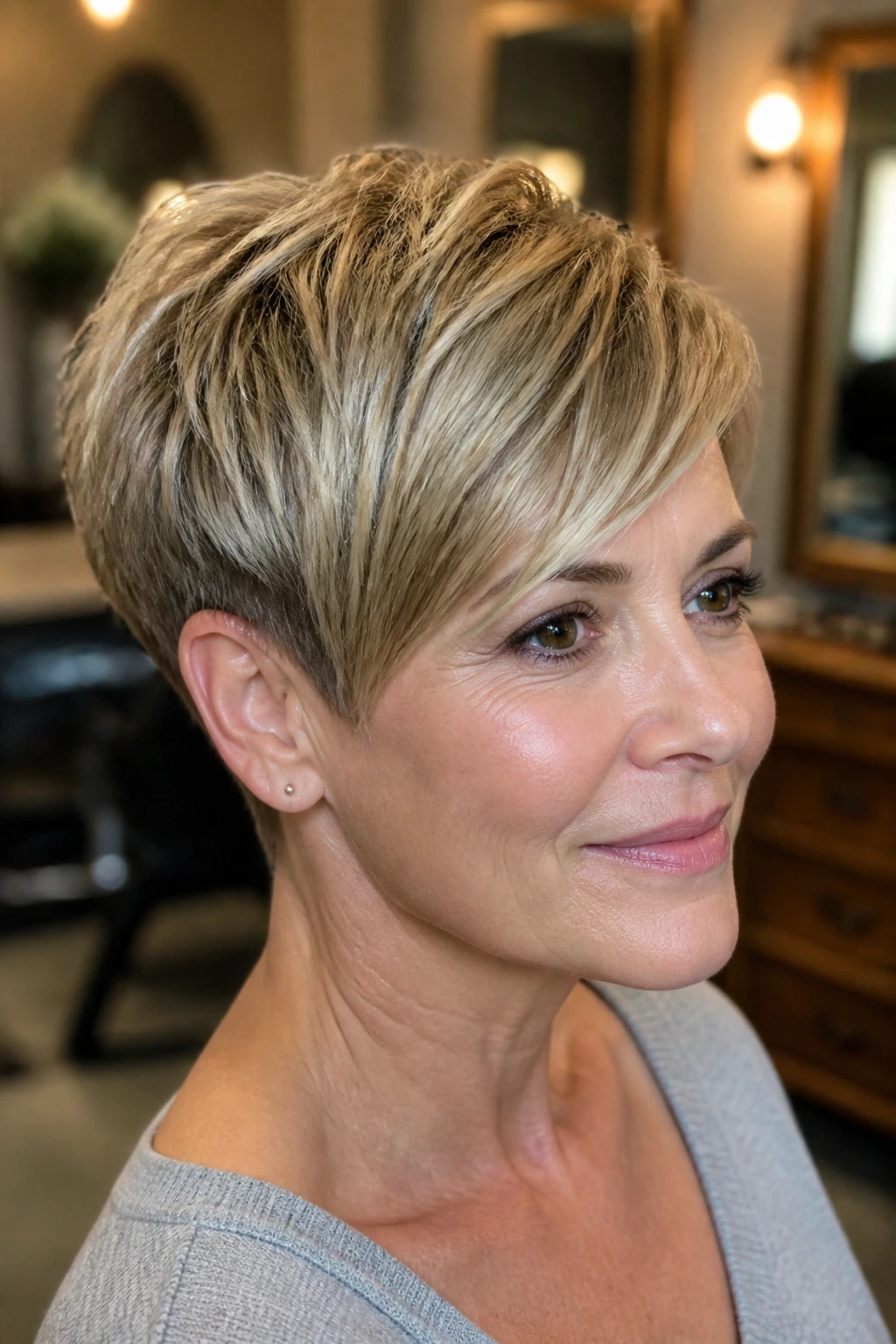
If your cowlicks like to fight back, this is the cut I’d consider first. A tapered crop stays close to the head, and the side-swept bang gives you a cleaner escape route than a straight-across fringe.
The taper helps fine hair keep shape at the nape and around the ears, where longer pieces can start to look stringy. The bangs travel diagonally, which creates movement without needing a lot of density up front.
This is one of those cuts that looks better when it’s been finger-styled a little. Too much brush work can flatten the bang into your forehead, and that kills the point.
9. Wedge Bob With Feather-Light Fringe
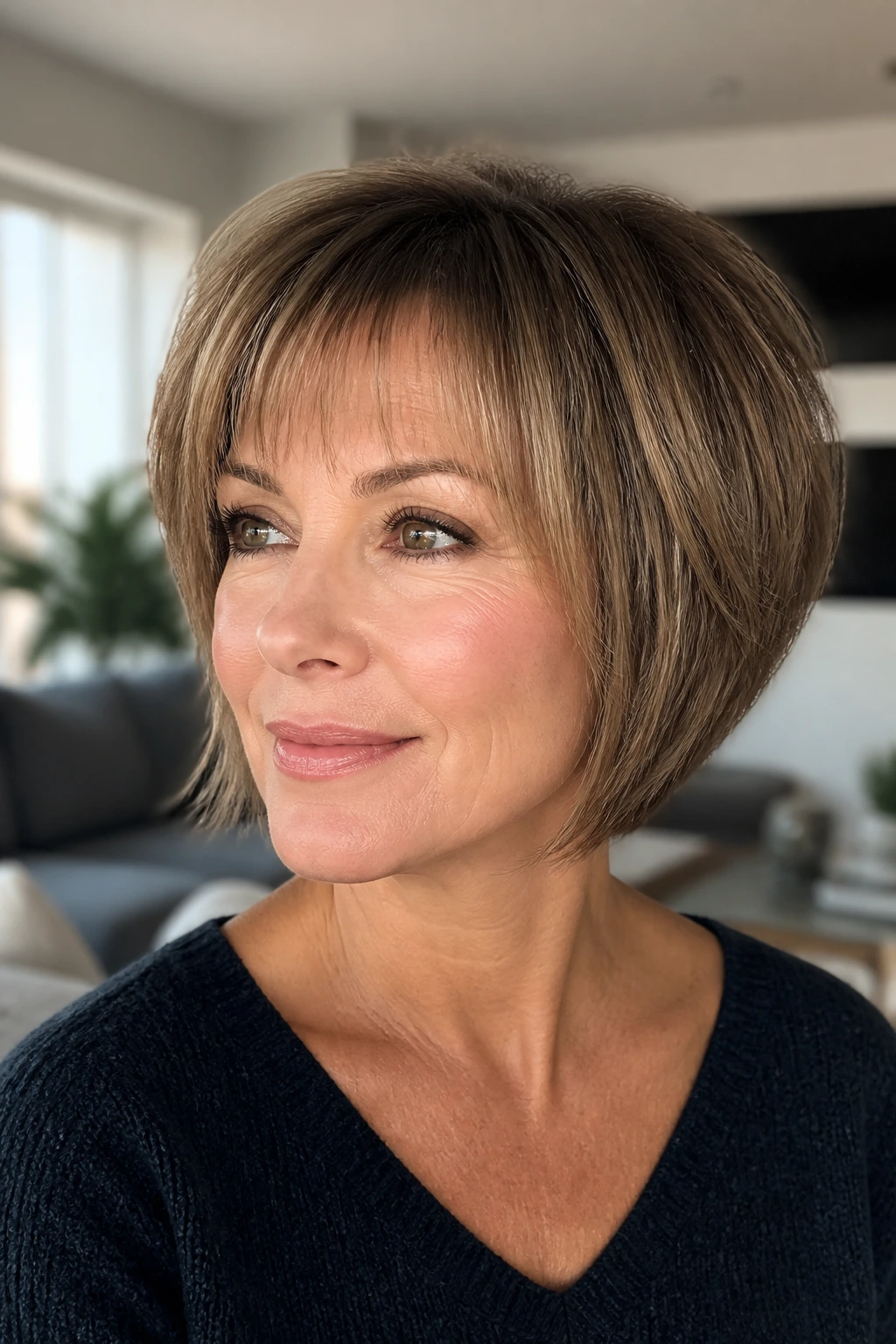
A wedge bob has built-in geometry. That’s useful when your hair is fine and needs structure more than it needs fluff. The stacked back builds volume where the hair can support it, and the feather-light fringe keeps the front from getting too heavy.
The result is tidy but not severe. The line curves under at the jaw or just below it, and the back lifts enough to keep the silhouette alive. If you like a haircut that looks deliberate from every angle, this is a strong one.
Small but important
Ask for the fringe to be cut with a soft point rather than a blunt edge. The difference is tiny in the chair and obvious every morning.
10. Asymmetrical Bob With Piecey Bangs

A perfectly even bob is not the only clean shape. An asymmetrical bob gives one side a little more length, which creates interest without needing extra bulk. On fine hair, that longer side can make the whole cut feel more substantial.
The piecey bangs matter because they stop the asymmetry from feeling too sharp. A few separated strands across the forehead keep things soft. That little irregularity is what saves the cut from looking like it was measured with a ruler and then flattened by a hat.
This works especially well if one side of your hair lies flatter than the other. The asymmetry makes the imbalance look intentional. Handy trick.
11. Pageboy With Soft Fringe
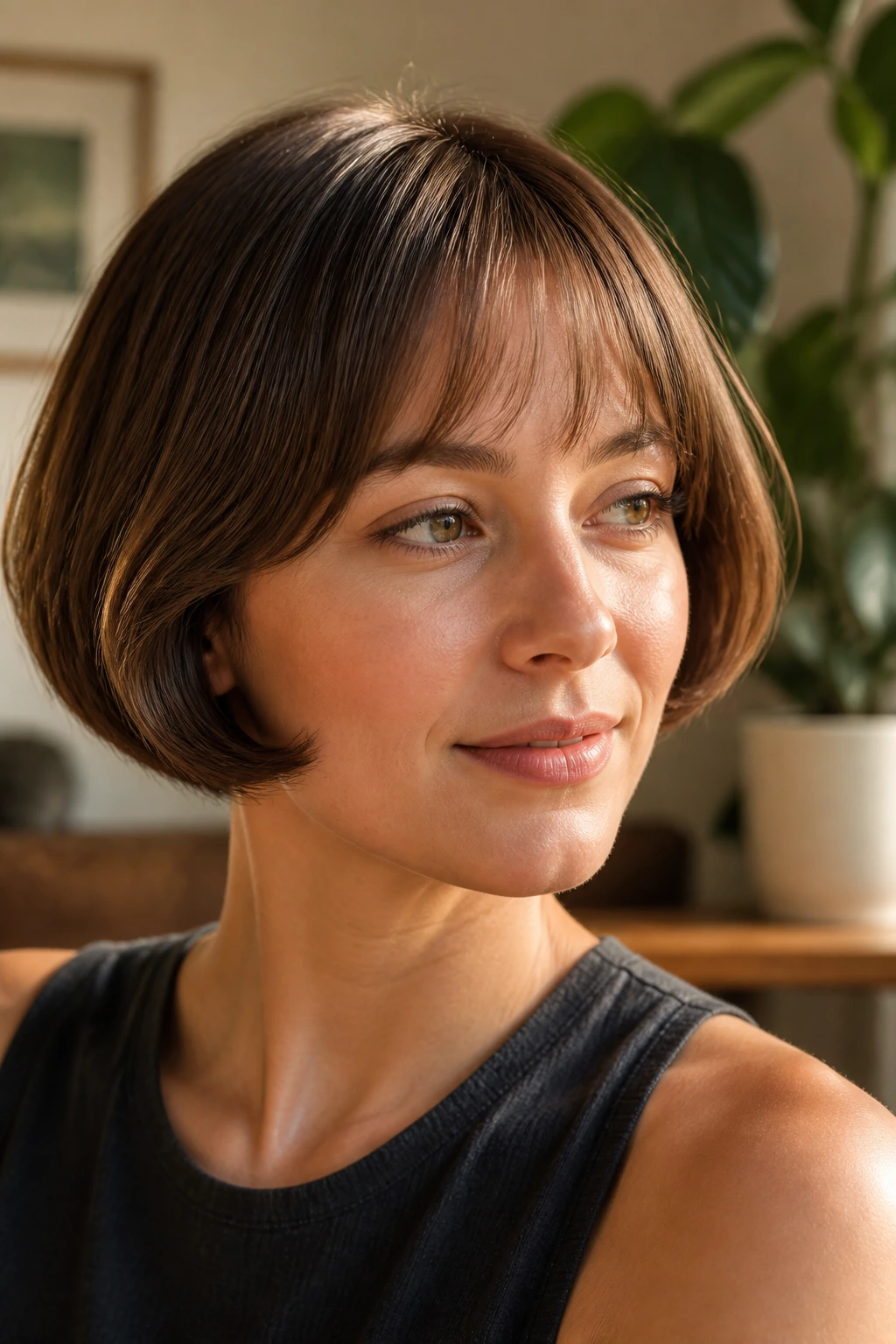
A pageboy sounds old-fashioned until you see it cut with a lighter hand. Then it becomes one of the more elegant shapes for fine hair. The perimeter curves under, usually around the jaw or just below, and the fringe stays soft enough to keep the style from looking rigid.
The pageboy is a smart choice if you want shine and shape over wild texture. Fine hair often looks best when the line is clear. Too many layers can make the ends disappear. The fringe keeps the face framed without cutting away precious density.
If your hair naturally sits smooth, this one is worth a look. It behaves.
12. Stacked Bob With Lightweight Bangs
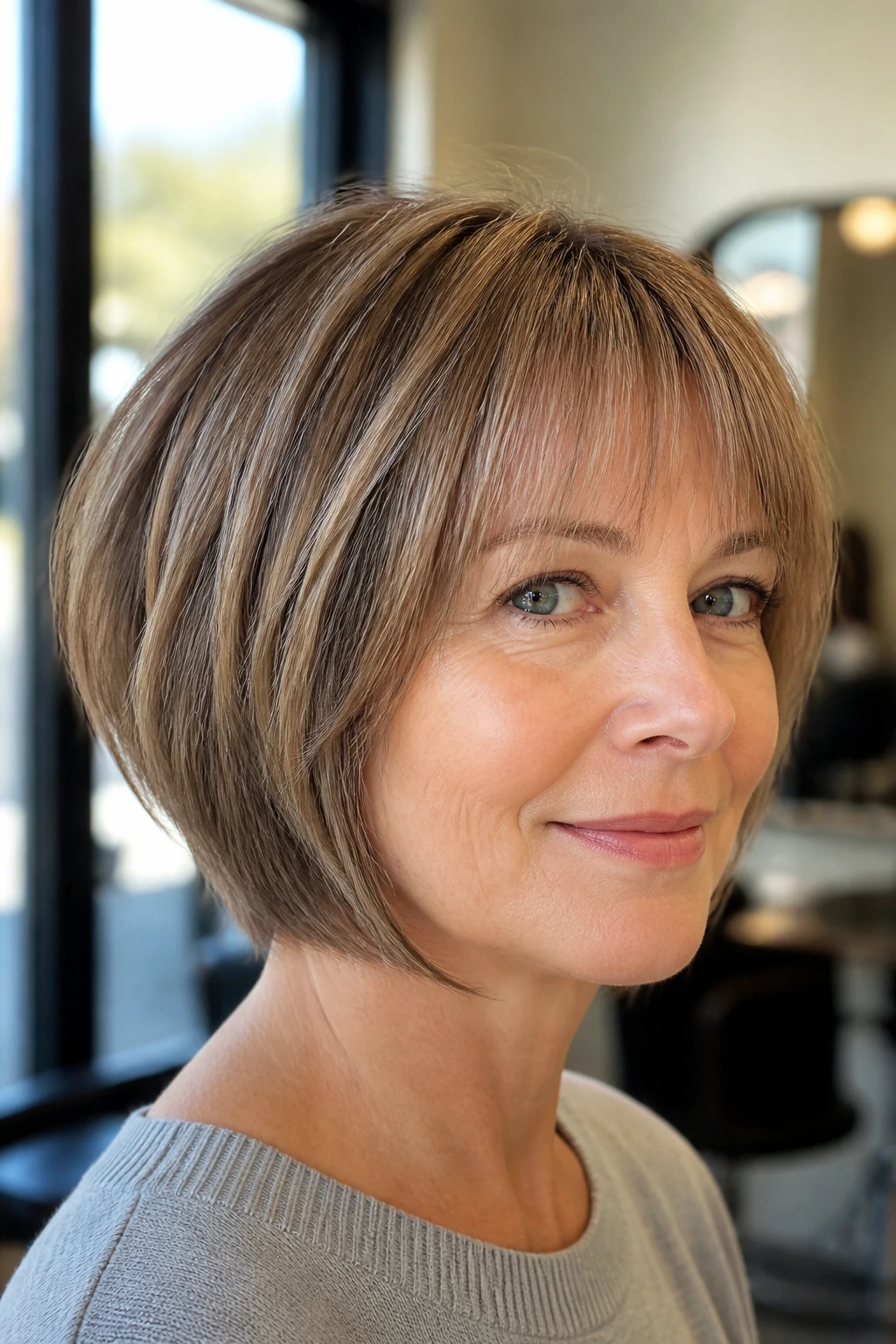
The stacked bob has a little lift at the back, which can be gold for fine hair that goes limp at the nape. The front stays a touch longer, and the bangs stay light so the crown does not feel crowded.
I’m picky about stacked bobs on fine hair. If the stack is too aggressive, the back can look skinny in daylight. The better version keeps the graduation subtle and uses the bangs to soften the front, not steal more hair away from it.
Use a round brush only where you need shape. The whole point is to make the cut look full, not shellacked.
13. Shattered Bob With Cheekbone Bangs
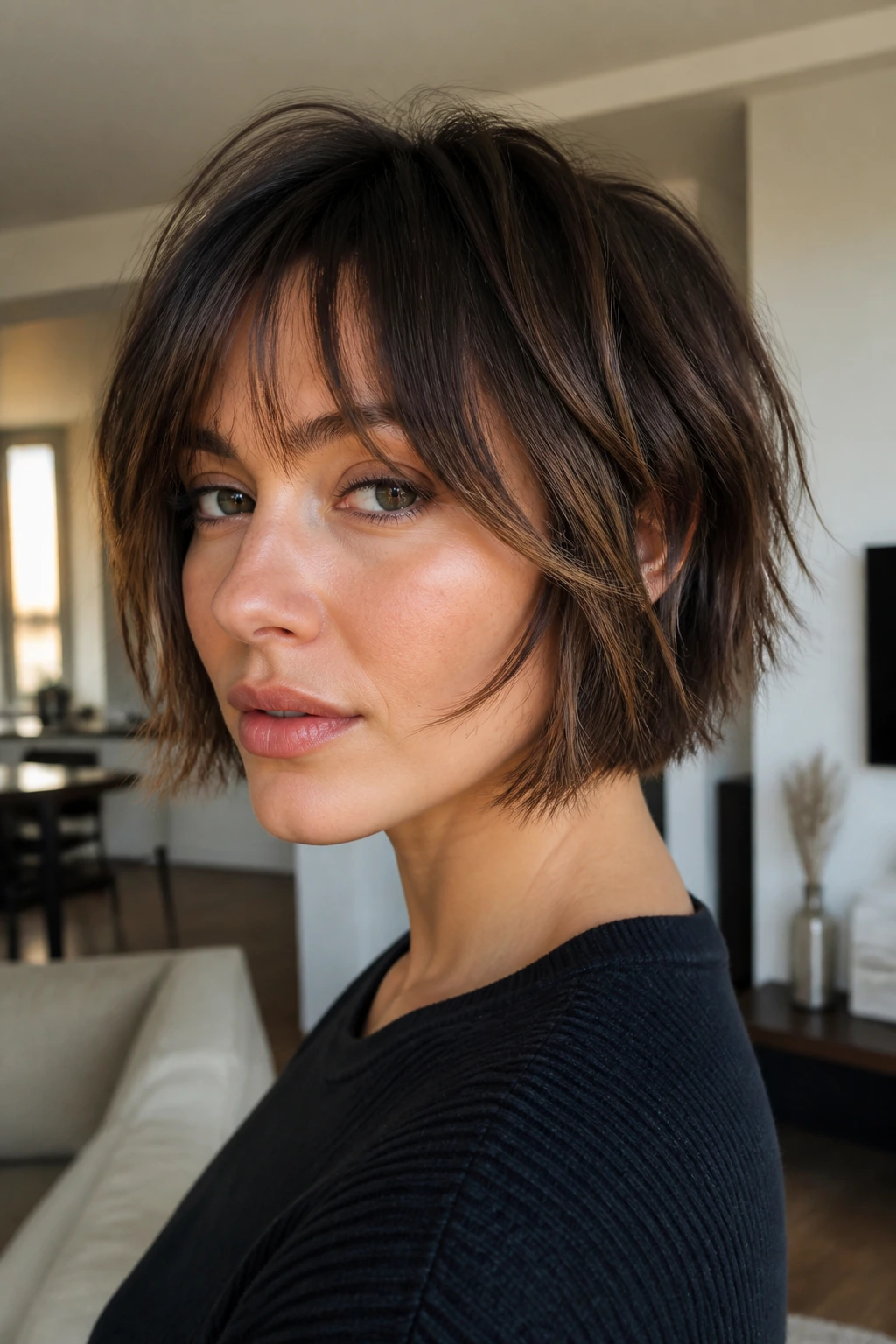
“Shattered” sounds rough, but in the right hands it just means broken-up texture with some deliberate gaps between the pieces. That’s useful for fine hair because it avoids the solid, dense look that can turn heavy fast.
Cheekbone bangs are the smart part here. They give the face a line to follow and stop the cut from floating too high on the head. The bangs land around the cheek area, which helps lift the eye and makes the bob feel like it has more movement than it really does.
How to wear it
A little texture spray through the mid-lengths is enough. If you pile on too much product, the shattered ends can start to look dry instead of piecey. There’s a difference, and it’s not subtle.
14. Curved Bob With Bottleneck Fringe

The bottleneck fringe starts a little shorter in the middle and gets longer toward the temples. That shape is a gift for fine hair because it frames the face without building one heavy block across the forehead.
Pair that fringe with a curved bob, and you get a cut that softly hugs the jaw. The curve helps the hair feel fuller at the edges, while the fringe keeps the top from looking bare. It’s graceful without being fussy.
This is one of the best options if you wear glasses. The longer temple pieces tend to sit neatly above or beside the frames instead of fighting them.
15. Mini Shag With Wispy Bangs
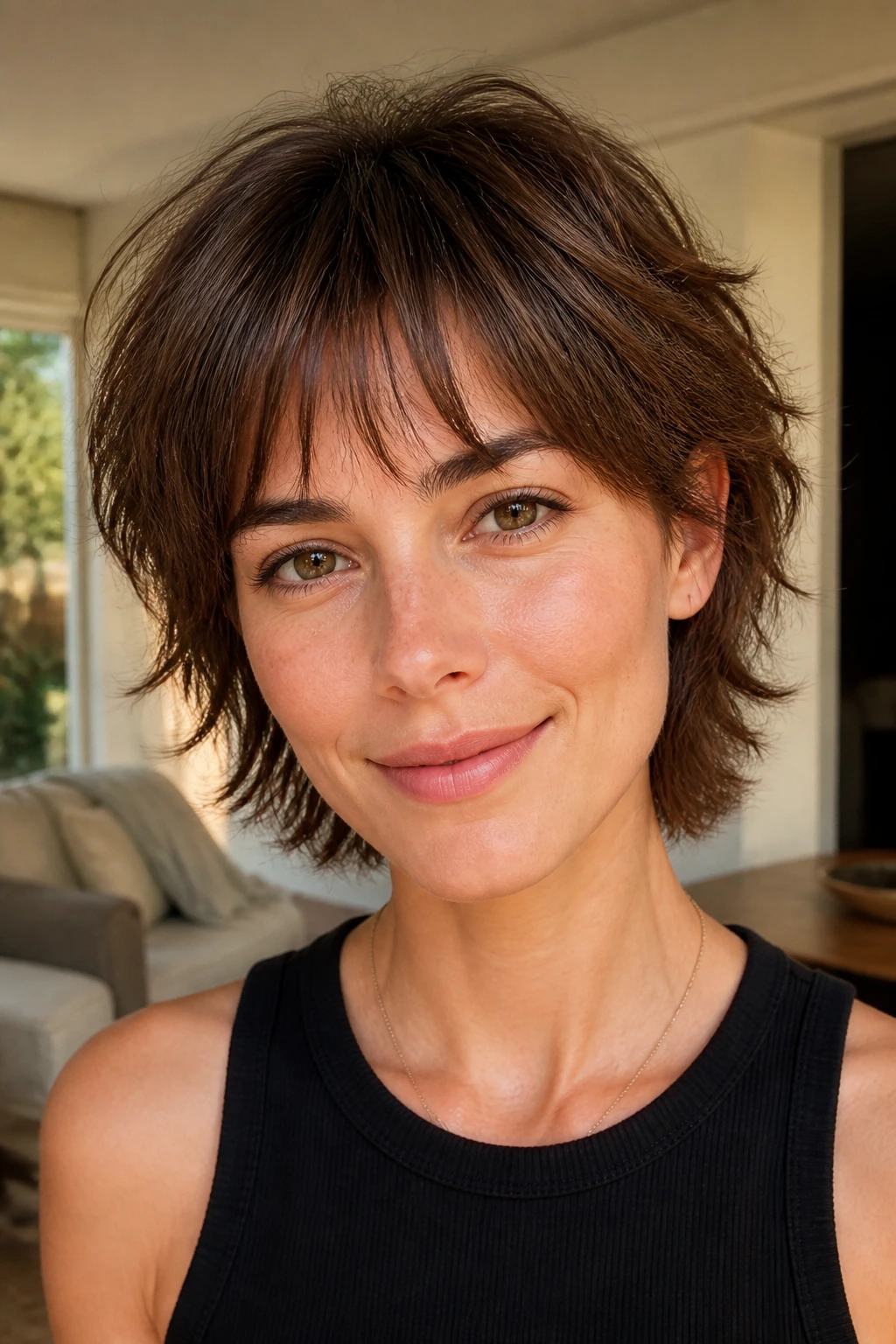
A mini shag is for people who want texture but not the full feathered drama of a classic shag. The layers are shorter and lighter, and the bangs stay wispy so the haircut keeps its airiness.
Fine hair can take to this cut when the layers are placed carefully. The top gets enough lift to avoid a flat crown, but the perimeter still has some shape. That balance matters. Too much layering, and the style starts to fray at the ends.
What makes it easy to live with
It does not need perfection. A rough blow-dry, a bit of scrunching, and a quick finger twist at the fringe usually get you there. If a haircut looks better after a little mess, I’m paying attention.
16. Sleek Crop With Split Fringe
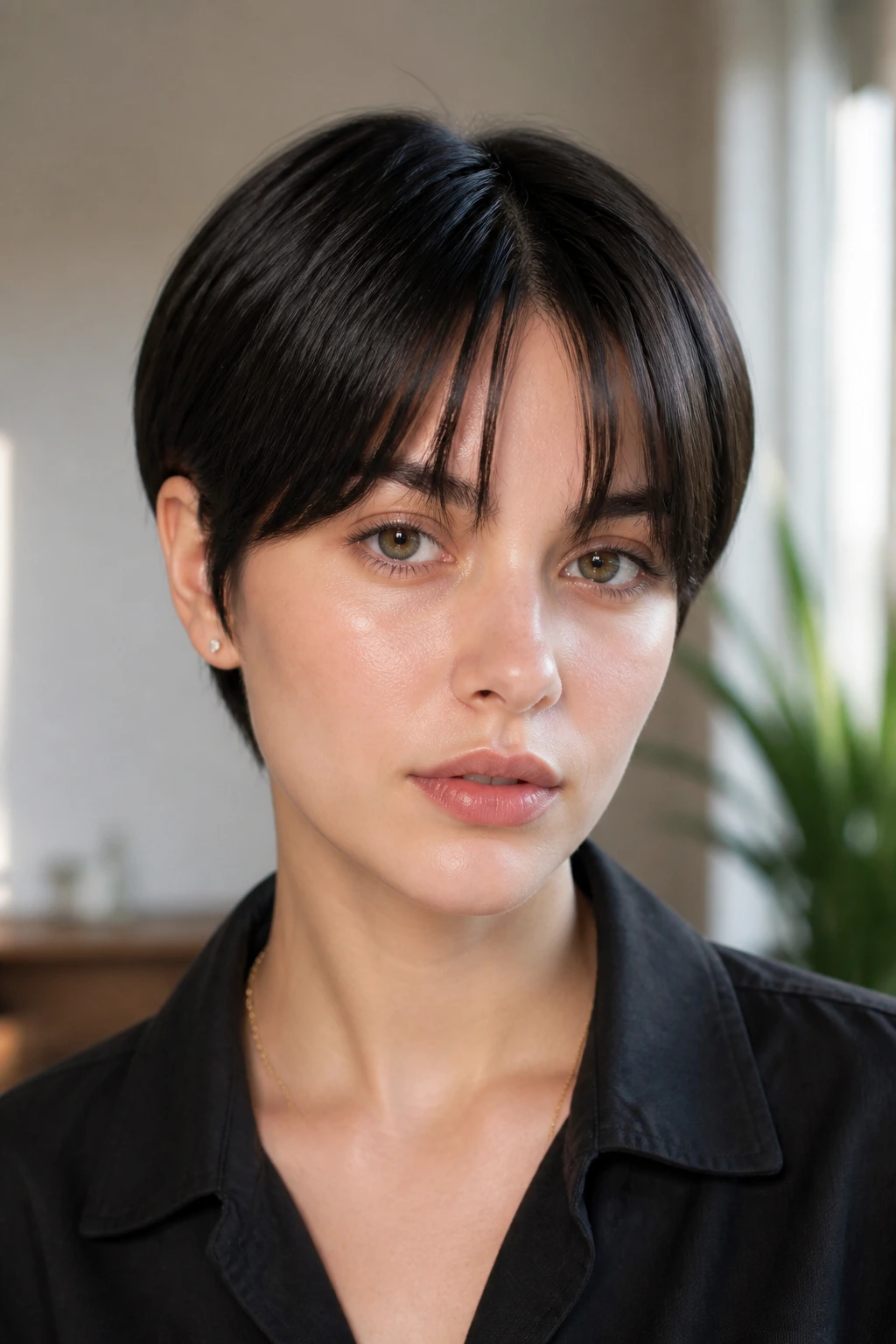
If you like a neater finish, this one is the quiet winner. The crop stays short and smooth, and the split fringe opens the face instead of covering it. Fine hair can look exceptionally polished here because there’s no excess bulk trying to puff up at random.
The center split also helps if your forehead feels crowded by a full fringe. The bangs drift to either side, which adds movement without taking away the clean line of the cut. It’s sharp, but not stern.
This is the cut I’d choose for someone who wears minimal makeup and wants the hair to do the framing work.
17. Tousled Bob With Long Face-Framing Bangs
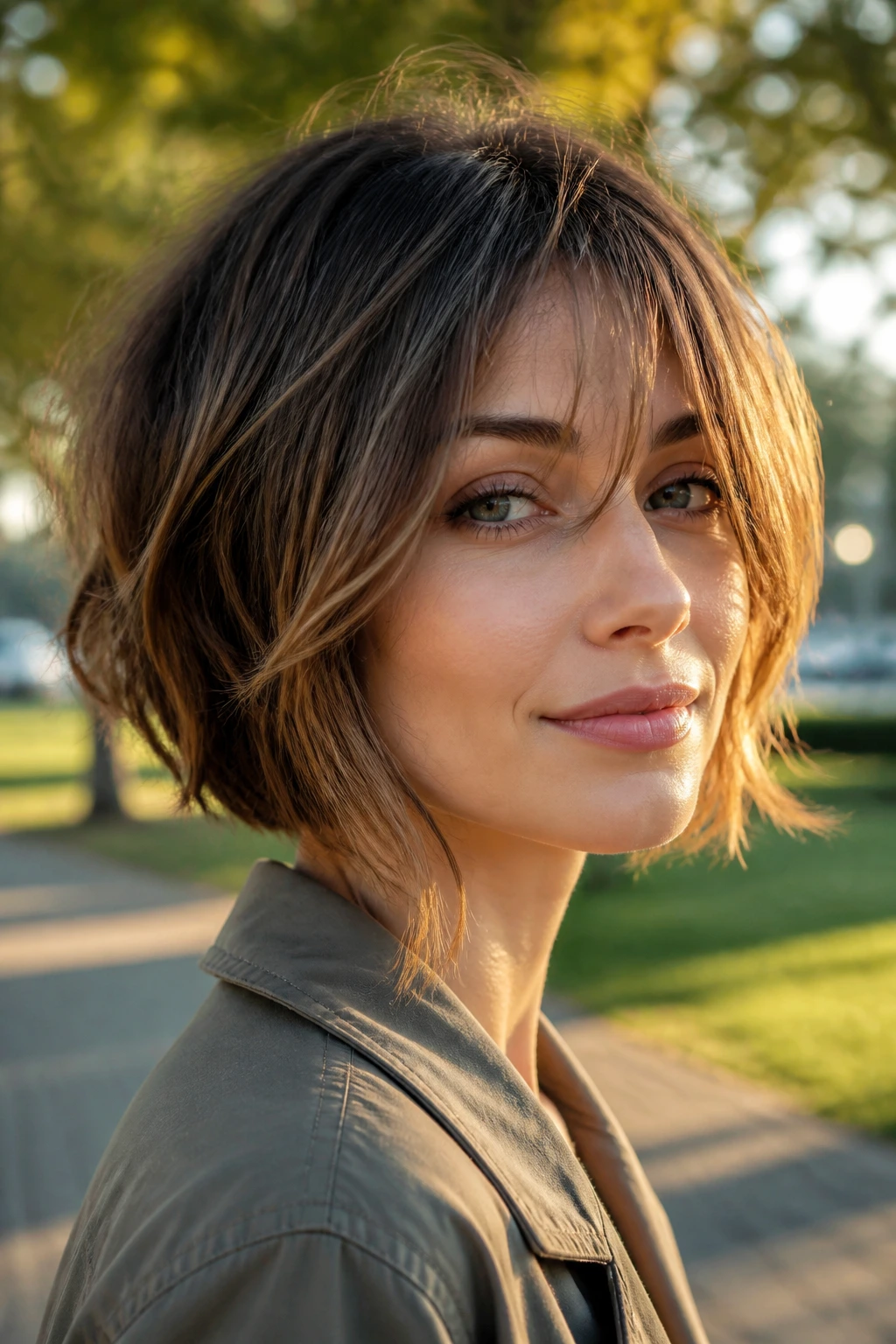
This cut looks like it has been lived in, which is a nice thing to say about fine hair that tends to slump when overdone. The tousled bob keeps the ends soft and the face-framing bangs a little longer so you can tuck them, twist them, or let them fall.
The longer bangs are the useful part. They buy you flexibility. On days when the front feels flat, a quick bend with a flat iron or blow-dryer makes the whole thing look fuller around the cheekbones.
If your hair bends naturally, this shape can be a favorite. The trick is not chasing perfect symmetry. That would be a waste.
18. Feathered Pixie-Bob
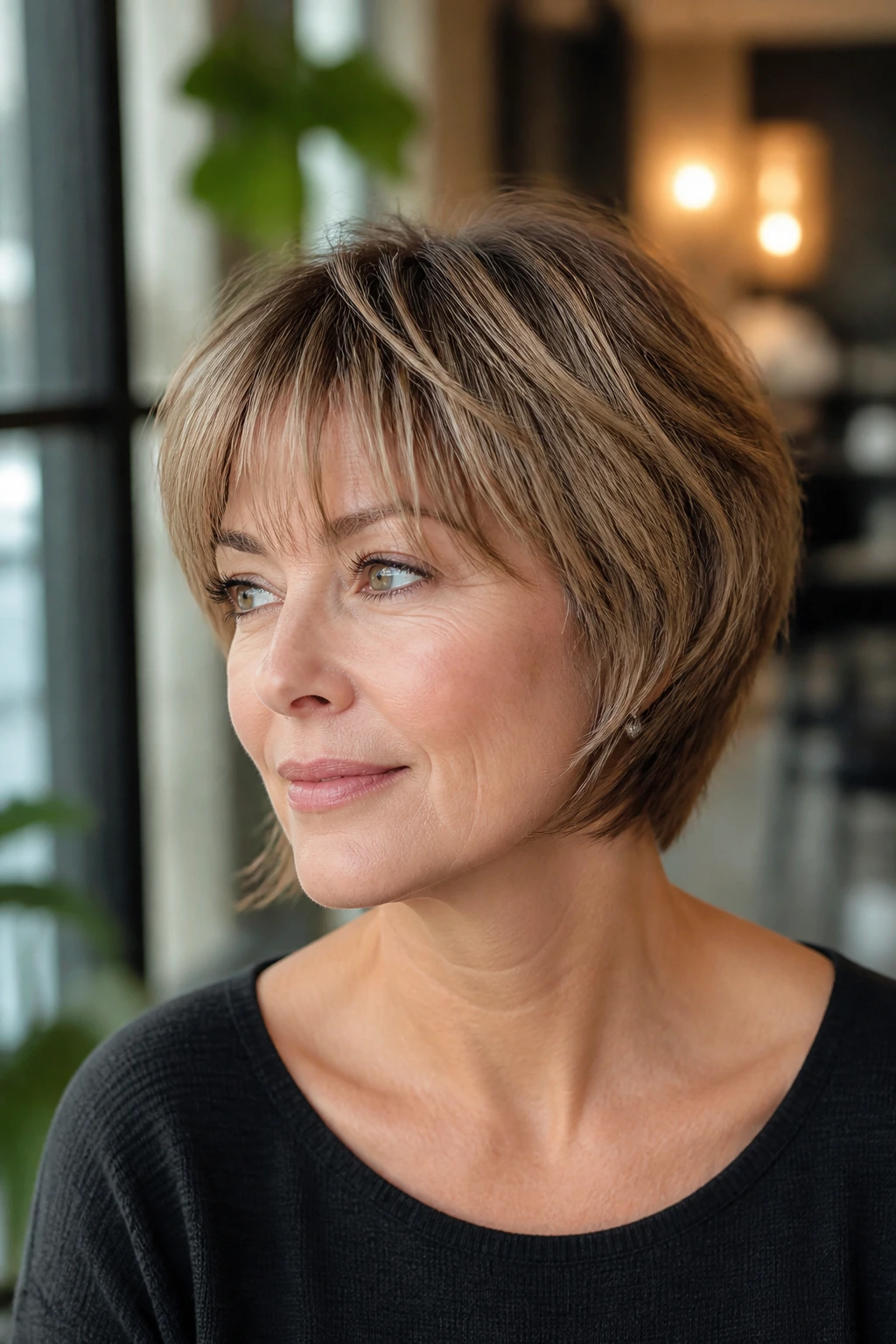
A feathered pixie-bob sits between a crop and a bob, which gives fine hair a little more presence without weighing it down. The feathers should be soft, not shredded. That’s a real difference. Feathering adds movement; shredding can make the ends look thin.
The fringe should stay light and movable. You want it to sit close enough to the forehead to frame the face, but not so close that it looks pasted on. This cut shines when the top has a bit of lift and the back is kept neat.
Best for
- Fine hair that refuses to stay fluffy
- Oval or heart-shaped faces
- People who want short hair but not a full pixie commitment
19. Chin-Grazing Crop With Barely-There Bangs

A chin-grazing crop gives fine hair a bit more length in the front, which can be useful if your ends need all the help they can get. The bangs are almost not there—just enough to soften the forehead and break the line.
This is a smart cut if you want a gentle grow-out path. The crop keeps the silhouette short, but the extra chin length keeps it from feeling severe. Barely-there bangs are easy to push to the side on busy days, and that flexibility matters more than people admit.
It’s a quiet cut. Not boring. Just calm.
20. Glassy Bob With Airy Fringe
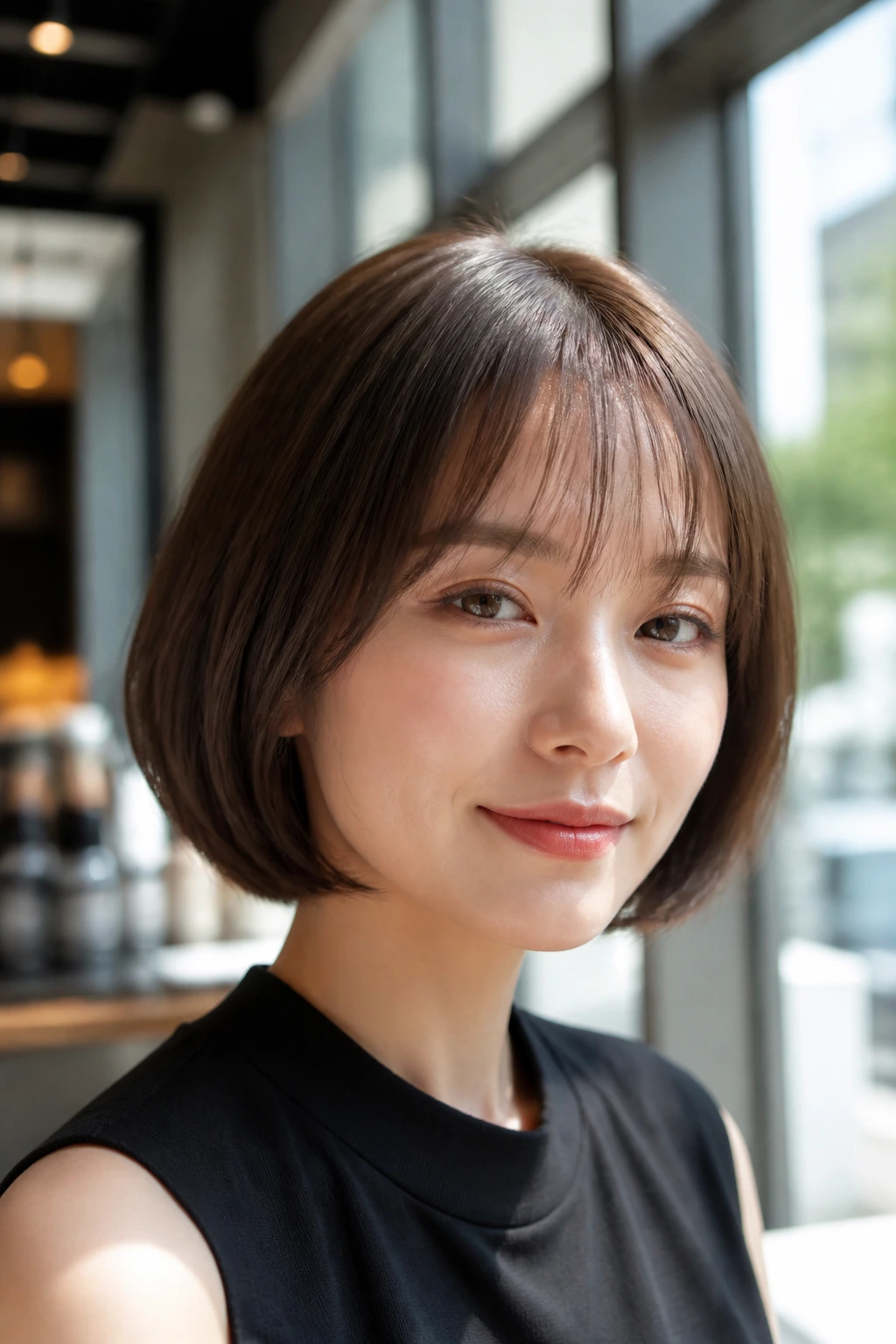
A glassy bob is all about smoothness and shine. Fine hair can do this well because it does not need a lot of weight to hang straight. The airy fringe keeps the front from getting too solid, which would take away from the sleek look.
I prefer this shape when the ends are blunt and the bangs are cut lightly enough to move. A full, dense fringe can break the line and make the bob look too heavy. A wispy one keeps the lightness intact.
If you like a clean finish and don’t mind a quick blowout, this one can look expensive without trying hard. That’s the kind of effect people notice.
21. Layered Crop With Off-Center Bangs

An off-center bang line is underrated. It’s a small shift, but on fine hair it can wake up a flat front immediately. The layered crop around it keeps the style soft and light, while the slightly shifted fringe avoids the straight-across look that can make hair feel heavier than it is.
This cut works well if your face is a little rounder or if a center part tends to make your hair fall too flat. The off-center placement creates lift where you need it and lets the rest of the style stay easy.
Tiny detail, big payoff
Ask for the longest bang piece to land somewhere around the brow or upper cheekbone. That gives you room to tuck or sweep the fringe later.
22. Soft Mullet Bob With Thin Fringe
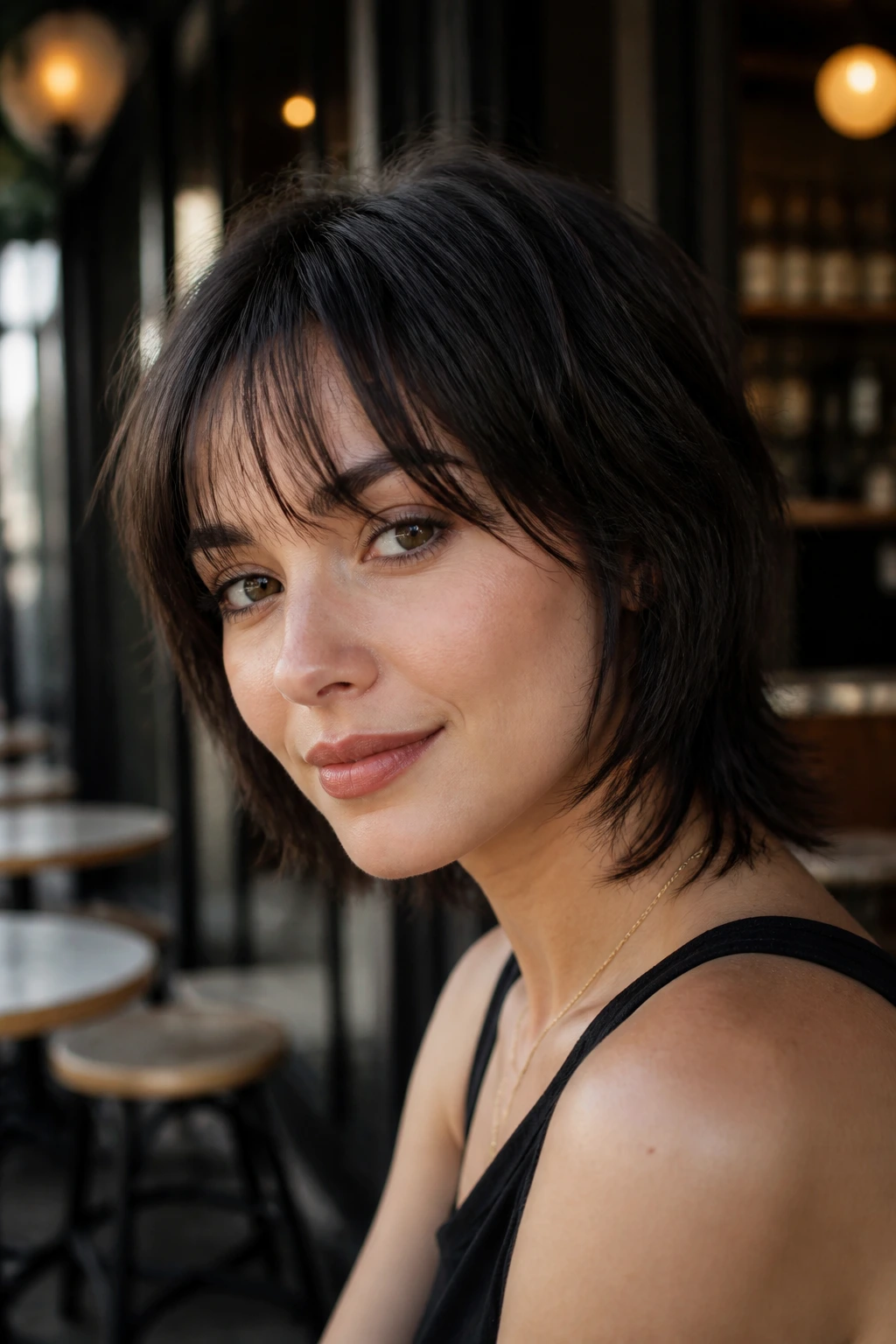
A soft mullet bob sounds more daring than it really is. The front stays shorter, the nape keeps a little length, and the fringe is thin enough to keep the whole thing wearable. On fine hair, that contrast can be useful because it adds shape without relying on bulk.
The thin fringe should stay wispy, not see-through to the point of vanishing. There’s a sweet spot. Enough softness to frame the face, enough presence to hold the haircut together. Too much thinning and the style falls apart. Too little and it starts to feel heavy.
This is the cut for someone who wants something a little off-center and does not mind a bit of attitude in the shape.
Why Wispy Bangs Give Fine Hair More Lift
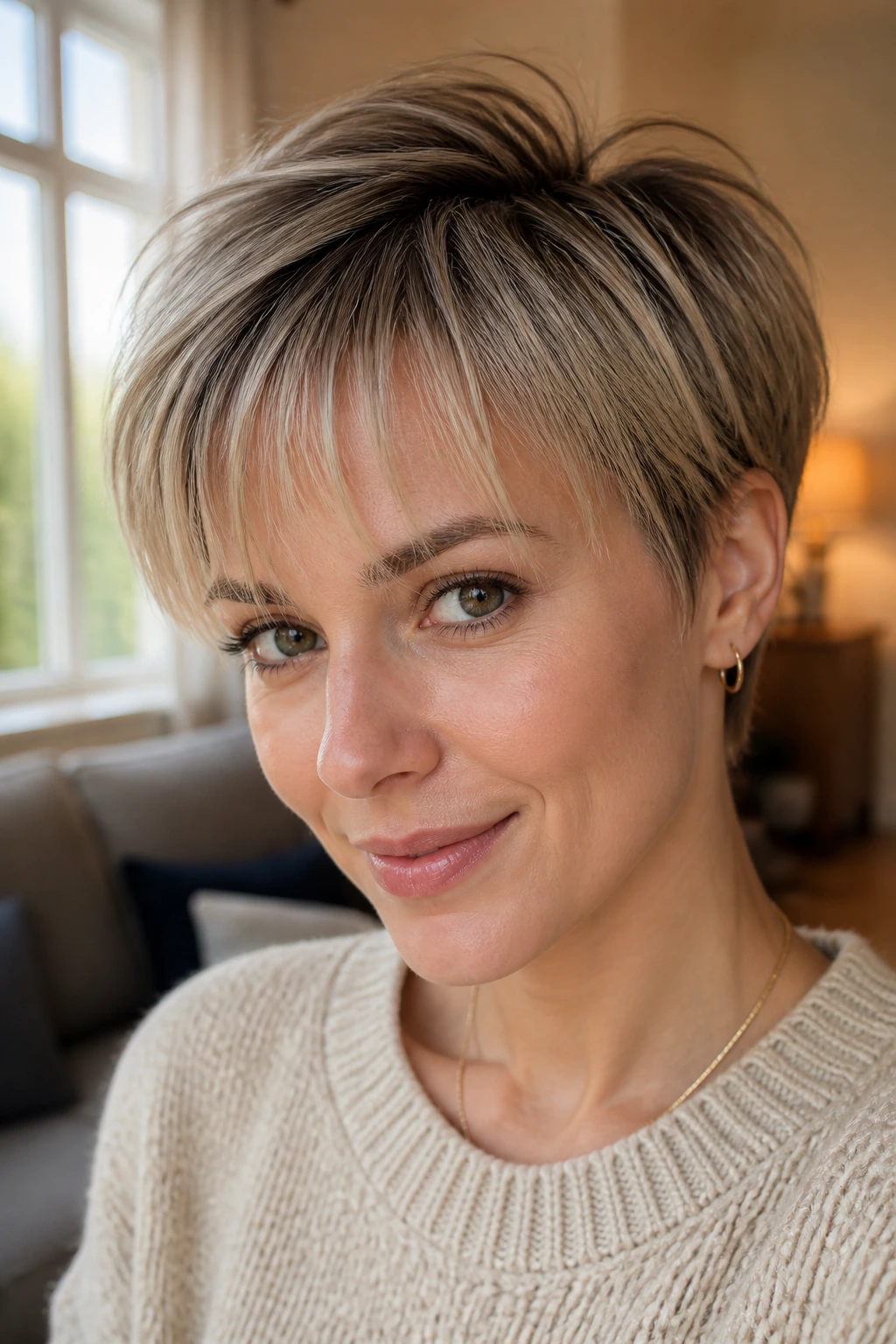
Fine hair has a strange problem: it can look both too flat and too crowded, depending on how the fringe is cut. A heavy bang line removes a chunk of visible density from the front of the head, which is exactly the wrong place to lose it. Wispy bangs avoid that trap. They keep some forehead showing, let the hairline breathe, and stop the cut from reading like a solid sheet.
There’s also a simple visual trick at work. A little separation in the fringe makes the eye register texture instead of mass. That matters because fine hair often needs help looking active, not just “done.” A see-through bang, especially when paired with a blunt or softly layered perimeter, gives you both movement and a sharper outline.
The density illusion
The bang doesn’t have to be thick to help the haircut feel fuller. It just has to land in the right place and move a little when you do. That small amount of motion can make the entire front section look less flat.
Where the weight should stay
Keep the bulk in the silhouette, not the fringe. Jawlines, cheekbones, nape lines, and soft side panels do more for fine hair than a dense wall of bangs ever will.
What to Tell the Stylist Before the First Snip
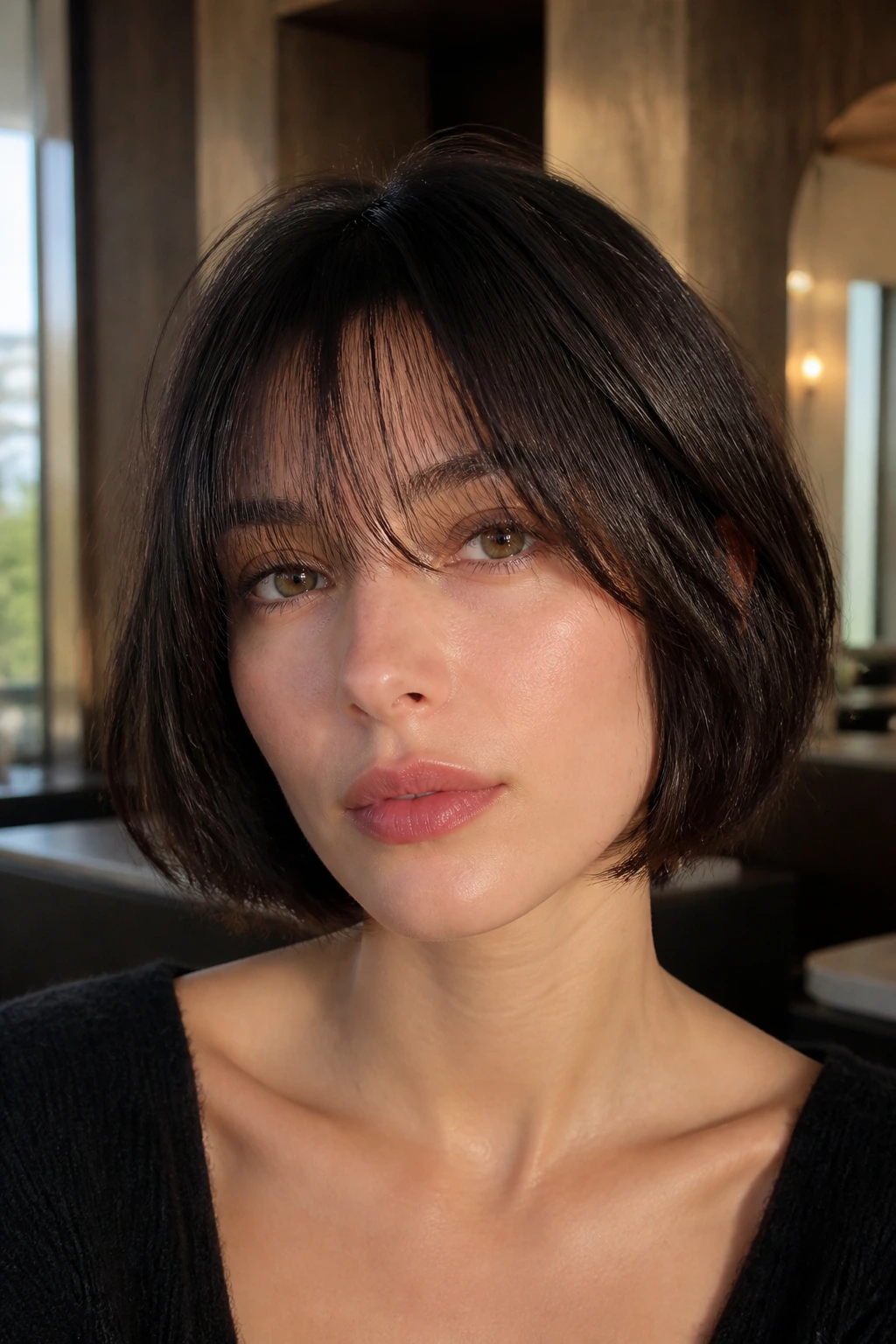
Bring photos, yes, but bring words too. Say what you want the bangs to do: soften your forehead, hide a cowlick, sit above glasses, or grow out cleanly. That is more useful than telling someone you want “something wispy,” because wispy means different things depending on who is holding the scissors.
The biggest thing to mention is density. Fine hair can be over-thinned in a hurry, and the damage usually starts around the crown or the fringe line. Ask for point-cutting or soft texturizing where needed, not aggressive thinning everywhere. If your hairline has a natural split or a strong swirl, say so before the cut starts. That detail changes where the bang should begin and how short it can safely sit.
And if you have a stubborn cowlick, tell the stylist you want to see the fringe dry before the final length is set. Wet bangs lie. They shrink, swing, and settle in ways that can surprise you two minutes later.
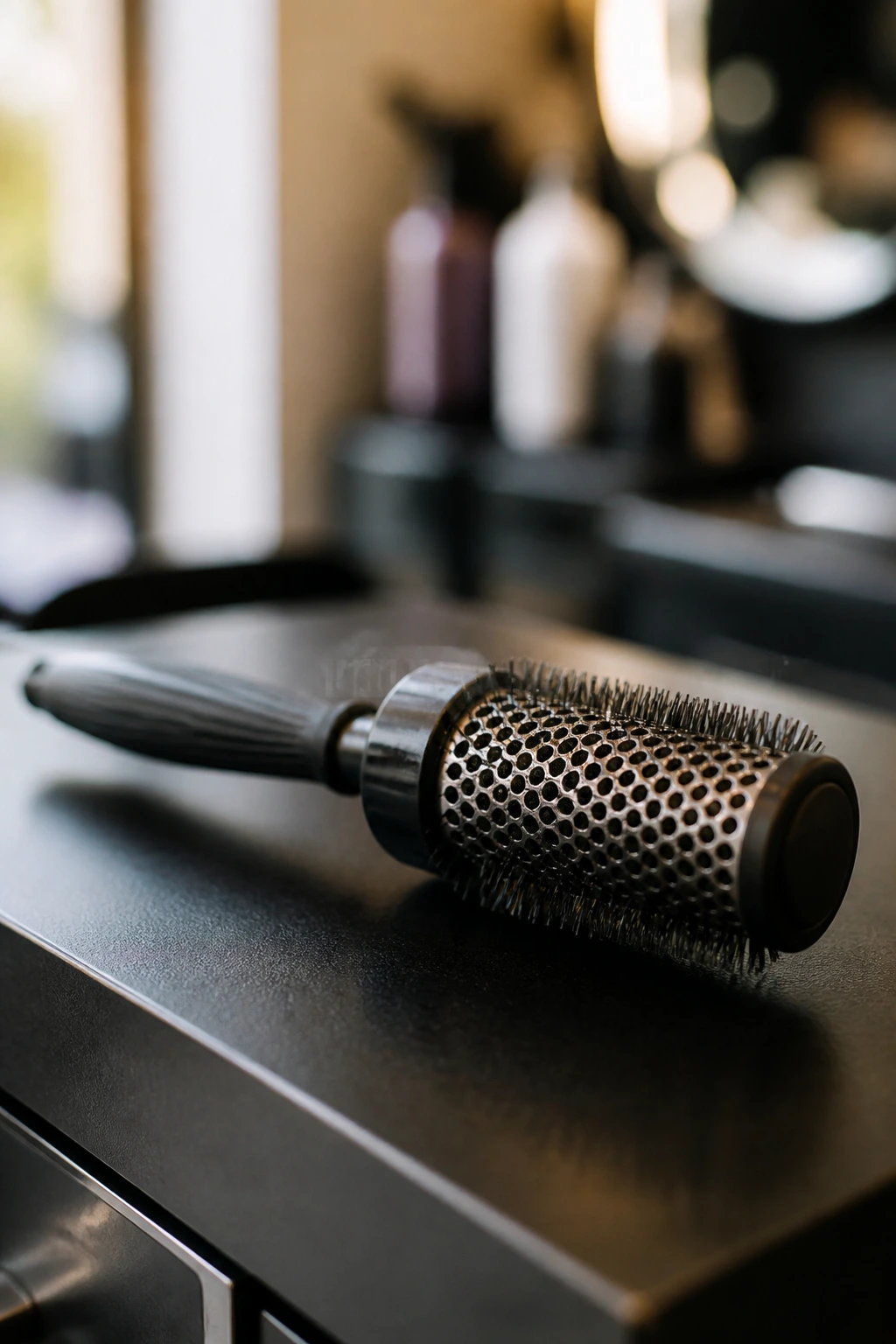
Tools That Make These Cuts Easier
-
Blow dryer with a concentrator nozzle: Keeps the airflow narrow so you can lift the roots without blasting the fringe everywhere.
-
Small round brush, 1 to 1.5 inches: Big brushes fight short bangs; a smaller one gives you a bend instead of a curl that sticks out.
-
Vent brush or flat paddle brush: Good for fast drying when you want movement, not a salon blowout.
-
Light mousse: Adds body at the root without turning fine hair sticky or stiff.
-
Root-lift spray: Best applied at the crown and fringe line before drying; it gives the hair a bit of memory.
-
Dry shampoo: Useful on day two when the front starts to separate and the roots begin to sink.
-
Texturizing spray: A few light passes through the mids and ends can make a bob or pixie look piecey instead of limp.
-
Sharp hair-cutting scissors if you trim bangs at home: Kitchen scissors crush the ends. Don’t use them.
How to Wear These Cuts Day to Day

Air-Dry Route:
If your hair has any natural bend, let the fringe dry first with a small clip holding it off the forehead for ten minutes, then release it and finger-shape the pieces. A dab of mousse at the roots is enough. Fine hair gets weighed down fast, so don’t drench the length.
Blowout Route:
Dry the bangs first. Always. They lose shape faster than the rest of the haircut, and once they collapse, the whole style feels tired. Use the nozzle on your dryer, wrap the fringe around a small round brush, and pull it slightly forward before sweeping it side to side. That tiny motion keeps the roots from setting straight down.
Fast Reset:
On rushed mornings, mist the fringe with water, pinch the pieces together, and hit them with warm air for 20 to 30 seconds. You do not need a full wash to fix wispy bangs. You need shape.
Accessorize Carefully:
Clips, barrettes, and thin headbands can help, but bulky ones flatten the crown. If you wear glasses, leave a little length around the temples so the bangs don’t jam into the frames and puff out weirdly.
Texture Boosters That Do the Heavy Lifting
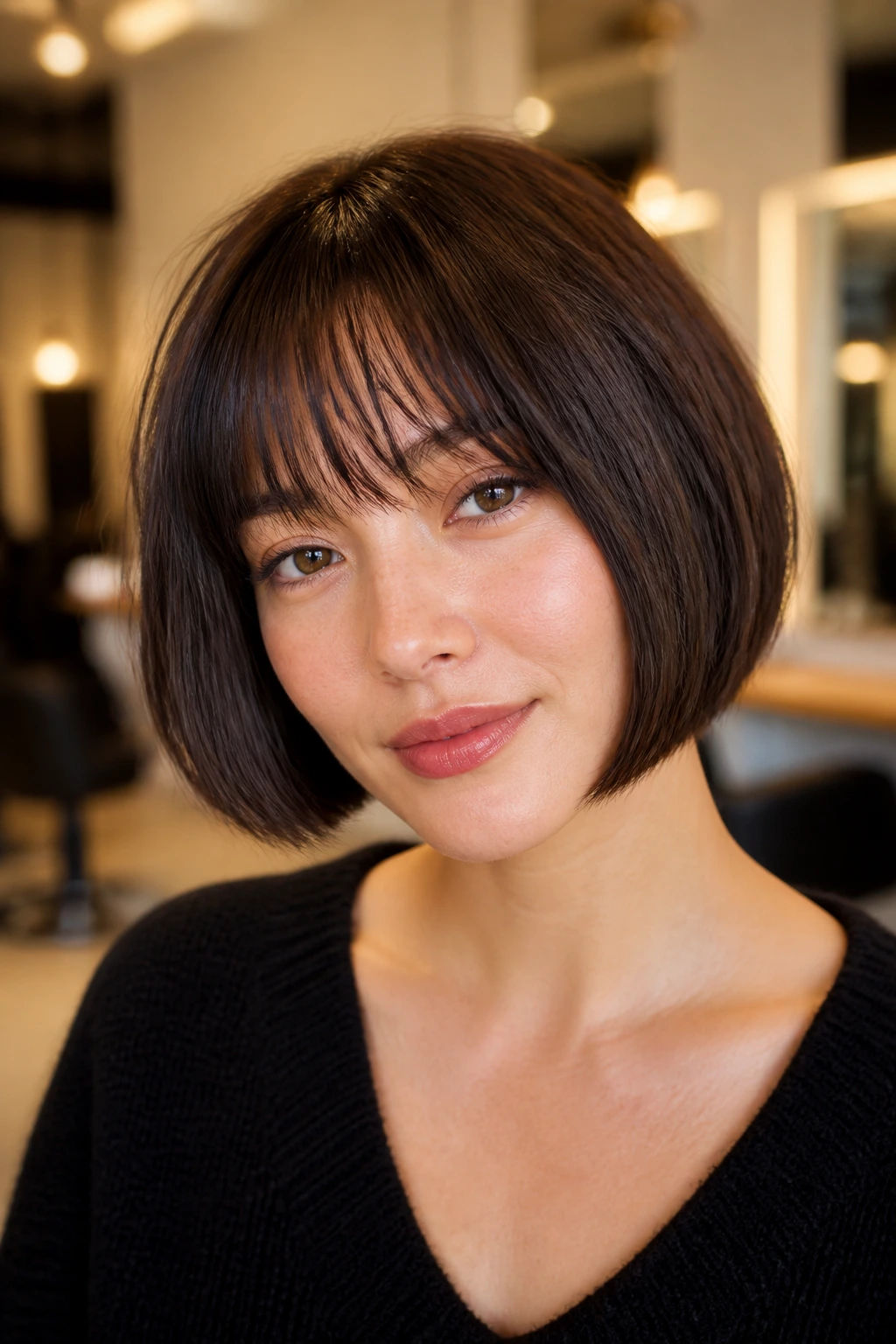
Root Lift: Put product where the haircut needs support, not all over the head. A little mousse or lift spray at the crown and front gives fine hair the backbone it needs. More than that and the hair starts to feel dusty.
Soft Separation: Use a touch of texture spray from the mids to the ends, then break the strands apart with your fingers. That gives you a piecey finish without making the hair look dry. If the ends start to feel crunchy, you’ve gone too far.
Fringe Control: A tiny dab of styling cream on the fingertips can calm one or two frizzy bang pieces. Tiny. Not a palmful. A heavy cream can make wispy bangs collapse by lunch.
Make-It-Yours: Straight fine hair usually looks best with a smoother finish and a softer fringe line. Wavy fine hair can handle a bit more bend. If your hair is curly, keep the bang longer and cut it dry so the shape lands where it should after it springs up.
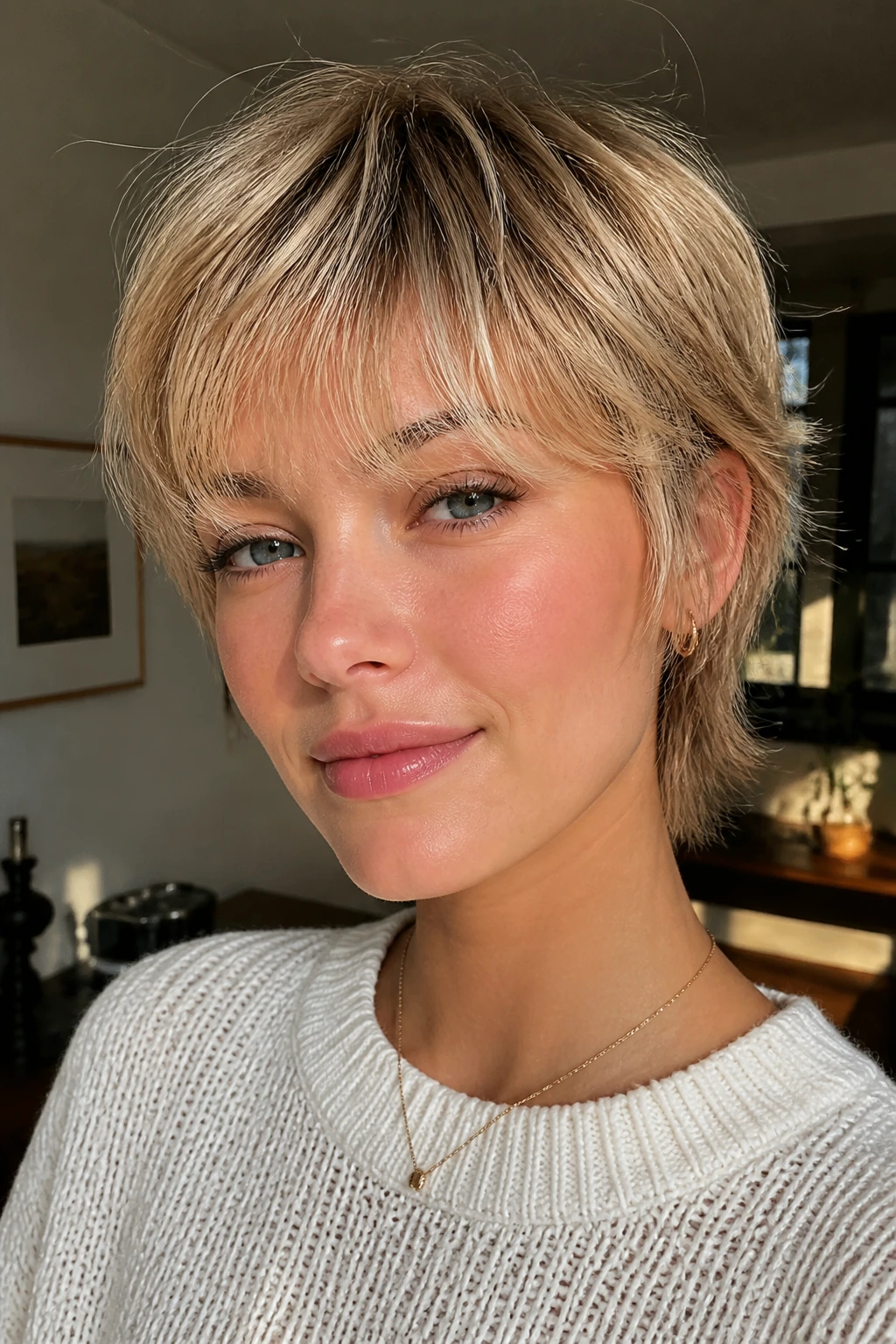
Mistakes That Flatten the Hairline
-
Making the bangs too dense:
The symptom is a fringe that sits like a curtain and makes the rest of the haircut feel thinner. The fix is to leave some air in the bang line and keep the front soft, not packed. -
Over-thinning the crown:
The haircut may feel lighter in the chair, but it usually falls flat within a day or two. Ask for controlled texture, not a razor frenzy. -
Cutting bangs too short while wet:
Fine hair stretches and then snaps back in ways that are easy to misread. If the fringe is cut too high wet, it can end up looking abrupt and sparse once dry. -
Using heavy cream or oil near the fringe:
The hair will separate in clumps and lose lift fast. Keep rich products away from the bang area and use them only on the very ends if you need them. -
Skipping regular bang trims:
Wispy bangs look soft when they’re shaped, not when they’ve grown into your lashes and started poking into your eyes. A small trim every 3 to 4 weeks keeps the line clean.
Variations and Adjustments to Try
Air-Dry Softness:
Ask for a cut that leans into your natural bend and keep the fringe a little longer. This works well if you want less daily styling and don’t mind a softer, less polished finish.
Sleeker Office Version:
Choose a blunt bob, keep the fringe light, and style with a round brush plus a quick cool shot at the end. The result is neater and smoother, which suits straight fine hair especially well.
Curly-Friendly Fringe:
Keep the bangs longer, cut them dry, and let them sit a touch below the brow so they can spring up naturally. Short curly bangs can go poofy fast if they’re cut too high.
Sharper Edged Version:
Go for a chin-length bob or inverted bob with a more defined perimeter and a narrow wispy fringe. This gives the haircut a cleaner line and makes fine hair look more deliberate.
Grow-Out-Friendly Length:
If you hate frequent trims, start the fringe just below the brow and keep the sides a little longer. It’ll slide into a side-swept shape before it gets annoying.
Keeping the Shape Between Trims

Fine hair usually tells on itself after a few days, so maintenance matters more than people think. Bangs often need attention every 3 to 5 weeks, while bobs and crops usually stay tidy for 5 to 7 weeks before the outline starts to lose its edge. If the fringe is pushed too long, it can split and cling to the forehead in a way that makes the whole cut look tired.
At night, a silk pillowcase helps more than fancy products. It reduces the little bends and dents that short hair picks up from rubbing. If your bangs like to flip in odd directions, pin them loosely with a soft clip before bed or let them dry in the direction you want before sleep.
For day-two refreshes, start at the bangs first. A mist of water or a damp brush often fixes the front faster than a full wash. Add dry shampoo only at the roots, not all through the fringe, or you’ll get that chalky, dusty look that makes fine hair seem even finer.
Questions People Ask Before the Snip
Will wispy bangs make fine hair look thinner?
Not if they’re cut with enough control. The fringe should be light, but not so sparse that it disappears. The goal is to keep the front soft while preserving the cut’s outline.
Are these styles better for straight or wavy hair?
Both can work. Straight fine hair usually suits blunt bobs, sleek crops, and French-inspired shapes, while wavy fine hair handles shaggier pixies and tousled bobs more easily.
How often do wispy bangs need trimming?
Most need a touch-up every 3 to 4 weeks, sometimes sooner if they sit close to the eyes. The shorter the fringe, the faster it loses shape.
Can I air-dry these cuts?
Yes, but the result changes by cut. Bixies, mini shags, and tousled bobs air-dry better than polished blunt bobs or glassy styles, which usually need a quick blow-dry for shape.
What if my bangs split in the middle?
That often means the fringe is too heavy at the center or your cowlick is pushing it apart. Shift the part slightly off-center and trim a touch of weight from the middle so the sides can frame the face.
Do these cuts work with glasses?
They can, and some do it better than others. Bottleneck bangs, side-swept fringes, and longer wisps around the temples usually sit more cleanly over frames than a dense straight fringe.
Which cut is easiest to grow out?
A short lob with airy curtain bangs or a chin-grazing crop is usually the least annoying to grow out. The fringe blends into side pieces instead of turning into a hard line.
Should I ask for layers?
Some, yes. Too many, no. Fine hair usually needs light shaping around the face and crown, not aggressive layer removal that makes the ends disappear.
Soft Shapes, Less Fuss
The nicest thing about these cuts is how little they ask for once they’re shaped well. They don’t need huge volume, and they don’t need a heavy fringe to prove they matter. They just need a good outline, a light hand at the front, and enough texture to keep the hair from lying down and giving up.
If you’ve been living in long layers that make fine hair feel stringy, one of these shorter shapes can be a relief. A clean bob, a feathered pixie, or a soft crop with wispy bangs can make the hair look fuller without turning it into a project. That’s the sweet spot.
Pick the silhouette that fits your routine, not just the one that looks cute in a mirror photo. The right short cut should still look like itself after a commute, a windy walk, and one too many times tucking the bangs behind your ear.
